
Beads change how a veil behaves, not just how it looks. A few grams of pearls along a hem make tulle hang straighter and swing less in a breeze, while a dense crystal scatter can drag a comb backwards by mid-afternoon. When I style a bride in a beaded veil, I start with the gown fabric and the neckline, then the hair, and only then the amount of sparkle. The ideas below are full looks rather than veil catalogue entries, so you can see how each one sits with a dress, shoes and hair.
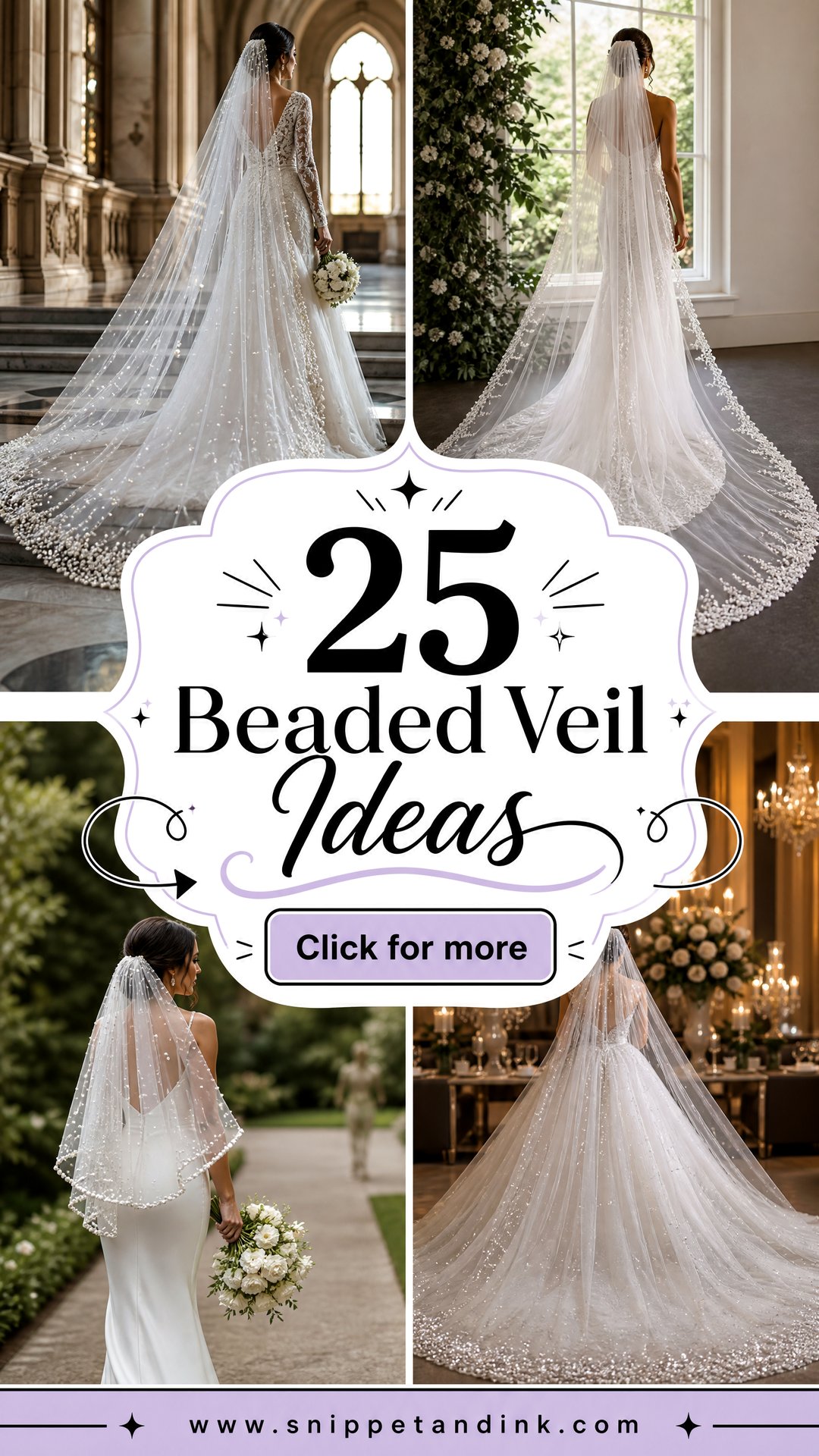
How Bead Weight Changes the Way Tulle Falls
Unbeaded tulle is almost weightless, so it lifts, floats and clings to whatever it touches. Add a row of beads along the hem and the veil hangs straighter and stays behind you in a breeze. Add beads all over and the whole veil gets heavier, which pulls on the comb and on your hair for every hour you wear it.
That is why I ask three questions before anything else at a fitting:
- Where is the weight? Edge beading helps a veil drape; heavy beading near the comb makes it tip backwards.
- Are the beads sewn or glued? Sewn pearls and crystals survive hugs and car doors. Glued stones can pop off and leave marks on the tulle.
- What sits under it? Rough crystals rubbing on silk satin or open lace can pull threads, so I check the back of the gown with the veil on.
Securing a heavier veil
A plain comb is fine for a light scatter. For a cathedral or a dense crystal edge, I ask the hairstylist to criss-cross two bobby pins through the comb teeth and into the bun, or I sew small thread loops onto the comb so pins can pass through. Fine, slippery hair usually needs a little backcombing at the anchor point. Test it at your hair trial with the real veil, not a sample, and walk around for twenty minutes before deciding it holds.
1. Pearl Beaded Cathedral Veil
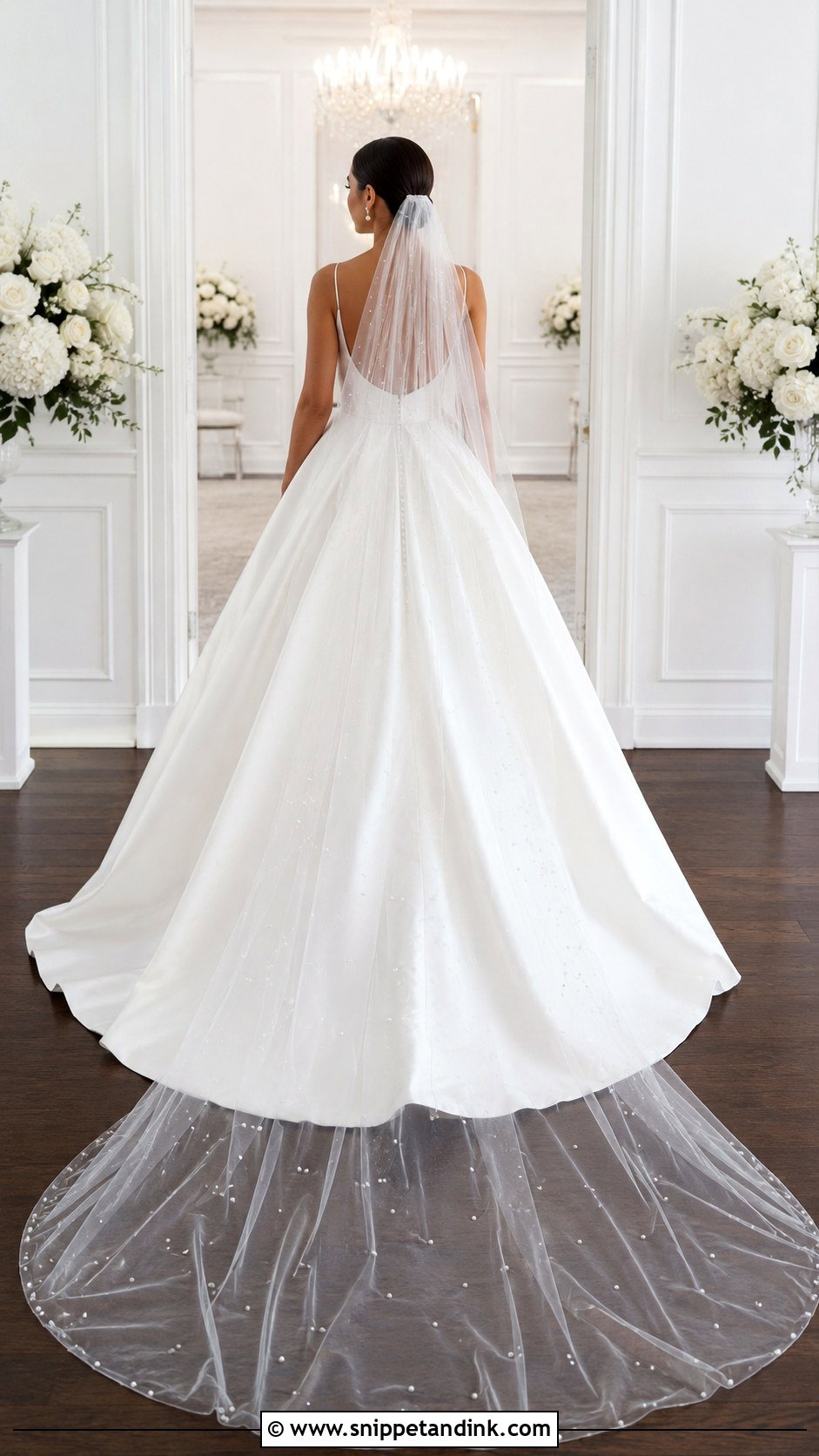
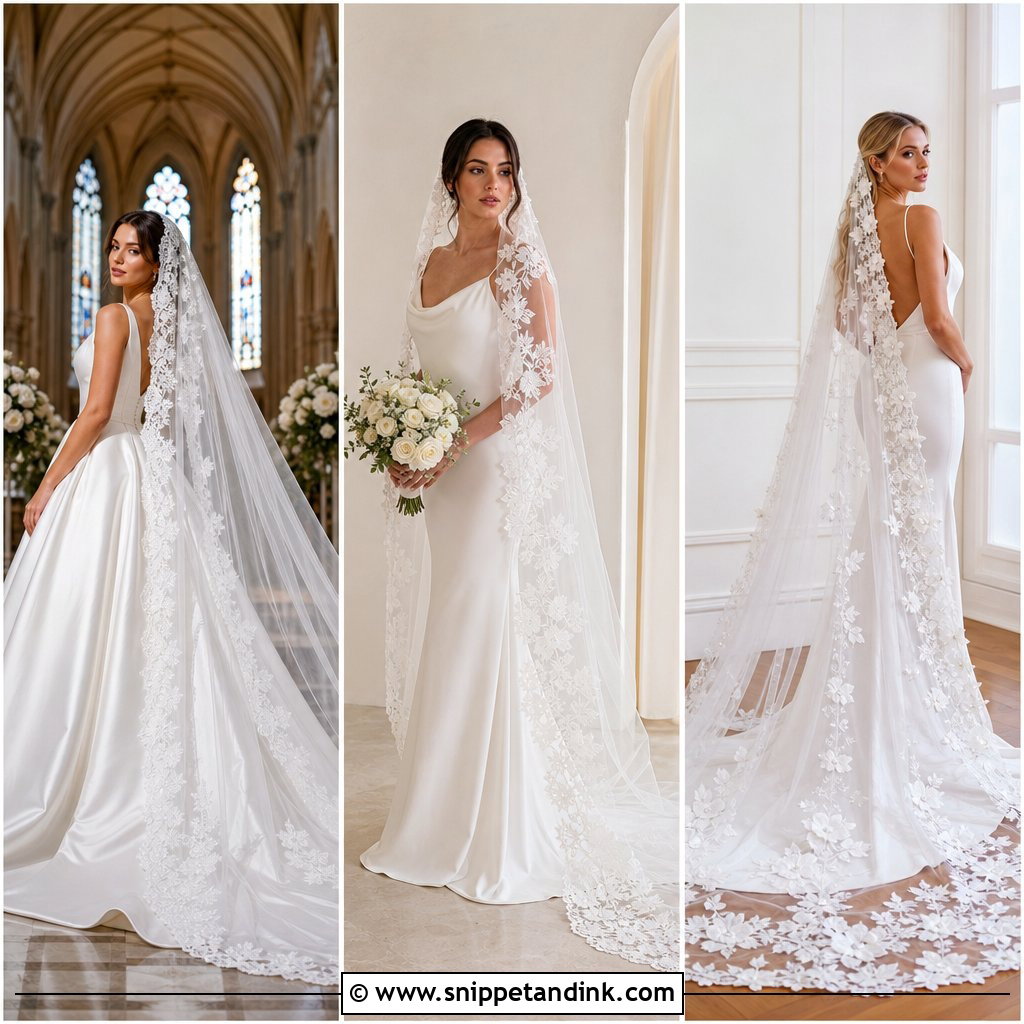
Pearls on a cathedral length suit a plain satin ball gown, pointed ivory heels, pearl drops and a low bun. On strapless, square or off-the-shoulder necklines the veil frames bare shoulders, which is where it earns its place. I decide pearl density by the gown: a simple skirt can take pearls from comb to hem, but a textured or beaded dress needs them weighted toward the bottom edge only. One thing I always warn about is length. Cathedral pearls drag on grass and gravel, so plan who carries the veil between the ceremony and photos.
2. Crystal Beaded Fingertip Veil
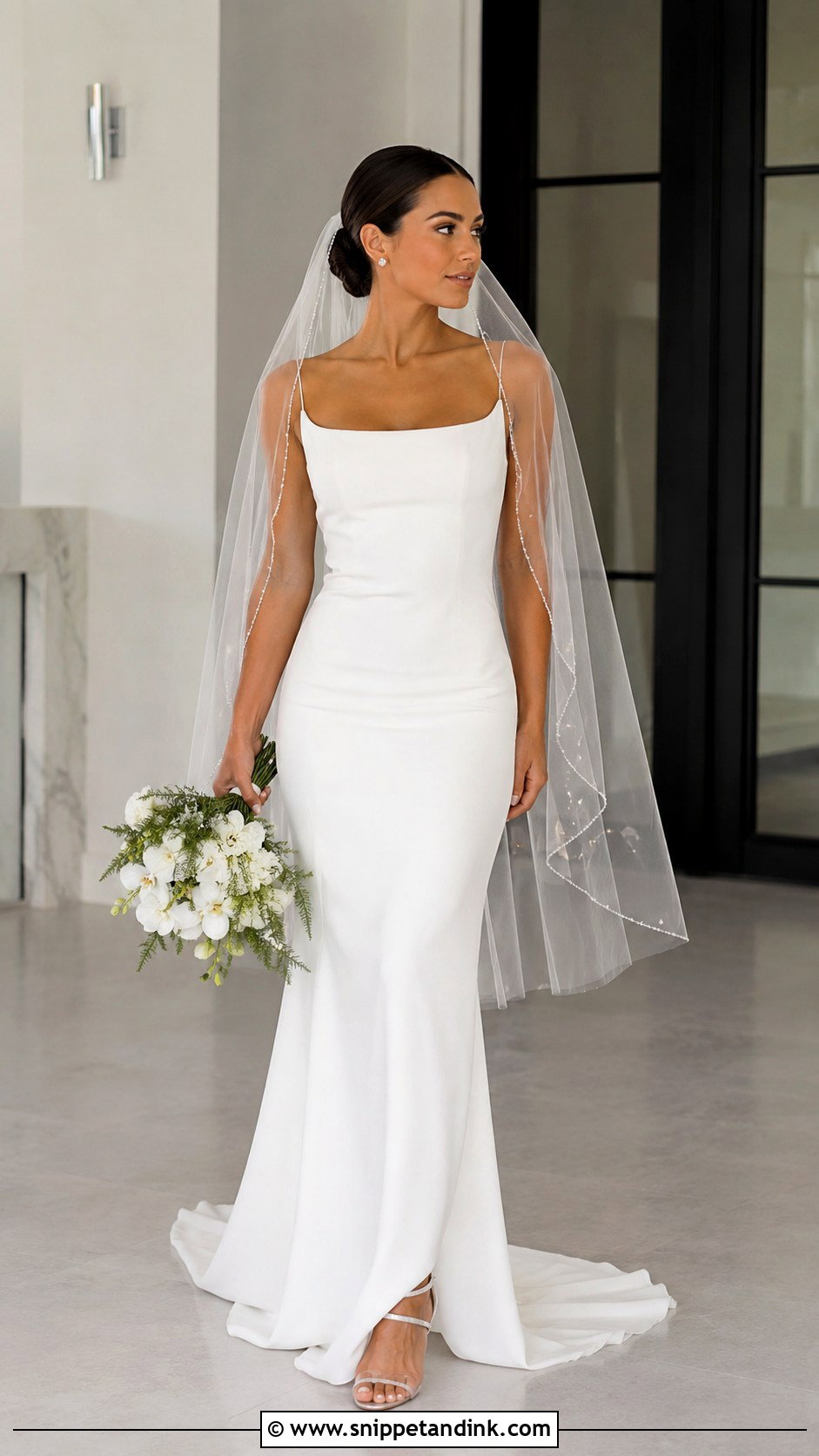
Fingertip length lands around the hips, so a crystal edge catches light at waist level and leaves the skirt of the gown alone. That makes it a strong match for sheath, mermaid and A-line shapes in crepe, with clear or silver heels, crystal studs and a sleek chignon. My rule here is restraint elsewhere. Crystals on the veil plus a crystal belt plus a sparkly clutch start to fight each other in flash photos, so I usually keep jewelry to studs.
3. Scattered Pearl Beaded Veil
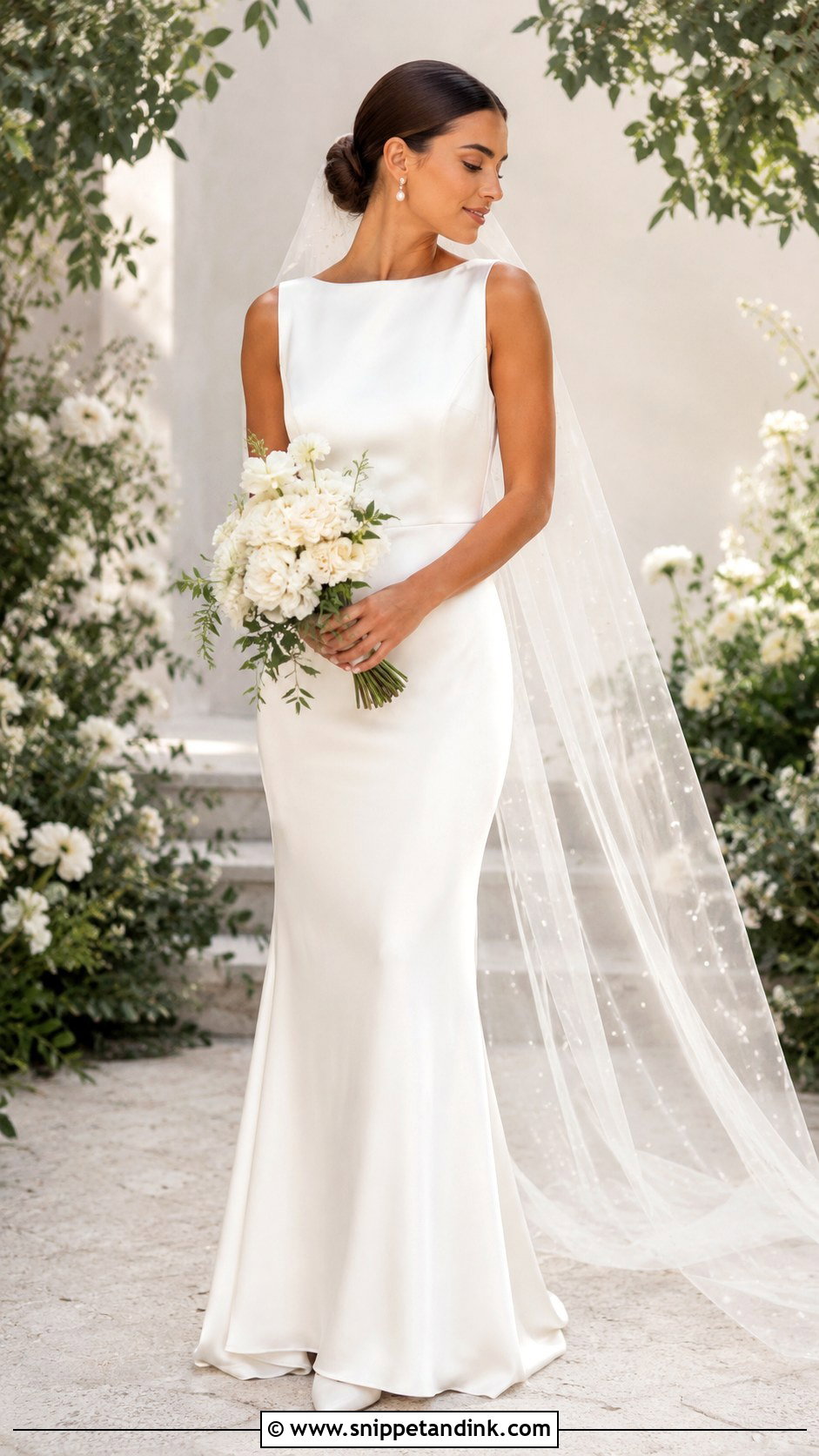
Scattered pearls give a plain satin, mikado or crepe dress texture without changing its line. Small pearls spaced widely read as a light dusting; mixed sizes read as deliberate decoration, which is better if the gown has nothing else going on. Pearl earrings, a fine bracelet, closed-toe pumps and a smooth bun or loose waves finish it. I check one practical thing at a fitting: hand-sewn pearls sit flatter and survive a hug, while glued ones can pop off on the dance floor.
4. Beaded Edge Chapel Veil
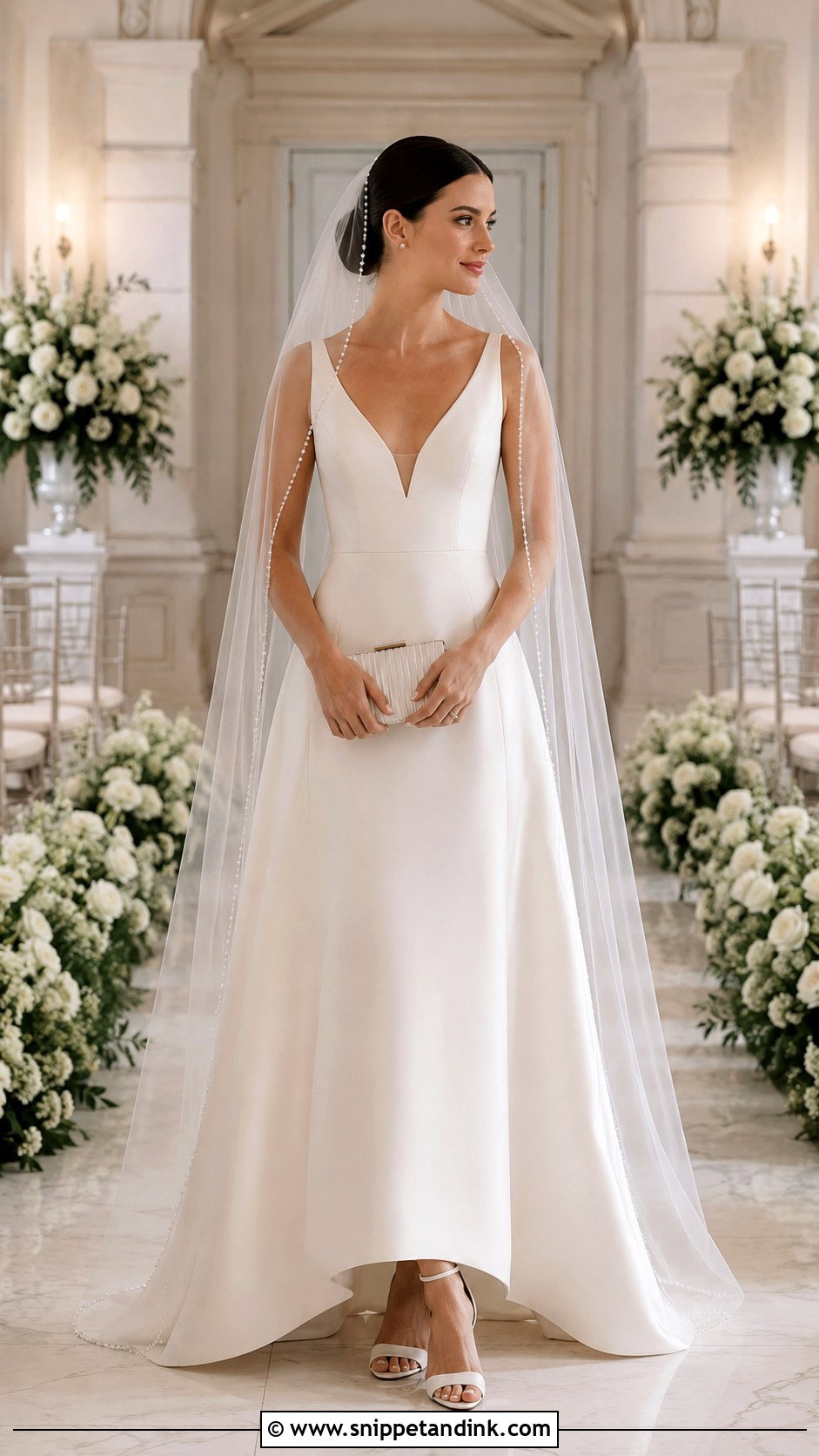
If cathedral feels like too much fabric to manage, chapel length gives you a short trail behind the gown and a clear, defined outline thanks to the beaded border. Pair it with an A-line dress, ankle-strap heels, a structured clutch and a soft updo. The border is what makes the veil visible in ceremony photos taken from the back of the room. Match bead tone to the dress: a pure white crystal border can make an ivory gown look dingy beside it.
5. Beaded Lace Veil
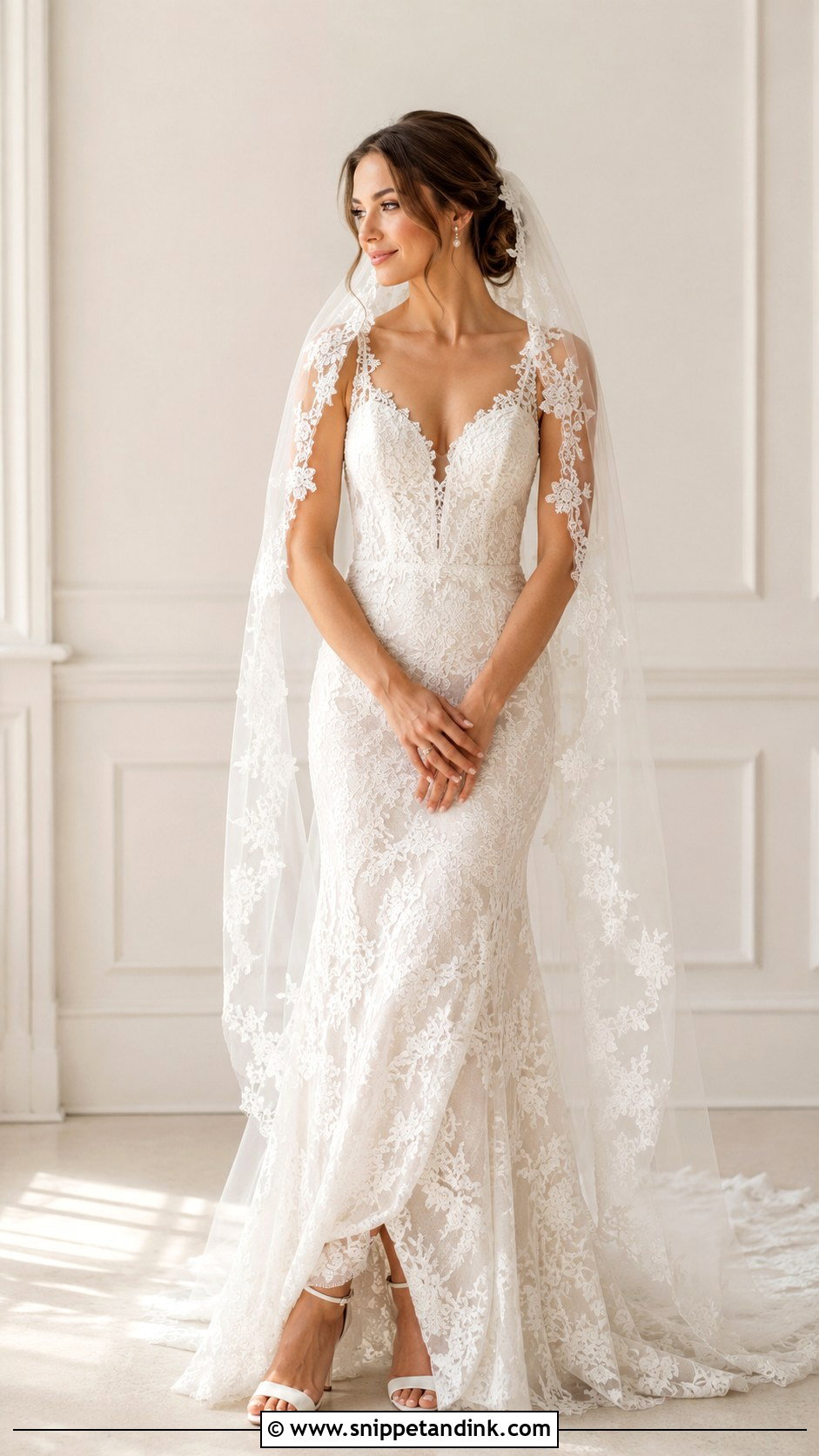
A lace veil with beading is a lot of detail, so I only put it with a lace gown or a very plain one. When the dress already has lace, I look for a veil where beads sit only on the lace border, or where the lace pattern is close to the gown’s motif; two different lace designs touching at the shoulders looks accidental. A loose low bun, pearl earrings and soft ivory heels keep the rest quiet. Long sleeves and fitted vintage shapes are where this veil looks most at home.
6. Beaded Blusher Veil
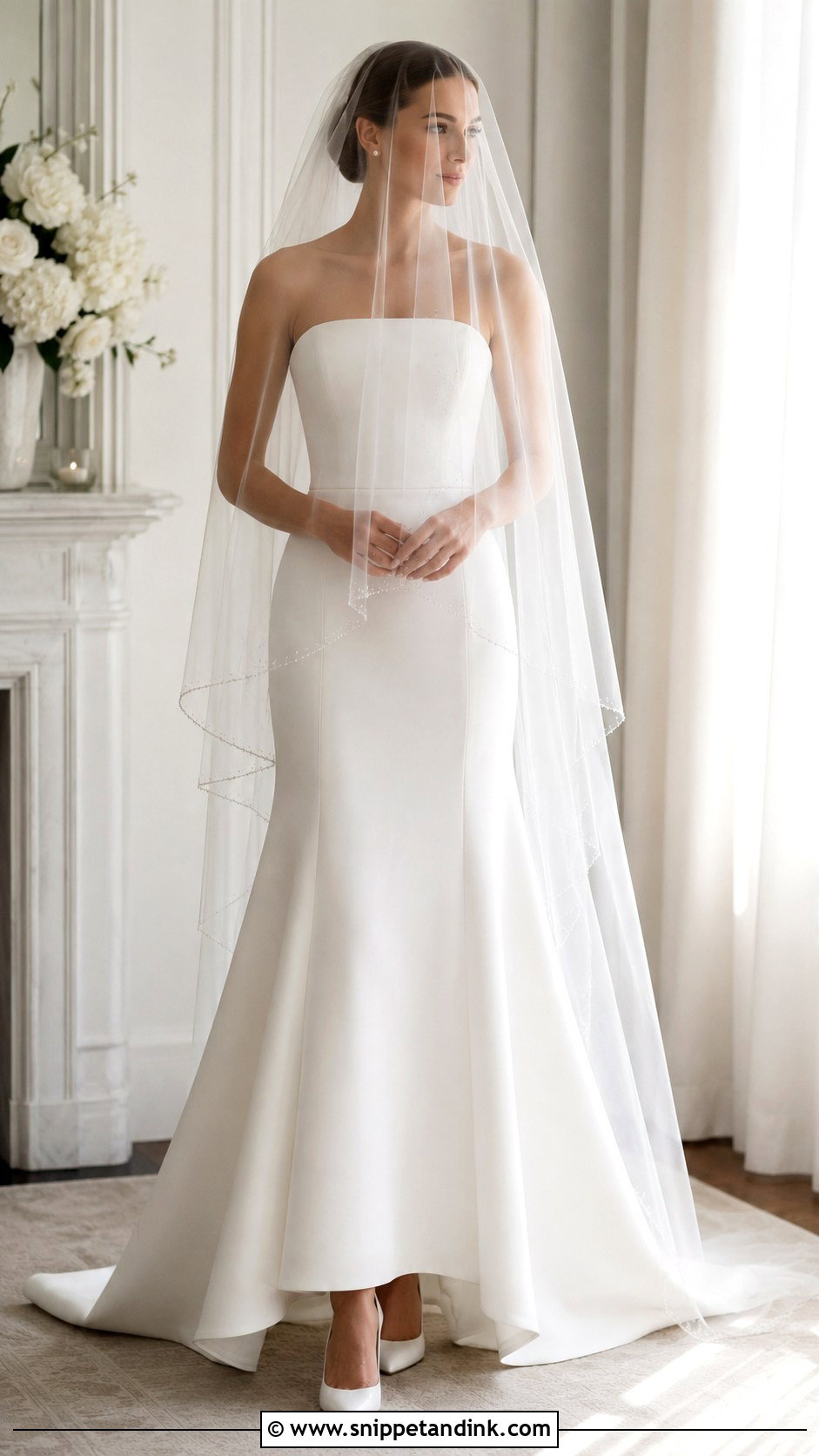
A beaded blusher veil gives you the face-covering ceremony moment, then flips back for portraits. I keep the beading light on the front layer for two reasons: heavy beads make the blusher swing stiffly when it is lifted, and beads near the face can catch on lashes or lipstick. A strapless gown, satin pumps, pearl studs and a smooth bun suit it. Practise the lift with whoever will do it, because a beaded edge needs to be raised from the corners, not grabbed in the middle.
7. Beaded Birdcage Veil
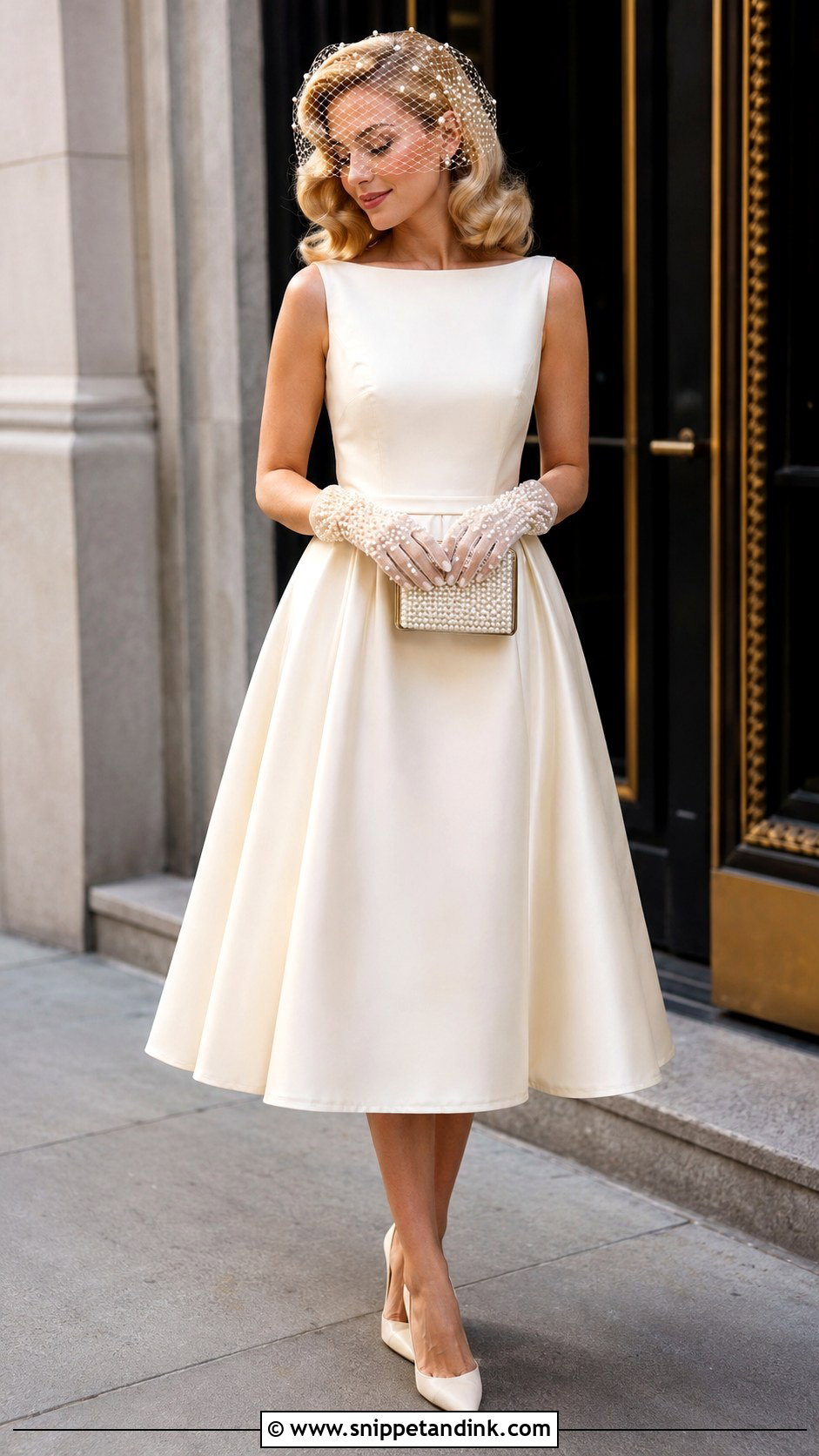
Birdcage veils are short, structured and a little retro. I like them with a tea-length dress, pointed pumps, pearl gloves or a small clutch, and a clear red or soft pink lip. Beads can sit on the netting, the comb or the edge. Courthouse ceremonies, city weddings and second looks suit it best. I’d skip it if you love a soft flowing silhouette, because the netting reads crisp and tailored, so the dress should be too.
8. Beaded Juliet Cap Veil
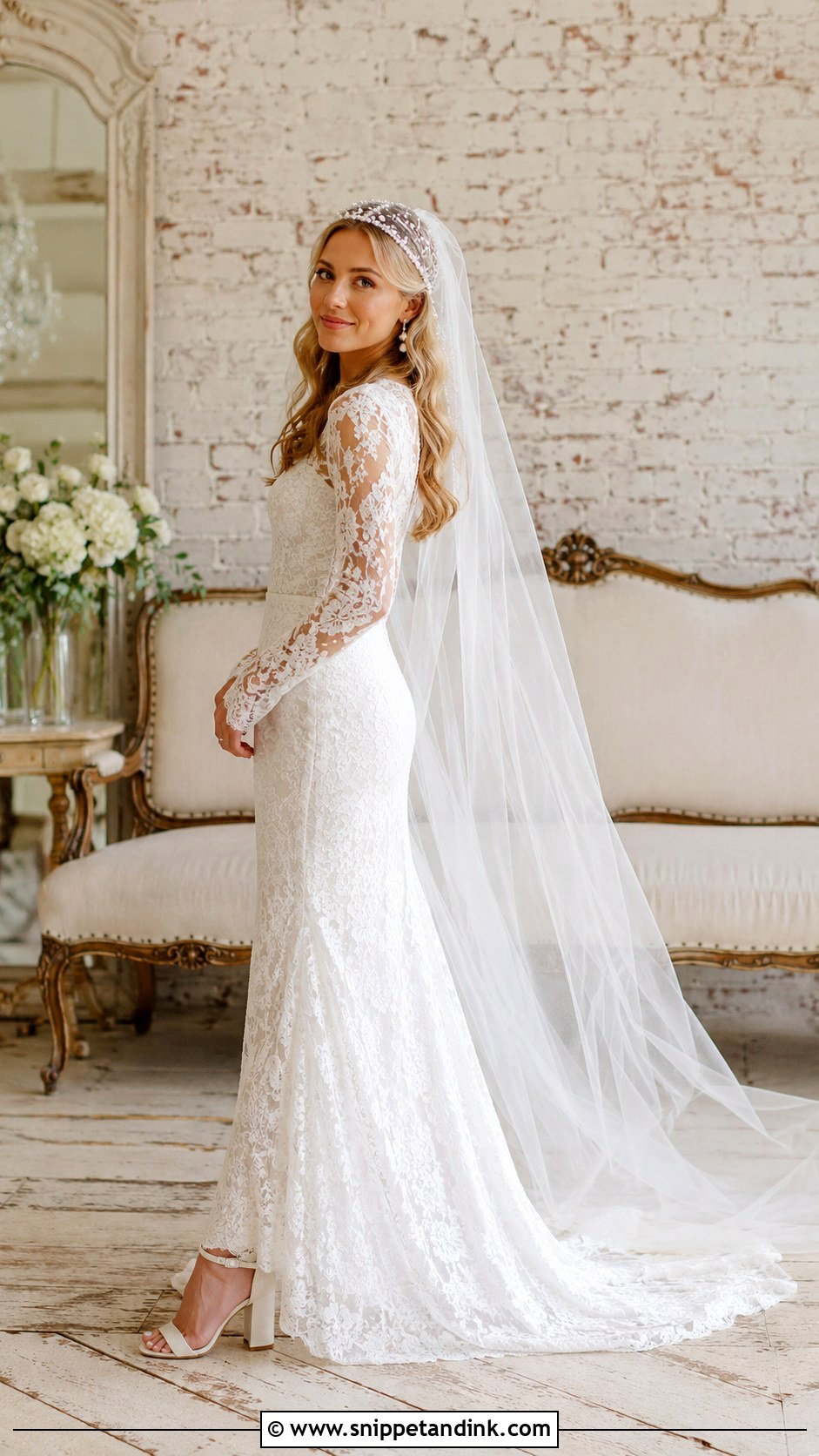
The Juliet cap hugs the crown, and its beading usually runs around the band or along the seams, which gives it a handmade, heirloom feel. It wants a long-sleeve lace gown, satin block heels, small earrings and loose waves tucked under the cap. Fit matters more than with any other veil here: I check it at a trial with your actual hairstyle, since a cap sized on flat hair will sit high and wobble once the waves add volume. Structured modern gowns rarely suit it.
9. Pearl And Crystal Beaded Veil
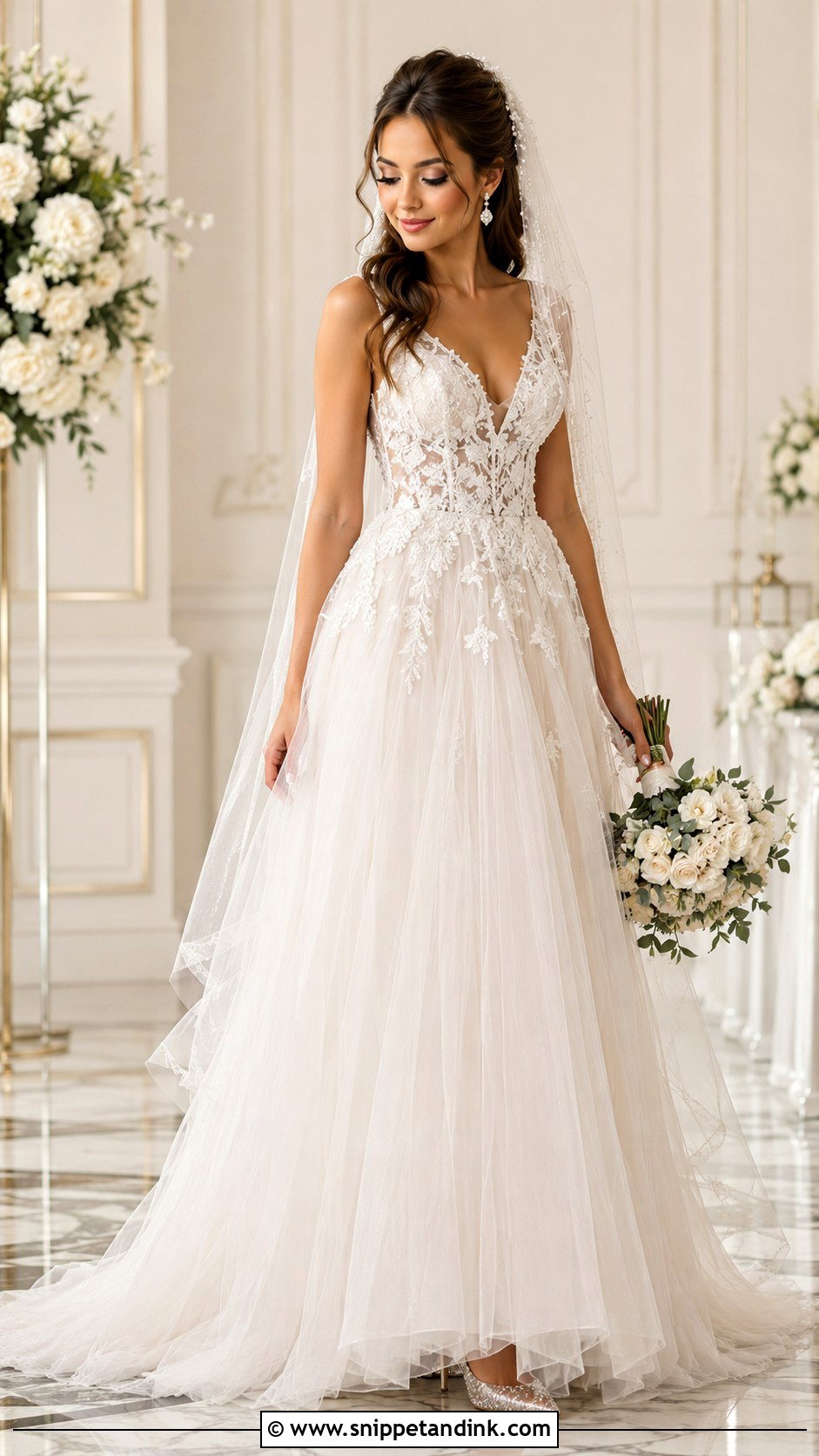
Pearls soften and crystals throw light, so a veil with both has more depth than either alone. With a romantic tulle gown, glitter heels, pearl-and-crystal earrings and a half-up style, it reads complete. The deciding factor is the bodice. Heavily embellished? Go lighter on the veil. Plain? A denser mix carries the look. Small beads give a shimmer you notice up close; larger accents show from the back pews.
10. Beaded Floral Veil
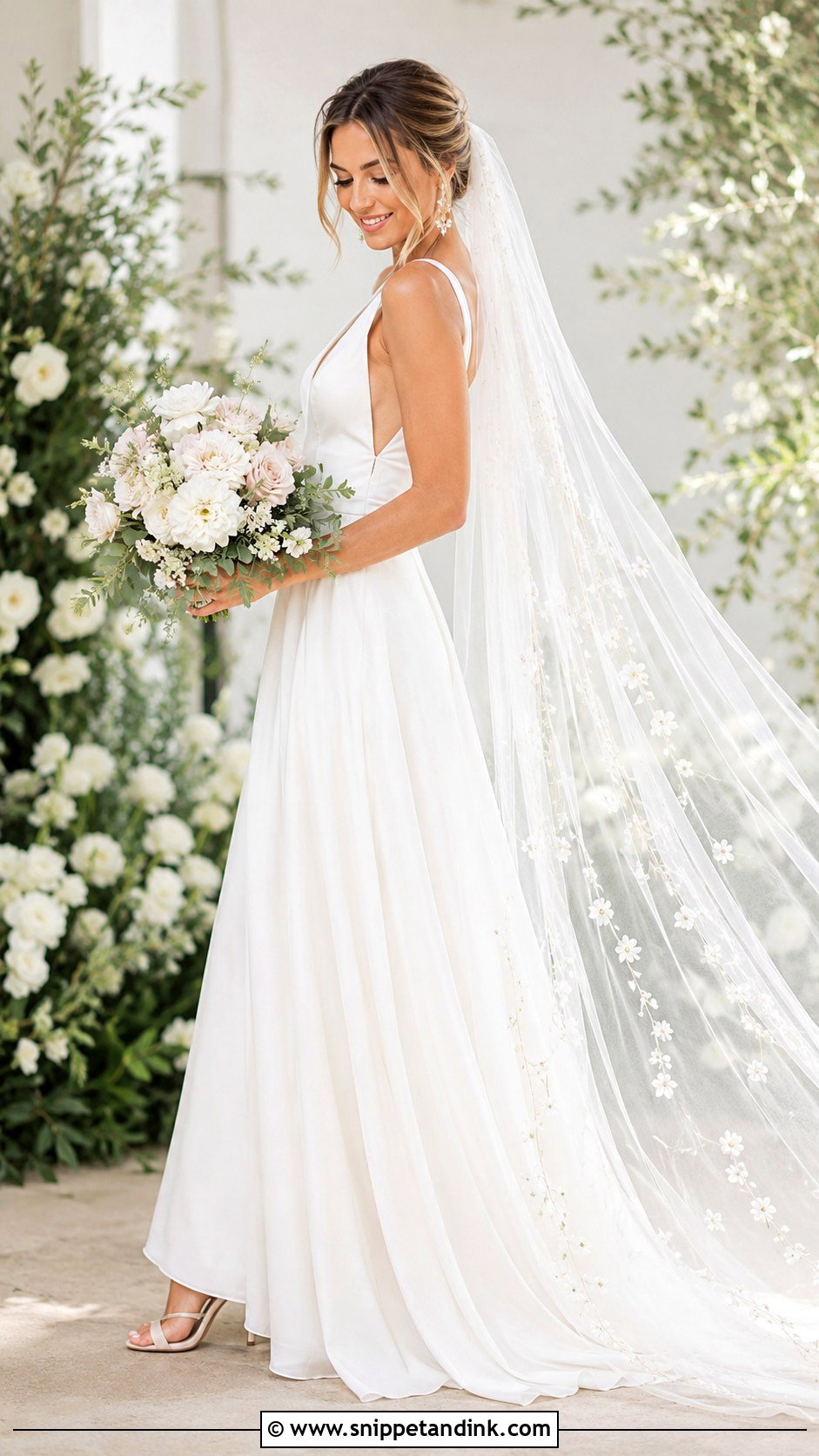
Beaded floral veils outline embroidered flowers, vines or scattered blossoms across the tulle. I pair them with a flowing A-line gown, floral earrings, ivory heels and a loose bun with a few face-framing pieces, mostly for outdoor and spring weddings. Scale is my test. Large motifs need a simple dress; tiny flowers can sit happily over lace or embroidery. Outdoors, raised appliqués also catch the wind more than flat beading, so weight the veil well.
11. Beaded Mantilla Veil
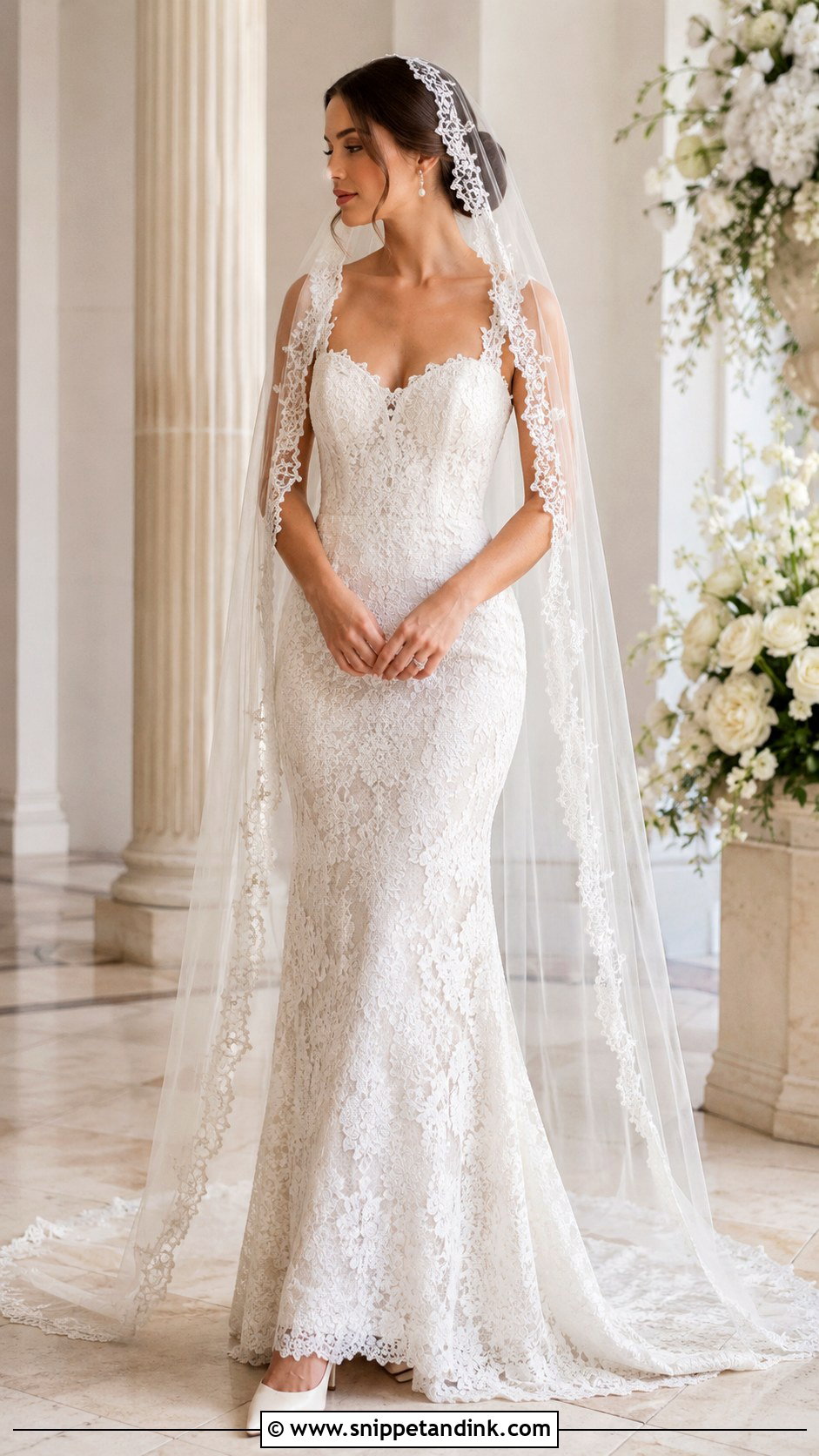
A beaded mantilla veil frames the face and shoulders with its border, and the beads actually help: weight on the edge makes the circular cut drape smoothly instead of flaring. Wear it with a fitted lace dress, pearl earrings, classic pumps and a low bun set near the nape. A mantilla sits close to the head, so I keep the hair low and flat at the crown; height pushes the lace up into an awkward peak. Ivory pearls or clear crystals, matched to the gown’s tone, are the usual choice.
12. Beaded Drop Veil
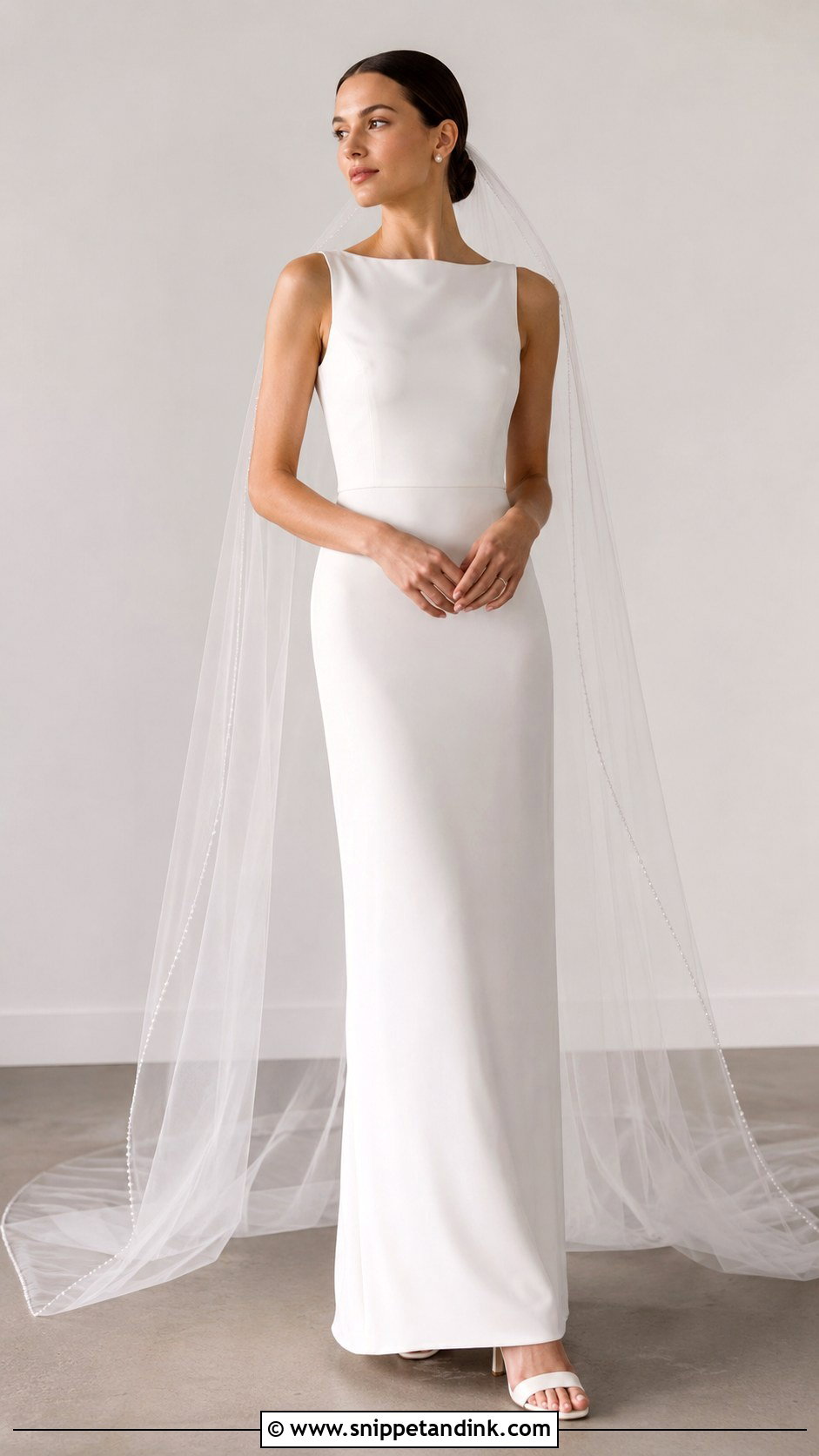
A drop veil has no gathers at the comb, just a single layer that falls straight, so it floats rather than puffs. A fine beaded edge keeps that outline visible against the dress. I style it with a clean column gown, satin heels, pearl studs and a smooth centre-part bun. Because there is no gathering to hide the attachment, drop veils usually need a band or extra pins, and I always test them on the hair before the day. If you want a blusher effect without a gathered comb, this is the one.
13. Beaded Waltz Length Veil
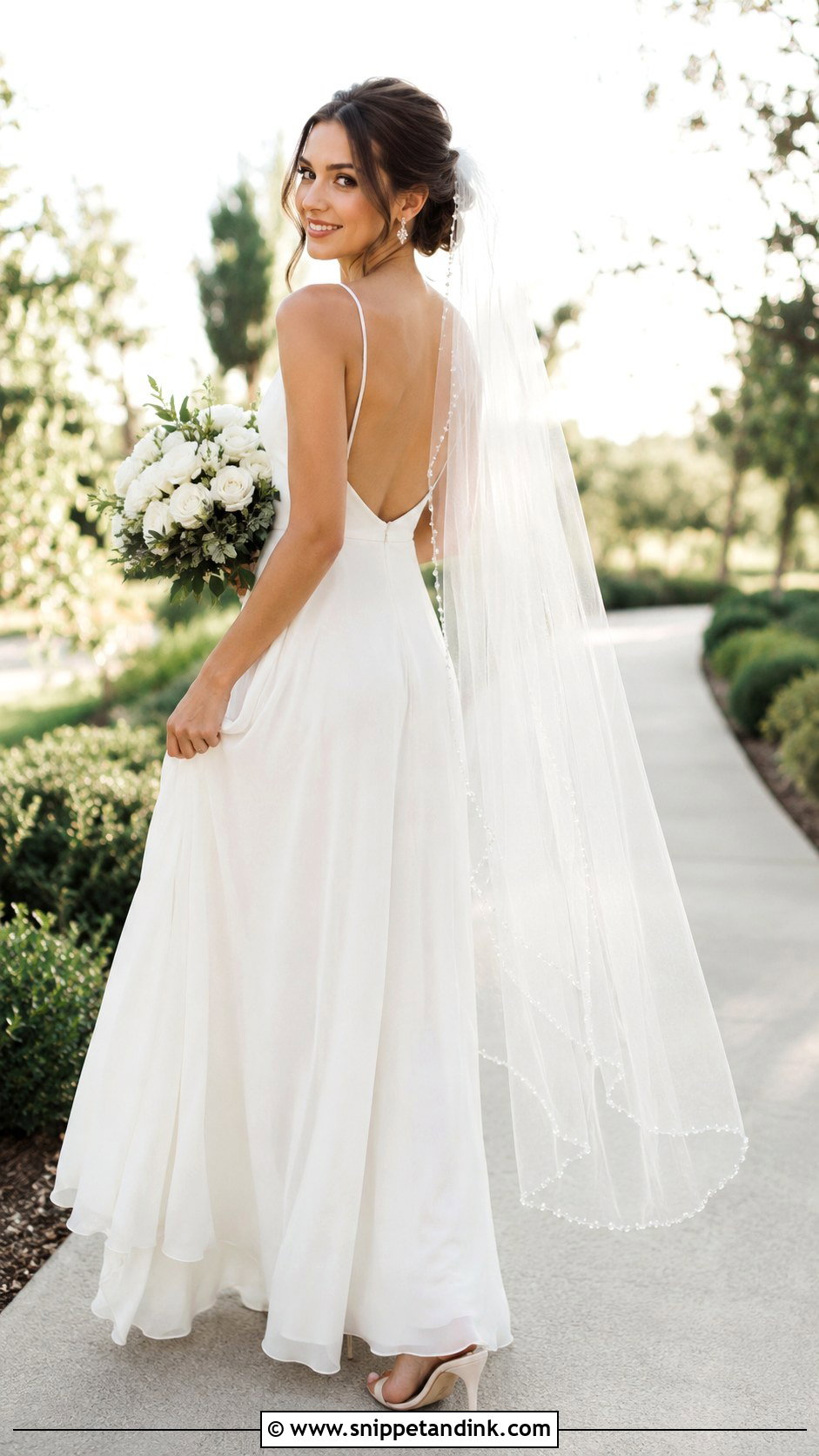
Waltz length falls between fingertip and floor, roughly at the calf or ankle, so you get movement without a train to manage. Pair it with a soft tulle or chiffon gown, low heels, drop earrings and a relaxed updo. Beads can scatter lightly or sit on the edge. I suggest this length to brides who want to keep the veil on for dancing, since it won’t get stepped on as easily as a cathedral. For outdoor venues, though, edge beading helps more than scattered beading to stop it lifting.
14. Beaded Elbow Length Veil
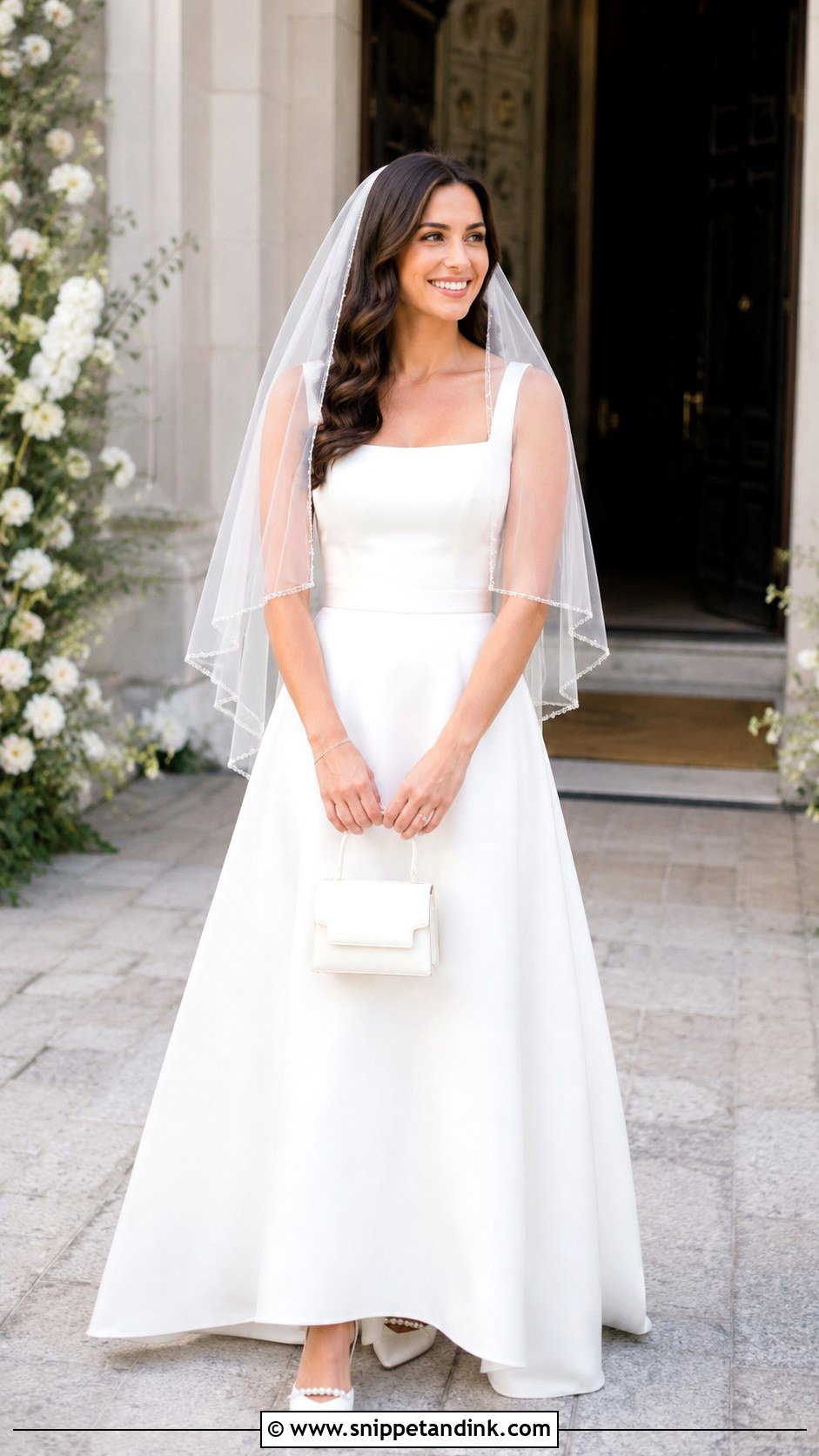
Elbow length ends at the waist, which draws the eye there, so it suits defined bodices, belts and fuller skirts. Try it with a tea-length or A-line dress, pearl pumps, a small top-handle bag and soft curls. A beaded edge stops the short layer from looking plain. It is also my go-to when a gown has a detailed train that a longer veil would hide. Intimate weddings and daytime ceremonies suit it well.
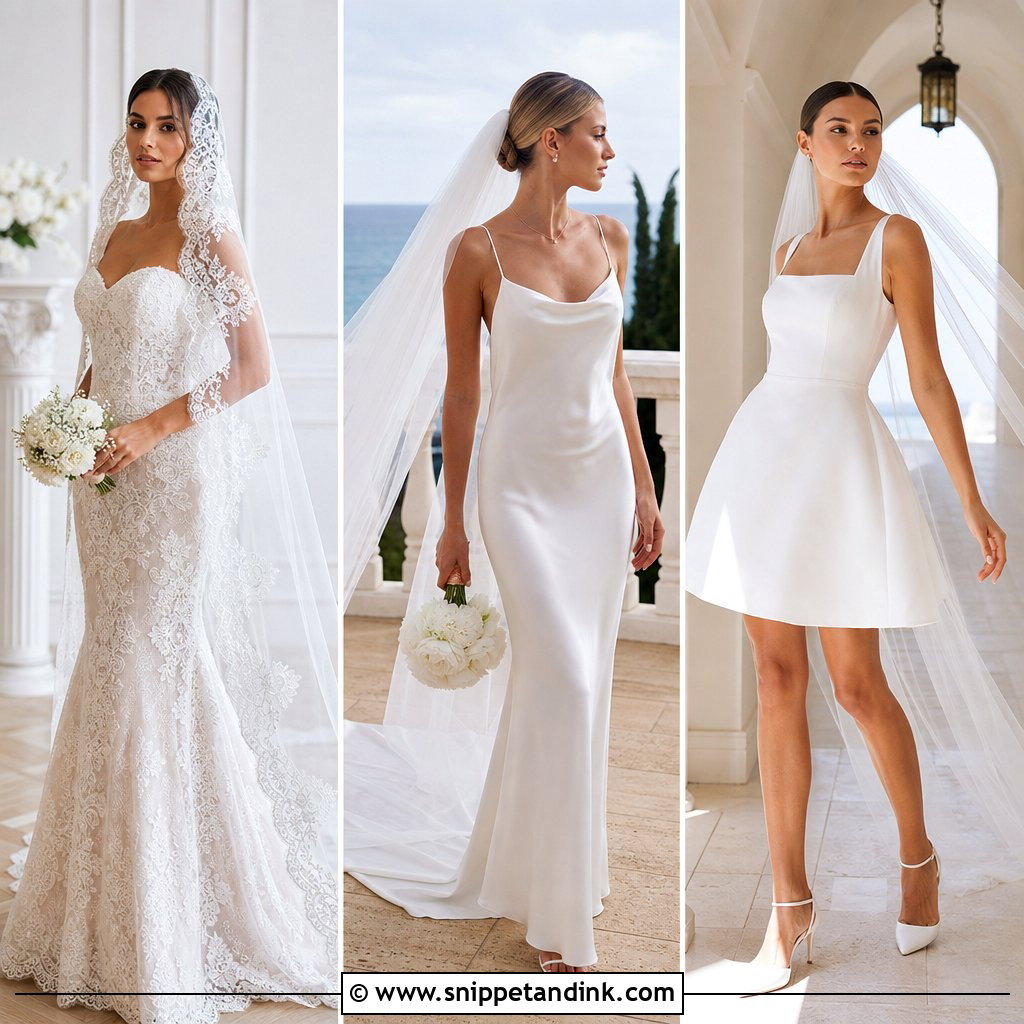
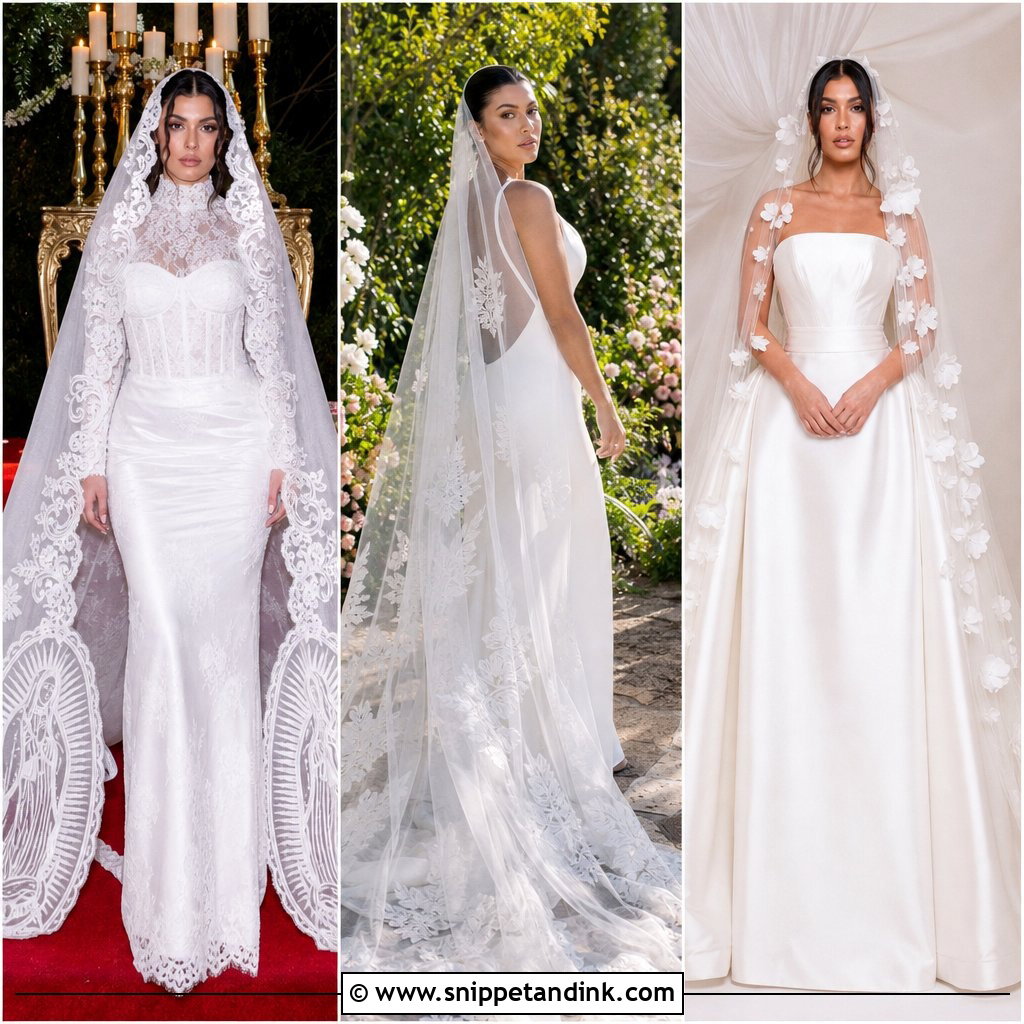
15. Beaded Shoulder Length Veil
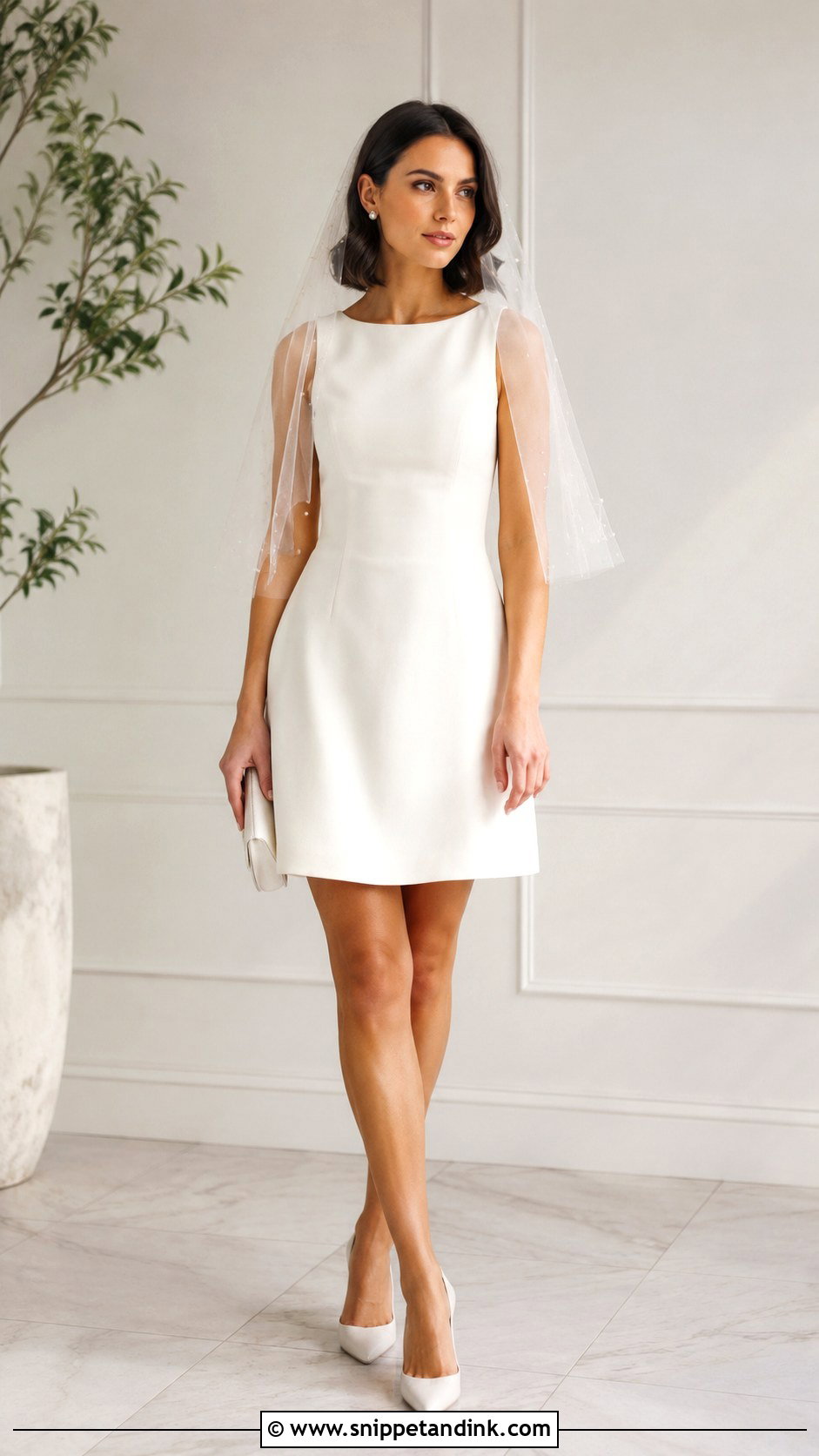
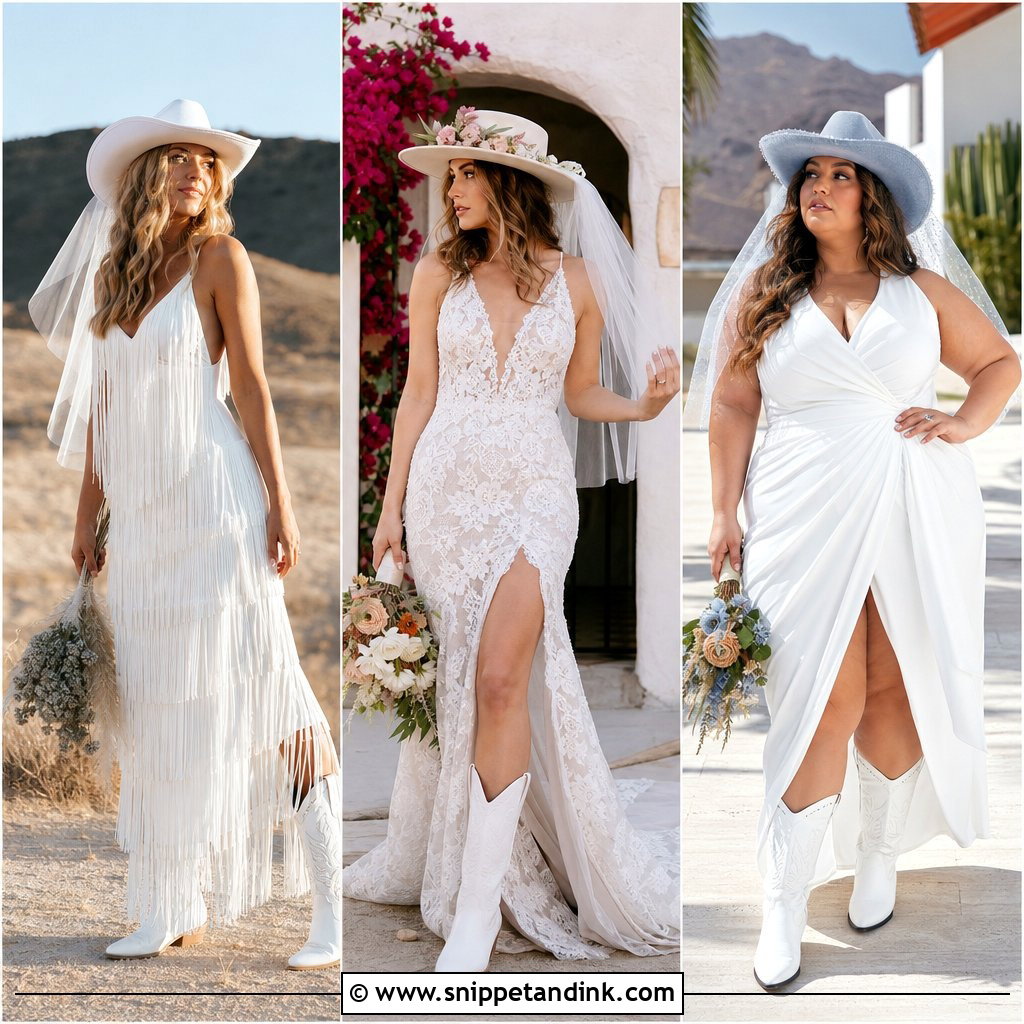
A short, shoulder-length veil goes with mini dresses, jumpsuits and simple sheaths, finished with pointed heels, pearl studs, a sleek clutch and a polished bun or bob-length waves. I keep the beading delicate here, since anything heavy at this length sits right against the cheeks and collarbones and can scratch. It’s the veil I suggest most often for civil ceremonies and reception changes, because it still reads as bridal without any tulle to manage.
16. Beaded Cathedral Veil With Simple Dress
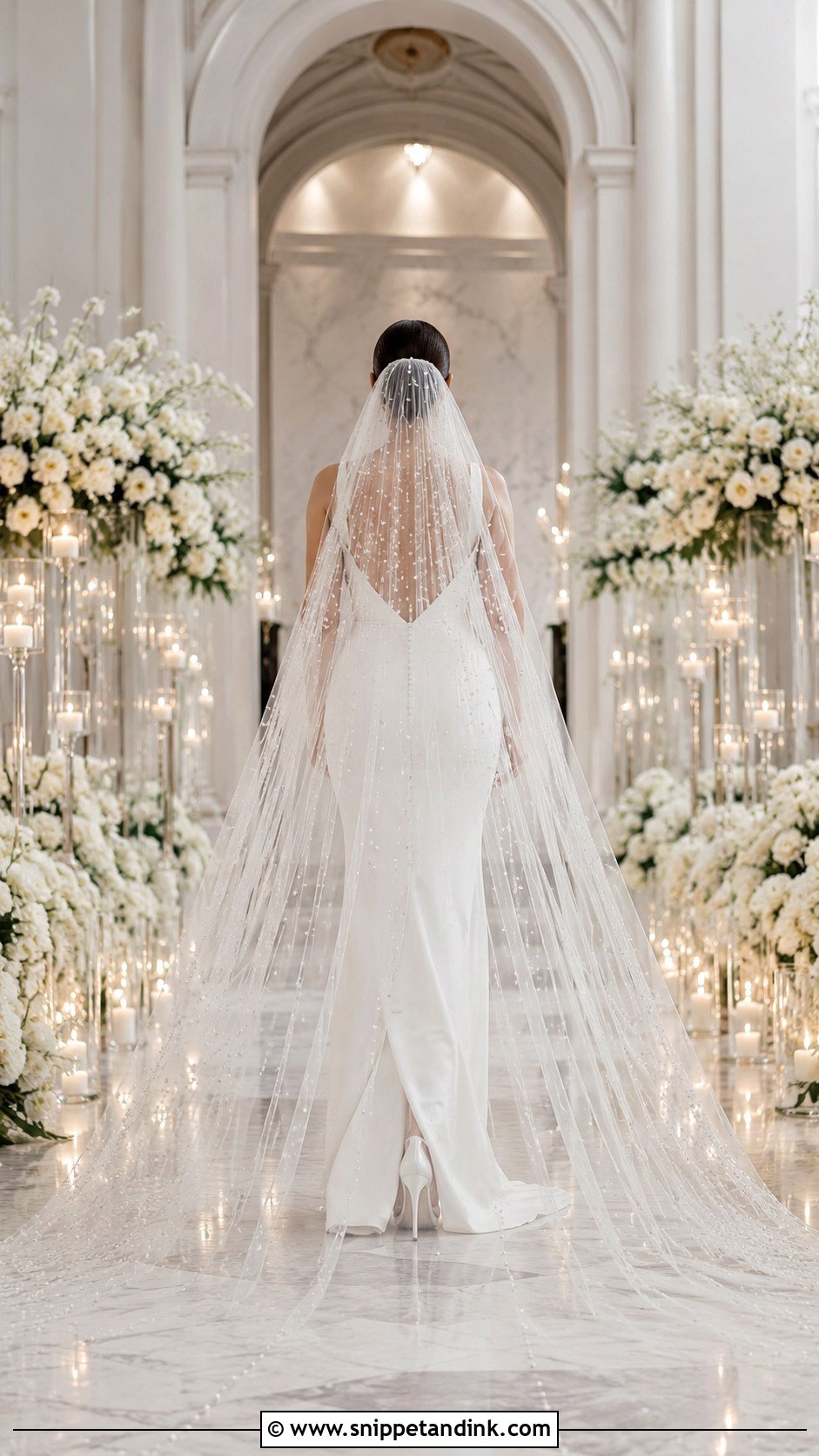
Putting a heavily beaded cathedral veil over a plain dress is one of the simplest ways to make a minimalist gown feel unforgettable. Start with clean satin or crepe, add a long veil with pearl, crystal or seed bead detail, then sleek heels, small earrings and a low bun. The contrast does the work: smooth gown, textured veil. One honest caveat is that a long, heavily beaded veil can weigh enough to pull at the comb, so I anchor it with extra pins criss-crossed under the bun.
17. Beaded Veil With Satin Gown
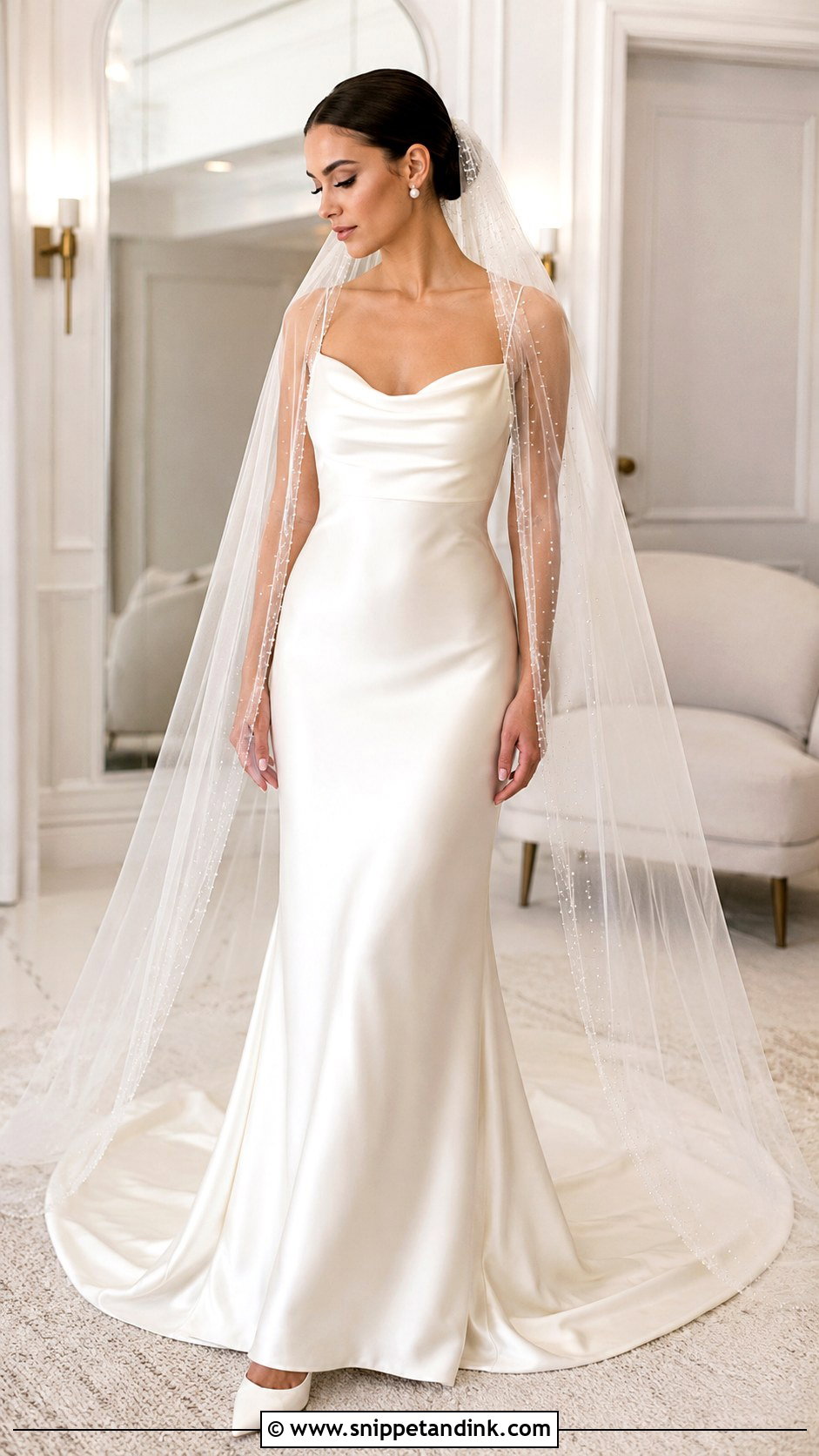
Satin glows softly while beads give off sharp points of light, and that contrast is why the pairing works. Pair a satin ball gown or slip dress with pearl accents, crystal edging or tiny seed beads, plus satin pumps, pearl earrings and a clean bun. If the satin is completely plain, I let the veil carry more beading. Drapes, bows or a dramatic neckline mean a lighter veil. Watch the beads where the veil rests on your back: rough-cut crystals can pull threads on silk satin, so smooth pearls or a beadless band at the top is safer.
18. Beaded Veil With Lace Dress
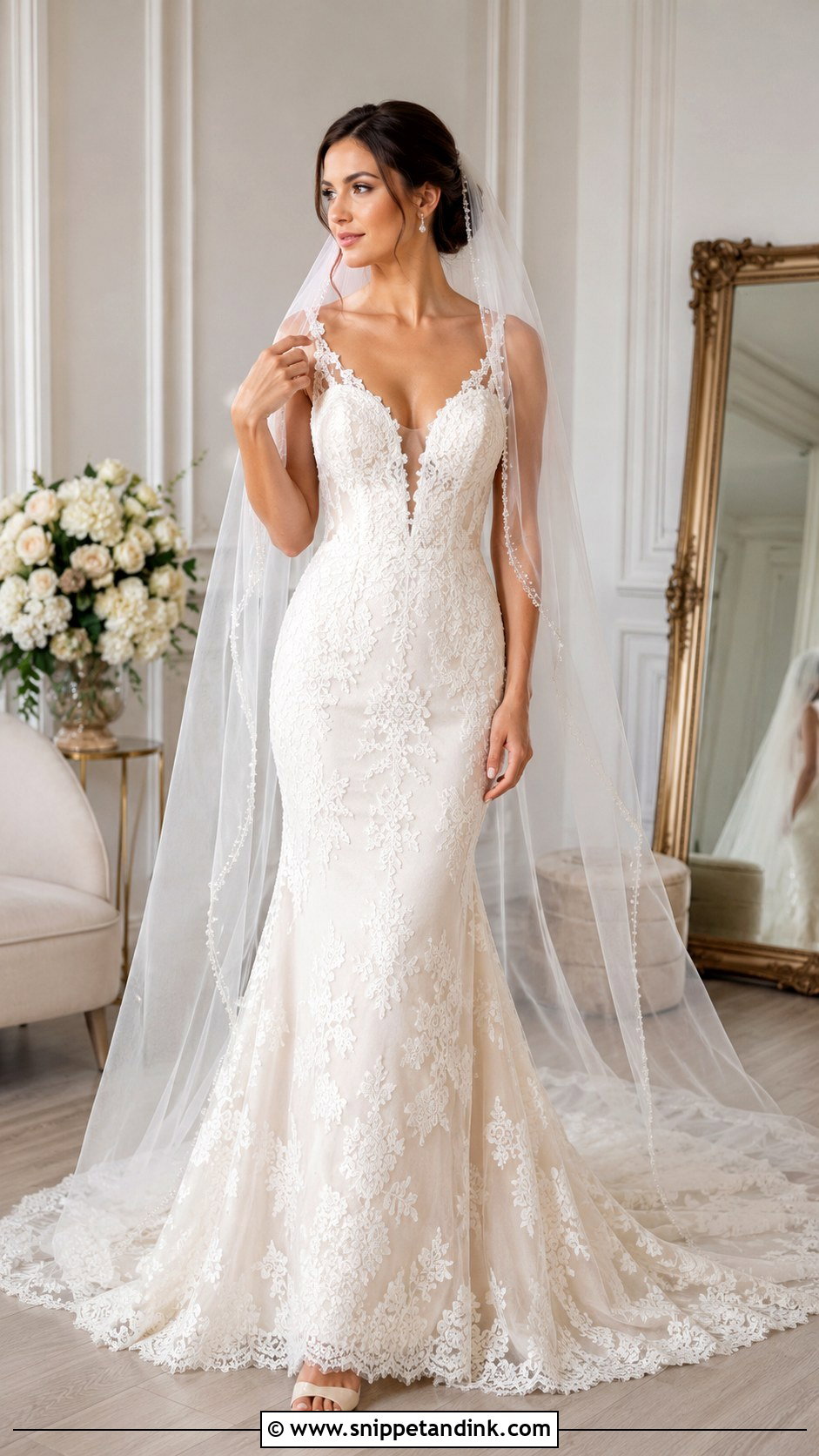
Lace plus beads needs a plan, or the outfit tips into busy. I match beadwork to the dress: pearls with floral lace, small crystals with fine embroidered lace. A heavily patterned gown gets a veil with just a beaded edge; subtle lace can take scattered beads or beaded floral motifs. Ivory heels, small earrings and a soft updo complete it. I also check for snagging at a fitting, because beads on tulle can catch in open lace and lift threads when you turn your head.
19. Beaded Veil With Tulle Ball Gown
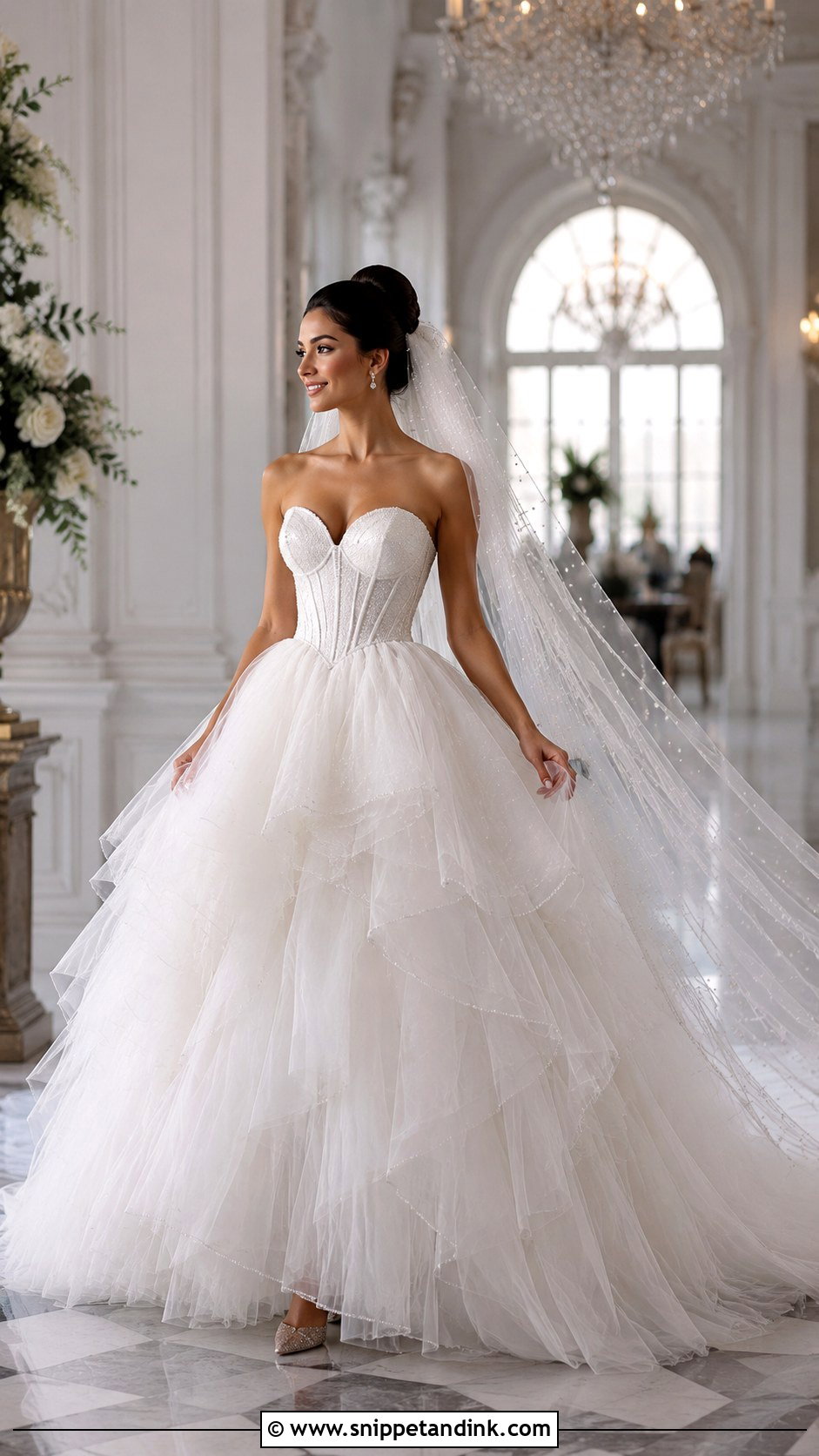
A tulle ball gown and a beaded veil together give you a fairytale bridal look with plenty of movement. I put it with a structured bodice, layered skirt, sparkling heels, delicate earrings and a classic bun. Pearl scatter blends into airy tulle; crystals add light in a large, dim venue. The skirt already has volume, so the veil should be soft rather than stiff, and chapel or cathedral length extends the line without competing. Expect to need help with both layers on stairs.
20. Beaded Veil With Mermaid Dress
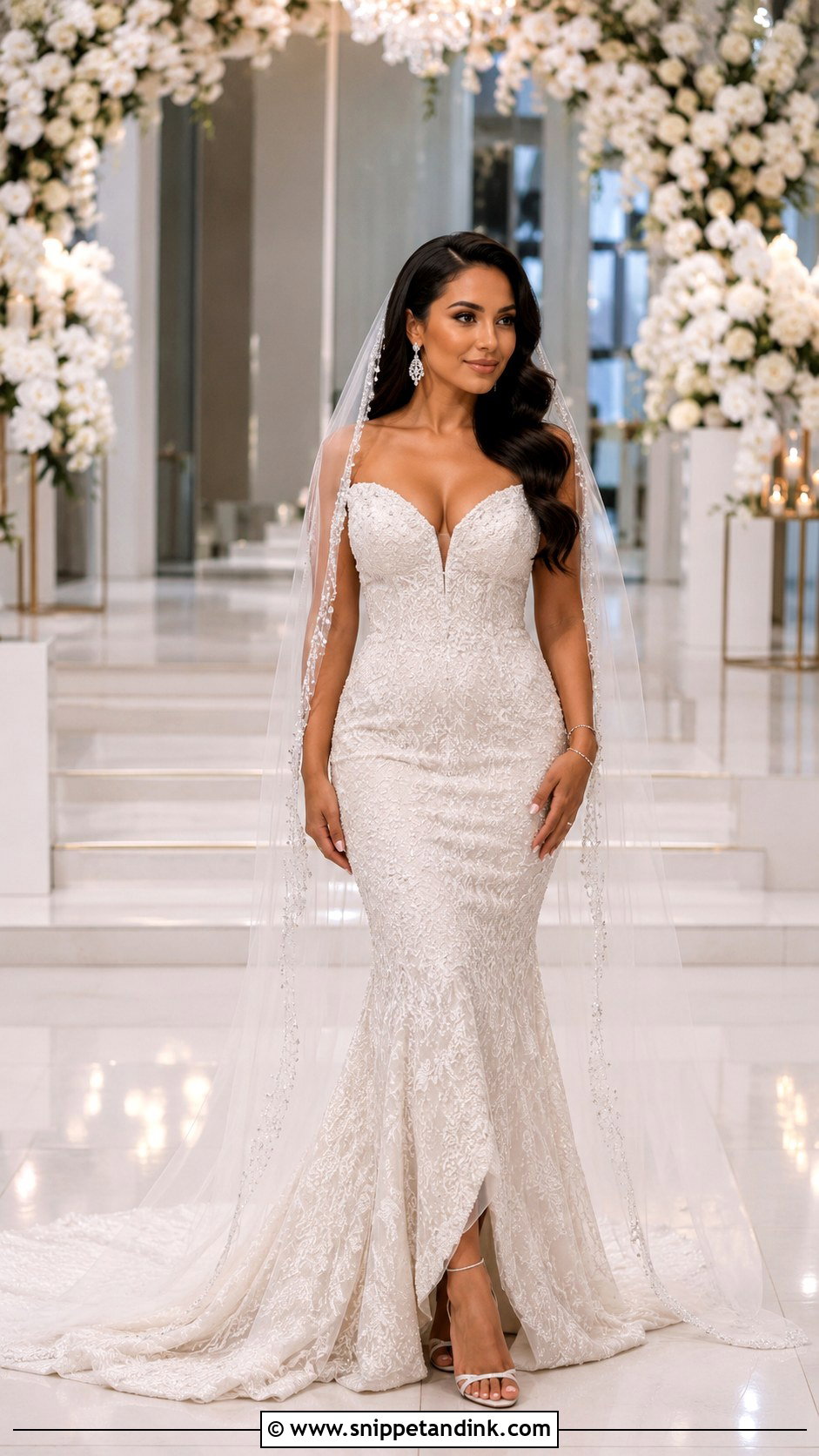
A mermaid gown has a strong outline, and a long beaded-edge veil softens it while keeping the glamour. The rule I hold to is length: the veil must fall past the flare, or it cuts the silhouette at the knee and makes you look shorter. Strappy heels, statement earrings and smooth waves or a low bun suit it. Crystal edging adds shine; pearl edging looks softer. Heavily embellished dress? Pick a narrow beaded border. Plain crepe or satin can carry more detail.
21. Beaded Veil With Off Shoulder Dress
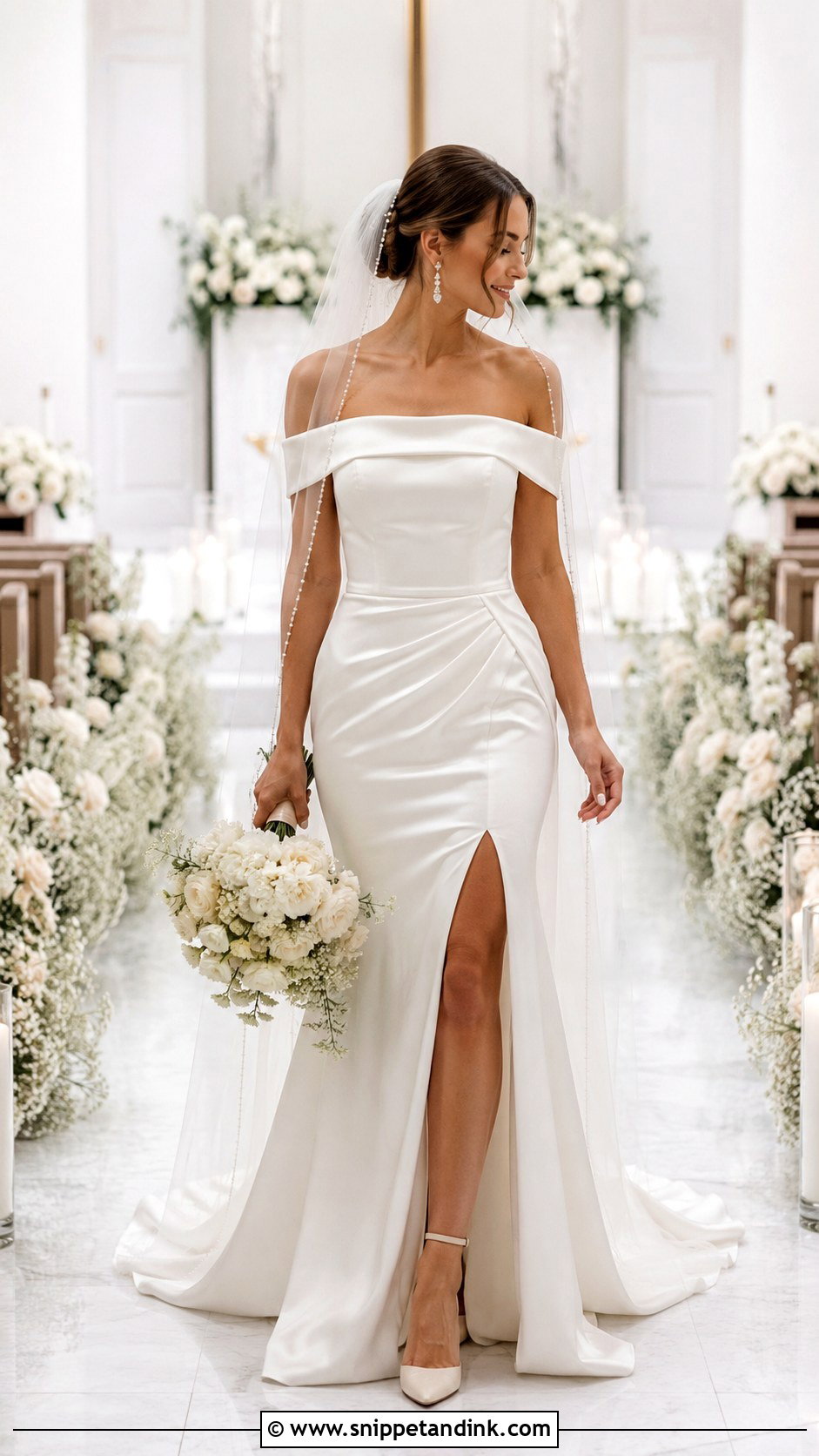
An off-the-shoulder neckline already frames the face, so the veil should support it, not cover it. I’d put a soft chapel or cathedral veil with pearl edging over satin, lace or crepe, with ivory heels, drop earrings and a low bun that leaves the shoulders bare. Where the comb goes matters most. Set it below the bun and the veil falls behind the shoulders; set it high and the tulle sweeps across them and hides the neckline you chose the dress for.
22. Beaded Veil With Long Sleeve Dress
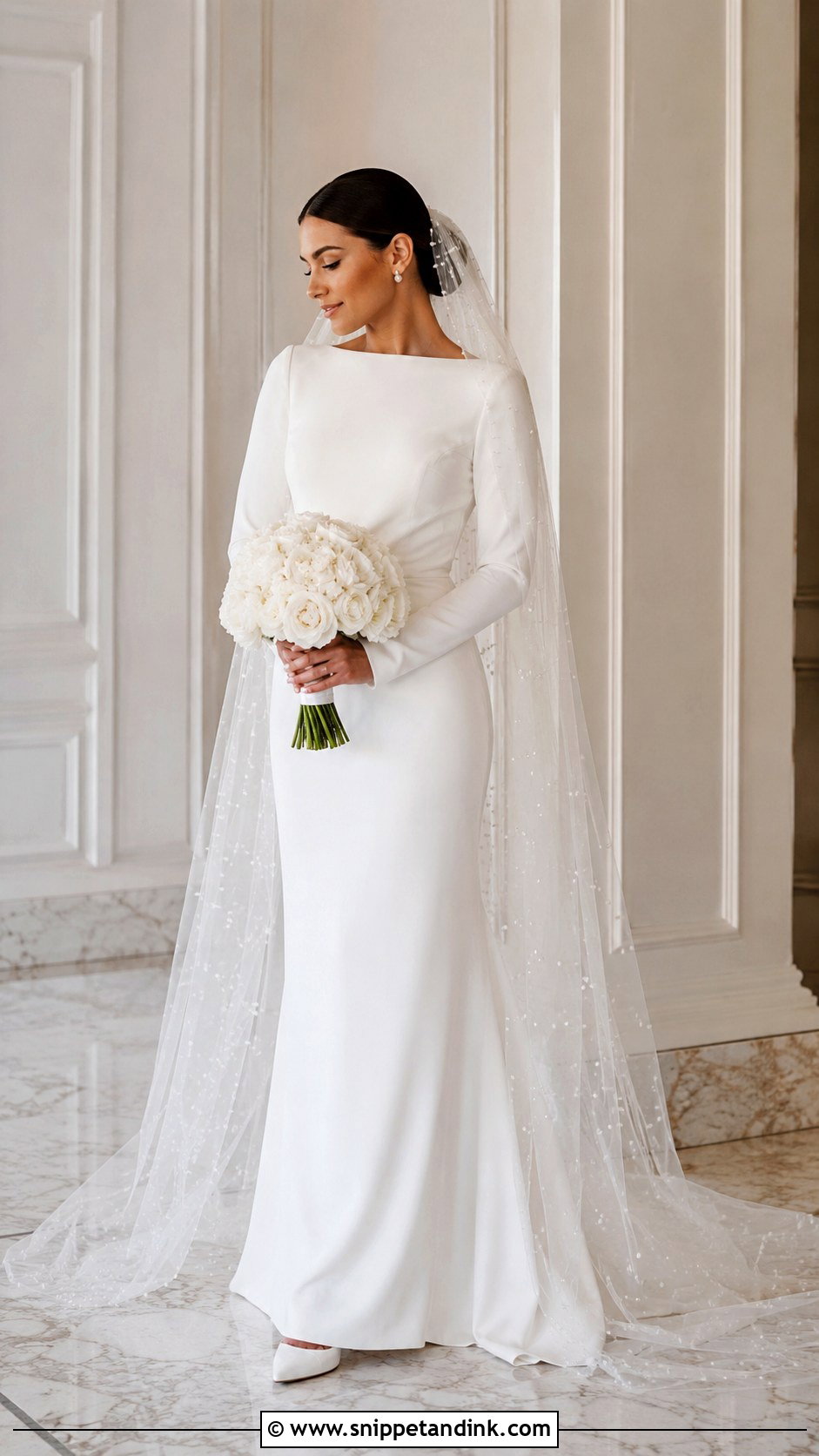
Long sleeves bring structure, and the veil’s job is to add lightness around the face and back. Lace or embroidered sleeves call for a fine beaded edge only. Plain crepe or satin sleeves can handle scattered pearls or crystals. Closed-toe heels, small earrings and a polished bun keep it tidy. I often see this combination at cooler-season and formal weddings, and the one fitting check I insist on is lifting your arms: beads on the veil can catch on sleeve lace or buttons.
23. Beaded Veil With Bridal Jumpsuit
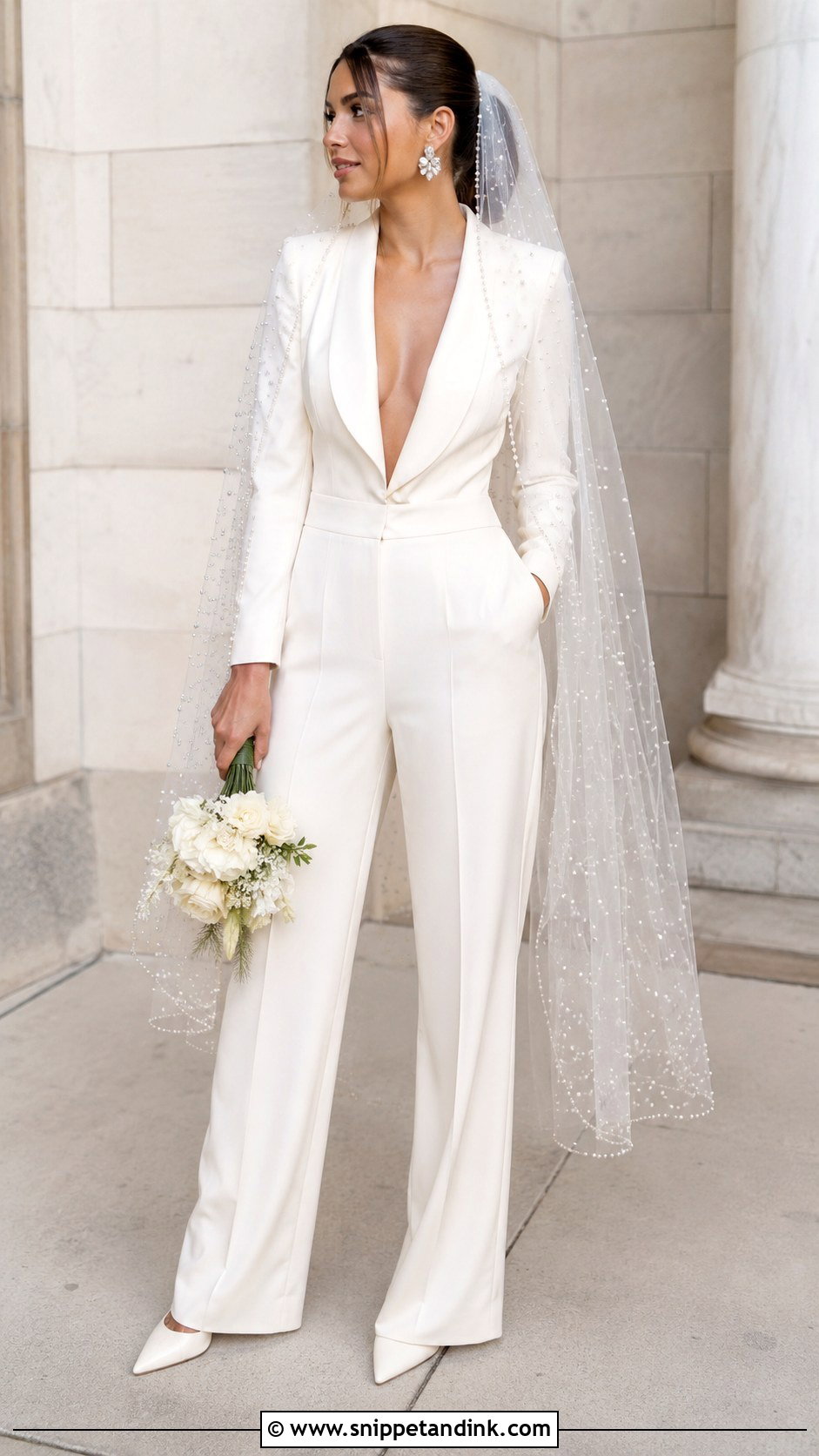
Wearing a beaded veil with a jumpsuit is a modern move that still says bride. Pair a tailored ivory jumpsuit with a fingertip or shoulder-length beaded veil, pointed pumps, sculptural earrings and a sleek ponytail or bun. The veil softens the jumpsuit’s straight lines. Pearls read softer, crystals sharper. I’d keep the veil short unless the jumpsuit has wide palazzo legs, because a long veil over slim trousers can look like two outfits.
24. Beaded Veil With Low Bun
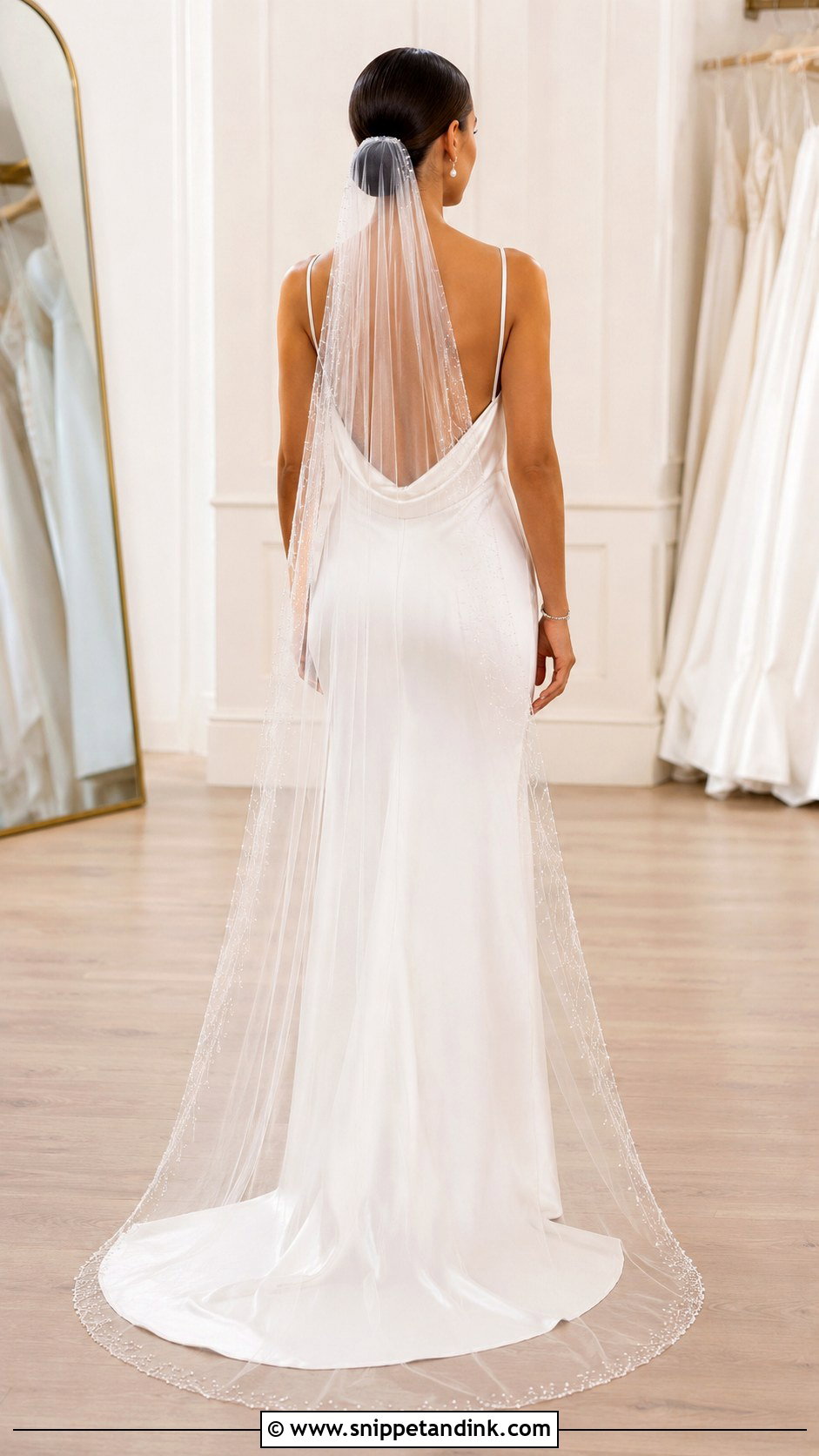
A low bun is the steadiest base I know for a beaded veil, because the comb slides into a solid mass of hair rather than loose lengths. It works with almost any gown, plus pearl or crystal earrings, simple heels and a neat centre or side part. Comb above the bun gives lift; comb below gives a softer fall down the back. Beaded edges drape cleanly from this position. I ask hairstylists to build the bun with a little extra grip at the top so the comb has something to bite.
25. Beaded Veil With Pearl Earrings
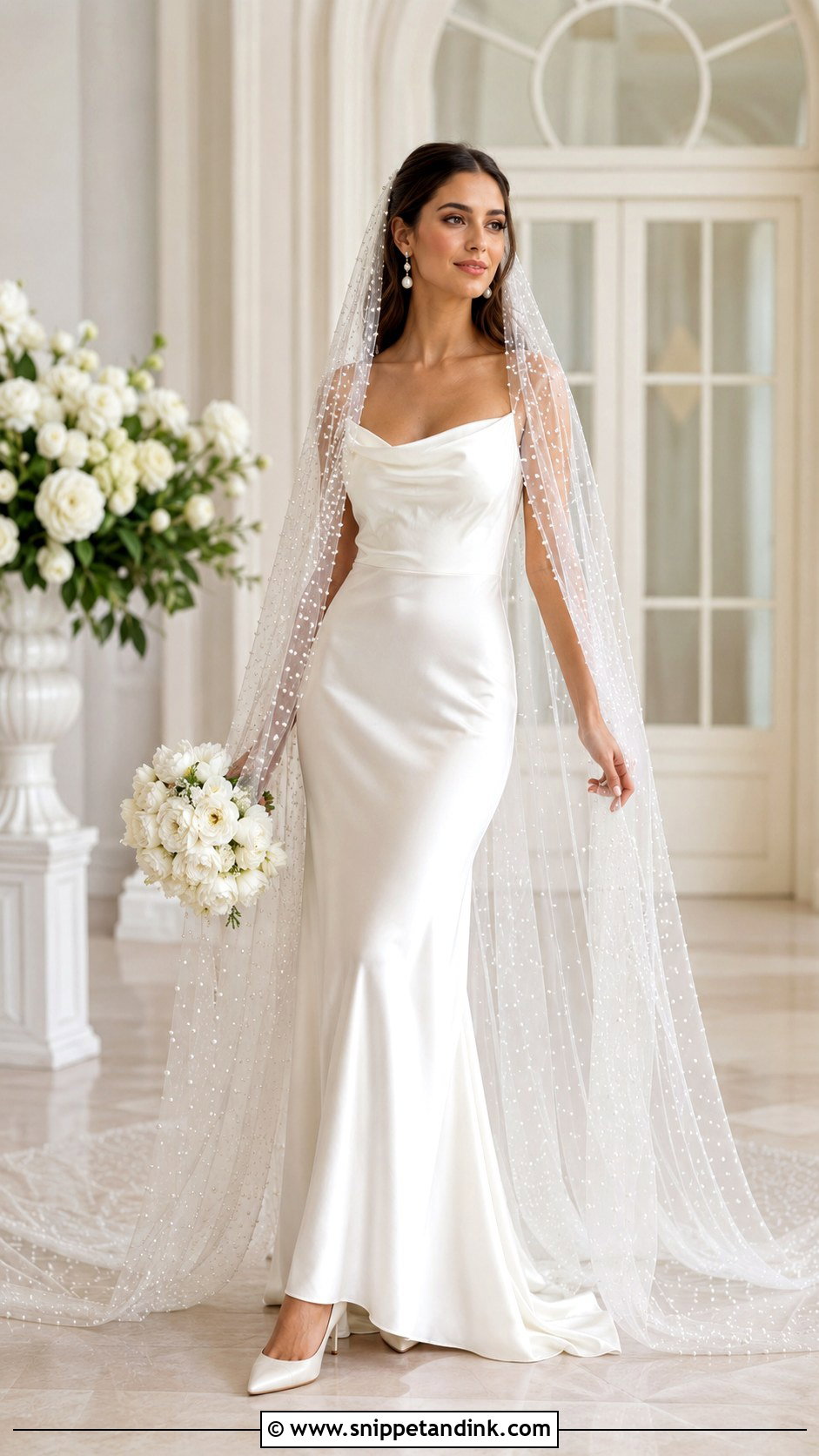
Pearl earrings with a pearl-accented veil look coordinated, as long as they aren’t an identical set. I like studs, small drops or tiny hoops alongside a clean satin gown, ivory heels and a soft bun or waves. Skip the necklace if the neckline is detailed. One thing I check is pearl colour: veil pearls are often bright white or champagne, and earrings in a different shade beside them look mismatched in close-ups, so bring the veil when you choose earrings.
Steaming, Packing and Storing a Beaded Veil
Beaded tulle should never meet an iron. Heat can melt synthetic tulle, cloud acrylic stones and loosen glue, so I steam instead, holding the steamer several inches away and working from the untrimmed side while the veil hangs. Let it dry hanging before anyone touches it.
- Unpack it as soon as it arrives and hang it from the comb somewhere high, so creases drop out over a few days.
- Travel with it rolled loosely in acid-free tissue rather than folded, which keeps beads from pressing dents into the tulle.
- Pack a spare needle, matching thread and a few loose beads if the maker supplied them. A pearl that comes off at the reception is a two-minute fix.
- After the wedding, check for makeup or wine marks near the face and hem and get them seen to before storing. Then wrap it in acid-free tissue in a breathable cotton bag or box, away from light, never in plastic.
When the Veil Comes Off for Dancing
Most brides take a long beaded veil off after the formal photos, and I plan that moment in advance. Decide who removes it, since pulling the comb straight out of a bun drags pins and loosens the style. The person helping should slide out the anchoring pins first, then lift the comb. Have a hanger or tissue-lined box ready at the venue so the veil isn’t left balled up on a chair, where beads catch on everything.
The Back View Your Guests Will Actually See
Start with balance. A plain dress can carry a decorative veil; an ornate gown wants lighter beadwork. A pearl cathedral leans classic, a crystal fingertip leans sleek, short beaded veils suit civil ceremonies and second looks, and lace, floral or mantilla designs add romance. Bring your gown, your hairstyle plan and your earrings to the veil fitting, and look at it from behind as well as in the mirror. That back view is what most of your guests will see during the vows.
You'll Like These Ideas:


Leave a Reply