
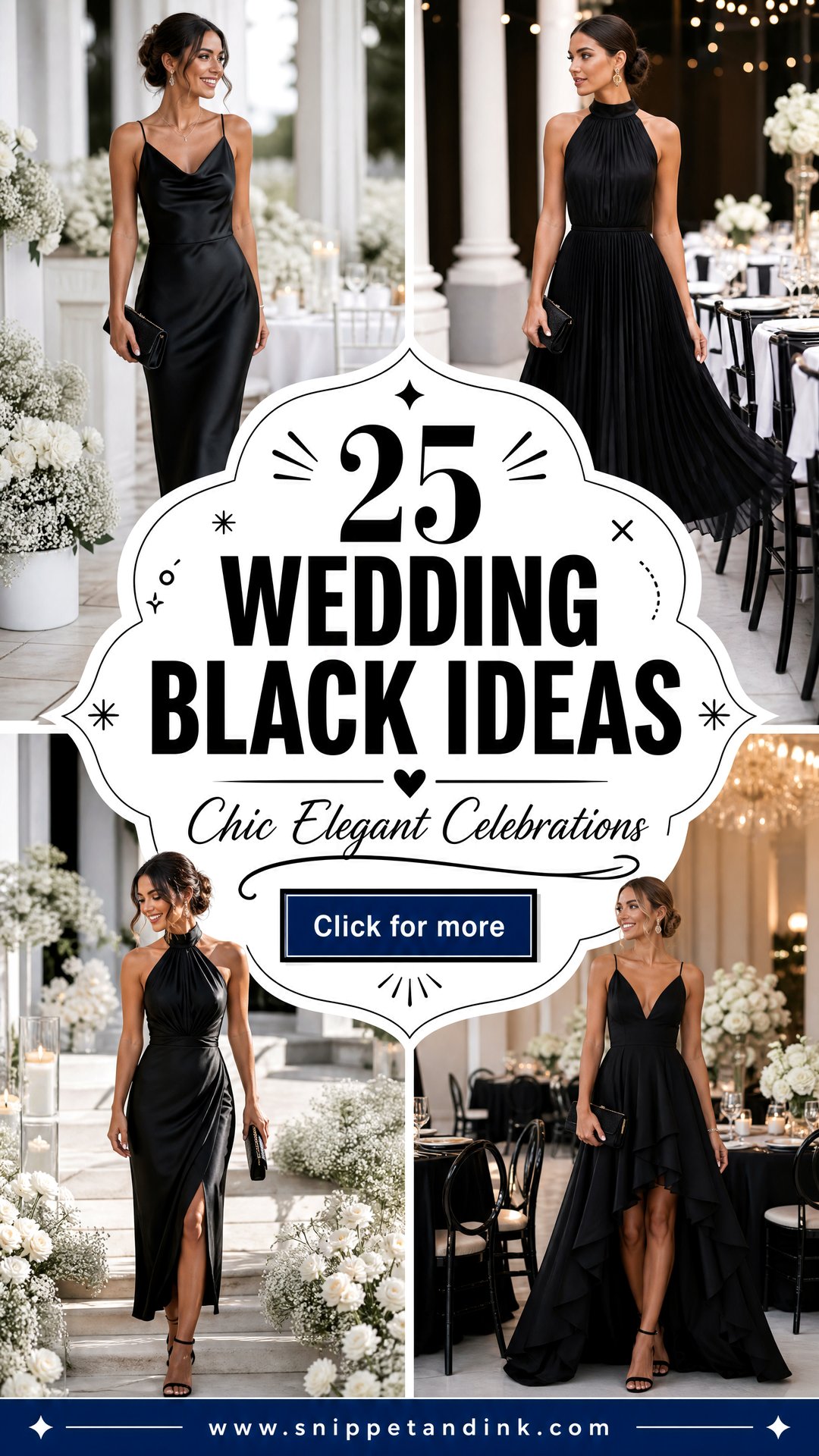
Black used to be the color guests avoided at weddings. Now it’s the one I reach for most often when someone tells me they have three weddings this year and one clothing budget. The color alone never decides whether it works. What decides it is whether the fabric, the hemline and the accessories match the hour and the venue. Satin after six reads as evening; a black floral midi on a lawn reads as daytime. Below are 25 complete outfits I’d actually put together, with notes on where each one tends to let people down.
Is Black Ever the Wrong Call for a Wedding Guest?
Usually not, but there are real exceptions, and I always ask a client about the couple before we pull a single black dress. In many Chinese families black is linked with mourning, and at a traditional tea ceremony or banquet it can upset the older generation. Many Hindu and Sikh families see black as inauspicious for wedding events, so for a mehndi, sangeet or ceremony I steer guests toward color instead.
The invitation and the couple’s website are the other places to look. Some couples ask guests to wear bright colors or a set palette, and a few say plainly that they’d prefer no black. If you can’t tell, a quick message to someone in the wedding party costs nothing and saves you an uncomfortable evening.
Matching the dress code to the clock
Time of day matters as much as the dress code on the card. For anything that starts before about four in the afternoon, I break black up with a print, a lighter fabric or a pale shoe. After six, solid black in satin, velvet or crepe looks right on its own. Black tie means floor length or a very polished jumpsuit; cocktail means midi or knee length; garden and beach weddings call for chiffon, florals and a heel that won’t sink.
1. Black Satin Midi Dress Outfit
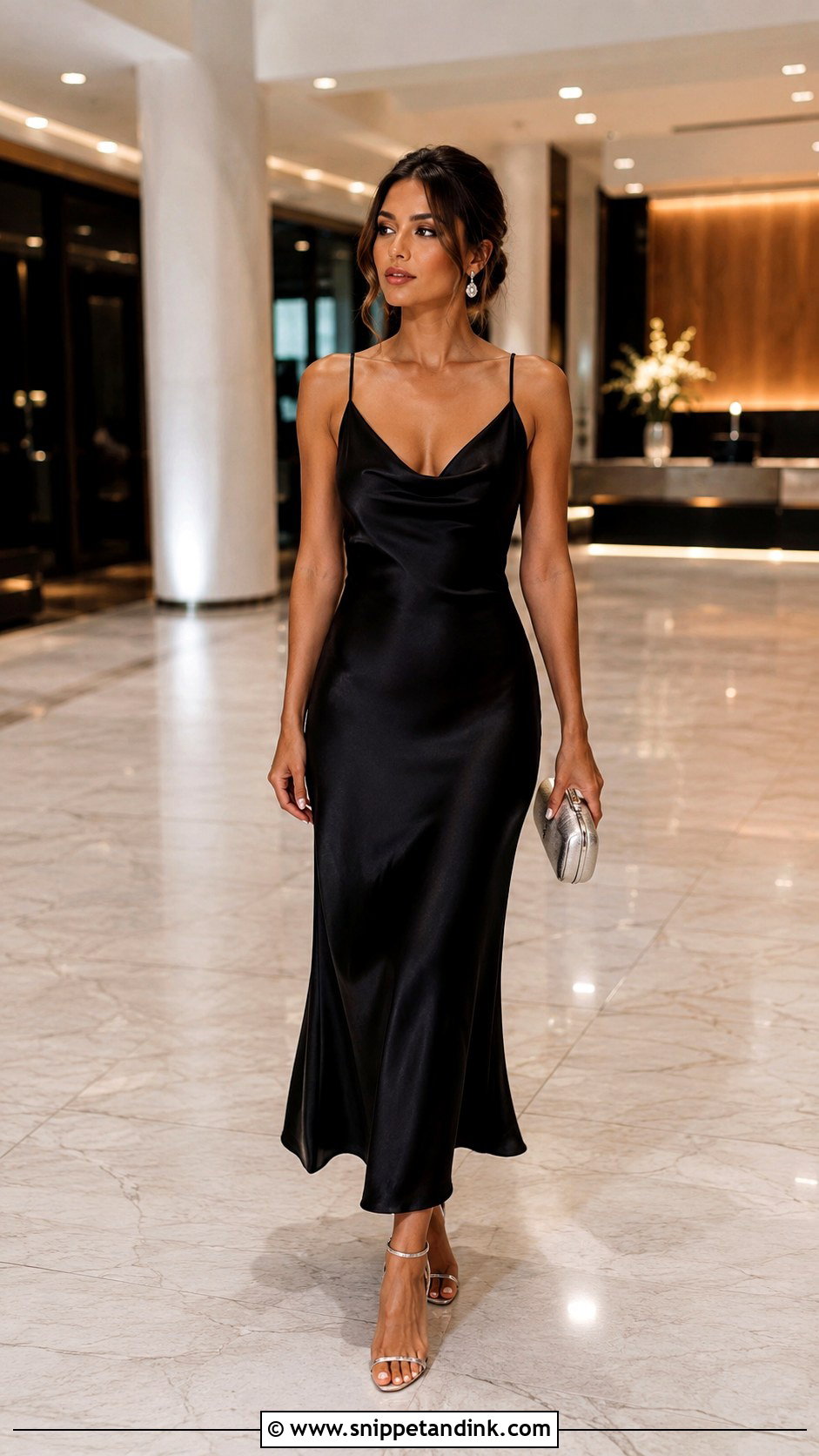
Satin is where I start most black guest looks, because the sheen keeps the color from going flat under reception lighting. The catch is that satin shows every crease, and a midi will wrinkle across the lap by the end of dinner. A bias cut recovers better than a straight one, since the fabric hangs off the grain and the creases drop out once you stand. Metallic strappy heels, a small clutch and fine earrings are plenty; add a pendant only if the neckline is bare. Of everything on this list, this is the dress people tell me they rewear most.
2. Black Floral Midi Dress Outfit
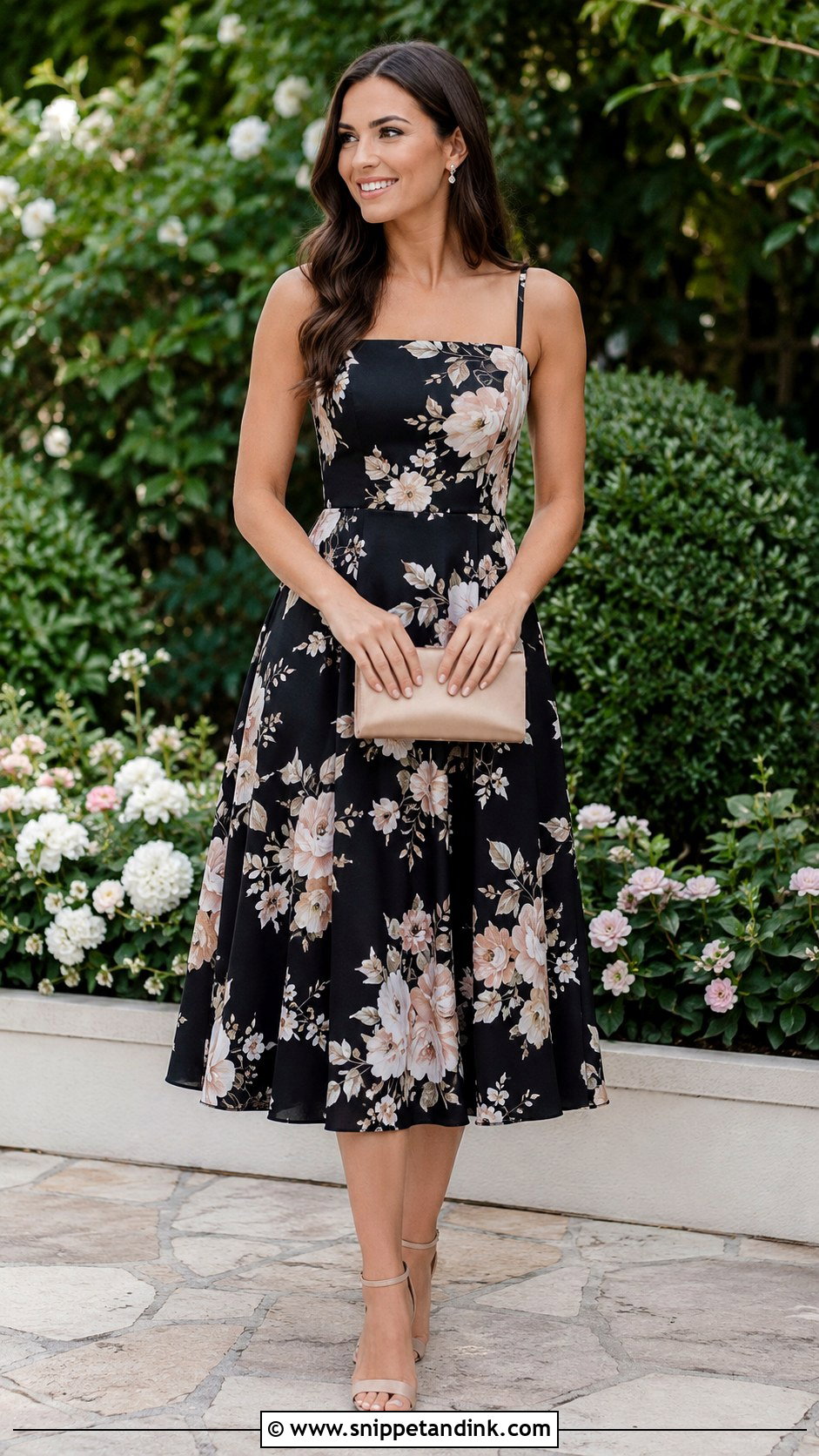
Florals soften black faster than any accessory can. For a daytime garden wedding I look at the print before the cut: blush, ivory, green or pale yellow flowers on a dark ground, covering enough of the dress that it doesn’t read as plain black from across the lawn. Block heels beat stilettos on grass every time. A woven clutch, small drops and a wrap or flutter-sleeve shape keep it moving without sliding into sundress territory.
3. Black Off Shoulder Dress Outfit
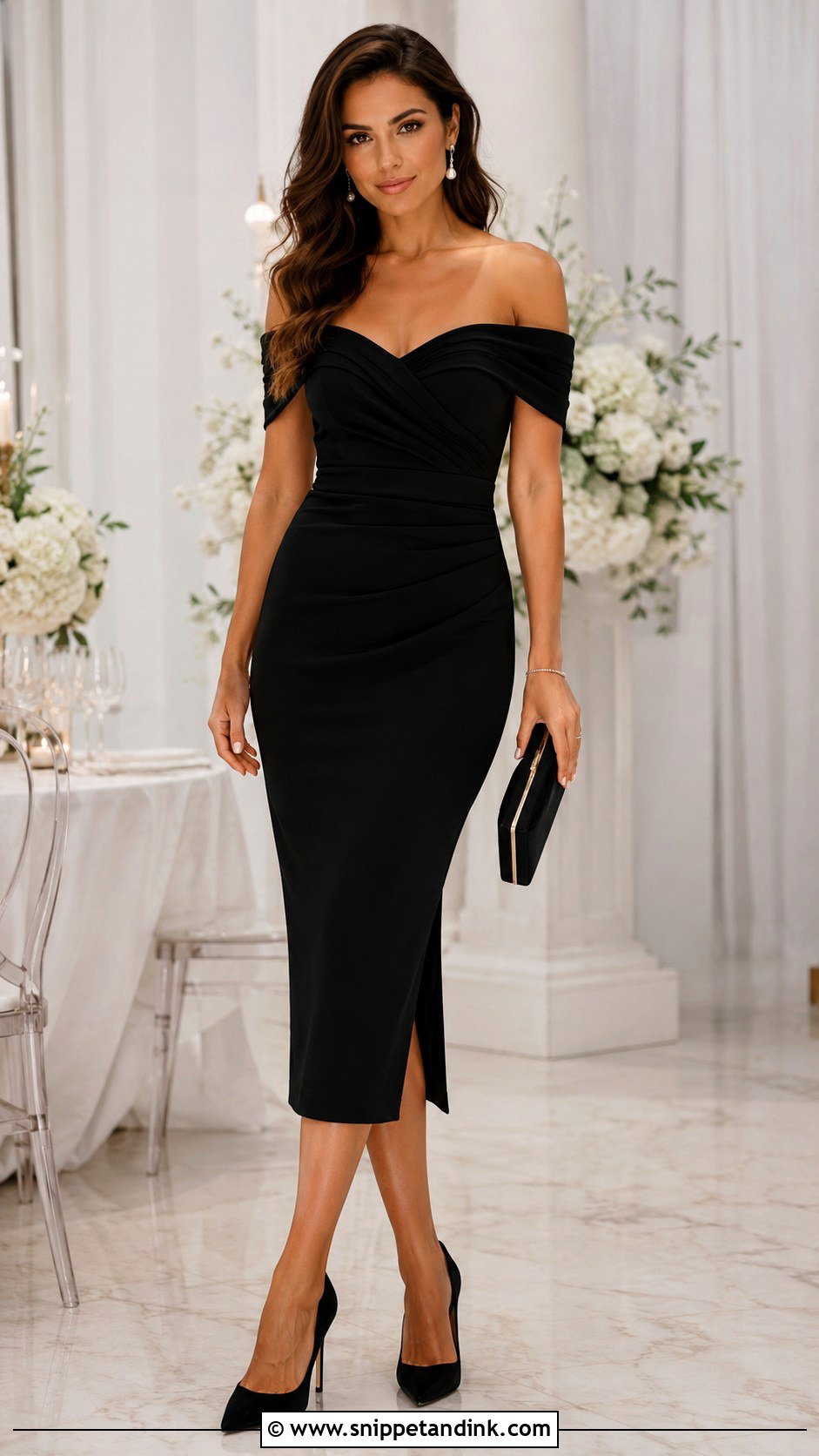
The neckline does all the work here, so I keep jewelry to the ears. Pearl or crystal earrings catch light against black right where the camera focuses. What I check first is the elastic or boning along the top edge. If you’re hitching it up every time you lift your arms, you’ll spend the reception tugging, so hug someone in the fitting room before you buy. Go midi or ankle length, and wear your hair up or swept to one side so the shoulders actually show. It belongs at cocktail and evening receptions.
4. Black Slip Dress Outfit
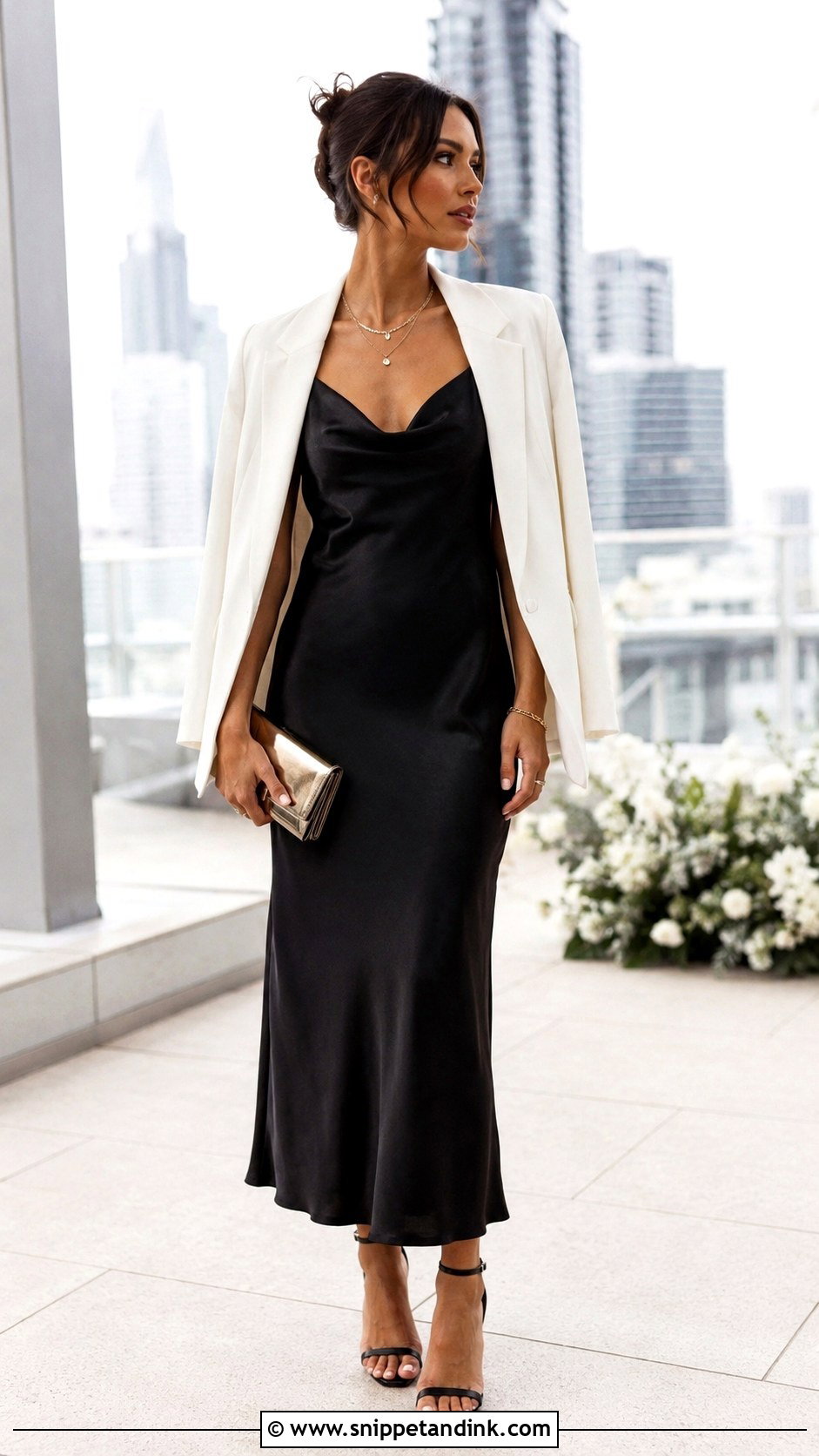
A slip dress sits on a thin line between wedding guest and nightwear, and fabric weight decides which side it lands on. I want satin or crepe heavy enough to skim rather than cling, in a midi length. Thin satin shows every undergarment line, so plan smooth, no-line underwear before the day, not on it. Pack a cropped blazer or sheer wrap for a church ceremony or a cooling rooftop. Heeled sandals, a metallic clutch and layered fine chains finish it for a city reception.
5. Black Lace Midi Dress Outfit
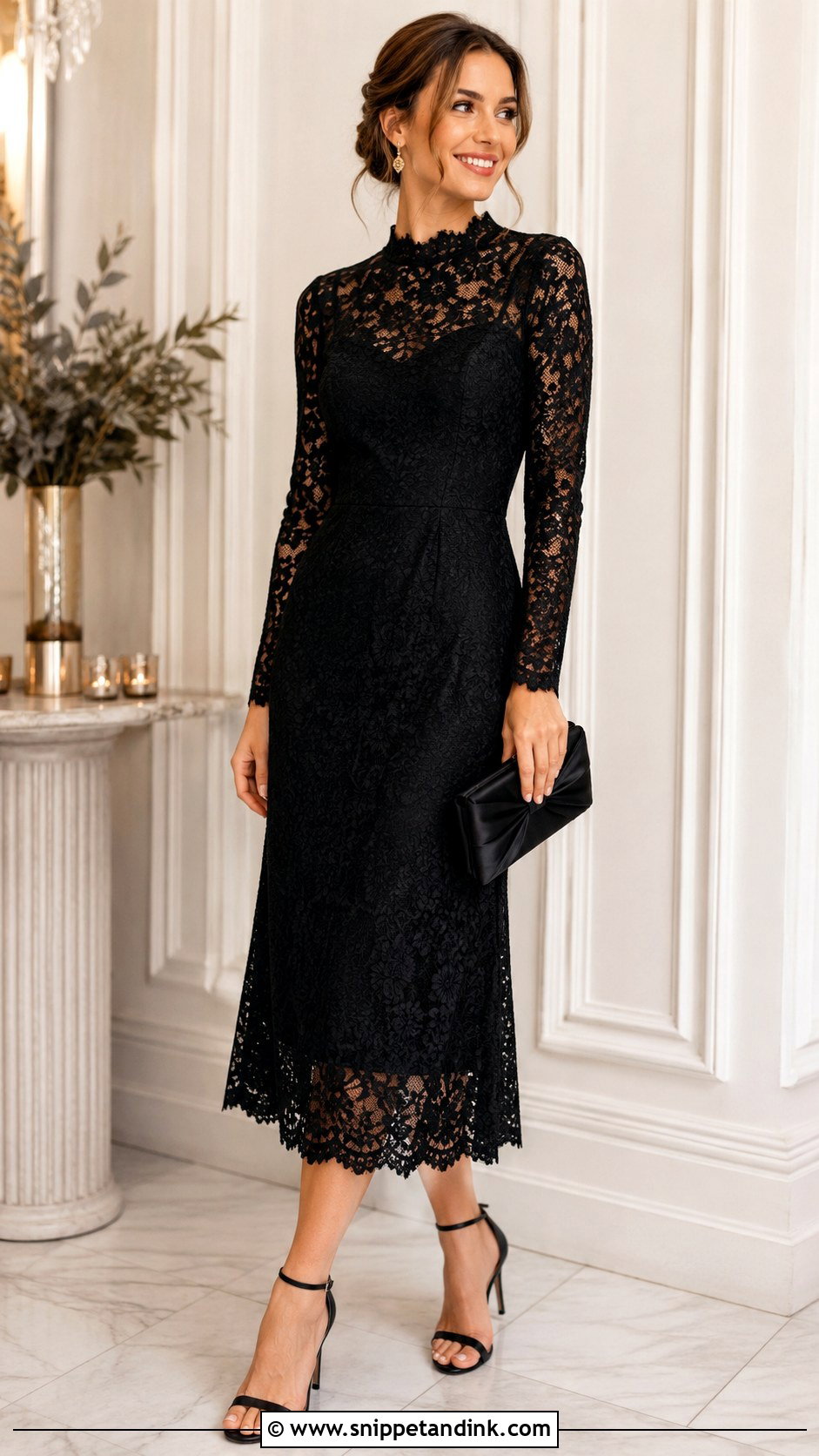
A black lace midi dress gives black the texture it needs to feel like an occasion. I look at the lining before the lace itself: a lining close to your skin tone makes the pattern show, while a black lining turns the lace nearly solid in photos. A fitted bodice over a soft A-line skirt suits most figures. Heavier corded lace belongs to fall and winter evenings; a fine, light lace can go to spring. Keep the clutch plain satin so the lace stays the focus.
6. Black Wrap Dress Outfit
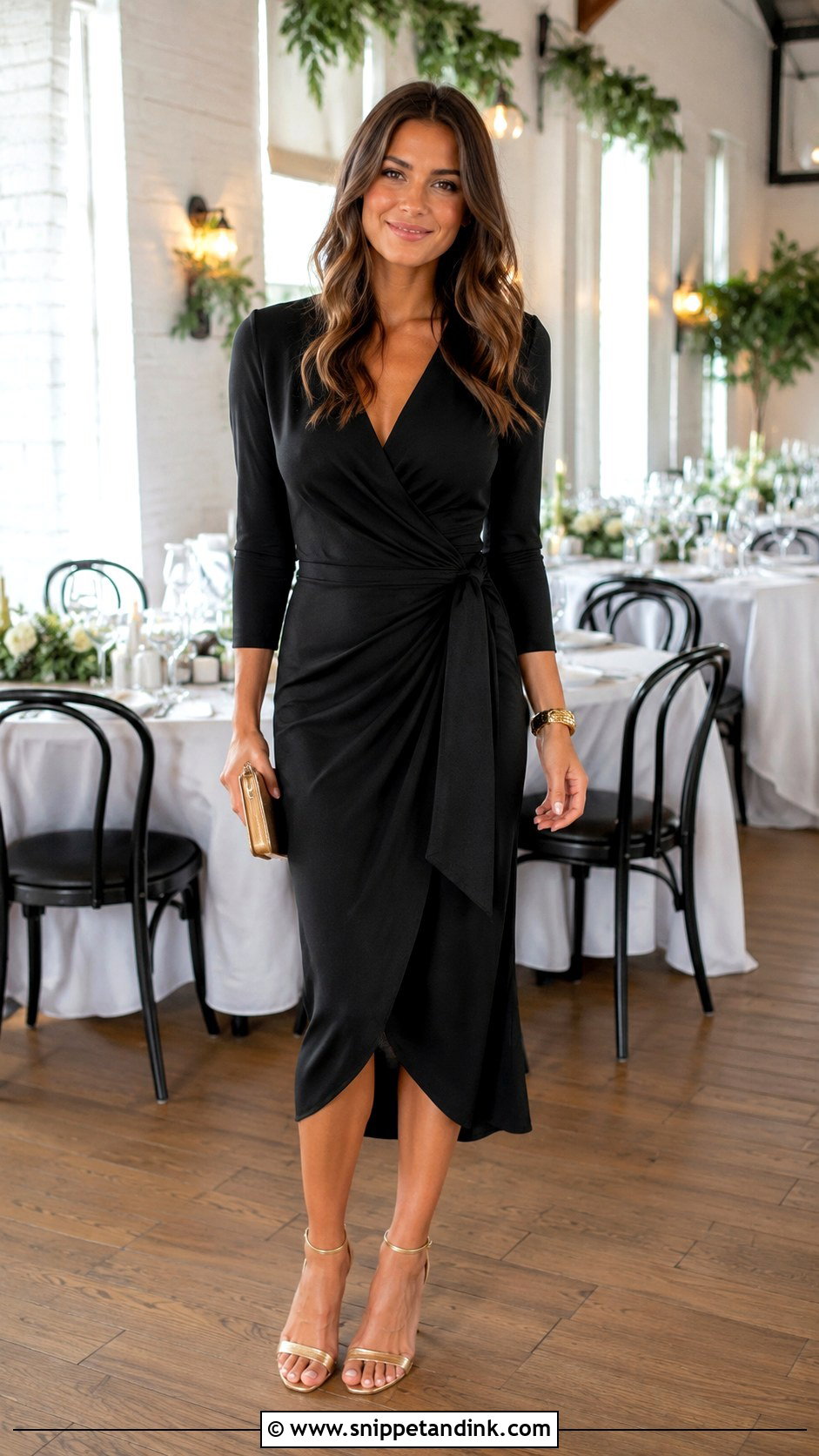
Wrap dresses forgive a lot in fit, which is why I suggest them to guests who’ll eat, sit and dance in one outfit for eight hours. The weak spot is the V. When you sit or lean forward, it gapes, and a single snap or a few stitches at the cross point fixes that in two minutes. Choose a midi in crepe, chiffon or a good weighted jersey, then pointed heels and gold or silver jewelry. With long sleeves, I’d drop the bracelet entirely.
7. Black Jumpsuit Wedding Outfit
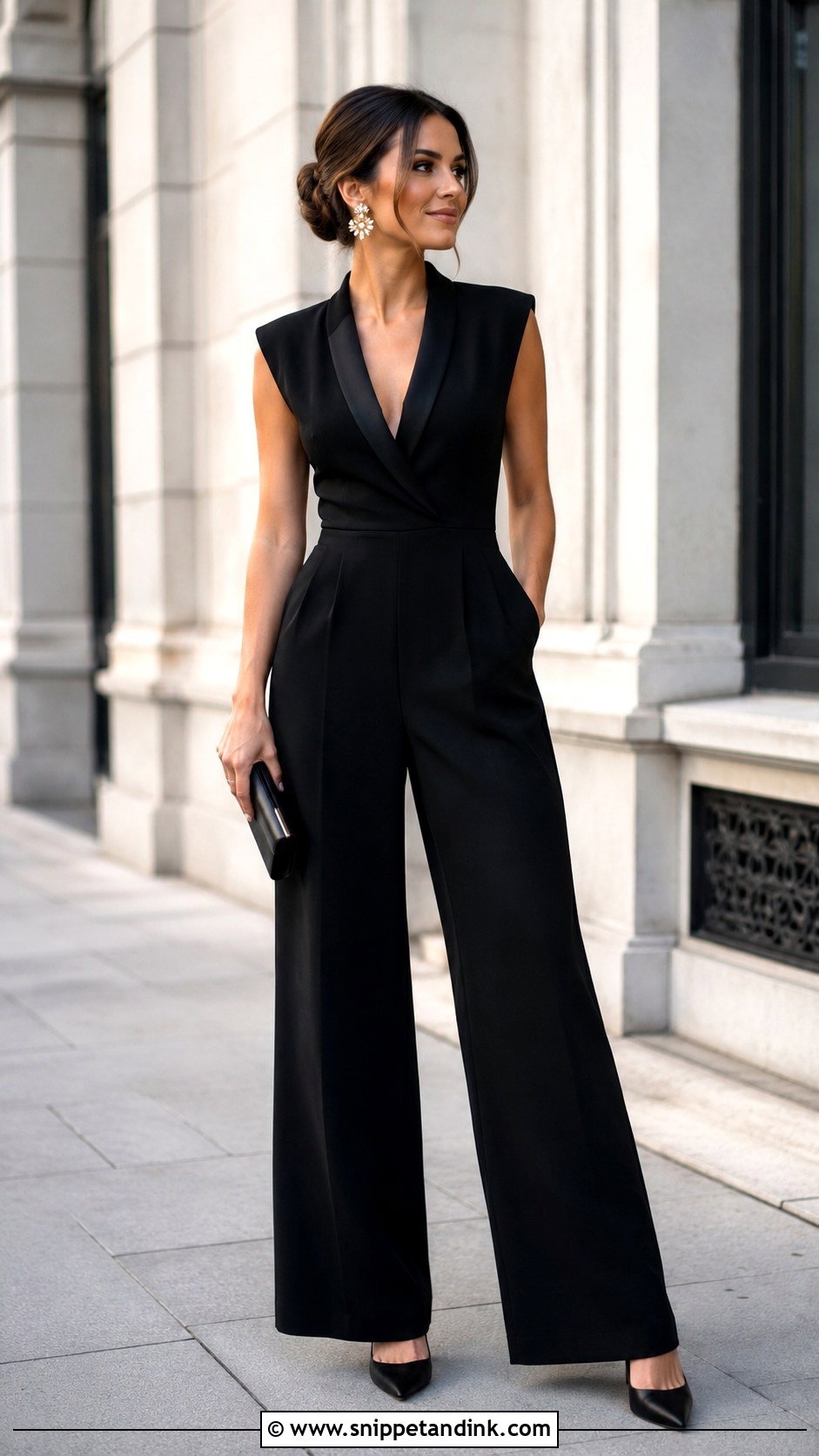
I put clients in jumpsuits when they want to dance without thinking about a hem. Tailoring is everything. The rise has to be long enough that you can sit without the crotch pulling, so sit down in it before you buy, not just stand in front of the mirror. Wide legs in crepe or fluid jersey should be hemmed for the exact heels you’ll wear, because a jumpsuit that drags looks borrowed. One statement earring, a sleek clutch, and a zip you can reach on your own at the restroom.
8. Black Wide Leg Pants Outfit
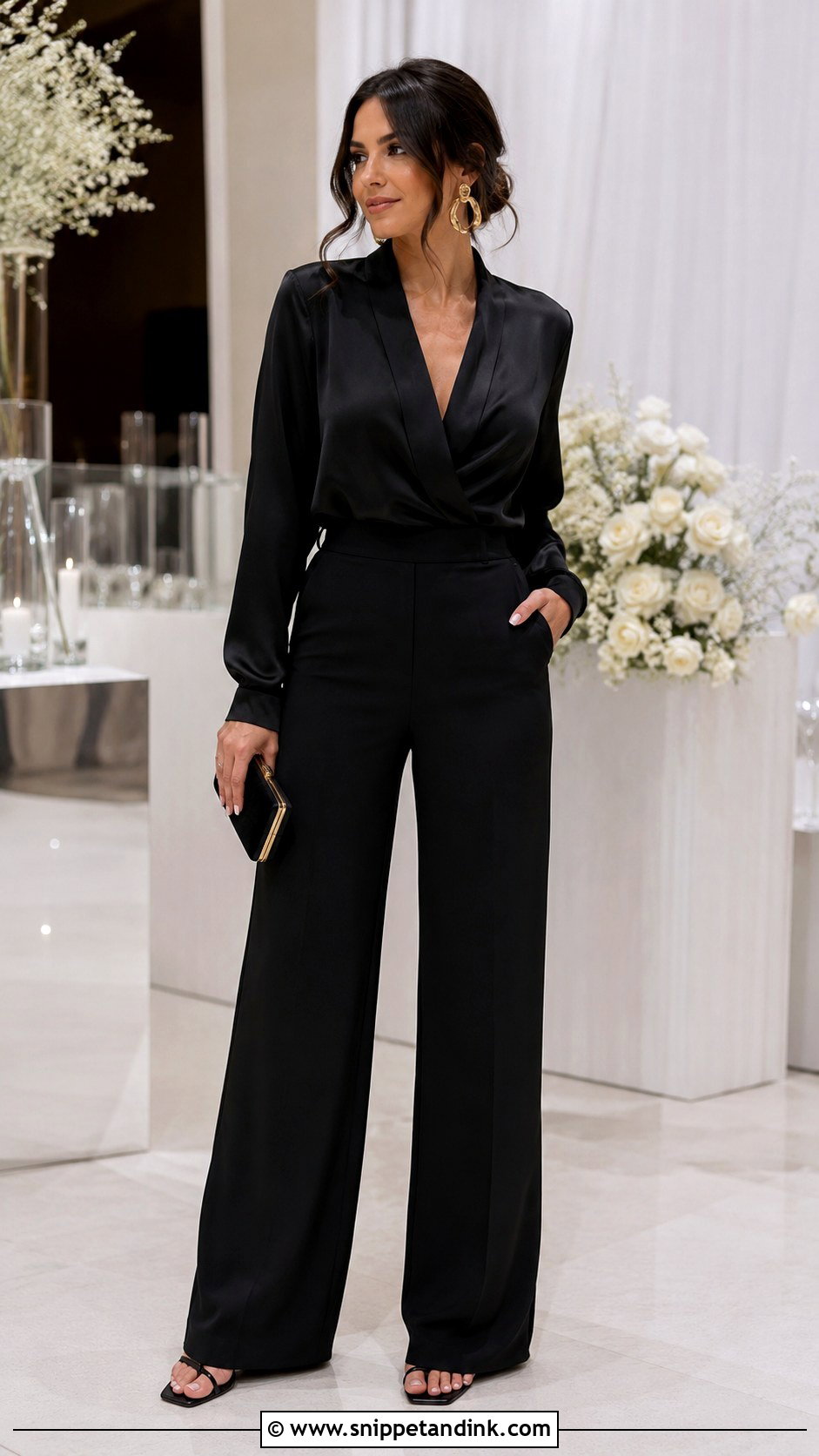
Trousers only read as wedding clothes when the top carries the occasion, so I build this outfit from a dressy top outward: a satin blouse, an embellished camisole or a structured one-shoulder piece. The pants should be high-waisted, fluid and hemmed to just clear the floor in heels. Casual tees and office button-downs are out. This is my default suggestion for guests who want coverage and room to move at a semi-formal or cocktail wedding.
9. Black Blazer And Trousers Outfit
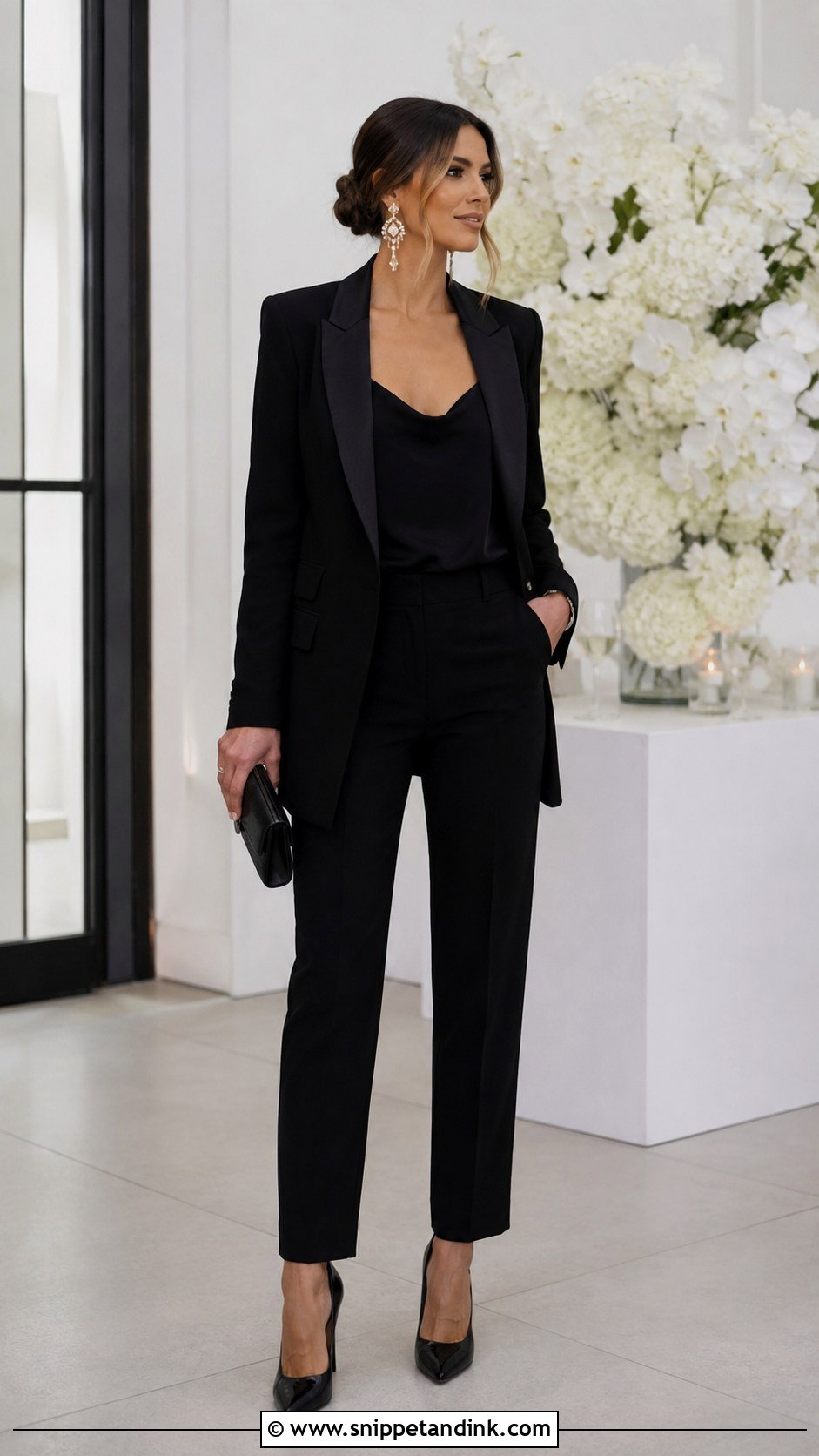
A black blazer and trousers can drift toward the office fast. Two things pull it back. The first is what goes underneath; I’d rather see a silky camisole or a lace-trim shell than any kind of shirt. The second is the shoulder seam, which should sit on your shoulder bone, not hang past it. Heeled sandals and statement earrings soften the suit, and a longer tuxedo-style jacket works after dark. It’s a strong look at city weddings and courthouse celebrations.
10. Black Maxi Dress Outfit
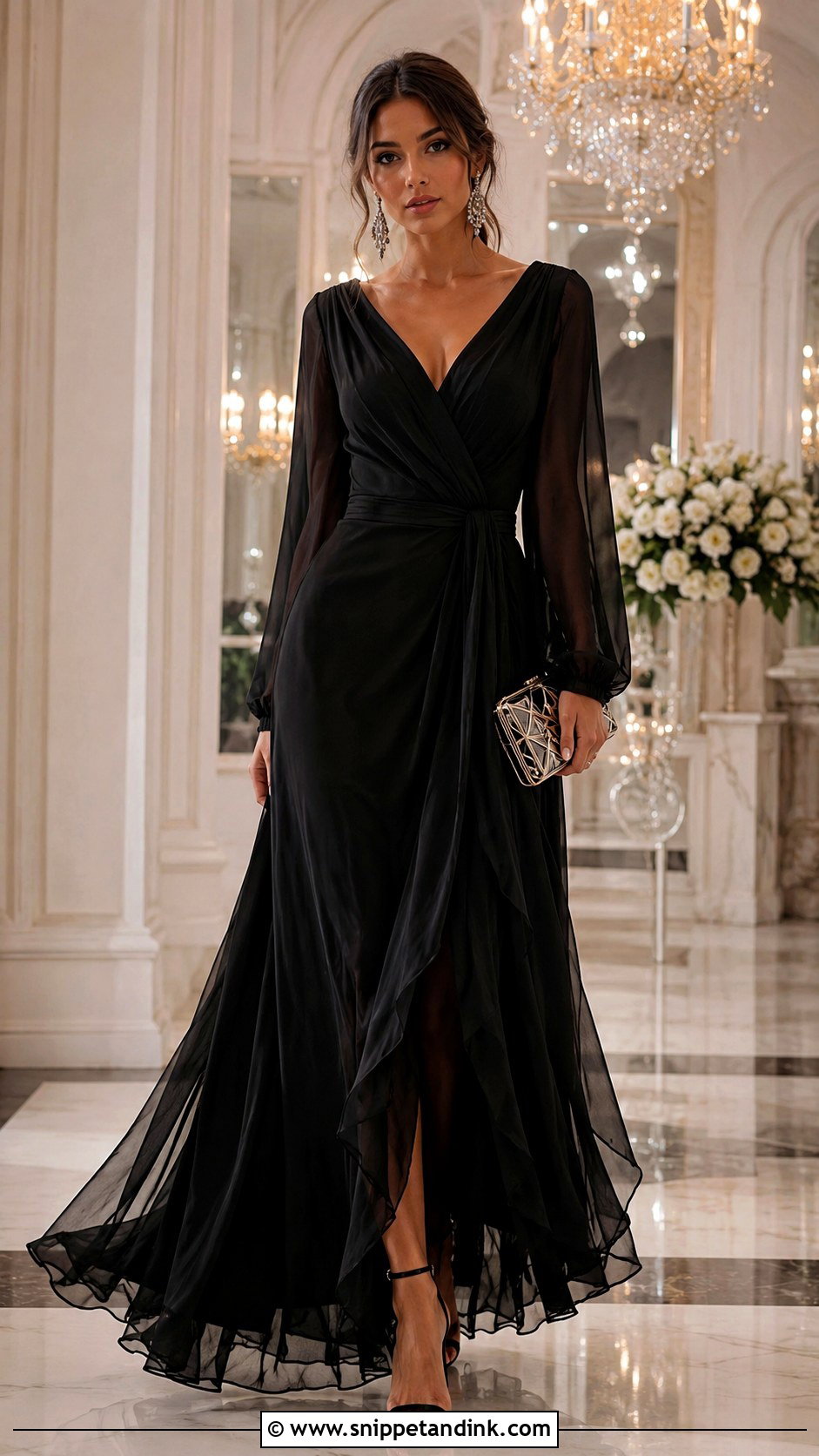
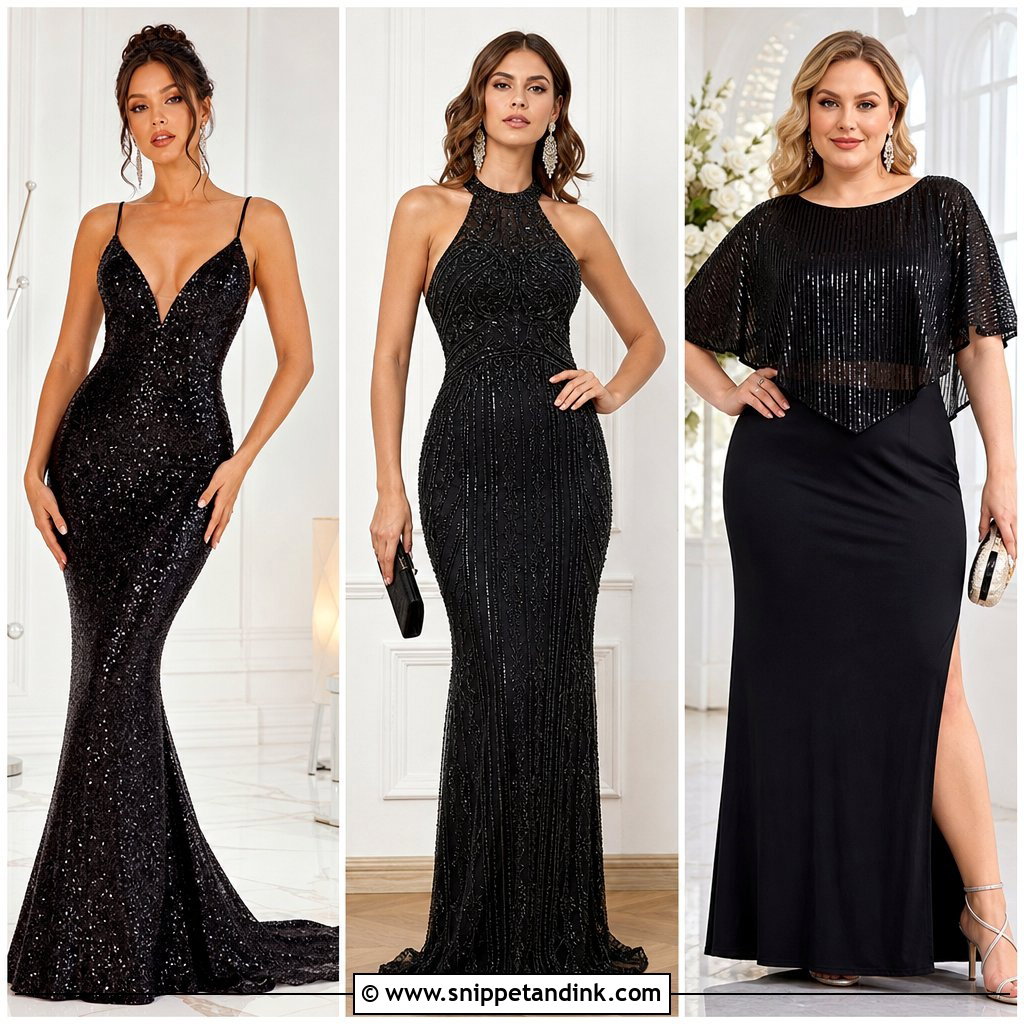
Fabric decides whether a black maxi looks formal or like a beach cover-up. Chiffon, satin, crepe or weighted jersey; never casual cotton. I settle the neckline before anything else, since it dictates the jewelry: a halter gets earrings and no necklace, a draped bodice can take a fine chain. Take the dress to the tailor in the shoes you’ll wear, because a maxi half an inch too long gets stepped on all night. If the gown is very plain, metallic accessories add the occasion. Black-tie optional and evening indoor venues suit it best.
11. Black One Shoulder Dress Outfit
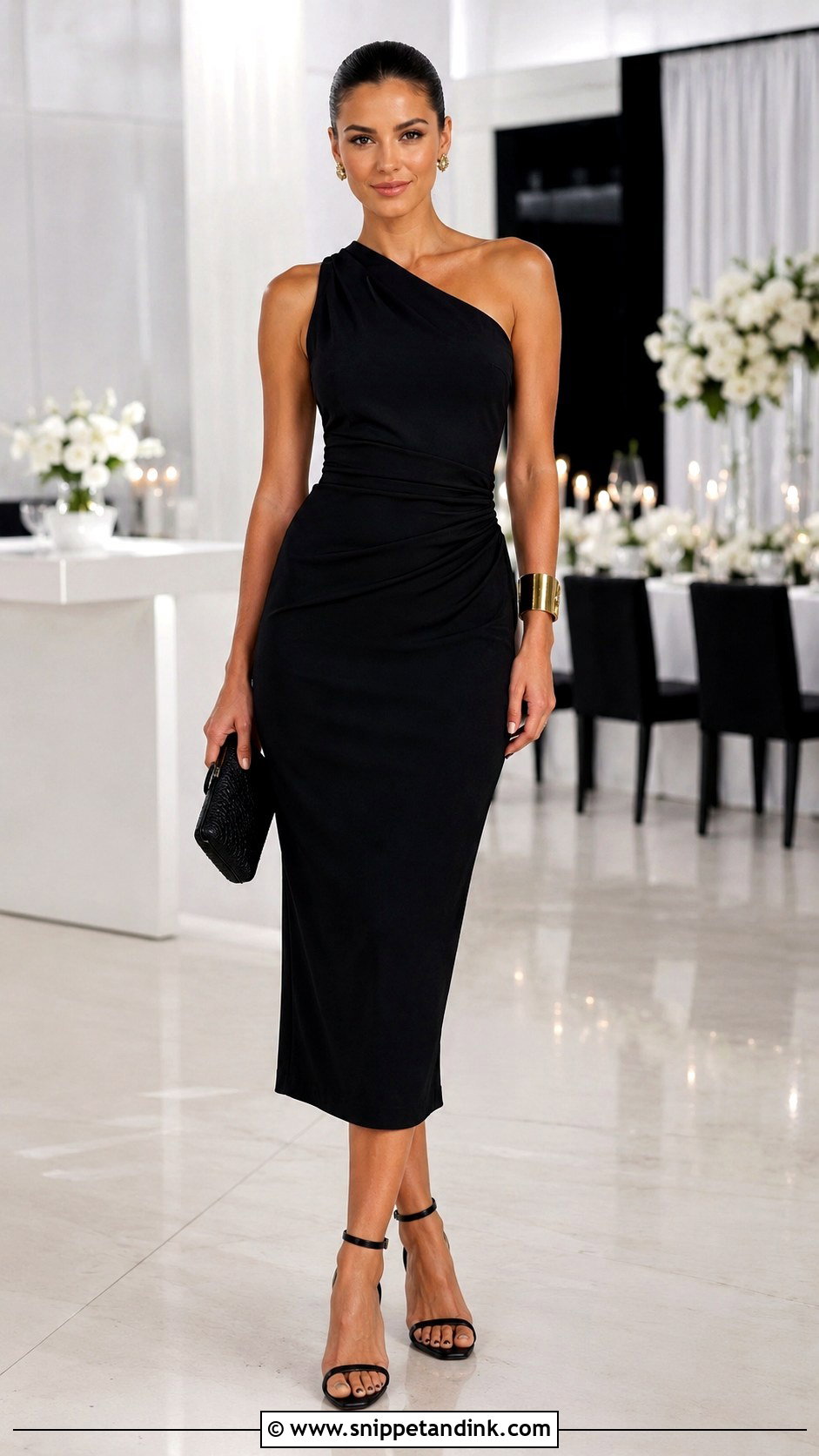
Asymmetry gives you a focal point for free, so I’d stop at one bold cuff or one pair of statement earrings, never both. The thing to test is the single strap. In stretch suiting it stays put, but in slippery satin it creeps toward your arm over the evening, and a strip of fashion tape inside fixes that. Midi or maxi, sleek heels, and hair pulled back to show the line of the neckline. Hotel ballrooms and evening receptions are its natural home.
12. Black Pleated Dress Outfit
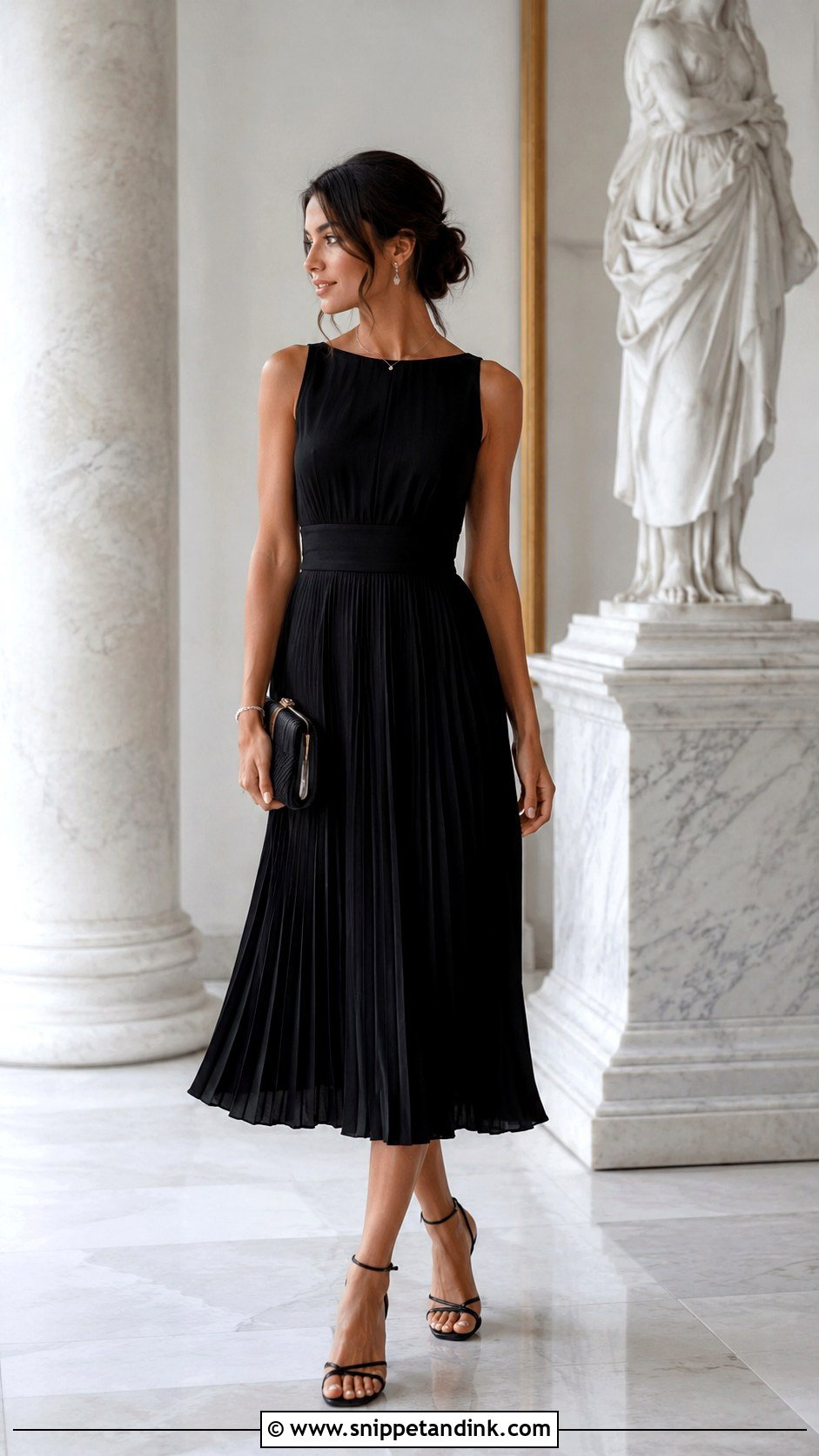
A black pleated dress moves when you walk, and that movement keeps black from looking heavy at a daytime ceremony. Pleats set in polyester hold their shape through a long day; pleats in natural fibers soften and lose definition if you get caught in rain or humidity. A fitted top with a pleated skirt works, as does a fully pleated dress with a defined waist. Midi or tea length suits museums, semi-formal receptions and fall dates.
13. Black Velvet Dress Outfit
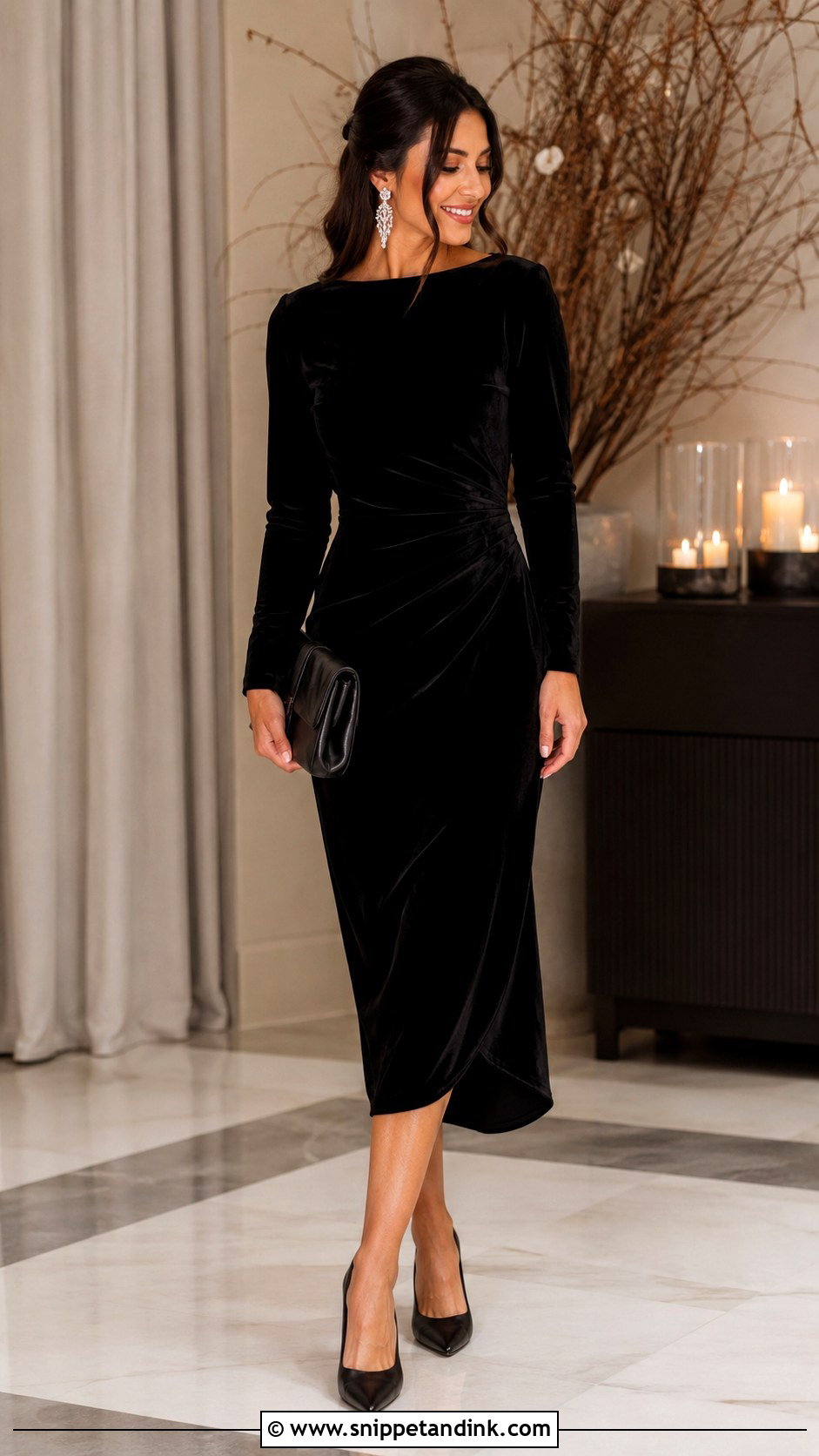
Velvet is my answer for November through February. It’s warm and naturally formal, so it needs very little help. Two cautions, though: velvet crushes where you sit, and the pile marks if you press it flat, so hang it in a steamy bathroom rather than ironing it. A simple neckline lets the texture lead. Crystal earrings and a beaded clutch are enough; velvet already carries a lot of visual weight. A sleek bun or a deep side part finishes it.
14. Black Chiffon Dress Outfit
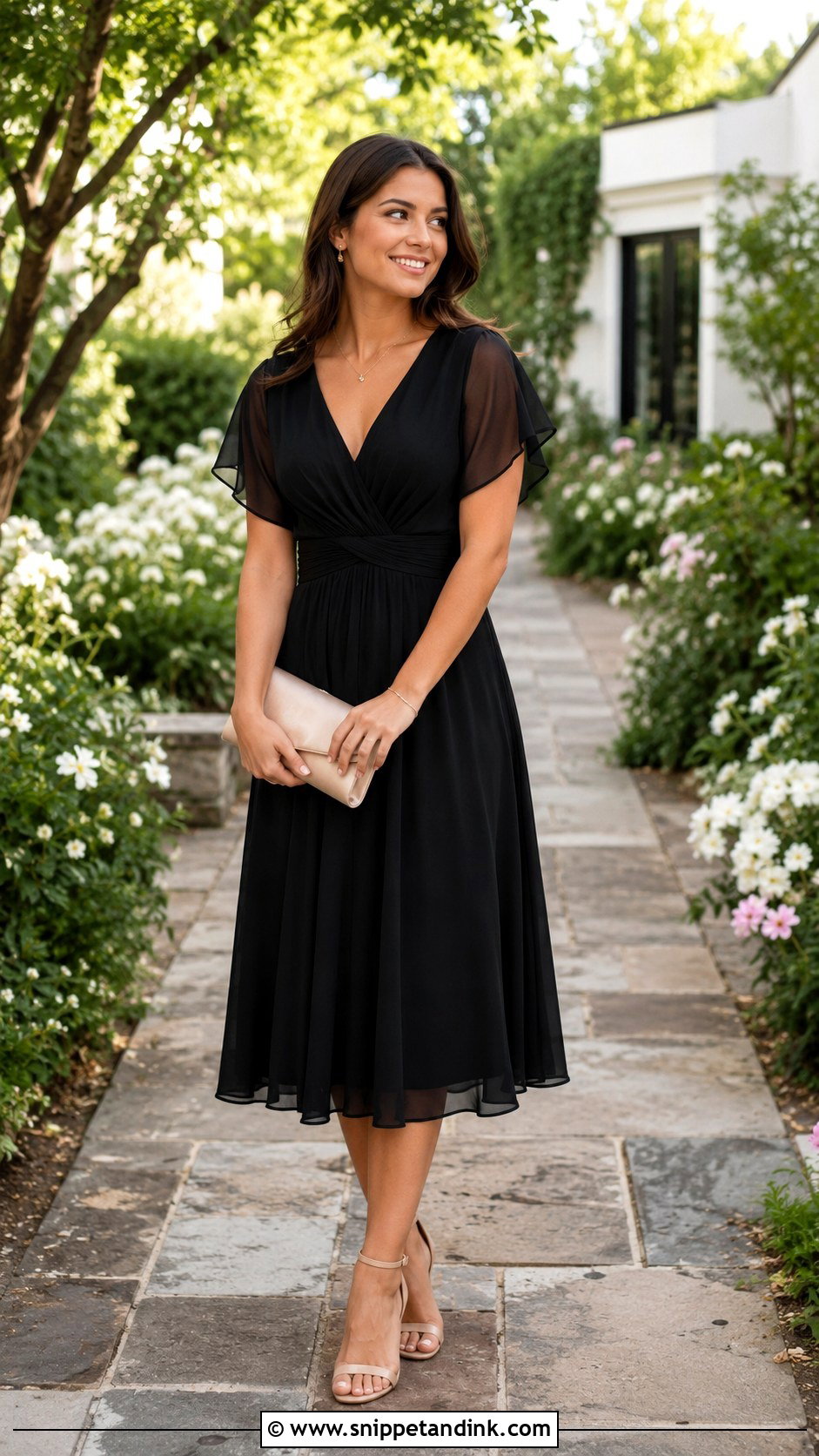
Chiffon is the lightest way to wear black, and I use it for spring and summer ceremonies outdoors. Check the lining. Unlined chiffon turns see-through in direct sun, which you won’t notice in a fitting-room mirror but which every photo taken from behind will show. Loose waves and soft makeup suit the floaty layers. Nude or metallic heels, a satin clutch and small jewelry keep it delicate for garden venues and daytime receptions near the water.
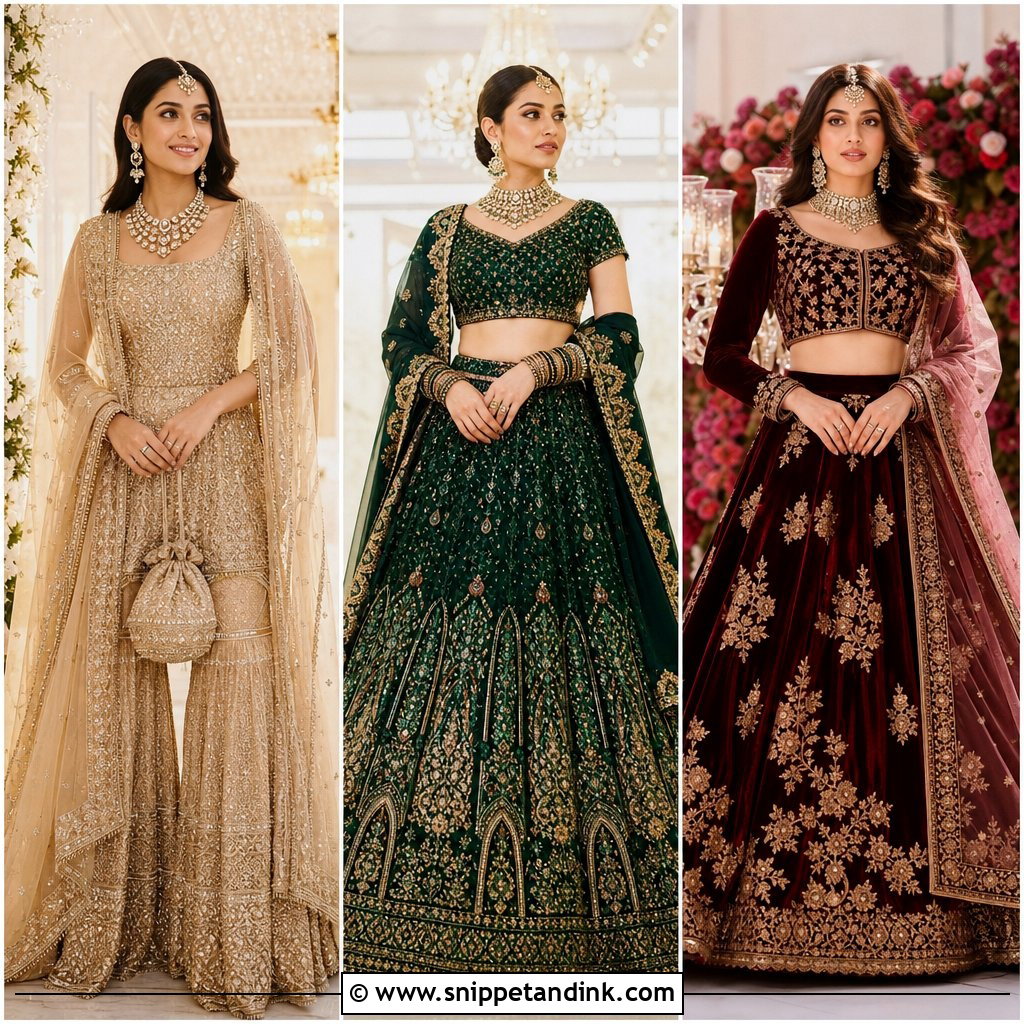
15. Black Sequin Dress Outfit
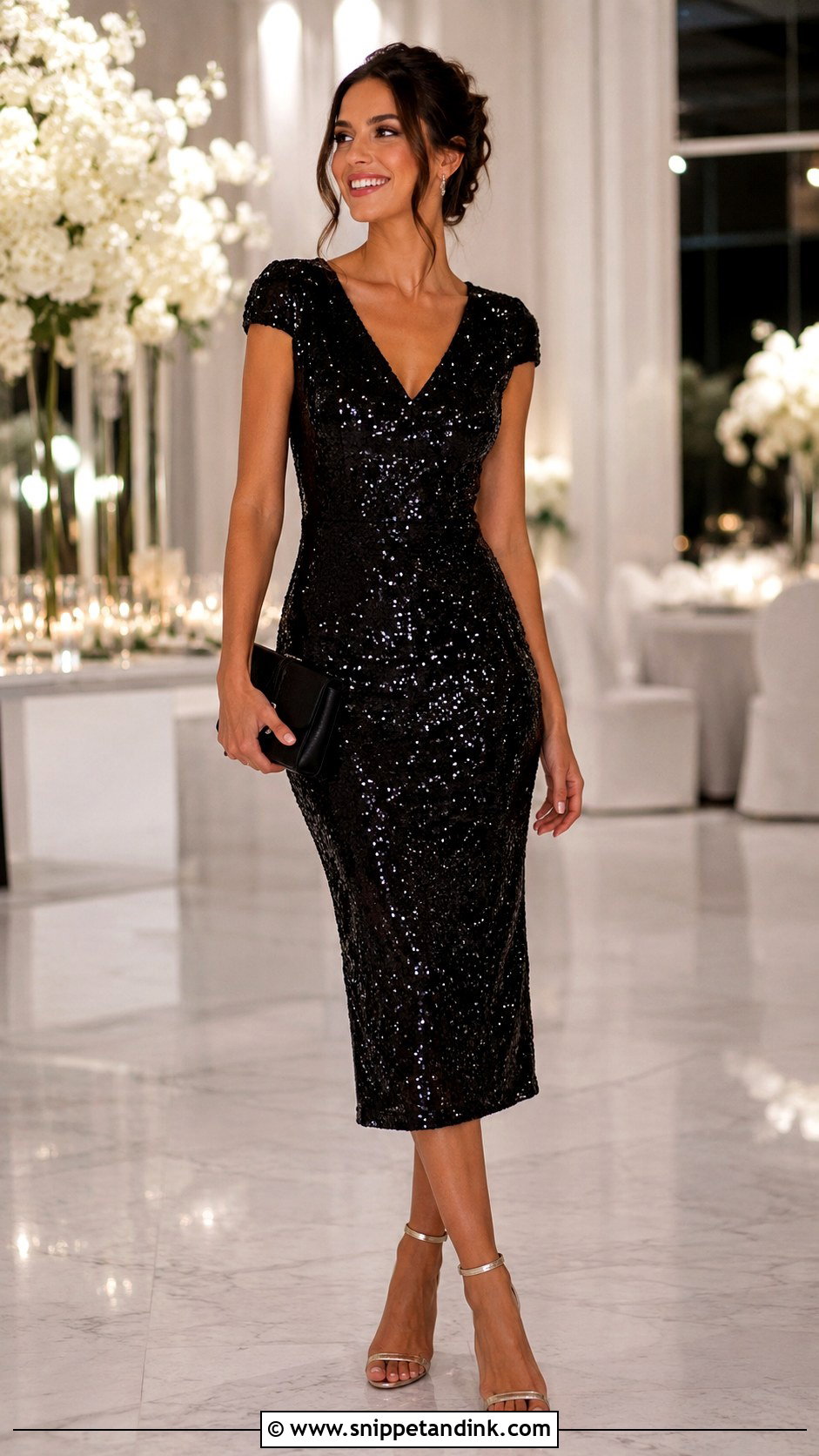
Sequins either look expensive or look like a New Year’s party, and the size of the sequin decides it. Small sequins, matte sparkle or fine beading in a midi or column shape stay on the right side. Then let the dress do everything: plain heels, a plain clutch, almost no jewelry. Watch the underarm, because sequins scratch the inner arm over a long evening, so a sleeveless cut or a lined armhole is kinder. Save it for evening receptions and glamorous hotel venues. If the ceremony is understated, wear a wrap over it until dinner.
16. Black Halter Neck Dress Outfit
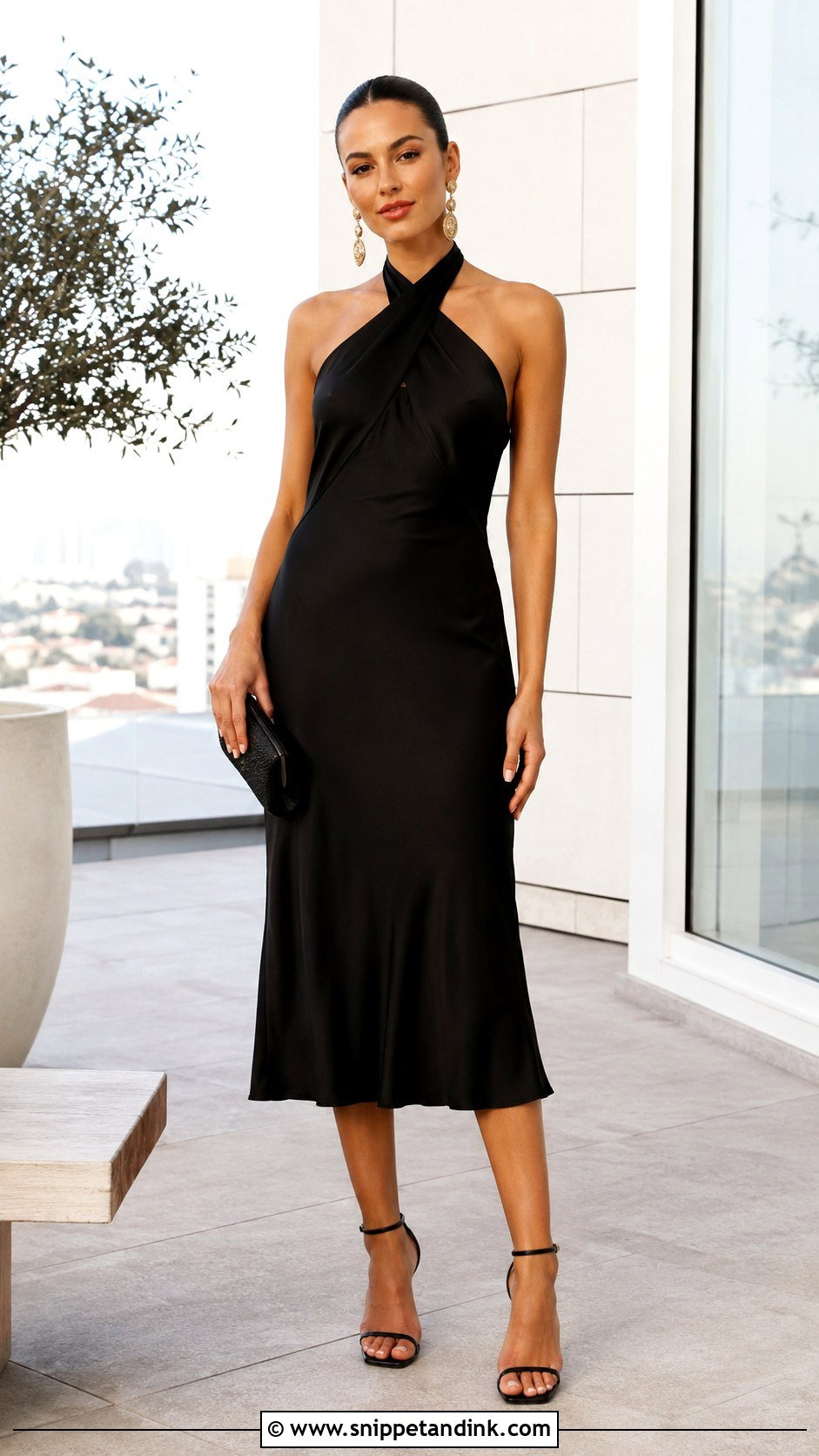
A halter pulls the eye up to the face and shoulders, so earrings and a bracelet beat a necklace every time. I’d wear it at home for an hour before the wedding; a neck tie fastened too tight starts to ache by the speeches. Satin, crepe or chiffon in a midi or maxi length, heeled sandals and smooth hair. It shows the shoulders while covering the body, which is why it does so well at summer rooftops and resort weddings.
17. Black Two Piece Skirt Outfit
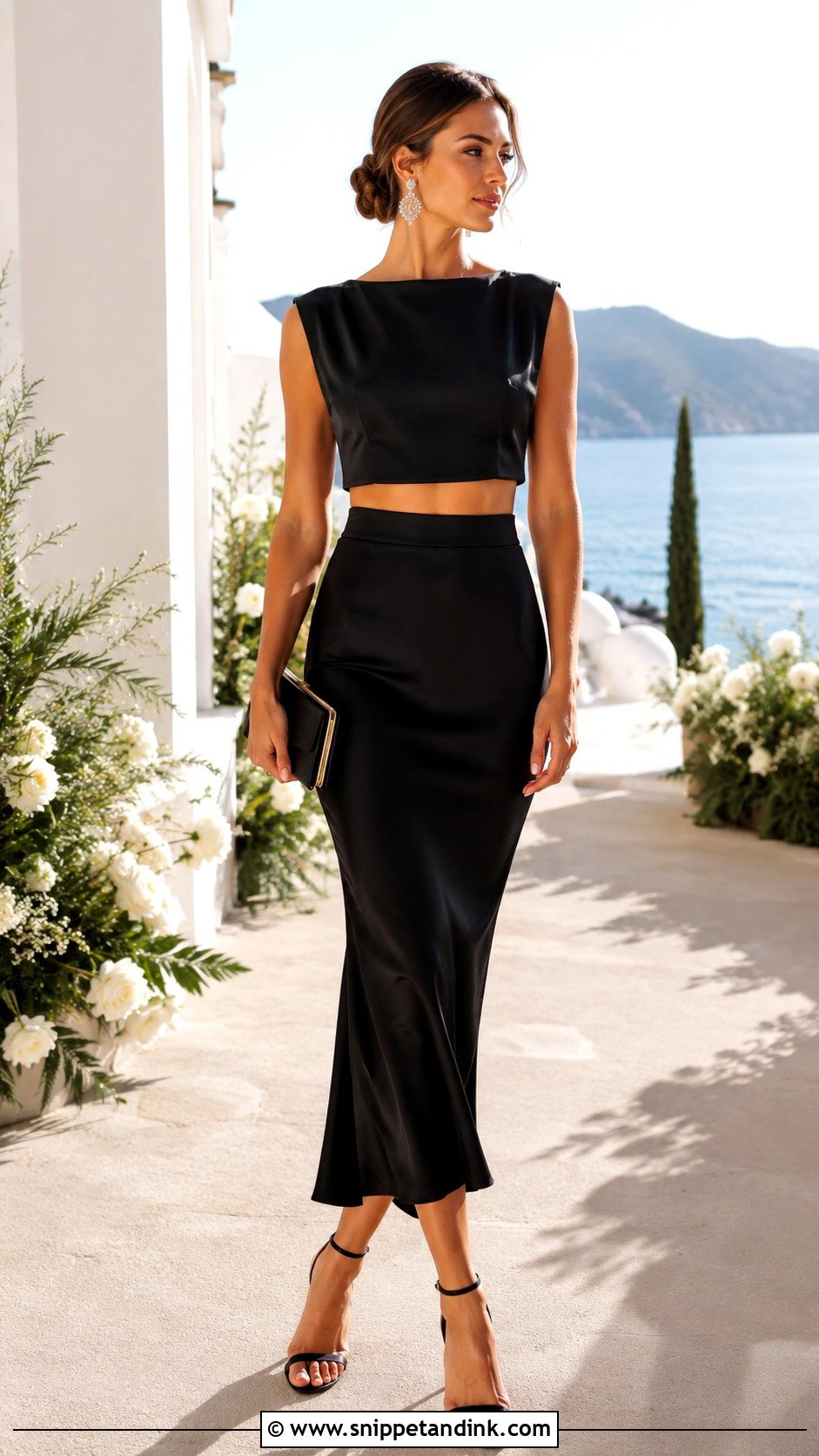
Matching sets bring me the most nervous questions, and the answer is proportion. Pair a modest crop top with a high-waisted midi or maxi skirt so only a sliver of skin shows when you move, or none at all. Satin, crepe and textured jacquard look dressier than knits. Sit down in the set before committing: a top that looks fine standing can ride up several inches when you’re seated. Bring a wrap or cropped jacket if the top is sleeveless and the ceremony is formal. It suits summer receptions, destination venues and fashion-forward couples.
18. Black High Low Dress Outfit
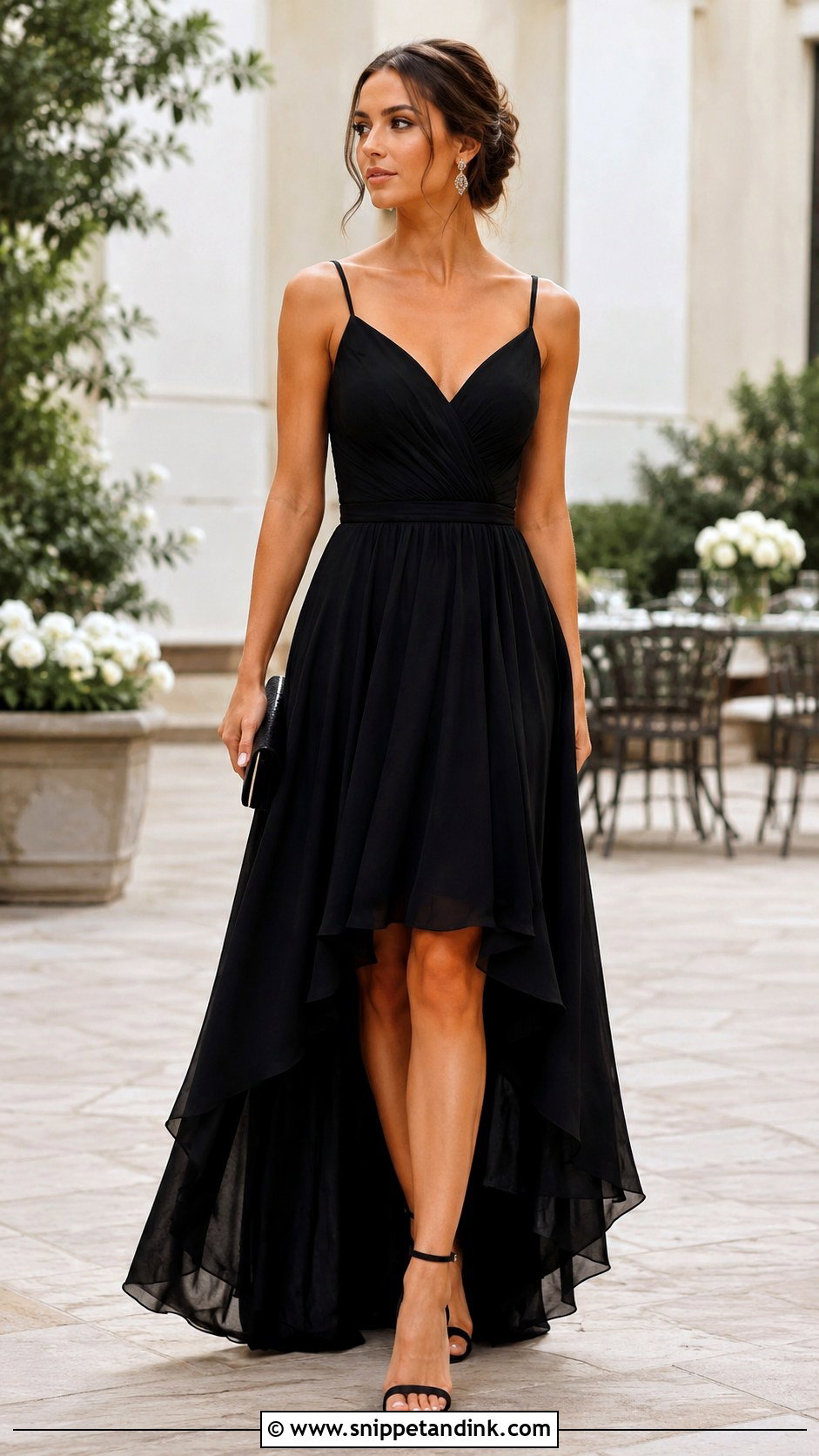
The shoes are fully on show with a high-low hem, so this is the one outfit where I’d spend on the heel. Ankle straps keep the line clean and stop sandals slipping off on the dance floor. A soft skirt, fitted waist and clean neckline need nothing more than a small clutch and simple earrings. At outdoor venues with steps, or schedules that move you from ceremony to dinner to dancing, the shorter front is easier to walk in while the back still reads formal.
19. Black Tea Length Dress Outfit
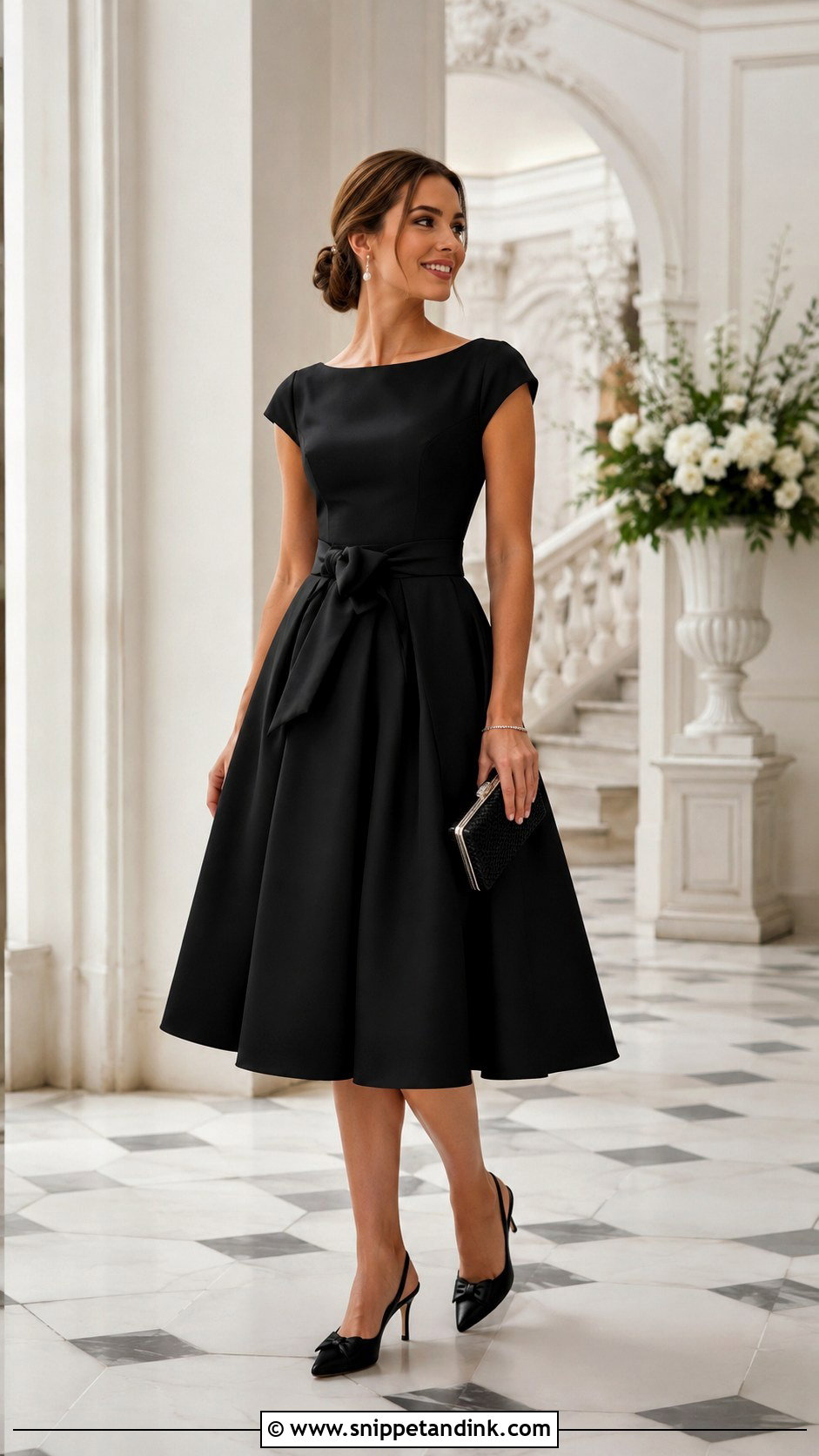
Tea length lands between the knee and the ankle, and that hem is what gives it its vintage feel. The risk is looking like a costume, which happens when retro hair, retro shoes and a retro dress all arrive together. I keep one vintage note and make the rest current, modern slingbacks rather than T-bar shoes, for instance. A fitted bodice and full skirt in satin, tulle or structured crepe, with pearl or crystal earrings, suits afternoon weddings and formal gardens in any season.
20. Black Tulle Skirt Outfit
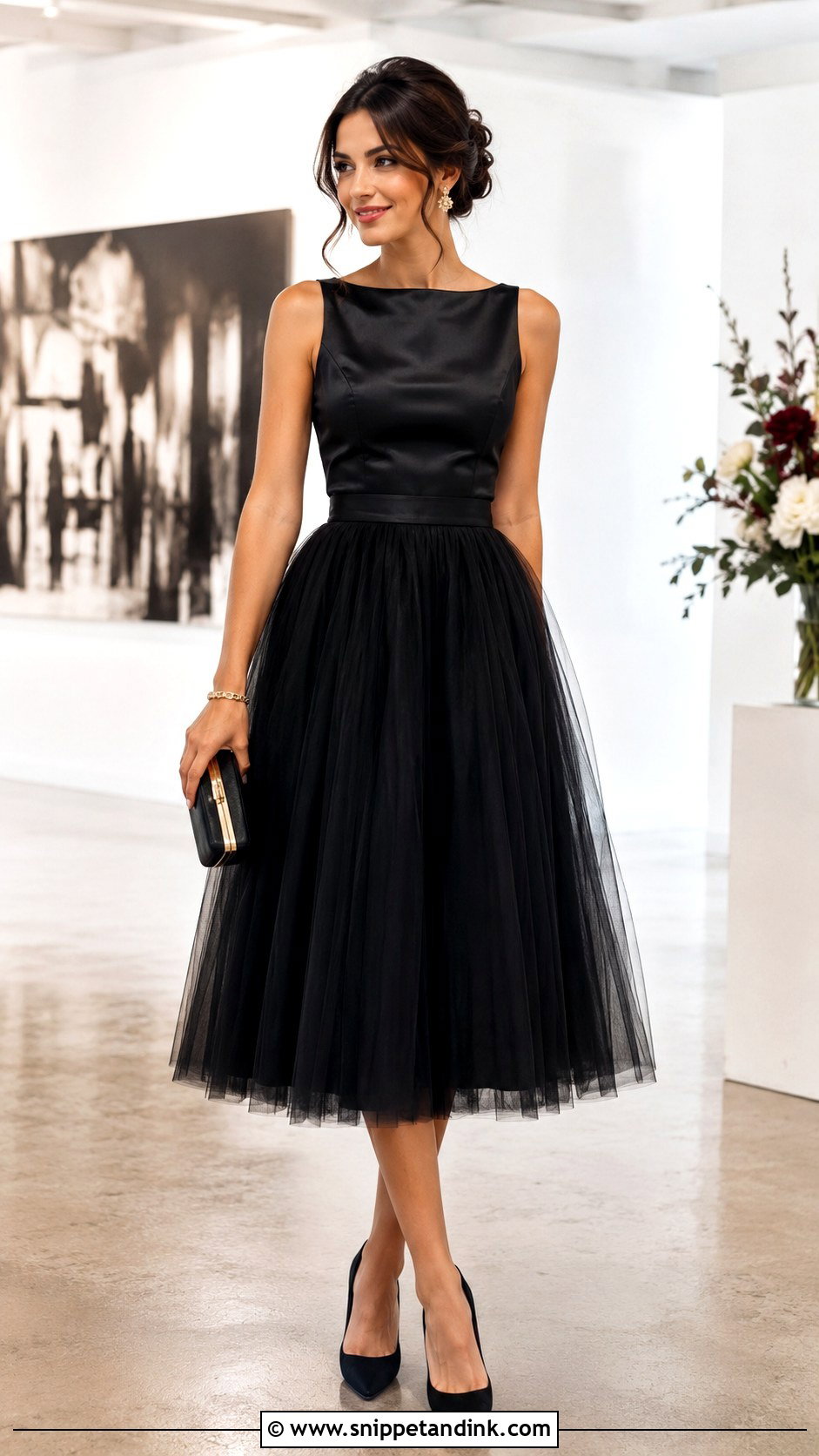
A tulle skirt brings so much volume that the top has to be almost severe: a fitted satin top, a fine knit shell, or a bodysuit that won’t untuck when you dance. Make sure the skirt has a lined base, because layered tulle without one shows your legs in backlight. Tulle also snags on beaded clutches and bracelet clasps, so I keep the jewelry smooth. Pointed heels or delicate sandals finish it for semi-formal weddings, creative venues and evening receptions.
21. Black Sheath Dress Outfit
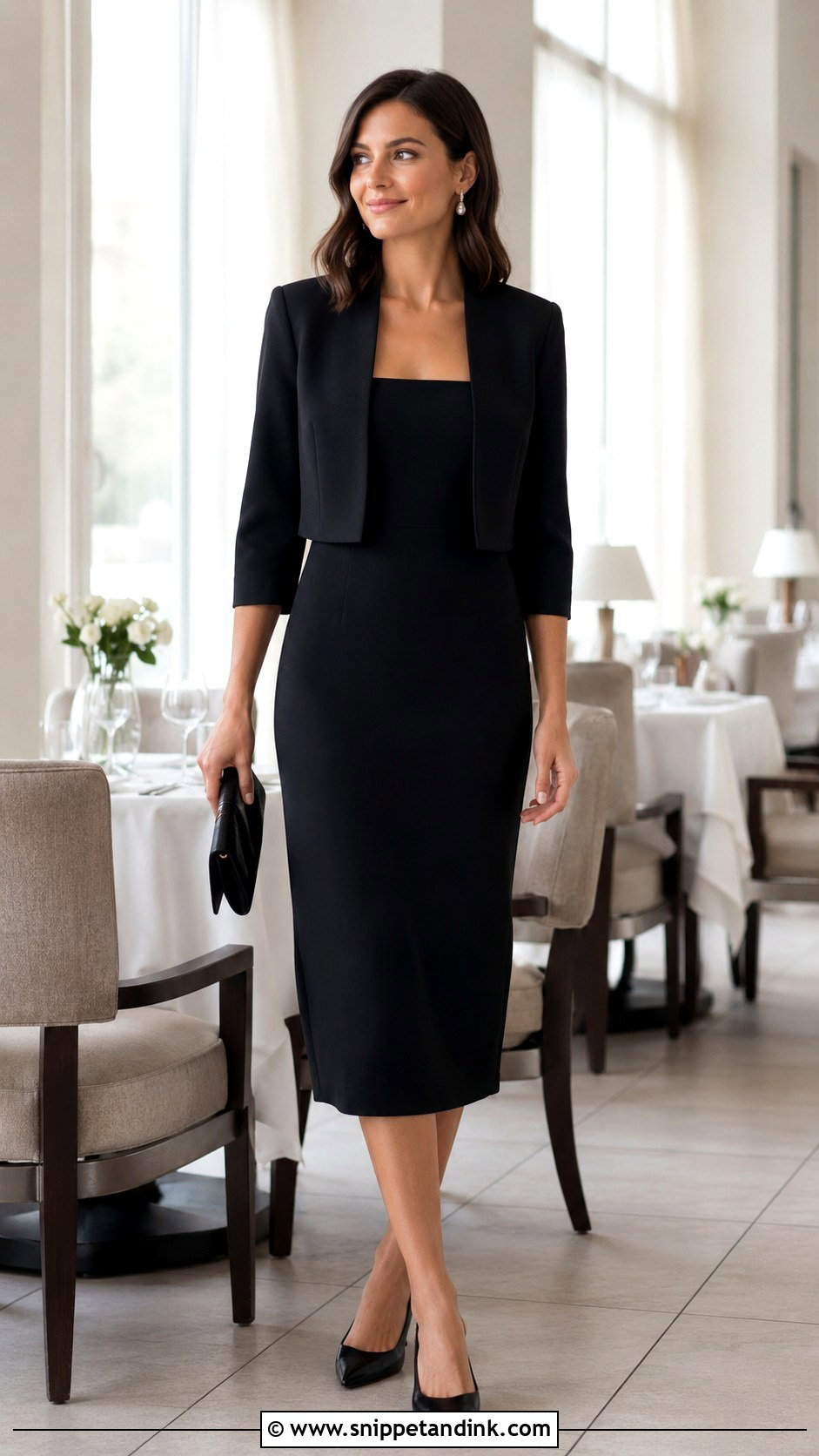
Everything about a sheath depends on fit. A close, straight cut in crepe or stretch satin either looks sharp or pulls across the hips, and there’s no styling fix for the second problem, only a tailor. Keep it knee or midi length, add slingback heels, and choose earrings that bring light up near the face. A tailored shawl or cropped jacket covers a cool evening or a formal ceremony. Courthouse events, restaurant receptions and daytime semi-formal weddings all suit it.
22. Black Cape Dress Outfit
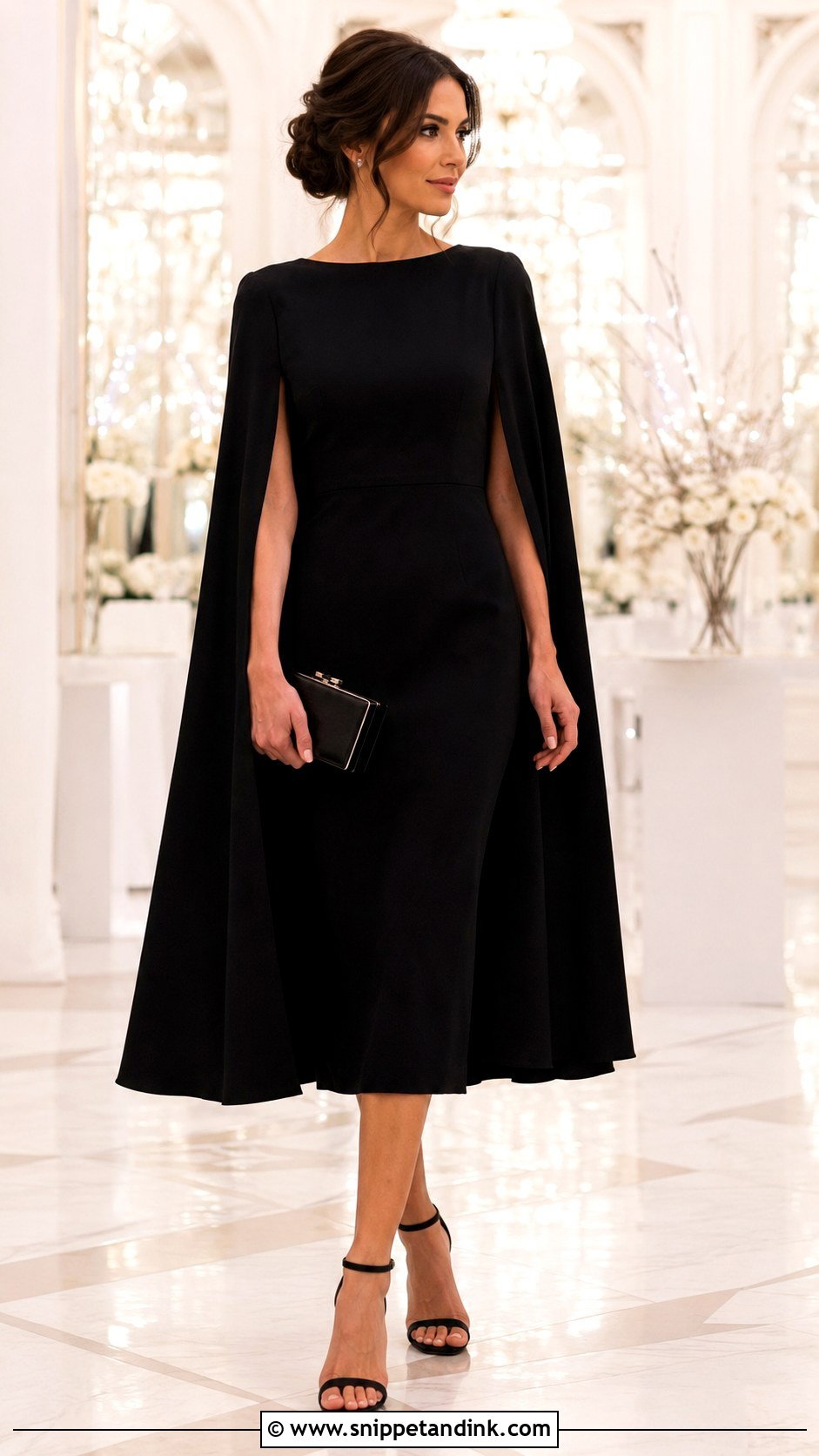
The cape answers the cover-up question before you’ve even asked it, which is why I like it for winter ceremonies and for guests who want their arms covered. Crepe holds the cape’s line; chiffon floats behind you. A cape does restrict how high you can lift your arms, so raise them as if you’re hugging someone in the fitting room and see where it pulls. Simple heels, a box clutch and small earrings keep the silhouette clean for formal and black-tie optional receptions.
23. Black Column Gown Outfit
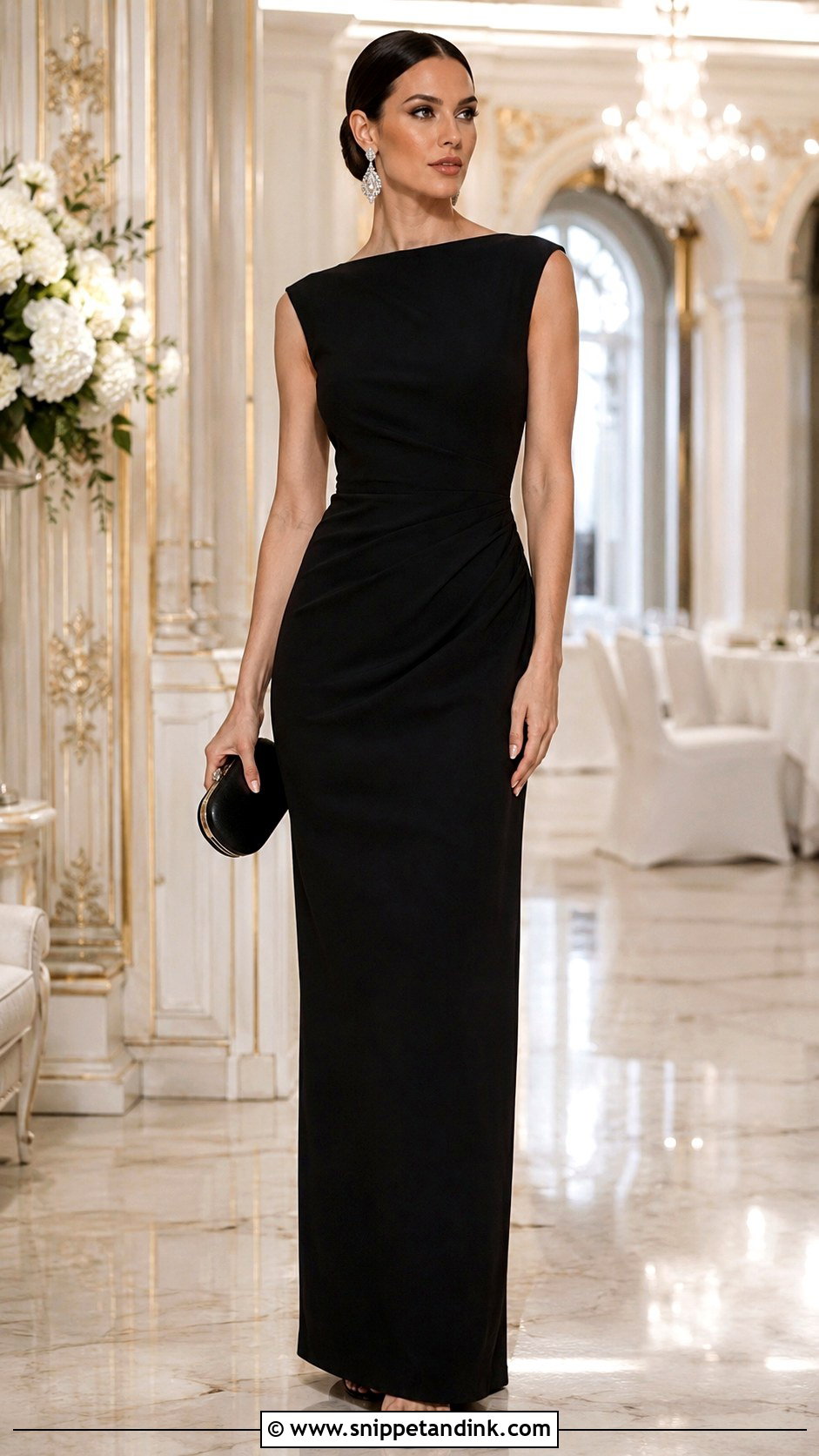
A column gown has no volume to hide behind, which makes tailoring the entire job. A floor-length straight cut in crepe, satin or stretch jersey needs a slit you can walk and climb steps in, and I check that by walking up a staircase during the fitting. A clean neckline or soft drape, delicate heels, a polished clutch and jewelry with some shine are all it needs. It belongs to black-tie evenings, ballrooms, museums and hotel receptions.
24. Black Polka Dot Dress Outfit
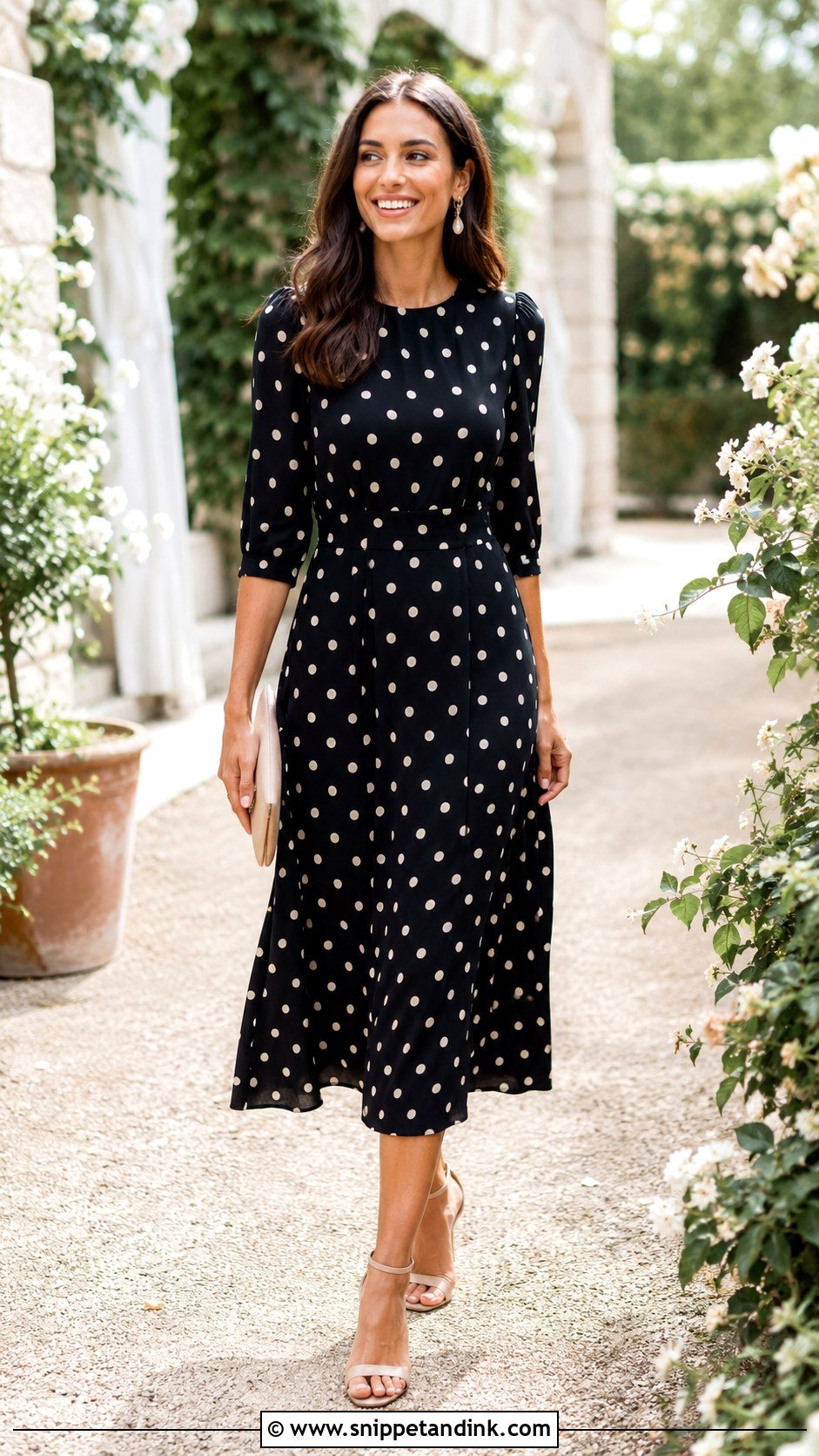
Dots make black playful, which suits daytime weddings, garden receptions and semi-formal celebrations. Small and medium dots read as polished; large ones lean retro. I match the shoes to the dot color, so white dots get white or nude heels and cream dots get champagne. A midi with a defined waist, a simple clutch and fine earrings is all it takes.
25. Black Dress With Metallic Accessories Outfit
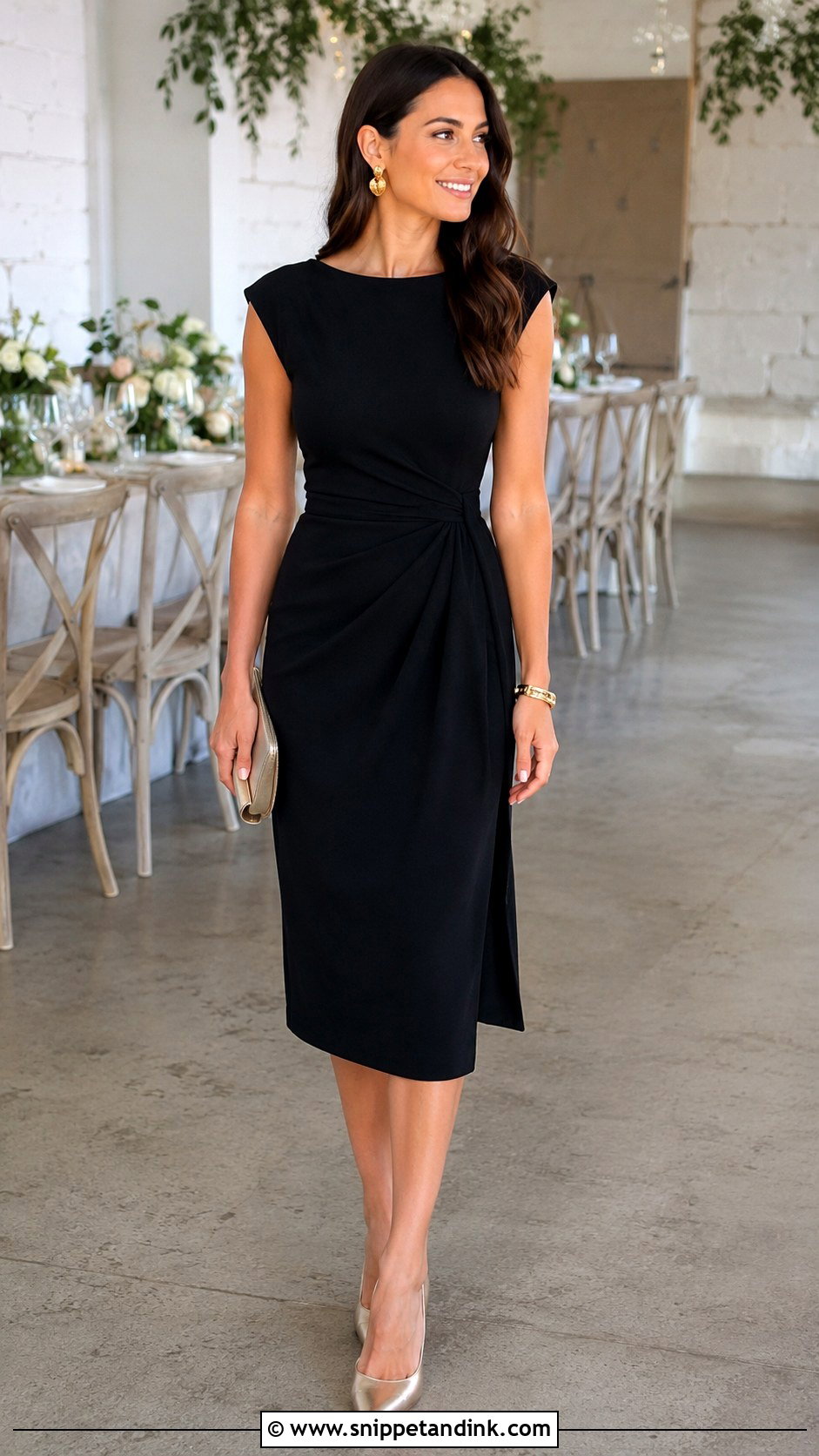
This is the outfit I build for last-minute invitations, because it starts with a dress most people already own. Take a plain black midi, maxi or cocktail dress, pick one metal, and repeat it in the shoes, the clutch and the earrings. Mixing gold and silver can work, but it needs intent, and when you’re dressing in a hurry it usually looks accidental. Bold metallics belong with a clean shape; if the dress has lace or pleats, scale the metal down. It works in every season.
How Black Fabric Behaves in Photos and Over a Long Day
Black is harder to photograph than people expect. Under flash or in dim reception light, matte crepe can lose every seam and fold and turn into one dark shape. Fabrics with a little surface, such as satin, velvet, lace or pleats, keep their detail on camera, which is one reason I nudge evening guests toward texture.
It’s also the color that shows everything. Lint, pet hair, face powder and deodorant marks all stand out against black, and they tend to appear in the car on the way to the venue. Put the dress on last, after makeup and deodorant have dried, and roll it with a lint roller before you leave.
What I’d tuck into the clutch
- A few sheets torn from a lint roller, folded flat
- Fashion tape for straps and gaping necklines
- Blotting papers, since shine on the face reads strongly next to black
- A pair of flat foldable shoes if the dress is long and the dance floor is hard
- A safety pin or two for a slipped hem
When you get home, hang satin and crepe straight away so creases fall out overnight, and steam rather than iron. Velvet should never be pressed flat; steam it from the inside and let it hang. Most black dresses fade if they’re washed hot or dried in a machine, so check the care label and use cool water to keep the black deep for the next wedding.
Black Works When the Fabric Matches the Hour
Black is welcome at most weddings now, as long as the outfit looks chosen for the occasion rather than pulled from a night out. I decide fabric first, because satin, chiffon, lace, velvet, sequins and tailored trousers each set a different mood before a single accessory goes on. Daytime asks for dots, florals or lighter cloth. Evening can take a sleek line and metallic details. Get the fit right, read the invitation twice, and black will carry you from the ceremony to the last song.
You'll Like These Ideas:


Leave a Reply