
Red Indian occasion wear covers a lot of ground: sarees, lehengas, Anarkalis, sharara and gharara sets, everyday kurtas and fusion pieces. Most of the work in styling it isn’t the color. It’s matching the weight of the fabric and the level of embroidery to the event, and getting the tailoring right. Deep maroon and crimson read formal; tomato, coral and printed reds feel lighter and suit daytime. Gold jewelry is the classic pairing, while pearls, silver and neutral shoes give a more modern finish. Below are outfits from heavy Banarasi to casual cotton, each with the fit or fabric detail I’d check before you wear it.
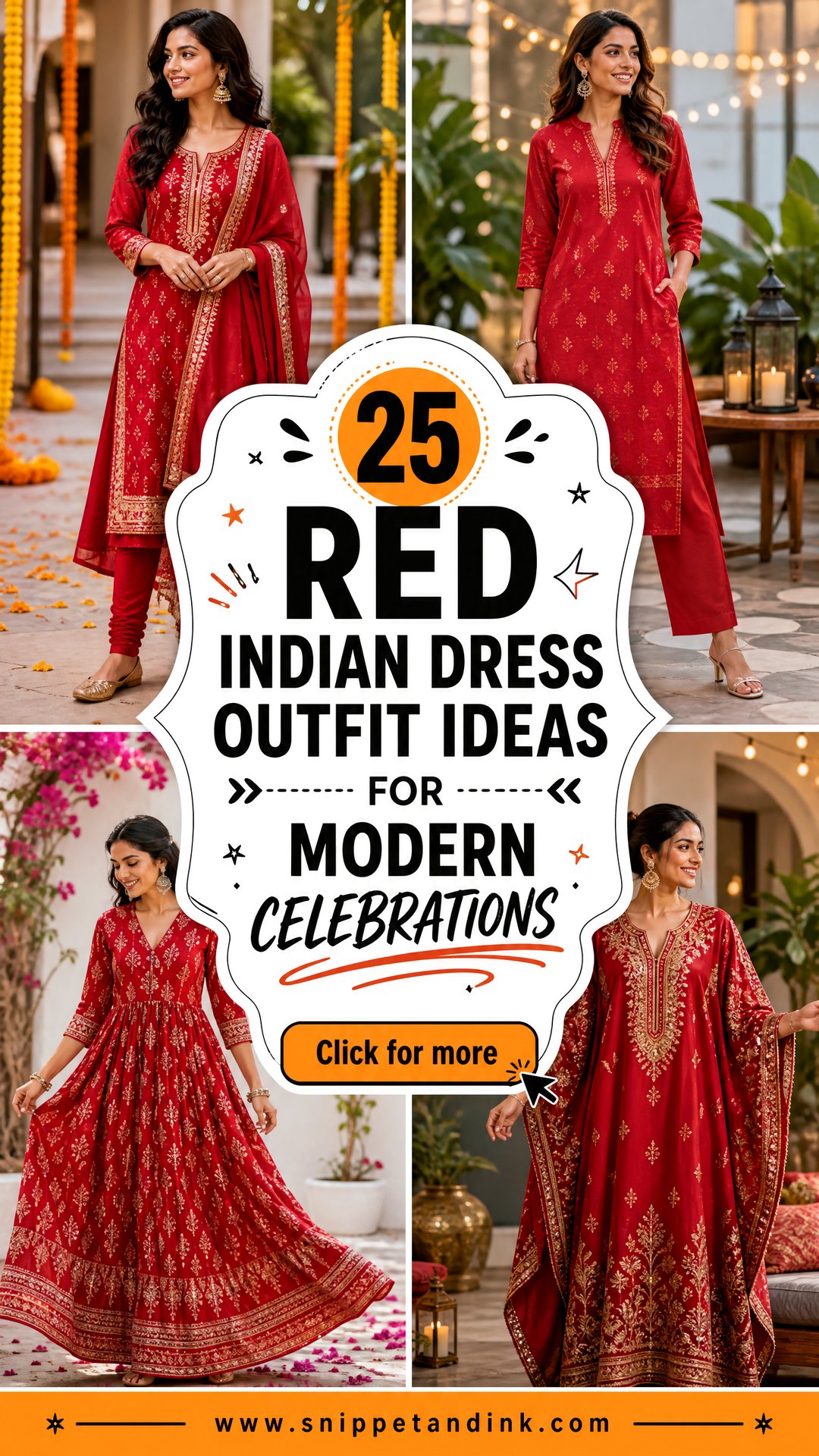
Mehndi Morning to Reception Night: Which Red Goes Where
Indian weddings are usually several events, and the same red outfit rarely suits all of them. This is roughly how I match the outfits in this list to the occasion:
- Mehndi or haldi: light cotton, floral lehengas, kurta sets. Keep sleeves short or three-quarter so henna and turmeric don’t stain silk.
- Sangeet: sharara, Punjabi suit, palazzo sets. Anything you can dance in for hours, with flat or low shoes.
- Wedding ceremony: silk or Banarasi sarees, Anarkalis, lehengas. Long rituals mean sitting on the floor, so avoid tight churidars and very heavy skirts.
- Reception: cape gowns, velvet, jacket dresses and georgette sarees with more shine.
- Family puja or lunch: salwar kameez, kurta and pants, a simple cotton saree.
If you’re a guest rather than the bride, it’s worth asking a family member what she’s wearing. Many brides wear red for the main ceremony, and most guests avoid a heavy red lehenga that day. Red for the sangeet or reception is usually welcome.
1. Red Silk Saree Outfit
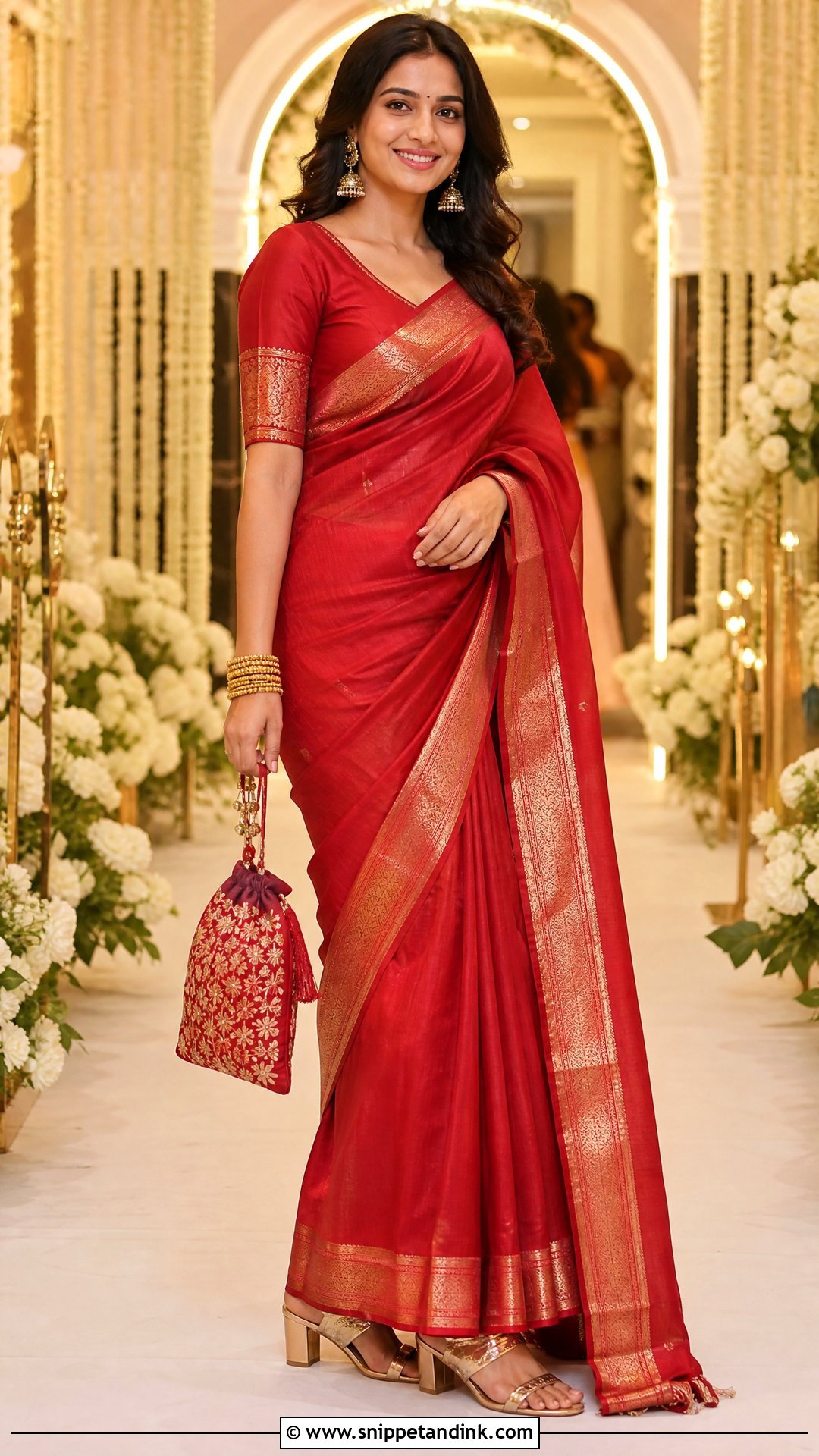
A red silk saree with a gold zari border is the outfit I’d reach for at a formal wedding or reception. Pair it with a fitted elbow-sleeve blouse, which balances the weight of the silk on the shoulder better than a sleeveless one. Border width is a proportion choice: narrow on a petite frame, wider and more decorative if you’re tall. Silk holds pleats crisply, so this is the easiest saree to drape well. Gold jhumkas, stacked bangles, a potli and embellished block heels finish it, with a low bun and fresh flowers.
2. Red Chiffon Saree Outfit
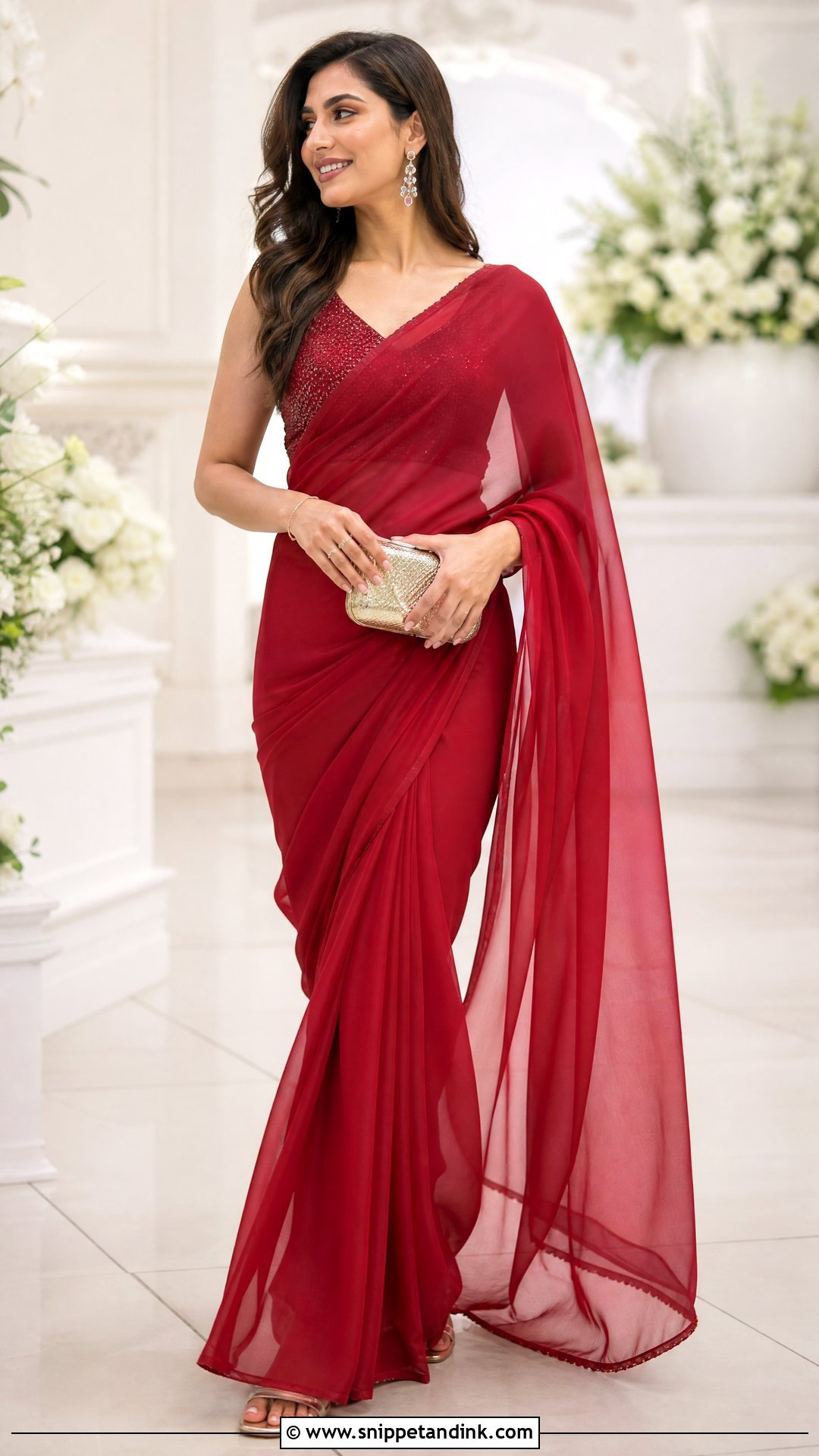
Chiffon is light and fluid, which makes it comfortable in a warm room and tricky to drape. It slips. I keep the pleats narrow and pin them at the top and halfway down, otherwise they spread open by the end of the evening. A tonal blouse with subtle beadwork and a supportive neckline is enough, since chiffon shows every seam underneath. A crystal bracelet, drop earrings, a small metallic clutch and low gold heels keep it light. Choose a lightly decorated border; heavy borders drag chiffon down unevenly.
3. Red Banarasi Saree Outfit
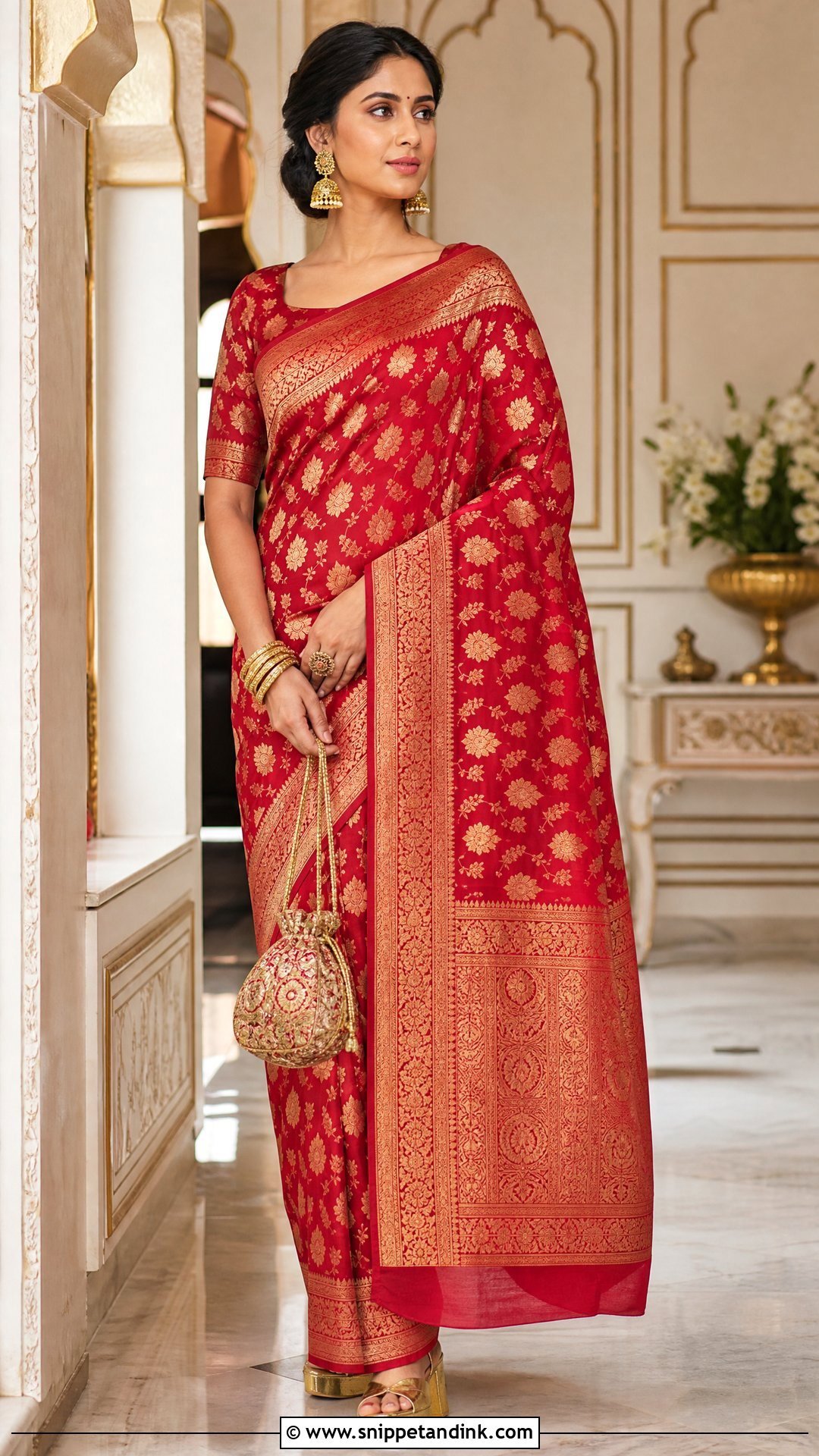
A red Banarasi is the grand option, woven with metallic zari so the fabric itself is the decoration. A gold, green or matching red brocade blouse lets the weave show. Traditional draping keeps the border and pallu visible. Banarasi silk is heavier than it looks; the pallu pulls at the shoulder, so pin it to the blouse strap rather than just letting it hang. Temple earrings, a short necklace, bangles and gold platform sandals suit it, with a center-parted bun. Hold back on accessories and let the weave lead.
4. Red Georgette Saree Outfit
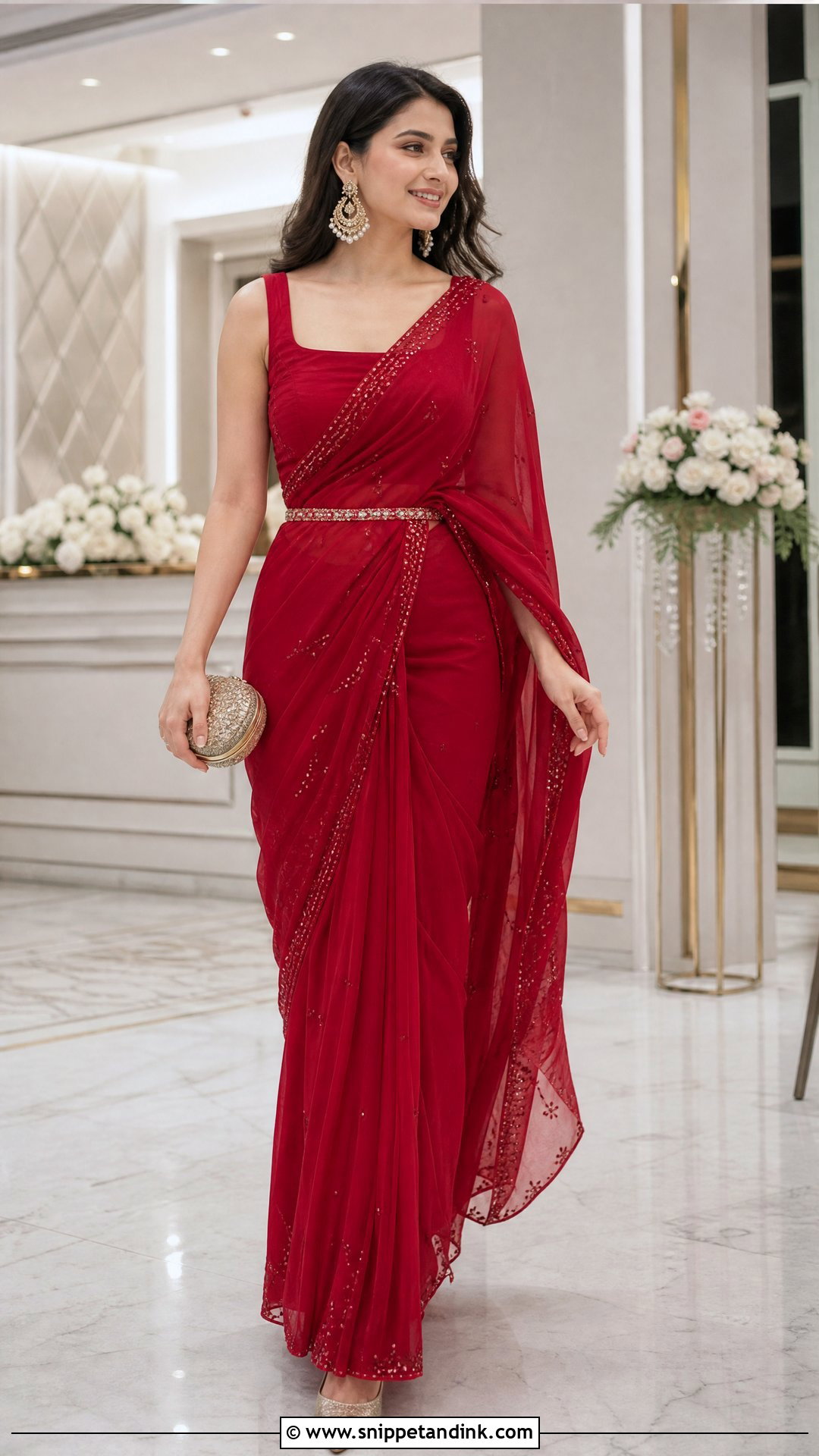
Georgette sits between chiffon and silk: softer than silk, more body than chiffon. It works for festive lunches, engagements and evening parties alike. Choose a design with fine sequins or an embroidered border, and pair it with a plain square-neck blouse. A saree belt at the waist holds the drape and shapes the waist. Medium chandbalis, a beaded clutch and pointed block heels complete it. Georgette’s grip is low, so pin the shoulder and waist pleats securely before you leave.
5. Red Lehenga Choli Outfit
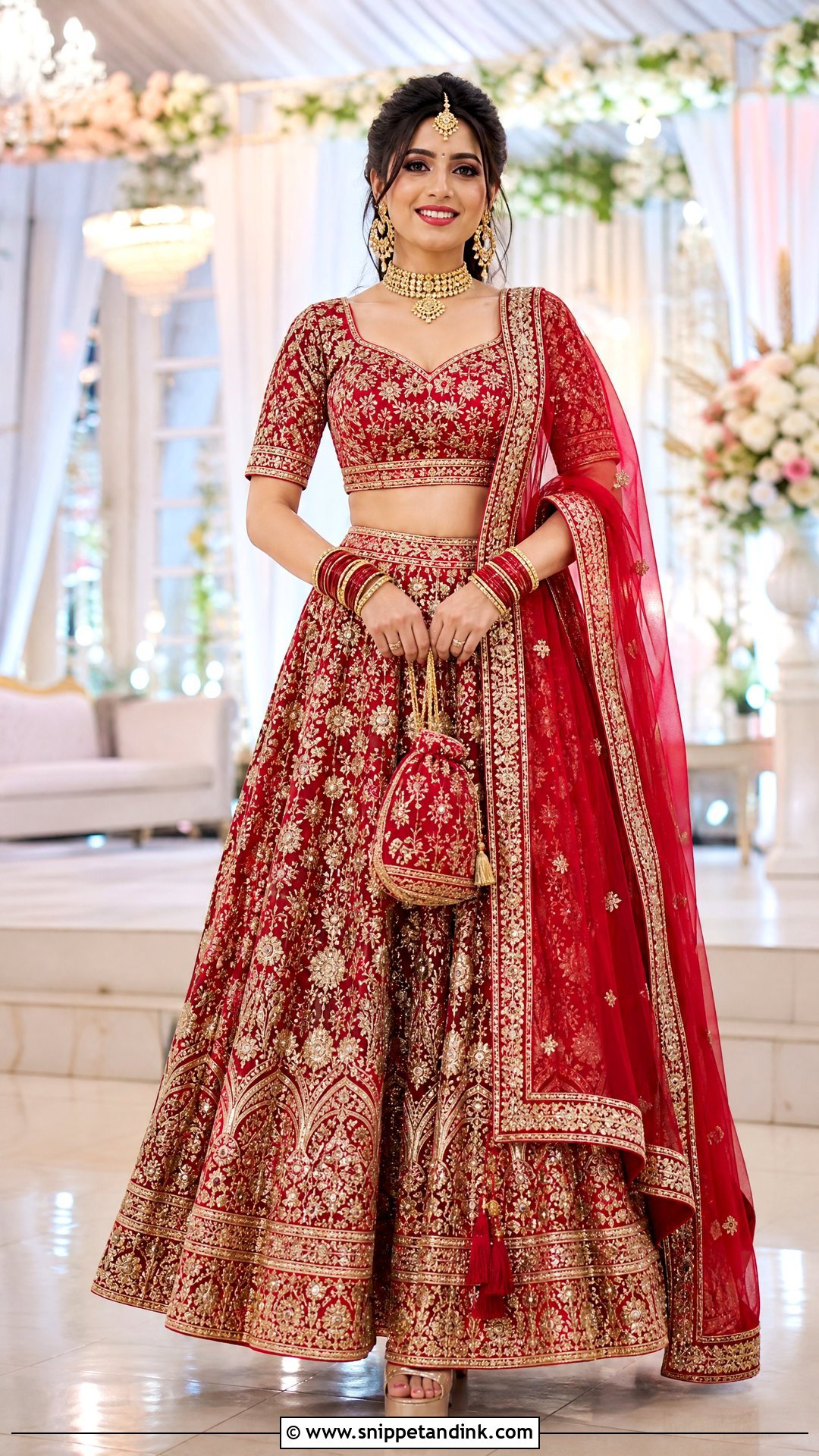
A red lehenga choli suits a formal wedding or a large family event, though if you’re a guest, check first whether the bride herself is wearing red. Choose an A-line or gently flared skirt with embroidery spread evenly; decoration concentrated in one band makes the skirt hang unevenly. A well-fitted choli and a light dupatta over one shoulder complete it. Cushioned platform heels help with the skirt length. Get the waist, blouse straps and hem altered before the occasion, not the week of.
6. Red Velvet Lehenga Outfit
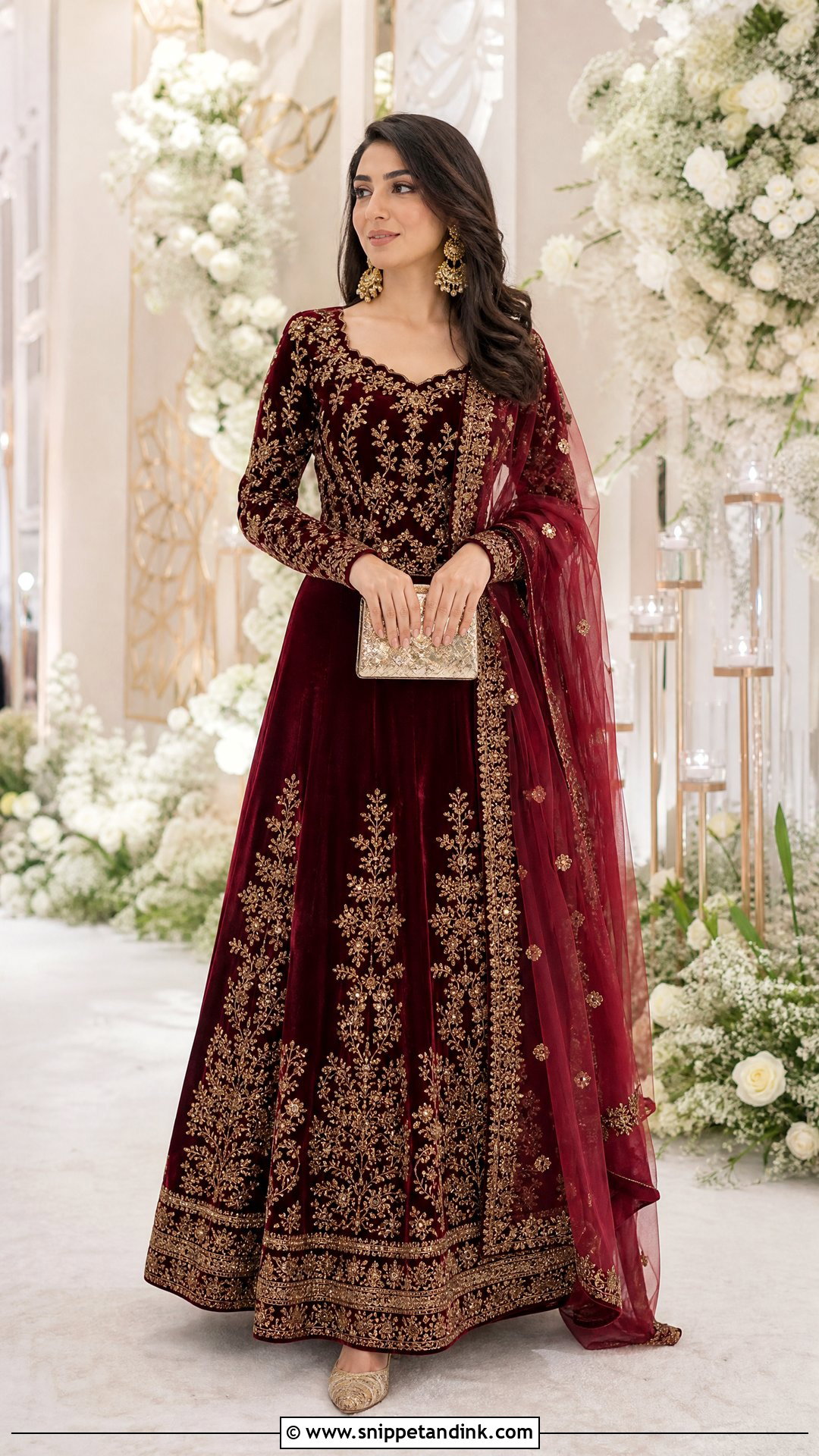
Velvet is the winter lehenga. Deep red velvet with gold embroidery just at the hem looks rich without excess. Velvet is warm and heavy, so a lined blouse and a sheer net dupatta keep the whole outfit from feeling like armor. Pick one strong piece of jewelry, either a necklace or large earrings, not both. Antique gold, a textured clutch and closed embroidered heels suit it. Have the hem set properly, because velvet bunches around the shoes and the pile gets crushed underfoot.
7. Red Floral Lehenga Outfit
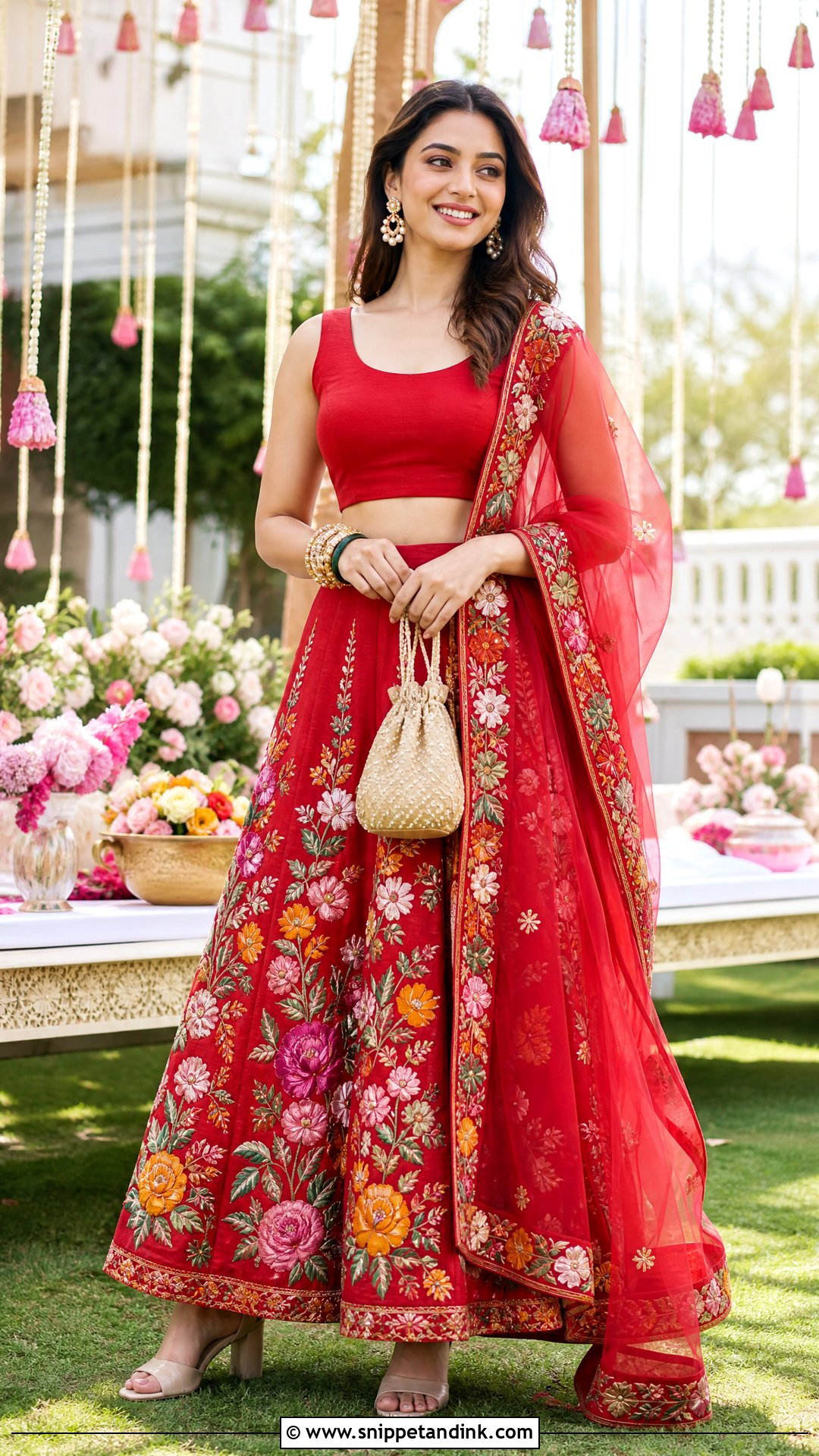
Floral embroidery in pink, green, cream or gold lightens red for daytime. A lightweight skirt with a solid red blouse keeps it coordinated, and a sheer dupatta with a narrow border lets the flowers show. Embroidered florals vary a lot in density, from a few scattered motifs to heavy all-over work, so it adapts to age and formality easily. Pearl earrings, colorful bangles, nude block heels and a neutral potli finish it, with loose waves or a relaxed braid. It’s what I’d suggest for a mehndi or daytime puja.
8. Red Anarkali Suit Outfit
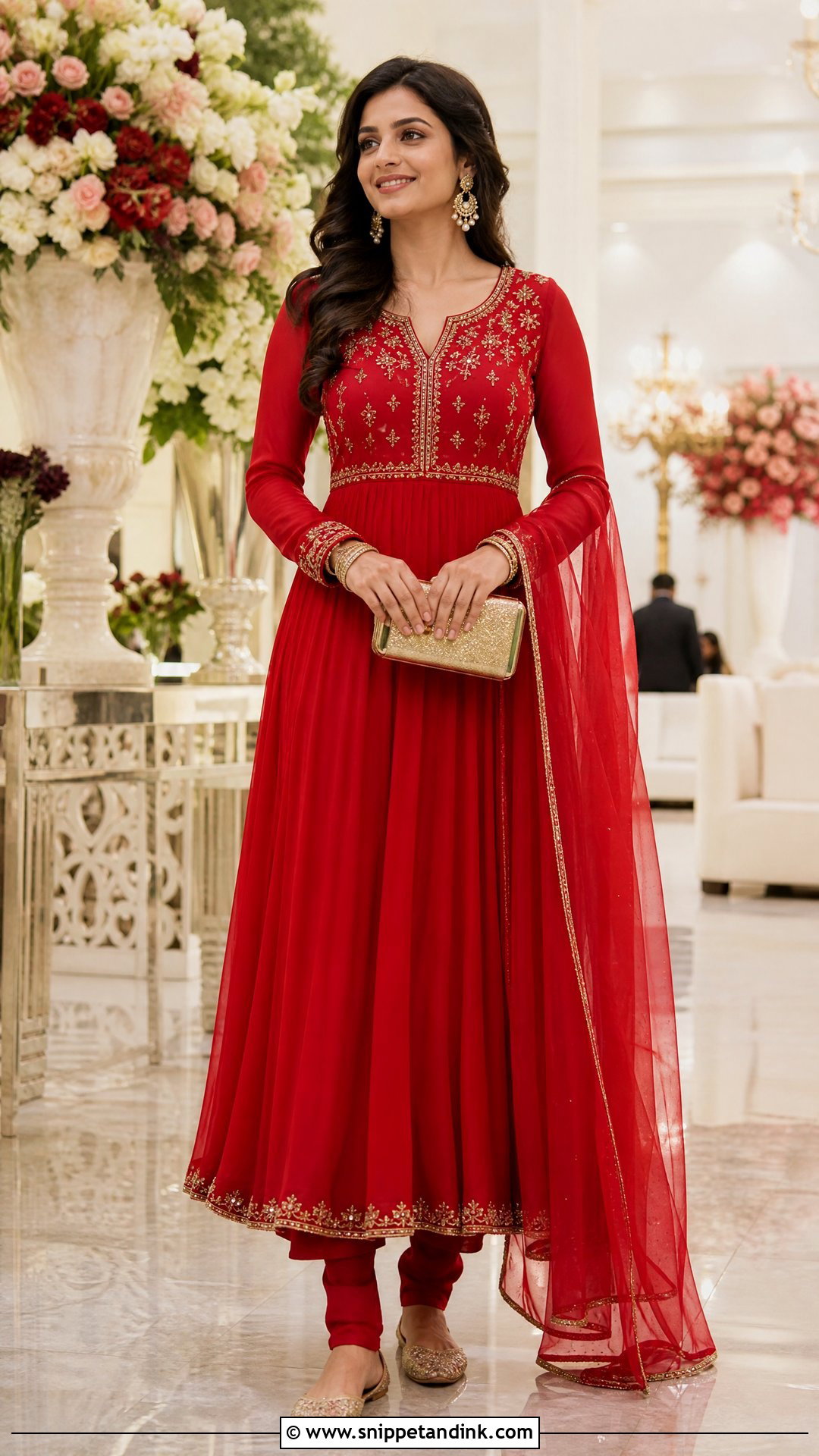
An Anarkali is fitted at the bodice and flares from the waist, which flatters most figures and moves well. The flare should start at your natural waist; if it starts too high, it reads as maternity wear. Narrow churidar underneath and a light dupatta over both shoulders or to one side. Gold drops, slim bangles and a small box clutch keep it classic. Juttis for tradition, low heels for height. Choose embroidery only at the neckline and cuffs if you prefer something quieter.
9. Red Floor-Length Anarkali Outfit
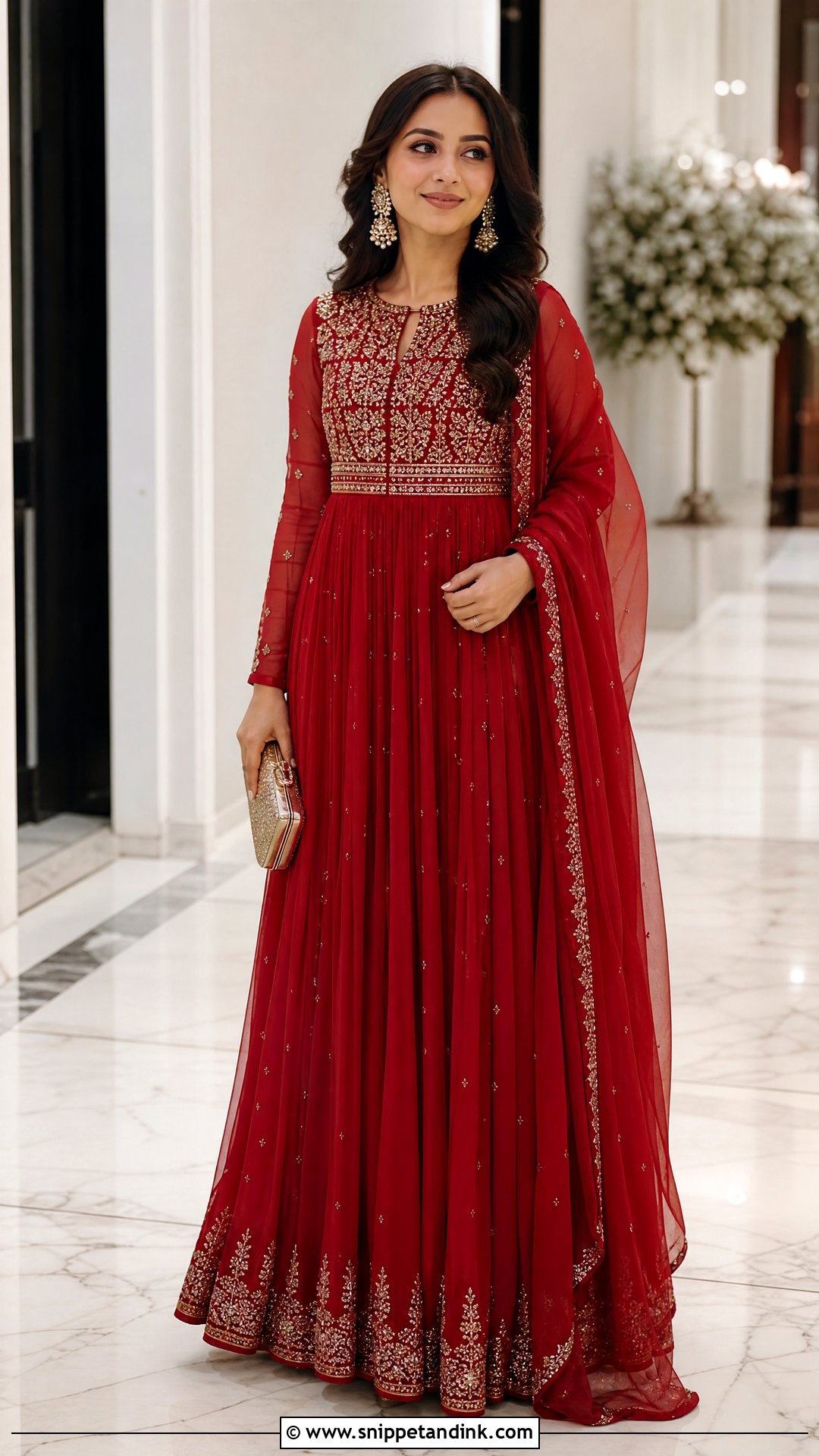
A floor-length red Anarkali looks like a gown while keeping its Indian roots. Paneled designs have more flare and swing than gathered ones. Pin a dupatta at one shoulder and let it fall straight for a long vertical line. Statement earrings and a metallic clutch, not layered necklaces over an embroidered neckline. Floor-length hems need shoes chosen before tailoring, so bring your platforms to the fitting. Walk and sit in it before the event to check the lining doesn’t catch.
10. Red Salwar Kameez Outfit
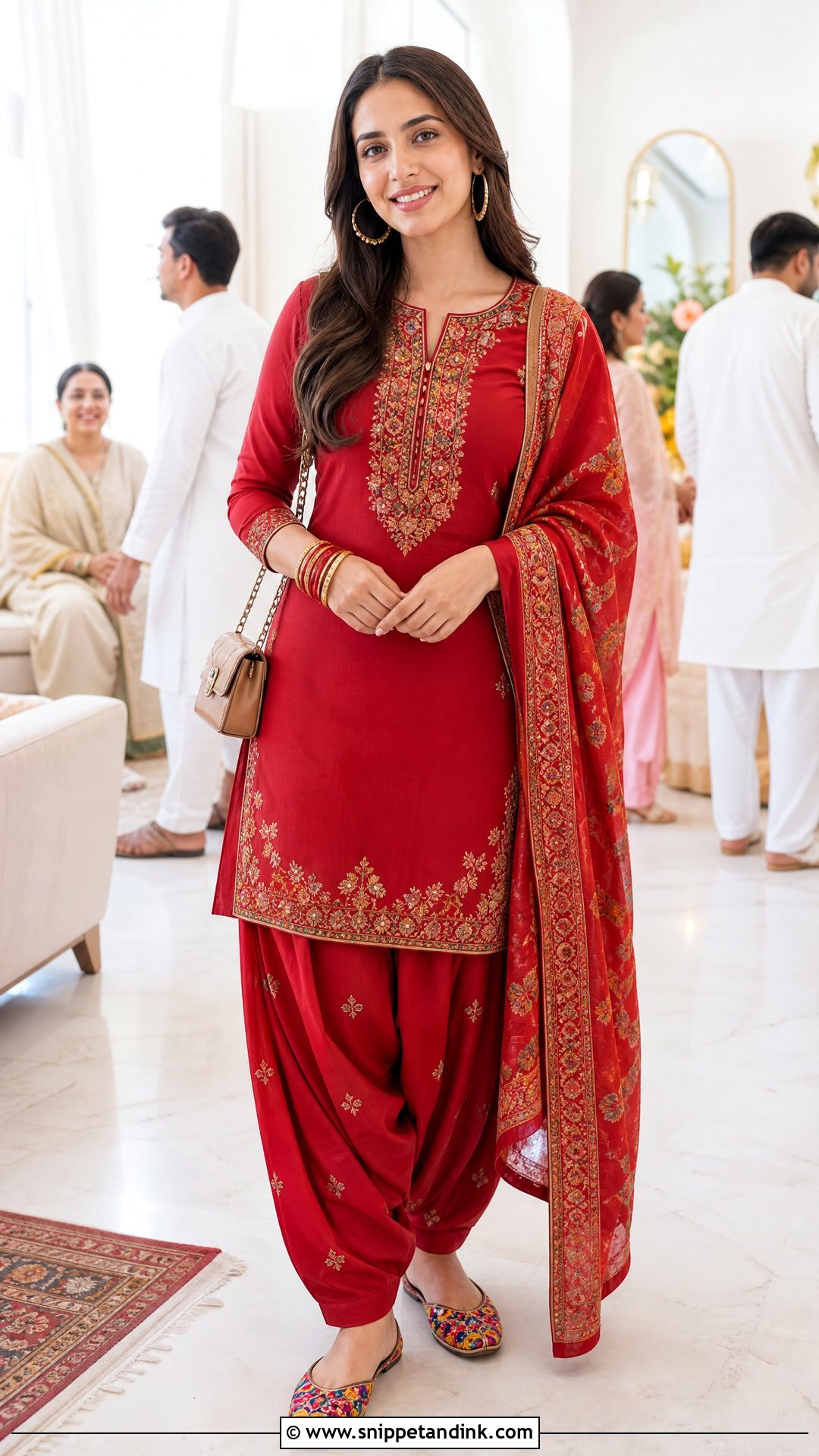
A salwar kameez is the comfortable daytime option for family gatherings. A knee-length kameez with modest embroidery at the neckline, cuffs or hem, a roomy salwar in matching fabric and a printed dupatta give interest without formality. Cotton blends breathe in summer; silk blends add shine for something dressier. Cotton kameez fabric shrinks and the dye can run, so wash new red cotton on its own first. Juttis, small gold hoops and slim bangles keep it easy, with a braid or low ponytail.
11. Red Punjabi Suit Outfit
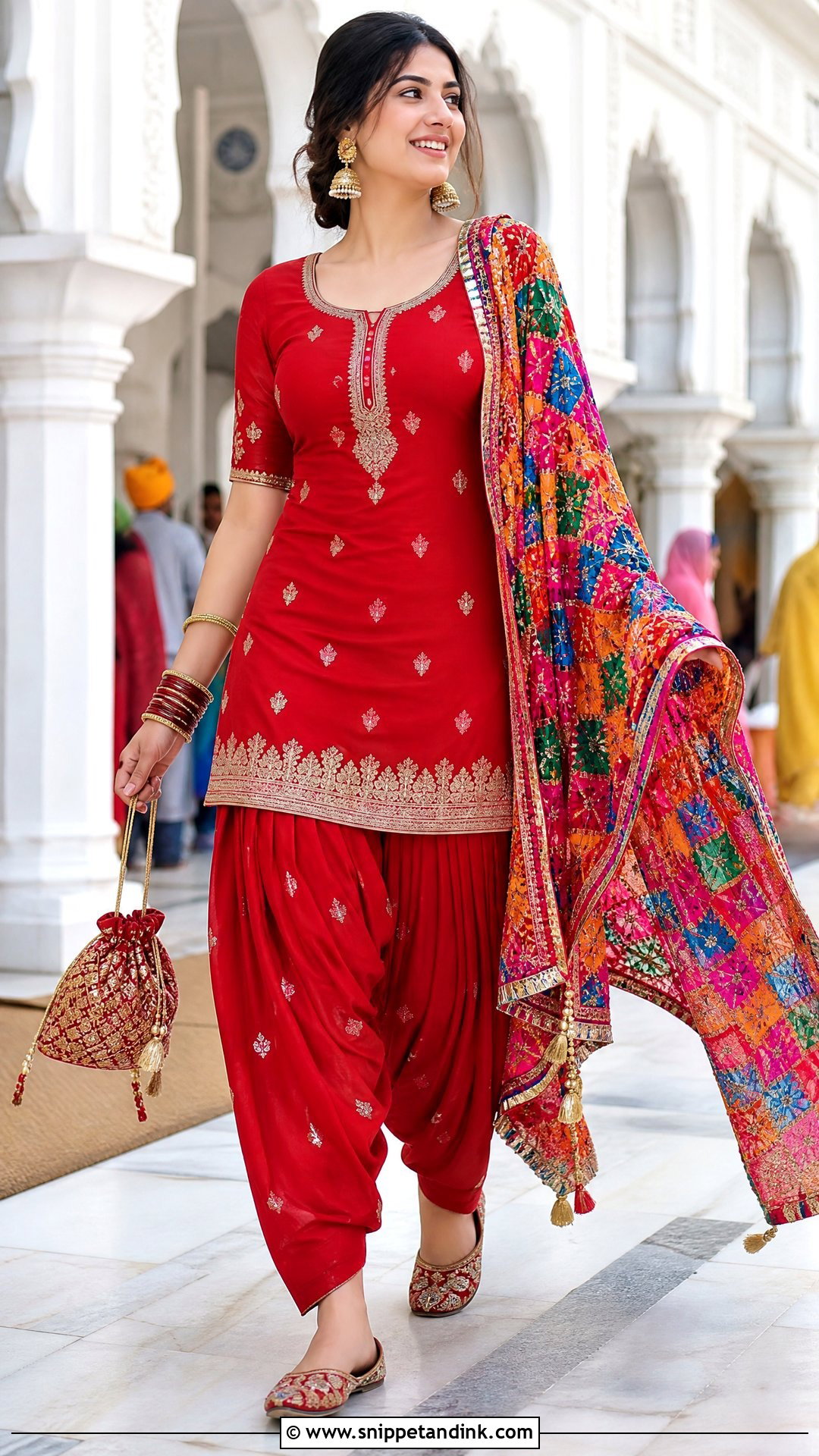
A red Punjabi suit is built for dancing. A short fitted kameez over a pleated Patiala salwar, with a phulkari dupatta embroidered in yellow, green, blue or gold, is lively and practical. Patiala salwars use a lot of fabric, so the drawstring needs to be tied firmly; a loose one slides down during bhangra. Make sure the kameez covers you when you sit. Embroidered juttis, medium jhumkas and colorful bangles, with a long braid or high ponytail.
12. Red Palazzo Suit Outfit
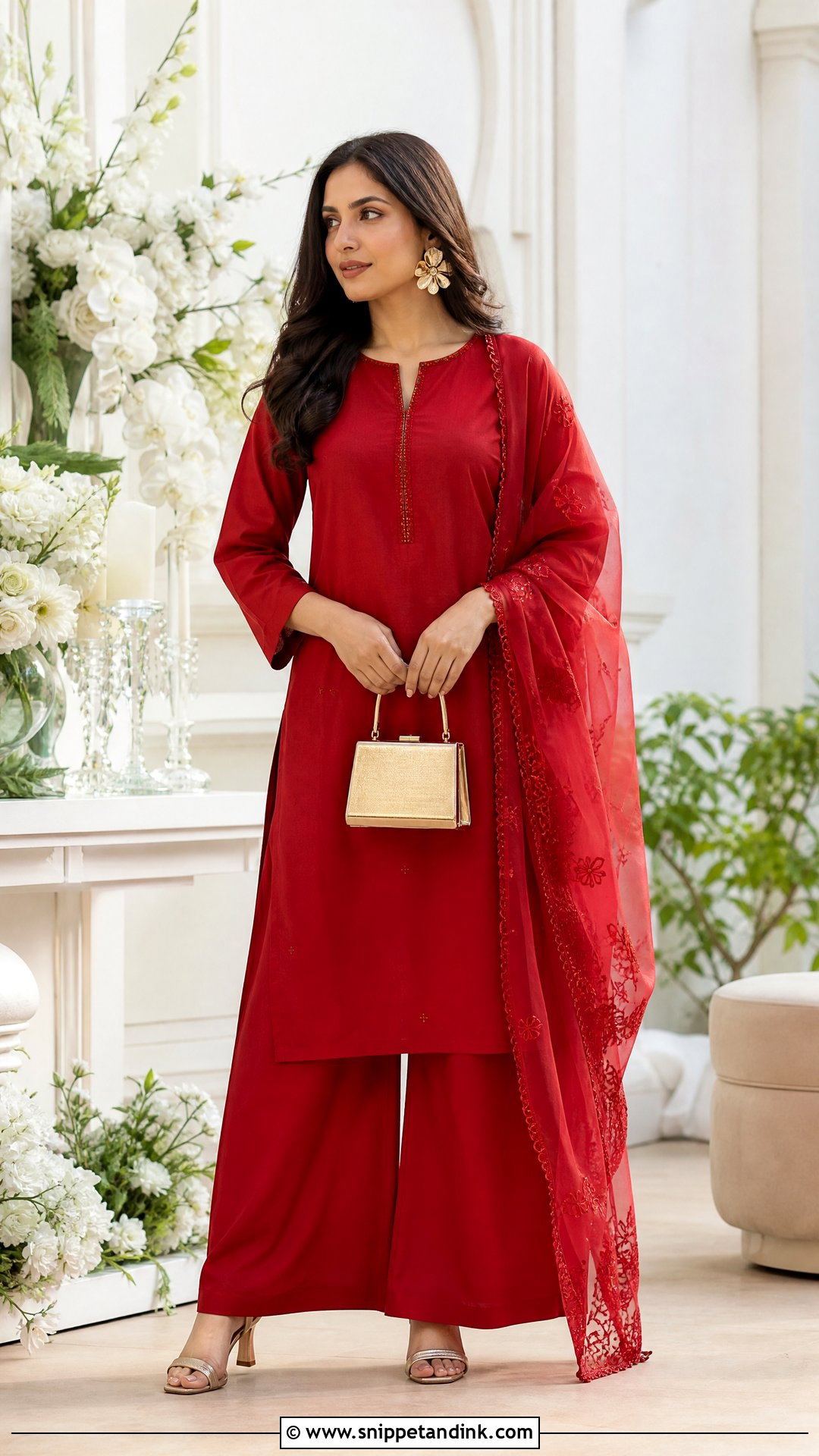
Palazzo pants with a straight red kurta give movement and comfort for long events. Knee length is the right kurta proportion; shorter looks unfinished and longer swallows you. Matching red is streamlined, and a narrow gold border on the palazzos adds detail. The hem should just clear the floor in your shoes, since wide pants that touch the ground get stepped on. An organza dupatta, sculptural earrings and metallic block heels finish it.
13. Red Sharara Suit Outfit
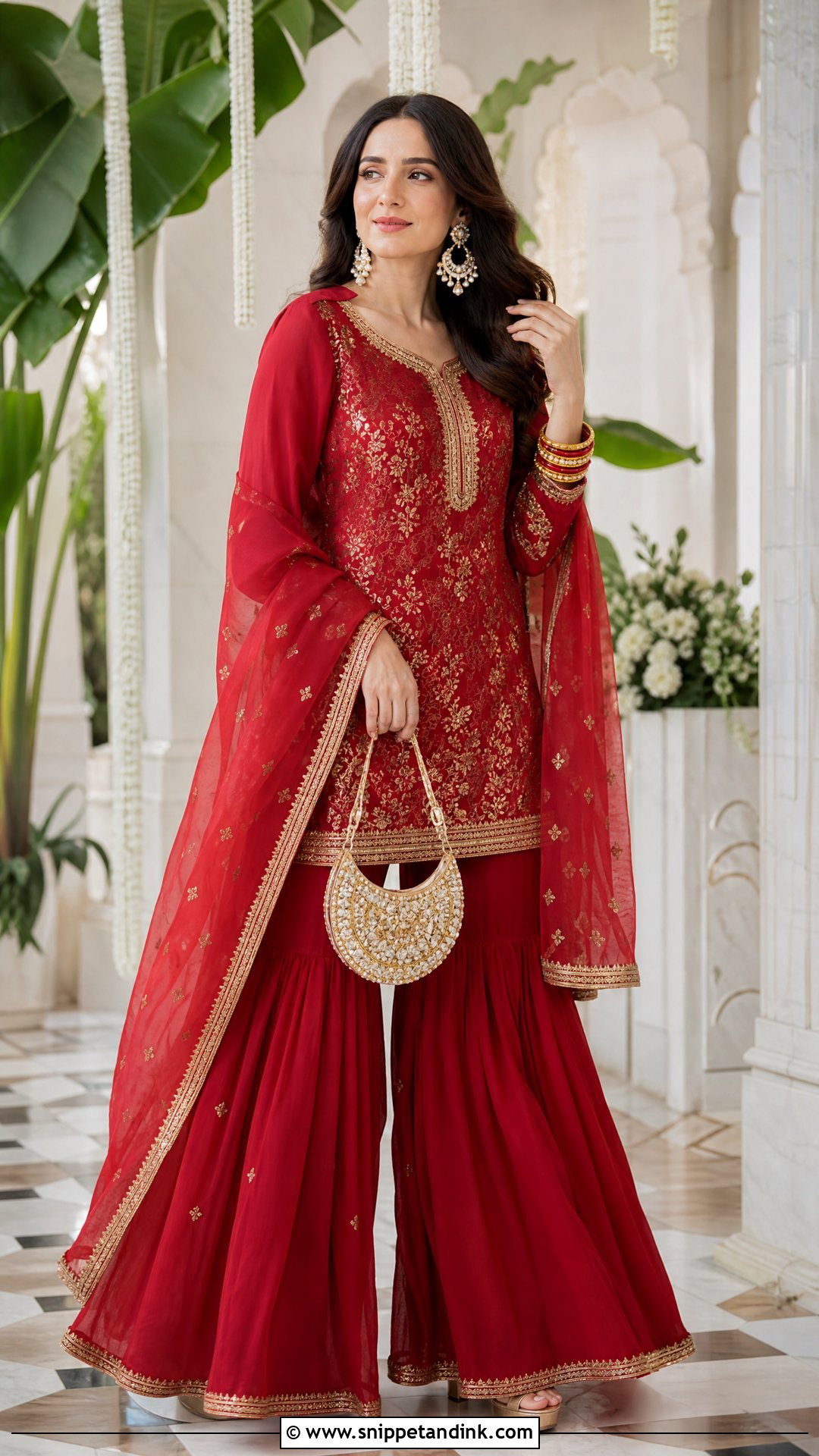
A sharara flares from the thigh or knee and moves a lot when you walk. Pair it with a short embroidered kurti and a sheer dupatta over one shoulder. The waistband does the work of holding all that fabric, so it must fit snugly; a loose one makes the flare sag. On a fuller bust I’d choose a clean V-neck kurti with controlled embroidery. Chandbalis, a few bangles, a small handbag and platform sandals, with soft curls or a half-up style, finish it for a sangeet.
14. Red Gharara Suit Outfit
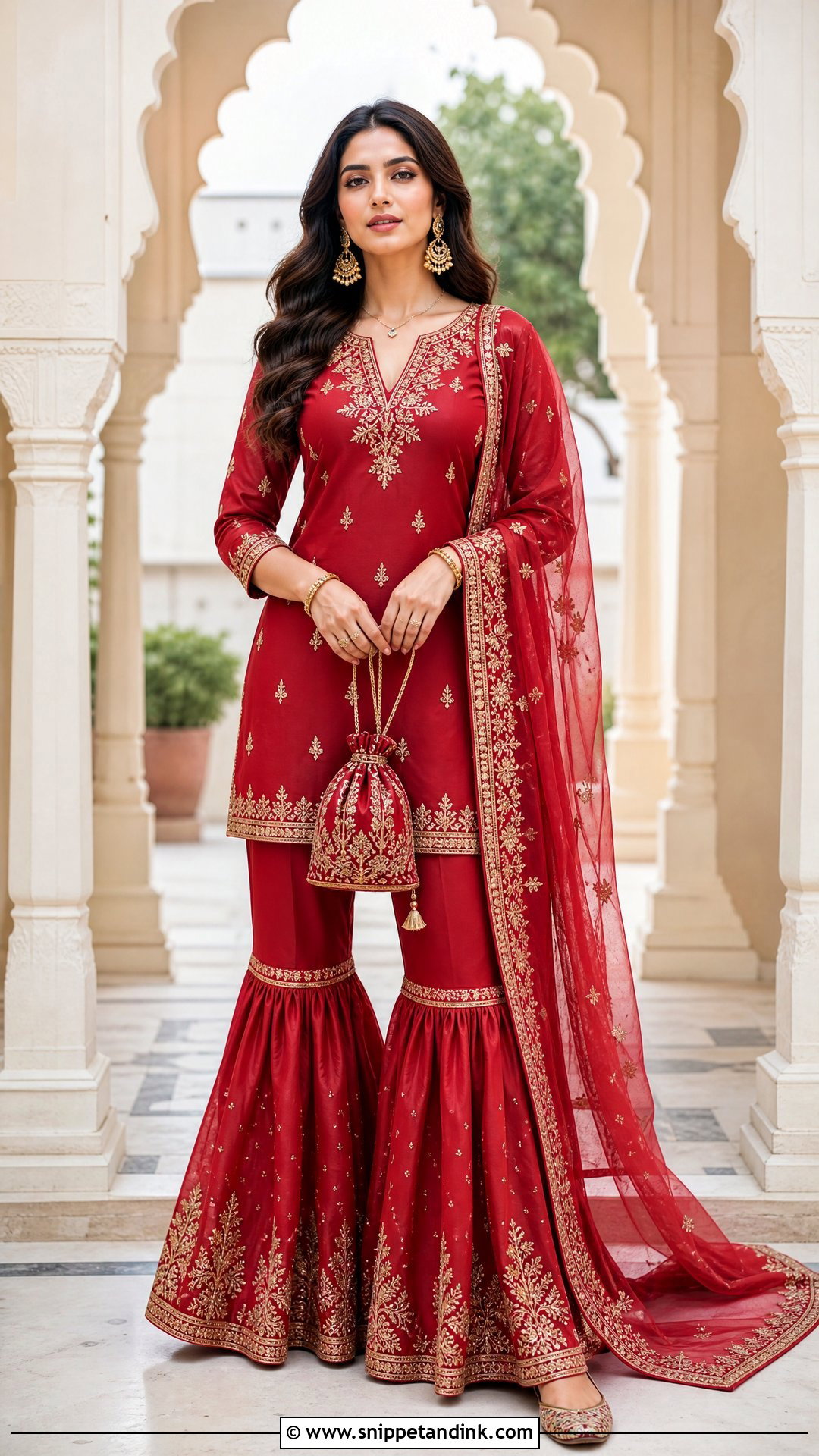
A red gharara suit is fitted through the upper legs and flares from a joint at the knee, usually marked by an embroidered band. Where that joint sits decides both comfort and proportion; I check it standing and sitting, since too high restricts the stride and too low looks dropped. A short tailored kurti keeps the joint visible. A matching dupatta loosely over the arms, gold earrings, a small necklace and embroidered juttis complete it.
15. Red Churidar Suit Outfit
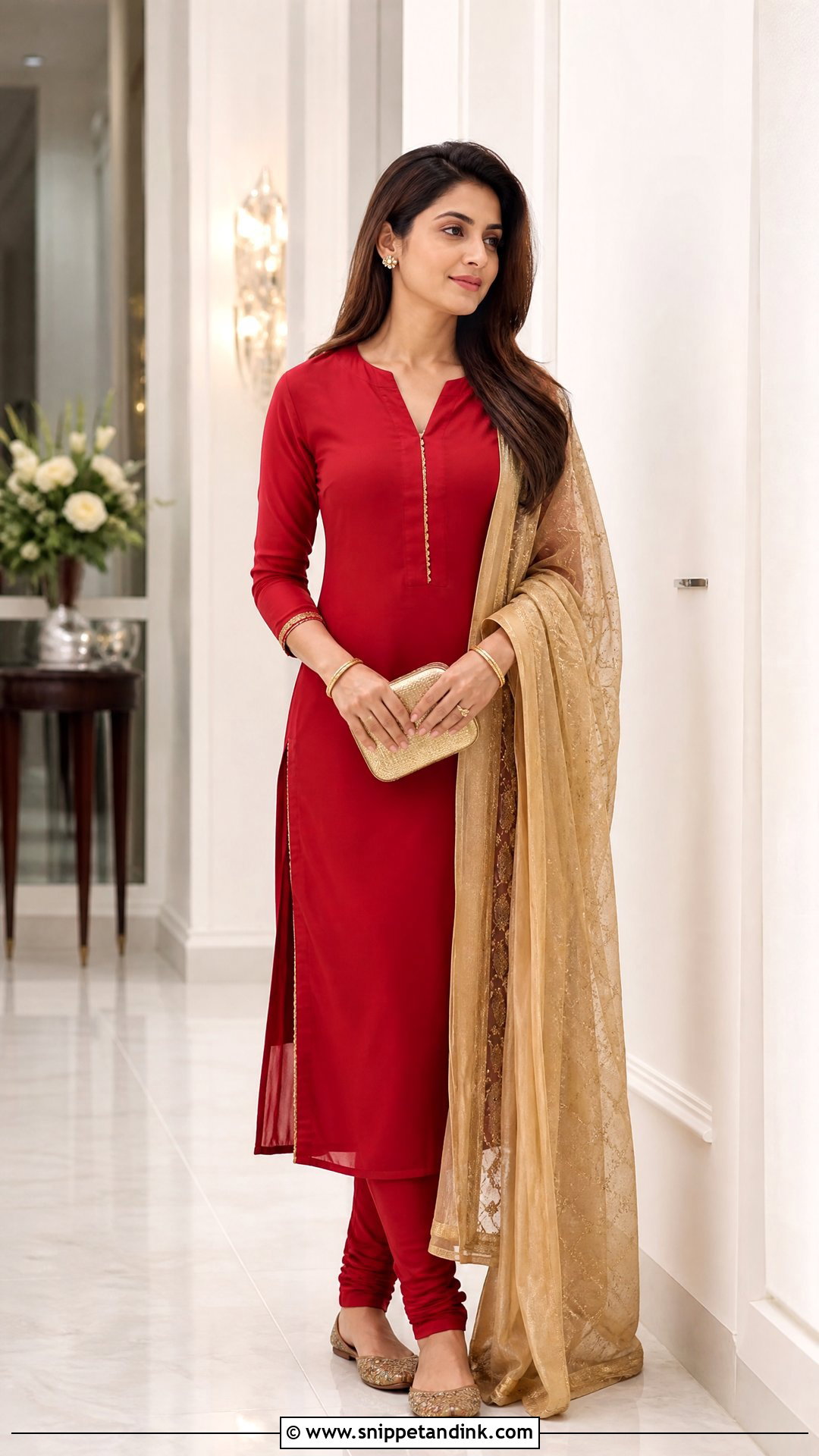
Churidar pants are cut long and close, so they gather in neat folds at the ankle. Pair them with a calf or knee-length kameez with side slits. A small amount of stretch in the churidar makes a real difference to comfort when sitting cross-legged; non-stretch fabric bunches and pulls behind the knees. Vertical embroidery on the kameez lengthens the body. Add a contrasting beige, gold or printed dupatta, pointed juttis and studs, with a sleek blow-dry or low braid.
16. Red Kurta And Pant Set Outfit
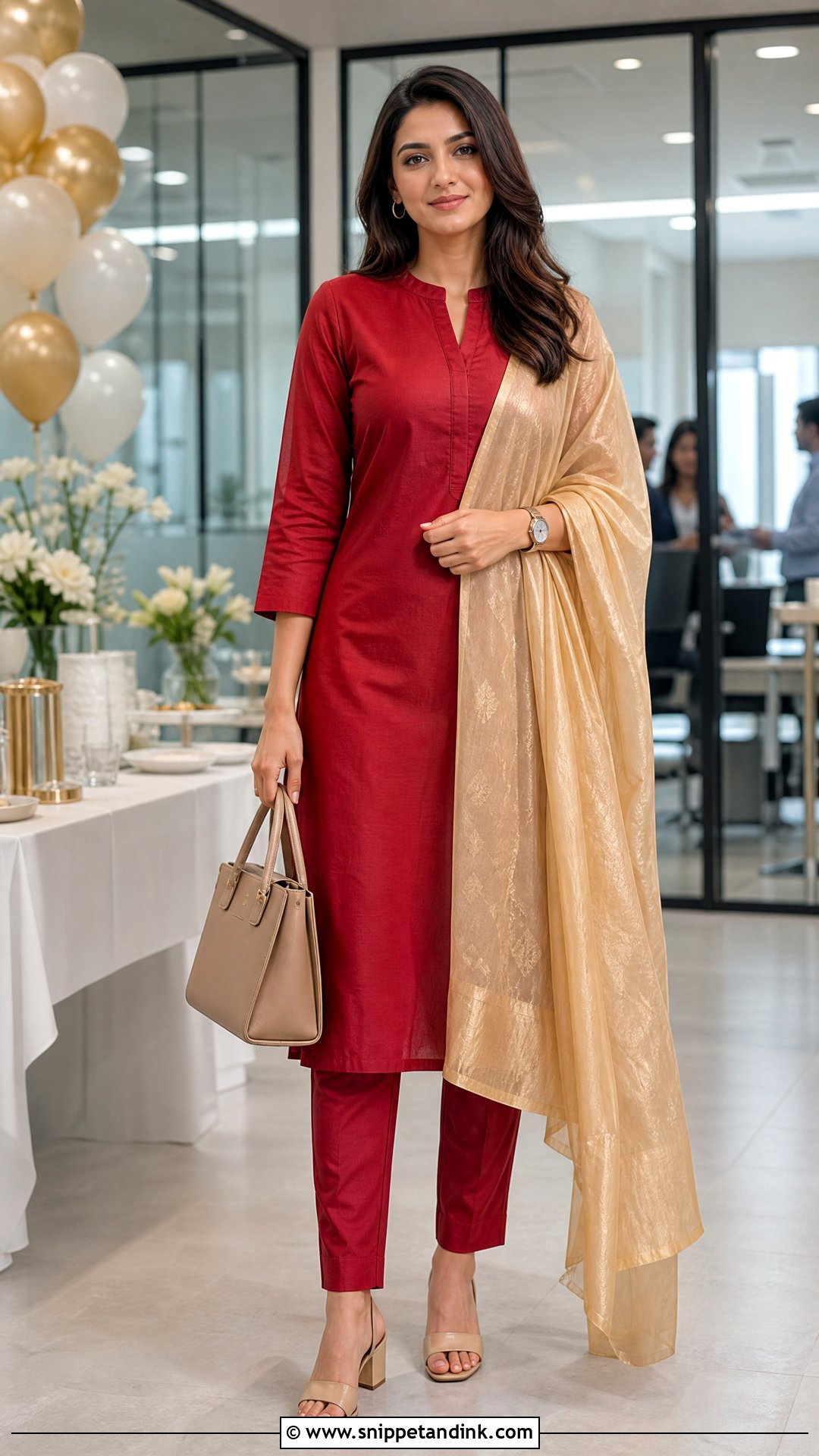
A straight red kurta with matching tapered pants is clean enough for an office celebration or a formal lunch. Three-quarter sleeves and minimal embroidery at the neckline keep it modern. Add a lightweight dupatta in red, beige or soft gold. The fabric changes everything: cotton blends feel relaxed, while silk, jacquard and crepe look dressier and hold a crease better. Small hoops, a slim watch and pointed flats or neutral block heels finish it.
17. Red Angrakha Suit Outfit
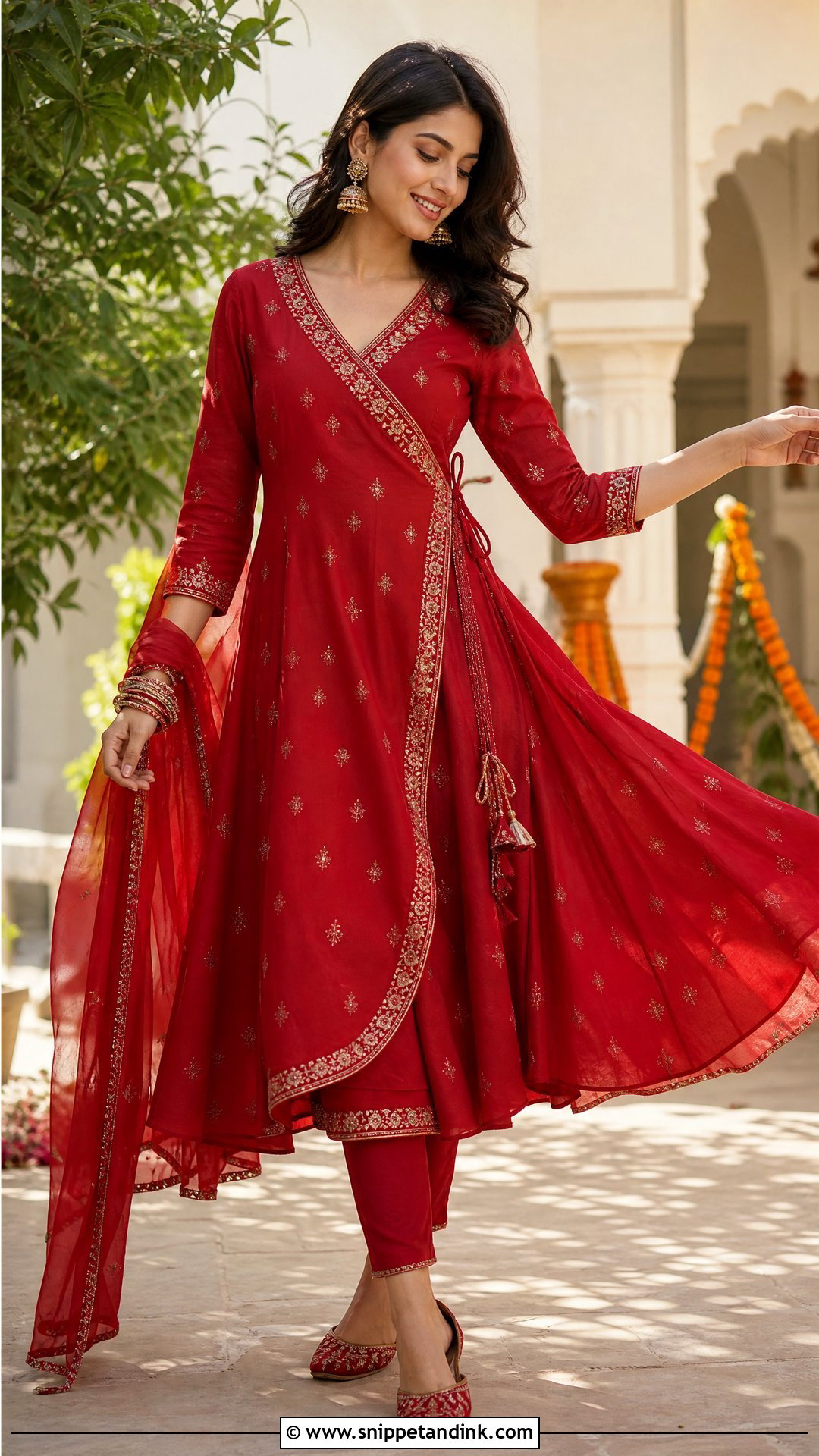
An Angrakha wraps across the front and ties at the side, which defines the waist with very little embellishment. Look for a secure inner fastening as well as the decorative ties; without it, the wrap opens across the chest when you reach for something. Slim pants or churidar underneath depending on the flare. If the fabric is printed, keep pants and accessories solid. A light dupatta, jhumkas and embroidered flats, with a braided ponytail or a soft half-up style.
18. Red Jacket Dress Outfit
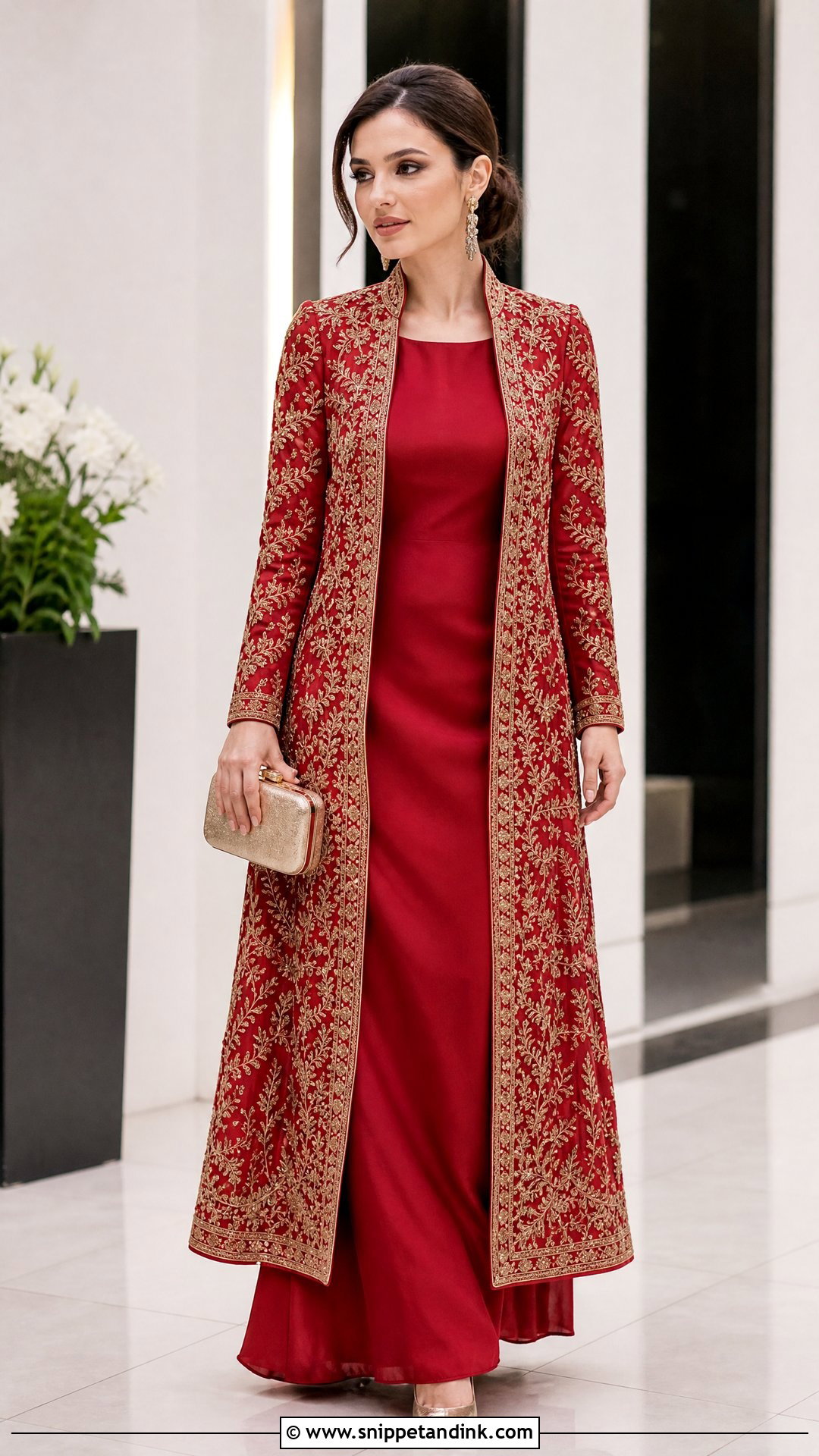
A long embroidered jacket turns a plain red floor-length dress into formal wear. The dress underneath should be solid and simple; the jacket carries embroidery along the front edges, cuffs and hem. Keep both layers about the same length, since a jacket that’s noticeably shorter than the dress cuts the line. Skip the necklace if the jacket neckline is decorated. Metallic drops, a structured clutch and pointed heels finish it, and you can wear the jacket open or lightly closed for coverage.
19. Red Cape Gown Outfit
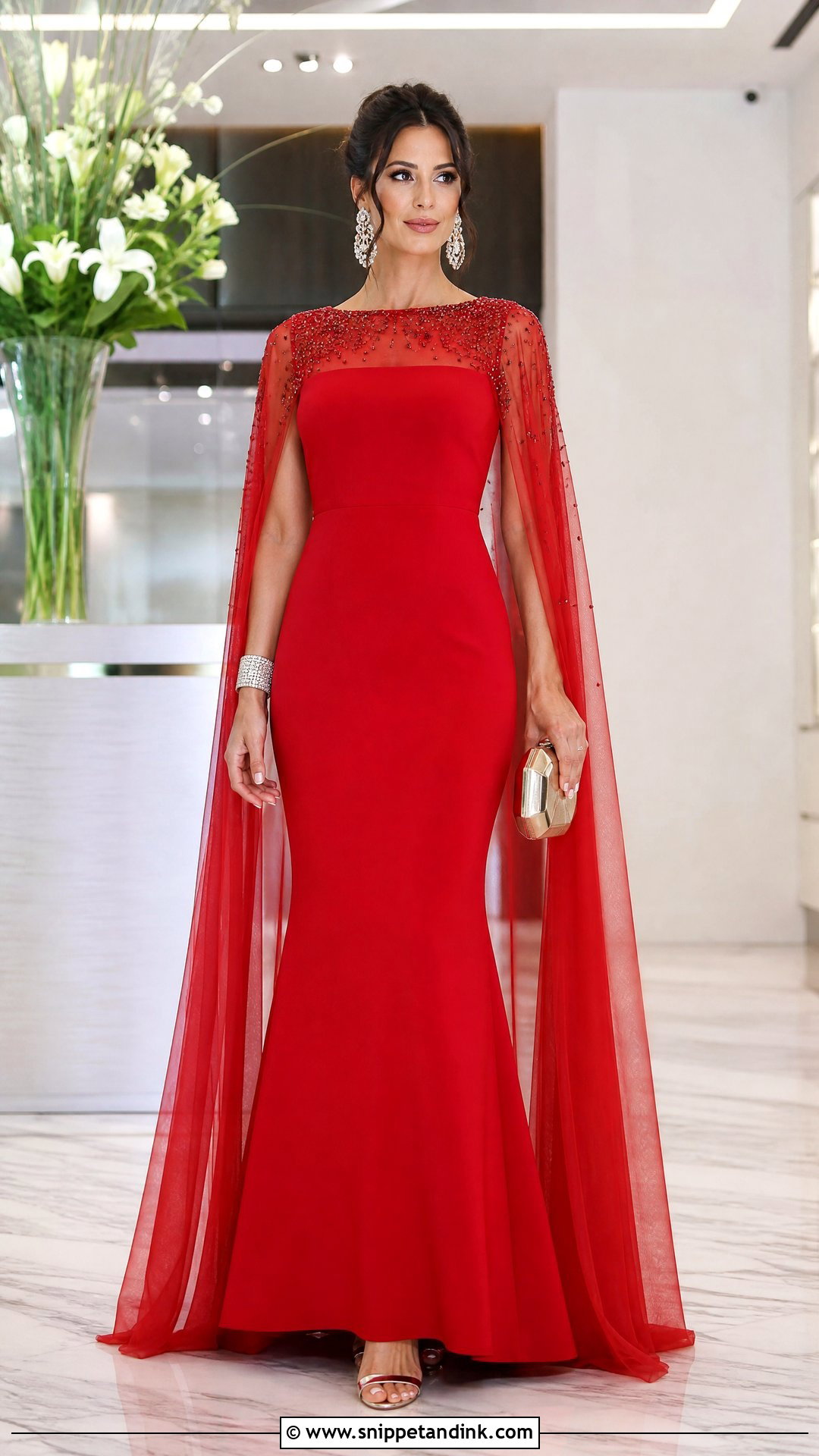
A cape gown is the Indo-Western choice for receptions. A column or gently flared gown with an attached sheer cape keeps it fluid. Light beadwork on the neckline or cape border is enough; heavy beading on a sheer cape pulls it out of shape. Cape lengths range from elbow to floor, so decide how much coverage you want. Crystal earrings, a cuff, a hard-case clutch and metallic heels, with hair low or tucked behind the shoulders.
20. Red Dhoti Pant Set Outfit
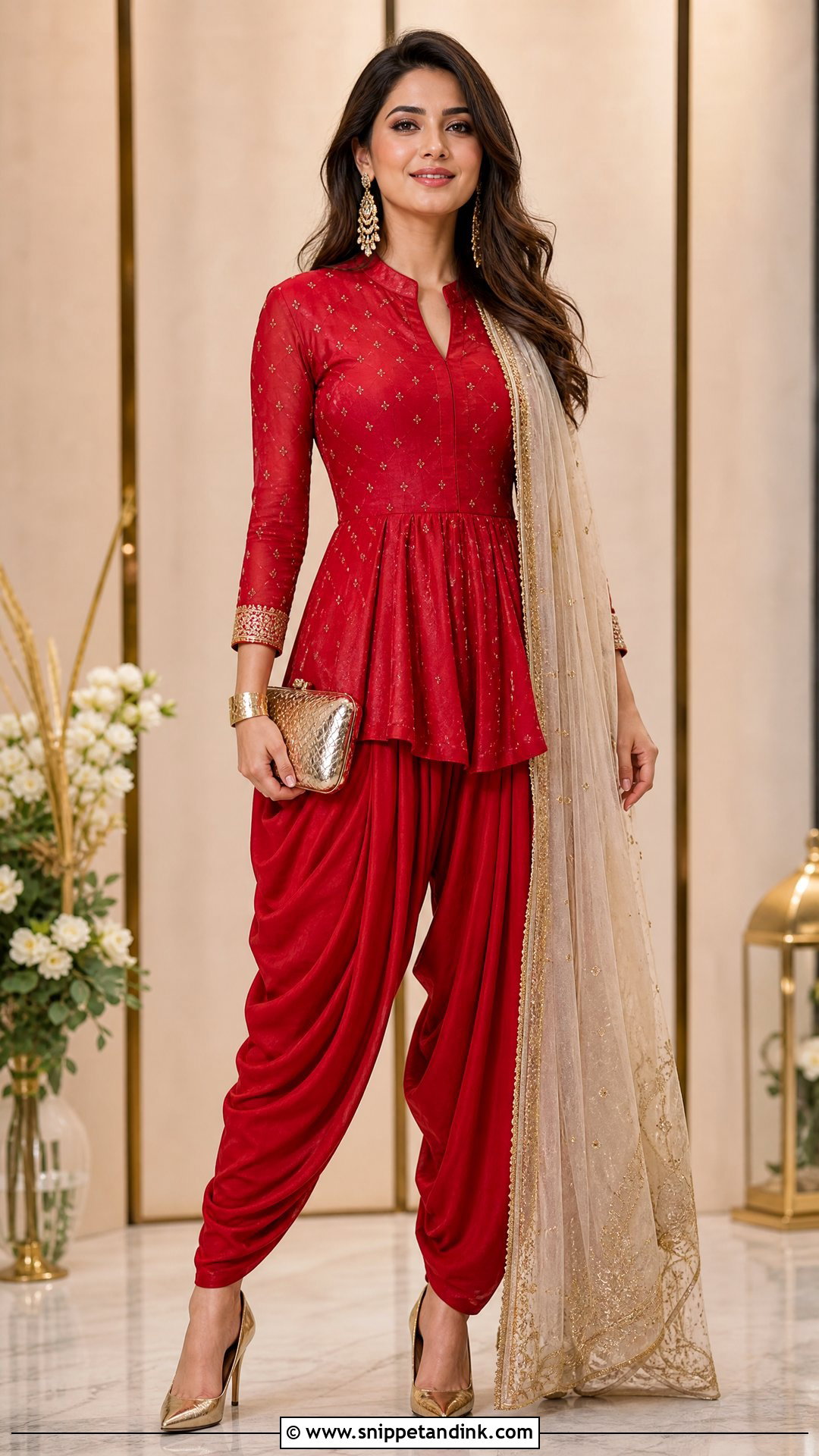
Dhoti pants drape into soft folds below the hips and need a structured top above them, such as a fitted peplum or short kurti, to balance the volume. Choose a pre-stitched dhoti; hand-draped folds loosen within an hour of walking and sitting. A dupatta over one shoulder adds tradition. Long earrings, a small cuff and a compact clutch keep it sharp. Pointed heels or embroidered flats, with a high ponytail to show the neckline.
21. Red Peplum And Skirt Outfit
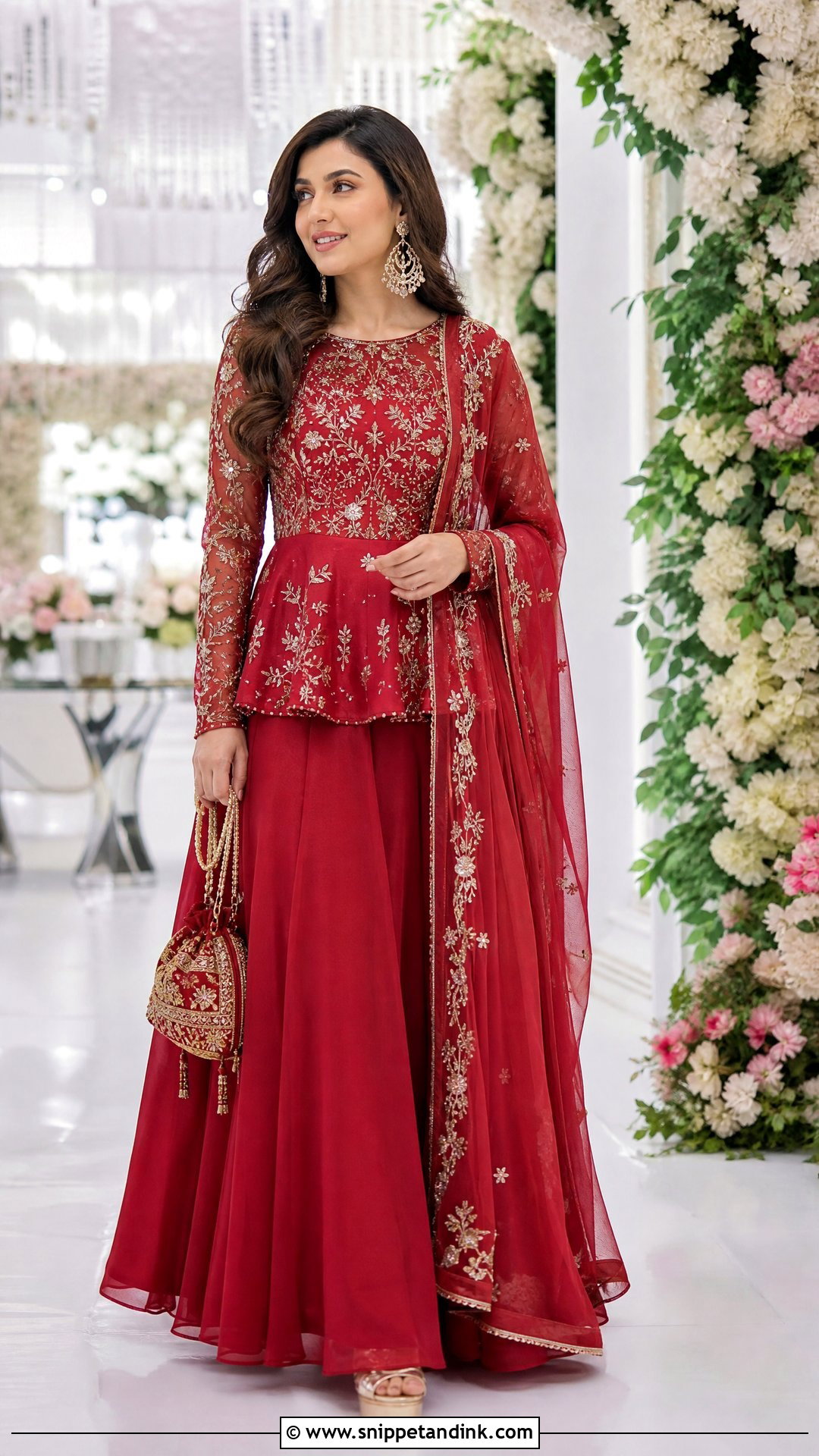
A peplum over a flowing skirt gives the look of a lehenga with more coverage at the midriff. The peplum should end just below the natural waist; too long and it shortens your legs, too wide and it fights the skirt. Embroidery at the neckline and peplum hem ties the pieces together. Add a sheer dupatta, statement earrings, a small potli and comfortable platforms. Side-swept curls soften the structured top.
22. Red Kurta And Jeans Outfit
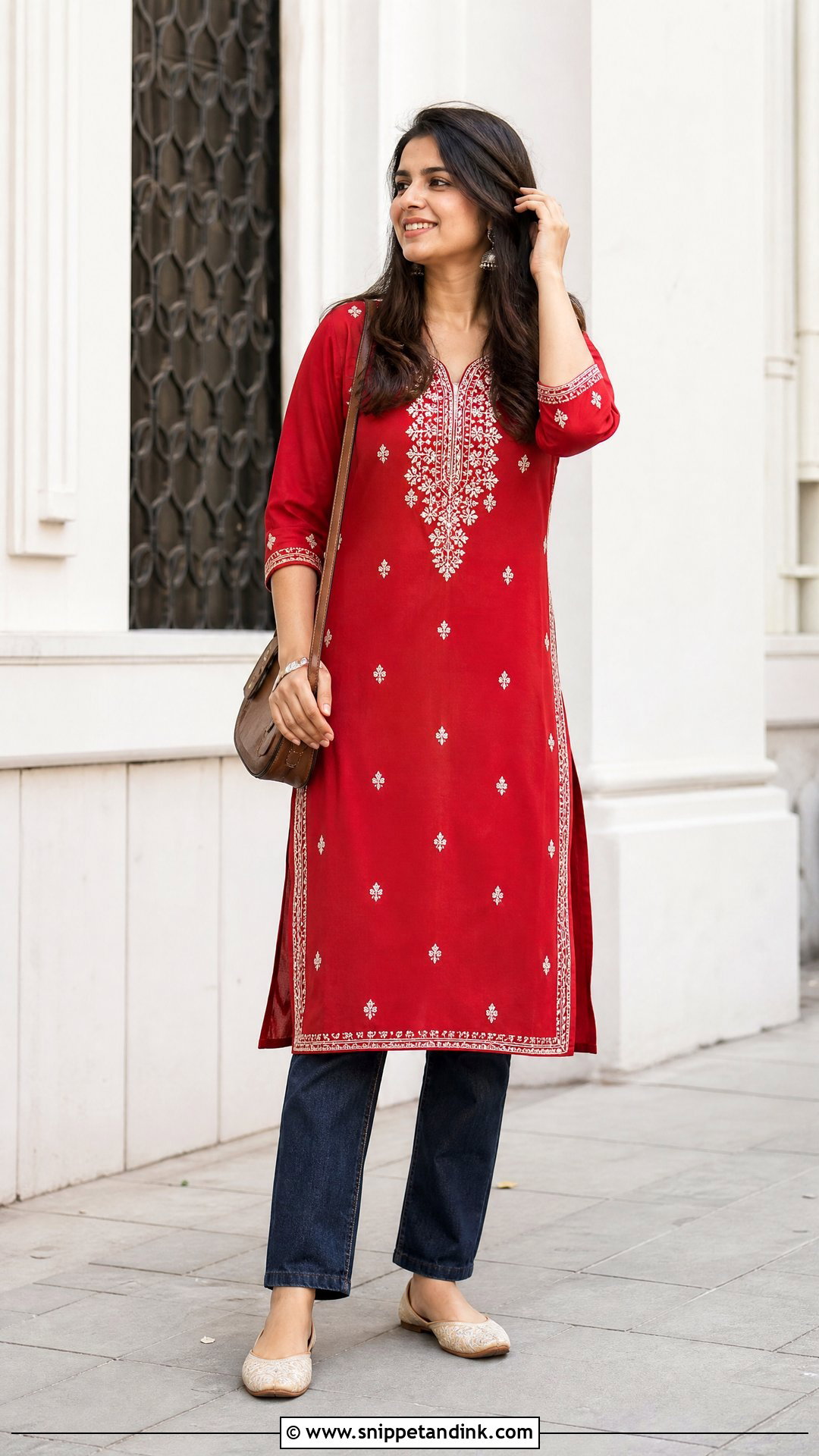
A red kurta with jeans is the everyday fusion outfit. A straight or slightly flared kurta to the knee over dark slim, straight or cropped denim works. Skip distressed denim around older relatives; clean, solid jeans keep it respectful and polished. Printed cotton suits daytime, embroidered necklines feel dressier. Neutral juttis, silver earrings and a crossbody bag, with a casual braid or loose waves. Roll the jeans once at the ankle if they hide the shoes.
23. Red Cotton Maxi Dress Outfit
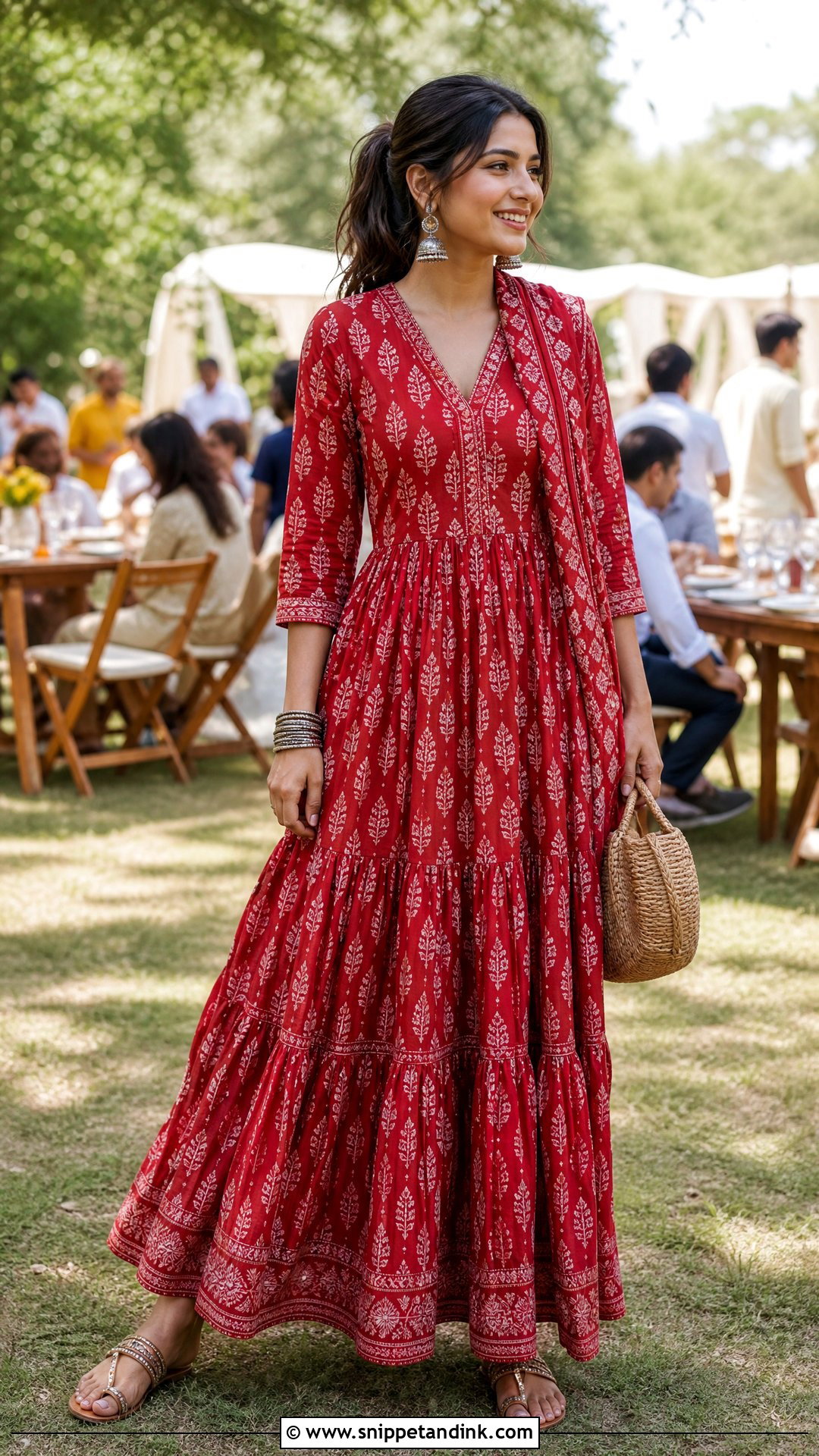
A red cotton maxi with block prints, light embroidery or a tiered skirt is what I’d wear for summer gatherings. Cotton breathes, but unlined cotton maxis can be see-through in sun, so check the lining. Stitched shaping or a narrow fabric belt keeps it from looking shapeless. Flat sandals or cushioned juttis, silver earrings, stacked bracelets and a woven bag, with a loose braid. A light scarf adds coverage for a temple visit without bulk.
24. Red Embroidered Kaftan Outfit
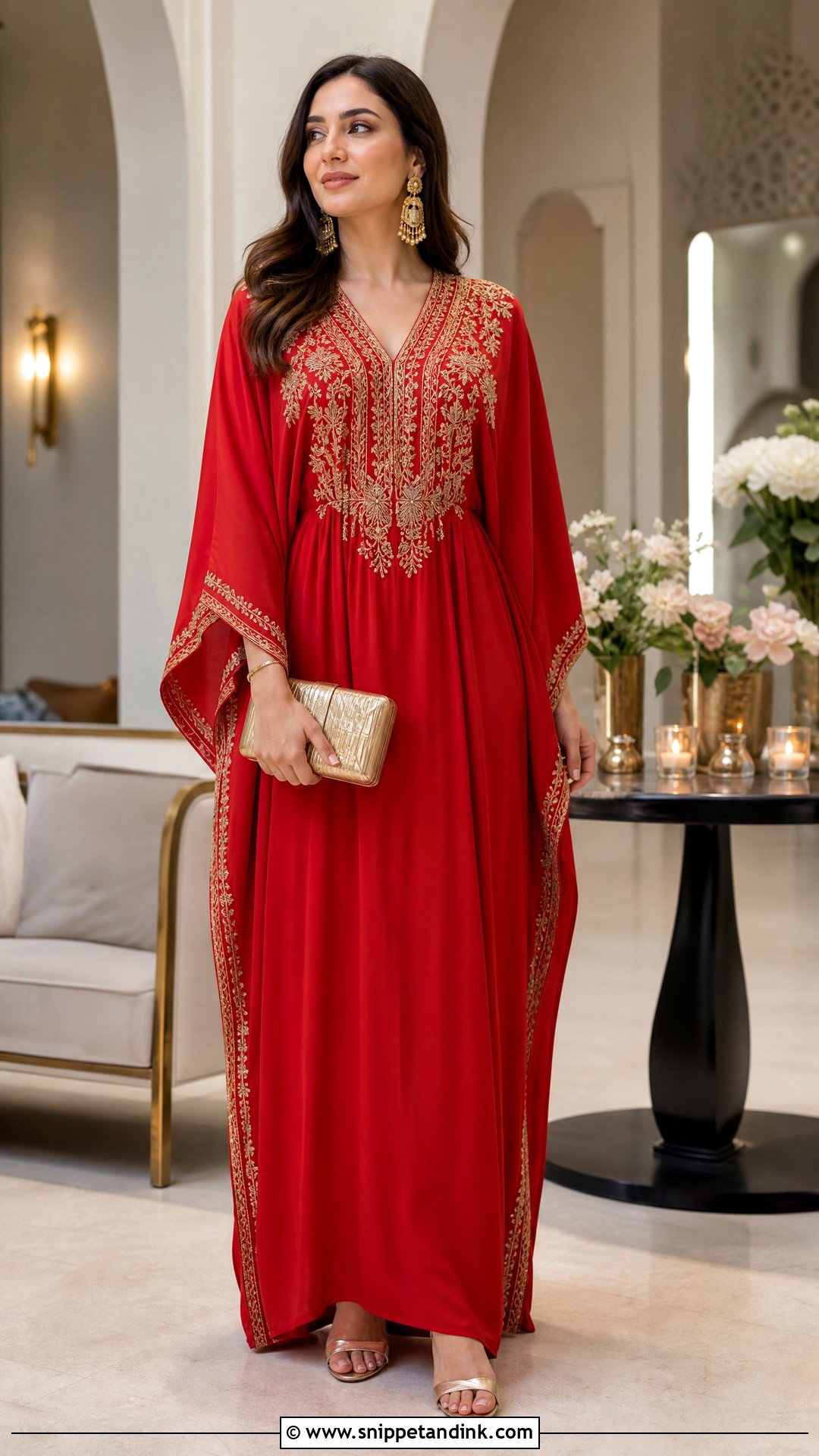
A red embroidered kaftan can look refined if you control the volume. Choose a midi or ankle length with embroidery at the neckline and sleeve edges, and look for an inner tie or a narrow belt; without one, a kaftan on camera reads as loungewear. A fluid fabric drapes close to the body, while stiff fabric adds width. Metallic sandals, bold earrings, a structured clutch and a sleek low bun. It’s comfortable through long seated events.
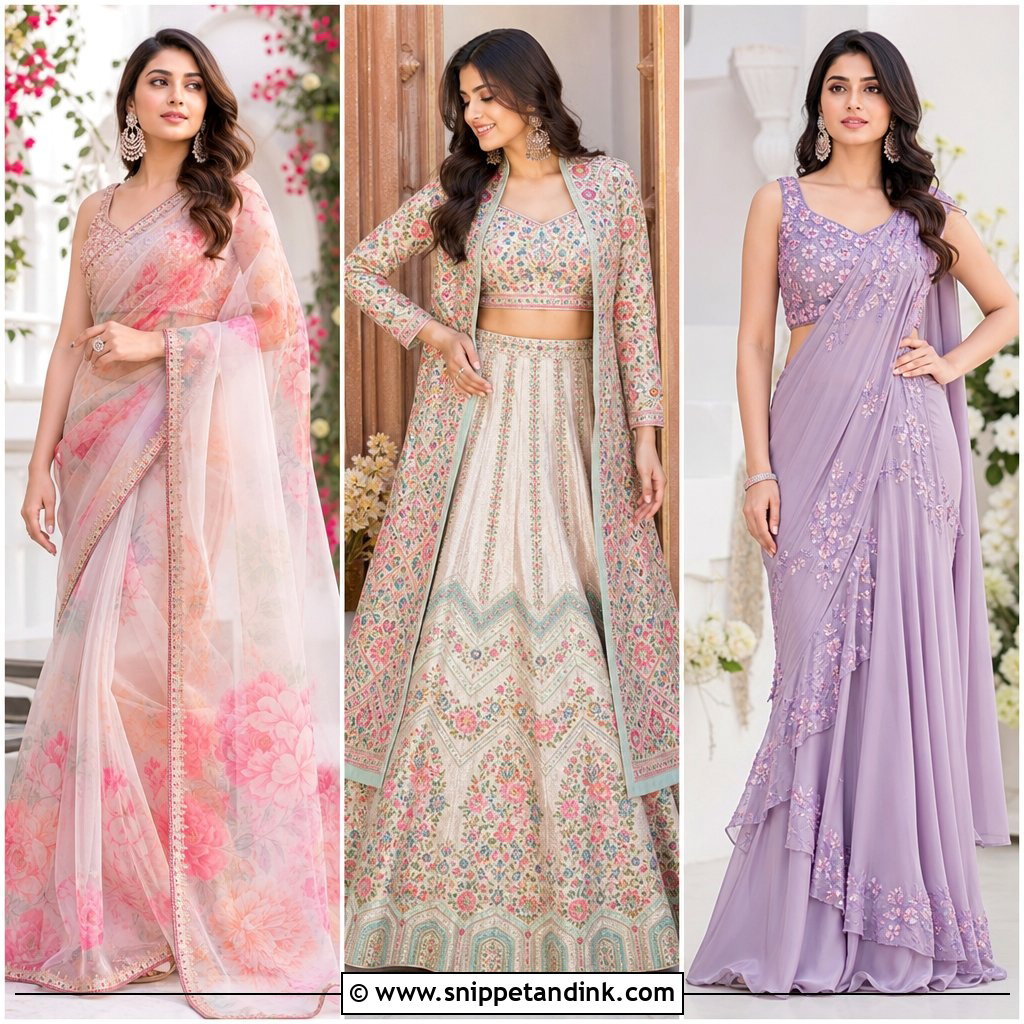
25. Red Silk Kurta And Skirt Outfit
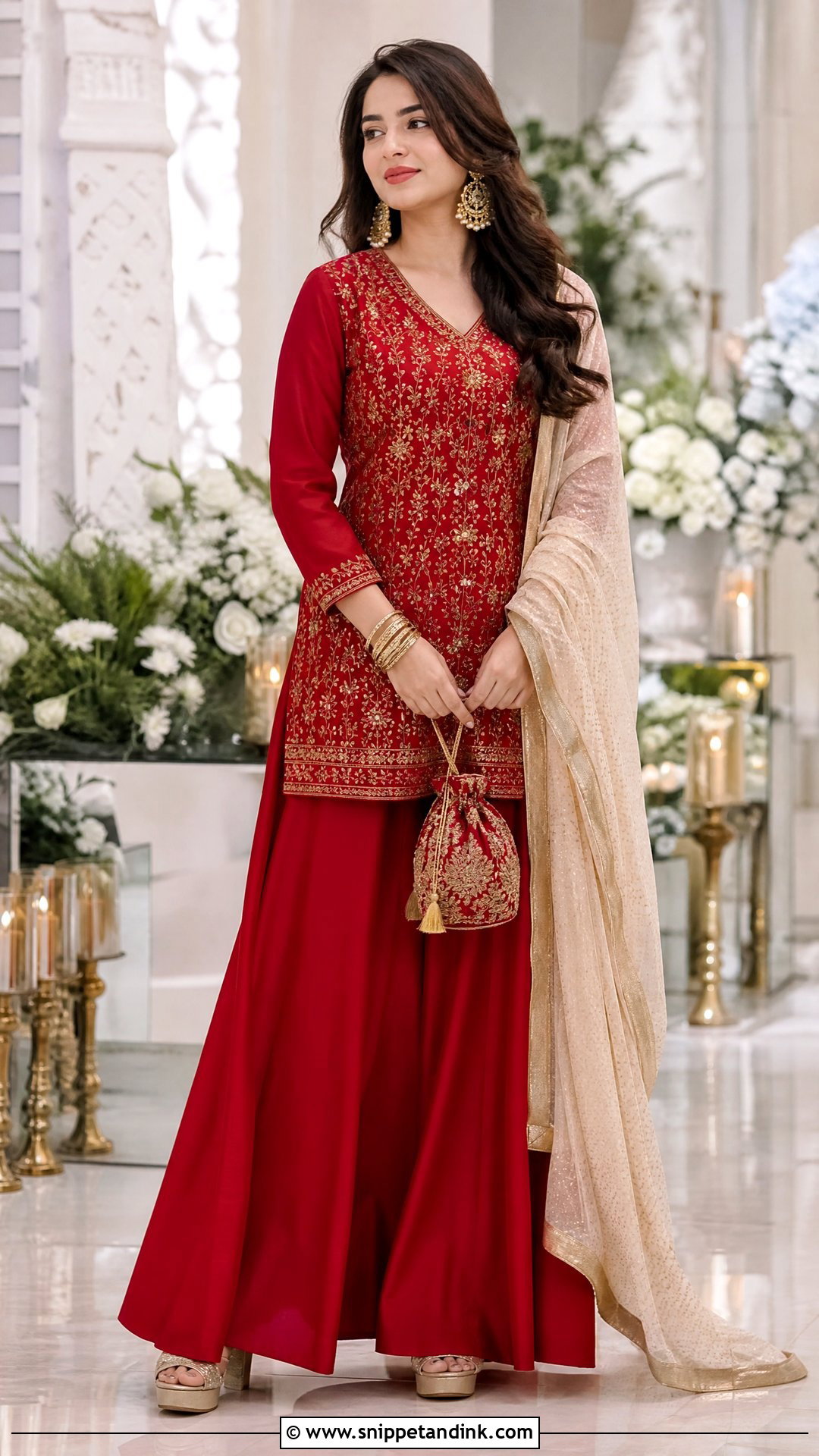
A silk kurta with a full skirt in the same red is an alternative to a lehenga that’s easier to rewear as separates. A fitted hip-length kurta with side slits, three-quarter sleeves and gold embroidery adds vertical definition. The kurta should end above the widest part of the skirt, or the two shapes fight. Matching fabric lengthens the body; slightly different textures add depth. A light dupatta, gold earrings, bangles, a small potli and platform sandals finish it.
Pinning a Saree So It Lasts Through Dinner and Dancing
Most saree problems I fix at events come down to the base, not the drape. If you’re draping yourself, the order below saves a lot of re-tucking.
- Tie the petticoat drawstring firmly at the height you want the saree to sit. Everything is tucked into it, so a loose petticoat means a falling saree.
- Put on the shoes you’ll wear before you start, and set the hem so it just touches the top of your foot.
- Make the pleats evenly, usually somewhere between five and nine depending on the fabric, and pin them together at the top before tucking.
- Pin the pallu to the blouse strap at the shoulder, from the inside so the pin doesn’t show.
- Add one pin where the pleats tuck in at the waist, and another at the hip if the fabric is slippery.
When to get help instead
Chiffon and georgette slide constantly, and heavy Banarasi silk pulls on every pin. For either, I’d book a draper on the day or have the pleats pre-stitched or pressed in advance. A shapewear-style petticoat helps soft fabrics fall straight. Keep a few spare safety pins in your clutch; one usually gives way after a lot of dancing.
Fabric Weight, Tailoring and One Strong Piece of Gold
From Banarasi silk to casual cotton, every red outfit above starts with the same question: what does the day ask of you? Think about the event, the weather and how much you’ll sit, walk and dance, then choose the shape. Rich fabric and ornate gold belong at formal celebrations, while lighter material, simple embroidery and practical shoes suit daytime. Tailoring makes the biggest difference of all, so check the hem, waist, neckline and sleeves well ahead. Treat clothes, shoes, jewelry and hair as one look, and the red will feel like yours.
You'll Like These Ideas:


Leave a Reply