
A Jaago is the loudest night of a Punjabi wedding week, and it runs late. There’s a procession through the lanes with the decorated gagar, there’s giddha and bhangra in a tight circle, and there’s a lot of sitting on floors and standing on chairs in between. When I dress someone for it, I think about that whole night first and the photos second. Phulkari dupattas, mirror work, gota patti, parandas, juttis and statement earrings all belong here, but only on silhouettes that let you lift your arms and walk a few streets. Below are thirty outfits, from classic Punjabi suits to sharara sets, lehengas, ghararas and a few fusion pieces, with what I’d check on each before you commit.
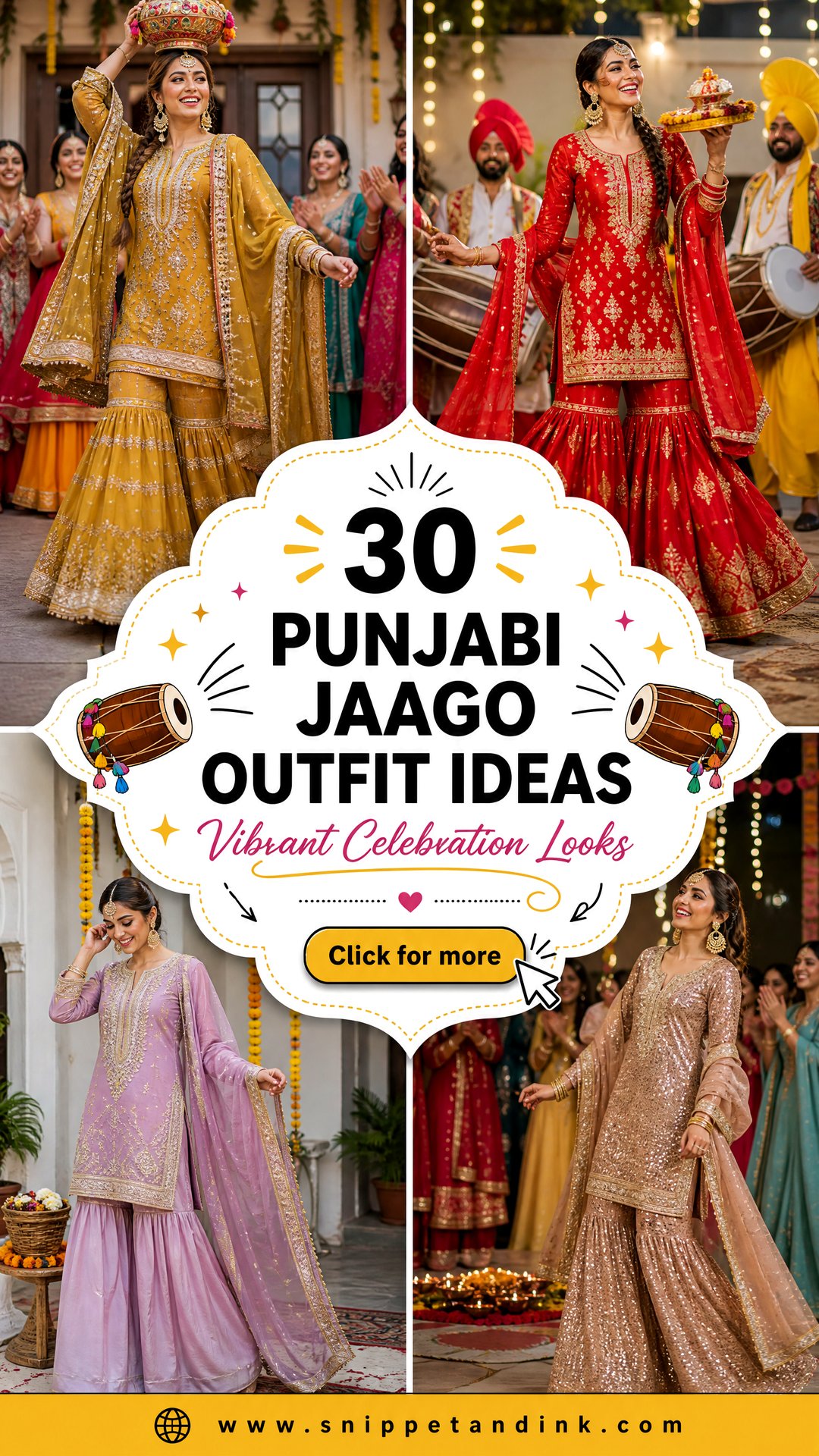
What the Gagar Procession Means for Your Dupatta and Hem
A Jaago isn’t a seated party. The nanke, the bride or groom’s maternal family, carry a decorated brass gagar topped with lit diyas, and everyone follows it through the neighbourhood, stopping at doors, singing boliyan and dancing in the lane. Then the night carries on at home. So when I plan a Jaago outfit, I’m planning for walking, open flame and several hours of dancing, in that order.
Flame and fabric
Anyone carrying or standing near the gagar should keep their dupatta pinned and the loose ends short. Synthetic net and polyester georgette melt quickly near a flame, while cotton, silk and khaddar are safer choices close to the diyas. I pin at the shoulder and again at the waist so nothing swings forward when you lean in.
Hem, shoes and the walk
- Set every hem while wearing your actual footwear. Juttis are flat, and a hem fitted in heels will drag through the lane.
- Break juttis in for a few evenings at home. New leather juttis rub the back of the heel, and a plaster under the heel counter helps.
- If the Jaago is outdoors in winter, plan a shawl or jacket that you can wear in photos, not a puffer you’ll take off for every picture.
1. Punjabi Jaago Phulkari Suit
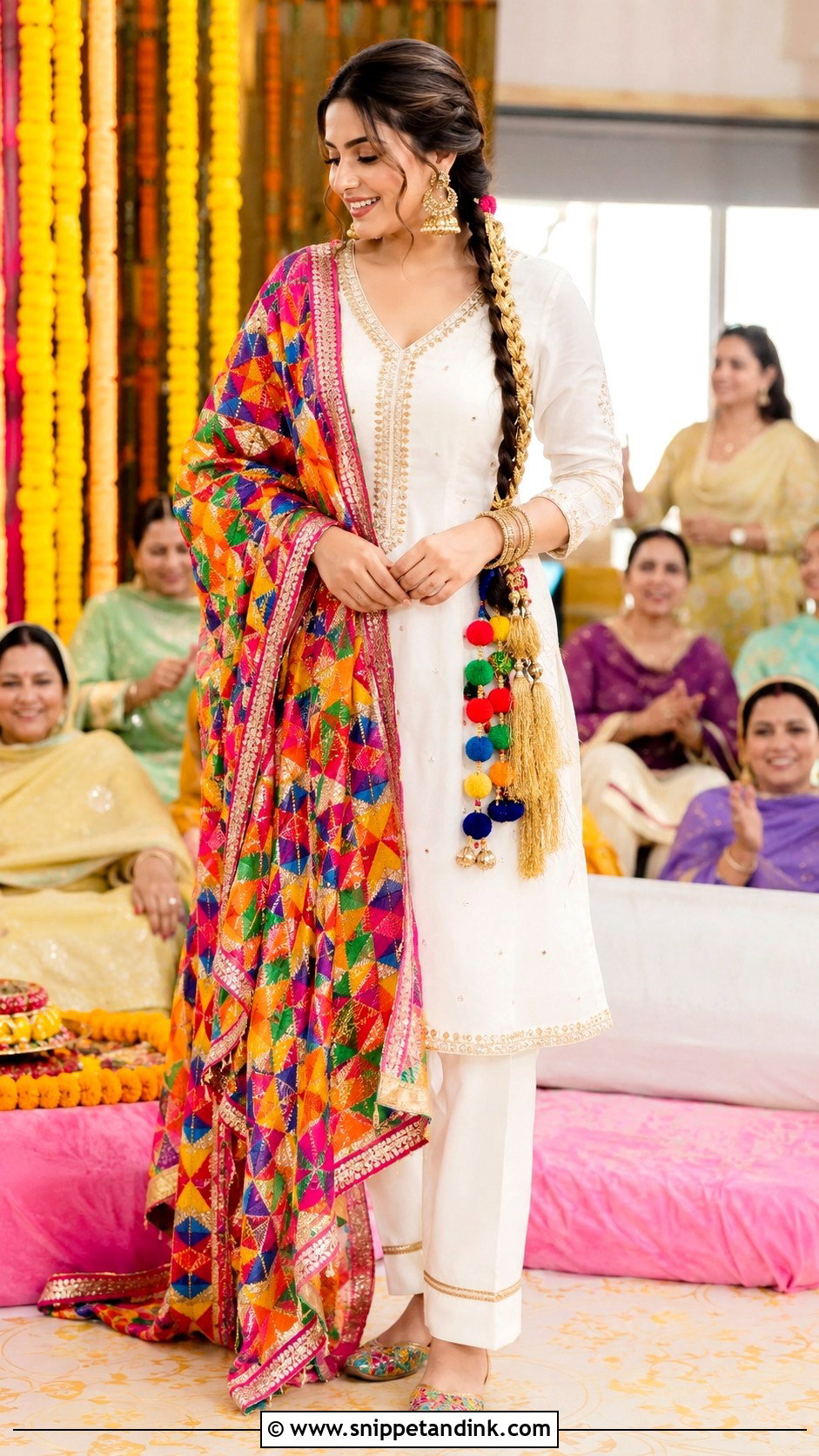
A phulkari suit says Punjab before anyone sees your face, which is exactly why it suits a Jaago. Keep the kurta plain, cotton silk or georgette in white, mustard, hot pink or green, and let the dupatta do the work. One practical note: a genuine hand-embroidered phulkari is dense silk floss on khaddar and it’s heavier than it looks, so I always pin it at the left shoulder rather than letting it slide around while you dance. Salwar or straight pants both sit well under it. Finish with juttis, glass bangles, jhumkas and a paranda braid, and watch that bangles don’t snag the floss.
2. Punjabi Jaago Sharara Suit
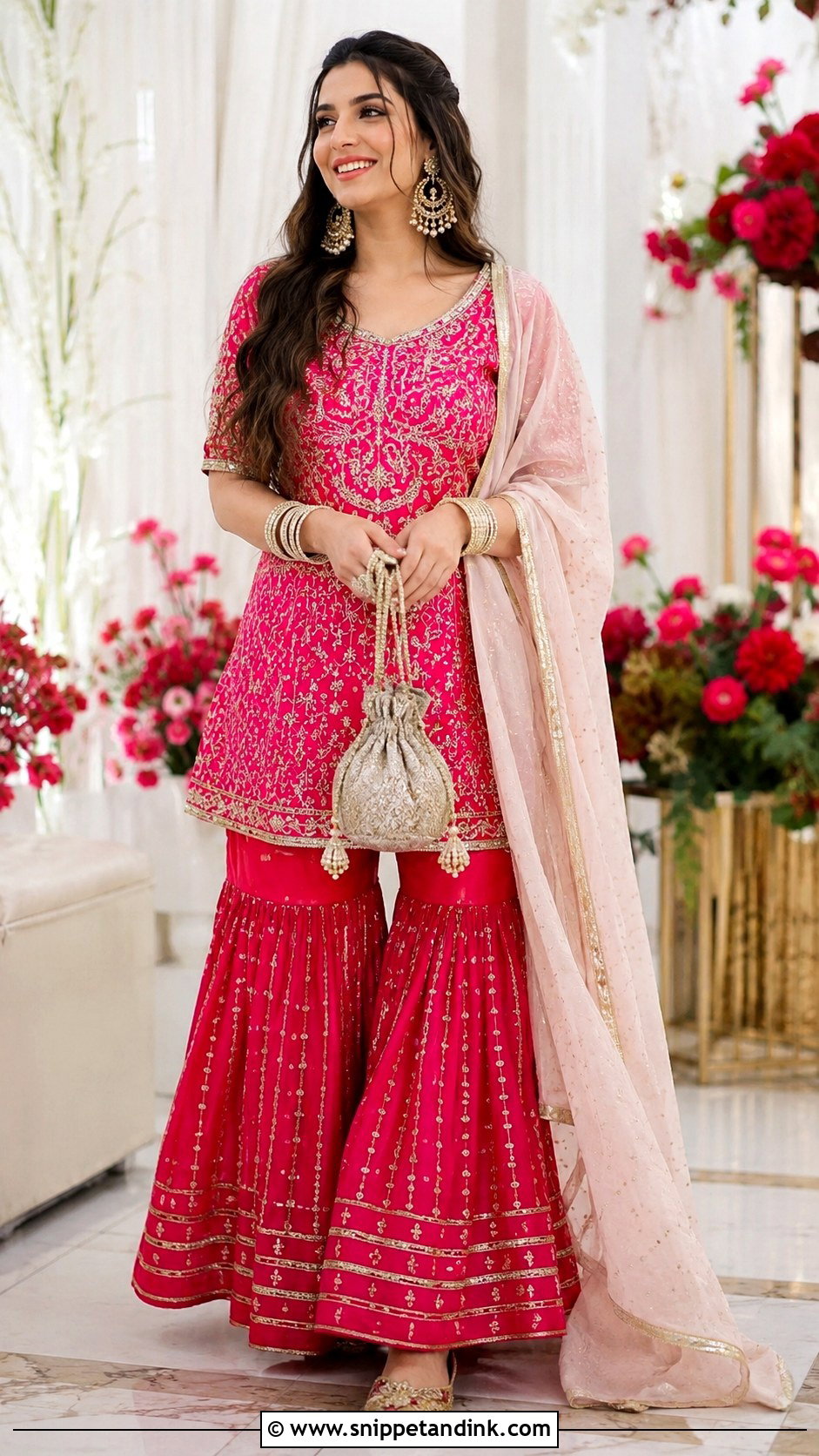
The appeal of a sharara suit is lehenga-level movement without the weight around your hips. Pair a short or mid-length kurti with flared legs in georgette or silk; I’m cautious with organza here because it scratches the inner arms and ankles after a few hours of dancing. Rani pink, royal blue, orange and emerald all hold their colour in flash. Gota patti, mirror or thread embroidery keeps it festive without looking bridal. Get the hem taken up while wearing the actual juttis, since flat shoes make shararas drag.
3. Punjabi Jaago Gharara Suit
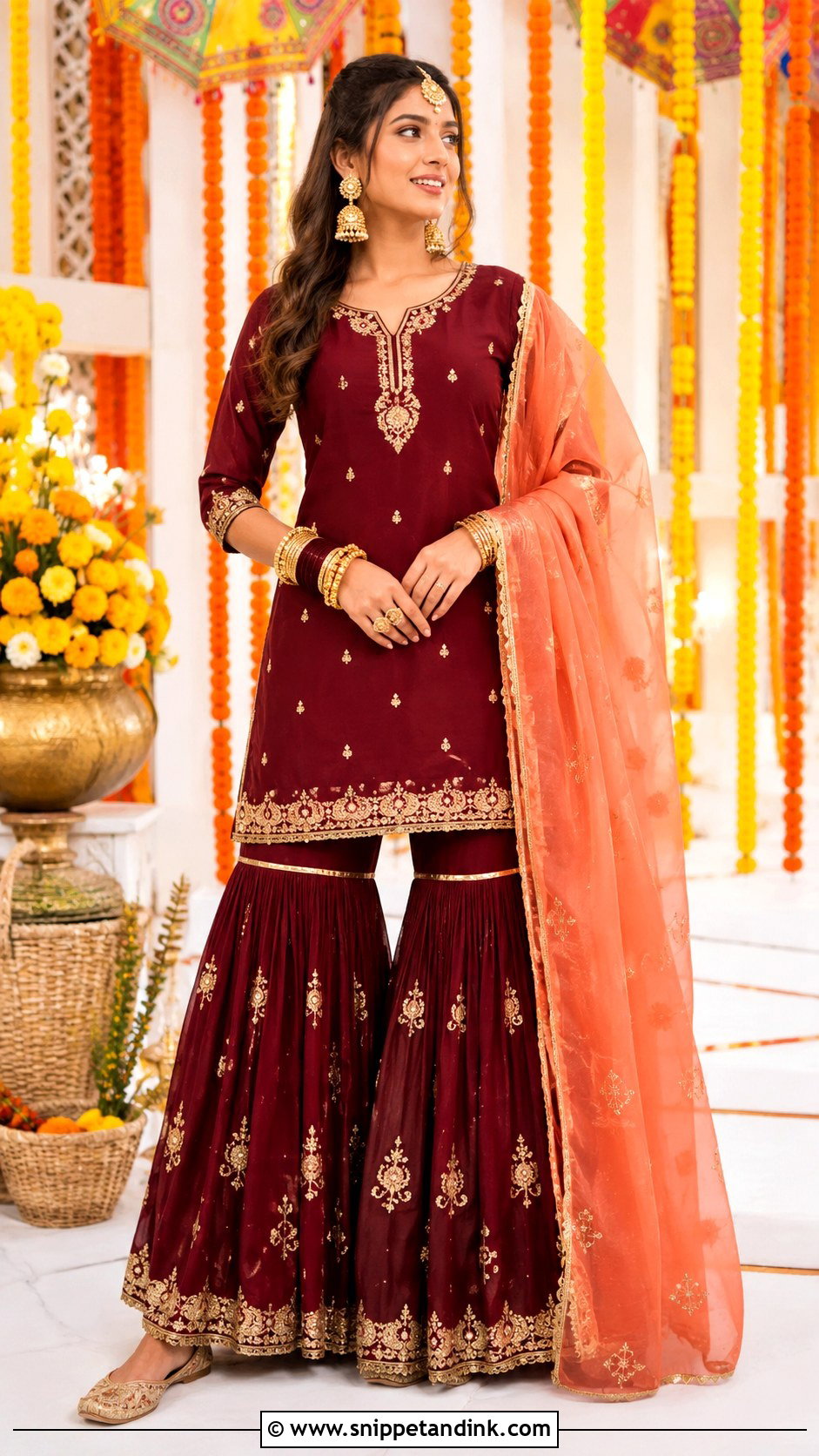
With a gharara, everything depends on where the joint sits. That gathered band, often trimmed with gota, has to land right at the knee; too low and it pulls tight when you sit cross-legged for the boliyan, too high and the flare looks short. Choose a short kurti with zari or light sequin borders and a contrasting dupatta if the base is soft: mint with pink, maroon with gold, navy with silver. Juttis, a potli, jhumkas and soft waves or a braid finish it.
4. Punjabi Jaago Patiala Suit
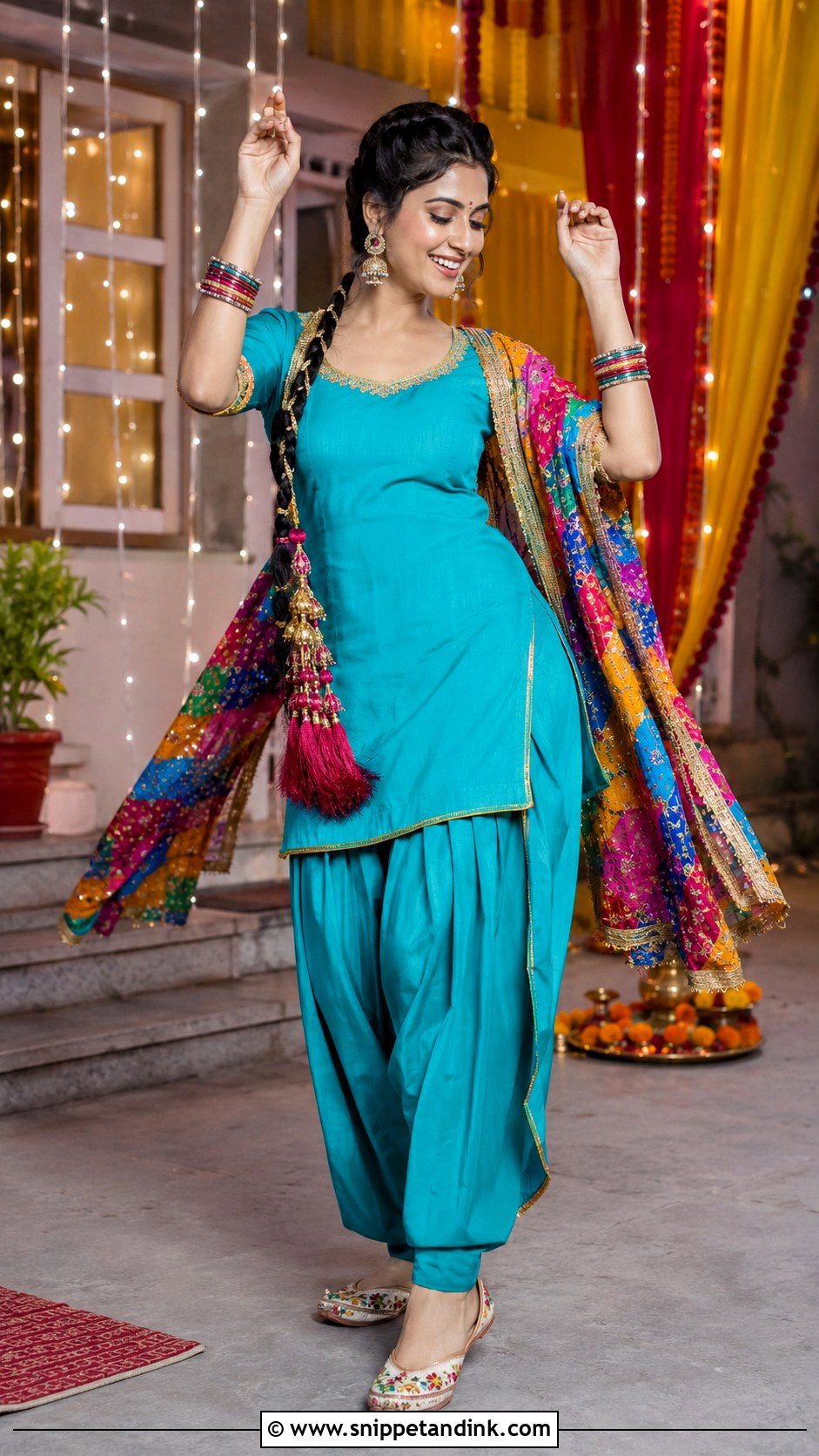
Nothing dances like a Patiala. Those pleats take a lot of fabric, so the material decides whether it falls or balloons: cotton, crepe and soft blends drape well, while stiff silk bulks out at the hips. Pair the salwar with a fitted or short kurti in yellow, magenta, turquoise or parrot green. Add a printed or embroidered dupatta, juttis and a stack of coloured bangles. A paranda in the braid makes it even more Punjabi, and you’ll be able to kneel, jump and climb onto the stage without a second thought.
5. Punjabi Jaago Lehenga With Kurti
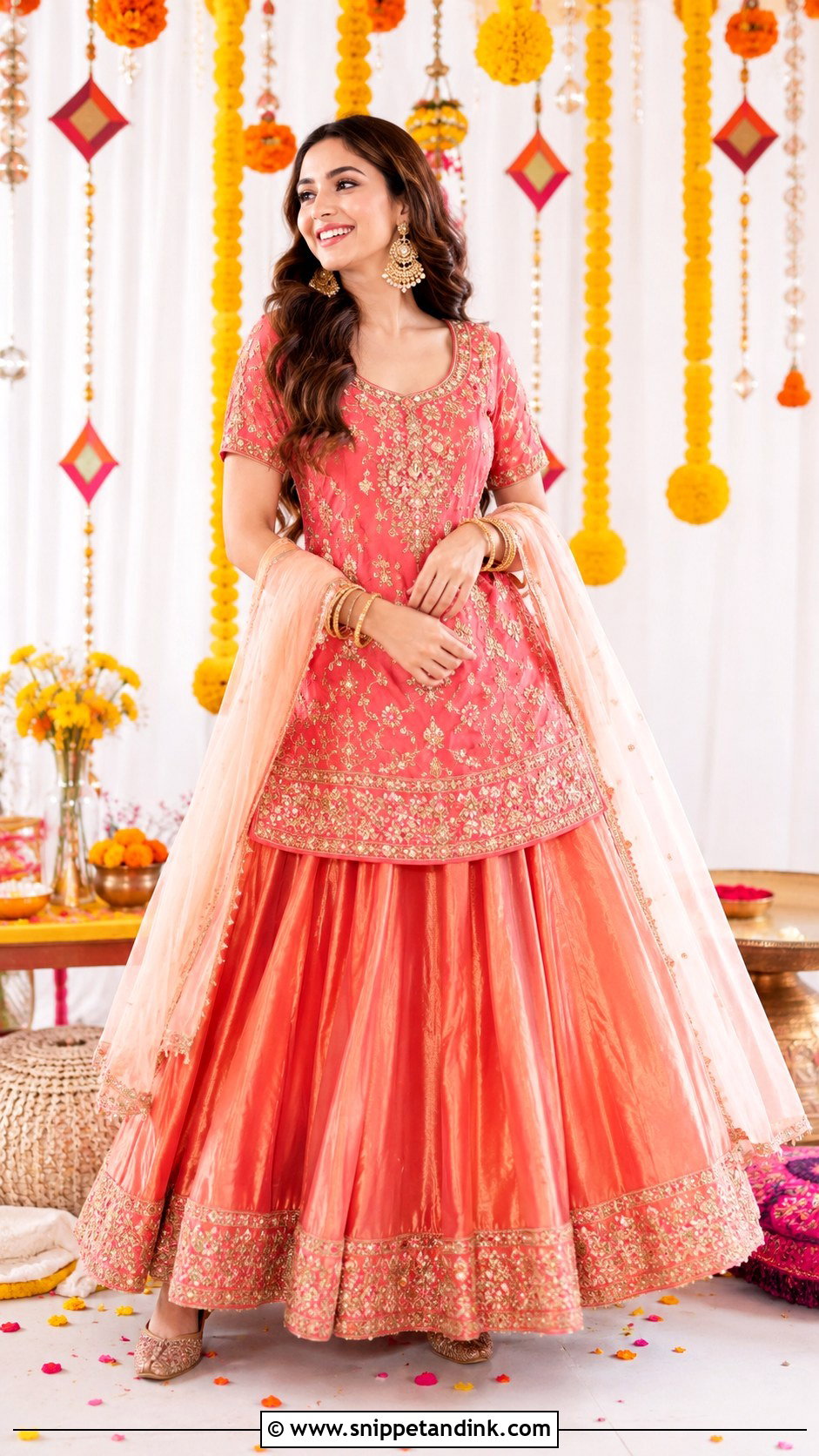
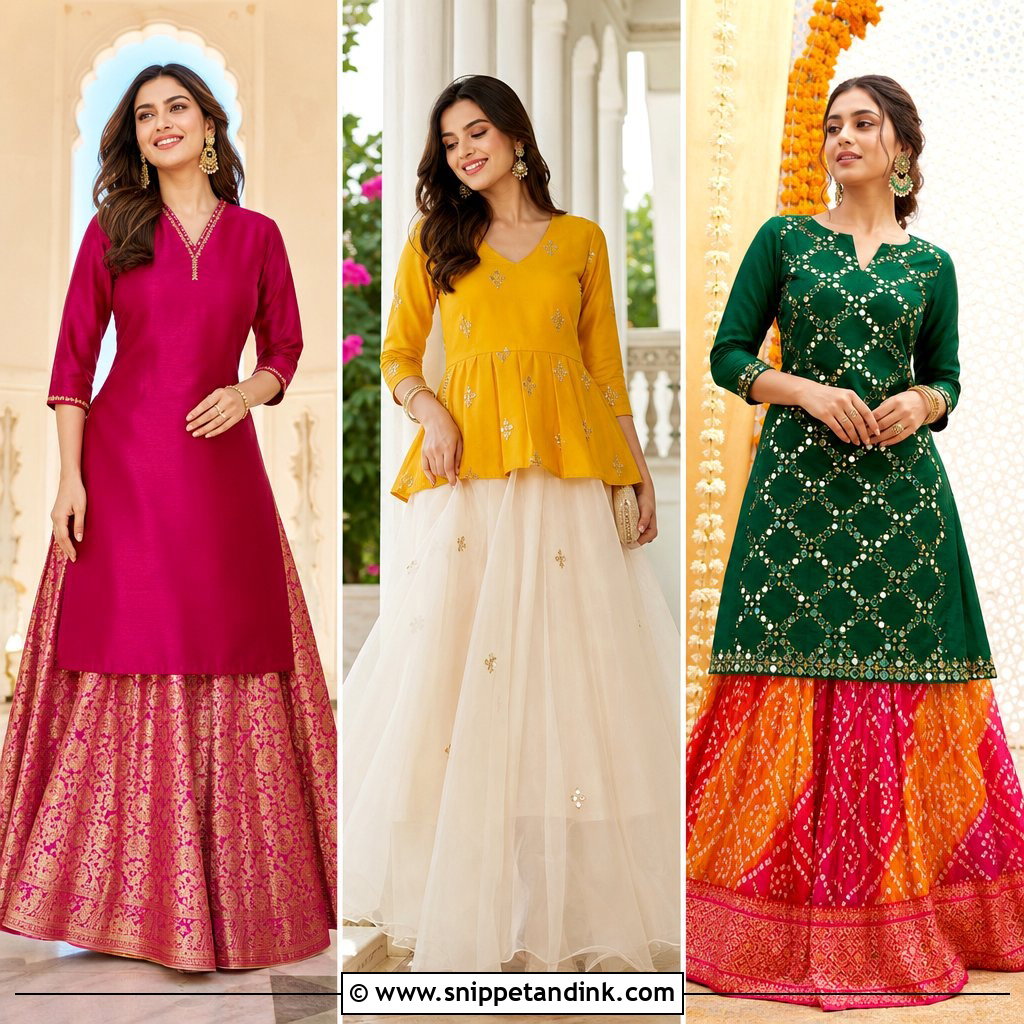
Swapping the cropped blouse for a short kurti is one of my favourite tricks for a Jaago lehenga. The kurti covers the waistband, so there’s no tugging it back up after every bhangra step, and you get more coverage for the older relatives. Pair it with a flared skirt in silk, brocade or georgette and a light dupatta. Coral, teal, purple and mustard read clearly under strong event lighting. It’s dressier than a suit, which makes it a good fit for sisters, cousins and bridesmaids.
6. Punjabi Jaago Mirror Work Lehenga
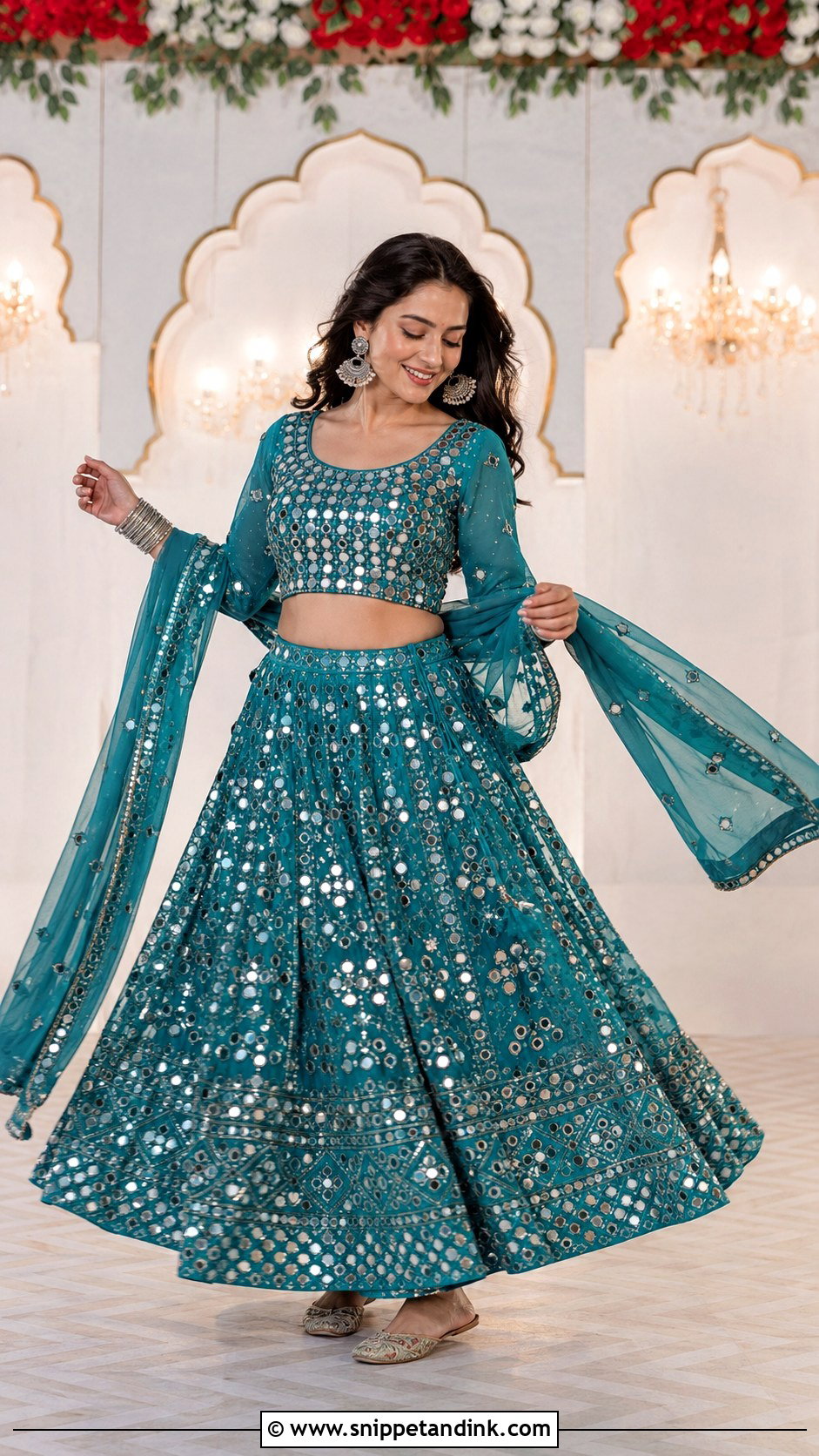
Mirror work catches every string light, so it really comes alive after dark. Real glass shisha is heavier than the plastic version and its edges can rub, which is why I prefer mirrors on the skirt and dupatta border rather than on the sleeves. Keep the lehenga in a lighter base fabric so the total weight stays manageable. Sleeve length is your call. Silver jewelry, juttis and a small clutch are all it needs; skip heavy sequins and let the mirrors carry the sparkle.
7. Punjabi Jaago Anarkali Suit
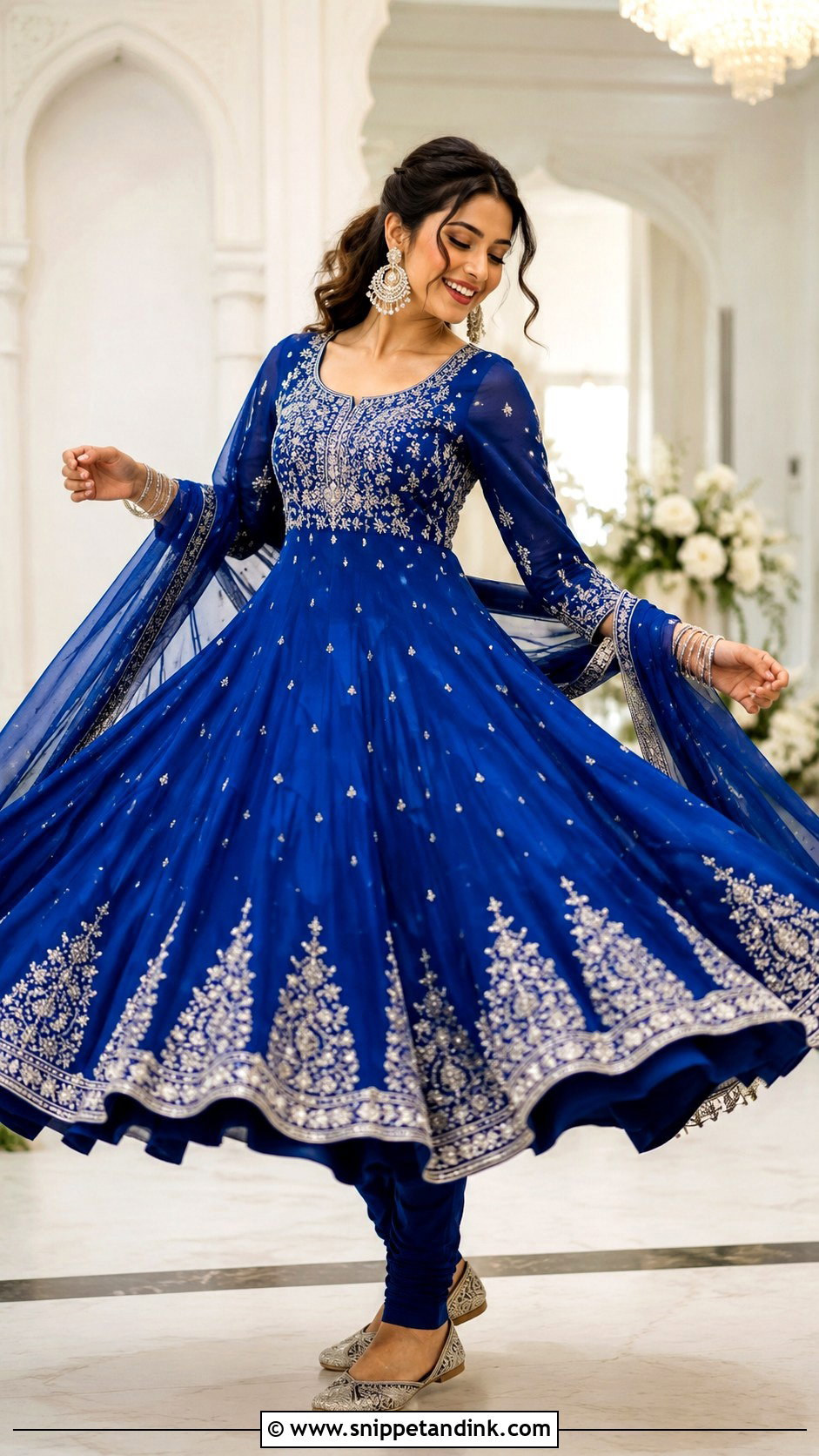
An Anarkali gives you the twirl with full coverage, which is why mothers and aunts often reach for it. The thing I check is the flare: a very full Anarkali with many panels is wonderful in a circle and awkward on narrow stairs or in a lane procession, so have the hem cleared well above the floor in the shoes you’ll wear. A bright solid or a two-tone design with embroidery at the neckline, sleeves and hem works best. Churidar or slim trousers go underneath. Juttis or a low block heel, chandbalis and bangles round it off.
8. Punjabi Jaago Chikankari Sharara
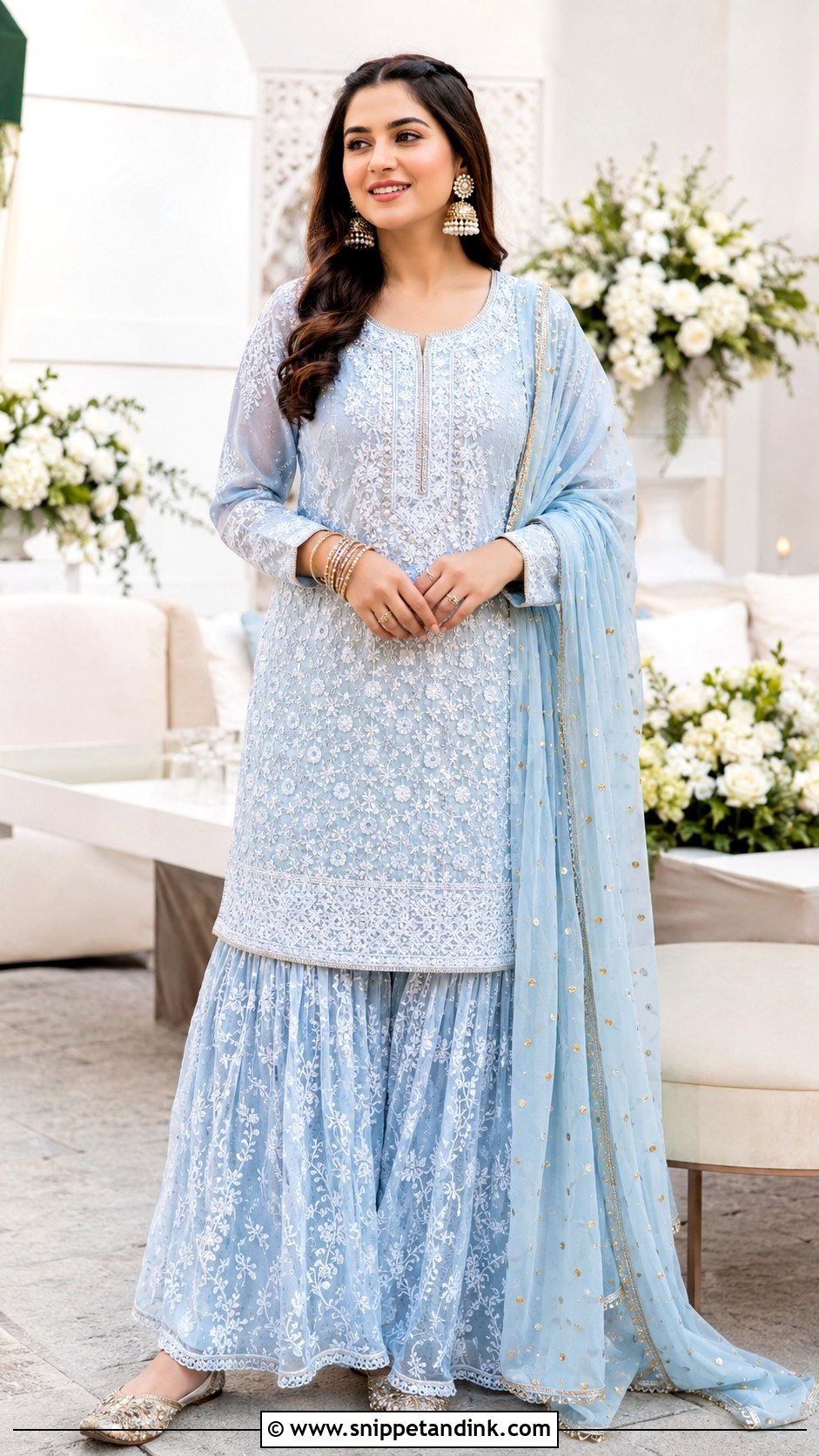
Chikankari is fine white-on-white style hand embroidery on light fabric, so it reads softer than everything else on this list. To make it Jaago-ready, look for sets with mukaish, sequins or small mirror details worked in. Powder blue, blush, lavender and ivory pair well with pearls or kundan-style pieces. My one warning: sheer chikankari can turn see-through in flash photos, so check the lining by standing in front of a phone torch before the event. It suits smaller gatherings and day-into-evening functions best.
9. Punjabi Jaago Gota Patti Suit
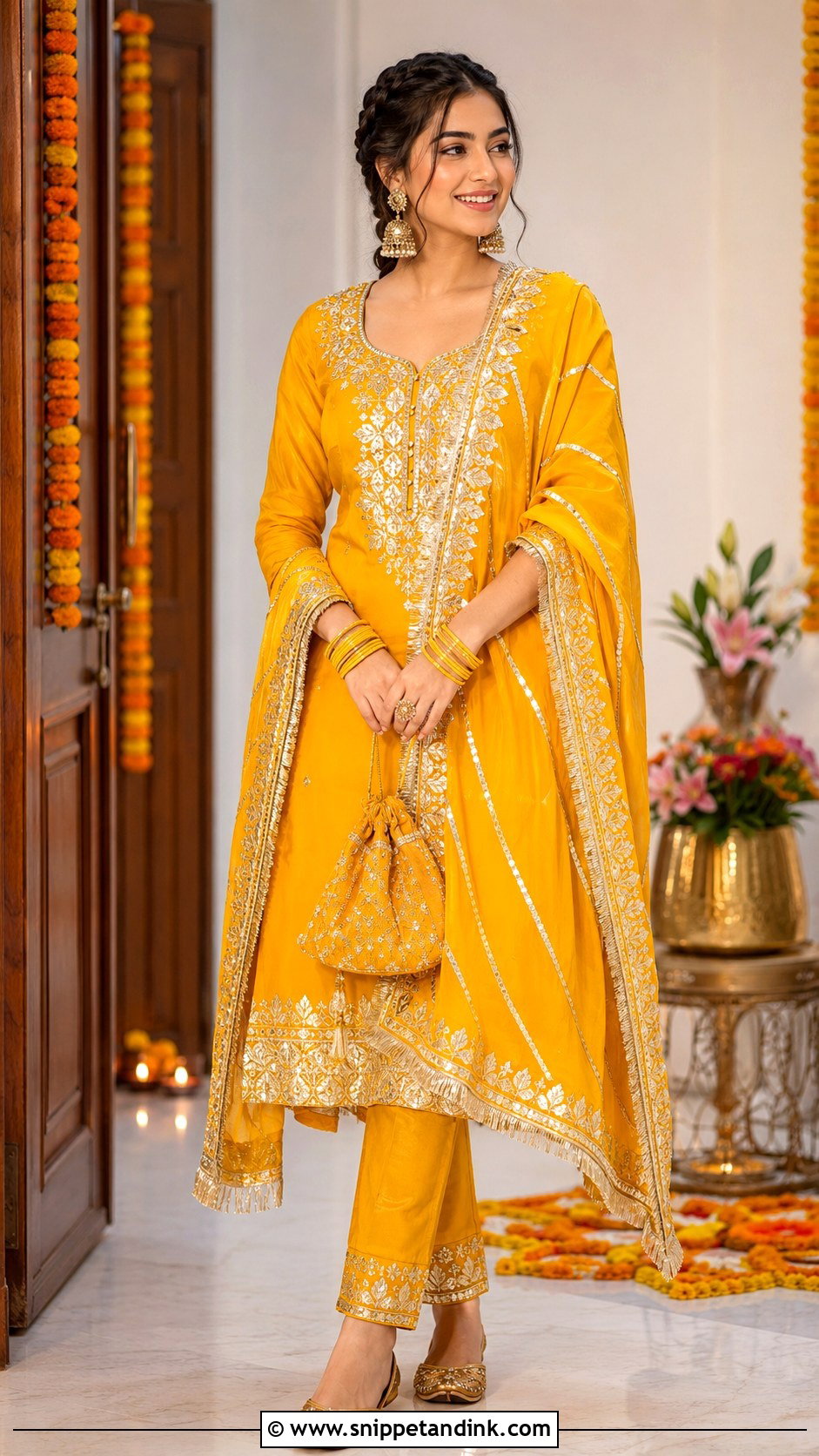
Gota patti is the quickest way to make a plain kurta look like it came to a wedding. Ask for gota on the neckline, sleeves, hem and dupatta edges; a straight pant reads modern, a salwar or sharara more traditional. Marigold, fuchsia, red and green make the metallic ribbon glow. Most gota today is imitation metal, and it dulls if it’s packed damp, so I always tell clients to air the outfit after the night and store it wrapped in muslin. Gold-tone jewelry, bangles, juttis and a potli complete it.
10. Punjabi Jaago Velvet Suit
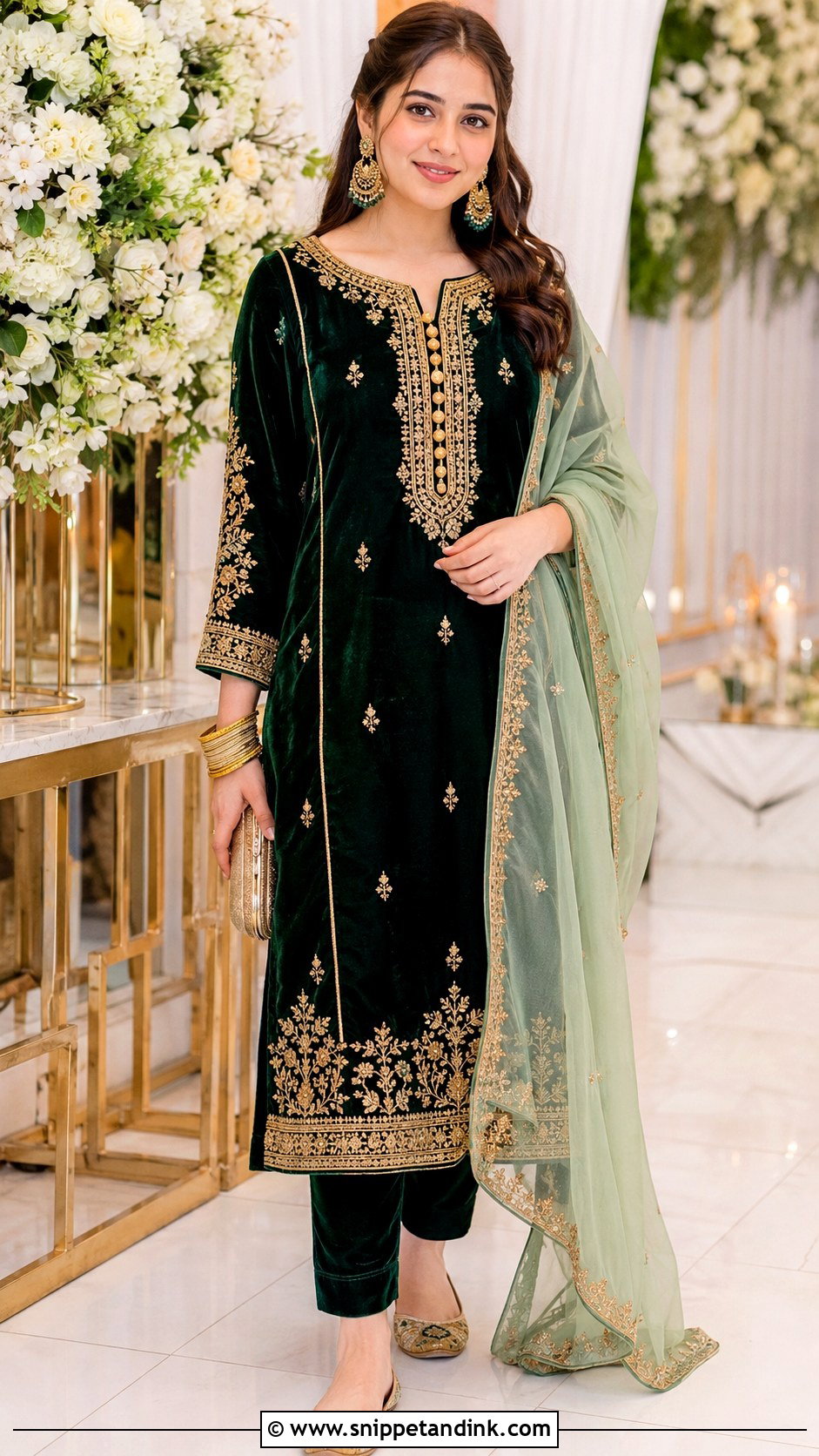
Velvet belongs to a winter Jaago, especially one that spends time outdoors. Wine, emerald, navy, plum and maroon all take gold embroidery richly. Two things I warn about: velvet gets hot fast once the dancing moves indoors, and the pile crushes where you sit, so steam it rather than iron it and avoid long hours on a chair before photos. Keep the dupatta in organza or chiffon to cut the weight. Embroidered juttis and statement earrings are plenty, since the fabric already looks expensive.
11. Punjabi Jaago Silk Salwar Suit
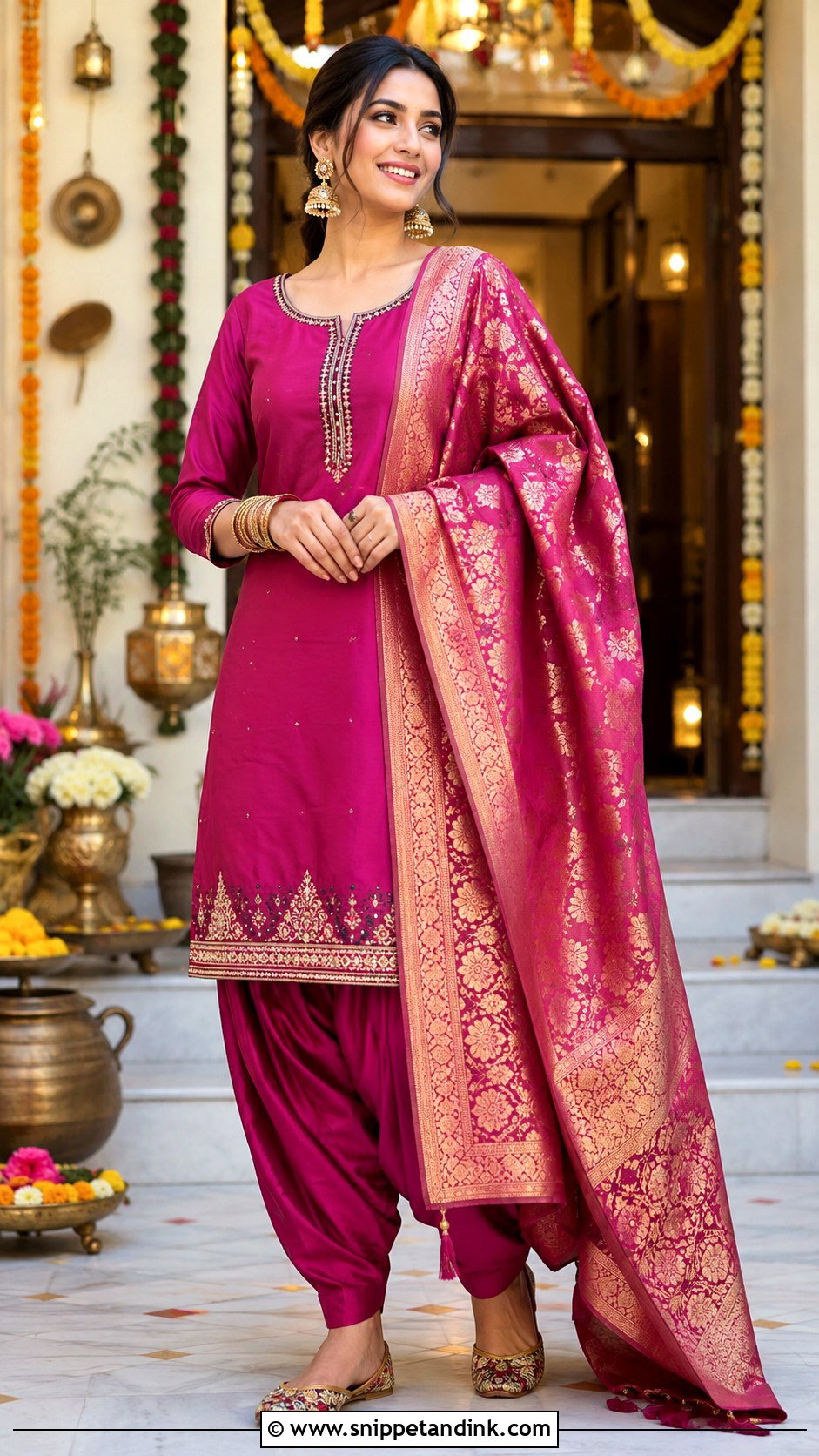
A silk salwar suit works for nearly every age at the wedding, from the bride’s grandmother to her youngest cousin. Choose a rich kurta in red, magenta, teal or mustard and add a banarasi, phulkari, or embroidered dupatta as the festive layer. Silk has a natural shine, but it also shows every sweat mark under the arms, so I slip dress shields into the kurta before a night of dancing. Gold jhumkas, bangles and juttis keep it classic.
12. Punjabi Jaago Floral Lehenga
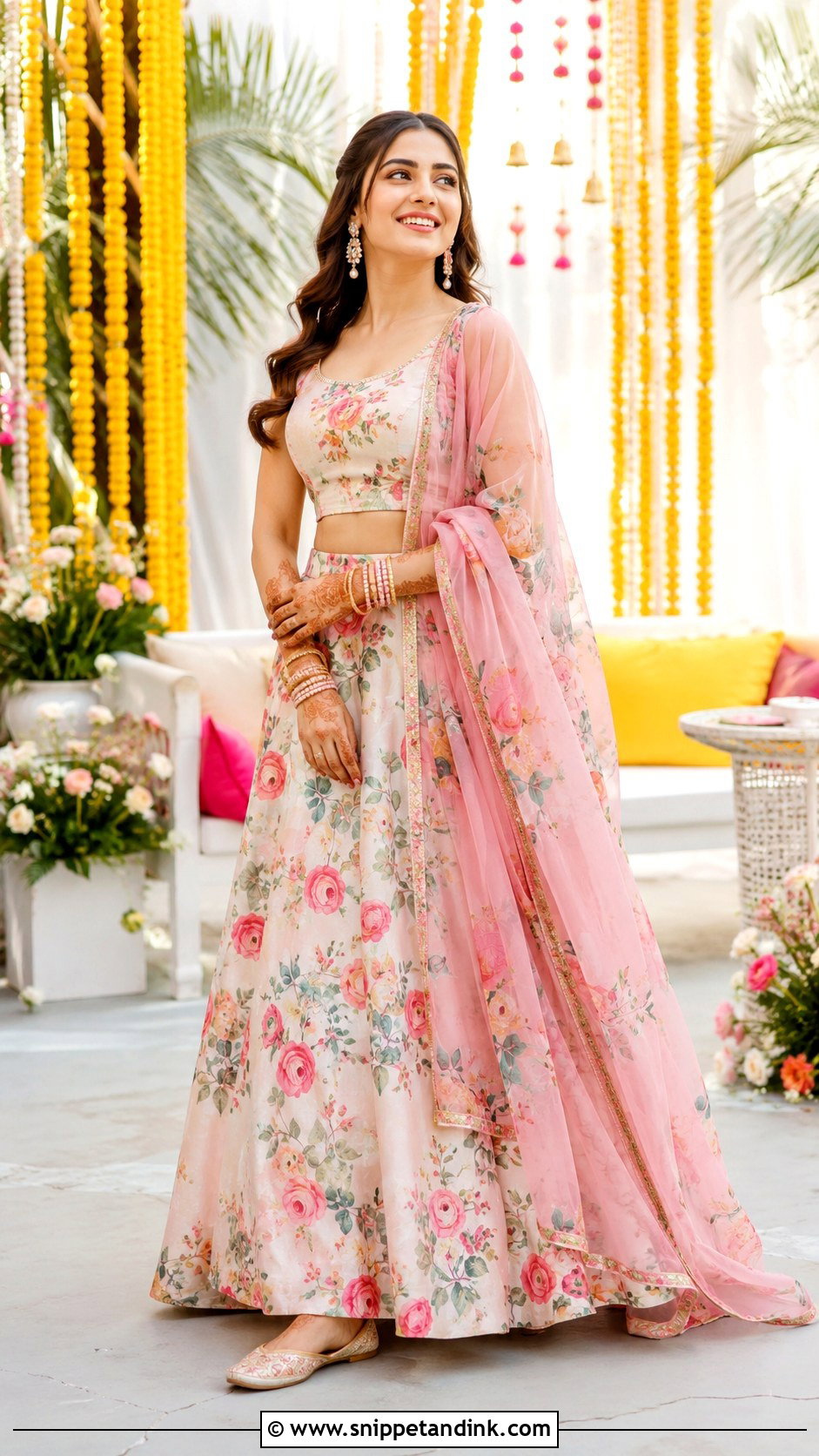
Florals feel fresh at a Jaago held in a garden or courtyard. Pick a lightweight printed or embroidered skirt with a simple blouse and a soft dupatta. Bright florals look festive; pastel ones look sweeter. Print scale matters more than people expect: very small prints turn into a blur in group photos, while medium blooms still read clearly from across the room. Pearl studs or light chandbalis, juttis, a soft braid or loose curls finish it for younger guests and bridesmaids.
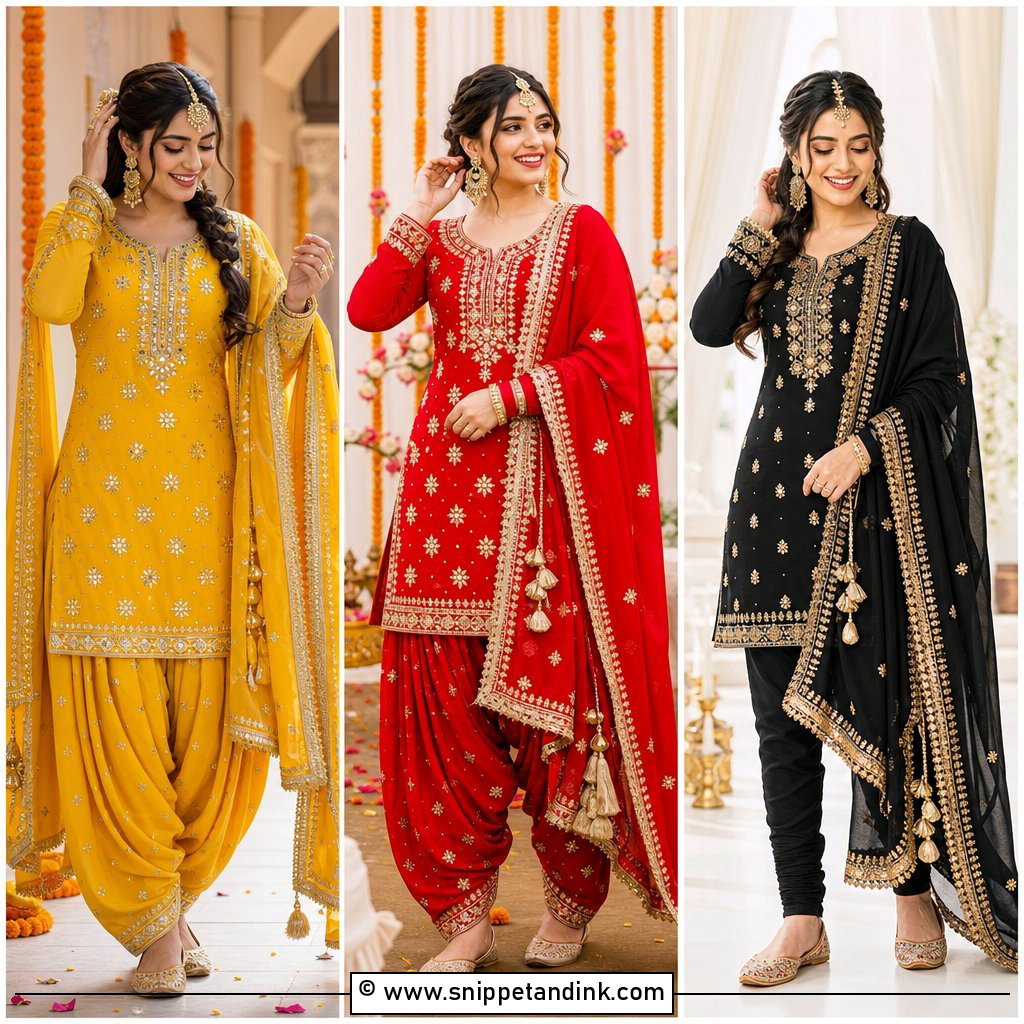
13. Punjabi Jaago Yellow Suit
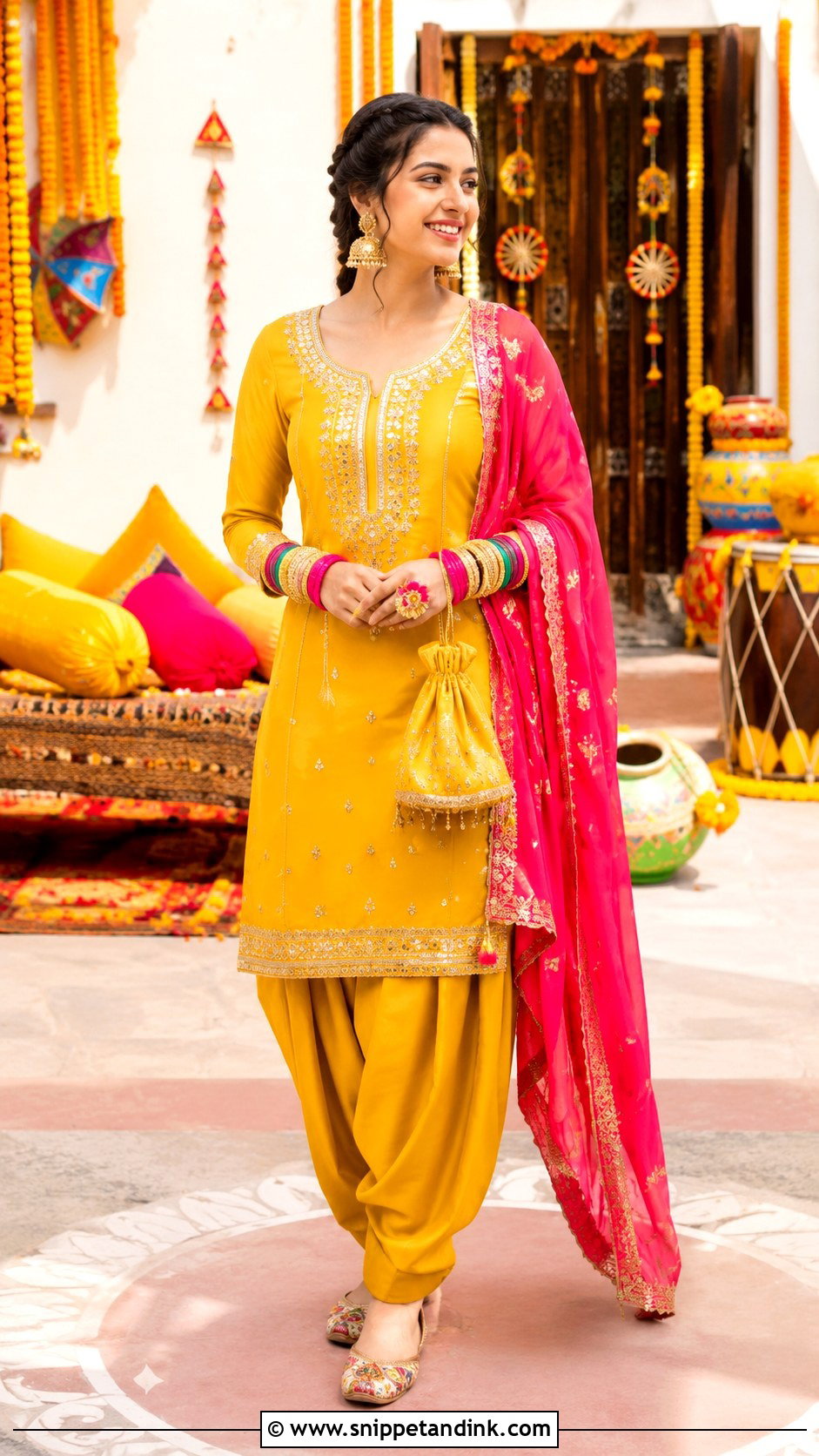
Yellow is pure joy on a Jaago night. If the maiyan ceremony happens earlier the same day and the family is already in yellow, some people like a change of colour for the evening, so ask before you buy. Mustard flatters warmer undertones and a lemon or canary shade suits cooler ones. Wear it with salwar, straight pants or sharara bottoms and a contrast dupatta in pink, green, orange or phulkari. Gold jewelry sits well against yellow; coloured bangles make it more playful. It’s strongest at outdoor and daytime functions.
14. Punjabi Jaago Red Gharara
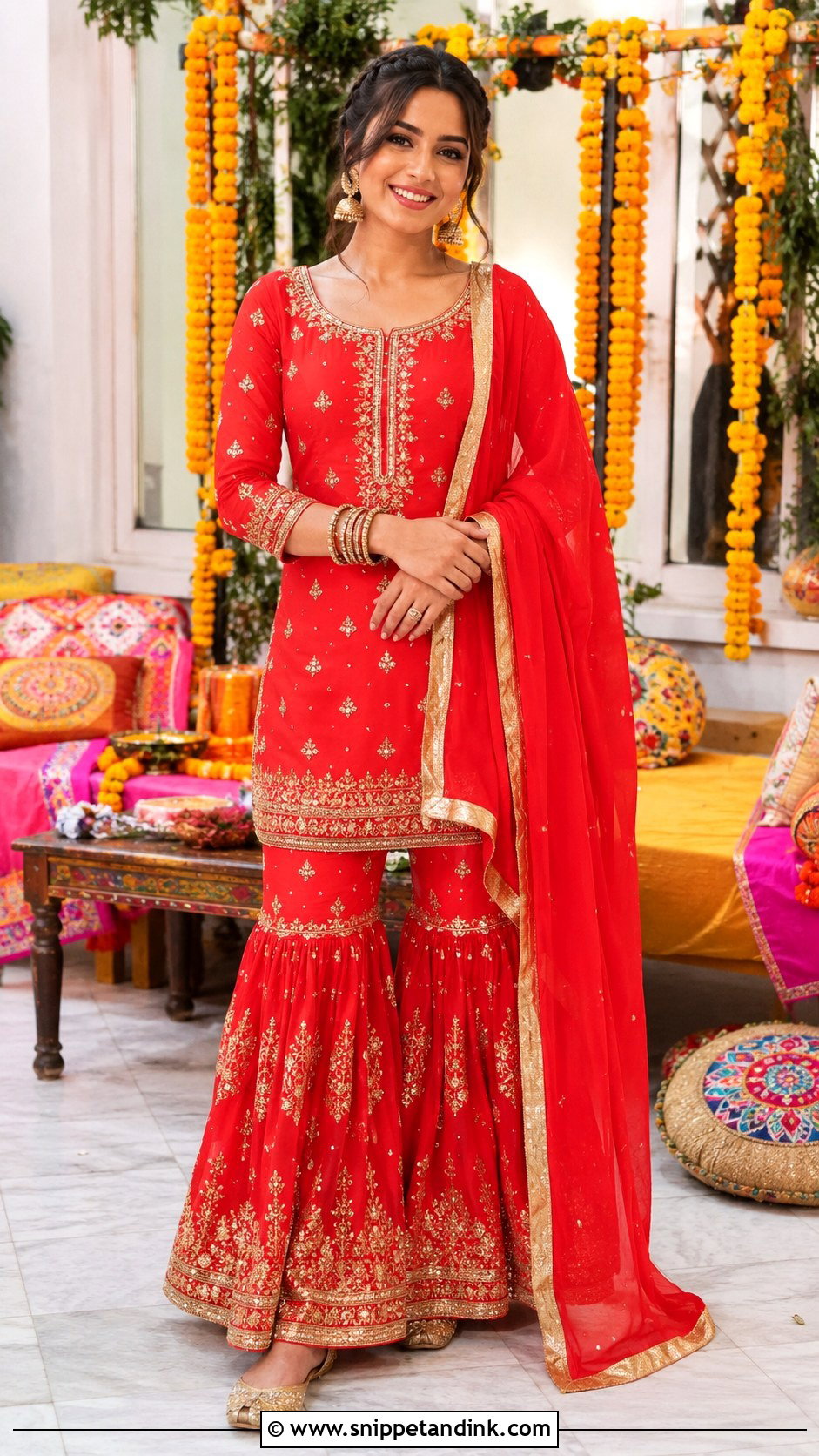
Red is traditionally the bride’s colour, so a red gharara is best kept for close family or for the bride herself during the pre-wedding events. If you’re a guest, check with her first. Choose a short embroidered kurti and a dupatta with a heavy border; gold, antique and mirror embroidery all sit well on red. Because the colour is already loud, I’d hold the jewelry back to jhumkas, bangles and juttis. A sleek braid, soft curls or a bun with hair accessories finishes it for the family entrance and the dancing that follows.
15. Punjabi Jaago Green Sharara
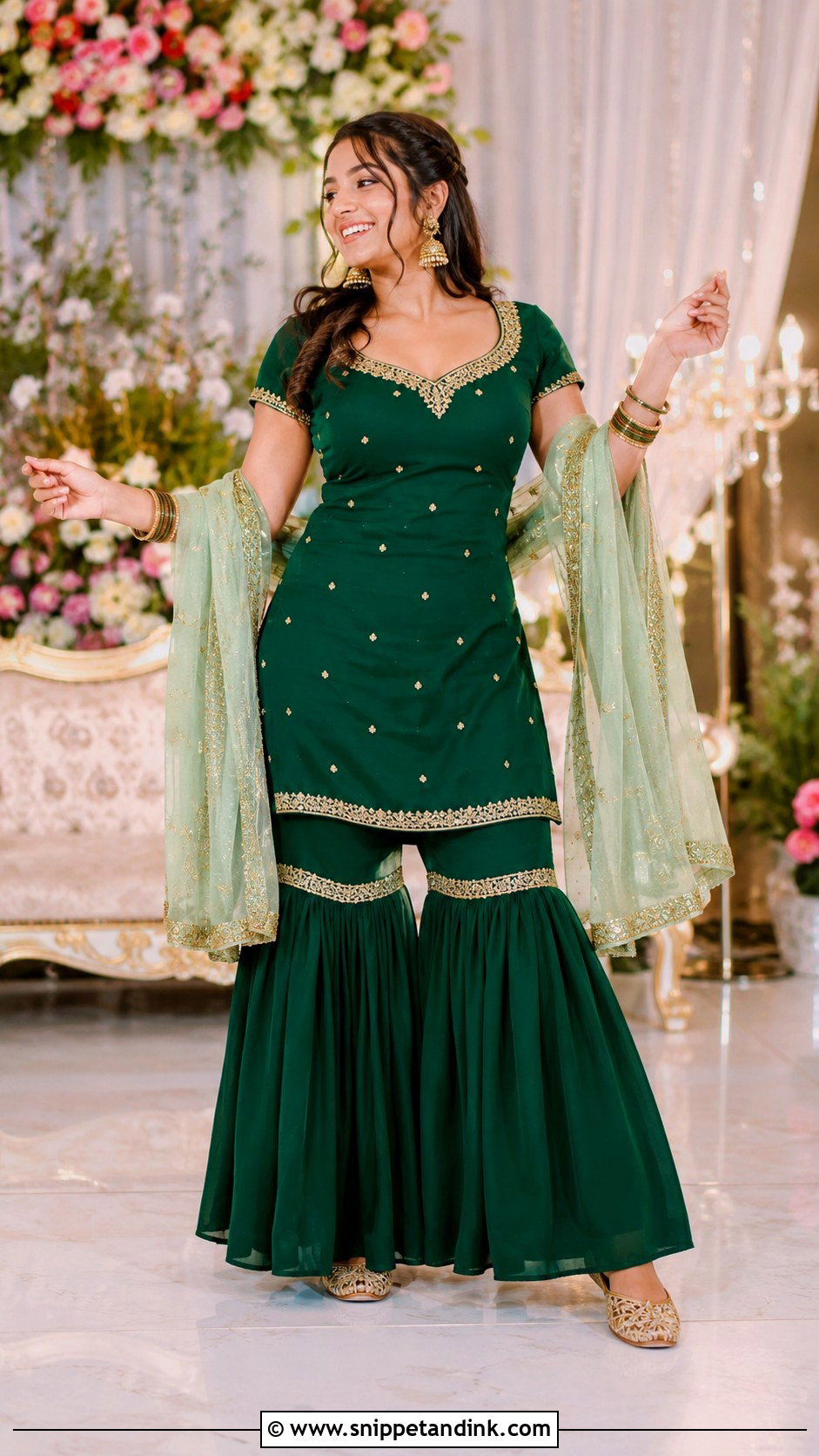
Green flatters a wide range of skin tones, which makes it an easy choice for a group of sisters and cousins. A sharara set with embroidery, mirror work or gota reads festive straight away. Emerald leans formal, while parrot green has that cheeky Punjabi energy. Pair it with a short kurti and a dupatta light enough to float when you spin. When several cousins wear green, I suggest each picks a different shade so the group photo doesn’t merge into one block of colour. Gold earrings, bangles and embellished juttis finish it.
16. Punjabi Jaago Pink Lehenga
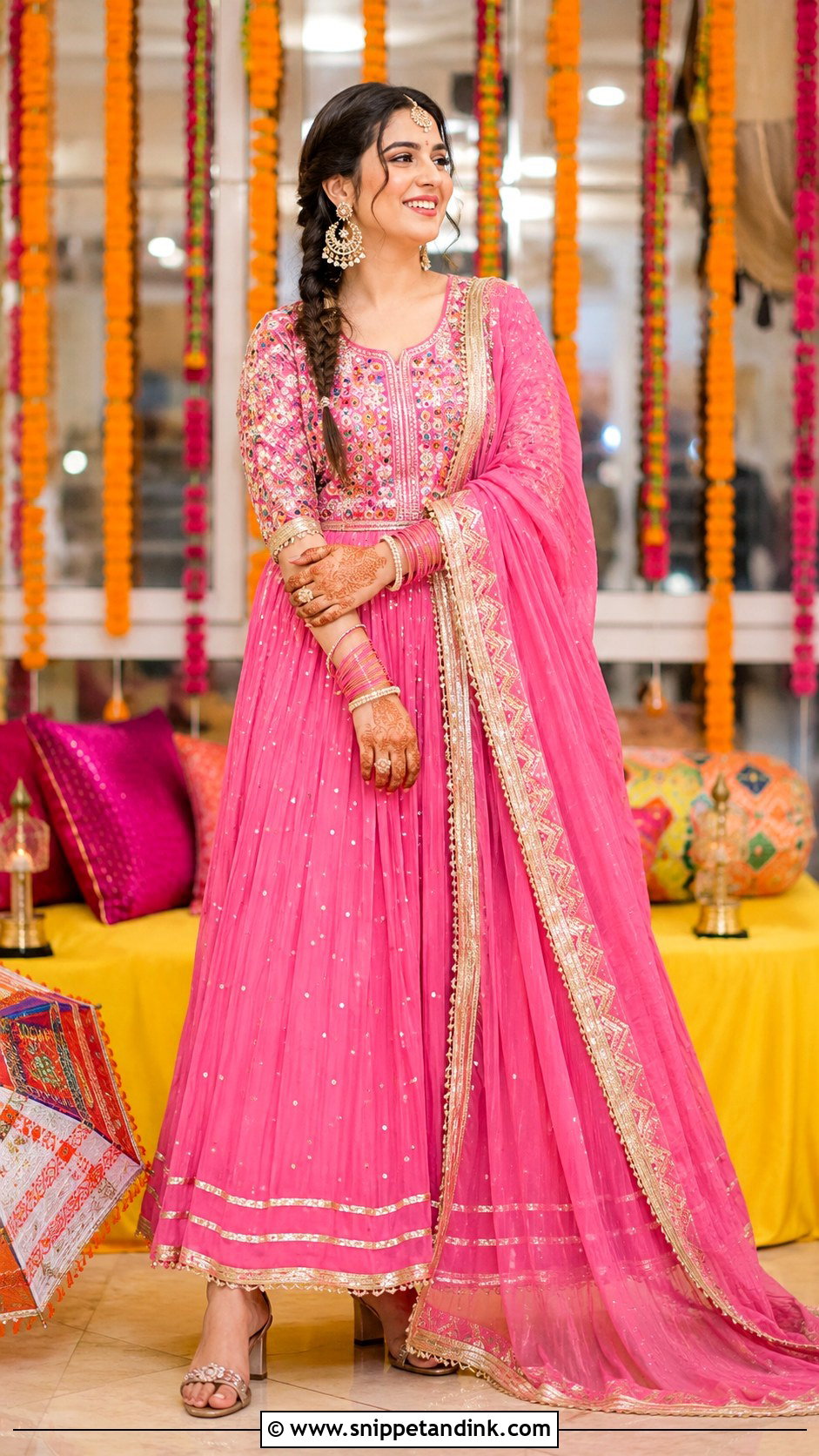
Rani pink is the bold Punjabi version; blush is the gentler one. Either way, a lightweight lehenga with a short blouse or kurti is the comfortable route for dancing. Add a dupatta with mirror work, gota or phulkari-style borders, kundan earrings, bangles and a small tikka if you want a dressier finish. I usually steer people to juttis over heels here, because a lehenga hem and a heel on a crowded dance floor is how dupattas get stepped on.
17. Punjabi Jaago Orange Suit
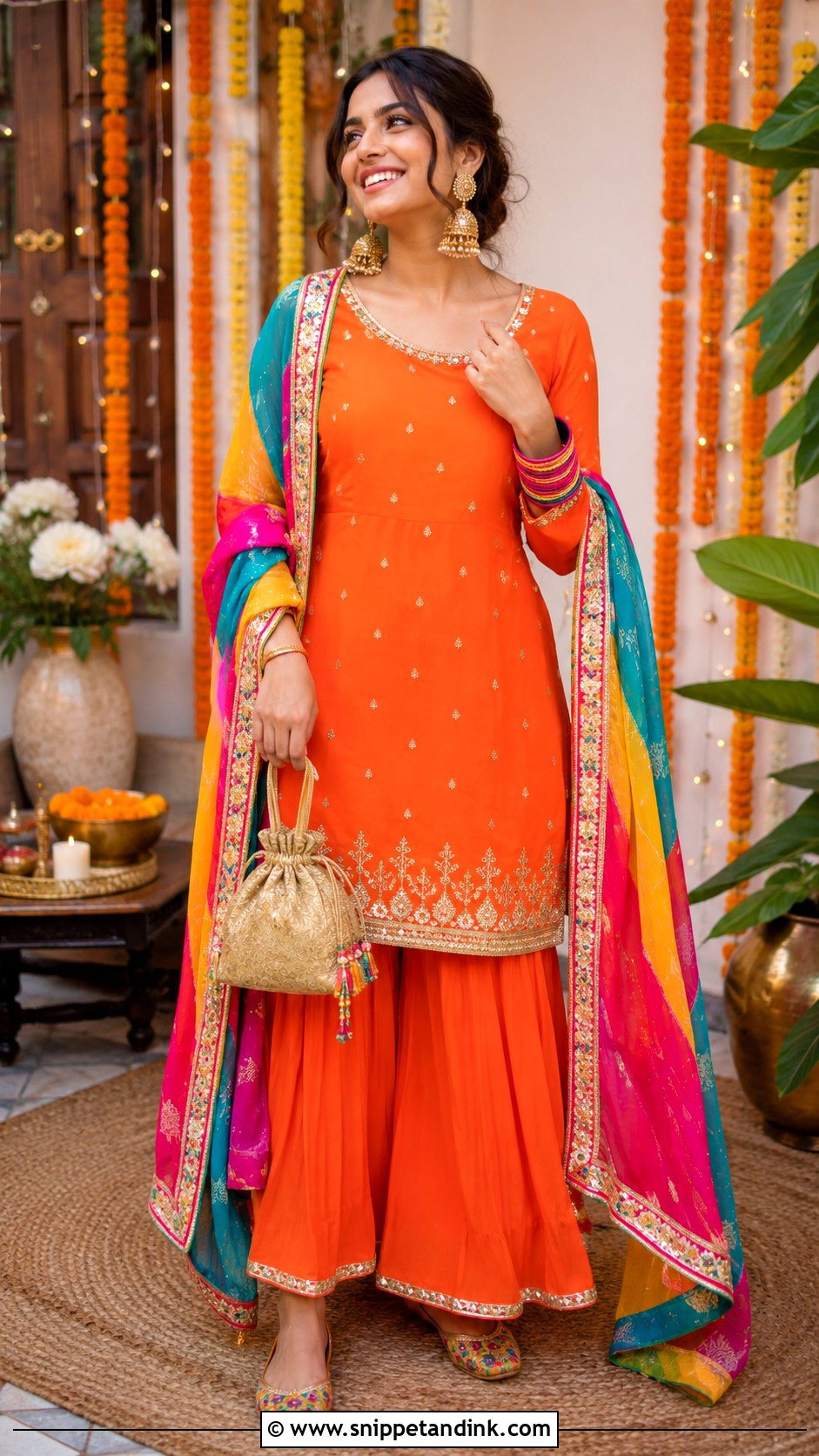
Orange is warm and loud in the best way. An orange kurta set with salwar, palazzos or a sharara bottom takes gold embroidery or mirror work well, and it pairs with green, pink, gold and cream, so you can build contrast through the dupatta alone. Test it next to your face in daylight first: a red-leaning orange flatters most people, while a yellow-leaning tangerine can wash out fair or olive skin. Juttis, jhumkas and stacked bangles complete it.
18. Punjabi Jaago Blue Anarkali
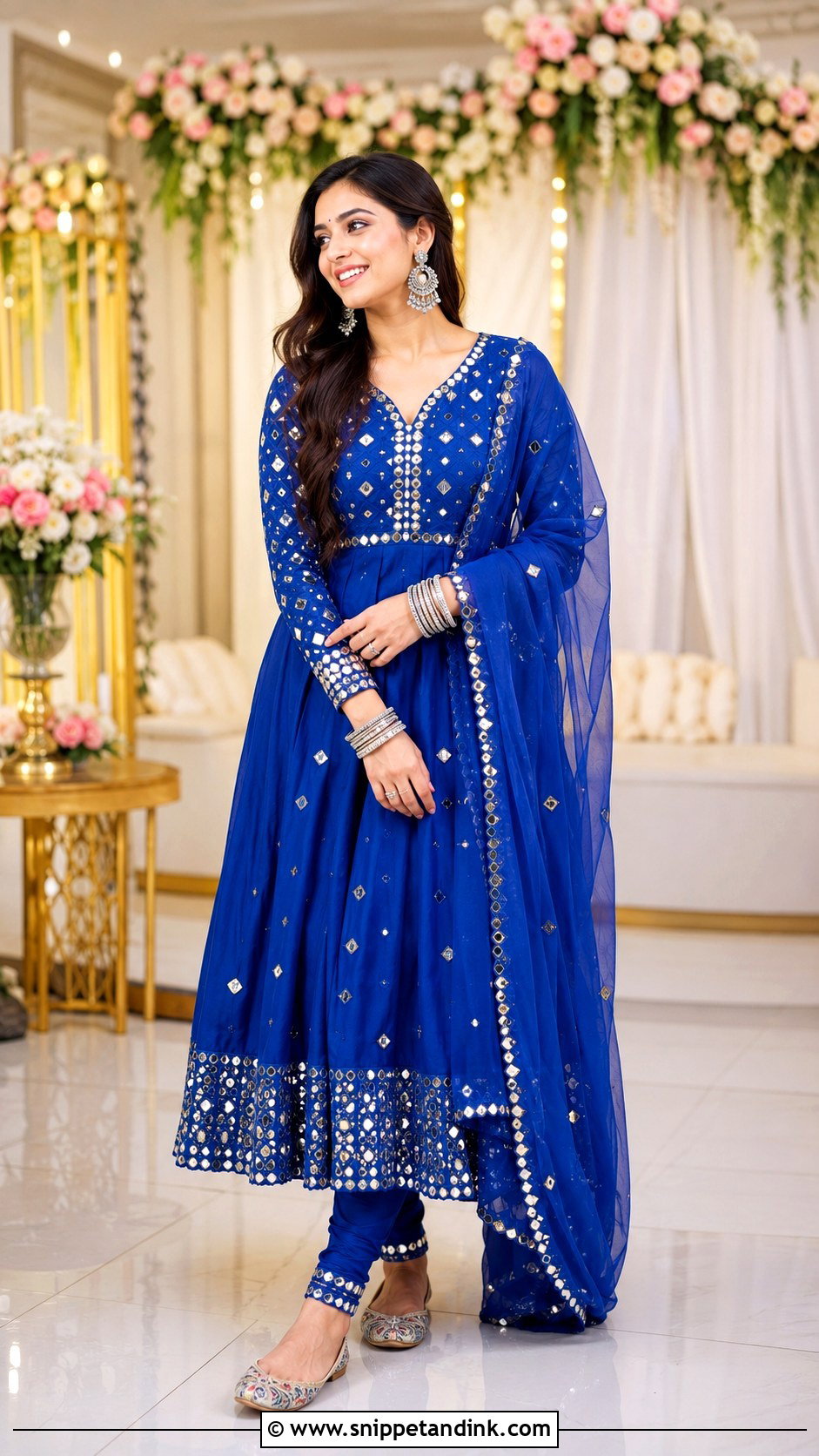
Royal blue, cobalt, navy and turquoise all make a striking Anarkali. One thing I’ve learned to flag: navy under warm indoor lighting can look almost black on camera, so if you want the blue to read, go one shade brighter than you think. Silver, gold or mirror embroidery works depending on your jewelry. Slim pants, a soft dupatta, juttis and statement earrings complete it. The long line suits taller frames especially well, though a shorter person can wear it with a slightly higher hem.
19. Punjabi Jaago White Suit With Phulkari Dupatta
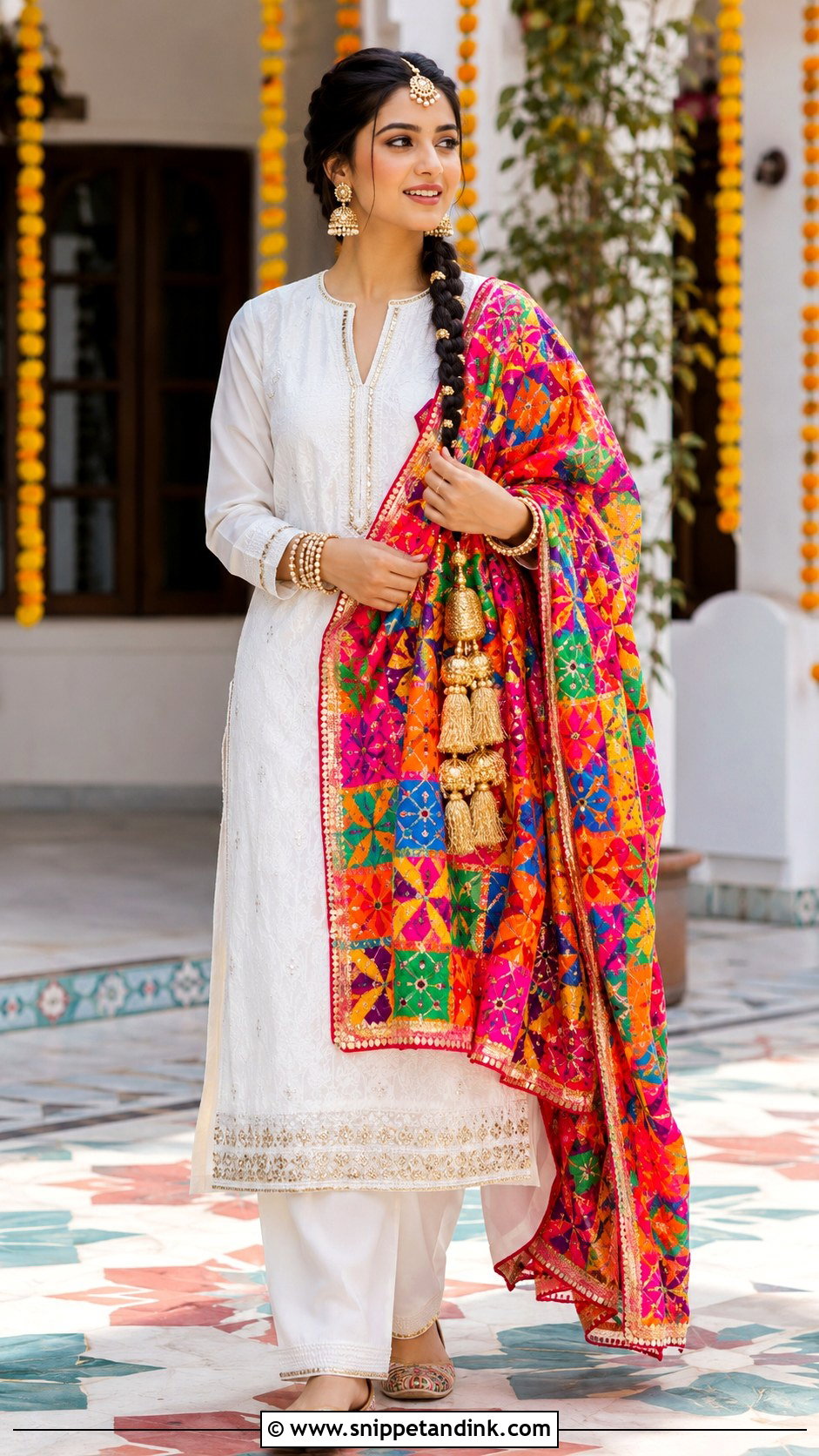
A white suit with a phulkari dupatta lets the embroidery be the whole story. Choose a white kurta with straight pants, salwar or palazzos and a bright phulkari in pink, orange, red, green or multicolour. In some Punjabi families plain white is linked with mourning, which is why the dupatta needs to carry real colour here. White also shows every splash of mehndi and turmeric, so I’d keep this one away from the maiyan. Juttis, jhumkas, bangles and a neat braid finish it.
20. Punjabi Jaago Black Sharara
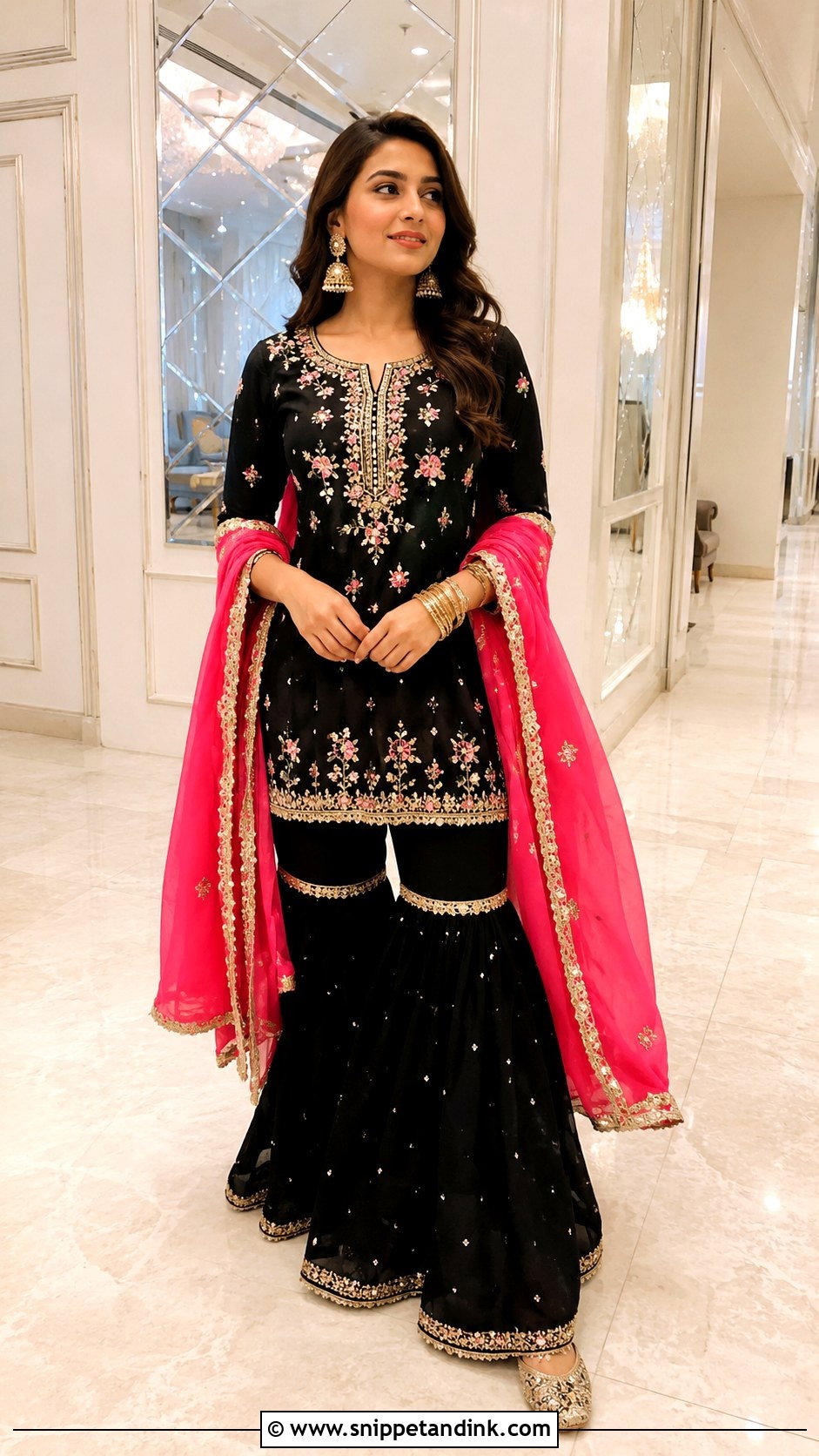
Black can look sleek and festive with the right embroidery, but check the mood of the family first; some elders still prefer guests avoid black at wedding functions. If it’s welcome, choose a sharara set worked in gold, silver, mirror or colourful thread, with a short kurti on top. A contrast dupatta in red, hot pink, emerald or mustard brings back the Punjabi brightness. Gold earrings, bangles and embroidered juttis complete it, and keep your makeup bright so the outfit doesn’t swallow you at night.
21. Punjabi Jaago Palazzo Suit
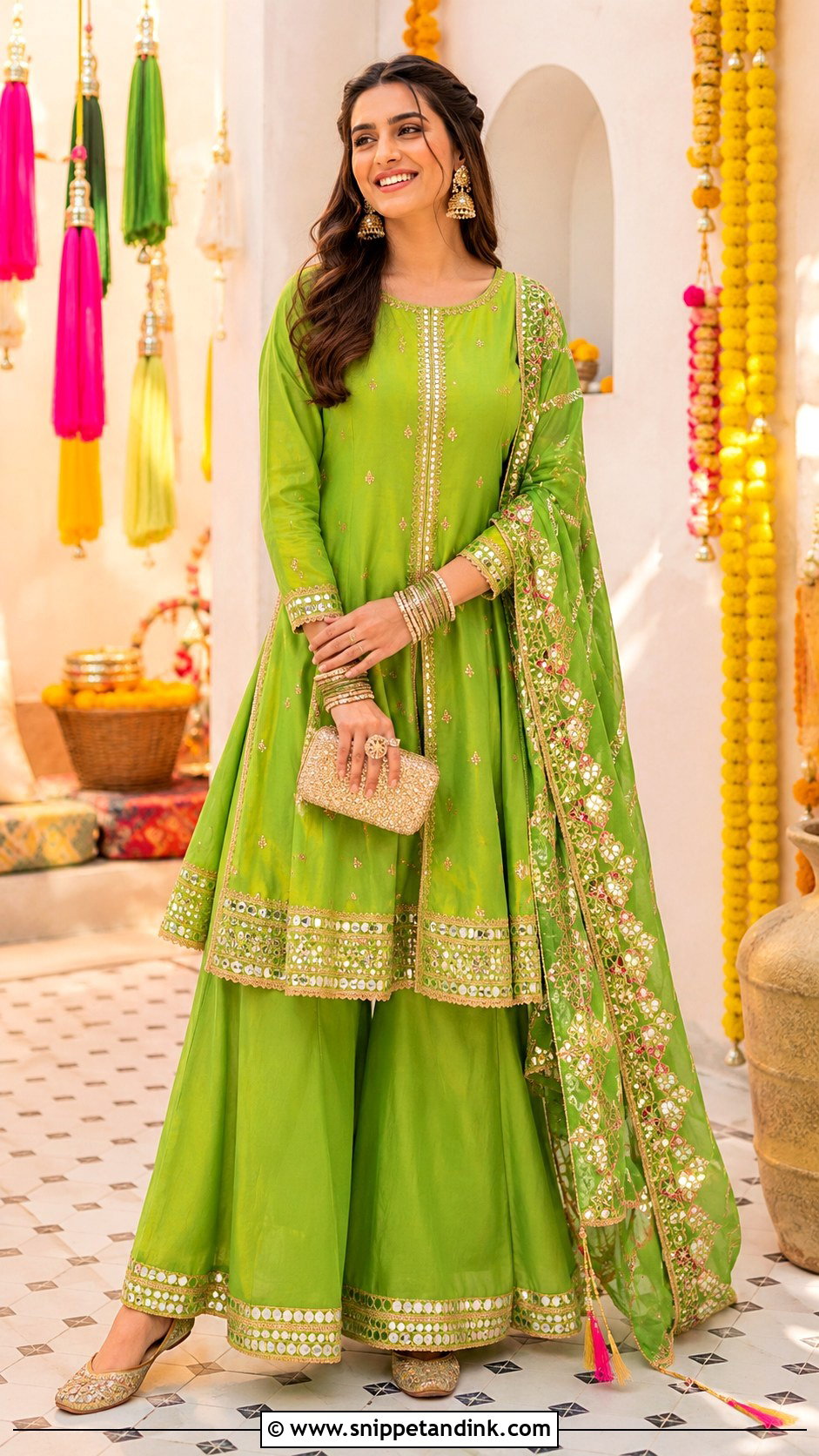
Palazzo suits are the outfit I hand to anyone who wants to move freely and stay cool. A straight or A-line kurta over wide-leg palazzos, with embroidery on the neckline, sleeves and dupatta border, is festive enough for a Jaago. Bright colours and printed dupattas suit it. The wide leg also skims rather than clings, which is why it’s so comfortable on plus-size frames; just have the length finished while wearing your juttis so the hem doesn’t drag through puddles in the lane.
22. Punjabi Jaago Dhoti Suit
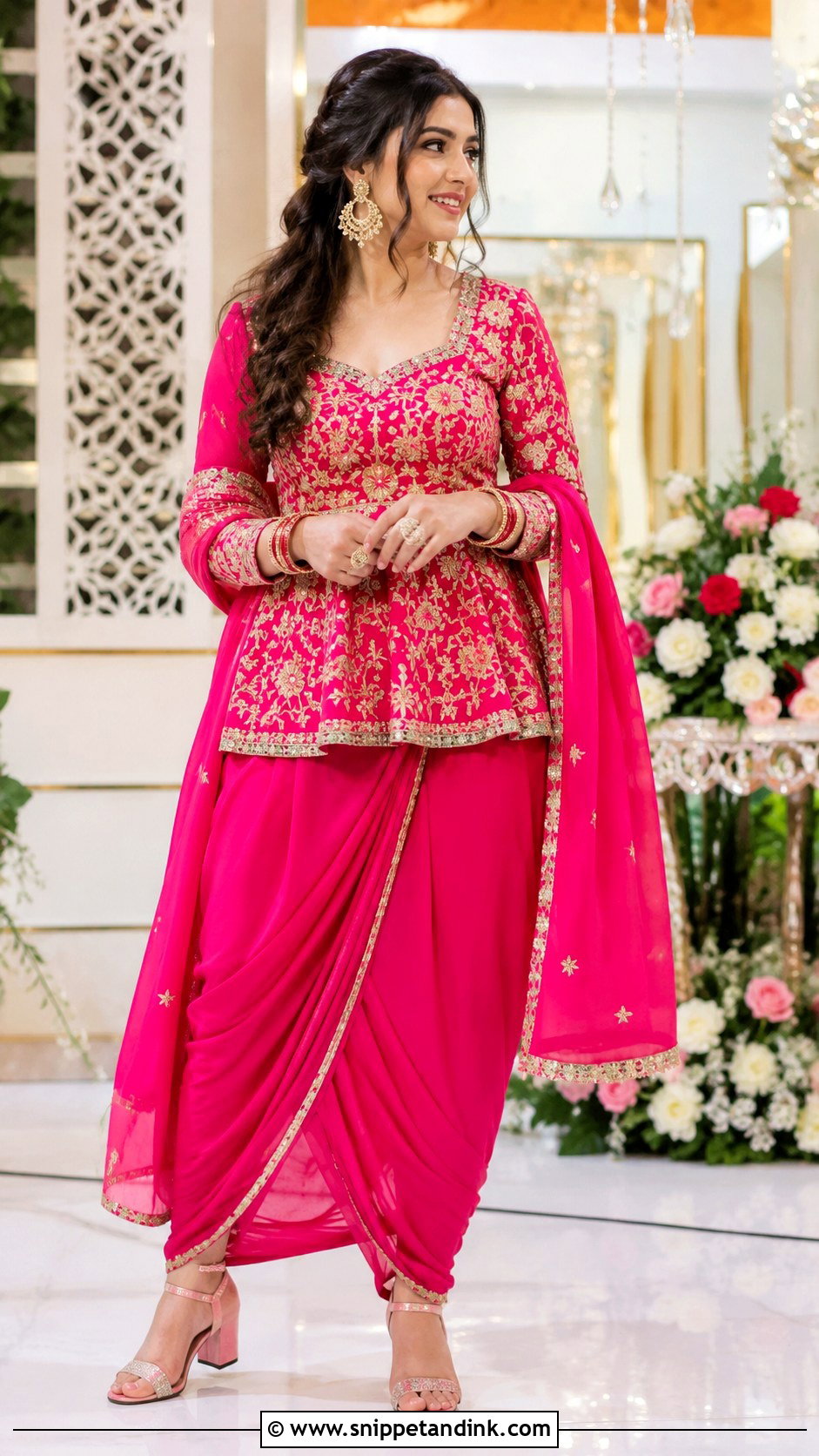
A dhoti suit feels modern while still belonging at a Punjabi wedding. Wear a short kurti or peplum top over draped dhoti pants, with embroidery, mirror or gota detailing to make it event-ready. Add a dupatta for a traditional finish or a cape layer for fusion. At the fitting, squat and do a few giddha steps: the drape needs enough drop that it doesn’t pull at the seat. Bold earrings and bangles are enough jewelry. Younger guests tend to love this one.
23. Punjabi Jaago Cape Lehenga
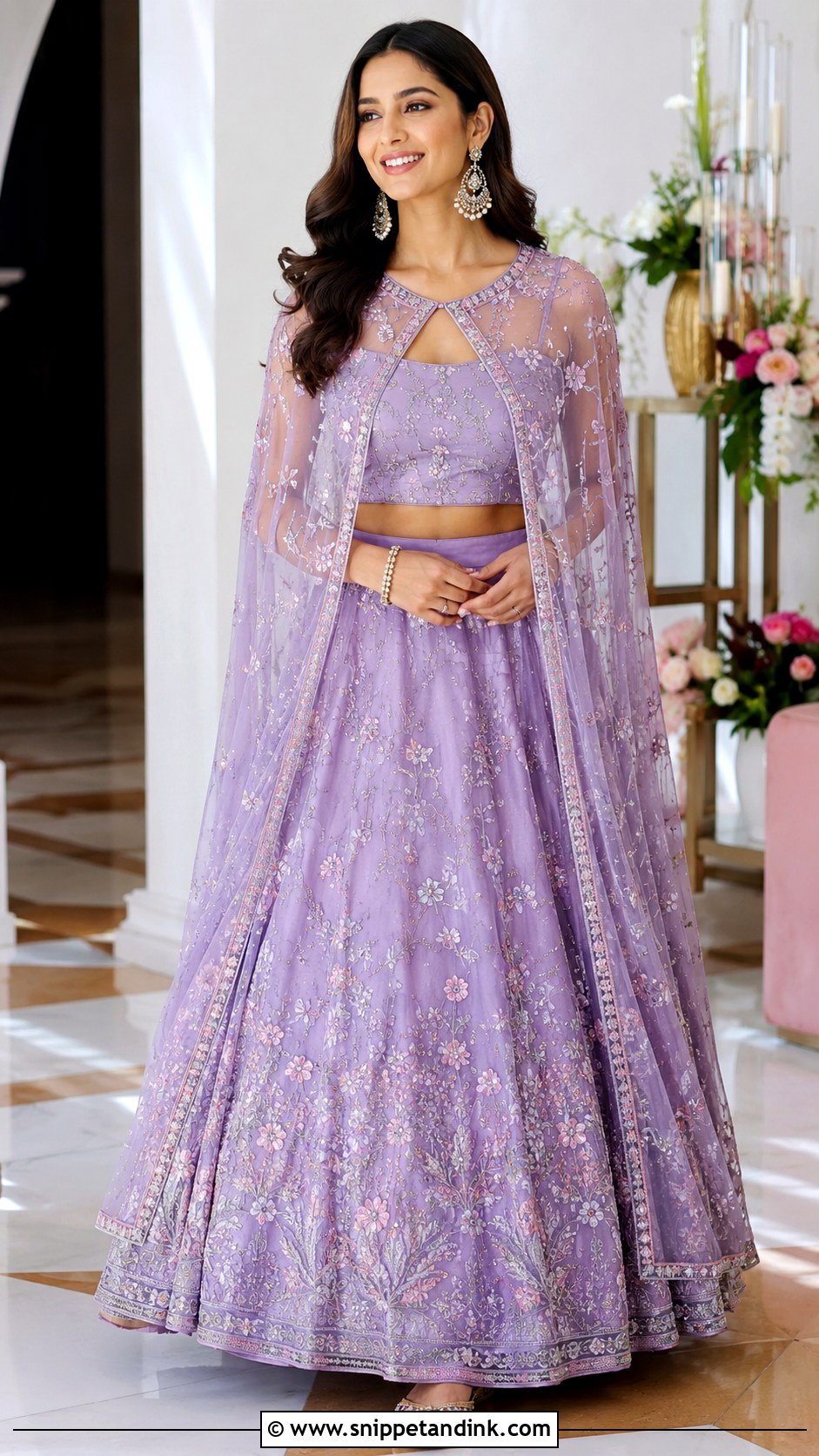
A cape lehenga solves the dupatta problem completely. Your hands stay free for clapping and dancing, and the cape still gives coverage and drama. Pair a lightweight skirt with a fitted blouse and a sheer or embroidered cape in mirror, sequin or thread work. I always have the cape tacked to the blouse at the shoulder seam so it doesn’t slide back when you raise your arms. Earrings, a bracelet and comfortable heels or juttis finish it for bridesmaids and cousins.
24. Punjabi Jaago Peplum Sharara
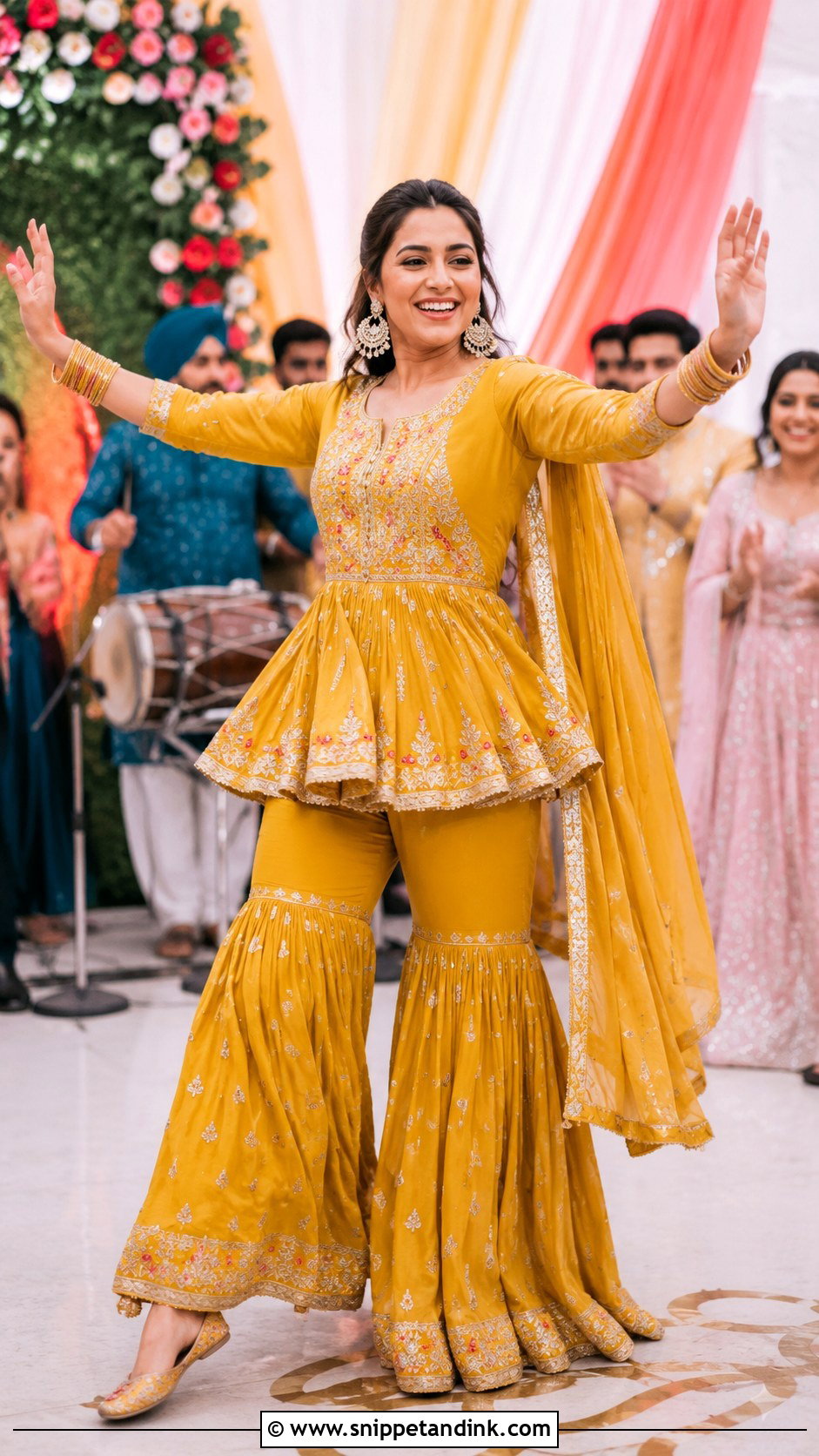
The peplum top defines the waist and the sharara adds volume below, so the proportions flatter many body types without anything clinging. Choose a bright colour or a printed set with embroidery at the neckline and hem. A soft dupatta over one shoulder is optional when the top is already detailed. Make sure the peplum ends at the high hip; a longer flare cuts the leg and fights with the sharara. Juttis, chandbalis and bangles complete it.
25. Punjabi Jaago Banarasi Suit
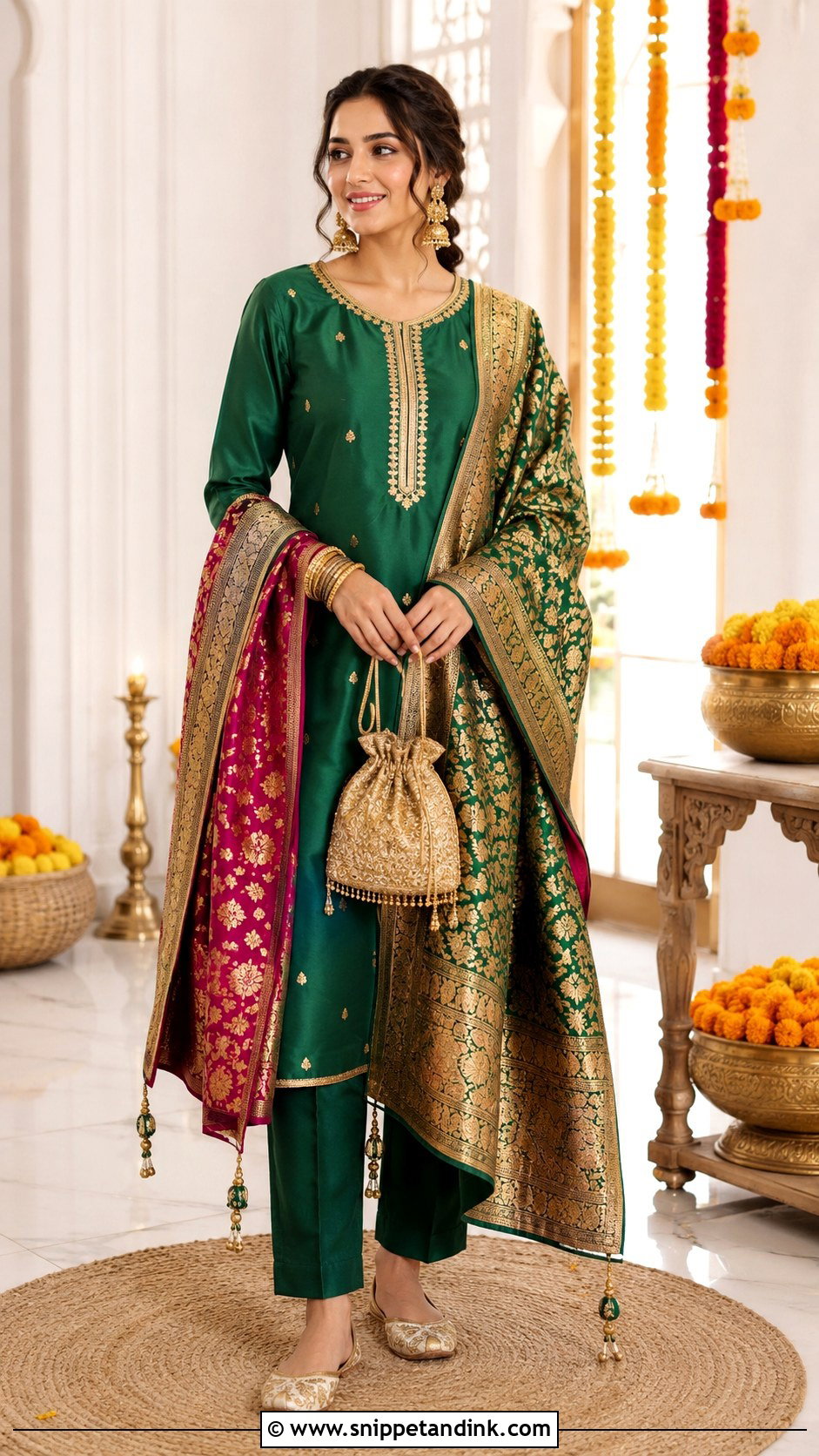
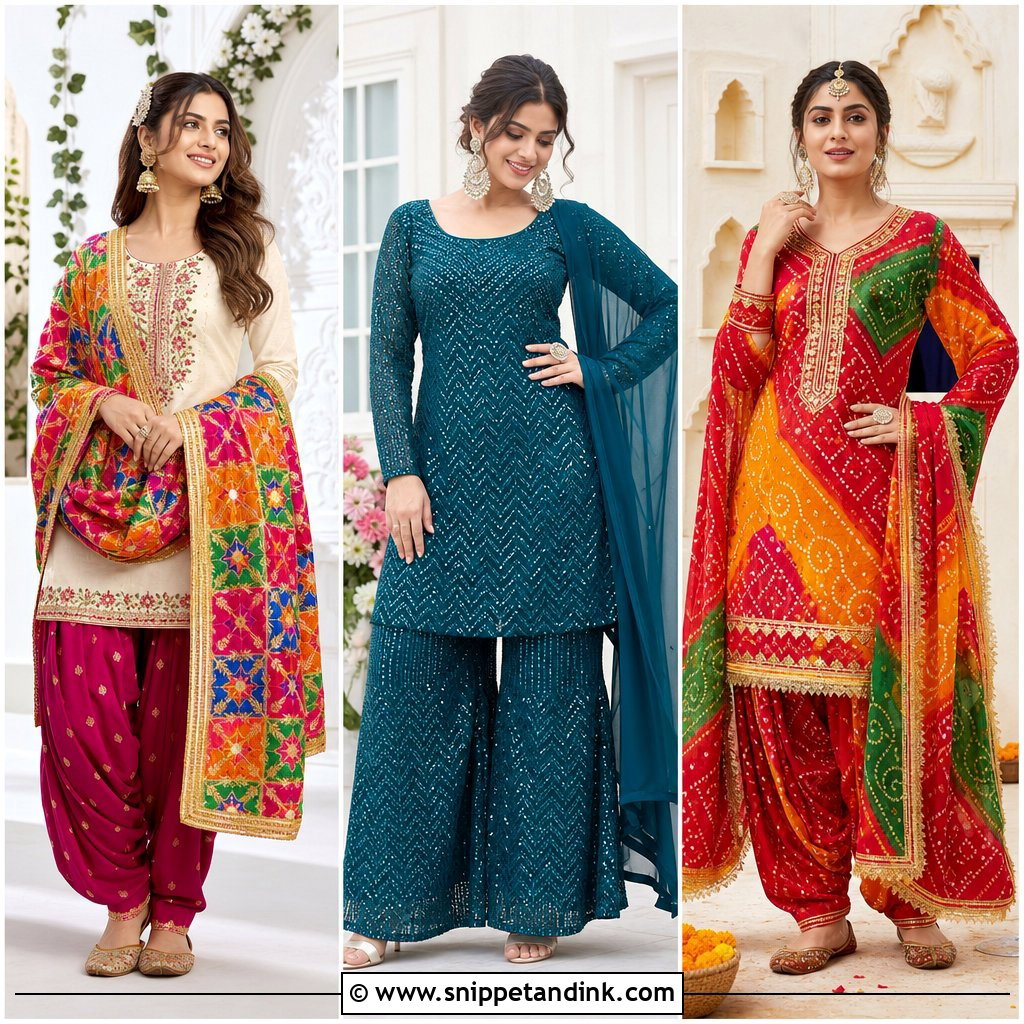
Banarasi silk brings weight and history to a suit. A brocade kurta with straight, cigarette or salwar pants is formal on its own, and a Banarasi dupatta can lift even a plain set. Magenta, emerald, royal blue and deep purple show off the zari. Since the fabric already has texture and shine, I keep accessories traditional and few: jhumkas, bangles, juttis. Store it folded in muslin and refold along different lines each season, because zari cracks along permanent creases. It’s a piece you’ll wear for years.
26. Punjabi Jaago Sequin Suit
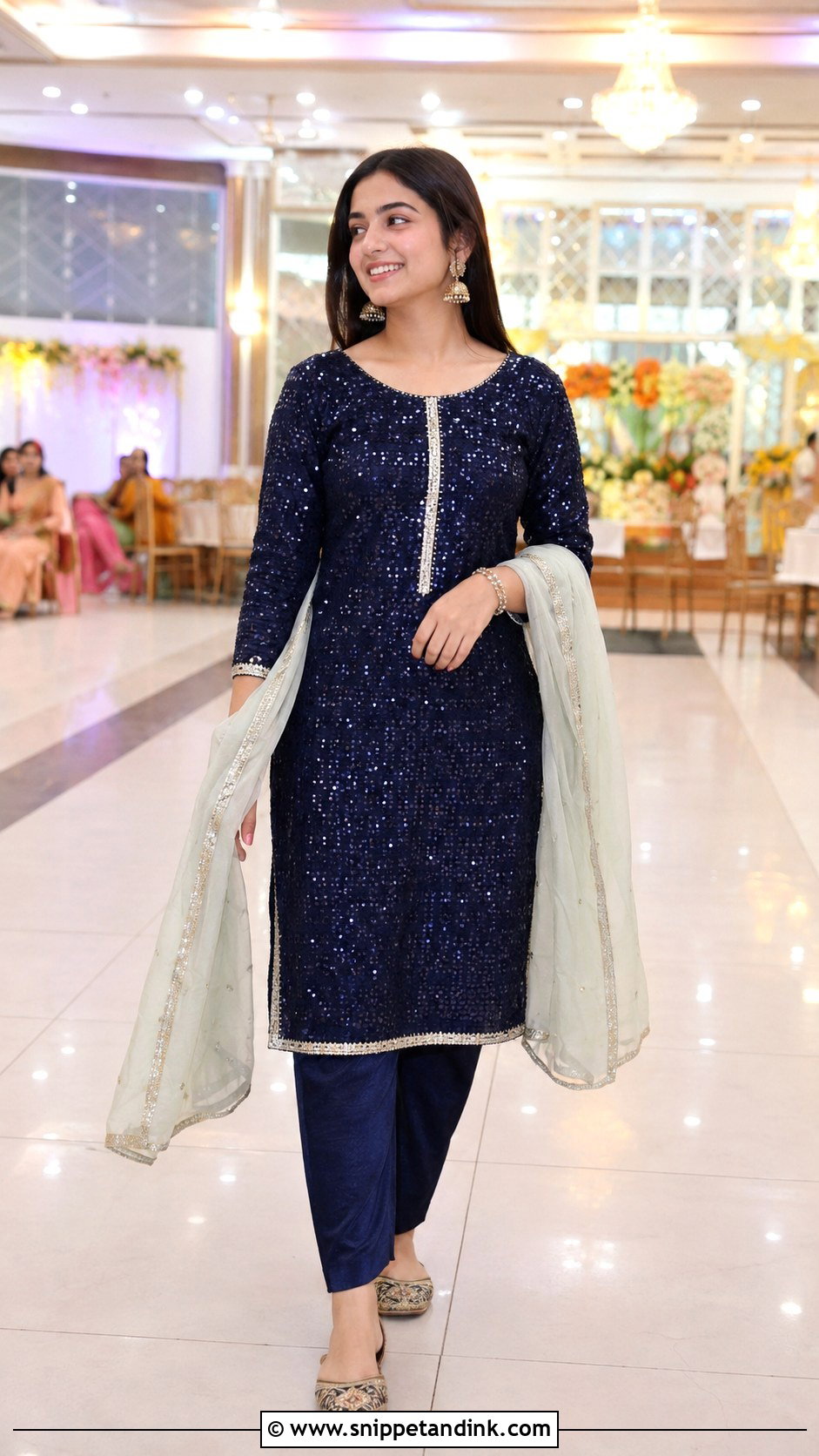
Sequins love a night Jaago under fairy lights. Pick subtle all-over sequins or sequin borders so the sparkle doesn’t overwhelm, with straight pants or a sharara below and a light dupatta on top. The trade-off nobody mentions: sequins scratch your inner arms over a long night and snag on other people’s dupattas in a crowded circle, so I’d avoid them on sleeves. Champagne, rose pink, navy and emerald look polished. Keep jewelry simple and shoes comfortable.
27. Punjabi Jaago Indo Western Skirt Set
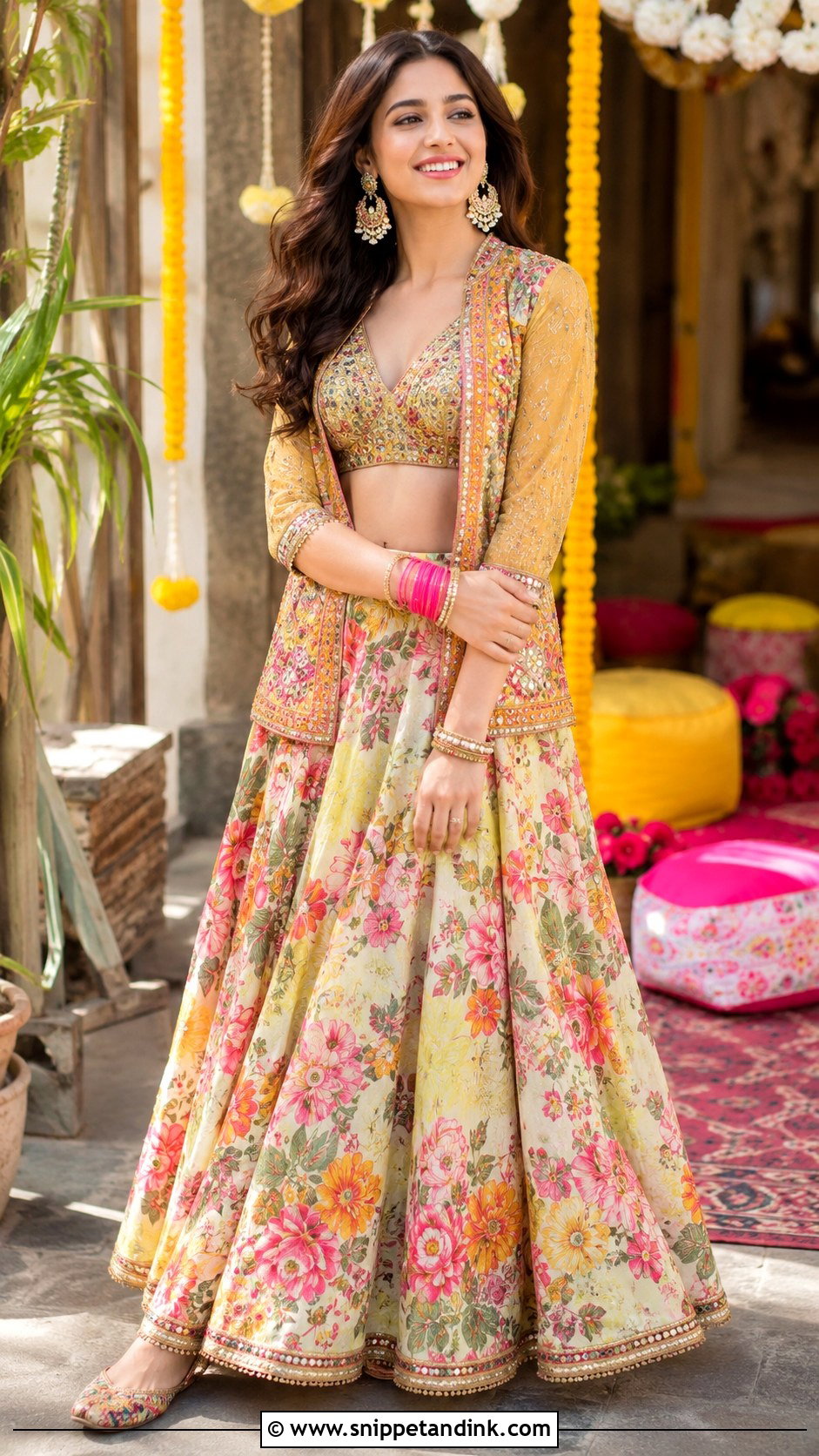
An Indo western skirt set works at a Jaago as long as something ties it back to the culture. A flared ethnic skirt with a crop top, short jacket or embroidered blouse can do that through mirror work, colourful borders or a draped stole. Juttis, earrings and bangles balance the look. It gives you lehenga movement with a more relaxed attitude, and it’s a natural pick for younger guests and destination-style events.
28. Punjabi Jaago Long Jacket Lehenga
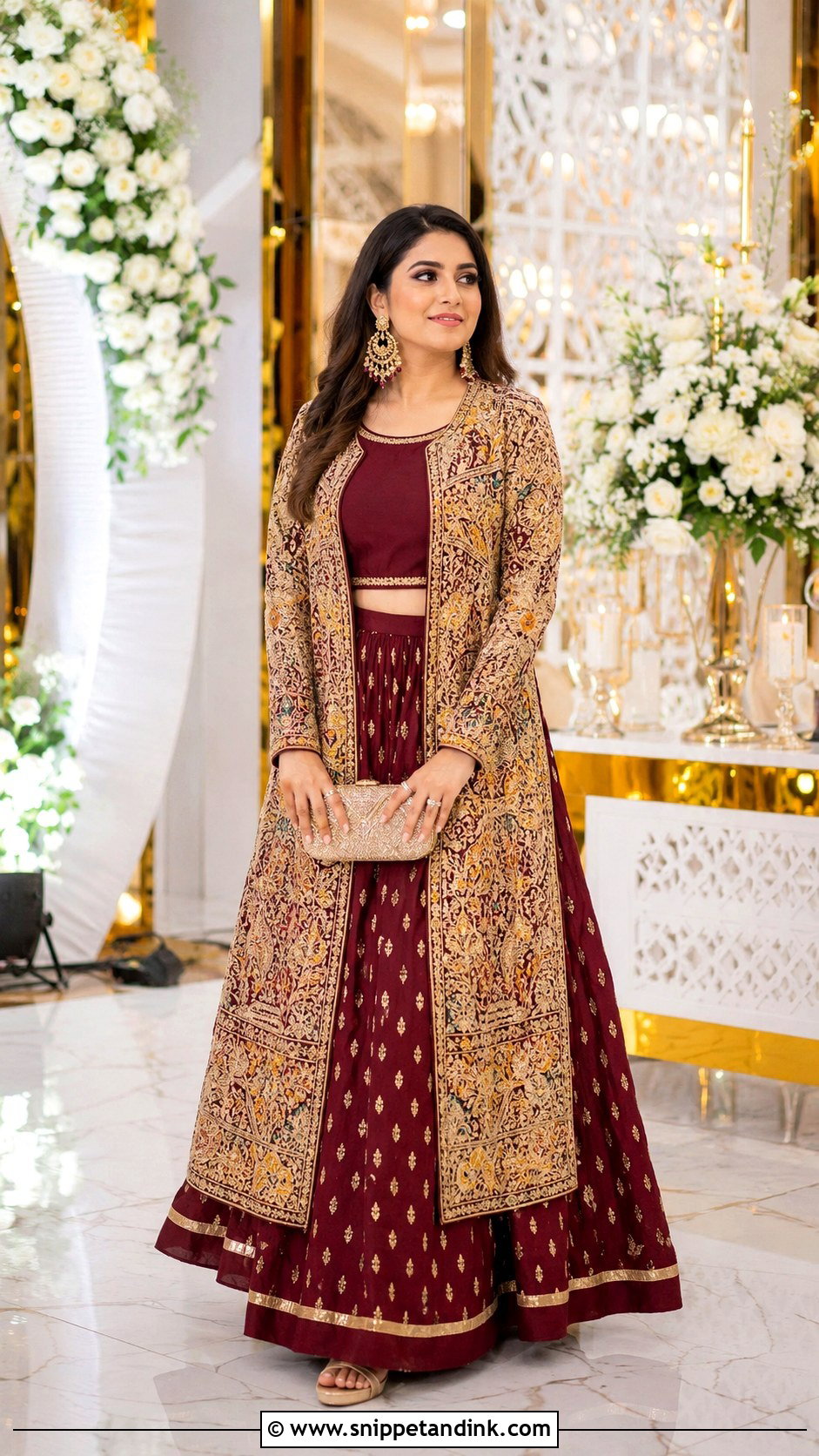
A long jacket over a simple lehenga skirt and blouse creates a strong vertical line, which is why it flatters so many people. The jacket can be sheer, silk or brocade depending on how formal the night is. It gives coverage without a traditional dupatta. My caution is heat: a lined brocade jacket gets warm in a packed room, so choose a sheer one if the Jaago is indoors. Navy, maroon, emerald and champagne work well, with statement earrings, juttis or block heels and a sleek clutch.
29. Punjabi Jaago Organza Suit
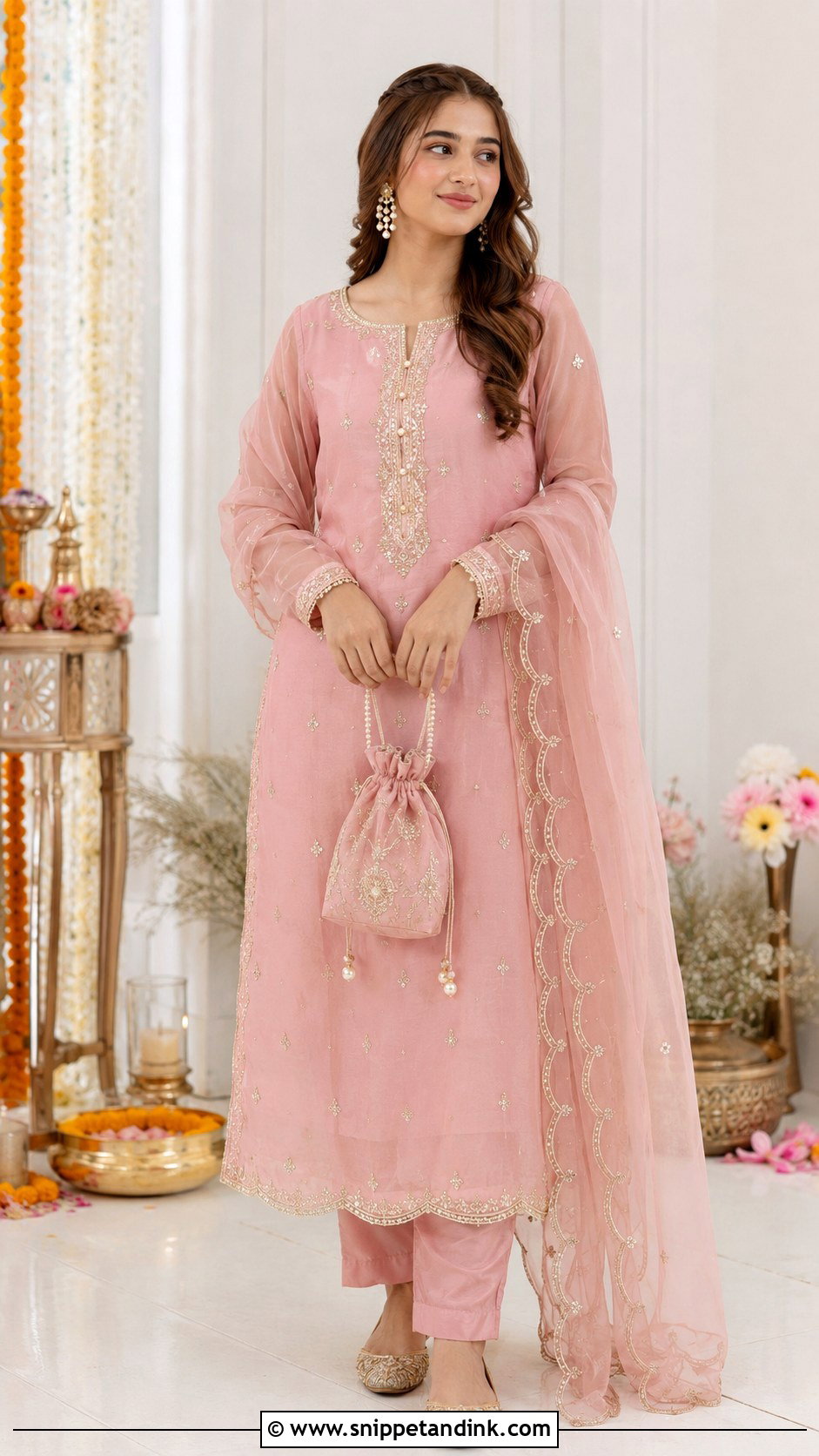
Organza is light and crisp, which makes it lovely for a polished Jaago look. Choose a kurta set with an organza dupatta finished with embroidery, scalloped edges or gota. Pastels read soft; brights feel more traditionally Punjabi. Because organza holds its shape, the dupatta tends to stand away from your body rather than drape, so pin it at the shoulder and the waist. Straight pants or palazzos, pearl earrings, juttis and a small potli give a refined finish, especially at indoor events.
30. Punjabi Jaago Paranda Suit
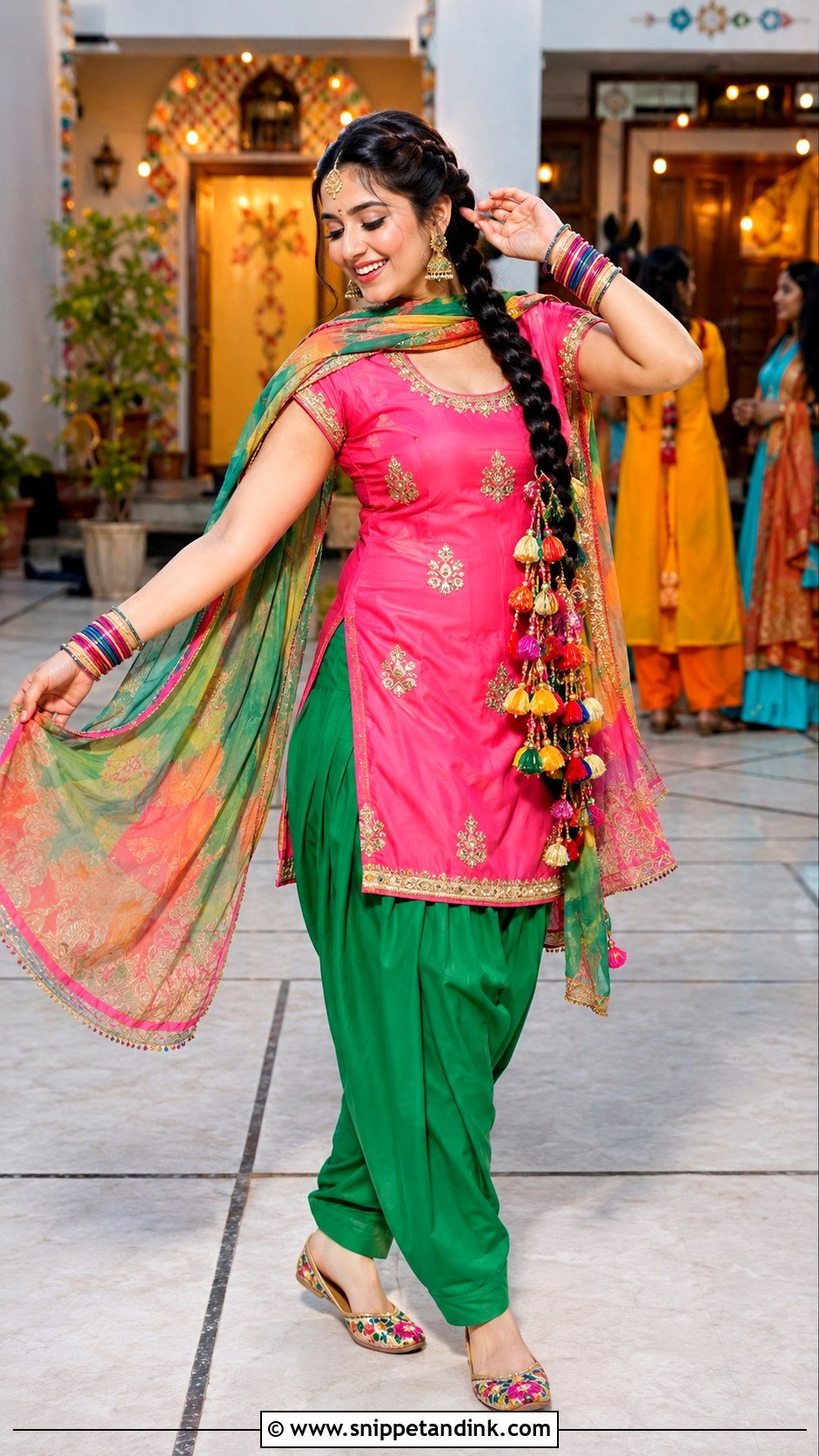
A paranda turns any suit into a Jaago outfit. Start with a bright Punjabi suit, a Patiala, a salwar suit or a short kurti with sharara pants, and add a coloured paranda that matches or contrasts. The paranda is braided into the lower part of the plait and tied off with its tassels, so ask your hairstylist to start the braid a little lower if your hair is short or layered. Juttis, bangles, jhumkas and a bright dupatta complete it in pink, yellow, green, orange or blue.
A Five Minute Dance Test at Your Last Fitting
Mirrors lie about movement. At the final fitting I ask clients to put on the full outfit, jewelry included, and do the things they’ll actually do at the Jaago. It takes five minutes and catches most problems while the tailor can still fix them.
- Clap with both hands above your head. If the kurta rides up to your waist or the armhole cuts in, the sleeves need more ease.
- Squat and sit cross-legged on the floor, the way you will during the boliyan. Shararas, ghararas and dhoti pants show their problems here.
- Spin twice. A lehenga or Anarkali that wraps around your legs needs a shorter hem or a lighter can-can.
- Walk up a flight of stairs holding your phone. If you need both hands for the skirt, so will you on the night.
- Check the nada or drawstring. A tie-up salwar can loosen during bhangra, so ask for a hook or a hidden elastic section if you’re a hard dancer.
Wearing Red, White or Black When You’re Not the Bride
Punjabi families vary a lot, so I always suggest a quick word with the bride or her mother before buying. Red is usually the bride’s colour, and many families still prefer guests avoid all-black or all-white at wedding functions. Some nanke plan a coordinated colour for their side so they read as one group during the procession; if you belong to that side, ask what it is before you shop.
It also helps to plan the night after. Jaago outfits come home smelling of smoke from the diyas, often with a spot of oil or ghee on them. Air them on a hanger overnight, then send silk, velvet and anything with zari or gota to a dry cleaner who handles Indian embroidery rather than washing them at home.
Let the Dhol Decide How Much Embroidery You Wear
A Jaago outfit earns its place by lasting the night: the lane procession, the gagar, the giddha circle, the late food. Suits, shararas, ghararas, lehengas, Anarkalis, phulkari dupattas, juttis, bangles and parandas all give you that Punjabi festive look. Go light if you plan to dance hard, and save velvet, Banarasi and heavy embellishment for cold nights or the more formal events. Then wear the colour that makes you want to be first into the circle.
You'll Like These Ideas:


Leave a Reply