
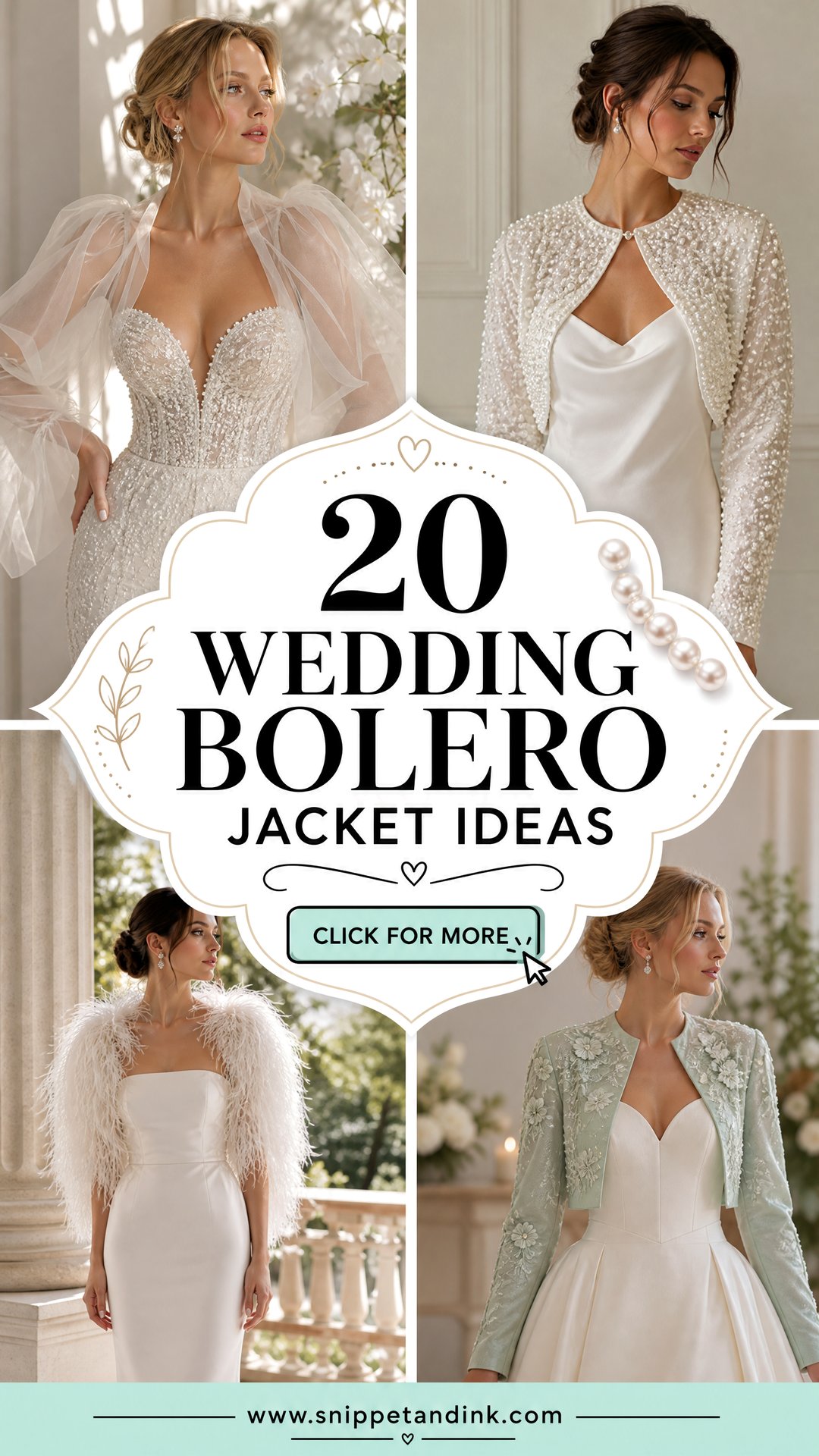
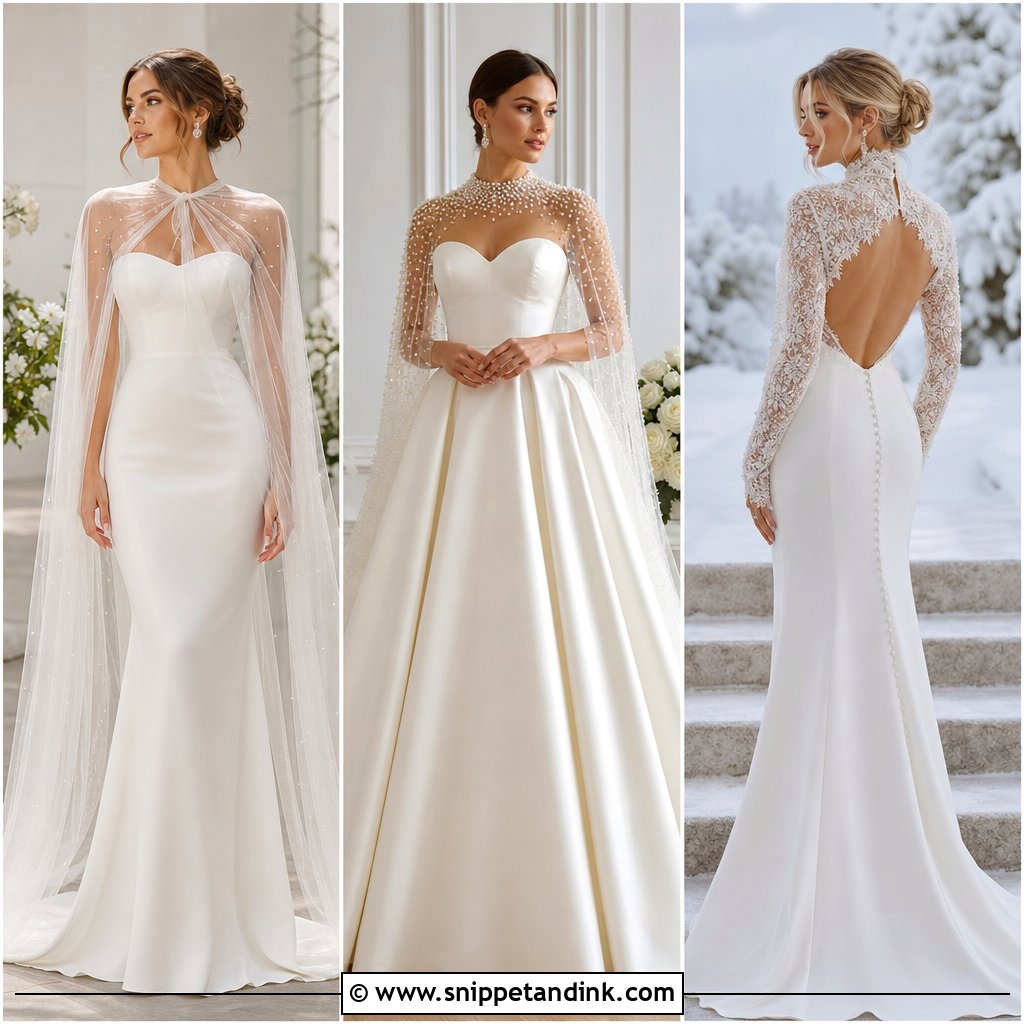
A bolero changes a gown more than its size suggests. It covers arms for a church, keeps you warm for winter portraits, and can make one dress look like two. The good ones look as if they were cut with the dress. Lace and sheer tulle soften a plain gown, while satin, crepe and cropped blazer shapes keep things crisp. Faux fur, velvet and fine knits are the cold-weather answers, and pearls, feathers, sculpted sleeves and raised florals are what bridal designers keep adding to new collections. Start from your gown’s neckline, fabric and shade, then look at the twenty pairings below.
Matching a Separate Bolero to a Gown You Already Bought
Most brides add a bolero after the dress is ordered, which means matching to something that already exists. I ask the bridal shop for a fabric swatch from the gown, or at least a clear photo taken in daylight next to plain white paper. White, diamond white, ivory and champagne vary between makers, and the gap shows most in outdoor photos.
Three checks I make before a bride buys
- Undertone: hold the bolero against the bodice in daylight. If one looks blue-white and the other cream, keep looking or go for a deliberate contrast.
- Length: the hem should land on the dress waist seam or just above it. Ending mid-ribcage looks cropped on purpose; ending an inch below the waist shortens the torso.
- Sleeve and shoulder: cross your arms, hug yourself and reach forward. A bolero that pulls at the back will split a seam during the first round of hugs.
Give alterations time. A bolero is small, but taking in a lace shoulder or shortening a beaded sleeve is hand work, so I bring it to the same fittings as the gown rather than leaving it to the last week.
1. Lace Wedding Bolero Jacket With Strapless Gown
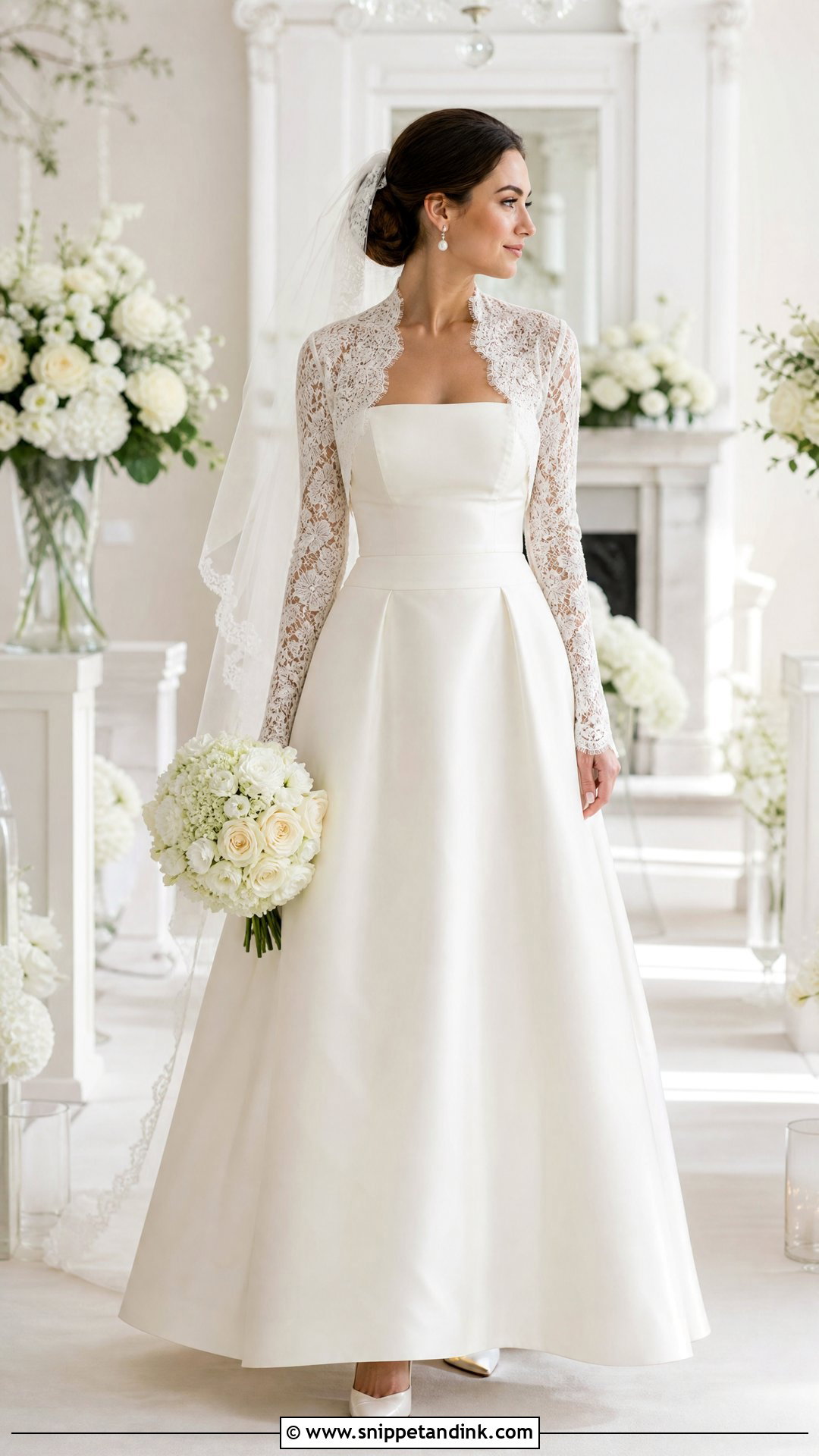
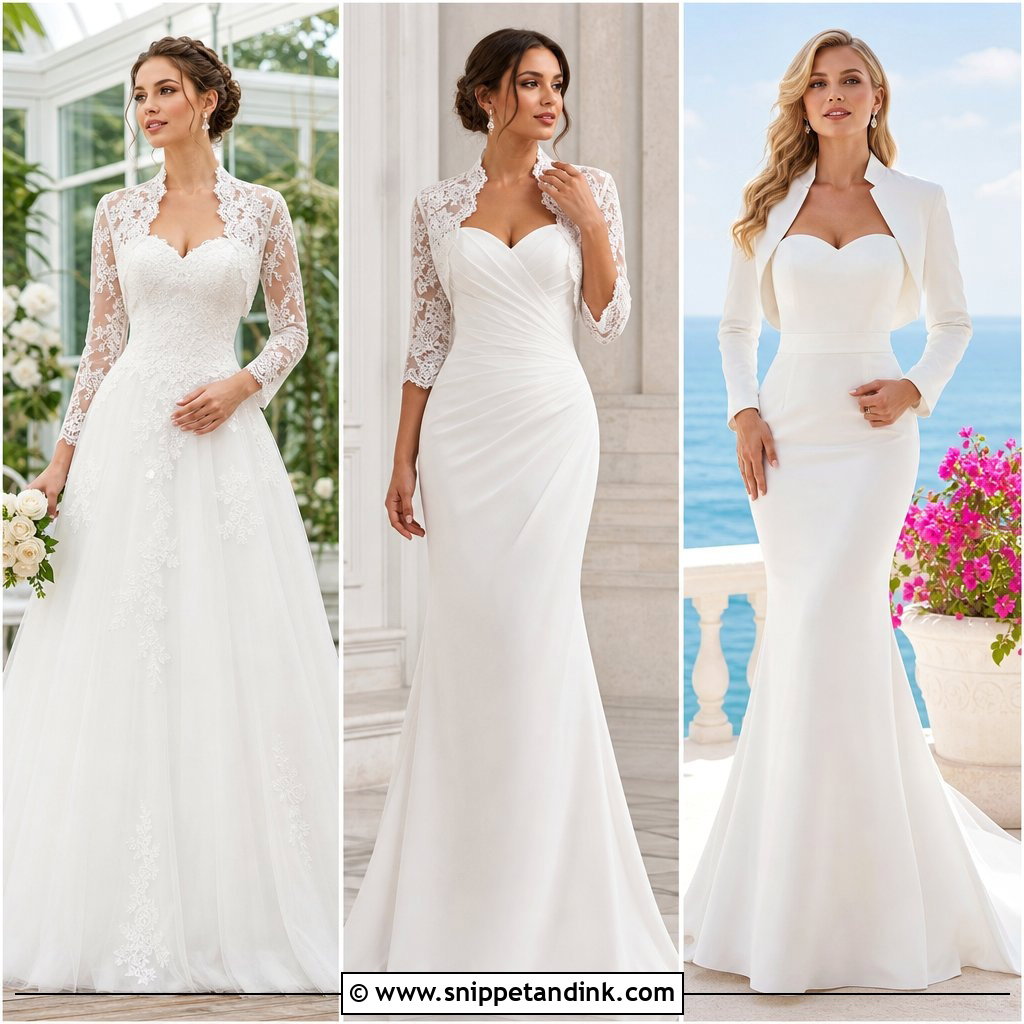
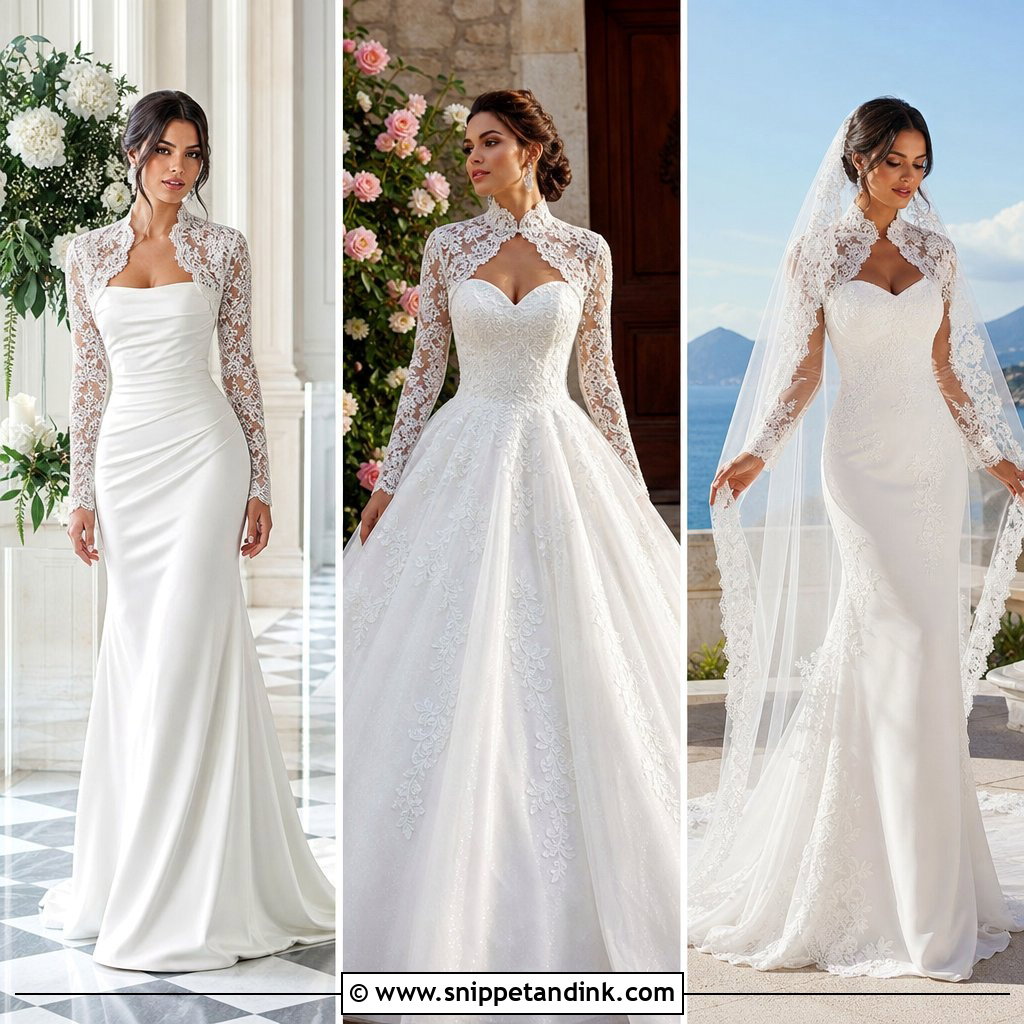
Chantilly lace over a smooth strapless crepe, satin or mikado gown is the pairing I’d show any bride who isn’t sure she wants a bolero at all. It’s soft, sheer and light enough that you forget you’re wearing it. The lace pattern should be finer than anything on the dress, never louder. Cut it to end at the natural waist so a full skirt still reads clearly. Pearl drops, a low chignon, pointed ivory pumps and a fingertip veil finish it, with little or no necklace since the lace edge frames the collarbone already. Check the white against the gown by a window, not under shop lights; two ivories that match indoors can look a full shade apart outside.
2. Satin Wedding Bolero Jacket With A-Line Dress
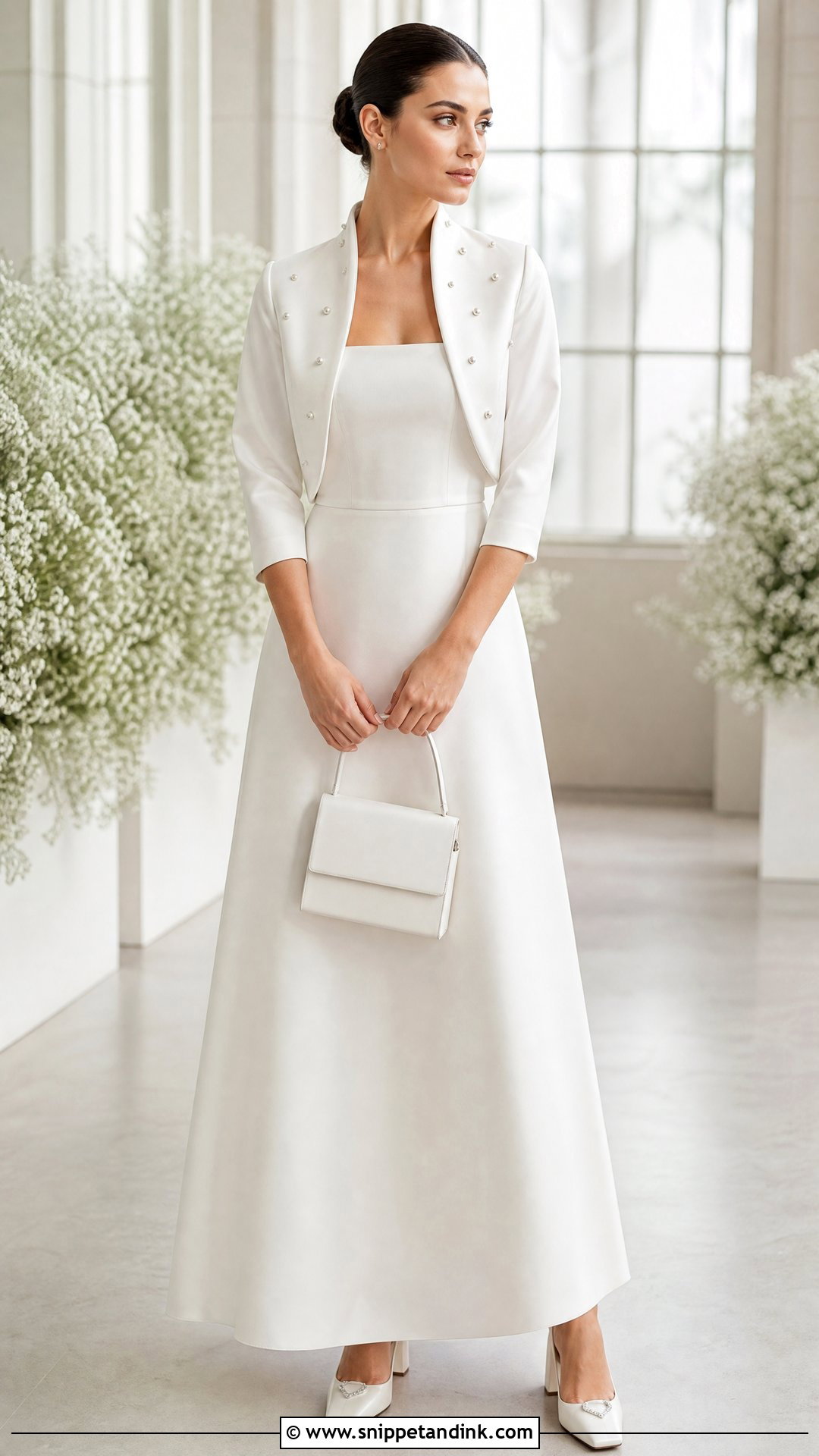
Satin over a simple A-line works only when the two satins agree. I hold the jacket against the skirt and look at the sheen from an angle, because a duchess satin next to a lighter charmeuse looks like a mismatch in every flash photo. Three-quarter sleeves, a curved front and covered buttons or a hidden hook keep the shape clean. Crystal studs, a sleek bun, satin block heels and a short veil that stops above the jacket hem complete the outfit. It suits a bride who needs her shoulders covered but doesn’t want lace.
3. Faux Fur Wedding Bolero Jacket With Ball Gown
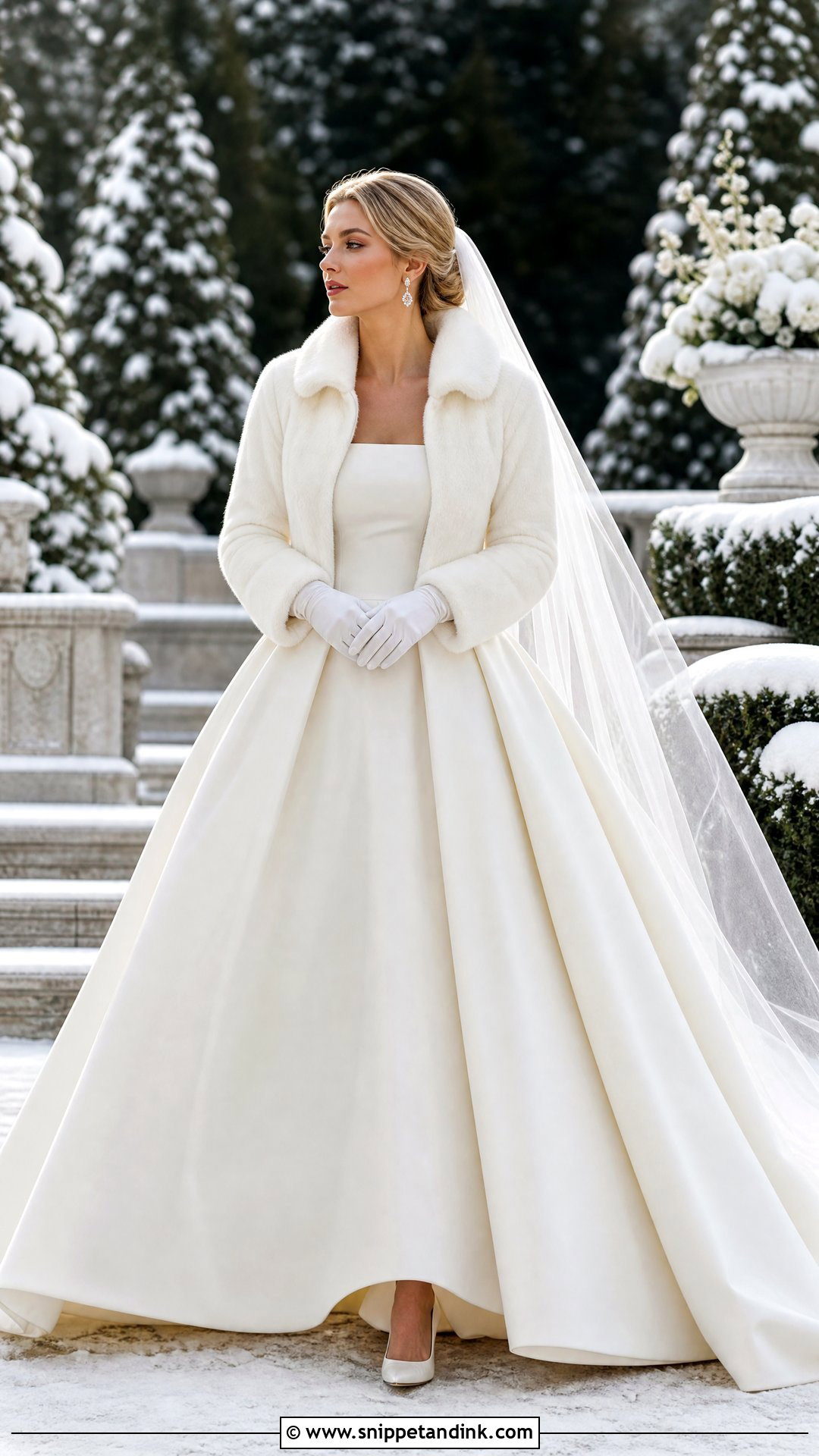
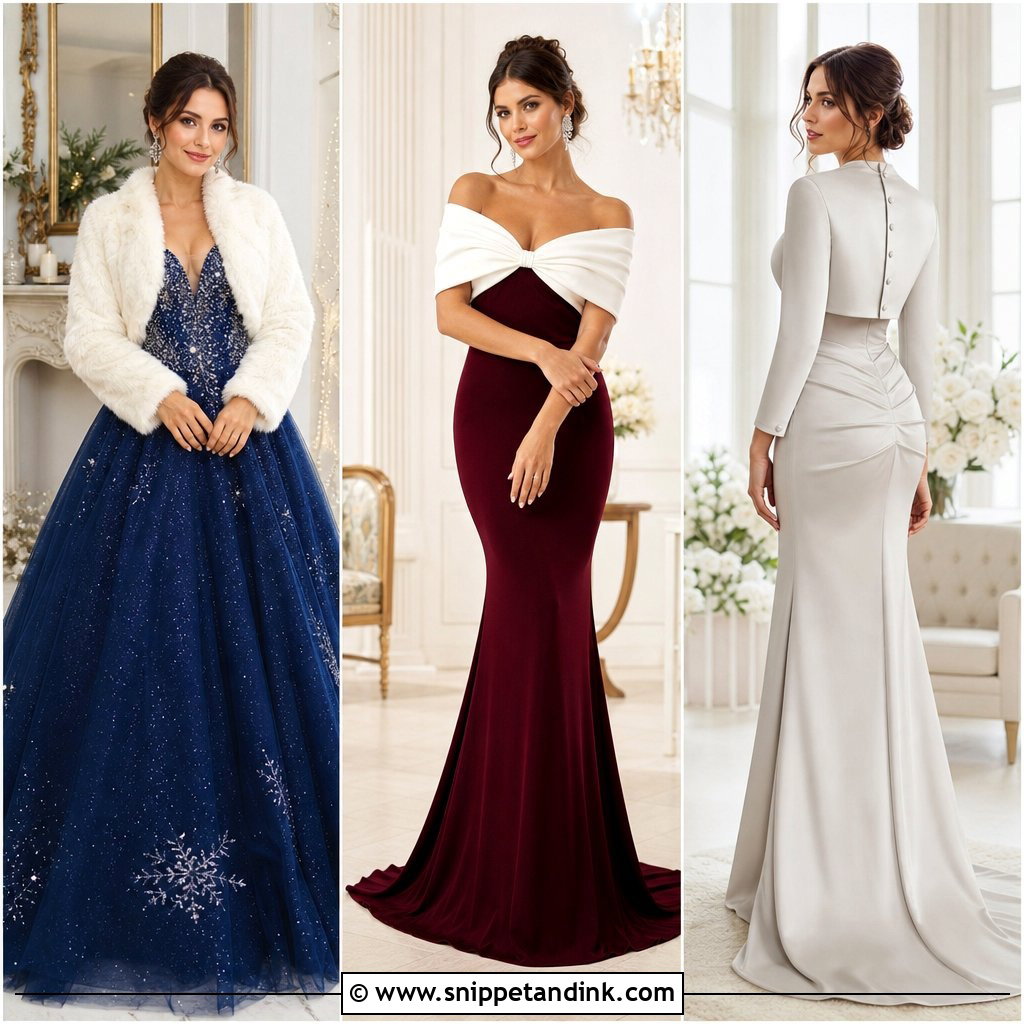
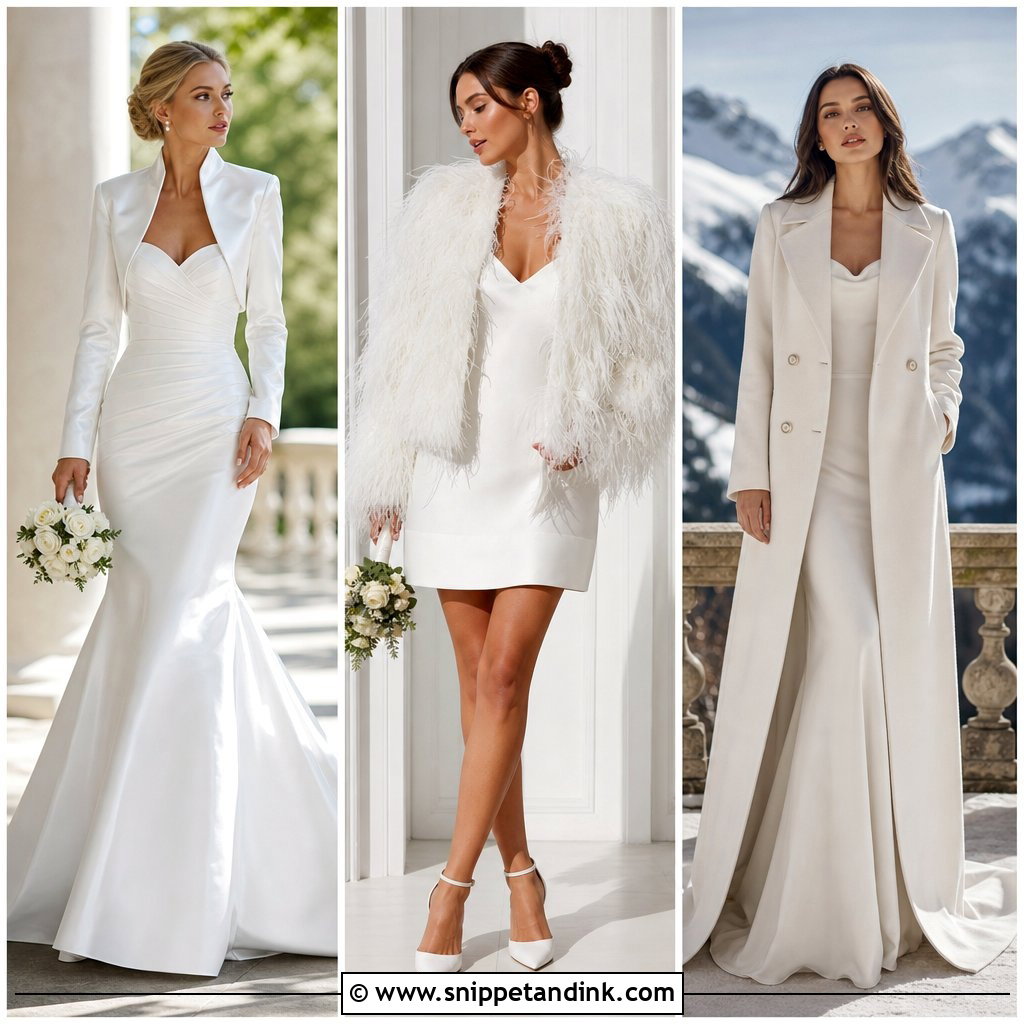
A plush faux fur bolero is the practical choice for a winter ball gown, and a short ivory cut with a rounded collar balances a big skirt. Faux fur varies a lot in quality. I run a hand against the pile and press a dark sleeve to it: if fibers come away, they’ll come away on your satin too. A strapless satin or mikado gown underneath gives the best contrast of sleek and soft. Add crystal earrings, an updo, closed pumps and long gloves for outdoor photos. Plan for the veil: long tulle catches in fur, so most brides take the veil off before the jacket goes on.
4. Tulle Wedding Bolero Jacket With Beaded Dress
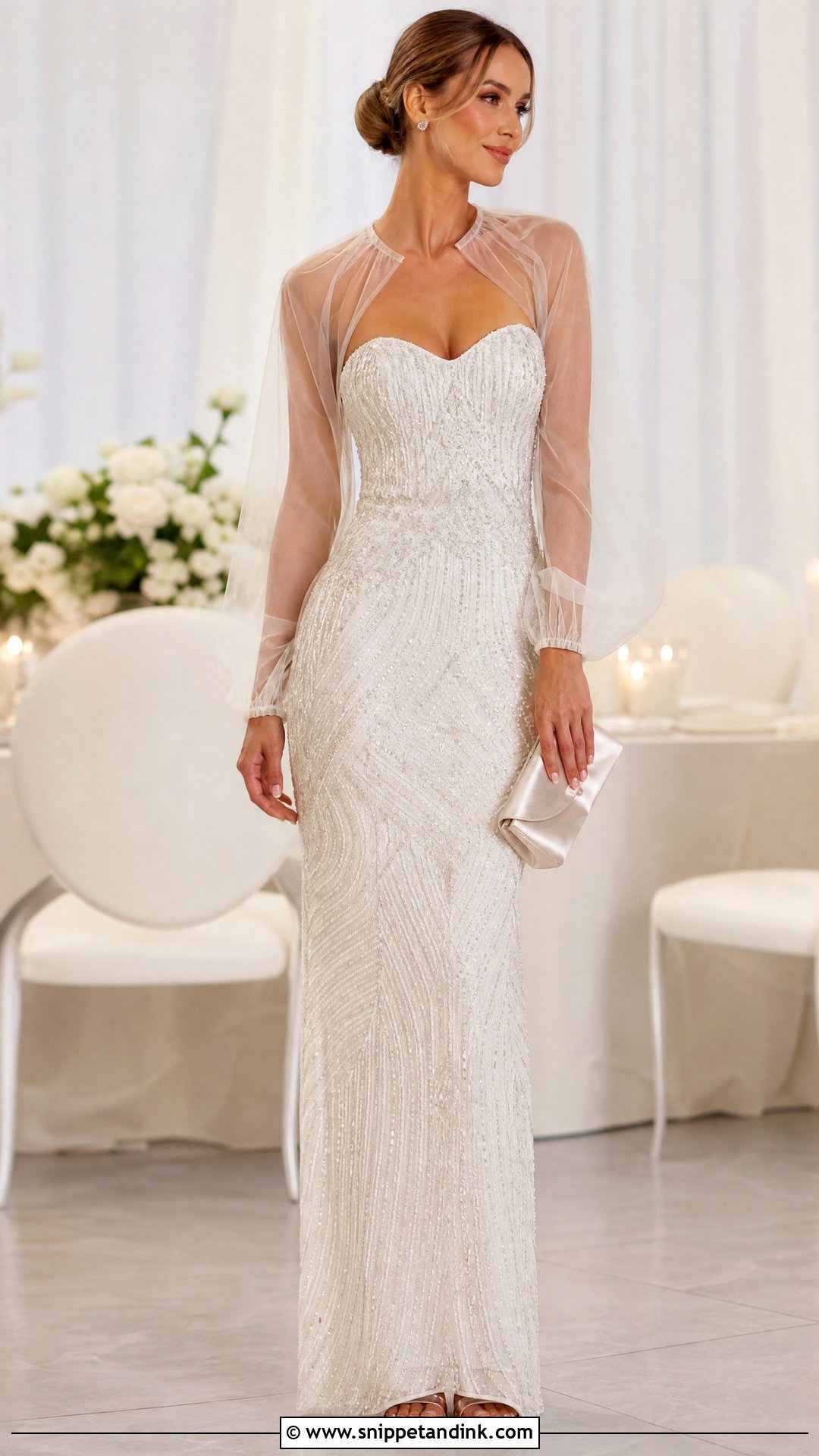
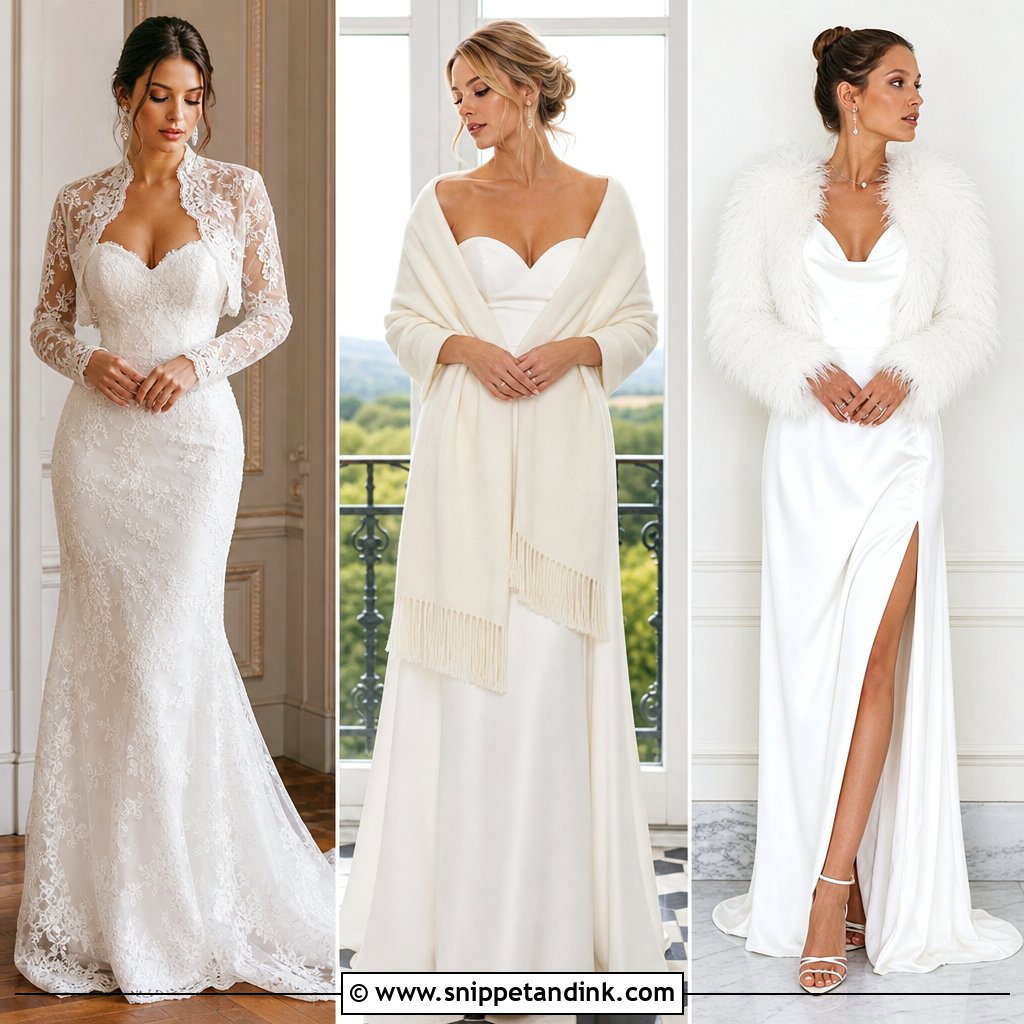
Over a beaded or sequined gown, a sheer tulle bolero adds coverage without competing. Fine bridal tulle, fitted sleeves and as few seams as possible is what I look for, with an open front or illusion neckline so the bodice still shows through. Metallic ivory sandals, crystal studs, a satin clutch and soft waves or a low bun suit it. Leave the veil plain. A beaded edge on the veil plus beads under the tulle plus beads on the dress is too much texture in one place. Watch the inside of the sleeves too: crystals on the dress snag fine tulle when your arms swing, so have the bodice beading checked for loose ends first. It reads best at an indoor evening wedding.
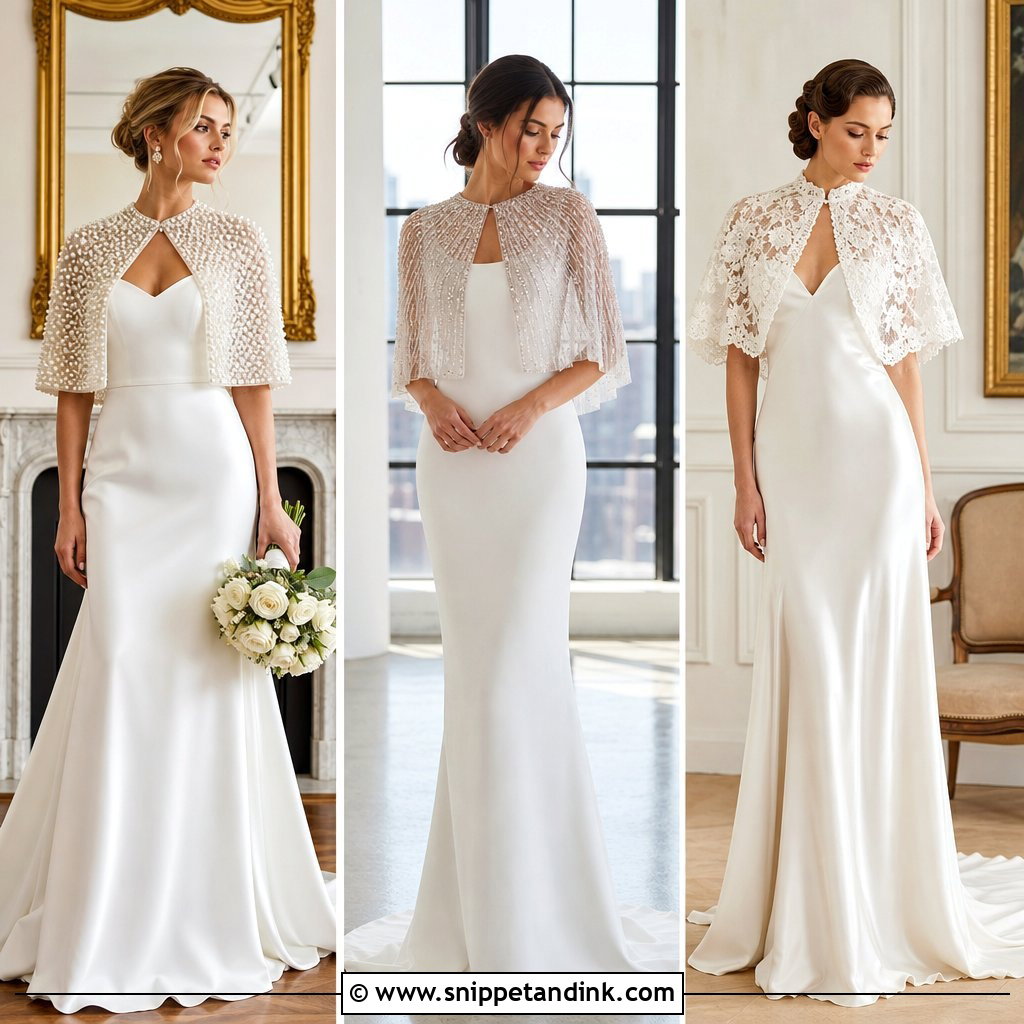
5. Pearl Wedding Bolero Jacket With Slip Dress
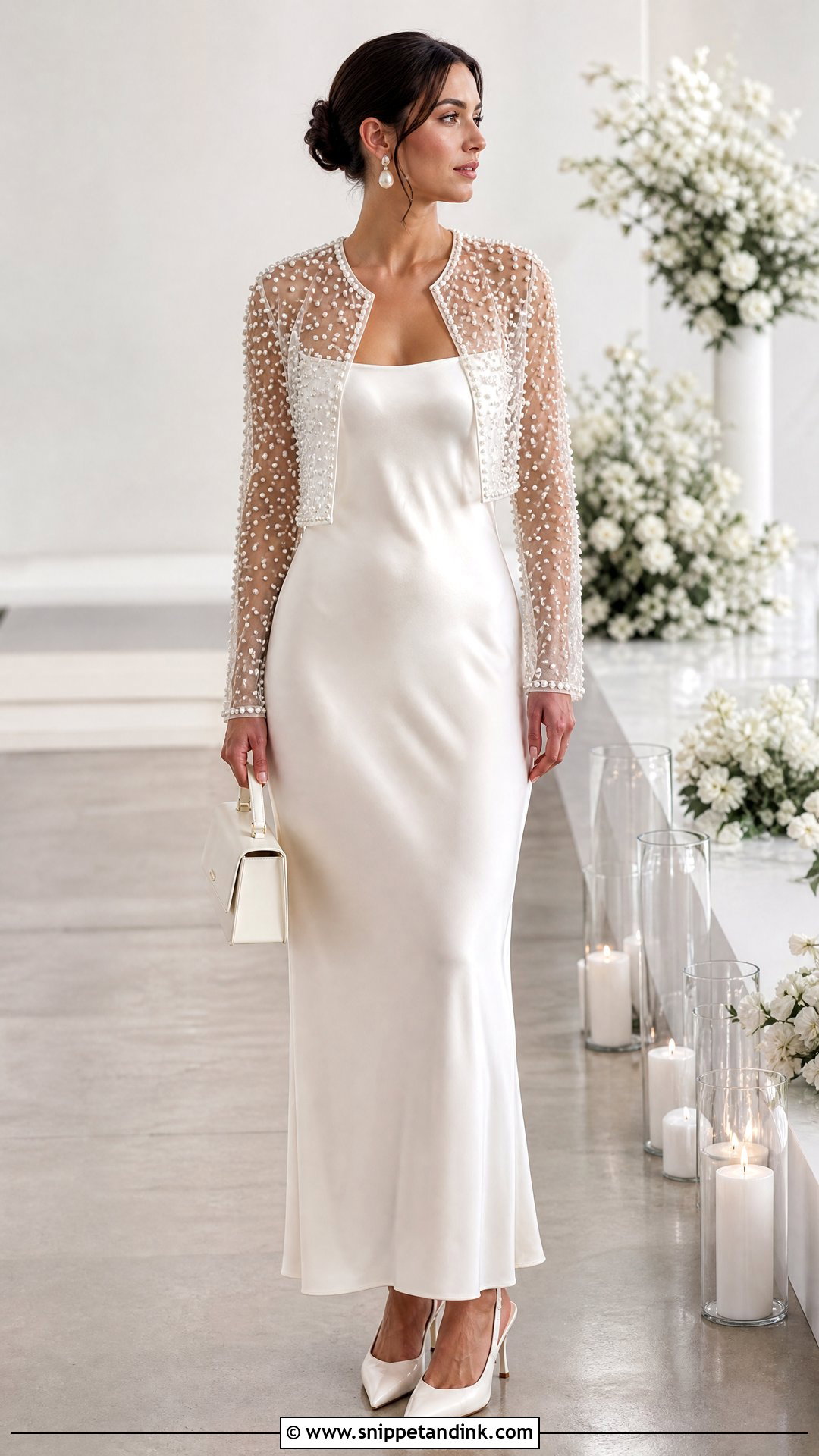
A pearl-scattered bolero on tulle or mesh turns a satin slip into something you’d remember. Slips are unforgiving, so the jacket gives the eye somewhere to land other than the bias seams. Pearl earrings, a low bun, slingbacks and a compact ivory bag are plenty; skip the necklace if pearls already sit near the collar. This is my pick when a bride asks for two looks without a second dress: pearls on for the ceremony and portraits, jacket off for the reception. Faux pearls are glued or sewn, and I only trust sewn ones; glued pearls pop off when the mesh stretches over an elbow.
6. Feather Wedding Bolero Jacket With Column Gown
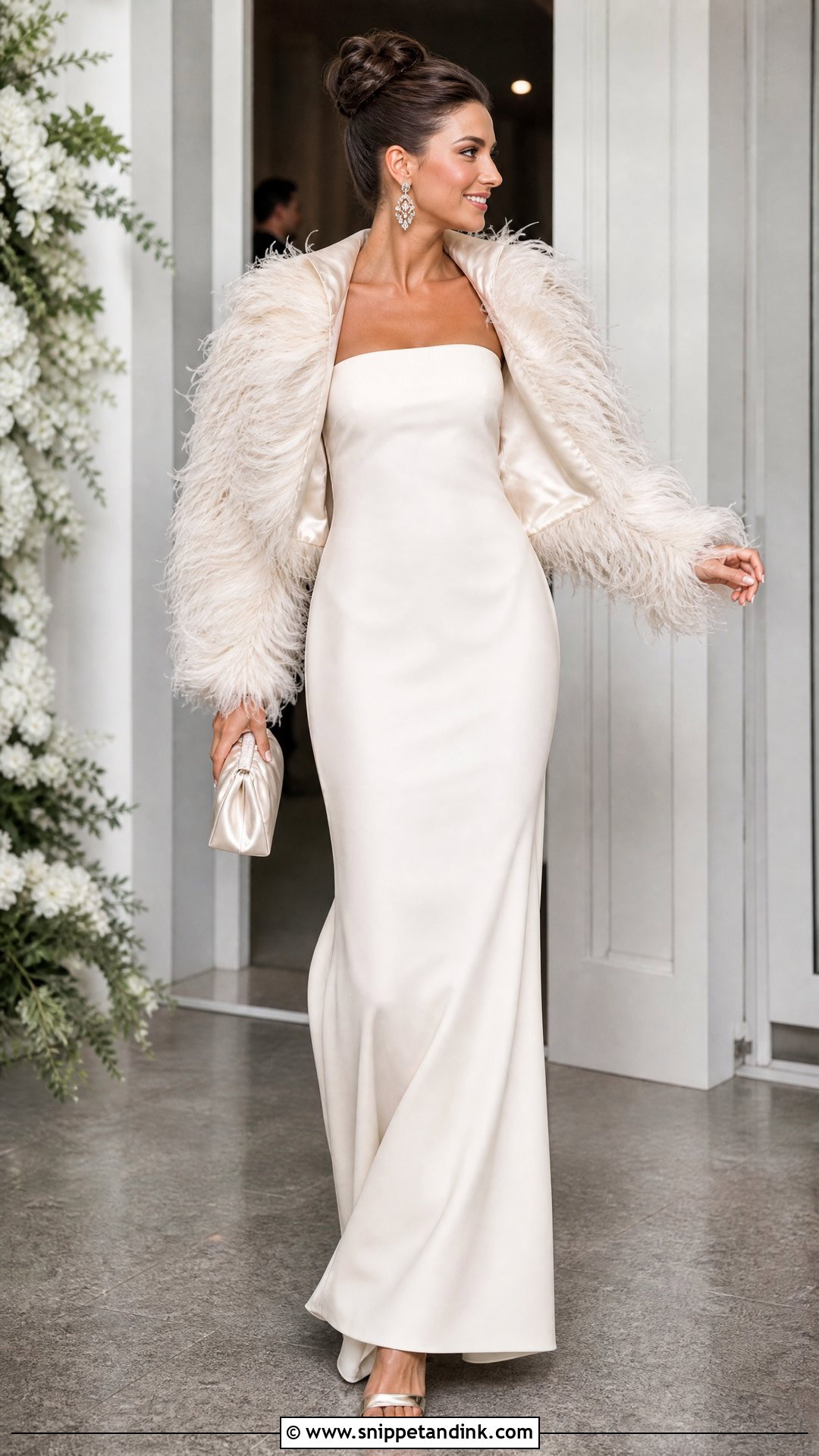
Feathers bring movement to a sleek crepe column, and that movement is the whole point. A cropped bolero in white, ivory or champagne, matched to the dress, with slim sleeves and a simple closure is easier to live in than an oversized shrug. Chandelier earrings, metallic heels and a satin clutch complete it. Hair should be up, in a high ponytail or sculpted bun, because loose curls tangle in feathers within minutes. I usually suggest saving the feather layer for the reception entrance and portraits: feathers shed a little and don’t love being hugged by every relative in a receiving line.
7. Crepe Wedding Bolero Jacket With Mermaid Dress
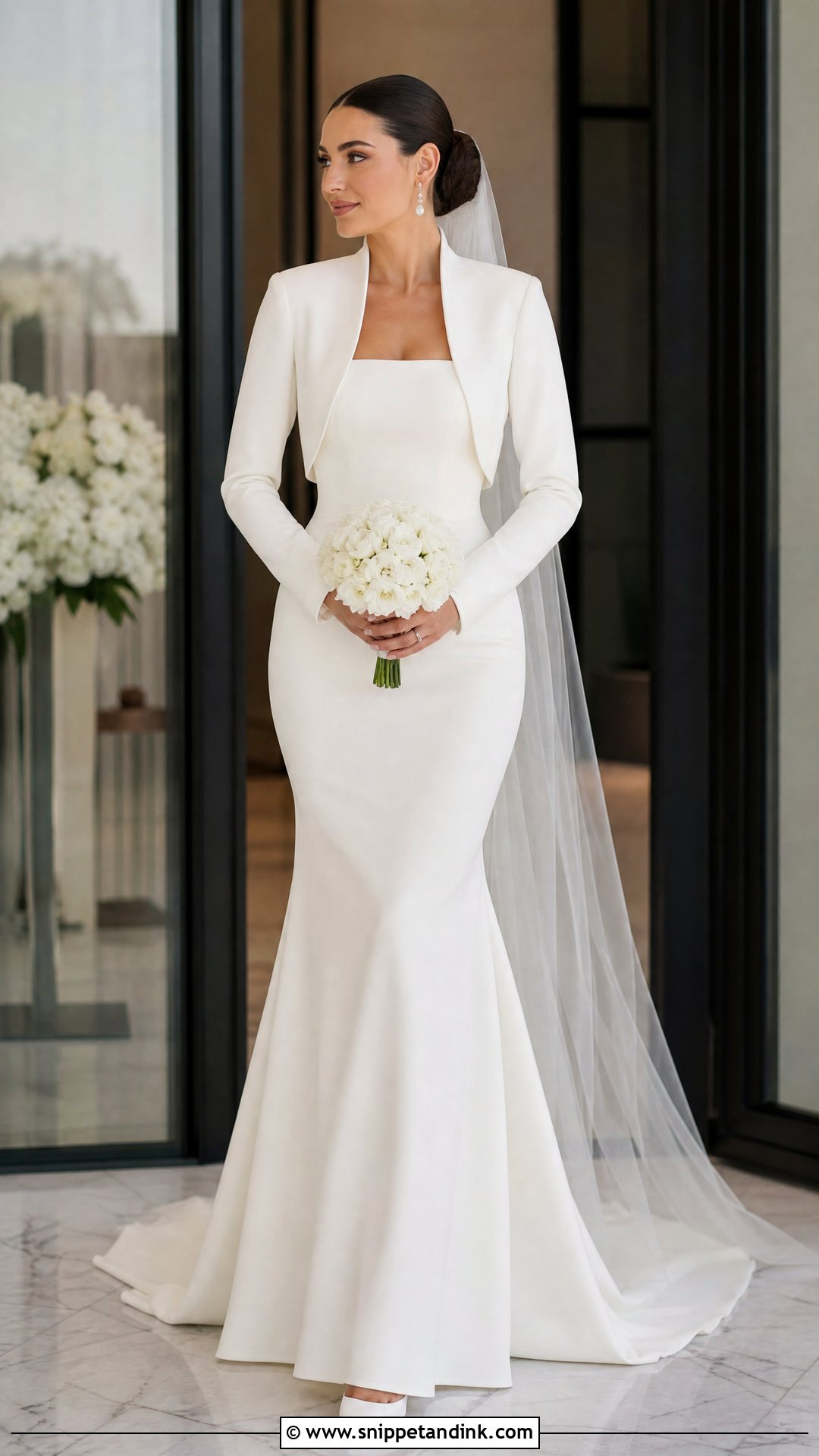
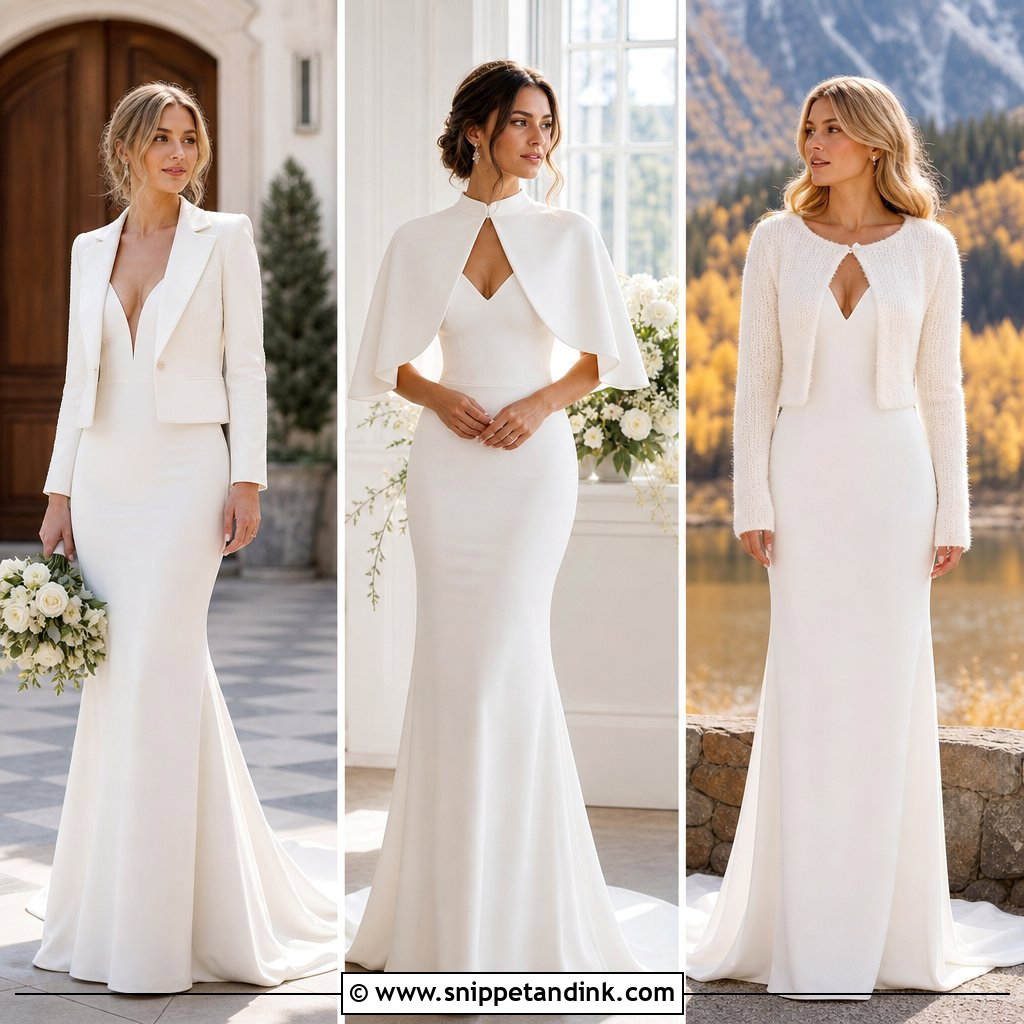
When a crepe bolero matches the crepe of a mermaid gown, the two pieces read as one custom outfit. Look for long sleeves, shaped seams and a clean open front. Mermaid dresses are fitted close to the body, so there’s no room for a jacket that pulls across the back; I check by having the bride cross her arms in front of her, which is the movement that splits a tight shoulder seam. Sleek drops, pointed pumps and a cathedral veil anchored under a bun finish it, with a compact bouquet. It covers the arms while keeping every line of the gown intact.
8. High-Neck Wedding Bolero Jacket With Sweetheart Dress
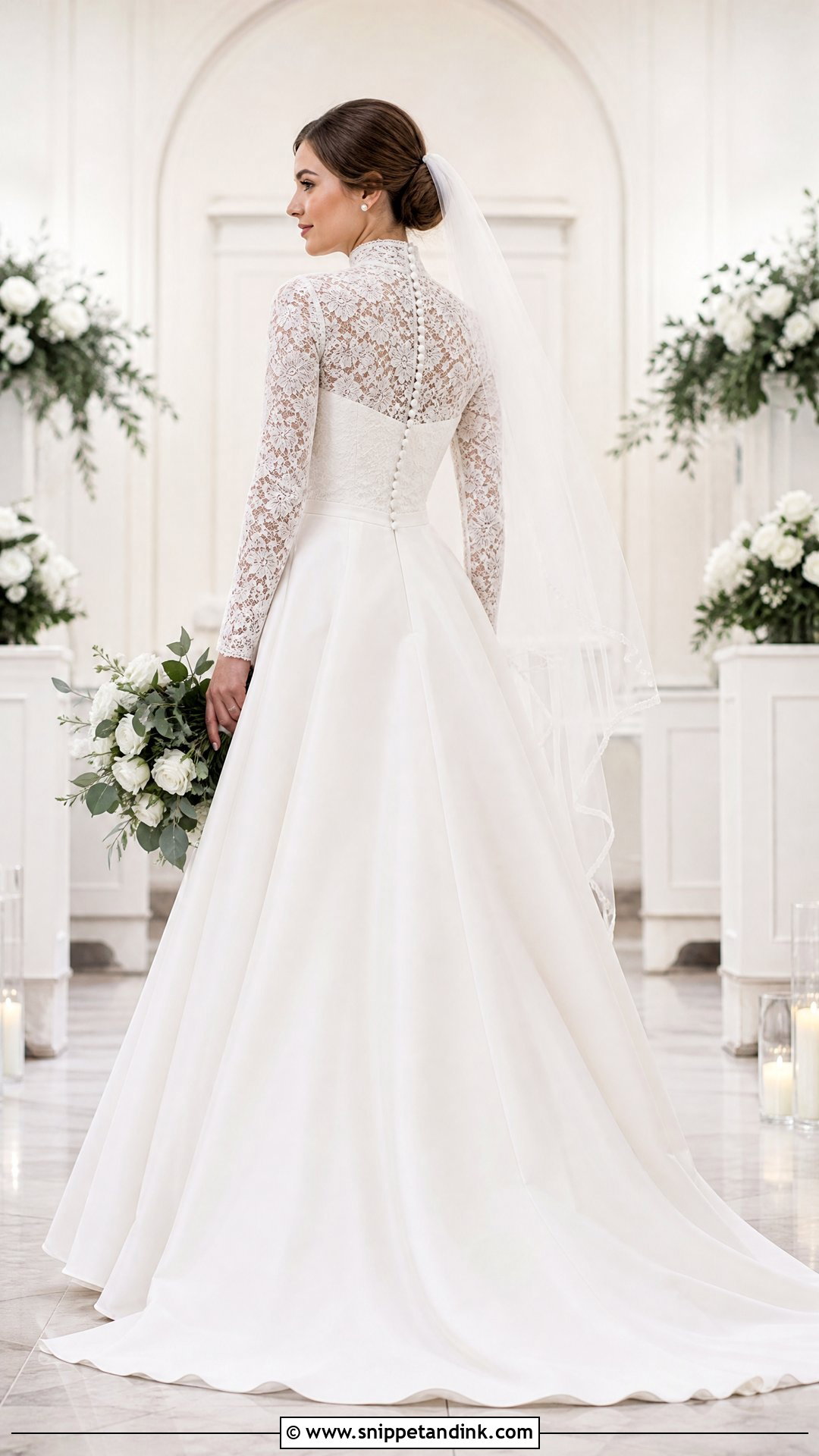
A high-neck lace or mesh bolero over a sweetheart dress gives you two necklines at once, the sheer one at the throat and the sweetheart showing faintly through. Covered buttons down the back are worth the extra time to fasten. Wear it with an A-line or fit-and-flare, pearl studs, ivory heels and a low bun, and anchor the veil below the bun so the collar stays visible. Leave the necklace off. My one fitting note: the collar should sit a finger’s width away from the neck, because a snug sheer collar rubs and leaves a red mark that shows when the bolero comes off for the reception.
9. Three-Quarter Sleeve Wedding Bolero Jacket With Tea-Length Dress
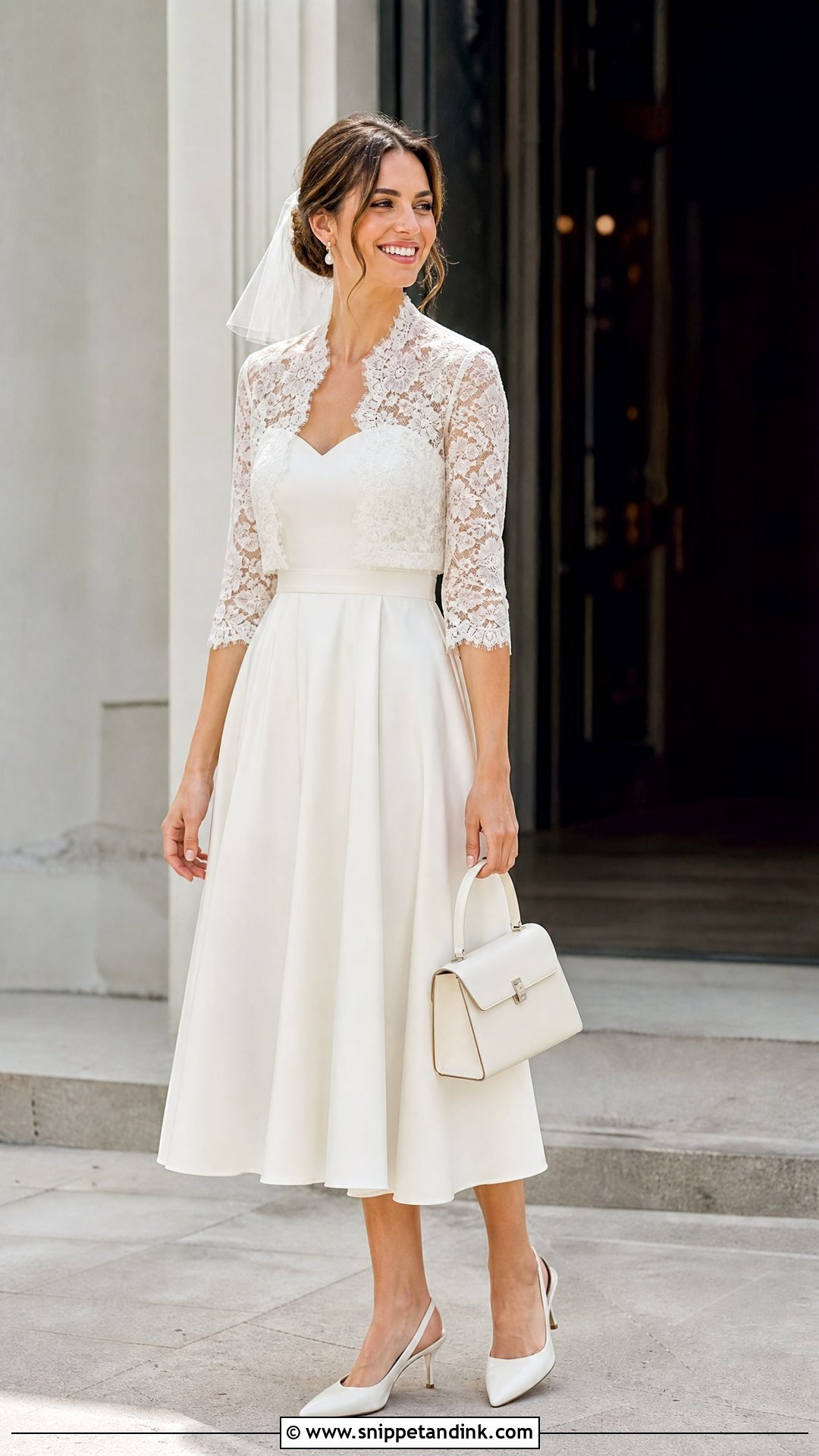
A three-quarter sleeve bolero and a tea-length dress share the same proportions, which is why they look right together. Shorter sleeve, visible ankle, light overall line: daytime and courthouse weddings suit it well. Fitted lace, satin or a structured knit all work over a dress with a defined waist and a gently flared skirt. Pointed slingbacks, pearl earrings, a top-handle bag and a short veil or bow complete the look. End the jacket right at the waist; an inch lower and the torso looks short. Shoes become part of the outfit here, so choose them deliberately.
10. Cropped Blazer Wedding Bolero Jacket With Jumpsuit
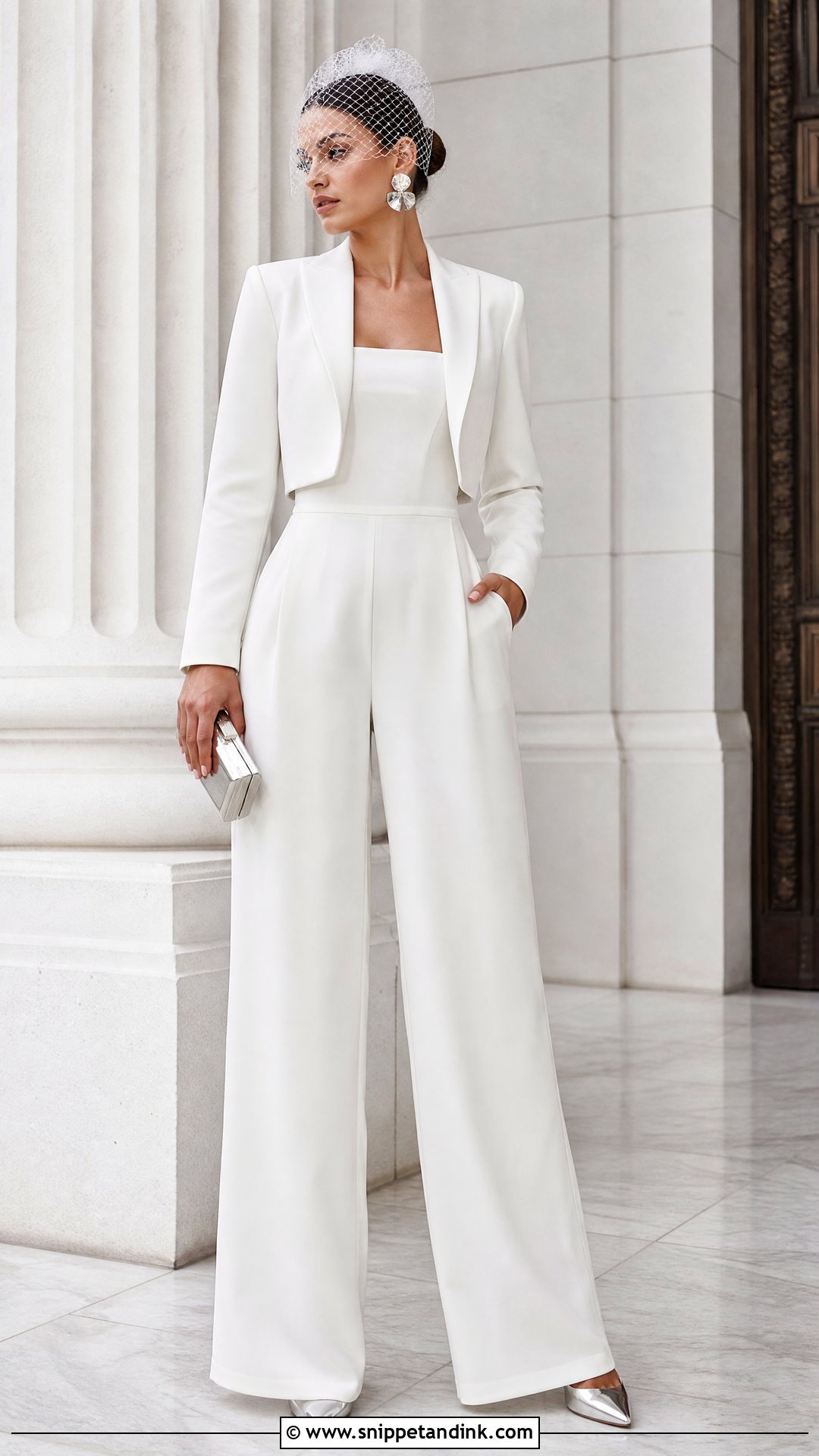
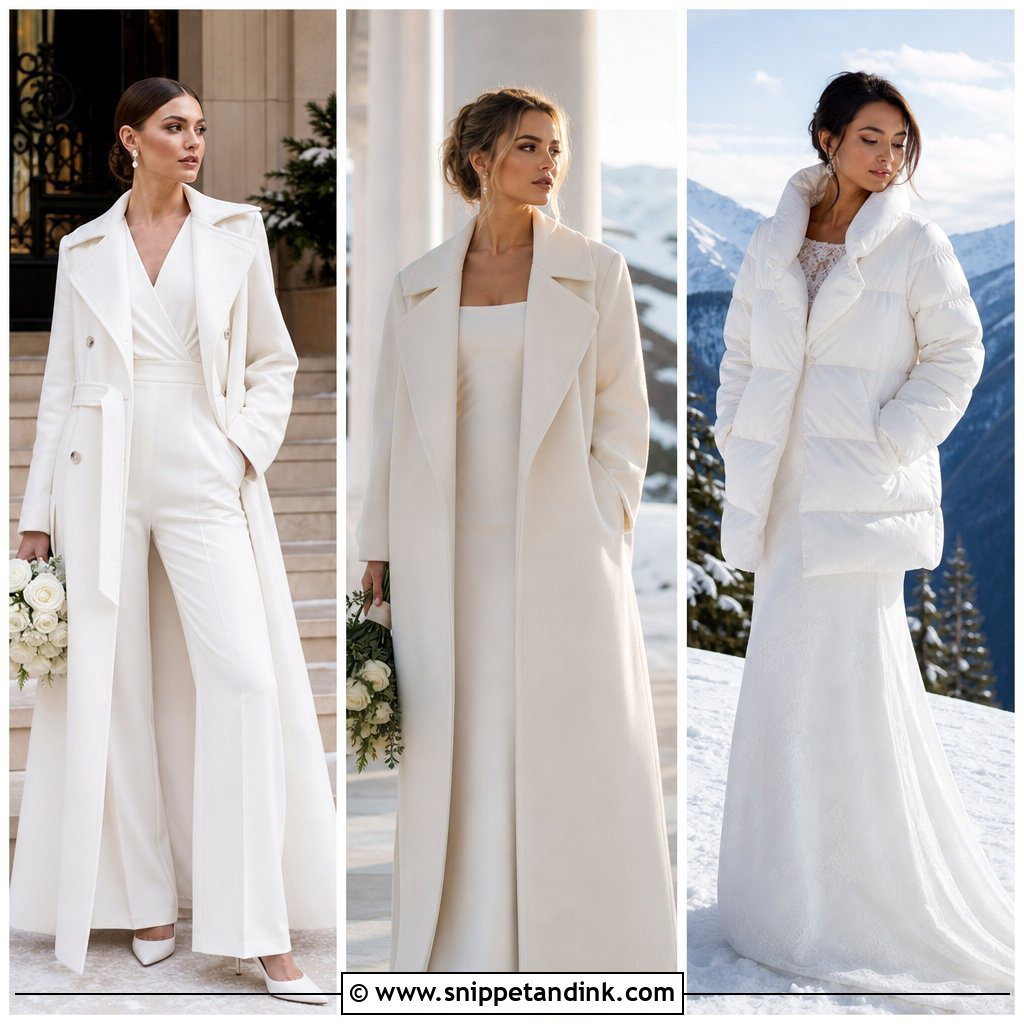
A cropped blazer over a tailored white jumpsuit is the most modern look on this list. Structured shoulders, clean lapels and a hem that sits at or just above the jumpsuit waist keep it sharp. Wide legs add movement; a fitted bodice keeps it formal. Metallic pumps, sculptural earrings, a sleek clutch and a smooth ponytail suit it, and a birdcage veil says bride without softening the tailoring. Wear it open to keep the vertical line. In fittings I check jumpsuit length with the exact shoes, since wide legs that drag pick up dirt at an outdoor civil ceremony faster than any skirt.
11. 3D Floral Wedding Bolero Jacket With Simple Gown
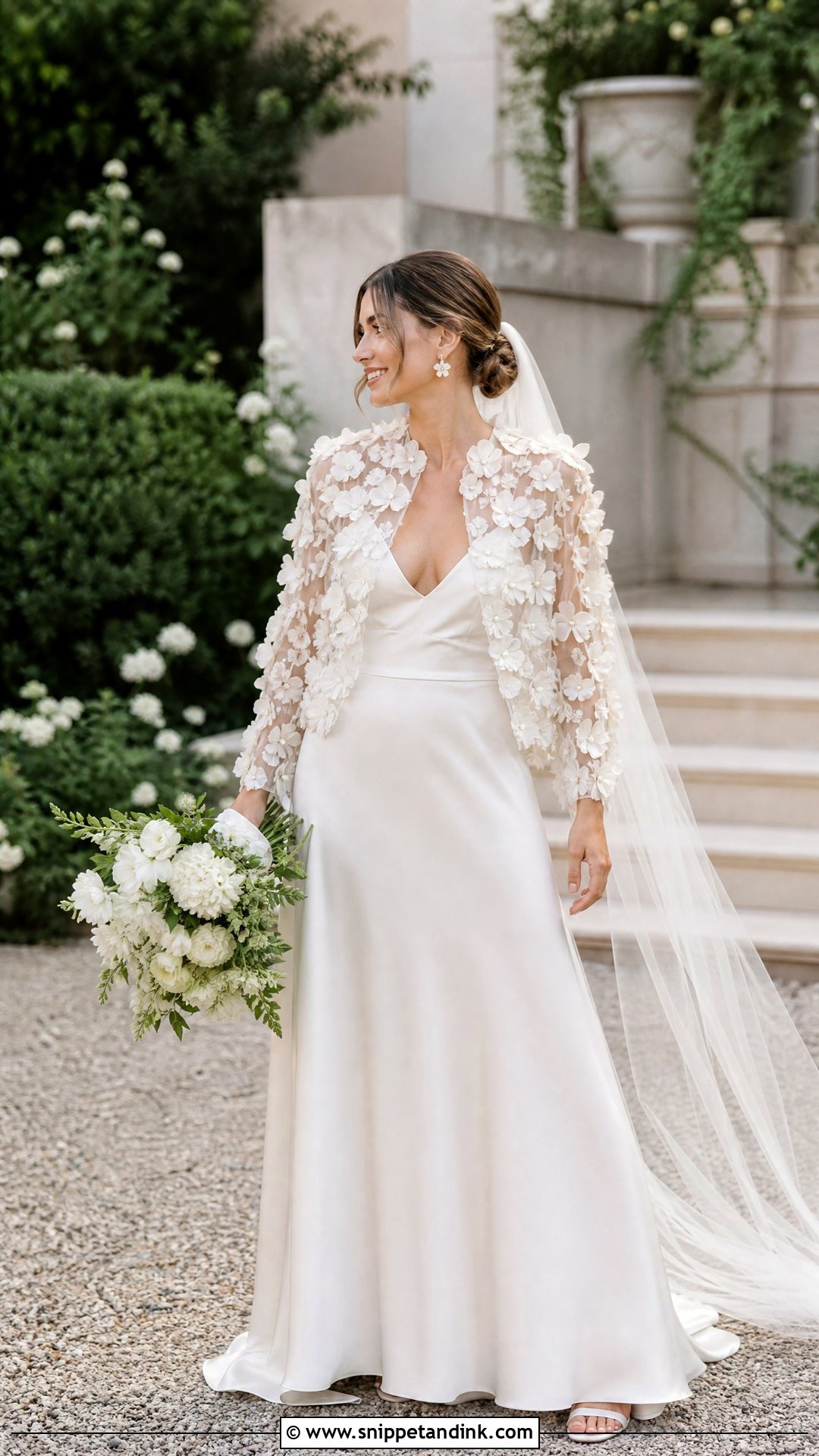
Raised floral appliqués need a plain background, so a sheer bolero with petals, leaves or small fabric flowers belongs over a quiet crepe or satin A-line. Floral earrings, ivory sandals, a soft low bun and clean tulle complete it. The bouquet has to stay simple or the two start competing. Appliqué pieces are heavier than they look, and I check that they’re stitched through the tulle rather than glued, and that none sit right on the shoulder seam where they’ll get crushed under a hug. Garden or ballroom both work, depending on how polished you keep the accessories.
12. Beaded Wedding Bolero Jacket With Satin Dress
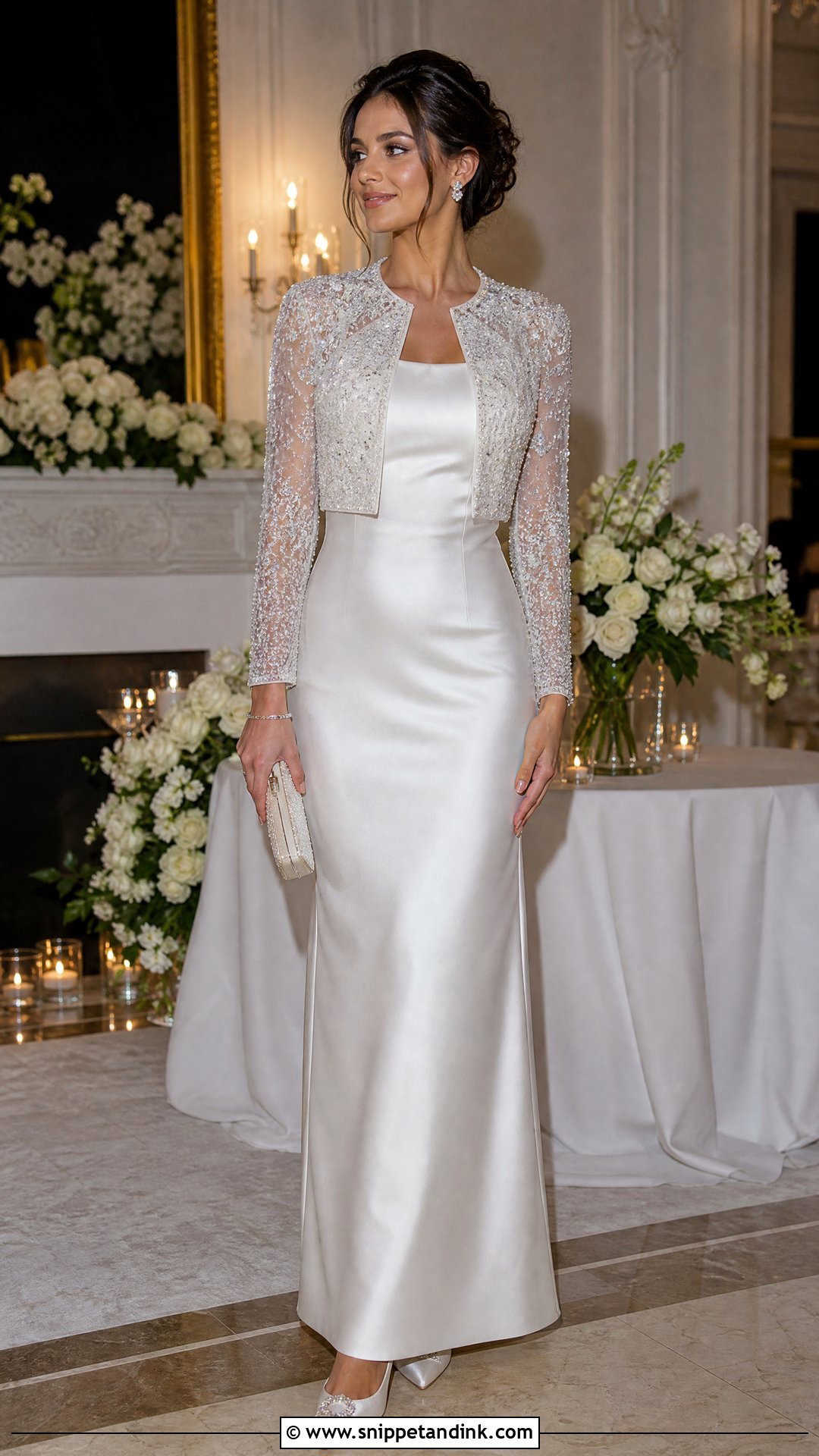
Picture candlelight on small crystals and seed beads layered over satin: that’s the case for this pairing, and why I keep the beads small. Large decorations look busy up close and heavy in photos. A satin sheath or A-line with a plain neckline lets the jacket do the work. Crystal studs, a slim bracelet, pointed satin heels and an updo keep beadwork visible and hair out of it. The detail I always check is the inside. Beading leaves knots and thread ends on the reverse, and on satin those catch and pull threads, so the bolero needs a smooth lining. It’s an evening look.
13. Knit Wedding Bolero Jacket With Boho Dress
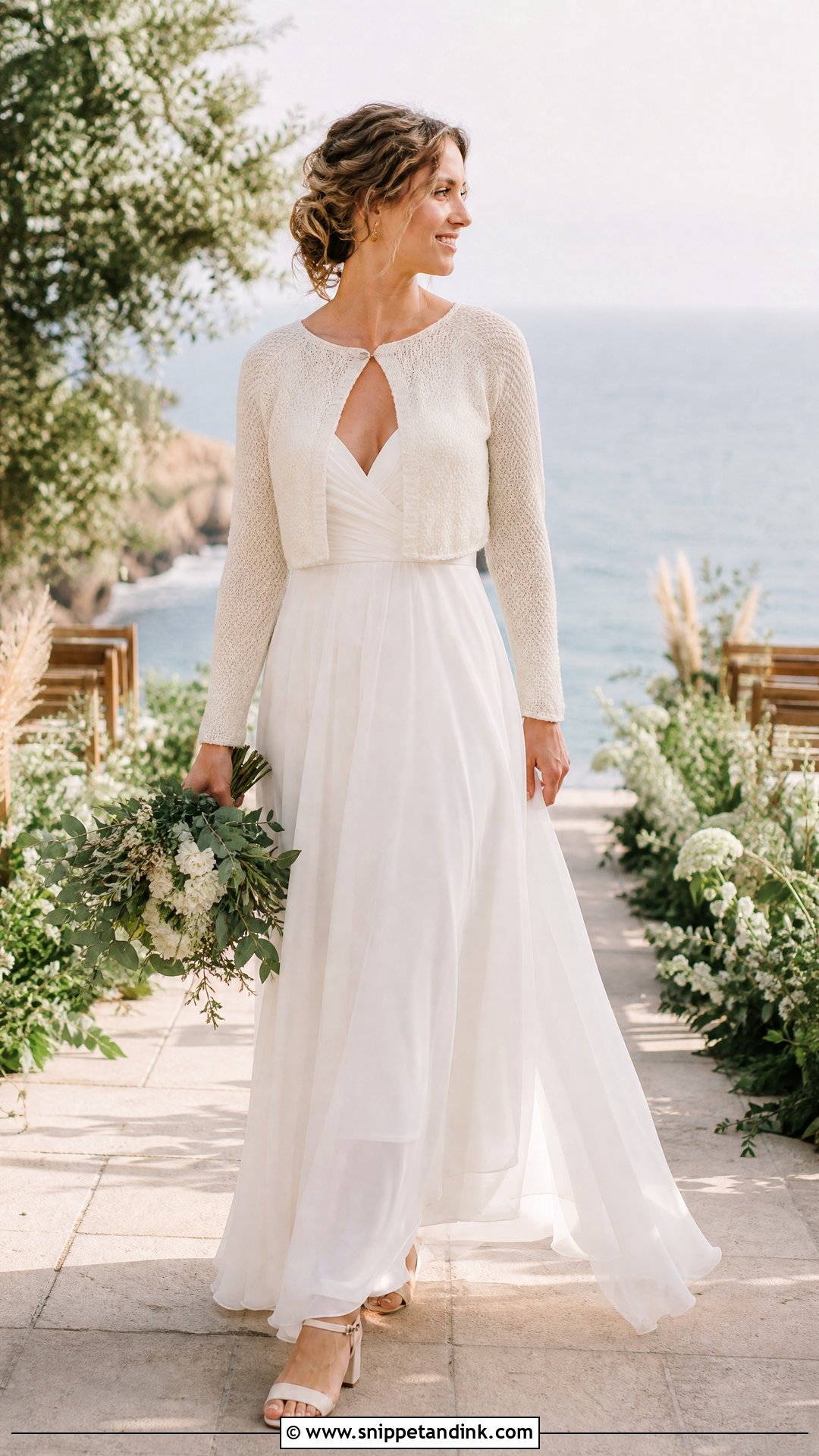
Knit bridal layers are where I see the most mistakes, usually an everyday cardigan that looks like one. Choose a fine-gauge ivory knit, a brushed mohair blend or delicate crochet, cropped at the waist with fitted cuffs so it keeps its shape. It sits well over flowing chiffon, a lace-trimmed maxi or a bias-cut slip. Low block heels, small hoops, a loose braided updo and greenery in the bouquet keep it relaxed for a coast or a fall field. Mohair sheds onto dark suits, which is worth knowing before the first dance. You’ll wear this one again, too.
14. Velvet Wedding Bolero Jacket With Long-Sleeve Gown
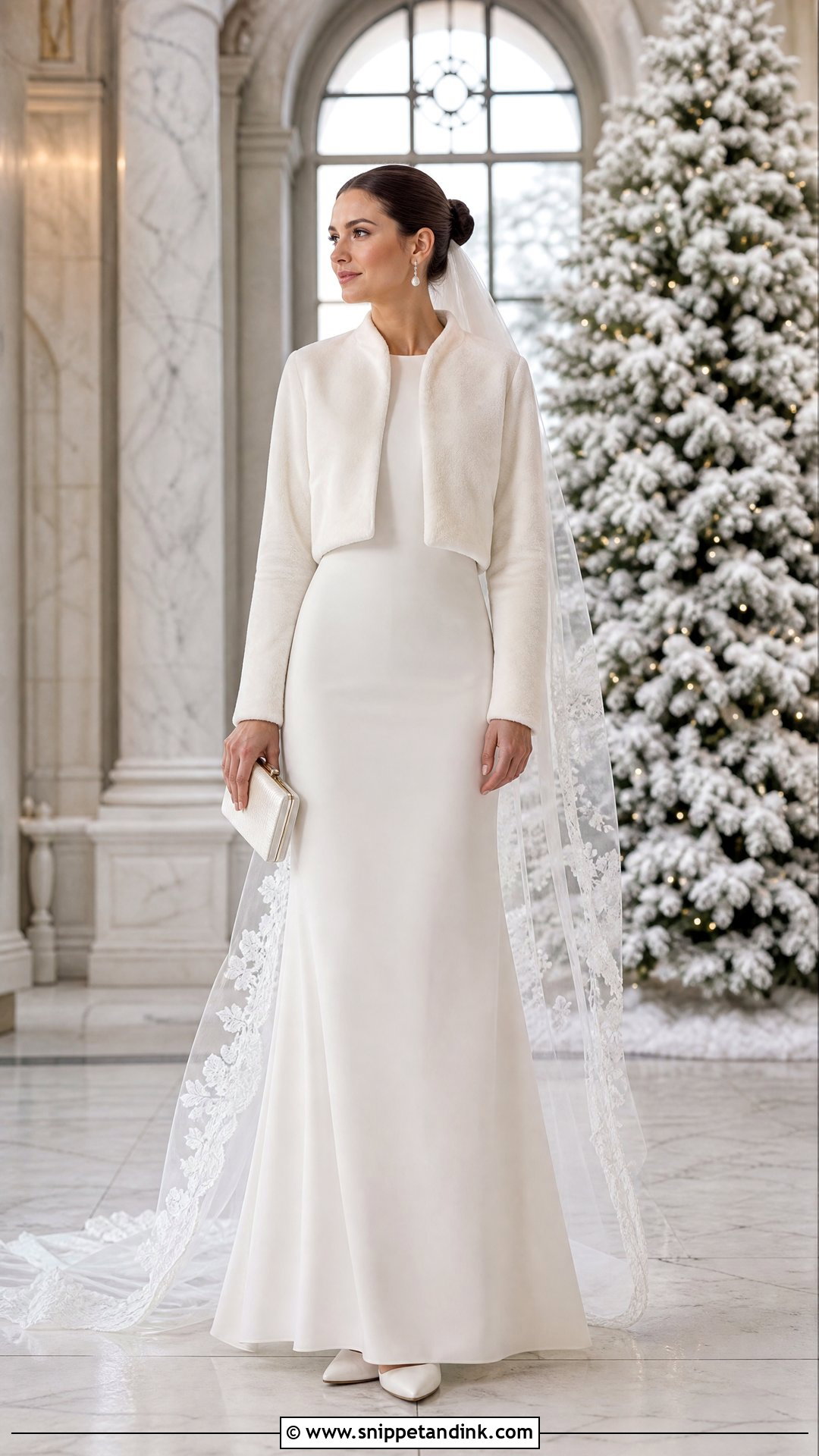
Velvet in a tonal ivory or cream over a narrow-sleeved crepe or satin gown gives winter depth without fur. The velvet should be fine and smooth, not thick upholstery-weight, and the hardware minimal. A cropped hem keeps the gown’s waist visible. Closed heels, pearl drops, a structured clutch and a polished bun suit it. Velvet pile marks when pressed, so I’d hang this on a padded hanger in a steamy bathroom rather than iron it, and never pack it folded. A cathedral veil carries the ceremony; the velvet takes over for outdoor portraits.
15. Puff-Sleeve Wedding Bolero Jacket With Minimal Dress
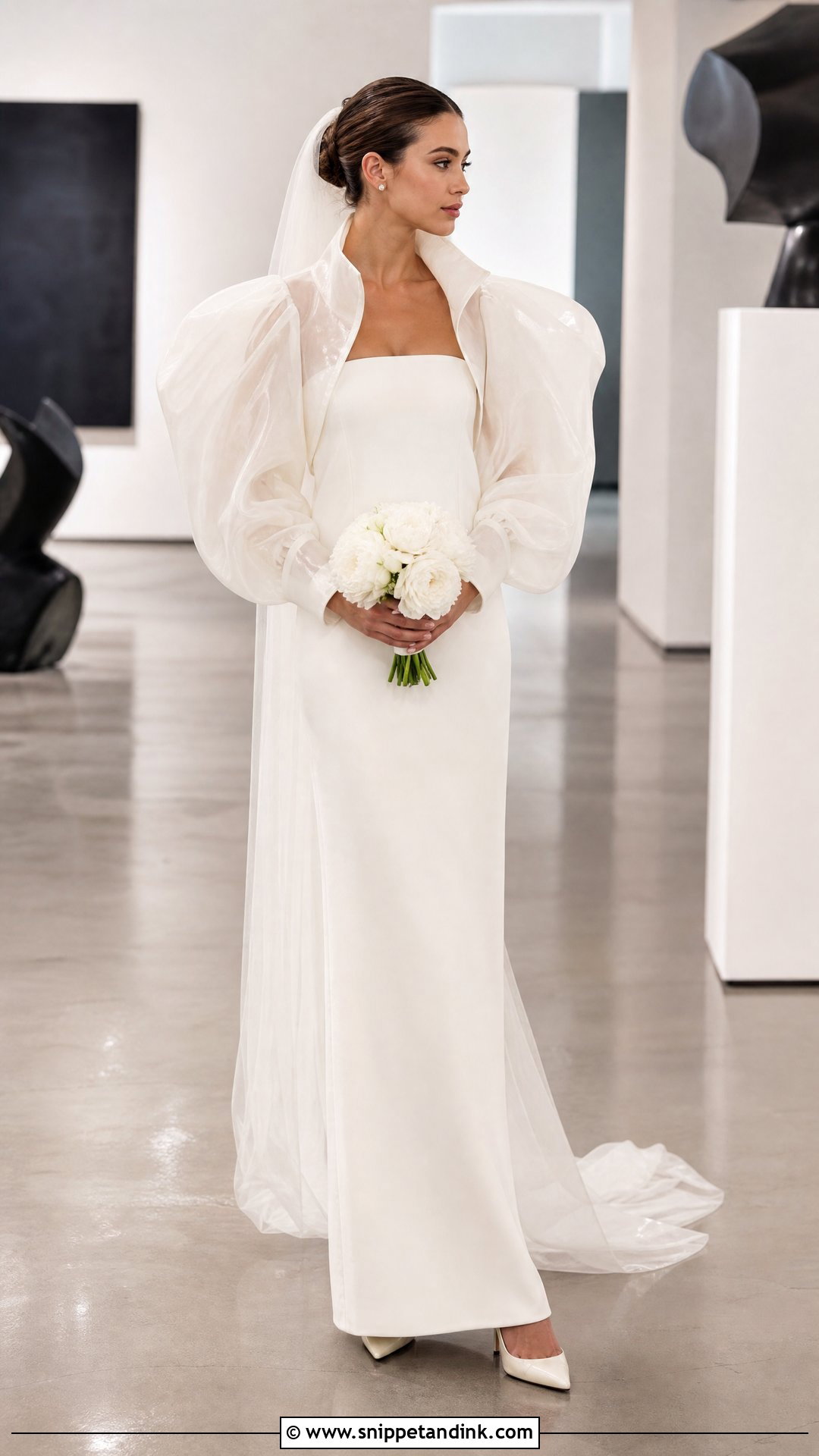
Want big sleeves for the ceremony but not for dancing? A detachable puff-sleeve bolero solves exactly that. Sheer organza, crisp tulle or structured lace sleeves on a cropped fitted body go over a strapless column or A-line, and the shoulder volume becomes the focal point. Small studs, ivory pumps, a sleek bun and a plain veil keep everything else quiet. Hold the bouquet compact so the top doesn’t get crowded. Puffed sleeves are built with a gathered sleeve head, and if it’s set too low you can’t lift your arms to hug anyone. Test that before the final fitting.
16. Off-Shoulder Wedding Bolero Jacket With Fitted Gown
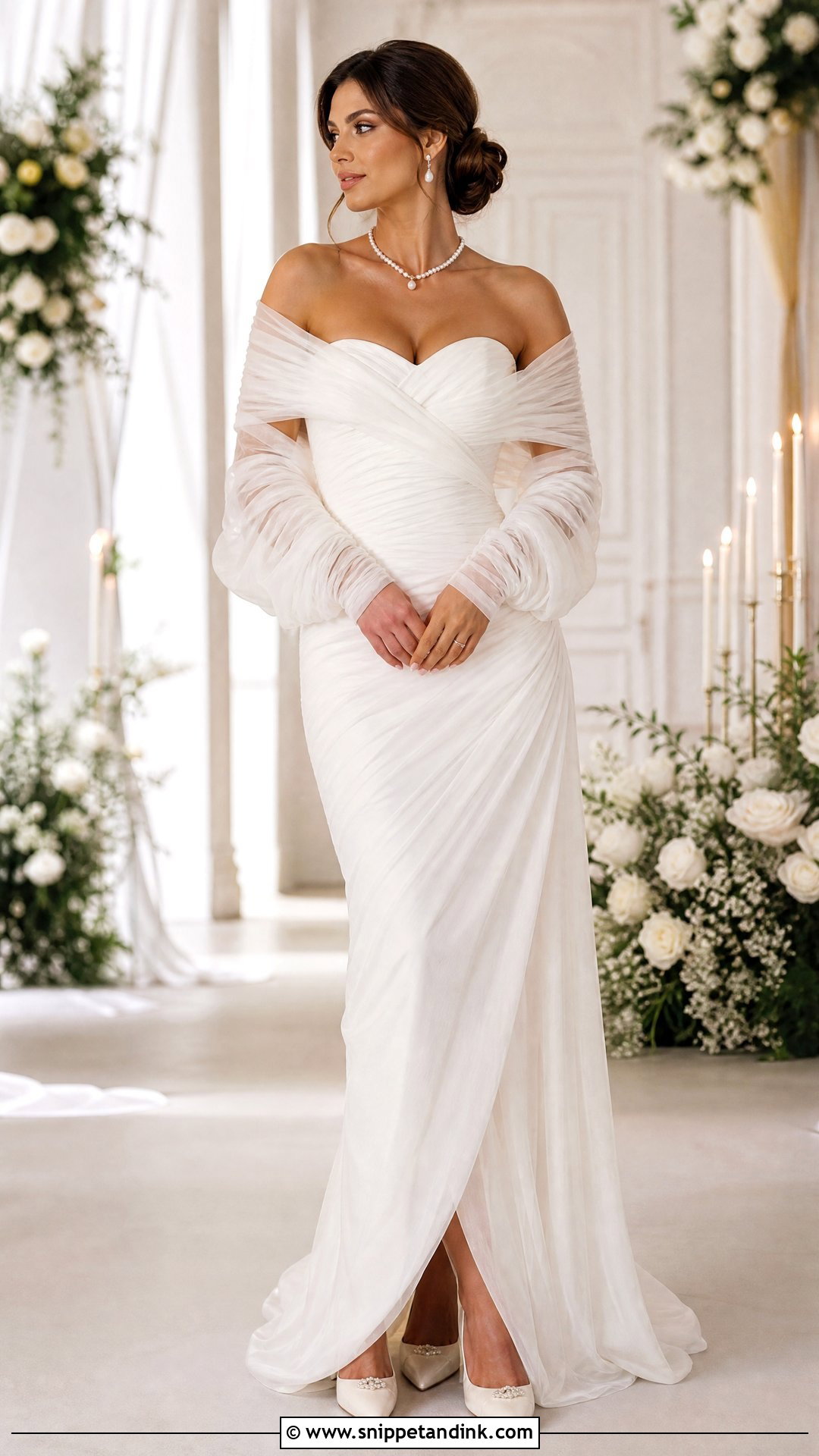
An off-shoulder bolero in stretch lace, ruched tulle or satin softens a fitted gown, especially a strapless fit-and-flare. A short pearl necklace or small pendant, drop earrings, pointed heels and a textured low bun complete the look. This is the bolero style that restricts movement most, since the band sits across the upper arms. I have brides lift their arms, sit and walk before I’ll sign off. The jacket hem should line up with the dress bodice; a gap of skin between the two reads as an accident. It shows the shoulders and still covers the arms.
17. Cap-Sleeve Wedding Bolero Jacket With V-Neck Dress
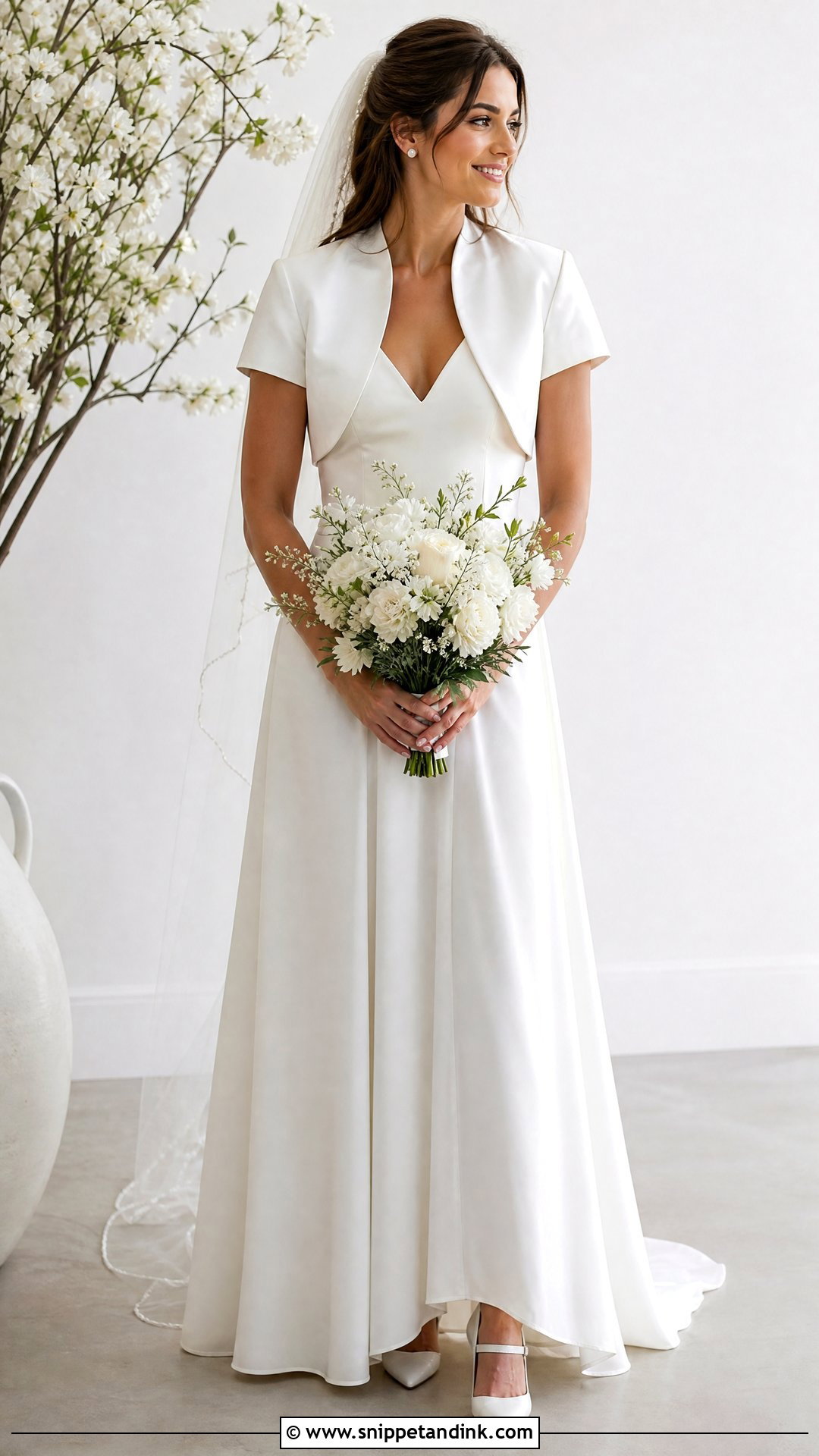
Cap sleeves cover the shoulder and almost nothing else, which suits a V-neck dress in warm weather. Satin keeps it clean, lace softer, and sheer tulle nearly disappears. A narrow front opening leaves the V visible. Pair it with an A-line gown, slingbacks, pearl studs, a half-up style and a fingertip veil. Cap sleeves are deceptively easy to get wrong: if the armhole is cut tight, the sleeve edge digs in every time you raise your arm. I’d rather see a slightly deeper armhole. It’s enough coverage for most ceremony rules without the warmth of a full sleeve.
18. Embroidered Wedding Bolero Jacket With Chiffon Dress
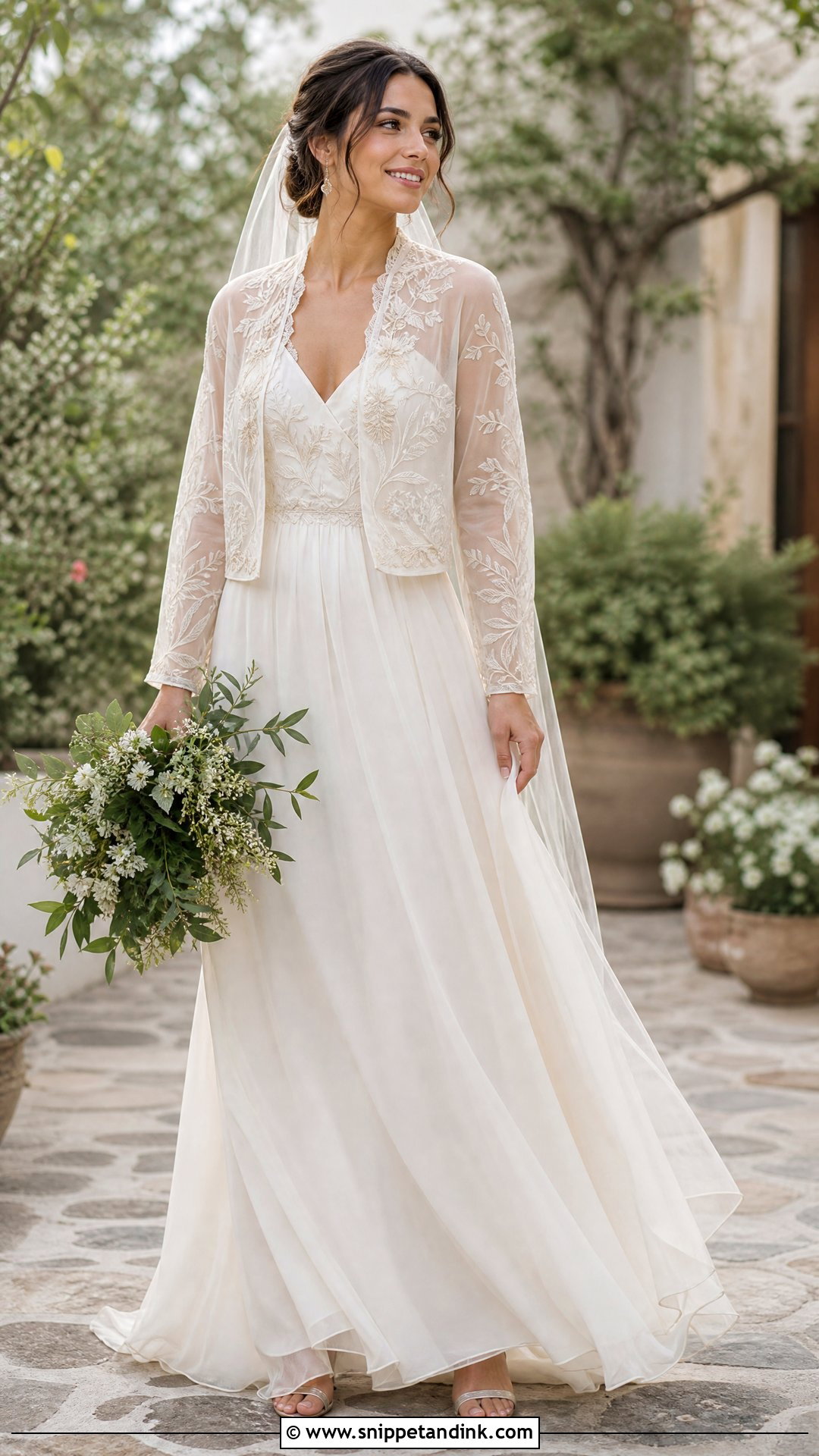
Embroidery on a sheer bolero gives a chiffon dress some weight and structure, which chiffon lacks on its own. Tonal vines, small flowers or fine geometric stitching work best over an A-line or empire waist with little embellishment. Echo the dress, don’t copy it. Low sandals, understated earrings, a loose updo, a light veil and soft greenery complete it. Machine embroidery often leaves stiff backing at the cuffs and neckline, so I run my finger inside each edge before a bride buys. Anything scratchy there will bother you by the second hour of an outdoor wedding.
19. Bow-Back Wedding Bolero Jacket With Plain Dress
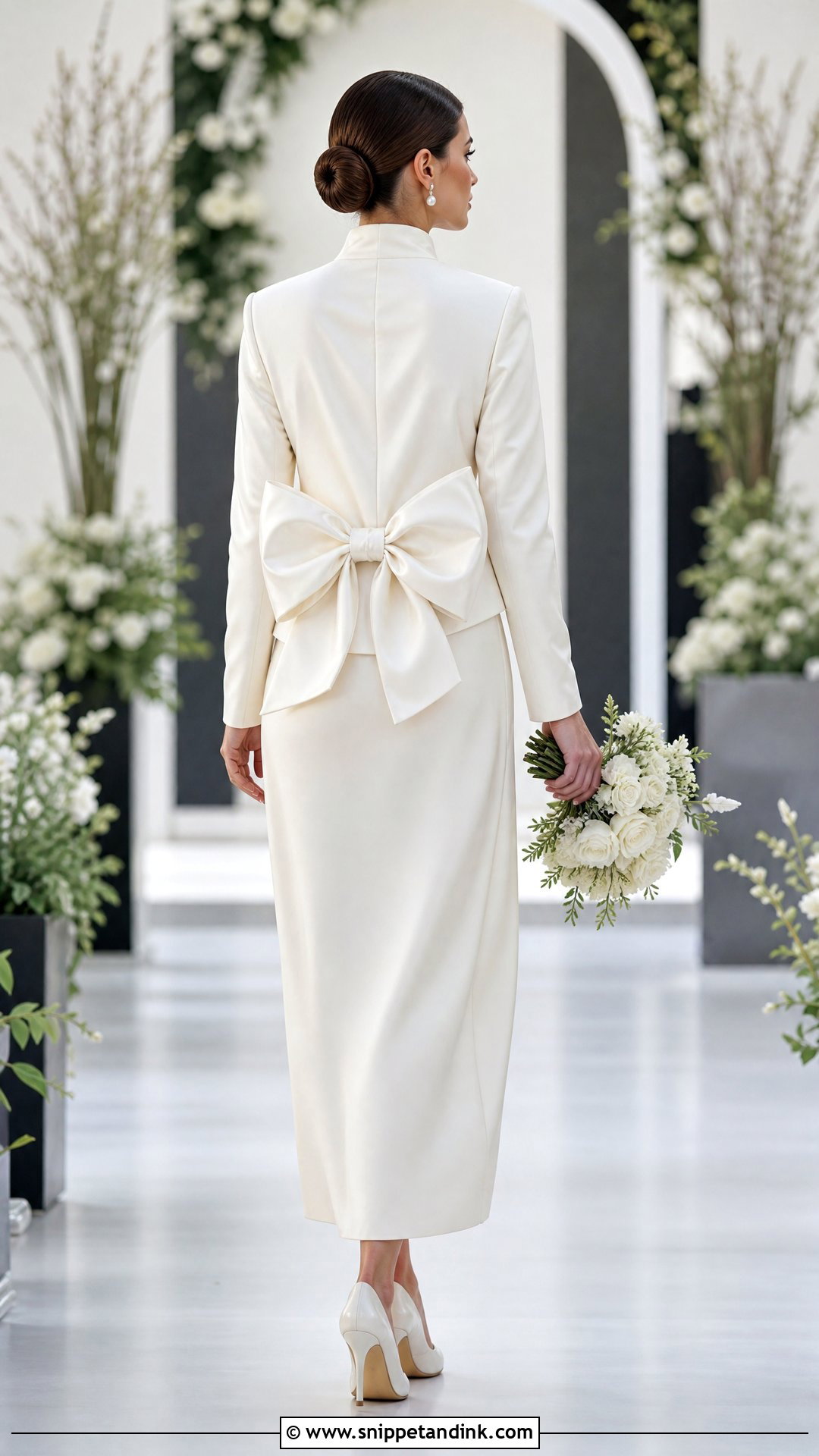
The bow-back bolero is for brides who know guests spend the ceremony looking at their back. A smooth satin, mikado or crepe jacket with a structured bow between the shoulder blades, or at the cropped hem, needs a plain sheath or A-line beneath it. Pearl earrings, simple pumps and a compact bouquet are enough. Wear the hair up so the bow stays visible, and plan to drop the veil after the entrance so portraits show it. A bow needs interfacing or it wilts by evening; I gently squeeze the loops to feel for that stiffness. Skip extra bows on shoes or bag.
20. Colored Wedding Bolero Jacket With Ivory Gown
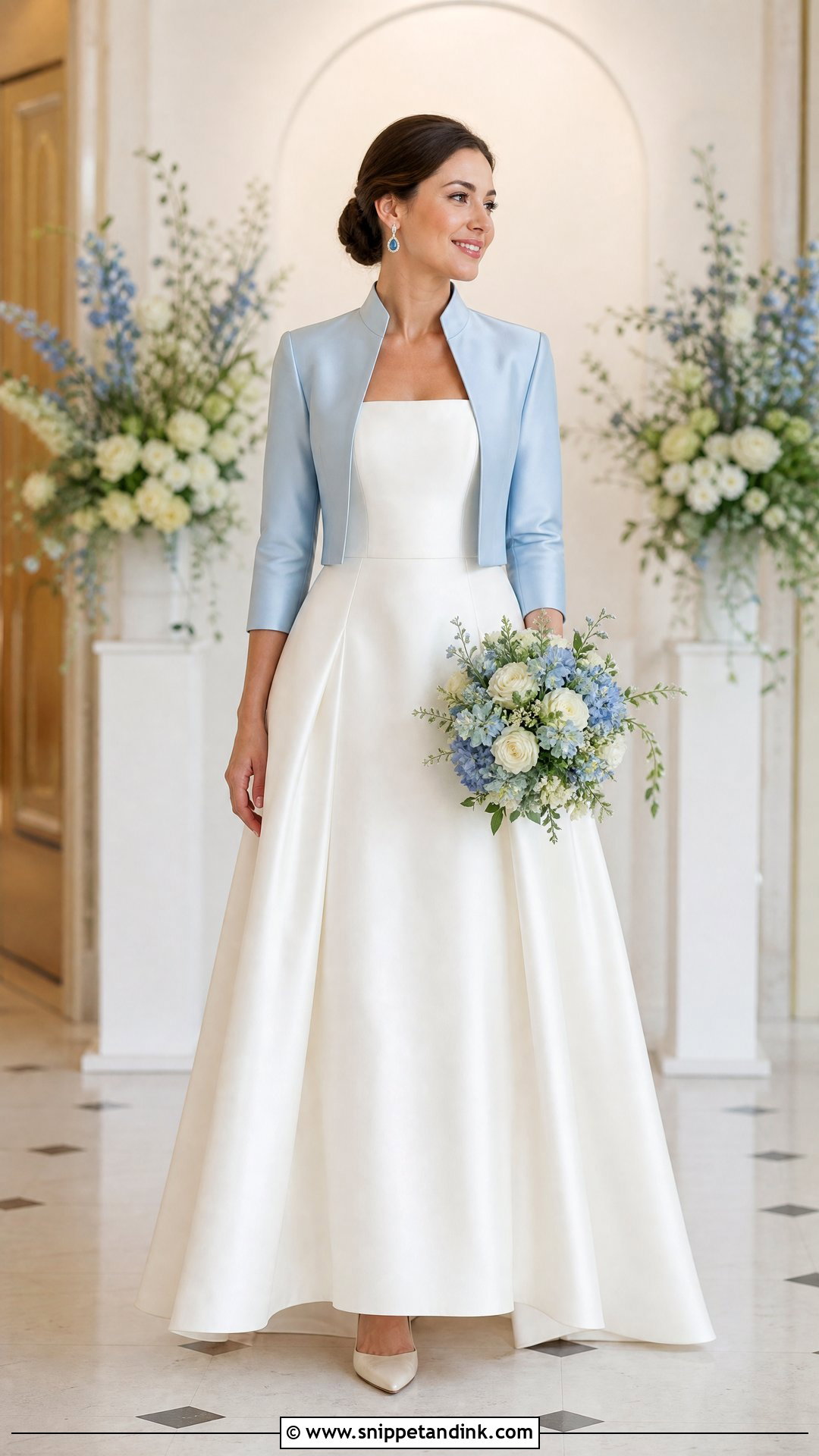
A colored bolero over an ivory gown is still clearly bridal, and pale blue, blush, champagne, silver gray or muted sage can tie into the season or the wedding palette. Match fabric to weather: velvet or faux fur in winter, satin for formal settings, embroidered tulle when it’s warm. Ivory shoes, earrings that pick up the jacket color and a bouquet with a hint of the same tone keep it intentional. Check the full outfit in daylight, because colors next to ivory shift it; blush can make ivory look yellow and gray can make it look dingy. It’s also an easy way to create a second look.
Taking the Bolero Off Halfway Through the Day
Many brides wear a bolero for a church or temple that asks for covered shoulders, then remove it for the reception. Plan that moment, because it’s easy to wreck hair or a veil in the process. I take off the veil first, then slide the bolero down the arms from behind rather than pulling it over the head or shoulders, especially with a high collar or back buttons.
Give the jacket to one named person, ideally with a padded hanger and a garment bag waiting in the getting-ready room. Boleros left draped on chairs get sat on, and velvet, satin and feathers all show it.
If your venue has dress rules, check them with the officiant before buying. Some only ask that shoulders be covered, which a cap sleeve or sheer tulle satisfies; others expect sleeves to the elbow. And if the bolero will stay on all day, wear it for an hour at home first. Sheer sleeves feel invisible in a fitting room and noticeably warm in a crowded hall.
A Removable Layer Gives You Two Looks From One Dress
Start with undertone. A bolero that’s a shade too white or too warm will show in every photo. Then look at length and volume against the gown: most fitting problems I see come from a jacket that ends in the wrong place. Lace, tulle and embroidery soften a plain dress, while satin, crepe and cropped tailoring sharpen it. Faux fur, knit, and velvet handle the cold. Pearls, feathers, bows and raised florals add personality to a simple gown. Whatever you choose, try it on with the dress, shoes and veil together before you decide.
You'll Like These Ideas:


Leave a Reply