
The top tier is where guests look first, long before the knife comes out. A topper can be one sugar rose, a pair of initials or a whole crown of piping, but it only looks right when it belongs to the cake underneath it: the same frosting texture, the same flowers as the base, a stand that doesn’t fight it. When couples bring me a photo of a topper, my first question is about the cake it sat on, because a finish lifted from a two-tier buttercream rarely suits a five-tier fondant. Below are 25 finishing ideas I’d happily show a baker, with notes on how each one actually behaves.
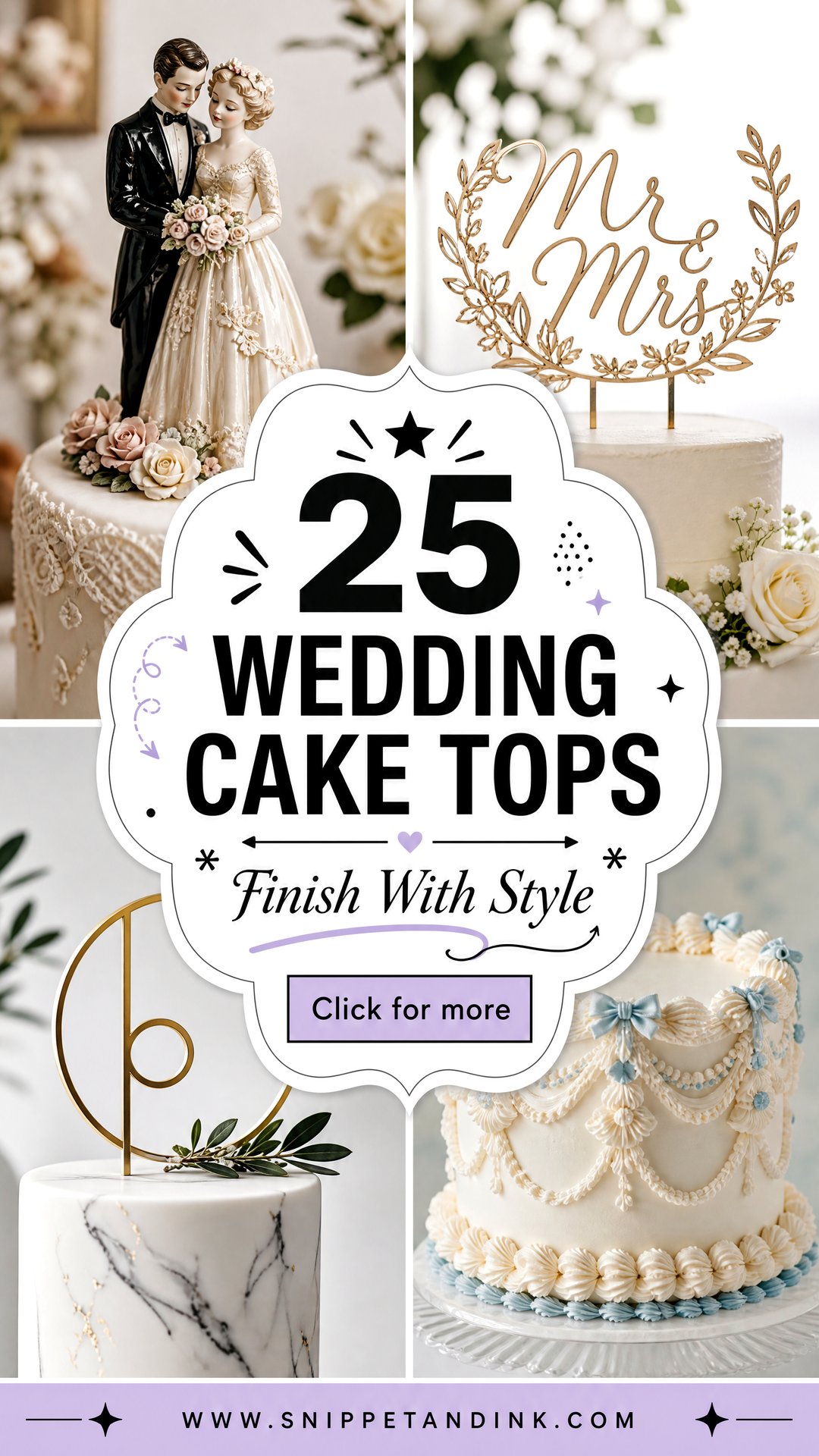
Weight, Stems and What Actually Touches the Frosting
Before you fall for a topper, find out what it weighs and what it’s standing on. The top tier is usually the smallest and softest part of the cake, and it has to hold that topper upright through delivery, photos and a warm room. That’s why I plan the topper and the cake together rather than treating the topper as an accessory added at the end.
Heavier pieces
Porcelain figurines, metal monograms and big sugar sprays need a firm board under the top tier and dowels in the tier below, so the weight travels down through the structure instead of sinking into the sponge. A thin acrylic disc under the topper spreads the load and keeps its base off the frosting.
Fresh and dried stems
- No bare stem goes into cake. Each one is wrapped in floral tape or set into a food-safe posy pick.
- Ask the florist for unsprayed flowers set aside for the cake, since bouquet stock is often treated.
- Some favorite wedding flowers are toxic, including lily of the valley, hydrangea, foxglove and sweet pea, so they either sit on a barrier or get swapped for sugar versions.
- Edible flowers such as violas, calendula, cornflowers and unsprayed roses can touch frosting directly if they come from a food-safe grower.
1. Fresh Flower Wedding Cake Top
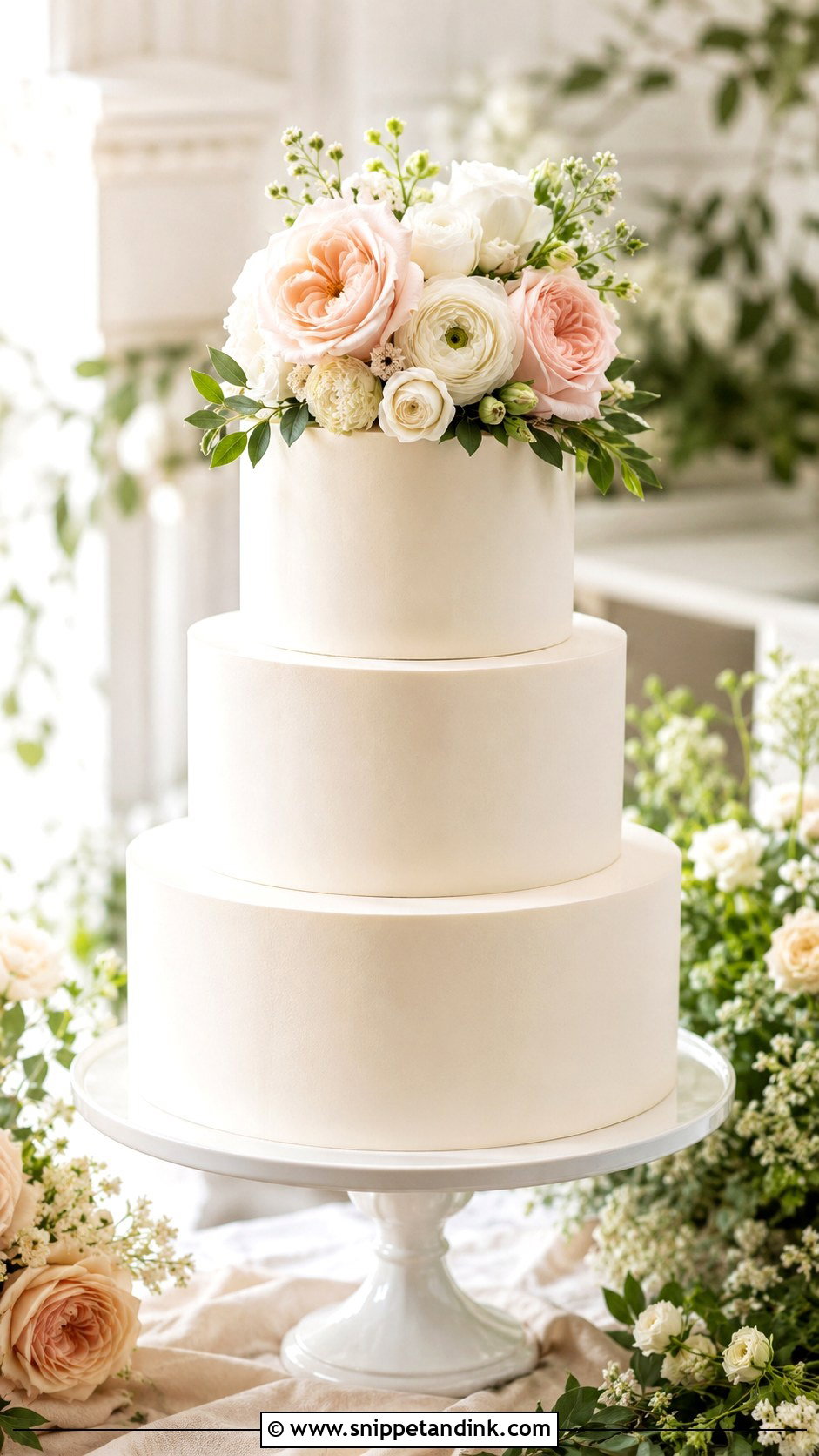
Fresh flowers tie the cake to the bouquet and centerpieces more directly than anything else. Roses, ranunculus, orchids and lisianthus all sit well on smooth white or ivory tiers. What decides success is the stem, not the bloom: I never let a bare stem go into the sponge, so every flower gets wrapped in floral tape or set into a food-safe posy pick, and I ask the florist for unsprayed stems kept aside from the main order. Sweet peas look pretty but aren’t edible, so they should rest on a barrier rather than touch the frosting. Keep the arrangement low and balanced so it reads from every angle, and plan for it to go on at the venue, not in the van.
2. Sugar Flower Wedding Cake Top
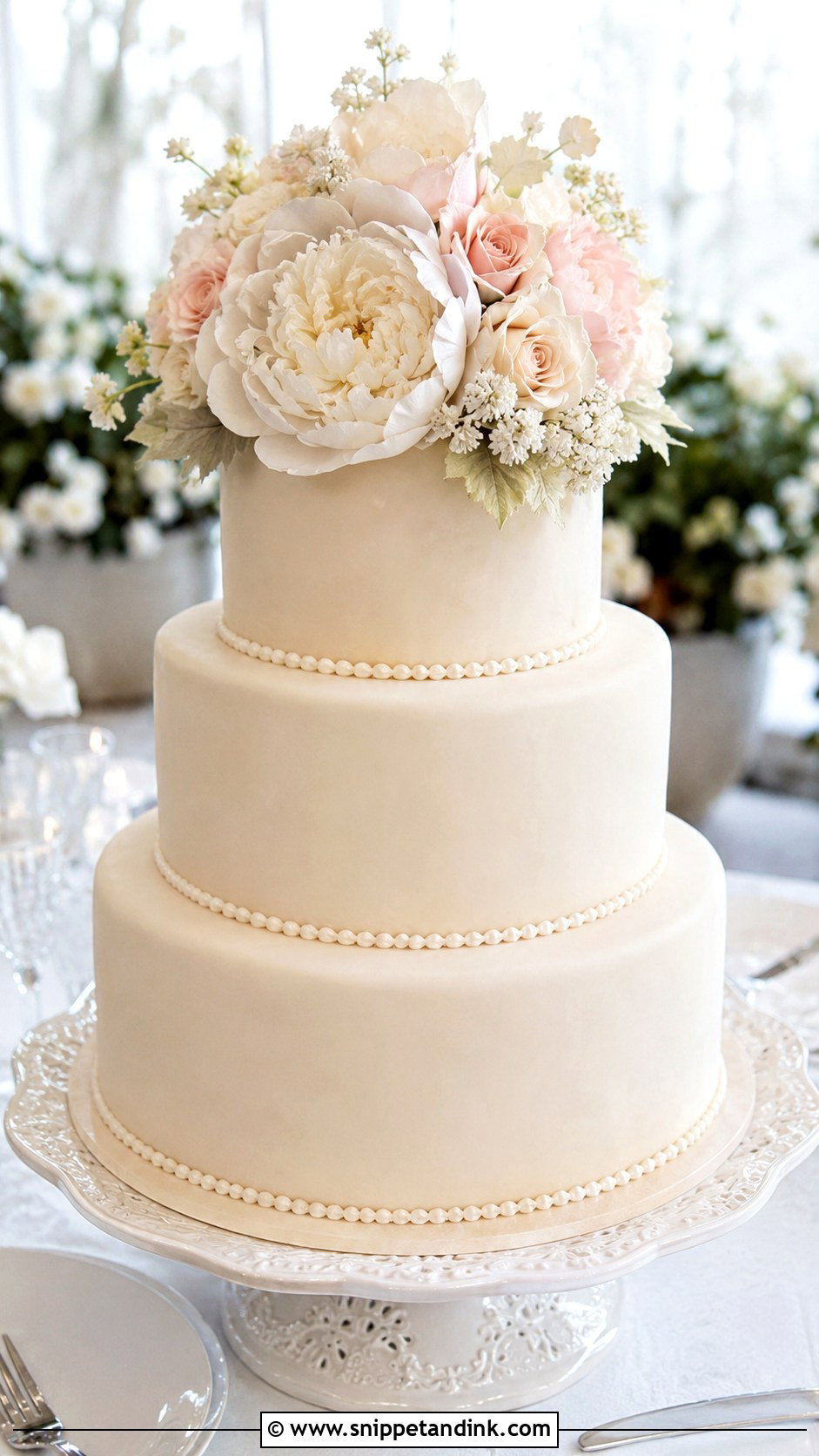
Sugar flowers give you control real ones can’t: an exact shade of dusty peach, a peony out of season, petals that won’t brown by the speeches. They’re built from gum paste on wires, petal by petal, so they take days to make and need ordering well ahead. Their weak point is humidity. In a damp marquee the thinner petals soften and droop, which is why I keep them boxed and dry until the cake is in place. On a three-tier ivory cake, a cluster of sugar roses and peonies with a few small fillers is plenty, and smooth frosting lets the petal work carry the design. Many couples keep the spray afterward, and it lasts for years if it stays dry and out of sunlight.
3. Pearl Wedding Cake Top
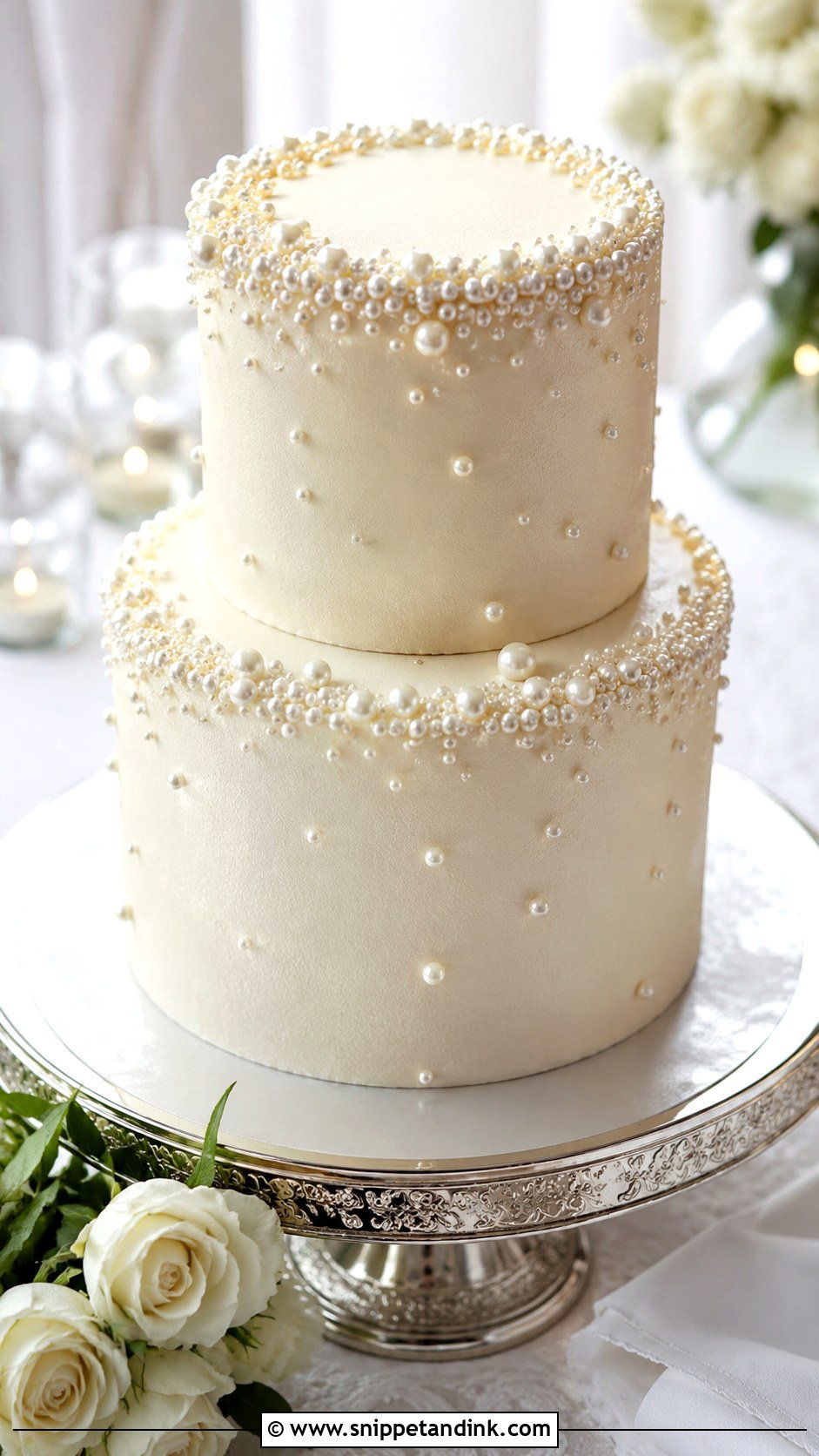
Pearls look refined without any topper at all. Edible pearls can cluster around the crown, trail down the tiers or form a narrow border along the top edge, and they suit satin-finish buttercream, smooth fondant or a pearlized glaze. I mix three or four sizes, because one uniform size reads like a bead strip from across the room. The practical catch is that larger sugar pearls are hard on teeth, so I keep the big ones on the decorative side of the top tier, away from the slices that get served. A small floral accent, a monogram or a thin ribbon around the upper tier gives them something to sit against.
4. Bow Wedding Cake Top
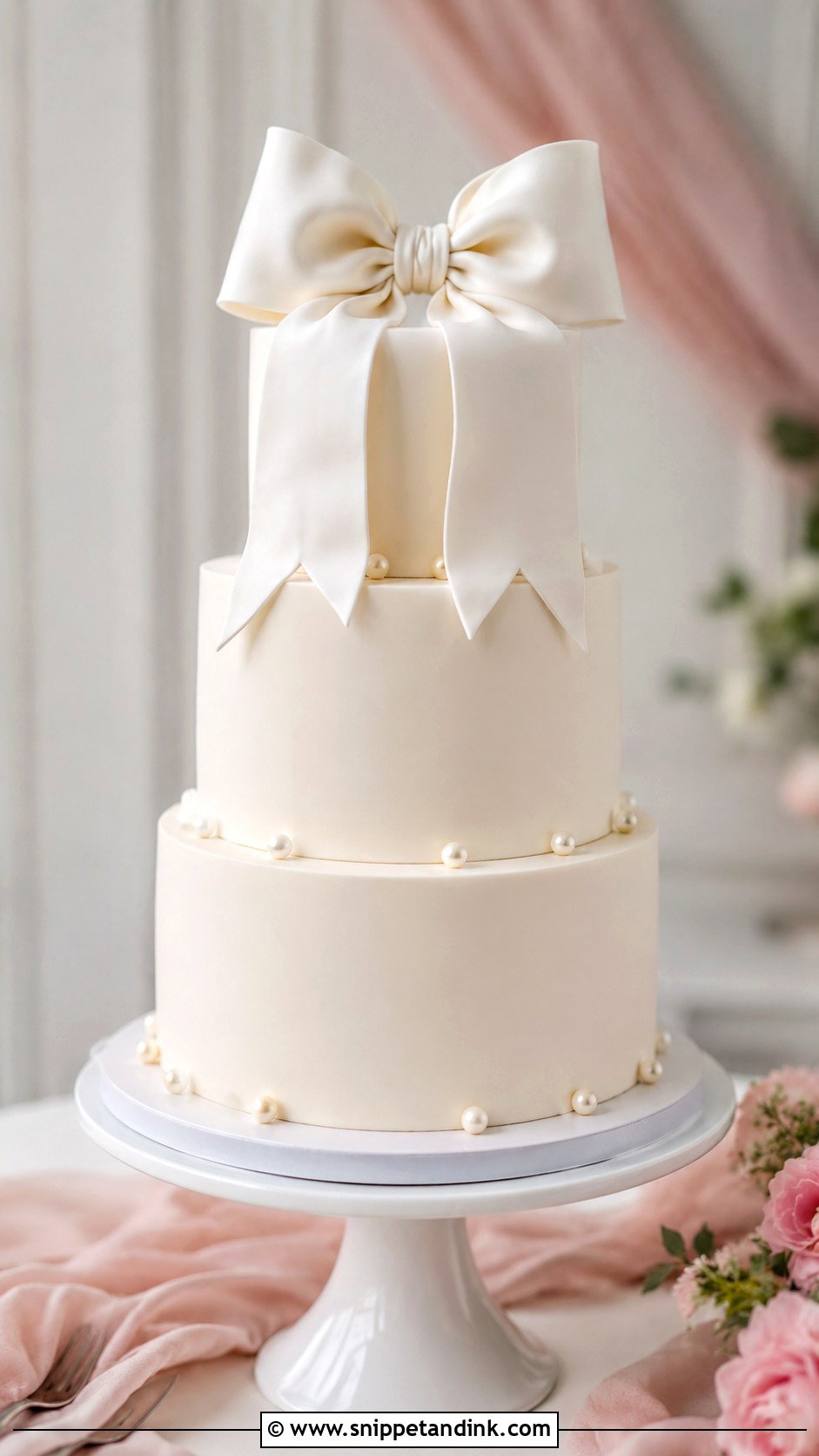
A bow is one of the easiest shapes to recognize in a photo, even from the back of the room. Fondant, gum paste, silk ribbon and wafer paper all work, and each behaves differently. Gum paste dries rigid and holds a crisp loop, wafer paper stays light enough for a big bow on a soft cake, and real ribbon needs a strip of acetate behind it or the butter in the frosting will stain it. Proportion matters more than color: a tall cake carries an oversized bow, a small cake wants a neat structured one. White on ivory reads clean and bridal, blush or pale blue leans vintage. Repeat a little piping or a few pearls lower down so the bow doesn’t look stuck on.
5. Monogram Wedding Cake Top
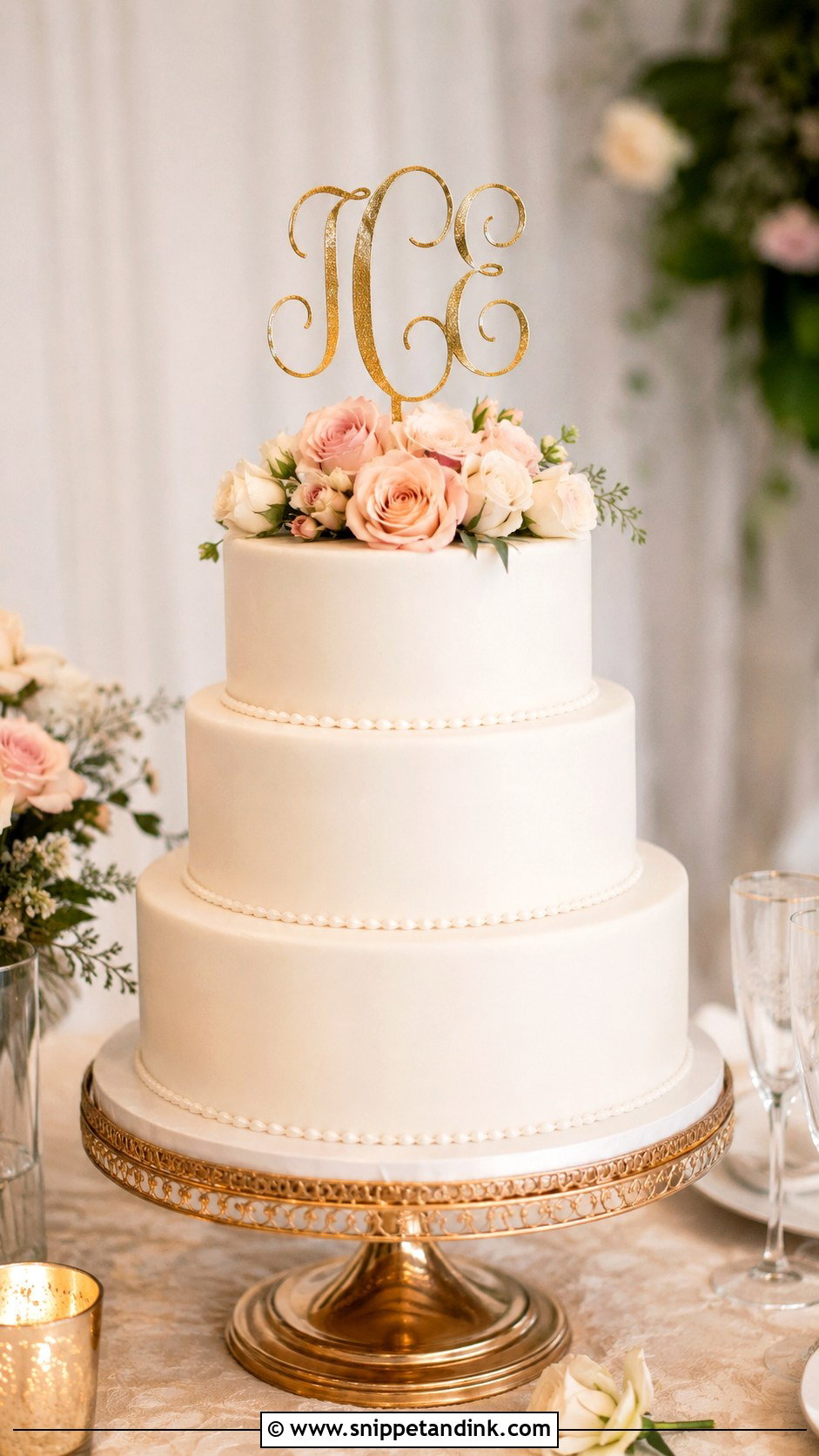
Initials are the most personal finish that still looks polished. Shared initials, the new last initial or a script copied from the invitation suite all work, and the material sets the mood: acrylic is crisp, gold and silver are formal, wood is relaxed, mirror catches light. I place a monogram slightly toward the front of the top tier and angle it to where the photographer will stand for the cutting, not to the middle of the room. Letters need clean space, so this belongs on smooth tiers with texture and flowers kept lower down. Go carefully with mirrored finishes, which reflect whatever is behind them and can flash white in photos.
6. Vintage Figurine Wedding Cake Top
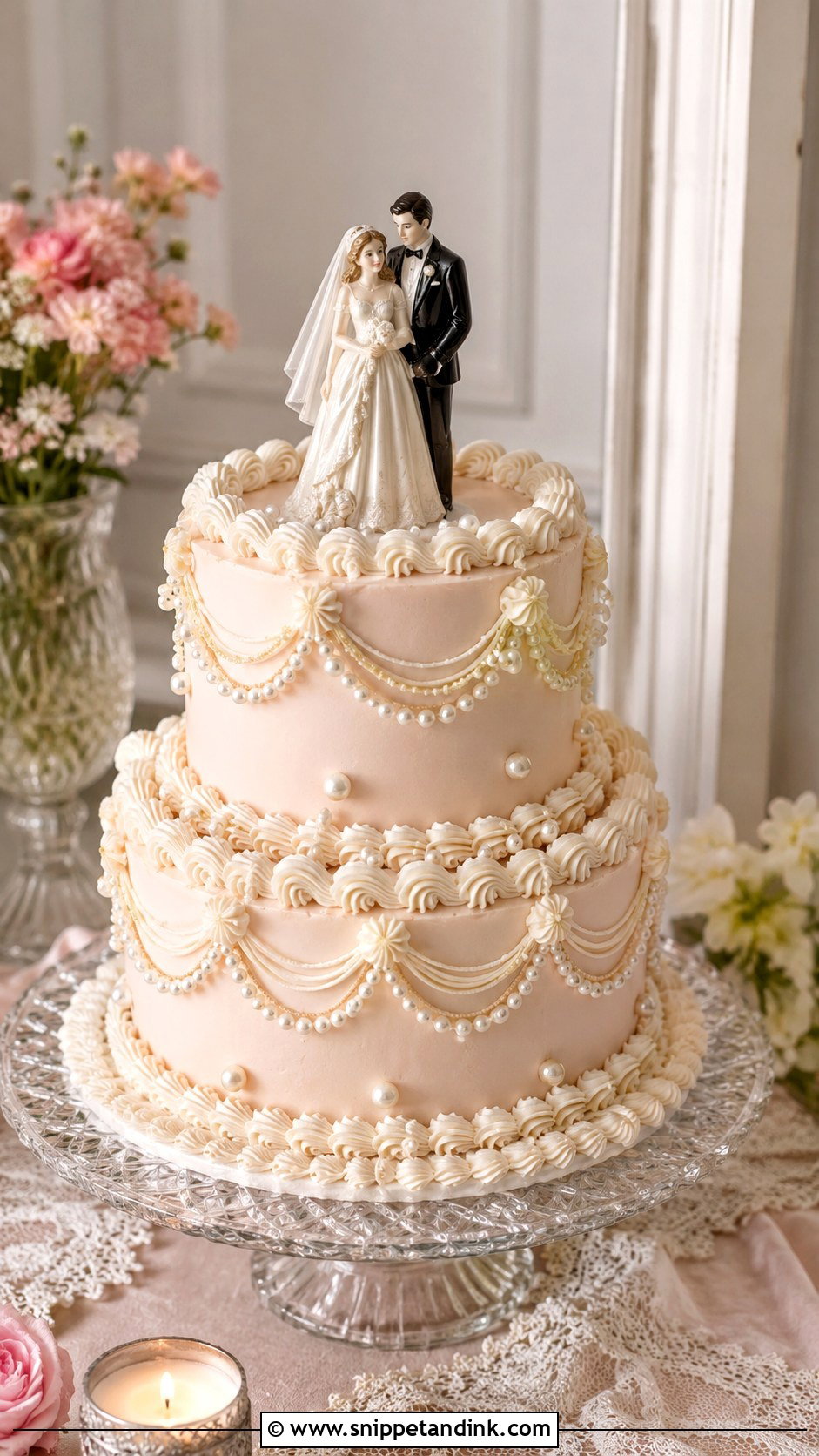
Old porcelain couples, a parent’s original topper or retro-style figures make the cake sentimental in a way nothing new can. They’re heavy for their size and rarely have a base made for frosting, so I build the top tier on a firm board with dowels underneath and stand the figurine on a thin acrylic disc so it never touches the cake. Old glazes and paints weren’t made for food contact, which is another reason for that barrier. Lambeth piping, scalloped borders and soft pastel frosting suit them. Keep the colors fresh and the piping neat and the result reads nostalgic rather than dated; a few small flowers around the base help it settle in.
7. Gold Wedding Cake Top
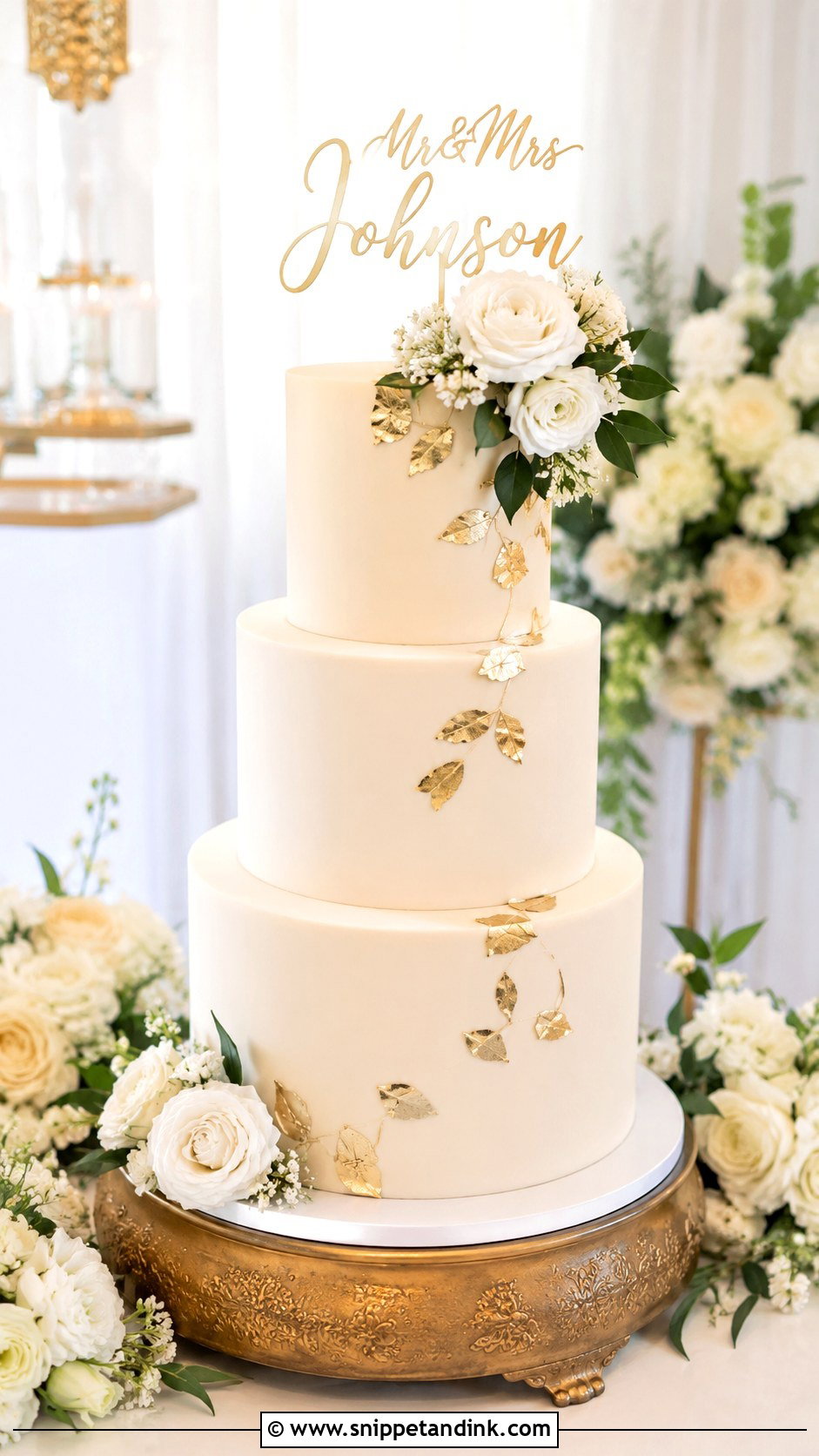
Gold brings warmth, especially under the amber light most receptions end up in. It might be a gold monogram, painted sugar flowers, metallic leaves, a gilded crown edge or a slim name topper, and it sits happily on ivory, white, champagne, blush, sage or deep green. I keep it to one strong gold moment. Edible gold paint gives a clean shine on fondant but tends to look patchy on buttercream, so for a buttercream cake I’d choose a gold script topper or hand-applied gold leaf instead. Check whether a metallic finish is truly edible or only decorative, because some lustre dusts are sold as non-toxic for display and aren’t meant to be eaten.
8. Silver Wedding Cake Top
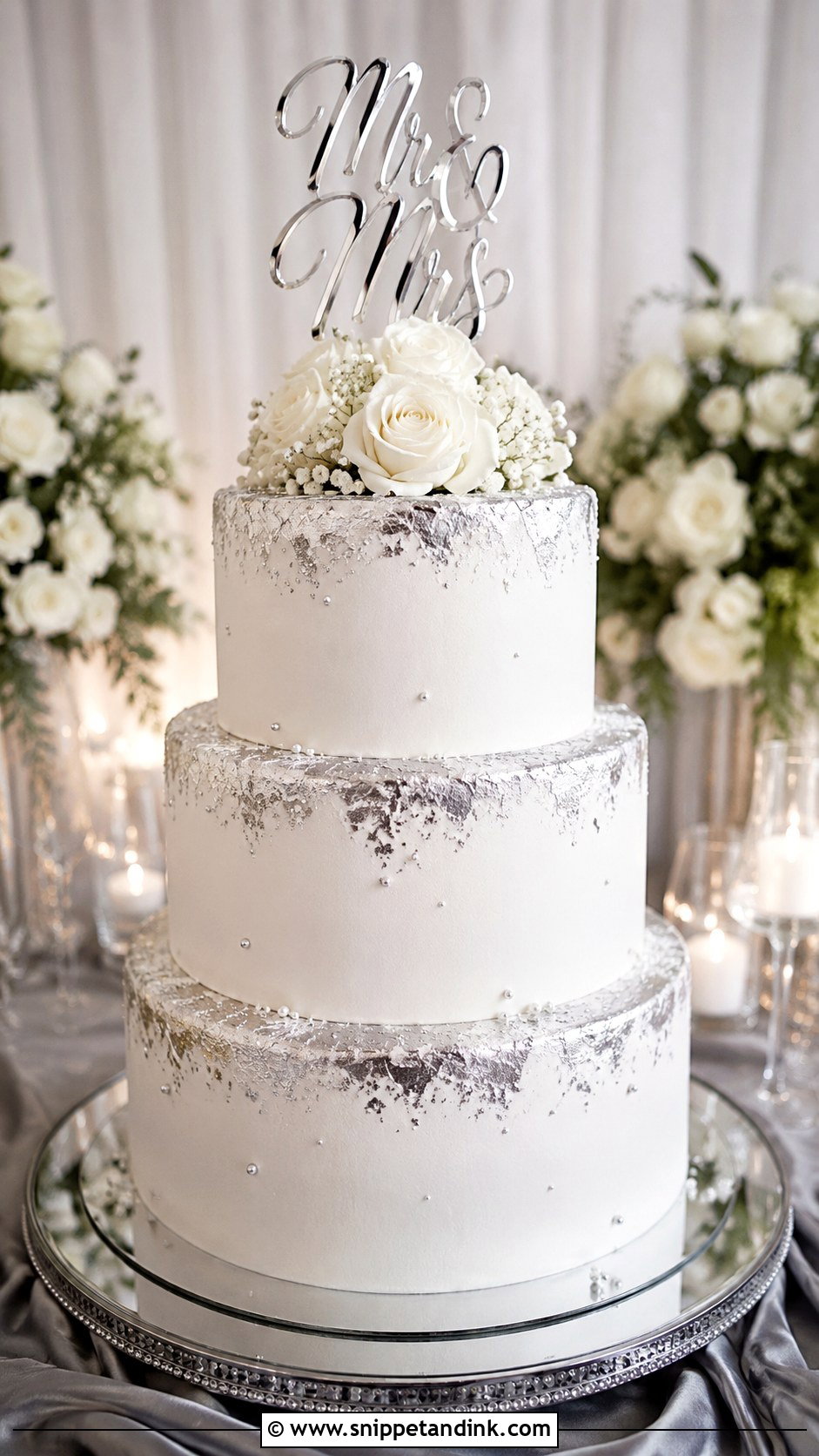
Silver reads crisp and cool. It suits black-tie receptions, city venues and white ballroom cakes, and it carries a winter palette without drifting into holiday decor. Silver acrylic, edible silver leaf, metallic sugar flowers or silver pearl clusters all work. Left alone it can look cold, so I always pair it with something soft: white buttercream, delicate piping, pale grey details or white roses around the top. Silver leaf on marble-effect fondant is a particularly good match. It needs white space to show, so leave the top tier uncluttered.
9. Acrylic Wedding Cake Top
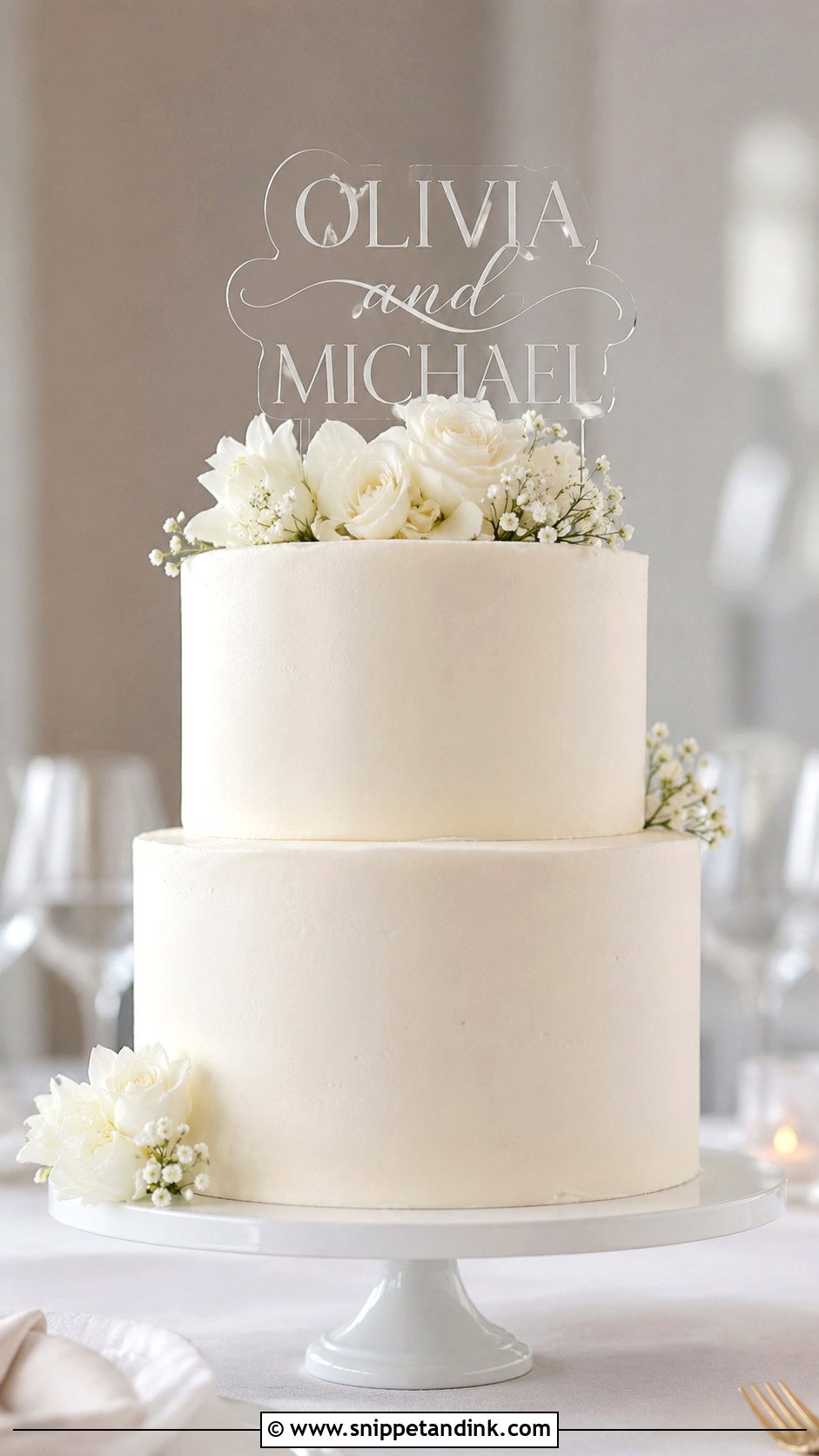
Acrylic is popular because it’s light, inexpensive to personalize and sits on almost any cake, from classic buttercream to a modern square design. Clear acrylic floats; frosted, white, black, gold or mirrored gives more contrast. Names, initials, a short phrase or a simple shape all work. The mistake I see most is a hairline script that disappears against pale frosting in photos, so ask the maker for a thicker stroke or a backing layer. Check the prongs too. They should reach well into the top tier, and on soft buttercream I sleeve them in a cut straw so the topper doesn’t lean by the end of the night.
10. Wooden Wedding Cake Top
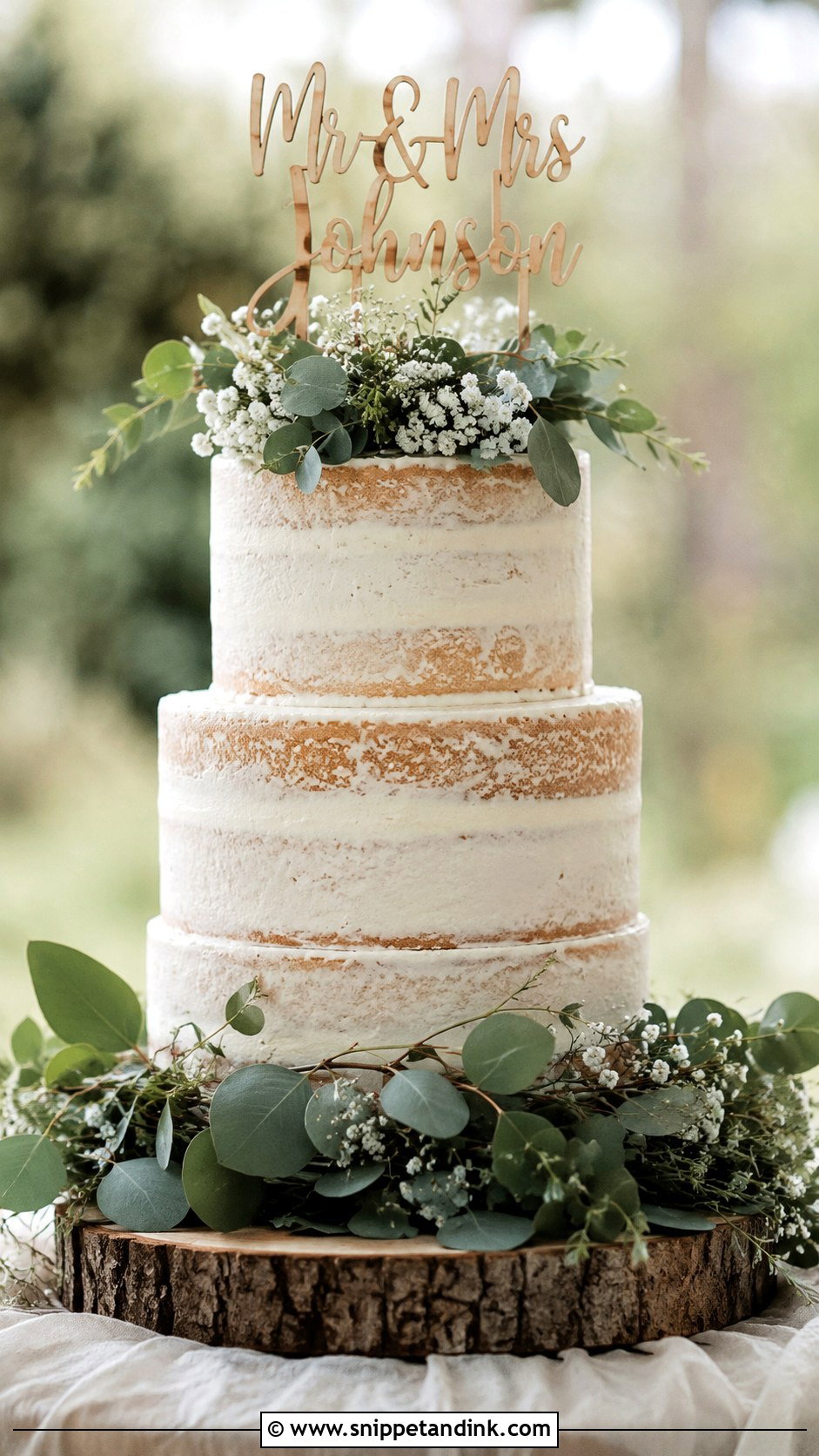
Wood brings warmth to barn weddings, outdoor receptions, mountain venues and relaxed gardens. Laser-cut names, initials or a simple shape sit nicely on buttercream with a little greenery or a few small flowers. Raw wood soaks up butter from the frosting and can leave a dark ring on the stakes, so I seal them or wrap them in food-safe film before they go in. To keep it elegant rather than rustic, pair it with clean white frosting, soft eucalyptus and neutral blooms. It also sits well on naked, semi-naked and textured cakes, and it’s the one I suggest to couples who’d rather have charm than sparkle.
11. Greenery Wedding Cake Top
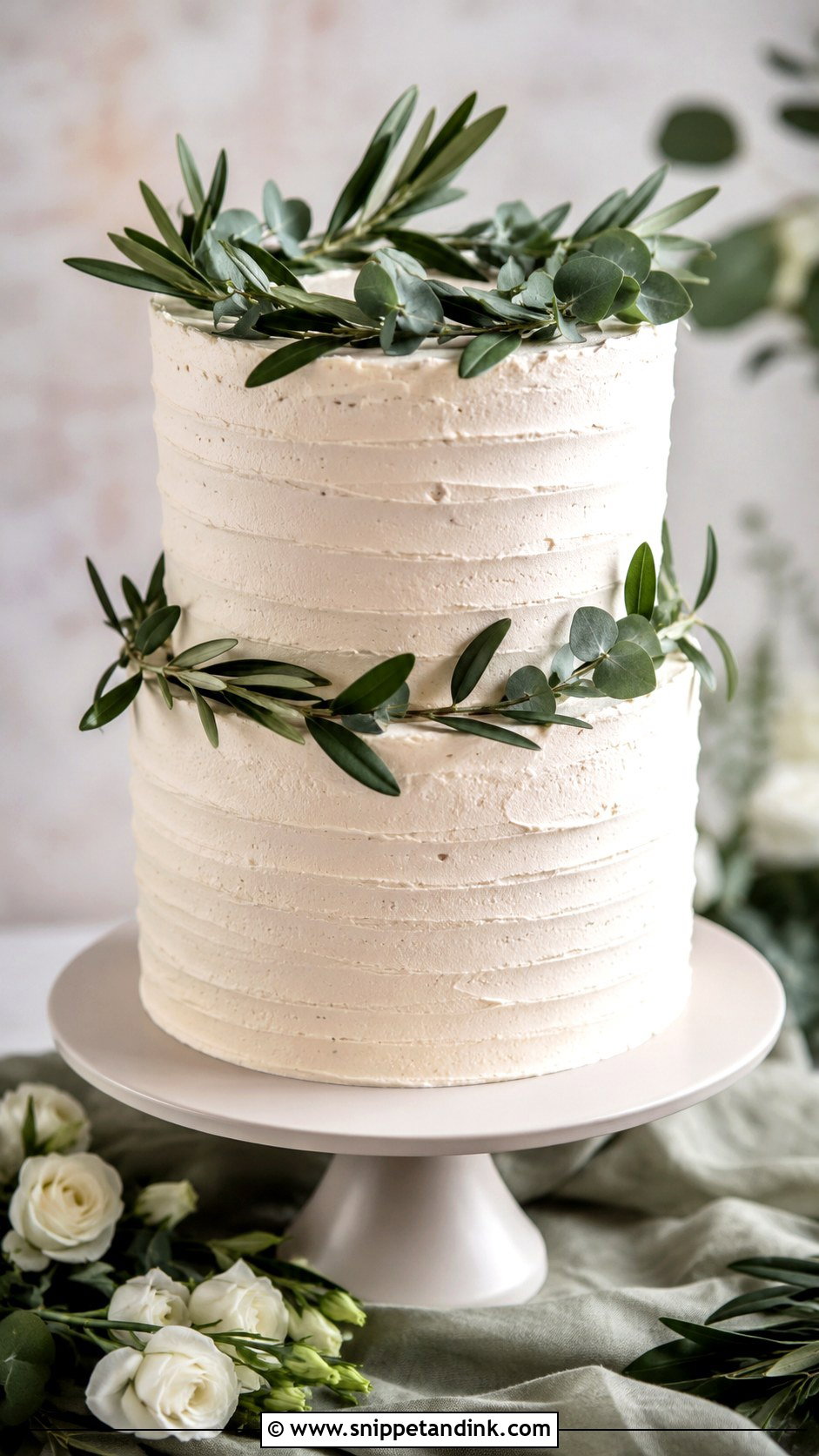
Greenery keeps the top fresh when flowers are already doing the work elsewhere. Eucalyptus, olive leaves, ruscus, herbs or delicate vines frame the top tier and suit white, sage, beige or neutral palettes. Not every green belongs near frosting, though. Eucalyptus isn’t edible and florist foliage may carry preservatives, so I wrap or pick every stem and keep cut ends out of the cake. Olive and rosemary are the friendliest choices. A smooth white cake with a greenery crown reads refined, while a semi-naked cake with trailing leaves feels relaxed. Foliage wilts more slowly than petals, which helps if the cake sits out for hours.
12. Orchid Wedding Cake Top
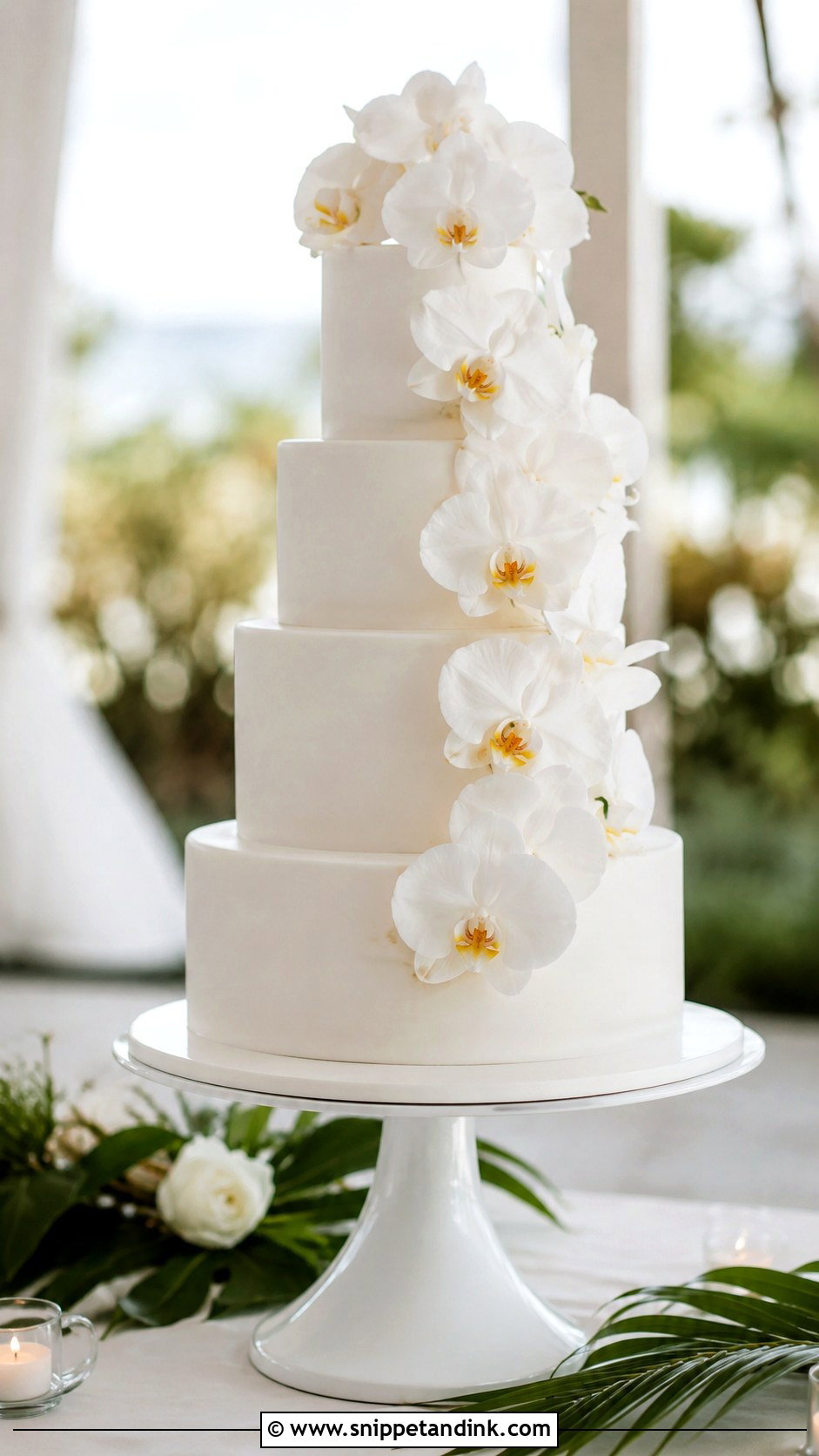
Orchids give a lot of shape from very few stems. White reads modern; blush, mauve or purple adds color without looking busy. On a tall tiered cake, orchids placed on the top and cascading down one side bring movement. Phalaenopsis sprays are the usual pick because the flowers are flat and light and cope with heat better than roses, though they bruise if handled much, so I place them with as few touches as I can. Keep everything else minimal, a thin piped border or a few pearls. They suit destination and tropical weddings when you want elegance rather than a casual beach feel.
13. Rose Wedding Cake Top
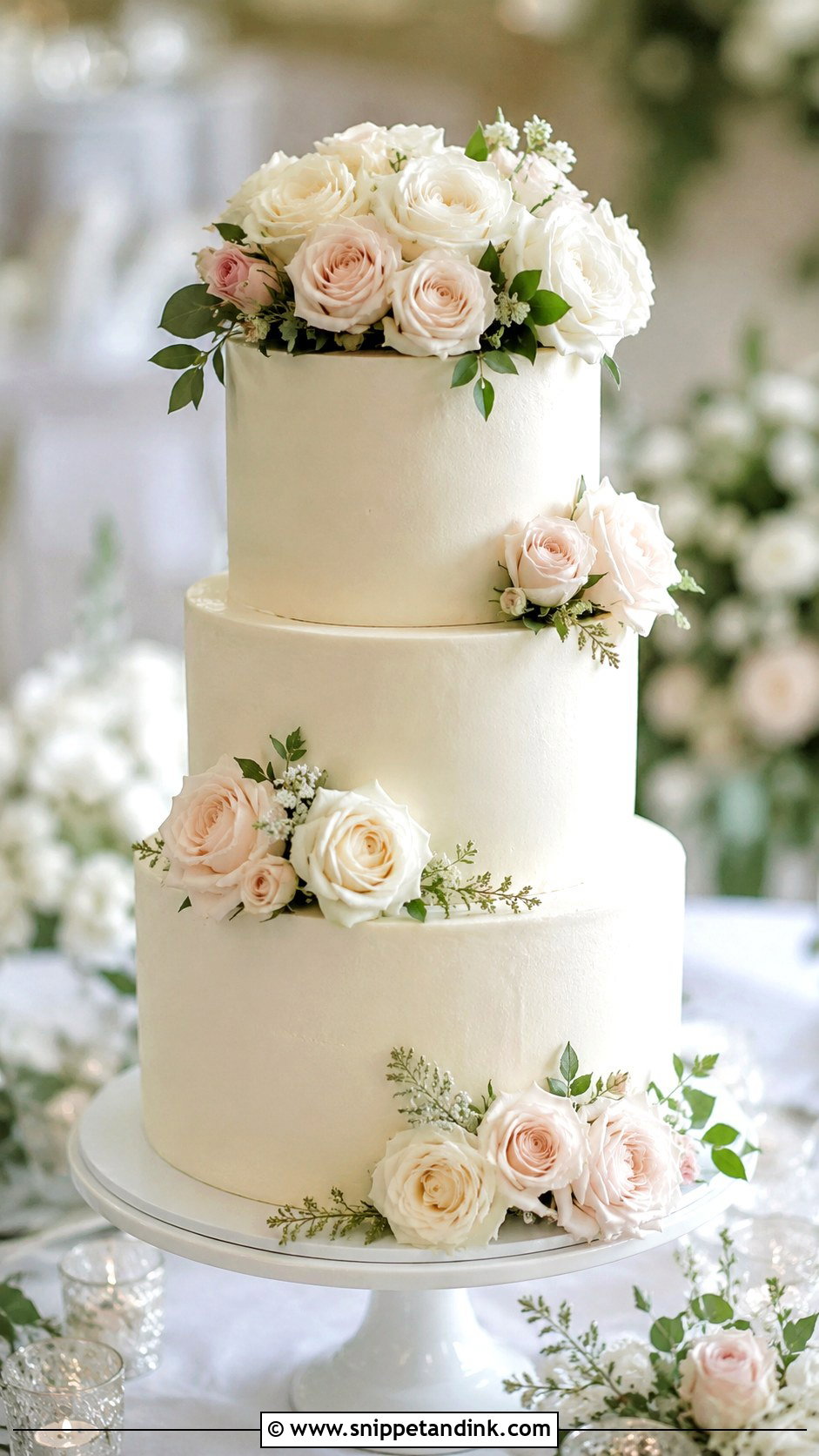
Roses earn their place because they change character so easily: formal, garden, vintage or modern depending on color and placement. White on ivory is classic, blush softens, red or deep pink makes a bolder focal point. I cluster them on the top tier and repeat two or three lower down so the topper looks connected to the whole cake. Open garden roses look generous but drop petals as the room warms, while tighter standard roses hold their shape longer. For a fully edible version, buttercream roses can be piped straight onto the top. Keep the frosting plain so the flowers stay the focus.
14. Pressed Flower Wedding Cake Top
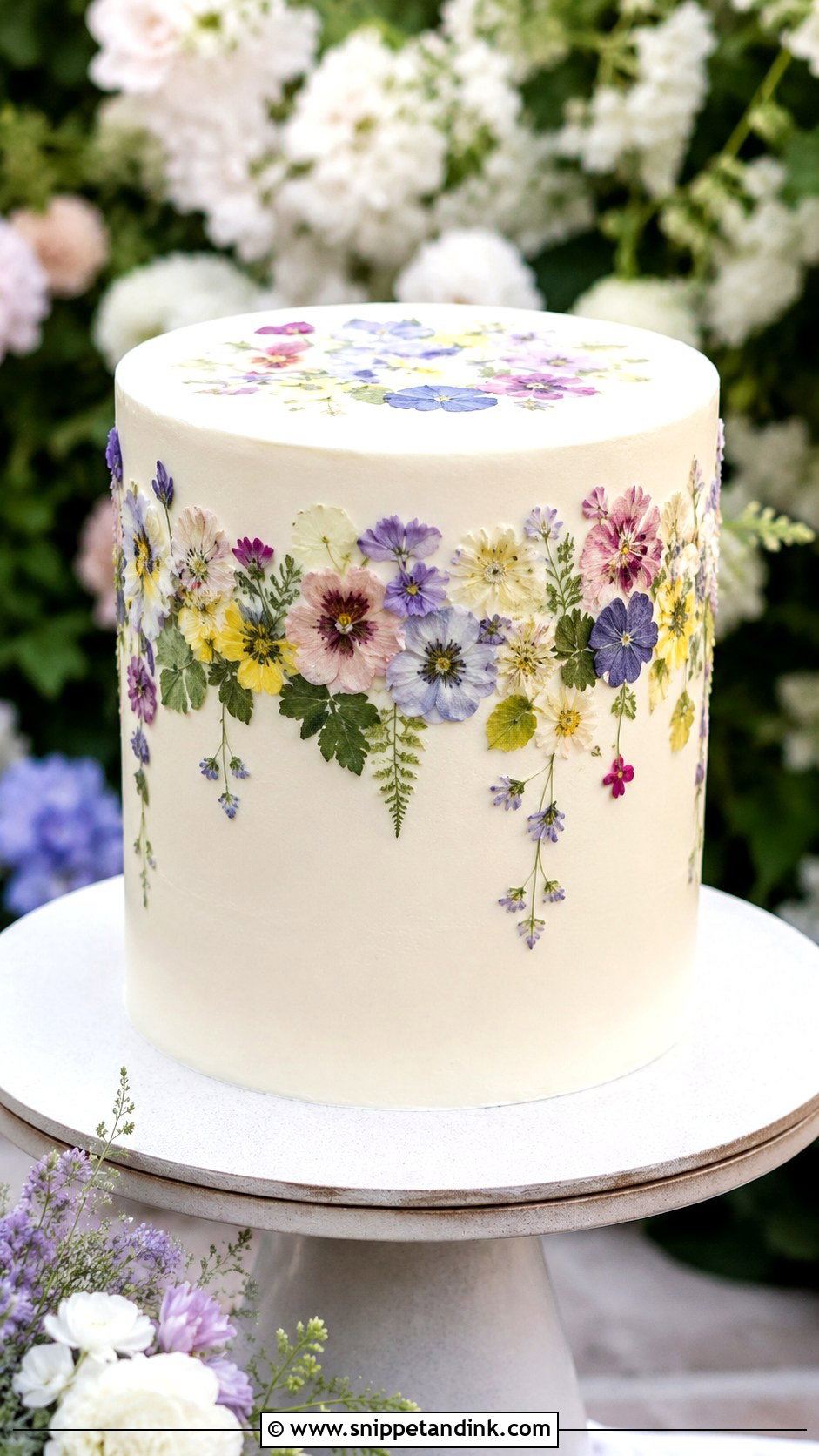
Pressed flowers are delicate and handmade, and they’re best seen up close: small cakes, spring weddings, garden receptions. Edible violas, pansies and cornflower petals can be pressed flat and laid around the top tier, then continued lightly down the sides. They stick best to a slightly tacky surface and fade under strong sun, so I apply them on the day or close to it and keep the cake out of direct light. Smooth white or pale buttercream shows them clearly. Keep the top simple with a small floral crown, a low arrangement or a slim name topper, and let the fine botanical pattern carry it.
15. Dried Flower Wedding Cake Top
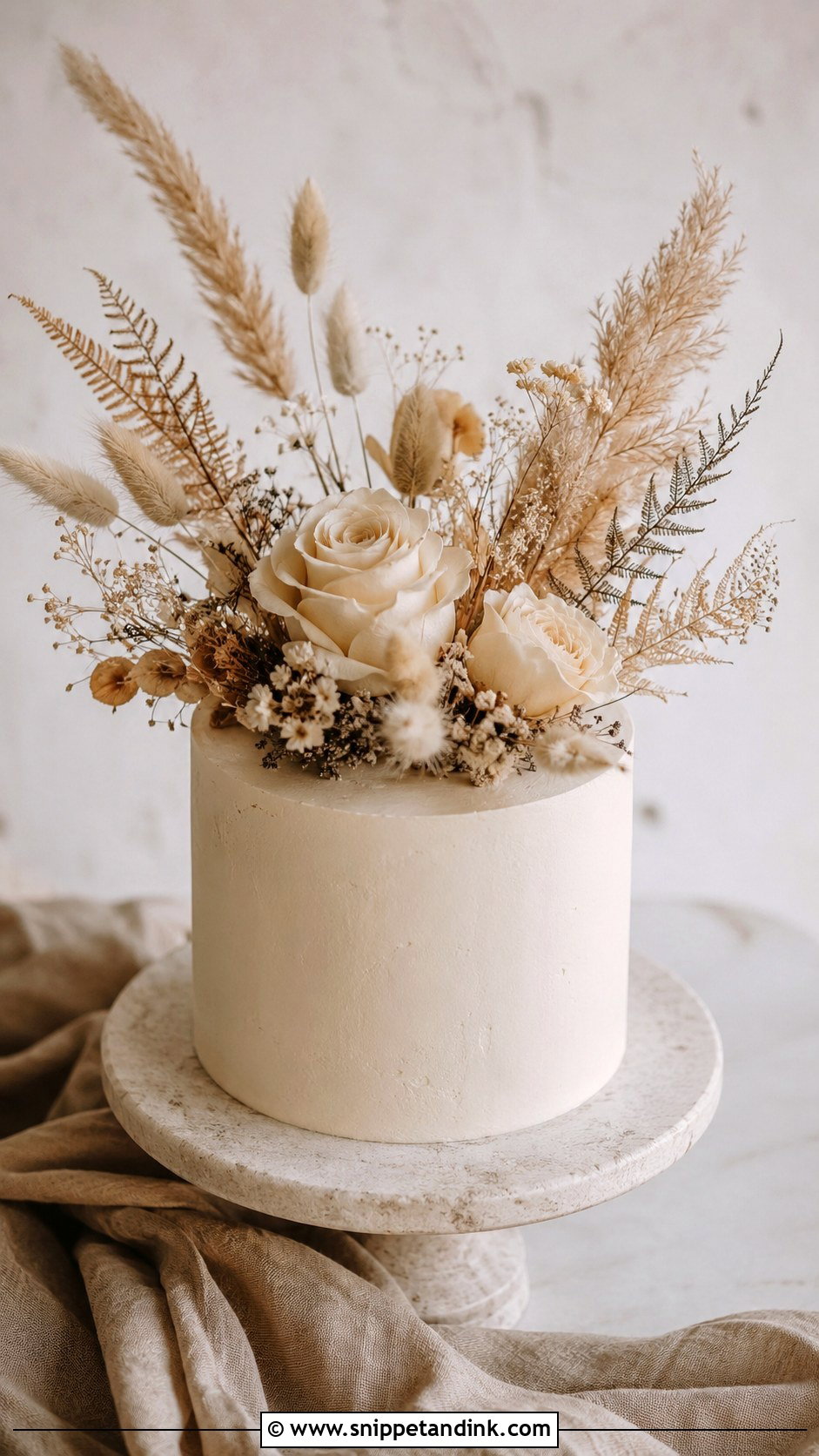
Dried flowers bring texture and muted color to beige, caramel, terracotta, blush and taupe palettes. Pampas, dried roses, bunny tails, preserved ferns and strawflowers make a soft, modern crown, and a matte buttercream cake with one on top feels warm without being formal. The honest drawback is shedding. Pampas and bunny tails drop fluff, and preserved stems are often dyed or sprayed, so I set the arrangement on a small disc or in picks and never let it touch the frosting. Give your florist the cake’s dimensions so the crown isn’t wider than the tier, and keep the cake shape simple so the texture stands out.
16. Butterfly Wedding Cake Top
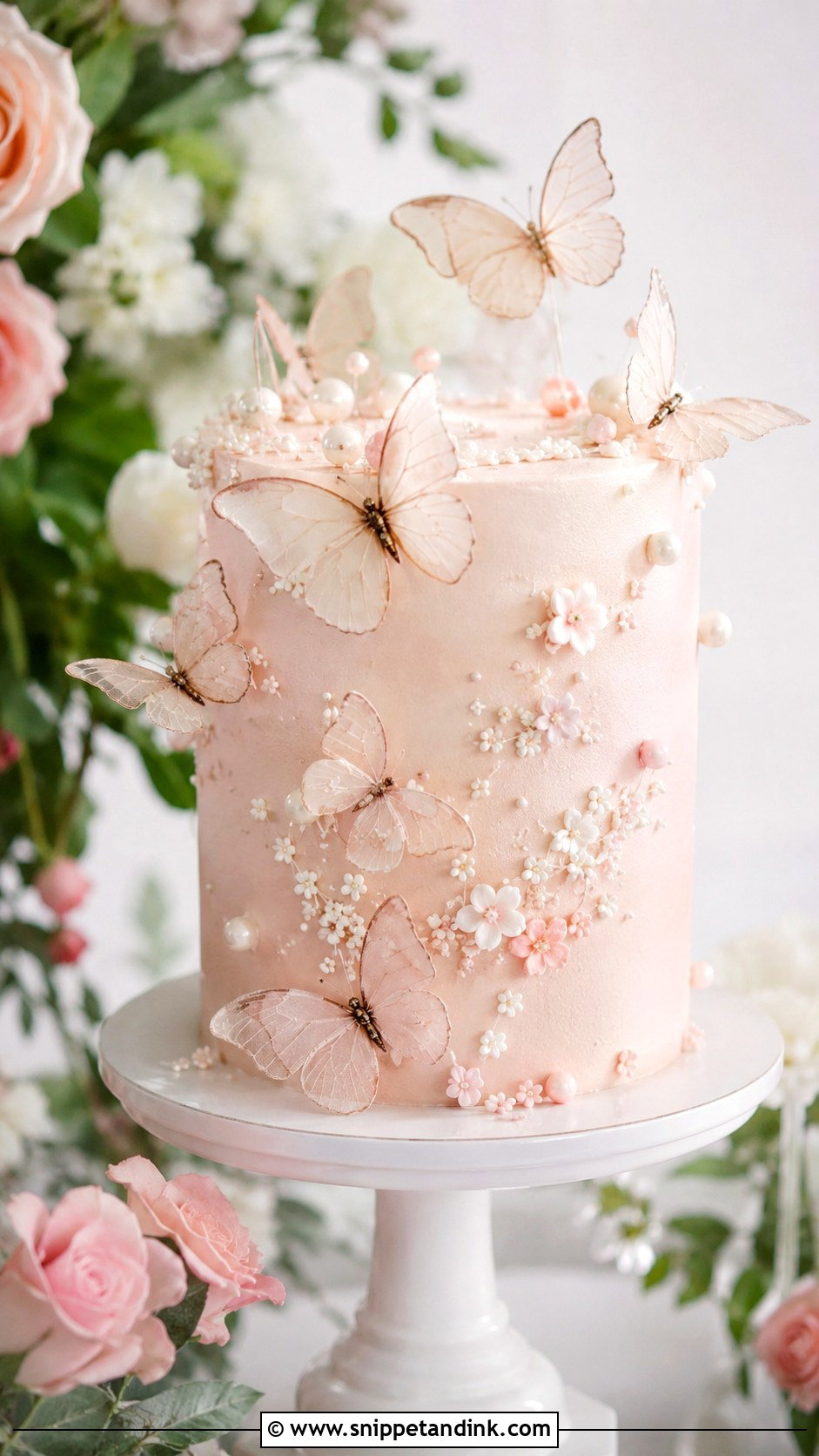
Butterflies look whimsical when they’re placed with intention and messy when they’re scattered. Wafer paper butterflies, edible printed ones or thin acrylic accents can sit around the crown and seem to lift upward. Wafer paper curls and goes limp if it draws moisture from buttercream or a humid room, so I fold the wings on a slight angle, let them set, and attach them with a dot of piping gel at the body only. Pale pink, ivory, lavender or soft blue frosting suits them, and a smooth finish helps them read. A few small sugar flowers or a pearl border finish the top.
17. Heart Wedding Cake Top
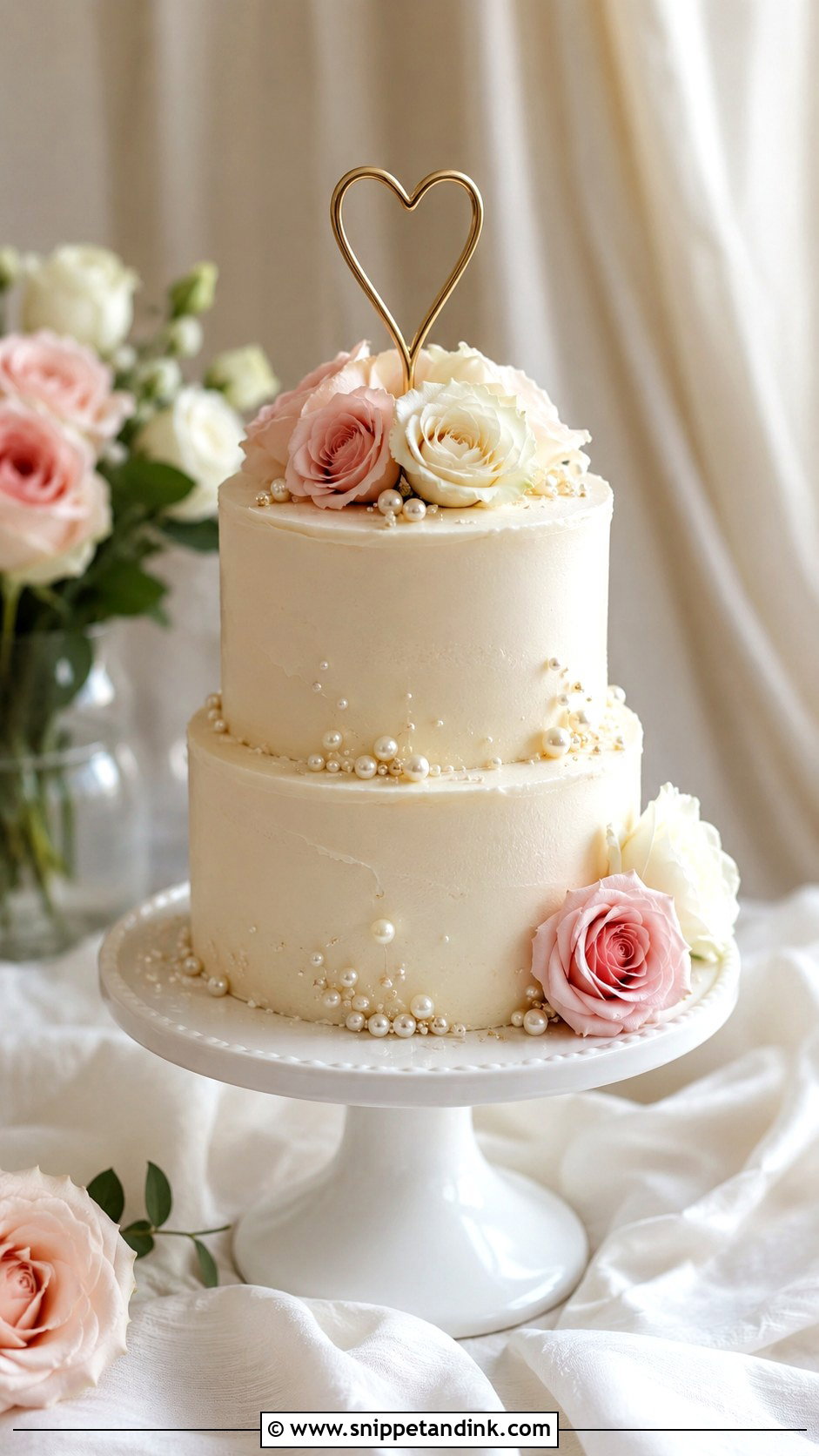
A heart is simple and easy to personalize: a small gold heart, interlocking hearts, a heart-shaped acrylic topper or a piped heart on the top tier. It tips into cute quickly, so I balance it with a grown-up base of smooth ivory frosting, soft florals and a clean stand. Hearts suit small wedding cakes and elopement cakes because they give a petite cake a clear focal point. Keep the topper slim; a heart taller than the tier under it looks top-heavy in photos.
18. Calligraphy Wedding Cake Top
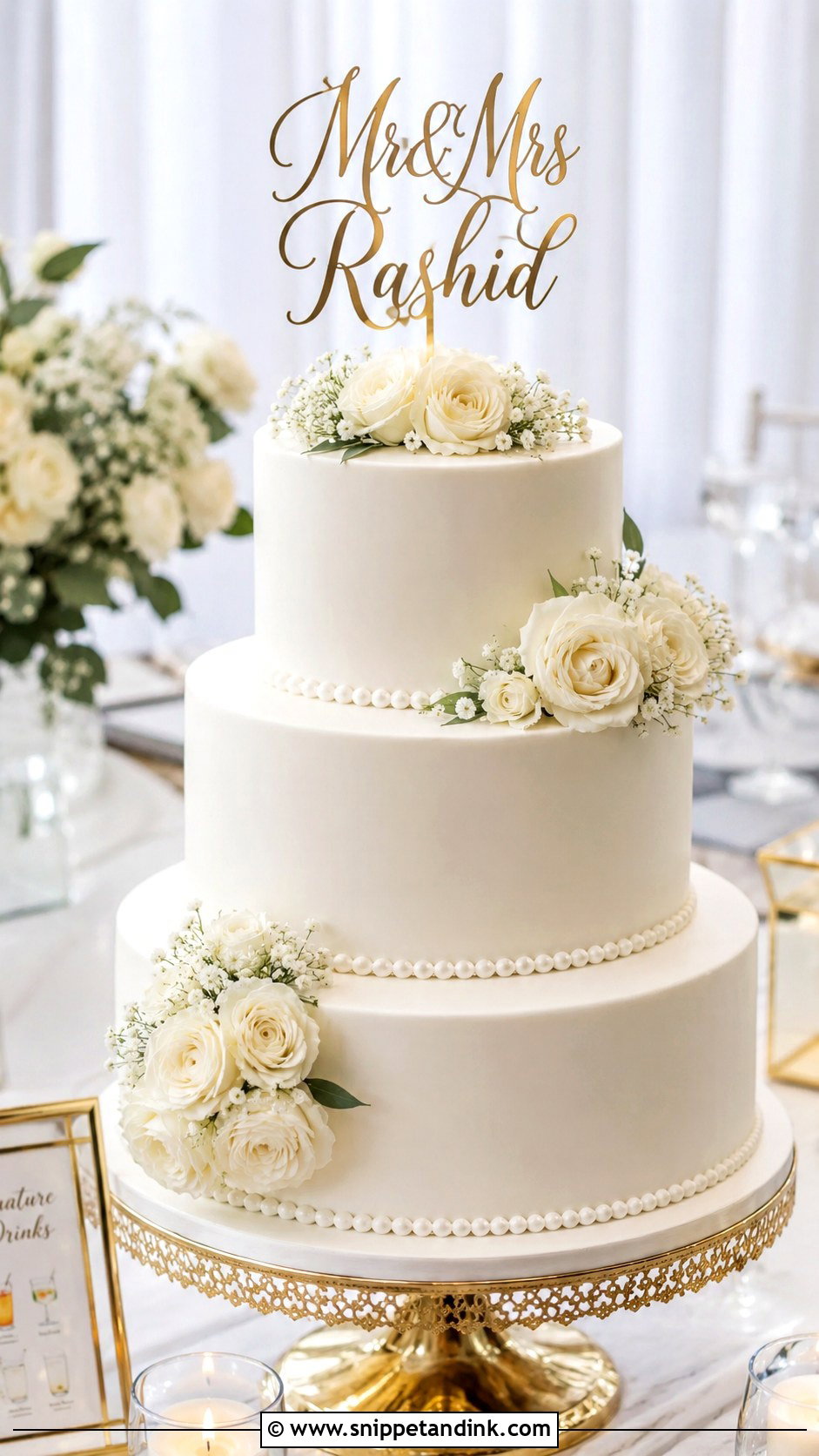
A script topper reads best when it matches the couple’s signage or invitations, and it can carry names, initials or a short phrase. Gold, white, clear and black each give a different effect. Contrast is everything here: fine gold lettering in front of busy flowers vanishes, so I keep whatever sits behind it plain. Smooth buttercream or a light texture, with a few flowers off to one side, is the right base. If the script is very ornate, ask the maker to thicken the joins between letters, because thin connectors are where these toppers snap in transit. It suits couples who want something custom without a theme.
19. Minimal Wedding Cake Top
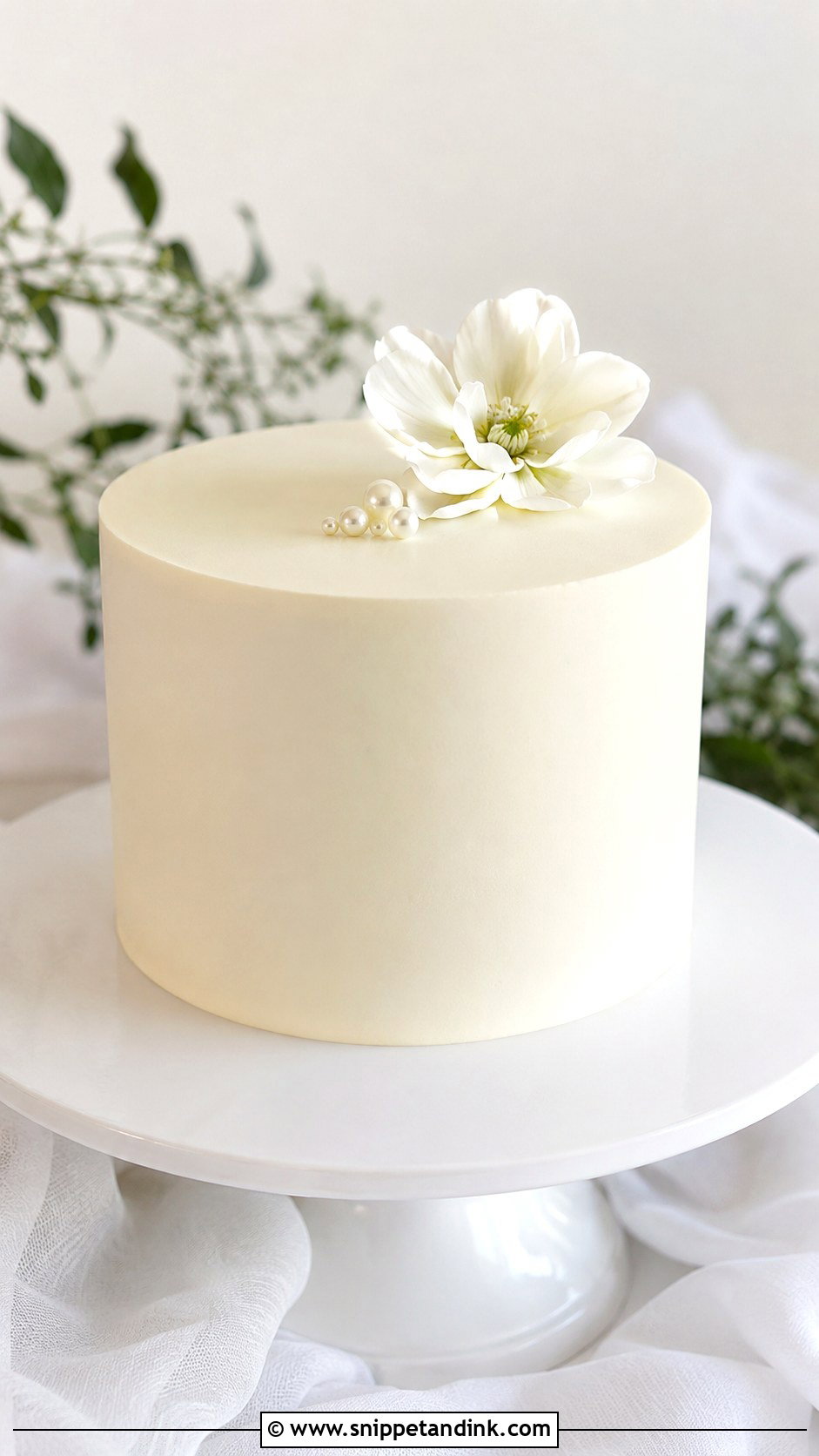
Restraint is harder than decoration. A minimal top might be one bloom, one initial, a small pearl cluster or a neat frosting crown, and because there’s nothing to hide behind, the finish of the whole cake has to be excellent. When I make one, the extra time goes into sharp edges and a dead-level top, since a slight tilt or a soft corner is obvious on a bare tier. Smooth buttercream, crisp fondant or soft vertical texture all suit it, in calm colors like ivory, cream, pale blush or light beige. Modern venues, courthouse celebrations and intimate weddings are its natural home, and it looks intentional rather than empty when the proportions are right.
20. Rustic Wedding Cake Top
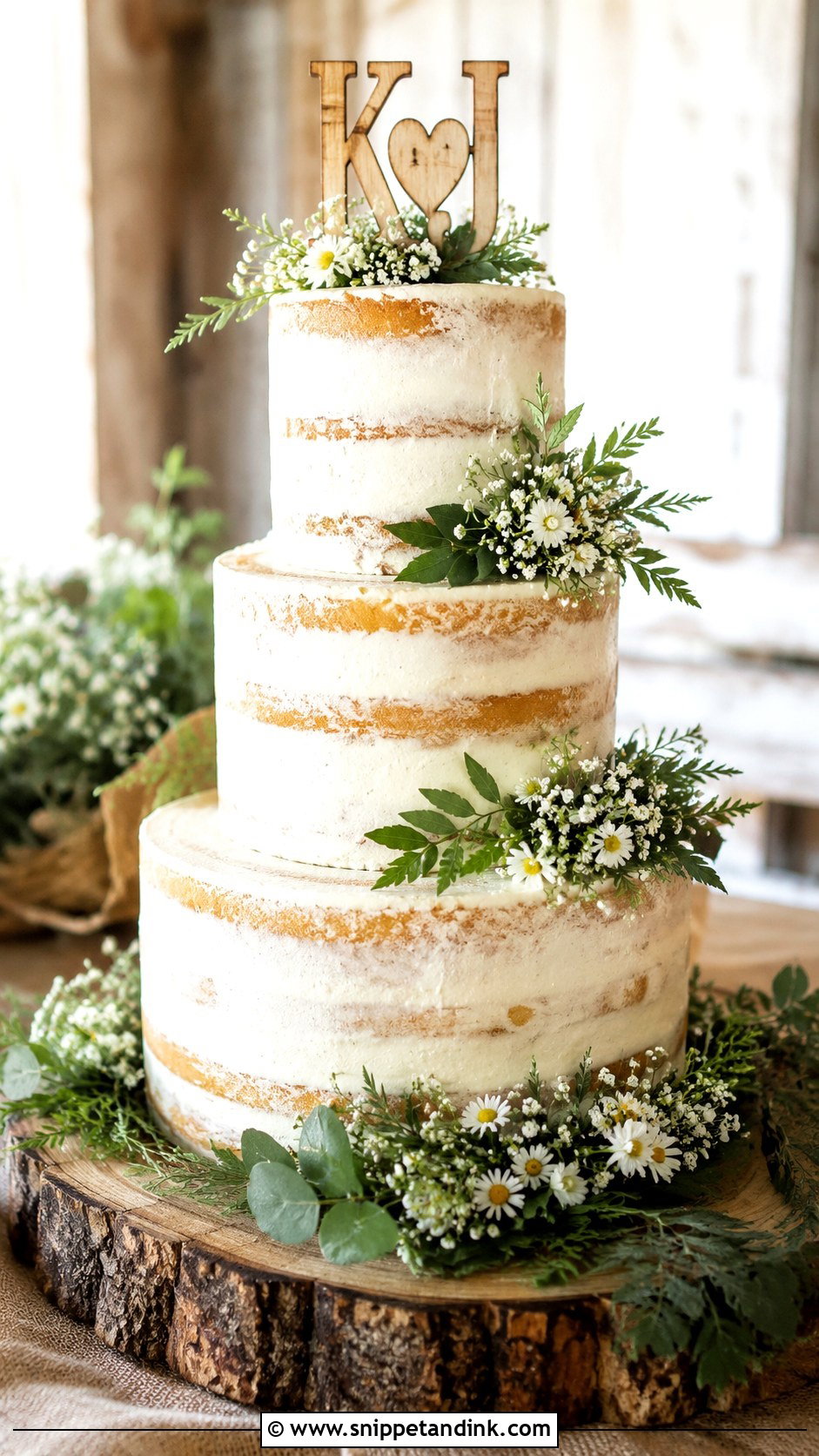
Rustic should look gathered from nature, not unfinished. Greenery, small white flowers, wood initials, berries or a loose floral crown sit well on a semi-naked or textured buttercream cake. Semi-naked cakes dry out faster because the sponge is exposed, so I brush the layers with syrup and set the cake out as late as the schedule allows. Berries need a second look: some decorative ones aren’t edible, so stick to fresh fruit you’d happily eat. A simple tiered shape and neat edges keep it wedding-worthy, and wood slices, plain ceramic stands or linen tables suit it in ivory, sage, cream and warm brown.
21. Beach Wedding Cake Top
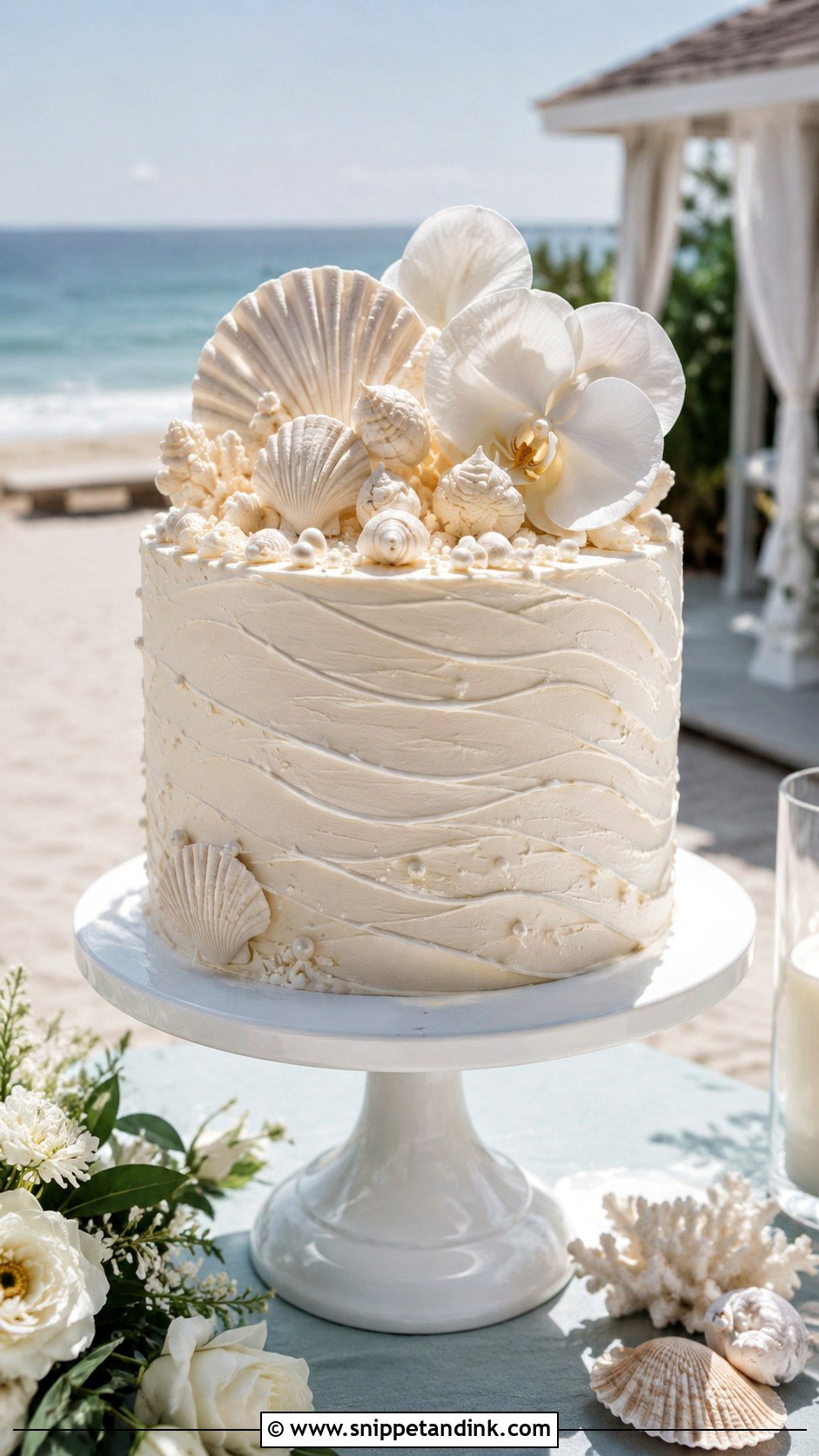
Beach cakes look elegant when they skip the novelty. Rather than a pile of shells, I’d use a few white sugar shells, coral-style sugar pieces, pearls or tropical flowers. A white or sand-colored cake with soft wave-like buttercream carries the coastal feel on its own. Heat is the real problem by the sea. Buttercream softens fast in sun and salt air, so for an outdoor oceanfront reception I suggest a ganache layer under the buttercream or fondant, plus a shaded spot for the table. Finish with a clean acrylic name topper or a small arrangement, and keep the colors light: ivory, pearl, pale blue, soft champagne.
22. Floral Wreath Wedding Cake Top
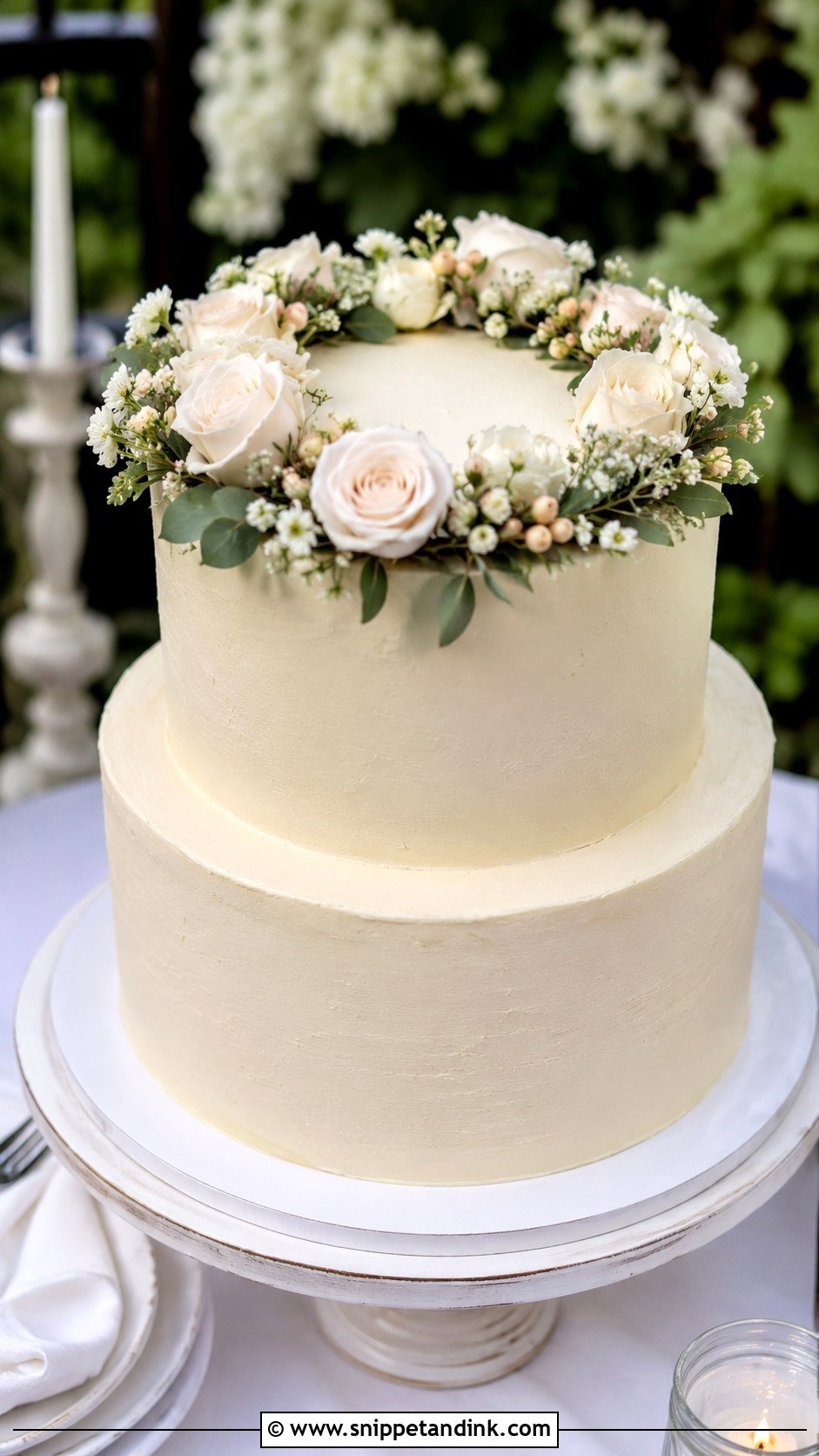
A wreath circles the upper tier with flowers, greenery or sugar blooms, so the cake looks finished from every side. That matters when the dessert table stands in the middle of the room. Tight roses read classic; loose small blooms and greenery read like a garden. Smooth ivory frosting keeps the ring crisp, textured buttercream softens it. I keep the wreath low and slightly in from the edge so the top surface still shows and the knife has a clean path. A small monogram or decorative accent can sit inside the circle.
23. Cake Crown Wedding Cake Top
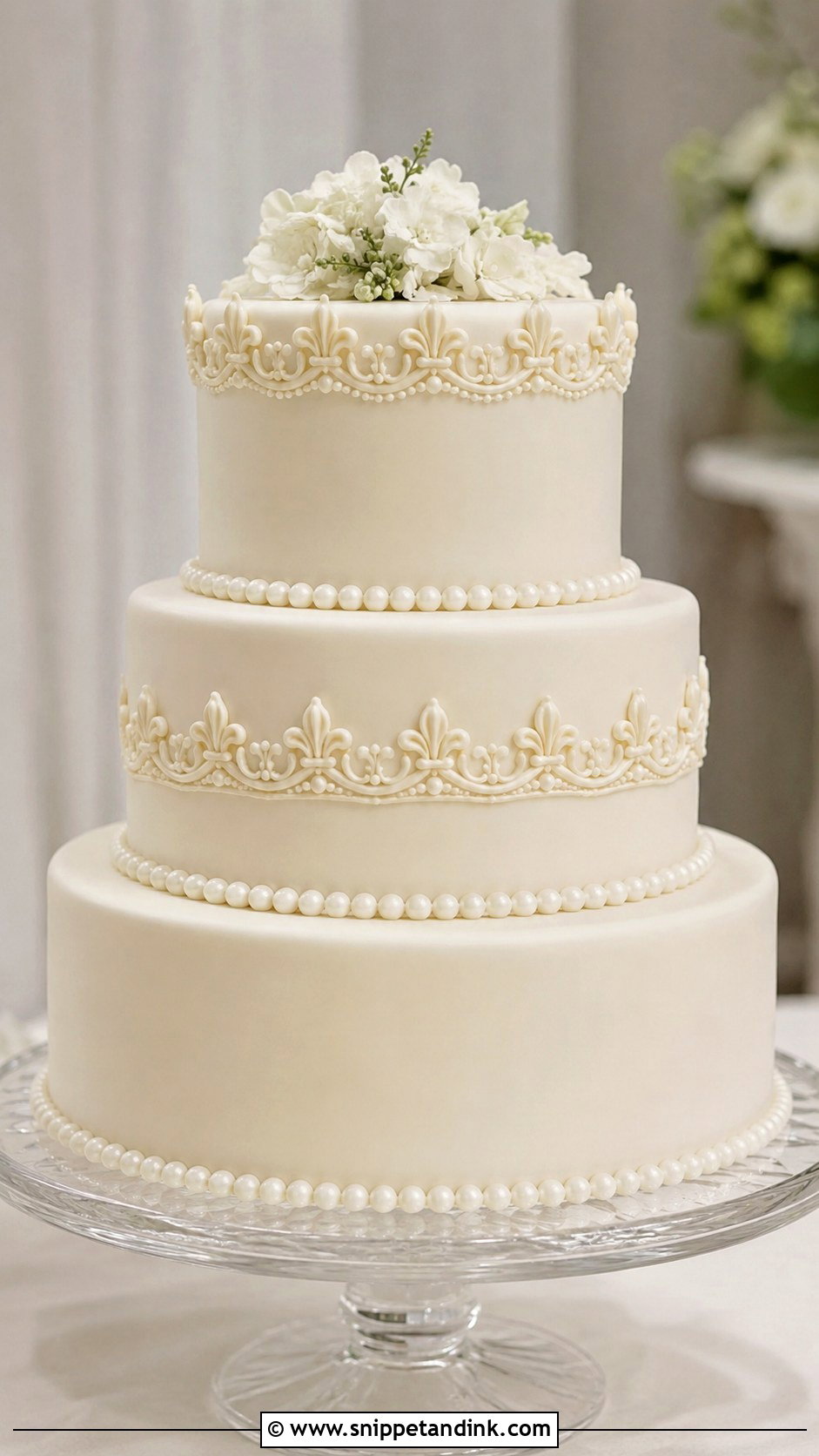
A crown makes the cake regal without a tall figurine. It can be piped buttercream, sugar lace, fondant, metallic accents or fine pearl work around the top edge, and it sits well on a tiered cake with clean white frosting and a few luxury touches. Vintage cakes with ornate piping take it too. The crown has to follow the top tier exactly. I measure the circumference and build it to fit rather than trimming a ready-made piece, because a gap at the back is always visible to someone. Small flowers or pearls just below it soften the line and frame the tier.
24. Lambeth Wedding Cake Top
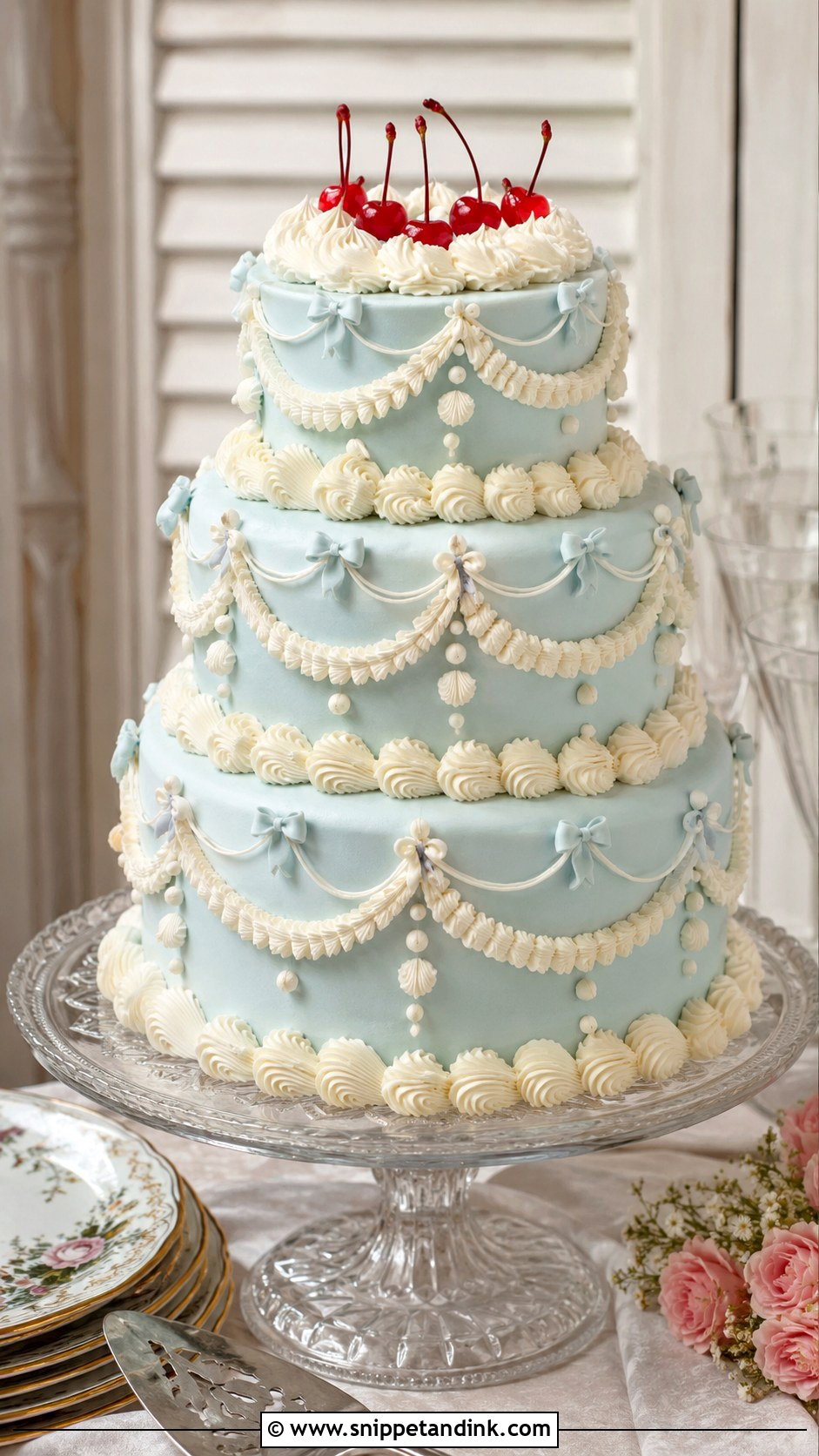
Lambeth is piping as architecture: raised borders, shells, swags and overpiped layers built up so the top itself is the decoration. Ivory, blush, pale blue and butter yellow keep it fresh, and cherries, pearls, bows or small flowers add charm. A heart-shaped Lambeth cake suits intimate weddings, while a tiered one looks dramatic. Each layer of piping has to crust before the next goes on, so it takes hours, and a stiff crusting buttercream holds detail far better than a soft meringue one. Pick a baker who can show you their own Lambeth work, not just reference photos.
25. Modern Sculptural Wedding Cake Top
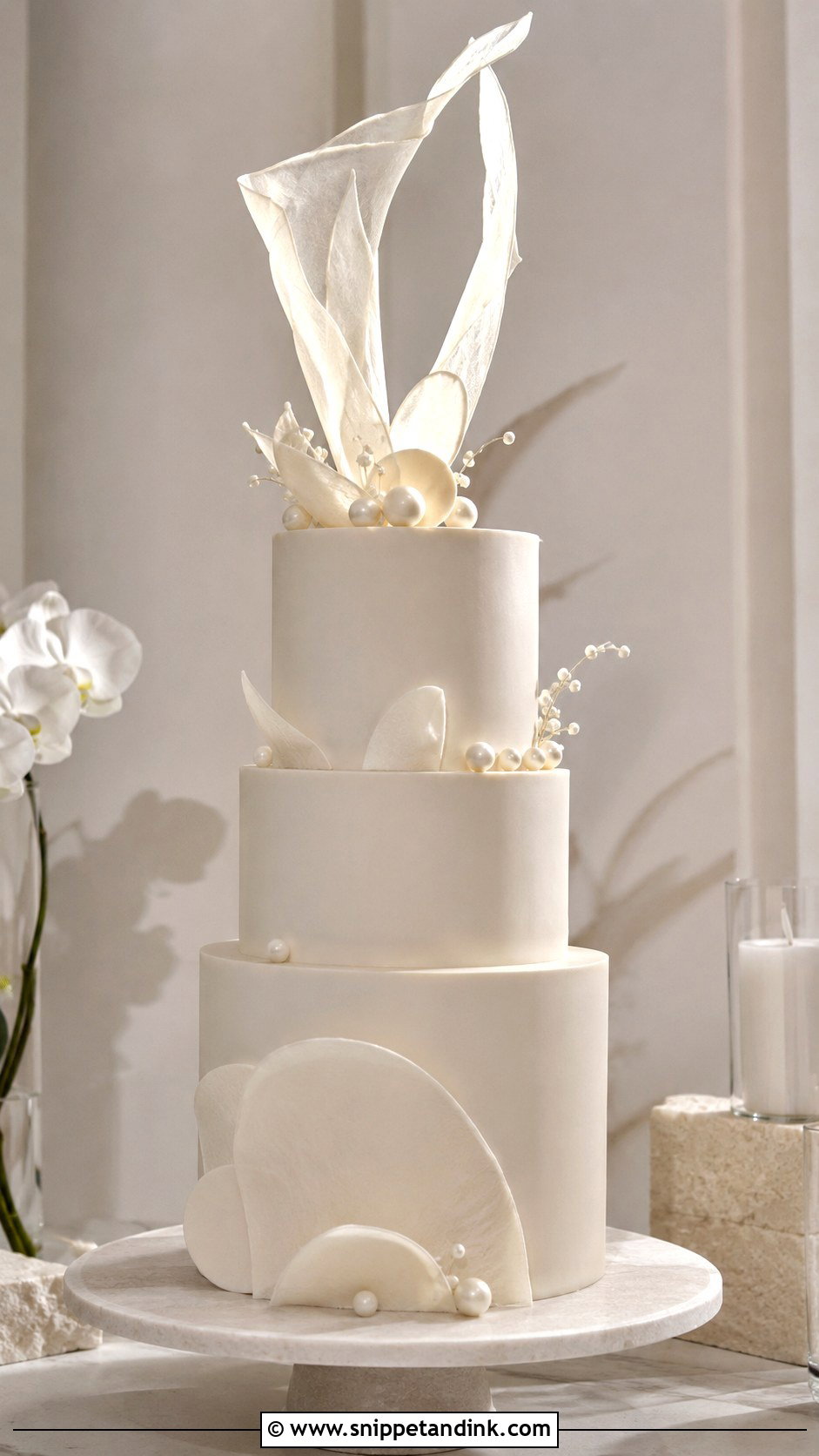
A sculptural top turns the cake into a centerpiece: curved sugar sails, wafer paper waves, abstract fondant shapes or architectural floral placement. It needs a clean base with sharp edges, tall tiers or an unusual silhouette, and calm colors like white, ivory, champagne or soft stone so the shape reads. Large sugar or isomalt pieces are fragile and usually go on at the venue with an internal support, so build that time into the delivery slot. If the cake stands in open space, I check it from all four sides before leaving, since guests will walk right around it. A simple stand and quiet table styling keep attention on the form.
Who Places the Topper on the Day, and What Happens After
Toppers rarely travel on the cake. Tall or fragile pieces snap in a moving car and fresh flowers bruise, so I set the topper at the venue once the cake is on its stand and in its final spot. Agree in advance who does this. When the florist supplies the flowers, they usually hand prepared stems to the baker, who places them. If nobody is named, the topper tends to end up in a box on the gift table.
Heat, sun and timing
Buttercream starts to soften in a warm room, and a heavy topper on a soft tier will lean. Keep the cake out of direct sun and away from heaters or stage lights. For a summer reception outdoors, ask whether the top tier can have a ganache or fondant layer underneath for support. Sugar flowers mind damp more than heat, so a humid tent is their weak spot.
Keeping it afterwards
Lift the topper off before the cake is cut and give it to someone you trust to take home. Acrylic, wood and porcelain only need a wipe with warm water. Sugar flowers last for years in a closed box with a silica gel sachet, away from sunlight, but treat them as a keepsake rather than food once the day is over. Fresh flowers from the top can be pressed that same night if you’d like something to frame.
A Topper Is Only as Good as the Tier Under It
A topper works when it matches the cake’s size, frosting and setting, and fresh flowers, sugar blooms, pearls, bows, monograms, vintage figurines or sculptural pieces can all look right on the right base. Before you settle on one, think about your venue, palette and season, and where the cake will physically stand. Then ask your baker three plain questions: how heavy is it, what touches the frosting, and who places it on the day. Clear answers to those usually mean a top that looks balanced from every side.


Leave a Reply