
Butterfly wedding cakes give a tiered cake something it rarely has: a sense of movement. That’s why I suggest them for garden weddings, spring receptions and airy outdoor venues, though a gold or pearl version suits a ballroom just as well. They fit the current interest in textured buttercream, pressed flowers, sculptural tiers and retro piping. The wings can be wafer paper, gum paste, fondant, royal icing, chocolate or simply painted on, and each material behaves differently on the day. Below are 25 designs, from ivory and understated to colorful and metallic.
Wafer Paper Wings Hate Humidity; Gum Paste Wings Don’t
The first thing I ask a couple who wants butterflies is where the cake will stand, because the wing material has to suit the room.
Wafer paper
Light, translucent and easy to color. It’s the most realistic material, but it absorbs moisture. In a humid marquee or next to a damp buttercream, the wings can curl or collapse within hours. I add wafer paper butterflies on site, at the last stage of setup.
Gum paste and fondant
These dry hard and hold their shape for weeks, so I can make them well ahead. They’re heavier and less see-through, but they’re the safest choice for summer weddings, and they keep as a memento.
Chocolate and isomalt
Chocolate wings melt in warm rooms and sun, and clear isomalt wings turn sticky in humidity. Both look striking indoors with good air conditioning, but I wouldn’t use either outdoors in summer.
1. Butterfly Wedding Cake With Sugar Flowers
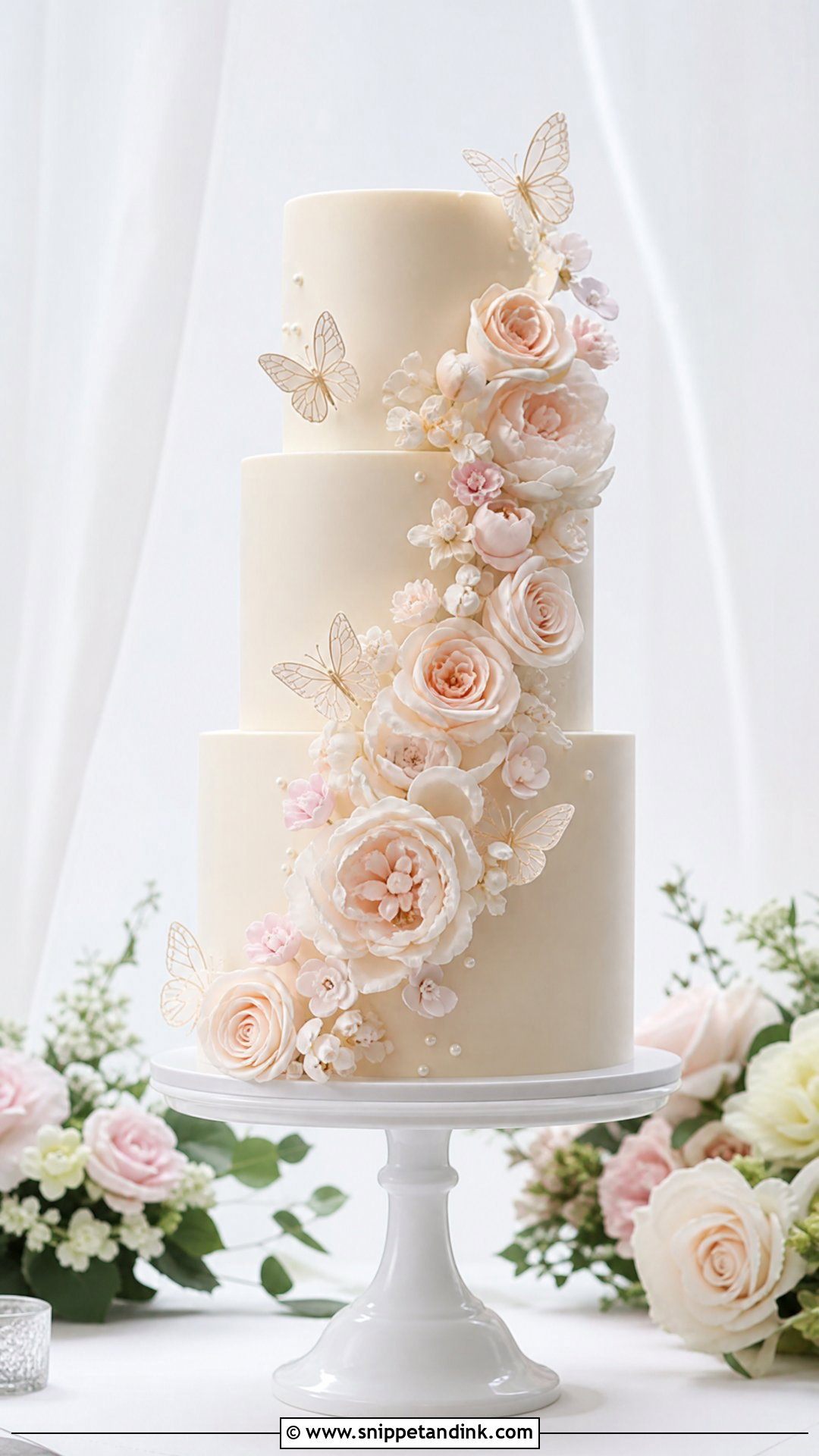
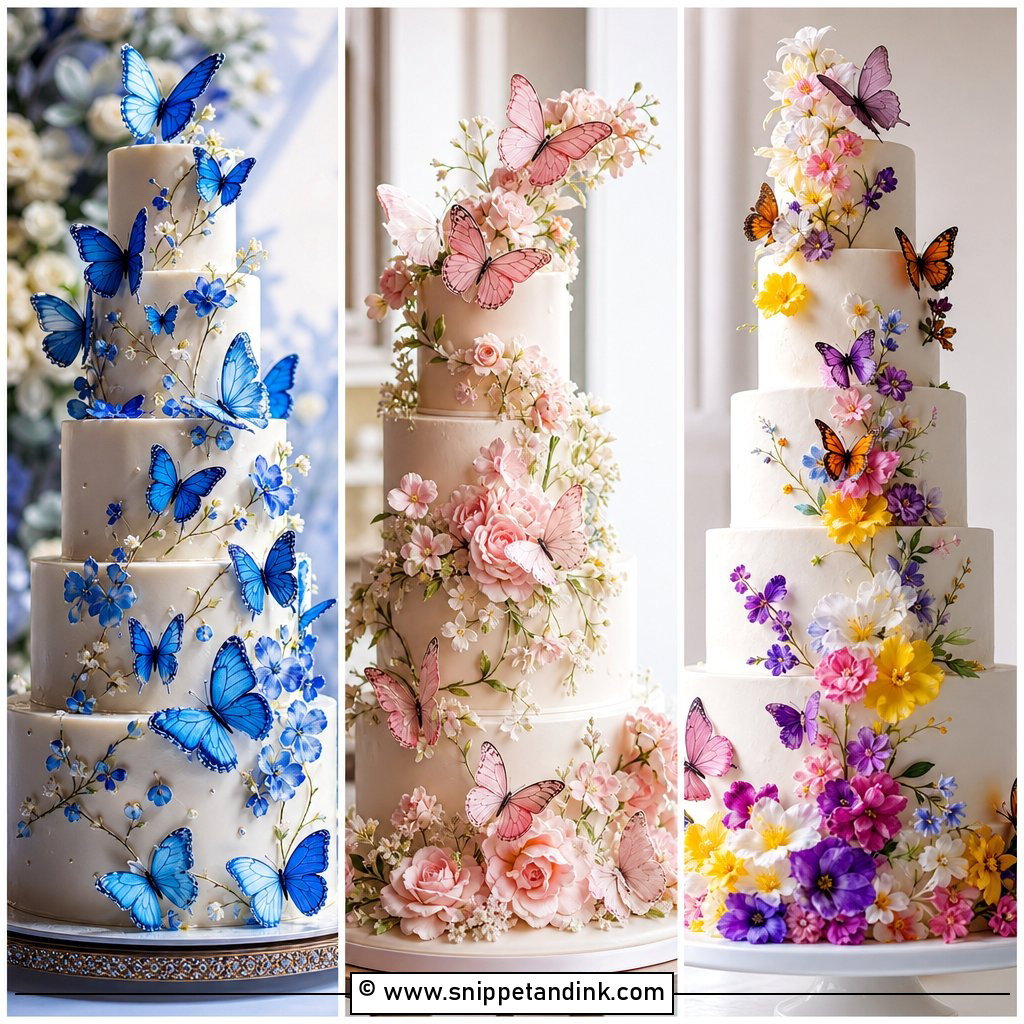
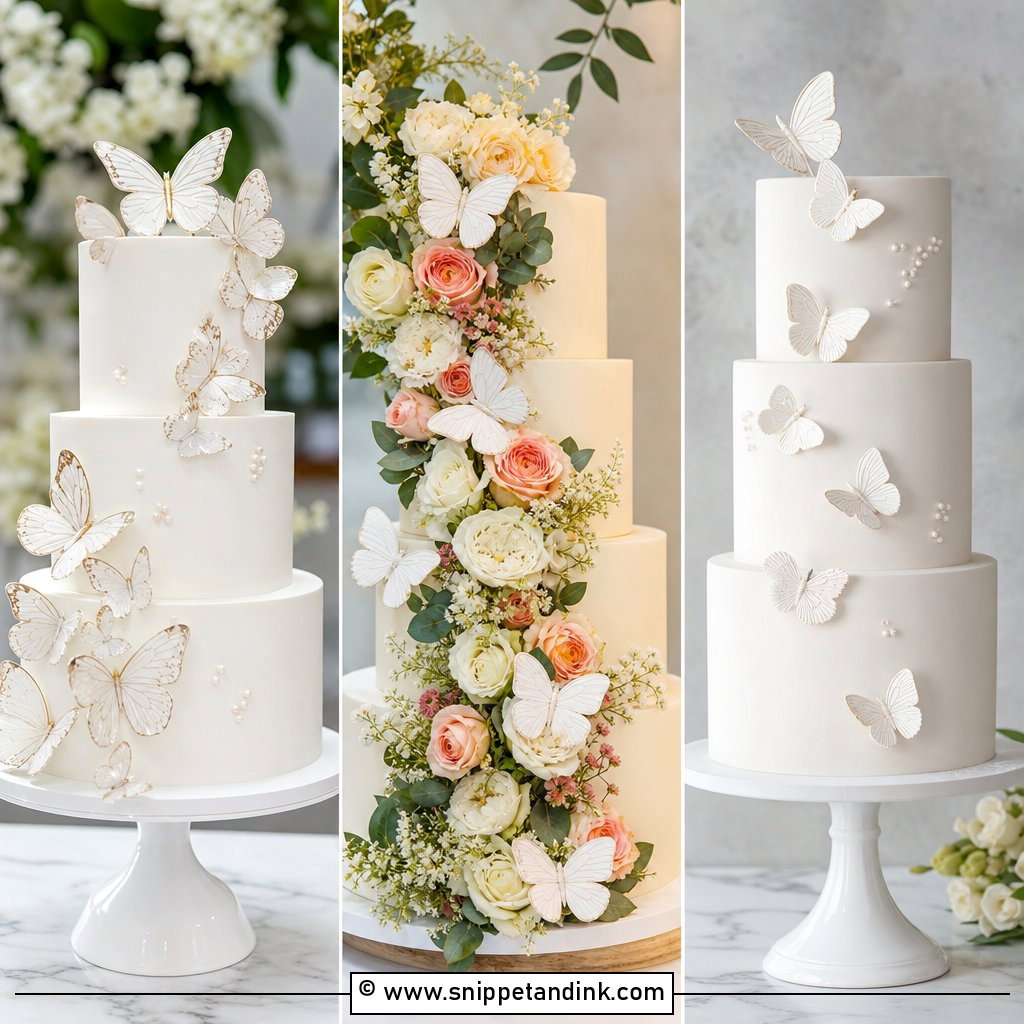
Sugar flowers and butterflies are the classic pairing, and the one I’d pick if you want the cake to last as a keepsake. I usually start with smooth ivory fondant or buttercream, then run a trail of sugar roses, peonies, orchids or ranunculus across the tiers, with a few wafer paper butterflies perched on the petals. Keep the palette close to your florist’s so the cake looks like part of the room. Blush, cream, champagne, pale peach and soft lavender all work. A tall white stand with greenery around it finishes the display.
2. White Butterfly Wedding Cake
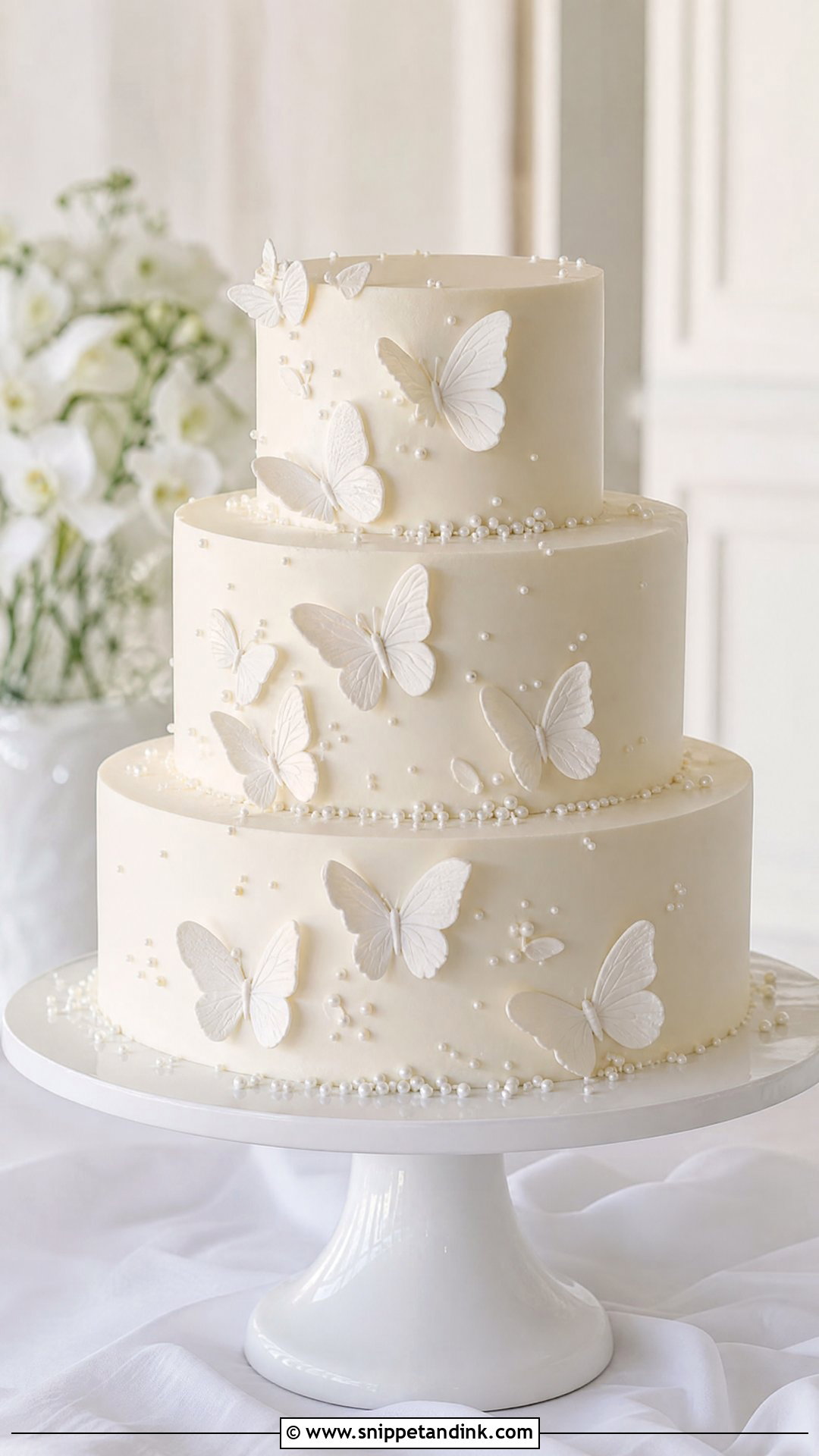
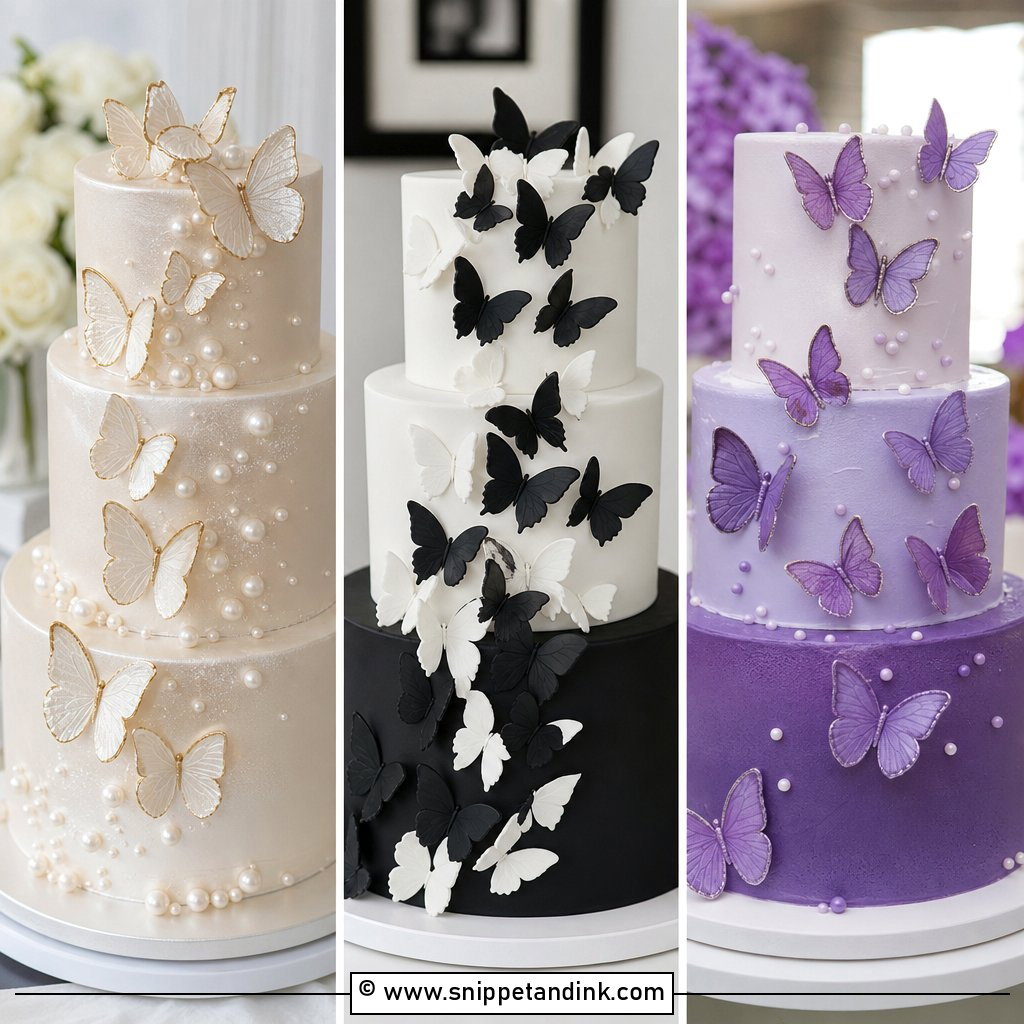
White on white looks simple, but it’s where texture has to do all the work. I combine white buttercream, pearl details, fondant butterflies and soft piping, sometimes with a light shimmer dust. The mistake I see most is using butterflies all the same size, laid flat; it looks like stickers. Mixing sizes and lifting the wings at an angle catches shadow and gives depth in photos. A three-tier round cake suits it, with butterflies rising in a loose path. Minimal weddings, church receptions and modern venues all suit this one.
3. Blue Butterfly Wedding Cake
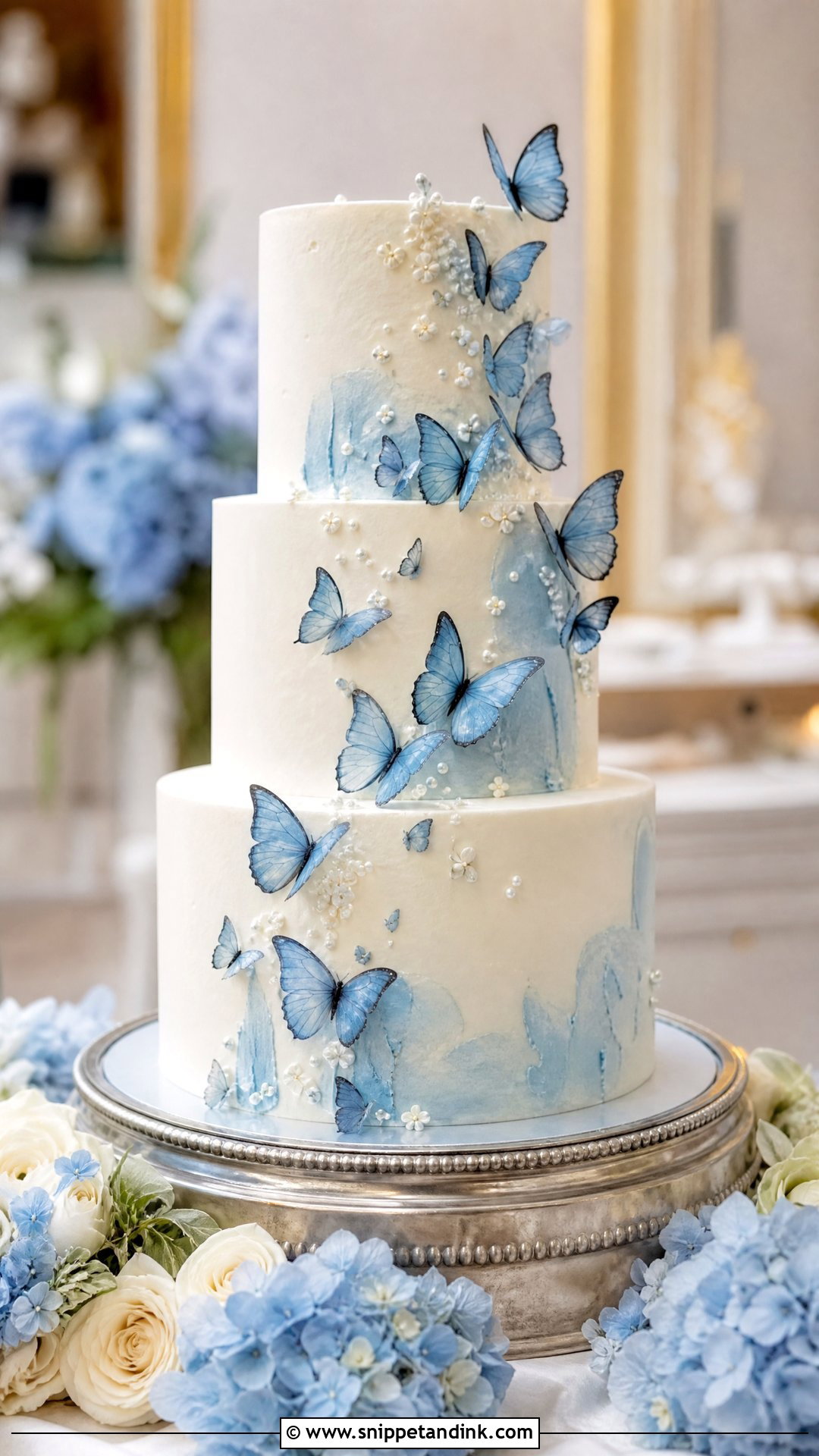
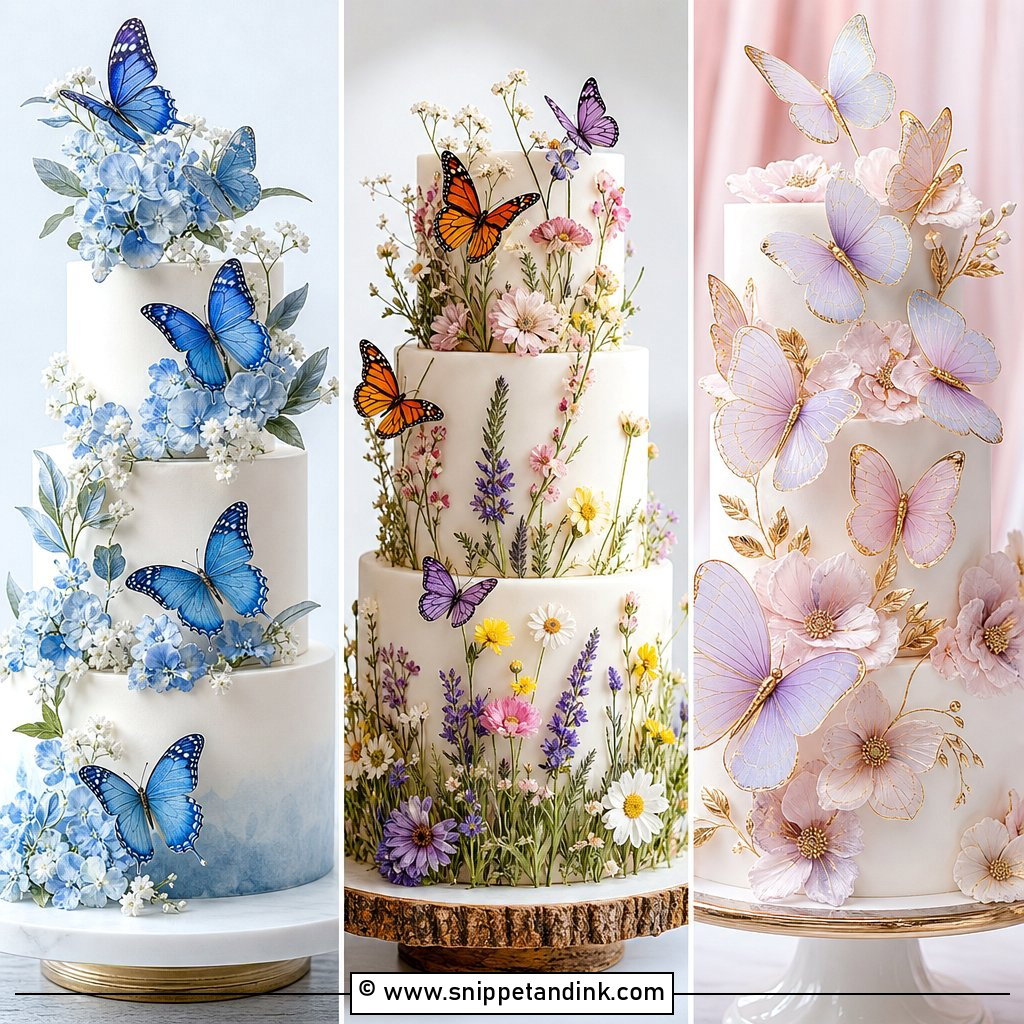
Blue butterflies feel calm and a little magical. Pale blue suits spring and summer; dusty blue looks more formal. I start with white or ivory tiers and add blue wafer paper butterflies, watercolor shading or blue florals. For a stronger statement, ice the bottom tier light blue and keep the upper tiers white. Silver pearls, tiny sugar blossoms and a satin ribbon at each tier base finish it. Waterfront weddings and blue-and-white palettes are where I see this design most.
4. Pink Butterfly Wedding Cake
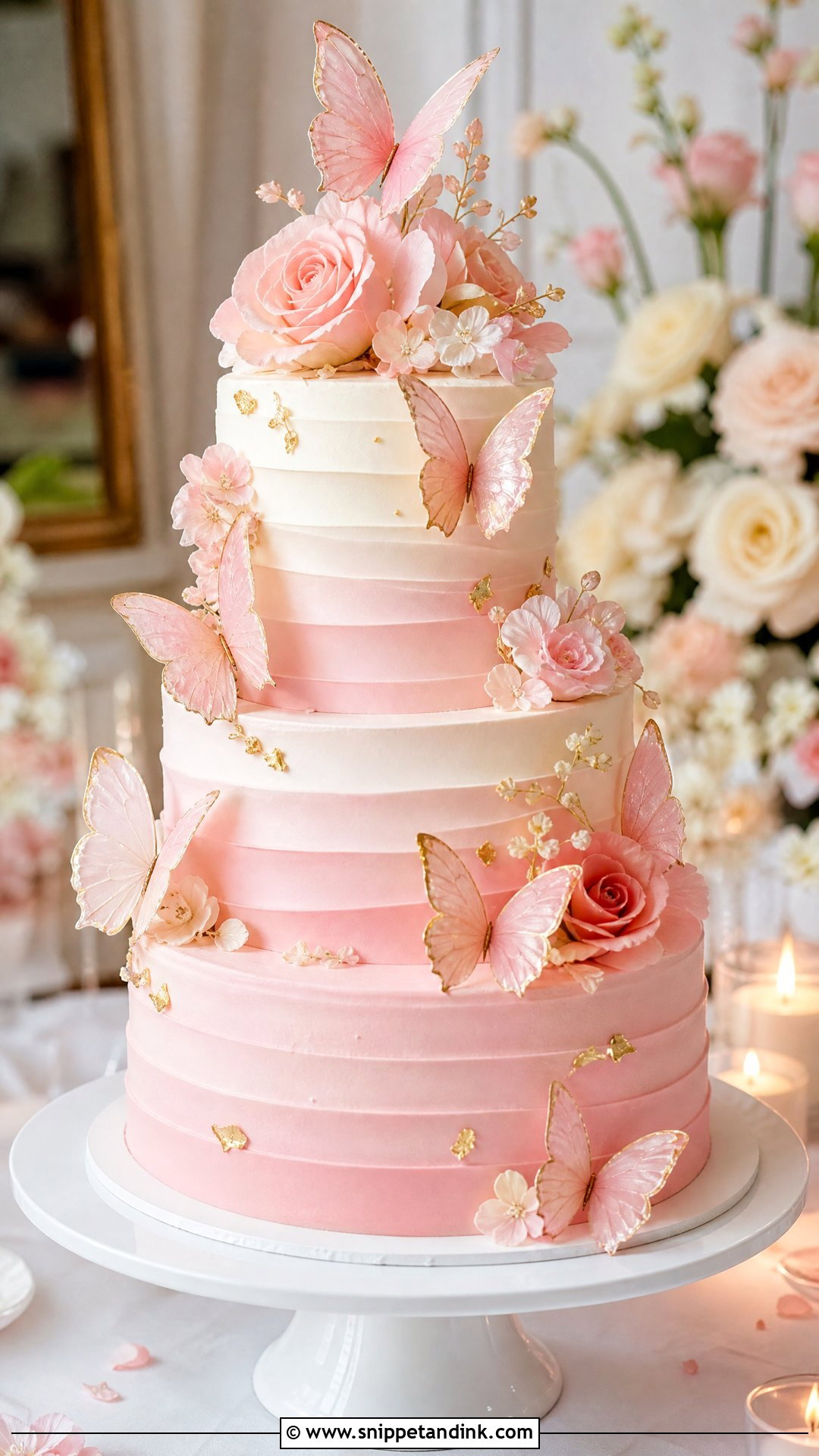
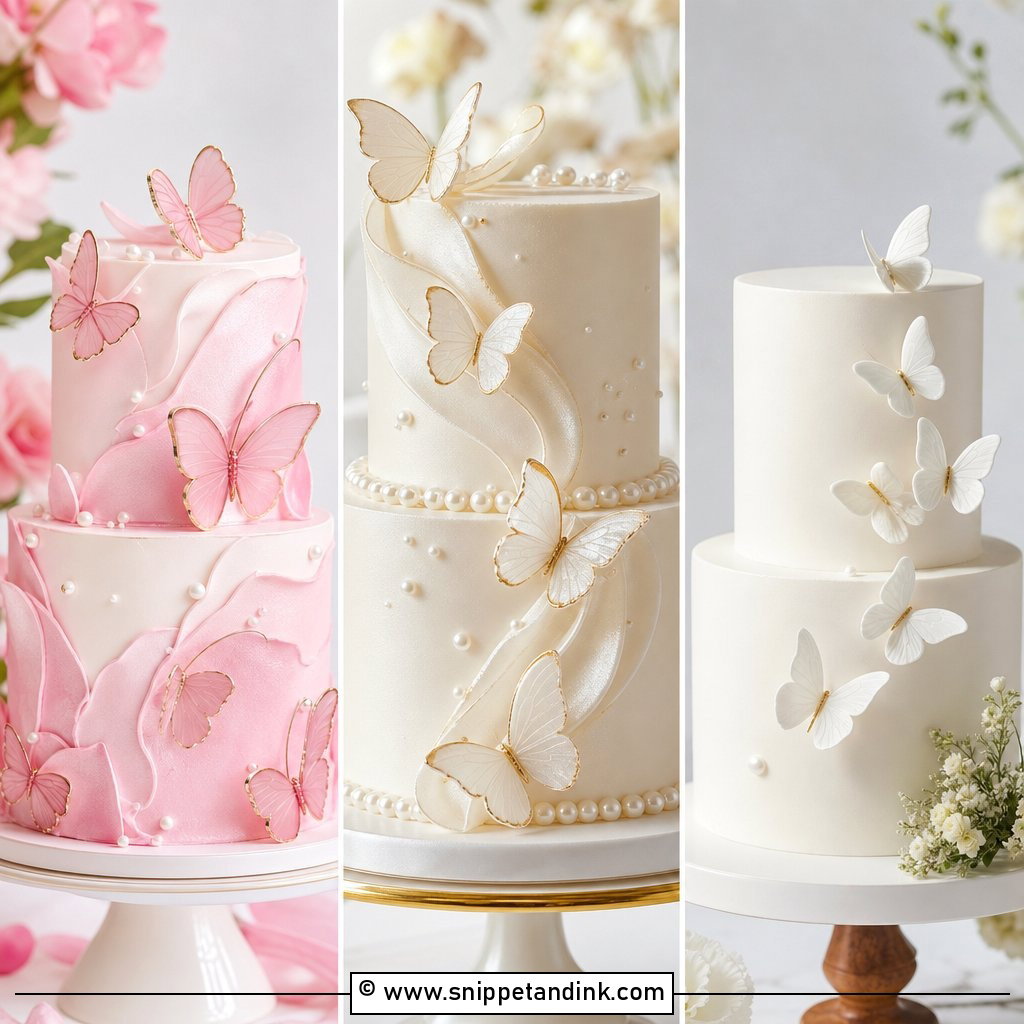
Pink can tip into a child’s birthday cake fast, so shade choice matters. Blush, rose, mauve or dusty pink look grown-up; bright bubblegum doesn’t. Smooth buttercream tiers with pink sugar butterflies and small floral clusters feel romantic. An ombre from deeper pink at the bottom to ivory at the top adds dimension, and gold accents suit pink well. Keep the flowers delicate so the butterflies are still visible against them.
5. Purple Butterfly Wedding Cake
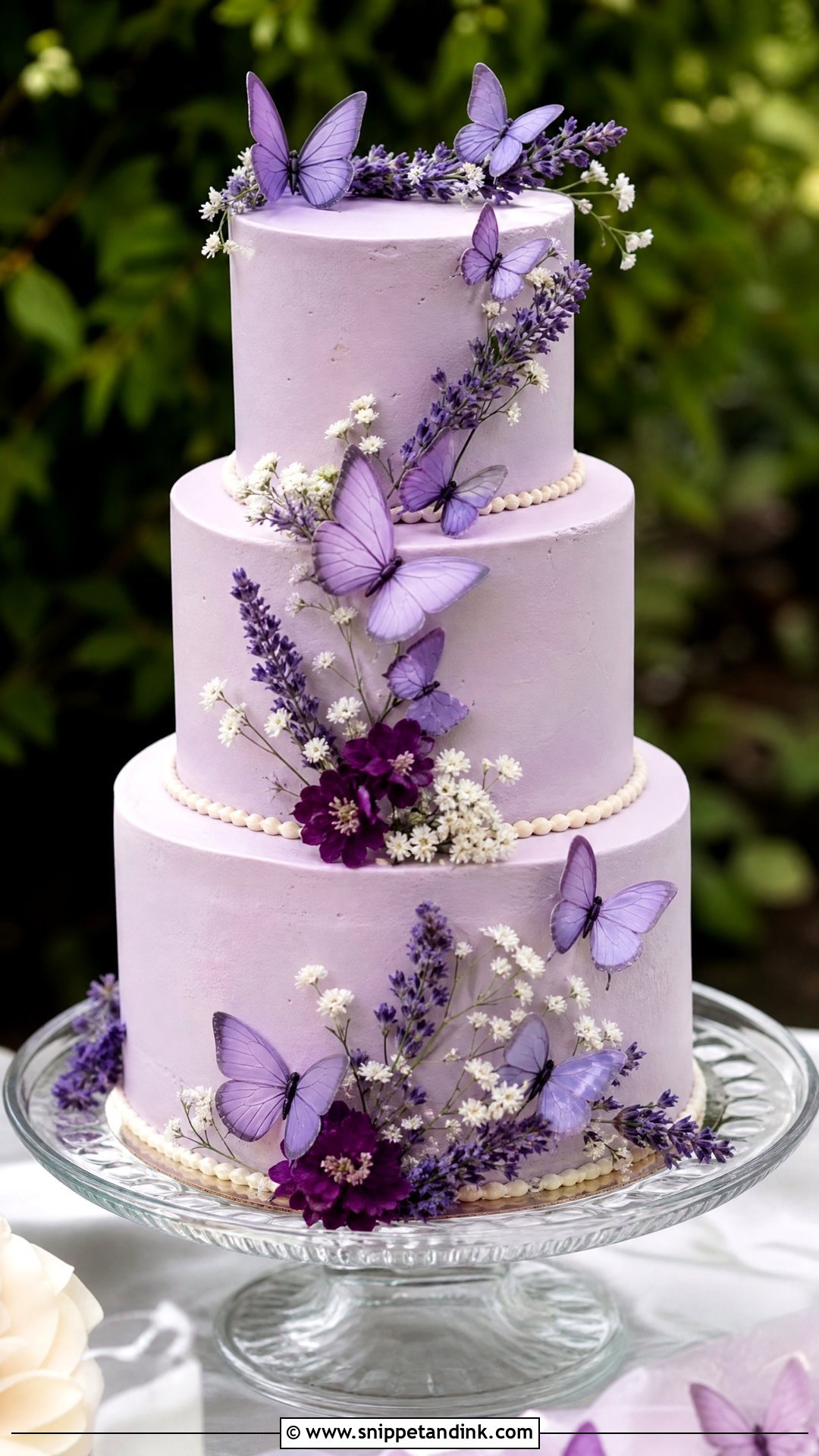
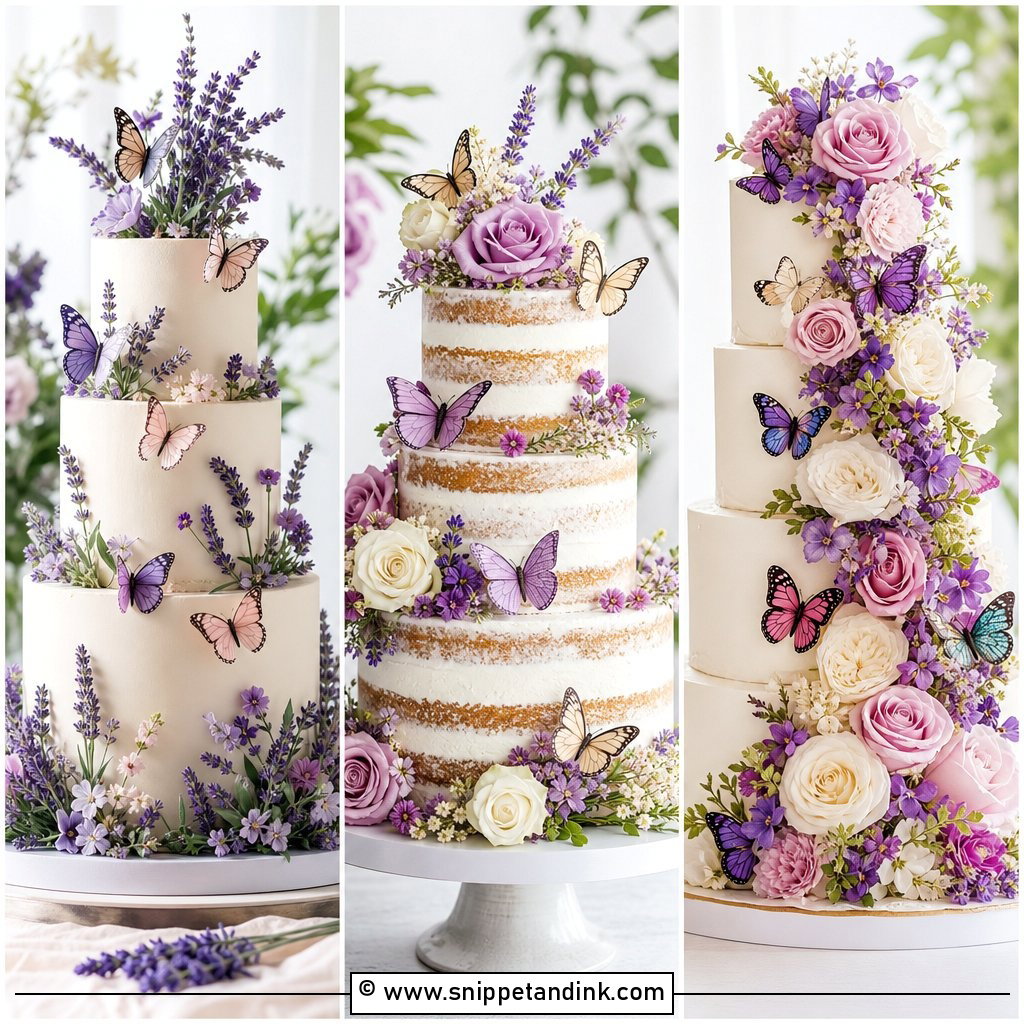
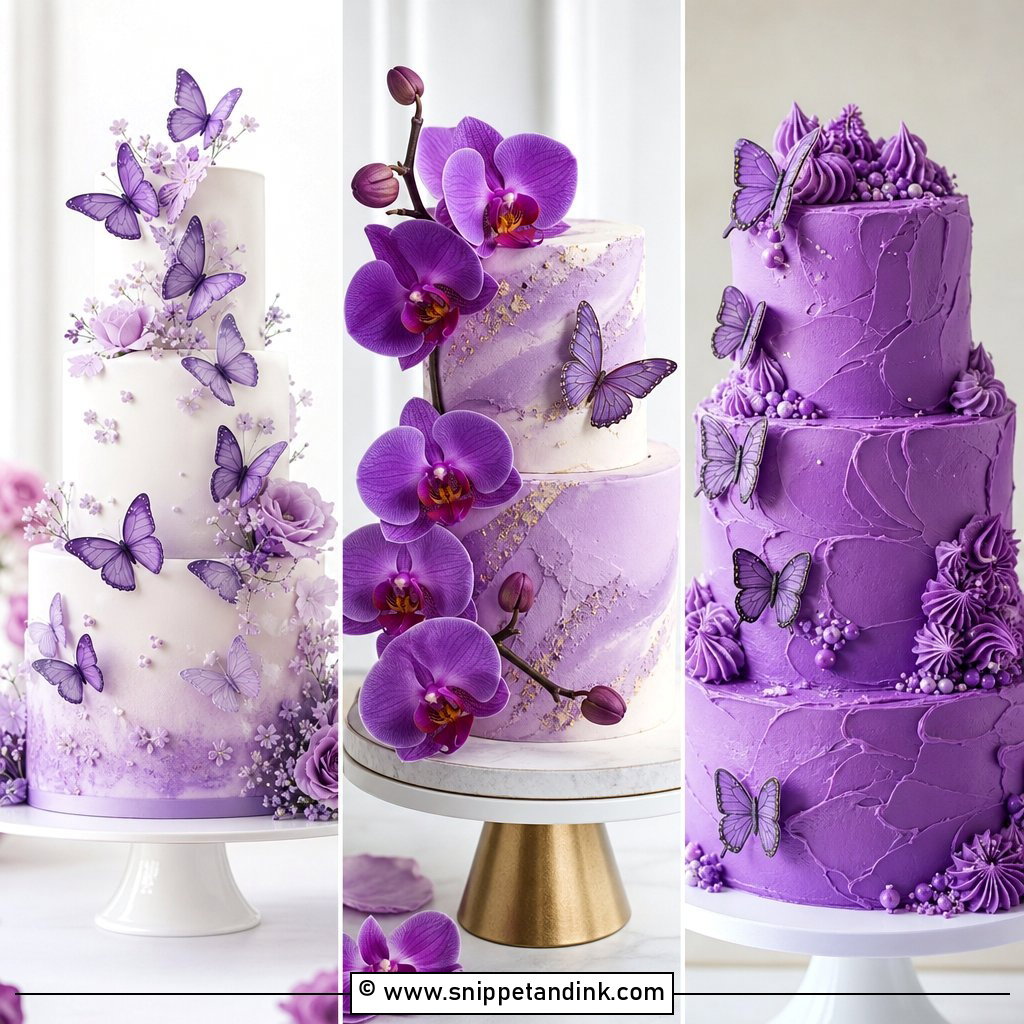
A purple butterfly wedding cake suits lavender, lilac, plum and violet palettes. A lavender buttercream base feels romantic; ivory tiers with purple butterflies look more classic. Sugar lavender sprigs, tiny white blossoms or pressed edible flowers keep it natural. Purple fades in strong light, so I keep the cake out of the sun until it’s served. For a bolder look, pale purple butterflies with darker plum florals around the base add depth.
6. Gold Butterfly Wedding Cake
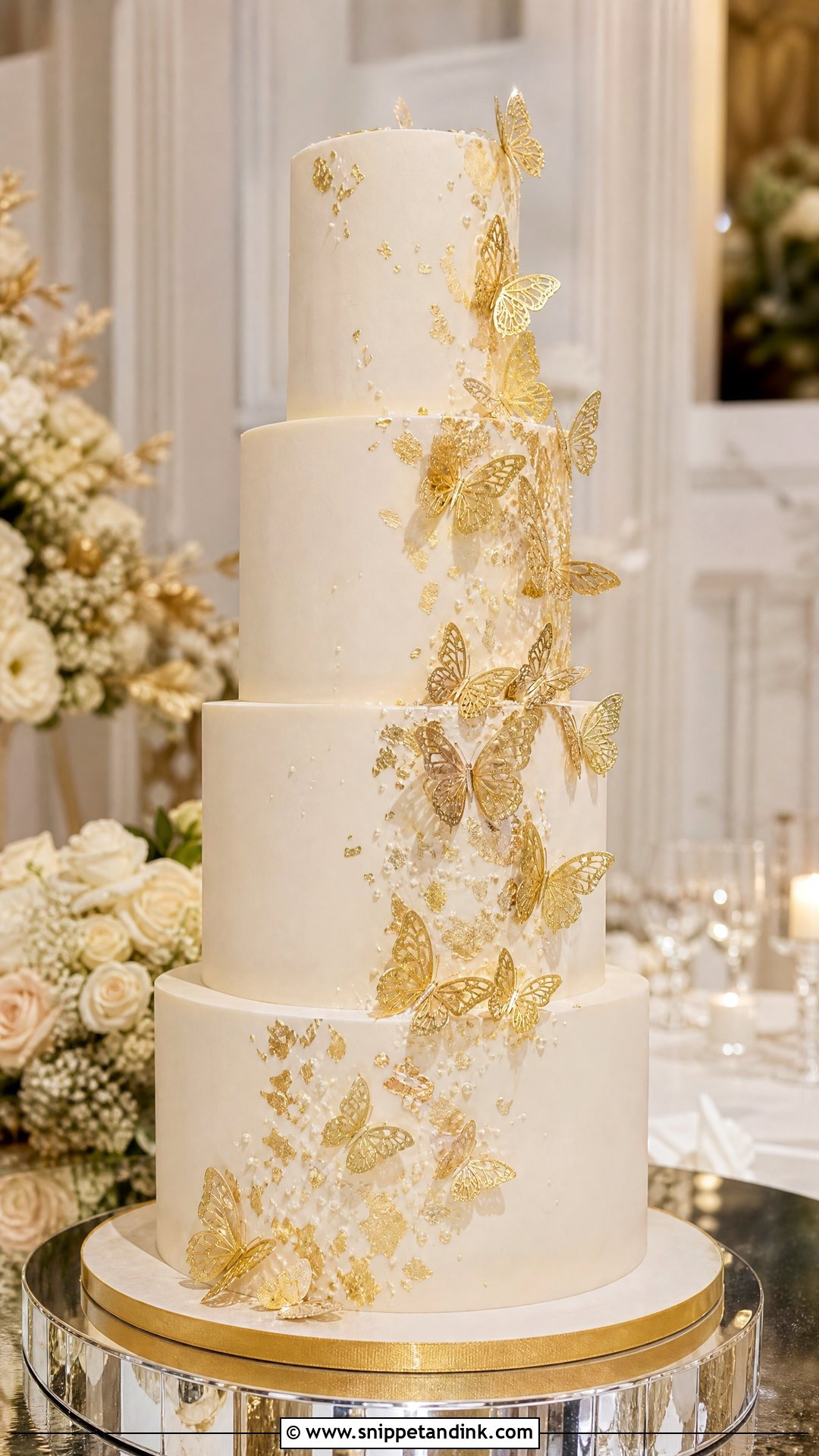
Gold butterflies look luxurious when there’s enough white around them. I use ivory fondant or smooth buttercream, then add edible gold leaf, gold-painted sugar butterflies and small pearls, often cascading from the top tier down one side like jewelry. Gold leaf is applied with a dry brush onto a slightly tacky surface; it won’t stick to dry fondant or very soft buttercream. Ballroom weddings, black-tie receptions and evening celebrations suit it. A mirrored stand or gold-rimmed table finishes the display.
7. Floral Butterfly Wedding Cake
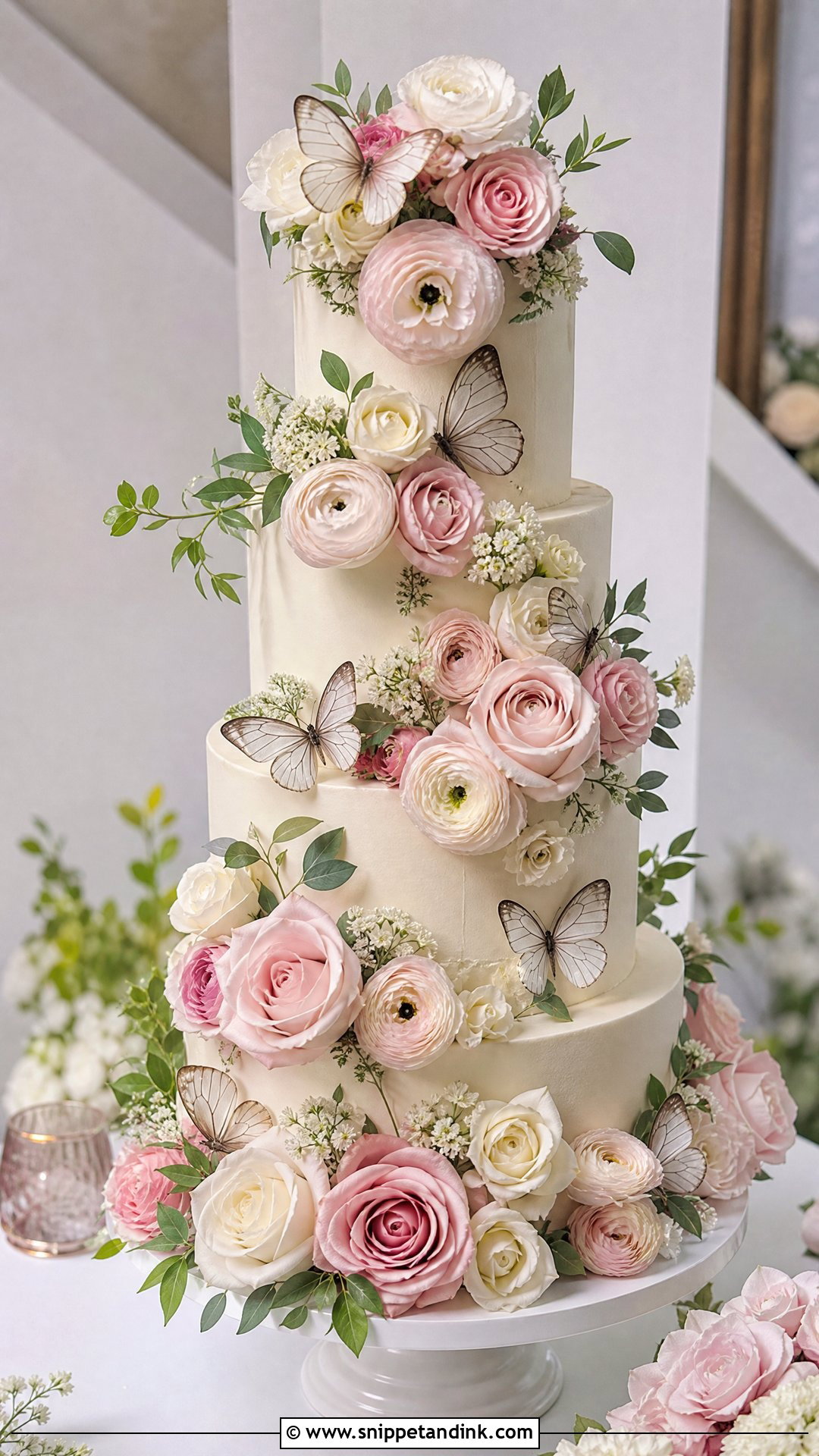
A floral butterfly cake works best when it echoes your bouquet. I match the flowers, then weave butterflies between them so the cake looks alive. Fresh flowers can be used if they’re food-safe and properly prepared, while sugar flowers give more control and can be kept afterward. Buttercream texture, pressed petals or piped vines can fill the gaps. Botanical venues and outdoor ceremonies, where flowers are already the focus, are the natural home for this design.
8. Garden Butterfly Wedding Cake
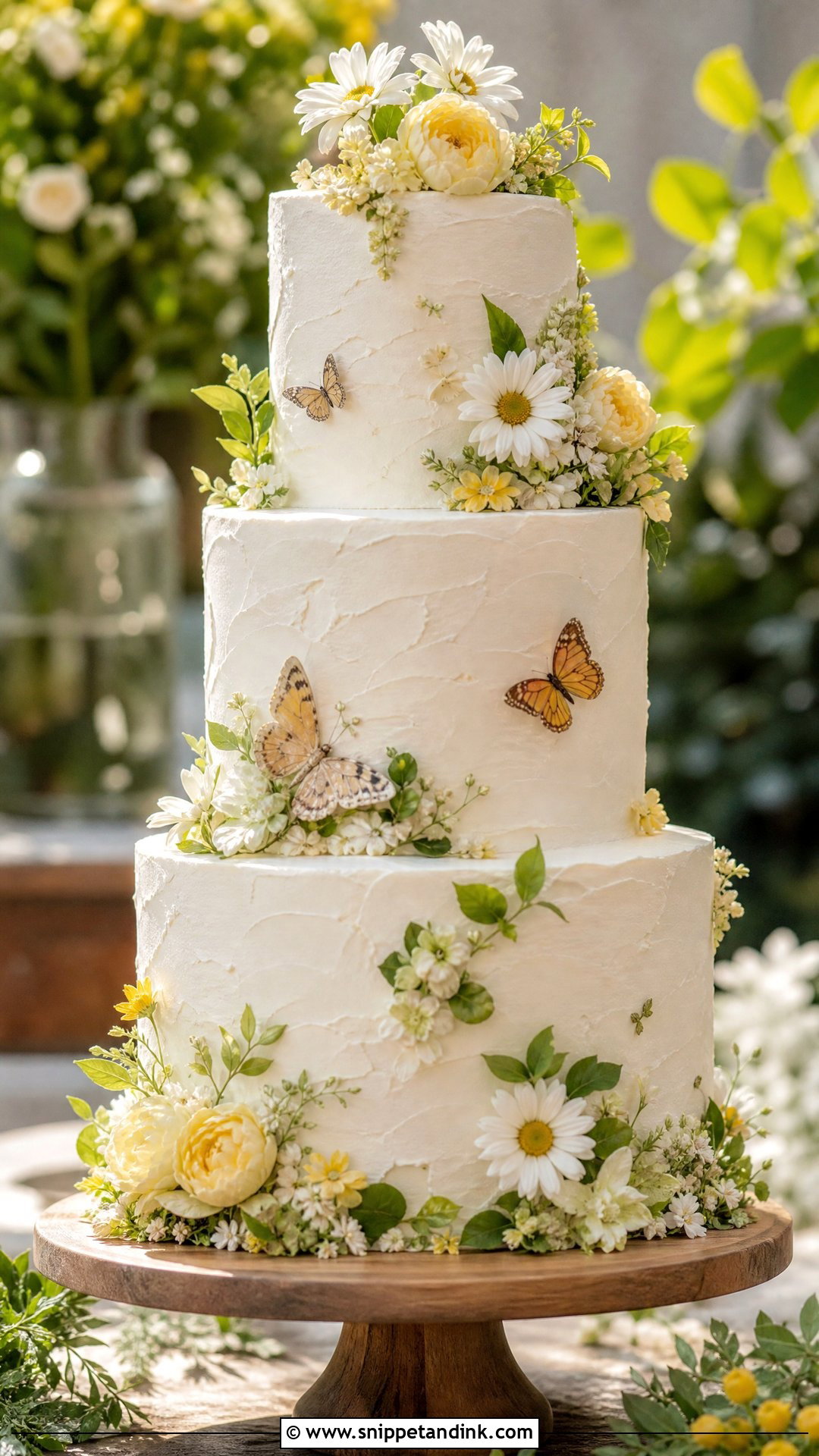
Garden cakes shouldn’t look perfect. I use ivory buttercream with a slightly textured finish, tiny piped greenery, edible flowers and butterflies placed as if they’re moving along a path. A little asymmetry makes it look organic. Chamomile, lavender, daisies, small roses and greenery-style sugar details all work. Tented weddings, backyard receptions and greenhouse venues suit it. A wooden or ceramic stand keeps it warm and natural.
9. Vintage Butterfly Wedding Cake
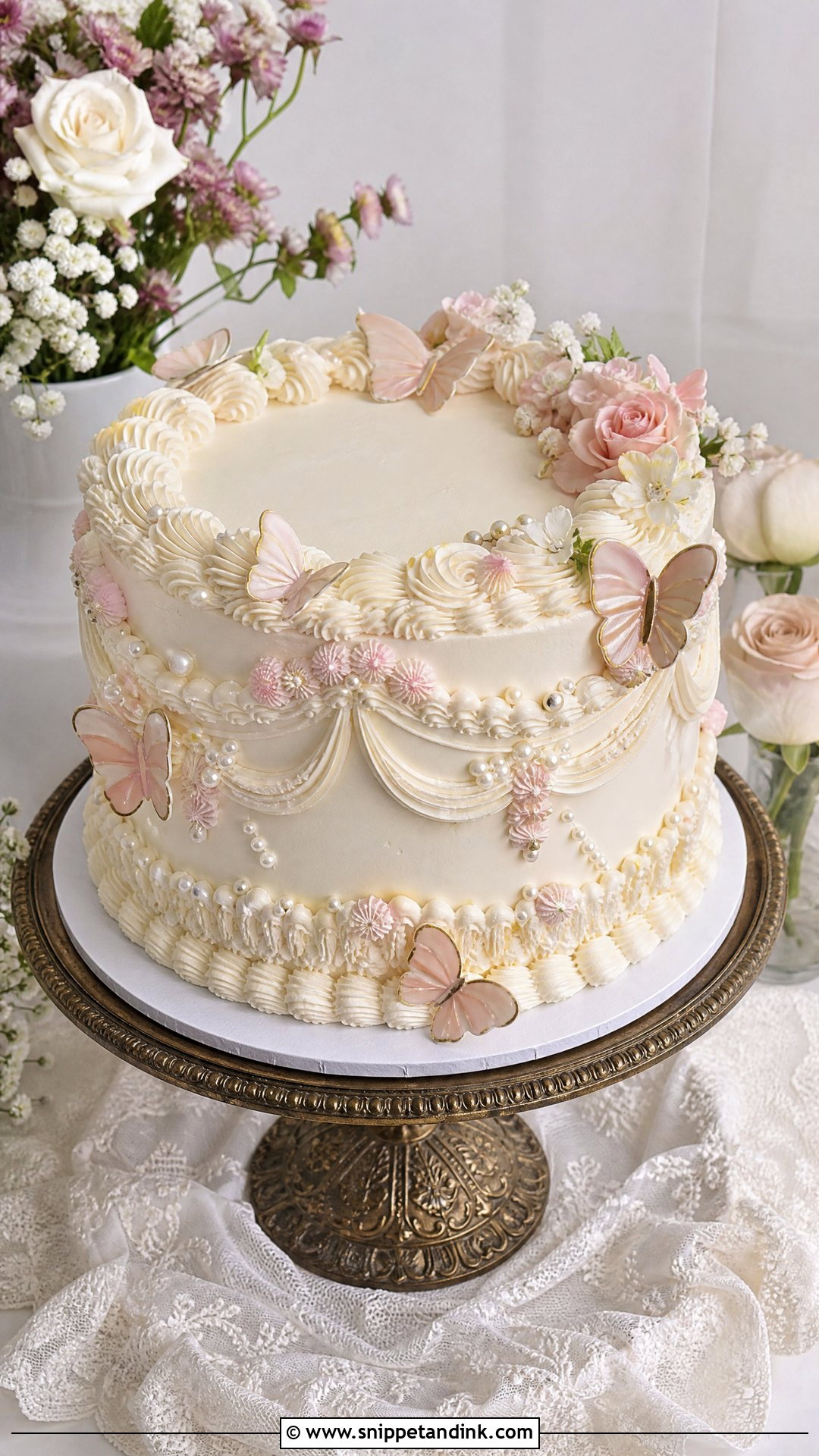
Vintage piping and butterflies are an easy match. Lambeth-style borders, shell piping, pearl dots, swags and soft pastels set the scene, with small butterflies around the piped frames or one larger butterfly on top. Buttercream gives that soft vintage texture better than fondant. The cake can be round, heart-shaped or tall and narrow. Ivory, blush, pale yellow and powder blue look old-fashioned while still fresh.
10. Buttercream Butterfly Wedding Cake
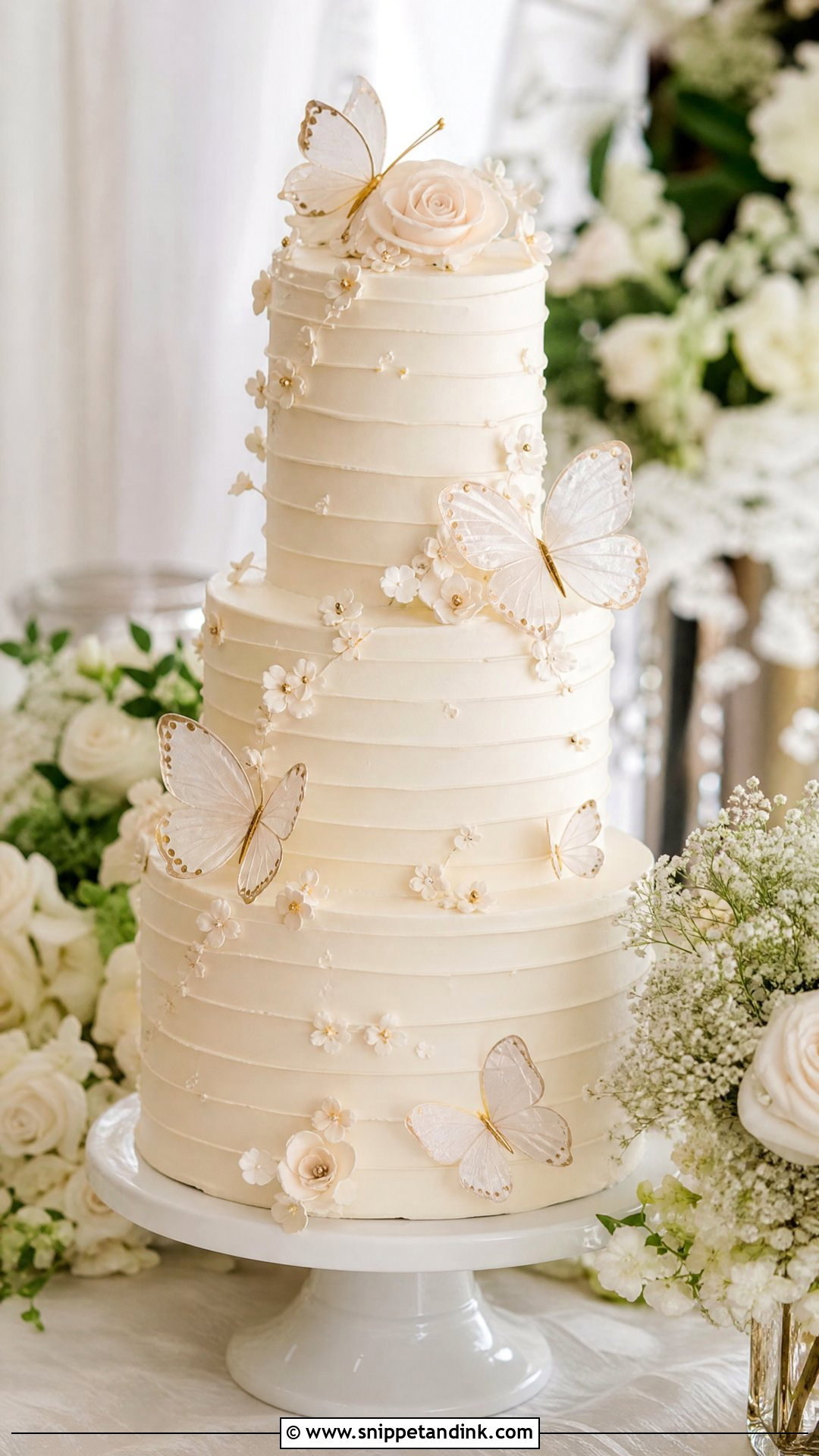
Buttercream gives butterflies something to nestle into: swirls, florals or piped vines. The finish can be smooth, ribbed, rustic or palette-knifed. For a clean look, I use ivory Swiss meringue buttercream with white and champagne butterflies. One practical note: buttercream is moist, and wafer paper wings resting against it for hours will soften and droop, so I attach them with a small dot of piping and keep the wings lifted off the surface. Buttercream also tastes familiar and suits many flavors.
11. Fondant Butterfly Wedding Cake
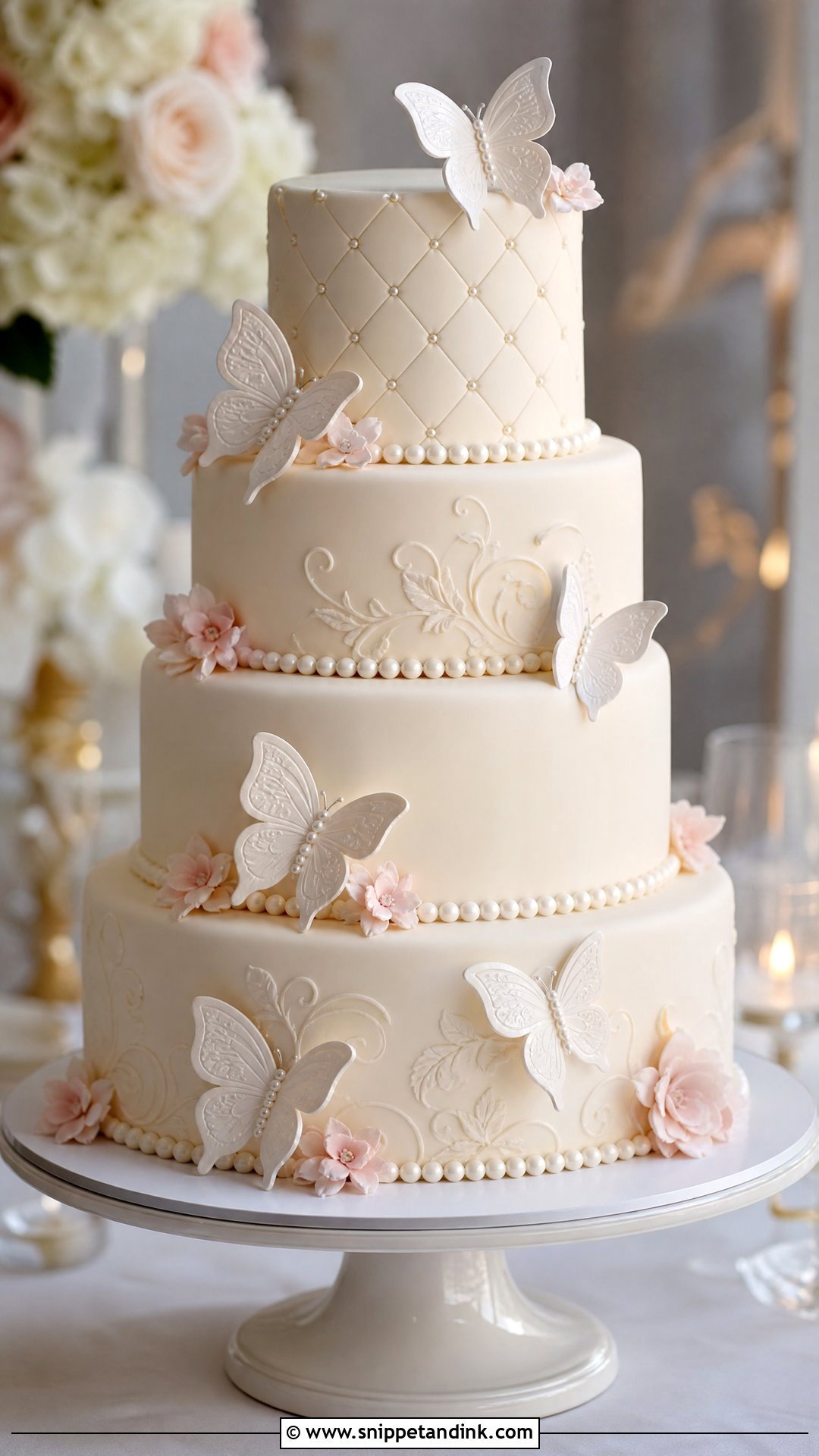
Fondant gives a smooth, sculpted surface and crisp edges, and detailed decorations stay sharp on it. I use thin gum paste butterflies with slightly lifted wings for a realistic look, dried for a day or two over a folded card so the wings hold their angle. An embossed pattern, pearl border or quilted tier adds interest. White, ivory, champagne and blush are the safest shades. Large tiered cakes suit fondant because the clean surface lets every butterfly stand out.
12. Wafer Paper Butterfly Wedding Cake
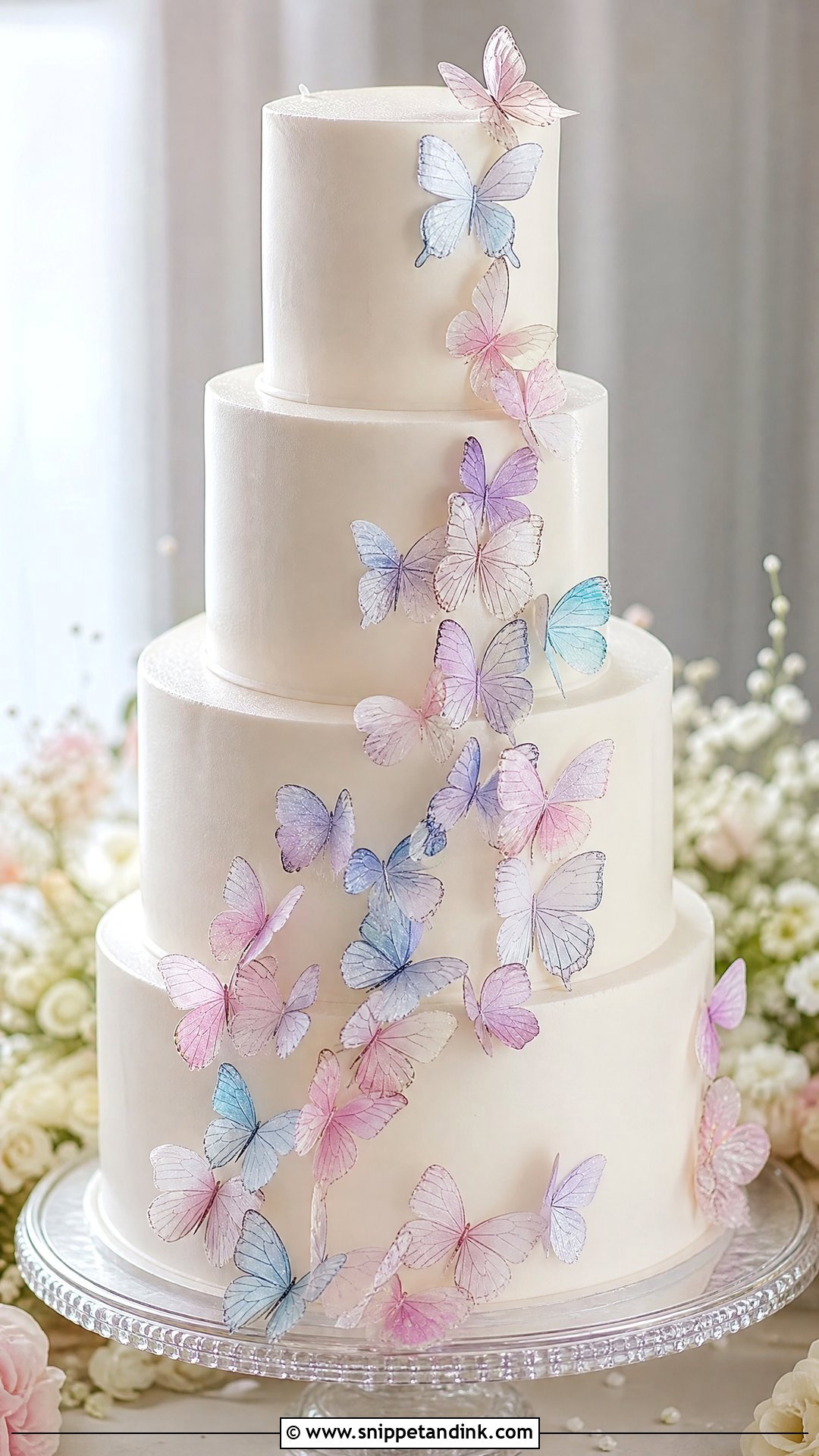
Wafer paper butterflies are thin and translucent, so they look like they’re fluttering. They’re easy to color: printed, painted or dusted with shimmer. They work on smooth buttercream, fondant or semi-naked cakes, and a cascade from top to bottom gives the most movement. The weakness is moisture. In humid weather, wafer paper curls and wilts, so I place the butterflies as late as possible and keep them away from fresh flowers that hold water.
13. Pearl Butterfly Wedding Cake
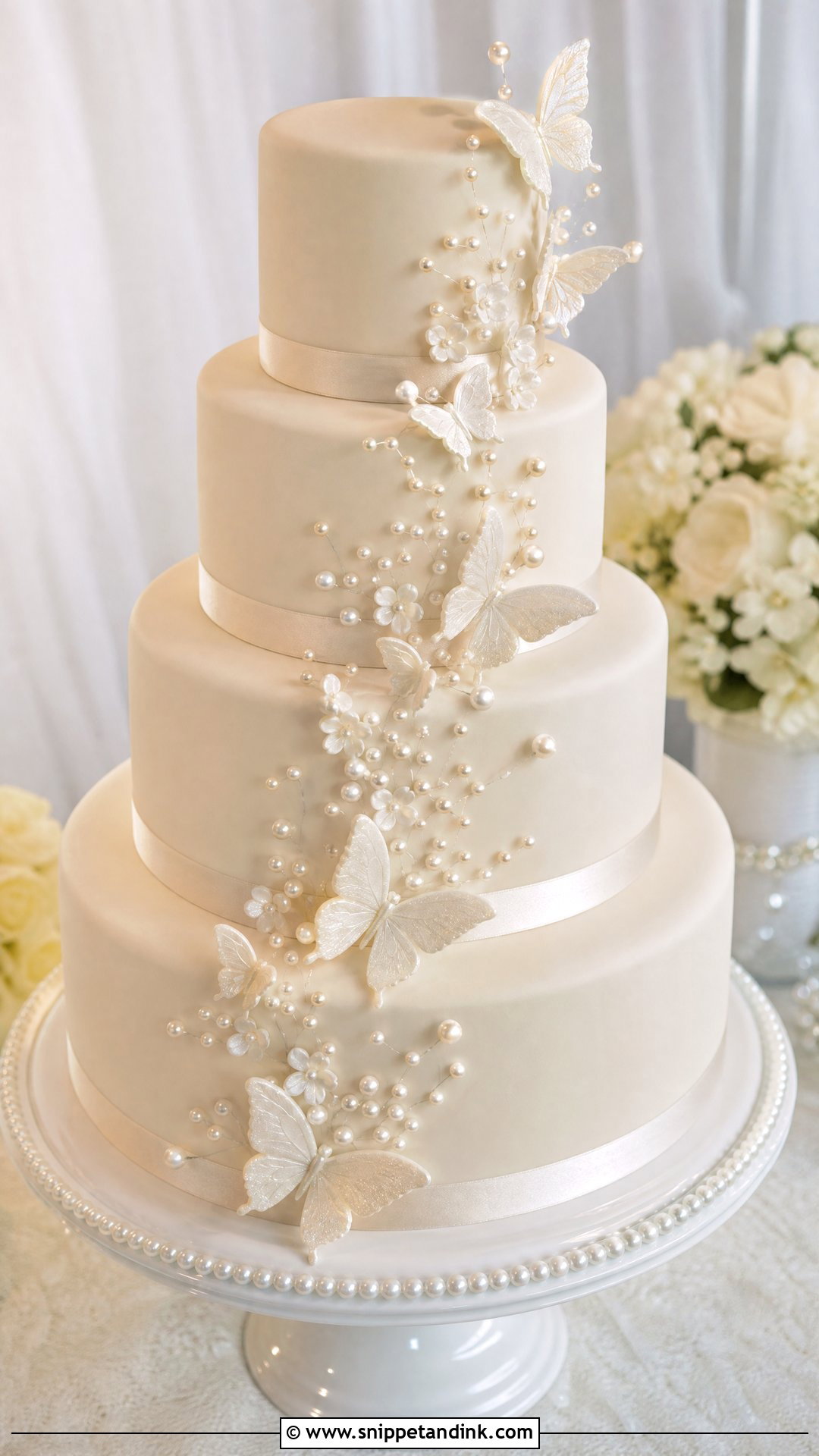
Edible pearls on smooth white or ivory tiers make a bridal, polished cake. I set them in soft clusters, vertical lines or delicate borders, with white, champagne or pearl-finished butterflies to match. Crowding is the main risk; a pearl-dotted top tier with butterflies on one side is enough. Hard sugar pearls can be tough on teeth, so I tell couples to ask their baker about soft pearls if guests will eat that tier. Vanilla, almond, champagne and coconut flavors suit the pale palette.
14. Lace Butterfly Wedding Cake
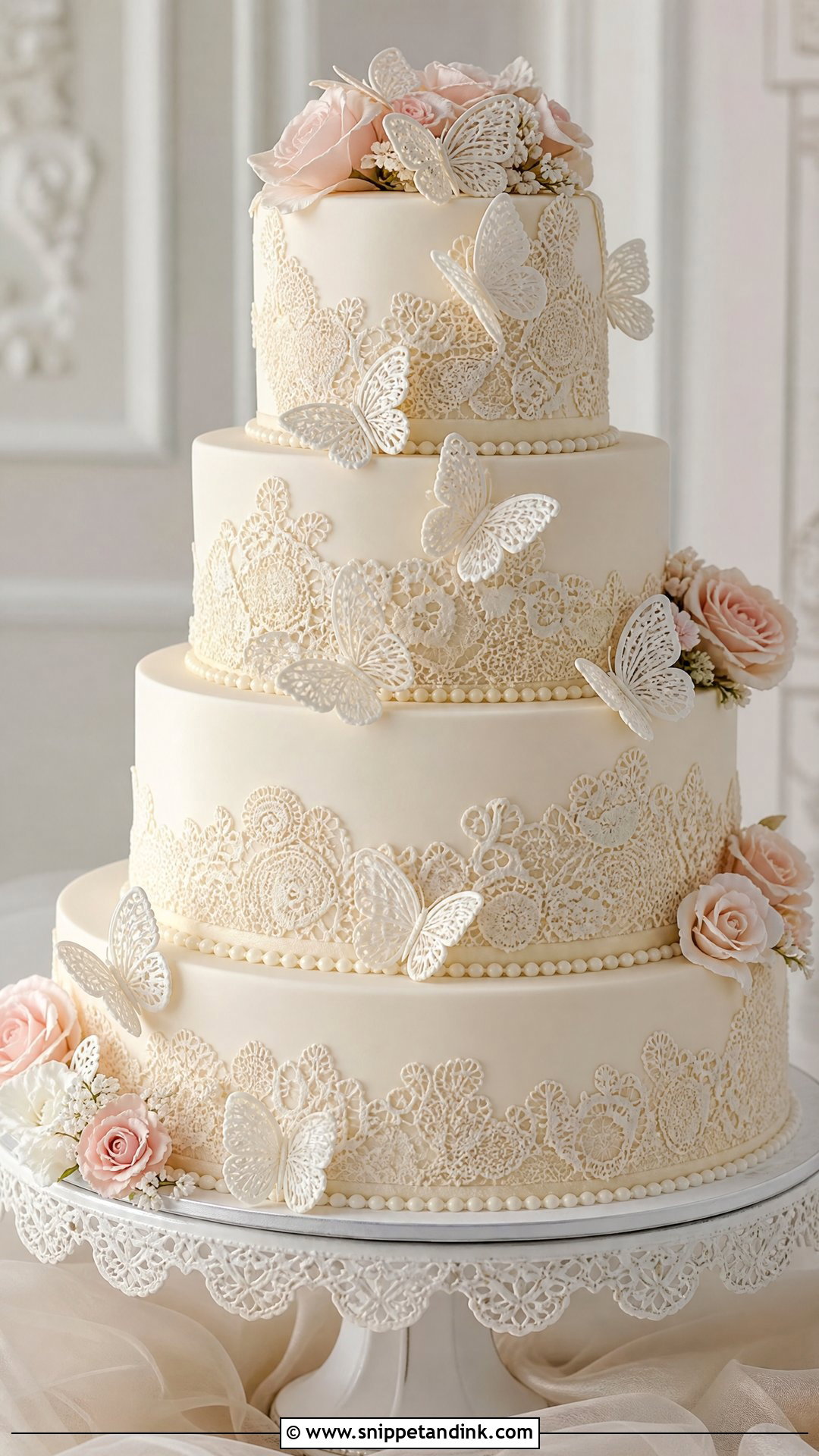
Lace on a cake can echo your gown or stationery. I use fondant lace appliques, piped lace or edible lace wraps on one or two tiers, with a few butterflies over the top. Edible lace is made from a silicone mat and needs to stay flexible, so I apply it the day before or the morning of. Ivory on ivory is classic; blush on white feels softer. Lace is already detailed, so keep the other decorations small.



15. Watercolor Butterfly Wedding Cake
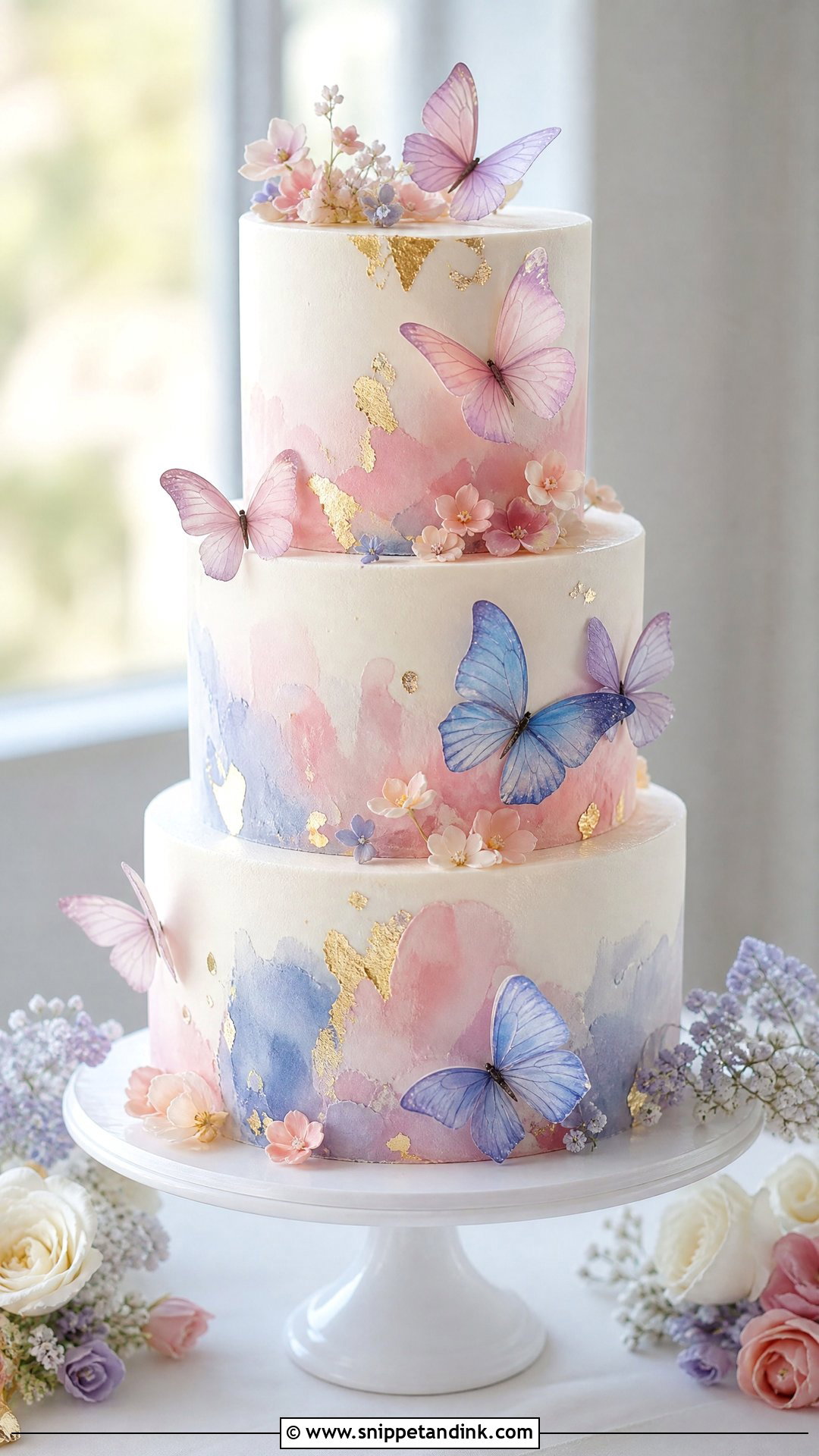
Watercolor cakes brush pale washes of blue, pink, lavender, peach or sage over white fondant or smooth buttercream, with butterflies in matching shades. On fondant, I paint with diluted gel color; on buttercream, I blend with a palette knife. A soft gradient looks better than hard blocks. Gold leaf adds sparkle, but keep it light. Outdoor weddings suit the airy effect.
16. Ombre Butterfly Wedding Cake
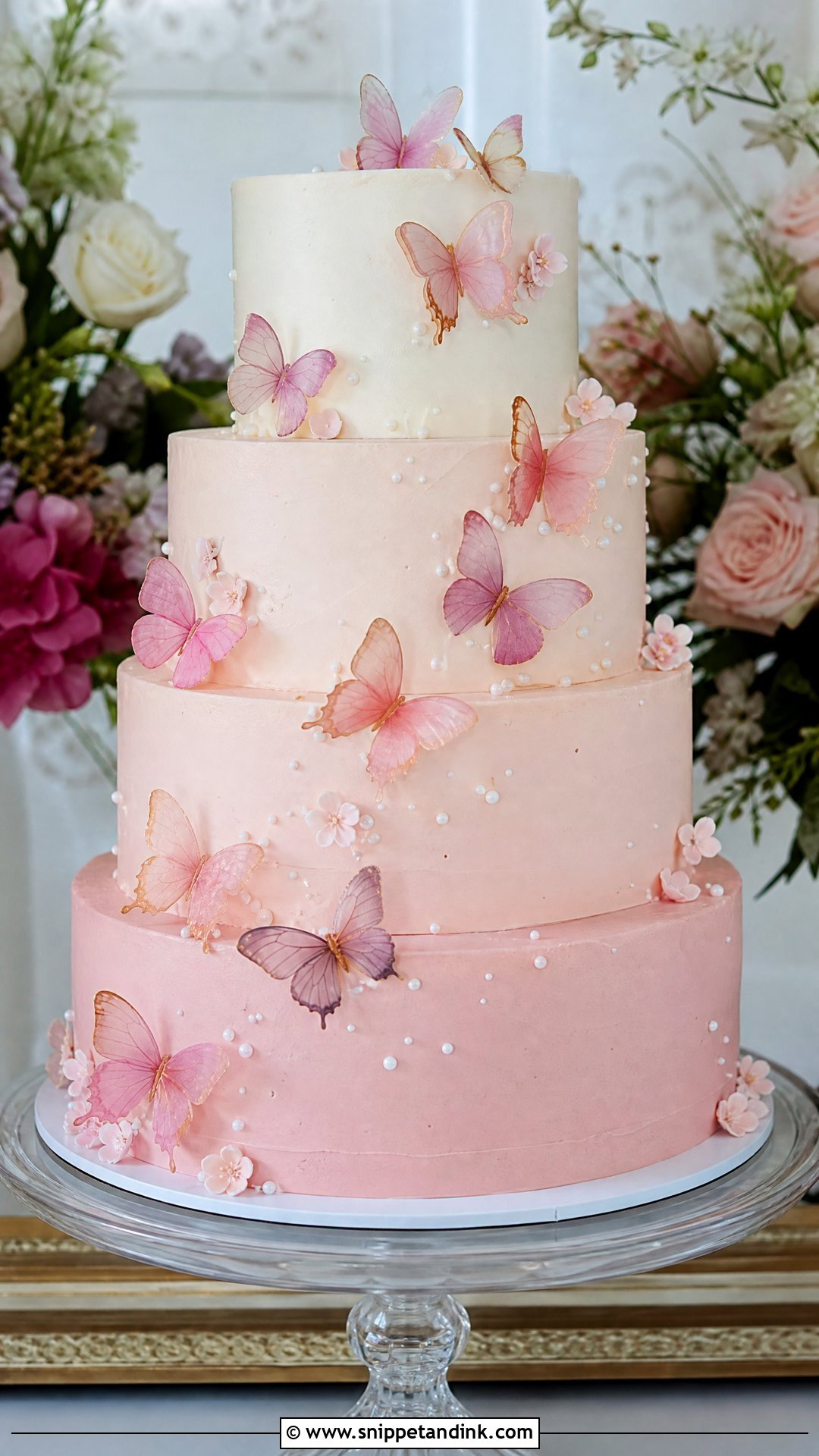
Ombre gives a clear color story, from blush to ivory, lavender to white, dusty blue to cream or peach to champagne. Butterflies following the same gradient make it look intentional. Smooth buttercream reads modern; ruffled buttercream is more romantic. I mix every shade from one base color with increasing amounts of white, so the steps between tiers stay even. Keep the topper simple because the gradient already gives movement.
17. Greenery Butterfly Wedding Cake
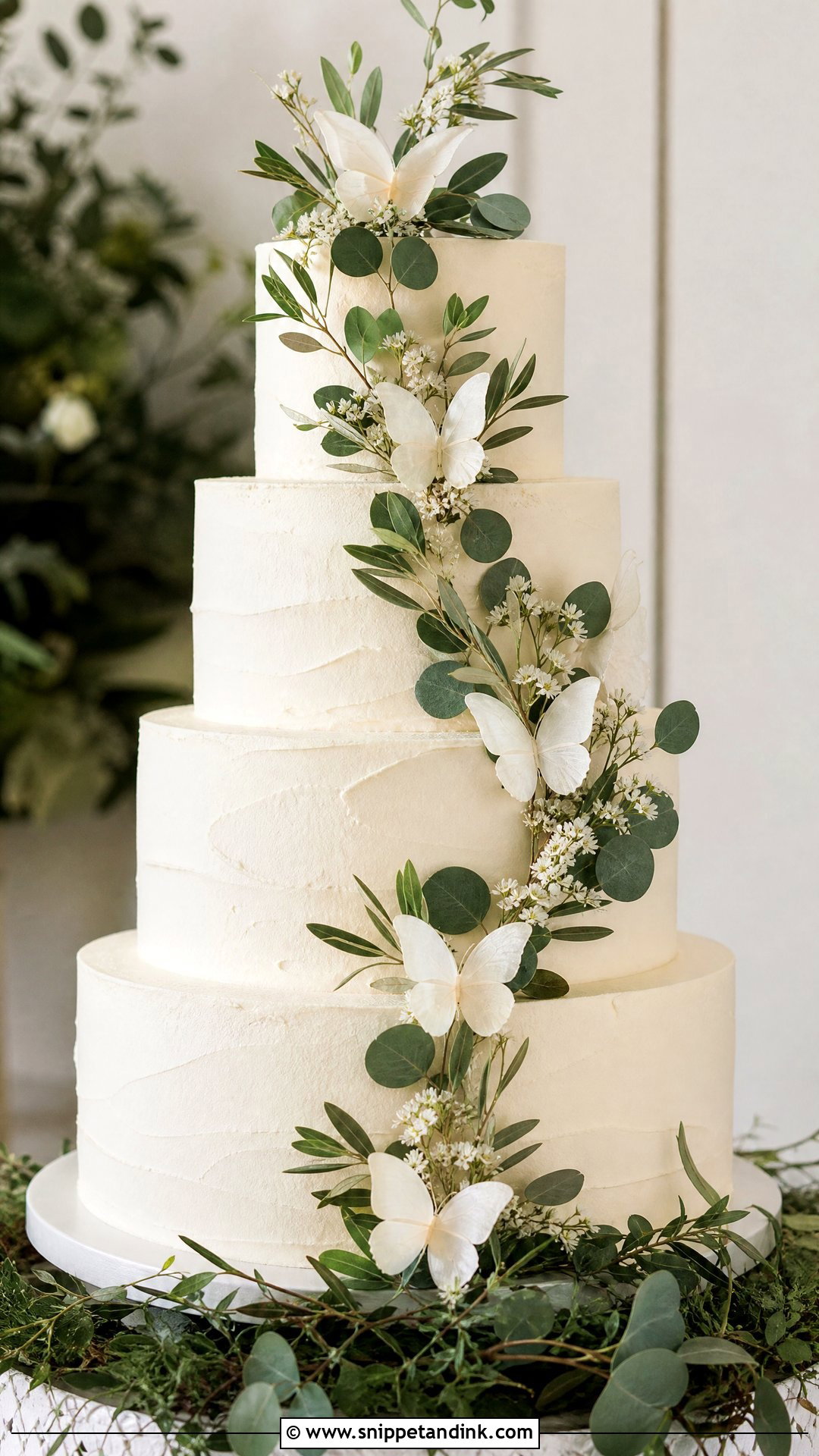
Greenery cakes rely on sugar eucalyptus, olive leaves, fern-like piping or food-safe fresh greenery placed around the tiers, with white butterflies for movement. Soft sage and silver greens look bridal; dark, heavy greens can look wintry. Ivory buttercream, semi-naked finishes and smooth fondant all work as a base. Outdoor, barn and garden venues suit it. If you’re using real eucalyptus, it must be wrapped and kept off the icing, since it’s not safe to eat.
18. Rustic Butterfly Wedding Cake
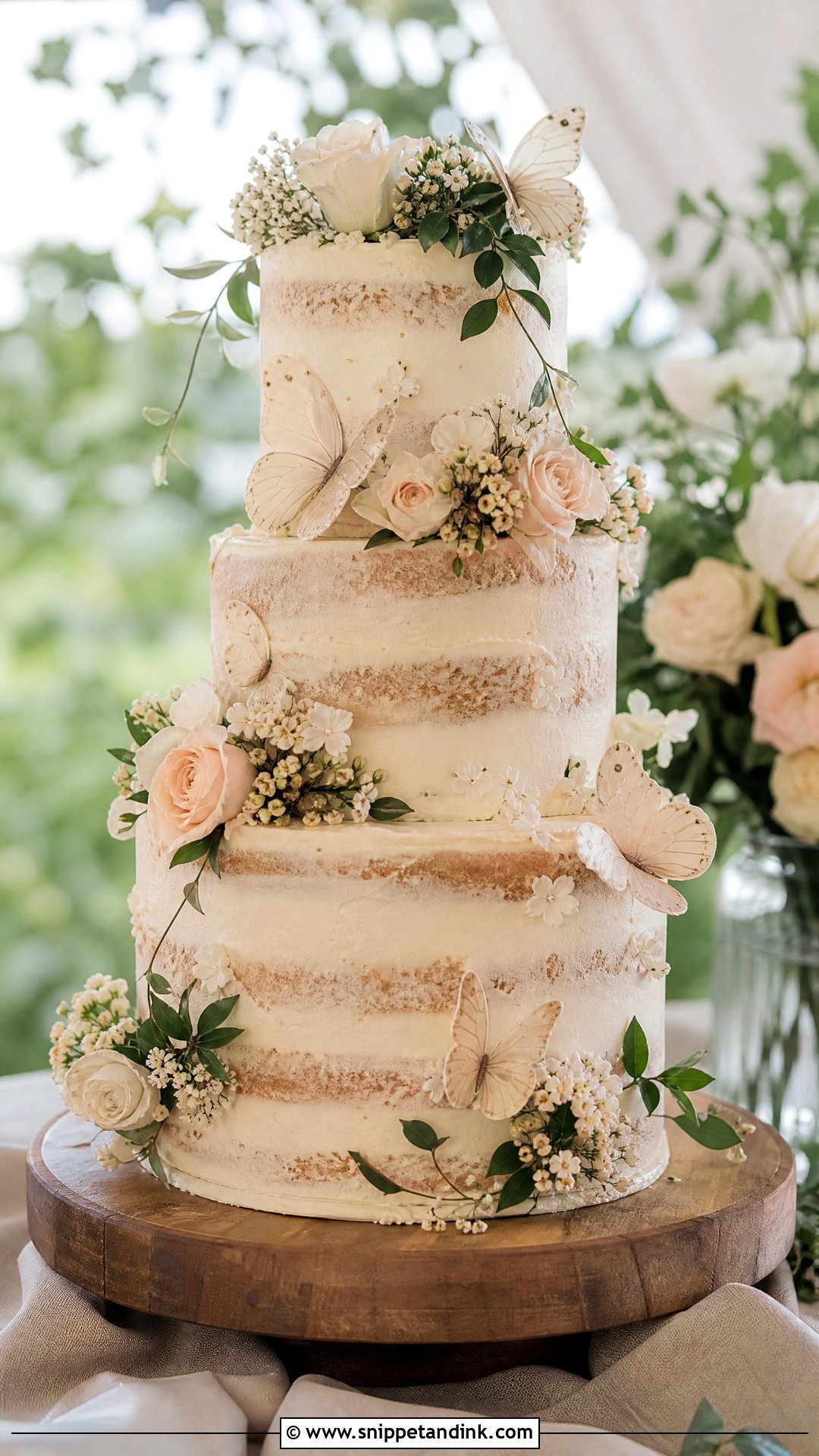
Rustic cakes use semi-naked buttercream, rough-iced sides, soft florals and wooden stands. Small wafer paper butterflies in white, beige, pale peach or soft brown suit them, with tiny sugar blossoms or greenery. It should look handmade, not polished. Barn weddings and countryside celebrations are its natural home. Semi-naked cakes dry out faster at the exposed edges, so I keep the cake wrapped until the last moment.
19. Modern Butterfly Wedding Cake
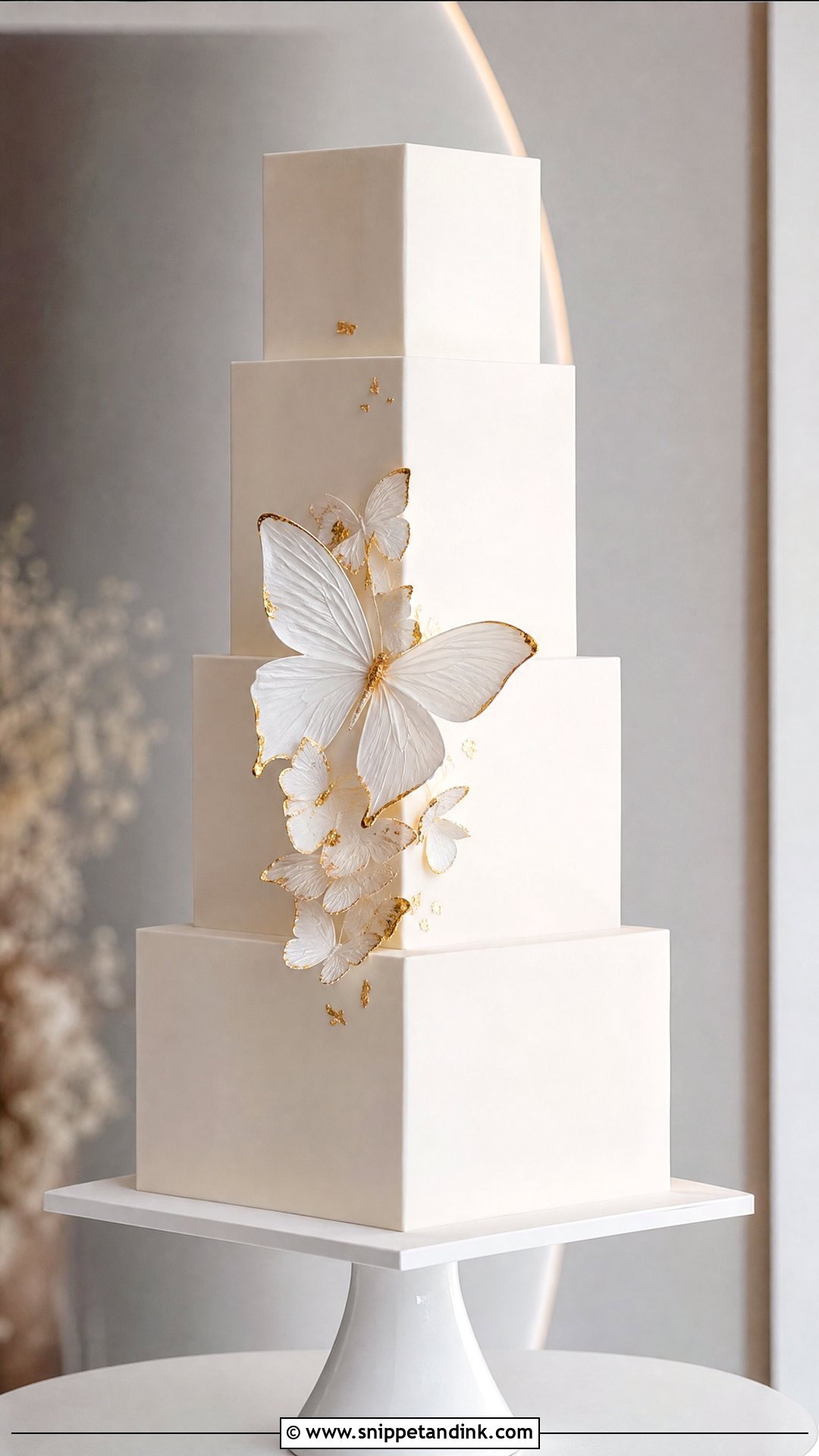
Modern butterfly cakes rely on clean lines, spacing and restraint. Tall tiers, sharp buttercream edges or smooth fondant with a minimal palette set the tone; white, ivory, black accents, soft beige or metallic gold all work in small amounts. I place one small group of butterflies in one spot, or a single oversized butterfly as a sculptural focal point. Gallery venues, rooftops and minimalist receptions suit it. Every butterfly should look placed, not scattered.

20. Luxury Butterfly Wedding Cake
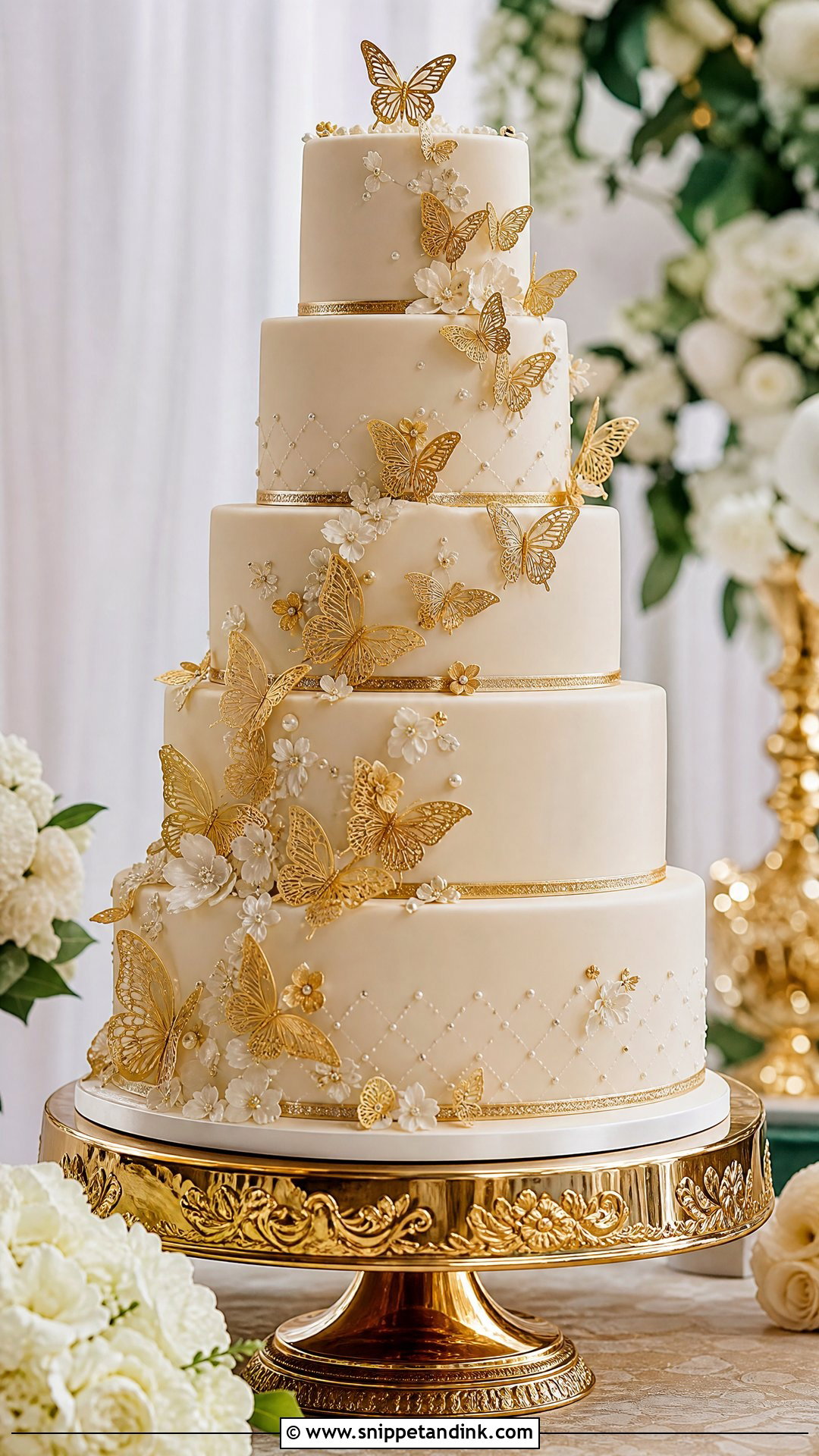
A luxury cake needs height, so four or five tiers make the biggest impression. Smooth fondant, metallic accents, sugar flowers, pearls and handmade butterflies in a dramatic cascade set the tone, on a base of ivory, champagne or warm white. Subtle texture like quilted fondant or fine piping stops large surfaces looking plain. A cake this tall needs a central dowel and is usually stacked on site, so ask your baker how they plan to transport it.
21. Small Butterfly Wedding Cake
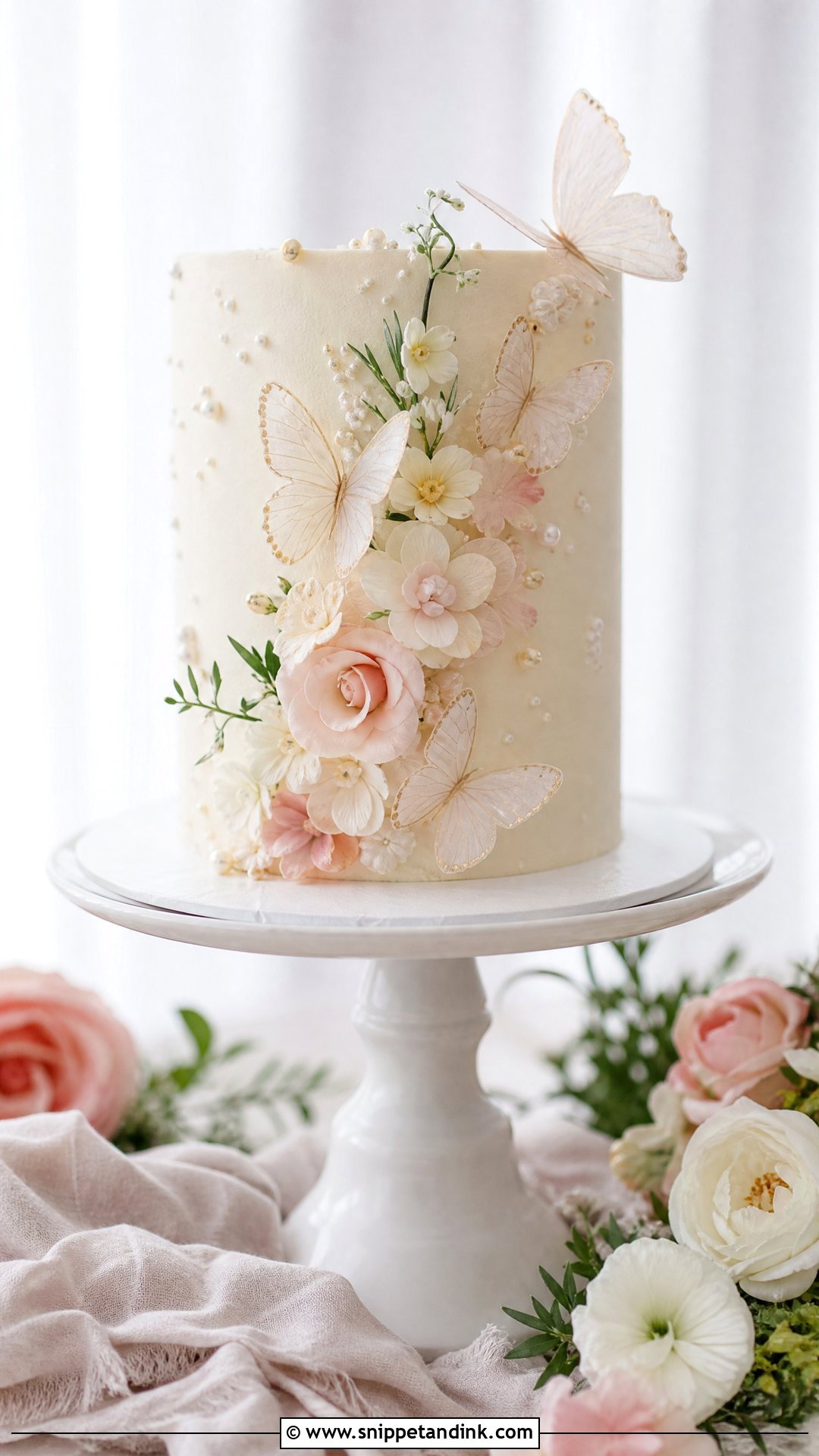
A small cake shows every detail, so I keep it focused. A two-tier or tall single-tier cake suits elopements, courthouse receptions and micro weddings. Smooth ivory buttercream, a few sugar flowers and three to seven butterflies in different sizes is plenty. Overload a small cake and it looks cluttered. A pretty stand, soft linen and a few fresh blooms around the base complete the display.
22. Two Tier Butterfly Wedding Cake
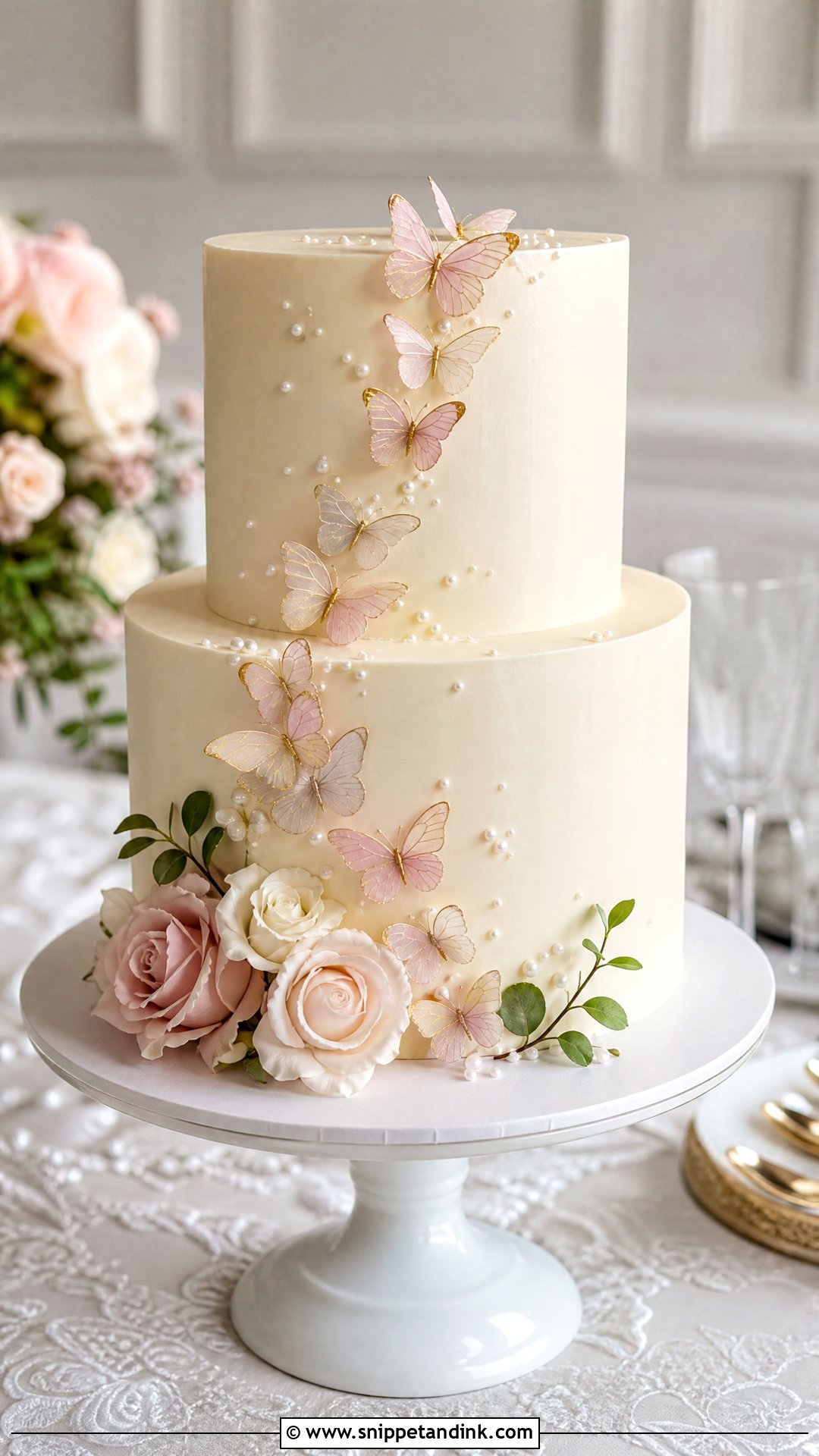
A two tier butterfly wedding cake is practical for many guest counts, especially with a kitchen cake for extra servings. The lower tier holds flowers, texture or piping; the top tier holds a small butterfly cluster or topper. Buttercream, fondant, semi-naked and watercolor finishes all suit it. I run the butterflies diagonally from one tier to the next and add flowers at each tier base for softness.
23. Three Tier Butterfly Wedding Cake
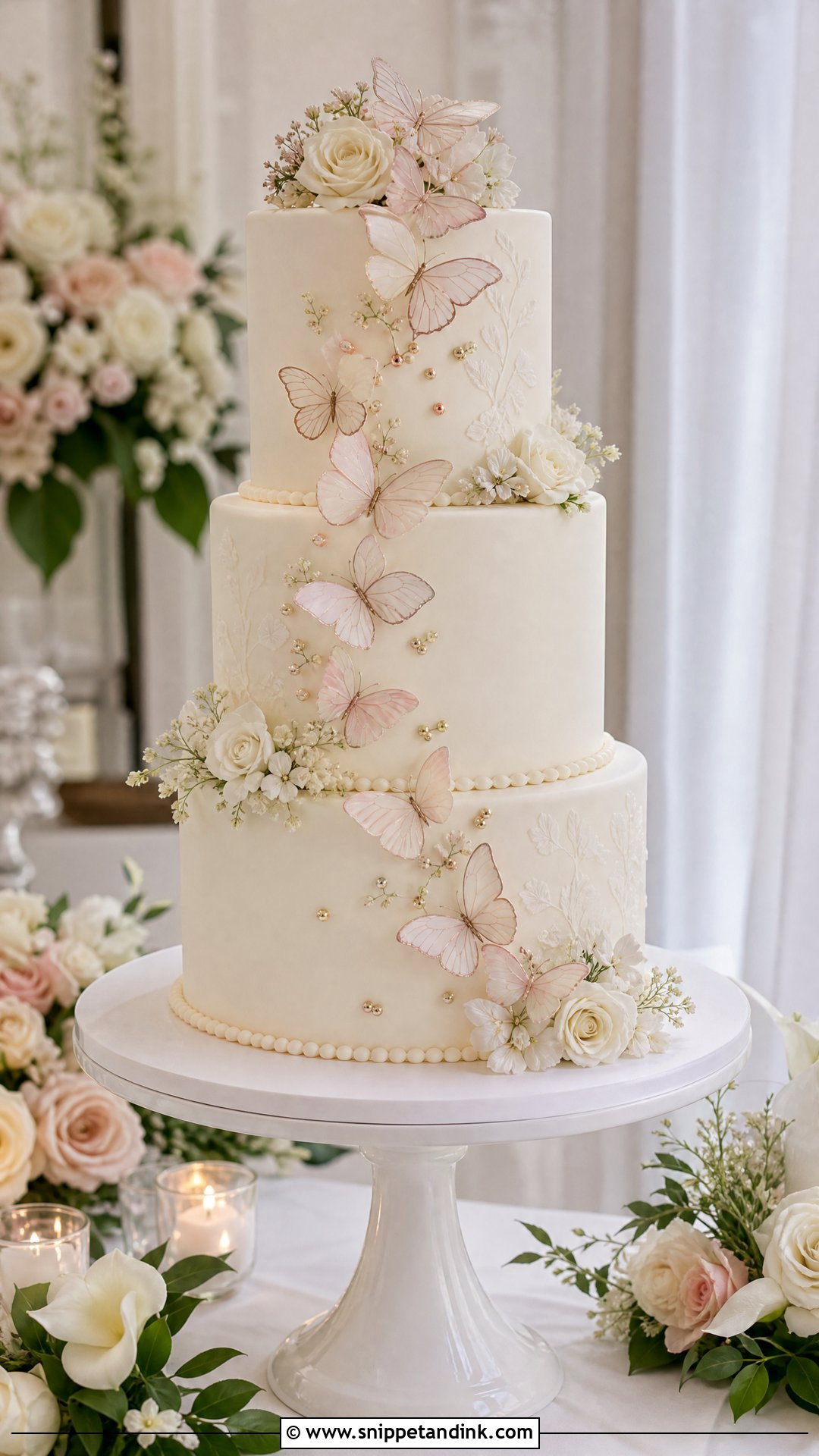
Three tiers give a balanced display, tall enough to feel formal without dominating the room. Butterflies can cascade down one side, wrap around the tiers or gather near floral clusters. A white or ivory base stays bridal, while blush, blue, lavender or gold butterflies add personality. Three tiers also allow mixed textures: smooth buttercream, pressed flowers and pearl piping. It suits almost any venue.
24. Butterfly Wedding Cake With Fresh Flowers
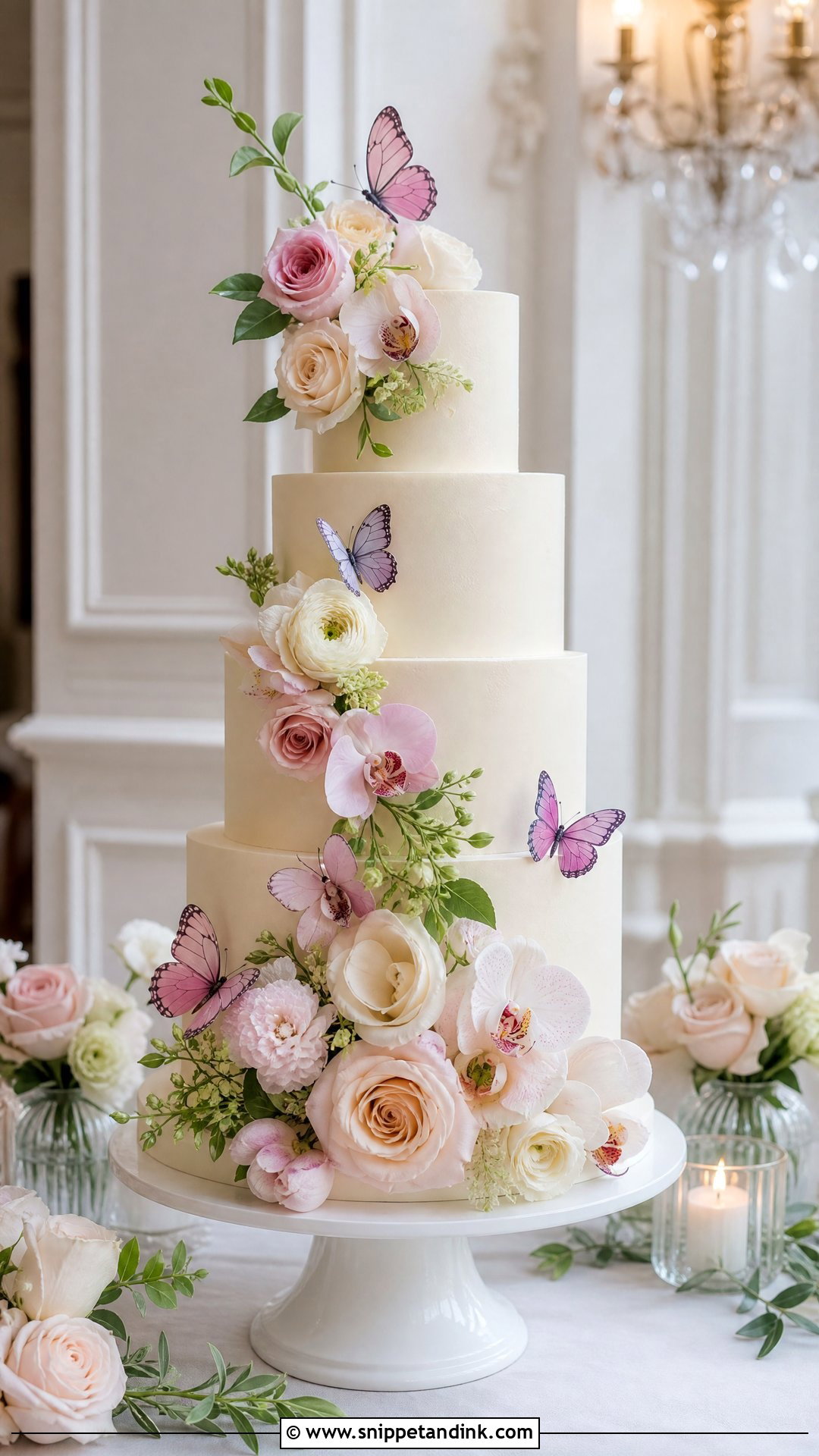
Fresh flowers connect the cake to your ceremony arrangements. Roses, ranunculus, orchids, lisianthus and seasonal blooms can run in a diagonal, accented with wafer paper butterflies. The flowers must be safe for cake contact or properly wrapped by a professional; many popular wedding flowers aren’t edible. The base can be smooth buttercream, fondant or semi-naked. I agree with the florist in advance who supplies the flowers and who places them.


25. Butterfly Wedding Cake With Edible Flowers
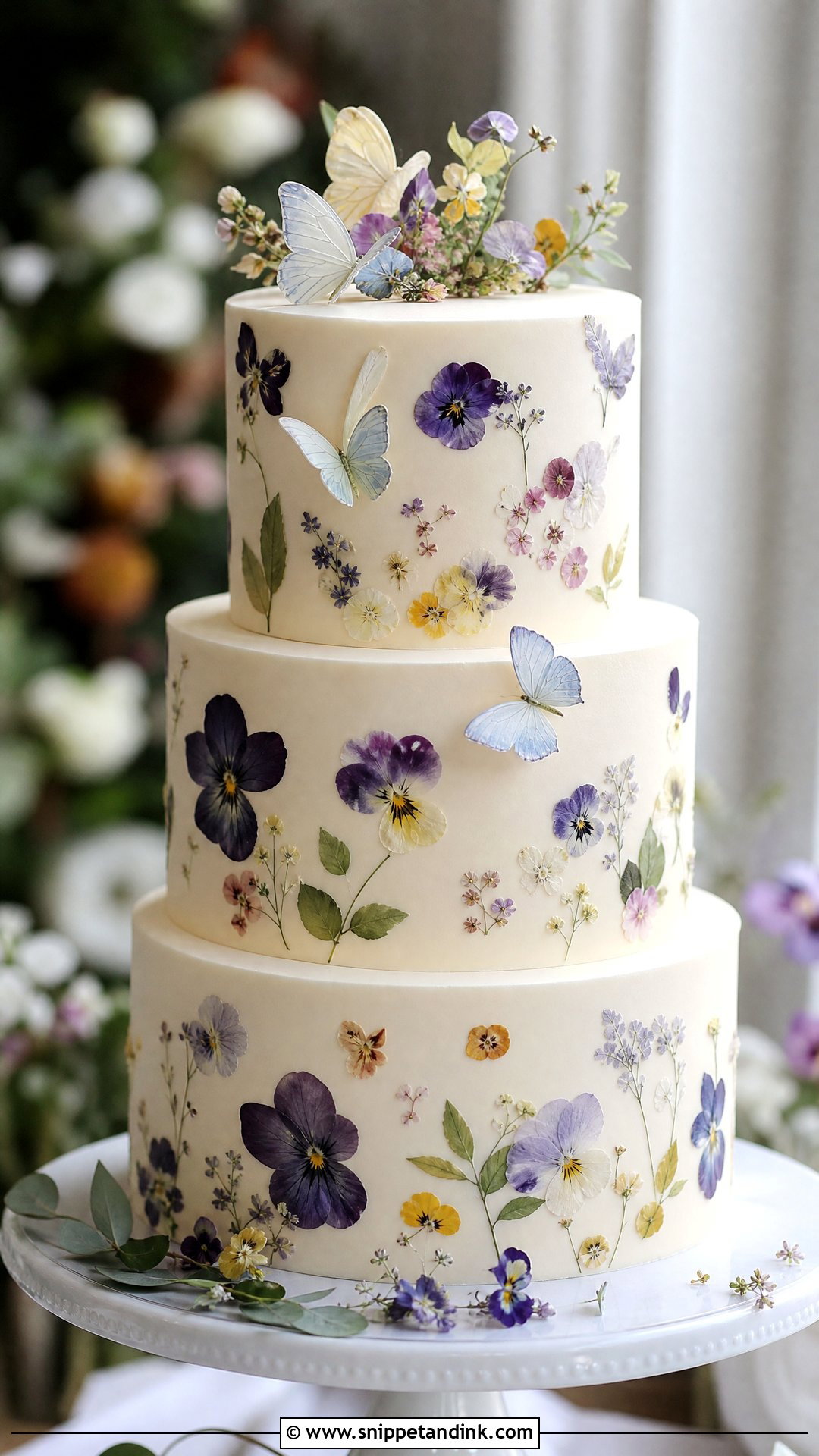
Edible flowers suit a botanical look. Pressed edible flowers lie flat against smooth buttercream, while small blossoms decorate the edges, top or tier borders, with white or pastel wafer paper butterflies among them. Edible flowers need to come from a supplier that grows them for food, not a florist, since florist flowers are often sprayed. Keep the colors soft: ivory, lavender, yellow, blush and pale blue. Spring weddings and garden ceremonies suit it.
Making the Butterflies Look Like They Just Landed
Placement is what separates a lifelike butterfly cake from one that looks decorated with stickers. Here is how I work out where they go.
- Use odd numbers and three sizes. A large, a couple of medium and a few small read naturally.
- Angle the wings. Lift one wing, or fold both slightly upward, so they cast a small shadow.
- Point them in one general direction, as if they’re moving up or around the cake together.
- Leave space. A butterfly needs bare icing around it to be seen.
- Never push wires straight into the cake. Wired butterflies go into a food-safe posy pick first.
Which Real Flowers Can Sit Against the Icing
Many favorite wedding flowers, including some lilies, hydrangeas and eucalyptus, are not safe to eat, and florist stems are often treated with pesticides. Flowers that aren’t grown for eating should be wrapped in floral tape, put into posy picks, or sit on a small barrier so they never touch the part guests will eat. Ask your florist and baker to agree in advance who prepares the flowers and who places them, so nobody assumes the other has done it.
Let Three Butterflies Do the Work of Thirty
Butterfly cakes can be simple, dramatic, colorful or modern, and the right one depends on your venue, season and palette. Wafer paper butterflies feel airy, fondant butterflies look polished, and sugar butterflies can be shaped in detail and kept afterward. Pair them with flowers, pearls, lace, greenery, watercolor or plain frosting. Small or tall, a few well-placed butterflies bring the cake to life.
You'll Like These Ideas:






Leave a Reply