
Beige sits in a useful place on the colour wheel for a cake: warmer than white, deeper than ivory, and calm enough to work with nearly any palette. It also hides more than white does, because a faint tint from real butter or a vanilla bean no longer counts as a flaw. The cakes below keep the decoration light, a ribbon, a few pearls, some dried stems or a single flower cluster, so the colour itself does the work. They suit garden weddings, barns, modern venues and candlelit indoor receptions alike.
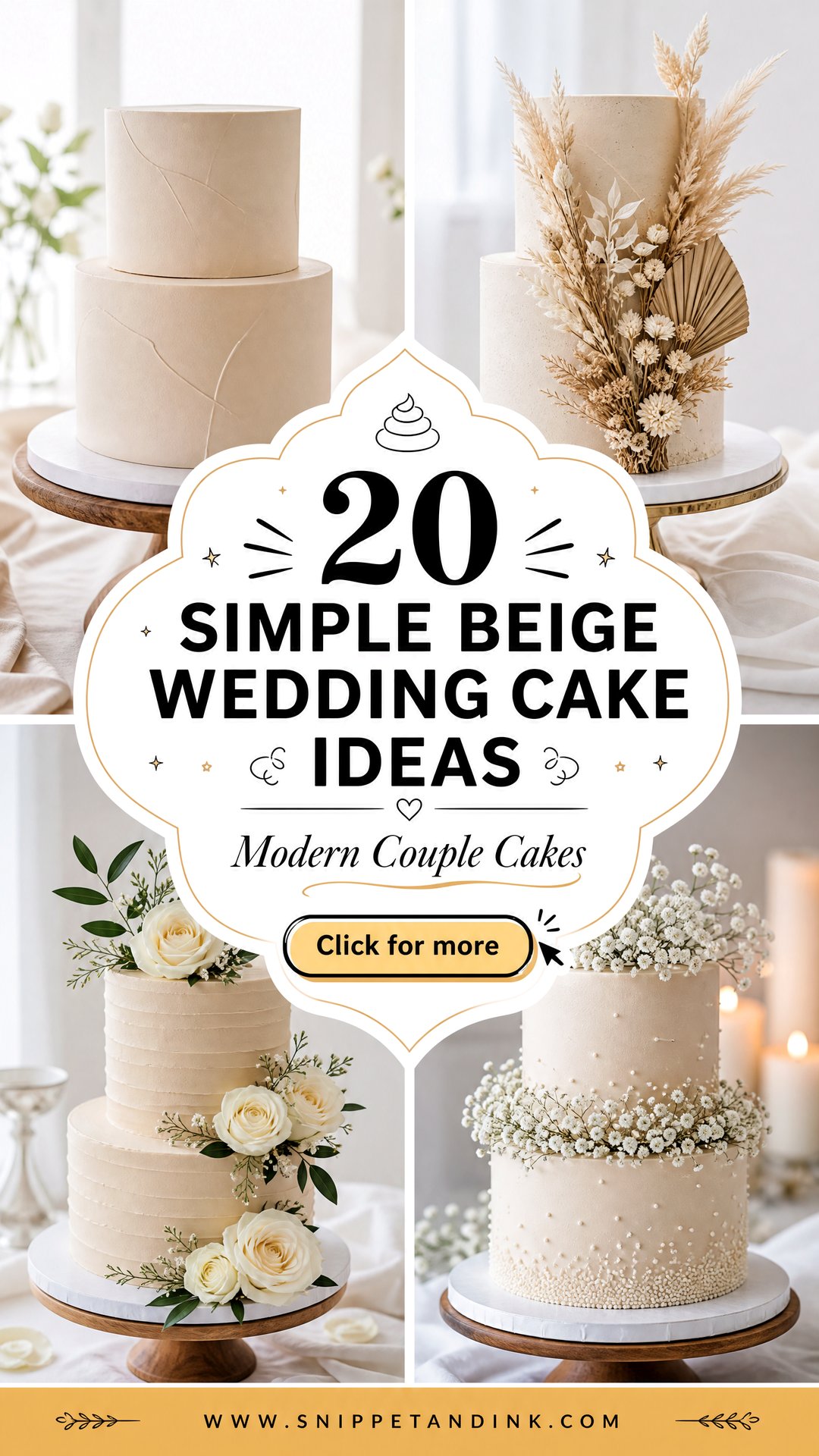
Getting the Exact Shade of Beige You Pictured
Beige is one of the trickiest colours I mix. A little too much brown and it turns muddy; too much yellow and it looks like old cream. The word itself means something different to every couple, so I never work from a description.
Bring something to match
A fabric swatch from the bridesmaid dresses, a linen sample or a paint chip gives your baker a fixed target. Photos on a phone screen are unreliable, because every screen shows colour slightly differently.
Let flavour do some of the tinting
Brown butter, caramel, coffee, cinnamon and a little cocoa all shift buttercream toward beige while adding flavour. Many bakers combine a flavour tint with a small amount of food colouring to fine-tune it. Ask which approach yours uses, because flavour tints change the taste as well as the colour.
Expect it to deepen
Coloured buttercream darkens slightly for a few hours after mixing, so an experienced baker mixes a touch lighter than the swatch. If you see a sample at a tasting, look at it again the next day before you approve the shade.
1. Simple Beige Buttercream Wedding Cake
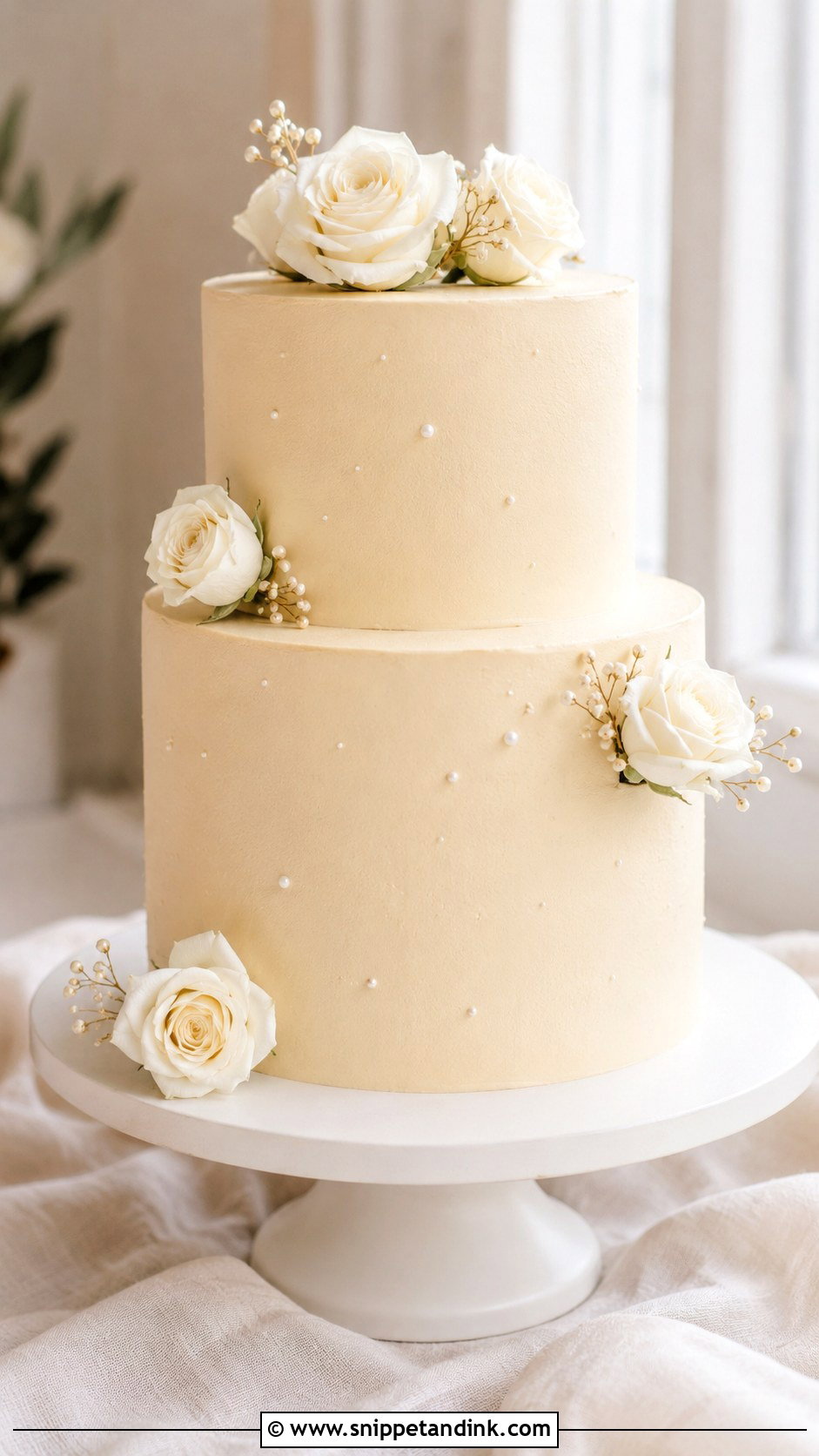
This is the cake I’d point most neutral-palette couples toward first. A smooth beige buttercream needs very little help: a few white flowers or a scatter of sugar pearls and it’s done. Inside, vanilla bean, almond, honey or champagne sponge keeps the flavour light. My small trick for this shade is to flavour the icing with a little brown butter or caramel, which tints it naturally, so the colour tastes of something instead of coming from a bottle of food colouring.
2. Two Tier Beige Wedding Cake
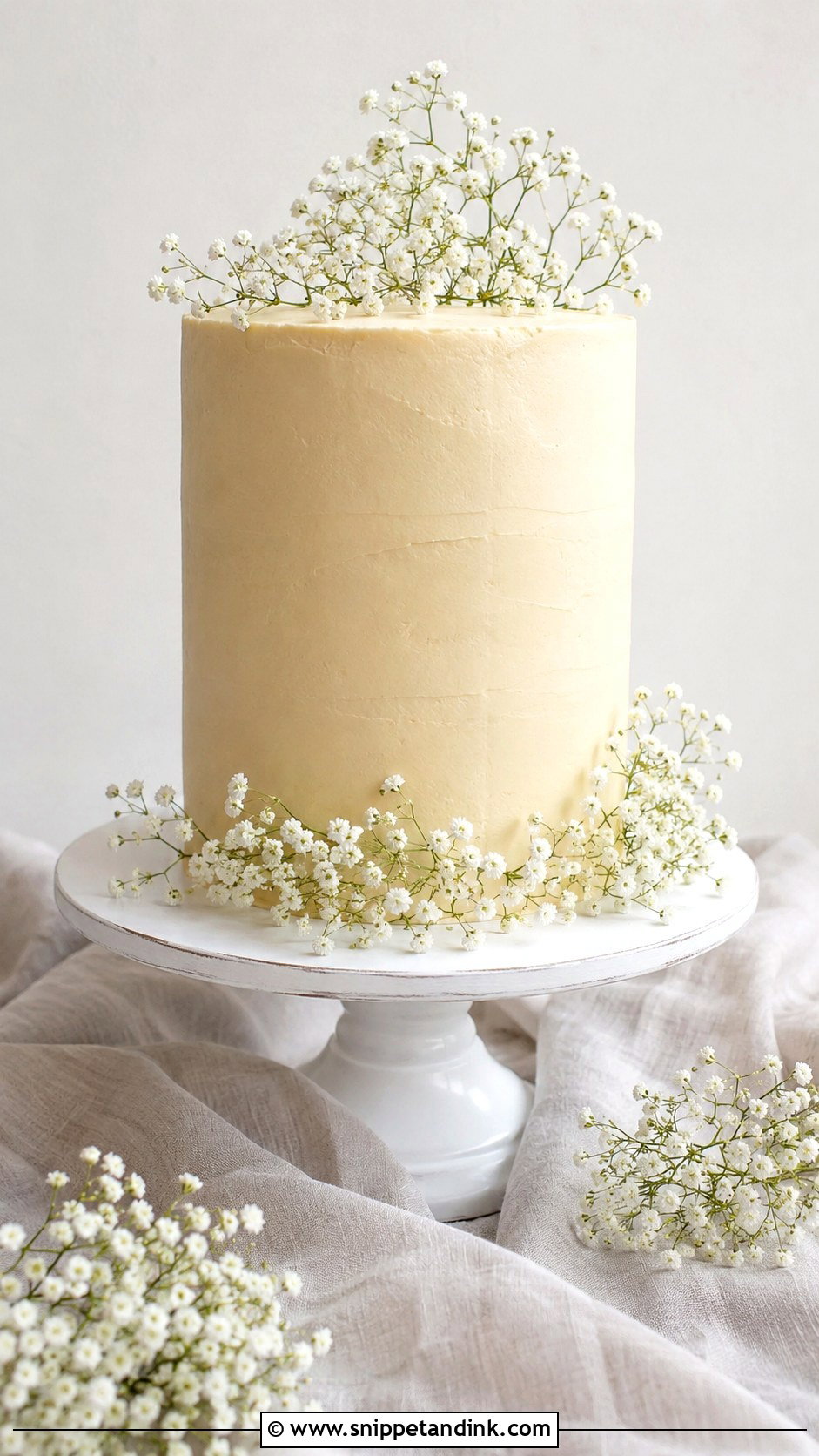
Two tiers give you a proper cake-cutting moment without a large cake, which suits micro weddings or a table full of other desserts. Decide on your exact beige early: warm sand, soft taupe and light latte look very different next to cream roses or dried grasses. Smooth icing reads cleaner; lightly textured buttercream feels more relaxed and hides the odd bump. A small cluster of roses, a few grasses or some pearl accents finishes it.
3. Beige Wedding Cake With Fresh Flowers
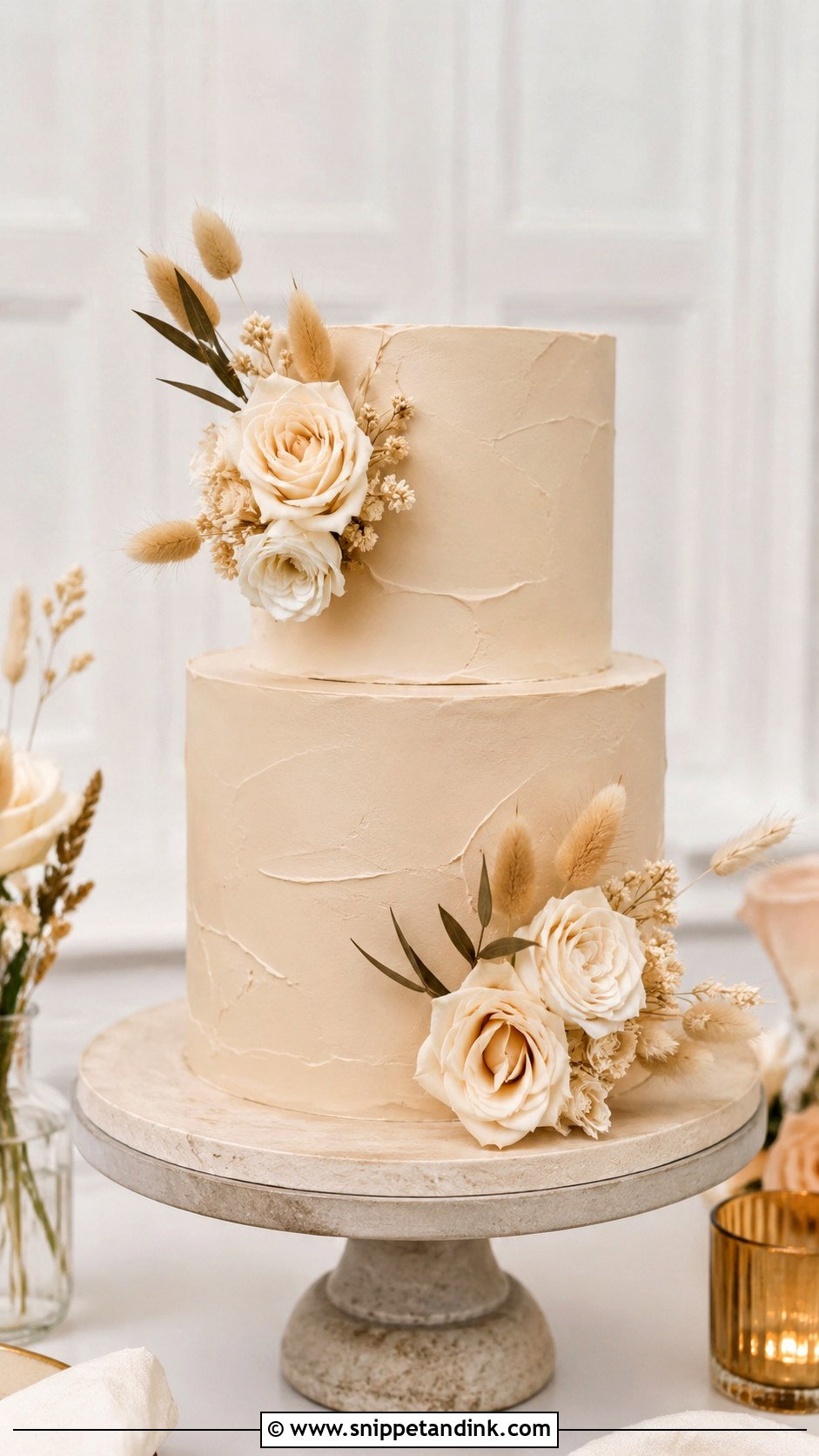
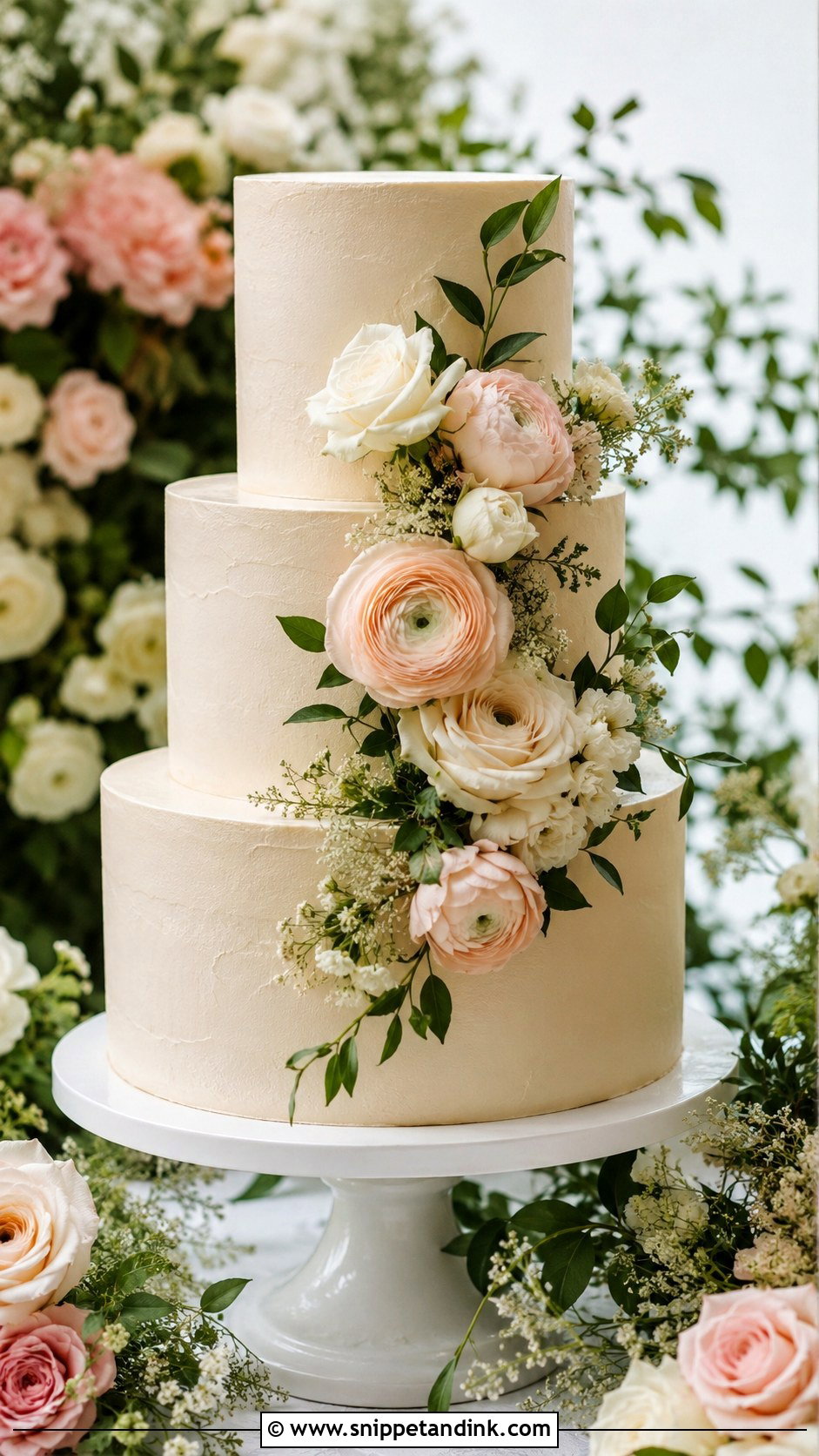
Against beige, white roses, blush ranunculus, orchids and soft peach blooms stand out more clearly than they would on a white cake, so you need fewer of them. I keep them to one neat cluster on the front or side. Your florist and baker should agree on the flower list and on who places them, because only spray-free, food-safe blooms should go near the icing, and every stem needs wrapping. Outdoor and garden receptions suit it best.
4. Beige Wedding Cake With Dried Flowers
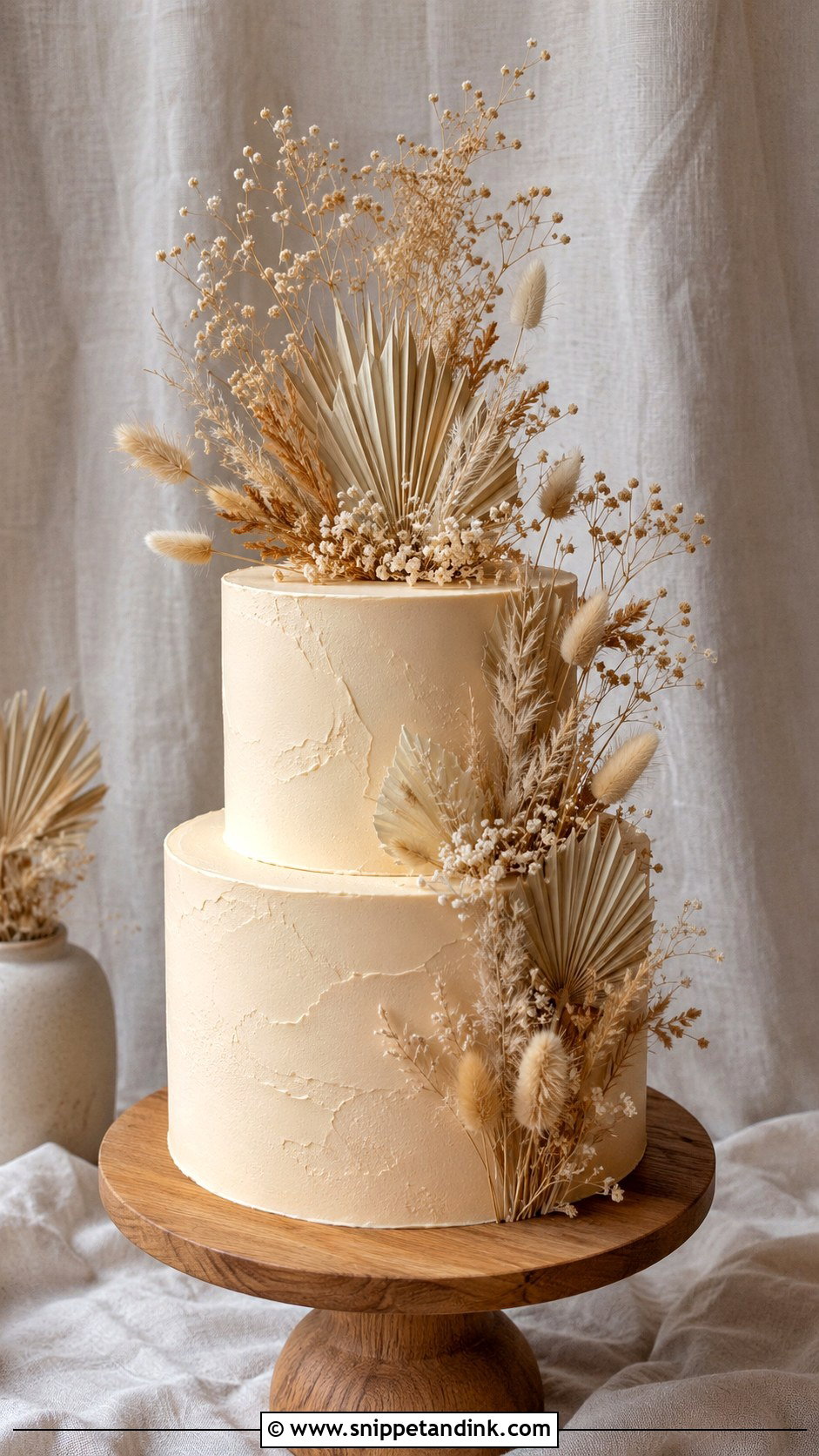
A beige wedding cake with dried flowers leans earthy: dried palms, bunny tails, preserved baby’s breath and small grasses all match warm buttercream or fondant naturally. Dried and preserved stems are usually treated or dyed, so I set them on a small food-safe barrier rather than pressing them into the icing. One side detail or a small topper arrangement keeps it modern; covering every tier tips it into rustic. Boho, desert and autumn weddings suit it best.
5. Beige Wedding Cake With Pearls
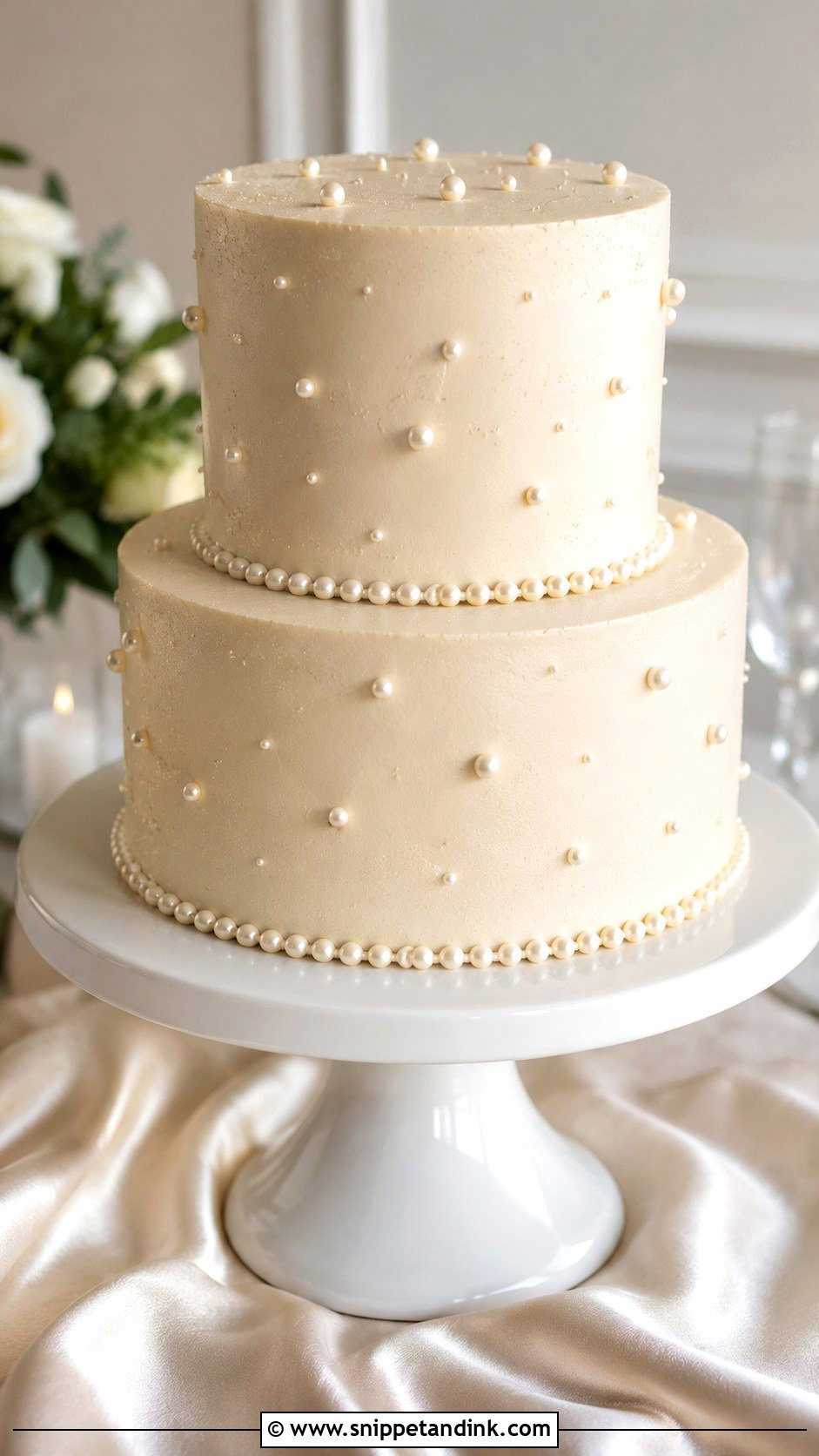
On beige, edible pearls look warm instead of sharp, which is why I like this pairing more than pearls on white. I scatter them lightly, ring them around the base of each tier, or set them in fine lines, placing them while the buttercream is still slightly soft so they stick. Keep the shape simple, one or two round tiers, so the pearls stay the main detail. Satin linens and candlelight bring out their sheen.
6. Beige Wedding Cake With Gold Leaf
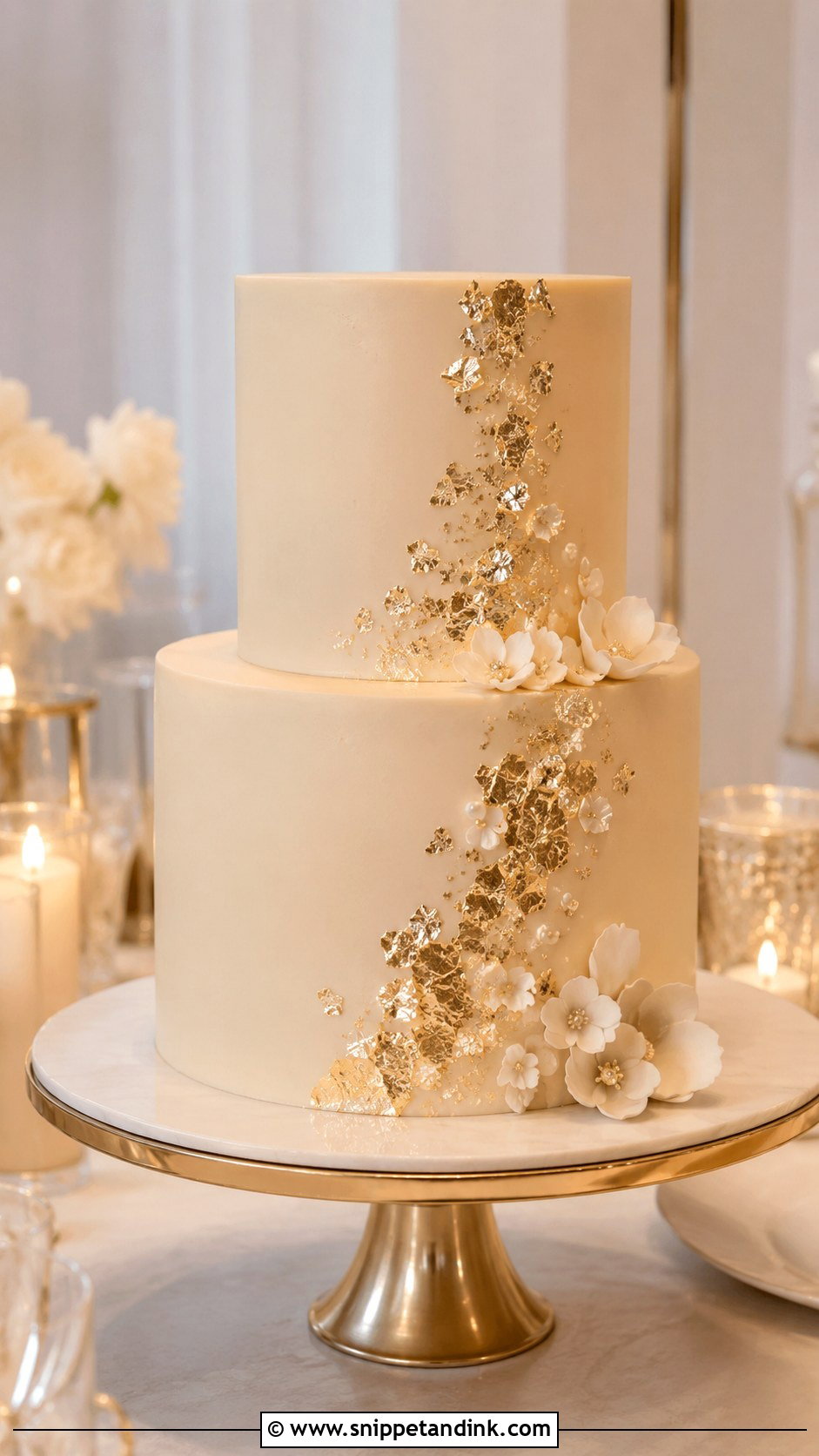
Gold leaf against beige is subtle, almost tonal, which makes it easier to get right than gold on stark white. I apply a few torn pieces along one edge, near the base or across the top tier, and that is usually enough. Leaf sticks best to fondant or well-chilled buttercream; on soft icing it smears. Inside, vanilla, caramel or almond sponge keeps the colour story going from the outside in. It suits formal hotel receptions with cream flowers.
7. Beige Wedding Cake With Ribbon
A satin or silk ribbon around each tier makes a plain cake look styled. I like a ribbon a shade deeper than the icing, in taupe, champagne or a darker beige, for a layered neutral look. Buttercream will leave oily marks on fabric ribbon over a few hours, so I back it with a thin strip of fondant or a food-safe liner. The icing can stay smooth with a few small flowers or nothing at all, which suits courthouse celebrations and intimate dinners.
8. Beige Textured Buttercream Wedding Cake
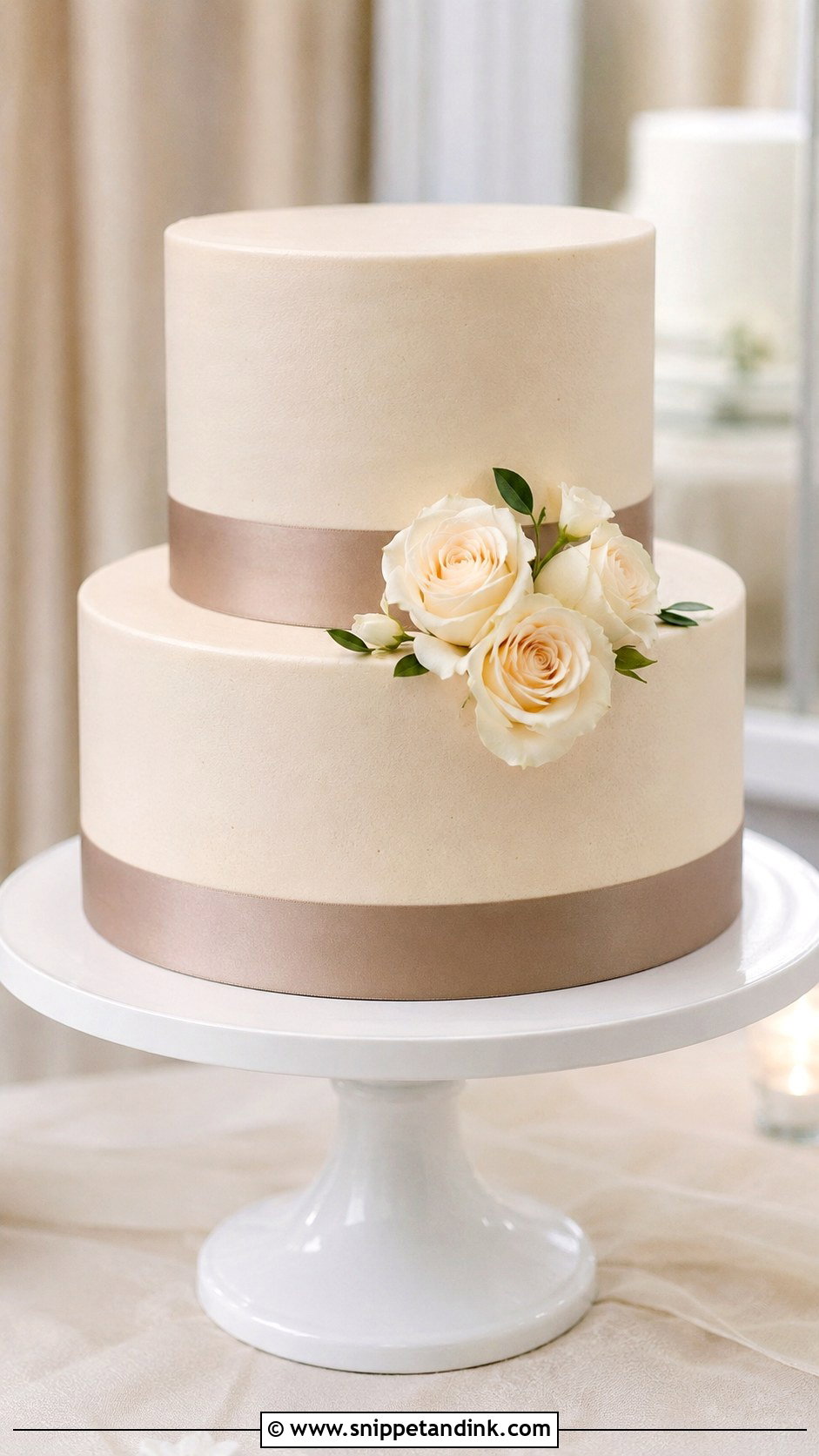
Texture is where beige shines. Spatula marks, horizontal ridges or a soft plaster finish throw small shadows, and a warm colour shows those shadows better than white, which tends to flatten under bright light. One small flower cluster, a few dried stems or some pearls is all it needs. Textured buttercream is also more forgiving if the cake has to travel or sit in a warm barn for a while, since small marks blend into the finish.
9. Beige Fondant Wedding Cake
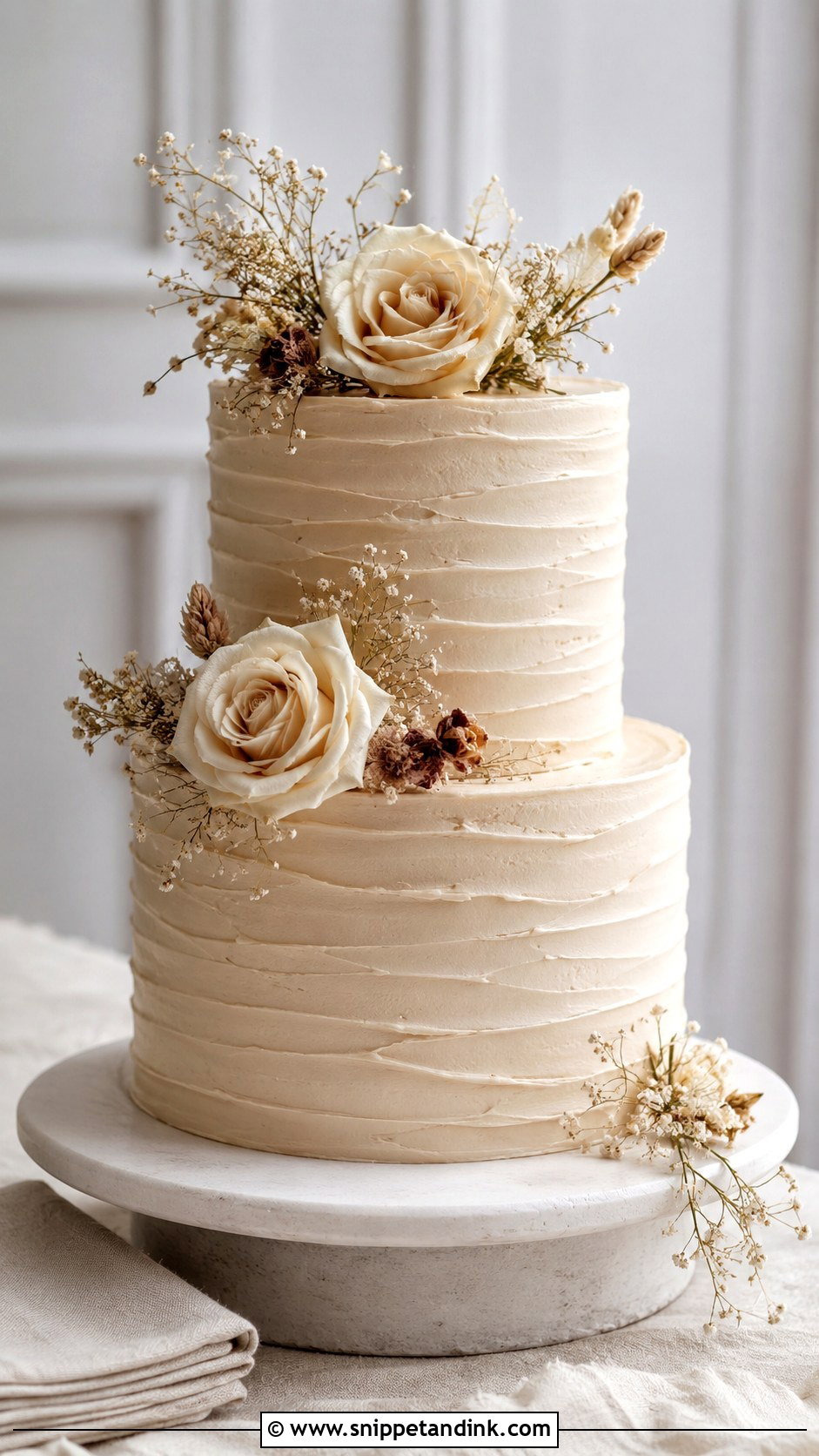
Fondant gives the cleanest, most structured result: smooth sides and crisp tier edges. Beige fondant is easier to work with than you’d think, because tinted fondant shows fewer marks than pure white, which picks up every fingerprint. Keep the decoration to one sugar flower, a thin ribbon or a subtle pearl border. Fondant behaves better indoors, in a ballroom or air-conditioned room, than outside on a humid day, where it can sweat and turn tacky.
10. Beige Semi Naked Wedding Cake
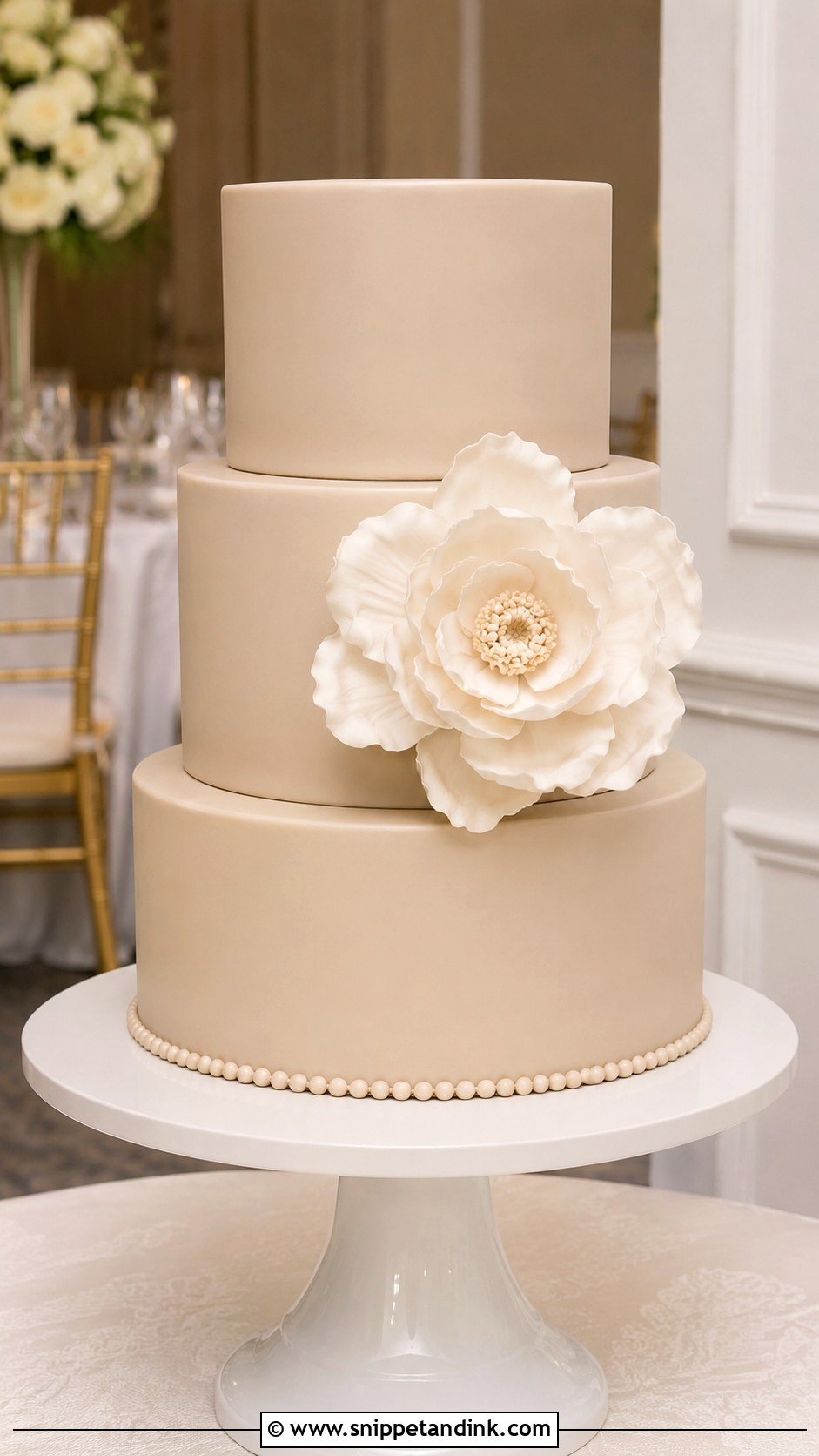
A beige semi naked wedding cake lets some sponge show through a thin scrape of icing, and warm sponges like vanilla, almond, spice or caramel blend straight into the beige. Figs, berries, fresh flowers or small dried blooms finish it. The exposed sponge dries faster than a fully iced cake, so I don’t recommend these for a long outdoor display; assemble close to the day and keep it covered until guests arrive. It’s less formal than fondant but still clearly a wedding cake.
11. Beige Wedding Cake With White Roses
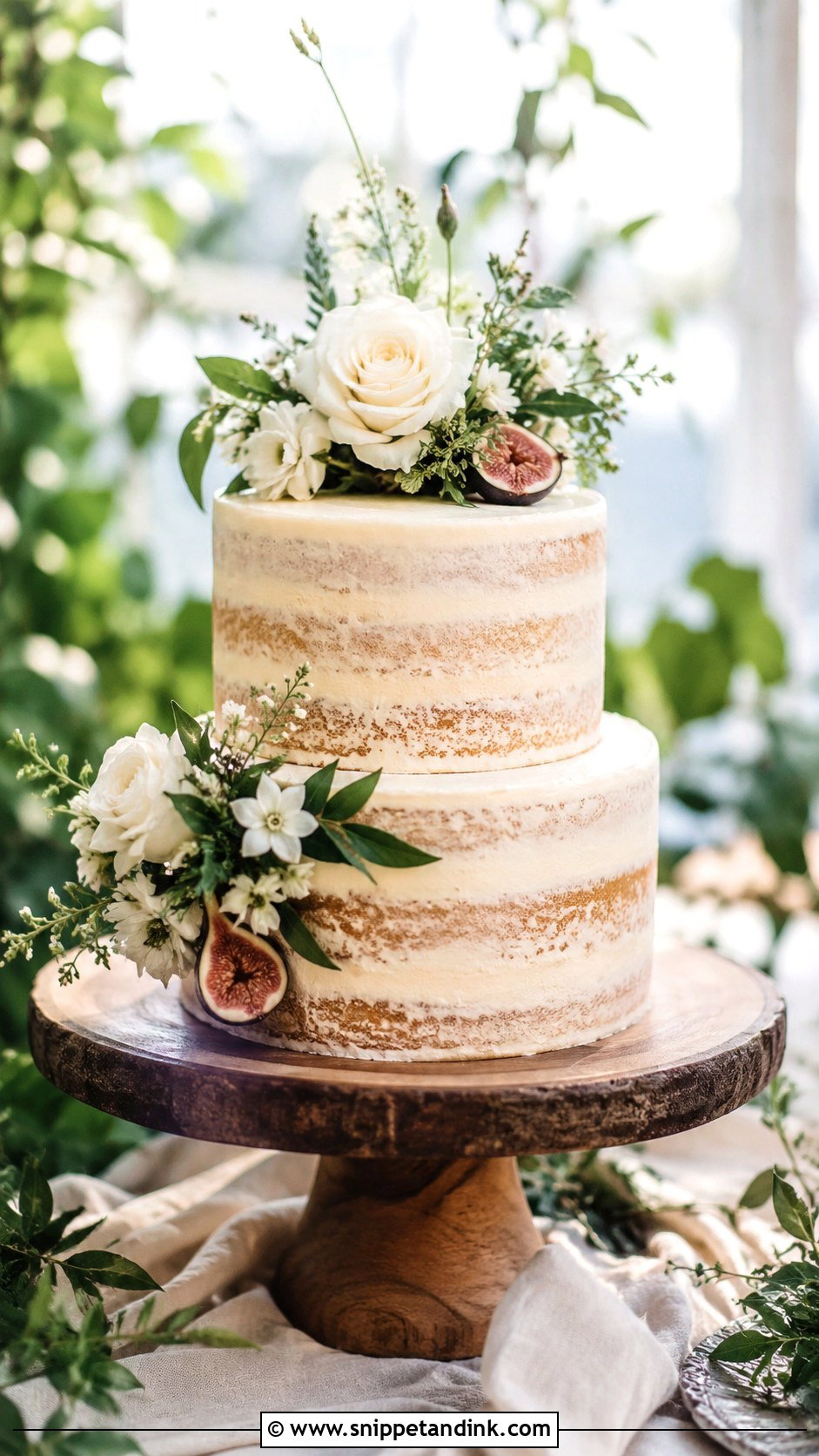
White roses on beige give a clean contrast without looking busy. I’ll place a few on top, trail them lightly down one side, or tuck a cluster between two tiers. Ask for roses grown without sprays if they’ll sit on the cake, and remove the outer guard petals, which are often bruised. Smooth or softly textured icing both work. It suits a backyard reception as easily as a formal hall, especially with cream linens and greenery.
12. Beige Wedding Cake With Baby’s Breath
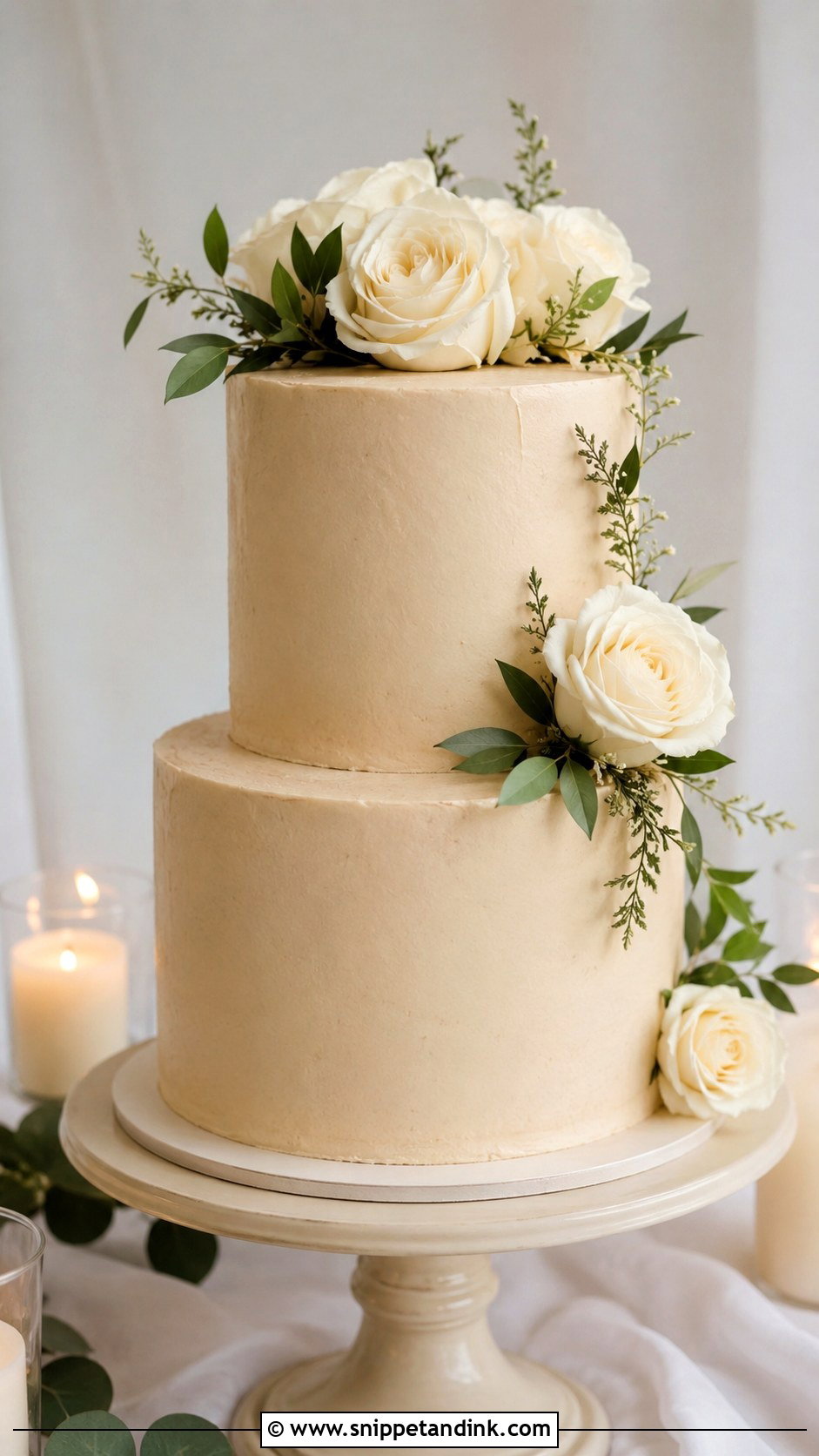
Baby’s breath on a beige base looks softer than on white, where it can read a little stark. Use it as a small crown on top, a light side cluster or a ring around the bottom tier. It’s an inexpensive flower and it holds up well out of water through a long evening. It is not food-safe, though, so the stems must be wrapped, or the sprigs kept to the cake board and stand. Outdoor weddings and chapel receptions suit it.
13. Beige Wedding Cake With Sugar Flowers
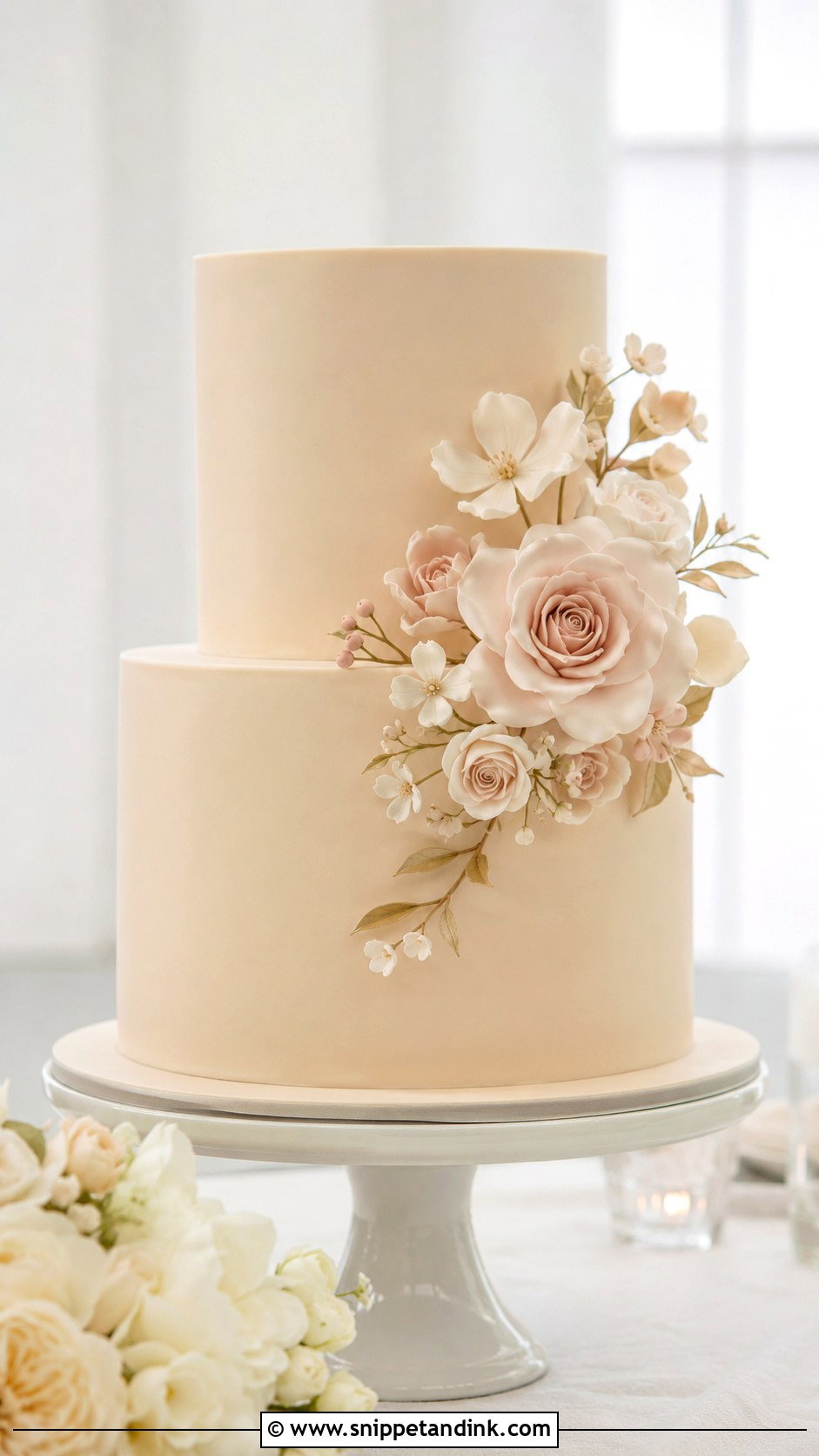
Sugar flowers can be tinted to the exact shade of the cake: cream, ivory, blush, taupe or beige. That colour control is the main reason to choose them over fresh blooms, along with the fact that they hold their shape all evening. A single large sugar flower on one smooth tier is often enough. They are slow to make, so ask your baker how far ahead she needs your order, and keep one afterwards in a dry box out of sunlight.
14. Beige Wedding Cake With Pampas Grass
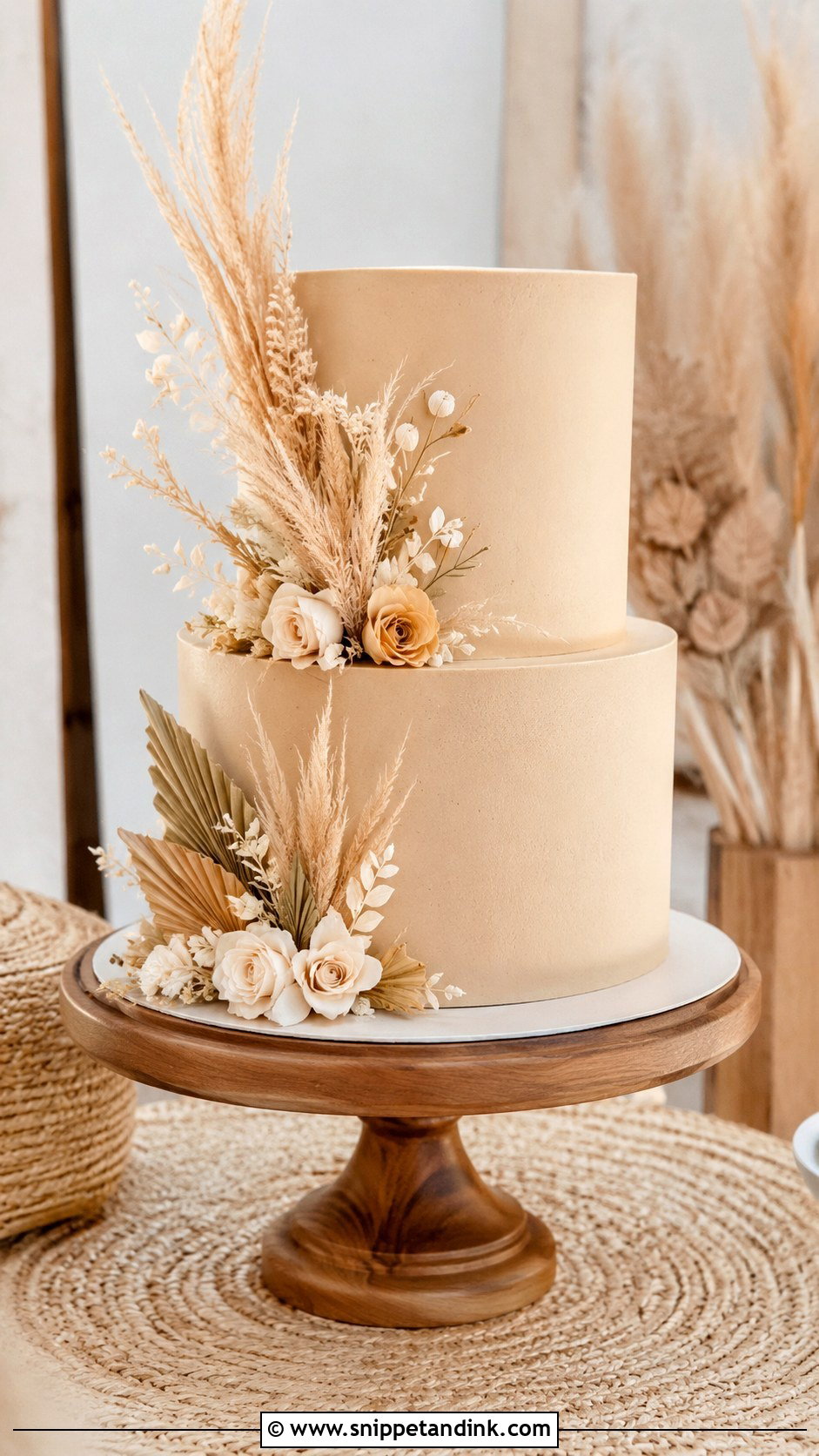
Pampas grass brings height and soft texture to a beige cake while keeping the palette sandy and calm. Keep it to a few stems on top or one side, or it looks wild rather than wedding-ready. Pampas sheds, and loose fluff on buttercream is hard to remove, so I give the stems a light spray of hairspray or fixative well before the cake and keep them on a separate pick. It suits outdoor, desert and beach-adjacent celebrations.



15. Beige Wedding Cake With Minimal Piping
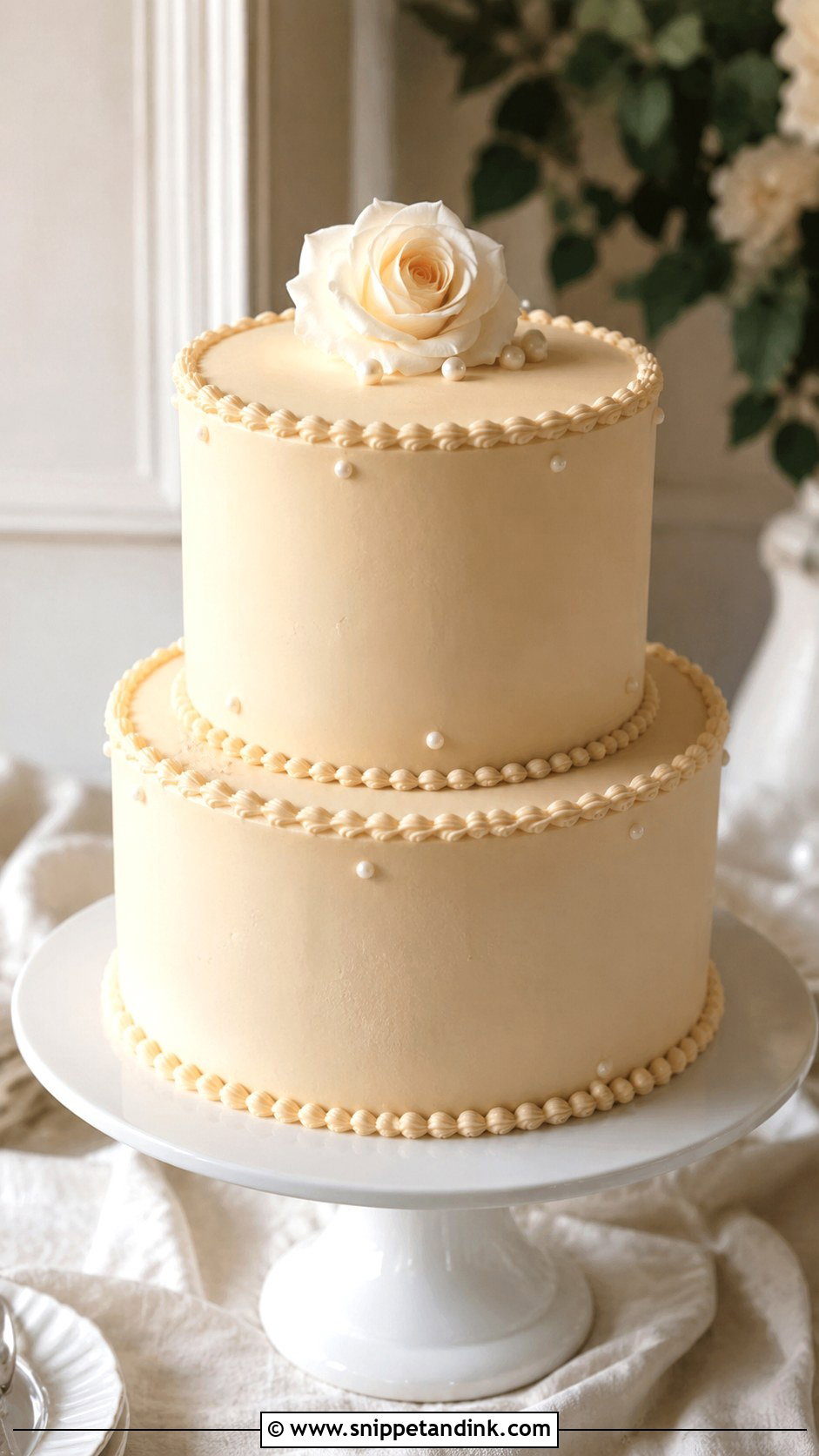
Small pearl borders, tiny shell edges, fine lines or neat dots around each tier: piping in the same beige as the cake adds texture without drama. Tone-on-tone piping relies on shadow, so it shows best under side light rather than flat overhead lighting. Keep the top smooth and add one small flower if you want. It’s a gentle nod to vintage cakes for tea-style receptions and intimate weddings.
16. Beige Wedding Cake With Lace Texture
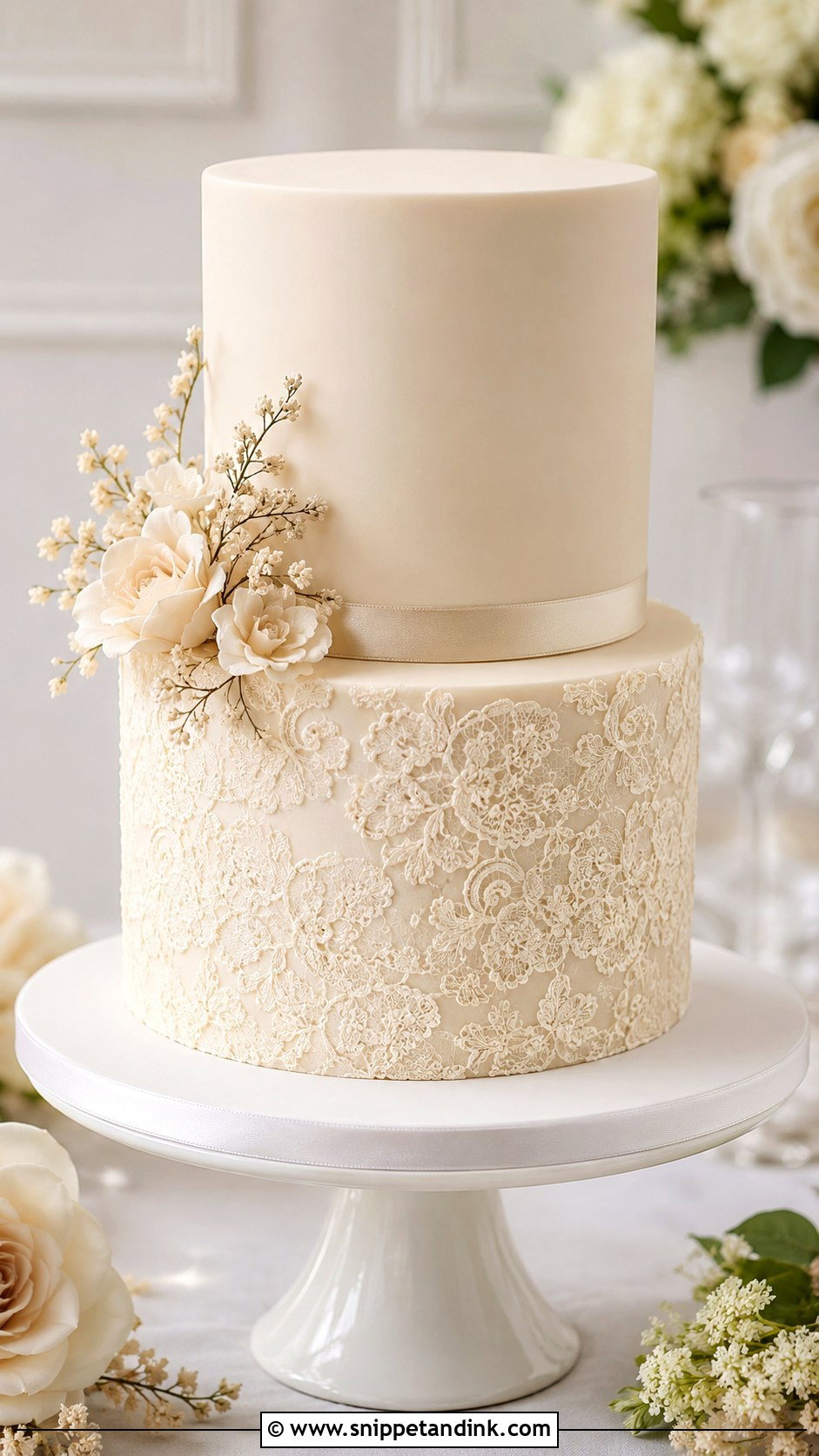
Lace texture can be made by pressing a mould into fondant, by stencilling through a lace pattern with royal icing, or with fine hand piping. On beige it looks warm rather than formal. I suggest lace on one tier only, with the others smooth, because a whole cake of lace can look like fabric rather than cake from across the room. It’s detailed up close and quiet from a distance, which suits romantic garden and classic receptions.
17. Beige Wedding Cake With Caramel Drip
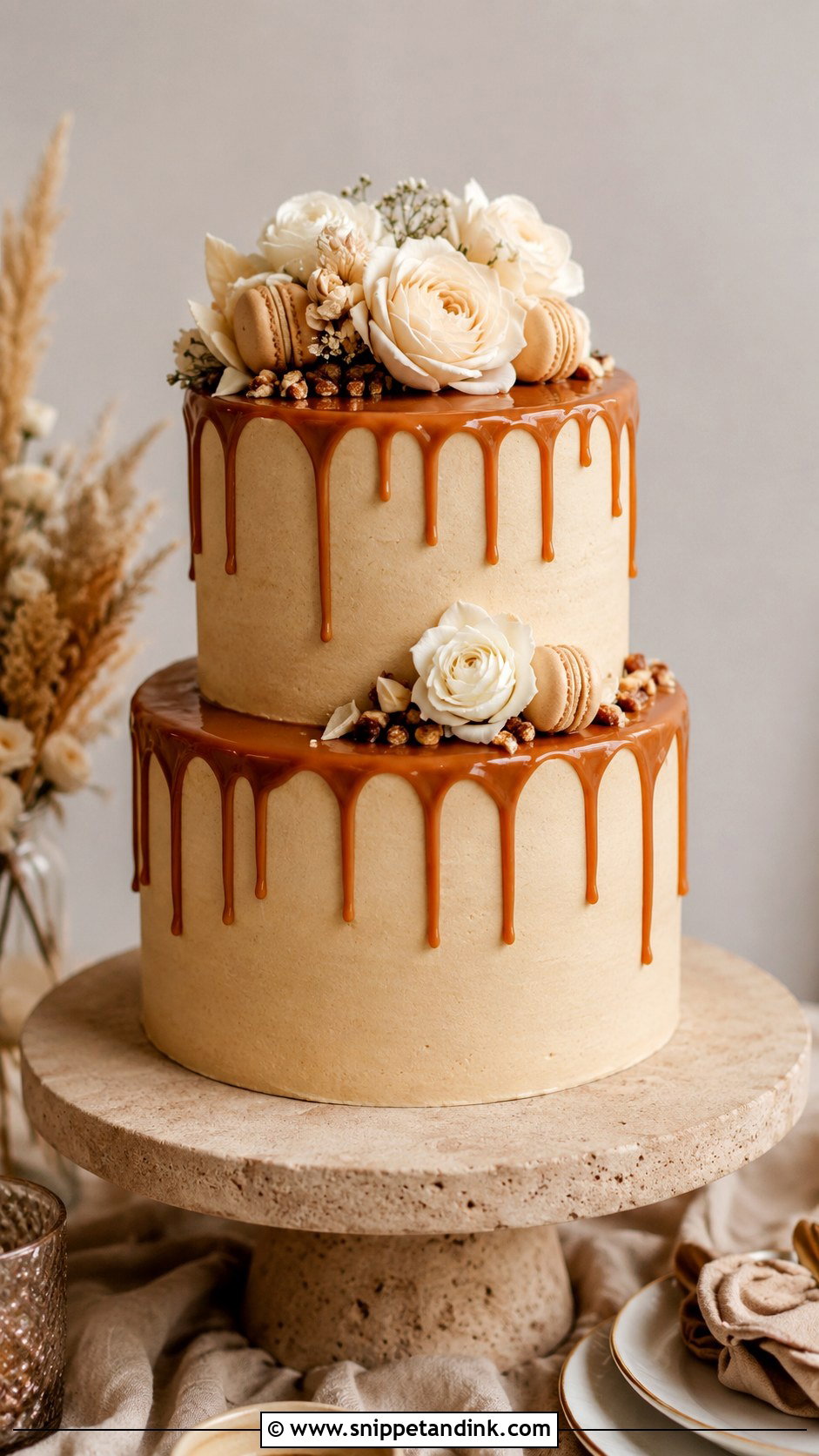
Caramel against beige blends rather than contrasts, so the drip looks soft instead of bold. Vanilla, brown sugar, banana, almond or spice cake all suit caramel. Timing the drip is everything: caramel poured too warm runs to the board, and poured too cool it sits in blobs, so I test one drip on the back before doing the front. Keep it thin and finish with a few cream flowers, macarons or toasted nuts. It suits cosy indoor receptions.
18. Beige Square Wedding Cake
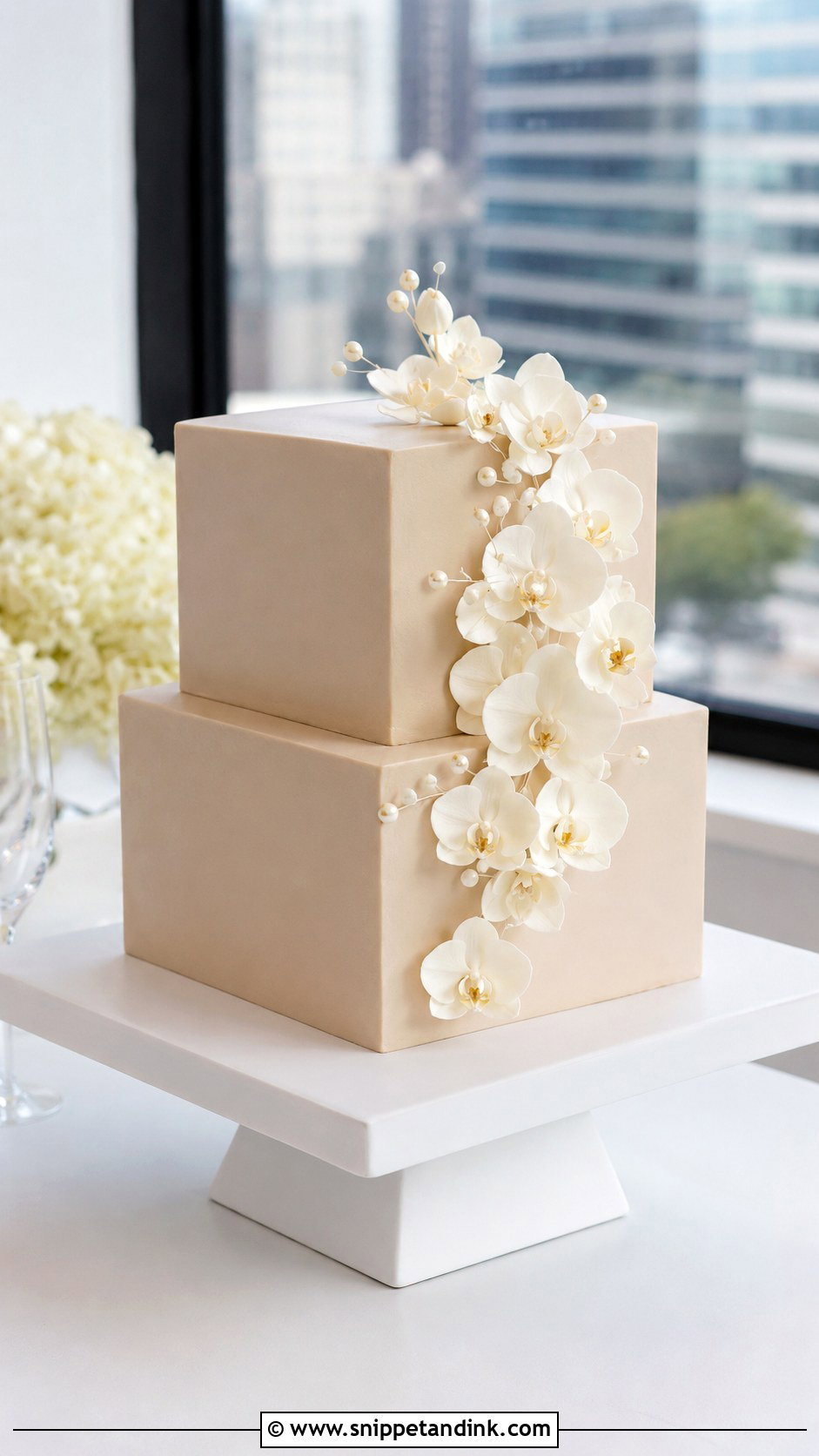
Square tiers feel architectural, and beige softens that structure so it still reads romantic. Sharp square corners are the hardest finish in cake work, in buttercream or fondant, so look for clean corners in your baker’s portfolio before you book a square cake. One flower cluster, a narrow ribbon or a few pearls is plenty. Gallery spaces and city venues suit it, and the straight lines read clearly from the front in photos.
19. Beige Single Tier Wedding Cake
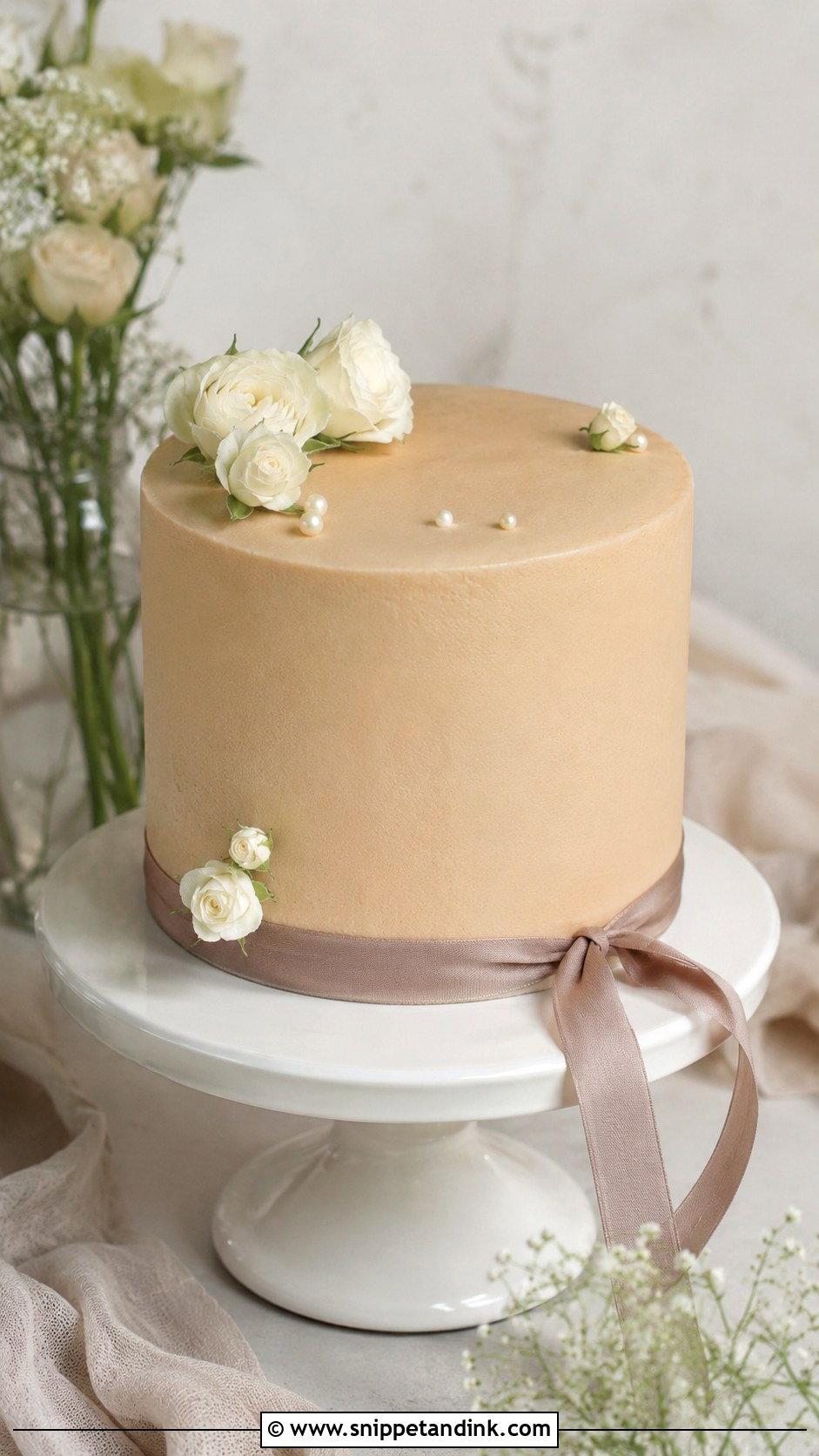
A beige single tier wedding cake works for elopements, small weddings and couples serving other desserts alongside it. Ask for a taller tier, four or more layers of sponge, so it still has presence on the stand. Smooth beige buttercream with a few flowers, pearl details or a soft ribbon looks just as finished as a larger cake. It’s easier to transport and display, and it frees up budget for a better flavour or a dessert table.



20. Beige Wedding Cake With Neutral Flowers
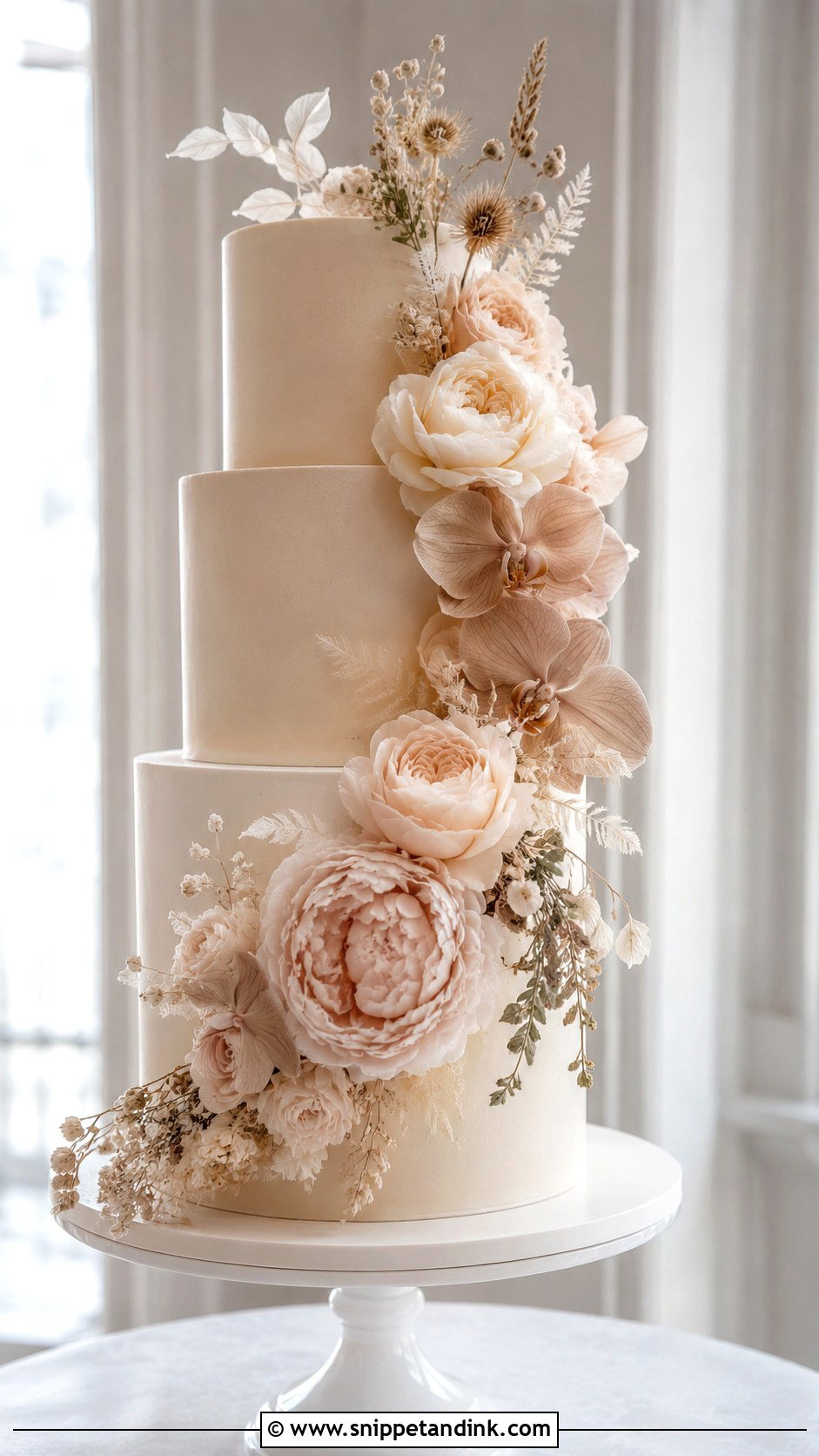
Neutral flowers are the most flexible choice for a soft palette: cream roses, taupe or pale orchids, blush peonies, dried beige blooms and pale greenery all sit together without adding strong colour. Placement matters more than the flowers themselves, and a single side cluster or a gentle diagonal line looks intentional. Smooth icing gives a clean base; textured icing makes it feel more natural. It ties the cake to bridesmaid dresses, table florals and the ceremony arch.
Will Beige Icing Look Dull in Photos?
It can, and it’s worth planning for. Beige is very sensitive to lighting. Under warm candlelight it shifts toward peach or yellow, while in cool shade or overcast daylight it can turn slightly grey. Neither looks bad in person, but a camera exaggerates both.
- Ask where the cake table will sit, and check the colour sample there at the time of day you’ll cut the cake.
- Give the cake its own light source, a lamp or a few candles nearby, rather than relying on dim overhead lighting.
- Add one lighter element, such as white flowers or pearls. A small bright accent makes the beige look deliberate instead of flat.
- Tell your photographer the cake is meant to be beige, so they don’t correct it toward white when editing.
A beige cake beside a bright white dress can look darker than you expected in the cutting photos. If your dress is pure white, choose a lighter sand or a creamy latte shade rather than a deep taupe, so the two read as a pair instead of as a mismatch.
Why Beige Works as the Quiet Middle of the Table
Beige doesn’t compete with the dress, the flowers or the room. It supports them. Smooth buttercream, clean fondant, dried flowers, pearls, gold leaf or a single bloom all have a gentle background to sit on, and the colour pairs naturally with flavours from vanilla and almond to caramel and spice. Pick one main finish and one or two decorations and stop there. Then check the colour in your venue’s own light before the day.
You'll Like These Ideas:






Leave a Reply