
Pearls are the detail I’m asked to put on single-tier cakes more than any other right now. They add shine without height, and on a small cake that’s exactly what’s needed. What separates a polished pearl cake from a fussy one is placement: a clean buttercream surface, a neat border, a cluster beside a few flowers, old-fashioned piping or a modern pearl cascade, with one idea leading and the pearls supporting it. Here are 20 single tiers I’d happily make, with notes on how each pearl treatment is applied, how it holds up and what to pair inside.
Sugar, Fondant or Isomalt: What Those Pearls Are Made Of
Couples often assume all cake pearls are the same. They aren’t, and the type changes how the cake looks, how it eats and how it survives the day.
- Sugar pearls and dragées are hard, shiny and cheap. They hold their color but crunch hard, and in a humid room their coating can bleed into white buttercream.
- Fondant or gum paste pearls are molded by hand and dusted with luster. They’re soft to eat and come in any size, but take time to make, and the luster can dull if the cake picks up condensation coming out of the fridge.
- Isomalt pearls are poured sugar alcohol. They look most like real pearls, with real translucency, but are hard enough that I treat them as decoration only.
- Metallic finishes vary. Some silver and gold balls and dusts are labeled for decoration rather than eating, so ask what’s being used if pearls will cover parts guests will eat.
On most of my pearl cakes I mix types: soft pearls where people will bite, harder ones on borders that come off with the knife.
1. One Tier Pearl Wedding Cake With White Roses
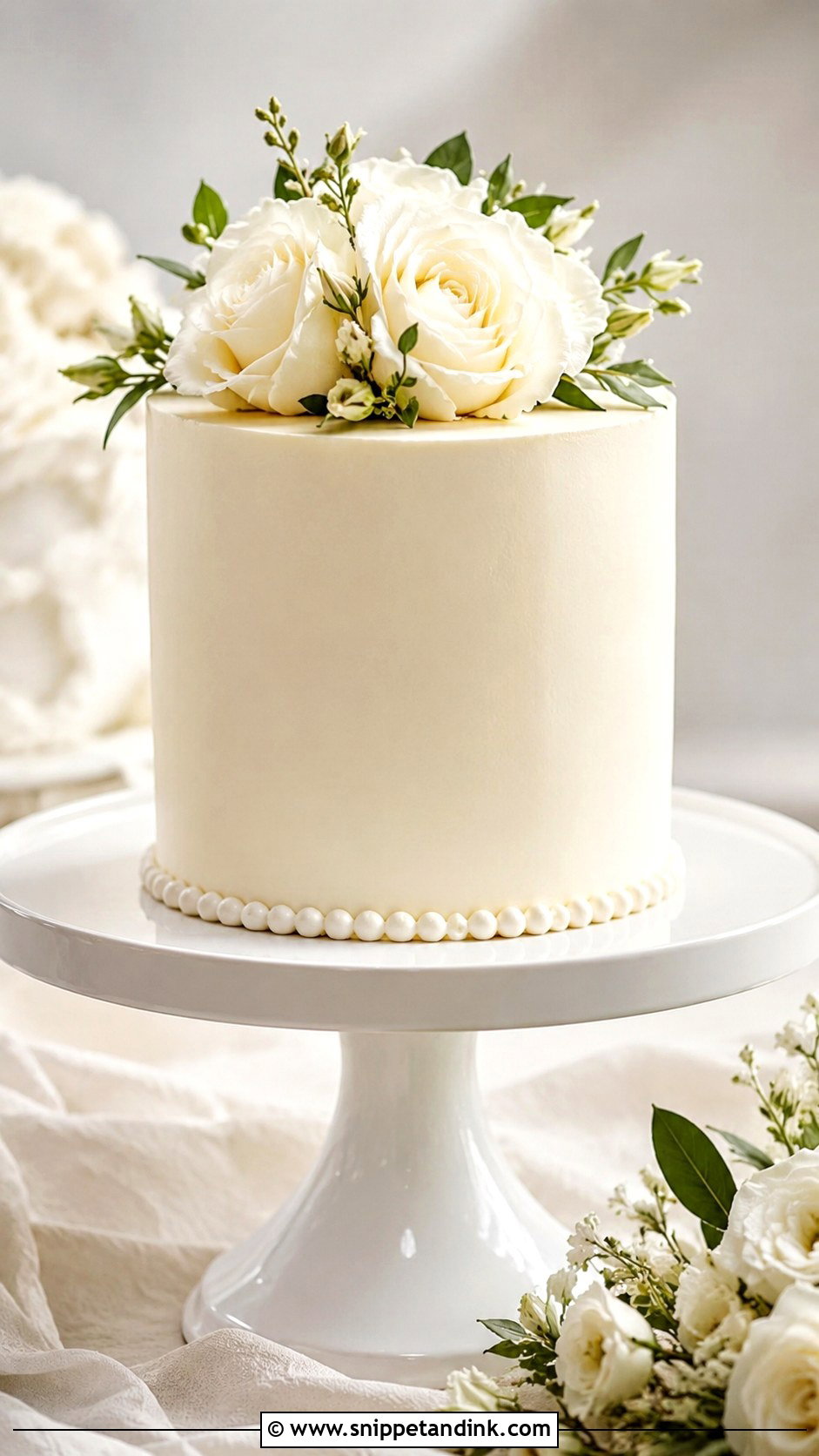
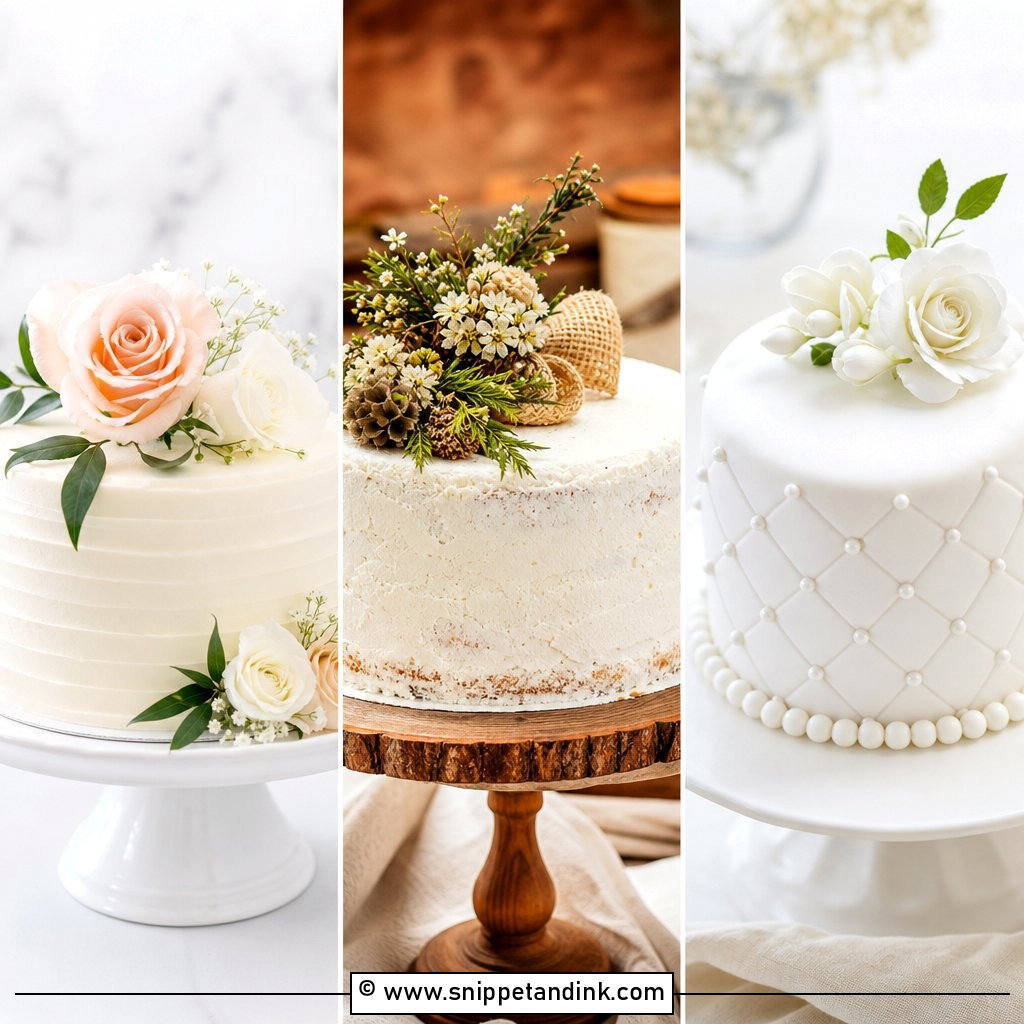
White roses and pearls are the most classic pairing on this list, and the easiest to get right. I start with smooth ivory buttercream or fondant, run a pearl border along the base, then set the roses slightly off-center so the top has height without crowding. Mixing two or three pearl sizes in the border keeps it from looking machine-made. Roses need their stems wrapped and sitting in a pick, never pushed bare into the cake. Inside, a vanilla almond sponge with raspberry filling suits it.
2. One Tier Pearl Wedding Cake With Pearl Border
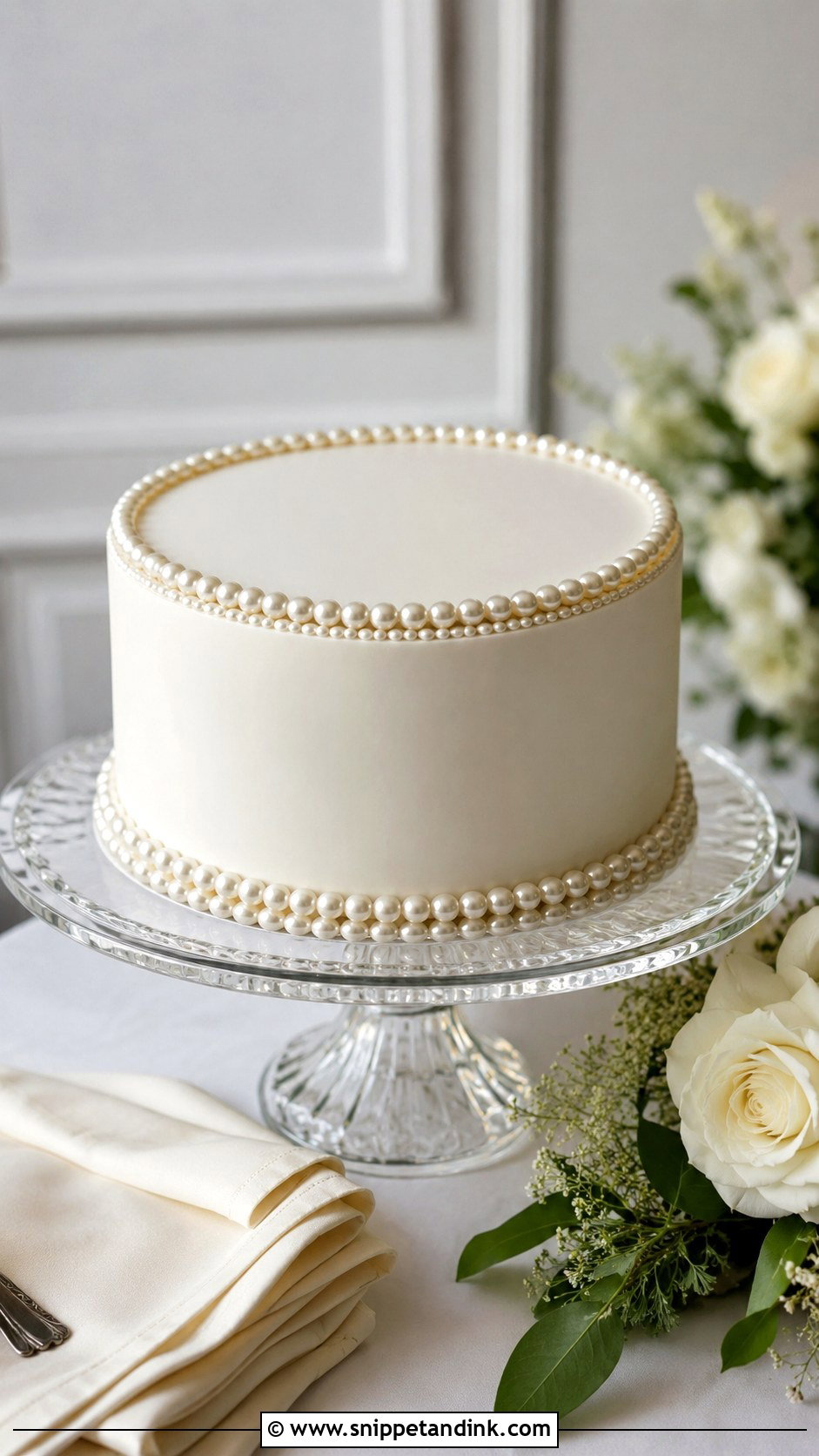
A border alone can finish a single tier. Pearls run neatly round the base, the top edge or both, and nothing else is needed, which is why it’s the option I suggest when the budget is tight: the work is quick compared with a full pattern. Round, square and heart shapes all take a border, but a tall round tier shows it off best because the line follows the curve. I press each pearl into buttercream that has just crusted, so it grips without sinking. Lemon or berry filling inside keeps it light.
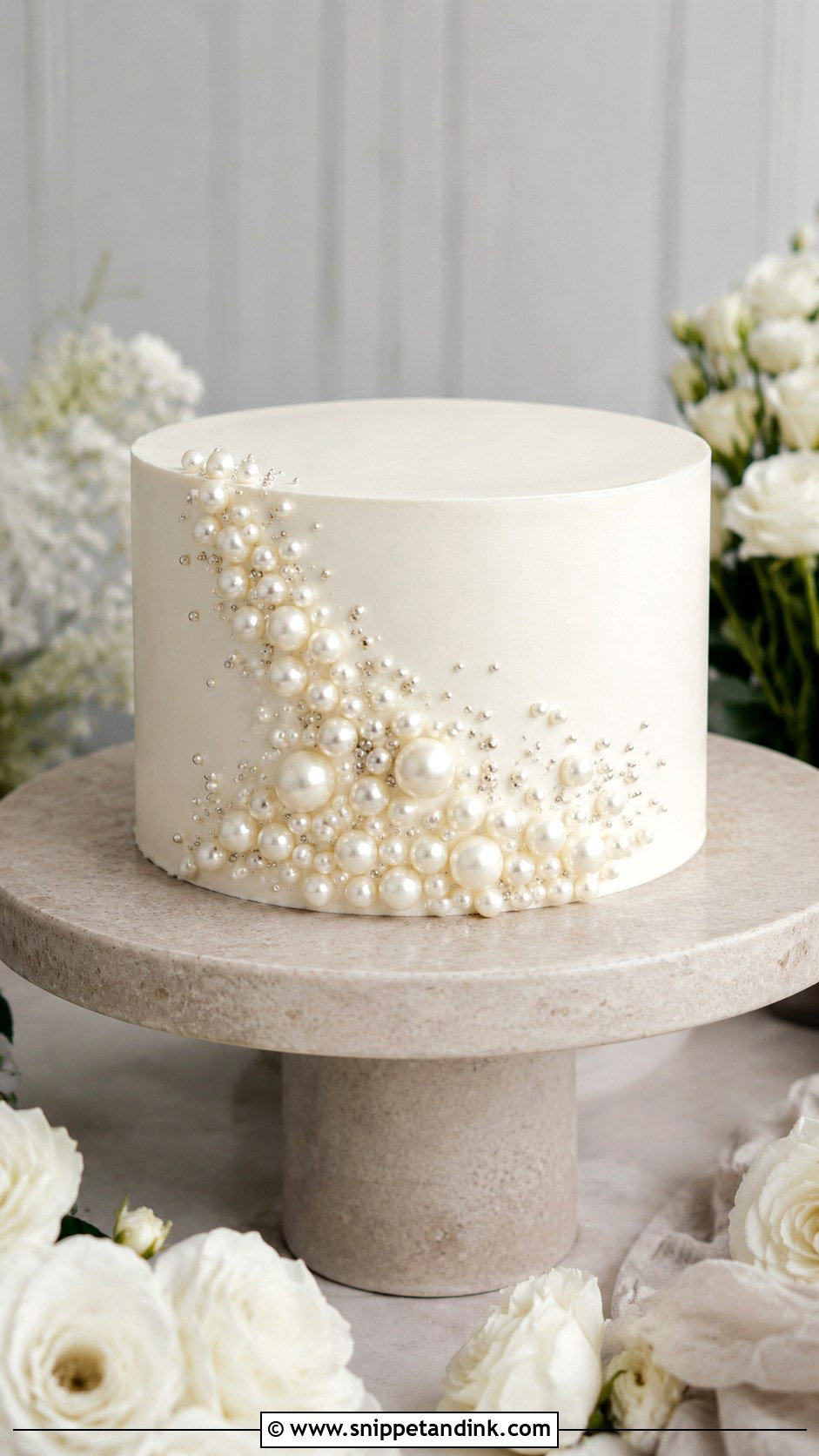
3. One Tier Pearl Wedding Cake With Cascade Pearls
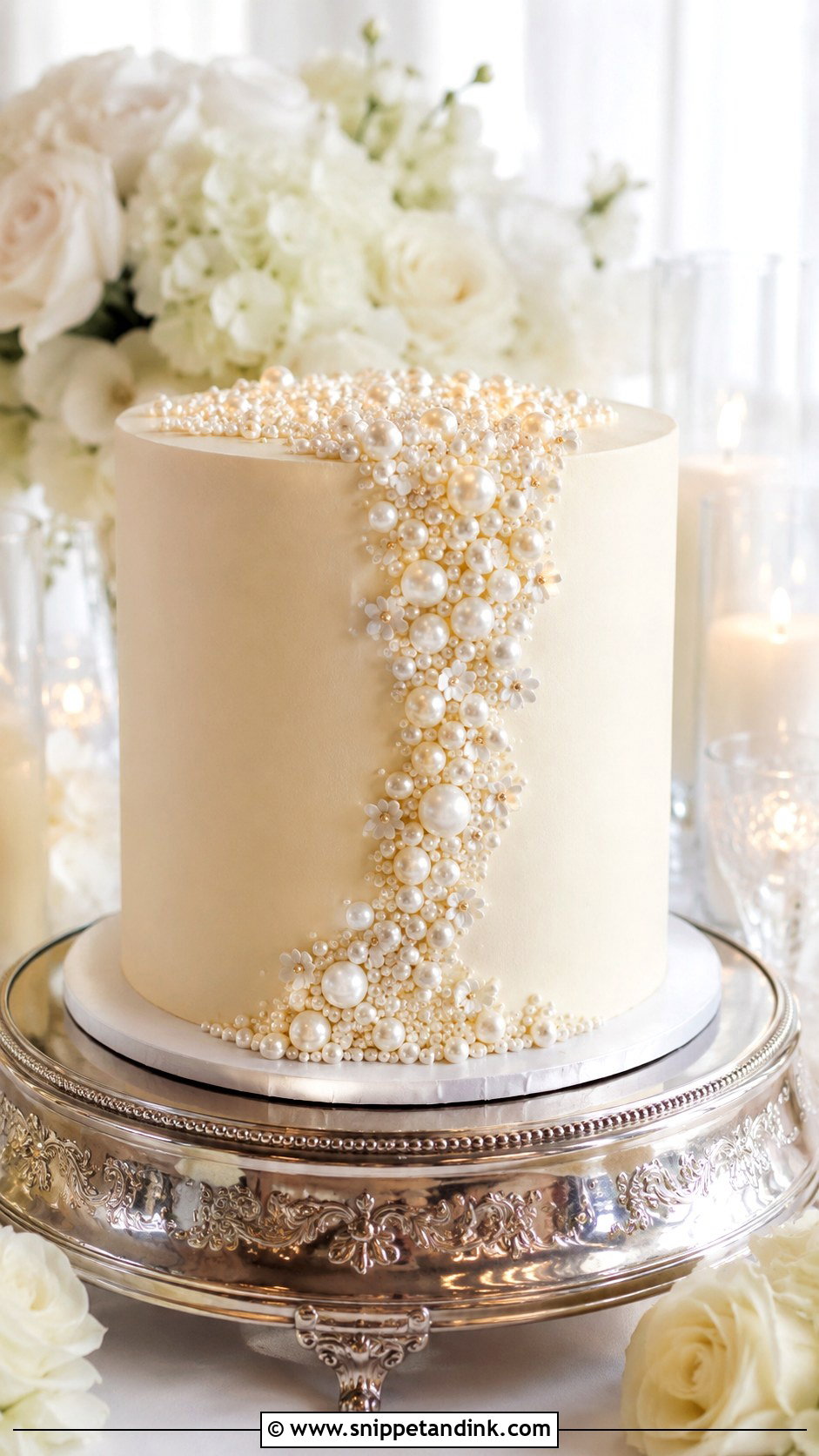
A cascade is the pearl version of a necklace draped down one side. I place it by hand, starting at the top edge and letting the trail thin out as it descends, larger pearls first and tiny ones filling the gaps. It needs a very smooth surface to read clearly: fondant, Swiss meringue buttercream or a tightly finished American buttercream. Gravity is the risk on a soft surface, so on a warm day I’d rather do this on fondant. A few tiny sugar flowers near the top of the trail and candlelight on the table do the rest.
4. One Tier Pearl Wedding Cake With Vintage Piping
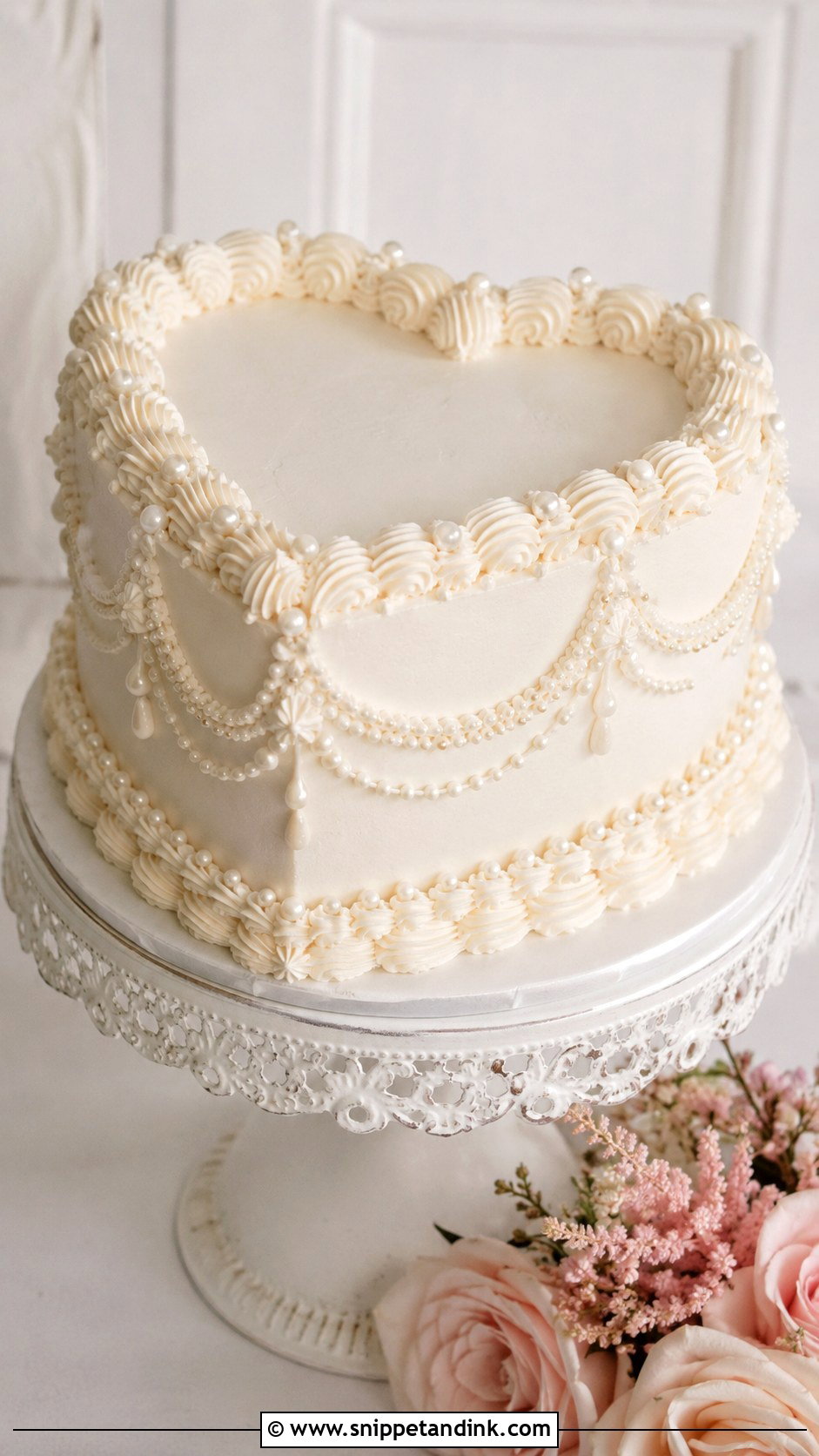
Vintage piping and pearls belong together because piping creates natural resting points: the tip of each shell, the center of each rosette, the dip of each swag. I set a pearl in each while the buttercream is fresh, so it holds without any glue. Round and heart tiers suit this best. Ivory, blush or pale champagne frosting keeps the pearls visible; strong colors swallow them. Vanilla bean, pistachio or strawberry cream work well inside. Piped buttercream needs a cool room, so plan it for indoor receptions in summer.
5. One Tier Pearl Wedding Cake With Fresh Flowers
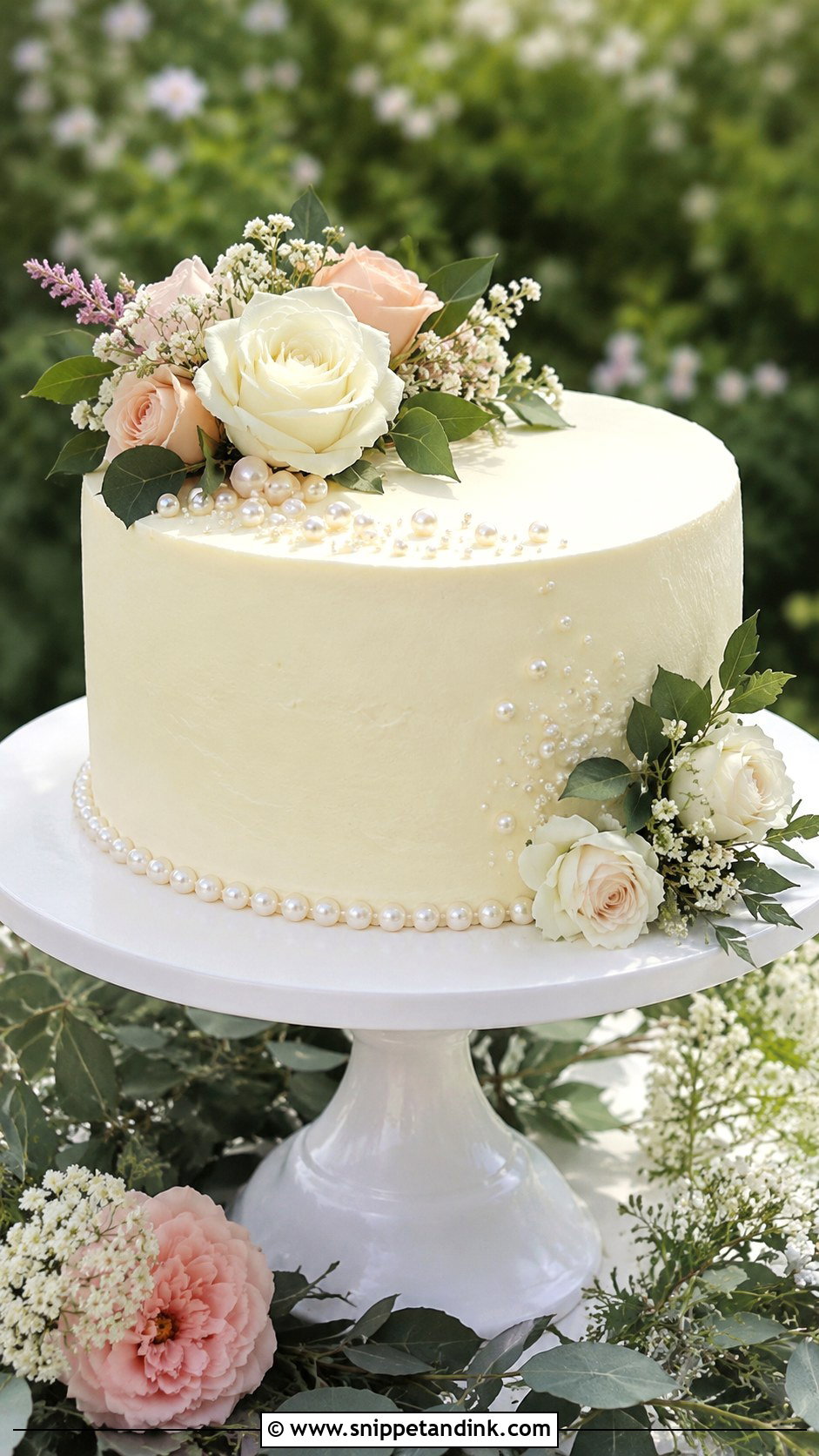
On a small cake, fresh flowers need restraint. One cluster on top or a diagonal run down one side is enough, with pearls circling the base or sitting between blooms to tie them together. Roses, ranunculus, lisianthus and small orchids are reliable; peonies are lush but heavy, and they open fast in a warm room. Every stem should be confirmed as unsprayed by the florist and wrapped before it goes near the cake. A plain white cake with vanilla buttercream keeps the flowers as the focus.
6. One Tier Pearl Wedding Cake With Gold Accents
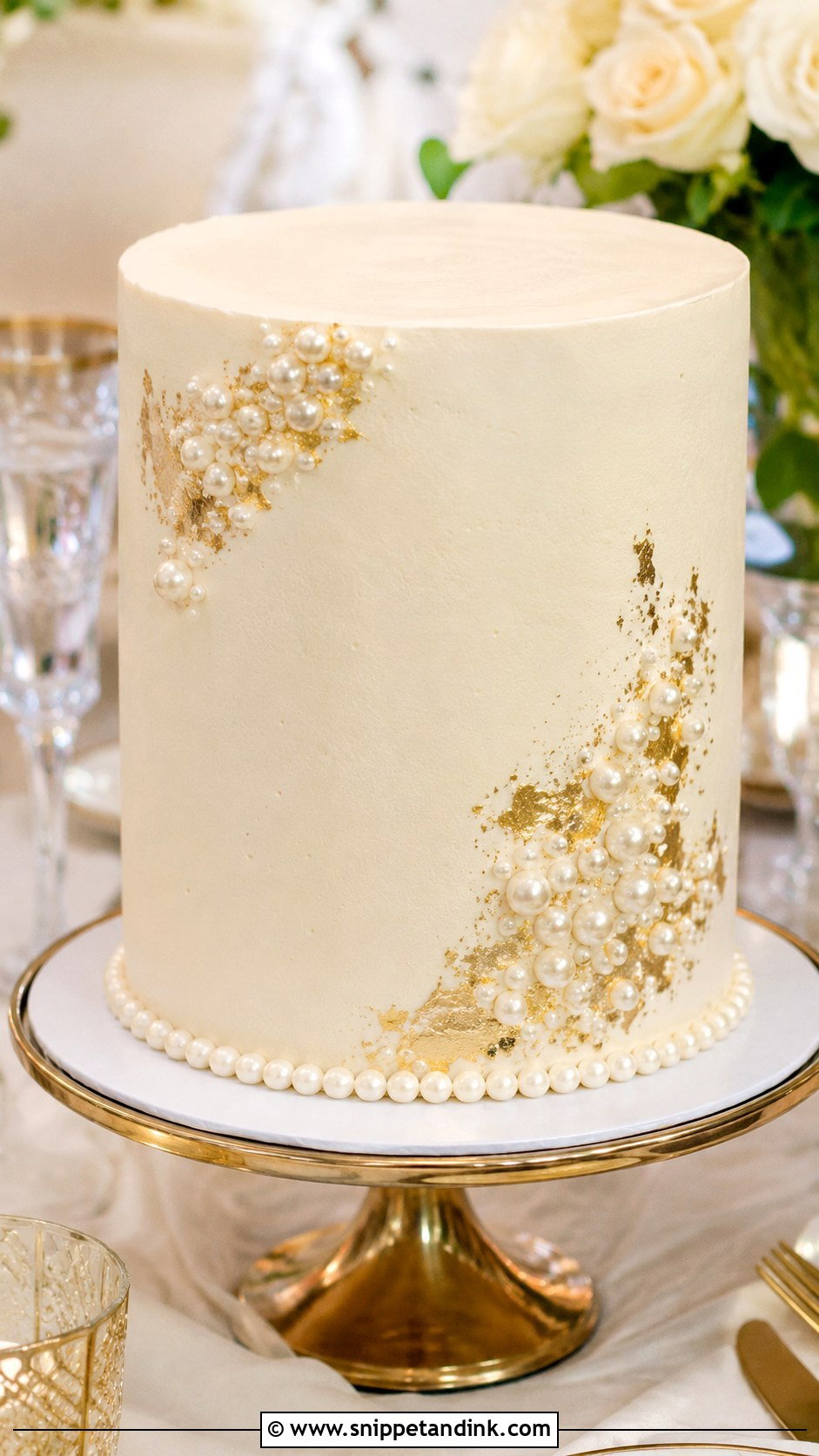
Gold warms a pearl cake, but it competes quickly. I keep it to a thin brushed edge, a few leaf flecks or a small gold topper, and set the pearls in clusters near the gold so the two read as one detail. Ivory frosting softens the gold more than pure white does, which looks better under evening light. Gold paint needs to be food-grade; some metallic dusts are sold as decorative only, so check what your baker uses if guests will eat that part. Salted caramel or honey buttercream filling suits the warm palette.
7. One Tier Pearl Wedding Cake With Buttercream Texture
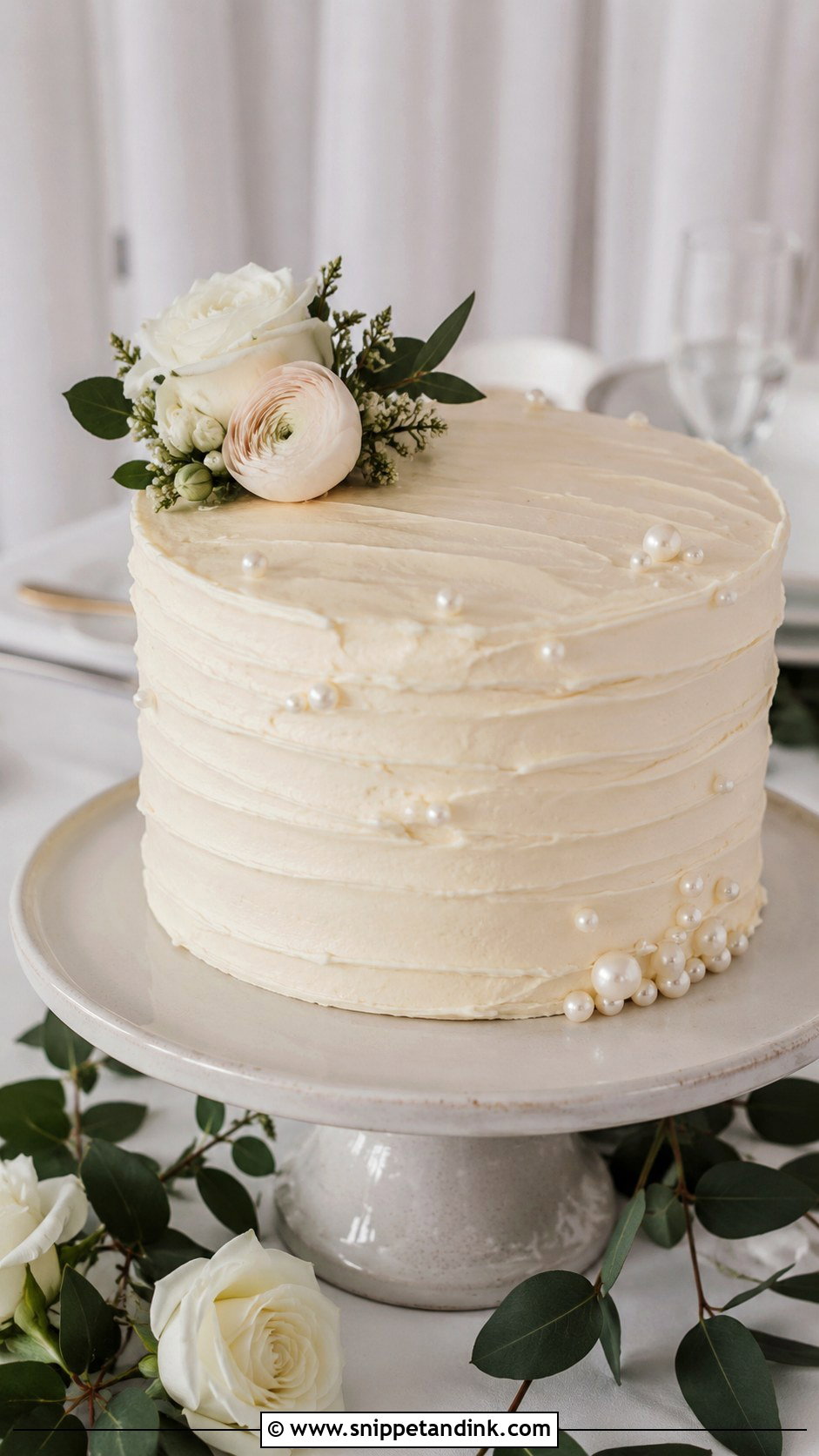
Texture changes how pearls look. On combed lines, soft waves or palette-knife strokes, the buttercream turns matte and the pearls stand out as the only shine on the cake. That contrast means I use fewer of them, a loose top border or a single side cluster. Textured buttercream also hides small dents from a long drive, so it suits a barn or outdoor reception. Lemon, coconut or almond sponge fit the relaxed finish.
8. One Tier Pearl Wedding Cake With Fondant Finish
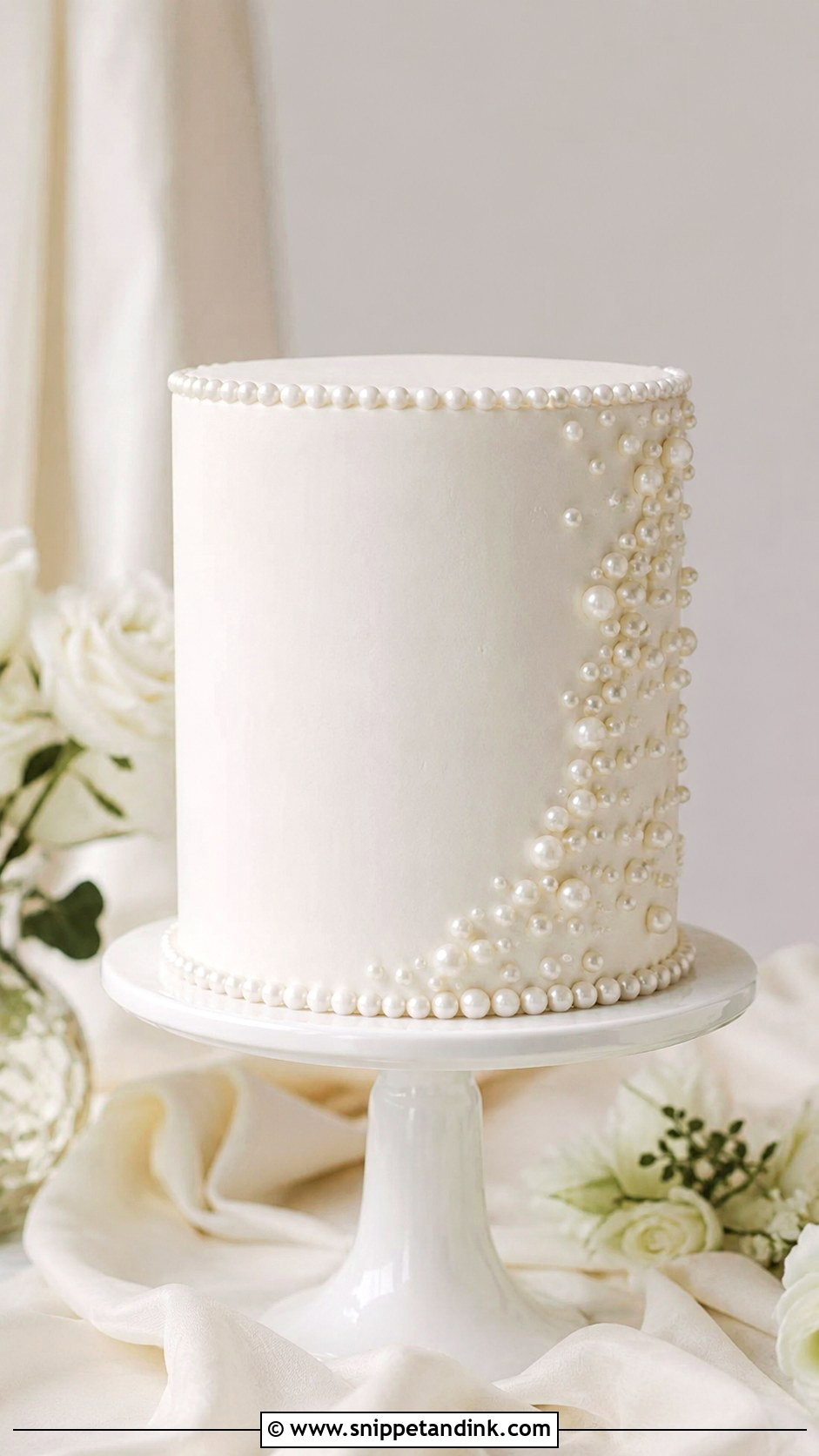
Fondant gives the sharpest edges and the flattest surface, which is why pearls look most precise on it. I can set them in exact rows, emboss a pattern first and place pearls in it, or scatter them across the sides. The surface also protects the cake on a hot day better than buttercream. The trade-off is taste: many guests peel fondant off, so I keep the layer thin and the cake underneath flavorful, such as vanilla bean, lemon or chocolate with ganache under the fondant. A tall tier on a good stand keeps it from looking plain.
9. One Tier Pearl Wedding Cake With Lace Detail
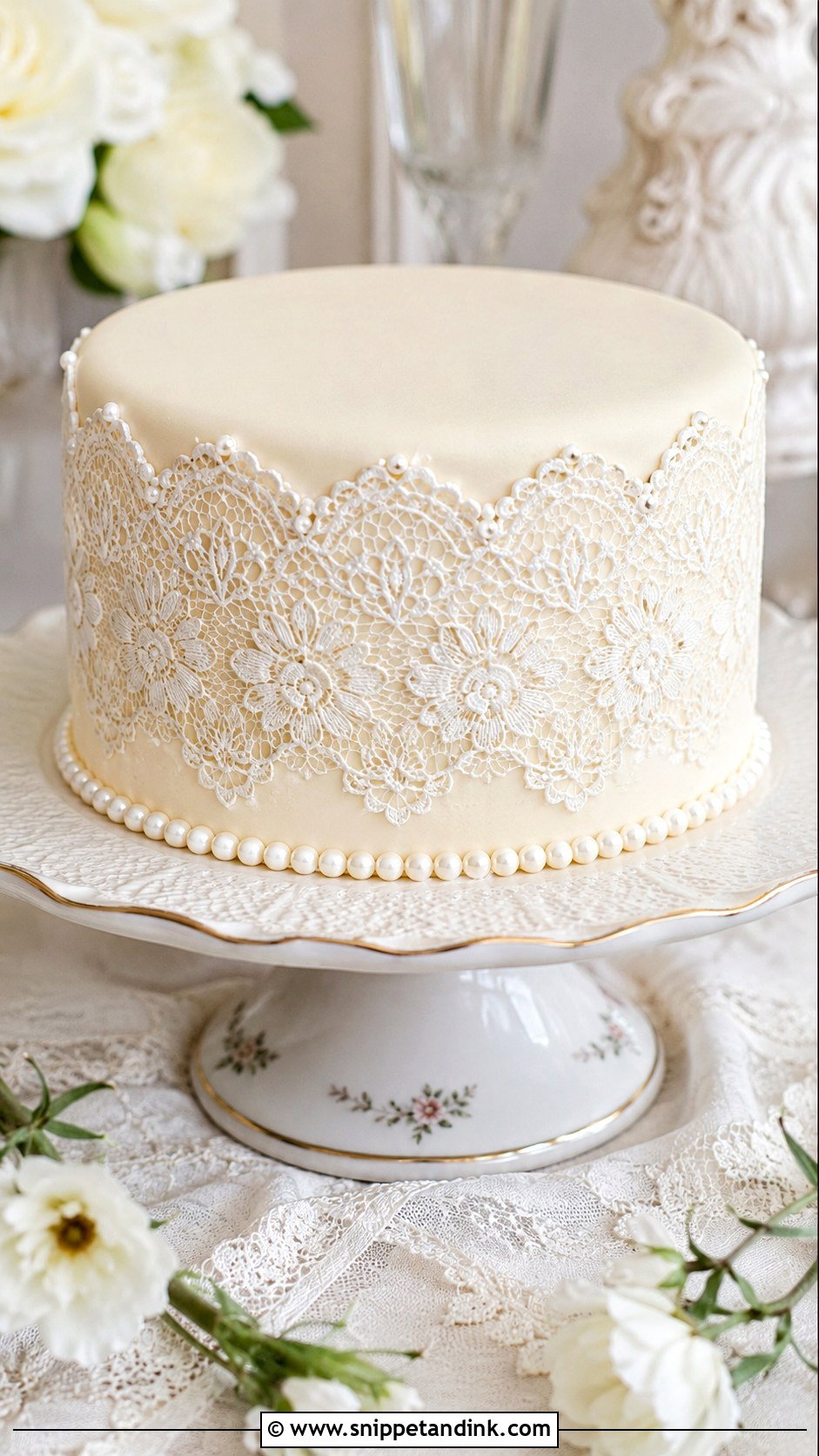
Lace can be made several ways: fondant cut-outs, set edible lace, royal icing through a stencil or hand-piped buttercream. Edible lace is the most delicate-looking but can soften and stick in humidity, so I apply it as late as possible. Pearls either follow the lace motif or frame it at the borders. Ivory on ivory or soft white with pearl shine keeps it bridal. A tall round tier gives the pattern room to repeat, and almond or lemon cream suits it inside.
10. One Tier Pearl Wedding Cake With Blush Flowers
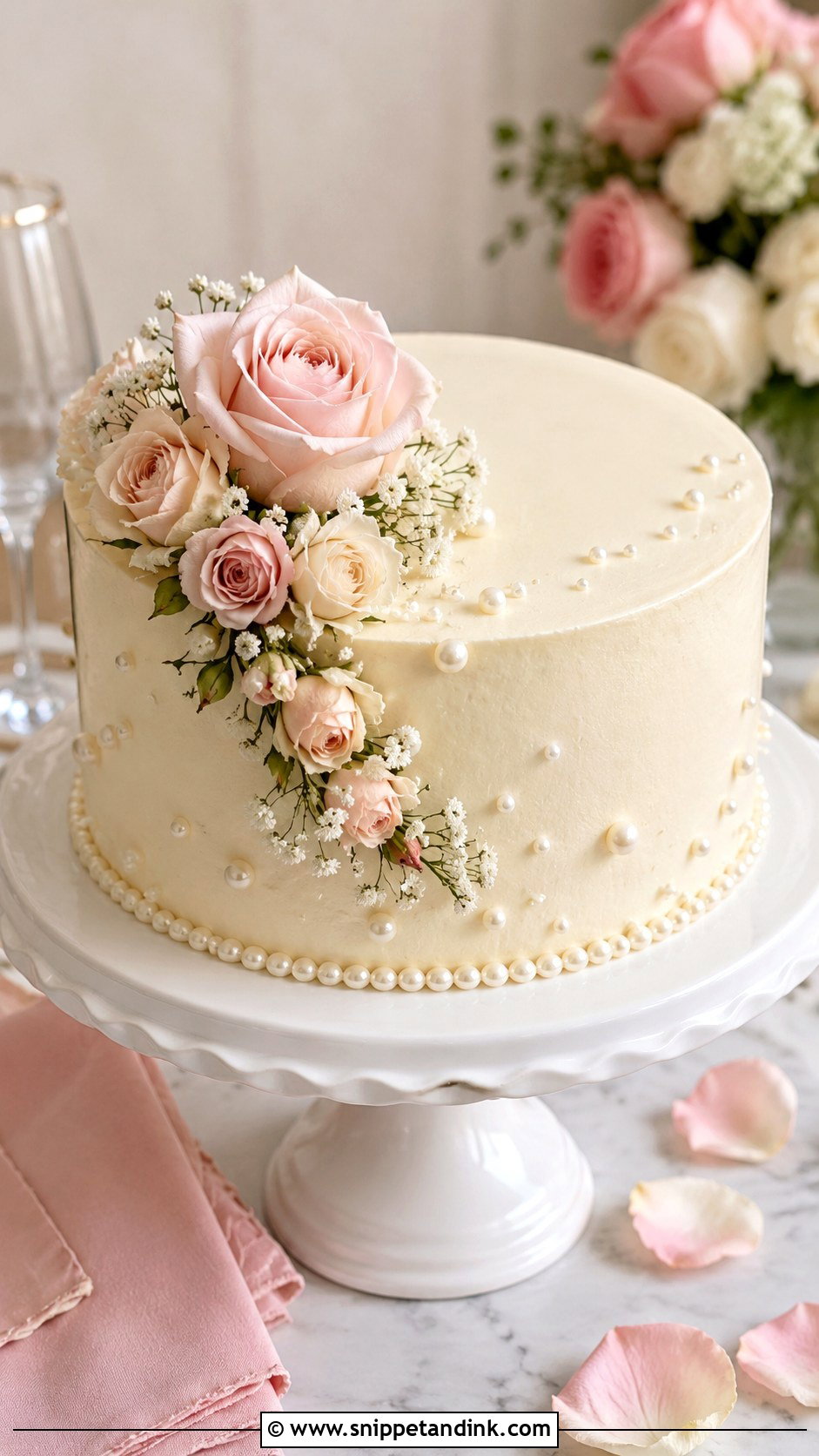
Blush flowers bring warmth to a pearl cake and sit easily alongside a pink, champagne or mauve palette. I use a smooth buttercream base, place the blooms on top or the side, and scatter pearls around them so the arrangement looks connected rather than stuck on. A blush satin ribbon at the base finishes it, as long as it’s backed so the frosting doesn’t stain it. Strawberry, raspberry or rosewater all match the floral mood. Rosewater is strong, so I keep it to a light syrup on the sponge.
11. One Tier Pearl Wedding Cake With Pearl Clusters
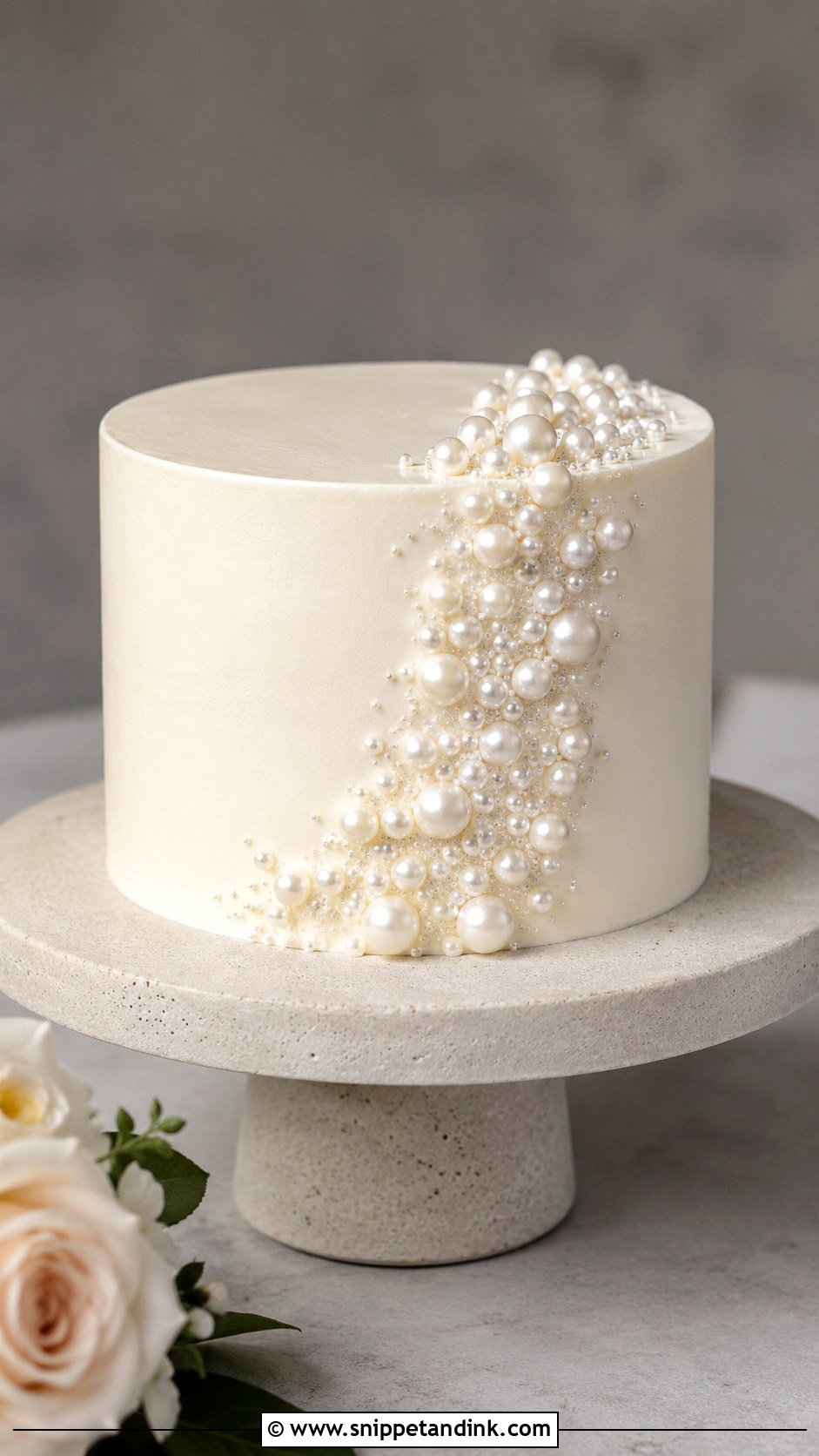
Clusters are how I make a pearl cake look modern. Rather than straight lines, I group pearls in small, uneven sections near the base, round one side or beside a floral accent. Varying the sizes inside each cluster is what gives them depth, and odd numbers look less arranged than even ones. A smooth white or ivory surface shows them best. Inside, keep the flavor clean: vanilla bean, coconut or white chocolate raspberry.
12. One Tier Pearl Wedding Cake With Pearl Topper
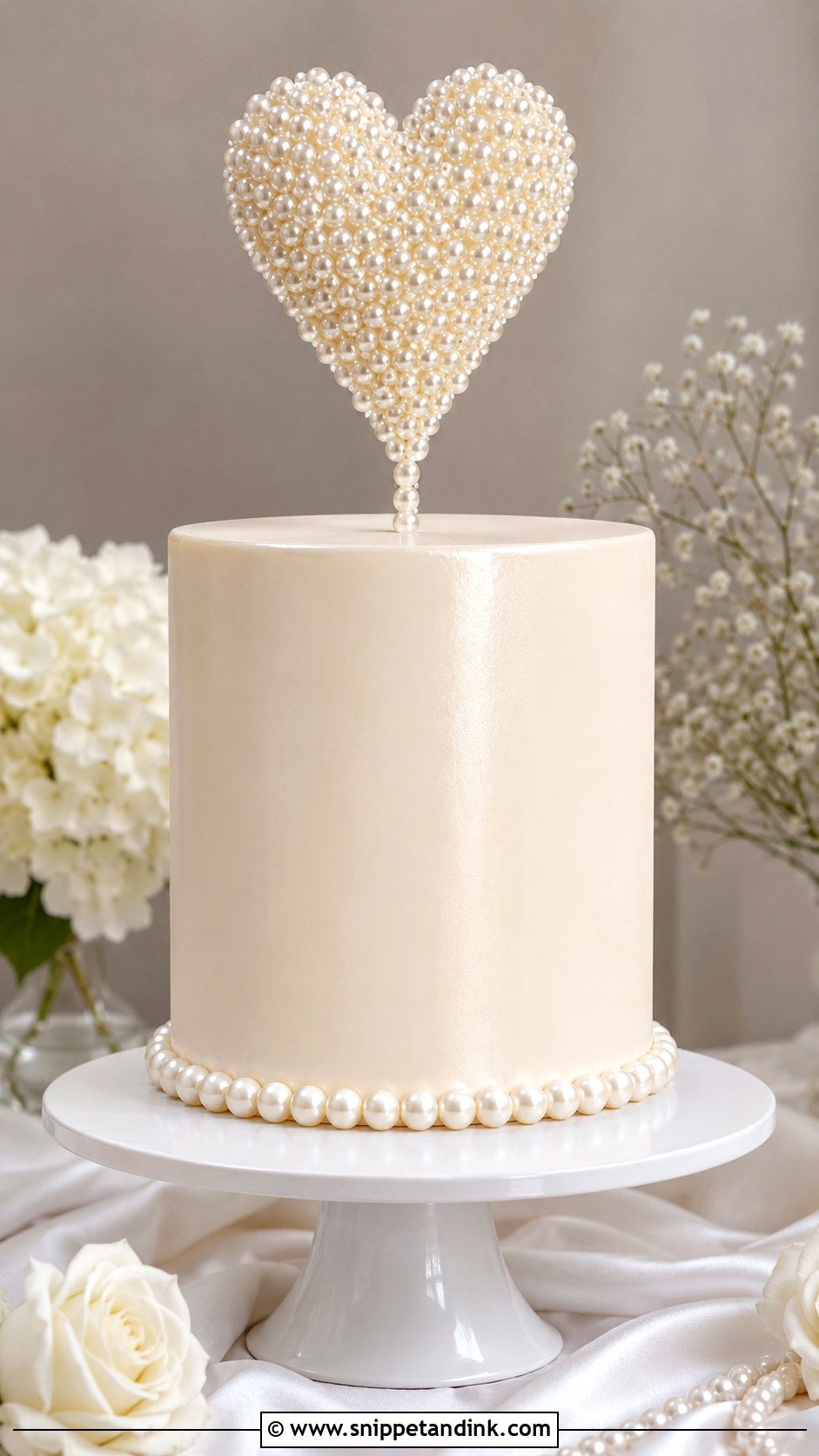
A pearl topper does the work flowers would usually do. A pearl bow, pearl initials, a heart or an arch adds height, so the cake itself can stay plain with just a small border. The engineering matters: a heavy topper sinks into buttercream and leans over a few hours, so I ask for something light and mount it on picks that reach down into the cake. A tall six- or eight-inch tier gives it a stable base. Vanilla almond sponge with cream cheese frosting is a reliable pairing, though cream cheese needs to stay cool.
13. One Tier Pearl Wedding Cake With Satin Ribbon
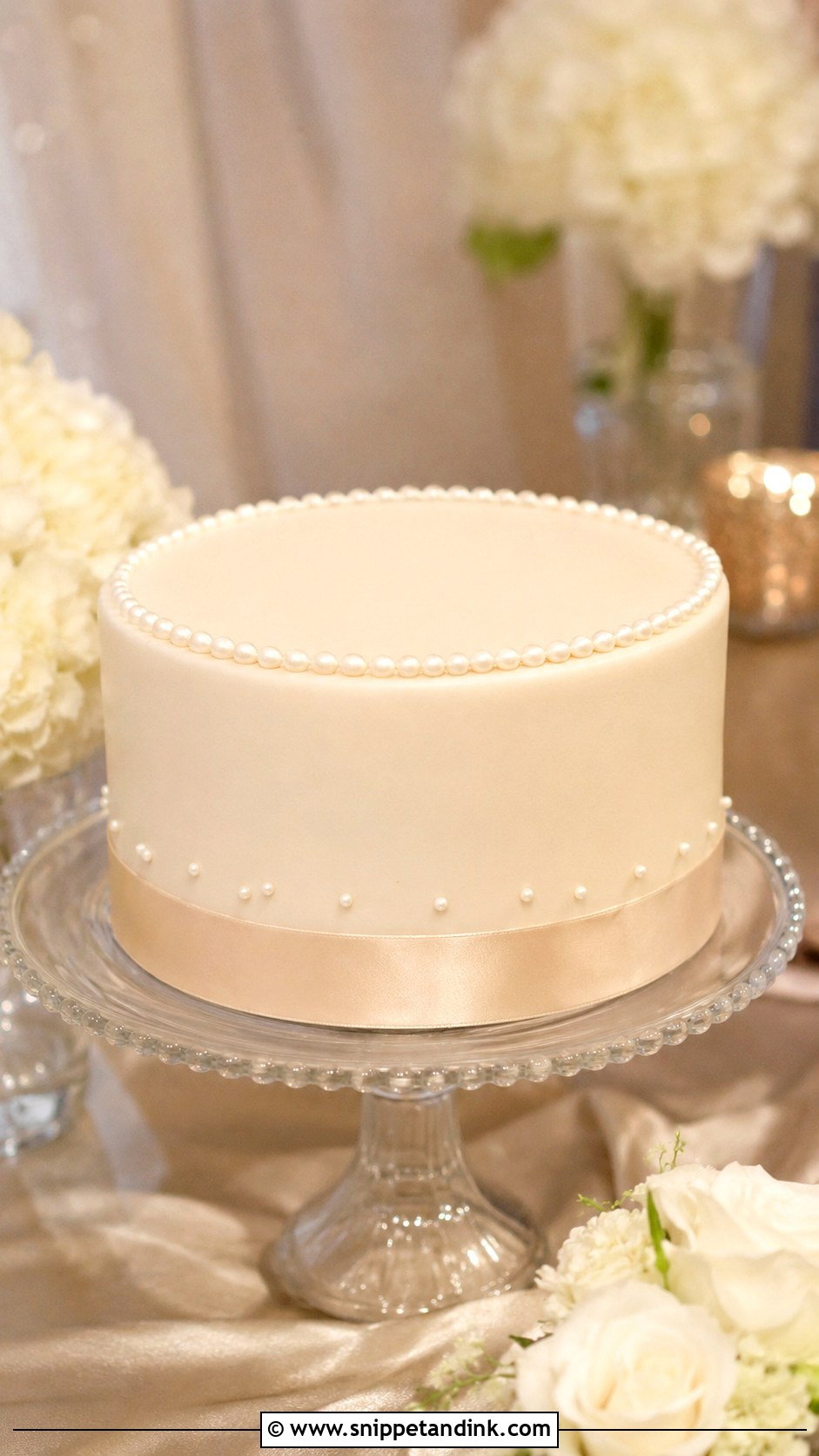
Ribbon gives a tailored finish. It wraps the base while pearls frame the top edge or run just above the ribbon line. I always back ribbon with a strip of acetate or tape, because buttercream grease seeps into satin within minutes and leaves dark patches. Match it to your linens, flowers or accessories: ivory, champagne, blush or pale blue all look right. It suits a formal room, and vanilla, almond or lemon sponge keeps it light.
14. One Tier Pearl Wedding Cake With Sugar Flowers
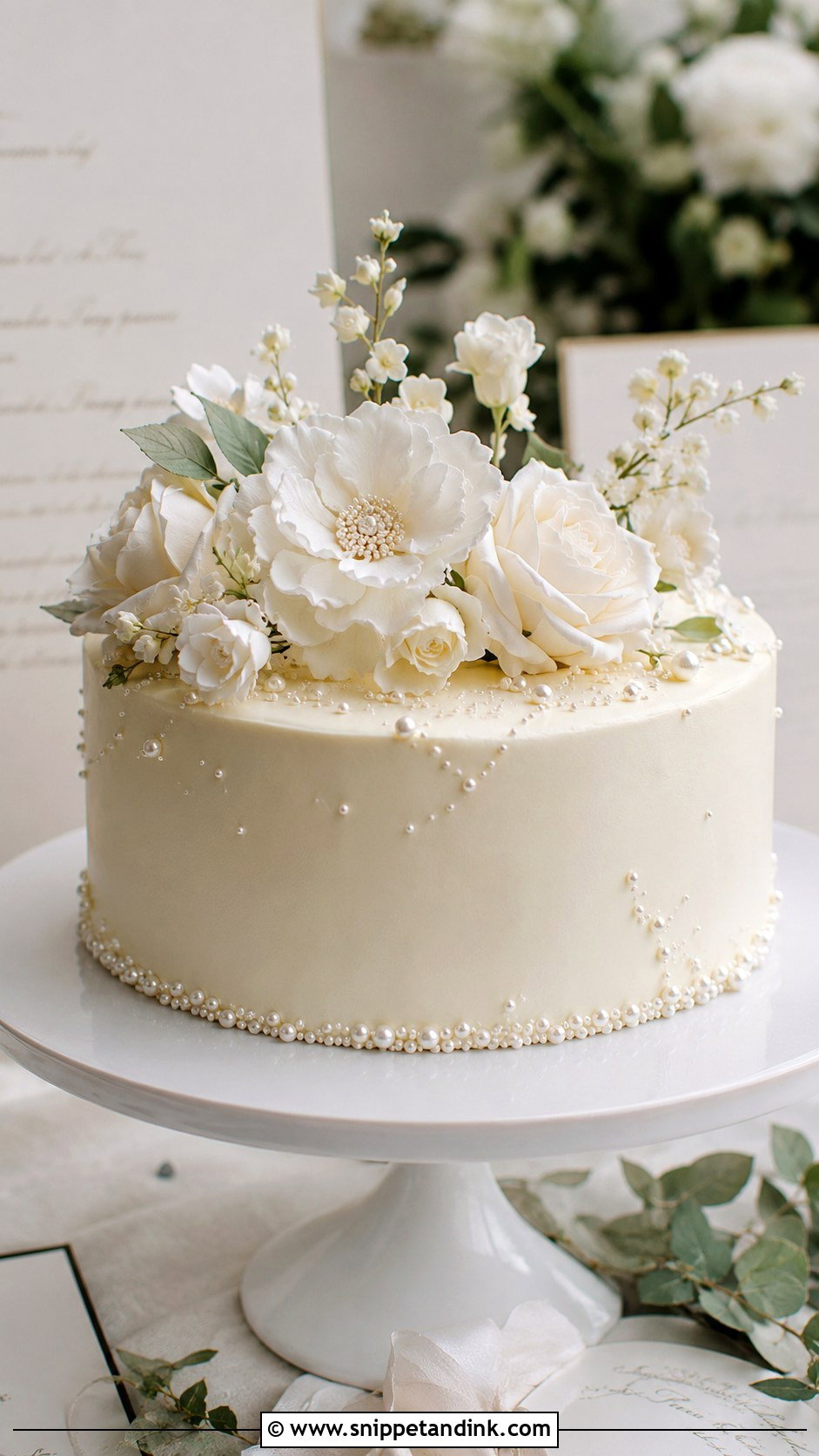
Sugar flowers are the safest choice for a summer wedding, as they don’t wilt and they can be made to echo your bouquet or the lace on your dress. They also take hours of work, which shows in the price. On a single tier, one large bloom with a few buds looks better than a crowded spray, with pearls framing the base or trailing near the flowers. They can be kept afterward if you store them dry and away from sunlight. Lemon elderflower or almond raspberry suit them inside.
15. One Tier Pearl Wedding Cake With Marble Finish
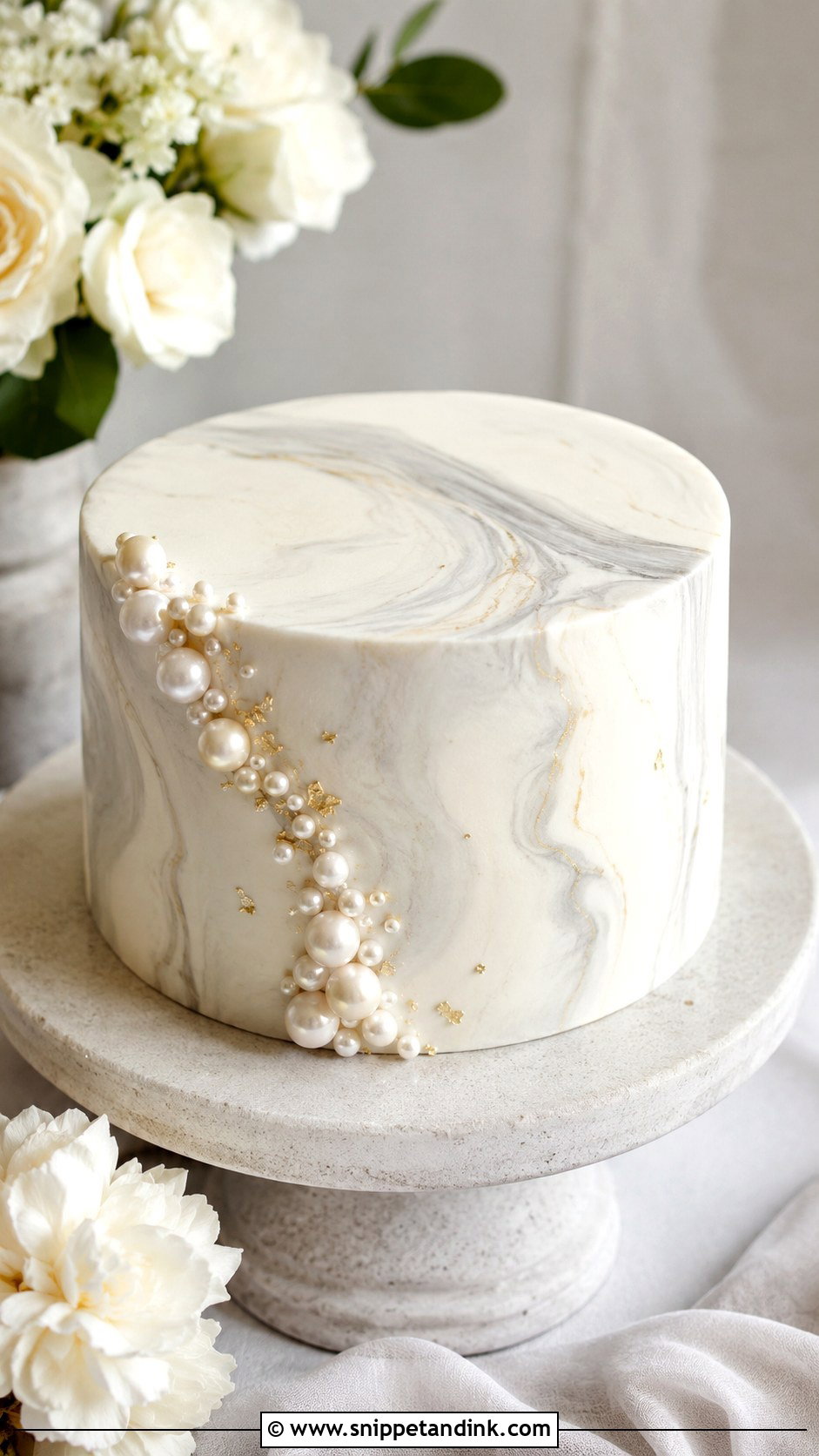
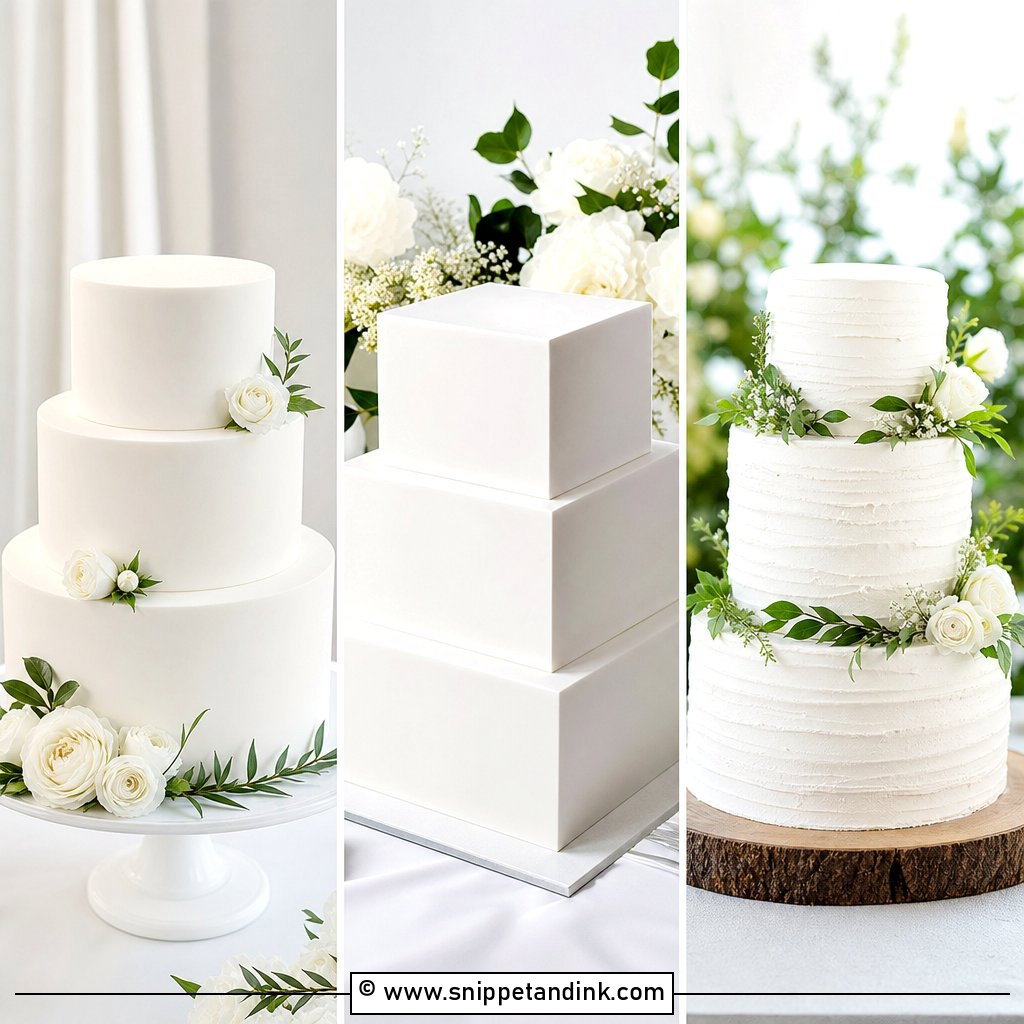
Marbling suits a modern venue or a couple who want something with movement but no bold color. I work soft gray, beige or blush through white fondant, which keeps the veining crisp; buttercream marbling is softer and less defined. Pearls along one side or near a small gold accent look refined against it. Matching the pearl tone to the lightest color in the marble stops them from looking added on. Chocolate vanilla swirl or white chocolate cake echoes the pattern inside.
16. One Tier Pearl Wedding Cake With Heart Shape
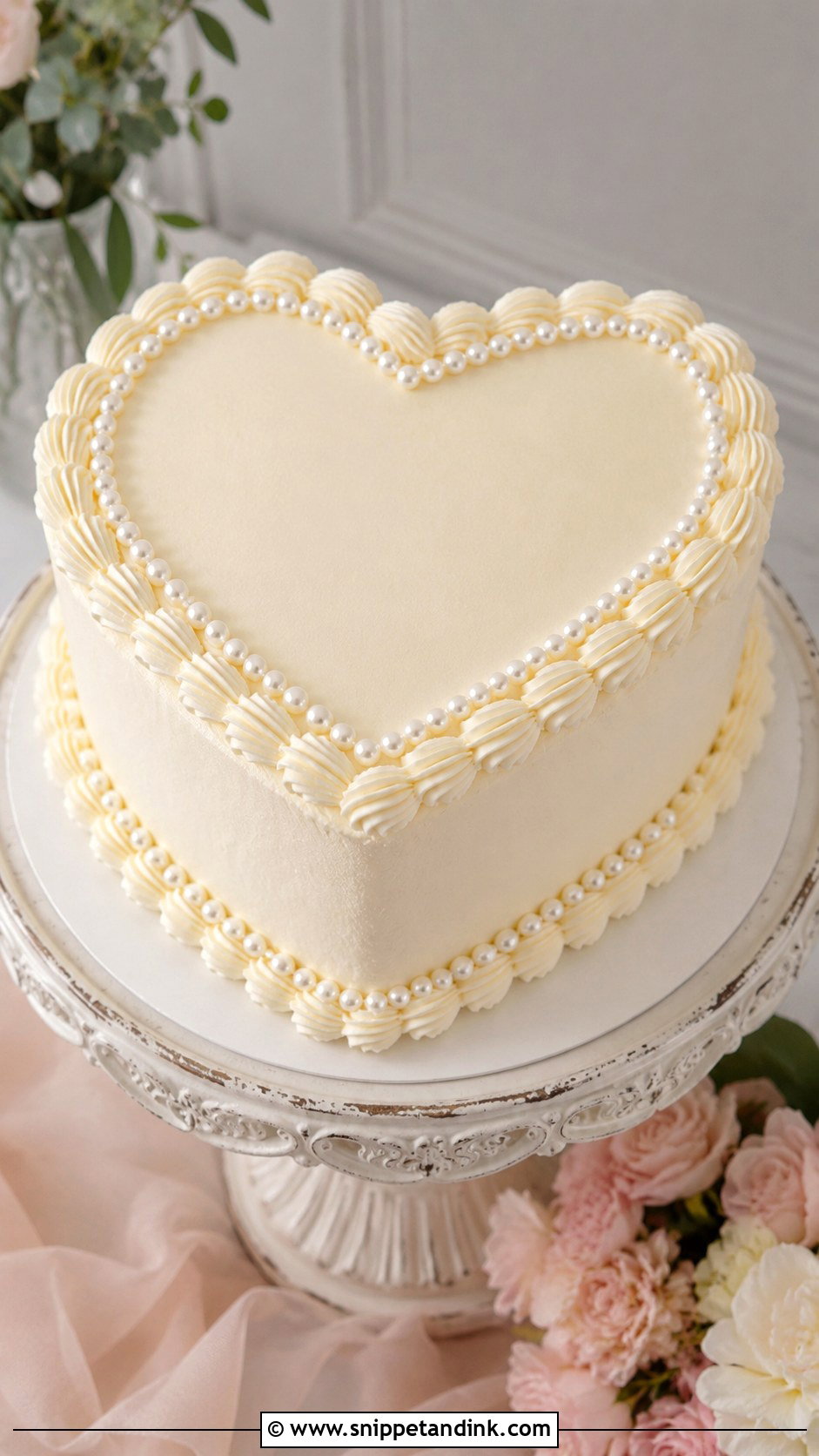
Hearts are a natural fit for an elopement, courthouse wedding or small brunch. I bake them in a heart-shaped pan so the point stays sharp, then either lean vintage with piped borders and pearls or keep it modern with smooth frosting and a single pearl outline. Pearls round the top edge show the shape off best in photos. White, ivory, blush and pale pink all work. Strawberry vanilla, almond or red velvet fit the mood inside.
17. One Tier Pearl Wedding Cake With Minimal Pearls
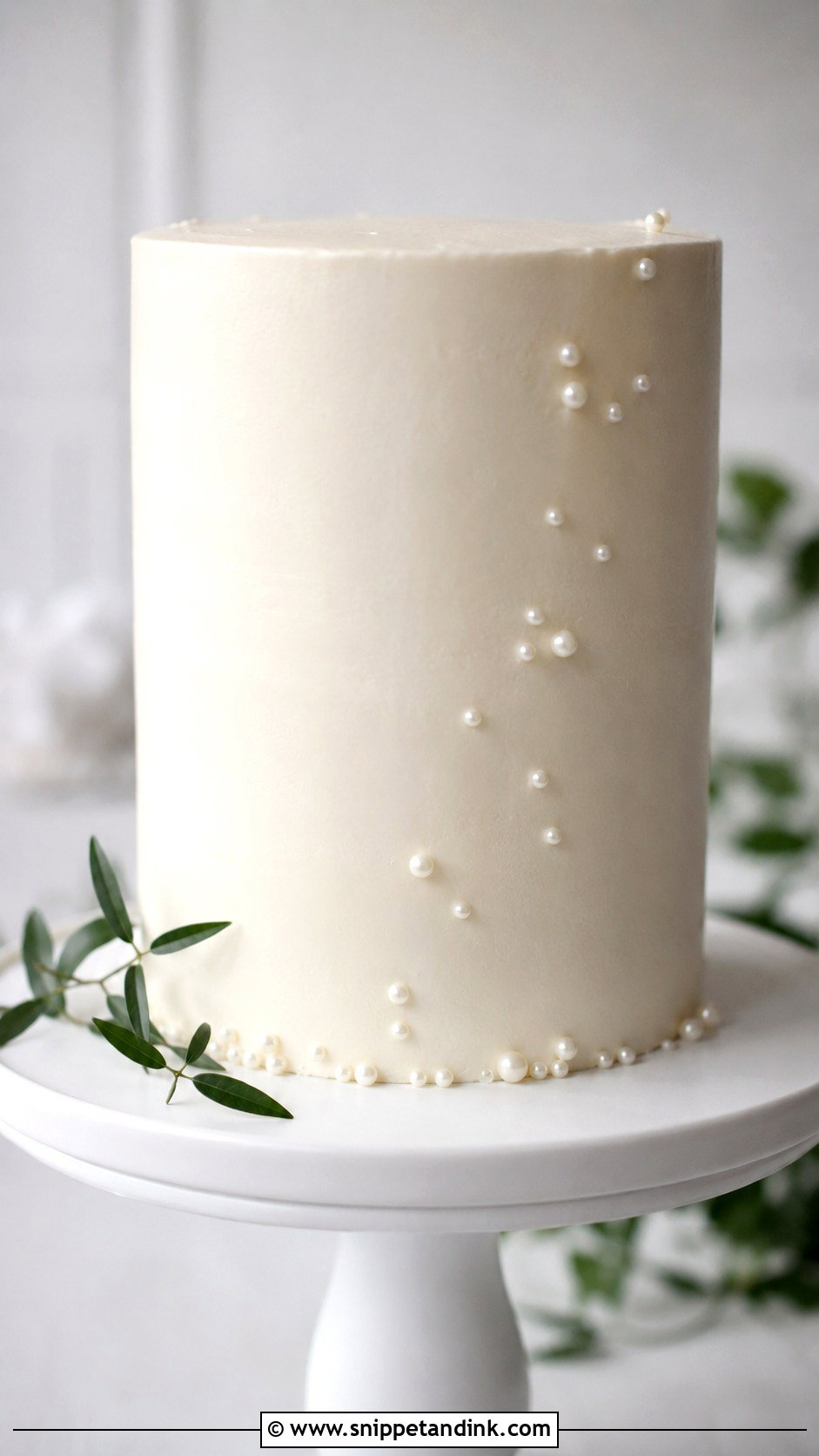
Quiet cakes are harder than they look, because every flaw shows. With only a few pearls near the base or beside a tiny floral detail, the frosting has to be flawless and the spacing deliberate. A tall single tier keeps it from looking unfinished, and a simple stand and soft lighting do the rest. This is the one I suggest for couples who dislike heavily decorated cakes. Vanilla bean, lemon or coconut keep the inside classic.
18. One Tier Pearl Wedding Cake With Edible Pearls
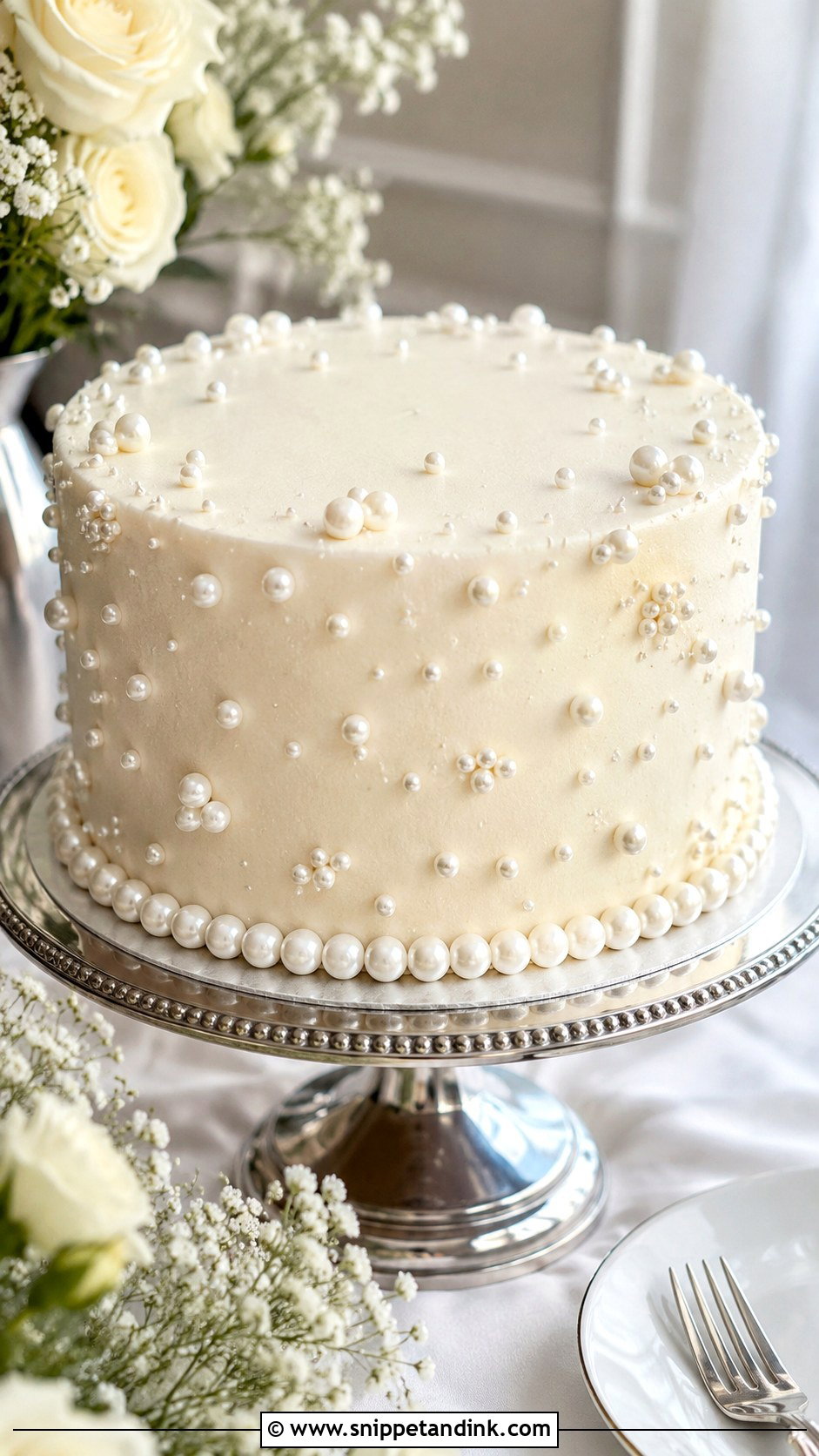
Not every pearl on a cake is pleasant to eat, so this is worth asking about. Sugar pearls and dragées are hard sugar and can be tough on teeth; fondant or gum paste pearls are soft and chewable; isomalt pearls look the most like real pearls but are glass-hard. If guests will be eating the outside, I use soft fondant pearls on the sides and save the hard ones for borders that slide off easily. They work on buttercream, fondant, ganache or cream cheese frosting. A white cake with strawberry filling gives them a bright background.
19. One Tier Pearl Wedding Cake With Orchid Flowers
Orchids have a strong shape, so one small spray on the side does more than several. White orchids look crisp against ivory buttercream or fondant, and pale pink ones add warmth. I trail pearls near the stems to connect the flowers to the rest of the cake. Real orchids are fairly sturdy out of water, but they still need wrapping, and sugar orchids are the easier option for a hot destination wedding. Coconut, passion fruit or lemon cream pair well inside.



20. One Tier Pearl Wedding Cake With Champagne Color
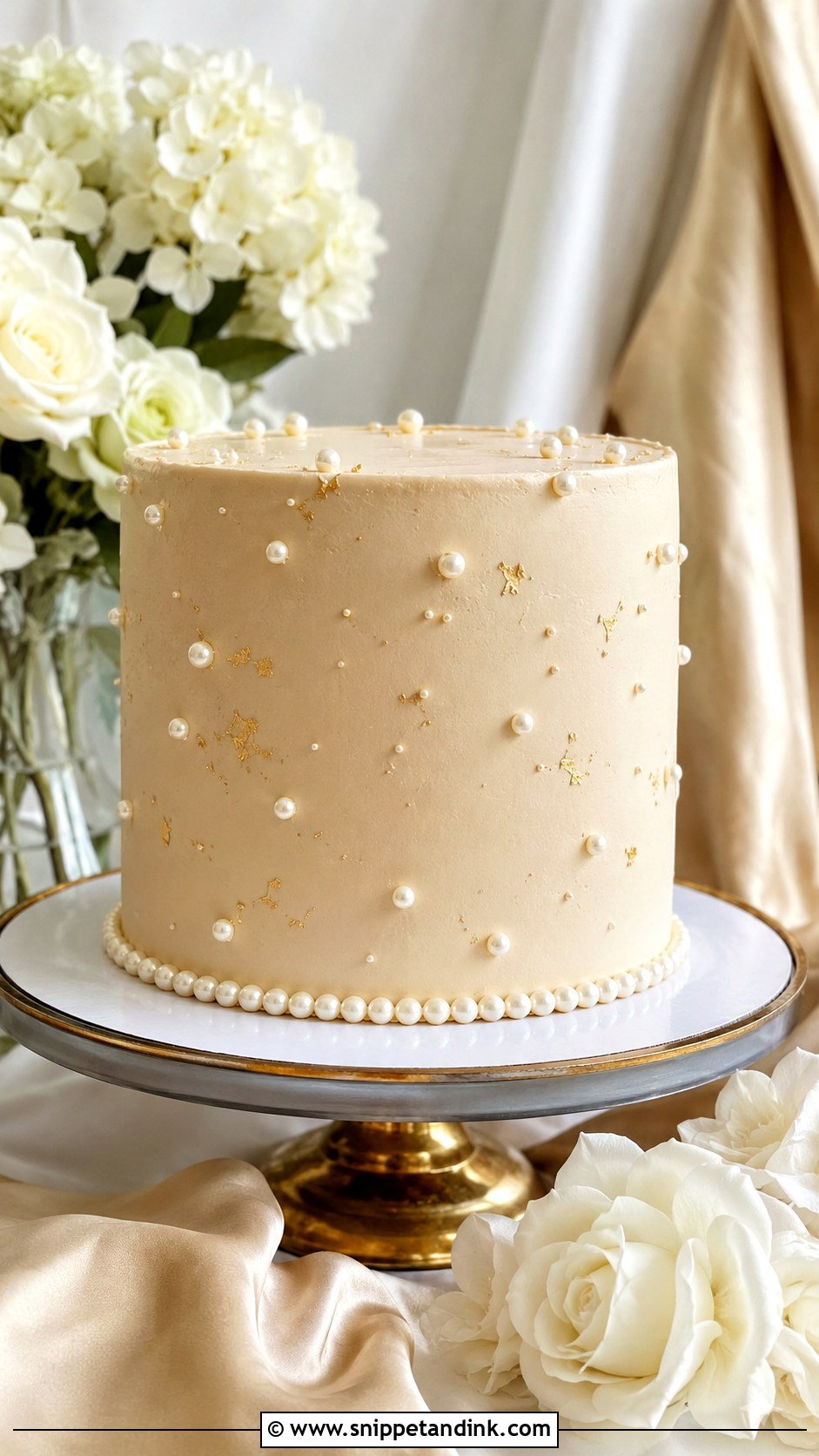
Champagne frosting changes how pearls read: against a creamy beige or pale gold base, white pearls glow rather than disappear. I tint the buttercream in natural light and check it again under warm bulbs, because a champagne shade can look yellow at night. A smooth finish, a pearl border and one floral or ribbon accent are enough. A few gold flecks or champagne sugar pearls add depth for an autumn or evening wedding. Vanilla caramel, brown butter or white chocolate ganache suit the color.
A Pearl Brief Your Baker Can Price Properly
Pearl cakes are priced on time, not ingredients. A border takes minutes; a full cascade or an all-over pearl pattern can take hours of placing one pearl at a time with tweezers. A clear brief gets you an accurate quote and avoids surprises at the tasting.
What to Send
- One photo of the pearl placement you like, plus one of the overall cake, even if they’re different cakes.
- Whether you want a single pearl size or a mix, and roughly how much of the cake they cover.
- Which parts must be soft enough to eat.
- The pearl color next to your linens or dress, since white, ivory and champagne pearls look very different side by side.
- Where and when the cake will be displayed: indoors or out, and how long before cutting.
Expect your baker to suggest swaps. A full cascade can often become a heavy cluster plus a border for much less work, and on a single tier, few guests will notice the difference.
One Feature, With Pearls in a Supporting Role
A single tier doesn’t have to feel plain when the details are deliberate. Pearls work with almost any style here, from piping and hearts to marble, fresh flowers, ribbon and minimal frosting, but they do their best work in a supporting role. Pick the one feature you love, let the pearls frame it, and tell your baker which pearls you’ll want to eat and which are just there to shine. That’s what keeps a small cake balanced and gives it real presence on the table.
You'll Like These Ideas:







Leave a Reply