
Flowers and pearls are the pairing I get asked for most at tastings, and it’s easy to see why: one softens the cake, the other gives it a finished edge, much like a strand at the neckline of a gown. What couples rarely know going in is that these two details behave very differently on a cake. A real rose wilts and needs a barrier between its stem and the sponge. A sugar pearl can bleed color into damp buttercream overnight. Below are thirty versions, from a single flower cluster to pearl-covered tiers, with notes on how each one holds up in a warm room and what I’d change for your venue.
Real Petals, Sugar Petals or Pressed Ones on a Pearl Cake
Before you fall for a particular cake, decide what kind of flower it’s wearing, because that choice affects safety, cost and how the cake looks at hour six. I talk every couple through these three.
Fresh blooms
They’re usually the cheapest route if your florist is already ordering the same stems, and they match the bouquet perfectly. They also need the most planning. Stems are wrapped and set in straws or picks, flowers must be unsprayed, and some popular varieties simply can’t go near food. Fresh flowers are often added at the venue, so agree in writing whether the baker or the florist does it.
Gum paste sugar flowers
These are made ahead, so book early; a cake covered in hand-made peonies can take days of work. They survive heat and long receptions far better than real flowers, but they’re priced as artwork and are meant as decoration, not dessert.
Pressed edible flowers
They’re flat, light and fully edible, which makes them a good fit for buttercream. They’re also the most sensitive to moisture, so they suit indoor or shaded receptions better than a humid summer lawn.
1. White Pearl Wedding Cake With Roses
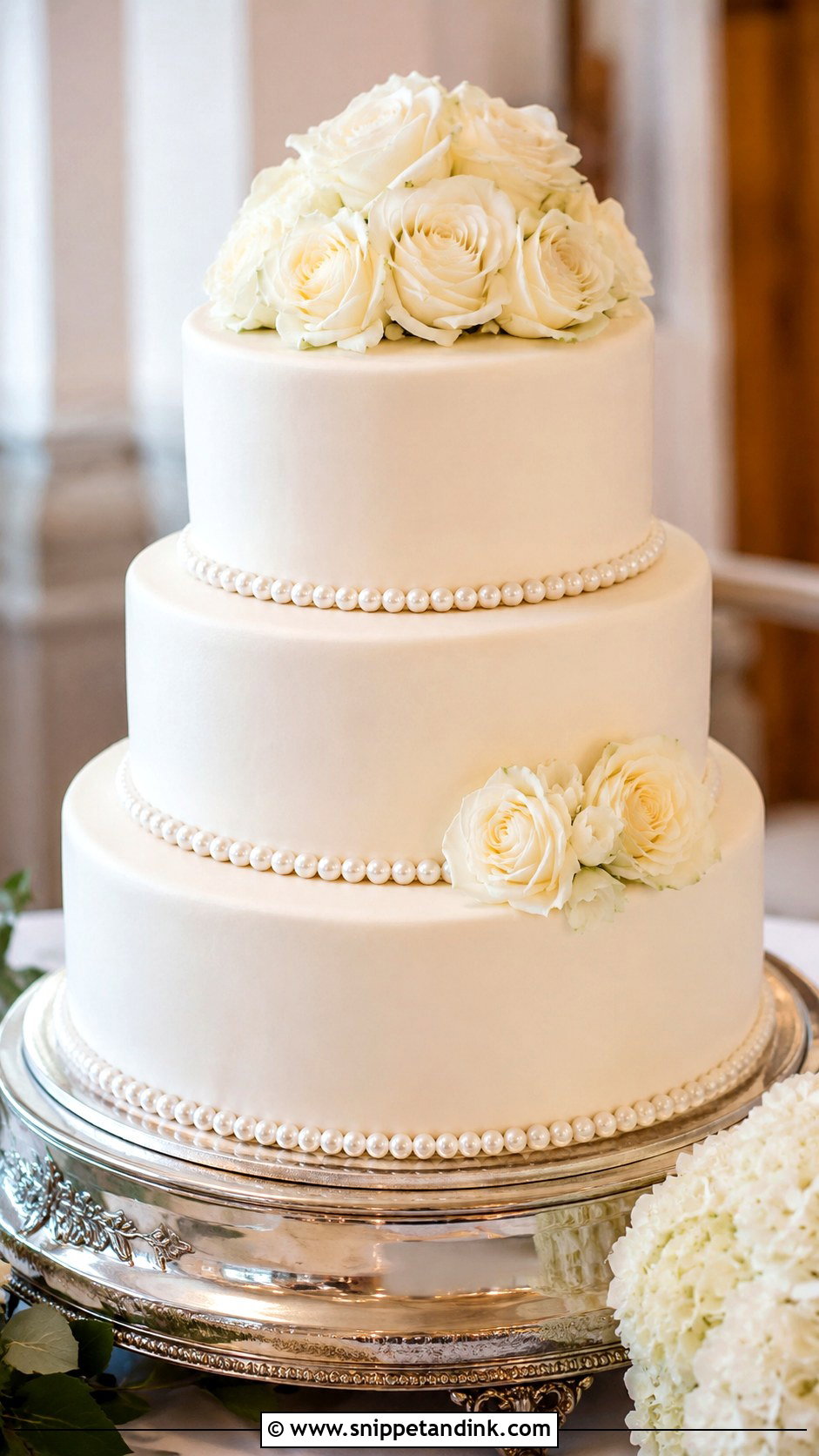
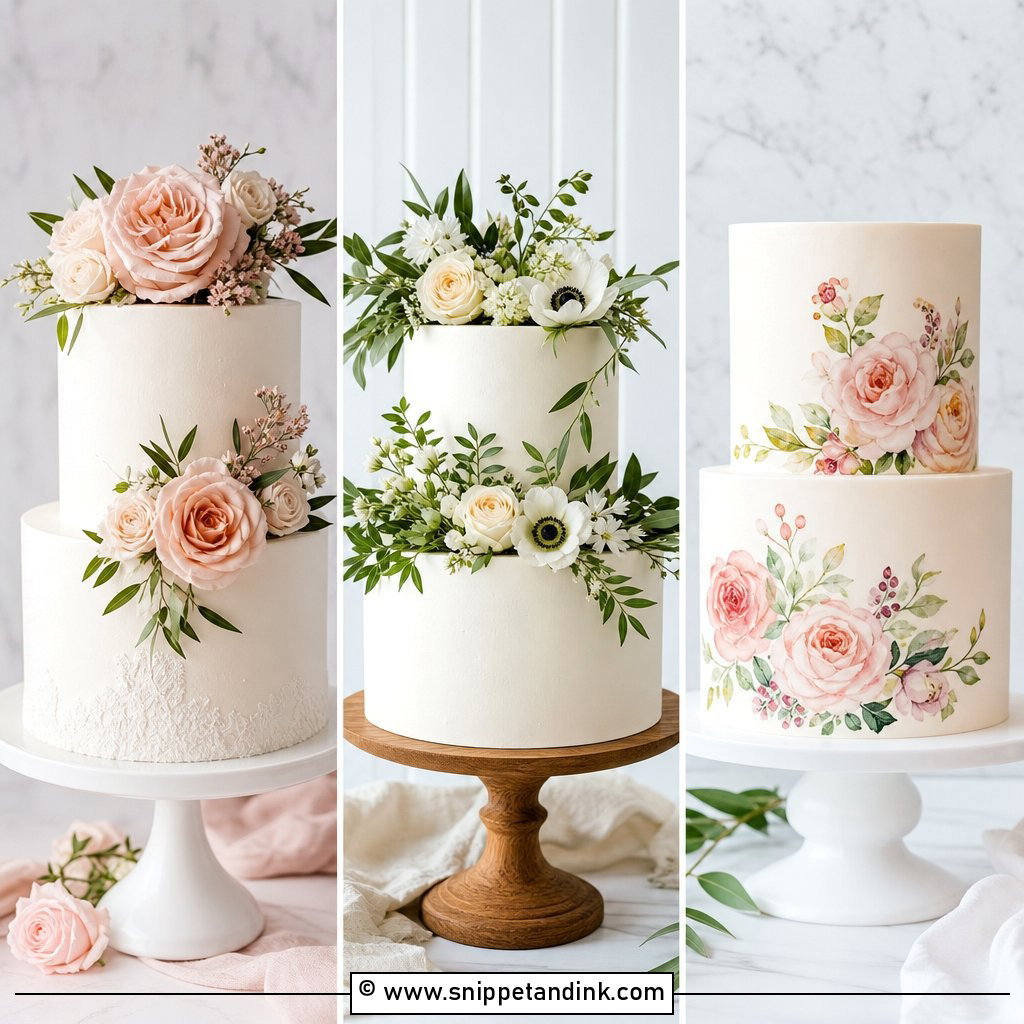
White on white with roses is the cake I’d put in a ballroom when the couple is unsure, because it never fights with the linens or the florals. The trick is where the pearls go. Scattered evenly across every tier, they start to look like polka dots in photos; grouped near the roses like a brooch, they read as jewelry. I keep the flavor light here too, since vanilla, almond or a champagne sponge suits the color story once the cake is cut. Blush roses warm it up if the room is very white already.
2. Blush Floral Wedding Cake With Pearls
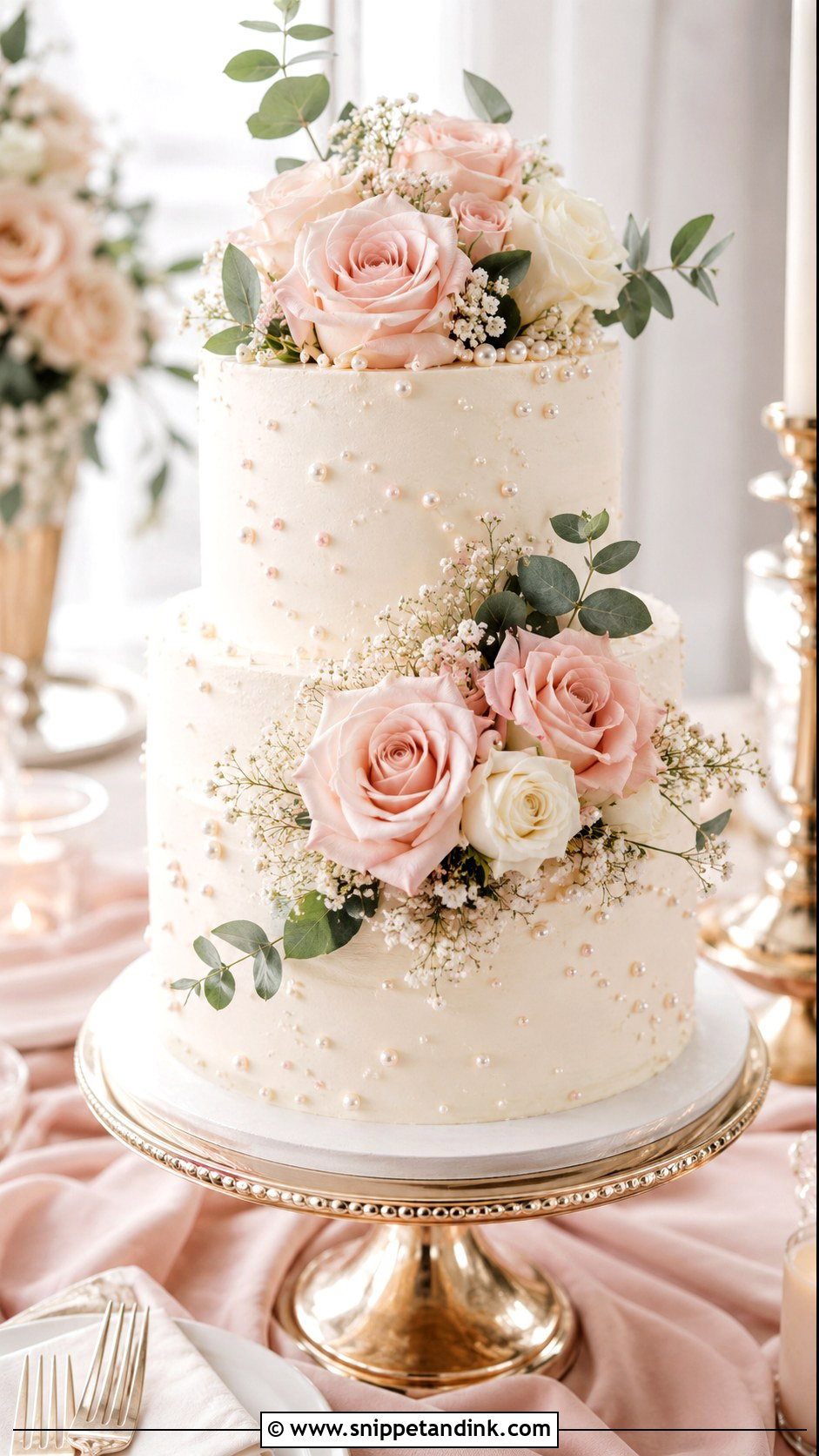
Blush is the gentlest way to bring color onto a cake, but it shifts more than people expect. Under warm tungsten reception lighting, pale blush can look almost peach, so I hold a petal sample against the frosting at the trial in the light it will actually be seen in. Ivory buttercream flatters blush better than stark white. A trail of pearls running beside the flowers, rather than a full border, keeps the eye moving down the tiers.
3. Vintage Pearl Wedding Cake With Flowers
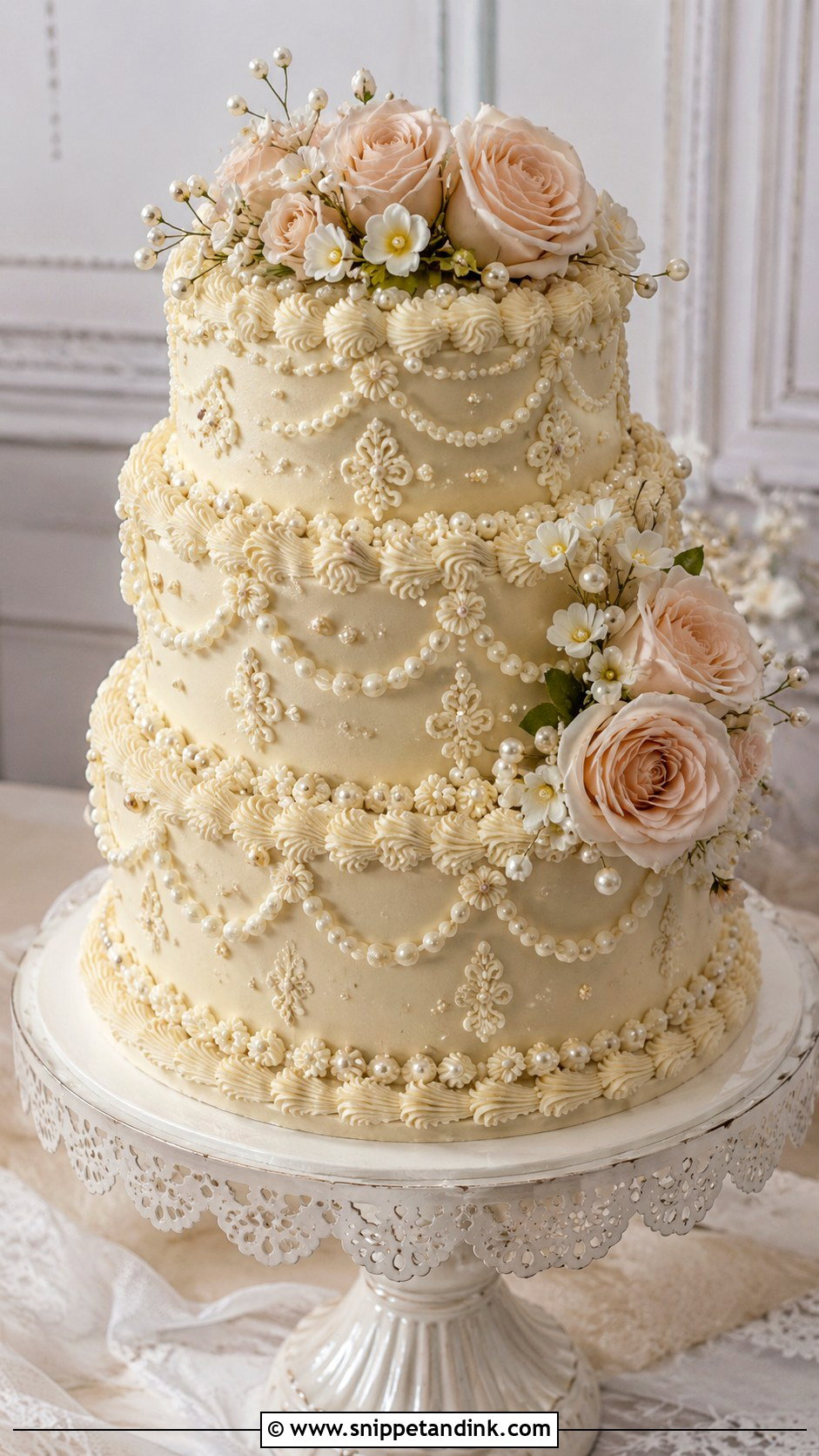
This is the piping cake, and it lives or dies on the bag work. Shell borders, Lambeth-style swags and little ruffles take hours and a steady hand, so expect it to sit at the higher end of a baker’s price list. Round tiers suit it best; the curves let the piping flow without awkward corner joins. I’d keep the flowers to small sugar blossoms or a few peonies, because big fresh blooms tend to hide the very detail you are paying for. It’s a natural match for a lace gown or a family pearl necklace.
4. Garden Wedding Cake With Flowers And Pearls
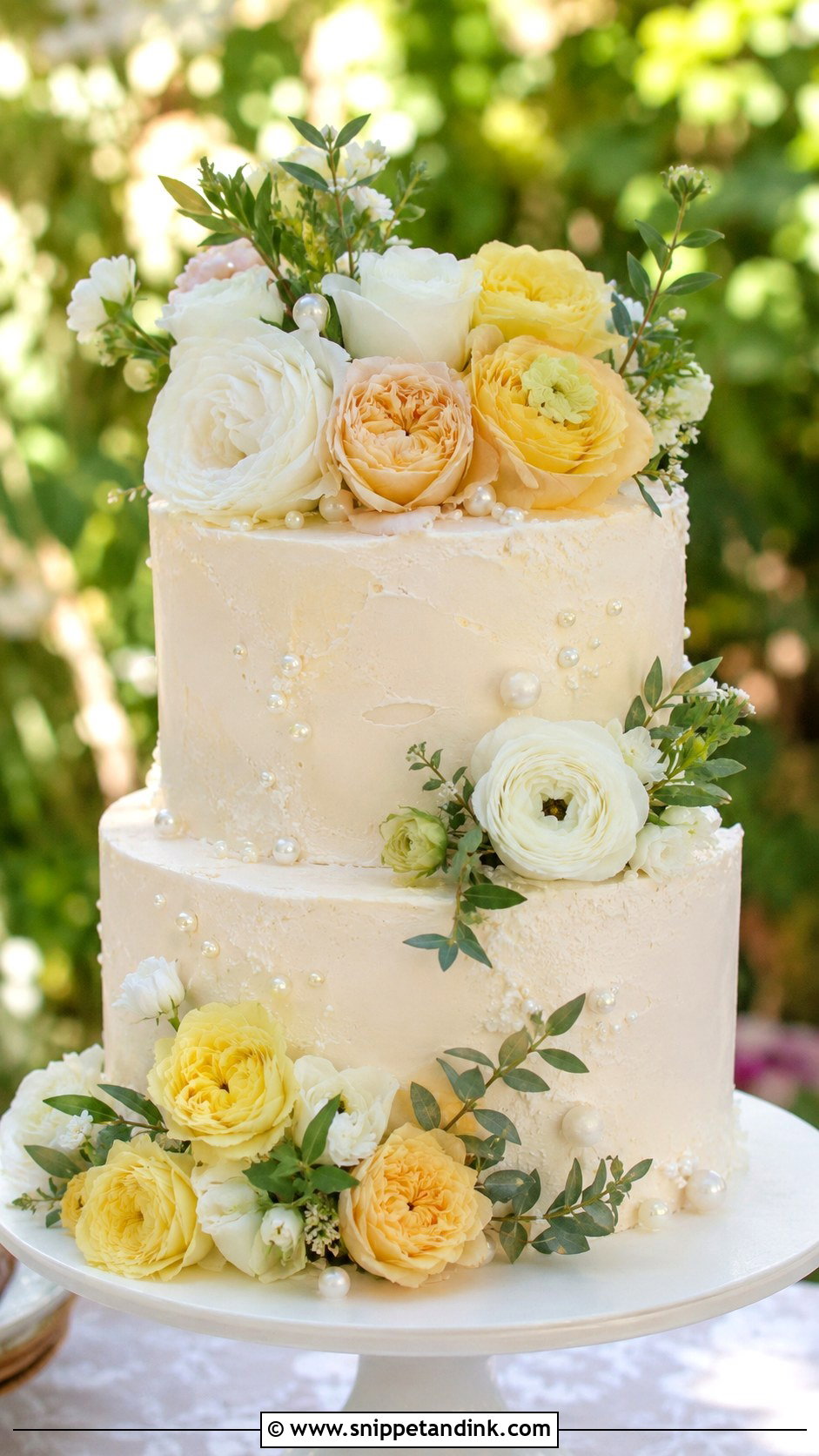
Garden cakes look loose, but the placement is anything but random. I work out with the florist which side faces the room, then build the garland heavier on that side and let it thin toward the back. Ranunculus and lisianthus are favorites of mine because their stems are firm and the heads hold their shape for hours out of water. Pearls should be tiny and few here. Lightly textured buttercream helps the arrangement look grown rather than placed, and it hides the small marks stems leave when they go in.
5. Pearl Wedding Cake With Sugar Flowers
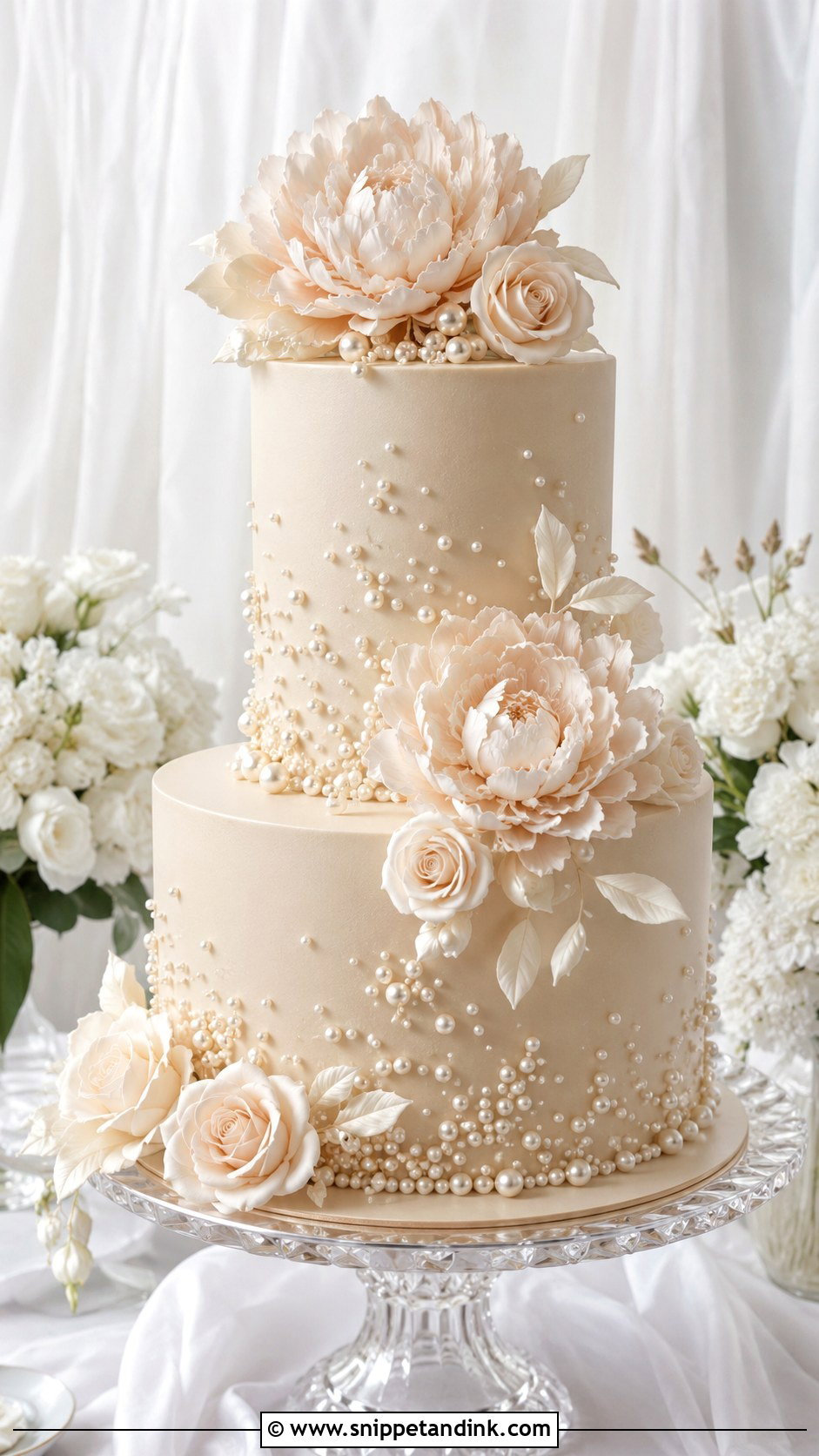
Sugar flowers are the answer when the cake has to wait. They’re shaped petal by petal from gum paste, wired, dried for days and dusted with color, so they can match a bouquet exactly and don’t droop in a hot tent. The trade-off is that they’re decorative rather than something guests eat, and humidity can soften the thinnest petals. I like sugar peonies large on a smooth fondant tier with pearls framing the arrangement, or smaller blossoms clustered for a lighter result. They also make a keepsake: many couples take the topper flowers home.
6. Two Tier Wedding Cake With Flowers And Pearls
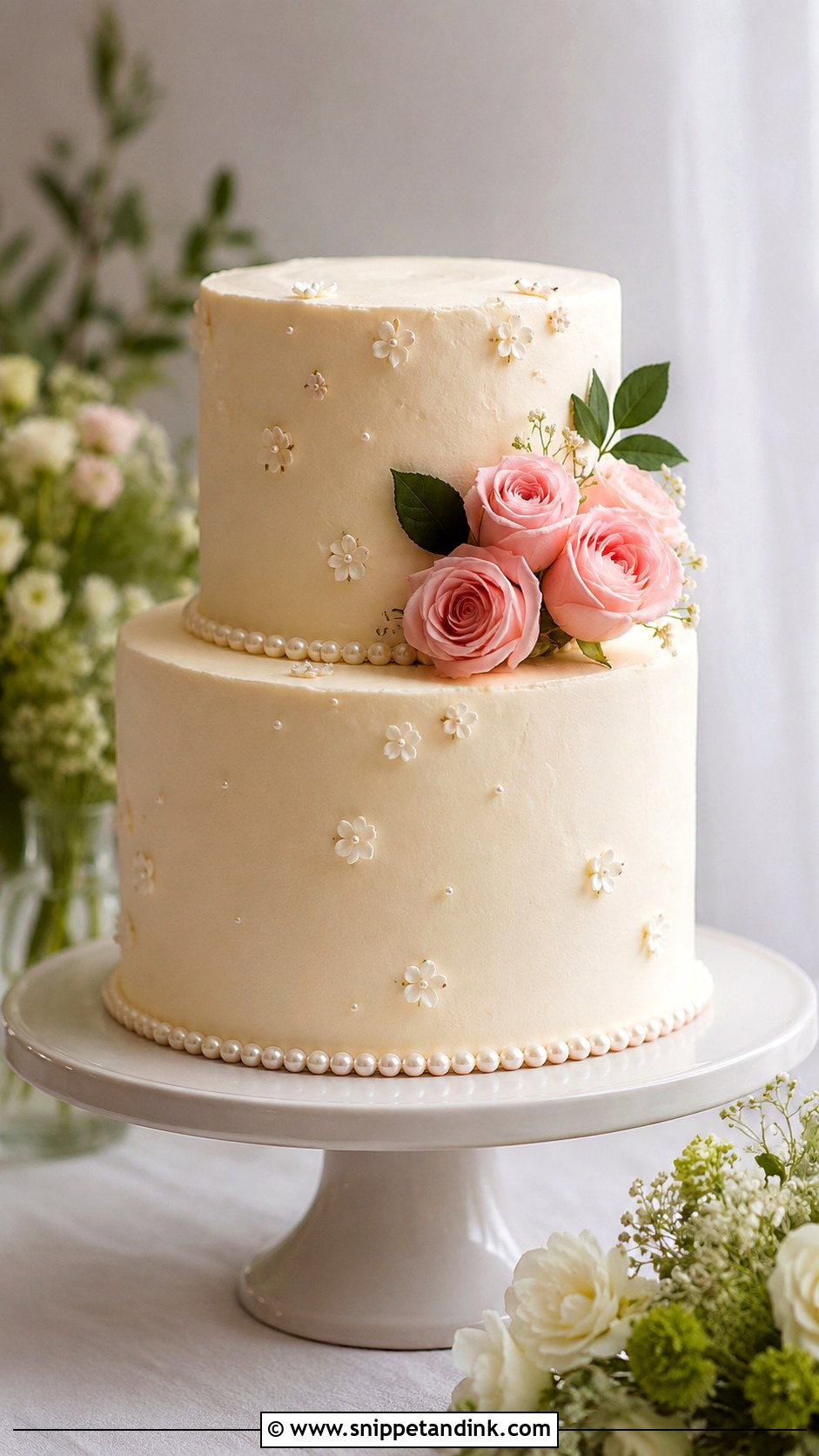
Two tiers is my usual suggestion for guest lists under about sixty, often with a kitchen sheet cake behind the scenes if more slices are needed. With less height to work with, the flowers matter more. I place a cluster on top and a smaller one low on the bottom tier, offset to the opposite side, so the eye travels diagonally. Buttercream feels warmer and more homemade here; fondant with crisp pearl borders gives the same small cake a formal finish.
7. Three Tier Wedding Cake With Flowers And Pearls
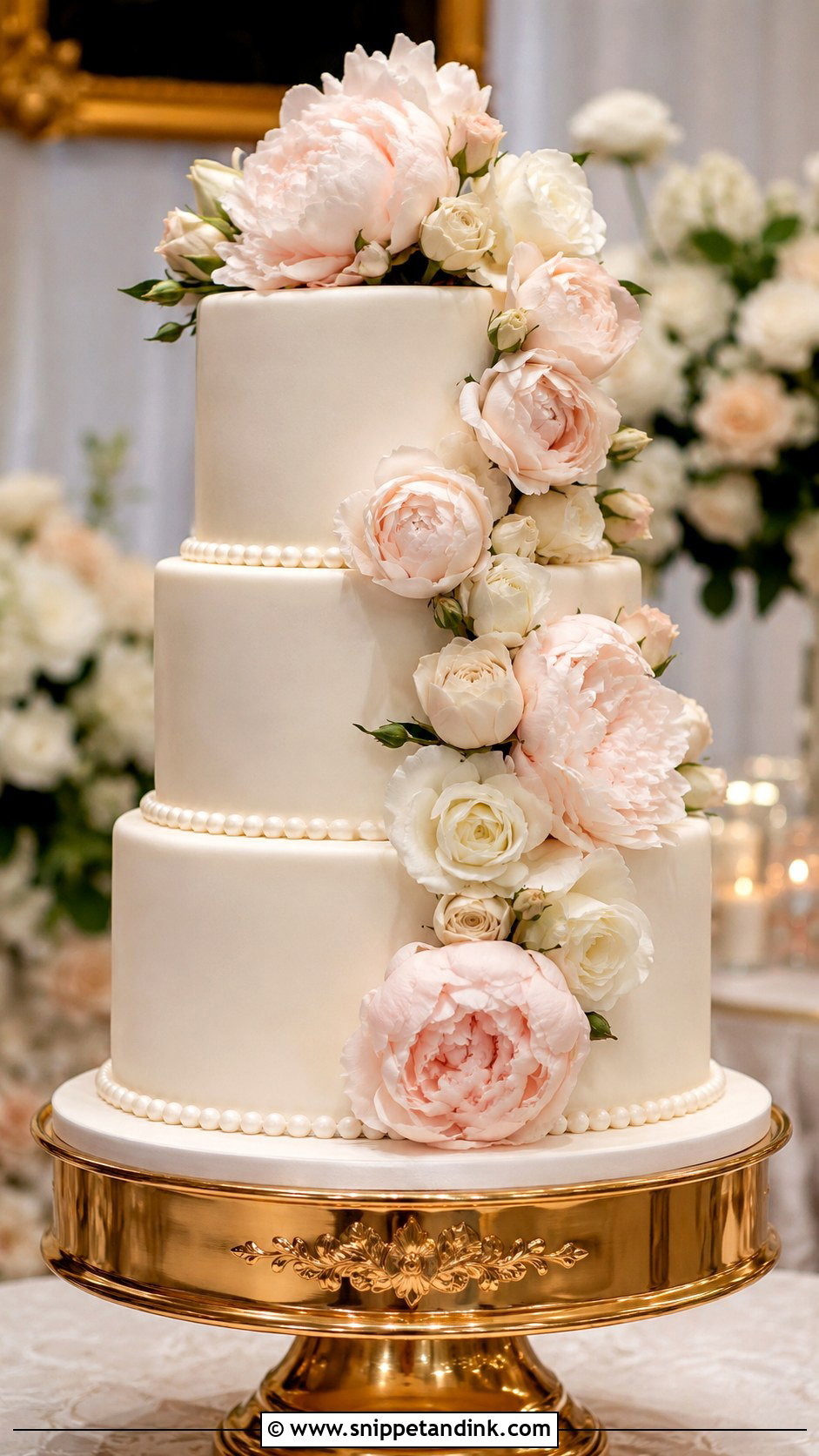
Three tiers is the classic silhouette and the easiest one to balance. If the flowers are full, I keep the middle tier bare, otherwise the whole thing reads as one solid wall of petals. Color does most of the talking: white roses with pearls feel traditional, blush peonies feel softer, and blue hydrangea makes it personal. One caution about hydrangea is that it isn’t food safe, so its stems must be fully wrapped and it should never touch the frosting directly.
8. Tall Wedding Cake With Cascading Flowers And Pearls
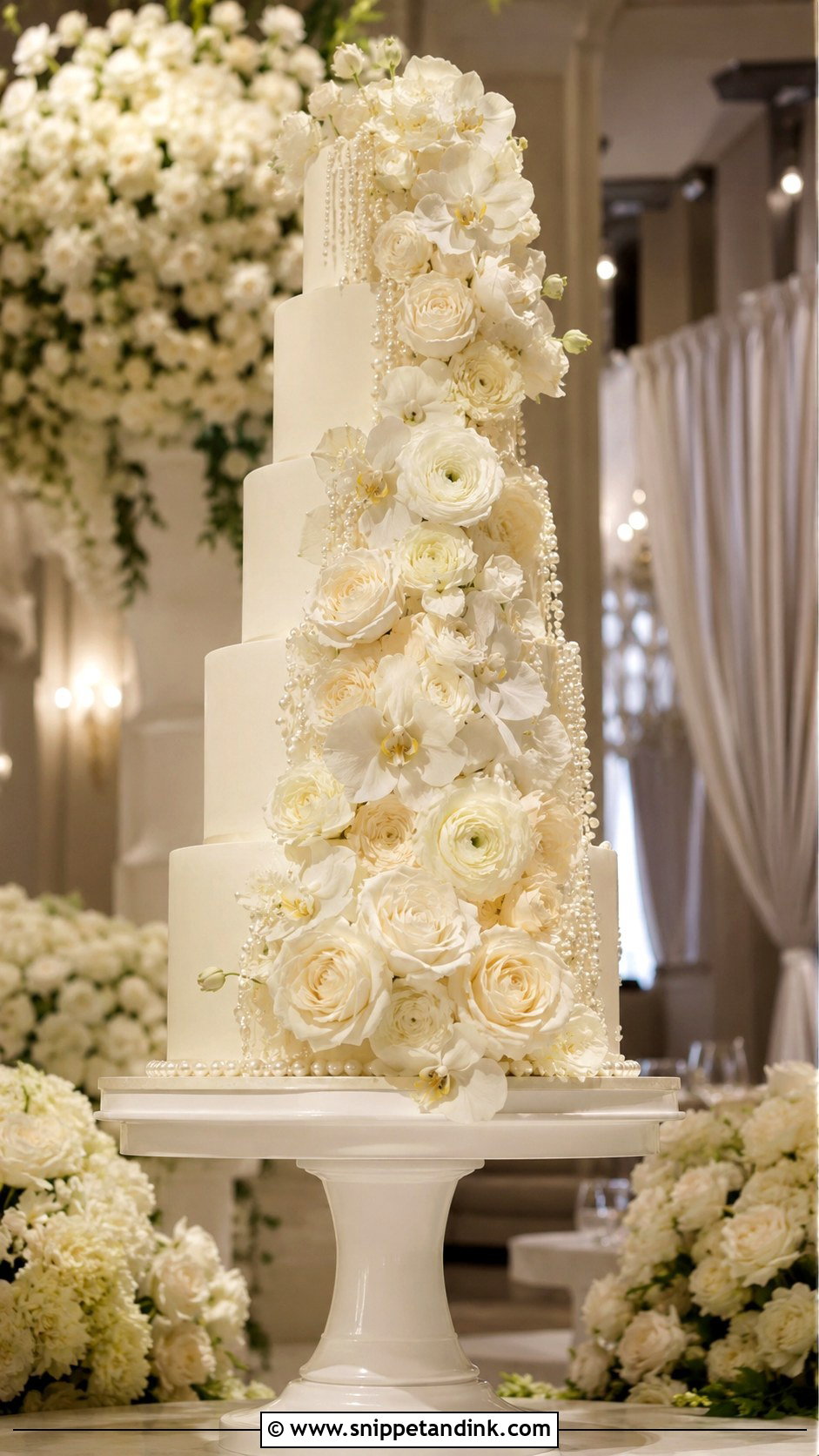
A tall cake with cascading flowers and pearls is about engineering before it’s about decoration. Each tier sits on its own board with dowels underneath, and anything over four tiers usually travels in pieces and gets stacked at the venue. The cascade itself is often finished on site, after the cake is set in place, so the flowers aren’t crushed in the van. I mix bloom sizes so the line tapers naturally, and I let small pearl trails follow the same path. Save this one for a high-ceilinged room, where a short cake would look lost.
9. Simple Wedding Cake With Flowers And Pearls
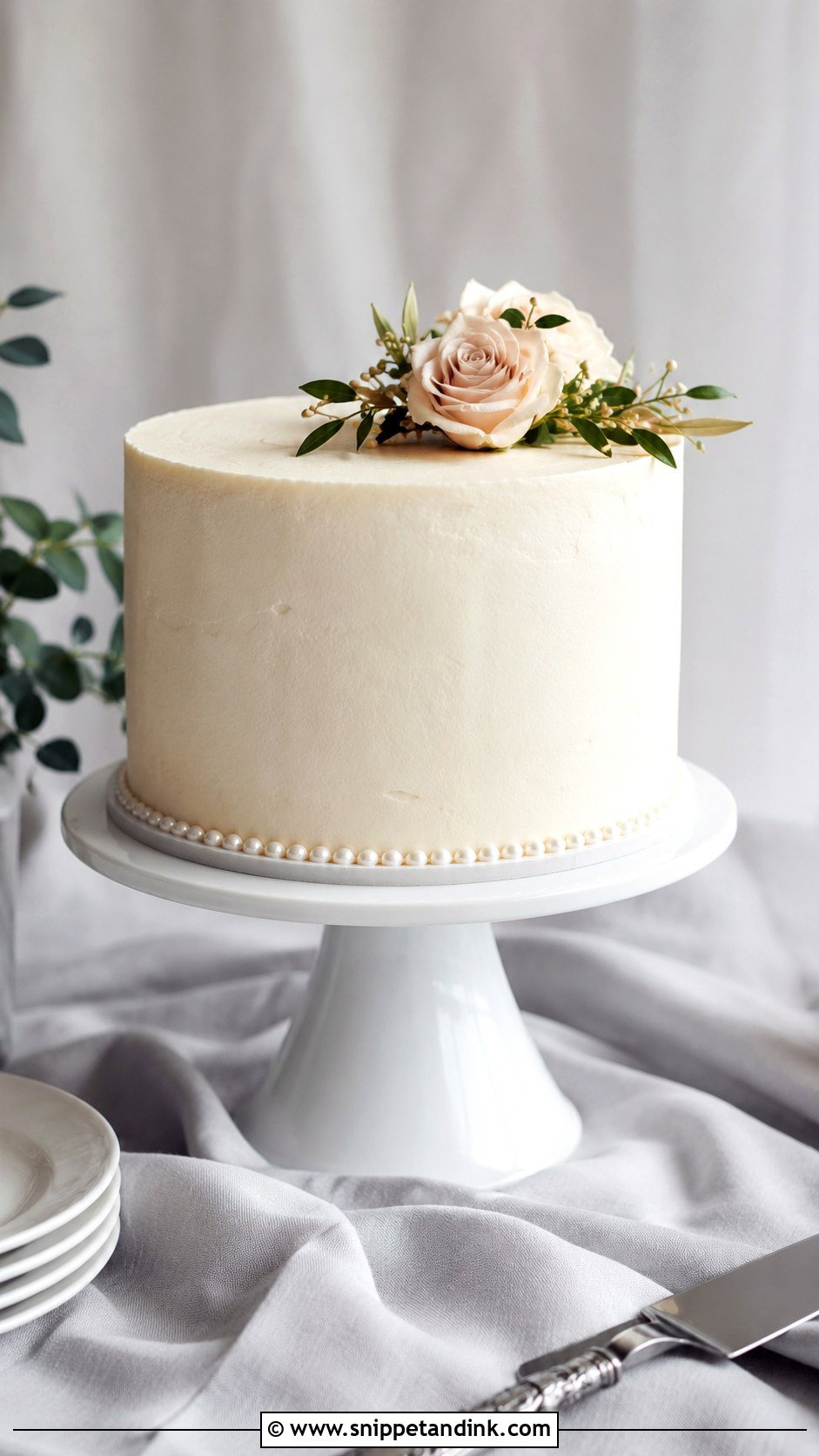
A simple wedding cake with flowers and pearls asks for less decoration, but it shows every flaw. With one floral cluster and a single pearl border, there’s nowhere to hide a bulge in the buttercream or a crooked tier, so the finish has to be clean. I’d rather see a couple put their budget into a great flavor here, maybe lemon or vanilla bean, than add more pearls. Keep the pearls to one line or one small group so they look intended.
10. Elegant Wedding Cake With Orchids And Pearls
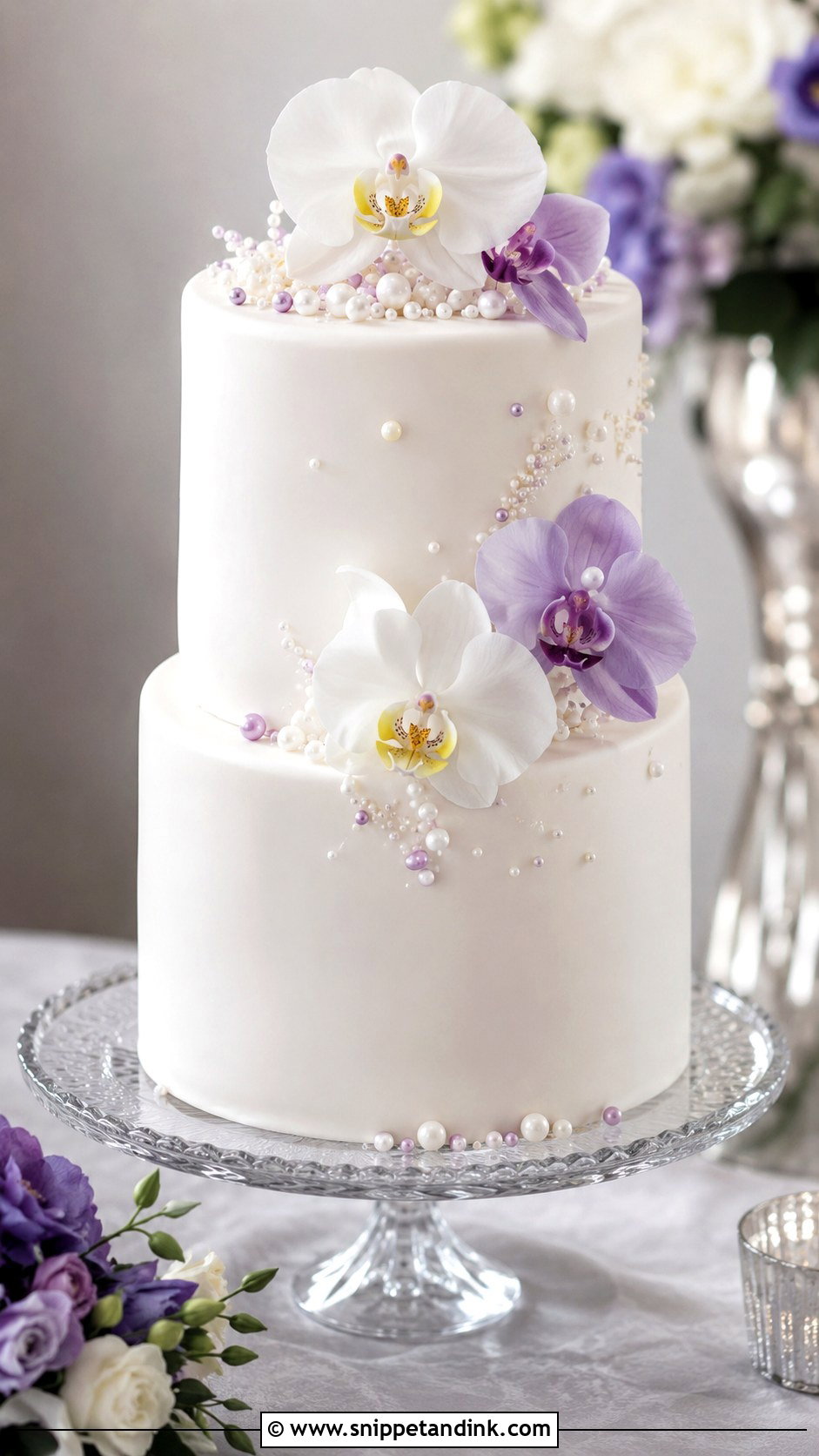
Orchids have a sculptural shape that suits smooth fondant or a very polished buttercream. White dendrobium or phalaenopsis keep it refined, and soft pink or lavender varieties add color without fuss. I hold back on extras with this one; the orchids already carry the design, and a handful of pearls at the tier bases is plenty. It suits a hotel ballroom or black-tie evening, though I’d steer a relaxed barn wedding elsewhere because it can feel too formal there.
11. Rustic Wedding Cake With Flowers And Pearls
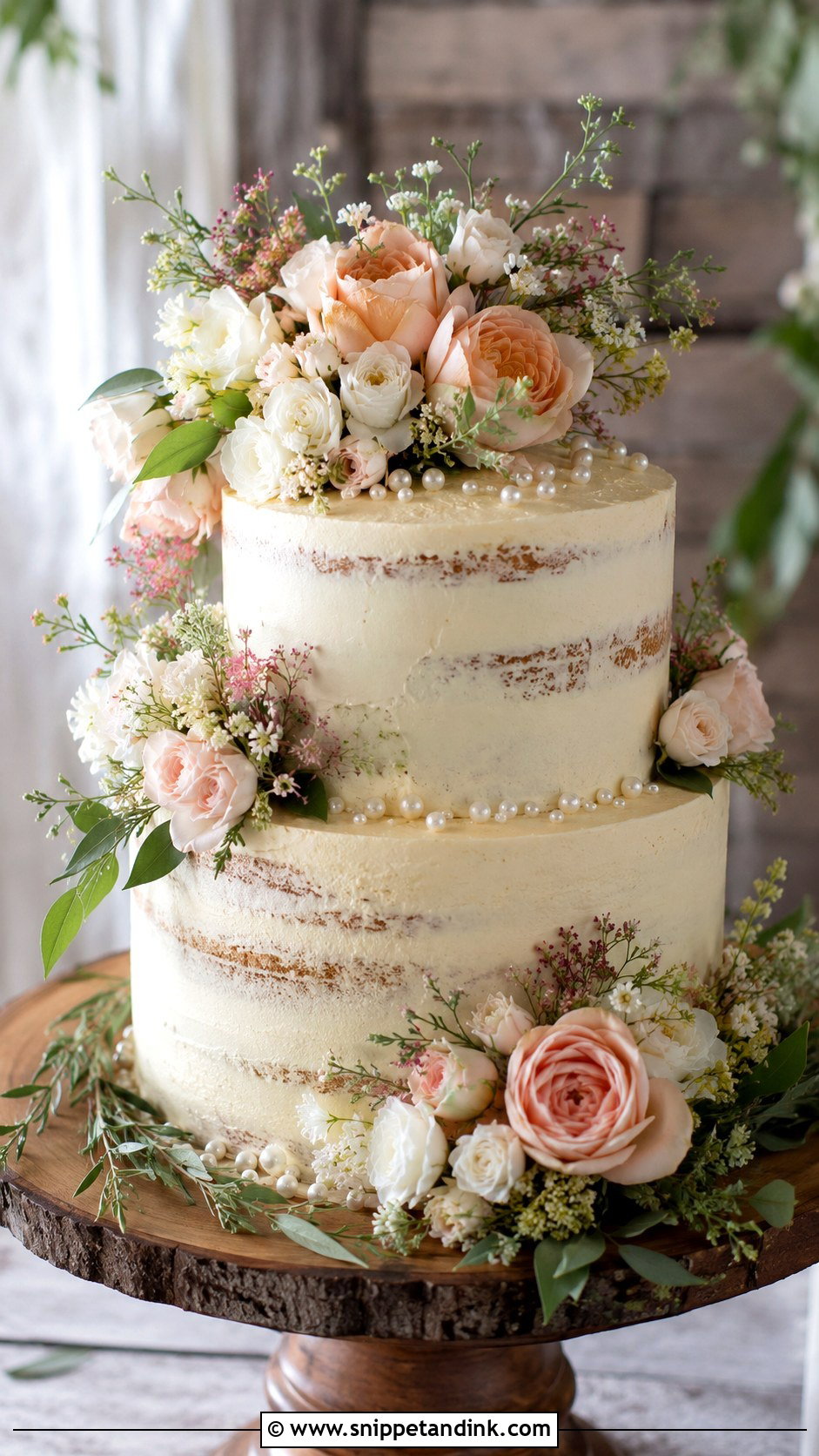
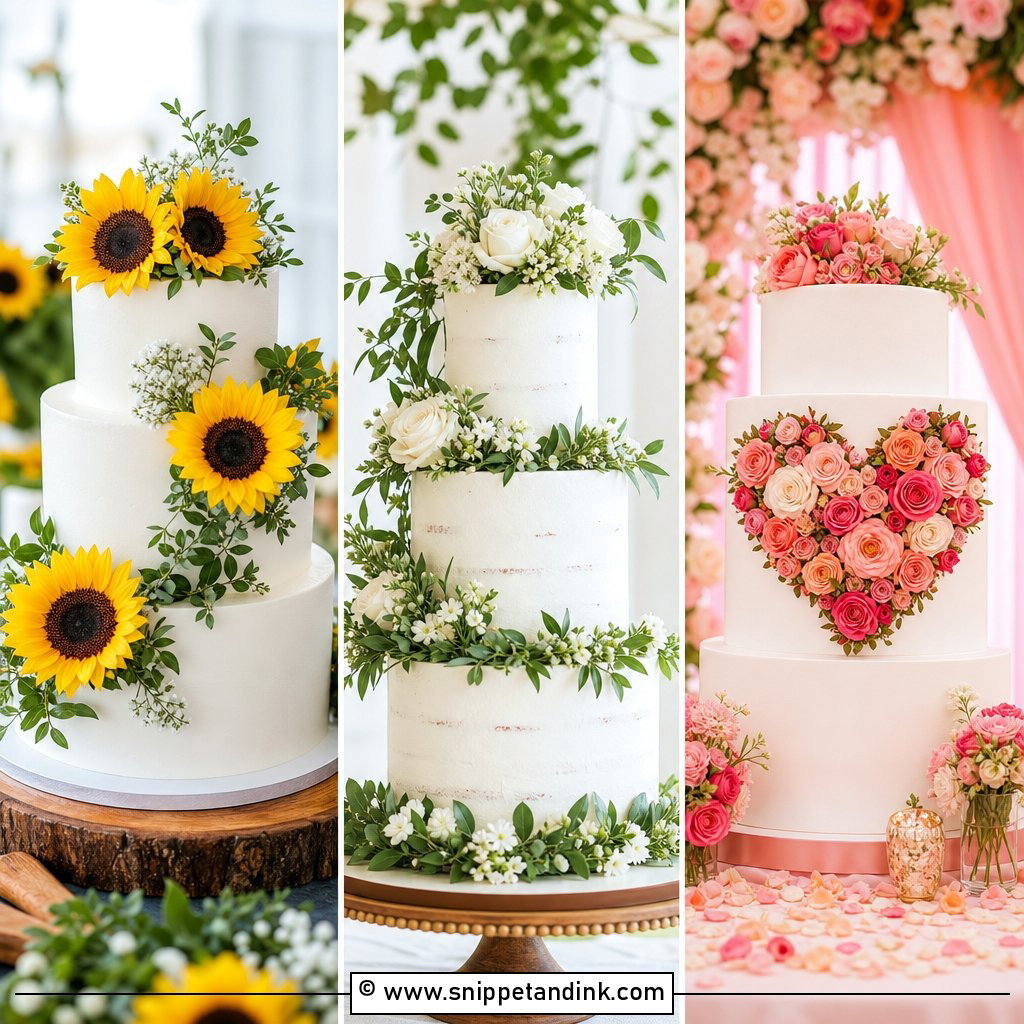
Semi-naked and textured buttercream is forgiving, which is why I recommend it for barns and vineyards where the cake may sit near open doors. The catch with a semi-naked finish is that the exposed sponge dries out faster, so I’d want it assembled as close to the reception as the venue allows. Pearls should stay quiet: a thin border or a few clusters near the flowers. Roses, daisies, ranunculus or small wildflower-style blossoms keep it countryside rather than ballroom.
12. Modern Wedding Cake With Pearls And Flowers
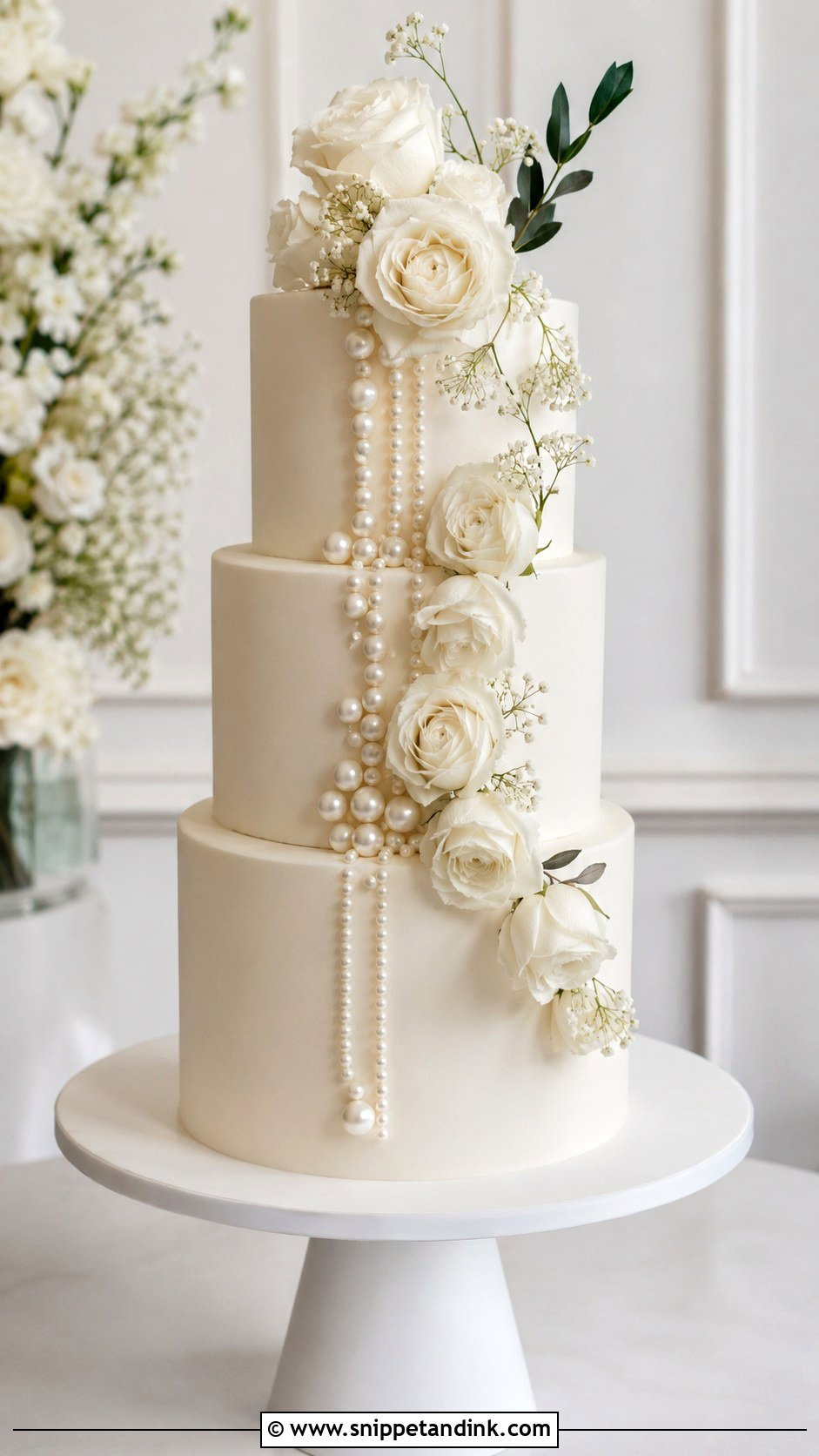
Modern cakes are about restraint. Instead of covering every tier, I choose one strong floral placement and let the pearls form a single clear pattern, often a vertical line or a band on one tier. Sharp edges are harder than they look in buttercream; they need a well-chilled cake and a confident scraper, which is why many modern designs go to fondant. Keep the palette to white, ivory or blush with one accent so the cake looks planned, not busy.
13. Pearl Drip Wedding Cake With Flowers
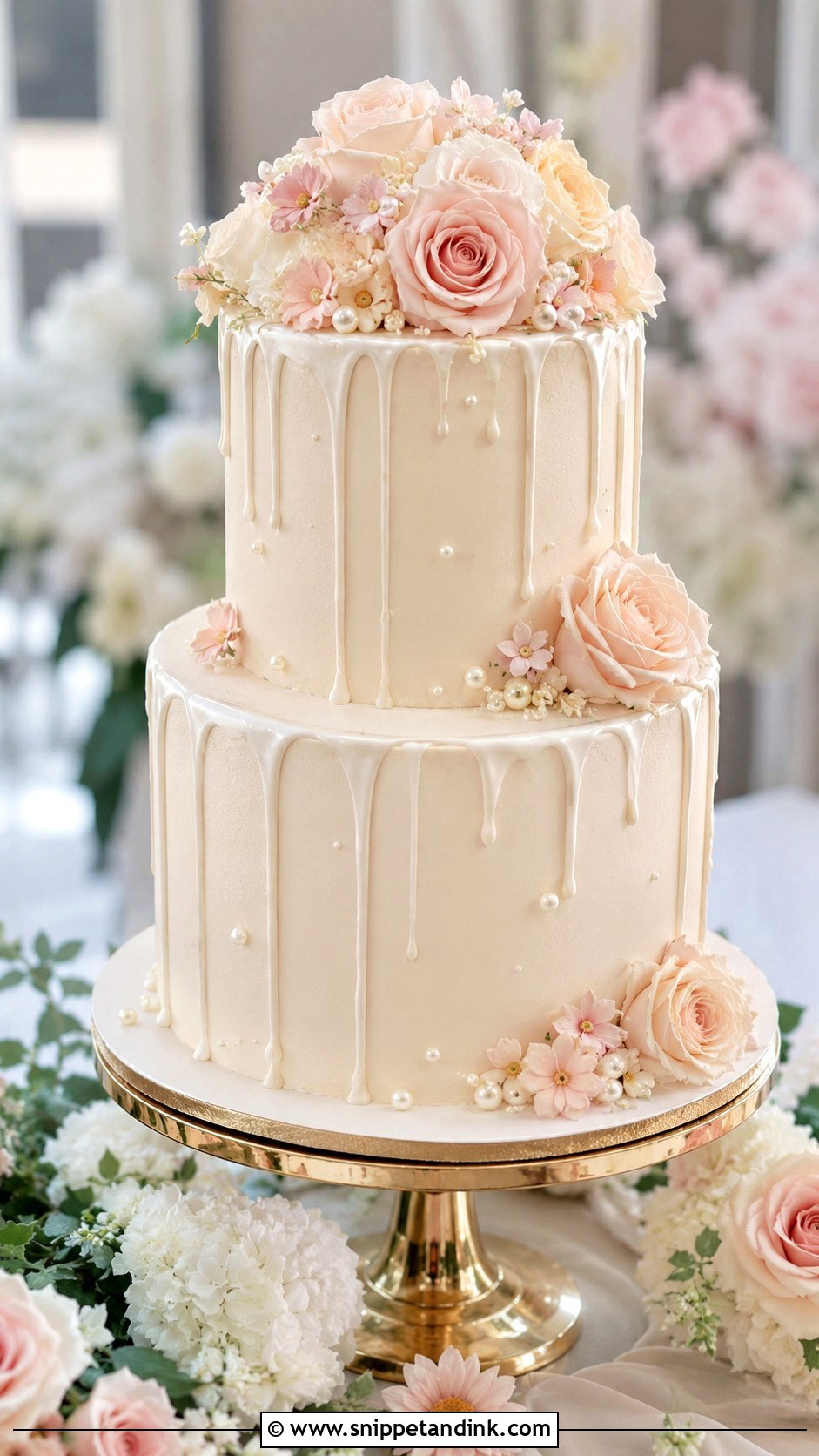
A drip is all about temperature. White ganache that’s too warm runs straight to the board; too cool and it stops in thick blobs halfway down. I test a drip on the back of the cake first. White chocolate also yellows next to a stark white frosting, so ivory or champagne frosting usually looks more even. Pearls between the flower clusters, or a pearl lustre on the drip itself, keep the effect bridal rather than birthday-party. Keep it delicate; a heavy drip and full florals compete.
14. Lace Wedding Cake With Flowers And Pearls
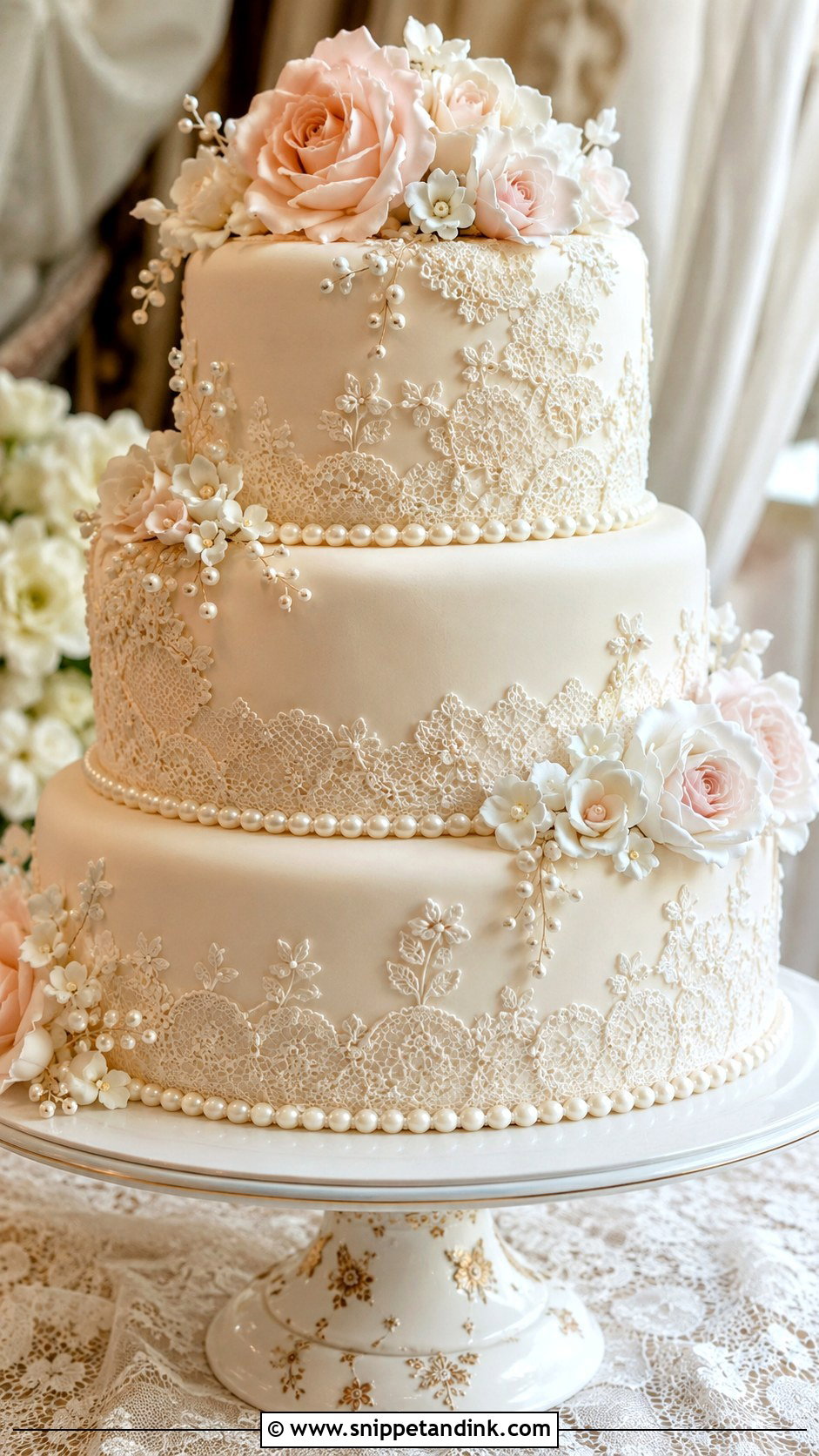
If your gown has lace, this is the cake to echo it, but I’d only copy one motif from the dress, not the whole pattern. Piped lace takes patience; molded fondant lace from a silicone mat is faster and very even, though it can turn tacky in humid weather. I let one tier carry the lace and keep the others smooth so the texture has room. Ivory, blush, mauve or pale peach flowers sit softly against it, and pearls tie it back to the bridal jewelry.
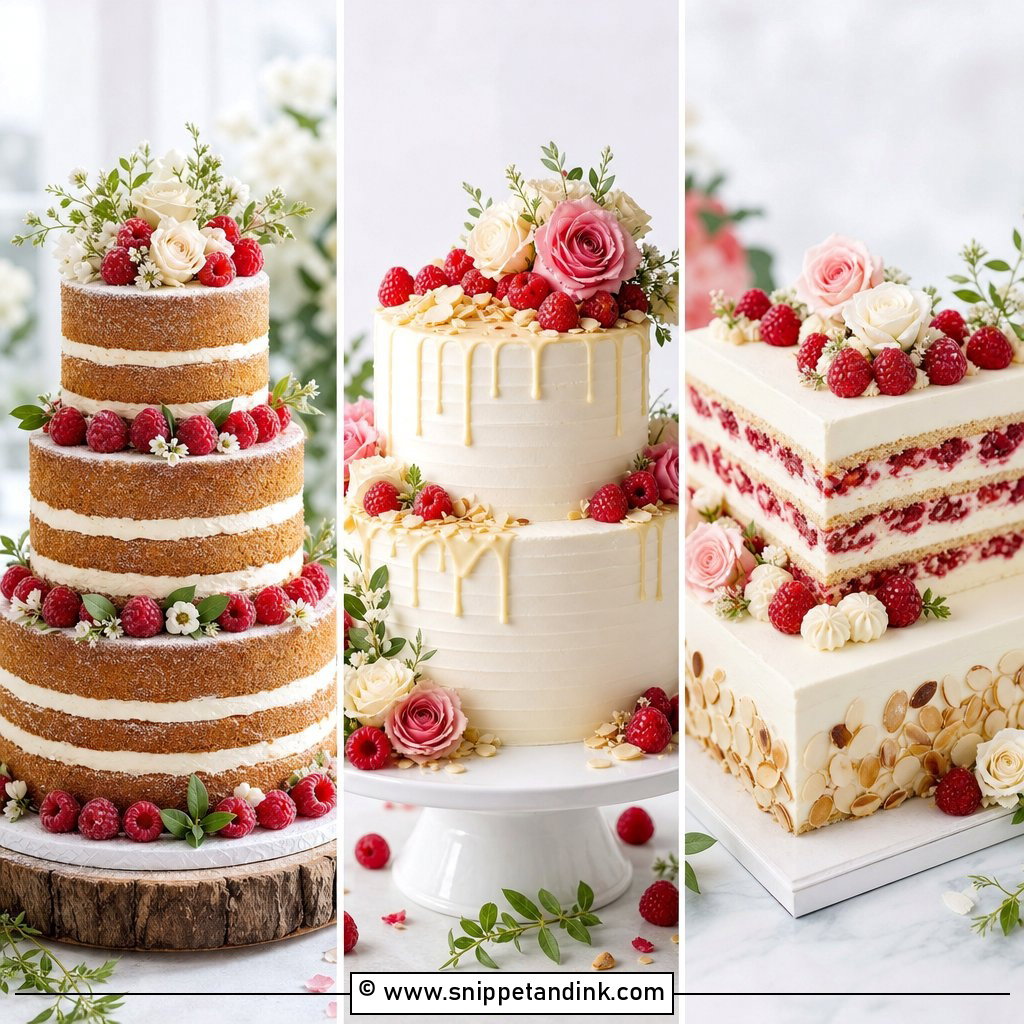
15. Buttercream Wedding Cake With Flowers And Pearls
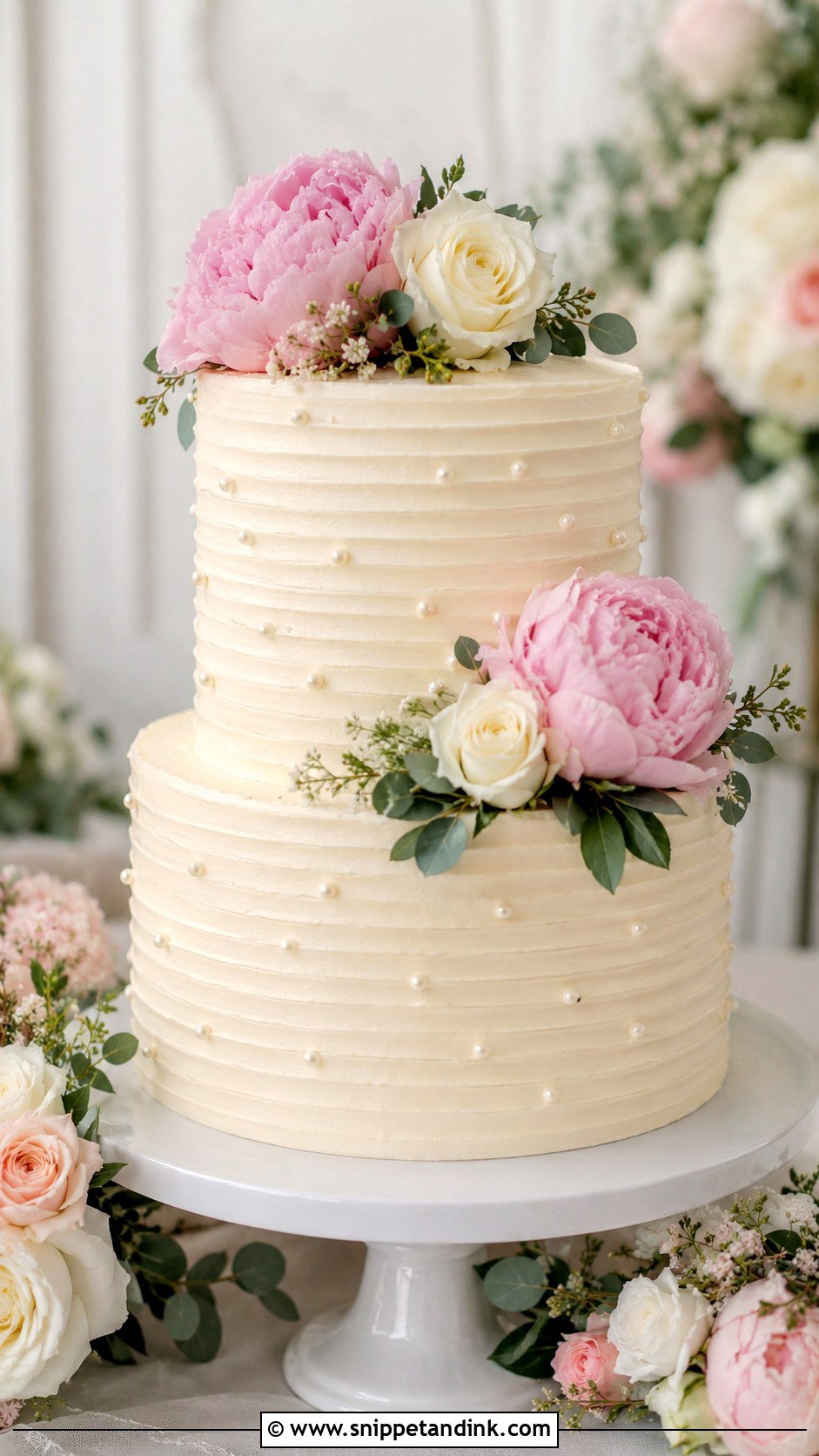
Buttercream is my default for most weddings because it tastes better than fondant to most guests and takes texture well, from smooth to brushed. Its weak point is heat. In a warm room or a sunny tent it softens, and pearls pressed into it can slide or sink. Swiss meringue buttercream holds a crisp finish nicely but still needs shade and a cool setup. Peonies, roses and ranunculus all sit well against it, and almost any flavor works underneath.
16. Fondant Wedding Cake With Flowers And Pearls
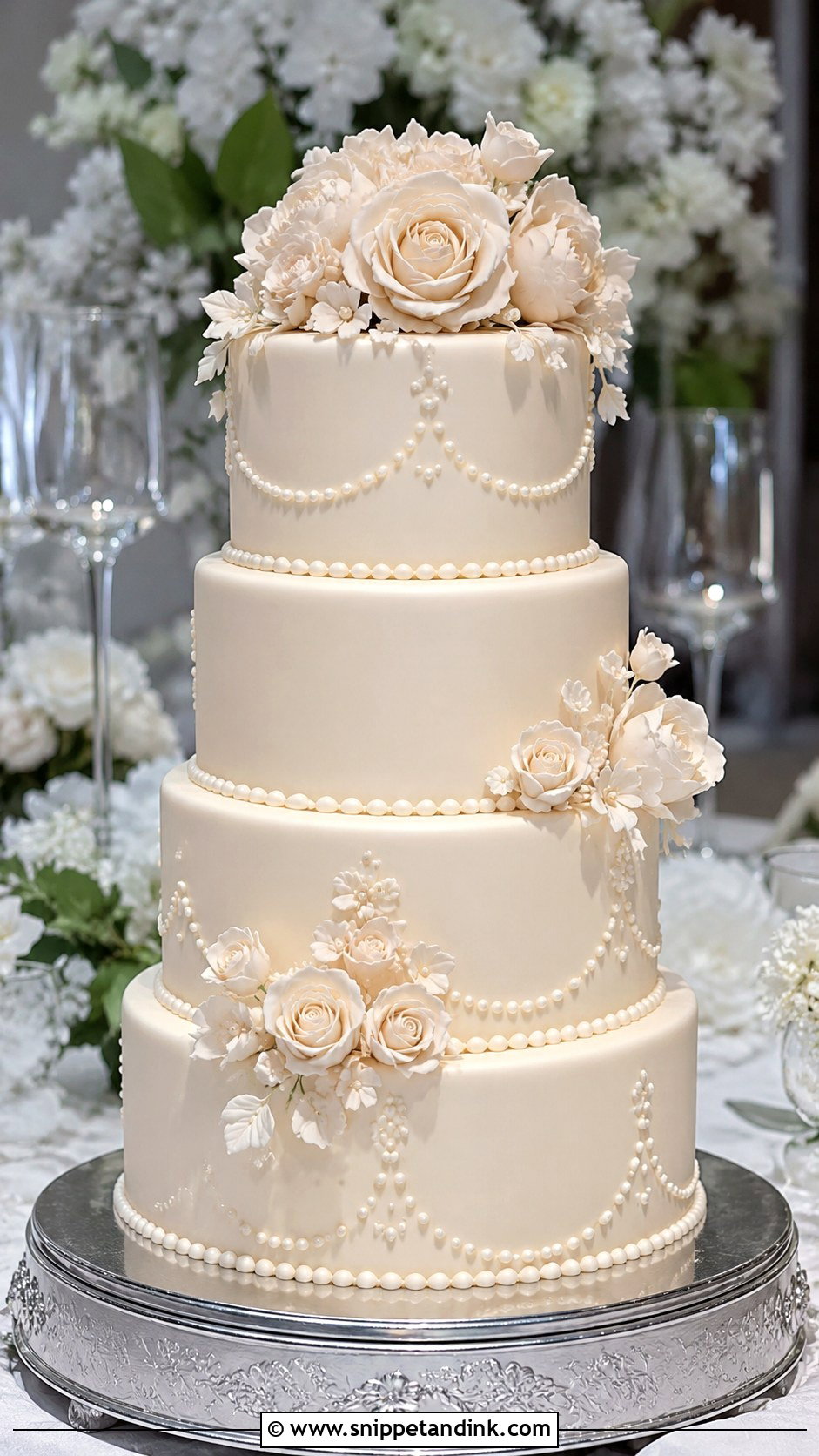
Fondant gives the cleanest surface for pearl patterns, piping and sugar flowers, so it’s what I reach for at formal weddings or when a cake needs to sit out for a long time. It also protects the cake from drying. What surprises couples is condensation: a fondant cake taken from a cold fridge into a humid room will sweat, and that moisture can make colored pearls bleed. I let it come up to room temperature in the box before it goes on display.
17. Fresh Flower Wedding Cake With Pearls
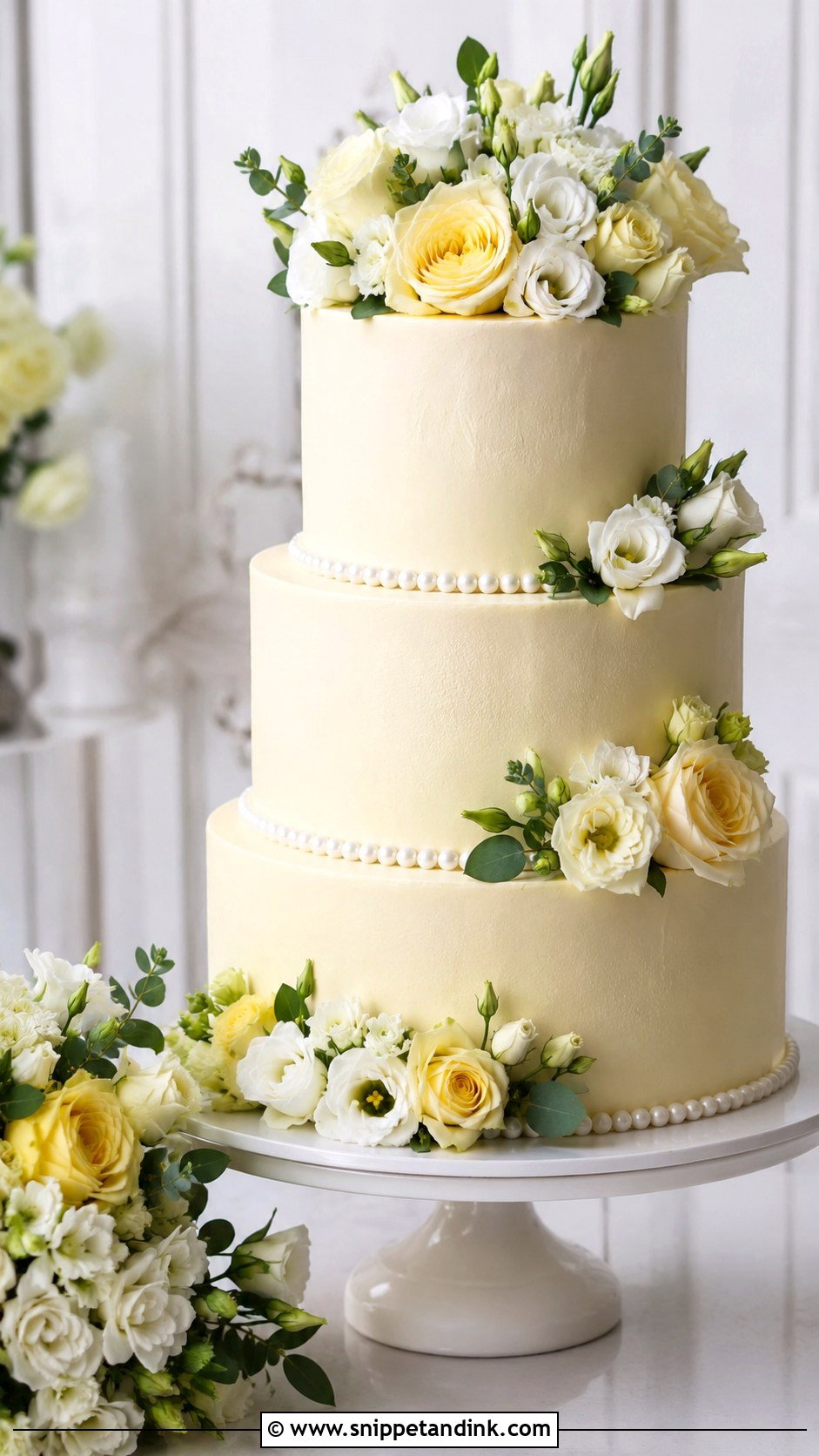
Fresh flowers look natural and can match the bouquet exactly, but they need the most care. Not every bloom is safe near food: lily of the valley, hydrangea, foxglove and sweet pea are among those I keep off a cake or fully wrapped. Stems get wrapped in floral tape and pushed into a plastic straw or posy pick so nothing touches the sponge, and flowers should come from a grower who hasn’t sprayed them. Roses, orchids, ranunculus and lisianthus behave well. Pearls go around the tier bases or tucked near the clusters.
18. Pressed Flower Wedding Cake With Pearls
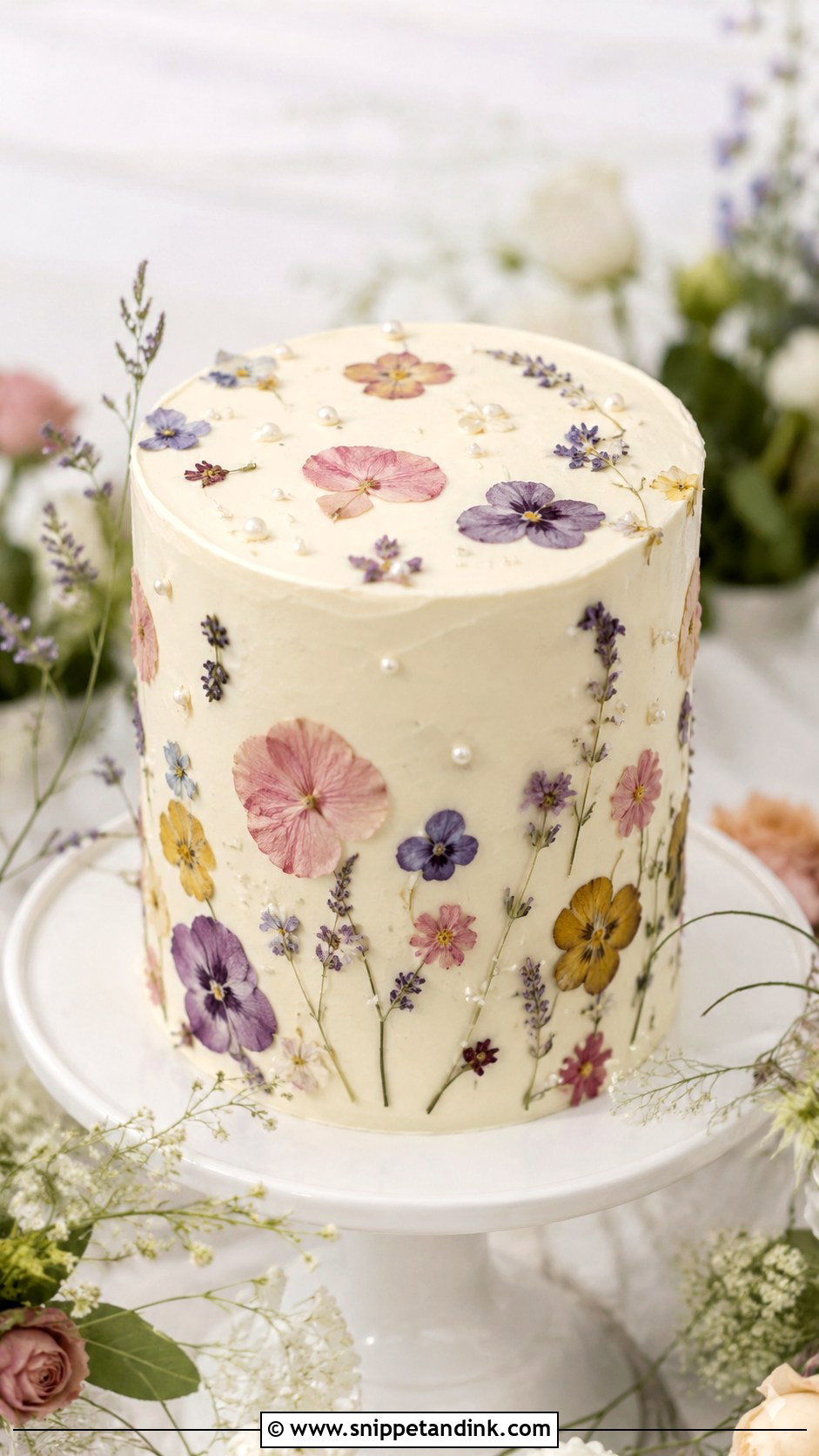
A pressed flower wedding cake with pearls looks hand-painted, and it suits a spring or garden wedding. The pressed petals are usually edible varieties like violas, pansies and cornflowers, set on with a thin layer of piping gel. They brown if moisture reaches them, so I apply them close to delivery and keep the cake out of direct sun. Smooth white buttercream lets the shapes read clearly. Leave real space between the petals; this style turns cluttered quickly.
19. Pearl Border Wedding Cake With Flowers
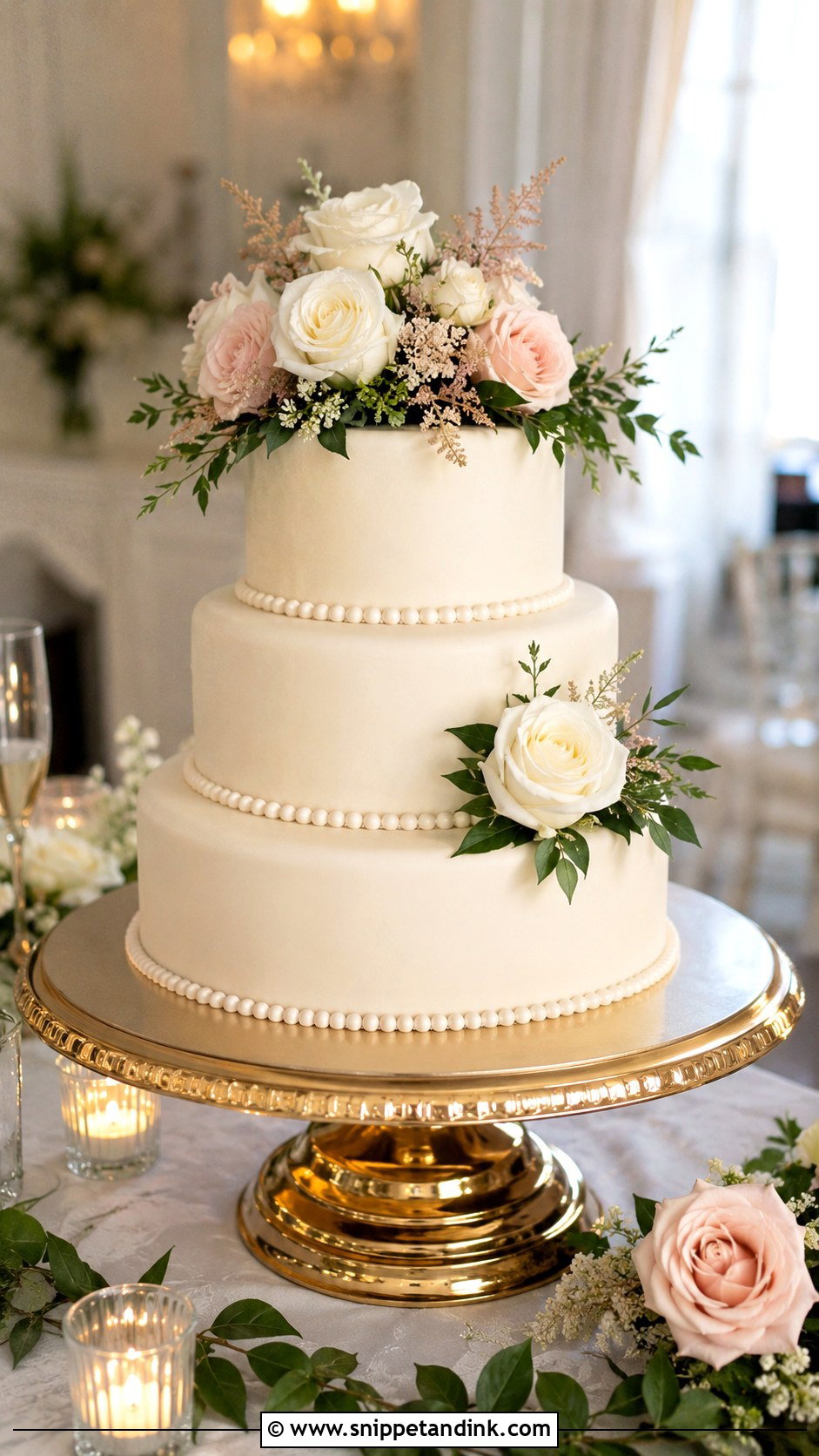
A pearl border is the most traditional finish, and it hides the join at the base of each tier, which is the honest reason bakers started using borders in the first place. Flowers then go on top, between tiers or along one side. It’s a good fit if you want blooms without covering the cake. Ivory frosting, soft roses and a little greenery keep it classic. I’d pick uniform pearls for this one; mixed sizes look uneven when they sit in a straight line.
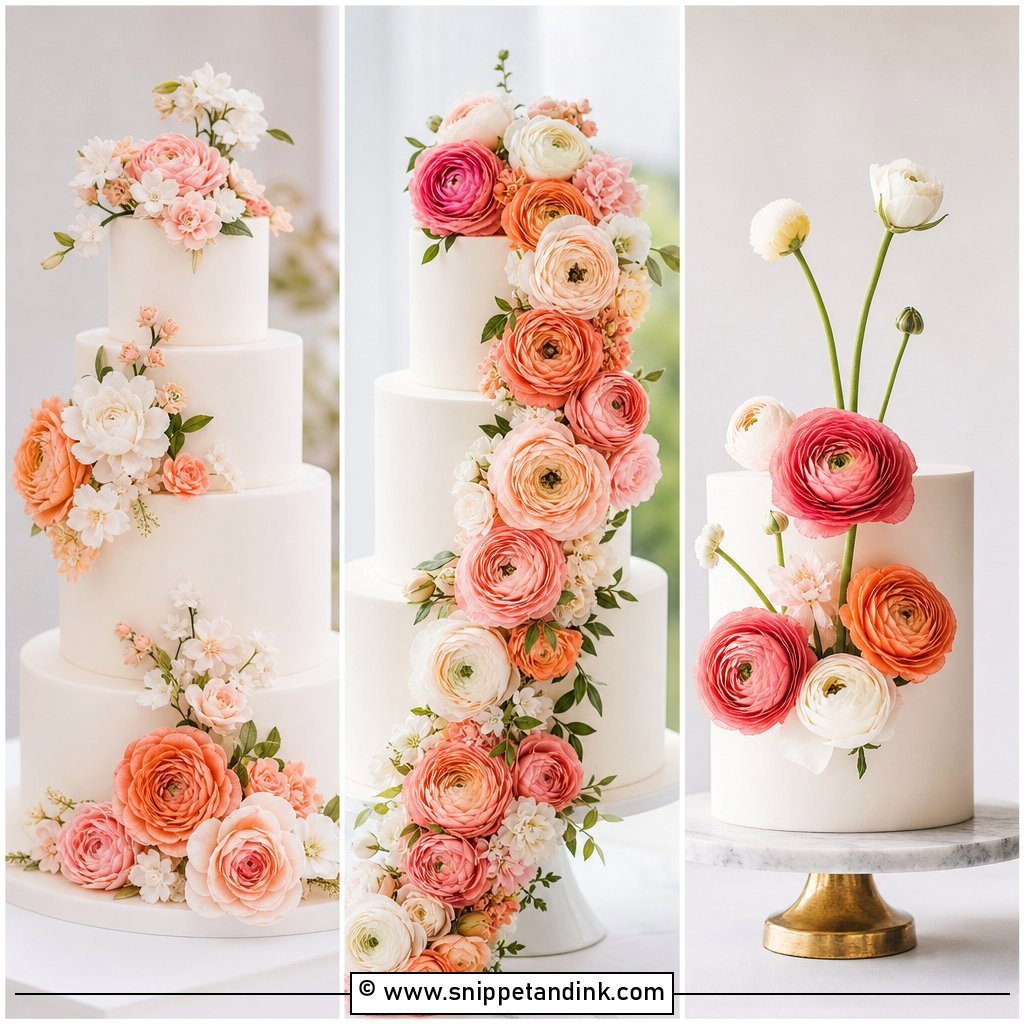
20. Floral Cascade Wedding Cake With Pearls
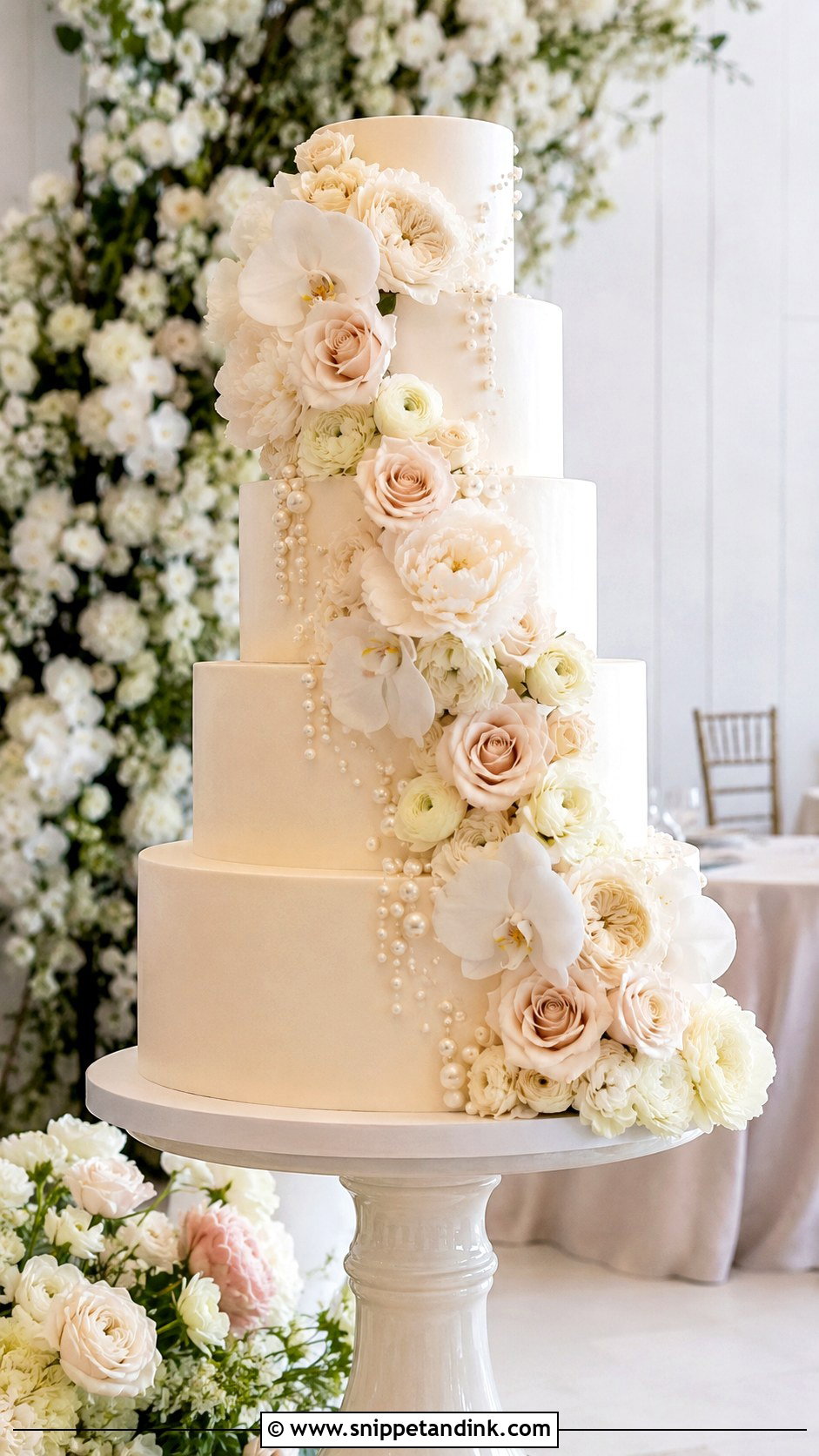
A cascade needs at least three tiers to breathe, and four is better. I sketch the line before anyone touches a flower, running it diagonally so it crosses the front of every tier. Mixing large heads like peonies with smaller roses and ranunculus gives it depth, and pearl trails can follow the same curve. A smooth background matters because texture behind a cascade fights it. Ask who places the flowers: if the florist does it, the baker needs to leave clean, flat spots for them.
21. Pearl Covered Wedding Cake With Flowers
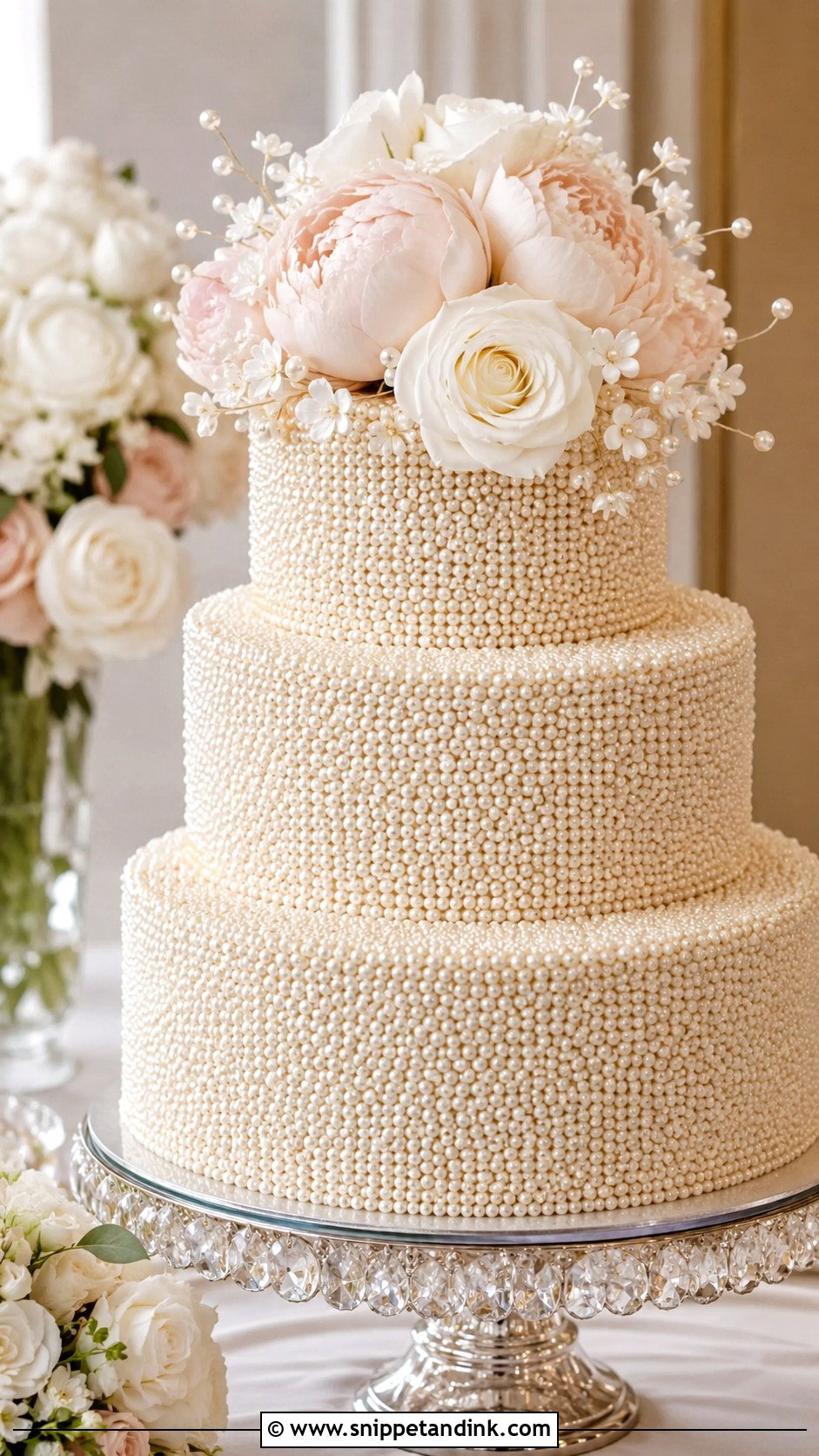
Pearl-covered tiers take hours of placing pearls one by one, usually with tweezers, and they catch light in close-ups like beading on a bodice. I’d cover one tier rather than all of them; a whole cake of pearls can look heavy, and guests won’t love biting into that much crunch. Keep the flowers white, ivory or blush and place them in two or three spots only. It suits evening receptions where candlelight hits the surface.
22. Square Wedding Cake With Flowers And Pearls
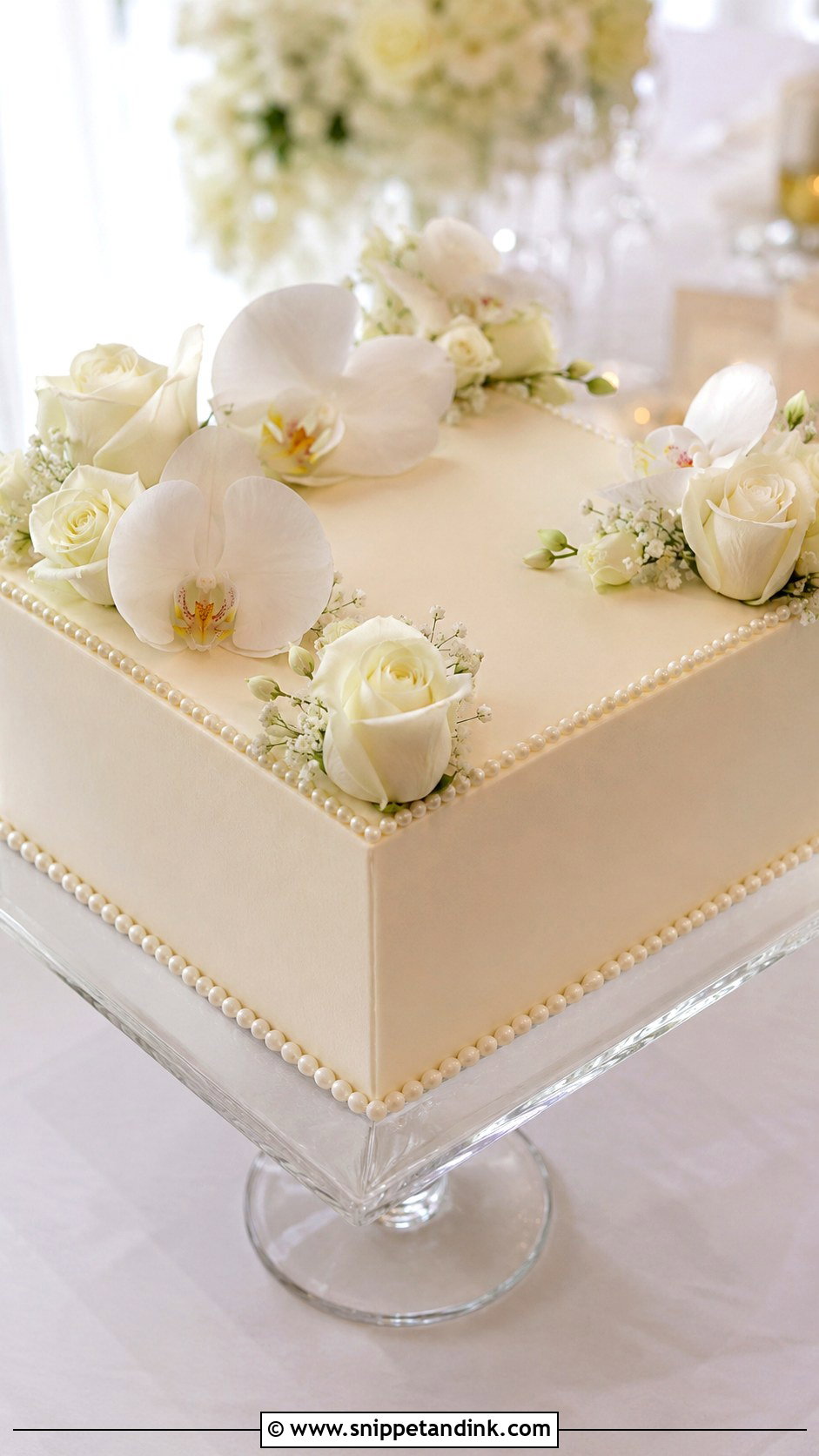
Square tiers look architectural, and they also serve more slices than round tiers of the same width, which helps on a tight guest count. The corners are the hard part. Buttercream corners soften quickly in warmth, so square cakes usually go to fondant with pearl borders along each edge to keep the lines crisp. Flowers at the corners or between tiers soften the geometry. White orchids or peonies suit the clean shape well.
23. Round Wedding Cake With Flowers And Pearls
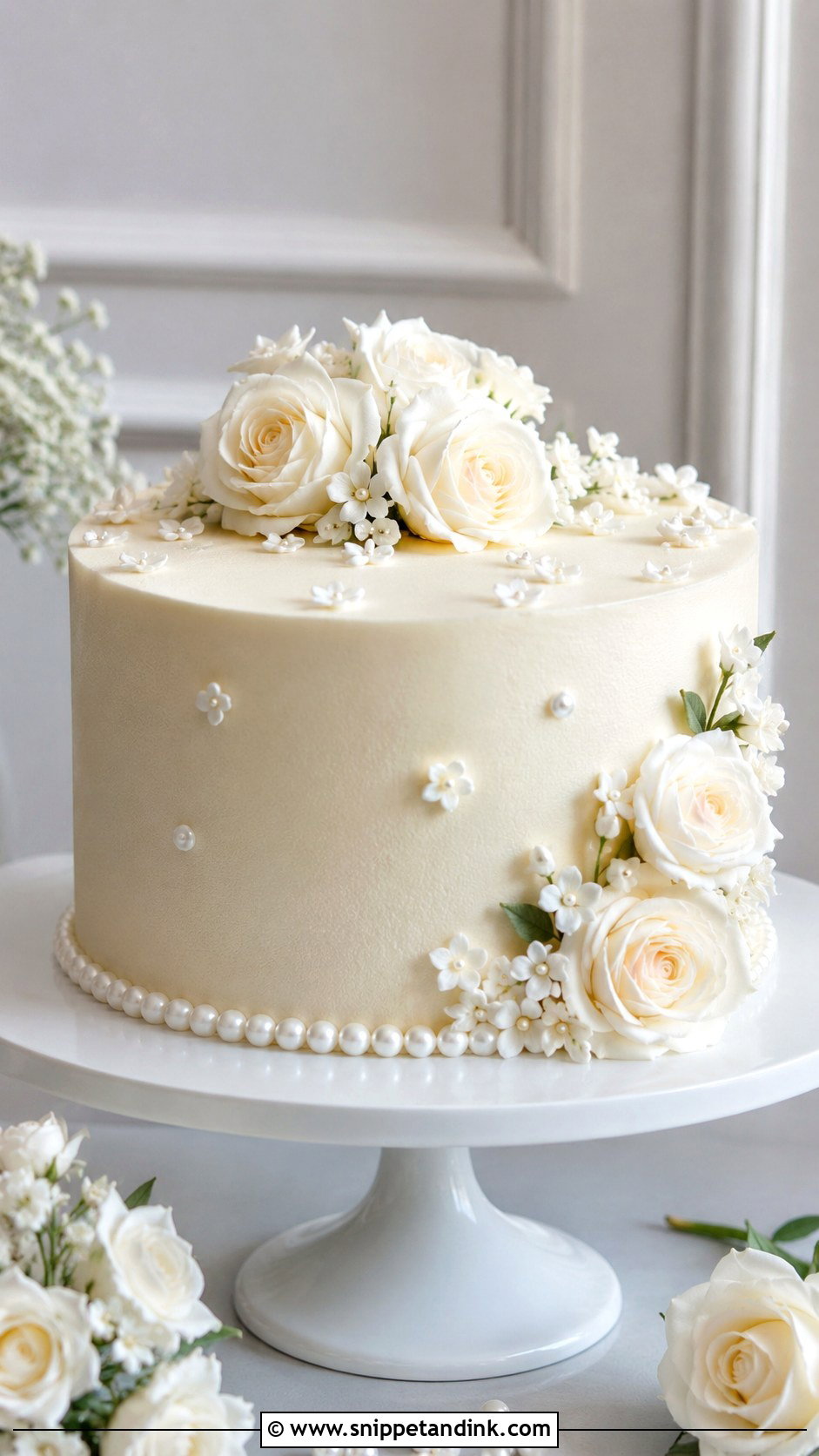
Round tiers are the most familiar shape and the easiest to decorate, carry and cut, which is why most wedding cakes are round. They take floral clusters, pearl borders and trailing pearls equally well, from two tiers up to five. When a couple can’t decide, I usually start here and let the flowers carry the personality. Pearls finish the edges and add texture to plain frosting.
24. Small Wedding Cake With Flowers And Pearls
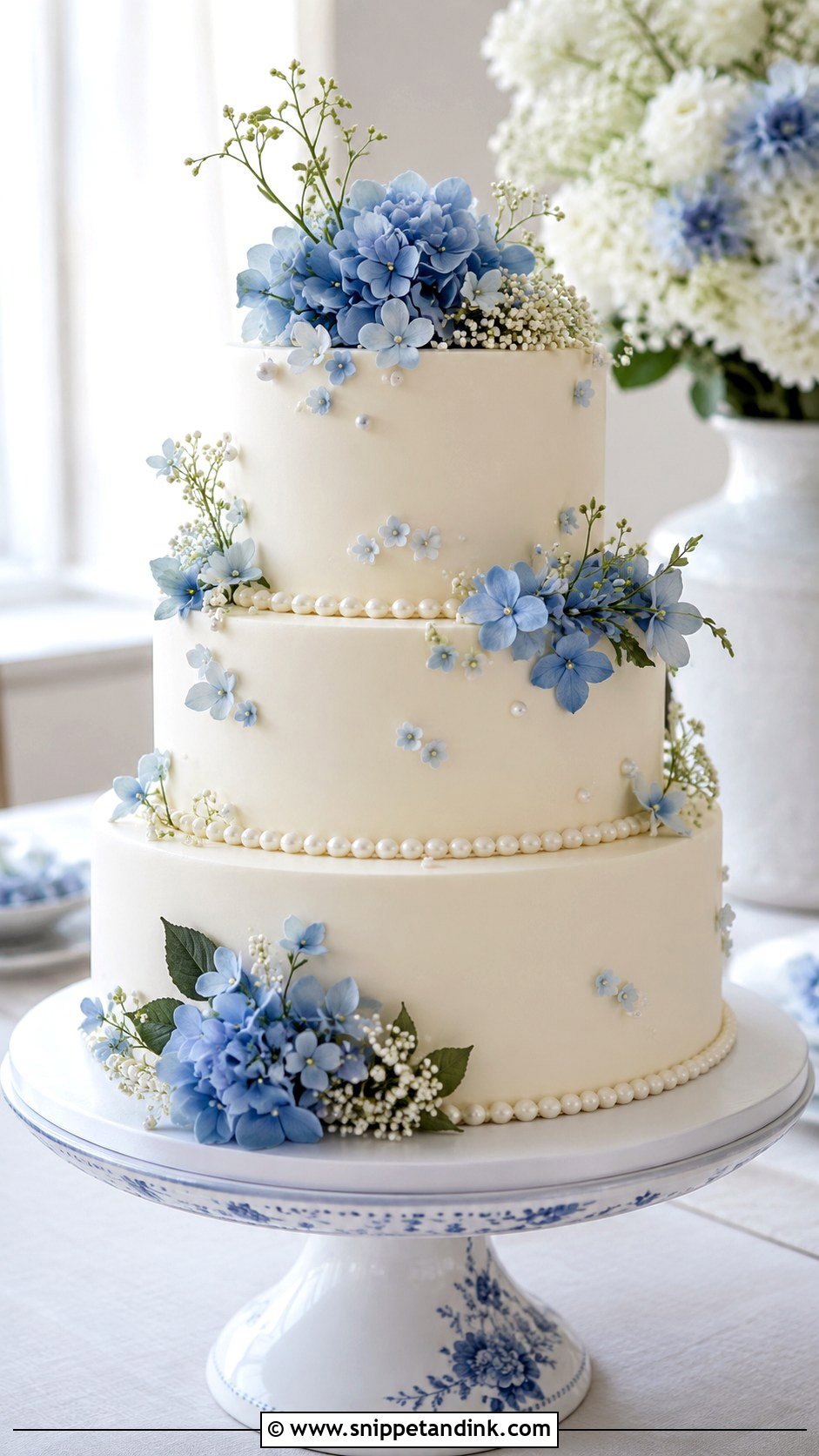
Small cakes suit courthouse weddings, micro weddings and dessert tables full of other sweets. A single tier still looks special with smooth buttercream, one floral cluster and a few pearls low on the side. My favorite trick is height: a tall pedestal stand gives a six-inch cake real presence in photos. Ivory, blush, sage or pale peach all work. It’s also the easiest cake to transport and cut, and close-ups show every pearl clearly.

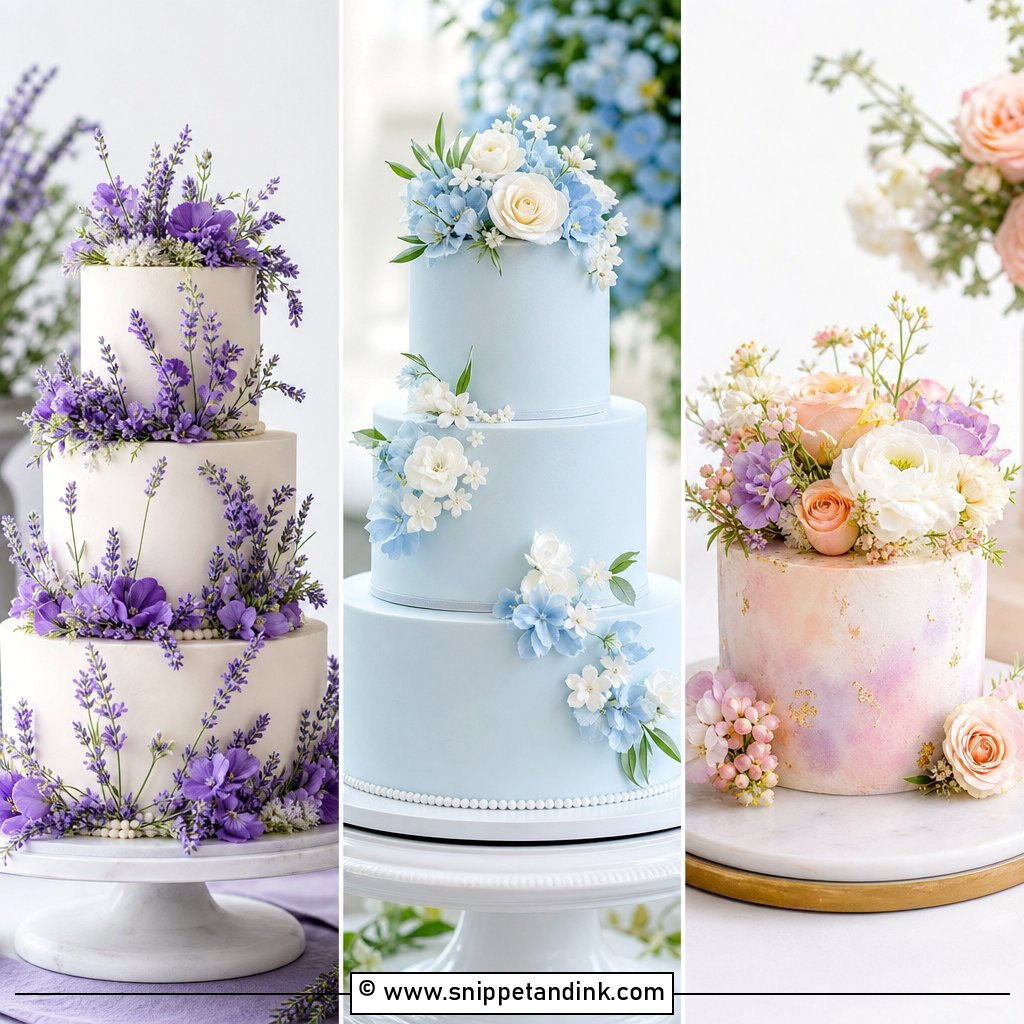
25. Blue Flower Wedding Cake With Pearls
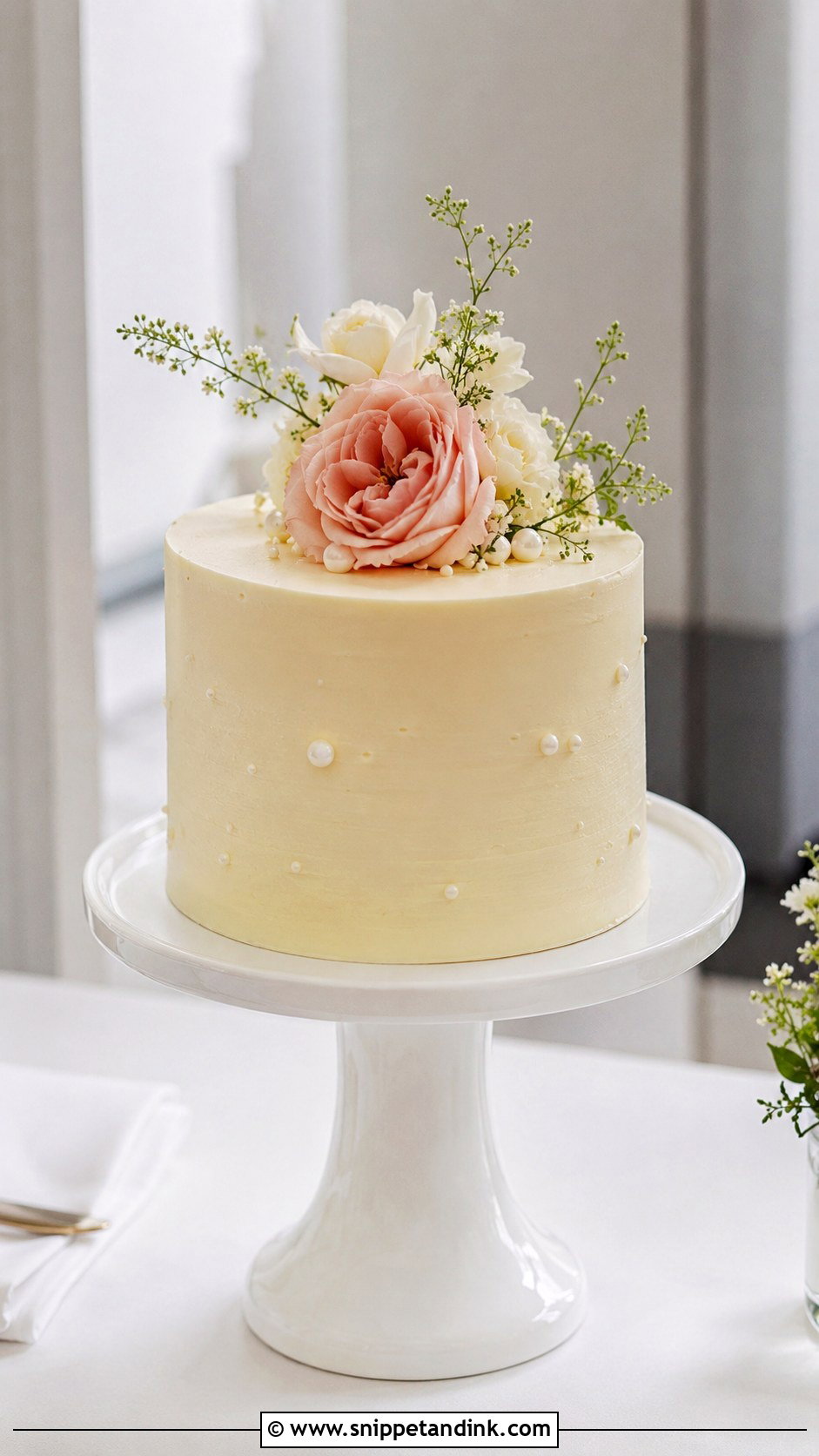
Blue is rare in real flowers and harder still in sugar, so the blue cake often relies on a few truly blue blooms rather than a full arrangement. Pale hydrangea is the usual choice, but remember it needs wrapping and shouldn’t touch frosting, while delphinium is toxic and belongs nowhere near a cake. Sugar blossoms let me match a specific shade safely. Keep the rest simple: white frosting and a pearl border let the blue read clearly for a coastal or garden wedding.
26. Pink Flower Wedding Cake With Pearls
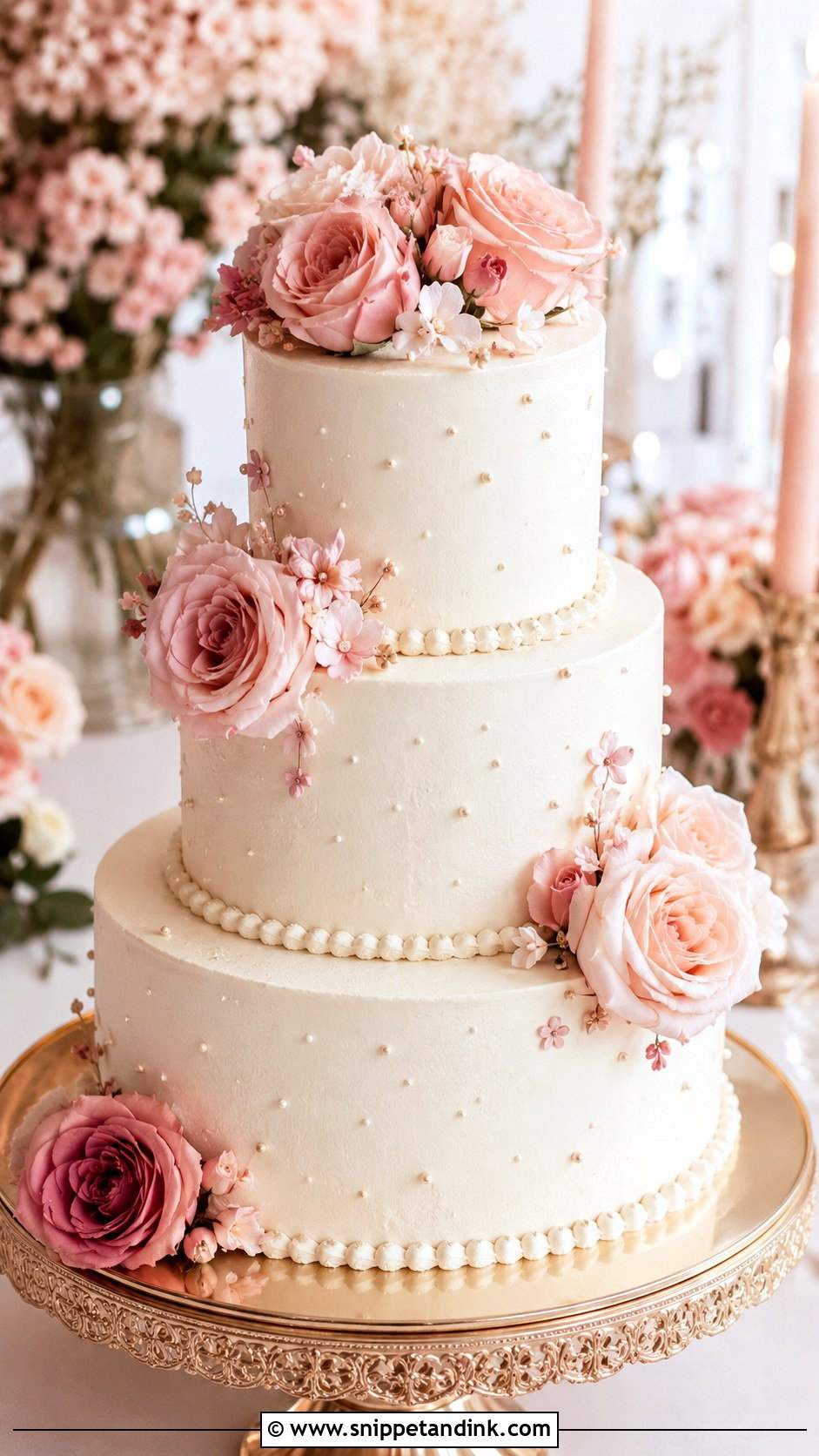
Pink covers everything from pale blush to dusty rose, so I ask for a fabric or bouquet swatch before mixing any color. Pearls stop it from looking too sweet. Smooth ivory buttercream or light fondant works well, with clusters on top and at the base and pearls along the tier edges. A little greenery makes it gardeny; tight, polished clusters make it formal. I’d avoid hot pink with white pearls unless the rest of the room is bold too.
27. Purple Flower Wedding Cake With Pearls
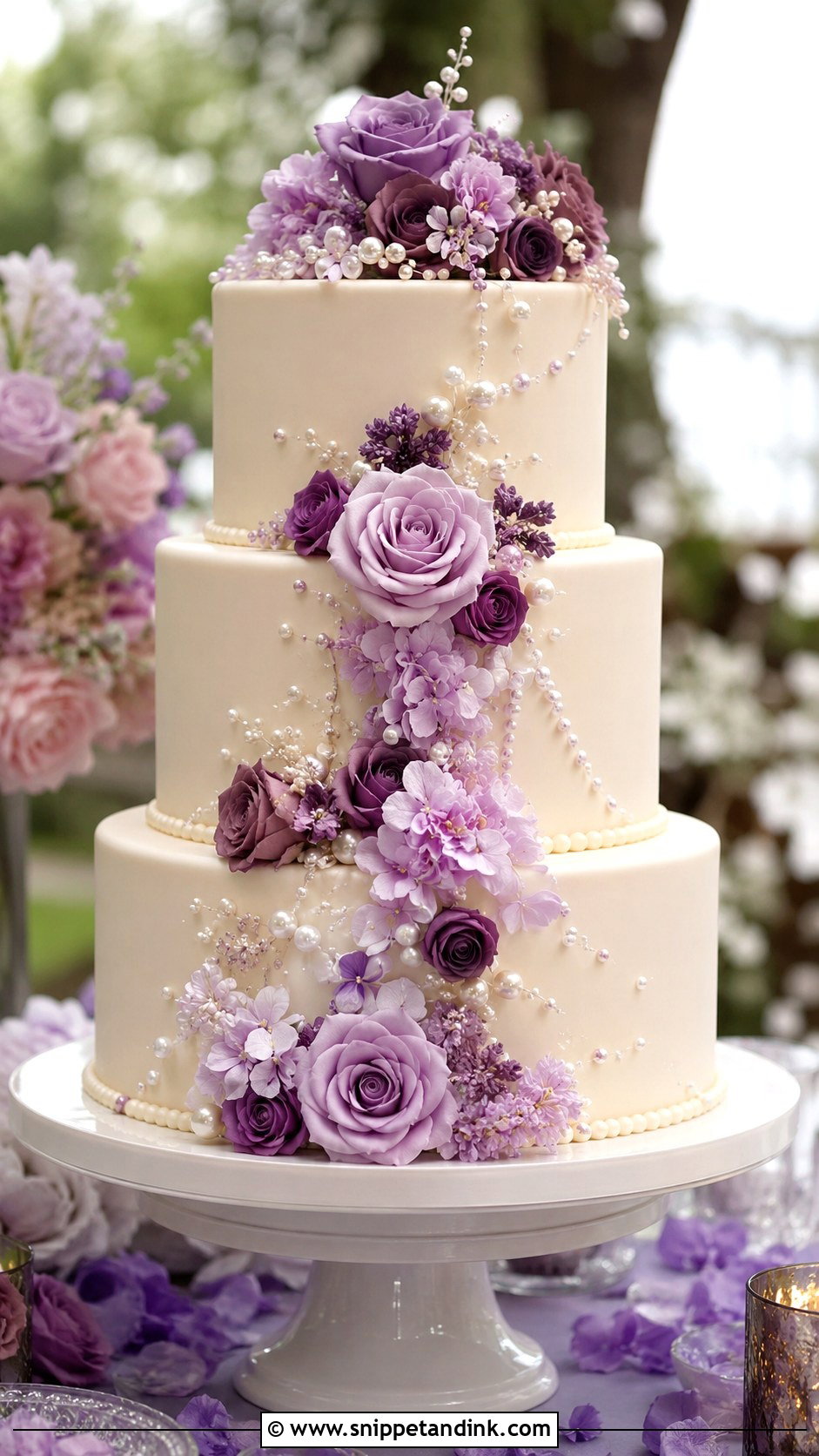
Purple flowers bring color without shouting, but tinted purple frosting is risky: it can fade toward grey or blue under light and over the day. That’s why I keep the frosting white or ivory and let the lavender, lilac or plum blooms carry the shade. Pearl strands, borders or small clusters add detail without pulling focus. It works for spring and garden weddings, and it feels more personal than an all-white cake.
28. Greenery Wedding Cake With Flowers And Pearls
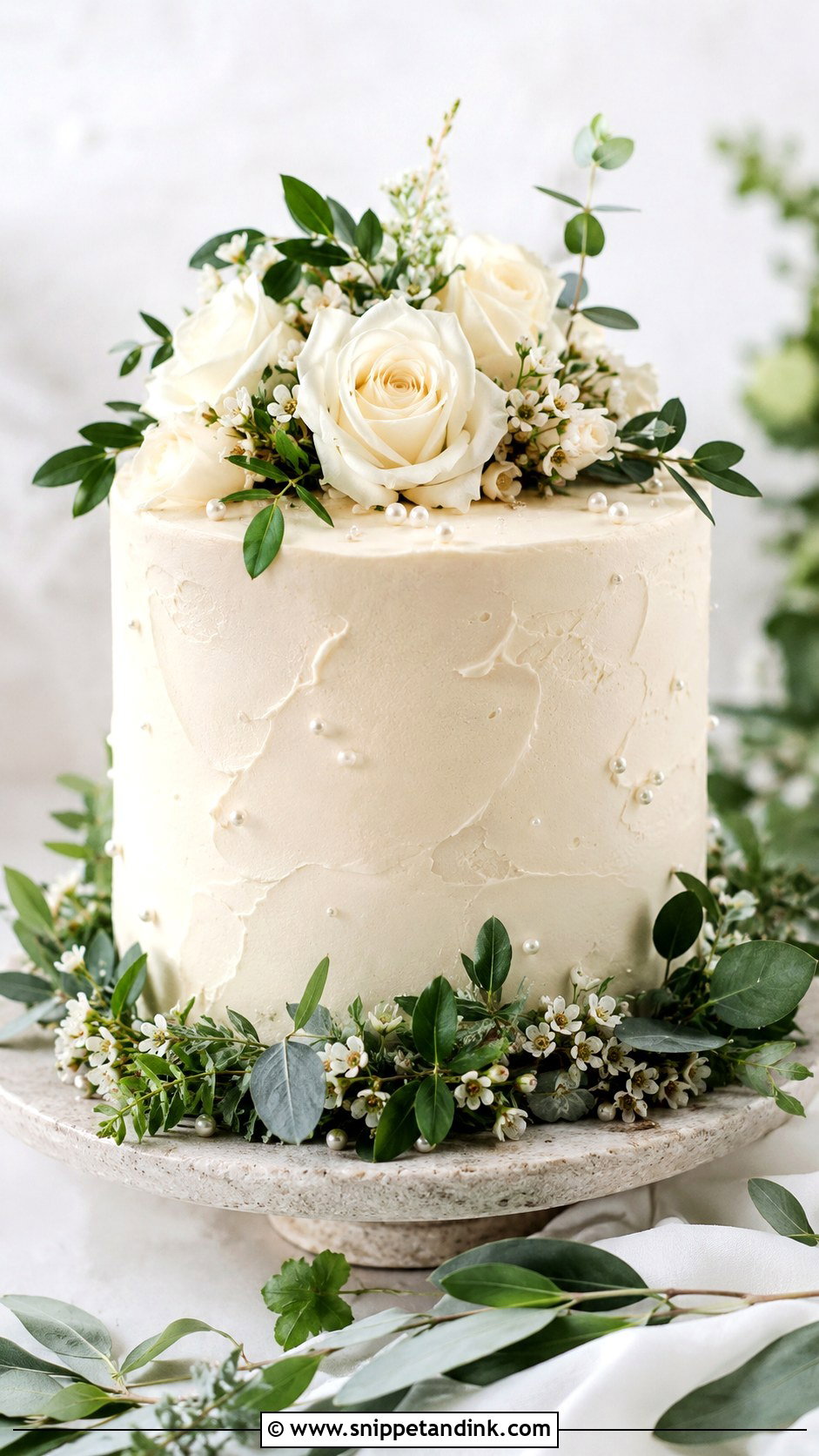
Greenery looks easy but has the same safety rules as flowers. Eucalyptus is popular yet not food safe, and ivy is toxic, so I’d wrap their stems and keep the leaves off the frosting, or swap in rosemary, bay or sugar leaves. White roses or small seasonal blooms keep it romantic, and pearls stop the greenery from tipping into rustic. A white or ivory base gives the leaves contrast.
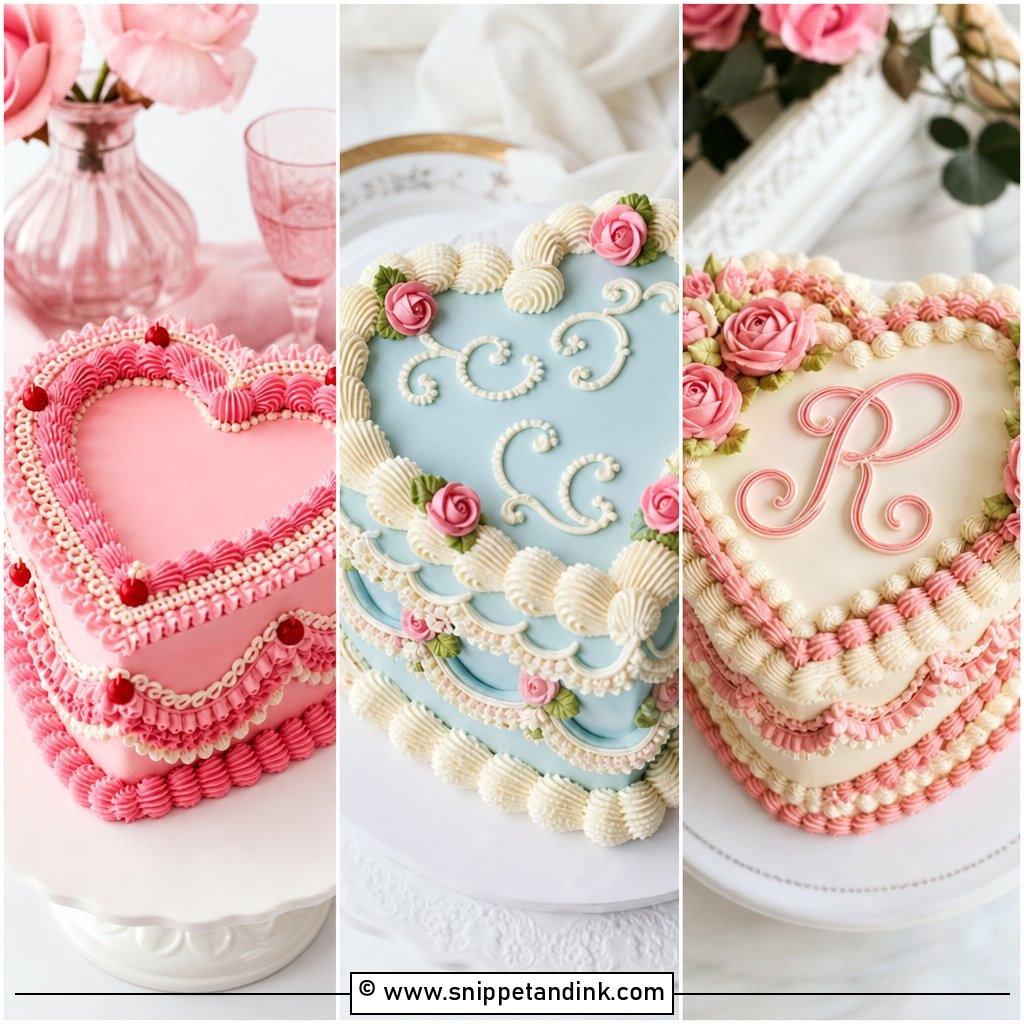
29. Heart Wedding Cake With Flowers And Pearls
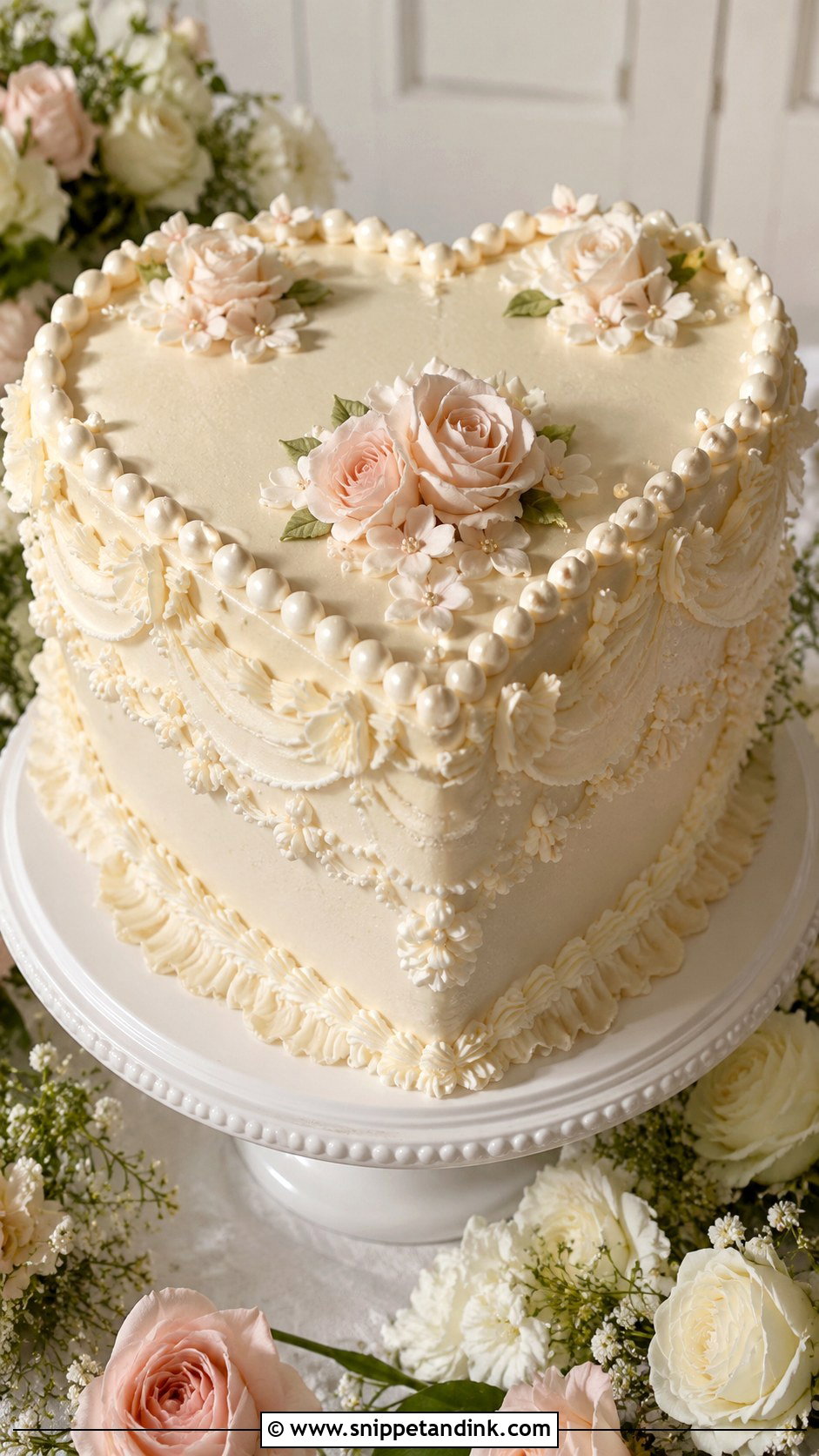
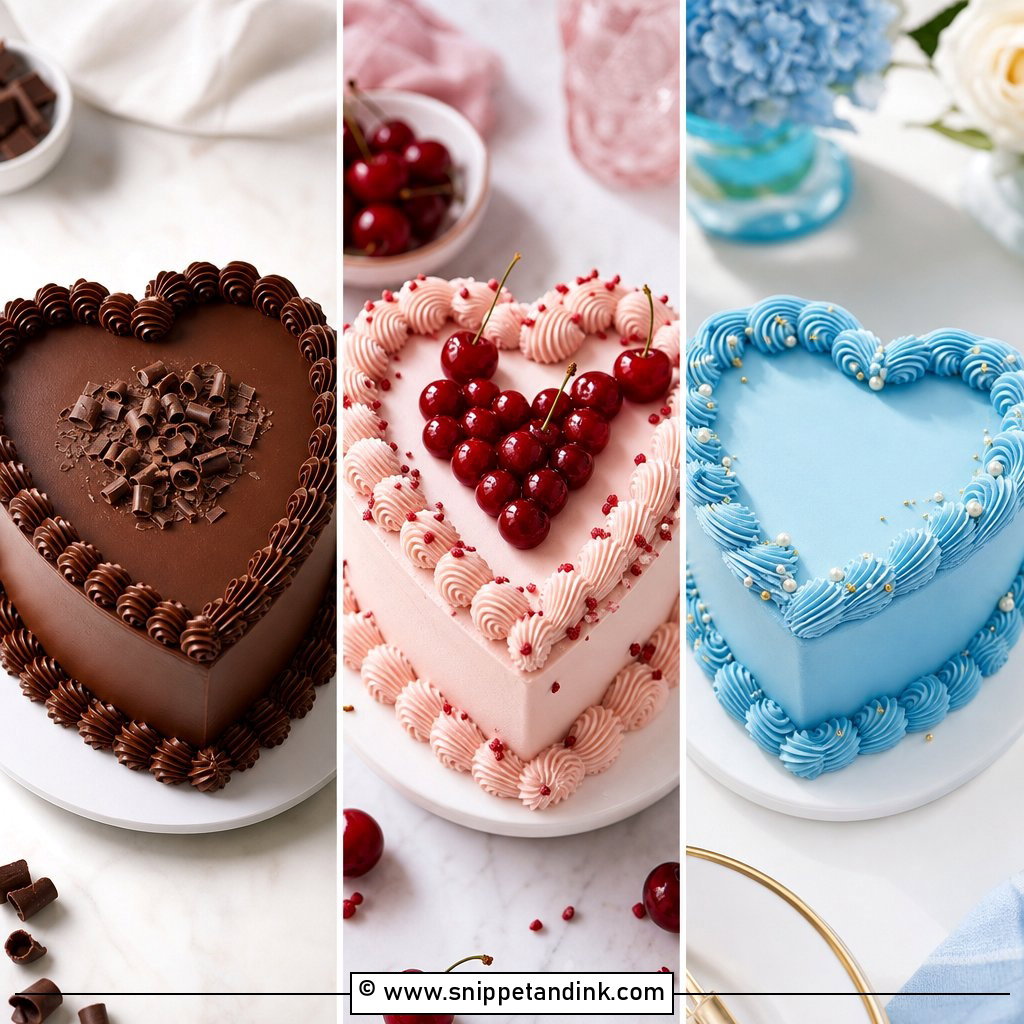
Heart-shaped cakes are back, mostly in piped buttercream with vintage borders, and they’re charming in photos. They are awkward to stack, though, so most heart wedding cakes are one or two tiers, and slicing them evenly takes a plan. Pearls along the piped edge or around the base fit naturally. Blush roses and small sugar flowers suit the shape. I see them most at smaller receptions and bridal showers.
30. Black And White Wedding Cake With Flowers And Pearls
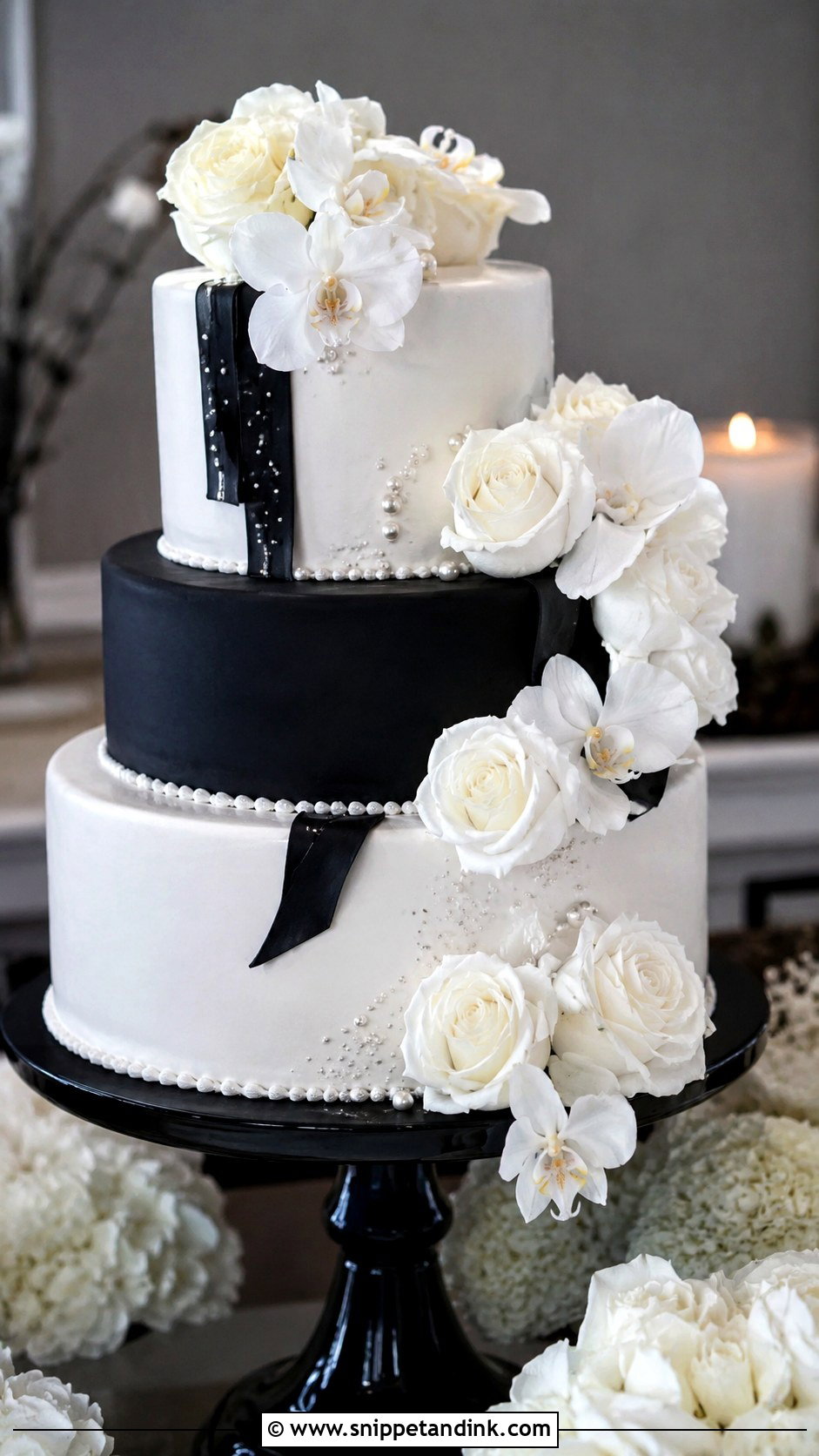
Black and white needs more care than any other palette here. True black fondant or buttercream takes a lot of coloring, can taste bitter and stains teeth, so I keep black as a ribbon, a pattern or a single tier rather than the whole cake. Pearls soften the contrast, and white roses, orchids or sugar flowers look sharp against it. It’s a strong choice for an evening wedding in a modern venue, as long as the layout stays clean.
Not All Cake Pearls Are Made the Same Way
When a couple says pearls, I ask how close guests will get. Sugar pearls are crunchy, come in many sizes and look best scattered or used as borders. Fondant pearls, rolled by hand or pressed from a mold, are soft to bite and good when you want a full beaded tier. Isomalt pearls have a glassy shine and are lovely in photos, but they’re hard, so I keep them to accent spots.
The shimmer itself matters too. Some lustre dusts are sold as non-toxic for decoration only, not as food, so I use only those labelled edible on anything a guest might eat. And metallic dragées are treated differently in different countries, so ask your baker what theirs are made from if you plan to eat the border.
From the Bakery Door to the Cake Table
A floral pearl cake goes through more handling than any other dessert at the wedding, and most problems start between the kitchen and the reception room. These are the questions I’d settle a few weeks out:
- Where will the cake sit? Away from windows, heaters, the dance floor and the doors to the kitchen. Buttercream softens quickly in direct sun.
- When does setup happen, and who adds the fresh flowers? Ideally an hour or two before guests arrive, not first thing in the morning.
- Is the venue cool enough? A summer tent with no air conditioning is the one place I’d push for fondant or sugar flowers.
- Who removes the flowers before cutting? Wrapped stems and picks must come out before the cake is sliced, so the caterer needs to know.
- Do you want to keep the topper? Sugar flowers can be boxed and kept for years if they’re kept dry.
Bring Your Bouquet Photo to the Tasting
Flowers and pearls can make almost any cake feel finished and personal, as long as you balance them against the venue, the dress and the bouquet. Roses, a pearl border and smooth white frosting suit a classic room. For a garden look, fresh or pressed flowers with light pearl accents feel right. If you want drama, look at a tall cascade, a pearl-covered tier or a black and white palette. When you meet your baker, bring photos of the cakes you saved along with your bouquet and colors, and ask how the design will hold up in your venue at the time the cake is cut.
You'll Like These Ideas:








Leave a Reply