
Soft buttercream, sculpted tiers, fresh flowers, pearls and vintage piping are all back in favor, and I’m glad, because they’re details that reward real craft. But a cake isn’t only a photo. It has to suit the venue, survive the season, and taste good to a room full of people with different appetites. Elegant can mean a clean white cake with orchids, a tall fondant cake with satin bows, or a textured buttercream cake with garden flowers. The 20 cakes below cover that range, with my notes on how each one is made and what to ask before you order.
Letting the Season Decide Frosting and Flavor
The same design can be a good or a bad idea depending on the month. I open every consultation by asking the date and whether the reception is indoors, because that narrows the frosting before we ever talk about decoration.
Summer and warm venues
Ganache under fondant, or a firm buttercream, holds up far better than soft meringue buttercream in heat. Bright fillings like lemon curd, passion fruit and berries taste right on a hot day, but fresh fruit fillings mean the cake has to stay cool until it’s served. I steer couples away from cream cheese frosting and whipped cream fillings on any cake that will sit out for hours.
Autumn and winter
Cooler rooms let you use the silkiest buttercreams and richer flavors: chocolate, salted caramel, spiced sponge, pear or hazelnut. Deeper colors and gold accents fit the season, and indoor heating is usually the only thing to plan around.
Spring
Citrus, elderflower, strawberry and pistachio sit naturally beside spring flowers. Damp air is the real risk this time of year, softening sugar flowers and wafer paper, so delicate decorations should stay indoors.
1. Classic White Wedding Cake
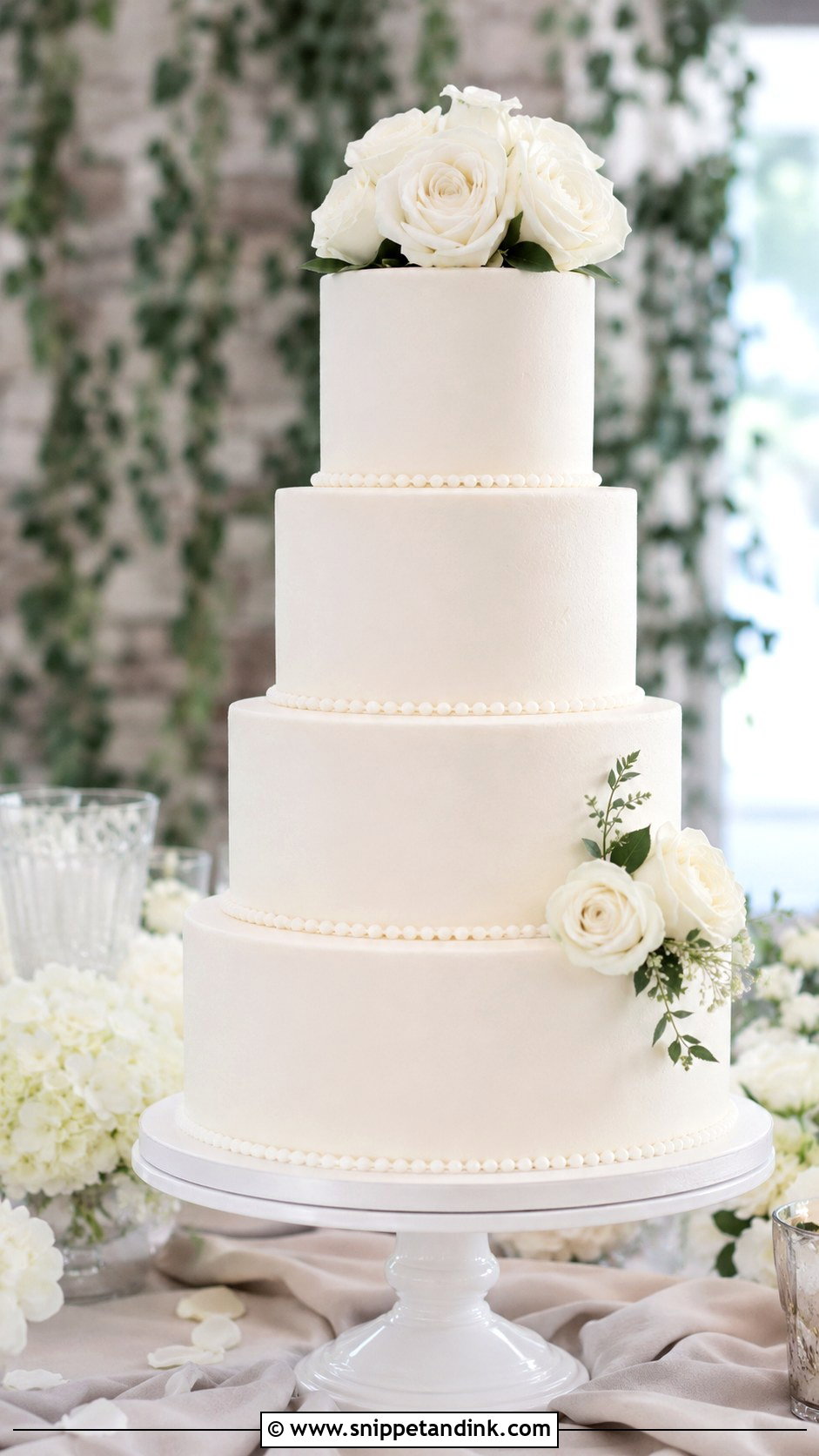
A white cake is the hardest to fake. Every uneven edge shows, and buttercream made with real butter is naturally ivory, so a truly bright white usually means a carefully whitened meringue buttercream or fondant. Three or four tiers with small details look most formal: pearl piping, fine borders, white roses or a ribbon around each tier. Vanilla almond, white chocolate, lemon or a champagne-style sponge suit it. Add height and one focal point, like a flower cluster or a monogram, so it doesn’t read as plain.
2. Pearl Wedding Cake
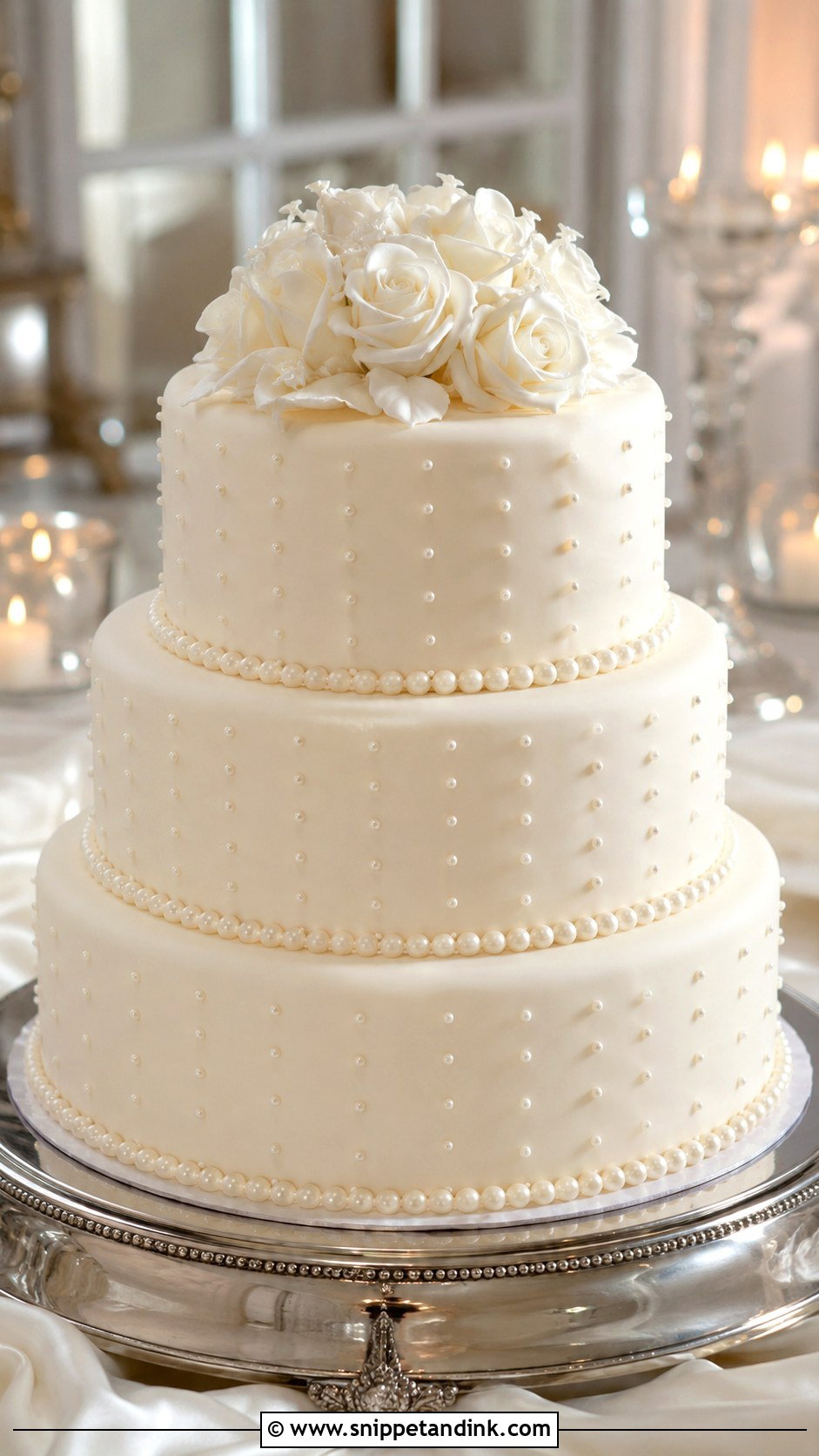
Balance decides whether pearls look expensive or cluttered. I space them in neat lines, scatter them lightly, or use them to outline piping and flowers, but never all three on one cake. They sit best on ivory buttercream, white fondant or the palest blush. Each pearl goes on by hand with tweezers and a dab of icing, so a fully pearled tier adds real hours to the job. Vanilla bean, almond, strawberry or lemon raspberry keep the inside guest-friendly. It suits estate and ballroom receptions and brides wearing pearls or satin.
3. Vintage Lambeth Wedding Cake
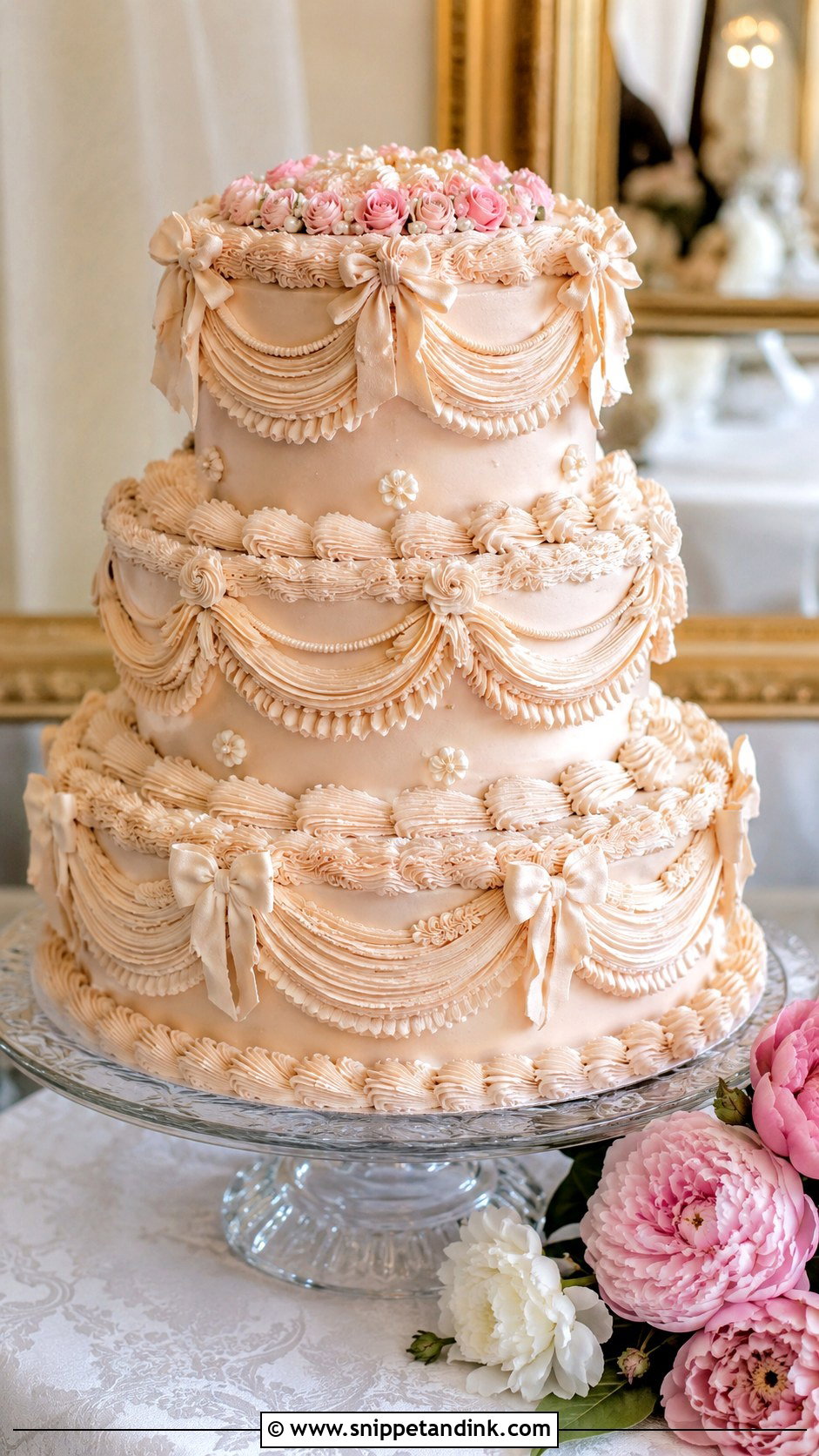
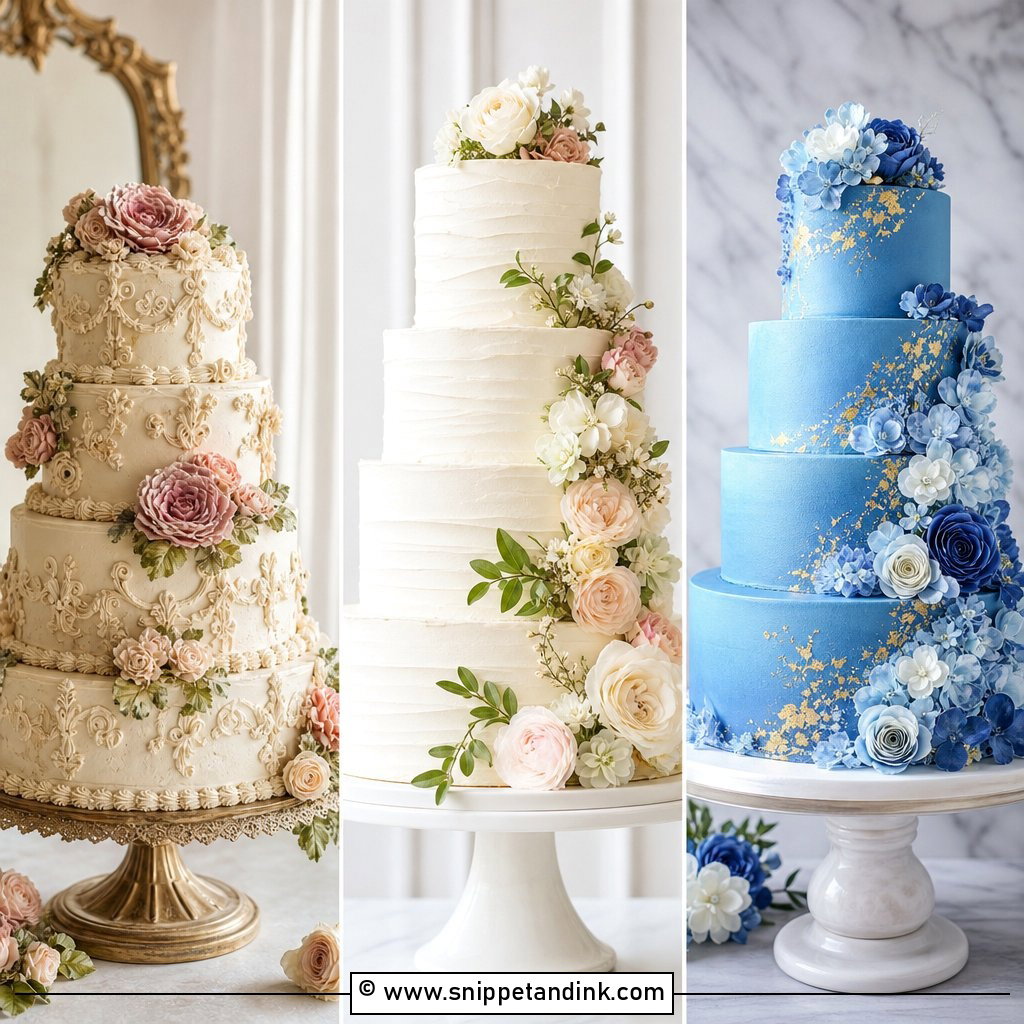
Lambeth is overpiping built up in layers, with shell borders, swags, ruffles and rosettes stacked until the cake looks carved. Ivory, pale pink, powder blue and butter yellow are the classic colors. Pick one or two accents, such as glacé cherries, pearls or piped bows, and resist adding more. Buttercream is usually the medium, and it has to be stiff enough for every layer to keep its ridges. Inside, vanilla, chocolate, coconut or raspberry make a nostalgic cake taste current.
4. Tall Tiered Wedding Cake
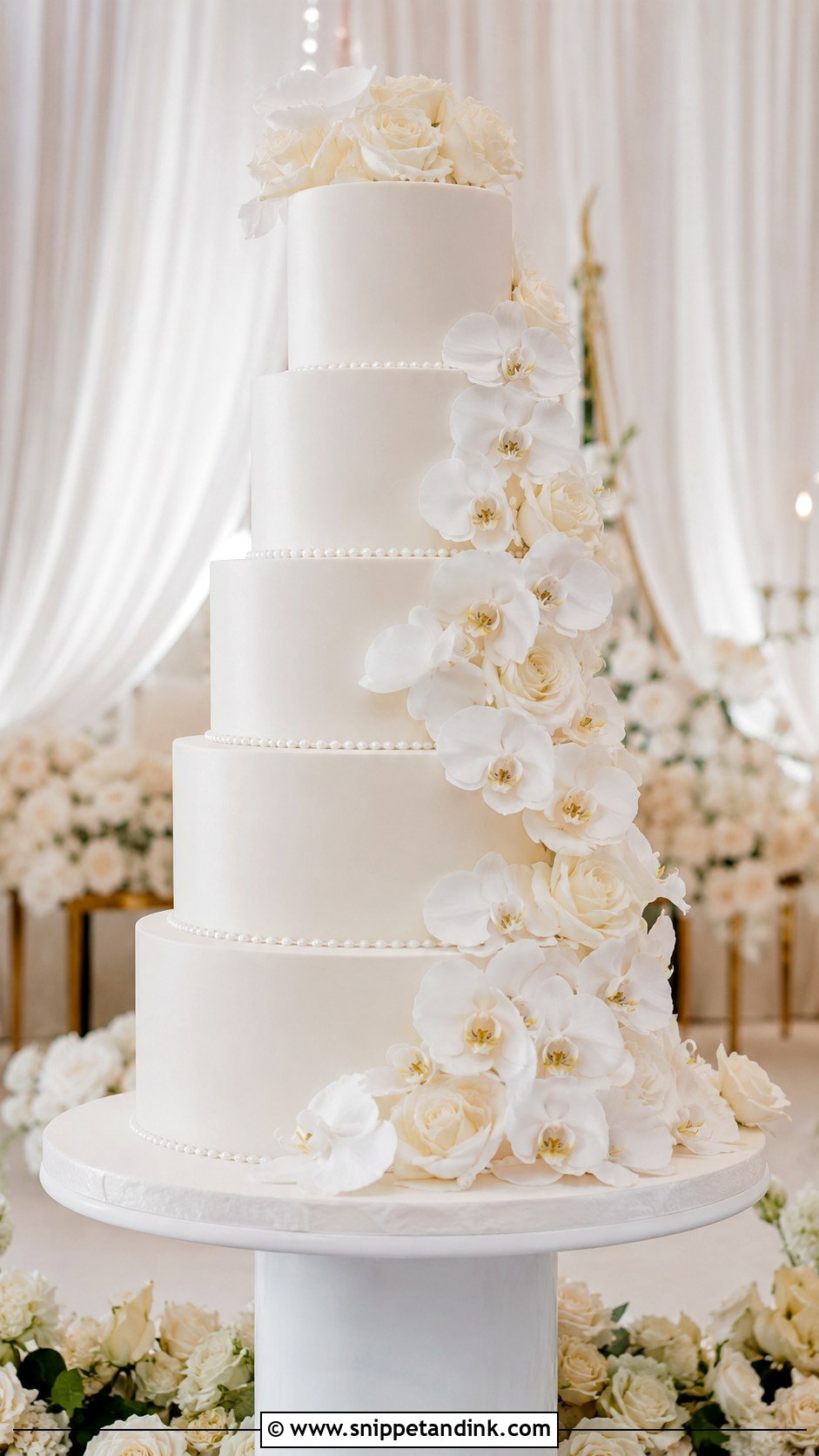
Five or more tiers need a room that can hold them: high ceilings, big flowers or a grand table. Simple design keeps that height elegant, while heavy decoration on every tier turns it into a tower. Mixing tall and short tiers gives a more modern outline. For tall builds I recommend firmer cakes and fillings, such as vanilla bean, almond, lemon or chocolate with ganache or buttercream between layers, because soft mousse or fresh fruit fillings can squeeze out under the weight above. It’s the cake for couples who want it to be part of the décor.
5. Floral Wedding Cake
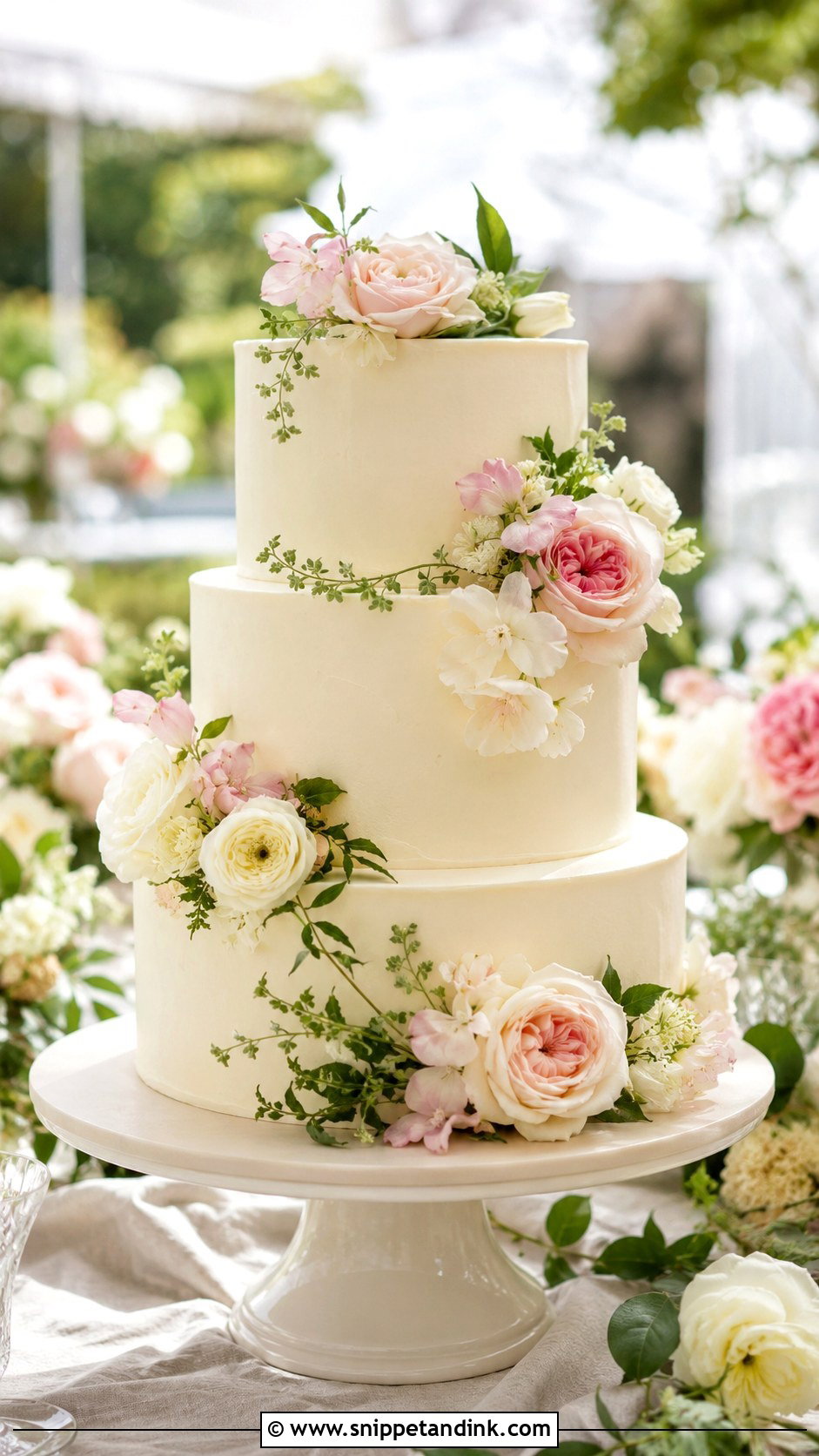
Flowers make almost any cake feel romantic, but choosing fresh or sugar comes down to the day itself. Roses, ranunculus and sweet peas give a garden look; orchids with a little greenery read modern. Fresh flowers have to be food-safe and placed by someone who knows how to keep stems off the frosting. Sugar flowers can match your bouquet exactly and won’t wilt in a warm room, though heavy humidity can soften them. A white or ivory base keeps the blooms as the focus. Lemon elderflower, vanilla raspberry, pistachio and almond are popular inside.
6. Buttercream Wedding Cake
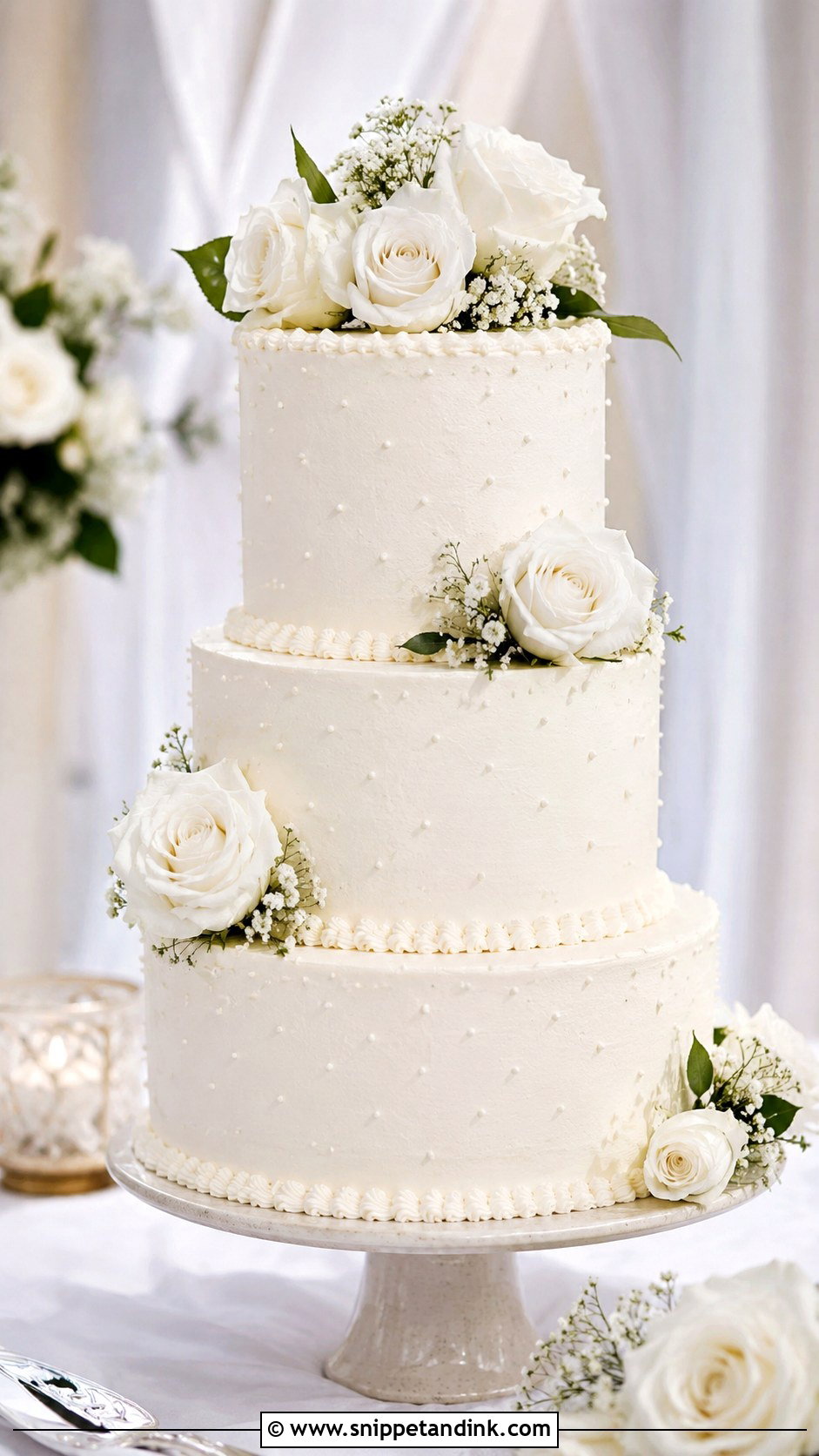
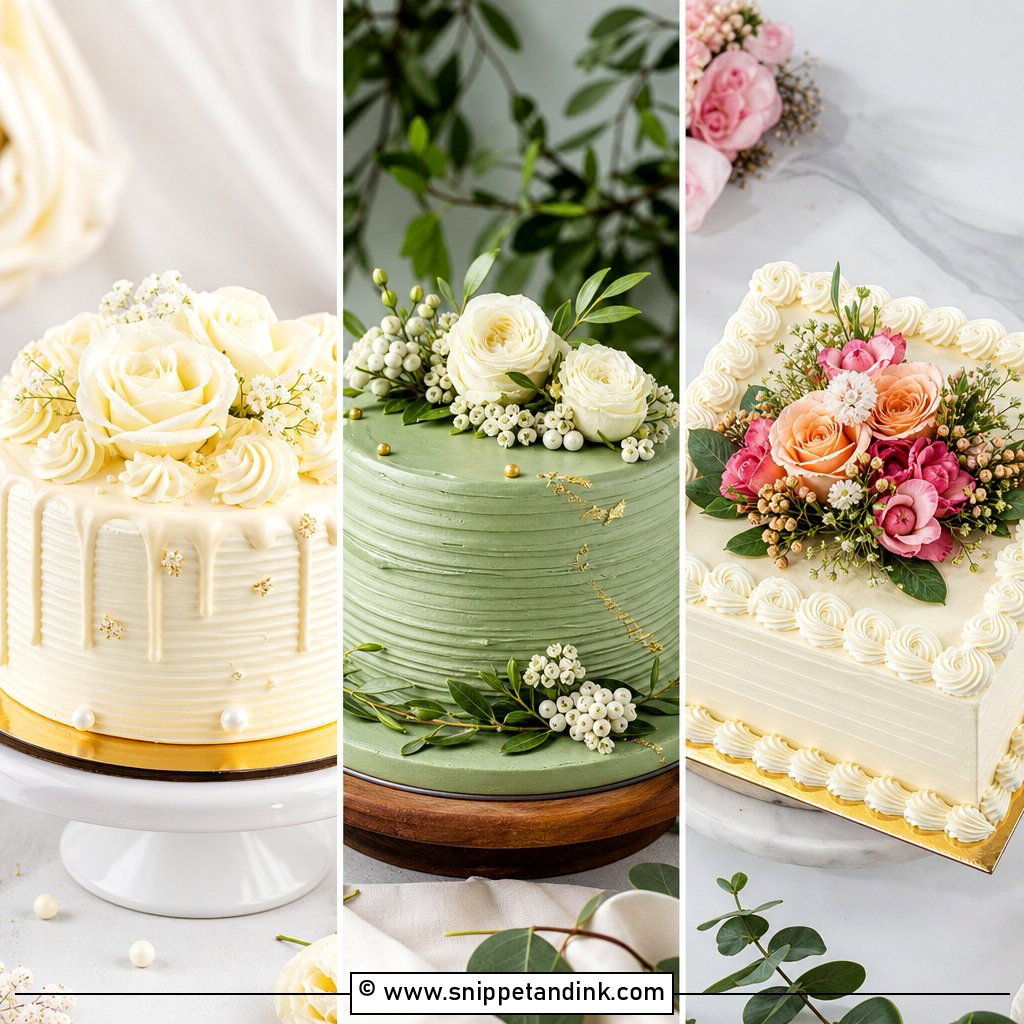
This is the cake for couples who care about flavor as much as looks. Smooth buttercream reads modern; a little texture adds warmth. Swiss meringue buttercream is silky and less sweet, which is why I use it most, but it’s softer in heat than American buttercream, so it needs a cool room and careful timing. Fresh flowers, fruit, pearls, pressed petals or simple piping all suit it, in a garden, a barn or a ballroom. Vanilla bean, lemon, chocolate, carrot and almond all pair well. Keep the finish neat and the decoration edited.
7. Fondant Wedding Cake
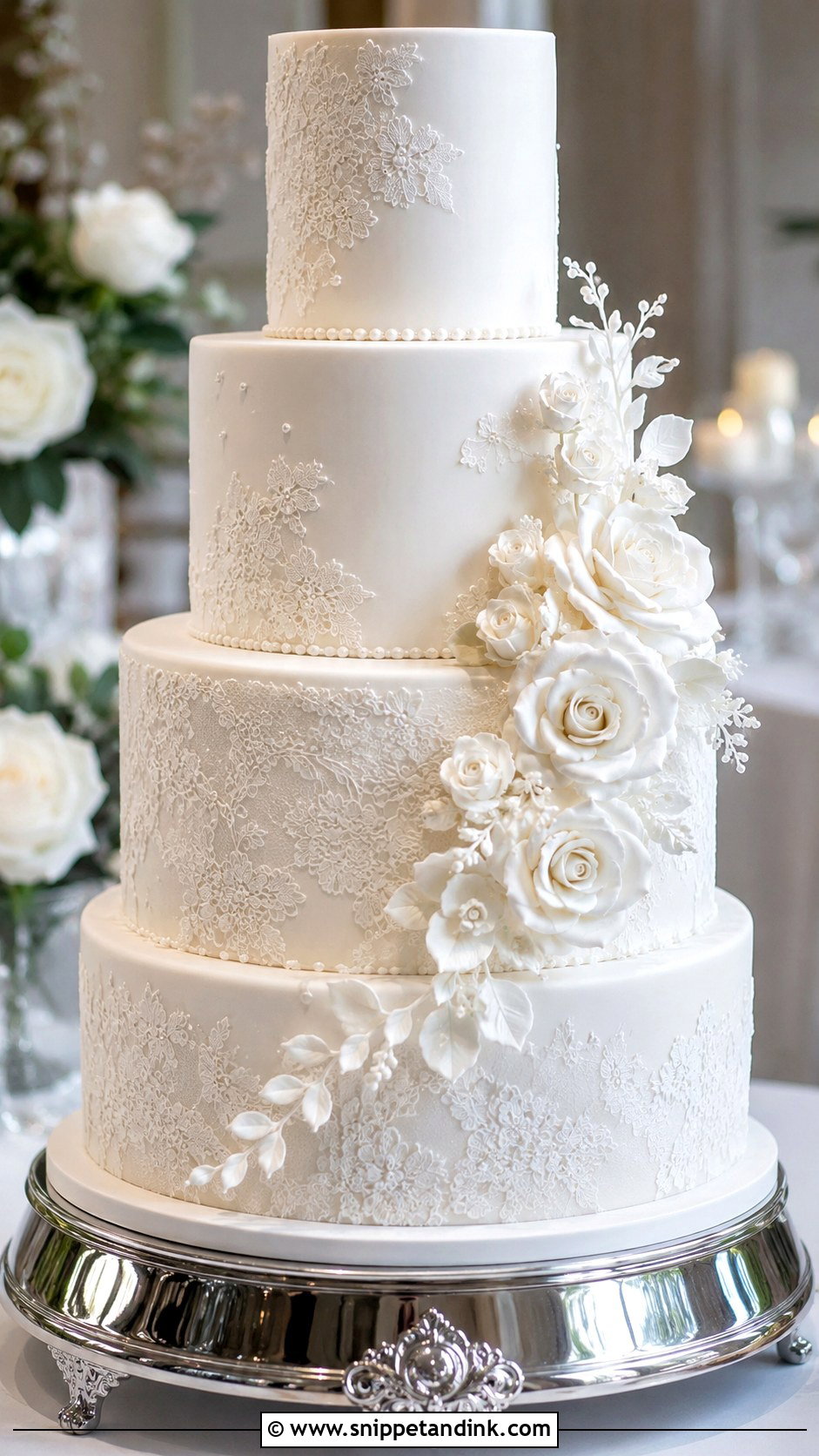
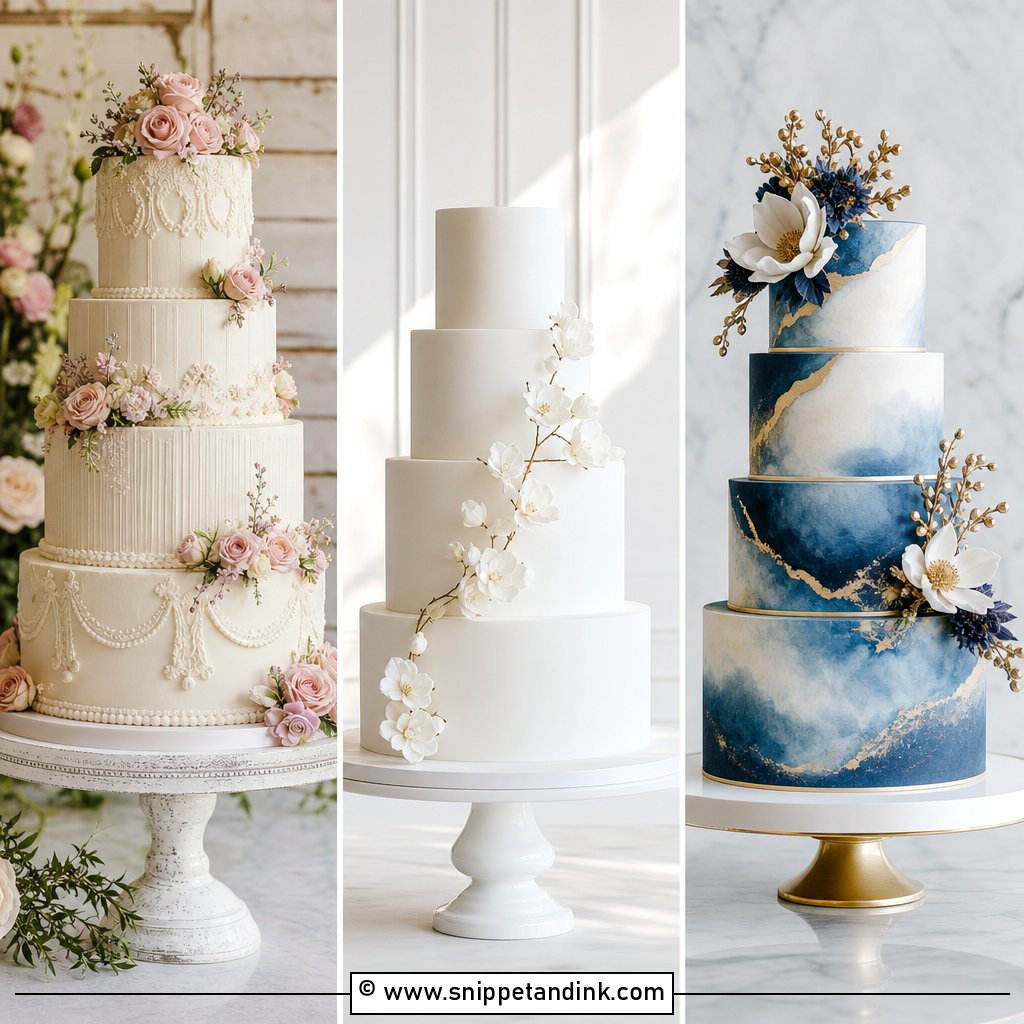
A fondant wedding cake gets you the sharp edges, clean panels, painted details and drapes that buttercream alone can’t hold. It earns its place at formal weddings, in warm venues and wherever decoration is intricate. Soft colors like ivory, white, champagne or blush keep it elegant. Add texture with pleats, lace impressions, pearls or sugar flowers, but not all of them. Fondant should be rolled thin over buttercream or ganache; thick fondant is what gave it a bad name. Inside, raspberry, lemon curd, chocolate ganache or vanilla cream keep it moist.
8. Minimalist Wedding Cake
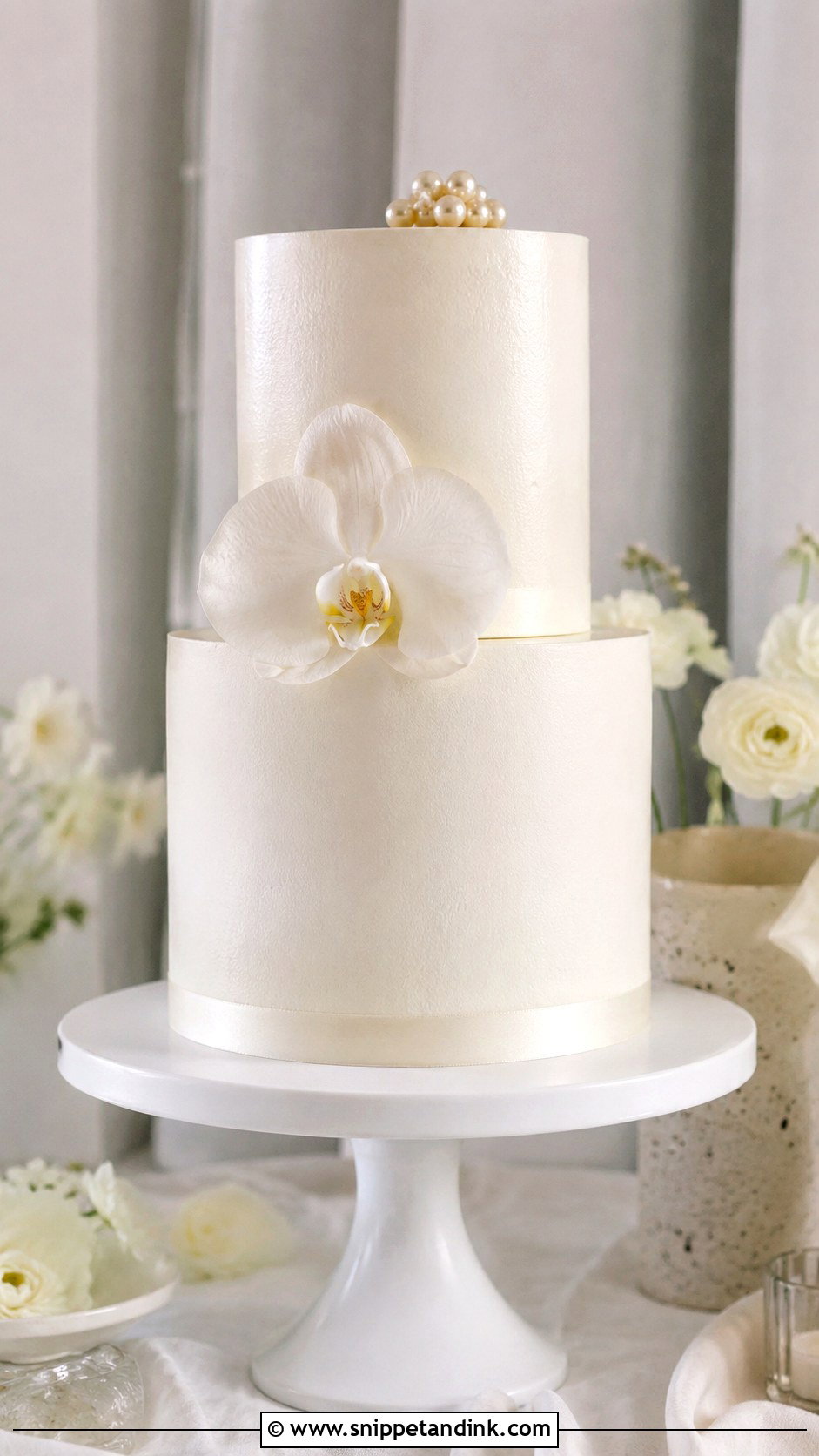
Simple is unforgiving. A minimalist cake relies on proportion, crisp edges and a single detail, whether that’s one orchid, a silk ribbon, pearl dots or a soft buttercream ridge. White, ivory, taupe and pale beige are calm choices, though I’d test taupe under the venue lighting, since muted tones can turn grey in flash photos. It fits modern venues and city weddings and keeps a dessert table uncluttered. Let the flavor carry the personality: lemon raspberry, almond cream, chocolate espresso or vanilla bean.
9. Textured Buttercream Wedding Cake
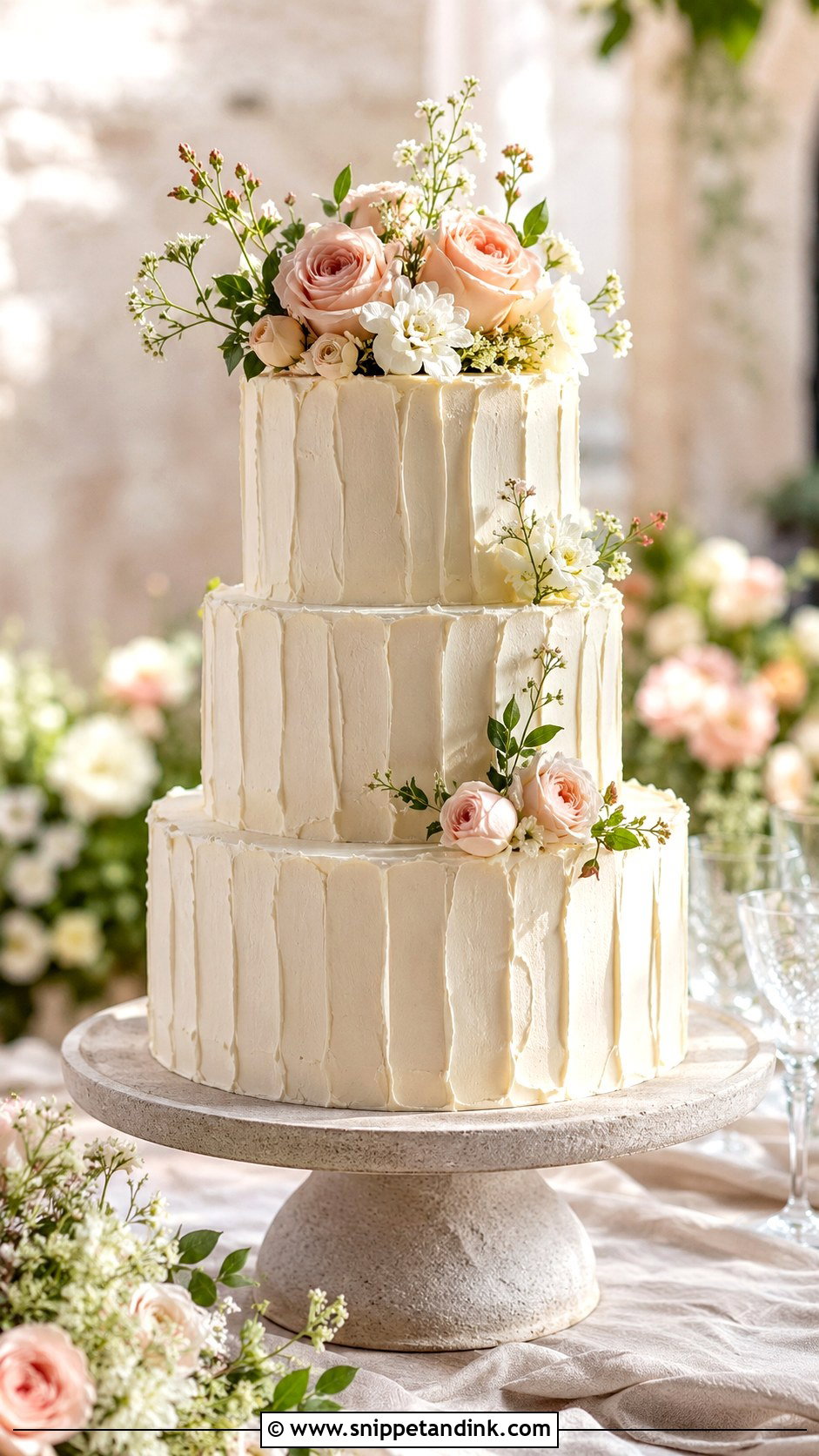
Palette-knife strokes, vertical ridges, horizontal combing and stucco finishes all give buttercream depth and a handmade look. Texture is also kinder in warm weather than a perfectly smooth finish, because small marks from handling simply blend in. Fresh flowers, a few touches of greenery or pressed edible petals suit it. Keep to one or two colors, such as ivory with pale blush or cream with soft sage, so the texture isn’t fighting the palette. Vanilla bean, lemon, carrot, coconut and berry fillings match its relaxed feel at a garden or outdoor reception.
10. Sugar Flower Wedding Cake
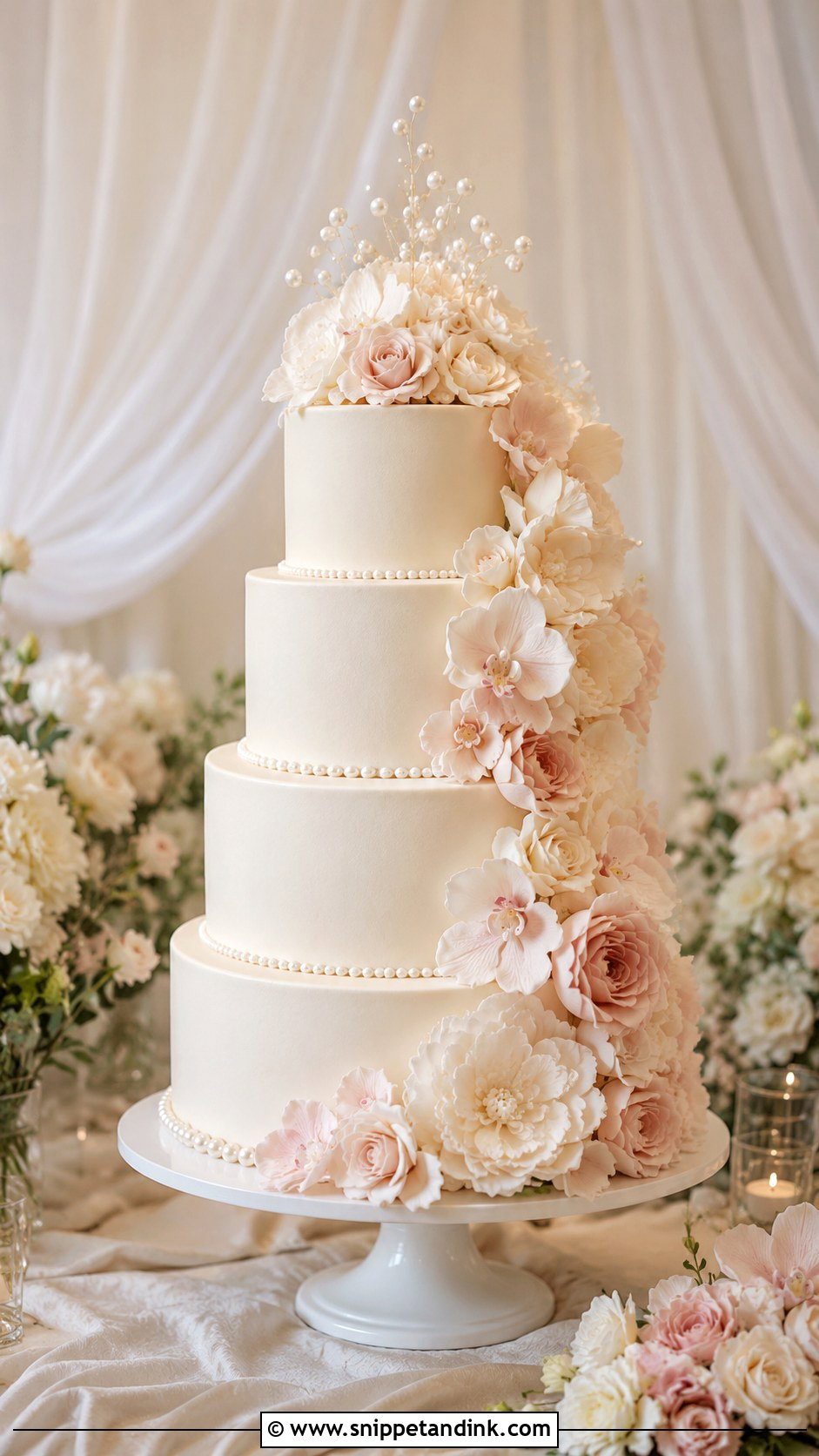
Sugar flowers look the same at midnight as they did at noon, and that’s their main advantage. They’re shaped petal by petal from gum paste, wired, dusted with color and dried, often over several weeks, so they can match your bouquet, arch or centerpieces closely. Roses, peonies, orchids, ranunculus and magnolias are popular. Because of the wires they come off before cutting, and plenty of couples keep one as a memento. Arrange them in a flowing cascade or a few sculptural clusters. Classic flavors like vanilla almond, lemon or chocolate raspberry let the outside do the talking.
11. Black And White Wedding Cake
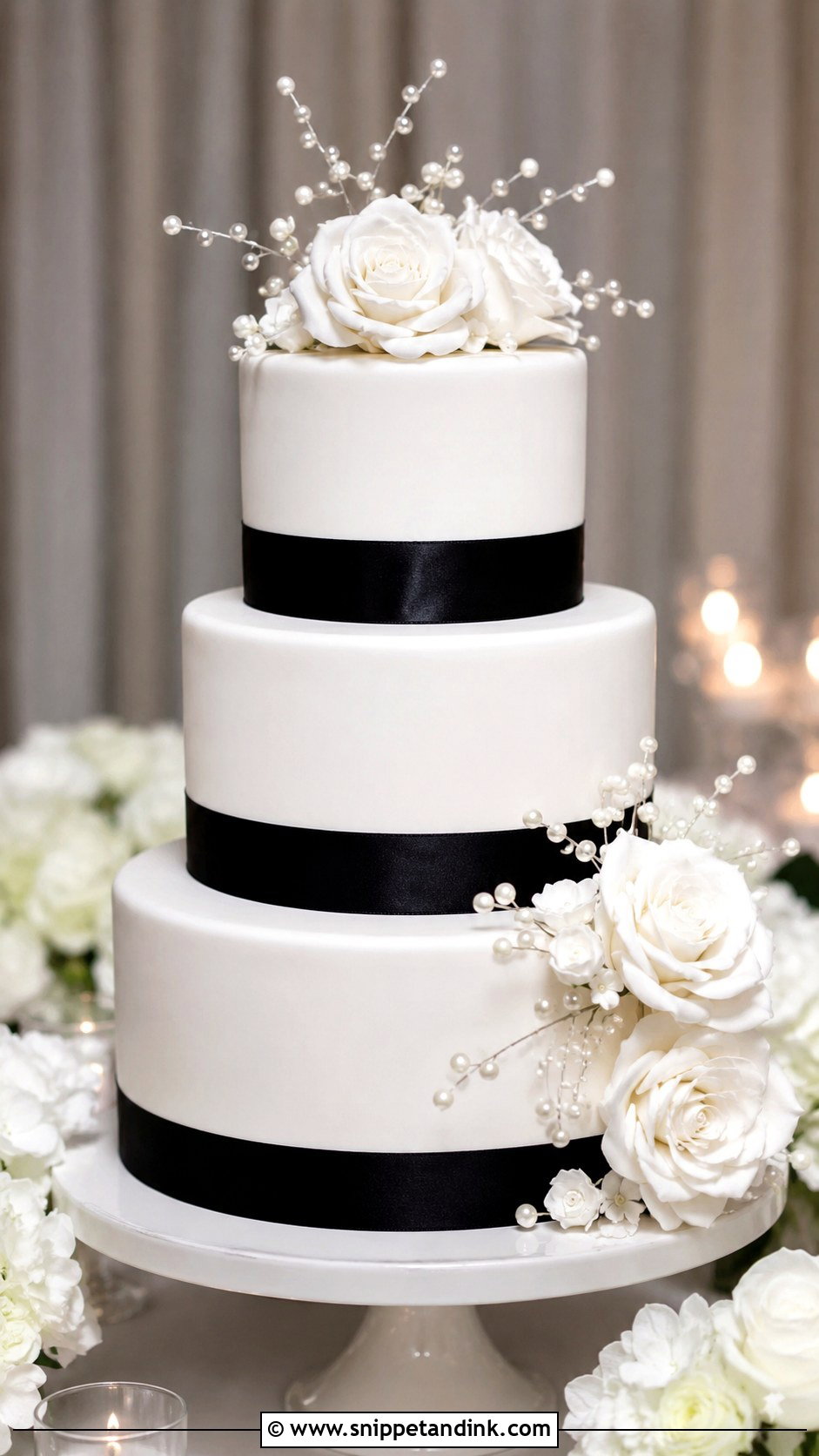
Black and white suits black-tie and evening receptions. The safest way to keep it elegant is mostly white or ivory with black accents: thin ribbon, fine piping, painted details or one black fondant tier. Black fondant scuffs and shows fingerprints easily, and dark crumbs smear across white tiers during cutting, so I put the black tier where it will be cut last or kept. Sugar flowers, pearls or a satin texture soften the contrast. Dark chocolate, vanilla bean or cookies and cream inside follow the theme, and a plain white stand with candles nearby frames it well.
12. Gold Accent Wedding Cake
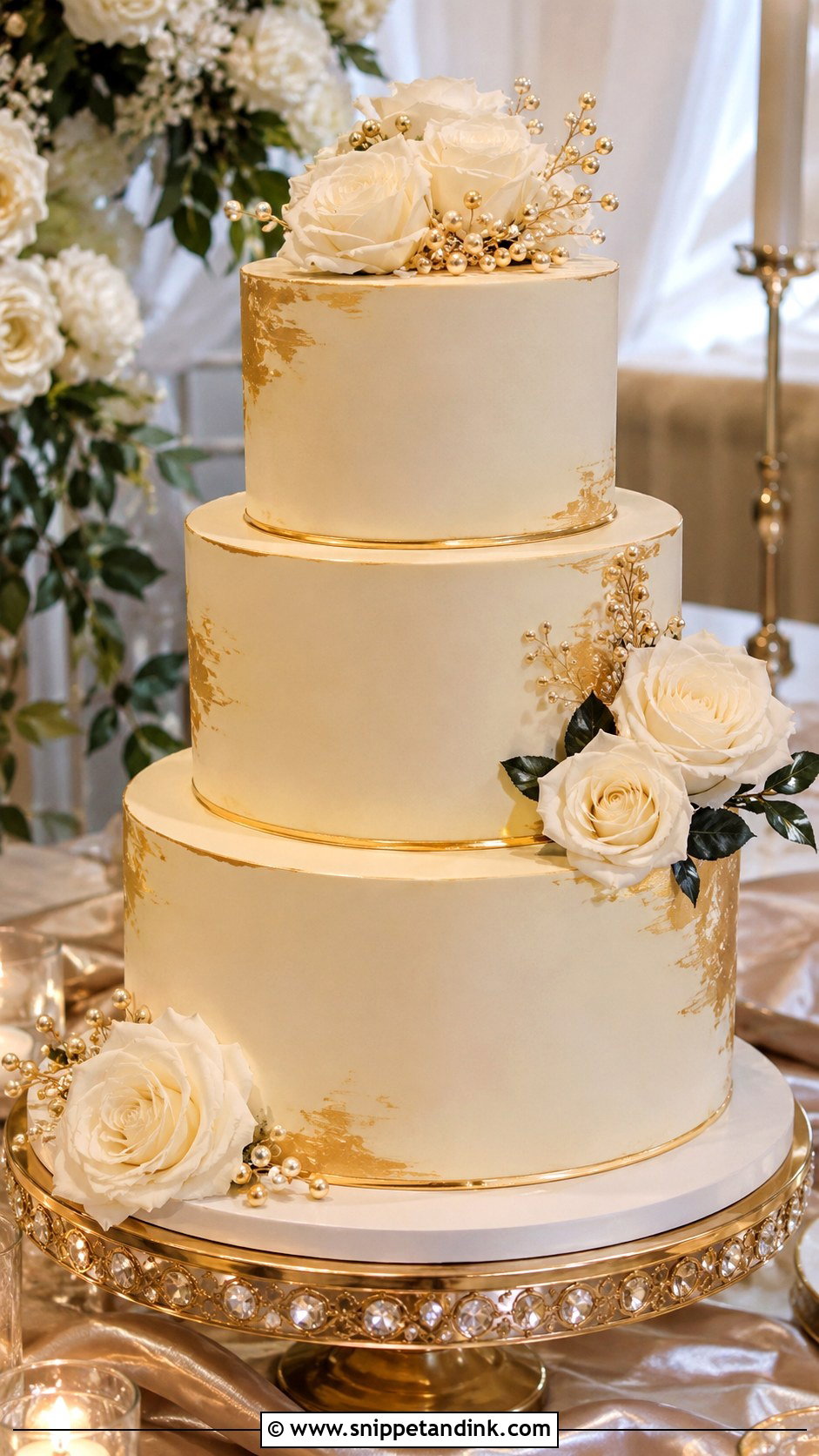
Gold adds warmth without a complicated design. It can be a thin painted edge, leafing, metallic pearls, a brushed texture or a small monogram. Gold leaf is extremely fragile. It tears at a touch and can’t be patched once it’s on, so it goes on last and the cake is only handled from underneath after that. Ivory, champagne, blush and white make good bases, and roses, orchids, sugar flowers or drapes pair well with it. Honey almond, caramel and chocolate hazelnut echo the warm color at an evening reception.
13. Bow Wedding Cake
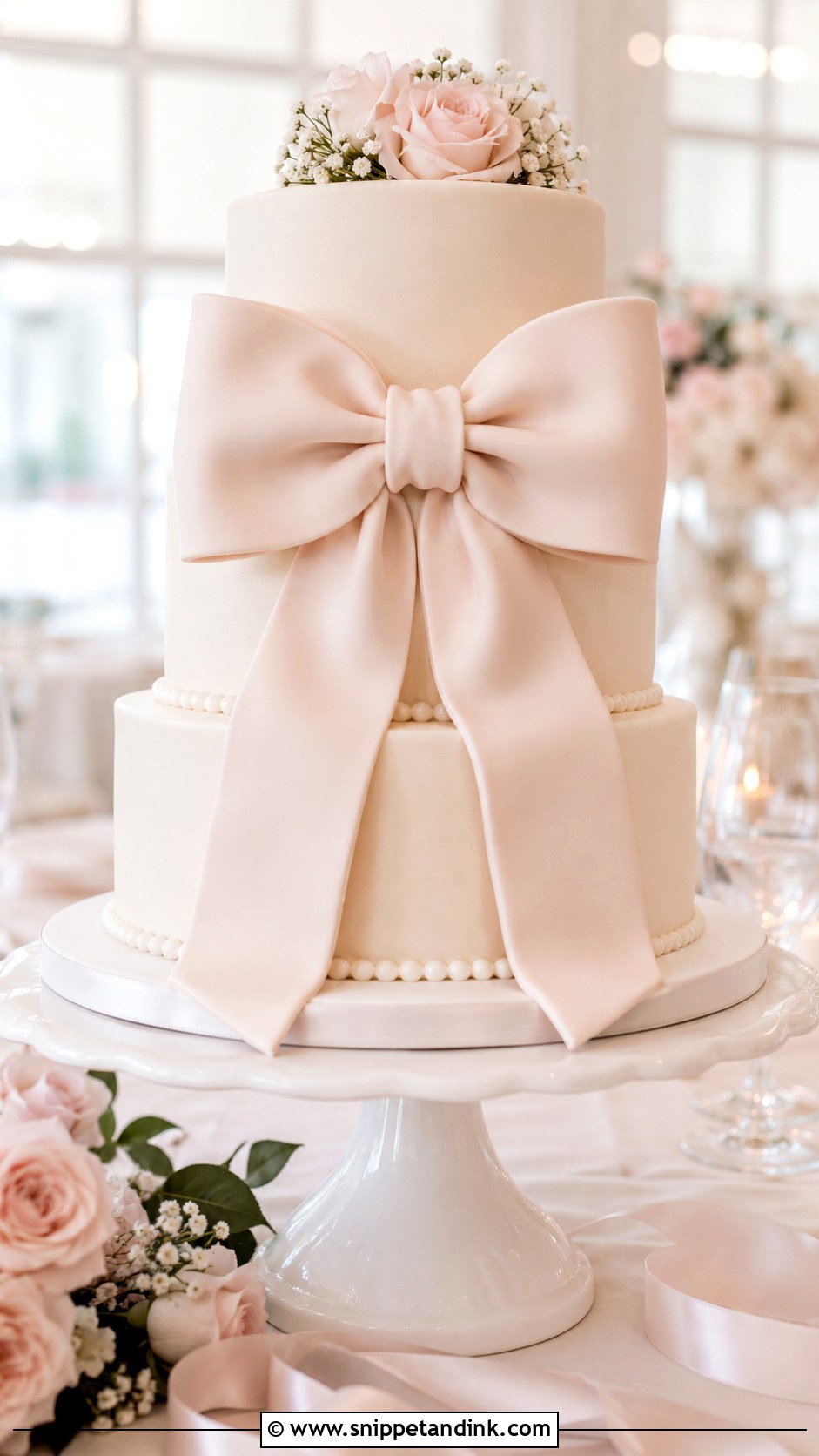
Bows can be fondant, sugar paste, wafer paper or real satin ribbon, and each gives a different finish. Wafer paper makes the lightest, most fabric-like bows, but it curls and wilts in humidity, so it’s a risky choice for a summer tent. One large bow suits a simple two- or three-tier cake; small bows tuck between vintage piping or pearl borders. Keep the palette soft, ivory or pale blue or champagne, and give the bow room. Vanilla, strawberry, almond or lemon fit the sweet mood, and it pairs naturally with a satin gown.
14. Draped Wedding Cake
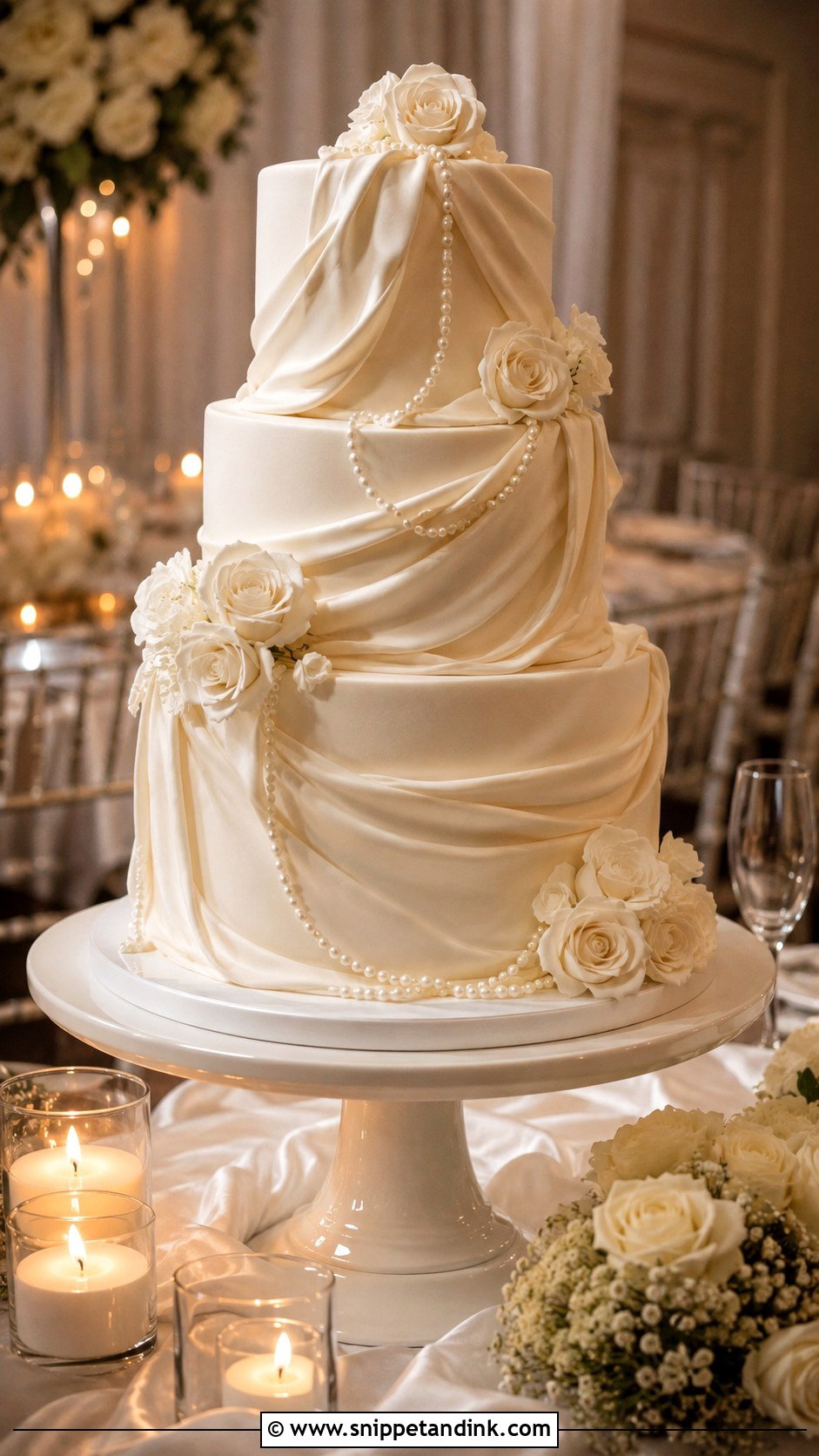
Fondant draping is rolled thin, gathered and laid on to look like folds of silk or chiffon. It can wrap one tier, fall between tiers, or frame a cluster of sugar flowers. Drapes have to go on while the fondant is still pliable, over a firm, chilled cake, so the folds keep their shape instead of slumping. Ivory, white, pearl and champagne let the shadows in each fold show. A few pearls, roses or orchids are enough. Vanilla almond, lemon cream or chocolate with raspberry keep the inside classic, and the effect suits candlelight and linen.
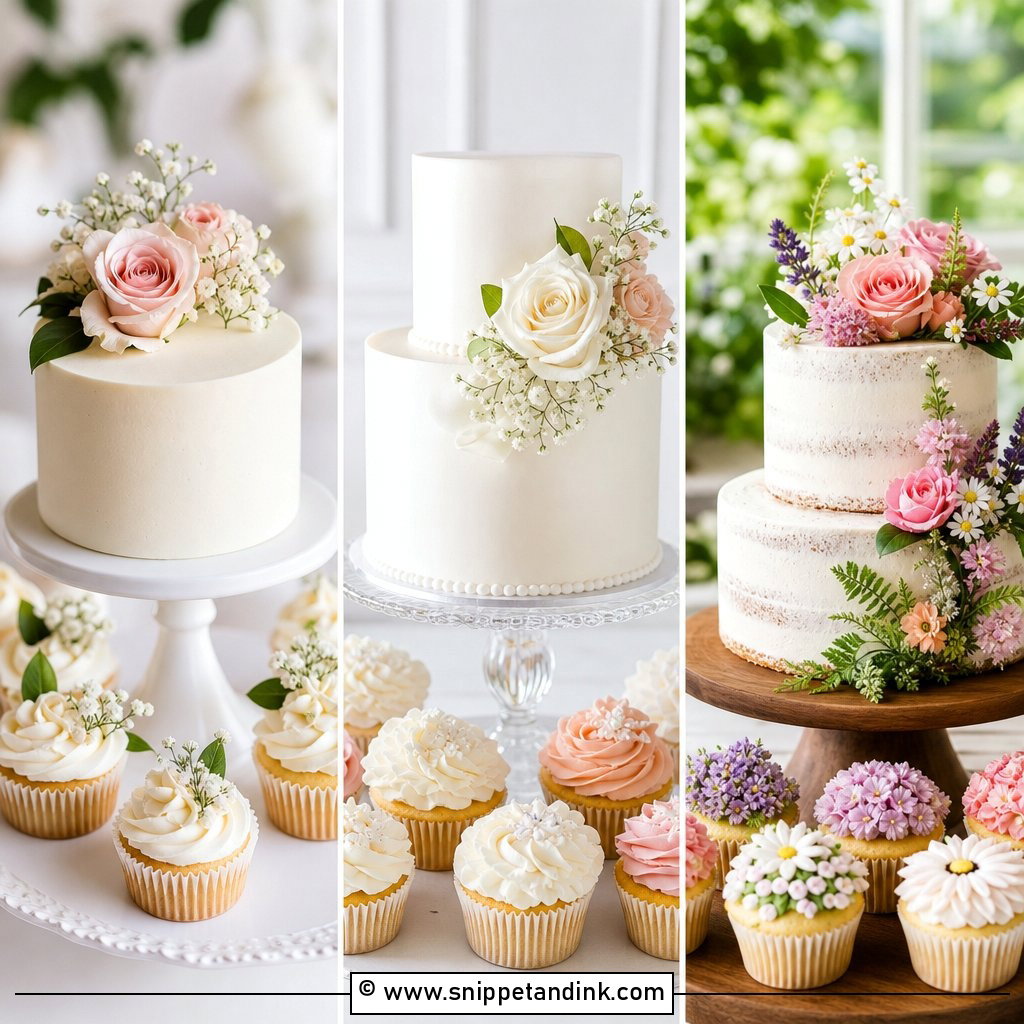
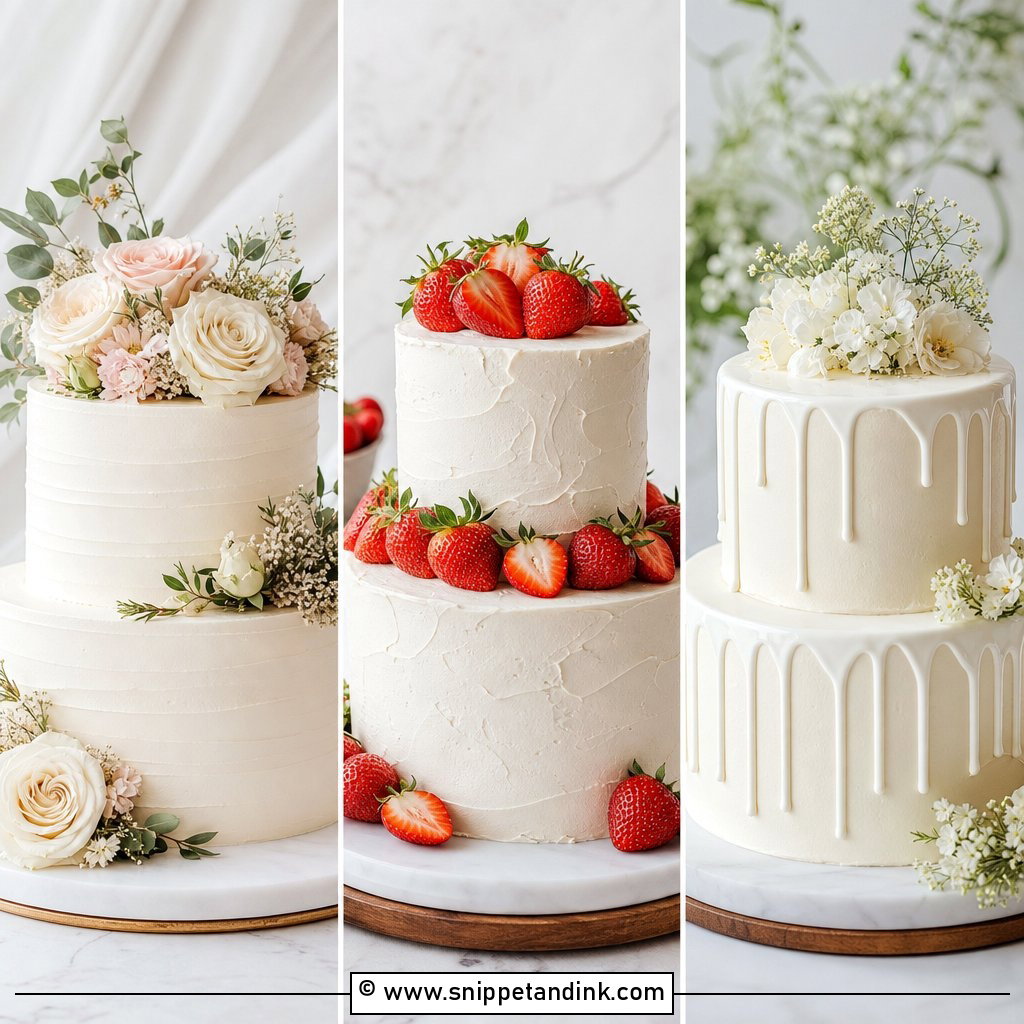
15. Pressed Flower Wedding Cake
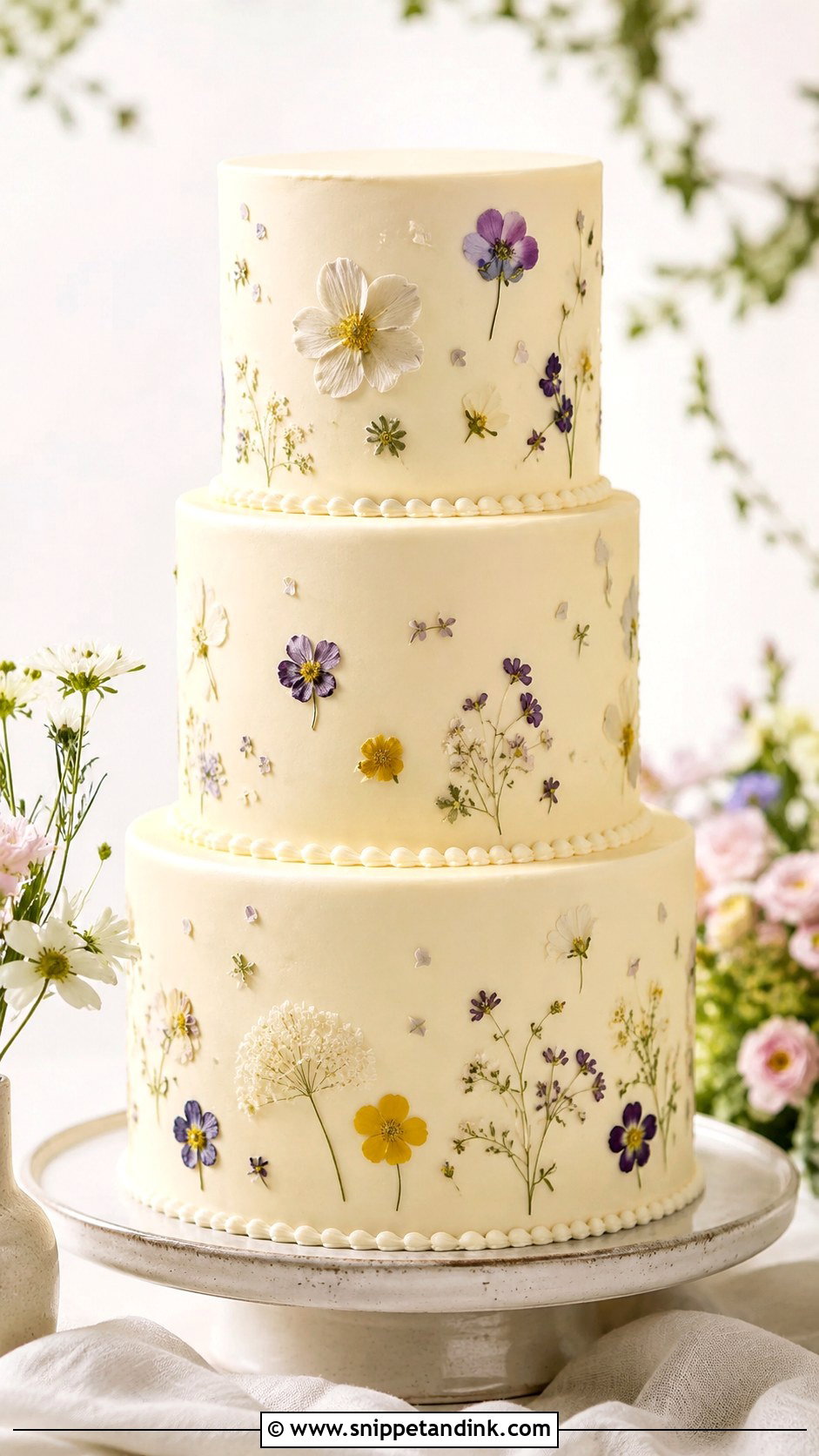
Pressed edible flowers can be scattered lightly, laid as a meadow, or lined up as a border on each tier. The best versions use soft colors and leave plenty of bare frosting. Only flowers grown to be eaten belong on a cake, and a baker who works with them will know exactly where they came from. Smooth buttercream shows them clearly. Spring, summer and outdoor weddings suit this most, with lemon, lavender honey, vanilla, elderflower or berry flavors. Go gently with lavender, though. Too much tastes soapy.
16. Orchid Wedding Cake
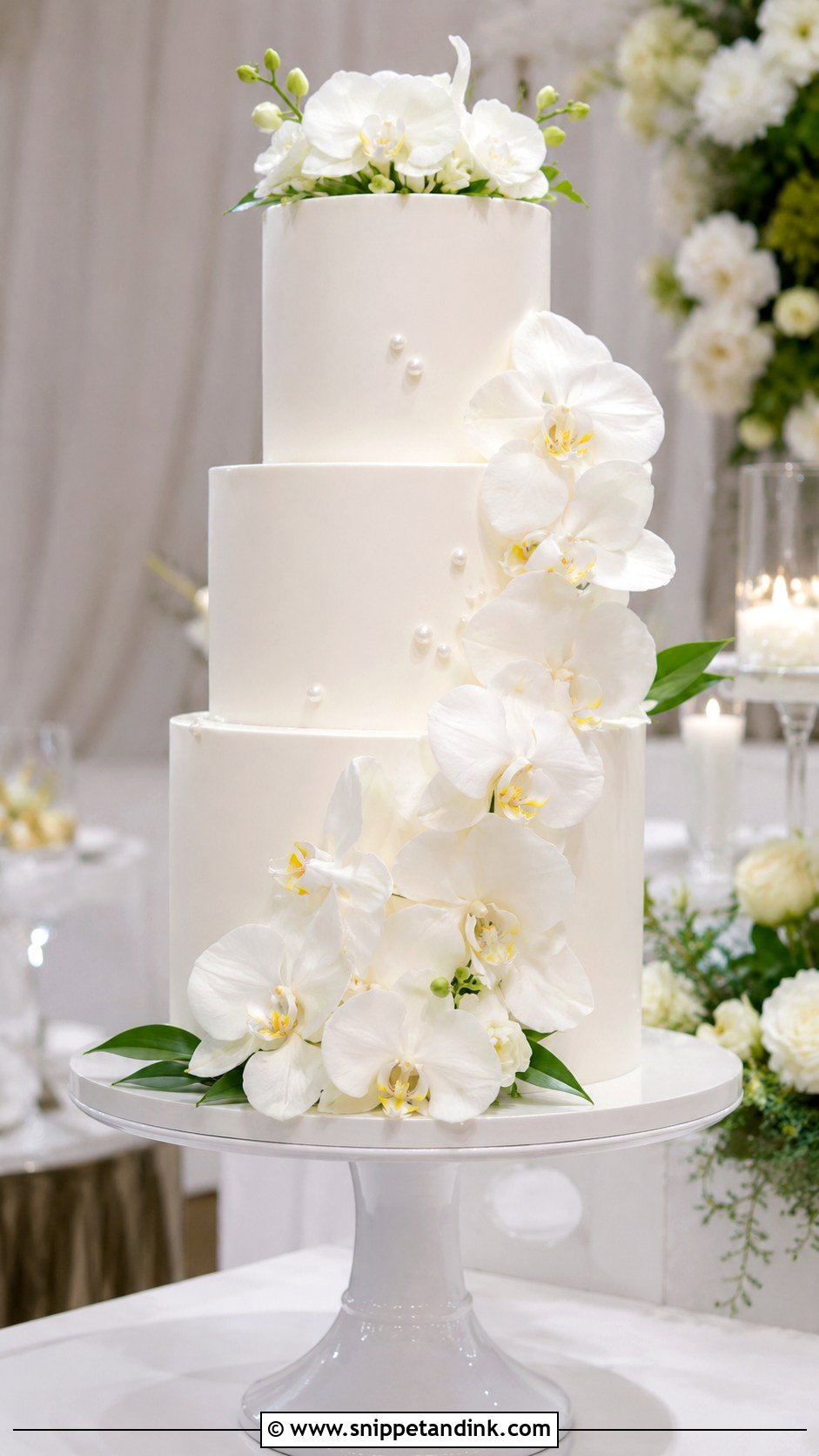
Orchids are sculptural, so even a plain cake looks considered with a few on it. White orchids look bridal, while blush, lavender or pale yellow add soft color. As fresh flowers they need wrapped stems and a barrier like any other bloom, and they’re best added at the venue. They suit tall smooth tiers, minimalist designs and black-and-white cakes, and a cascade adds movement without crowding. Coconut, passion fruit, lemon or white chocolate raspberry fit the look, especially at a hotel or tropical-style wedding.
17. Garden Wedding Cake
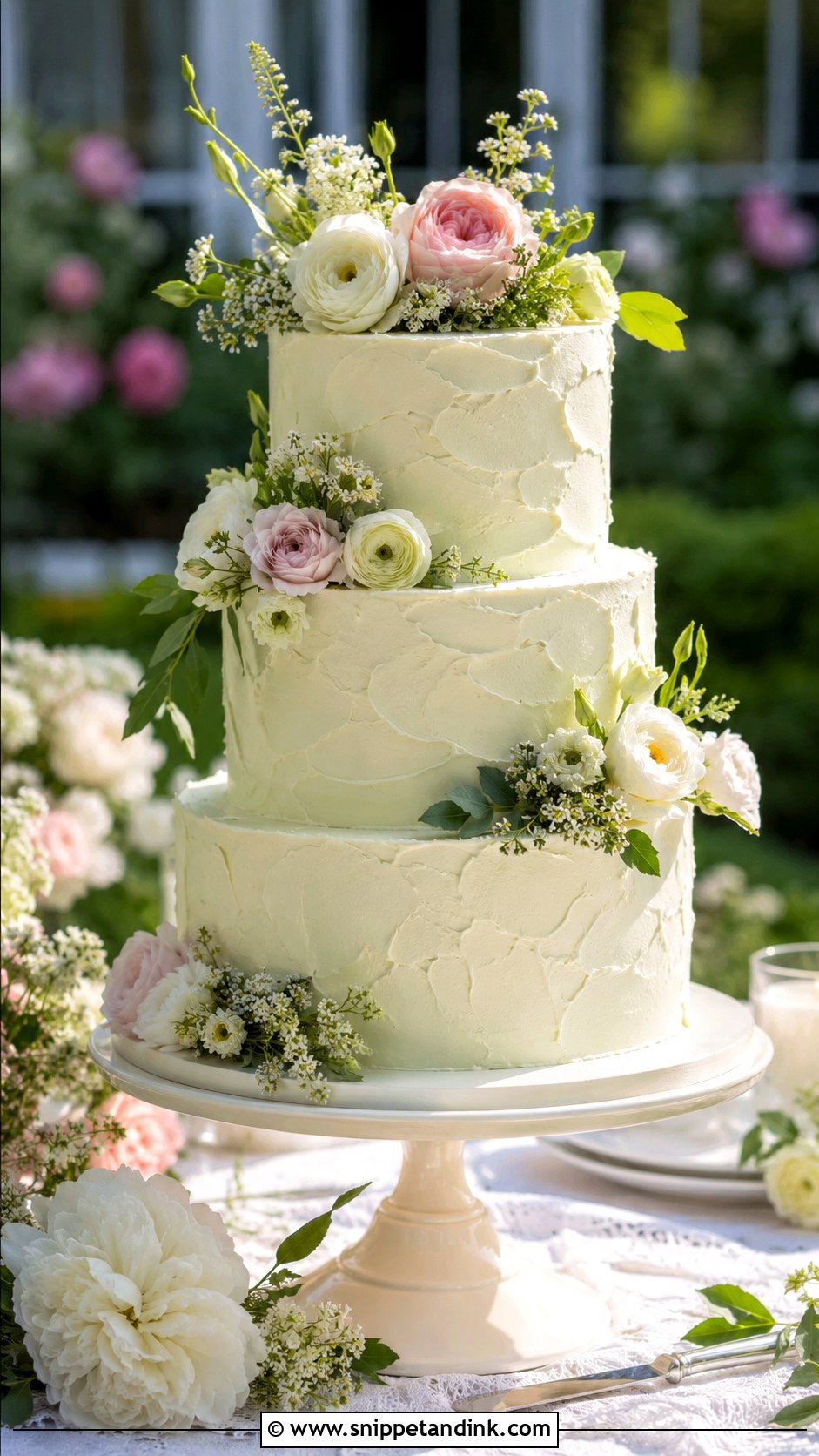
A garden cake looks lush without being formal: soft buttercream, layered flowers, trailing greenery and colors borrowed from the season. Roses, ranunculus, lisianthus and small blossoms work well around the tiers. Let the flowers create the shape and hold back on greenery, which overwhelms a cake fast. Flavors like lemon raspberry, vanilla elderflower, pistachio and strawberry cream suit the mood. At an outdoor ceremony or tented reception, the cake should look as if it grew out of the setting, so I ask the florist for a few stems of the same flowers used on the tables.
18. Marble Wedding Cake
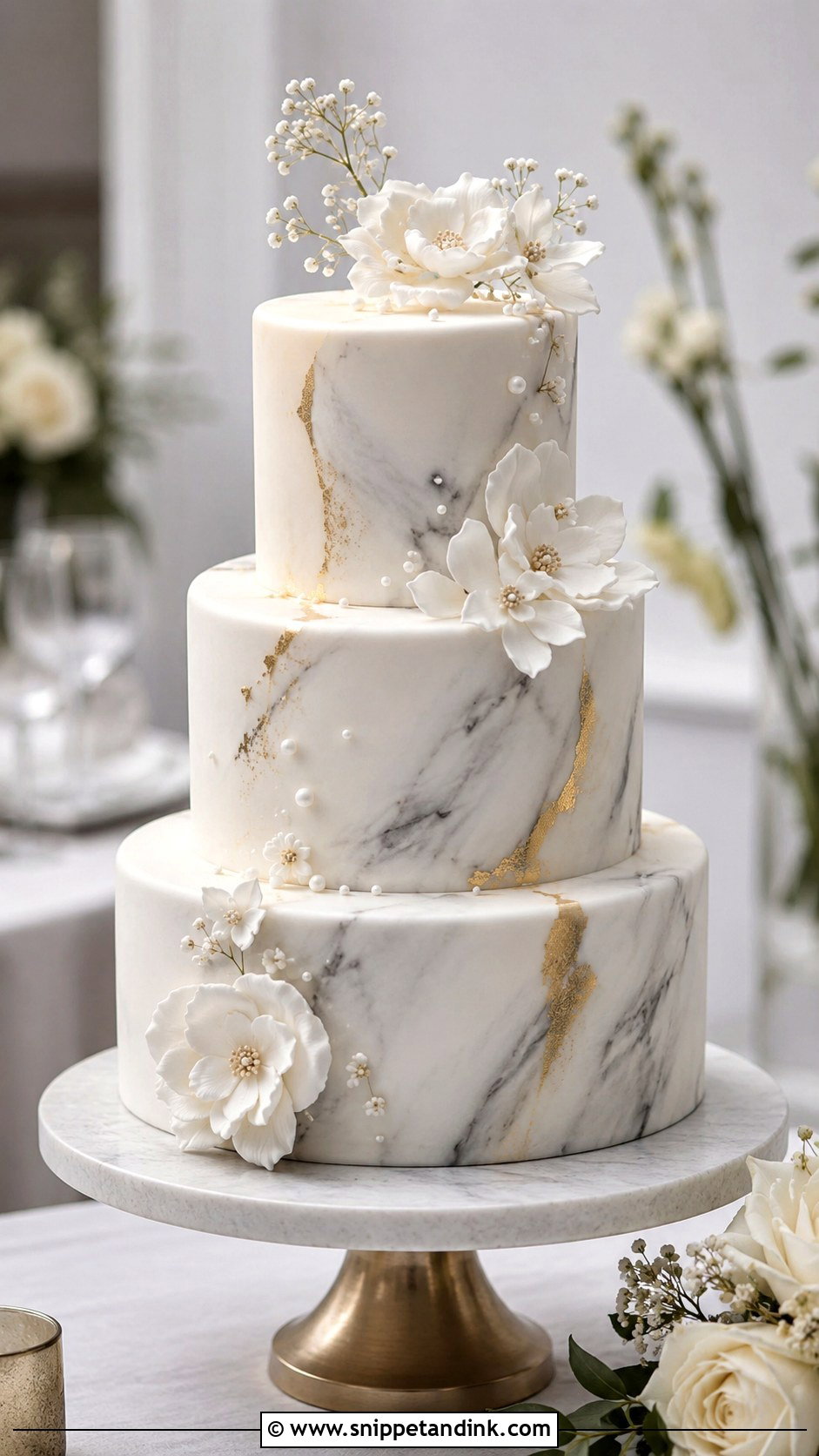
Marbled fondant is made either by twisting tinted fondant into white before rolling or by painting veins on afterward. Rolling gives softer, more natural movement; painting is more controlled. Gray, ivory, blush or beige veining all work, and subtle lines look more refined than bold ones. Small gold accents or white sugar flowers suit it, and it fits minimalist venues and modern ballrooms. Inside, chocolate ganache, mocha, almond or salted caramel match the look. The surface must be very smooth, because any dent breaks the illusion of stone.
19. Square Wedding Cake
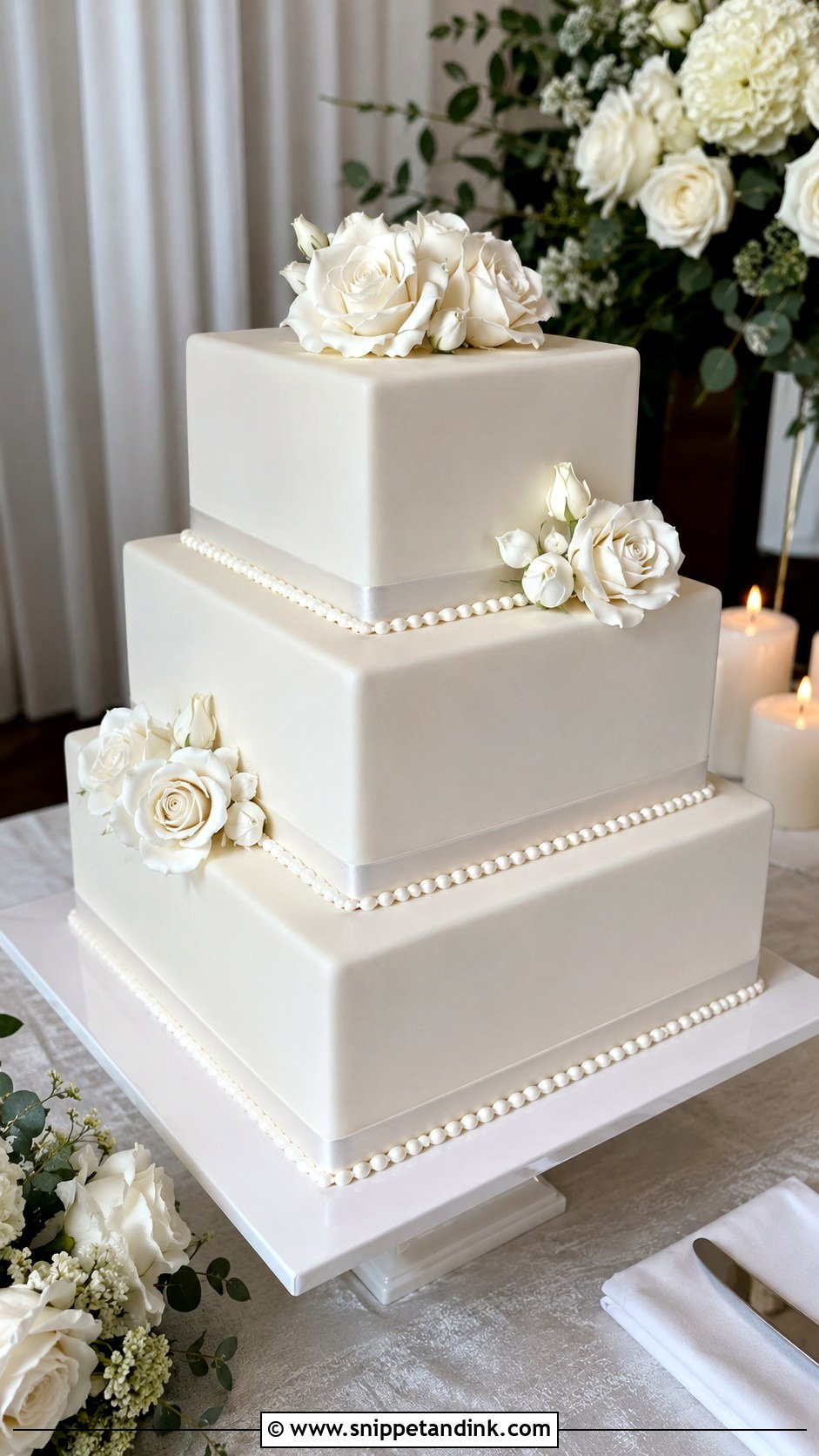
Square tiers feel architectural and formal. They’re also harder to finish than rounds, since all four corners have to stay sharp and the sides flat, so ask to see square cakes your baker has actually made. Smooth fondant, thin piping, satin ribbon or a small cascade of flowers suit the shape. Stack them evenly or turn alternate tiers slightly for a more modern line. White, ivory, champagne and soft blush are safe colors. Vanilla almond, chocolate raspberry, lemon cream and red velvet are popular, and the shape cuts into tidy portions.





20. Single Tier Wedding Cake
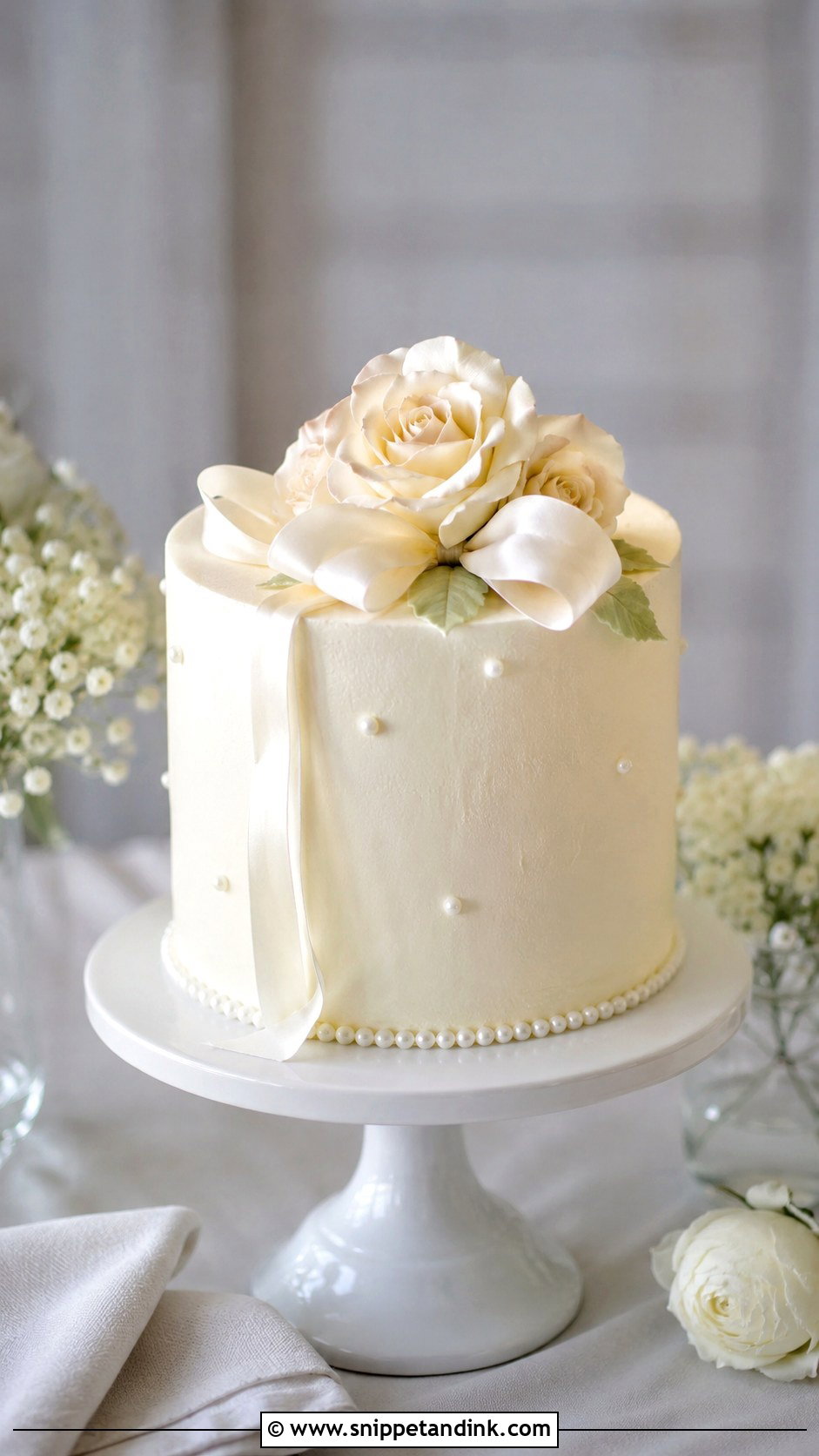
A single tier wedding cake works for intimate weddings, courthouse ceremonies, micro weddings, and couples serving other desserts alongside it. Go taller than a standard tier for presence, then finish it with smooth buttercream, sugar flowers, pearls, pressed petals or a sculptural bow. A small raised stand helps. With fewer servings, you can choose something more personal, such as pistachio, chocolate ganache or lemon raspberry, without worrying about pleasing everyone. Elegance here comes from proportion and finish, not size.
Nut, Gluten and Dairy Questions to Raise Early
Almond, pistachio and hazelnut run all through the cakes above, and that deserves a moment’s thought. A cake made with nut flour or praline can’t be made safe for an allergic guest just by leaving the filling out of one tier, because crumbs travel in a shared kitchen and on a shared knife.
- Tell your baker about serious allergies in the family before the tasting, not after the design is fixed.
- For a guest with a severe allergy, a separately made and boxed slice or a small labelled cake is safer than one nut-free tier on the main cake.
- Gluten-free and dairy-free sponges can be very good, but they’re often denser, so taste them on their own rather than assuming.
- Ask the caterer to label each flavor at the cake table or brief the servers on which tier is which.
What Happens to the Cake After the First Slice
The cutting takes a minute; what follows takes a little planning. The ceremonial cut is usually made in the bottom tier at a spot your baker or coordinator marks, and then the cake goes back to the kitchen to be portioned.
- Sugar flowers, wires and flower picks come off before cutting, so ask someone to set aside any you’d like to keep.
- If you’re keeping the top tier, have a cake box ready on the day. Chill it uncovered until the frosting firms, wrap it tightly in plastic wrap and then foil, and freeze it.
- Light sponges with fresh fruit or cream fillings freeze poorly. Many couples order a small fresh copy of their cake for the first anniversary instead.
- Check whether your venue lets guests take leftover cake home, and who provides the boxes.
Will It Suit Your Venue, Season and Guest List?
Elegant can mean classic, modern, vintage, floral or very simple. What decides it is your venue, your season and the feel of the celebration. A formal ballroom may call for pearls, fondant and gold; a garden may suit buttercream, pressed flowers or soft sugar blooms. A smaller wedding can still have a striking cake with one well-made tier. Before you settle on a final inspiration photo, think about flavor, frosting, weather, how many people you’re serving and where the cake table will stand. A cake that looks right, tastes good and suits the day is the one guests remember.
You'll Like These Ideas:










Leave a Reply