
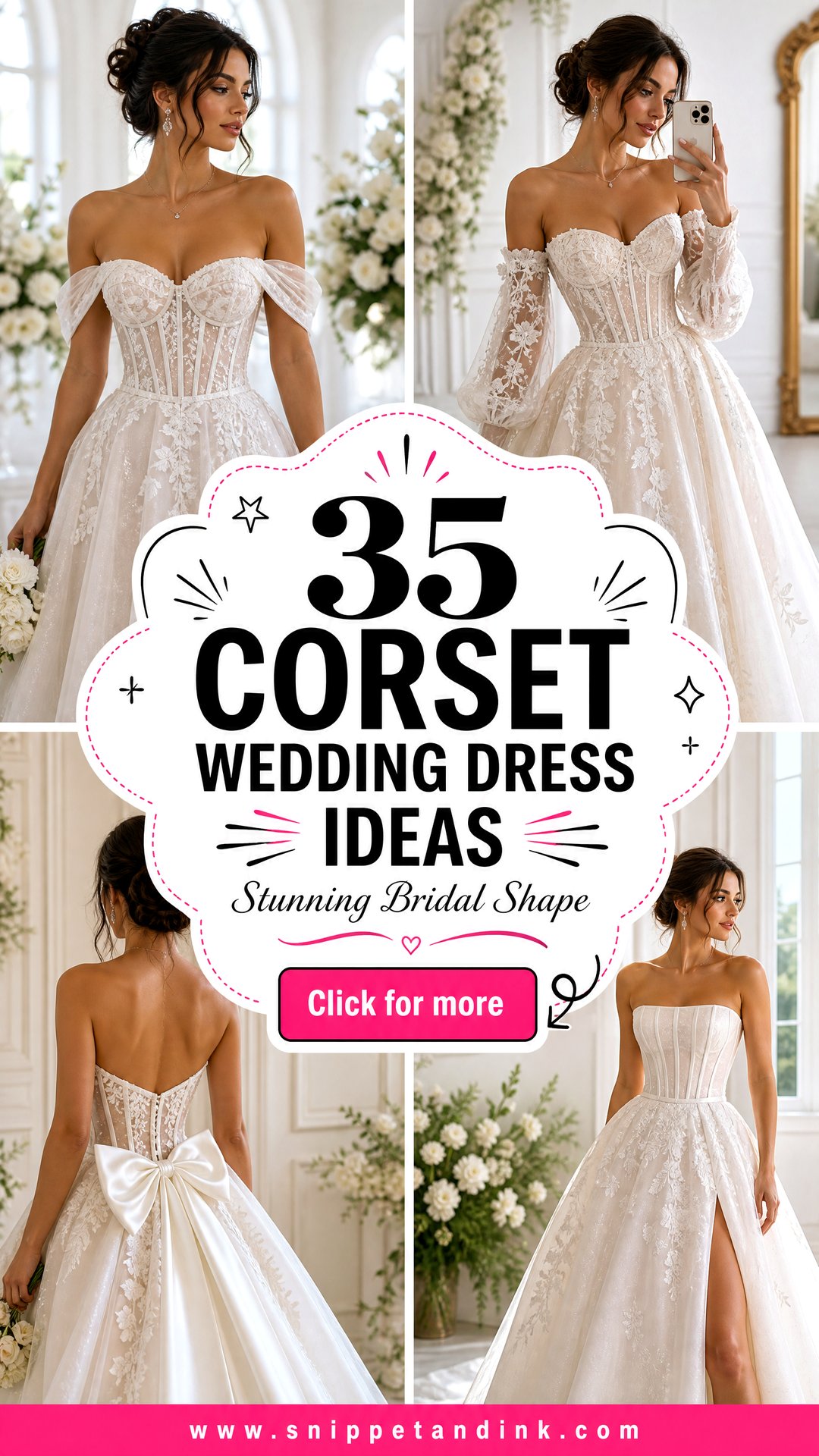
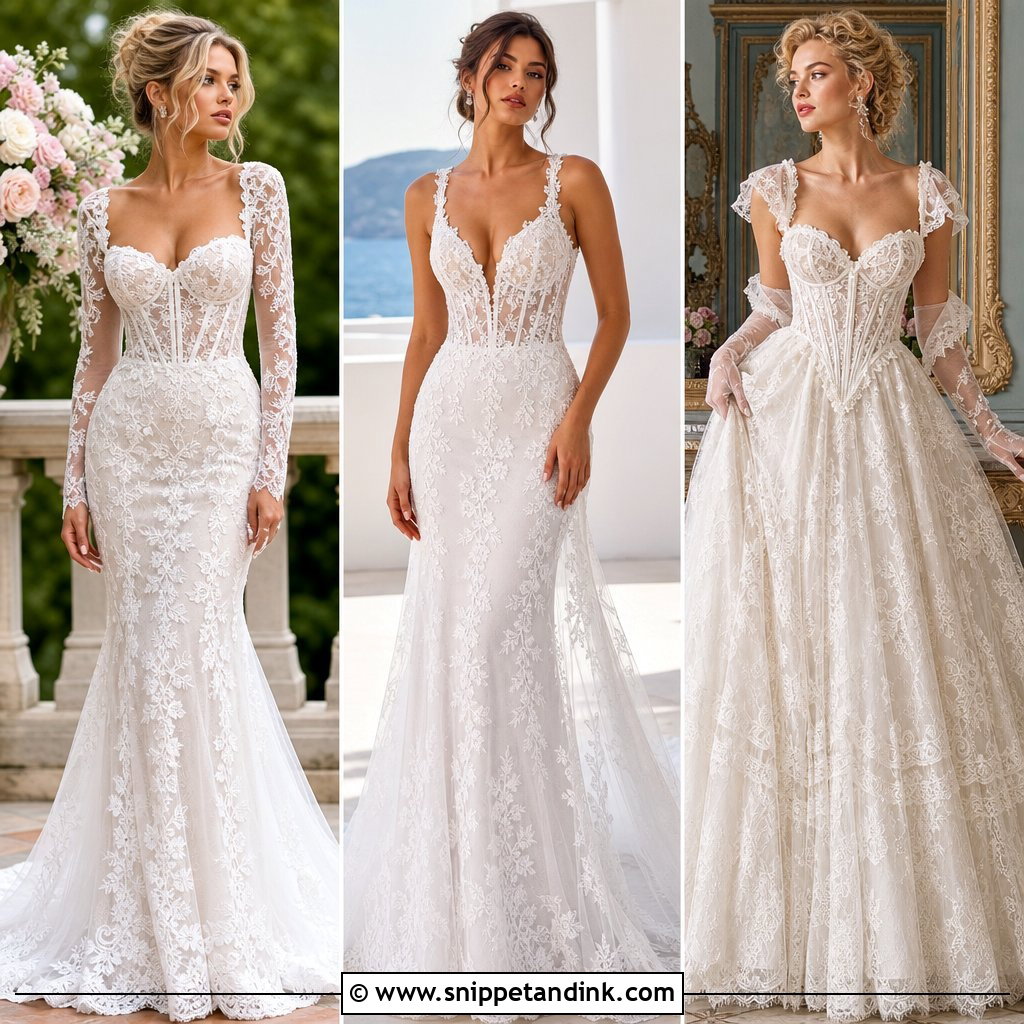
A corset bodice does something no other dress feature can: it holds you. The waist is shaped, the bust is supported, and the whole gown sits where it should from the first photo to the last song. The styles below cover classic satin ball gowns, sheer bodices, lace-up backs, pearl detail and detachable trains, in fabrics from plain crepe to floral lace, tulle and exposed boning, so there’s a version for every venue and aesthetic. Corsets are also the gowns I spend the longest fitting, so I’ve added what I look for inside each one.
What Sits Inside a Well-Built Bridal Corset
Two corset gowns can look identical on the hanger and feel completely different after an hour. The difference is inside, and you’re allowed to turn the bodice inside out at the shop and look.
- The boning. Spiral steel bends with your body and holds its line. Flat plastic boning is lighter and cheaper but can warp with body heat and leave visible ridges.
- A strength layer. Good corsets have a firm, tightly woven fabric under the fashion fabric. Without it, the boning does all the work and the bodice wrinkles.
- A waist tape. A firm band stitched inside at the waist takes the strain of the skirt so the bodice doesn’t stretch.
- Built-in cups. Most corset gowns don’t need a separate bra. Sewn-in cups shaped to you look smoother than any strapless bra.
If the inside is mostly lightweight lining with a few plastic strips, I’d expect fit problems later. That doesn’t rule the dress out, but budget for a seamstress to reinforce it.
1. Satin Corset Ball Gown Wedding Dress
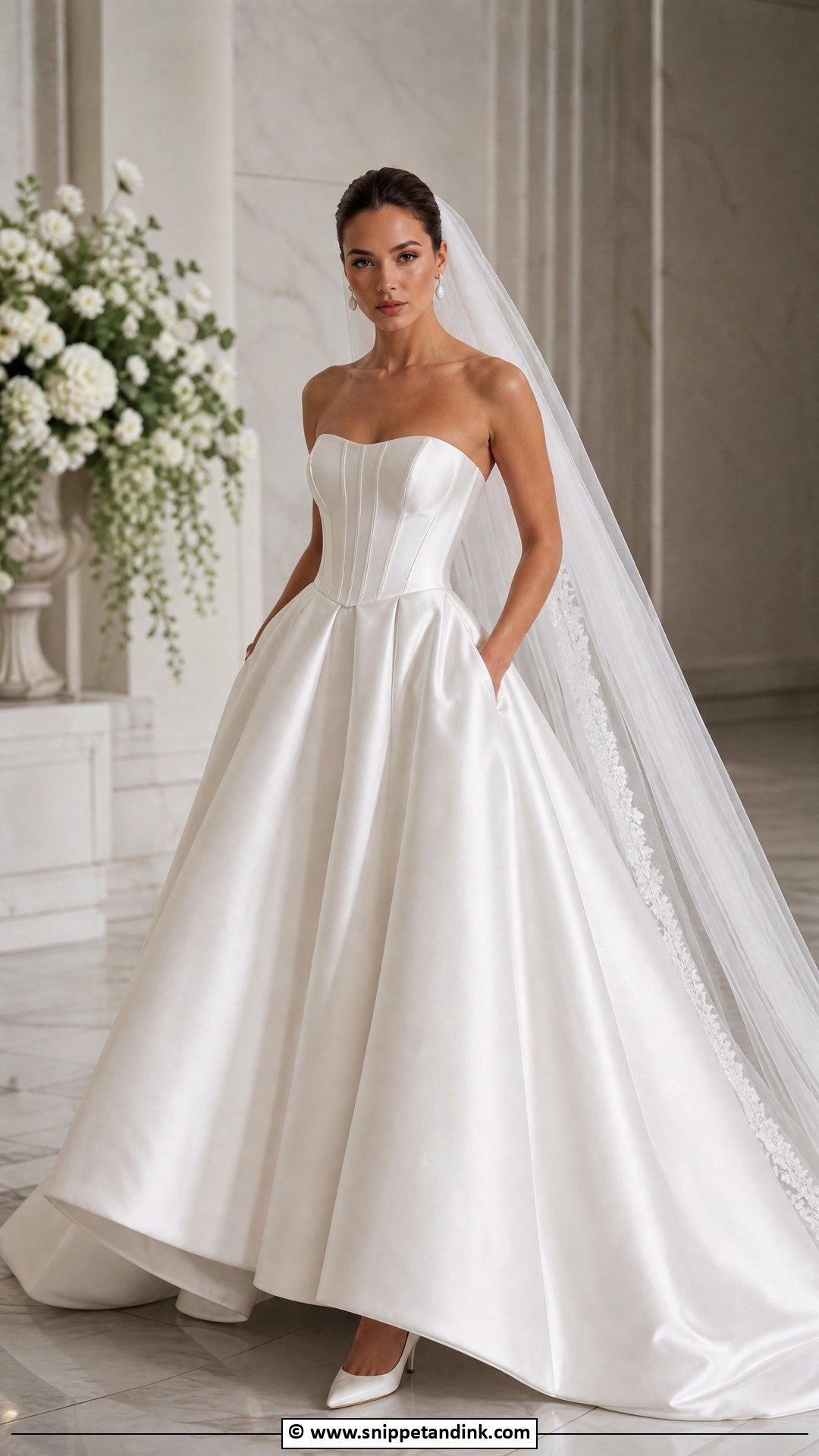
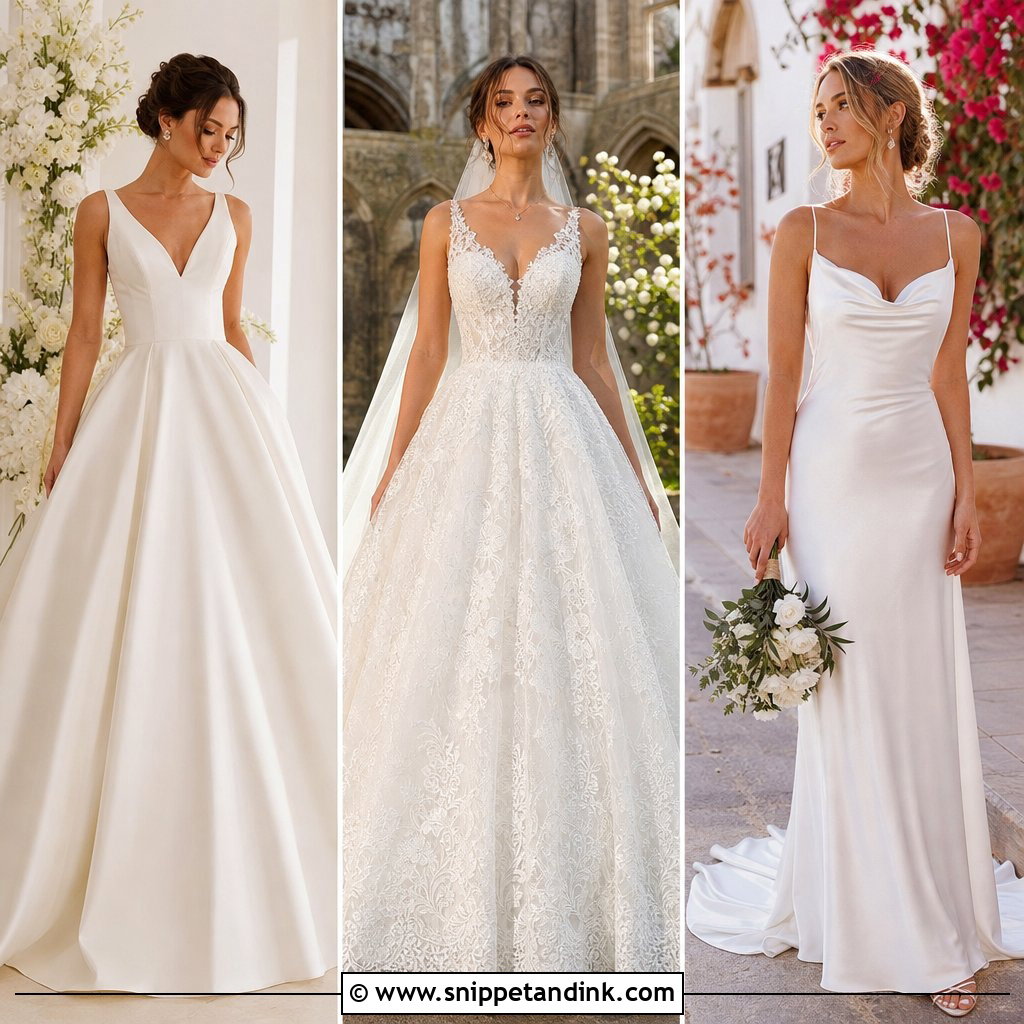
Satin and a full skirt are the corset in its most classic form. The structured bodice carries the volume of the skirt without needing extra detail. A strapless or sweetheart top keeps the neckline clean. Heavy satin skirts pull downward on the bodice, so the waist fit has to be snug enough to carry that weight. For a longer-looking torso, a basque waist drops the point and makes the skirt fall more dramatically. Pearl drops and a cathedral veil finish it.
2. Lace Corset A Line Wedding Dress
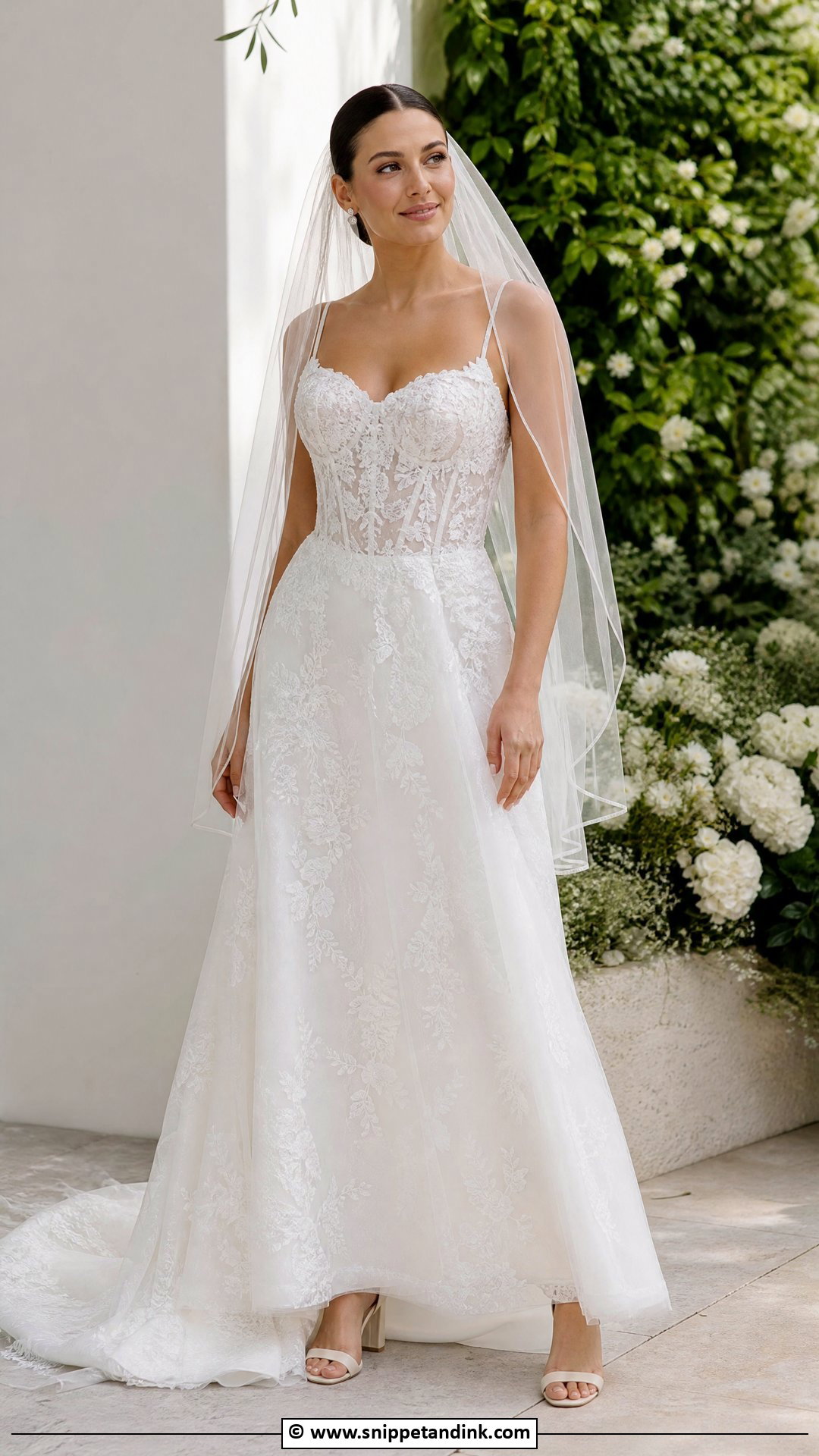
Lace over a corset softens all that structure. The fitted bodice supports you while the A line skirt falls away from the hips, so you can walk, sit and dance comfortably. Floral lace over a light lining feels airy; an opaque lining feels classic. In a lace corset, I check that the boning channels don’t show through as ridges, because lace sits directly over them. Soft waves and a fingertip veil keep it romantic, and a lighter train suits gardens.
3. Basque Waist Corset Wedding Dress
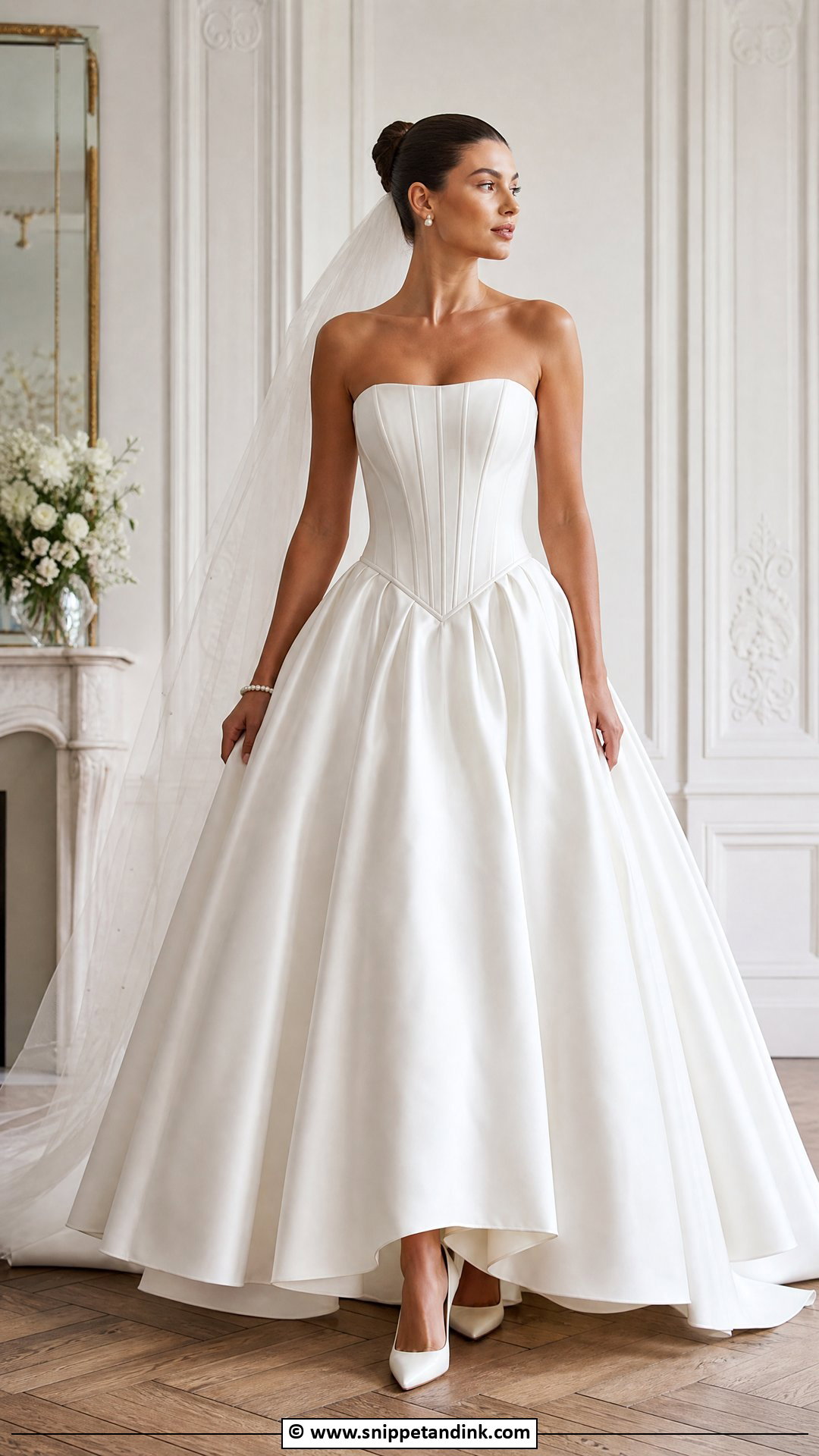
The basque waist dips into a soft V at the front, lengthening the torso and narrowing the waist visually. It looks best on brides with a shorter body or those who want a princess shape that feels current. A full skirt is the classic pairing; a slim A-line makes it modern. The point of the V should land just below your natural waist. Too low and it cuts the leg line. Keep the rest clean: sleek bun, plain veil, pointed pumps.
4. Strapless Corset Wedding Dress
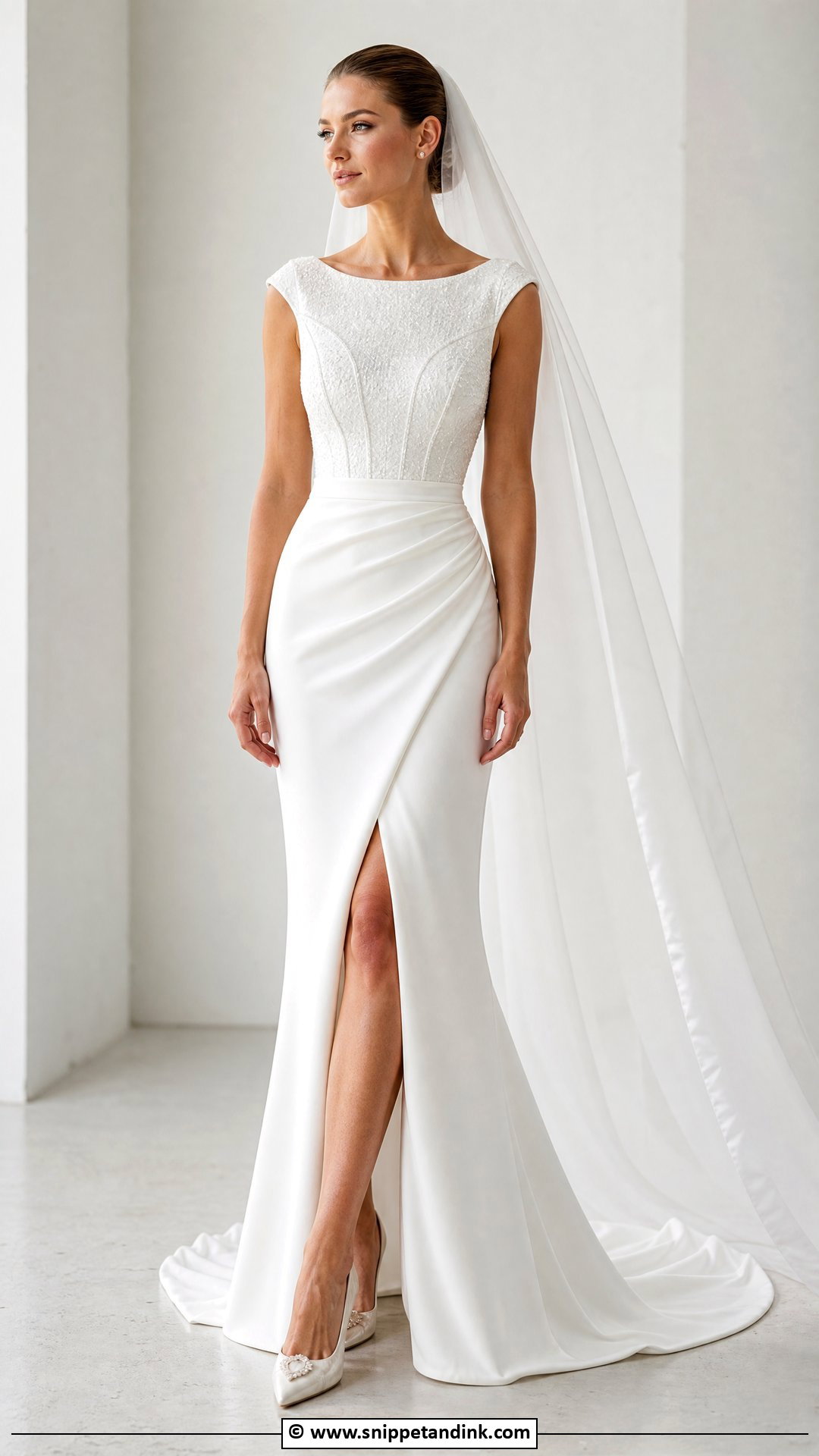
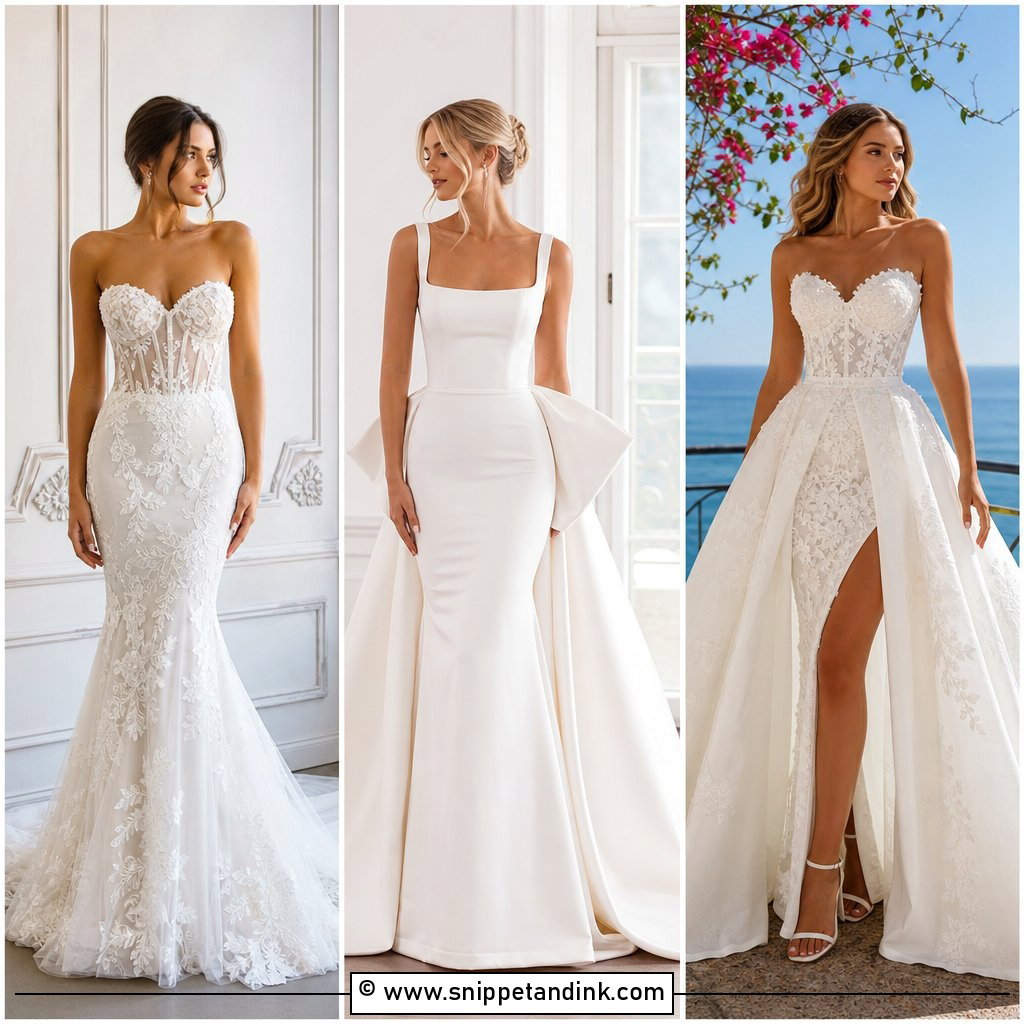
Strapless corsets rely completely on the waist to stay up. When a bride tells me her strapless dress keeps slipping, the fix is almost always taking in the waist, not the bust. Sweetheart, scoop or straight necklines all work. Raise your arms, bend forward and twist at the fitting; if the top edge gapes or drops, it needs adjustment. Minimal jewelry suits most strapless corsets.
5. Off Shoulder Corset Wedding Dress
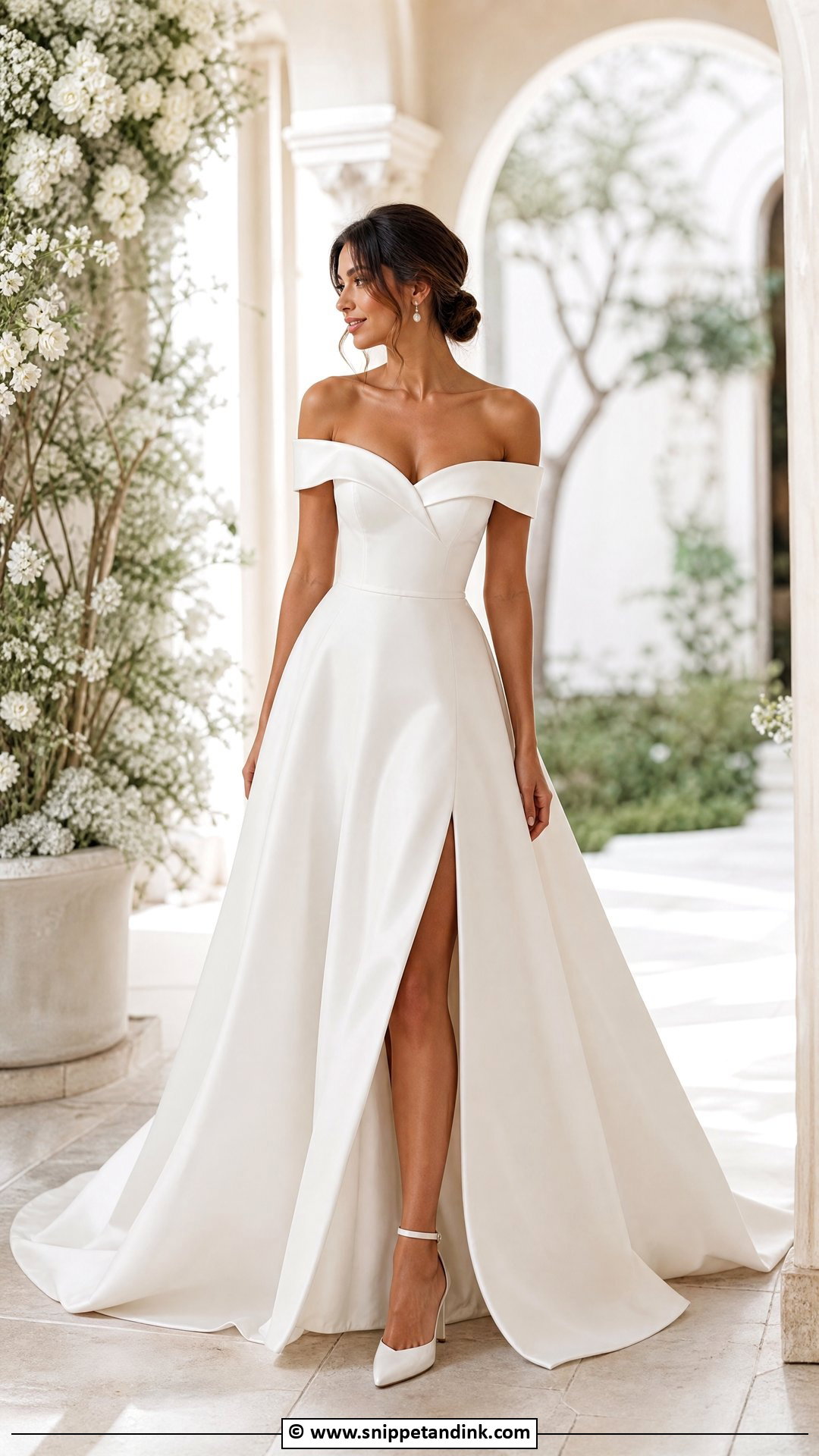
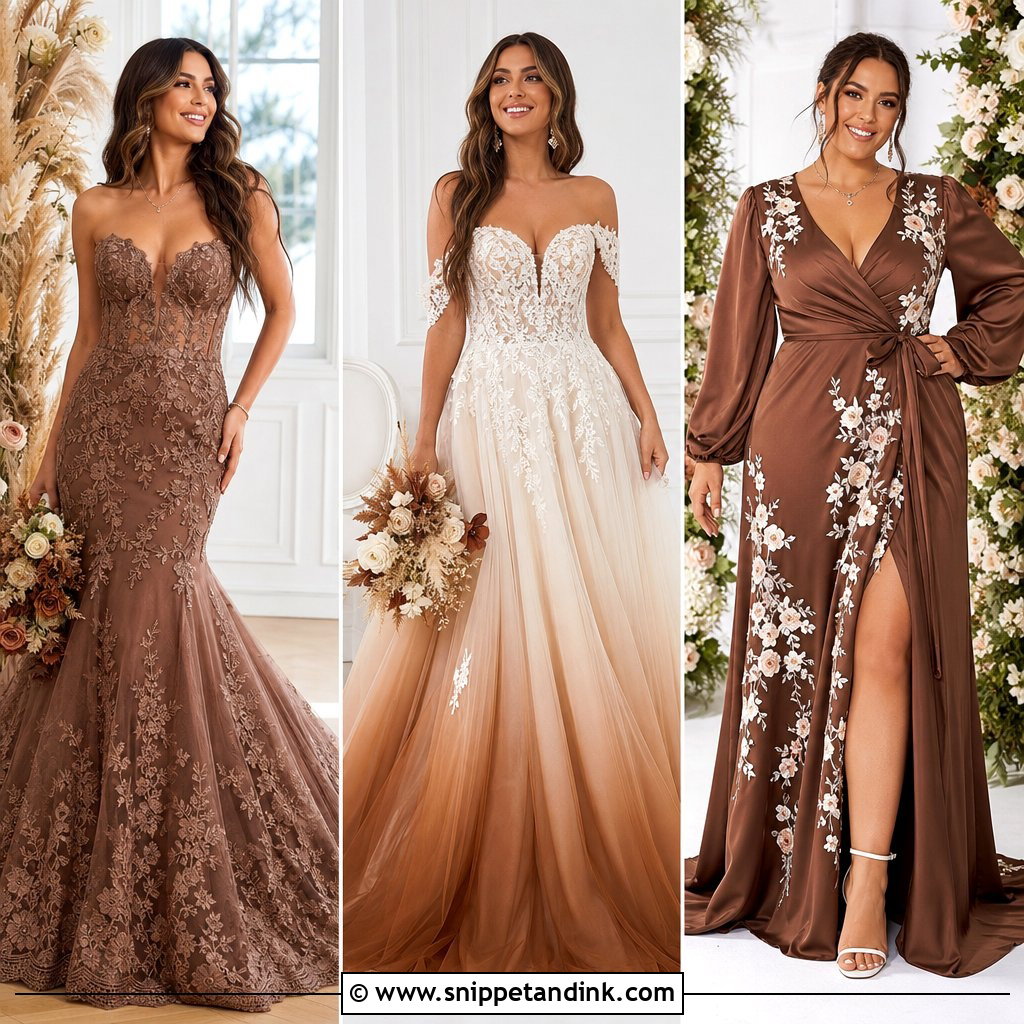
Off shoulder sleeves soften a structured corset and frame the shoulders. Satin, lace, tulle or mikado all work; full skirts suit formal rooms and lace sleeves with an A-line suit softer settings. The sleeve band needs anchoring to the bodice and some elastic inside, or it creeps up toward the shoulder every time you raise your arms. A low bun and pearl earrings keep the neckline open.
6. Long Sleeve Corset Wedding Dress
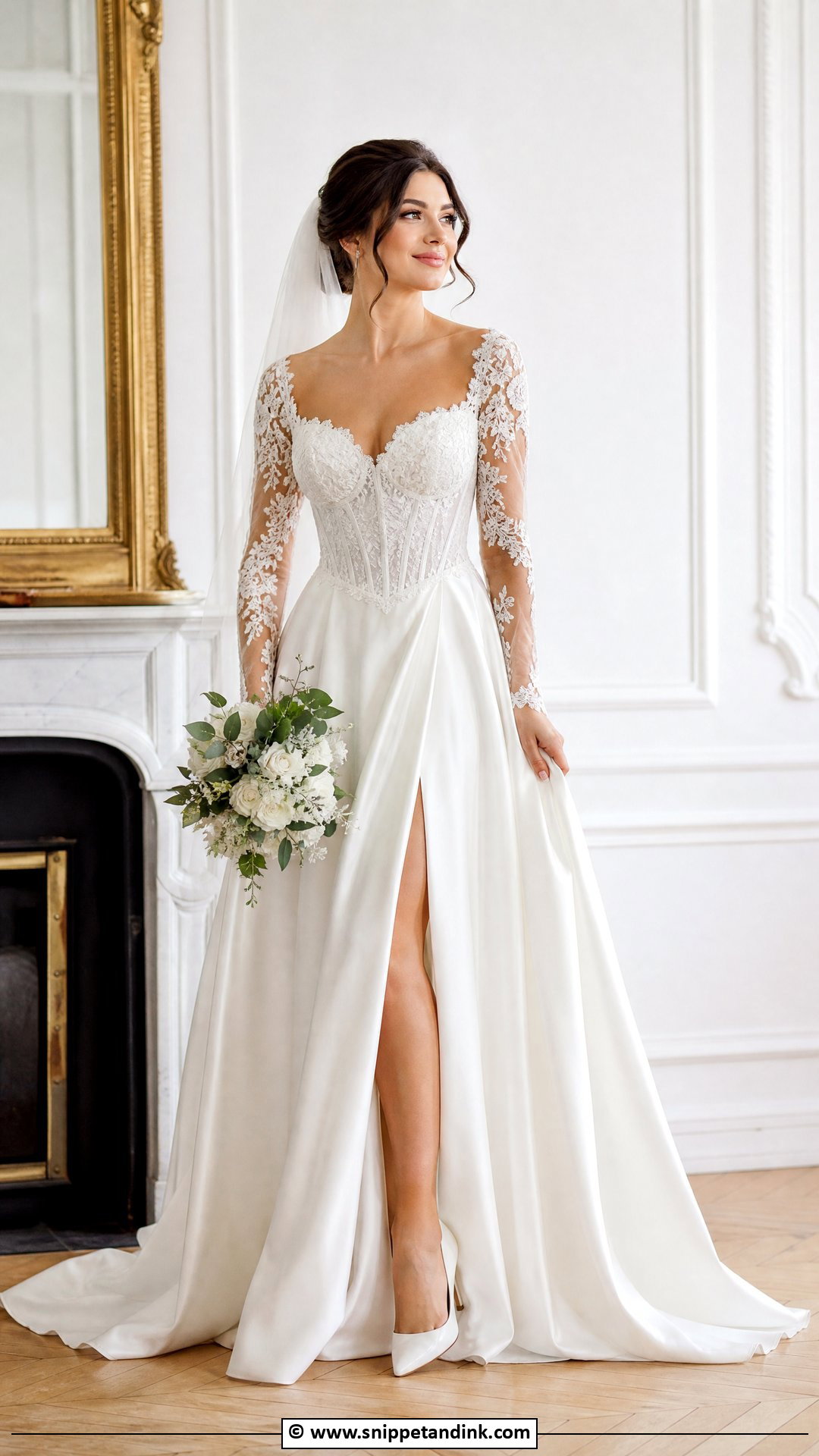
Long sleeves add coverage while the corset keeps the waist visible, so the gown never feels buttoned-up. Sheer lace sleeves read delicate; satin or crepe sleeves look formal. I test sleeves with the arms crossed in front of the body, since a tight sleeve pulls the corset back seams under strain. Lace appliqué or illusion fabric keeps the sleeve light. Cooler seasons suit it well.
7. Sheer Corset Wedding Dress
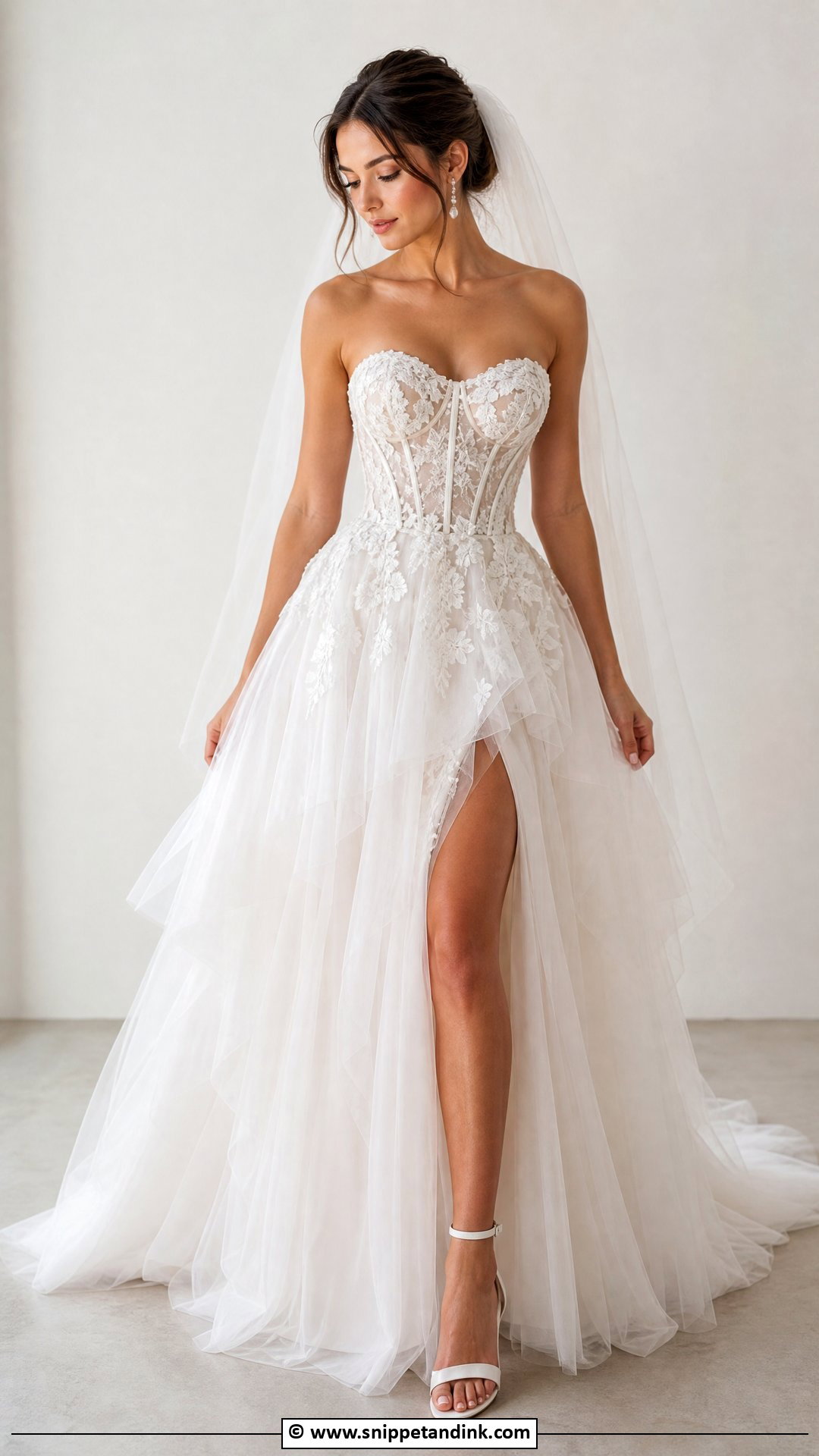
Sheer corsets show the structure on purpose. The difference between fashion-forward and exposed is in the lining: supportive cups, well-placed lace or appliqué and, where wanted, a skin-matched layer underneath. I always bring a few lining shades to the fitting and test them in daylight. A simple skirt and delicate earrings stop the bodice competing with accessories. Layered tulle or floral embroidery pair naturally with it.
8. Exposed Boning Corset Wedding Dress
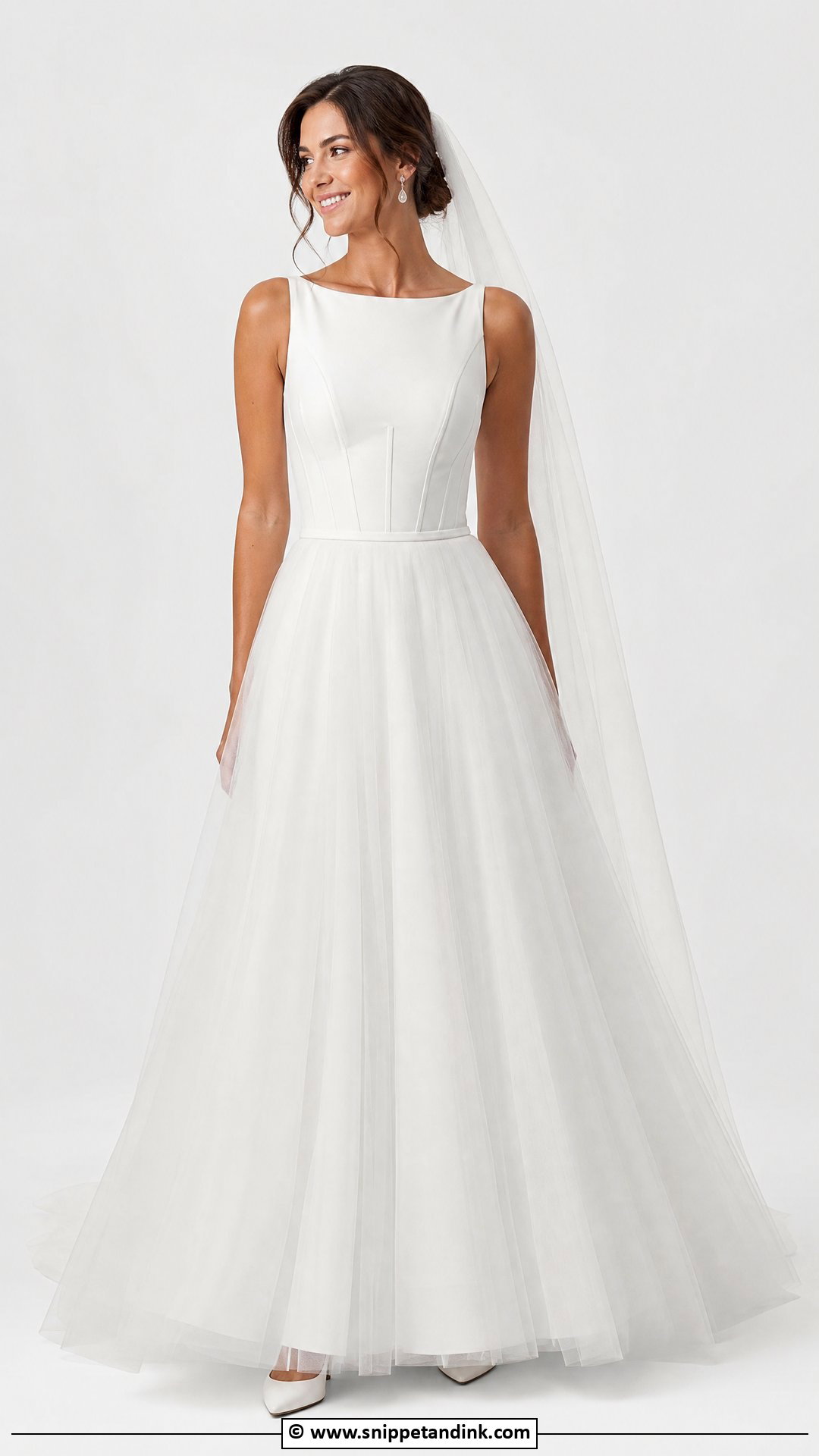
Exposed boning makes the construction part of the look. The vertical lines sharpen the waist and give the dress a modern edge, softened by tulle, lace, organza or satin. Every bone has to lie dead straight and flat; a single bowed bone draws the eye immediately. If the bodice is busy, keep the skirt plain. Small earrings and a clean veil suit it.
9. Floral Lace Corset Wedding Dress
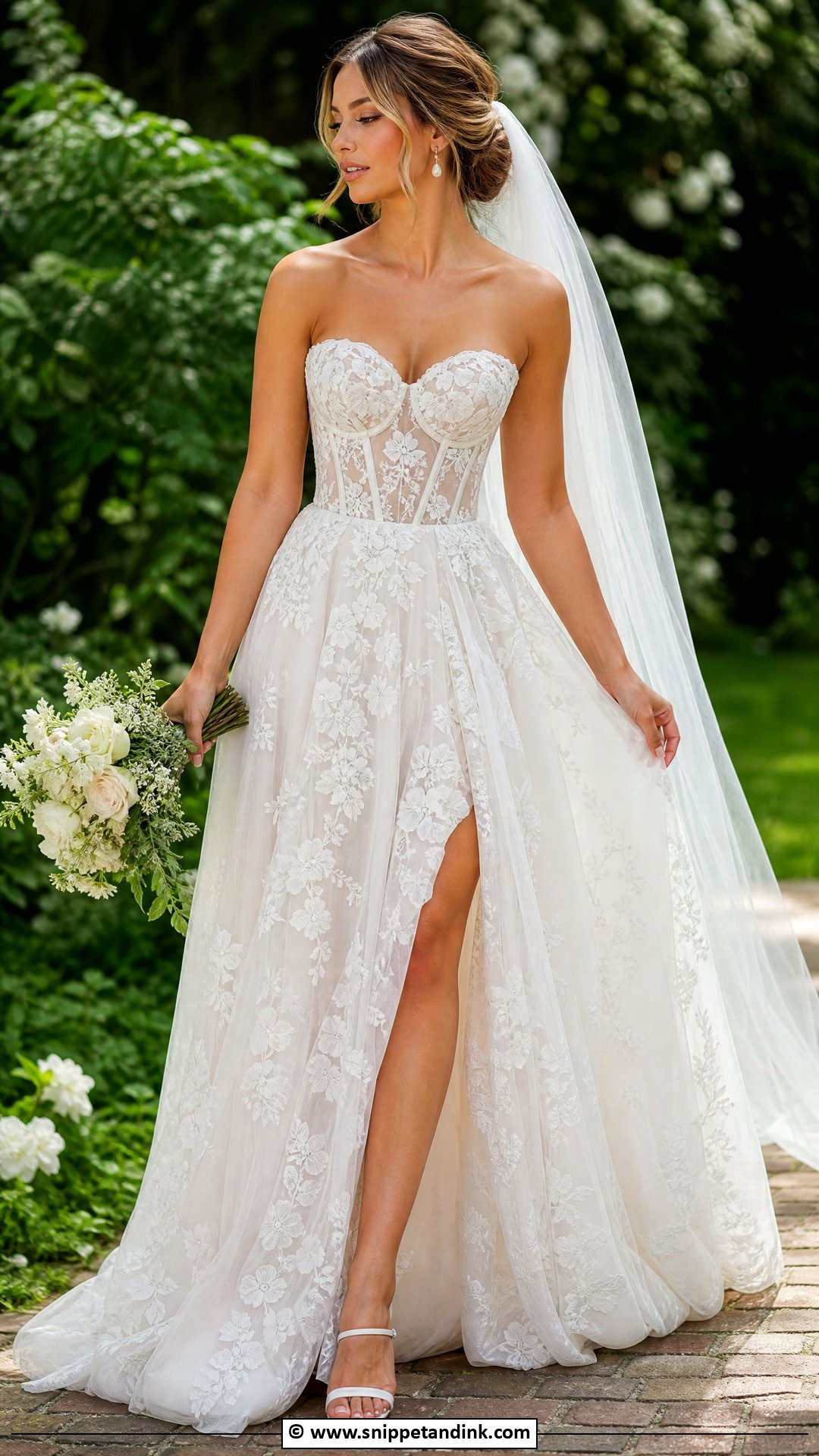
Floral lace brings texture and softness over a corset’s shape. Large motifs feel modern; small, tight patterns feel vintage. For a garden, I’d choose a flowing skirt with lace trailing down from the bodice; for a ballroom, heavier lace and a longer train. Good bridal lace is often hand-placed so motifs meet across the corset seams, which is worth checking up close. A tulle veil and pearl earrings complete it.
10. Minimal Corset Wedding Dress
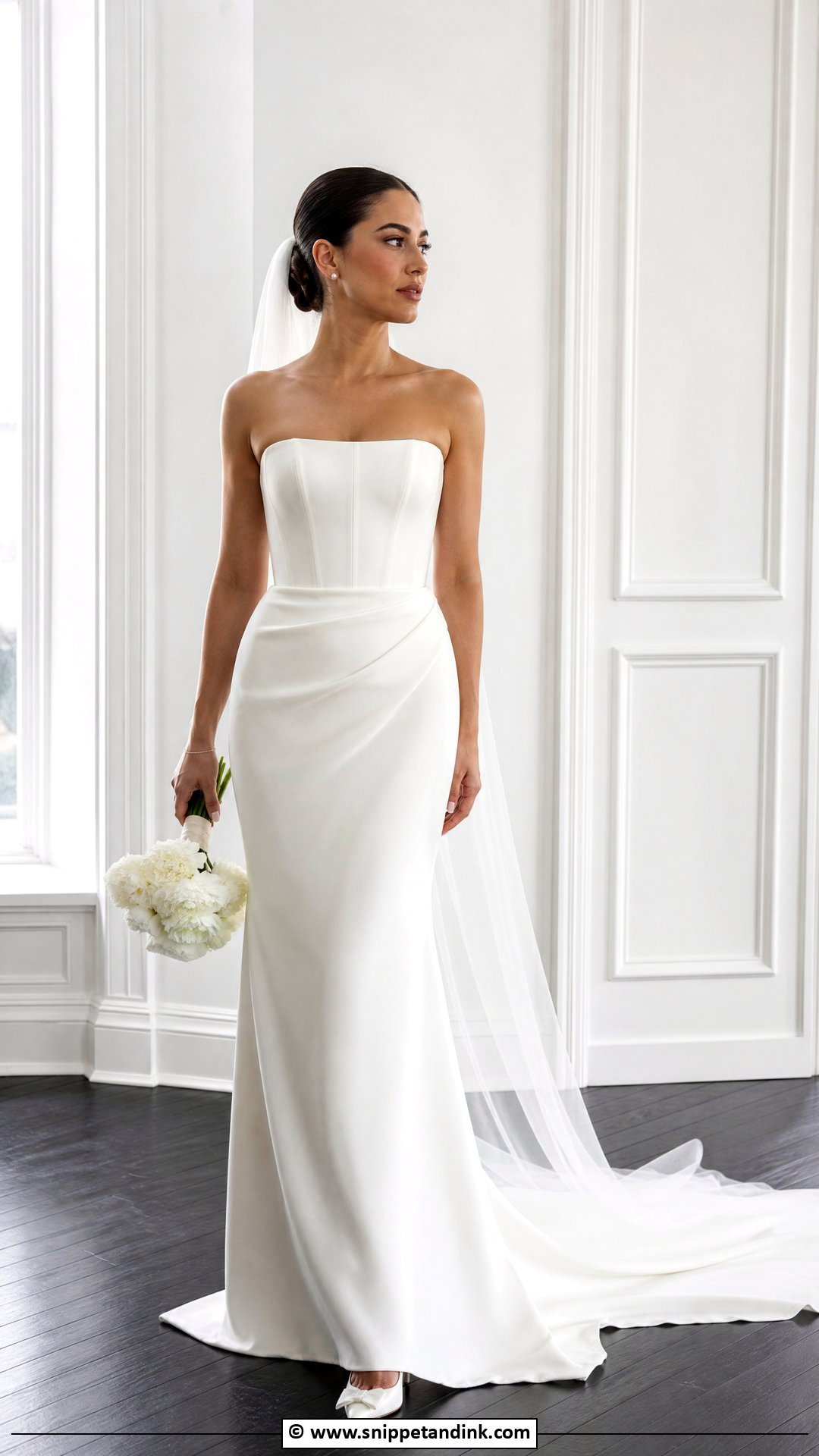
Minimal corsets put everything on fit and fabric. Satin, crepe and mikado hold structure well, in a column or an A-line. With no lace to hide behind, any pull line or puckered seam shows, so I fit these more carefully than embellished gowns. A slick bun and plain veil leave room for a bold bouquet. Up close it should look tailored; from across the room, simple.
11. Tulle Corset Ball Gown Wedding Dress
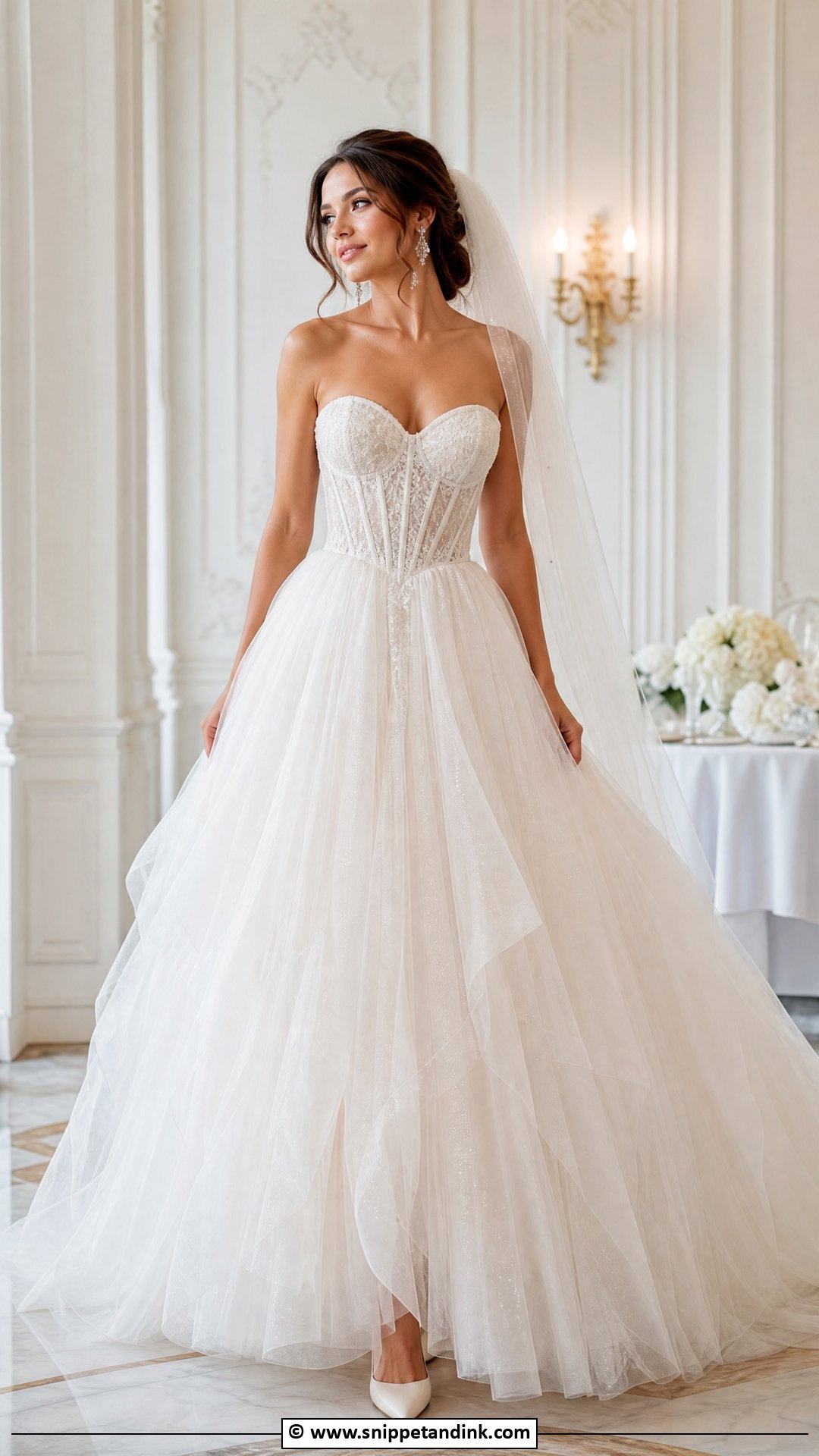
Tulle over a corset gives volume that’s light to carry. Layers of tulle move as you walk, without the weight of satin. Soft ivory tulle feels romantic, crisp white looks brighter. Tulle snags easily, so avoid shoes with rough embellishment and watch bracelets and engagement ring prongs. Scattered appliqué or a subtle shimmer adds detail if you want it.
12. Mikado Corset Wedding Dress
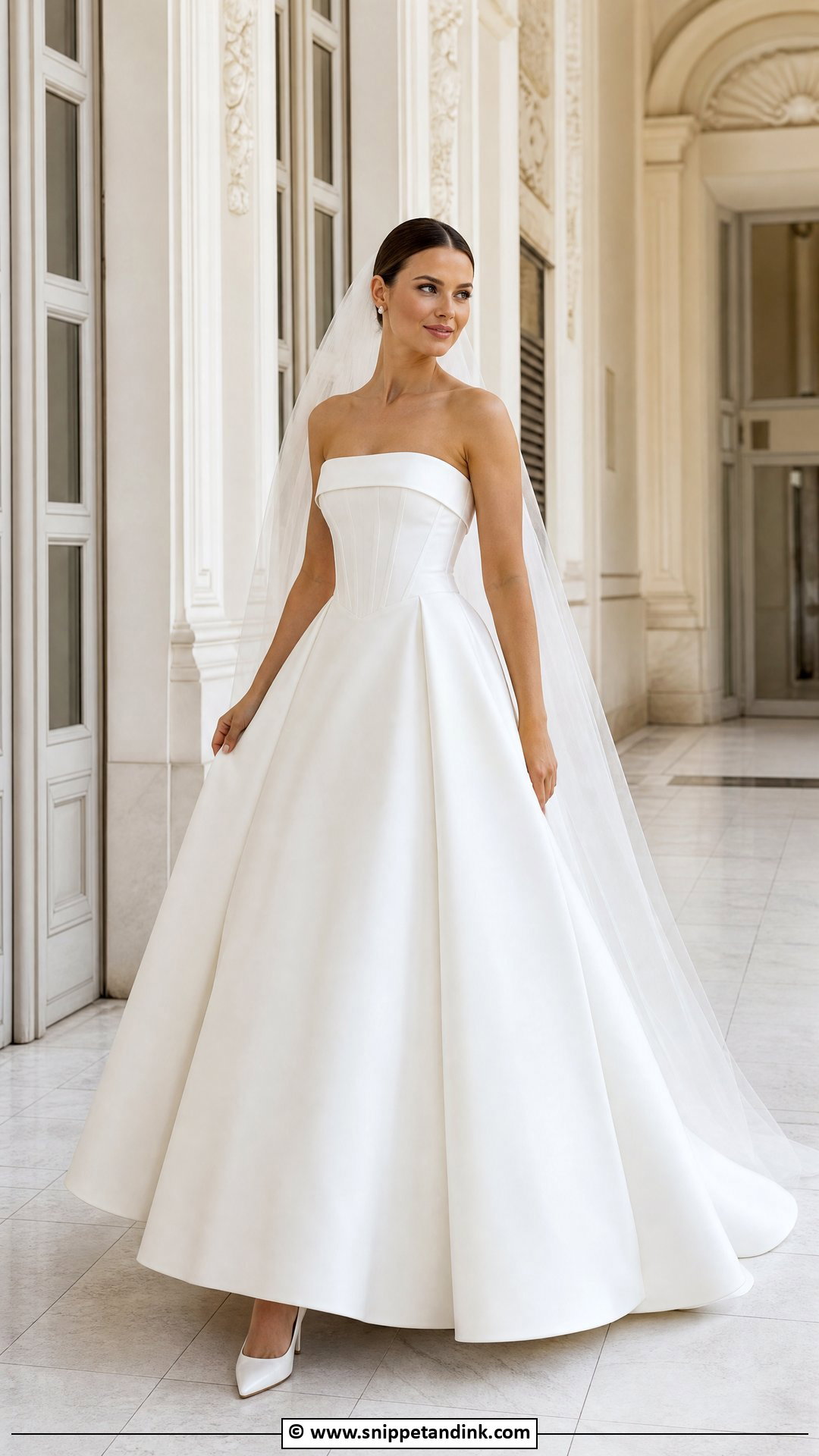
Mikado has enough body for corset bodices, full skirts and architectural folds, and it doesn’t wrinkle much when you sit. That makes it a reliable fabric for a long formal day. A straight neckline or basque waist reads fashion-forward; an off shoulder top with a full A-line feels softer. It needs very little styling: a long veil and studs.
13. Crepe Corset Mermaid Wedding Dress
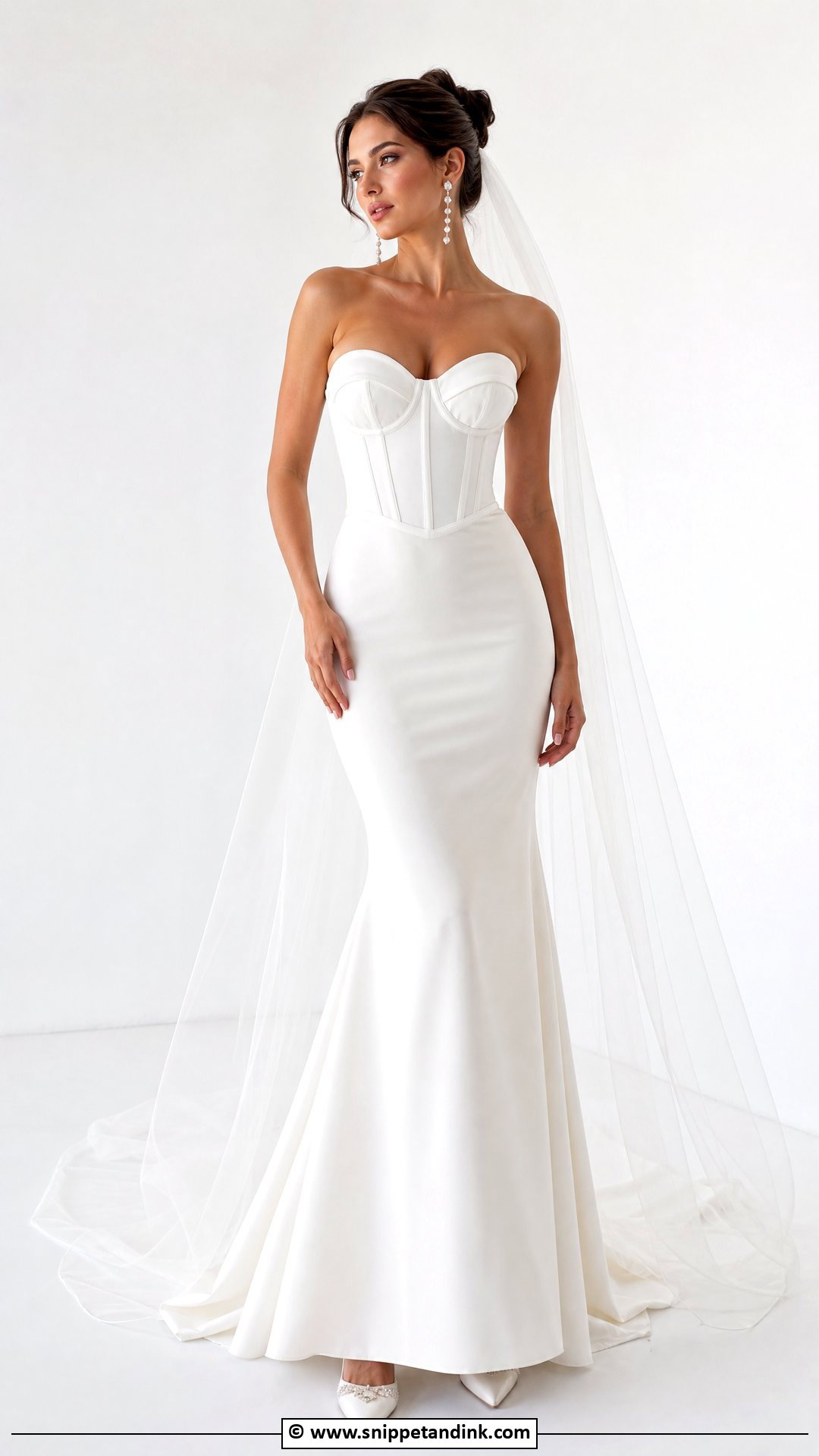
Crepe mermaid corsets are sleek and very flattering when tailored well. The corset shapes waist and bust, and the skirt follows the body before flaring at the knee or lower thigh. Because it’s fitted all the way down, I have brides sit, walk, climb a step and turn during fittings. A hidden stretch lining helps a great deal. Drop earrings and a long veil finish it.
14. Corset Wedding Dress With Detachable Sleeves
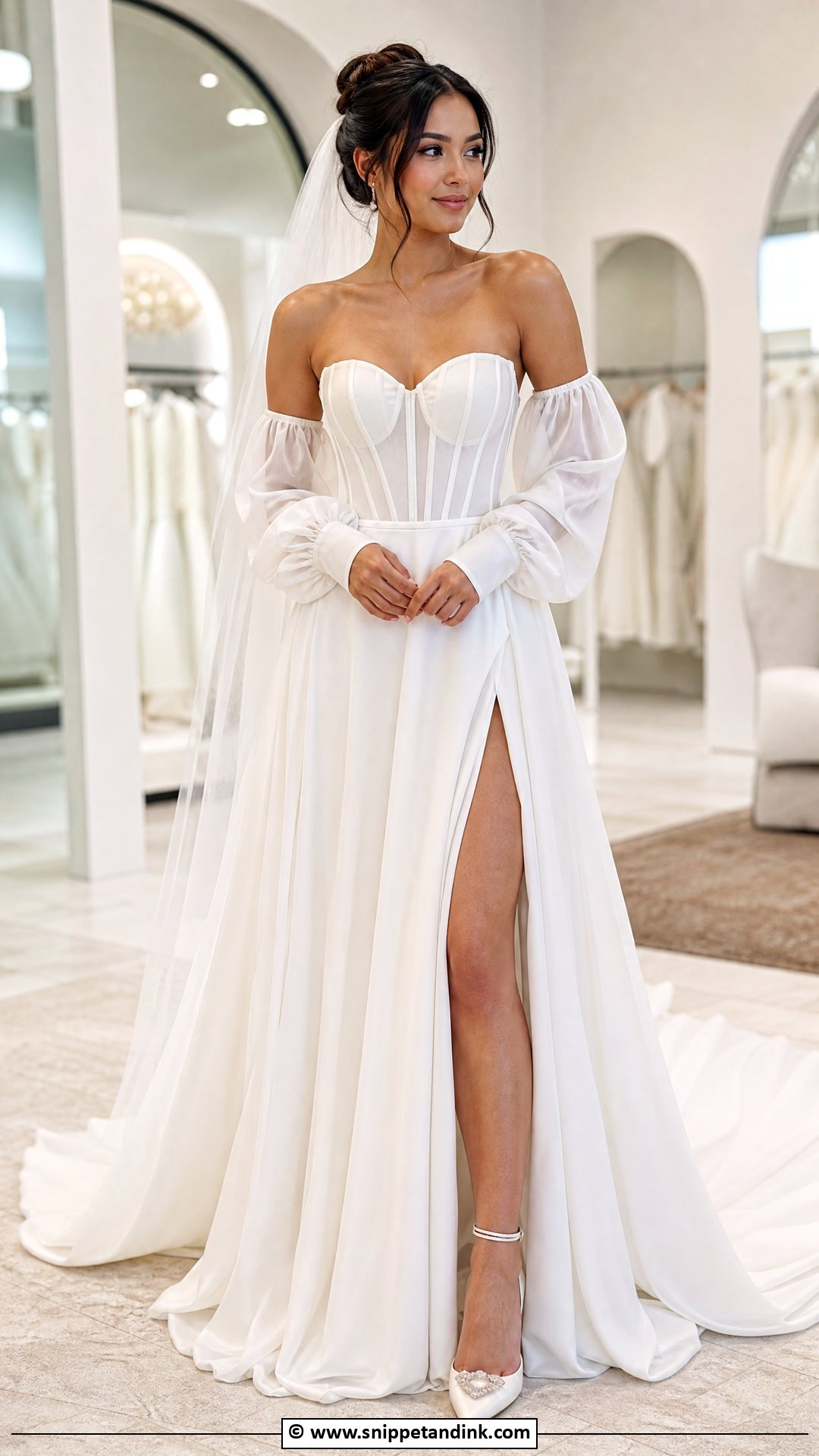
Detachable sleeves give two looks: covered and romantic for the ceremony, lighter for the reception. Puff, lace or draped off shoulder sleeves all work with structured bodices. The attachment should sit flush with the bodice and not drag it down; snaps or hidden buttons hold better than ties. Have your helper practice removing them before the day. The change gives the photos a little variety too.
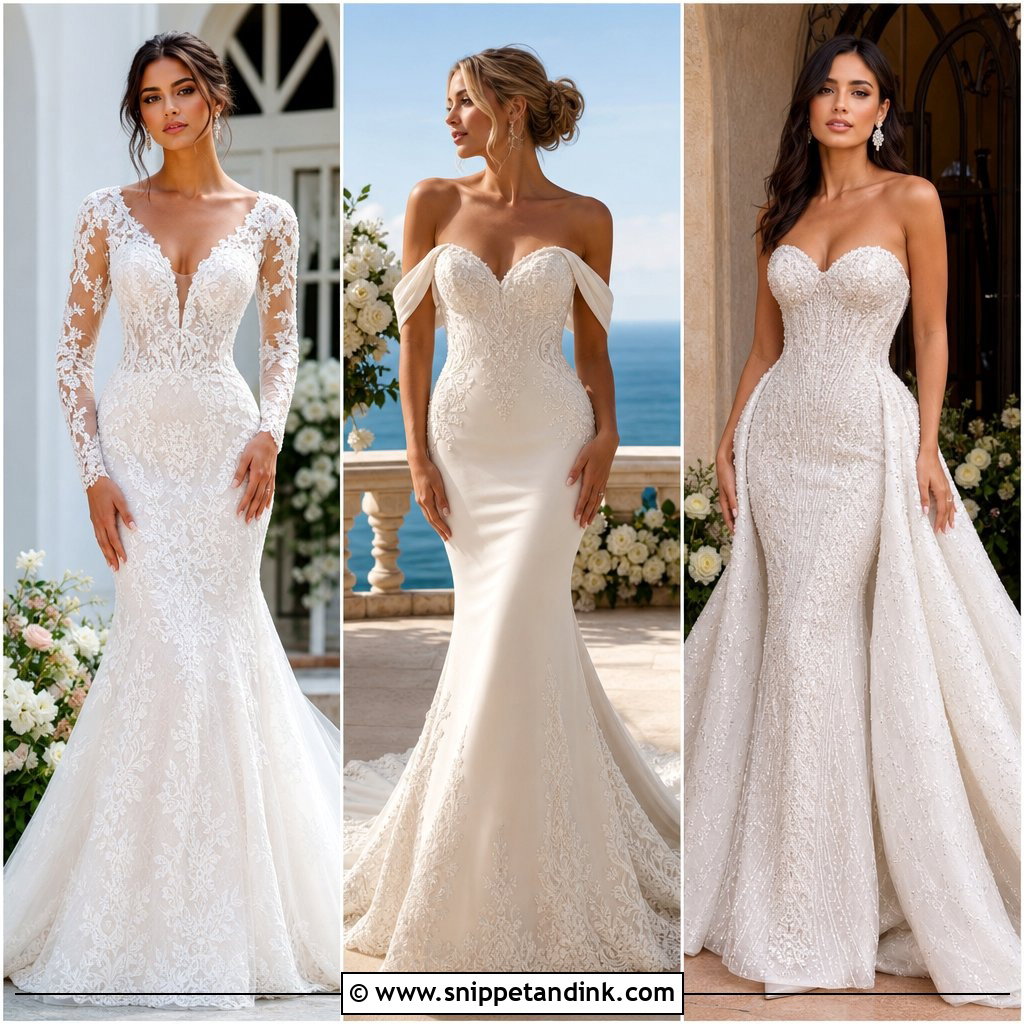
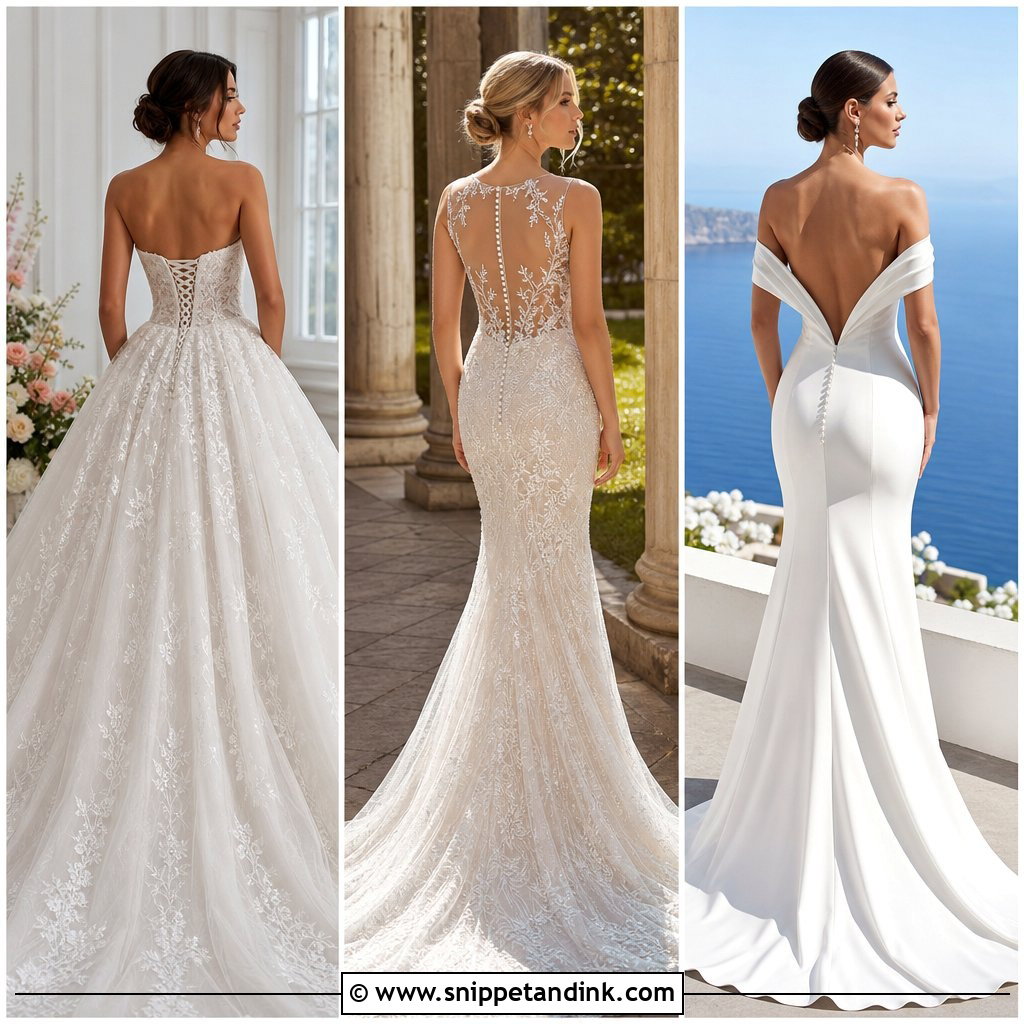

15. Corset Wedding Dress With Bow Back
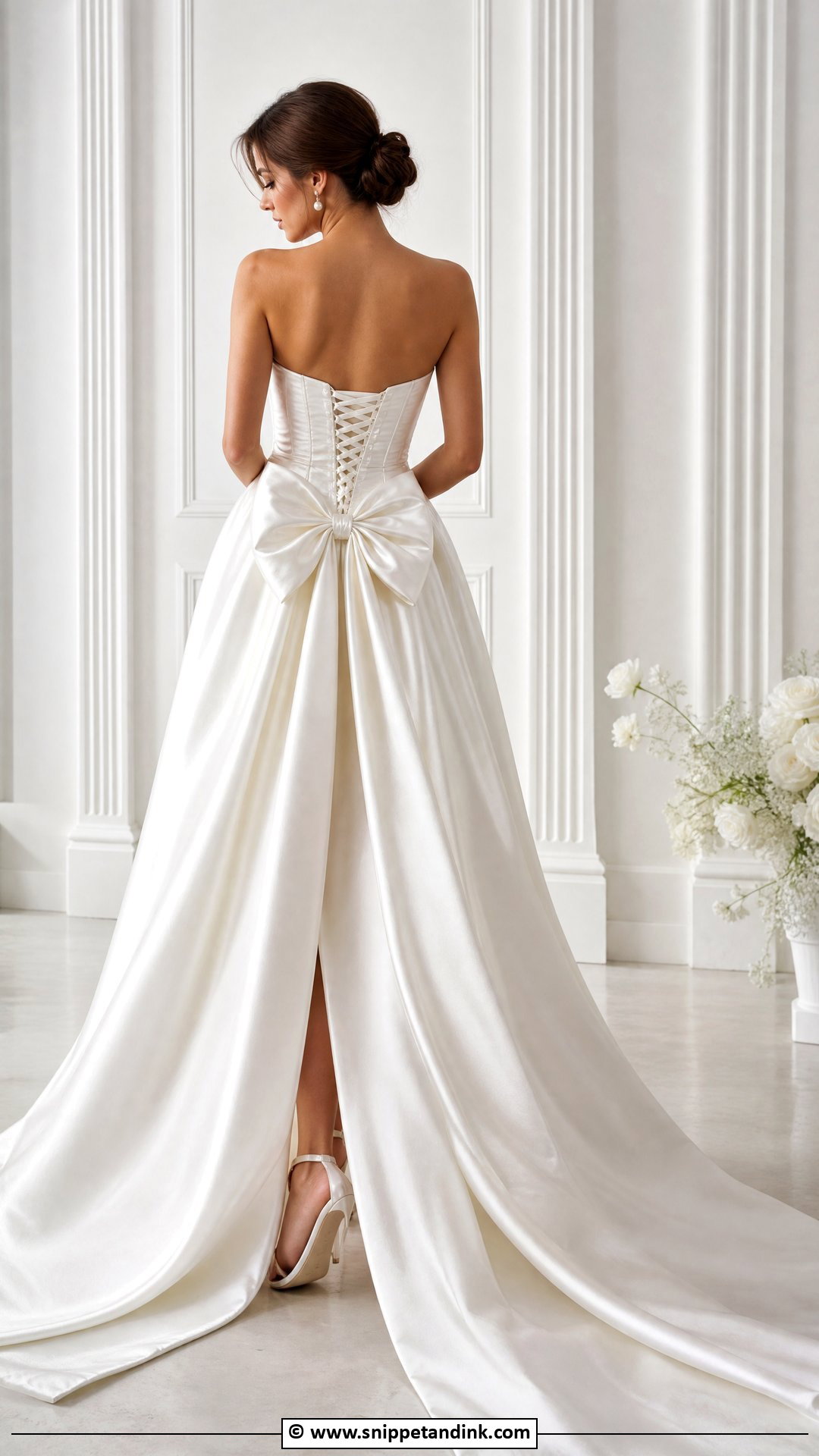
A bow at the back adds a sweet detail to a structured gown. It can sit at the waist, trail from the lacing or attach to the skirt. Satin gives a crisp bow; organza for a softer look. Bows on the back get crushed when you sit, so I ask for an interfaced or lightly stiffened bow that springs back. Keep the front plain and wear a low bun to show the back.
16. Corset Wedding Dress With Pearl Details
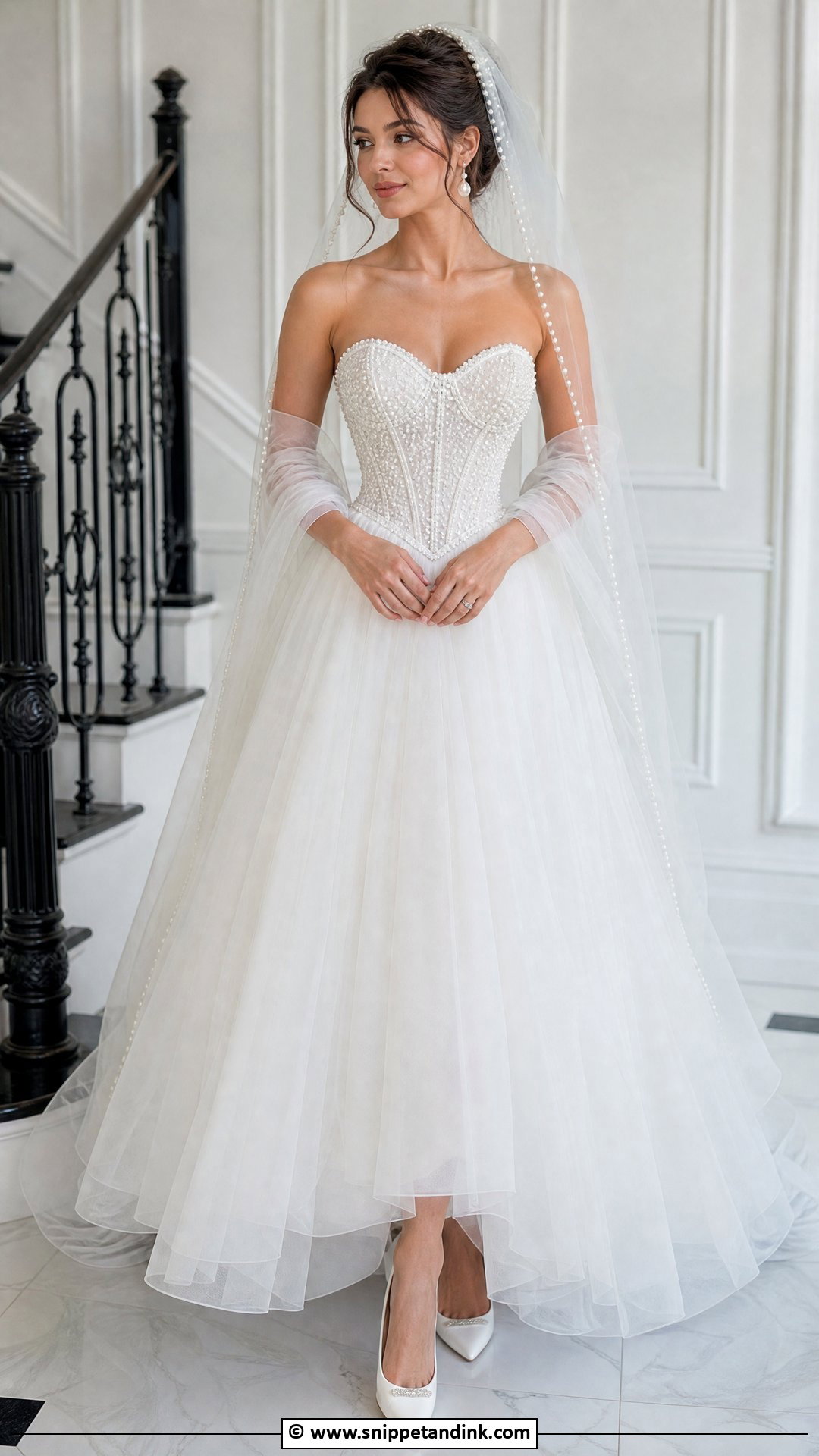
Pearls soften a corset with a gentle glow instead of crystal sparkle. They can trim the neckline, scatter over lace, sit on straps or run down the corset back. Choose one area and let it lead. Sewn pearls survive hugging; glued ones fall off. Pearl drops and satin pumps coordinate, and skip the necklace if the bodice already carries many pearls.
17. Corset Wedding Dress With Beaded Bodice
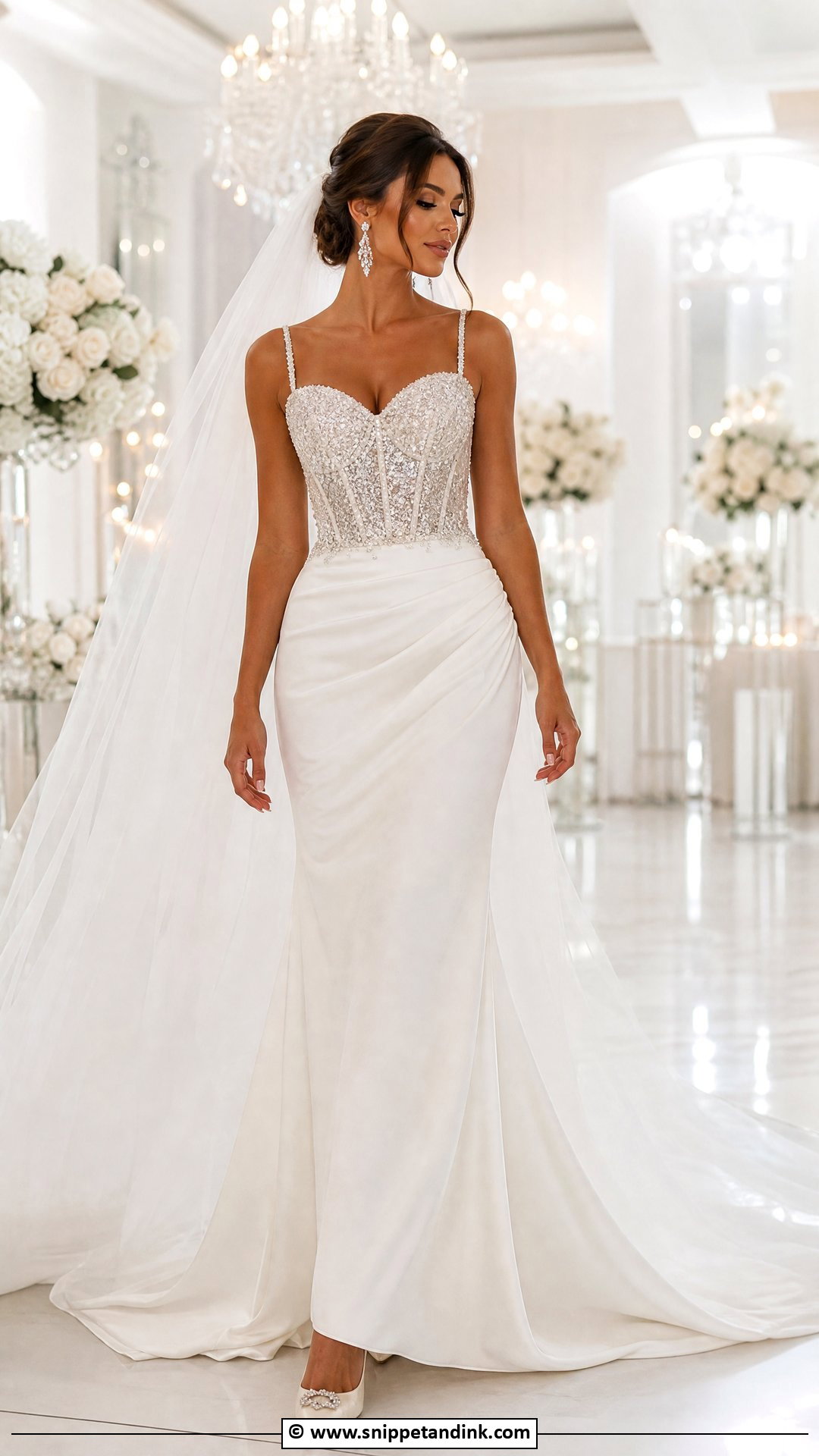
A beaded bodice sparkles while the corset keeps the waist defined. Patterns can feel glamorous, vintage or delicate. Pair a busy bodice with a plain skirt in tulle, chiffon, satin or crepe. Beading under the arms rubs skin raw by evening if it’s sewn too close to the side seam, so I check that area by running a hand inside. A plain veil avoids snagging.
18. Corset Wedding Dress With Square Neck
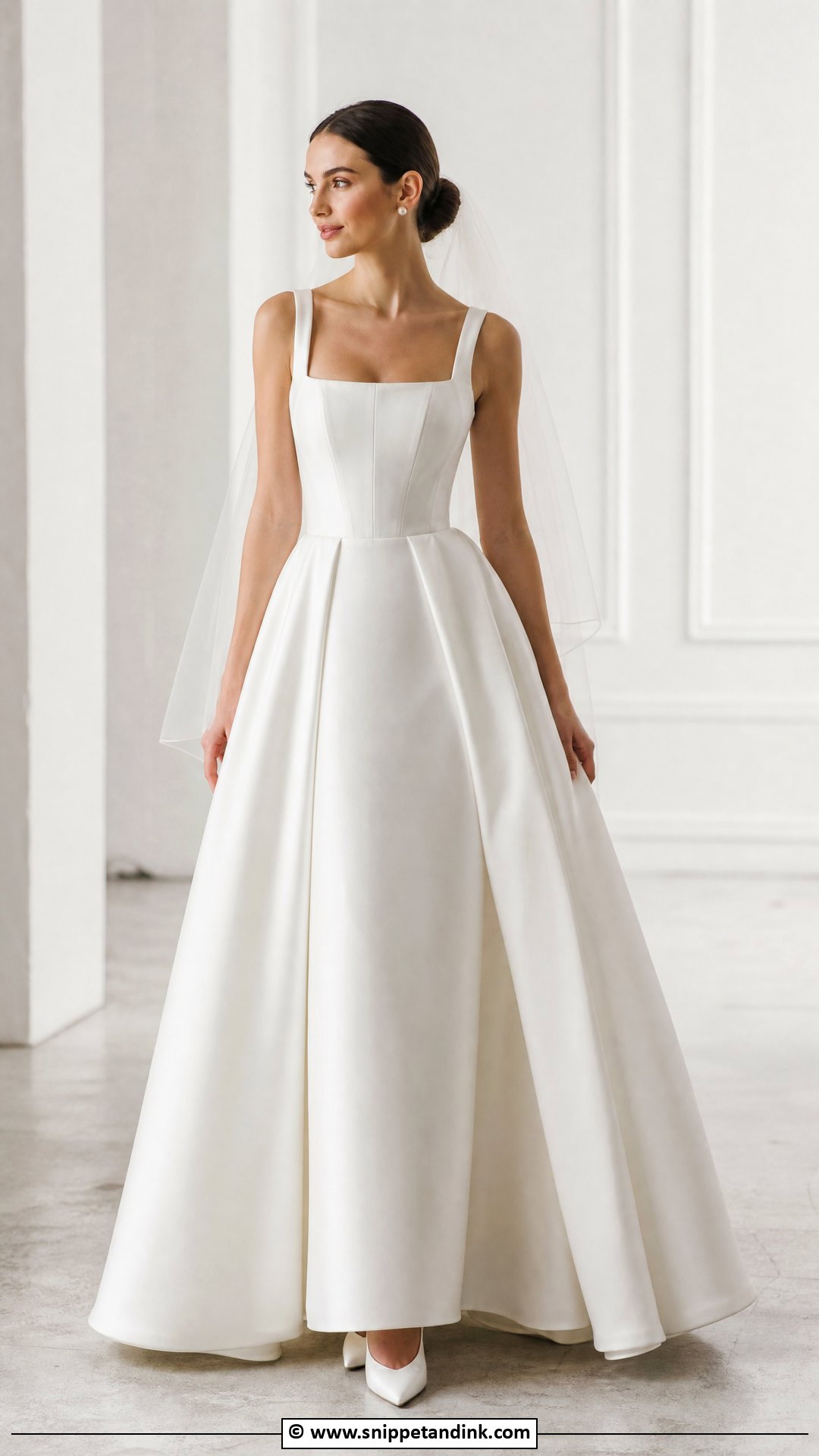
Square necks on a corset frame the collarbone while the bodice shapes the waist. They give support without going strapless. Wide straps look classic; thin straps look softer. It pairs with satin, lace or mikado and A-line, column or ball gown skirts. Brides who want a modest, flattering corset usually end up here.
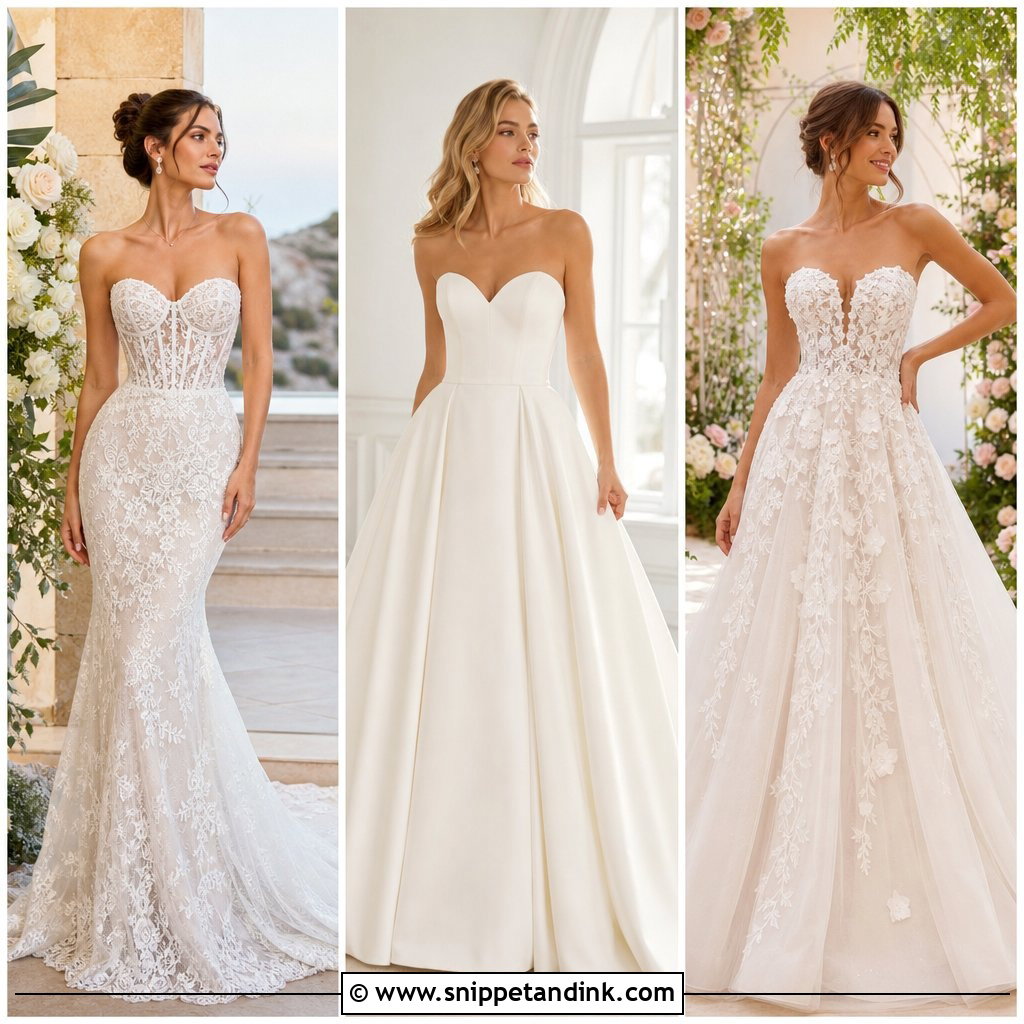
19. Corset Wedding Dress With Sweetheart Neckline
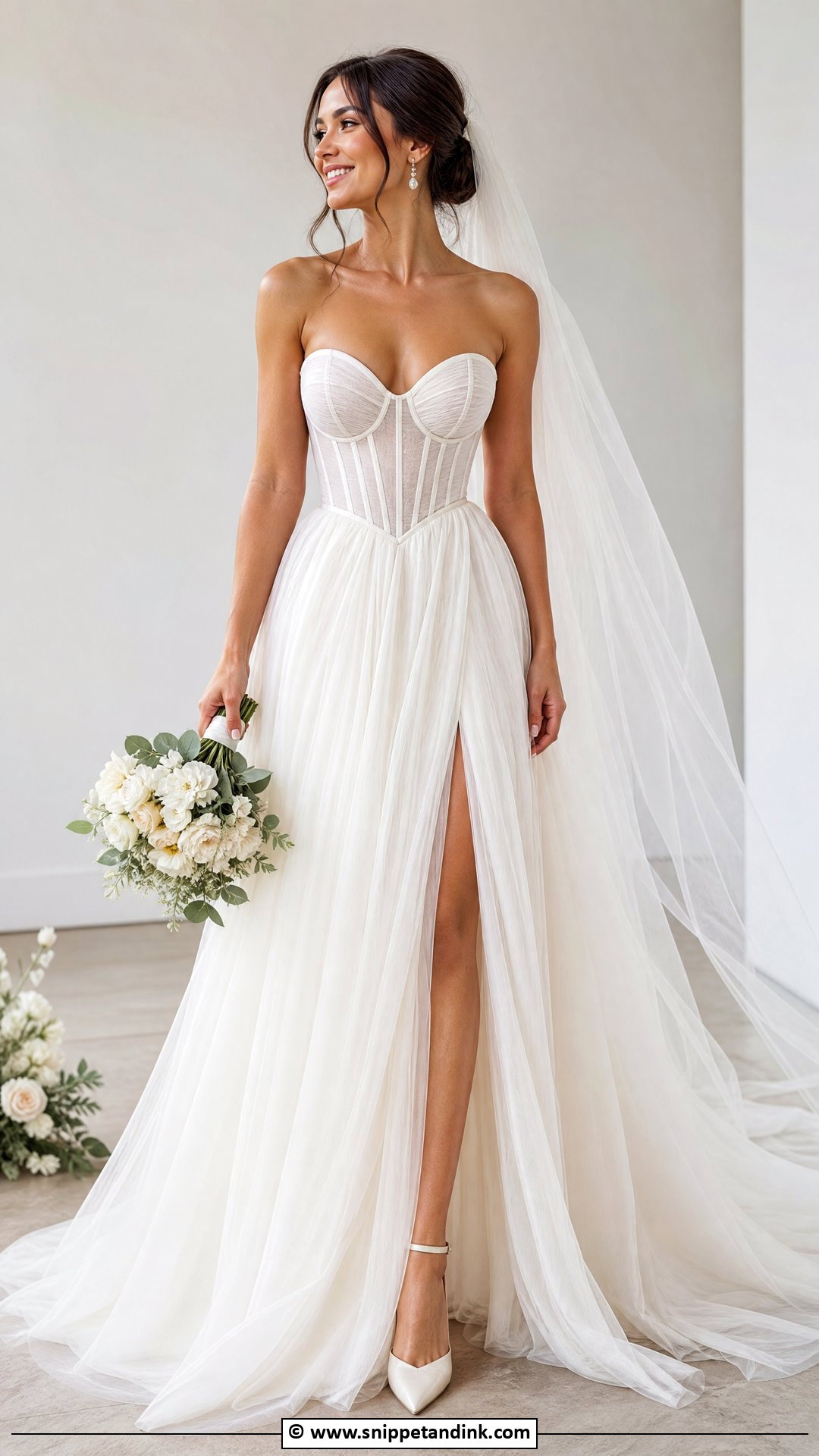
Sweetheart necklines soften a corset by following the shape of the bust. Strapless, lace straps, detachable sleeves or off shoulder drapes all work with it. Gapping at the top of the sweetheart curve is the most common fit problem I see, and it’s fixed by shaping the cups, not by tightening the lacing. Soft curls and delicate earrings suit it in satin, tulle or floral lace.
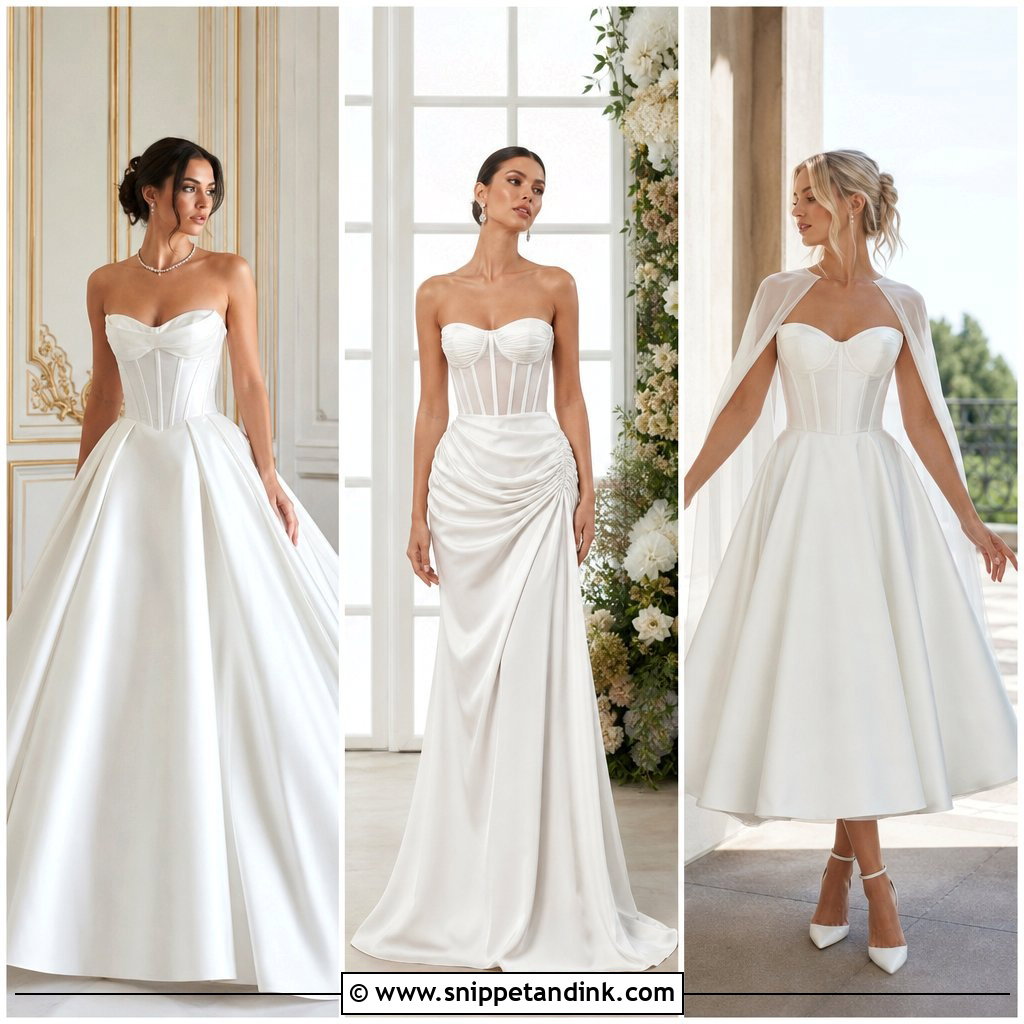
20. Corset Wedding Dress With Straight Neckline
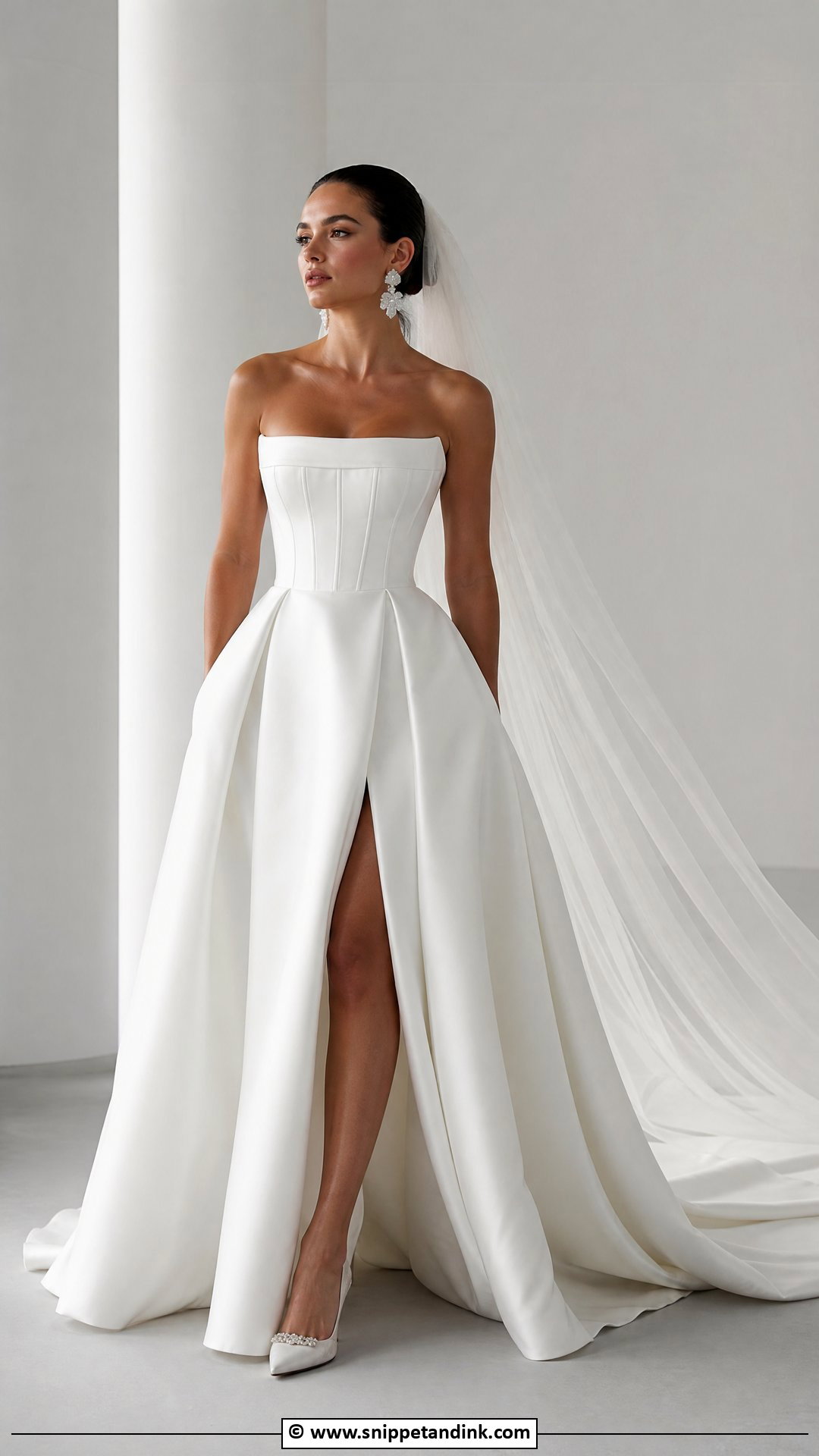
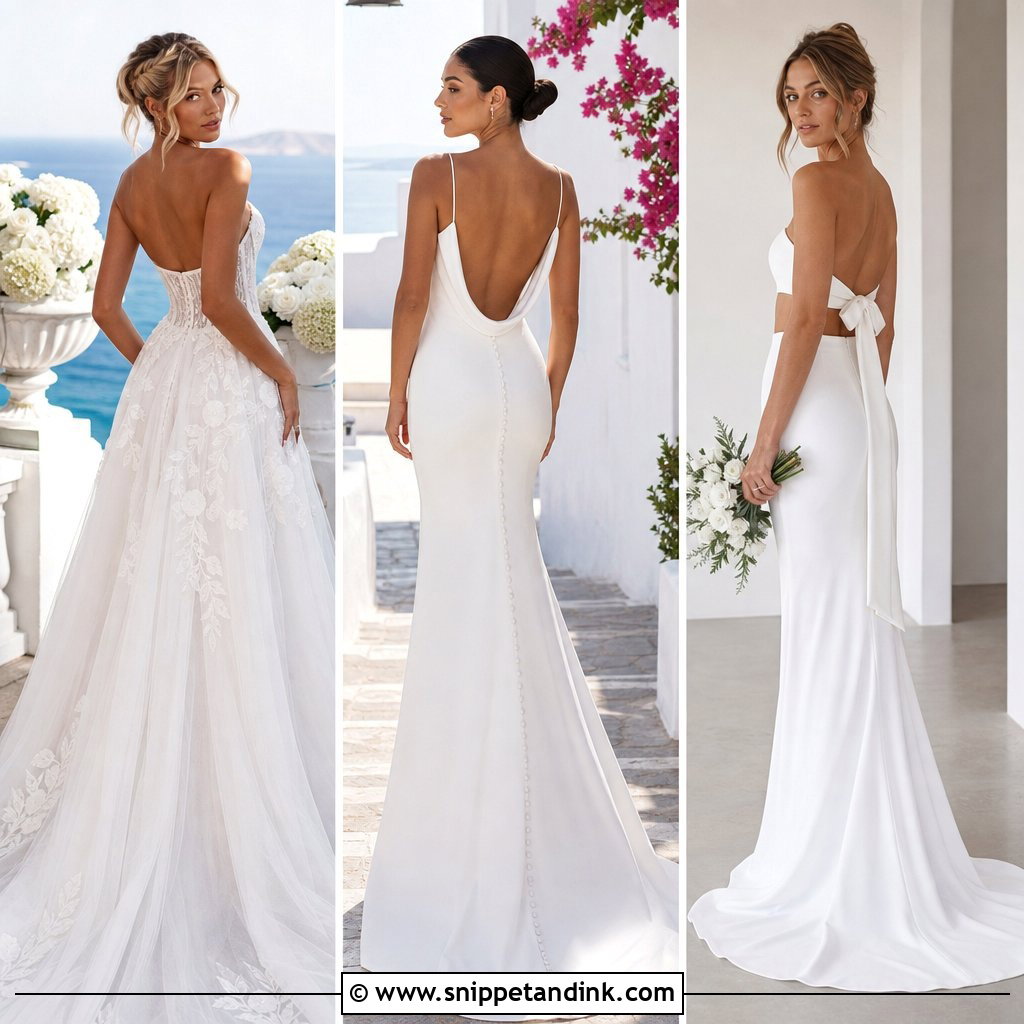
A straight neckline gives a strong horizontal line across the bodice. Smooth satin, mikado or crepe show it off best. It looks crisp with a sleek veil and sculptural earrings, and you can soften it with detachable off shoulder sleeves or a tulle overskirt. The edge has to be firmly boned, or it rolls slightly as the day goes on.
21. Corset Wedding Dress With Spaghetti Straps
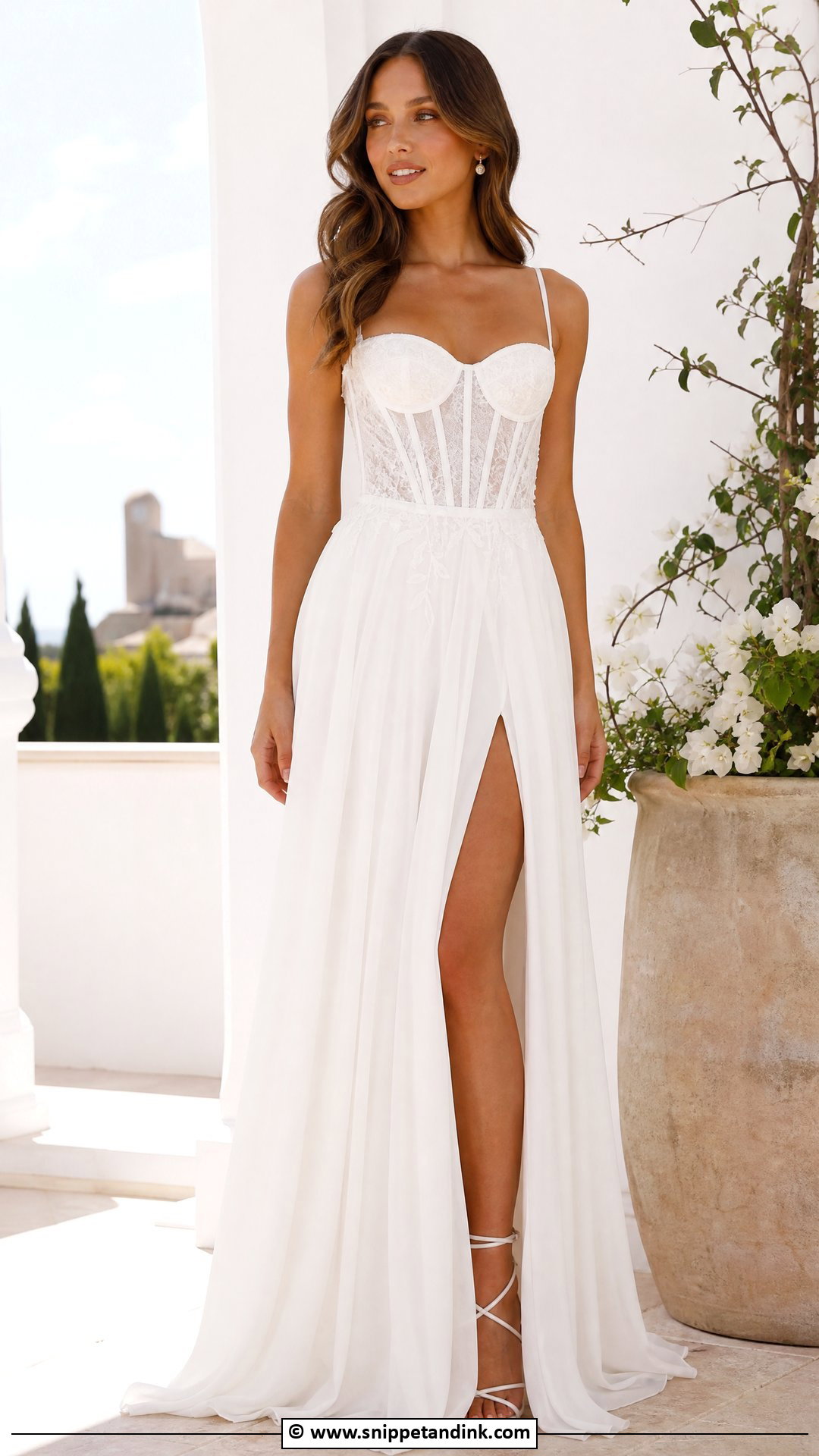
Spaghetti straps keep a corset light and give a little extra security. Warm weather and outdoor venues suit them. Lace, satin or chiffon all work. The straps are decorative more than structural on a well-built corset, but they can be shortened during alterations to help the bodice sit higher. Loose waves and strappy heels keep it relaxed.
22. Corset Wedding Dress With Drop Waist
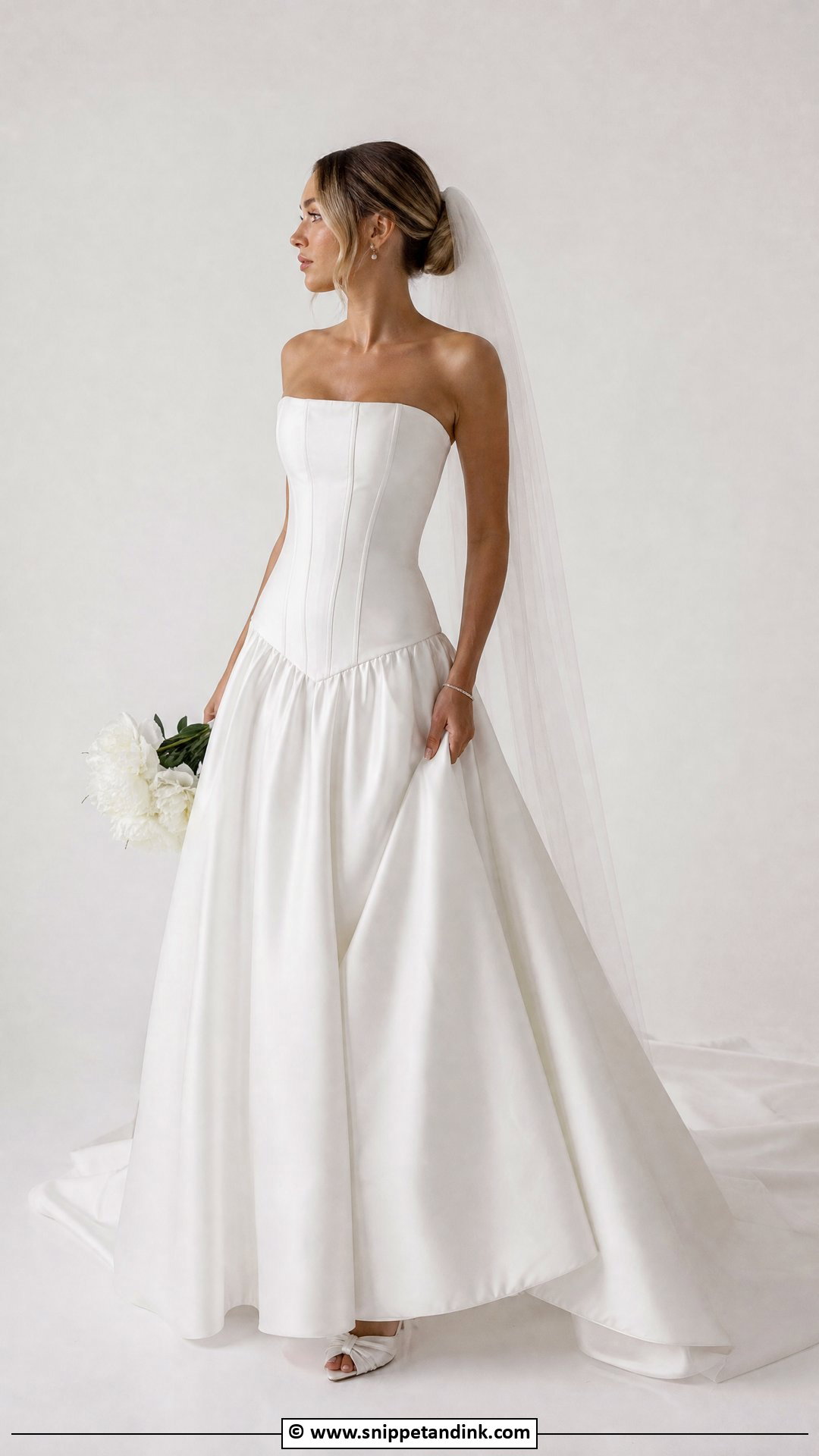
A drop waist corset lengthens the torso before the skirt starts lower on the hips. It differs from a basque because the waistline is straight or softly curved, not pointed. It looks sleek in satin or crepe. A drop waist outlines the hips clearly, so the tailoring has to be precise there. A skirt with soft volume balances it. Keep the veil simple.
23. Corset Wedding Dress With High Slit
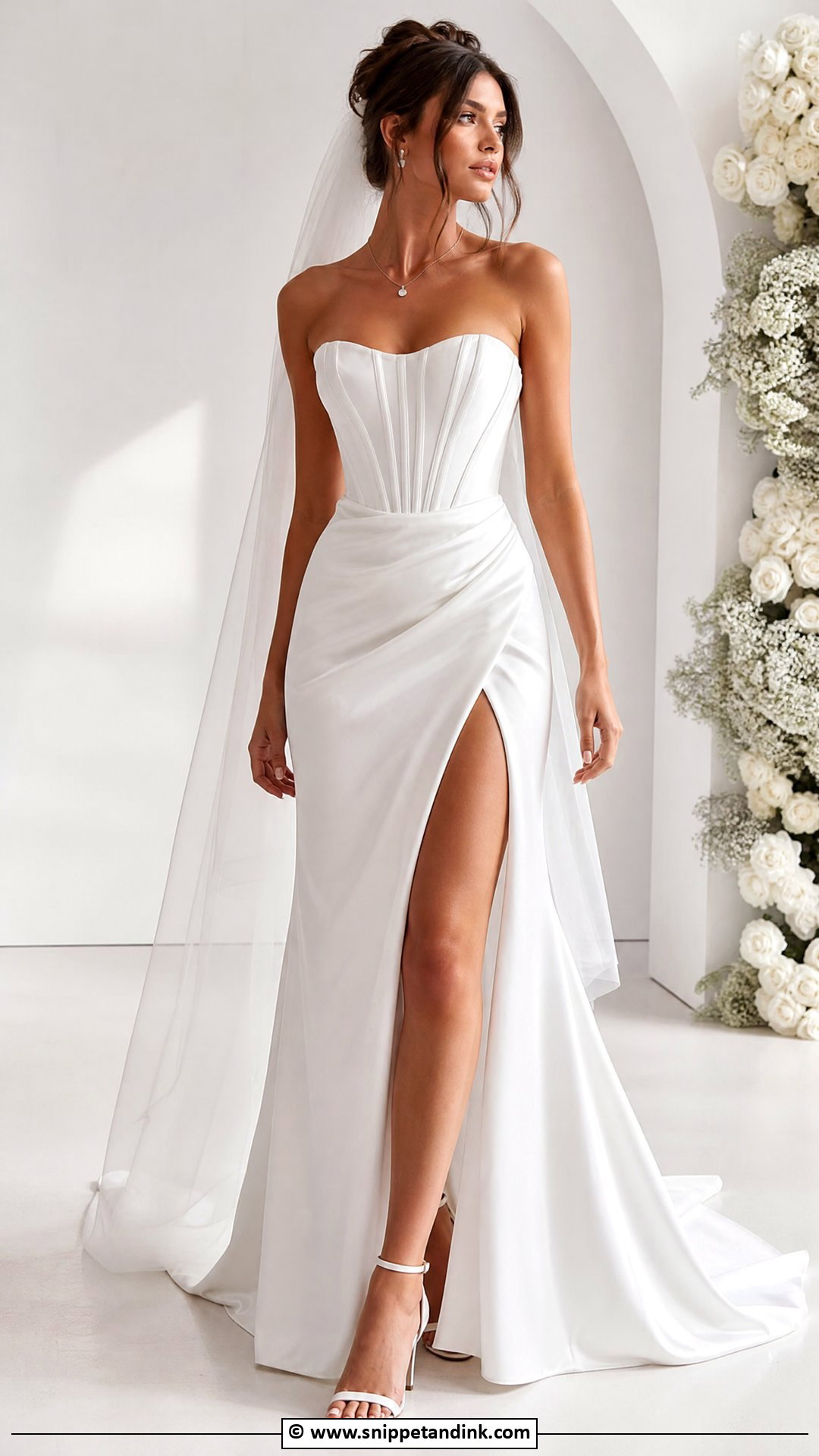
A high slit gives a structured gown movement and shows the shoes. Satin and crepe fall cleanly around the leg. Measure the slit with the bride seated: a slit that looks right standing can open far higher in a chair. If the bodice is detailed, keep the slit clean. Elegant heels and simple jewelry suit it.
24. Corset Wedding Dress With Overskirt
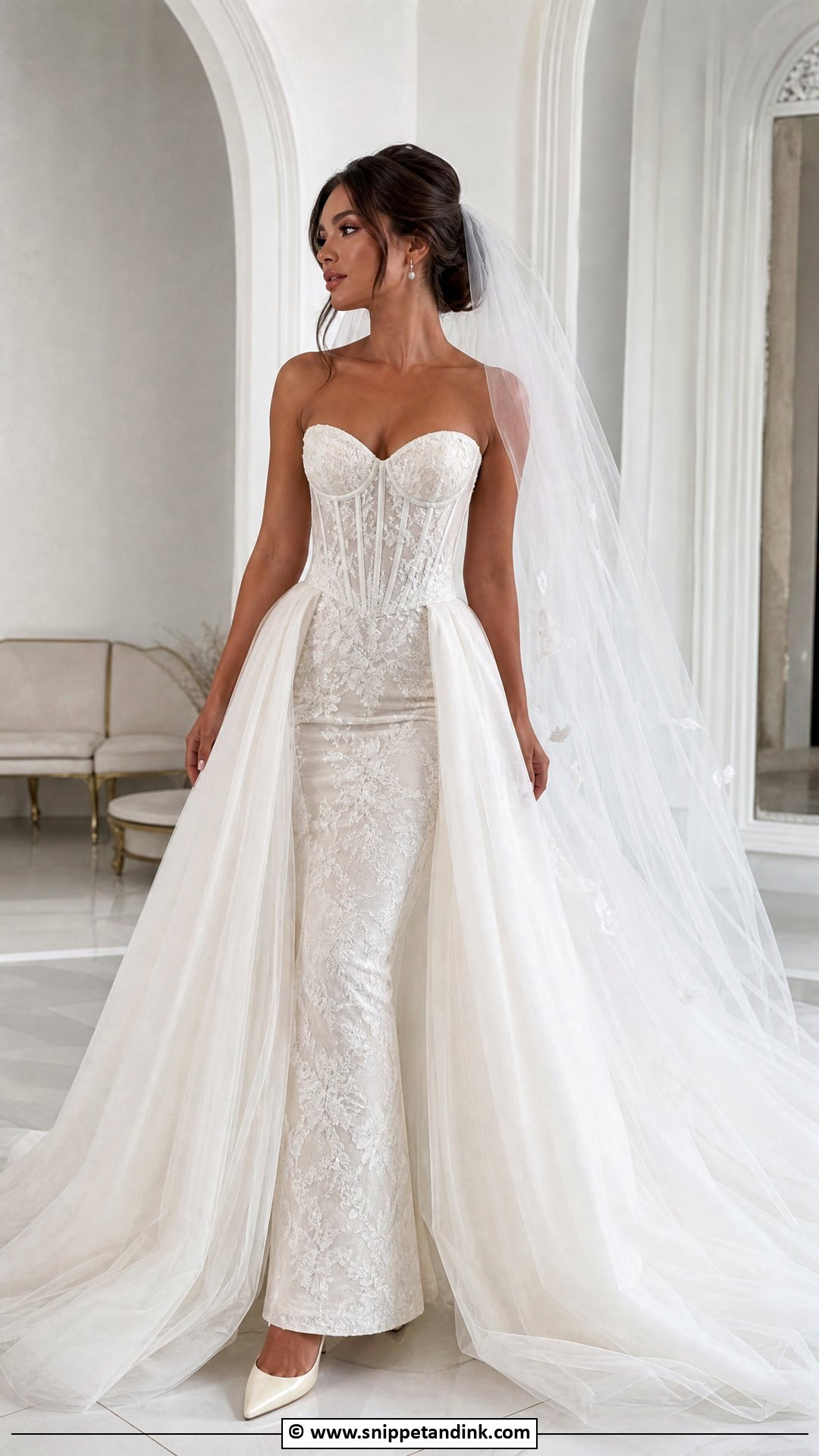
An overskirt adds ceremony volume over a fitted corset gown, then comes off for dancing. Tulle, organza and satin overskirts each give a different effect. Check the waistband in profile; a bulky attachment over a corset waist adds width just where you want to look narrow. A long veil and classic heels complete the ceremony look.
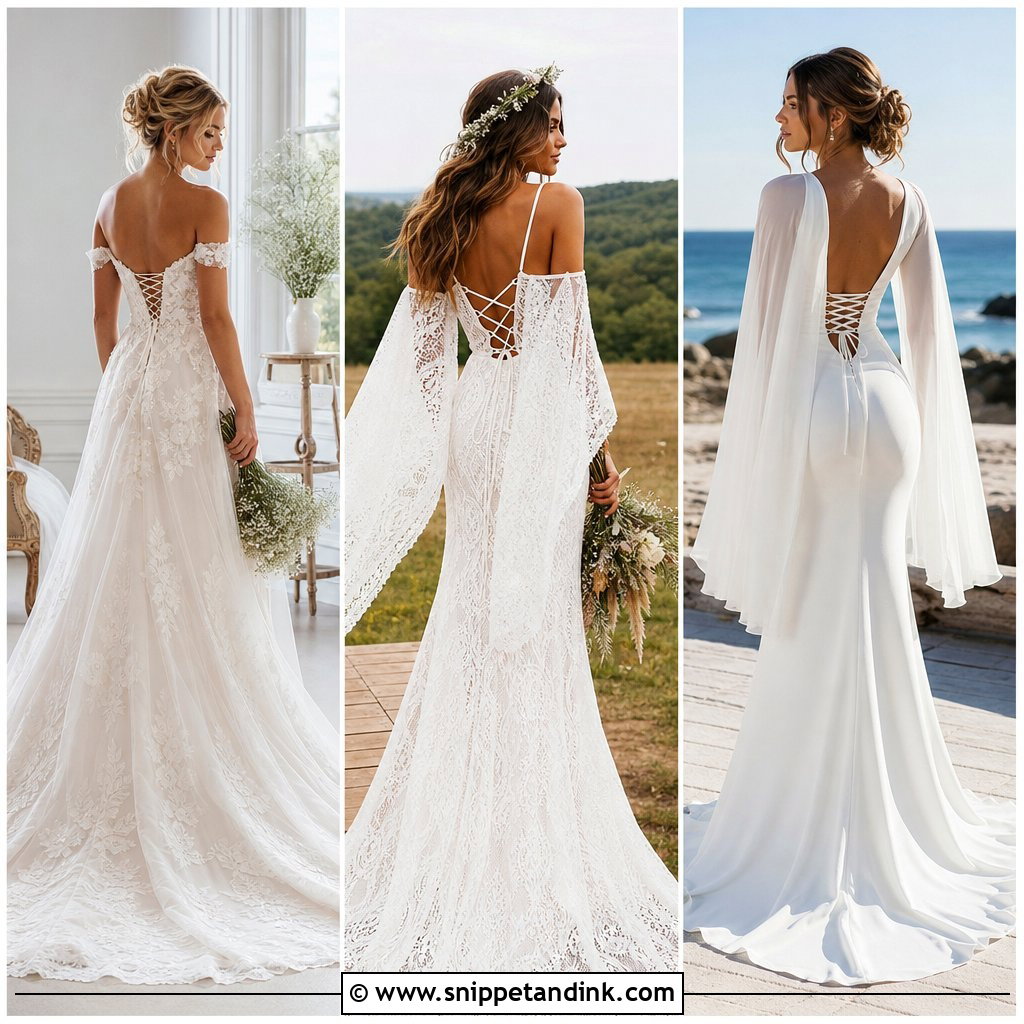
25. Corset Wedding Dress With Cape Veil
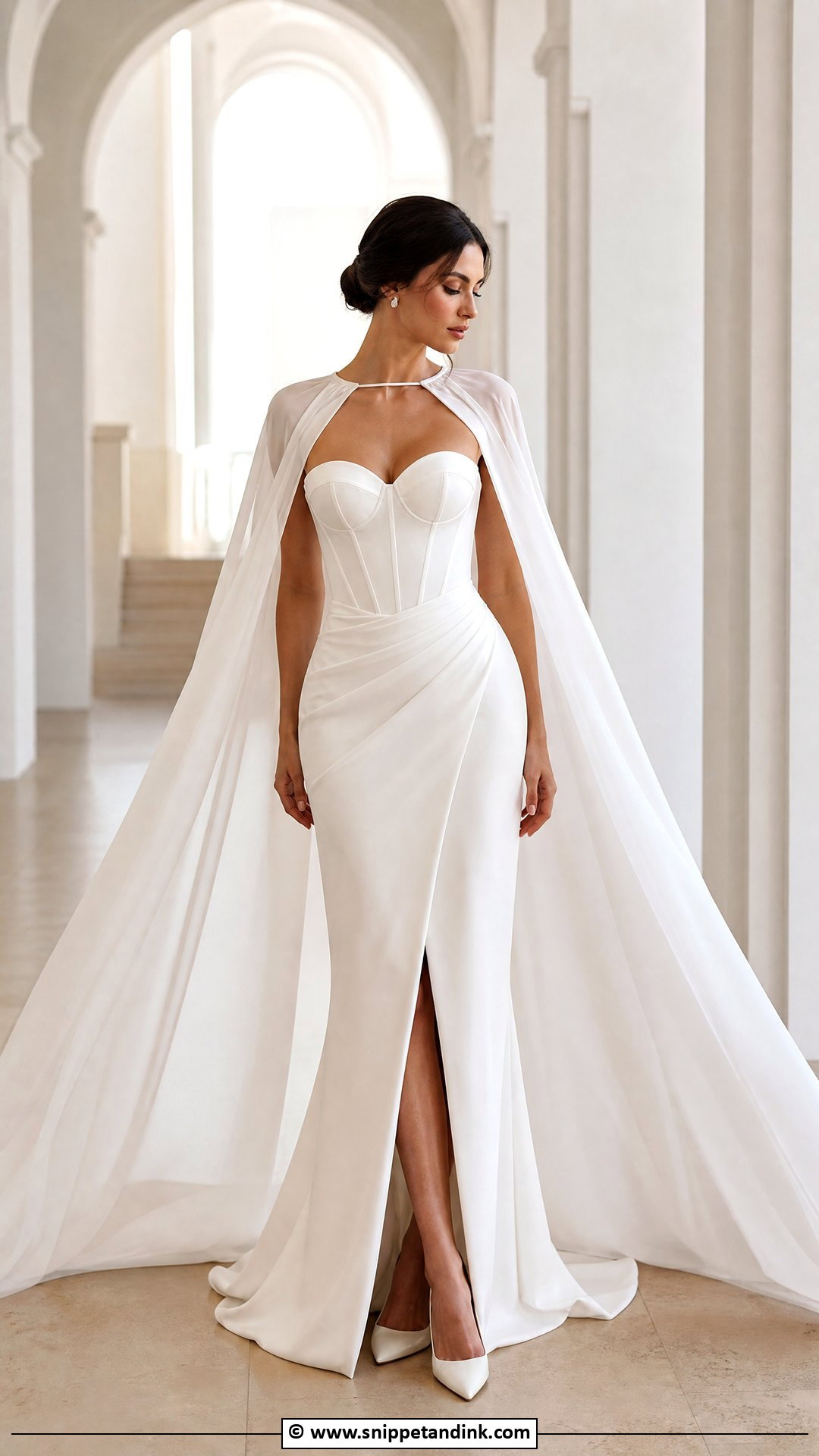
A cape veil attaches at the shoulders or back and flows behind you without covering the corset front. It’s a modern alternative to a traditional veil. Crepe, satin or lace corset gowns pair well. I ask for a low hairstyle so the attachment point is hidden or neat. Keep jewelry minimal; the cape is the statement.
26. Corset Wedding Dress With Lace Up Back
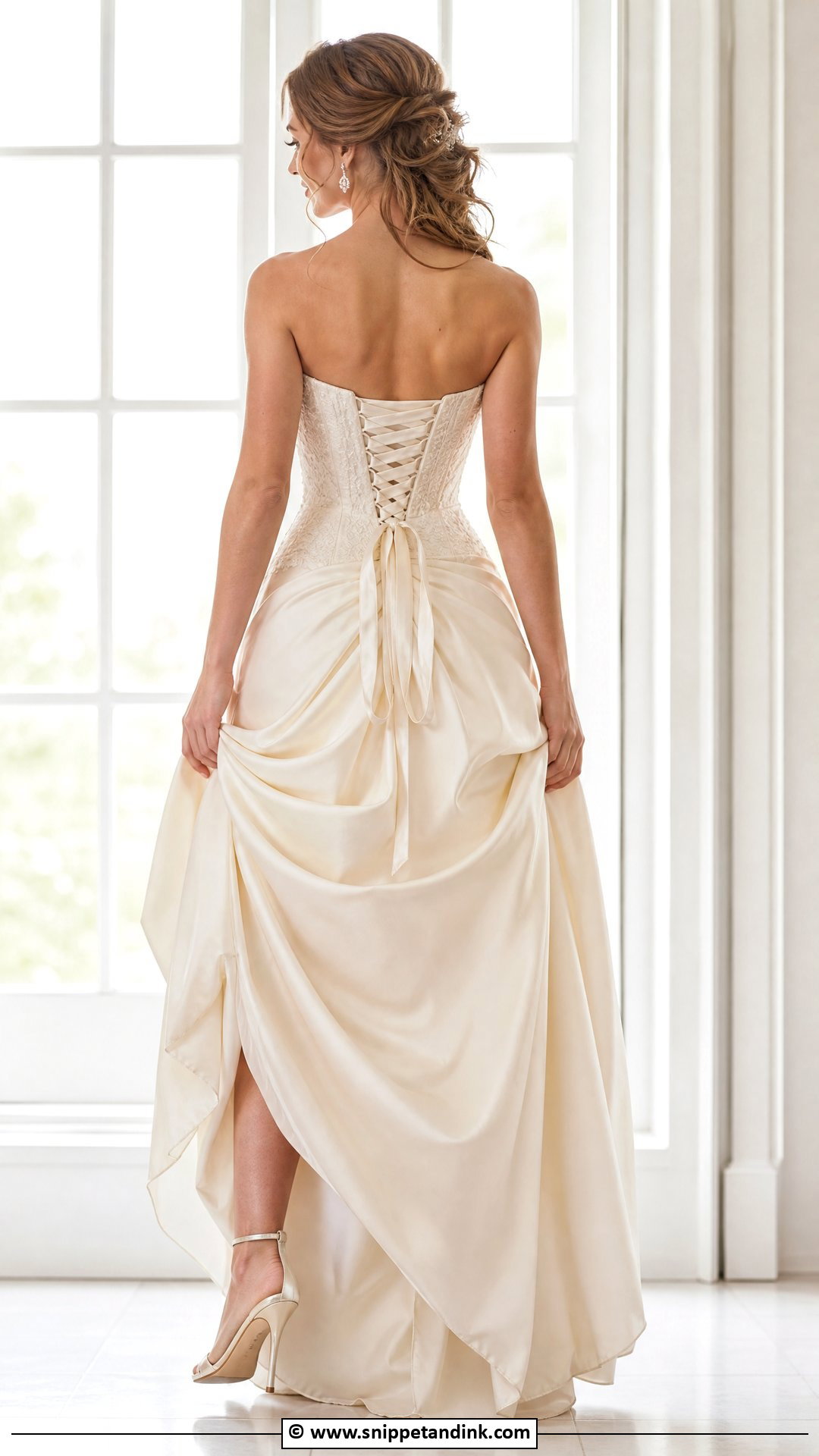
Lace-up backs are practical as well as pretty: the lacing adjusts for small changes in measurements before the wedding. Satin ribbon looks classic, thin cord more delicate. Most lace-up gowns have a modesty panel behind the lacing, and it should lie flat without wrinkling. Lace from the top down and the bottom up toward the waist, then tie at the waist. Wear your hair up to show it.
27. Corset Wedding Dress With Button Back
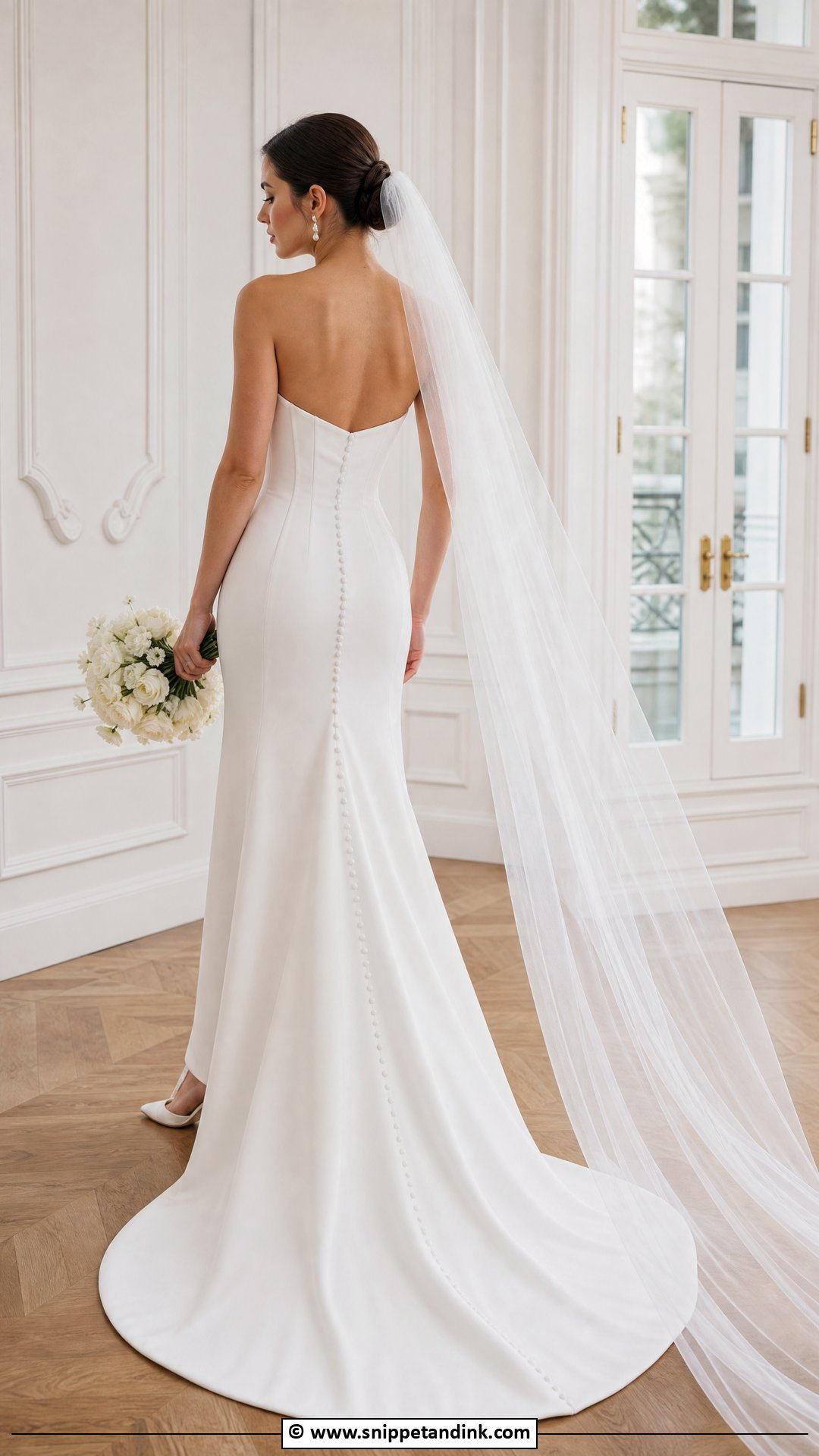
Button backs give a tailored bridal finish, with buttons over a hidden zip, down the train or along the corset back. They suit smooth satin, crepe and mikado. Buttons over a zip are far quicker to get into, which matters on a busy morning. Ask your seamstress to check that buttons lie flat without pulling between them.
28. Corset Wedding Dress With 3D Flowers
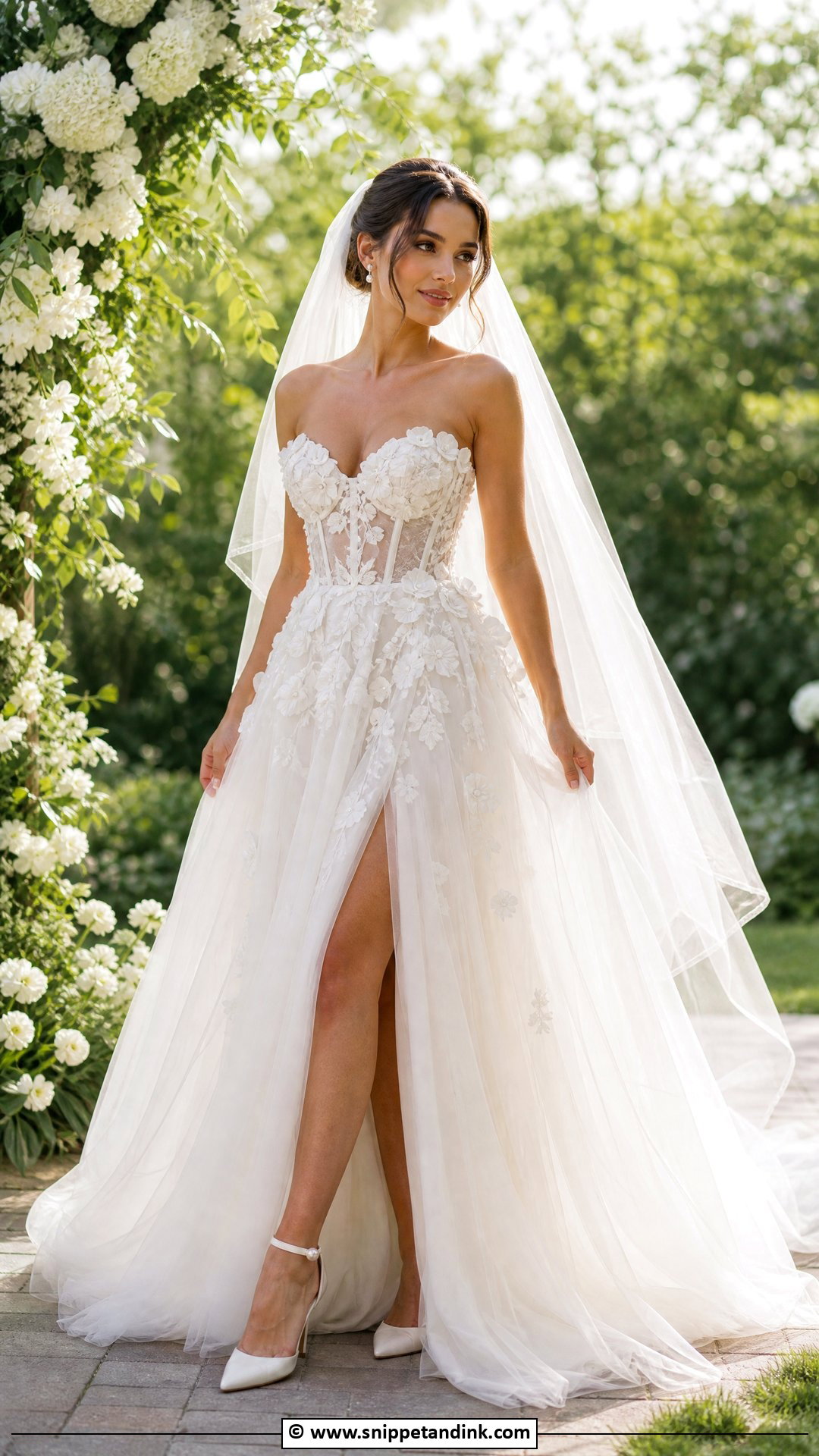
A corset wedding dress with 3D flowers adds texture to a structured base. The flowers can decorate the bodice, trail onto the skirt or scatter across tulle. Petite brides look best in smaller florals; larger appliqués look editorial on taller frames. Pack it with tissue around the flowers so they don’t flatten in transit. Keep accessories light.
29. Corset Wedding Dress With Puff Sleeves
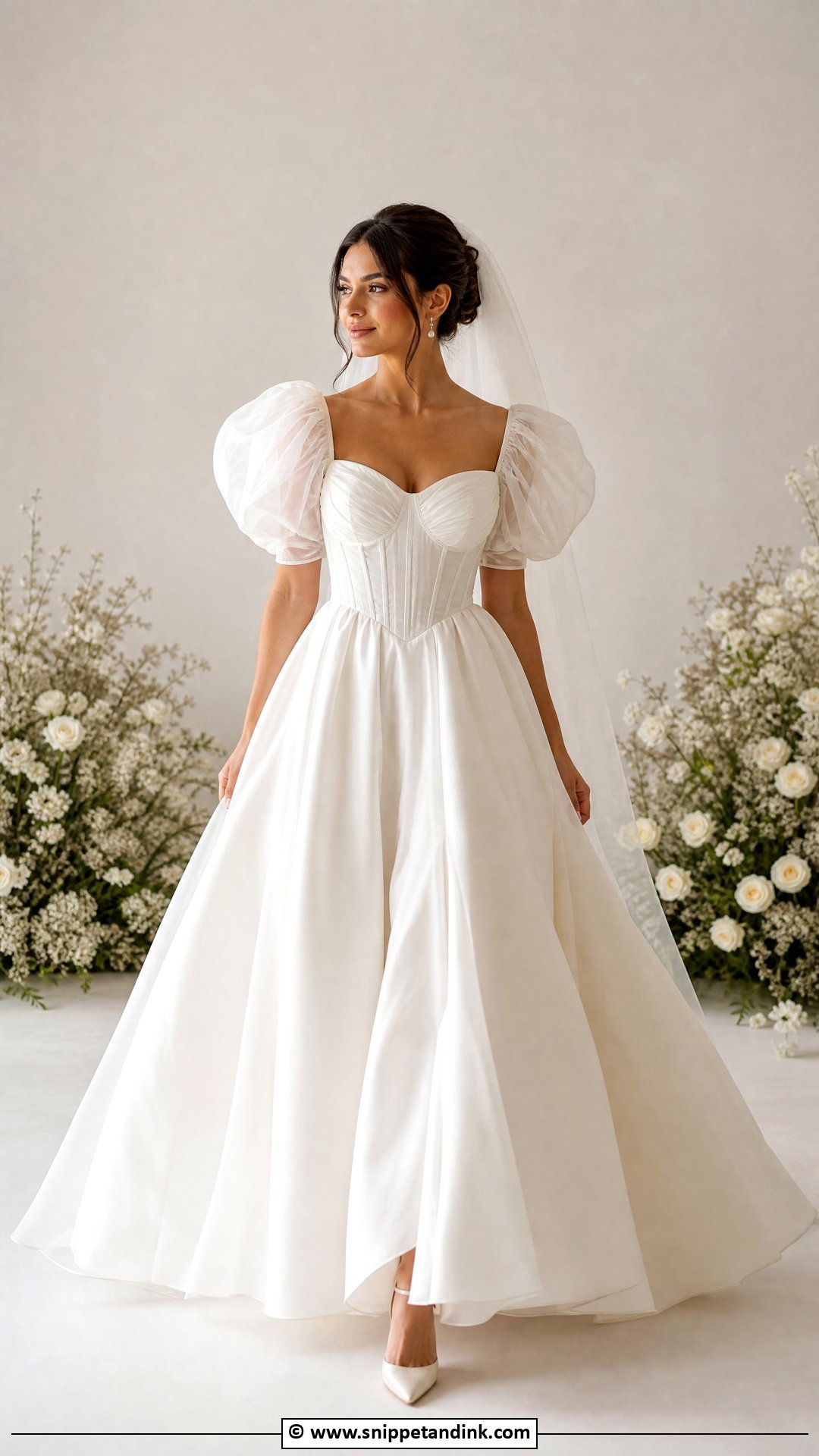
Puff sleeves add shoulder volume while the corset keeps the waist defined. Detachable puffs give flexibility. Organza feels airy, satin polished, lace vintage. Puffs widen the upper body, so the waist needs to be well defined to balance them. A simple veil and walkable heels finish it.
30. Corset Wedding Dress With Halter Neck
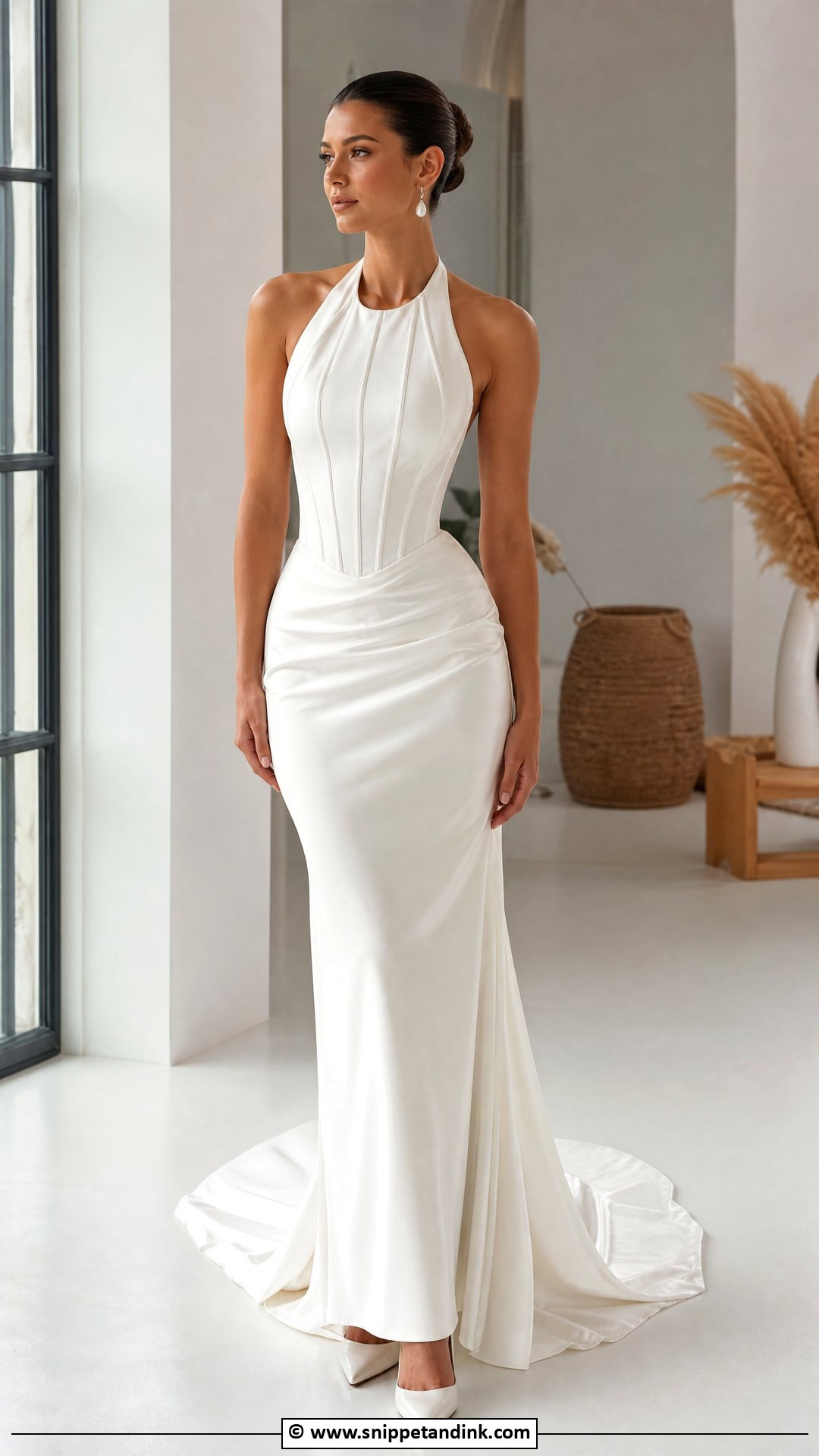
A corset with a halter neck feels modern and supports you without straps on the shoulders. The halter draws the eye upward. Fitted crepe, a soft A-line or satin column all pair well. The neck strap shouldn’t bear the dress’s weight; the corset does that. If the strap feels heavy at the neck, the waist is too loose. Skip the necklace.
31. Corset Wedding Dress With Chiffon Skirt
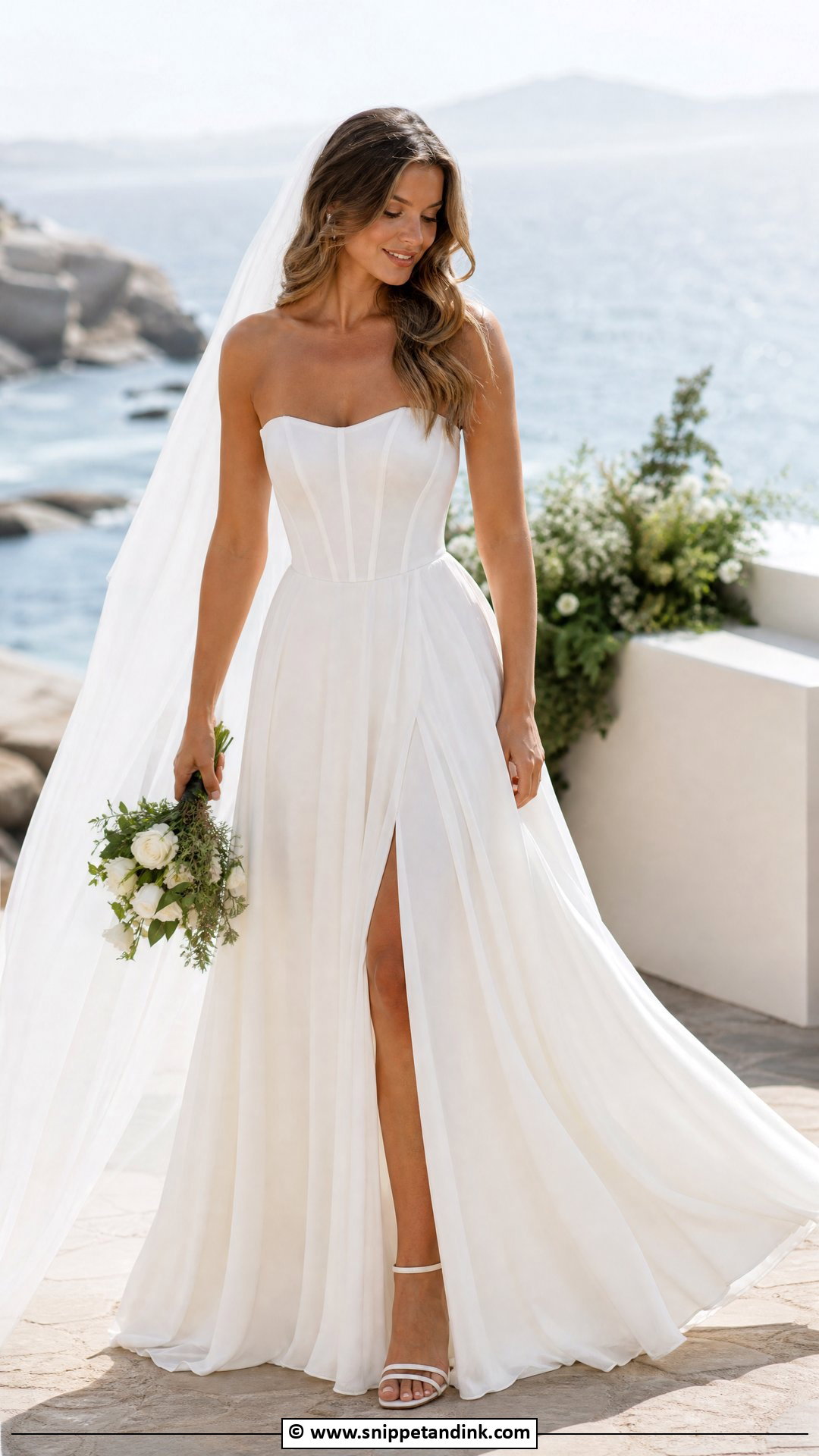
Chiffon over a corset is light and relaxed, ideal for beaches and warm venues. The bodice gives shape and the chiffon moves. It reads less formal than satin or mikado. Corset bodices can get hot, so a breathable cotton lining makes a difference outdoors. Delicate sandals and a simple comb suit it.
32. Corset Wedding Dress With Organza Skirt
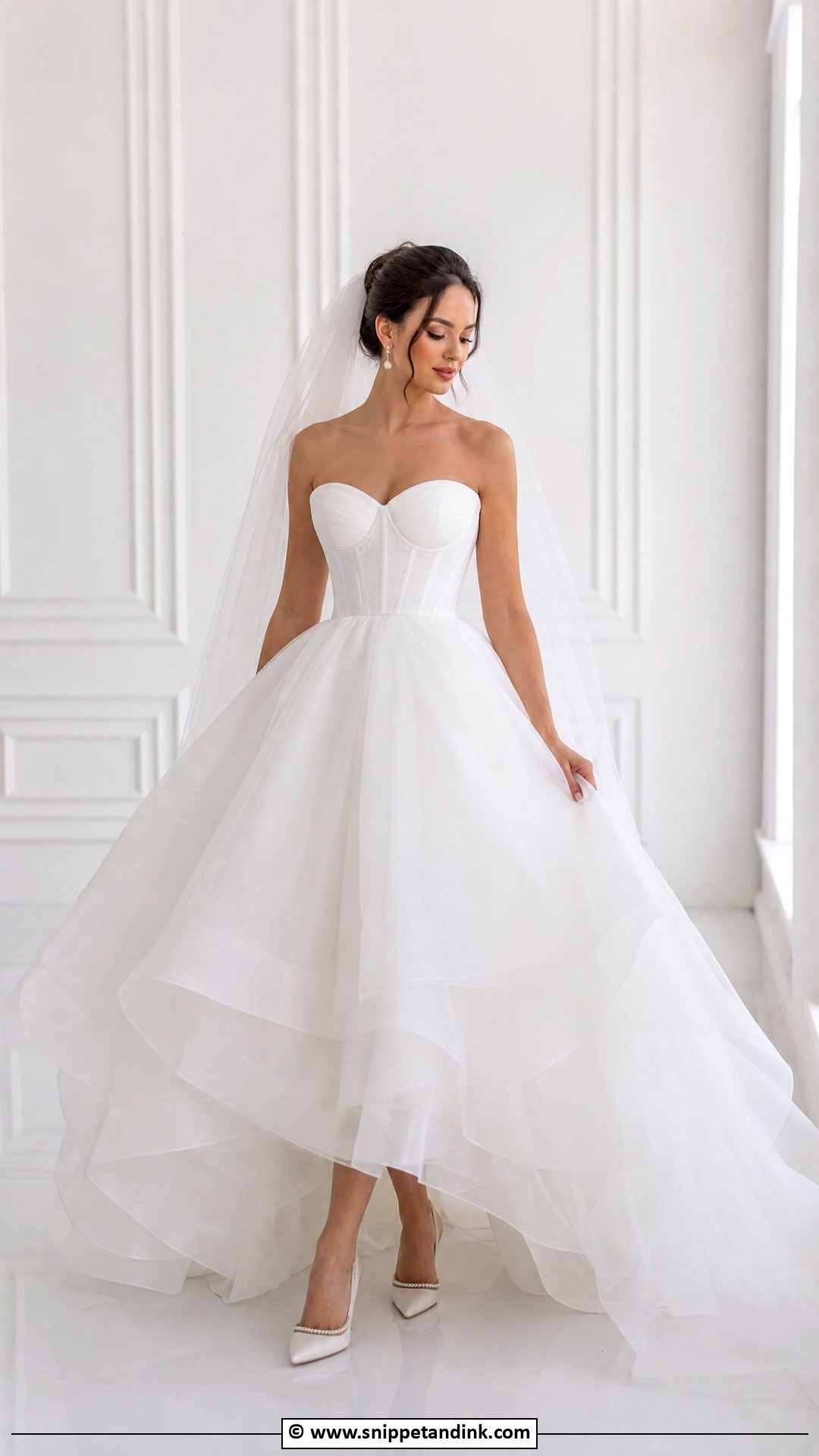
Organza is crisper than chiffon and lighter than satin, so it gives volume without much weight. A clean corset with a full translucent skirt looks modern; floral appliqué or layered ruffles look romantic. Organza creases where you sit, so lift the back of the skirt as you sit down. It catches light beautifully in movement.
33. Corset Wedding Dress With Short Skirt
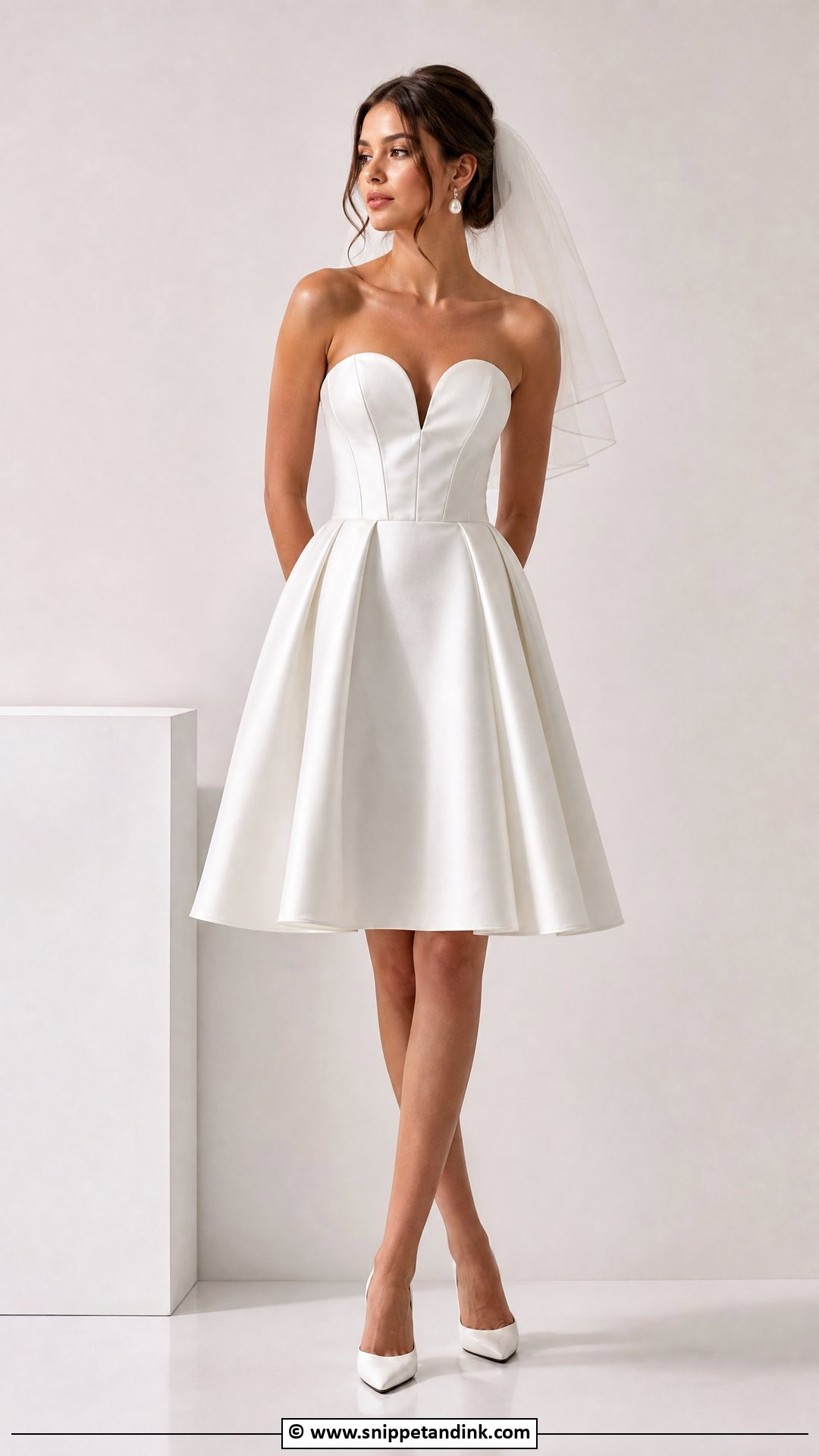
Short corset dresses suit civil ceremonies, receptions and after-party changes. A mini or tea-length skirt keeps you mobile while the bodice keeps it bridal. Satin, tulle or lace each set a different mood. If it’s your second look, echo the main gown’s fabric or neckline so the two connect. It’s a good excuse for statement shoes.
34. Corset Wedding Dress With Colored Lining
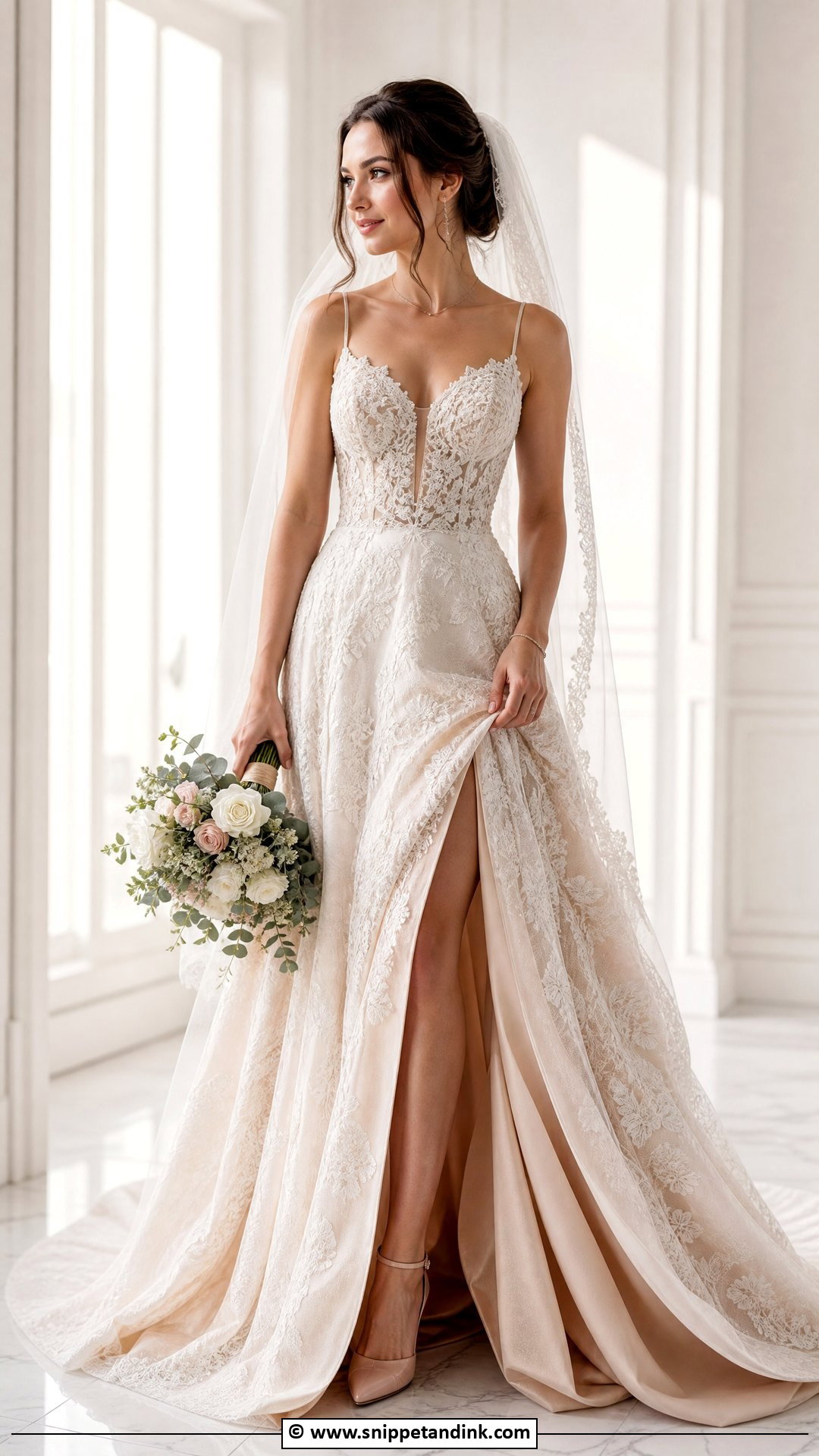
Colored lining adds warmth without leaving the bridal palette. Champagne, blush, nude and soft beige make lace stand out and soften white that feels stark against your skin. I compare linings against the bride’s skin and the lace under the same light. Match the veil to the overall gown tone, not to pure white. Neutral heels and soft makeup suit it.
35. Corset Wedding Dress With Detachable Train
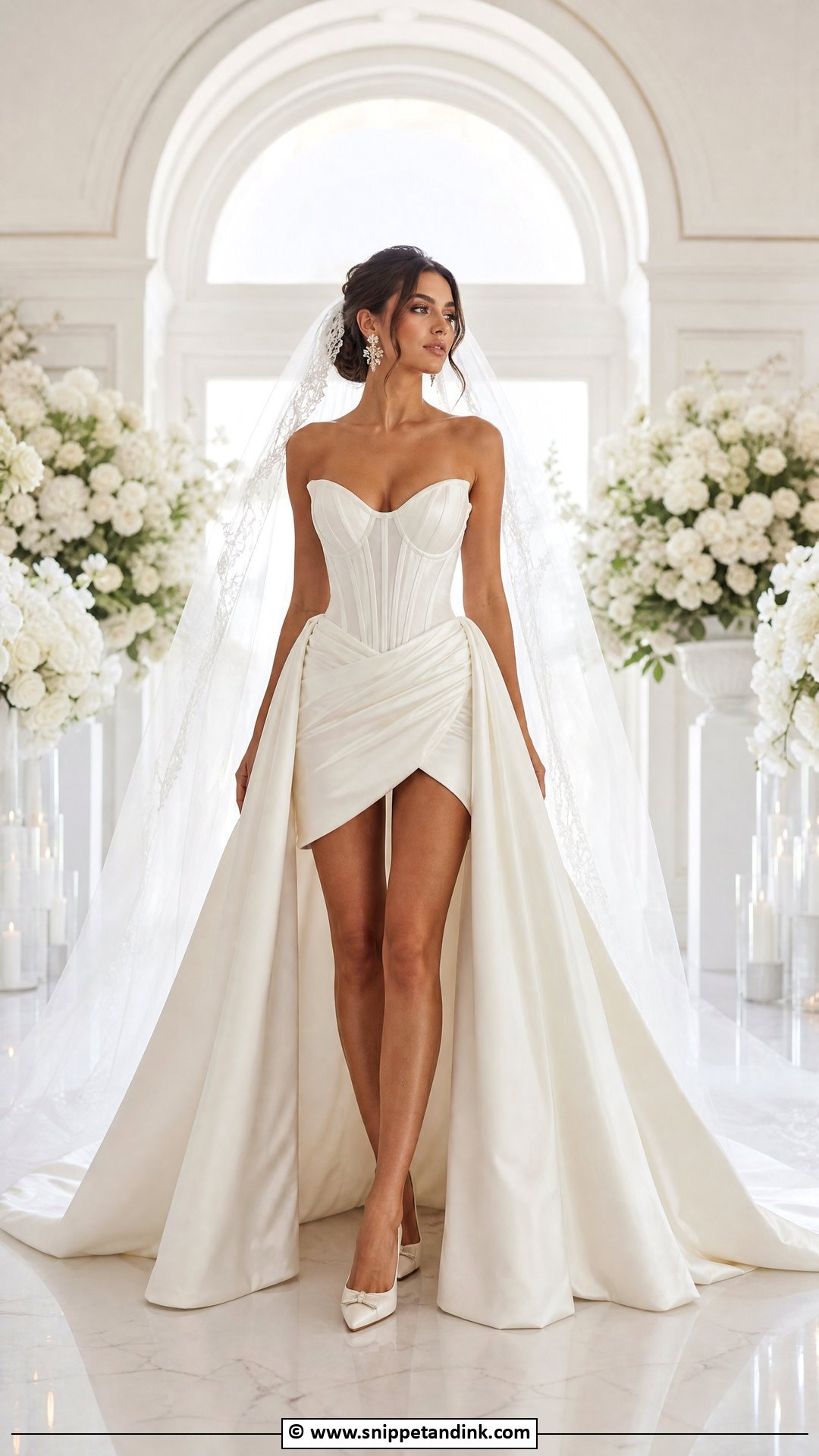
A detachable train gives the ceremony entrance and then comes off for dancing. The corset base can be fitted, A-line or column. The train should attach smoothly at the waist or back; hooks under a sash or a hidden band hide the join best. You can switch to a shorter veil or hair accessory once it’s off.
Eating, Sitting and Dancing in Boning All Day
A correctly fitted corset should let you breathe deeply, sit upright and eat a normal meal. Many brides assume discomfort is the price of the shape. It isn’t. If you can’t take a full breath at your final fitting, the corset is too tight.
- Do your final fitting after eating, not on an empty stomach. Your waist changes a little through the day.
- Sit on the front of your chair with your back straight. Slouching pushes the boning into your hips and ribs.
- Eat smaller portions through the day rather than one big meal; a full stomach against a firm bodice is uncomfortable.
- If the gown laces, ask whoever dressed you to loosen it slightly before dinner. A small adjustment makes a big difference.
On the morning, the person lacing you should tighten gradually, working from the top and bottom toward the waist, and stop when the gap at the back is even all the way down. Getting dressed in a corset takes longer than people think, so I build an extra ten or fifteen minutes into the schedule.
A Corset Should Hold You, Not Squeeze You
Corset gowns hold their popularity because they combine support and shape. Satin ball gowns, lace A-lines, basque waists, sheer bodices, detachable sleeves and minimal designs can all work, provided the dress feels secure from the first look to the last dance. Fabric, neckline, lining, boning and alterations decide how polished it looks in person. Compare complete outfits rather than single features, and choose the one you forget you’re wearing.
You'll Like These Ideas:




Leave a Reply