
Brides marrying for the second time usually arrive at my fittings knowing exactly what they don’t want, which makes them some of the easiest people to dress. The old rules about colour and formality matter far less than the venue, the season and how you want to move through the day. White, ivory, blush, silver, pale blue and tailored suits are all on the table. What follows are thirty outfits I’d put in front of a bride planning a second wedding, with the fit and fabric points I’d check for each one.
White, a Veil, or Neither the Second Time Around
The question I hear most from second-time brides is whether they’re still allowed to wear white. The honest answer is yes. White has meant celebration for a long time now, and nobody at a modern wedding is keeping score. The more useful question is whether you want it.
- If your first wedding was a big white gown, a different shape or shade can make this day feel like its own event.
- Veils are fine too. A short blusher, birdcage or simple elbow-length veil suits midi and suit looks better than a long cathedral length.
- If children from either side are part of the day, think about how they’ll see the photos years from now. Something that feels like you usually ages better than something dramatic.
- Your partner’s outfit should match your level of formality. A full gown beside a casual shirt reads mismatched in photos.
1. White Midi Second Wedding Dress
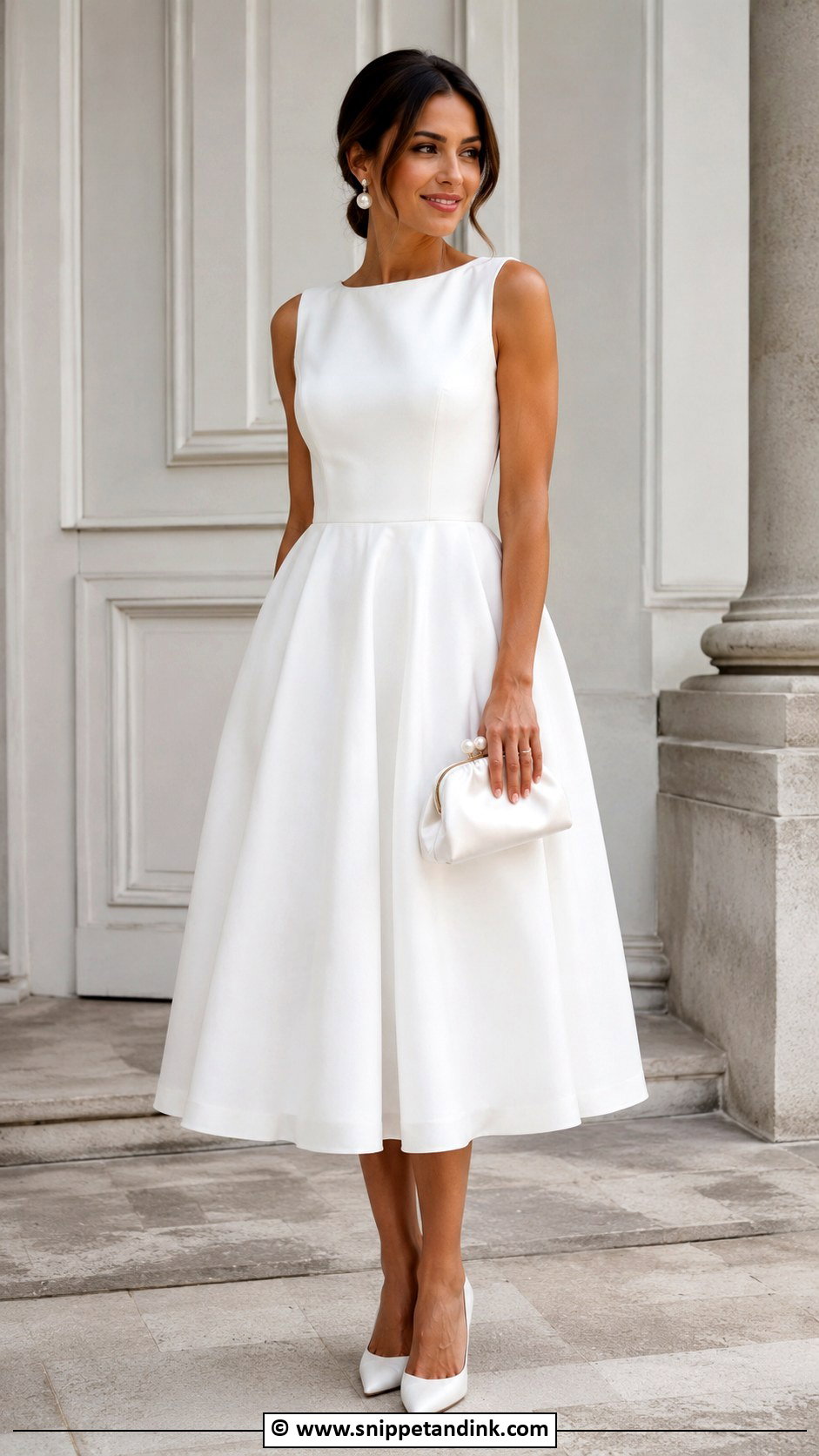
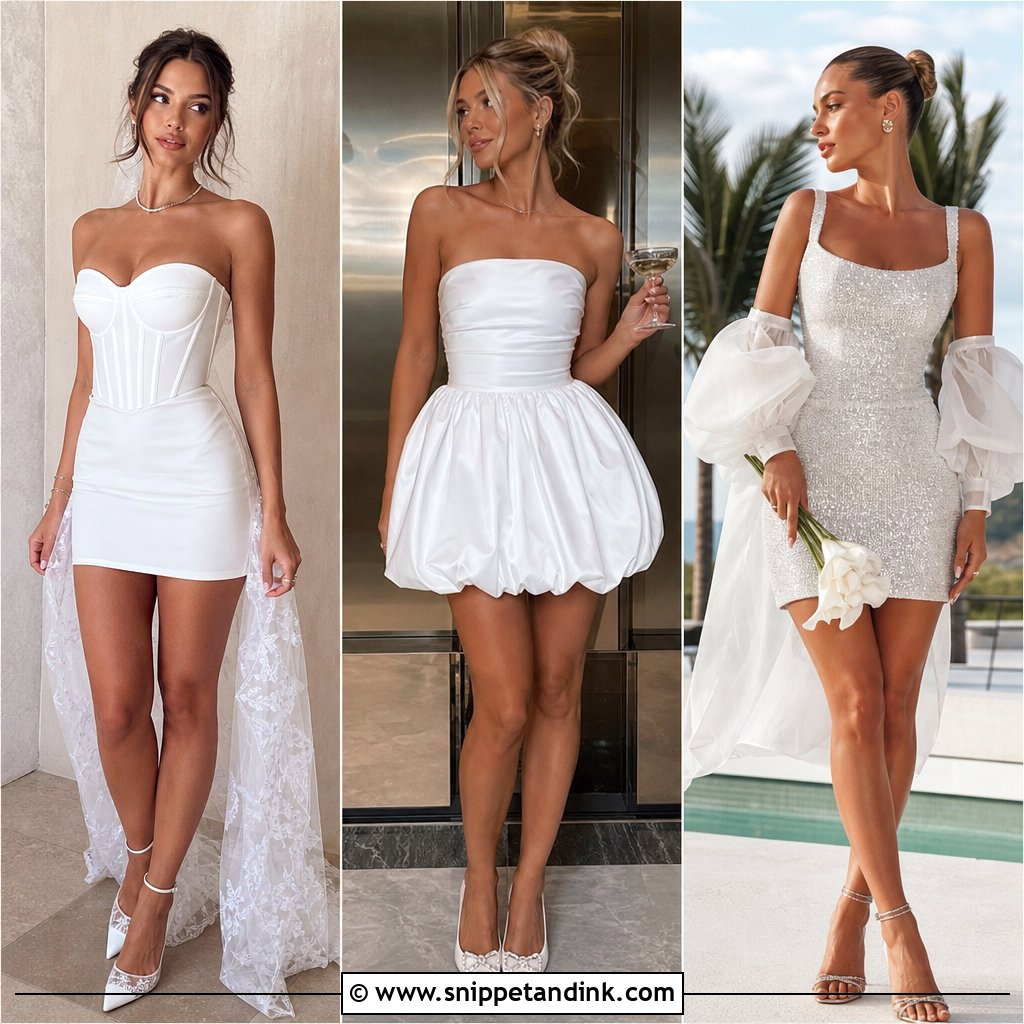
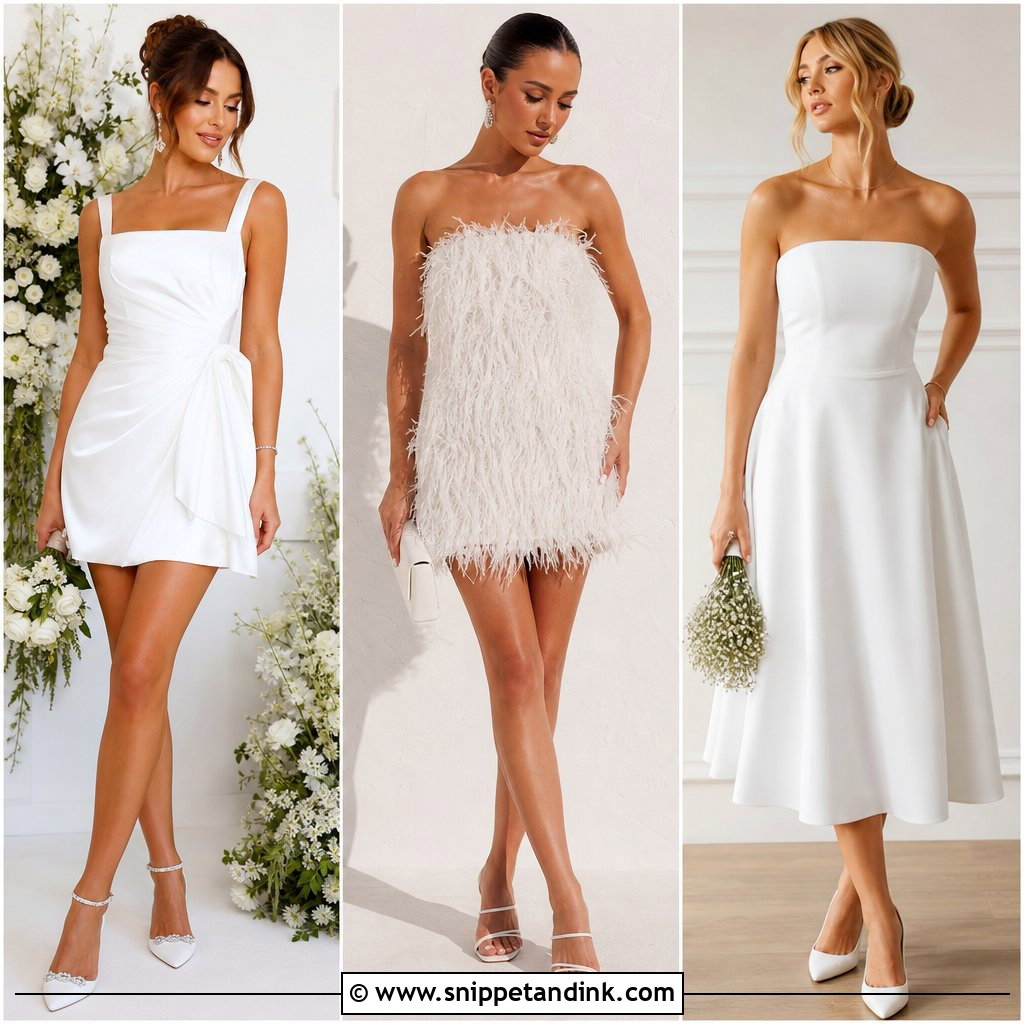
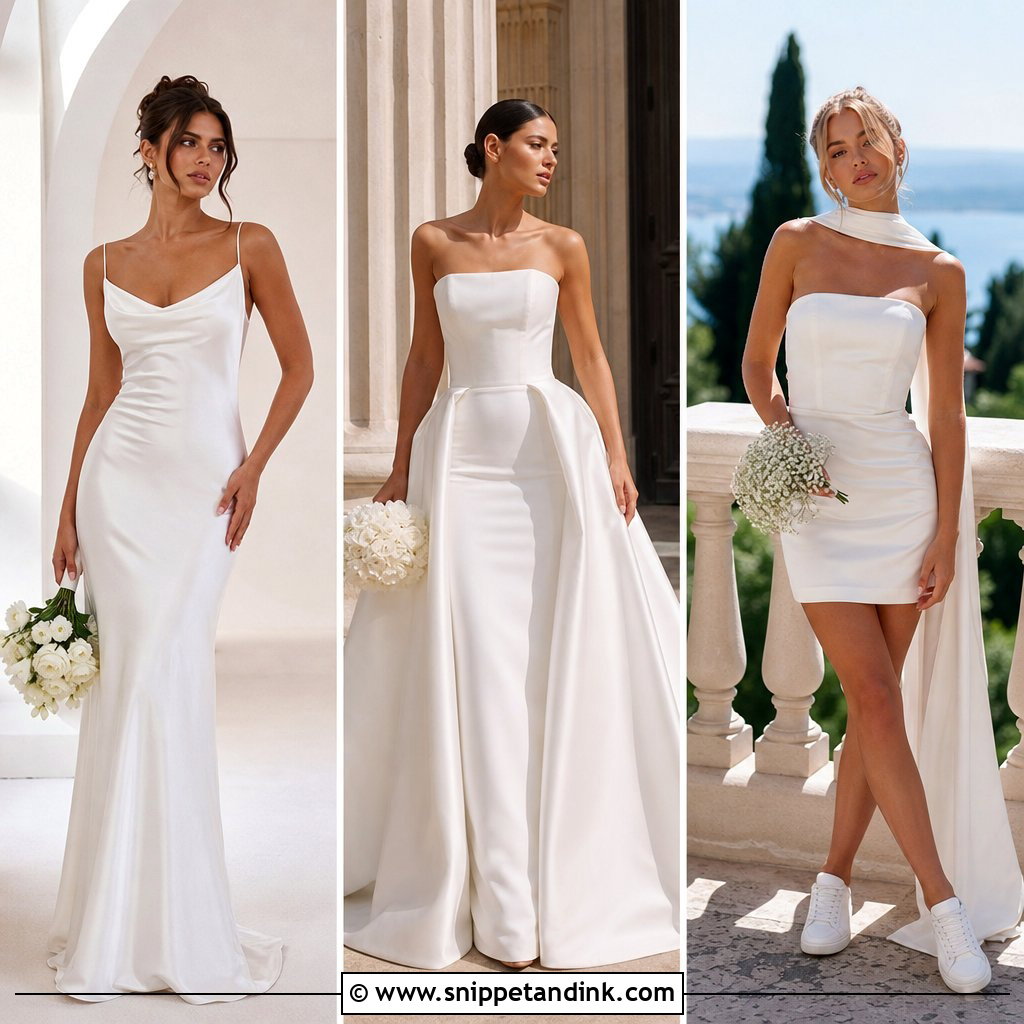
The white midi is the dress I’m asked for most for second weddings, and it earns that by working almost anywhere: a courthouse, a restaurant, a garden. Mikado and heavy crepe hold a structured bodice without boning digging in; lace softens it. The hem matters more than people think. I like it just below the widest part of the calf, because a hem that stops mid-calf on the widest point cuts the leg visually. A cropped blazer covers you for a cool evening.
2. Champagne Satin Second Wedding Dress
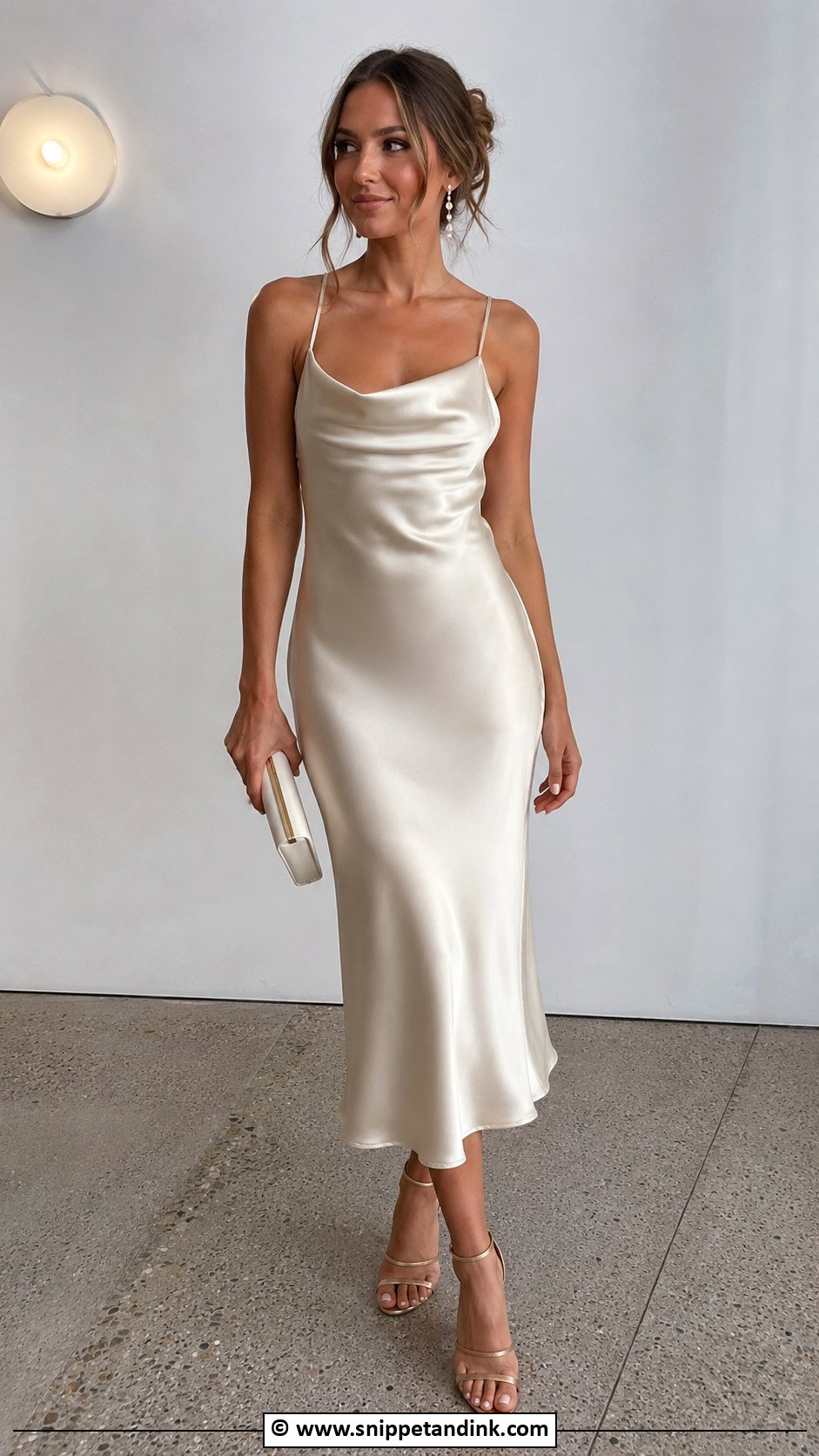
Champagne is my first suggestion when bright white makes a bride feel like she’s dressing for someone else’s wedding. It warms the skin rather than reflecting cold light back at it, and in afternoon light it glows. The cut decides the mood: bias-cut slips are sensual and unforgiving, a cowl neck is softer, an A-line is the easiest to wear for a long day. Keep jewellery in gold to stay in the same warm family.
3. Lace Tea Length Second Wedding Dress
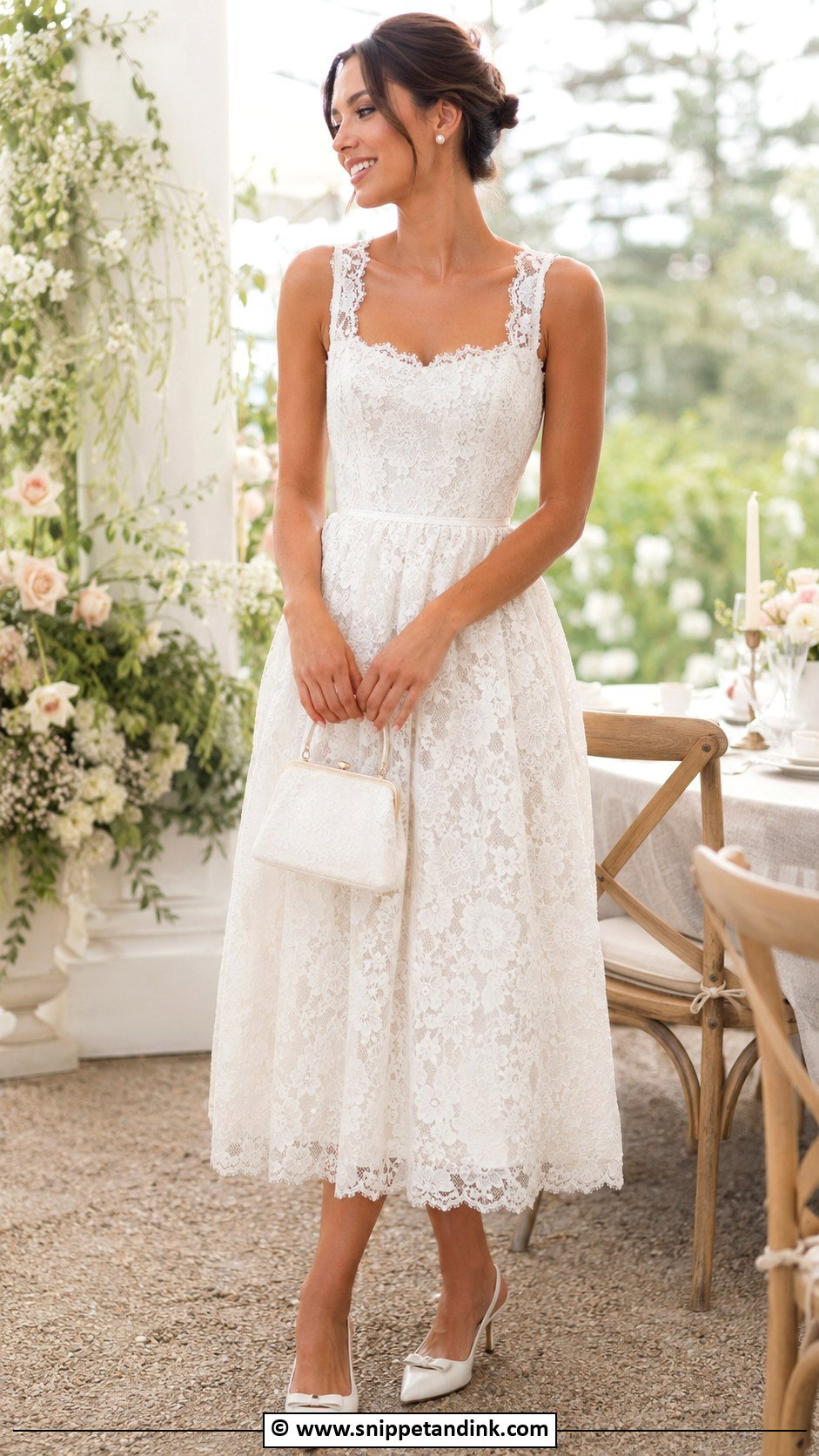
Tea length falls between knee and ankle, and its practical advantage is that nothing drags. Brunch weddings, dance floors and garden paths are all easier. Floral lace reads vintage; geometric lace reads modern. I’d pair it with slingbacks rather than closed pumps, since the strap shows off the ankle that tea length is designed to reveal. A short birdcage or blusher veil suits the proportion if you want one.
4. Ivory Jumpsuit Second Wedding Outfit
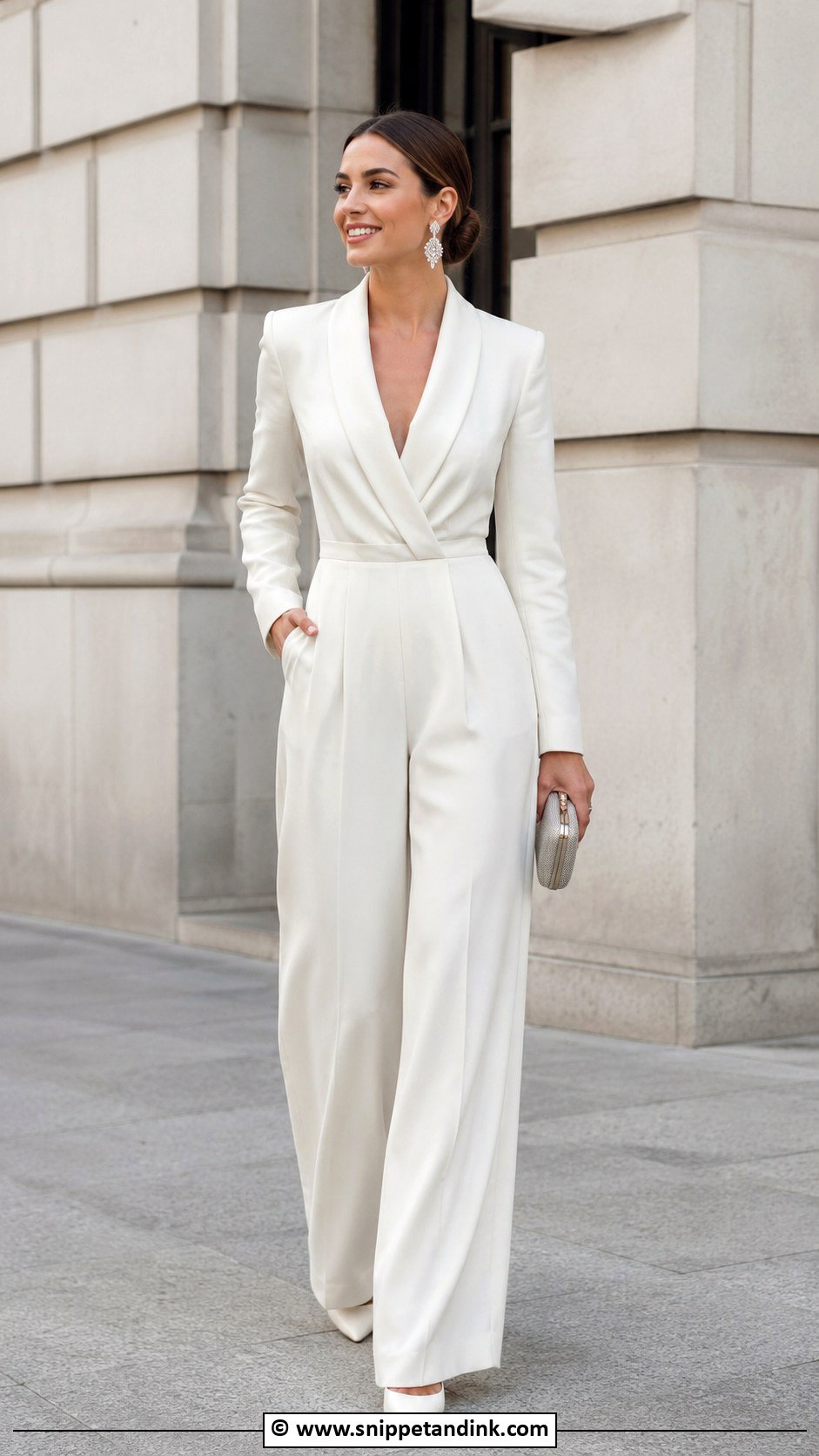
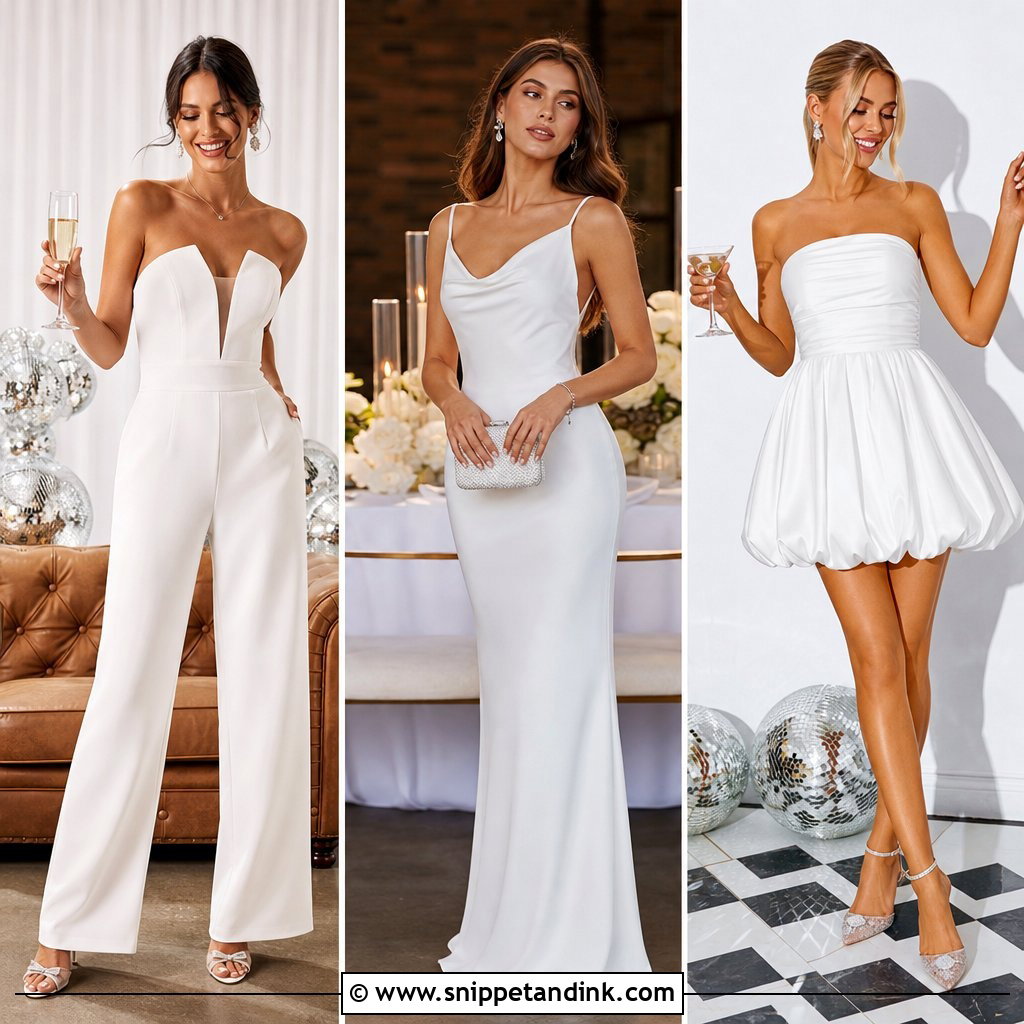
An ivory jumpsuit suits the bride who has never felt like herself in a skirt. The fit through the hip and rise is the whole battle: too short in the rise and it pulls when you sit, too long and it bags. I always ask brides to sit, climb a step and raise their arms in the fitting room. A wrap bodice or cape sleeve adds the bridal note, and pointed pumps lengthen the wide leg.
5. Blush A Line Second Wedding Dress
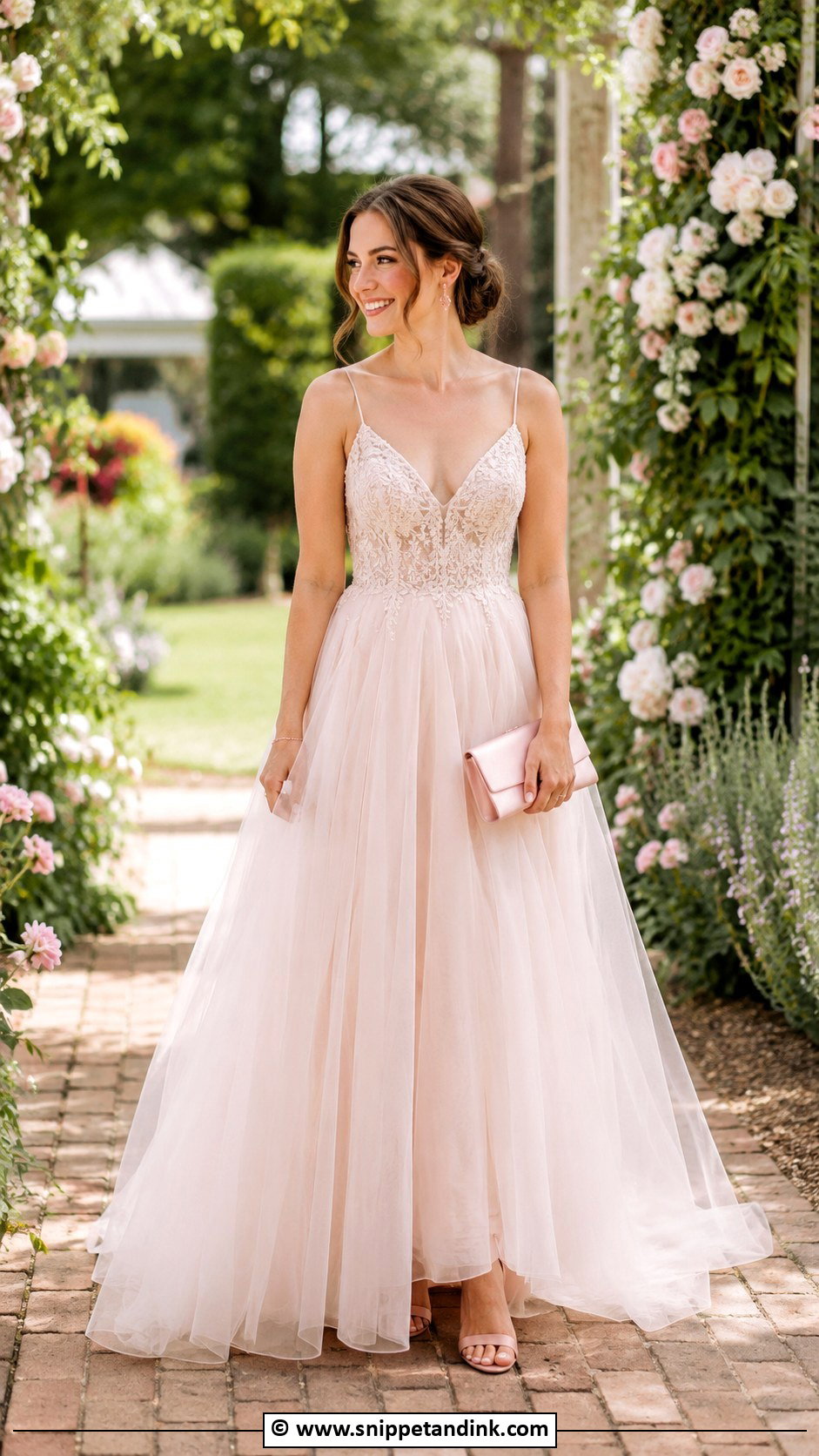
Blush gives colour without commitment, and the A-line is the shape I trust most for an all-day wear because it defines the waist and then leaves the hips alone. Tulle reads airy and young, chiffon moves the most, satin looks most formal. Pale blush can disappear against very fair skin, so I hold the fabric to the face in daylight before ordering. Rose gold jewellery picks up its warmth.
6. Cream Suit Second Wedding Outfit
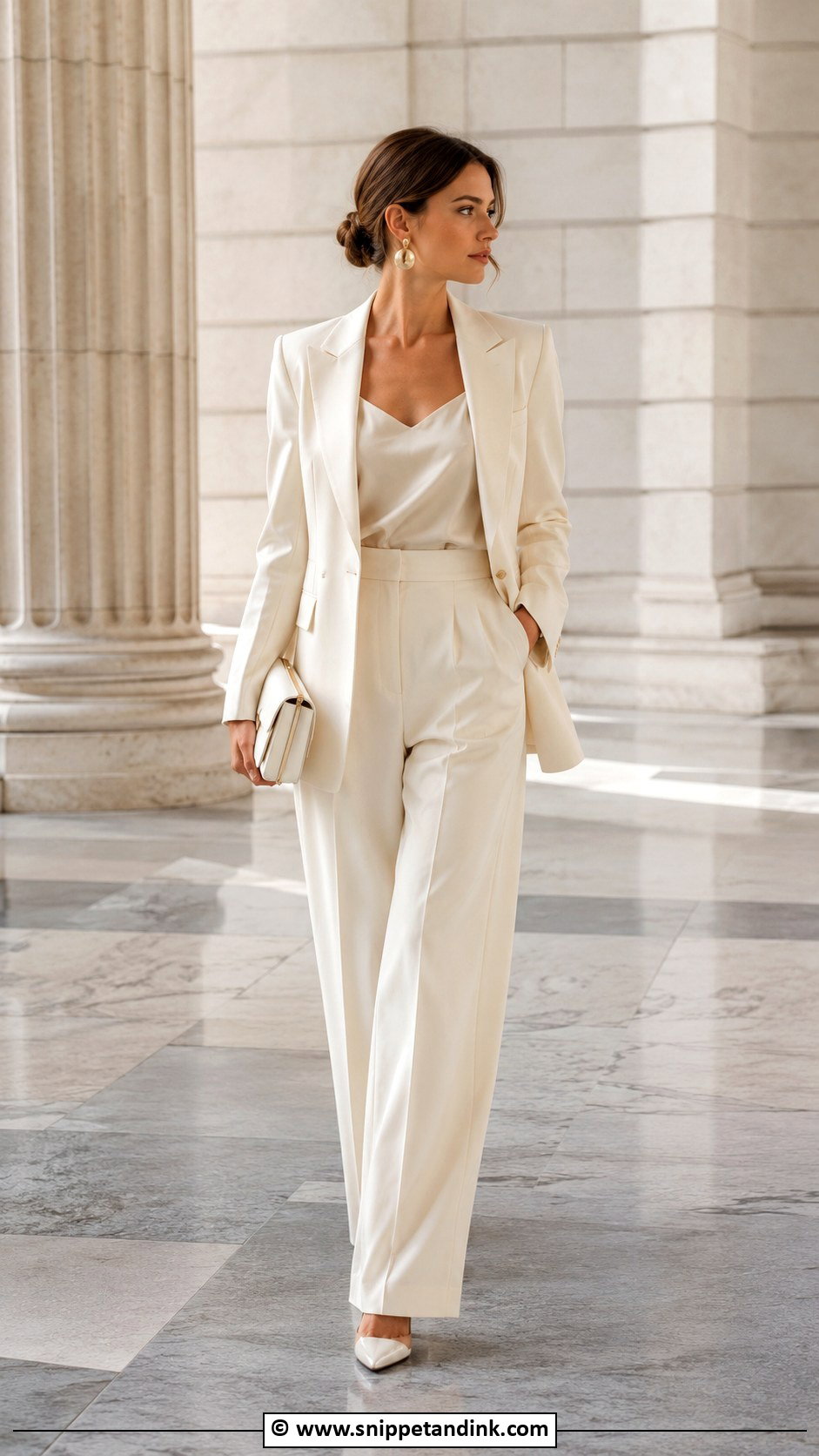
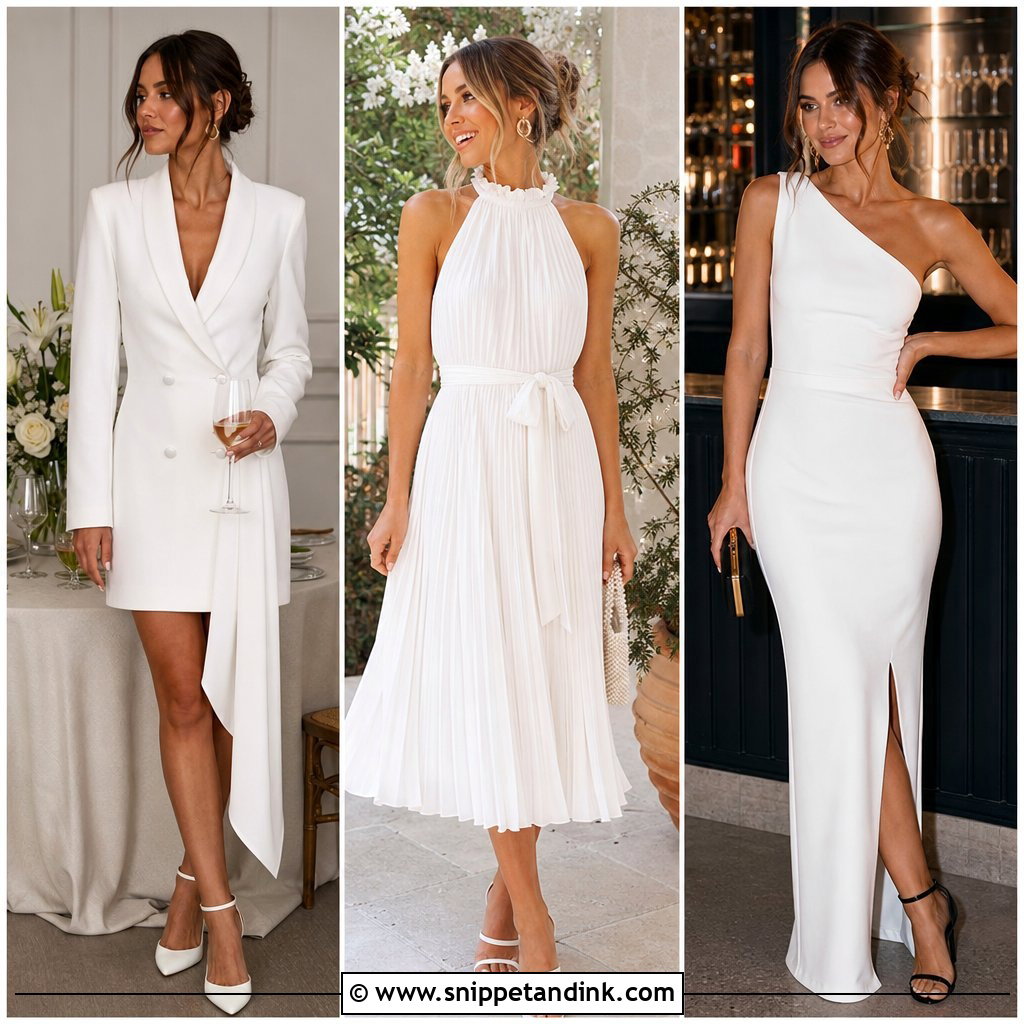
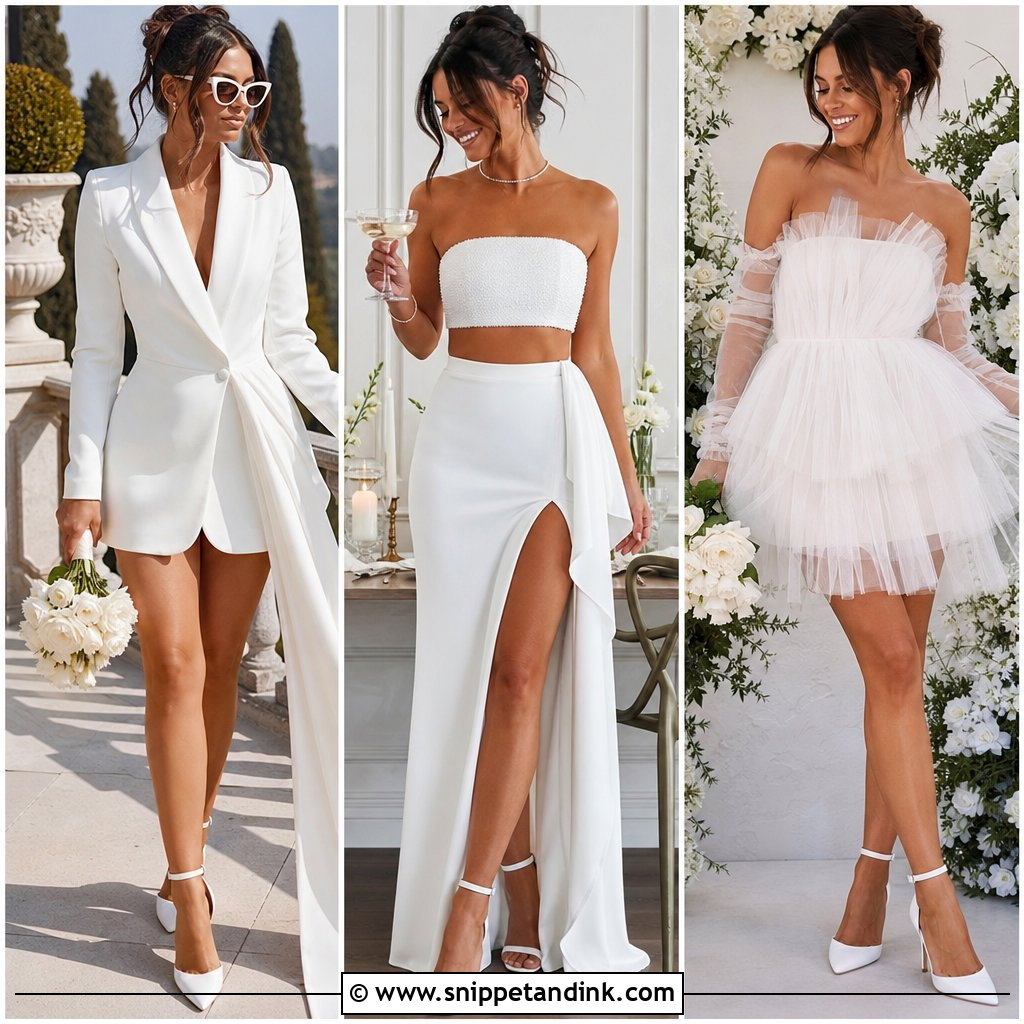
Suits are where I see second-time brides at their most relaxed. Wide-leg trousers with a fitted blazer, or a soft tuxedo-inspired cut with satin lapels, both read bridal in cream. The detail that separates a wedding suit from an office one is what’s underneath, so I’d choose a lace bodysuit or silk camisole. The trousers should be hemmed for the exact shoe you’ll wear; a cream suit shows every bit of floor dust on a hem that’s too long.
7. Off Shoulder Second Wedding Dress
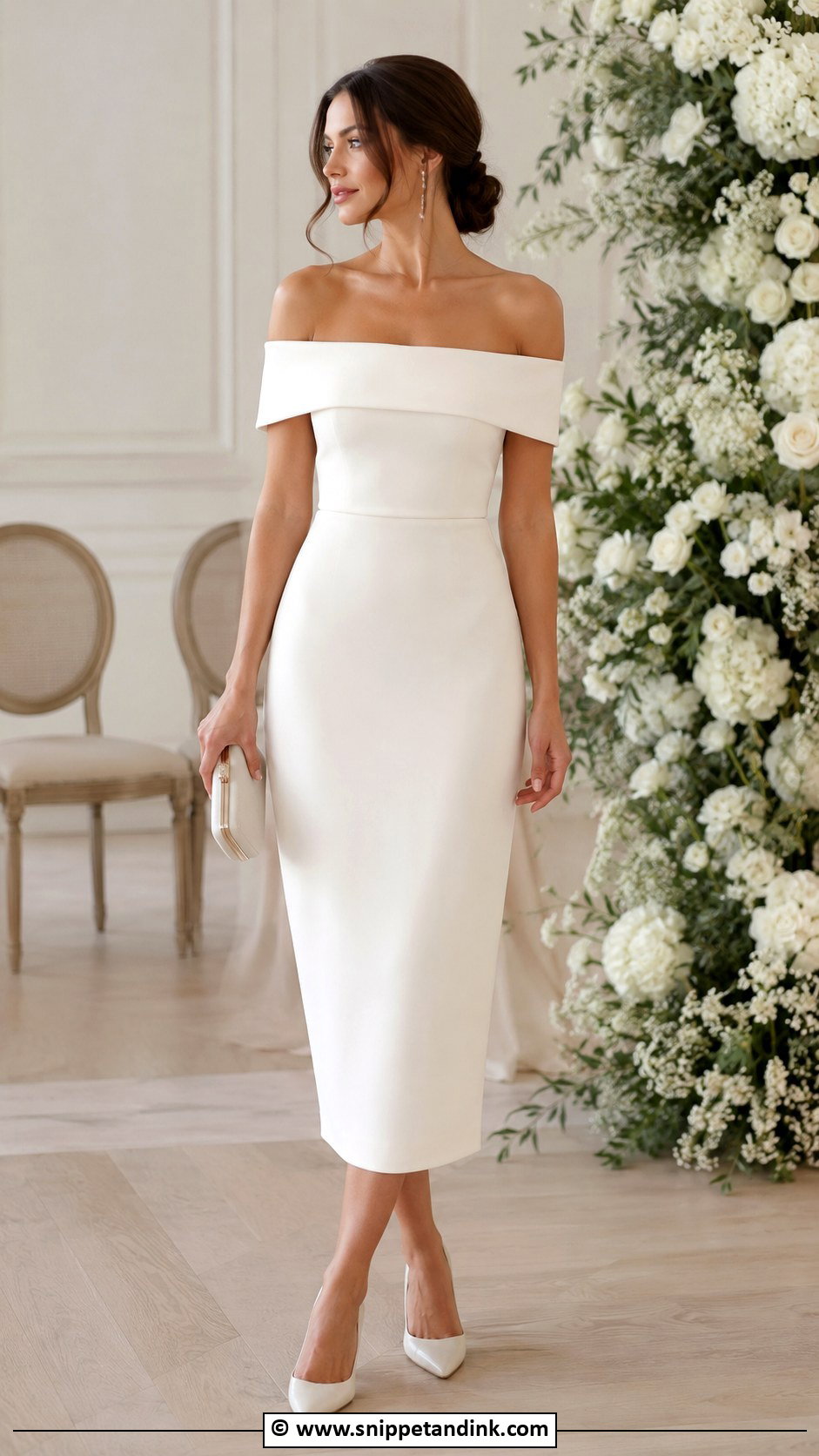
An off-shoulder neckline frames the collarbone and draws the eye up to the face. The thing to check is how it stays up. A well-made bodice has a firm elastic or a silicone grip band inside the neckline; without one, the sleeves creep up your arms every time you hug someone. Skip the necklace, since the neckline is the statement. Crepe looks modern here, lace more romantic.
8. Simple Slip Second Wedding Dress
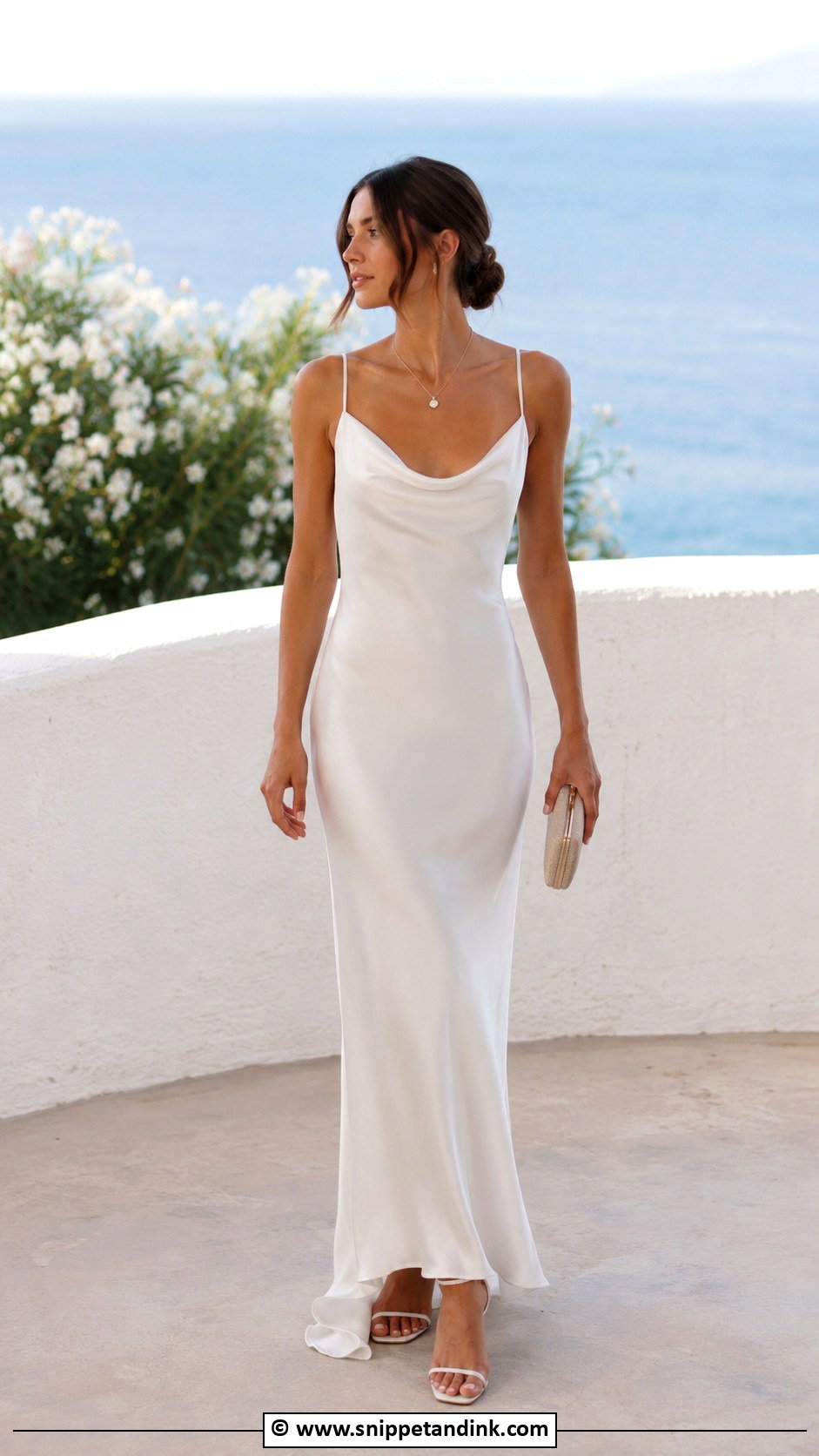
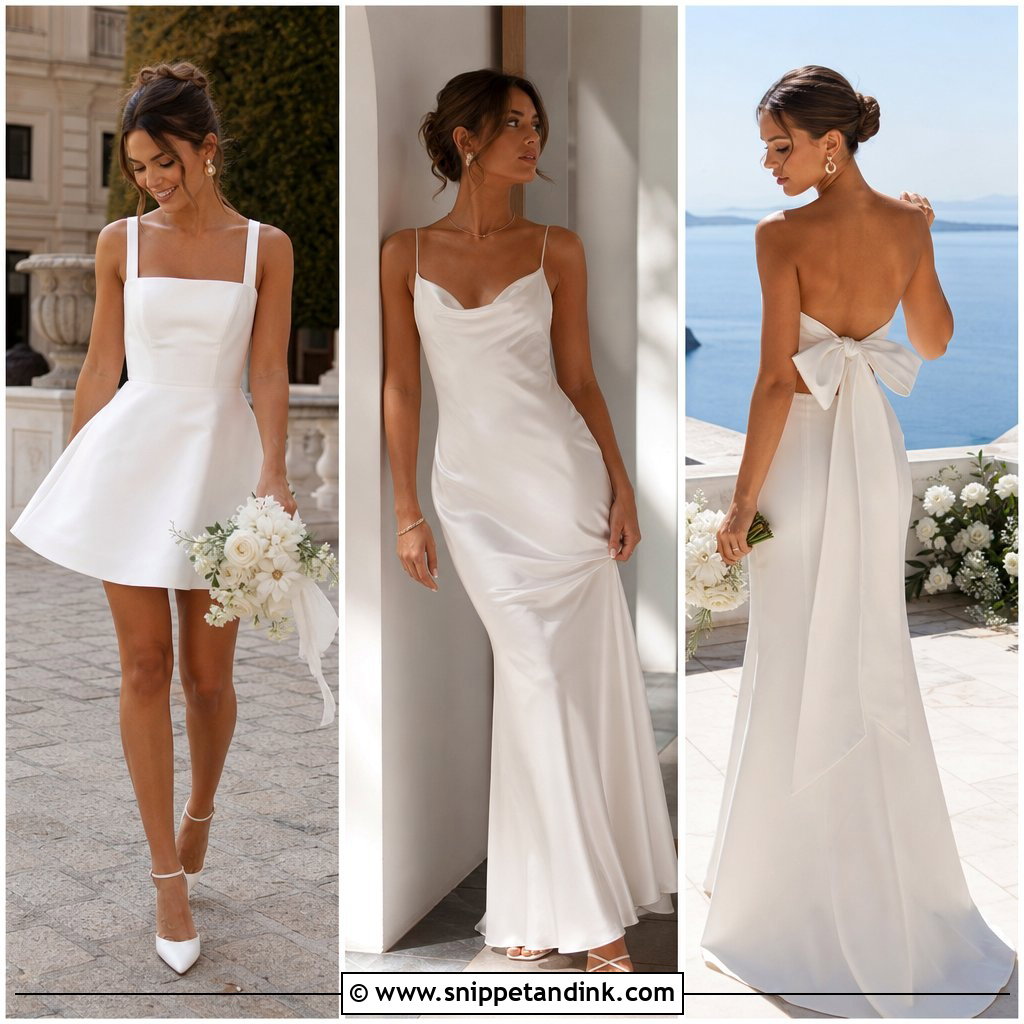
Slip dresses look simple and are the hardest dress on this list to fit. Bias-cut silk or charmeuse skims everything, so the undergarments matter as much as the dress. I always fit a slip with the exact no-line underwear the bride will wear. It’s lovely at beach and destination weddings, where its light weight is an advantage. A sheer cape or blazer adds coverage for a ceremony.
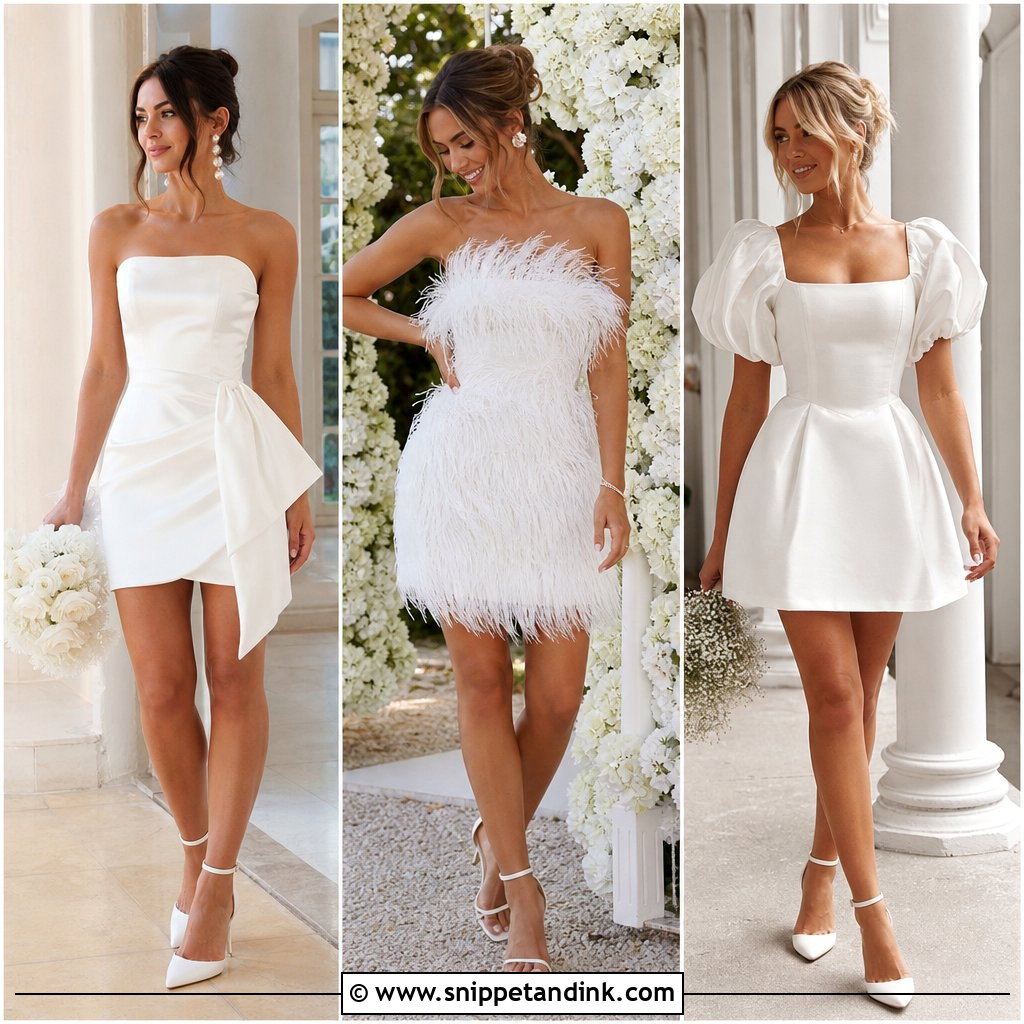
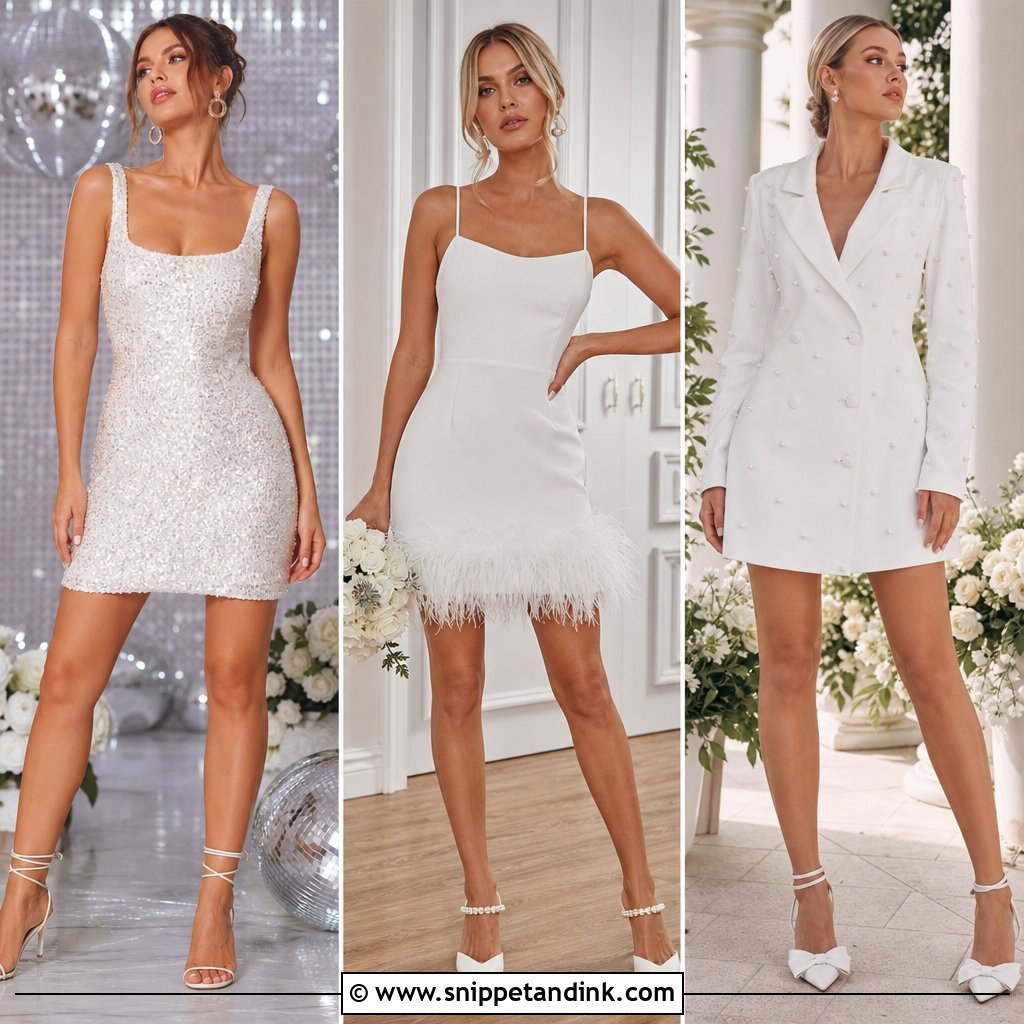
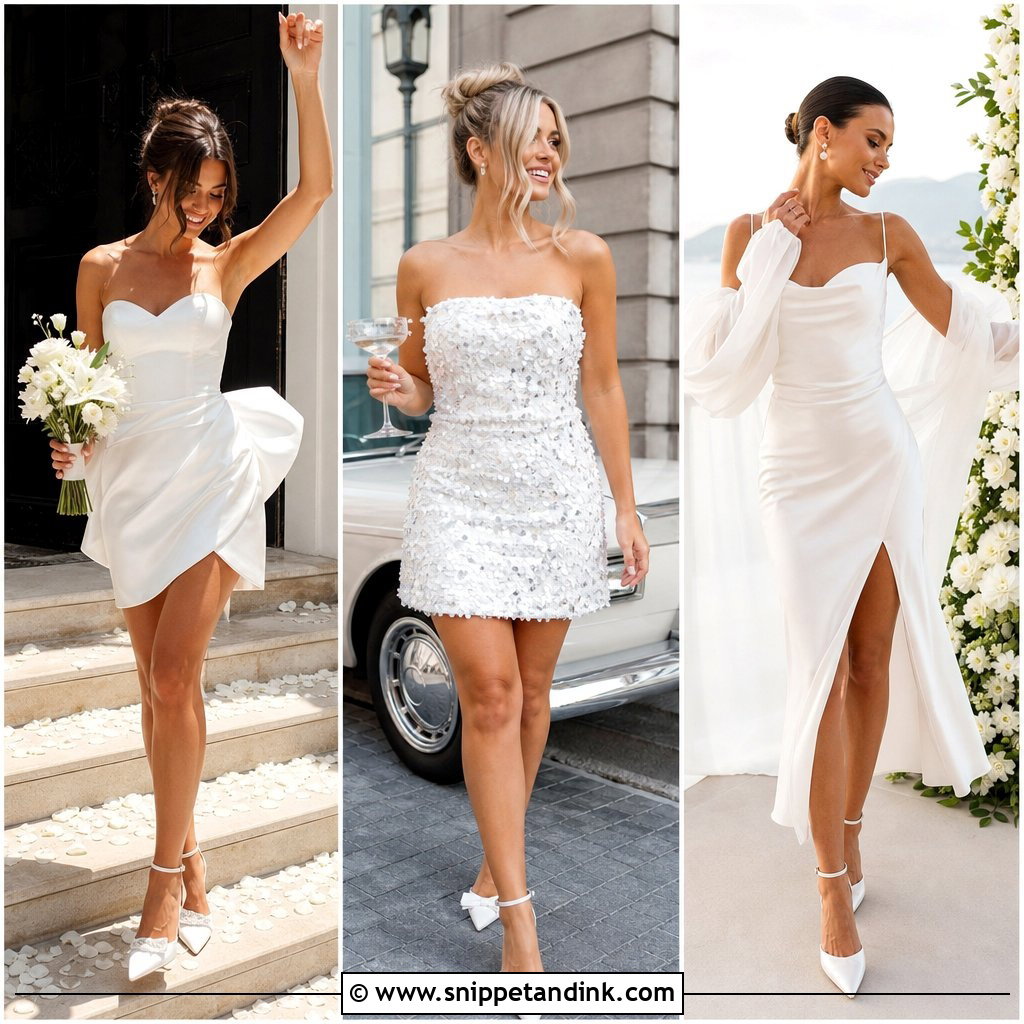
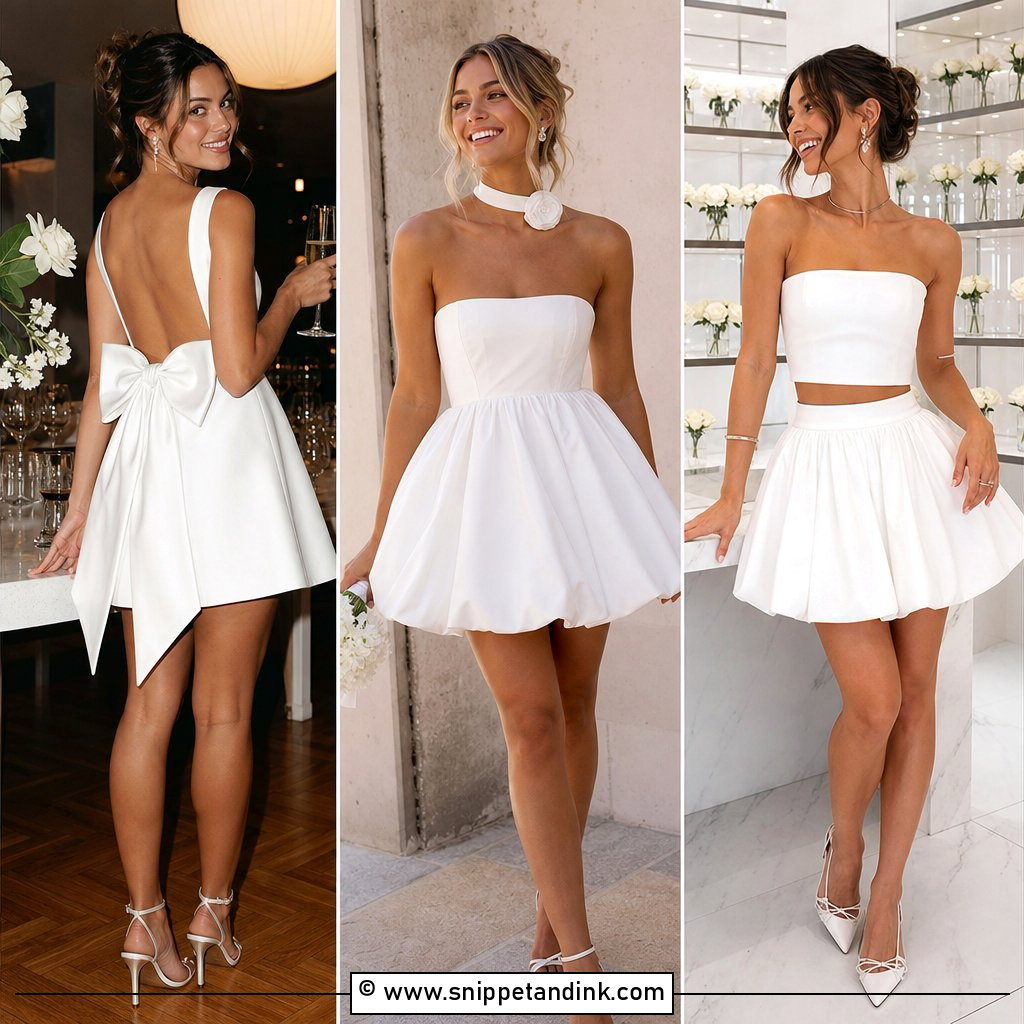
9. Short White Second Wedding Dress
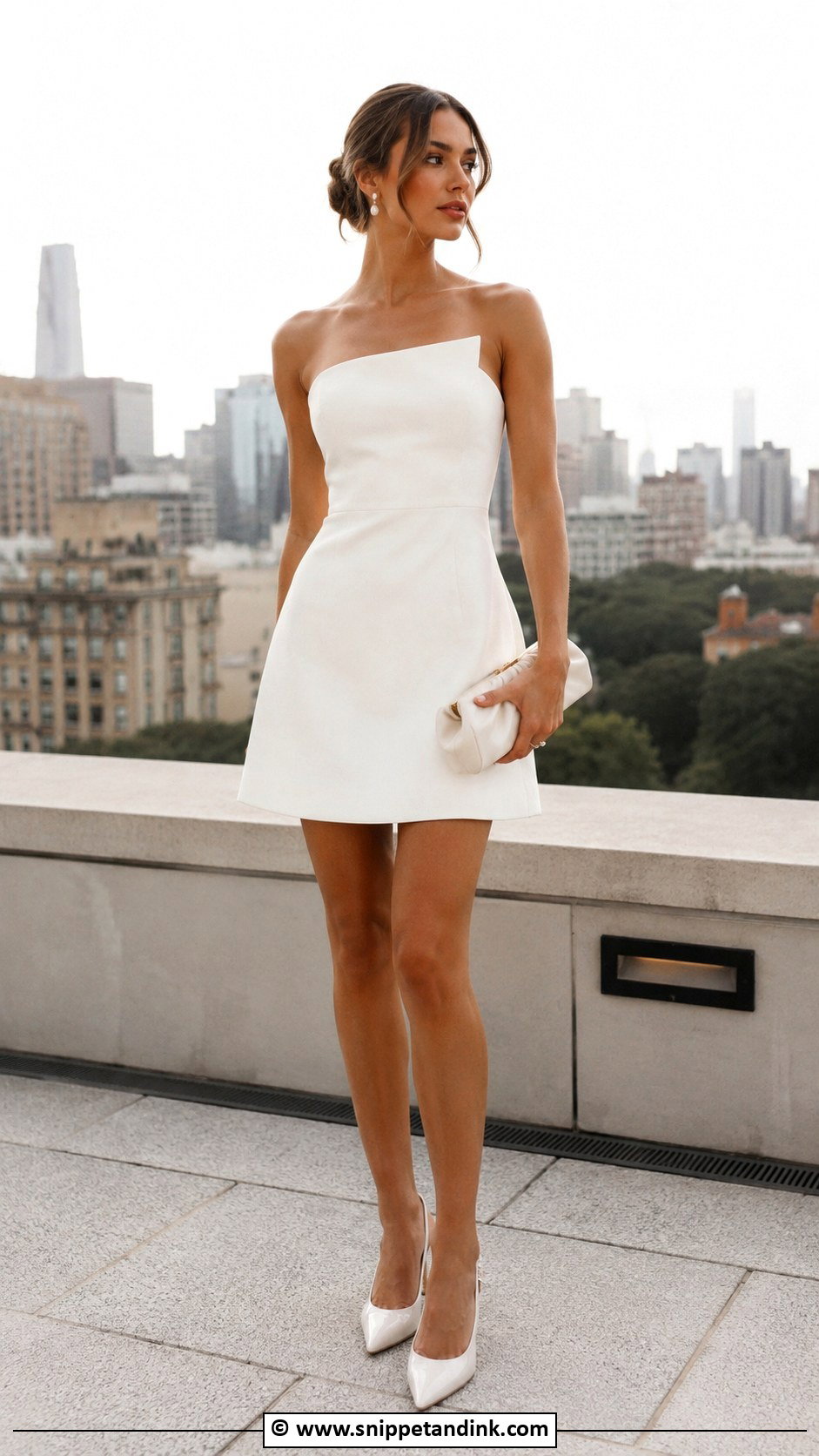
A short white dress lets you dance and show off great shoes, and it works for courthouse ceremonies and rooftop parties. The difference between bridal and casual is in the detail: structure, a feather hem, lace or a long sleeve. A plain cotton mini can look like a summer day dress, so choose something with a clear bridal finish. A long veil adds drama if the ceremony is more formal.
10. Floral Embroidered Second Wedding Dress
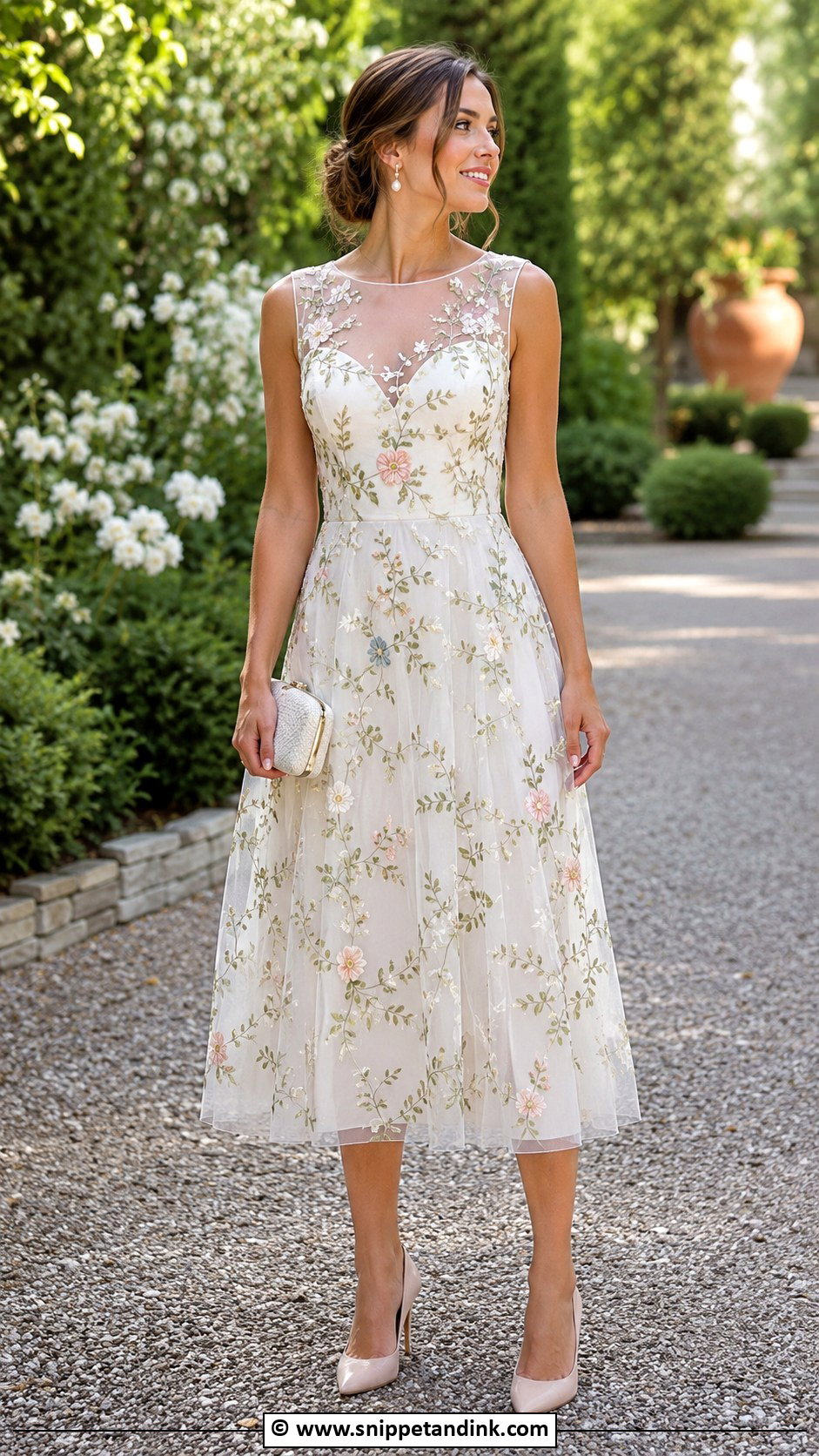
Embroidery gives a dress personality without a traditional ball-gown shape. Tonal ivory embroidery is subtle; coloured thread in blush, blue or green feels more artistic. I’d keep accessories to pearl earrings and nude heels, because embroidery is already detailed. It suits garden and outdoor ceremonies in spring and summer especially well.
11. Beaded Second Wedding Dress
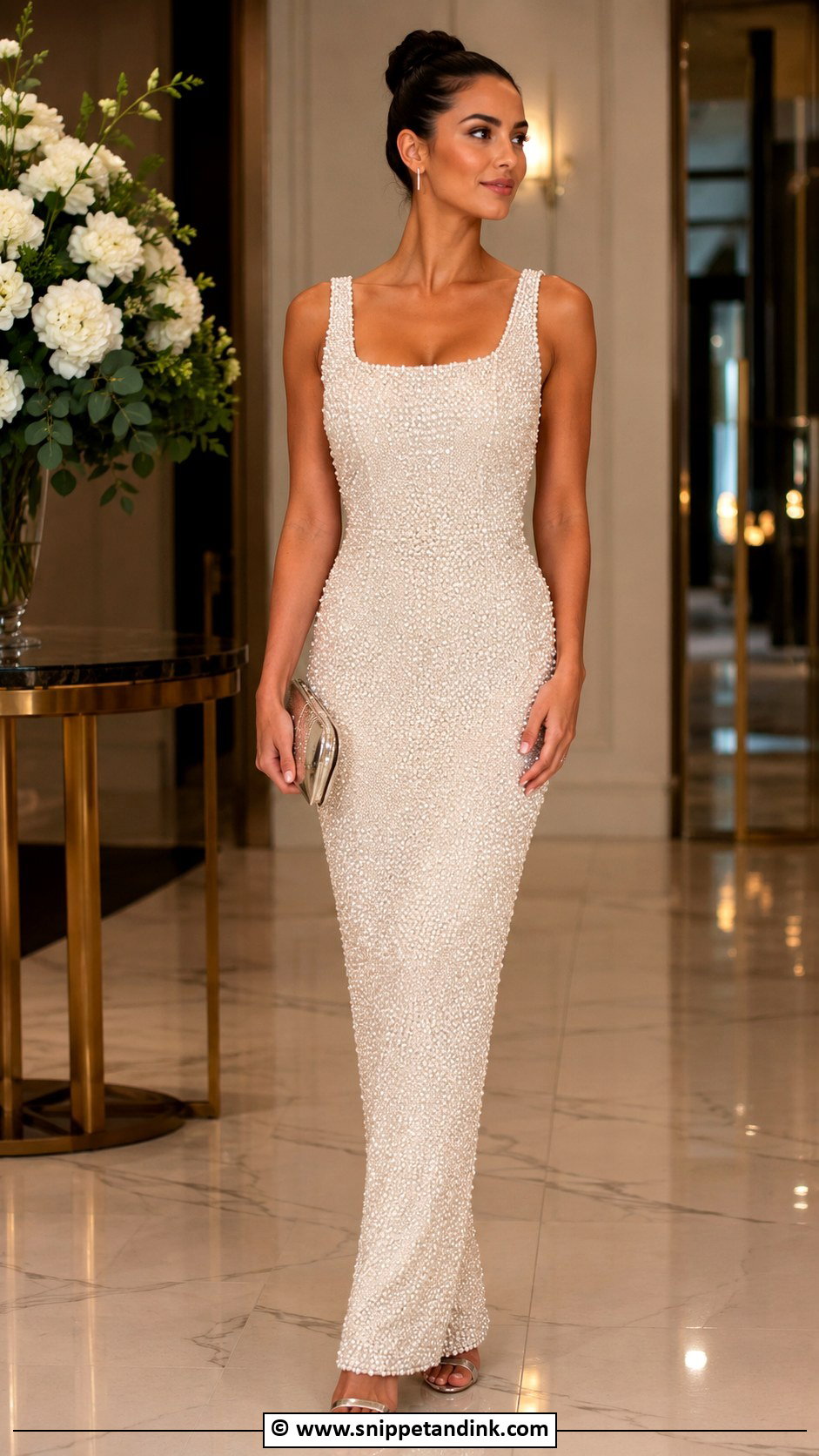
Beading is heavy. A fully beaded gown can weigh far more than you expect, so for a long evening I lean toward a beaded midi or sheath with beading concentrated at the bodice. Silver beading reads cool and glamorous; champagne and pearl beading are warmer. Keep accessories refined. A low bun lets the neckline and beadwork show.
12. Long Sleeve Second Wedding Dress
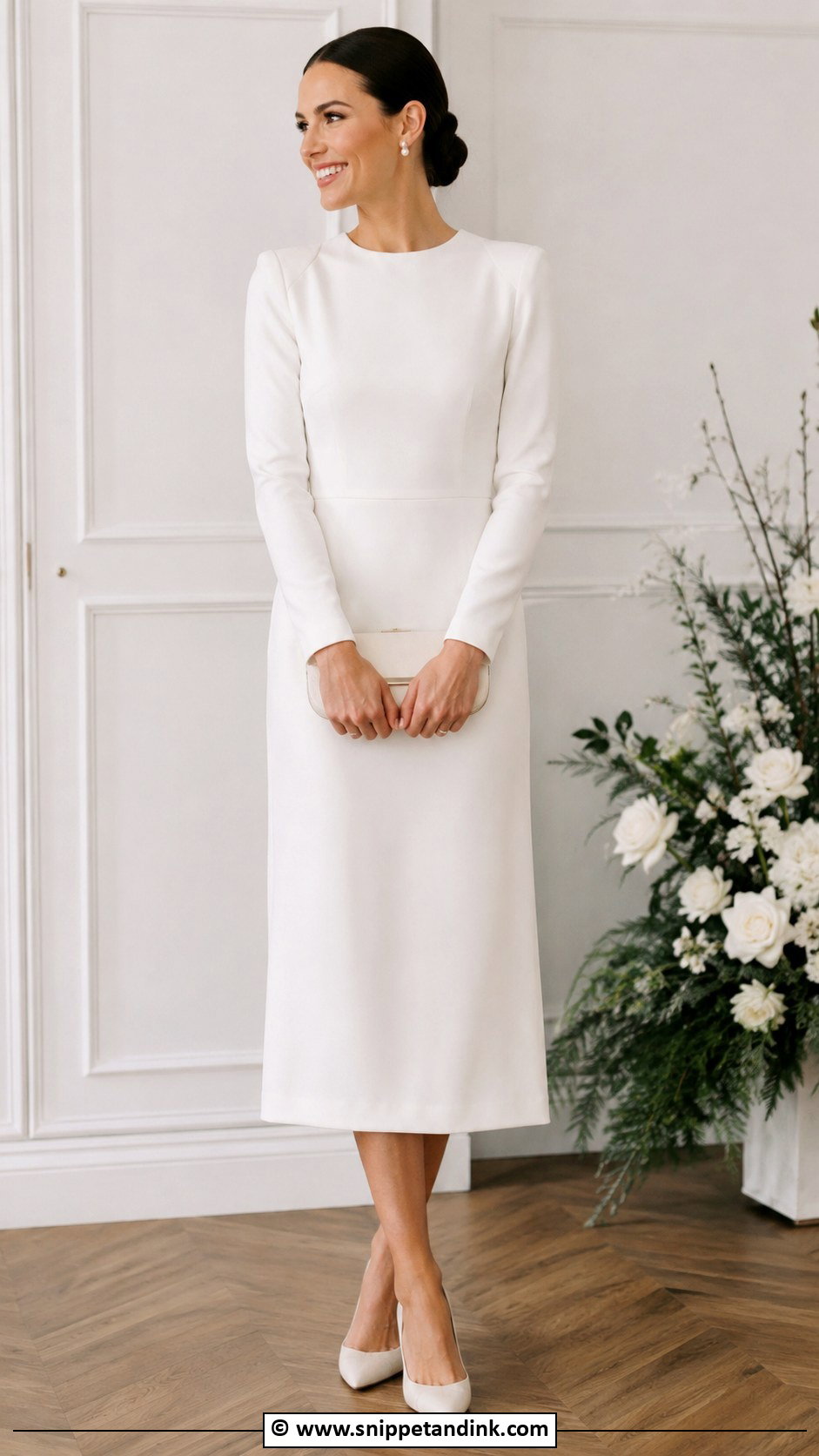
Long sleeves suit cooler months and formal indoor ceremonies. The arm’s range of movement is where sleeves fail: if the sleeve is set too low, you can’t lift your arms to hug or dance. I check that at every fitting. Lace sleeves read classic, sheer sleeves delicate, crepe sleeves clean. A fitted waist or slit keeps it from feeling too covered.
13. Two Piece Second Wedding Dress
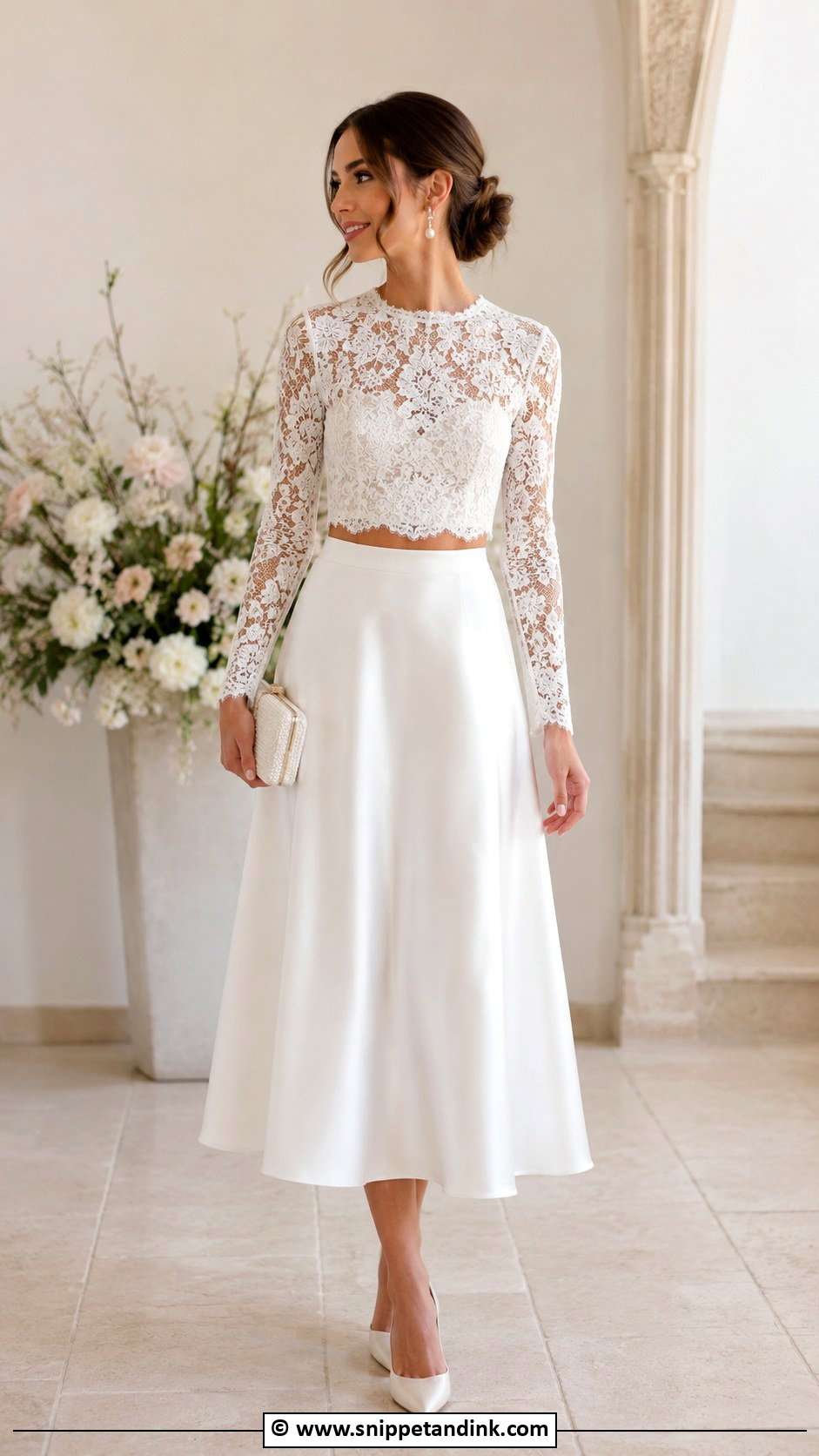
Separates are my favourite solution for brides whose top and bottom measurements fall in different sizes. Pair a lace top with a satin skirt, or a structured crop top with wide-leg trousers. Keep the colours close in tone, since two whites rarely match perfectly. The real bonus: each piece can be worn again separately after the wedding.
14. Tulle Skirt Second Wedding Outfit
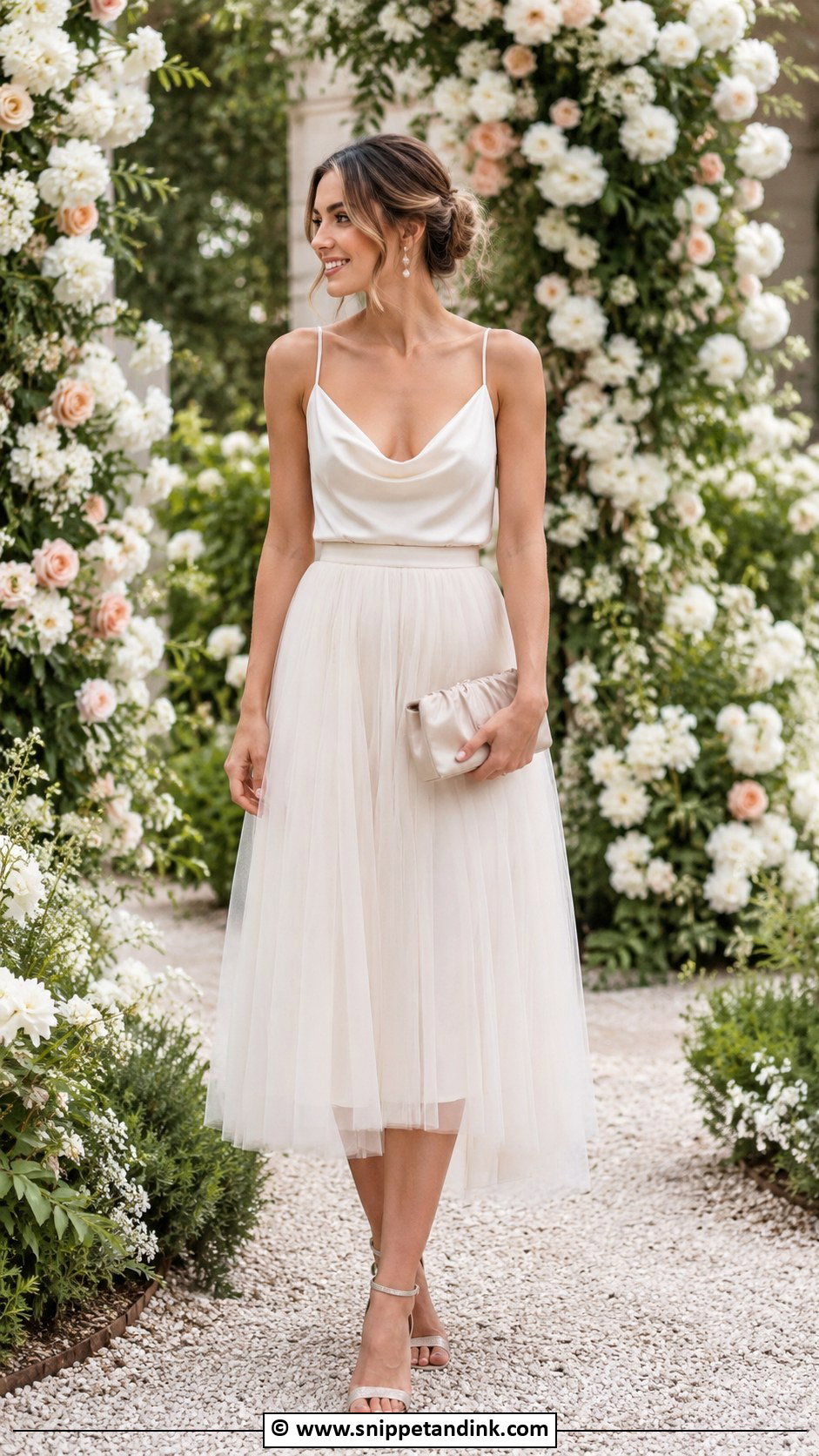
A tulle skirt brings movement and romance without a full gown. Pair it with a fitted camisole, lace blouse or bodysuit, so the top balances the volume. Refined colours like ivory, champagne and pale grey keep it grown-up. I’d choose a skirt with a defined waistband for structure. It suits garden ceremonies and brunch weddings well.
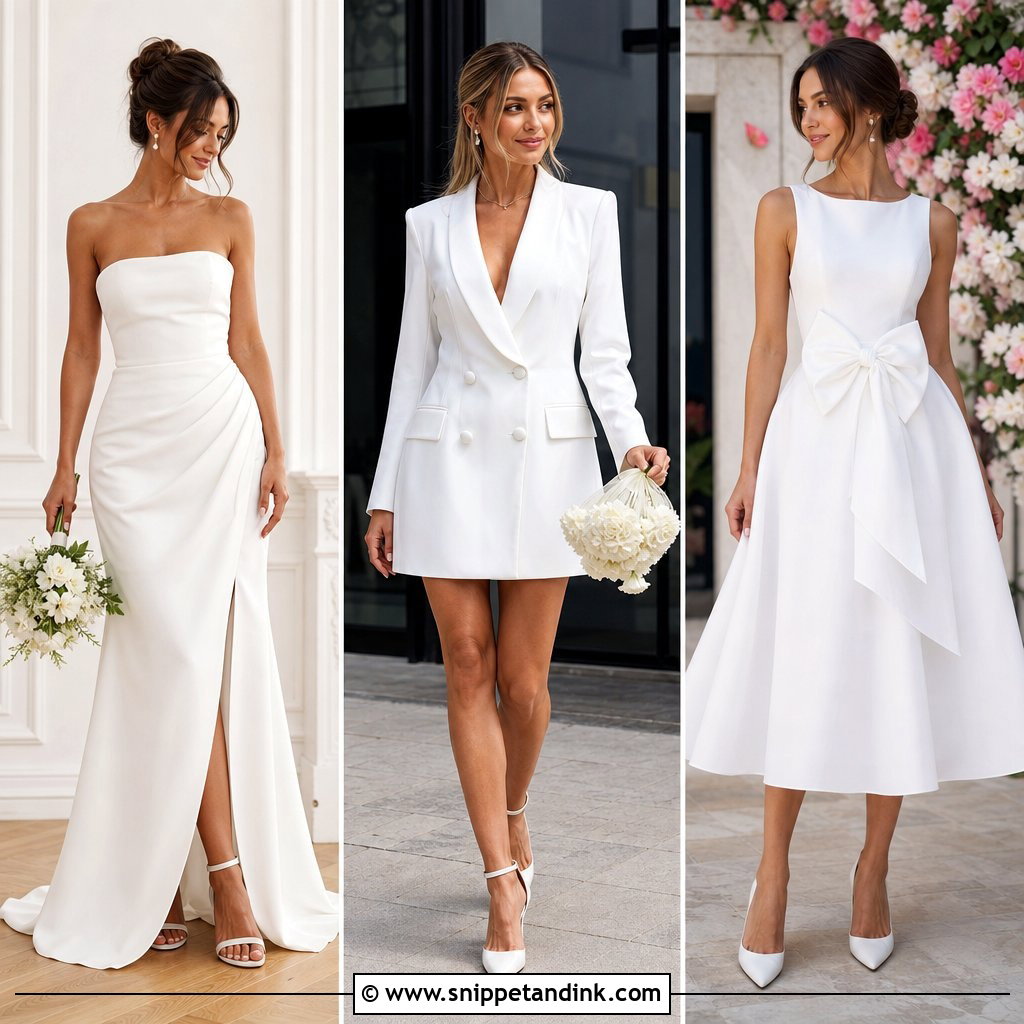
15. High Neck Second Wedding Dress
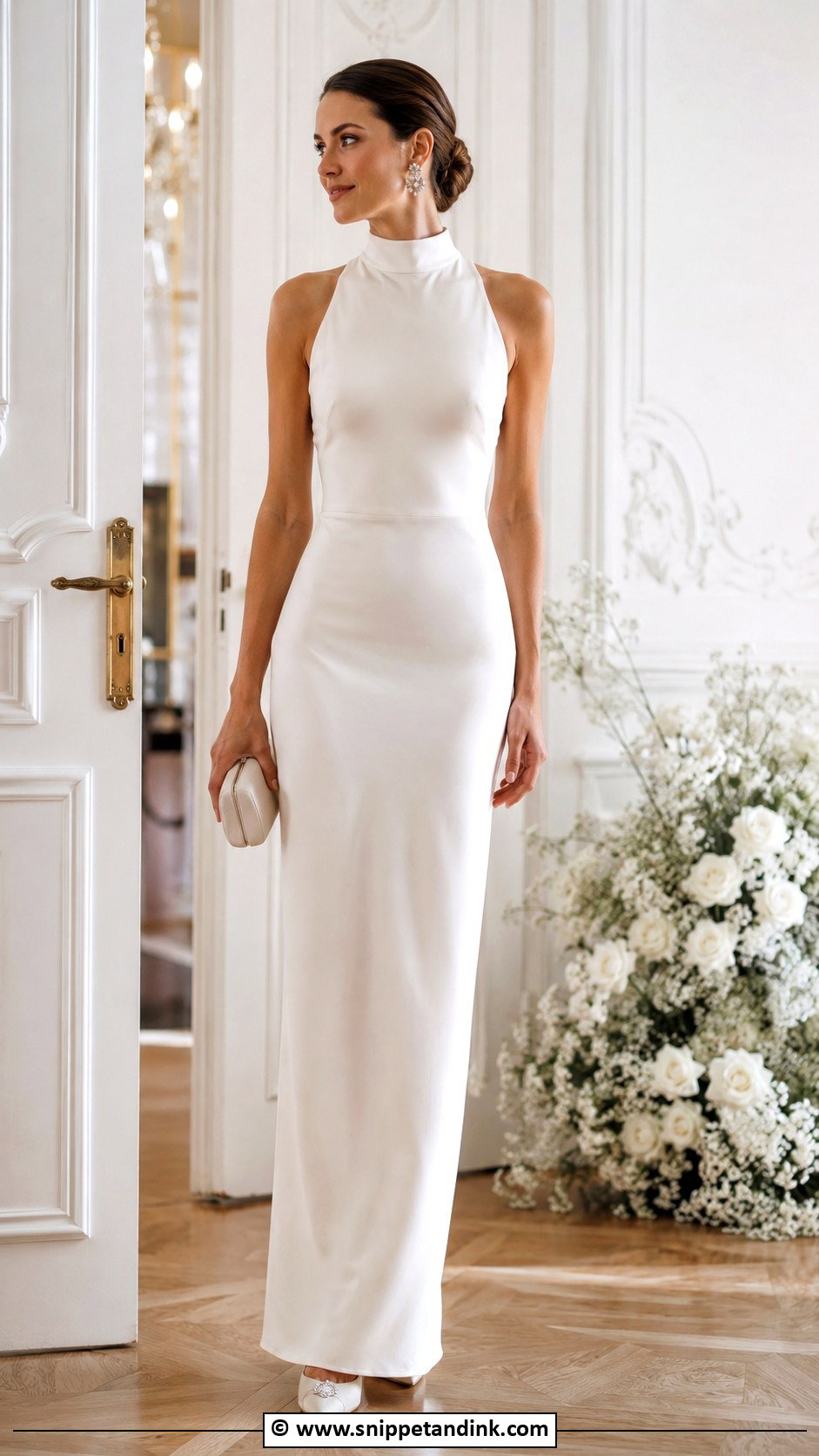
A high neckline looks sophisticated, and it suits brides who prefer more coverage. Statement earrings replace a necklace. To keep it balanced, I’d look for an open back, a fitted waist or a column shape. Crepe and lace both work well. Sleeveless high necks feel modern; long sleeves make it formal. It suits refined indoor ceremonies and courthouse weddings.
16. Blue Second Wedding Dress
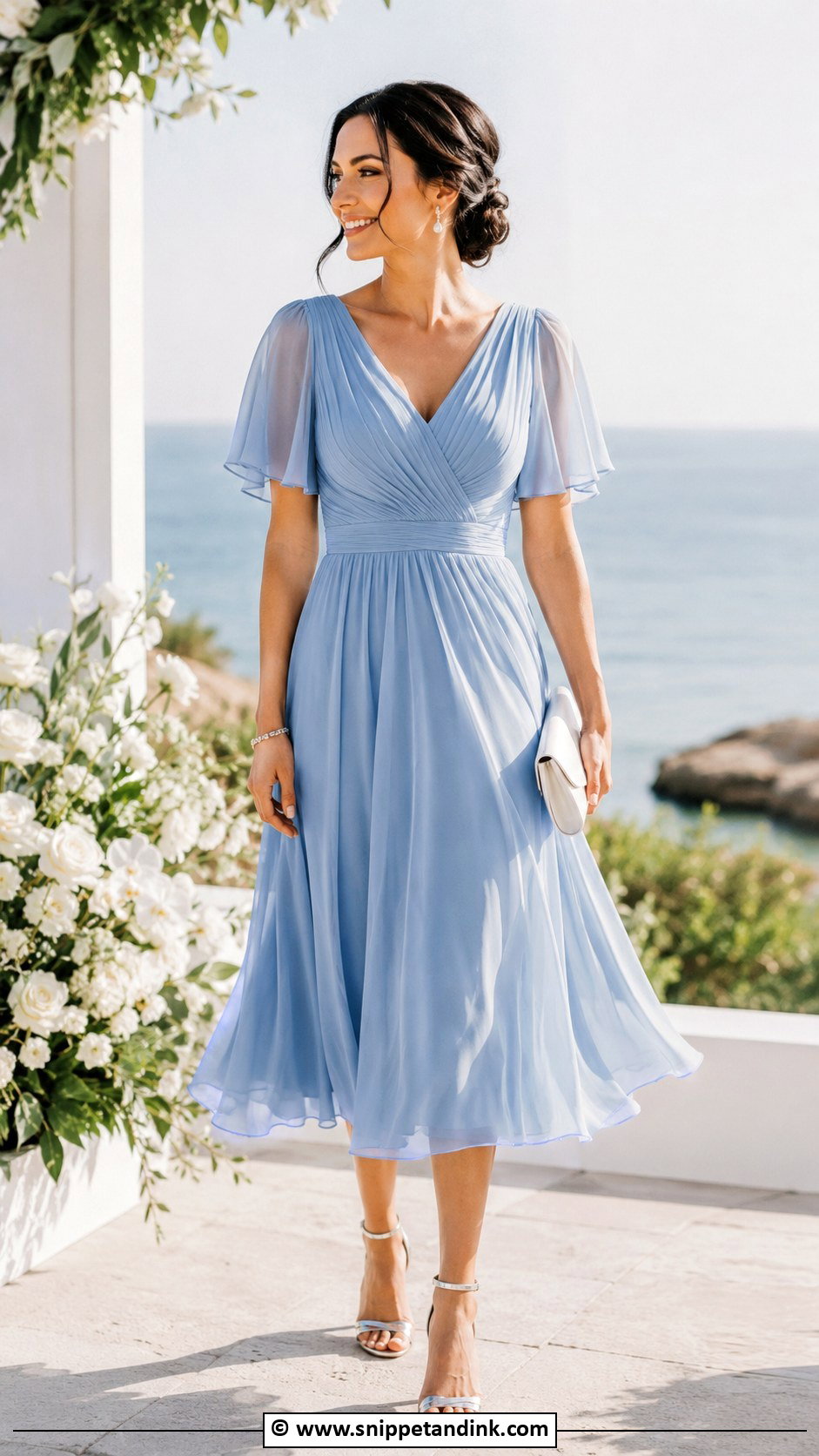
Pale blue is fresh and gently unexpected. Chiffon, satin and organza in soft blue suit spring, summer and coastal ceremonies. I’d hold the shade near your face in daylight, since some blues turn grey on certain skin tones. Silver heels and pearl earrings keep it bridal. I like it most on a bride who wants colour that stays quiet.
17. Silver Sequin Second Wedding Dress
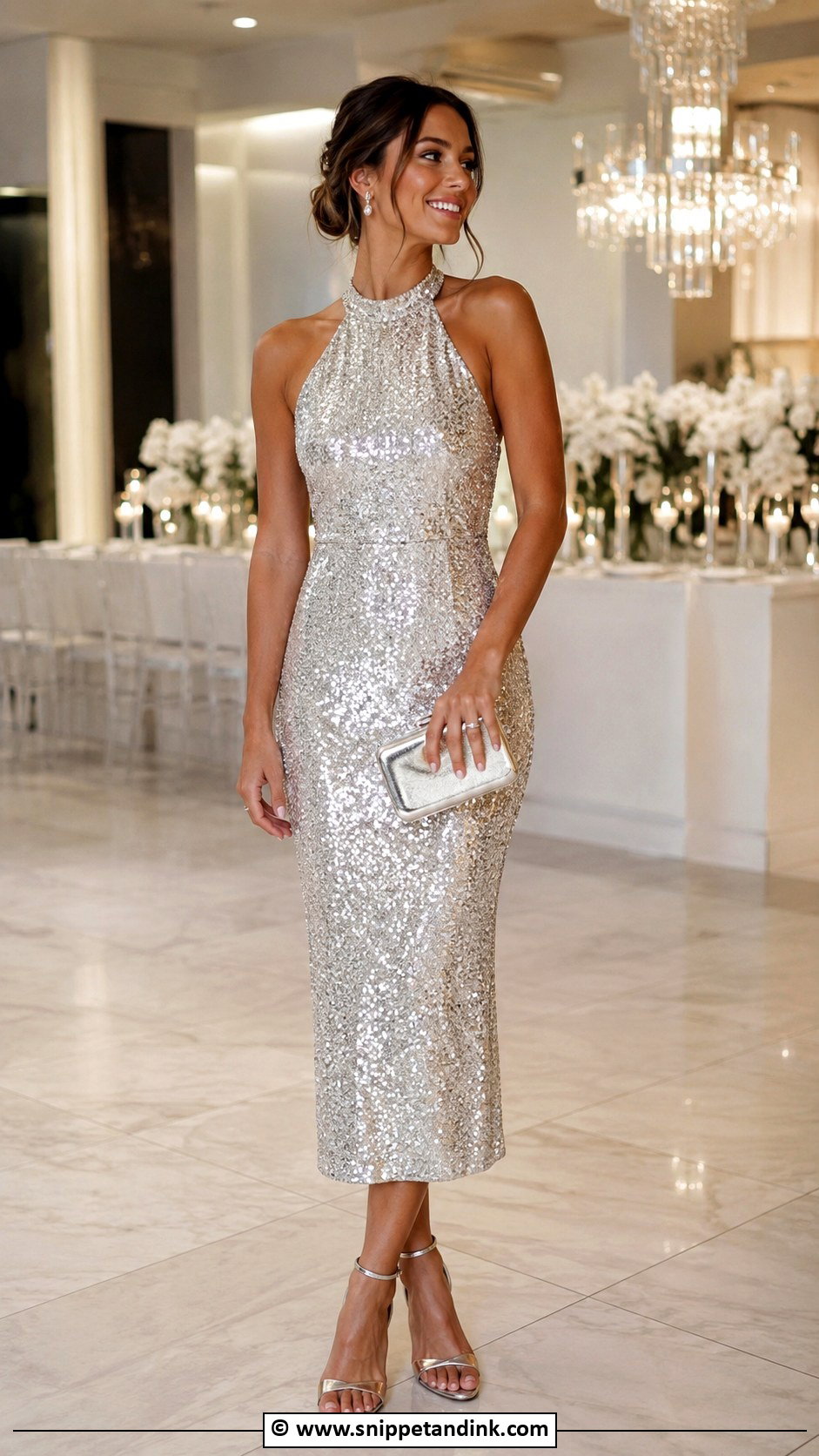
Sequins are made for evening receptions and dance floors. Choose a midi, sheath or long-sleeve silhouette to keep the sparkle refined, and keep jewellery minimal. I’d check the inside of the dress: sequins on cheaper pieces can scratch arms and underarms after hours of movement. If full sequins feel too bold, choose subtle beading or shimmer fabric.
18. Courthouse Second Wedding Dress
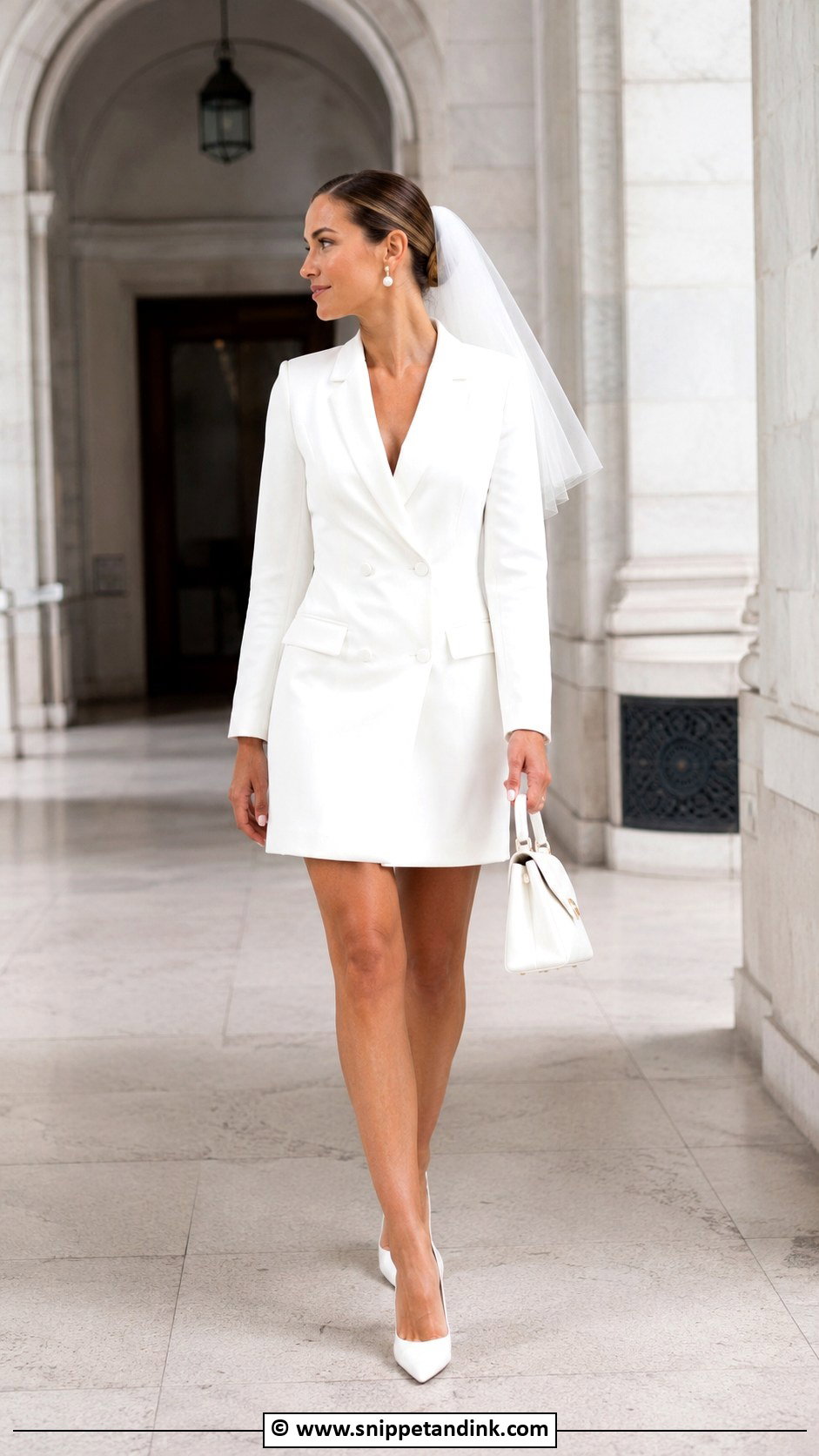
Courthouse ceremonies are short and often involve stairs, paperwork and city photos, so comfort matters. A white blazer dress, midi sheath or crepe mini all work. Strong tailoring stands out against plain surroundings. A small bouquet, short veil or hair bow makes it feel ceremonial. Pointed heels and a structured bag finish it.
19. Beach Second Wedding Dress
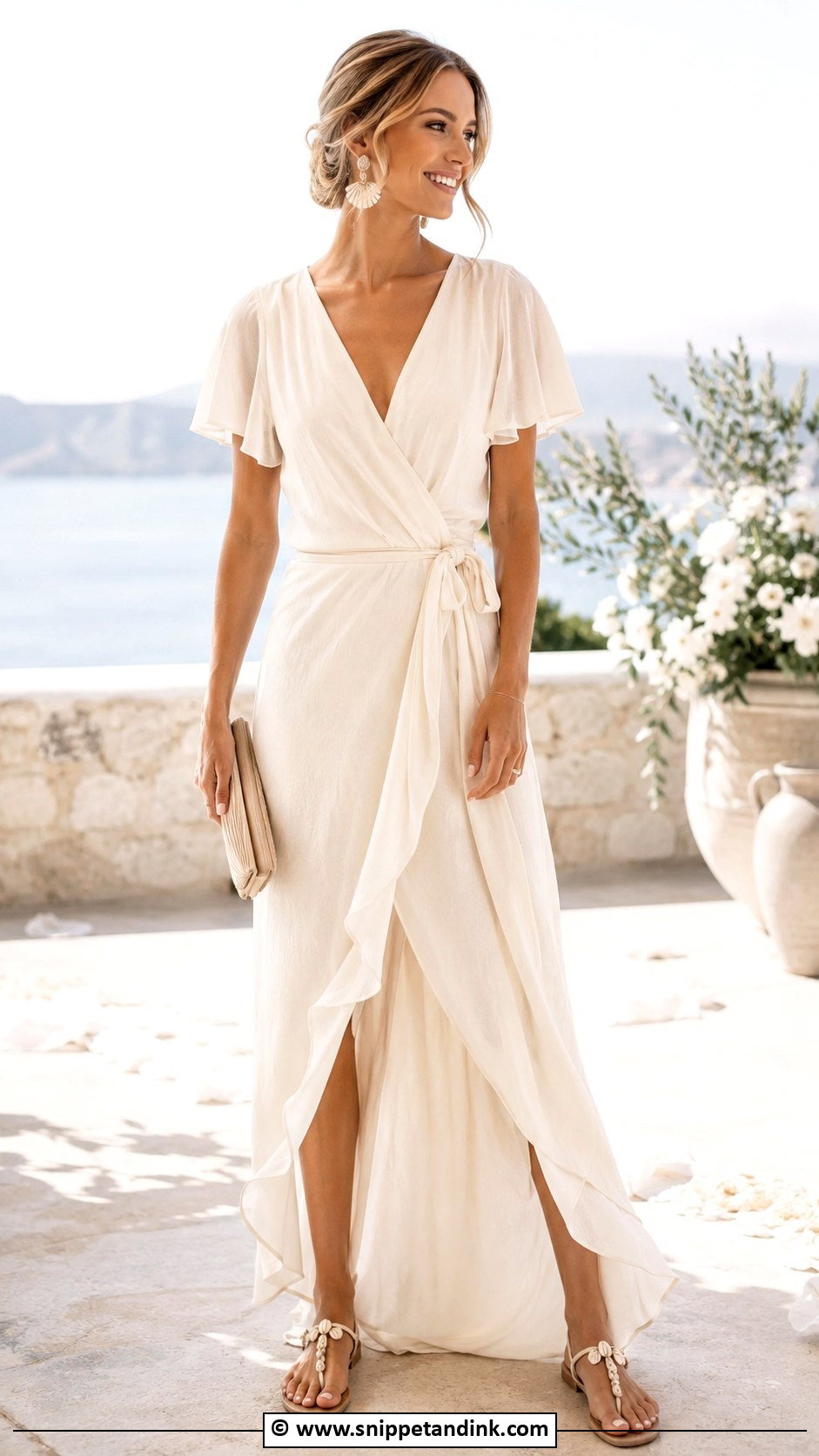
A beach second wedding dress has to cope with wind, sand and heat. Chiffon, silk, soft lace and linen blends breathe; stiff fabrics and long trains drag through sand. Slip dresses, halter gowns and relaxed A-lines suit the setting. Flat sandals are better than heels on sand. Ivory, sand and pale blue suit coastal light, and loose waves look natural in the wind.
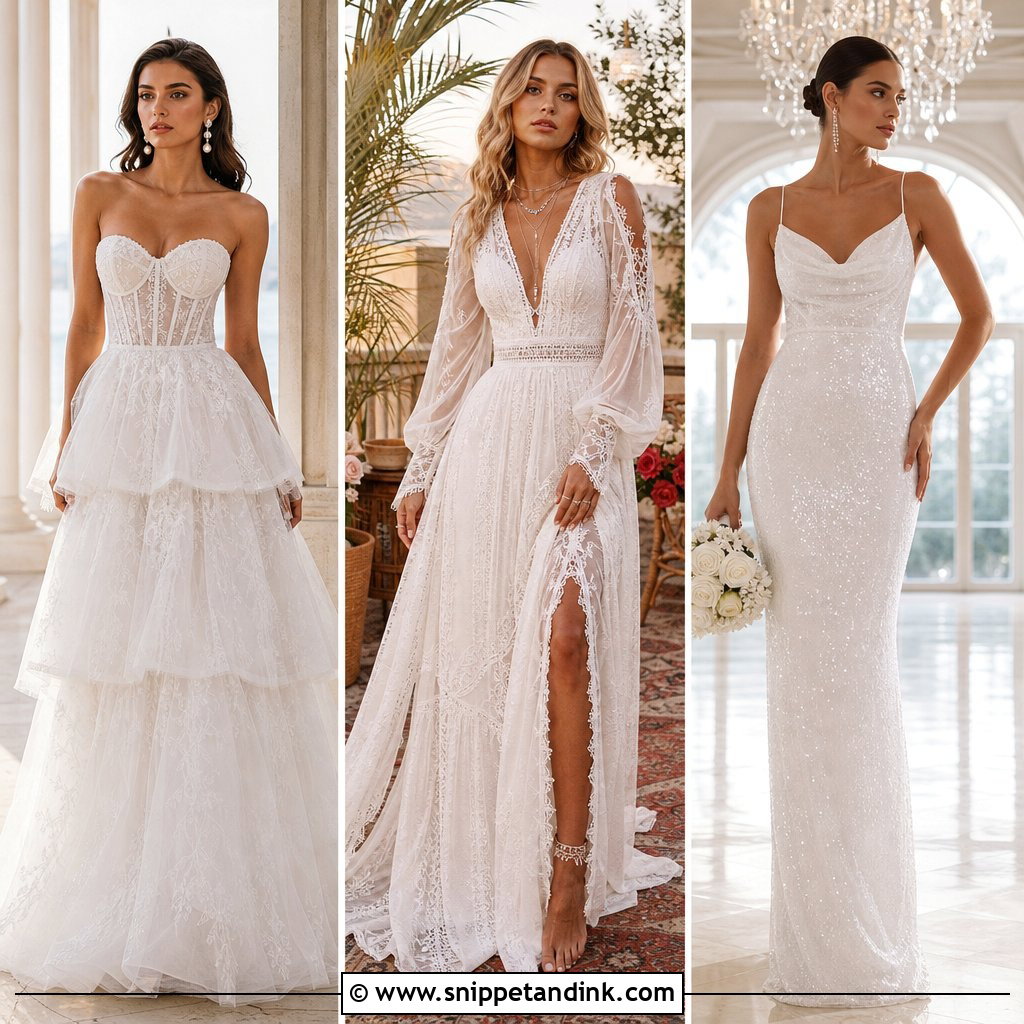
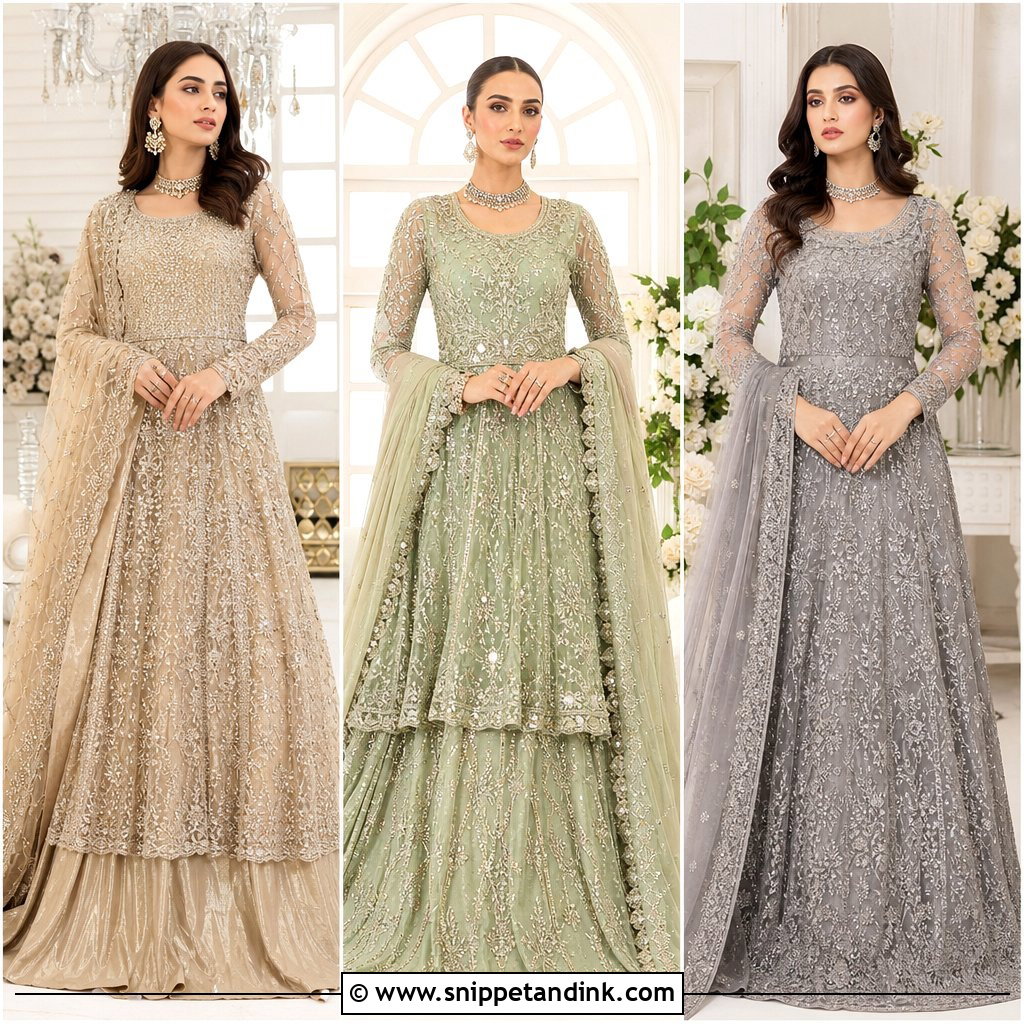
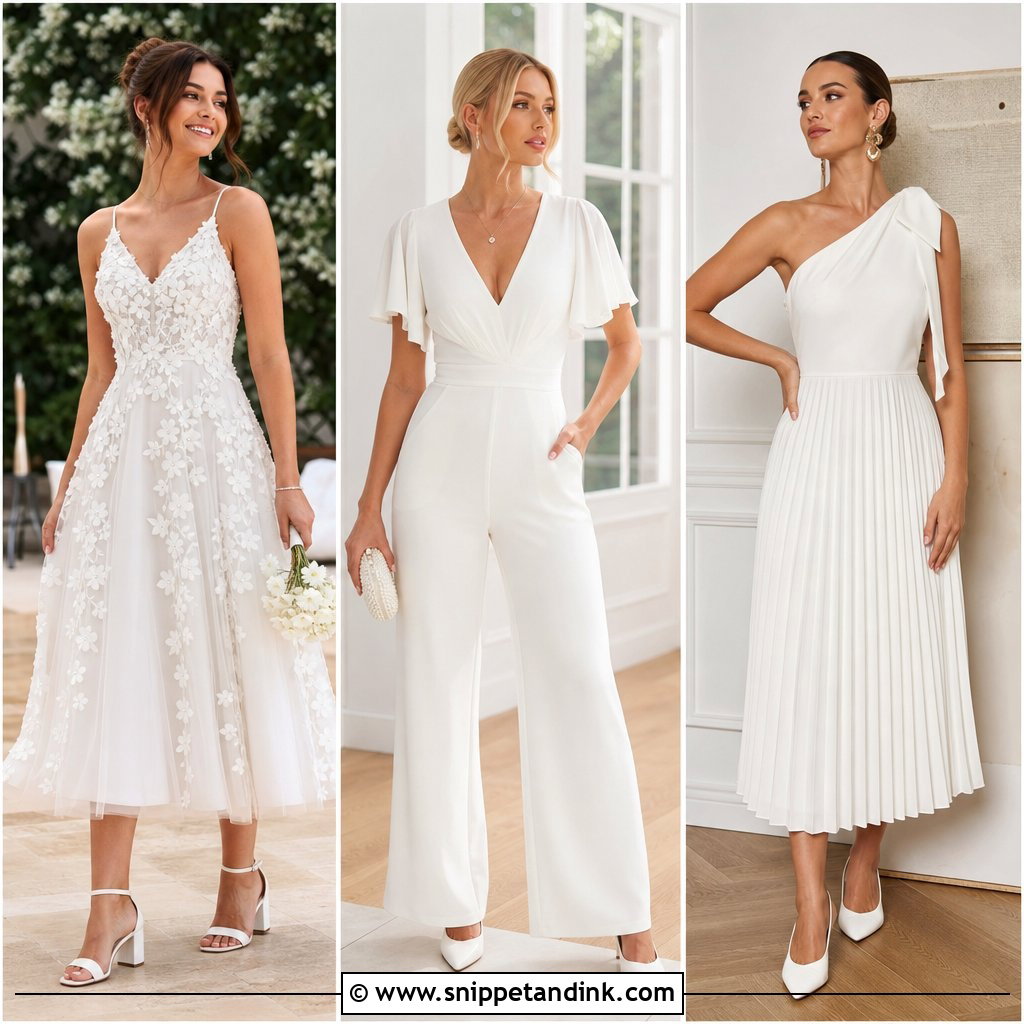
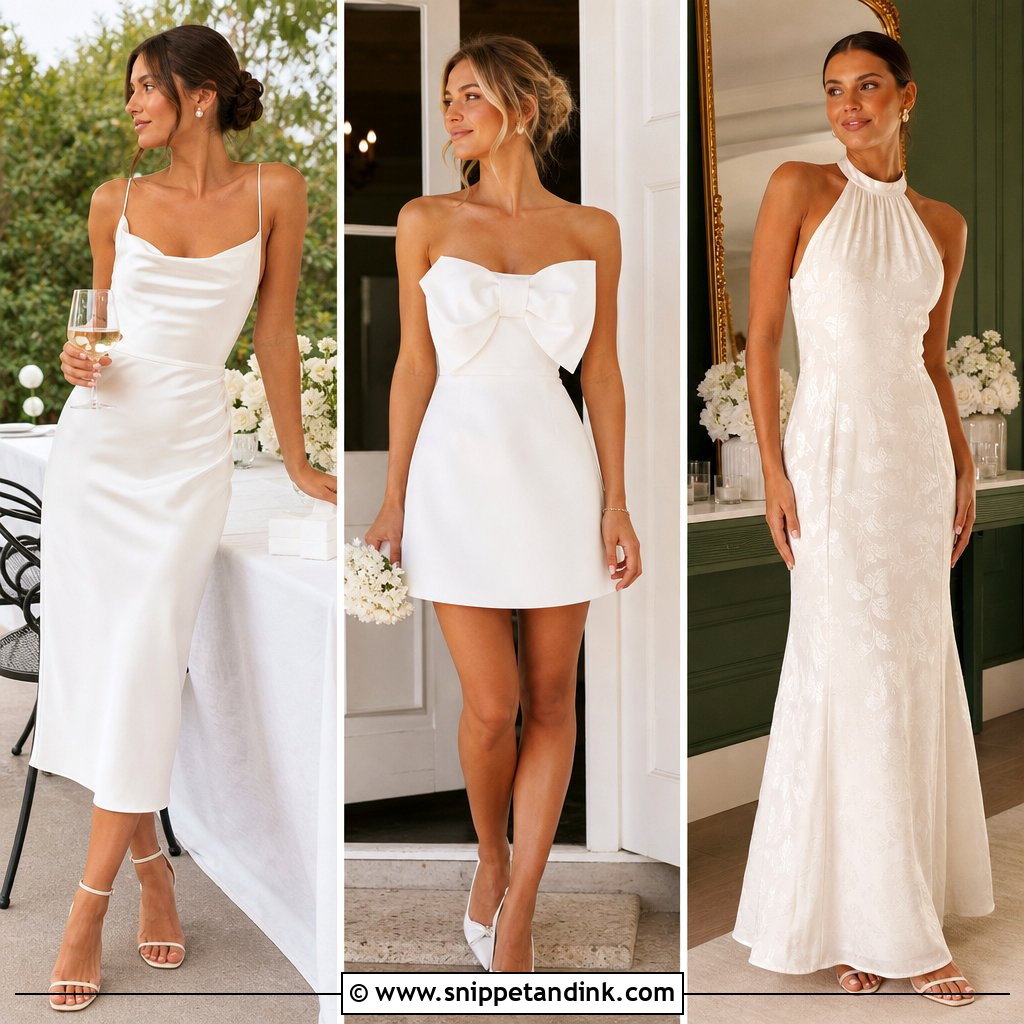
20. Garden Second Wedding Dress
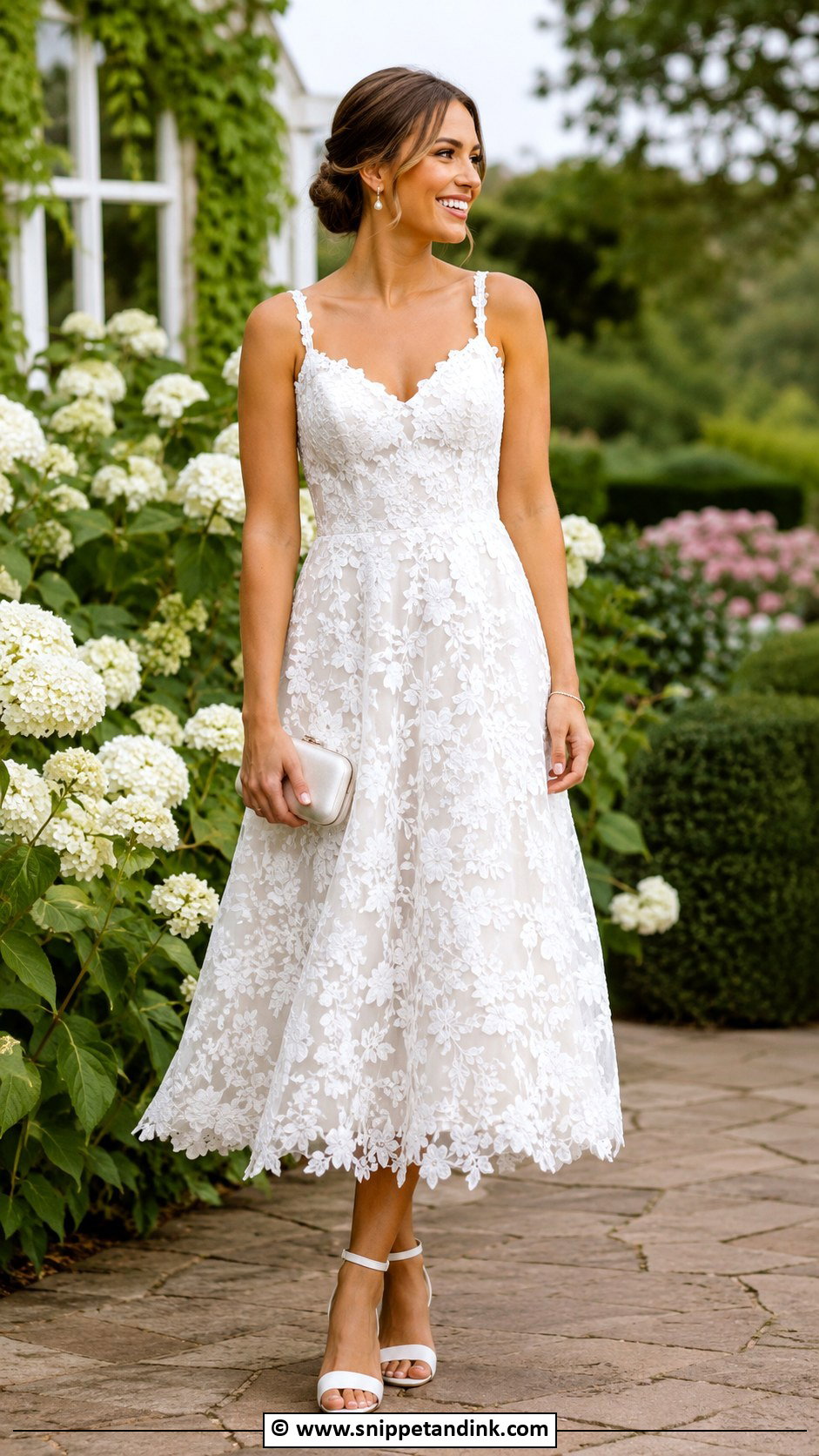
Garden weddings suit floral lace, embroidered tulle, chiffon and organza. Midi and tea lengths stay clear of damp grass and stone paths, which a long hem picks up quickly. Block heels and wedges keep you steady on lawns. A low bun with floral pins suits the setting. It’s well suited to spring and summer ceremonies.
21. Plus Size Second Wedding Dress
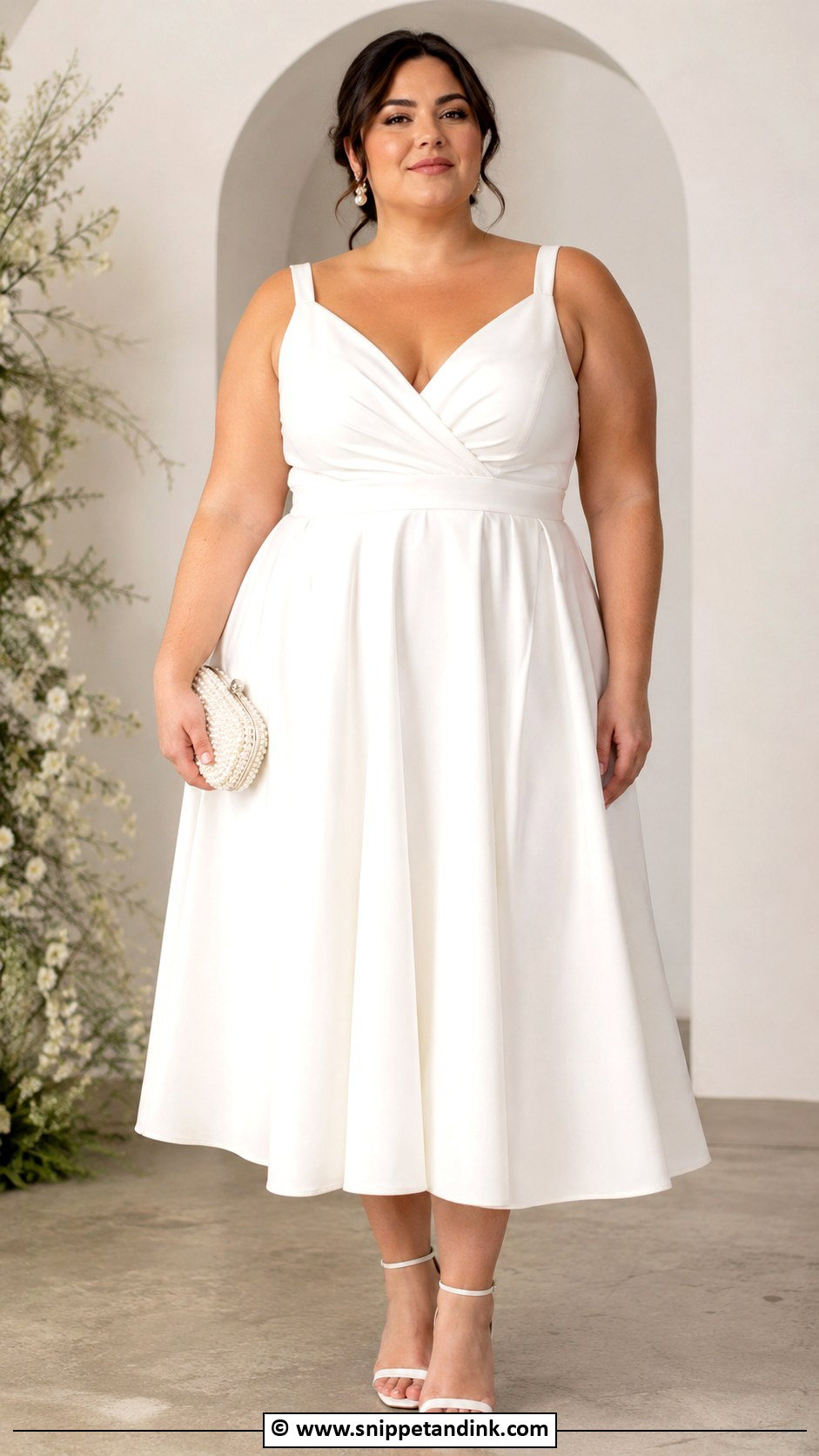
Plus-size brides deserve strong construction and quality fabric, and I’d always prioritise those over trend. A-lines, wrap styles, fit-and-flare gowns and structured midis all work. Supportive straps, smooth linings and well-placed seams make a big difference. Comfortable shoes matter, and jewellery that frames the face finishes the look. The right dress lets you move, hug and dance with confidence.
22. Petite Second Wedding Dress
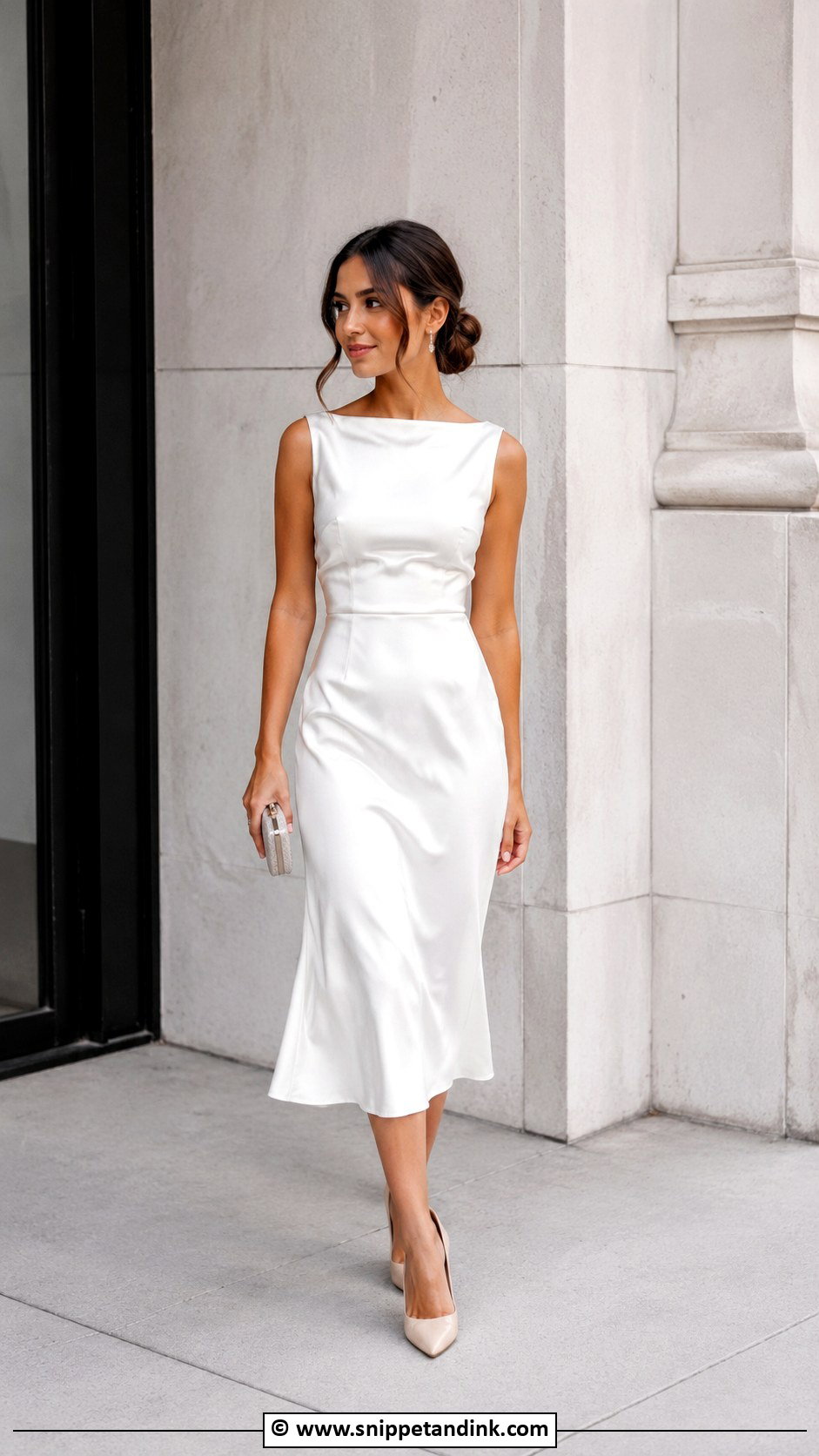
Petite brides look best in clean lines that don’t overwhelm the frame. Midi dresses, columns and high-waist silhouettes work well. Heavy layers and long trains can swallow you. V-necks and square necklines lengthen the upper body. Tailoring matters most at the shoulders and hem, because a few centimetres either way changes proportion completely.
23. Mature Bride Second Wedding Dress
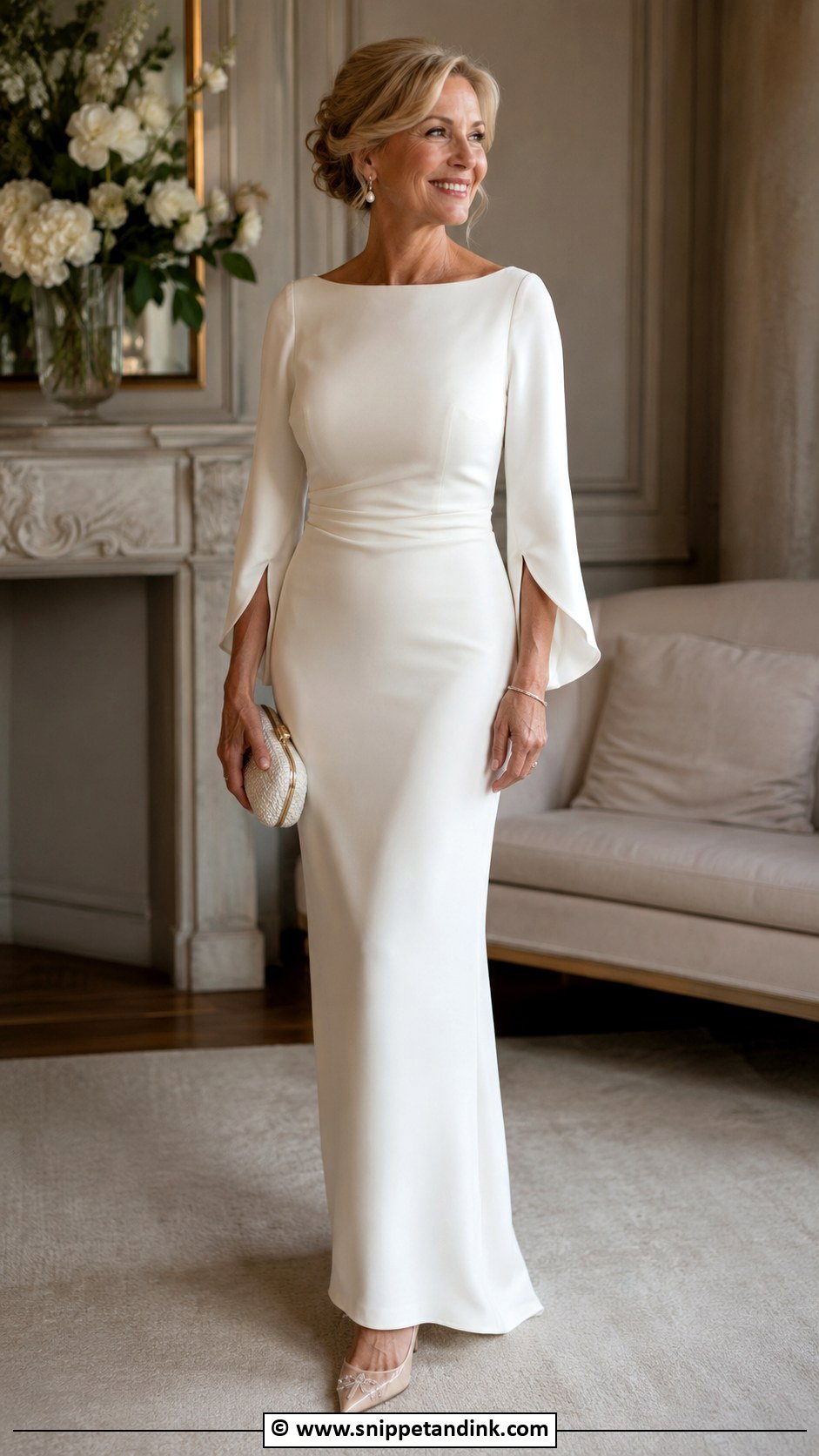
Mature brides can wear white, lace, sparkle or colour. There’s no rule against any of it. Crepe column gowns, lace midis, tailored suits and draped satin all look modern and personal. A sleeve, wrap or jacket adds coverage if you want it. I’d put the budget into fit and fabric, because quality shows more than ornament.
24. Black And White Second Wedding Dress
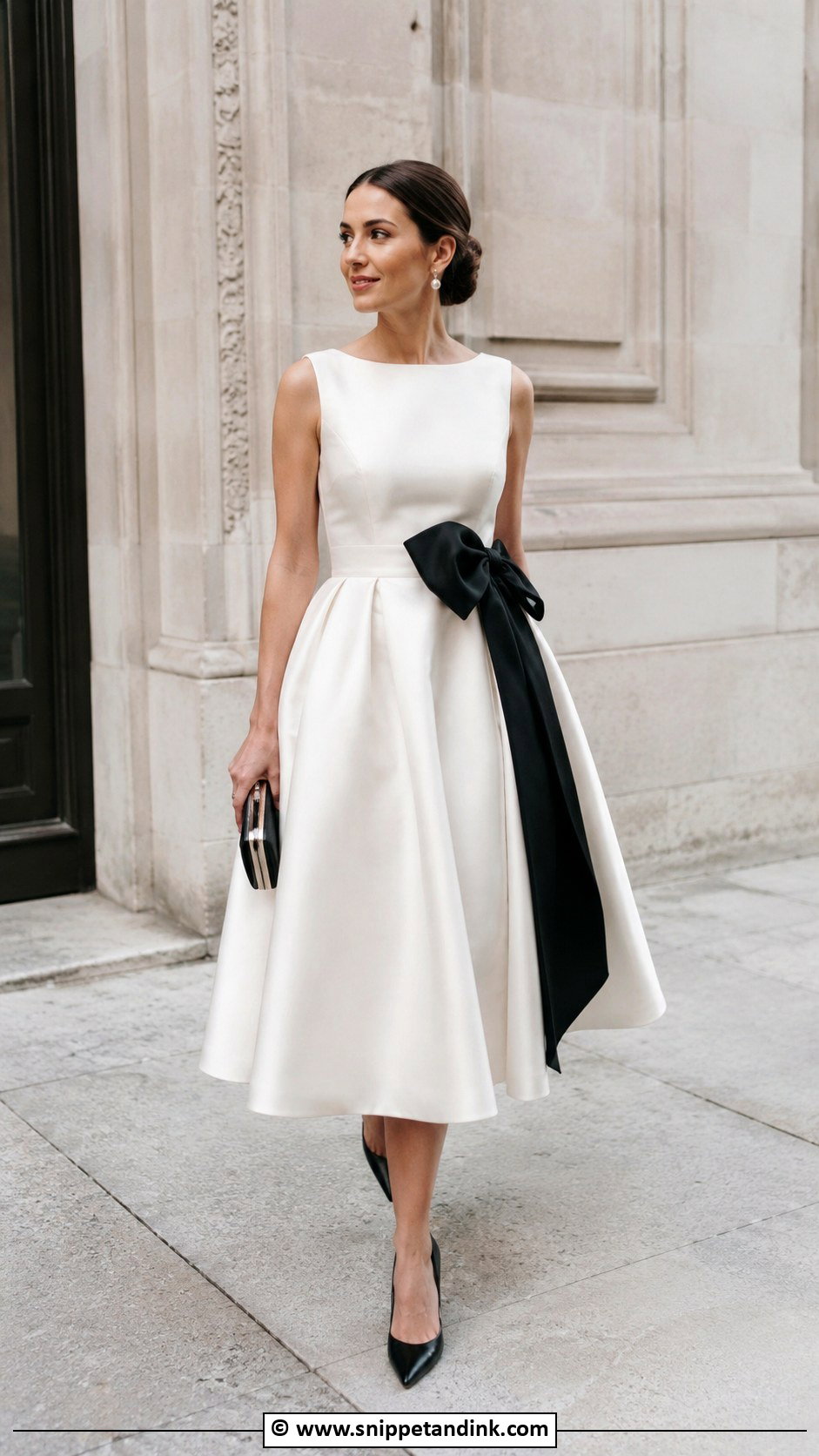
Black and white is bold and works well at city weddings and modern venues. A white column with a black bow, an ivory midi with black trim or a black skirt with a white bridal top all work. Use black as an accent for subtle drama or stronger contrast for a fashion-forward look. Black heels and pearl earrings keep it sharp.
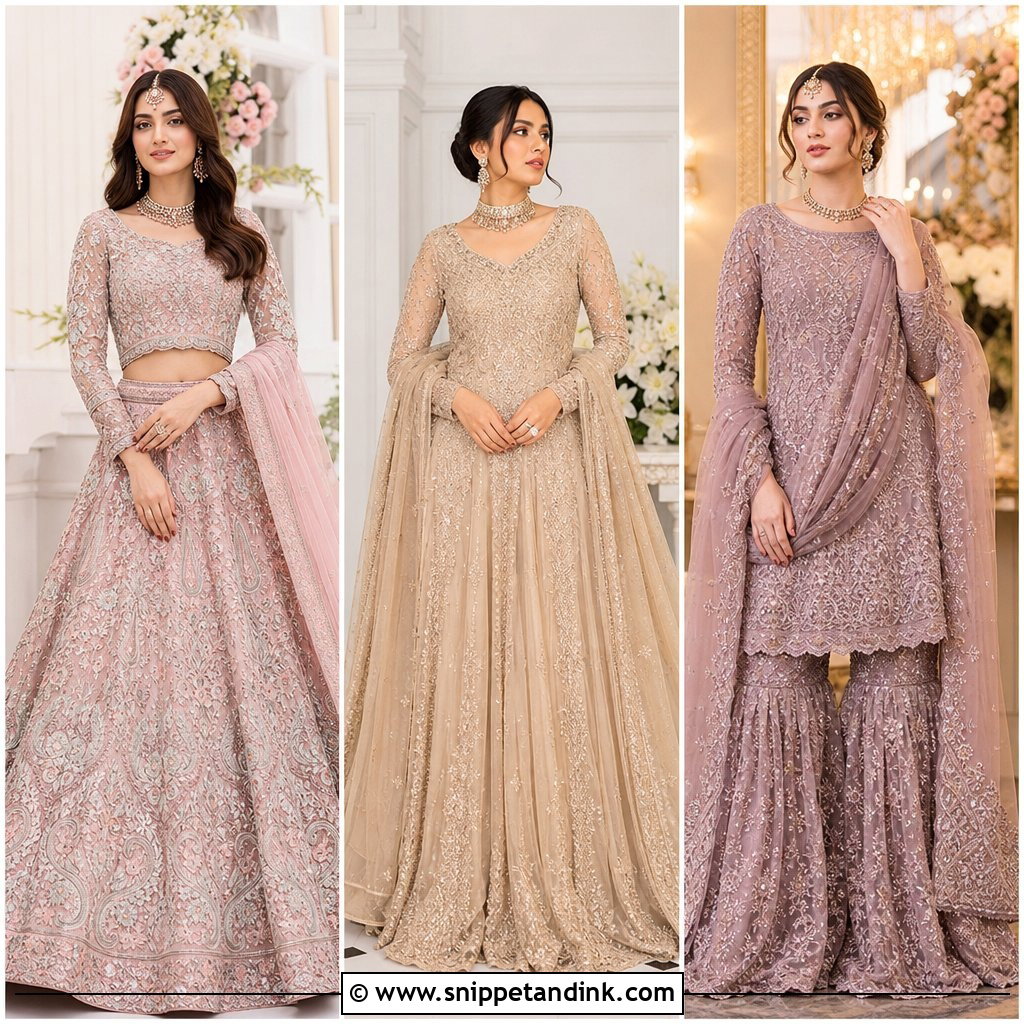
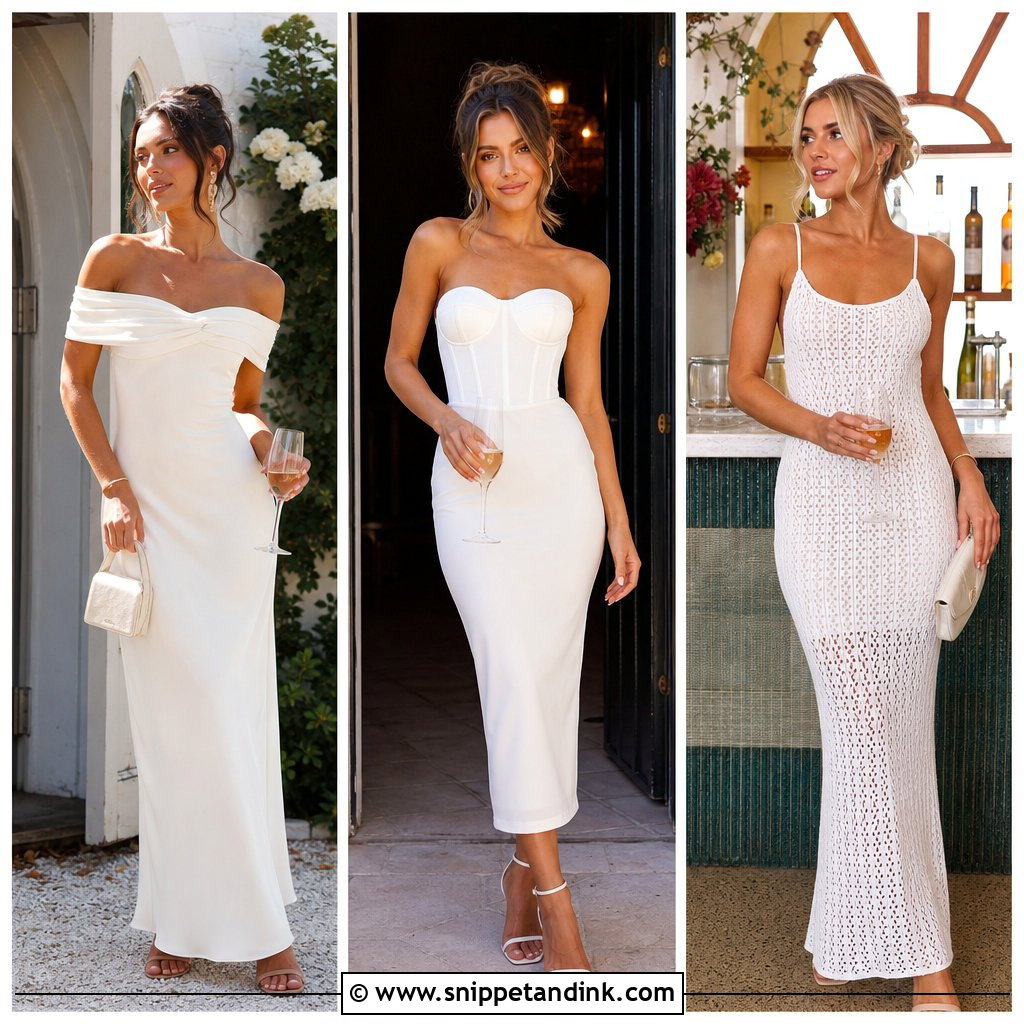
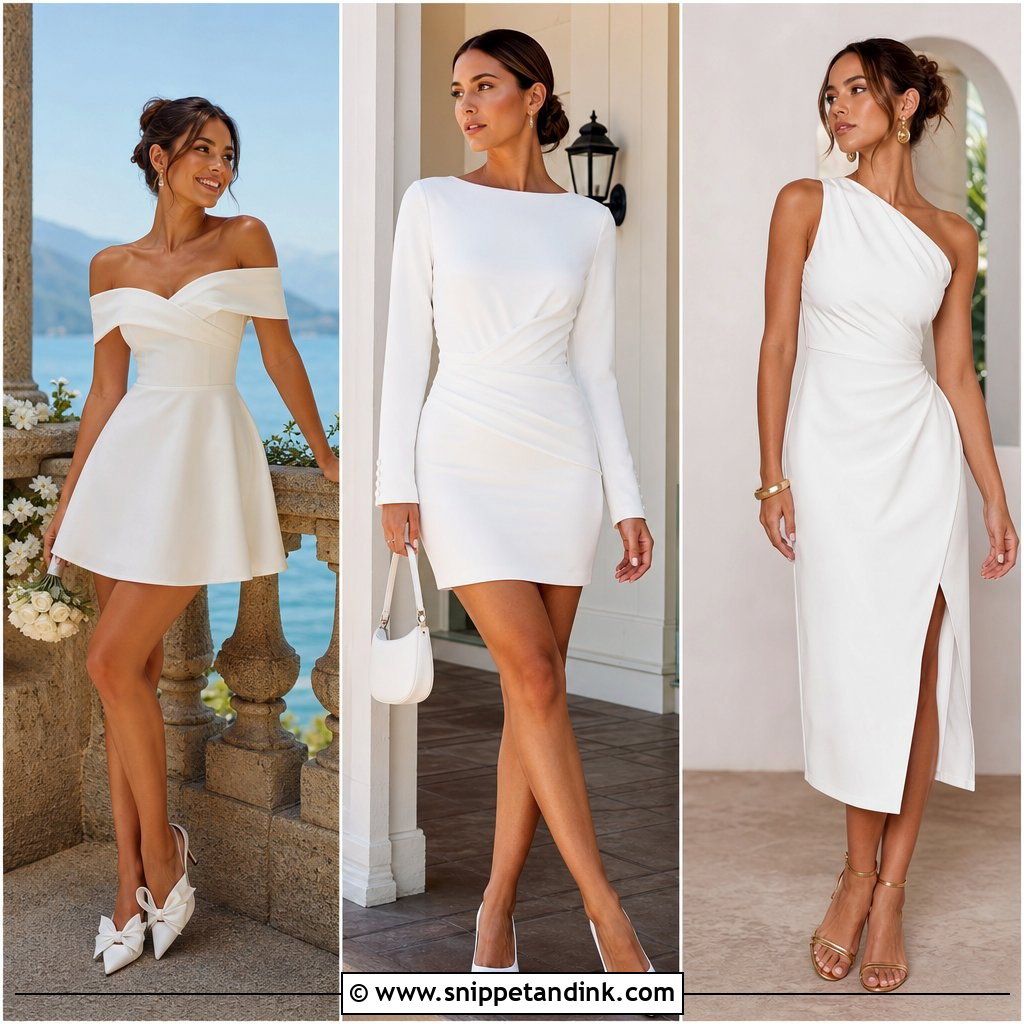
25. Wrap Second Wedding Dress
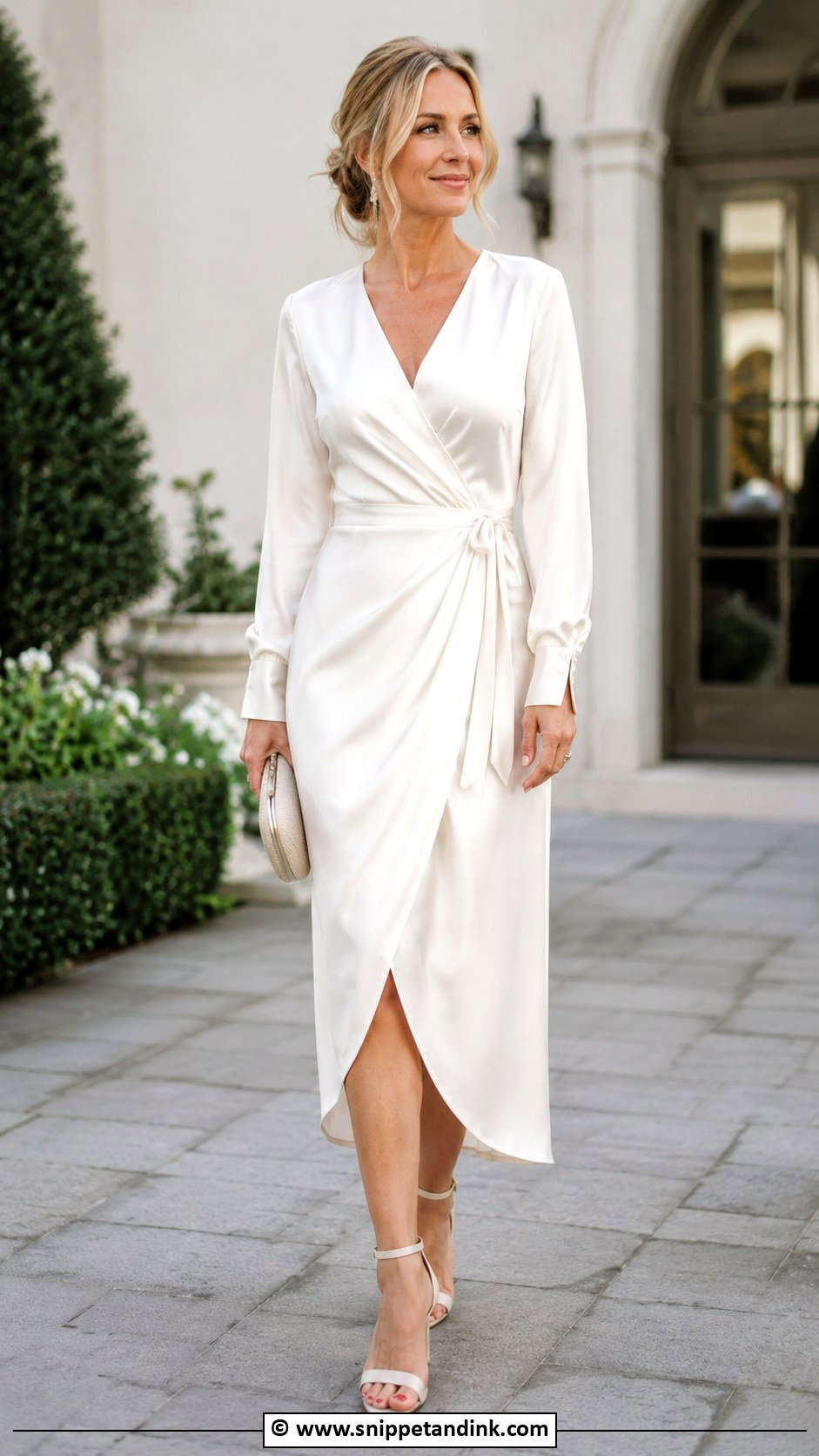
Wrap dresses adjust through the day, which is why I recommend them for long celebrations. They define the waist and create a soft V-neck. Satin is dressier, crepe more structured, chiffon more relaxed. If the neckline feels low, fashion tape or a camisole fixes it. They’re comfortable sitting, walking and dancing.
26. Detachable Skirt Second Wedding Dress
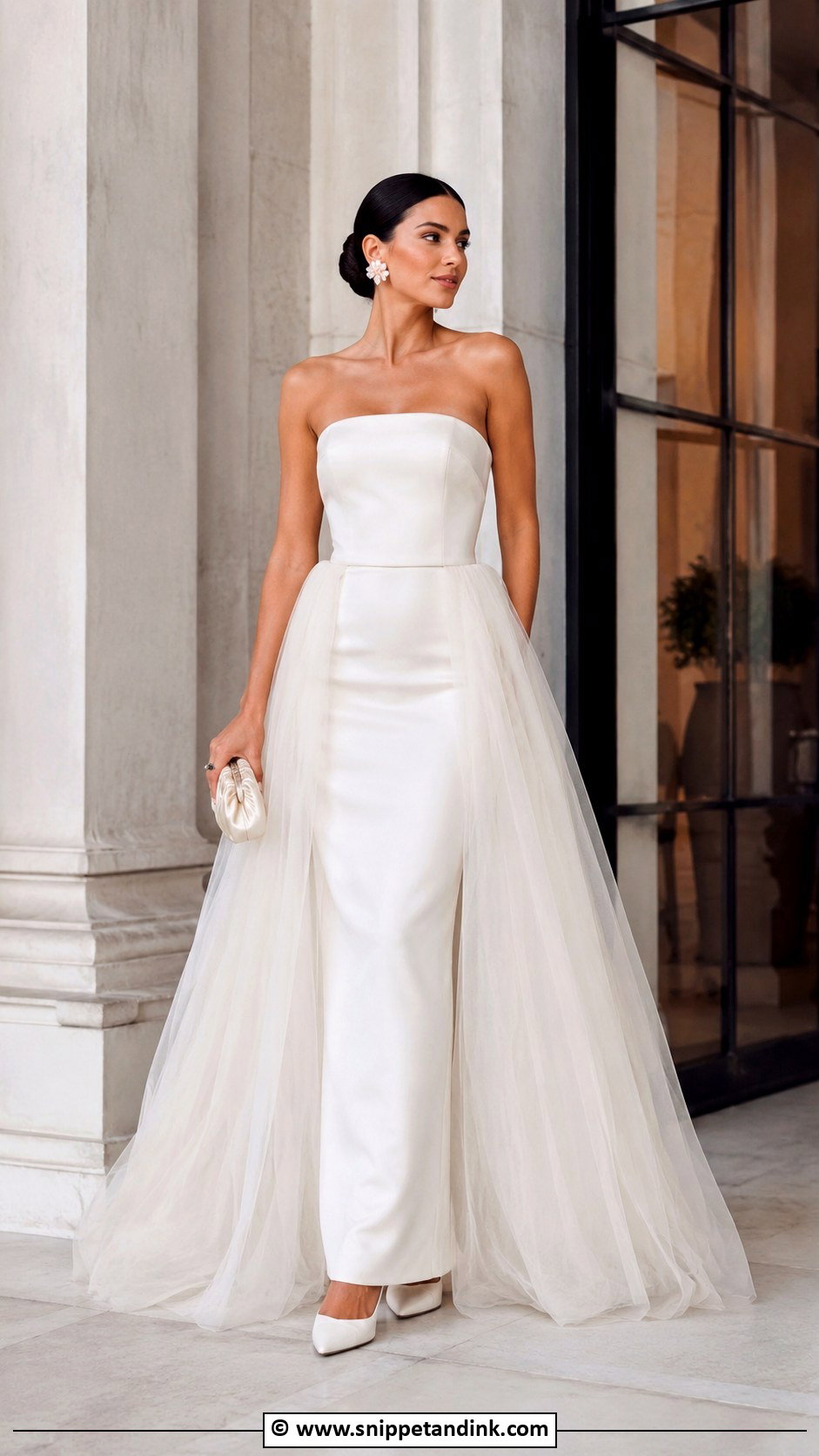
A detachable skirt dress gives two looks without an outfit change. Wear the overskirt for the ceremony and remove it for dinner or dancing. The base dress should be sleek: a column, sheath or jumpsuit. I always test the fastening at a fitting, because a detachable skirt that’s fiddly to remove will need help from someone else. Choose accessories that work with both versions.
27. Minimalist Second Wedding Dress
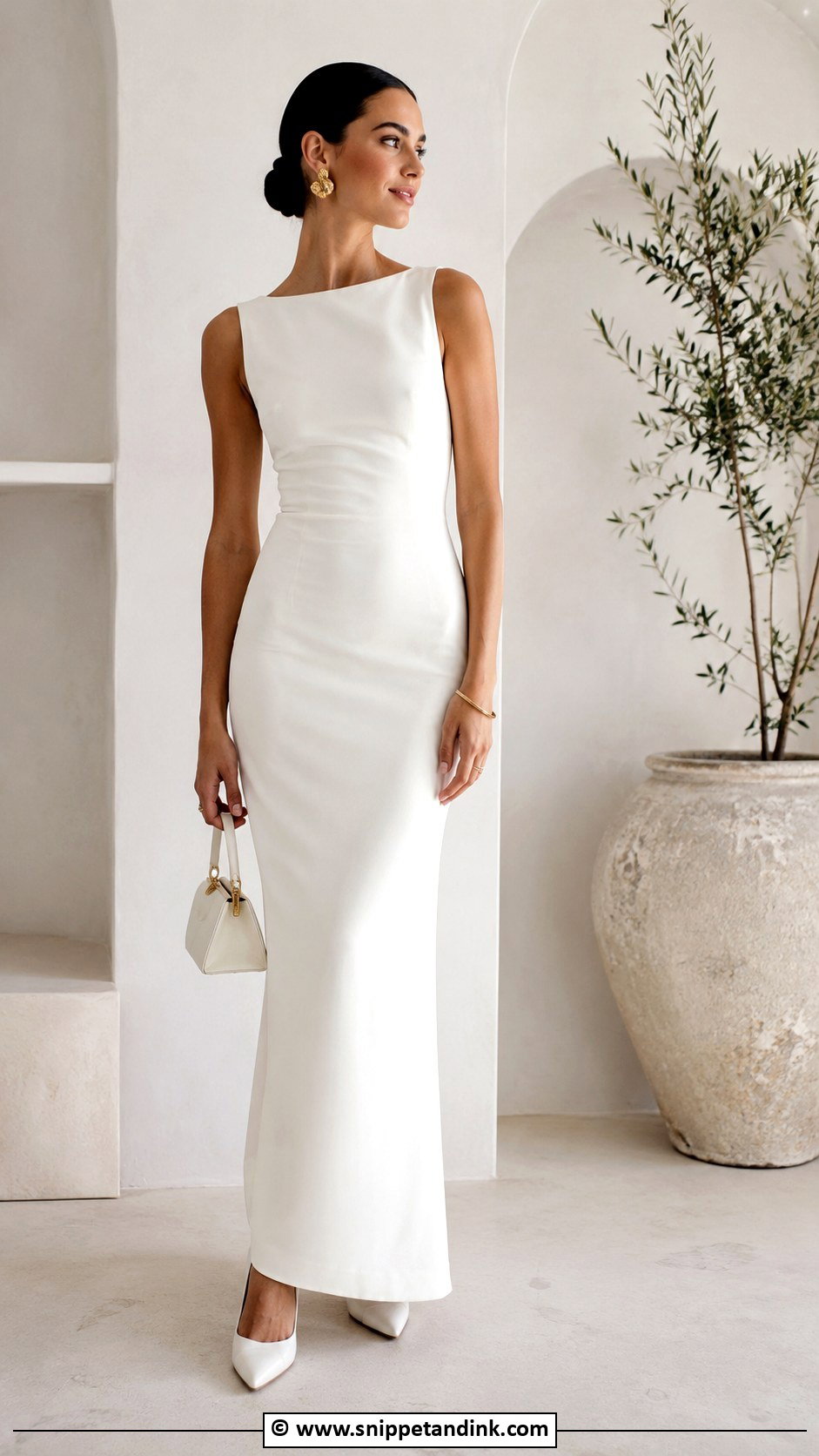
Minimalist dresses depend entirely on fabric and fit, so that’s where to spend. A crepe sheath, satin column or square-neck midi needs no lace or sparkle to feel bridal. Sculptural earrings and a sleek bun keep it refined. It suits modern venues, courthouses and restaurant receptions. Understated, well-cut dresses age best in photographs.
28. Boho Second Wedding Dress
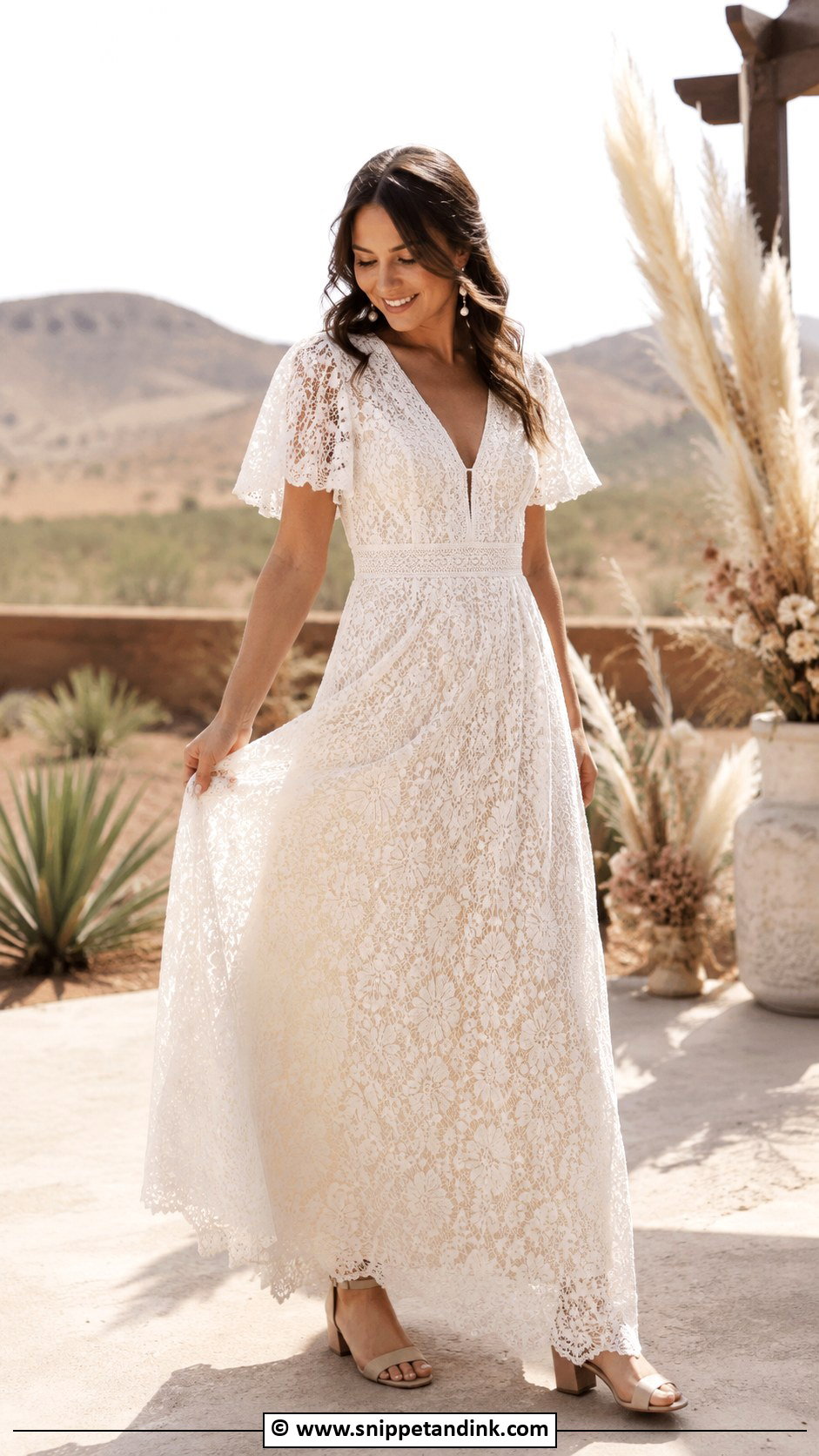
Boho dresses bring texture: soft lace, flutter sleeves, crochet details and flowing skirts. Ivory, cream and pale blush suit the style. Block heels, sandals or low boots fit the venue. I’d choose quality fabric, since cheap boho lace looks costume-like quickly. It suits outdoor, desert and backyard weddings.
29. Reception Second Wedding Dress
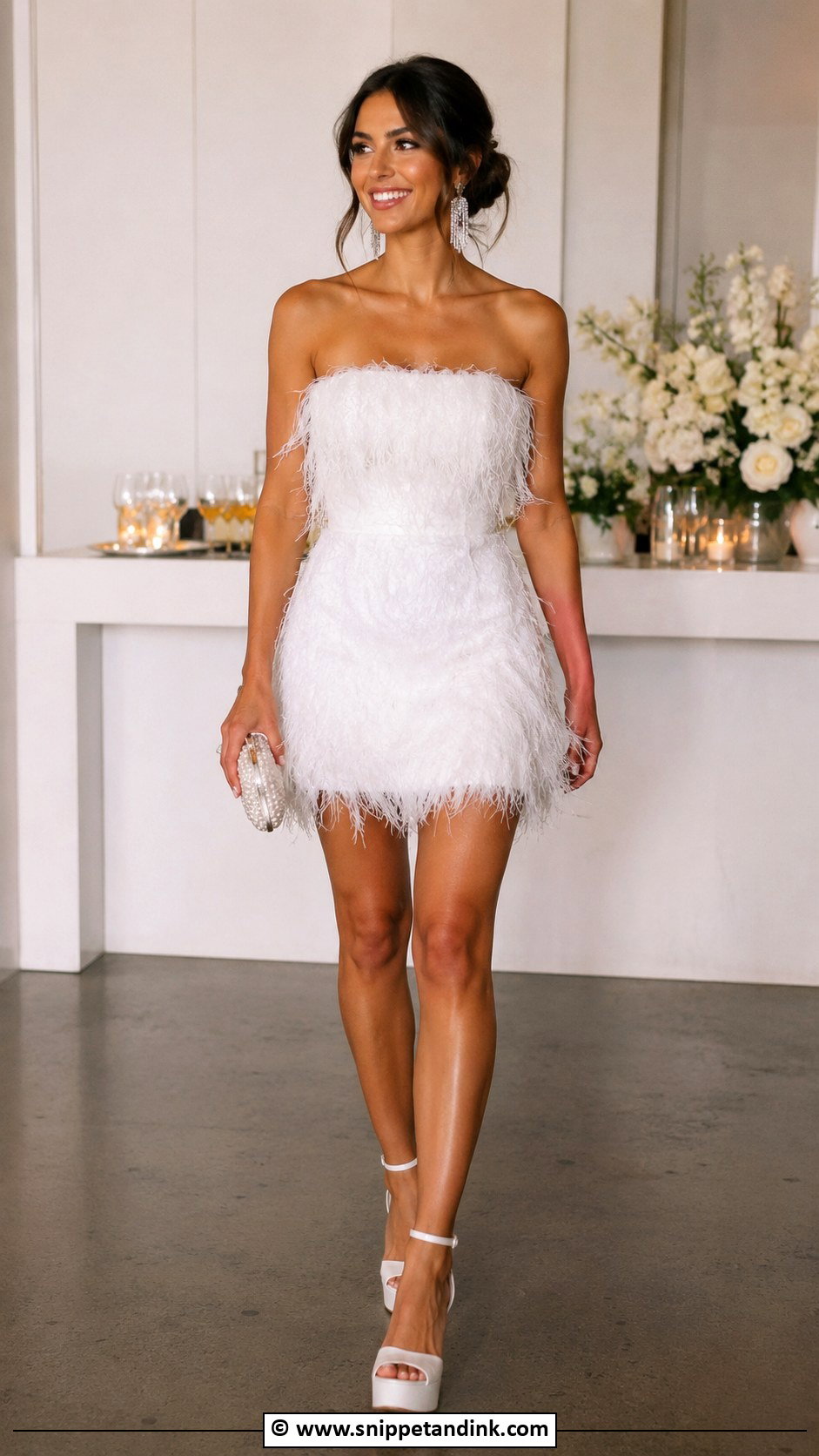
A reception second wedding dress is the one you change into when the formal part ends and the party starts. Short dresses, feather-trim minis, beaded midis and sleek jumpsuits are all strong choices. I’d pick shoes you can actually dance in. This dress can be more playful than your ceremony look, while still feeling bridal.
30. Casual Second Wedding Dress
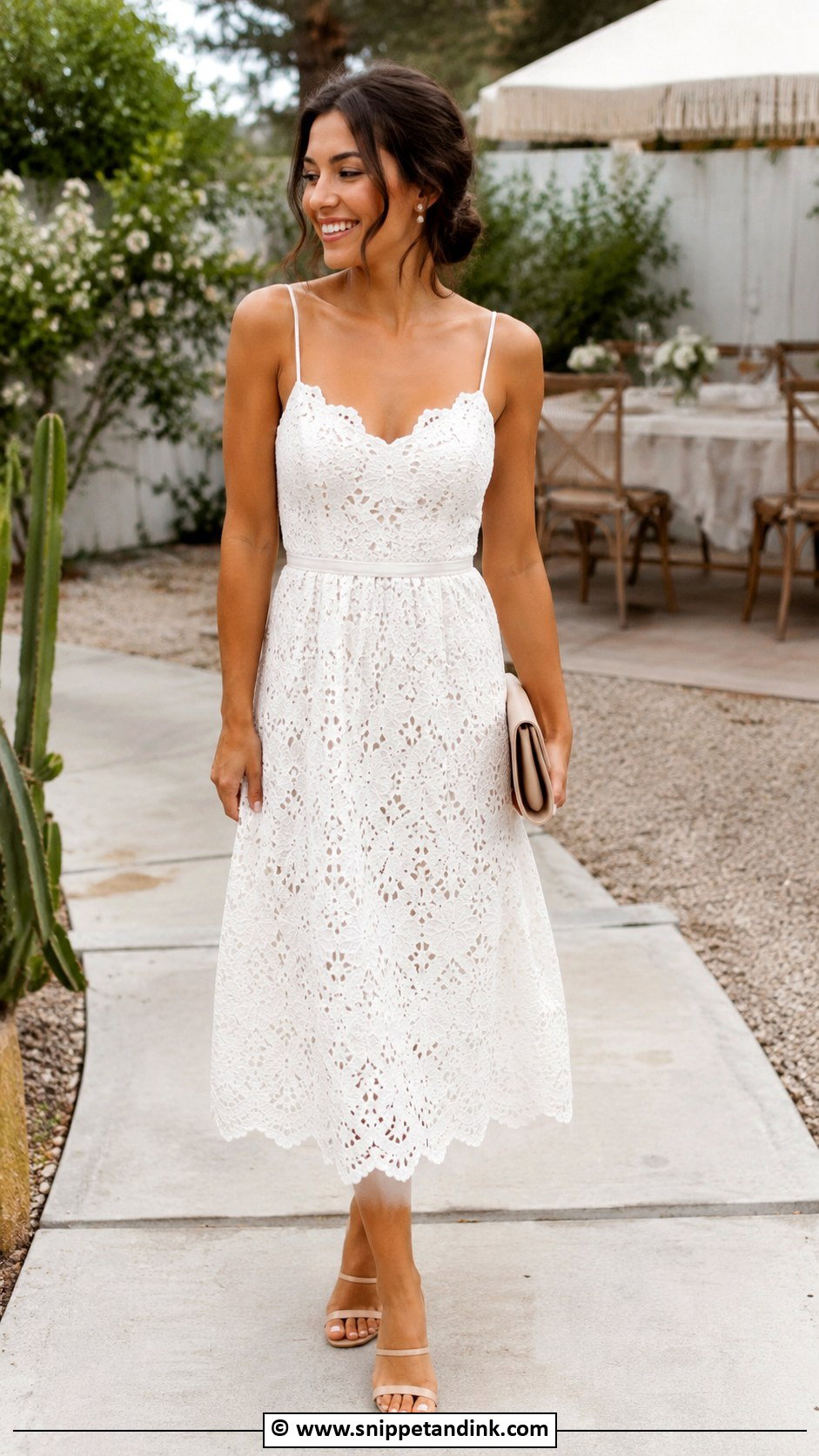
A casual second wedding dress suits backyard ceremonies, brunch weddings and small family celebrations. Casual doesn’t mean plain: cotton lace, linen blends, wrap dresses and relaxed maxis all suit the setting. Choose breathable fabric and shoes that suit the ground outdoors. Small earrings and soft hair keep it relaxed and sincere.
Off the Rack, Contemporary Designer or Bridal Salon
Where you buy decides how much time you need. Bridal salon gowns are usually made to order, and production often takes several months before alterations even begin. If the wedding is within six months, I’d look at ready-to-wear and contemporary bridal lines, which can ship within weeks.
Whichever route you take, leave time for alterations. Two or three fittings spread over a month or more is typical, and the final fitting should be close enough to the day that your measurements won’t change. Bring your shoes and undergarments to every fitting.
Wearing It Again After the Wedding
Many second-wedding outfits can be worn again, which is one of their advantages. Suits, separates and jumpsuits split into pieces you’ll use at dinners and parties. A white midi can be hemmed shorter or professionally dyed if the fabric allows it; natural fibres like silk and cotton take dye far better than polyester. Have the outfit cleaned soon after the wedding, before any stains set, and store it in a breathable cotton bag rather than plastic.
Dressed for the Life You Have Now
A second wedding outfit should look like the person you are now. White, colour, a gown, a suit or a simple slip can all be right. Start with the setting and season, then choose what fits well and lets you move. Fit and thoughtful details count for more than tradition, and an outfit that feels like yours will still feel right when you look back at the photos.
You'll Like These Ideas:


Leave a Reply