
A gown never appears on its own. It comes with a veil, shoes, earrings, a hairstyle and a bouquet, and half the dresses brides reject in the fitting room are really rejected for the wrong accessories. That’s why each style below is paired with one piece that suits it: a cathedral veil for some, a bow and bare heels for others. I’ve added the fit and fabric points I check before saying yes, because how a dress moves, sits and holds up through the day matters as much as the hanger view. Use the pairings as a starting point, then swap freely.
Let the Neckline Pick Your Jewelry
Every pairing below follows one rule I use with every bride: the neckline tells you what can go around the neck. Get that right and the rest of the jewelry falls into place.
- Strapless and sweetheart: the open neckline can take a necklace, as long as the bodice is plain.
- High neck, halter and boat neck: no necklace at all. Earrings carry the sparkle.
- V neck: a fine pendant that sits inside the V, or nothing, with the drama moved to a back drop.
- Off the shoulder and square neck: leave the throat bare and let the collarbone show.
- Heavily beaded or pearled bodices: small studs only, whatever the neckline.
Bring your jewelry to at least one fitting. Earrings that look modest in the box can look much bigger beside a high neck, and a necklace can sit right where a bodice seam lands.
1. A-Line Wedding Dress With Veil
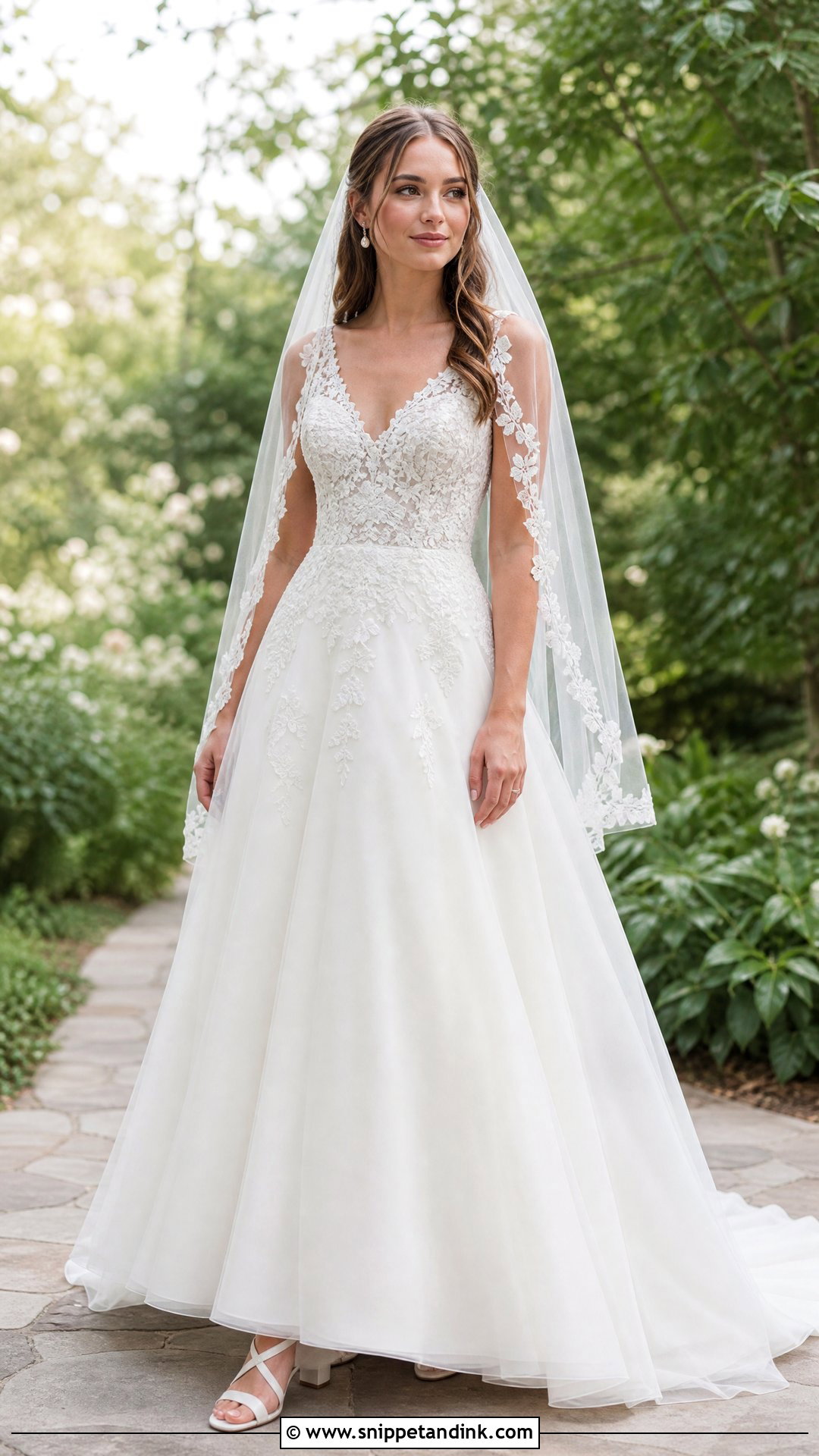
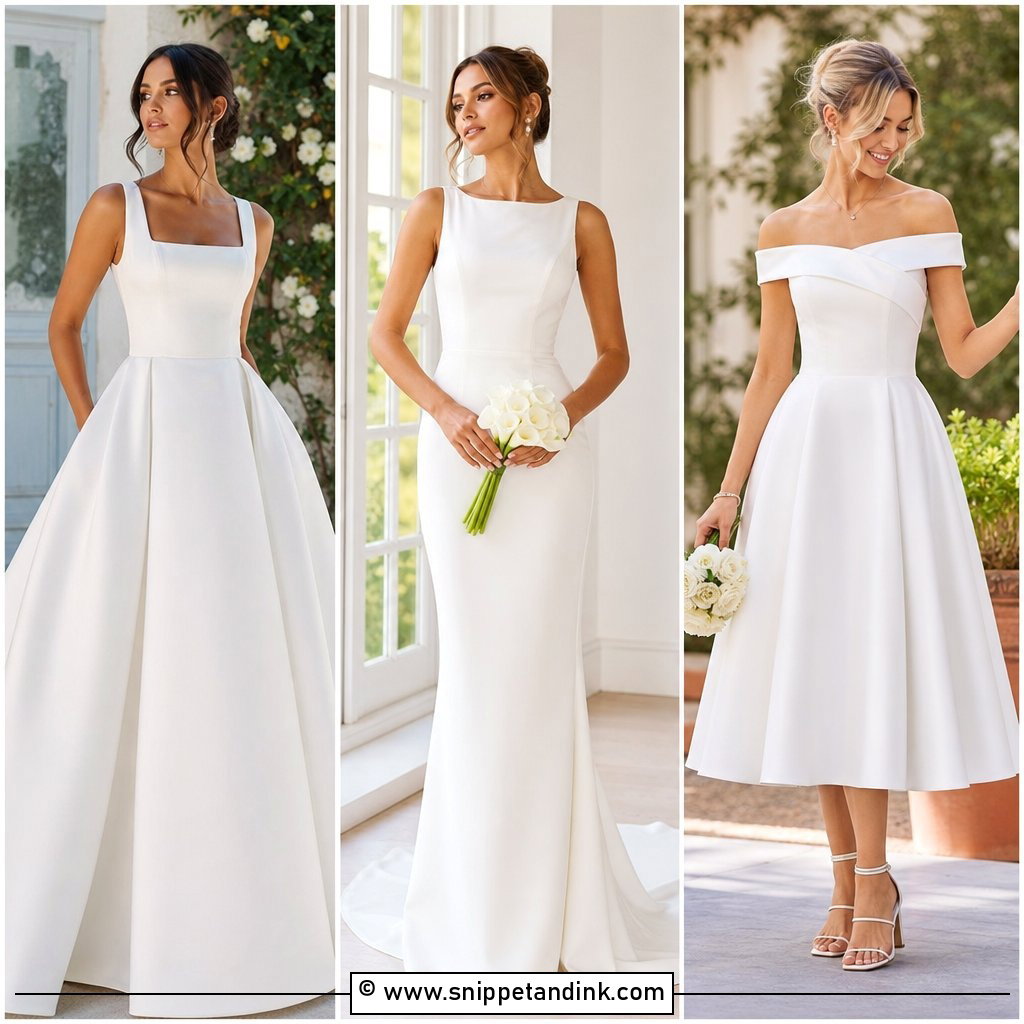
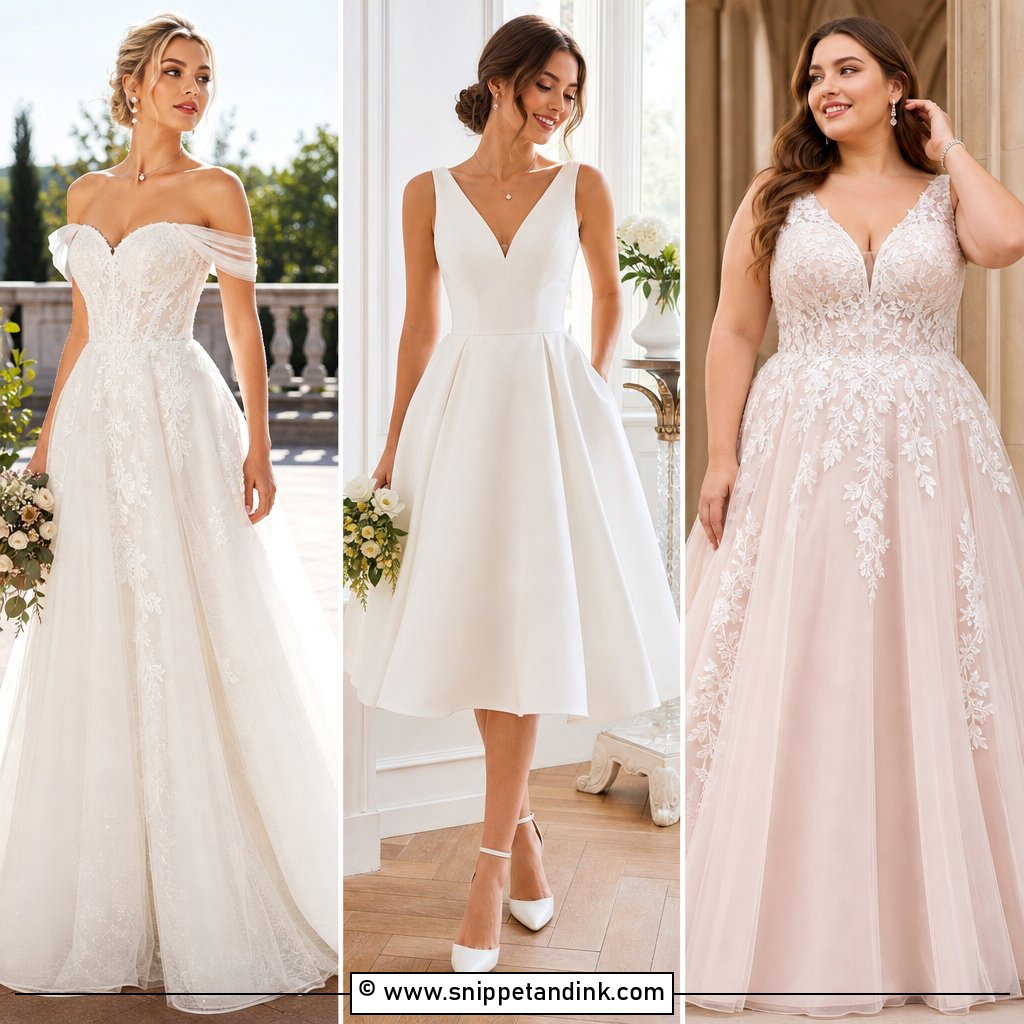
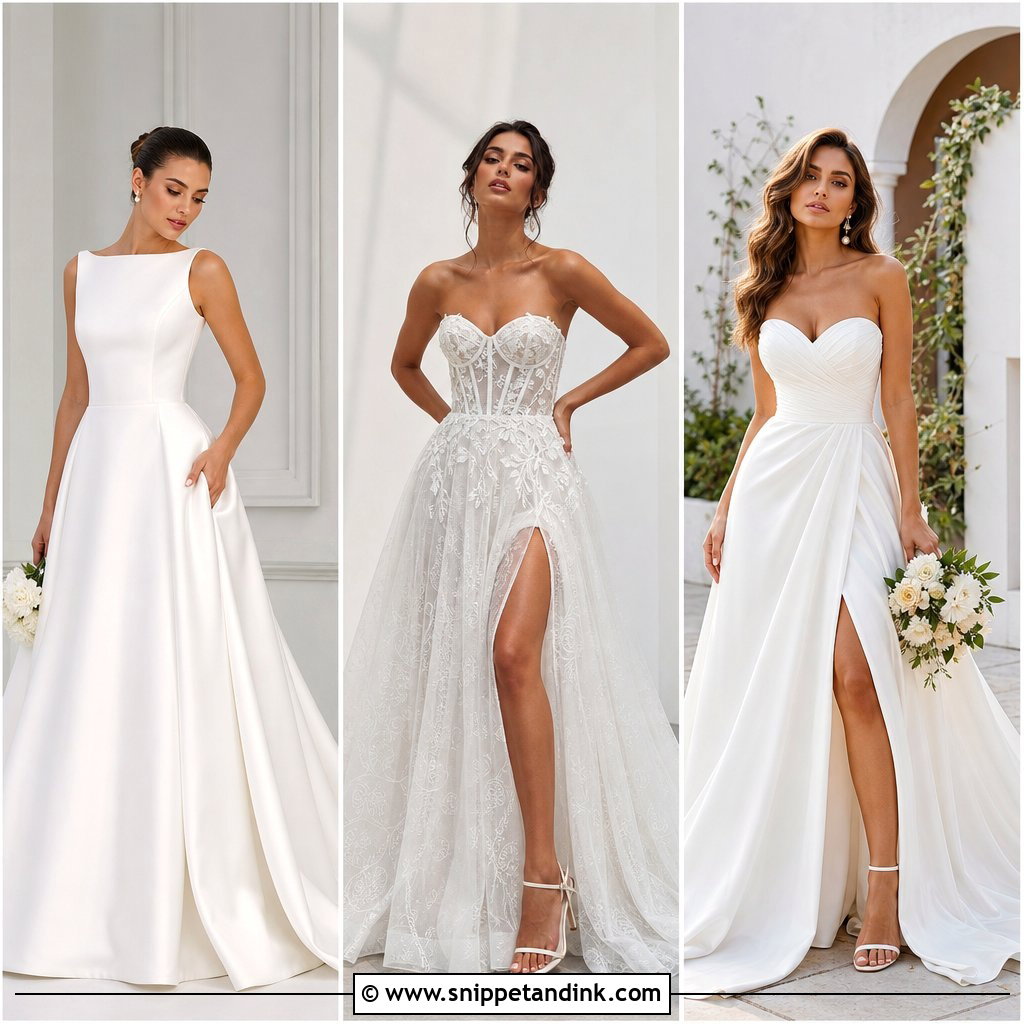
Easy to love and hard to get wrong. An A-line fits through the bodice and flows gently from the waist, so it suits garden, ballroom, beach and classic indoor weddings alike. The neckline changes the mood more than you’d think: a sweetheart reads romantic, a square neck reads modern, a V reads relaxed. Lace, satin, organza or crepe then set the formality. A fingertip veil ends right where the skirt starts to flare, which is why I pair it with this shape, along with pearl earrings and block heels.
2. Ball Gown Wedding Dress With Tiara
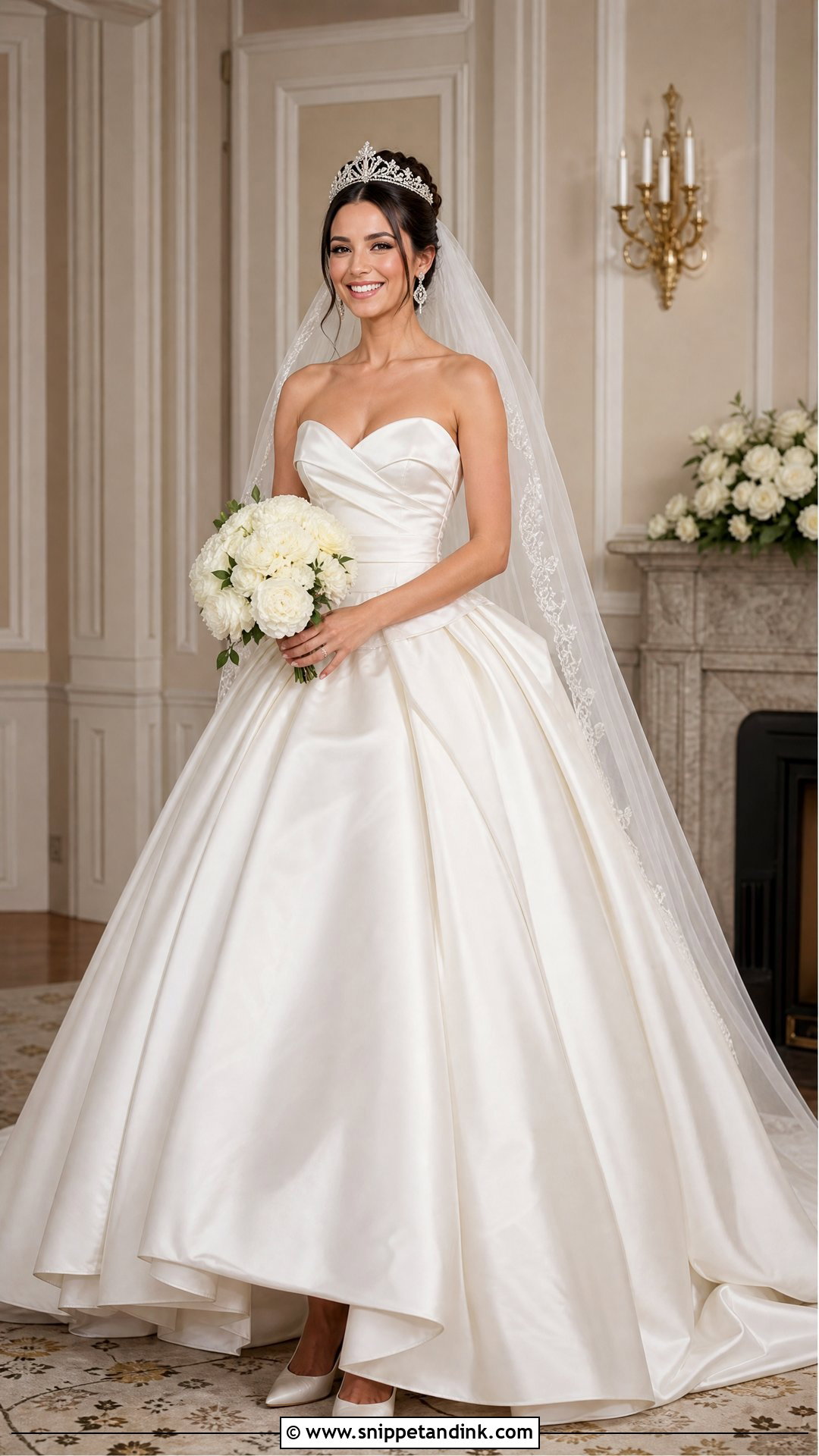
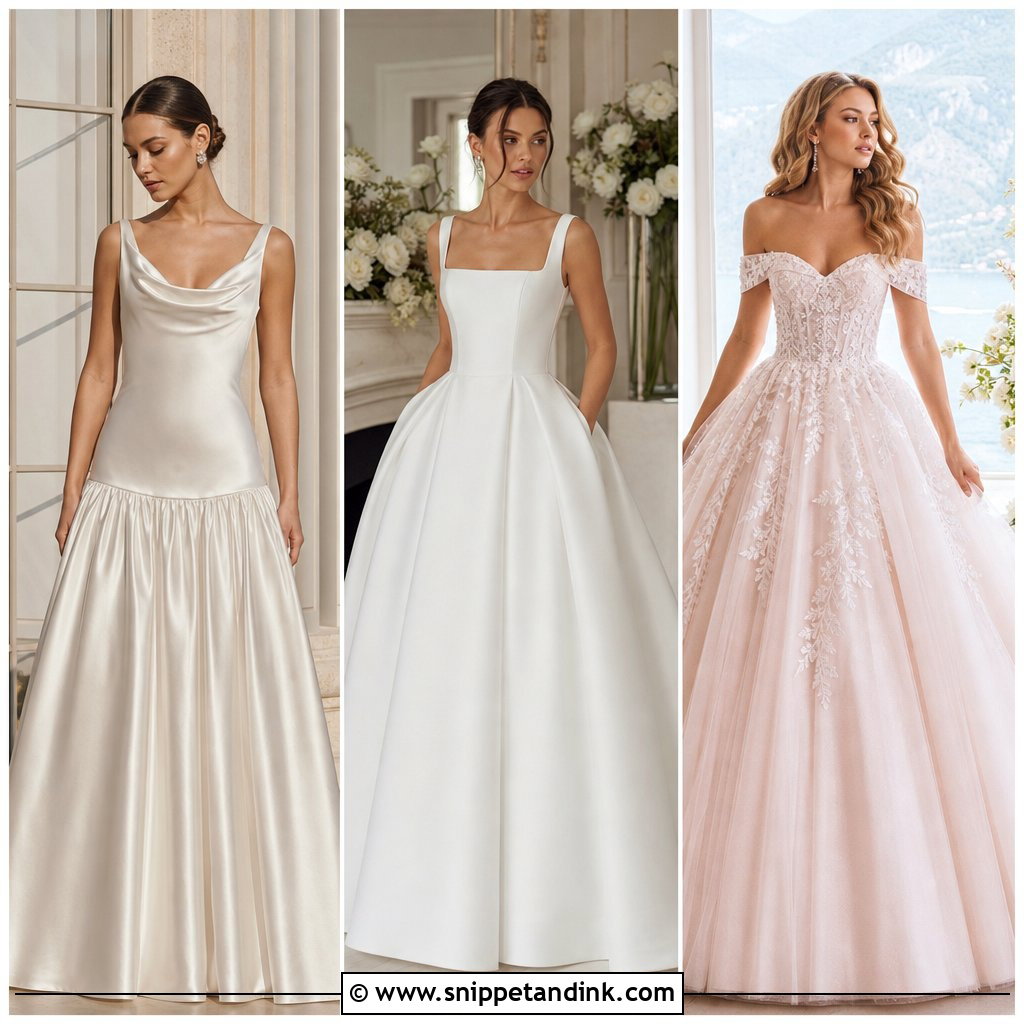
The ball gown is the shape a tiara was made for, since the scale of the skirt can carry a sparkling crown without it looking costume. The volume comes from layers of tulle, organza, satin or structured mikado, and a corset bodice holds it all up. I set a tiara in front of an updo, never on flat hair, so it has something to sit against and doesn’t slide backward during the ceremony. A cathedral veil, crystal studs and satin heels complete it. Large ballrooms, historic estates and black-tie weddings give it room.
3. Mermaid Wedding Dress With Long Train
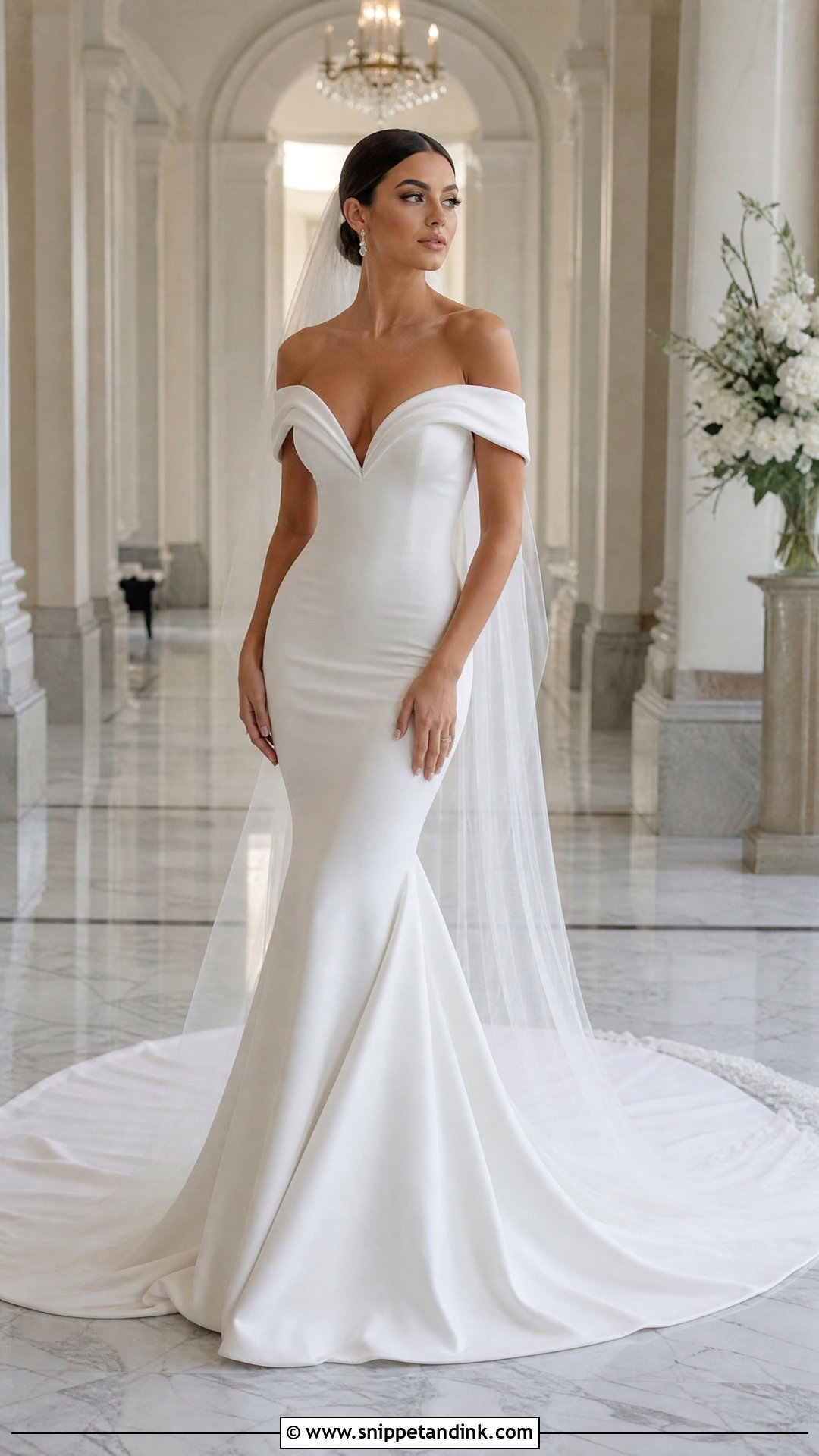
Fitted through the bust, waist, hips and thighs, then flaring at the knee: the mermaid is the most sculpted gown on this list and the least forgiving to walk in. Stretch crepe gives the easiest movement; beaded fabrics the least. A long train looks dramatic for the aisle, but plan the bustle at a fitting, with the person who’ll do it watching, since mermaid trains often need several bustle points to lift evenly. Sleek waves, drop earrings and a simple veil keep it elegant. Sit and walk in it at every fitting before you commit.
4. Trumpet Wedding Dress With Lace
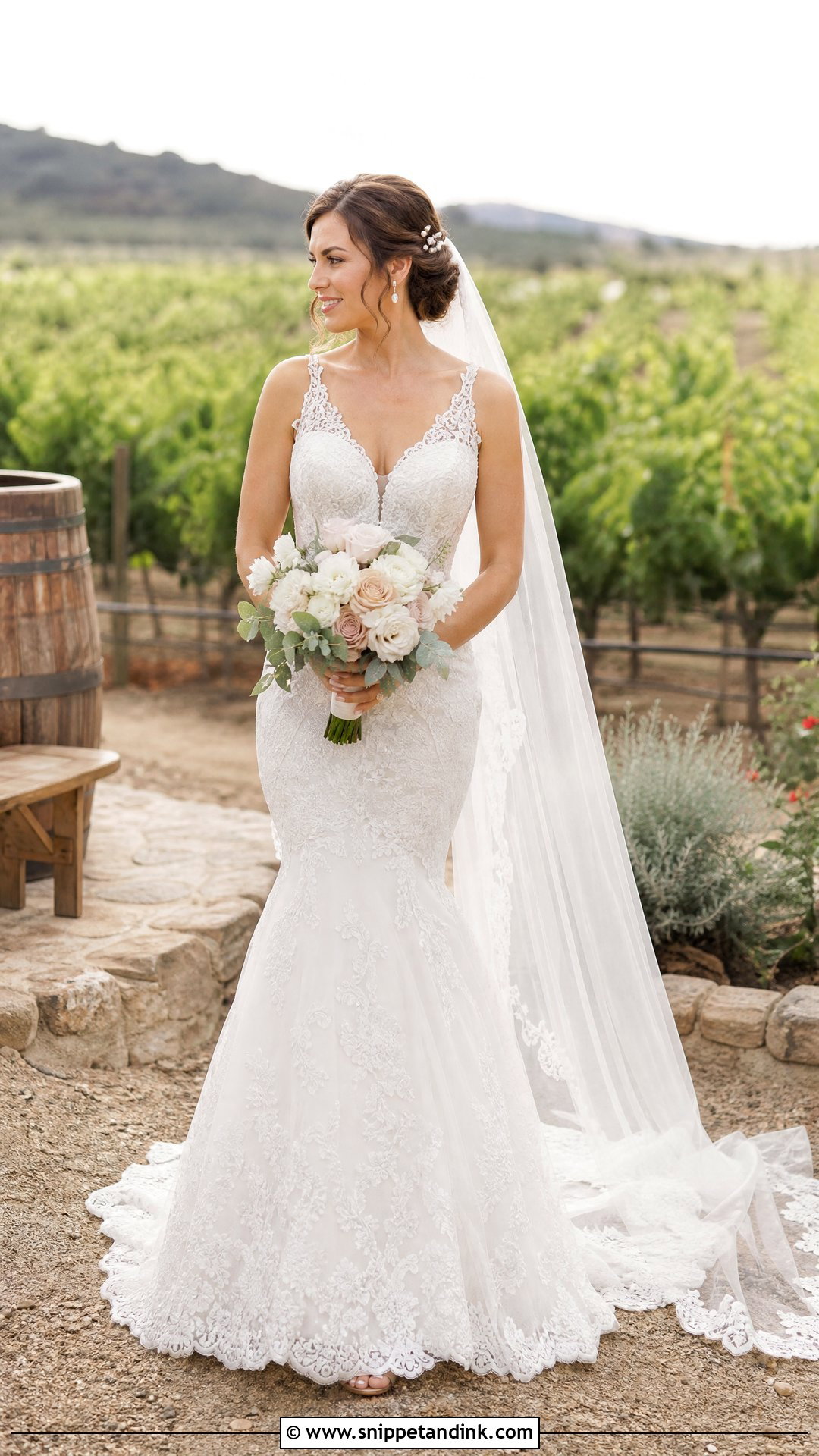
People confuse the trumpet with the mermaid, and the difference is where the flare begins. A trumpet opens at mid-thigh, so you get a longer stride, an easier time on stairs and a dress you can actually dance in. Lace softens the fitted shape, especially with soft straps, illusion sleeves or a scalloped neckline. A chapel veil, pearl hair pins and neutral heels finish it. I’d send any bride who loves the mermaid look but worries about movement straight to this one.
5. Sheath Wedding Dress With Simple Veil
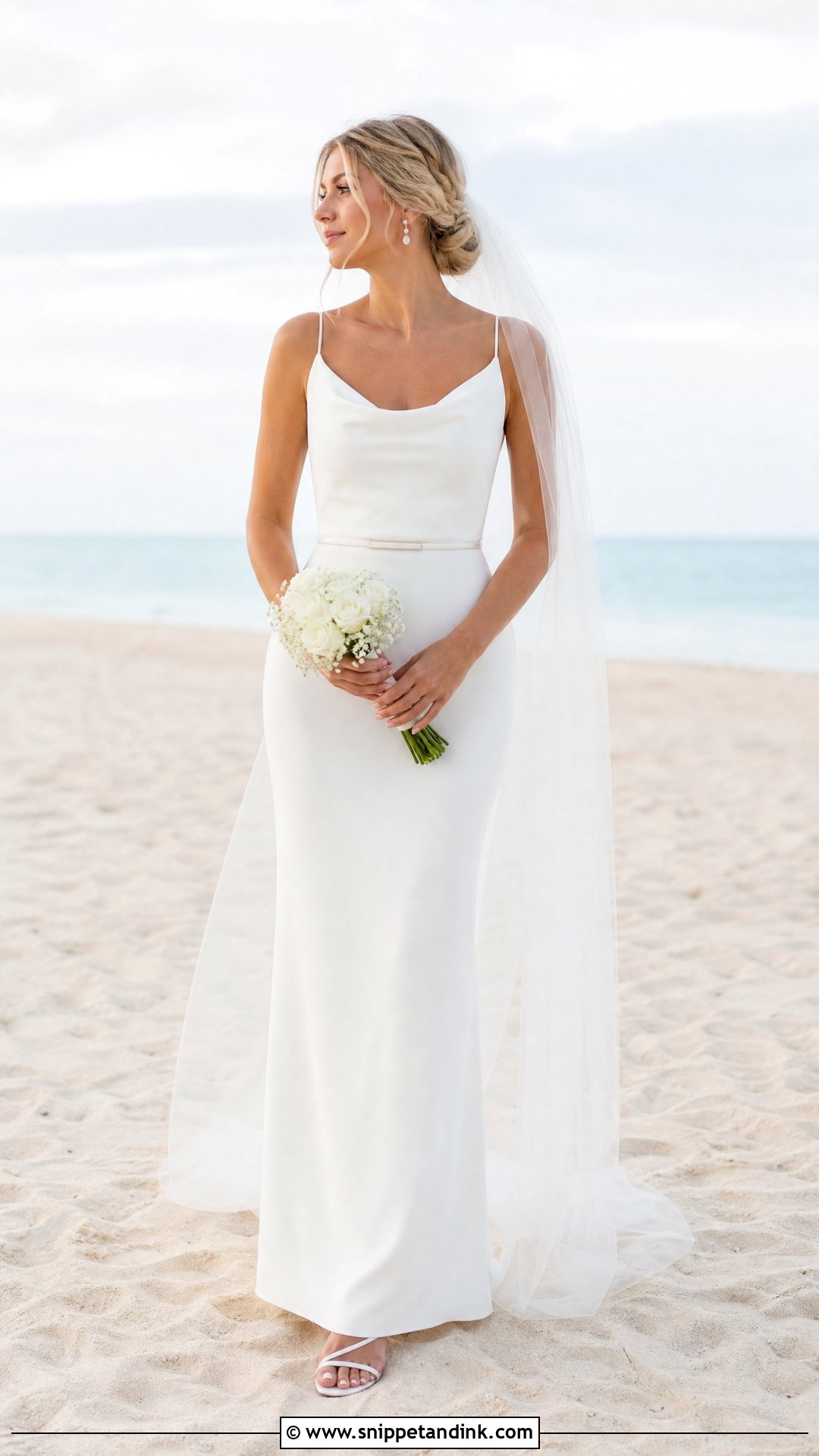
A sheath falls close to the body in a straight line with no extra volume, which makes it calm and light. Crepe, silk, satin and chiffon all move softly in it. Necklines do the personal work here: a cowl neck, square neck or high neck each change the whole dress. Keep the veil just as simple, a single sheer layer with a raw or narrow edge, so it doesn’t fight the clean line. Strappy sandals and a low bun suit the beaches, courthouses and destination weddings where this dress lives.
6. Fit And Flare Wedding Dress With Sleeves
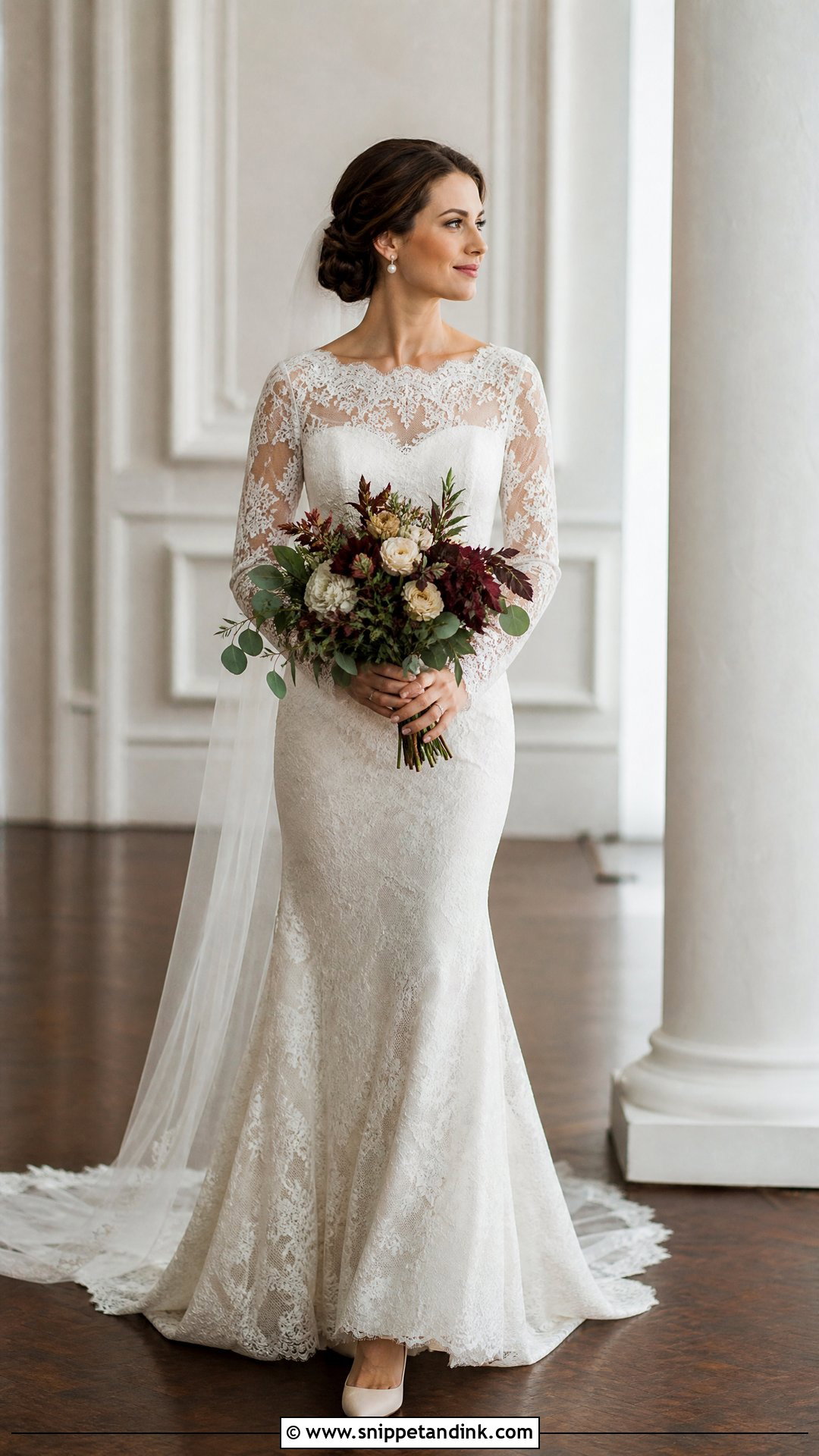
Fit and flare is the gentler cousin of the mermaid: it hugs to the hips and then opens into a soft skirt rather than a dramatic flare. Long sleeves balance that shape and add coverage for fall, winter or formal weddings, lace for romance or crepe for a sleek line. The sleeve head is what I fuss over, since a sleeve set slightly too far back pulls at the shoulder every time you reach forward. A low veil, classic pumps and a polished updo complete it.
7. Empire Waist Wedding Dress With Chiffon Skirt
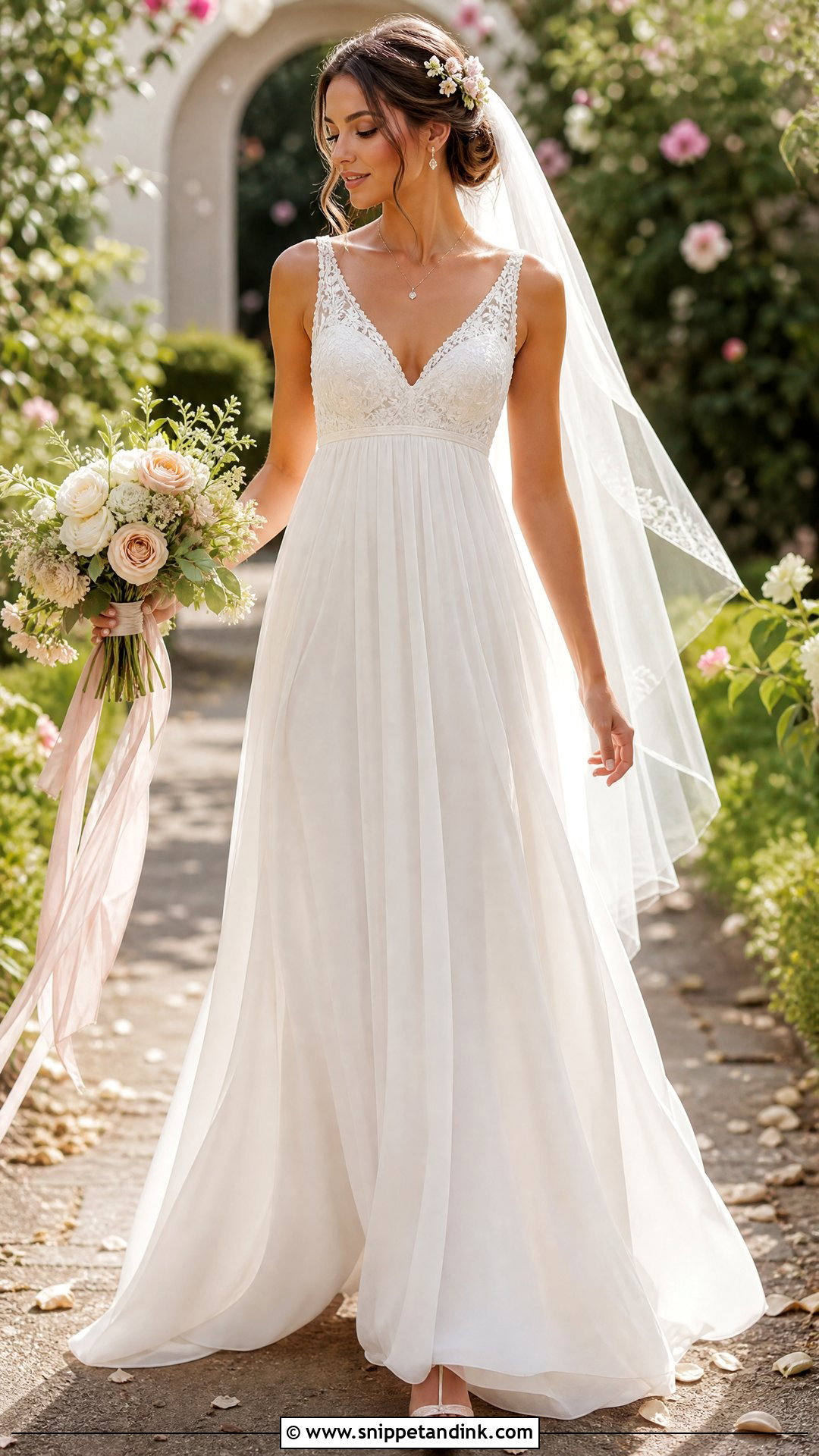
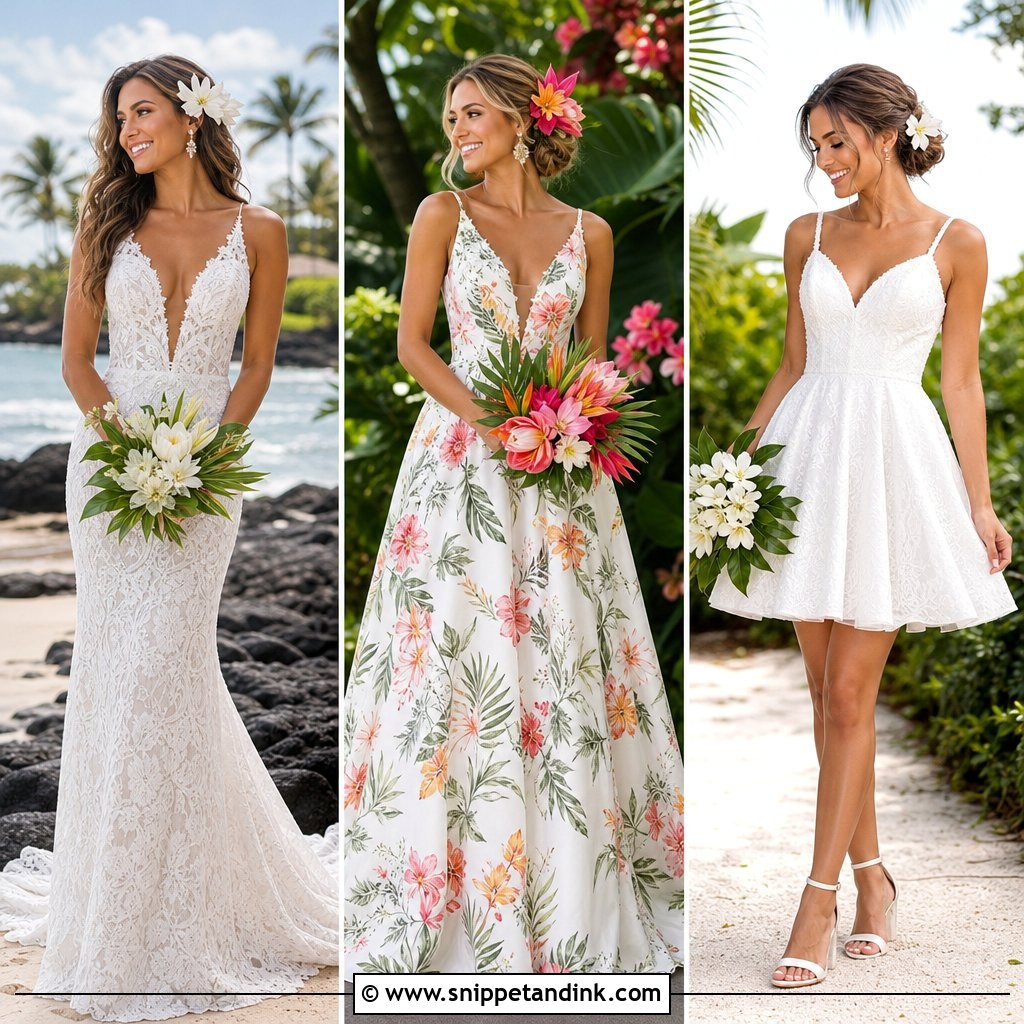
An empire waist sits just under the bust and lets the skirt fall from there, so nothing presses at the natural waist all day. That makes it one of the most comfortable shapes here, and the one I suggest first for pregnant brides. A chiffon skirt gives gentle movement for outdoor and summer ceremonies, while the bodice can be simple, ruched, beaded or lace. Chiffon frays and snags easily, so keep it away from rough stone walls and bark during photos. Soft curls, floral pins and flat sandals suit it.
8. Drop Waist Wedding Dress With Full Skirt
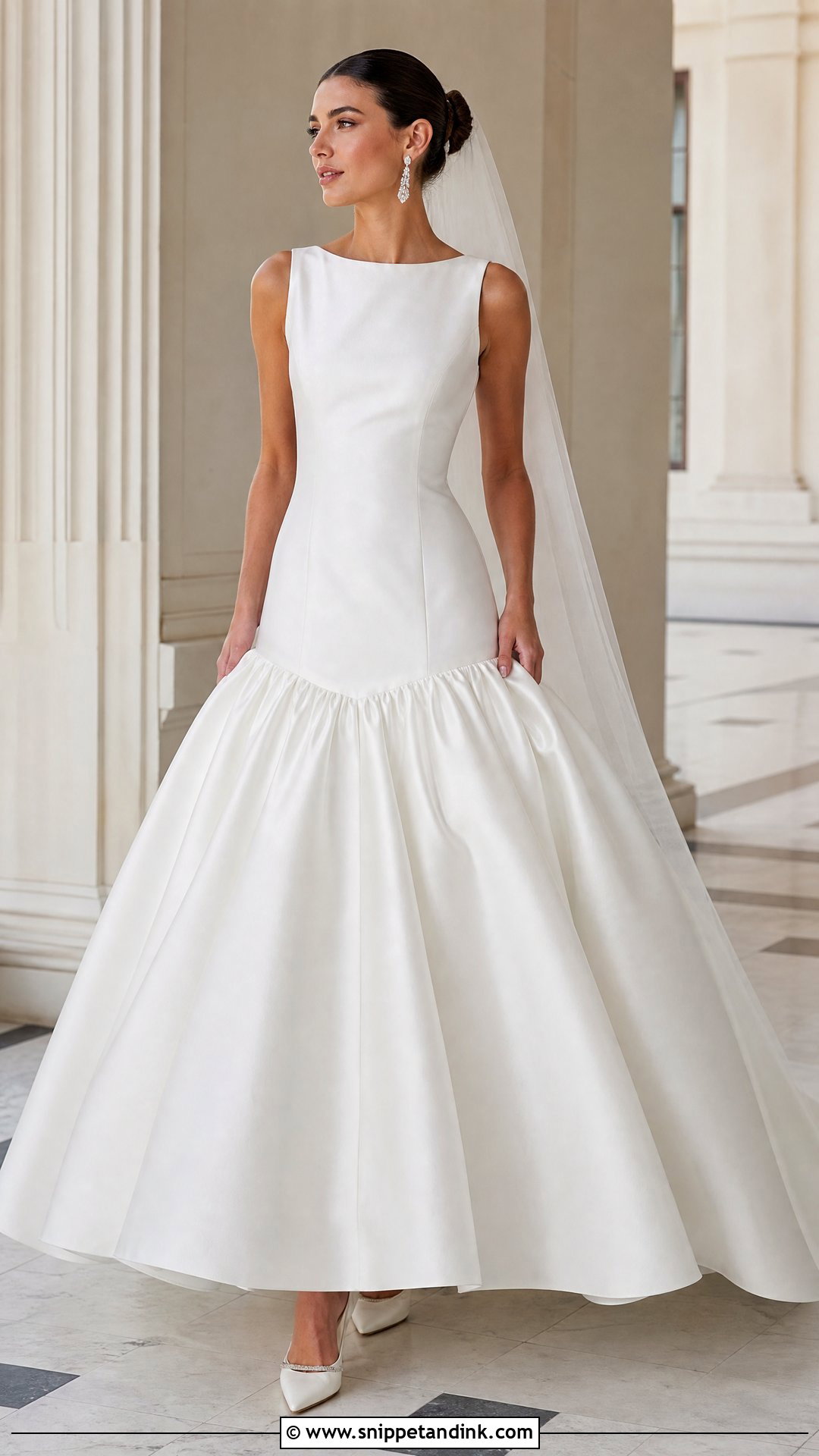
Lowering the waist seam to the hips gives a long bodice and puts all the drama in the lower half of the dress. A full skirt adds volume, and a structured bodice stops the long torso from looking slack. Placement is the make-or-break detail: on a short torso, a seam set too low can make the legs look short, so I’d have the seamstress pin it at two heights and look at both in a full-length mirror. A clean veil, sculptural earrings and a smooth bun keep the lines clear.
9. Basque Waist Wedding Dress With Corset Bodice
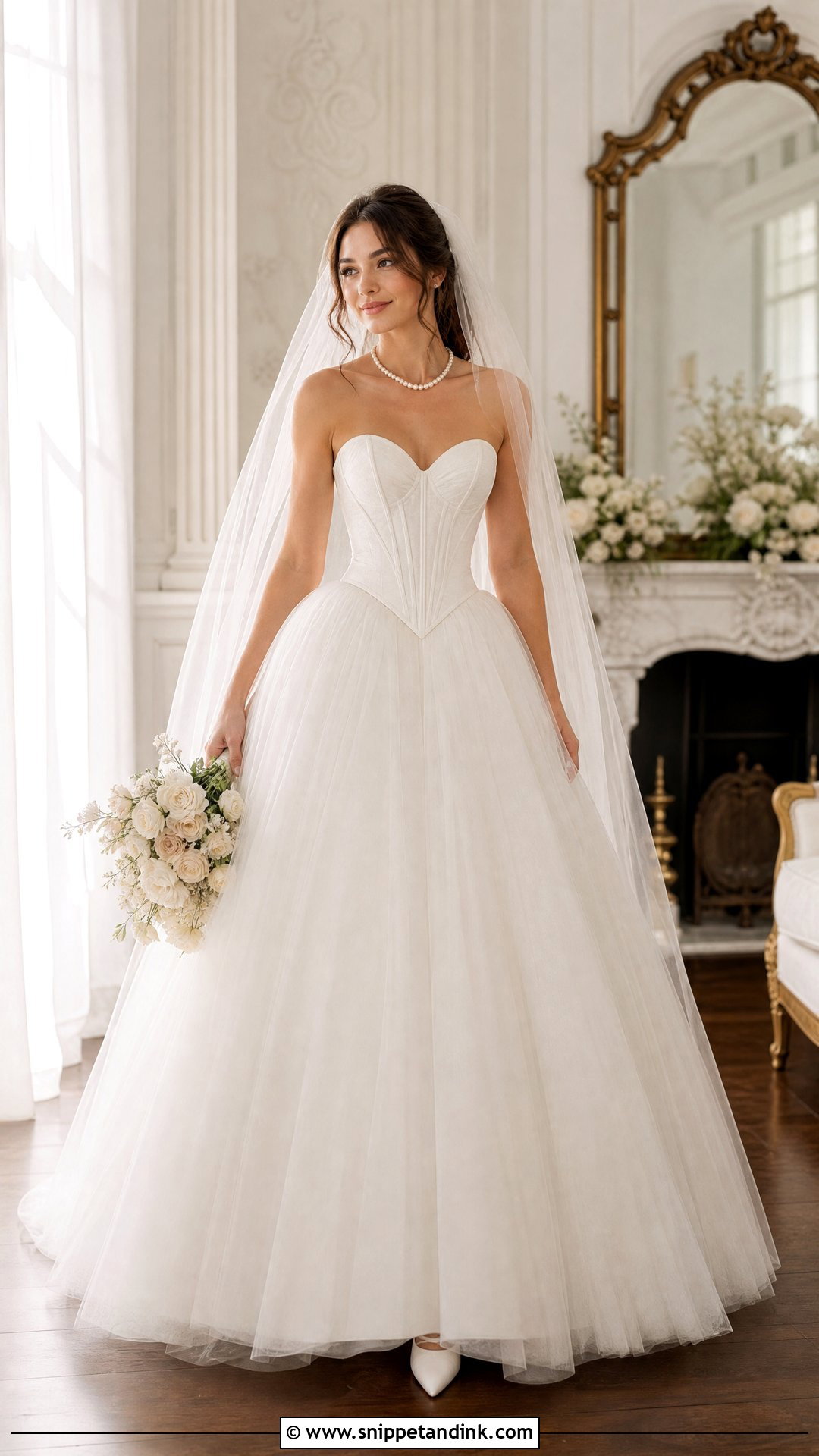
A basque waist wedding dress dips into a V at the center front, and paired with a corset bodice it gives the most defined waist of any shape here. It’s popular again because it nods to historical dress without feeling like a costume. Full skirts, lace, satin or soft tulle all suit it. The point of the V should sit just below your natural waist; too low and it digs into the hips when you sit. A sheer veil, a pearl necklace and satin pumps finish it.
10. Column Wedding Dress With High Neck
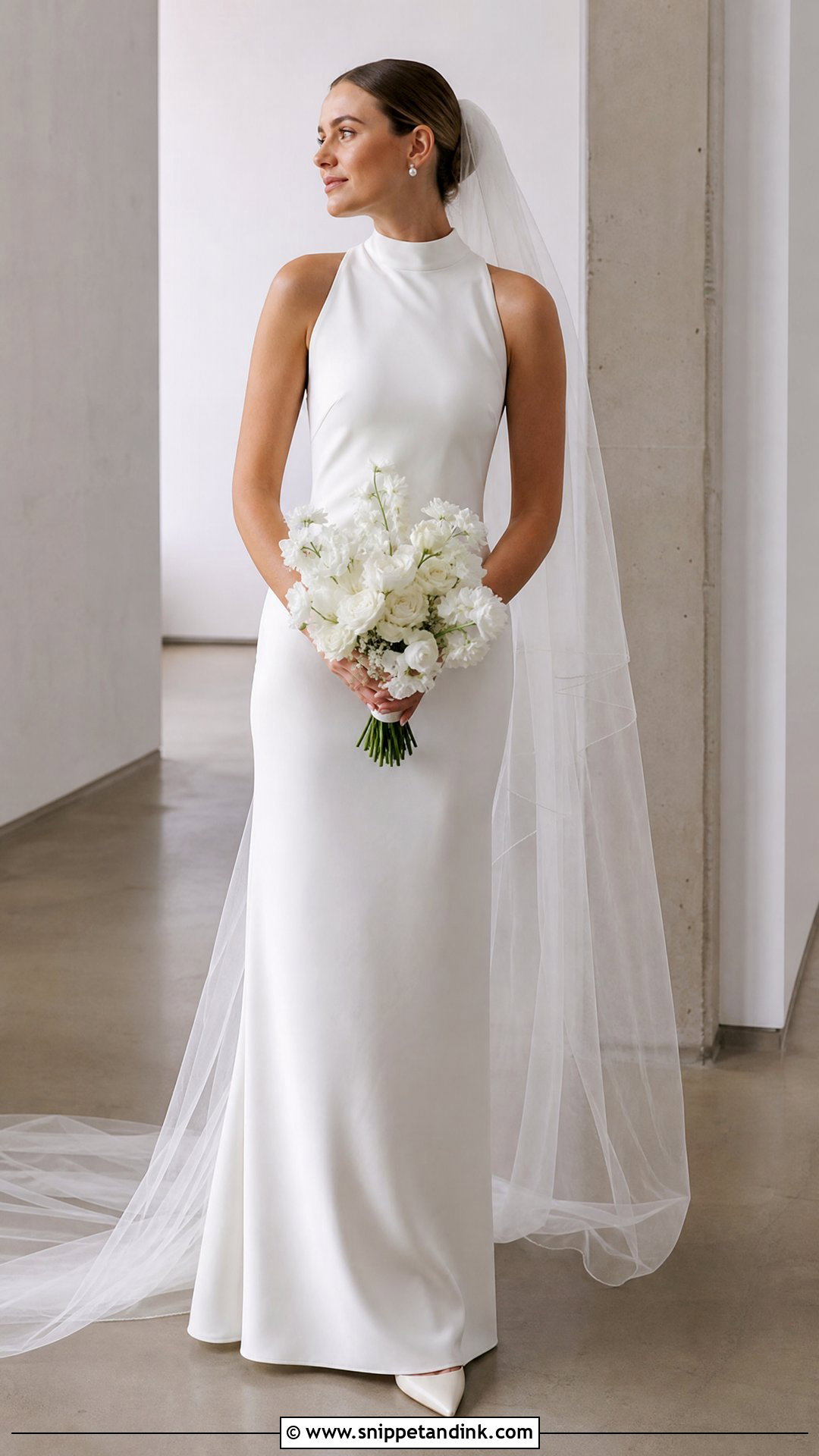
A column with a high neck is the purest line in bridal: straight from shoulder to hem, no fuss anywhere. With nothing to hide behind, fit and fabric quality show immediately, so heavy crepe, satin or silk are worth paying for here. A low chignon keeps the neck clear, and small studs are the only jewelry I’d add. City weddings, museums and courthouse ceremonies suit it. If the ceremony space is large, a long veil adds presence without breaking the clean shape.
11. Slip Wedding Dress With Satin Sandals
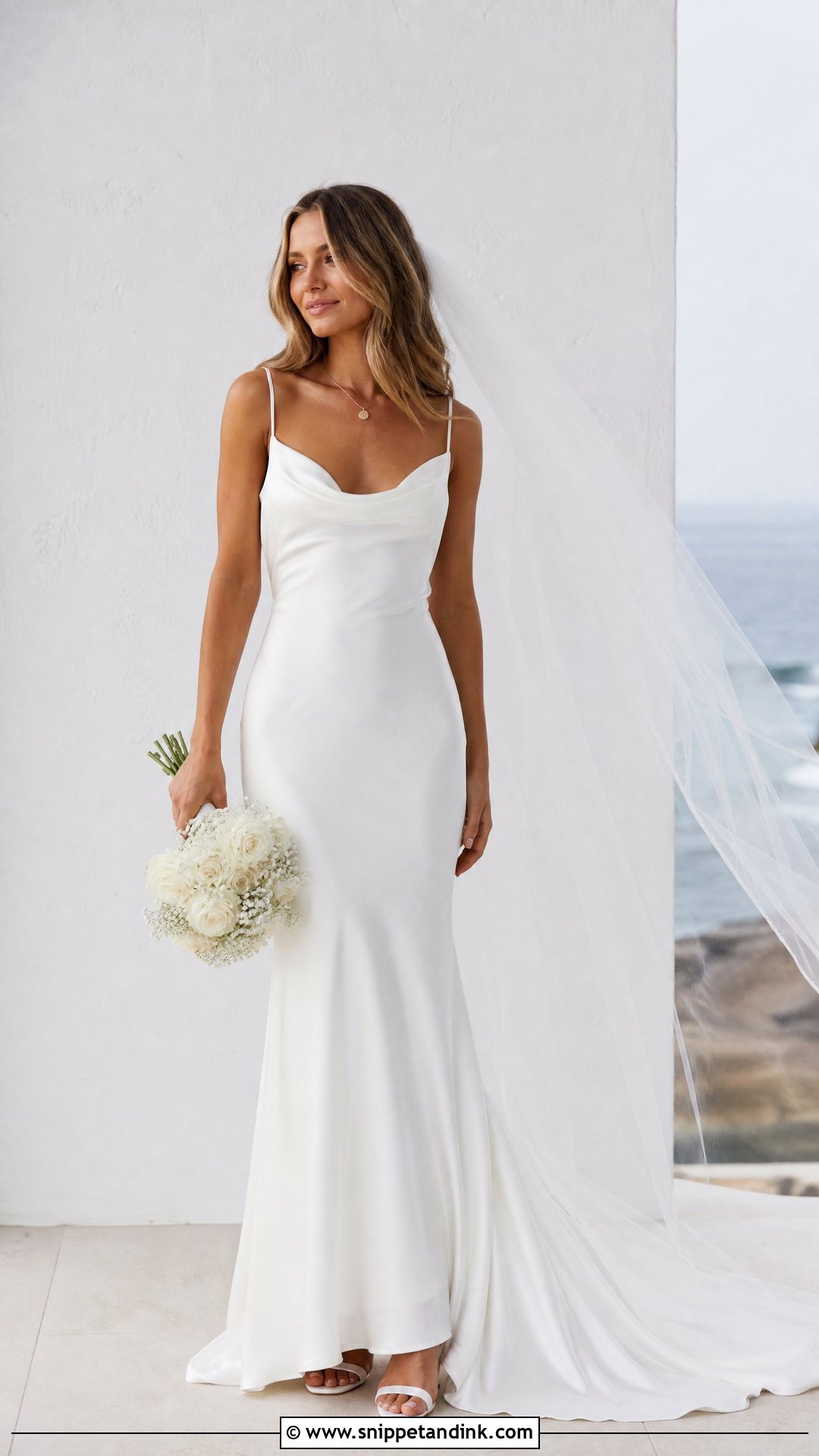
Thin straps, a soft neckline and a body-skimming cut make the slip the most relaxed dress here. Satin or silk give it movement and quiet shine, and the satin sandals echo that sheen at the floor. Watch the sandals, though: satin soles are slippery on polished floors, so I scuff them on concrete or add grip pads before the day. A sheer veil and soft waves dress it up. Layer a lace topper, a tailored blazer or a removable overskirt if you’d like a ceremony-to-reception change.
12. Tea Length Wedding Dress With Block Heels
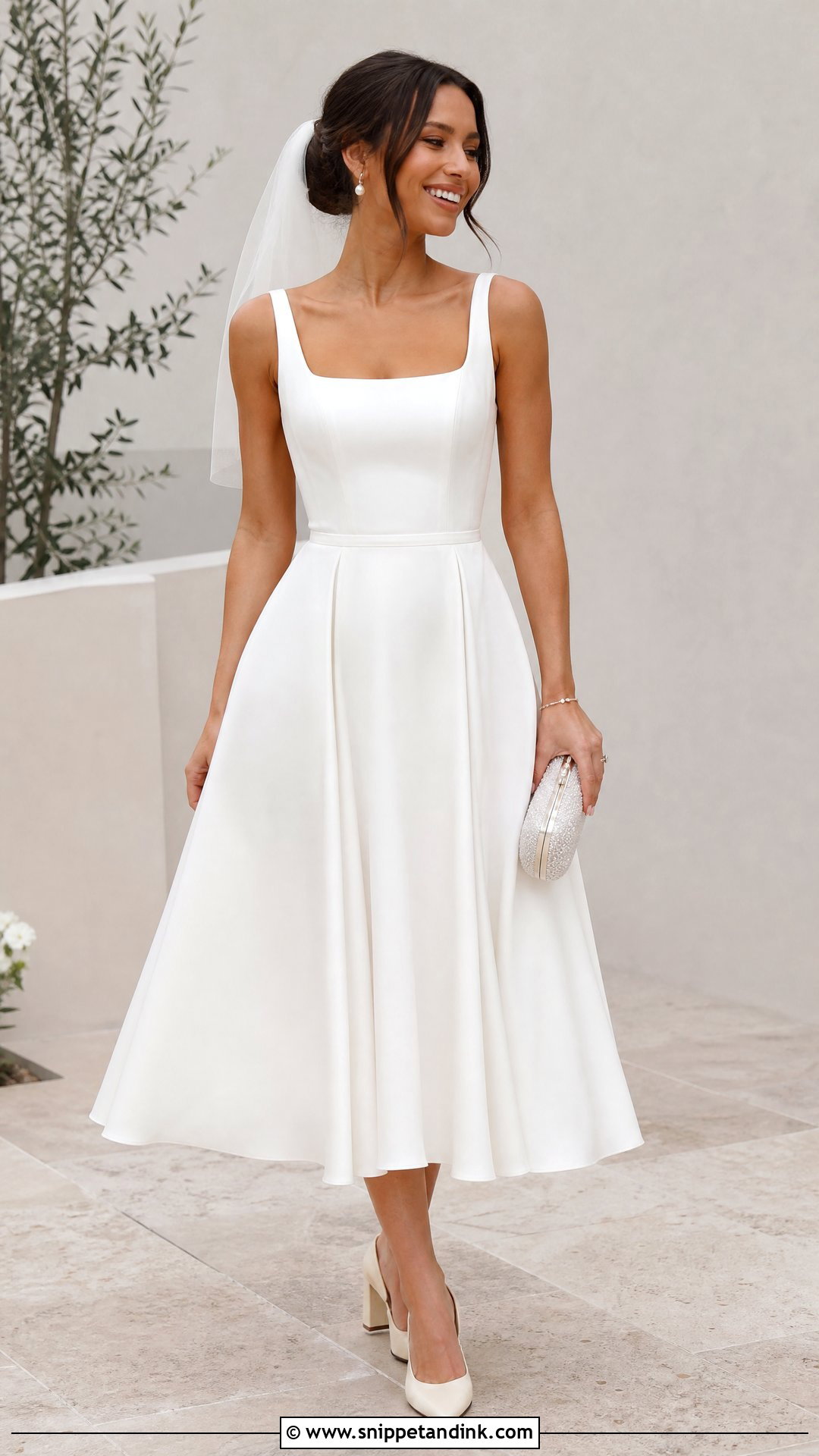
Tea length falls between the knee and ankle, so the shoes are part of the outfit from the first photo. Block heels are the sensible match, because they don’t sink into lawns at garden receptions the way stilettos do. A fitted bodice with a flared skirt gives classic charm, while a tea length sheath reads more modern. Walking and dancing are easy at this length. A short veil, pearl earrings and a structured clutch keep it bridal for courthouse and civil ceremonies.
13. Mini Wedding Dress With Bridal Bow
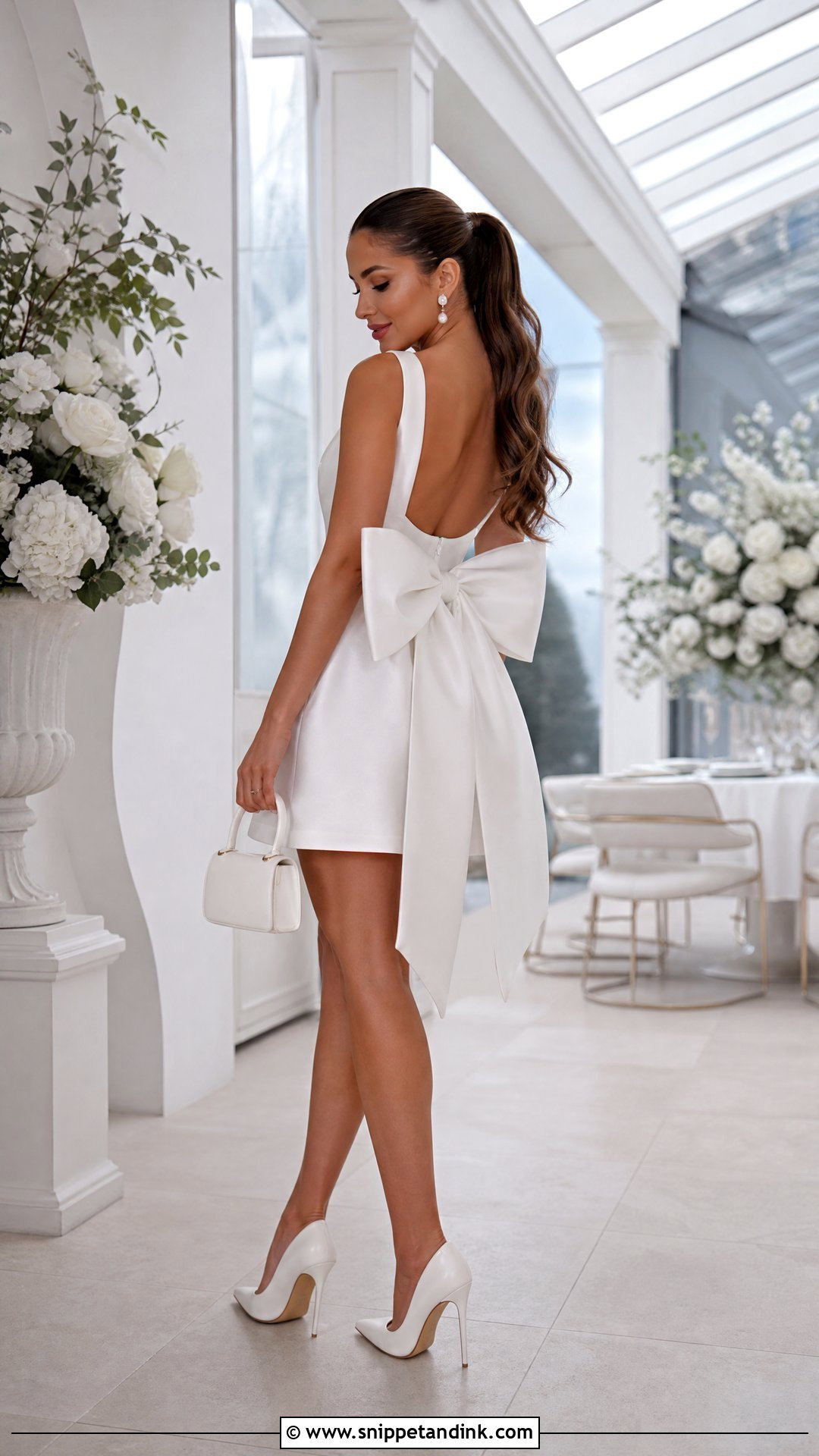
A mini turns up the energy at a reception, after-party, courthouse ceremony or as a second look. Satin, crepe, lace or taffeta keep it bridal, and one large bow at the back, shoulder or waist gives it a signature without beading. Bows crush easily, so I pack a small travel steamer for the evening change and fluff the loops by hand before photos. Pointed pumps and a sleek ponytail suit it. For a more covered ceremony look, add sheer tights, a short veil or a tailored blazer.
14. Off The Shoulder Wedding Dress With Pearl Earrings
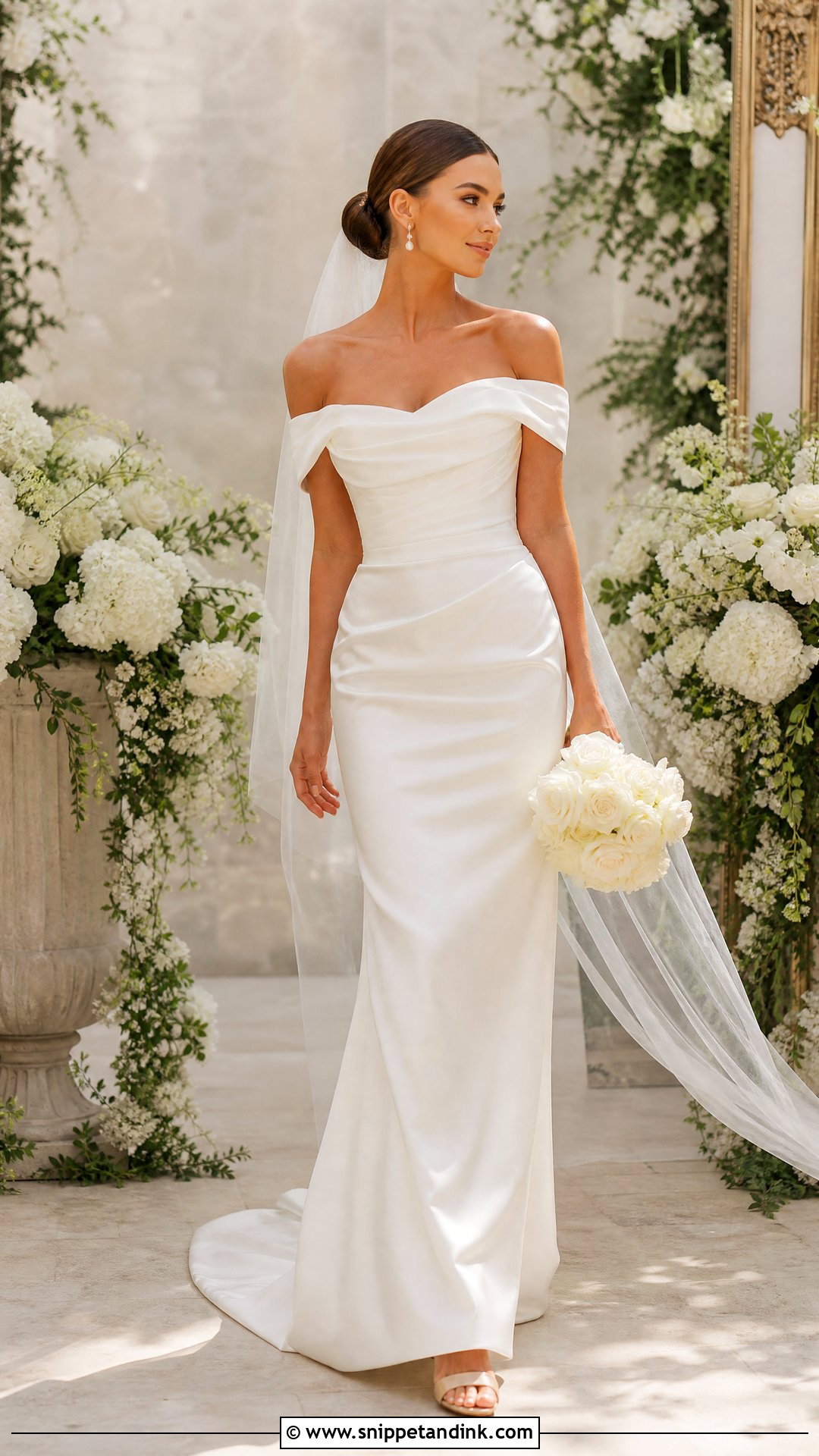
An off the shoulder neckline frames the collarbone and shoulders and suits A-line, ball gown, mermaid and fit and flare silhouettes. Satin keeps it classic and lace softens it. The fit has to sit firmly on the upper arm without biting, and a silicone strip inside the band stops it creeping up as you move. Pearl earrings and a smooth updo are all the neckline needs. The veil should attach behind the crown so it falls behind the shoulders instead of covering them.


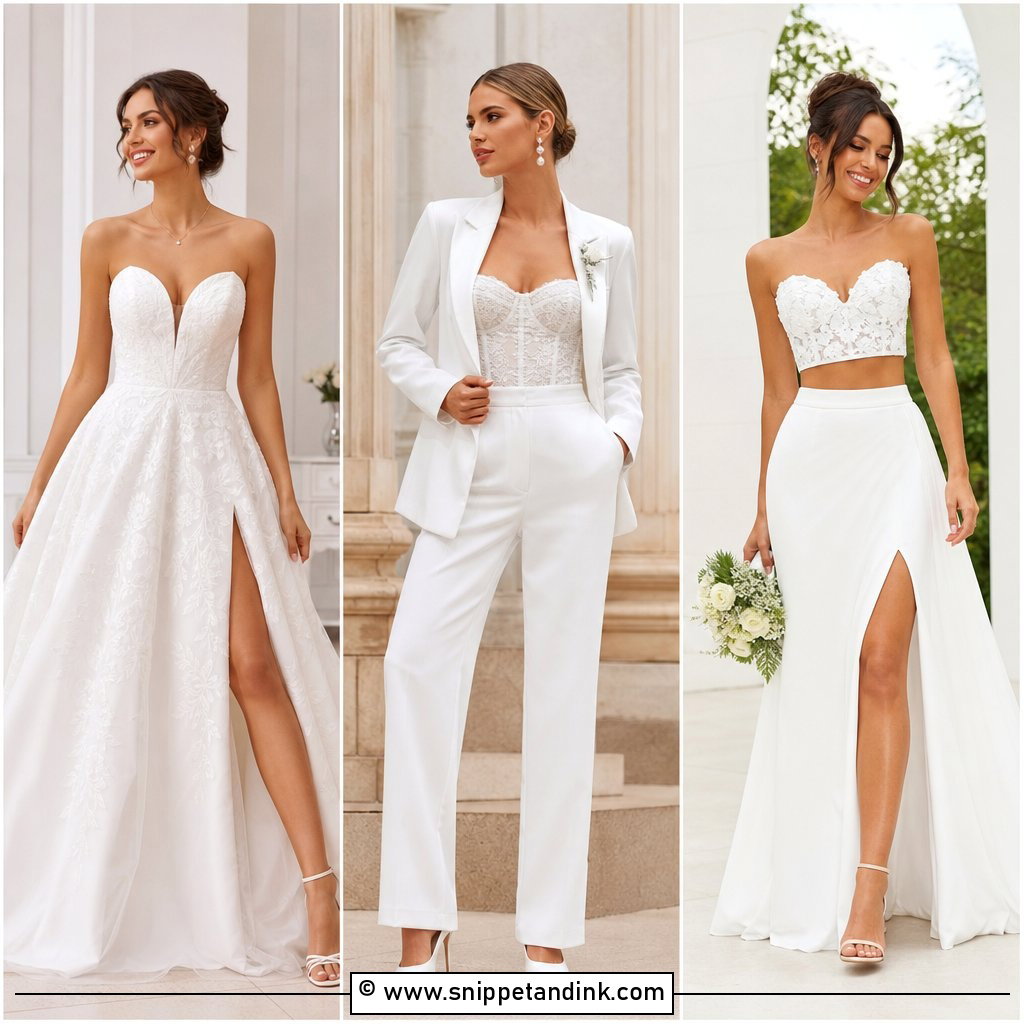
15. Strapless Wedding Dress With Cathedral Veil
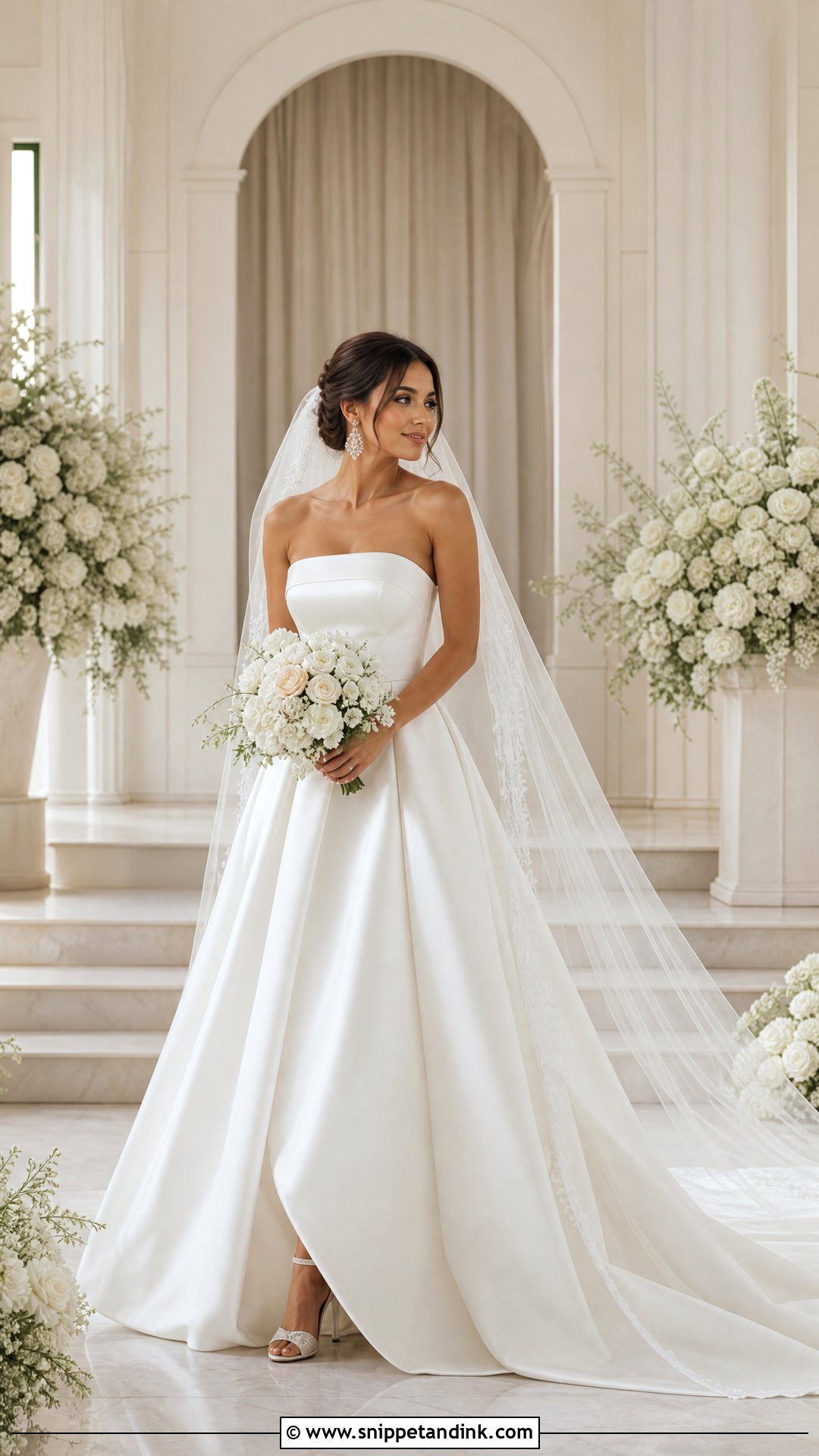
Strapless shows off the neckline, shoulders and whatever jewelry you choose, and it can be minimal, romantic or dramatic depending on silhouette and fabric. The bodice is the whole job: it should grip at the ribcage, which is why professional alterations matter more here than with almost any other cut. Plan your undergarments early, since many strapless gowns are built with cups and boning that make a separate bra unnecessary. A cathedral veil adds ceremony drama and comes off for a lighter reception look.
16. Square Neck Wedding Dress With Low Bun
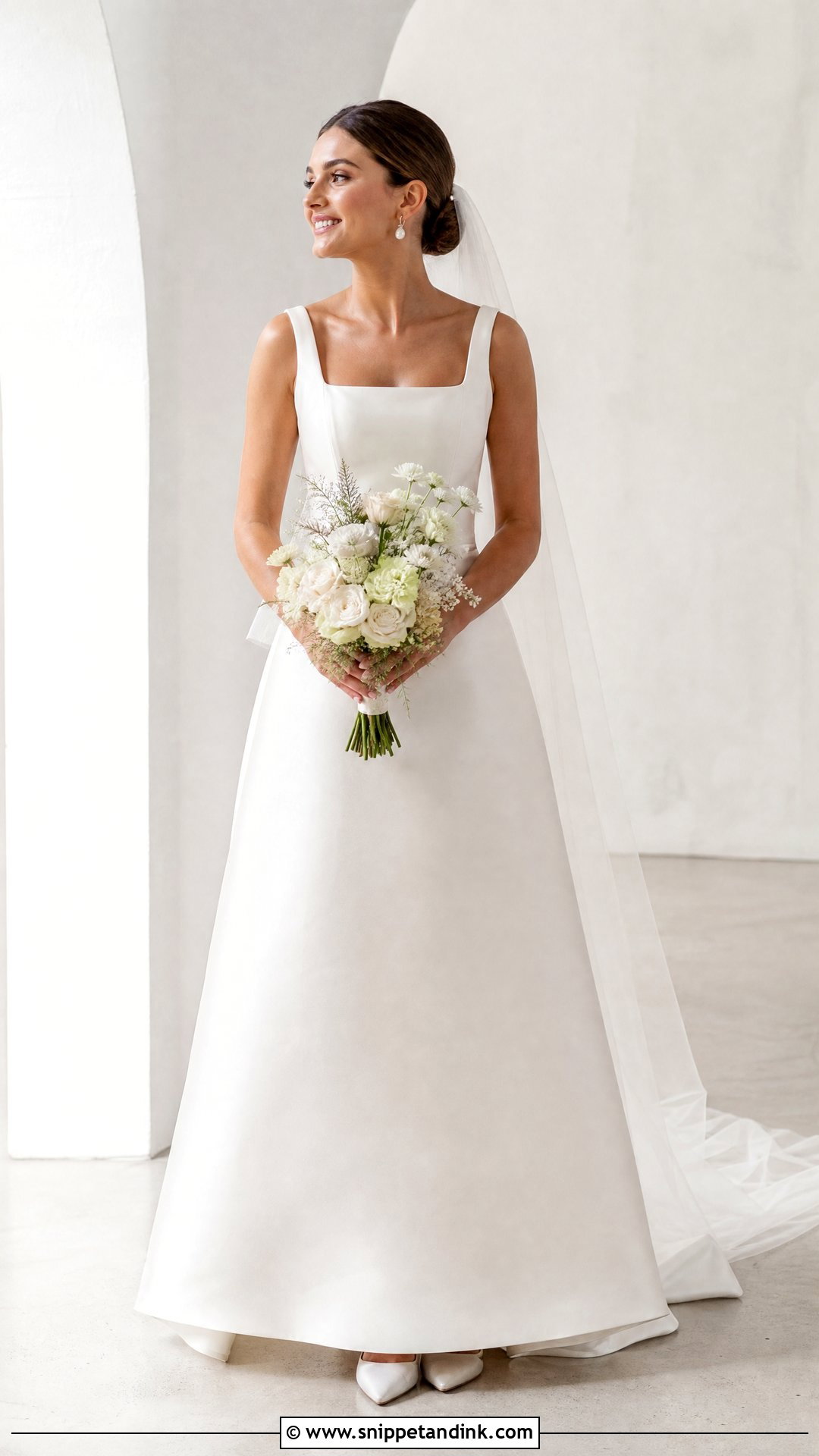
The straight line of a square neck frames the collarbone, and it works with wide straps, long sleeves or a sleeveless bodice across A-line, sheath, column and ball gown shapes. A low bun keeps the neck and shoulders open so the corners of the neckline stay visible. Small hoops or pearl studs, satin pumps and a clean veil are plenty. On a very plain dress, I add texture elsewhere, a textured bouquet or a subtly worked lace veil, so the outfit doesn’t look unfinished. It feels fresher than a sweetheart without being risky.
17. Sweetheart Wedding Dress With Lace Veil
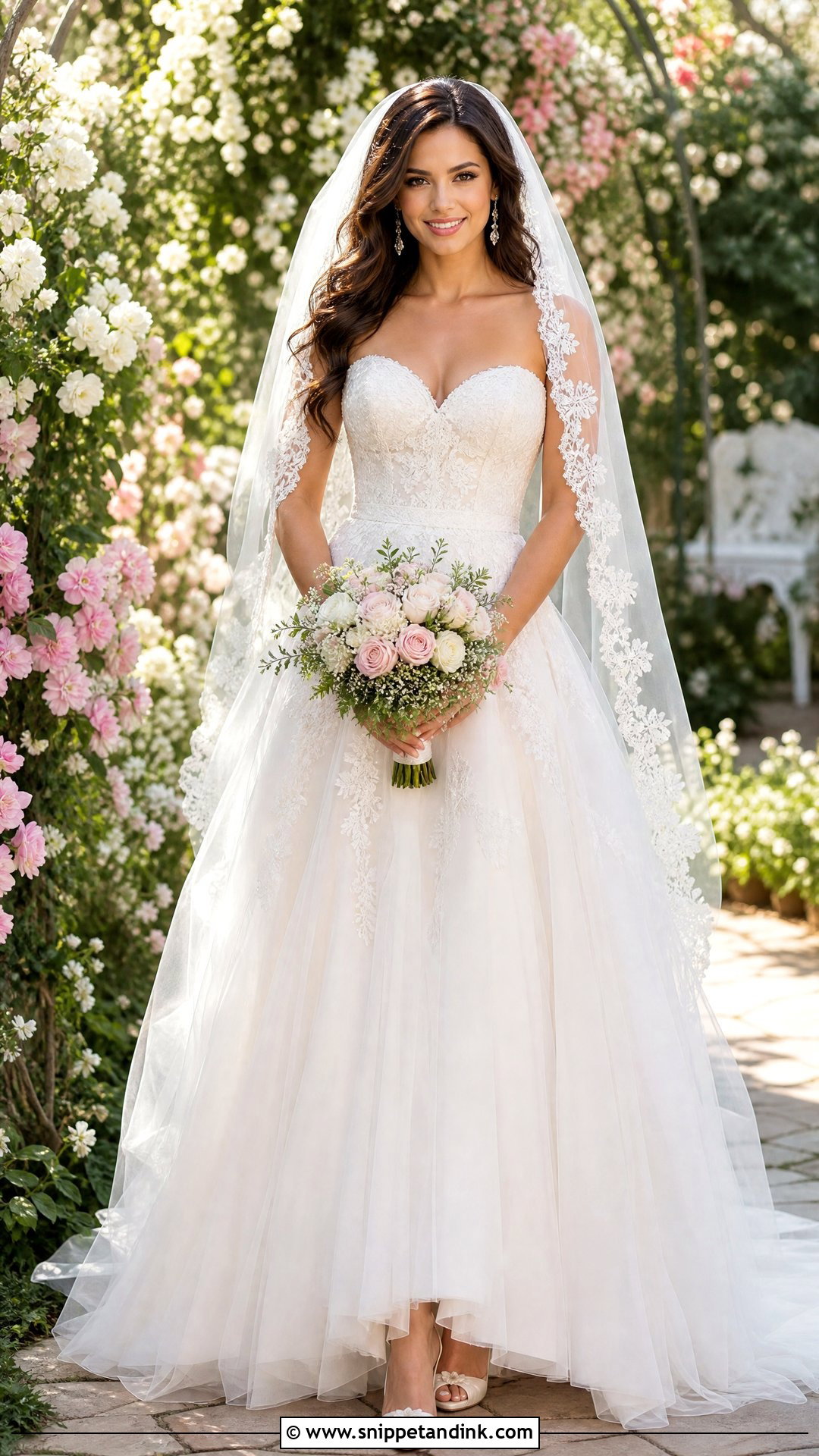
A sweetheart wedding dress curves at the bust like the top of a heart, on strapless gowns, gowns with straps or under sheer sleeves. It flatters most busts, but only with real structure, so I look for shaped cups or corset construction inside. A lace veil adds romance without overpowering the neckline, especially if its lace echoes the gown. Soft curls and delicate earrings finish it. It’s at home anywhere from garden ceremonies to formal ballrooms.
18. V Neck Wedding Dress With Open Back
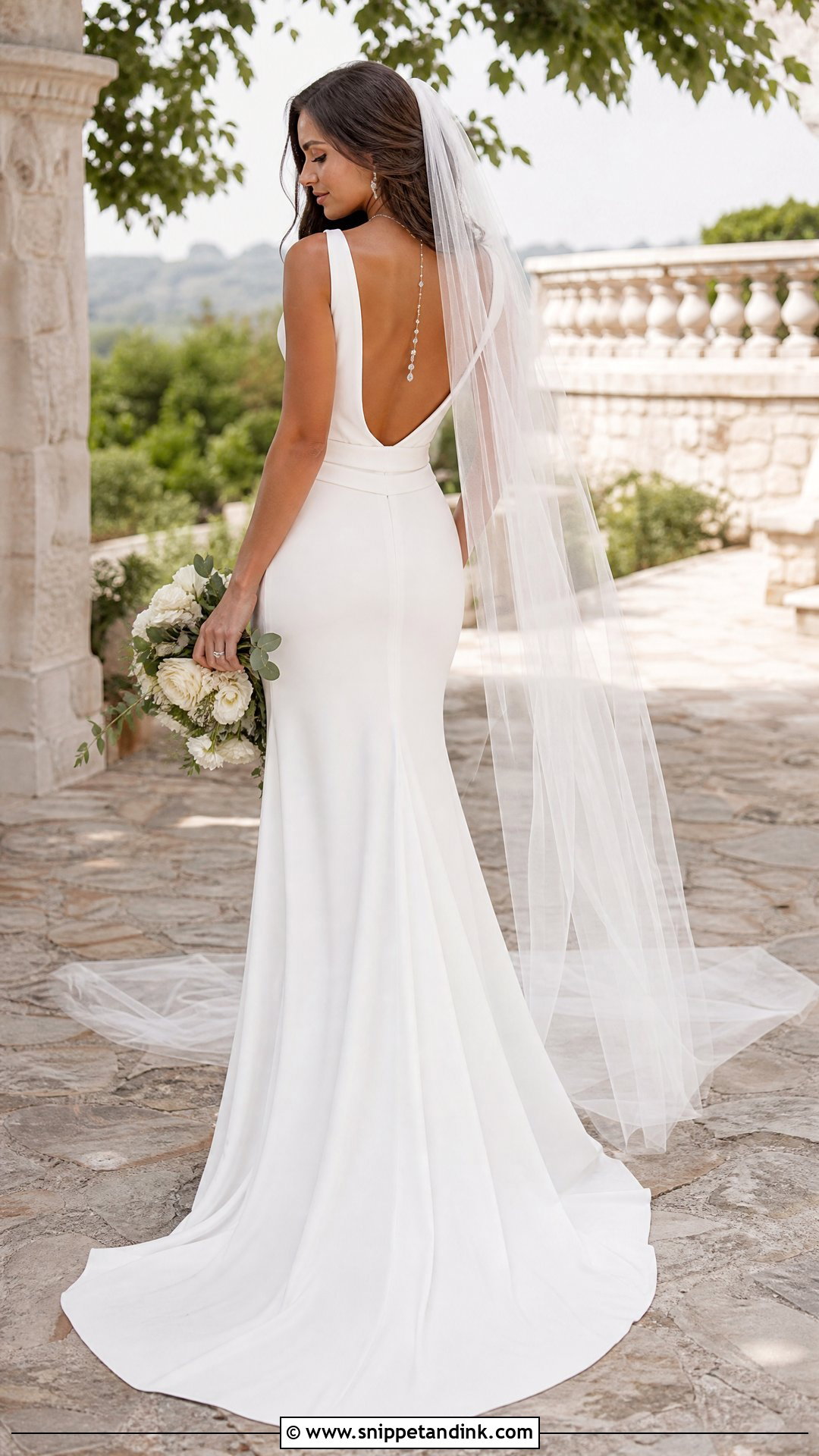
A V neck lengthens the upper body, and with an open back the dress has something to show from every angle. Balance is what I watch: a deep front V wants a simple skirt, while a modest V can take lace, beading or a long train. Deep Vs need fashion tape or sewn-in cups, which should be tested at a fitting rather than the morning of. Back-draping jewelry, soft waves and a sheer veil suit it. Crepe, chiffon, lace and satin all work, depending on the setting.
19. Halter Wedding Dress With Sleek Updo
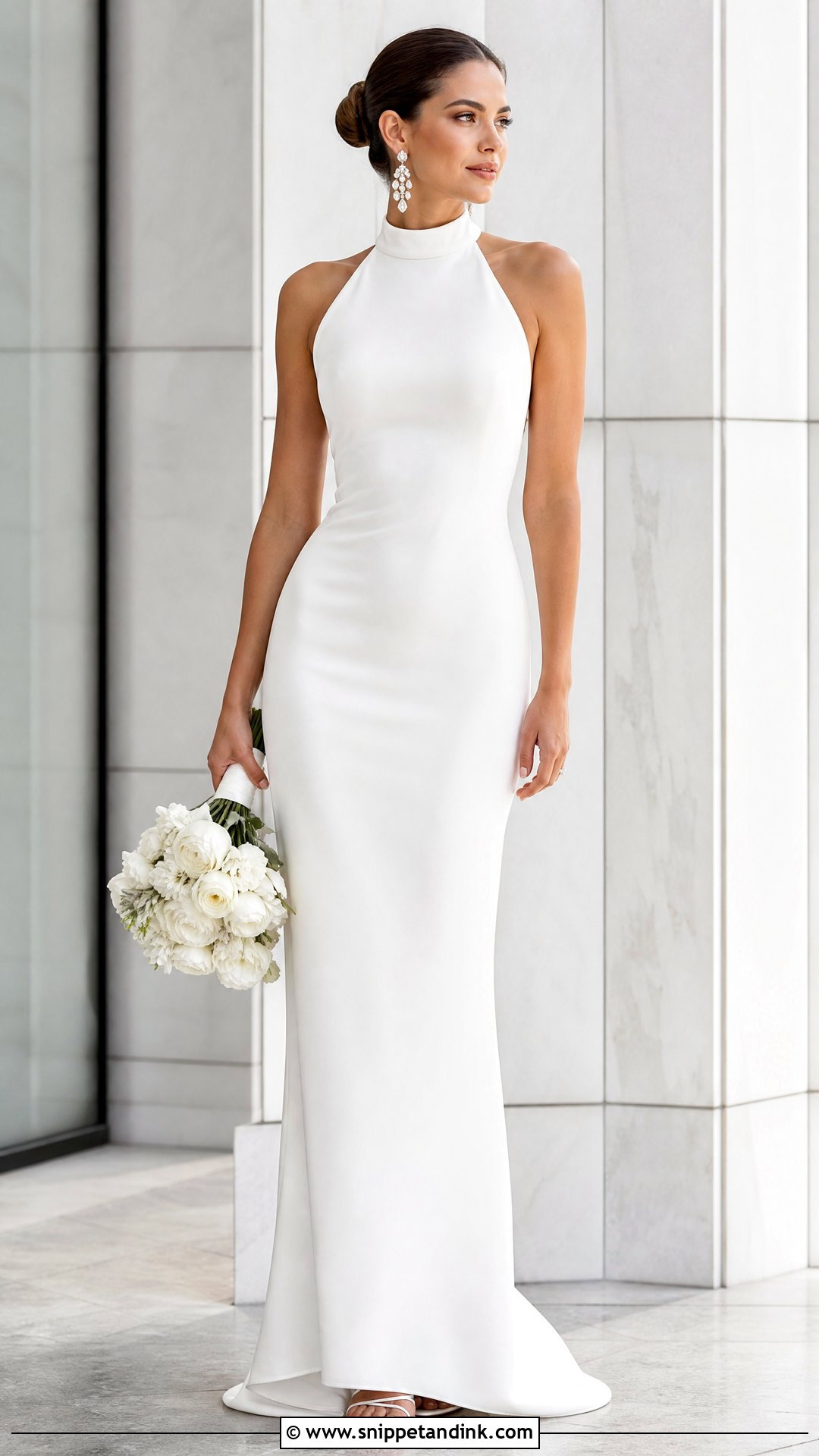
A halter wraps or fastens at the neck and puts the focus on the shoulders and arms. A high halter suits a column or sheath; a plunging halter looks more dramatic. One thing brides don’t expect is the strain: if the halter carries the weight of a beaded bodice, the back of the neck aches by evening, so check that the bodice is supported by its own structure, not just the strap. Skip the necklace. A sleek updo keeps the line clear.




20. Boat Neck Wedding Dress With Satin Pumps
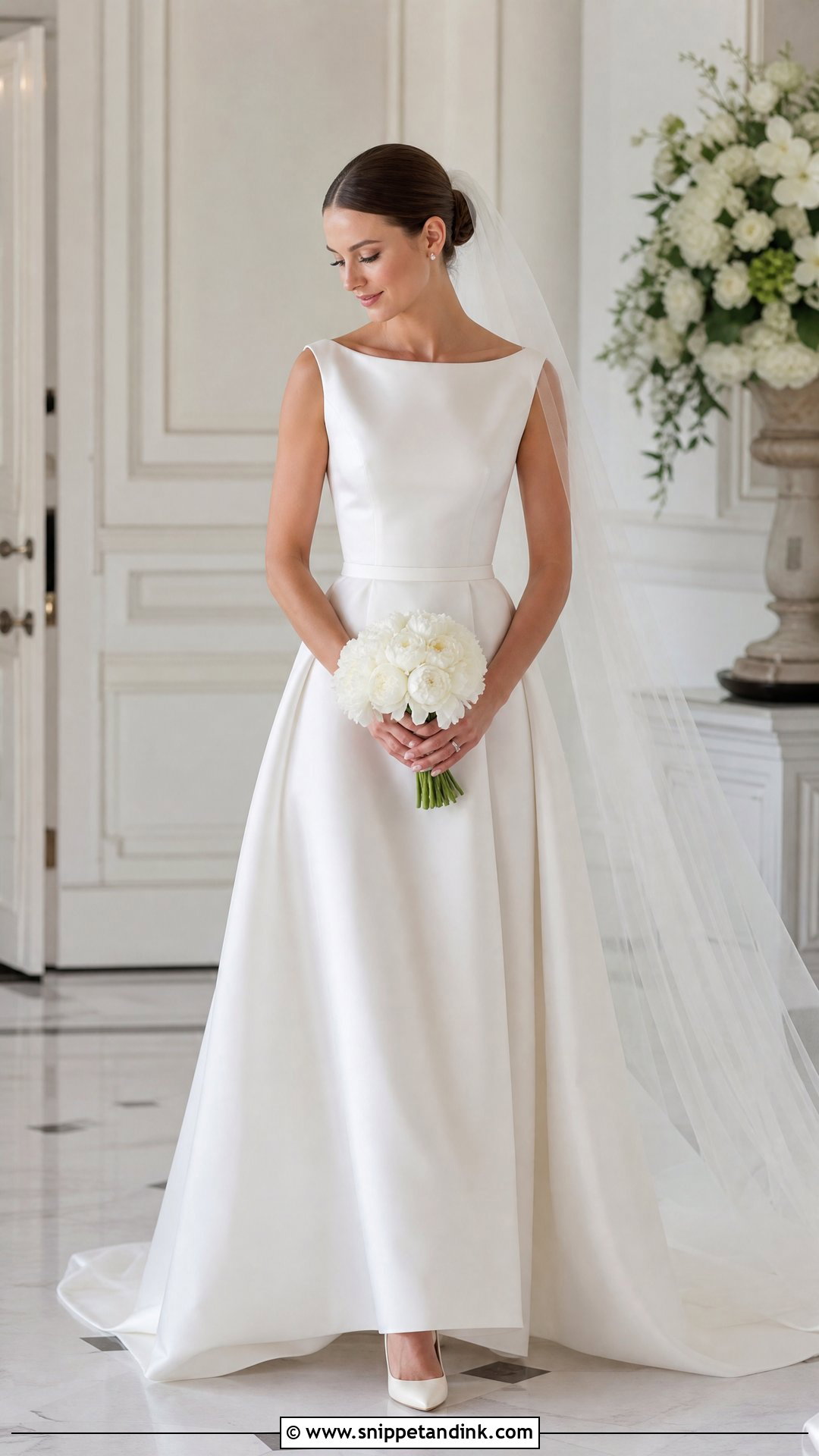
A boat neck runs straight across the collarbone from shoulder to shoulder, high and wide. It suits column, A-line and ball gown silhouettes, plain in satin or crepe or softened with lace sleeves. Because the neckline is so wide, bra straps can peek out at the shoulders, so I plan a strapless bra or built-in support from the first fitting. Keep jewelry to pearl studs. Satin pumps, a smooth bun and a long veil finish it for formal and city weddings.
21. Long Sleeve Wedding Dress With Lace Detail
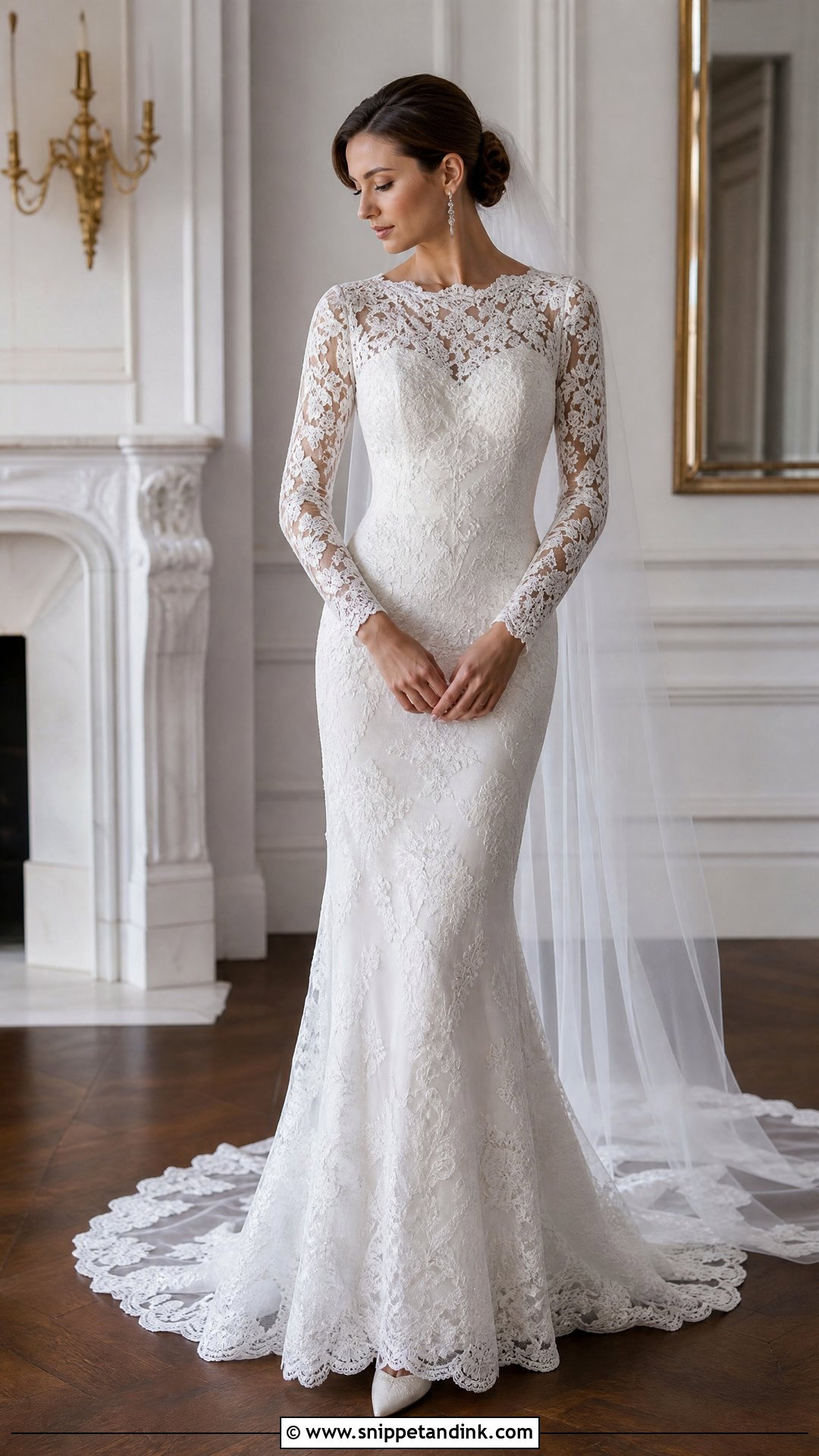
Sleeves are where long sleeve gowns differ most. Lace sleeves read romantic, crepe or satin ones read modern, and light illusion sleeves keep a spring wedding from feeling heavy. The silhouette can be fitted, A-line, sheath or ball gown. With embellished sleeves, I keep everything else simple, including a plain-edged veil. Check the wrist length with your arms bent, since sleeves that look right hanging straight ride up when you hold a bouquet. A neat updo and drop earrings complete it.
22. Short Sleeve Wedding Dress With Tulle Skirt
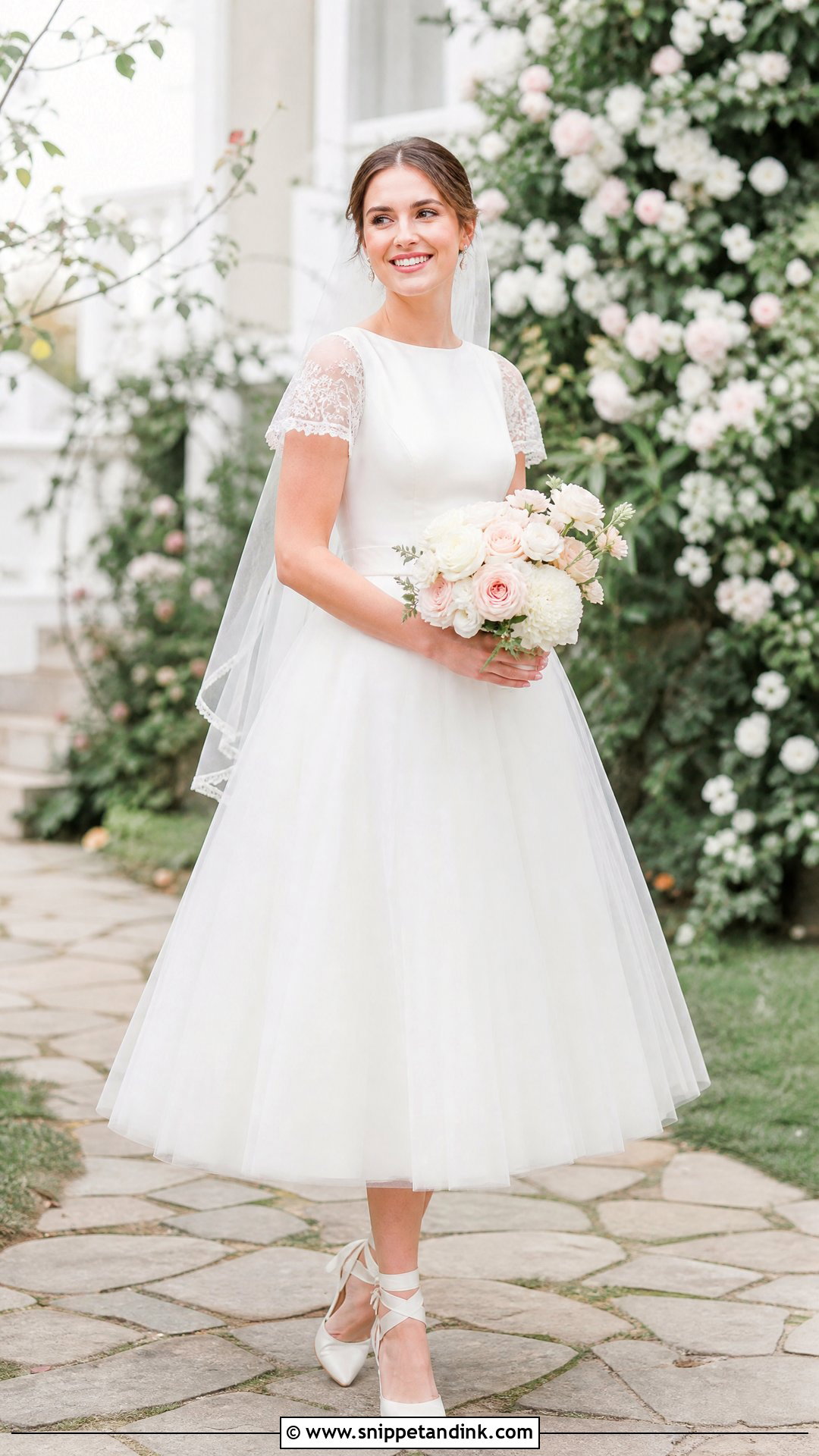
Short sleeves give light coverage without the warmth of long ones, and cap, flutter and fitted sleeves each set a different mood. Over a tulle skirt, the whole dress feels soft and moves well for spring, garden and daytime weddings. Flutter sleeves catch the wind outdoors, which looks lovely in motion but can flip up in a gust, so a few hand tacks inside help. Pearl earrings, ballet-style heels and a fingertip veil suit it.
23. Corset Wedding Dress With Tulle Skirt
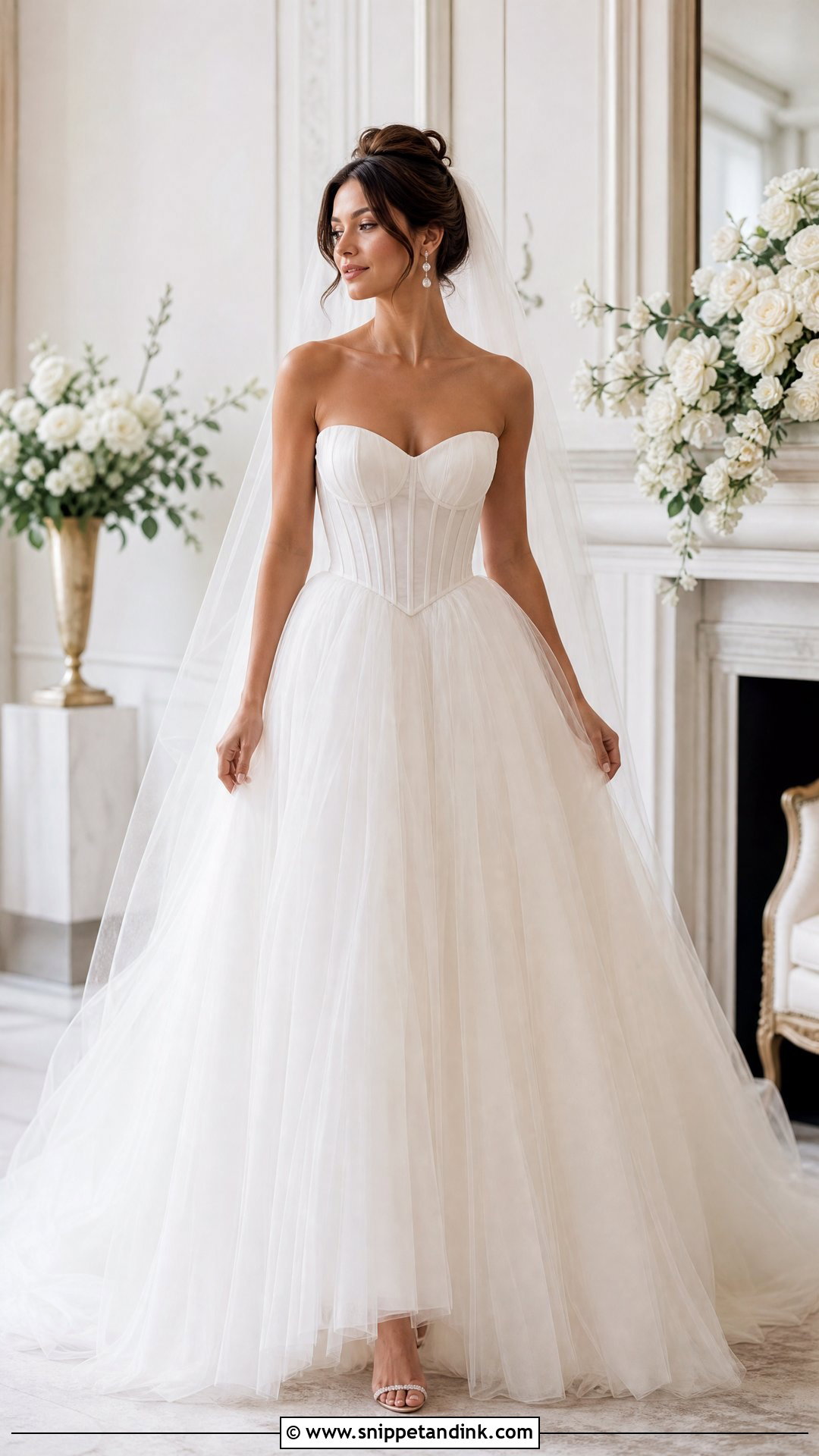
A corset gives structure, support and a defined waist; a tulle skirt beneath it softens all that structure. The pairing works with a basque waist, sweetheart neckline, off-the-shoulder sleeves or a strapless bodice. Fittings matter more than usual here. A corset should feel secure, not restrictive, and I always have the bride eat something at her final fitting, because a bodice laced on an empty stomach feels different after dinner. A sheer veil and a soft updo finish it.
24. Lace Wedding Dress With Nude Heels
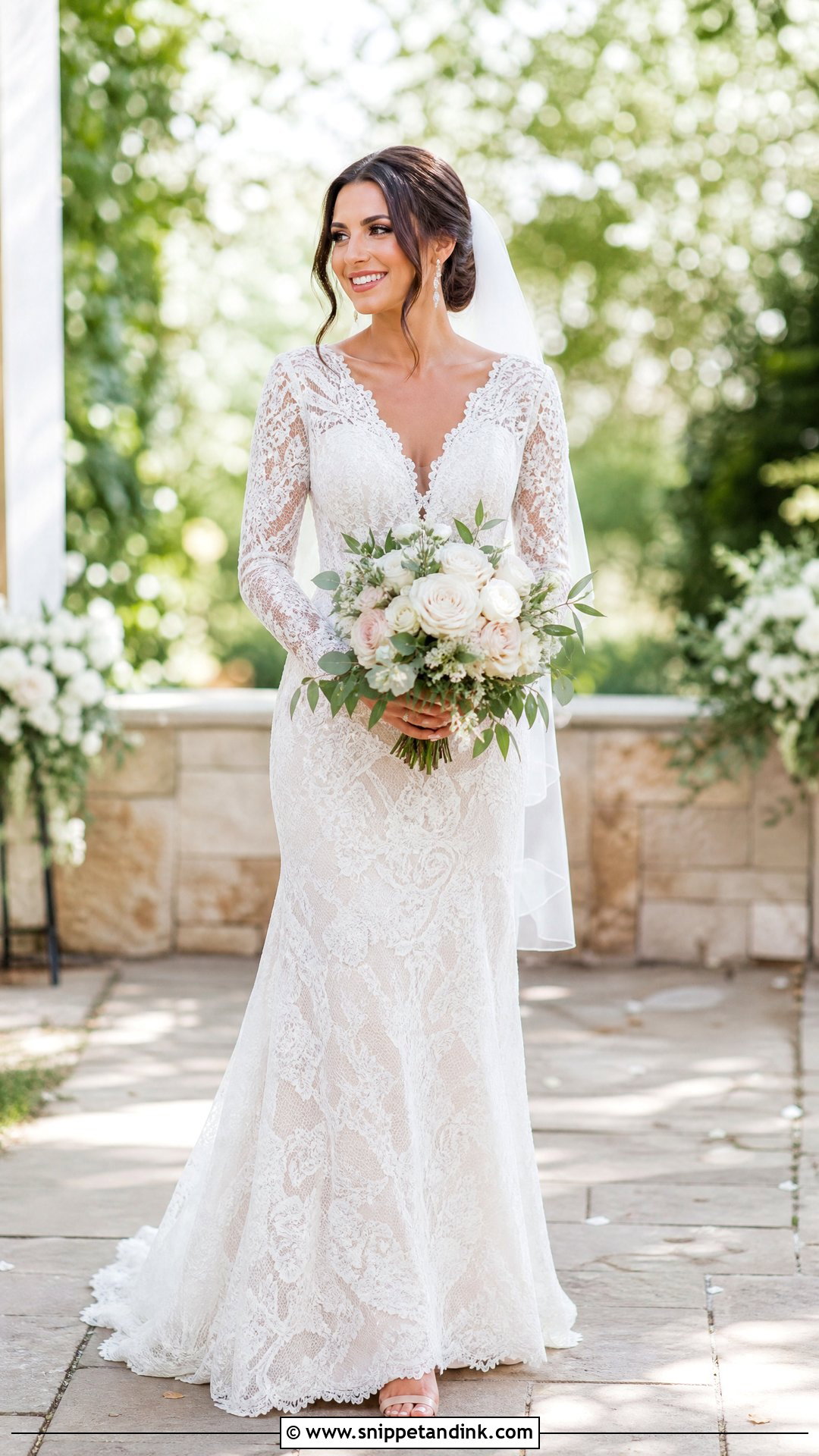
Lace adds texture and detail, delicate and traditional, bold and floral, or graphic and modern, across every silhouette from sheath to ball gown. The nude heels are doing real work: they extend the leg line, especially under a slit, a sheer panel or a shorter hem. Choose them to match your own skin tone, not a generic beige, or they read as a stripe at the ankle. With detailed lace, keep accessories to pearl earrings and a simple veil.

25. Satin Wedding Dress With Statement Earrings
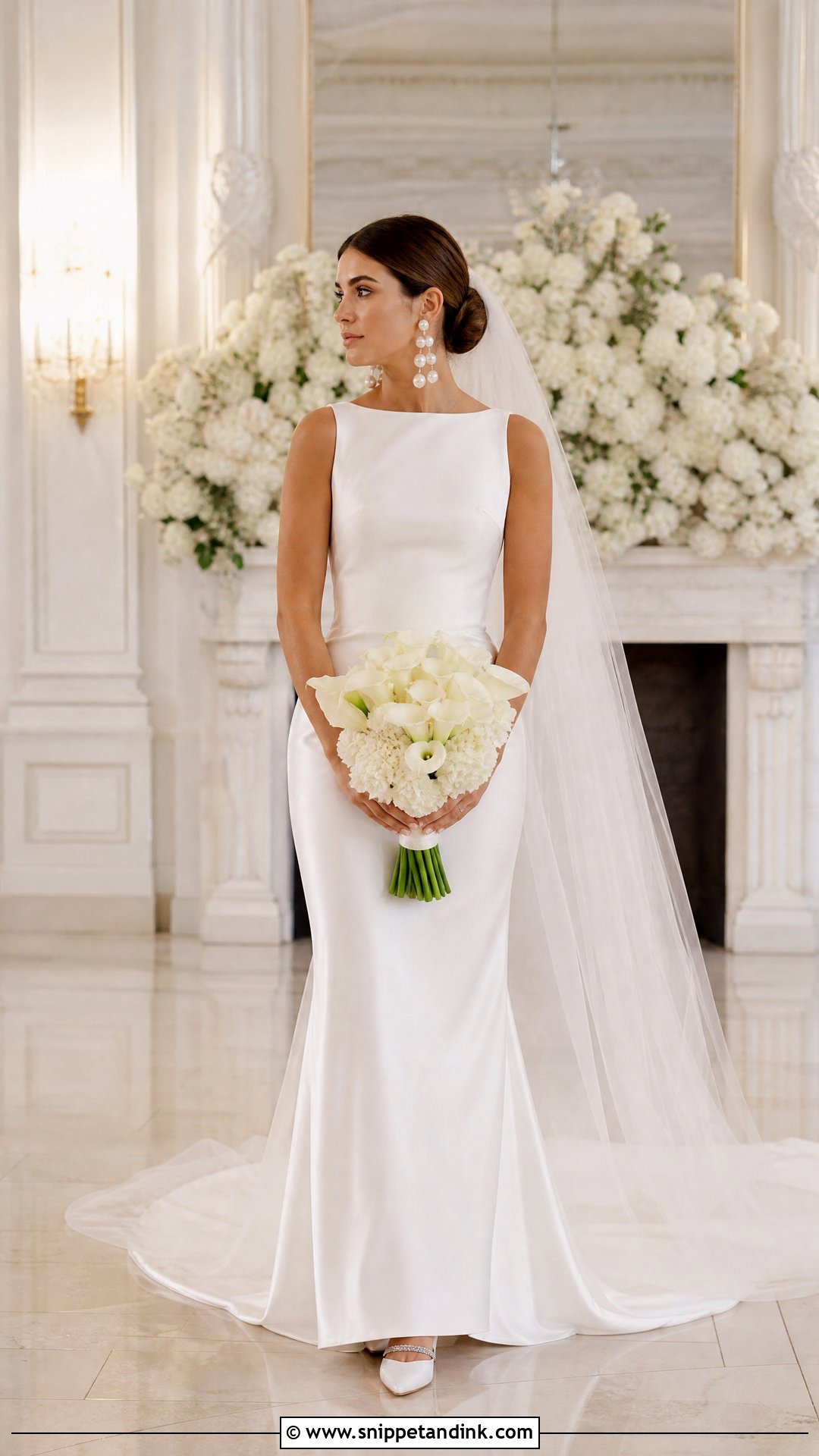
Satin has a smooth surface that shows every seam and fit detail, so alterations on a satin gown have to be precise. A satin ball gown looks grand, while a slip or column looks modern and simple. Because the fabric itself is the decoration, statement earrings make sense here in a way they wouldn’t on a beaded dress. I’d steam the gown the morning of and handle it with clean, dry hands, since satin water-marks easily. Sleek heels, a smooth bun and a long veil complete it for evening and formal venues.
One Dress, Five Veil Lengths
Veil length changes a gown more than almost any other accessory, so I try several on the same dress before deciding.
- Shoulder or elbow length: playful and practical, a natural match for minis, tea lengths and busy necklines.
- Fingertip: ends around the hips, flattering on A-lines and fit and flare gowns.
- Chapel: brushes the floor just past the hem, a good middle ground for trumpets and sheaths.
- Cathedral: extends well past the train for a long-aisle entrance, but heavy enough to pull at the comb, so it needs a secure updo.
- Outdoors, any long veil will catch the wind. A few small weights sewn into the hem help keep it down.
What Goes in the Dressing-Room Kit
On the morning, the order matters: hair and makeup first, wearing a button-front shirt, then the dress, then jewelry and the veil last. Most last-minute problems are small, and a small kit fixes them:
- Safety pins, fashion tape and a needle with thread in your dress color.
- White chalk to cover a light mark on white or ivory fabric.
- Blotting papers, so makeup never gets wiped on the neckline.
- A spare pair of heel grips and plasters for new shoes.
The Accessories Should Answer to the Dress
Silhouette sets the stage, but neckline, fabric, sleeves, train, accessories and comfort decide how a gown actually feels as you walk in. Start with the shapes you already like, and try at least one you’re sure won’t suit you, since many brides find their dress that way. Look at each one from the side and back too, not just the front. Then let the dress choose its veil, shoes and earrings, rather than building the dress around accessories you bought first.
You'll Like These Ideas:





Leave a Reply