
Most of the brides who ask me for something whimsical are really asking for movement. They want a skirt that drifts when they walk, a little texture to catch the light, and details that look picked rather than stamped on. That usually means airy tulle, soft organza, floral appliqués, embroidered lace, a hint of pastel, flutter sleeves or scattered pearls. Raised florals and sheer layering are still everywhere in bridal collections, and I understand why: they read as personal. Below are 25 gowns, each with how I would finish it, plus what I’ve learned about how these fabrics behave once the day actually starts.
Letting the Venue Floor Decide Your Fabric
Before I pull a single gown, I ask what the bride will be standing on. Whimsical fabrics behave very differently on a lawn, a sandy beach, a stone courtyard and a polished ballroom, and that tells me more than any mood board.
- Grass and gardens: tulle and chiffon in a fingertip or chapel length. Long organza trains pick up grass stains that are hard to remove, and raised florals at the hem collect seeds and petals.
- Beach and sand: light chiffon, a high low hem or a short dress. Heavy layered skirts fill with sand and get wet at the edge.
- Stone, gravel or old estate floors: avoid delicate tulle trains, which snag on rough edges. A sturdier lace or an organza skirt survives better.
- Ballrooms and carpeted halls: this is where a full tulle ball gown or a long train really works, because nothing will catch on it.
Season matters too. Tulle and chiffon are cool in summer heat, while satin linings and heavy boning get warm quickly. In colder months, a sheer sleeve or a cape adds coverage without hiding the details.
1. Floral Tulle Wedding Dress
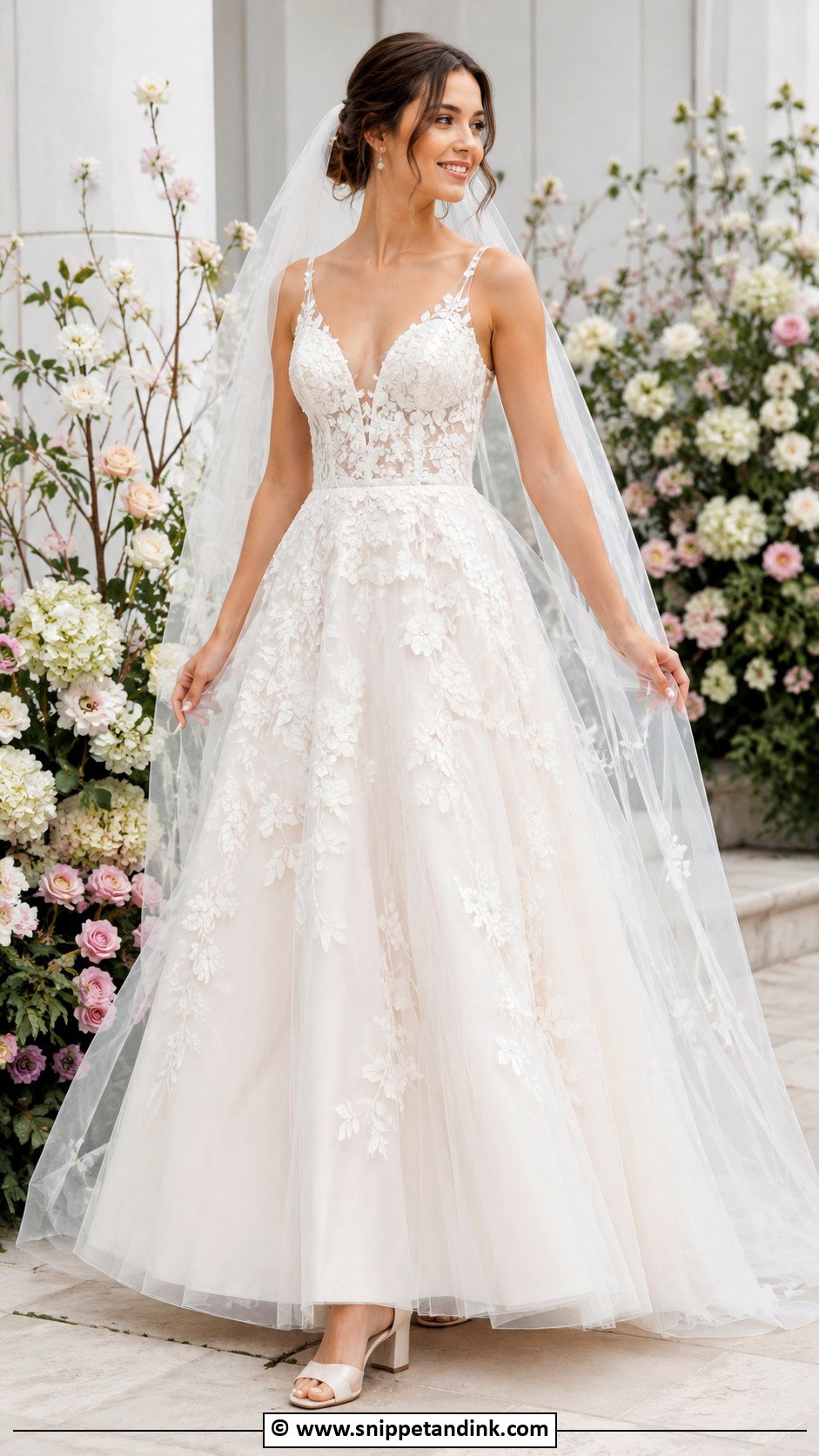
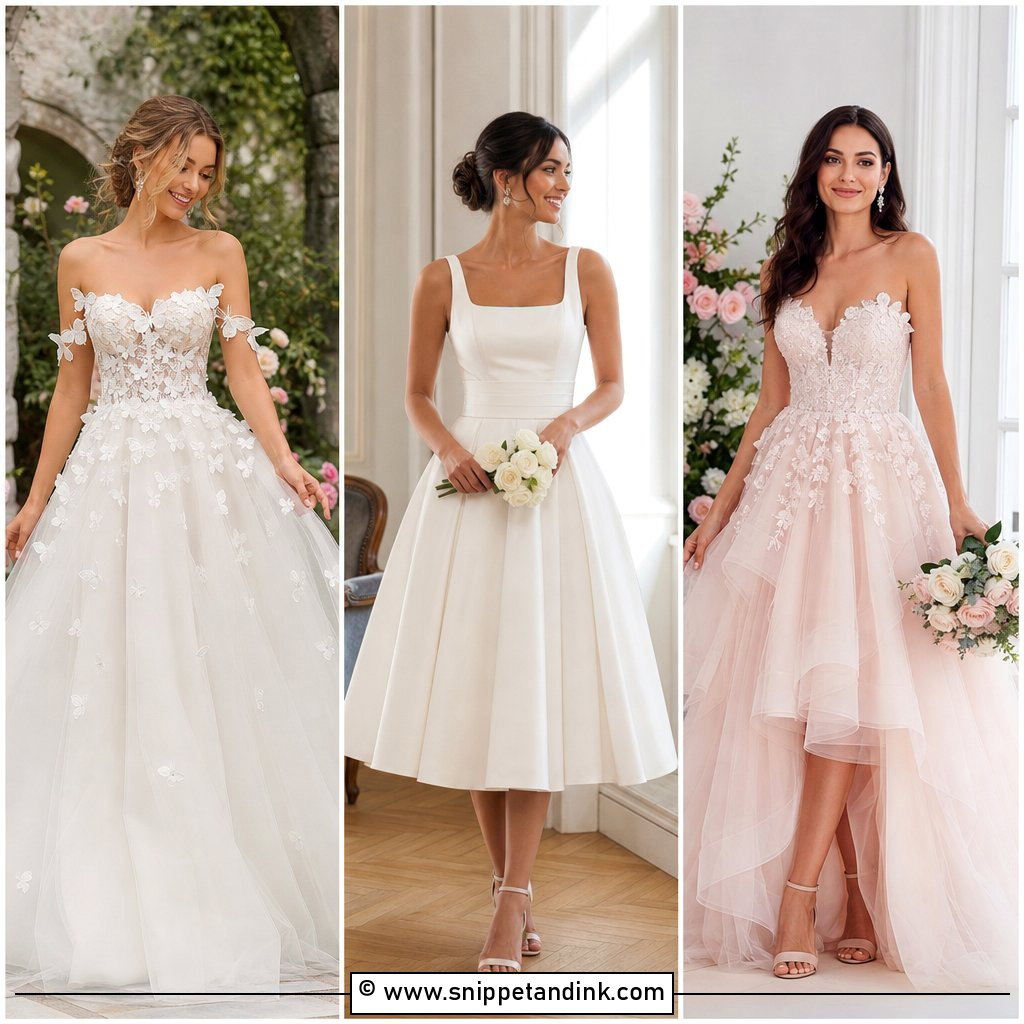
A floral tulle wedding dress is where I start most whimsical fittings, because layered tulle gives volume without much weight. The thing I check first is how the appliqués are attached. Hand-tacked flowers sit softly and move with the skirt; flowers glued or machine-stitched flat can look stiff once the tulle starts to swing. An A-line is the easiest cut to walk and sit in. I finish it with pearl drops, a sheer fingertip veil and ivory block heels, and I ask the florist to keep the bouquet loose so it doesn’t fight the skirt.
2. Off The Shoulder Wedding Dress
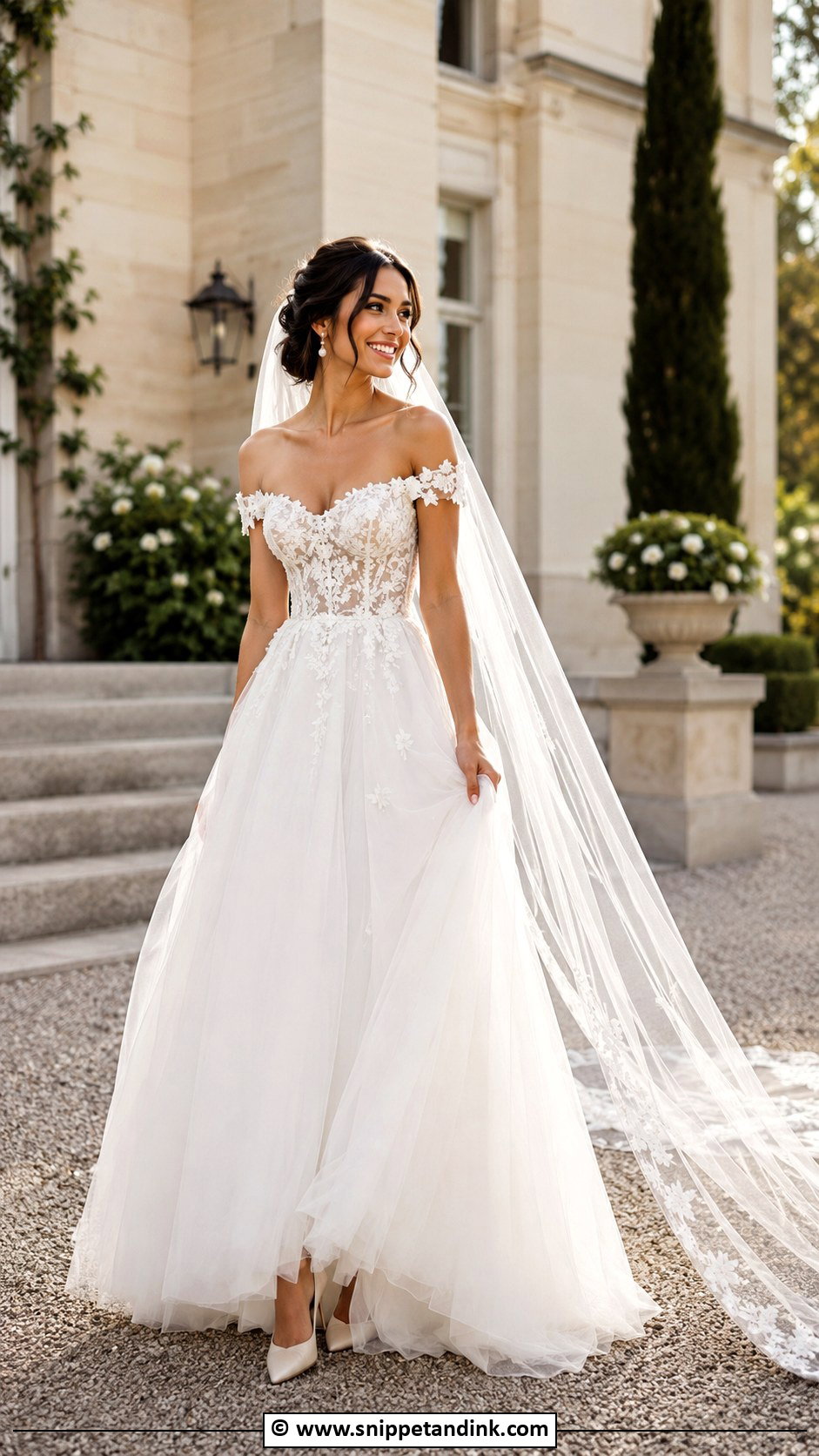
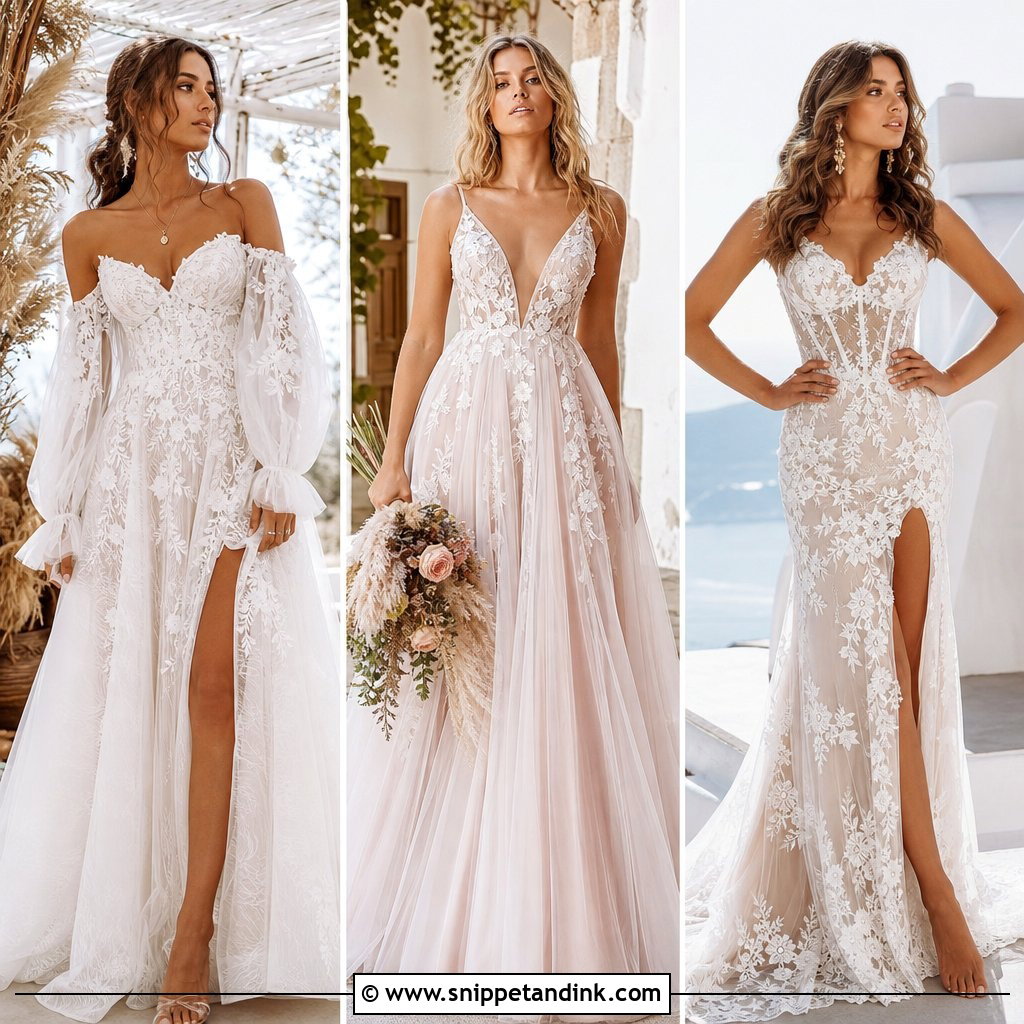
An off the shoulder neckline is lovely on camera and fussy in real life. The band has to grip the upper arm, so I always have the bride raise both arms and hug someone at the fitting; if it rides up, the seamstress needs to add silicone grip tape or adjust the elastic. Lace or draped chiffon at the neckline softens it, and a floaty A-line skirt keeps it whimsical rather than formal. A loose low bun keeps the shoulders clear. Choose embellished flats if you’ll be crossing grass.
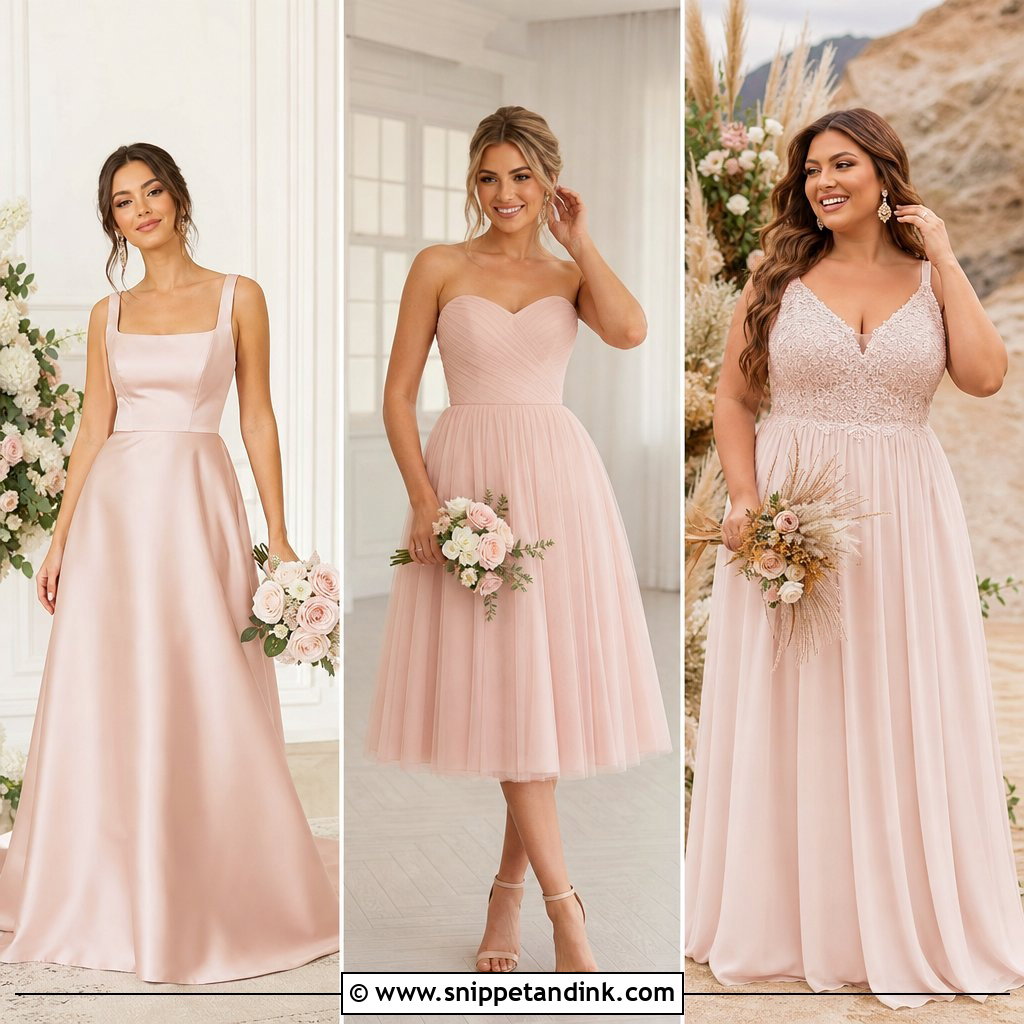
3. Pastel Wedding Dress
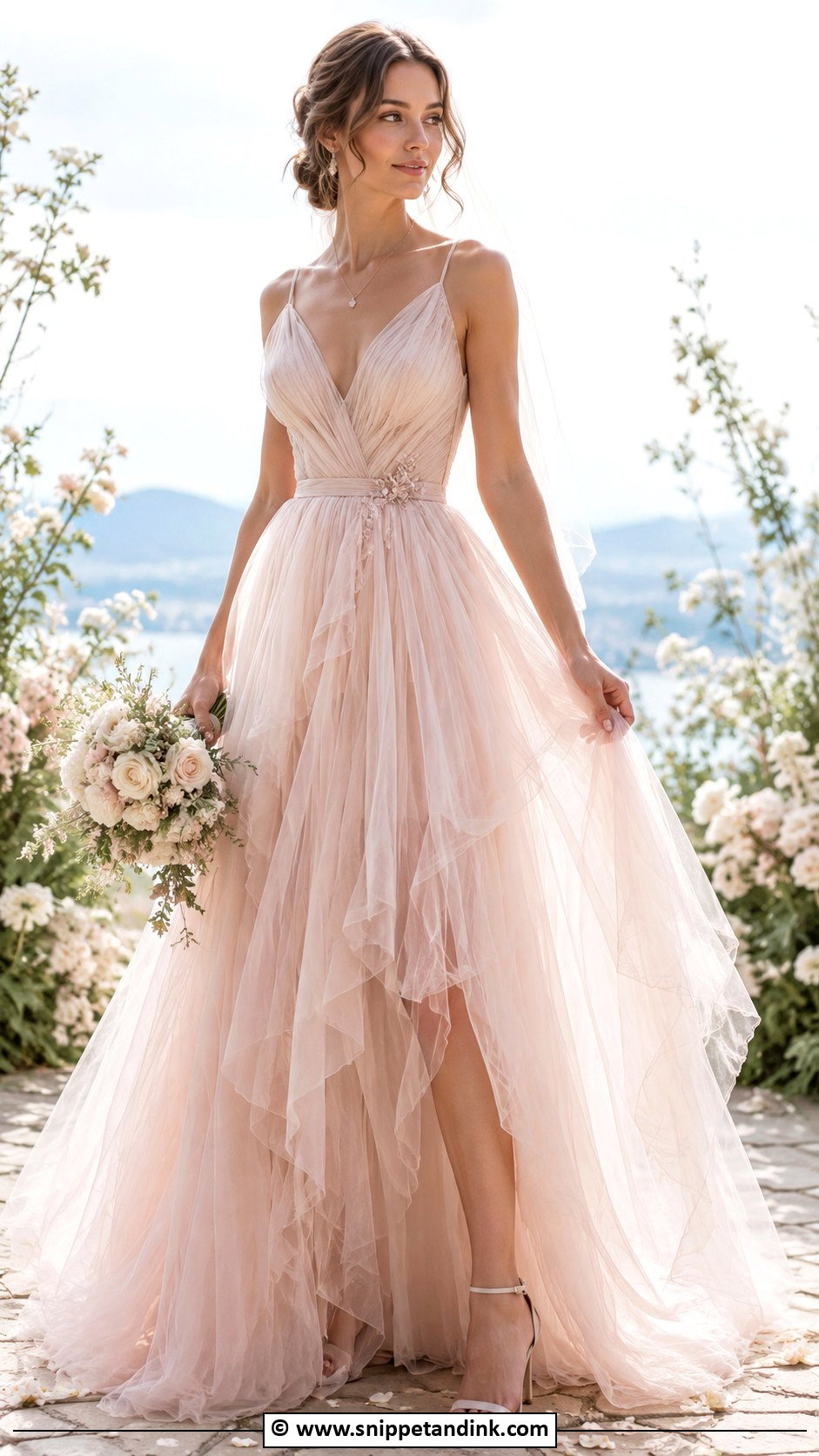
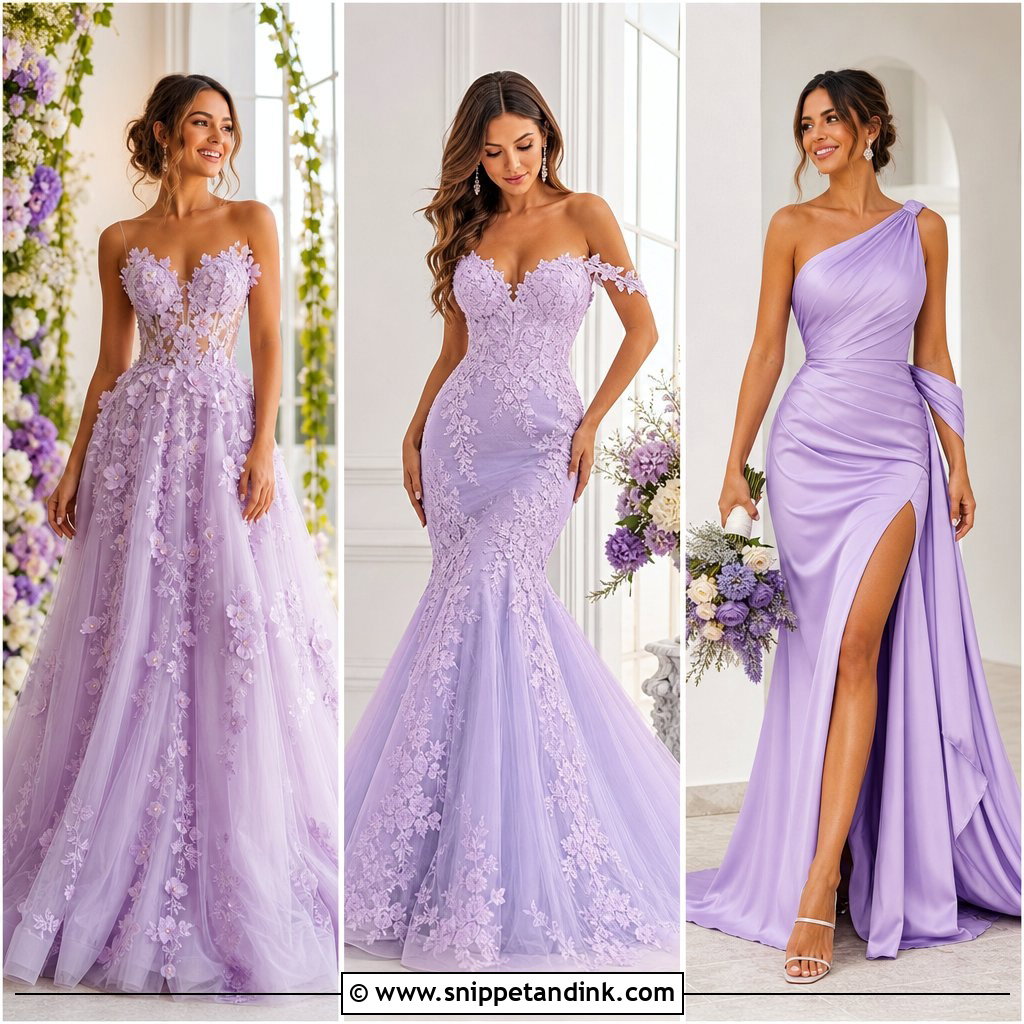
Color is the part brides worry about, and fabric decides most of it. Blush, pale blue, lavender, champagne or misty grey looks airy on tulle or organza because light passes through it, while the same shade on heavy satin can read as a bridesmaid dress. I always look at a pastel swatch in daylight and again under warm indoor light, since lavender in particular can turn grey indoors. Silver or pearl jewelry and a plain veil let the shade lead, and tonal flowers like blush roses or lilac sweet peas tie it together.
4. 3D Floral Wedding Dress
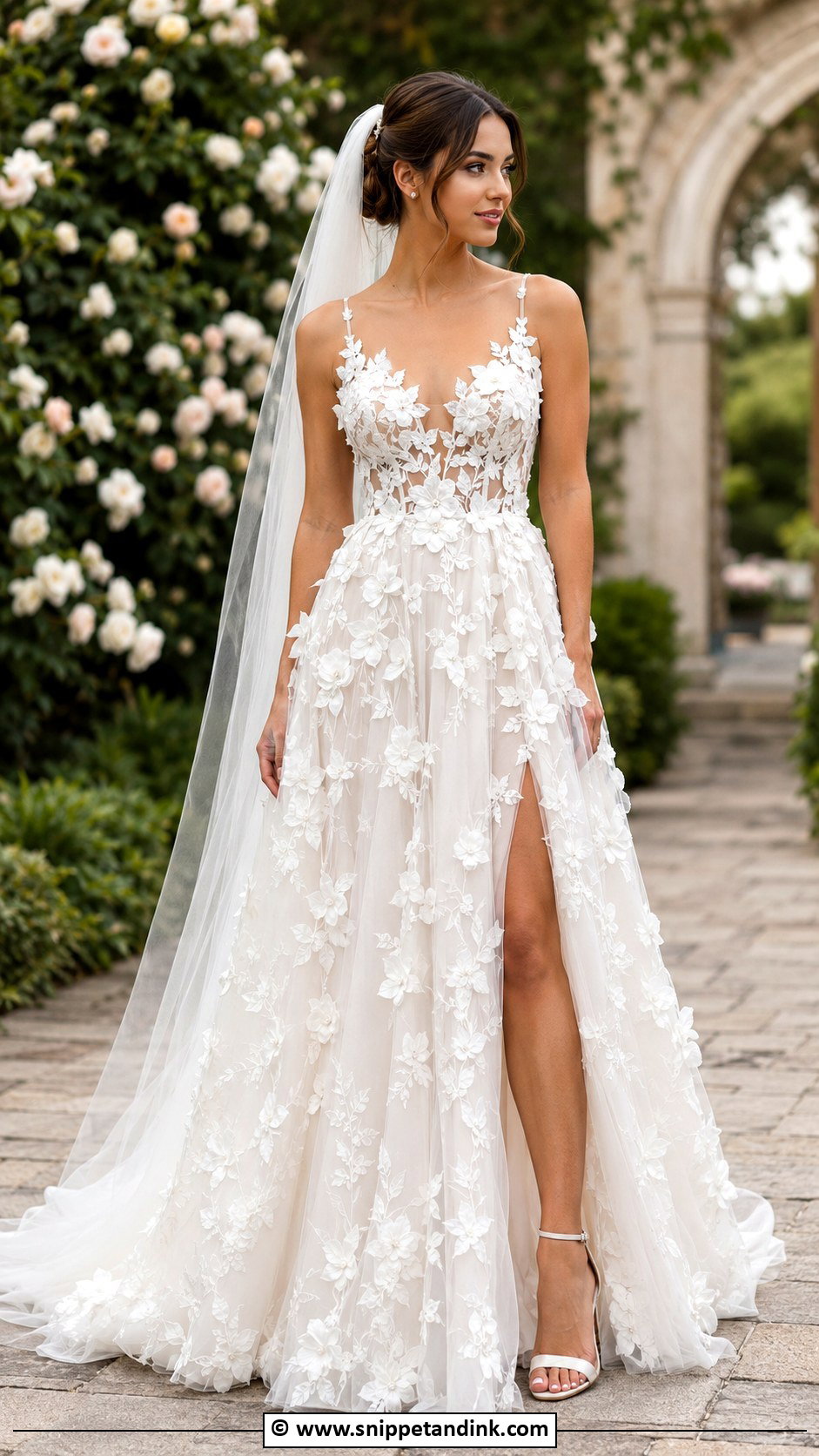
Raised petals are the most fragile detail on this list. A 3D floral gown has blossoms or vines sewn so they lift off the bodice and skirt, and they crush where you sit, where your arms rest and wherever a hug lands. I tell brides to expect a little flattening by the reception and to keep a cool steamer nearby to lift them again. Styling should stay quiet: a sleek veil, pearl studs, simple sandals. Pull your hair back if the skirt is full; loose waves suit a slimmer shape better.
5. Lace A Line Wedding Dress
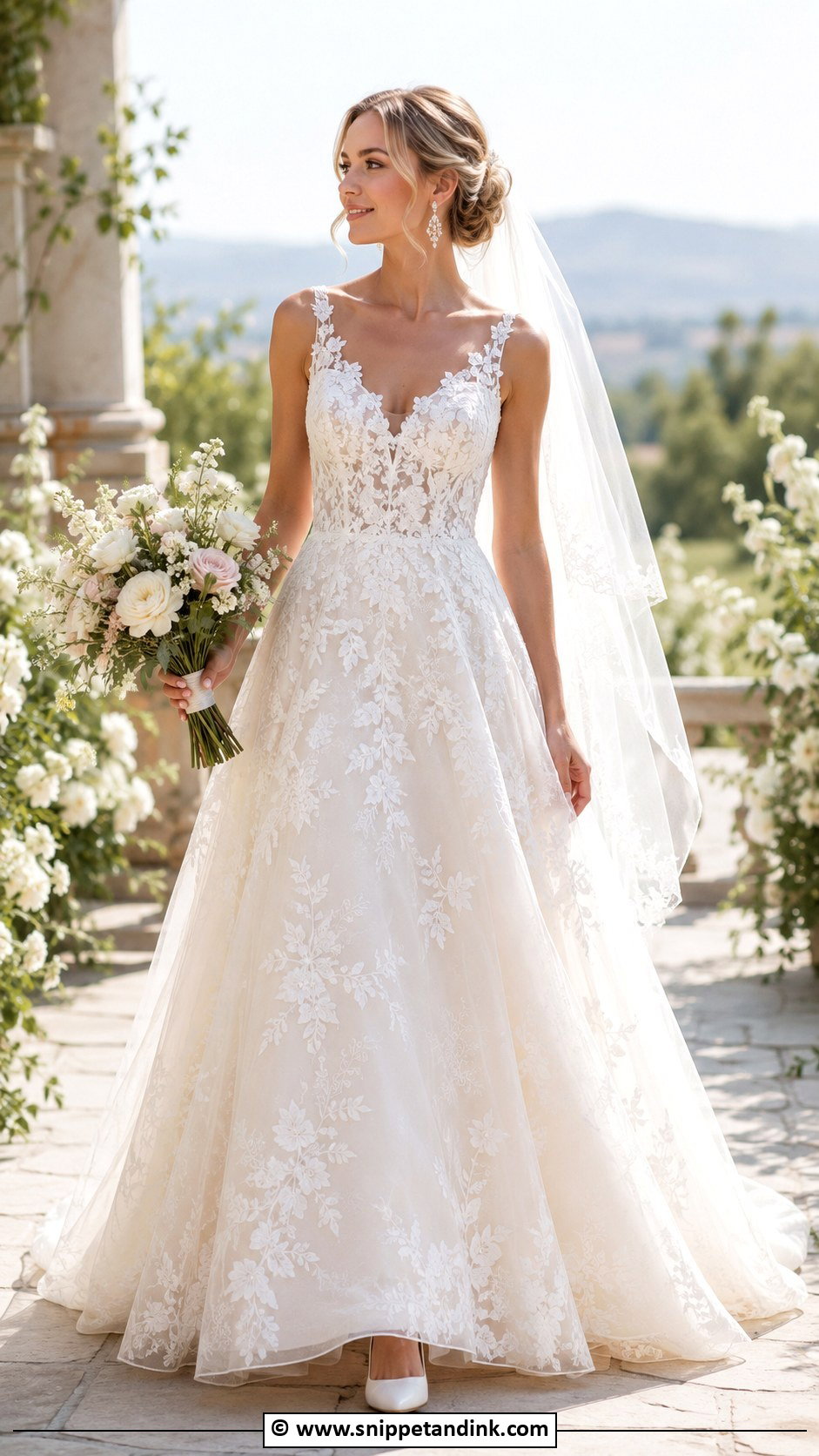
Lace on an A-line turns whimsical when the motif is botanical and the ground is sheer. Leafy patterns, scalloped edges and illusion sleeves all help. Before you commit, rub the lace gently against the inside of your arm, because some heavily corded laces scratch after a few hours. The cut itself is forgiving: it marks the waist and falls away from the hips. Add a light veil, vintage-style earrings and a low satin heel, and stop there.
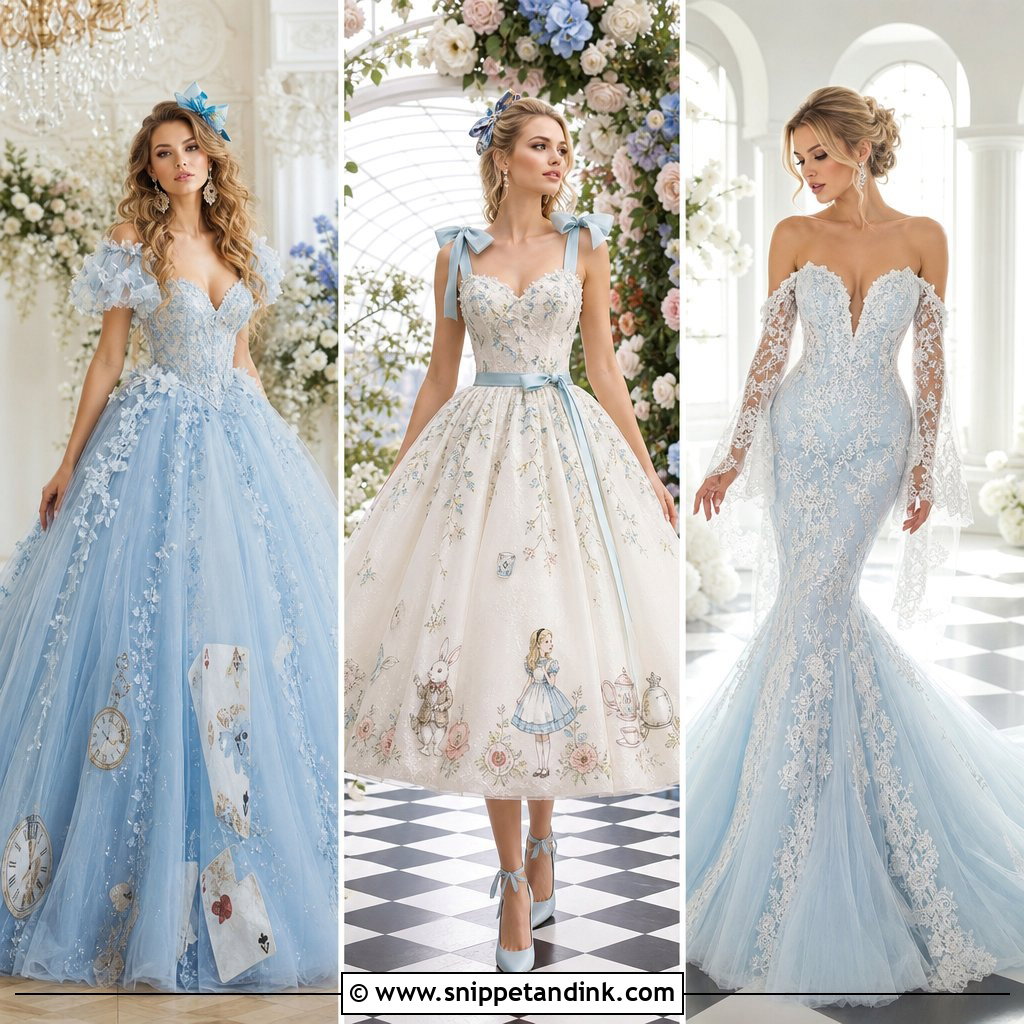
6. Tulle Ball Gown Wedding Dress
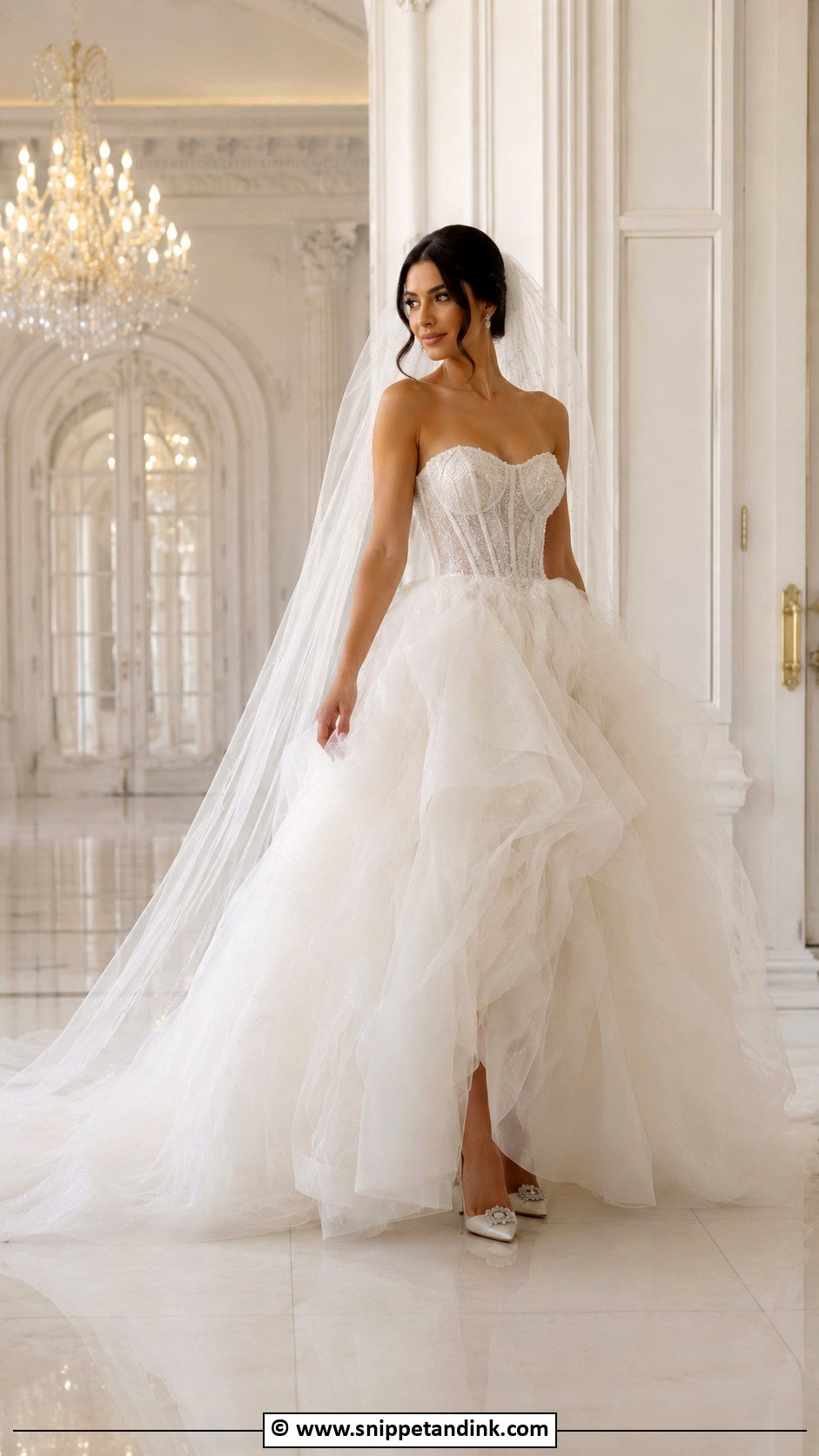
Not every tulle ball gown wedding dress moves the same way. Soft, fine tulle in many layers looks like a cloud; stiff netting looks like a costume. Squeeze a handful of the skirt in the shop: good tulle springs back slowly and feels almost silky. Ball gowns carry real weight at the waist, so I check that the bodice has enough boning to hold the skirt without digging in. Crystal studs, a long sheer veil and a half-up style keep the volume from feeling heavy.
7. Chiffon Wedding Dress
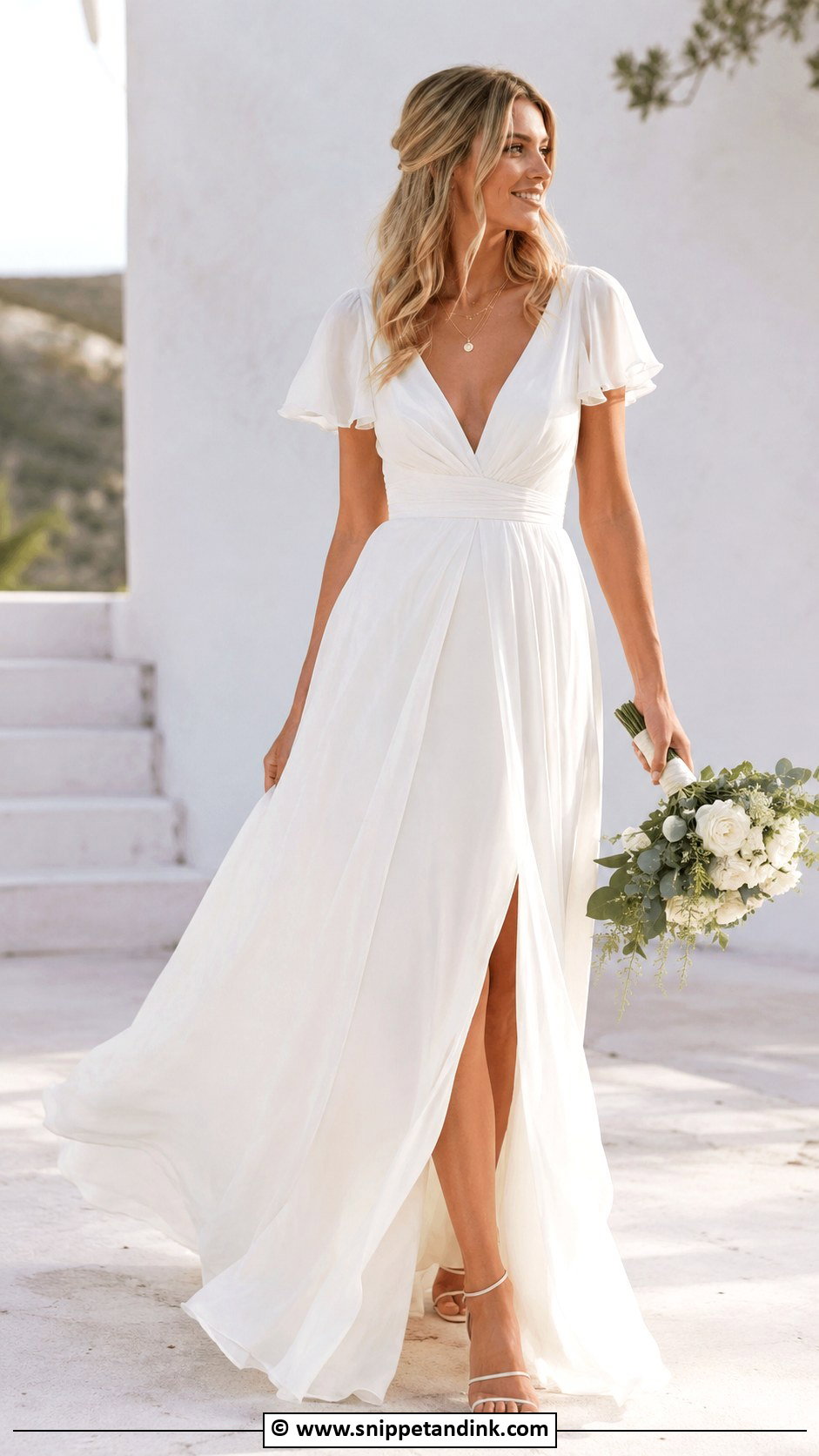
Chiffon is the fabric I suggest for heat. It breathes, it barely weighs anything and it lifts in a breeze, which is exactly what you want on a beach or a terrace. The trade-off is that it shows creases and can cling in humidity, so I prefer a lined skirt with a few loose layers on top. Flutter sleeves or a soft V-neck suit it. Strappy sandals, one fine necklace and a loose braid finish it without adding bulk.
8. Long Sleeve Wedding Dress
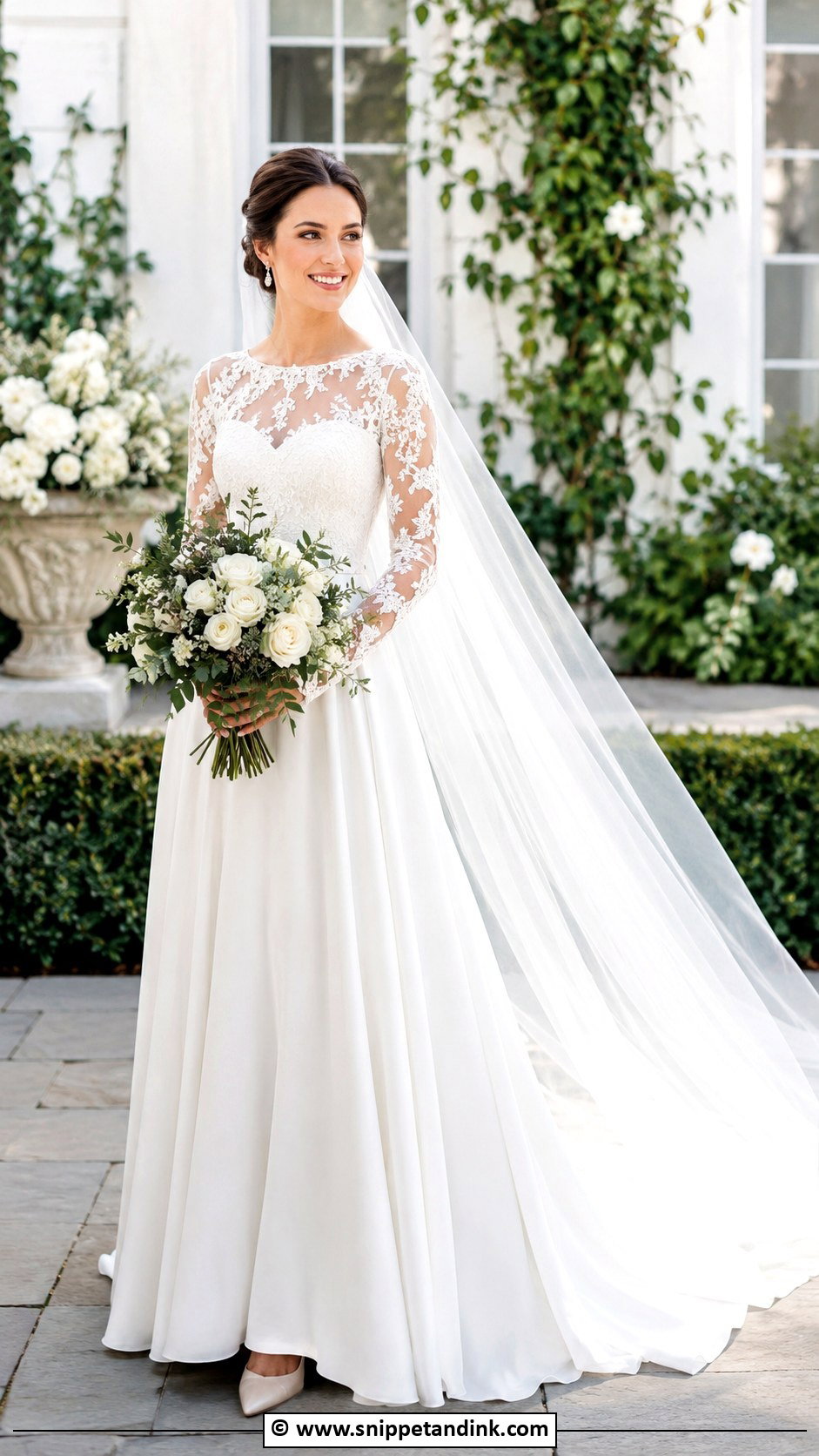
Long sleeves read as formal until you make them sheer. Illusion tulle, scattered embroidery or a row of tiny pearl buttons at the cuff soften them a lot. At fittings I have the bride lift a glass and reach forward as if hugging, since fitted sleeves are the first thing to restrict movement at the reception. If the sleeves carry the detail, keep the neckline and jewelry plain. They make sense from autumn to early spring, and sheer versions are fine outdoors in milder weather.
9. Flutter Sleeve Wedding Dress
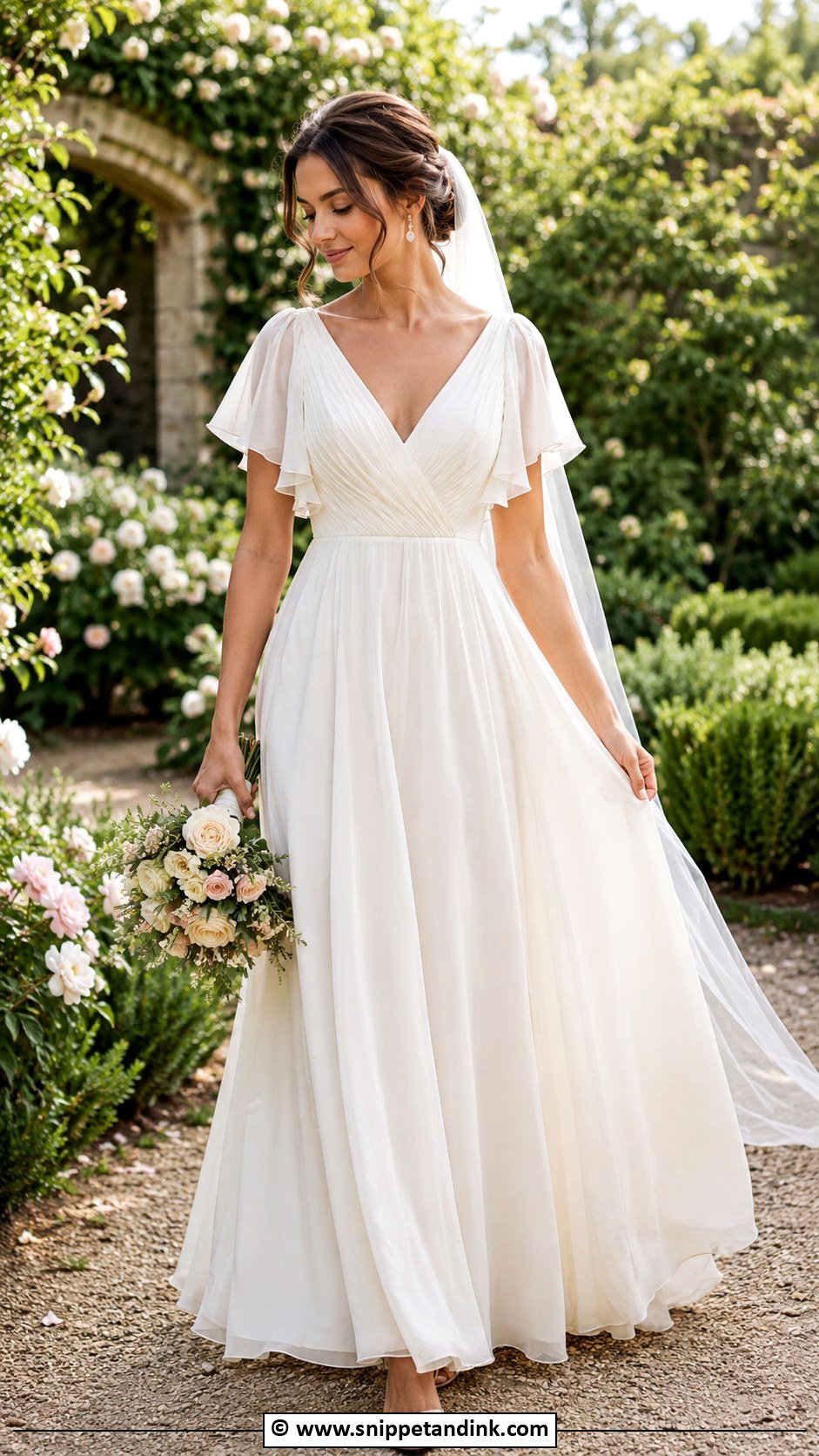
Sleeves that float off the shoulder give coverage without the fitted feeling many brides dislike. A flutter sleeve wedding dress works in chiffon, tulle, lace or soft crepe, but the sleeve edge matters: a rolled hem flutters, a stiff lace edge just sticks out. Dainty earrings and soft curls suit it. I keep the veil edge plain so the shoulders stay the focus, and I’d pick this for anyone who wants their arms partly covered in a garden setting.
10. Organza Wedding Dress
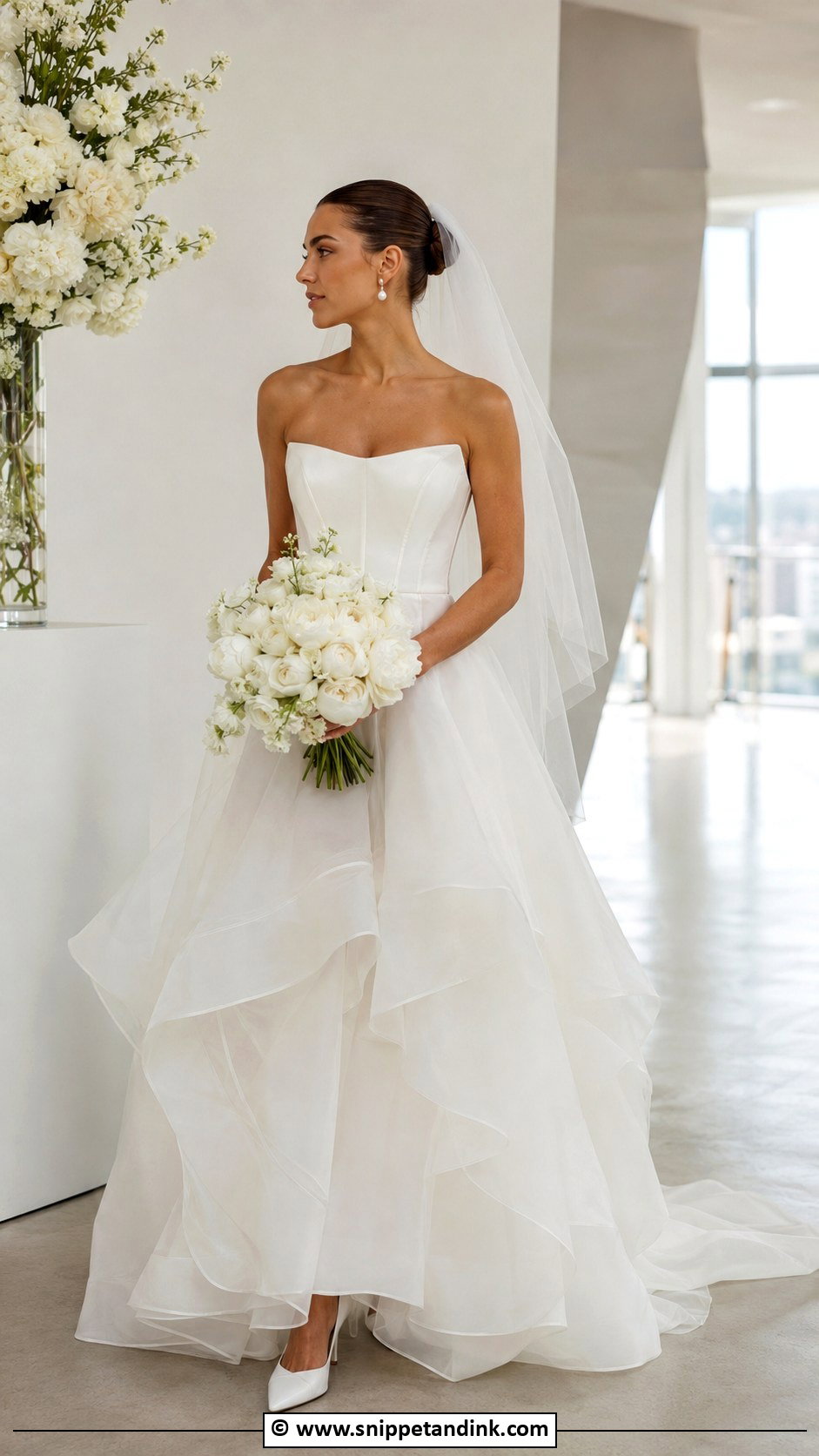
Organza is crisp where tulle is soft, so it holds a ruffle or a layered skirt in shape. It also has a sheen that picks up shadows in bright daylight, which gives the skirt real depth in photos. The catch is creasing: organza wrinkles sharply and those creases show, so I always steam it on the morning, never the night before. A sleek bun and pearl earrings suit its clean finish, and a sheer veil blends into its translucent texture.
11. Embroidered Wedding Dress
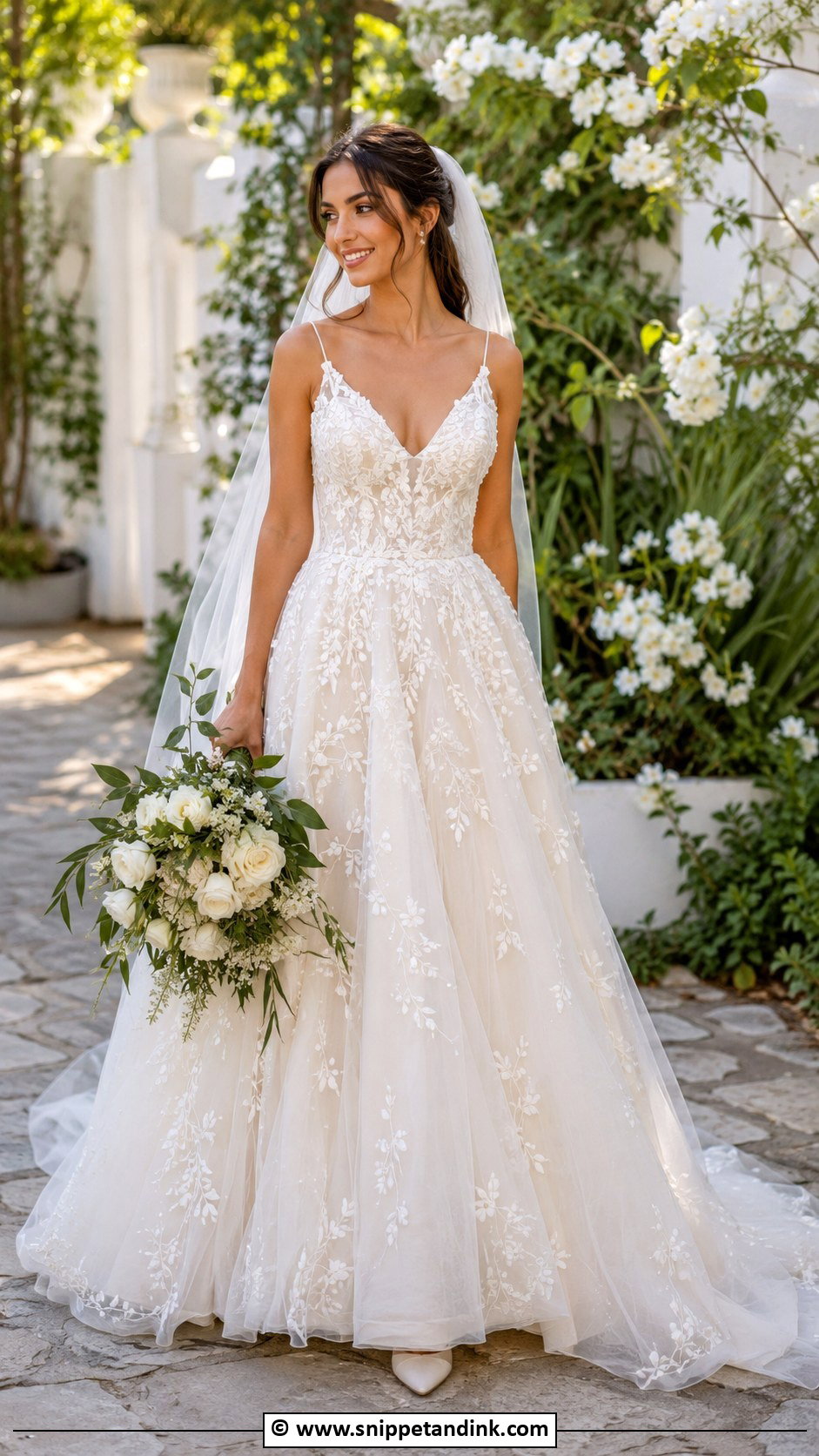
Embroidery is where a gown can carry something personal: vines, tiny stars, leaves, butterflies. On a sheer overlay the motifs look like they’re floating, which is the effect most people mean by whimsical. I check the reverse side of the embroidery at fittings, because loose thread ends on sheer fabric can catch on rings and bracelets. If there’s color in the stitching, I ask the florist to pick up one or two of those tones and leave the rest of the outfit neutral.
12. Blush Wedding Dress
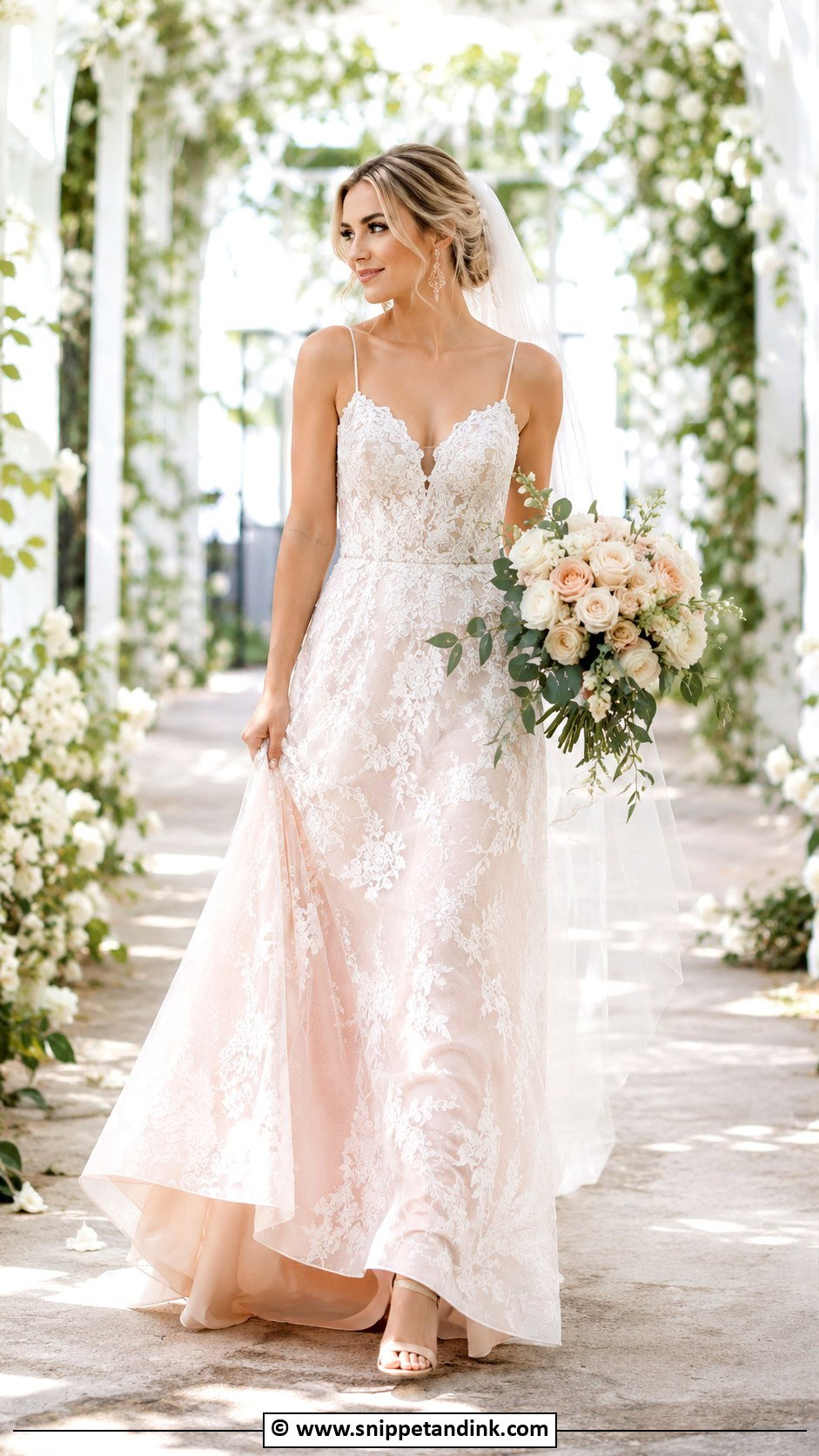
Blush flatters more skin tones than stark white, which is why it keeps coming back. How much pink you see depends on the lining: a blush underlay beneath ivory lace gives a whisper of color, a blush tulle skirt over nude lining gives much more. I always photograph it on my phone in daylight at the fitting, because some blush linings disappear entirely on camera. Rose-gold earrings, nude heels and a bouquet in cream and pale pink finish it.
13. Garden Wedding Dress
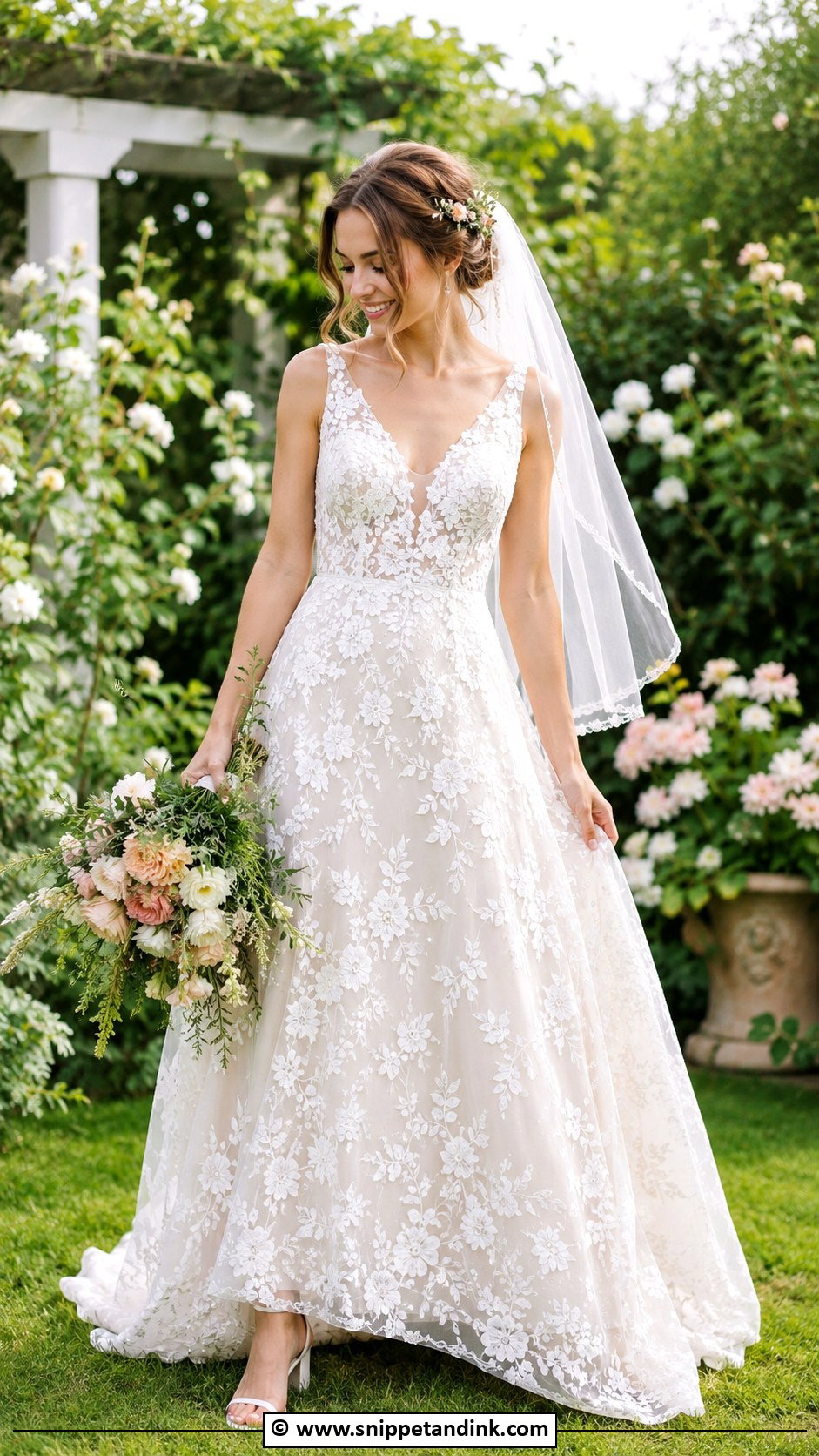
The garden itself sets the rules for this one. Heels sink, hems collect grass stains and petals, and a heavy skirt gets warm in the sun. I steer garden brides toward tulle, chiffon or embroidered organza in an A-line, sheath or empire shape, and I always ask about the ground before shoes. Block heels or heel protectors work on lawns. A fingertip veil is easier outside than a cathedral one, which drags through everything.
14. Boho Wedding Dress
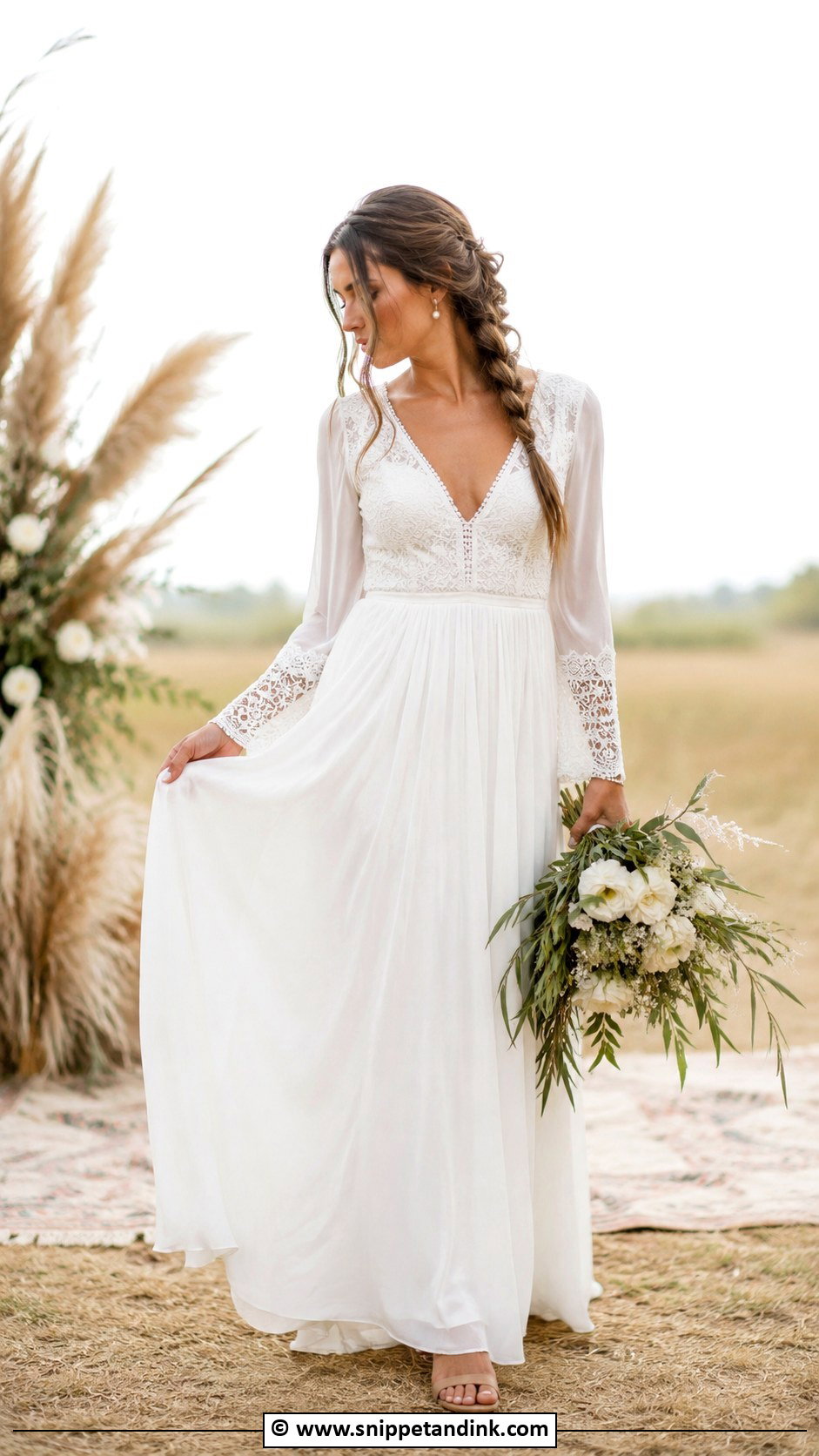
A boho wedding dress stays whimsical when the lace is soft and the shape is relaxed. Crochet-style lace, chiffon skirts, bell sleeves and botanical embroidery all fit. The common mistake I see is piling on accessories: a crown, layered necklaces, cuffs and a fringe bag all at once. Pick one. Delicate hair pins usually look more current than a full floral crown, and a loose braid holds up better than loose curls on a windy meadow or beach.
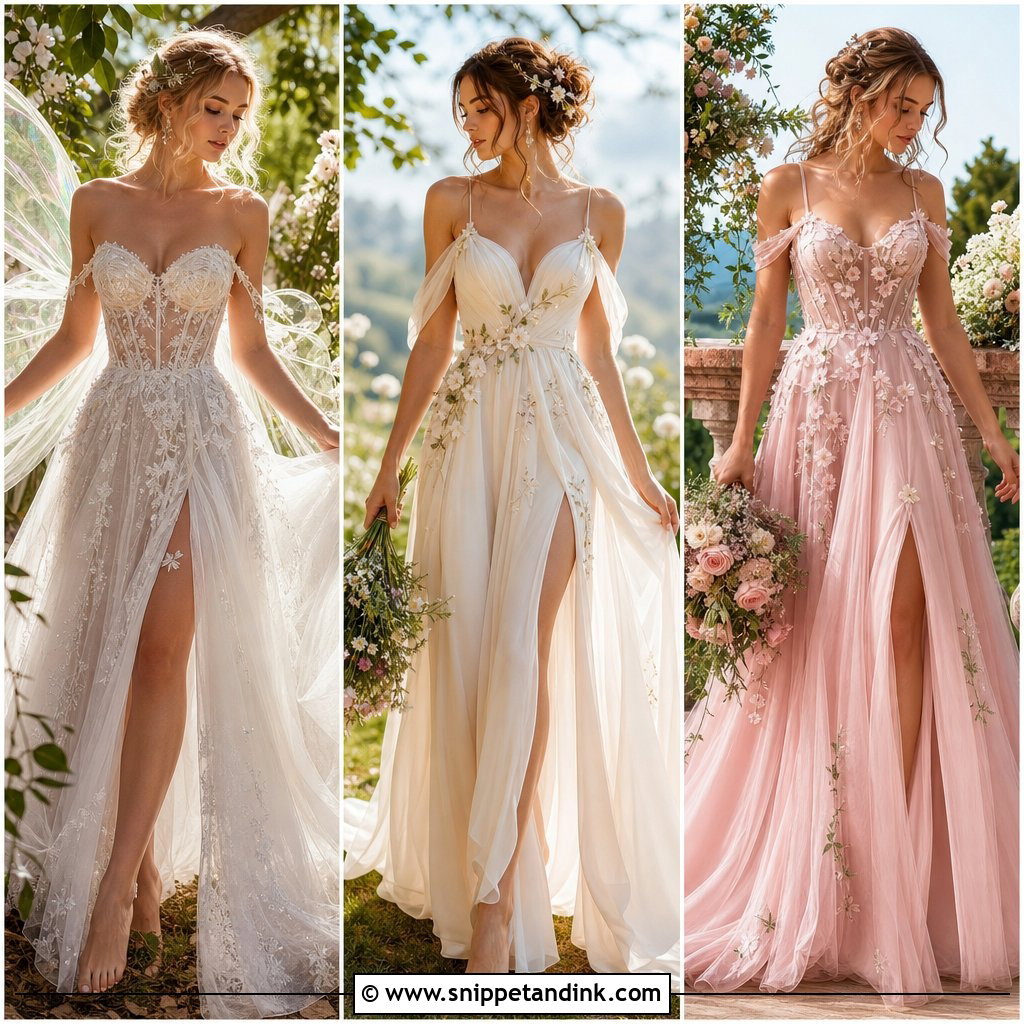
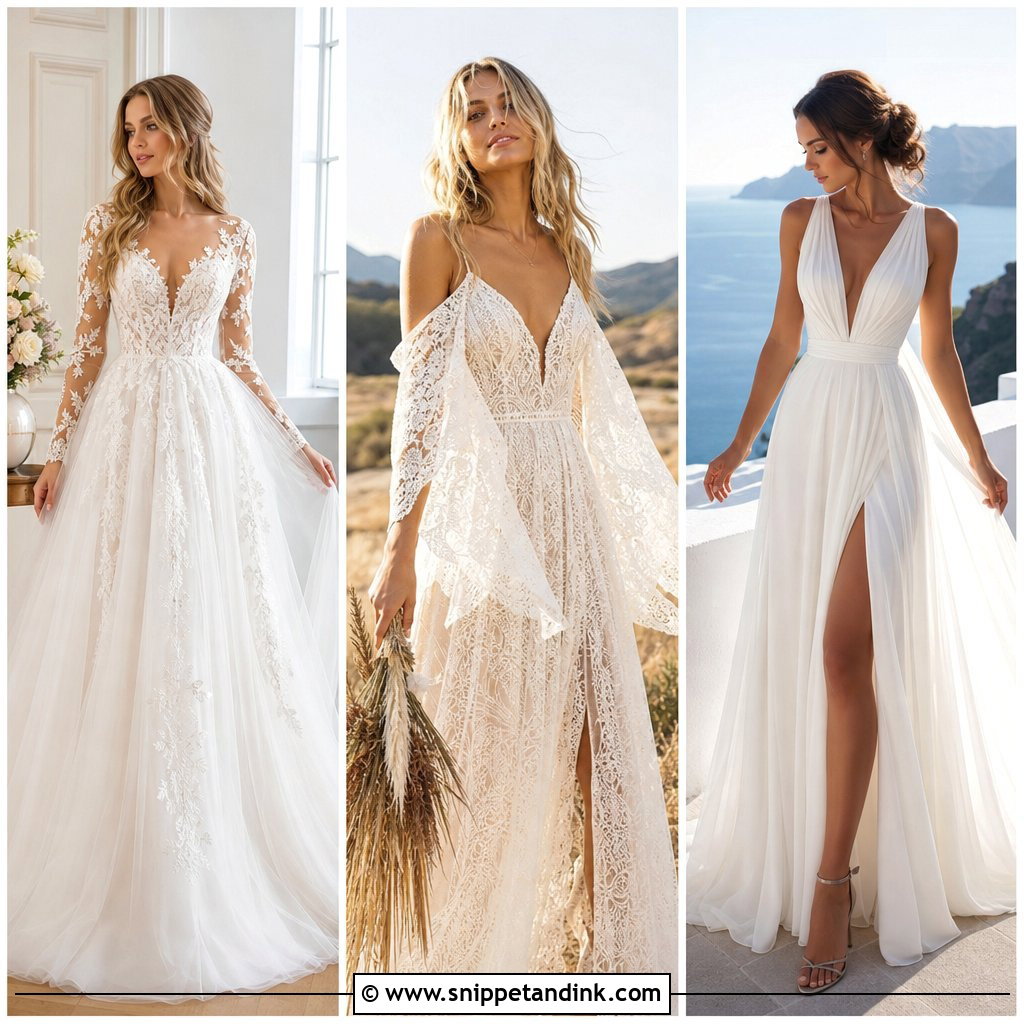
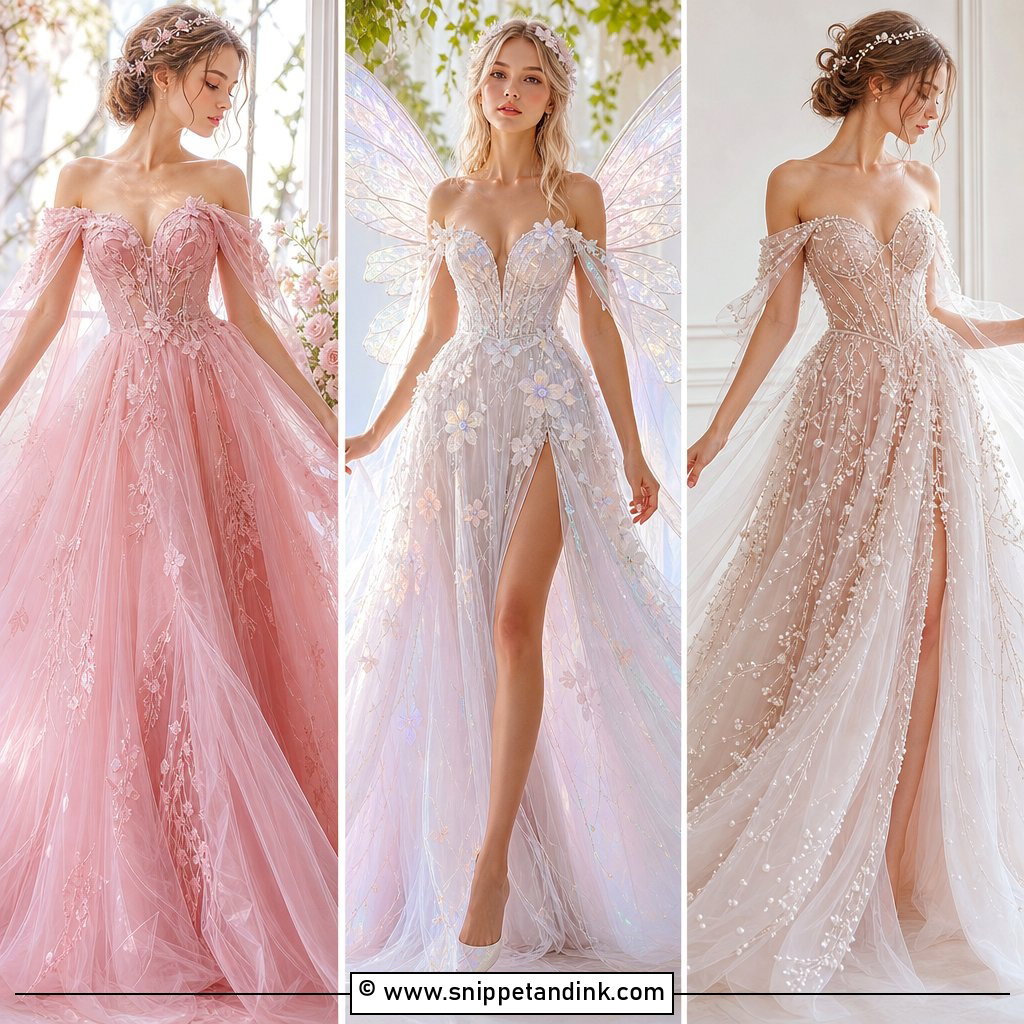
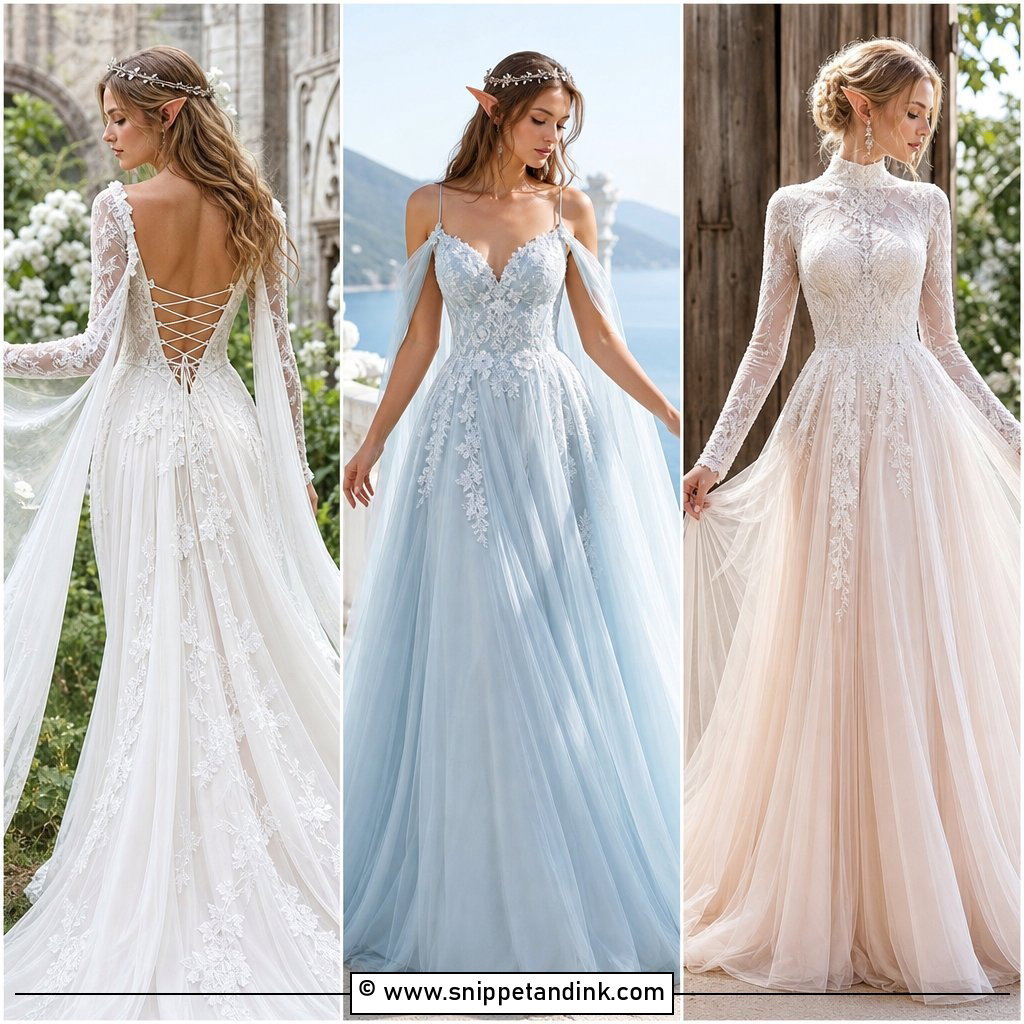
15. Fairy Wedding Dress
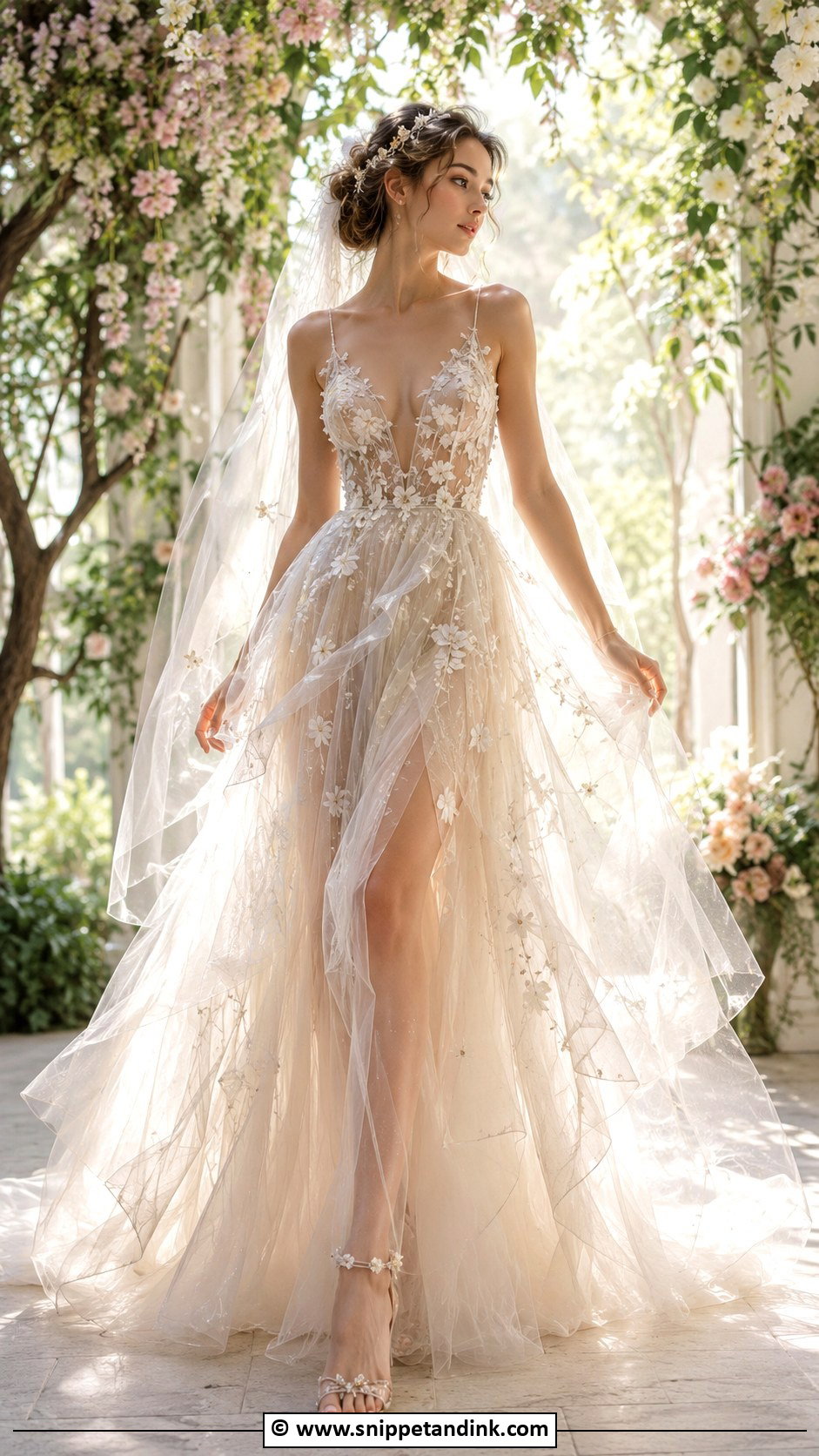
Fairy gowns live or die on restraint. Sheer layered tulle, thin straps and a few floral appliqués can float as you walk; add wings of glitter, a crown and a sparkly veil, and it tips into costume. Pale blush, ivory or champagne all keep it soft. I’d use crystal hair pins and a veil with only a faint shimmer, and I ask for an airy bouquet rather than a tight round one so the whole silhouette stays light.
16. Pearl Wedding Dress
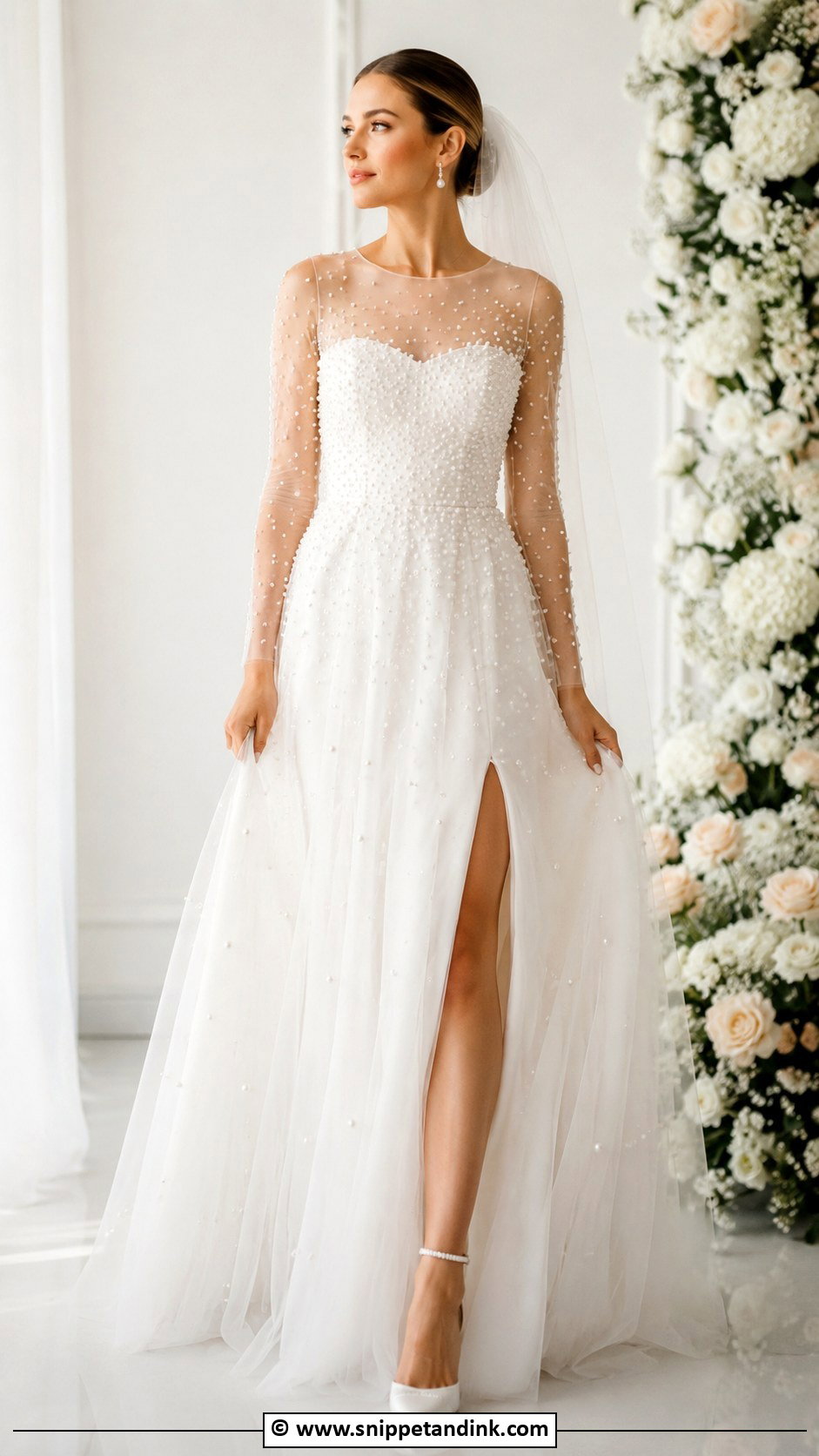
Scattered pearls on tulle look like dew, which is why this style suits whimsical brides who don’t want much sparkle. Choose a scatter for subtle texture or a pearl-heavy bodice for more impact. Check how they’re attached: individually sewn pearls are sturdy, while glued ones can pop off when you sit or hug. Since the dress already carries pearls, I keep jewelry to studs or small drops. A sleek bun or soft waves both work.
17. Ruffle Wedding Dress
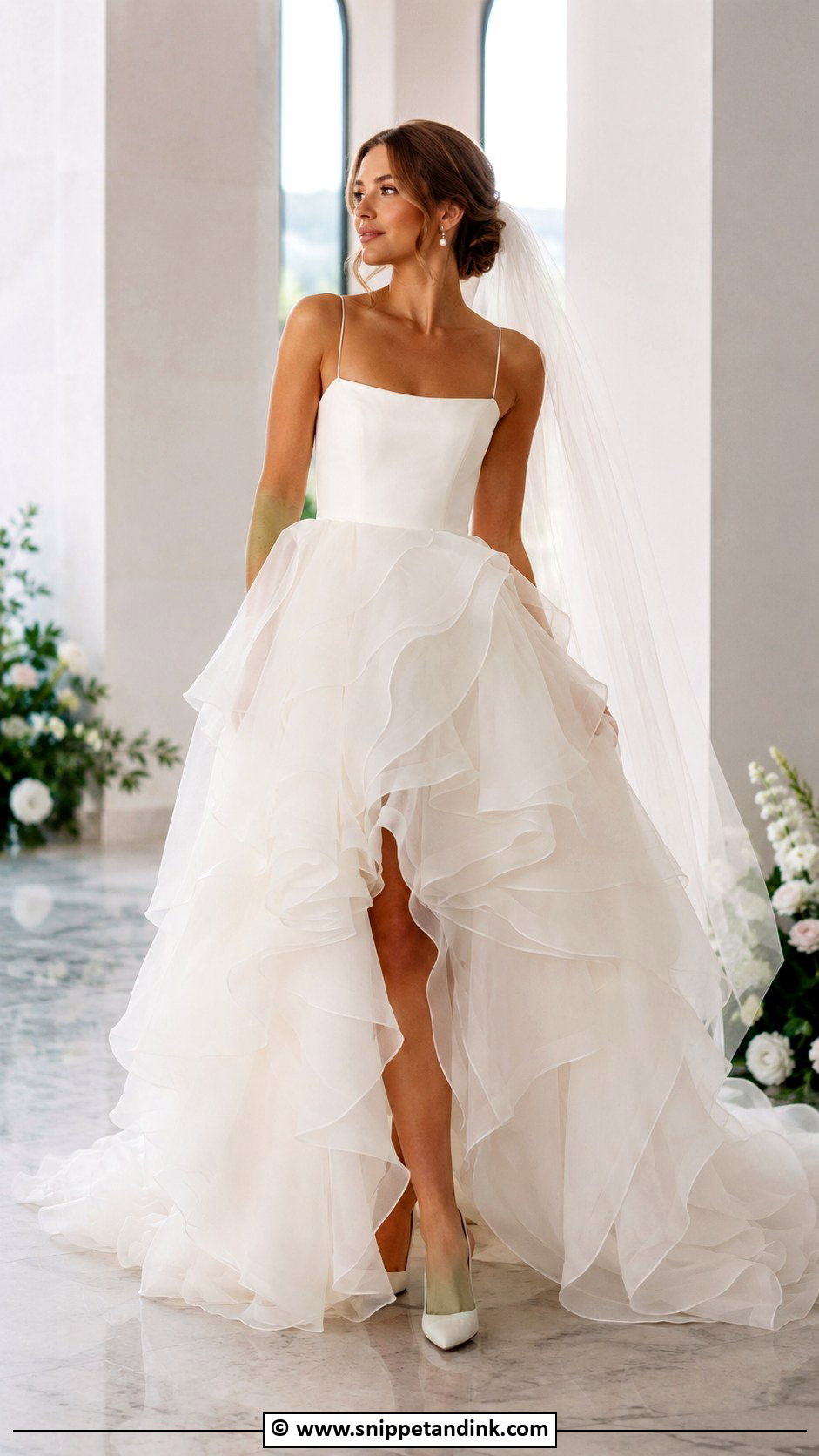
Ruffles add a playful bounce, but volume needs balance. If the skirt is full of tiered organza, I keep the bodice plain; if the silhouette is slim, a soft ruffle at the sleeve or hem is enough. Large ruffles also add width in photos taken from the side, so I always do a profile check in the mirror. Minimal earrings, clean heels and a sheer veil leave room for the skirt. Rounded flowers in the bouquet echo the curves of the ruffles.
18. Sheer Sleeve Wedding Dress
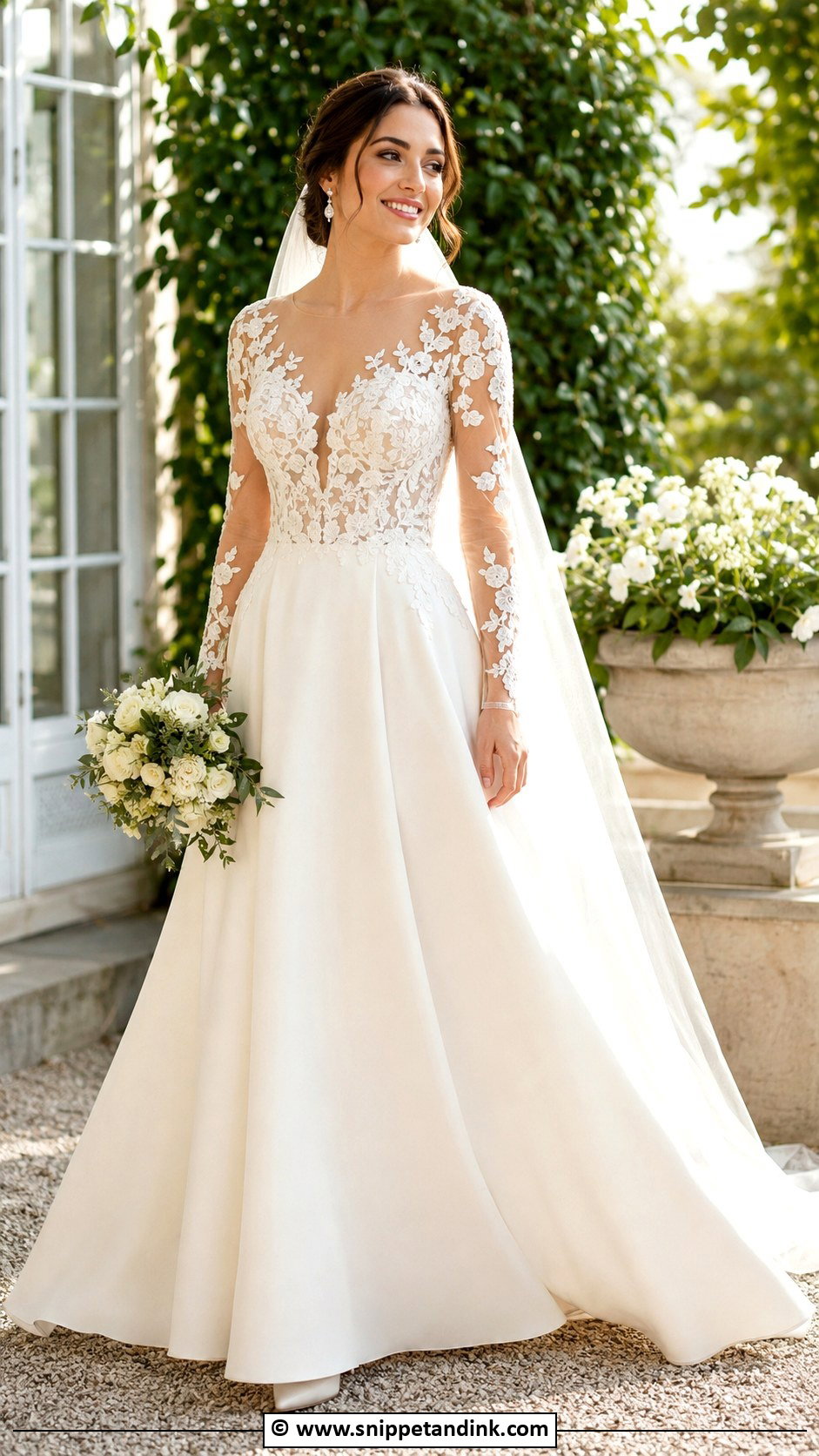
On a sheer sleeve, lace or pearl dots seem to sit directly on the skin. That works on A-lines, fitted shapes and ball gowns alike, which makes it one of the more adaptable details here. Illusion mesh comes in different skin-tone shades, and matching it to your arm matters more than people expect; the wrong shade shows as a grey or pink film in photos. Wear your hair up so the sleeves stay visible, and keep the earrings simple.
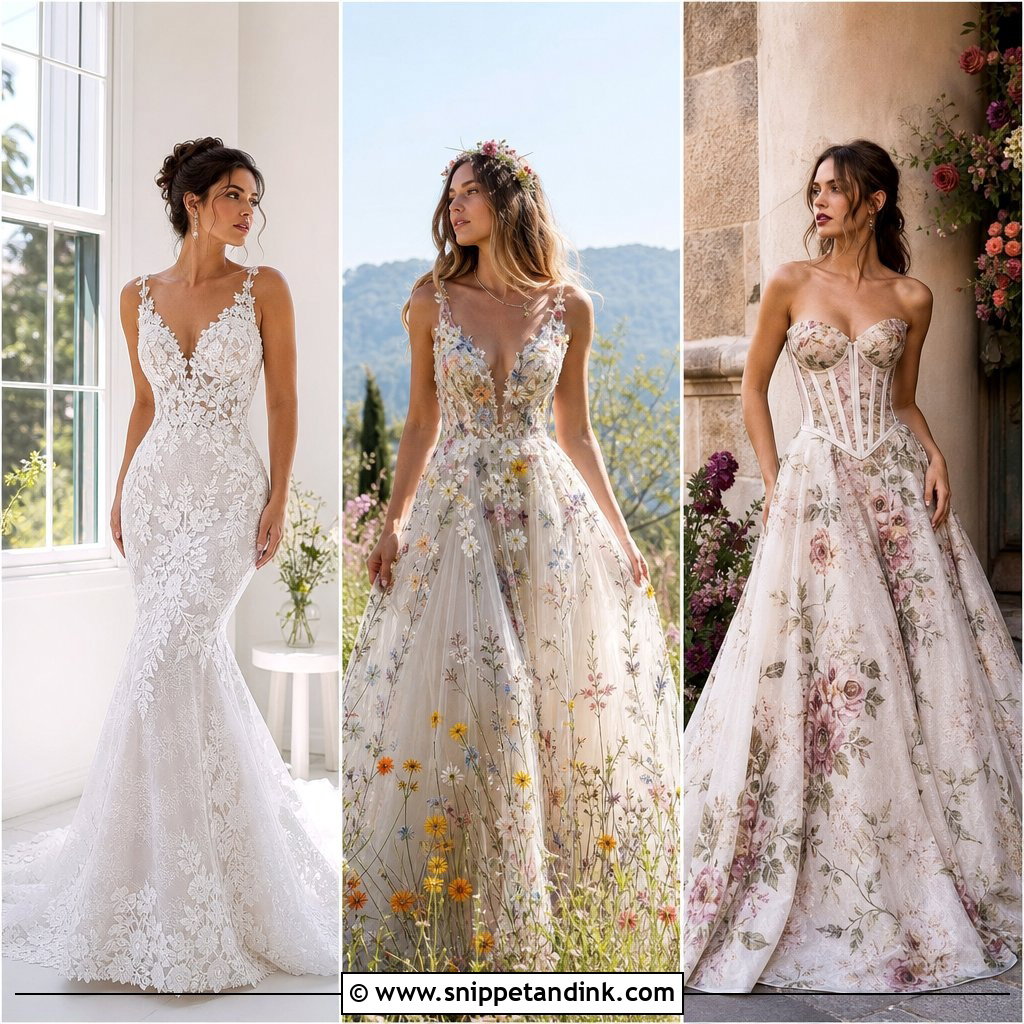
19. Colorful Floral Wedding Dress
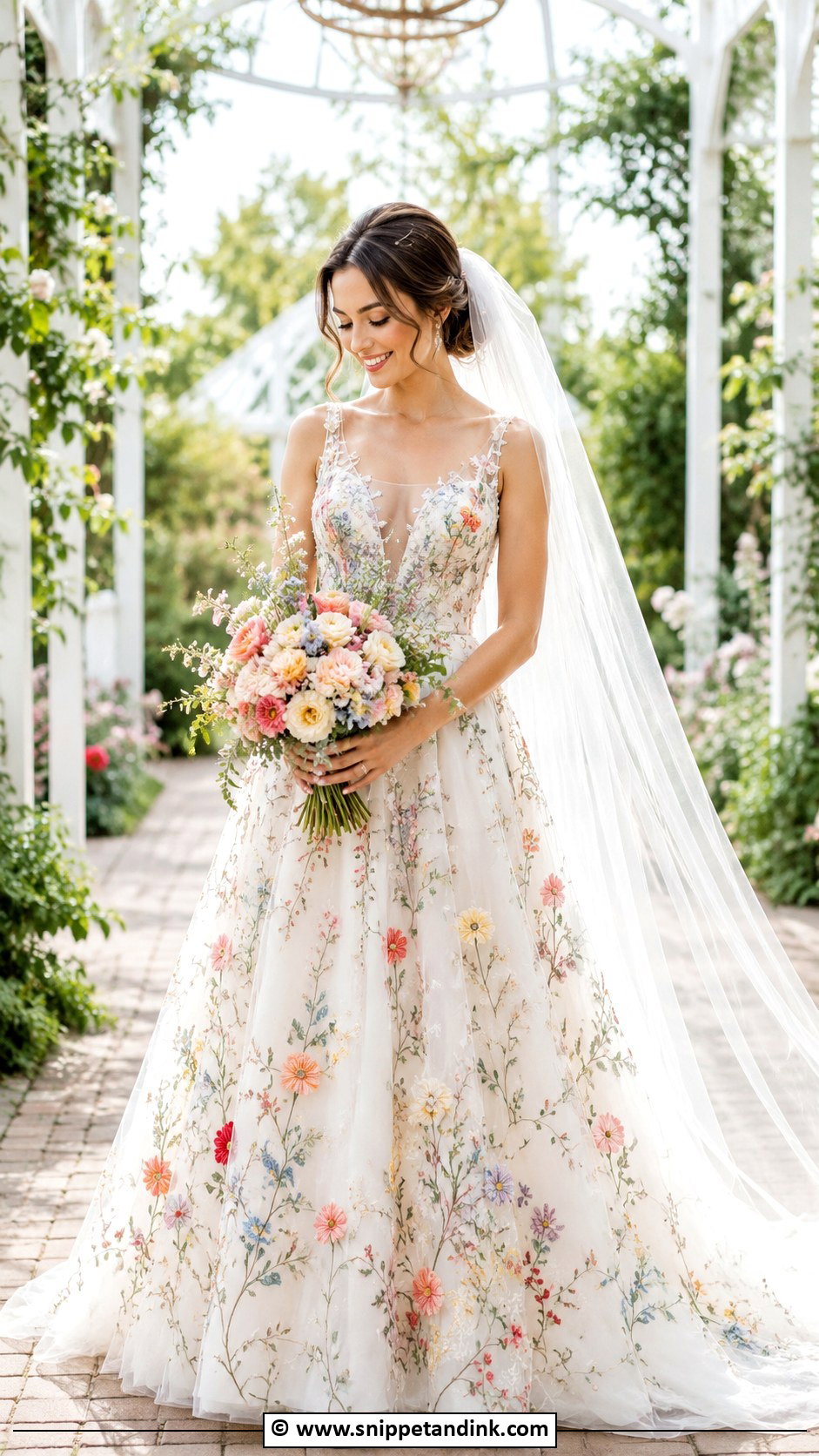
Colored floral embroidery is the most artistic option on this list, and the most likely to look busy if the rest of the outfit competes. Keep the base white, ivory, blush or champagne so it still reads as bridal. The flowers can be watercolor-soft or bright. I pull exactly one or two accent colors from the embroidery for the bouquet and leave shoes and jewelry plain. It suits gardens, creative venues and spring dates best.
20. Corset Wedding Dress
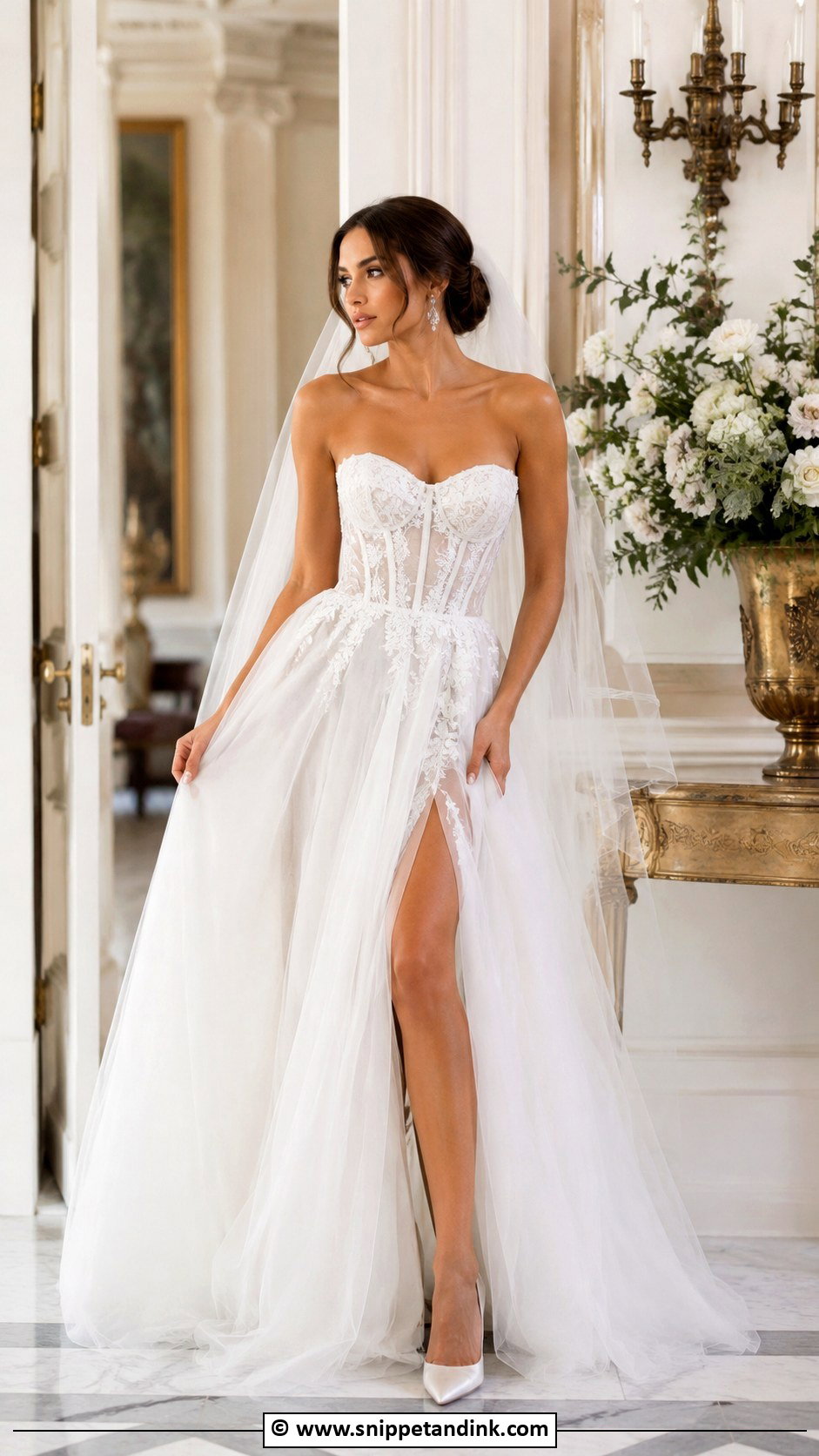
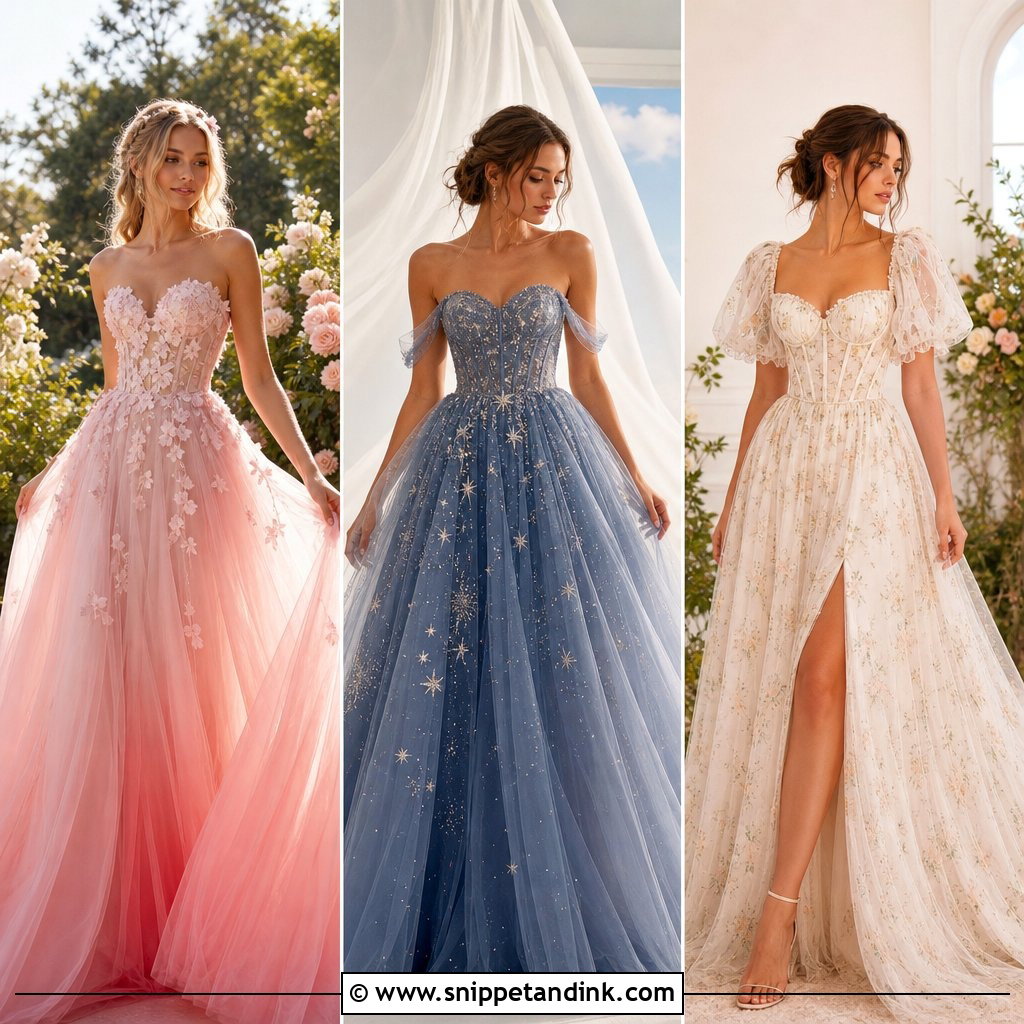
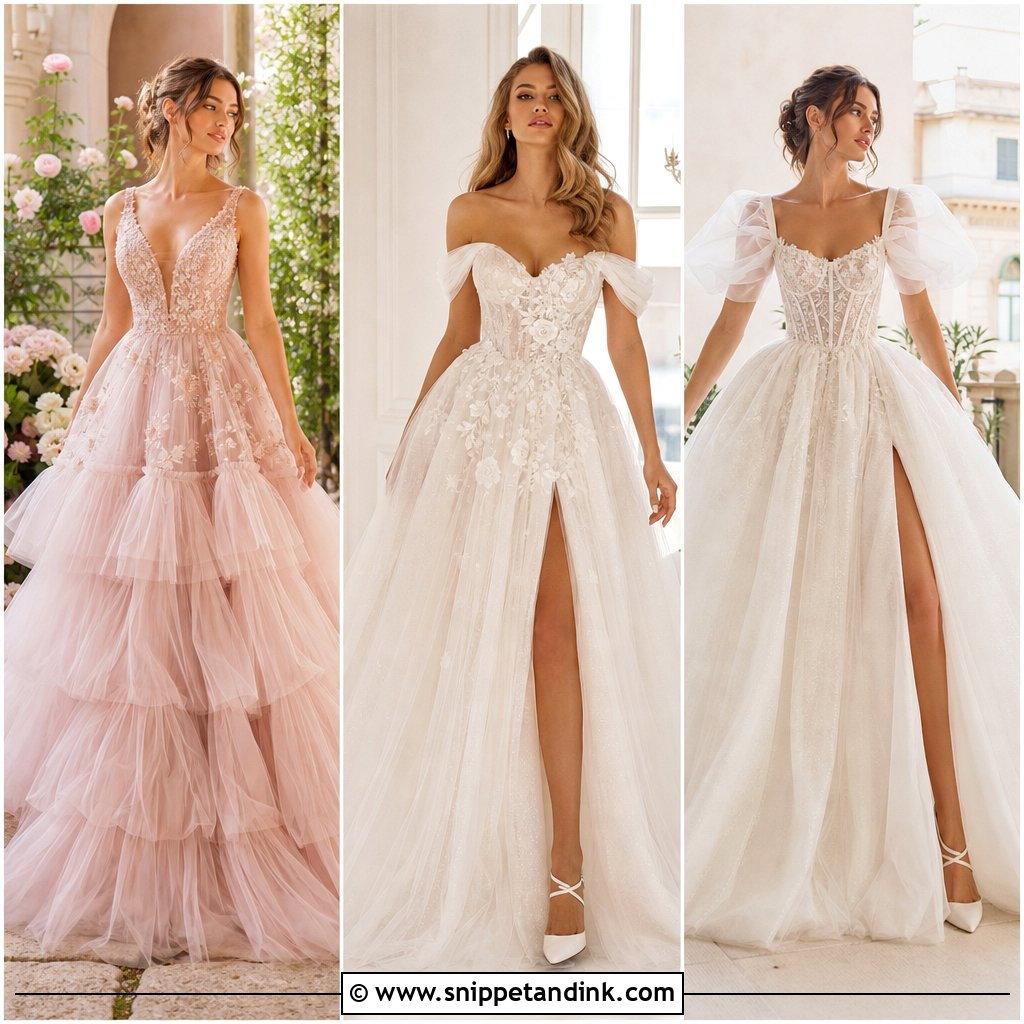
A boned bodice gives shape and support, and tulle or lace on top stops it from looking stiff. Visible boning reads modern; a lace-covered corset reads softer. I’m careful with fit here more than anywhere: a corset that is perfect when you stand can pinch when you sit to eat, so I have brides sit down at every fitting. A simple veil, drop earrings and delicate jewelry keep the focus on the waist.
21. Cape Wedding Dress
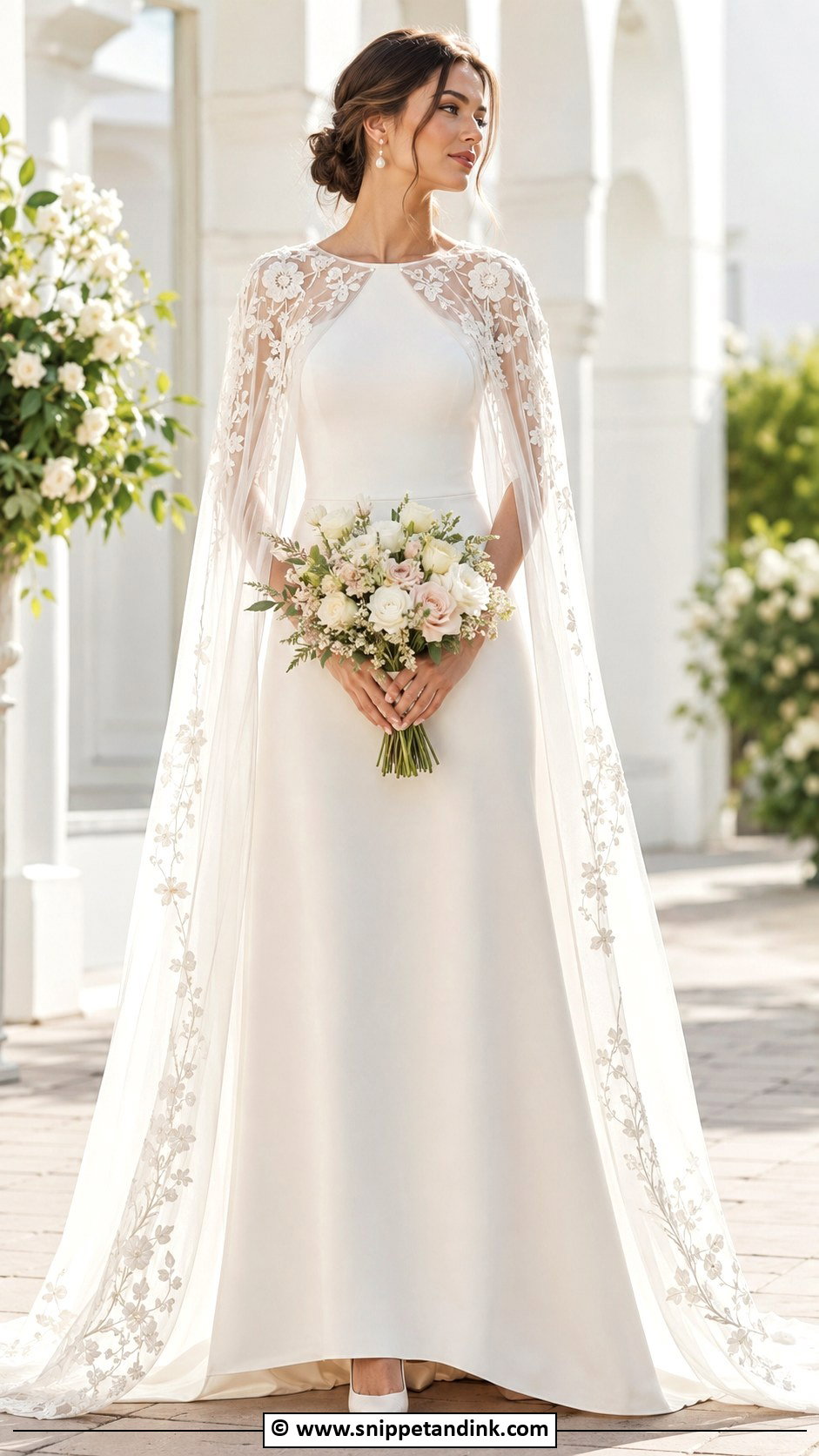
Capes are a veil alternative I suggest often. A sheer tulle cape, lace capelet or embroidered cape gives drama from behind and coverage for the ceremony, then comes off for dancing. Check how it fastens before you buy: a hook at the neck is easier to remove than buttons hidden under hair. Put a clean gown underneath, an A-line, fitted crepe or soft tulle shape, and keep jewelry to pearl earrings.
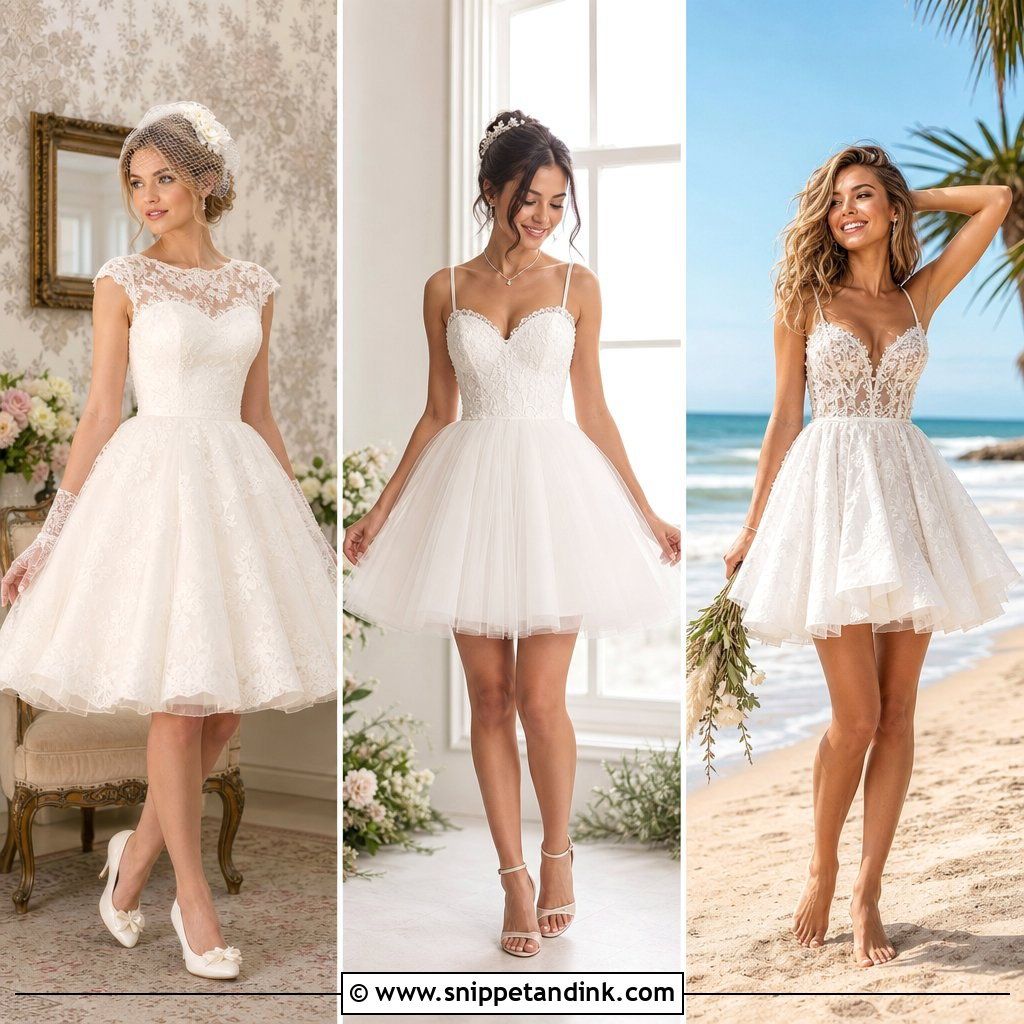
22. Short Wedding Dress
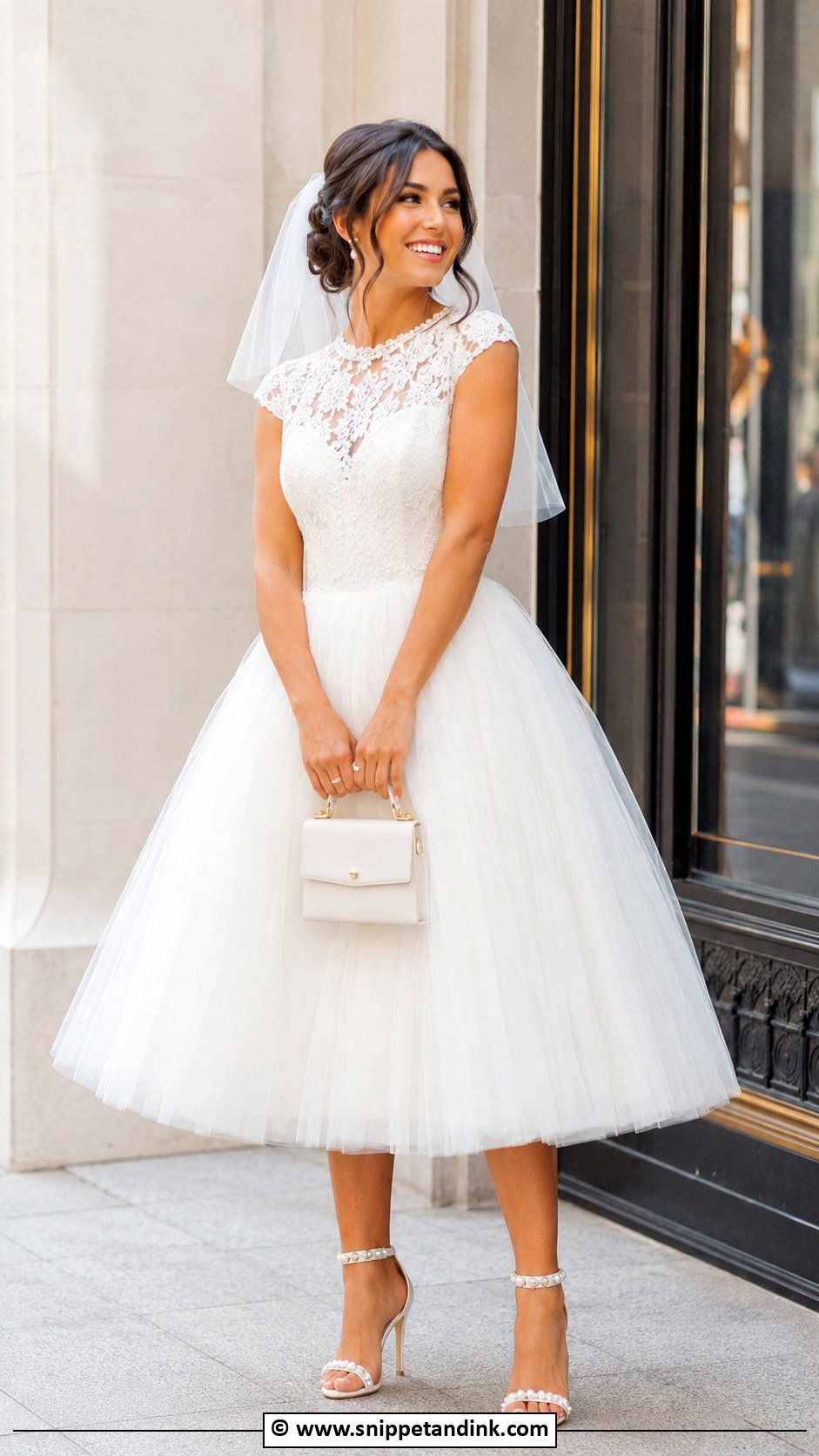
Short dresses suit civil ceremonies, elopements and second outfits for the party. Tulle, lace, puff sleeves, bows or appliqués keep them whimsical. Tea-length feels vintage; a mini with a soft overskirt feels newer. Because the shoes show completely, I treat them as part of the dress rather than an afterthought. Pearl heels, a short veil and a small structured bag are enough, and a brighter bouquet suits the playful length.
23. High Low Wedding Dress
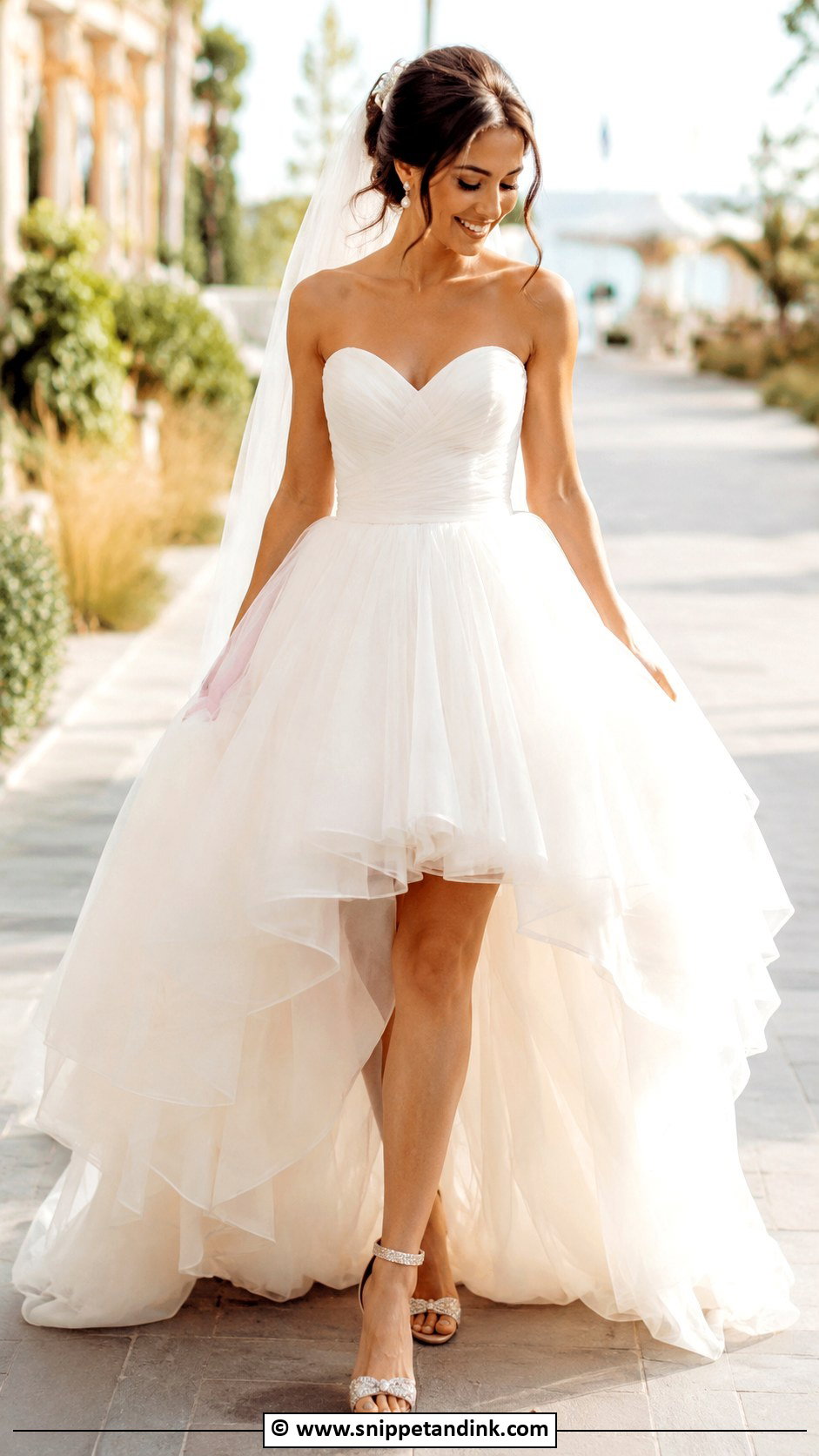
With a high low hem you get drama behind you and a front you can walk in without lifting the skirt. Choose tulle, organza or lace for movement. Your shoes are on show, so they need to be comfortable as well as pretty; I ask brides to break them in at home for a week. Let the veil fall softly behind the shorter front. Outdoors, the hem is a real advantage because less fabric drags across grass and gravel.
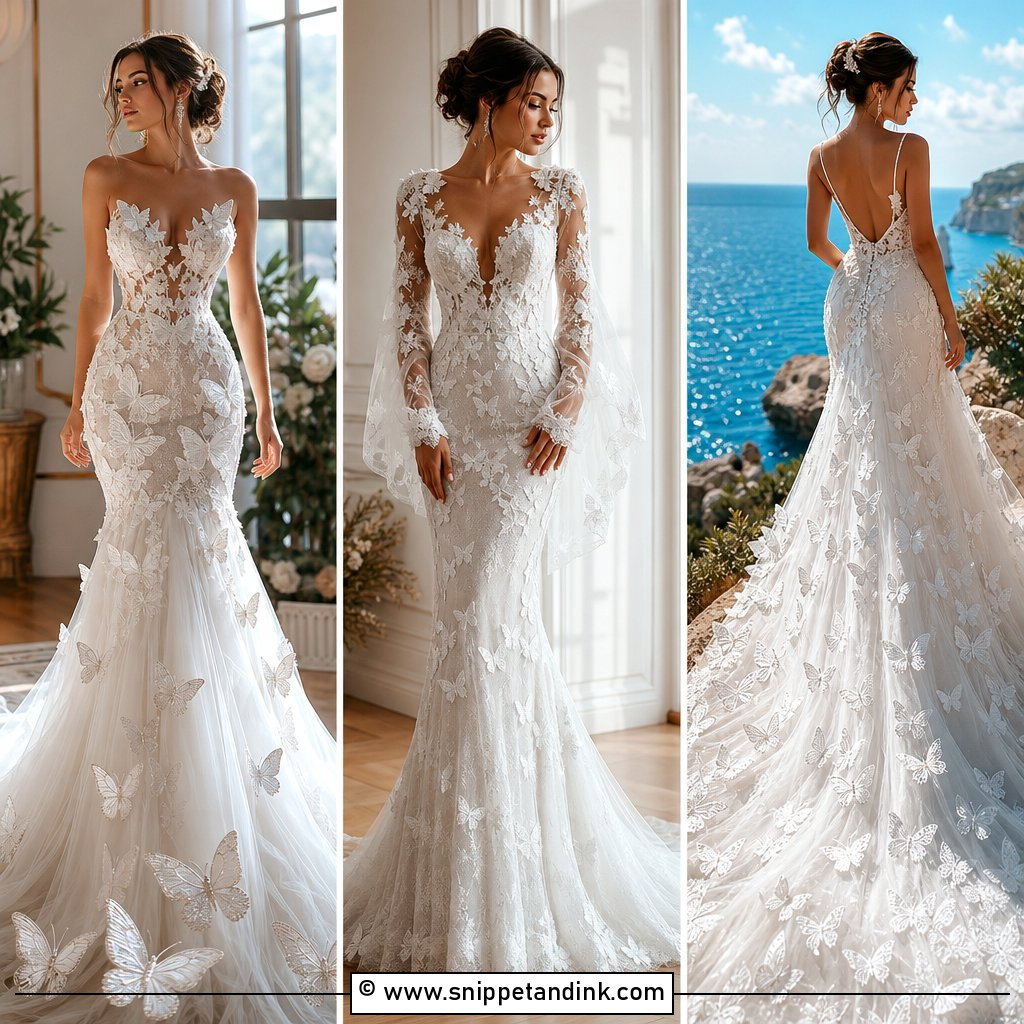
24. Butterfly Wedding Dress
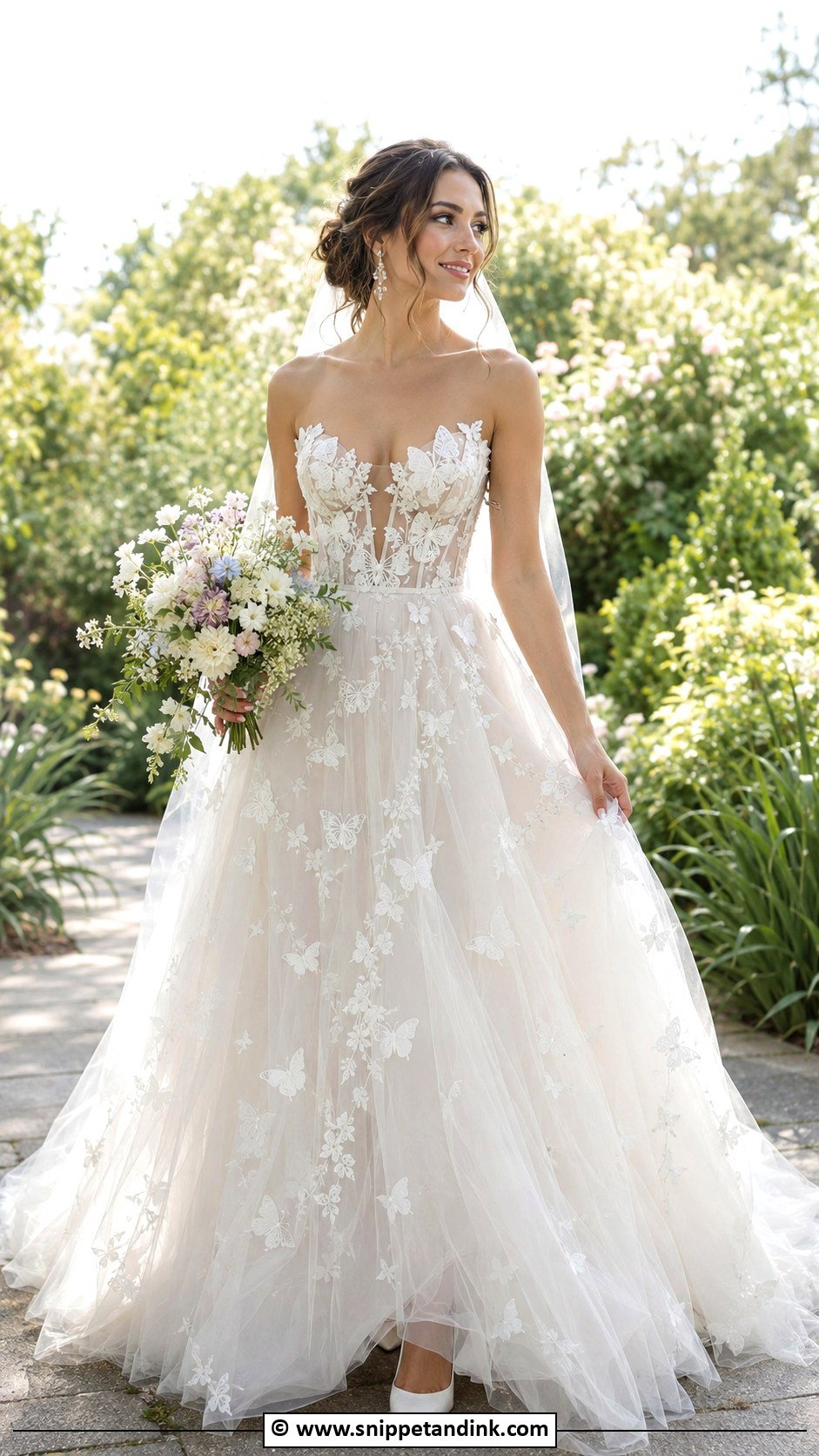
Butterflies are a motif I’d keep small. On a butterfly wedding dress they work best embroidered or appliquéd across a sheer or layered skirt, so they seem to hover. Oversized butterflies quickly look like a theme rather than a gown. Simple ivory shoes, small crystal earrings and a clean veil keep it grown-up, and an airy bouquet matches the light feeling of the fabric.
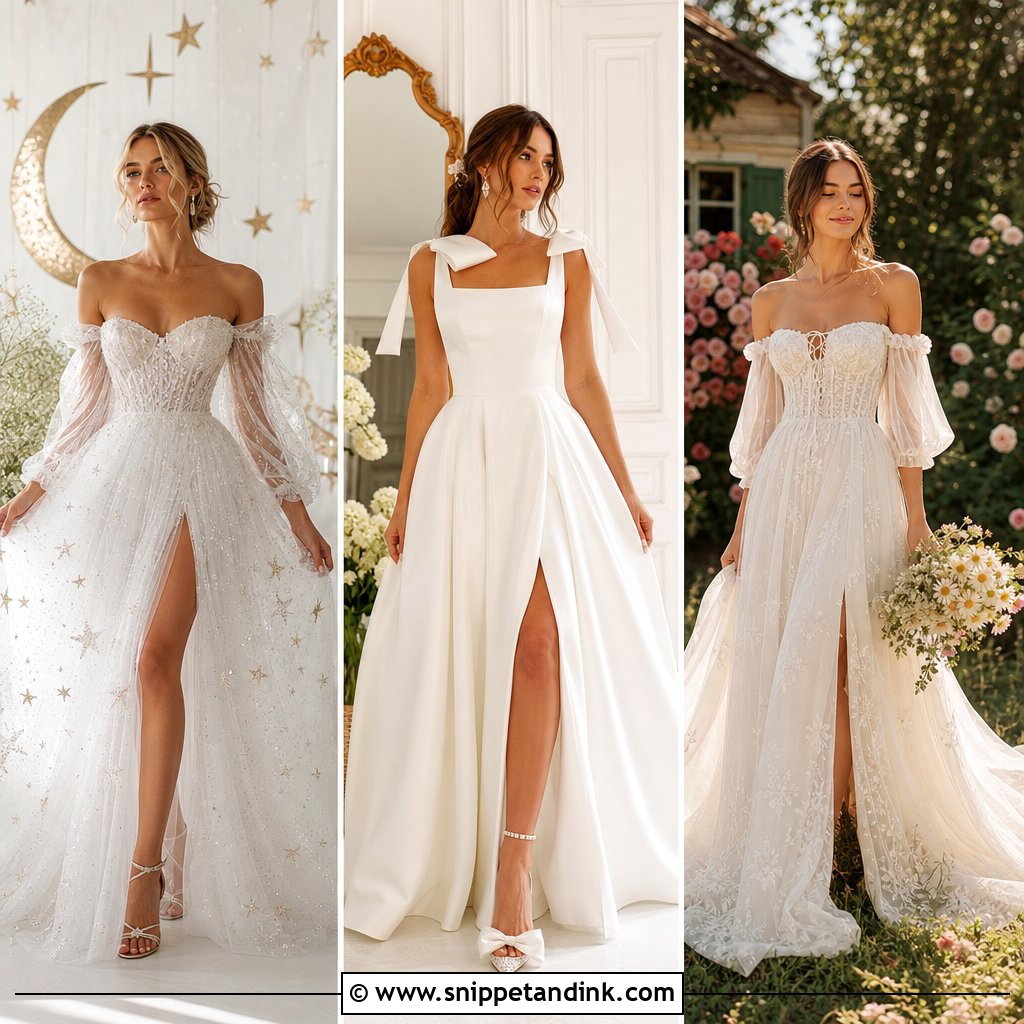
25. Sparkle Tulle Wedding Dress
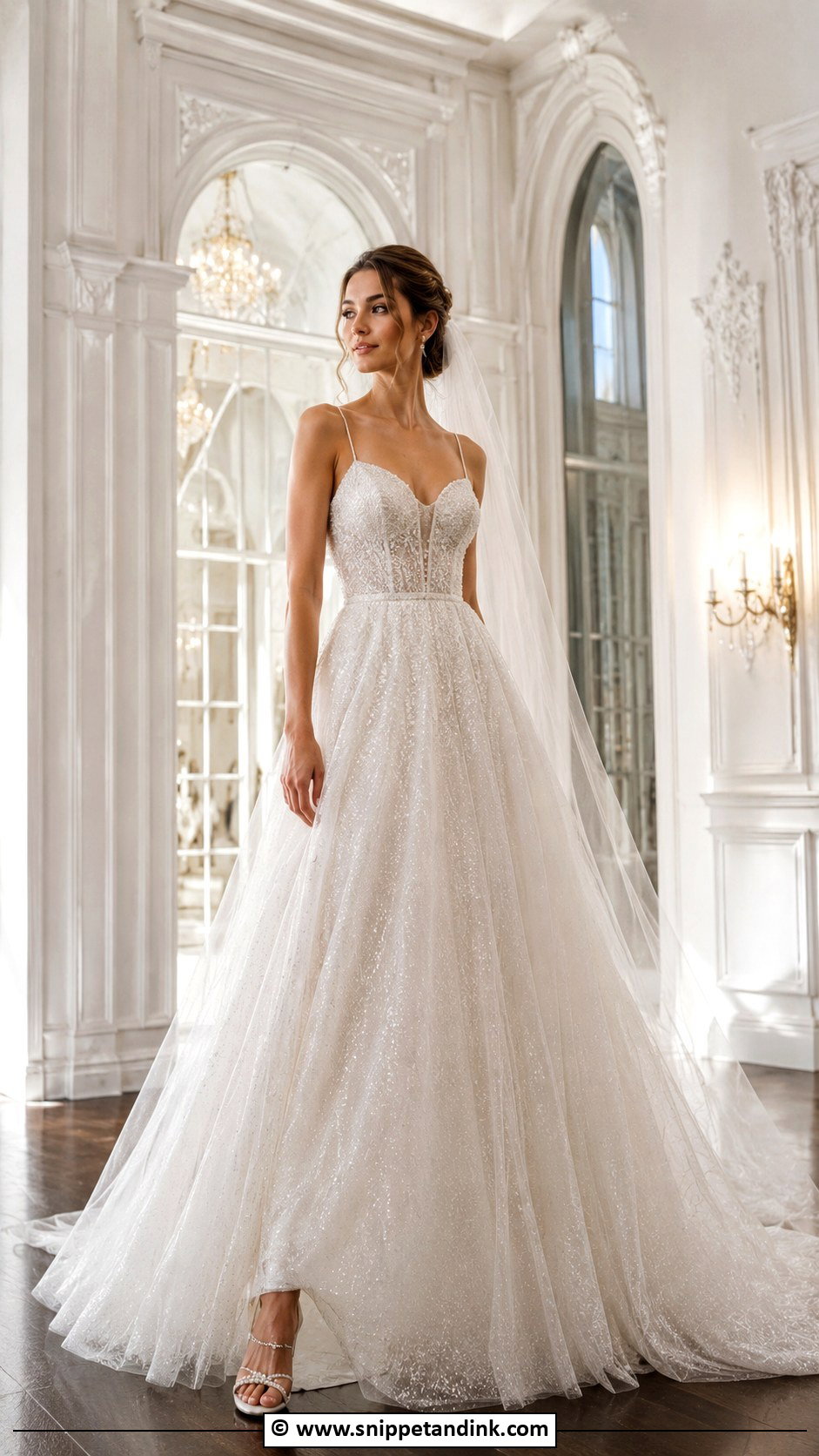
Shimmer tulle has a fine glitter woven or pressed into the net, so it glows when you move without the weight of beading. I always look at it under the reception lighting if I can, because some glitter tulles look flat in daylight and come alive only under warm or candle light. A soft A-line or ball gown gives the most fairytale result. Skip a statement necklace; crystal studs and silver or pearl heels are enough. Expect a little glitter shedding onto your partner’s suit.
How Tulle, Organza and Raised Petals Hold Up by Midnight
The gowns in this list are delicate, and I’d rather a bride knows that before the day than discovers it at the reception. Tulle snags on bracelets, rings, chair edges and the hook of a handbag. A small snag usually closes up if you leave it alone; pulling at it makes a ladder. Organza creases sharply when you sit, and those lines show in flash photos, so standing for the first part of the reception helps more than people think.
Raised 3D flowers flatten wherever there is pressure, especially across the back of the skirt. Sheer sleeves can catch on lace bodices of the people hugging you. None of this is a reason to avoid these dresses. It simply means building in a few habits: have a bridesmaid check the back of the skirt after the ceremony, keep jewelry with smooth edges, and ask for a quick fluff of the tulle before the evening portraits.
Steaming, Bustling and Packing a Layered Gown
A good bustle is the single detail most brides forget to ask about. Layered tulle skirts often need several bustle points so the layers lift evenly; ask your seamstress to show your maid of honor how it works at the final fitting, and take a short video on your phone.
- Collect the gown in its breathable garment bag, never in plastic for long periods, since trapped moisture can mark fabric.
- If you travel, ask the shop to stuff the bodice and sleeves with acid-free tissue and lay the skirt flat in the bag.
- Steam on the morning of the wedding from the inside of the skirt, holding the steamer a hand’s width away from tulle, which can melt or pucker if touched.
- Never iron organza or tulle directly. Raised florals and pearls should only be lifted with gentle steam from behind.
- Pack a small kit: clear nail polish for runs in lining, a lint roller, safety pins and white chalk for small marks.
After the wedding, get the gown professionally cleaned within a few weeks, before sugar spills from drinks or cake turn yellow.
Which Gown Still Feels Dreamy After You Sit and Walk?
Whimsy in a wedding gown isn’t one look. It’s movement, texture and a few details that feel like yours. Some brides land on floral tulle or pastel color, others on pearls, sheer sleeves, soft chiffon or a dramatic cape. When you try gowns on, sit, walk, lift your arms and picture the venue floor, the season and the shoes. If a dress still makes you smile after all that, it’s the right one.
You'll Like These Ideas:


Leave a Reply