
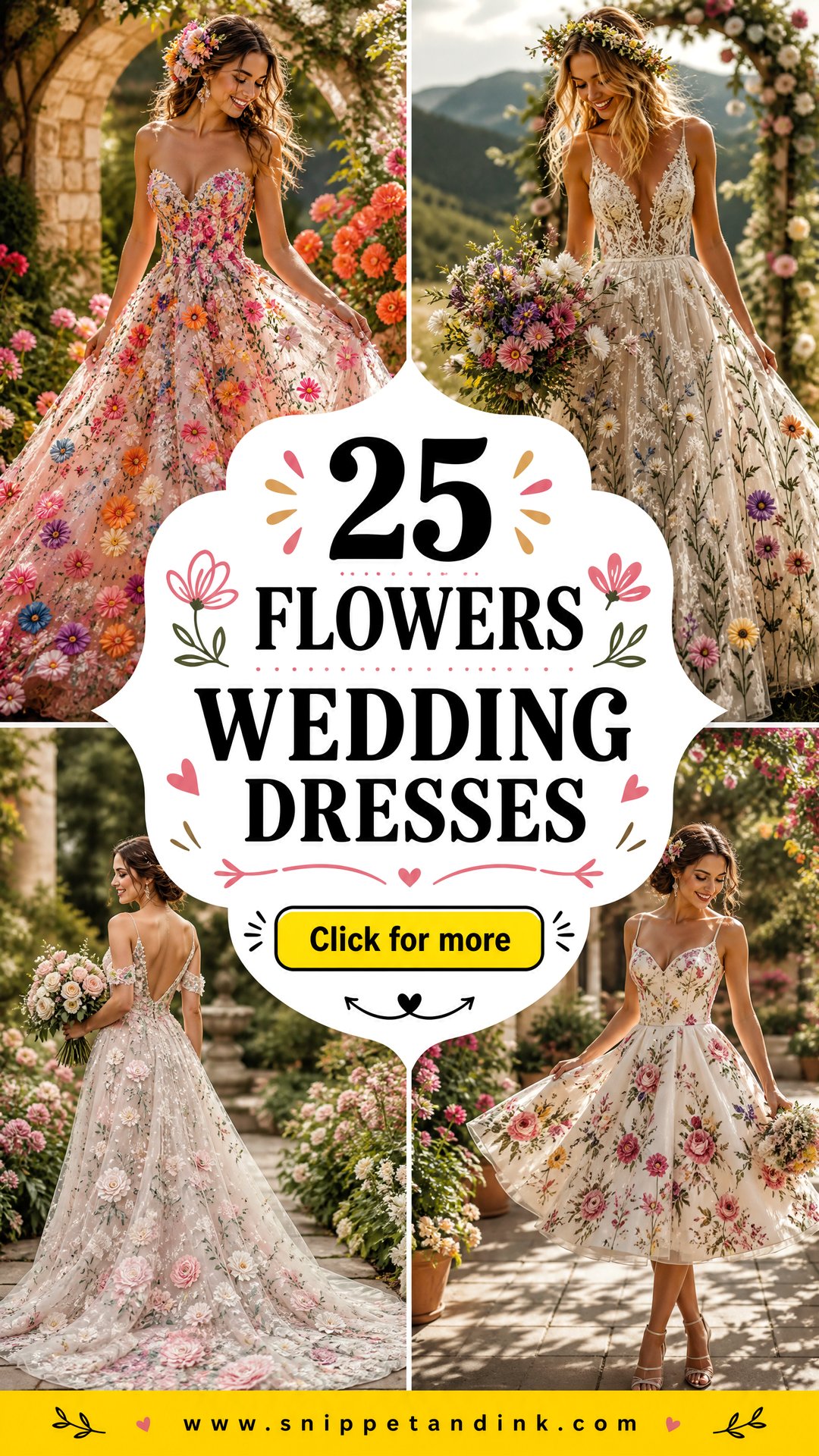
Flowers on a wedding dress can be a thin vine along the bodice or a skirt covered in petals, and both count as floral. What I look at first in a fitting isn’t the flower itself but where it sits on the body, because placement decides your shape in photographs. Daisy motifs, raised organza petals and hand-embroidered botanical patterns are all easy to find in bridal shops right now. Each of the twenty-five dresses below comes with the veil, shoes, jewelry and bouquet I’d pair with it, so you can picture the whole outfit rather than the gown alone.
Where the Flowers Sit Changes Your Shape
Two dresses with the same appliqués can look completely different because of where those appliqués are sewn. I use placement the way a tailor uses darts, to move the eye.
- Clustered at the waist, then thinning out: the waist looks narrower and the skirt lighter. This is the placement I reach for most.
- Running in a vertical band or down one side: it lengthens, which helps petite brides and anyone wanting a taller line.
- Crossing the bodice on a diagonal: it slims the torso and leads into a one-shoulder or asymmetric neckline.
- Heavy at the hem: it draws the eye down and adds visual weight below the knee. Lovely on tall brides, harder to carry on a small frame.
- Concentrated on the shoulders and neckline: it widens the shoulders a little, which balances a full skirt or wider hips.
If a gown is almost right, ask whether a few appliqués can be moved. Hand-sewn flowers can often be lifted and re-placed during alterations; glued ones usually can’t.
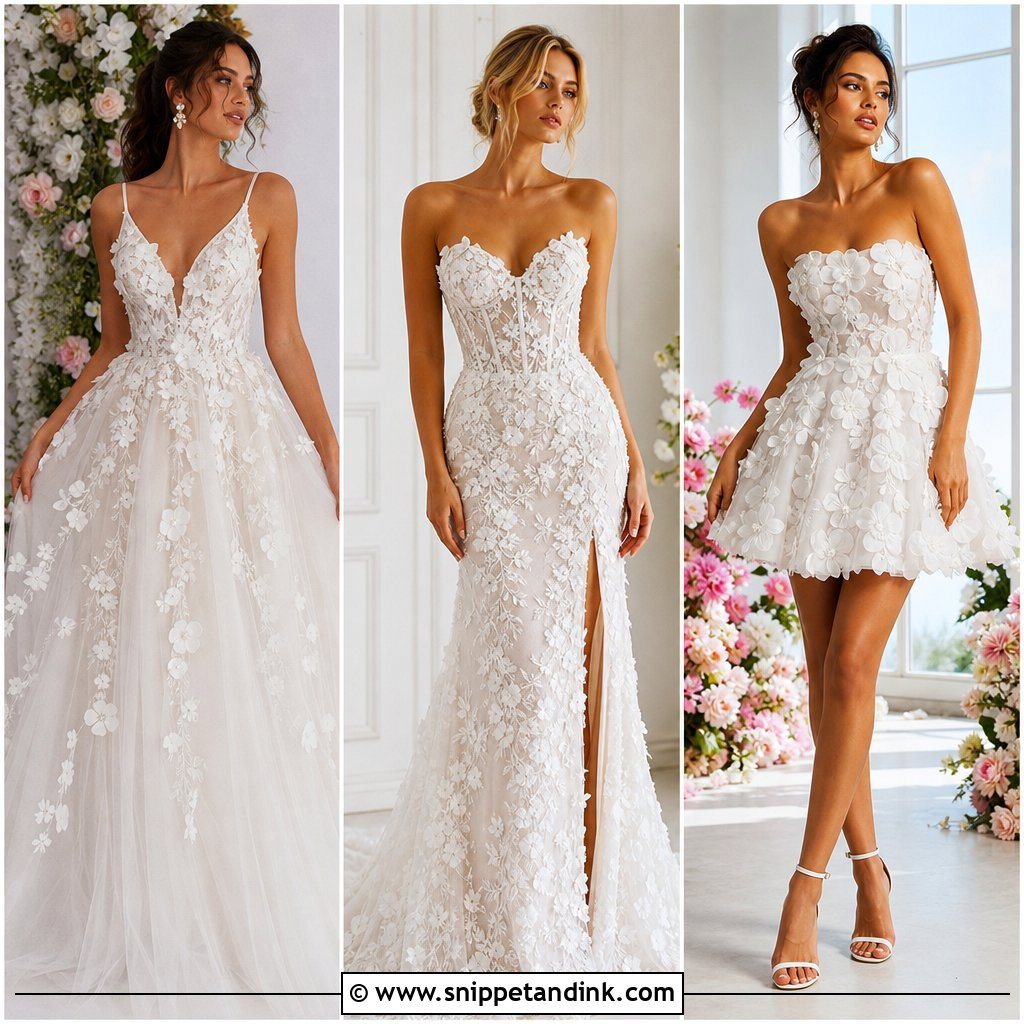
1. 3D Floral A-Line Wedding Dress
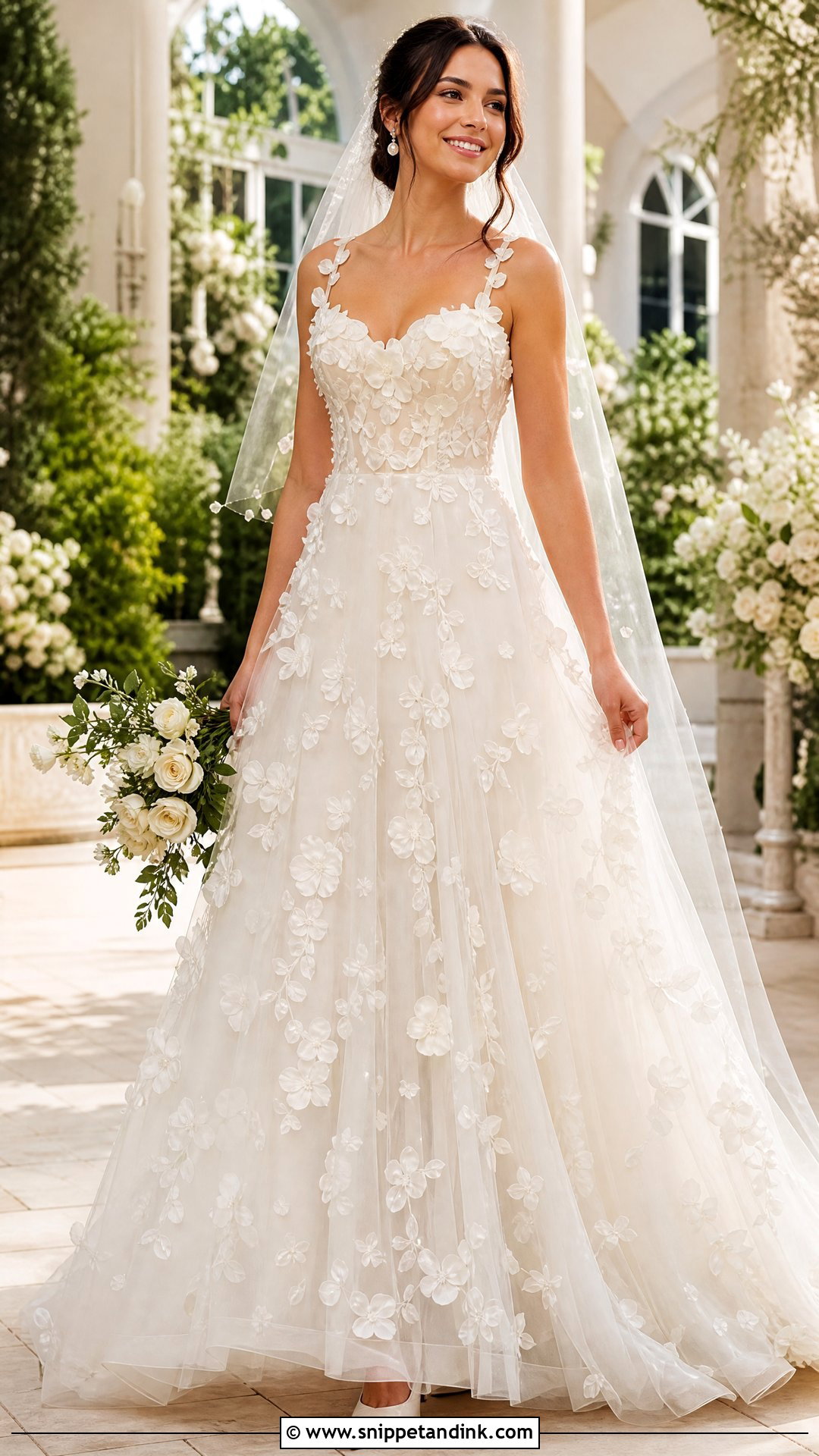
Organza flowers hand-placed on the bodice, then scattered more thinly down a tulle skirt, give an A-line texture without the weight of a ball gown. The thinning matters: when flowers stay dense all the way to the hem, the dress looks bottom-heavy as you walk. Pearl drops, a fingertip veil and ivory pointed pumps suit it. White sweet peas and greenery sit well against raised petals, and a low bun with a few face-framing pieces keeps it soft.
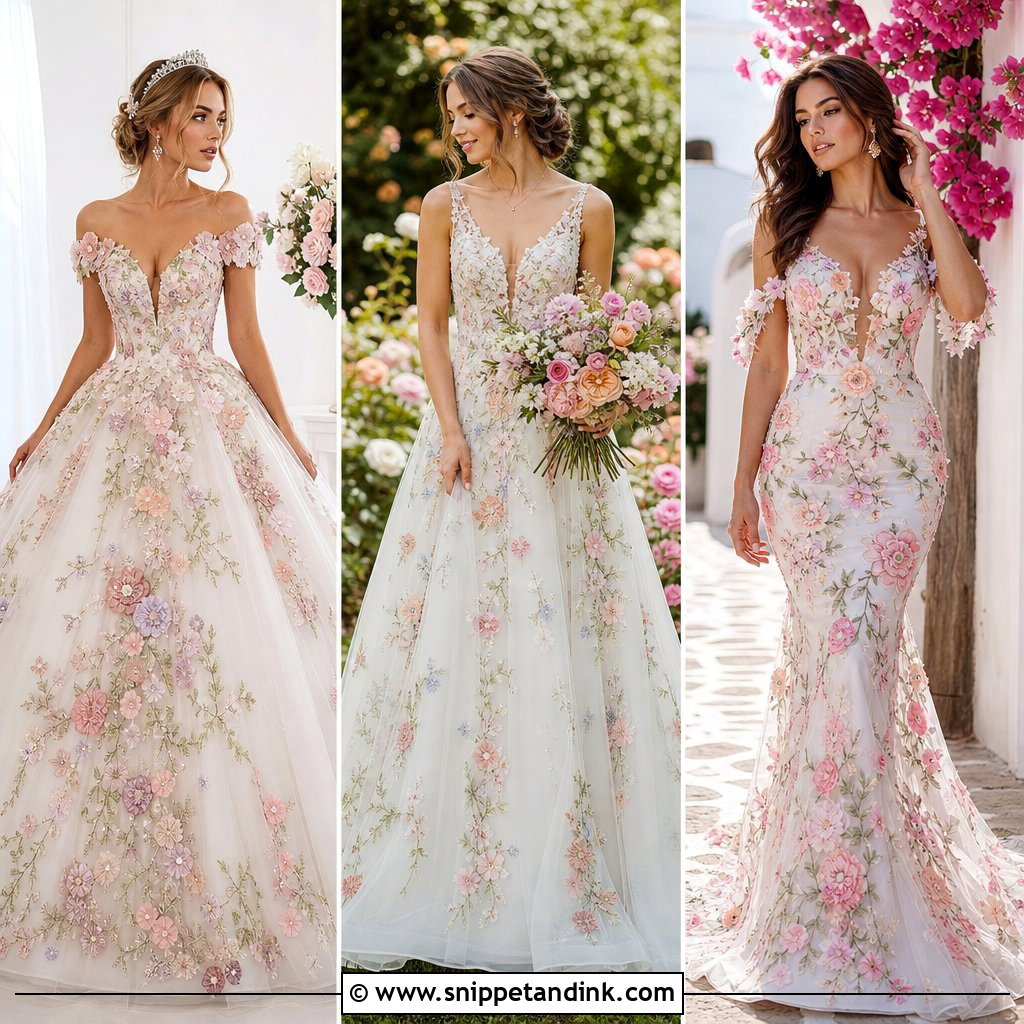
2. Floral Embroidered Tulle Ball Gown
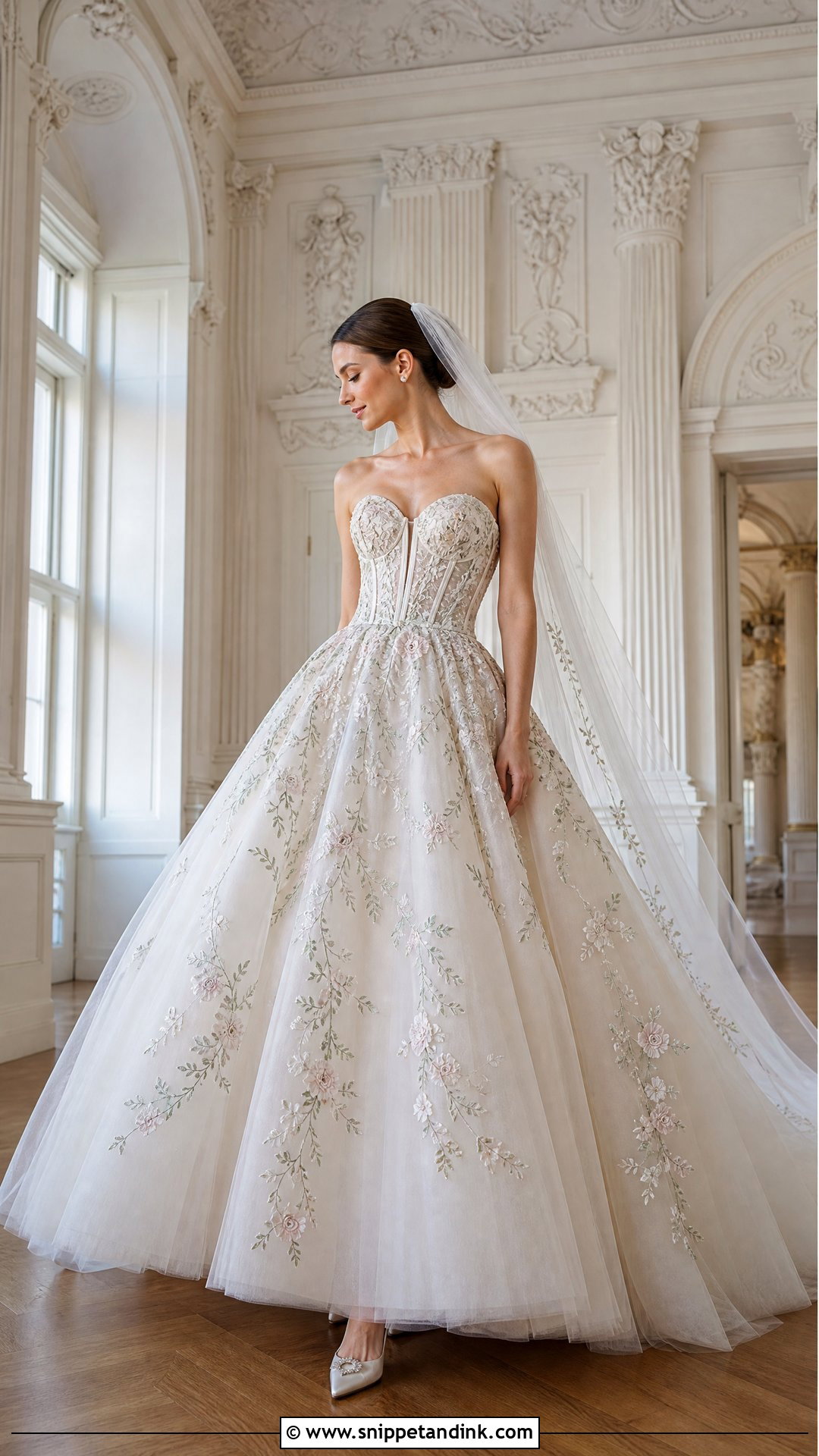
A full tulle skirt covered in fine botanical embroidery is about as grand as bridal gets. Ivory thread is traditional; pale pink, blue or green thread brings in quiet color. With that much going on below the waist, the veil should be narrow with almost no edging. Embroidered tulle is heavier than plain, so I check that the waist stay holds the skirt’s weight, or the bodice slides down by the speeches. Crystal studs, satin pumps and a smooth updo keep the neckline clear.
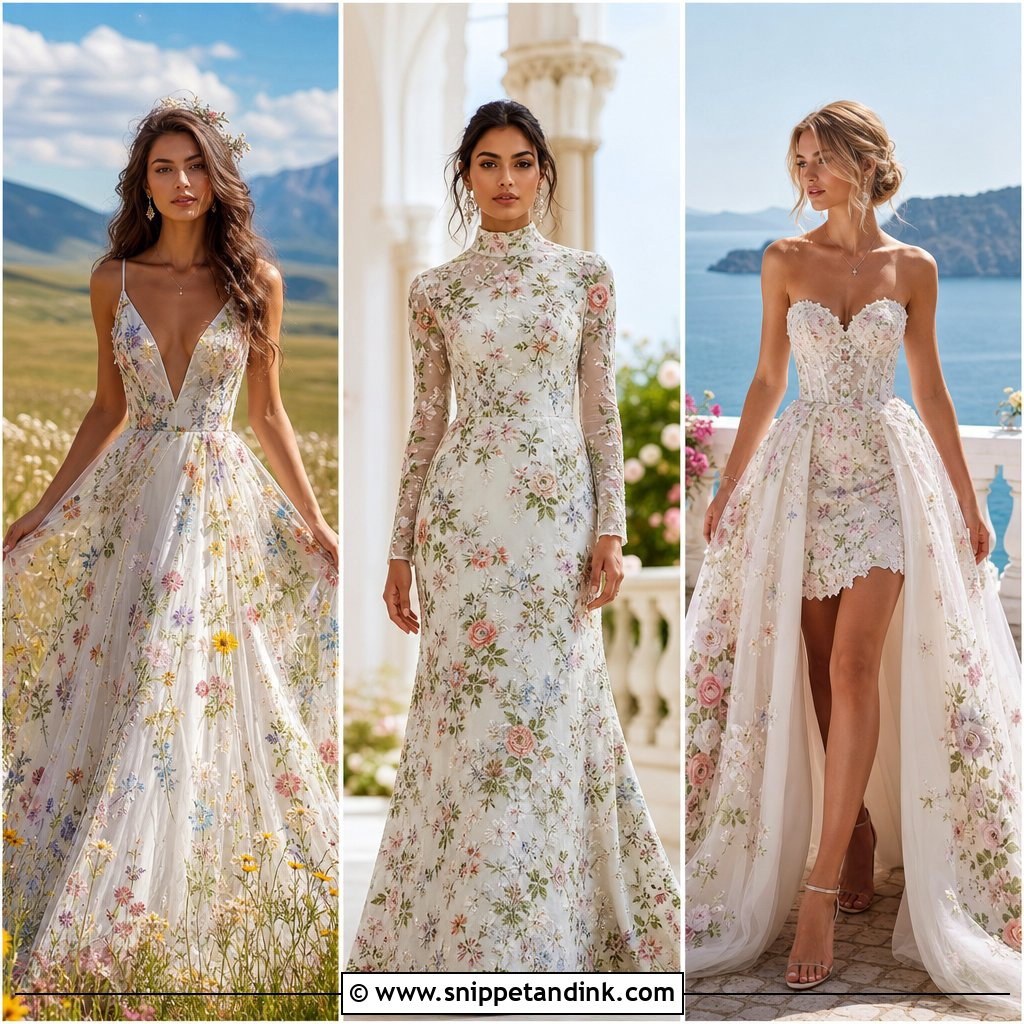
3. Colorful Floral Wedding Dress
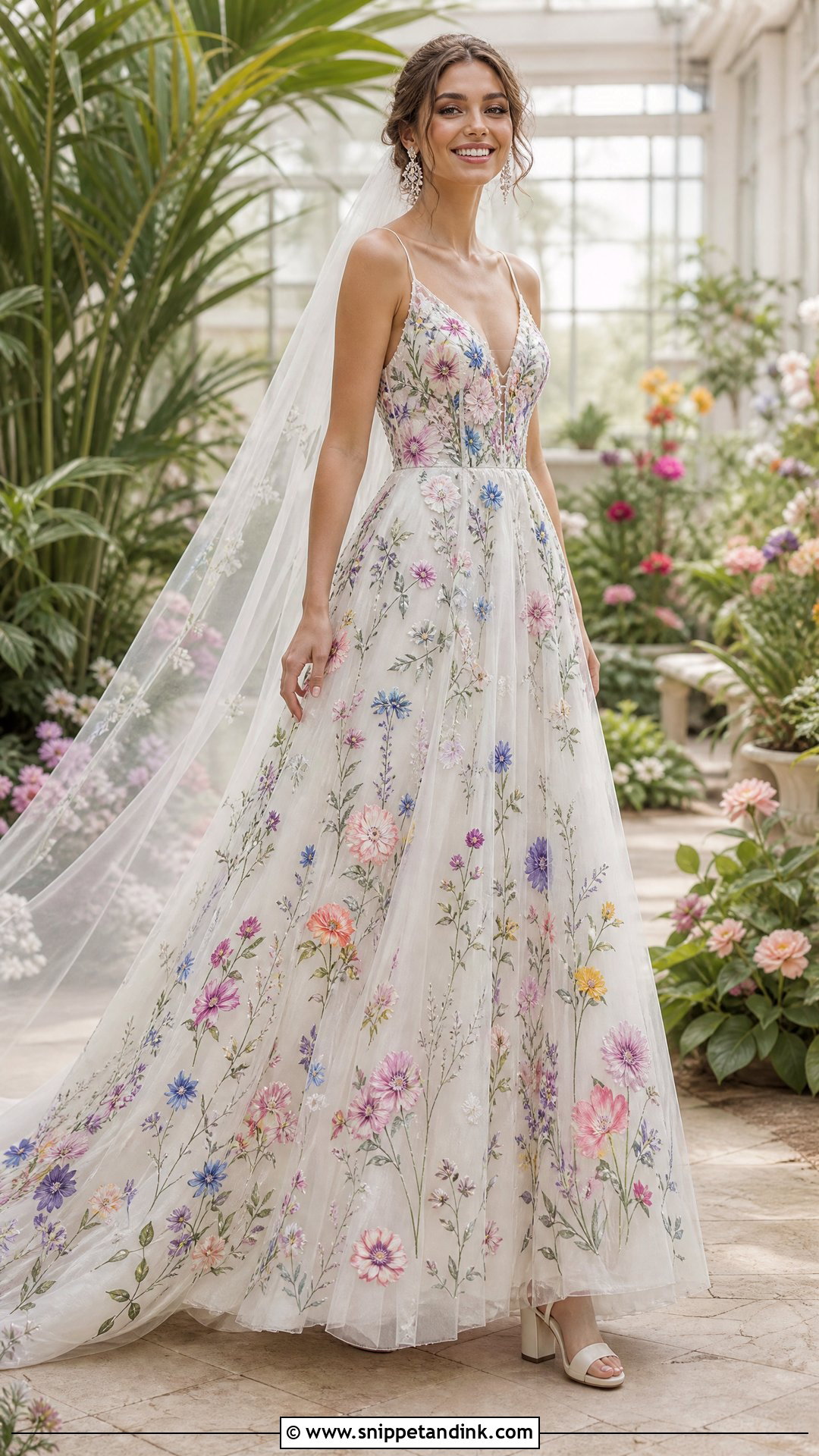
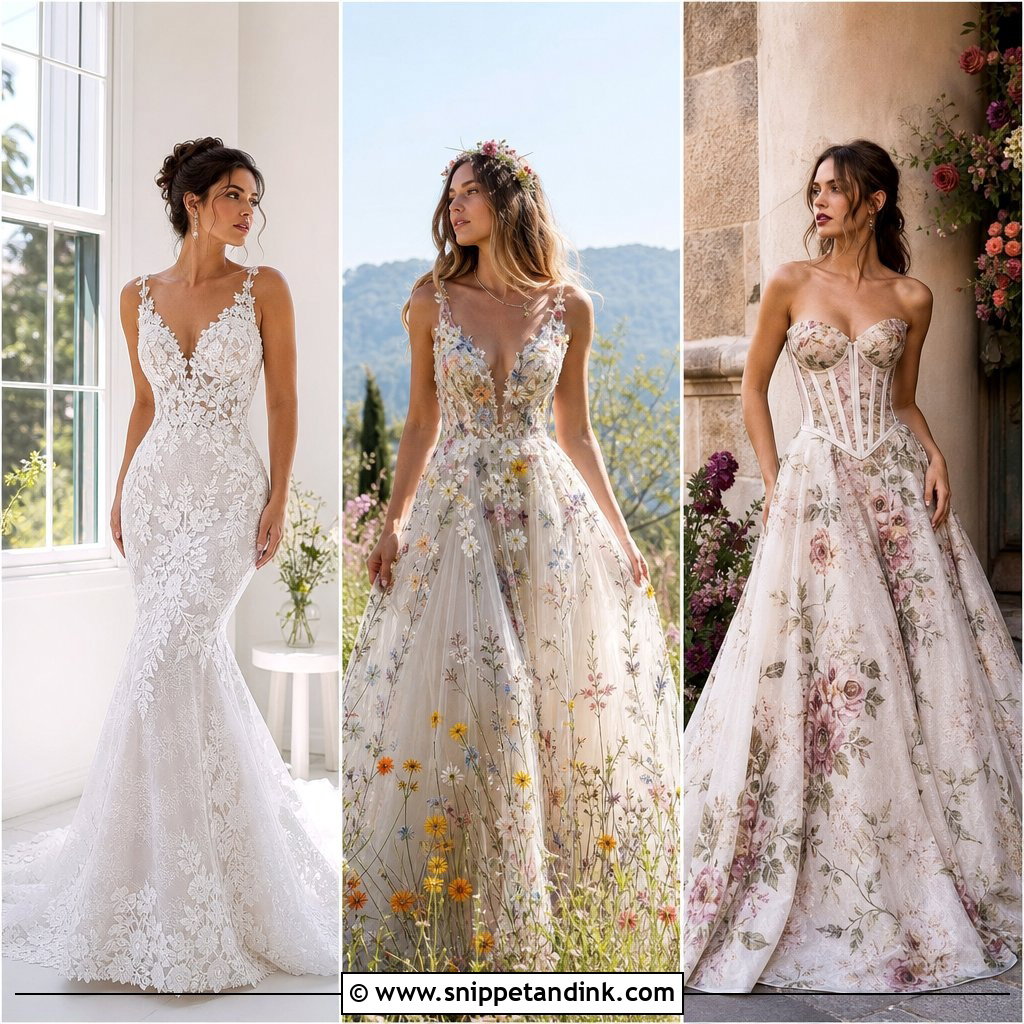
Wildflowers in pink, blue, lavender, yellow and green on a white, ivory or blush base: it’s joyful, and it’s also the gown most likely to look like fancy dress if the cut is wrong. A fitted waist and flowing A-line hold it together. Pick earrings that repeat a single thread color. A veil with a few colored blossoms coordinates; a plain one calms things down. I’d send the florist a close-up of the embroidery so the bouquet borrows from it instead of adding new shades.
4. Floral Lace Mermaid Wedding Dress
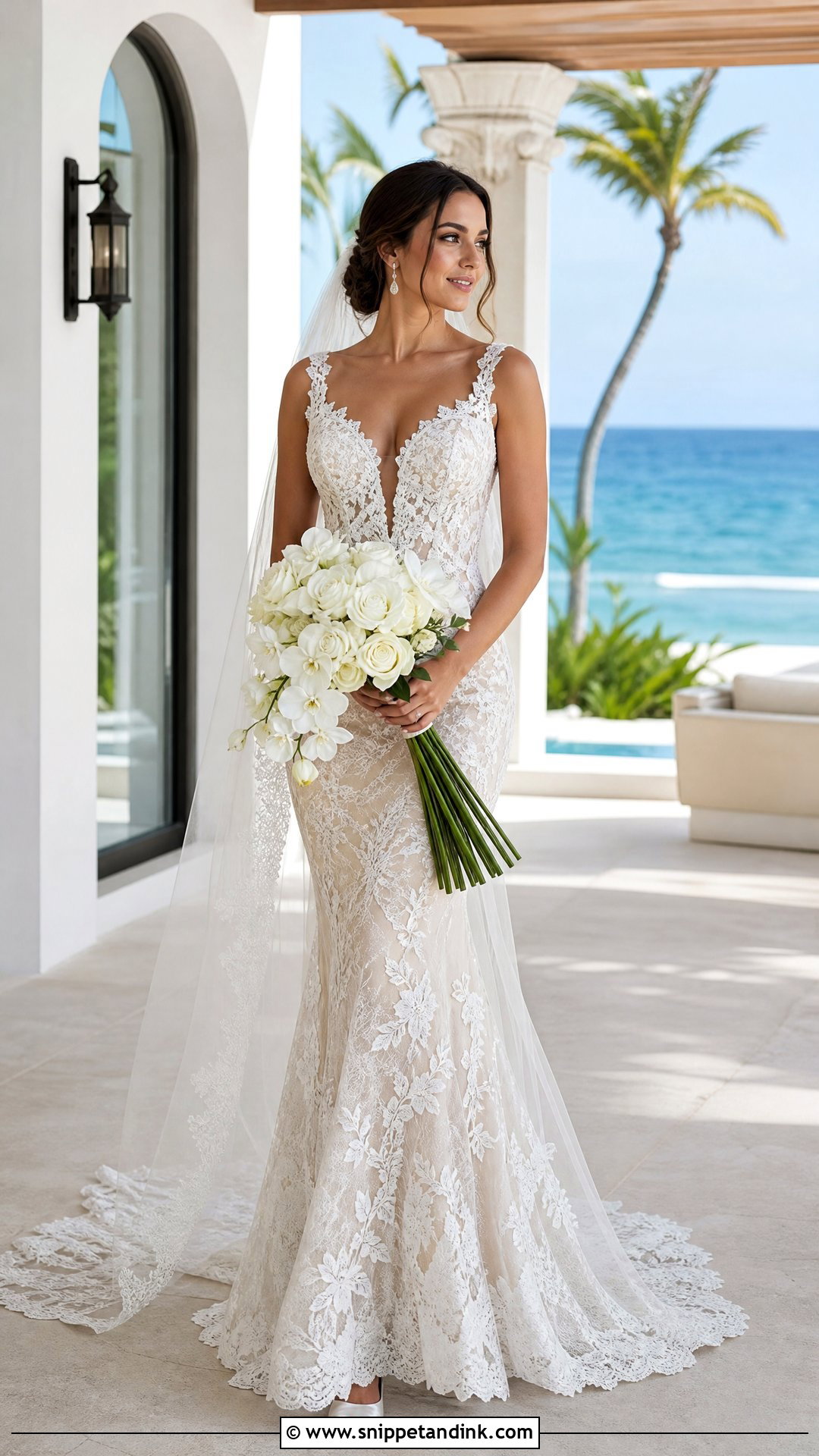
A lace mermaid follows the torso and hips and opens around the knee. I steer brides toward medium-scale lace on this shape, since tiny patterns blur into texture in photos while medium motifs read clearly as flowers. Nude or light ivory lining shows the lace off. Start the chapel veil below a polished bun so it doesn’t hide the fitted line. Slim drops, a fine bracelet and pointed satin heels finish it for evening receptions.
5. Long Sleeve Floral Wedding Dress
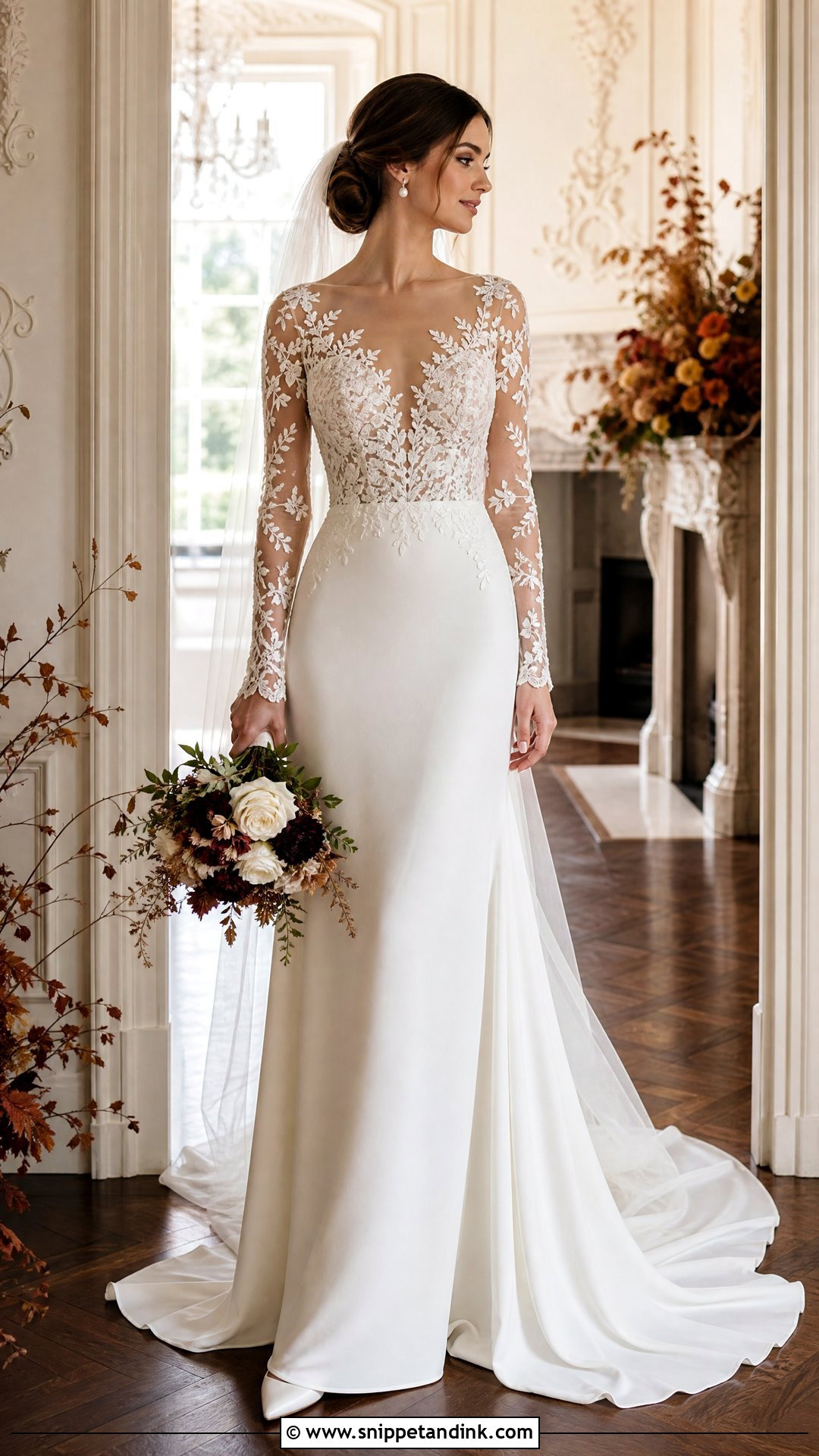
Illusion sleeves with lace vines or small appliqués give coverage that still looks light. Keep the skirt plain, in crepe or chiffon, so the gown doesn’t feel heavy. Leave the bracelet at home if the sleeves are detailed; anything with prongs or links will snag them. A veil secured under a low chignon, pearl earrings and closed-toe heels suit historic venues and autumn weddings. Eucalyptus or olive branches in a white bouquet repeat the leaves on the sleeves.
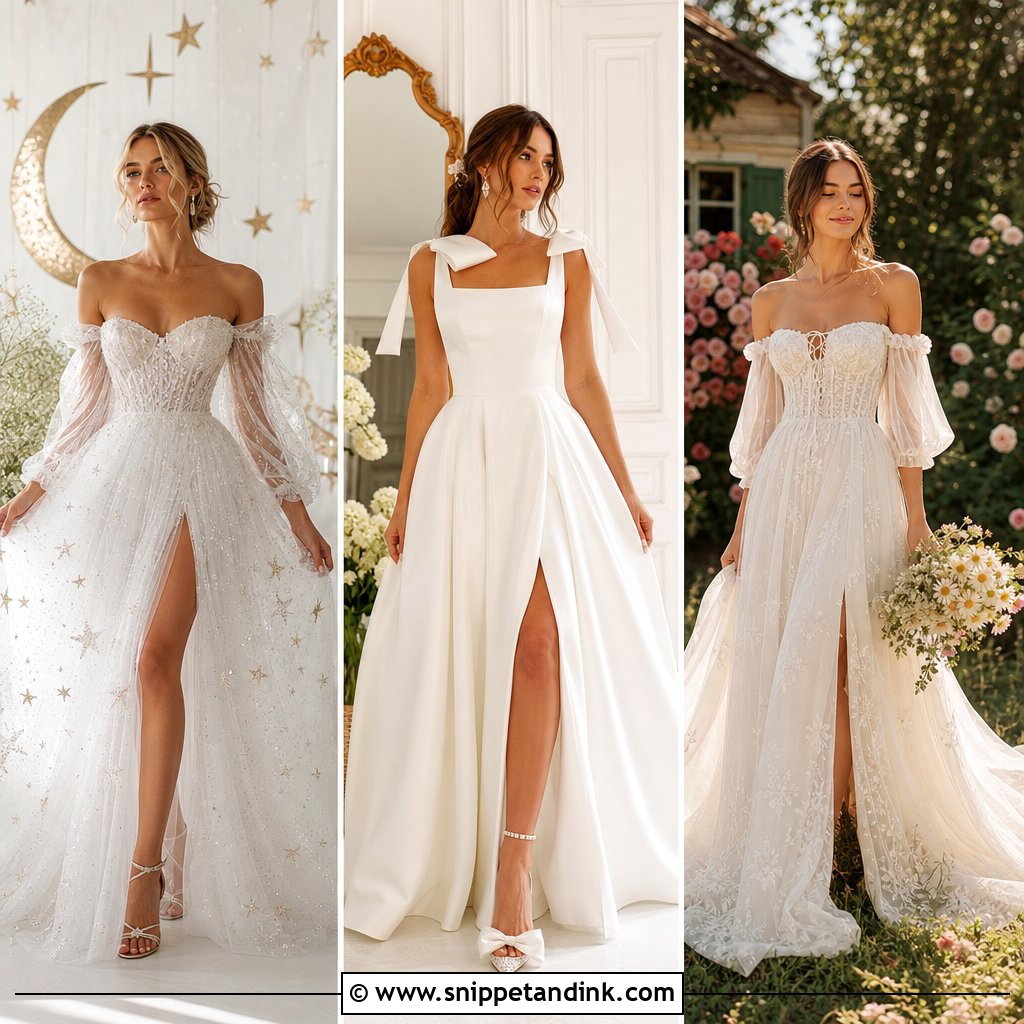
6. Strapless Floral Appliqué Wedding Dress
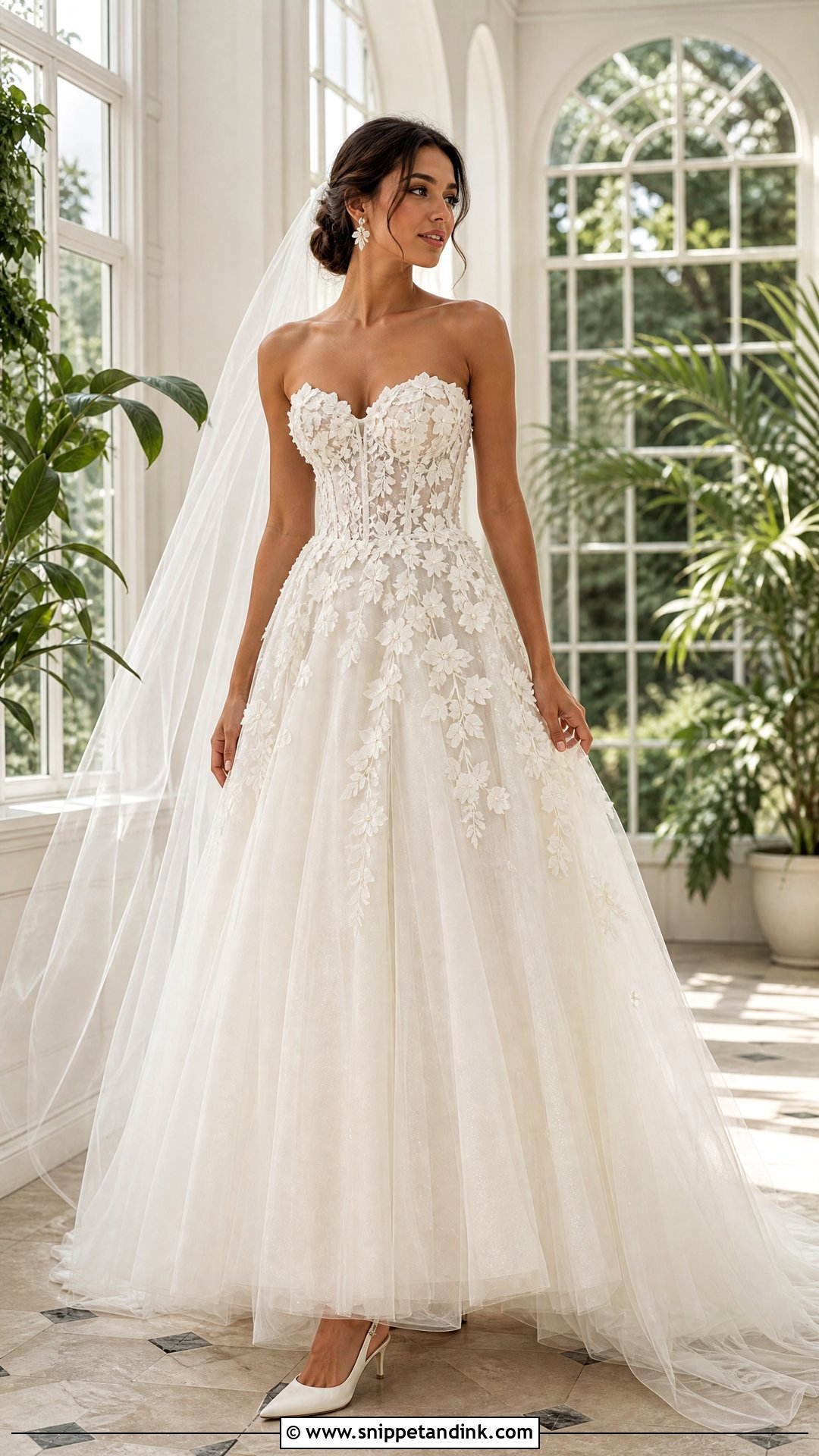
Petals running around a strapless neckline and drifting onto an A-line or ball-gown skirt make the bodice the focus. The corset inside has to be properly fitted at the ribs to stay up. A short pearl necklace works only if the appliqués leave open skin at the chest; otherwise wear statement earrings. Size the bouquet a little smaller than the bodice detail, so the two don’t fight. A half-up style balances the open neckline.
7. Off Shoulder Floral Wedding Dress
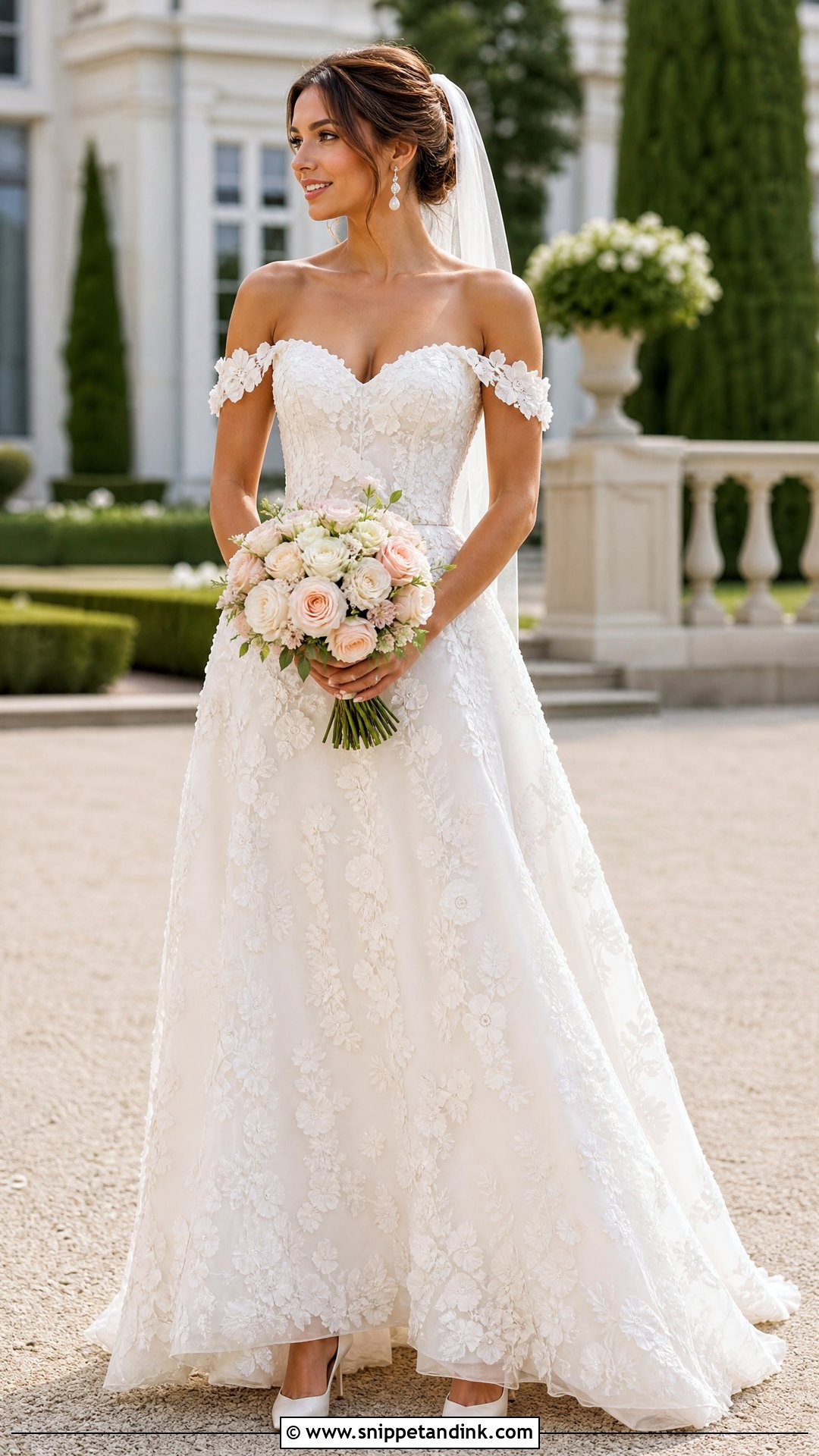
Off-shoulder floral straps or detachable appliquéd sleeves frame the collarbone. A fitted bodice keeps the band from slipping; I still ask brides to hug me at the fitting to check it stays down. Hair worn up shows the neckline far better than hair left loose. A single-layer veil should start behind the hairstyle and fall behind the shoulder flowers, not over them. Small drops, a delicate necklace and pointed pumps finish it.
8. Boho Wildflower Wedding Dress
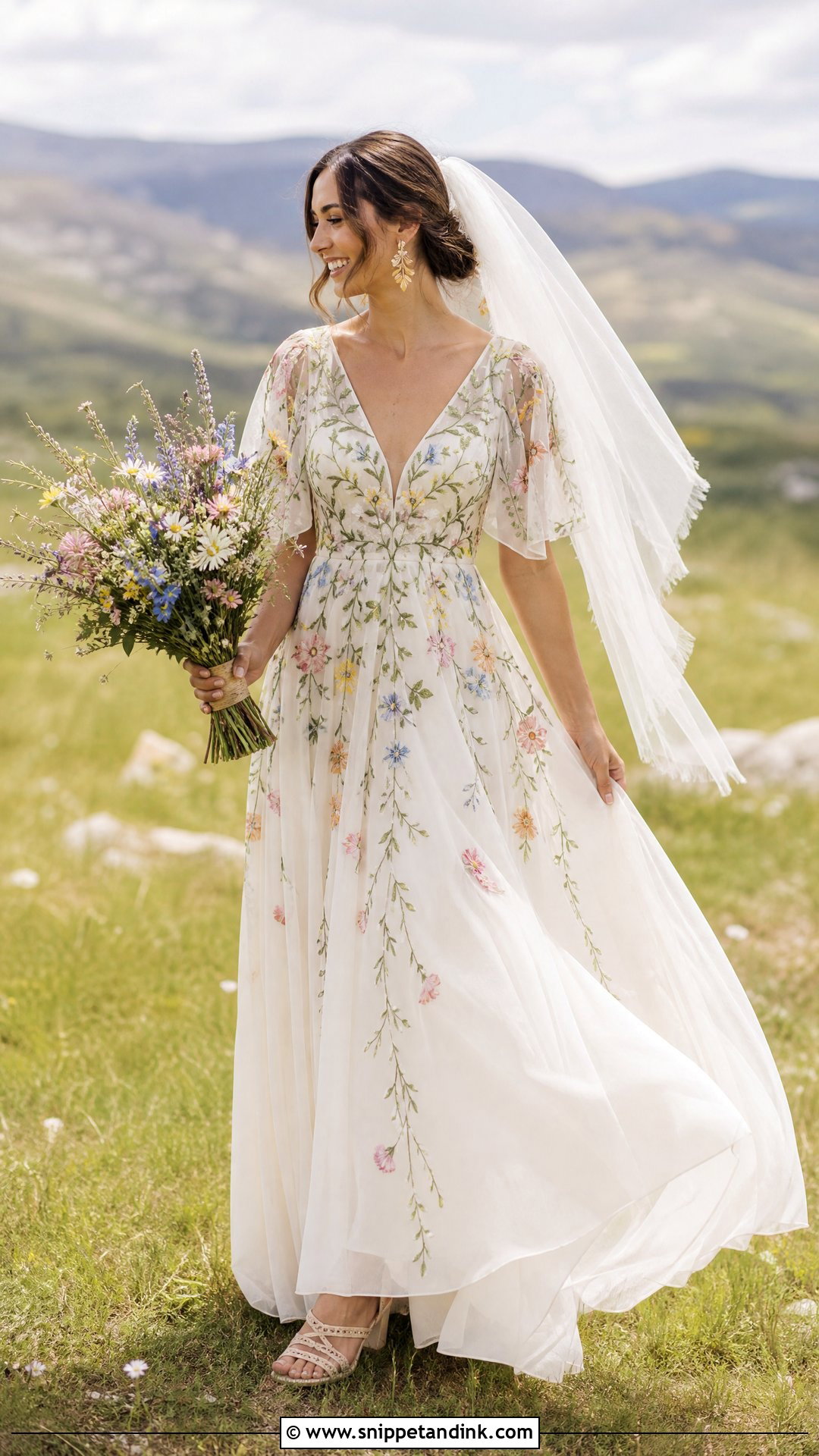
A boho wildflower wedding dress works when it’s relaxed but still deliberate. Lightweight chiffon or tulle with small embroidered motifs, flutter sleeves and a gently fitted waist is the base. Uneven ground decides the shoes: low block heels, flats or clean ankle boots. A raw-edge fingertip veil, small gold earrings and a loose braid suit it. Daisies and cosmos in a hand-tied bunch are enough rustic detail; the embroidery already has plenty of character.
9. Garden Floral Wedding Dress
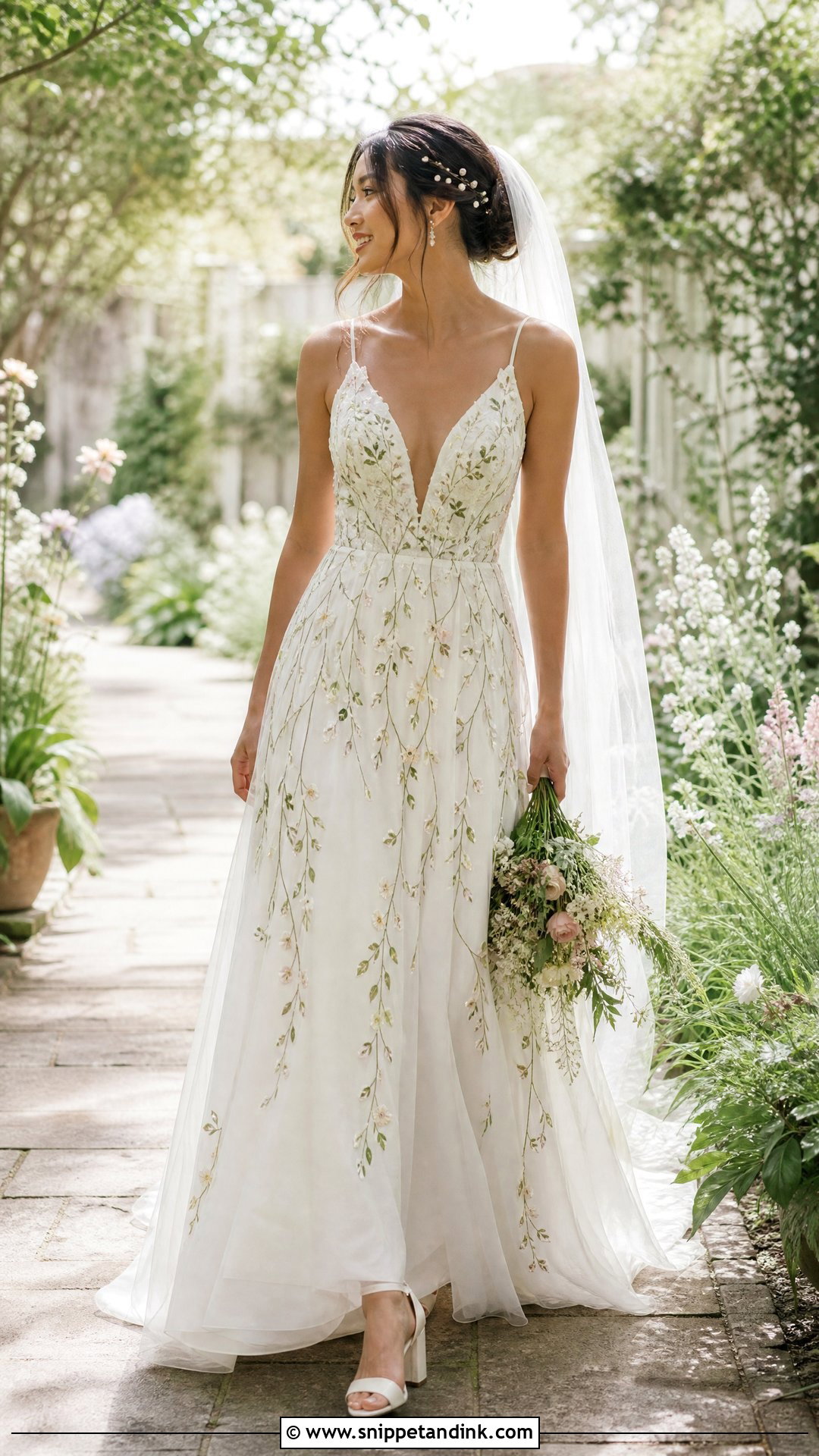
The garden gowns I like best have embroidery that seems to grow up from the hem, vines first, then leaves, then flowers higher on the skirt. An illusion bodice and layered skirt keep it comfortable outdoors. Block-heel sandals won’t sink into a lawn. A plain cathedral veil lets the pattern show through. Watch the hem on wet grass, though: embroidered tulle wicks up moisture, and the bottom few inches can turn grey before the reception.
10. Plus Size Floral A-Line Wedding Dress
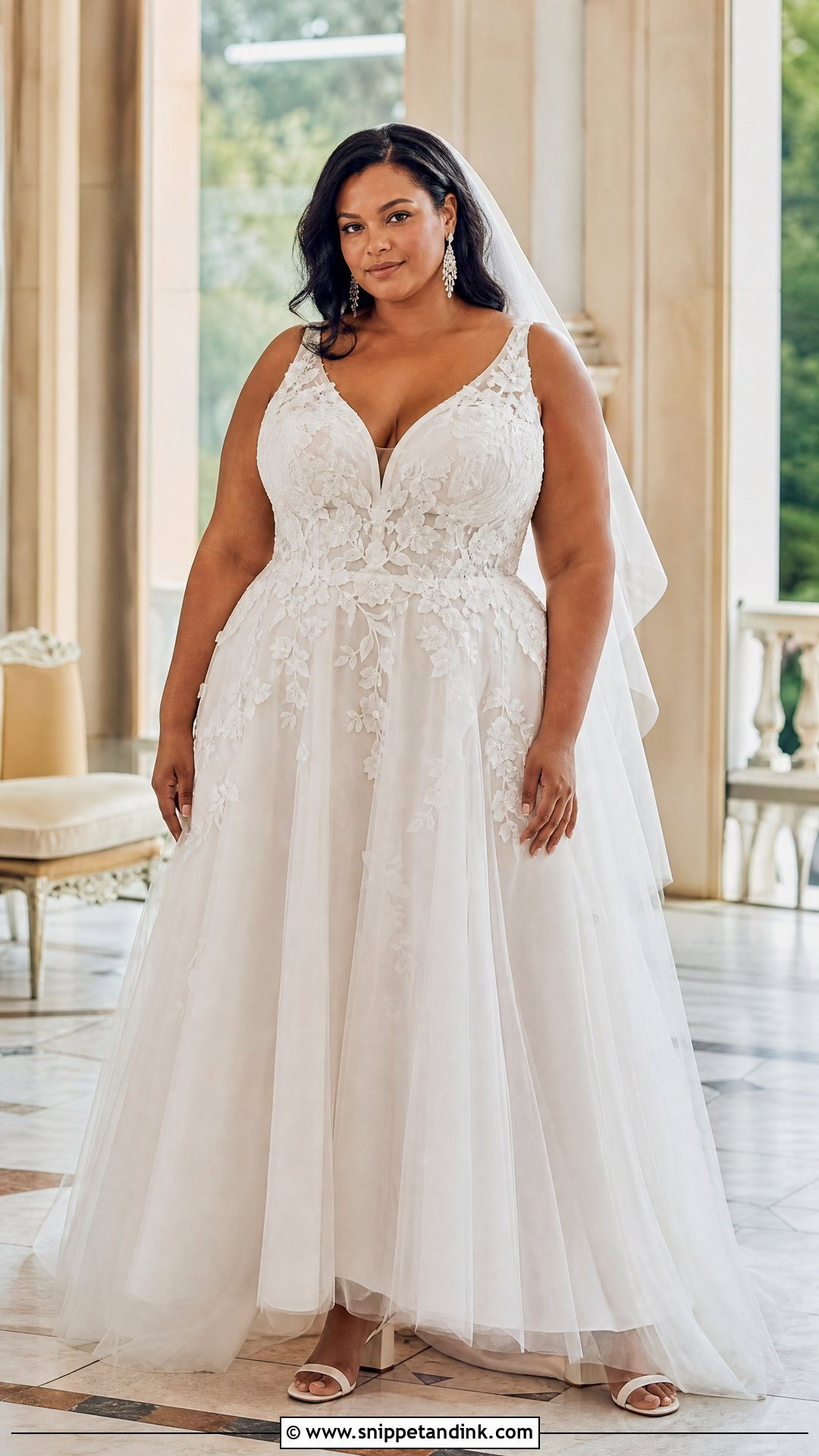
Support for a plus-size A-line should come from inside the gown: internal structure, wide straps and a bodice altered to your measurements, rather than a neckline that’s supposed to do the work. Appliqués placed at the waist and then running vertically down the skirt guide the eye. A smooth lining under the lace or tulle stops it catching on itself. Supportive block heels, chandelier earrings and a veil long enough to clear the appliqués finish it. Good alterations matter more here than any other detail.
11. Petite Floral Sheath Wedding Dress
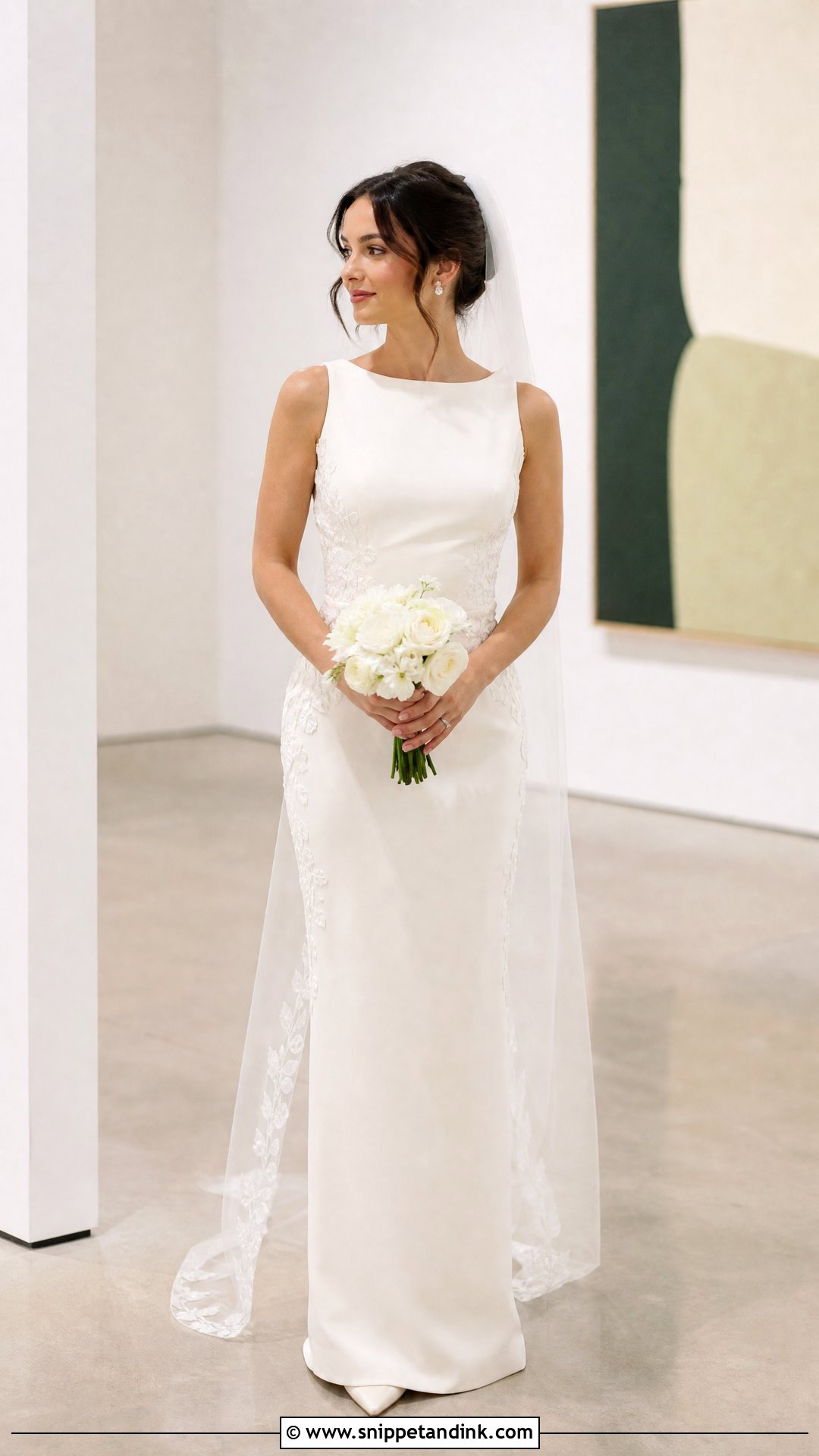
A petite floral sheath wedding dress skips the big skirt and heavy train altogether. Flowers concentrated at the bodice or running down one side keep the vertical line; head-to-toe embroidery shortens a small frame. Pick a V, scoop or well-fitted square neck depending on the support you need. Hem it so the shoe tips show as you walk, which reads taller in photos. A narrow chapel veil and compact bouquet keep the scale right.
12. Floral Corset Wedding Dress
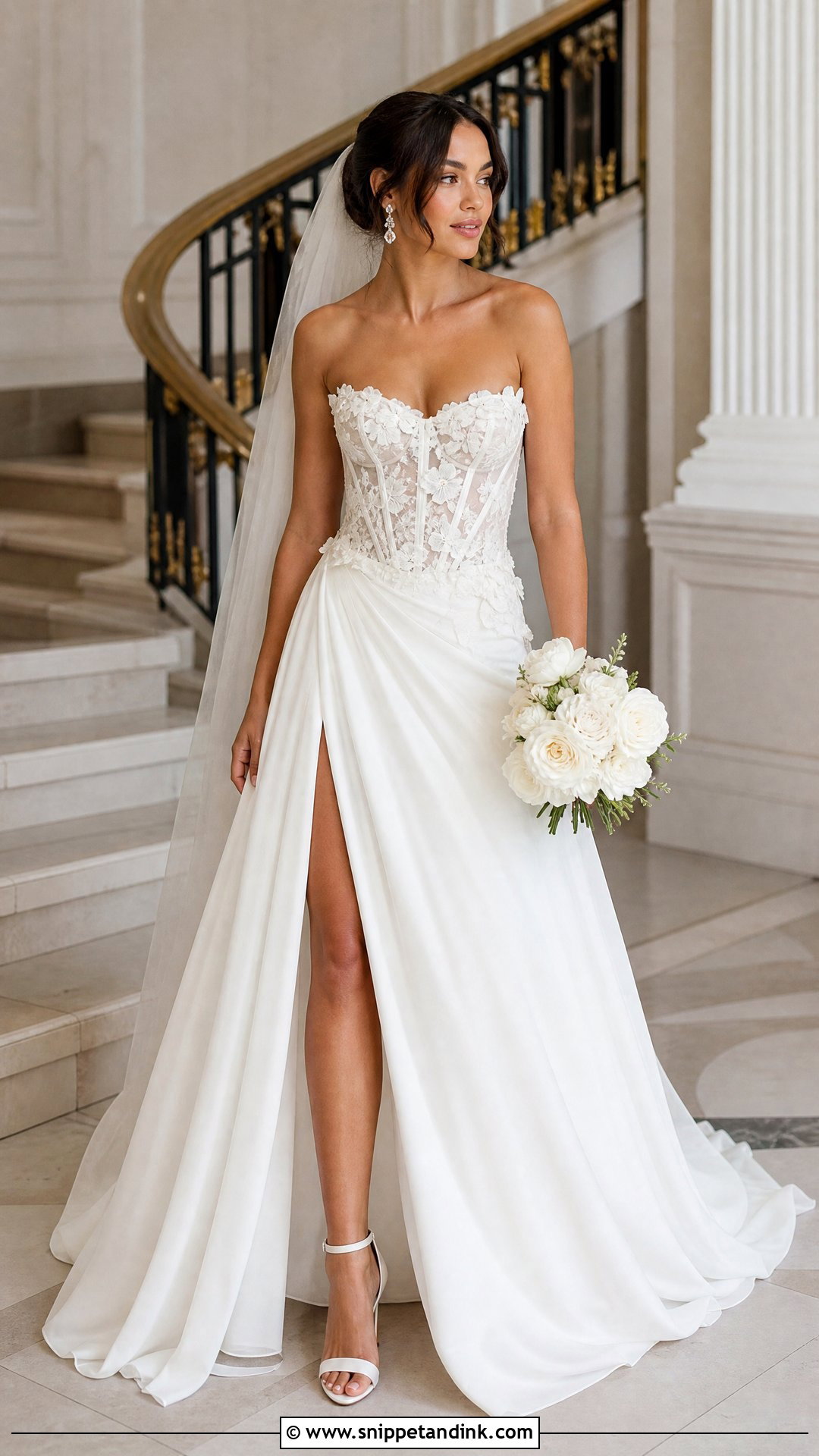
Boning, shaped cups and appliqués laid over the corset seams soften a structured bodice. A draped A-line skirt contrasts with it gently; full tulle adds drama. I’d skip a big necklace. Shoes should match the gown’s base color, since corsets often sit on ivory while the shoes come in white. The fit has to be secure but not tight: if you can’t take a full breath sitting down, it needs letting out at the ribcage.
13. Square Neck Floral Wedding Dress
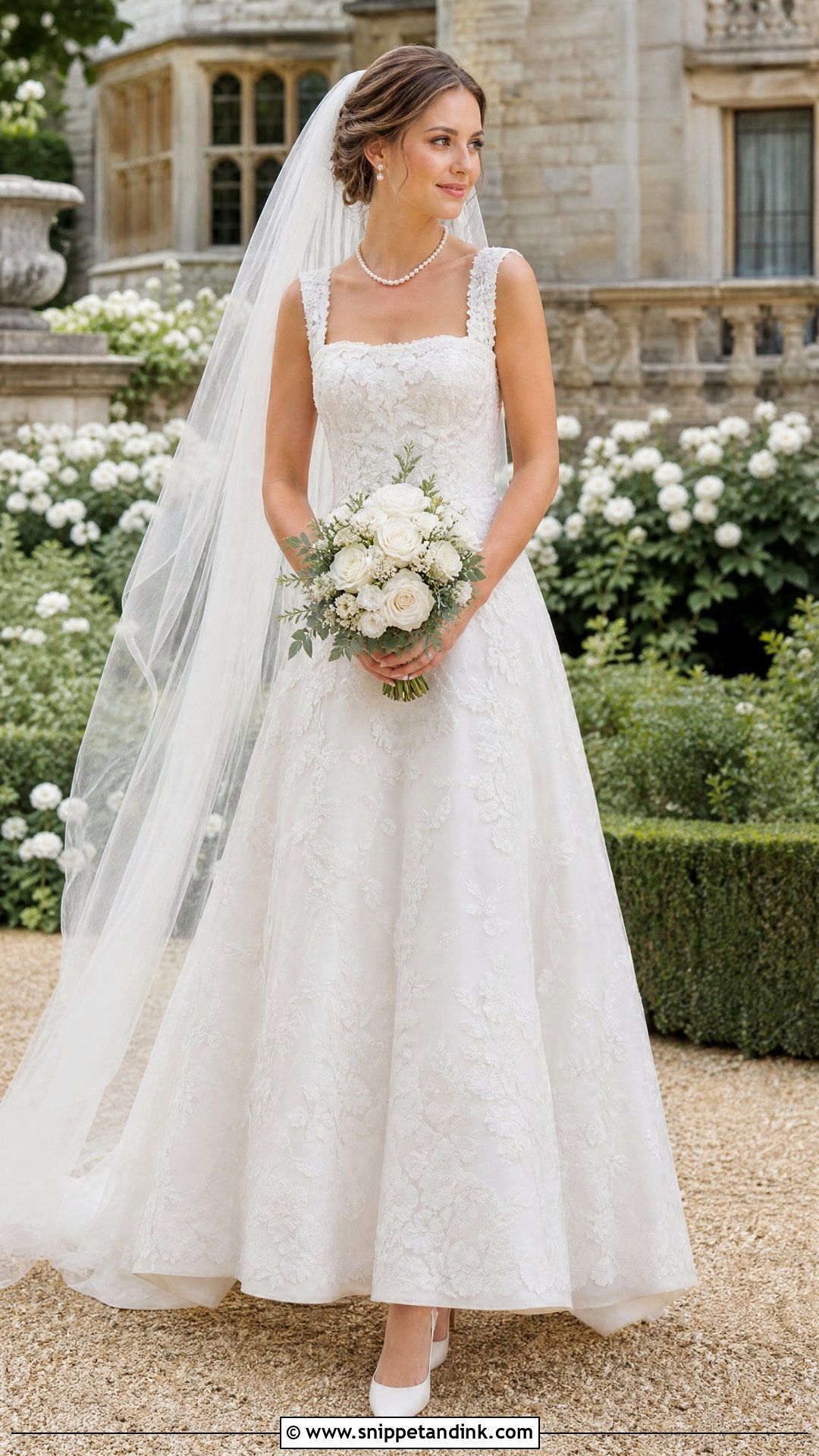
The straight line of a square neck contrasts nicely with curved petals and trailing embroidery. Floral lace on a fitted bodice with wide straps, then an A-line or gathered skirt, works in vintage, classic or modern weddings, depending on the fabric. A short pearl necklace and studs fill the open neckline neatly. A smooth low bun, chapel veil and pointed pumps keep it refined. White roses and green leaves suit it.
14. High Neck Floral Wedding Dress
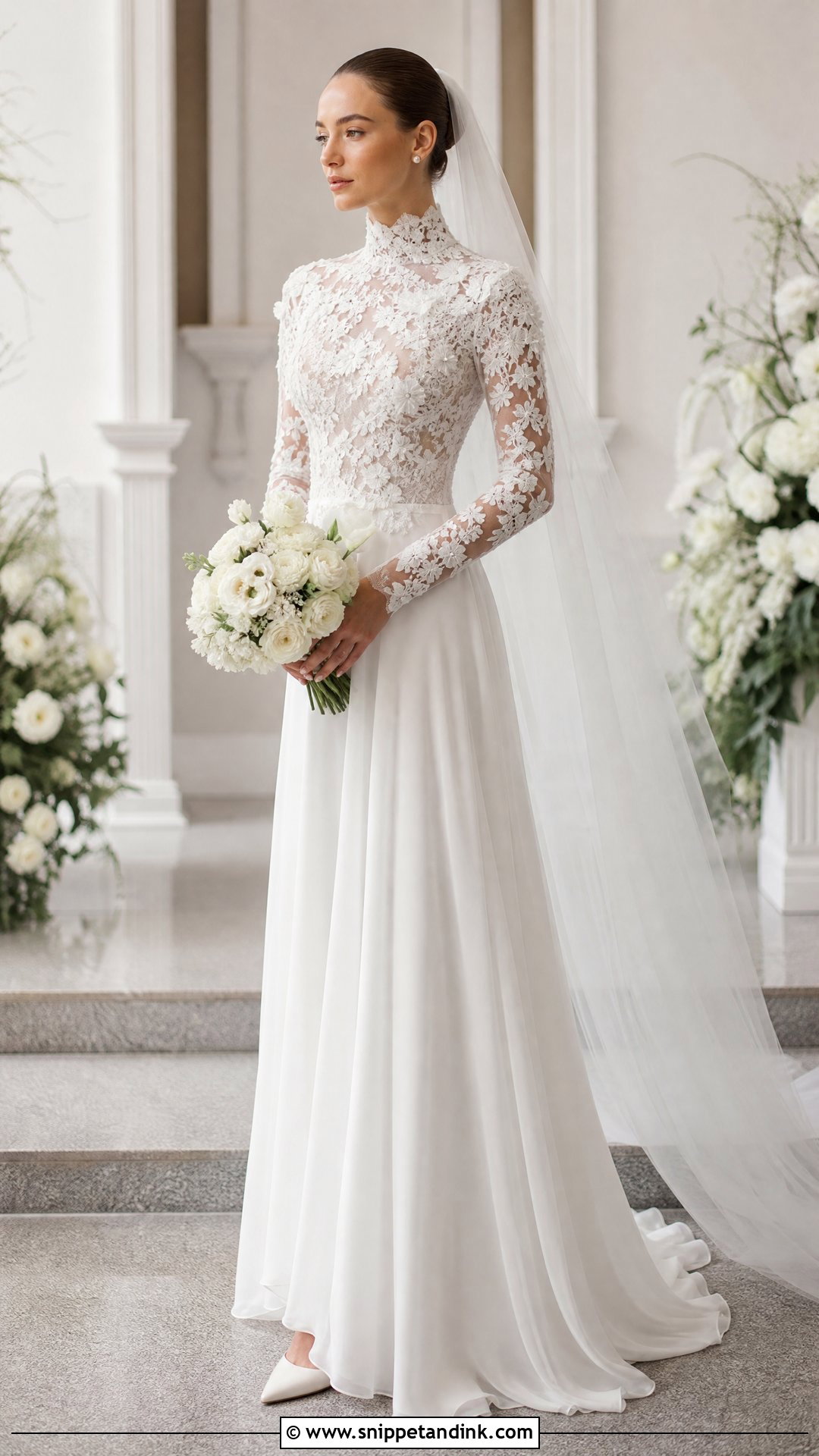
Sheer tulle or fine lace at the throat keeps a high neck from feeling restrictive. Embroidery can cover the bodice and sleeves before fading into a plain chiffon, crepe or organza skirt. Skip the necklace and wear small studs. A sleek bun stops hair catching on the embellished collar, which happens more than brides expect. A long, untrimmed veil and a narrow bouquet of long stems suit cool-weather and indoor ceremonies.
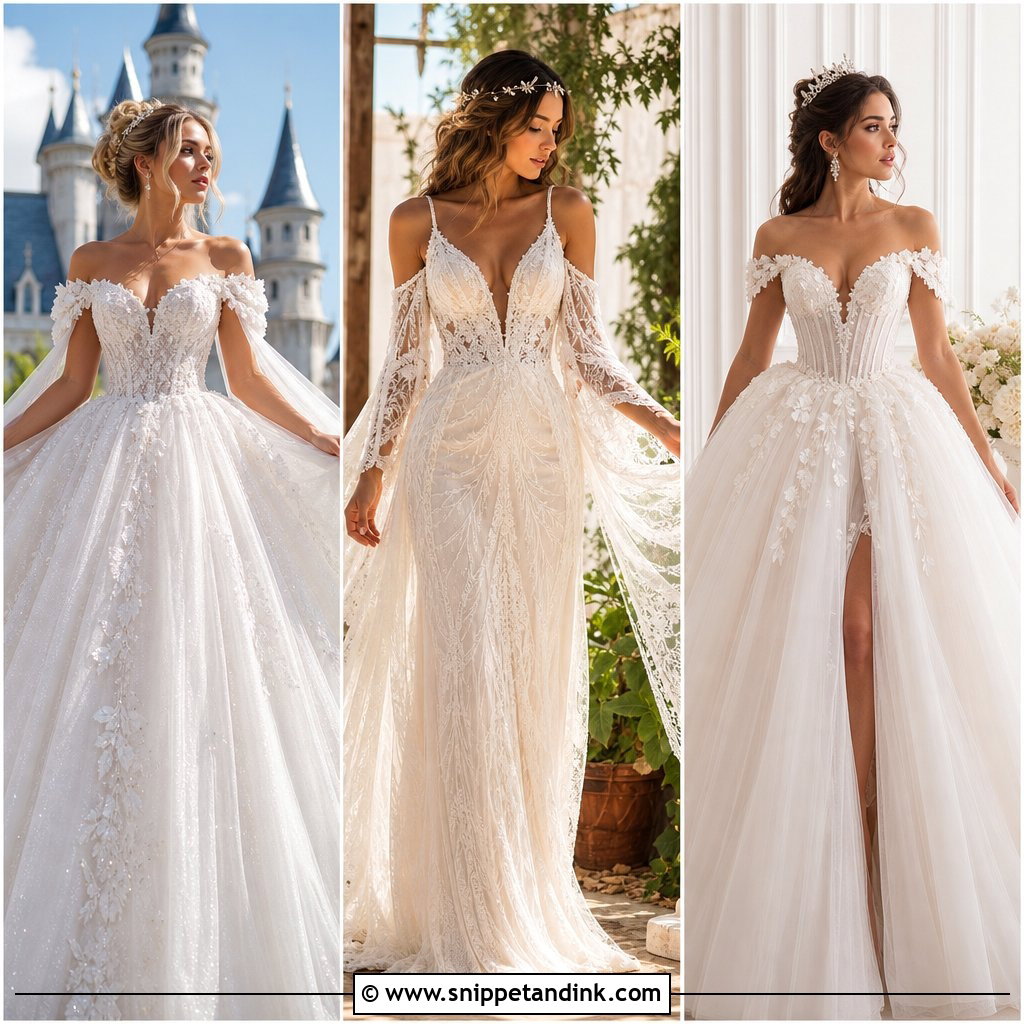
15. Tea Length Floral Wedding Dress
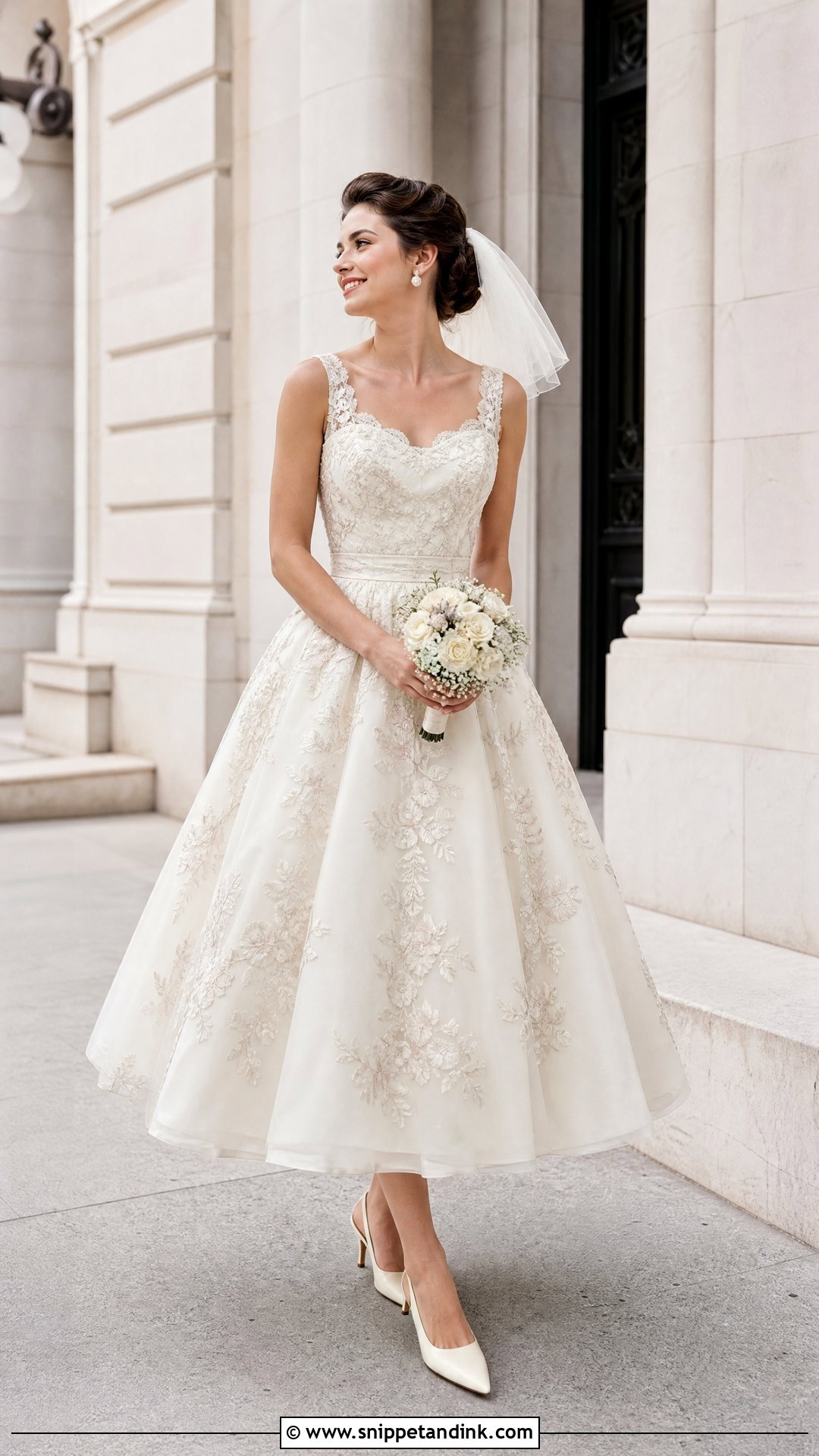
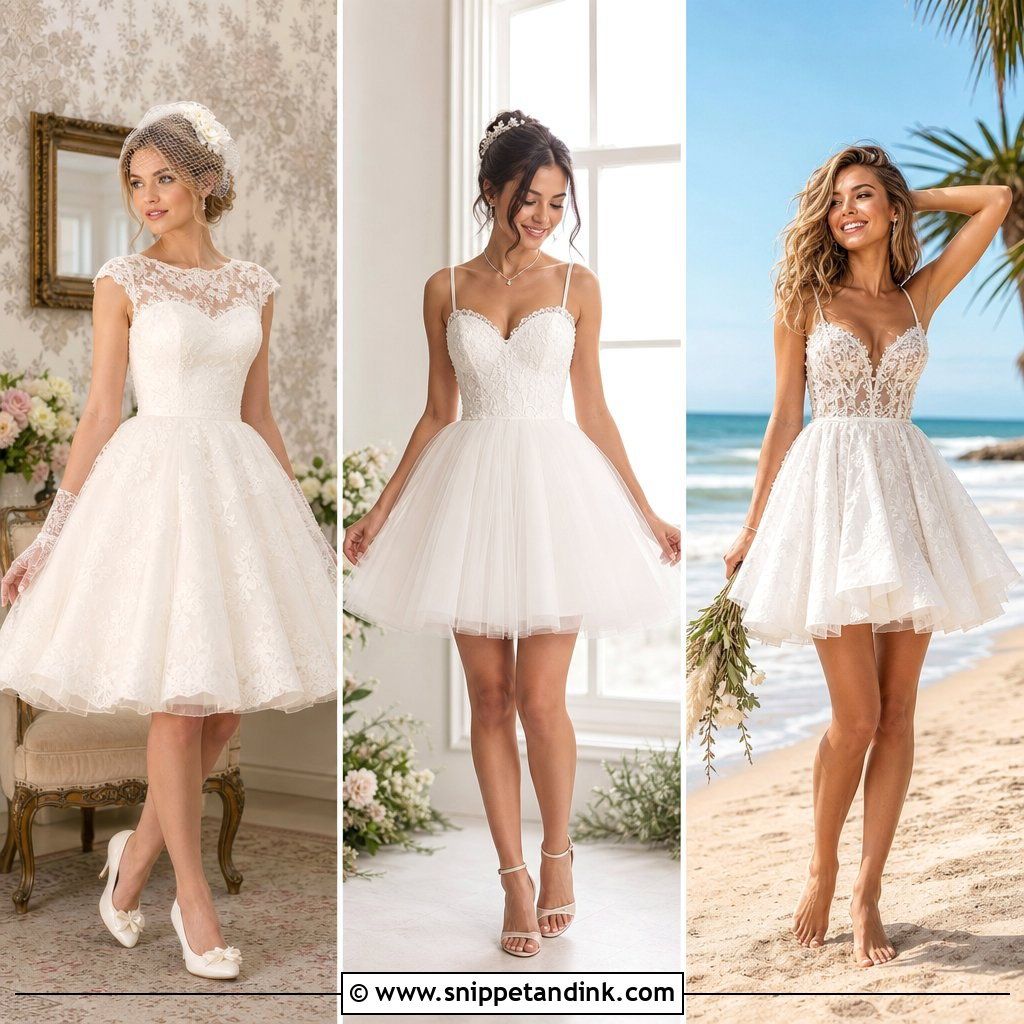
Tea length ends between knee and ankle, so the shoes are part of the outfit. Ivory slingbacks, low pumps or ankle-strap heels work best, and I’d buy them before the hem is set. Embroidered flowers spread across the skirt keep it romantic. A birdcage or shoulder veil, pearl studs and a neat updo give it a retro touch without turning costume. It’s the practical length for courthouses, restaurants and venues where a long train would be a nuisance.
16. Floral Mini Wedding Dress
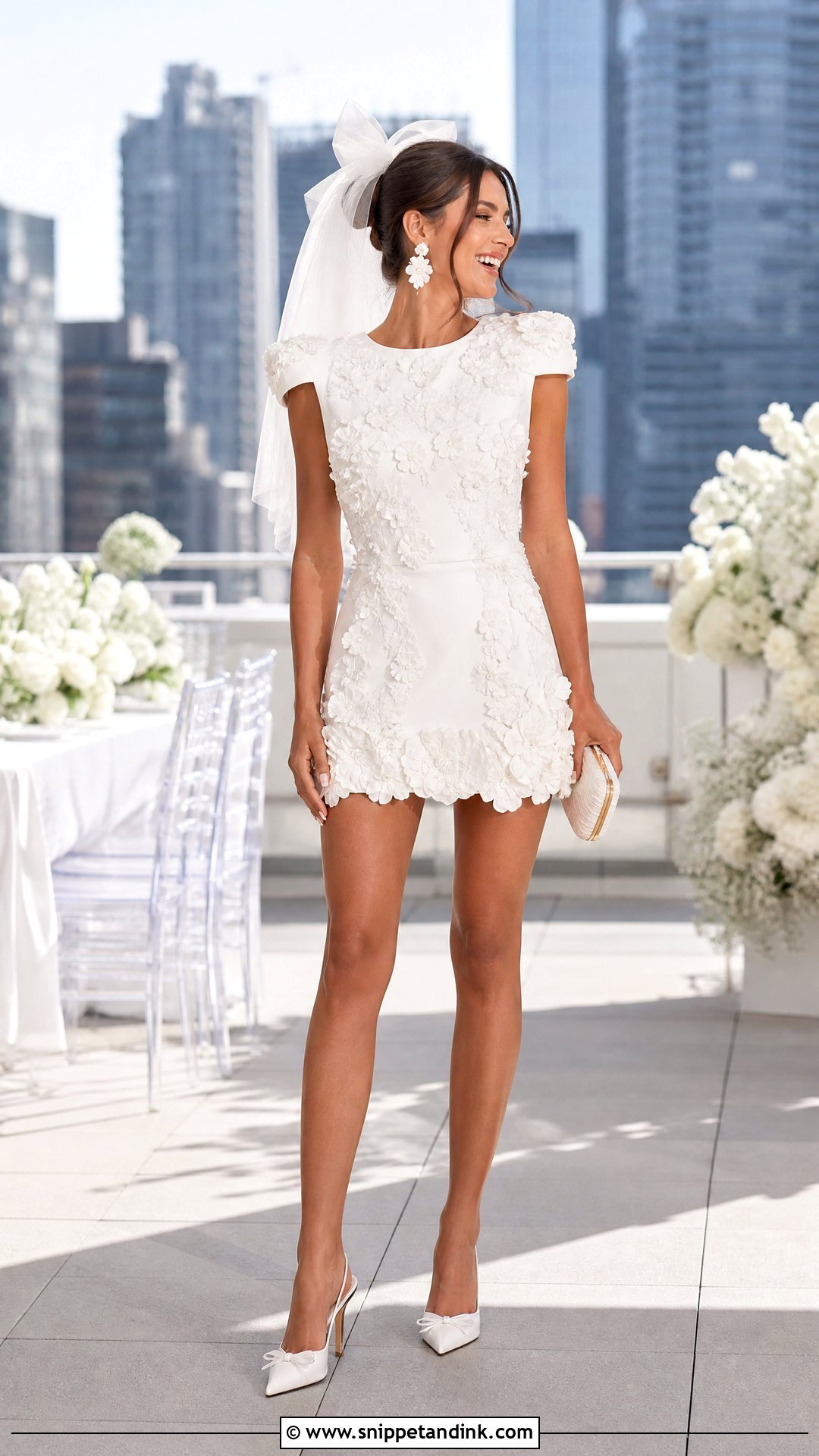
A structured mini with a secure neckline makes a playful ceremony dress or a second look. Raised flowers on the bodice or hem carry it; the shape stays simple. Check the length sitting down before you buy, as short structured skirts ride up more than soft ones. Slingbacks, embellished flats or ankle straps, plus statement earrings and a bow or short veil, suit civil ceremonies and rooftop parties.
17. Floral Wedding Dress With Detachable Overskirt
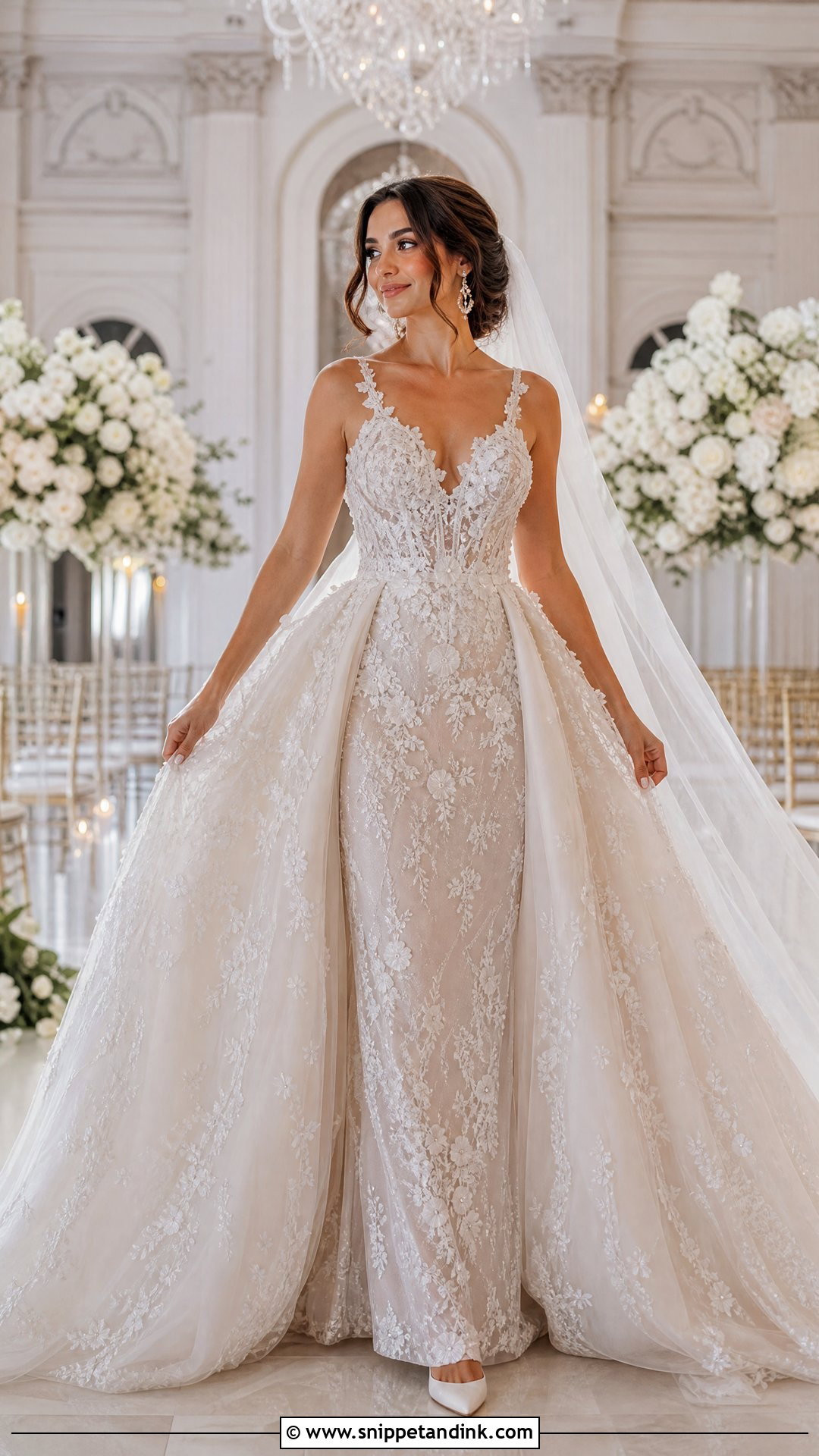
Start with a fitted sheath, column or mermaid with light embroidery, then add a tulle overskirt with matching appliqués for the aisle. It gives you volume for the ceremony without a second dress. After the photos, take it off and swap to smaller earrings or a hair piece. The attachment should sit flat at the waist; hooks under a hidden band are more secure than snaps. Practise taking it off with a bridesmaid before the day, since doing it alone in a bathroom stall rarely works.
18. Floral Cape Sleeve Wedding Dress
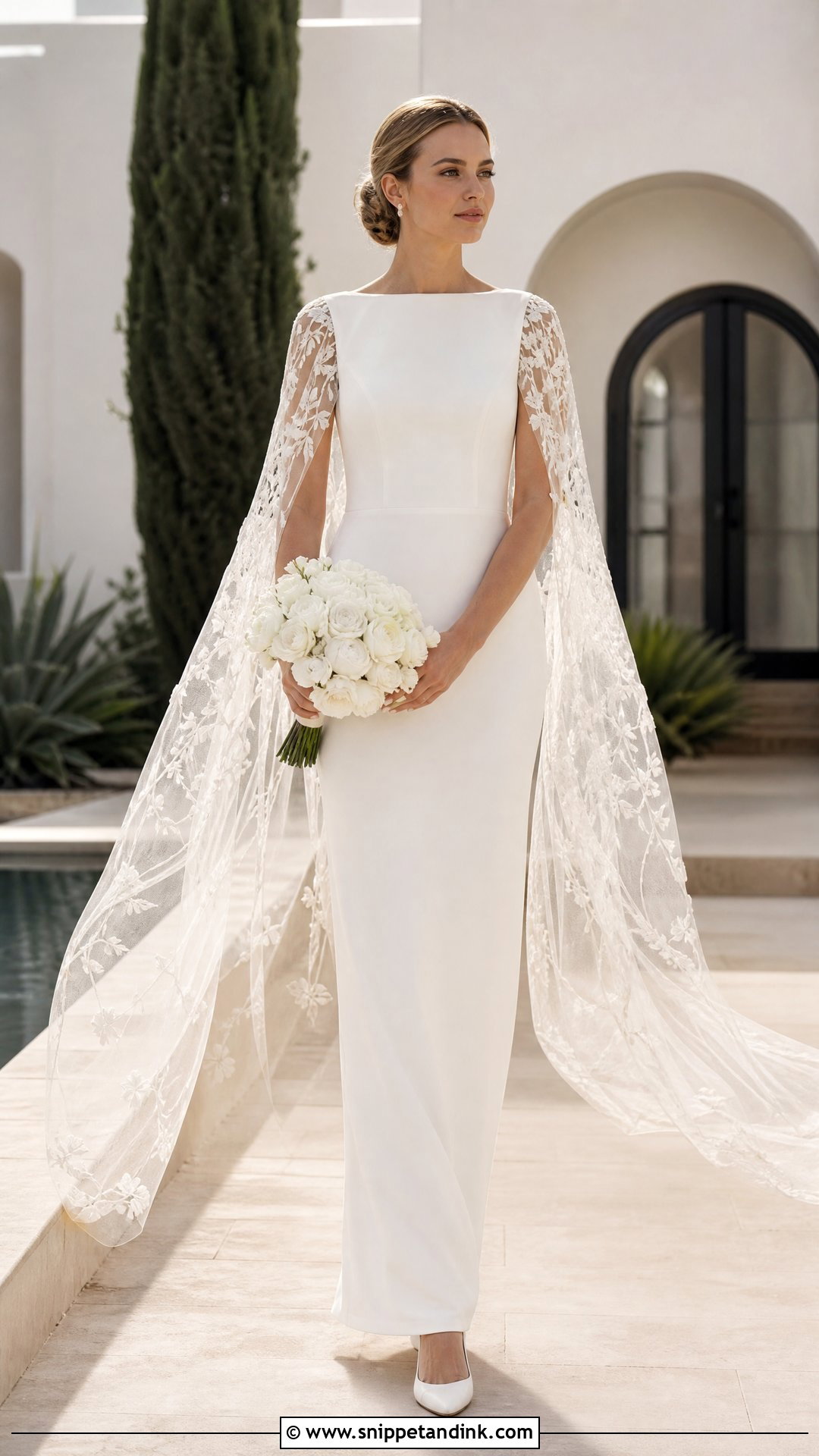
Sheer cape panels with embroidered vines give movement at the shoulders without the close fit of sleeves. Keep the gown underneath clean, a column or A-line, and make sure the cape doesn’t hide the waist. A veil is often unnecessary. During alterations, walk and raise your arms in it; capes that are anchored only at the neckline pull back against the throat. Closed-toe pumps and a structured bouquet balance the floating fabric.
19. Blush Floral Wedding Dress
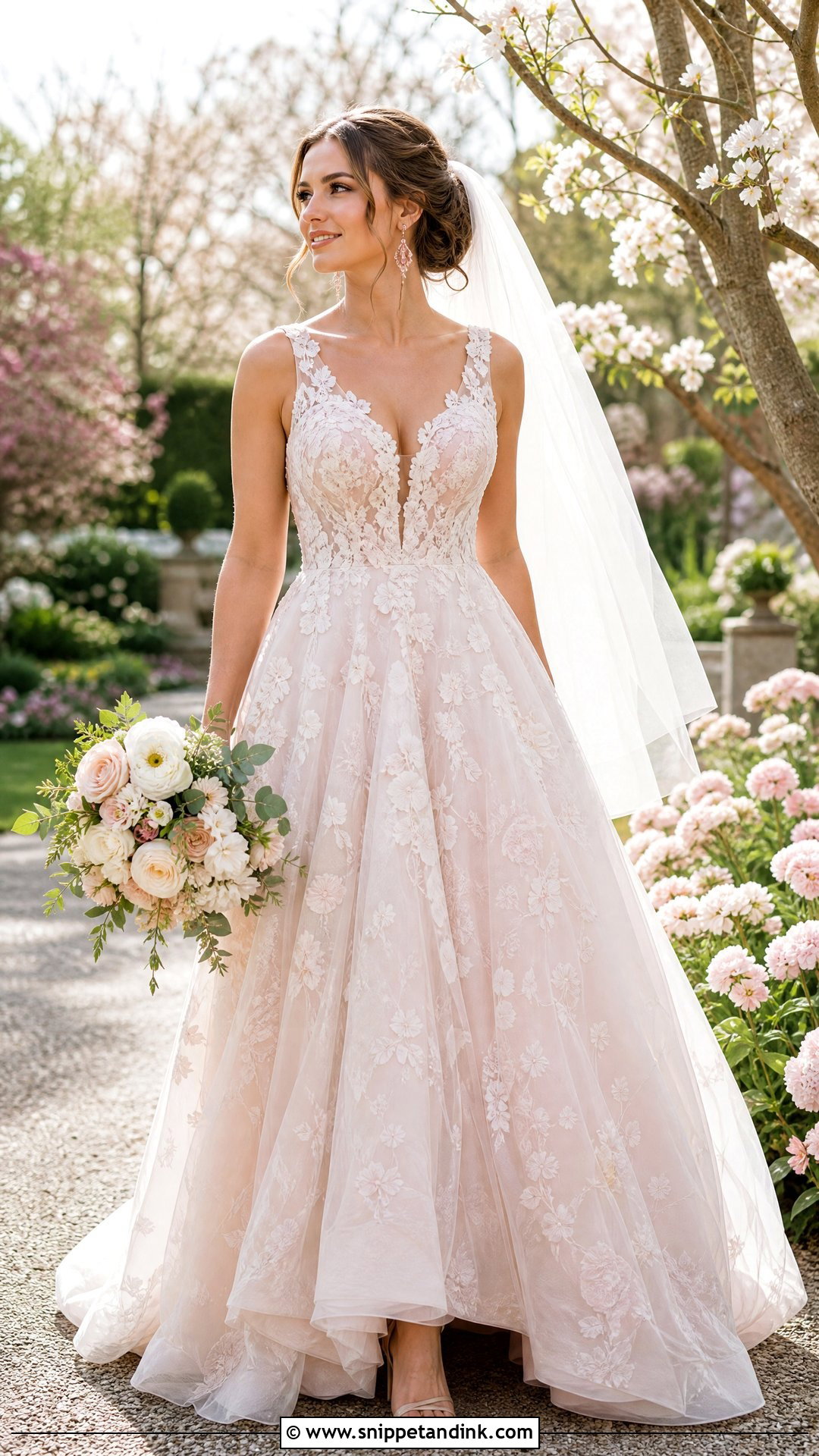
A blush floral wedding dress is usually built as a pale pink lining under ivory tulle, lace or organza appliqués. The pink gives the white flowers depth, and in natural light it reads warm rather than sweet. A plain ivory veil keeps it from getting too pink; a blush-edged veil coordinates more. Champagne heels and rose-gold or pearl jewelry suit it, with cream, dusty pink and muted green flowers. Keep makeup in soft rose tones without matching the dress exactly.
20. Blue Floral Wedding Dress
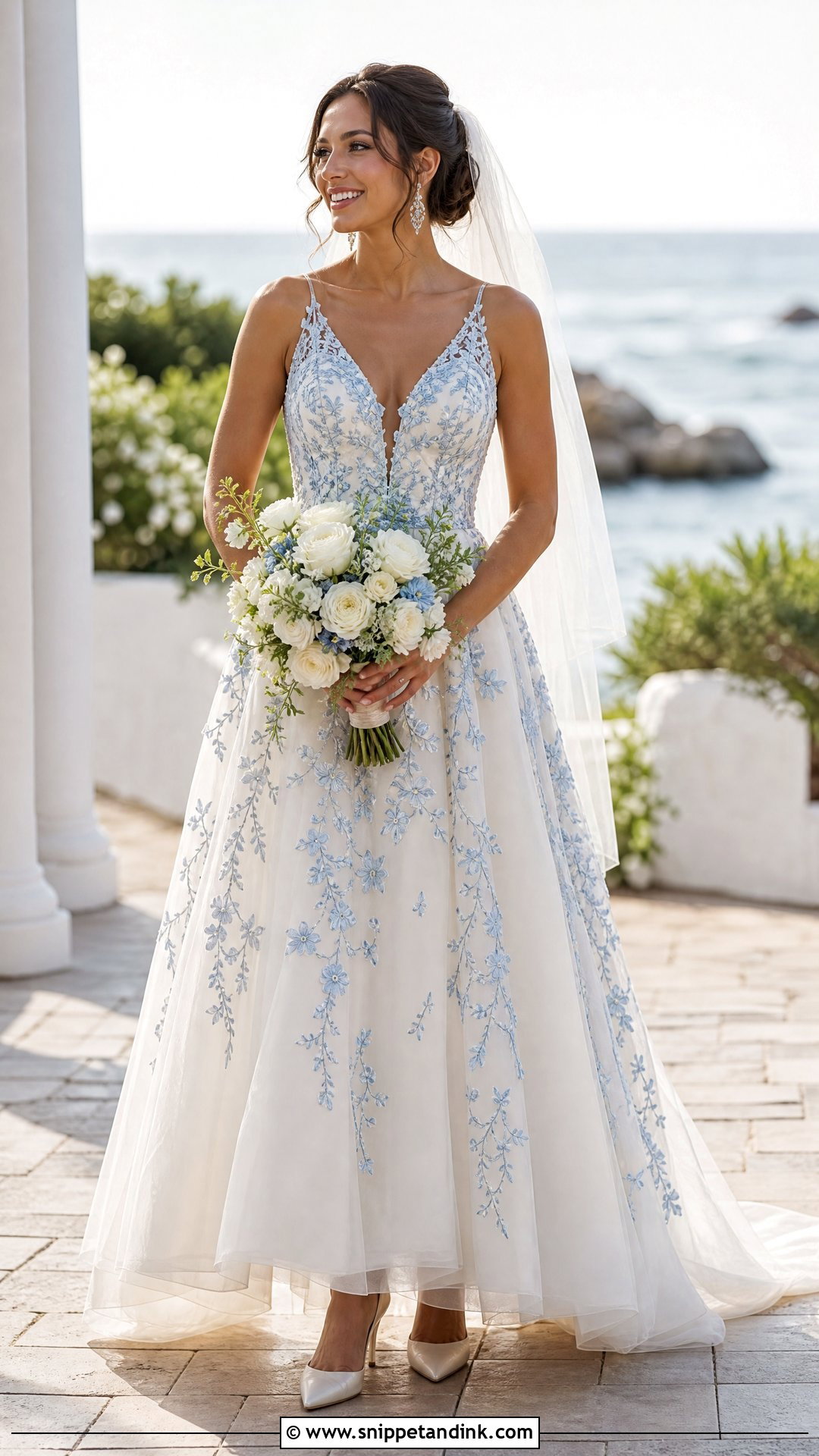
Pale blue flowers on ivory, or a soft blue tulle base under white lace: either version keeps a classic bridal structure with a fitted bodice and flowing skirt. Silver earrings, ivory shoes and a plain veil let the blue show. White flowers, silvery foliage and just a few blue stems tie it in. I’d avoid adding other strong colors anywhere; pale blue gets lost next to them. It suits coastal venues and bright conservatories.
21. Daisy Floral Wedding Dress
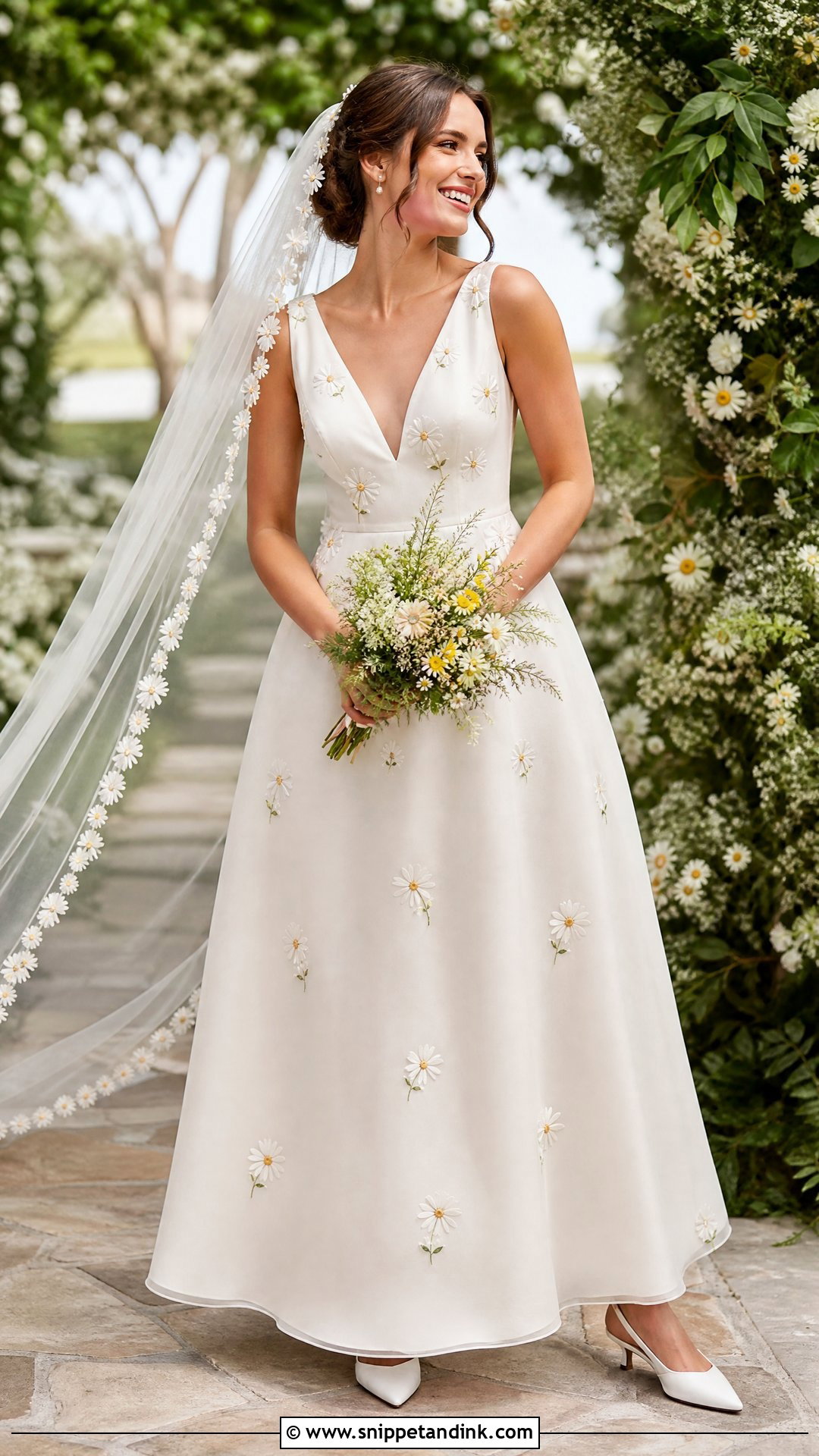
A daisy floral wedding dress looks modern when each daisy has room around it; crowded daisies start to look like a child’s sundress. Clean A-line, column or tea-length shapes suit it best. Pearl studs, white slingbacks and a sheer veil with only a few daisies near the edge keep it grown-up. A relaxed ponytail or textured bun matches the cheerful mood. Mix daisies with other white flowers in the bouquet so it doesn’t look overly themed.
22. Rose Appliqué Wedding Dress
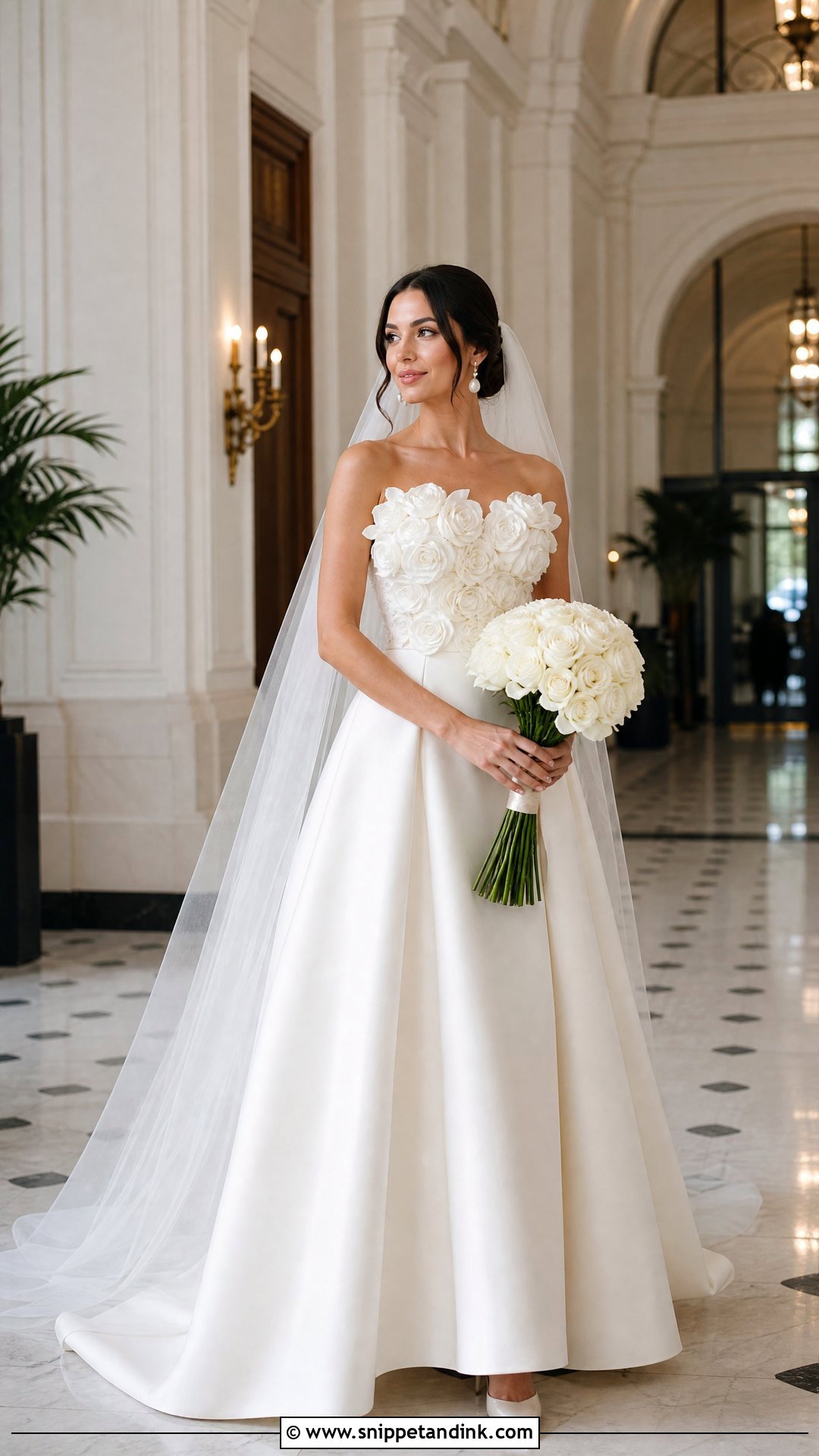
Sculpted roses at the neckline, waist or upper skirt give a gown a strong, classic shape. Large roses look editorial; small layered petals look traditional. Put them on a clean satin, mikado or tulle skirt with nothing else competing. Mikado is stiff enough that roses near the waist can crush when you sit, so I’d keep them higher on the bodice. Pearl drops, satin pumps, a plain chapel veil and a restrained bunch of long-stem roses in one color suit evening ceremonies.
23. Cherry Blossom Wedding Dress
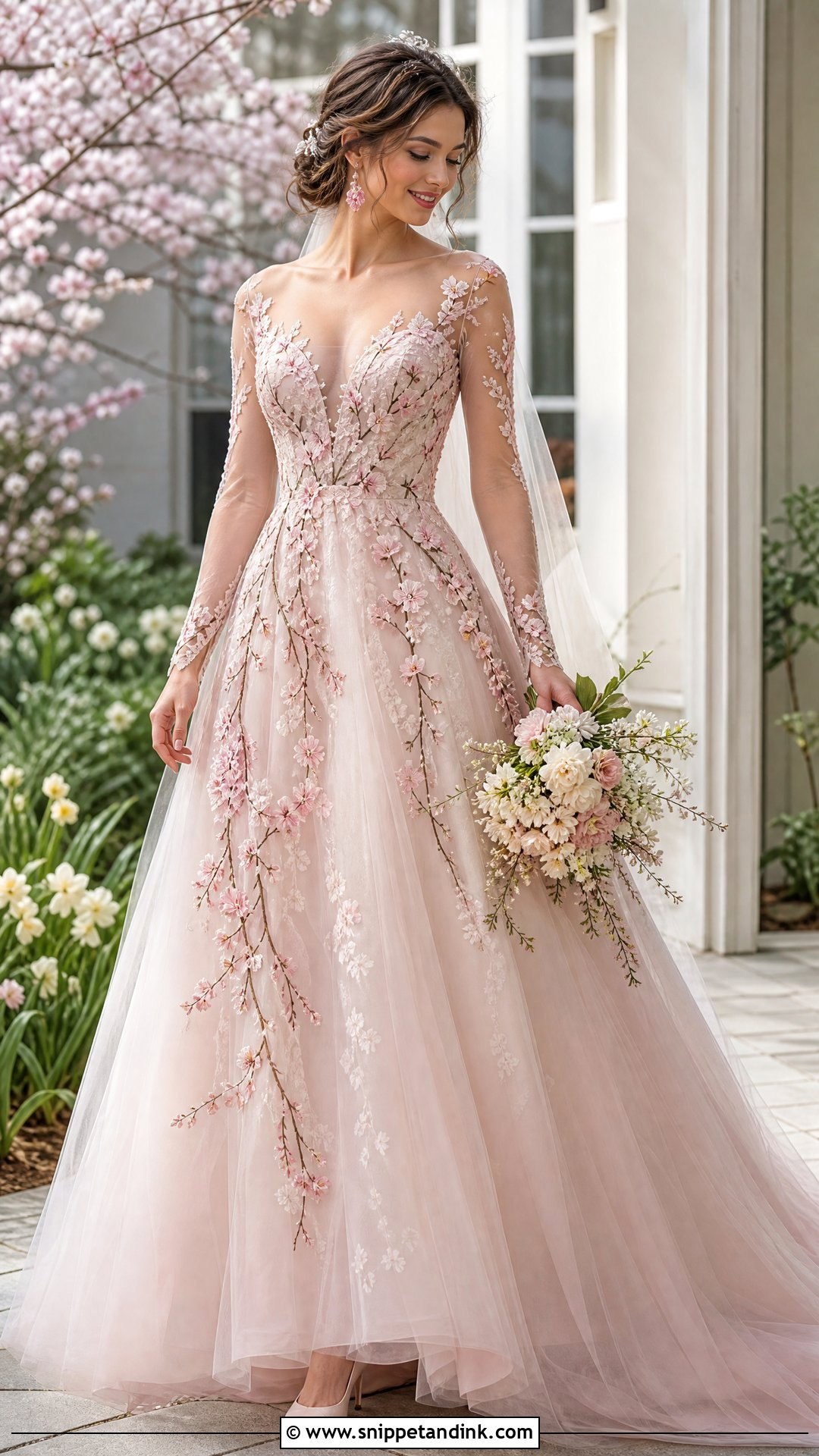
A cherry blossom wedding dress uses fine branches and pale petals, so it reads delicate rather than bold. Ivory or blush tulle with blossoms scattered across the bodice and drifting onto the skirt suits a narrow A-line, and sheer sleeves can carry the branches to the wrist. Keep the hair to one or two floral pins in a low bun, not a crown. Small pink stones in the earrings and a loose white-and-pink bouquet complete it. Too many blossom accessories tip it into theme.
24. Beaded Floral Wedding Dress
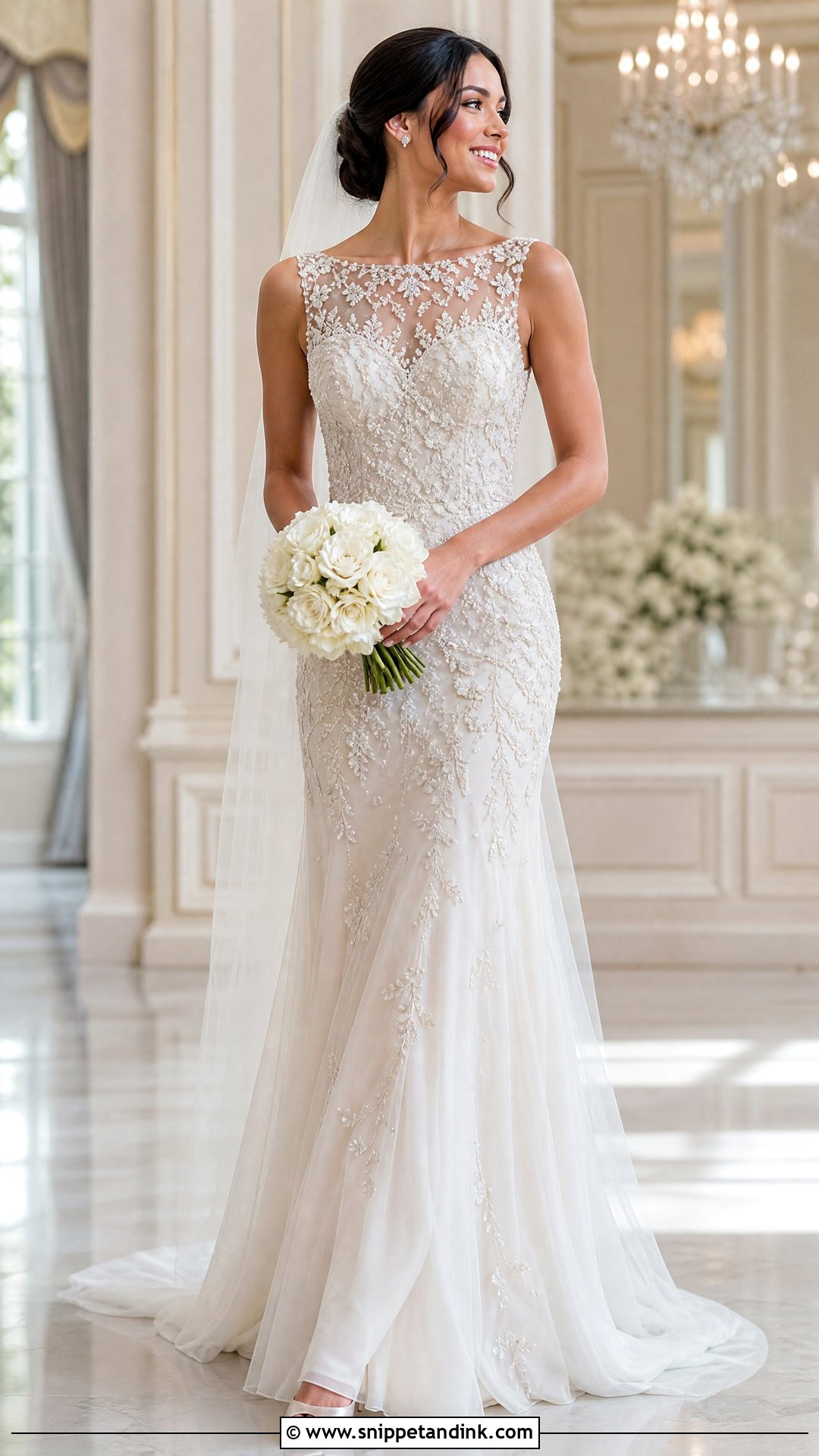
Seed beads, sequins, pearls or crystals arranged into flowers catch the light without losing the botanical feel. Beading adds real weight, so I always have brides walk, sit and lift their arms in a beaded gown before committing. A fitted column or soft A-line stops it looking heavy. Skip a sparkly necklace if the bodice already shines. Satin heels, studs, a plain veil and a smooth white bouquet give the beading room to work under evening light.
25. Black Floral Wedding Dress
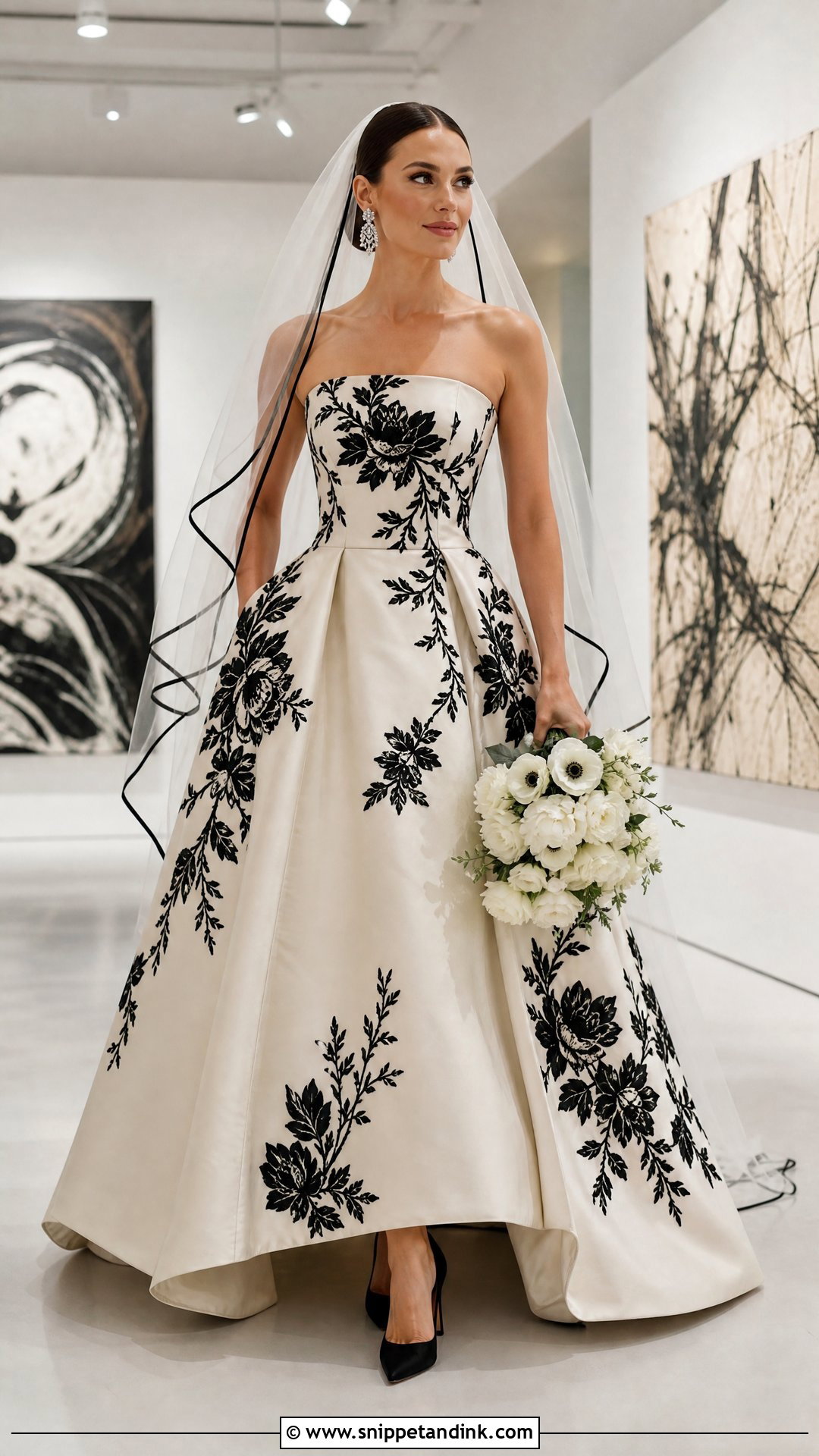
Black embroidery on an ivory, champagne or blush gown, or black tulle over a lighter lining, gives strong contrast. A structured A-line or fitted column keeps it sophisticated. Black pointed pumps and crystal earrings repeat the color, but I’d keep the bouquet white with dark green foliage rather than going black everywhere. The lighter elements keep it celebratory. It looks right in galleries, industrial spaces and winter ballrooms.
How Raised Flowers Show Up in Photographs
A floral gown is chosen for its texture, and texture depends on light. The same dress can look sculpted in one photo and completely flat in the next.
Harsh midday sun
Direct overhead sun bleaches white-on-white appliqués so the petals disappear. Open shade, or light coming from the side, gives raised flowers small shadows that show their shape. Mention this to your photographer if the dress detail matters to you; they can plan portraits around it.
Flash at the reception
On-camera flash flattens embroidery too. Colored thread and a tinted lining hold up better than ivory on ivory, which is one practical reason to consider a blush or nude underlayer.
The back view
Guests see your back for the whole ceremony. Check where the appliqués stop at the zip or buttons; many gowns are decorated heavily in front and almost bare behind. A veil with a few matching flowers near the hem can carry the detail round.
After sitting down
Raised petals on the lower back and seat flatten during a long dinner. Plump them gently with your fingers before evening portraits, and don’t steam them hard, as heat can wilt organza flowers permanently.
See It in Daylight, Then Sit Down in It
A floral wedding dress works when the flowers, the cut and the setting agree with each other. Embroidery, lace, colored thread, beading and raised appliqués all suit both traditional and modern gowns. Choose the silhouette that supports you first, then decide whether you want a few botanical touches or flowers everywhere. Coordinate jewelry, veil, shoes and bouquet without matching them. Before you sign the order, see the gown in daylight and indoor light and sit down in it, then let good alterations finish the job.
You'll Like These Ideas:



Leave a Reply