
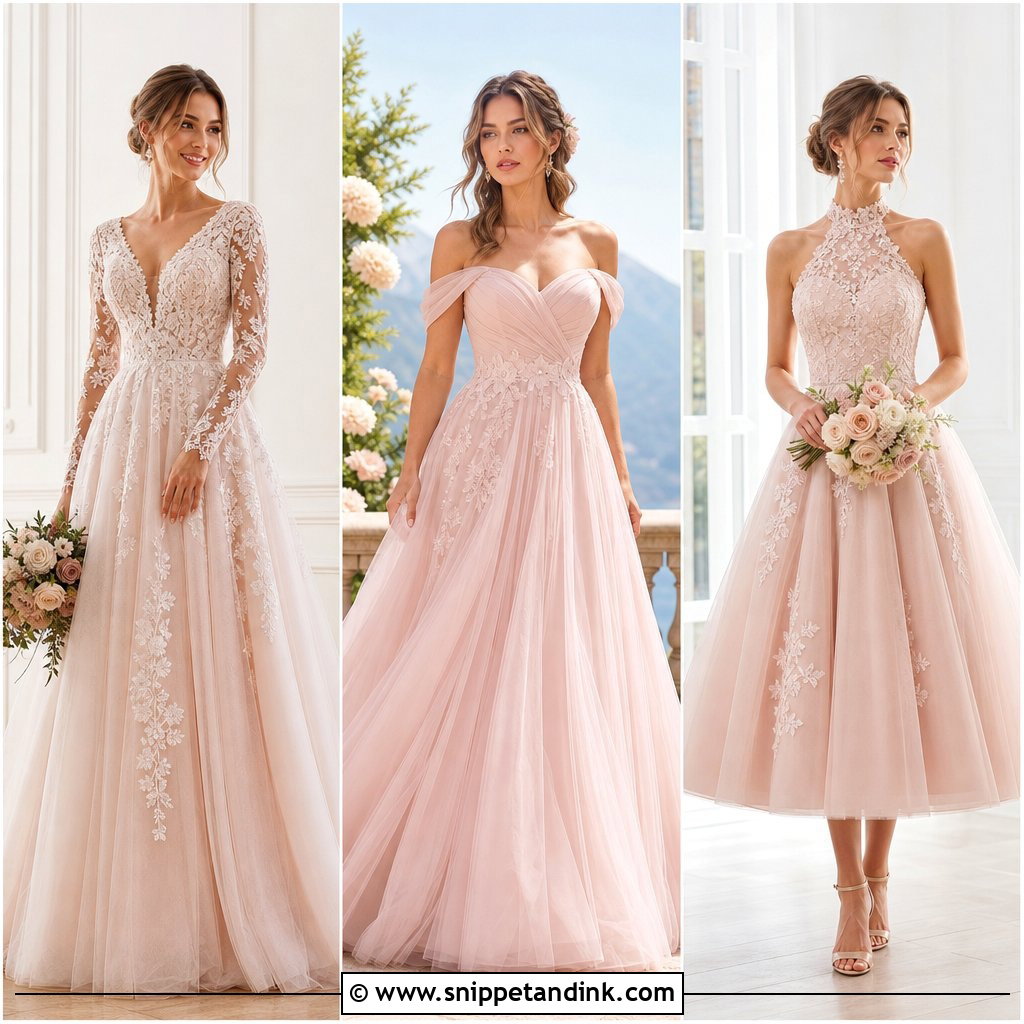
More brides ask me about a blush wedding dress now than when I started, and the reasons are usually personal: ivory makes them look pale, they want a little colour in the photos, or they simply love pink. Bridal design has leaned into muted colour, corsetry, Basque waists and dimensional flowers, and all of those happen to work well in blush. The shade itself runs from a pink so faint it reads as warm ivory to a proper dusty rose, so you can choose how much colour you actually want. Below are twenty dresses, each styled with the shoes, veil, jewelry and flowers I’d put with it, plus the fitting points I check for that particular cut.
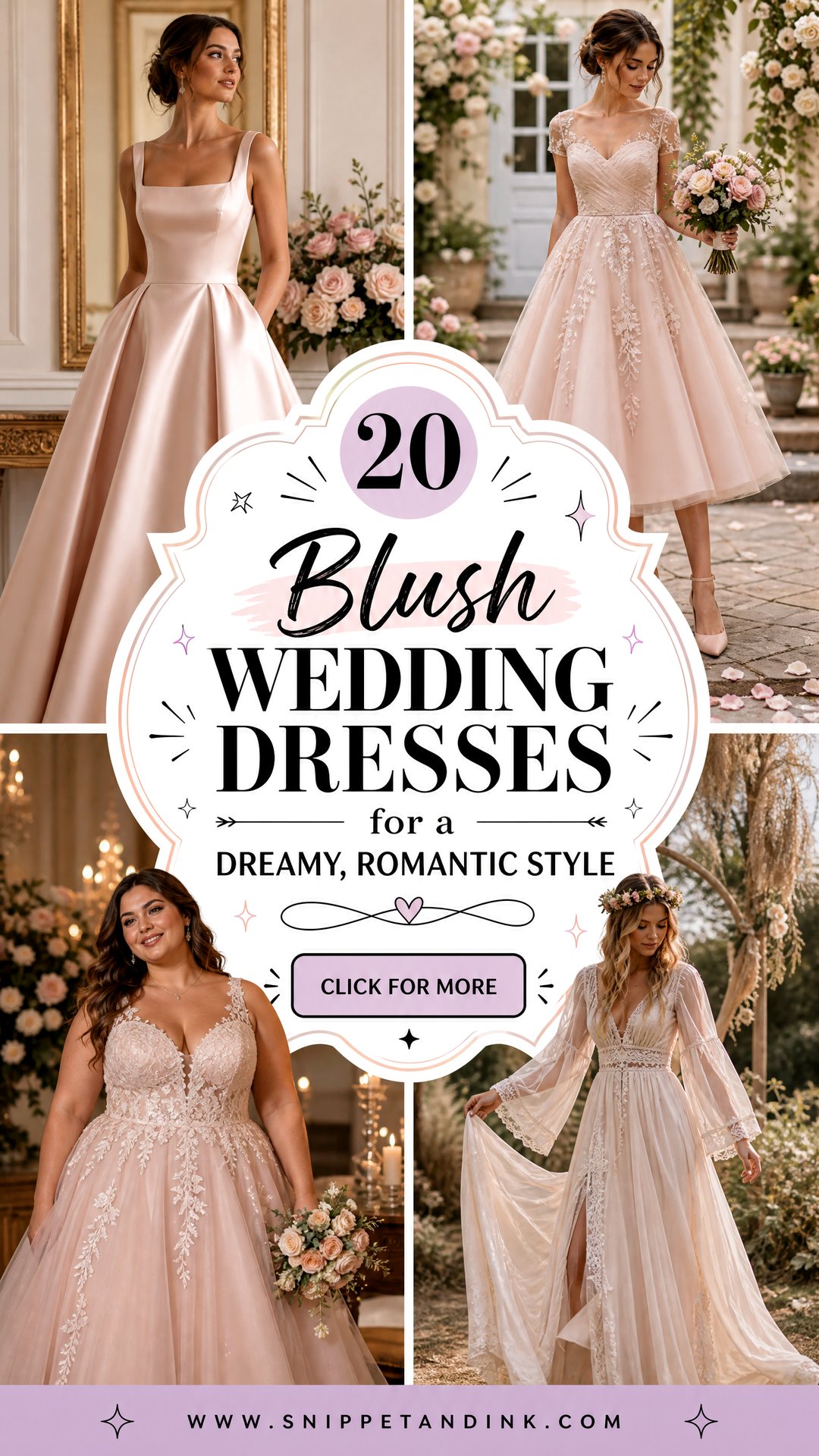
Ivory Veil or Blush Veil Over a Pink Gown?
The veil is where blush dresses most often go wrong, and it’s rarely discussed at the first appointment. A bright white veil next to a blush gown makes the dress look slightly dingy, as if it had been washed with something red. A veil that’s too pink can make the whole look feel like one flat colour block. I bring veil samples into the fitting room and test them over the actual dress, not over a sample.
- For barely-there blush, an ivory or soft champagne veil usually blends best.
- For a deeper dusty rose, a veil in the gown’s own blush tulle keeps the colour continuous, which matters most from behind during the ceremony.
- Lace-edged veils should match the lace on the gown in both colour and motif; a white lace edge on a pink dress looks like a mistake.
- Hold veil and gown together in natural light. Under shop lighting, small differences between ivory, white and champagne disappear.
The same thinking applies to shoes, gloves and any wrap. Most of the accessories in the looks below are ivory or champagne rather than white for exactly this reason.
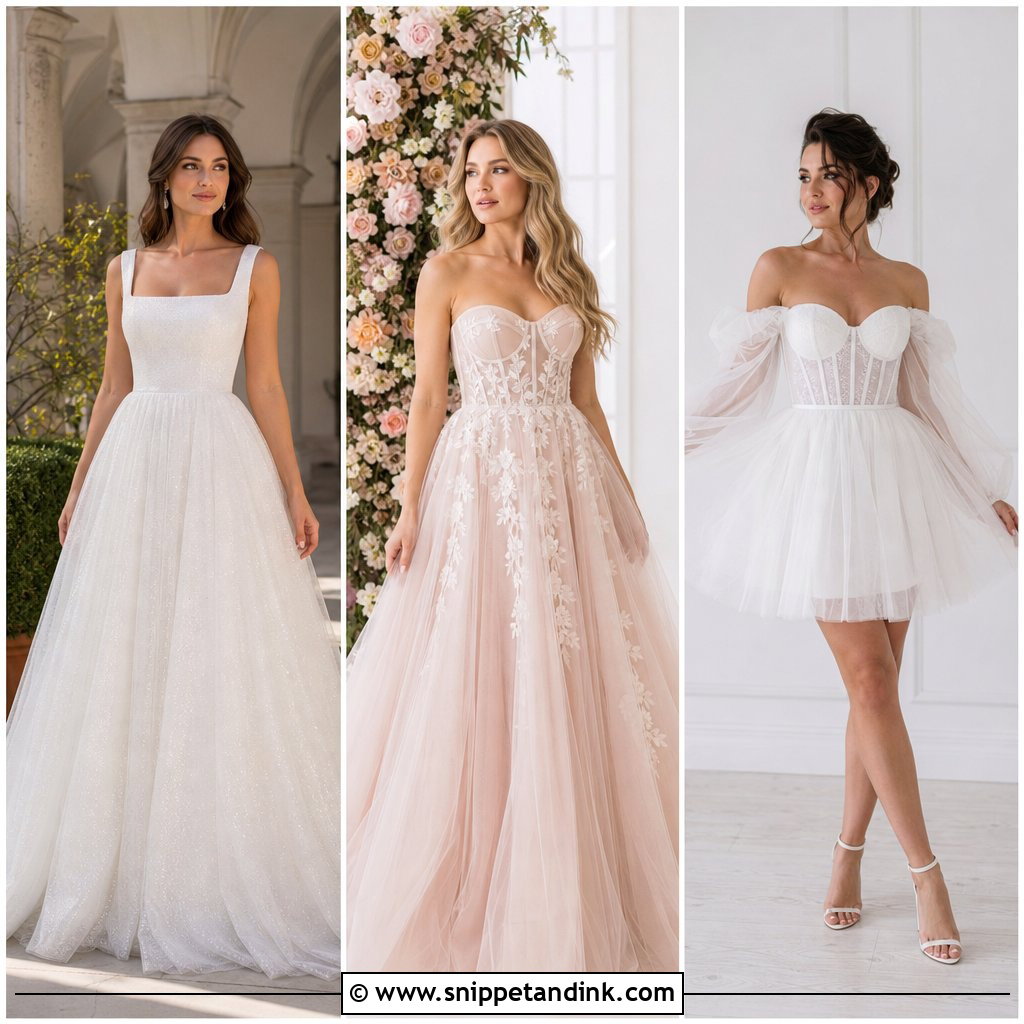
1. Blush A-Line Lace Wedding Dress
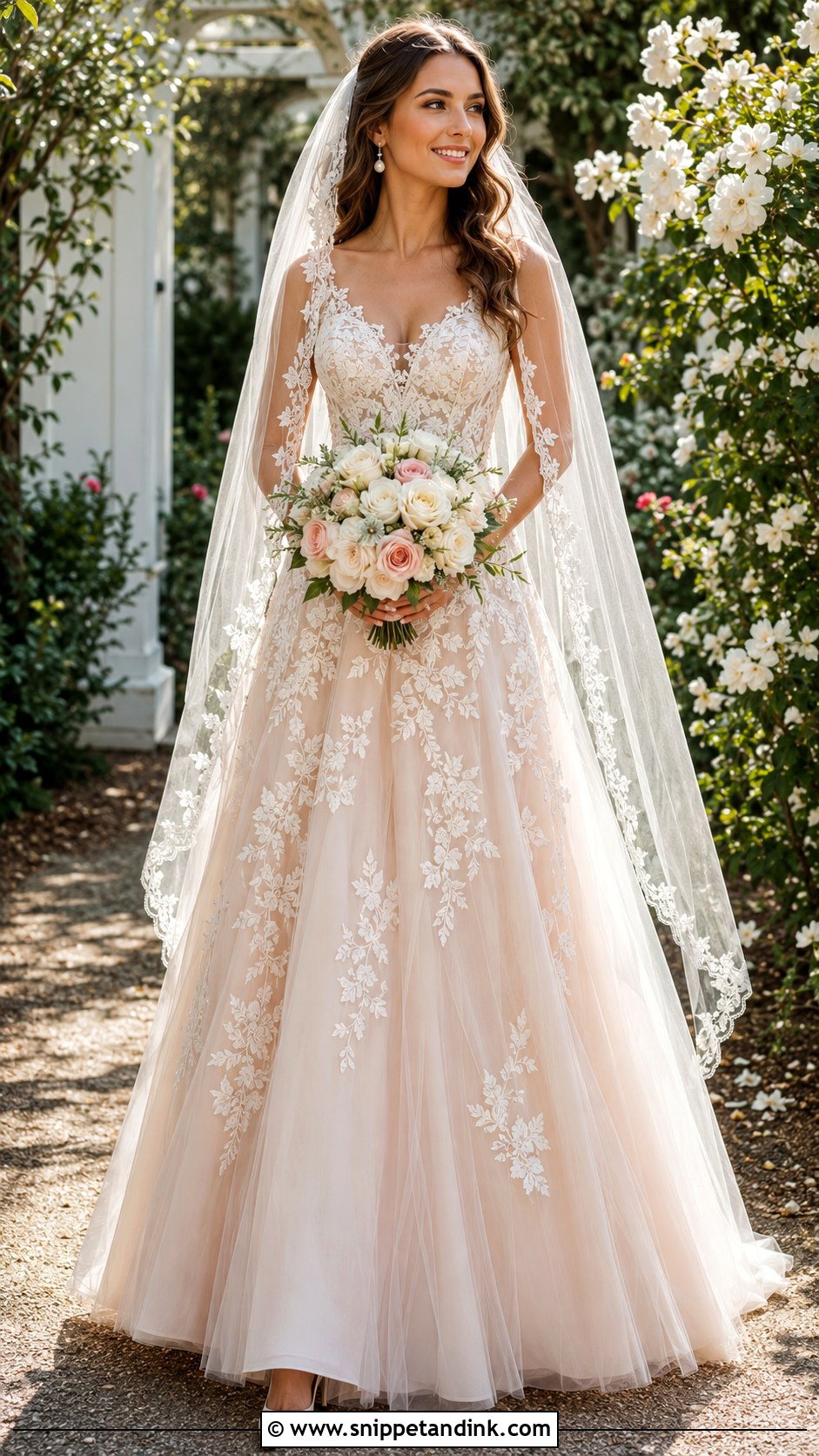
Comfort and shape meet in the A-line, which is why it’s the first thing I pull for most brides. A fitted lace bodice flowing into soft tulle defines the waist without restricting you, and an illusion neckline or fine straps add support while keeping the top light. I match the veil edging to the dress lace, not just the colour, so the two look made together. Ivory pointed-toe pumps and pearl drops suit it, along with ivory roses, pale pink ranunculus and greenery. Gardens, estates and ballrooms all work with this traditional shape.
2. Blush Strapless Satin Ball Gown
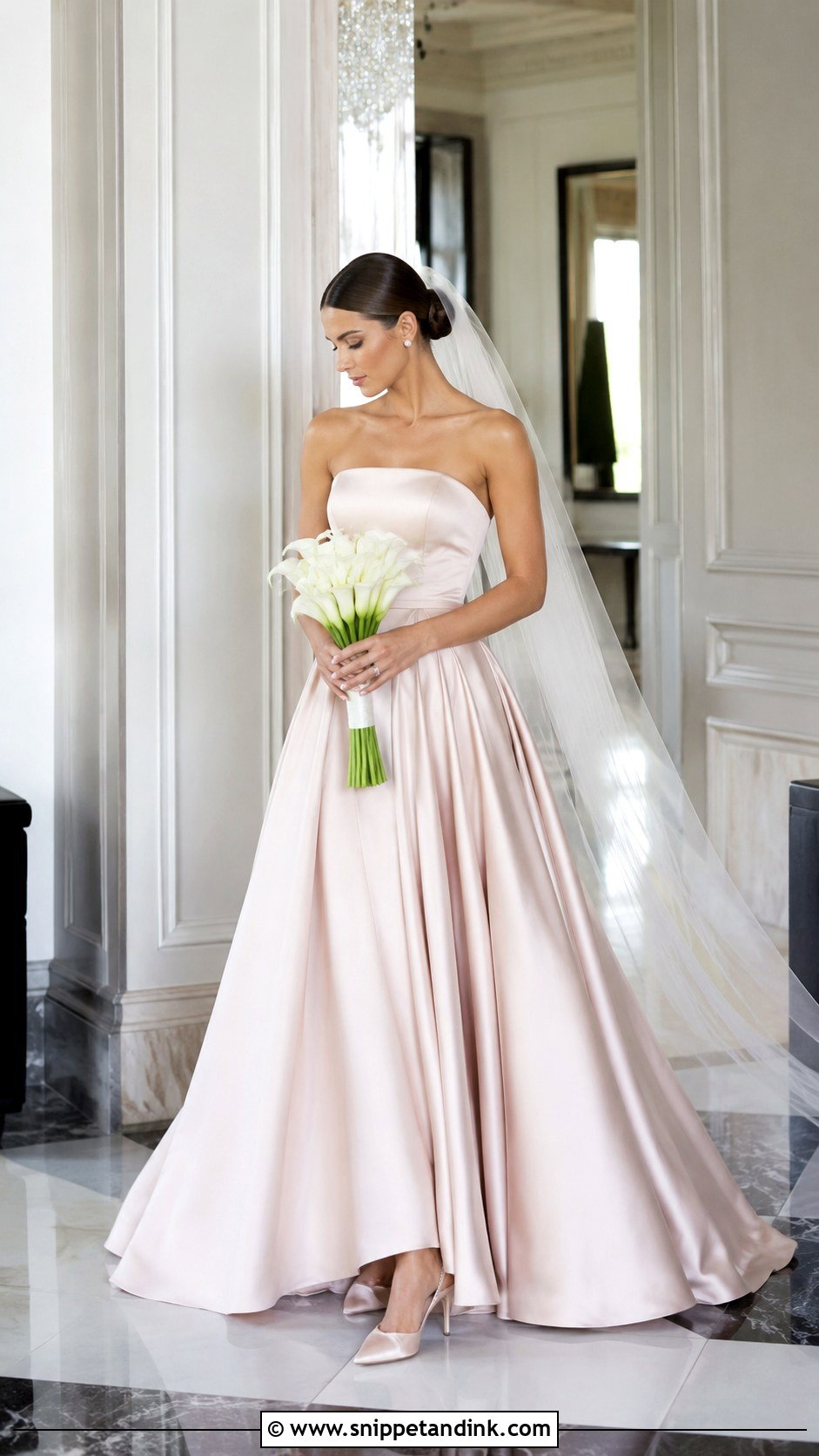
Satin shows everything, so a strapless satin ball gown depends on what’s inside it. The boning in the bodice should hold the dress up on its own; if you find yourself pulling at the neckline during a fitting, it needs adjusting before the day. A curved neckline feels classic, a straight one more modern. Because the pleated skirt already has volume, I keep the rest pared back: crystal studs, a sleek low bun, a long sheer veil, satin pointed-toe heels and a small bouquet of white calla lilies. No heavy necklace. Grand hotels and historic estates suit it.
3. Blush Off-the-Shoulder Tulle Wedding Dress
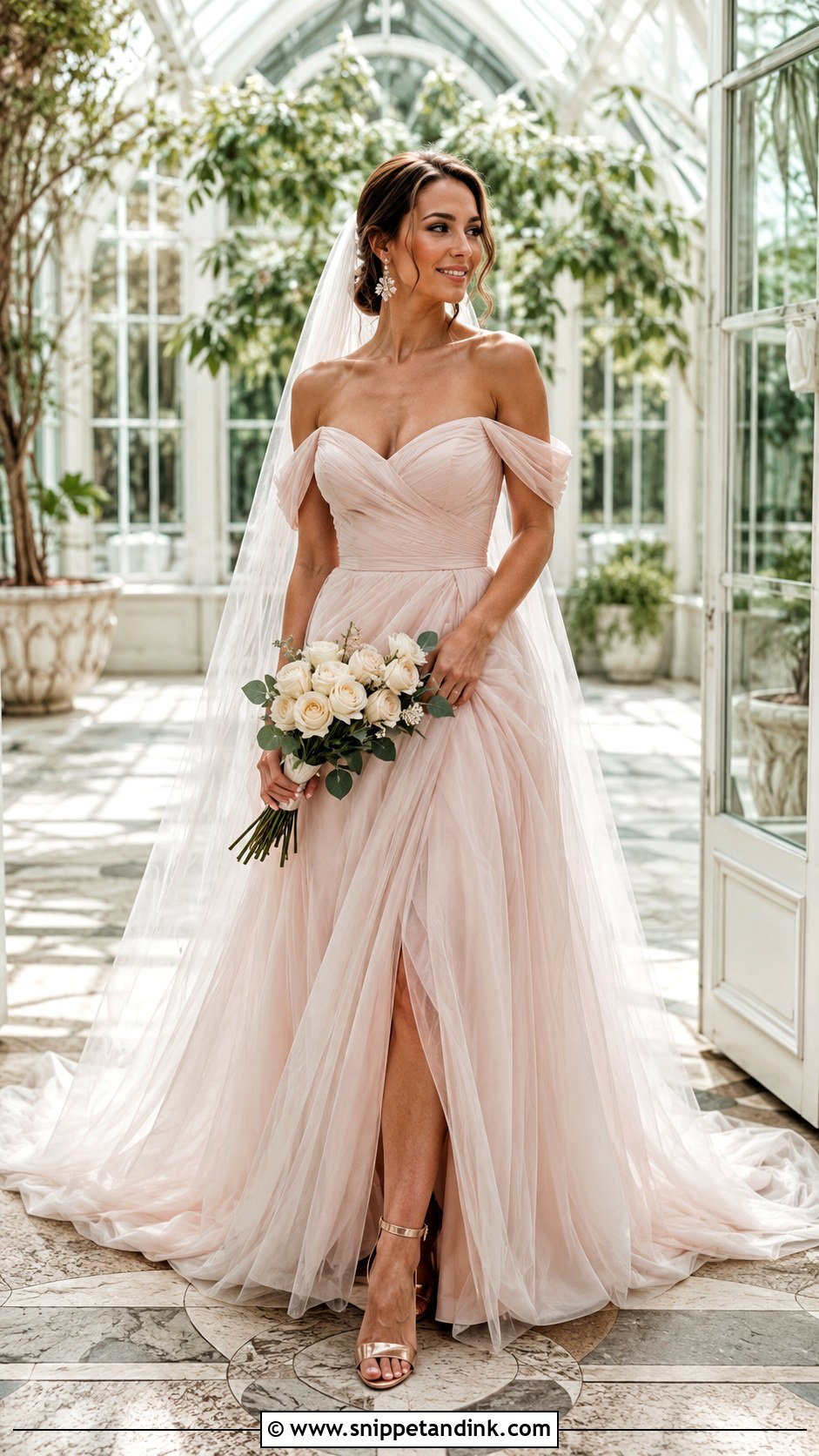
Off-the-shoulder sleeves have to sit securely across the upper arms, and I test that by asking the bride to hug me. If the sleeves slide down or dig in, they need adjusting. Layers of blush tulle with a lightly gathered skirt are easier to manage than a fully structured ball gown and move as you walk. Rose-gold heels, small floral earrings and a cathedral veil that runs past the train suit it. A loose updo stops hair catching on the sleeves. For flowers, cream garden roses with muted pink blooms and eucalyptus work in conservatories and gardens.
4. Blush Long-Sleeve Lace Wedding Dress
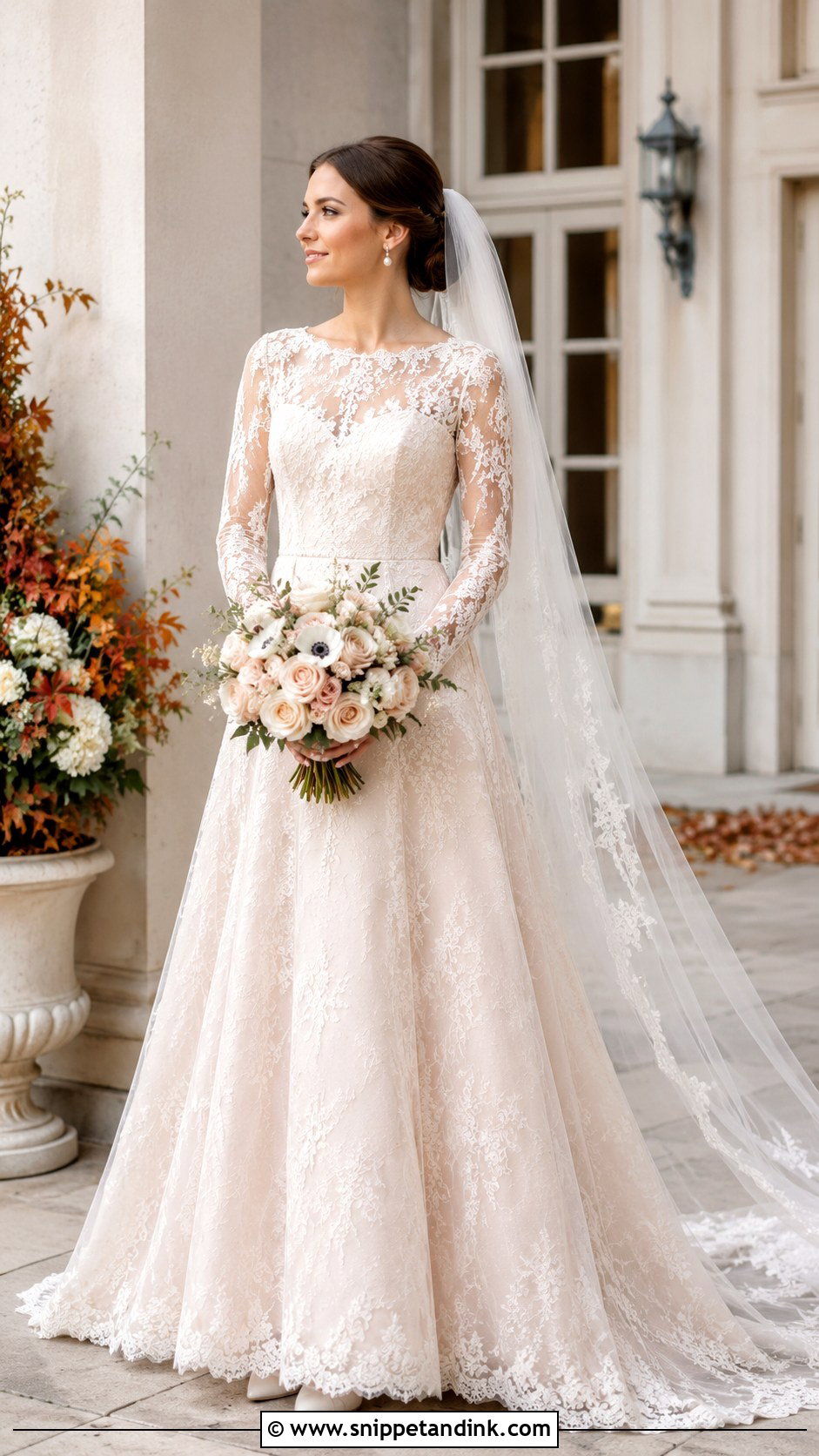
Long lace sleeves are lovely in cold weather, but the fit at the armhole is what makes or breaks them. Too high and tight, and you can’t lift your arms to dance. I look for illusion sleeves with floral motifs, a softly lined bodice and an A-line or fit-and-flare skirt to balance busy lace. Closed-toe ivory heels, pearl earrings and a plain chapel veil let the sleeve pattern show. A polished chignon frames the face. White anemones with blush roses and seasonal greenery suit autumn and winter, and a lighter lace works in mild spring weather.
5. Blush Mermaid Wedding Dress
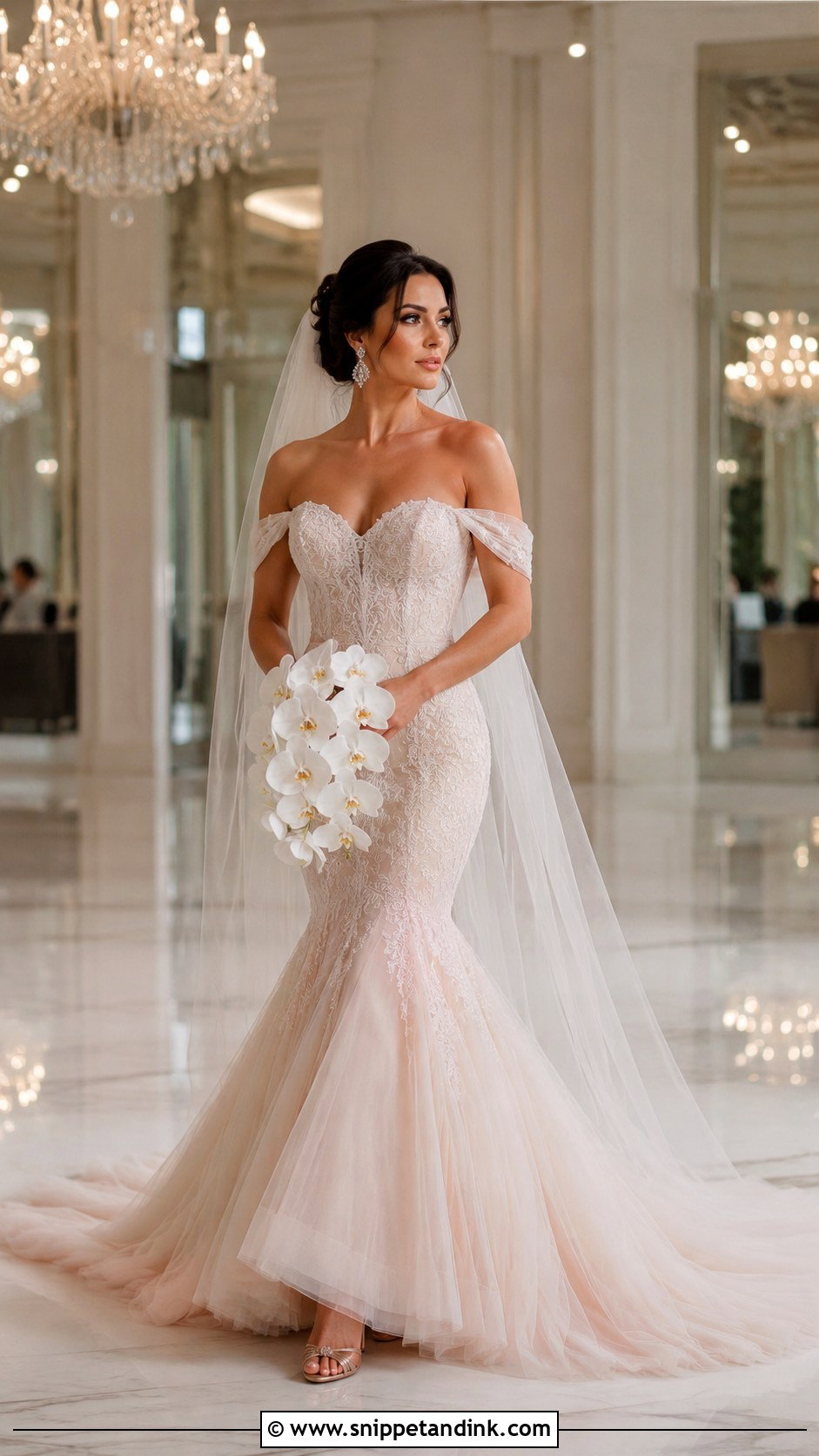
Sitting is the test I never skip with a mermaid dress. It follows the body through the waist and hips before flaring near the knee, and if the fabric has no give, you’ll perch on the edge of every chair. Stretch crepe, satin or layered tulle move more easily. A sweetheart or off-the-shoulder neckline suits the sculpted shape. Champagne heels, small crystal earrings, a long plain-edged veil and a compact bouquet of ivory orchids or roses keep it sleek. Plan a bustle for the reception so the train lifts safely; ballrooms and modern venues suit this cut.
6. Blush Square-Neck Satin Wedding Dress
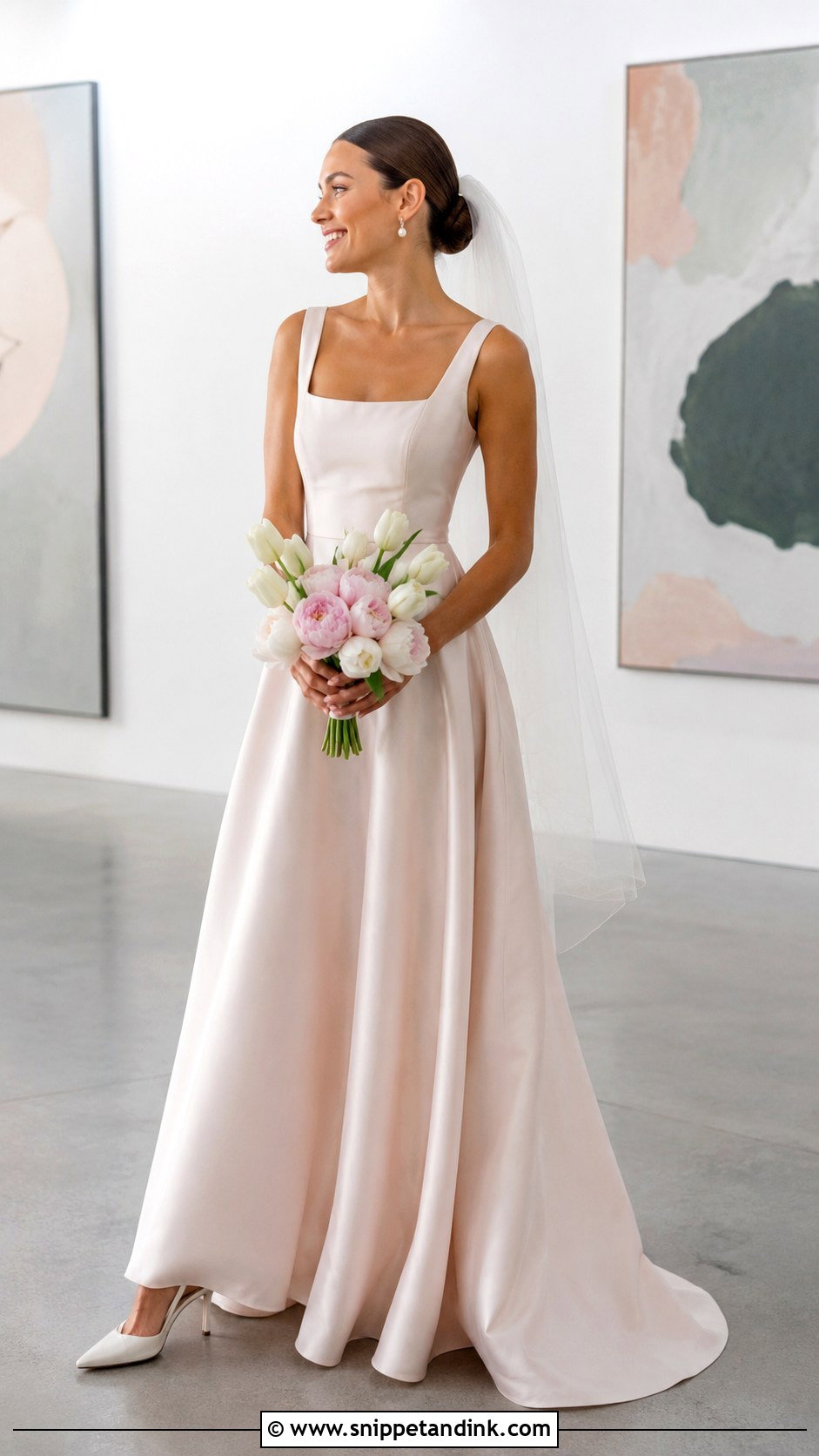
The square neck frames the collarbone, and wide straps hold it up far more reliably than spaghetti straps. Choose an A-line skirt for movement or a column for a minimalist finish. Pearl button earrings, ivory slingbacks and a structured satin clutch keep the clean mood. I’d go for a plain fingertip veil here because lace edging would break up the straight neckline. A neat bun or smooth half-up style follows the gown’s lines, and white tulips or blush peonies soften the satin. It suits almost any season.
7. Blush Sweetheart Corset Wedding Dress
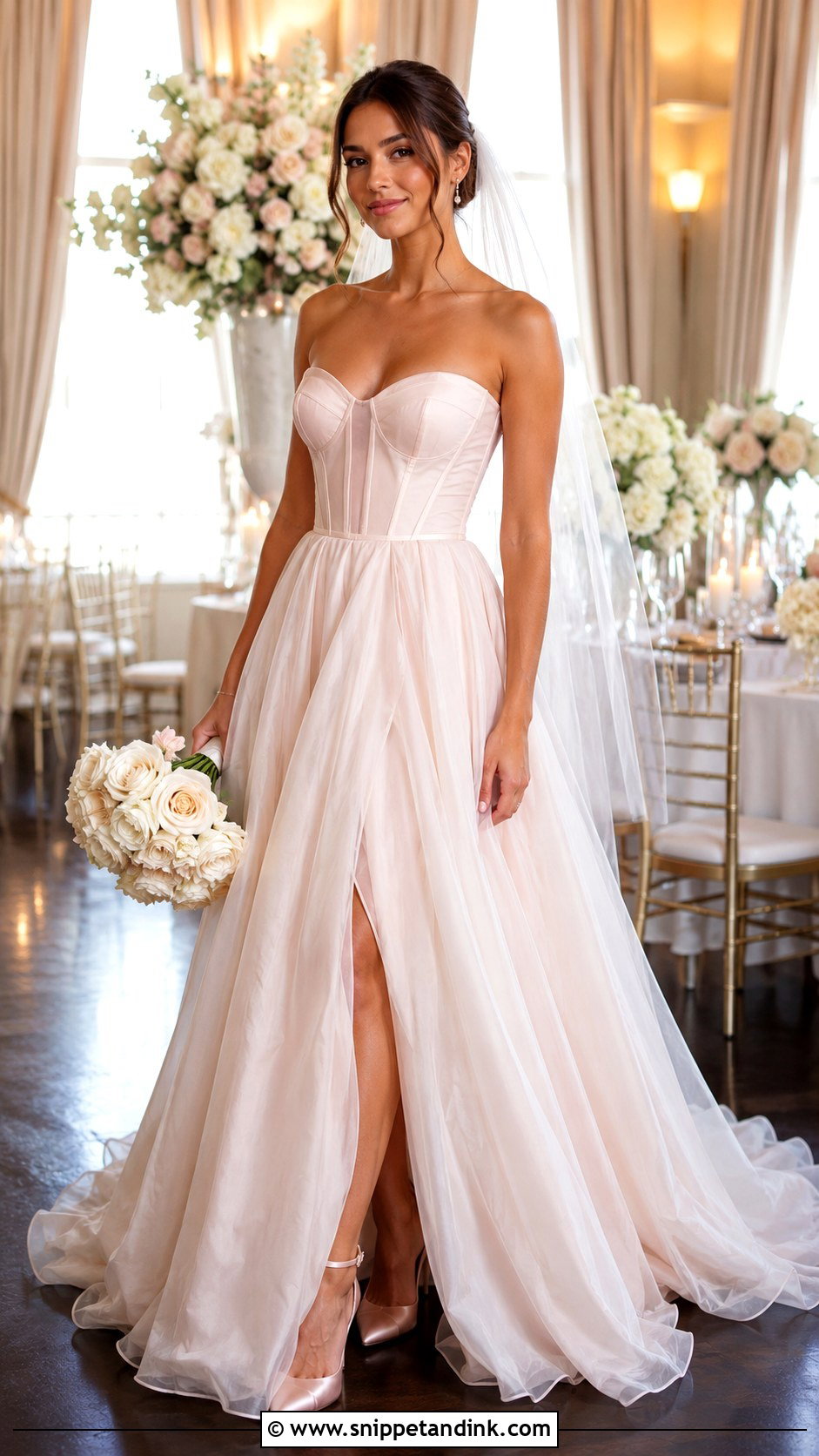
A sweetheart corset bodice needs the most careful alterations of any dress here. It should support you without pinching, gaping at the top or slipping when you raise your arms, and that usually means at least two fittings with your actual undergarments. Visible boning feels fashion-forward; covered boning looks more traditional. A flowing tulle or organza skirt balances the structure. Blush satin heels, small drops and a sheer veil under a loose updo suit it. If the bodice is beaded, limit extra sparkle to one accessory. Cream roses and pale pink sweet peas pick up the colour.
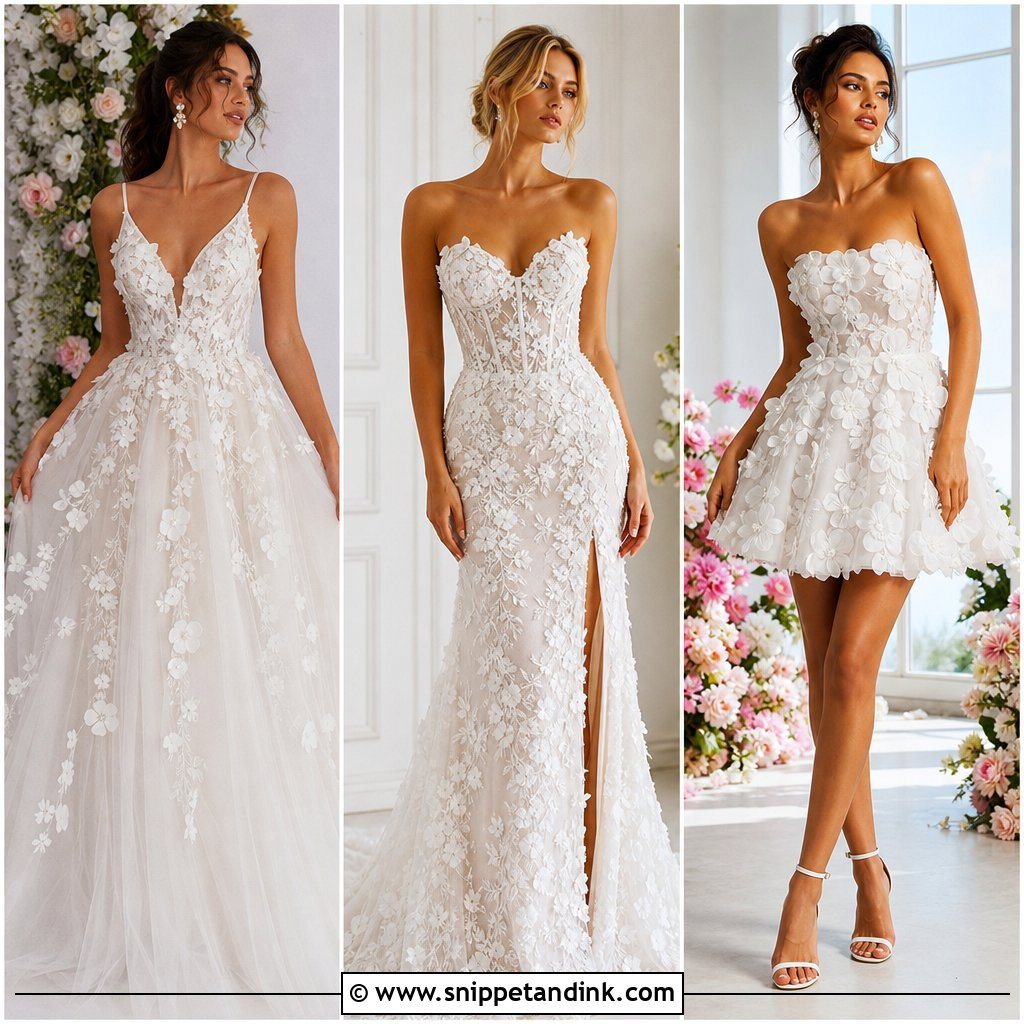
8. Blush Floral Appliqué Wedding Dress
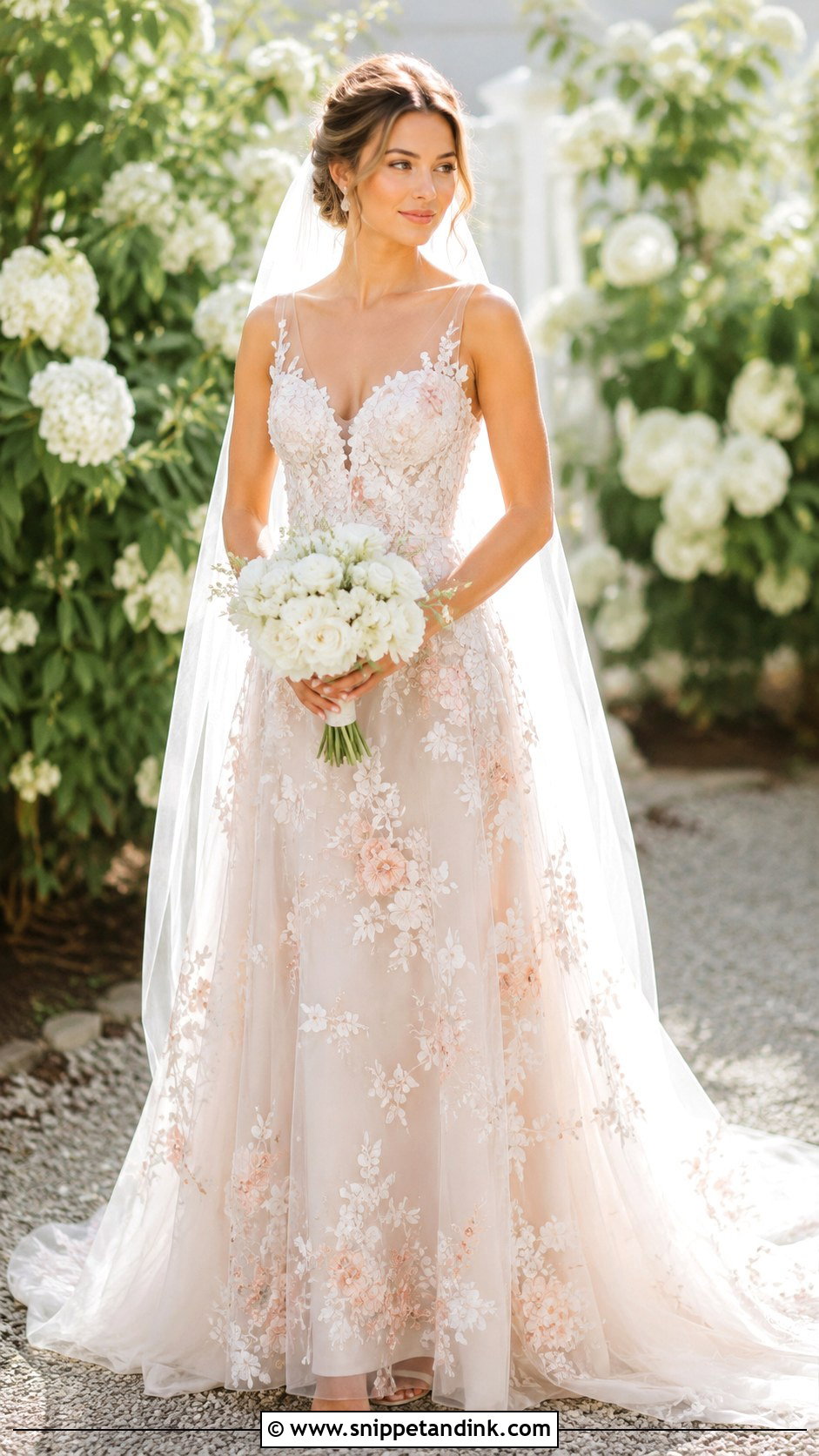
Garden weddings and dimensional flowers belong together. I prefer appliqués that cluster on the bodice and thin out as they scatter down the skirt, which gives movement without swamping the shape. A fitted waist and soft A-line let the flowers lead. Ivory sandals, tiny pearl earrings and a plain tulle veil avoid competing with the embellishment, and natural makeup with softly pinned hair suits the texture. One thing I advise against is matching every colour in the dress with the bouquet. White flowers and greenery let the appliqués stand out.
9. Blush Minimalist Crepe Wedding Dress
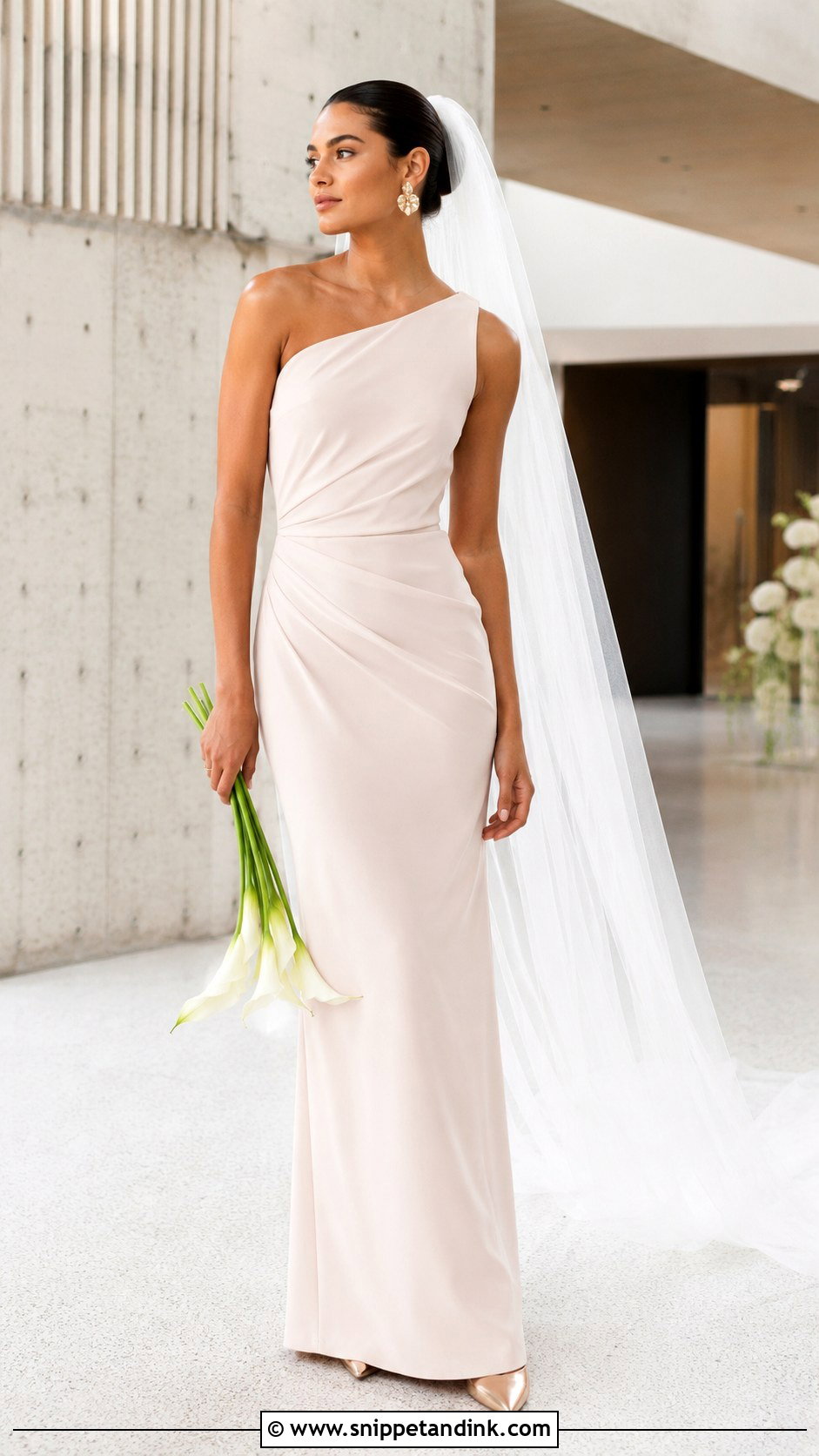
Crepe has nowhere to hide, so a minimalist blush dress lives on tailoring. Seams need to sit straight, the waist needs to land exactly at your waist, and any draping should be pressed in place, not floating. A column or fit-and-flare with a bateau, square or asymmetric neckline suits it. Pointed metallic heels, sculptural earrings and a sleek low ponytail or bun keep it modern, and a plain cathedral veil adds drama without decoration. A few calla lilies or long-stemmed roses finish it for galleries, rooftops and small civil ceremonies.
10. Blush and Ivory Ombre Wedding Dress
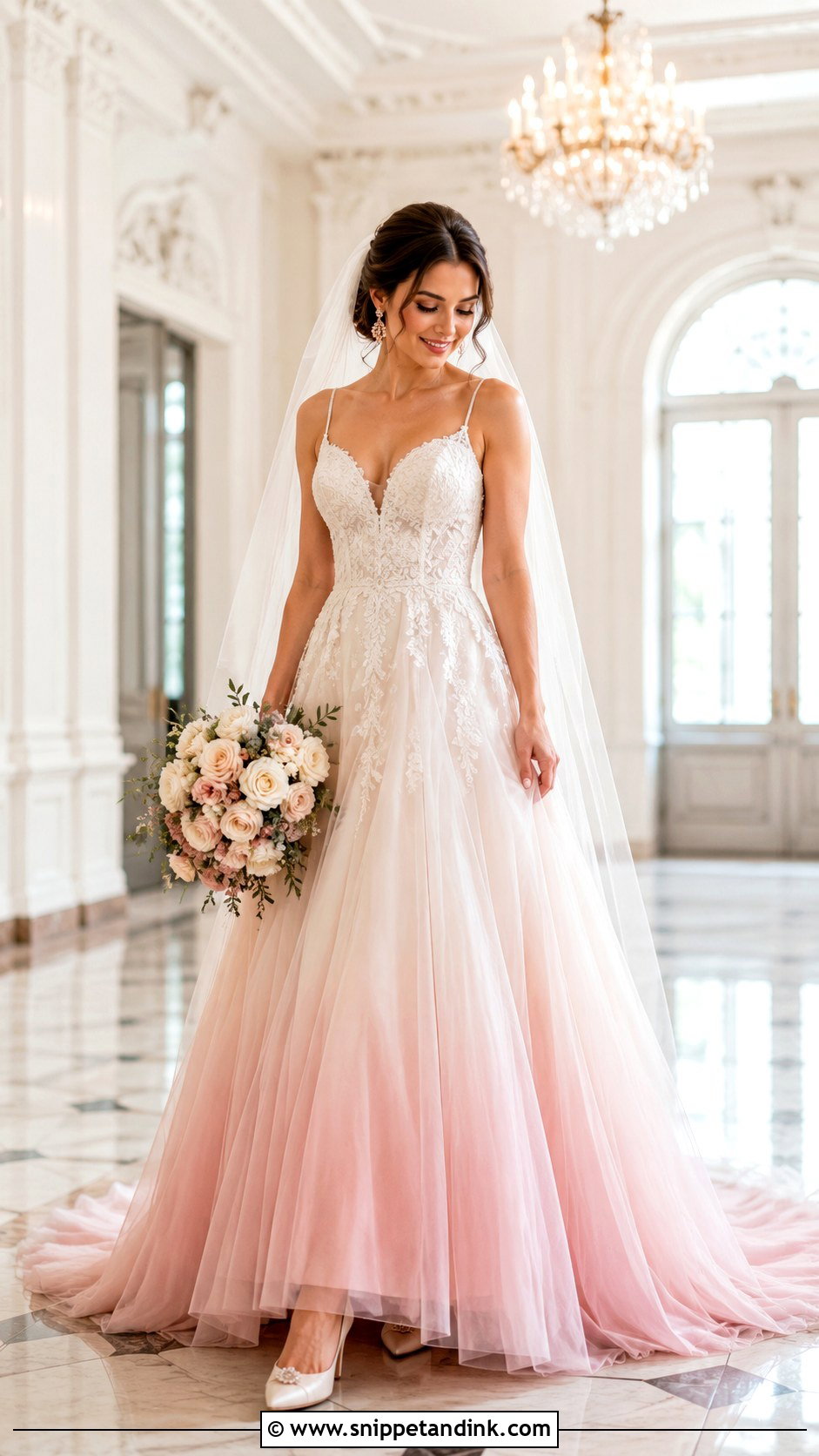
Ombre is the answer when a bride wants colour but not a fully pink gown. The fade can run from an ivory bodice down to a blush hem, or come from a pink underlayer showing through pale tulle. A simple A-line shows the gradient best. Ivory heels, rose-gold earrings and a veil matched to the lightest shade at the bodice keep it coherent, and a mix of cream and pale pink flowers ties the two colours together. Blush shifts noticeably between daylight, indoor bulbs and camera sensors, so I always look at an ombre sample in all three before anyone orders.
11. Blush Tea-Length Wedding Dress
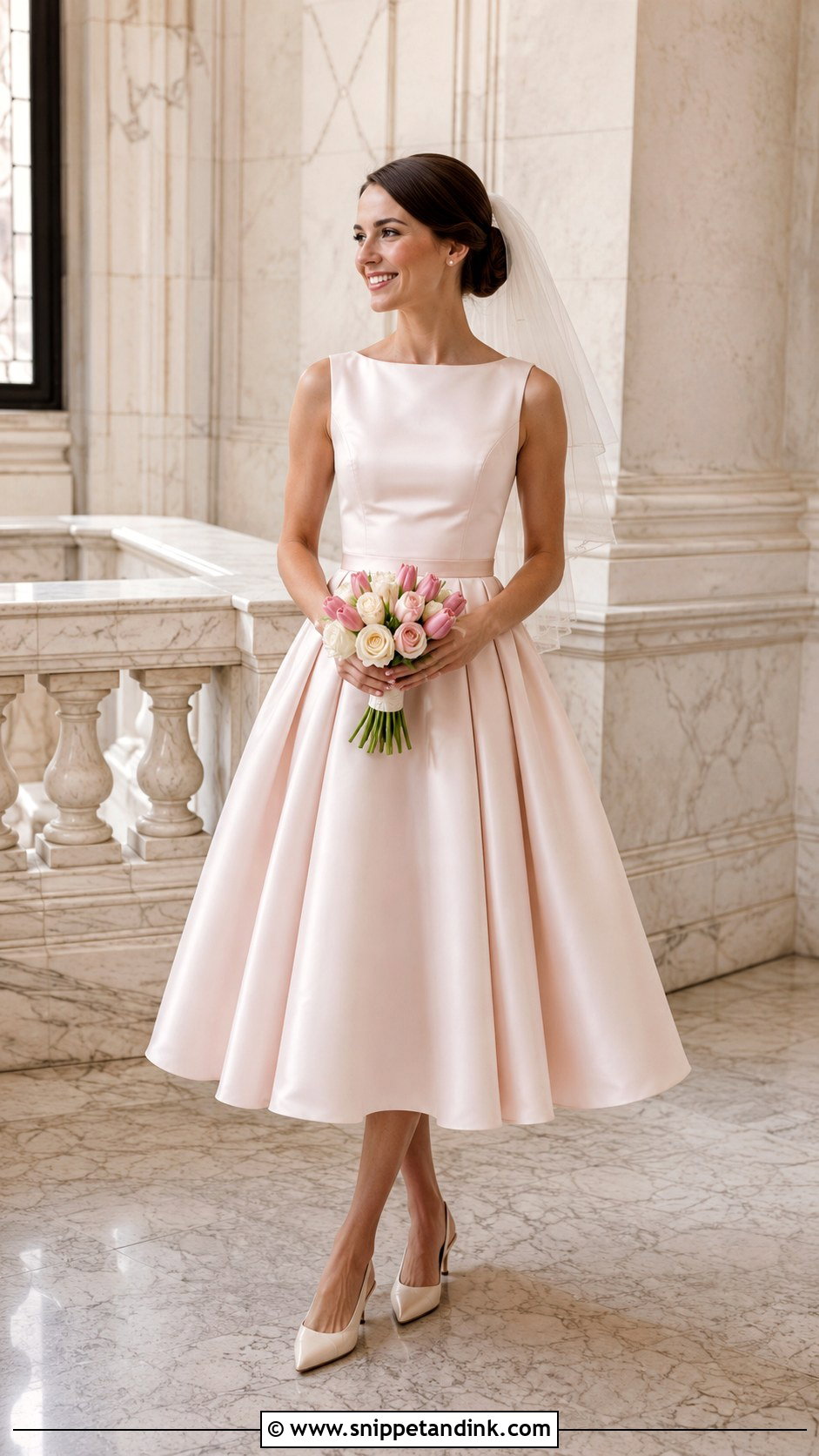
Tea-length puts your shoes on show all day, so I treat them as part of the dress. The hem usually sits between knee and ankle, and the skirt needs enough body to hold its shape without looking costume-like. A fitted bodice, defined waist and bateau or sweetheart neckline give classic proportions. Ivory slingbacks, pearl studs and a short veil or hair bow suit it, with a compact bouquet of roses, tulips or ranunculus. It’s well suited to courthouse, restaurant and daytime receptions. Break the shoes in at home first.
12. Blush High-Low Wedding Dress
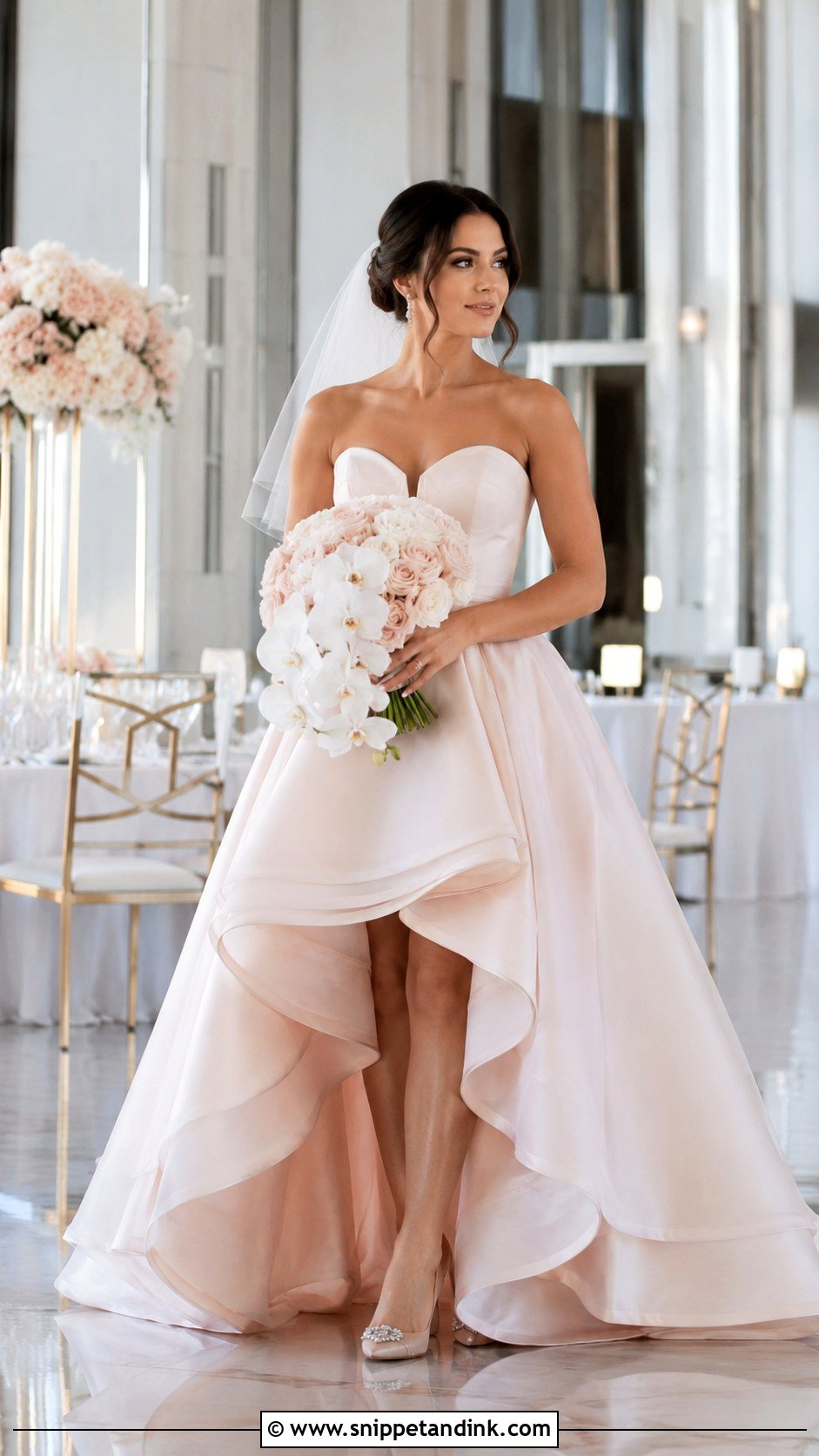
High-low hems are made for dancing. The shorter front shows the shoes and keeps you from tripping, while the longer back still gives a bridal sweep. Mikado or organza holds a crisp shape; chiffon falls softer. Embellished ivory pumps, small earrings and a simple hairpiece suit it, and a short veil avoids fighting the hemline. Blush roses and white orchids in a slim bouquet keep focus on the dress. Walk in it at the fitting to make sure the front length looks intentional and doesn’t ride up when you move.
13. Blush Plus-Size A-Line Wedding Dress
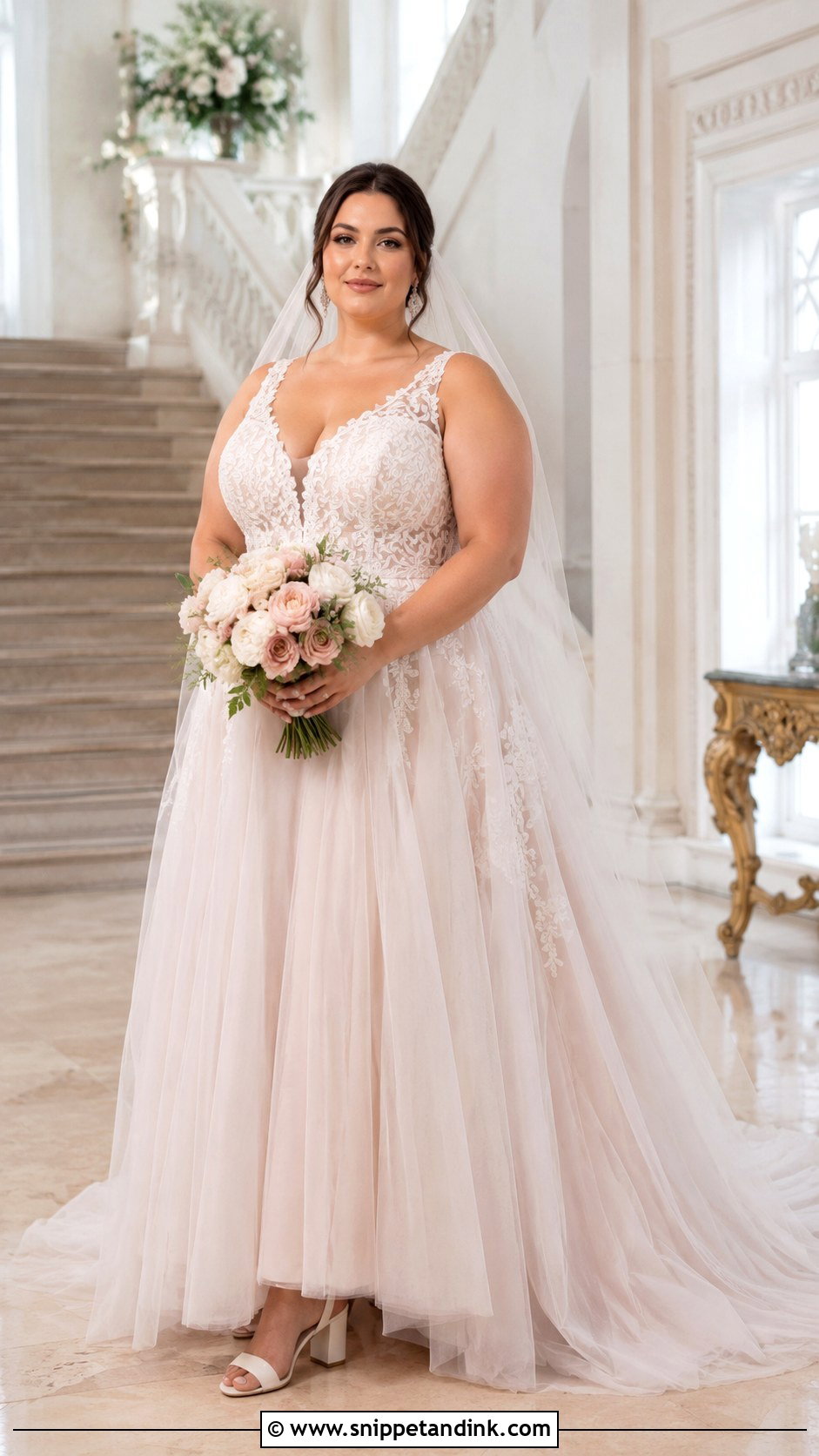
Fit, not camouflage, is my starting point with plus-size brides. A good blush A-line has substantial lining, comfortable boning and straps or sleeves placed to work with the bra you’ll actually wear. V, scoop or sweetheart necklines give different coverage, and the flowing skirt allows room through the hips. Cushioned block heels, statement earrings and a veil anchored firmly into a polished updo complete it. Cream roses, blush peonies and trailing greenery balance the proportions. Alterations should leave the bodice smooth, the waist level all the way round and the hem just clear of the floor.
14. Blush Petite Empire-Waist Wedding Dress
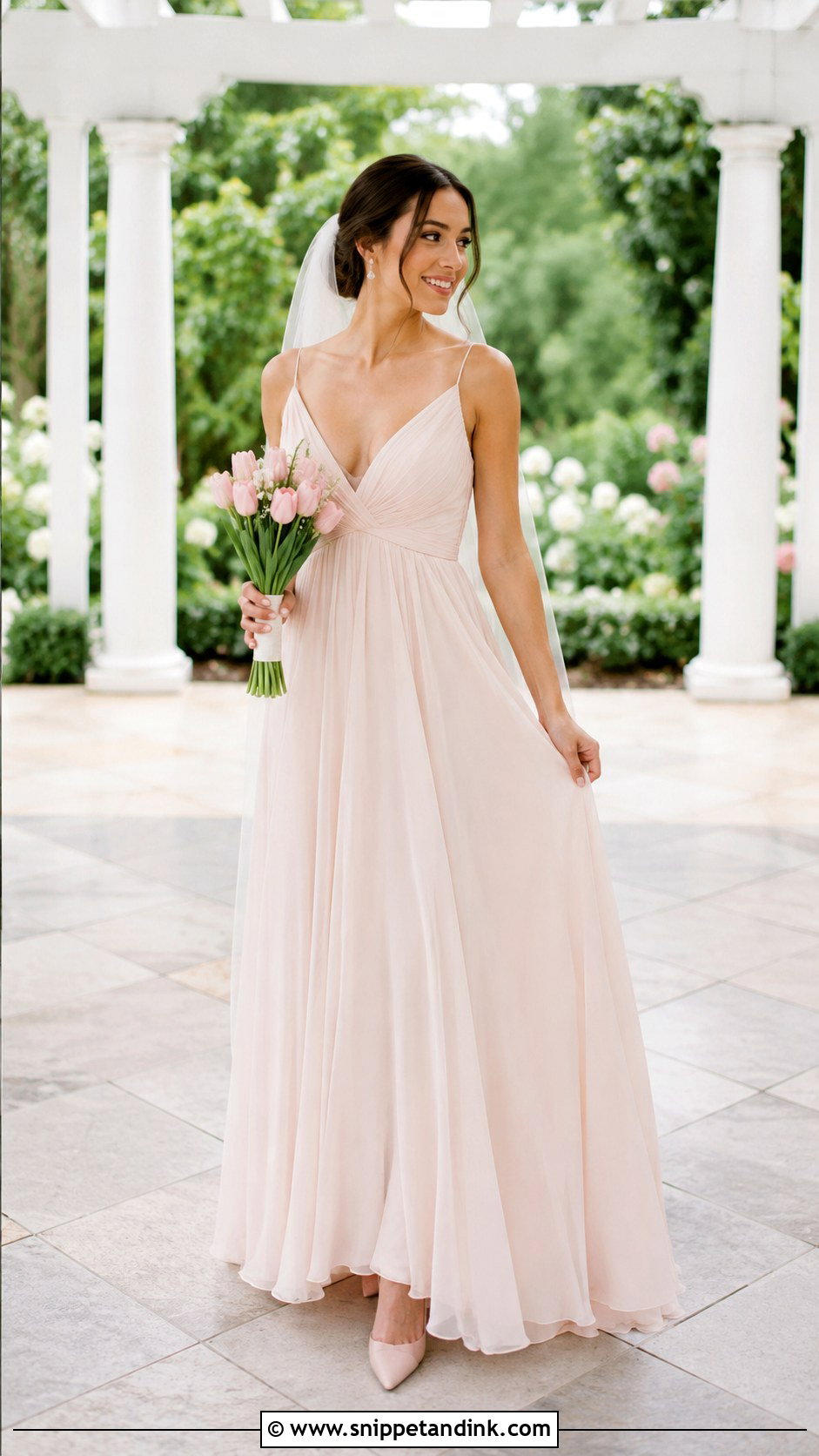
On a petite frame, an empire waist draws one long line from the bust to the floor. The seam sits just below the bust and chiffon or soft tulle falls straight from it without adding volume at the waist. Delicate straps, a modest V-neck or short flutter sleeves keep the top light. Nude or blush pointed heels, small drop earrings and a narrow veil with little trim suit it, along with a small bouquet of tulips or spray roses that won’t hide the bodice. I’d shorten any long train during alterations and get the hem exact, since extra length swamps a smaller bride.
15. Blush Basque-Waist Ball Gown
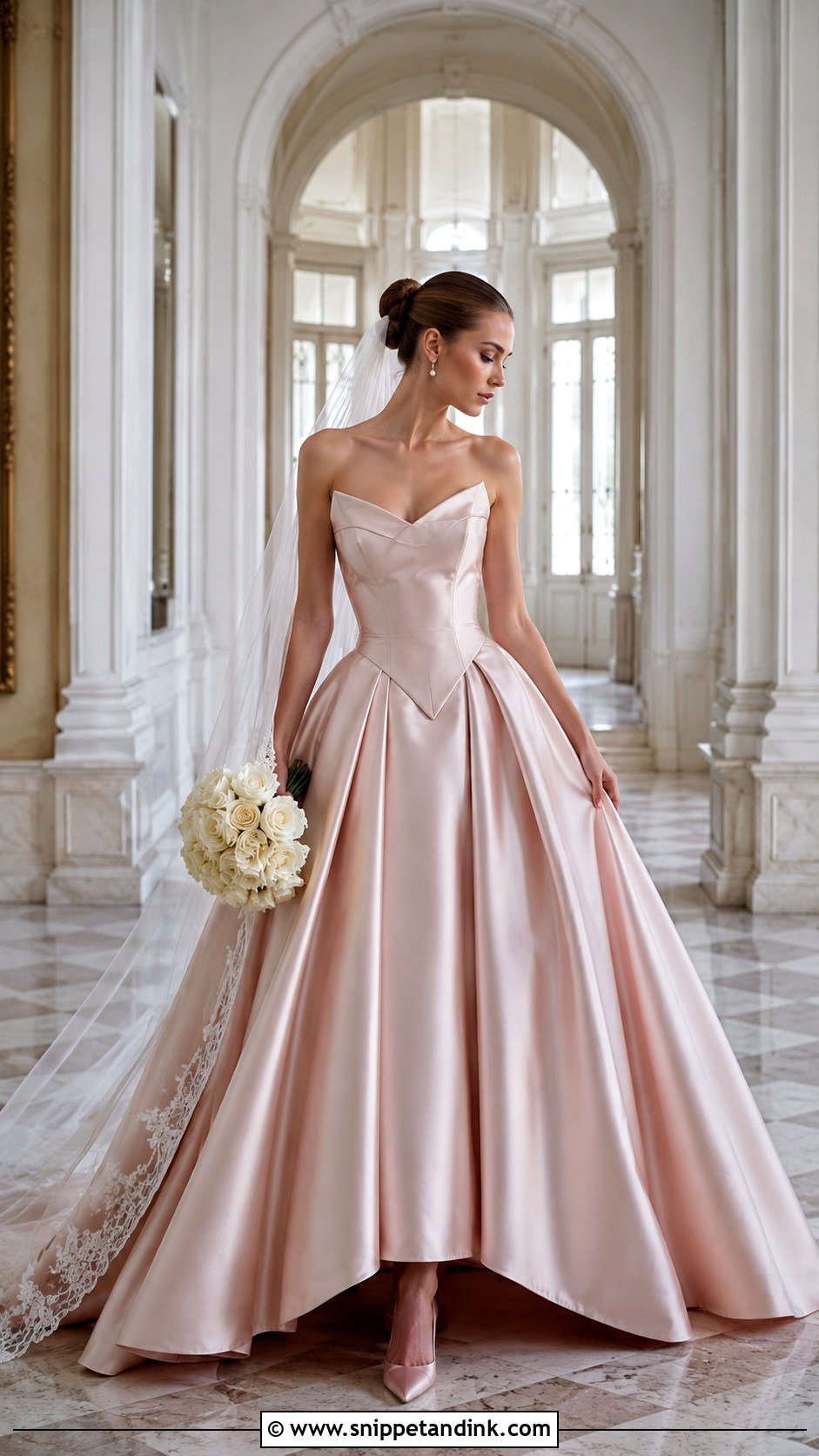
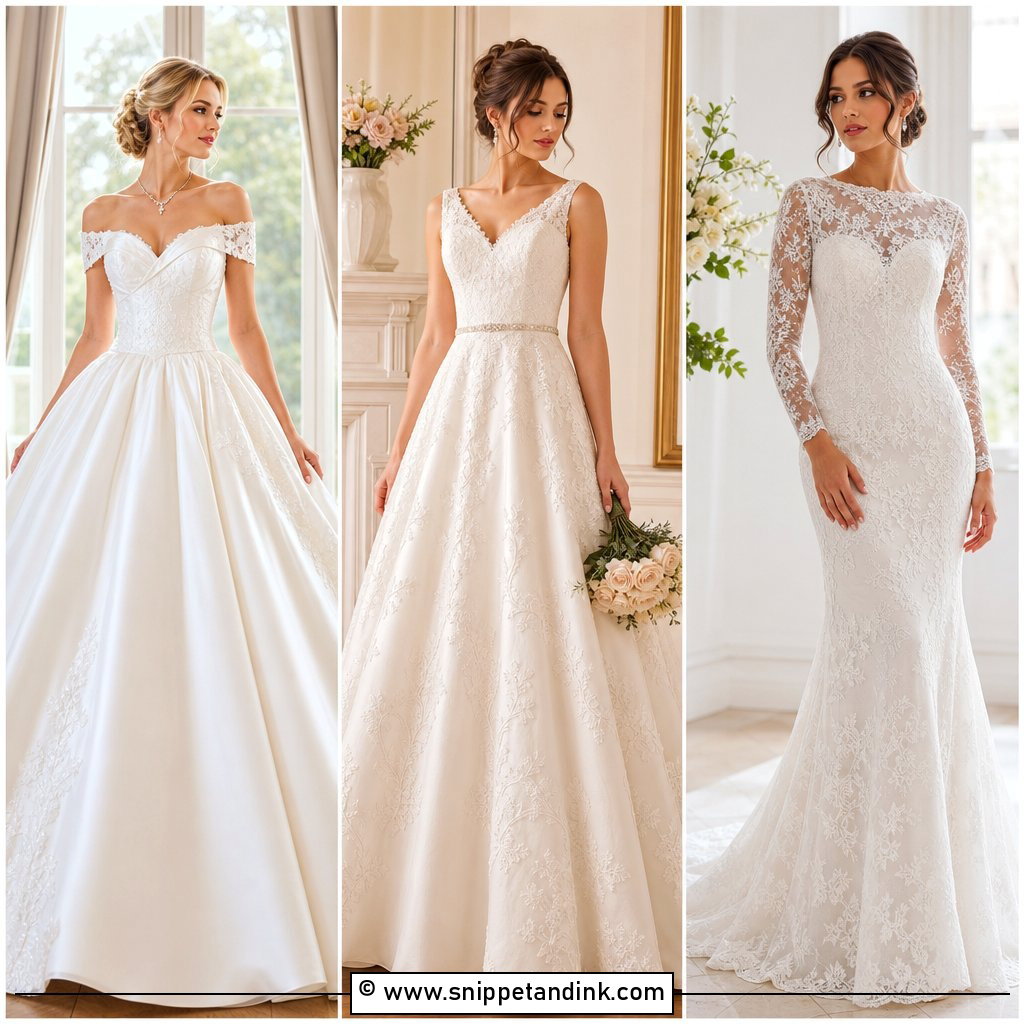
A Basque waist dips into a V at the centre front, and that point is where I focus during fittings. It has to lie flat against the body and stay comfortable when you sit and bend; if it digs in or flips outward, the bodice needs reshaping. Smooth satin gives the cleanest definition, layered tulle a softer one. Satin pumps, pearl earrings and a cathedral veil under a sleek bun suit the historical feel. Skip wide belts and big bodice jewelry, since the waistline is already the feature, and carry cream roses to soften the structure.
16. Blush Cape-Sleeve Wedding Dress
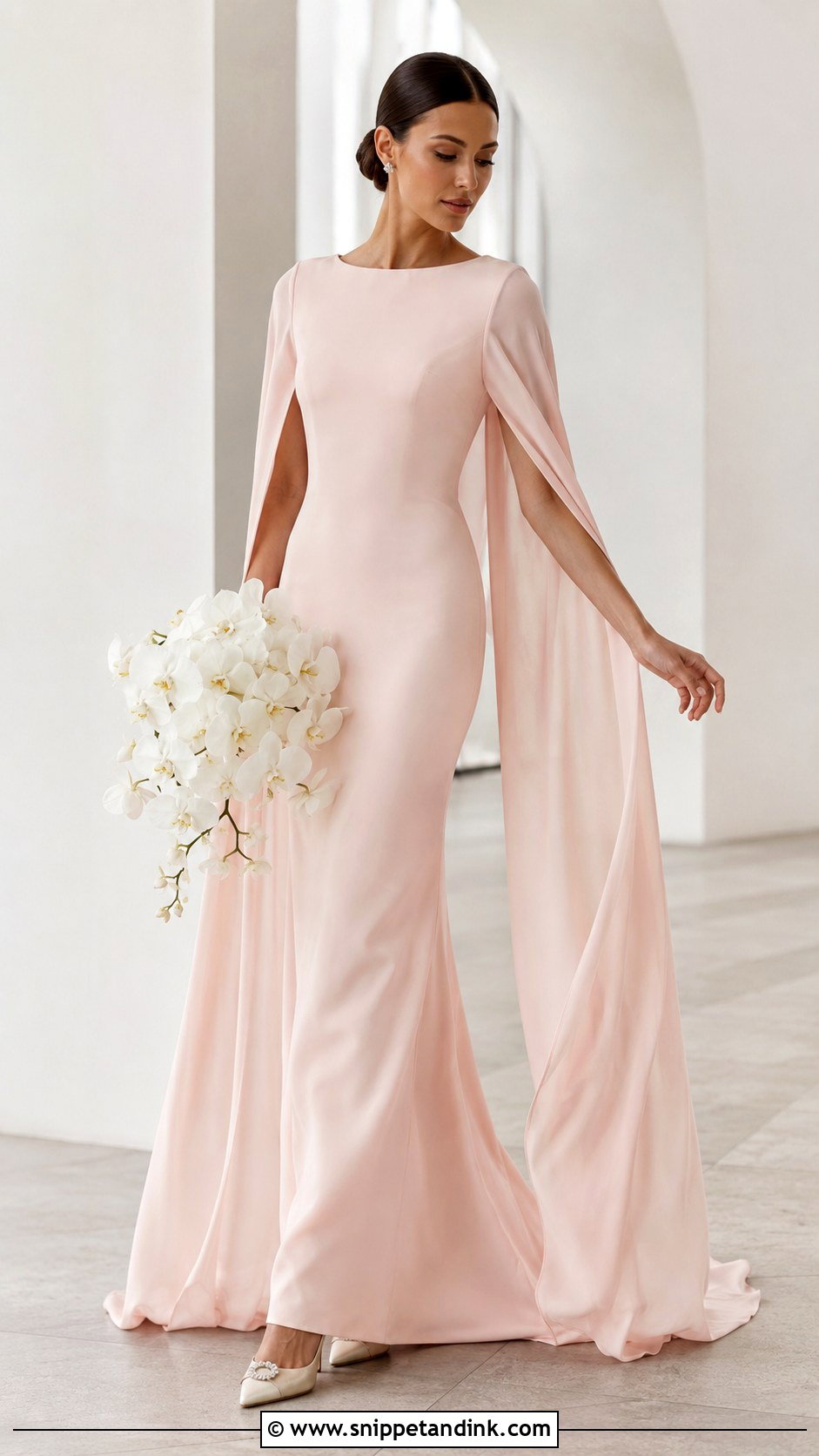
Capes can fall from a high neck, attach at the shoulders or run into a full train. Whichever you choose, put it over a simple column or A-line so it drapes cleanly. A cape usually replaces the veil, since it already frames the back. Pointed ivory heels, small crystal studs and a structured low bun suit it, with a narrow bouquet of orchids or long-stemmed roses to keep the vertical line. I’d ask for the cape to be detachable or bustled, because a long one gets stepped on once the dancing starts.
17. Blush Boho Chiffon Wedding Dress
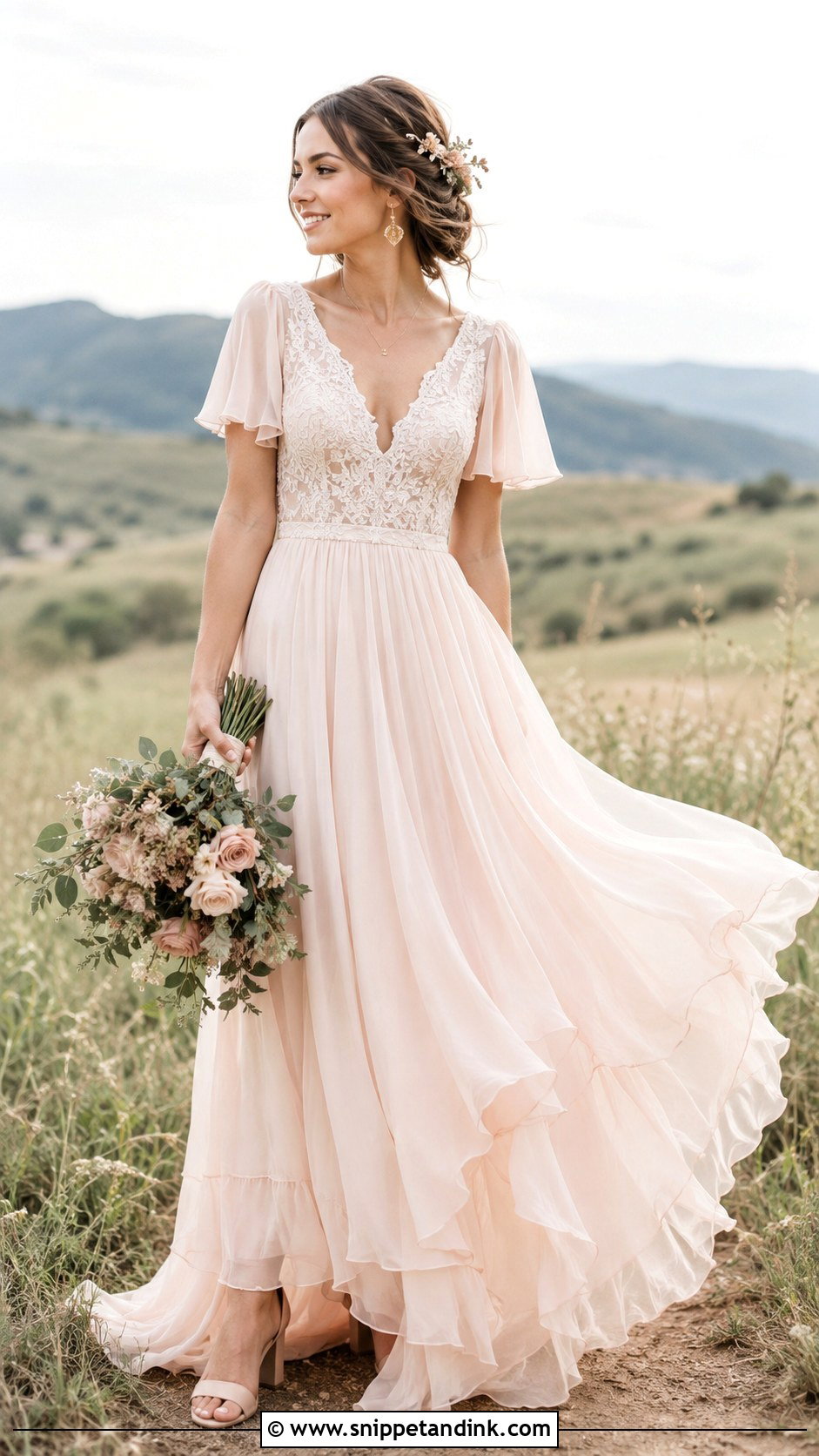
Chiffon in bright sun can go see-through, so for a boho blush dress I insist on a proper lining and check it outdoors. A gently fitted bodice, natural waist and layered skirt that catches the breeze suit relaxed outdoor weddings. Lace inserts, flutter sleeves or a low back add texture without weight. Block-heel sandals or flats keep you stable on grass. Delicate gold earrings, a loose braided updo and a light veil or floral comb suit it, along with white wildflowers and muted pink blooms. Walk across grass in the hem before the day to see whether it catches.
18. Blush Vintage Beaded Wedding Dress
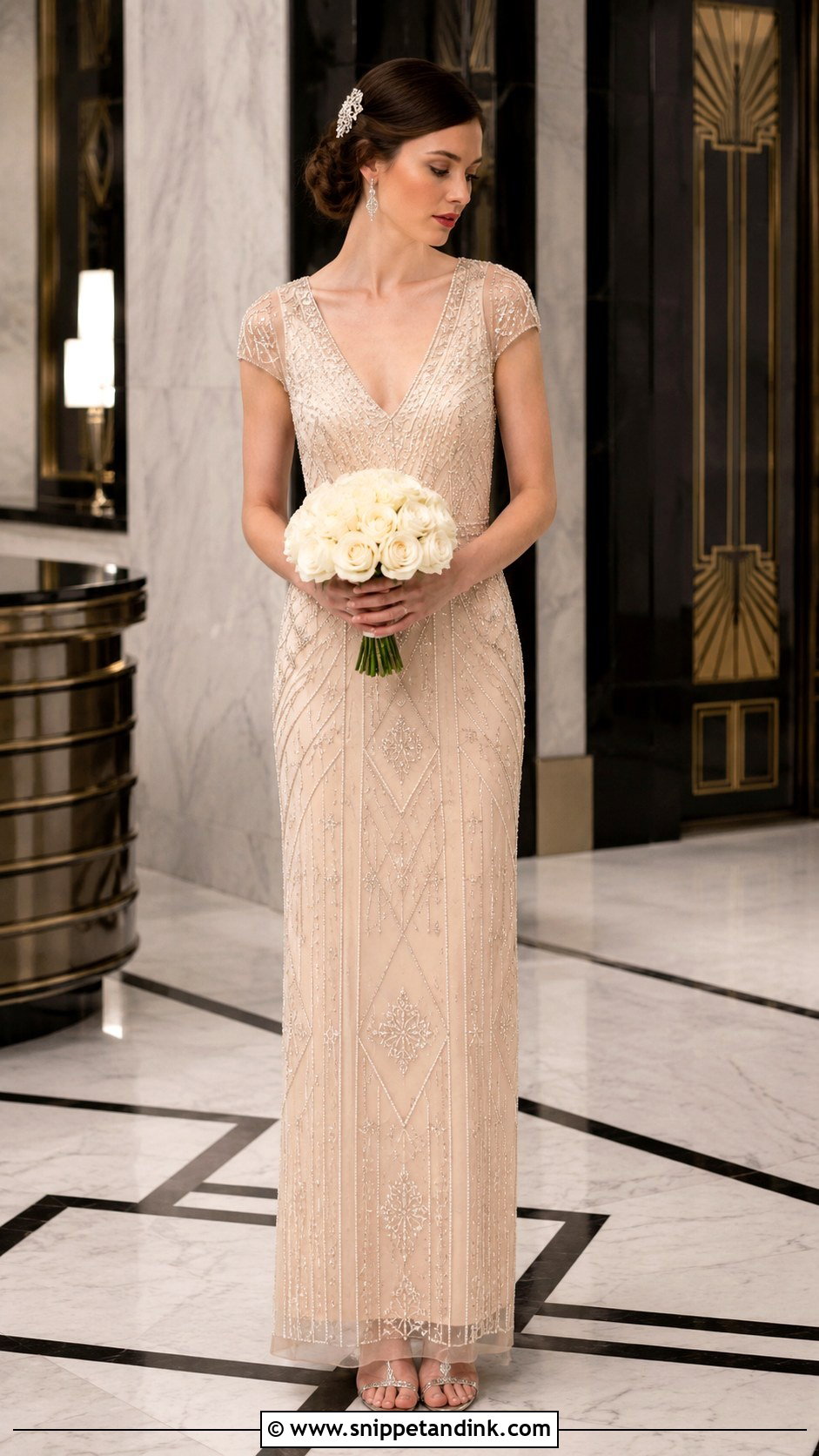
Heavily beaded gowns weigh more than people expect, and that weight hangs from the shoulders. I check the shoulder support, lining and underarm seams carefully, because that’s where vintage-style beaded dresses rub over a long day. A column with a V-neck, cap sleeves or a soft waist shows geometric beading from top to hem, much like early twentieth-century eveningwear. Metallic T-strap shoes, small crystal earrings and a jeweled comb above a low bun suit it. A plain fingertip veil softens it without hiding the back, and ivory roses or calla lilies give contrast.
19. Blush Ruffled Organza Wedding Dress
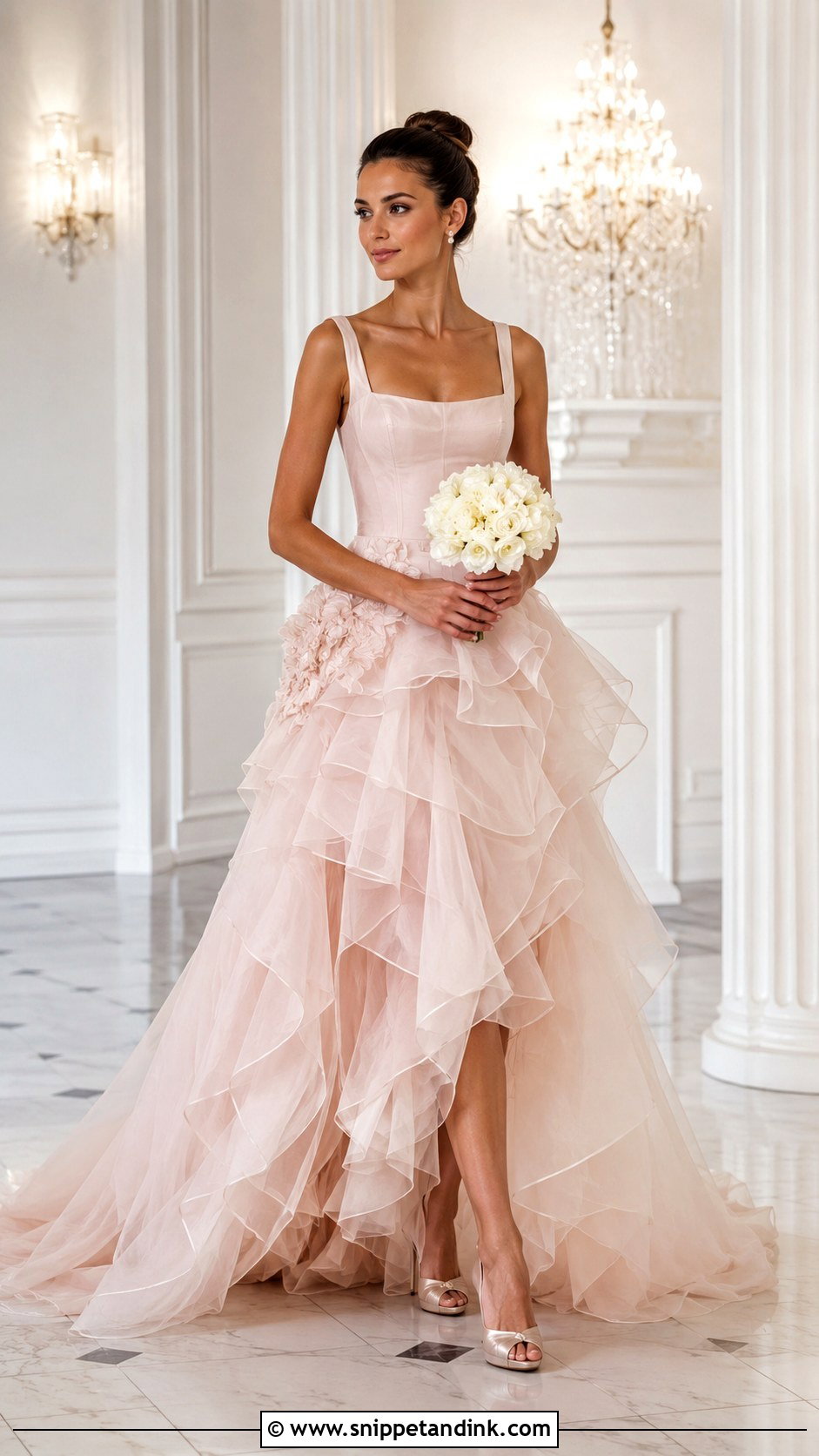
Organza ruffles hold their shape well, but they need arranging. During alterations I have the layers set so they fall evenly instead of piling up at the hips or the hem. A fitted, fairly plain bodice keeps the skirt in balance, and a strapless, one-shoulder or square neckline gives clean contrast. Satin heels, pearl studs and a sleek hairstyle keep attention on the gown. A short veil is optional and can soften the change from bodice to skirt. Carry a small single-colour bouquet; an oversized one gets lost against all that volume.
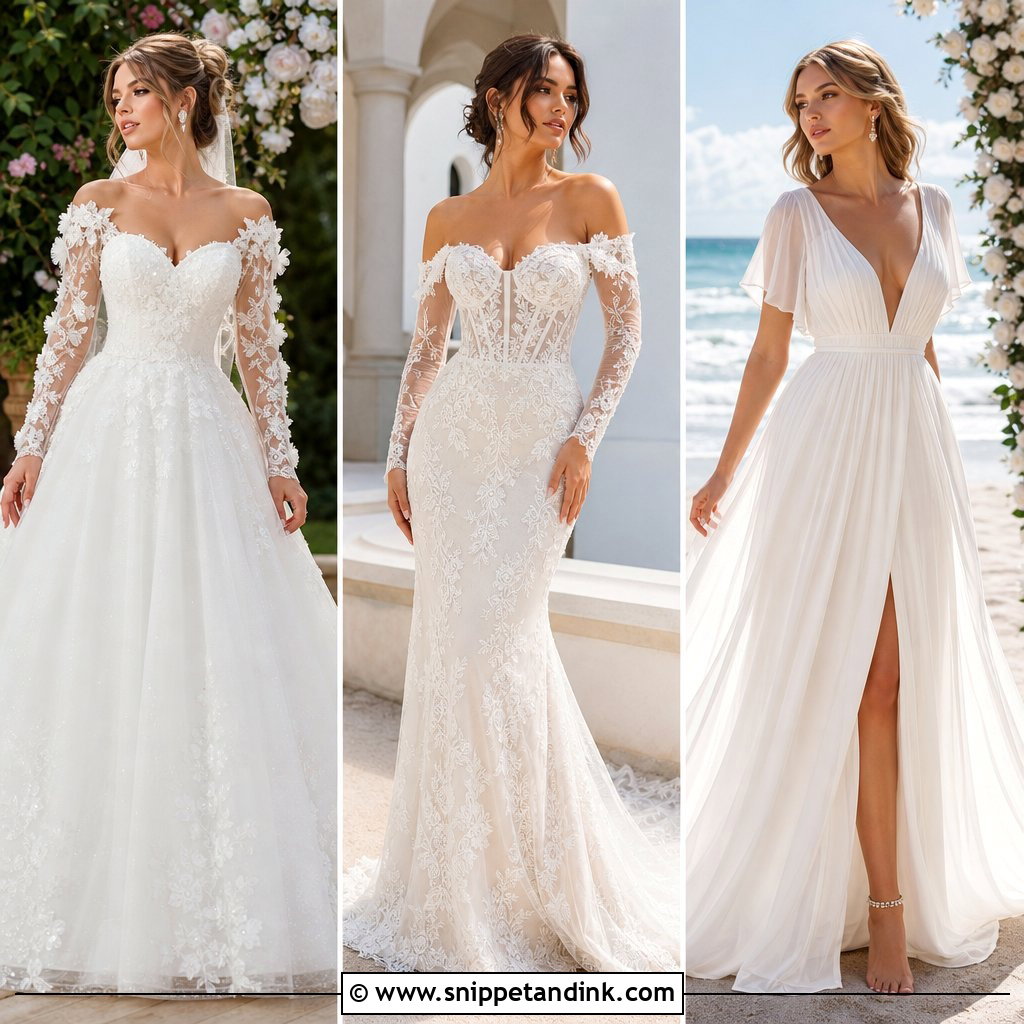




20. Blush Wedding Dress With Detachable Overskirt
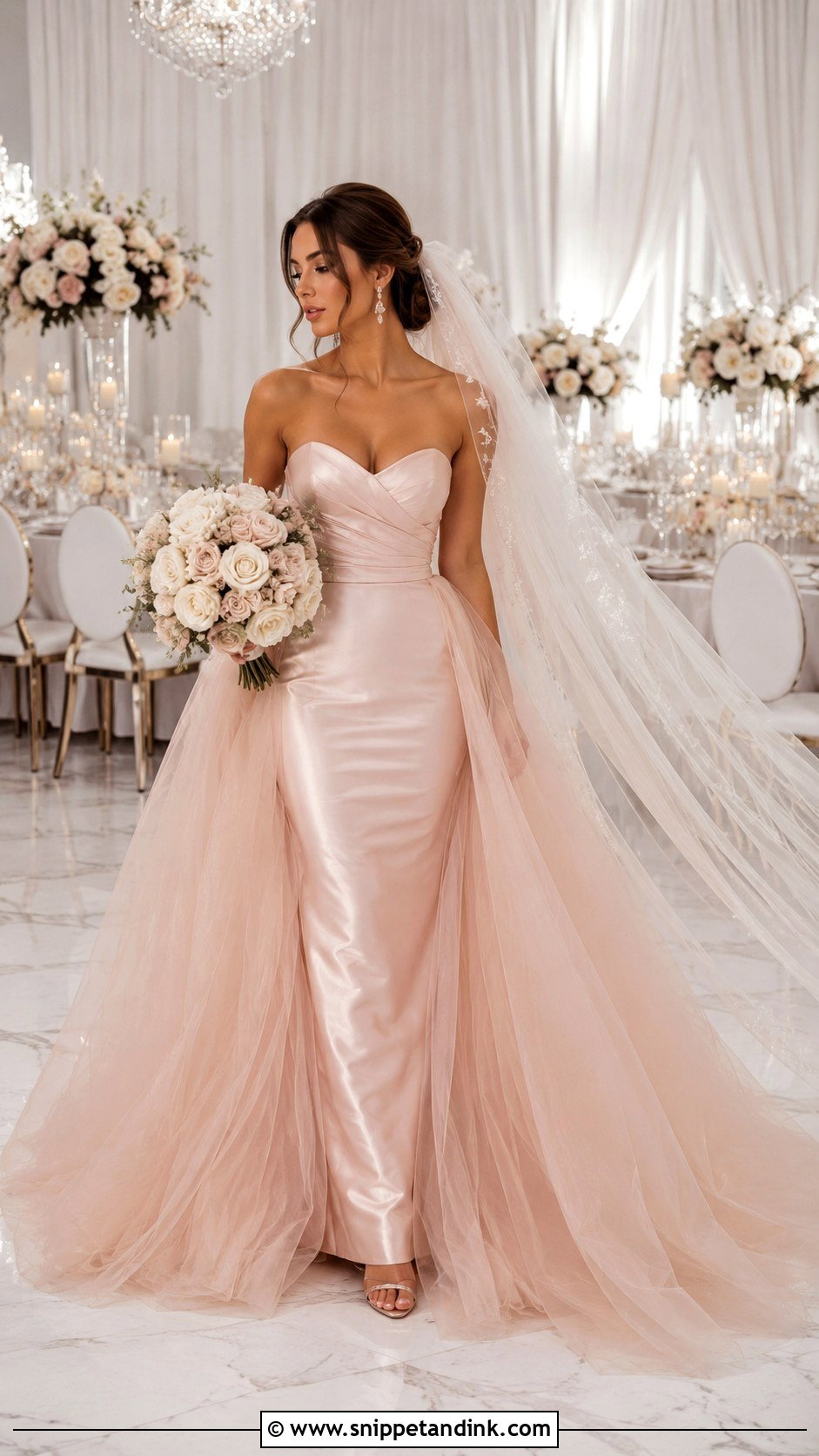
Two looks, one dress: a fitted crepe, lace or satin gown with a full tulle or organza overskirt for the ceremony, then the overskirt comes off for the reception. The underdress must look finished on its own, with no visible loops, gaps or odd waist details, so I check it without the overskirt at every fitting. Ask the seamstress to hide the fastenings and show you, and whoever helps you, how to remove the layer without tearing it. Metallic heels, drop earrings, a polished updo and ivory and blush flowers work with both versions.
A Fitting Calendar Worked Back From the Wedding Date
Coloured gowns are often made to order, and a blush dress may also need a fabric or lining sample approved before production starts, so I’d allow more time than for a stock ivory dress. Production times vary a lot between designers, so treat this as a rough shape and ask the boutique for its own dates.
- Nine to twelve months out: shortlist shapes and order fabric swatches so you can see the shade at home and in daylight.
- Around eight to ten months out: place the order. Ask whether the colour is dyed per order, and if so, request a dyed swatch before cutting.
- Two to three months out: first fitting. Bring the exact shoes and undergarments you’ll wear, or the hem and bodice will be fitted to the wrong ones.
- Four to six weeks out: second fitting for the bodice and bustle. Practise the bustle with the person who’ll do it on the day.
- One to two weeks out: final fitting and collection. Try it on, sit, walk and lift your arms one last time.
If your weight is changing for any reason, tell the seamstress early. Taking a bodice in is easier than letting it out, especially on a corset or beaded dress where seam allowance is limited.
Let the Fit Decide Before the Shade Does
A blush wedding dress should feel as good as it looks, in chiffon, lace, satin or crepe. The colour adapts to minimalist, vintage, boho and dramatic styles alike. Start with a silhouette that lets you move and matches how formal your wedding is, then compare shades against your skin by a window and under indoor light. Keep accessories in support of the gown. And give yourself enough time for alterations, because a dress that fits properly, with shoes you can stand in, is what lets you relax through the ceremony, the photos and the reception.
You'll Like These Ideas:





Leave a Reply