
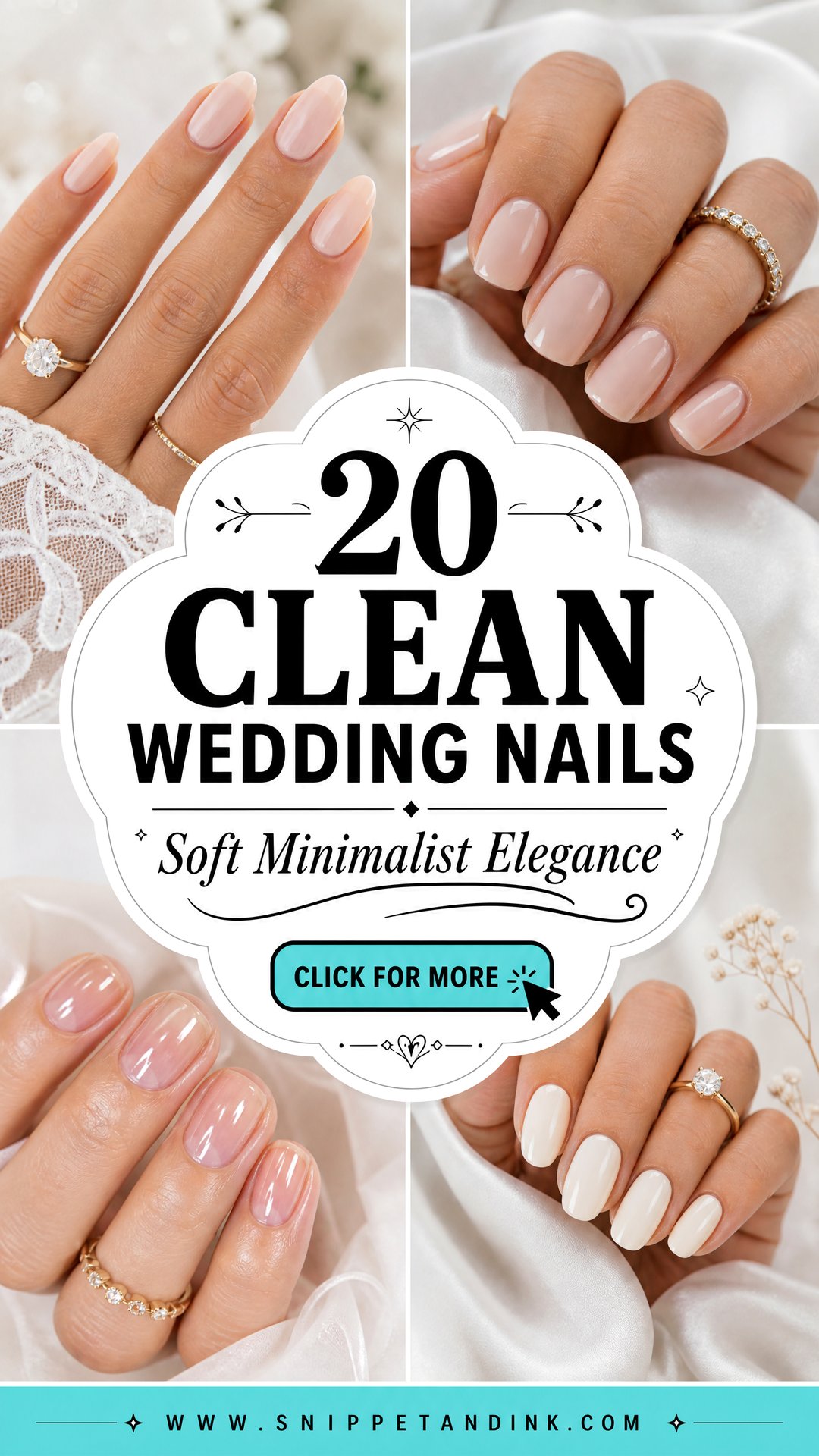
A minimal bridal set is the one I spend the most time on, even though it looks like the least work. With bold art, a lifted cuticle or an uneven free edge hides under the design. With a sheer blush or a milky white, every flaw shows, and so does every bit of care. The sets below stay in the quiet range: sheer color, soft neutrals, high gloss and shapes like oval, almond, squoval and short square. A few add a small detail, such as a thin French edge, a pearl glaze or one flat-back pearl, so the hands look finished without competing with the dress, the ring or the bouquet. They work for bridesmaids and guests too, and they won’t date your photos.
Sheer Polish Shows Everything Underneath
With a minimal set, the prep is the manicure. A see-through color shows ridges, dry cuticles, uneven sidewalls and any leftover color from an old set. So the appointment should be built around preparation, not just painting.
Start the groundwork three or four weeks out
If you bite, peel or have been wearing gel back to back, give your nails a few weeks of cuticle oil twice a day and stop picking at the edges. One gentle in-between appointment to remove old product, tidy the cuticles and agree on a shape helps a lot. Changing from square to almond takes length you may not have yet, so decide early.
Book the final set two to three days before
Gel or builder gel done two or three days ahead has time to settle, and you’ll notice any lifting at a corner while there’s still time to fix it. Regular polish is a different story. It needs the day before at the latest, and it stays soft for hours, so I don’t recommend it on the morning itself when you’re dressing, pinning and hugging people.
- Bring a photo of your ring and a swatch or photo of your dress fabric.
- Ask for the shade to be checked in daylight before the top coat goes on.
- Say if you work with your hands, garden, or type all day, so the length and product can match.
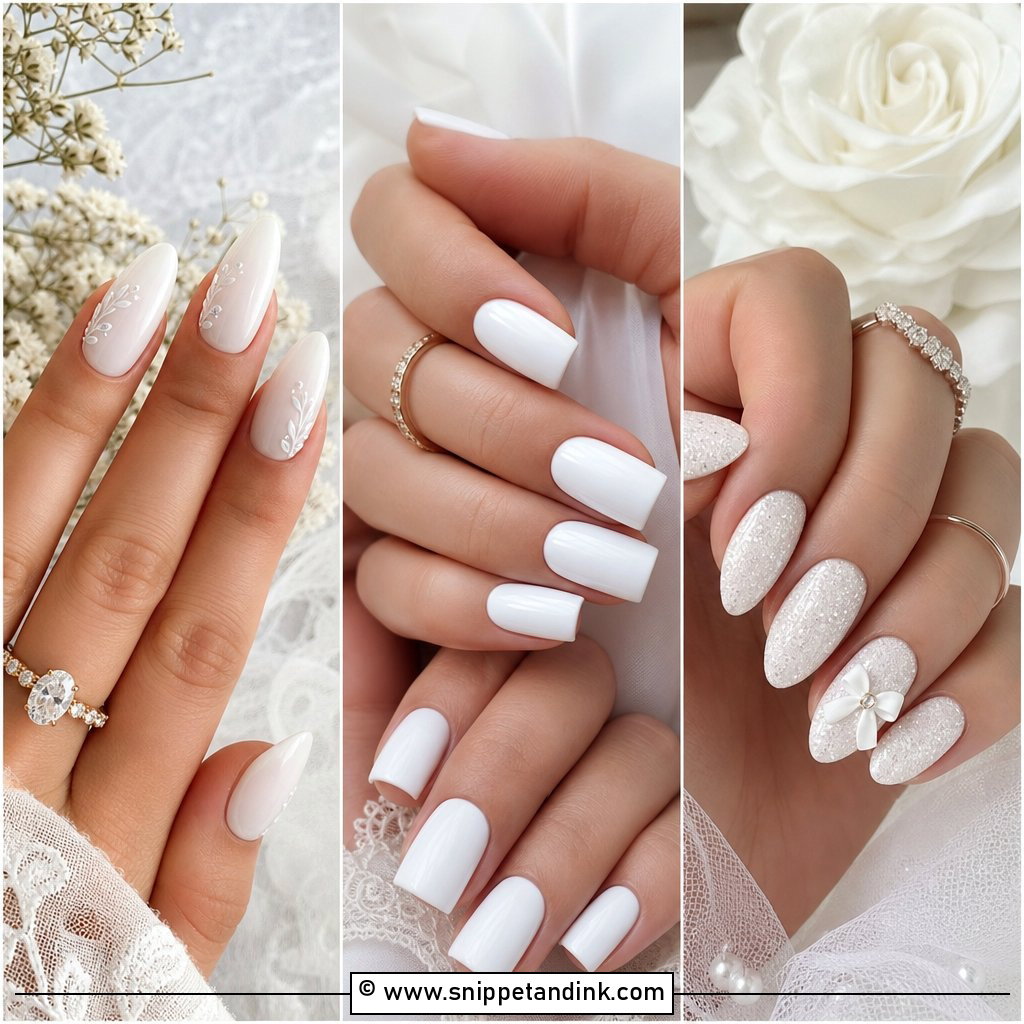
1. Milky White Wedding Nails
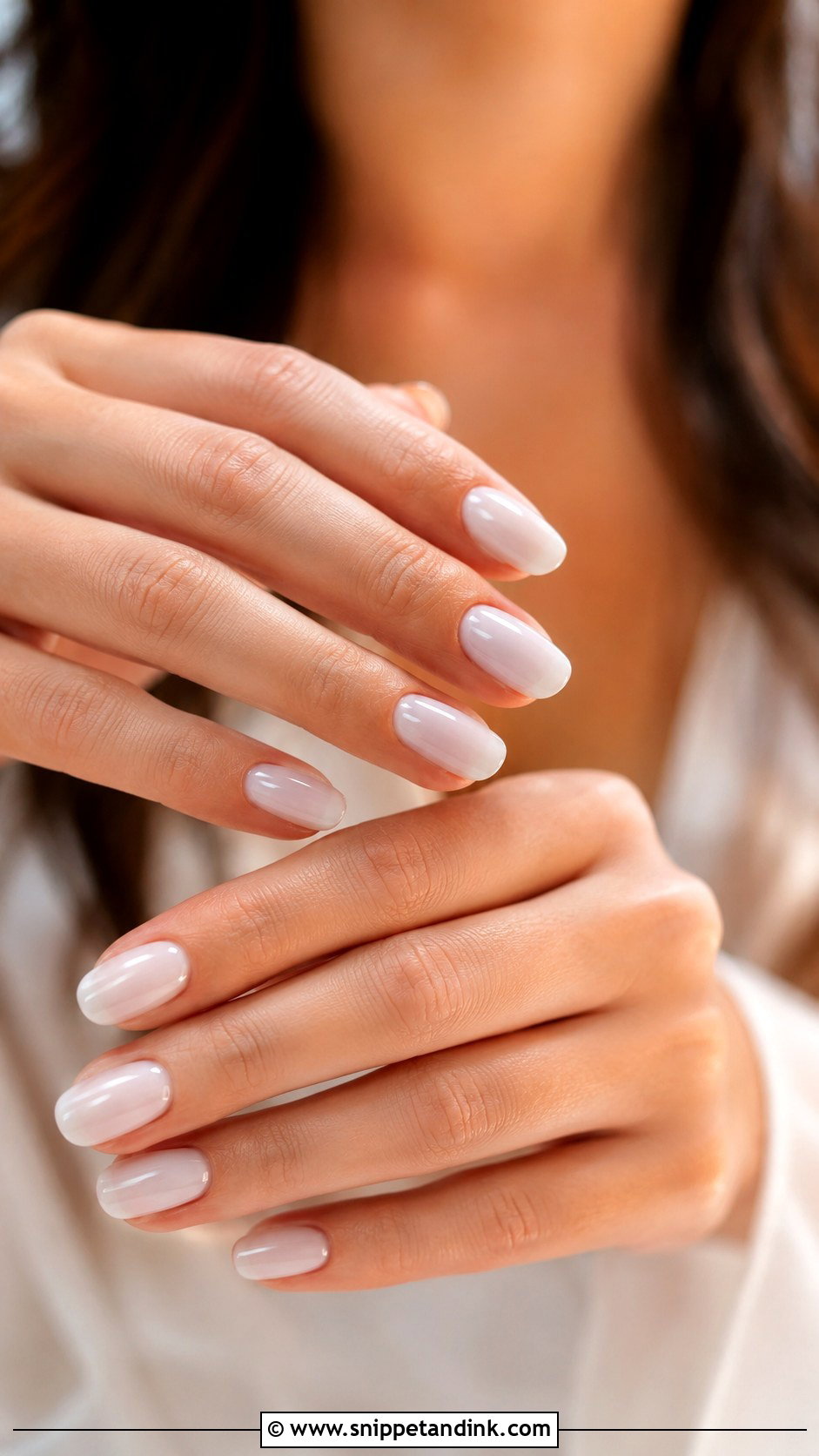
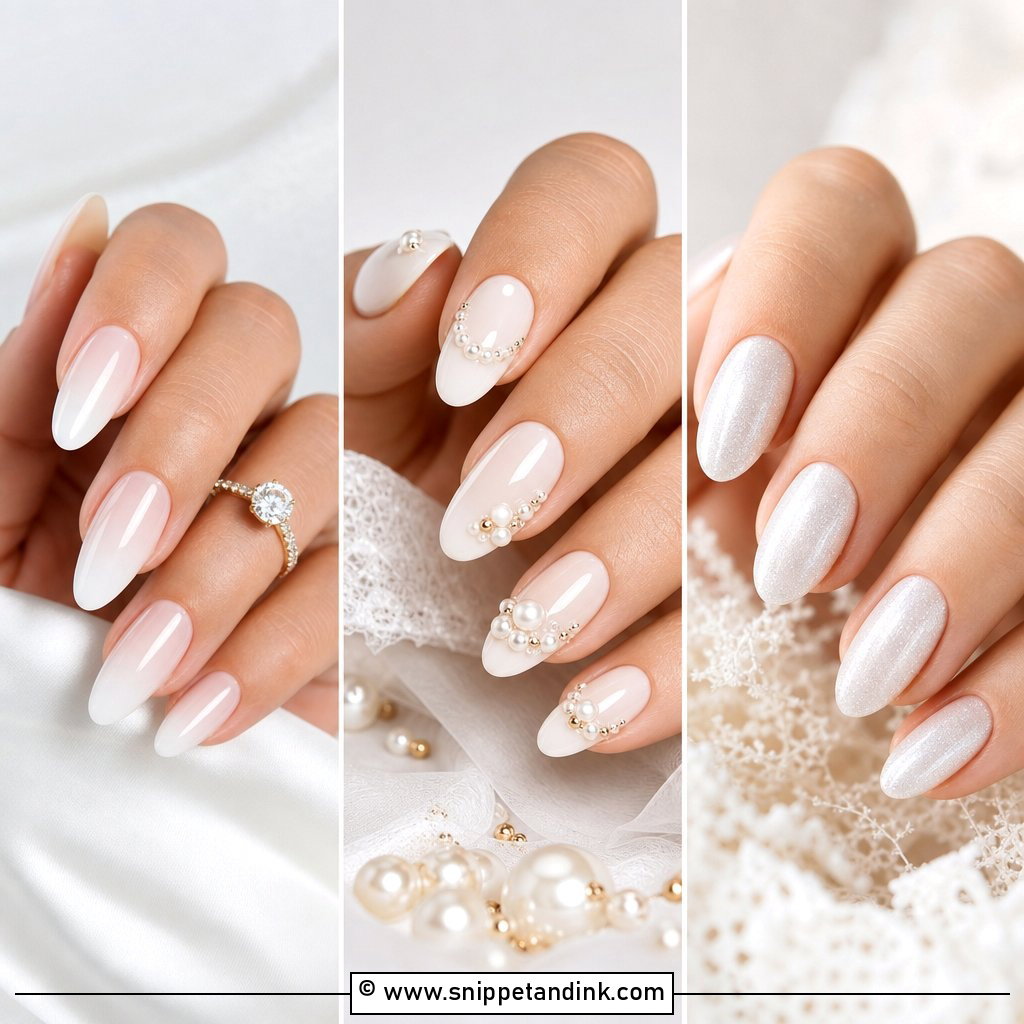
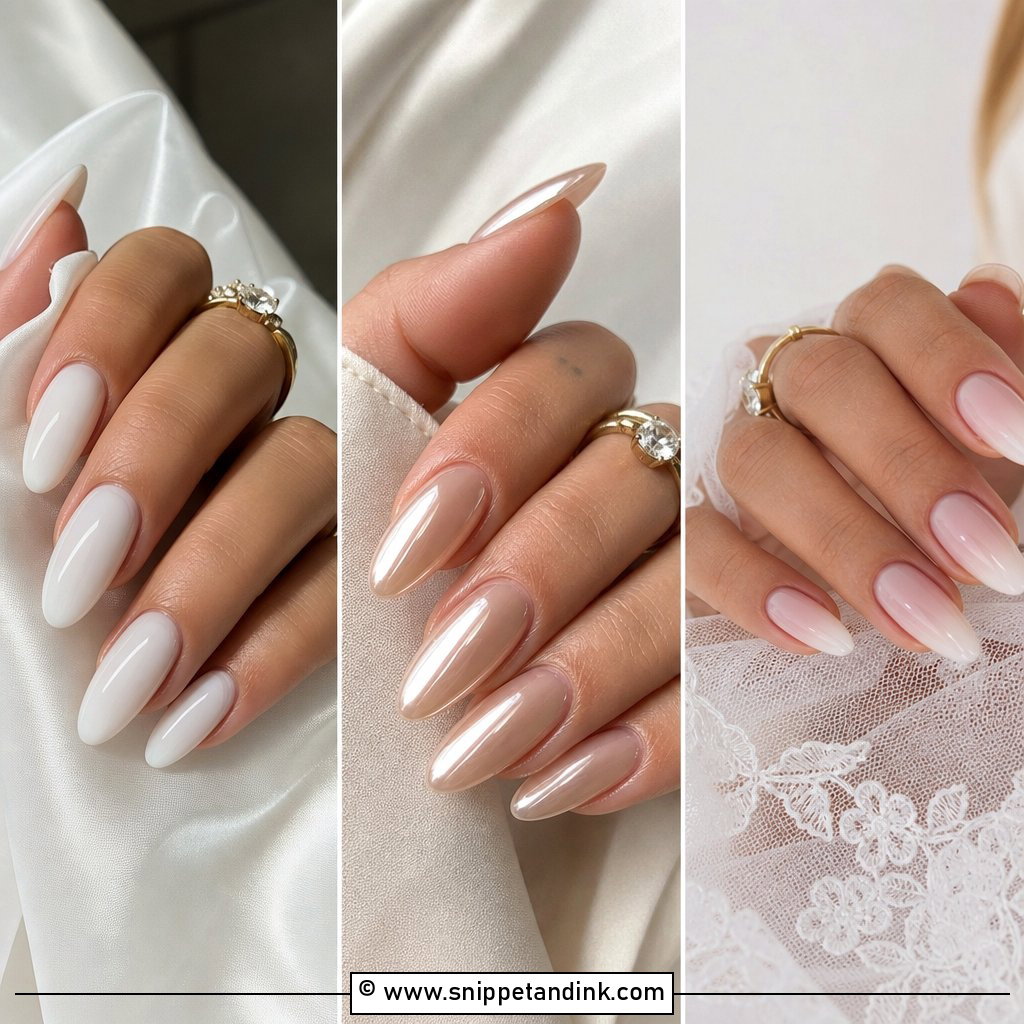
A milky white reads creamy rather than chalky because the natural nail still shows faintly through it. That’s why I use a buildable milky gel in two or three thin coats instead of one opaque white: you can stop the moment the nail looks soft and even. Short oval, almond and squoval all suit it. The one thing to watch is streaking. Milky gels are thin, so if your nail plate has ridges, I fill them first with a clear base, otherwise the white settles into every groove and shows lines in a close-up ring shot.
2. Soft Pink Wedding Nails
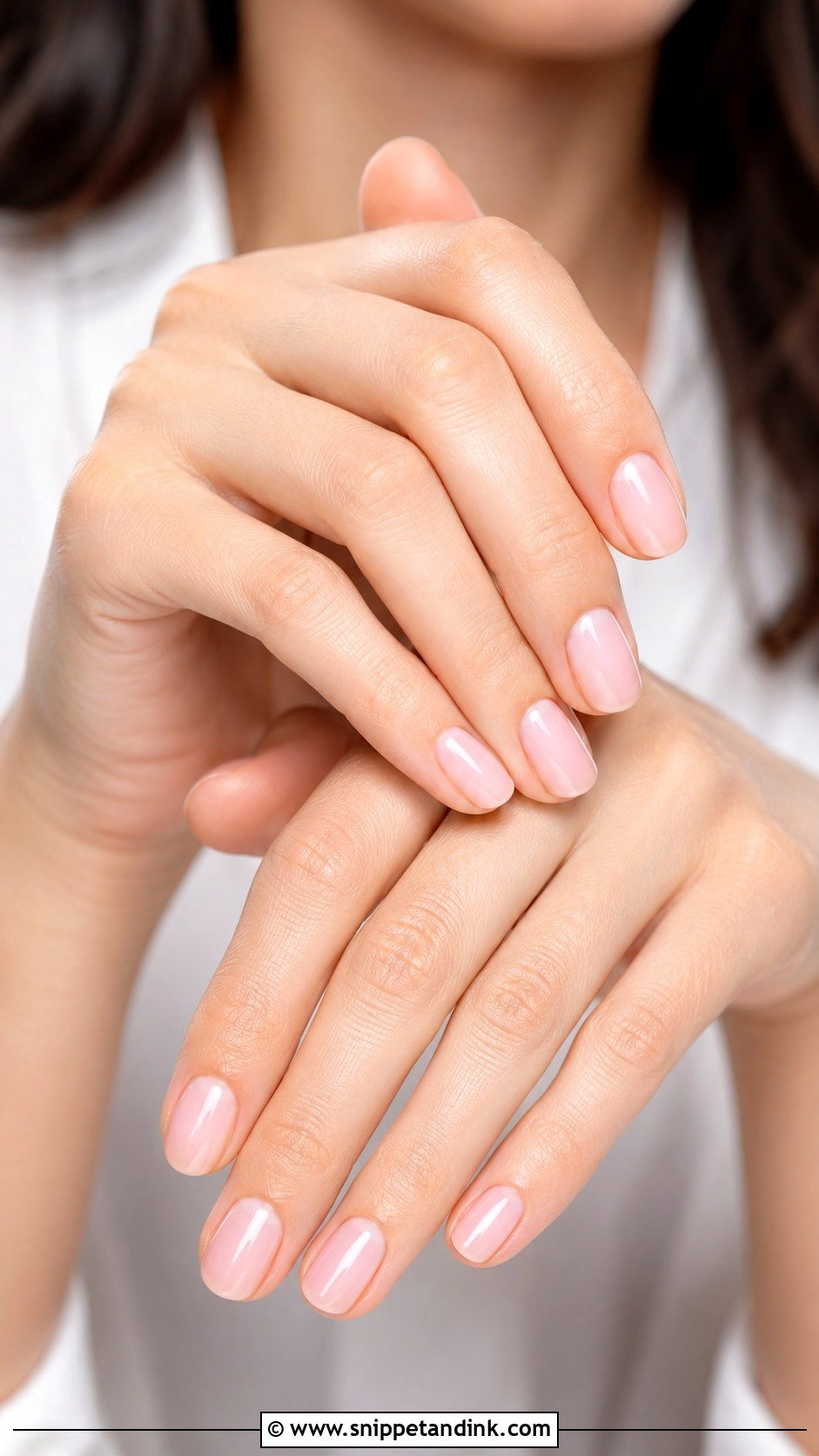
A sheer baby pink or blush nude evens out the nail bed rather than covering it, which is why it looks so natural in close-ups. On fair skin I usually go toward pale rose; on medium to deep skin, a warmer pink beige or a muted mauve, because a cool baby pink can look slightly grey against warmer fingers. Short to medium oval makes the fingers look longer. Keep it glossy and neat and you can wear it from the first look through the last dance without thinking about it.
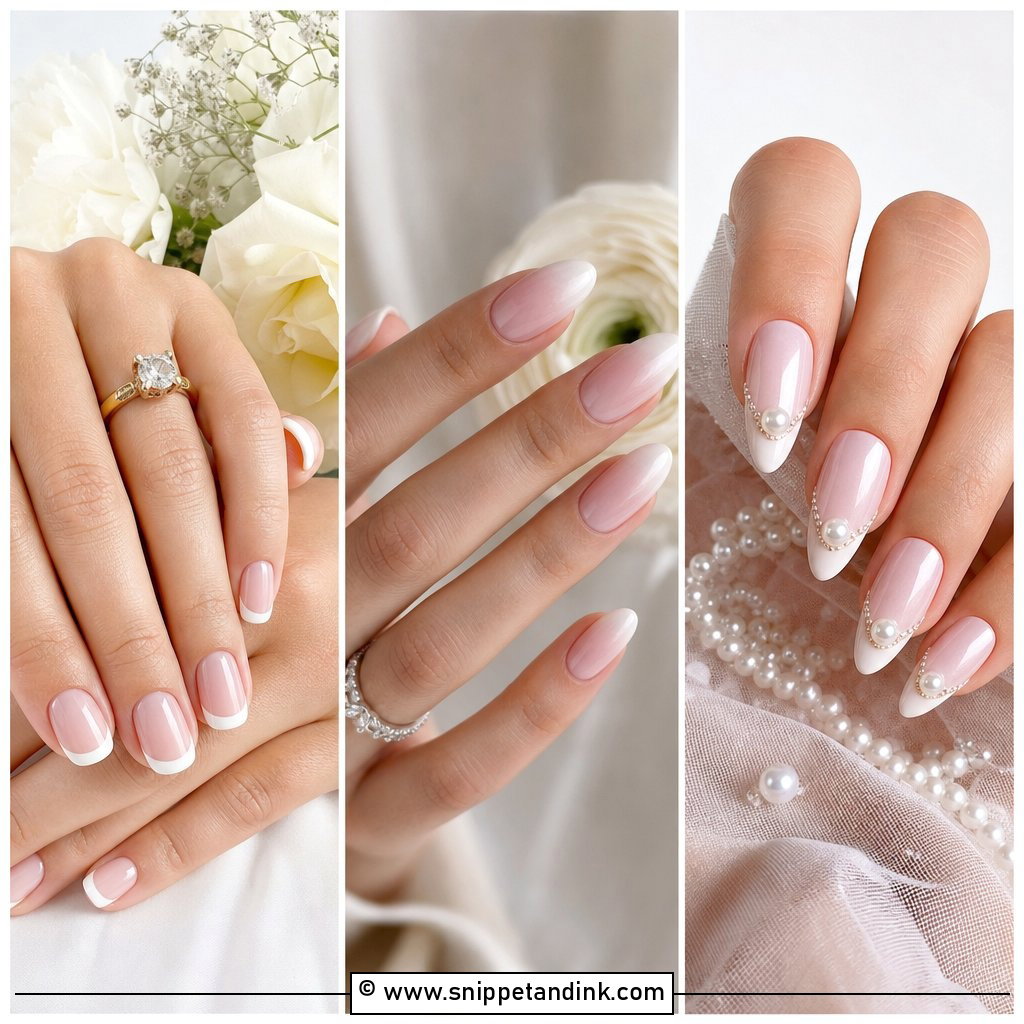
3. Classic French Wedding Nails
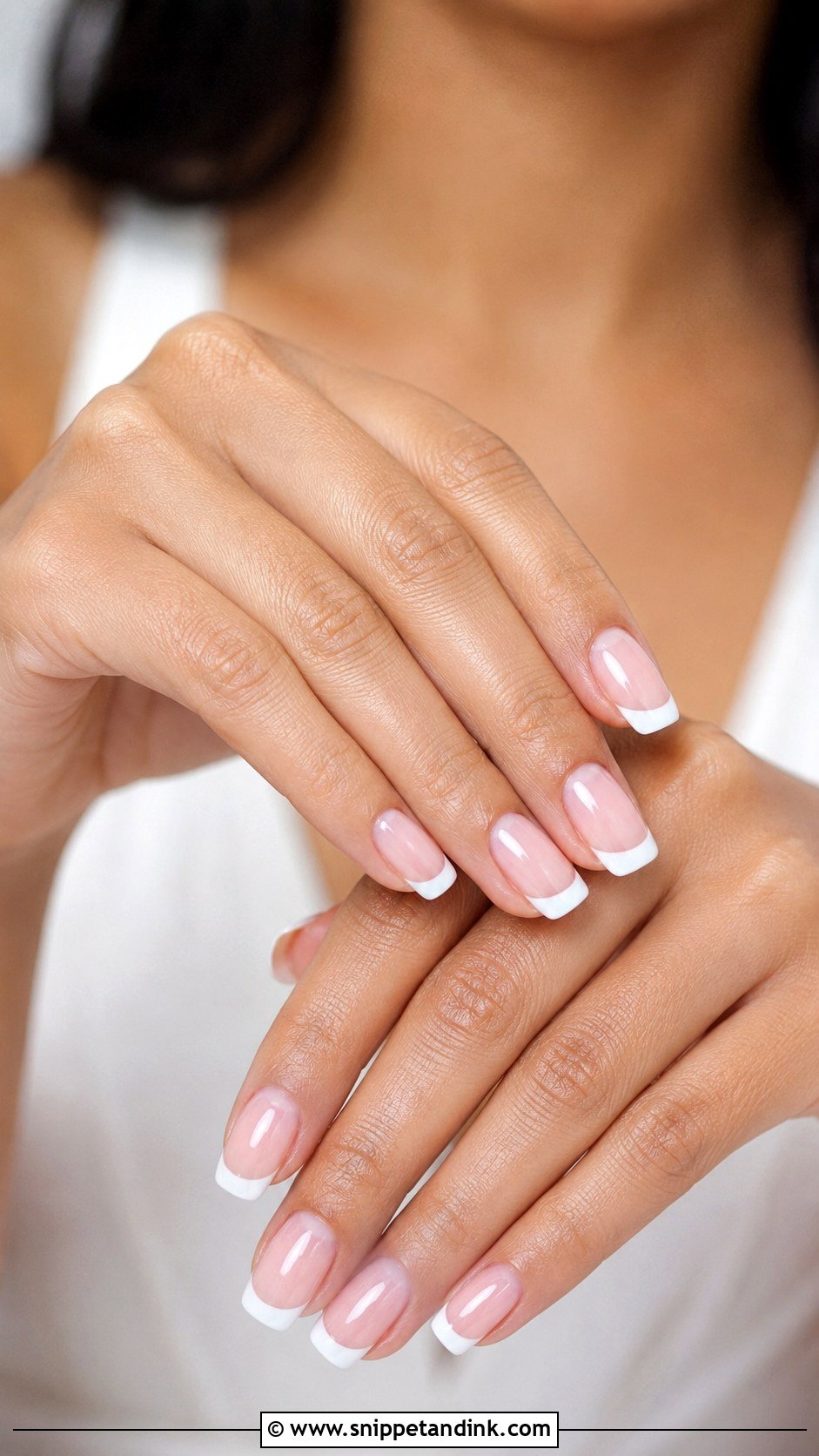
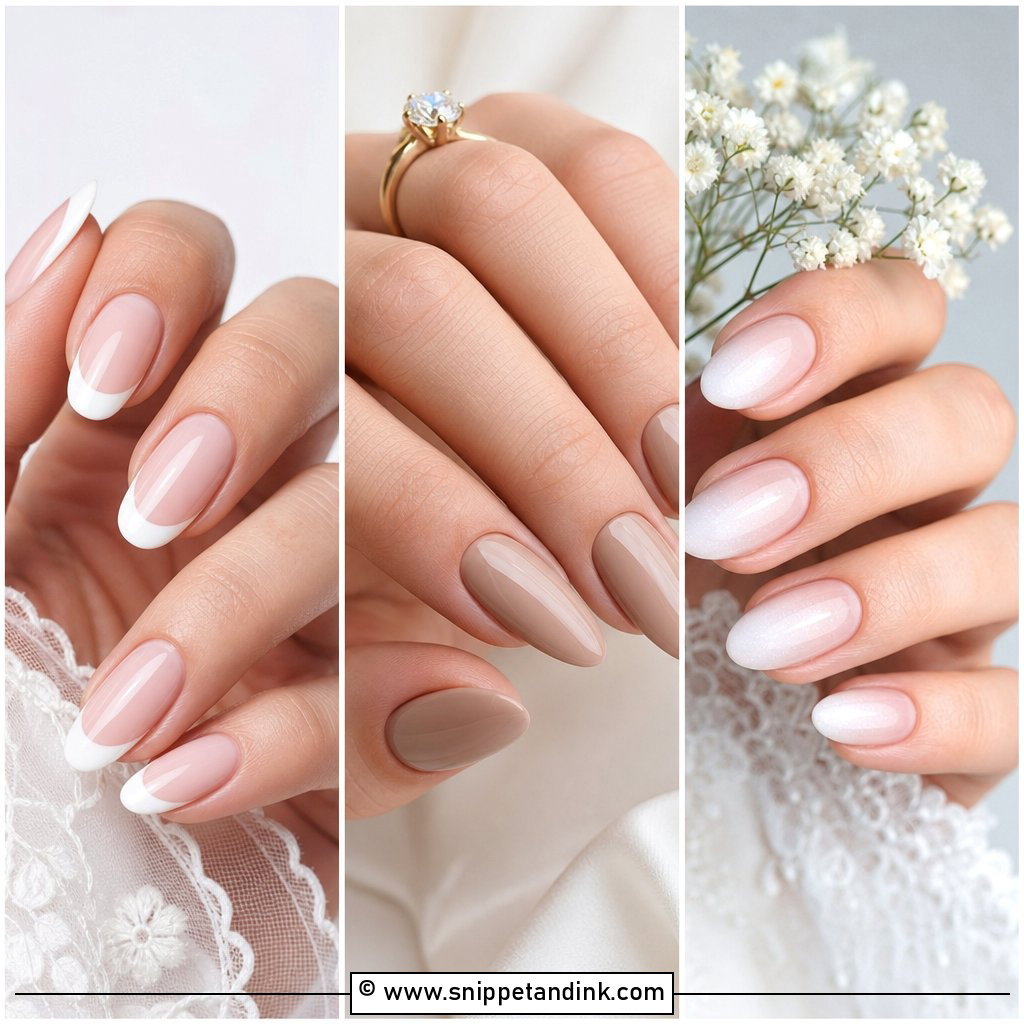
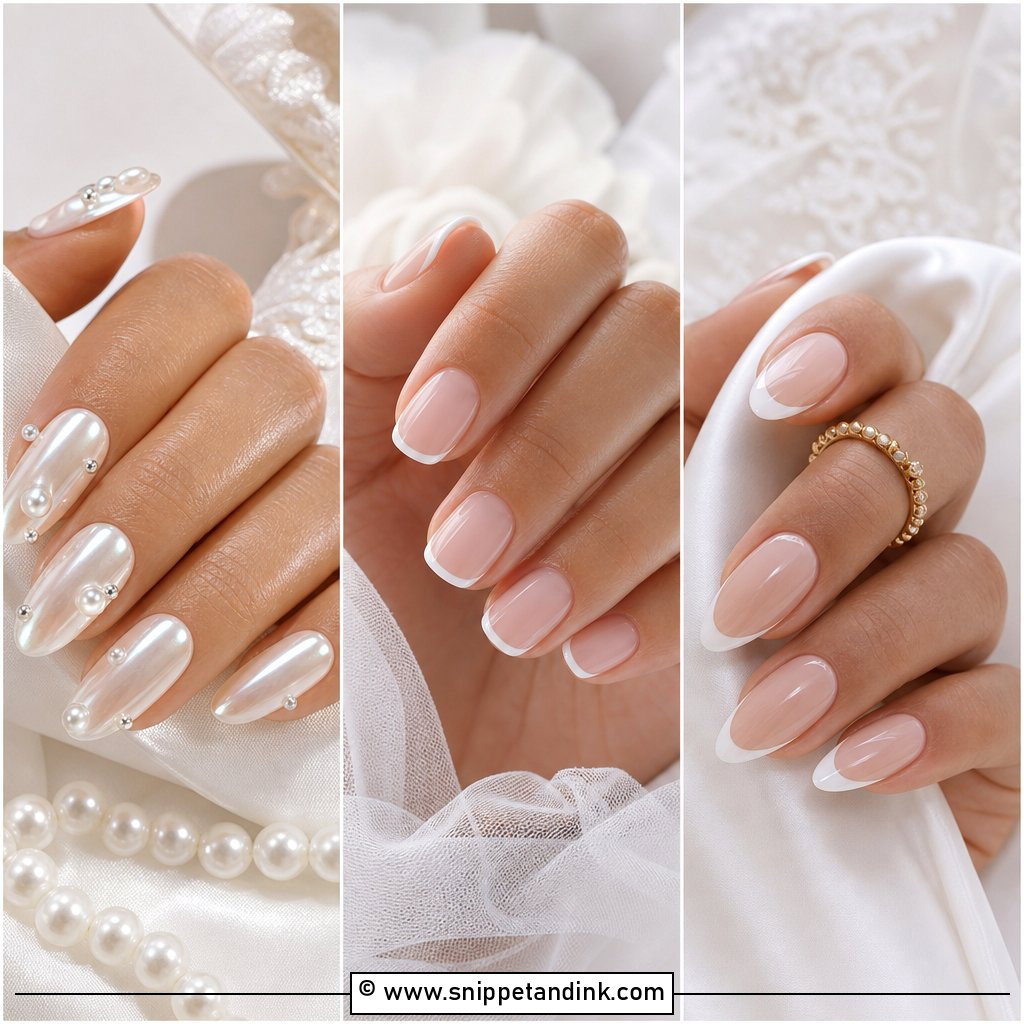
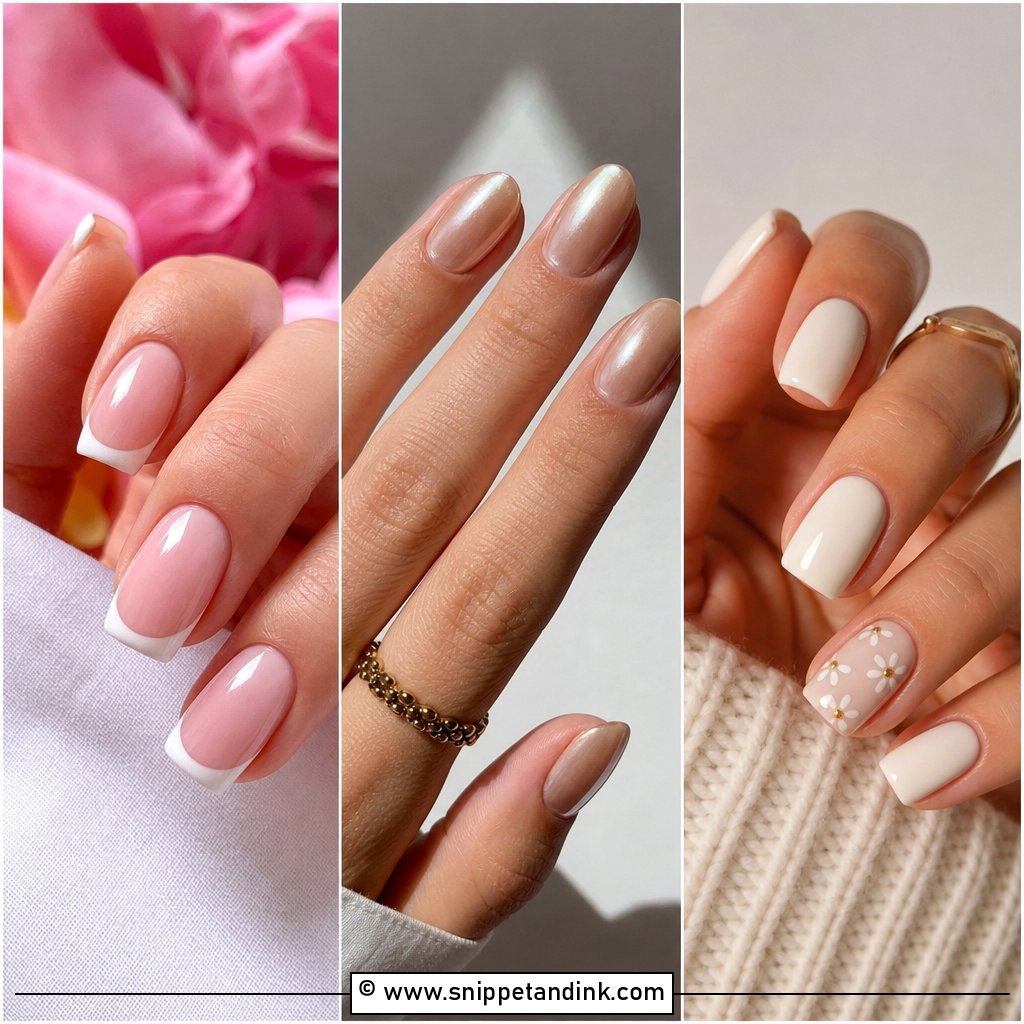
A modern bridal French lives or dies on the thickness of the tip. I keep the white line thin and curved to follow your smile line, because a thick, straight tip makes short nails look shorter. Under it goes a sheer pink or nude matched to your own nail bed, so there’s no visible band where the base ends. It works on short square, squoval, oval, and almond nails. Painting the tip freehand with a fine liner brush gives a crisper edge than a sticker guide, and that’s the detail people notice when you hold up the ring.
4. Baby Boomer Wedding Nails
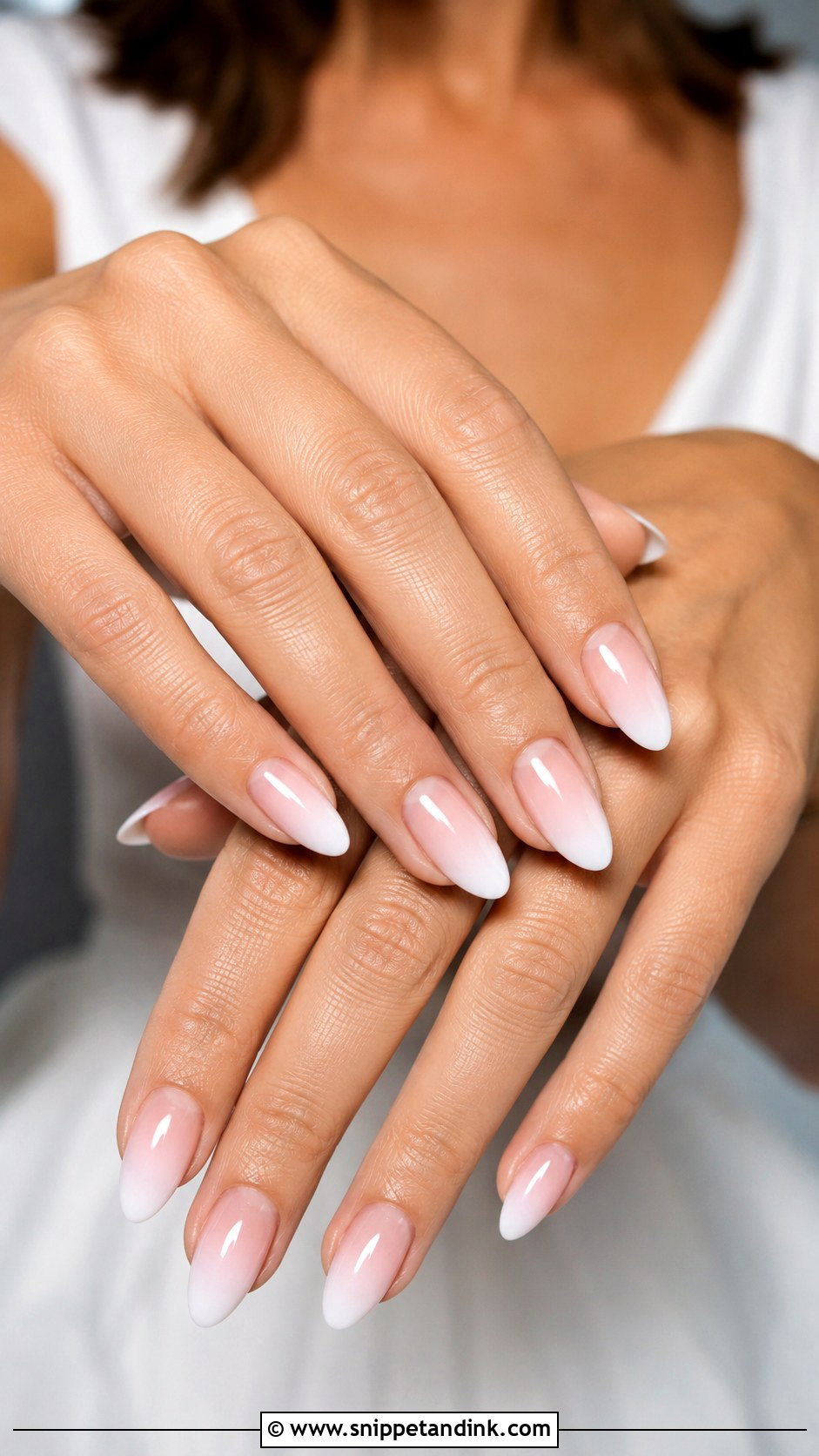
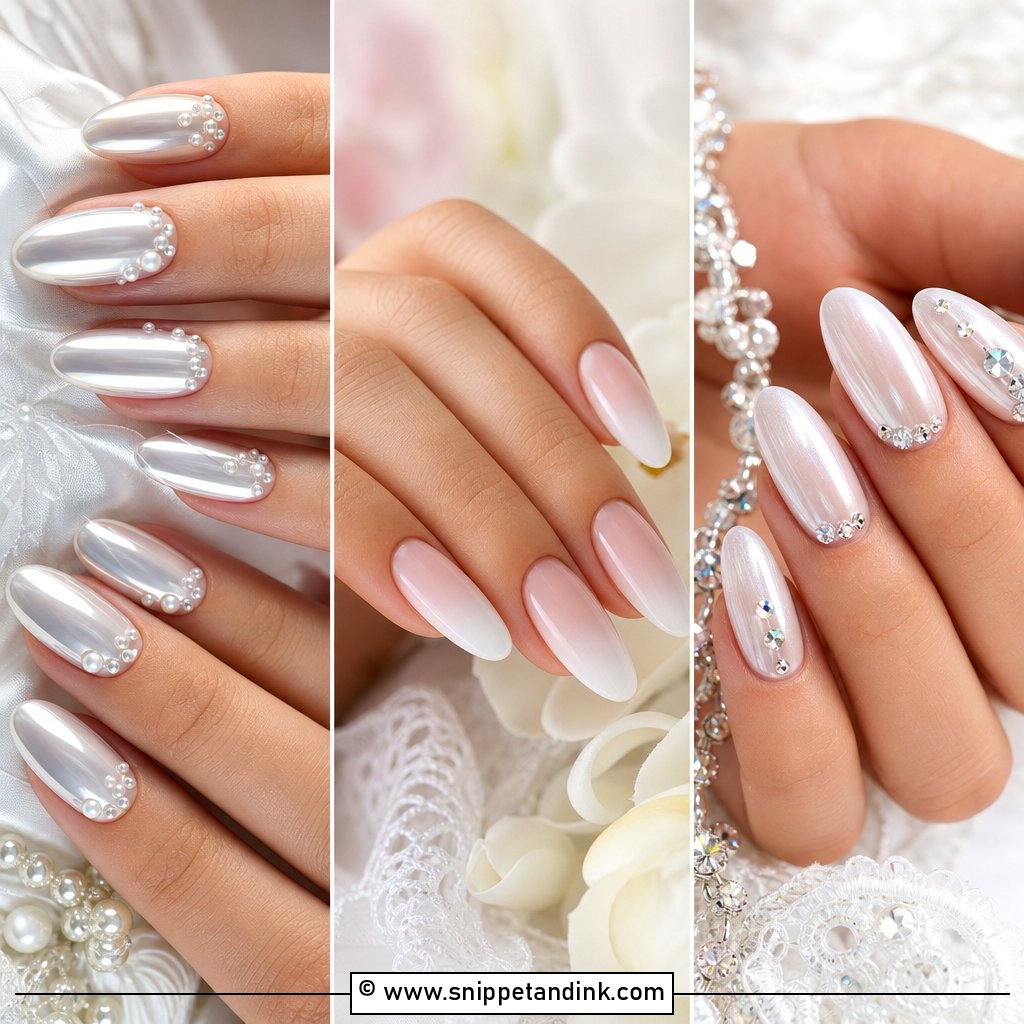
Baby boomer is a soft ombre version of the French, where a nude or pink base blends into a misty white tip with no hard line anywhere. I build it with a sponge or a dry brush, layering thin passes so the white melts upward instead of sitting in a stripe. It flatters almond and oval nails because the gradient draws the eye along the length. Pick a sheer nude base for the most natural read or a milky pink one for a softer finish. A practical bonus: grow-out at the cuticle barely shows, so it still looks fresh on day ten of the honeymoon.
5. Pearl Chrome Wedding Nails
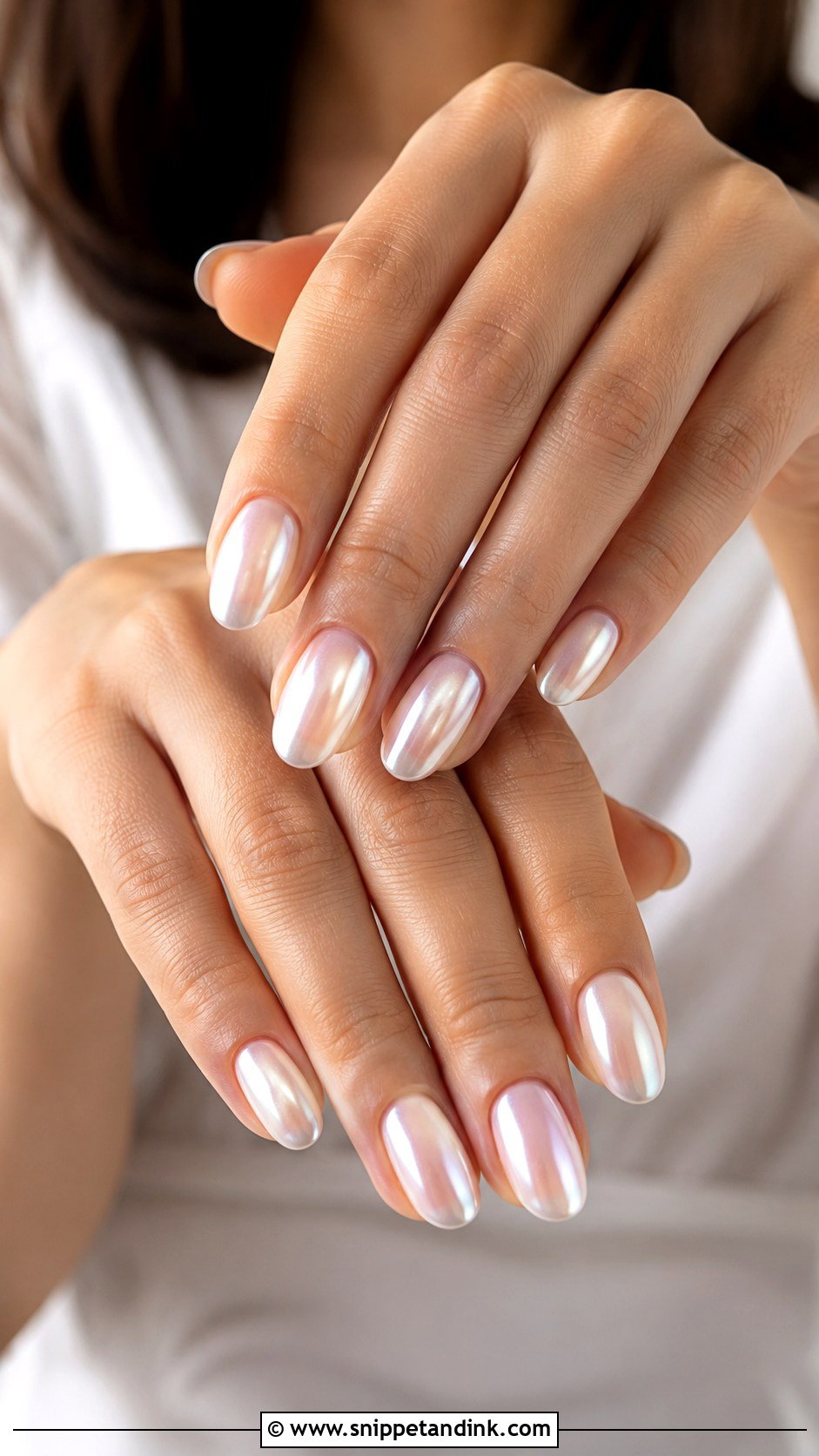
Pearl chrome is a fine powder rubbed over a cured no-wipe top coat, which is why it glows instead of looking like foil. Over milky white, sheer pink or pale nude, it picks up the same sheen as pearl buttons or satin. The common mistake is too much powder: one light pass gives a glaze, two or three start to look metallic and cool. I’d keep the shape soft, oval or almond, because chrome on a sharp square edge tends to catch the light in a hard line along the tip.
6. Nude Almond Wedding Nails
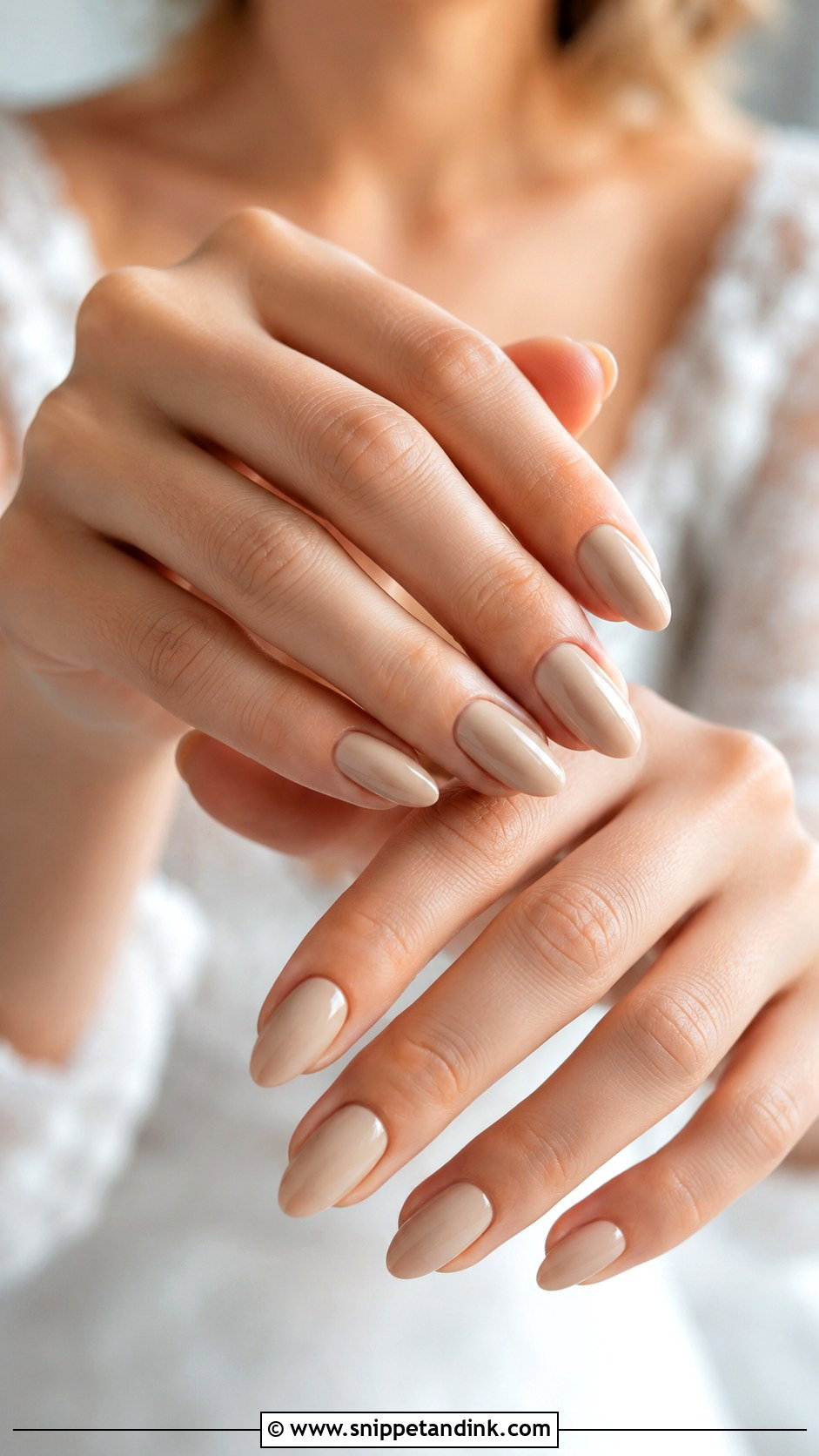
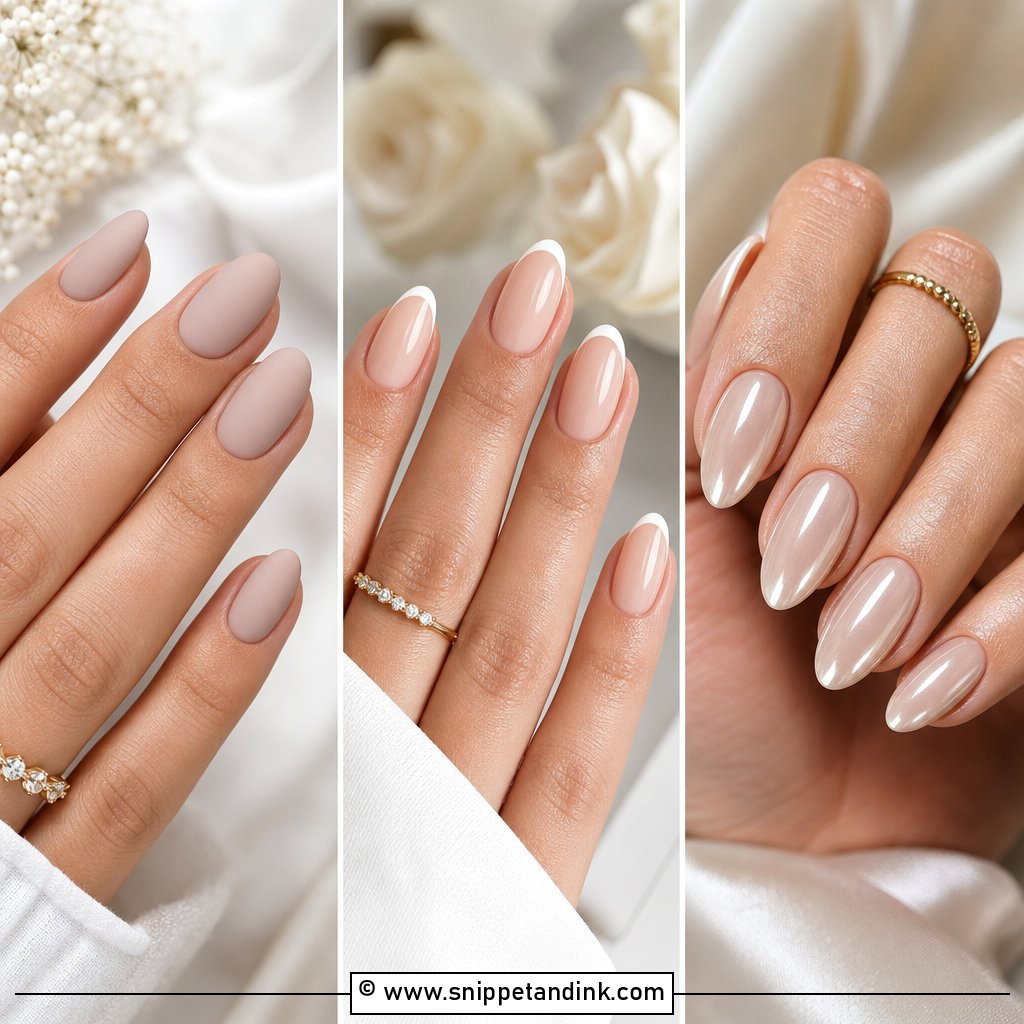
Almond tapers the fingers, and a nude keeps everything calm, so the whole job here is finding the right nude. I swatch three shades on the actual nail, not on a tip, because the same bottle looks different over every nail bed. As a starting point, fair skin tends to suit pink beige or a soft peach; medium skin, caramel beige or rose nude; deep skin, cocoa, mocha or a sheer brown beige. If a nude makes your fingers look washed out or bandage-like, the undertone is wrong, not the depth. Go glossy and skip the art.
7. Short Squoval Wedding Nails
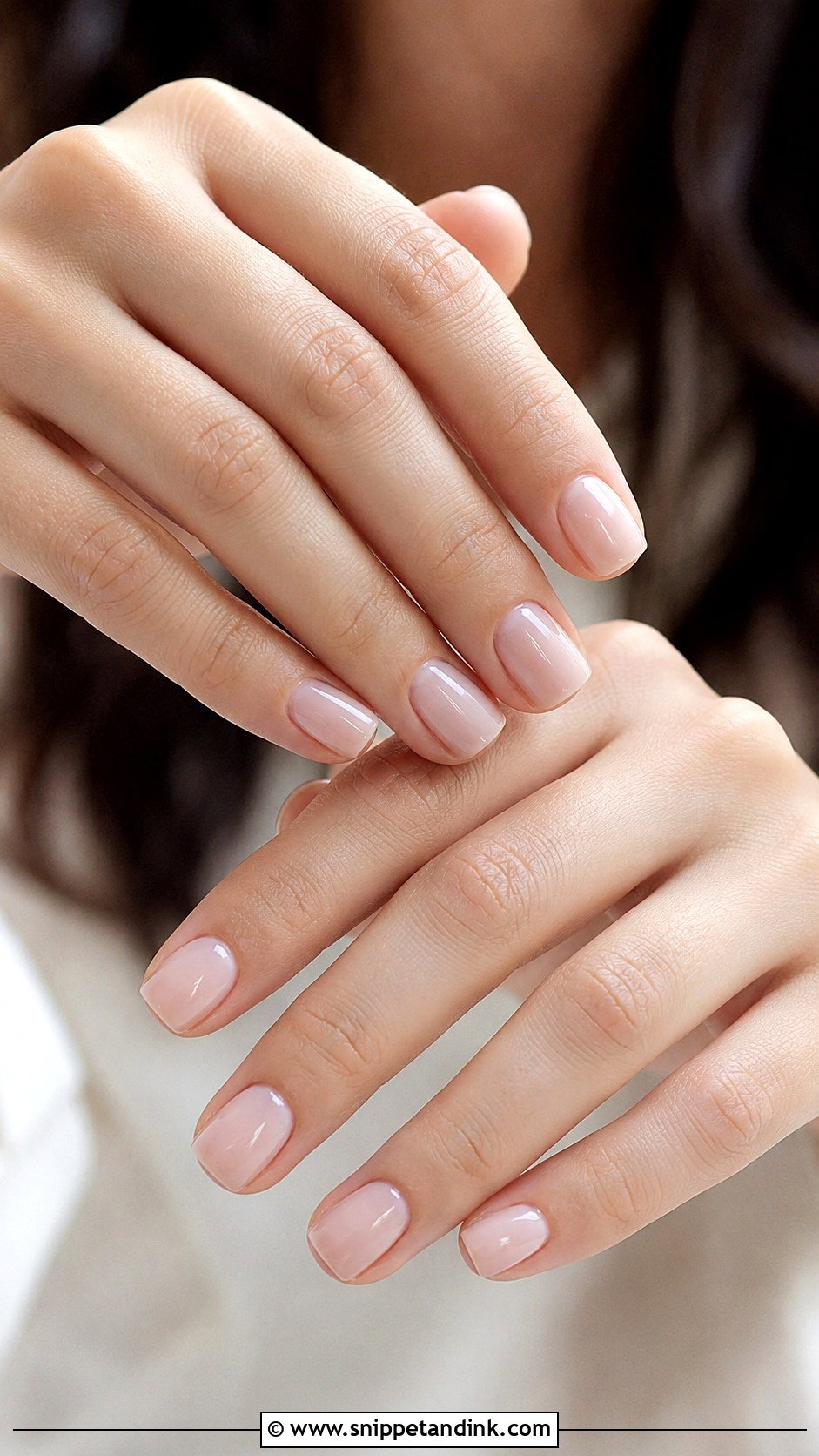
Squoval is a straight free edge with the corners softened, and kept short, it’s the most comfortable shape I can give a bride who never wears long nails. There’s nothing to catch on lace, hairpins or a zip. Sheer pink, milky nude, pale beige or soft white all work over it, finished with a high-gloss gel top coat. What makes short nails read bridal is the prep: matching corner curves on all ten fingers and clean sidewalls. Get those right and length genuinely doesn’t matter.
8. Sheer Nude Wedding Nails
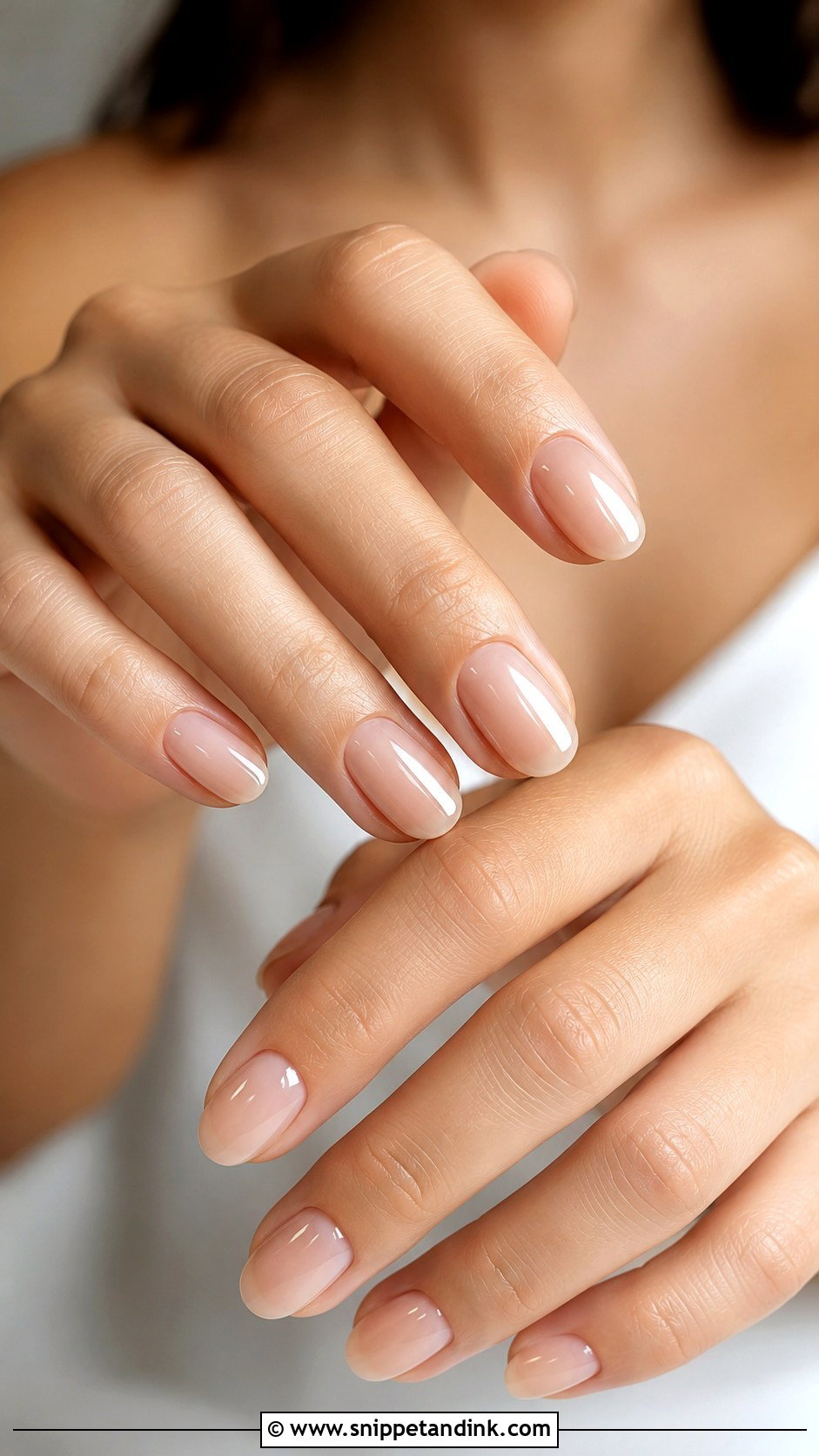
Sheer nude is the set I suggest to brides who never wear polish, because it looks like your own nails on a good day. A translucent beige or warm neutral lets the nail plate show softly underneath. Two thin coats, not one thick one: a single heavy coat of a sheer shade pools near the cuticle and looks darker there. Bridesmaids and guests can wear it without it pulling focus. Ask for a shade close to your natural nail bed, and bring your hand to the window before the top coat goes on to check it in daylight.
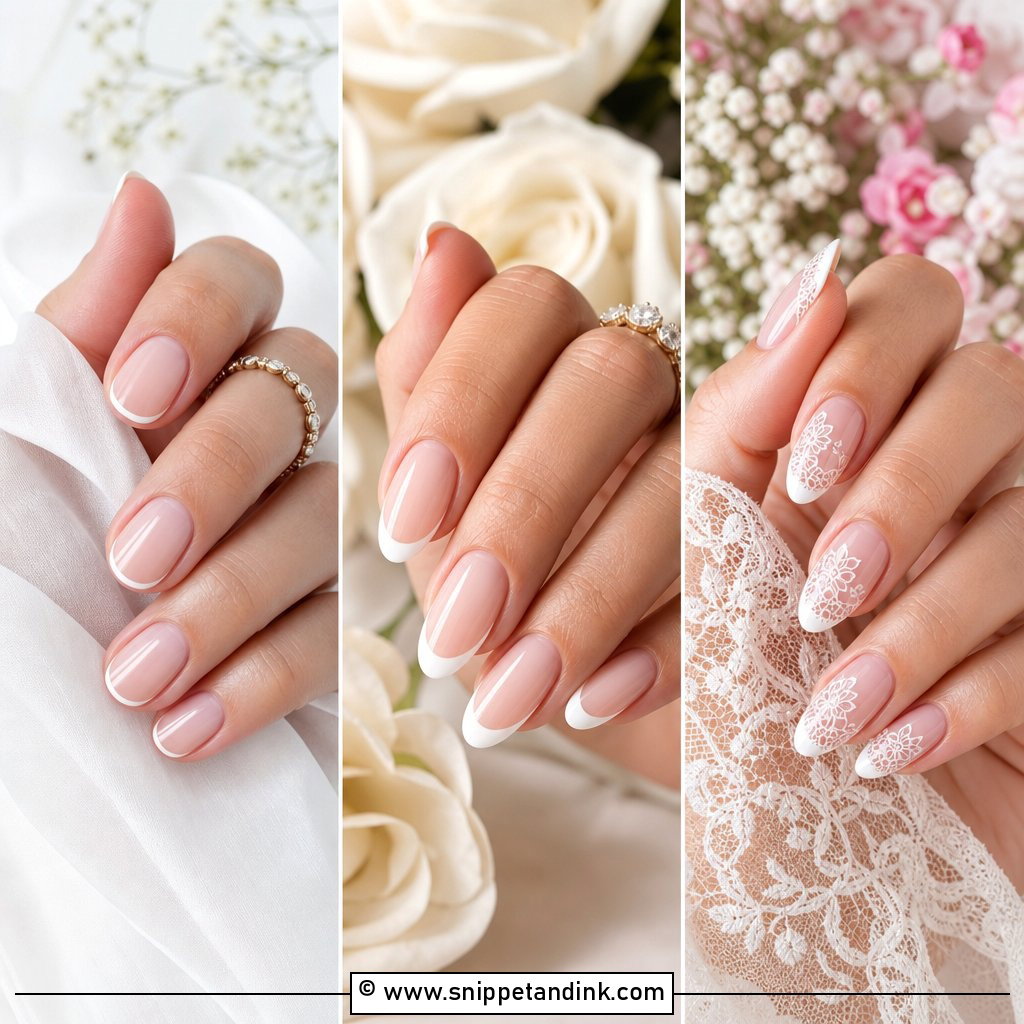
9. White Micro French Wedding Nails
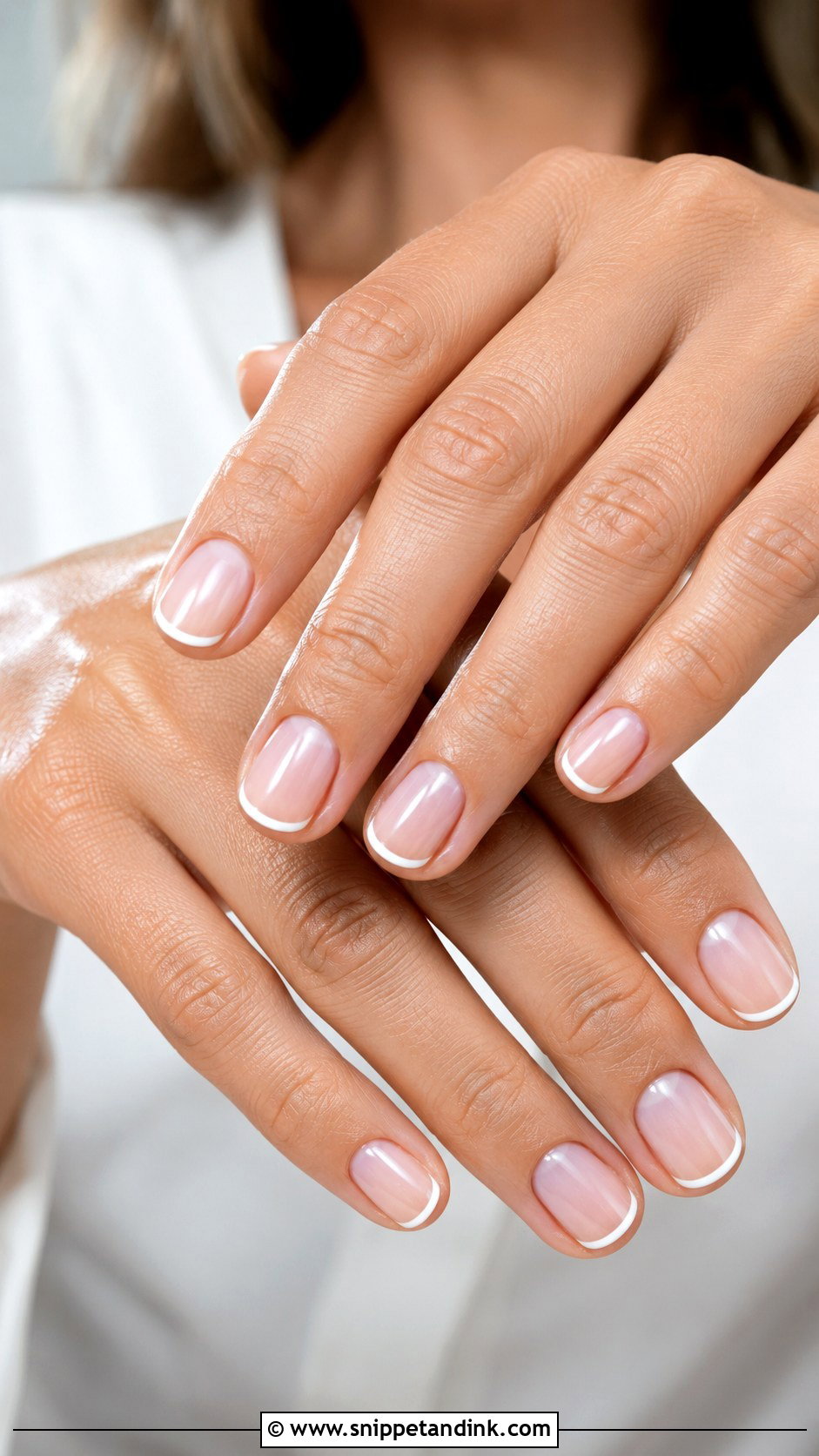
A micro French is a tip so thin it reads like a fine white line along the free edge. Because it takes up so little of the nail, Micro French tips don’t visually shorten the nail bed, which makes them my usual answer for brides with short nails who still want a French. On almond and oval, the line follows the curve and adds length. It needs a steady hand and a very fine brush; any wobble at this width is obvious, so I’d rather a tech take their time here than rush it.
10. Blush Pink Wedding Nails
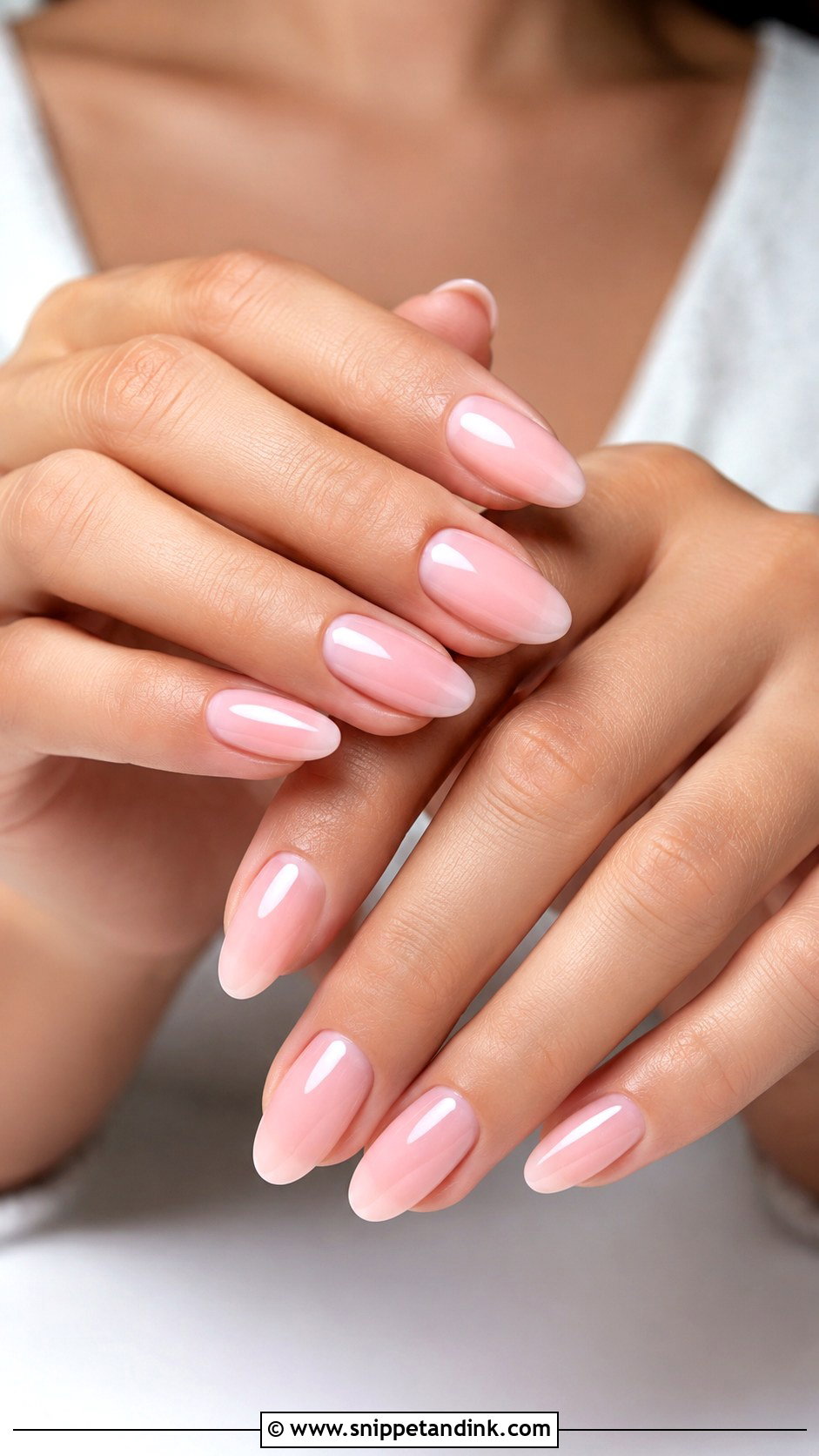
Blush sits a step warmer and more noticeable than sheer pink, but it should still read as a tint. A creamy blush with a gloss top suits ivory gowns, champagne details and rose-toned makeup. On almond it looks graceful; on short square or squoval it looks neat and current. If a flat pastel looks too much like candy on you, ask for a jelly blush instead. Jelly formulas are see-through, so the color builds with depth rather than sitting on top as a solid block.
11. Milky Pink Wedding Nails
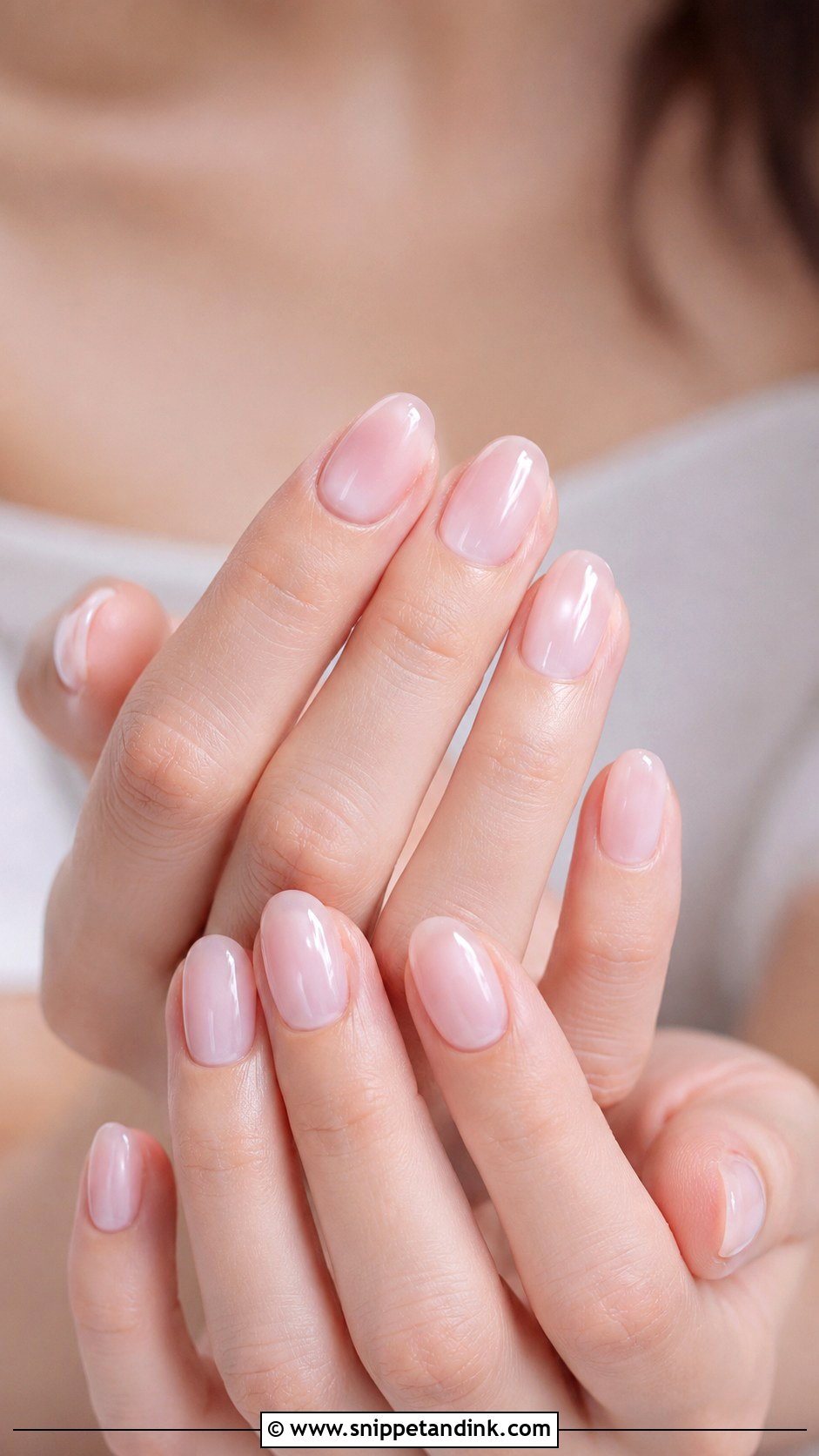
Milky pink is the middle ground I reach for when pure white looks too bright against a bride’s skin or an ivory dress. It has the creaminess of white with enough warmth to sit naturally on most skin tones. Thin, even coats keep the cloudy, sheer finish; a thick coat goes flat and opaque. A rounded oval or soft almond suits it. On camera it reads as polished, and in person it barely registers as color, which is usually the point.
12. Clear Gloss Wedding Nails
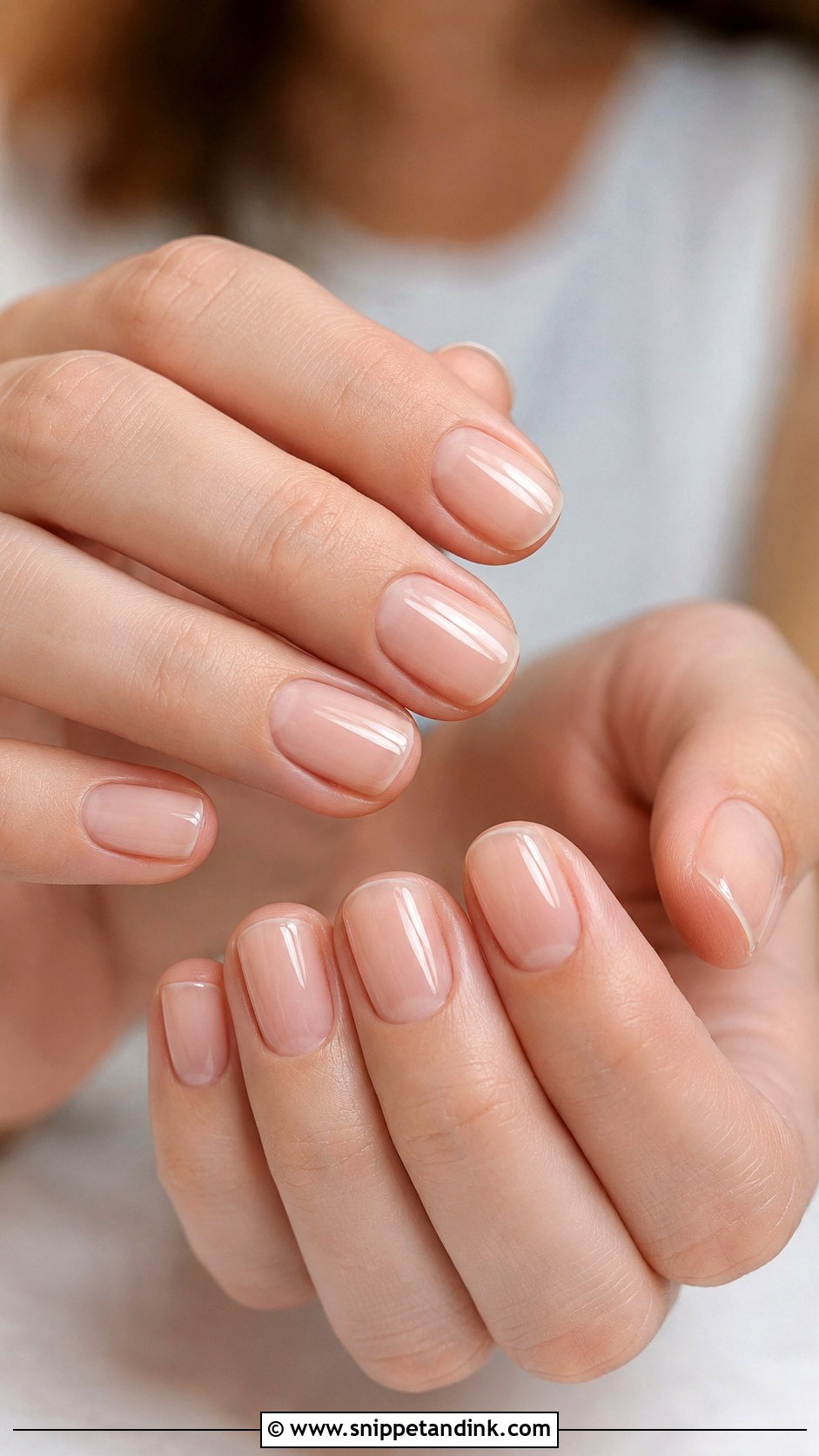
Clear gloss sounds like the easiest set, but it’s actually the most demanding, because nothing covers the prep. Healthy nails, smooth shaping, pushed-back and hydrated cuticles, and a high-shine clear top coat are the whole look. Soft oval, round or short squoval, depending on how much length you have. If your nails bend or peel, a clear strengthening gel or builder base adds structure without color. It suits minimalist brides and outdoor weddings, and it leaves the ring to do the talking.
13. Neutral Chrome Wedding Nails
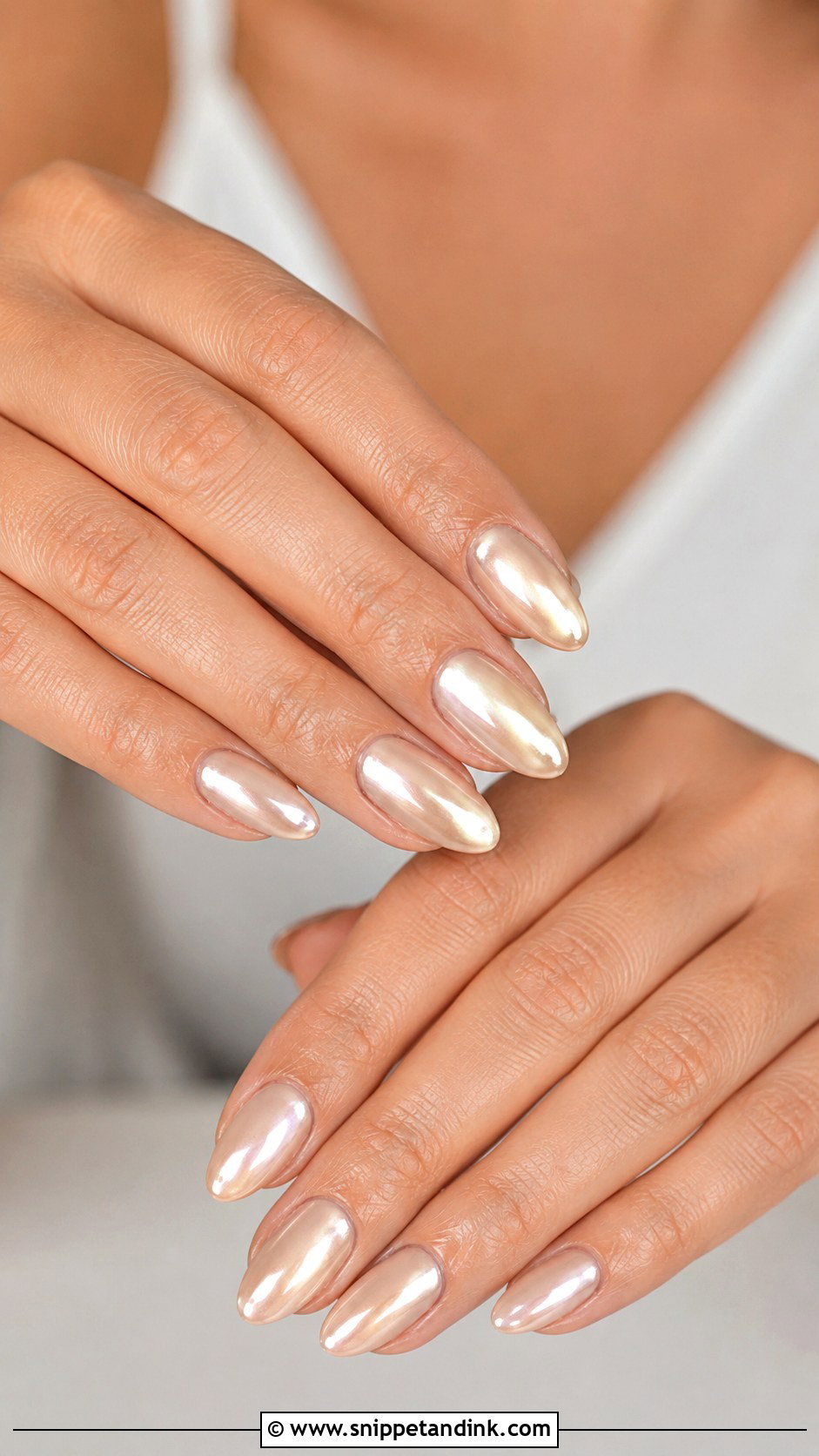
Neutral chrome gives shine without brightness. Over beige, pale taupe, soft nude or a rosy neutral, a very fine chrome layer reads as a glaze when it’s applied lightly, and as a mirror when it isn’t, so ask for a light hand. It follows the curve of almond and oval nails well and sits nicely with satin, silk and pearl accessories. Champagne chrome warms the base up; pearl or silver-white cools it down. If your dress is a cool bright white, I’d go cooler; with ivory or champagne fabric, warmer.
14. Ivory Wedding Nails
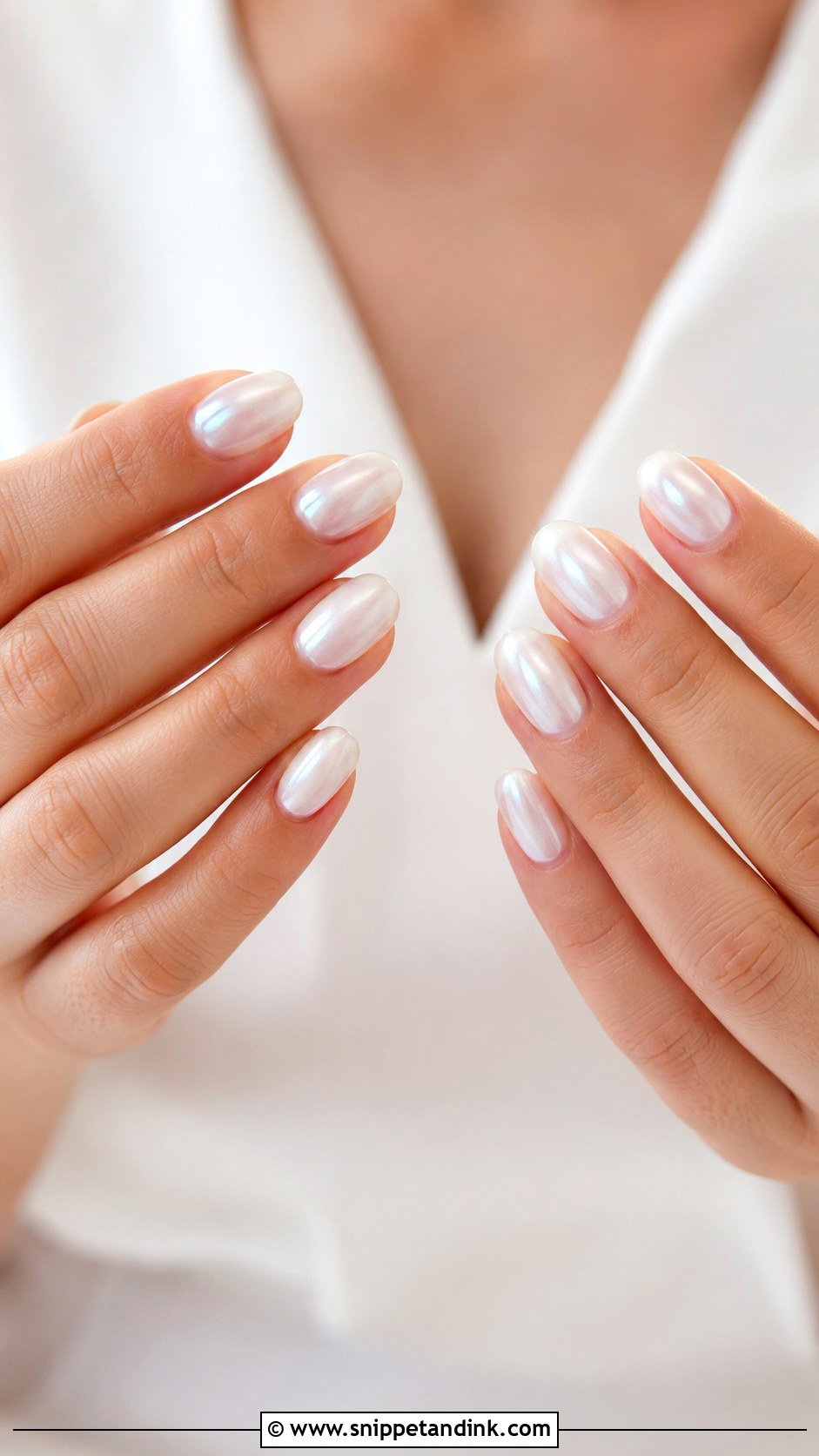
Ivory is my swap for brides who find bright white too stark. It’s warm and creamy and sits naturally next to ivory dresses and vintage details. The trap is choosing one that leans yellow, which can make nails look stained in photos, so compare the bottle against your dress fabric before committing. A soft ivory gel works on its own, or I’ll layer a sheer ivory over a neutral base for more depth. Short squoval keeps it modern, almond makes it softer, and warm or neutral undertones wear it best.
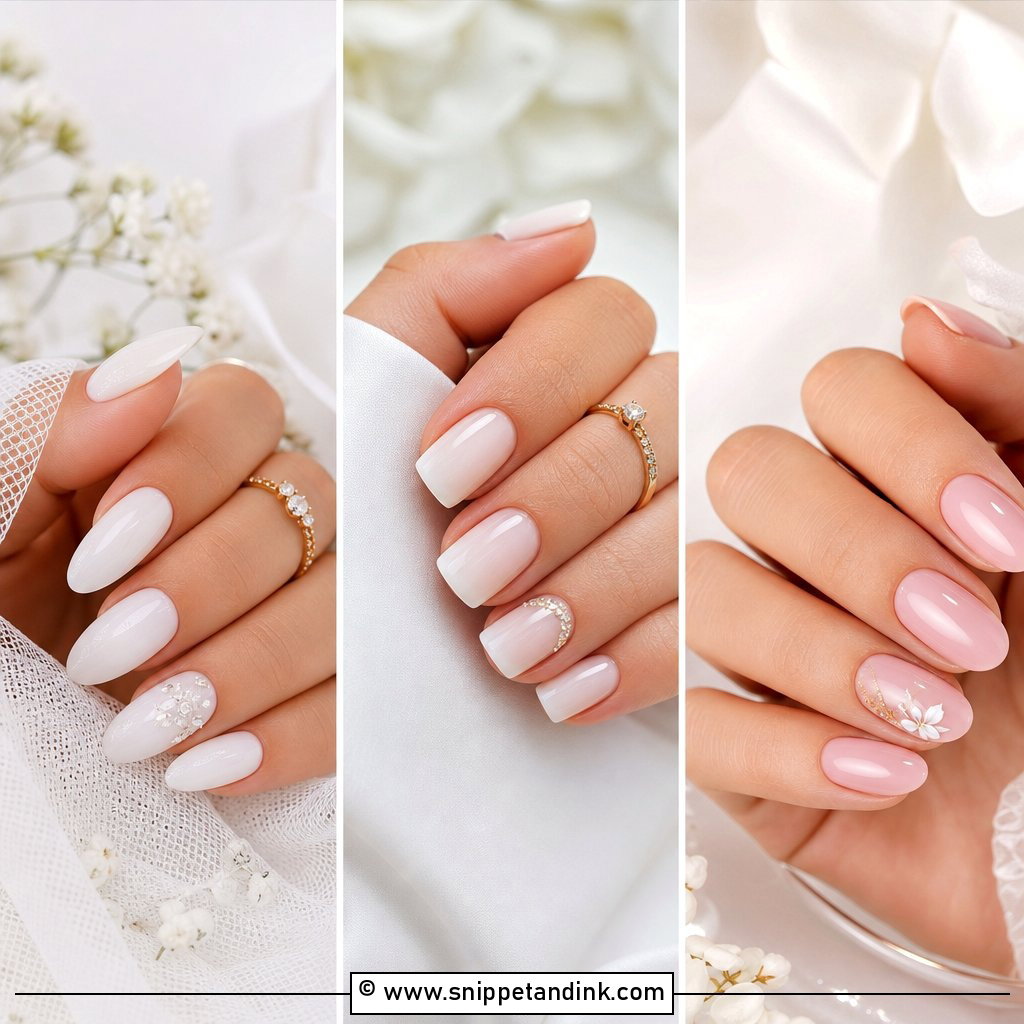
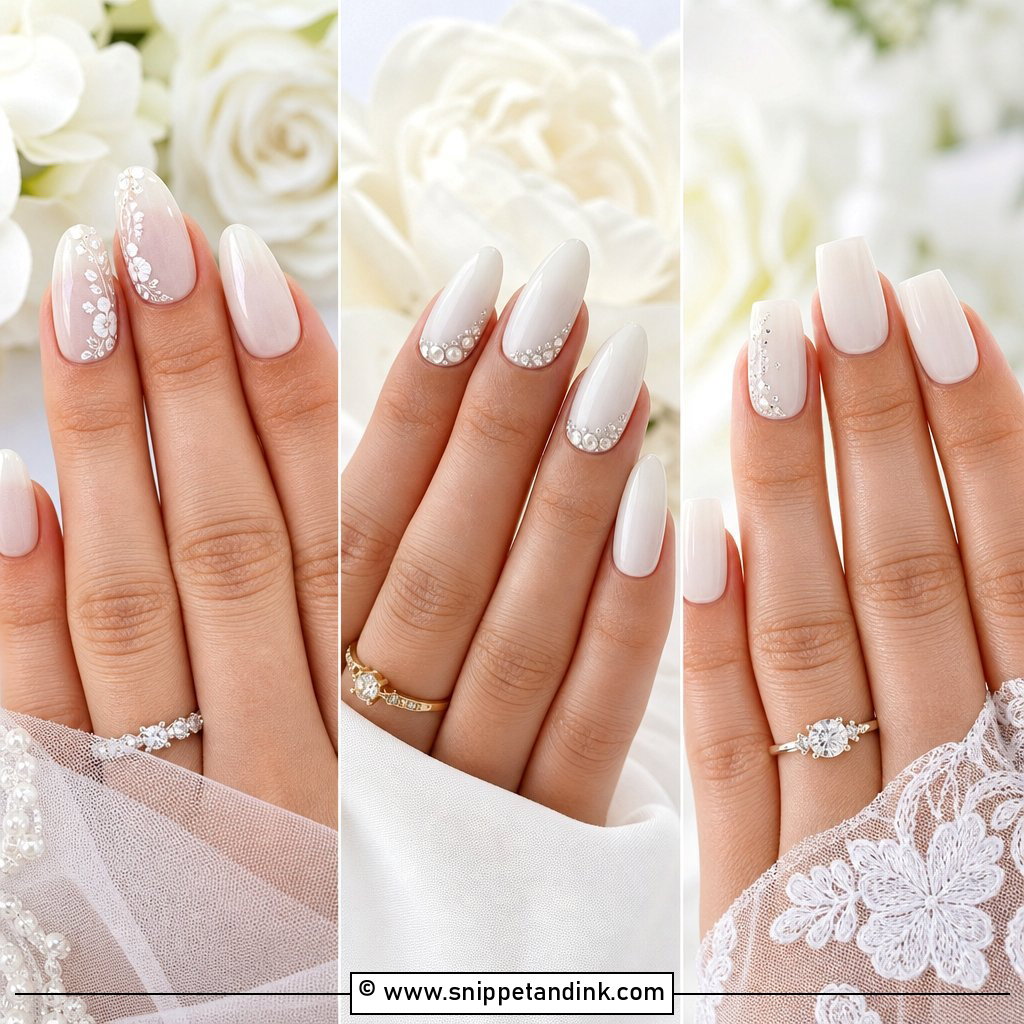
15. Thin French Almond Wedding Nails
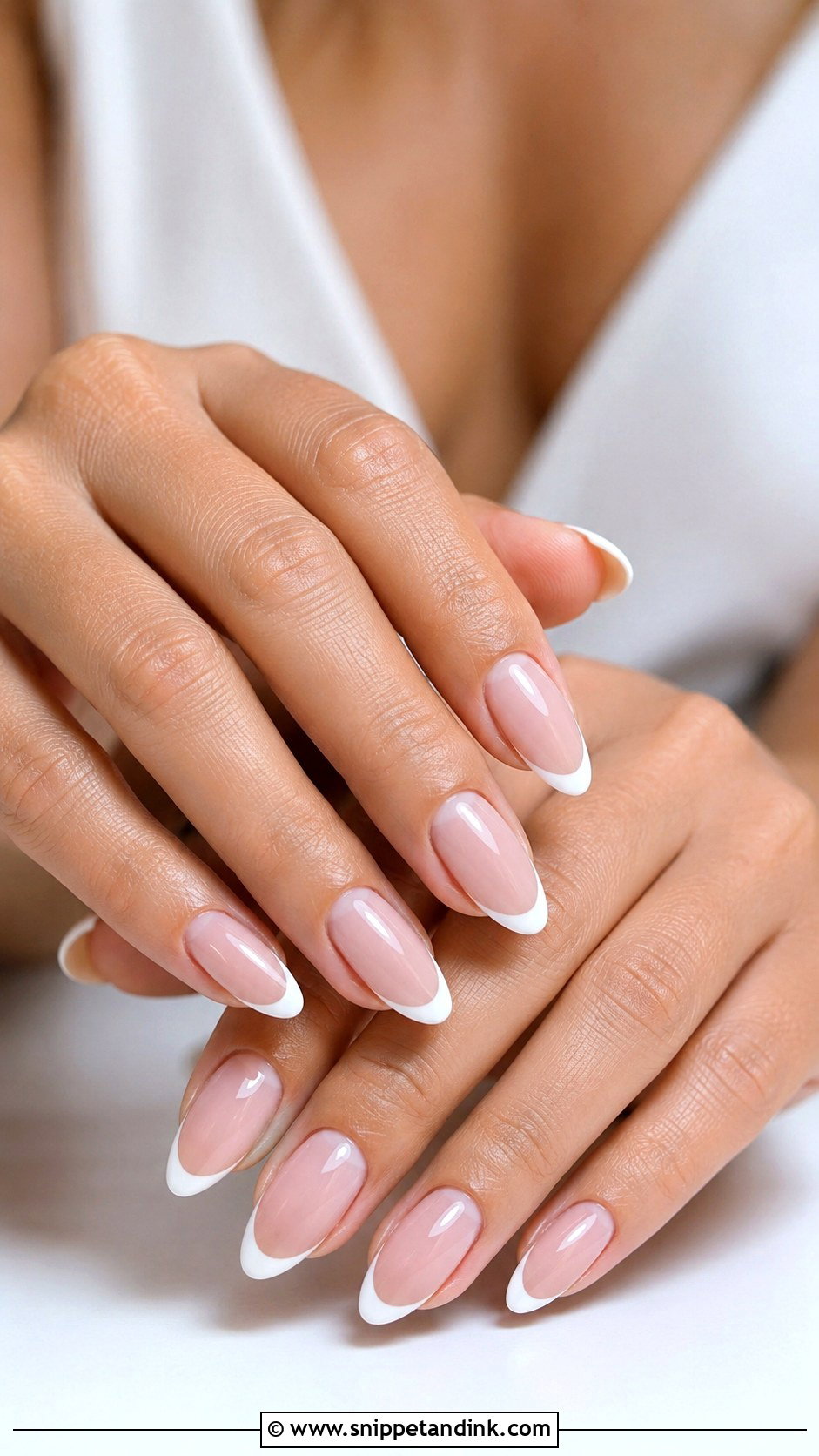
The tip on a thin French almond should follow the natural curve of the nail and stay narrow. If it’s painted straight across, the almond shape suddenly looks stubby. Underneath, use sheer nude, soft pink or milky. If your nails are short, I’ll file a soft almond with a rounded point rather than a sharp one, so the shape doesn’t look forced on a short nail bed. It’s traditional enough for a classic gown and modern enough that it won’t look borrowed from another decade, and it sits well beside any ring setting.
16. White Glazed Wedding Nails
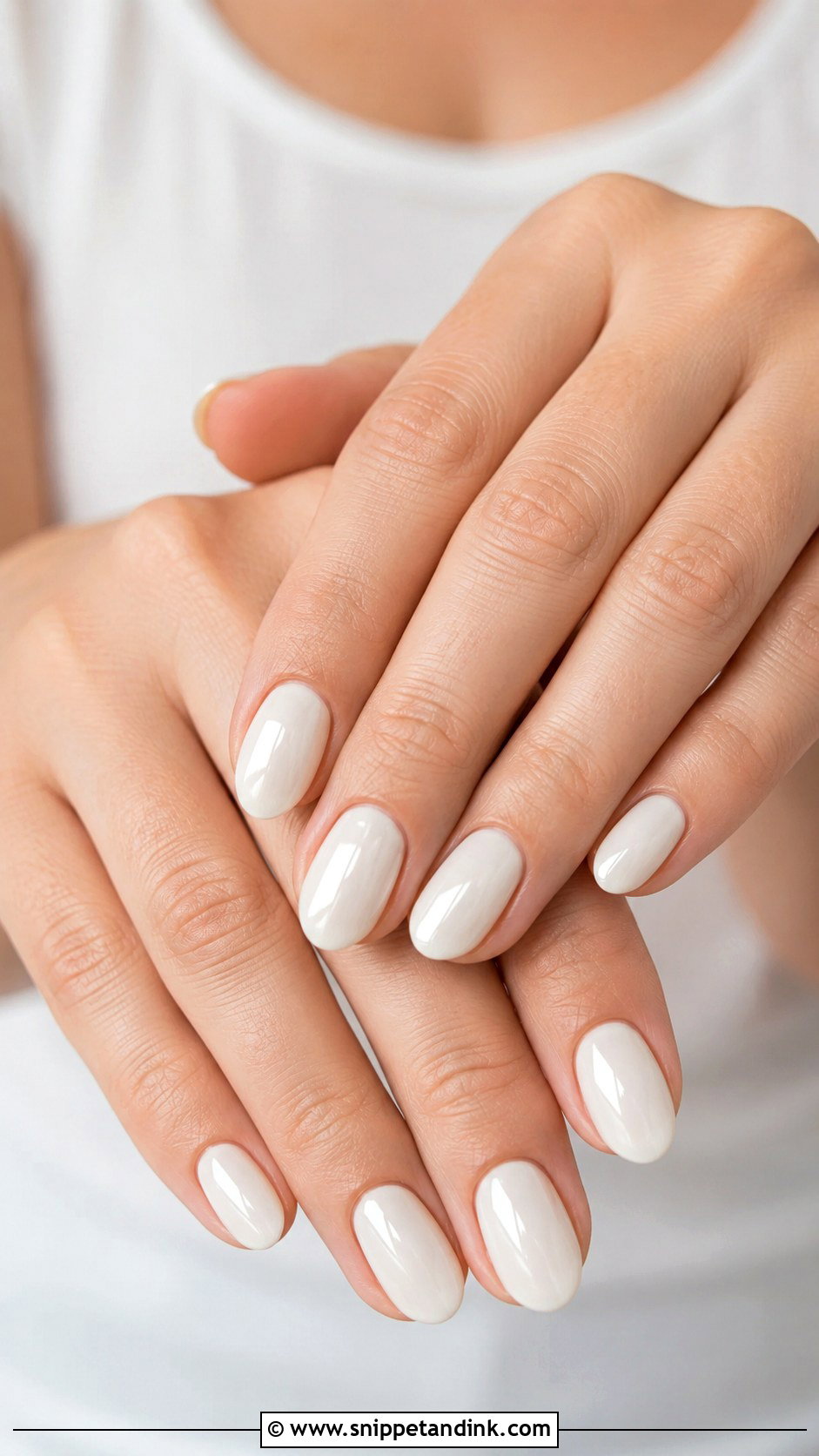
White glazed wedding nails start with a milky or sheer white, then get a pearl glaze on top that reflects light softly. It has more dimension than plain white while staying calm. I treat the glaze like a veil over the color: if you can see individual sparkle particles, it’s gone too far into glitter. Short to medium length, oval or almond, keeps it clean. It pairs naturally with simple gowns, pearl earrings and smooth fabrics.
17. Nude French Wedding Nails
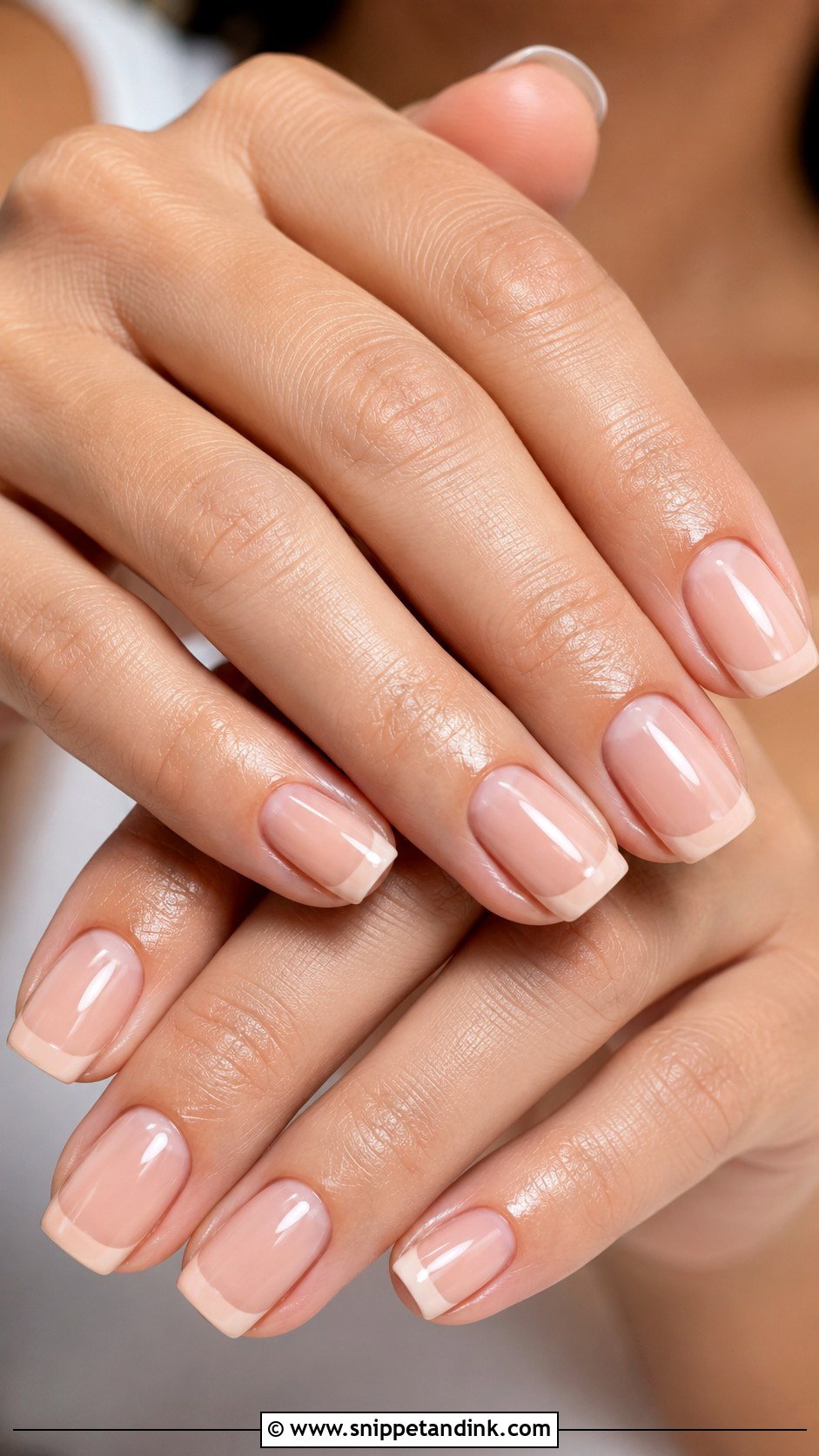
A nude French swaps the white tip for a slightly deeper nude, so you get definition without sharp contrast. The base can be sheer pink, milky nude or clear beige. It’s the version I suggest to brides who love the shape of a French but find white tips too stark against warm skin. Because the tip shade is mixed or chosen to match you, it adapts easily: beige tips for fair to medium skin, caramel for tan, mocha for deeper skin. Keep the contrast low; if the tip is too dark, it reads as dirty edges from a distance.
18. Soft Ombre Wedding Nails
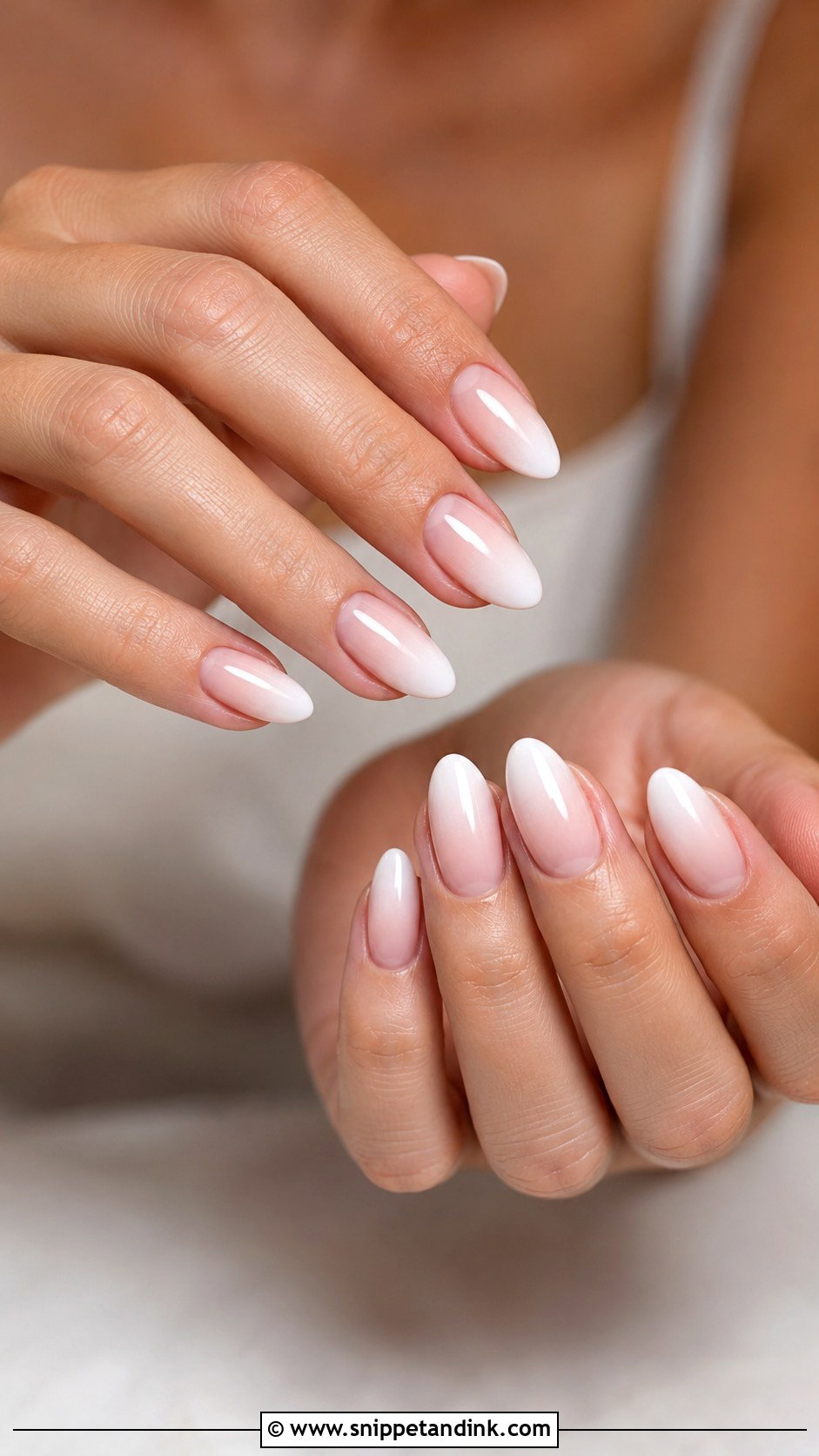
Soft ombre fades from a sheer nude or pink at the cuticle into a pale ivory or milky tip. The test of a good one is that you can’t point to where one color stops. If there’s a visible band, it needs another blending pass. It lengthens oval and almond nails nicely. It sits between plain polish and a defined French, and it forgives small chips at the tip better than most designs, because the lightest color is already there.
19. Clean Pearl Accent Wedding Nails
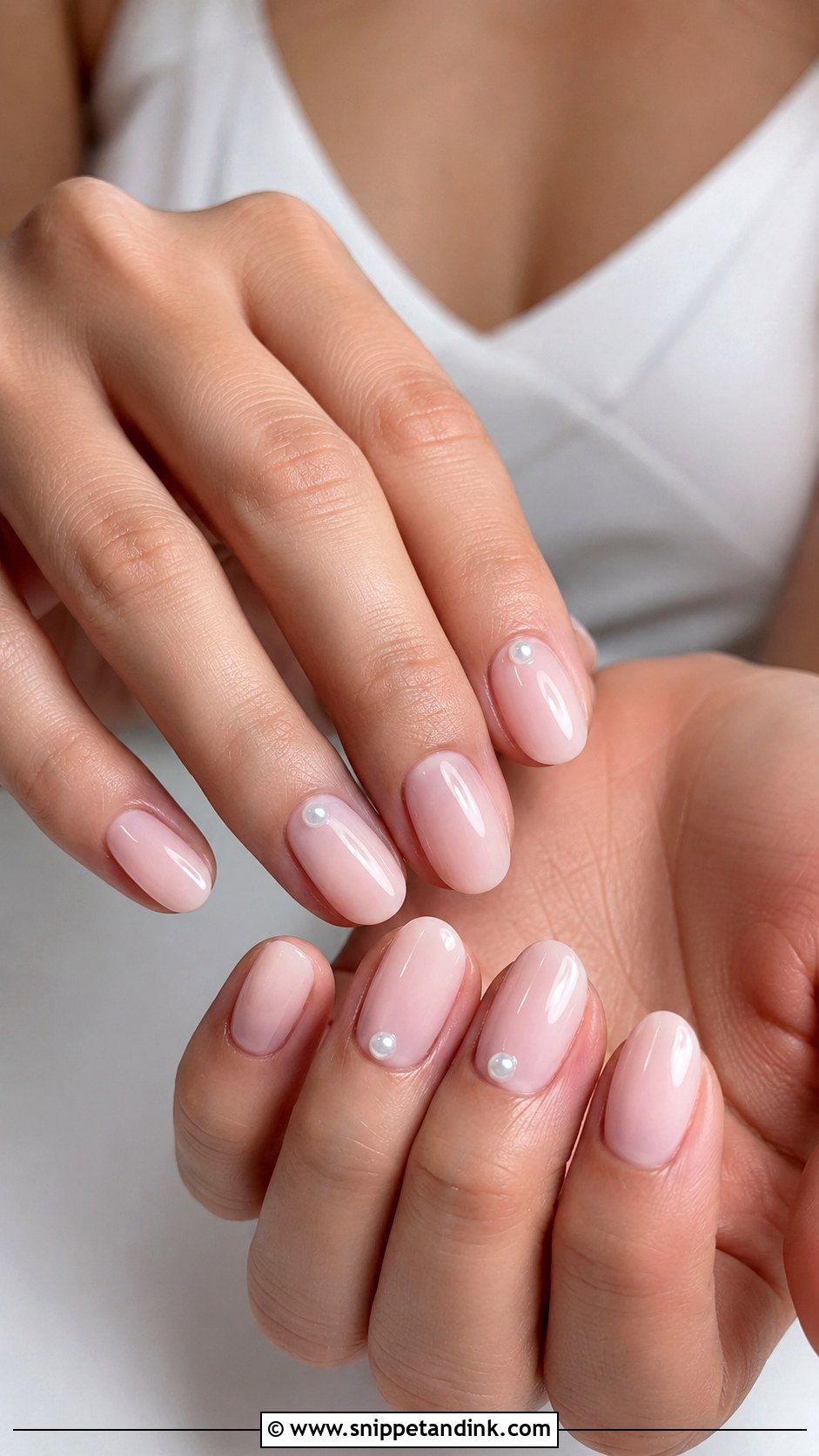
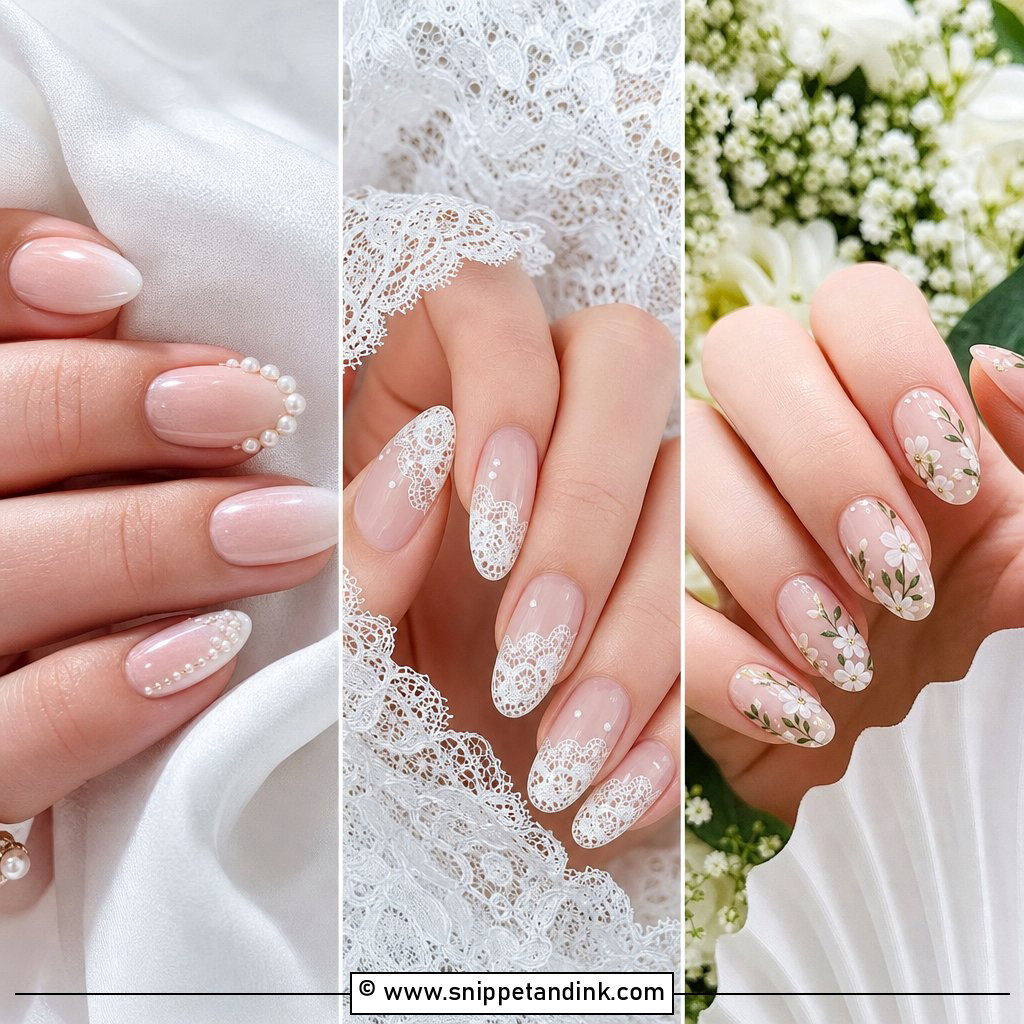
One or two small flat-back pearls near the cuticle on the ring fingers is the most restrained way to add a detail. Some brides prefer one pearl on every nail for balance; either works if the pearls stay small. The base stays simple: sheer nude, milky pink or soft white. Short to medium nails suit it best. The real risk is a pearl popping off during the reception, so I set each one in a small bead of builder gel, cure it, then seal around the edge without flooding over the top of the pearl, which would dull its shine.
20. Barely There Wedding Nails
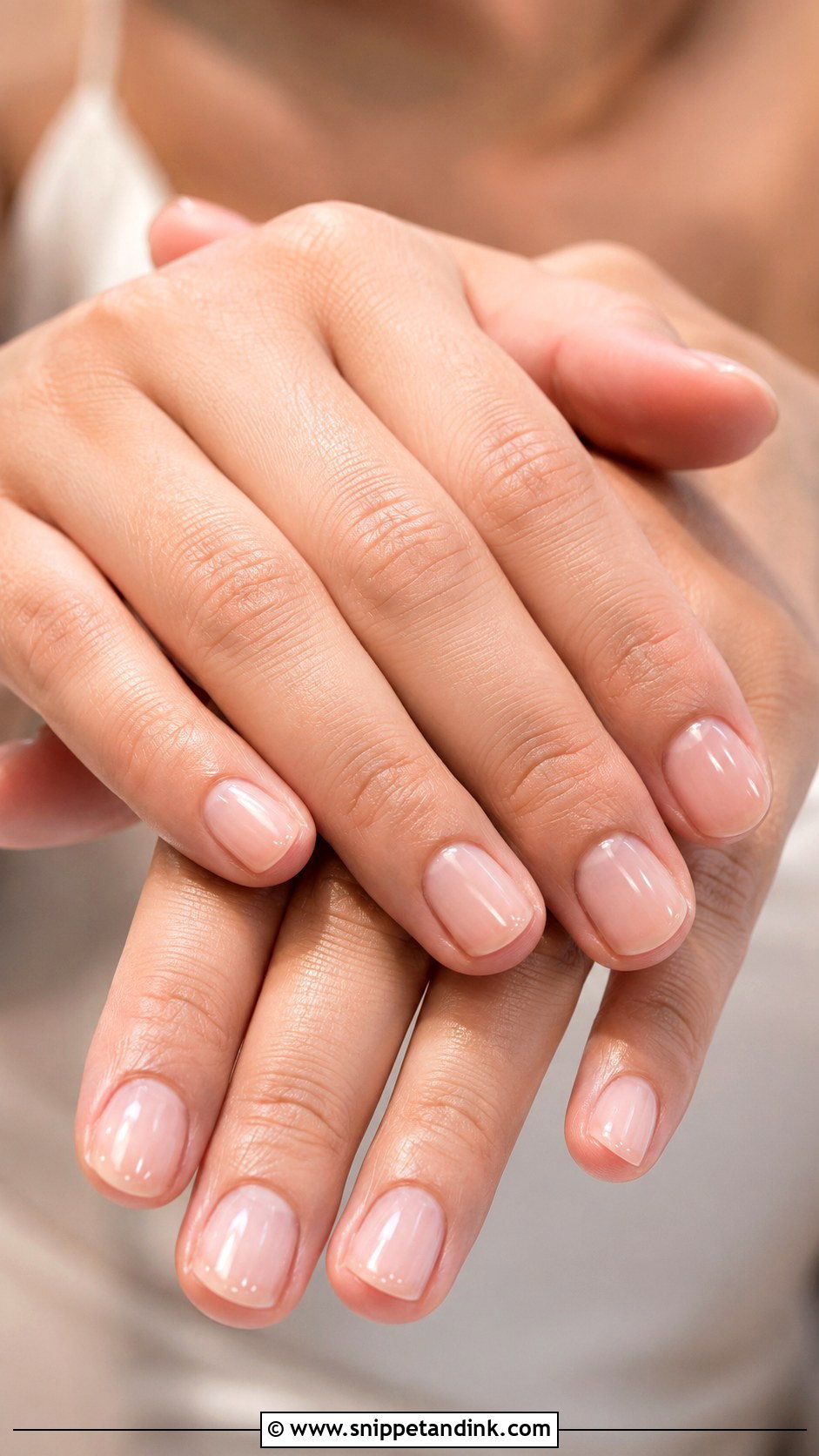
Barely there is the goal of not looking painted at all. A nearly invisible sheer pink, nude or clear milky polish perfects the nail, and everything else is grooming: cuticle care, gentle buffing of ridges and a glossy strengthening top coat. Short oval or squoval keeps it practical. It’s the set I’d give a bride who keeps her hands busy all day, a guest who wants tidy hands, or anyone who doesn’t want their nails to be part of the outfit at all.
Which White Your Nails Should Be Next to an Ivory Gown
Bridal whites are rarely pure white. A bright white polish next to an ivory or champagne gown makes the dress look yellow, and an ivory polish next to a stark white crepe can look a little dingy. Whichever shade you pick, it should sit one quiet step away from your fabric, never fighting it.
The simplest test I know: hold your painted nail against the dress, or a swatch of it, by a window. If your eye jumps to the nail first, it’s too bright. If the nail looks grubby, it’s too warm. Milky and sheer finishes are the most forgiving here, because the nail tone blends between the polish and the fabric.
A Chip on the Wedding Morning Is Fixable
Light, sheer colors are actually the easiest to rescue. A small chip on a milky or nude set can be filled with the same bottle and a fast top coat, and it disappears in a way a dark red never would. Ask your nail tech for the exact shade name, or buy a small bottle of it, and keep it in your day-of bag with a few other things.
- The color, or the closest regular polish match, plus a quick-dry top coat
- A fine glass file for a snag, which is gentler on the edge than an emery board
- Cuticle oil to rub in just before ring shots, since it makes the skin around the nail look smooth on camera
- Nail glue if you’re wearing a pearl or any 3D detail
If a gel nail lifts at the corner, don’t peel it. Press it down, file the raised edge flush and seal it with top coat. A clean, smooth nail with a tiny repair looks far better in a close-up than a bare patch where the gel came away.
Your Hands Will Be in More Photos Than You Expect
Ring shots, holding the bouquet, the hand on a shoulder during the first dance: hands turn up in a surprising number of wedding photos, and a clean set holds up in every one of them. Whether it’s milky white, sheer nude, a micro French, pearl chrome or a barely there gloss, choose the shade against your dress fabric and your ring in daylight, not under salon lamps. Book a trial if you can, look at it for a few days, and then trust it. Simple nails done carefully age better in an album than anything trendy.
You'll Like These Ideas:


Leave a Reply