
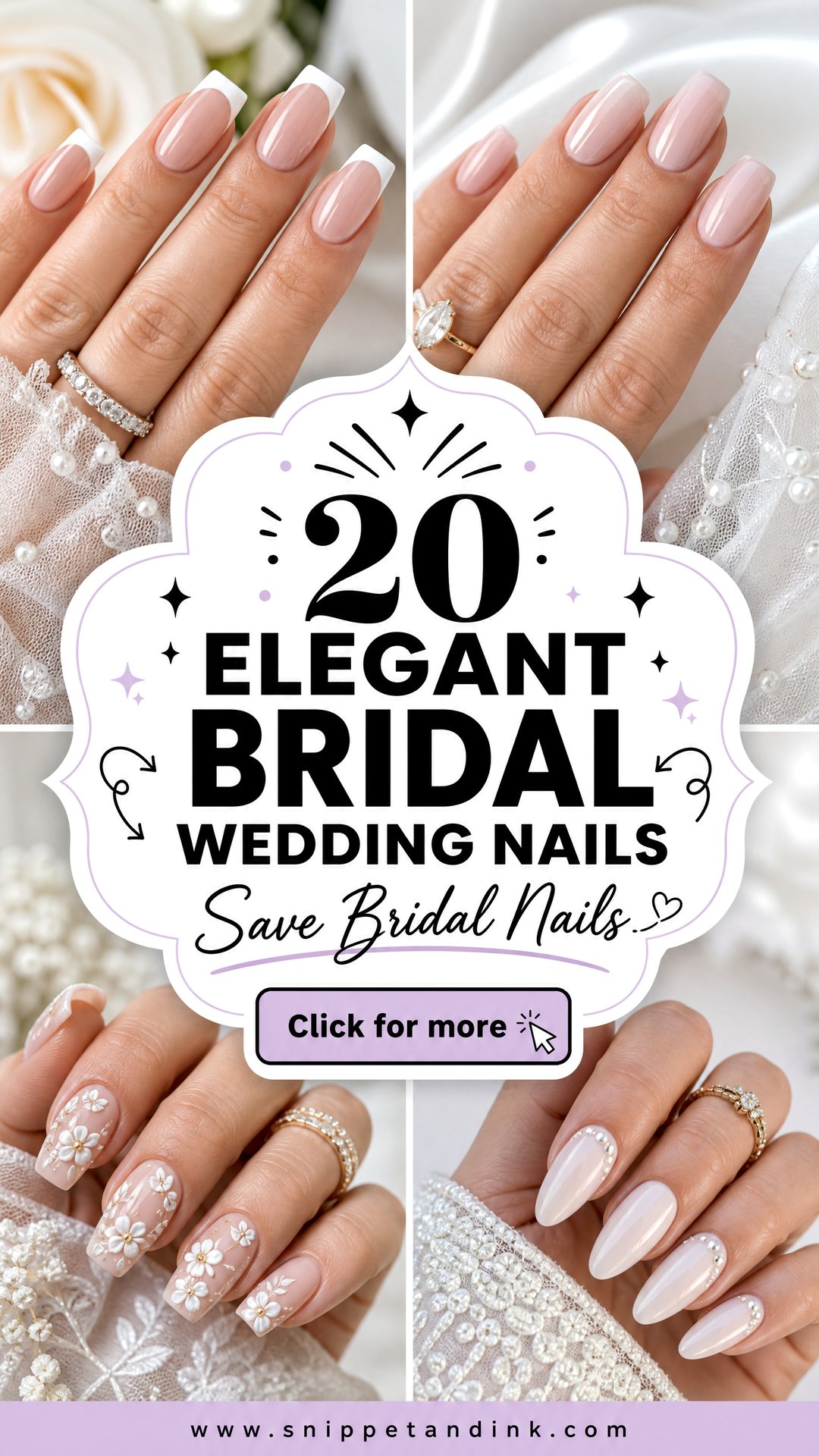
You’ll look down at your hands hundreds of times on your wedding day, and so will your photographer. A good bridal manicure should hold up in a macro shot of the ring and still feel like your own hands when you’re signing the register. Soft French tips, milky whites, sheer pinks, pearl chrome, small florals and clean nudes keep coming back because they sit comfortably beside almost any dress. Shape matters just as much as color, and I spend as long on it as on the polish. Here are twenty wedding sets I’d recommend, with what I check, what each suits and the small things that tend to go wrong.
Reading Your Hands Before Settling on a Shape
Half of this list is about shape, and shape is decided by your hands more than by a photo. Before I file anything, I look at three things: how wide your nail beds are, how long your fingers are and how strong the free edge is.
- Wide nail beds look slimmer with oval or almond, where the sides are filed in slightly
- Short fingers gain length from almond or a longer oval; square tends to shorten them
- Thin or bendy nails won’t hold a long point safely, so I’d stay short or add a gel overlay
- If you type, garden or care for small children, short oval or soft square will survive the wedding week
I’d also hold the ring next to your hand while we decide. A delicate band can disappear beside long nails, while a large stone usually looks better with a little nail length to balance it.
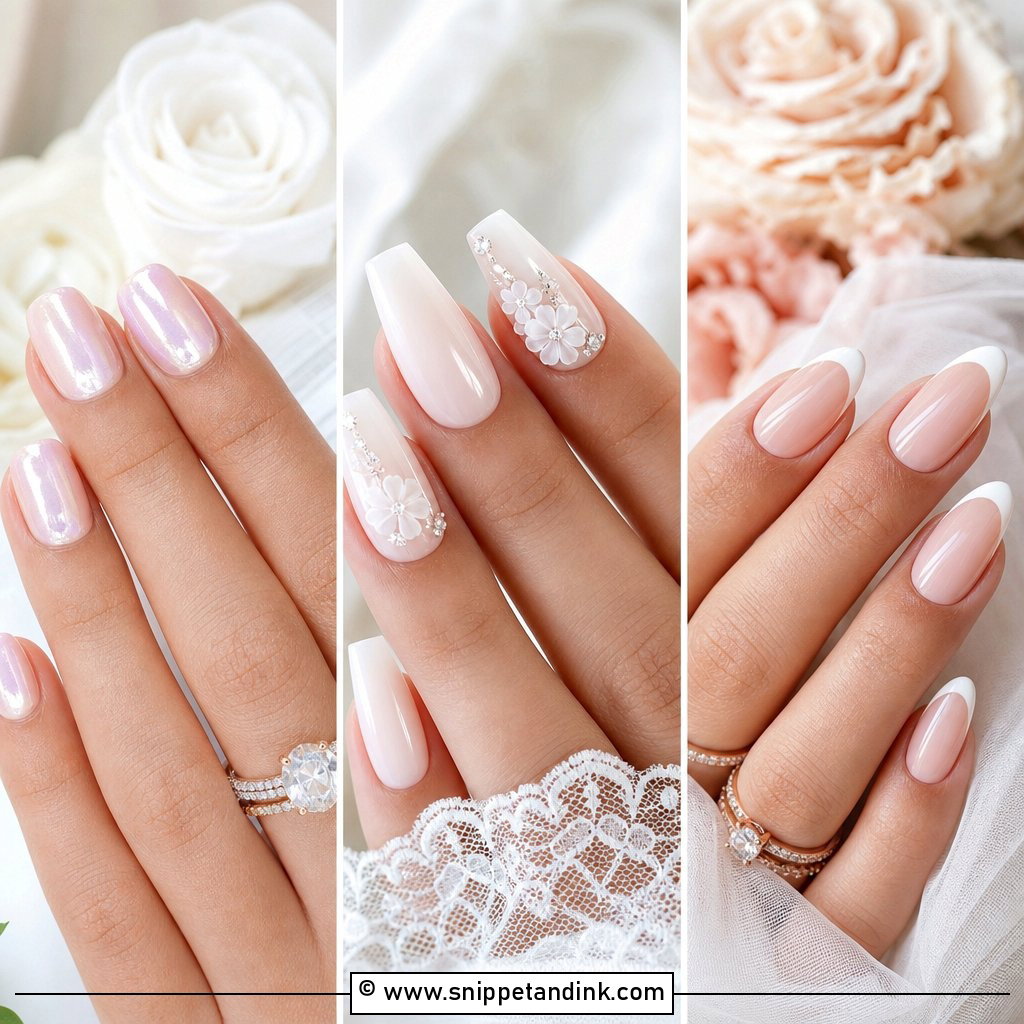
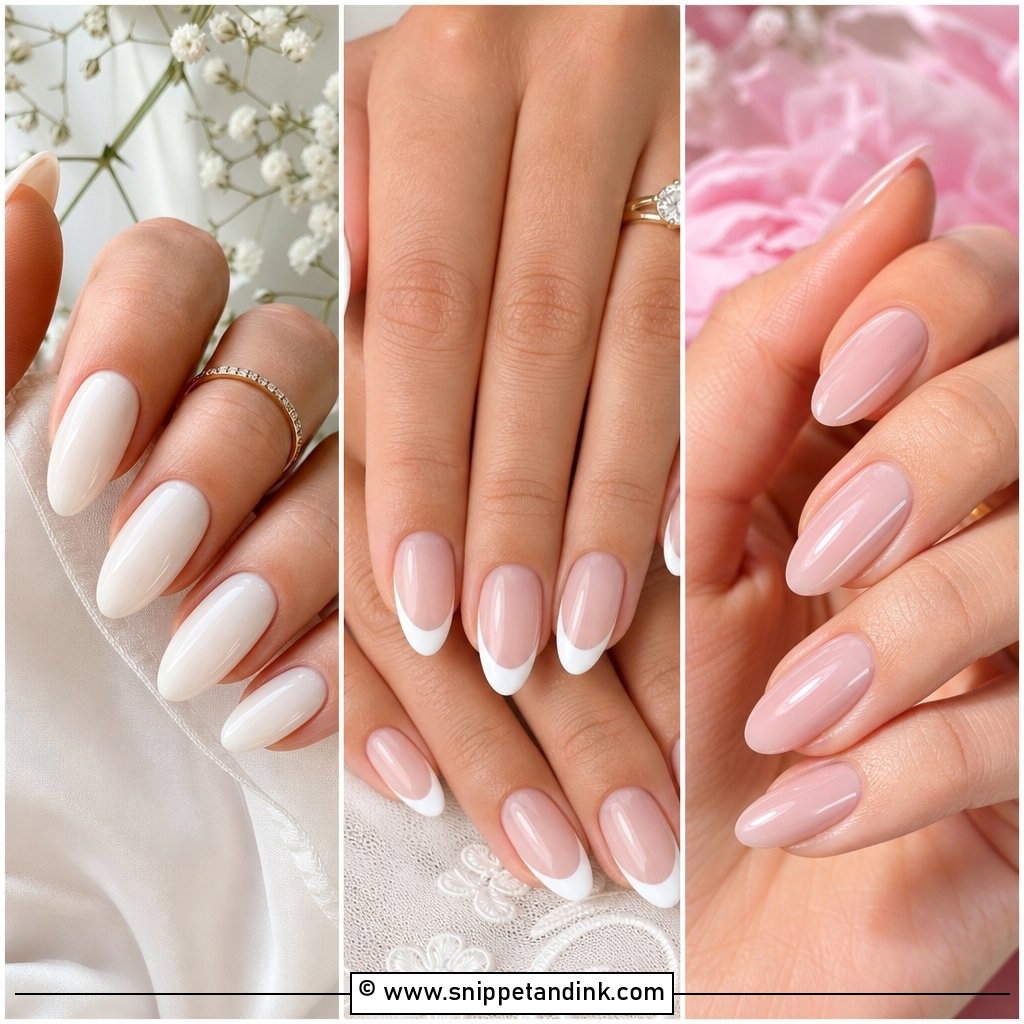
1. Classic French Tip Bridal Nails
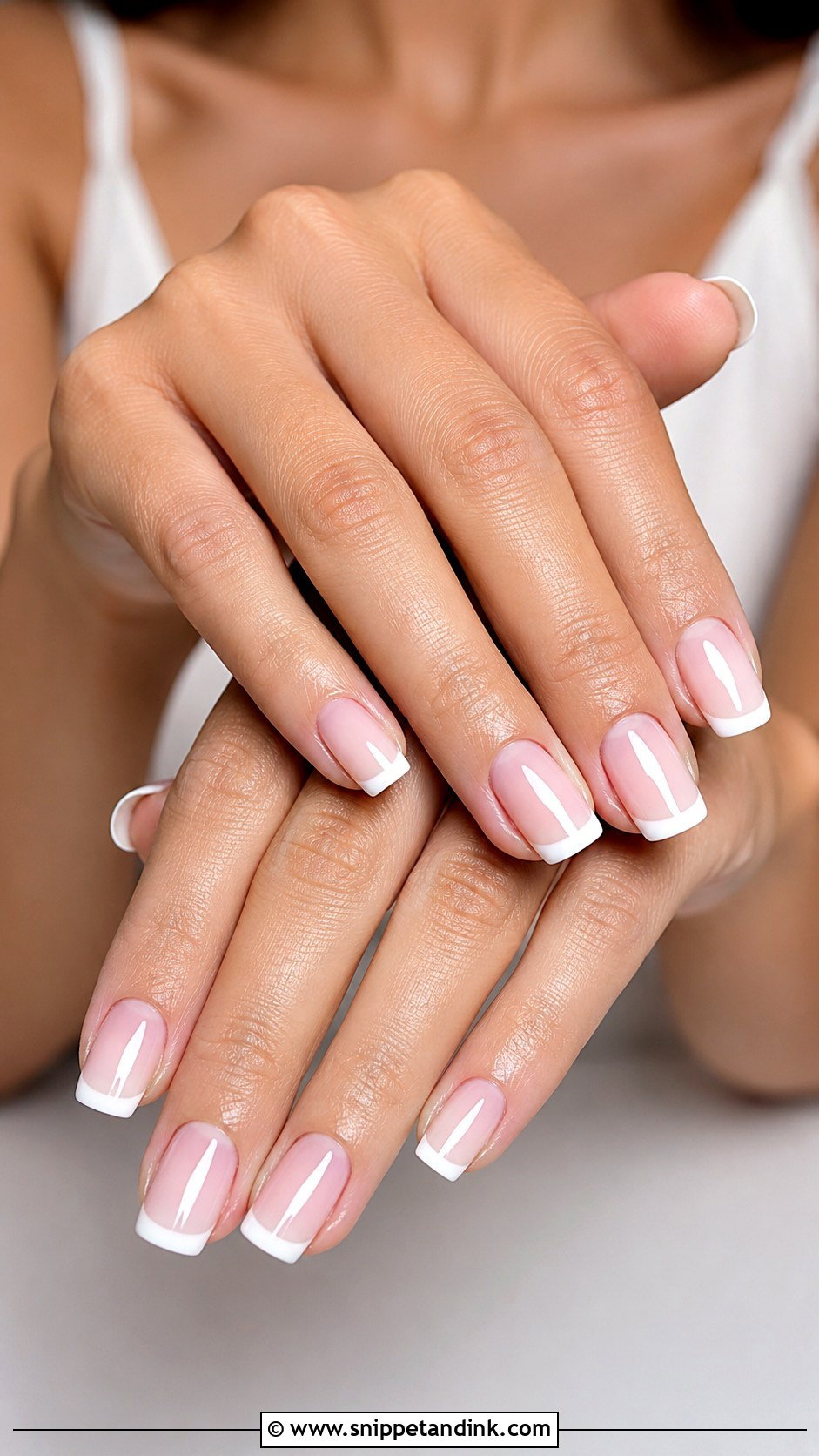
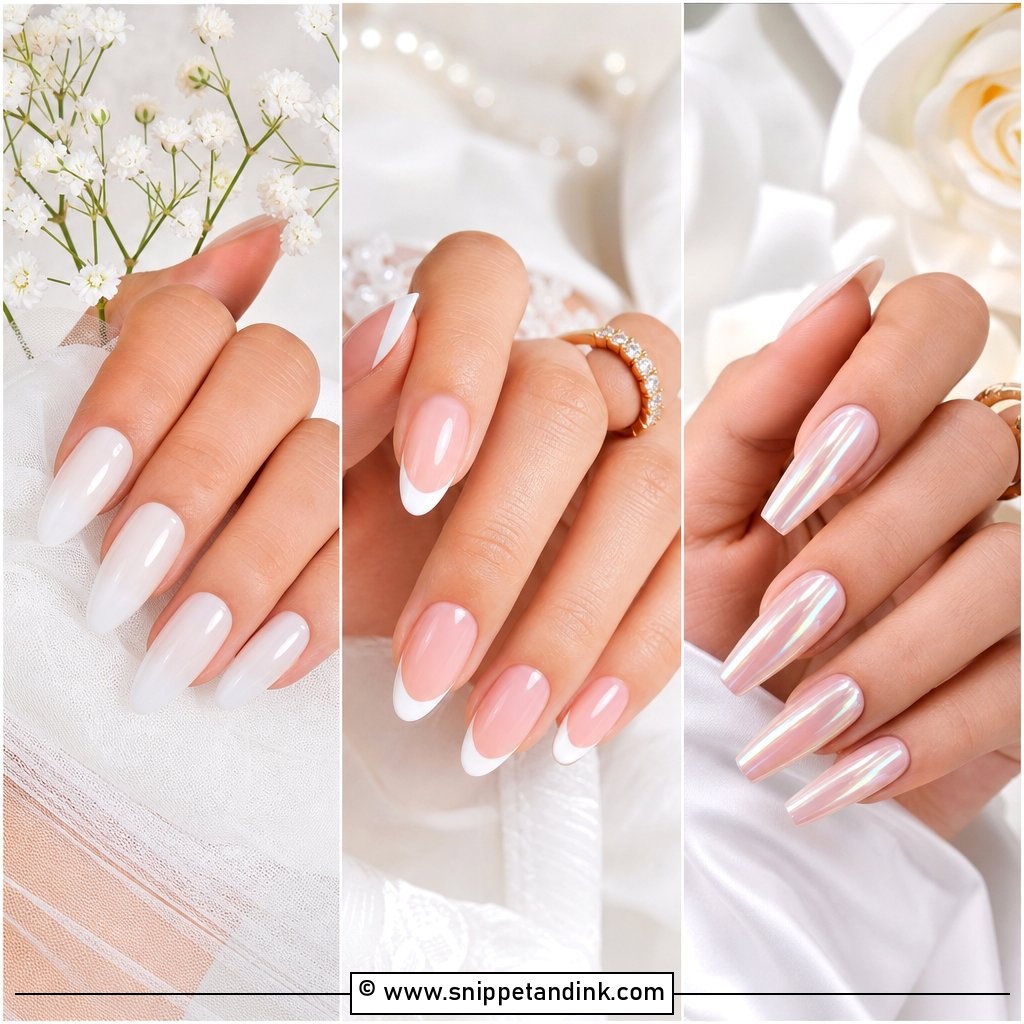
If you can’t decide, start here. A nude or sheer pink base with a white tip balances a detailed ring or a beaded gown instead of competing with it. I’d ask for a thinner smile line than the thick tips of the past, painted to follow the curve where your nail leaves the finger. That curve is different on every hand, so a stencil rarely matches it exactly. Almond, oval and soft square all suit it. Its strength is that it looks equally right with satin, lace sleeves and minimalist dresses.
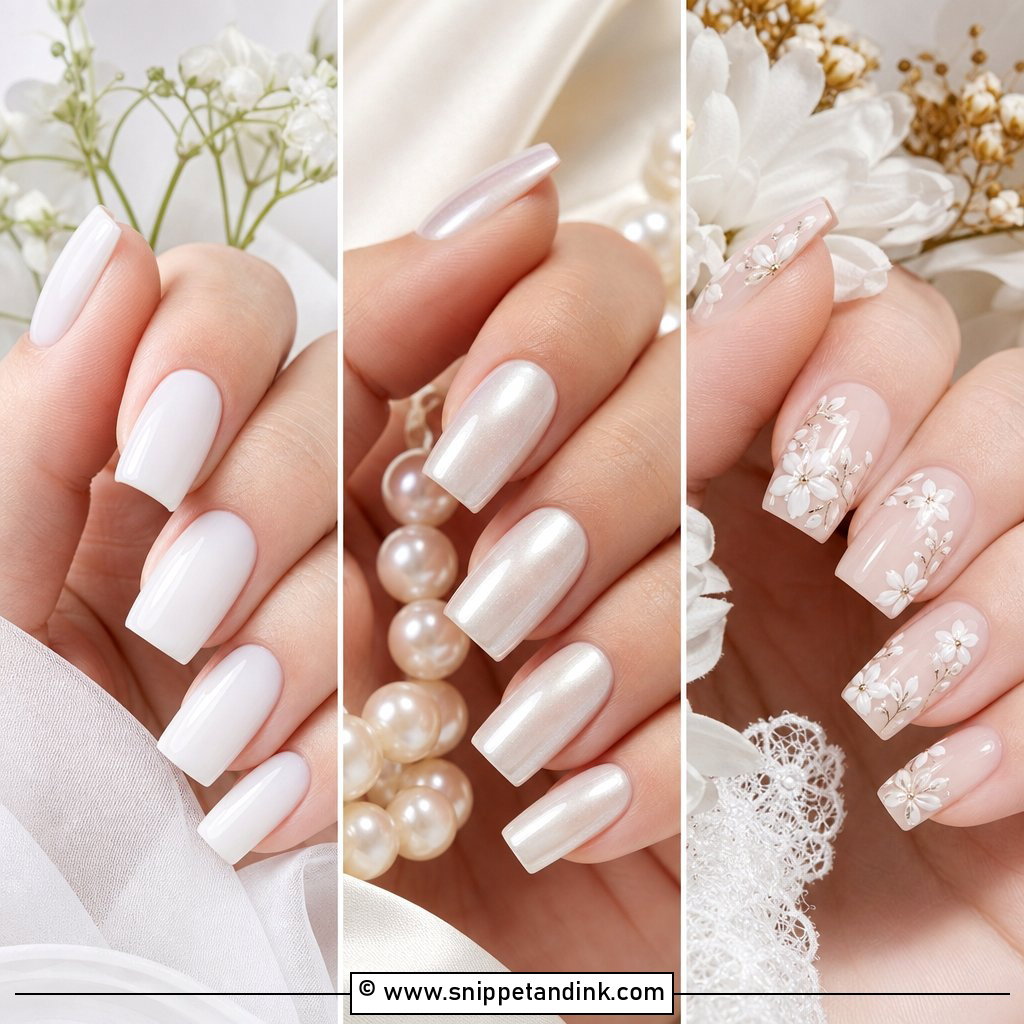
2. Milky White Bridal Nails
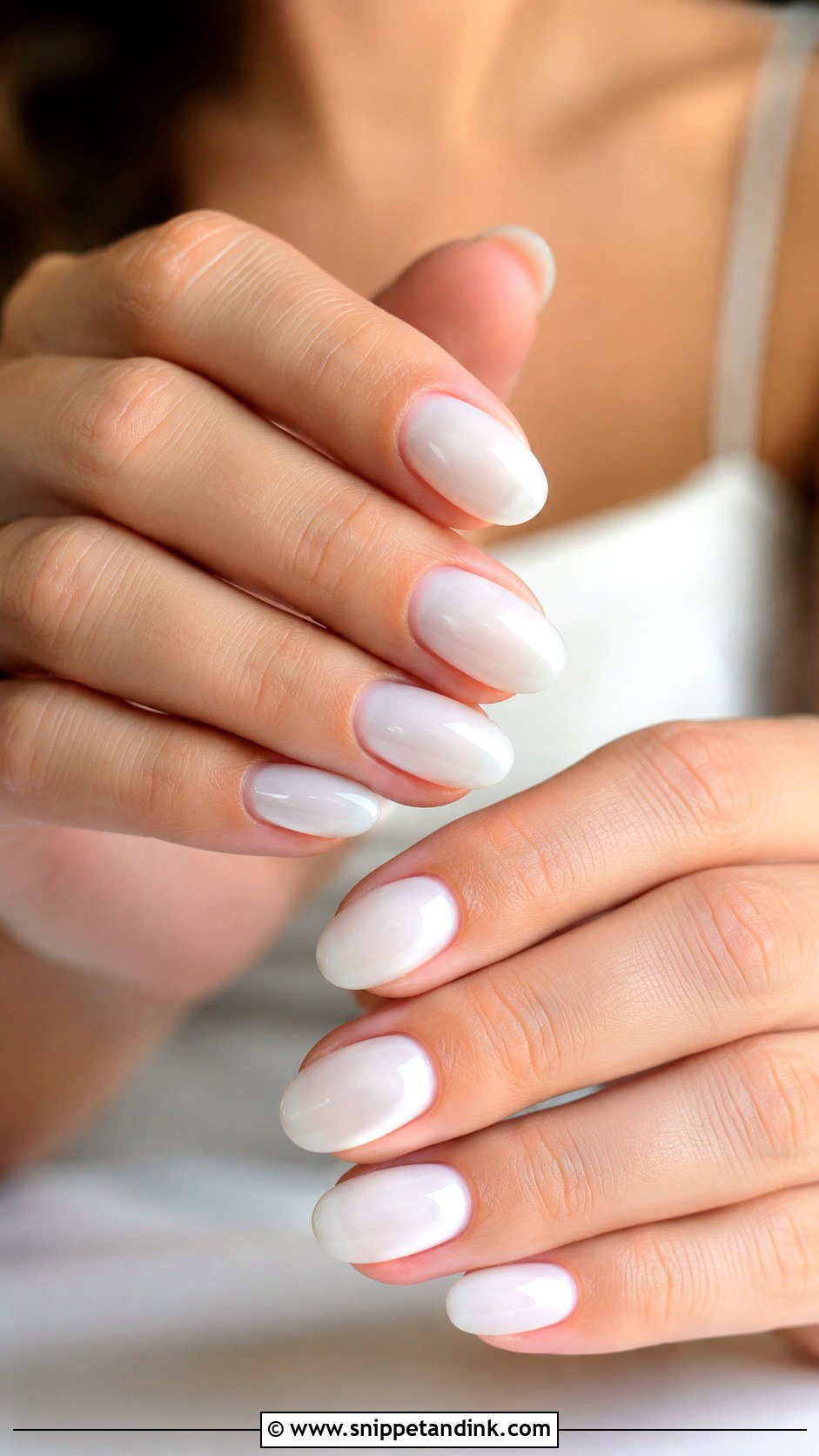
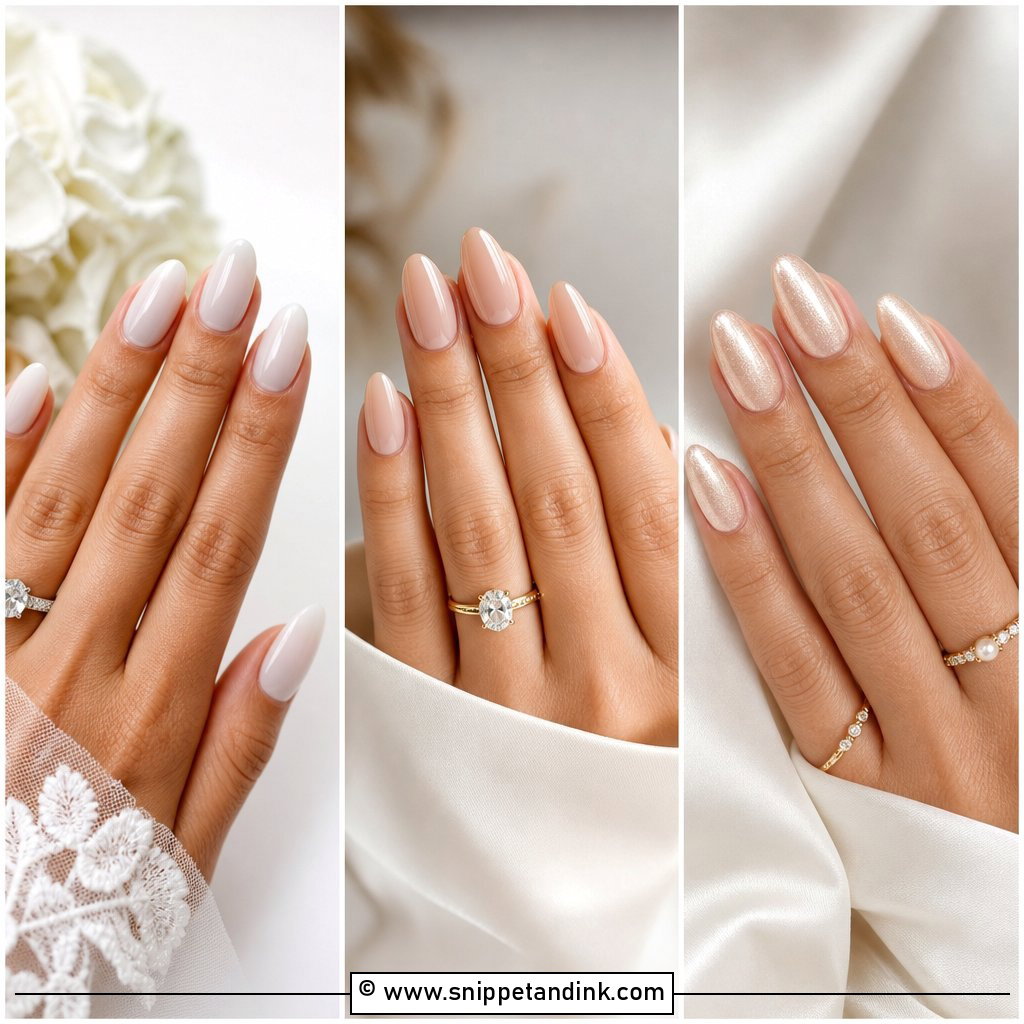
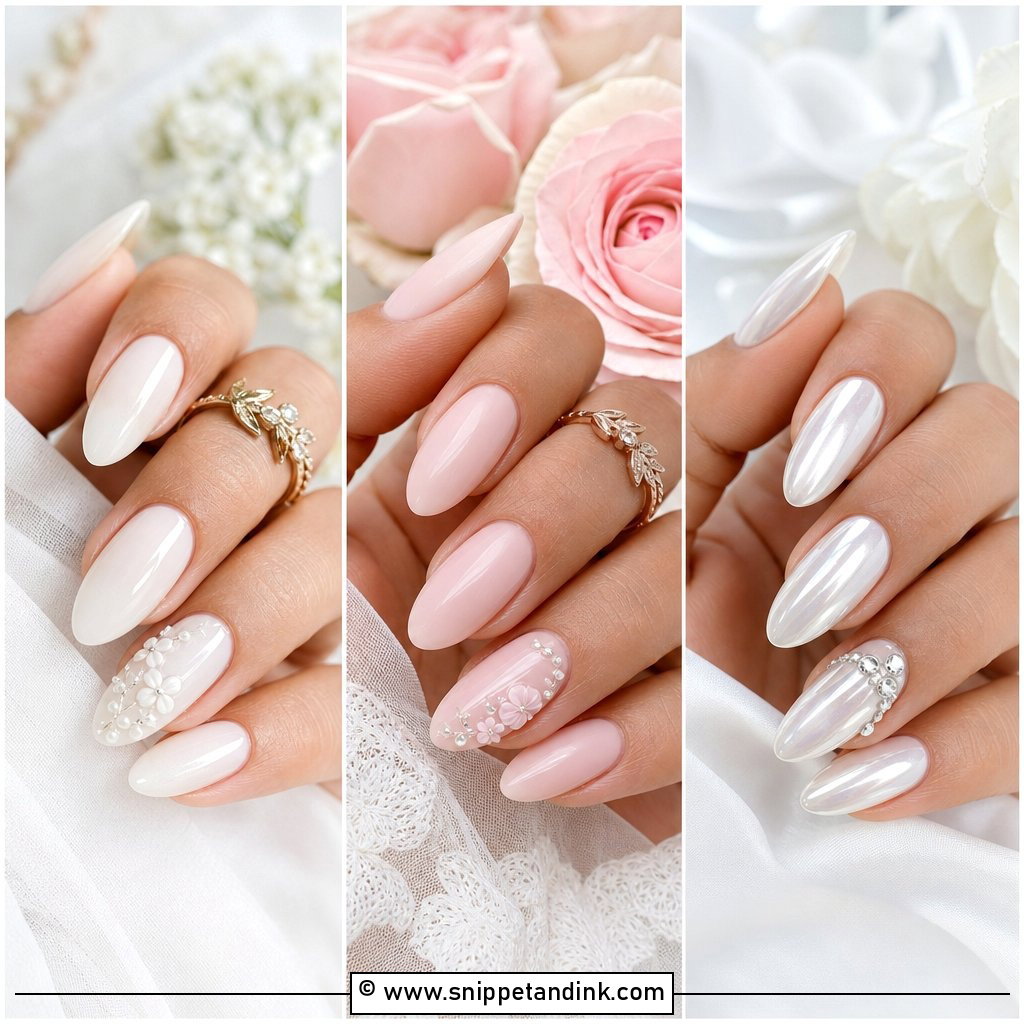
Unlike opaque white polish, a milky white is translucent, so it reads as soft and creamy rather than painted. It gives a little more presence than a nude while still looking natural. Short, medium or long, it works, and oval or almond shapes suit it best. I build it in thin layers, because one thick coat tends to pool at the cuticle and look streaky as it grows. A glossy top coat finishes it; a very faint shimmer is optional. Against silk, tulle, organza and pearls, it looks completely at home.
3. Pearl Chrome Wedding Nails
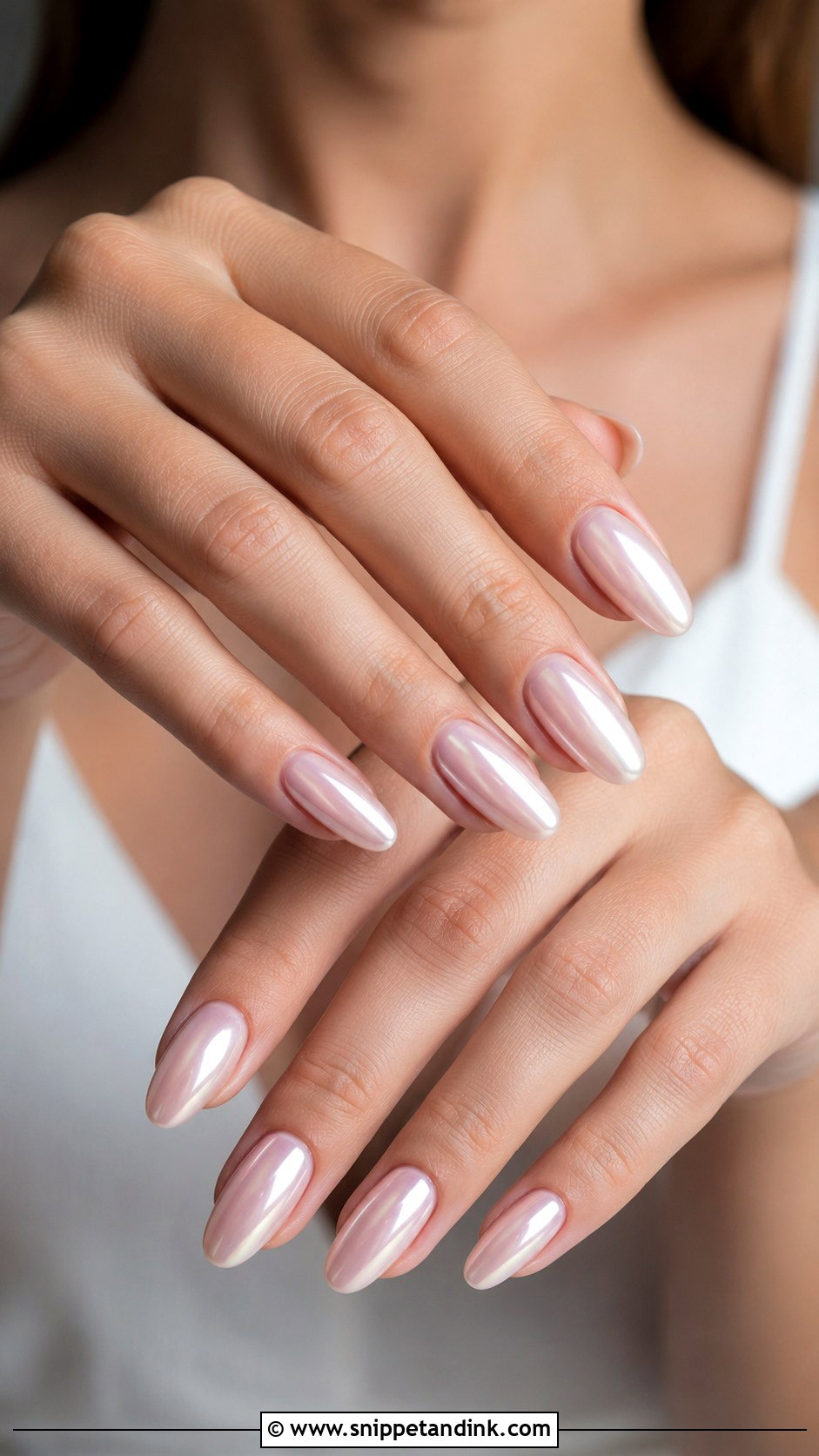
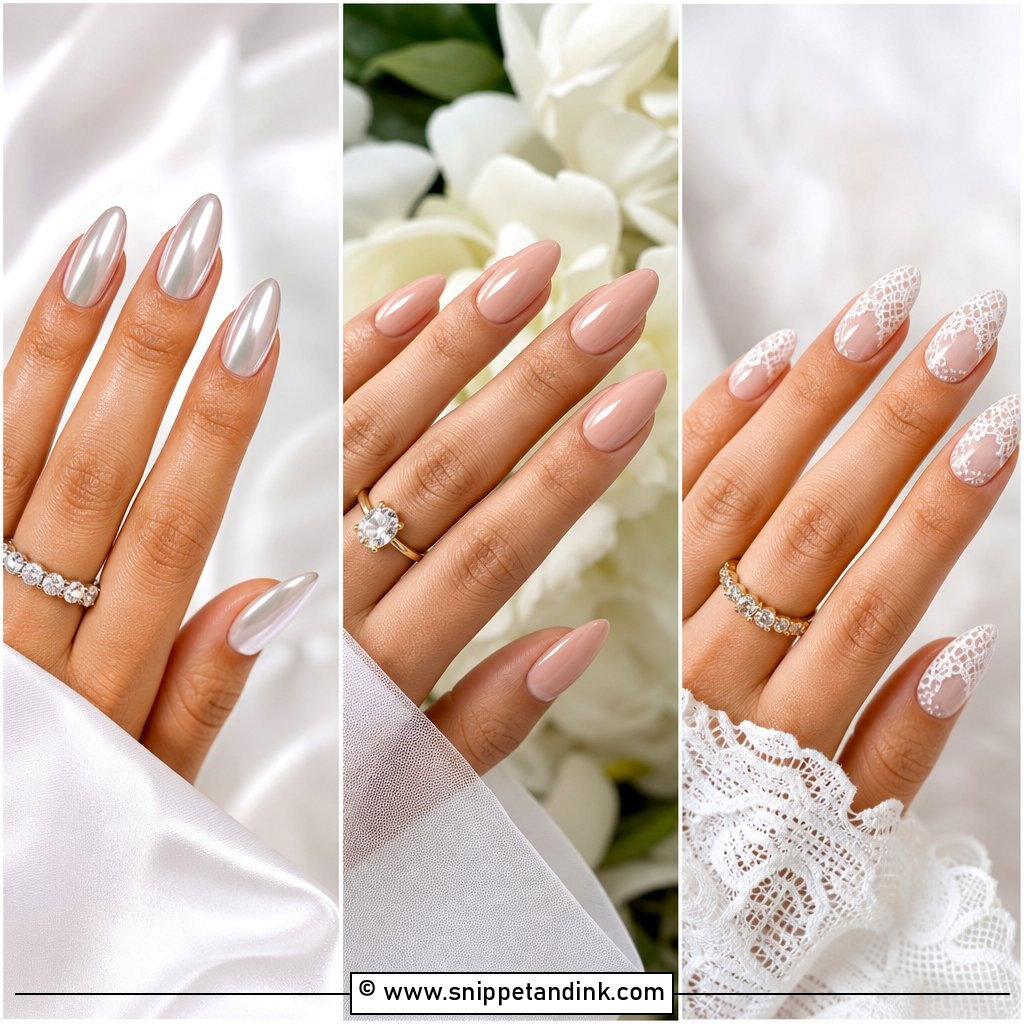
Picture a veil of light over the nail: that’s pearl chrome. A sheer pink, nude or milky base gets a fine pearl powder rubbed onto the cured top layer and is sealed again. The finish catches light gently during ring photos and bouquet shots without turning metallic. Almond and oval make it delicate; soft square makes it more modern. For a bride who loves classic nails but wants a small update, it’s my usual answer. The one thing I warn about is chrome’s sensitivity to the top coat: seal it badly and the tips dull within a few days.
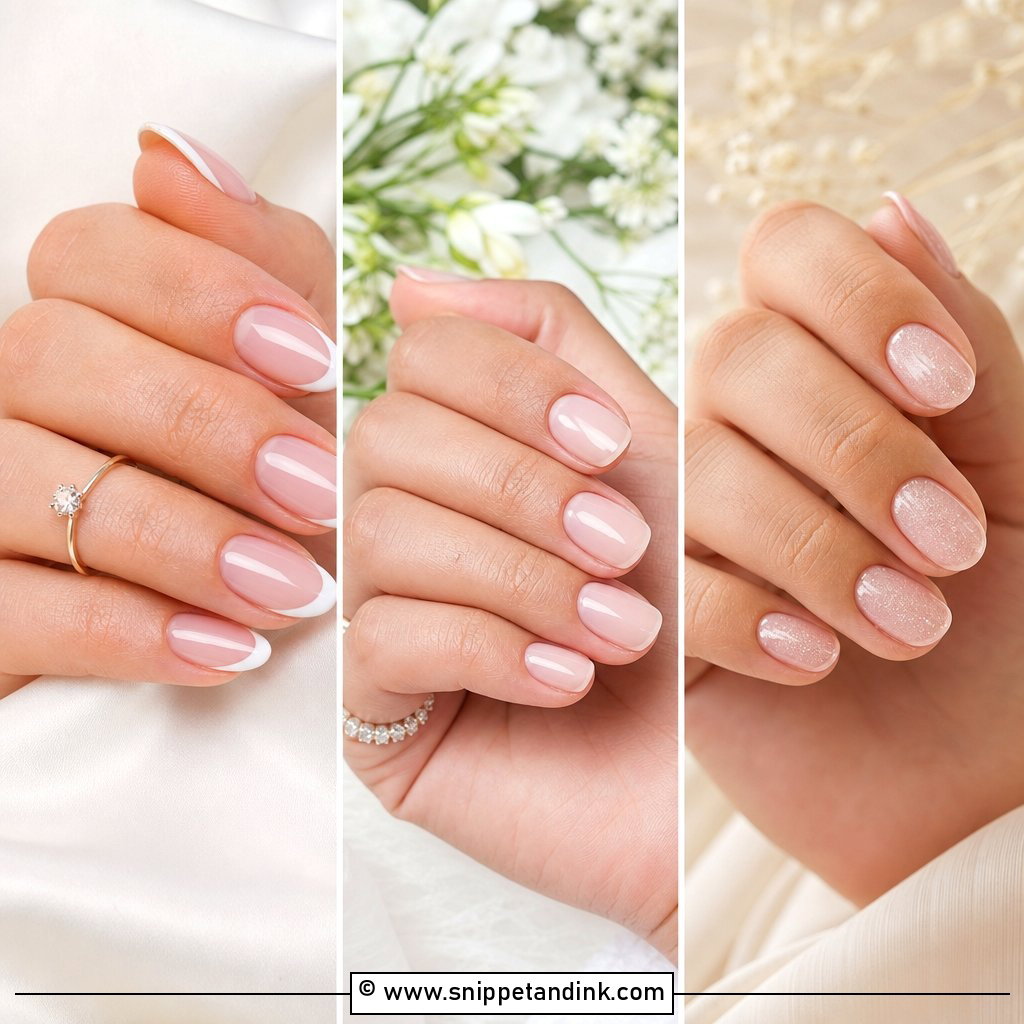
4. Sheer Pink Bridal Nails
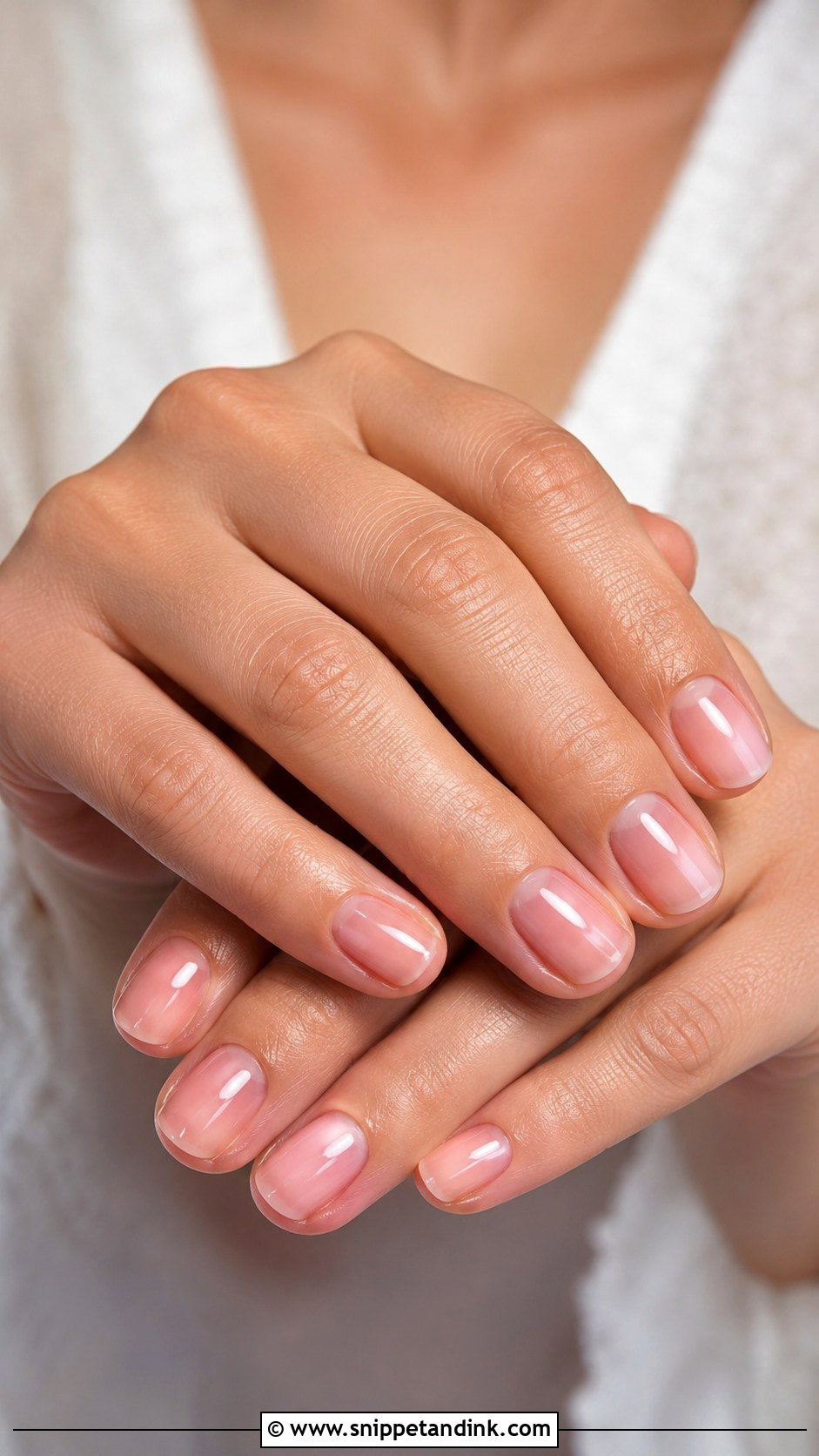
Sheer pink gives the nail bed a soft rosy tone without looking polished at all, which makes it the safest choice for brides who rarely wear color. It works at any length, so if you keep your nails short for work, there’s nothing to change. Round or oval shapes suit it. I sometimes add a single tiny pearl, a fine shimmer top coat or a hint of a French edge, but plain is just as good. It’s also forgiving if the nail grows out a little before the honeymoon, since the regrowth line barely shows.
5. Nude Almond Bridal Nails
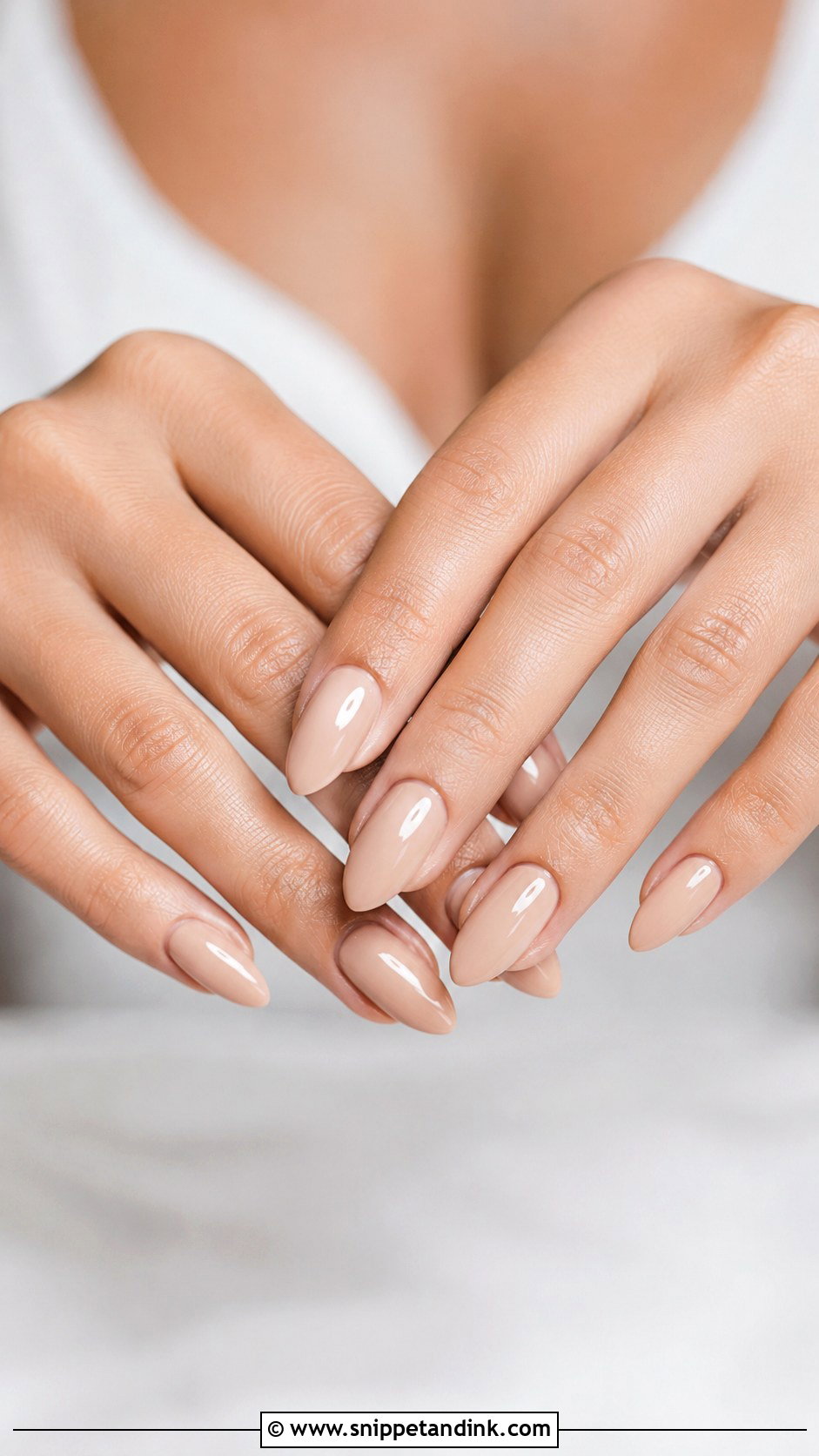
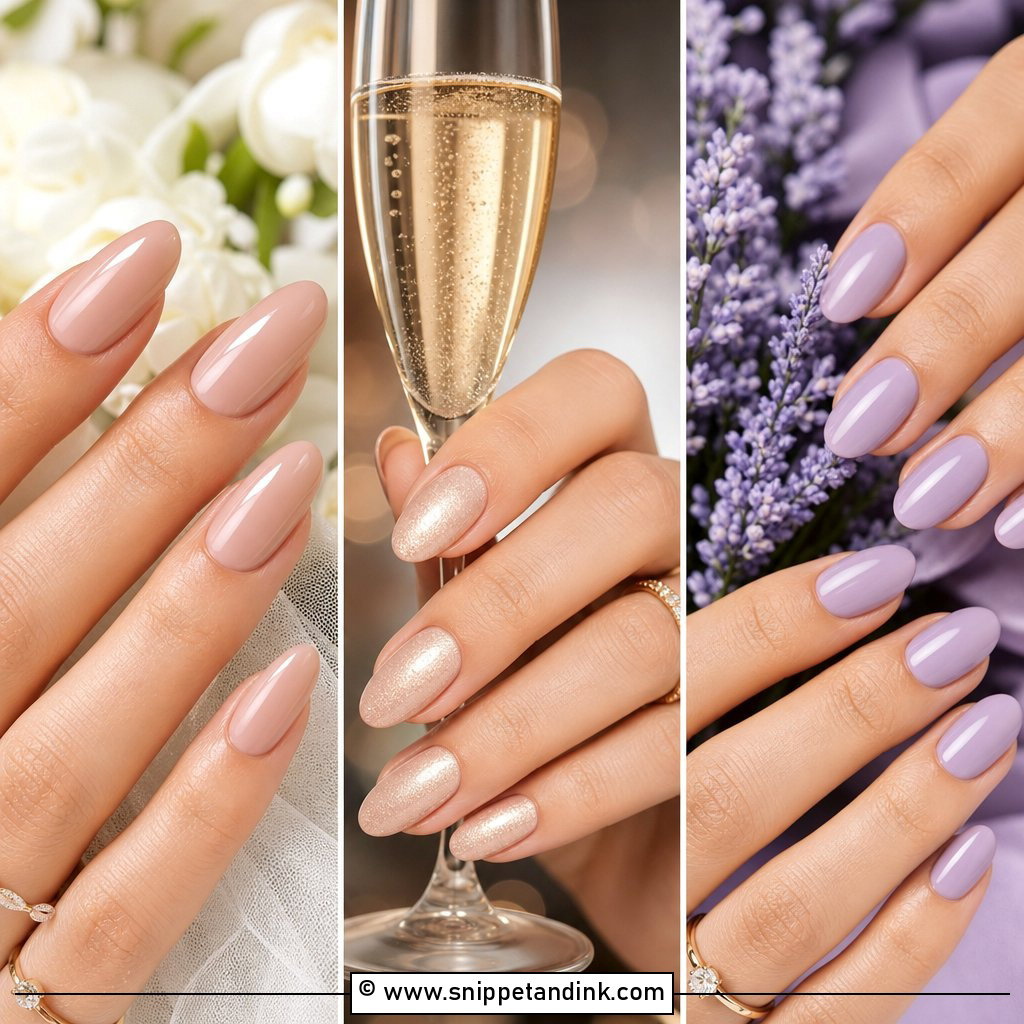
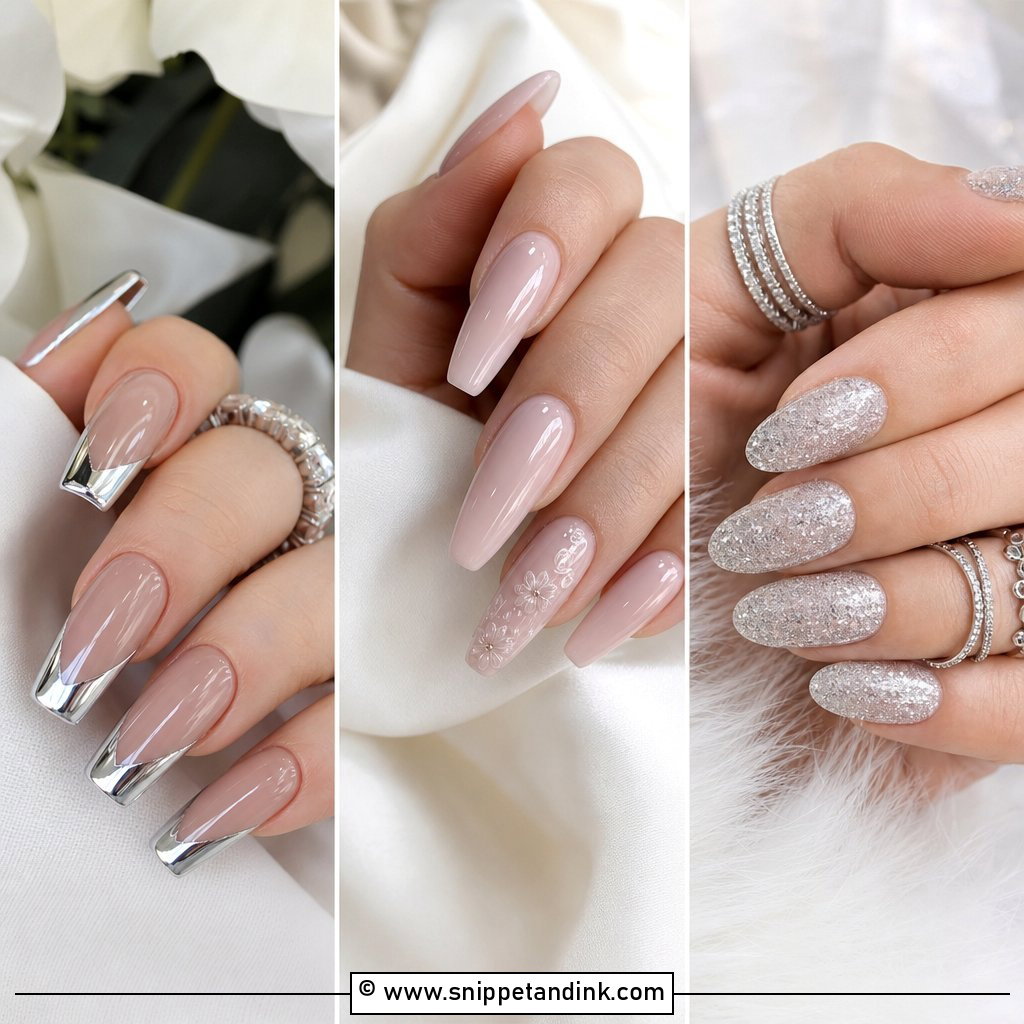
Almond narrows gently toward the tip, which is why fingers look longer in photos. The nude matters as much as the shape: pick one that complements your skin rather than disappearing into it. On fair skin I usually reach for pink beige, on medium skin a warm beige and on deeper skin caramel, mocha or a rosy brown. A nude that matches the skin exactly can make the fingers look unfinished. With a glossy top coat, it carries from the ceremony dress to the reception outfit and through the honeymoon.
6. Baby Boomer Bridal Nails
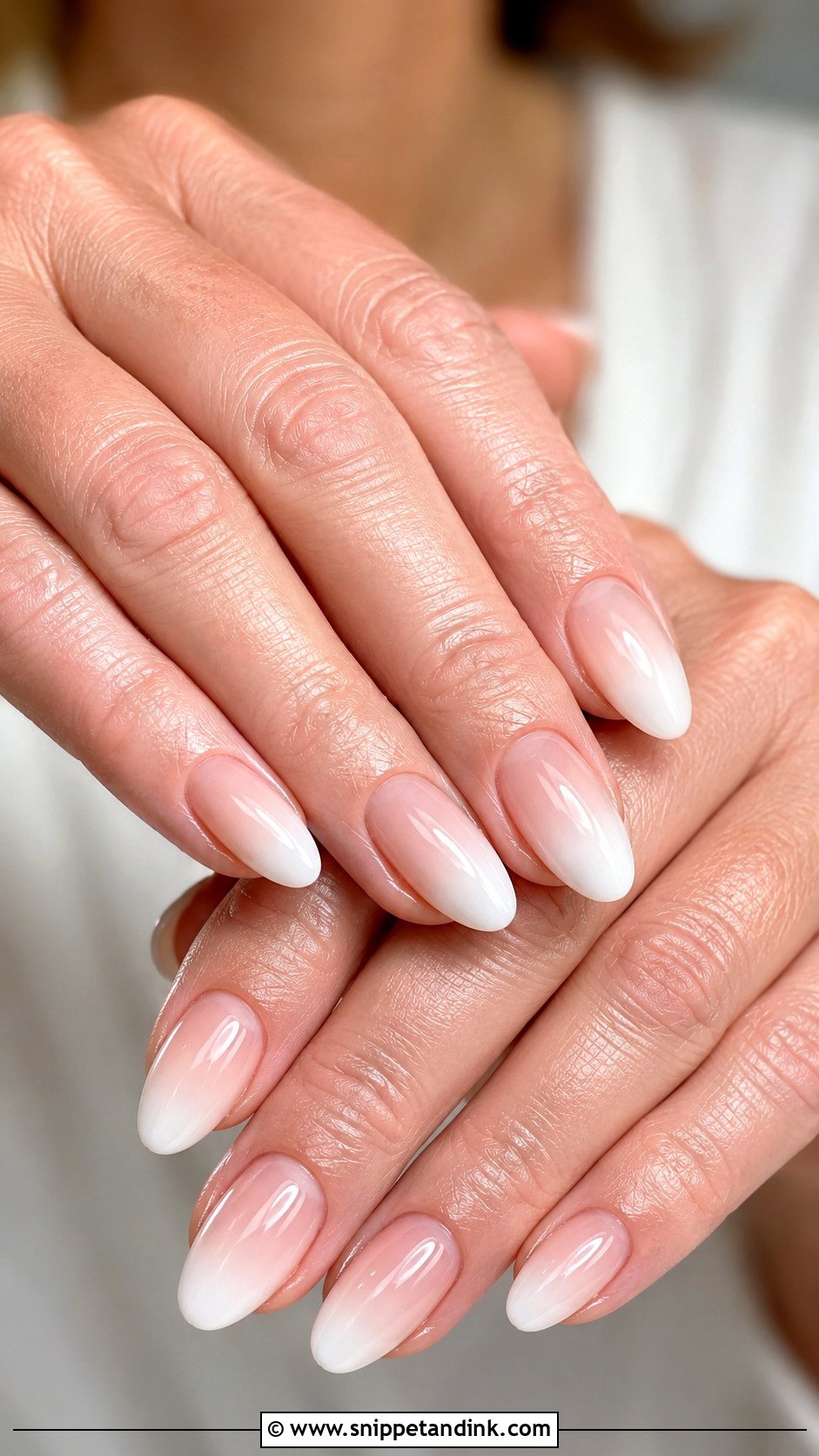
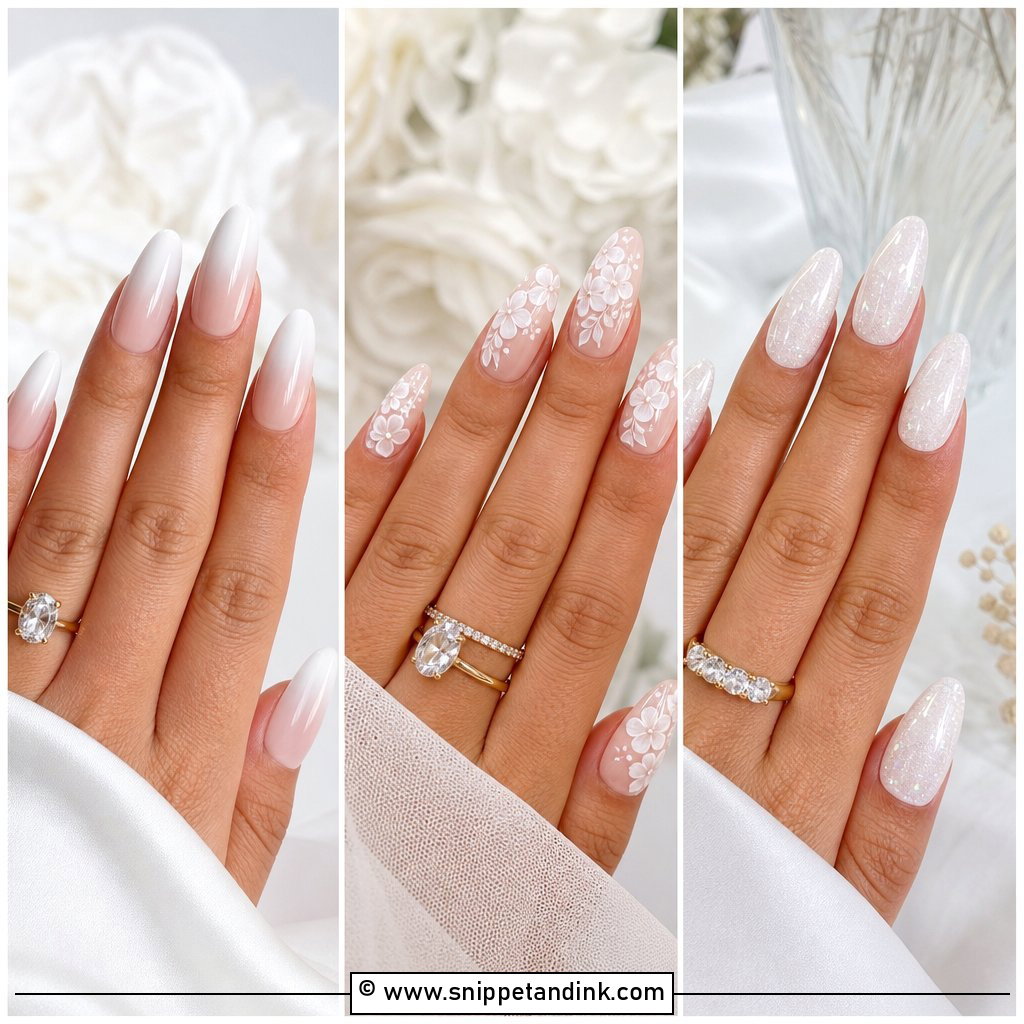
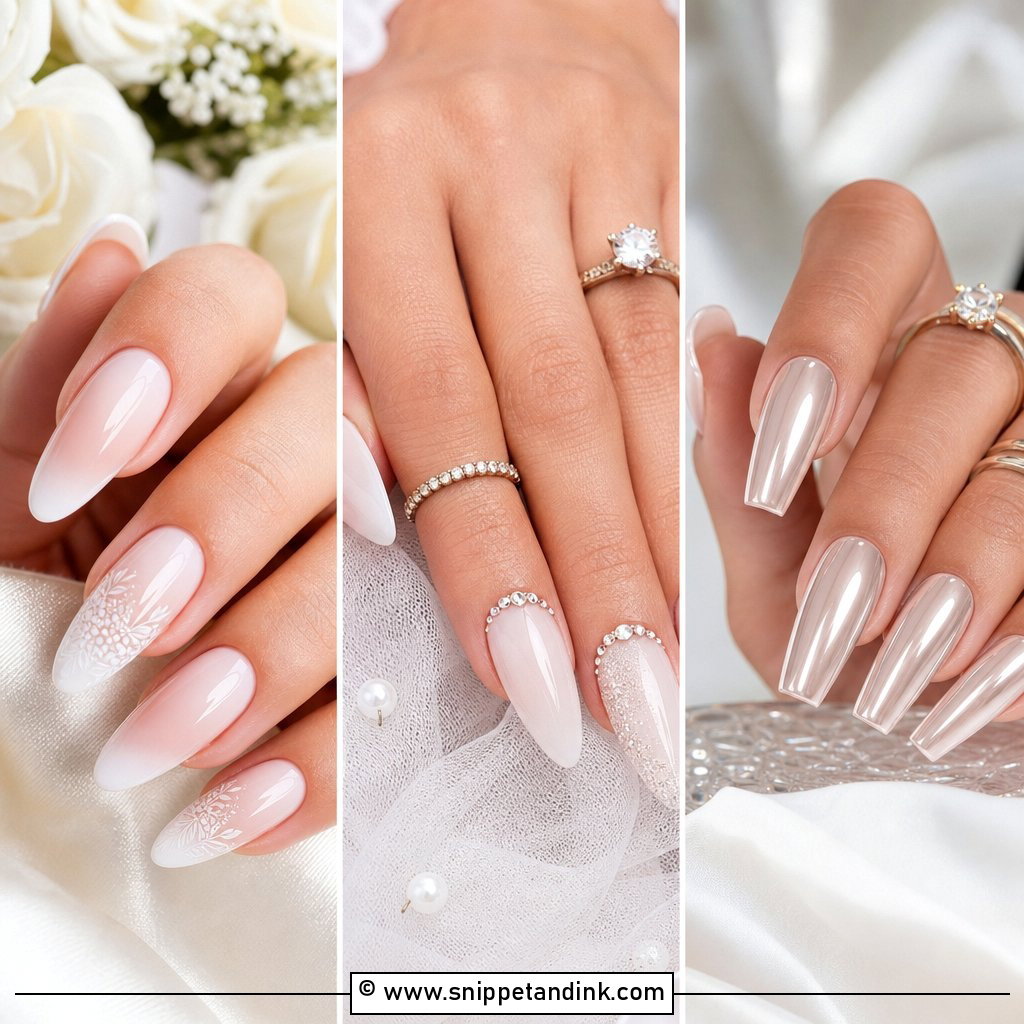
Baby boomer bridal nails fade from nude, beige or pink at the cuticle into a white tip with no hard line. I build the gradient with a soft sponge or brush between thin gel layers and spend most of the time making the middle of the fade smooth. It suits almond, coffin or oval shapes. There’s a practical reason I suggest it to brides getting their nails done several days early: because the color is lightest at the base, the regrowth gap is far less noticeable than with a solid shade.
7. White Chrome Bridal Nails
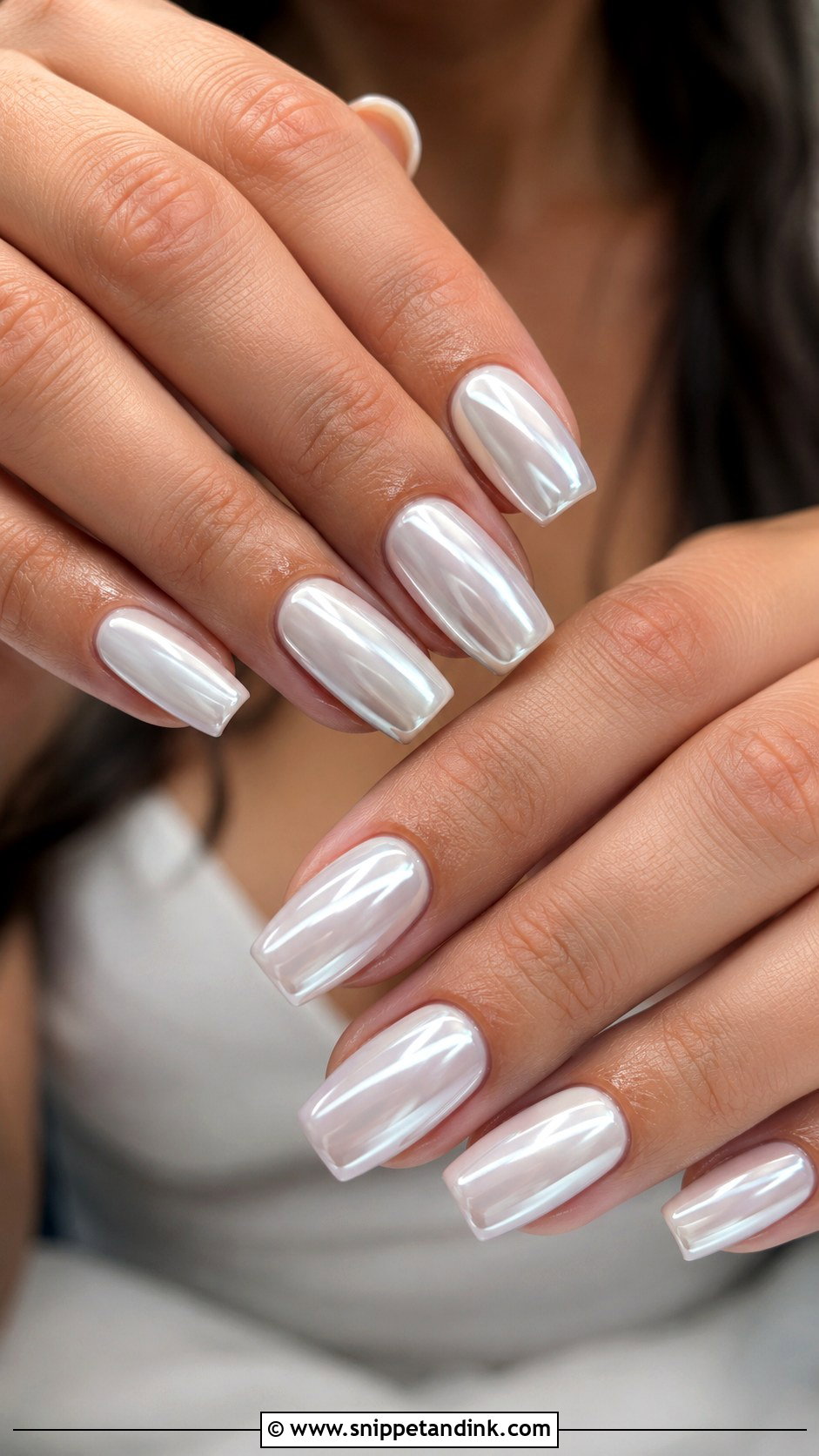
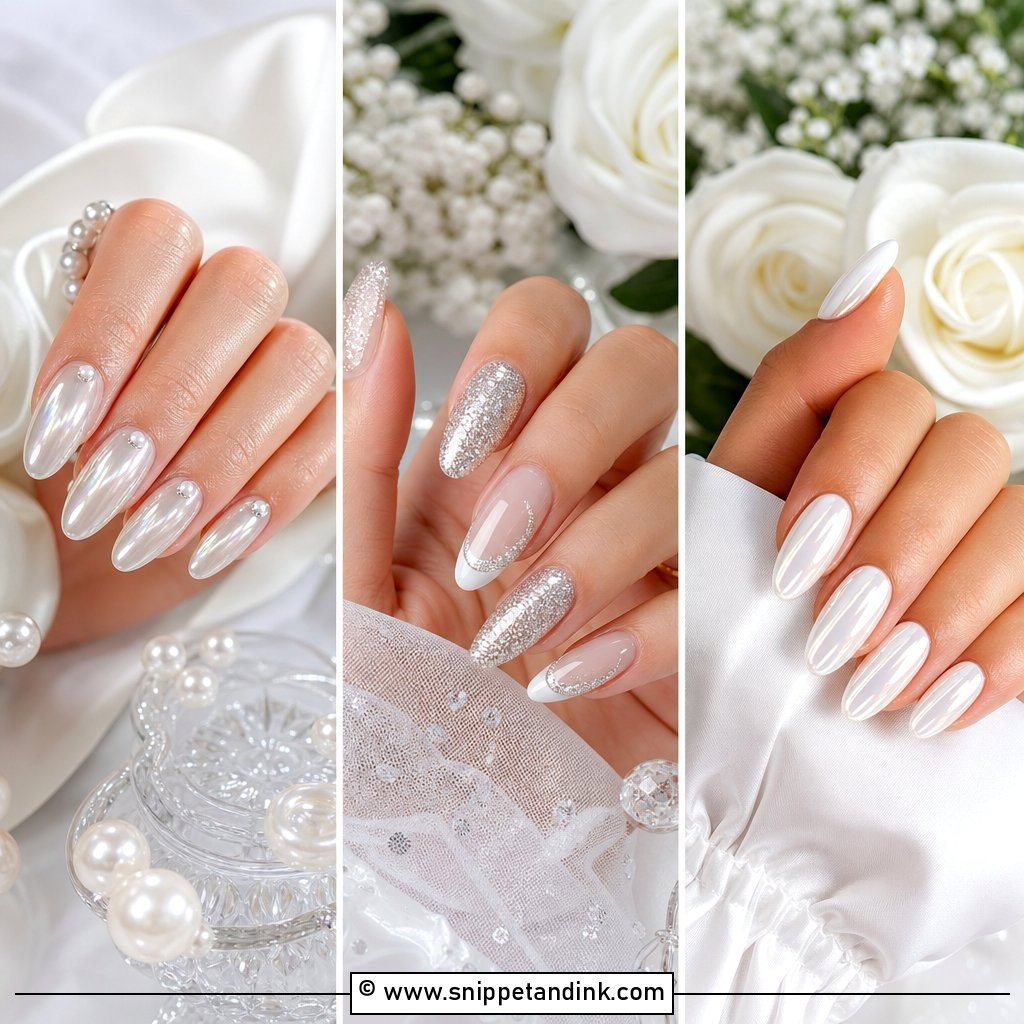
Start with milky white, soft ivory or sheer white, then add a finely applied chrome layer, and you get a white set with a smooth reflective sheen. Finely is the key word; a heavy layer looks like mirror foil. It goes well with structured gowns, sleek buns and pearl earrings. Short square nails make it minimal; almond makes it softer. Chrome magnifies every ridge, so I file and buff the base completely smooth first. If your natural nails are very ridged, I’d suggest a builder base under it.
8. Glazed Donut Bridal Nails
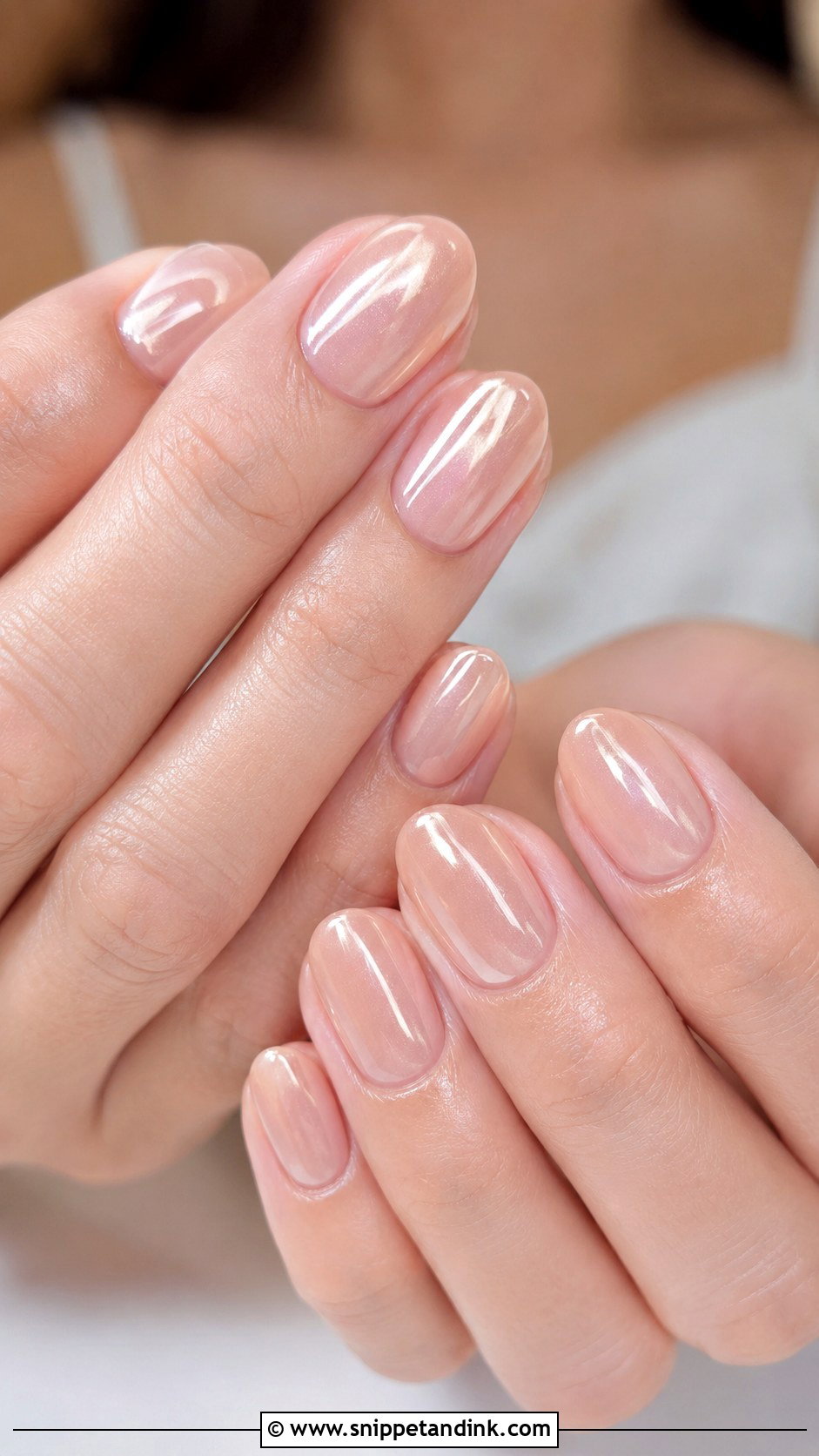
Glazed donut bridal nails layer a delicate chrome glaze over a sheer nude, pale pink or milky white base for a glassy finish. They’re trendy, but the effect is soft enough that I don’t think they’ll date badly in your photos. Keep any art minimal so the glaze stays the focus. Oval and almond shapes suit it best. With slip dresses, pearl veils and understated jewelry, it fits in easily. Ask for a sheer application: when the base color disappears under the powder, it looks frosted rather than glazed.
9. Lace Bridal Nails
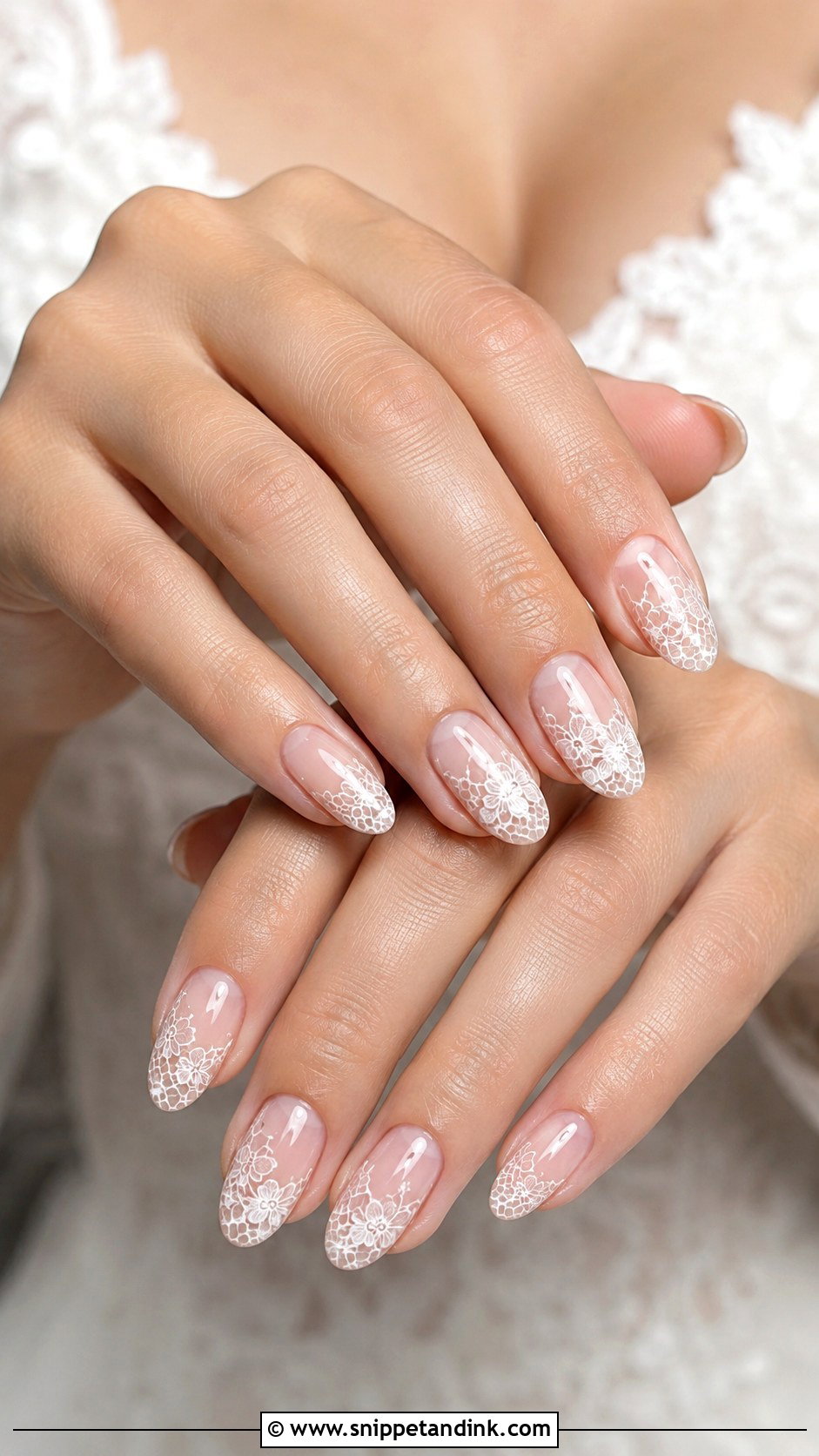
Echo the dress, don’t copy it. Fine white lace-style details over a nude, blush or milky base can run across all nails, but I usually keep them to two or three per hand. Thin lines are everything; heavy lace art looks busy in close-ups and fights with the actual dress. I pick one motif from your gown, a scallop edge or a small flower, and repeat it. Almond and oval shapes keep it romantic. It’s a natural match for lace sleeves, floral embroidery and vintage-inspired dresses.
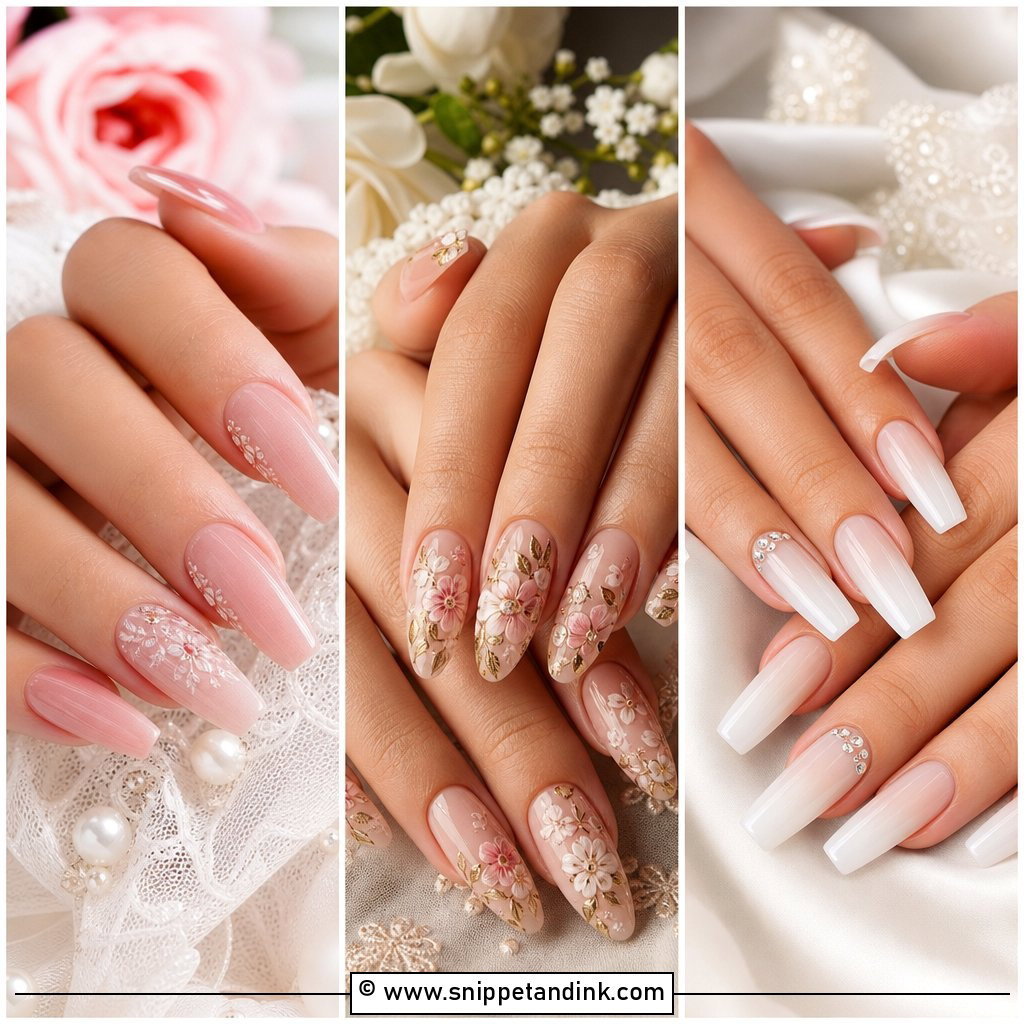
10. Floral Bridal Nails
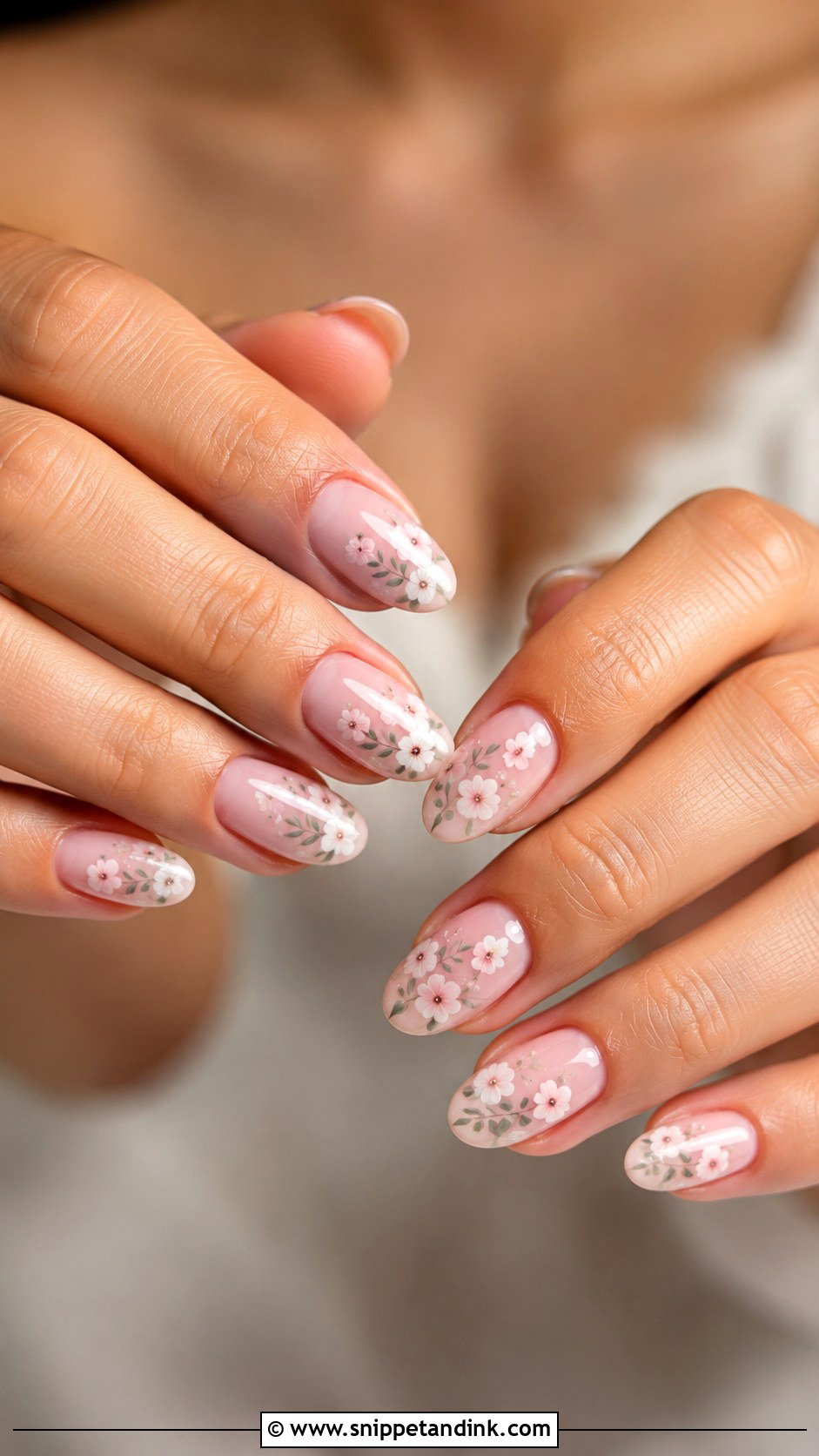
Tiny white, blush or ivory flowers over a sheer nude or pink base are the version I’d recommend. Space them out so the manicure still breathes. Matching the petals to your bouquet is a nice touch, whether through soft petals, simple leaves or a hint of your wedding color. Almond, oval and soft square shapes all work, and a glossy top coat keeps the paint looking fresh. Spring, garden and outdoor weddings suit it best. Hand-painted flowers vary in skill a lot, so look at your tech’s own floral work before booking this one.
11. Short Bridal Nails
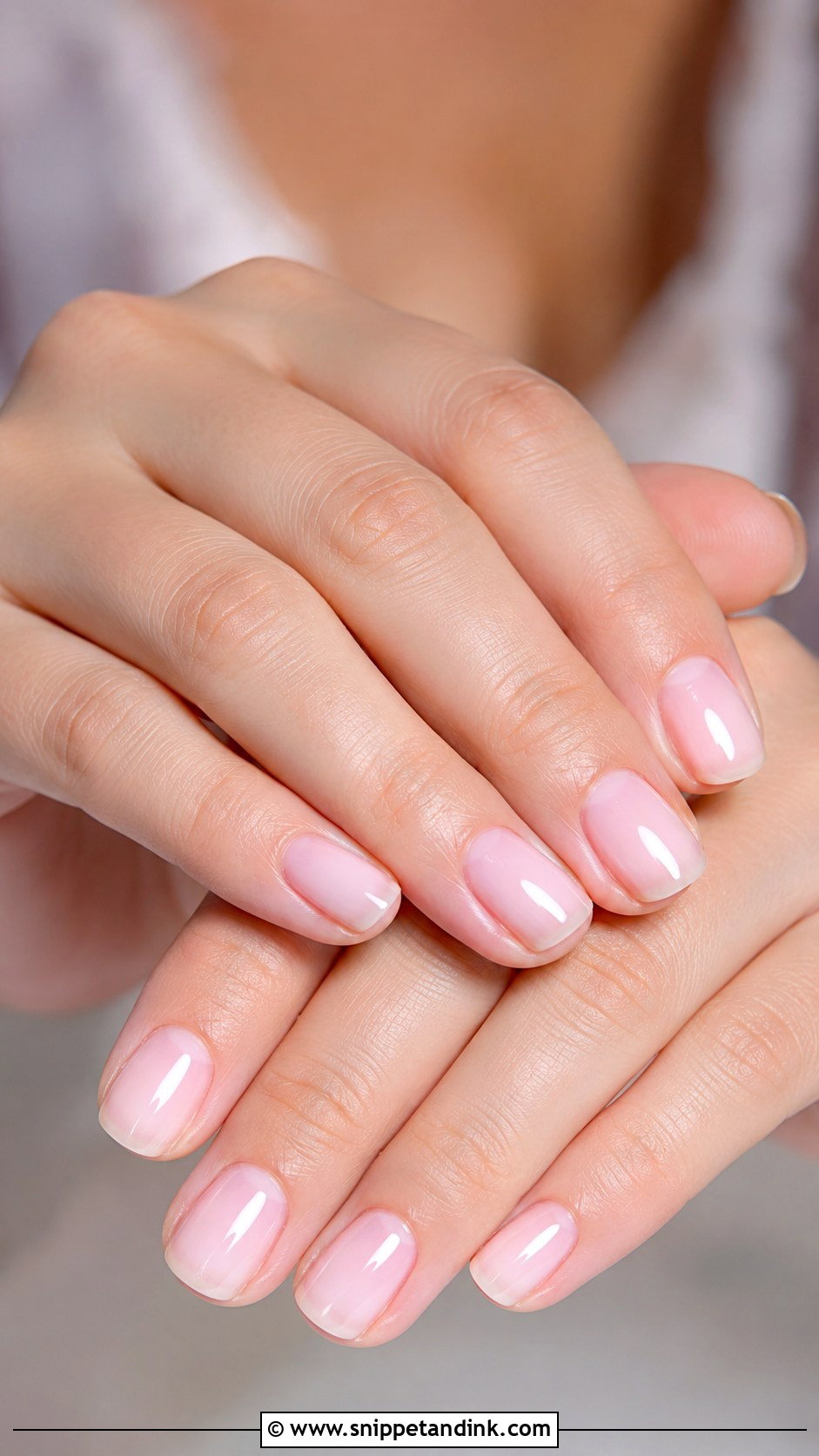
Short nails can look every bit as polished as long ones; it’s the shape and finish that do the work. A short oval, round or soft square is practical and comfortable, and you won’t spend the day worrying about breaks. Sheer pink, milky white, nude beige or a soft pearl all suit short nails, and a micro French tip adds definition. Next to a ring, short nails look natural, and they don’t overshadow a delicate band. If you’ve never worn extensions, I’d honestly keep it this way: the wedding day isn’t the day to learn how to do up tiny buttons with long nails.
12. Oval Bridal Nails
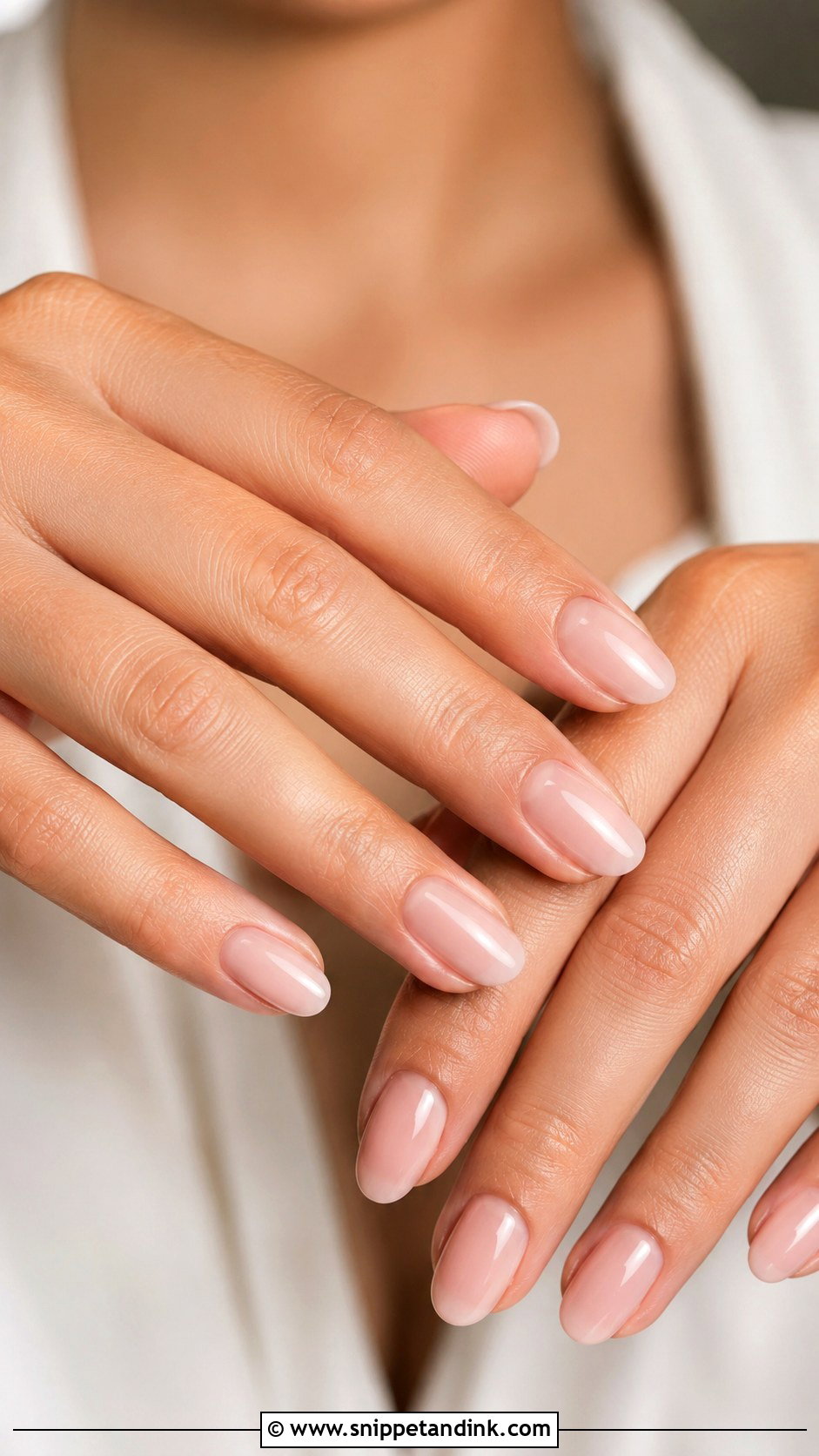
Oval is my default recommendation when a bride can’t choose a shape. The rounded tip softens the hand and lengthens the fingers without the drama of a pointed nail. It works with sheer pink, milky white, nude, pearl chrome or a soft French. At medium length, it’s comfortable to wear all day. Because the sides are filed in slightly, oval also makes wide nail beds look narrower. It suits classic and modern weddings equally, which is why it’s so reliable.
13. Almond Bridal Nails
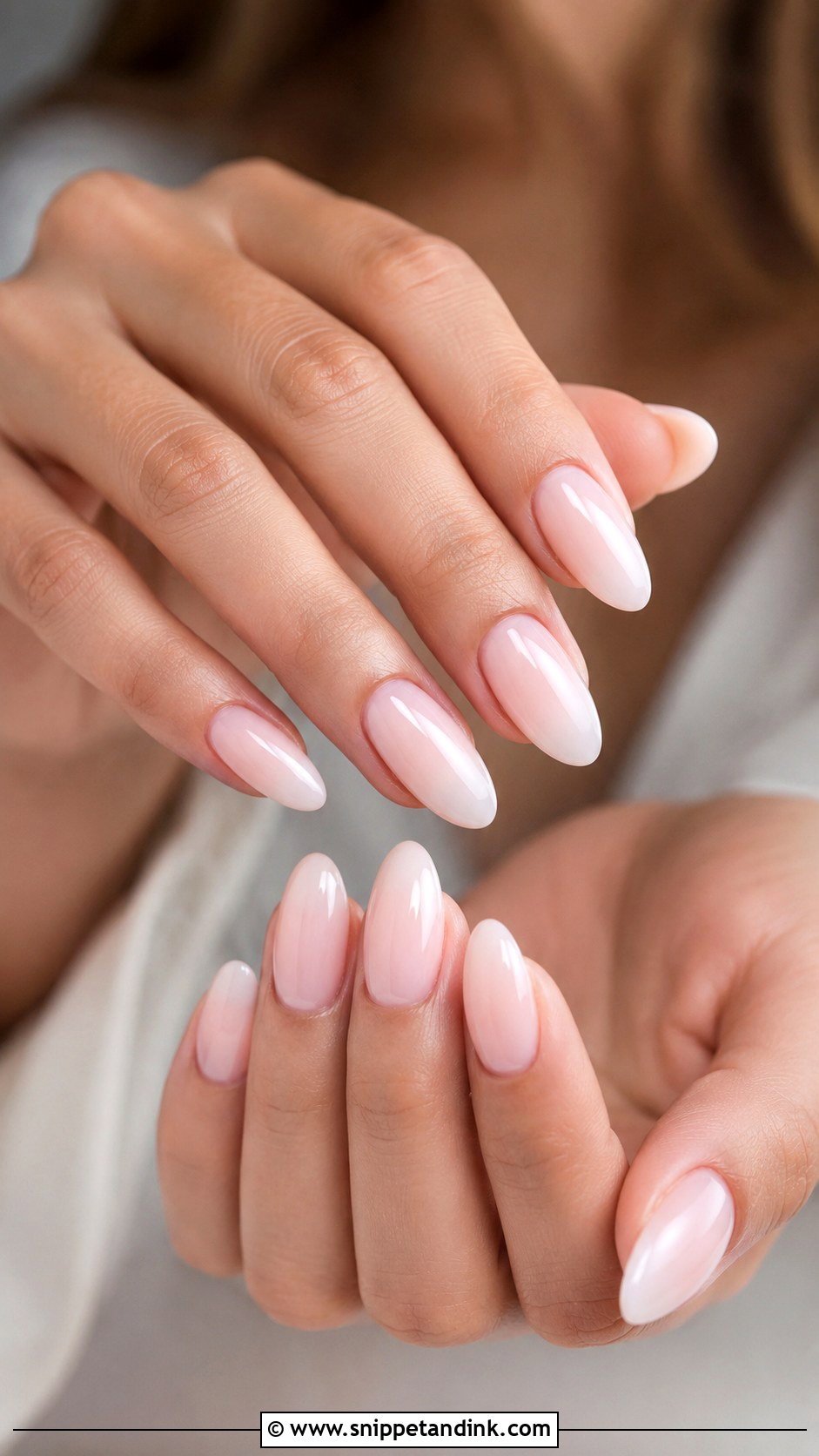
The tapered shape of an almond nail gives the hands a delicate look, which is why it shows up so often in wedding photos. It pairs with French tips, pearl chrome, nude polish, lace art and soft ombré. Medium almond is the most wearable; longer almond reads more glamorous. Natural nails need a bit of length and strength at the sides to hold an almond point without snapping, so if yours are short or thin, I’ll build it with a gel overlay. Stick to blush, ivory, beige, sheer white or pale rose to keep it bridal.
14. Soft Square Bridal Nails
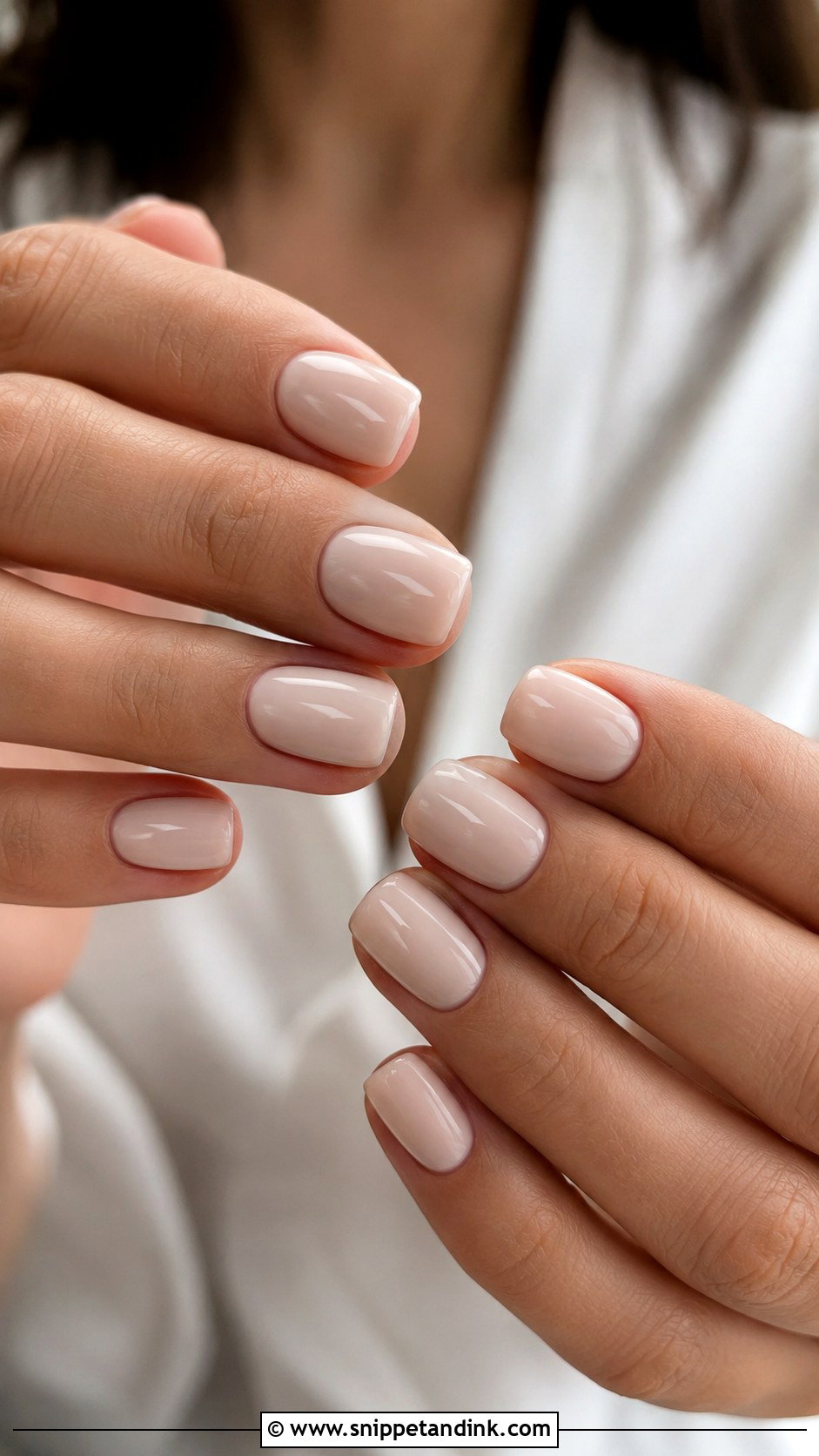
Straight sides with gently softened corners give a neat, modern shape that doesn’t feel sharp. I reach for it when someone asks for tidy nails with no length and no points. Soft square works with classic French, nude, milky white, sheer pink and micro French, at short and medium lengths. If your wedding is minimal, tailored or contemporary, it fits well. One honest caution: on very short, wide nail beds, square can make the fingers look shorter, so I’d switch to a squoval or oval instead.
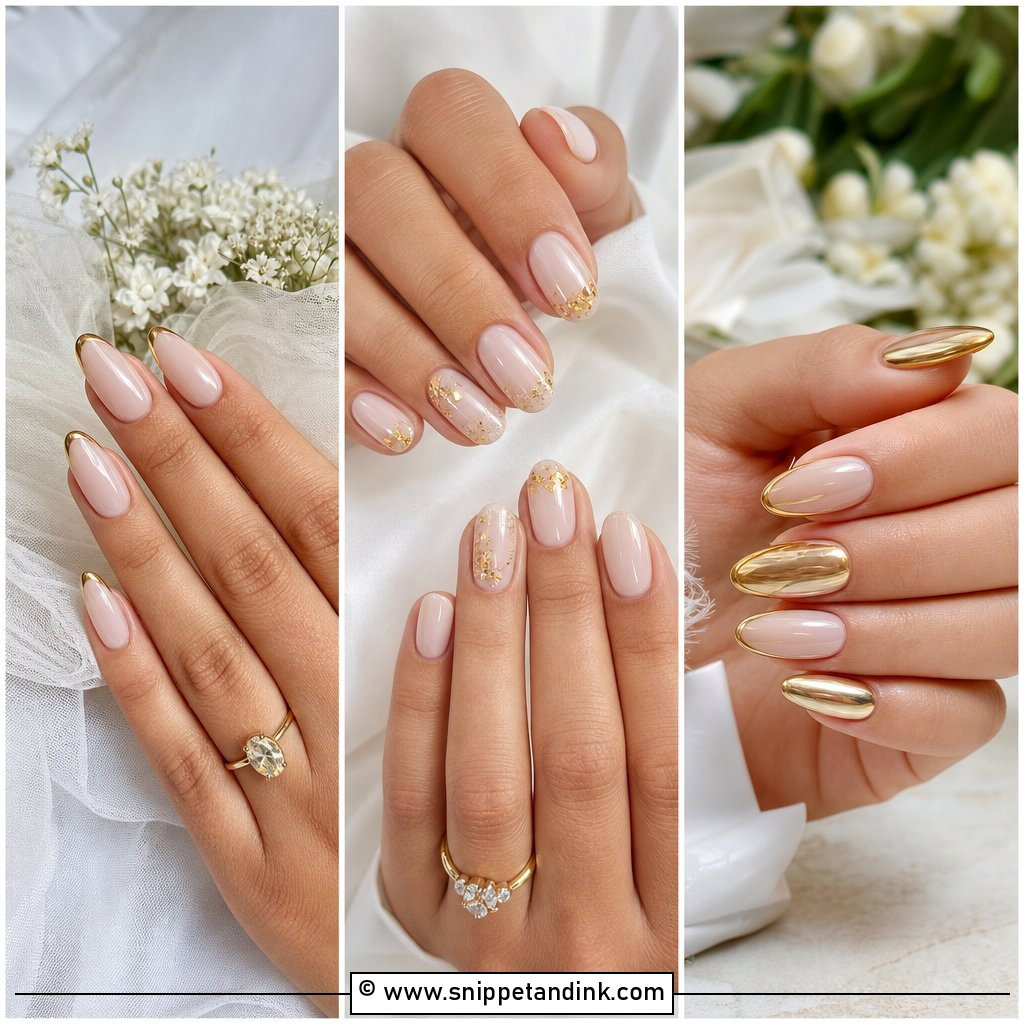
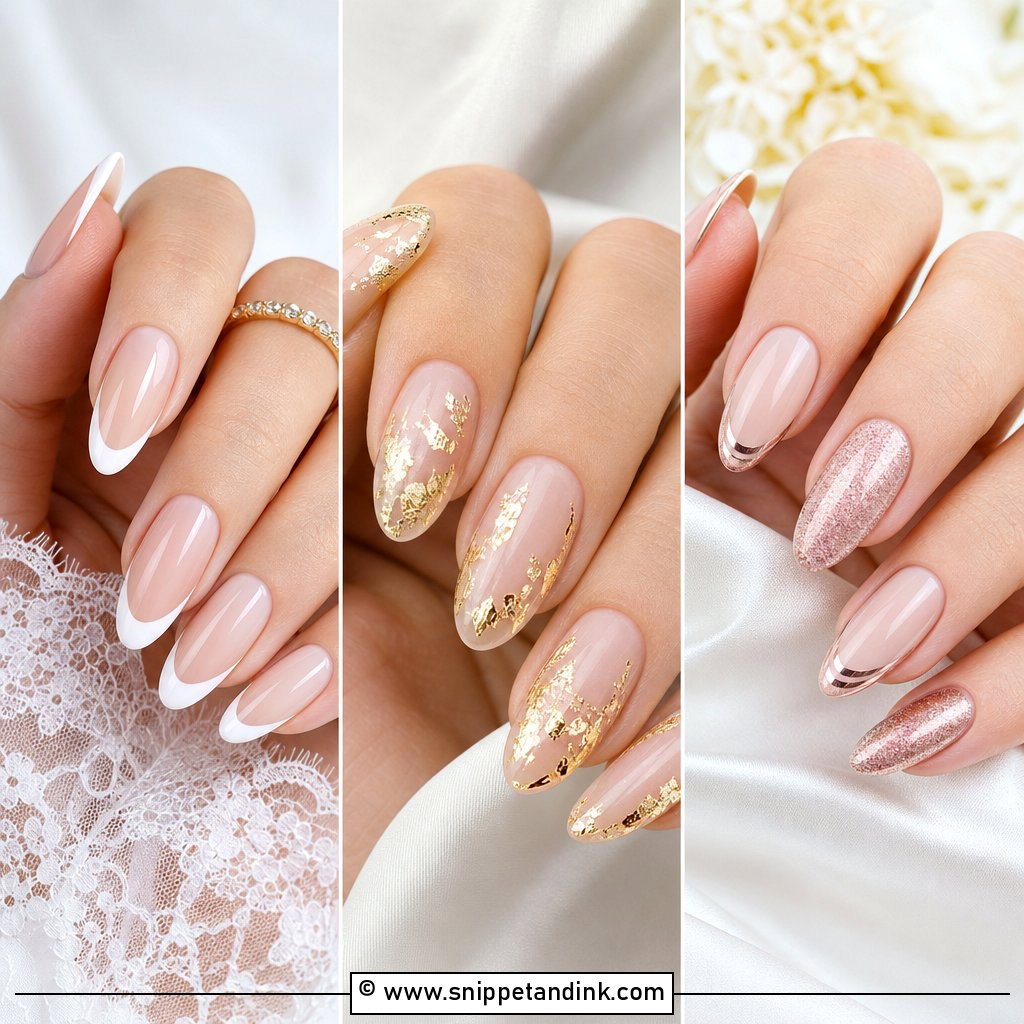
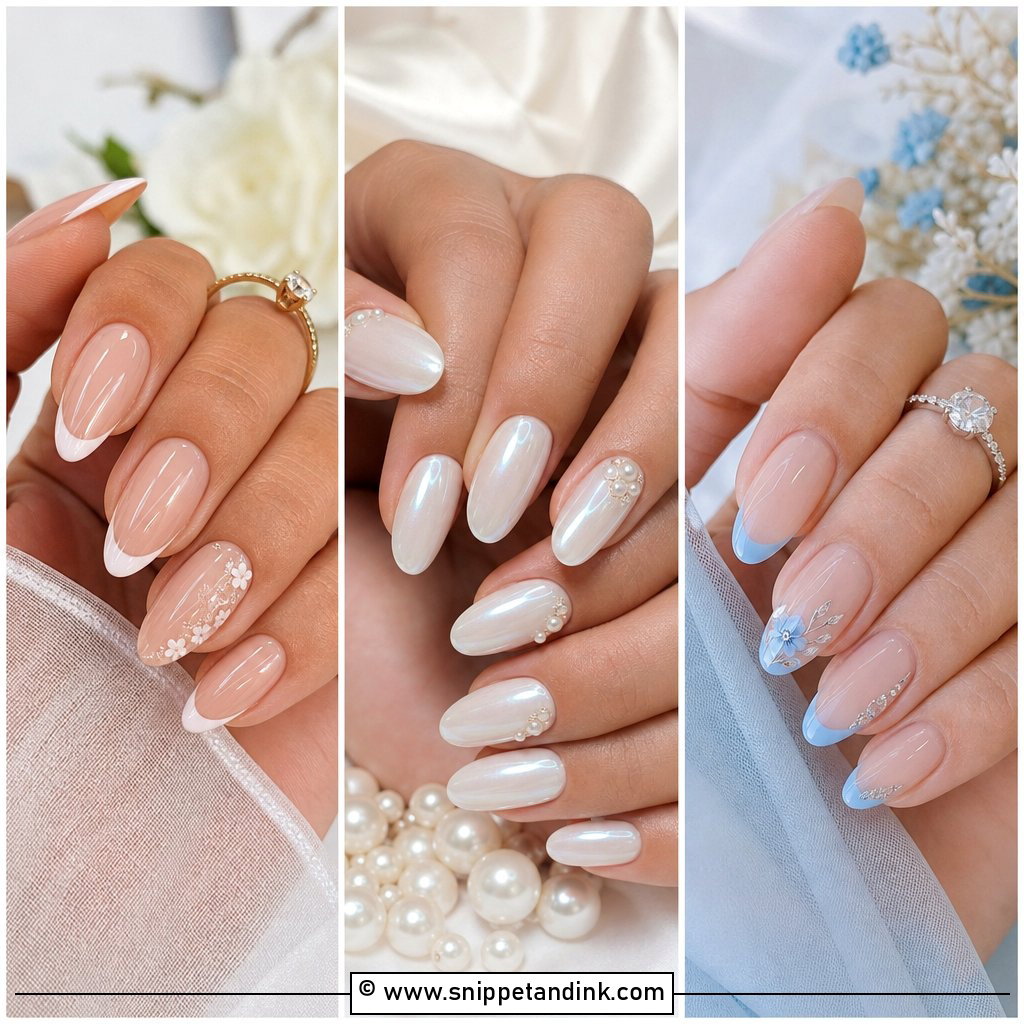
15. Gold Accent Bridal Nails
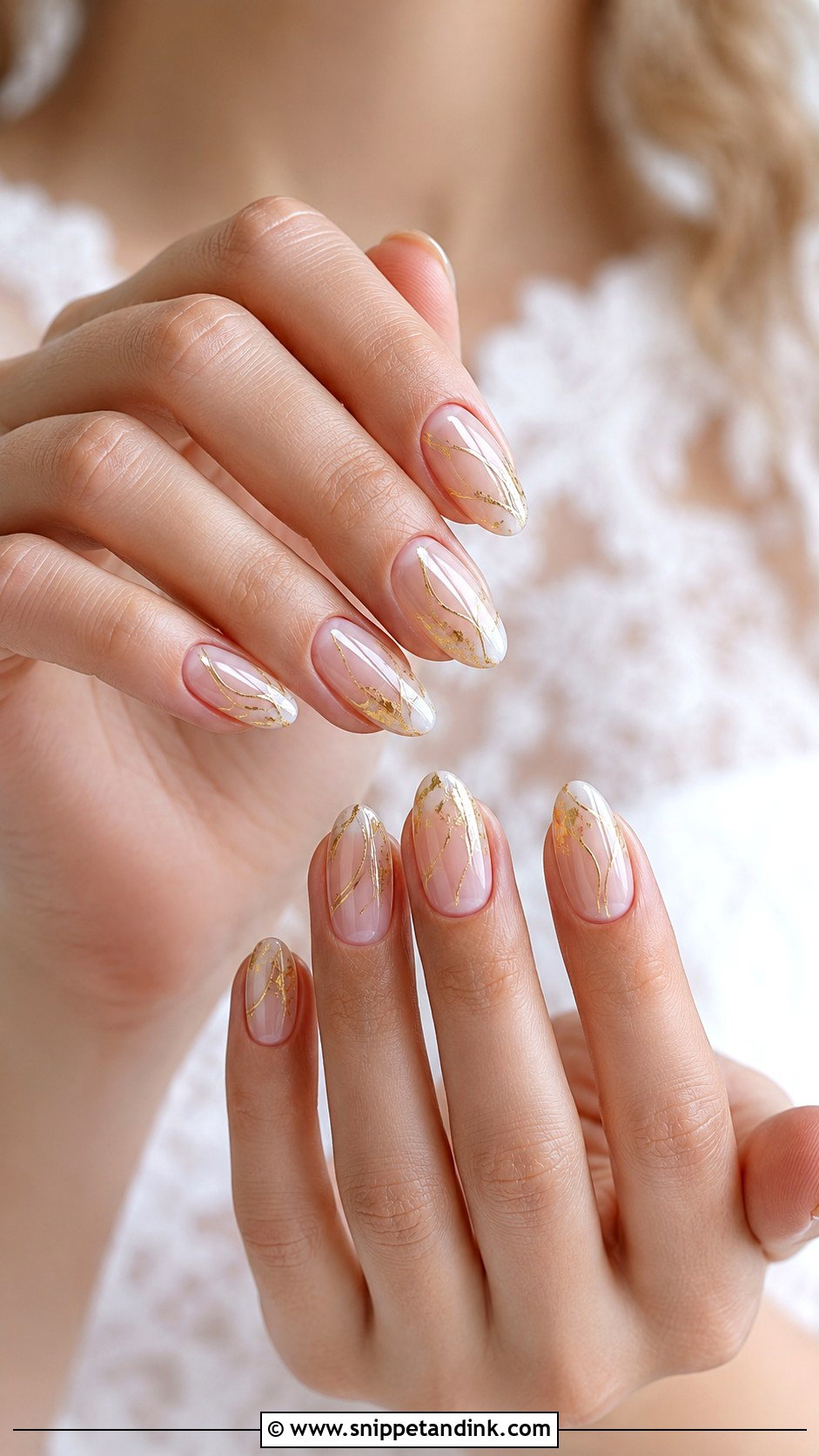
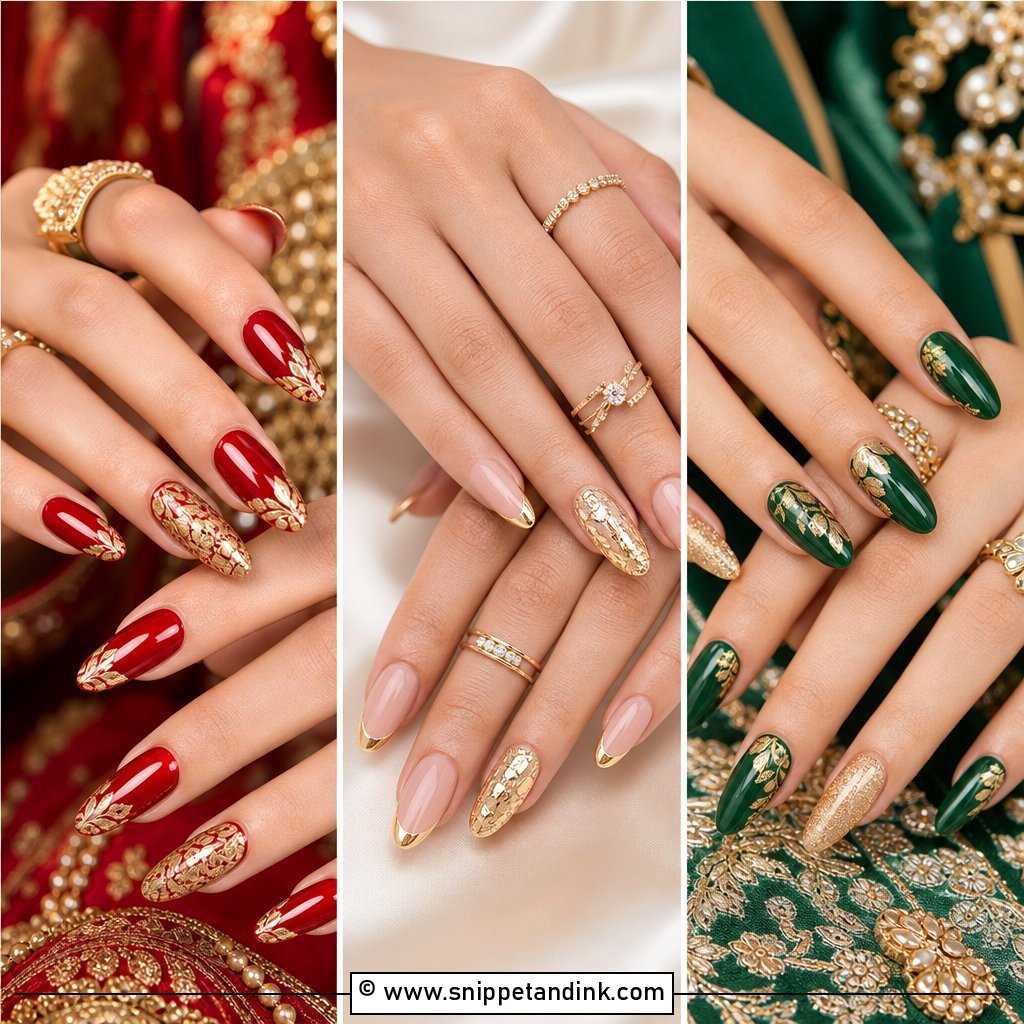
A little gold can tie the manicure to a gold ring, jewelry, hair pins or dress embellishments. The most refined version uses a sheer nude, blush or ivory base with thin gold foil, tiny gold lines or a delicate gold French tip. Keep the metallic detail small, or it starts to look like a party set. Almond and oval suit it, though it also lifts short soft square nails. I always seal foil under a thick top coat, because a raised edge catches on lace and veil tulle.
16. Silver Accent Bridal Nails
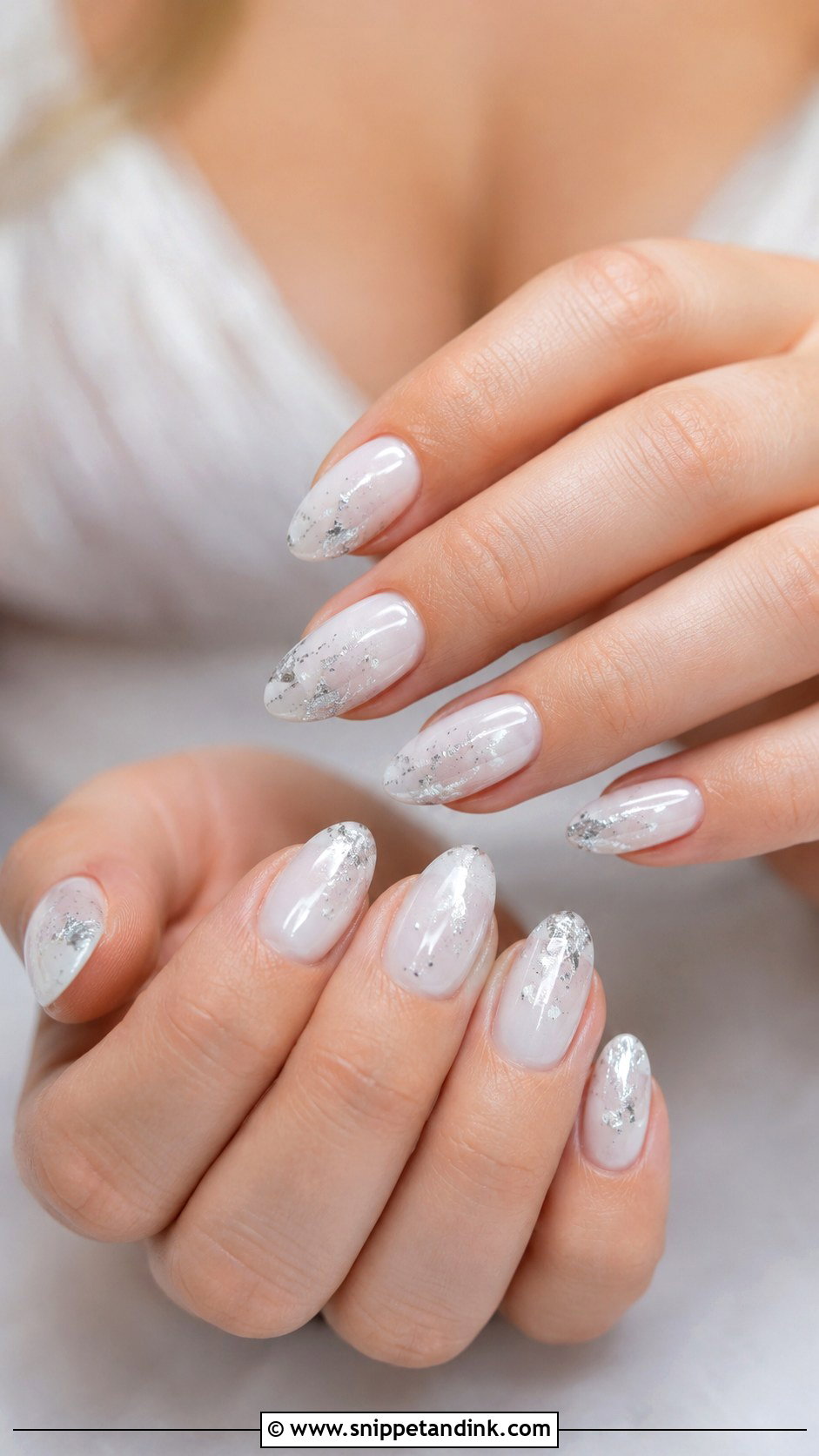
Silver accents make sense when your ring is white gold or platinum, or your accessories are crystal or cool-toned. Fine silver foil, thin metallic tips, tiny shimmer details or a single silver line over a nude or milky base give light-catching detail while the overall set stays soft. It sits well with icy white gowns, beaded veils, crystal earrings and sleek dresses. Almond, oval and soft square all work. Mixing silver nail art with a yellow-gold ring is the combination I’d avoid; the clash shows plainly in ring photos.
17. Blush Pink Bridal Nails
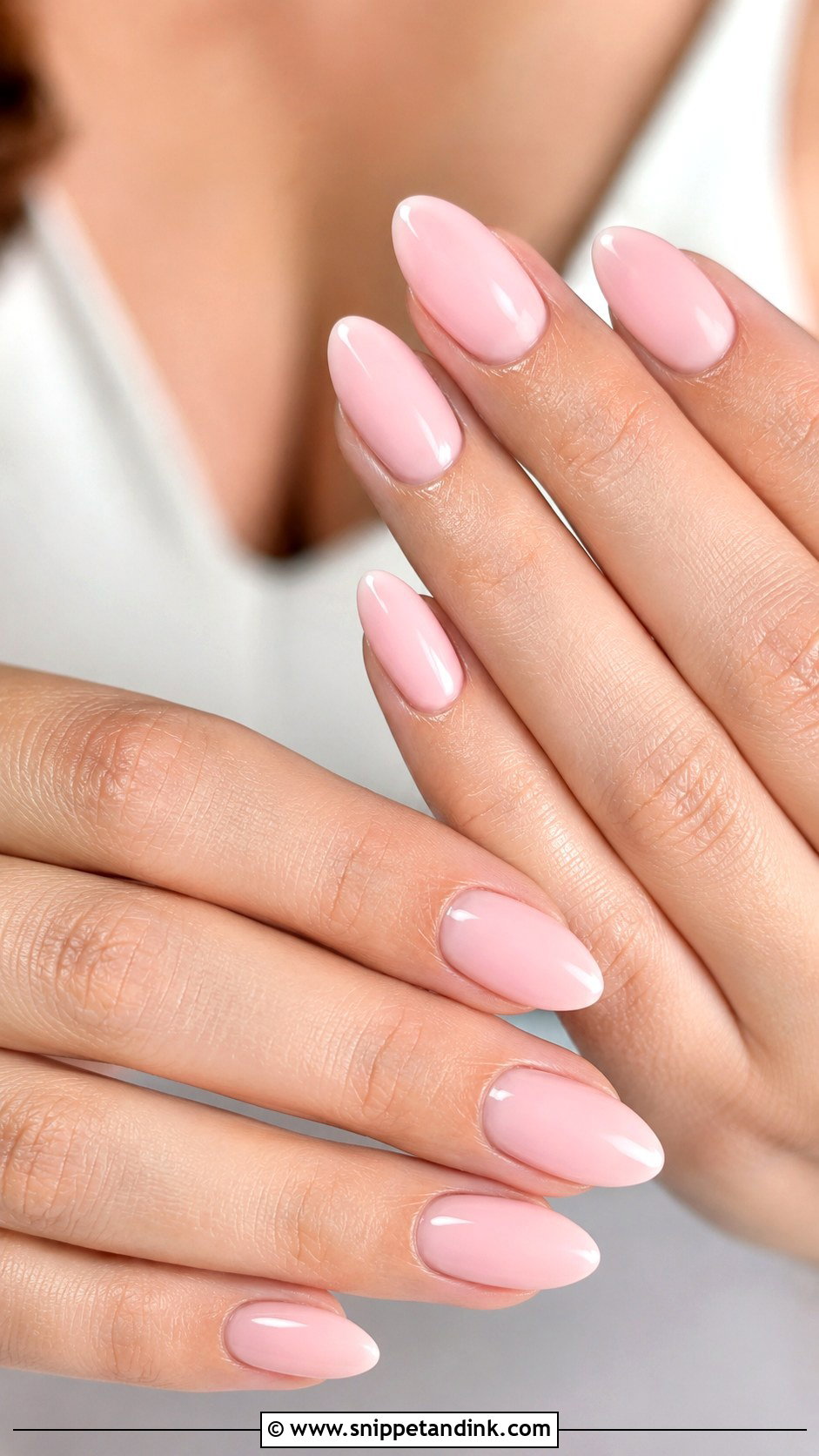
Blush is warmer and more visible than sheer pink, but still gentle. It flatters many skin tones and sits well with ivory, champagne or bright white gowns, floral bouquets and soft makeup. Wear it glossy and plain, or add a thin French tip, a pearl chrome layer or a tiny floral accent. Oval and almond make it look delicate. If your skin is very warm, ask to see the blush next to a peachier pink; the cooler blushes can look a touch purple against warm hands in daylight.
18. Ivory Bridal Nails
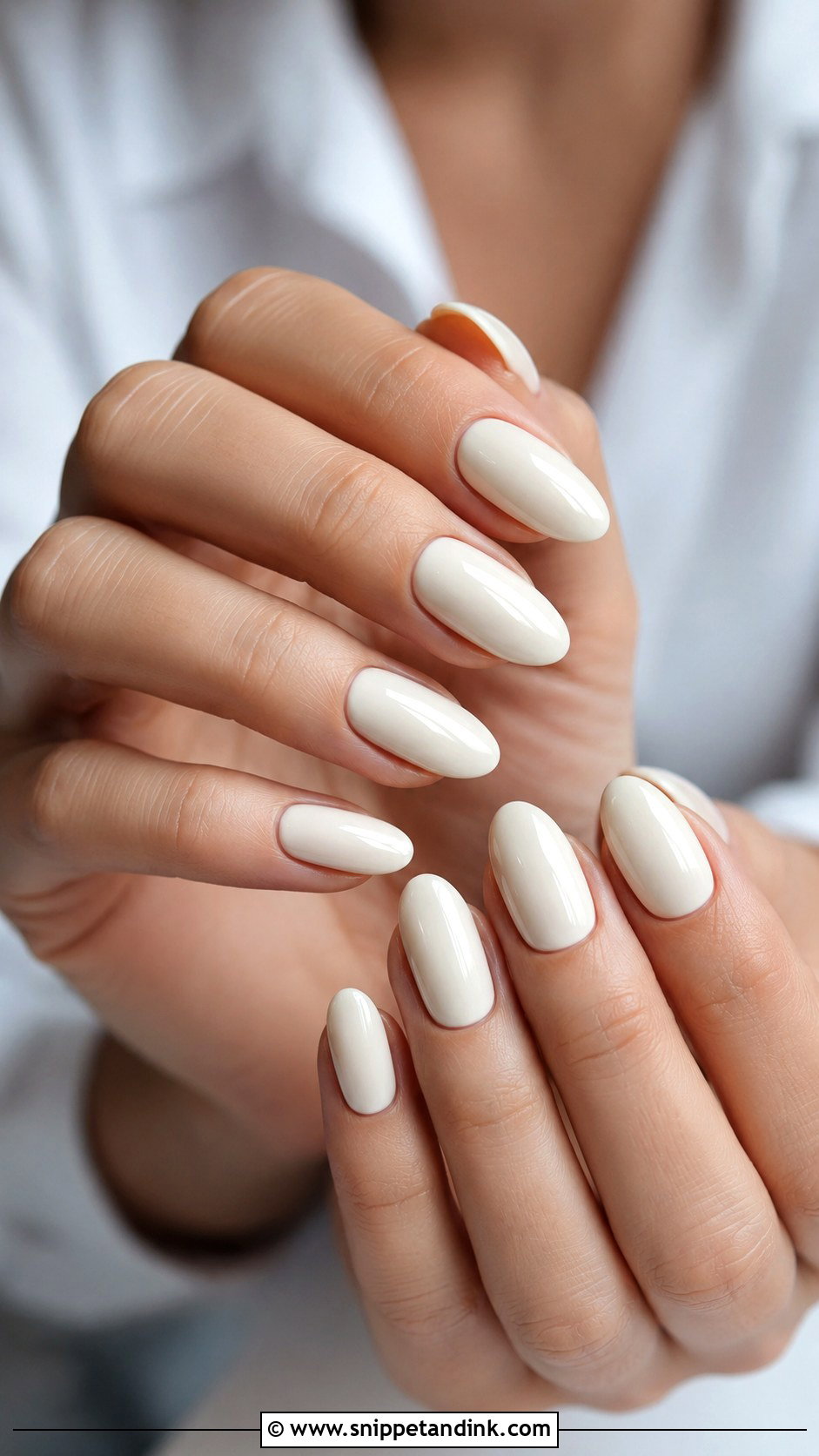
Ivory is the white to choose when your dress has cream, champagne or warm undertones; bright white next to those fabrics can make the dress look yellowed. The softer shade also looks less stark against the skin. Wear it as a full glossy color, a French tip, a pearl chrome base or a subtle ombré. It looks especially rich on medium and deeper skin tones, and I adjust the warmth for fairer skin. Vintage-inspired dresses, satin, lace and pearls all pair naturally with it.
19. Micro French Bridal Nails
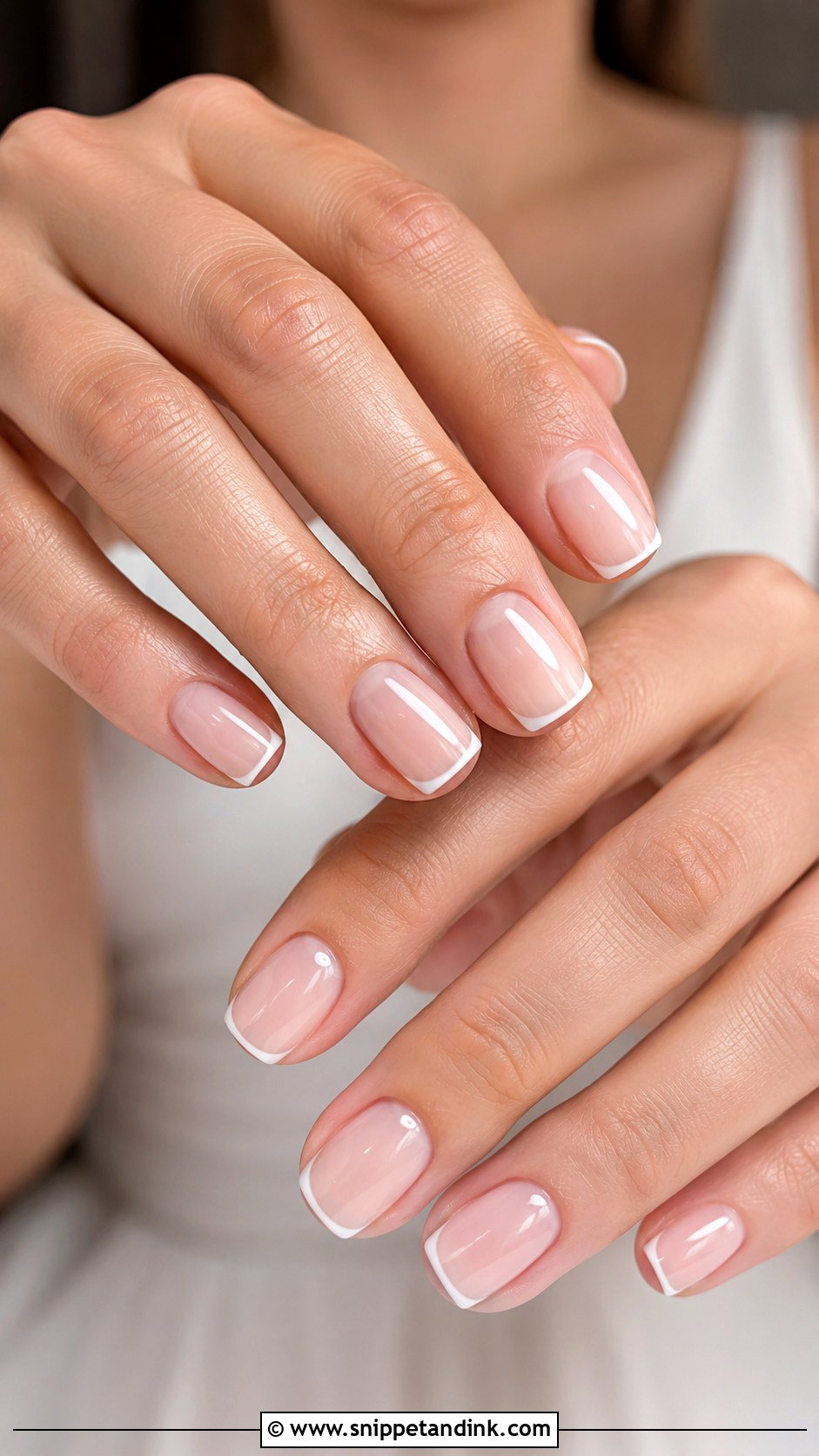
Micro French bridal nails keep only a very thin line at the tip, which adds definition without crowding a short nail bed. It’s the version I recommend most for short or medium nails. A sheer pink, nude or milky base keeps it soft. White is classic; ivory, champagne, silver or pale pearl give a subtle twist. Painting a line that thin evenly across ten nails takes a very steady hand, so ask to see examples of your tech’s micro French before booking.
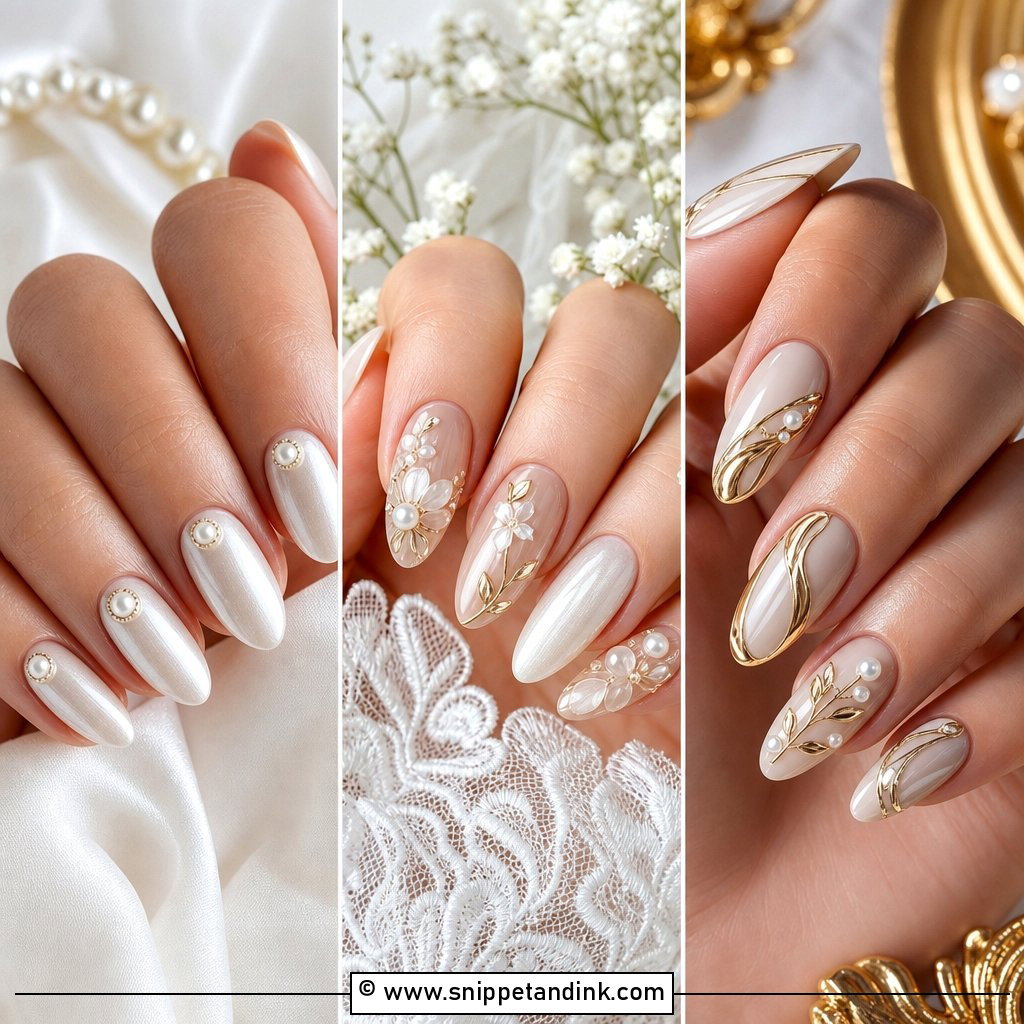
20. Pearl Detail Bridal Nails
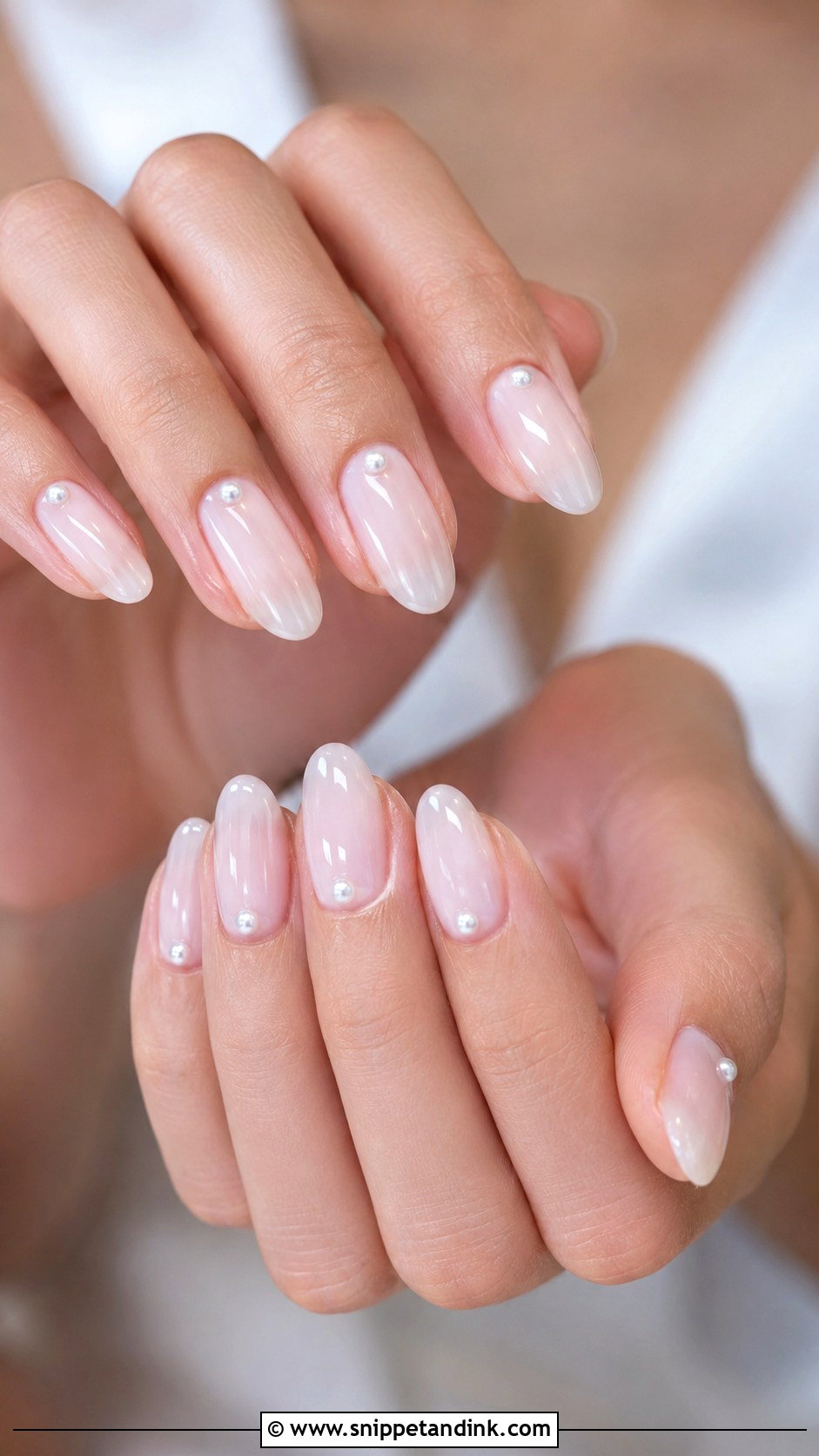
A few small pearls add texture without needing full nail art. The base stays sheer, nude, blush or milky, and I set very small flat-back pearls on one or two nails per hand, keeping them balanced. Large pearls feel bulky, especially on shorter nails, and they catch on hair and fabric. I place them near the cuticle rather than the tip so they’re less likely to knock off. Almond and oval shapes suit them best. With pearl earrings, a pearl veil or satin, they look like part of one plan.
Which Product Lasts From the Rehearsal Dinner to the Honeymoon?
The design is only half the decision. The product underneath decides whether the set still looks good on the honeymoon. Here’s how I’d explain the options to a bride:
Gel polish
Thin, glossy and usually good for around two weeks on healthy nails. It’s my default for sheer pinks, milky whites and chromes. Have it soaked off properly afterwards rather than peeling it.
Builder gel
Thicker and stronger, so it can hold a bit of length on weak natural nails. It’s a good choice for almond shapes and for brides who break nails easily, though it takes longer to apply and remove.
Press-ons
Useful if you can’t get to a salon close to the date, or as a backup. Have them sized and shaped in advance, and practise applying one so you know how long they hold on your nails.
Regular polish
Lovely for the day itself and easy to remove, but it can chip within a few days and needs a long time to dry fully. I’d only choose it if you’re comfortable touching it up before you leave for the honeymoon.
A Plain Set Done Well Beats a Busy One
The right wedding nails are comfortable, suit your style and don’t distract from everything else. Classic French tips, milky whites, pearl chrome, sheer pink and nude almond nails are the dependable choices, while lace, florals, metallic touches and pearls add something more personal. Before your appointment, save photos of your dress, ring and bouquet alongside the manicures you like, so your nail artist can see the whole picture. Think about how long you need the set to last and what you’ll be doing with your hands. A wedding manicure doesn’t need to be complicated; the right shade, shape and finish will carry it.
You'll Like These Ideas:


Leave a Reply