
The second dress is the one you actually live in. By the time the band starts the fast set, most brides have been in their ceremony gown for six or seven hours, and the change into an afterparty dress is the moment they can finally lift their arms, sit on a bar stool and stop managing a train. When I style a second look, I’m thinking less about the hanger and more about the next four hours: how the fabric behaves under a spinning light, what happens when you sit, and whether the shoes will still be on at midnight. Below are thirty directions I’d consider, with what I check on each one before a bride commits.
Planning the Outfit Change So It Takes Ten Minutes, Not Forty
The change itself is where most second looks go wrong, not the dress. A bride disappears to swap outfits, the photographer has nobody to shoot, and the party loses its momentum. I plan the change like a small schedule of its own, and I’d suggest you do the same.
- Pick the moment. The most natural gap is straight after the first dance or once the cake is cut, when guests head to the bar anyway.
- Name one helper, not three. A maid of honour or your stylist, who has practiced unbuttoning the gown at the final fitting and knows where the bustle hooks are.
- Use a room close to the dance floor. A suite three floors up adds fifteen minutes before you’ve even started.
- Hang the second dress steamed and ready, with the right underwear, shoes, earrings and a small makeup bag next to it.
- Plan the underwear for both looks. A long-line bra for the gown often won’t work under a slip or a low back, so you may be changing more than the dress.
Have your hairstylist decide in advance whether the hair changes too. Taking a veil out and loosening an updo takes a couple of minutes; switching a full style needs the stylist present. If you want the photographer to catch your entrance, tell them the time so they’re standing at the door.
1. White Sequin Mini Afterparty Wedding Dress
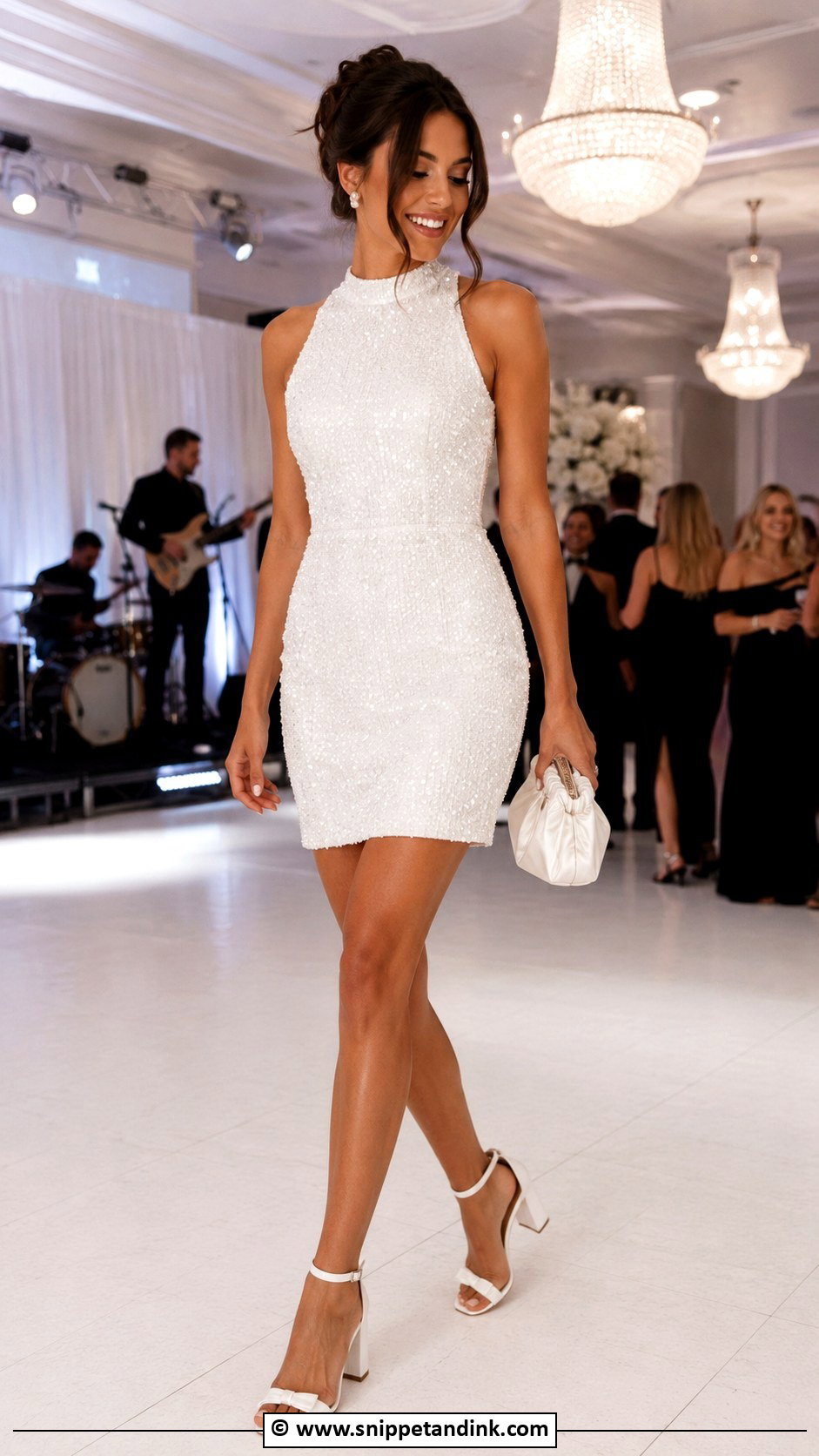
Sequins are the safest bet for a dance floor because they do half the work for you; every move throws light. The thing I check first is the inside of the arm. Cheap sequins are stitched with a sharp edge facing out, and after an hour of hugging guests the skin under the arms is raw. Run your hand against the grain in the fitting room. A relaxed mini gives you more room to dance than a bodycon one, and I’d keep the jewelry to pearl studs so the dress stays the point.
2. Satin Slip Afterparty Wedding Dress
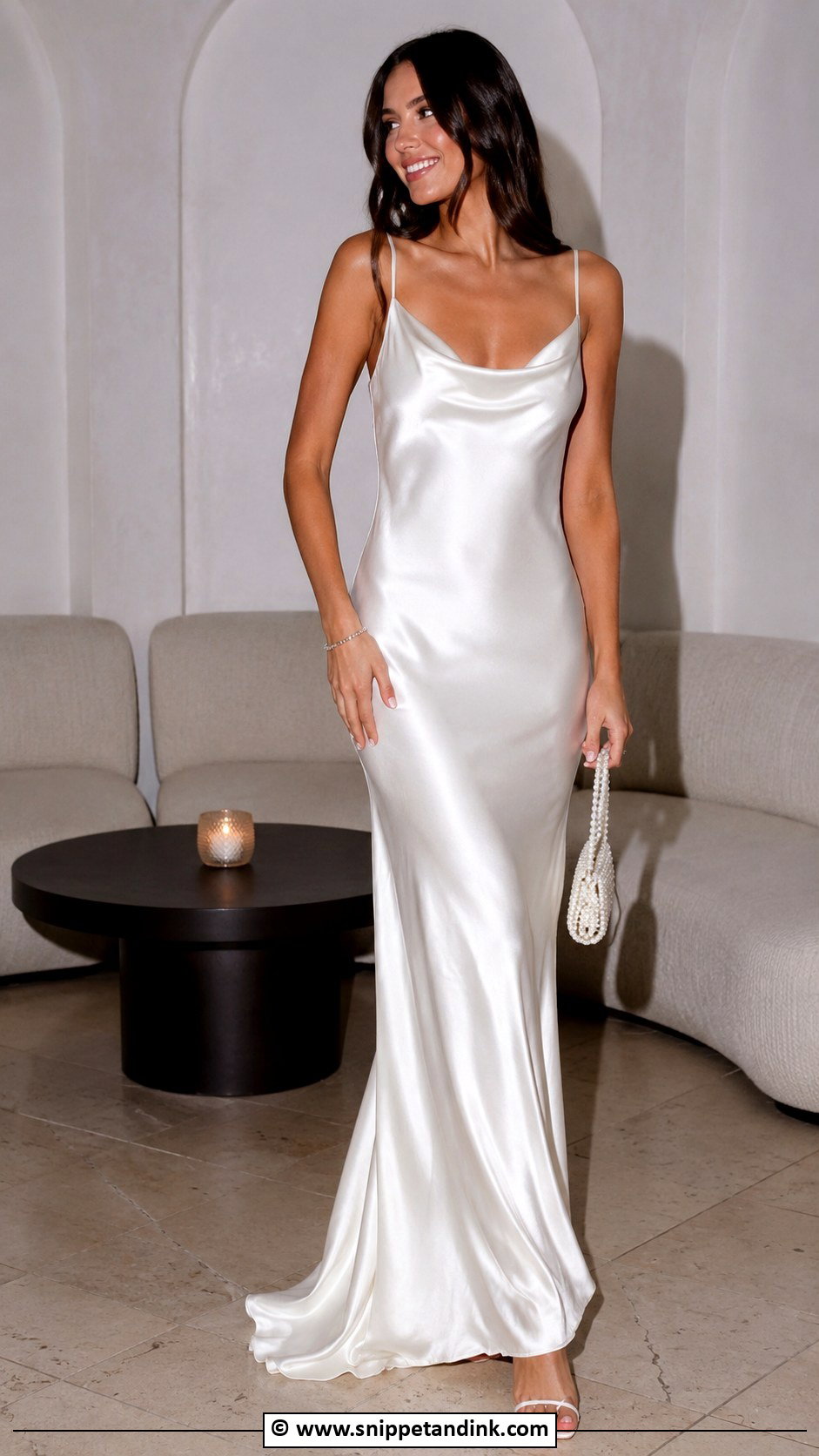
A slip is the dress I’d hand a minimalist, but I’d also warn her honestly: bias-cut satin shows everything. It skims the body, so it shows seams from shapewear and, late in a warm room, it shows sweat at the lower back. A heavier crepe-backed satin hides far more than a thin charmeuse. Ivory or champagne is kinder to most skin tones than stark white under warm reception lighting. If the room runs cool, a cropped faux fur or a sharp blazer over the shoulders finishes it without fuss.
3. Feather Trim Mini Afterparty Wedding Dress
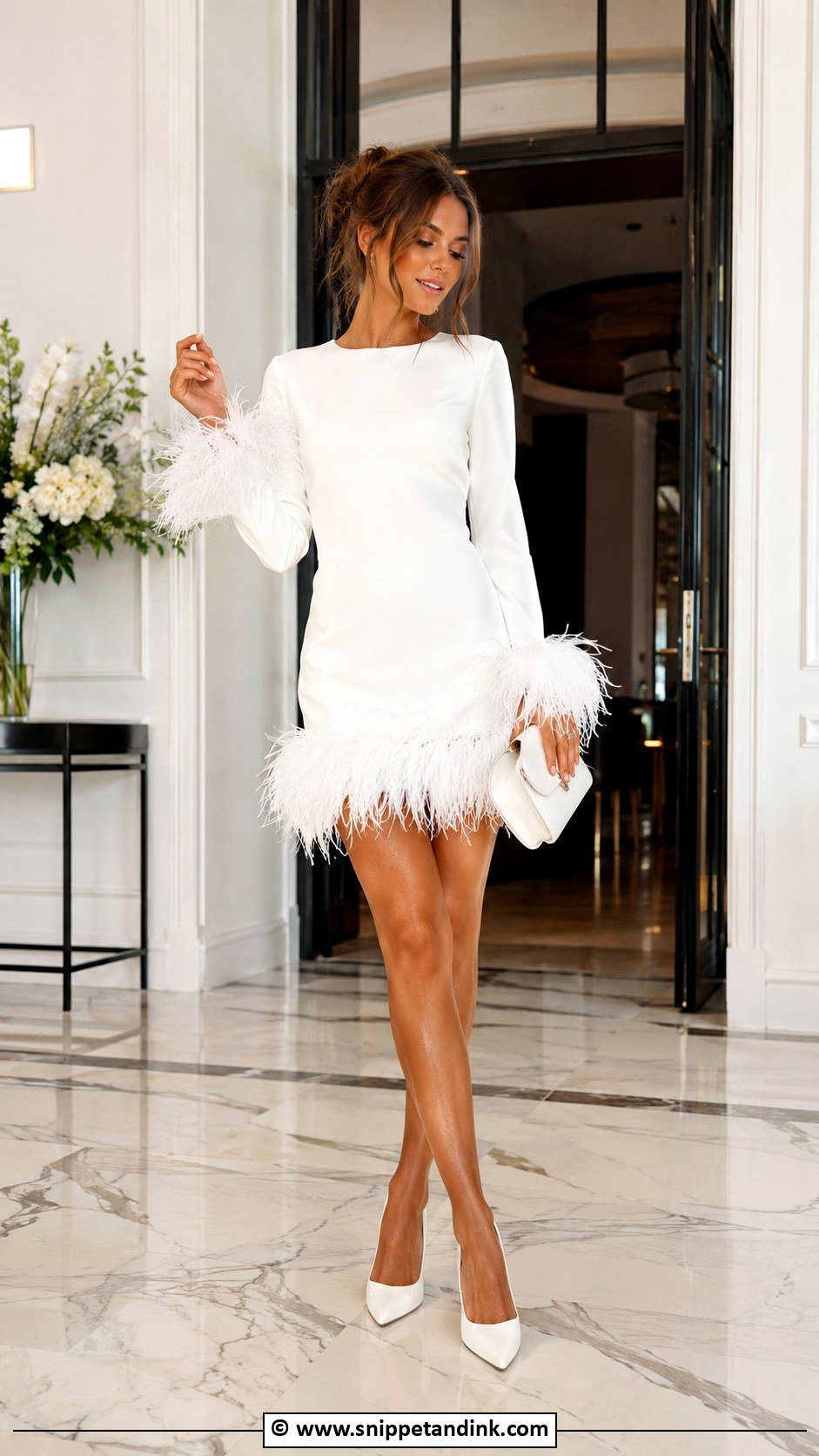
Feathers move every time you do, which is exactly why a feather trim mini dress works for a late entrance. Know what you’re buying, though. Ostrich feathers are long and floaty; marabou is fluffier and sheds more, so expect a few on your new husband’s lapel. I prefer feathers at the hem or cuffs over the neckline, where they tickle the chin and catch on lipstick. A sleek bun keeps hair from tangling into them.
4. Pearl Embellished Afterparty Wedding Dress
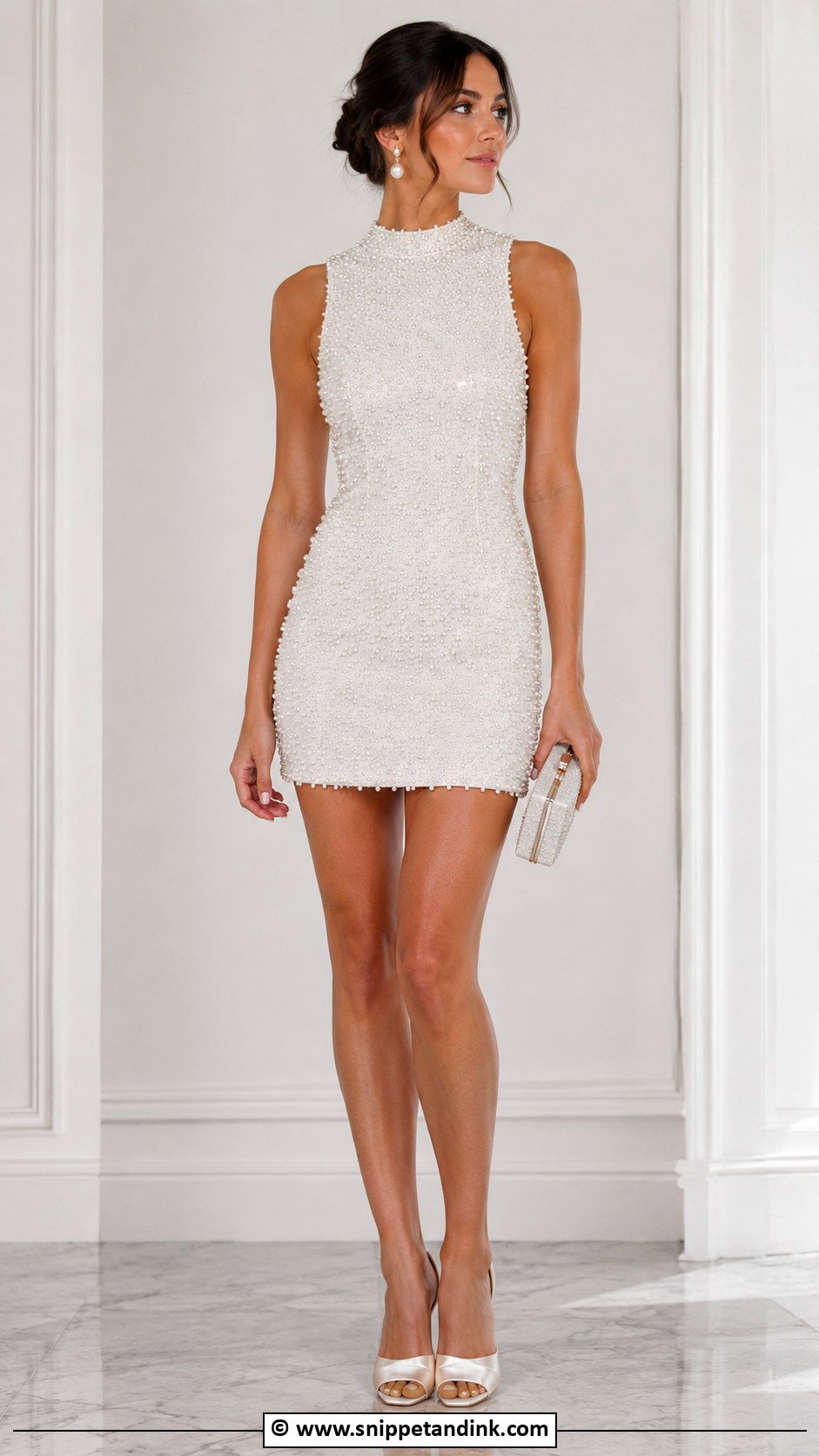
Pearls give shine without the disco effect of sequins, and they read as bridal straight away. The practical question is weight and attachment. Hand-sewn pearls on a sturdy base hold up; glued ones pop off on the dance floor and roll under tables. I always flip the hem and look at the back of the beadwork before I recommend a dress. Scattered pearls are lighter and easier to sit in than an allover design, so match the coverage to how much you plan to dance.
5. Lace Mini Afterparty Wedding Dress
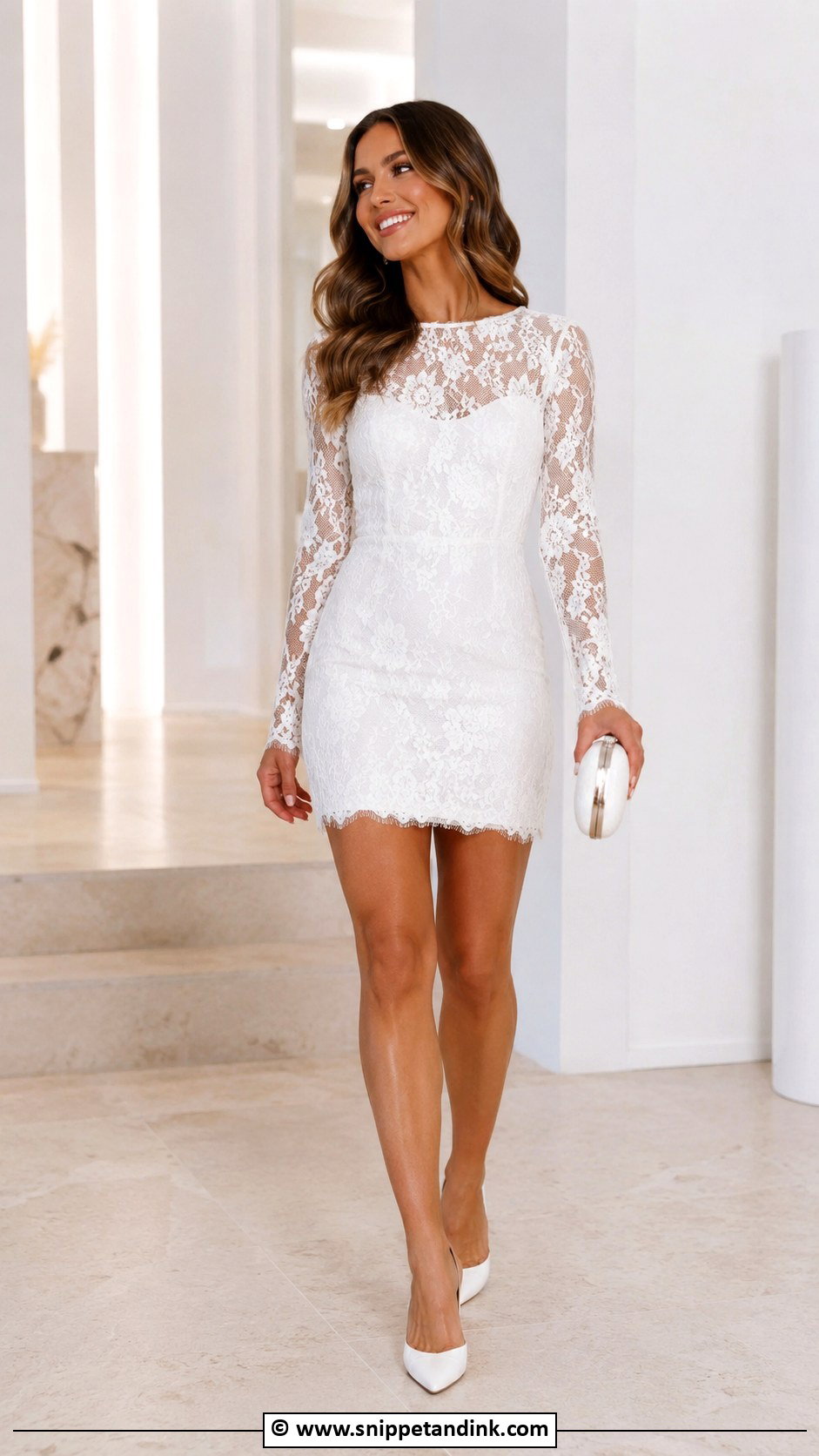
Lace is the easiest way to link the second dress to a lace ceremony gown so the two looks feel like they belong to the same day. I look at the lace weight against the gown: a heavy Alençon gown next to a thin, flat stretch lace mini can look like a downgrade in photos, while a guipure or corded lace holds its own. Long sleeves or a square neck freshen it up. Keep jewelry quiet; lace already has a lot going on.
6. Bow Back Afterparty Wedding Dress
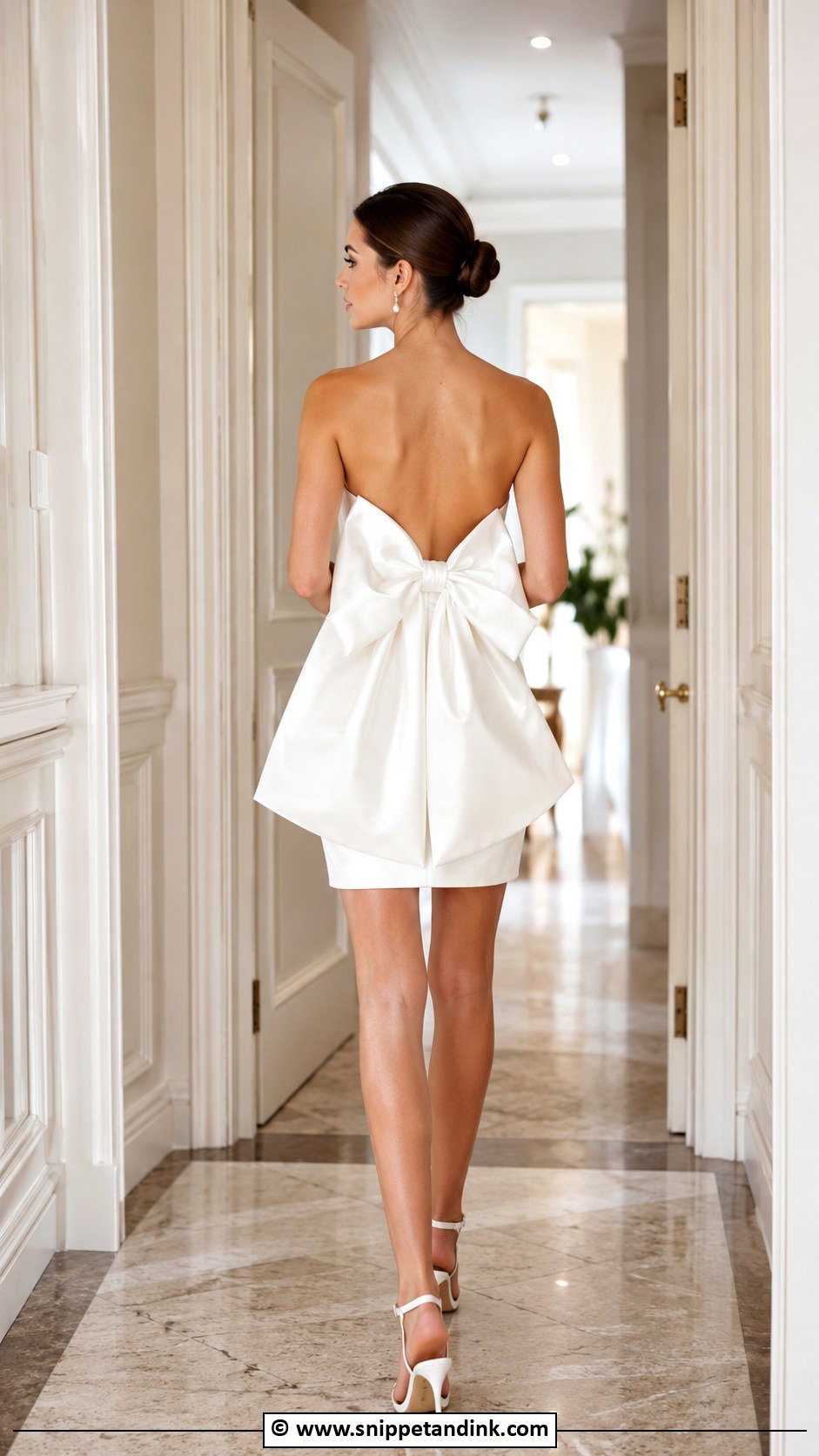
Most of your afterparty photos are taken from behind or the side while you’re walking into the room or dancing, which is why a back detail earns its place. The bow is the part I test. A big, unstructured bow collapses after you’ve leaned against a chair a few times, so I look for one with interfacing or a hidden stitch to the bodice. Wear your hair up or swept to one side; long loose hair hides the whole point of the dress.
7. One Shoulder Afterparty Wedding Dress
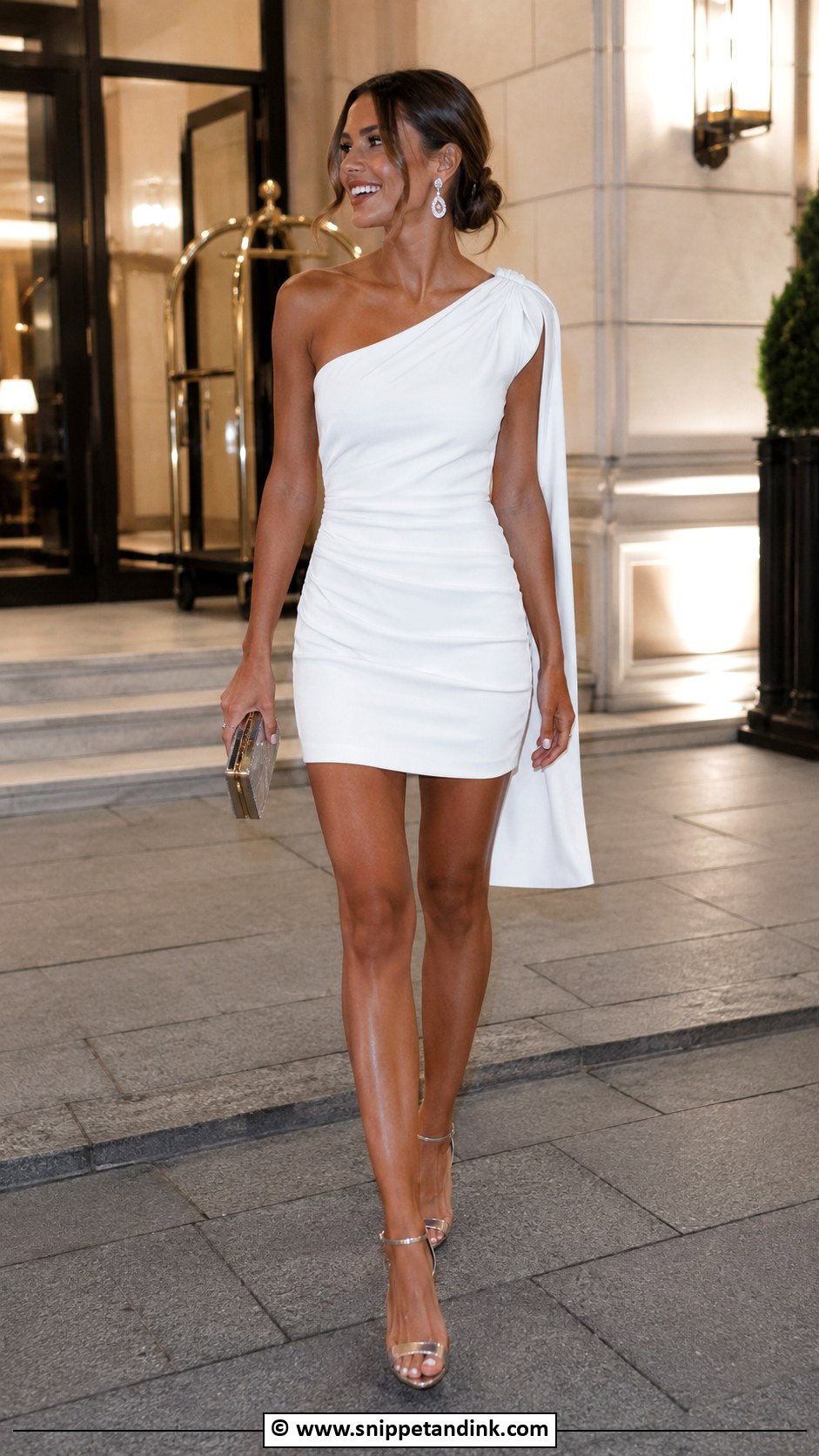
One shoulder is a clean neckline that needs almost nothing added to it, but it does need to stay put. Before I sign off on one, I ask the bride to raise both arms over her head in the fitting room. If the bodice slides down on the open side, it will do that all night. Ruching through the waist helps both fit and comfort. A single drop earring on the bare side keeps the balance.
8. Strapless Mini Afterparty Wedding Dress
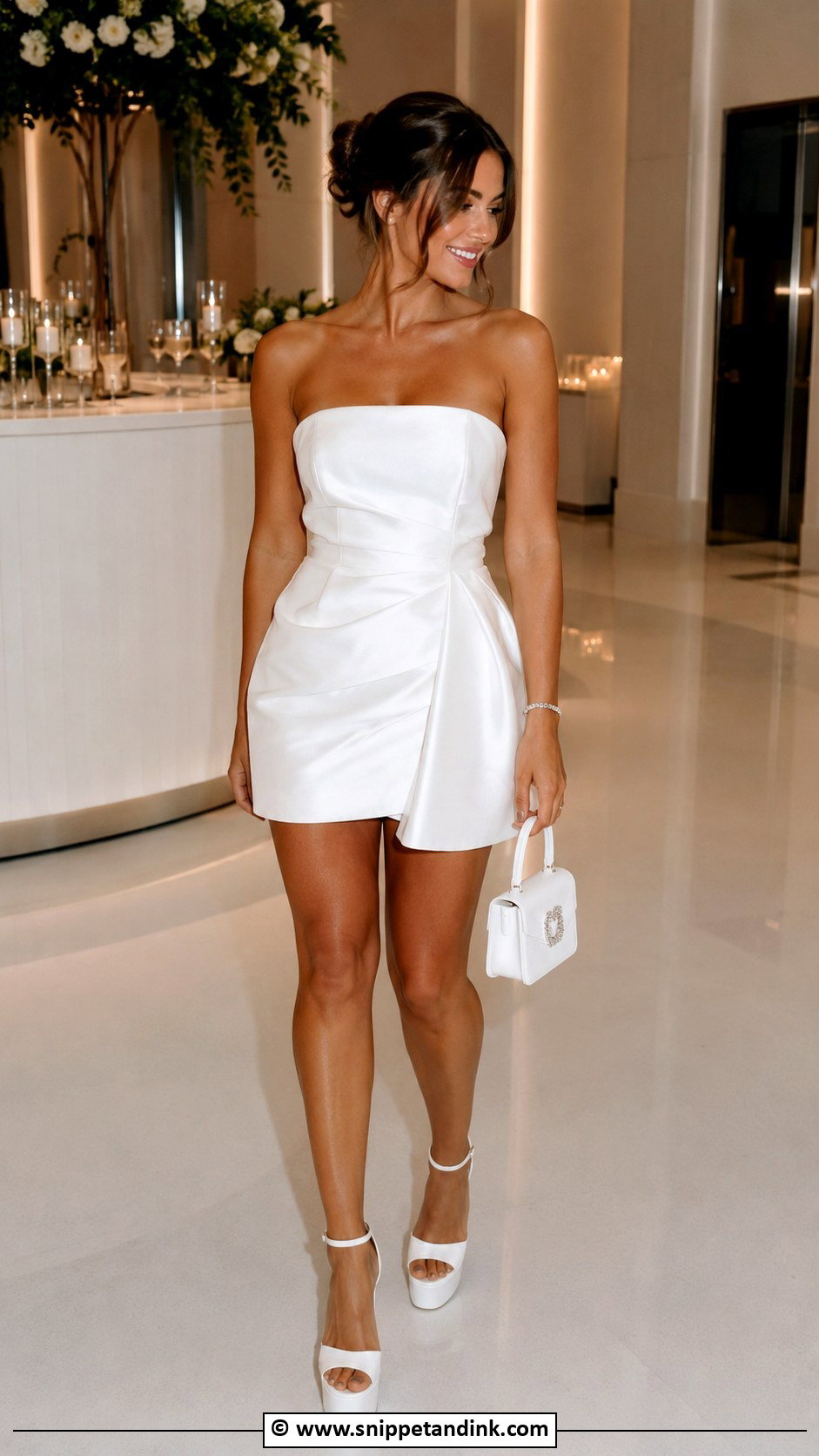
Strapless minis look simple and then fail at the worst moment. The fix is all in the construction: a boned bodice, a silicone grip strip along the top edge, and a fitting done with you lifting your arms and hugging someone. A soft tube dress with no structure will need hiking up every few minutes. Add a short veil or a hair bow if you want a bridal touch, and wear platforms rather than stilettos if the floor is grass or decking.
9. Tulle Mini Afterparty Wedding Dress
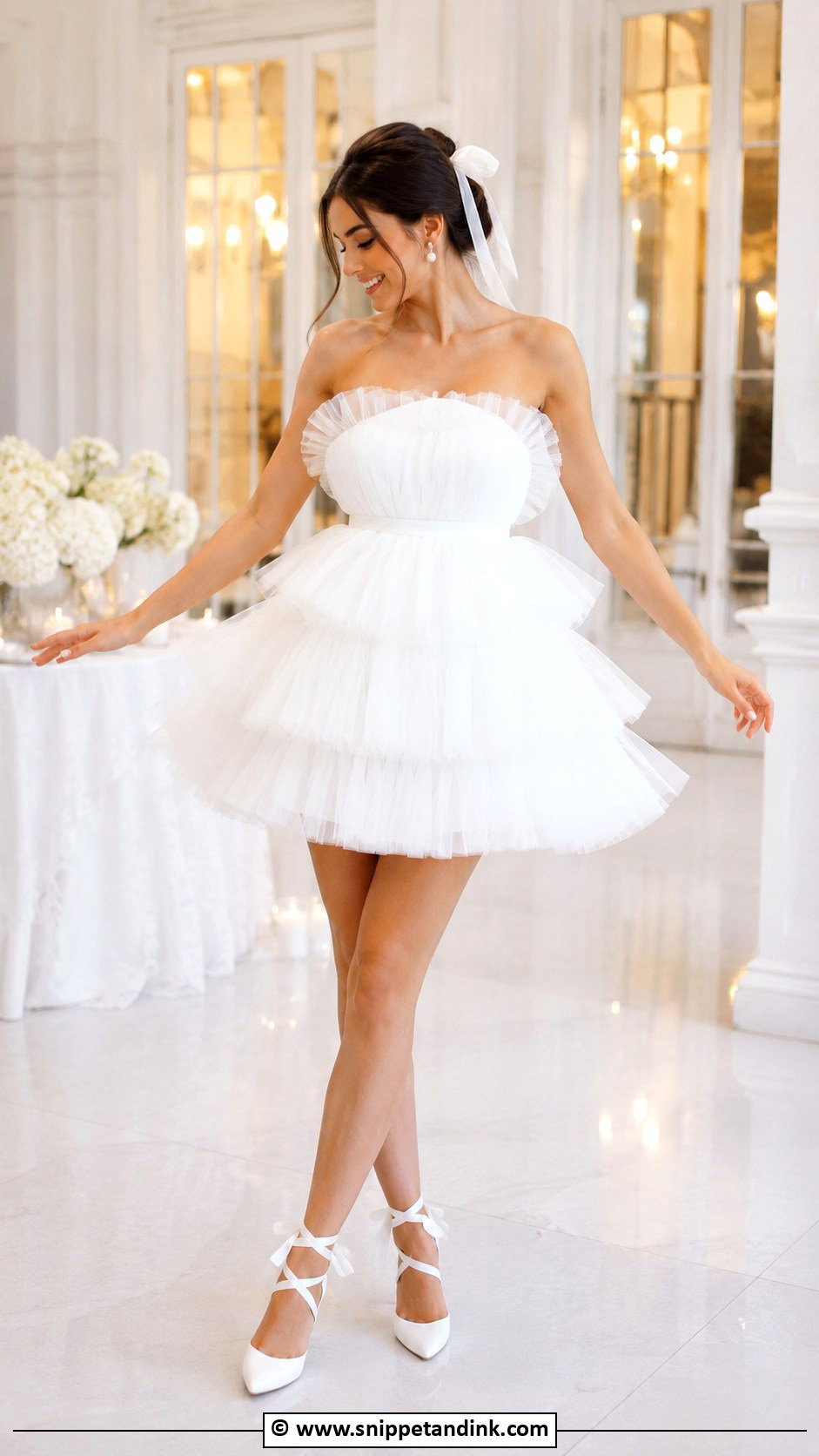
Tulle keeps the fairytale feeling of the gown without the weight. I’d steer brides toward several layers of soft tulle rather than stiff netting, which scratches the legs and flattens when you sit. Layered skirts do need a quick fluff after you’ve been seated for a while. Ballet-style heels and a ribbon in the hair carry the theme through without overdoing it.
10. Beaded Afterparty Wedding Dress
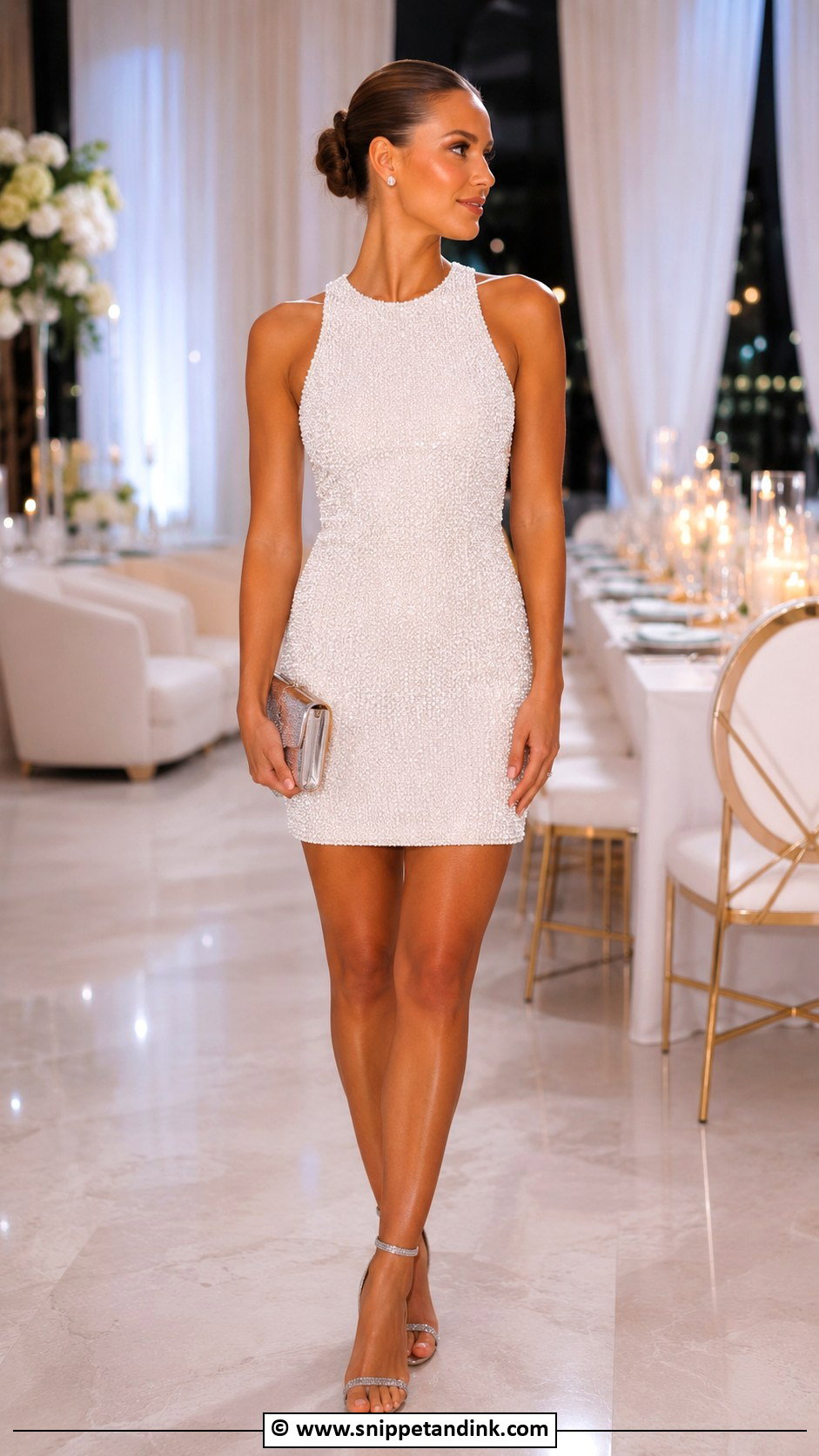
Beading gives a quieter, richer sparkle than sequins. The trade-off is weight. A fully beaded dress pulls on the shoulders over a few hours, and heavy bead fringe can pull the hem out of shape, so I like a fit that’s secure at the waist so the shoulders aren’t carrying everything. Sit down in it before you buy it; beads on the back of the skirt can press into the backs of your legs. Keep everything else plain and let the beads do the talking.
11. Halter Neck Afterparty Wedding Dress
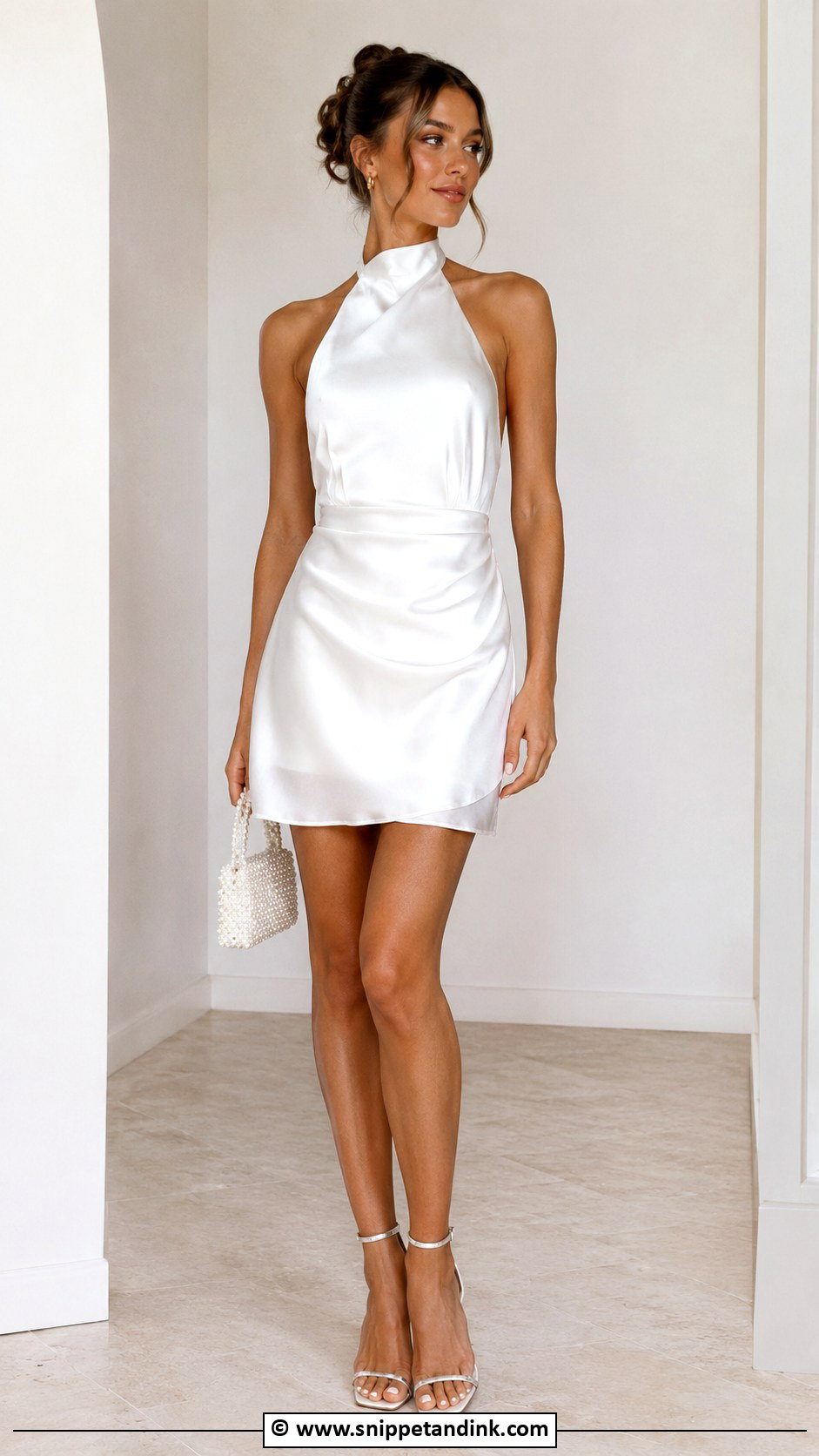
A halter puts the focus on the shoulders and holds the bodice up from the neck instead of from tight straps. That’s comfortable for most brides, but a thin halter tie can dig into the back of the neck after a few hours, so I prefer a wide band or a clasp. A high halter also fights with long loose hair; an updo or sleek pony shows the line properly. Small hoops beat drop earrings here.
12. Long Sleeve Mini Afterparty Wedding Dress
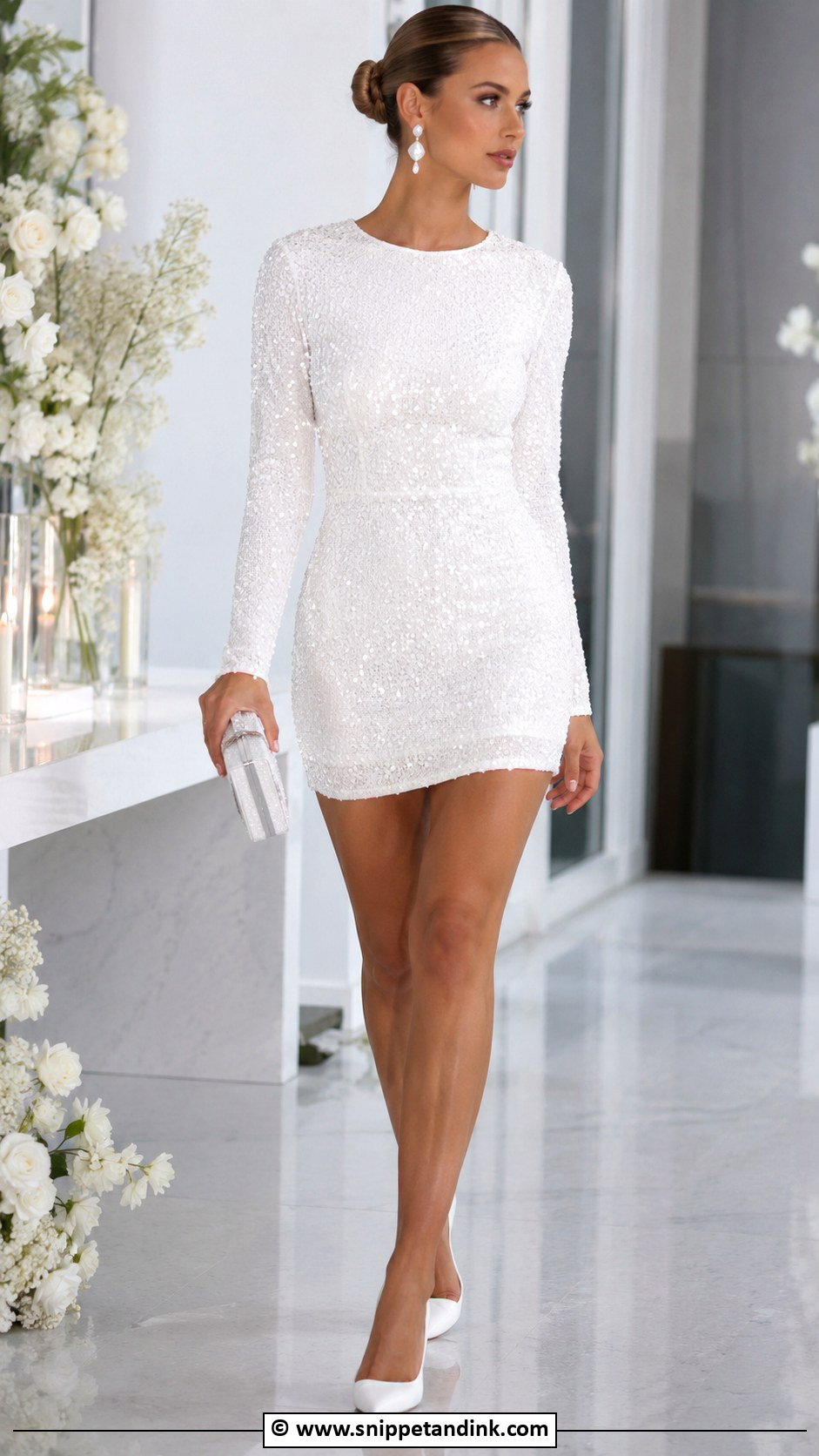
Sleeves and a short hem balance each other: you get coverage on top and freedom below. The fit point I check is the armhole. A high, close armhole lets you lift your arms to dance without the whole dress riding up, and a low one does the opposite. Textured or embellished sleeves mean you can skip a bracelet entirely. In autumn and winter, or in heavily air-conditioned rooms, this is the dress I reach for first.
13. Blazer Afterparty Wedding Dress
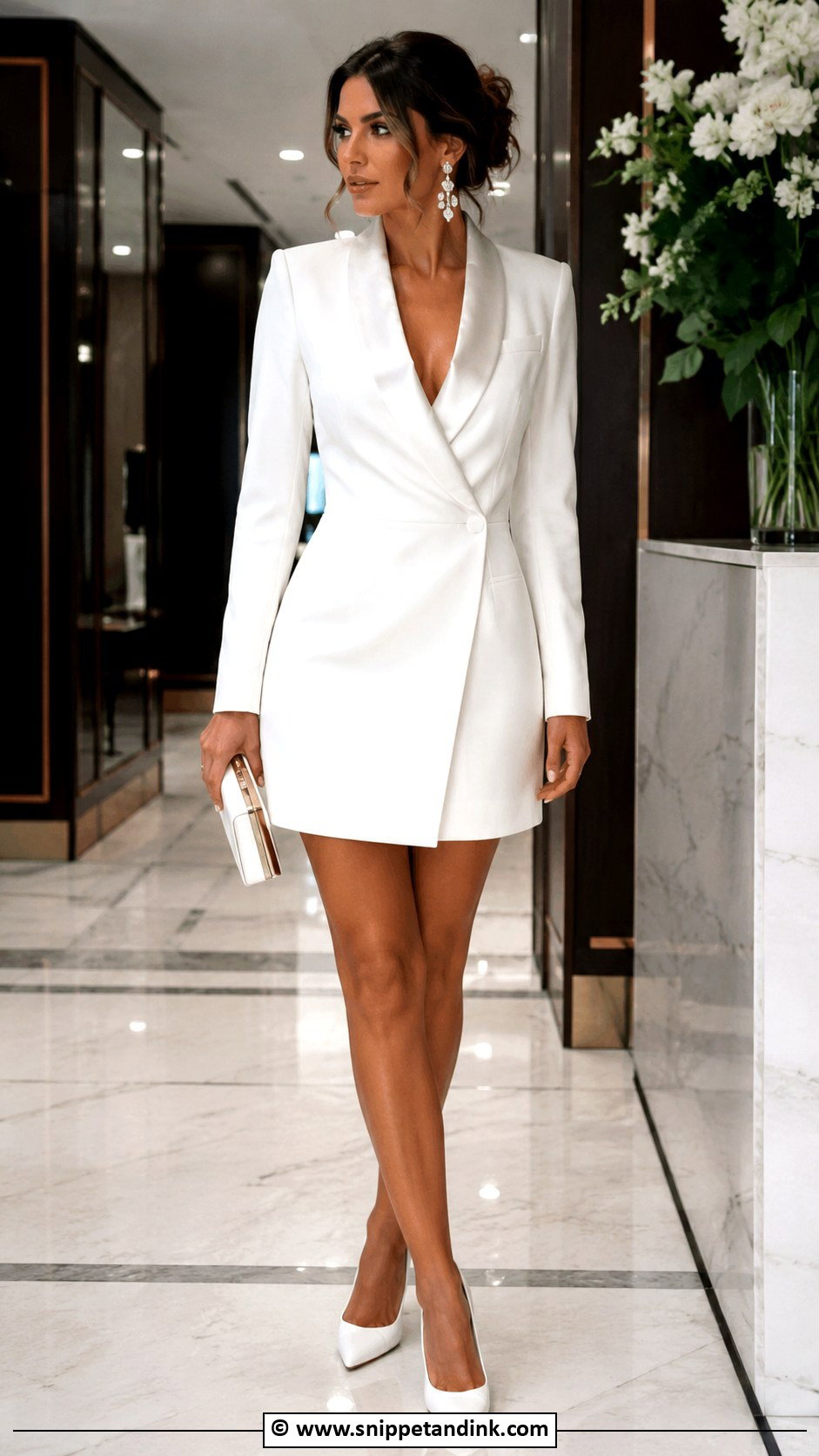
A blazer dress suits the bride who never felt like herself in a big skirt. Satin lapels or pearl buttons stop it looking like office wear. What I watch for is the button stance: if the dress only stays closed with one button at the waist, it will gape when you sit or dance, so a hidden snap or a wrap tie is worth adding at your fitting. Sheer tights work in cold weather, and city and hotel receptions suit it best.
14. Corset Mini Afterparty Wedding Dress
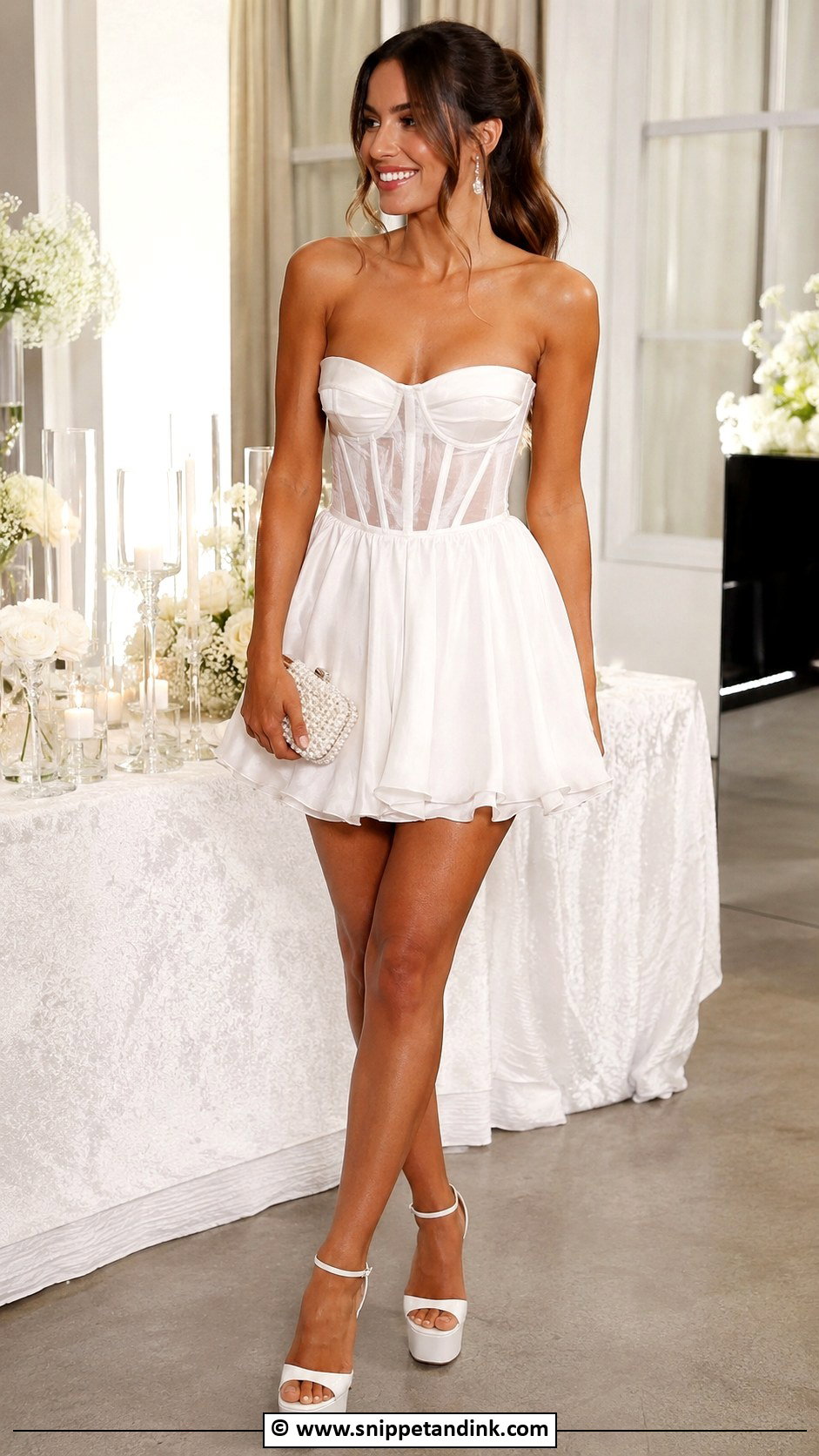
A corset mini dress gives real support through a long night, which surprises brides who expect it to be the uncomfortable choice. The difference is the boning. Spiral steel or quality flexible boning bends with you; cheap plastic boning kinks and pokes after you’ve sat down a few times. Ask for a lined bodice and a skirt with enough ease to sit on a bar stool. A loose, pulled-out updo softens the structure.

15. Off Shoulder Afterparty Wedding Dress
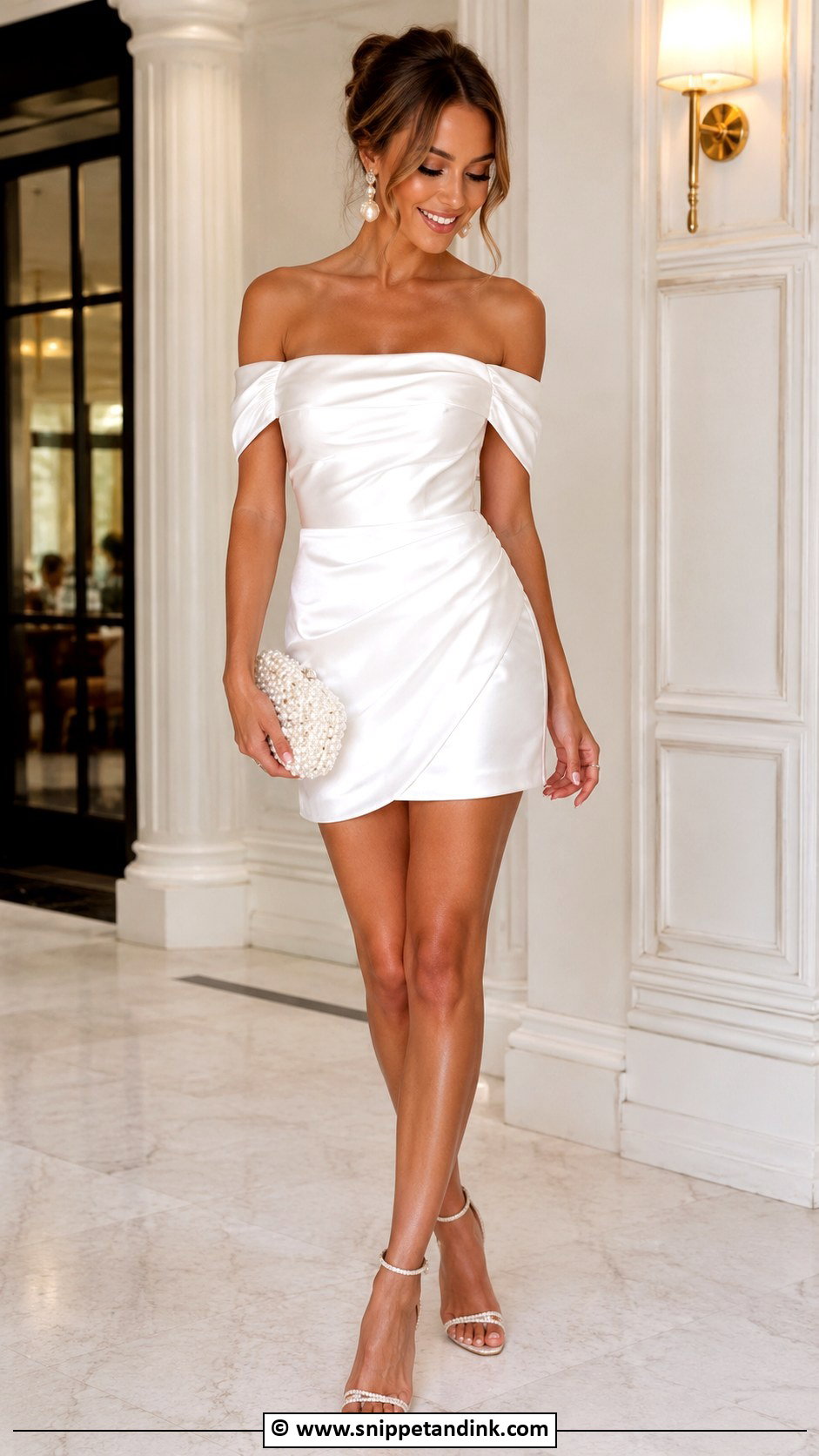
An off-shoulder neckline frames the collarbones, but it restricts how high you can lift your arms. I warn brides about that before the fitting, because a dance floor means arms in the air. Look for a band with elastic or silicone inside so it doesn’t creep up onto the shoulders. Satin keeps it sleek; lace softens it. Skip necklaces and go for drop earrings.
16. Fringe Afterparty Wedding Dress
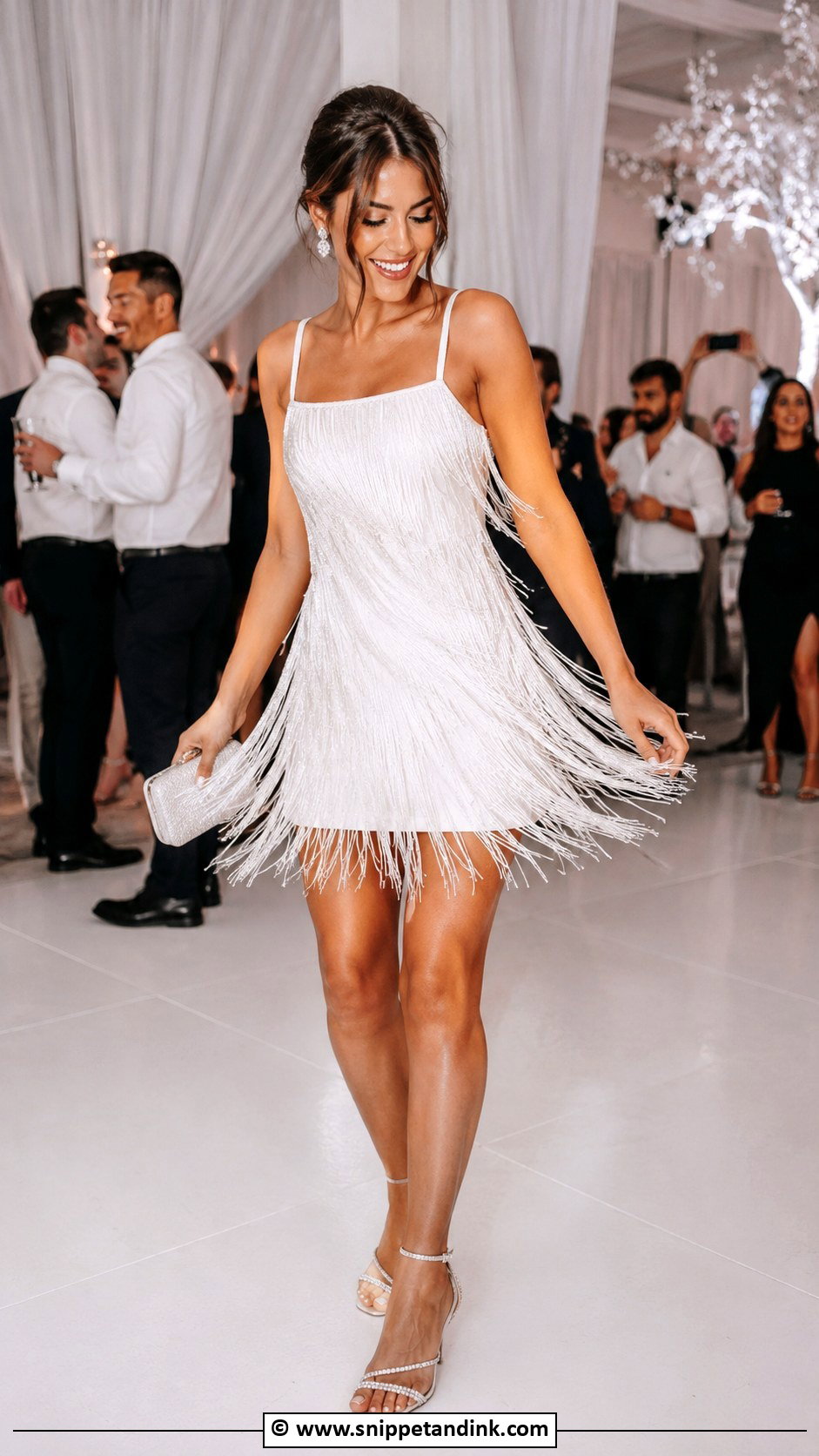
Fringe is the most honest dance dress there is, since it only really works when you move. Keep it to a mini or knee length so the strands swing freely instead of tangling around your knees. Bead fringe is heavier and swings more slowly than silk or chain fringe. One practical note from fittings: fringe snags on chair backs and other people’s bracelets, so check the strands are knotted at the ends. Wear sandals or block heels you can actually spin in.
17. Bubble Hem Afterparty Wedding Dress
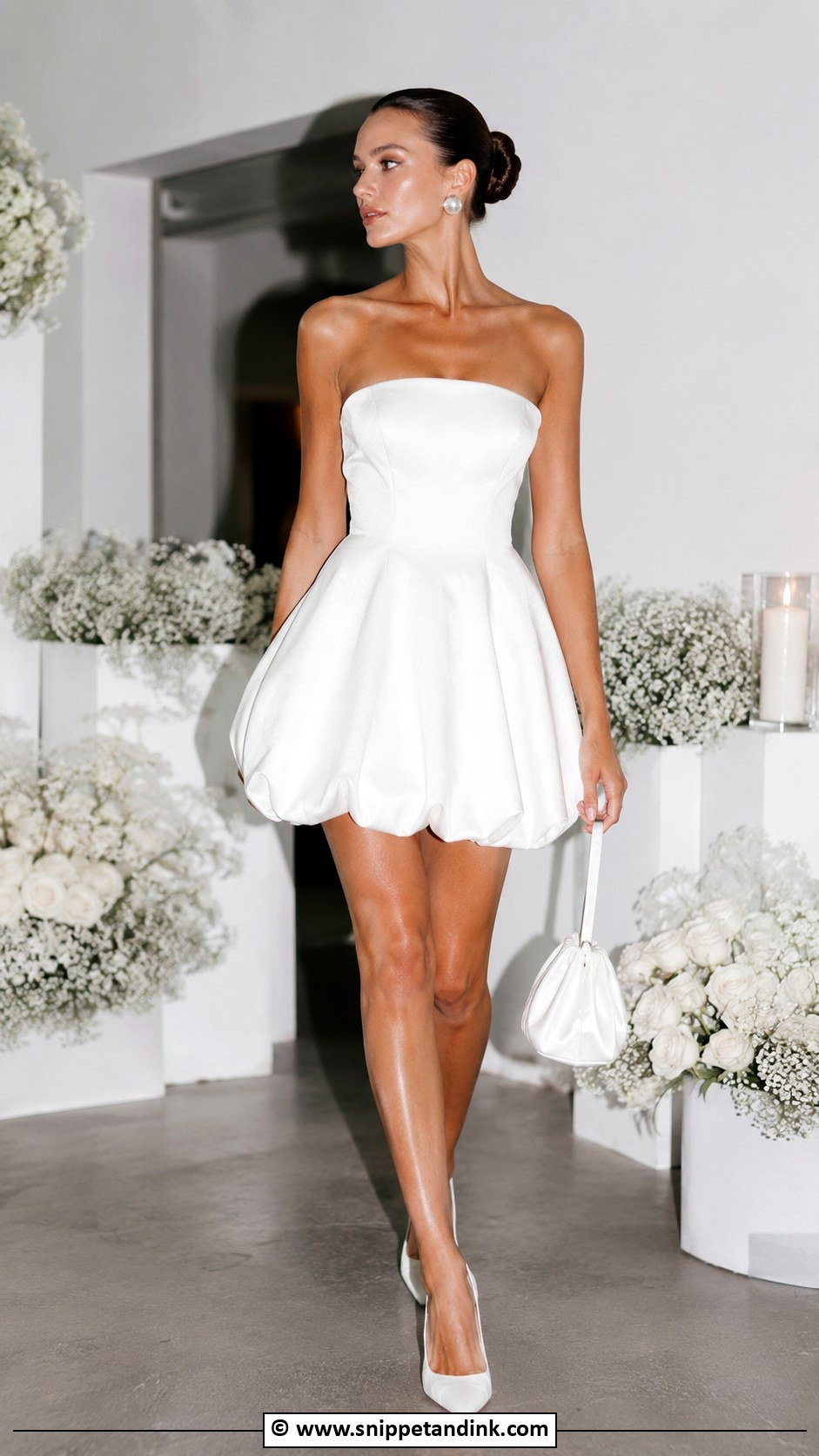
A bubble hem is a fashion choice more than a classic bridal one, and I’d only suggest it to a bride who already wears shapes like this. It looks best with a fitted, plain bodice so the volume sits only at the hem. The hem needs a firm lining to hold its curve, and it does crush when you sit, so give it a quick shake after dinner. Sleek accessories, pointed pumps and nothing busy at the neck.
18. Two Piece Afterparty Wedding Dress
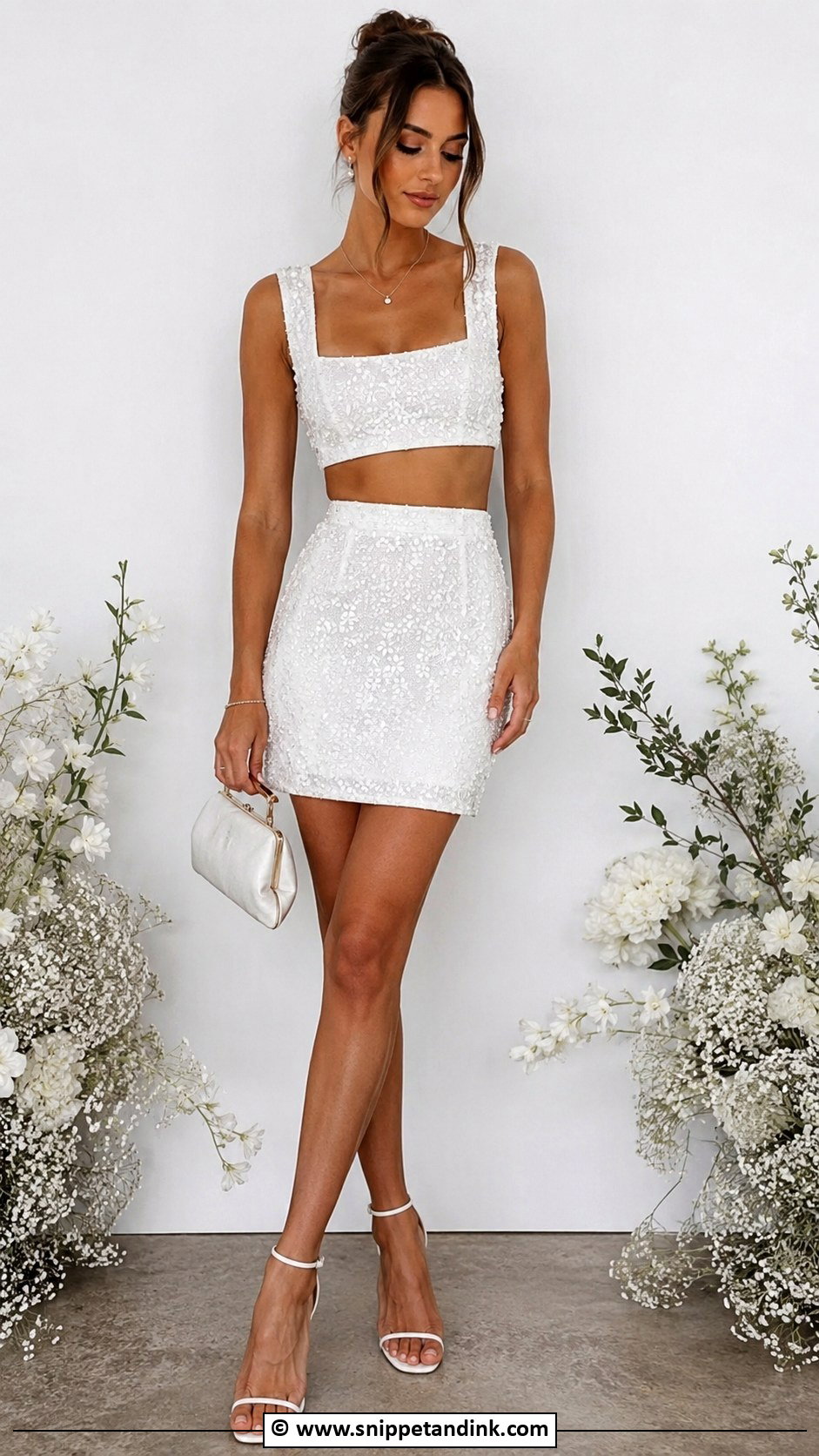
A two piece bridal afterparty outfit is the easiest look to dance in, and it’s also the one most likely to look like separates bought on different days. The trick is matching fabric, not only colour: two whites in different fabrics rarely match under flash. A crop top and mini skirt, a satin bandeau and midi skirt, or a beaded top with tailored shorts all work when they’re cut from the same cloth. Keep the gap between top and waistband small if you’re not comfortable with skin on show.
19. Jumpsuit Afterparty Wedding Outfit
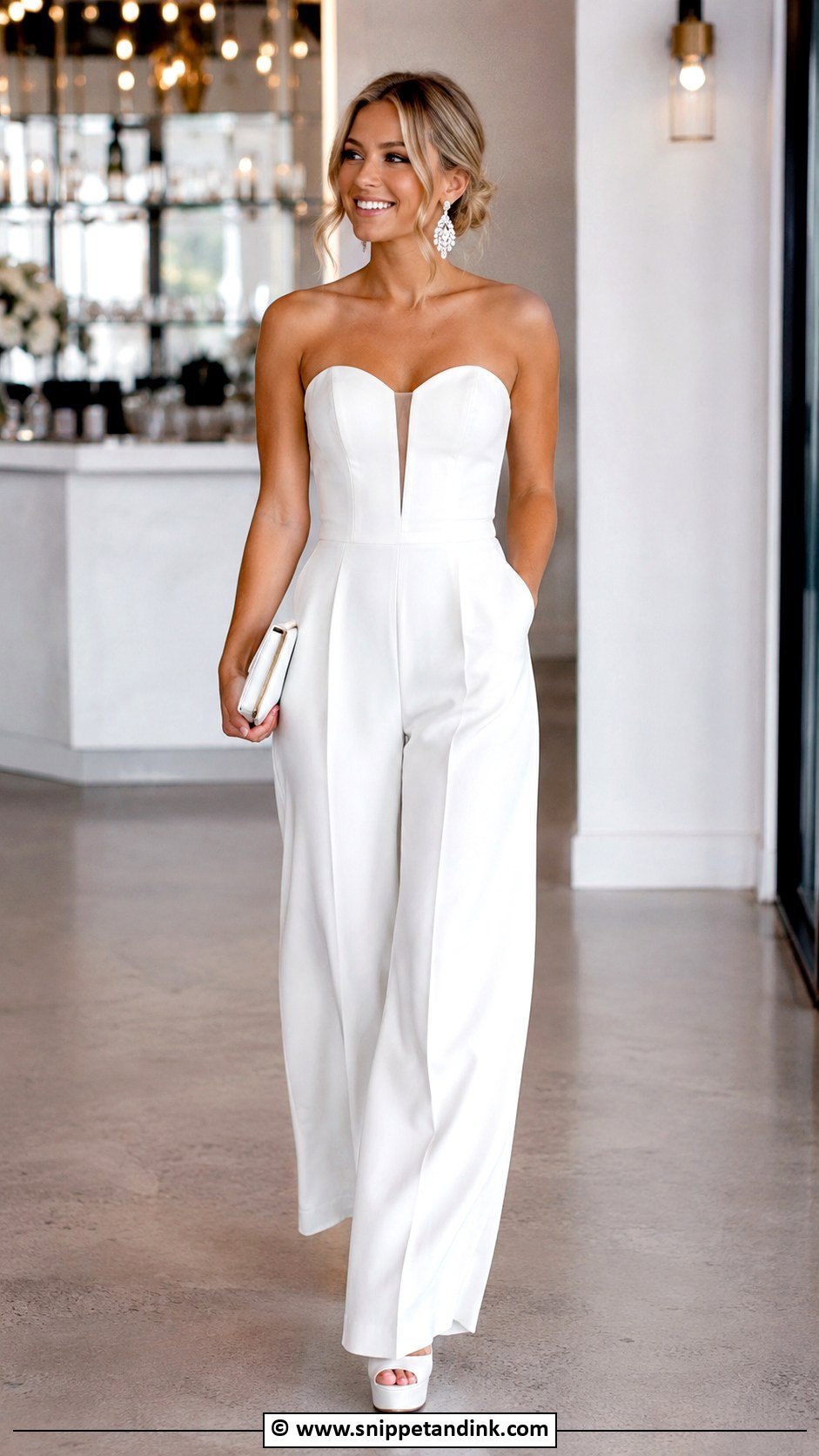
A white jumpsuit gives you trouser freedom with a bridal finish. I look hardest at the length and the rise. A wide-leg shape should be hemmed to the exact shoes you’ll wear, and a short rise will pull when you sit. The other honest point: bathroom trips in a jumpsuit take longer, so a back zip someone can help with, or a two-way zip, saves a lot of hassle. Crepe or satin, platform heels and bold earrings finish it.
20. Short Sleeve Afterparty Wedding Dress
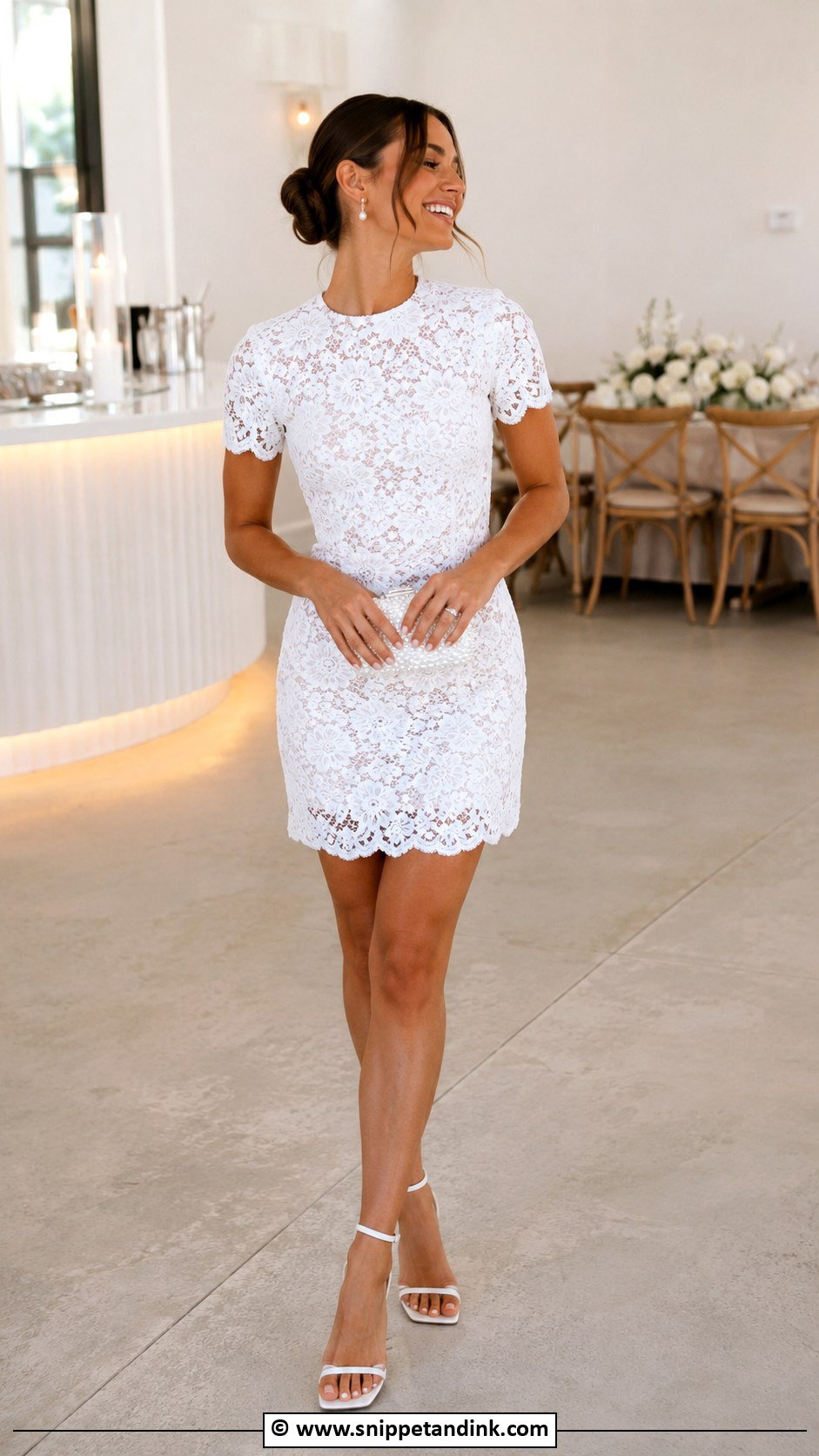
Short sleeves stay where you put them, which is why they’re so easy to wear for hours. Lace makes them classic, crepe makes them crisp, and satin with a flared skirt turns playful. I check that the sleeve has a little give at the bicep; a tight sleeve cuts in once you start dancing. Pearl studs, white sandals and a half-up style keep it relaxed.
21. Square Neck Afterparty Wedding Dress
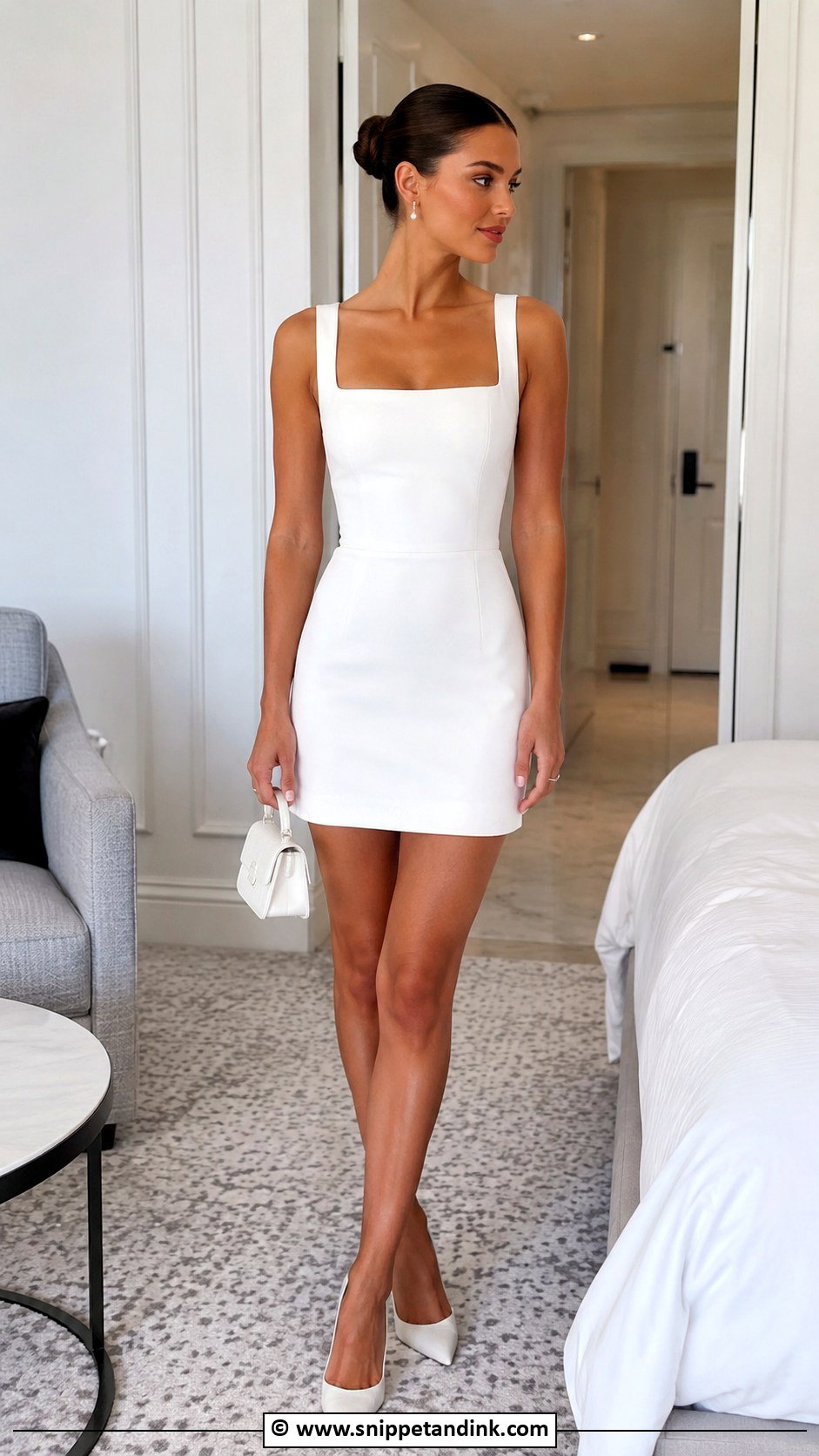
A square neck is one of the most flattering lines I fit, because it widens the collarbones slightly and suits most bust sizes. Satin or crepe keeps it simple; lace or beading adds detail. The neckline sits well with a short veil, a bow or a sleek bun. The only thing I watch is strap width: very thin straps on a square neck can look unbalanced, so I’d go a touch wider.
22. High Neck Afterparty Wedding Dress
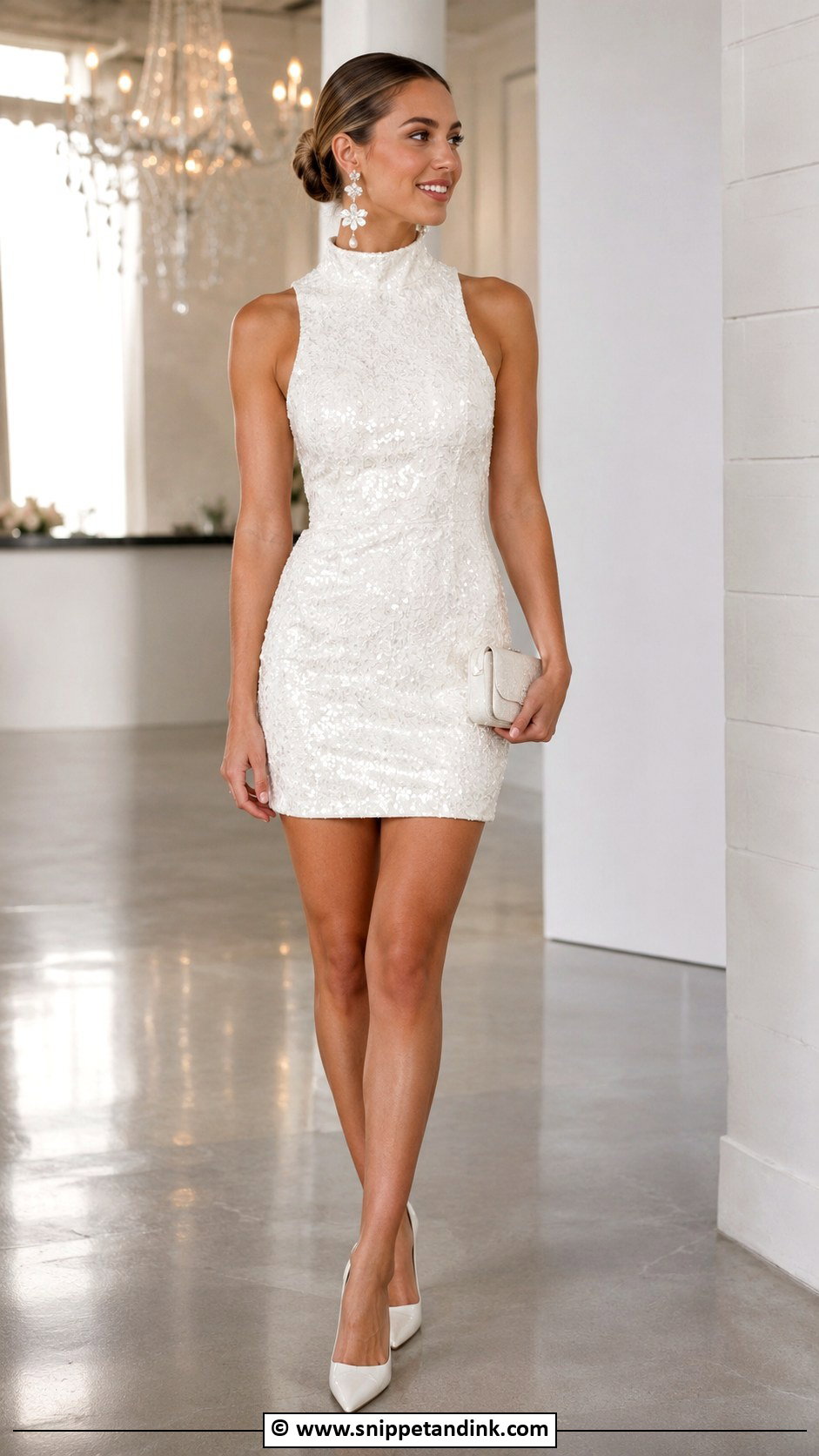
A covered neck balances a short hem, so a mini reads as polished rather than casual. You don’t need a necklace at all; statement earrings carry it. The comfort issue to test is heat. A high neck in satin or sequins traps warmth on a busy dance floor, so I’d choose a sleeveless cut or a lighter crepe for a summer party. Wear your hair up so the neckline shows.
23. Rhinestone Afterparty Wedding Dress
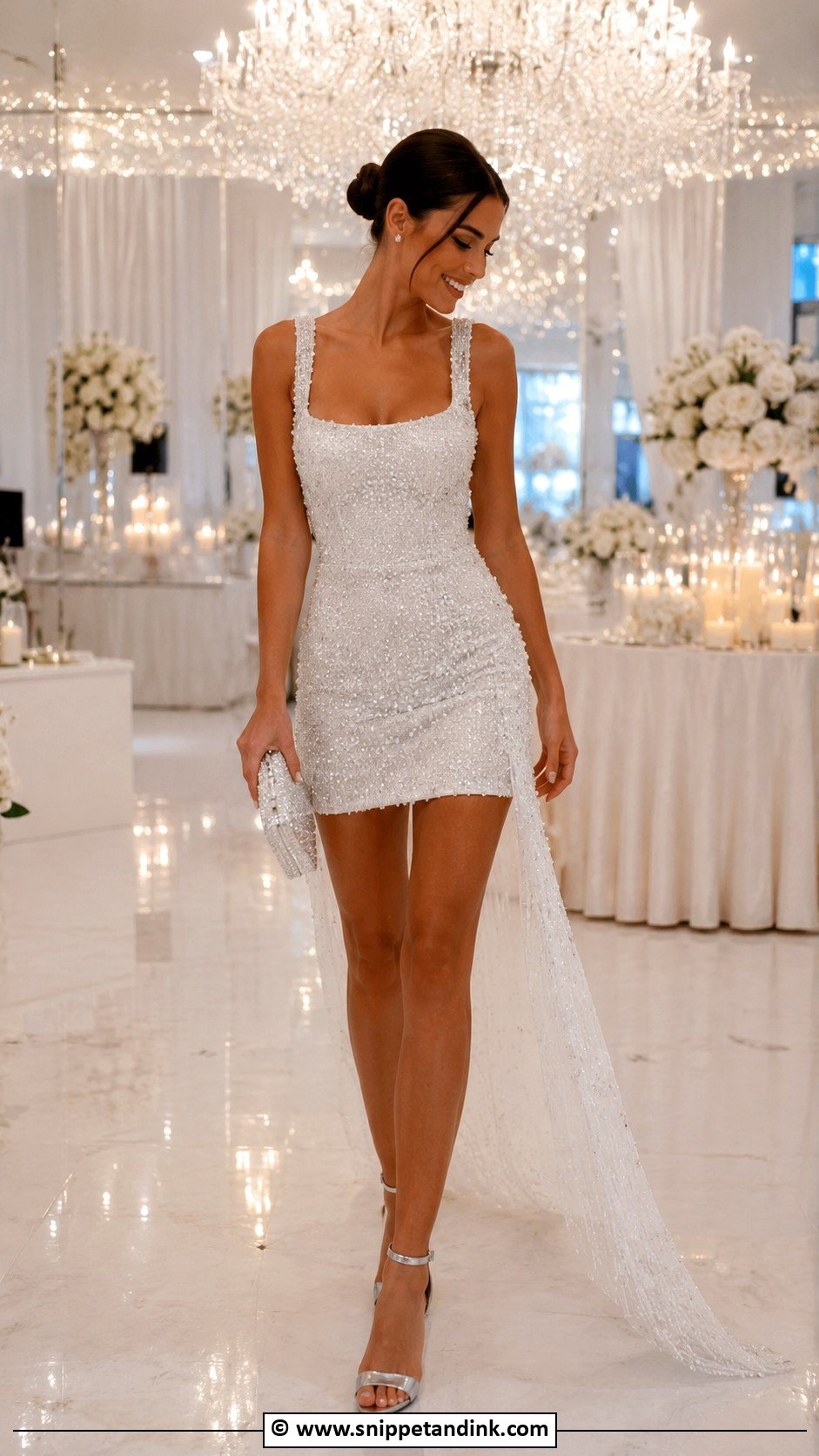
Rhinestones throw sharper sparkle than sequins, especially under spotlights or a disco ball, which makes them a strong choice for an indoor evening. Crystals are also the embellishment most likely to snag lace on a hugging guest’s dress. I usually suggest rhinestone straps or a scattered design over a fully covered dress for anyone planning a long night. Smooth hair and plain metallic heels keep the dress the star.
24. Sheer Sleeve Afterparty Wedding Dress
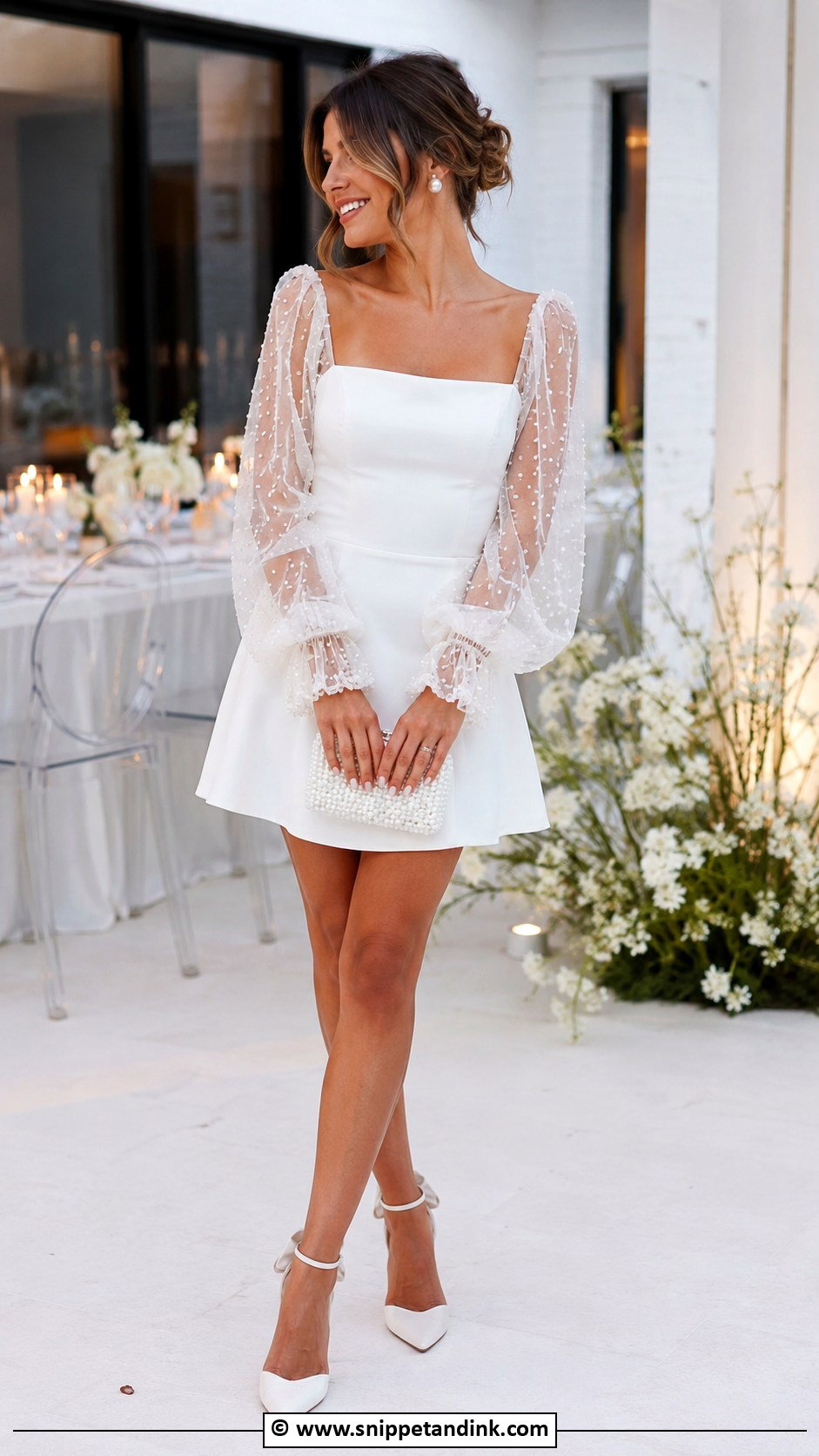
Sheer sleeves give coverage with almost no weight, and they’re the most comfortable form of sleeve for dancing. Dotted, lace-trimmed or pearl-scattered tulle all work. The detail I check is the seam where the sheer sleeve meets the bodice; a stiff join will scratch, while a bound seam won’t. Satin heels, pearl studs and soft hair suit the lightness of the fabric.
25. Midi Afterparty Wedding Dress
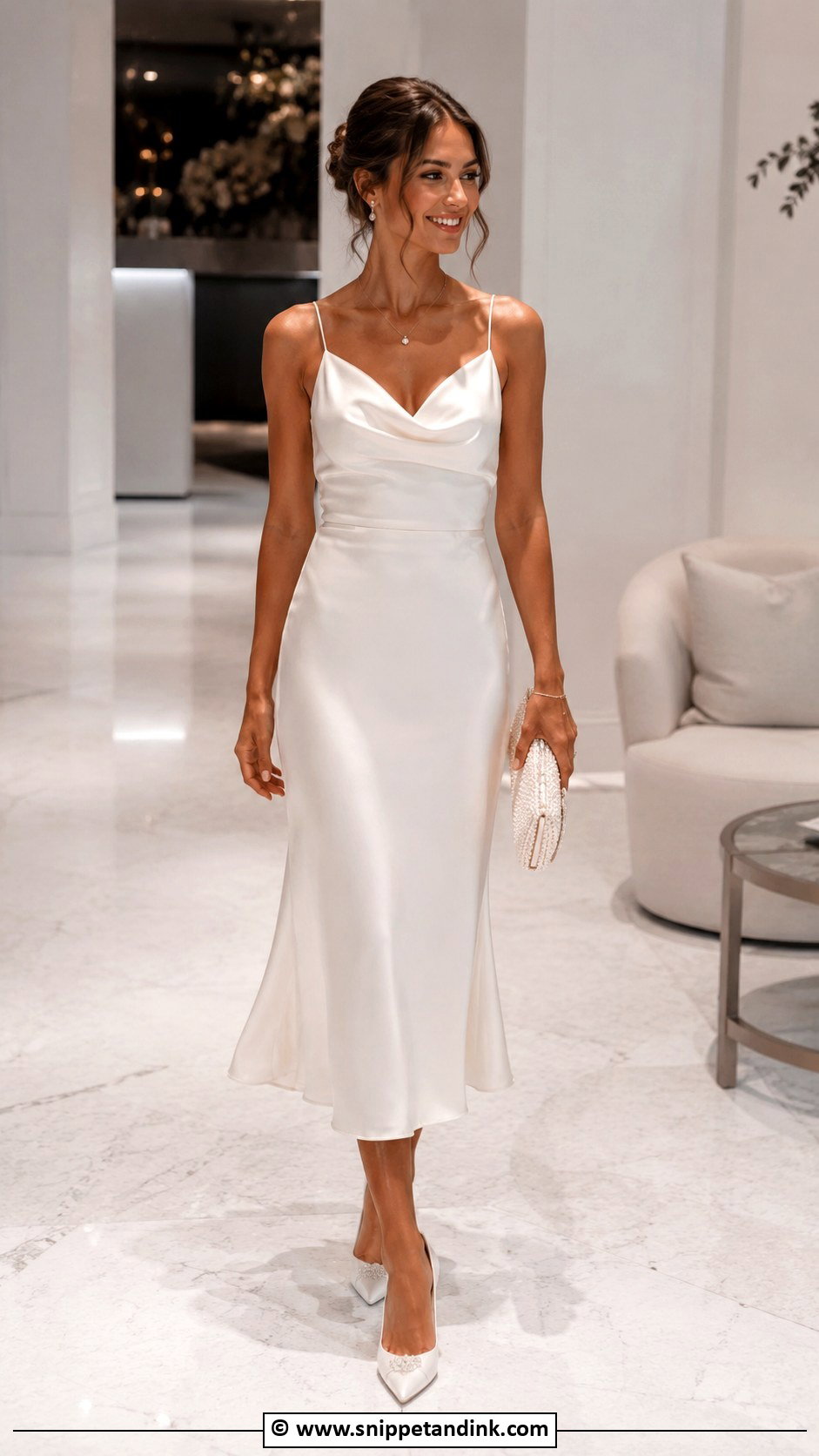
A midi suits the bride who wants to change but doesn’t want to go short. Satin feels sleek, lace and beading feel softer. The proportion that trips people up is shoe height: a mid-calf hem can cut the leg at its widest point, so a pointed toe or a slim strappy sandal helps lengthen the line. A slit at the side or back makes the dance floor much easier.
26. Convertible Afterparty Wedding Dress
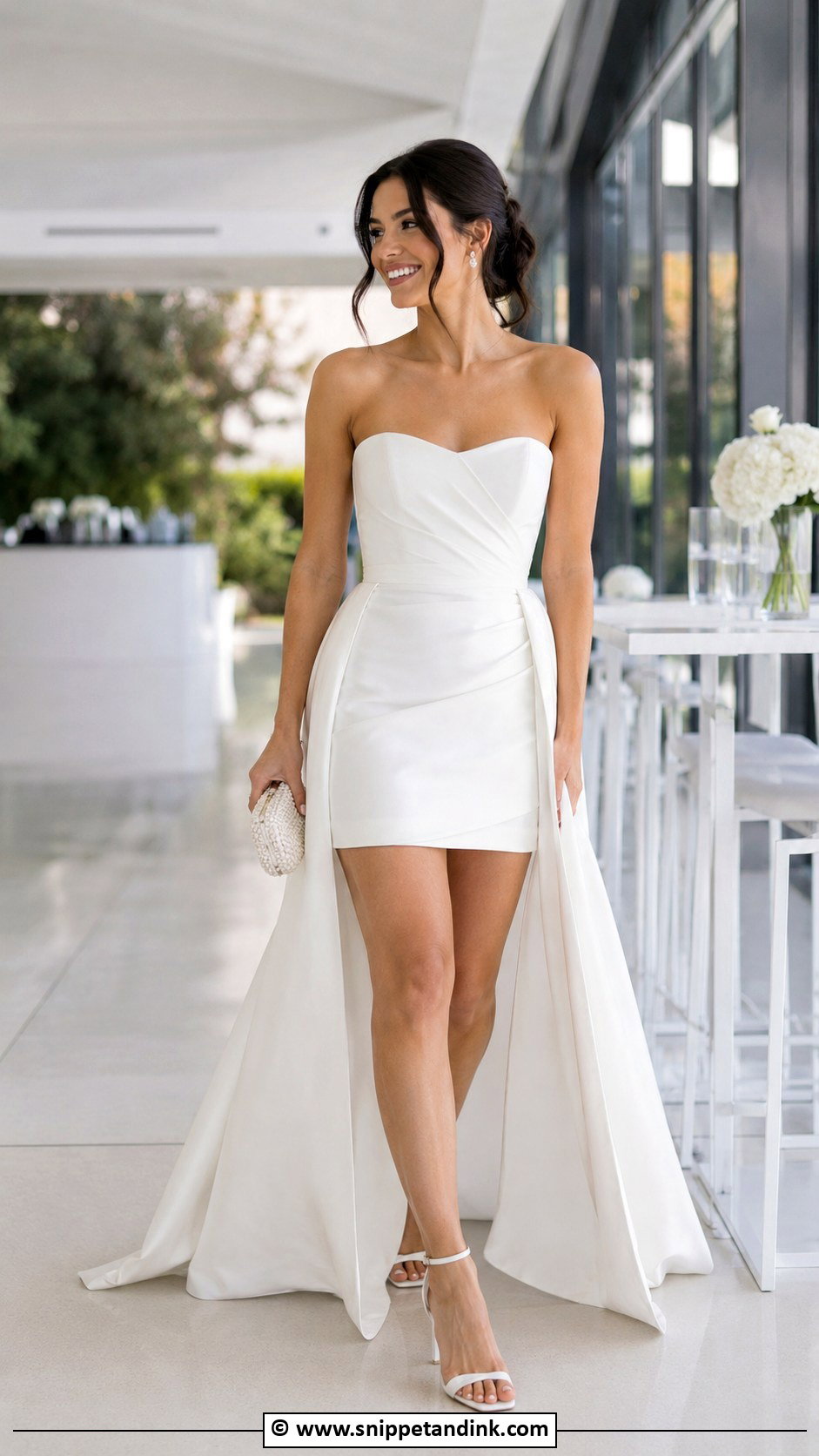
A convertible dress saves you the whole changing routine. A removable overskirt, detachable train or sleeves come off and you’re done in a few minutes. I always practice the change at the final fitting with whoever will help on the day, because hidden hooks and snaps are fiddly in a dim room. Ask the seamstress to mark the fastenings with a thread. Pair the shorter version with comfortable heels or sneakers.
27. Bridal Sneakers With Afterparty Wedding Dress
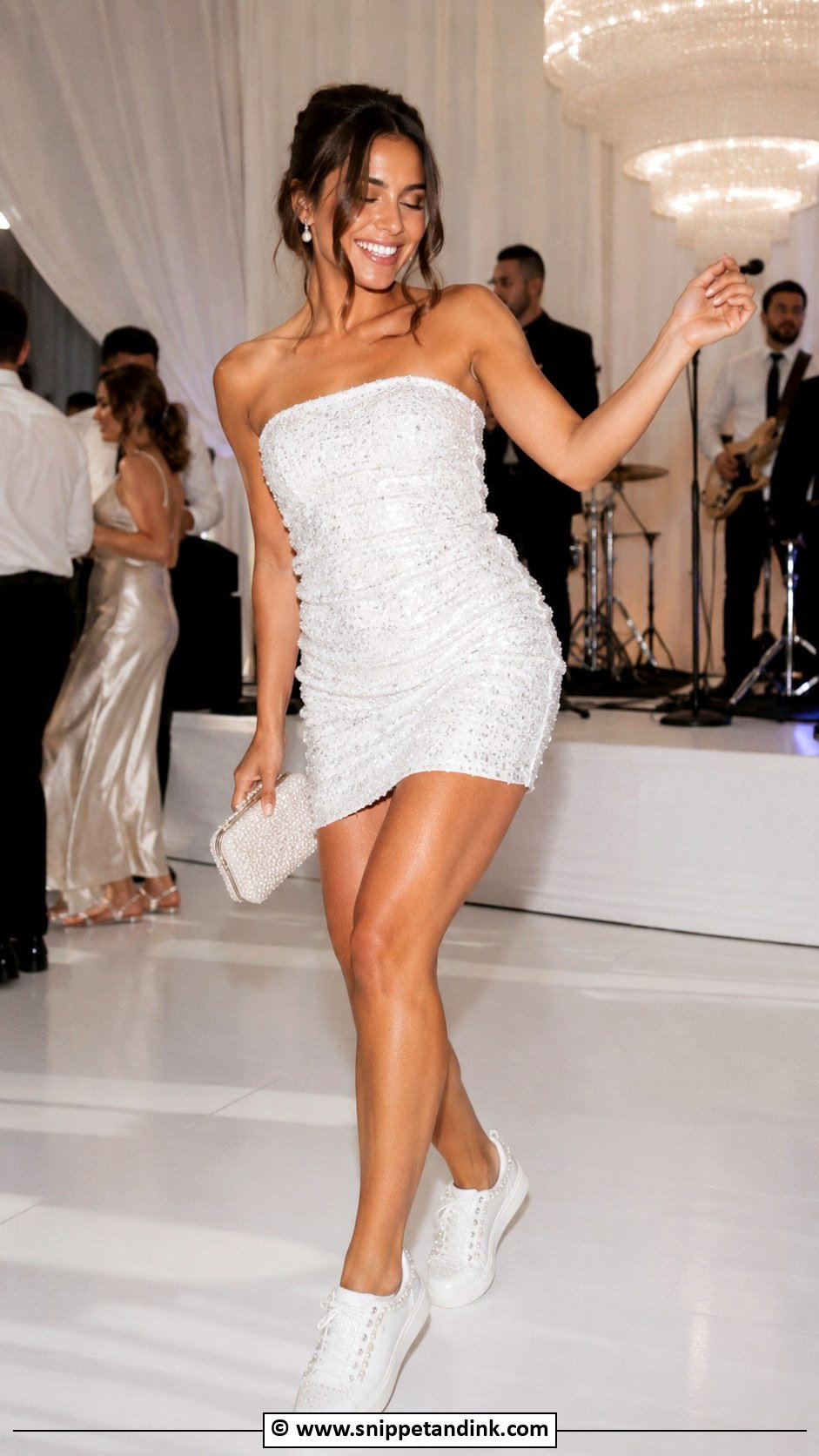
Mixing a mini with bridal sneakers is the look I see brides most grateful for at midnight. The dress can be sequin, satin, lace or feathered; flat shoes make all of them more relaxed. Plain white leather, pearl details or a little glitter all read as bridal. Wear the sneakers around the house for a week before the wedding; brand-new soles can rub at the heel just like new heels do.
28. Silver Afterparty Wedding Dress
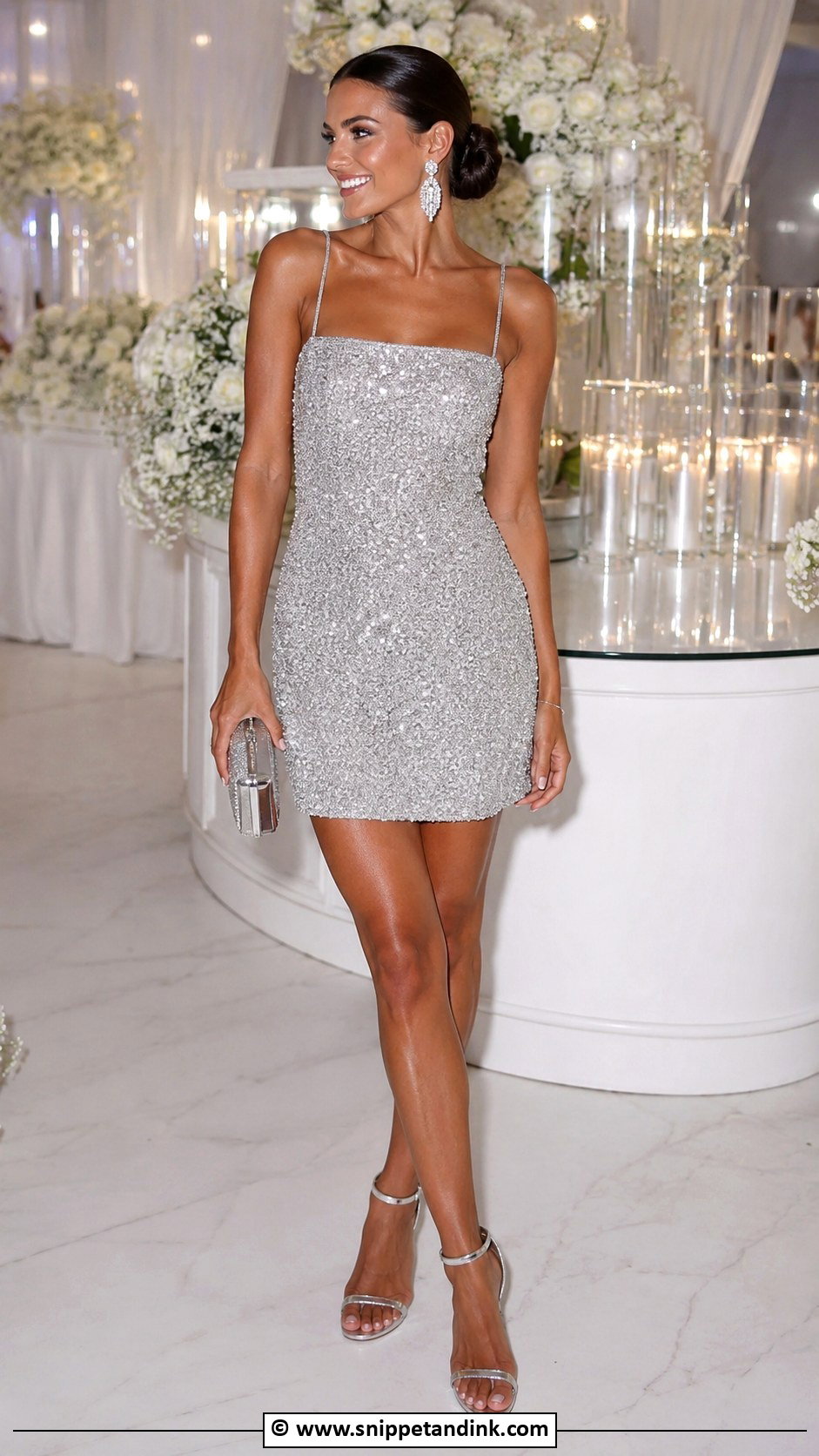
Silver is the colour I suggest to brides who want a change from white without leaving bridal territory. It glows under evening lighting and looks rich in flash photos. Keep everything else cool-toned: crystal earrings, silver or clear heels, a metallic clutch. One caution: gold jewelry next to silver sequins can look accidental unless you mix on purpose. A silver sequin mini, metallic slip or crystal sheath all work.
29. Pink Afterparty Wedding Dress
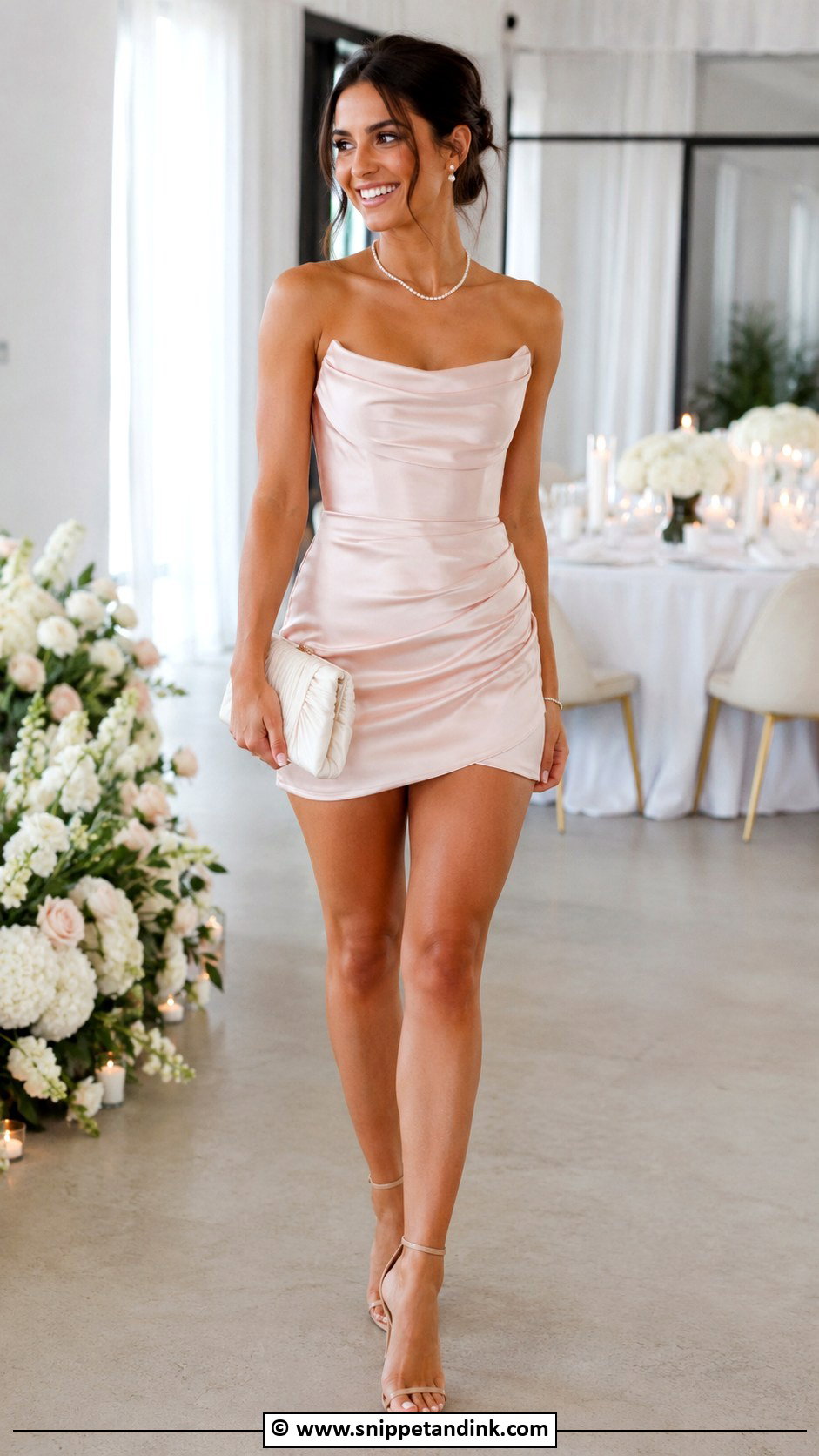
Pale pink gives a soft pop of colour that still reads as wedding. Blush and petal tones suit satin, tulle and beading. The thing to test is your skin tone under reception lighting: some pinks wash out fair skin and others turn peachy on warmer complexions, so look at the fabric next to your face in daylight and under warm bulbs. Nude heels, pearls and soft makeup keep it gentle.
30. Black Afterparty Wedding Dress
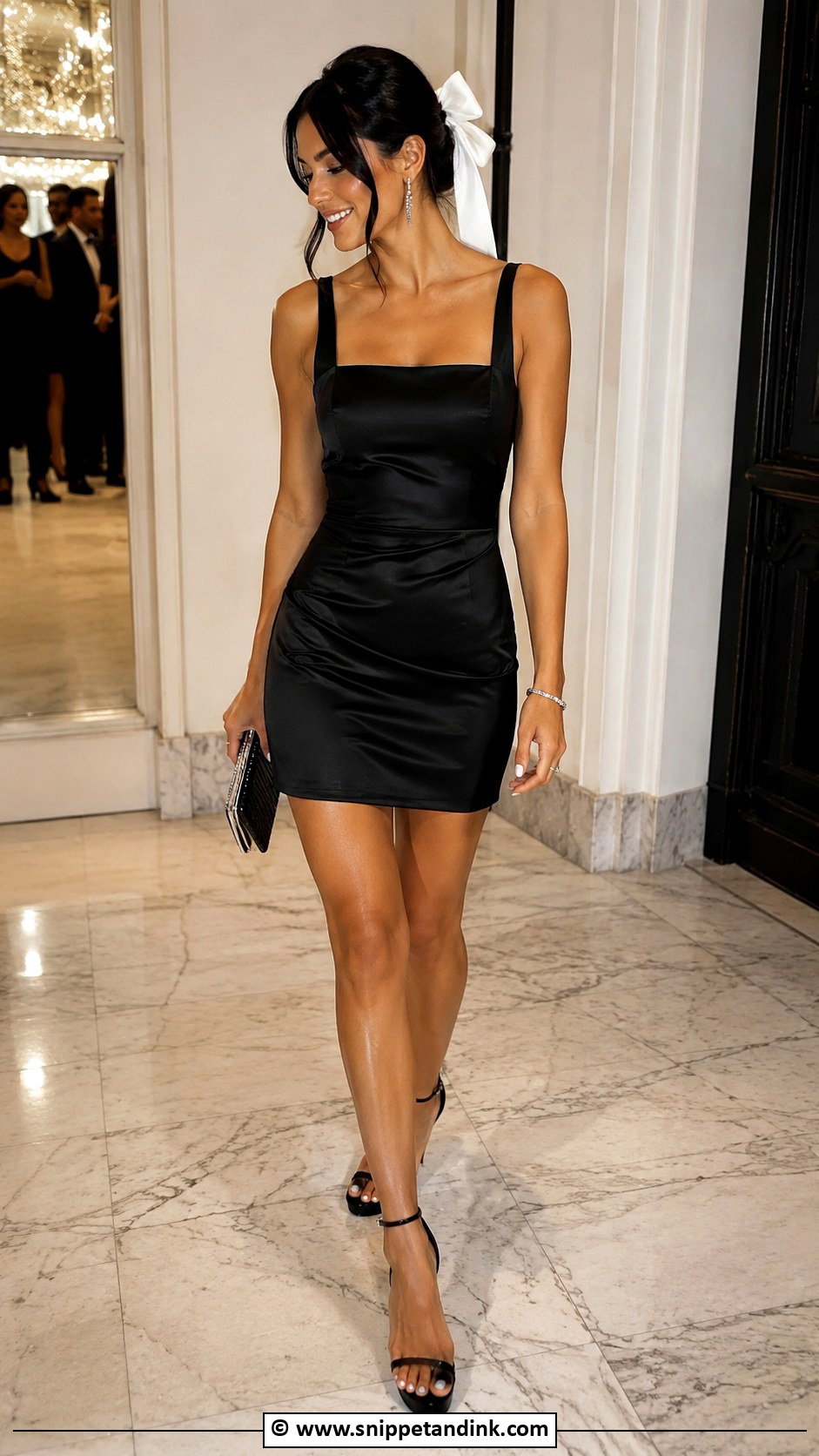
Black is the most divisive second look and I tell brides that up front: some families love it, some read it as a statement against the day. If your style is modern and urban and you’re comfortable with the conversation, it can look very sharp. Black satin, a crystal trim or a sleek midi all work. A white hair bow, pearls or a short veil keep the bridal thread running through it.
How Each Fabric Holds Up After Three Hours on a Dance Floor
A dress looks one way in a fitting room mirror and another way at eleven at night after you’ve danced, sat, hugged and spilled a little prosecco. These are the behaviours I warn brides about by fabric.
- Sequins and rhinestones: scratch the inner arms and snag delicate fabrics on guests. Check the inside seams and the grain of the sequins.
- Satin: creases at the lap the moment you sit and shows damp patches. Heavier satin and ivory hide more than thin white silk.
- Feathers: shed onto partners and drop a few plumes. Bring a lint roller for the groom’s jacket.
- Beading: gets heavy and can pull at the shoulders. A secure waist takes the strain off.
- Tulle: flattens after long sitting and needs a quick fluff. Soft tulle is kinder on bare legs than stiff net.
Fittings and Fixes for a Dress You’ll Only Wear Late at Night
Brides often skip alterations on the second dress because it feels secondary. I’d still book one fitting, ideally a few weeks before the wedding, and bring the exact shoes. A mini that’s half an inch too long in the hem or a strap that slips is a small fix with a needle but a long night without one.
Put a little emergency kit with the dress: a few safety pins, a strip of fashion tape, a stain wipe and blister plasters. If a sequin seam starts to unravel or a strap snaps, a pin and tape get you back on the floor in a minute. After the wedding, take it to a cleaner who handles embellished pieces; sequins and feathers shouldn’t go in a standard wash.
A Second Dress Has One Job: Getting You Through the Last Song
The second dress doesn’t need to outshine the gown. It needs to let you move, sit, eat, hug people and dance without thinking about your clothes. Decide how long the party runs, what the floor is made of and how warm the room will be, then pick the fabric and shoes that survive that, and the style you love within those limits. Do a full sit, stand and arms-up test in whatever you choose, and you’ll be the one still on the dance floor at the end.
You'll Like These Ideas:


Leave a Reply