
Shopping for a second wedding dress tends to go faster and feel lighter than the first time, mostly because nobody expects you to follow a script. Some women come to me wanting white again, some want a city hall mini, some want trousers. All of it is fair game. The best 25 2nd Wedding Dress Ideas I keep coming back to have one thing in common: they fit the actual day you’re planning, not an imagined one. So before you scroll, picture the venue, the weather, and how long you’ll be on your feet. Then read each idea below with those three facts in mind.
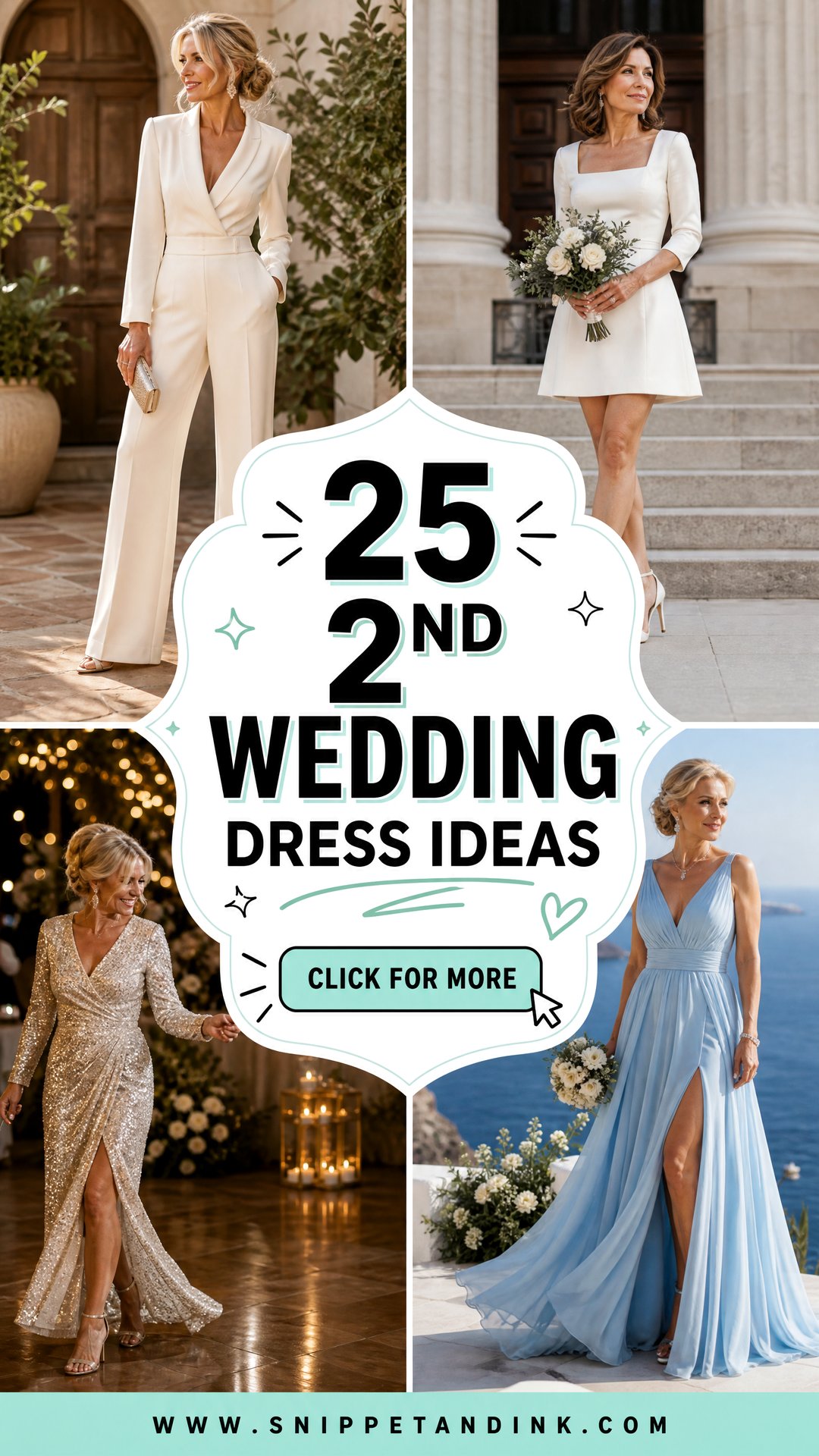
Shopping Off the Rack Changes Your Timeline
Most of the dresses below are sold ready to wear rather than made to order, and that changes the schedule a lot. A made-to-order bridal gown often needs several months from order to delivery. A ready-to-wear midi, jumpsuit or suit can be in your hands within days, and I’d plan on about six to eight weeks for the alterations after that.
Here is the order I work in when a client is shopping off the rack:
- Buy the shoes first. Every hem in this list depends on heel height.
- Order two sizes if the brand allows free returns, and keep the one that fits your widest point.
- Book a first fitting with a seamstress who handles evening wear, not just a general alterations shop. Satin and bias cuts need specialist pressing.
- Bring the underwear, shapewear and jewelry you plan to wear to the final fitting.
- Collect the dress at least a week before the wedding, steamed and on a padded hanger.
If the date is close, I’d skip anything with complicated beading or a structured corset. Those take longer to alter and are harder to fix when something is off.
1. White Lace Midi Wedding Dress
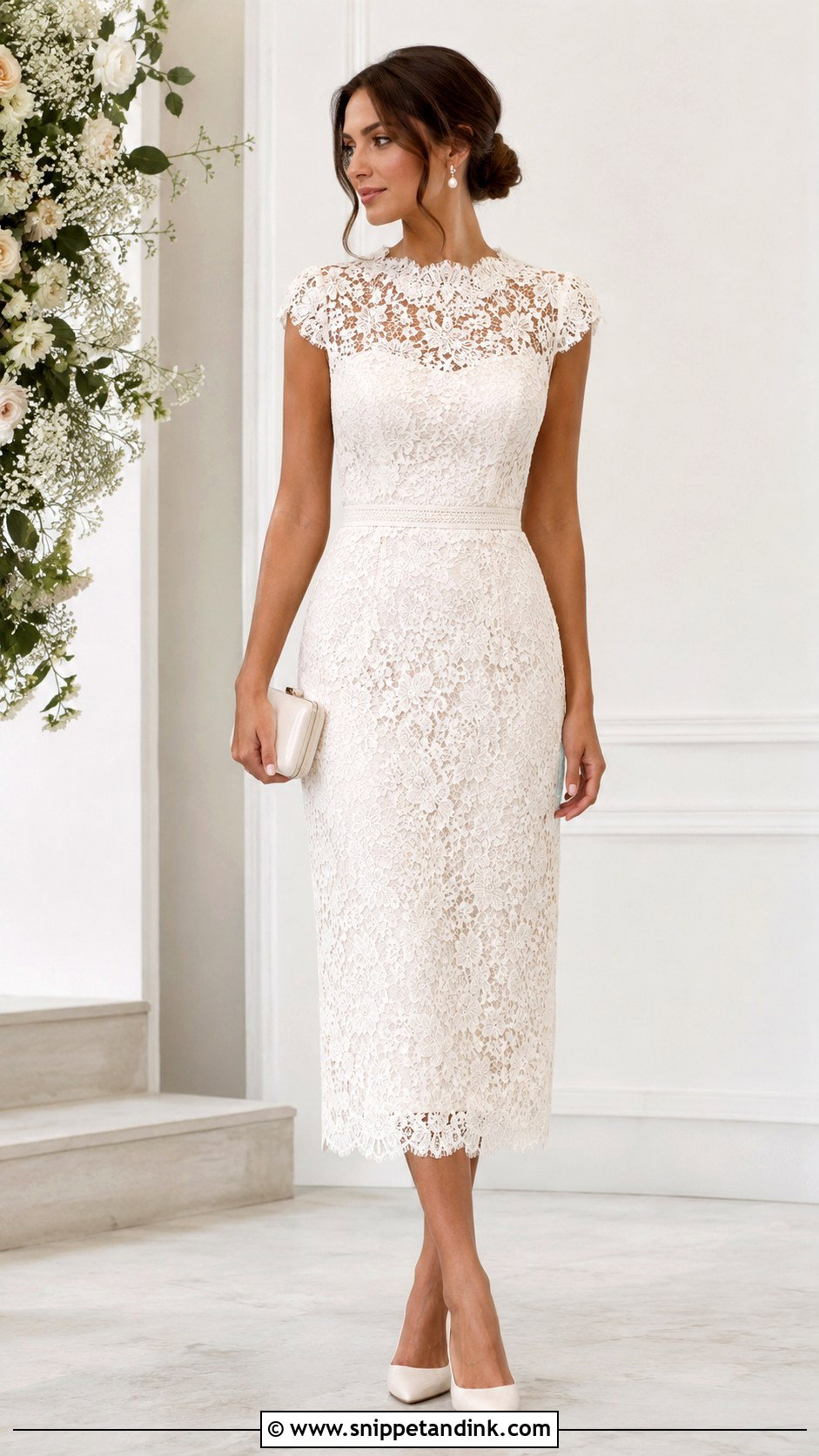
Lace at midi length is the dress I suggest most often for a daytime ceremony with a meal after. The hem clears restaurant chairs and courthouse steps, and lace hides the creases you get from sitting in a car. Ask whether the bodice is fully lined; unlined corded lace can scratch along the underarm by mid-afternoon. With busy lace, I’d skip the long veil and use a bow clip or a short blusher so the two textures don’t fight. Ivory pumps and pearl studs are enough.
2. Champagne Satin Slip Wedding Dress
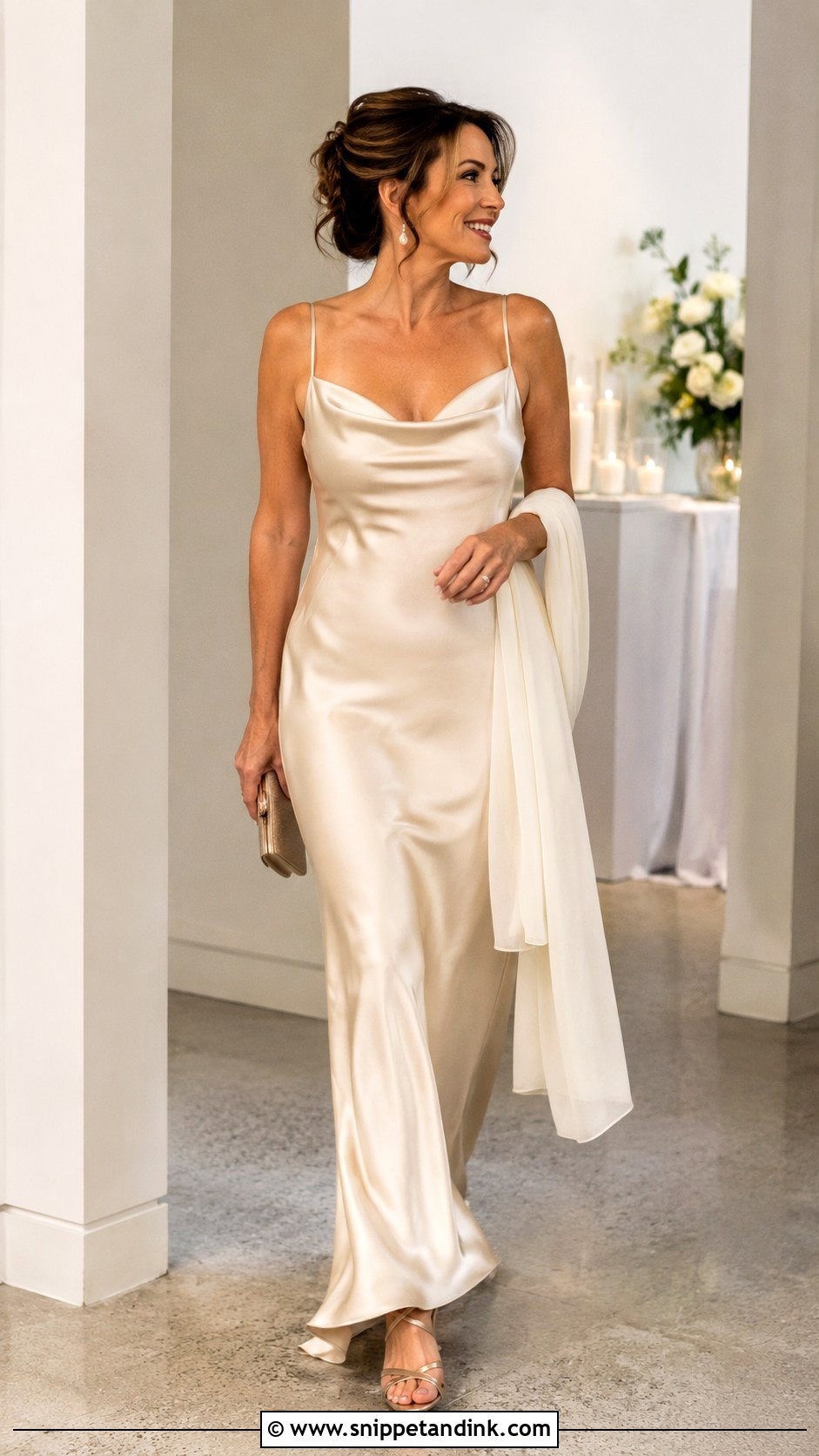
Champagne satin cut on the bias is the closest thing to a white gown that doesn’t read as a repeat of your first wedding. The catch is honesty about the fabric. Bias satin drapes over every line underneath, so I always fit it with the exact underwear you’ll wear on the day, and I’d avoid it entirely for a hot outdoor ceremony because satin shows sweat marks at the back. For an evening dinner, strappy metallic sandals, a fine bracelet and a cream wrap for the walk outside are all it needs.
3. Ivory Bridal Jumpsuit
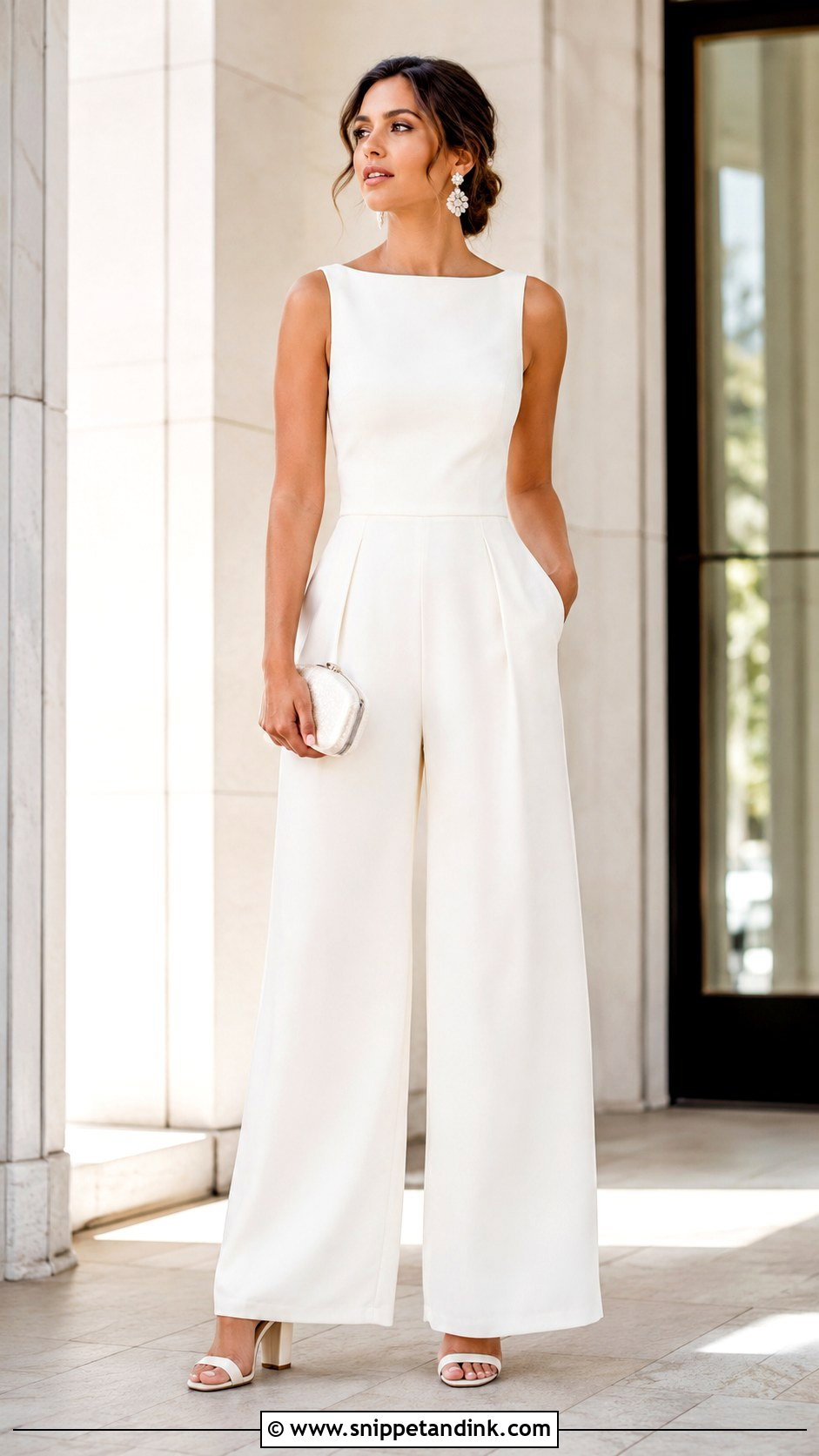
A jumpsuit solves a problem most gowns create: you can dance, climb stairs and get in and out of a car without anyone holding your hem. Wide-leg pants lengthen the body, but only if the hem is finished for your shoe. I hem jumpsuits so the fabric just grazes the floor in the heels you’ll wear, which means bringing those heels to every fitting. Crepe holds a cleaner line than satin here. Check the bathroom question too: a back zip you can’t reach alone is a real nuisance at a reception.
4. Tea Length Wedding Dress
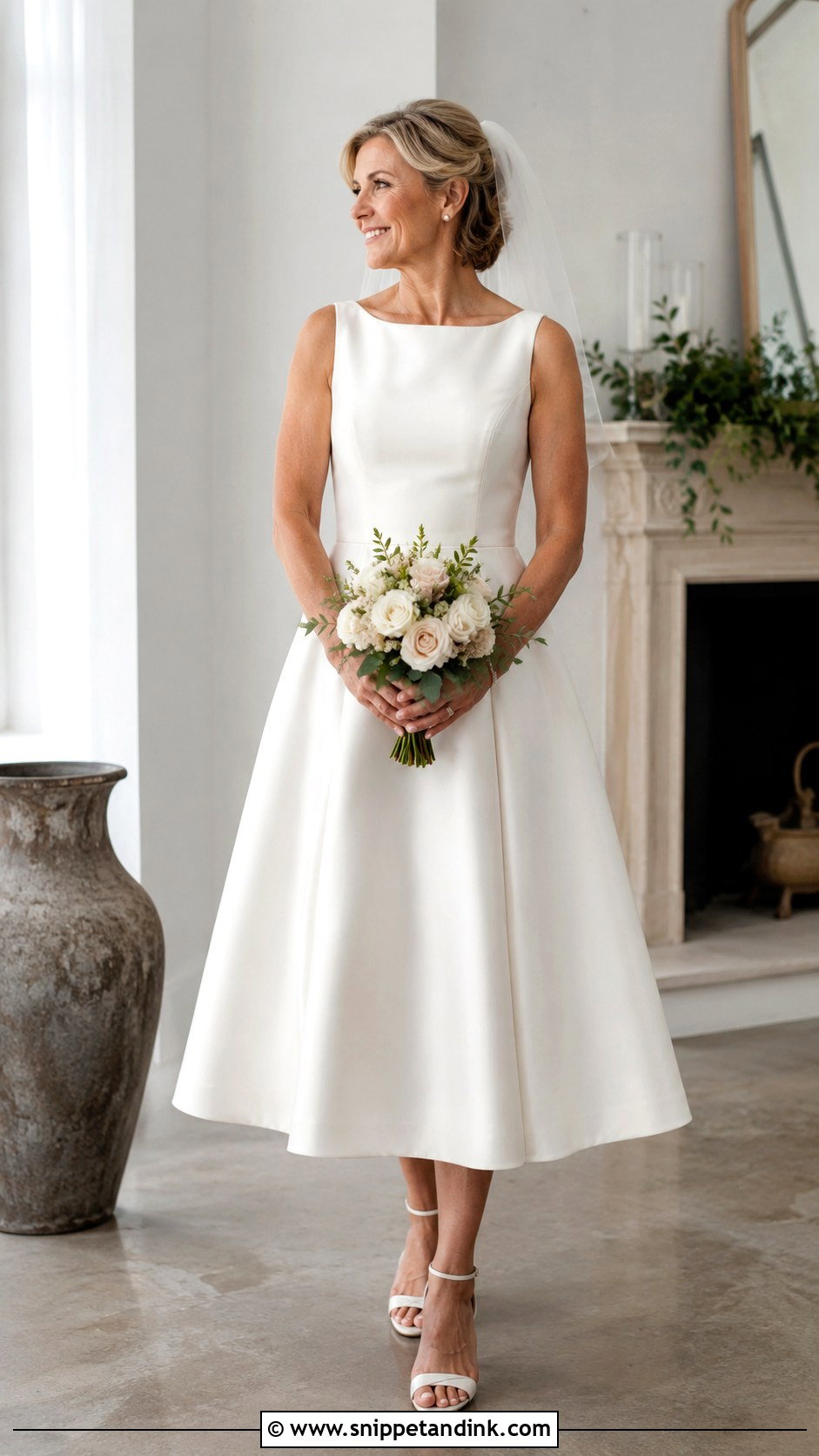
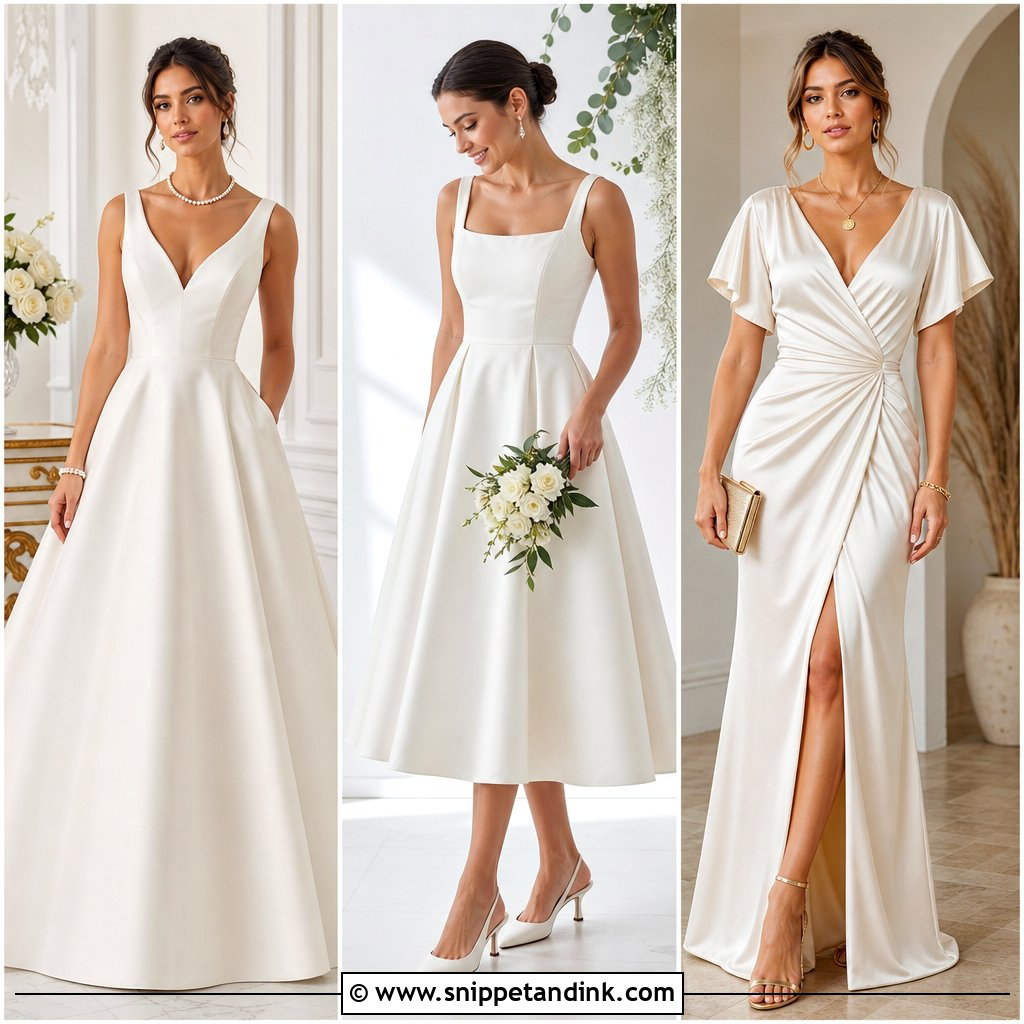
Tea length sits roughly mid-calf, and that is exactly why it works at a small reception: no train to bustle, no hem to step on. The proportion is fussier than it looks, though. On a petite frame a full skirt can cut the leg at its widest point, so I’ll often take the hem up an inch or two and pair an ankle-strap heel to restore length. Tulle and organza give the skirt its 1950s bounce; lace keeps it quieter. A short veil or a satin bow is plenty on top.
5. Blush Pink Wedding Dress
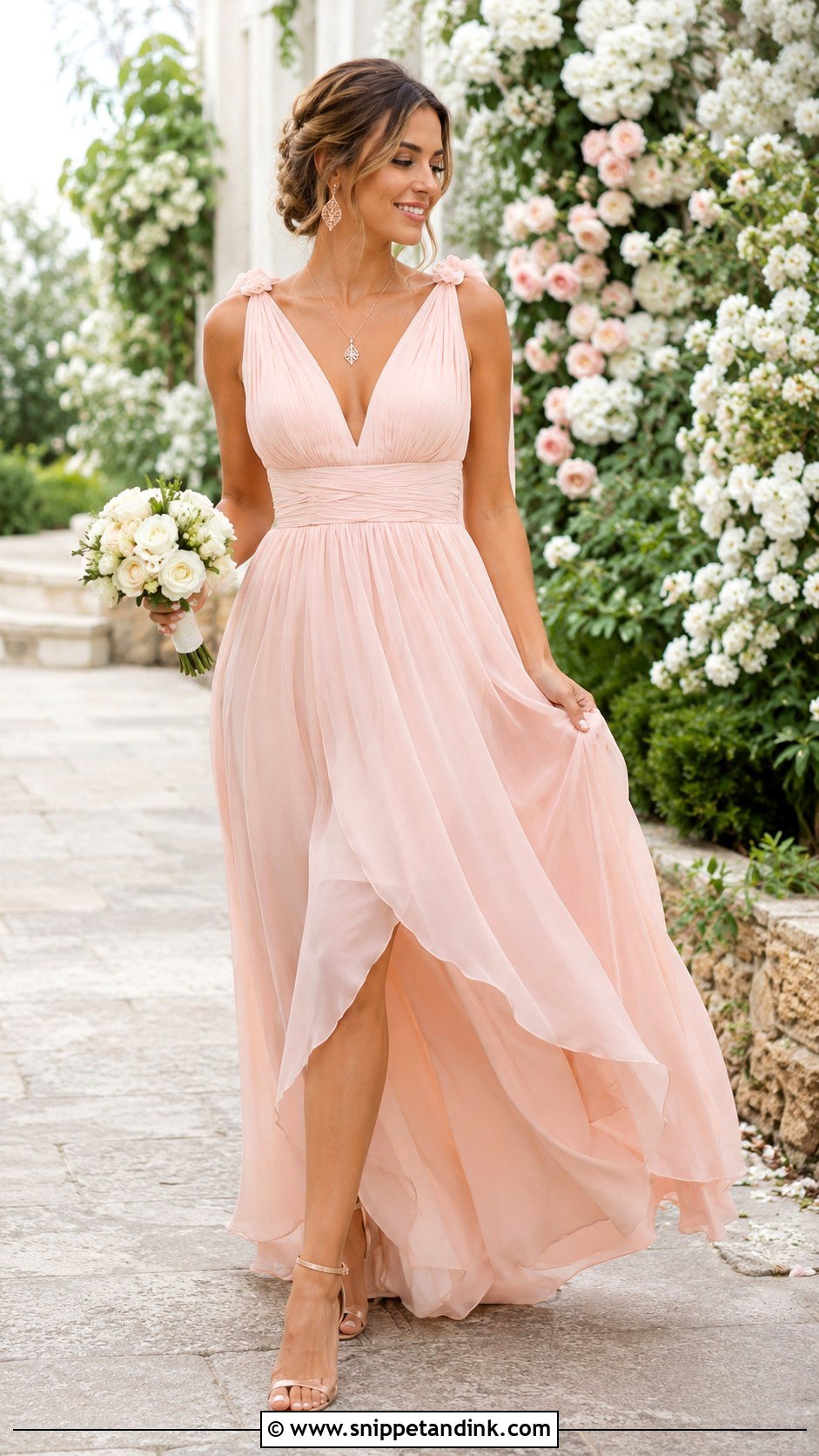
Blush reads very differently on different skin tones, and I’ve watched it go from glowing to washed out with a single shift in shade. Hold the fabric against your bare face and collarbone in daylight, not under shop lighting. Warmer skin usually suits a peachier blush; very fair skin can disappear in the palest pinks. Chiffon gives movement for a garden, satin gives more polish indoors. I keep the jewelry rose gold or pearl and let the flowers carry the rest of the pink.
6. Courthouse Wedding Mini Dress
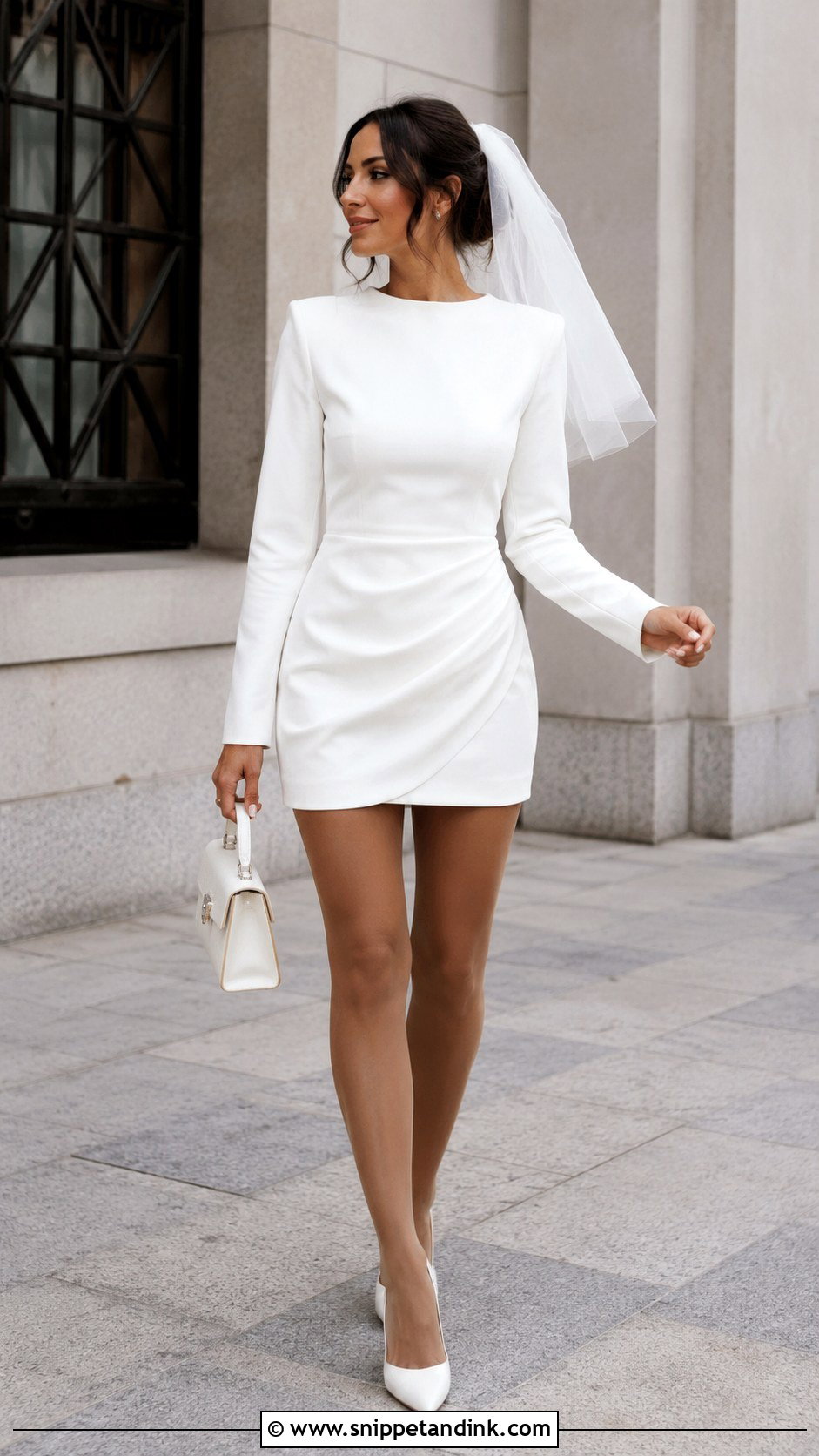
The risk with a courthouse mini is that it can look like an ordinary party dress, so structure does the bridal work. I look for a fabric with enough weight to hold a square neckline or a row of pearl buttons without puckering, like a heavy crepe or a bonded satin. Long sleeves help in an air-conditioned registry office. Sheer tights in cool months, a top-handle bag and a short veil or pillbox hat finish it. The bonus is real: you’ll wear this one again.
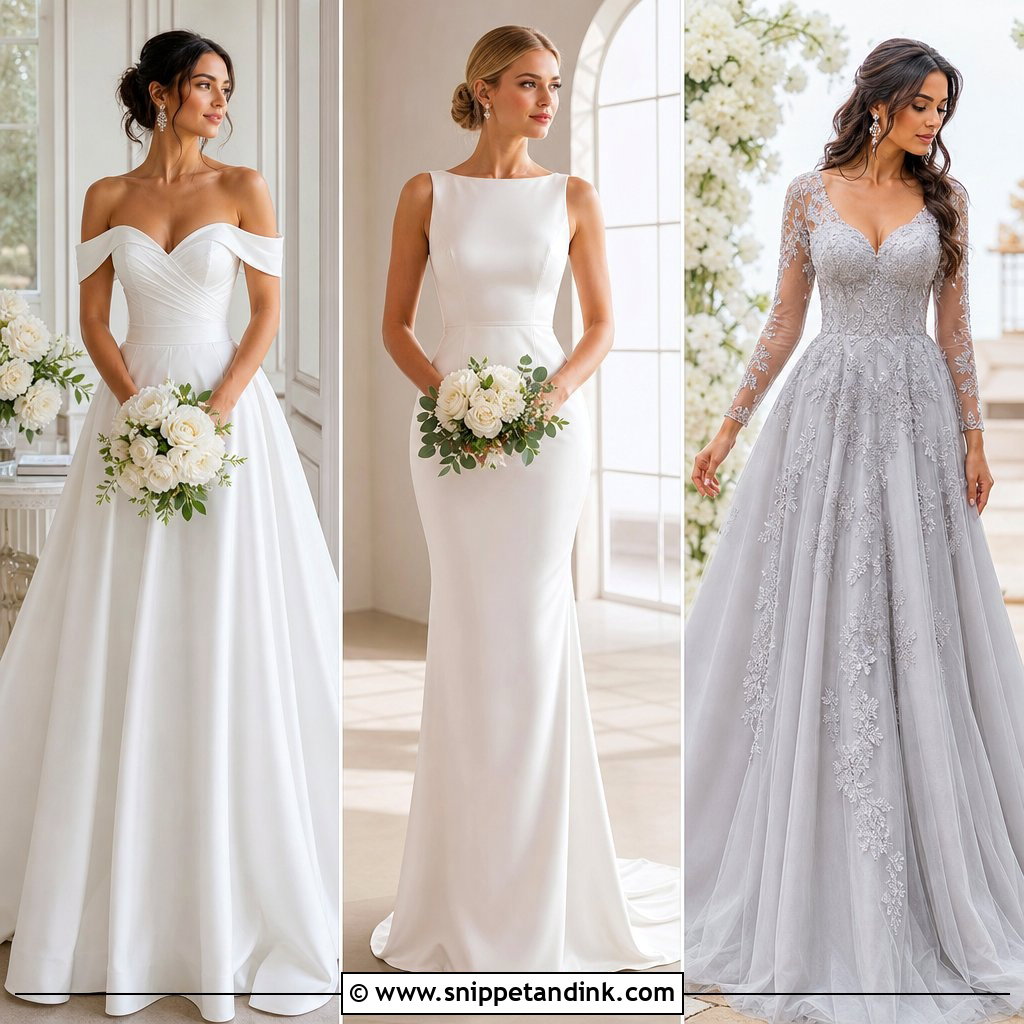
7. Off Shoulder Wedding Dress
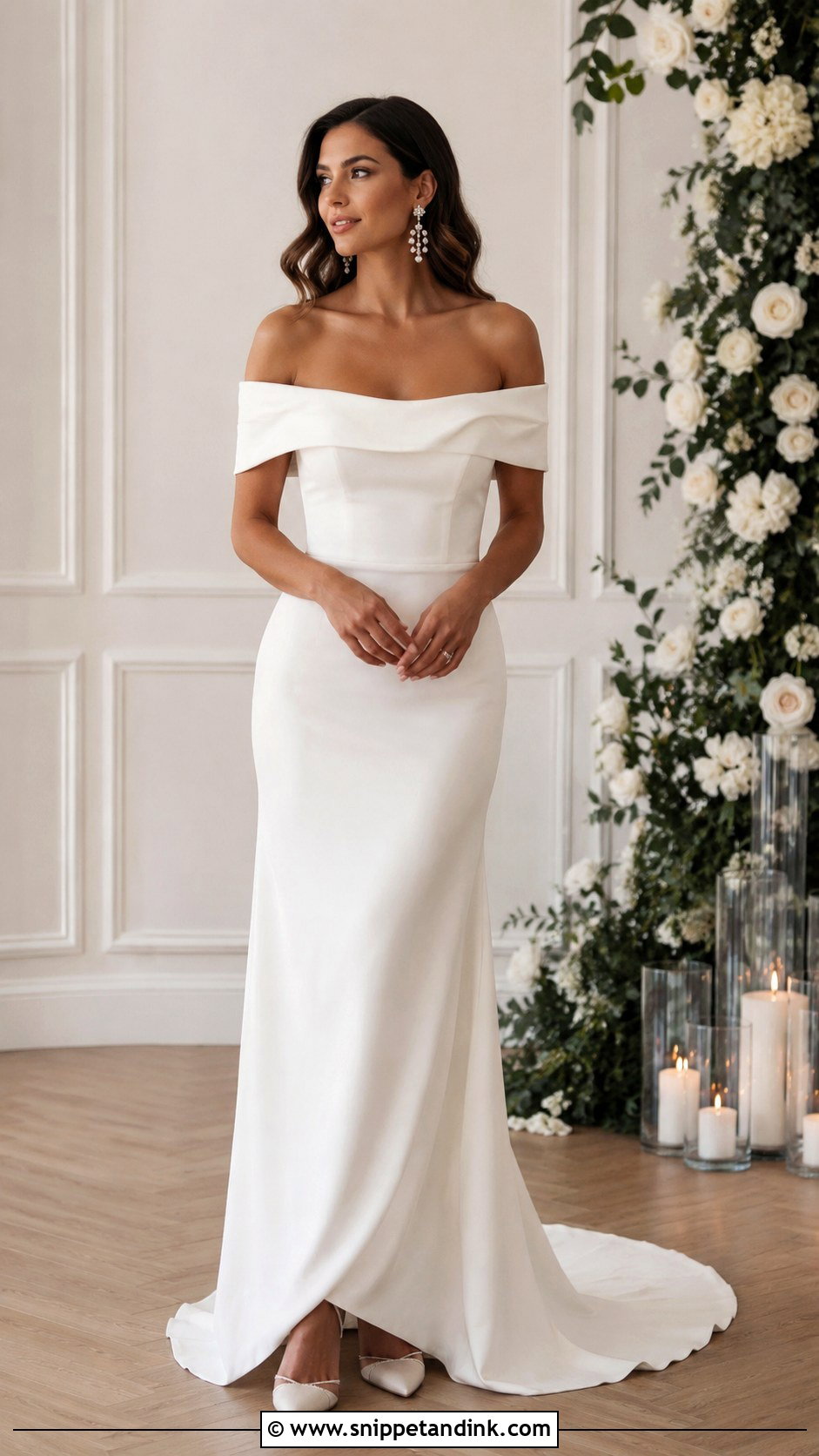
Off-the-shoulder necklines stay up because of the bodice, not the sleeves, and that is the first thing I test. Raise your arms, hug someone, sit down. If the neckline creeps up toward your neck or slides off, the dress needs boning or a silicone grip strip added inside. Ivory keeps it classic; champagne or pale blue moves it away from white. Choose one: a fine necklace or statement earrings, not both, and wear your hair up or swept to one side so the neckline actually shows.
8. Long Sleeve Crepe Wedding Dress
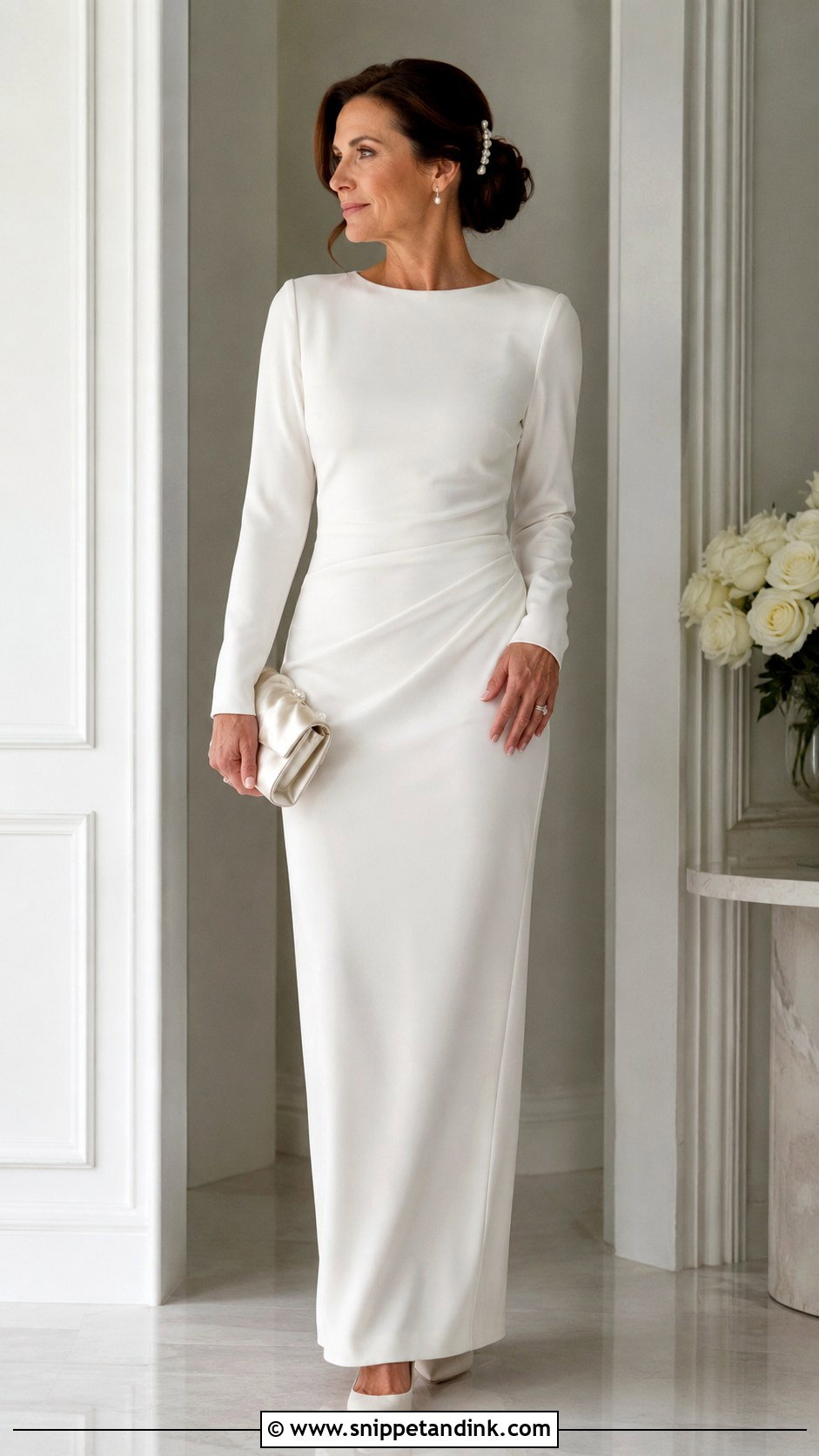
Long sleeve crepe is the quiet option I reach for in autumn and winter, and also for women who simply don’t want bare arms in photos. Crepe is forgiving over the stomach and hips but it shows every pull line if the fit is even slightly tight, so I check the sleeve when the arm is bent; a sleeve cut too narrow will ride up your forearm all day. A bateau neck or a small slit keeps it modern. With a dress this plain, a long veil or a pearl comb suits a meaningful second ceremony without adding fuss.
9. Floral Embroidered Wedding Dress
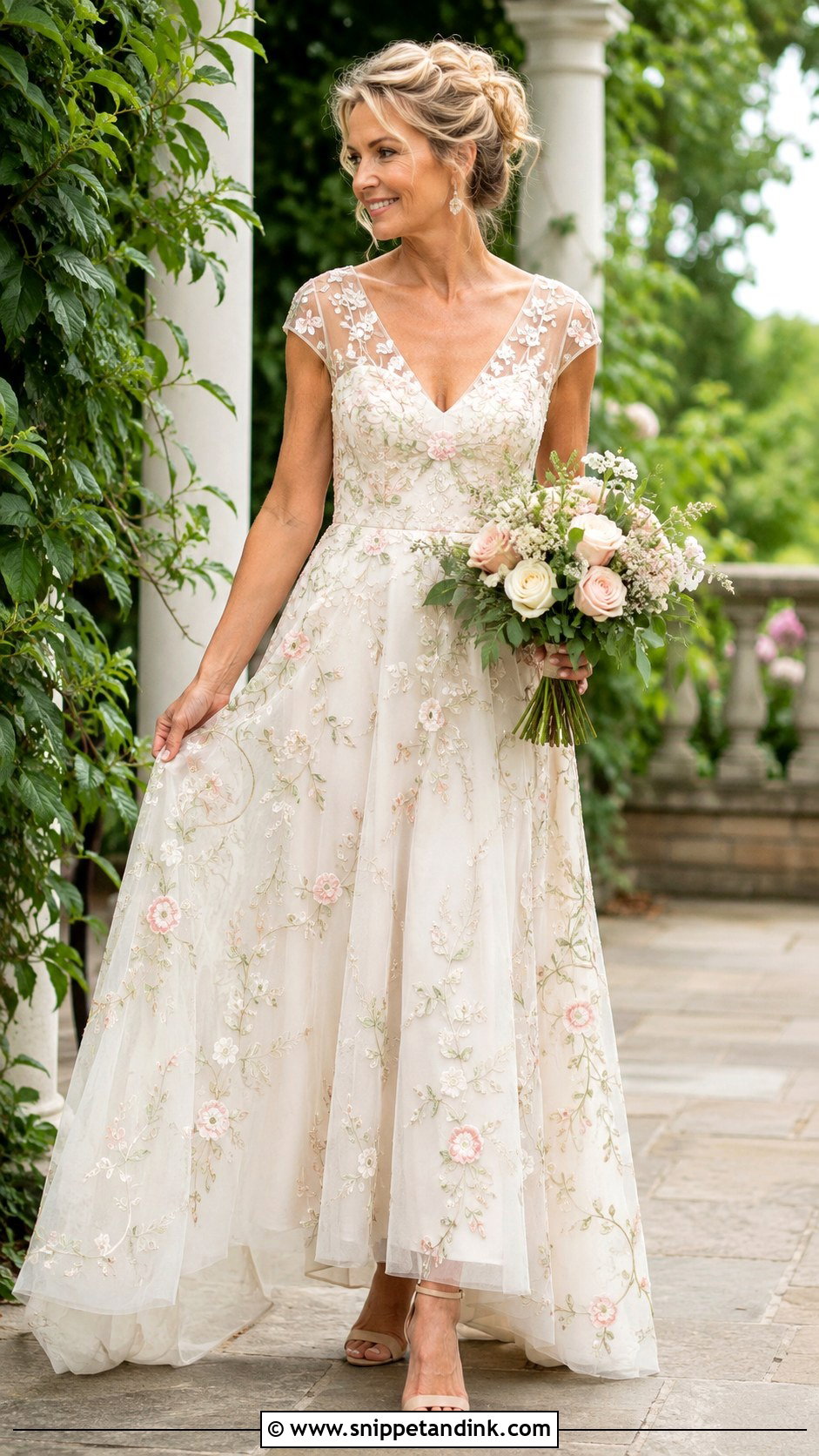
Embroidery gives you detail without sparkle, which is why it suits a garden ceremony in spring or summer. Ivory thread on ivory tulle is subtle in person and shows up mostly in close-up photos; pastel thread reads from across a lawn. One practical warning: raised embroidery snags on bouquet wire and on beaded clutches, so I wrap bouquet stems in ribbon for these brides. Keep the accessories plain and let the flowers on the dress be the pattern.
10. White Bridal Pantsuit
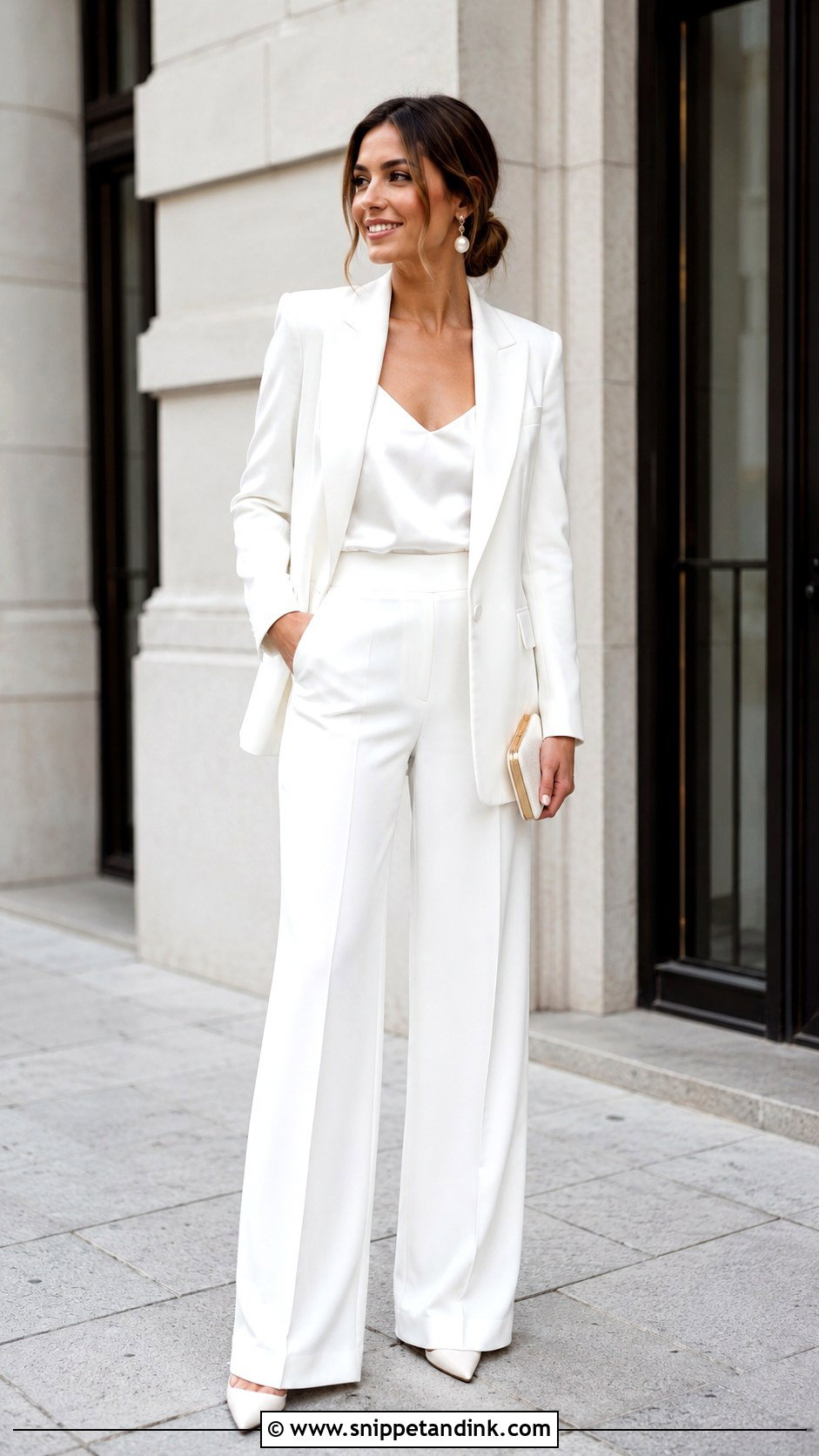
A white pantsuit is the outfit I see women feel most like themselves in, especially at a city ceremony or a rooftop dinner. Fit is everything. The jacket shoulder should end at your shoulder bone, and the trousers need to be hemmed for one specific shoe. What sits under the blazer decides how bridal it looks: a silk camisole is quiet, a structured lace bustier is a full evening outfit. White suiting also marks easily, so I keep a stain pen in my kit for anything in this category.
11. Simple A Line Wedding Dress
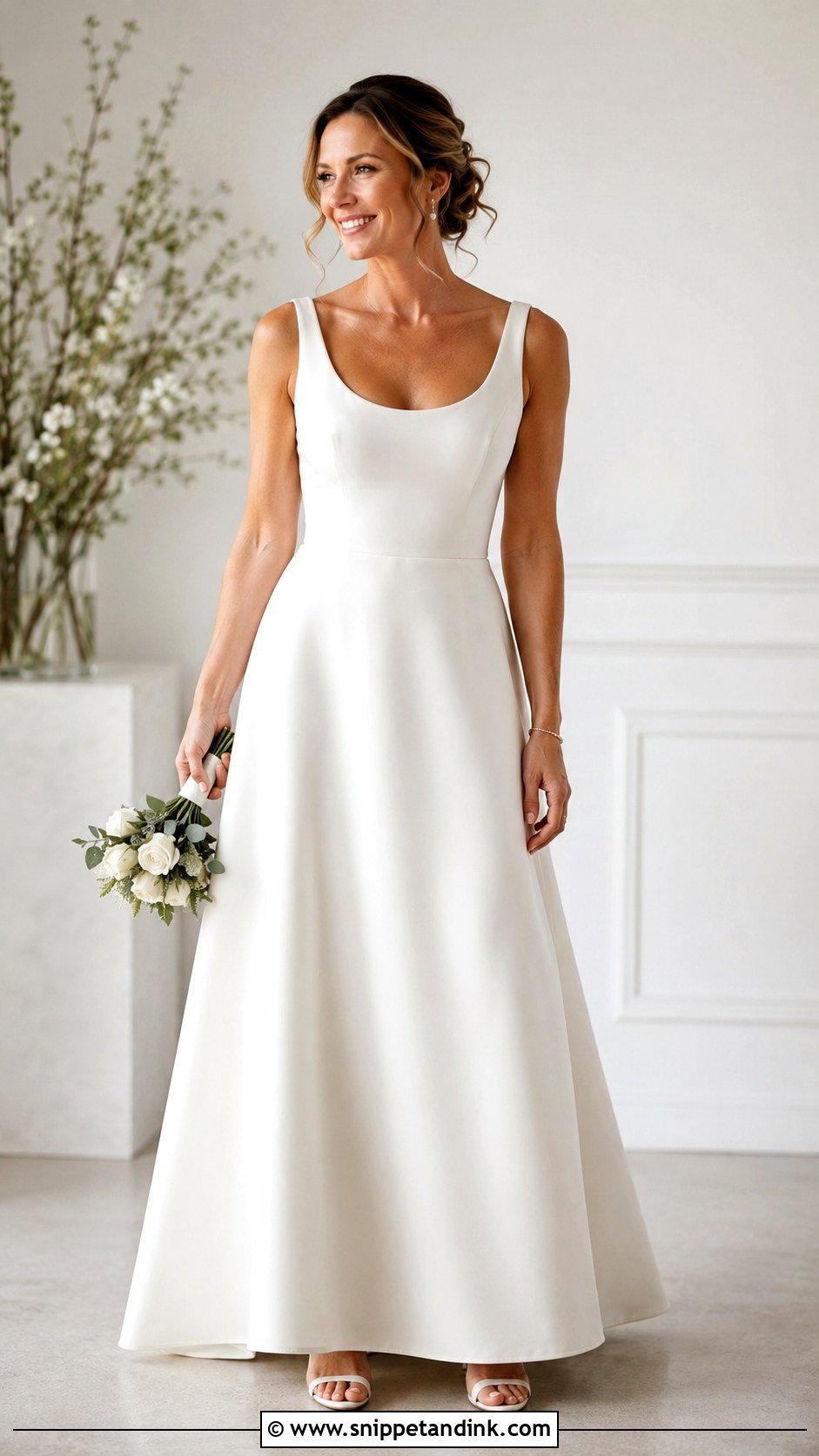
A-line is the shape I start most fittings with, because it fits at the narrowest part of the waist and then skims away from the hips. It is hard to get wrong. Where it can go flat is fabric: thin chiffon over a stiff lining can look a bit like a bridesmaid dress. Satin or a mid-weight crepe holds the skirt better. A V or square neckline makes it feel current, and low block sandals keep a backyard ceremony comfortable.
12. Sequin Reception Wedding Dress
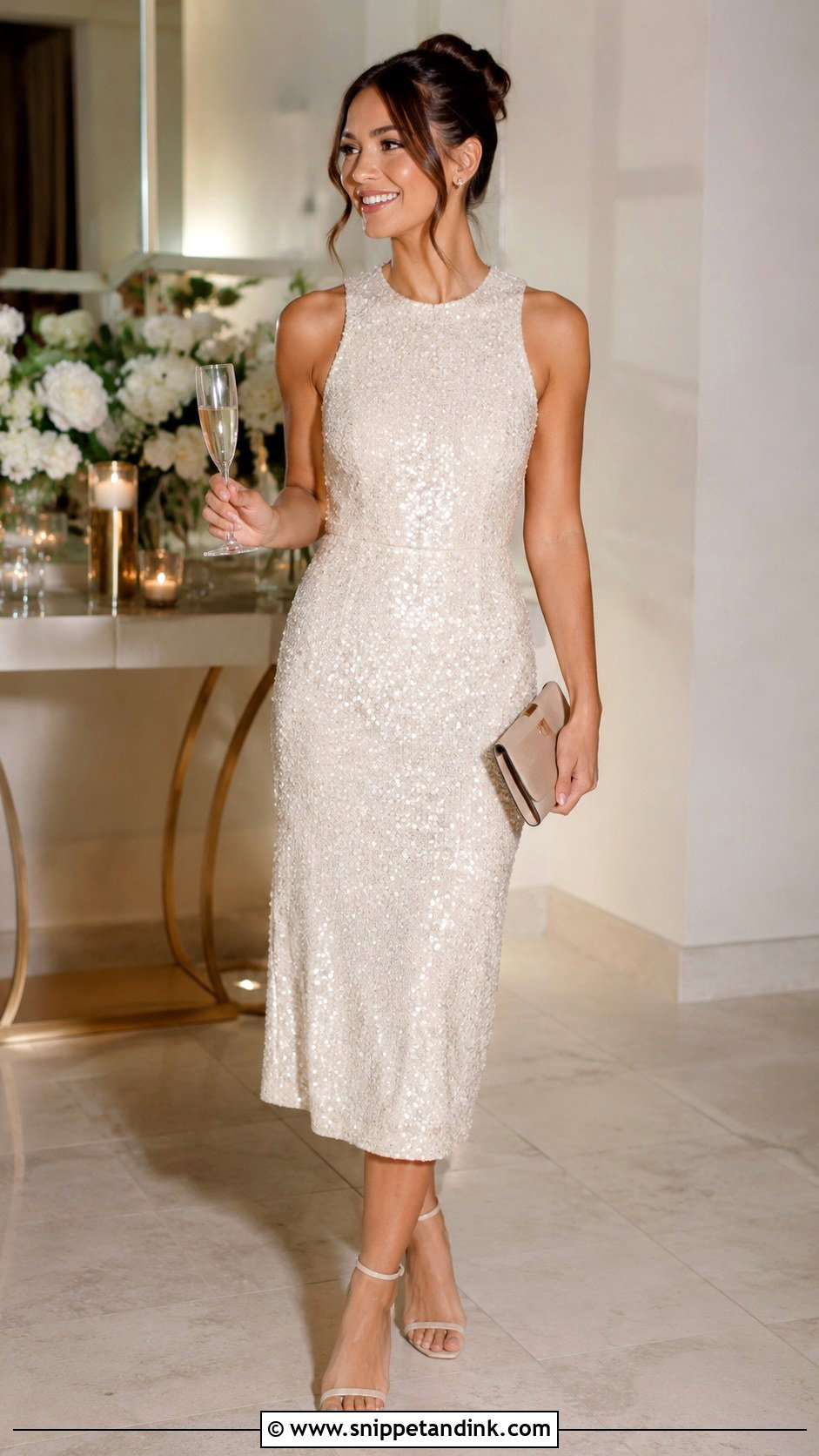
Sequins are a reception choice, and I say that from watching how they behave. A fully sequined bodice scratches the inner arm after a few hours of dancing, and some sequin fabrics catch on lace and tulle when you hug guests. The fix is a lined sleeve or a sleeveless cut. Keep the shape simple, a column or a slip, and stay in ivory, silver or soft gold. A sequin reception wedding dress carries all the shine you need, so small studs and a plain clutch are enough.
13. Boho Lace Wedding Dress
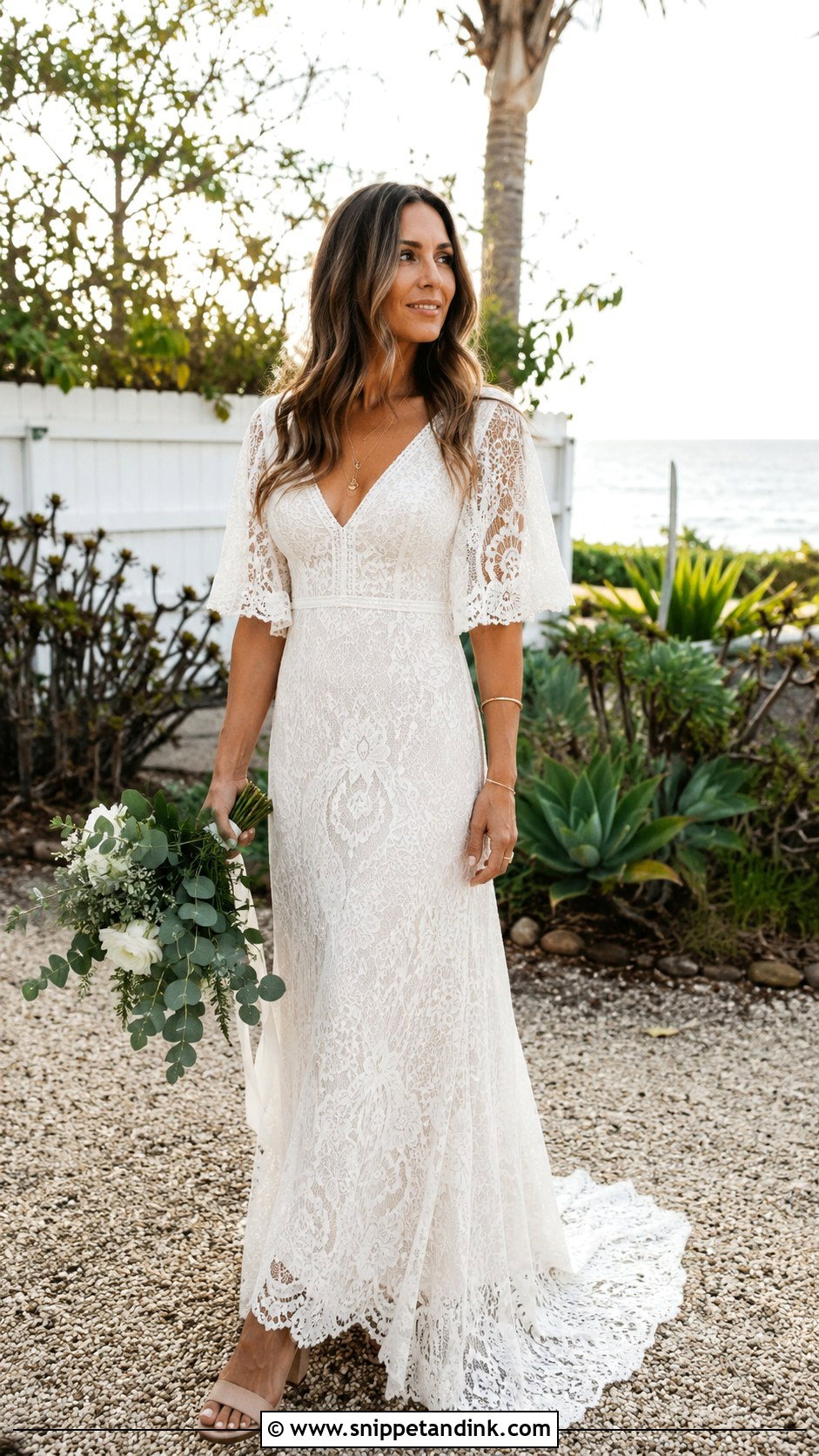
Boho lace is built for outdoor ceremonies, and the relaxed fit is a real advantage on a long, warm day. Bell sleeves look lovely, but they do drag through cake and catch on chair backs, so I’d try lifting a glass of wine in them at the fitting. Warm ivory and cream suit natural light better than bright white. Block-heel sandals, loose waves and simple gold jewelry are enough; a flower comb replaces a veil nicely on a beach where tulle would just fly sideways.
14. High Low Wedding Dress
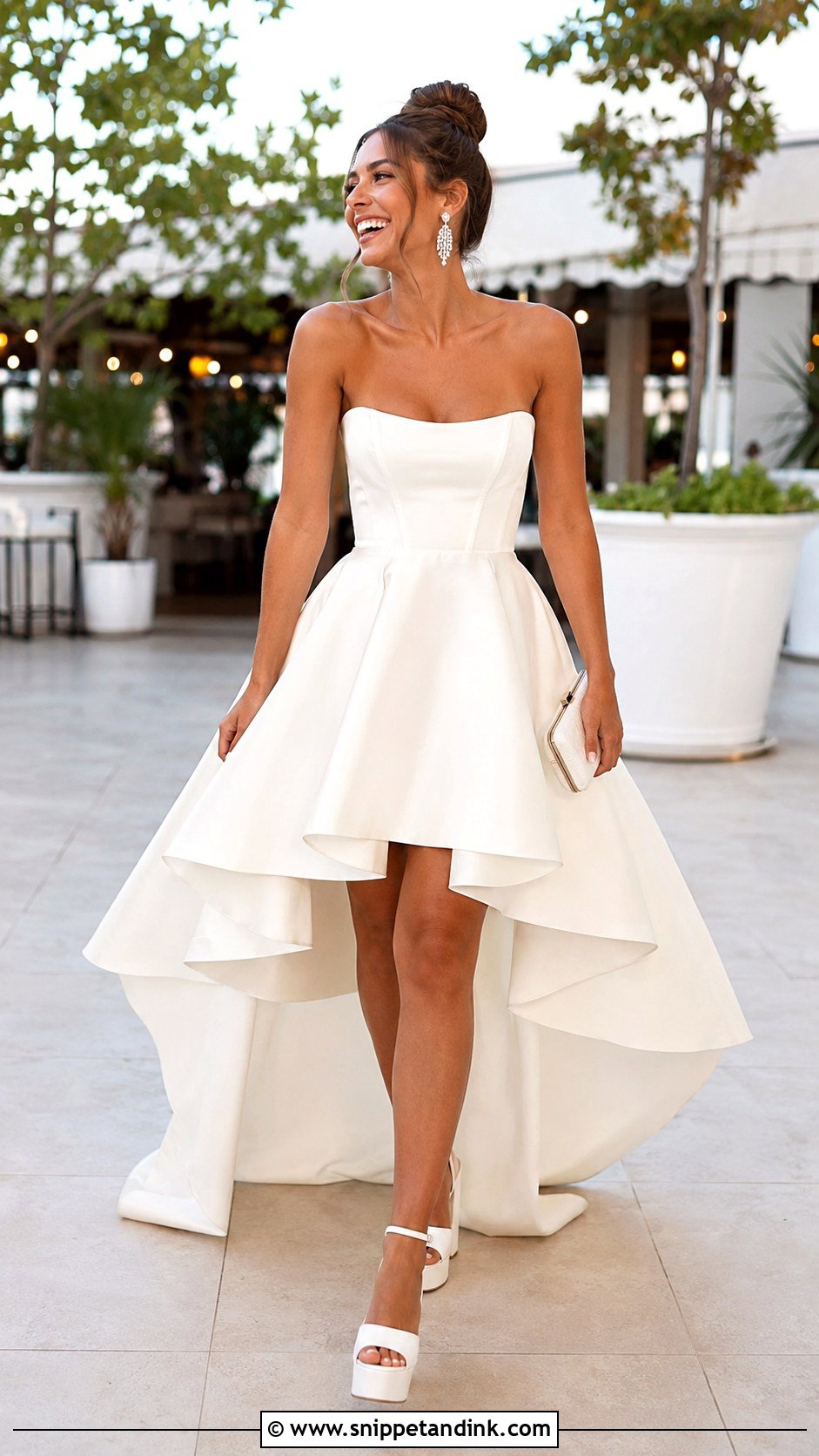
High-low hems show off shoes and keep the front hem out of grass, while the back still gives a little drama when you walk. The shoes matter more than usual here, because they are on display all day, so I’d buy them first and set the front hem to them. Structured crepe or satin holds the curve of the hem; very soft fabric can make it look uneven. A fitted bodice keeps the skirt from overpowering a smaller frame.


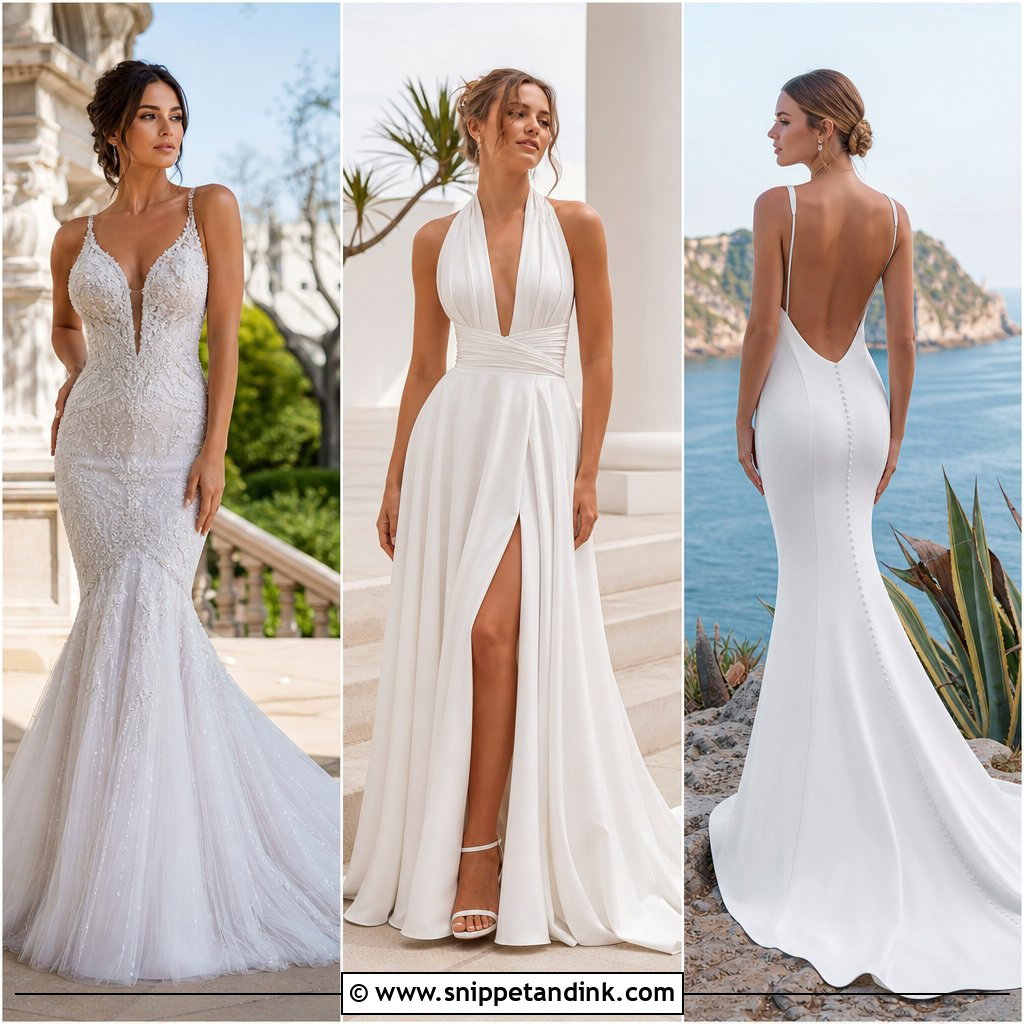
15. Blue Wedding Dress
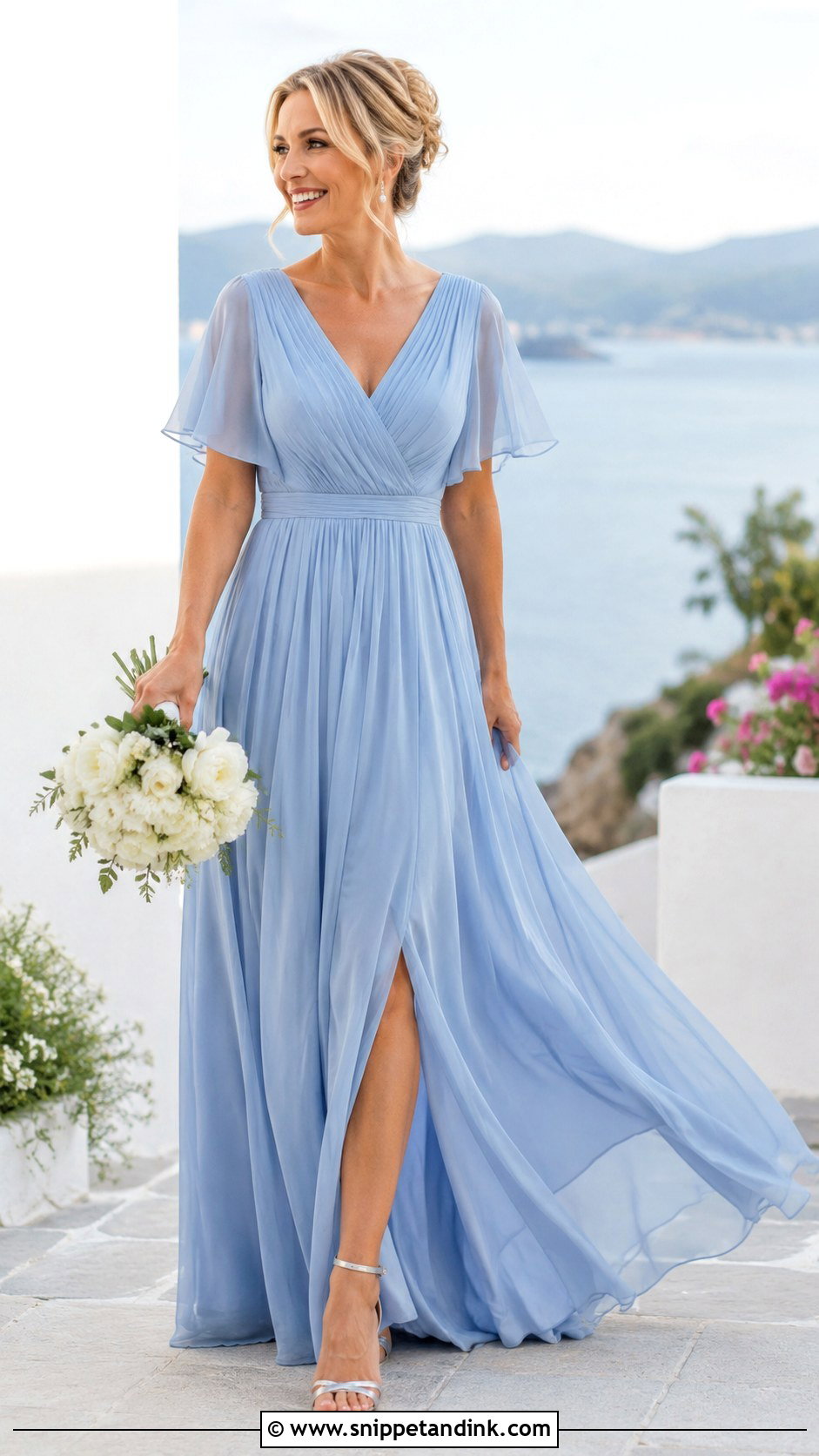
Blue has a quiet meaning for a lot of brides, and a pale shade still feels bridal in photos. Shades like powder blue and misty grey-blue are softer on most skin than a bright sky blue. Be aware that pale blue chiffon can look almost white in strong sun and noticeably bluer in shade, so check it in both before you commit. Silver heels and a white bouquet tie it back to wedding territory, and a tailored midi gives it more structure for a registry office.
16. Sheath Wedding Dress
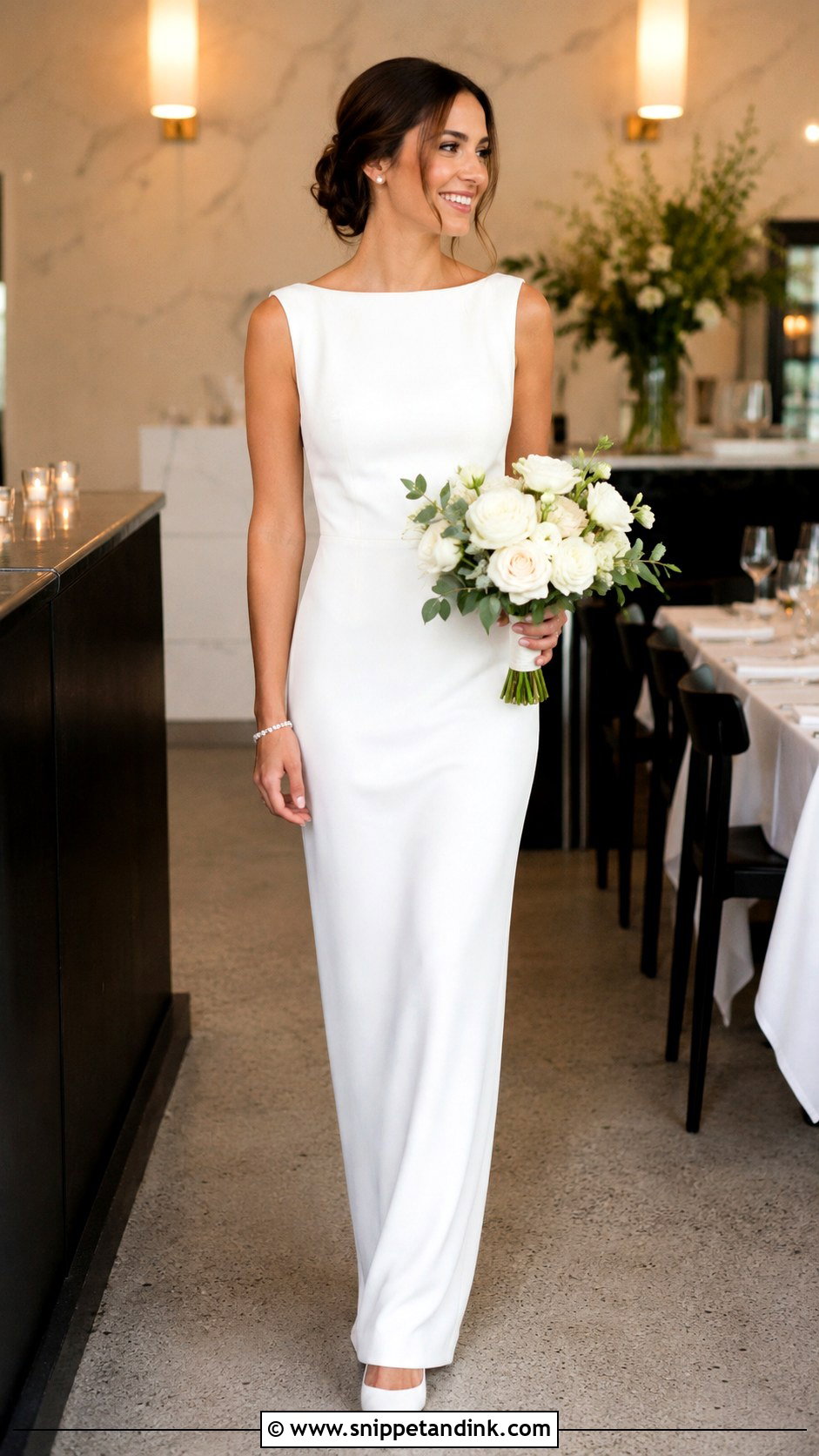
A sheath follows your shape without the volume of a full skirt, which makes it the most straightforward dress to wear from ceremony to dinner. It is also the least forgiving of a poor fit. The seat and the back of the thighs take the strain when you sit, so I always have clients sit, walk up stairs and sit again in the fitting room. If the fabric pulls across the hips, it’s a size or an alteration issue, not a shapewear issue. Crepe and heavy satin work best; a V-neck softens it.
17. Tulle Midi Wedding Dress
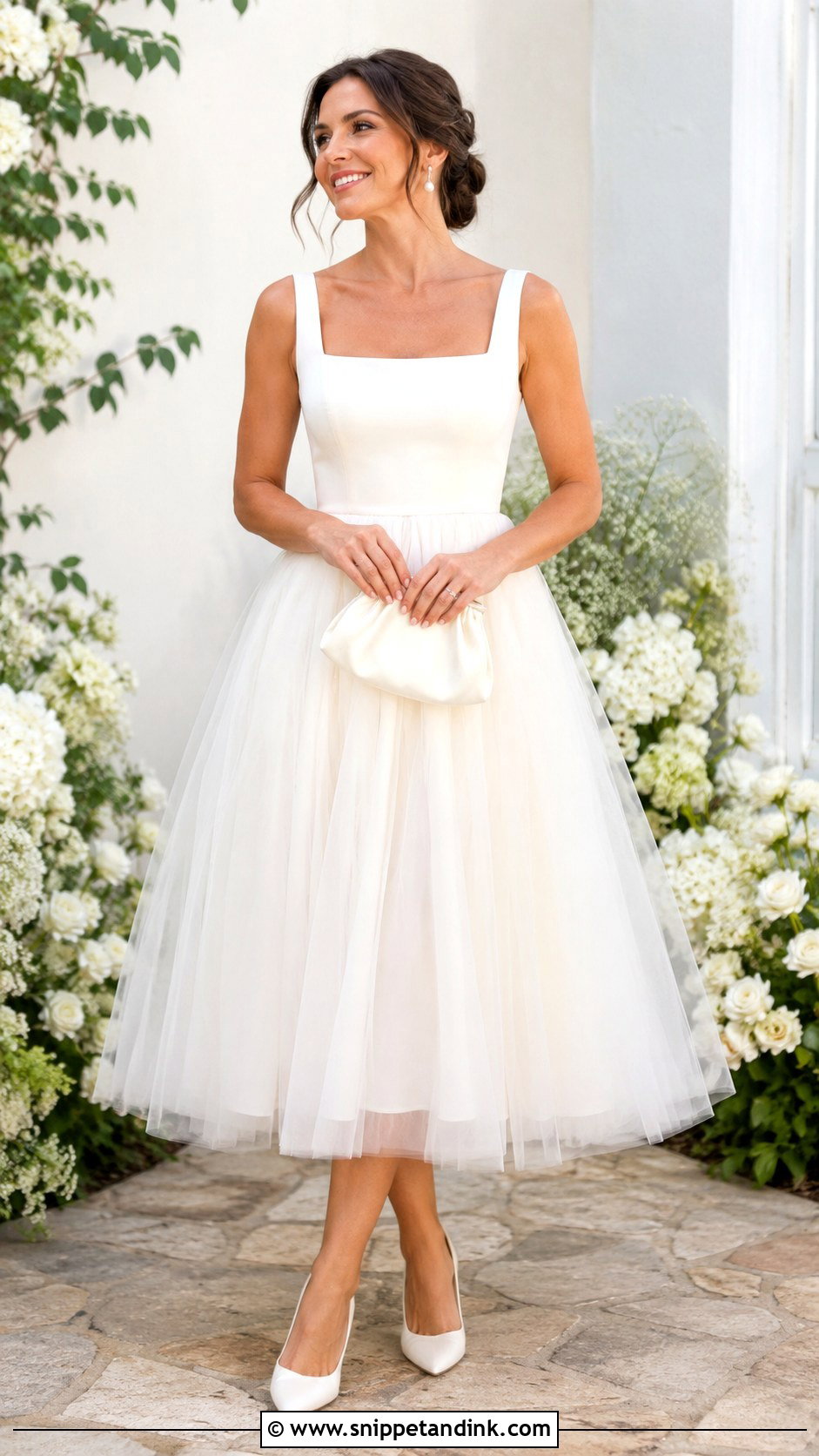
Tulle at midi length gives you some bridal volume without a gown you have to manage. The layers are the detail to ask about: three or four layers of soft tulle move nicely, while a single layer over a lining can look thin and flat in photos. A defined waist and fitted bodice keep it from looking girlish. Simple pumps, pearl earrings and a cropped cardigan for cooler evenings are all it needs for a daytime garden ceremony.
18. Two Piece Wedding Dress
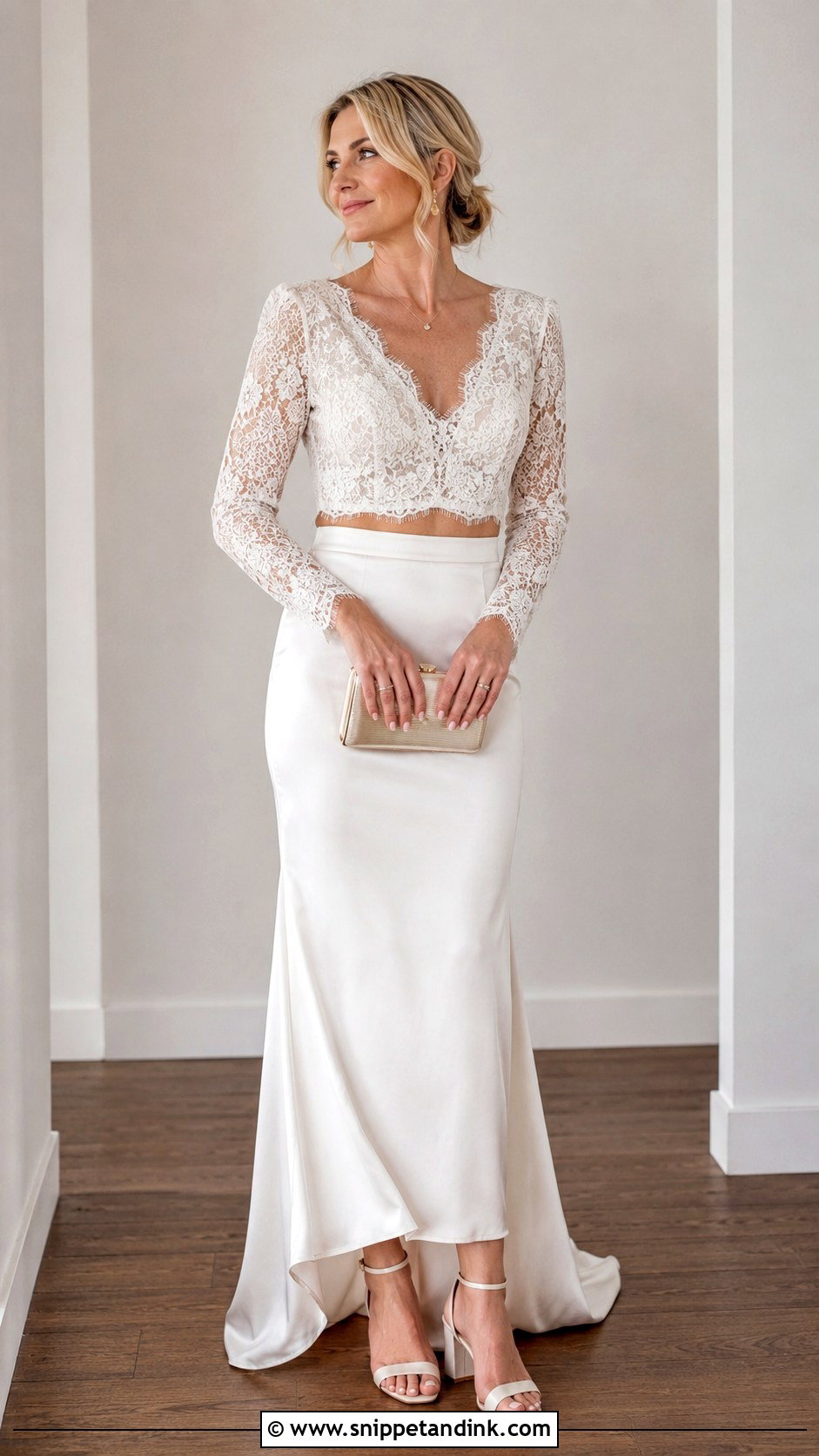
Separates let me fit the top and skirt to two different sizes, which a lot of women need and few one-piece dresses allow. A lace top with a satin skirt is romantic; a structured crop with a high-waisted skirt is more modern. If you’d rather not show skin at the waist, ask for the top to overlap the waistband by an inch, so it stays covered when you lift your arms. The pieces really do get worn again separately, which makes the price easier to justify.
19. Short Sleeve Satin Wedding Dress
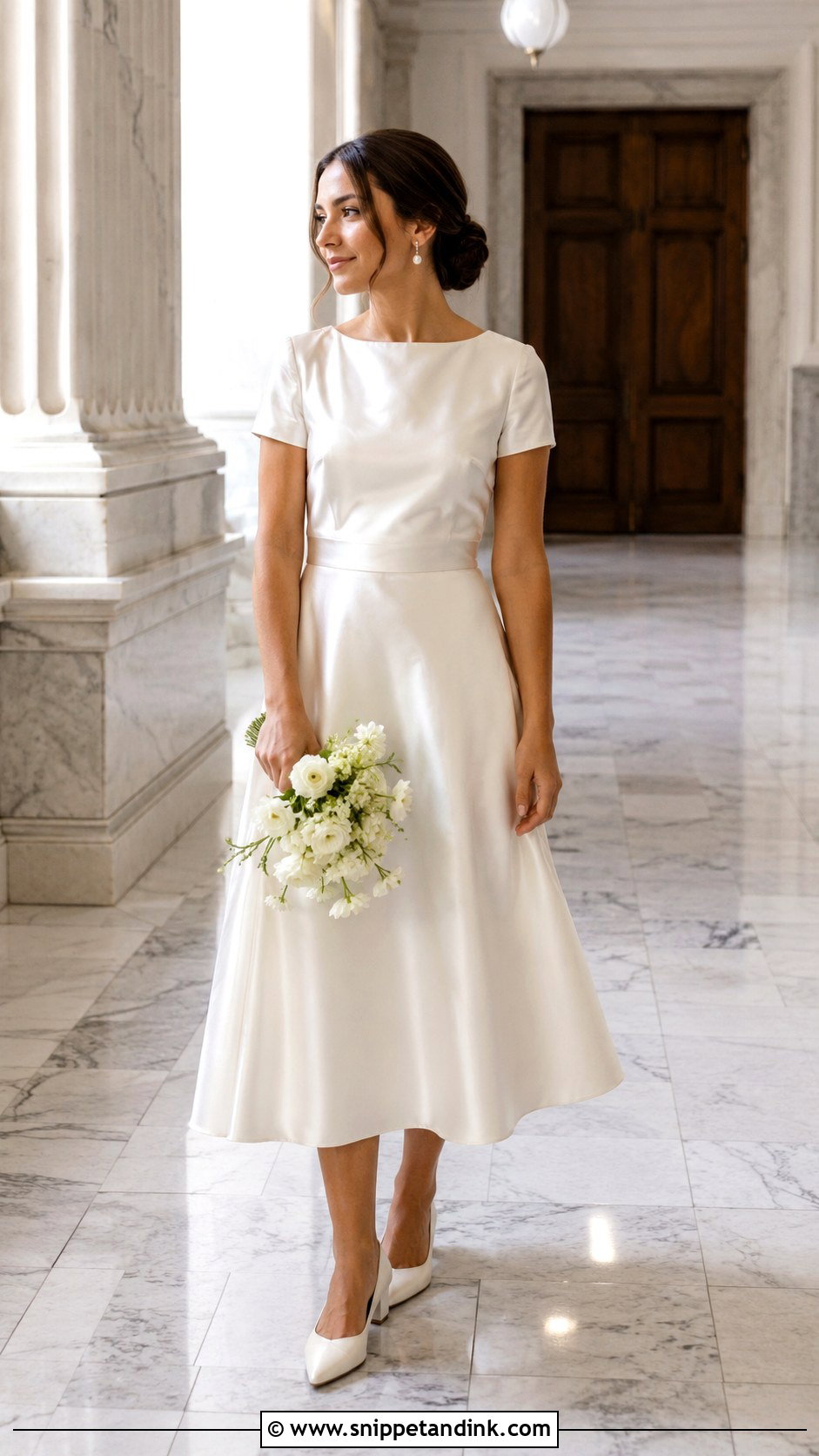
Short sleeves are the compromise I suggest when someone wants some arm coverage but finds long sleeves too warm. Satin gives the outfit its occasion feel. Midi or ankle length suits a courthouse or a family lunch better than full length. Satin creases across the lap the first time you sit, so I’d have the dress steamed right before the ceremony rather than the night before. Pearl earrings, low heels and a sleek bun keep it simple.
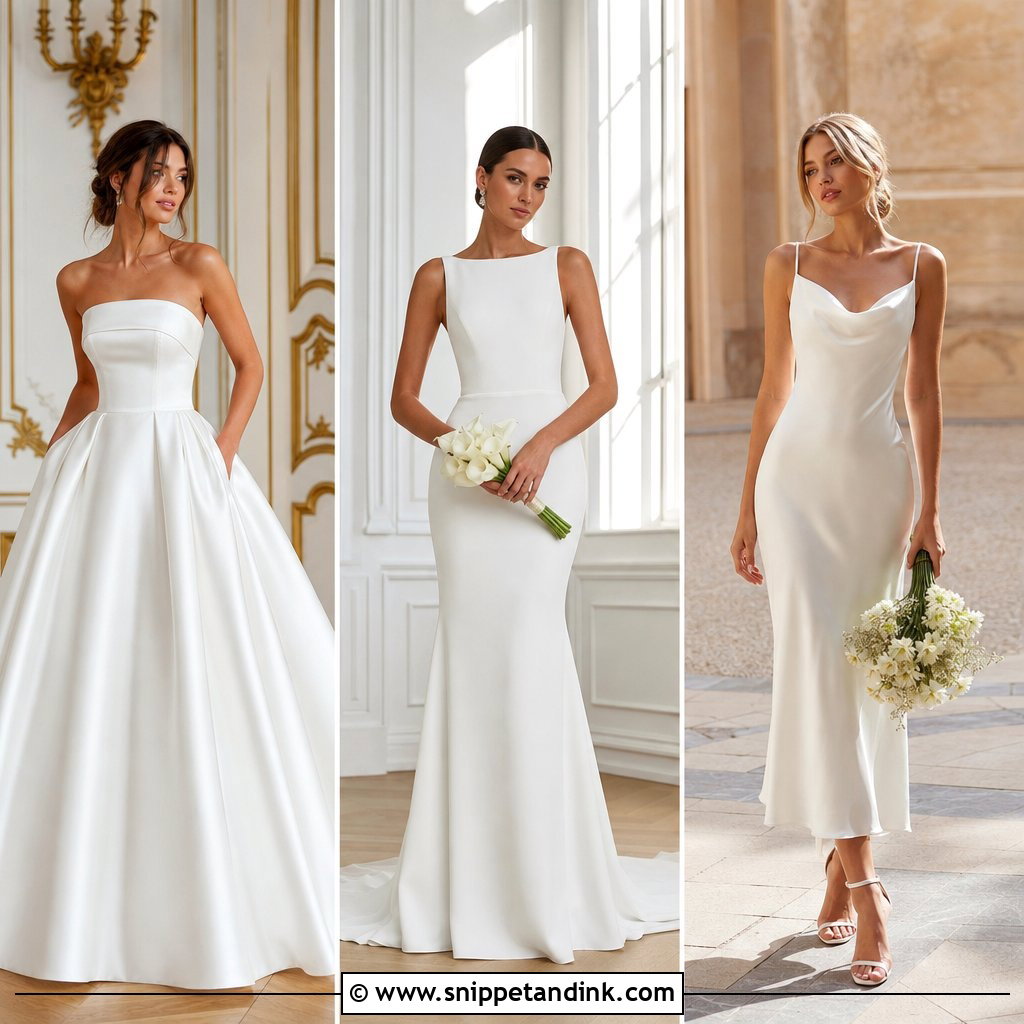
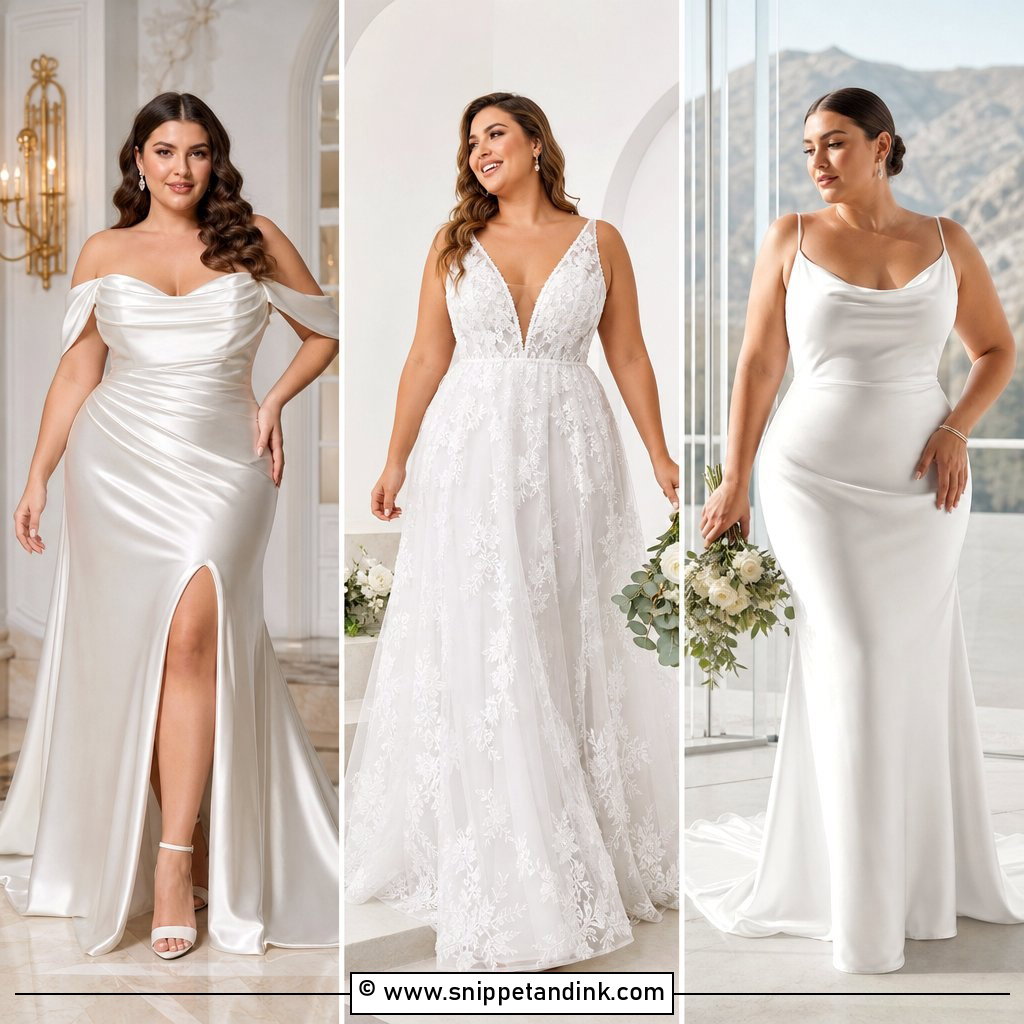
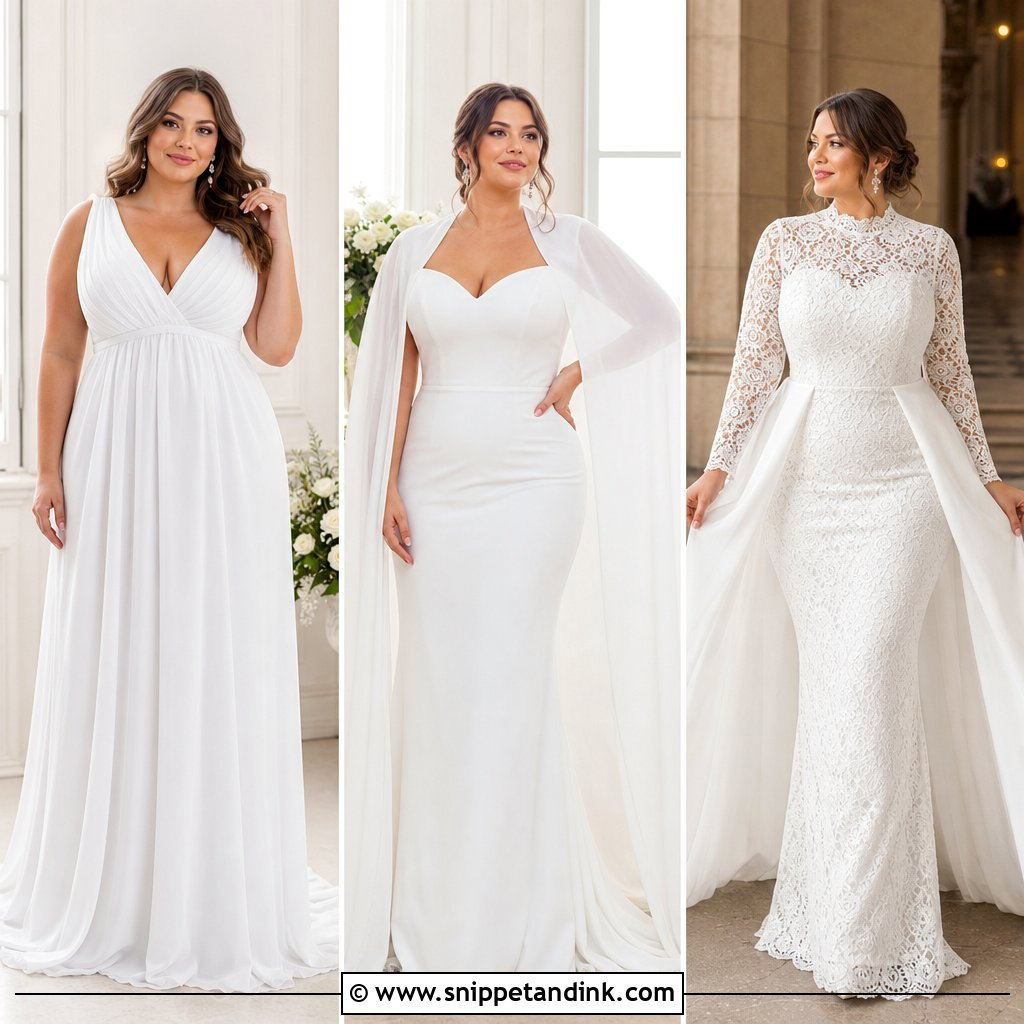
20. Plus Size Wedding Dress
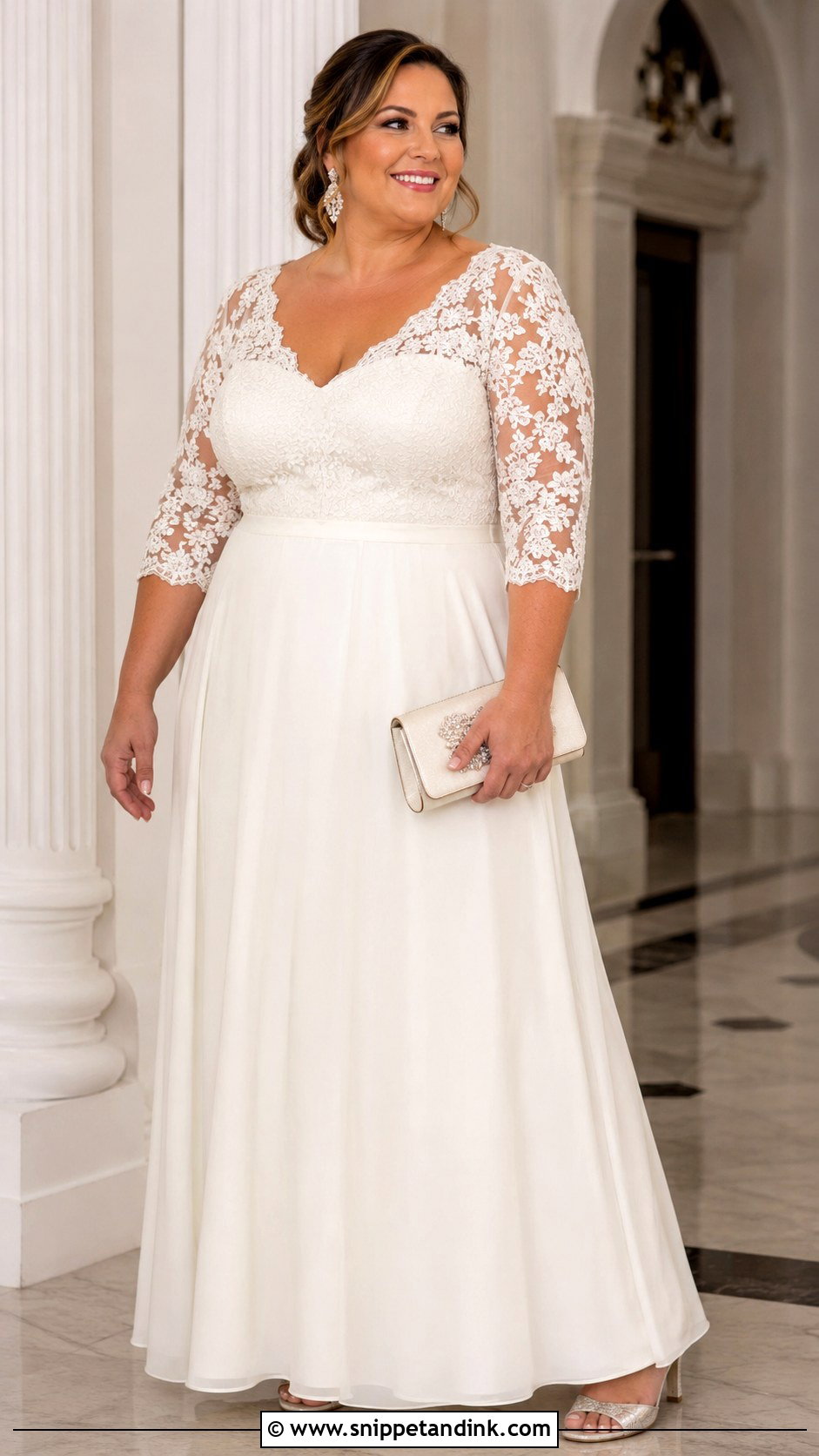
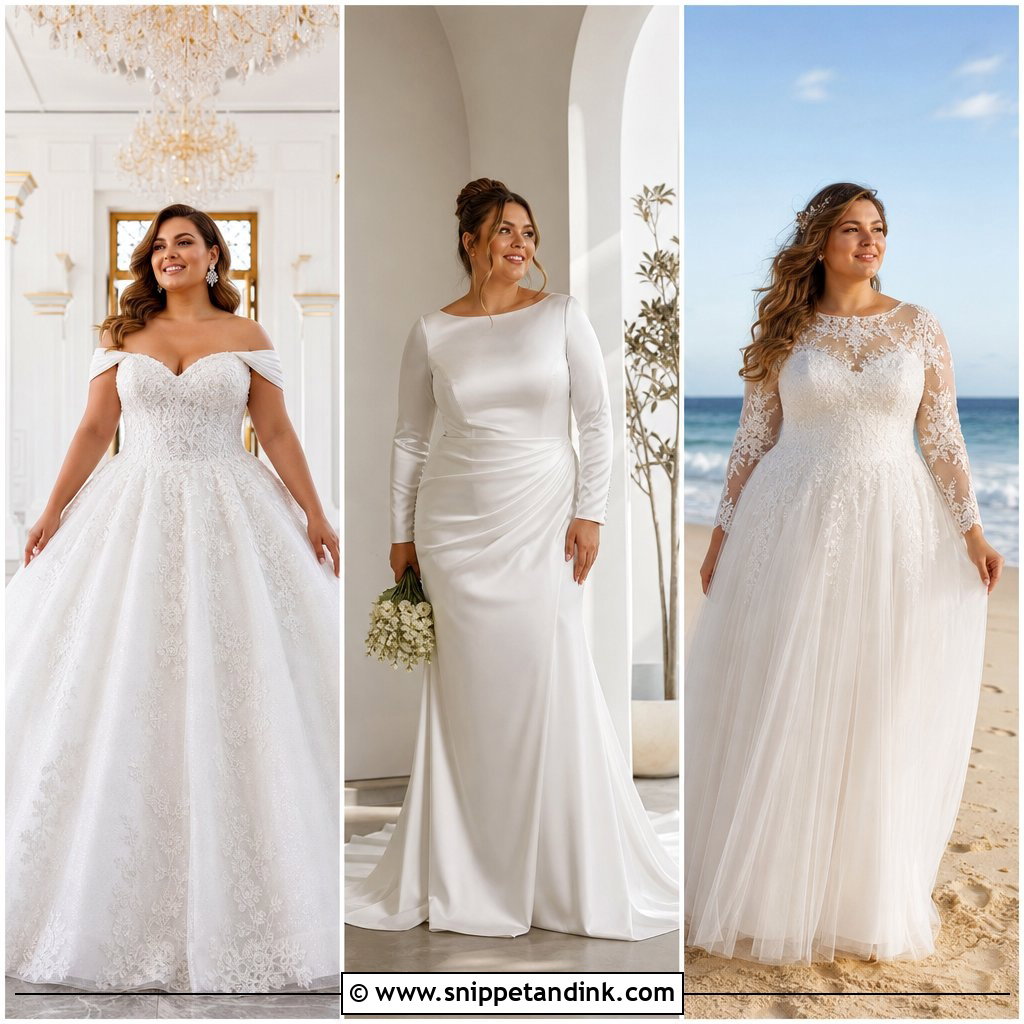
A plus size wedding dress needs to be built for support first, and then everything else follows. The details I check are internal: wide enough straps to hold a fuller bust, a lining that doesn’t cling, and a waist seam that sits at your natural waist rather than wherever the pattern put it. A-line, wrap and fit-and-flare shapes all look striking when they’re properly tailored. Lace sleeves or a soft slit add personality. Choose shoes you can actually stand in for photos, because the best dress is one you can hug people in all day.
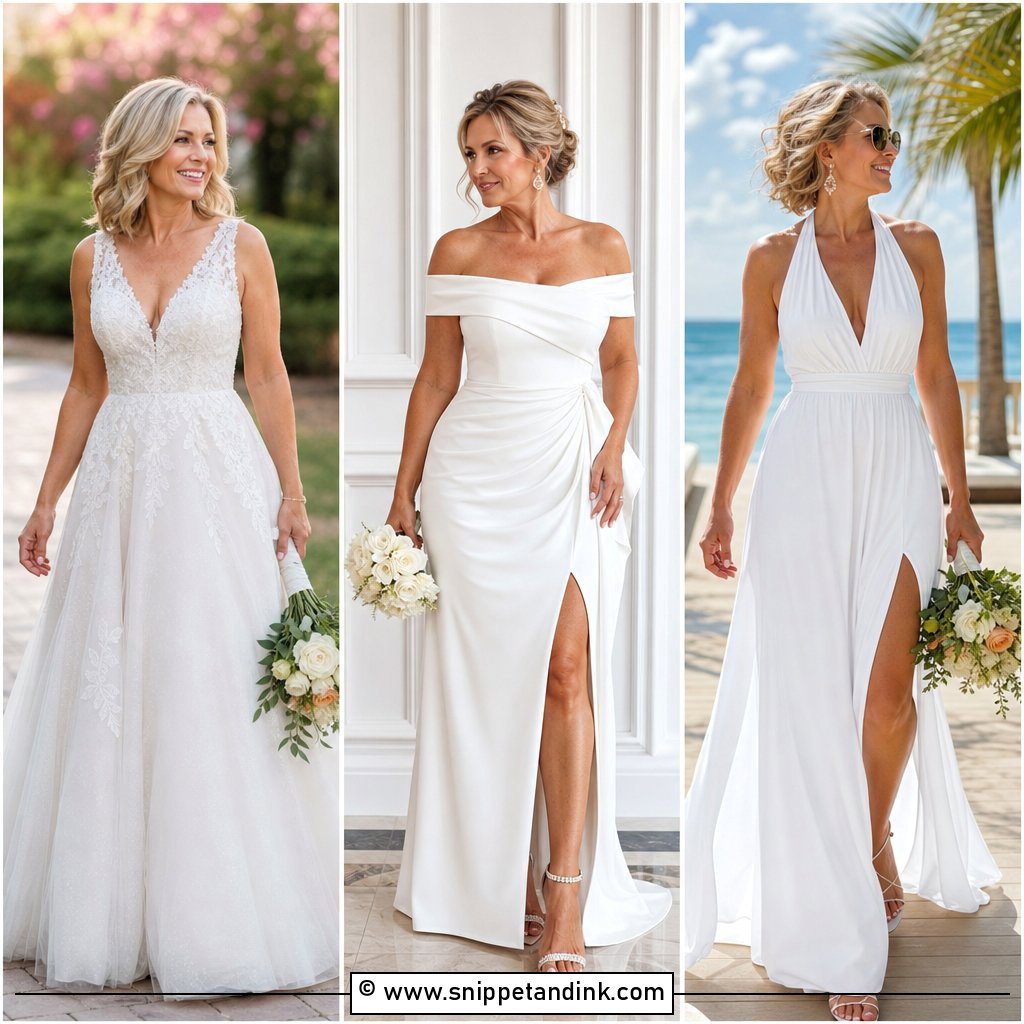
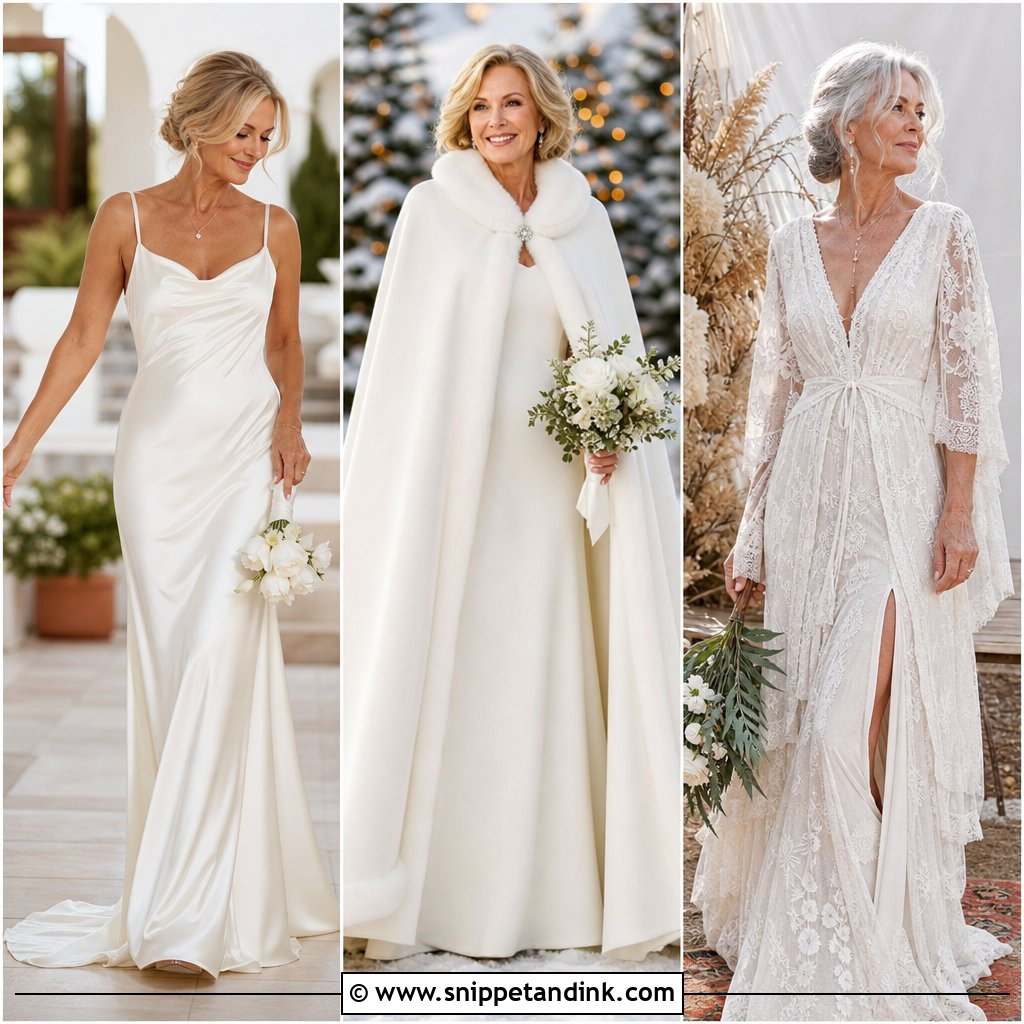
21. Mature Bride Wedding Dress
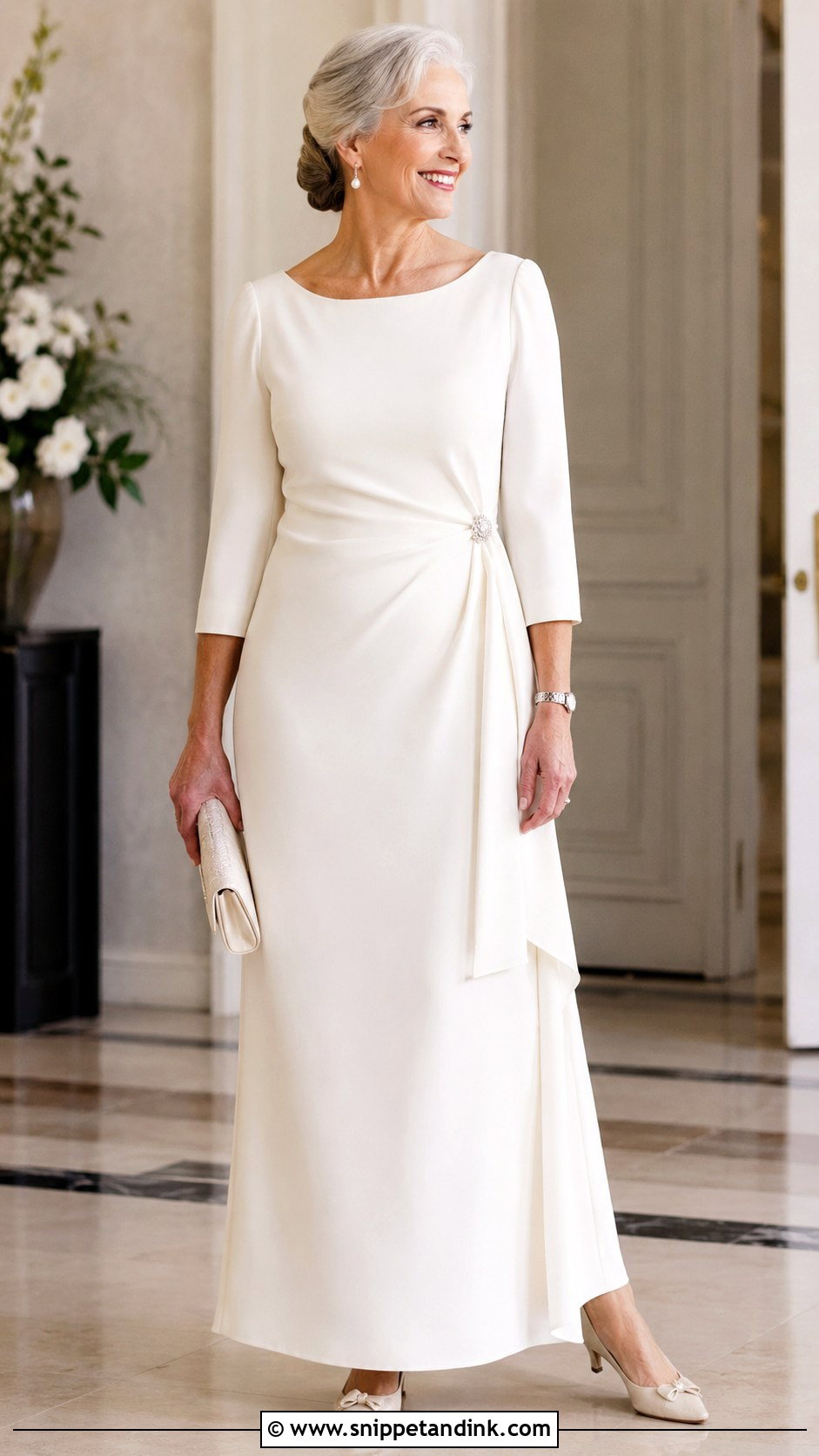
There is no rule that a mature bride wedding dress must be beige or plain. I dress women in their forties, fifties and sixties in clean crepe, lace midis and satin suits, and the thing that matters most is the neckline you feel relaxed in. Three-quarter sleeves and a bateau neckline suit many women who don’t want bare upper arms. A wrap shape is adjustable on the day. Add pearl drops or a silk shawl, and leave it there.
22. Beach Wedding Dress
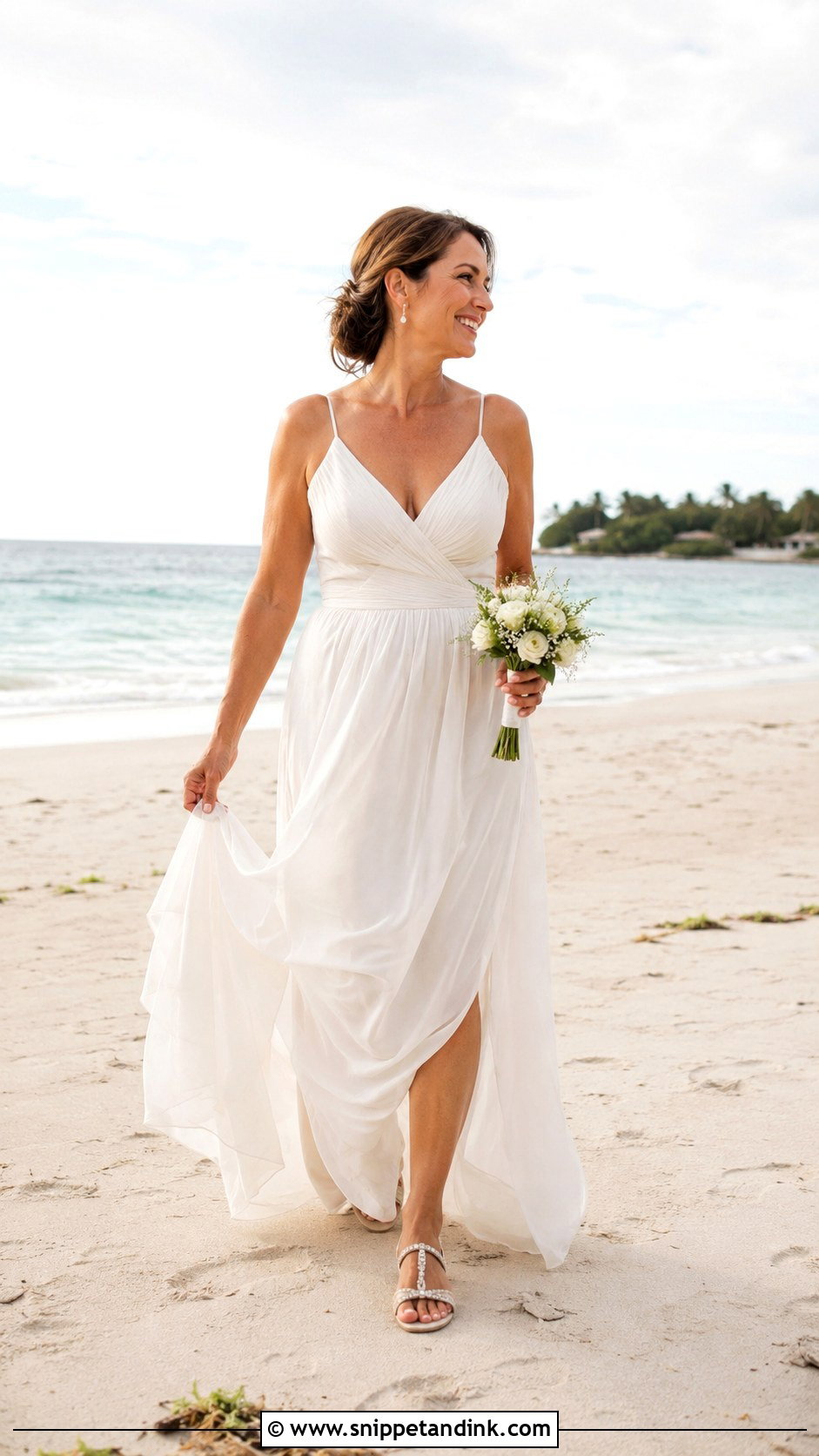
On sand, a train just fills with sand, so I steer beach brides toward chiffon, light lace, soft crepe or a linen blend that ends at the ankle. Sea wind lifts light fabric, which can be pretty or embarrassing depending on the lining, so a slightly heavier underlayer helps. Flat sandals or bare feet beat wedges directly on the beach. Keep jewelry secure; a dangling earring is easy to lose when the wind tangles it in your hair.
23. Garden Wedding Dress
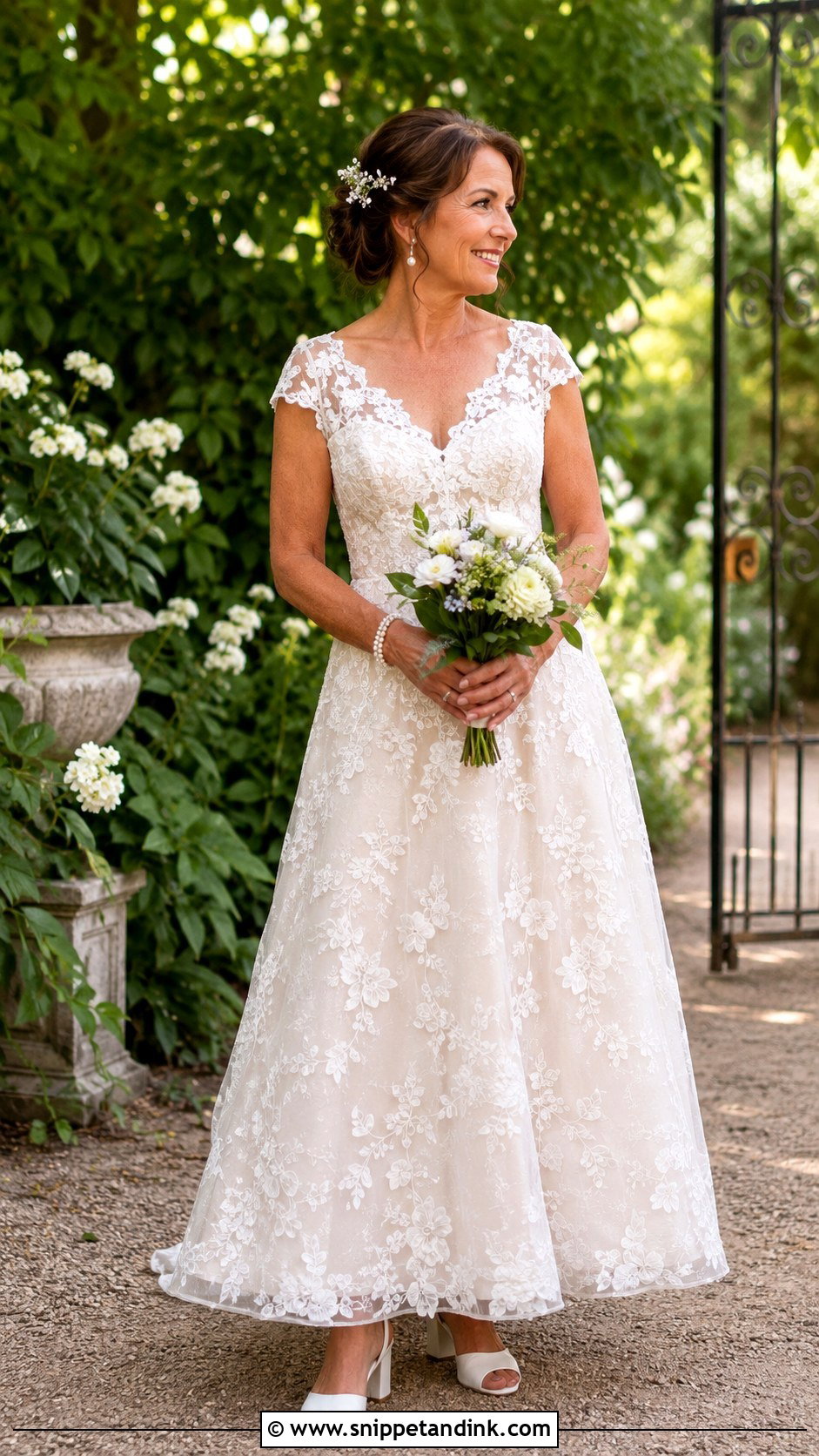
A garden ceremony asks two things of a dress: it can’t drag a muddy hem, and it should sit comfortably in soft light. Midi, tea length or a short A-line keeps the hem clear of damp grass. Floral lace, embroidered tulle and organza all suit greenery. Thin stiletto heels sink into lawns, so block heels or wedges are the practical call. A delicate comb and a small bouquet finish it without much effort.
24. Casual Wedding Dress
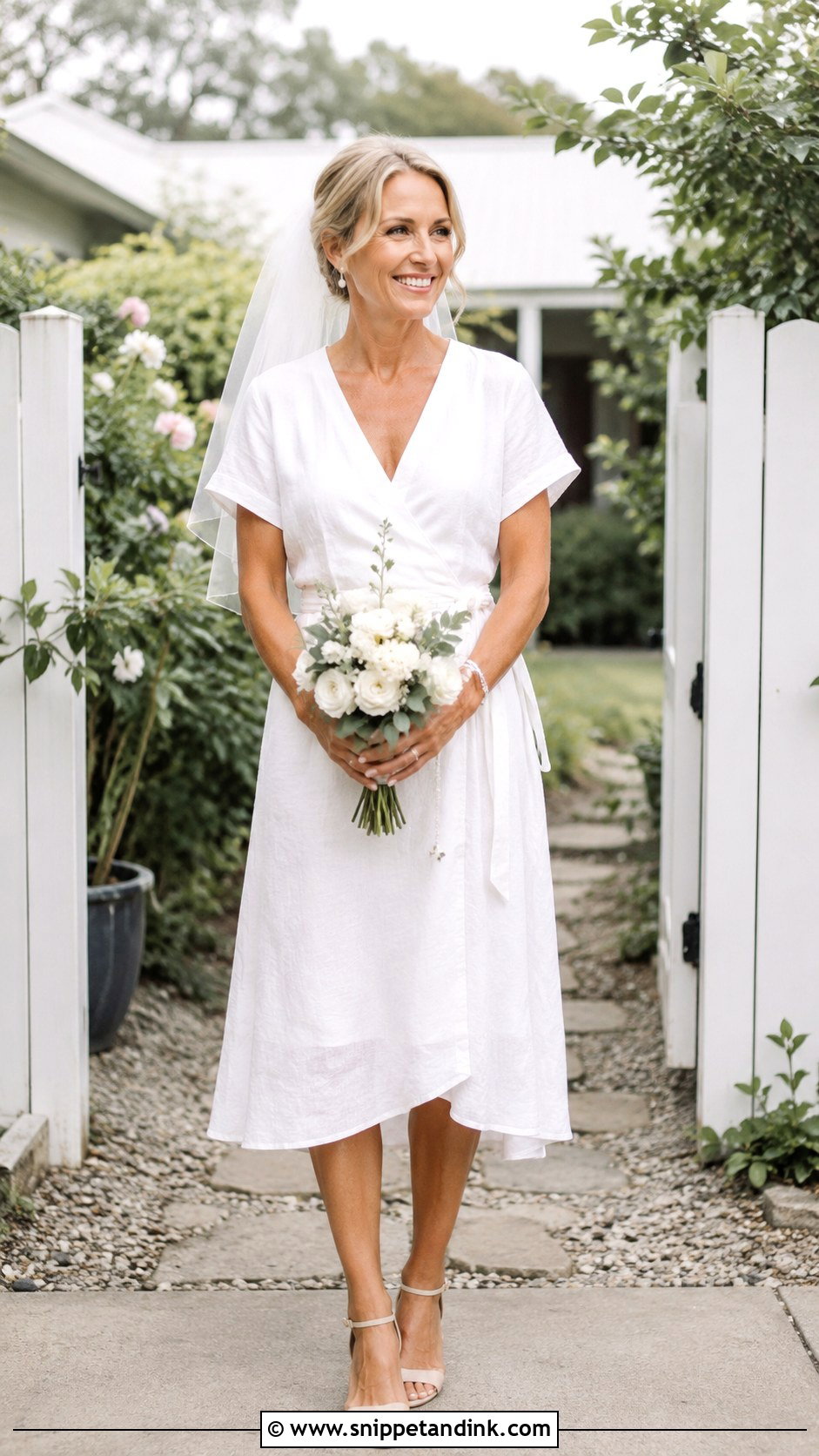
Casual doesn’t mean underdressed, and the difference is almost always in the fit and the pressing. A white cotton midi or linen wrap looks deliberate when it has been tailored and steamed; the same dress straight from the bag looks like everyday clothes. Linen creases within minutes, so I’d accept that and choose a cotton blend if crisp photos matter to you. A small veil, pearl earrings or a hand-tied bouquet adds just enough bridal signal for a backyard or family ceremony.
25. Black And White Wedding Dress
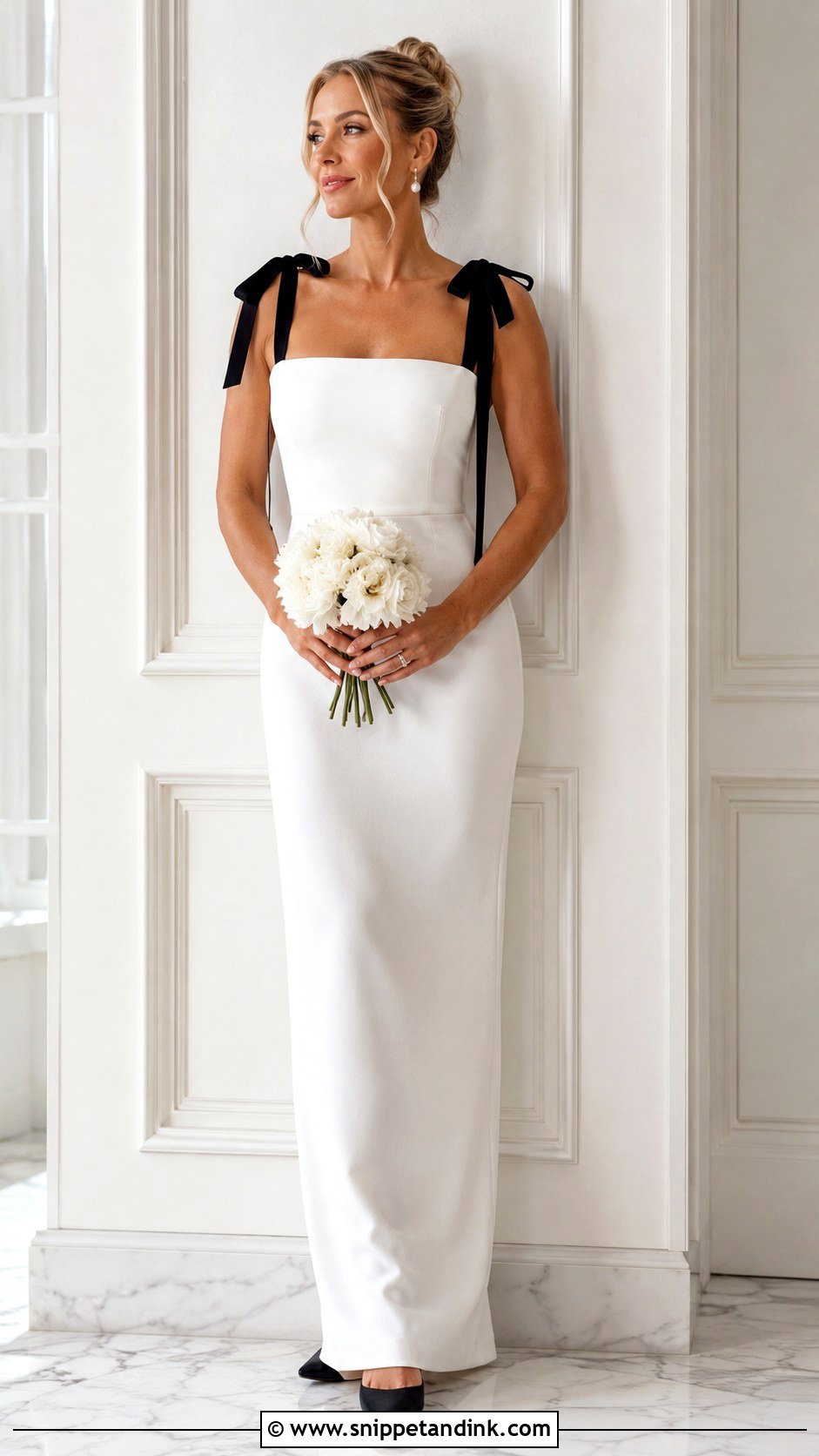
Black and white is graphic, and that contrast is the whole point, so I keep everything else very clean. Black bow straps, a black sash or black lace trim on white all work; the dress should carry one black element, not several. A white bouquet and pearl earrings stop it tipping into evening wear. Photographers do have to expose carefully for white beside black, so mention the dress when you brief yours. It suits city ceremonies and restaurant dinners best.
Alterations Worth Paying For on a Simpler Dress
A plain dress shows its fit more than an elaborate one does, so the tailoring budget goes further here than any accessory. These are the changes I consider worth it on almost every outfit in this list:
- Taking in the side seams at the waist so the dress sits where you bend, not an inch below.
- Shortening straps by a few millimetres. It lifts the bust and stops a neckline from gaping when you lean forward.
- Adding a lining or a slip under thin satin and chiffon so the fabric doesn’t cling or turn sheer in flash photos.
- Sewing in bra cups for backless and low-back styles.
- Adding a discreet loop or bustle to any hem that touches the floor, even a short sweep.
What I’d skip: adding sleeves or changing a neckline. Those alterations change the dress itself and rarely look as good as buying a design that already has what you want.
Giving the Outfit a Second Life
One quiet advantage of these styles is that many of them get worn again. To make that possible, have the dress cleaned soon after the wedding, before makeup, sweat and spilled wine set. Satin and silk should go to a cleaner who handles evening wear, and you should point out every mark. Store it in a breathable cotton bag rather than the plastic sleeve from the shop, folded with acid-free tissue if it’s heavy, because hanging stretches the shoulders of a heavy dress over time.
For rewear, a midi or pantsuit can usually be dyed or simply restyled with a coloured jacket. Sequins and embroidered tulle are harder to change, so I tell clients to treat those as keepsakes.
The Dress You Forget You Have On
The dress that works best on a second wedding day is usually the one you stop thinking about an hour in. White again, a colour, a short hem, trousers or sequins are all fair choices. A second wedding is its own celebration, and the outfit should suit it. Settle the venue, season and how much moving you’ll do first, then let those facts narrow these 25 ideas down to the two or three worth trying on.
You'll Like These Ideas:


Leave a Reply