
A short dress after the reception isn’t only about looking different. It’s about getting your legs back. Brides who have spent the day kicking a hem out of the way often feel the change most in the first song they dance in a mini. I fit a lot of second looks, and the conversations are rarely about trends; they’re about whether a hem rides up on a bar stool, whether sequins scratch, whether a bodice stays up when your arms go in the air. The thirty short styles below come with that kind of note attached, so you know what to test before you fall for one.
How Short Is Too Short? The Hem Test I Do at Every Fitting
A hem that looks right standing still in a mirror can be a problem on a dance floor. Minis ride up when you sit, climb stairs, bend to hug a small relative or lift your arms. I never sign off on a short wedding dress until the bride has done these four moves in it.
- Sit on a high stool, the kind you’ll find at a bar, and check what the hem does at the front.
- Raise both arms above your head as if the chorus has just dropped. Fitted minis lift several centimetres.
- Bend forward to pick something off the floor, then look in a mirror behind you.
- Walk up a few stairs, because many venues put the afterparty on a different floor.
If any of those make you tug the hem, either go a little longer, choose an A-line instead of a bodycon cut, or wear fitted shorts underneath. Nude-tone shorts are invisible under most white fabrics; bright white ones can show through thin satin under flash.
1. White Sequin Mini Wedding Afterparty Dress
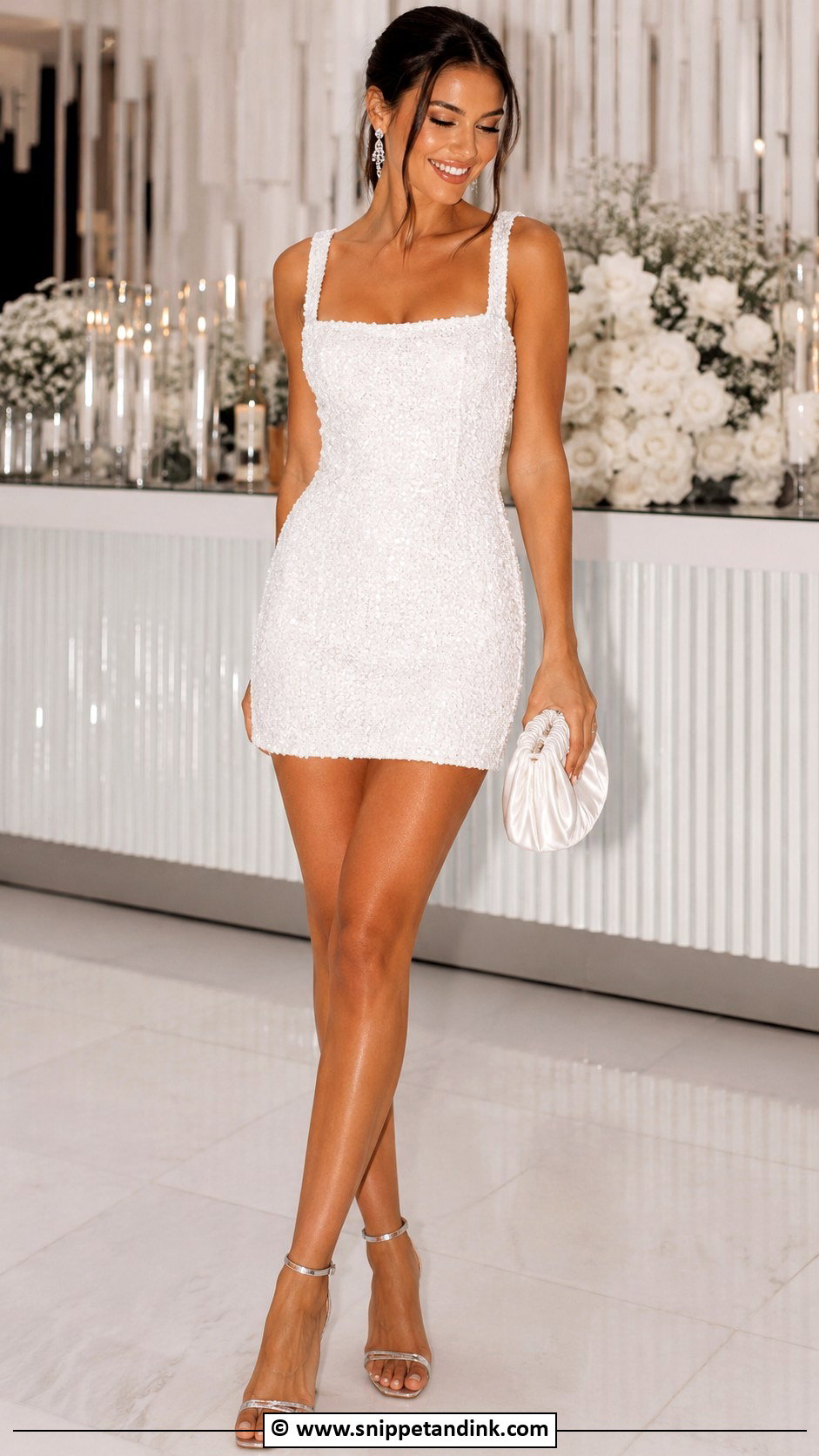
Sequins are the obvious dance-floor choice, and a white sequin mini dress needs almost nothing added. Matte sequins look more expensive under flash than high-shine ones, which can flare white in photos. My one fitting rule: hug someone in it. If the sequins catch on their clothes or scrape your inner arm, keep looking. Long sleeves help in cool rooms, and sleek hair keeps the sparkle tidy.
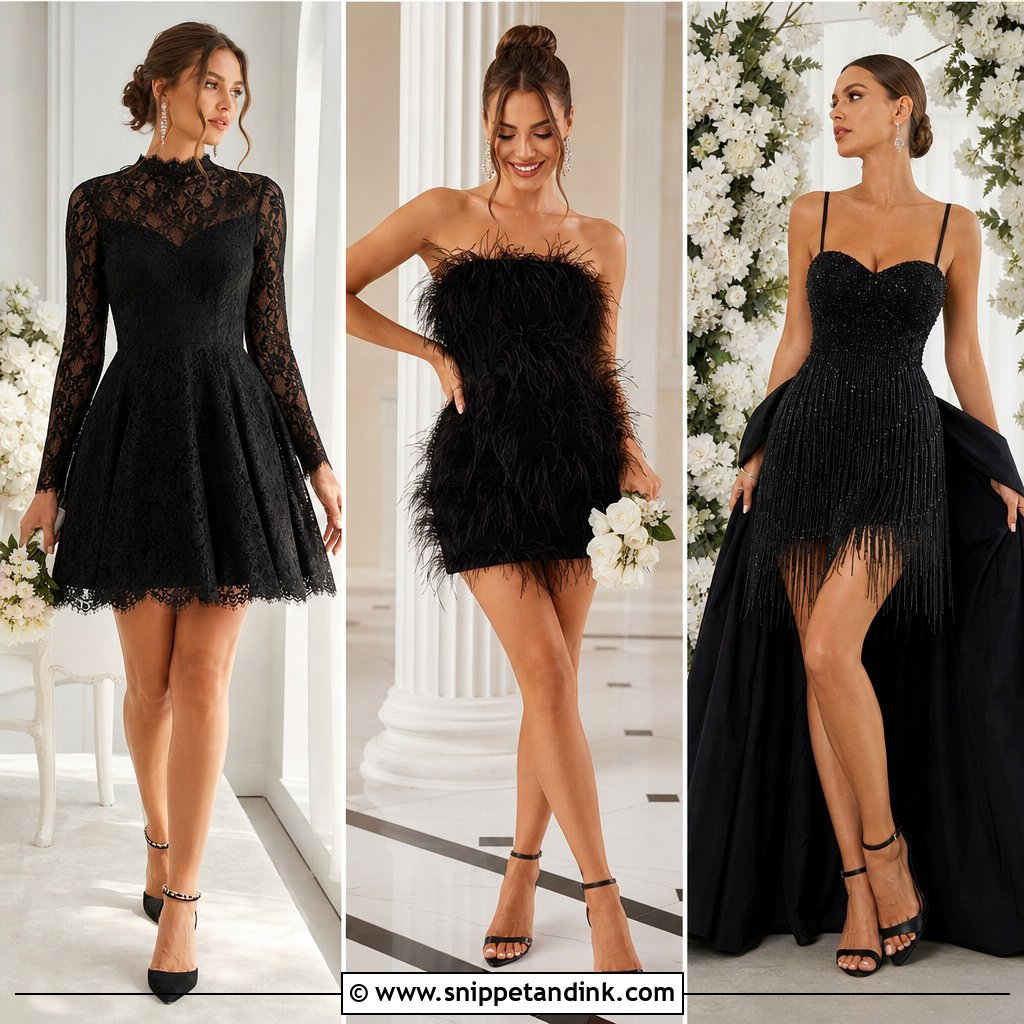
2. Feather Trim Short Wedding Dress
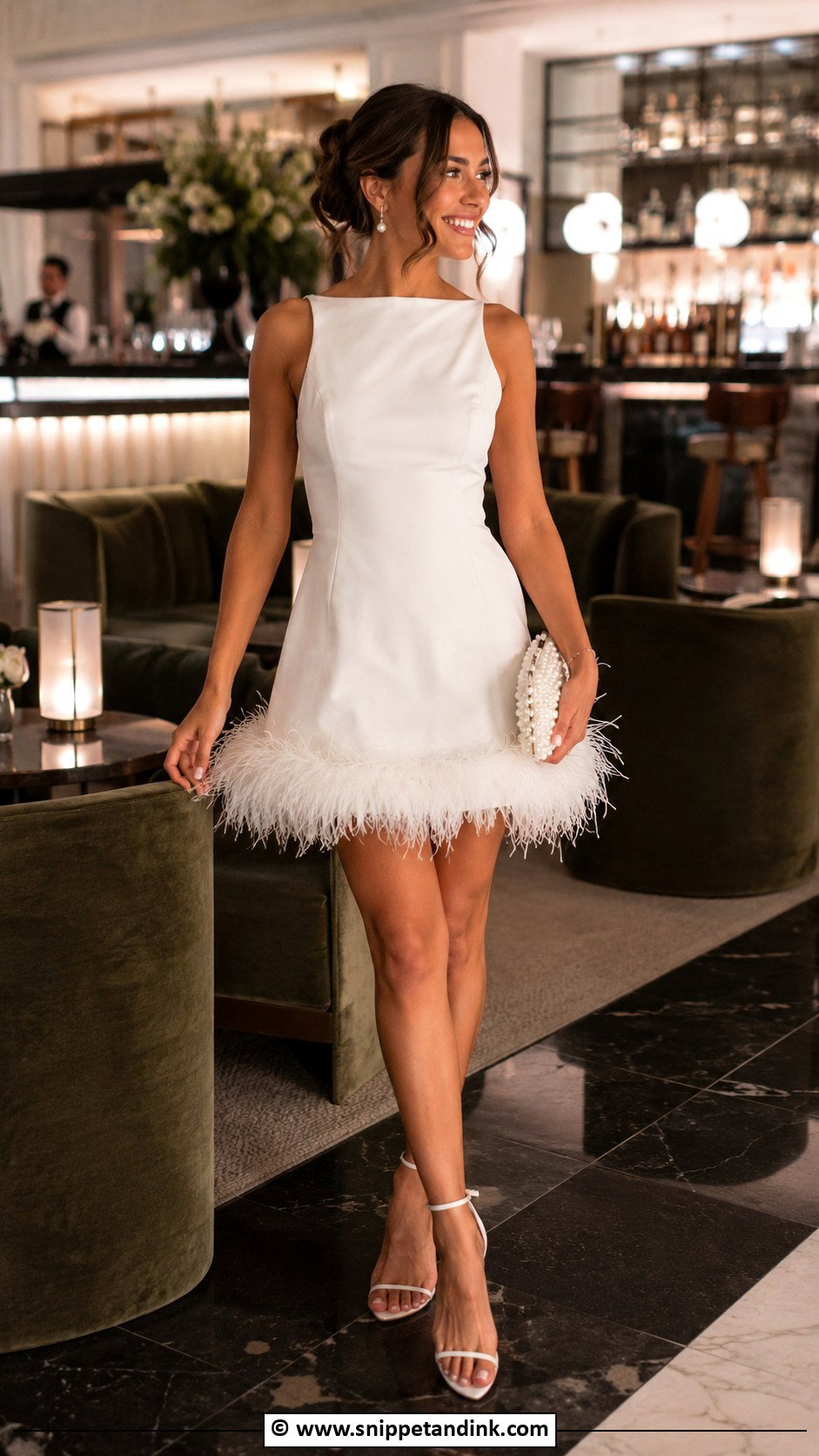
The feather placement changes everything about a feather trim short wedding dress. At the hem, feathers bounce when you dance and stay out of your face. At the neckline, they brush your chin, stick to lipstick and get flattened by every hug. An A-line skirt under a fitted bodice is the most comfortable shape. A neat bun stops hair from knotting into the trim.
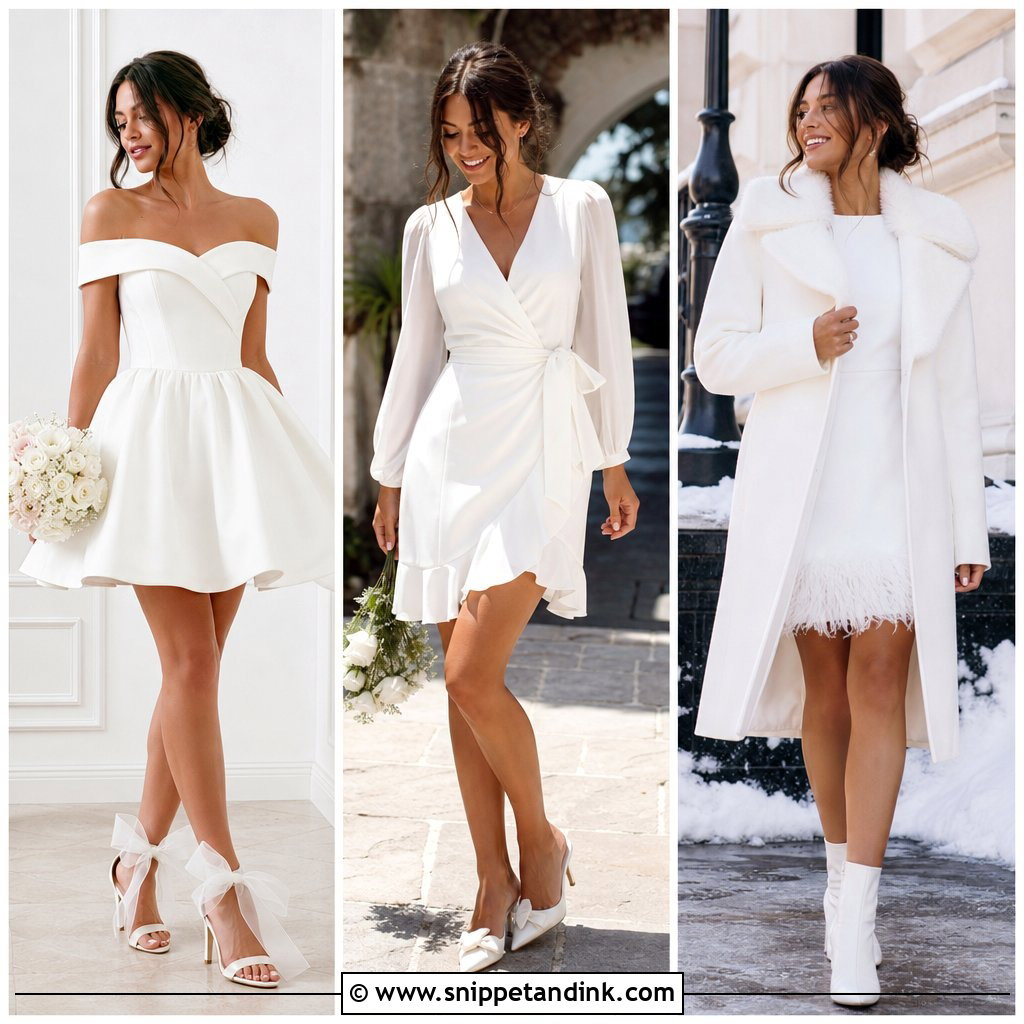
3. Satin Mini Wedding Reception Dress
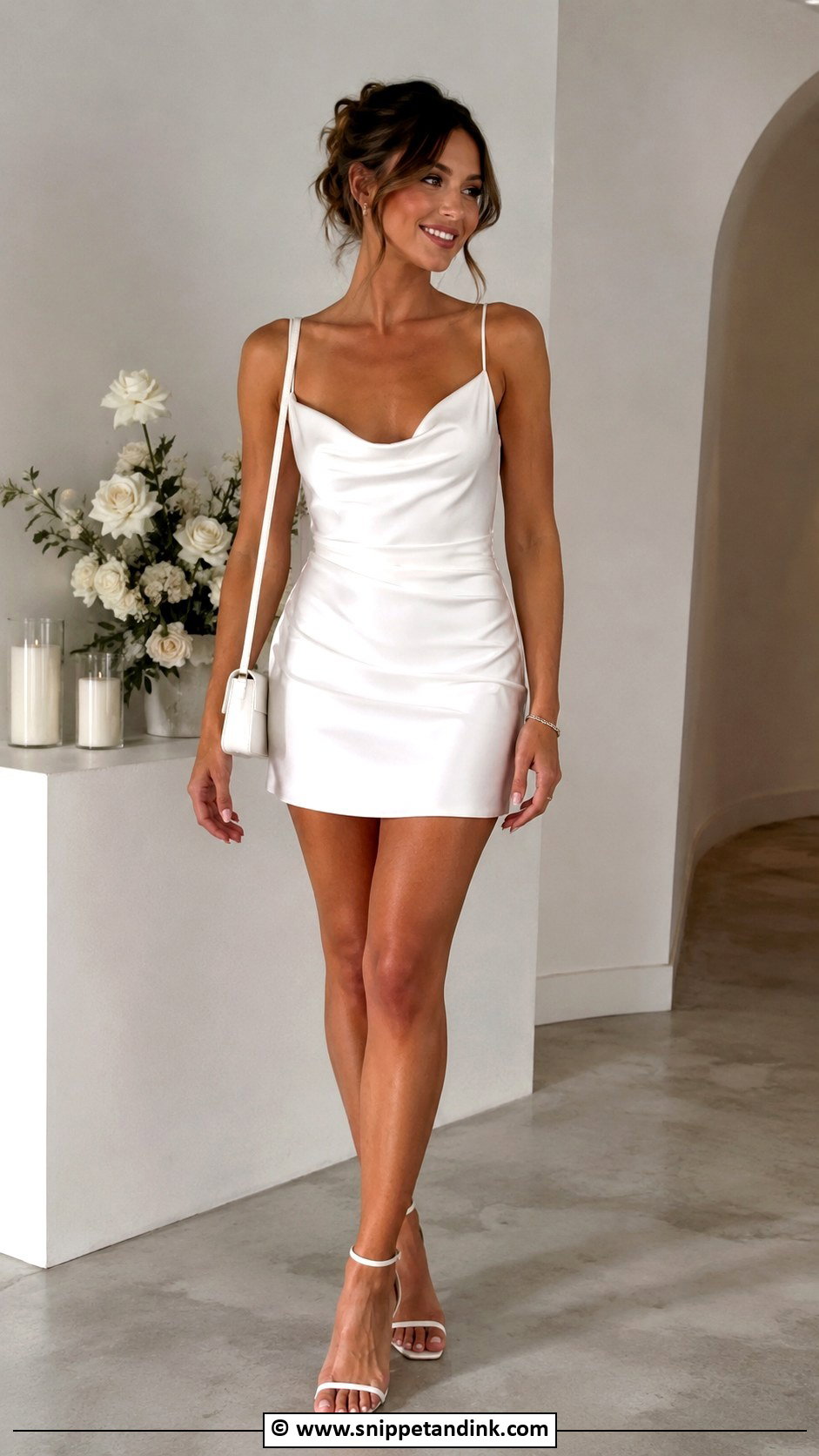
Satin in a short length looks crisp and clean, but it’s honest about creases. Sit in it for ten minutes in the fitting room and stand up. Lightweight satin will show lap lines in every photo after dinner, while a heavier duchess or crepe-back satin holds its shape far better. A cowl neck or wrap front adds detail without bulk. I’d keep jewelry to a single bracelet.
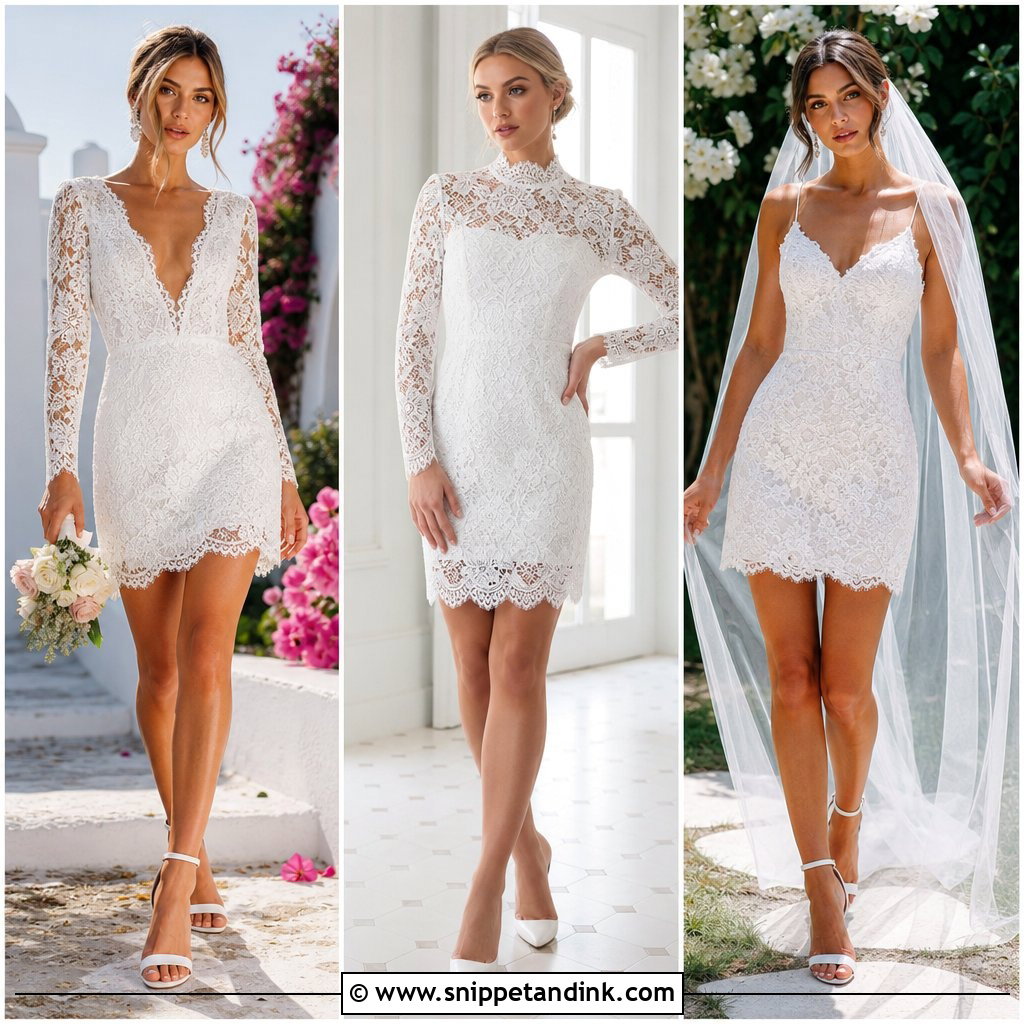
4. Lace Short Wedding Afterparty Dress
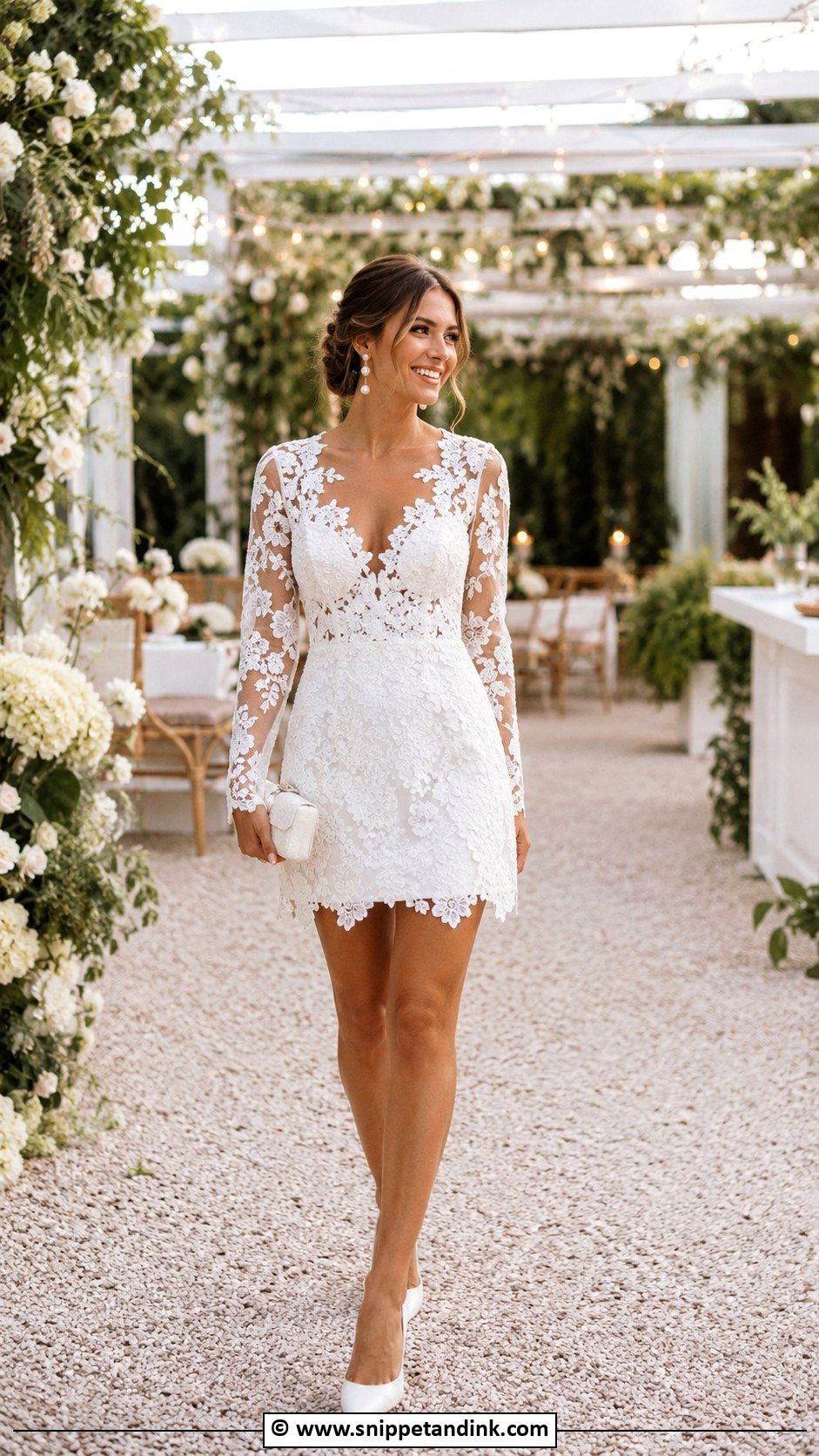
Lace in a mini length links the second look to a lace gown without repeating it. I look at two things: lining and stretch. Unlined lace shows underwear seams under flash, and lace with no stretch can pull at the seams when you raise your arms. Floral lace feels traditional; geometric lace looks newer. Sheer sleeves, pearl drops and a small bow in the hair finish it in a garden or historic venue.
5. Bow Back Mini Wedding Dress
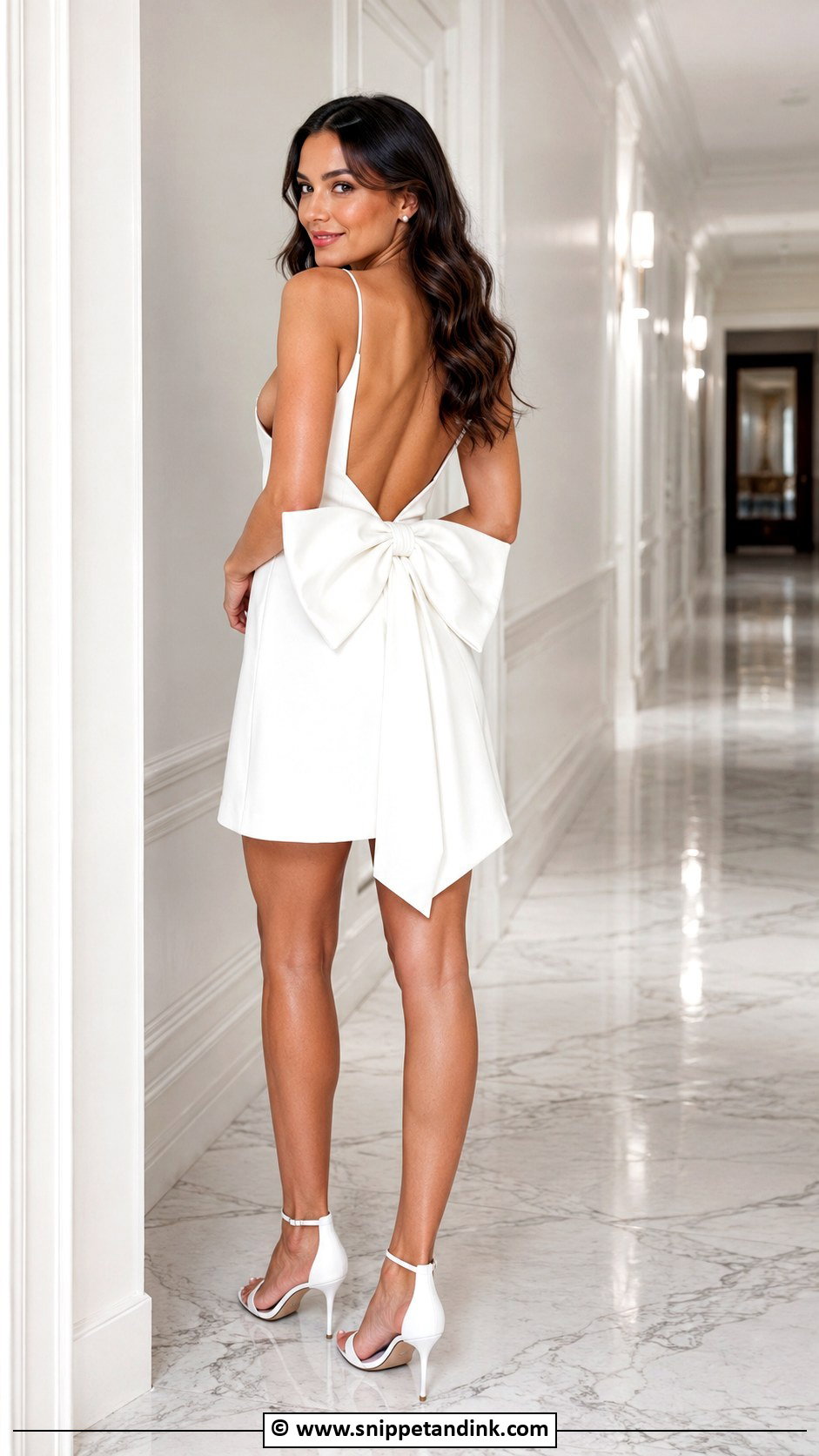
The front of this dress is quiet on purpose, so the bow at the back does all the talking as you walk away from the camera. Big bows need structure, or they droop after you’ve leaned against a chair. I ask whether the bow is stitched to the bodice or just tied on, because tied bows come loose on the dance floor. Low heels or slingbacks and small pearl studs keep it light.
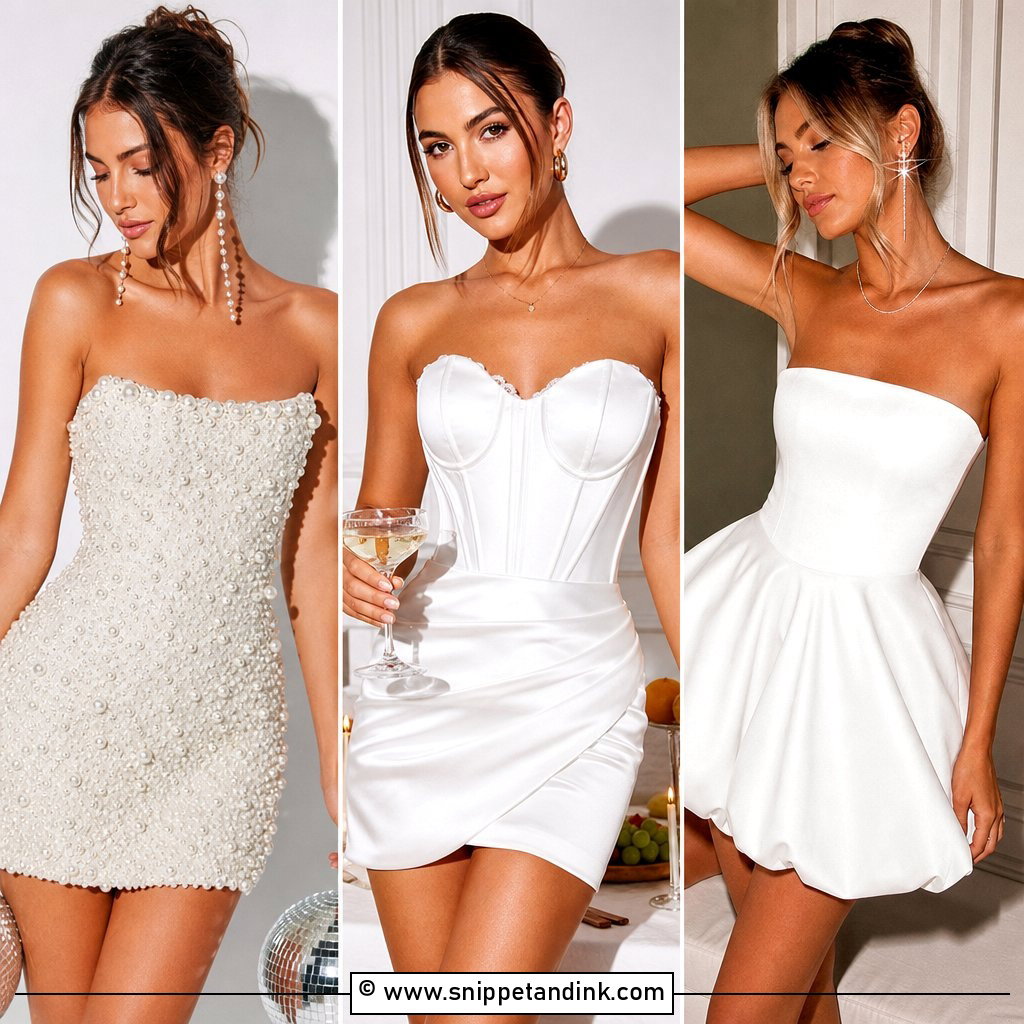
6. Strapless Short Wedding Party Dress
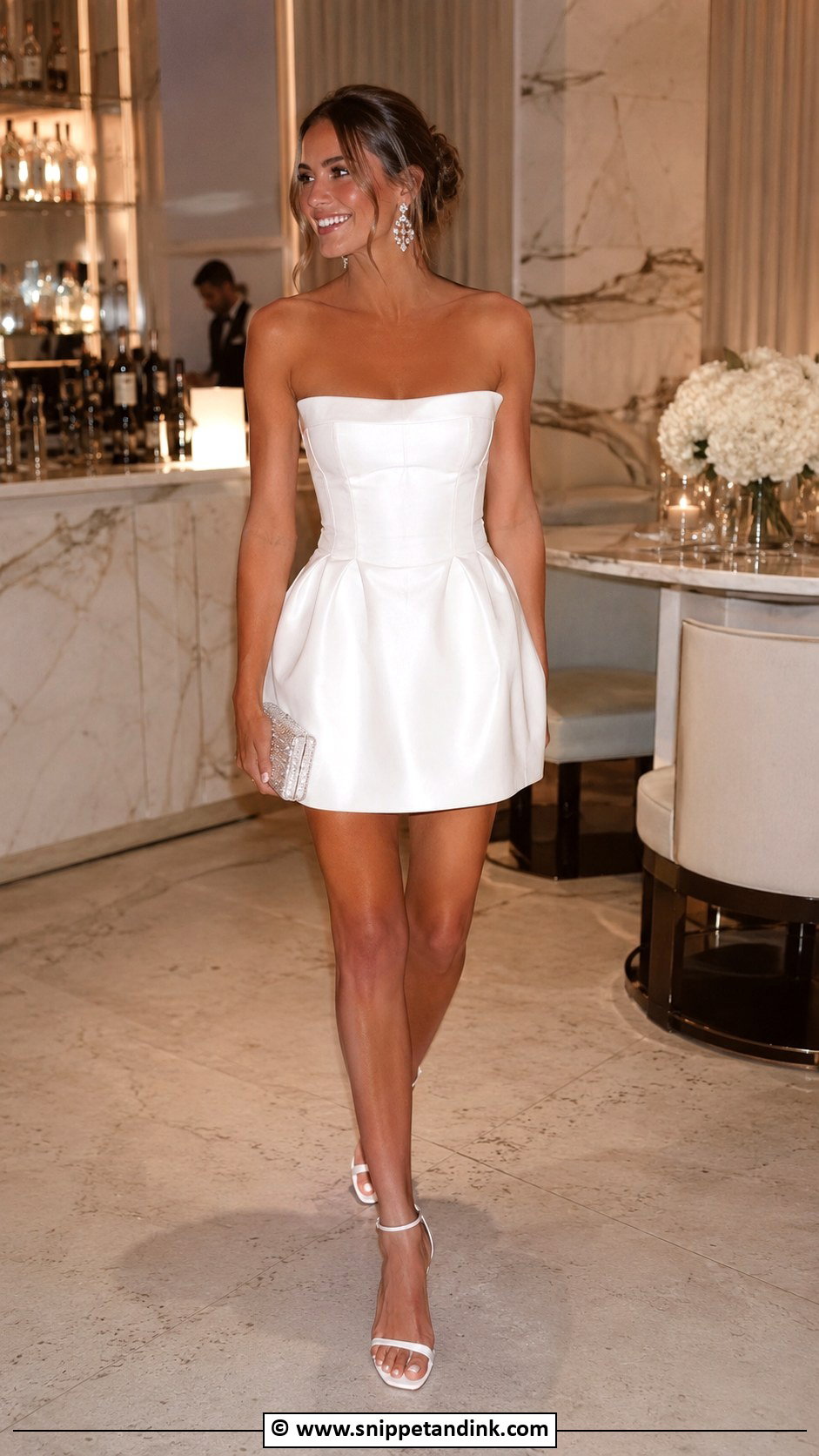
Strapless dresses are where the inside of the dress matters more than the outside. I look for internal boning, a waist stay and a silicone strip along the top, then test with both arms overhead. Because the neckline is open, it’s the one short style where a statement necklace or chandelier earrings really earn their place. A short veil, opera gloves or satin heels give it a finished bridal feel after a covered ceremony gown.
7. Long Sleeve Mini Wedding Afterparty Dress
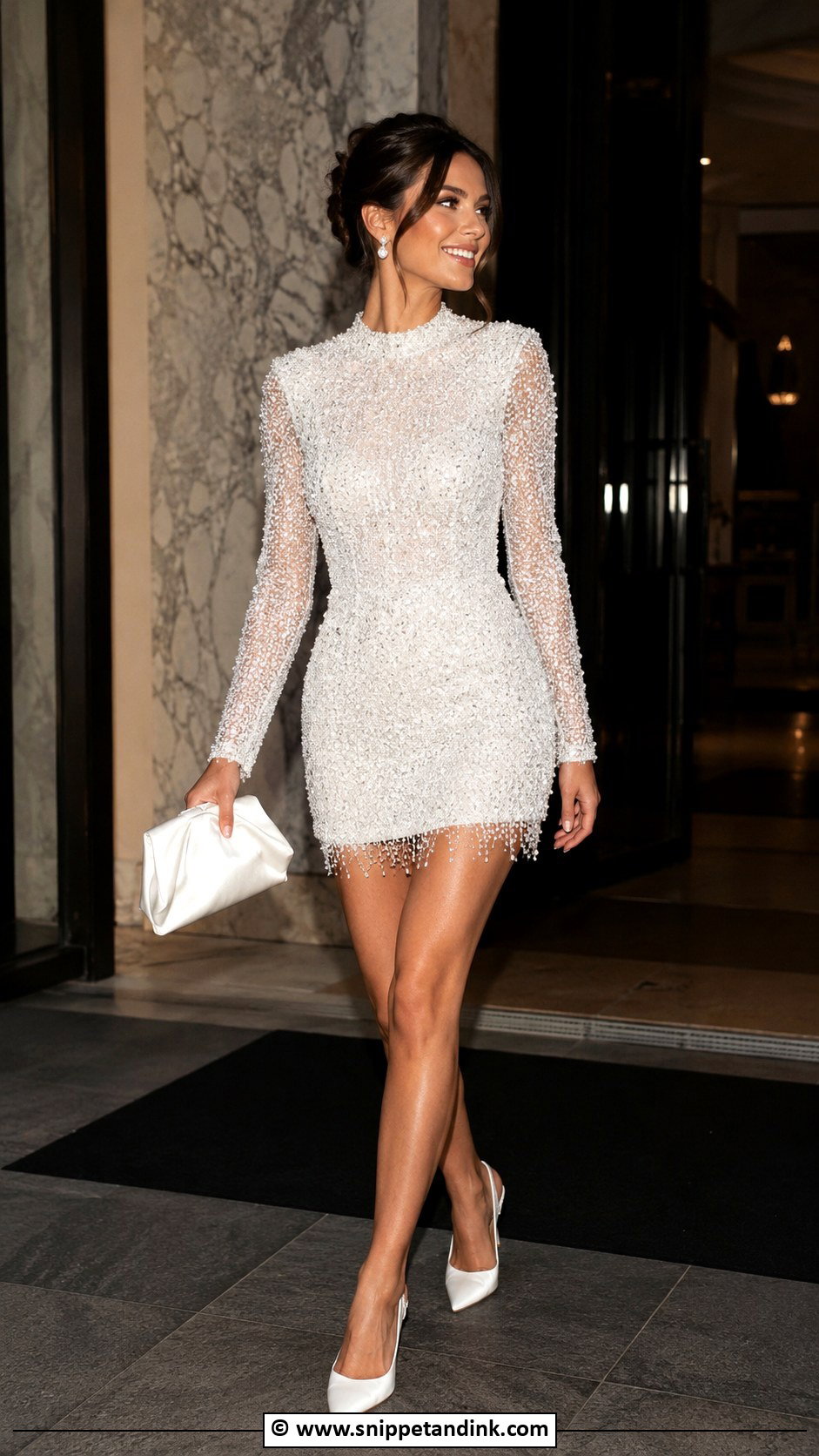
Sleeves plus a short hem is the balance I suggest to brides who feel exposed in a sleeveless mini. Sheer sleeves keep it light, satin sleeves keep it sharp, and embellished sleeves mean no bracelet is needed. The fit check is the armhole: cut too low, the whole dress lifts when you wave. It’s the obvious pick for cool evenings and over-chilled ballrooms.
8. Halter Mini Wedding Afterparty Dress
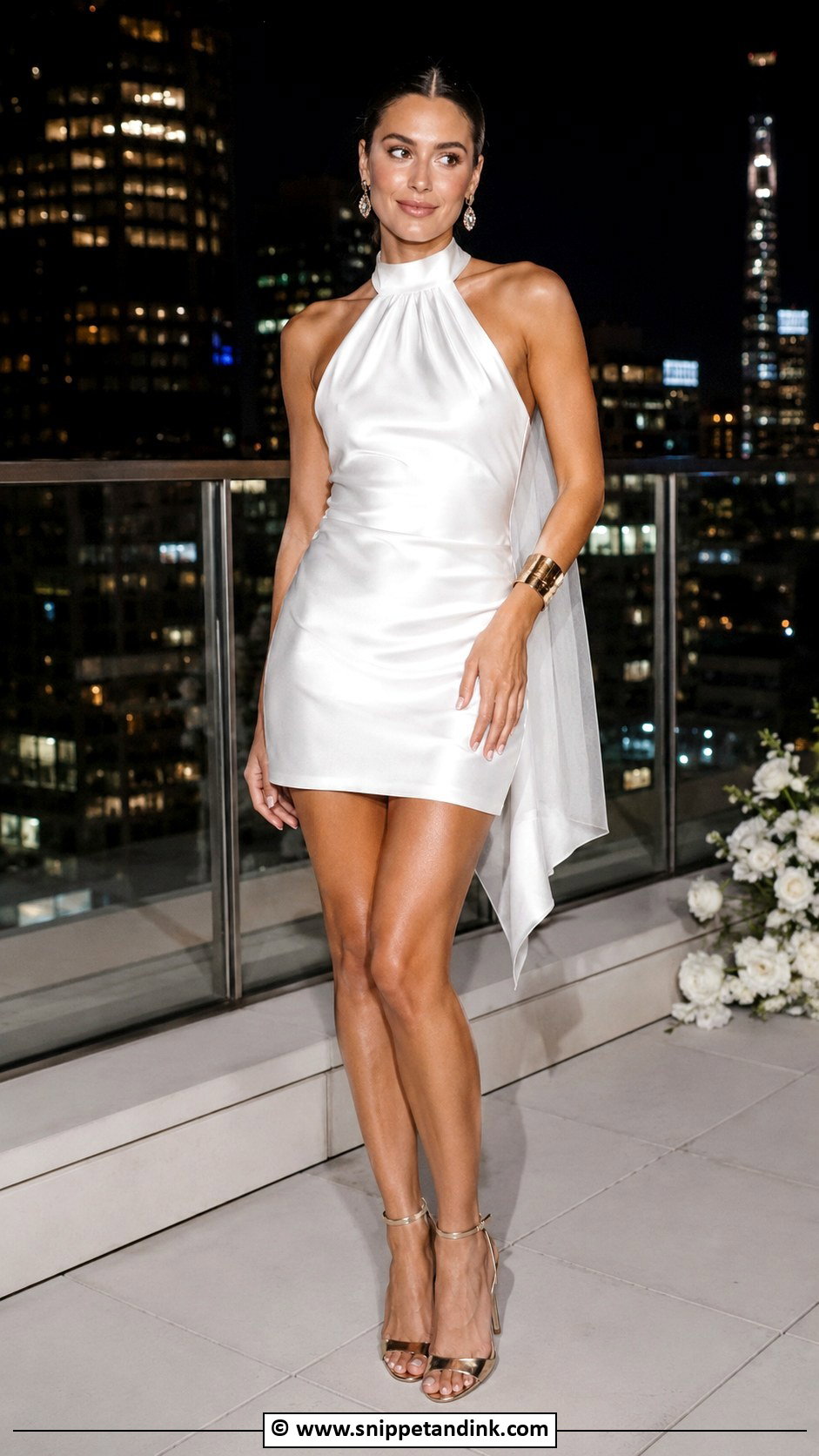
A halter shows off the shoulders and holds the dress up from the neck, which is comfortable for most brides through a long party. I’d still check the tie or clasp at the back of the neck, because a thin string starts to dig in after a few hours. Leave room through the hips so you can actually move. Sleek hair, statement earrings and metallic heels suit rooftop and city parties.
9. Corset Mini Wedding Dress
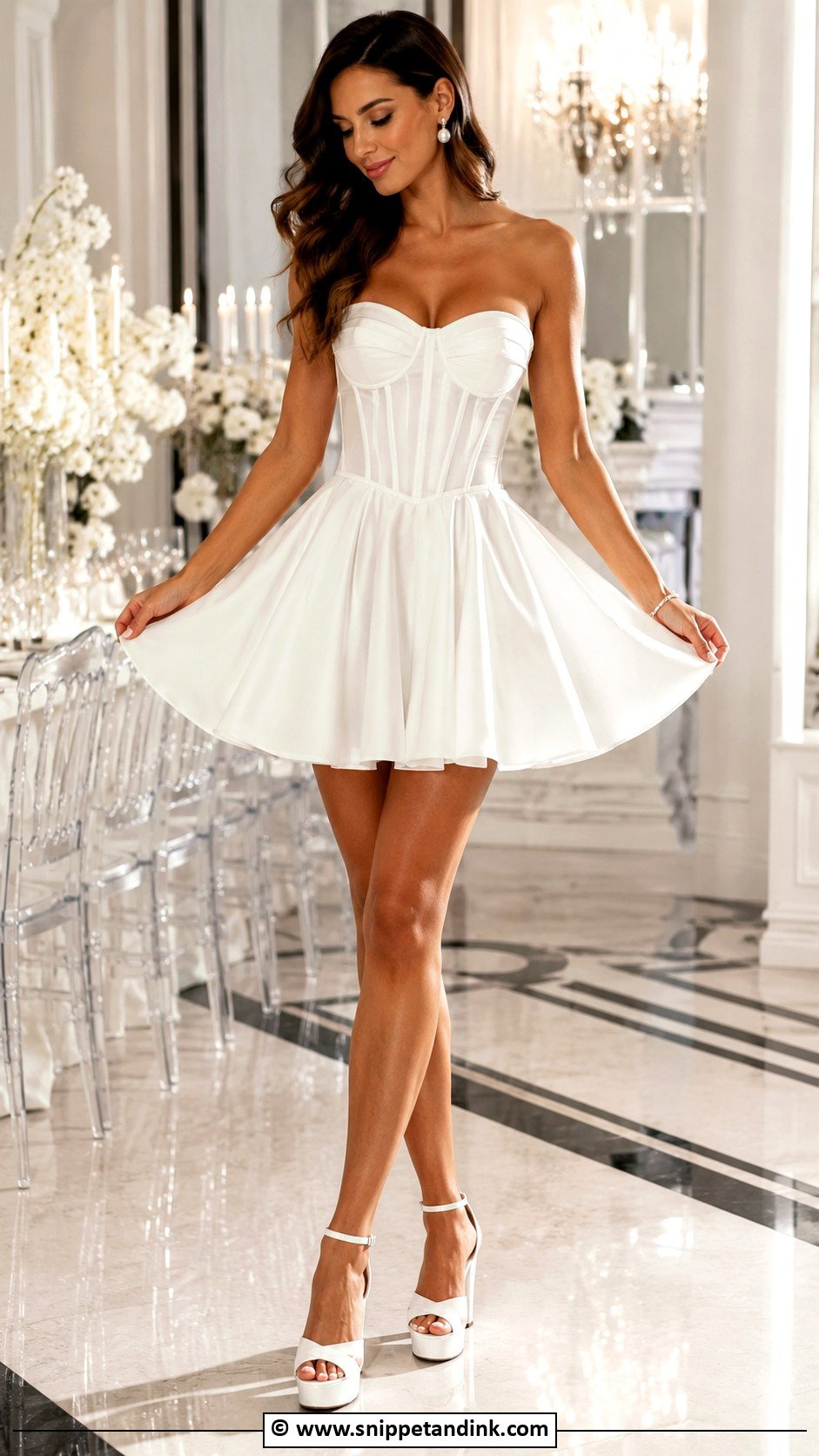
A corset mini wedding dress feels more supportive than people expect, as long as the boning is good. Flexible steel or quality spiral boning moves with you; cheap plastic kinks and pokes once you’ve sat down a few times. Adjustable lacing at the back is worth having because your body changes over a long day of eating and dancing. Platform heels and soft waves balance the defined waist.
10. Bubble Hem Short Wedding Dress
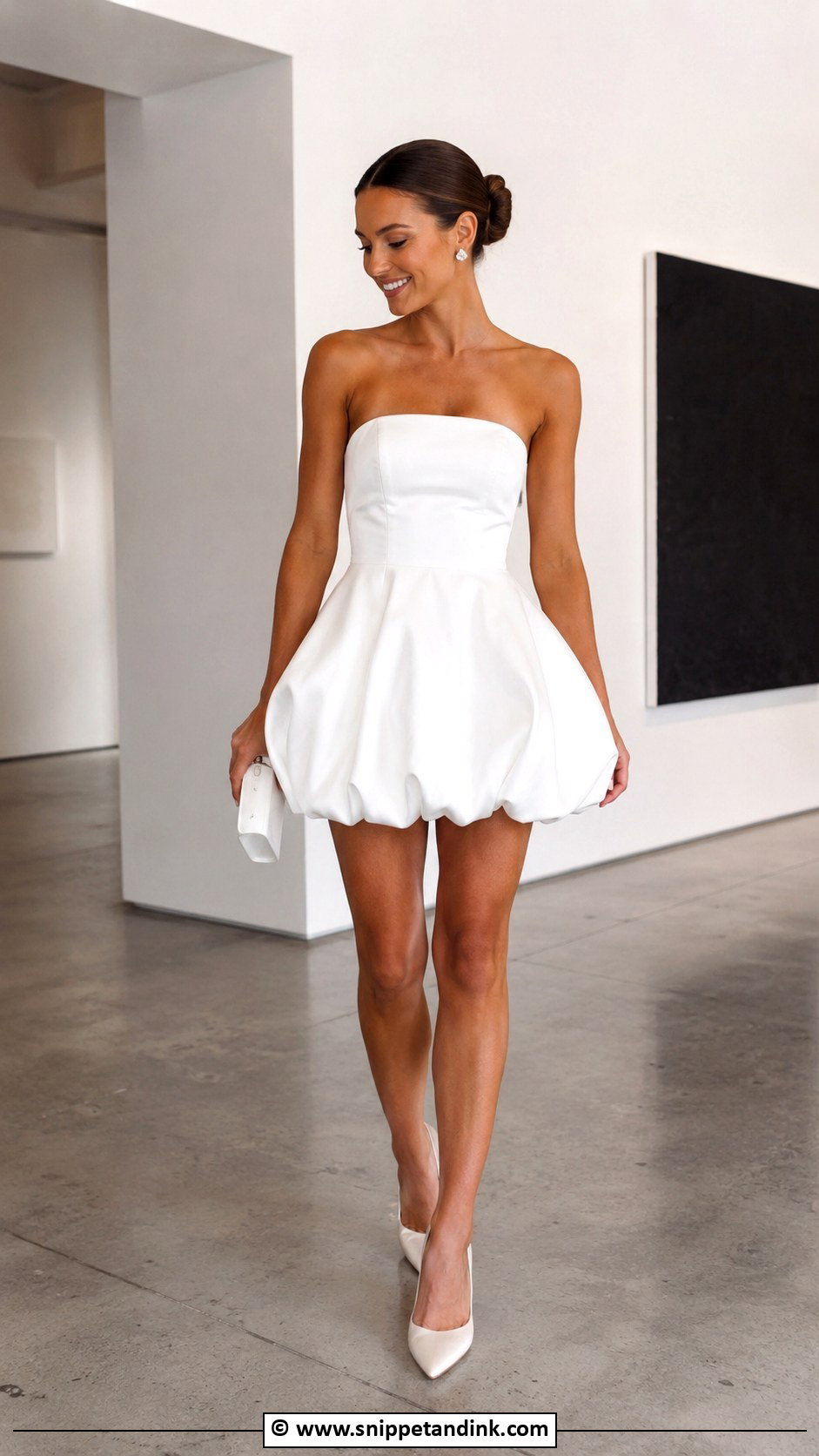
A bubble hem is fun and a bit fashion-week, and I’d only suggest it to a bride who already enjoys shapes like this in everyday life. The hem needs a stiff lining to hold its curve; without it, the bubble collapses into a lump after sitting. A strapless version is bolder, a cap sleeve gentler. Keep the rest plain: satin pumps, small earrings, and nothing that fights the silhouette.
11. Pearl Embellished Mini Wedding Dress
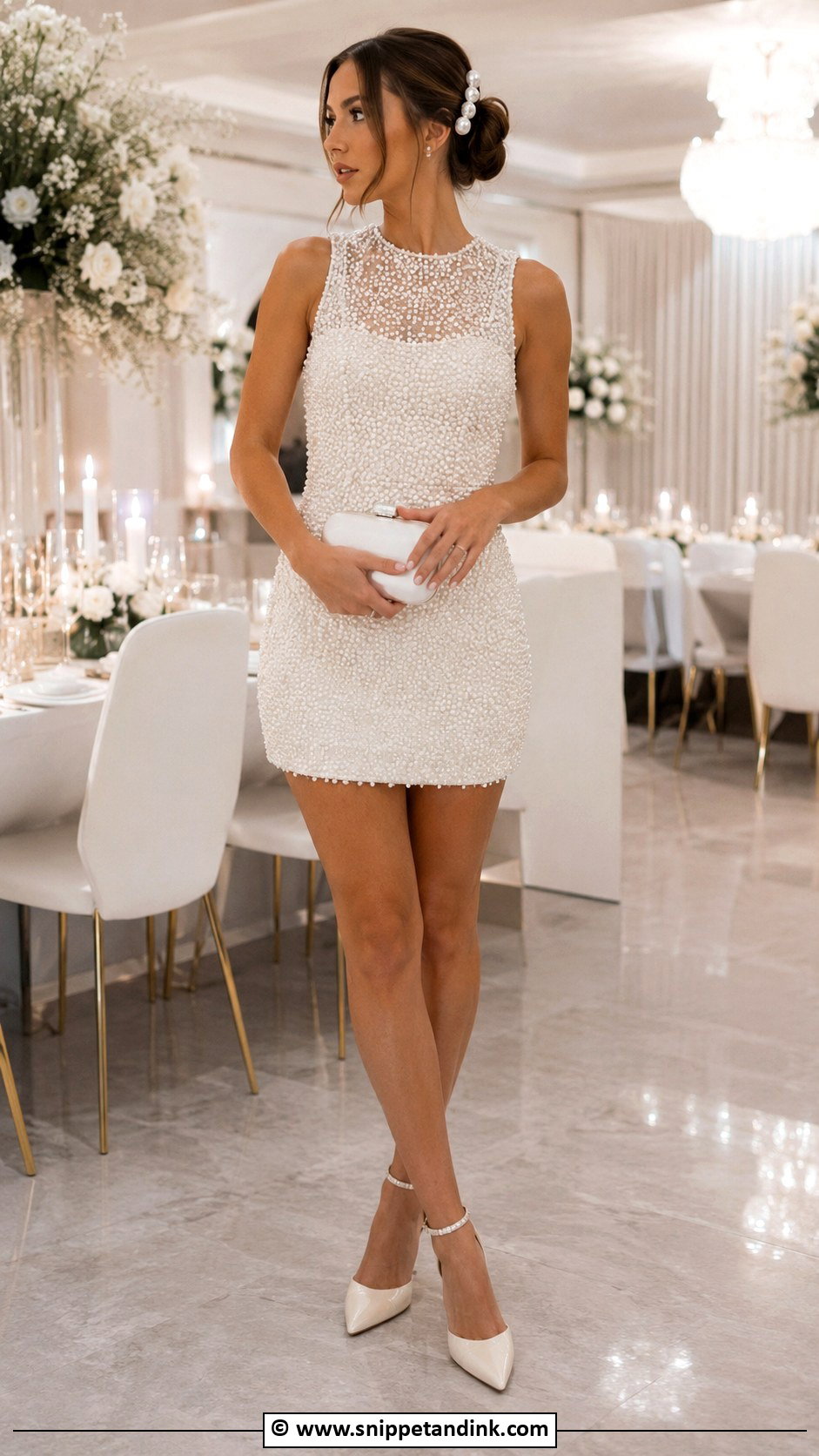
Pearls give a gentler shine than sequins and read as classic bridal detail. Tiny pearls on tulle or mesh feel light; larger pearls on satin feel heavier and more formal. The thing I always check is the underarm. Pearls sewn right up to the side seam rub through a long night, so I prefer a design that keeps them on the front and back panels. A pearl hair pin ties it together.
12. Off Shoulder Short Wedding Dress
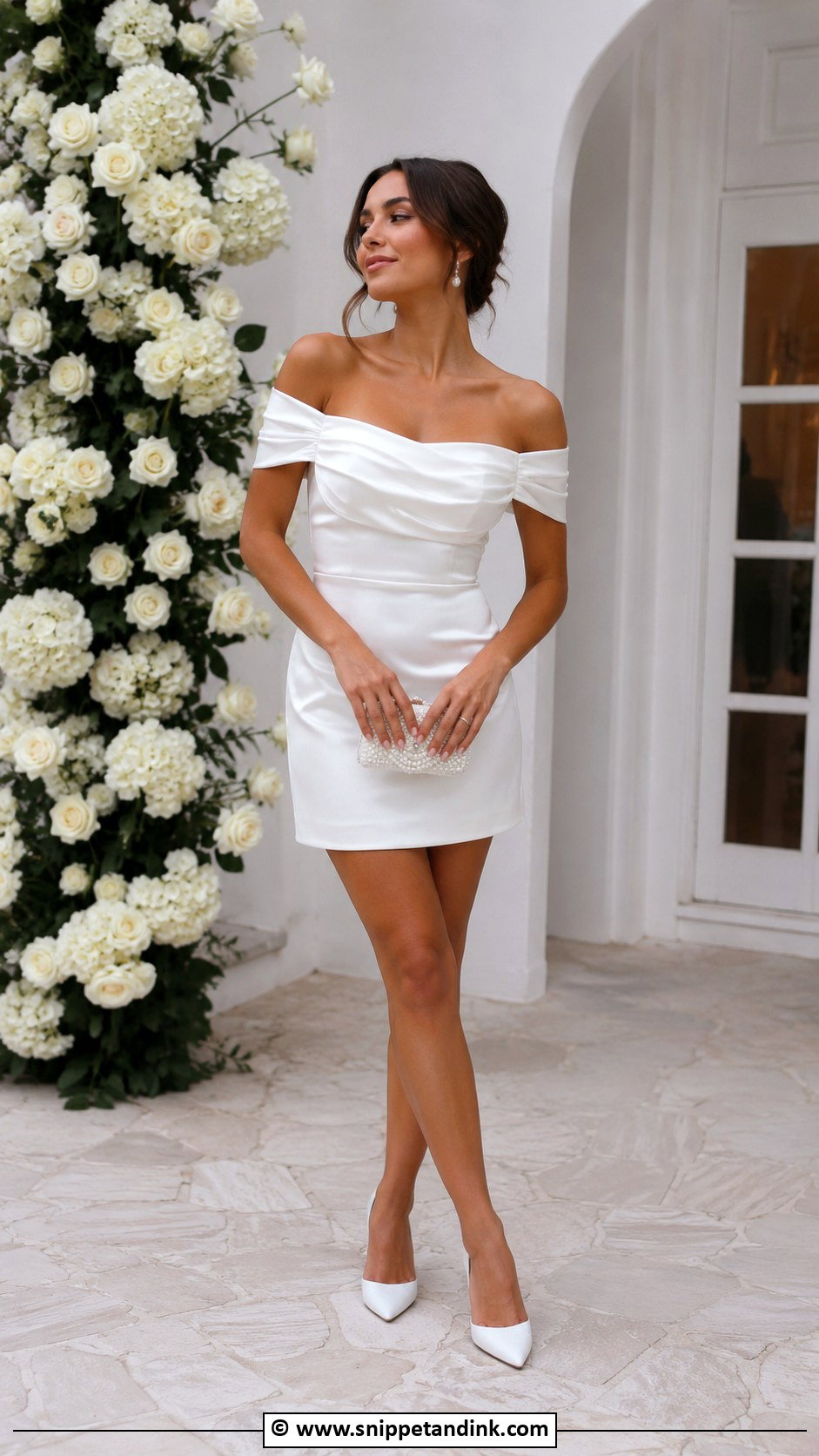
An off-shoulder mini frames the collarbone and suits fitted or flared skirts. The trade-off is range of movement: you can’t lift your arms fully without the band riding up, which brides discover on the first fast song. A ruched or elasticated band helps. Wear your hair up or tucked behind the ears, add drop earrings, and skip anything heavy at the neck.
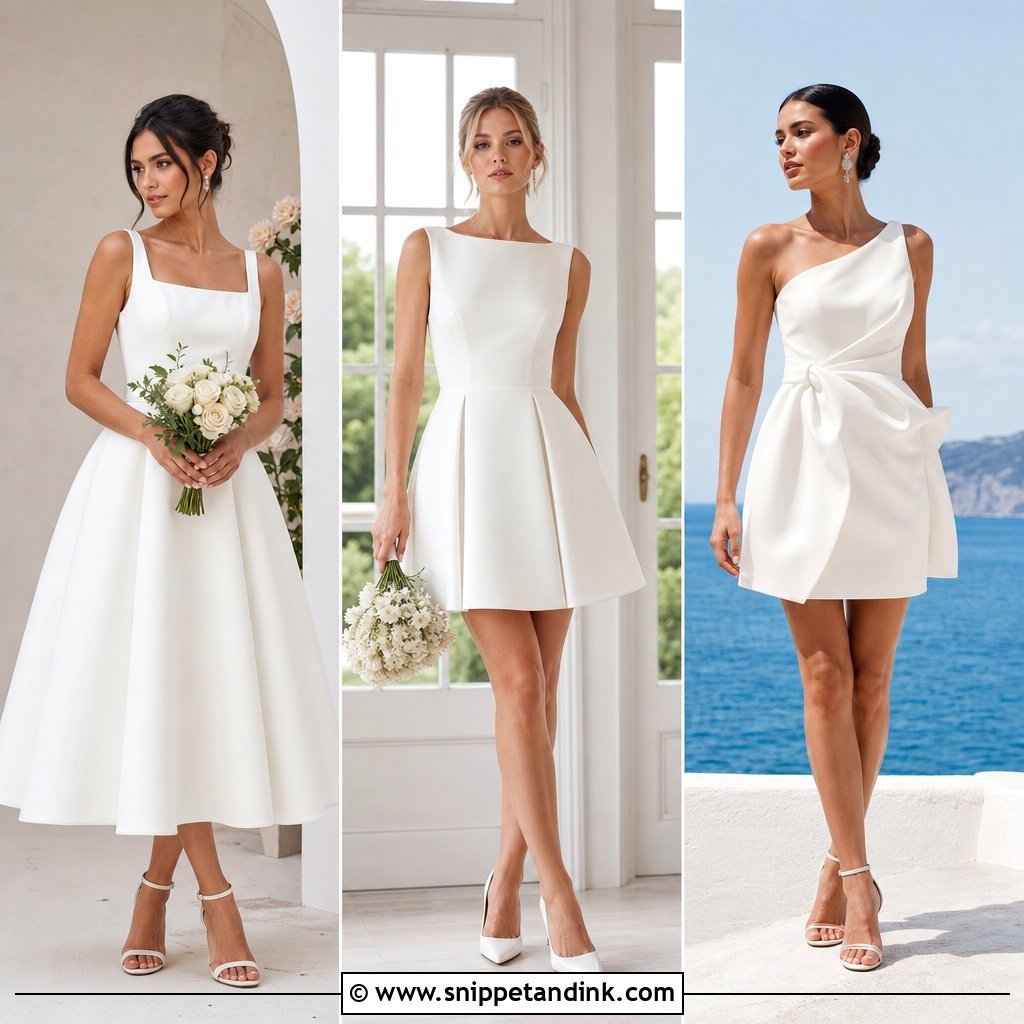
13. Square Neck Mini Wedding Dress
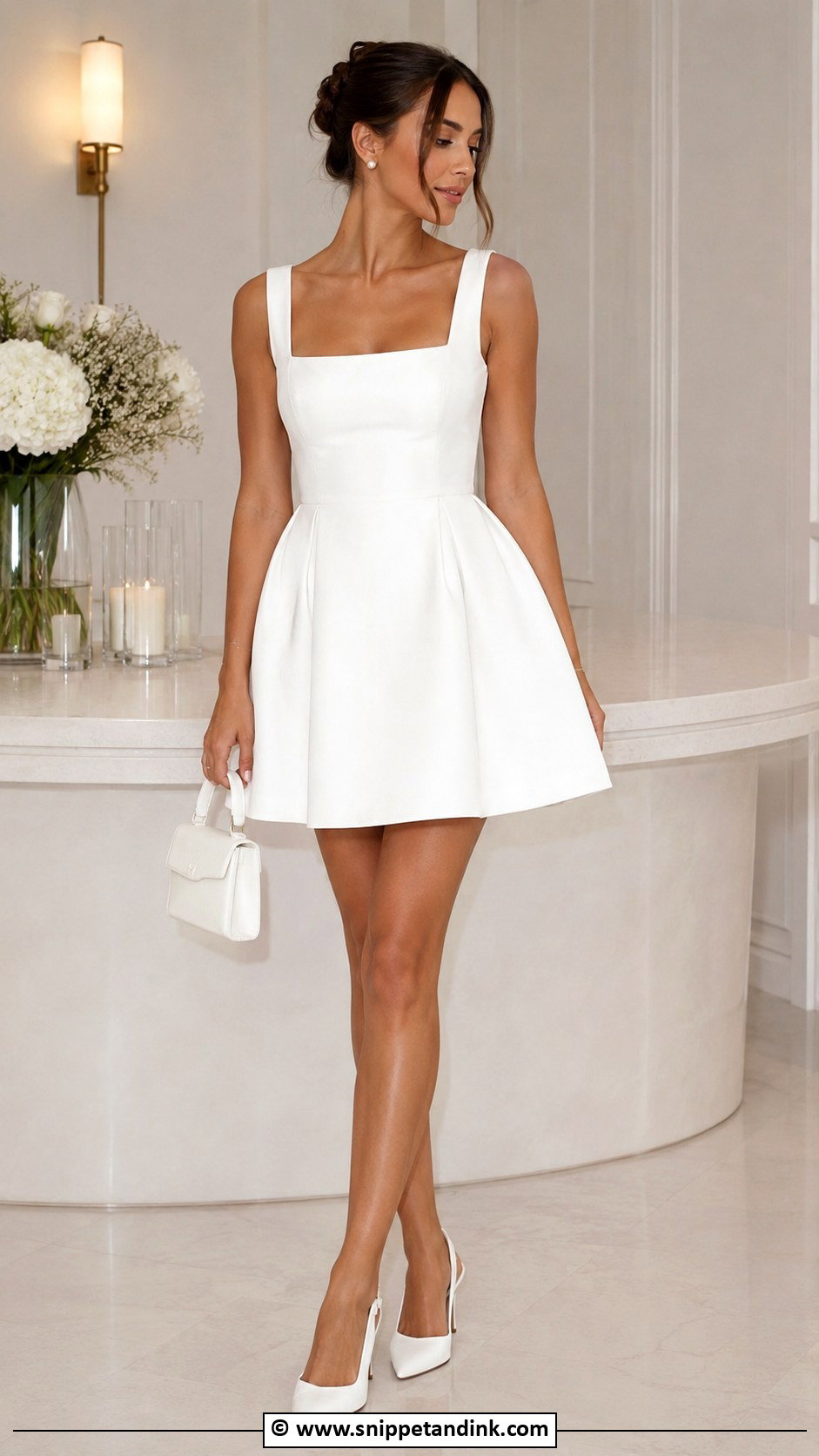
A square neck suits more body shapes than nearly any other neckline I fit, because it widens the collarbone line and supports a range of bust sizes. Mikado and crepe hold the corners crisply; soft satin can let them sag. A fitted shape feels sleek, an A-line easier to dance in. Slingbacks and a small structured bag finish it, with a bow clip if you want a nod to bridal.
14. One Shoulder Mini Wedding Afterparty Dress
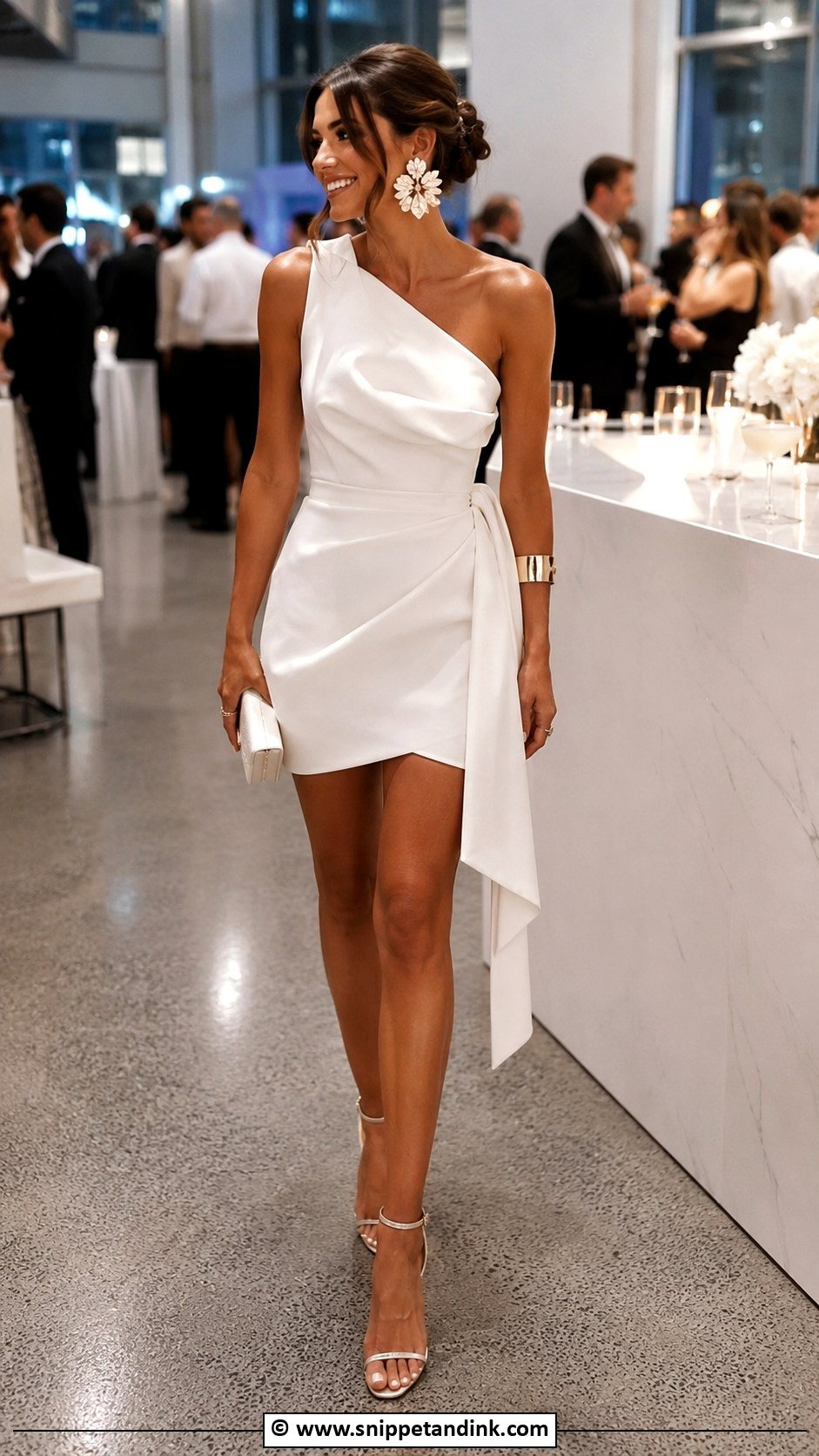
Asymmetry gives a one-shoulder mini real fashion confidence. The fit test is simple: raise both arms and twist. If the bare side slips, it will slip all night. Draping or ruching at the waist helps it stay put and forgives a big dinner. Skip the necklace, wear a cuff or a bold earring on the open side, and choose strappy heels.
15. Ruffle Mini Wedding Dress
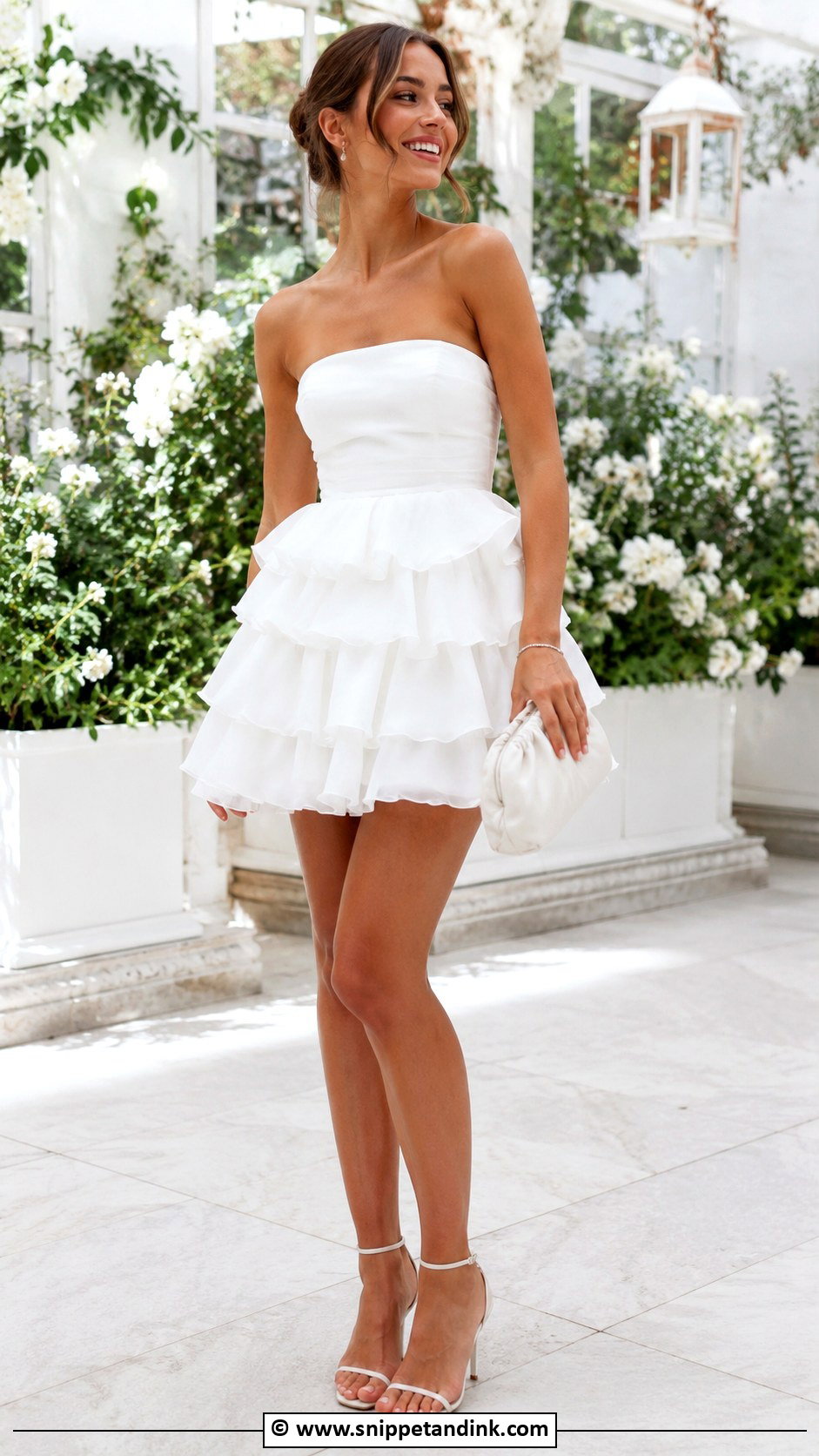
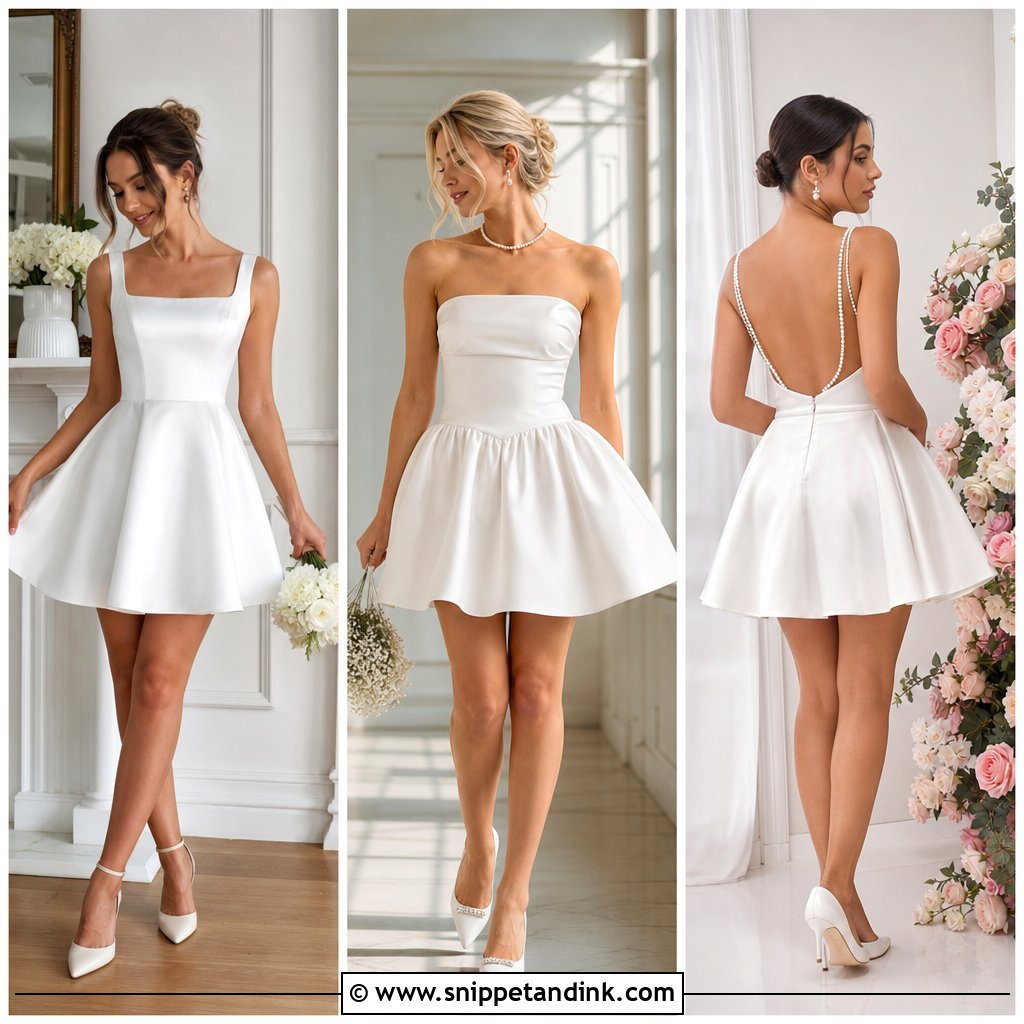
Ruffles bring movement without any sparkle at all. The fabric decides whether they look airy or bulky: chiffon and organza ruffles float, while heavy satin ruffles can add width at the hips. A single ruffled hem is the cleaner choice; tiered ruffles are more playful. In heat, I’d choose light fabric ruffles every time, and keep the hair sleek so the dress has the volume.
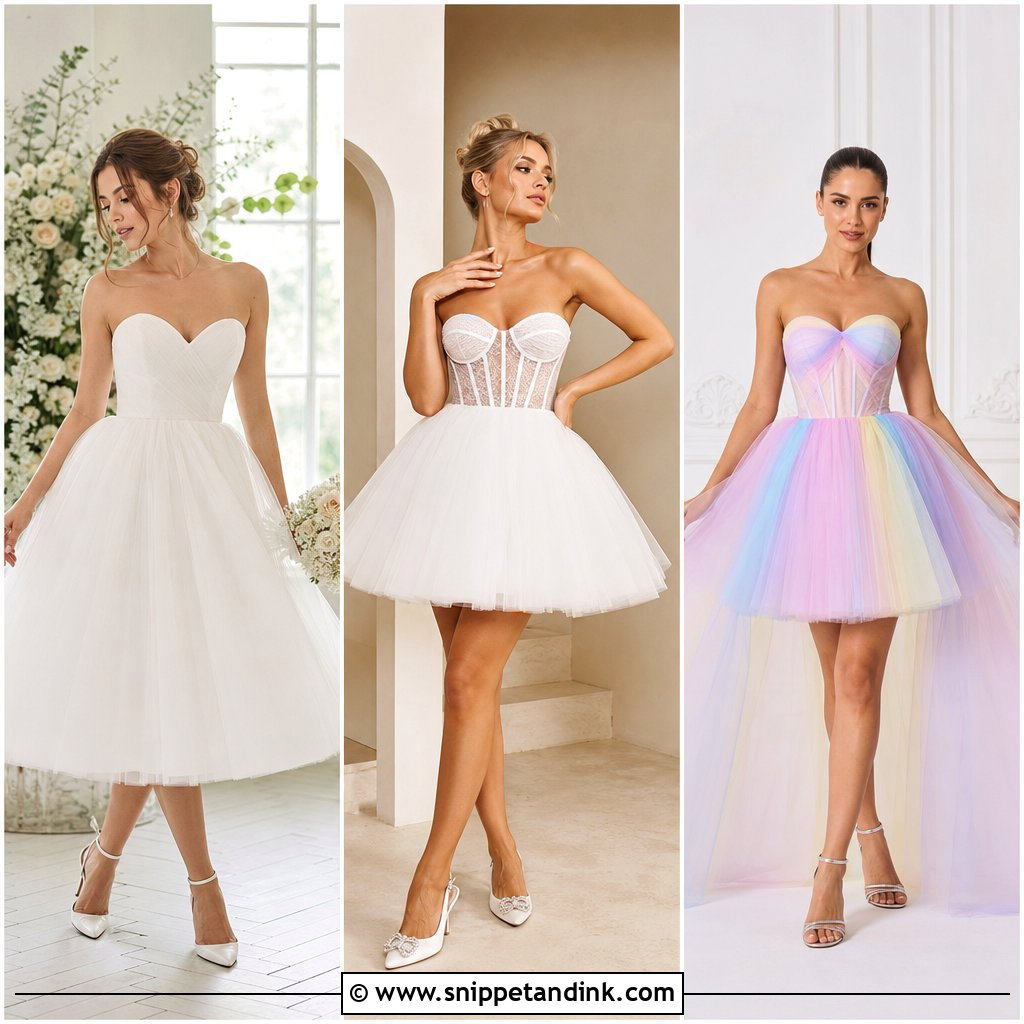
16. Tulle Short Wedding Dress
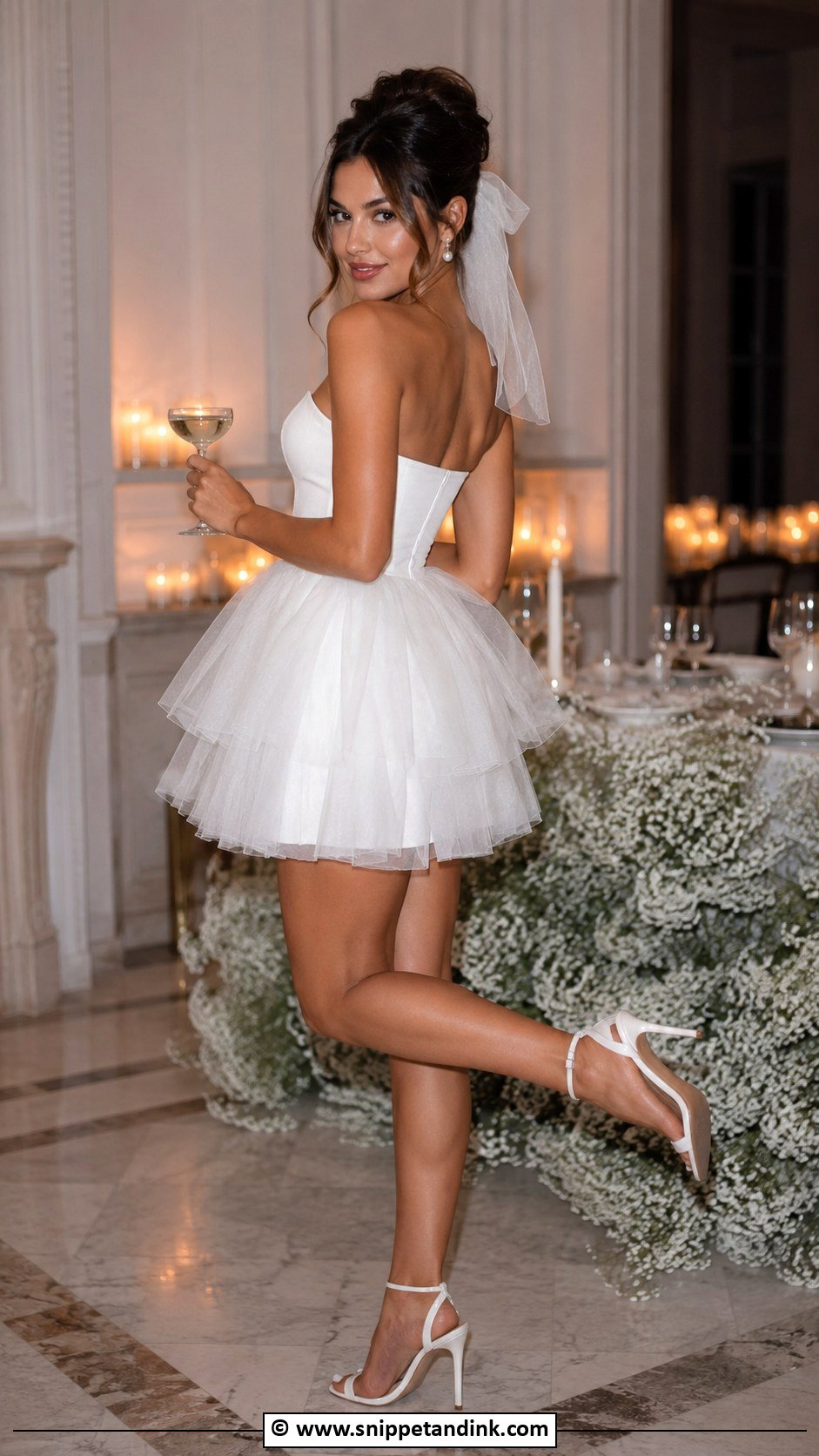
Short tulle keeps the dreamy feeling of a gown in a size you can dance in. I’d go for soft English net or silk-like tulle over stiff crinoline, which scratches bare legs and squashes flat when you sit. A fitted bodice gives it shape, and fewer, softer layers look more grown-up than a full tutu. Satin heels and a hair ribbon suit it.
17. Blazer Mini Wedding Dress
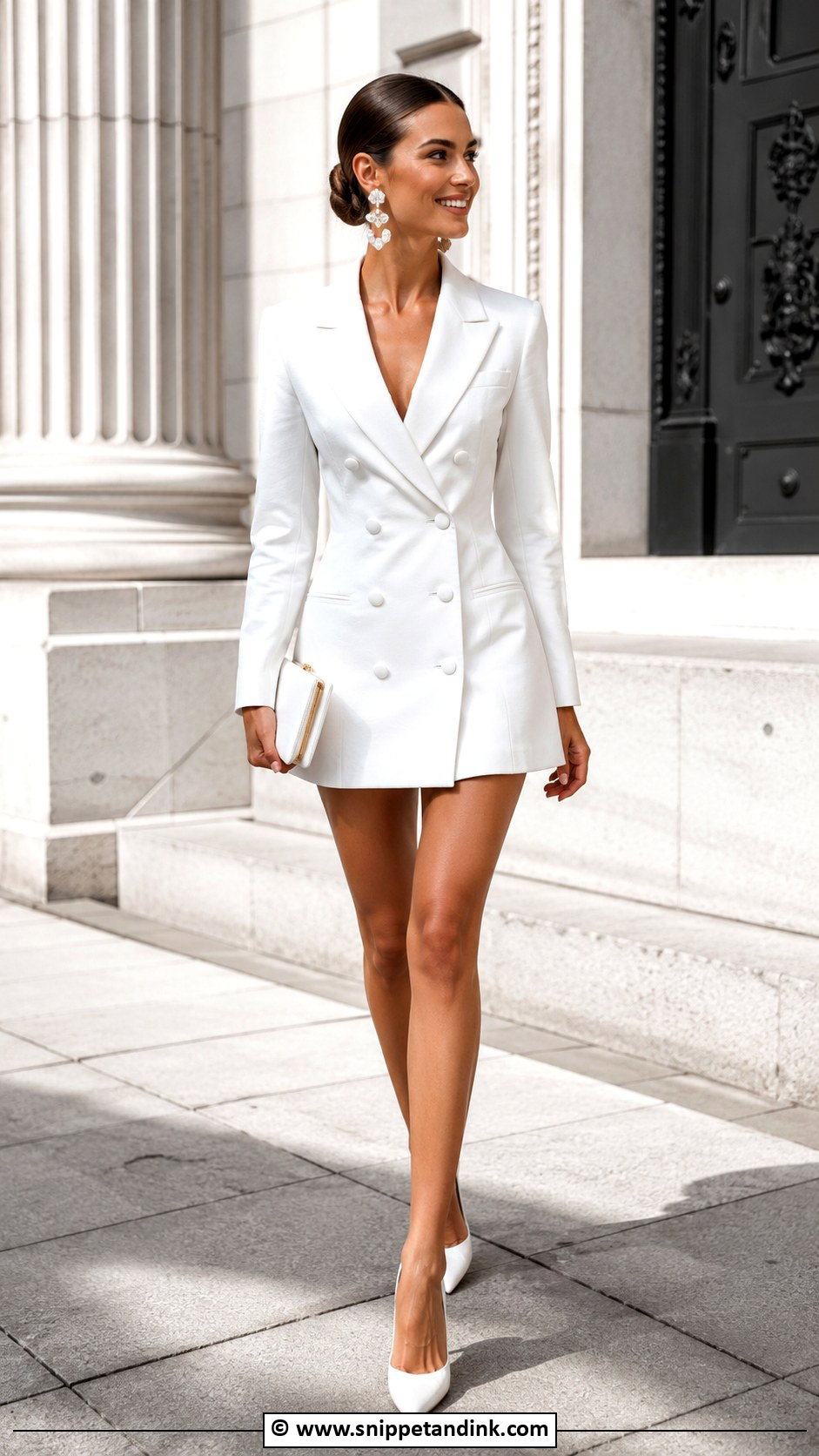
A tailored blazer mini is the bride who loves sharp clothes getting her moment. I look for a double-breasted cut with a defined waist and a lining that doesn’t cling. Check how short it gets when you sit; blazer dresses ride up more than you’d think because the fabric has no stretch. Wear it buttoned on its own, or open over a simple slip dress, with pointed pumps and sculptural earrings.
18. Fringe Short Wedding Afterparty Dress
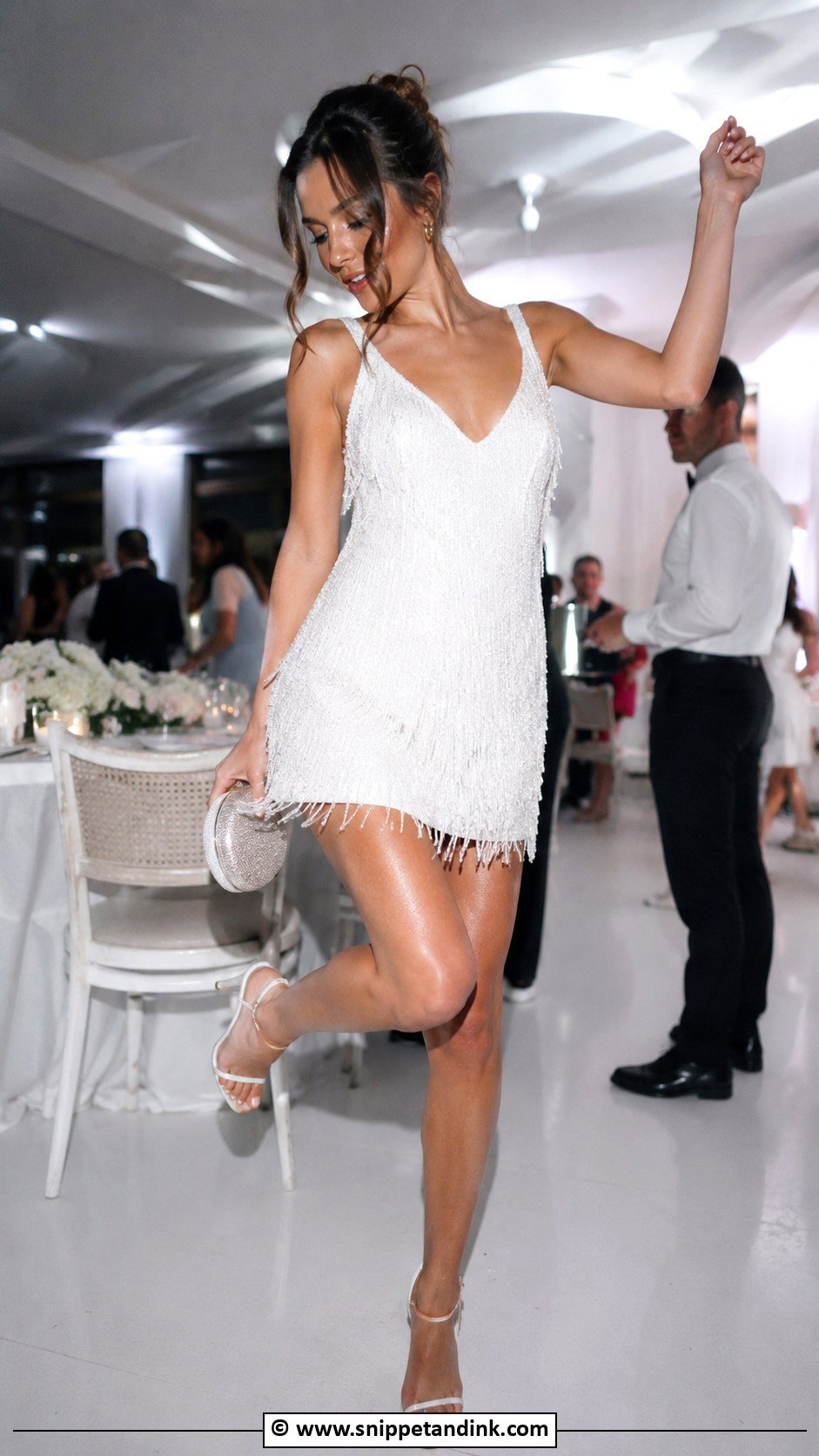
Fringe only comes alive when you move, so it rewards the bride who plans to dance most of the night. Beaded fringe swings heavily and makes a satisfying sound; fabric fringe is lighter and floatier. Fringe that reaches below the knee tangles when you dance, so I keep it at mini or knee length. Check the strands are knotted or finished at the ends, since loose fringe catches on chair backs.
19. Beaded Mini Wedding Dress
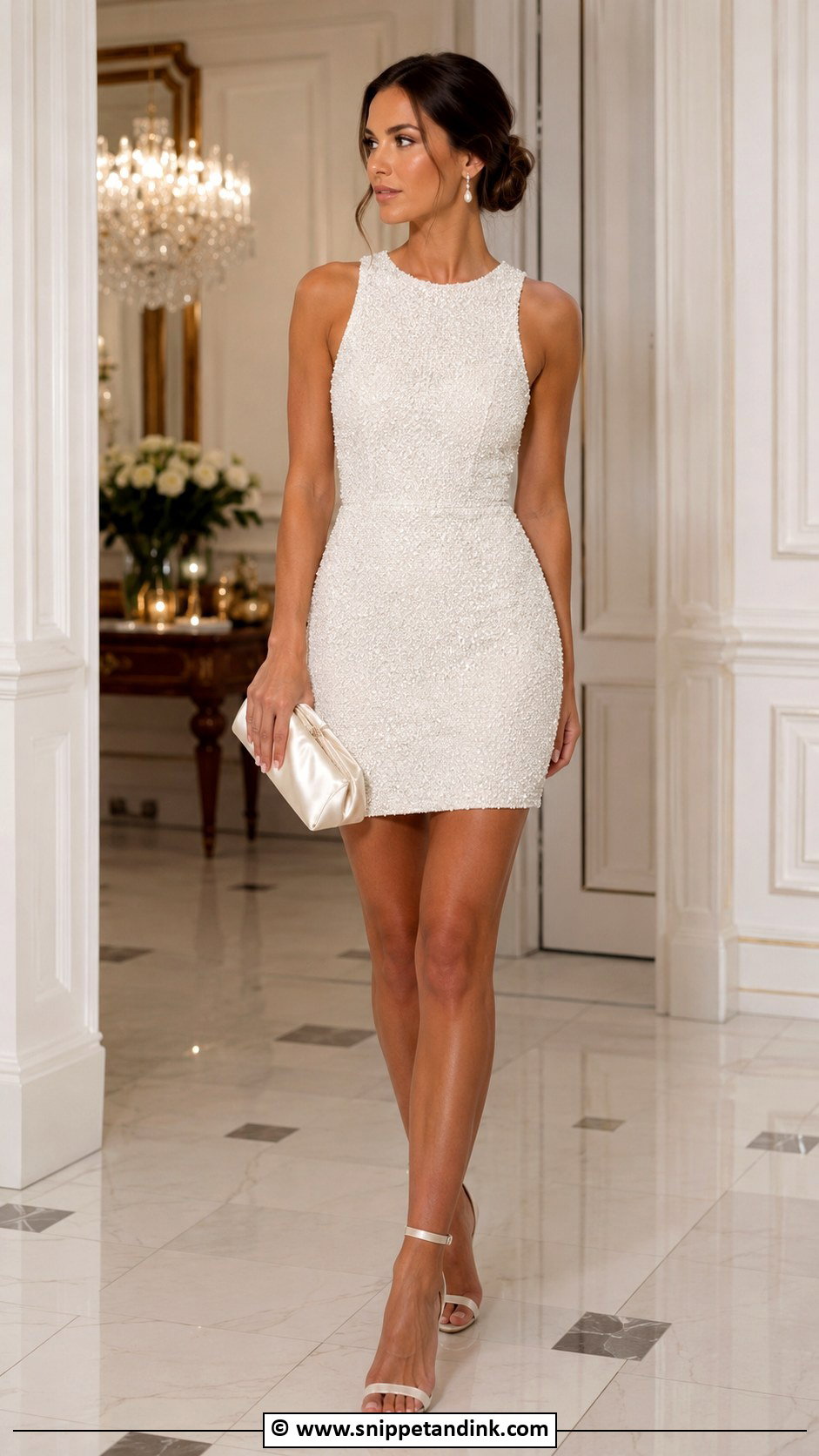
Beading gives shimmer and pattern without needing a dramatic cut. The lining is the deciding factor here; a good one stops the bead backs from scratching. Beaded fabric is heavier than it looks on a hanger, so walk, sit and climb a few stairs in it before you commit. Sleeveless versions dance easier, while long-sleeve ones look more formal. Plain heels and a simple clutch.
20. Slip Mini Wedding Afterparty Dress
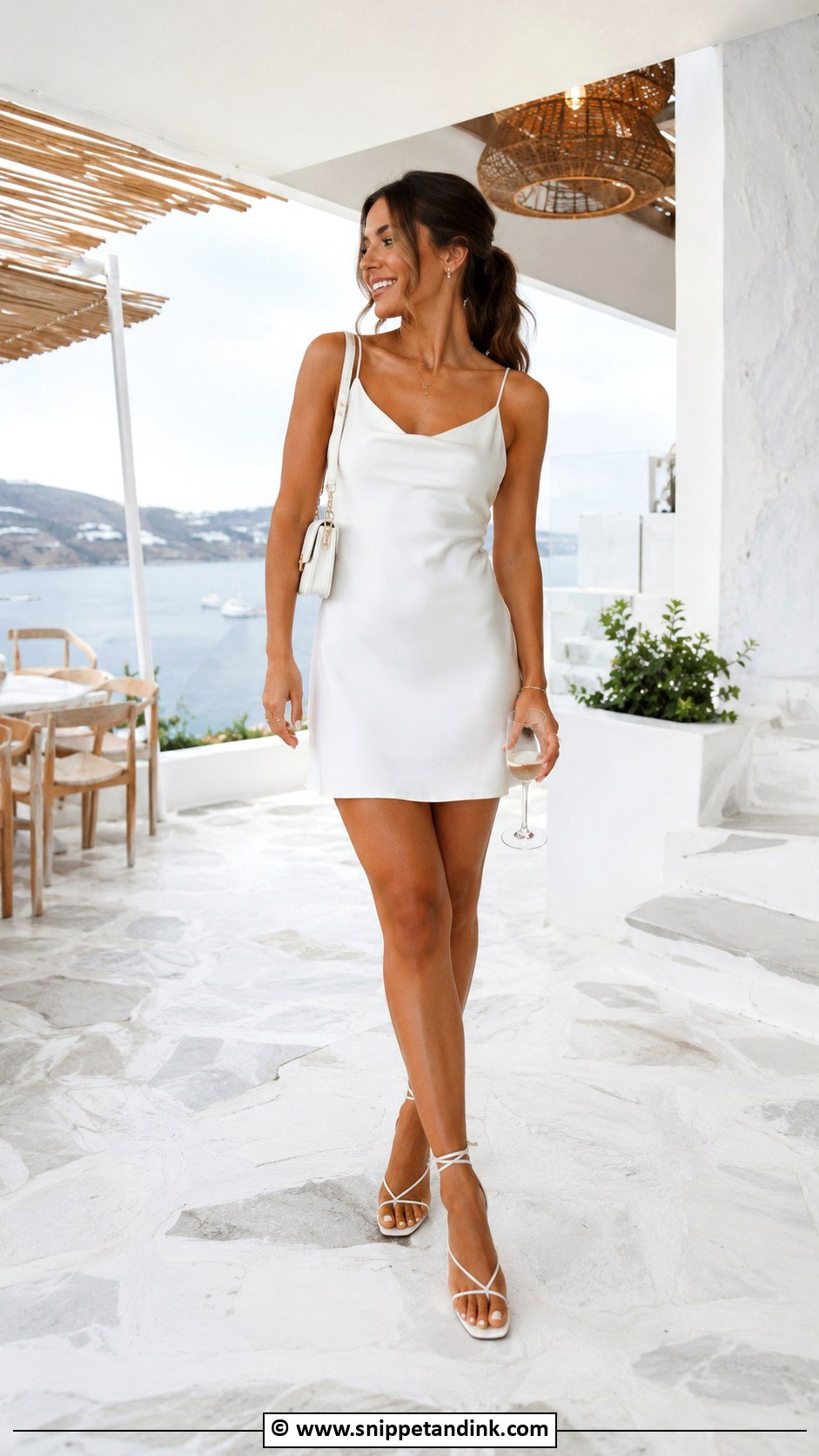
A short slip is the easiest dress to change into after a structured gown, because there’s nothing to fasten and nothing to manage. Choose a slightly draped fit rather than a tight one; satin pulls across the hips when it’s too snug and shows every line. A light wrap helps on a breezy beach or terrace. Strappy sandals and soft waves keep it relaxed.
21. Floral Applique Short Wedding Dress
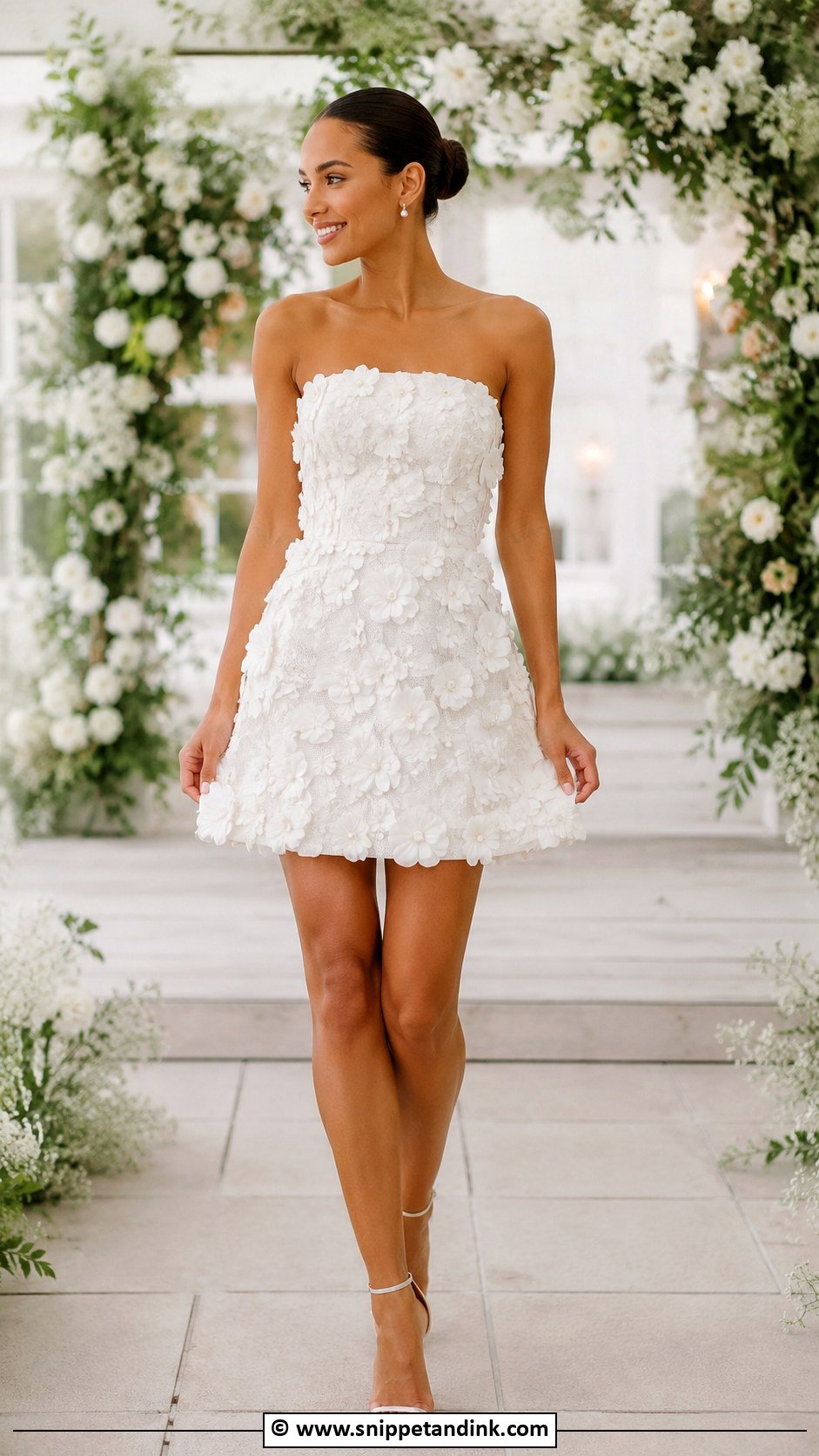
Applique flowers add depth and shadow that flat lace can’t. A white mini with 3D floral details carries the bridal feeling without a train. Raised flowers do flatten under a tight hug or a seatbelt, so I suggest the appliques sit at the hem or shoulders rather than across the stomach. A sleek updo and pearl earrings let the flowers stay the detail; it suits spring and garden venues well.
22. Minimal White Mini Wedding Dress
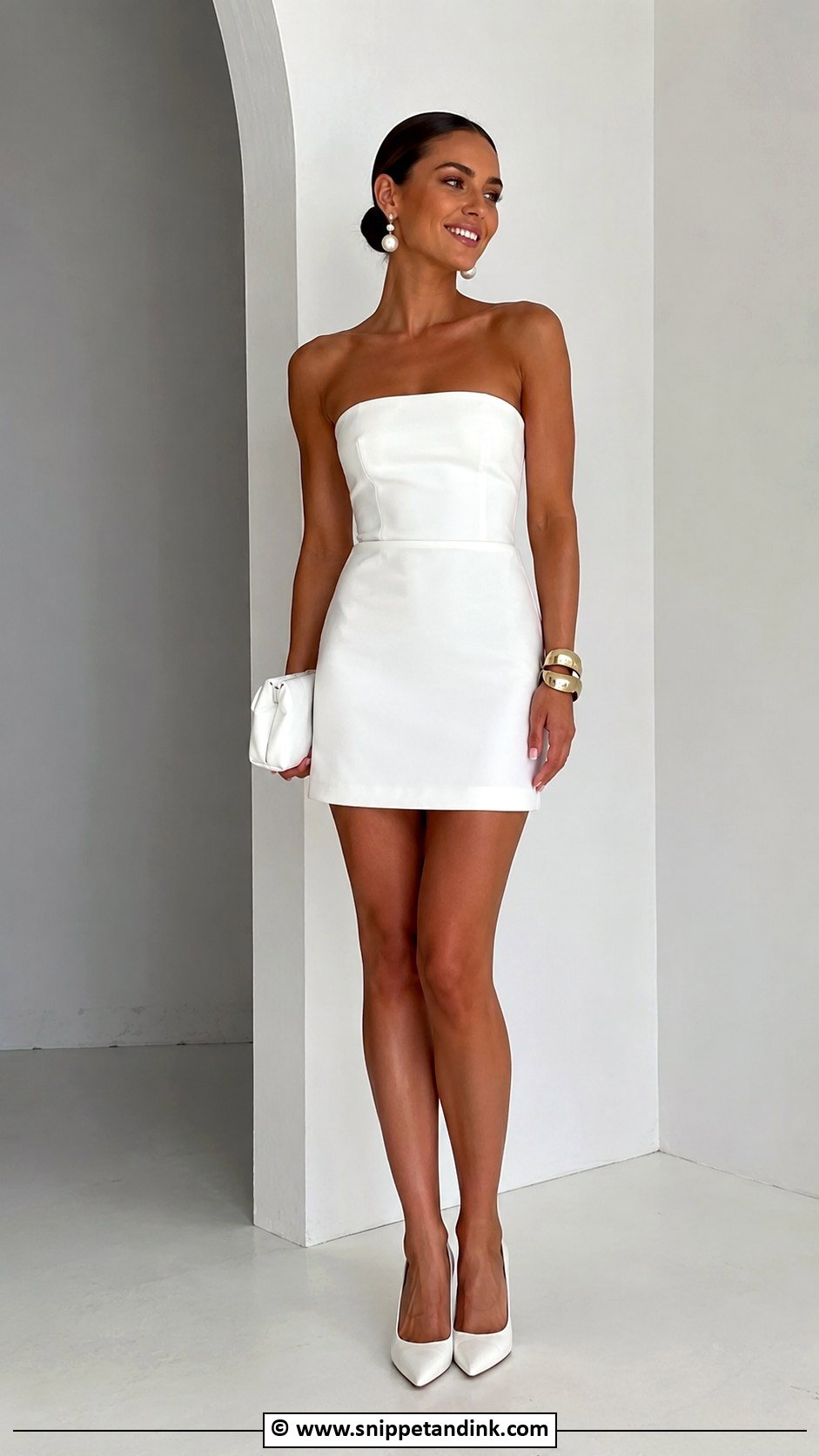
With no sparkle or texture to hide behind, a minimal white mini lives or dies on fit and fabric. I’d rather a bride spend her budget on a heavier crepe and a proper tailoring appointment than on embellishment here. Pick the shape your body is happiest in: straight, A-line or fitted. One strong accessory is enough. It’s also the short dress most likely to be worn again afterwards, with a blazer or different shoes.
23. High Neck Short Wedding Dress
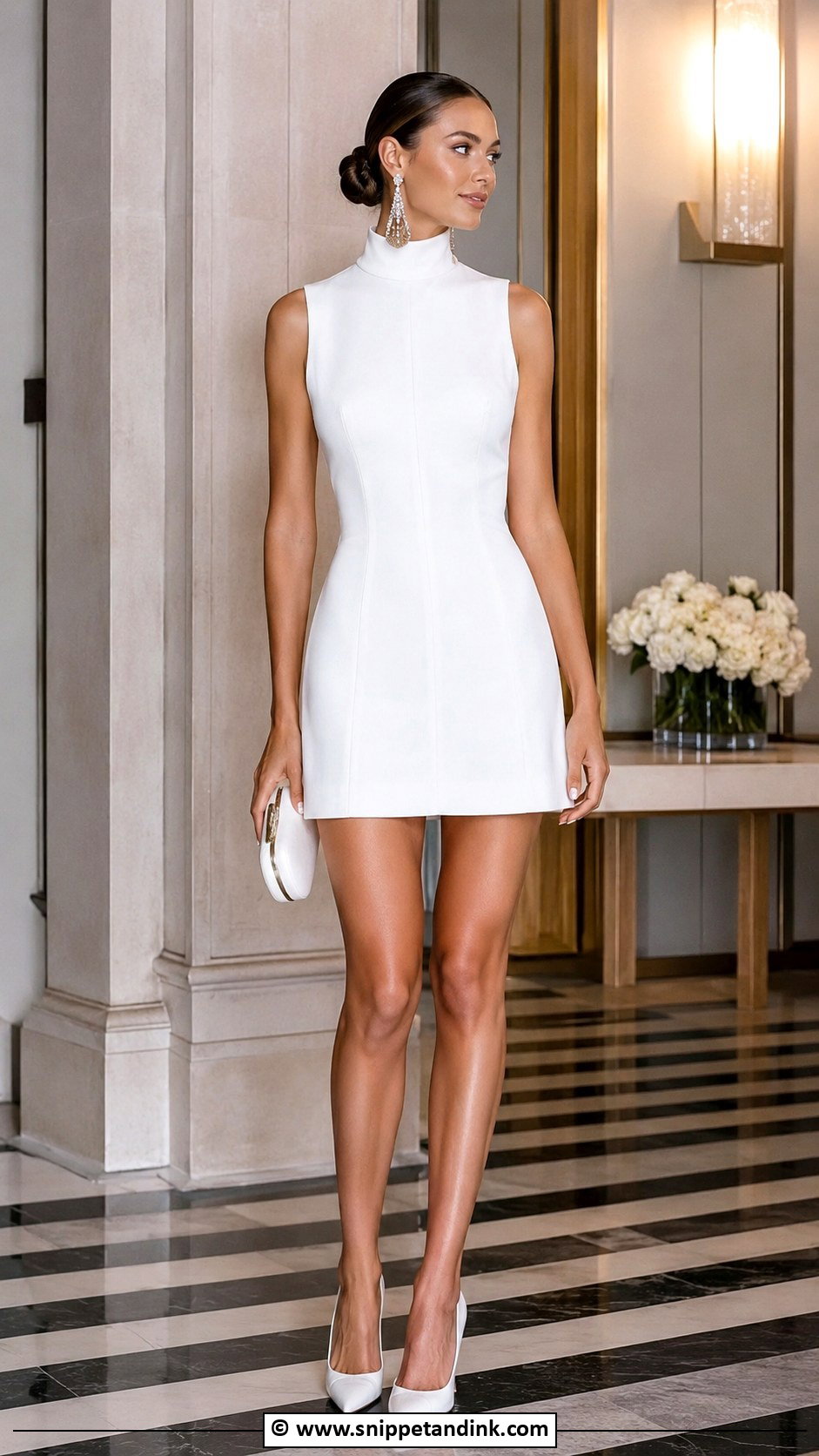
A covered neck balances a short hem so the outfit reads polished. Crepe and satin keep it sleek; lace or beading add bridal detail. The thing to know is warmth. A high neck on a crowded dance floor gets hot, especially in heavier fabric, so for a summer party I’d go sleeveless or choose a lighter cloth. Smooth bun, statement earrings, no necklace.
24. Cutout Mini Wedding Dress
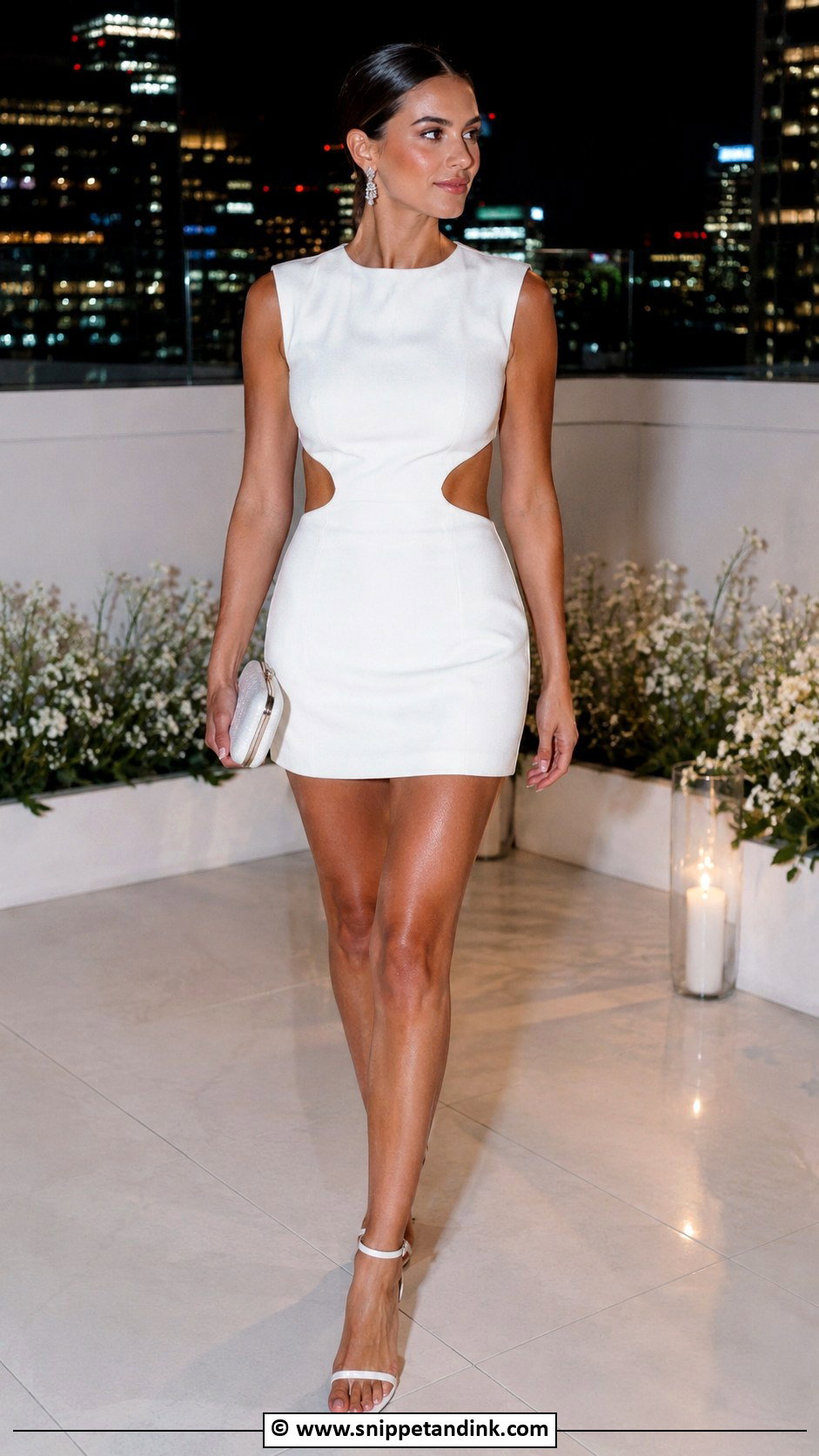
Cutouts look modern when they’re small and placed with intention: a side waist cutout, a little back opening, a narrow front detail. The practical issues are tape and tan lines. Bigger cutouts need fashion tape to stay in place, and they’ll show any strap marks from earlier in the day. Keep the fabric clean, white satin or structured crepe. Test the dress dancing before you buy, because cutouts shift as you move.
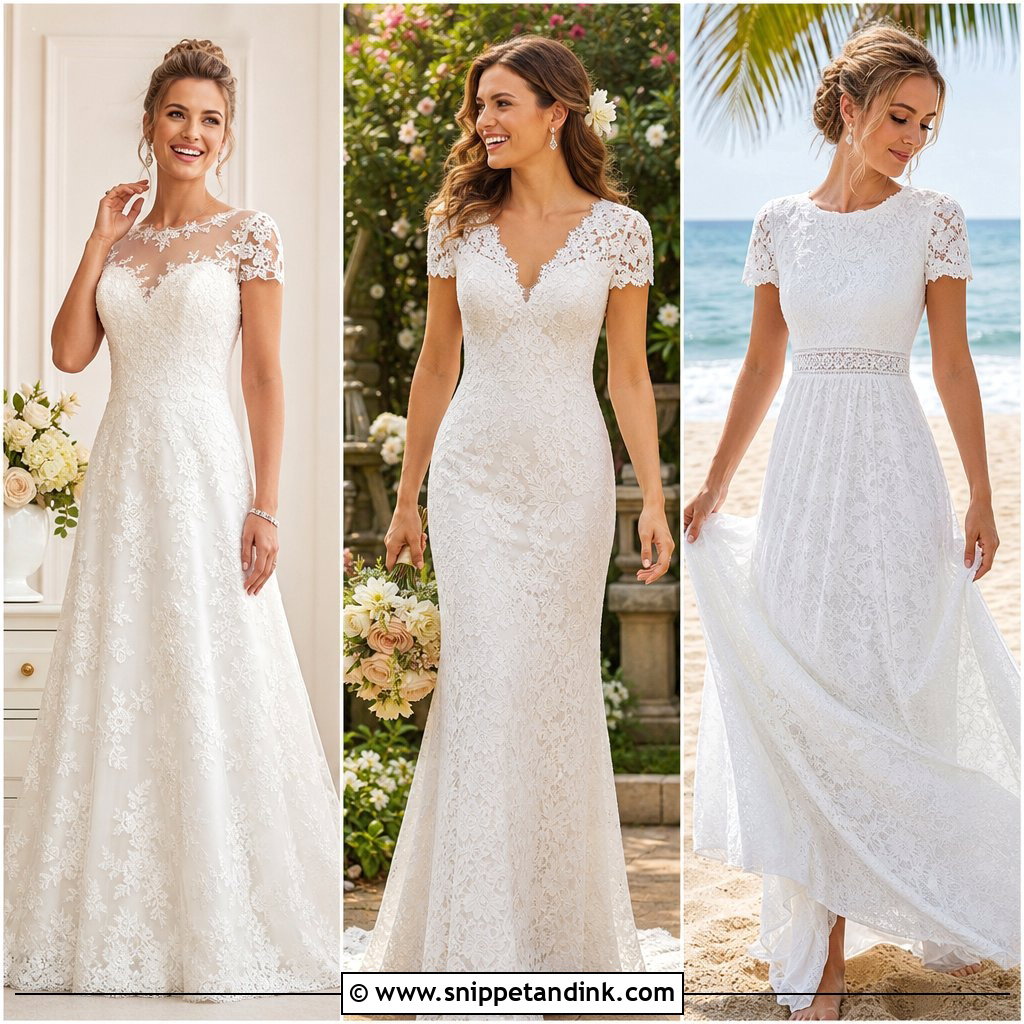
25. Sheer Sleeve Mini Wedding Dress
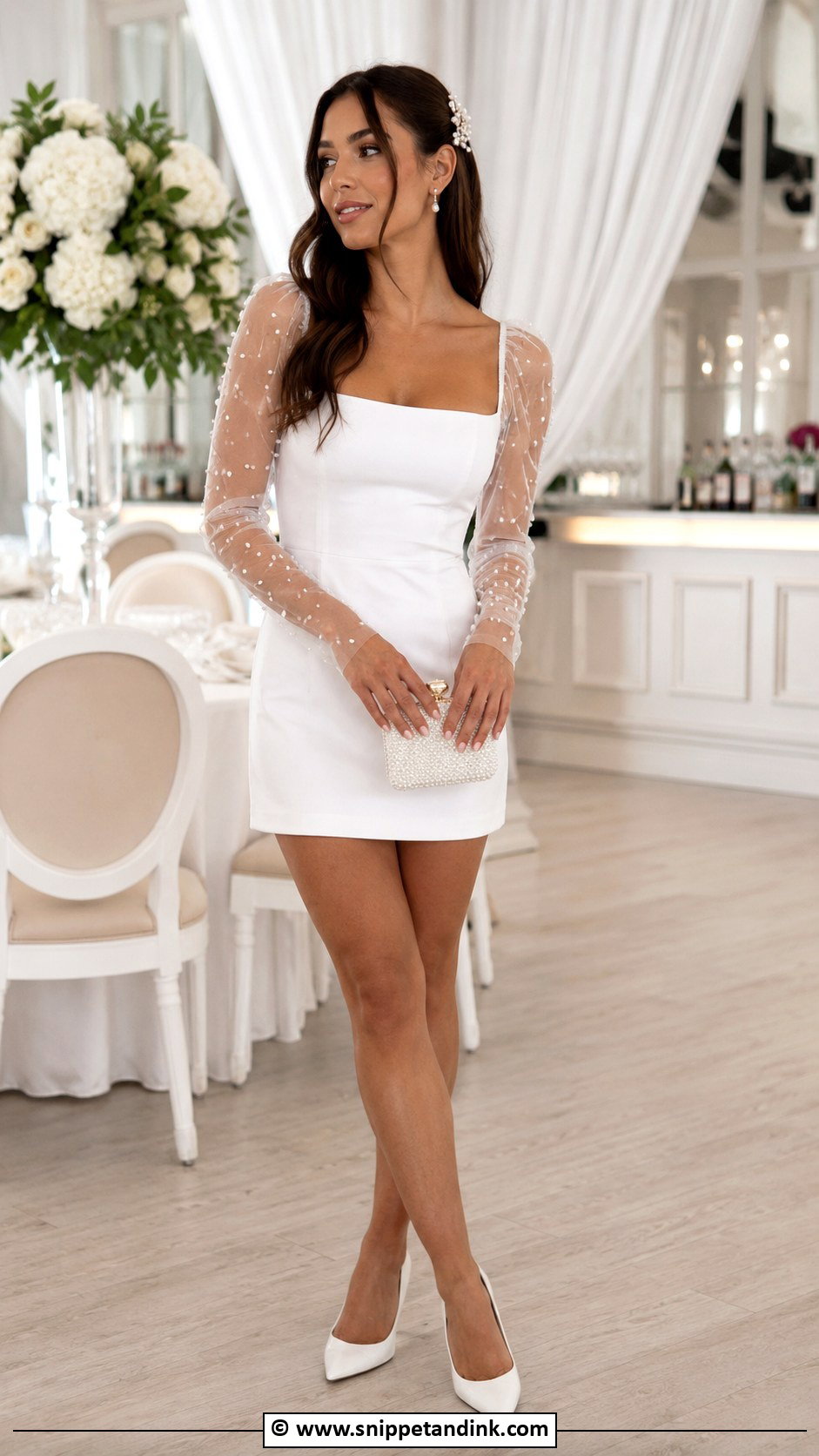
Sheer sleeves give coverage at almost no weight. Plain tulle is the subtlest; dotted mesh, lace or pearls add texture that reads well in photos. I check the cuff, since tight sheer cuffs leave marks on the wrist after a few hours and tend to rip if the fit is too narrow. A fitted bodice and soft A-line skirt keep the balance, with satin pumps and a small hair accessory.
26. Silver Mini Wedding Afterparty Dress
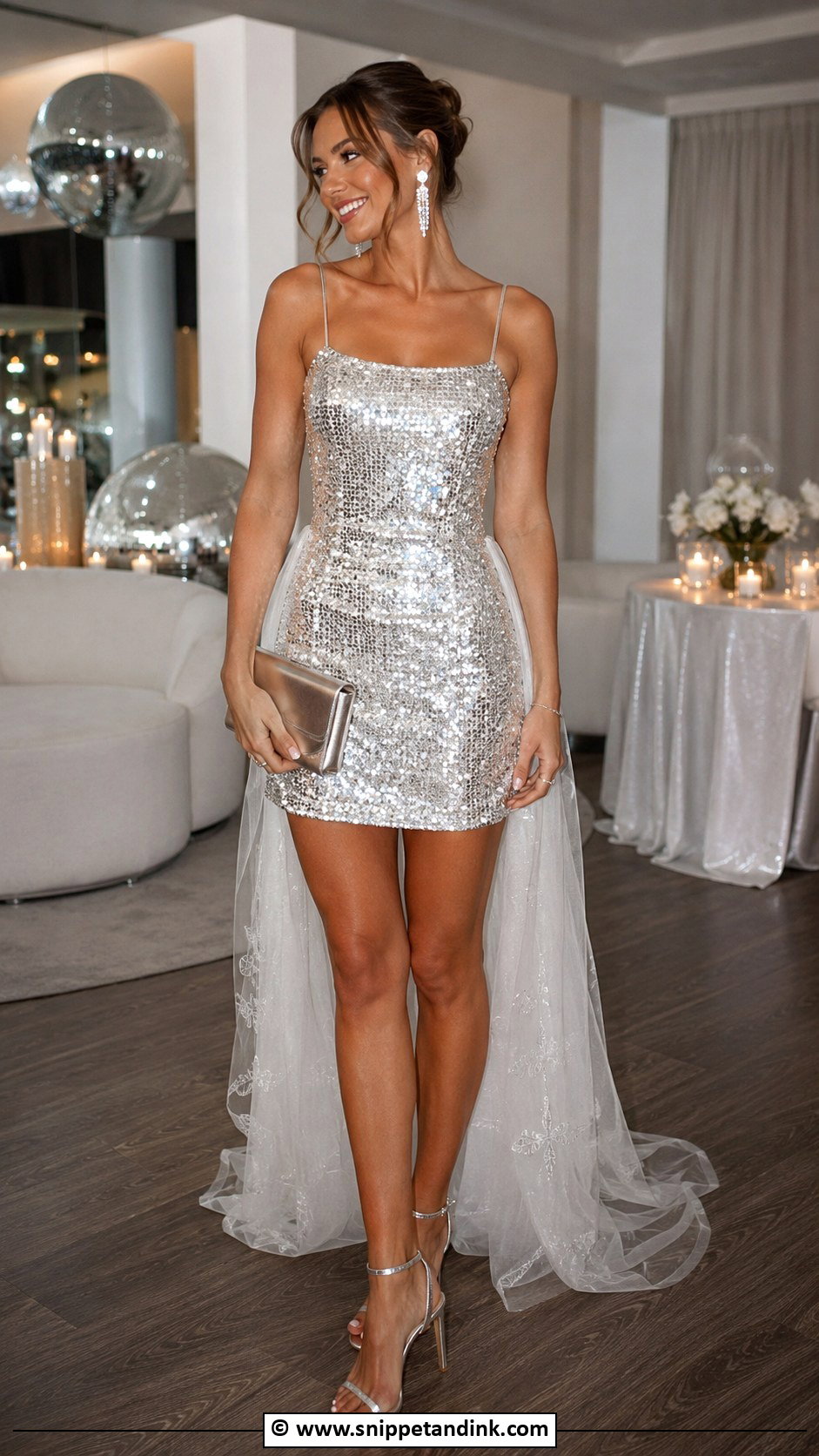
Silver is the colour that steps away from white without leaving bridal behind. It’s at its best under evening and party lighting. Sequins, metallic satin or beading all work; just keep jewelry in the same cool metal so the look feels planned. Keep the makeup fresh rather than heavy so the dress gets the shine. It suits modern venues and winter parties especially.
27. Champagne Short Wedding Dress
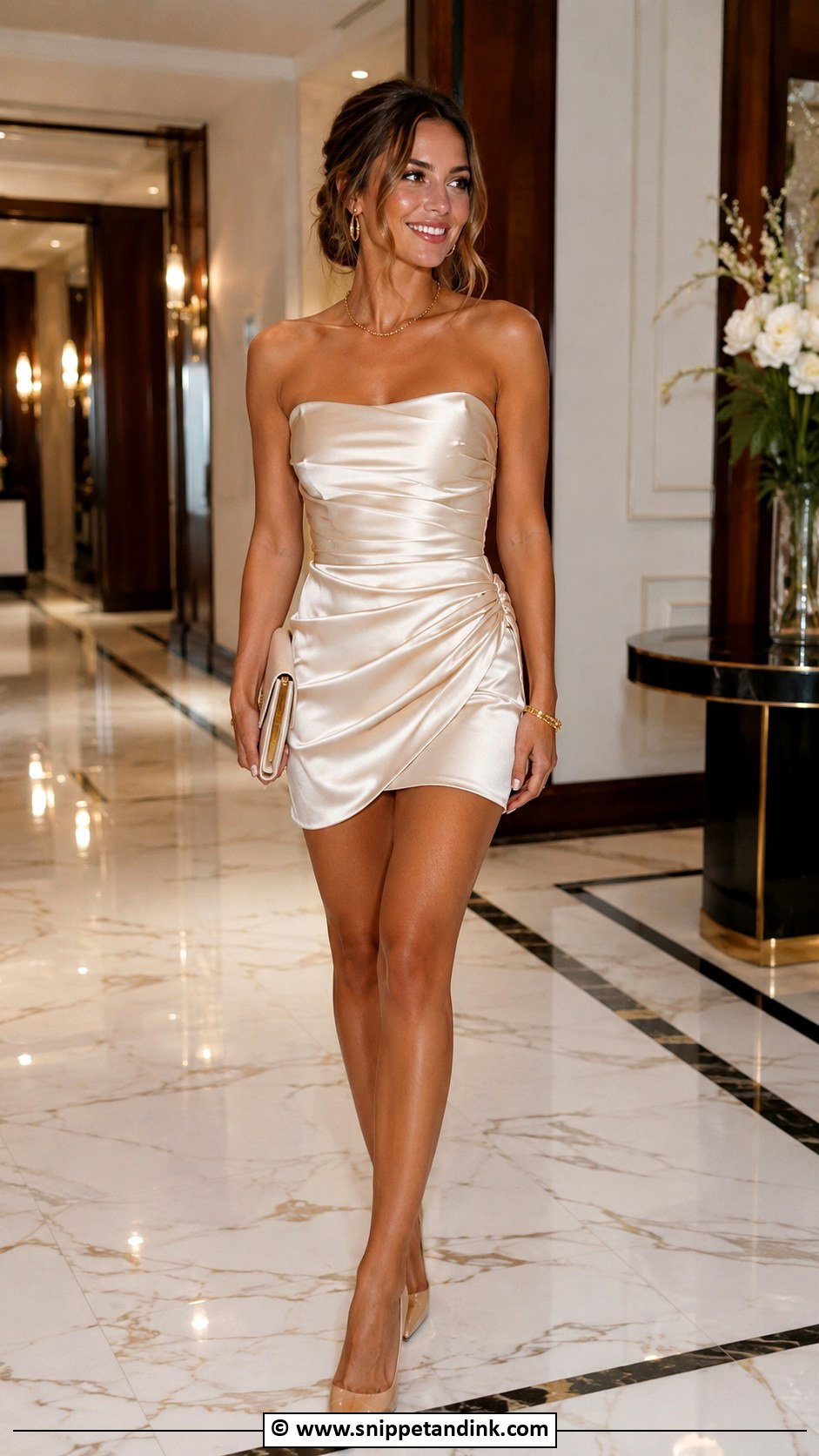
Champagne is warmer than white and more forgiving on a lot of skin tones, which is why I often suggest it to brides who find bright white draining. Hold the fabric against your face in daylight before ordering; some champagnes read pink, others gold. Gold jewelry and nude heels suit it. Next to a white ceremony gown it gives a clear change of mood, and it’s easy to wear again.
28. Puff Sleeve Mini Wedding Dress
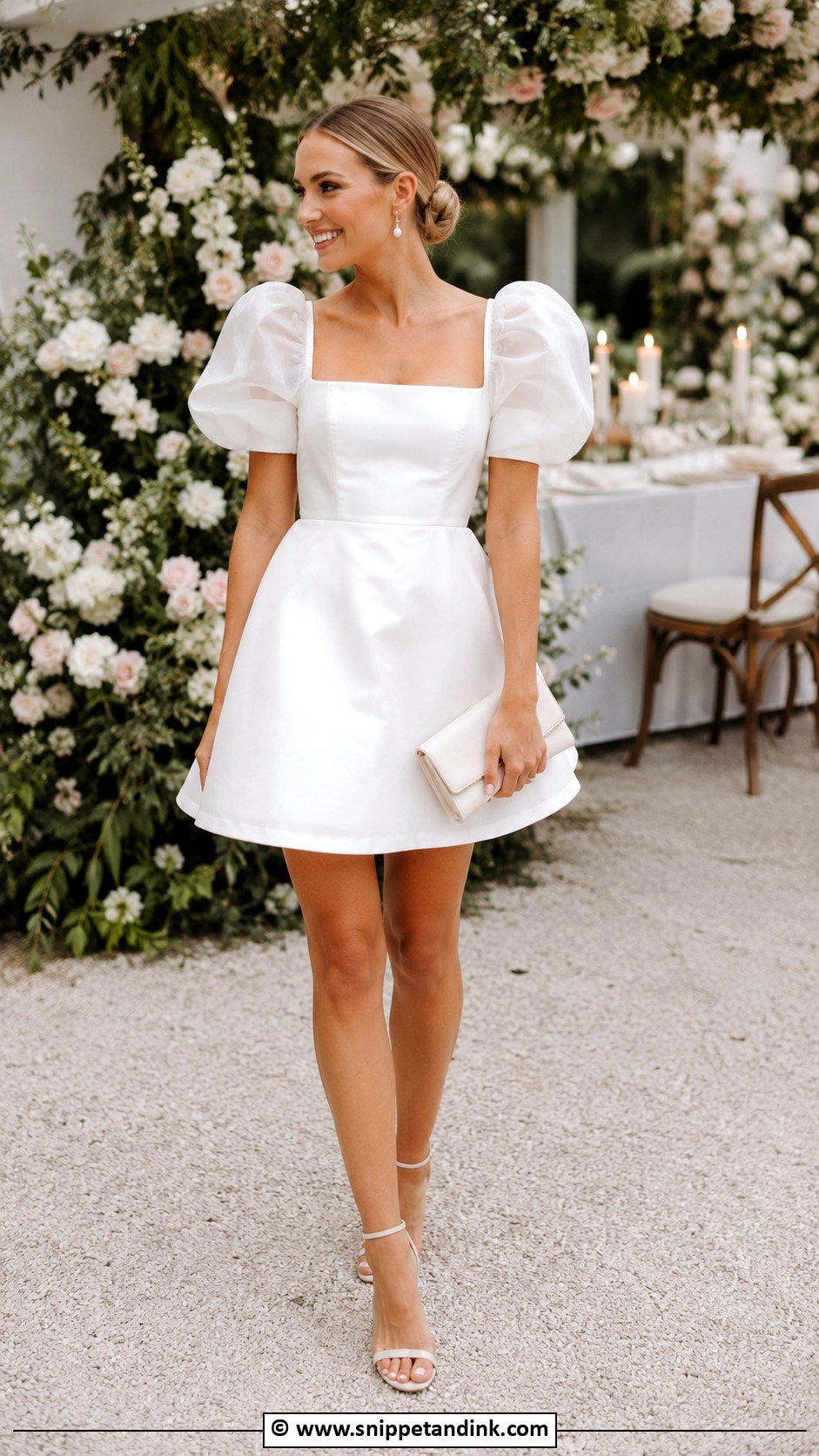
Puff sleeves add personality to a short dress without any sparkle. Small puffs stay subtle; big ones are a fashion statement and need a defined waist so the proportions don’t swamp you. Organza puffs hold their shape all night; softer chiffon ones can deflate. Simple heels, pearl earrings and a smooth clutch suit garden and boutique hotel parties.
29. Two Piece Short Wedding Set
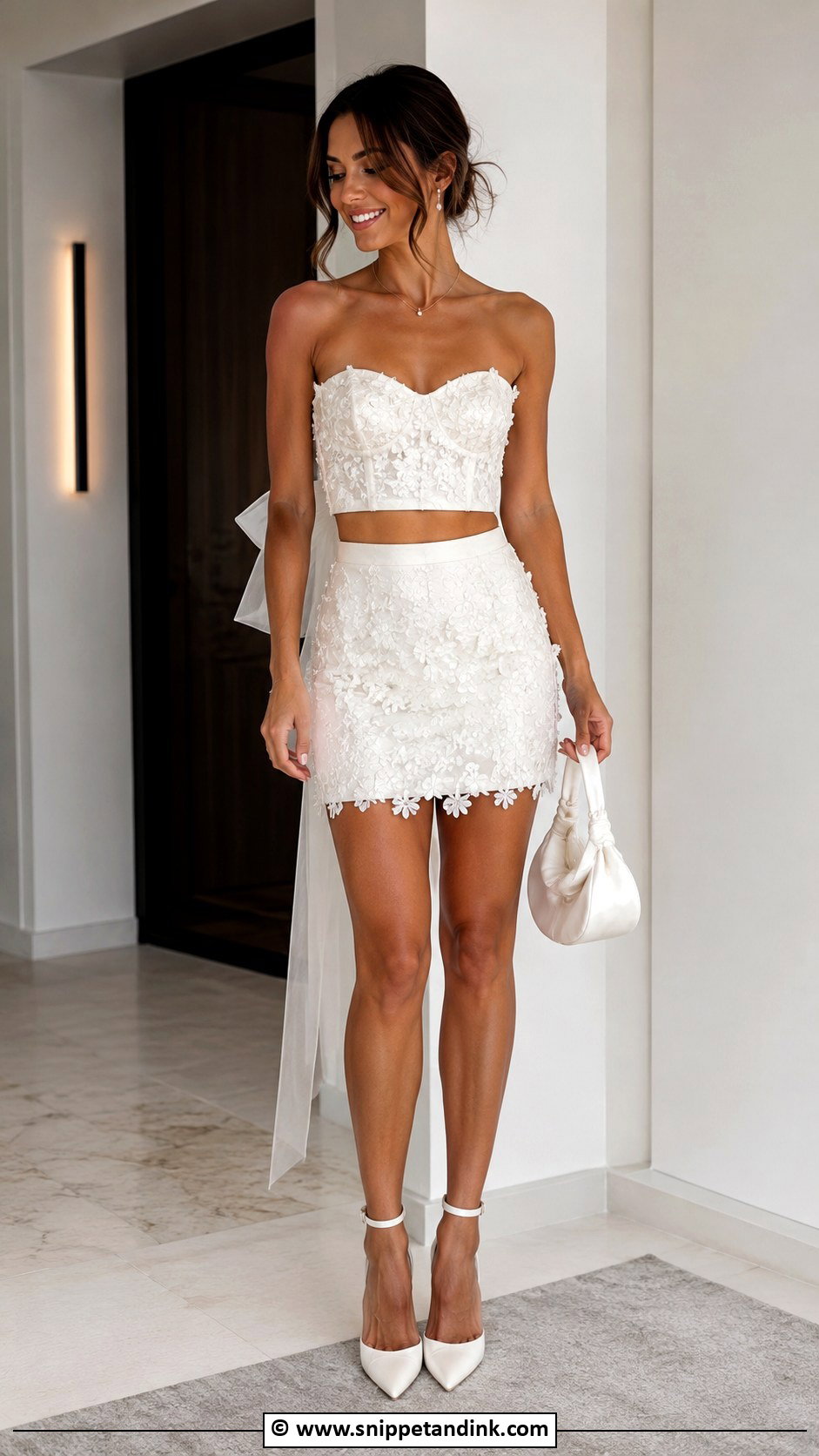
A two piece short wedding set gives you more freedom than any dress. A cropped top with a mini skirt, a tailored vest with a short skirt, or a bandeau with an A-line bottom all count. The pieces must be cut from the same fabric; two different whites look mismatched in flash photos. If you’d rather not show midriff, choose a top that meets the waistband or throw a cropped jacket over it.
30. Short Wedding Dress With Sneakers
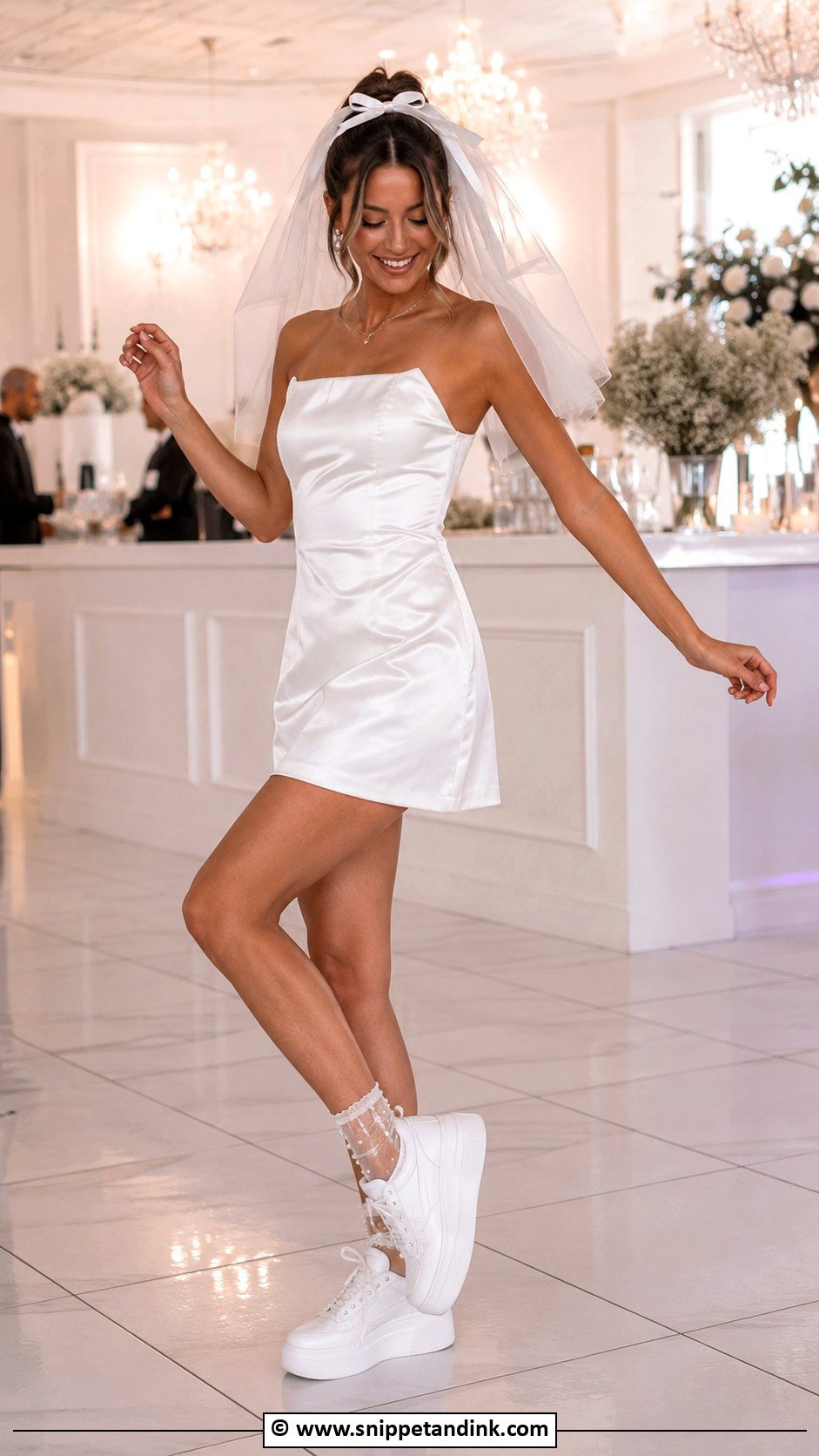
Swapping heels for flats changes how long you’ll dance more than anything else in this list. White platform sneakers add height and keep a short hem in proportion. Pearl socks, a mini veil or a hair bow make it feel bridal. Break the sneakers in for a week at home, since new soles rub too, and they’re the clear winner on grass or cobbled terraces.
Bridal Salon or High Street? Lead Times for a Short Second Dress
Where you buy the second dress changes how early you need to start. Short dresses from bridal labels are usually made to order, much like a gown, and can take several months to arrive, so I’d treat them as part of the main dress timeline. Ready-to-wear white minis from fashion shops arrive in days, but popular styles sell out quickly in peak wedding season.
Whichever route you take, leave time for one fitting with the shoes you’ll actually wear. Ready-to-wear dresses are cut for an average figure, and even a small strap or waist adjustment makes a big difference once you’re dancing. I’d plan to have the dress at home a month or more before the wedding so there’s room for a return if it doesn’t work.
Does the Second Look Need to Match the Ceremony Gown?
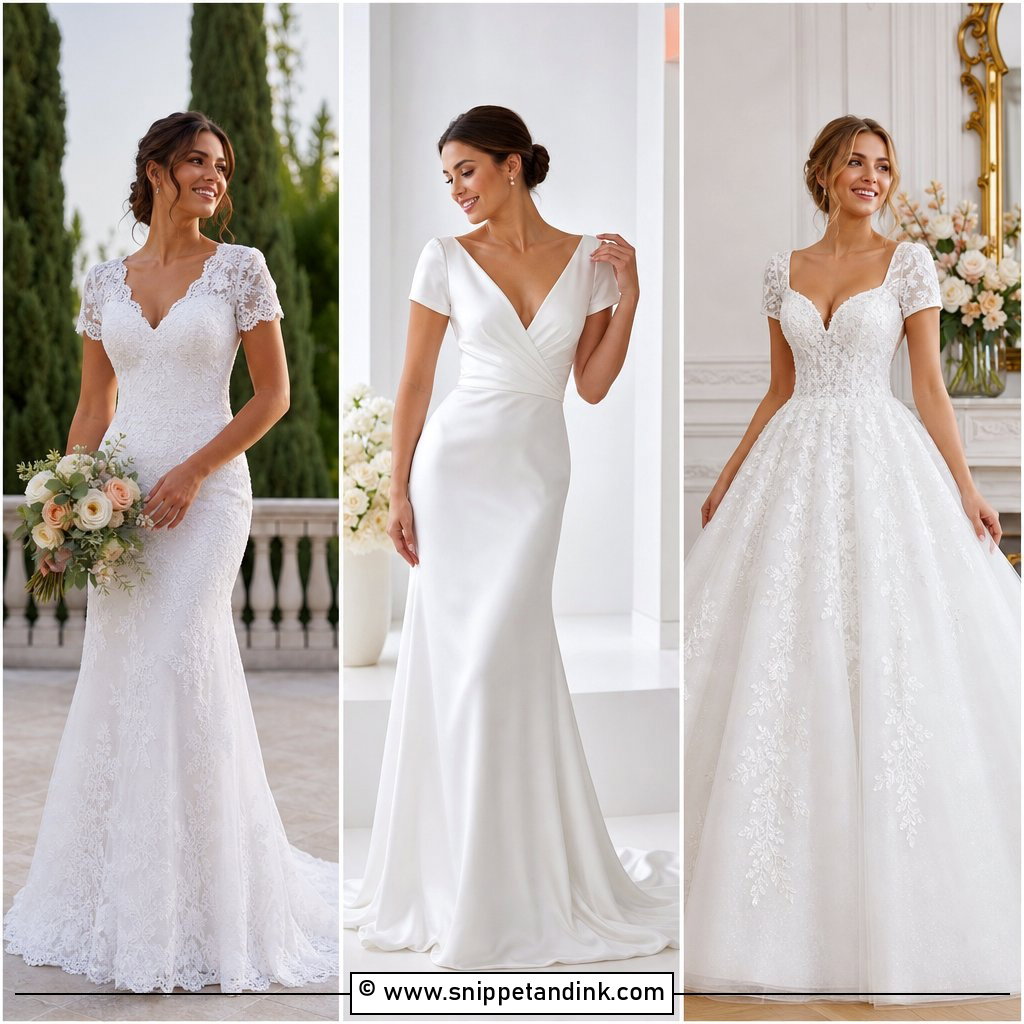
Not exactly, but a thread between them makes the photos hang together. Repeating one element is enough: the same white or ivory shade, the same lace, a neckline echo, or matching earrings across both looks. A pure white mini next to an ivory gown can make the gown look yellowish in photos, so I compare the two fabrics side by side in daylight before settling on a colour.
If you want contrast, go all in with a clearly different colour like silver or champagne. It’s the in-between shades that look like a mistake.
Sit, Stretch and Dance in It Before the Wedding
There isn’t one correct short dress, but there’s always one that suits your night best. Start with the facts: the venue floor, the temperature, how much the gown has restricted you, and how long you’ll dance. Then pick the fabric and support that cope with those, and let style decide the rest. Sit, stretch and dance in it before the wedding, and the afterparty becomes the easiest part of your day.
You'll Like These Ideas:




Leave a Reply