
There’s no rulebook for a second wedding dress, and the brides who enjoy shopping most are the ones who stop asking what’s allowed. A bridal look for a new chapter can be white, champagne or blush, a full gown or a polished midi, worn at a courthouse, in a garden, on a beach or in a ballroom. What I ask about first is how you’ll spend the day: standing for photos, sitting through a long dinner, dancing, maybe keeping an eye on grandchildren. Fabric and tailoring usually decide whether a dress feels right far more than any trend. Each of the twenty looks below comes with the shoes, accessories and fitting notes I’d give a client trying it on.
Bridal Salon or Ready-to-Wear Rail?
Plenty of second-wedding brides assume they should skip the bridal shop, and plenty shouldn’t. The two routes simply run on different clocks, and knowing which one you’re on decides when you need to start.
Ordering a gown through a bridal shop
A designer bridal gown is usually made to your size after you order it, which commonly takes several months, and alterations come on top of that. For this route I’d start trying on six to nine months ahead. Call before you book an appointment and ask whether the shop’s samples come in your size, so you can judge the real fit rather than a dress clipped onto you.
Buying ready to wear
Midi dresses, jumpsuits, blazer dresses and many colored gowns are sold ready to wear, so they can be bought much closer to the date. Still leave at least four to six weeks for a seamstress. Very little fits perfectly off the rail, and good alteration hands are booked up quickly in the busy months.
1. A-Line Lace Second Wedding Dress
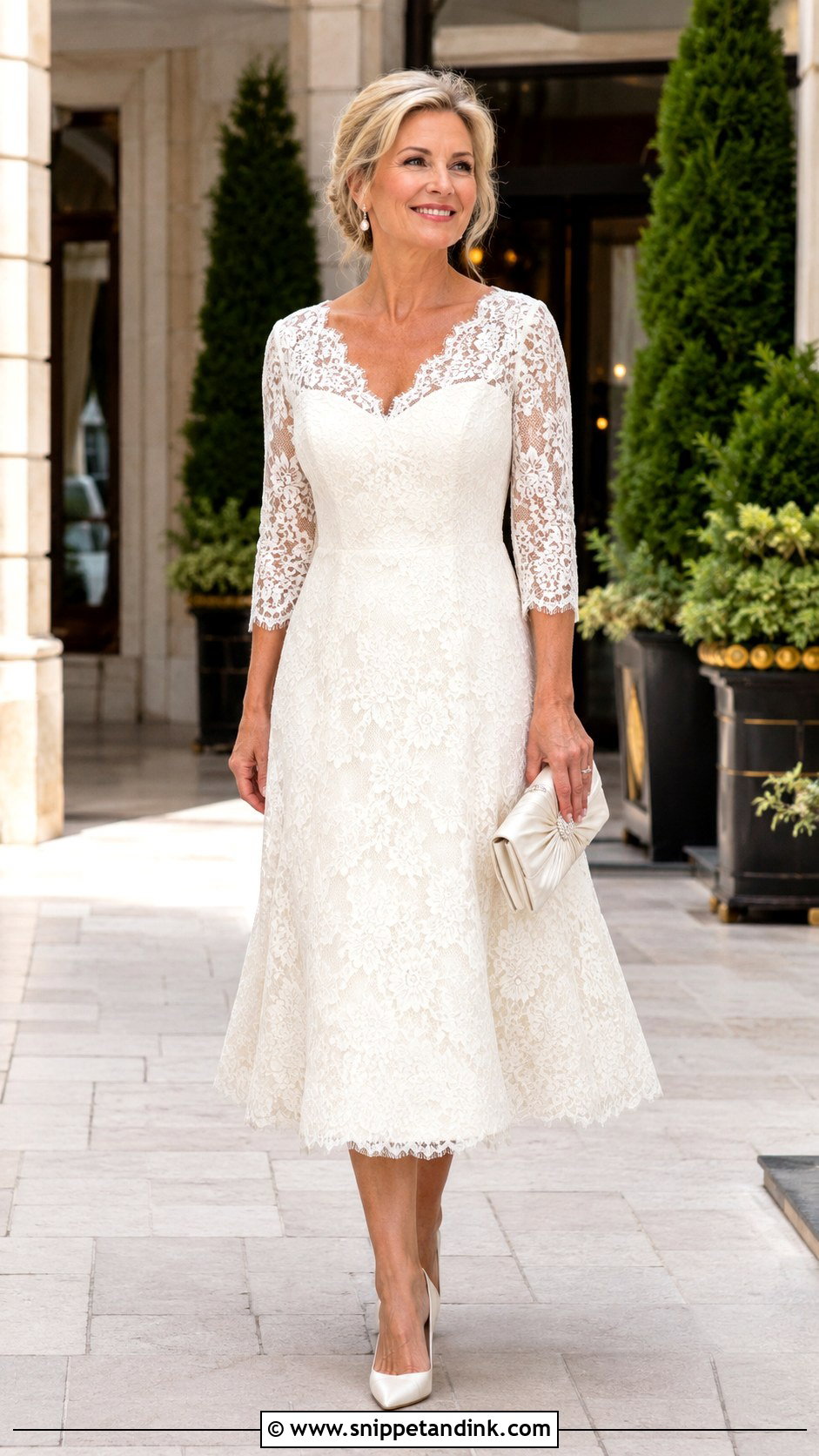
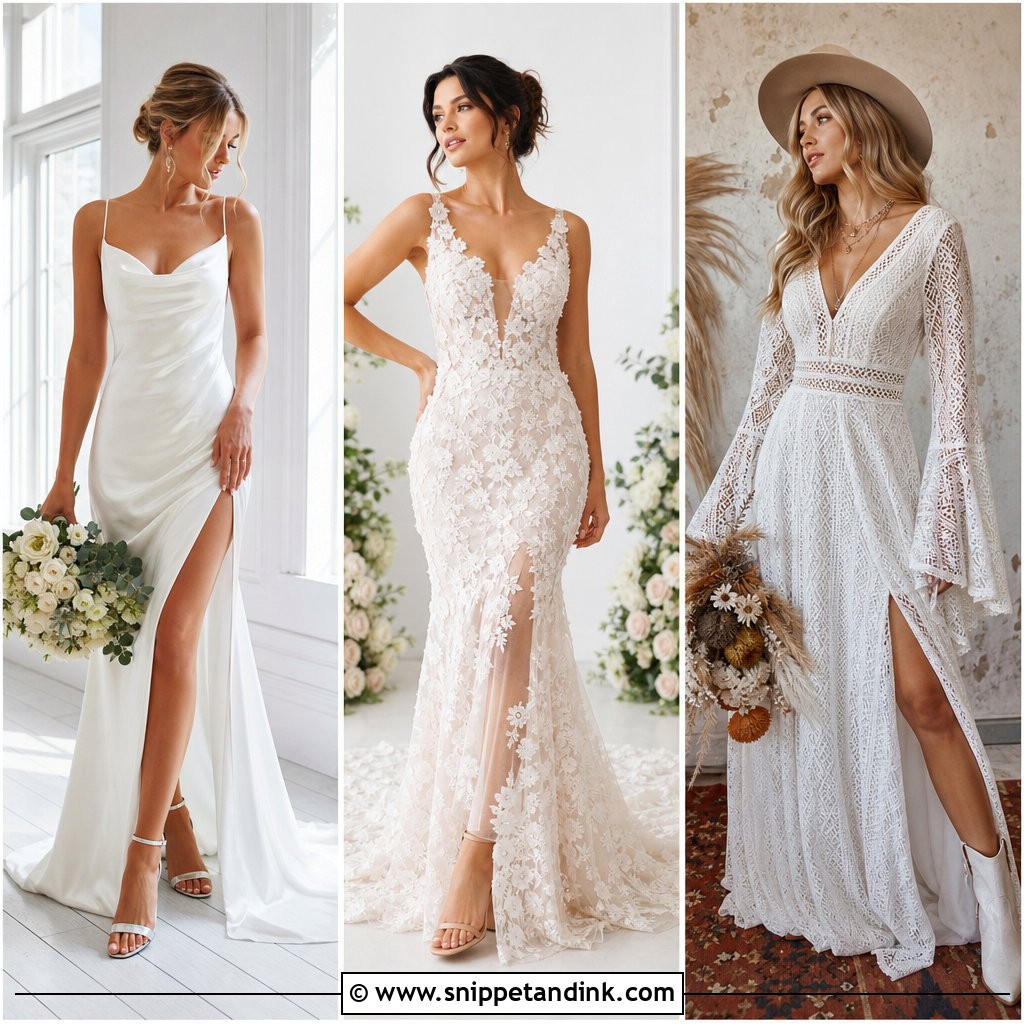
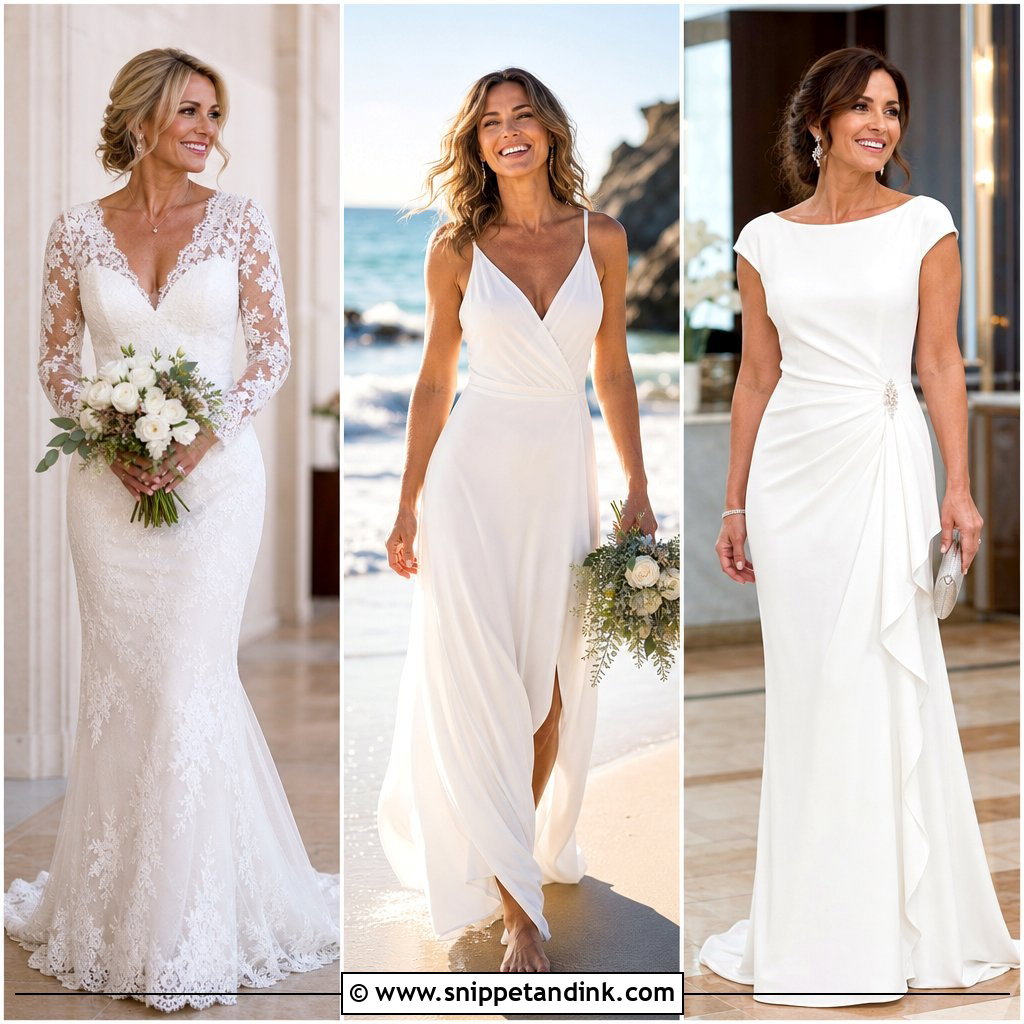
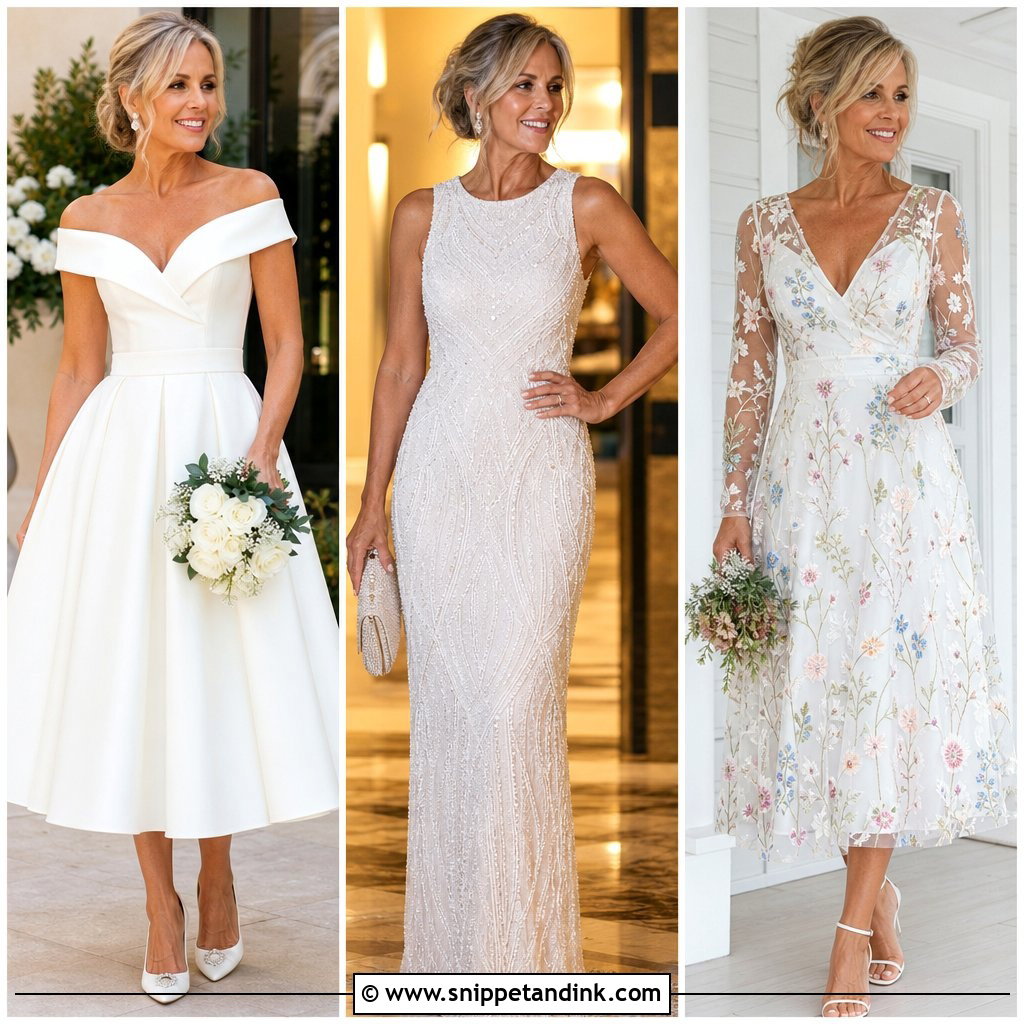
Lace on an A-line is the safest bet in this list, and I mean that as a compliment. The skirt falls away from the waist, so it forgives a lot, and three-quarter sleeves give coverage without heat. A scooped or V neckline stops it looking matronly. Ivory pointed pumps, pearl drops and a satin clutch finish it, with a fingertip veil or simply a crystal comb. The detail I check in the fitting room is the lace itself. Heavy corded lace is stiff, and on a sleeve it can bite at the elbow every time you bend your arm, so look for a softer lace over a light lining. Hotel ceremonies and traditional venues suit it.
2. Satin Sheath Second Wedding Dress
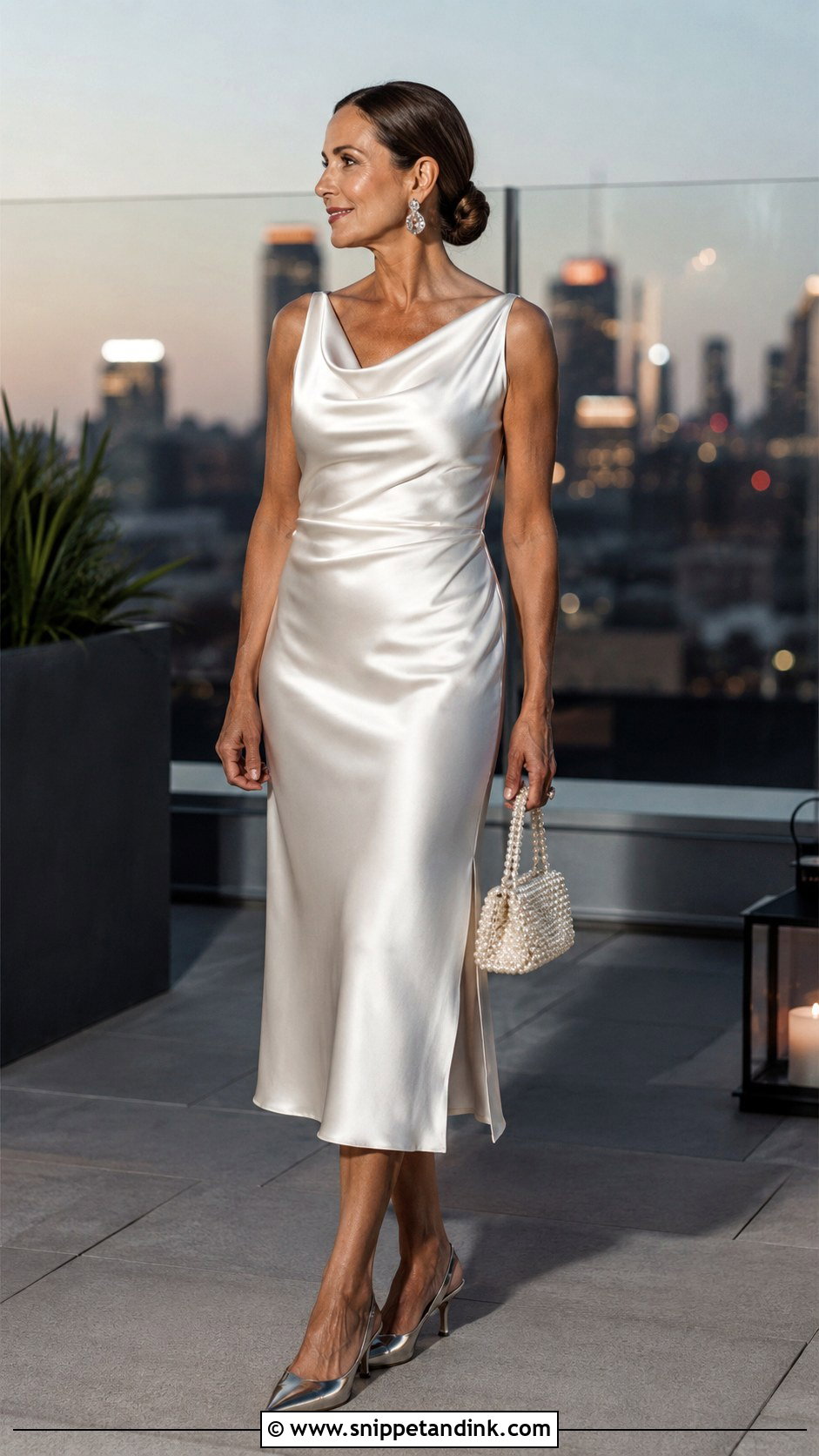
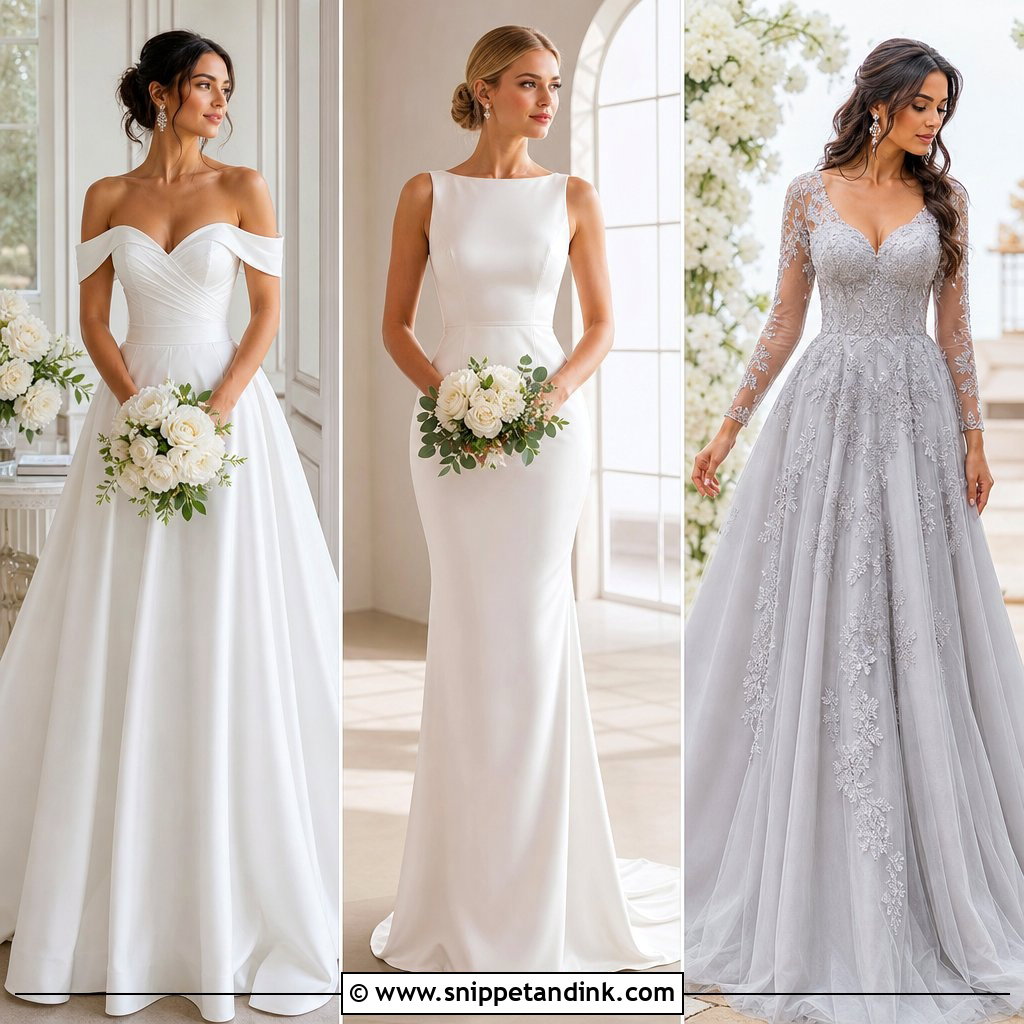
Satin is honest fabric. It shows every ridge underneath, which is why a clean sheath silhouette in satin needs to skim the body rather than cling. I’d rather a bride buys the size that fits her widest point and has the rest taken in, because tight satin pulls into horizontal creases at the hip. A draped neck, soft ruching at the waist or a column of covered buttons adds interest. Metallic kitten heels, a small pearl bag and sculptural earrings suit it, with a low bun or a waved bob. It belongs at a restaurant or rooftop in the evening, so take a tailored ivory wrap for after sunset.
3. Tea-Length Second Wedding Dress
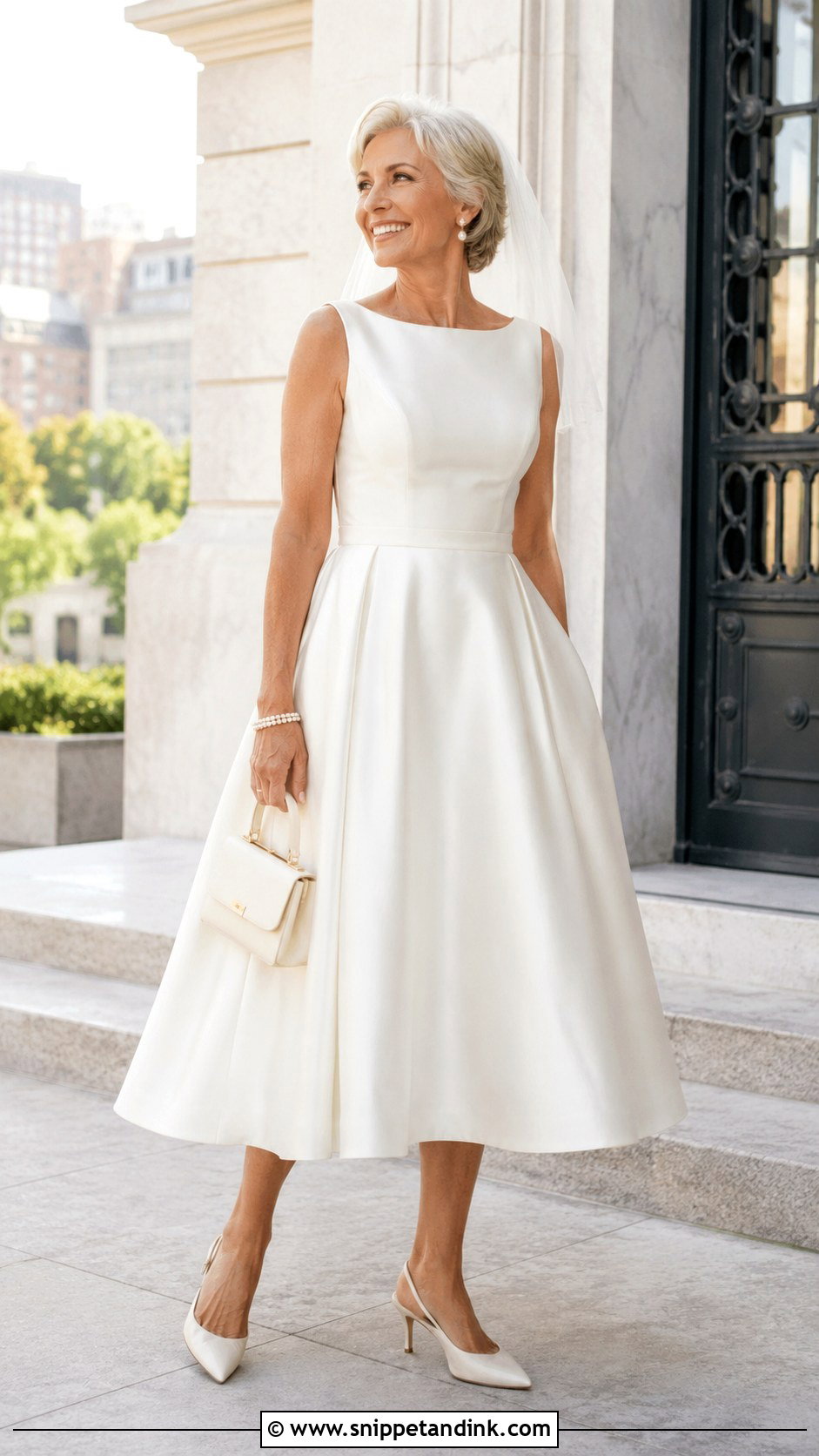
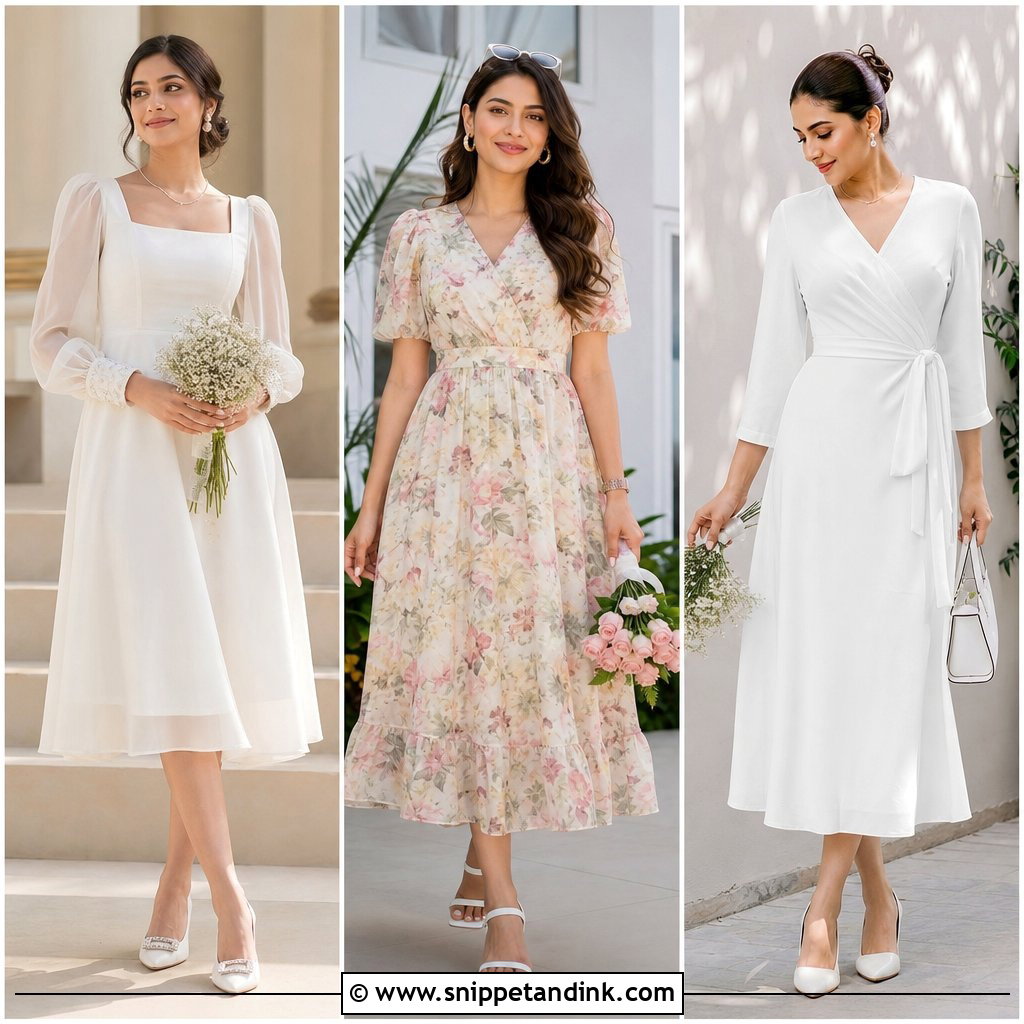
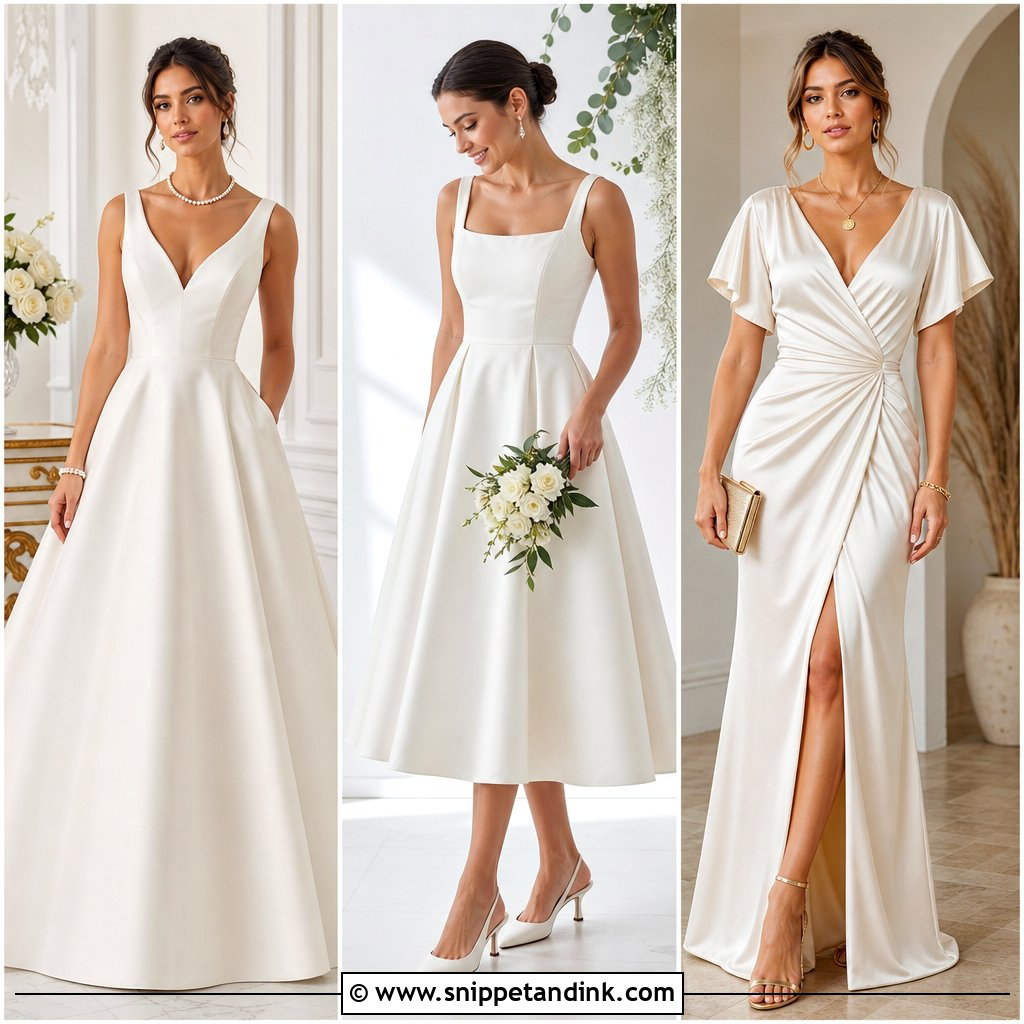
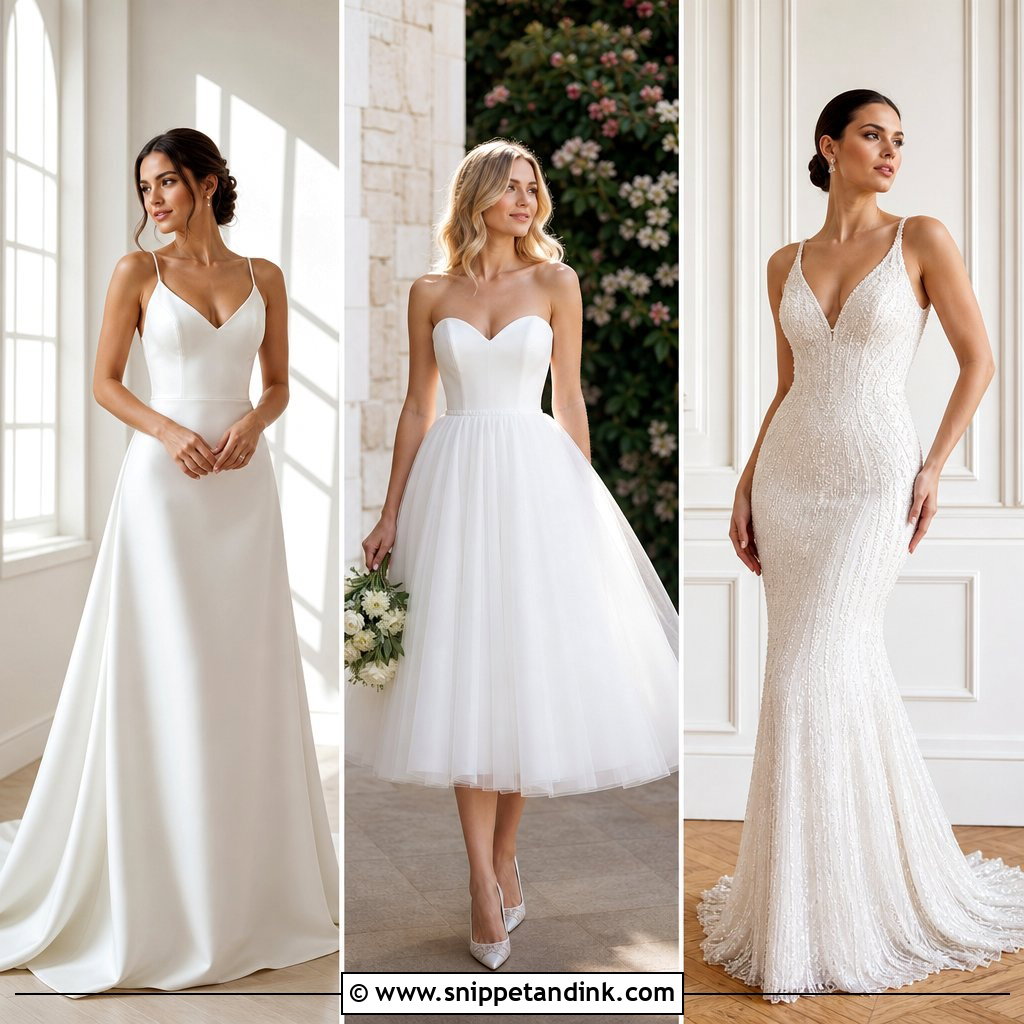
For a small daytime wedding, tea length is the cheerful option and the easiest to move in. The skirt needs body to hold its flare, so look at mikado, satin or embroidered organza; a soft crepe will simply hang. Pair a structured bodice with a hem that lands between knee and ankle, then add pointed slingbacks, a pearl bracelet and a little top-handle bag. A short veil or floral pin keeps the bridal note without fuss. Because the hem shows your shoes, buy them before your fitting and have the length set while you’re wearing them. Courthouses and garden lunches are its natural home.
4. Champagne Second Wedding Dress
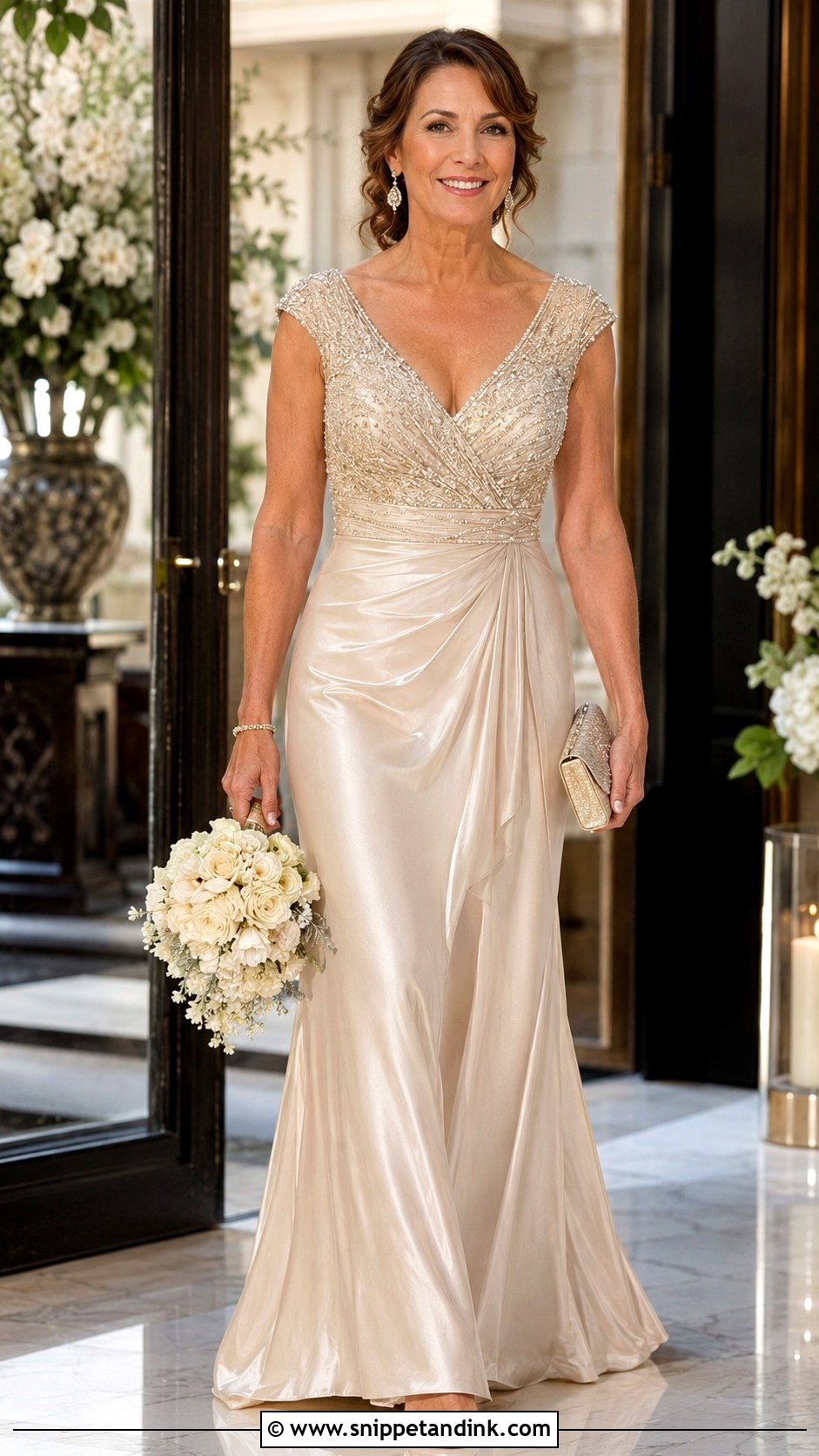
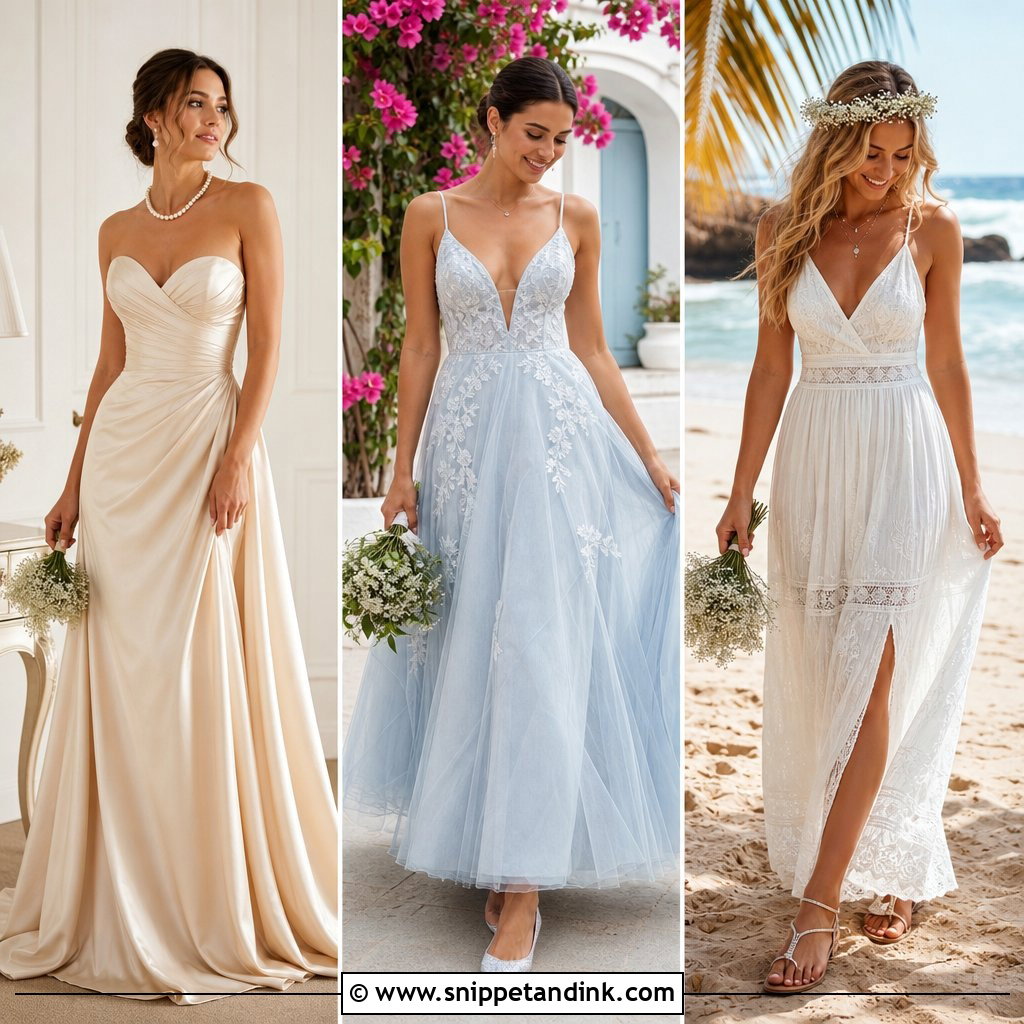
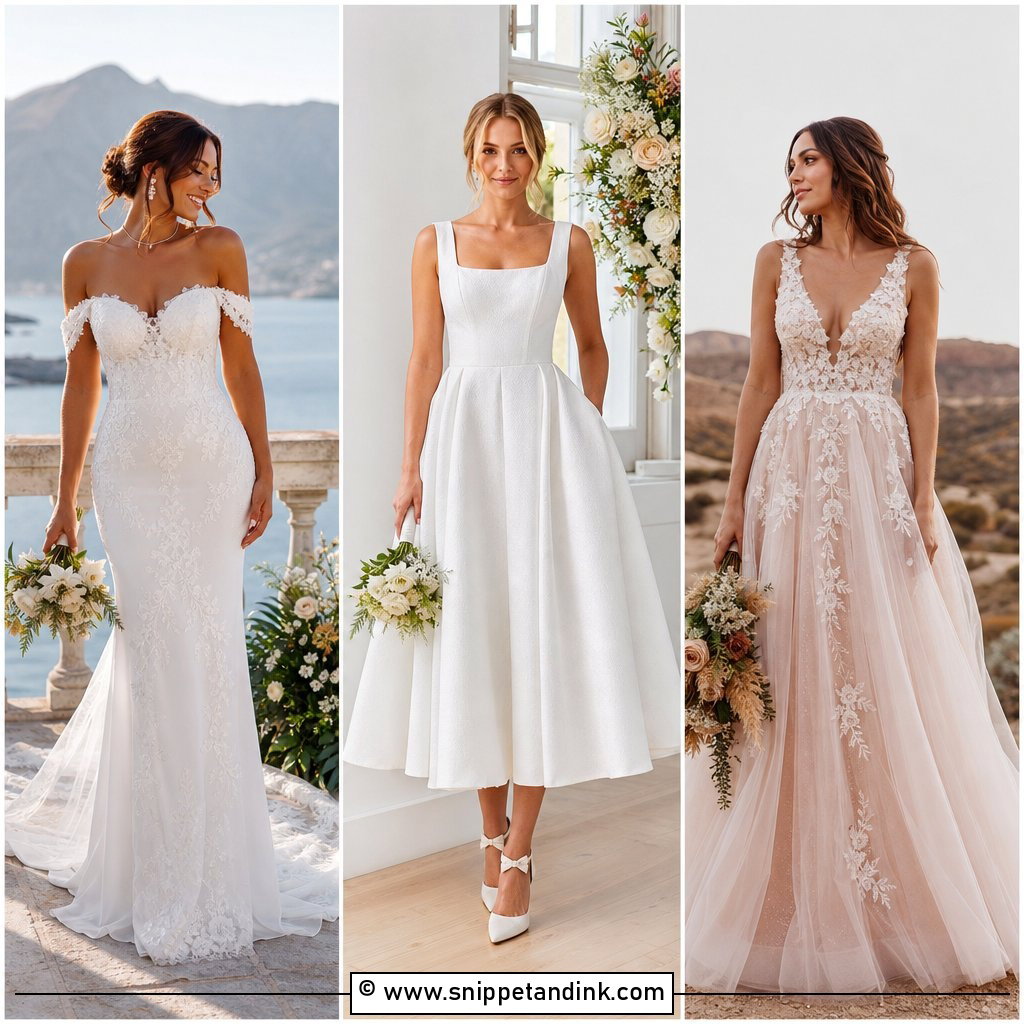
Champagne flatters more skin tones than stark white, which is often why I suggest it. But the word covers everything from pale gold to almost beige-pink, and the undertone matters. Hold the fabric near your face in daylight and again under warm indoor bulbs before you decide; some shades turn grey on camera and others turn peach. A floor-length gown with a softly fitted waist, a flowing skirt and fine beading at the neckline suits an evening or formal indoor ceremony. Gold sandals, champagne crystal earrings and a neutral satin clutch keep one palette from head to toe, and cream, peach or pale pink flowers sit better beside it than strong contrast.
5. Blush Pink Second Wedding Dress
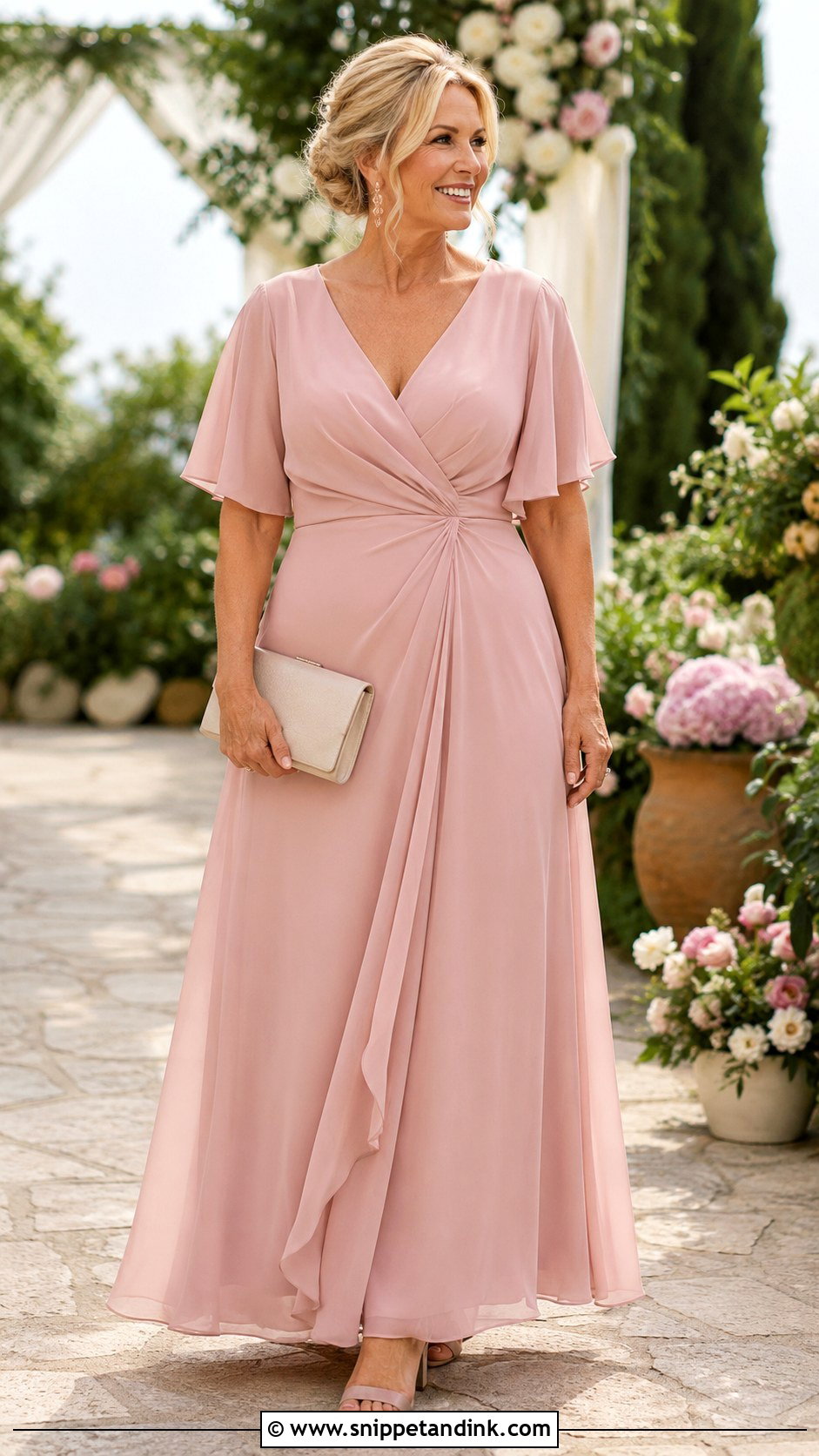
Could blush feel more like you than ivory? For plenty of brides marrying again, it does. I’d pick dusty blush over bright pink, since it reads grown-up and is easy to dress around. A flowing A-line with a wrap-effect bodice, flutter sleeves and a lightly layered skirt suits a garden or spring ceremony. Nude block heels, rose-gold earrings and a pale clutch are all it needs. Wrap bodices tend to gape when you lean forward to hug someone, so I ask the seamstress to tack the overlap where it crosses. A loose updo and natural makeup complete it.
6. Long Sleeve Lace Second Wedding Dress
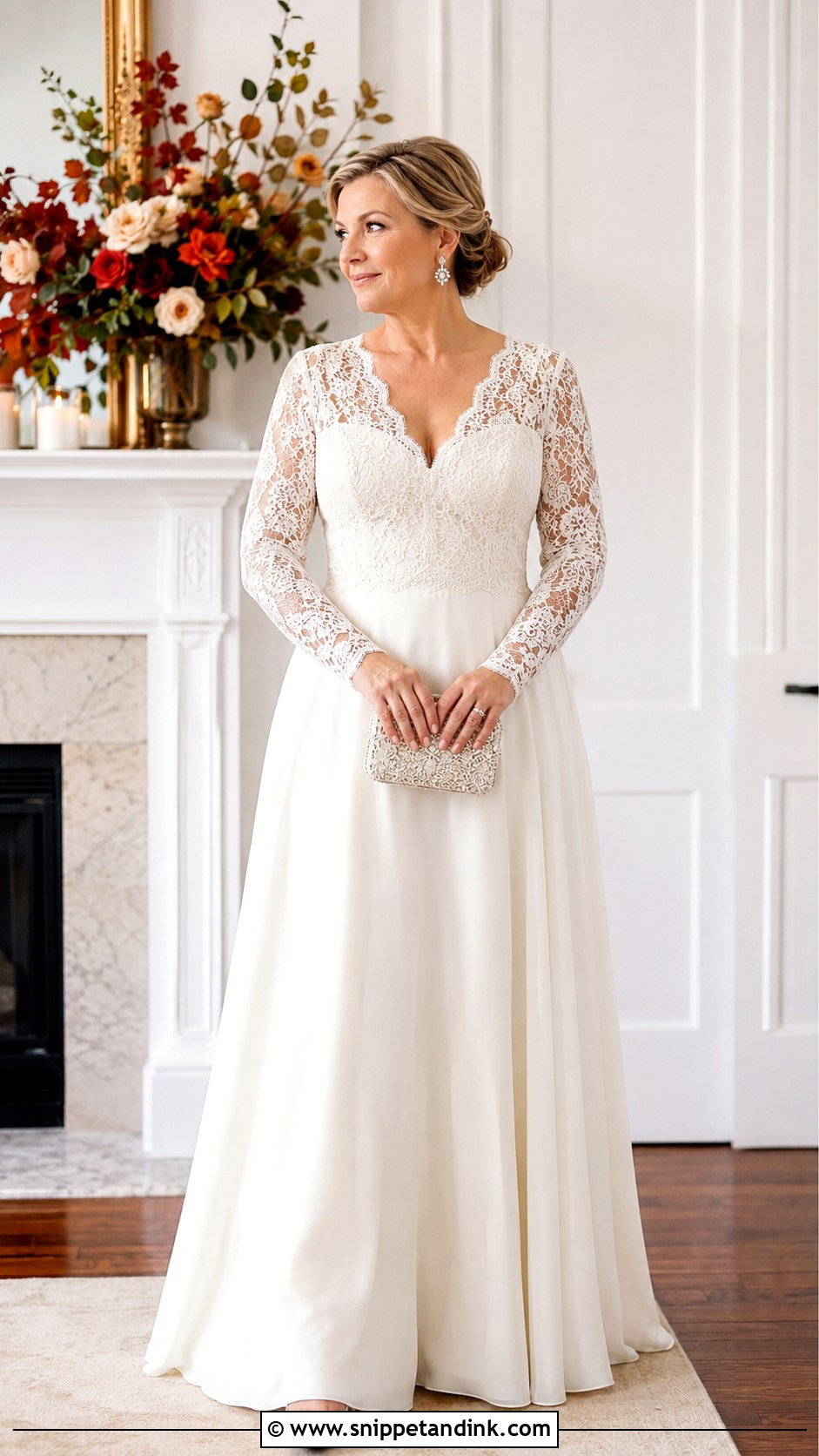
Sheer lace sleeves give coverage and still look light. Look for a lined bodice, lace motifs placed to shape the waist, and a soft V or bateau neck so the dress doesn’t feel buttoned to the chin. Small diamond or crystal earrings, ivory low heels and a beaded clutch are enough; skip the heavy necklace, since the lace is already doing that job. Wear a neat chignon with a simple comb. It suits fall, winter or an air-conditioned venue. Insist on stretch lace in the sleeves. I have brides reach across a table during fittings, because a rigid lace sleeve that feels fine standing still can strain at the underarm seam after an evening of hugging guests.
7. Off-Shoulder Second Wedding Dress
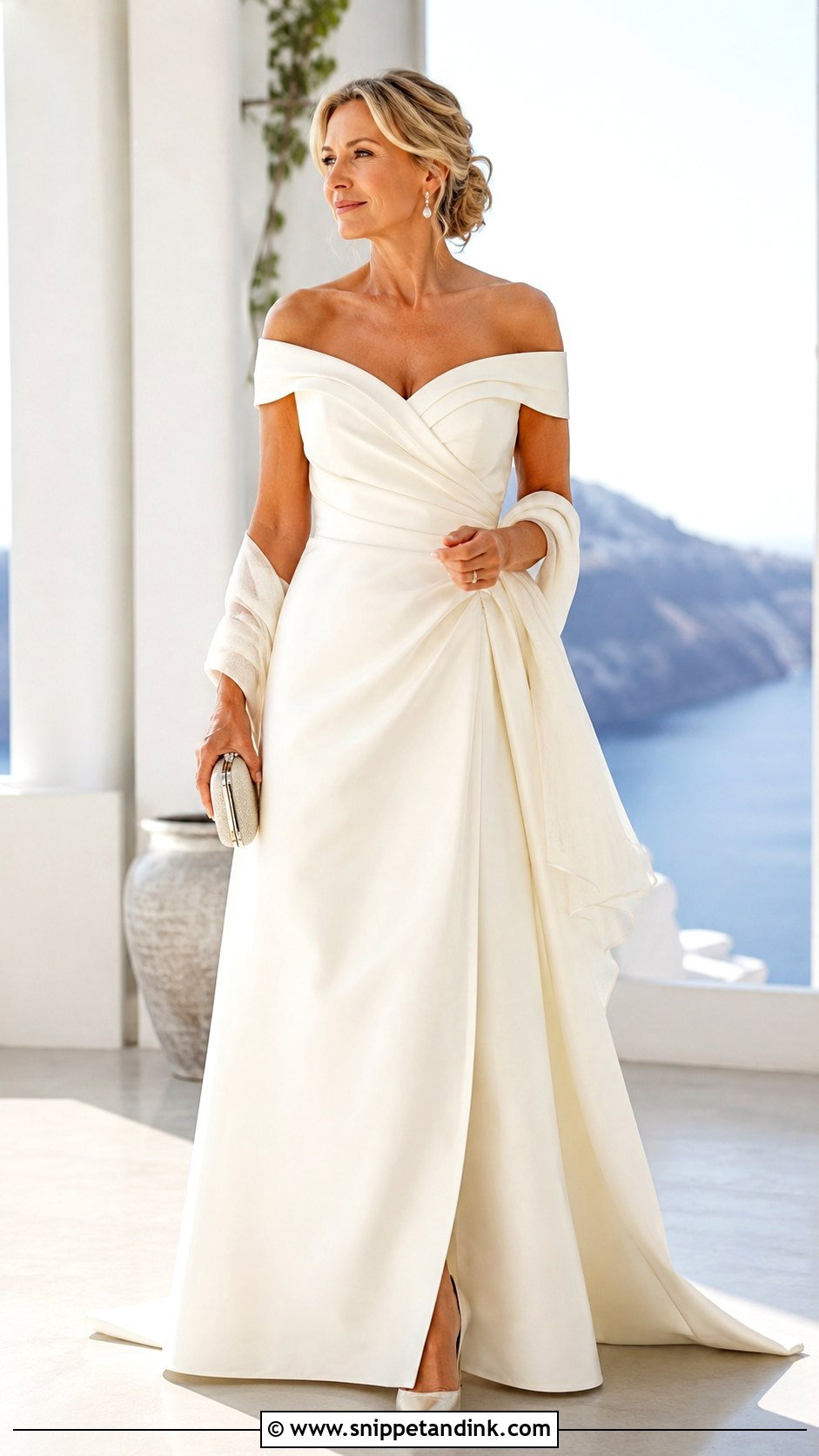
An off-shoulder neckline frames the collarbones, and it stays sophisticated rather than girlish when the bodice is properly built. Structure is everything here. A boned bodice with a silicone grip strip along the inside of the top edge stays put; one without it slides every time you raise your arms. In fittings, lift your arms, sit down and give the seamstress a hug before you approve it. A draped skirt or gentle A-line balances the fitted top. Add a short pendant, drop earrings, satin pumps and a small clutch, plus a light wrap between ceremony and reception. It works indoors at a formal wedding or at a coastal venue.
8. V-Neck Crepe Second Wedding Dress
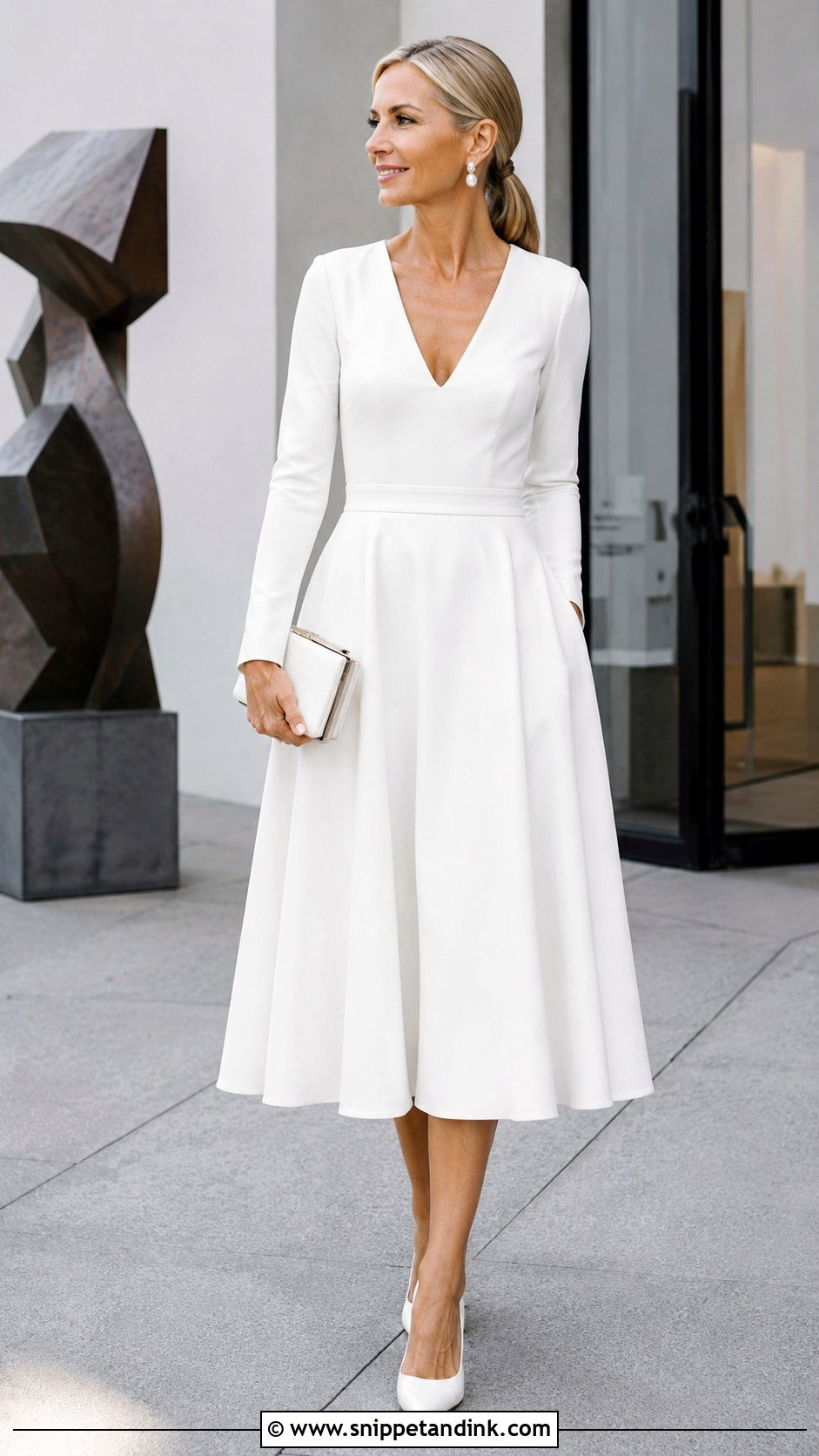
Crepe is matte and smooth, so a V-neck in crepe looks modern with almost no decoration. That smoothness has a price: it shows seams, bra lines and anything else underneath. I’d choose smooth, laser-cut underwear before the first fitting and look for a substantial lining. Go for a defined waist, a straight or slightly flared skirt and a moderate V you won’t need to adjust all day. Pearl earrings, white leather pumps and a box clutch keep it clean, with a sleek blowout or low ponytail. A detachable crepe train adds drama for a gallery or city venue.
9. Wrap Midi Second Wedding Dress
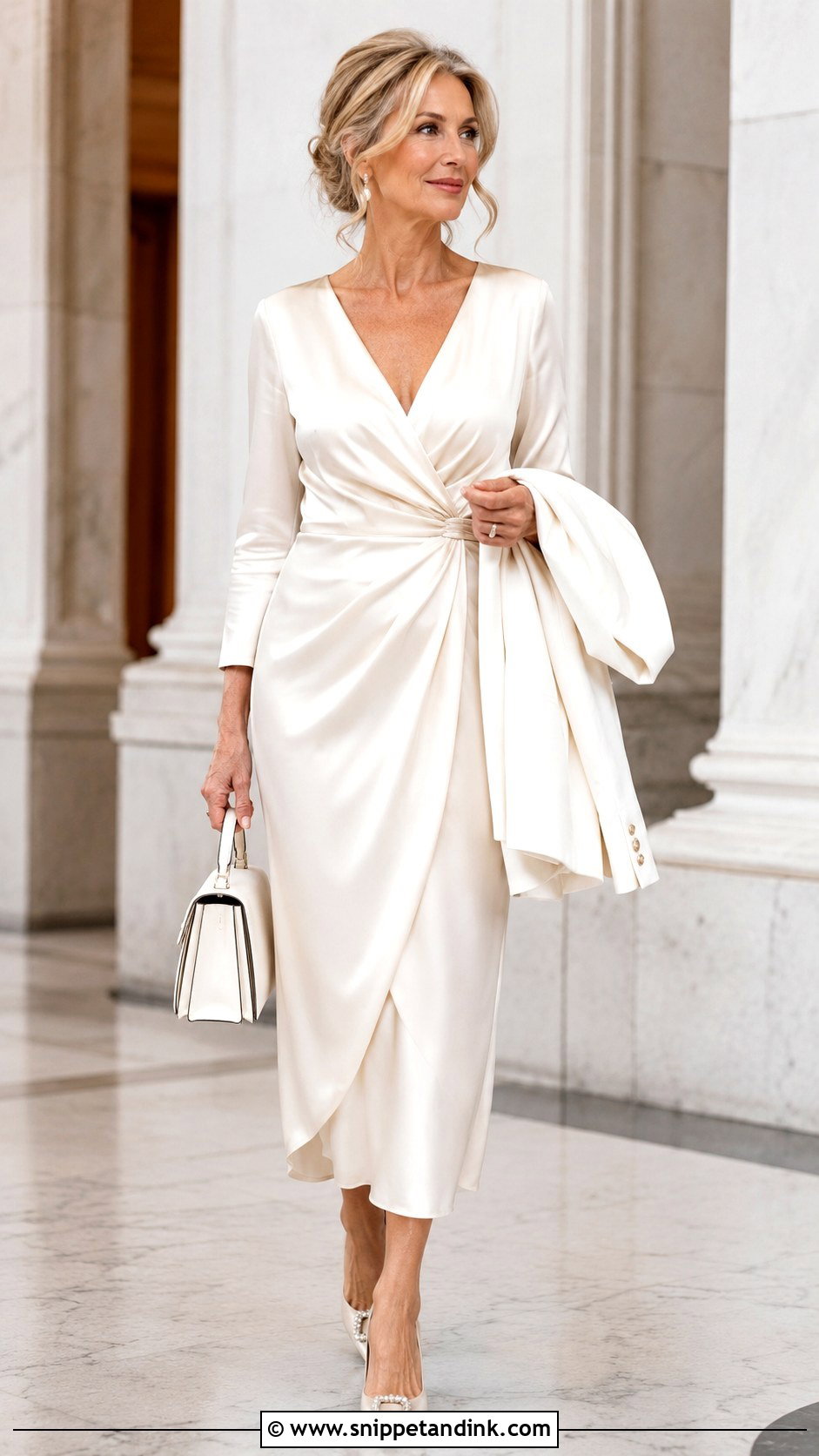
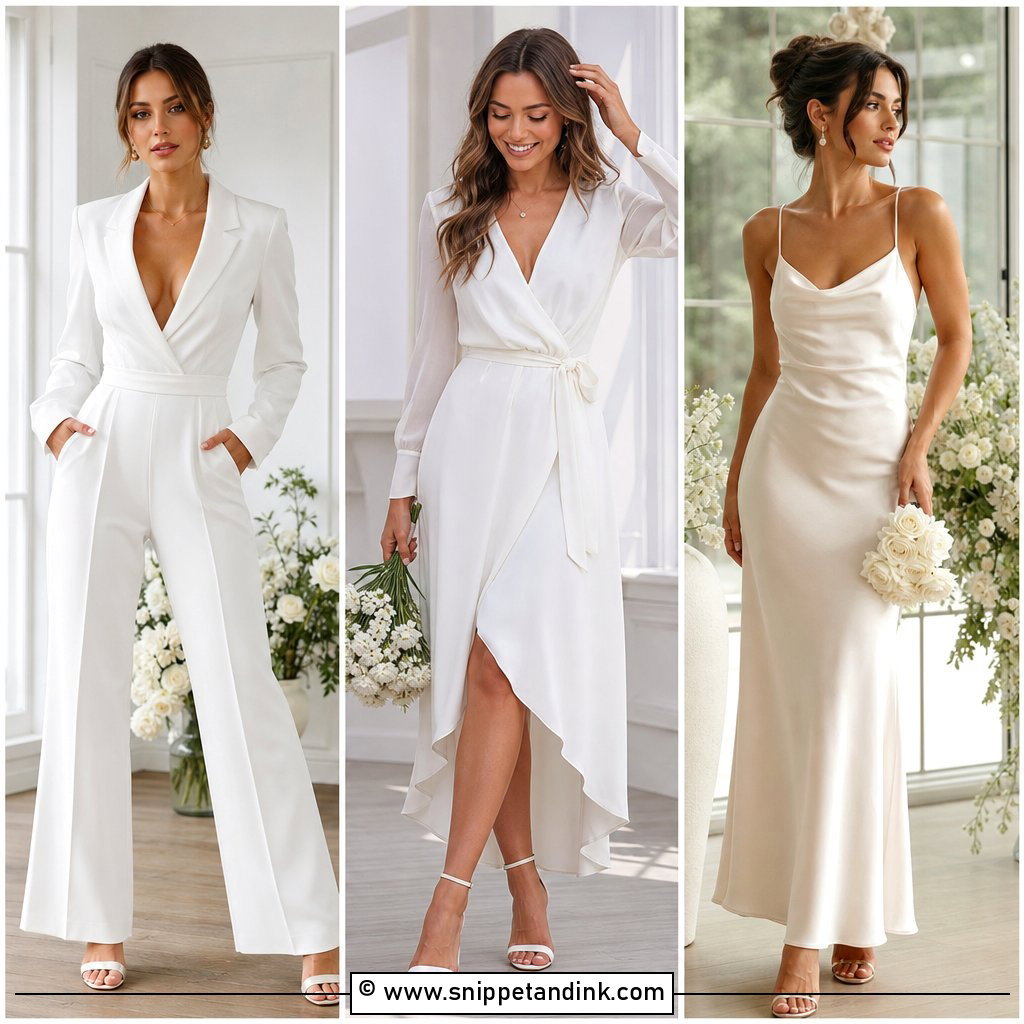
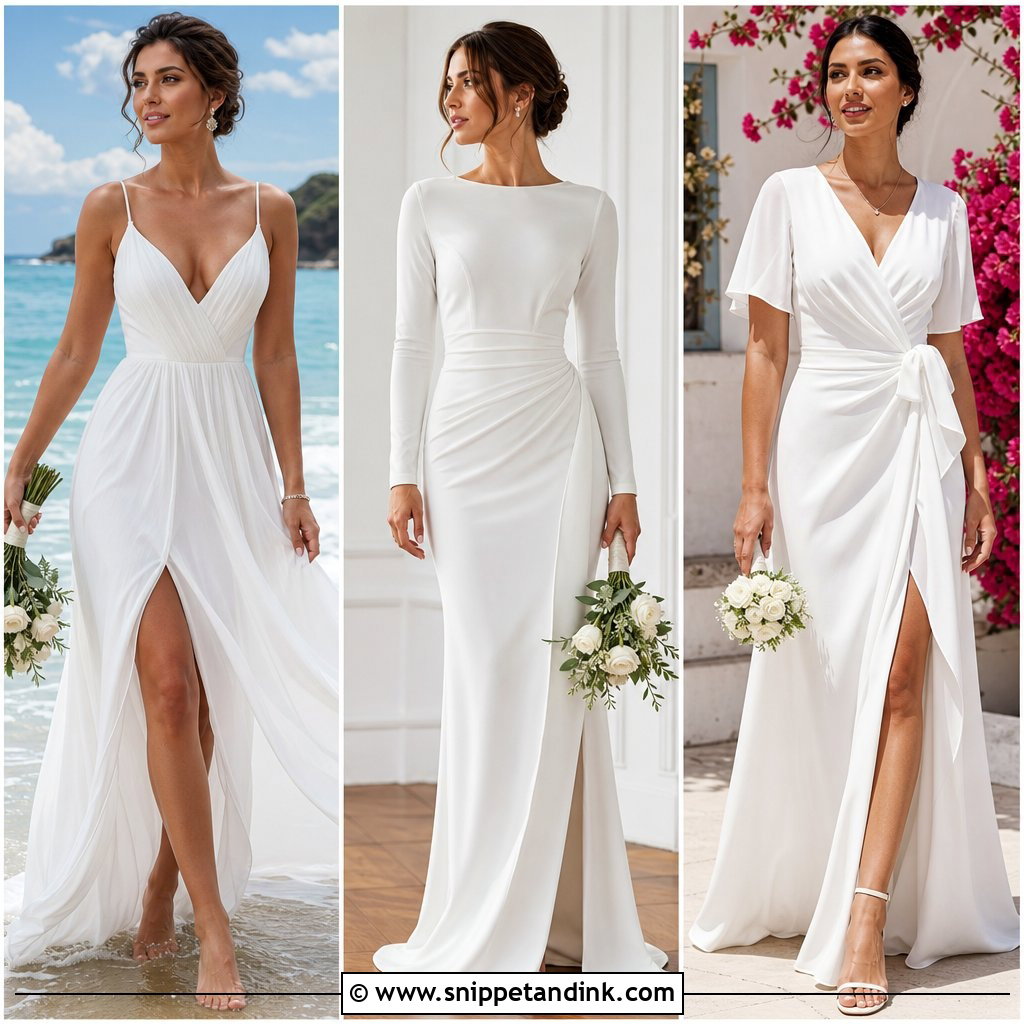
A wrap midi dress suits a relaxed ceremony, but only in proper cloth. Thin jersey looks like a work dress; satin, heavy crepe or jacquard looks bridal. The waist tie should hold firmly and the neckline should drape softly. Embellished low heels, a small structured bag and pearl earrings work well. A fitted blazer smartens it for city hall, and a floral hair piece makes it feel festive for a brunch or backyard party. Wraps are known for opening as you walk and sit, so I always add hidden snaps at the neckline and at the skirt overlap.
10. Floral Embroidered Second Wedding Dress
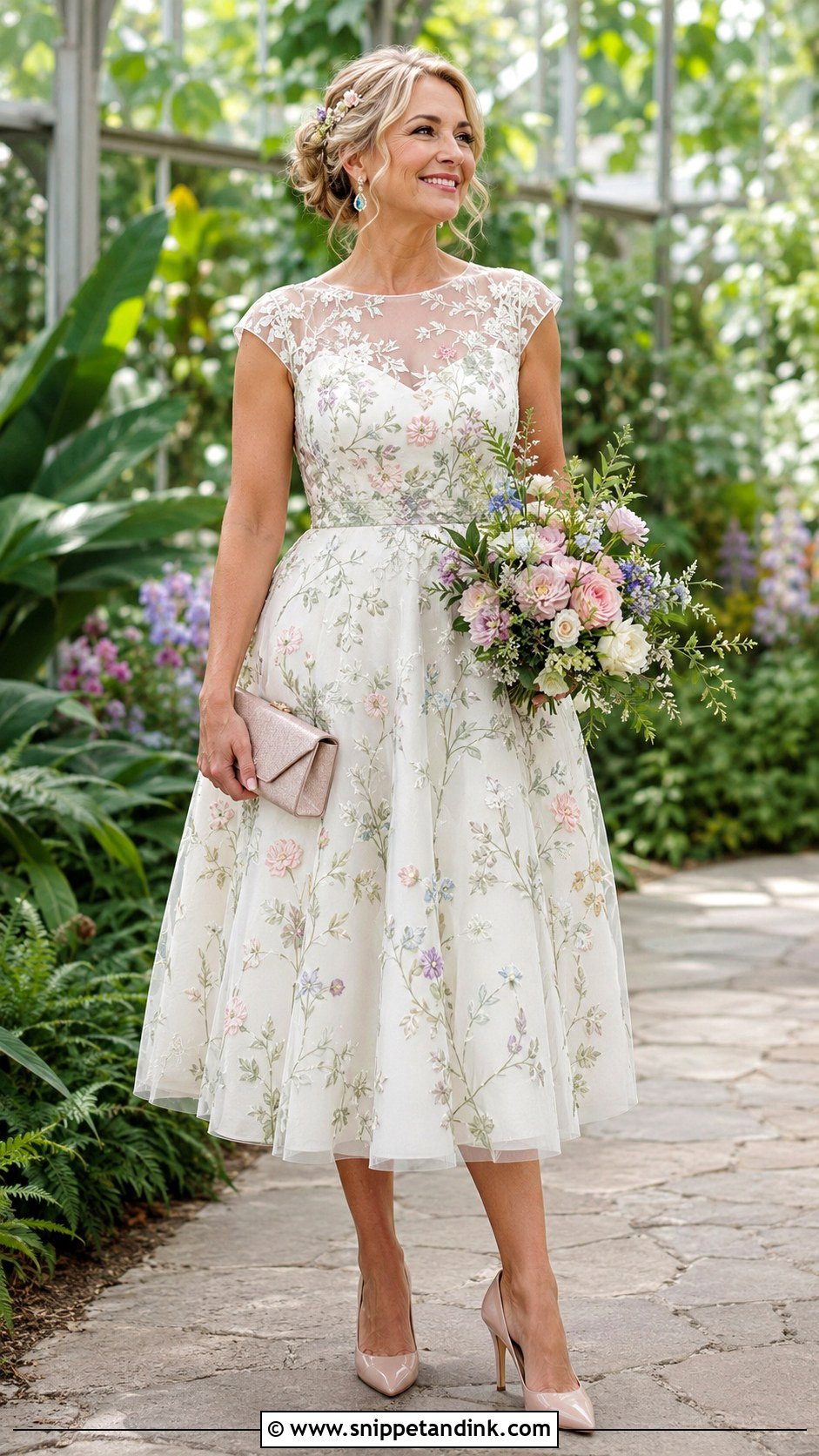
Embroidered flowers bring color and personality, and they need a quiet dress underneath. An ivory or pale neutral gown with soft-colored blooms on the bodice, sleeves or skirt is plenty. Pull one shade from the embroidery into the bouquet ribbon or a hairpin, and keep the other accessories plain: nude heels and small gemstone earrings. If the flowers sit only on the bodice, a plain flowing skirt balances them. I always turn sleeves inside out to check the back of the embroidery, because thread knots can scratch, and a thin extra lining solves that. Botanical gardens and spring estates suit it.
11. Bridal Jumpsuit With Detachable Overskirt
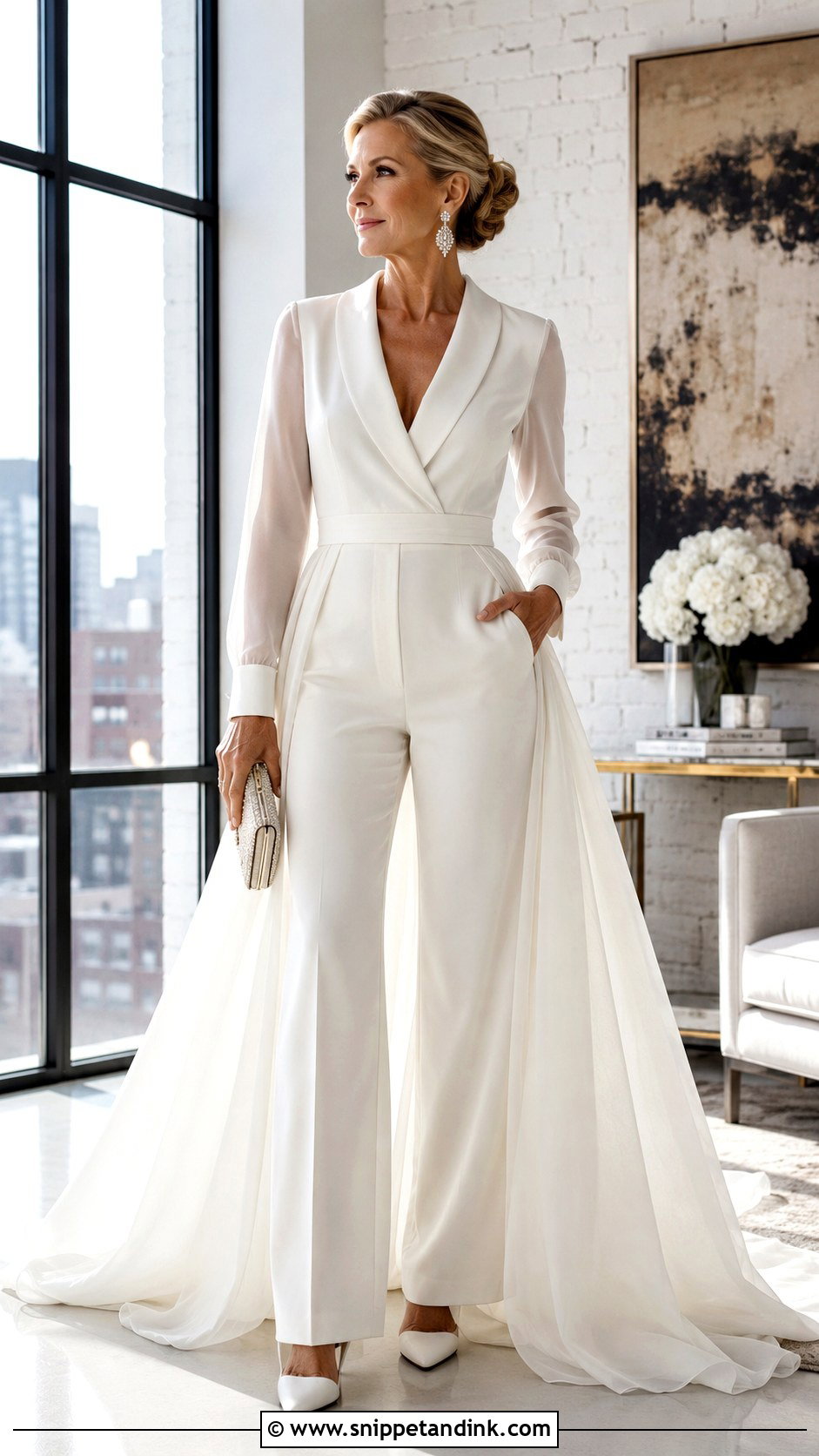
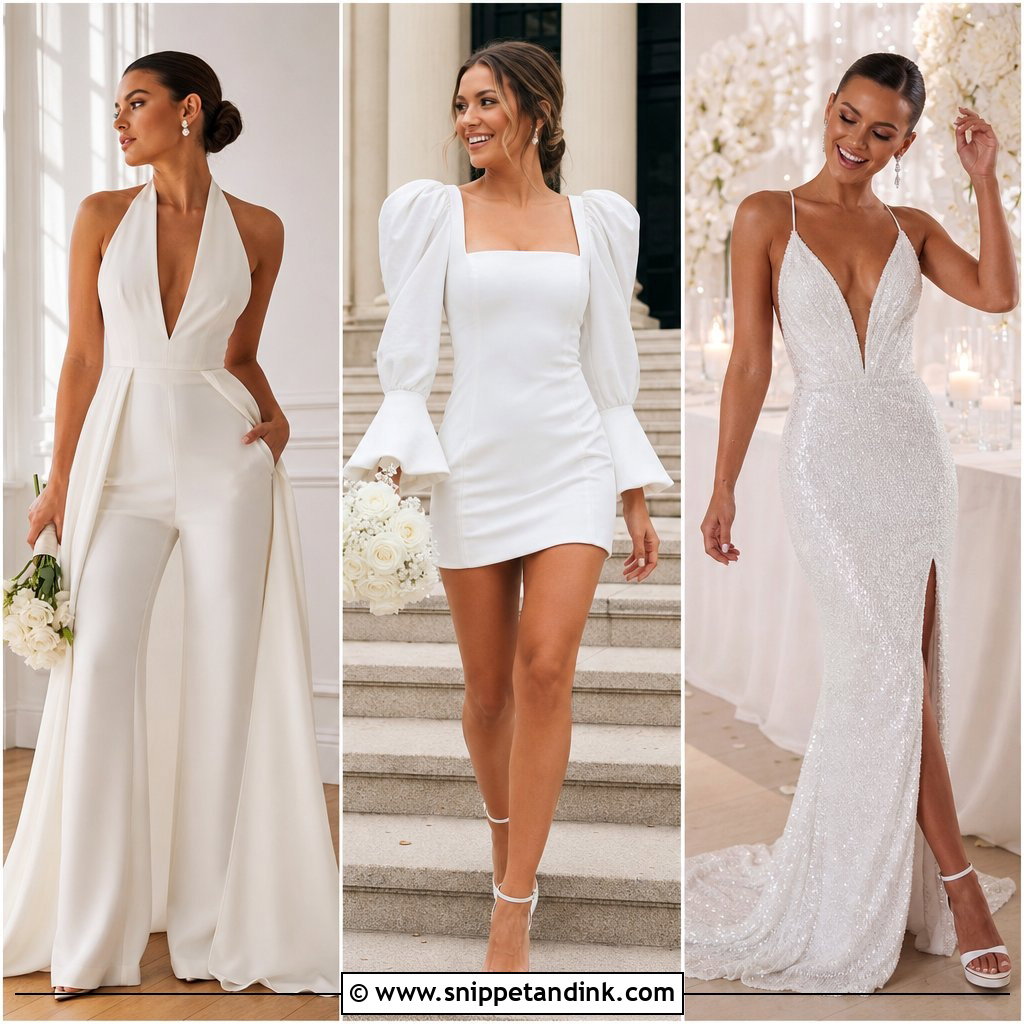
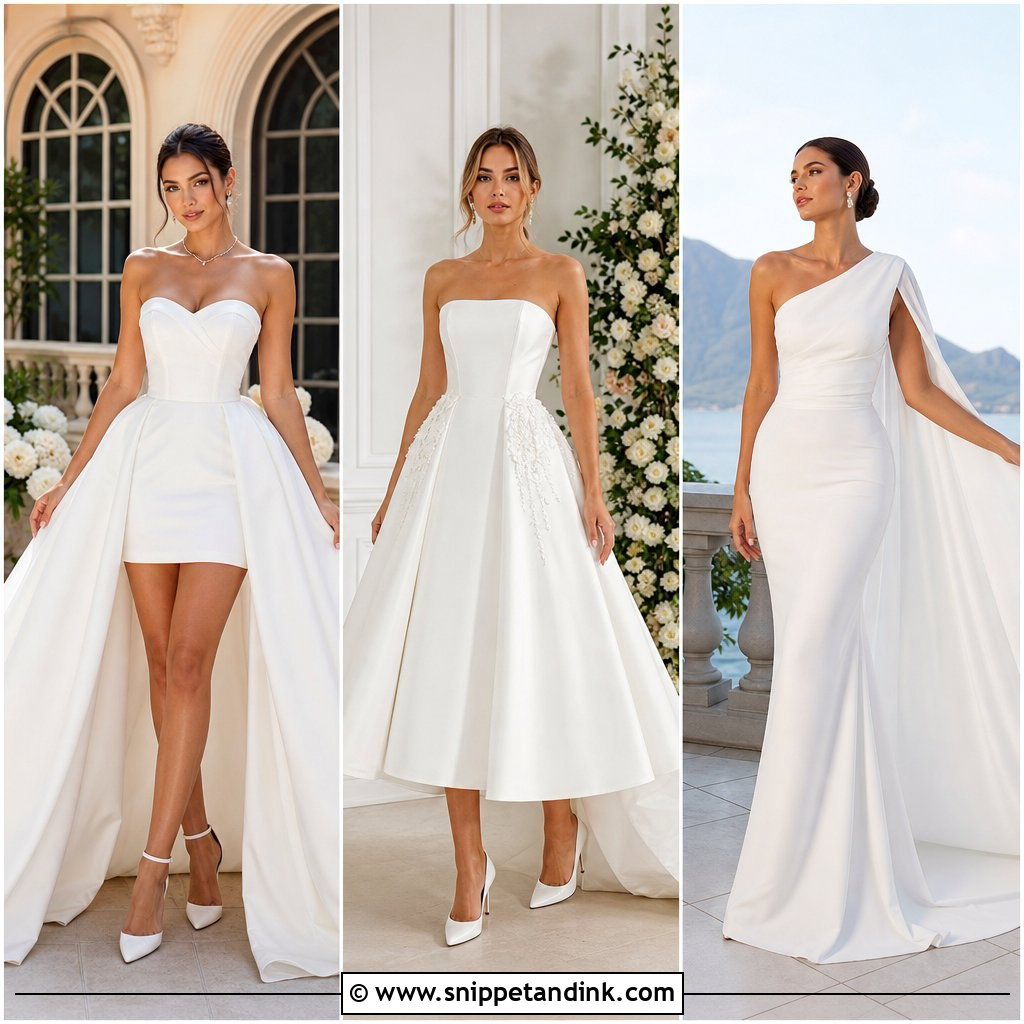
A tailored bridal jumpsuit with a detachable overskirt gives you a ceremony look and a party look in one outfit. Choose wide legs, a defined waist and a supportive V-neck or one-shoulder top, then add a chiffon, organza or satin overskirt for the vows. Pointed heels, statement earrings, a sleek clutch and a polished bun suit it. I raise two practical points with every jumpsuit bride. The hem should almost touch the floor in your actual shoes, so take them to the last fitting. And a bathroom trip means stepping out of the whole thing, so you need a zip you can reach or a friend nearby.
12. White Blazer Dress For Second Wedding
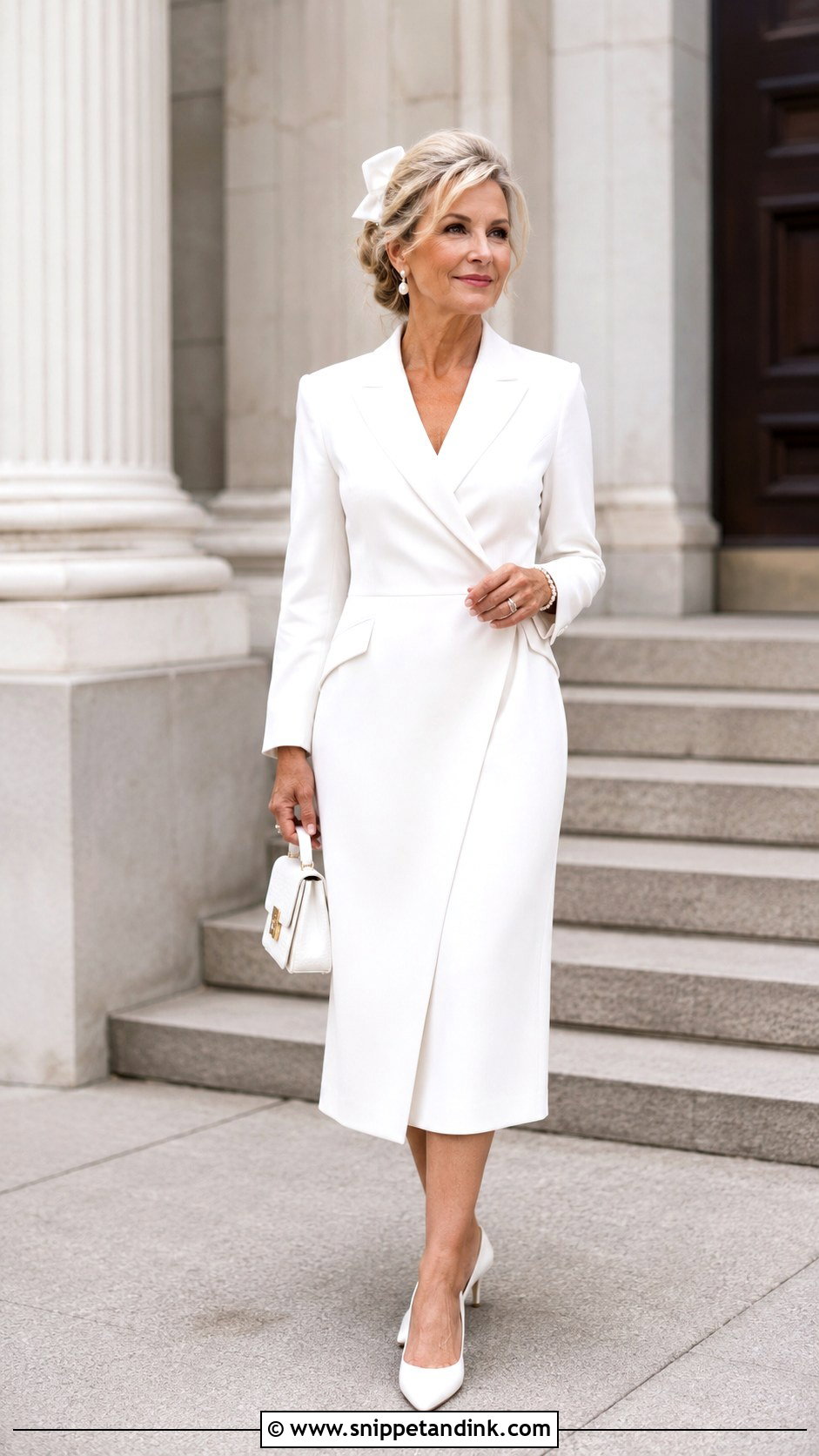
A white blazer dress looks sharp and confident at a civil ceremony. Look for a double-breasted or wrap front, a defined waist, a hem at the knee or lower, and structured, fully lined fabric. Closed-toe pumps, a small top-handle bag, pearl earrings and a fine bracelet suit it, and a fascinator or modern bow can stand in for a veil. Sit down in front of a mirror before you buy. Blazer fronts gape and lift when seated, so I usually add a hidden hook where the lapels cross, and fitted shorts underneath make every photo position easy.
13. Chiffon Garden Second Wedding Dress
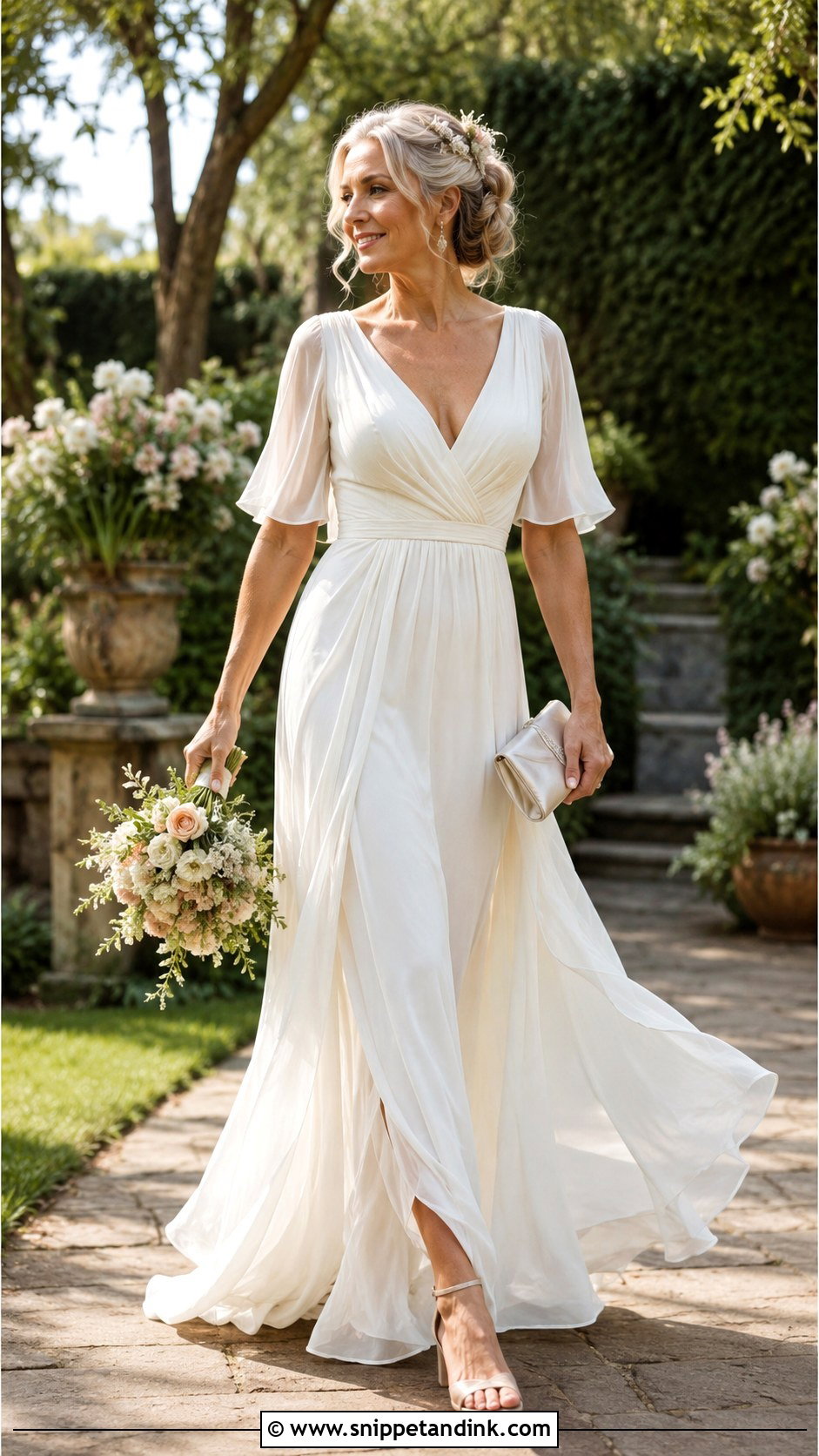
Chiffon moves in the slightest breeze, which is exactly why it belongs in a garden. Pick an A-line or empire waist with a layered skirt, a supportive lining and soft sleeves, in ivory, pale champagne or a muted floral. Block-heel sandals won’t sink into the lawn. Delicate earrings, a small woven clutch and a loose updo with a few floral pins finish it. I’d leave the long train for indoor weddings; chiffon picks up grass, leaves and damp quickly, and a grubby hem shows in every full-length photo. It stays comfortable in warm weather for daytime and conservatory weddings.
14. Minimalist Column Second Wedding Dress
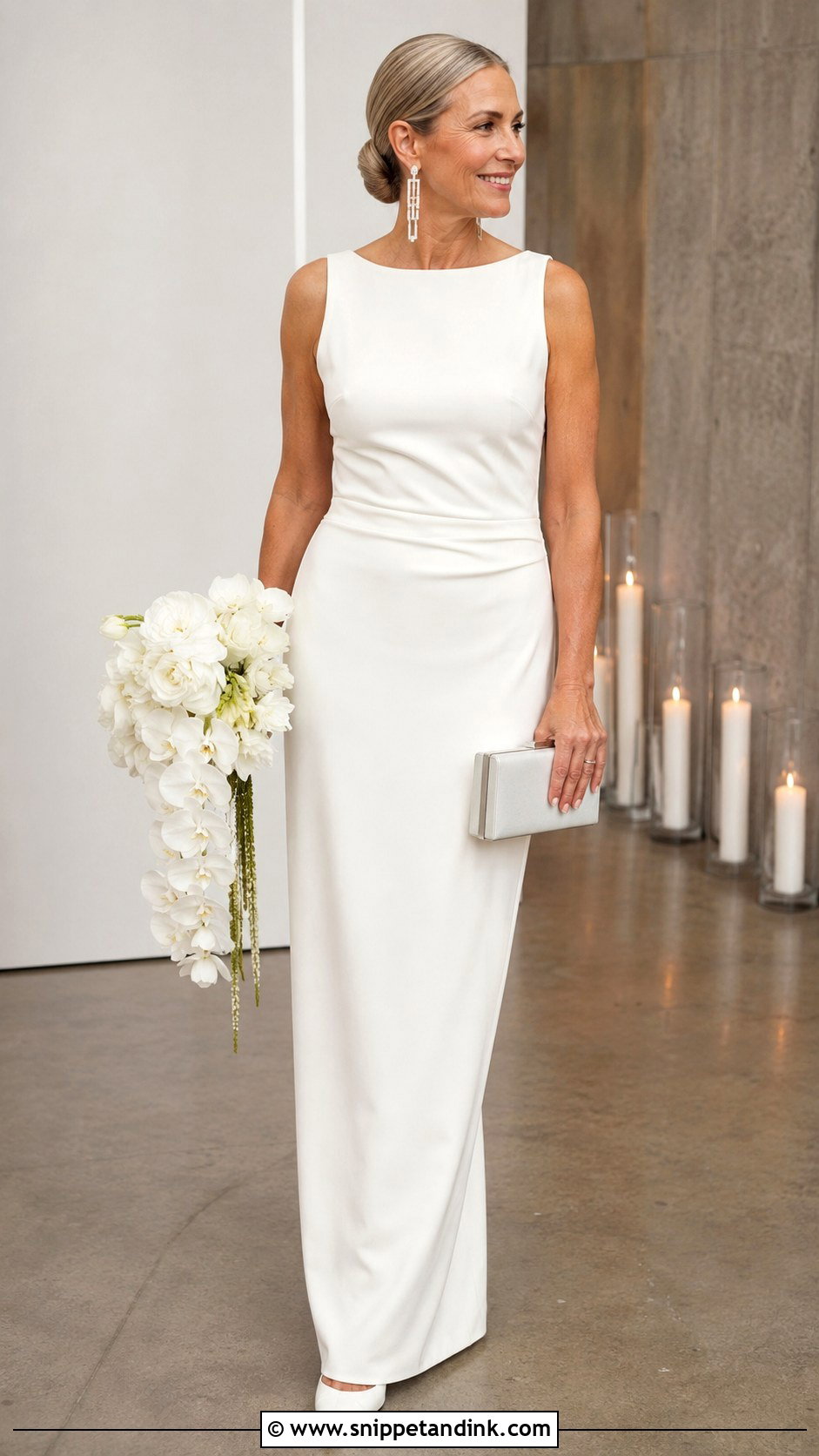
A column gown depends entirely on fabric and fit, because there’s nothing else to look at. Choose matte crepe, silk or heavy satin with a square, bateau or softly draped neckline. It should follow the body without shortening your stride; a short back slit fixes that, and I’d test it on a flight of stairs. Architectural earrings, pointed pumps, a rectangular clutch and a smooth low bun keep it modern. If it feels too plain, add one statement piece, such as a detachable cape or a jeweled belt, rather than several at once. Evening ceremonies and formal restaurants suit it.
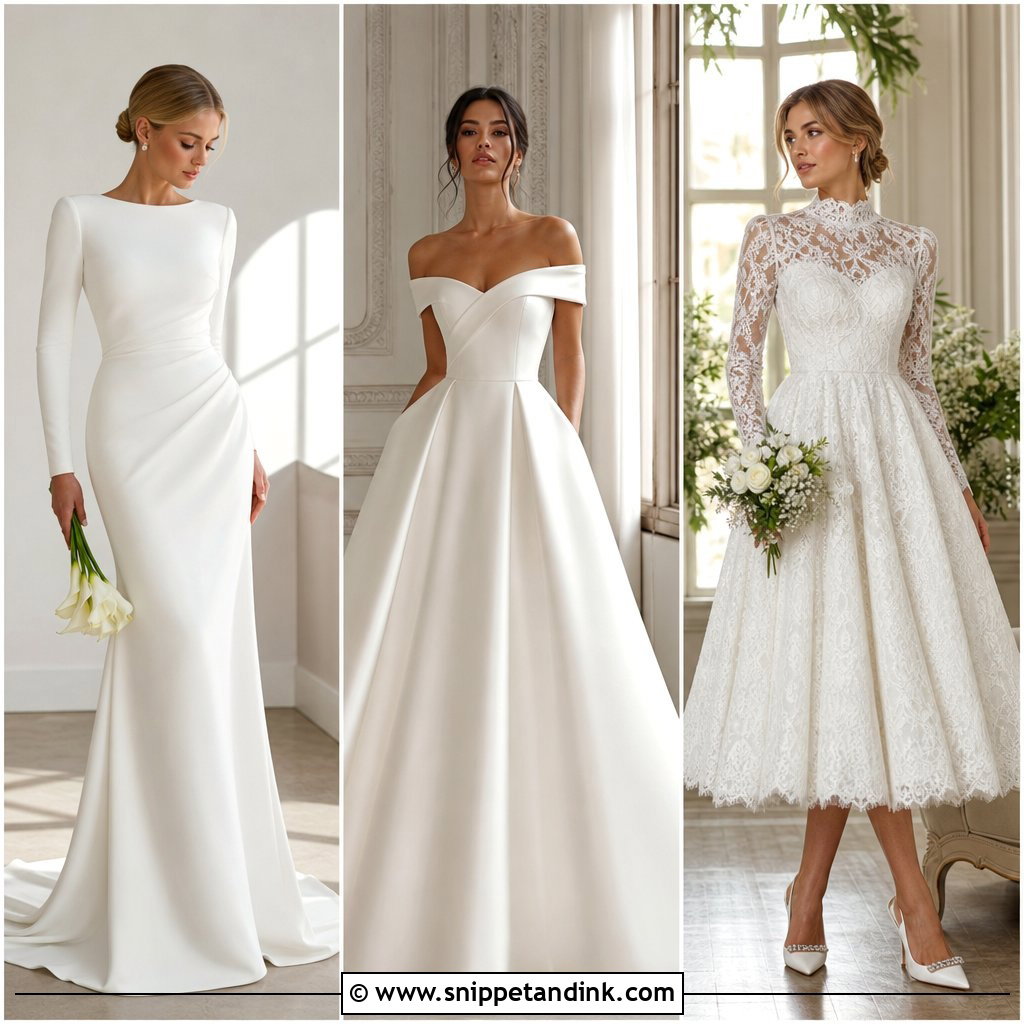

15. One-Shoulder Second Wedding Dress
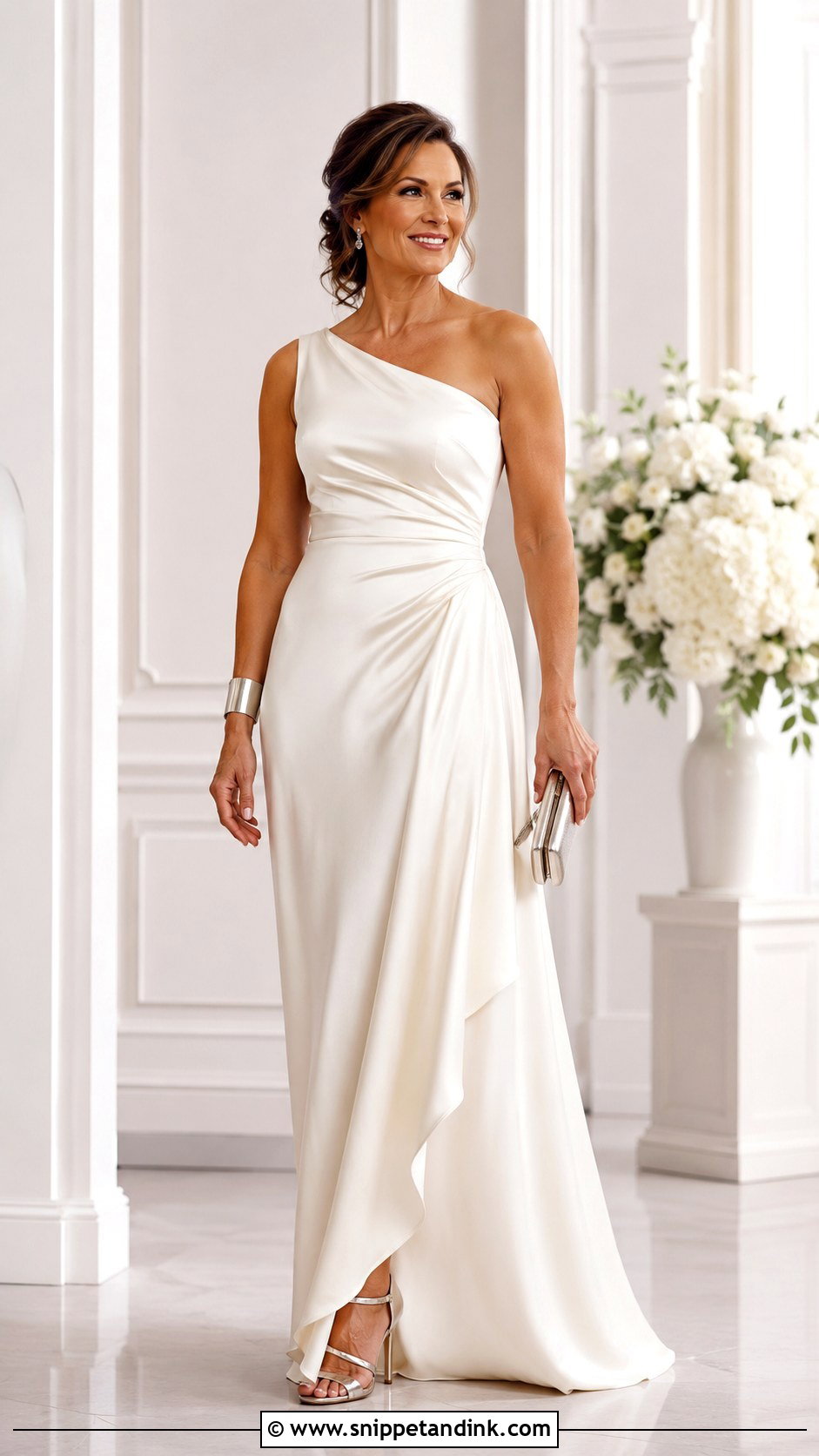
With one shoulder bare and one covered, the asymmetry does the decorating, so keep jewelry off the neck. A cuff on the bare-arm side, small earrings, metallic heels and a slim clutch are enough. Choose a fitted bodice with a flowing skirt or a structured column, in satin, crepe or light mikado, and sweep the hair to the open side or wear it up. The weak point of this design is the single strap. If it carries the weight of the bodice, it pulls and digs as the evening goes on; a well-made version has internal boning so the strap is mostly decorative. Cocktail receptions and destination weddings suit it.
16. High-Neck Second Wedding Dress
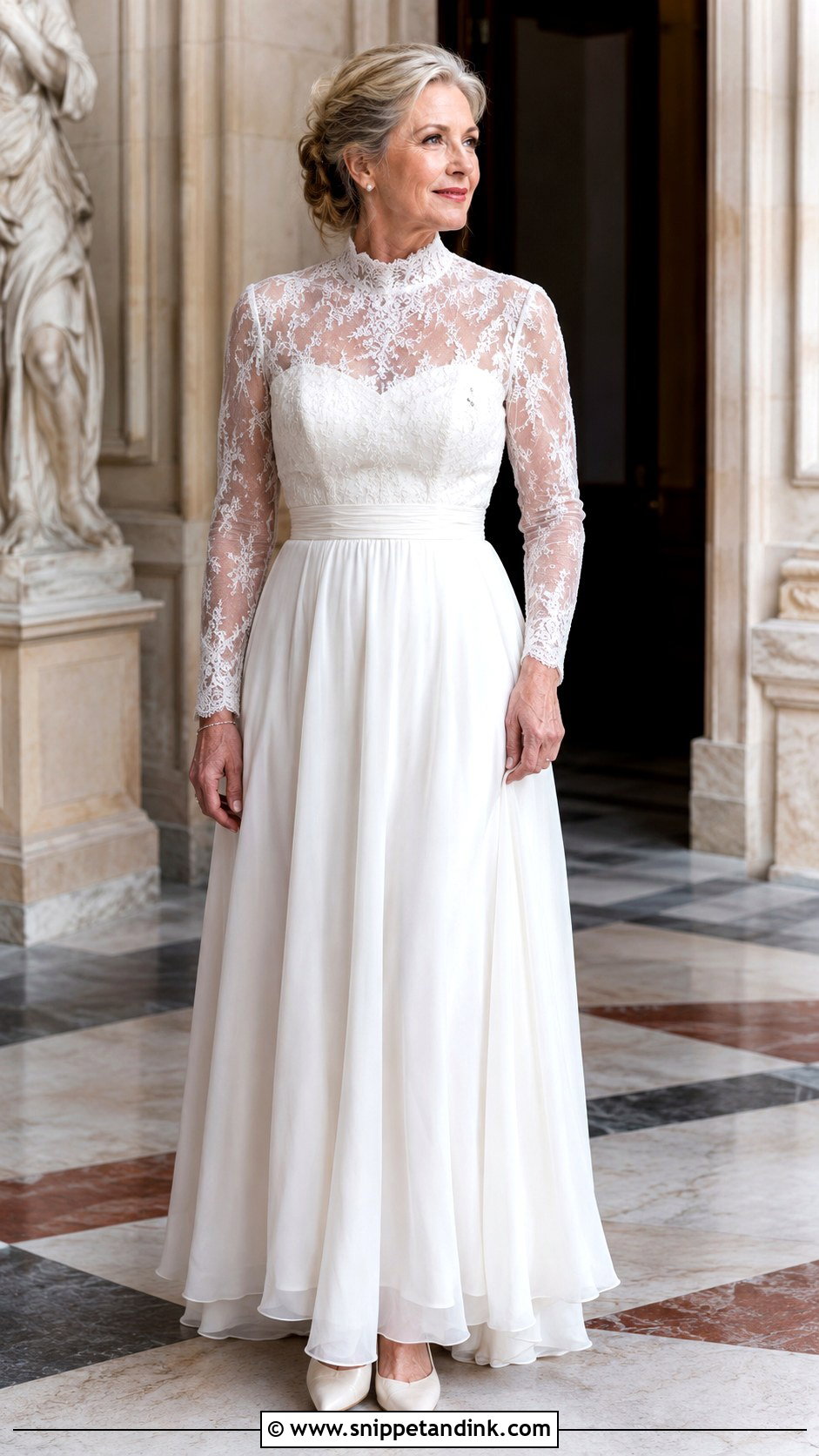
A high neck feels contemporary when the rest of the dress is light. Try a fitted lace bodice over a chiffon skirt, or an all-crepe gown softly gathered at the neck; sleeveless keeps it sleek, and sheer sleeves add coverage. Wear studs, a bracelet, ivory pumps and a simple clutch, but no necklace. Hair up or swept back lets the neckline show. What spoils a high neck is the inside seam at the throat, which rubs after a few hours, so I ask for a soft lining or silk facing there. Historic venues and cool-weather ceremonies suit it.
17. Cape Sleeve Second Wedding Dress
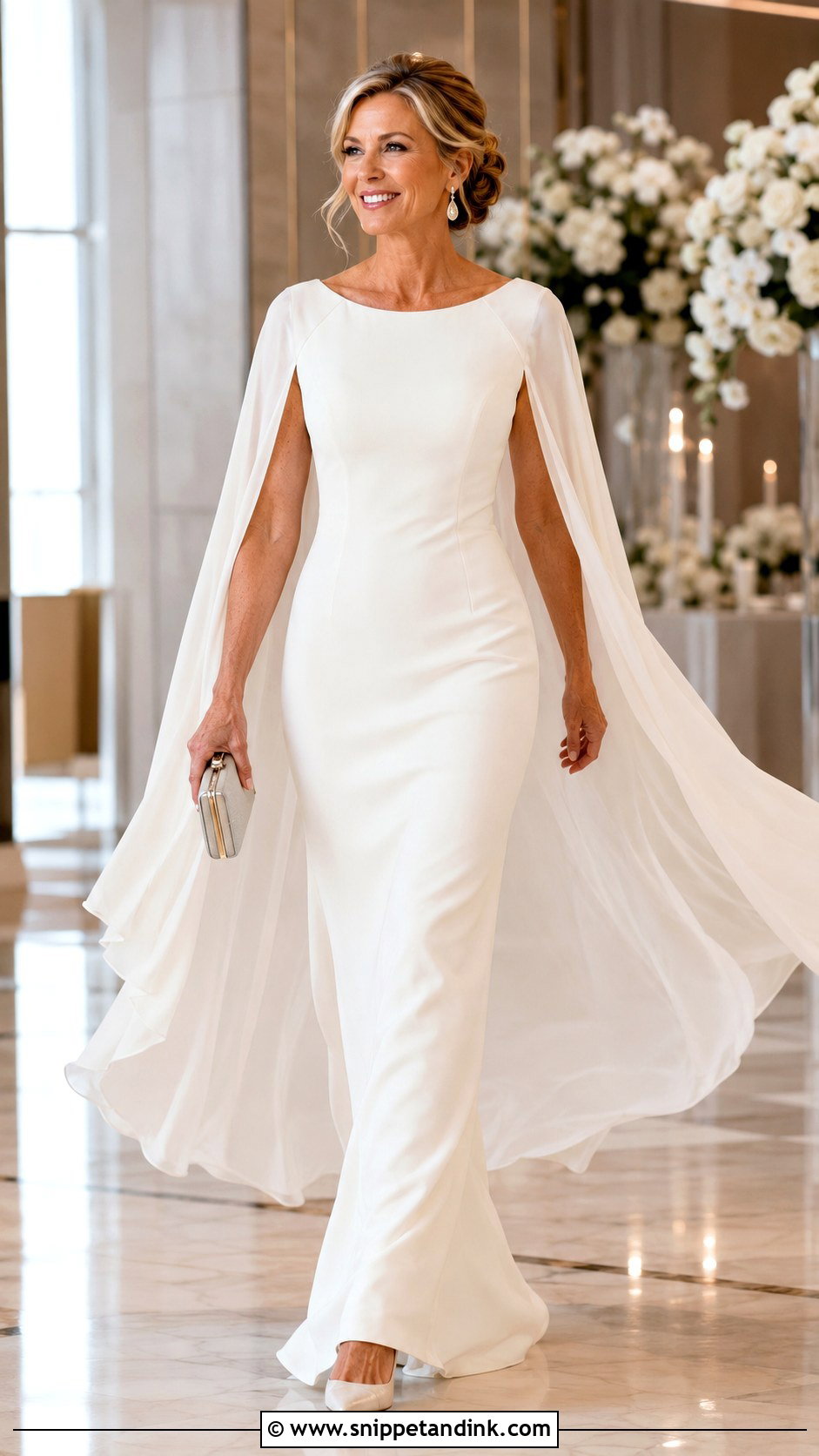
Cape sleeves give movement and coverage without the snugness of a fitted sleeve, which is why I suggest them to brides who dislike feeling their arms held. A sheath or column with a chiffon cape attached at the shoulder is the base; a short capelet is subtle and floor-length panels are dramatic. Pointed heels, a structured clutch and fine drop earrings work, with simple hair so the cape can float. Long capes catch under heels and chair legs, so we set the length during alterations with the bride both standing and sitting. Evening and formal hotel weddings suit it.
18. Sequin Midi Second Wedding Dress
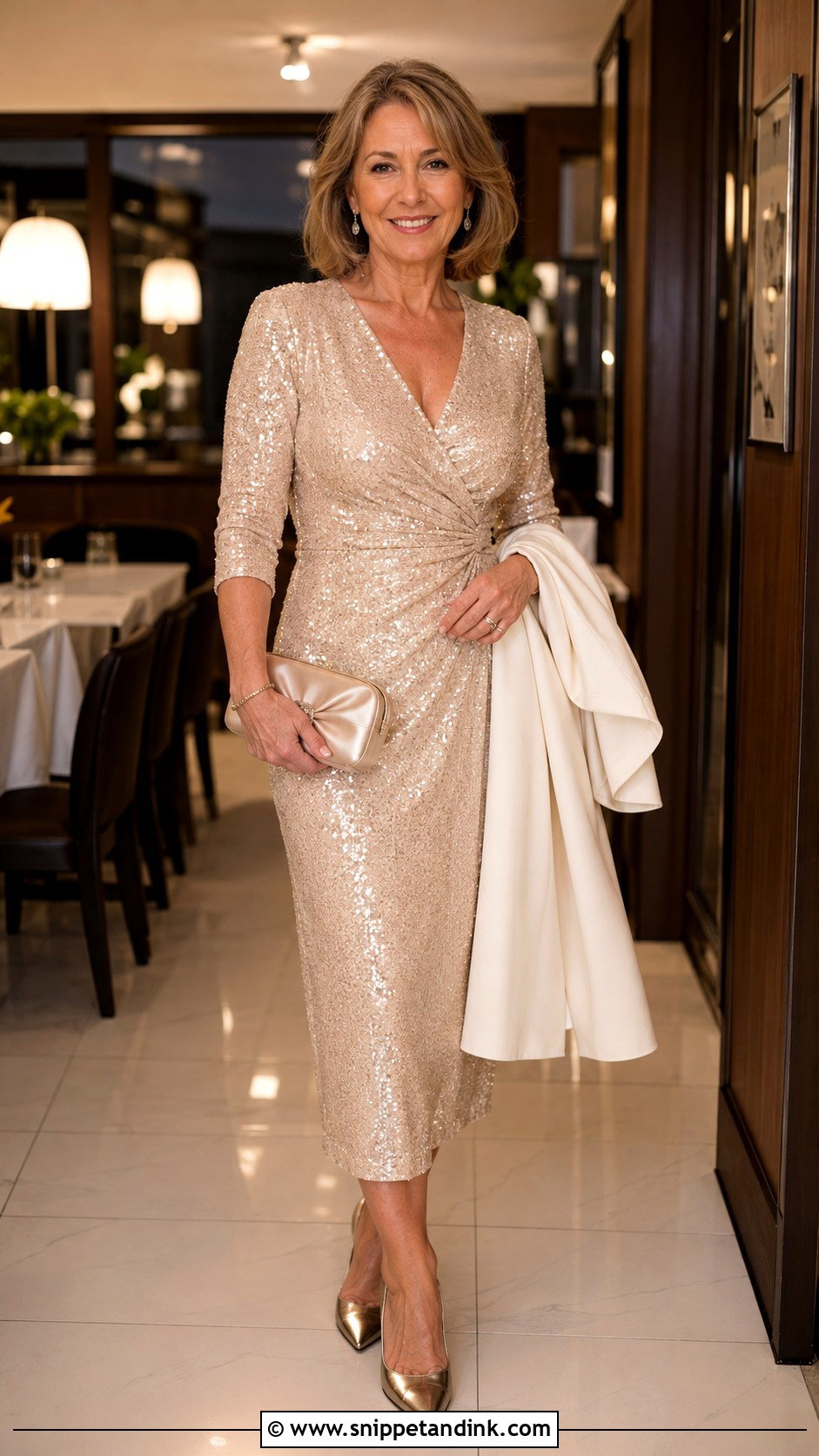
A sequin midi dress brings sparkle without a full-length gown. Small flat sequins in ivory, silver, champagne or pale gold look more refined than large paillettes. A wrap bodice, three-quarter sleeves and a softly fitted skirt balance the shine. Keep everything else plain: metallic pumps, small earrings, a satin clutch and fresh makeup. Sequins can scratch the inner arm during a long evening, so check that the sleeves are lined. It suits an evening ceremony or cocktail reception, and a tailored coat handles a cold arrival.
19. Soft Blue Second Wedding Dress
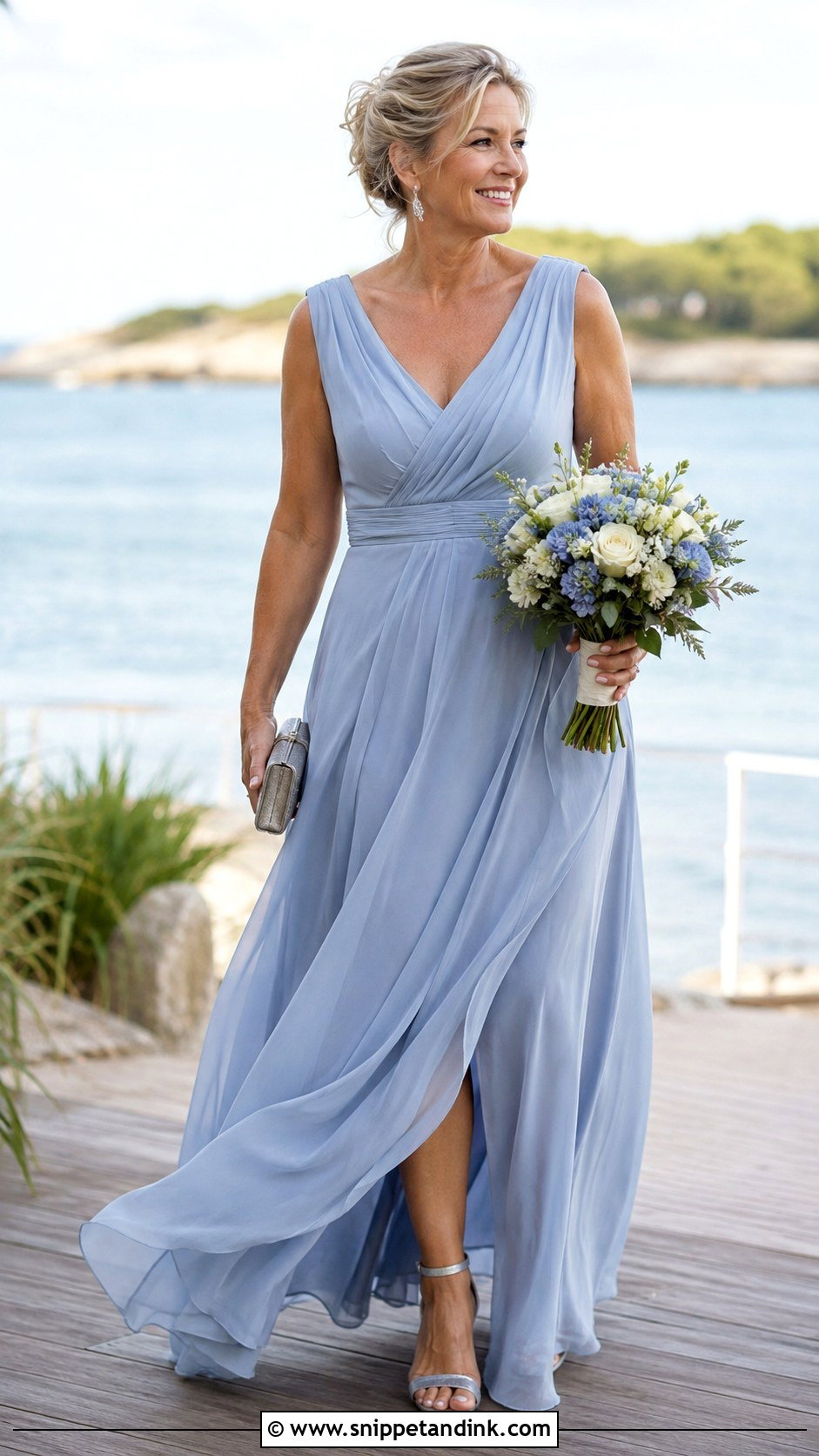
Soft blue carries a quiet meaning for many brides, and it suits coasts and gardens. Think powder blue, misty grey-blue or pale slate in chiffon, satin or embroidered tulle, on a flowing A-line with a defined waist. Silver heels, crystal earrings and a cool-toned clutch go with it, and white flowers with a few blue ones tie the bouquet in without matching too neatly. See the dress outdoors before you buy. Pale blue drifts toward grey in shade and toward lilac under some indoor lighting, and the camera exaggerates both.
20. Black And White Second Wedding Dress
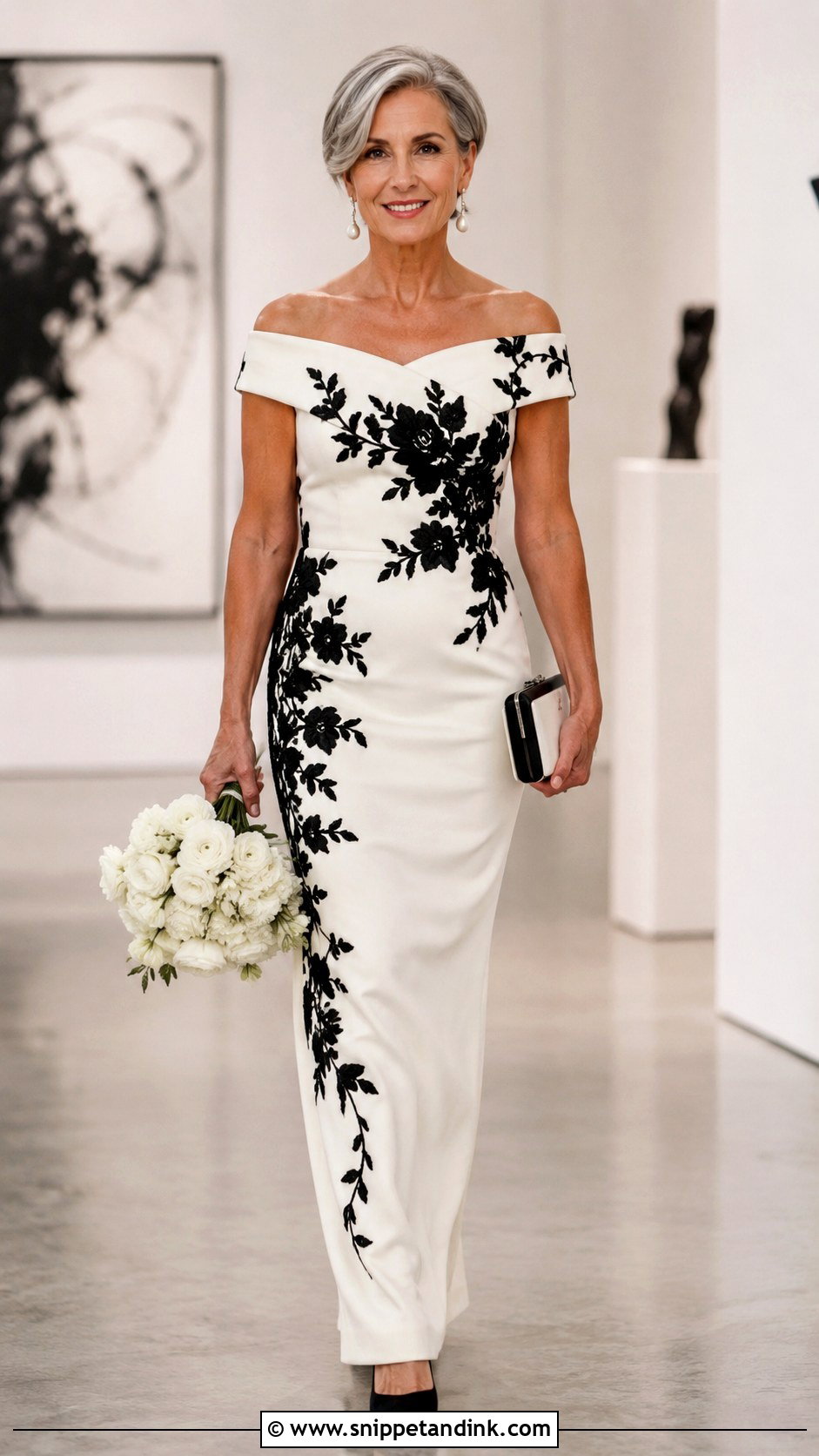
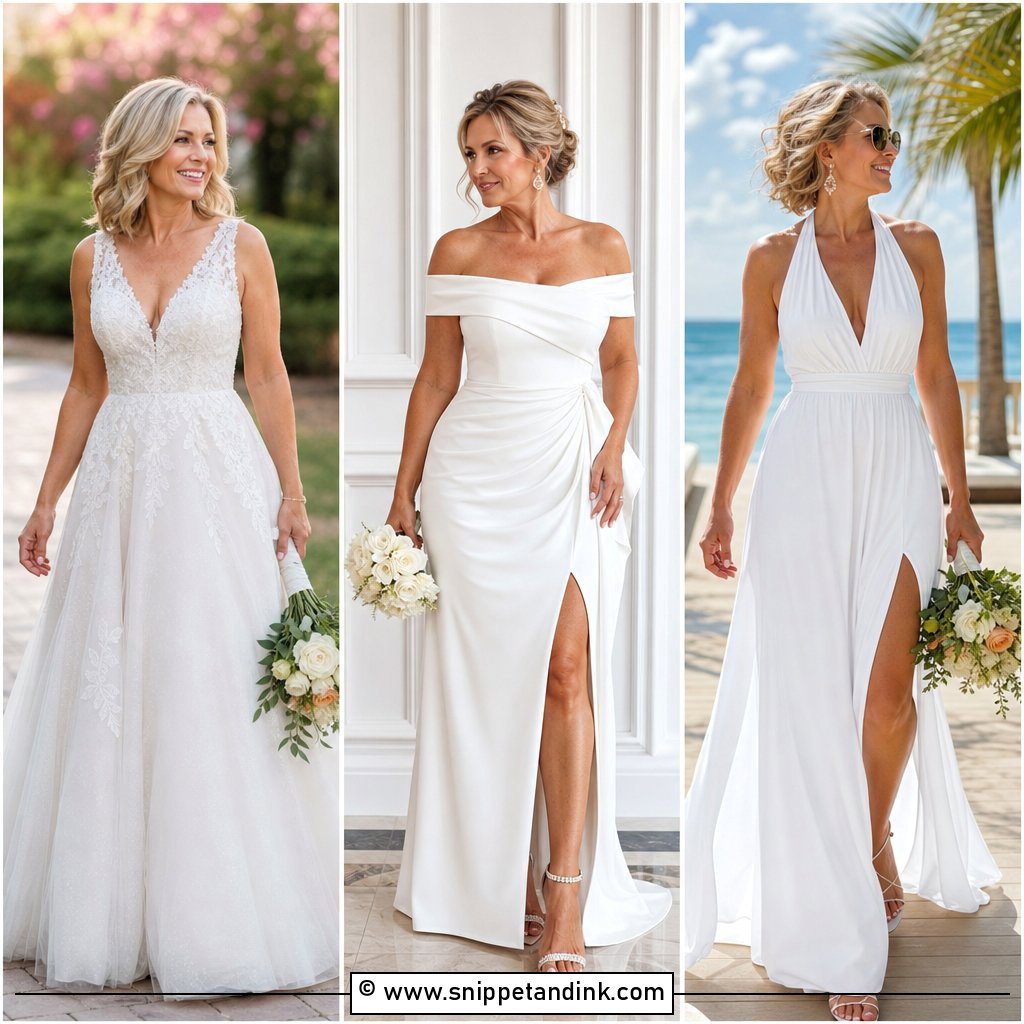
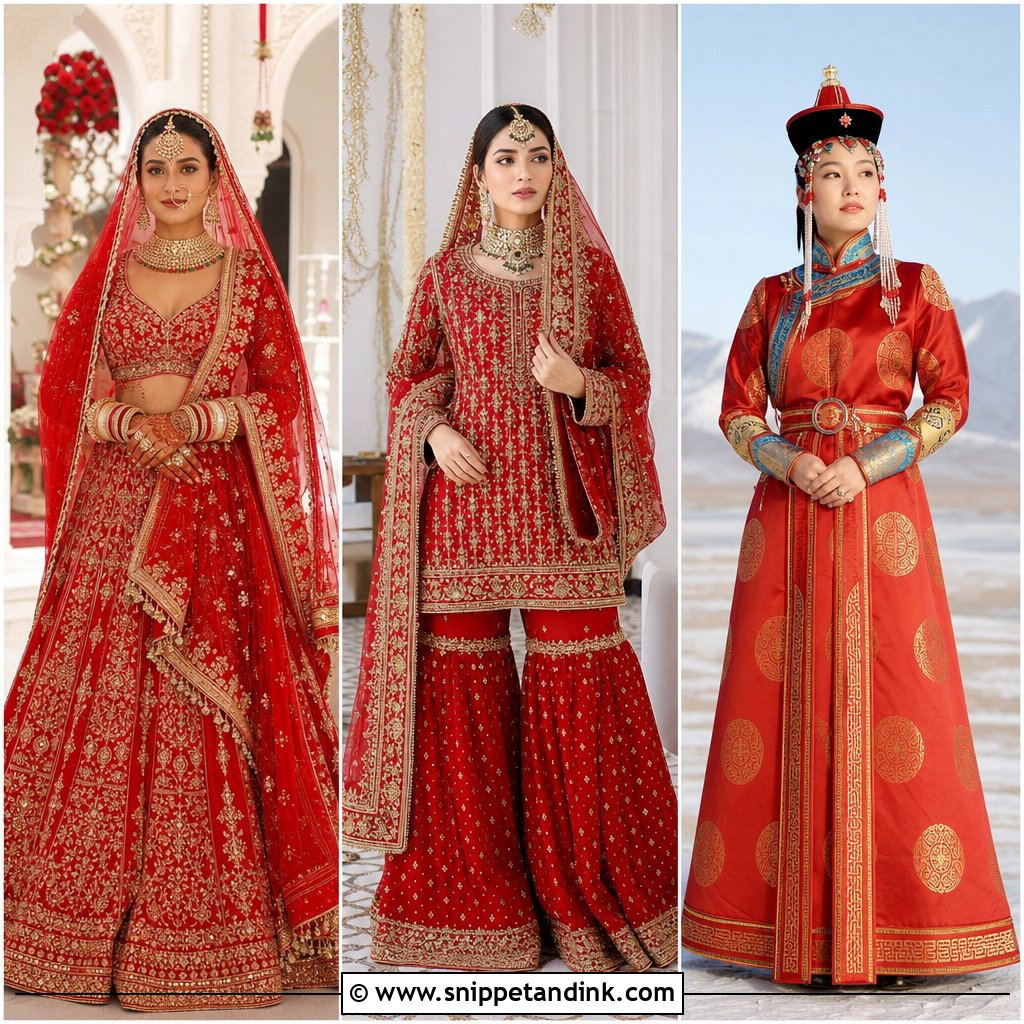
Black and white is bold and very personal. Start from an ivory gown with black embroidery, a black sash or structured trim, or reverse it with a sleek black dress and an ivory cape or jacket. Midi, column or softly flared shapes keep it sophisticated. Black pointed pumps, pearl earrings and a monochrome clutch suit it, and a white bouquet brightens the darker pieces so it still reads as bridal. Limit yourself to two or three contrasts. When I see this look go wrong, it’s because black turns up in too many places at once and the outfit starts to look like a costume. Evening, gallery and hotel venues suit it.
Cups, Boning and the Bra Question
What sits under a dress decides how it looks in the third hour, not the first. A large share of my fitting time goes on support, because comfort and posture show in every photograph.
- Sewn-in cups: a seamstress can stitch moulded cups into almost any lined bodice, which removes the need for a separate bra in low-backed or low-cut styles.
- Light boning: a bodice with some structure holds its shape when you sit, while unstructured satin and crepe wrinkle at the waist.
- The same underwear every time: buy your bra or shapewear before the first fitting and wear those exact pieces to each appointment, or the measurements shift.
- Arms you’re unsure about: ask for detachable sleeves or a sheer cover-up instead of abandoning a dress you otherwise love.
Dressing Alongside Your Children
Second weddings often include children, sometimes grown ones, standing beside the couple. I don’t try to make them match the bride. Give everyone one color from your palette and let each person choose a cut they’re comfortable in; a teenager in a dress she chose herself looks far happier in the photos than one squeezed into a copy of yours.
If an adult son or daughter is walking you down the aisle or acting as a witness, show them the dress, or at least its color and fabric, well before the day. That way their outfit sits well beside yours in the formal portraits instead of clashing in a shade nobody expected.
Dress for the Life You Have Now
Age, tradition and what you wore last time don’t decide this dress. Your life now does. Once you know the shape you like, spend on fabric, sound construction and a good seamstress rather than extra embellishment. Wear shoes you can stand in for hours, keep accessories restrained and bring a layer for the evening. Classic lace, sleek crepe, chiffon or a tailored jumpsuit can all be right, and in my fitting room the dress a bride forgets she’s wearing is usually the one she looks best in.
You'll Like These Ideas:


Leave a Reply