
A convertible gown lets you walk the aisle in one look and dance in another without packing a second dress. Removable skirts, sleeves, capes, trains, toppers, gloves and coats do the transforming. From the planning side, I like them because they solve a real problem: ceremony drama and reception comfort rarely live in the same silhouette. They only work, though, if the change is planned like any other moment in the day. Below are twenty-five convertible ideas, with what I’d want to know about each before it goes on the timeline.
Putting the Change on the Timeline, Not Squeezing It In
The most common problem I see with convertible dresses isn’t the dress. It’s that nobody planned when the change happens, so the bride ends up hunting for a bathroom while guests wait for the grand entrance. I treat the switch like any other event in the day, with a time, a place and named helpers.
- Most brides change after couple portraits and before the reception entrance, so photos capture both looks.
- Allow about ten to fifteen minutes for a skirt or train, less for gloves or sleeves, and more if hair has to come down from under a cape or overlay.
- Book a private room near the reception space; a bridal suite on another floor eats time.
- Name one or two people to help and have them practice the change at the final fitting.
Tell your photographer about the switch too. Some brides want a quick shot of the overskirt coming off; others would rather the change stays private. Either is fine, but decide ahead.
1. Convertible Wedding Dress With Detachable Overskirt
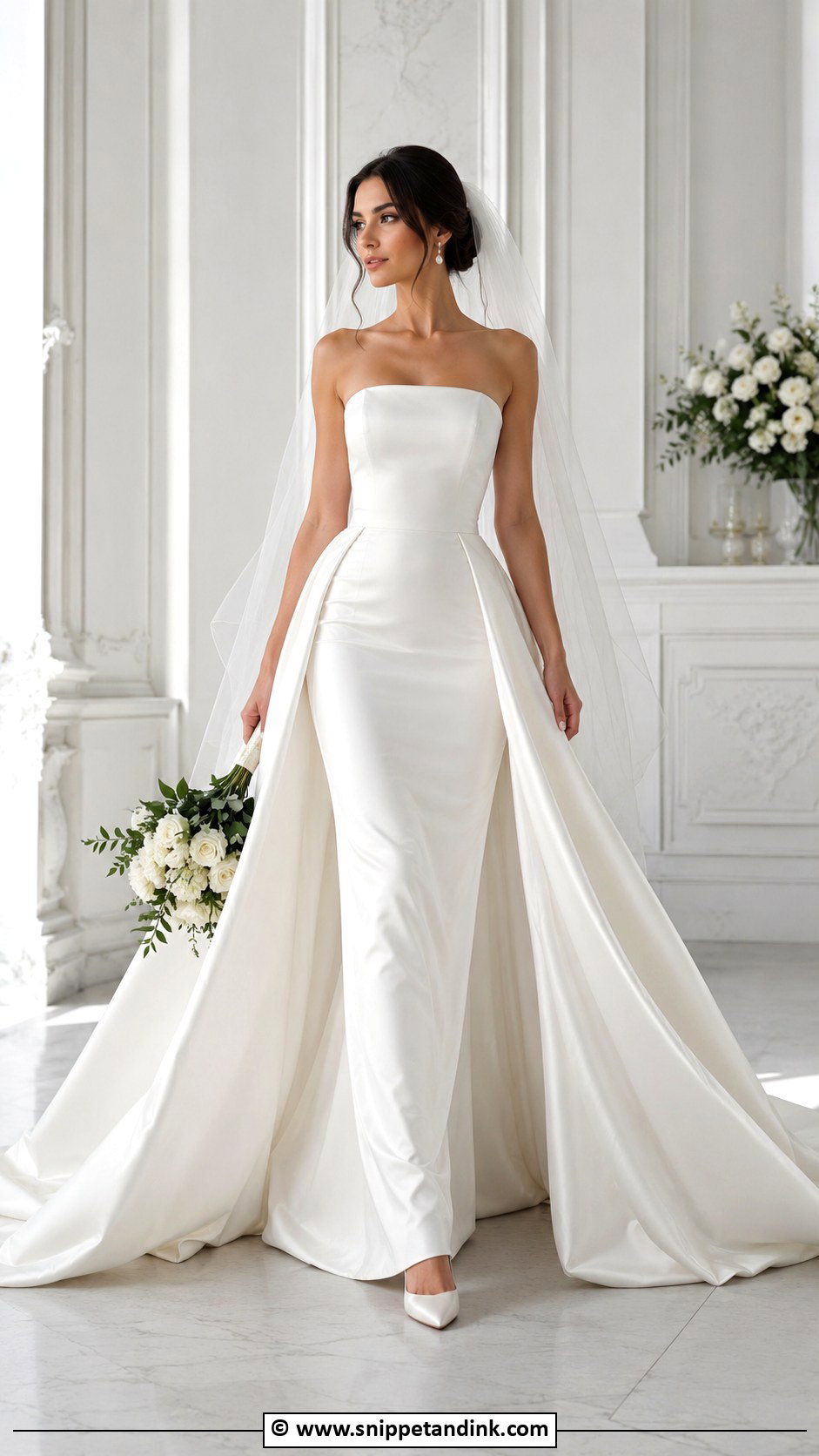
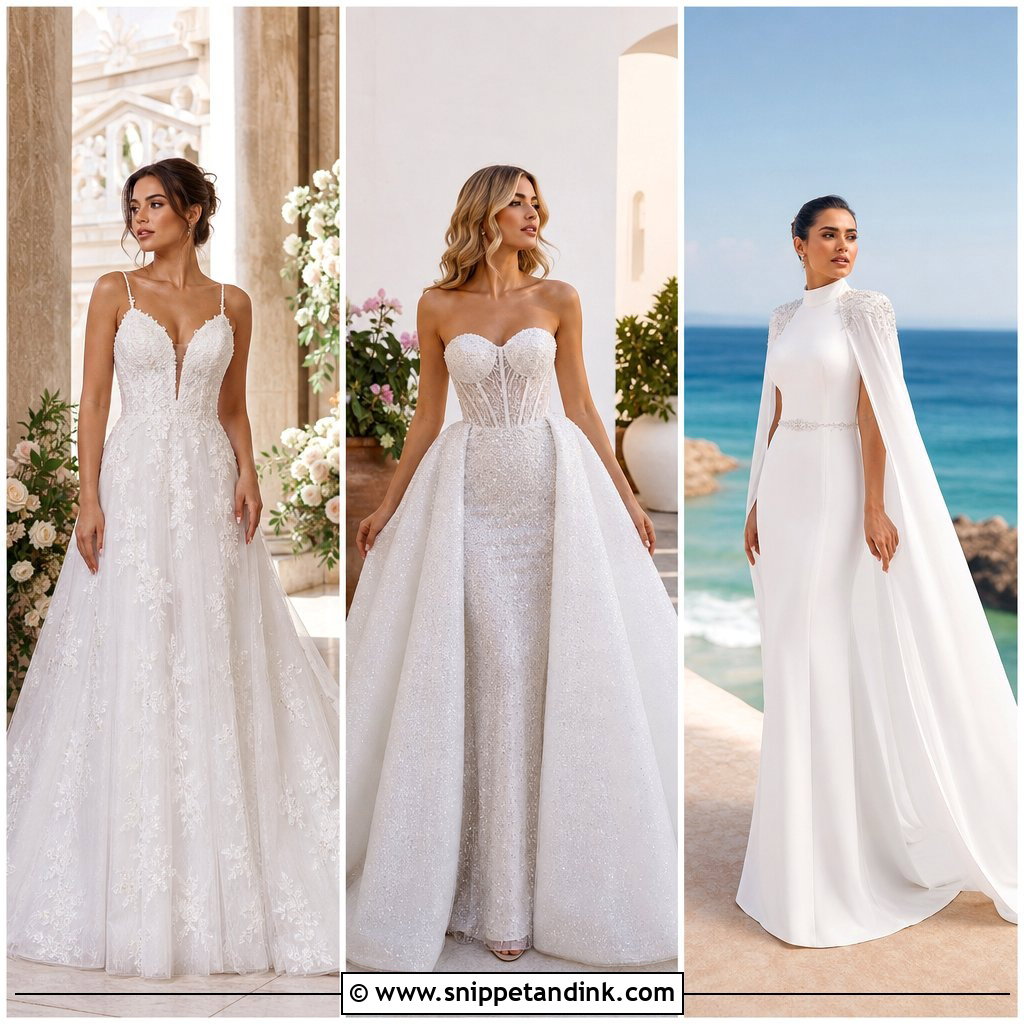
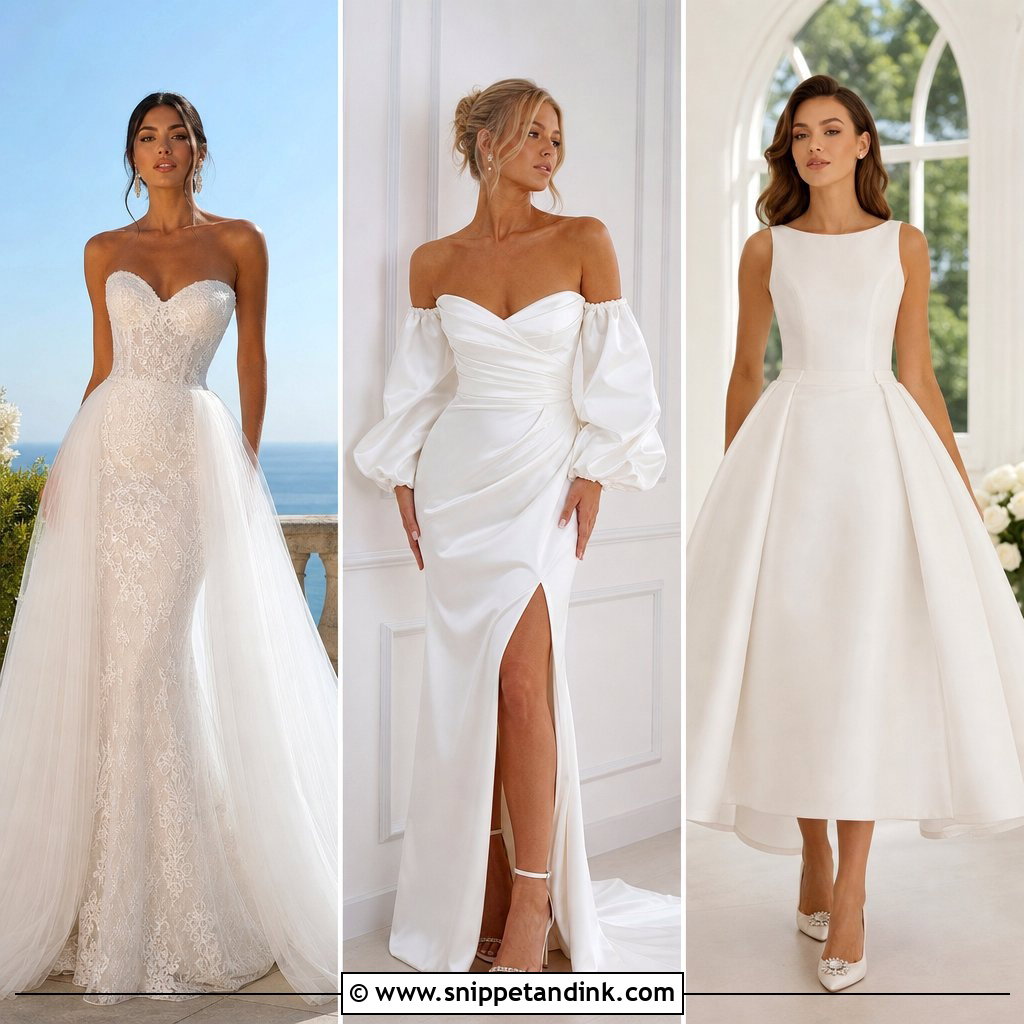
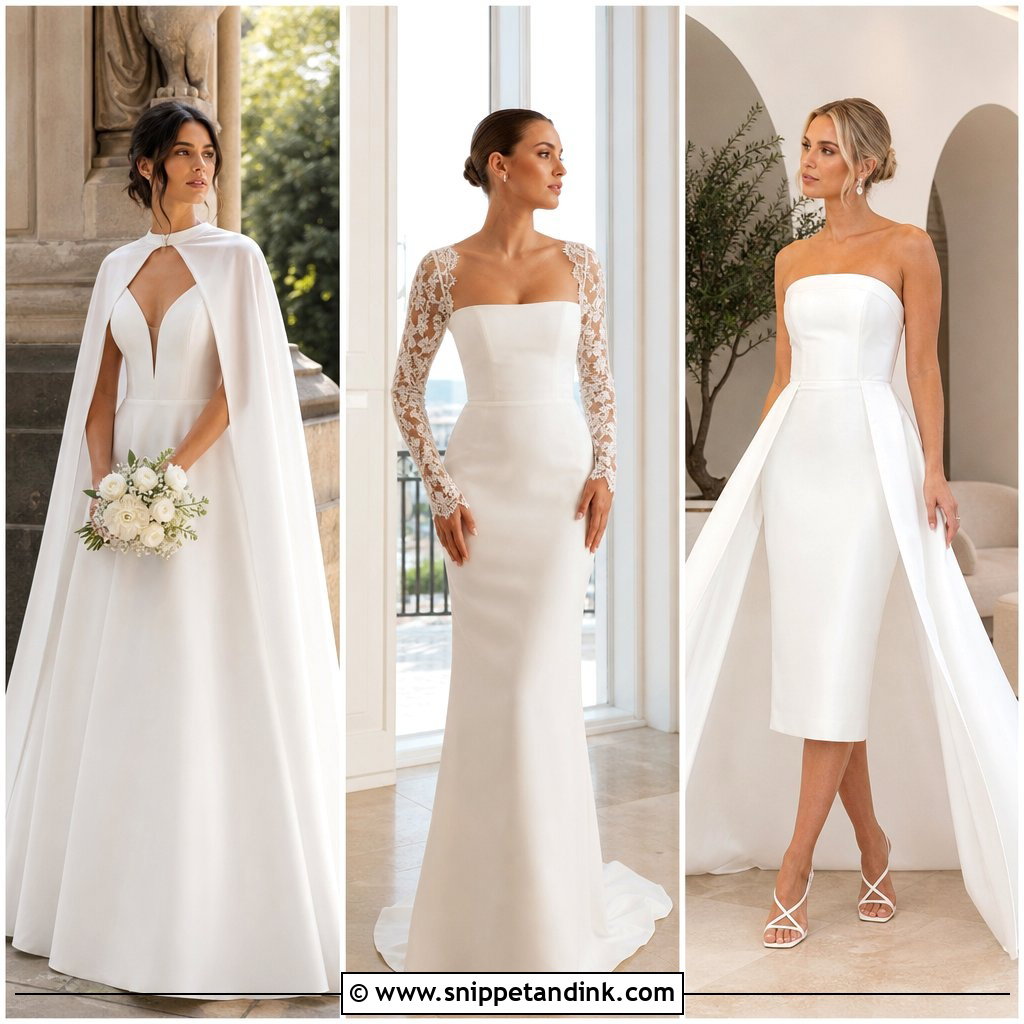
The detachable overskirt is the classic two-in-one. It gives ceremony volume over a base such as a fitted crepe gown, lace sheath, satin column or simple slip, then comes off for the reception. Ask for the overskirt in fabric matched closely to the base so it looks designed, not added. Full overskirts take two people and a few minutes to remove cleanly, so I schedule the change in a private room, not a corner of the ballroom. Pointed heels, pearl earrings and a clean veil finish it.
2. Convertible Wedding Dress With Detachable Sleeves
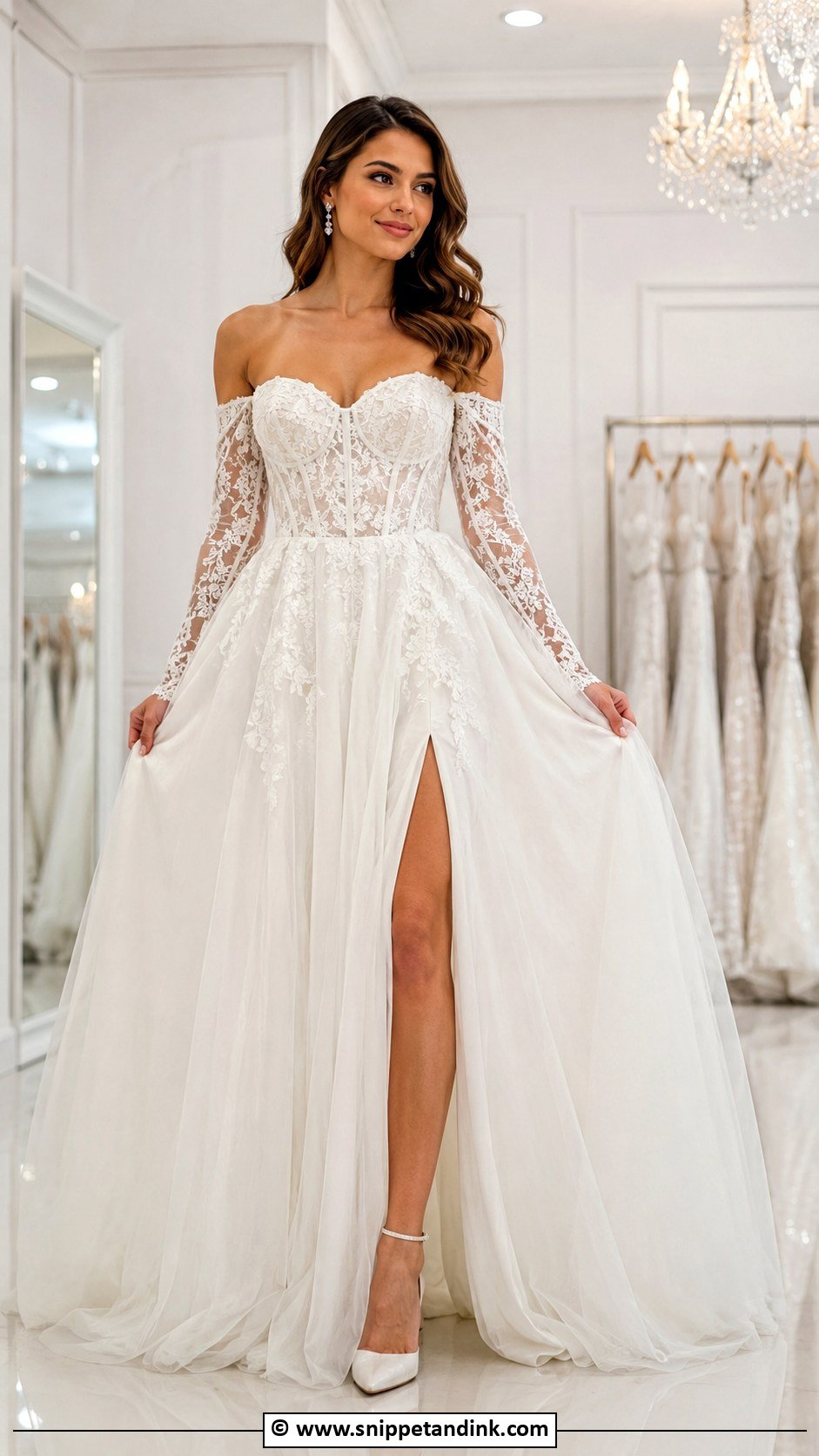
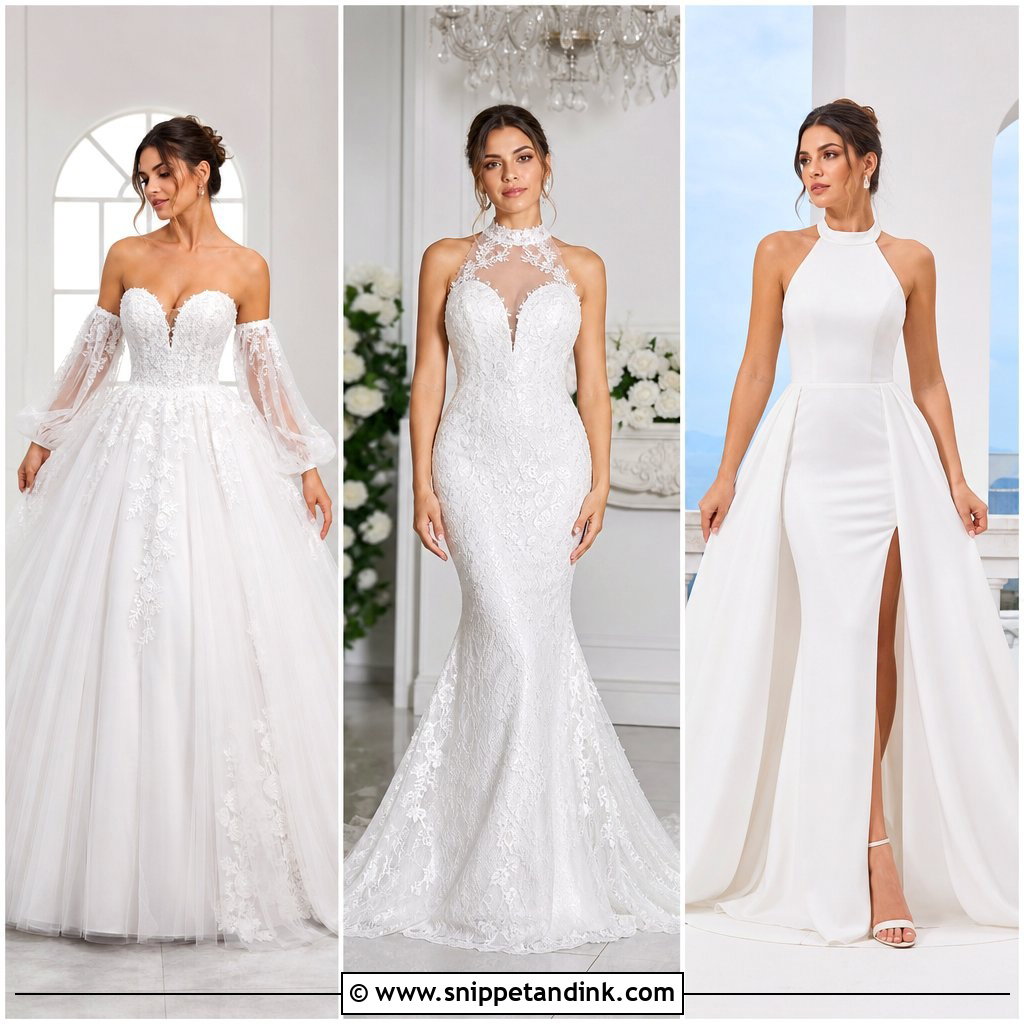
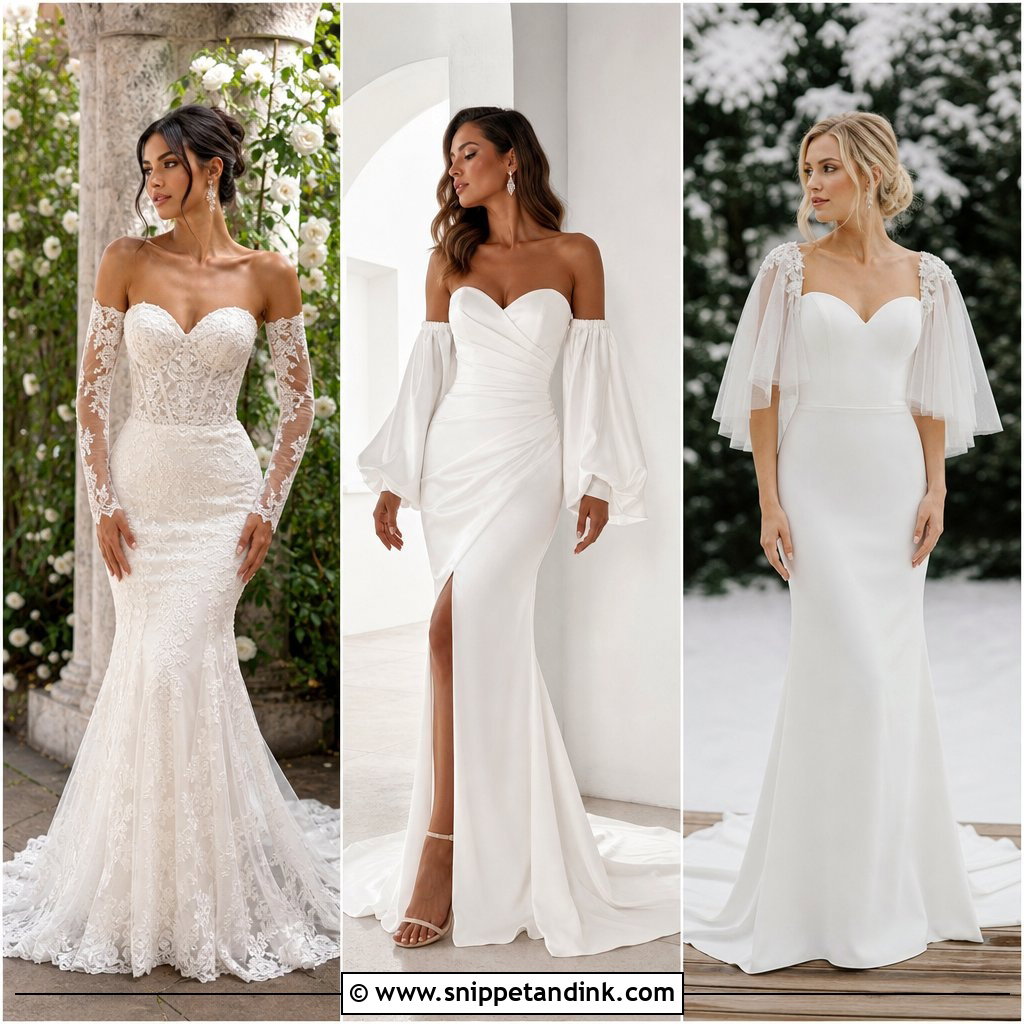
Detachable sleeves give you coverage for vows and freedom later. Long lace, puff, fitted satin or off-shoulder sleeves can turn a traditional ceremony look into a modern strapless one in minutes. They suit corset bodices, sweetheart necklines and simple A-lines. I always check how the sleeve meets the bodice from the side, because that’s where a cheap attachment shows in photos. Keep accessories light, with a low bun, drop earrings and soft heels.
3. Convertible Wedding Dress With Removable Train
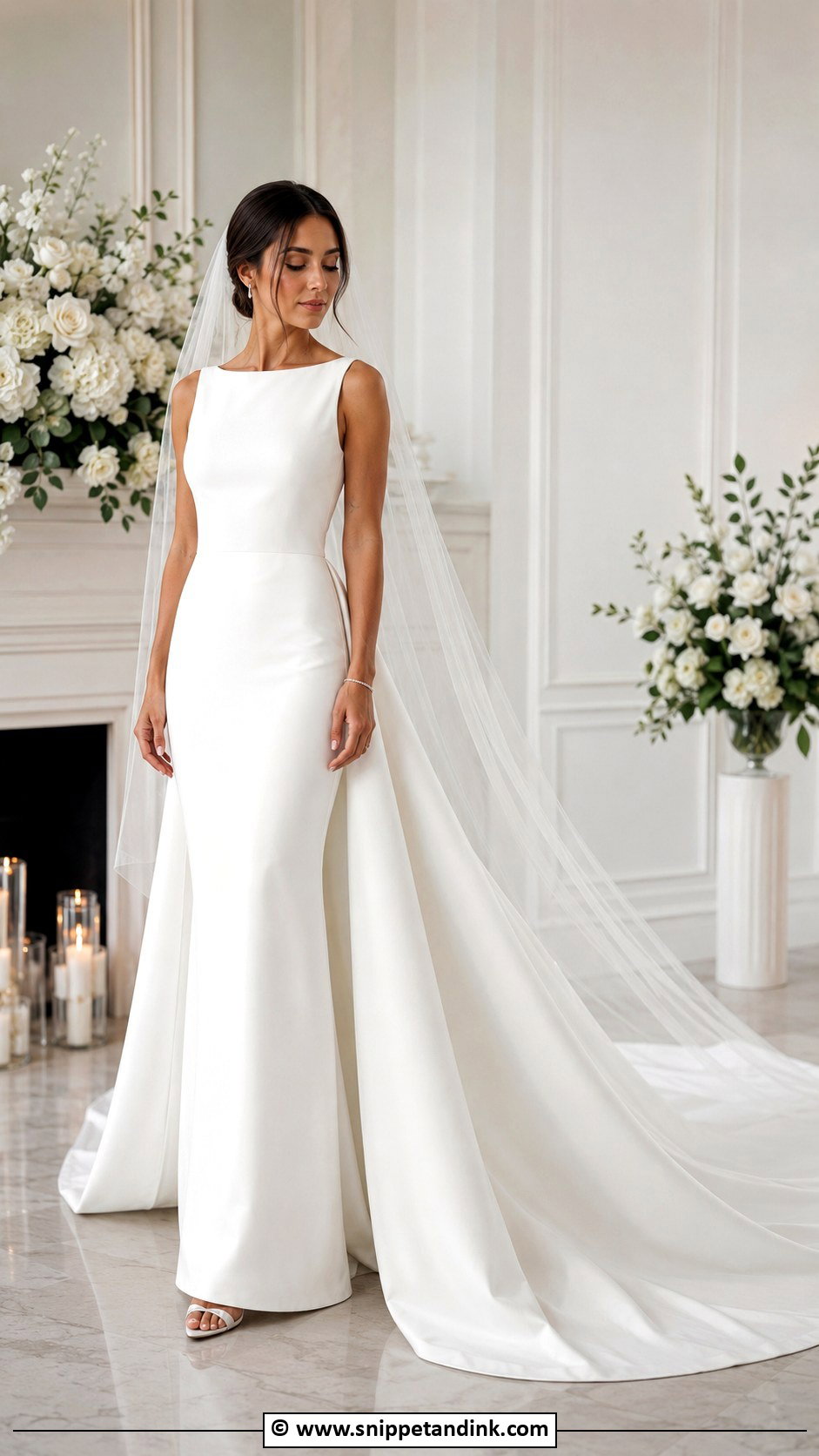
A removable train gives you the cathedral moment without dragging it around all night. It can attach at the waist, back bodice or shoulders over a fitted mermaid, sheath or satin column. Trains get stepped on during the recessional and in crowded cocktail hours, which is exactly why brides love removing them after portraits. Test the fastenings by walking a long corridor before the day. Elegant heels, a fine bracelet and a smooth veil keep the rest calm.
4. Convertible Wedding Dress With Cape
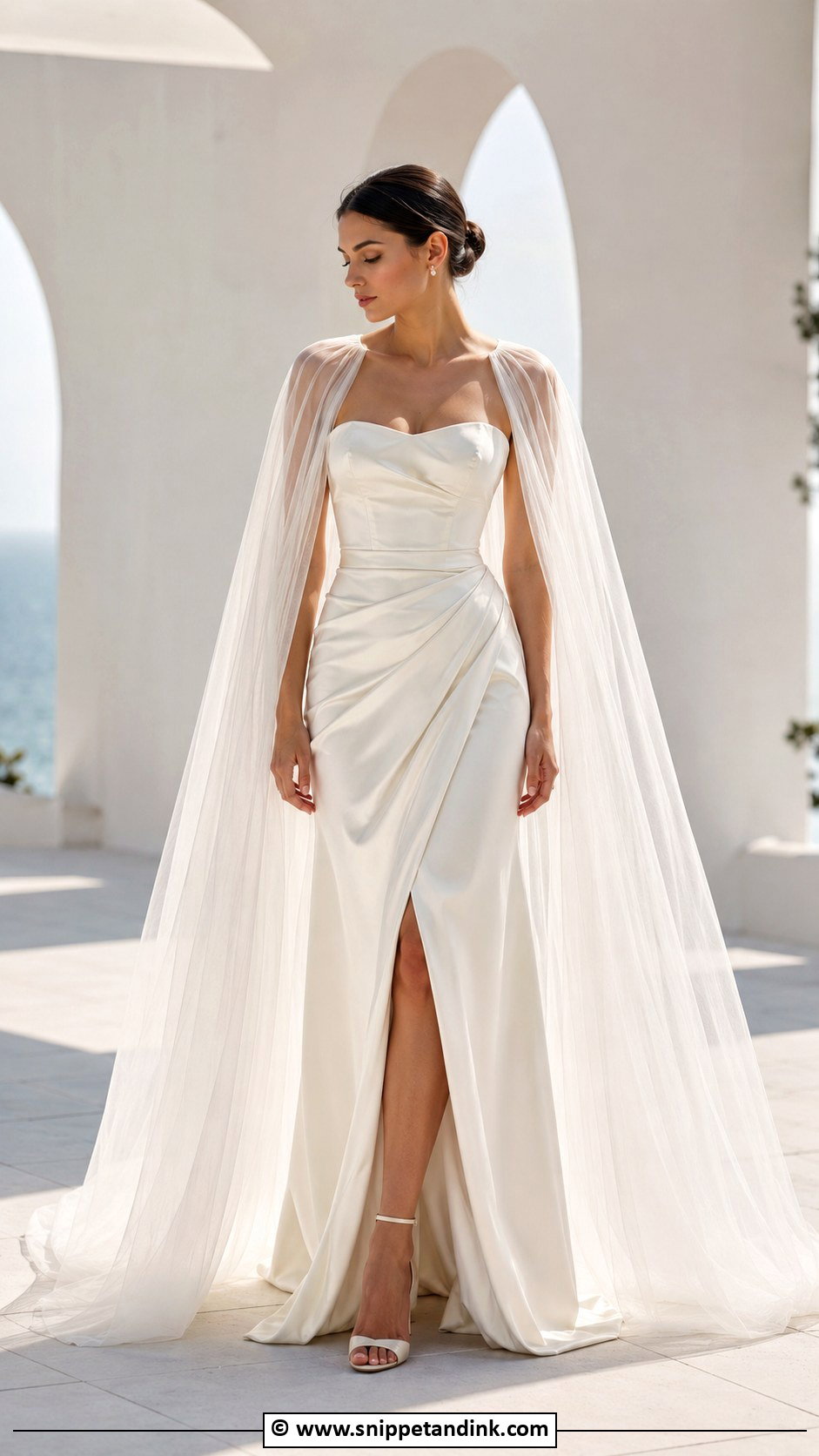
A cape can stand in for a veil while giving the same movement behind you. Sheer tulle, lace or a satin capelet suit the ceremony, and taking it off reveals the simpler dress beneath. It pairs well with strapless, square-neck and minimalist gowns, and gives shoulder coverage for religious venues that ask for it. Wind is my concern outdoors: a long cape catches it like a sail, so for cliff-top or beach ceremonies I suggest a weighted hem or a shorter length. Slim heels and a sleek hairstyle keep the outfit clean.
5. Convertible Wedding Dress With Bridal Bolero
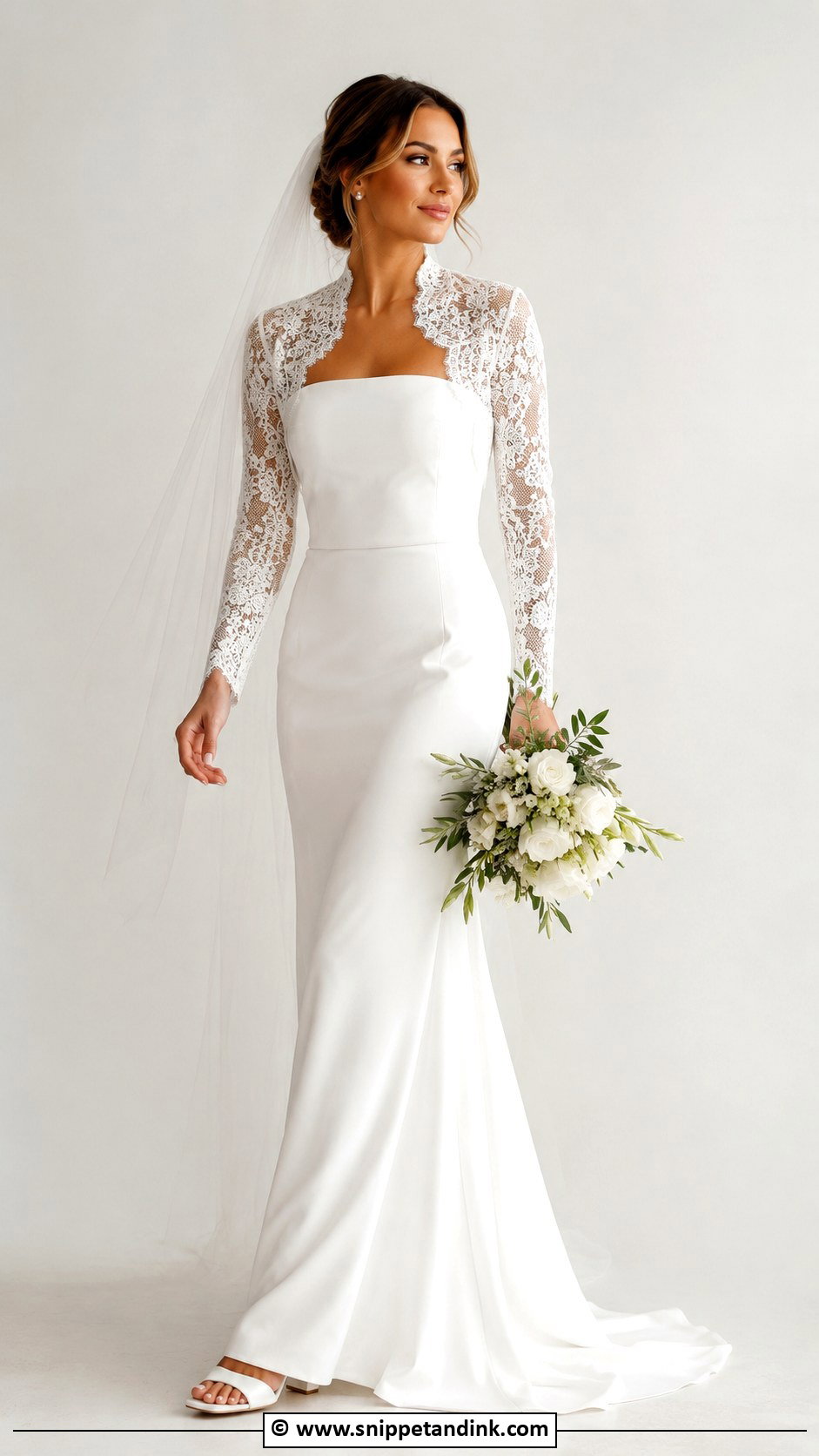
A bolero turns a strapless gown into a modest ceremony look that lightens up later. Lace softens; satin or crepe looks tailored. It’s useful in cooler weather and for venues with coverage expectations. Watch where it ends: a bolero that stops at the wrong point on the ribs cuts the torso and makes the bride look shorter. Soft waves, pearl studs and comfortable shoes suit it, and the bolero is easy to hand to a bridesmaid at the reception door.
6. Convertible Wedding Dress With Detachable Lace Top
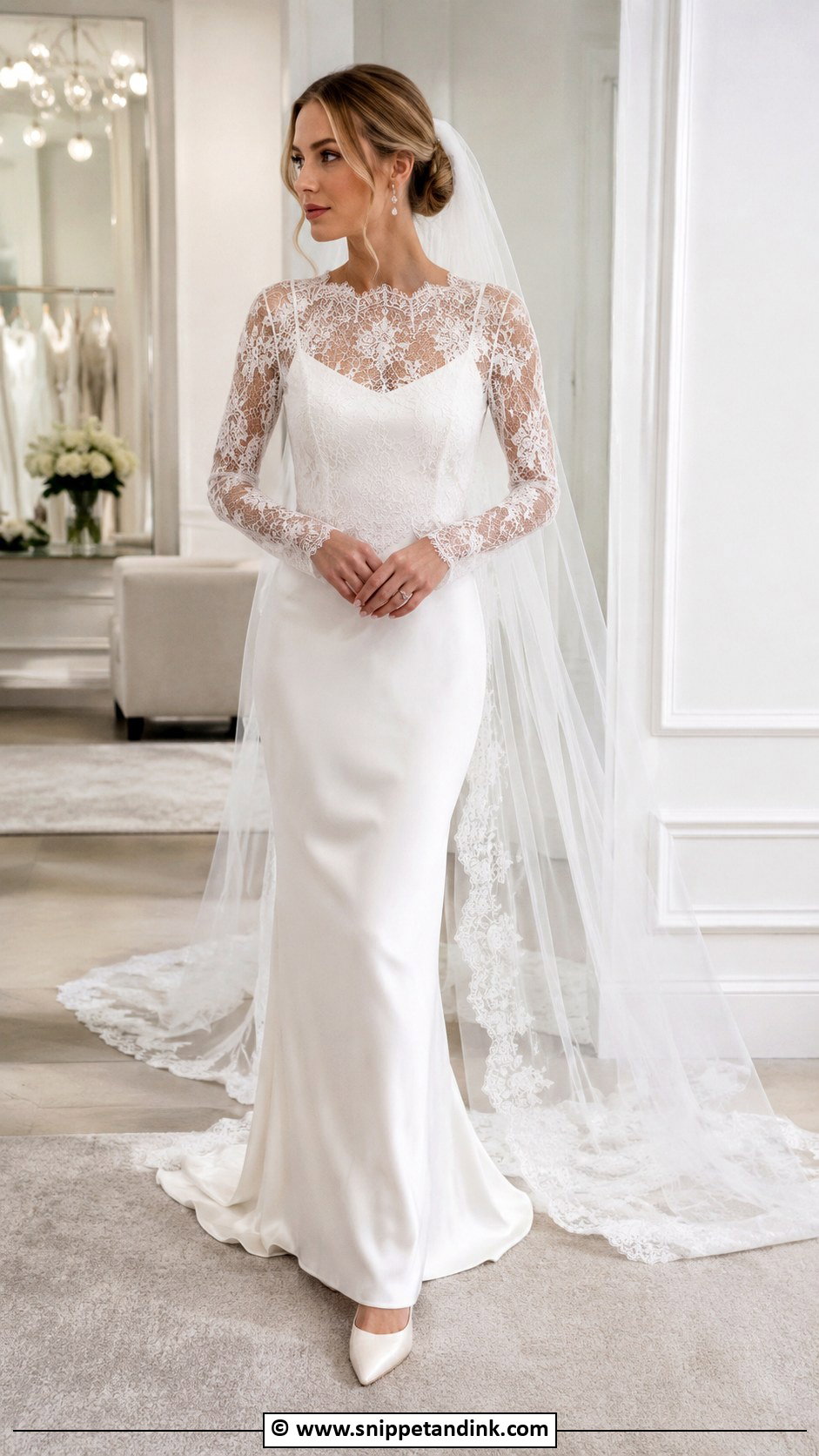
A detachable lace top sits over a simple satin or crepe dress, adding texture, a neckline and sleeves. Down the aisle it reads as a full lace gown; at the reception, the sleek dress underneath takes over. It must fit close to the body without bunching at the waist, which I check with the bride seated. A fine veil, pointed pumps and understated jewelry suit it. Classic lace for the vows, then a cleaner evening line: that’s the trade it offers.
7. Convertible Wedding Dress With Removable Tulle Skirt
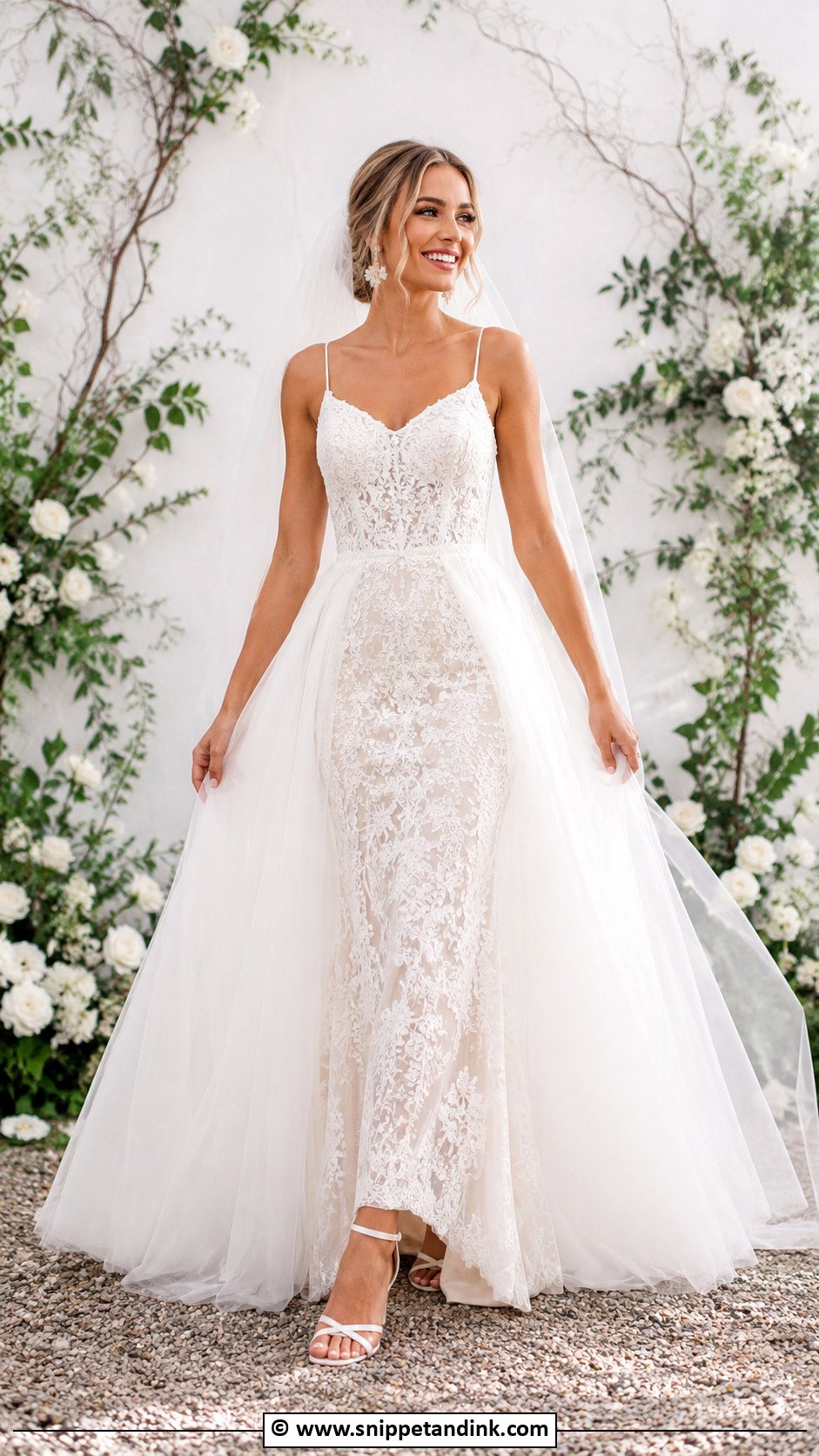
A removable tulle skirt turns a fitted dress into a soft A-line or ball gown for the ceremony. Fine, good-quality tulle floats; cheap tulle looks bulky and crushes in the car. Garden and ballroom weddings suit it, as does any outdoor portrait session. I remind brides that tulle skirts take up real space when removed, so plan where it goes. Delicate heels, a sheer veil and floral earrings finish the feminine look.
8. Convertible Wedding Dress With Overskirt And Slit
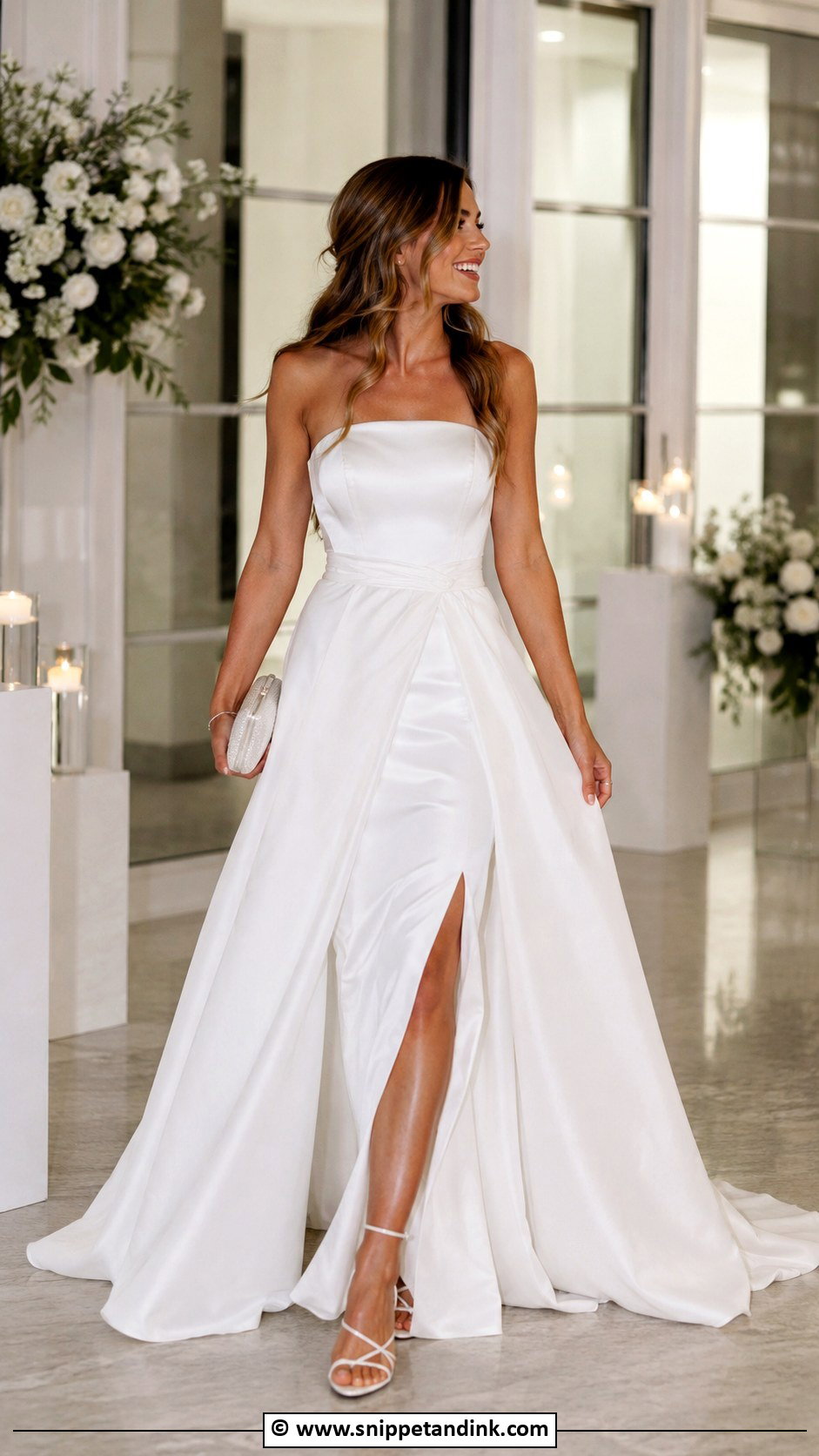
An overskirt with a slit gives the aisle fullness and then a sharper reception look as the slit comes into view. The base is usually fitted satin or sleek crepe. If the overskirt wraps or snaps on, make sure the waist is secure, since a wrap that loosens while you walk is distracting. I also check the slit height with the bride sitting, which is how most guests will see it at dinner. Strappy heels, a clean clutch and soft waves complete it.
9. Convertible Wedding Dress With Detachable Puff Sleeves
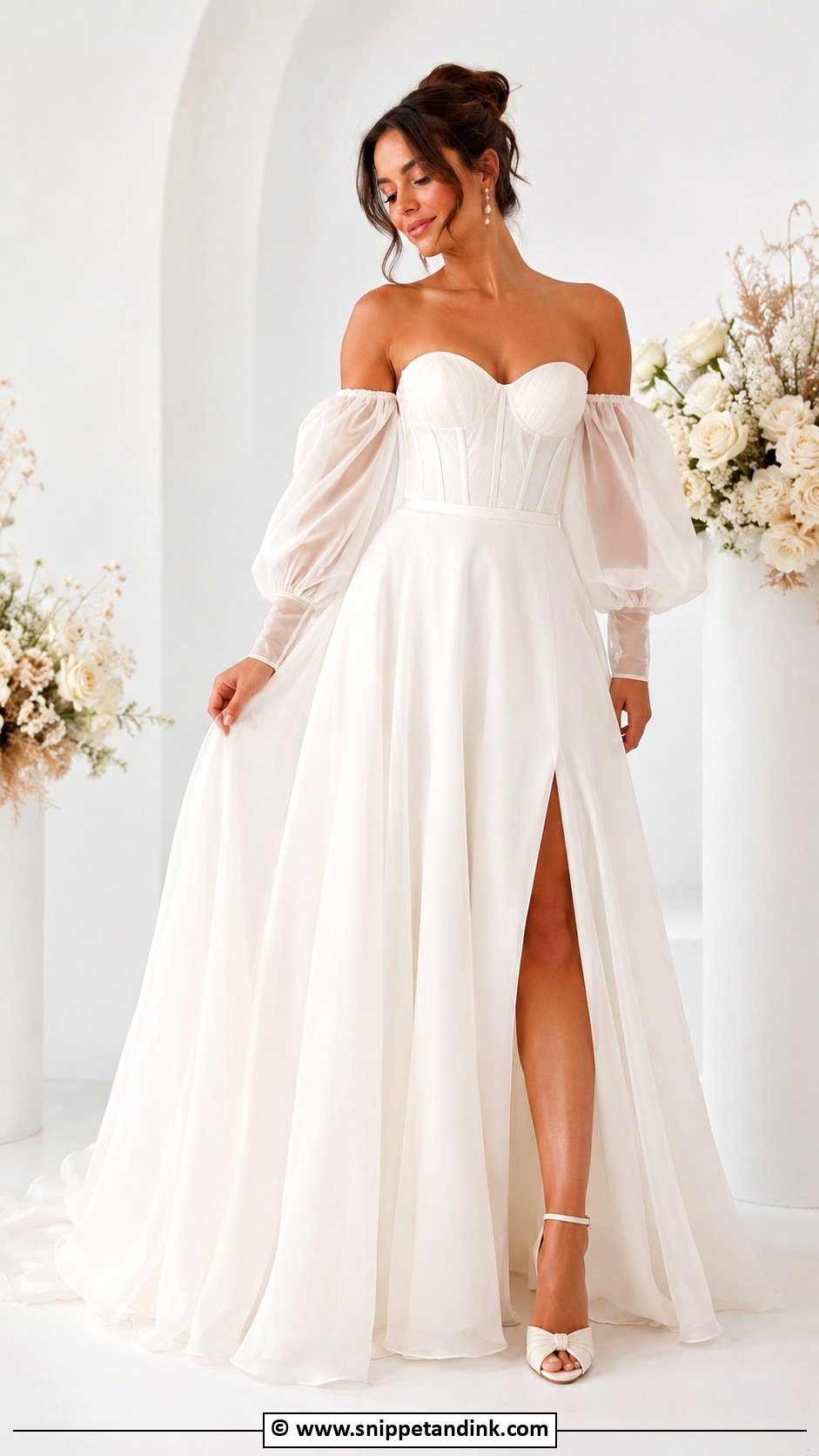
A convertible gown with detachable puff sleeves softens the neckline for ceremony photos, then goes clean and modern without them. Puff sleeves suit sweetheart, square and corset bodices. On petite brides I’d go for a softer puff; a large sheer organza sleeve can swamp a small frame but looks editorial on a taller one. Puffs crush in transit, so pack them separately with tissue inside. A neat updo, pearl earrings and balanced heels keep focus on the sleeves.
10. Convertible Wedding Dress With Detachable Off Shoulder Straps
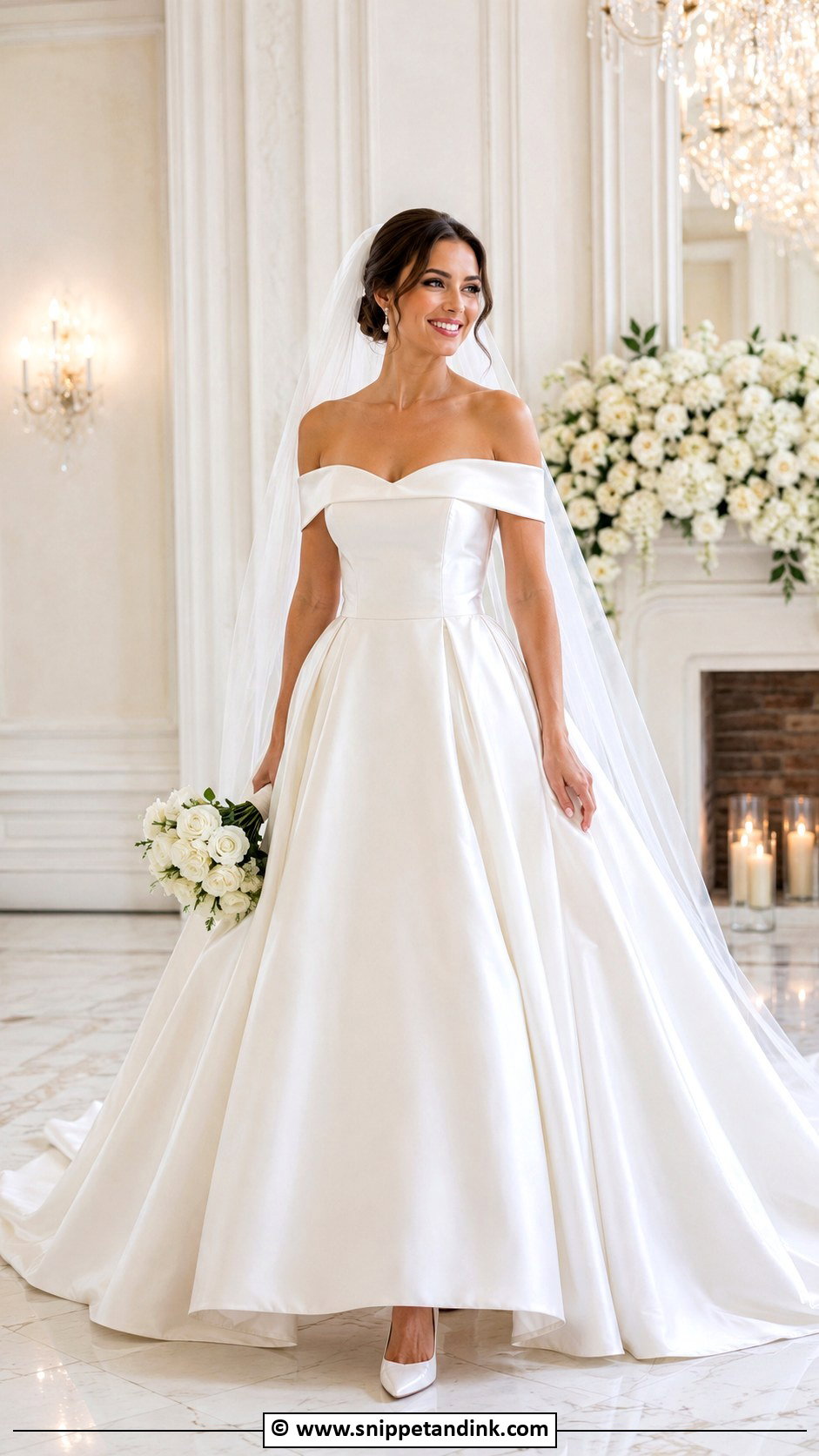
Detachable off-shoulder straps frame the collarbone for the ceremony, and removing them leaves a strapless gown for the party. They work on satin ball gowns, lace mermaids and structured A-lines. The straps have to attach firmly, because loose ones slip and twist while walking. Skip necklaces and let the neckline do the work, with drop earrings, a smooth veil and classic pumps. It’s one of the quickest changes on this list.
11. Convertible Wedding Dress With Removable High Neck Overlay
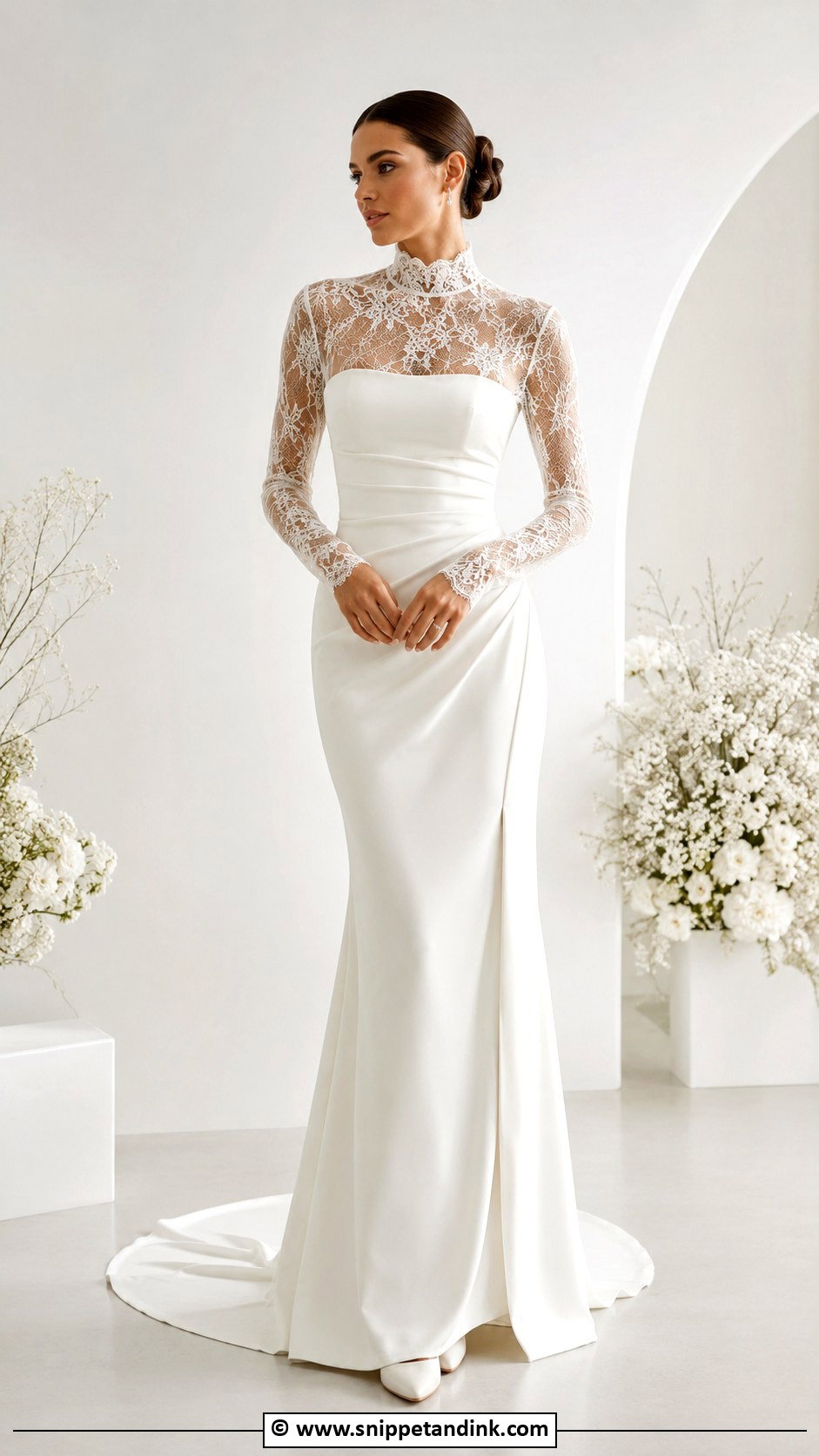
A removable high-neck overlay in lace, sheer tulle, beaded mesh or crepe gives a polished, covered ceremony look over a strapless, scoop or V-neck base. It changes the whole top half without a full outfit change, which suits families who want tradition at the ceremony and brides who want something modern later. I’d confirm the overlay has its own closure at the back, so it comes off without disturbing hair. A sleek bun, small earrings and closed-toe heels suit it.
12. Convertible Wedding Dress With Detachable Bridal Gloves
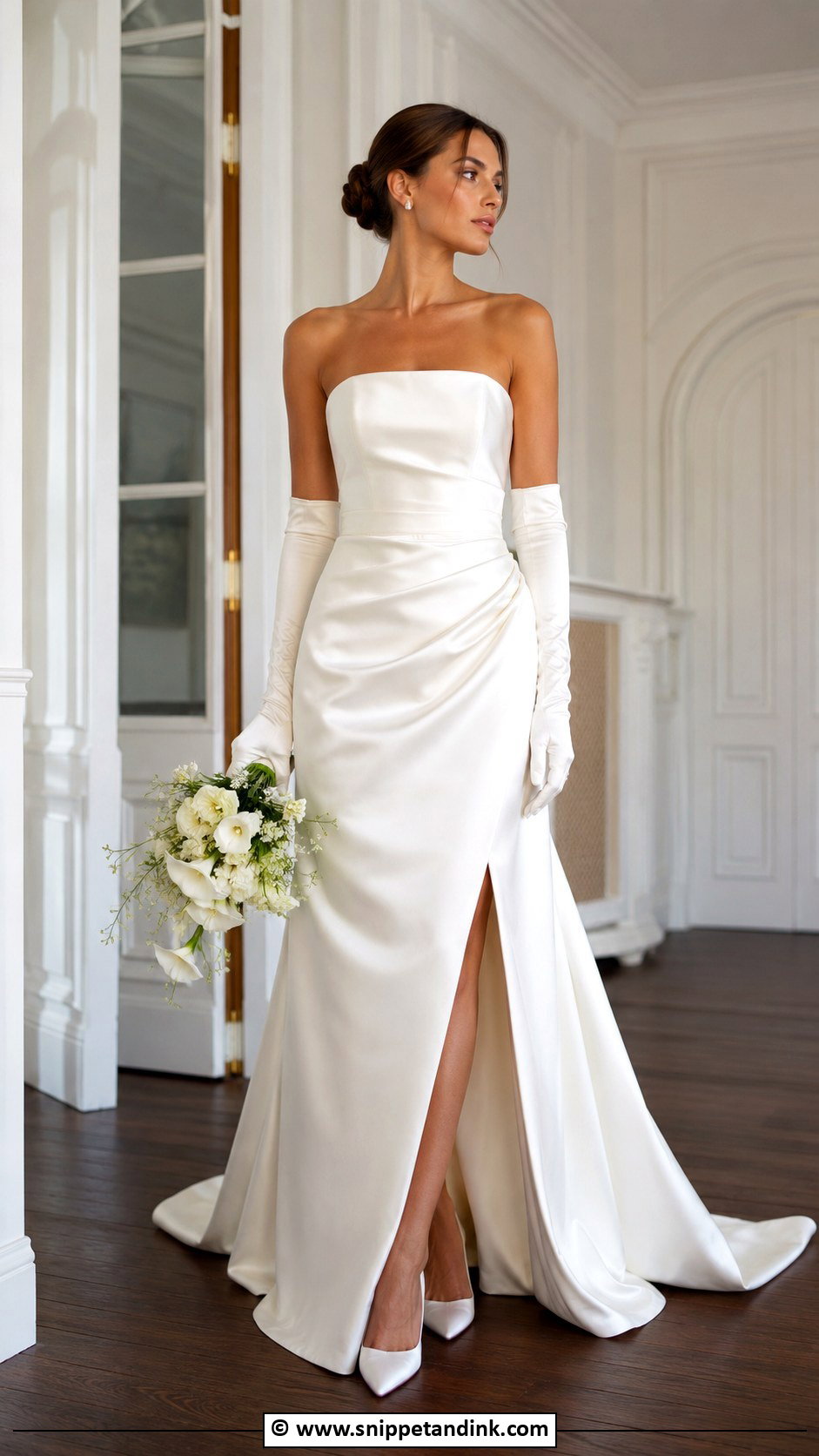
Bridal gloves add an instant vintage note to a strapless or sleeveless gown. They lengthen the arms and make portraits look styled, then come off for eating and dancing. Long satin gloves suit minimal gowns, sheer lace softens a romantic one. Here’s the practical bit: you need your ring finger free during the vows, so either plan to remove the left glove at the altar or choose fingerless gloves. A structured bouquet, clean heels and simple earrings finish it.
13. Convertible Wedding Dress With Detachable Bow Train
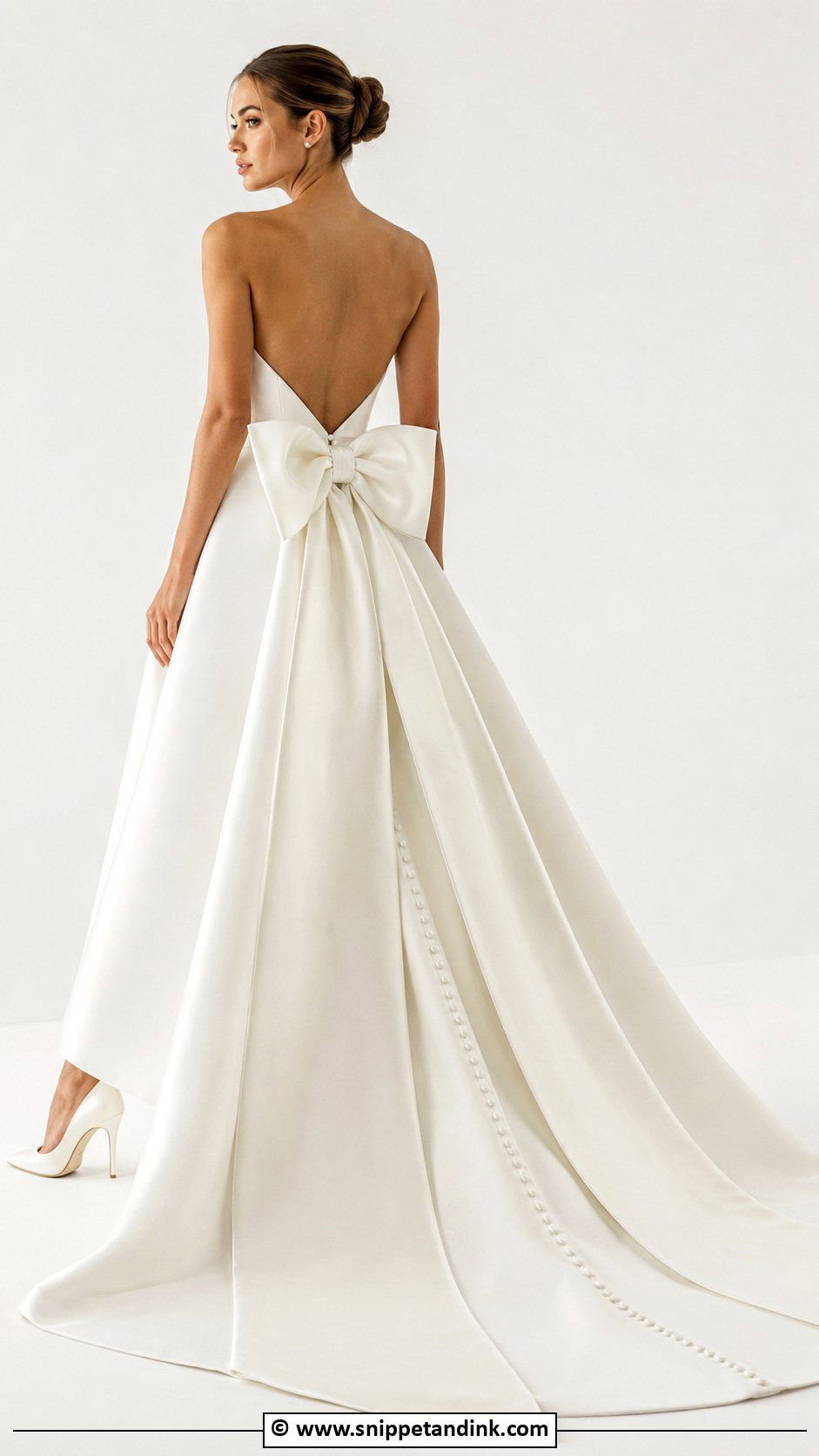
A detachable bow train puts a sculptural statement at the waist or lower back for the ceremony. Satin, mikado and crepe hold the bow’s shape; softer fabrics droop. A fitted column or A-line base keeps it in proportion. Big bows and busy veils compete, so I keep the veil plain or skip it for the processional. Sleek heels, pearl studs and smooth hair keep the back of the gown as the focus.
14. Convertible Wedding Dress With Removable Skirt Over Mini Dress
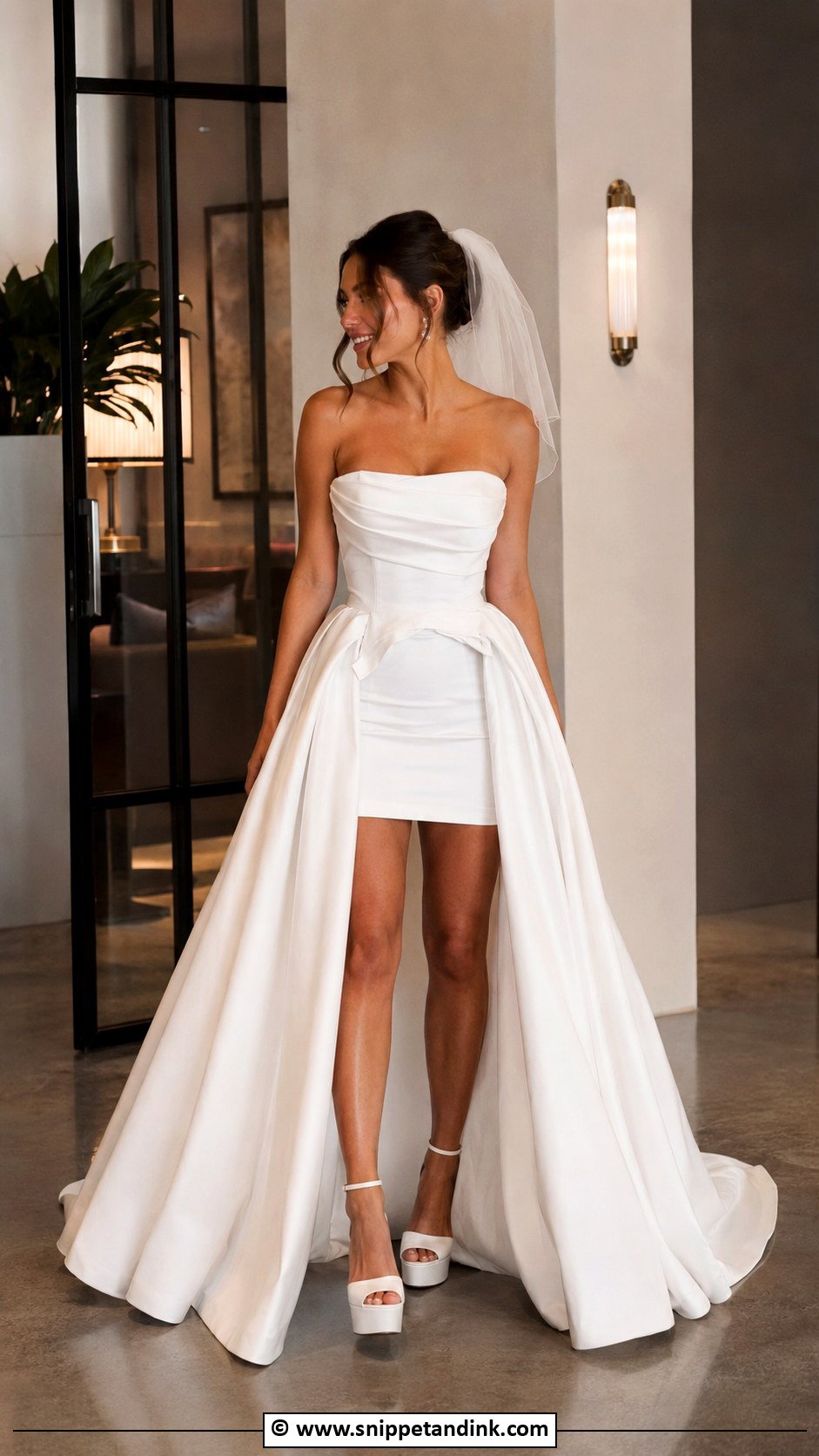
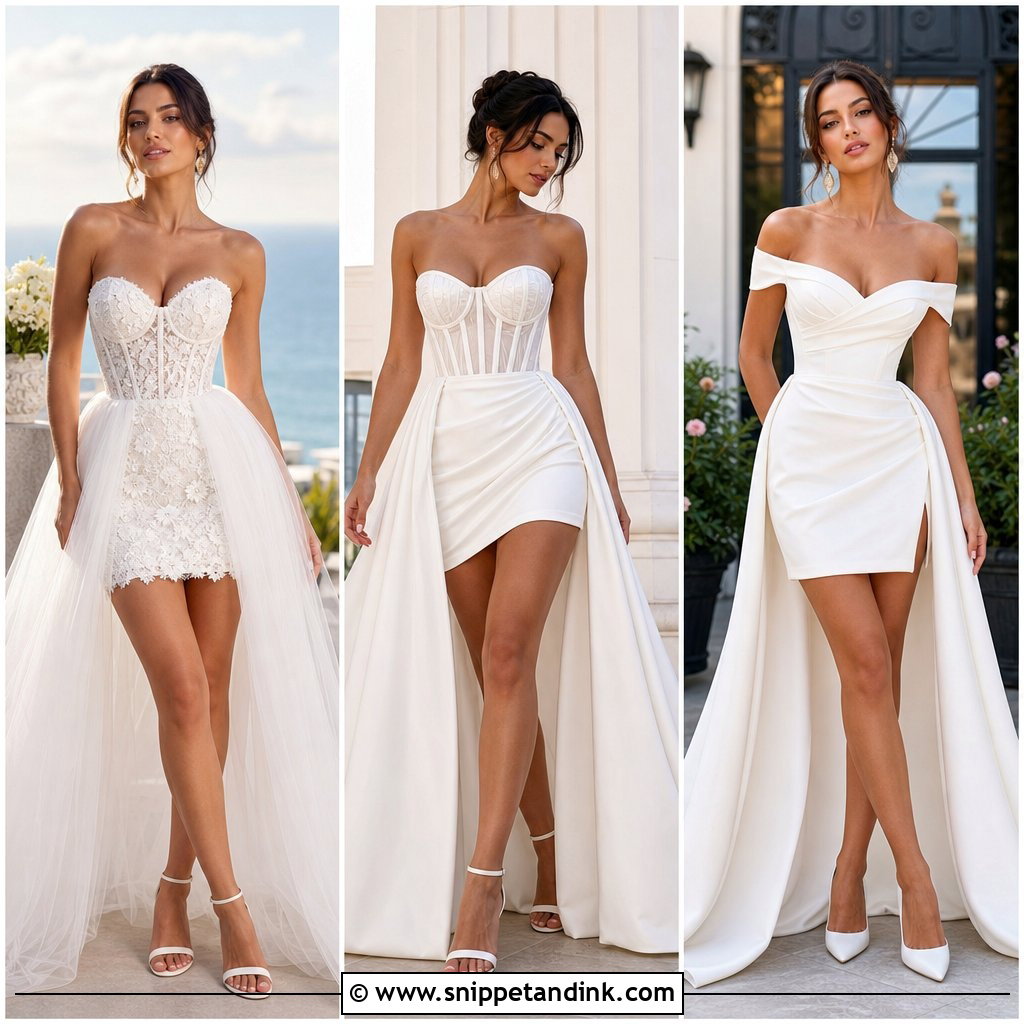
A removable full skirt over a mini dress gives a formal aisle look and a completely different party outfit underneath. City weddings, elopements and courthouse ceremonies suit it. The mini has to feel bridal on its own, through fabric and fit, so I ask brides to try the mini alone first and decide if they’d wear it. Satin, lace or structured crepe works. Statement heels, small earrings and a short veil or hair accessory make it chic.
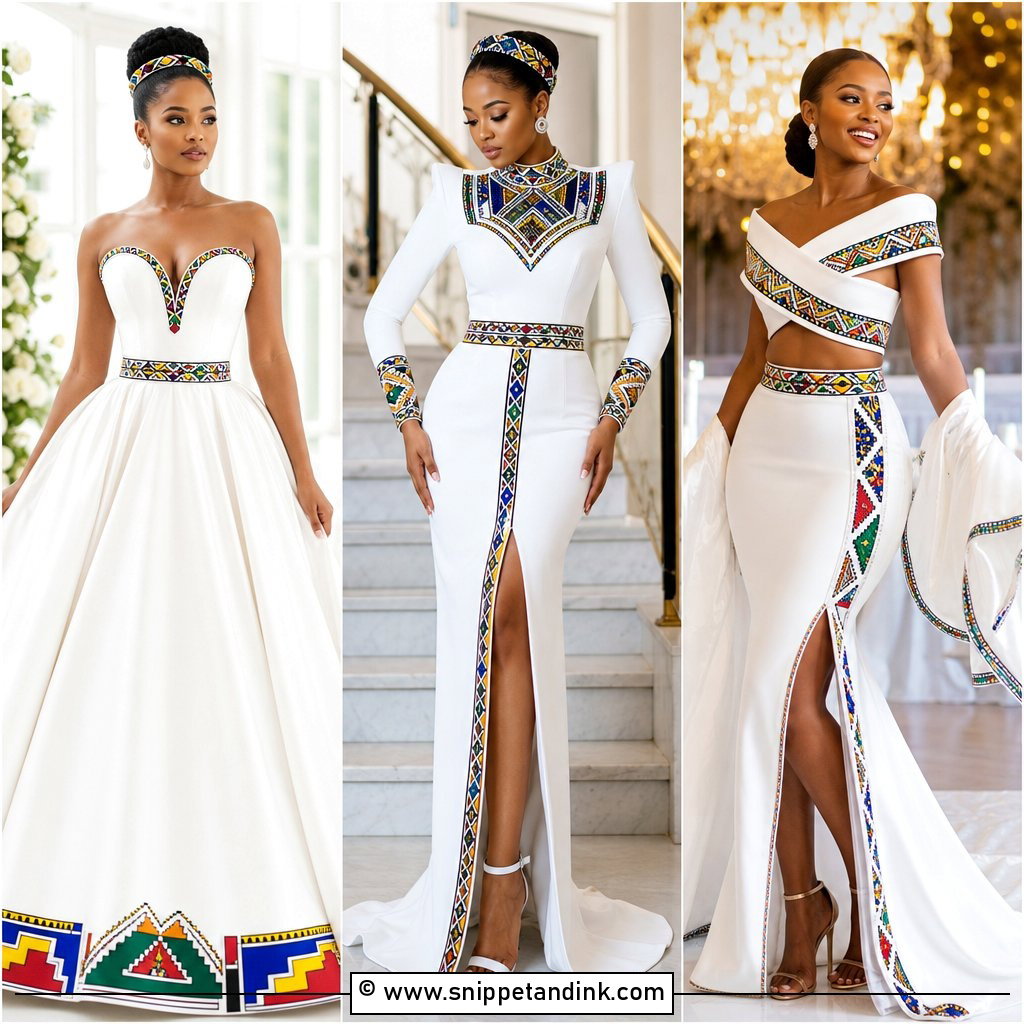


15. Convertible Wedding Dress With Detachable Peplum
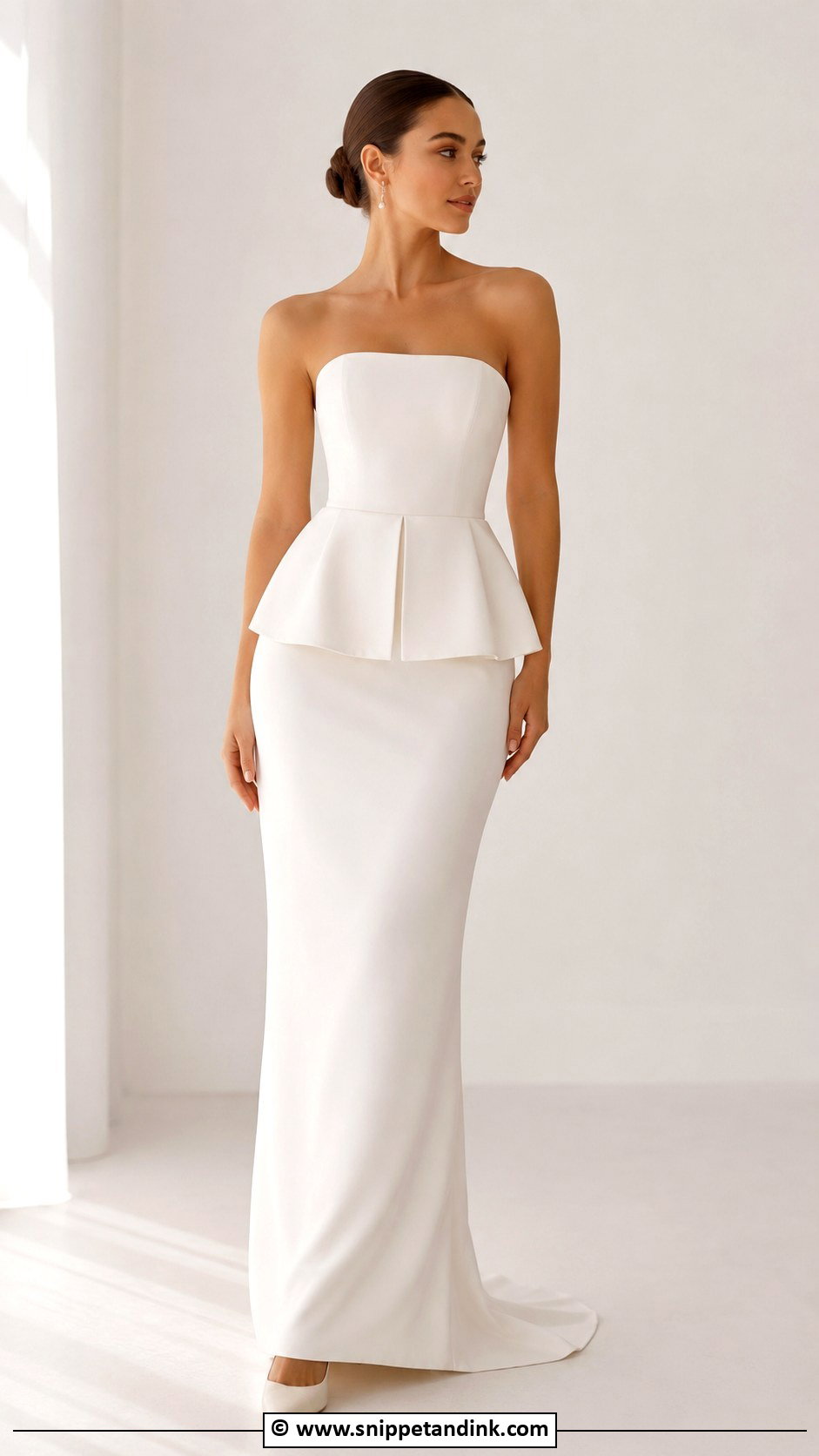
A detachable peplum adds waist shape and a couture-inspired feel, softening the hips or adding a little volume to a sleek line. Off it comes for a cleaner column or mermaid shape at the reception. It’s a good alternative if you want waist definition without a full overskirt. Check that it sits comfortably when seated, as a stiff peplum can dig into the ribs at dinner. Pointed heels, a smooth updo and simple jewelry go with it.
16. Convertible Wedding Dress With Detachable Satin Skirt
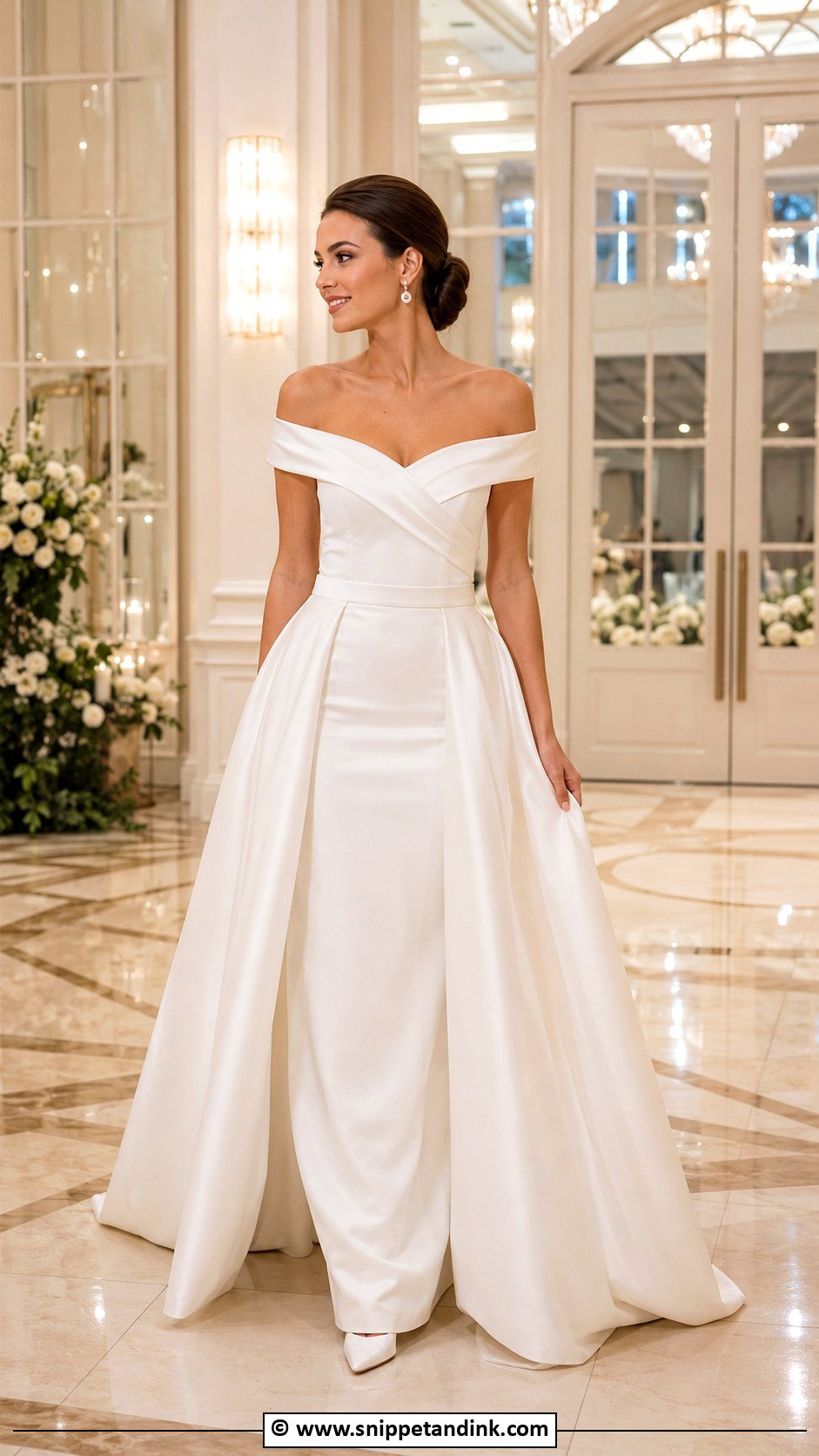
A detachable satin skirt adds weight, shine and formality over a simple base, creating an A-line or ball gown for the ceremony. Satin shows every flaw in tailoring, so the closure has to be hidden and the waistband flat. Hotel and formal evening weddings suit it. Satin skirts are heavy when removed, so they need a proper hanger and someone assigned to them. Closed-toe pumps, pearl earrings and a low chignon finish the look.
17. Convertible Wedding Dress With Removable Organza Sleeves
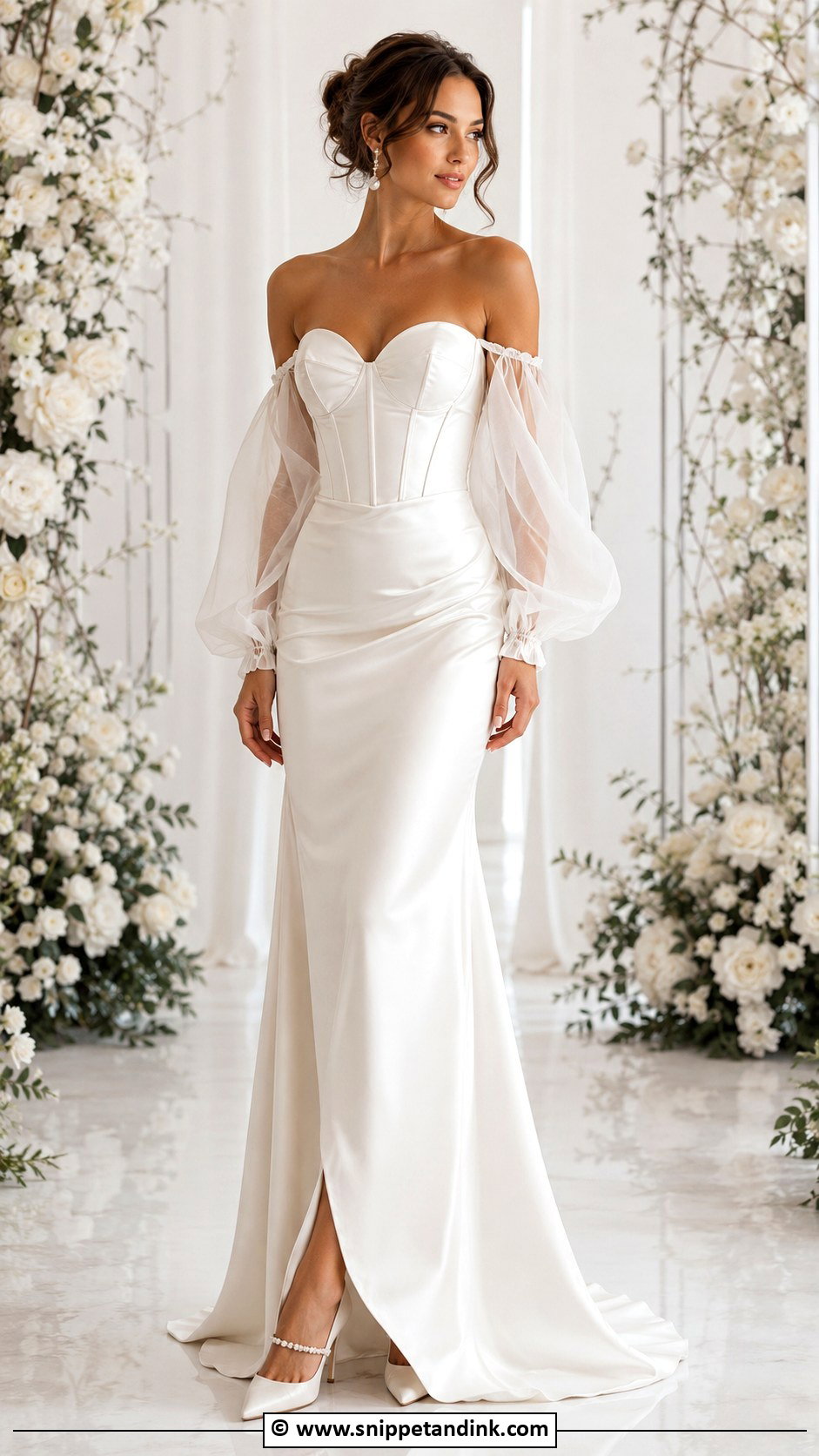
A gown with removable organza sleeves adds airy dimension without weight. Organza holds shape better than tulle, so it works for puff, bishop or off-shoulder sleeves. They pair well with satin, crepe and simple lace gowns. Organza does mark if folded tightly, so I keep spare sleeves loosely rolled in tissue. Pearl drops or a fine bracelet and heels matching the dress tone keep it cohesive.
18. Convertible Wedding Dress With Detachable Sheer Jacket
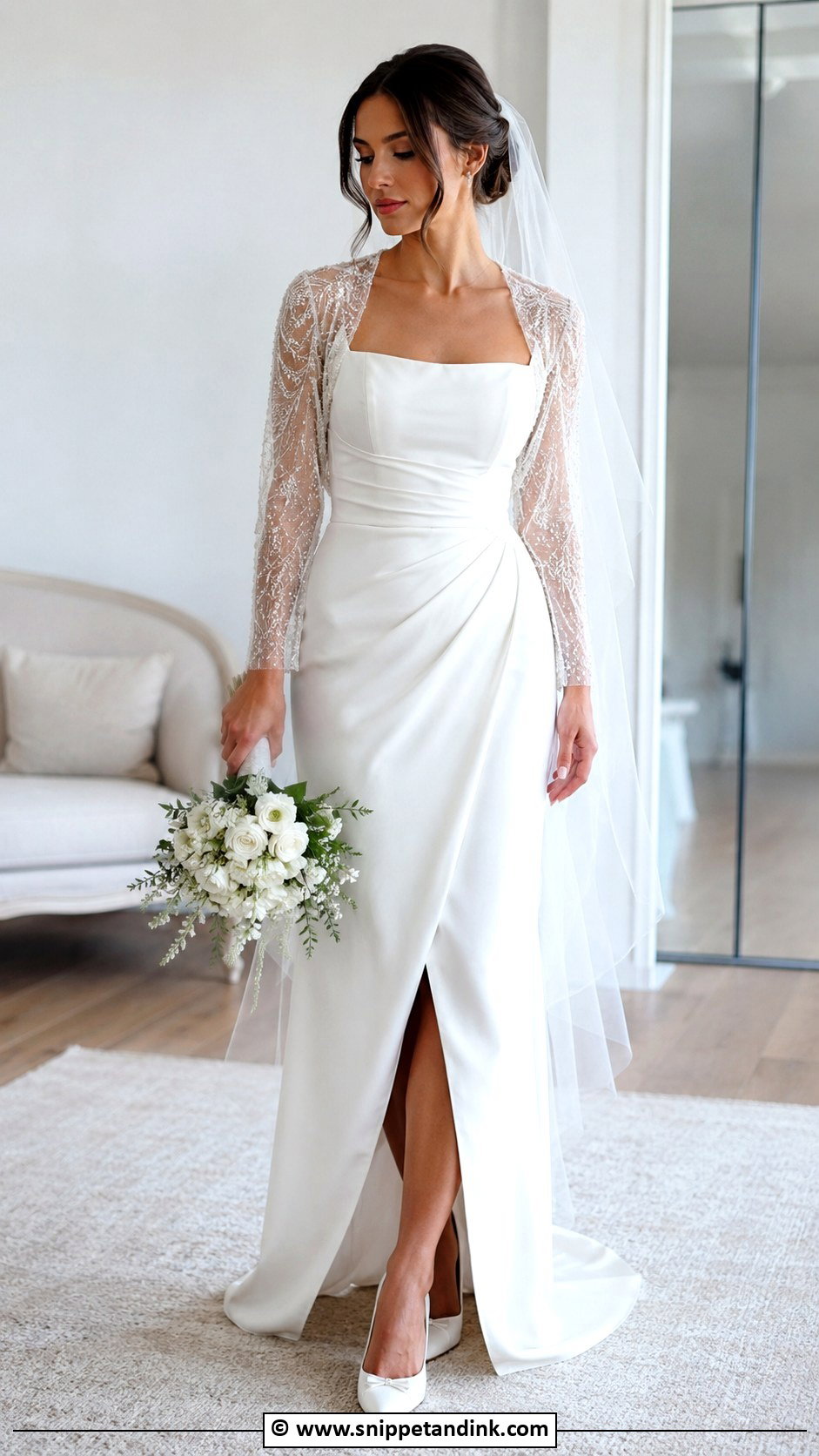
A detachable sheer jacket gives long sleeves, a high neck or light coverage while the dress still shows through. Tulle, lace and beaded mesh all work. It’s a lighter option than a bolero or structured topper for brides who dislike heavy layers. The fit across the back matters; a jacket that pulls at the arms will show when you lift your bouquet. Simple heels, a soft veil and understated earrings suit it.
19. Convertible Wedding Dress With Detachable Ruffle Skirt
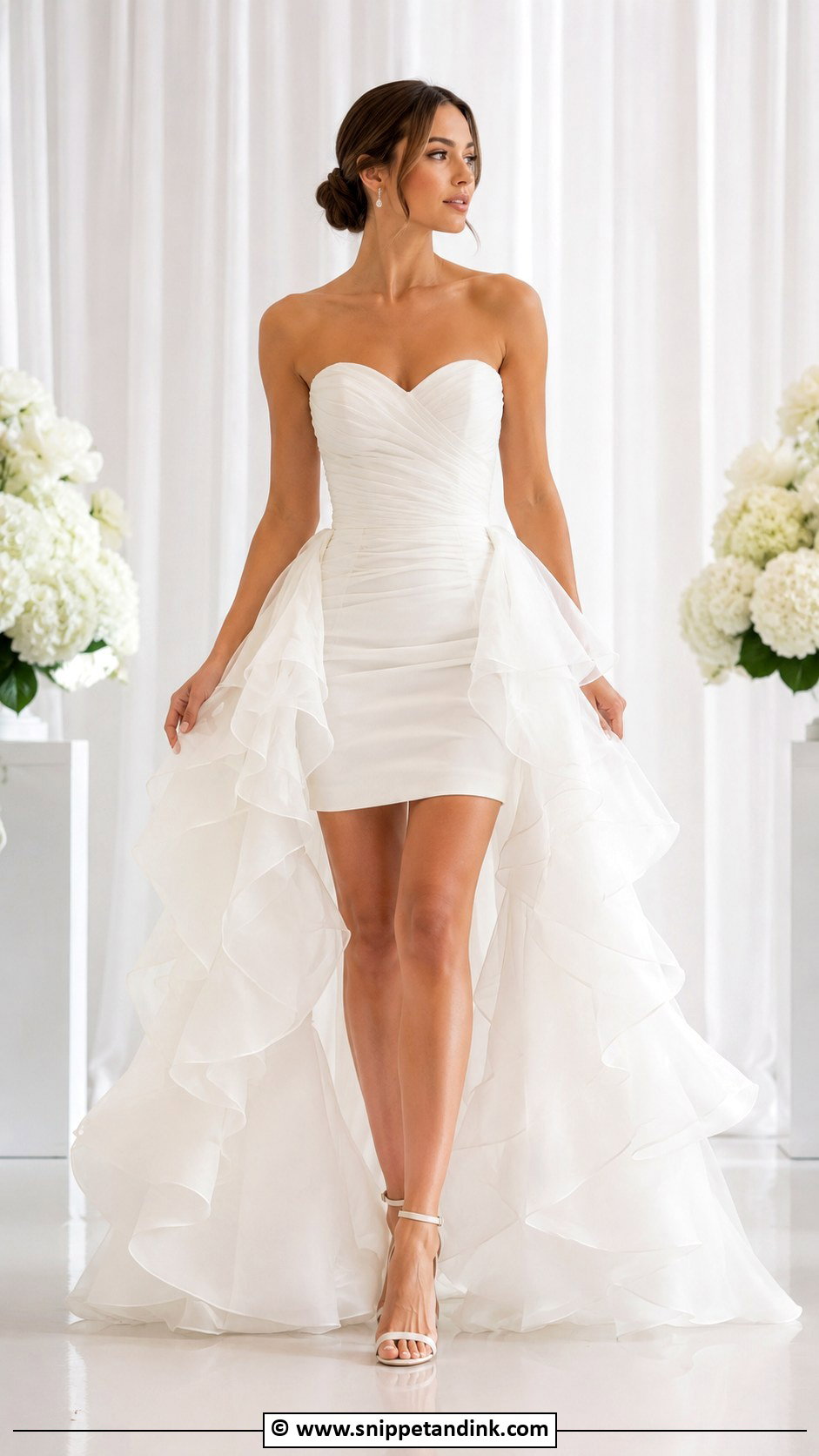
A detachable ruffle skirt brings texture and movement in organza, tulle or soft satin, then leaves a sleeker gown for the party. A fitted strapless or square-neck base keeps the ruffles from competing with the bodice. Ruffled skirts are bulky and catch on chair legs and doorframes, which is one more reason guests are glad to see them come off before the dancing. Minimal jewelry, clean heels and smooth hair balance it.


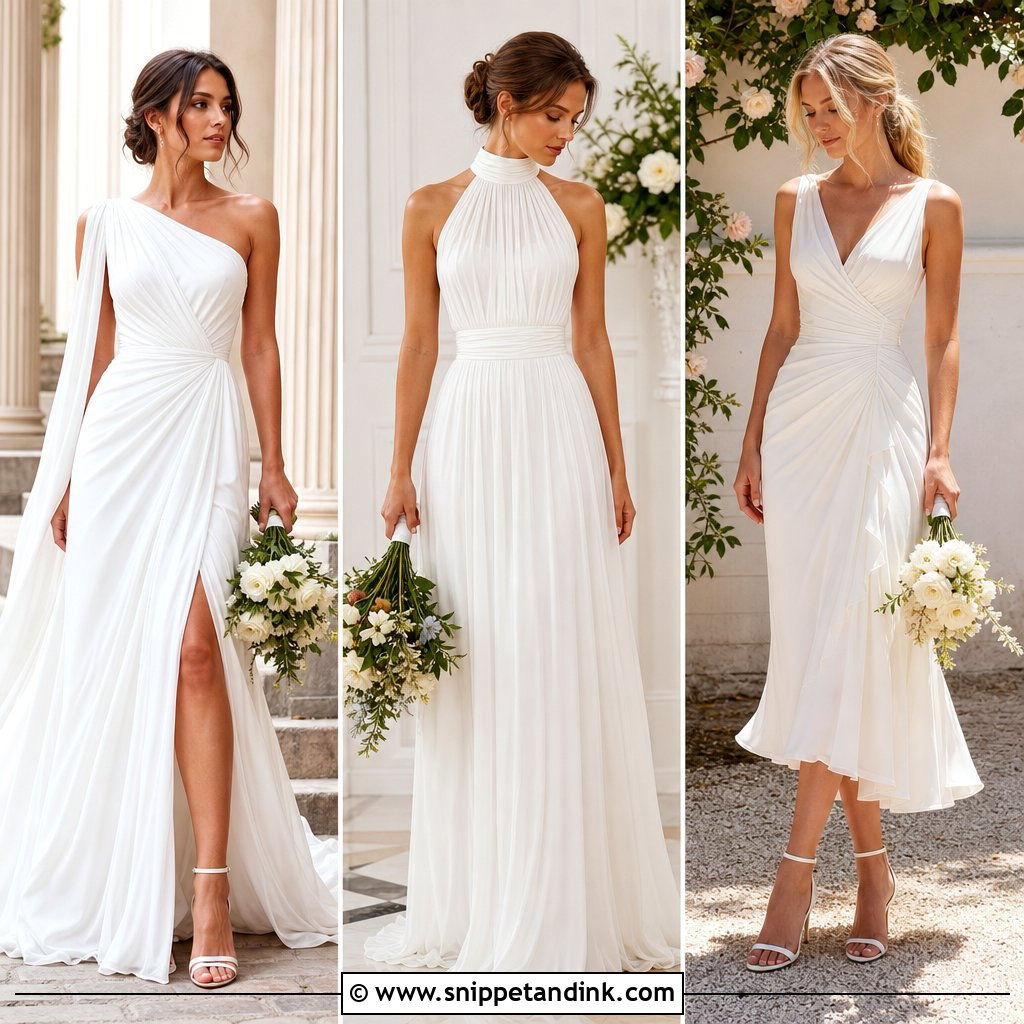
20. Convertible Wedding Dress With Removable Bridal Capelet
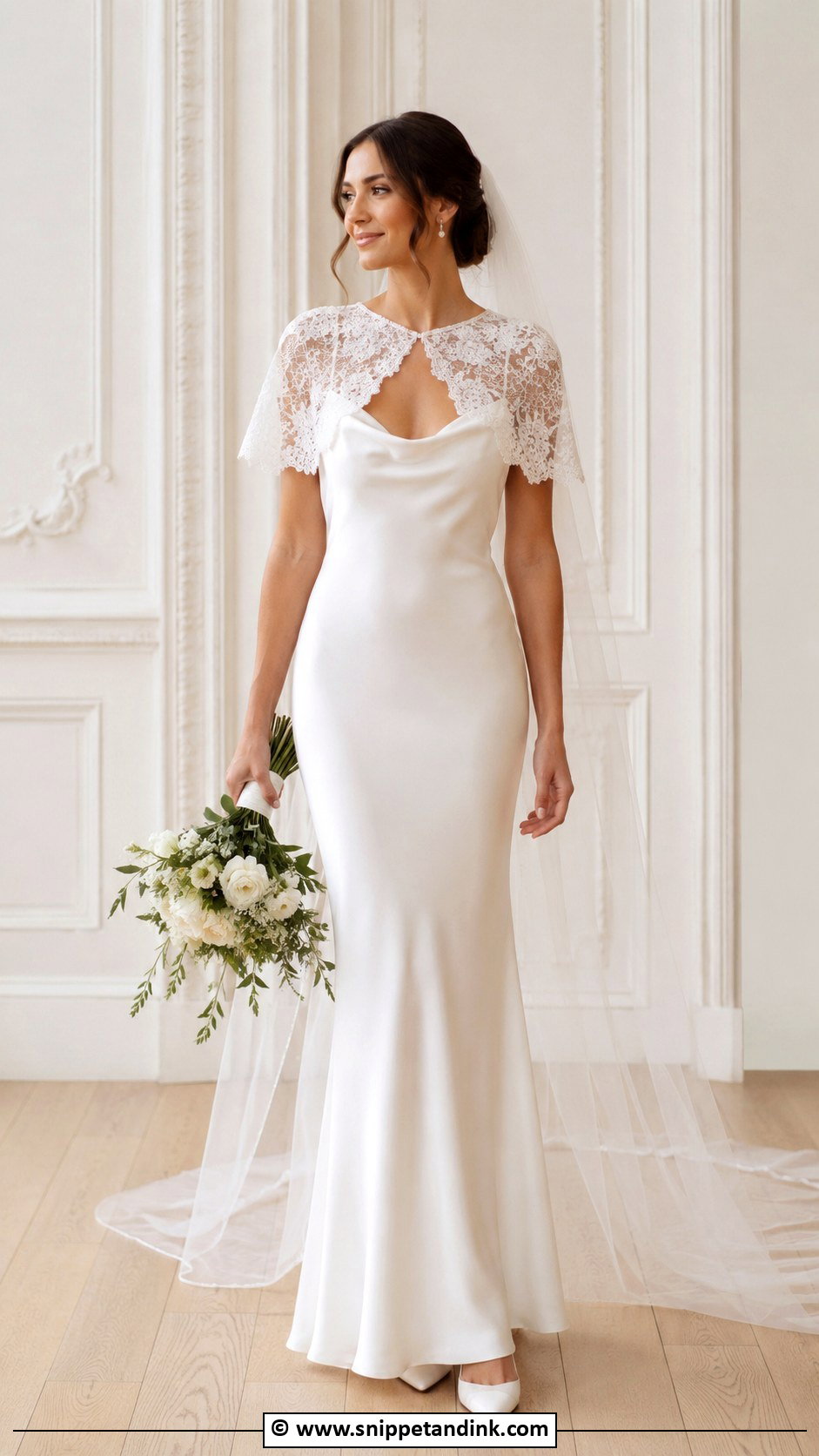
A removable bridal capelet sits shorter than a full cape, giving subtle shoulder coverage in lace, tulle, crepe or beading. It suits slip dresses, columns and simple A-lines, and it reveals the neckline when removed. I like it for ceremonies where shoulders must be covered and for chilly evening portraits, since it can go back on quickly. Delicate earrings, low heels or pumps and a soft veil keep it understated.
21. Convertible Wedding Dress With Detachable Beaded Topper
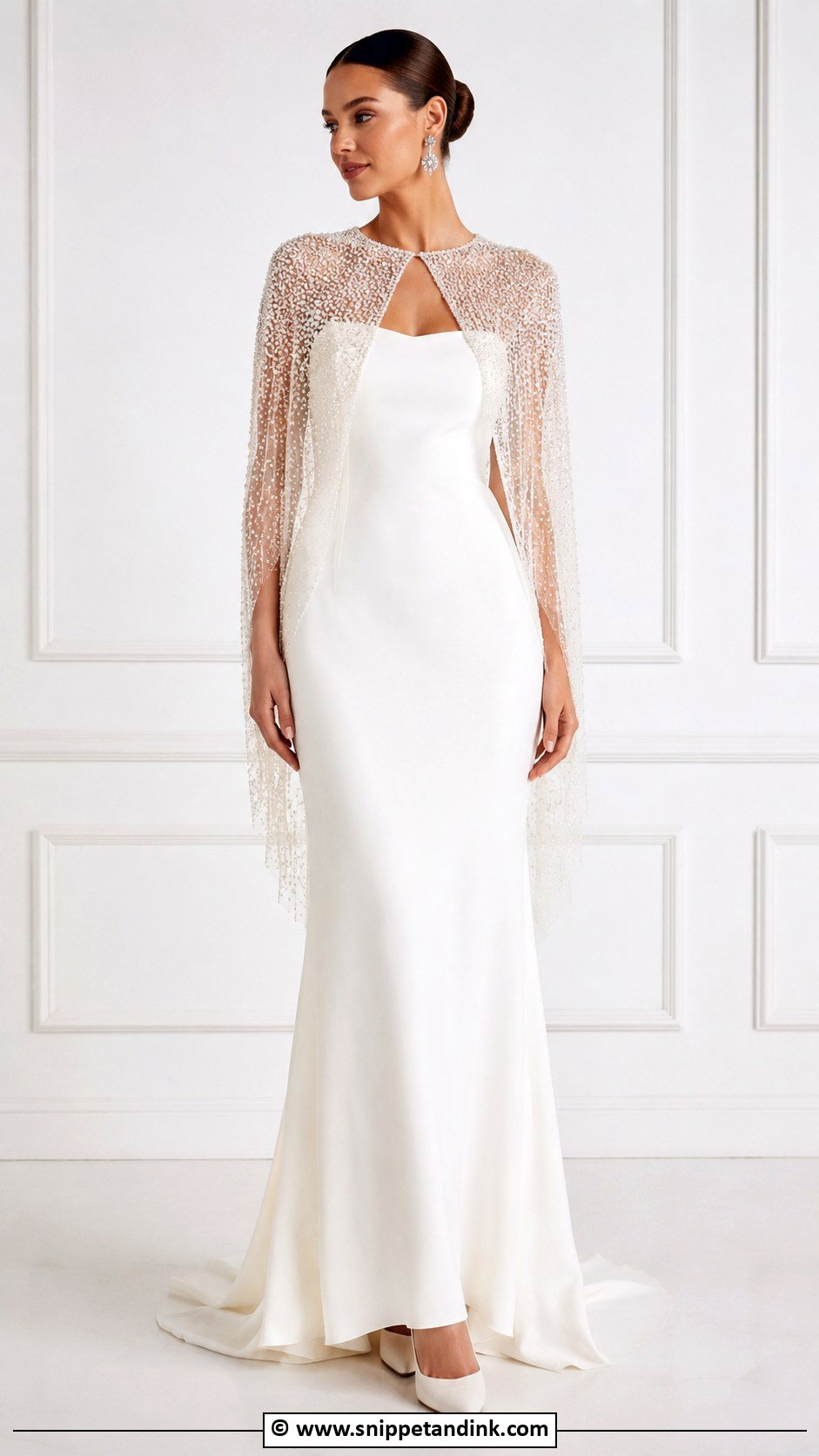
A detachable beaded topper adds shimmer, sleeves and texture over a plain gown, then comes off for a simpler reception look. It’s a way to enjoy embellishment without wearing beading all night. Ask about the inside: rough beading scratches the arms and can snag the base fabric, so the lining should cover every bead backing. Smooth heels, small crystal earrings and a simple hairstyle keep it clean.
22. Convertible Wedding Dress With Removable Bubble Hem Skirt
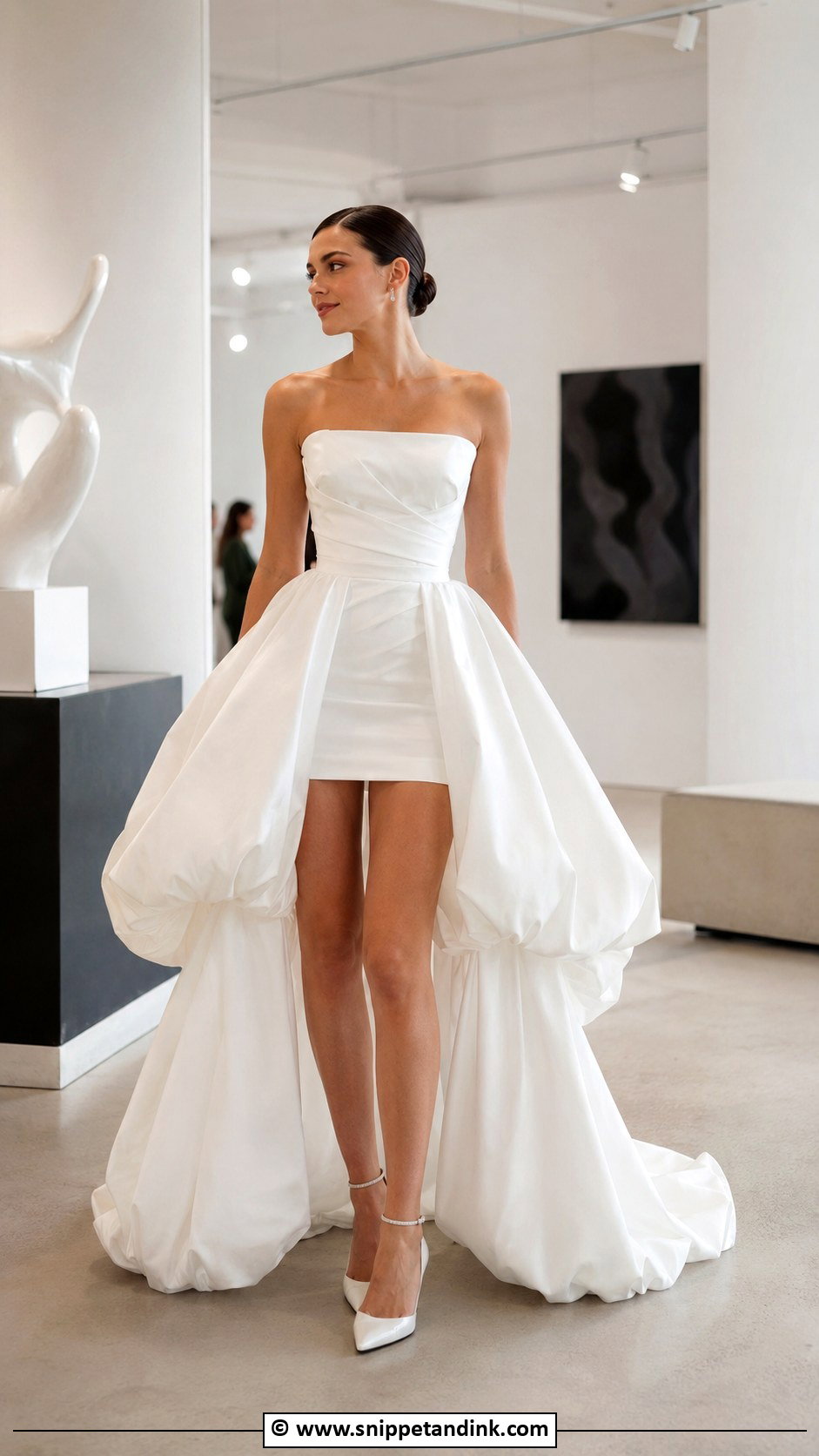
A removable bubble hem skirt brings sculptural volume over a fitted mini, column or slim midi base. It’s a fashion choice for contemporary venues and city weddings rather than a traditional one. Bubble hems are stiff and need space in transport, so I make sure the car can take it without crushing. Keep accessories minimal, with sleek heels, small earrings and polished hair.
23. Convertible Wedding Dress With Detachable Lace Overskirt
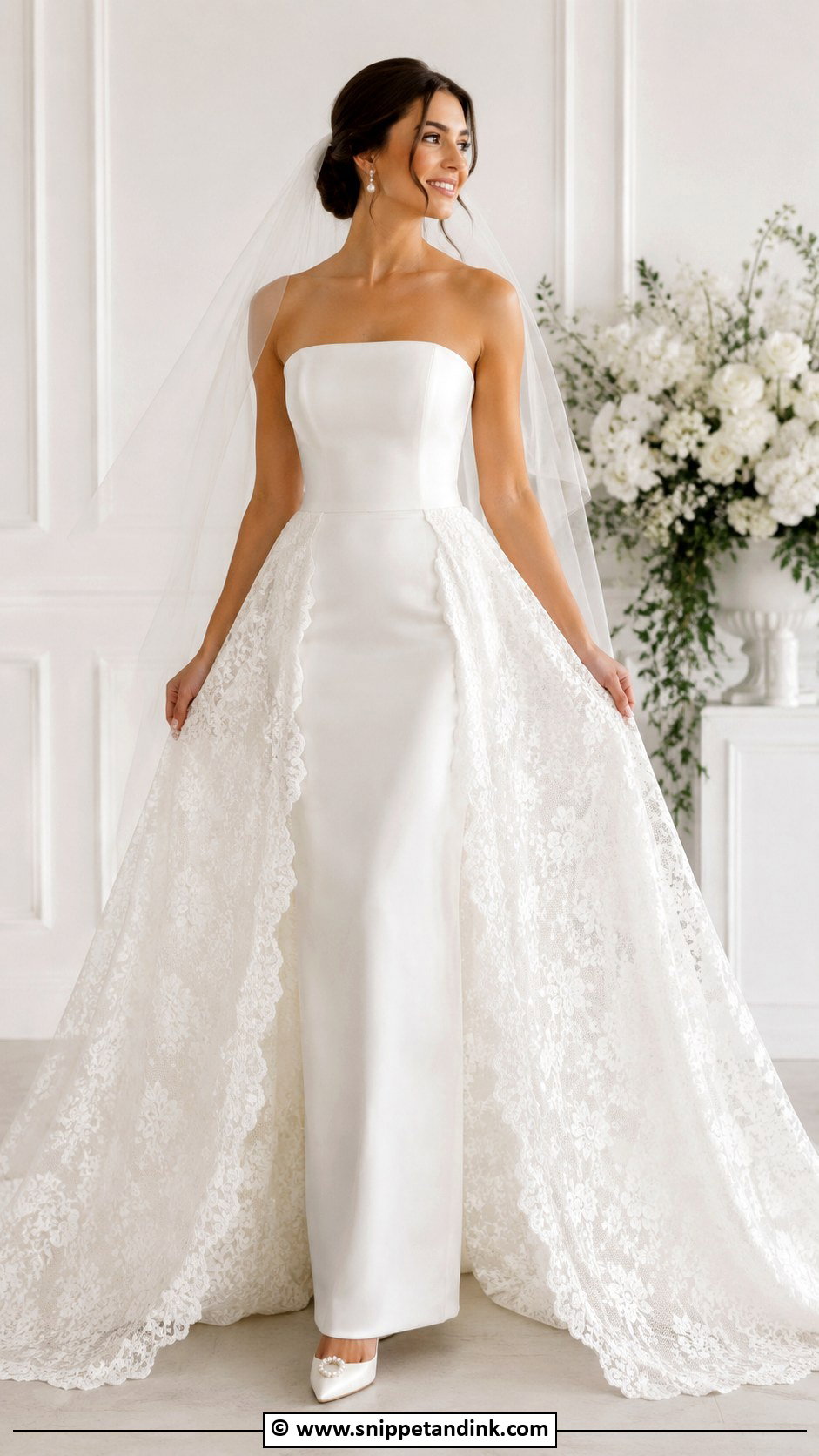
A detachable lace overskirt adds softness over plain crepe, satin or charmeuse, leaving a minimal dress for later. It suits brides who love lace but don’t want it all night. Coordinate the lace with the bodice or veil so the outfit feels connected, and a scalloped edge photographs well. Lace overskirts snag on rough venue floors and stair edges, so check your route. Pearl earrings, pointed heels and a soft veil finish it.
24. Convertible Wedding Dress With Detachable Bridal Scarf
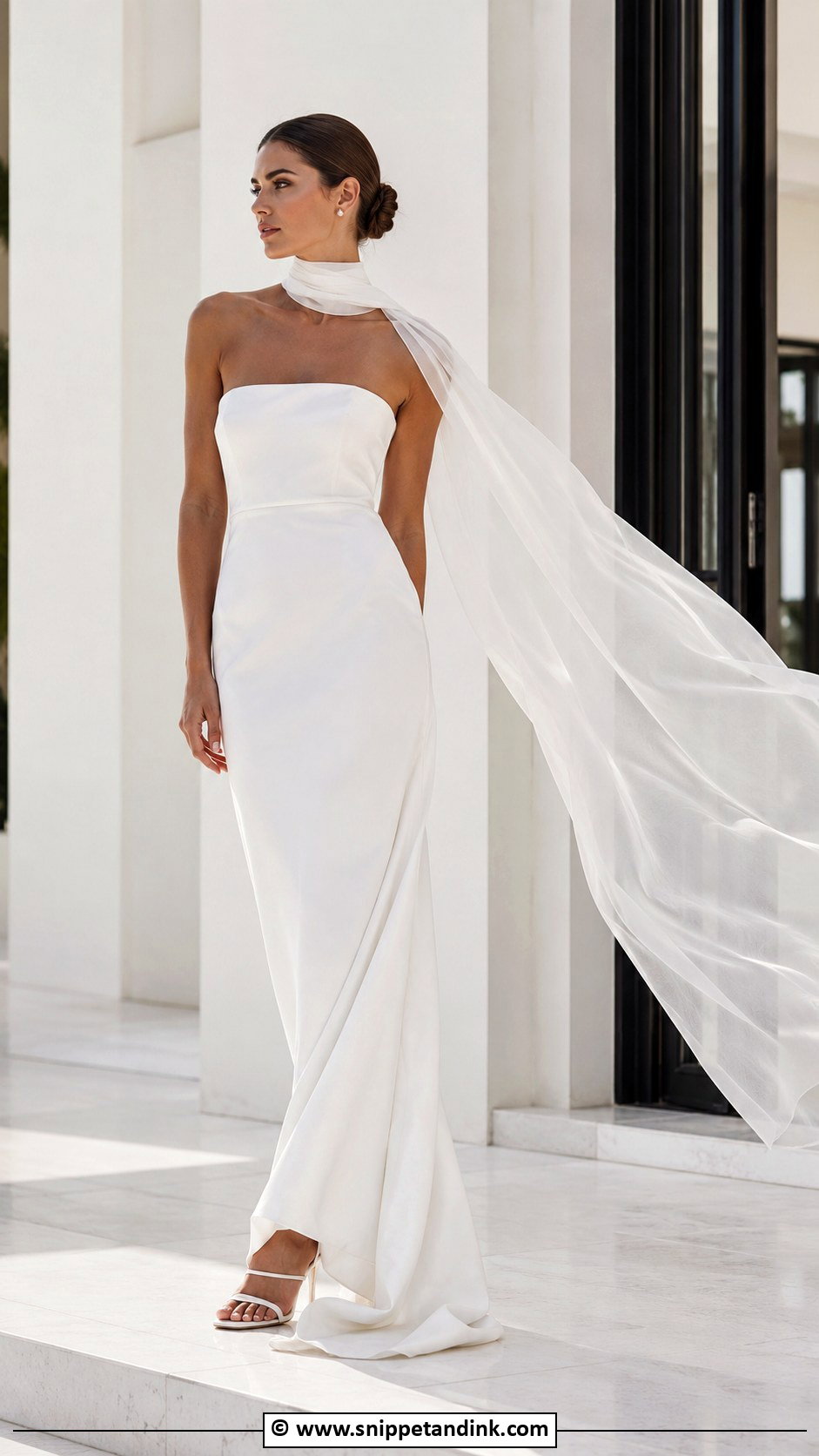
A detachable bridal scarf can drape around the neck, attach at the shoulders or trail behind the gown as a softer stand-in for a veil. It adds movement for the ceremony and comes off for a cleaner shape. It works best with minimalist, strapless and slim silhouettes, in chiffon, silk or tulle. A long scarf trails into candles and table settings, so I’d remove it before the seated dinner. Light jewelry, refined heels, a sleek bun and natural makeup suit it.

25. Convertible Wedding Dress With Bridal Coat
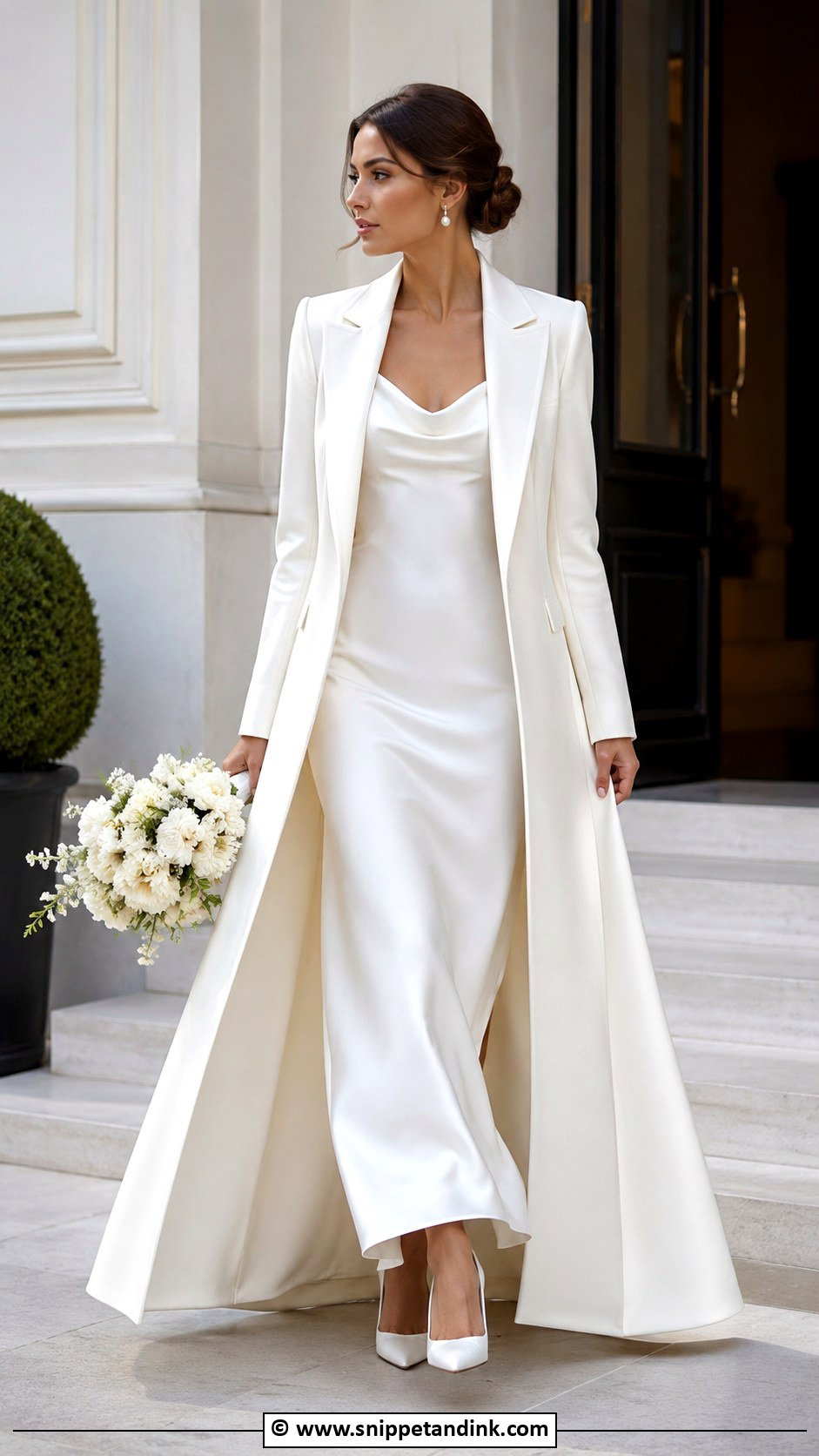
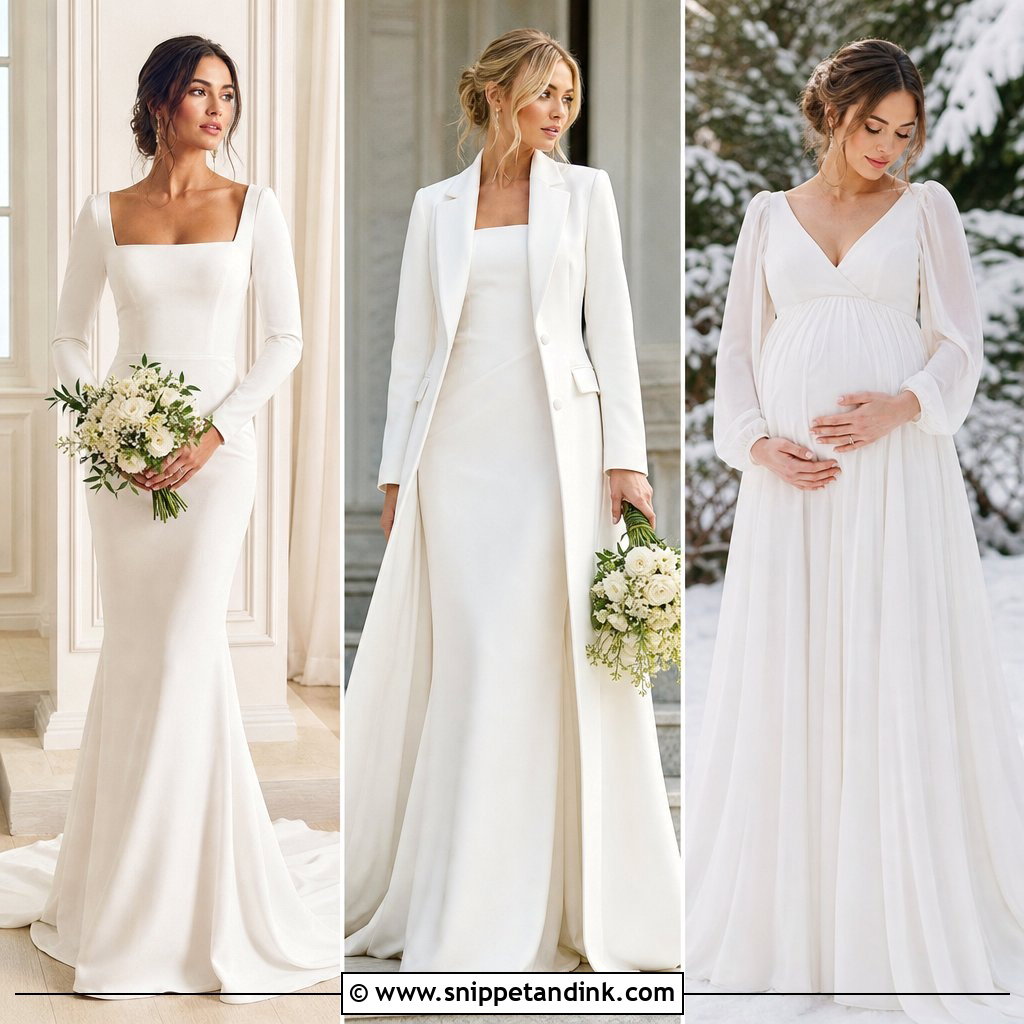
A bridal coat gives the most polished transformation of all. Long, tailored, lace, satin or crepe, it adds structure and coverage for arrival photos and the ceremony, then reveals a slip, mini, column or crepe dress underneath. It suits cooler seasons and formal city venues, and it doubles as actual warmth between locations. The coat must fit over the dress without pulling at the shoulders. Elegant pumps, refined earrings and a clean hairstyle complete it.
Questions for the Shop About Hooks, Snaps and Hidden Zips
How a piece attaches decides how calm your change will be. I’d ask these at the appointment, before ordering:
- What fastens it: hooks and eyes, snaps, buttons or a zip? Hidden hooks at the waist are usually the quickest.
- Can I remove it alone, or does it need a helper? Practice before the day either way.
- Are alterations priced for both layers? Overskirts and toppers need fitting too.
- Will removing it leave marks, loops or hooks visible on the base dress?
Where the Overskirt Goes Once It Comes Off
A removed overskirt, cape or coat is suddenly a large, expensive thing with nowhere to go. I pack a padded hanger and a breathable garment bag in the reception room in advance and give one person the job of taking the pieces home. Gloves, sleeves and scarves go in a labeled pouch, because small pieces are the ones that vanish at the end of the night.
If you are changing at a venue you leave the same night, put the garment bag in the car before the reception starts. Nobody wants to be carrying a tulle skirt across a dark car park at midnight, and pieces left behind in a bridal room are easy to lose once the venue team starts clearing up.
Two Looks From One Dress, With a Plan for the Switch
A convertible gown should feel right in both versions, with neither one an afterthought. Secure attachments, easy movement, matched fabrics and how each version photographs matter more than the trend. Overskirts, sleeves, capes, toppers, trains, gloves and coats can all give you a ceremony look and a reception look from one gown. Practice walking, sitting, hugging and dancing in each version, then give the change its own slot on the timeline so it happens calmly.
You'll Like These Ideas:






Leave a Reply