
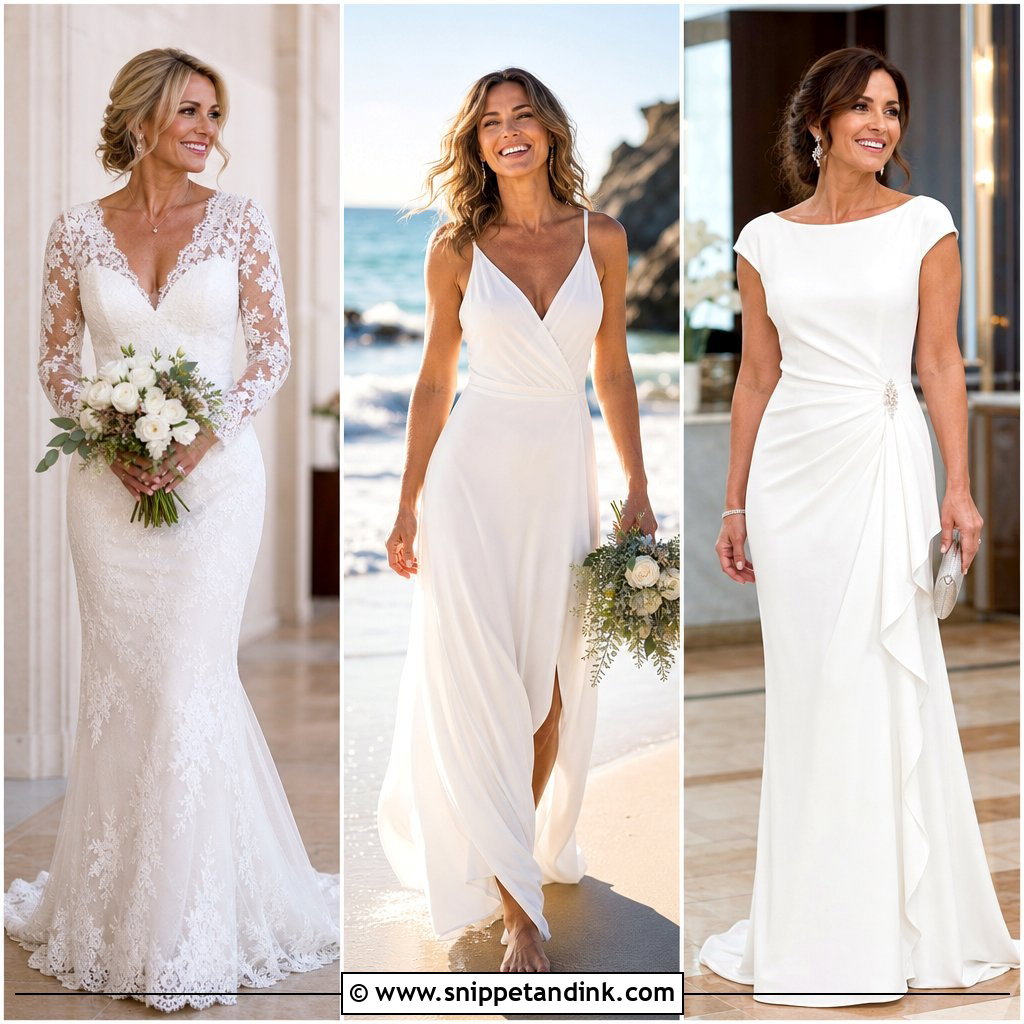
Dressing for a second wedding is usually more fun than the first time, because most brides arrive knowing exactly what they won’t put up with: a bodice that pinches, a train nobody can manage, a colour chosen to please someone else. The dresses below range from courthouse midis to full evening gowns, in white, ivory, champagne, blush and print. When I style a second-time bride, I start with the venue and the way she wants to spend the day, then the fabric and neckline, and only then the trimmings. You’ll find notes on fit and wear under each one.
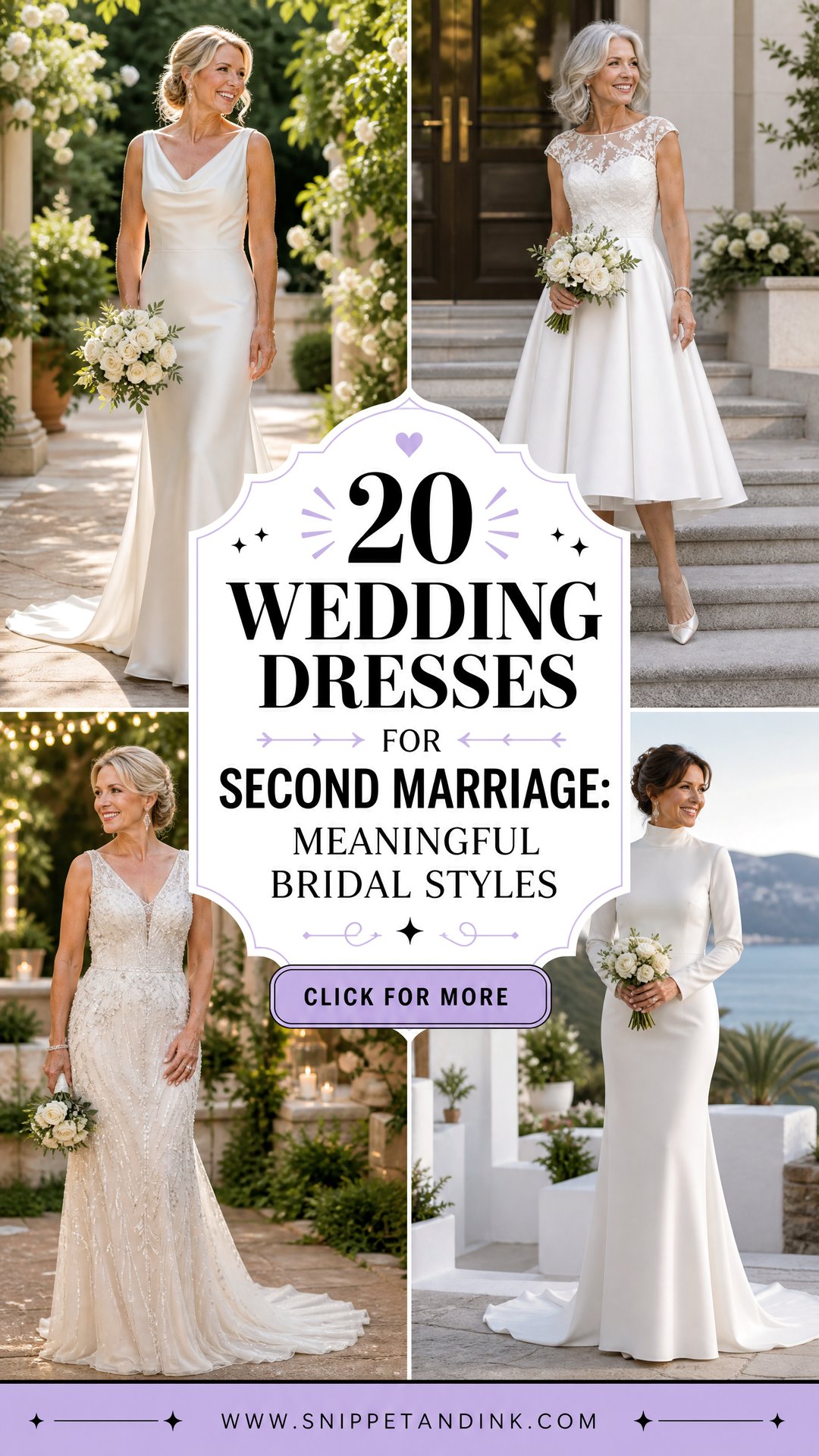
White, Veil, Train: Are Any of the Old Rules Still Real?
The question I’m asked most by second-time brides is whether they’re still allowed to wear white. You are. The idea that white belongs only to a first wedding is an old etiquette habit, not a rule anyone enforces, and ivory, champagne and soft white all look natural on a bride of any age or history.
What does change is scale. A second wedding is often smaller, and a full cathedral train in a registry office or a back garden can look out of proportion to the room. I’d match the drama of the dress to the size of the space. A veil is your choice too. Some brides skip it; others wear a short one or a comb for one photograph and take it off for the meal.
If grown children or a close family member feel strongly about any of this, it’s worth a gentle conversation early. It’s still your call, but it’s easier to hear an opinion in month three than at the final fitting.
1. Simple Satin Wedding Dress
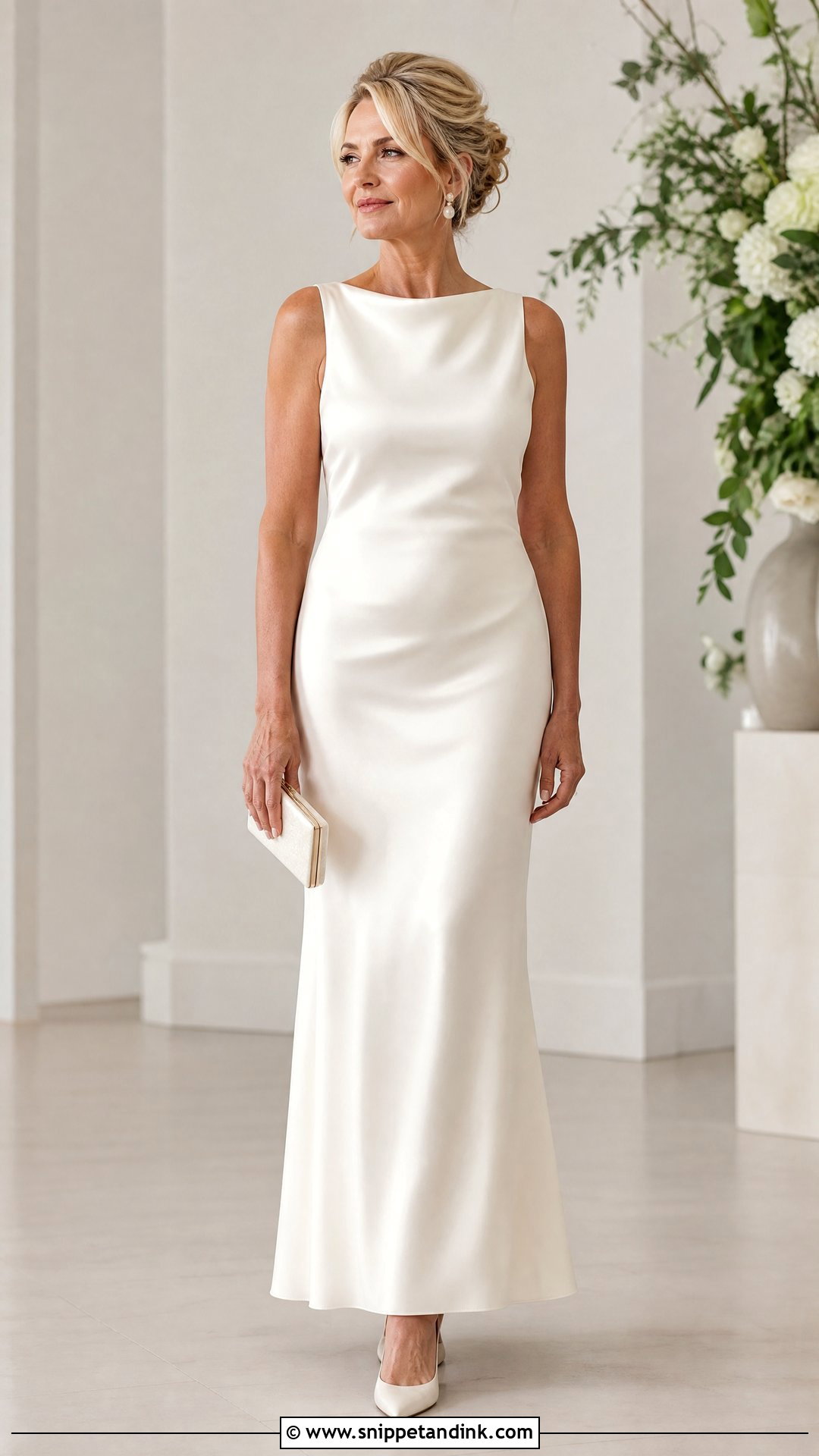
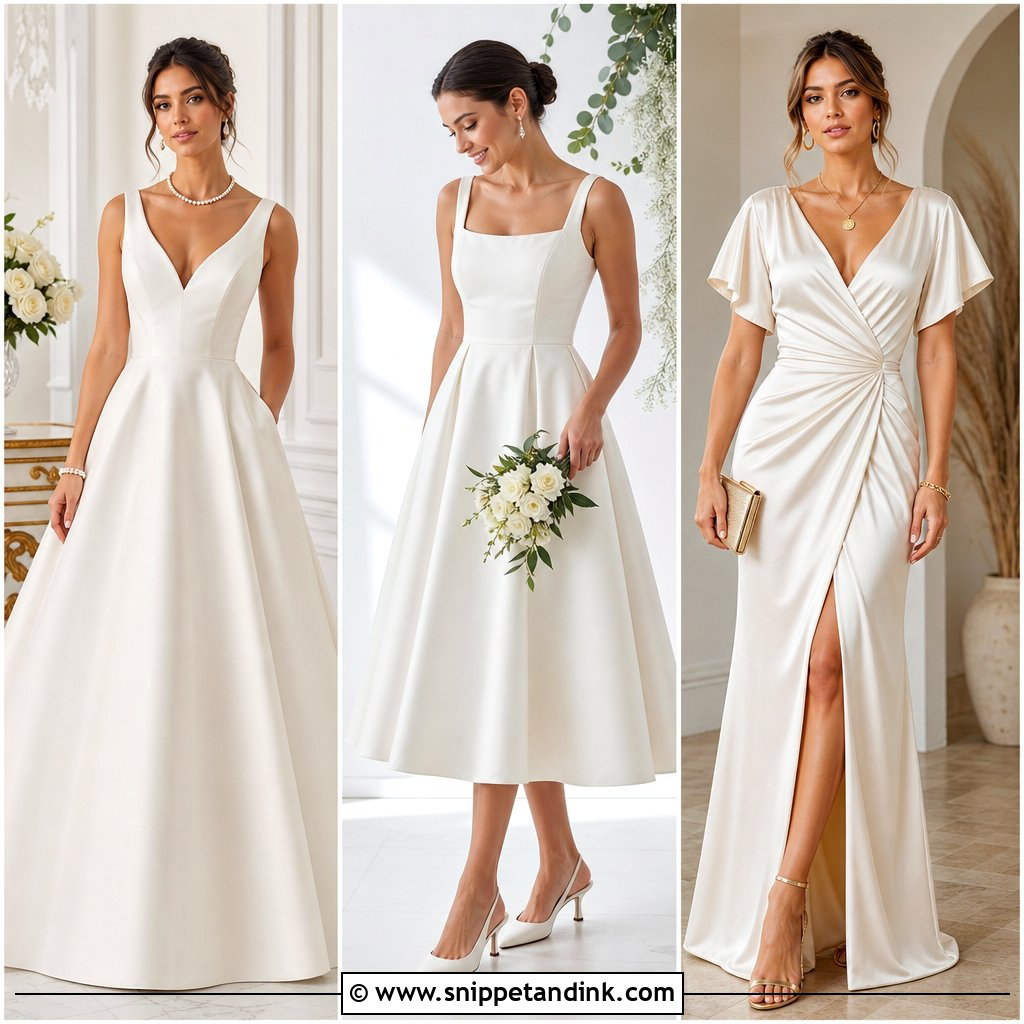
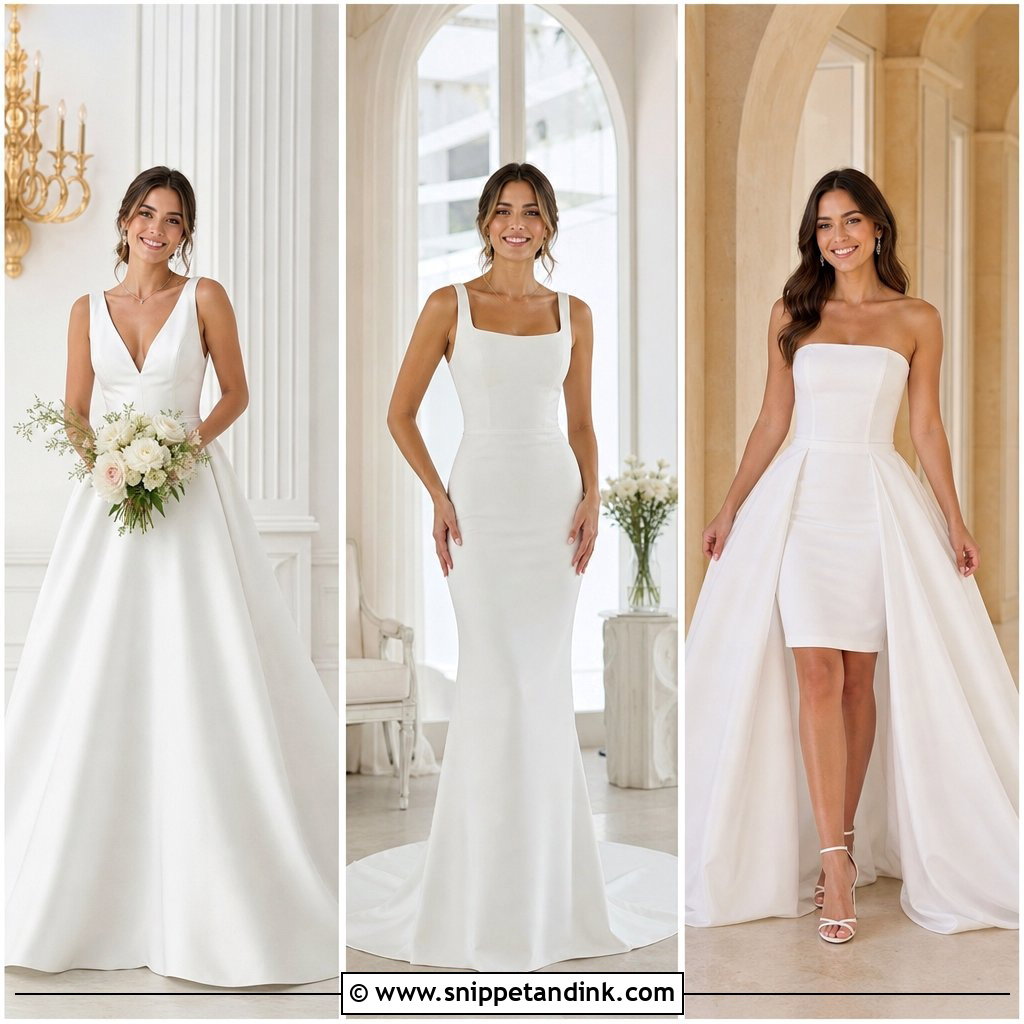
Satin with almost no decoration relies entirely on cut. A bias-cut sheath skims the body; a softly structured A-line stands a little away from it, which is kinder if you’d rather not show every curve. Ivory, pearl white and champagne all work in satin, and the fabric glows under evening and restaurant lighting. The catch is that satin shows every line underneath, so smooth, no-line underwear and a careful fitting matter more than with any lace dress. A square or cowl neckline adds shape. A sleek bun or a softly waved bob suits it, with a short veil or a single comb rather than anything elaborate.
2. Lace Sleeve Wedding Dress
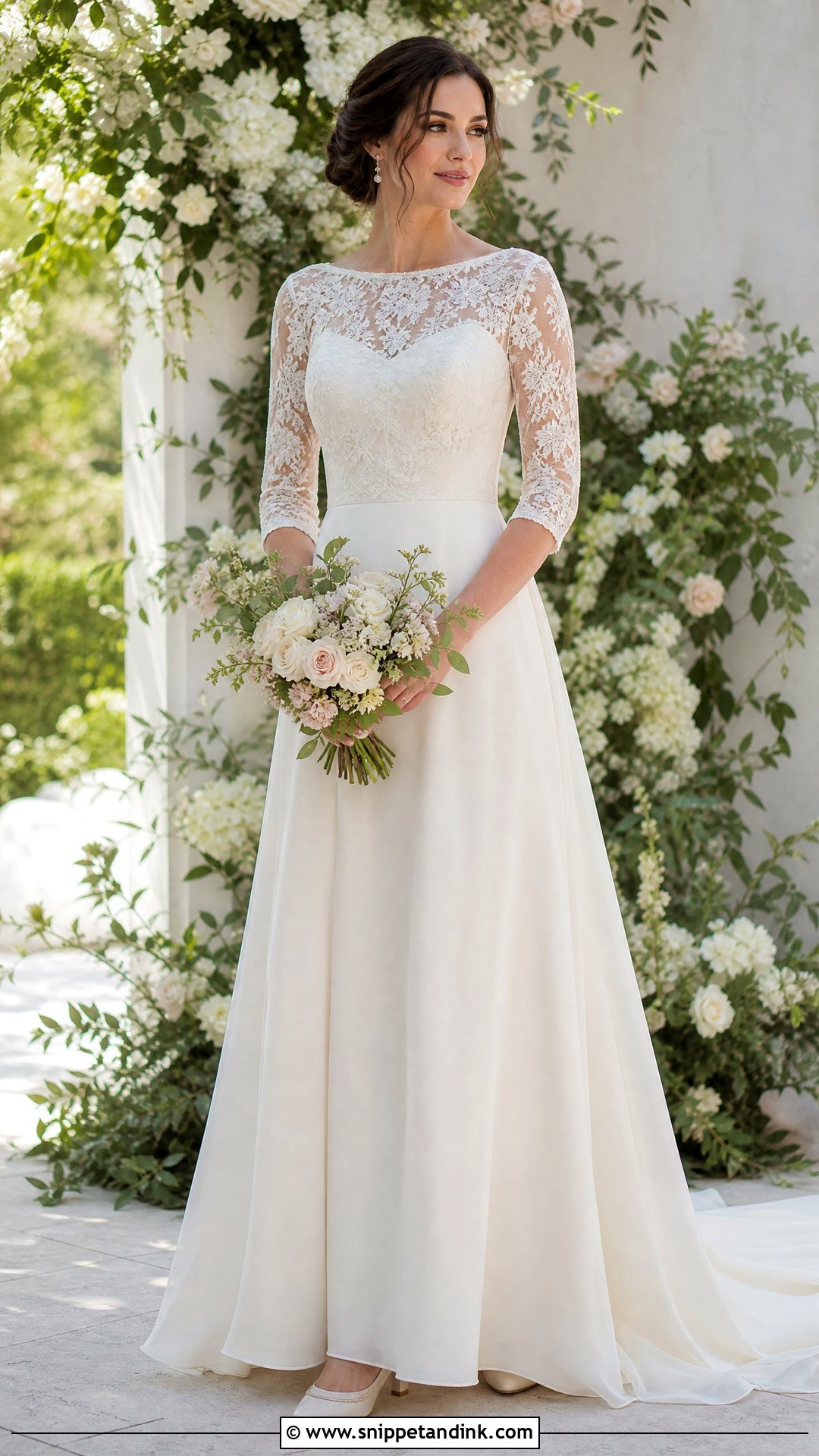
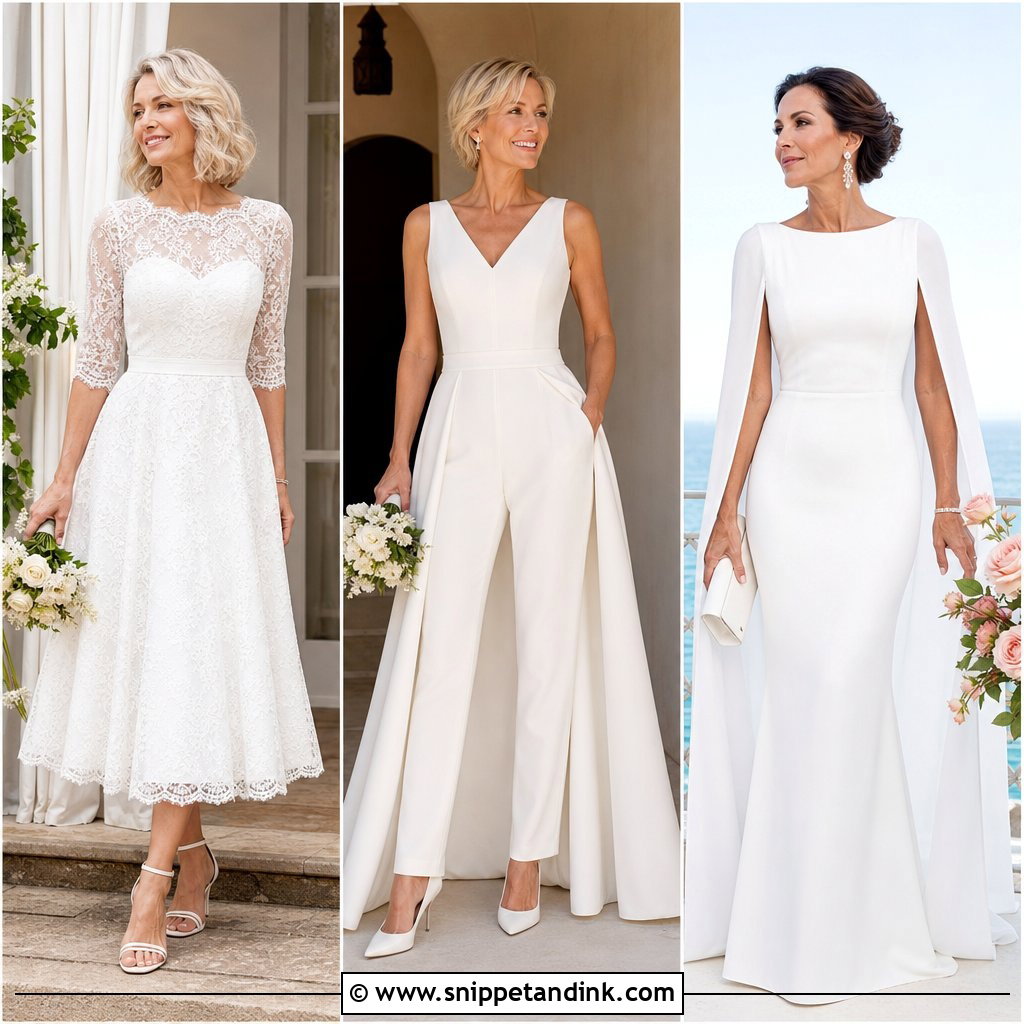
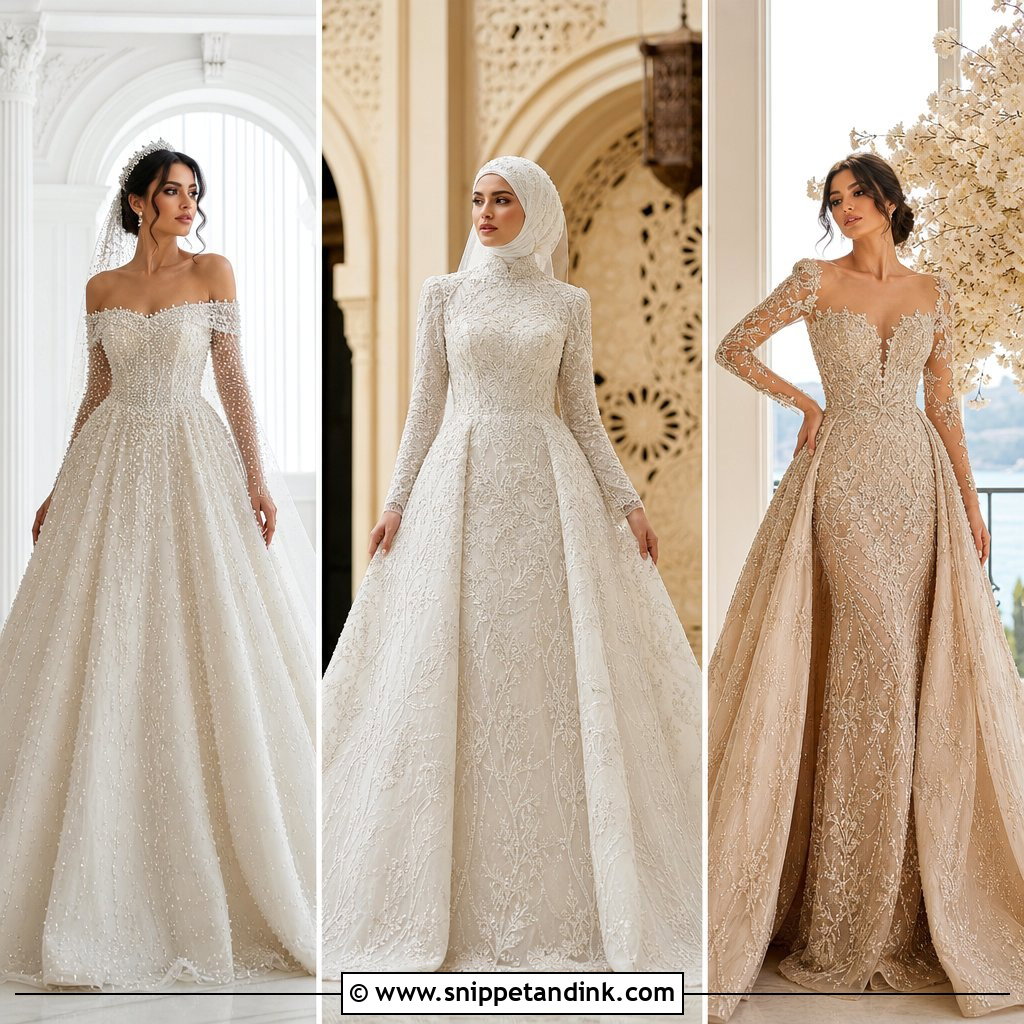
Three-quarter lace sleeves are the length I recommend most often, because they cover the upper arm without overheating you in a summer ceremony. Look for a fitted bodice, illusion lace sleeves and a fluid A-line or column skirt. Ivory lace on a nude lining gives depth; white on white is more traditional. The lace itself should feel soft when you bend your elbow. Stiff corded lace can dig into the inner arm after a few hours of hugging guests. A defined waist balances the texture up top.
3. Tea Length Wedding Dress
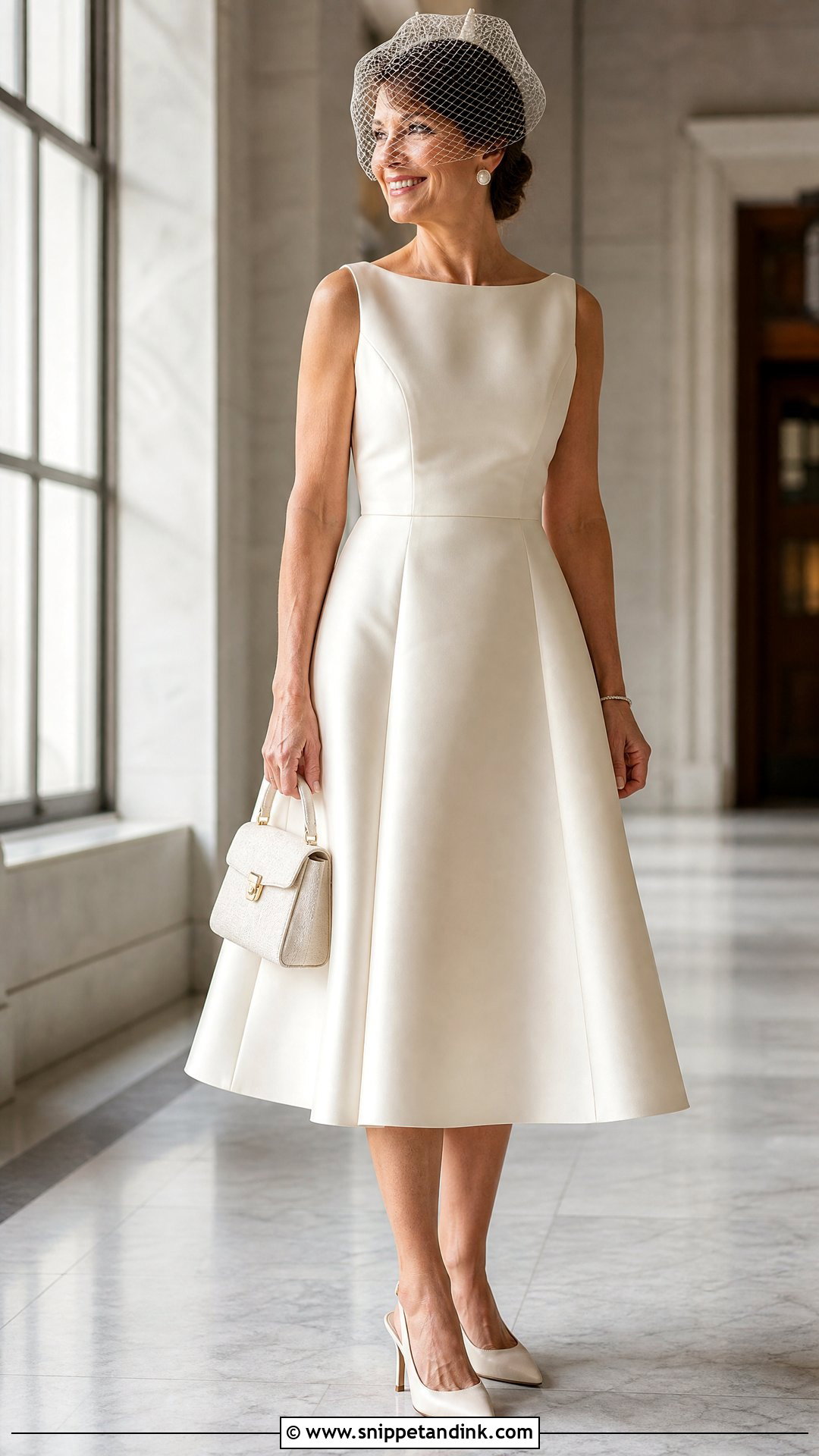
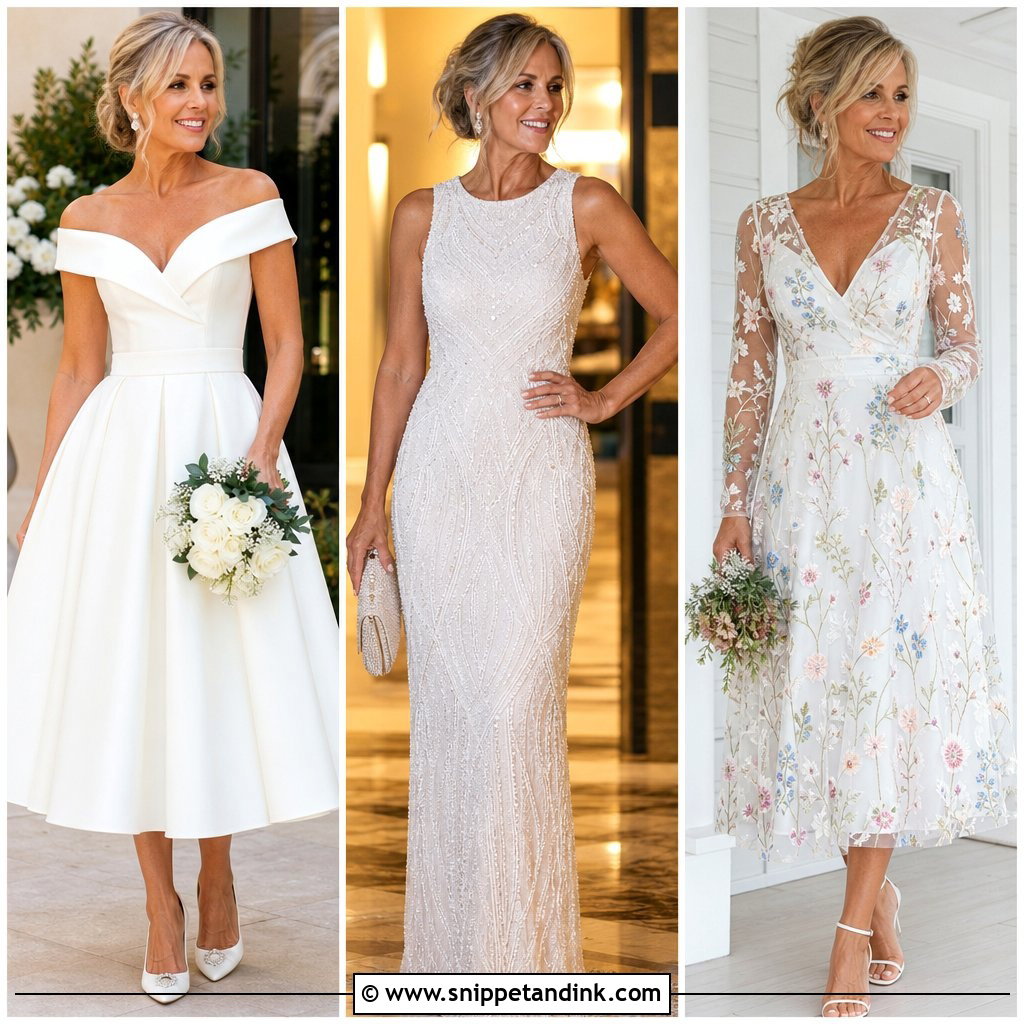
Tea length falls between the knee and ankle, so your shoes become part of the outfit and need choosing early. I usually take the hem to just below the widest point of the calf, which tends to make legs look longest. A fitted waist with an A-line skirt is the classic version; a structured fit-and-flare leans more vintage. Pointed slingbacks and pearl studs keep it light, and a birdcage veil adds personality. Mikado or satin holds the skirt’s shape in cooler months, organza and lace in warmer ones. It’s easy to dance in, which is why it suits courthouse weddings followed by a long lunch.
4. Long Sleeve Wedding Dress
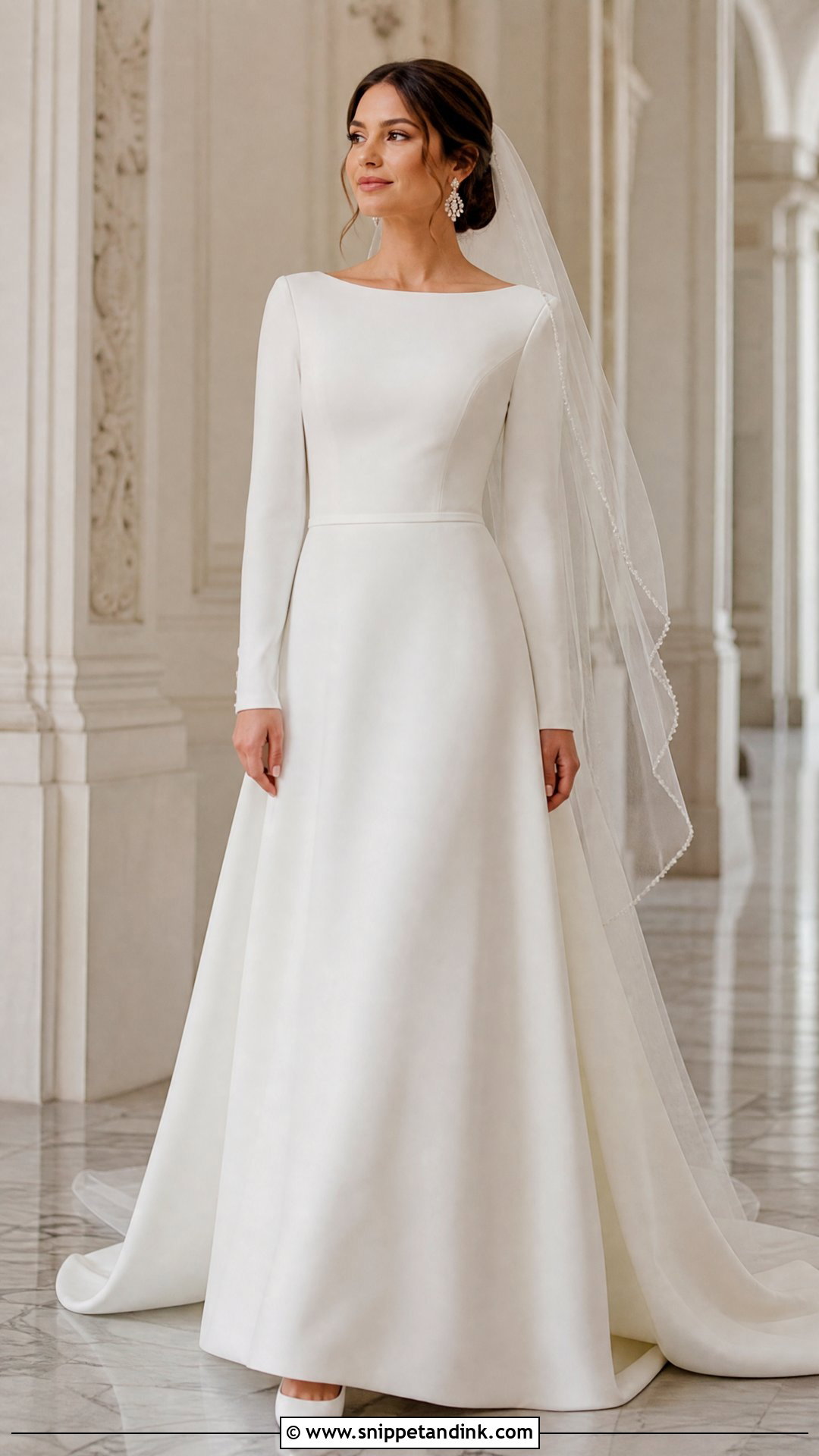
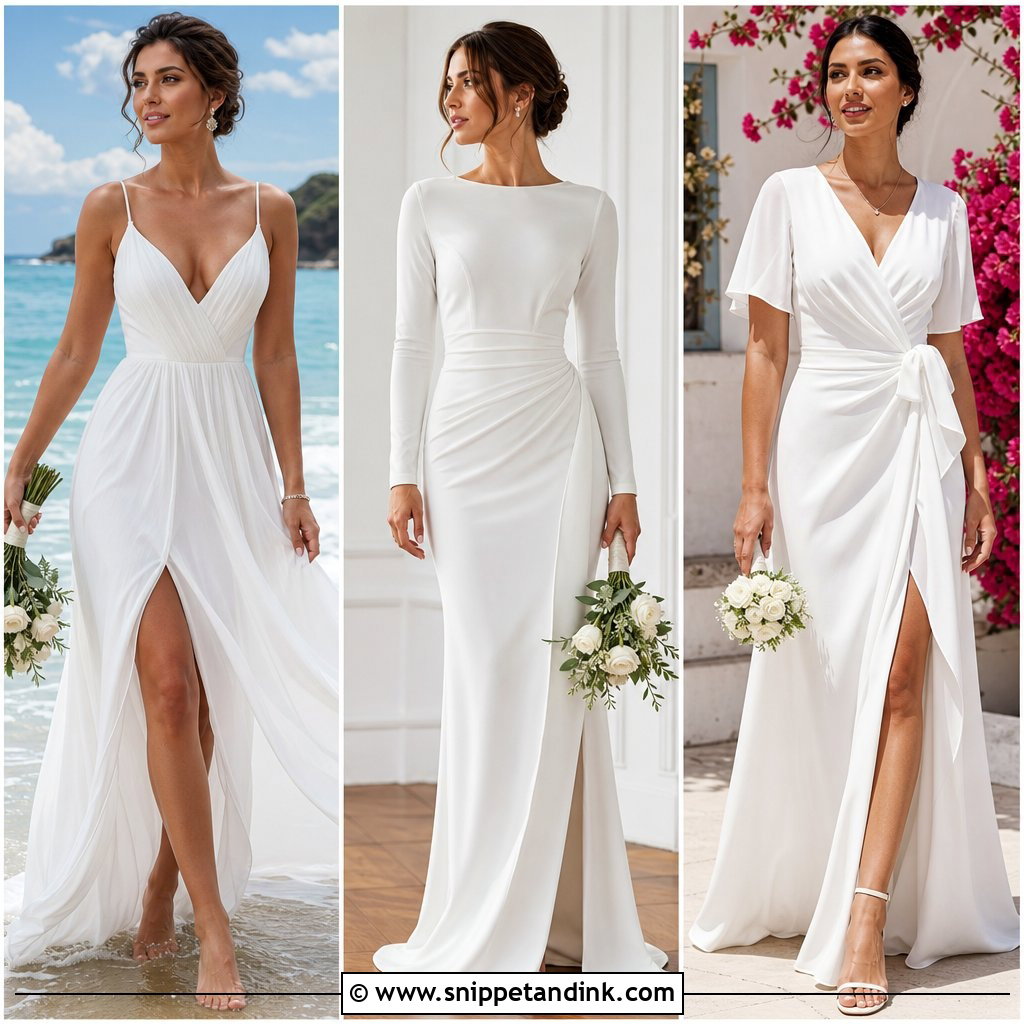
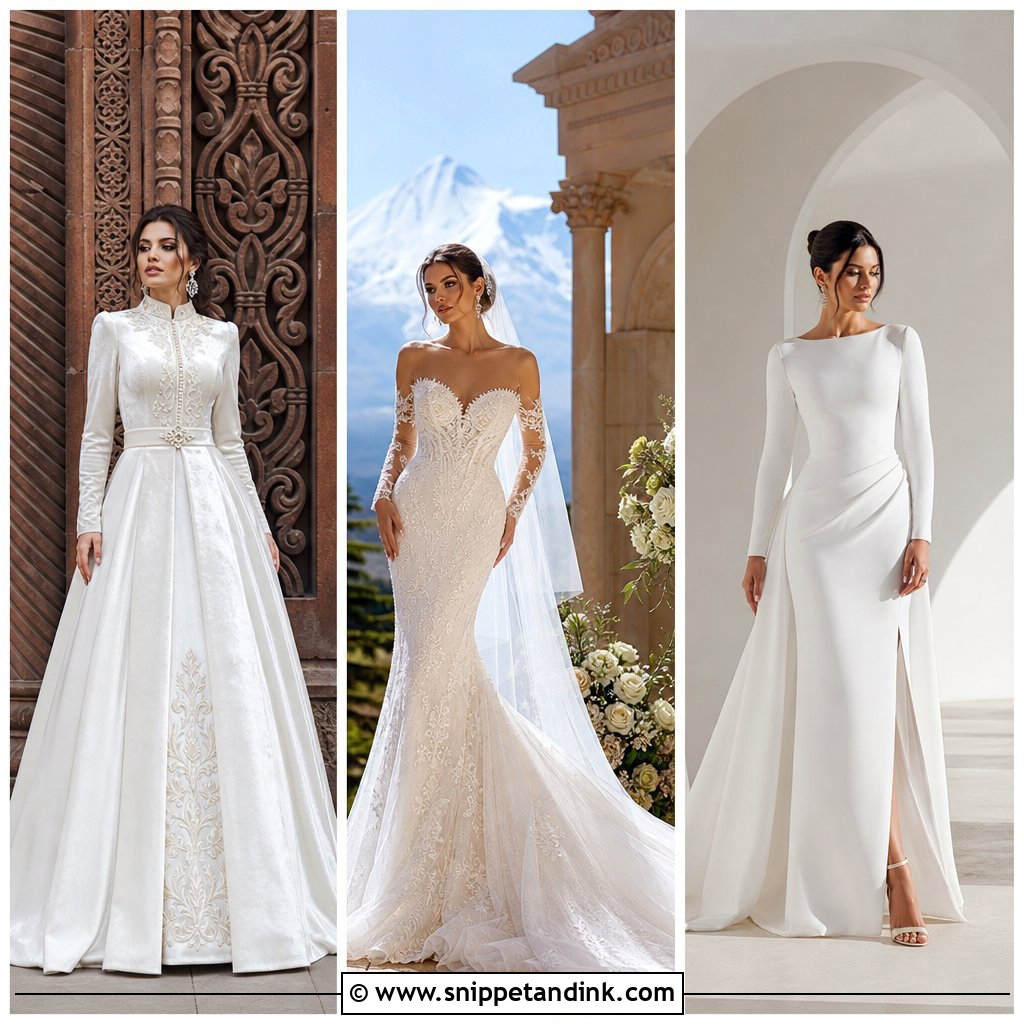
Full sleeves give a lot of coverage, so something else needs to open up, or the dress starts to feel heavy. An open neckline, a defined waist or a low back each do the job. Crepe sleeves look modern; lace or beaded sleeves bring decoration. A column skirt is sharper, while an A-line moves more easily through the hips. If the sleeves are embroidered, skip the necklace. My own check on any long sleeve is simple: cross your arms and reach forward as if signing the register. If the back seam strains, ask about adding a little ease before you commit.
5. Off The Shoulder Wedding Dress
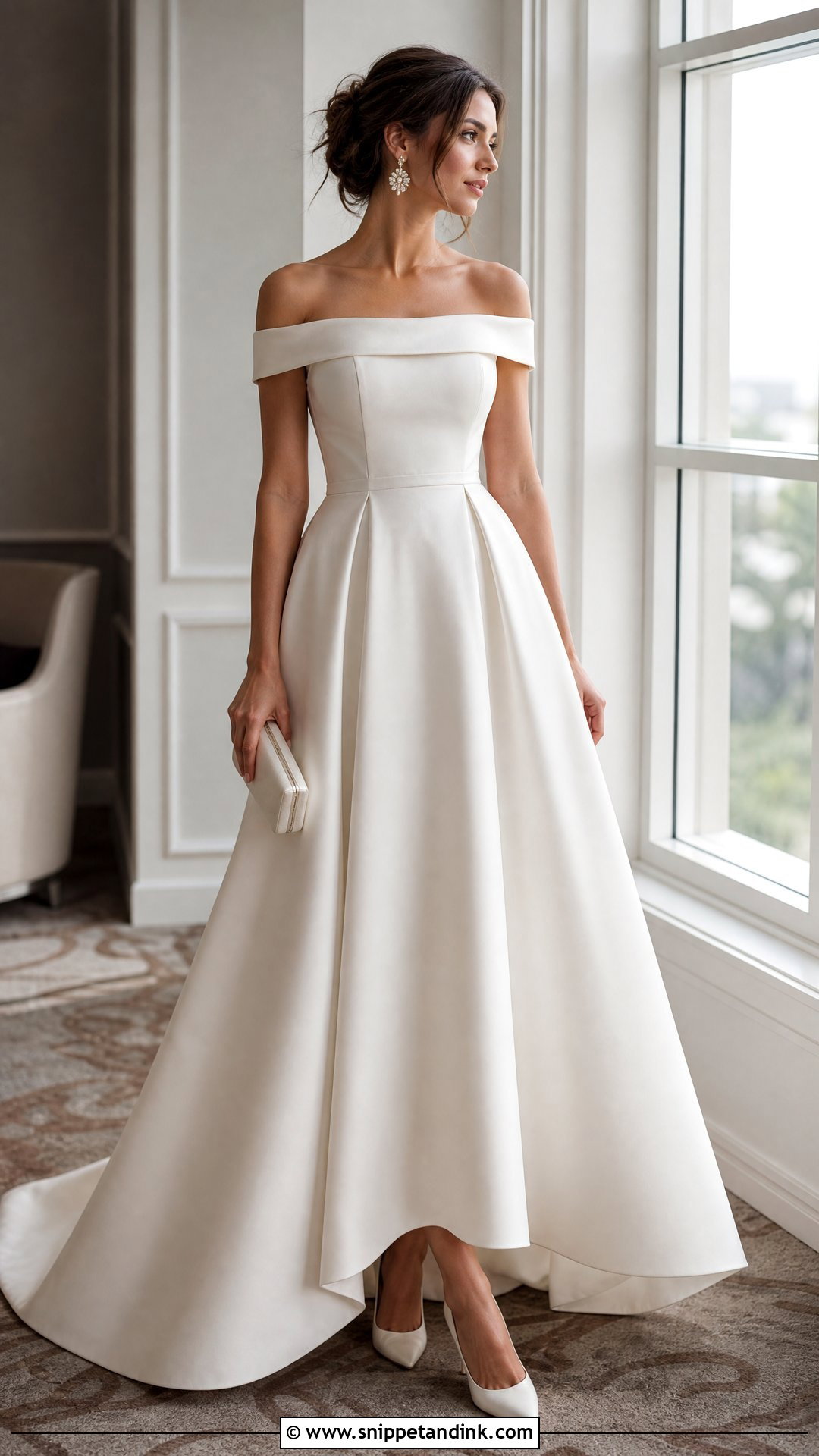
An off-the-shoulder neckline frames the collarbones, and it lives or dies by how well the bodice is built inside. Without good boning and grip tape, you’ll spend the evening hitching it up. It pairs with a fitted sheath, a structured A-line or flowing chiffon. Statement earrings usually look cleaner than a necklace here. For a cool-weather ceremony, a sheer wrap or tailored cape covers the arms without hiding the neckline. If the folded neckline already has plenty going on, leave the rest of the dress plain.
6. Champagne Wedding Dress
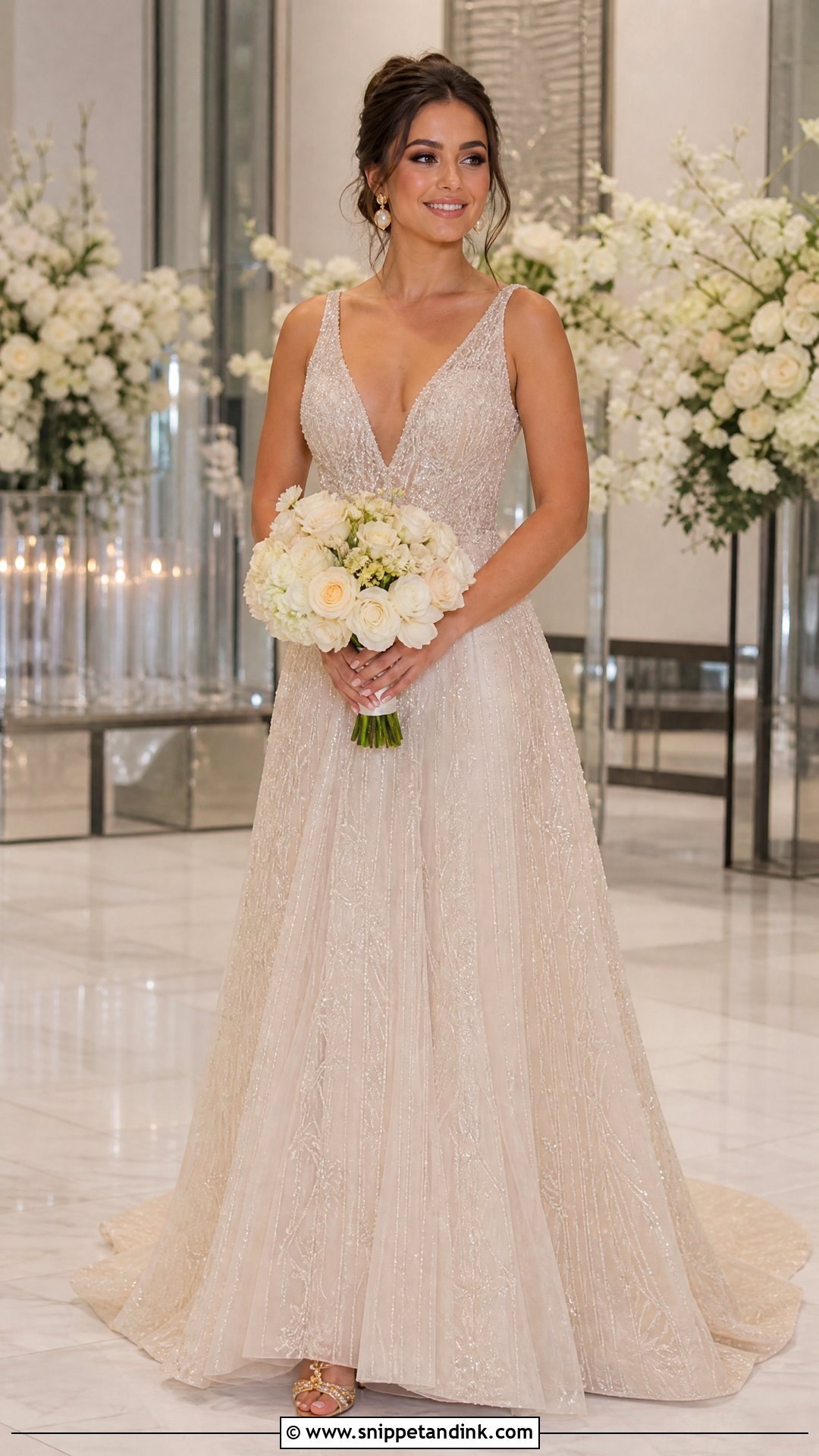
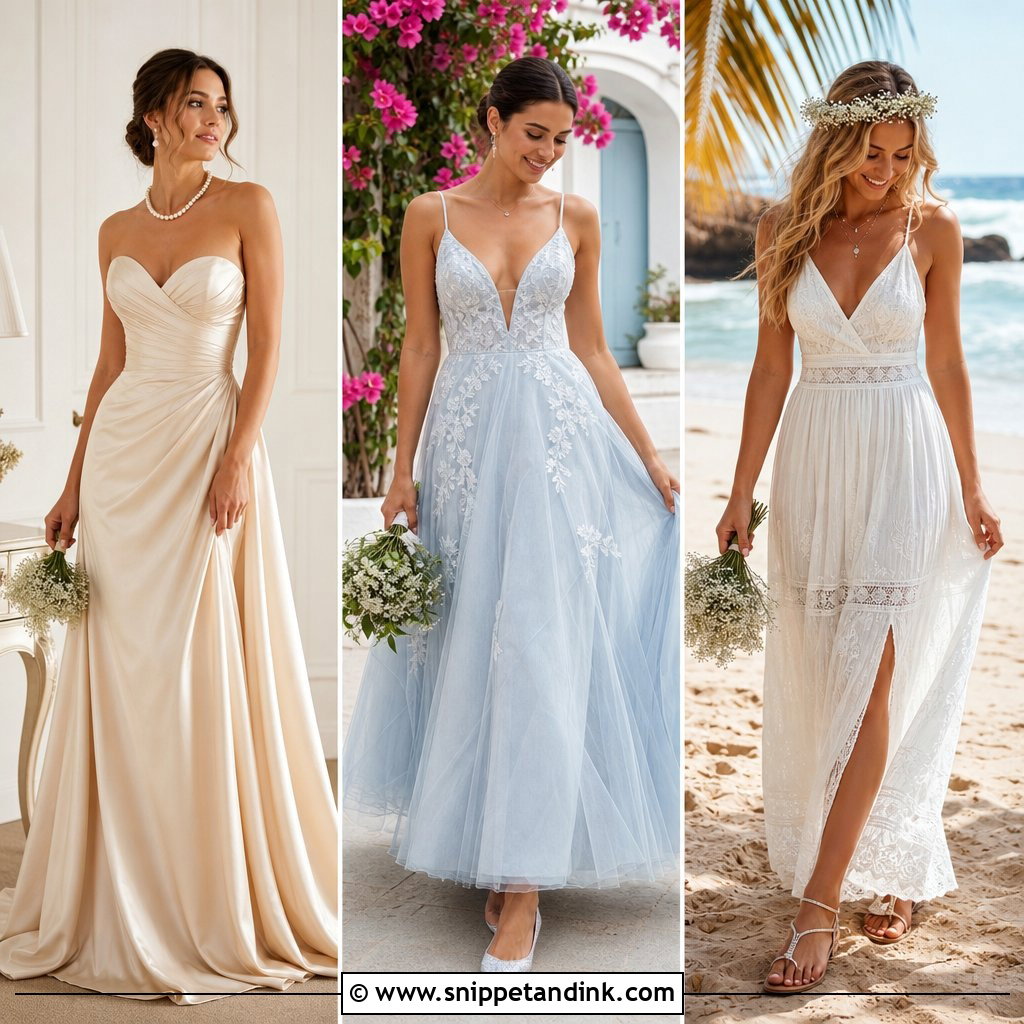
Champagne is a warm cousin of ivory, and it suits many skin tones that look washed out against bright white. The shade range is wide, from pale beige to something close to gold, so I always ask to see the fabric by a window and under the shop lights before ordering. Gold jewelry, warm pearls and nude heels sit naturally with it. A floor-length A-line with fine beading suits a formal evening; a champagne midi with a flared skirt suits a smaller gathering. Cream flowers and green foliage in the bouquet pull the colour together without matching it exactly.
7. Blush Wedding Dress
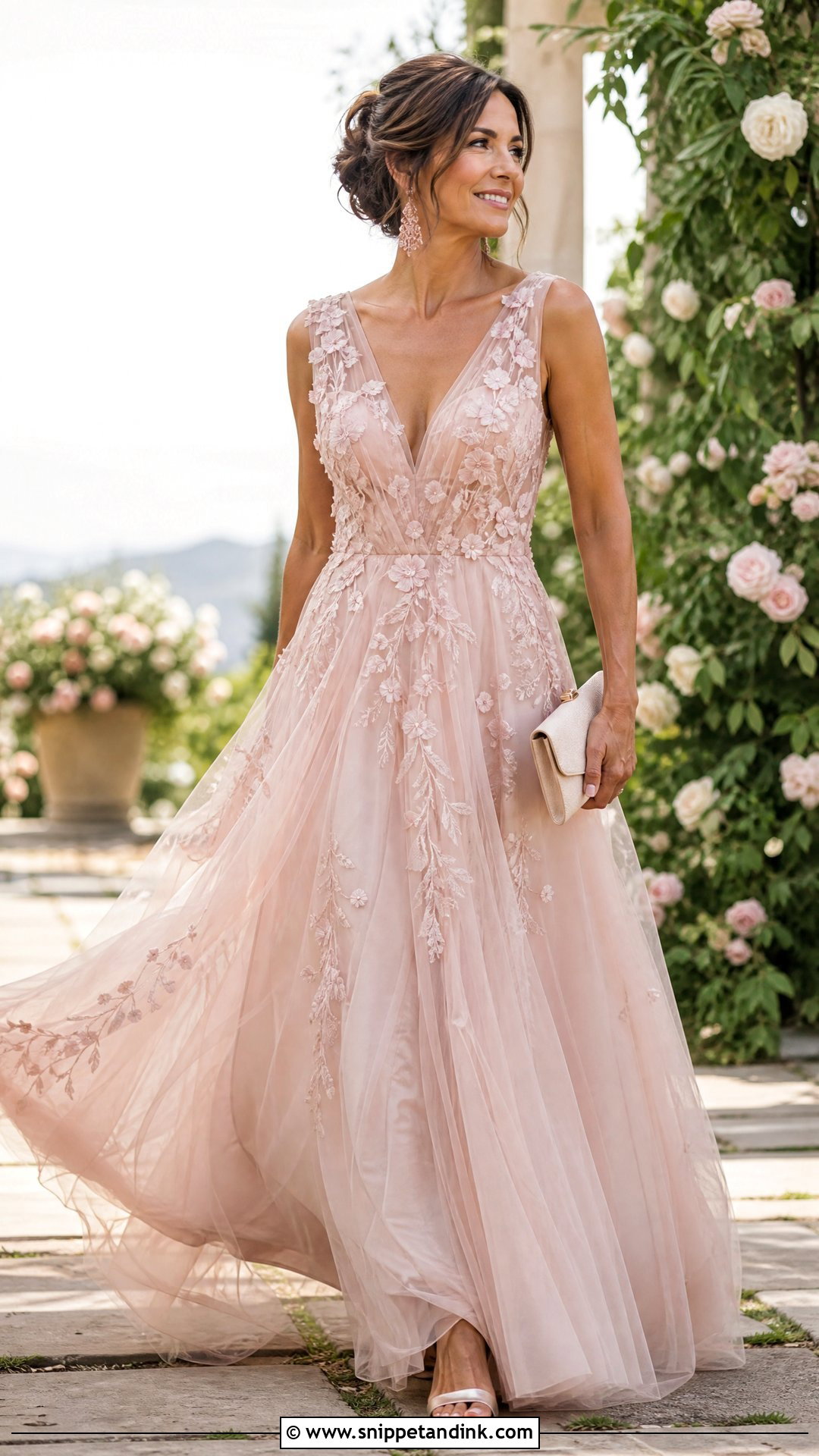
Blush gives you colour without stepping far from a classic palette. Tonal lace, light beading or layered tulle create depth; plain crepe or satin feels cleaner. Here’s the warning I give everyone: blush shifts with light. A fabric that looks rosy in the shop can read almost beige outdoors or quite pink under warm indoor bulbs, so look at a swatch at the time of day you’re marrying. Keep accessories ivory, champagne or soft metallic rather than adding more pink, which quickly looks over-coordinated. Spring gardens and terraces suit it well.
8. Floral Wedding Dress
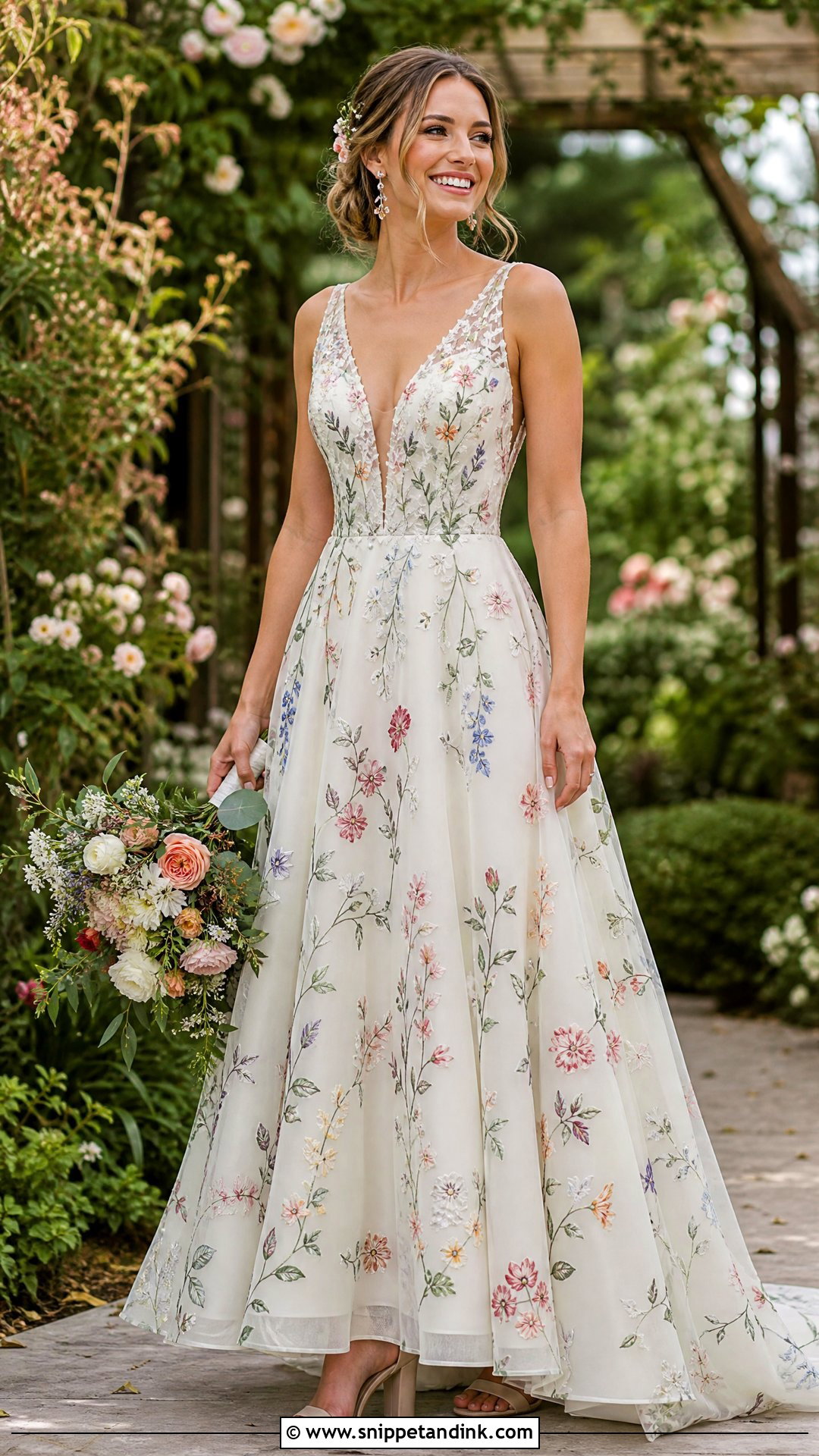
Floral dresses come in three forms: embroidery, printed watercolour patterns and raised appliqués on tulle or organza. A restrained pattern reads as a twist on bridal; strong botanical colour is a real statement, and that’s fine if you love it. Once the dress has a print, everything else should step back. I pull one or two colours from the fabric for the bouquet and keep the shoes and earrings neutral. Busy prints and embellished veils fight each other, so a plain fingertip veil or small comb looks calmer. You’ll also wear it again, which many second-time brides care about.
9. Ivory A Line Wedding Dress
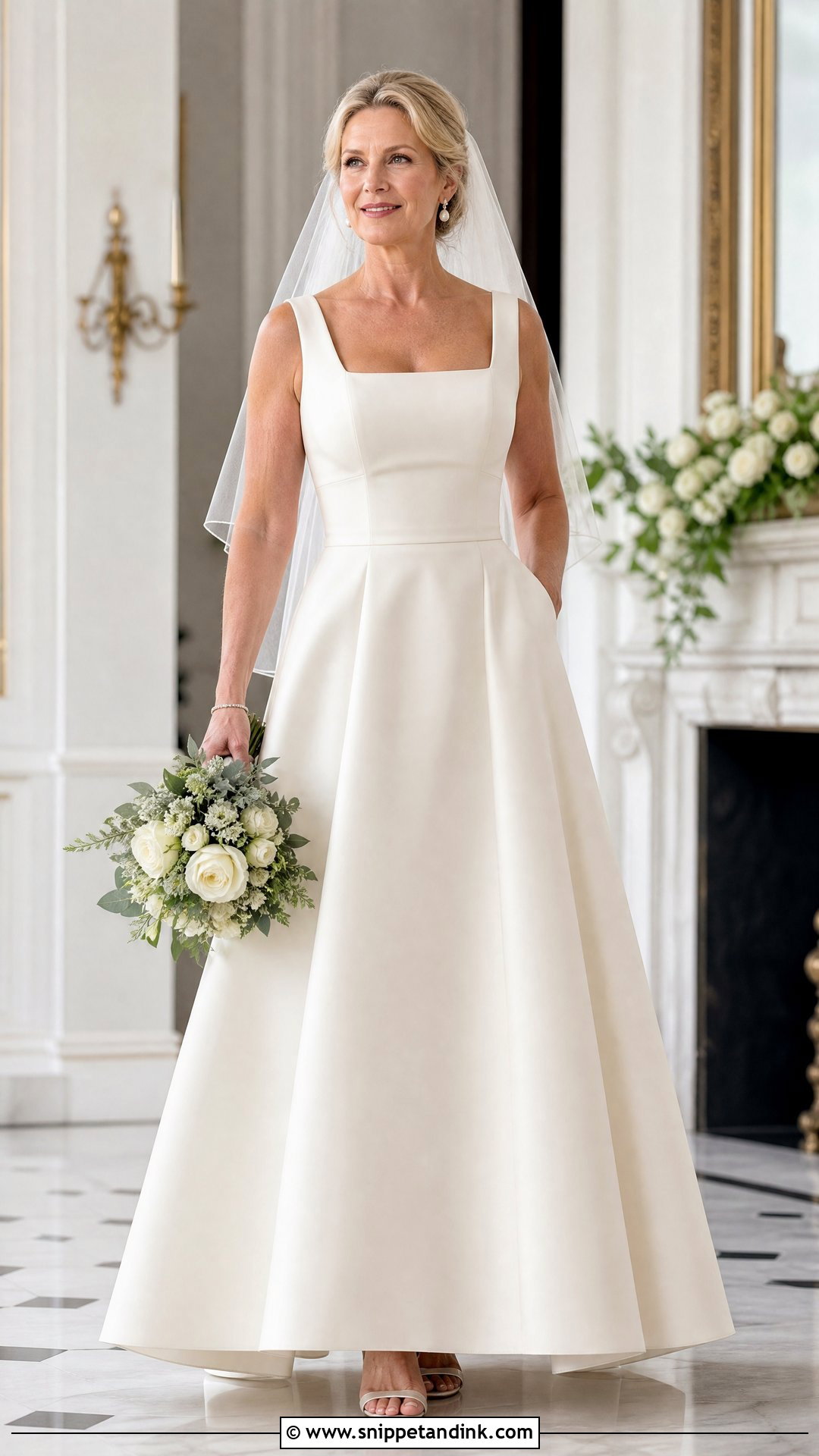
The ivory A-line is the dress I’d suggest if you’re not sure where to start, because it suits almost every venue and body. The fitted bodice defines the torso and the skirt widens gradually from the waist or hip. It takes a V-neck, bateau, square or off-the-shoulder neckline equally well. Crepe looks clean, lace softer, mikado more structured. The fit detail I watch is the hem: it should clear the toe of your shoe by a few millimetres so you don’t step on it every time you walk forward. A visible waist seam or narrow belt adds definition if you want it.
10. Crepe Sheath Wedding Dress
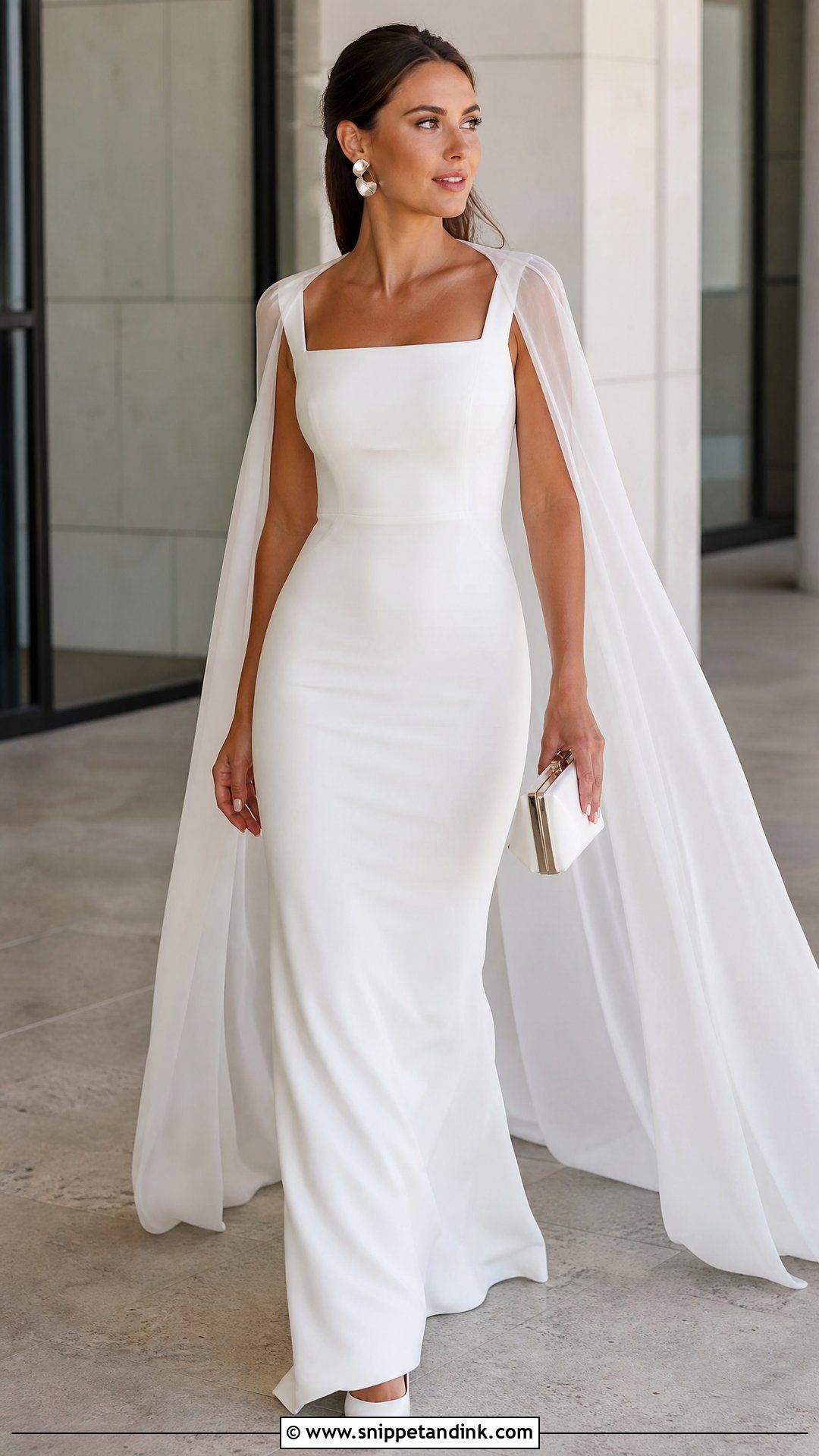
A crepe sheath has almost no volume, so the tailoring carries the whole look. A V-neck or square neck lengthens the upper body, and light ruching softens the waist. Without a back vent or side slit, a narrow sheath can limit your stride on steps, so check that first. Pointed pumps and sculptural earrings suit the clean line. A detachable cape adds drama for the ceremony and comes off for dinner. Crepe drapes well only when it fits properly, so book alterations and wear smooth, no-line underwear to the fitting. City venues, galleries and rooftops all suit it.
11. Chiffon Wedding Dress
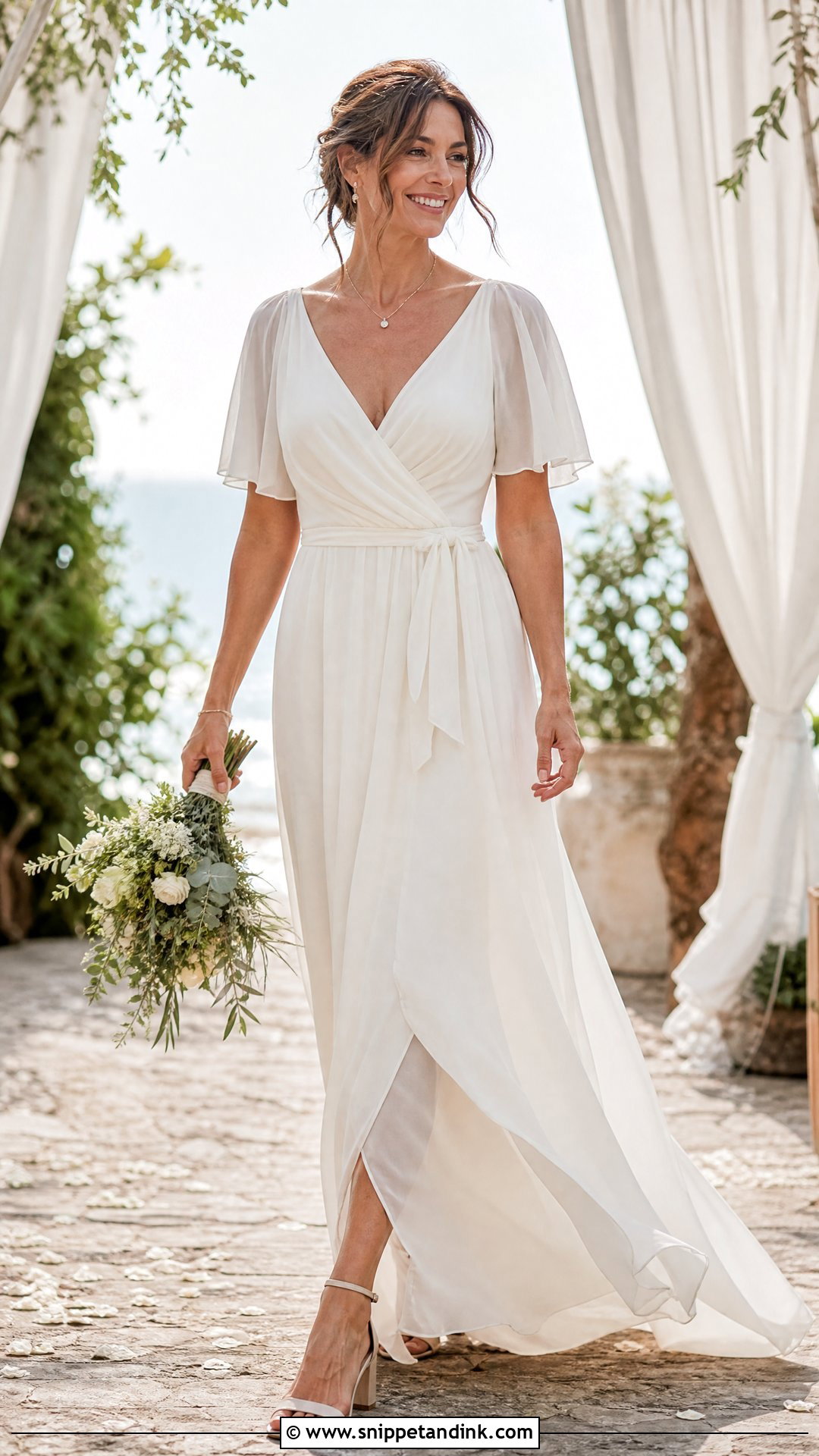
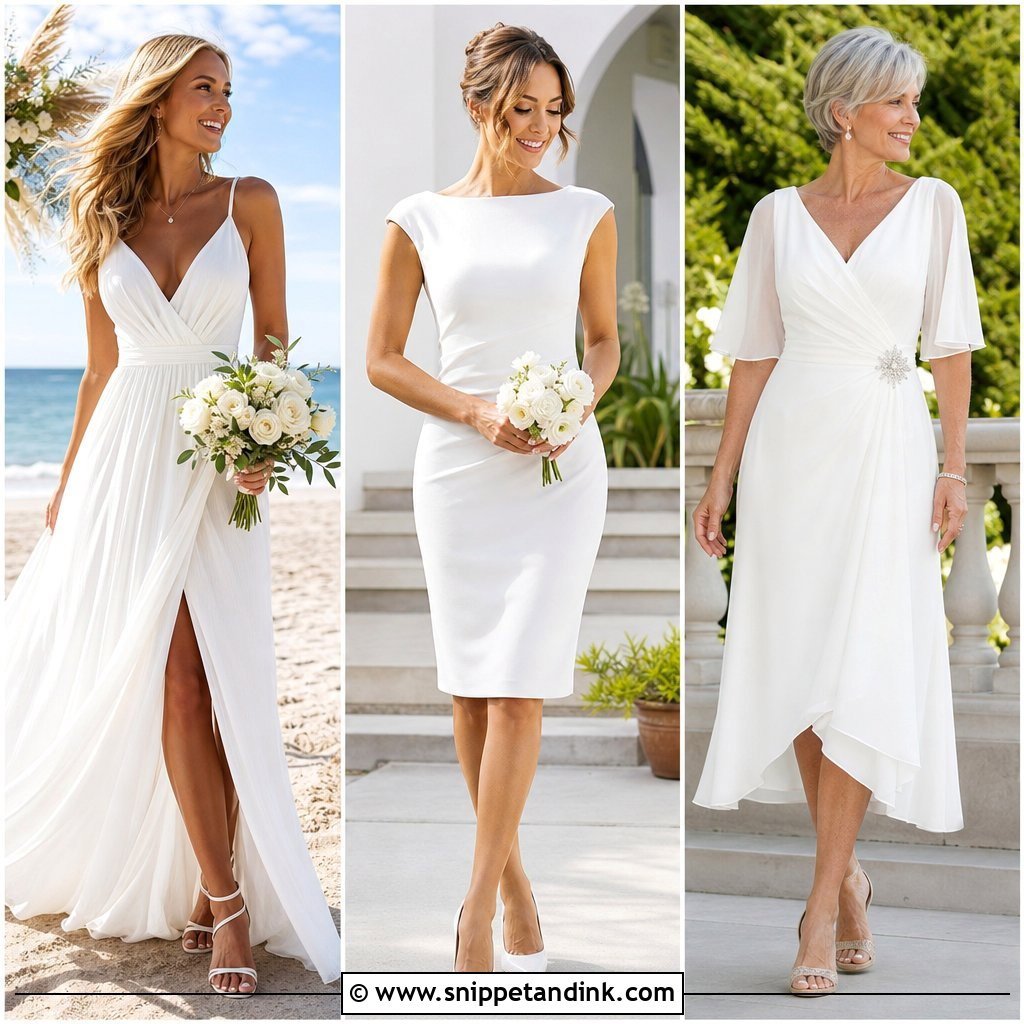
Chiffon is light enough to move in a sea breeze, which is half its charm and half its problem: a long chiffon skirt will wrap around your legs on a windy beach. A wrap bodice, gathered waist or layered A-line skirt keeps it fluid. Sheer flutter sleeves soften the arms, and a lined bodice gives coverage. Keep jewelry and bags light so they don’t drag on the fabric. Before a garden or destination ceremony, check the lining reaches far enough down the skirt, and set the hem a touch shorter for grass or sand so it doesn’t soak up damp.
12. Beaded Wedding Dress
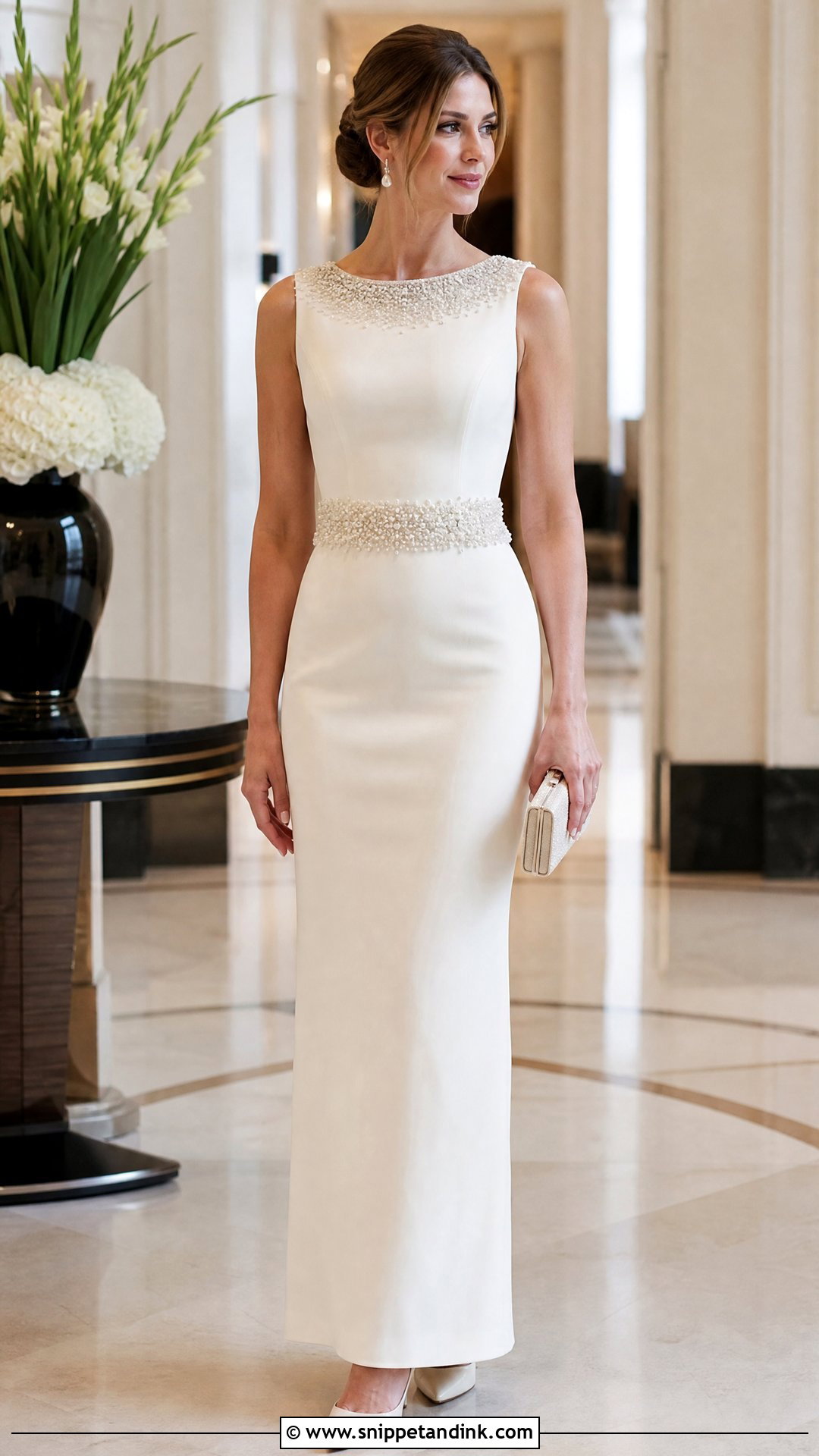
Beading reads more refined when it’s concentrated at the neckline, waist or shoulders instead of covering the whole gown. A column or A-line shape keeps it wearable. Match your earrings to the bead tone, whether silver, pearl or gold, and skip bracelets if the cuffs are decorated. Evening light makes beadwork sparkle, so it suits hotels, ballrooms and formal dinners. Run your hand along the inside seams. Exposed bead backs can scratch the skin over a long evening, and a smooth lining is worth as much as the decoration on the outside.
13. Midi Wedding Dress
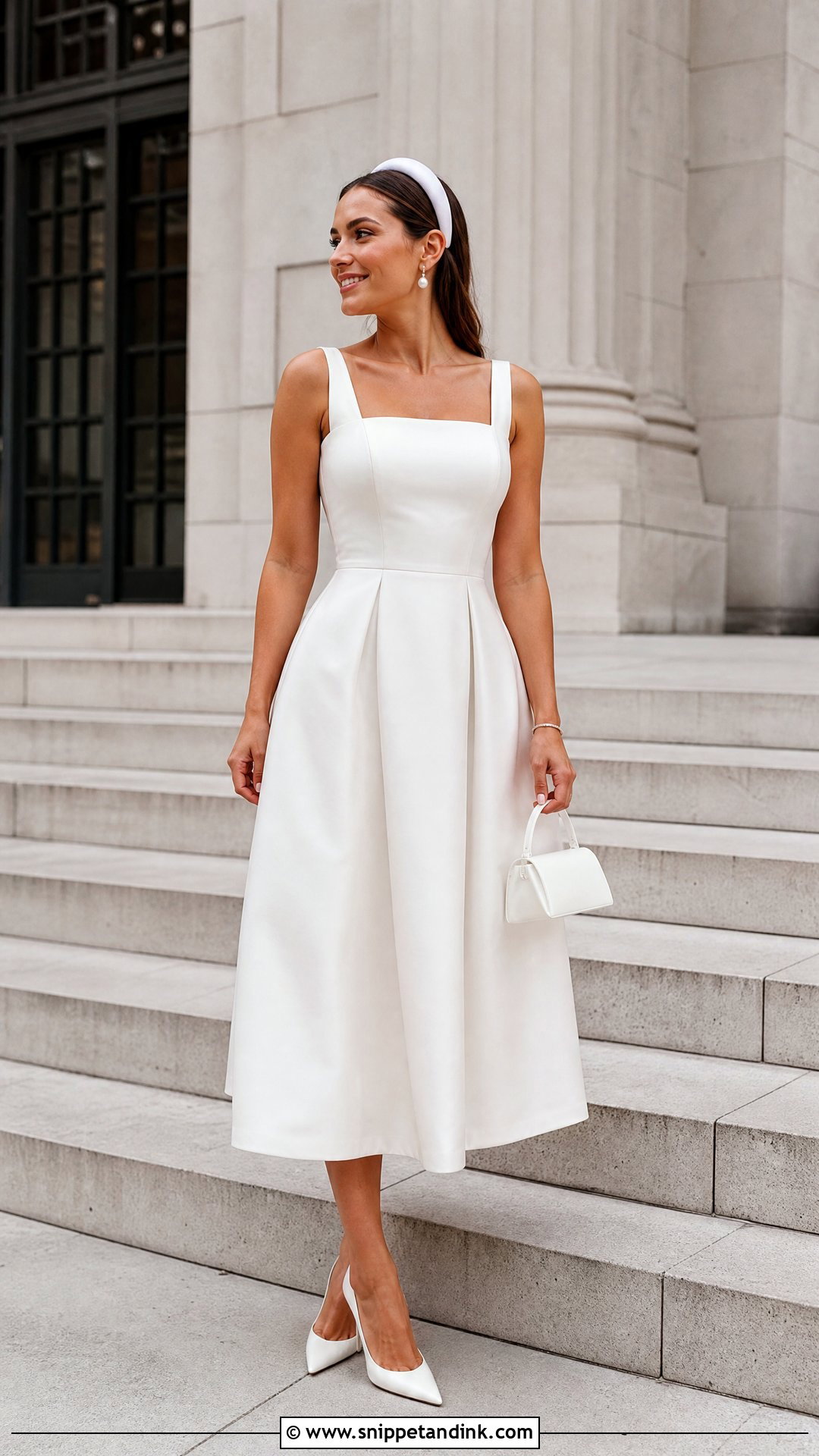
A midi sits between a short courthouse dress and a full gown, ending below the knee or near the lower calf. The honest trade-off is that a midi hem can shorten the leg line, so I balance it with a defined waist and a shoe cut low at the front. A fitted sheath is modern; a flared skirt moves more. Slingbacks, strappy sandals or embellished flats all work depending on the venue. A shoulder-length veil or a smart headband keeps it bridal. It moves easily from ceremony to lunch, looks right in urban settings, and you will wear it again.
14. One Shoulder Wedding Dress
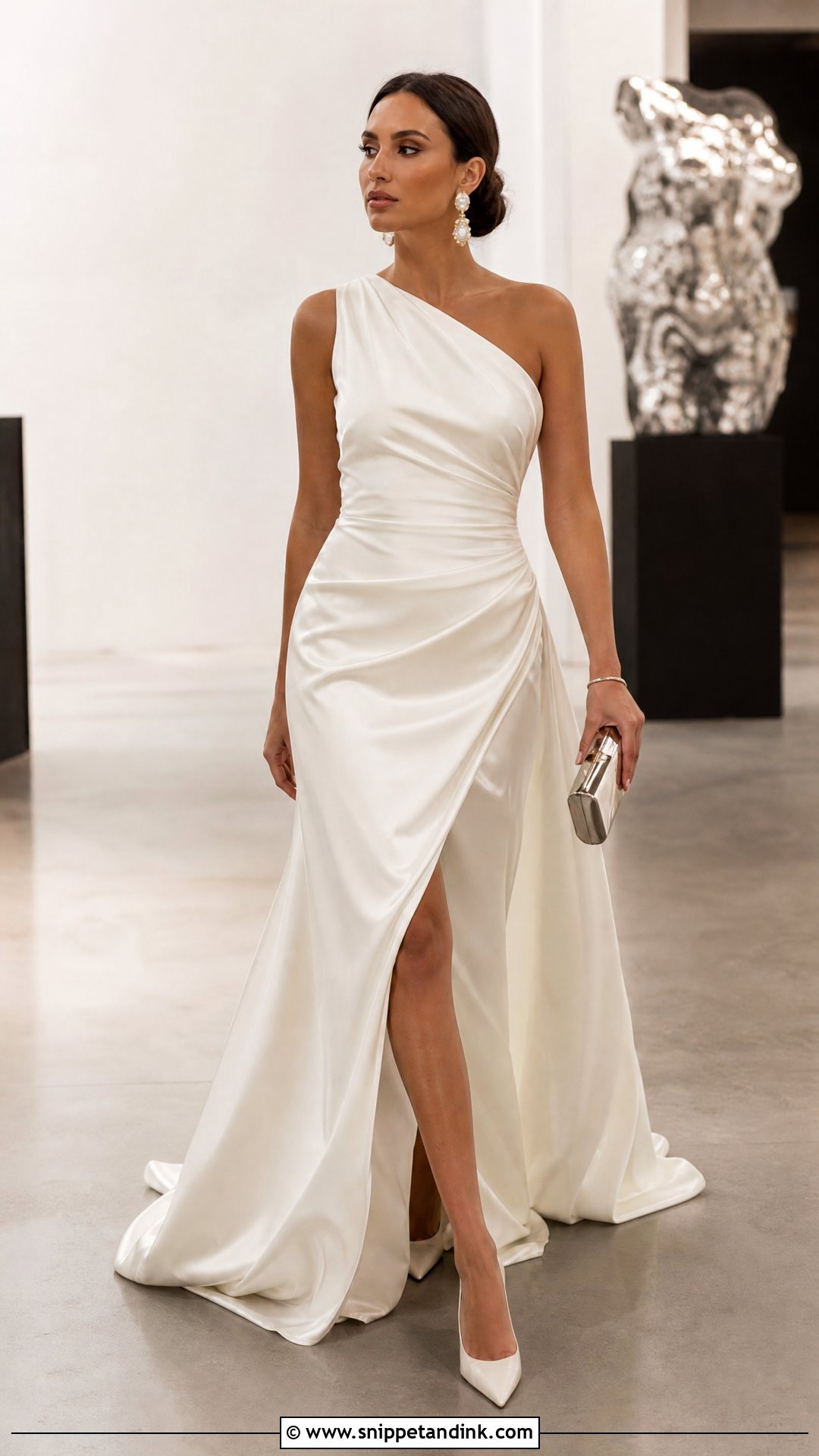
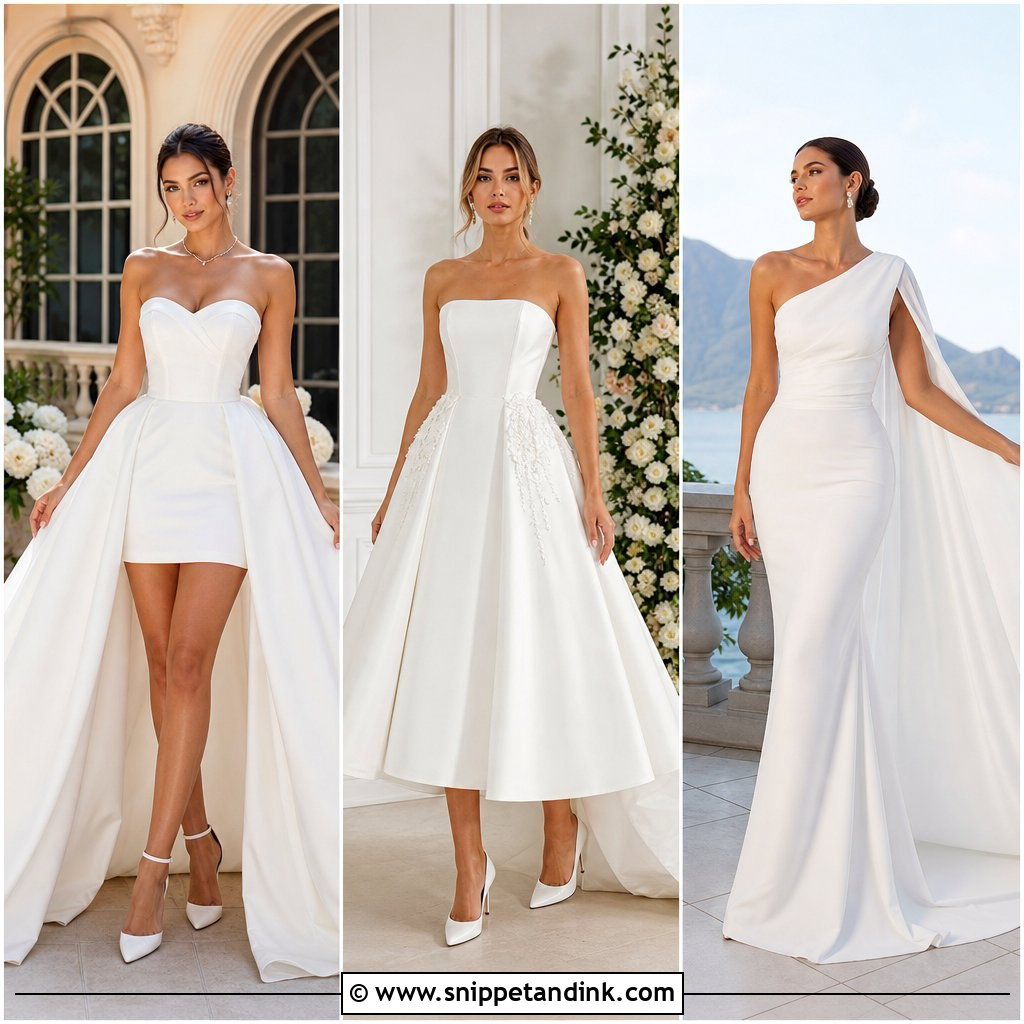
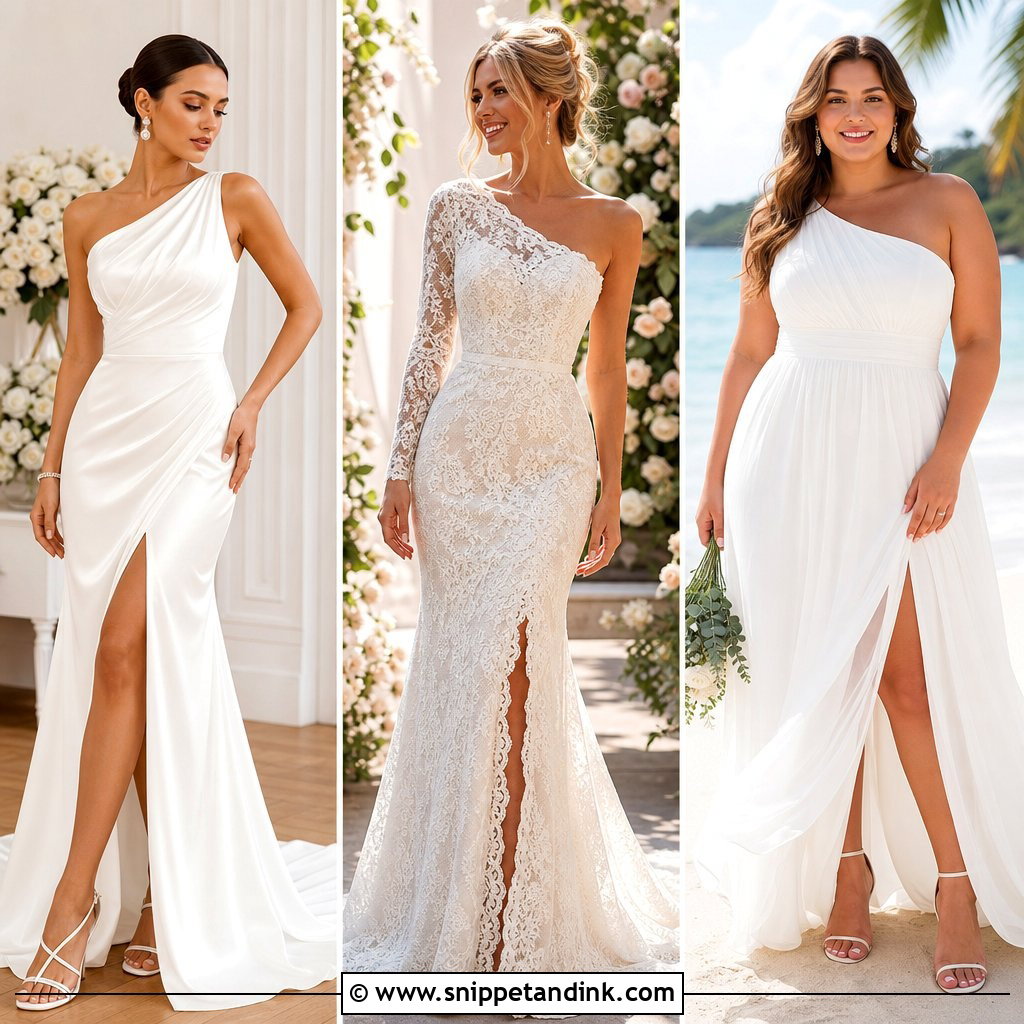
One-shoulder dresses get their impact from the asymmetric line rather than decoration. Draped satin softens it; structured crepe sharpens it. The skirt can be slim, gently flared or full. Wear earrings or a bracelet instead of a necklace, and style hair to the opposite side or low at the nape so the shoulder detail stays visible. The thing I test is grip. Lift the arm on the bare side and twist your torso; if the bodice slides toward that side, it needs more support built in. Evening ceremonies and modern venues suit it.
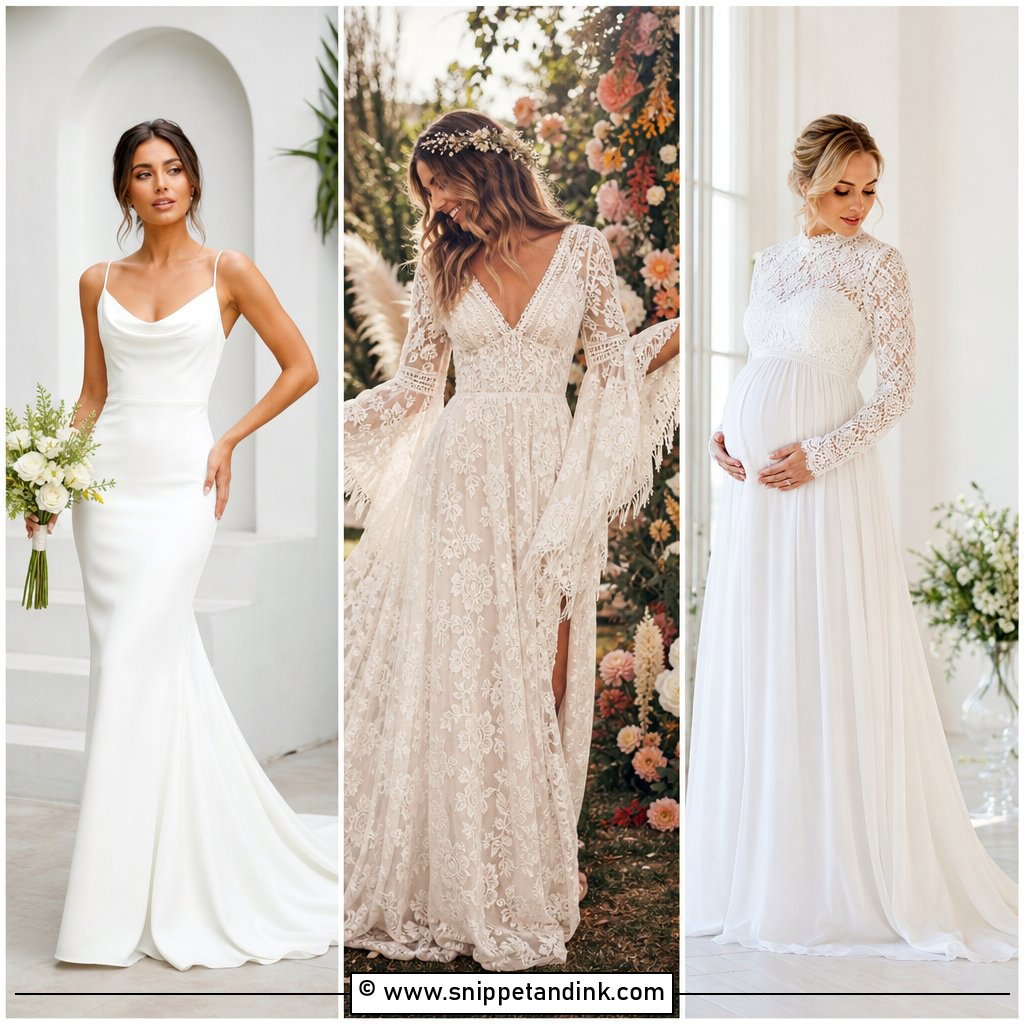
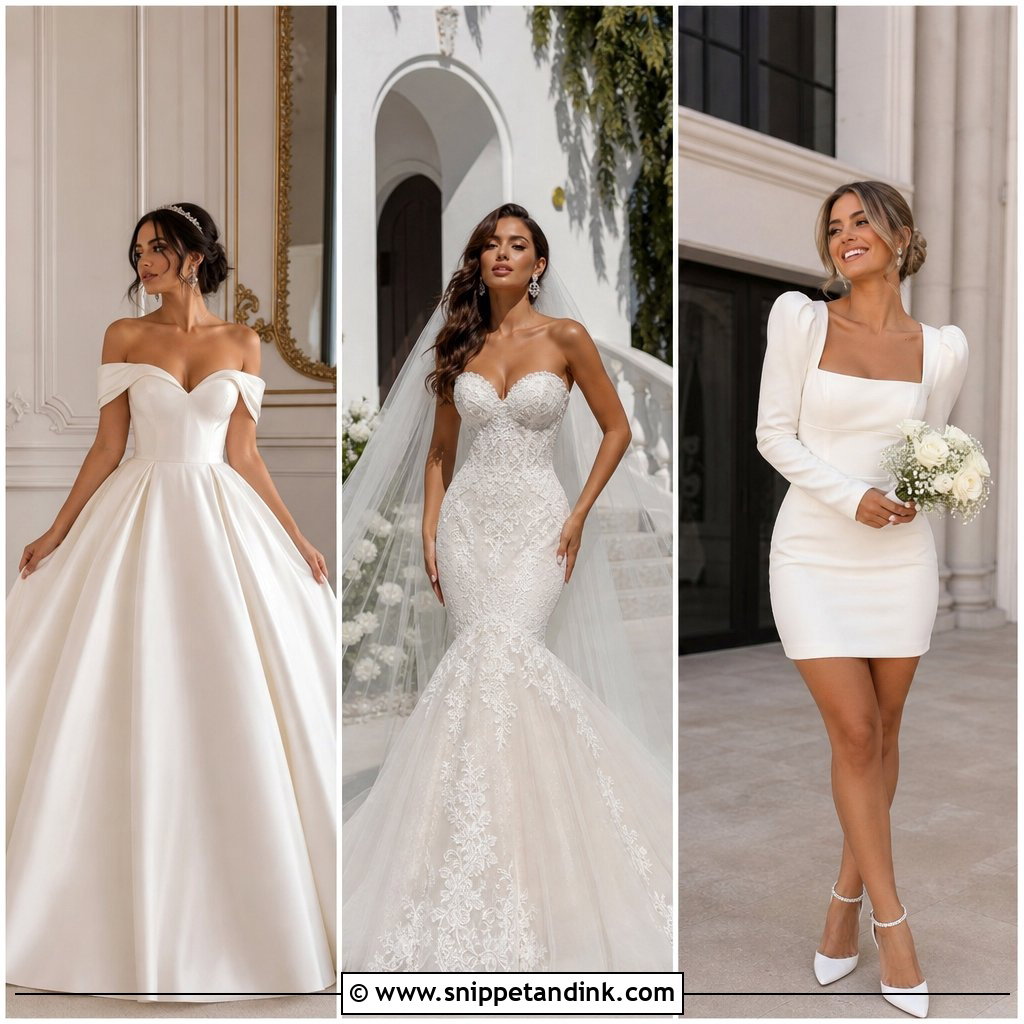
15. High Neck Wedding Dress
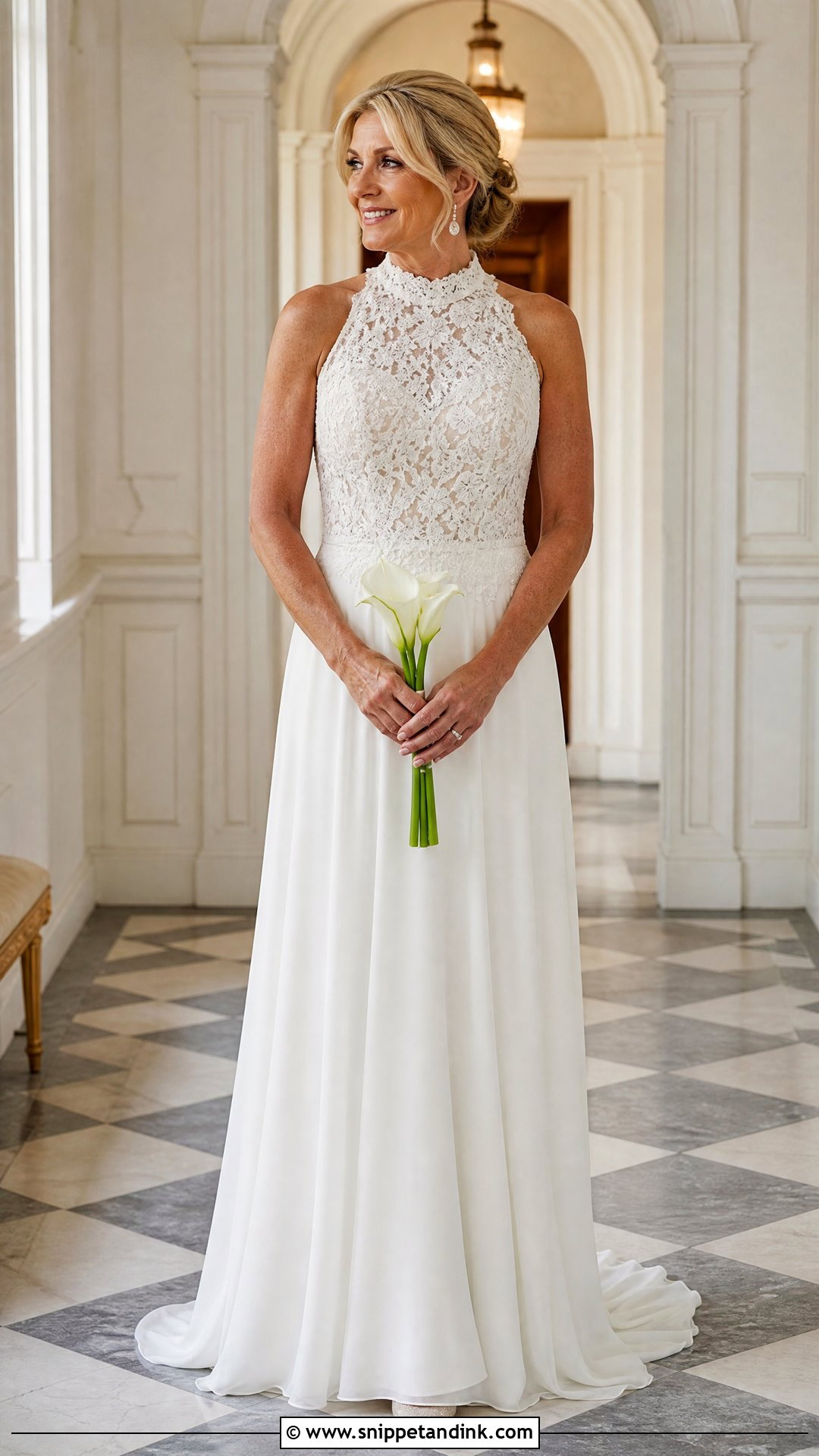
A high neck creates a long line from chin to waist and frames the face without any jewelry. Lace, crepe, satin and pleated chiffon all suit the shape. Balance the covered front with bare arms, an open back or a fitted waist so it doesn’t feel heavy. Pearl drops or small crystal earrings are enough. If you run warm, choose a sheer high neck over a solid one; a closed collar holds heat under lights for hours. A smooth updo keeps the neckline clear, and it suits cool-weather weddings and historic interiors.
16. Wrap Wedding Dress
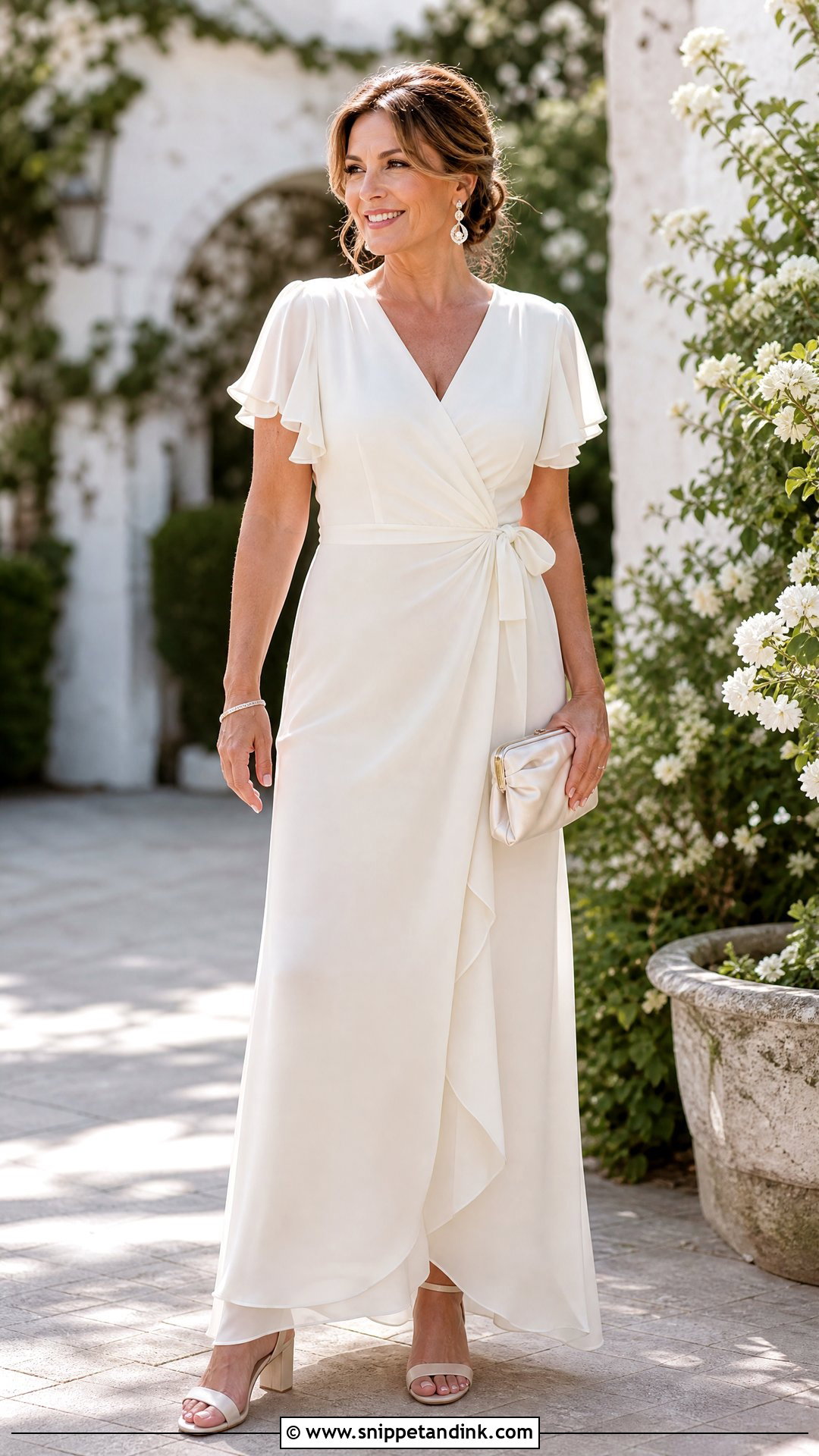
A wrap dress defines the waist and adjusts to you, which is why it’s so comfortable for long celebrations. The V neckline lengthens the torso and the overlapping skirt gives room to walk. For a wedding, though, I almost always prefer a faux wrap stitched in place, because a true wrap can slip open when you sit. Satin looks formal; chiffon or matte crepe feels softer. Flutter sleeves cover the upper arm, three-quarter sleeves suit cooler months. Sit and cross your legs in the fitting room to make sure the front overlap holds.
17. Wedding Dress With Cape
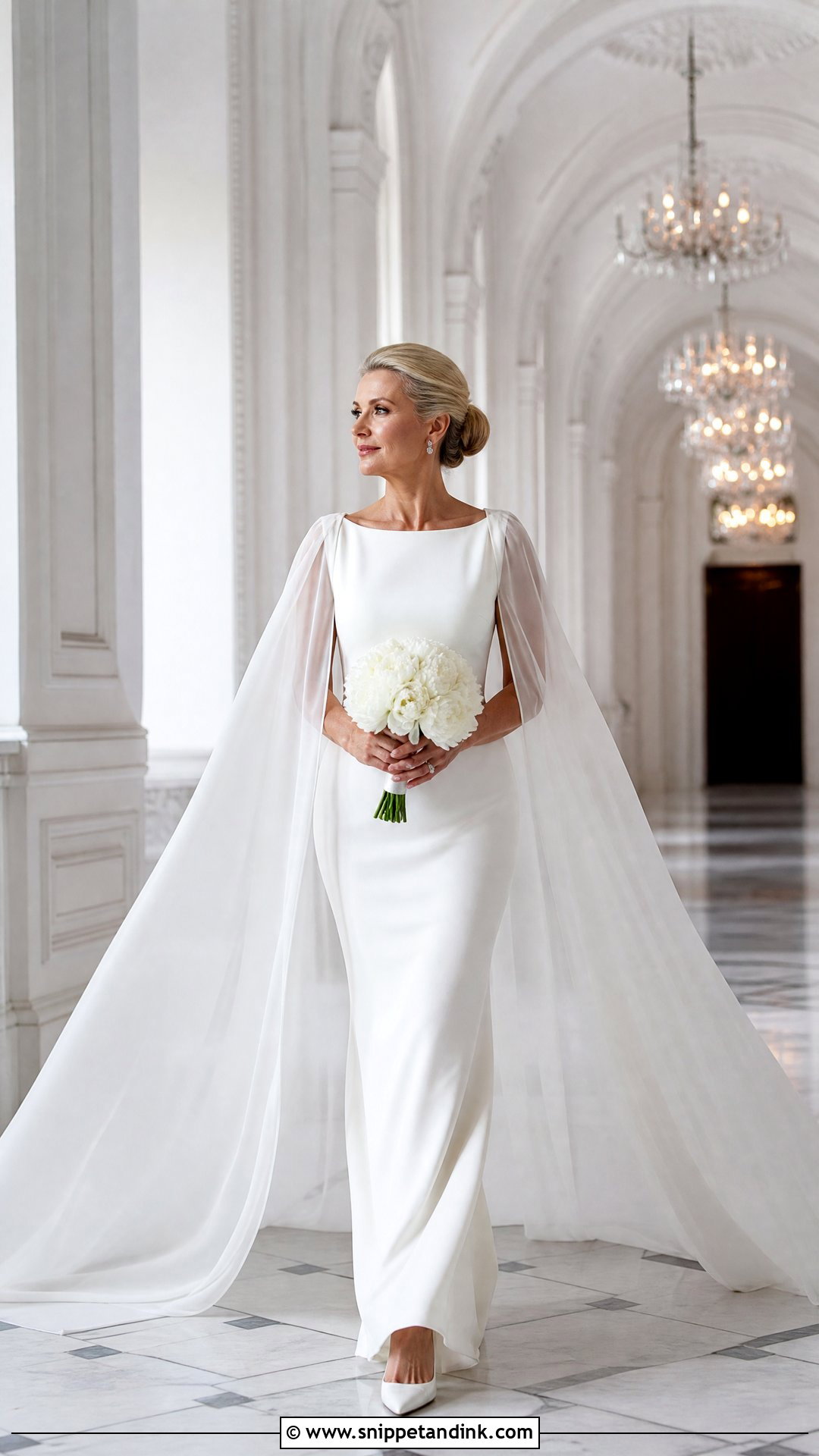
A cape gives ceremony drama without a veil. Start with a simple column, sheath or A-line so the cape has space. Sheer tulle feels light; crepe or satin looks more tailored. A shoulder-length capelet offers gentle coverage, while a floor-length cape makes a proper entrance. The practical point is the shoulder attachment. If it’s fastened only at the neck, the cape slides backward with every step and pulls on the throat, so I prefer buttons or loops at both shoulders. Take it off for dinner and you have a second look.
18. Pleated Wedding Dress
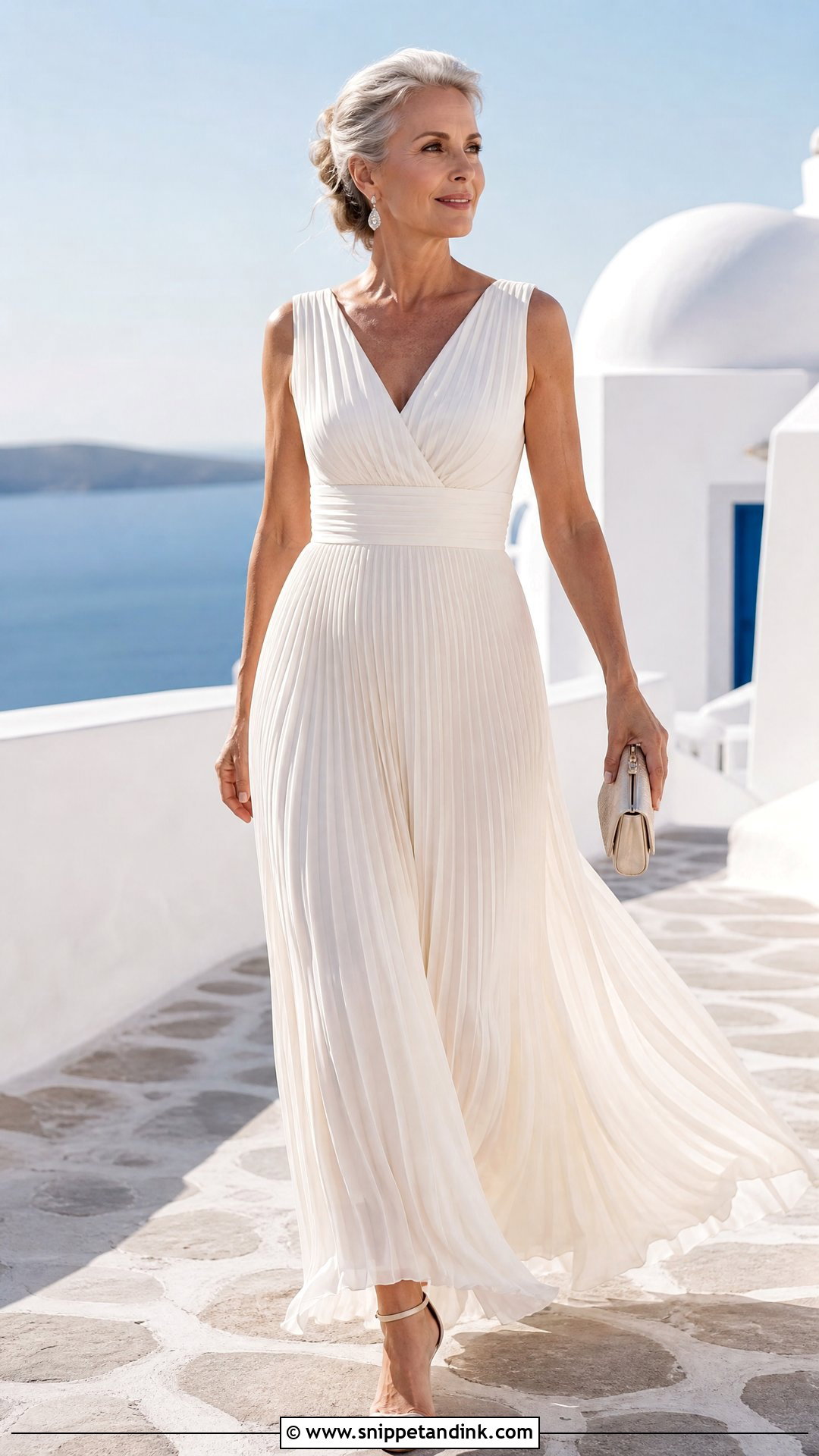
Fine pleats add movement without the weight of lace or beading. Try a pleated chiffon skirt with a fitted bodice, or a pleated midi all over for something contemporary. Narrow vertical pleats lengthen; wider sunray pleats add volume at the hem. A slim waist detail stops the shape from going shapeless. Pleats are heat-set, so they need care: steam from a distance rather than pressing, and travel with the dress hung in a roomy bag. Folded tight in a suitcase, they can set in the wrong place.
19. Plus Size Wedding Dress
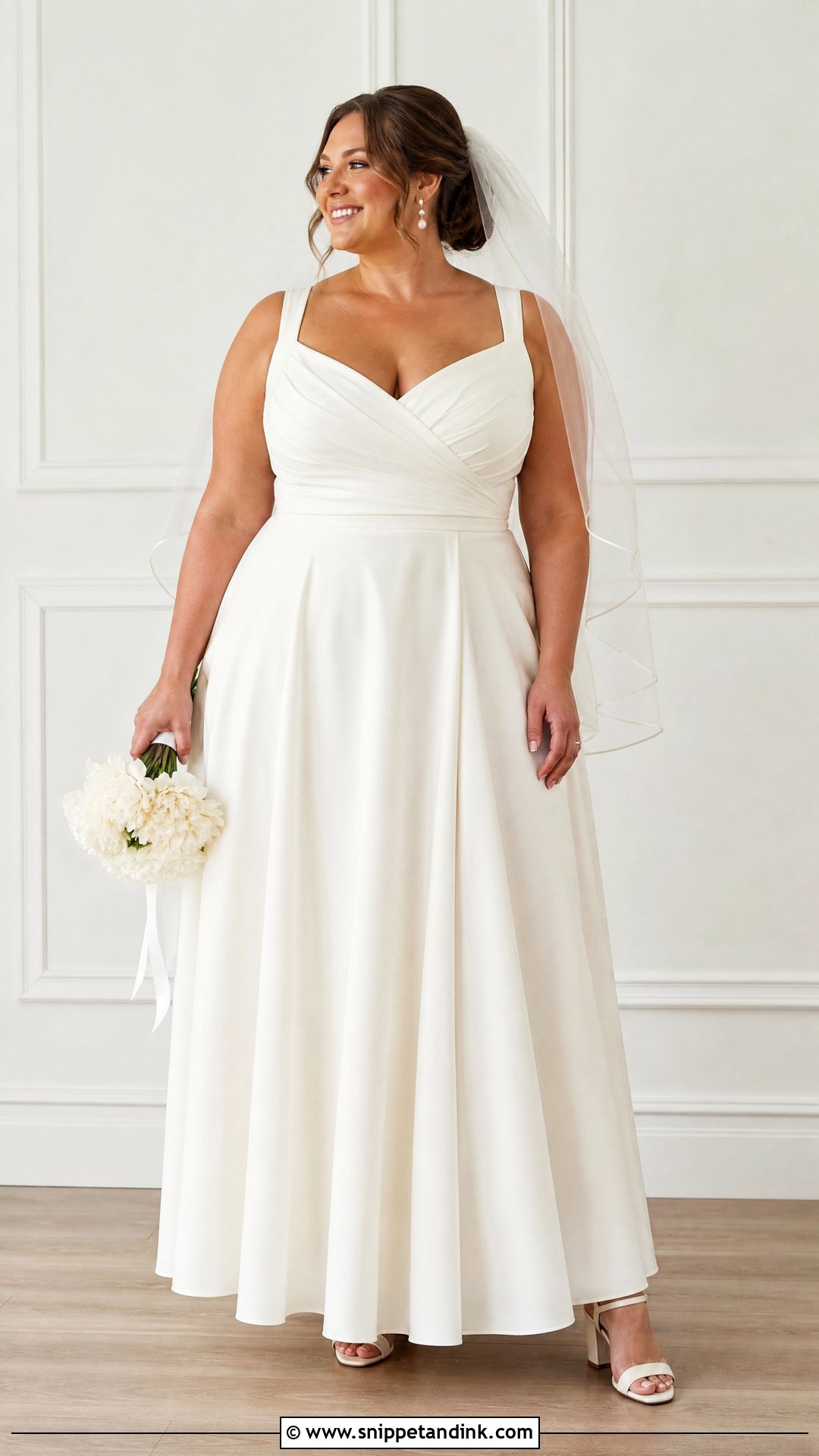
Support comes first in a plus-size gown, then shape. An A-line, fit-and-flare, wrap or structured column each puts definition in a different place, so try at least two before deciding. Wide straps, built-in cups, real boning and a waist seam where you feel comfortable make a bigger difference than the outer fabric. I’d ignore anything sold as universally flattering; how the dress feels after four hours matters more. Breathable lining helps outdoors. An experienced seamstress can tailor the bodice, straps, hem and bustle to your proportions.
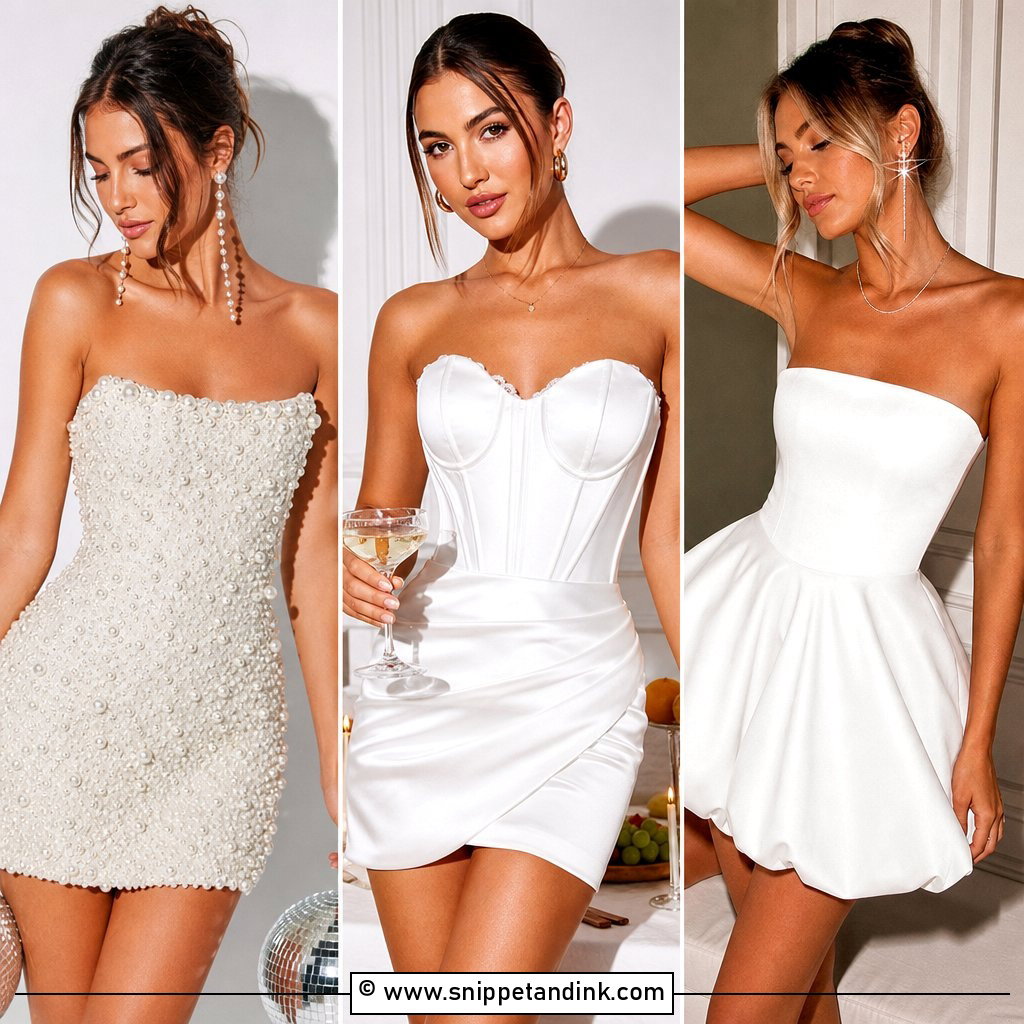

20. Short Wedding Dress
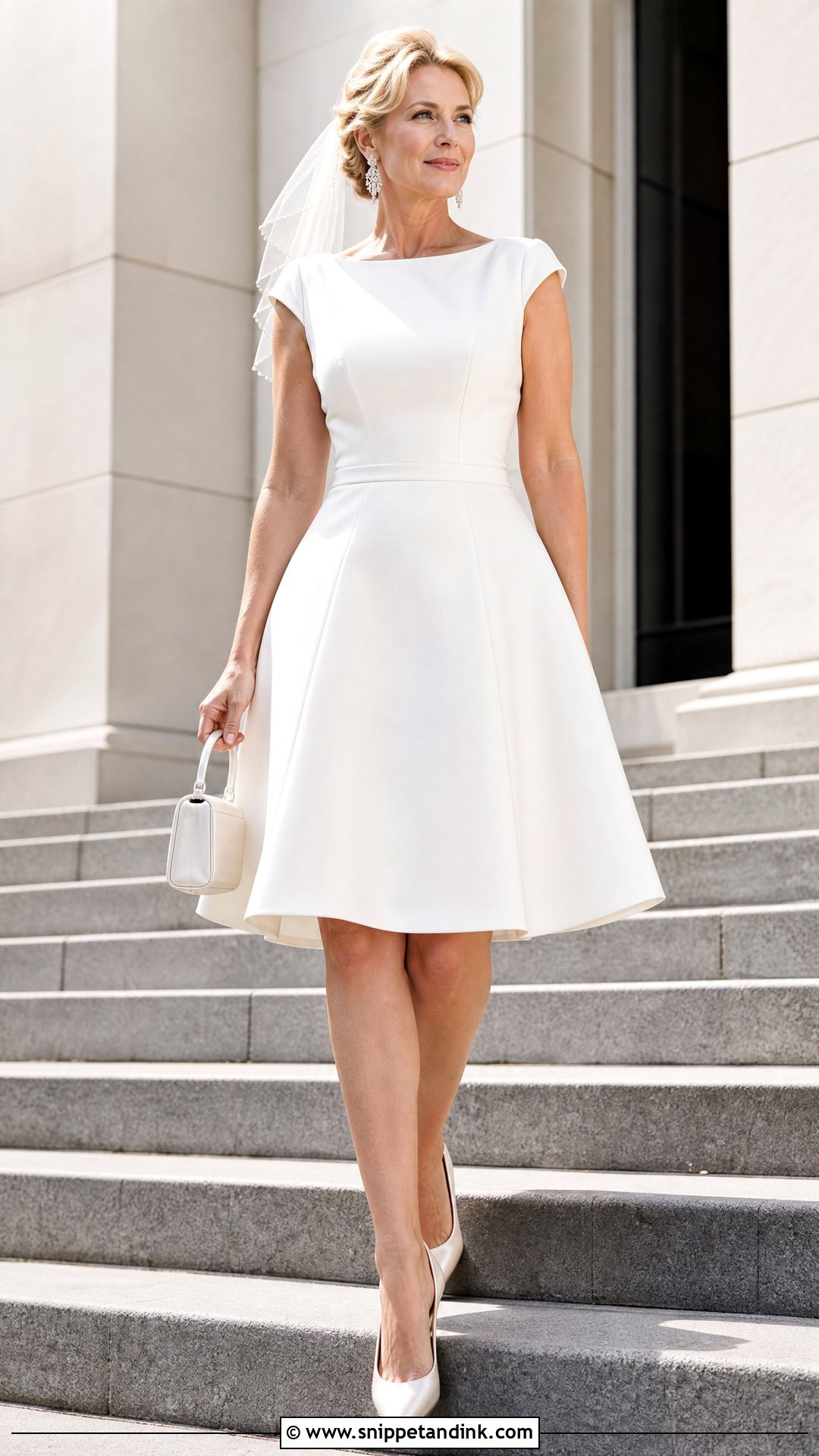
Knee-length dresses are relaxed and confident, and they suit courthouses, casual venues and lively receptions. A tailored shift, fitted sheath or structured fit-and-flare all end around the knee. Clean ivory looks modern; lace is softer. Your legs and shoes are on show, so polished pumps, slingbacks or embellished flats need to be comfortable and broken in beforehand. Check the hem from every angle and sit down in front of a mirror. A blazer, capelet or sheer wrap adds a layer when the evening cools, and the dress makes a good anniversary outfit later.
Shopping Beyond the Bridal Salon Changes the Timeline
Many of the dresses above can come from evening wear or ready-to-wear rails instead of a bridal shop, and that changes your schedule. A made-to-order bridal gown commonly takes several months to arrive, often six months or more, before alterations even start. A ready-to-wear dress can be in your hands within days or weeks.
- Bridal salon gown: order around eight to ten months out if you can, so there’s room for delivery delays and two or three fittings.
- Ready-to-wear or evening dress: buy two to three months ahead, which still leaves time for a hem and strap adjustment.
- Online orders: buy earlier than you think, and in two sizes if the shop allows free returns.
- Any dress: book the seamstress at the same time you buy, since wedding season fills her diary fast.
Dressing Alongside Your Children
Children often stand beside the bride in a second marriage, and their outfits shape the photos as much as yours. I prefer to pick the bride’s dress first, then choose one colour from it, such as the champagne in a lace or a green from a floral print, for the children to wear. Matching them exactly to you can look like a costume.
With younger children, comfort decides everything. Scratchy tulle, stiff shoes and tight collars lead to tears by the speeches, so let them try their outfits on at home and wear the shoes around the house first. Teenagers usually want a say, and giving them a choice between two options you both like keeps everyone happy in the pictures.
This Time, Let the Venue and Your Comfort Lead
There’s no single right dress for a second marriage. An ivory gown, a floral print, a satin midi or a short dress can all be the right answer. I’d start with the location and how formal the day is, then think about fit, fabric and the personal details that matter to you. Try each dress with the shoes and underwear you’ll actually wear, and leave time for alterations. Wear what reflects who you are now rather than expectations carried over from another chapter. Comfort and confidence will show in every photo.
You'll Like These Ideas:


Leave a Reply