
A white dress is only the start. When a bride sits down with me, the first questions are about the venue, the season, how long she’ll be on her feet and what she’s comfortable in, because those answers rule out half the racks before we touch a gown. Below are twenty complete outfits, from classic gowns and sharp tailoring to beach dresses and reception changes. Bridal design right now leans toward high necklines, raised florals, bows and very clean minimalism, alongside real alternatives to a gown. For more silhouettes once you’ve read these, there’s a companion round-up: These 20 Bridal Women Ideas. Whatever you choose, good inner construction matters more than any trend.
How Early Should a Wedding Gown Be Ordered?
Earlier than most brides expect. Made-to-order gowns typically take several months to produce, and alterations need their own window after the dress arrives. Exact timings vary by designer and shop, so ask for written dates when you order. As a rough shape, this is the schedule I plan around:
- Start trying on about nine to twelve months out, so there’s time to compare shops without pressure.
- Order around eight to ten months ahead for a made-to-order gown. Sample sales and ready-to-wear pieces can move much faster.
- Buy your wedding shoes and undergarments before the first fitting; the hem and bodice are altered against them.
- Expect the first fitting about two to three months out, a second a few weeks later, and a final one roughly two weeks before.
- Suits, jumpsuits and separates still need tailoring time, so don’t treat them as last-minute options.
If your date is close, tell the shop on day one. Many will point you straight to stock gowns and save you heartache.
1. Classic A-Line Bridal Gown
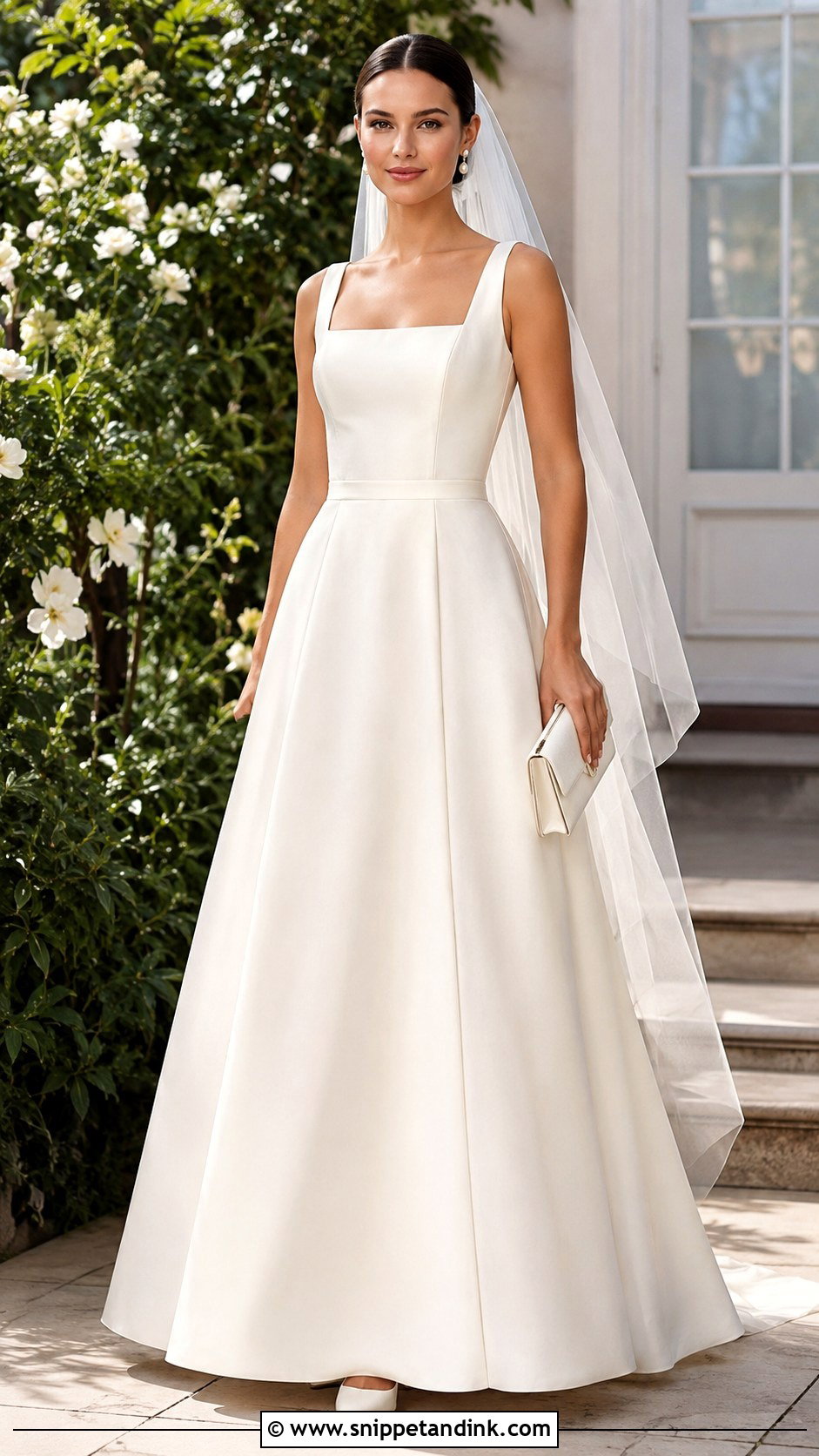
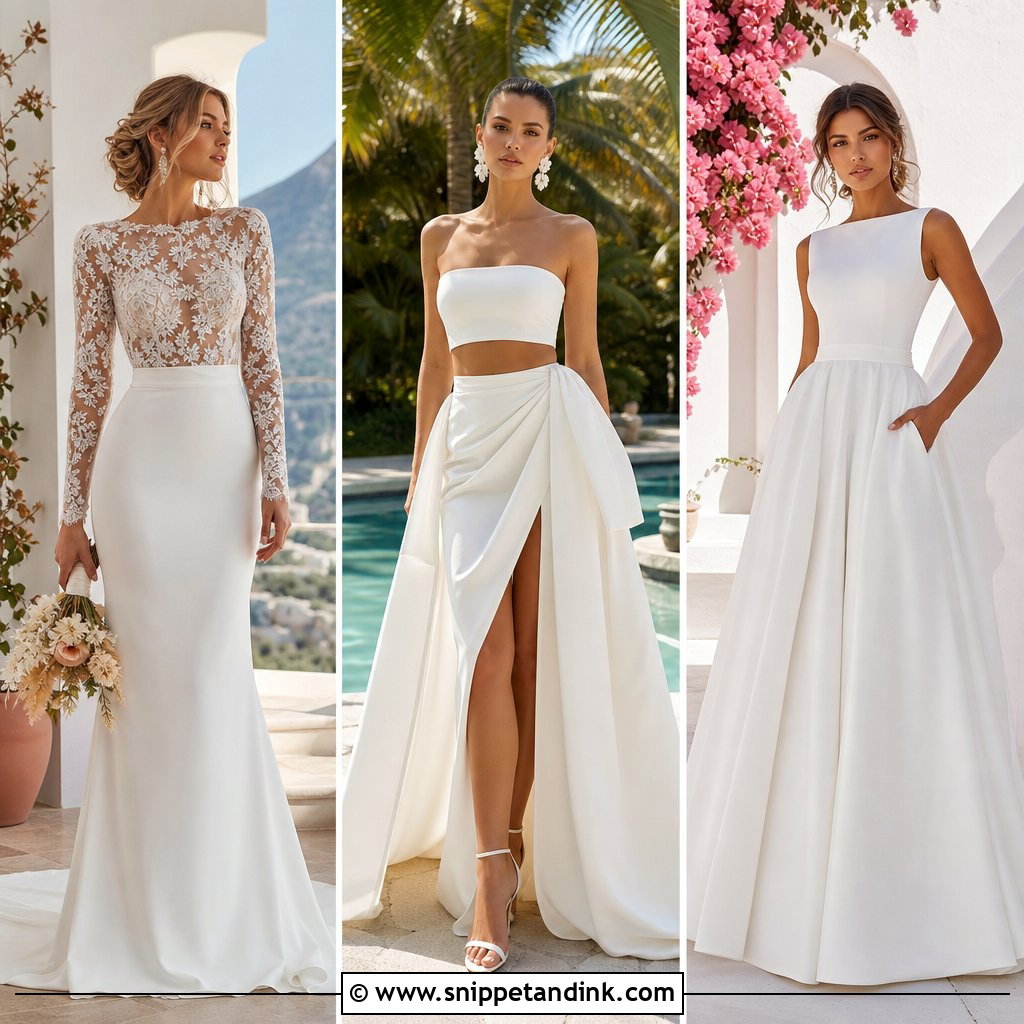
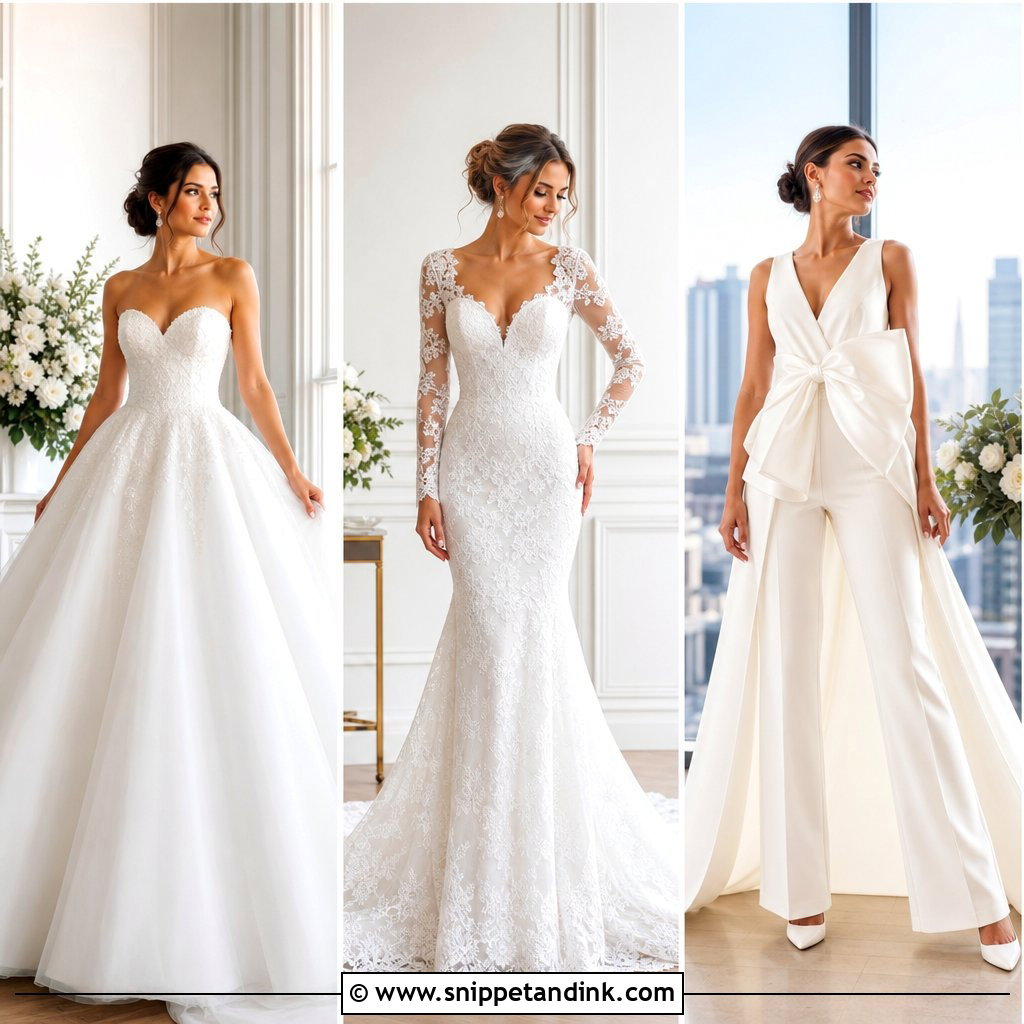
The A-line is the gown I pull first for a bride who doesn’t yet know what she wants, because it suits almost every height and shape. A fitted bodice defines the waist, then the skirt drops away to the floor without hugging the hips. Pointed ivory pumps, pearl drops and a fingertip veil with a clean edge are all it needs. For grass or gravel ceremonies, swap stilettos for a block heel. Sweep the hair back so the neckline stays readable in photos.
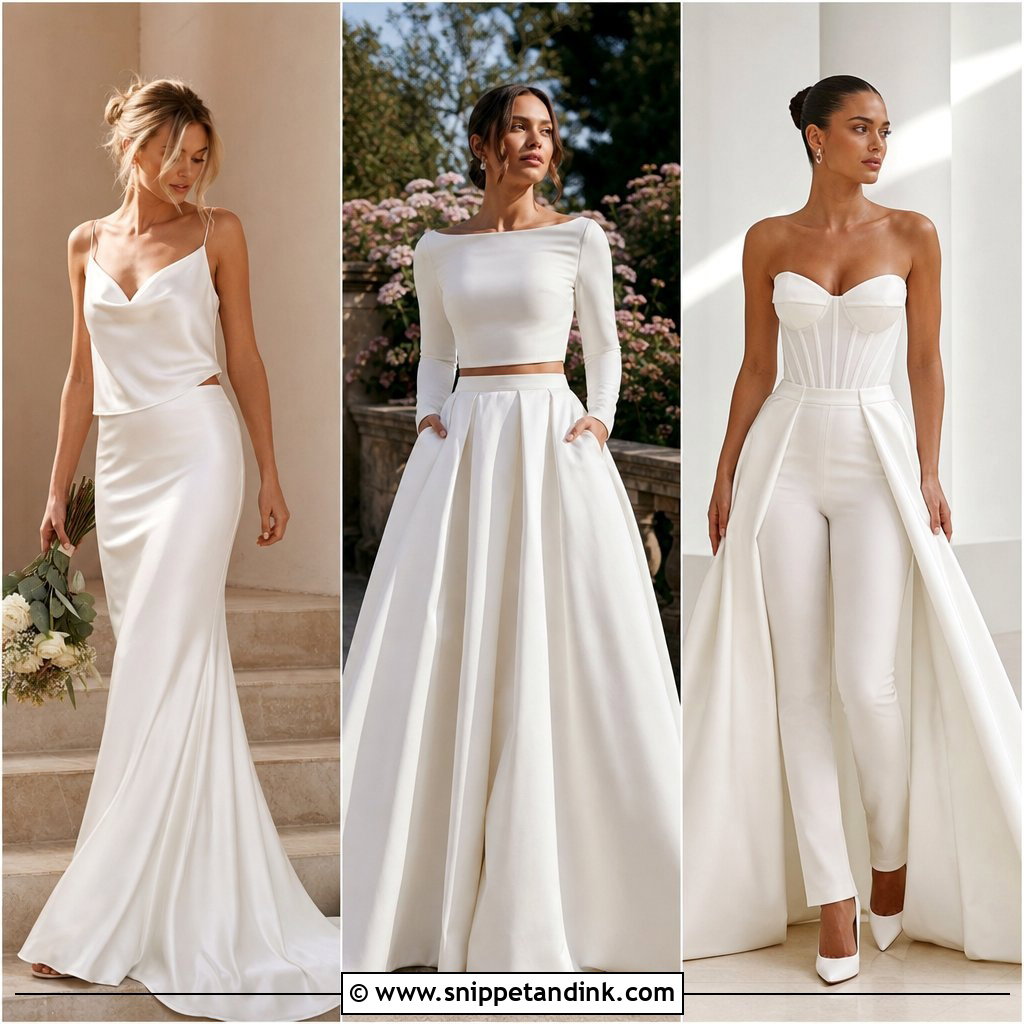
2. Satin Slip Bridal Dress
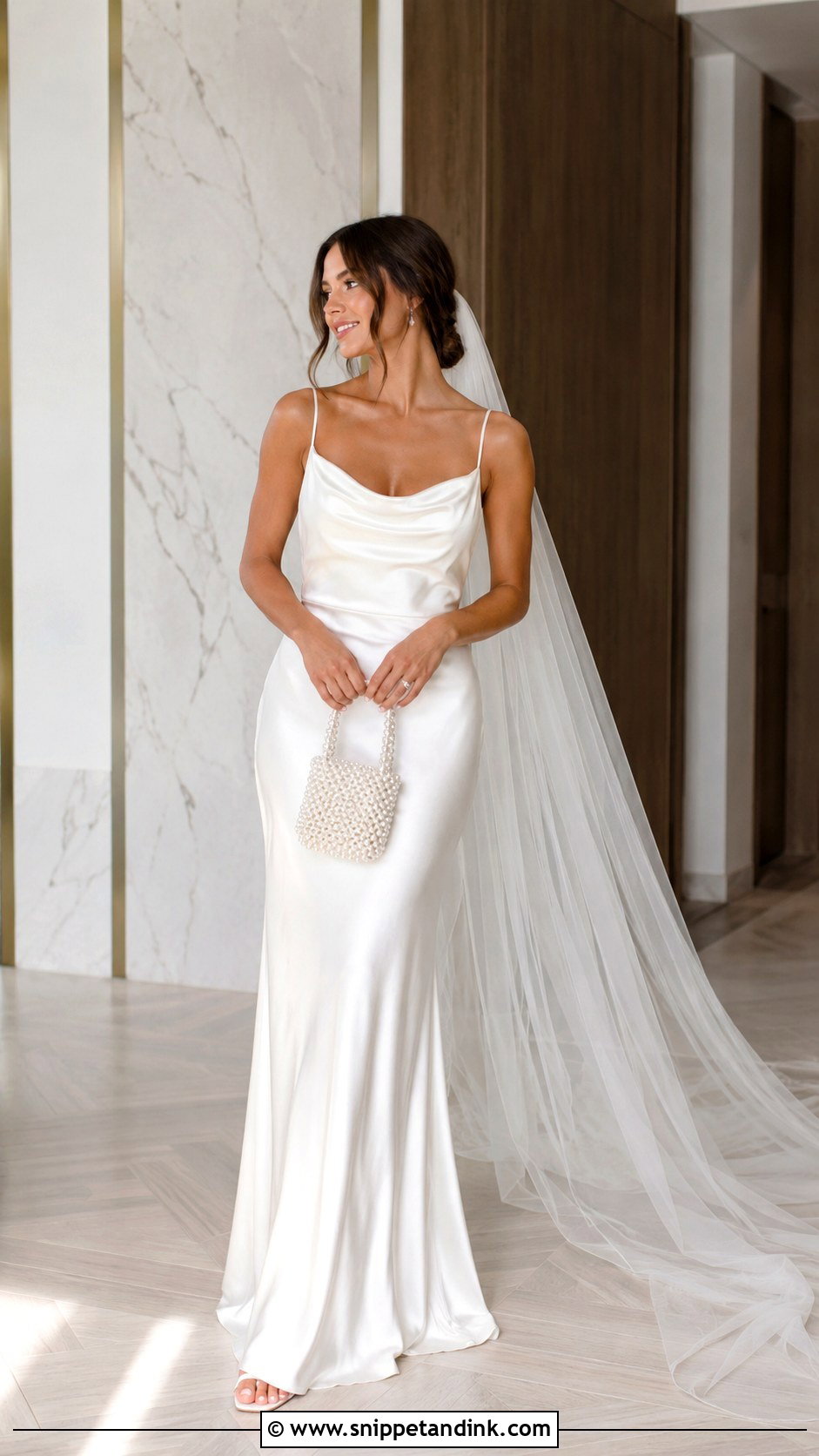
Satin slips are honest dresses: they show exactly what’s underneath. That’s why I steer brides toward a bias cut that skims rather than clings, with adjustable straps or a built-in bodice so nothing slides. Invisible, edge-free underwear is not optional here, and I’d test it in daylight at the fitting. Strappy sandals and a sheer cathedral veil keep the line clean. If it’s cold, a tailored white coat over the top looks deliberate and comes off indoors.
3. Lace Long Sleeve Bridal Gown
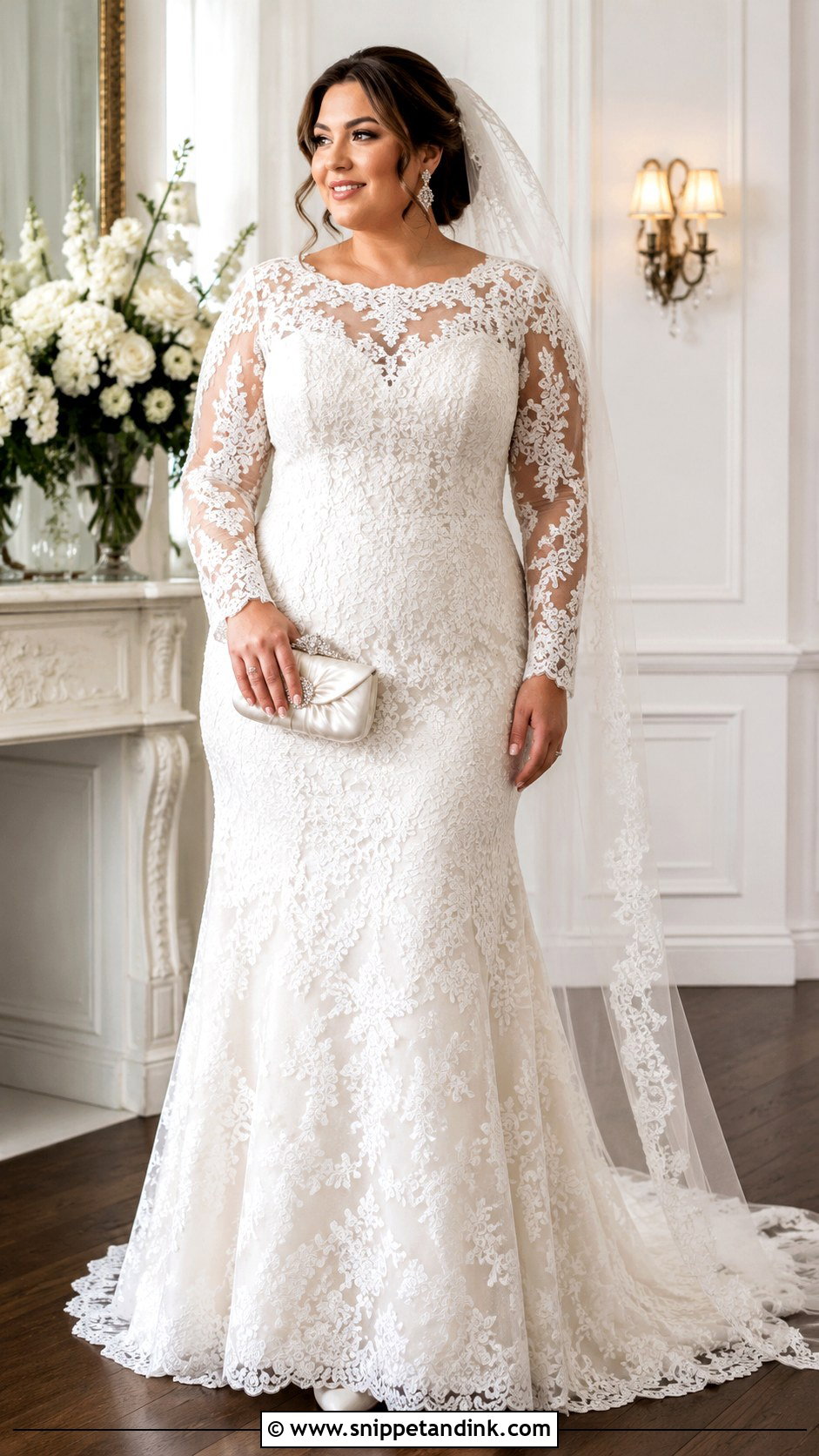
Long lace sleeves give coverage without weight, especially in an illusion style. Run your hand inside the bodice before you commit: unlined lace scratches by hour six, and a smooth lining fixes that. A defined waist and gently flared skirt keep the proportions calm. I’d choose one focal accessory, a lace-trimmed veil or a sparkling comb, and stop there. A low bun or half-up style keeps the sleeve and neckline detail on show, and the coverage is welcome in autumn, winter or a heavily air-conditioned hall.
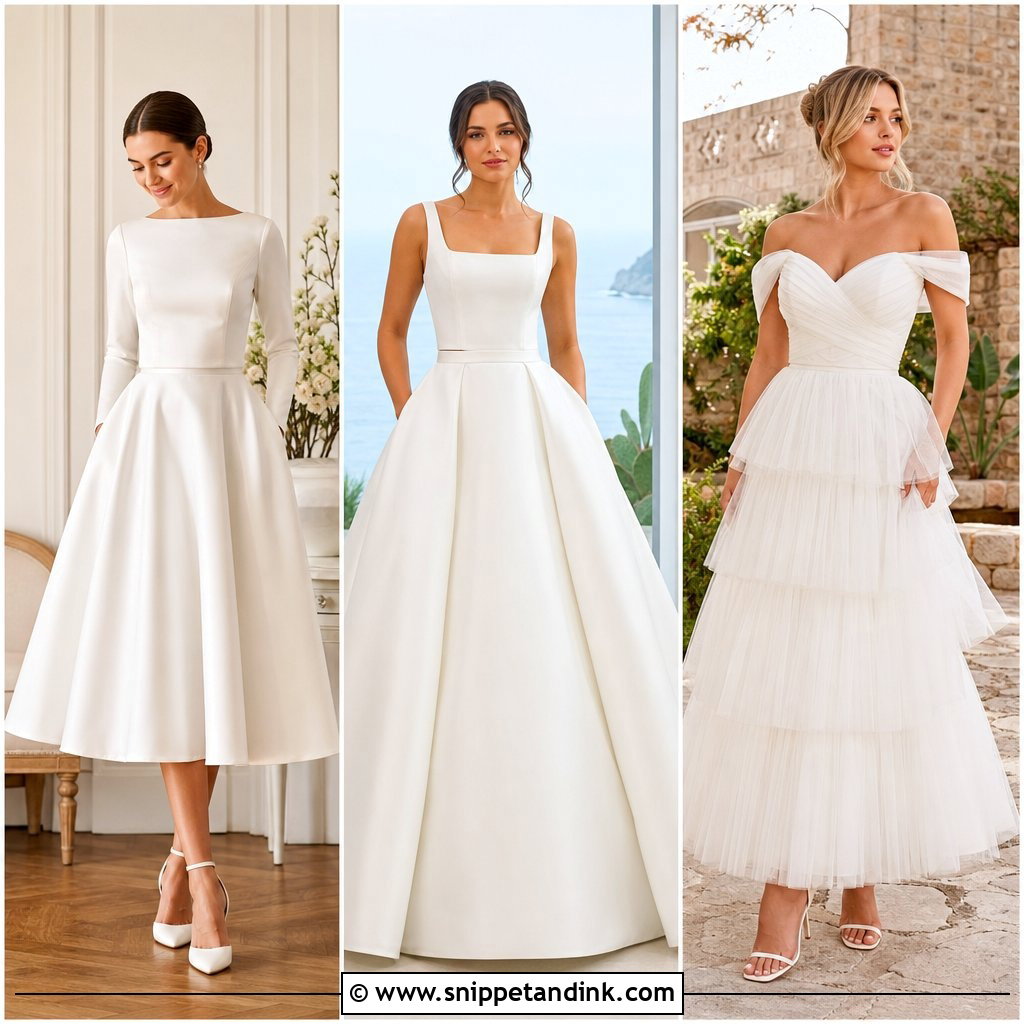
4. Strapless Ball Gown Bridal Look
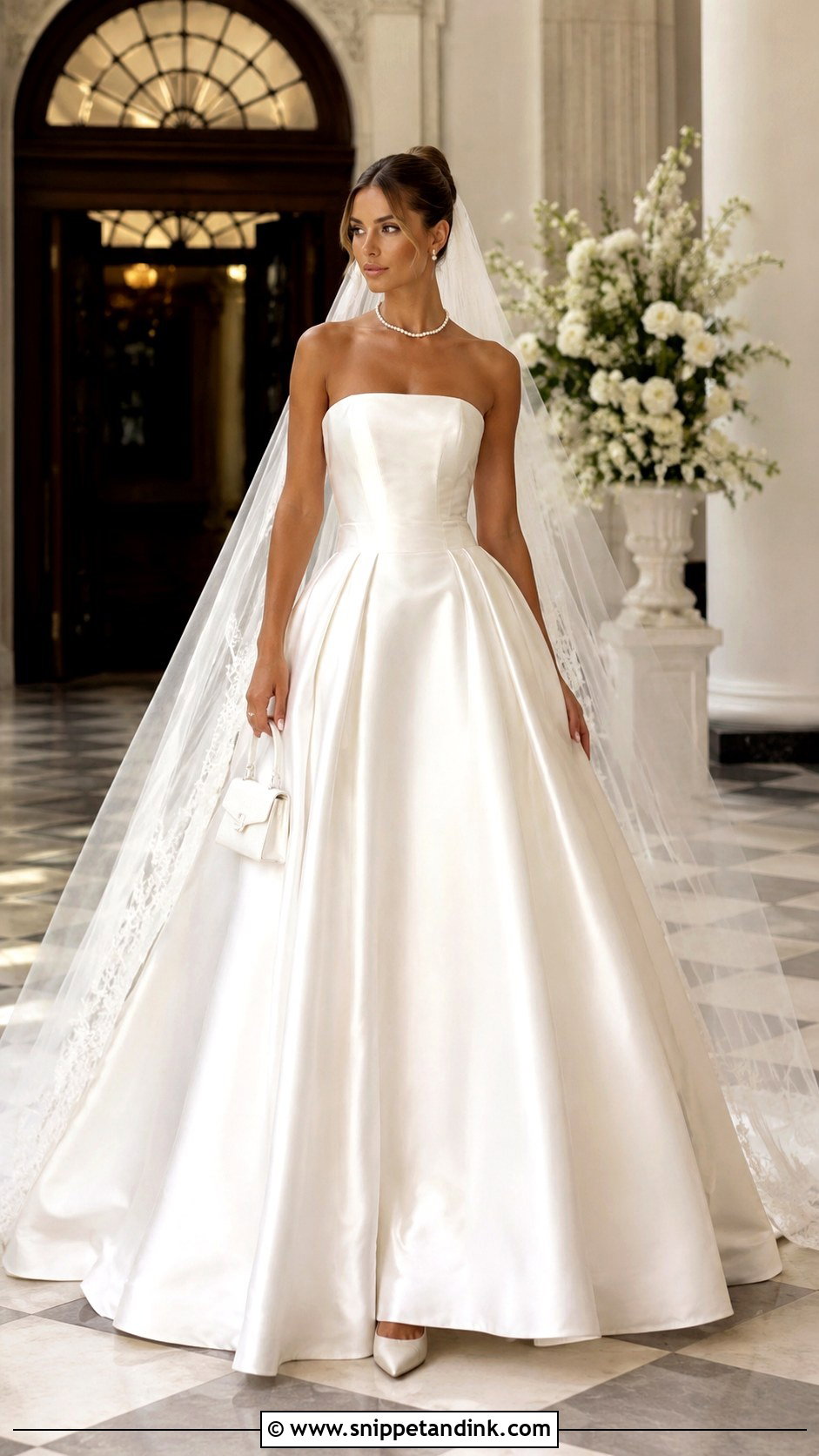
Fashion tape won’t hold up a strapless ball gown; boning, proper cups and a professional fitting will. That’s the first thing I check, because a bodice that slips makes a bride hitch it up in every photo. Once it sits firmly, balance the open neckline with a short pearl strand, a fine pendant or statement earrings. Satin pumps hide under the skirt. Petite brides often look better with slightly less skirt volume, while taller brides can carry more. Hair up or swept to one side shows off the shoulders.
5. High Neck Bridal Gown
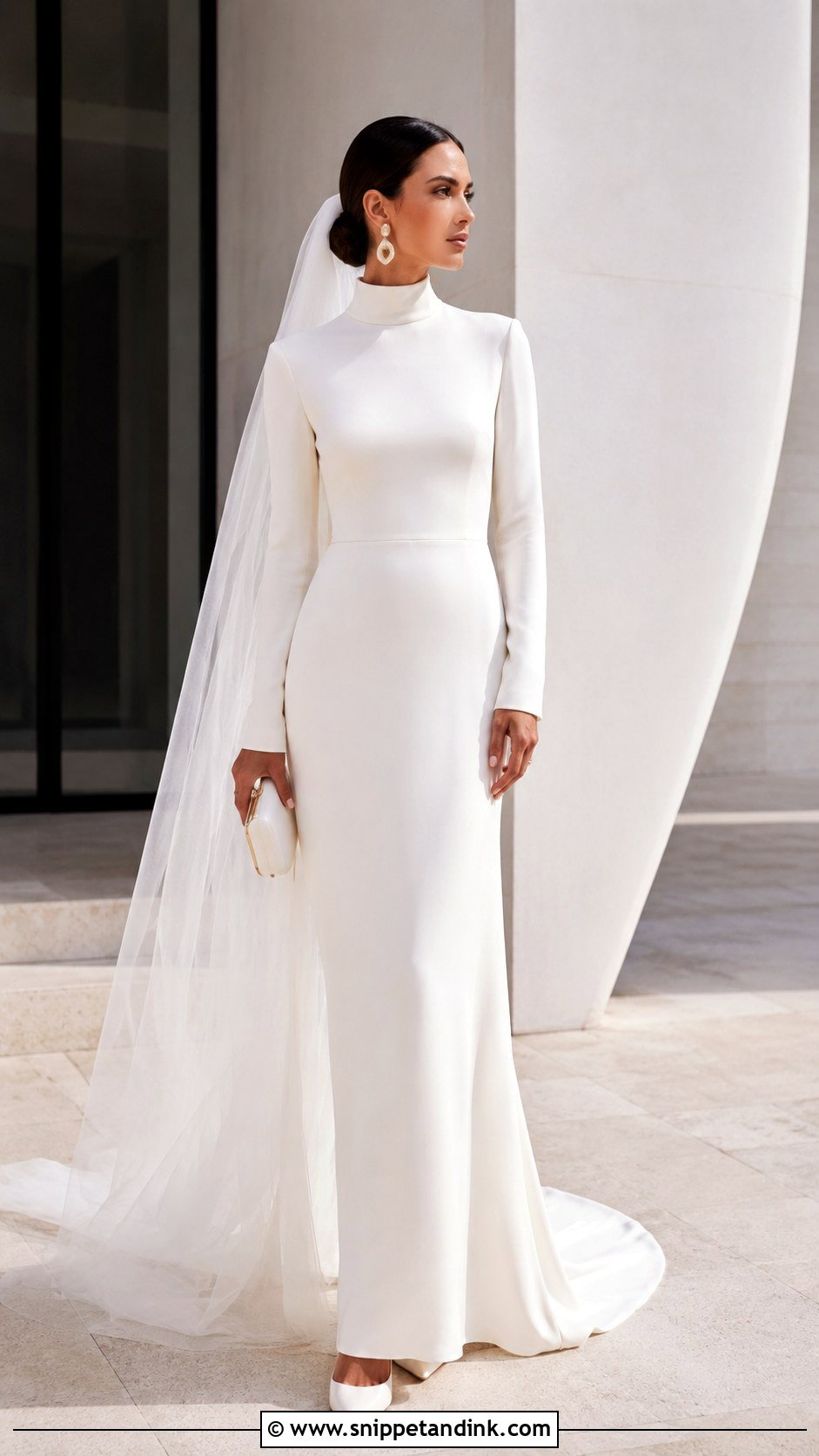
A high neckline pulls the eye straight to the face, which is why I love it on brides with strong cheekbones or short hair. It sits best in smooth crepe, lightweight satin or fine lace. Choose a column skirt for something modern, an A-line for softness. Skip the necklace entirely and wear sculptural earrings. Place the veil comb beneath the hairstyle so the collar stays uncovered. High necks have become a steady feature of recent bridal design, and princess seams or a waist panel will shape the gown if you want more definition.
6. Off Shoulder Bridal Dress
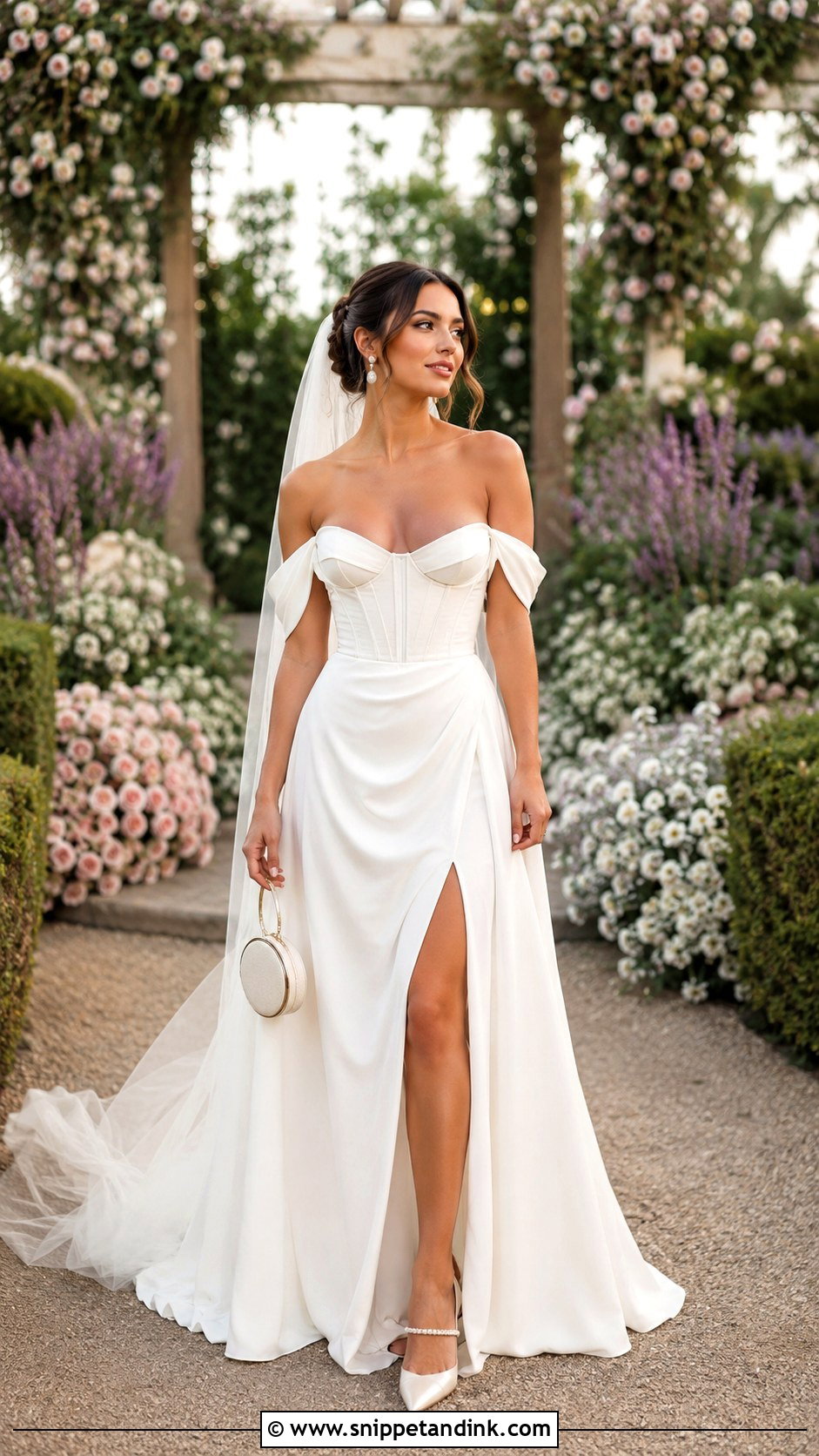
Off-shoulder necklines need one test before anything else: lift your arms above your head. If the neckline rides up or the bodice gapes, it will do the same during every hug and on the dance floor. Internal structure or detachable shoulder drapes usually hold better than elastic. With the collarbone framed, keep jewelry to pearl or crystal earrings and let a loose chignon leave the shoulders clear. Ruffled or floral necklines want even less jewelry. Curvier brides tend to feel more secure with a structured bodice and wider draped sleeves.
7. Square Neck Bridal Gown
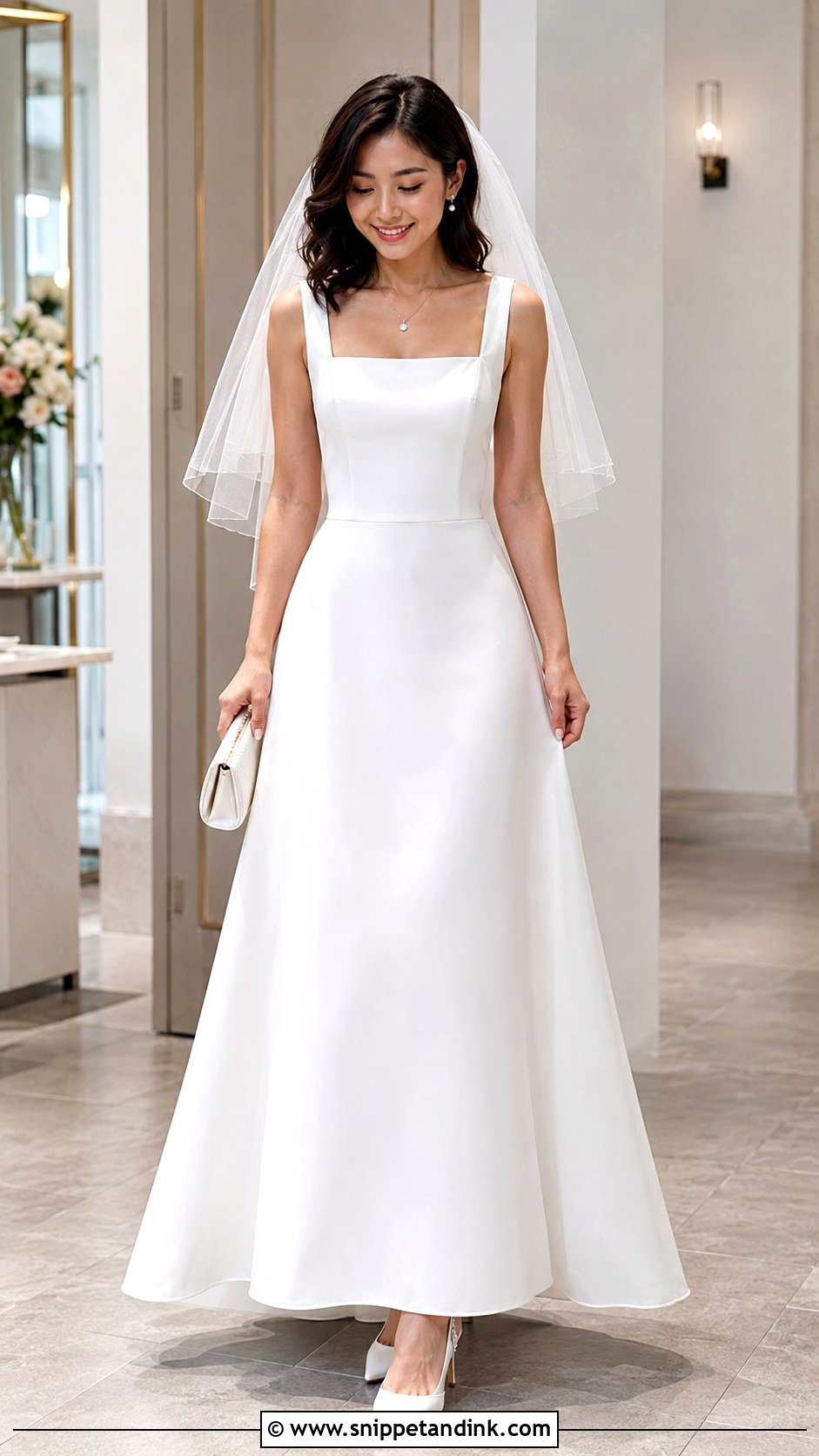
Square necks are easy to accessorize and give more coverage than a plunge while still framing the upper body. Wider straps support a fuller bust; slim ones look lighter. Pair a fitted waist with an A-line or column skirt. I’d add a short pendant and pearl studs, then a shoulder-length veil that doesn’t crowd the neckline. If you want some romance, look for subtle lace panels or covered buttons down the back rather than adding more jewelry.
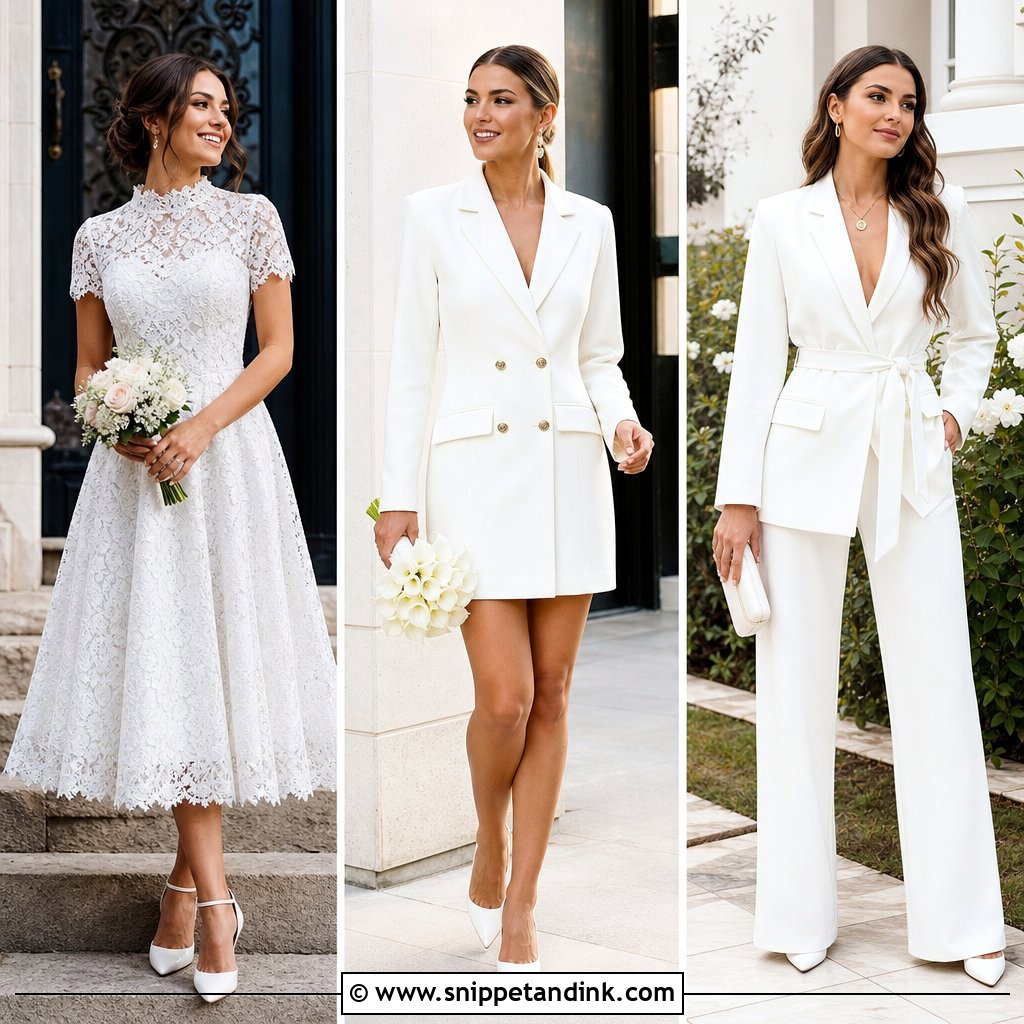
8. Tea Length Bridal Dress
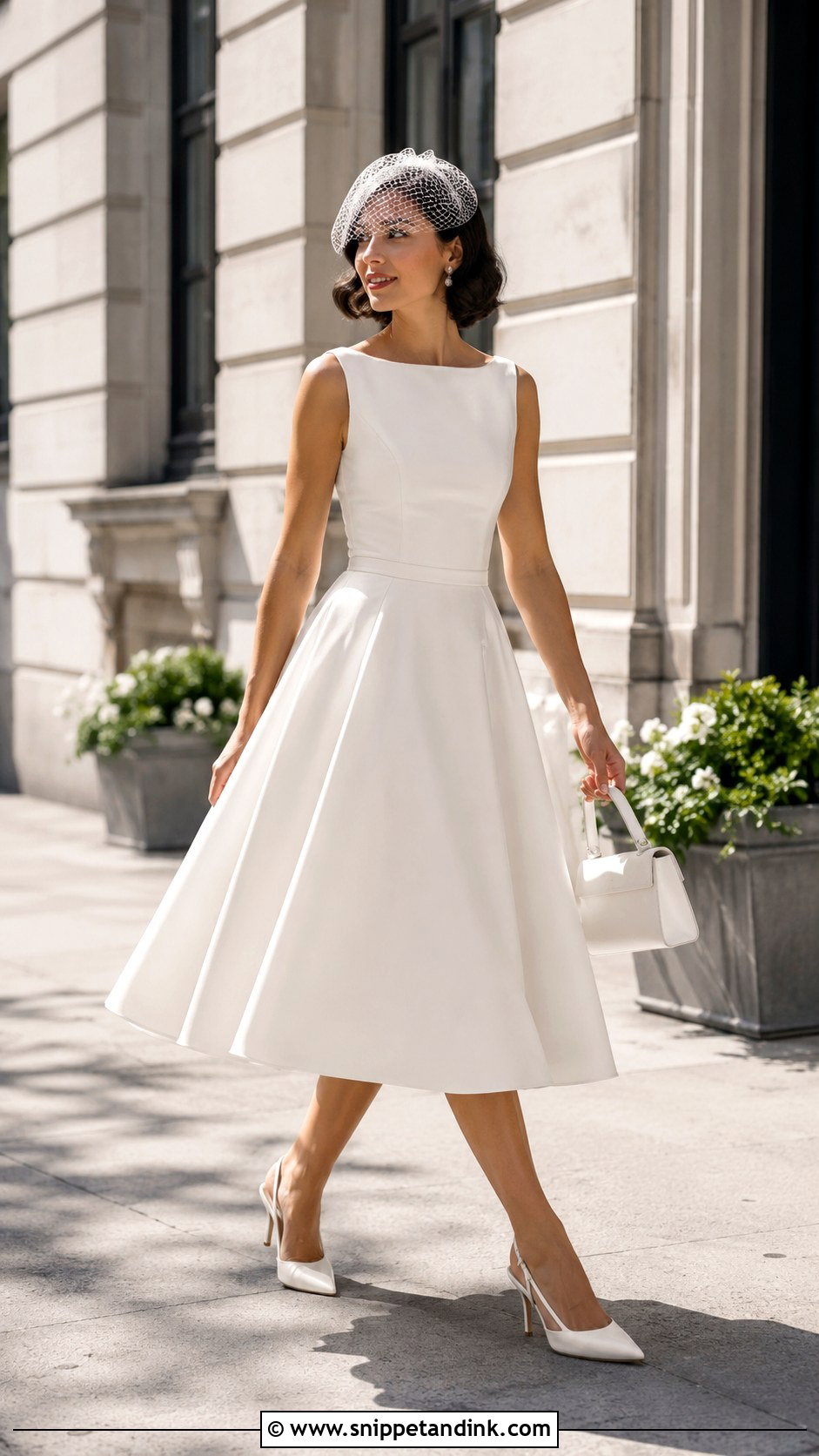
Tea length shows off your shoes and frees your legs for dancing. The hem falls between knee and ankle, so it handles courthouses, garden lawns and venue changes without a bustle. A fitted bodice with a flared skirt reads vintage; a straighter cut feels current. Slingback pumps and a birdcage or short bow veil keep the proportions right, as a long veil looks unbalanced over a short hem. Do check the hem length while standing on a step, since it rises more than you’d think.
9. White Bridal Mini Dress
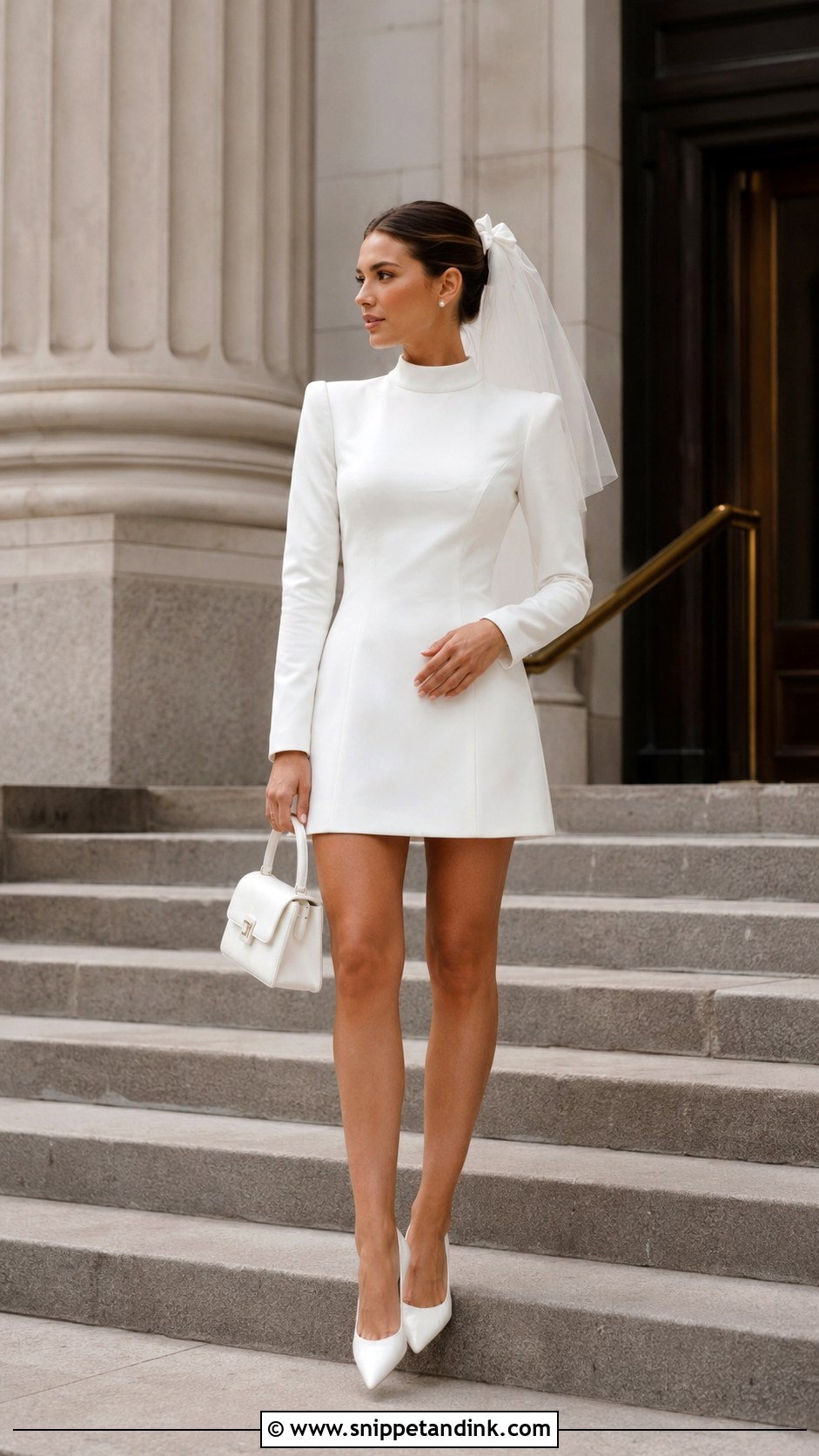
Short dresses go casual quickly, so the fabric has to carry it. A white bridal mini dress in crepe, satin, lace or a structured jacquard looks celebratory; thin jersey does not. I balance a short hem with a higher neck, a tailored sleeve or a clean fitted bodice. A short veil or a pearl hair bow makes it read as bridal right away. Sit down in it at the fitting and look in a mirror; minis can ride up further than you’d ever want in a family photo.
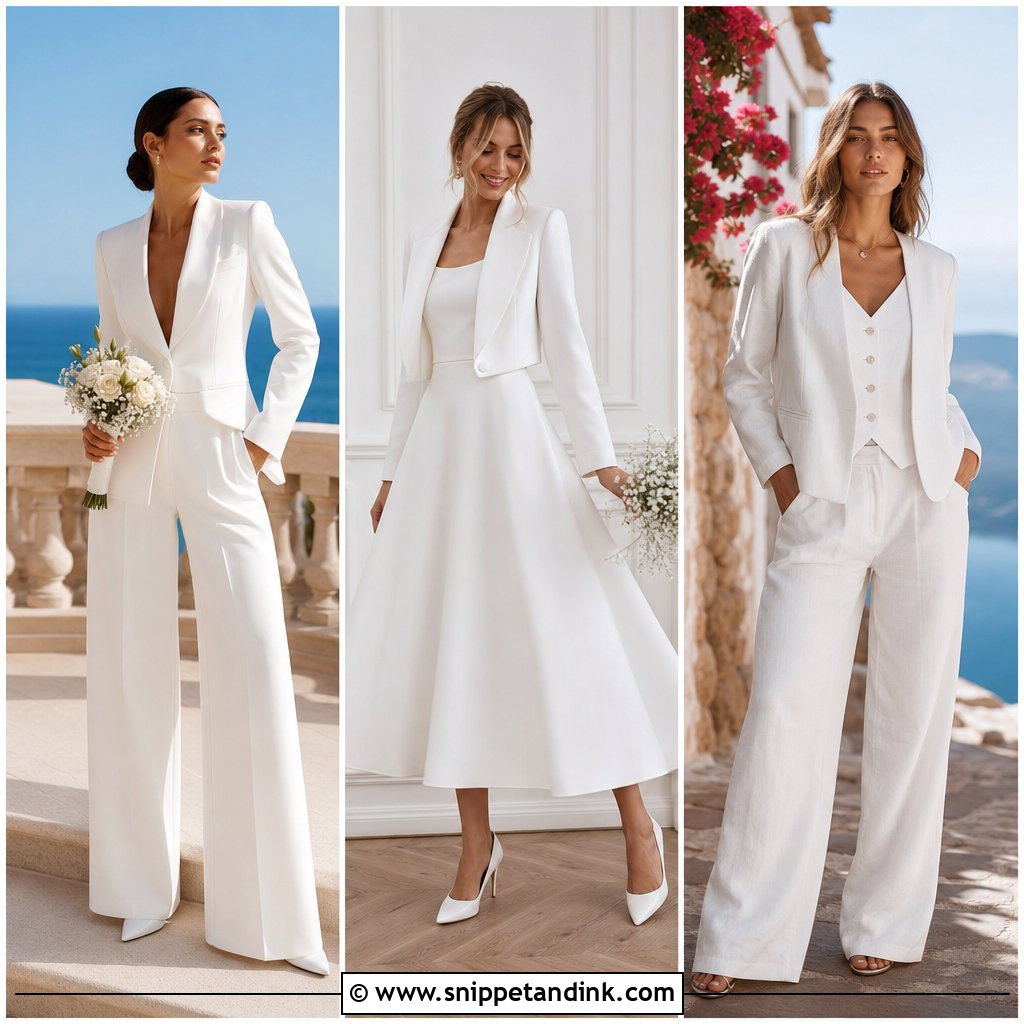
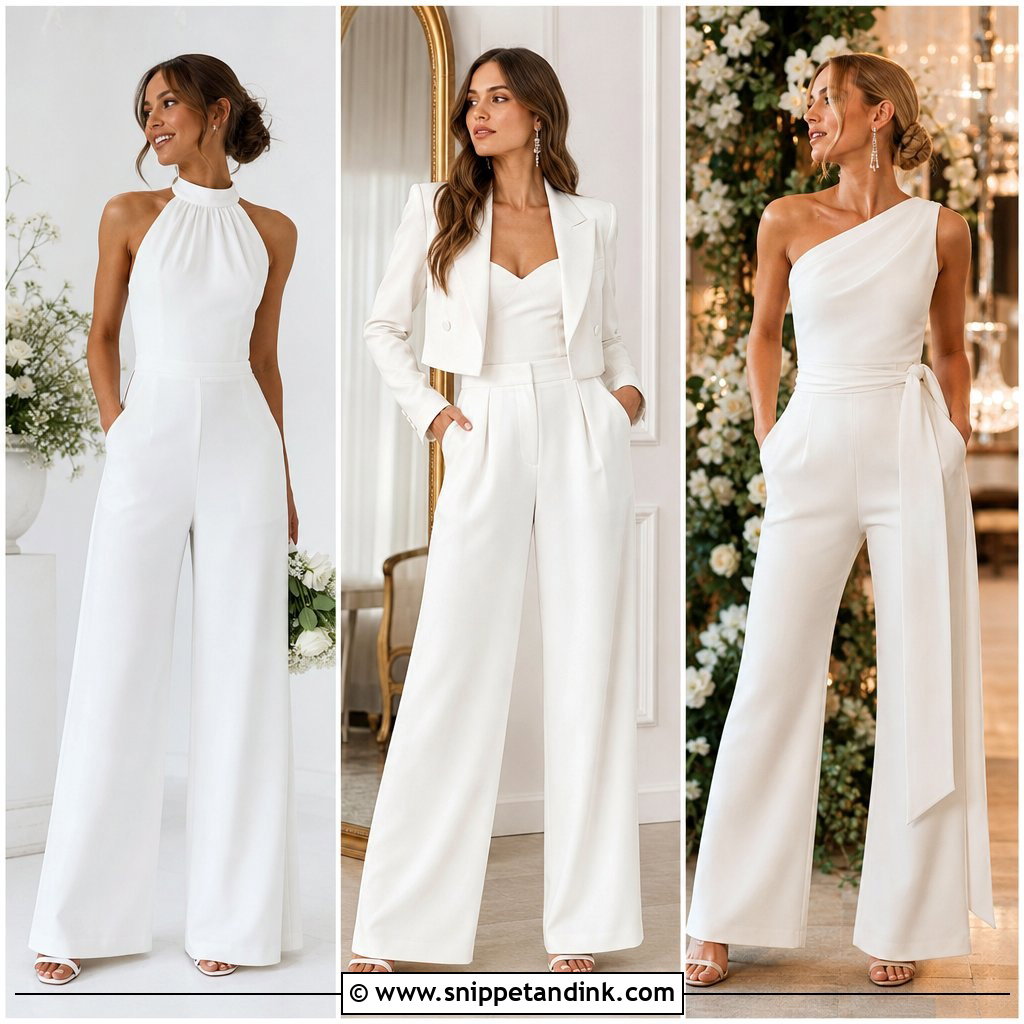
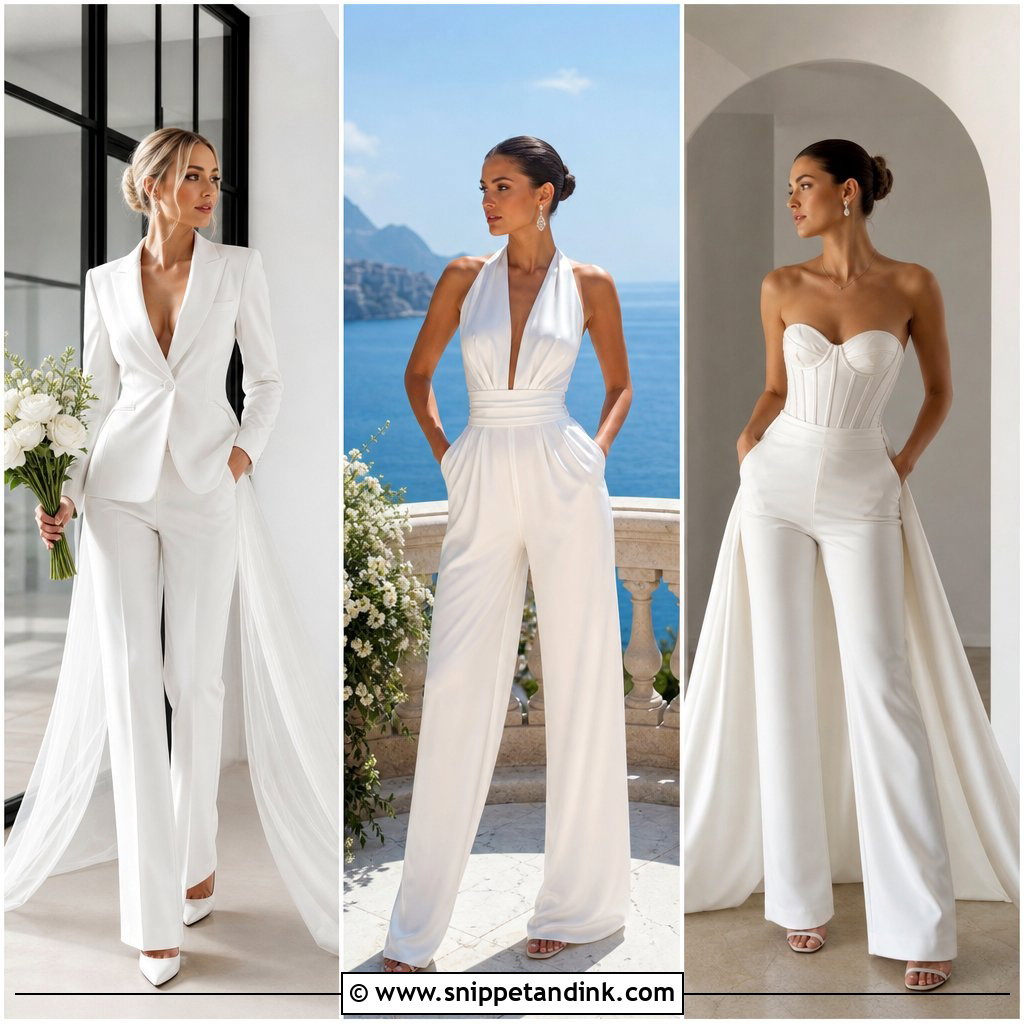
10. Bridal Jumpsuit Outfit
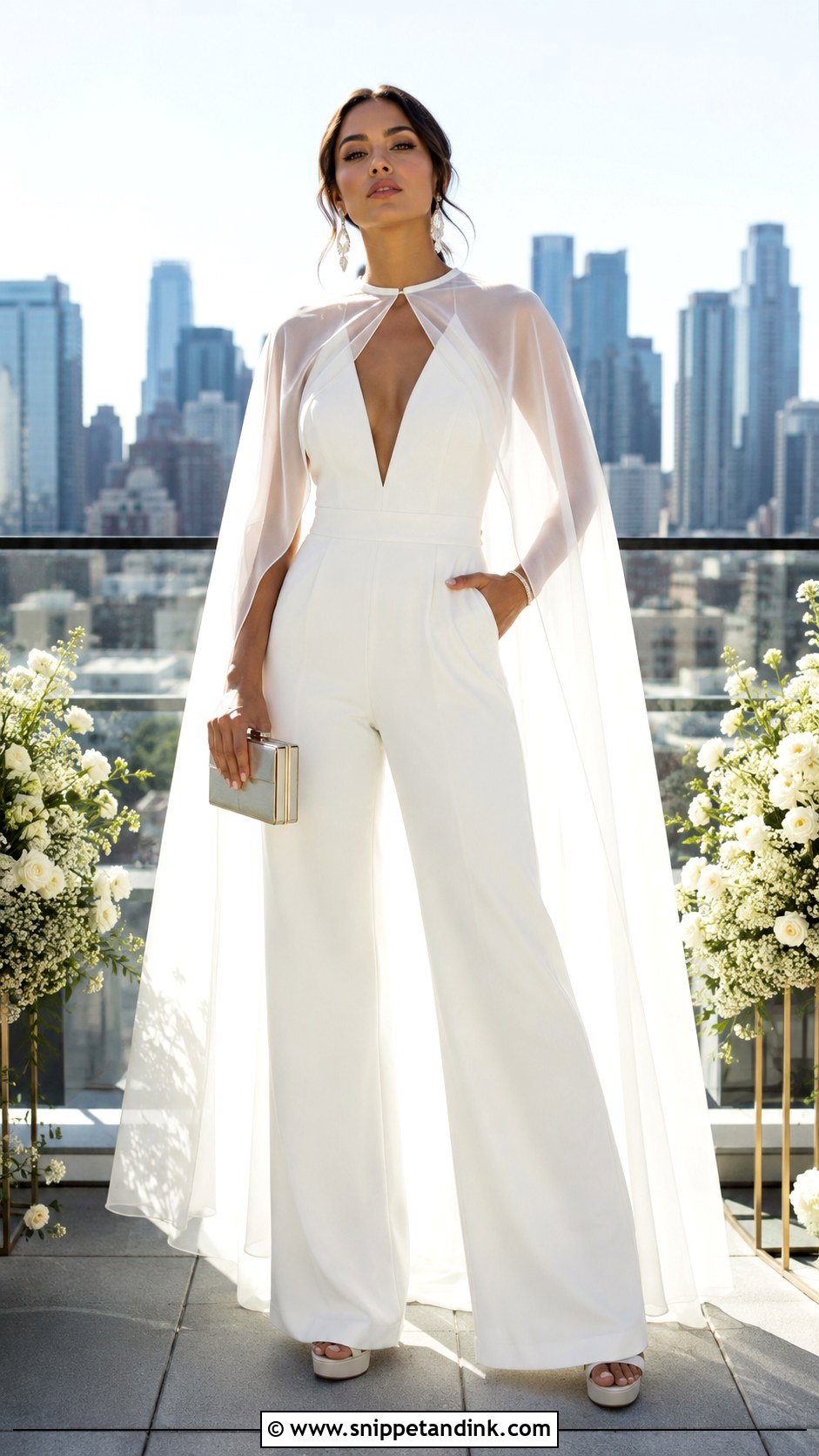
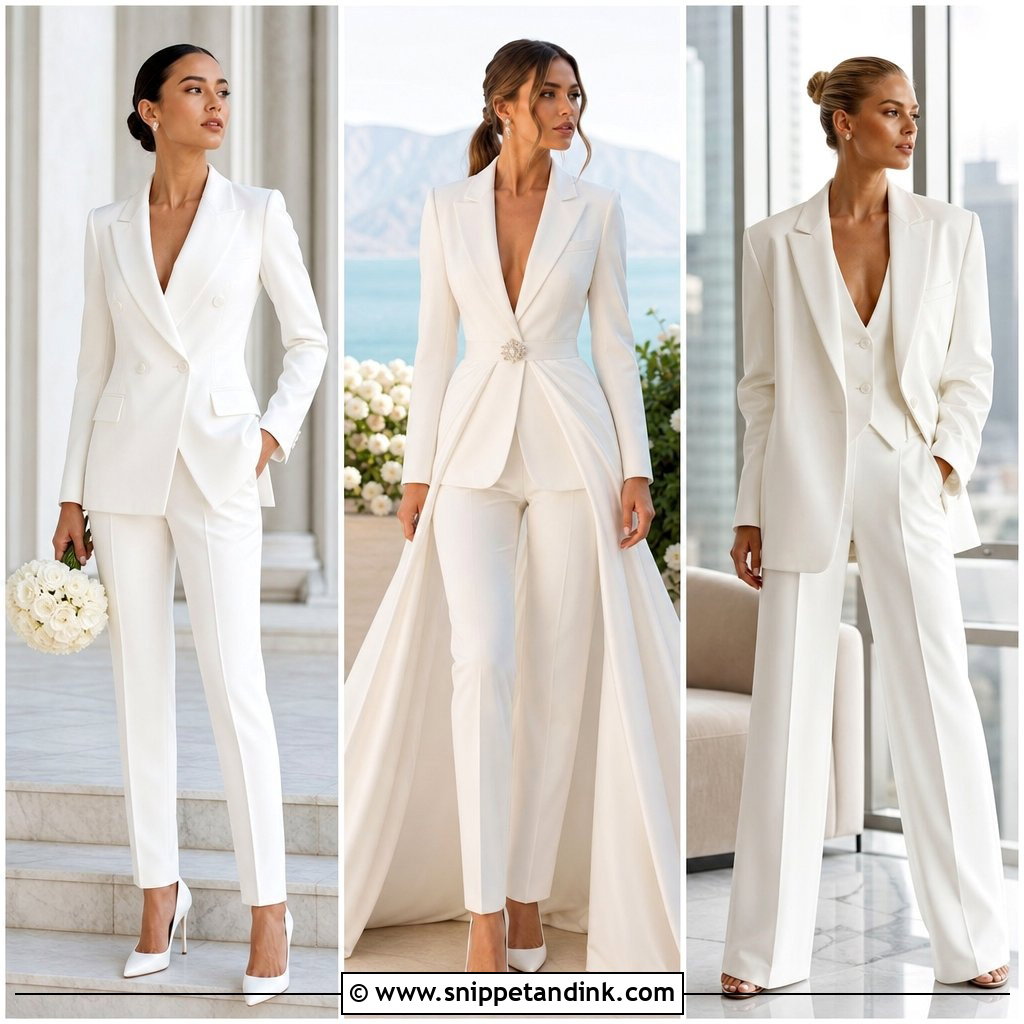
Freedom of movement is the whole point of A bridal jumpsuit, so the fit through the crotch and torso has to be right before anything else. Look for a defined waist, a supportive bodice and legs that nearly reach the floor in your chosen shoes. Wide legs move gracefully; straight legs look sharper in a city. A detachable overskirt or cape gives ceremony drama and comes off for the reception. Petite brides usually do better with a high waist and narrower leg. Ask about bathroom access, too; a back zip you can’t reach alone is a real problem.
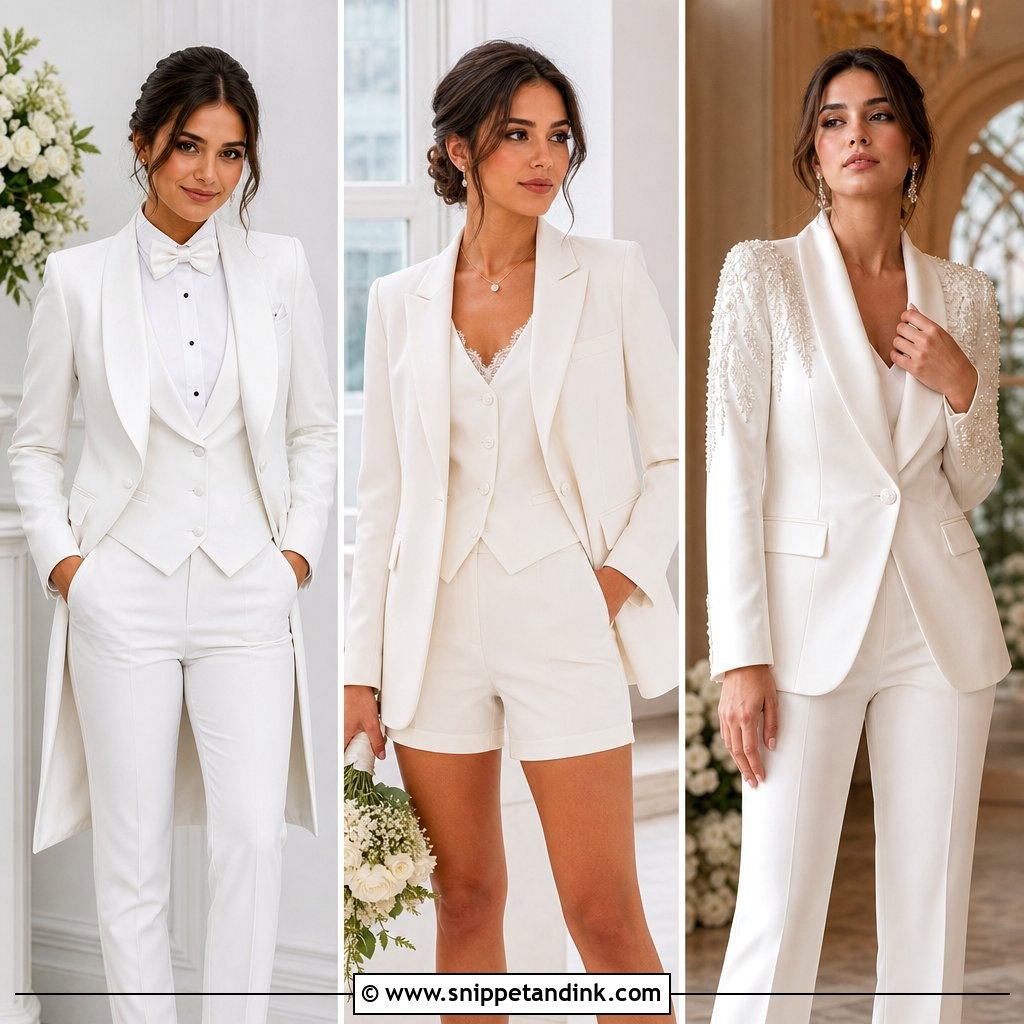
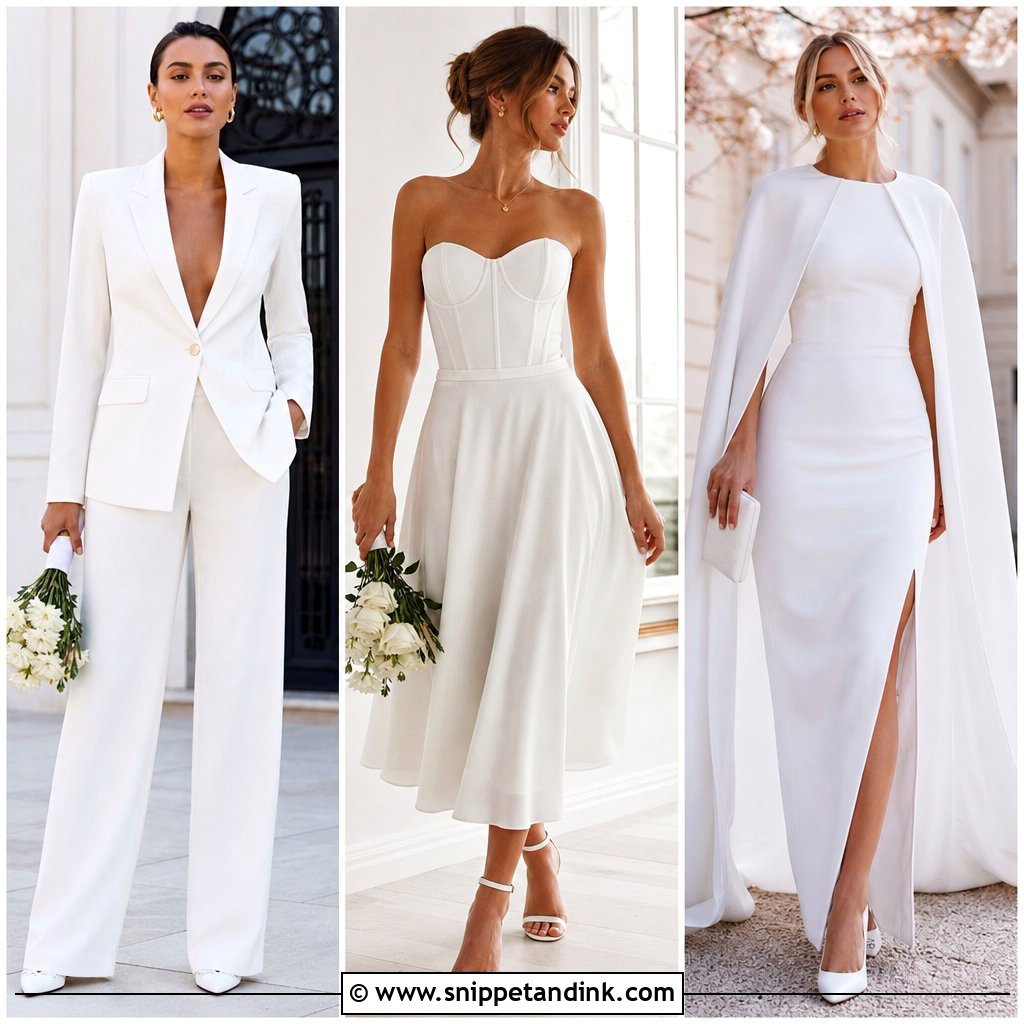
11. Bridal Pantsuit Outfit
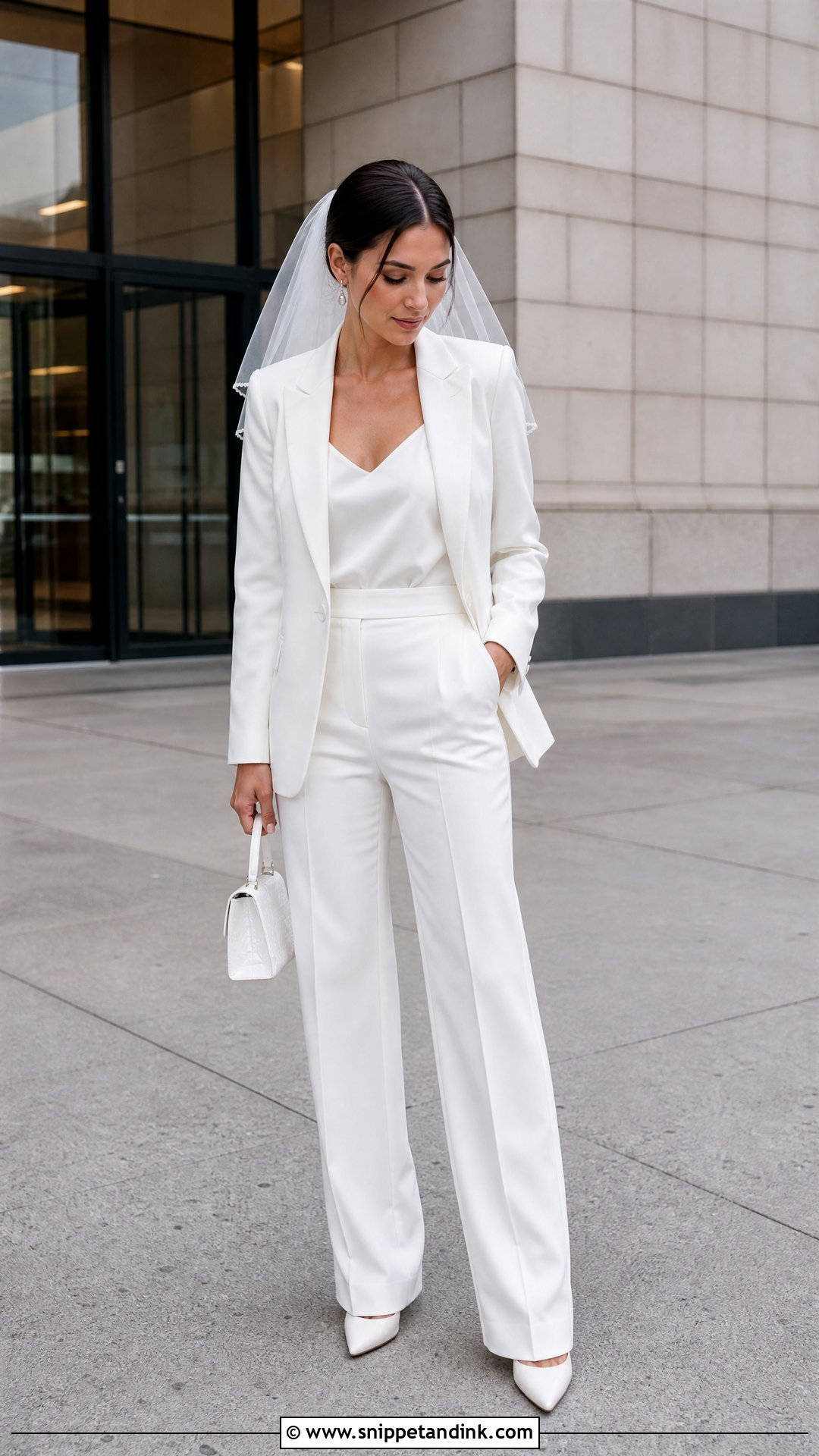
A suit lives or dies at the shoulder seam. Start with a single-breasted blazer that sits cleanly there, add high-waisted trousers, and wear a silk camisole or bodysuit underneath that won’t untuck. A white bridal pantsuit can take pointed heels to lengthen the leg, or loafers if you’d rather be comfortable. The trousers should skim the shoes without dragging, and sleeves should end at the wrist bone. A belted blazer adds waist definition if you miss it.
12. Two Piece Bridal Skirt Set
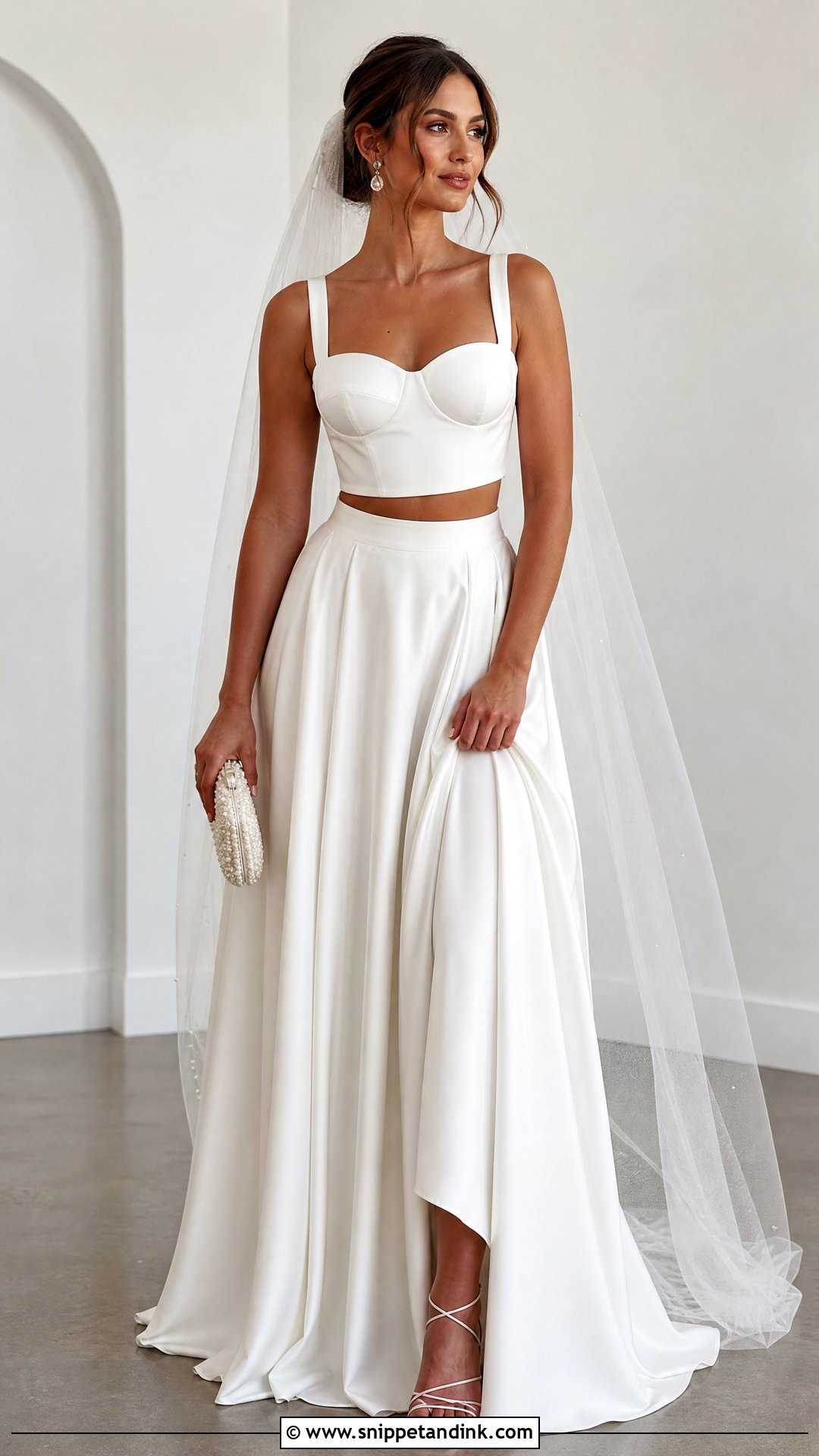
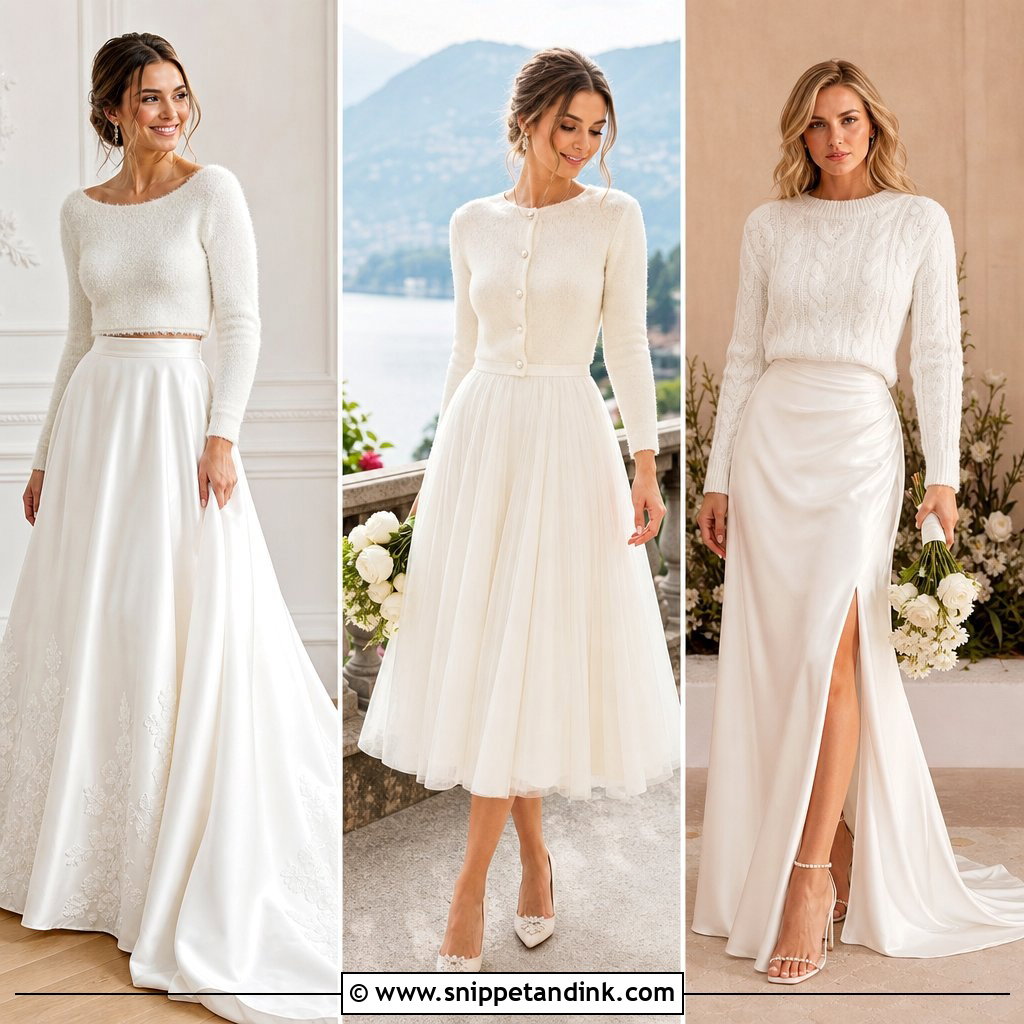
Separates are a fitter’s friend: a two-piece set lets us alter top and skirt independently, which is useful when your bust and hip fall in different sizes. Pair a structured cropped bodice with a high-waisted satin, chiffon or crepe skirt, and keep any gap between them minimal. A flowing A-line skirt feels romantic; a narrow column feels current. A fingertip veil or sheer cape ties the pieces together at the ceremony. The bonus is that you can wear each piece again afterward.
13. Floral Appliqué Bridal Gown
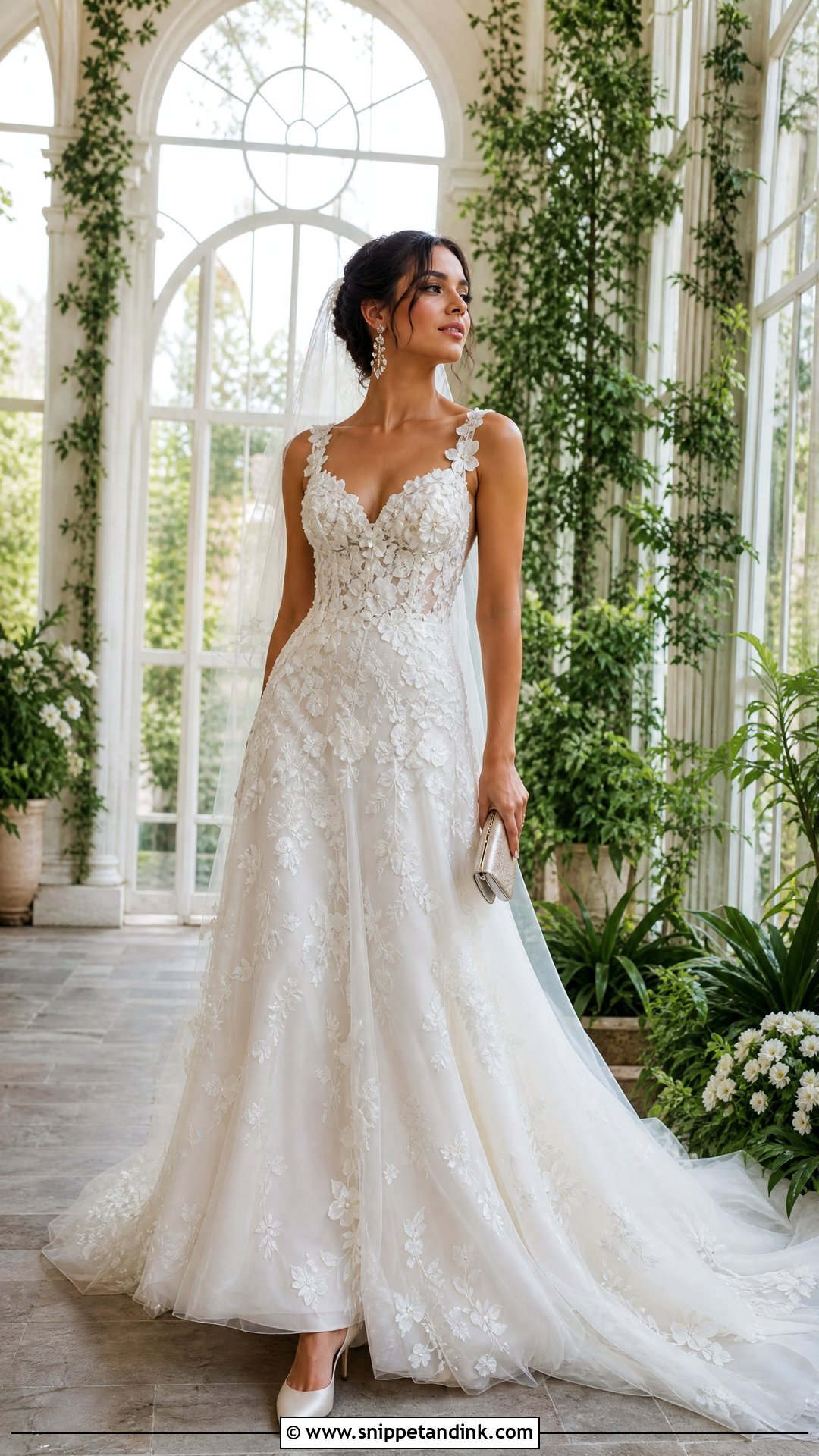
Raised floral appliqué is one of the strongest features in recent bridal design, appearing as tiny scattered blooms and as large sculptural ones. I like it placed around the neckline, waist or skirt rather than covering everything. A softly structured bodice keeps the decoration from dragging. Choose a plain sheer veil; a decorated veil on top of 3D flowers just looks crowded. Brush loose waves away from the face. Check the appliqué edges where your arms rest, because stiff petals can rub the inner arm.
14. Pearl Beaded Bridal Dress
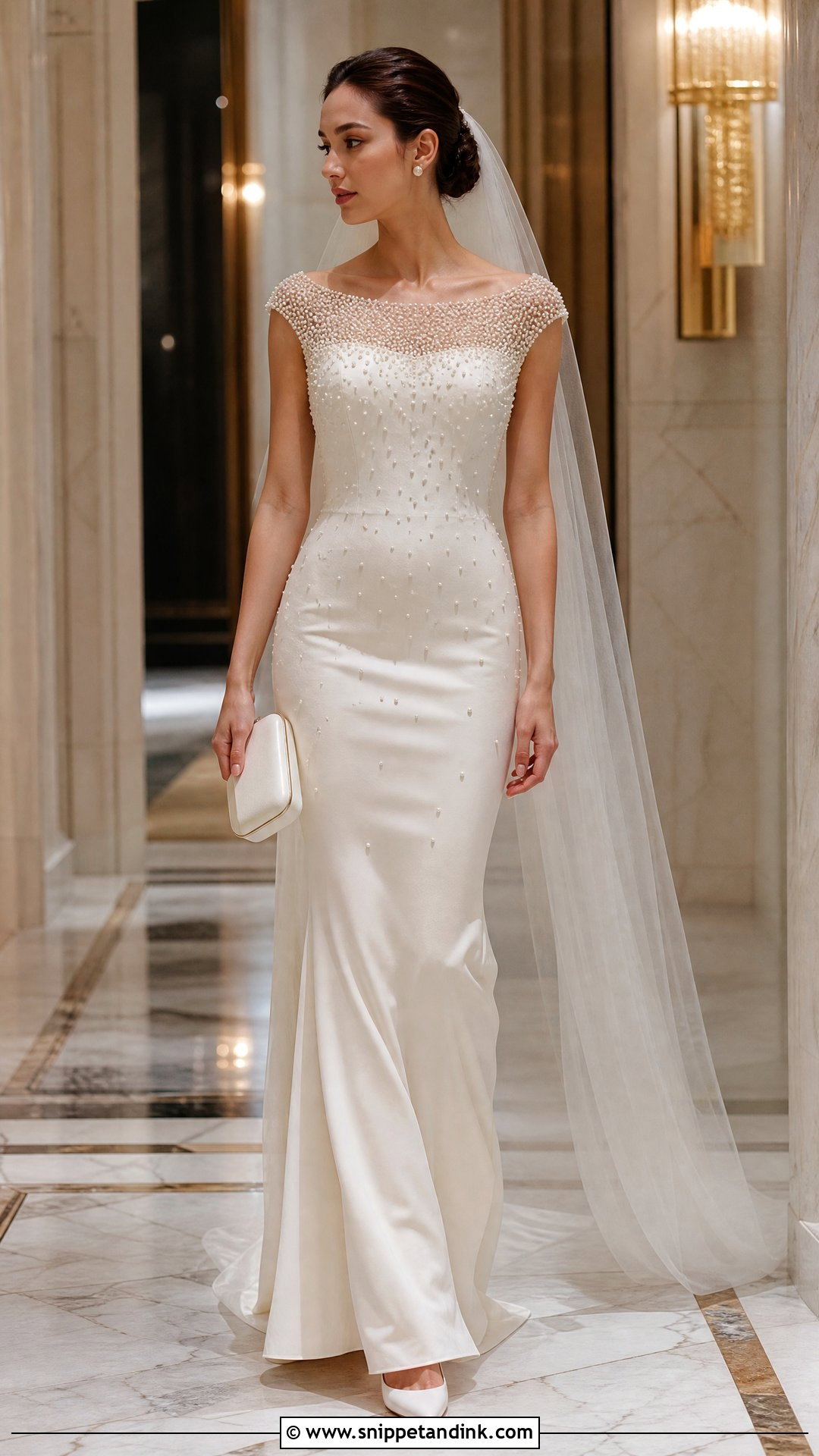
Pearl beading adds weight quickly. Before you fall for a fully beaded bodice, I’d wear it for twenty minutes and see whether the straps dig in or the waist sags. Evenly spaced pearls, a beaded bodice only, or beaded sleeves give you different amounts of texture. Keep accessories small: satin pumps, a plain clutch, tiny pearl studs. Layering big pearl jewelry on top just competes. A clean tulle veil contrasts well with the textured surface, and beadwork shows best under the clearer light of evening venues.
15. Bridal Cape Gown
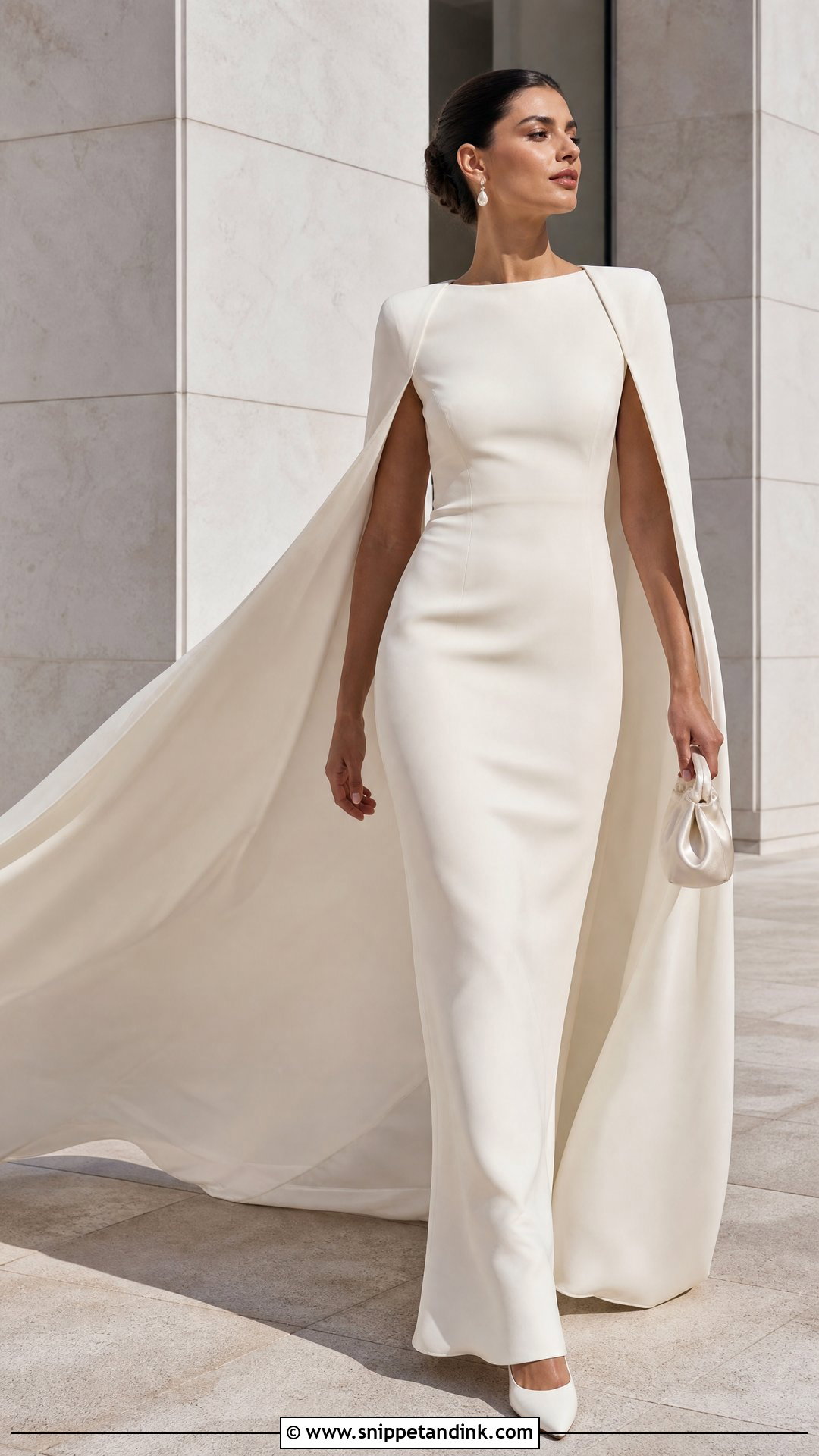
A cape replaces the veil and gives you movement without anything on your head. Check where it fastens, whether at the shoulders, neckline or back, and that it doesn’t pull the dress backward when you walk. Underneath, keep the gown simple so the cape remains the feature. I’d keep the hair close to the head, since loose curls tangle around the fastening. Detachable capes are practical because they come off before dinner. Short capes suit petite frames; floor-length ones sweep beautifully across a big room.
16. Boho Bridal Dress
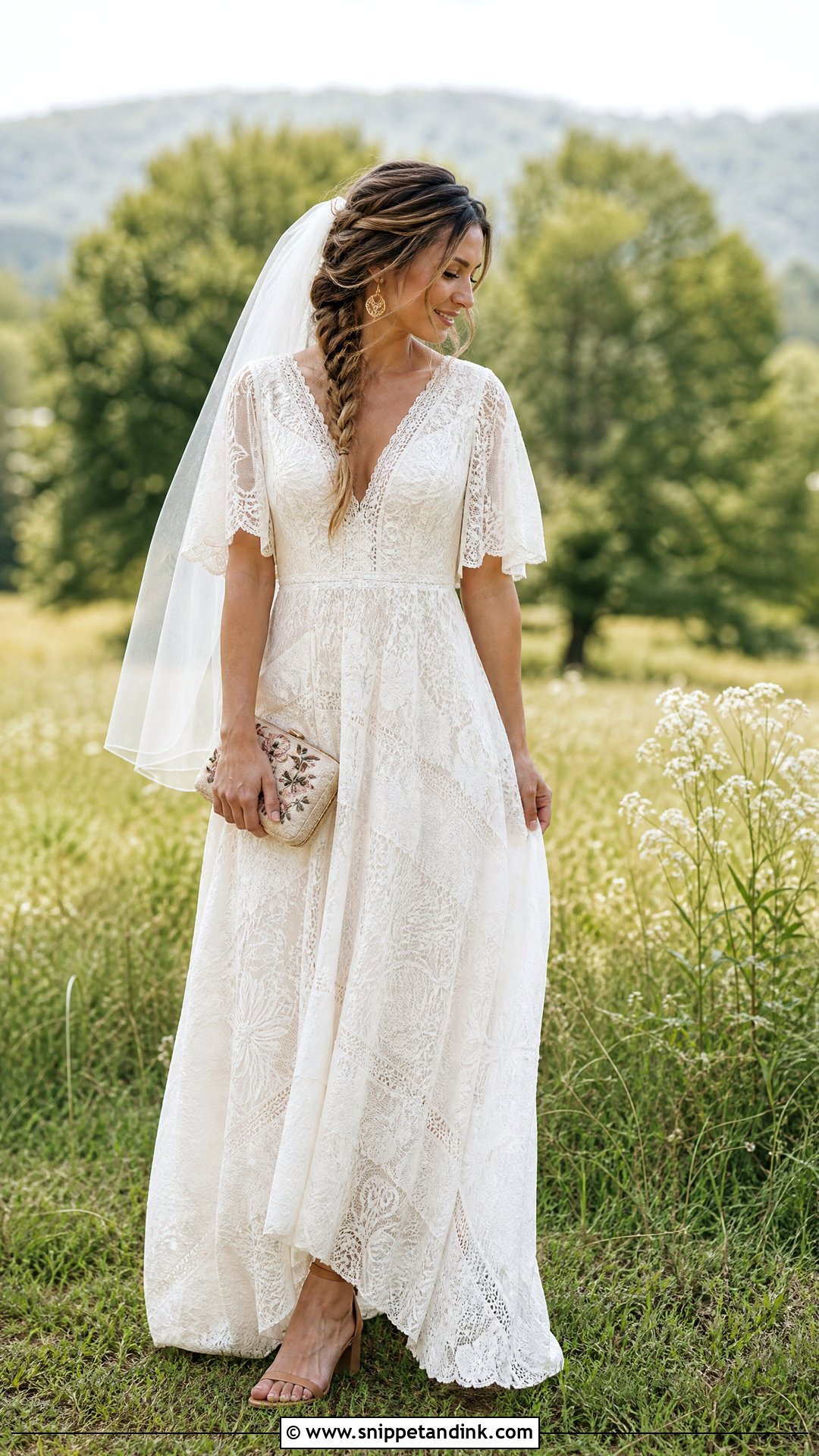
Boho dresses look relaxed, but they still need structure at the waist or they read as a sundress in photos. Choose chiffon or lace with a comfortable waist, a flowing skirt and sleeves that move freely. Long fringe and loose ties catch on chairs, branches and rough wood, so keep trim short. Ivory block-heel sandals and simple gold earrings suit it. A soft braid or low textured bun finishes the look, and stable heels or flats are essential on meadow or desert ground.
17. Beach Bridal Dress
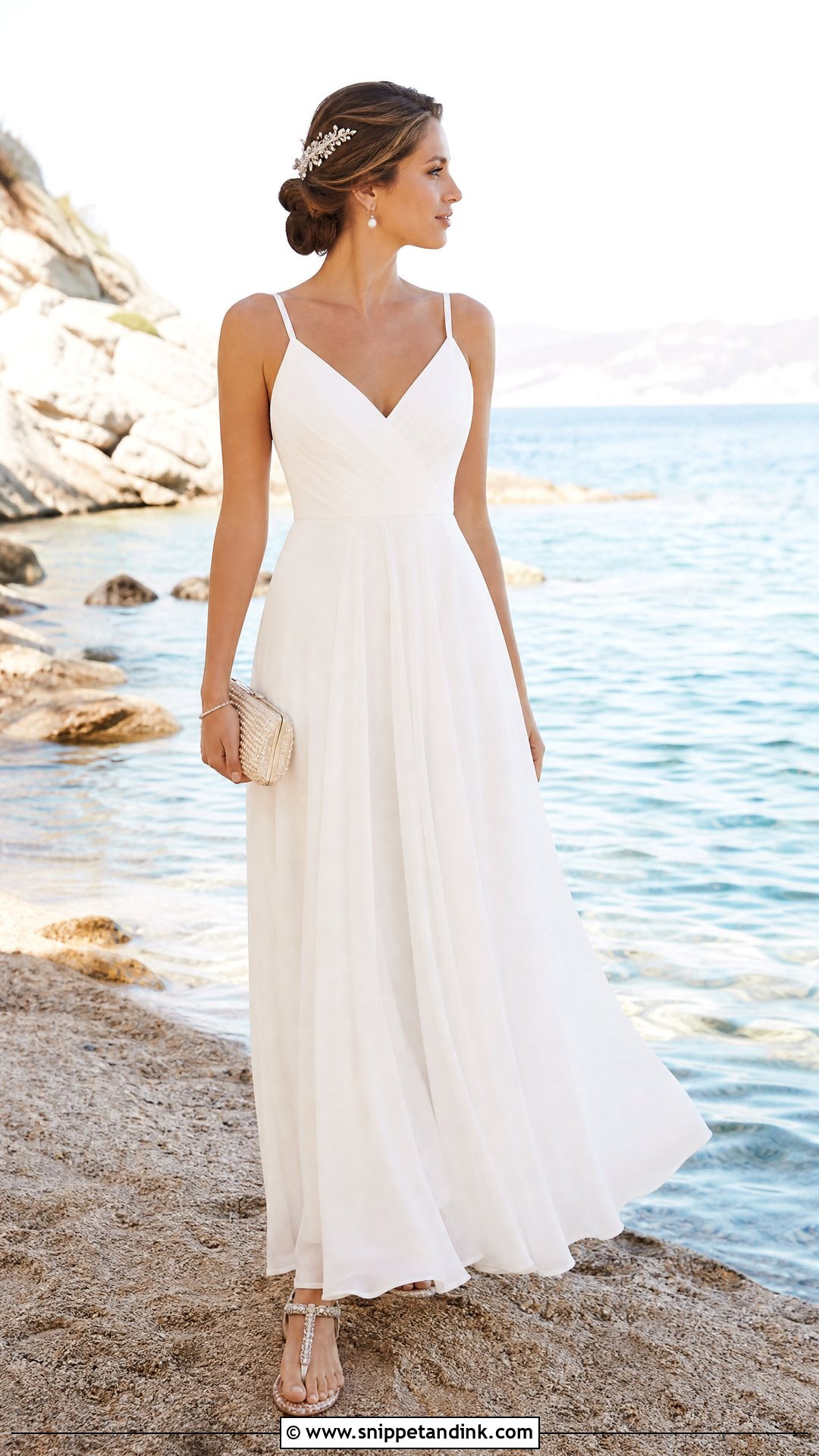
Sand and wind decide the beach dress for you. I pick breathable chiffon, crepe or lightweight satin, a sheath or soft A-line rather than a layered ball gown, and a skirt that won’t billow uncontrollably. Flat sandals are the only shoe I’d trust on sand. A short veil or hair comb stays put in a breeze where a cathedral veil wraps around your face. Avoid a long train unless there’s an aisle runner. Pack a wrap for after sunset, when coastal air cools quickly.
18. Courthouse Bridal Blazer Dress
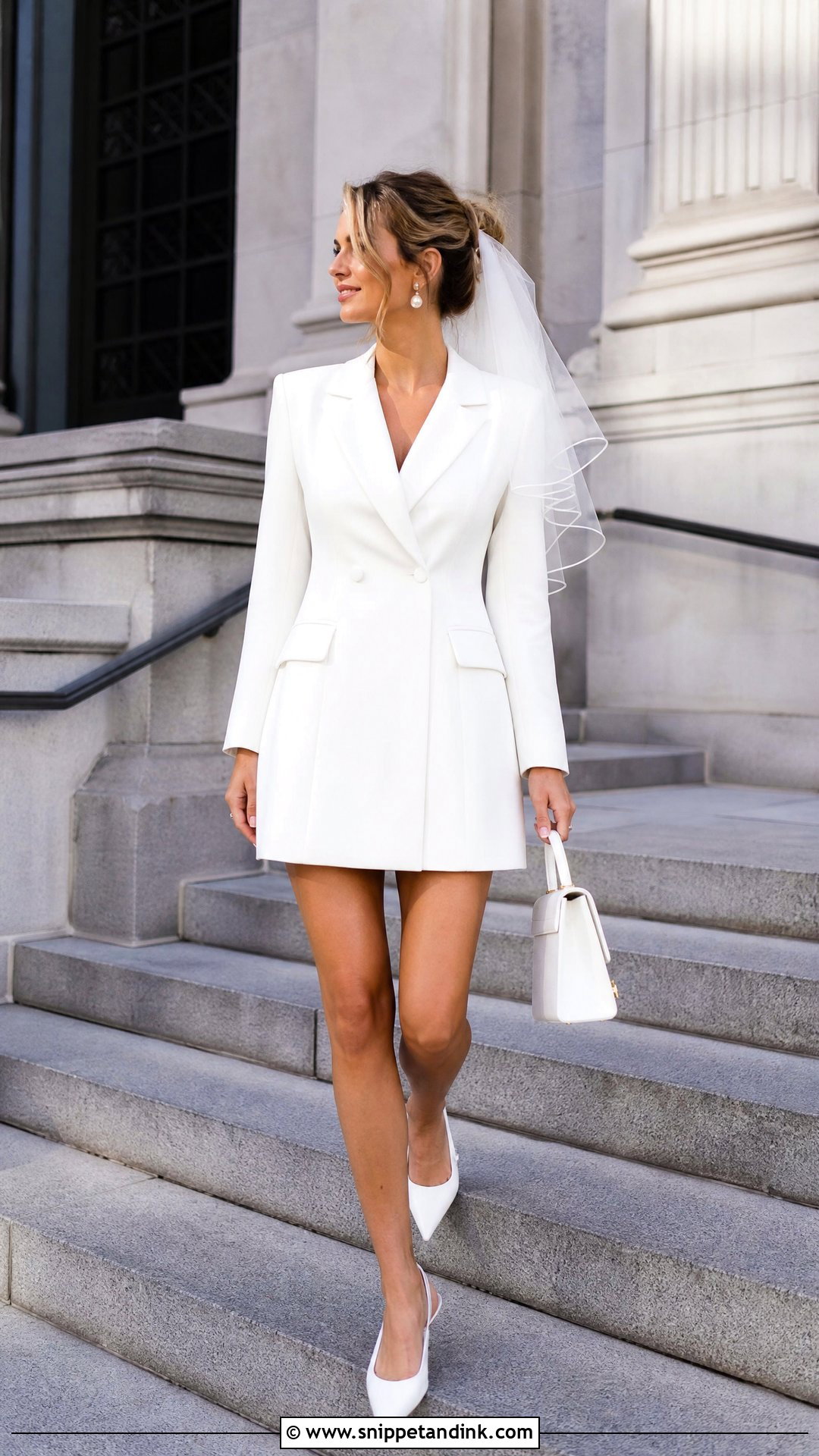
A white blazer dress fits a courthouse well because it looks formal without a full-length gown. Check that the buttons sit flat without pulling, the waist is defined and the hem stays decent when you sit for the signing. A camisole or fitted slip underneath adds coverage. Pointed slingbacks, pearl earrings and a short veil or hair bow make it bridal. Most civic buildings expect business attire or smarter, so a tailored piece like this sits comfortably within that while still feeling personal. Sheer tights and a long white coat help in cold weather.
19. Plus Size Empire Waist Bridal Gown
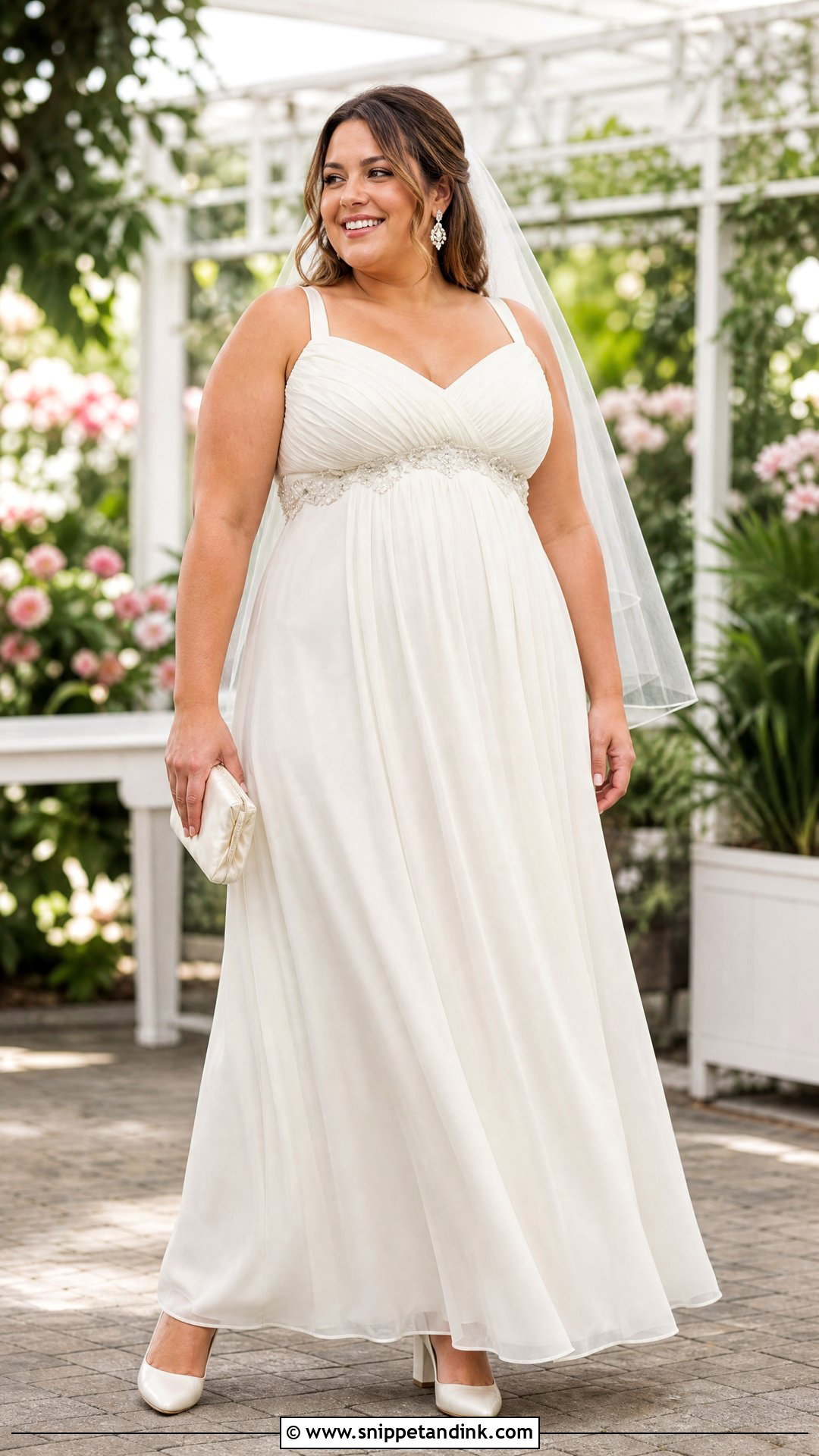
Empire waists put the seam just under the bust, then let the skirt fall straight, which gives room through the waist and hips. The bust is where the fitting effort goes: supportive straps, a structured bodice and the right bra for that exact neckline. I’d book those undergarments before the first fitting so the alterations are done against them. Pick a fabric that drapes rather than clings. And don’t assume more coverage is more flattering; wear the neckline and sleeve length that make you feel like yourself.
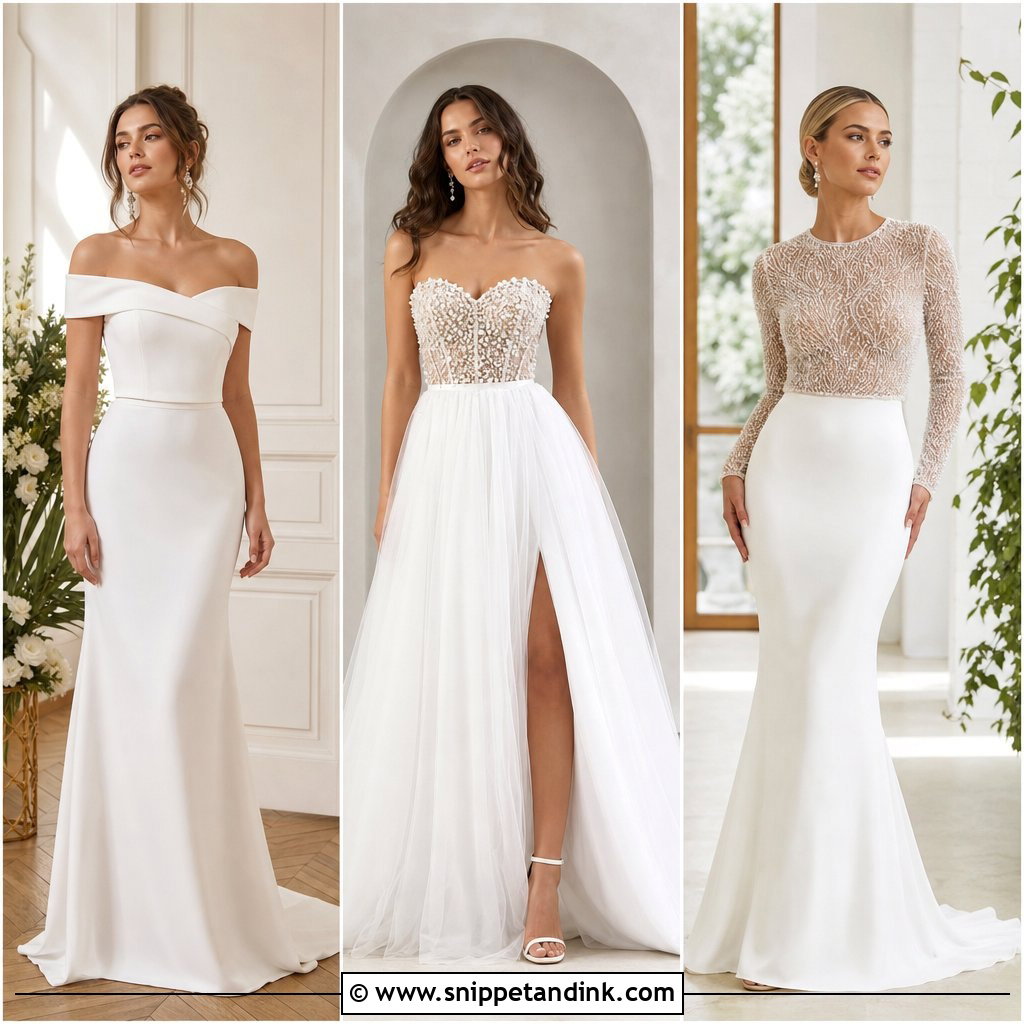

20. Reception Bridal Party Dress
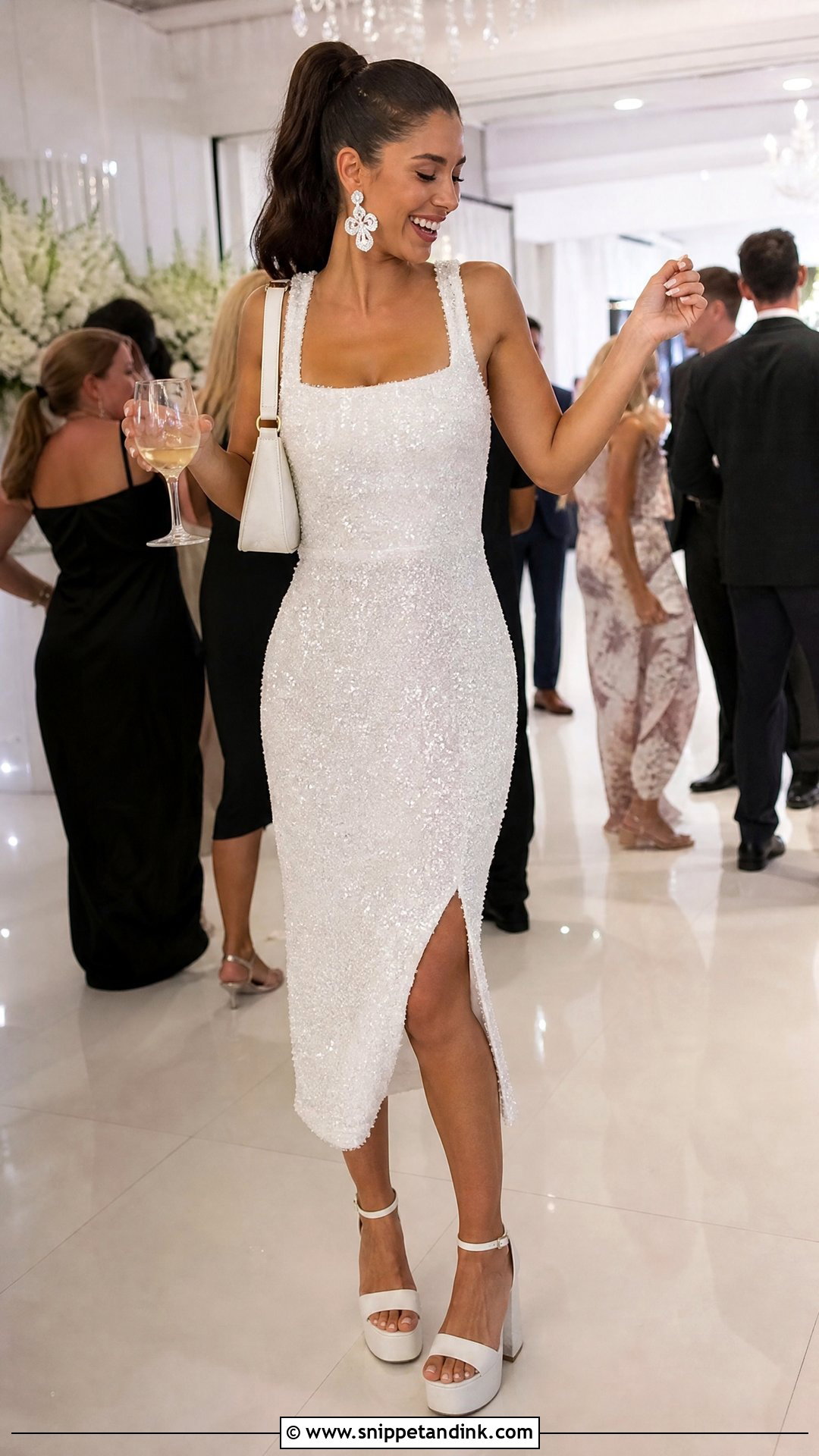
A reception change is about dancing, so I test it by dancing. Whether you choose a feather-trimmed mini, a sparkling midi or a sleek satin slip, the straps must stay put and the lining must feel soft after a long day. Block heels or platforms handle hours of movement better than stilettos. Keep accessories simple with sequins or feathers. Choose something you can step into quickly, without twenty covered buttons, since changes eat into reception time.
What a Good Seamstress Can Fix, and What She Can’t
Alterations are routine, but they have limits. Knowing them stops you buying a gown in hope.
Usually straightforward
Taking in side seams, hemming a plain skirt, shortening straps, adding a bustle and adding cups or light boning are everyday jobs. Taking a gown in by a size or so is normally fine.
Tricky or costly
Letting a dress out depends entirely on the seam allowance inside, which is often small. Hemming through lace borders, beaded edges or horsehair braid means unpicking and re-attaching by hand. Moving a neckline or adding sleeves can be done, but it’s close to rebuilding the bodice. I’d ask for a quote on anything in this group before you buy, not after.
On the day
Have someone learn your bustle at the final fitting, with photos on their phone. Pack a tiny kit: safety pins, white thread, a needle, fashion tape and a stain pen that’s safe on silk. Most wedding-day dress fixes take two minutes when the right person has the right pin.
The Outfit Has to Work at Hour Ten
Every outfit here has a place: classic gowns, modern suits, beach dresses and quick reception changes. What makes one right is how it fits your body, your venue and your weather. At your final fitting, wear everything together: veil, jewelry, shoes, bag and the coat if you’ll need one. Walk, sit, lift your arms. Trends are a useful starting point, but comfort decides whether you enjoy the day or spend it adjusting your dress.
You'll Like These Ideas:



Leave a Reply