
Bridal separates start, for me, with the skirt. It sets the volume, the formality and how far you can walk in comfort, and the top is then chosen to suit it. Tulle carries a grand ceremony, sleek satin a minimal one, and lace leans vintage. Separates also let you mix sizes and change between ceremony and reception without buying a second dress. Below are twenty skirts, from full ball shapes to practical tea lengths, each with the top that balances it and the alteration detail that makes it work.
How Each Skirt Fabric Behaves Six Hours In
Every fabric looks good in a fitting room. What separates them is how they cope with heat, sitting and a long day, and this is what I tell brides before they pick a skirt:
- Tulle is light and cool, but it snags on bracelets and beaded bags, and soft tulle flattens if it’s packed tightly. Steam it; never iron it.
- Satin creases wherever you sit and shows water marks, so keep drinks and damp hands away. Heavy duchess satin creases less than thin polyester satin.
- Mikado holds its shape all day, but it doesn’t breathe much and pushes forward when you’re seated.
- Chiffon is the coolest in summer, though it needs lining to stay opaque and moves with every breeze.
- Crepe forgives creases and travel best and has a little stretch, but it shows the lines of anything underneath.
- Lace hides small marks well and catches on jewelry and heel buckles.
Marrying in heat, I lean toward chiffon, crepe or lighter tulle. For a cold or very formal venue, Mikado and heavy satin earn their weight.
1. Tulle Bridal Skirt With Corset Top
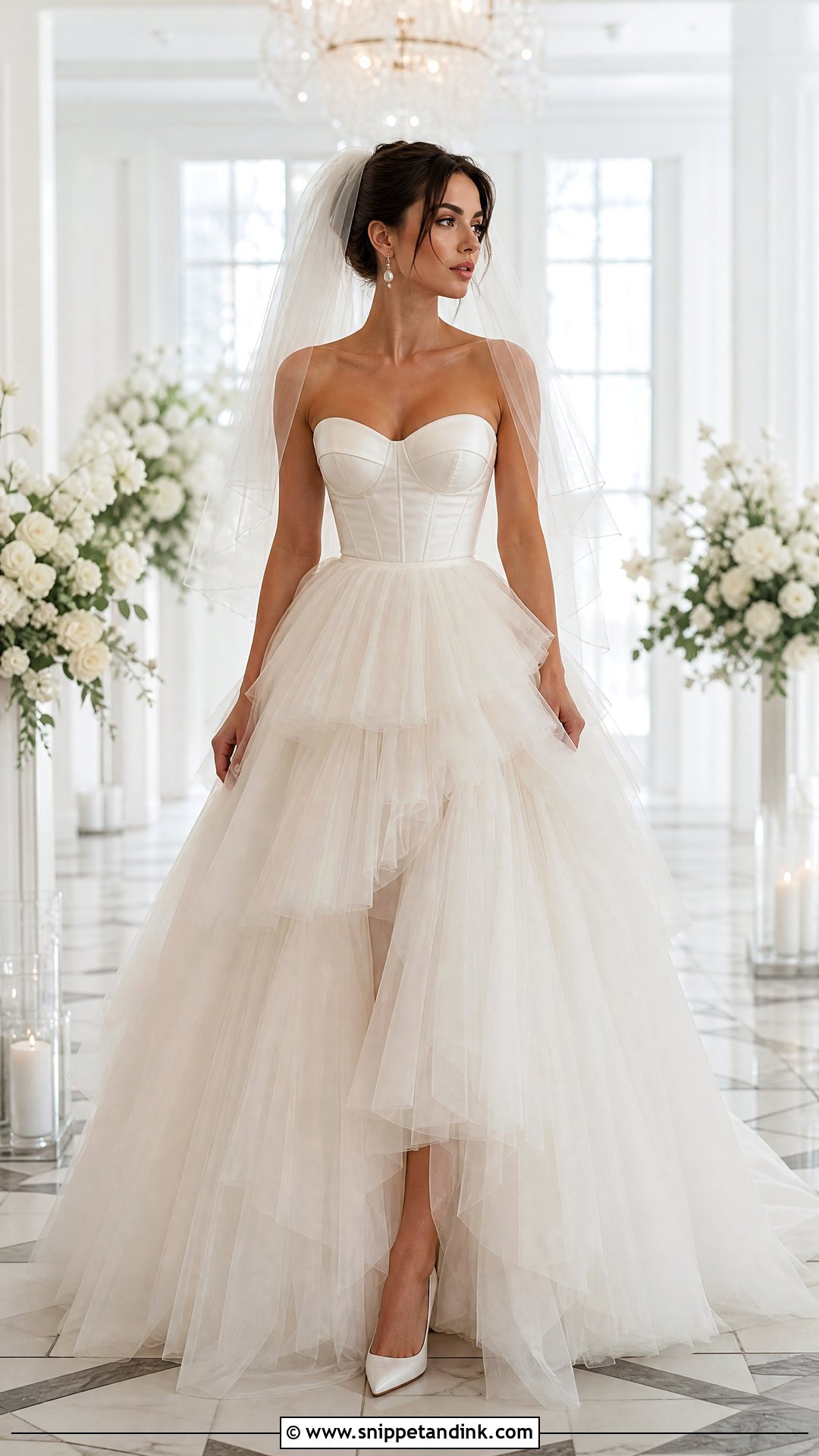
Corset plus full tulle is the classic separates silhouette, and it lives or dies at the waist. A basque or slightly dropped point lets the corset sit over the skirt band, so nobody sees where one piece ends. Layered ivory tulle gives volume without much weight, but count the layers against your height; a petite bride disappears inside a skirt cut for someone taller. Have both pieces fitted together, never separately, because the corset’s length decides where the skirt band must sit. Pearl drops and a fingertip veil leave the skirt in charge.
2. Satin Bridal Skirt With Lace Top
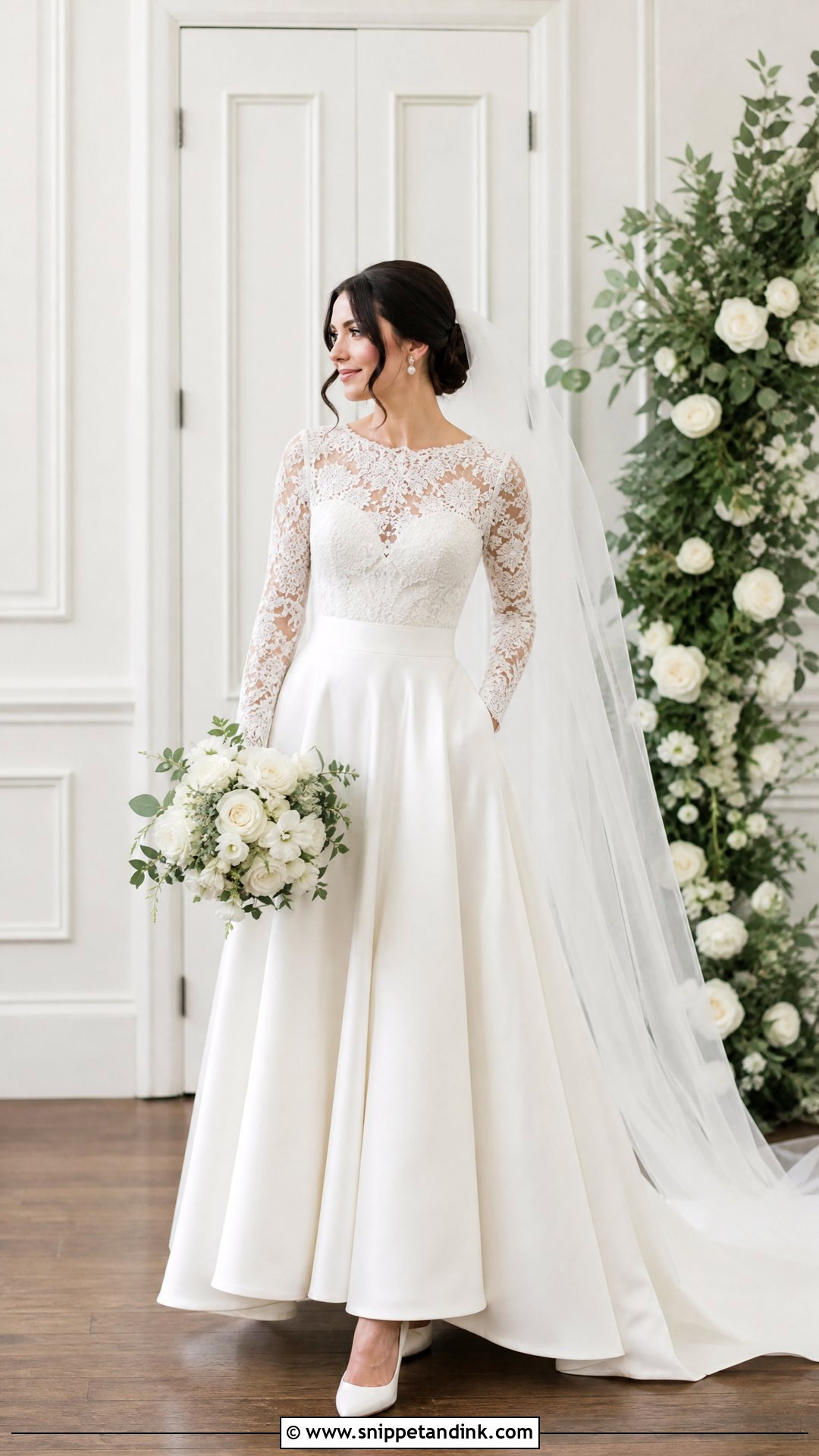
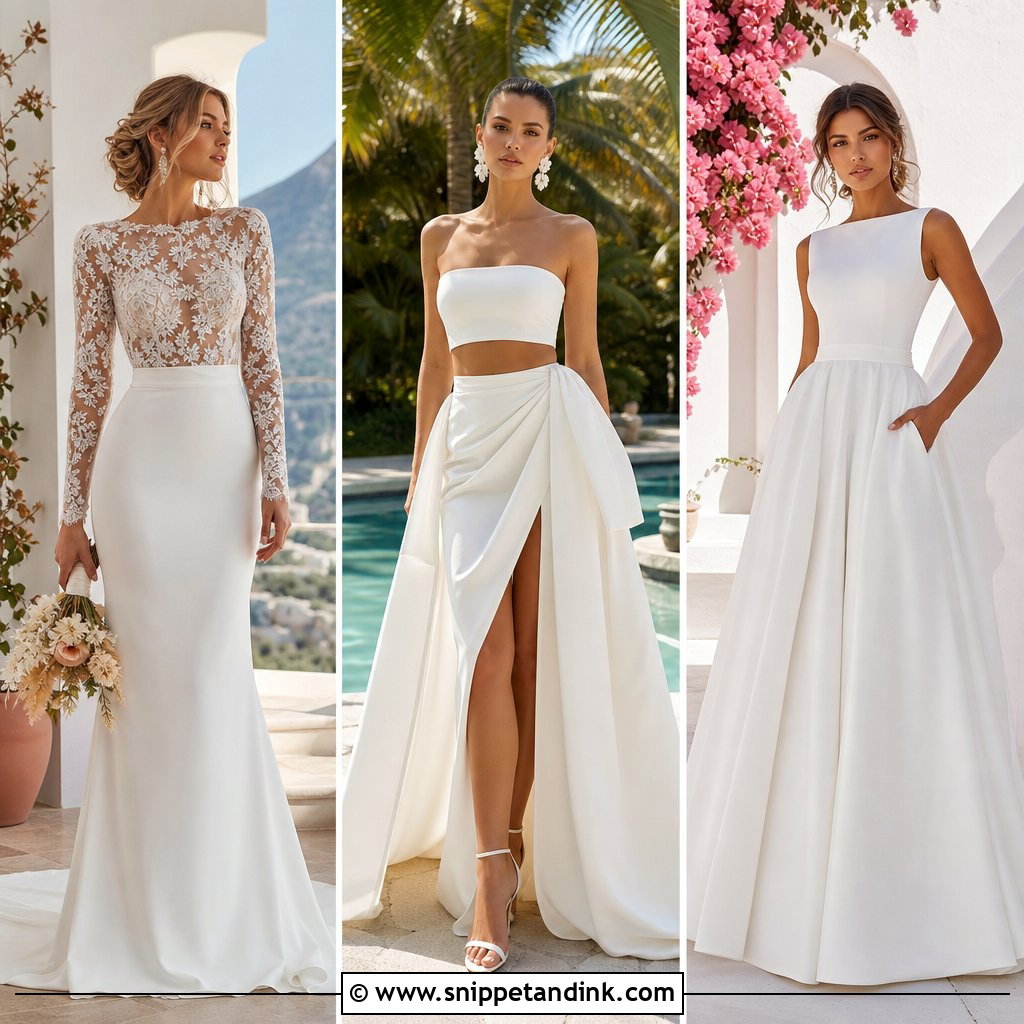
Satin and lace together give you contrast without any extra decoration. A high-waisted satin A-line is calm enough to let a fitted lace top carry the pattern, and if that lace is busy, keep the skirt free of pleats. The top should finish at the waistband or slightly below it. Any longer and it bunches inside the satin, which shows as a ridge in photos. For coverage, line the lace bodice fully; for something lighter, keep the sleeves sheer and use a skin-tone lining through the torso only.
3. A-Line Bridal Skirt With Silk Camisole
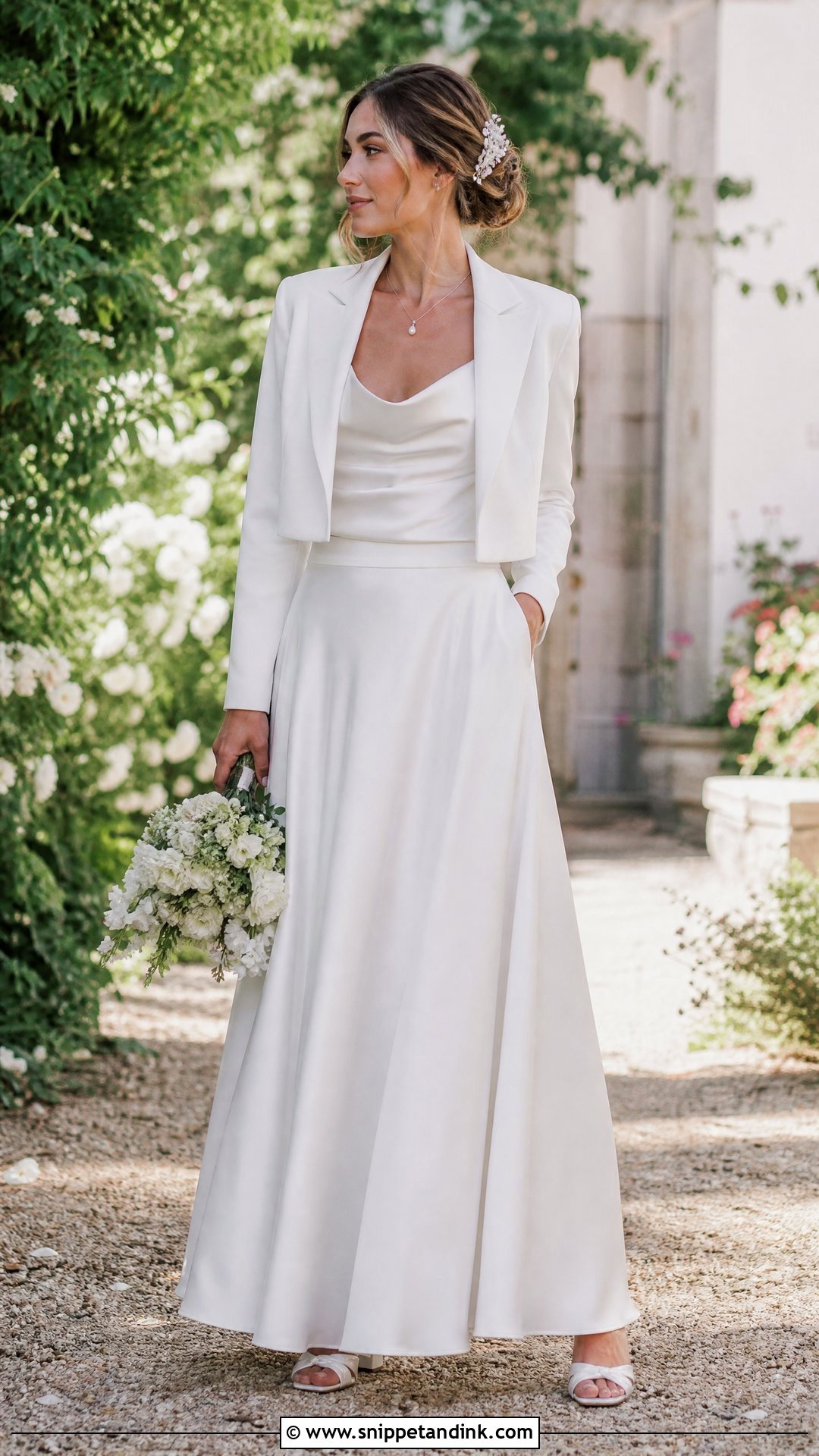
An A-line skirt with a silk camisole is the most comfortable outfit here, and I’d suggest it for an intimate wedding where you’ll mingle more than process. The skirt needs some weight, heavy silk or crepe, to fall cleanly over the hips; lightweight satin flips and clings. Pick a camisole with wide straps if you want to wear an ordinary bra. What trips brides up is shade. Ivory, cream and bright white side by side in daylight look very different, so match the two pieces by a window before buying either.
4. Detachable Bridal Overskirt With Fitted Dress
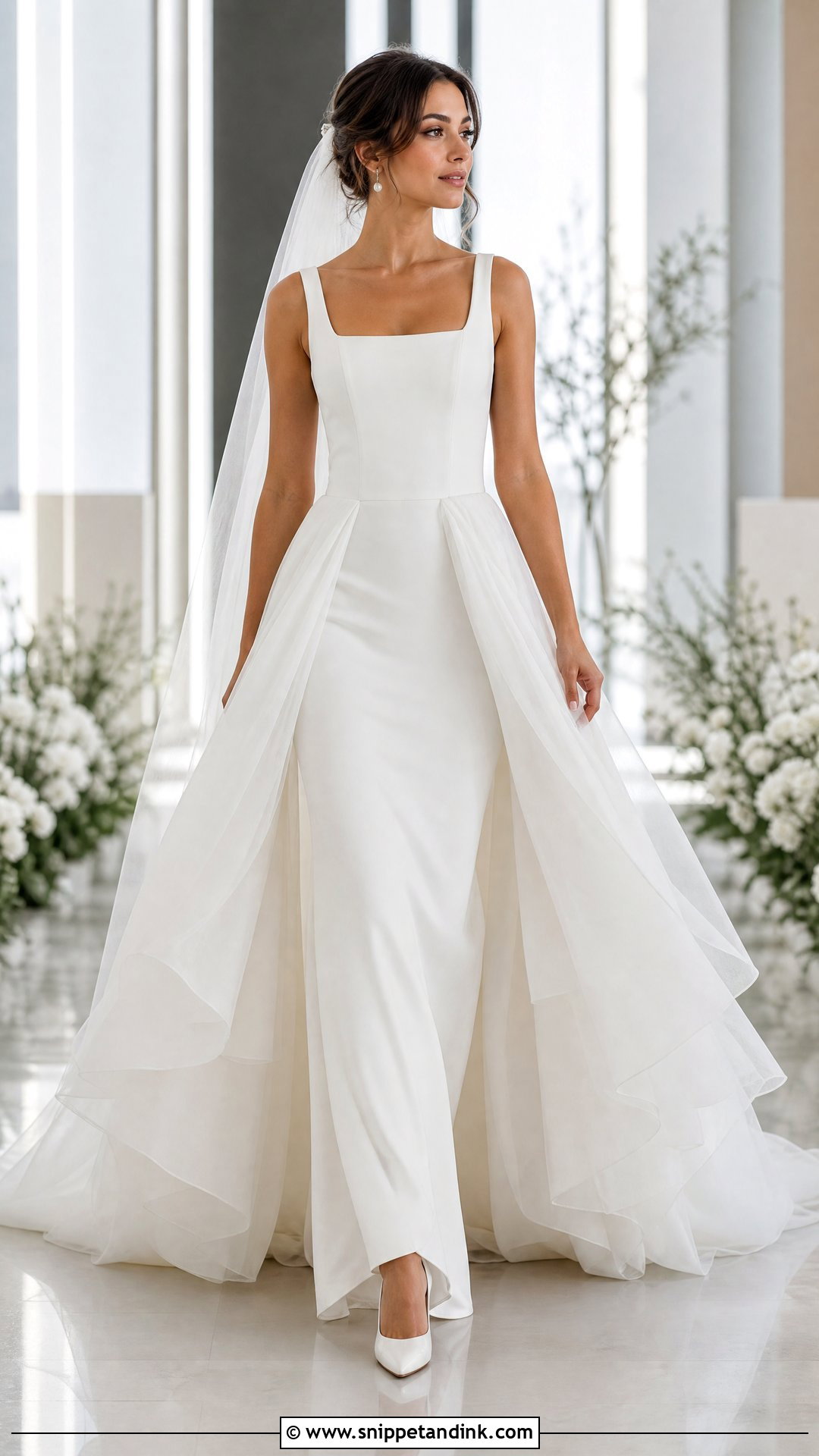
Can’t decide between ceremony drama and a streamlined reception? A detachable bridal overskirt gives you both on top of a single fitted dress. Choose crepe, lace or satin for the base and a full tulle or structured satin overskirt for the aisle; an open front keeps the dress shape visible. The attachment is where I spend the fitting. Hooks and snaps have to carry the overskirt’s weight without dragging the base dress out of shape, so ask for a covered waistband or a belt-style closure that spreads the load. Swap to bolder earrings once the overskirt comes off.
5. Lace Bridal Skirt With Long Sleeve Top
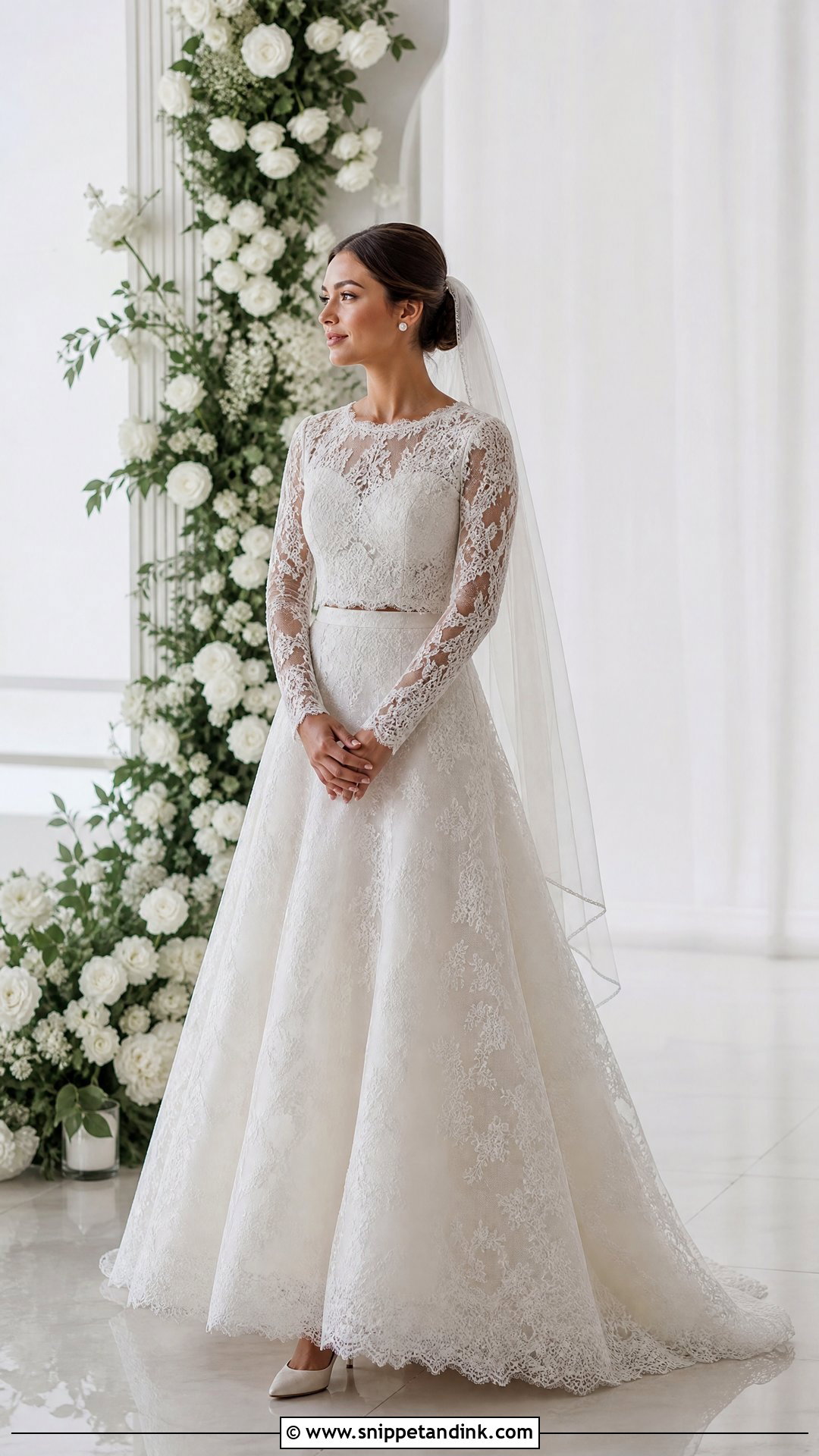
A lace skirt with a long-sleeve top suits a bride who wants romantic detail and her arms covered. Look for a gently flared skirt where the lace motifs run continuously from waistband to hem; the top can repeat the lace or switch to crepe or satin. When both pieces are lace, the seamstress should line up the motifs at the waist. Mismatched pattern at the join is the first thing that makes separates look like two unrelated purchases. Keep the veil plain, since lace on lace on lace is simply too much.
6. Tea-Length Bridal Skirt With Fitted Blouse
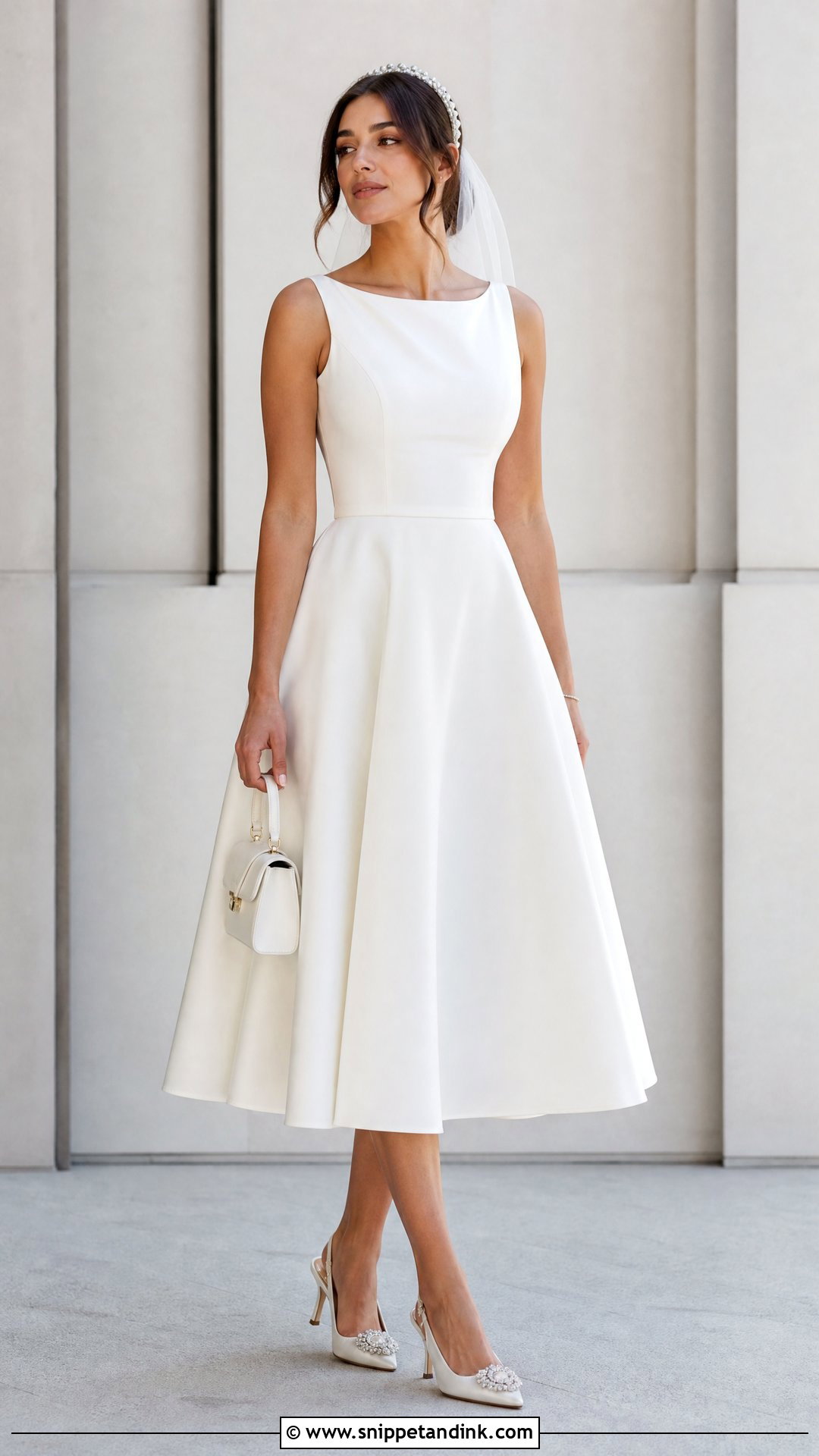
Tea length is the skirt I recommend most often for a courthouse or garden wedding where you’ll spend hours on your feet greeting people. It ends between lower calf and ankle and needs enough fullness to swing. Pair it with a fitted silk blouse or a short-sleeve lace top. Because the hem shows your feet, the shoes become part of the outfit, so pick slingbacks or embellished flats you’d happily see in close-up photos. I set the hem at the narrowest point of the lower leg; a few centimetres either way changes the whole proportion.
7. High-Low Bridal Skirt With Strapless Top
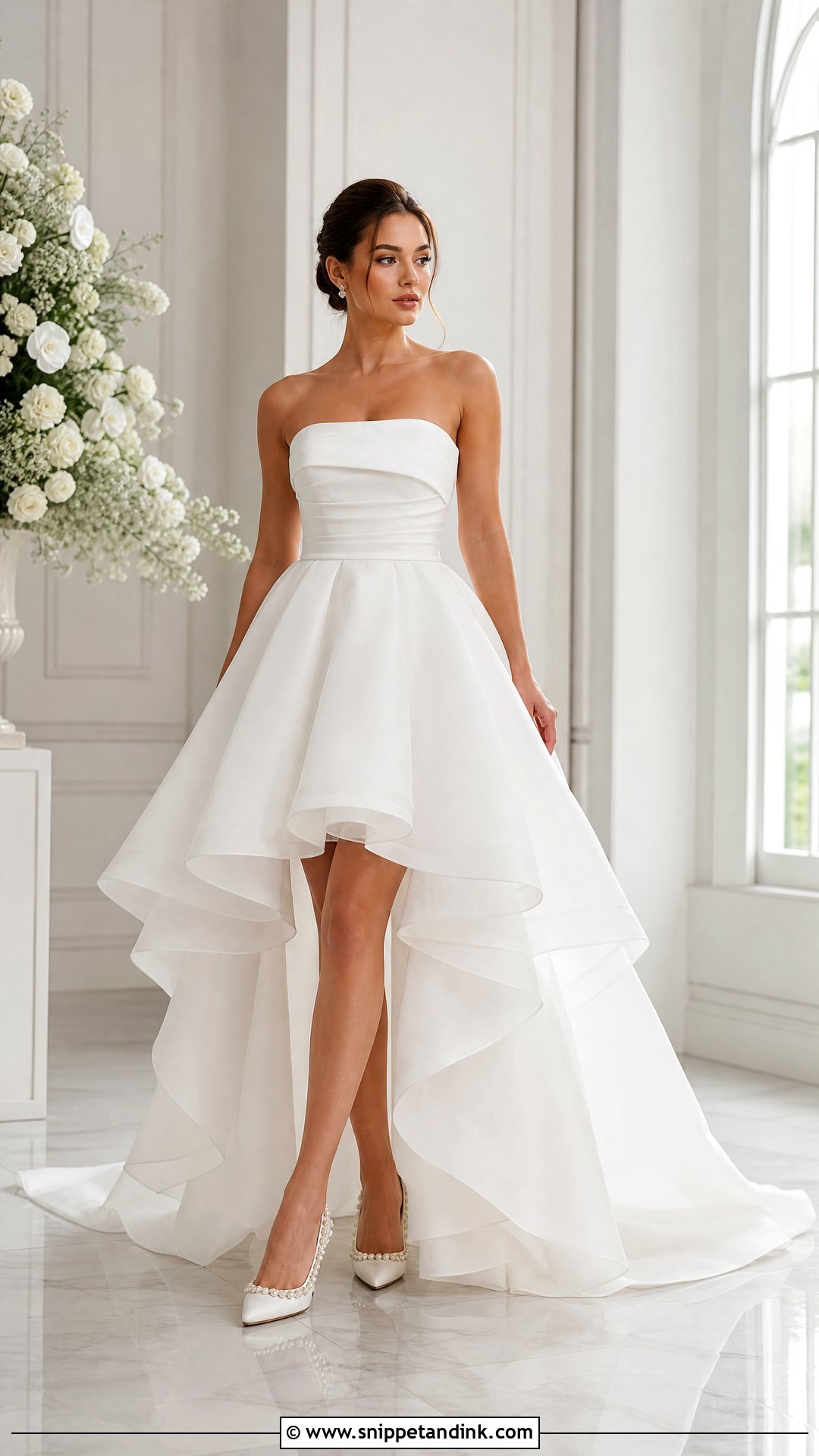
A high-low skirt gives you a train behind and freedom in front. Structured satin, organza or layered tulle hold the uneven hem best, while soft fabrics droop at the sides. Pair it with a fitted strapless top with proper internal support. The short front shows your shoes, so choose something worth seeing, such as minimalist ankle-strap heels. At the fitting, walk up a few steps and turn around. The long back tends to catch under a heel on a turn, and the fix is usually a small change to the curve at the sides.
8. Chiffon Bridal Skirt With Draped Top
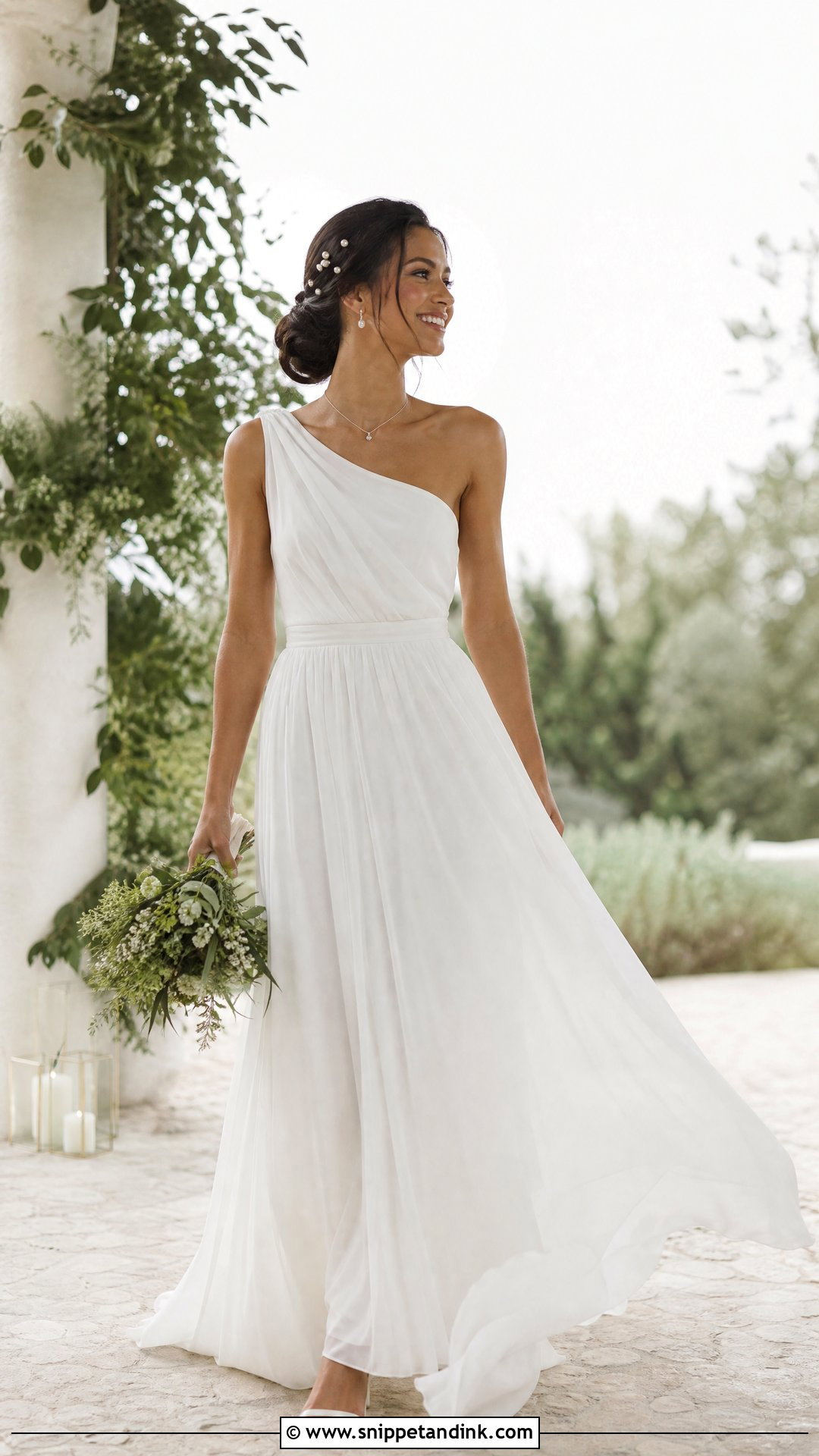
Chiffon is the warm-weather skirt: it moves in the slightest air and doesn’t trap heat. Pair it with a draped top in satin, crepe or chiffon so the textures agree, and let a one-shoulder or cowl neck be the only detail. Two cautions with chiffon outdoors. It turns see-through in bright sun unless the skirt is fully lined, and a breeze lifts it unpredictably, so the lining needs a little weight of its own. A loose bun with pearl pins and low sandals suit it.
9. Floral Organza Bridal Skirt With Corset
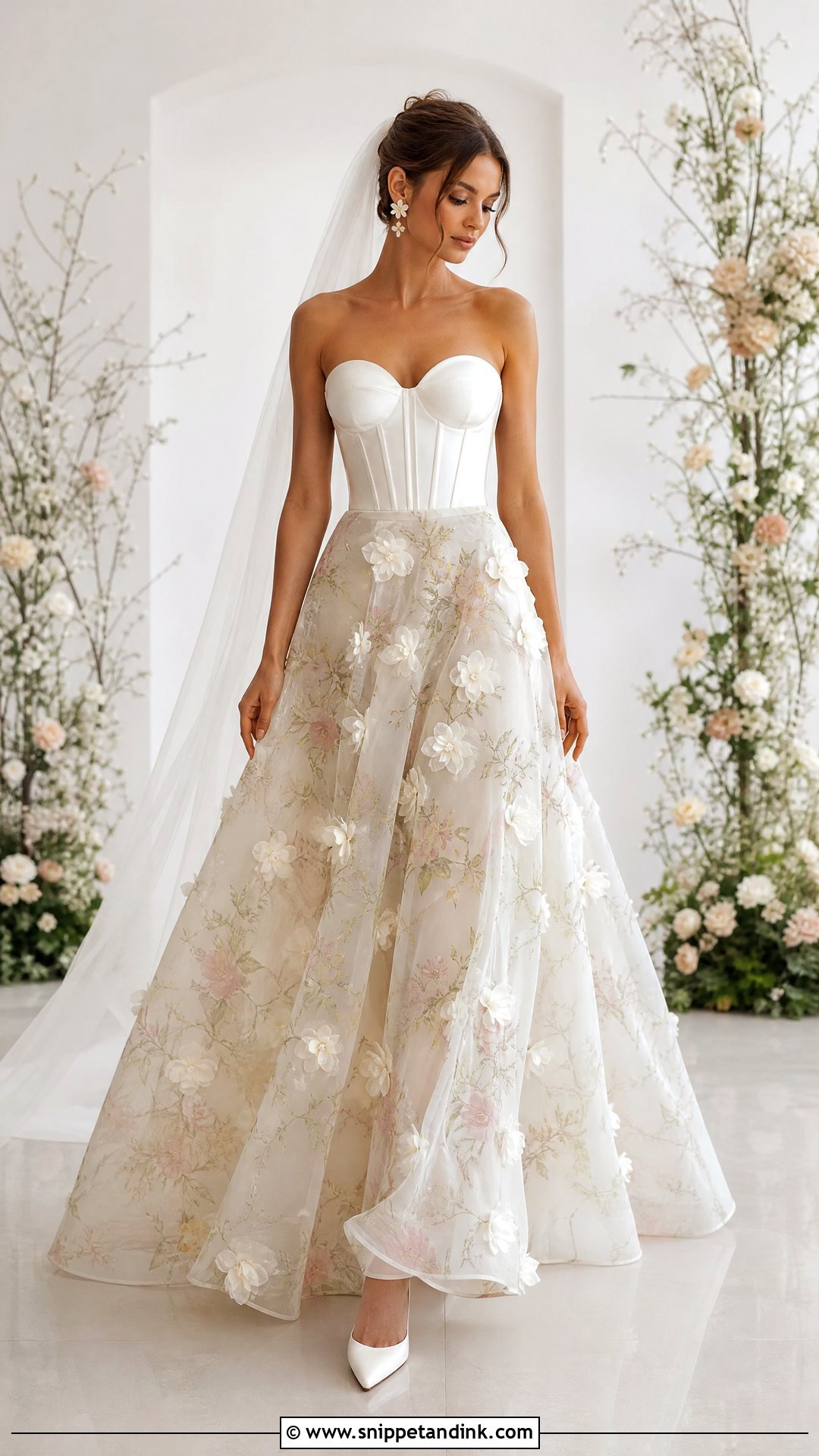
A floral organza skirt carries all the texture, so the corset above it should be clean and supportive. Embroidered flowers, dimensional appliqués and jacquard read very differently: jacquard is flat and subtle, while appliqués add real volume at the hip. Agree placement around the waist and hips at alterations, since large motifs there widen you and small, evenly spaced flowers keep things light. A gathered A-line moves more; a structured ball skirt feels more formal. Keep the veil plain tulle.
10. Mikado Bridal Skirt With Square Neck Top
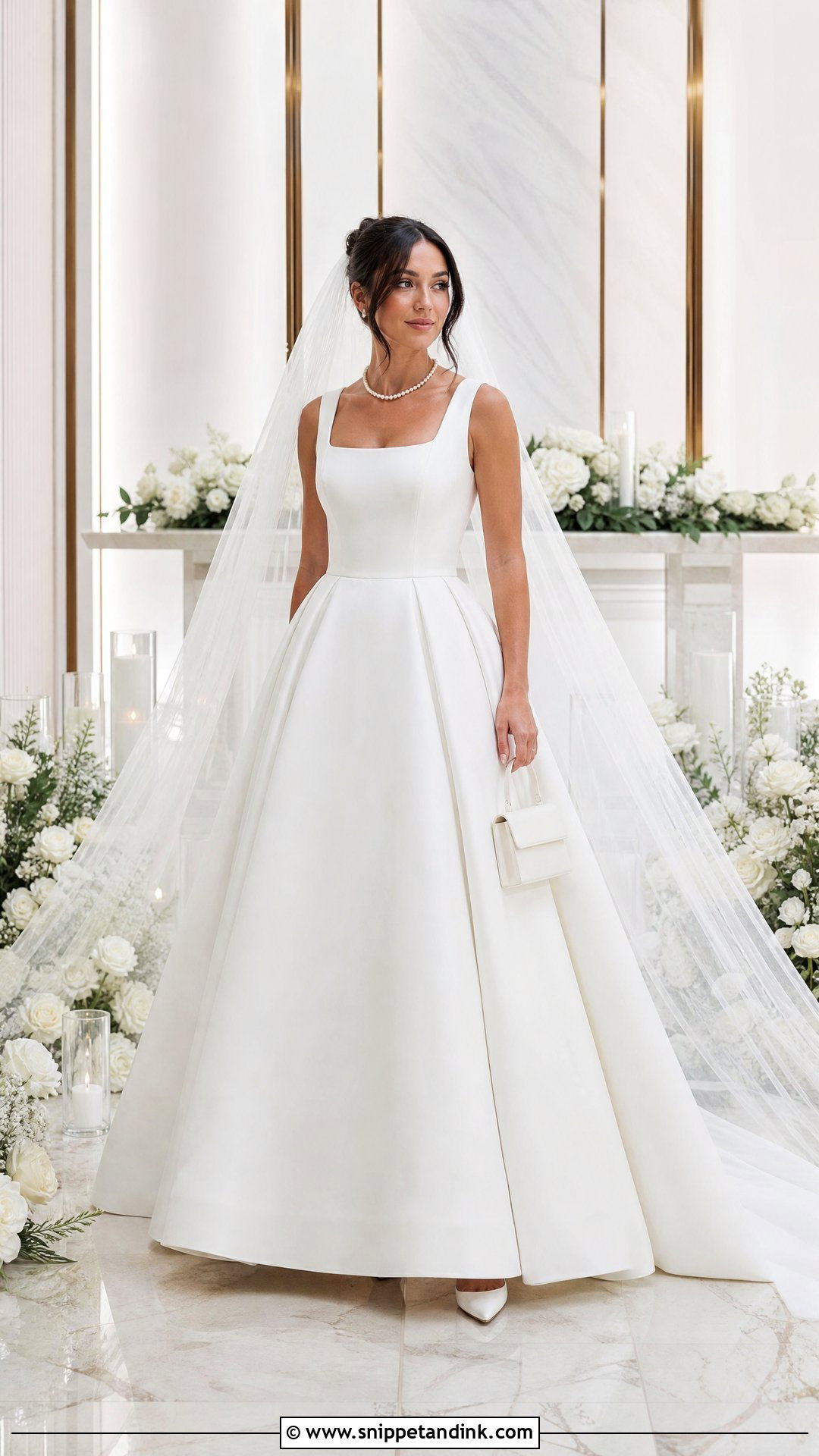
Mikado is a heavy, crisp silk or silk-blend fabric that holds a sculpted shape on its own, which is why it suits a full or A-line skirt with a square-neck top. The neckline frames the collarbone and takes short sleeves, wide straps or long fitted sleeves equally well. That stiffness has a cost. Mikado doesn’t fold when you sit, it pushes up and forward, so sit down at every fitting and let the tailor adjust the pleats at the waist. Pockets are easy to add without spoiling the line, and a single strand of pearls finishes it.
11. Sequin Bridal Skirt With Minimalist Top
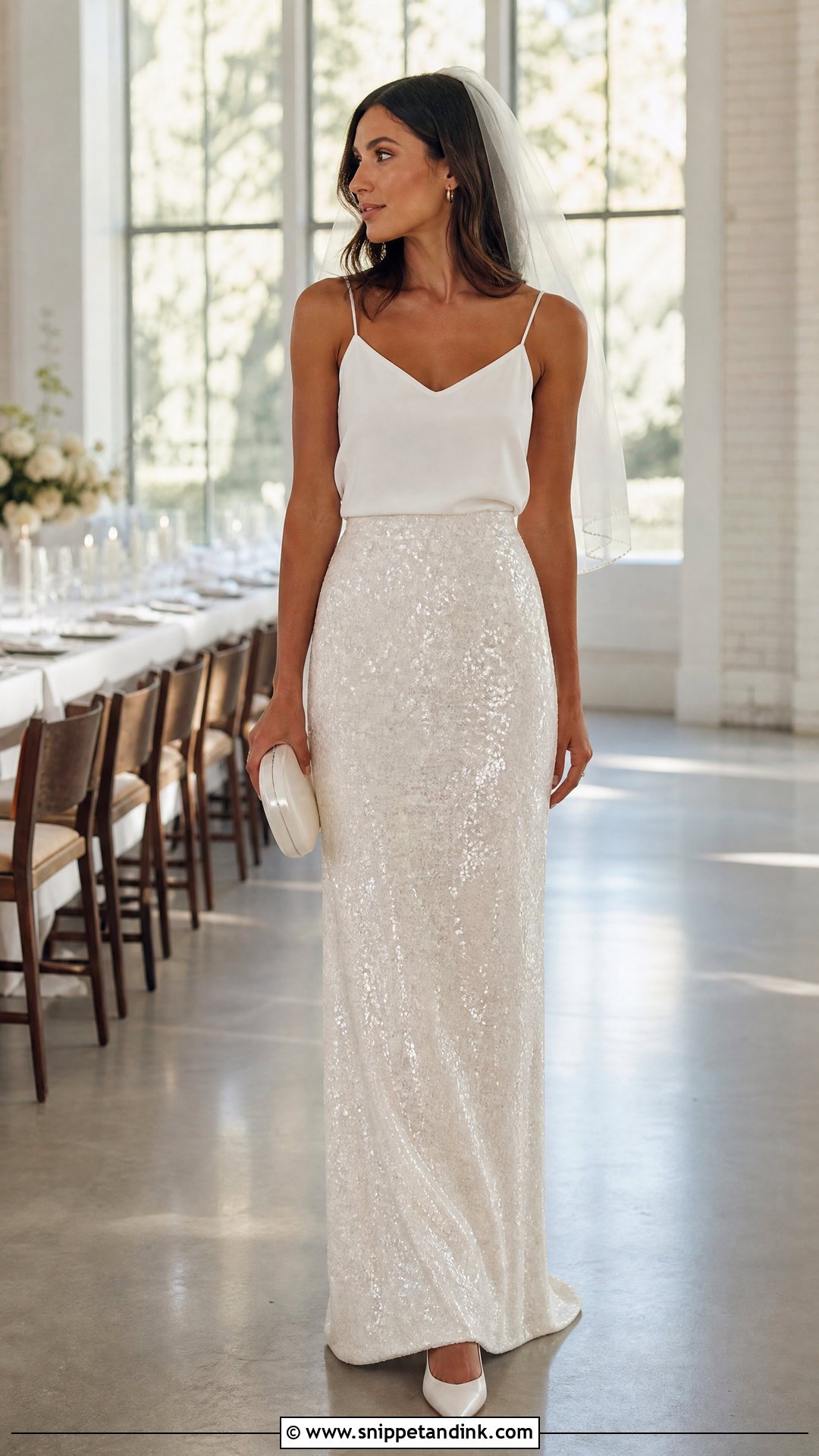
A sequin skirt is a reception skirt. Tonal ivory or silver-white sequins keep it bridal, and a plain silk camisole or crepe top calms it down. Sequins are rough on skin and on everything else, so check that the skirt is fully lined and the waistband finished in satin or grosgrain. Carry a clutch with a smooth surface, because a beaded bag and a sequin skirt snag each other all night. Skip a detailed veil and wear a clean shoulder-length one or none at all.
12. Crepe Bridal Skirt With Tailored Blazer
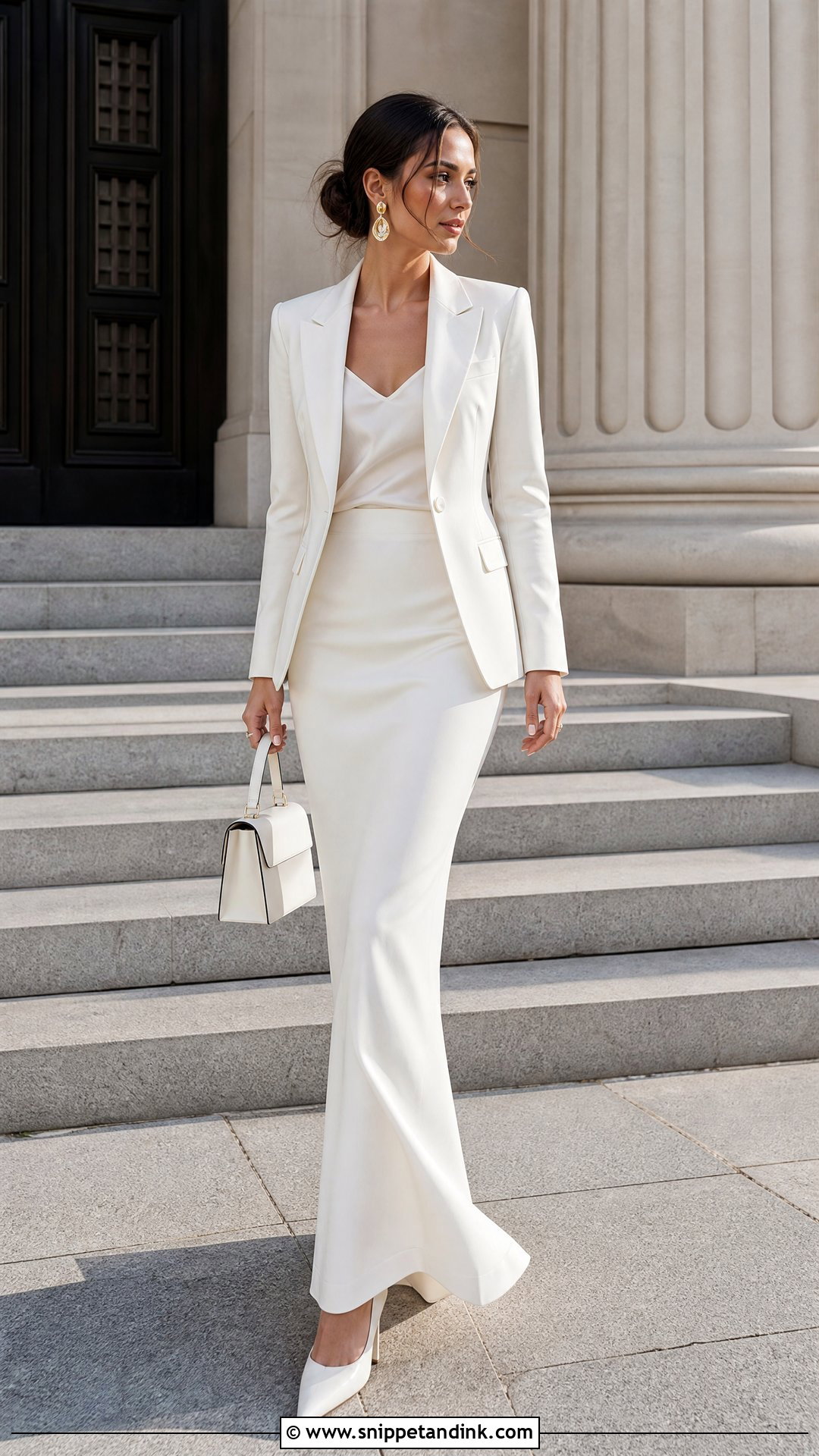
A crepe skirt with a tailored blazer is what I suggest for a civil ceremony or a city venue. A slim column or slightly flared skirt skims the body, and crepe has a little stretch and almost no shine, so it doesn’t show creases from the car. Wear the blazer over a silk shell or camisole, cropped at the waist or slightly longer. The useful trick is the reveal: blazer on for the ceremony, off for the party. Keep every fabric in the same white family, since suiting fabrics often run cooler than bridal ivory.
13. Tiered Tulle Bridal Skirt With Off-Shoulder Top
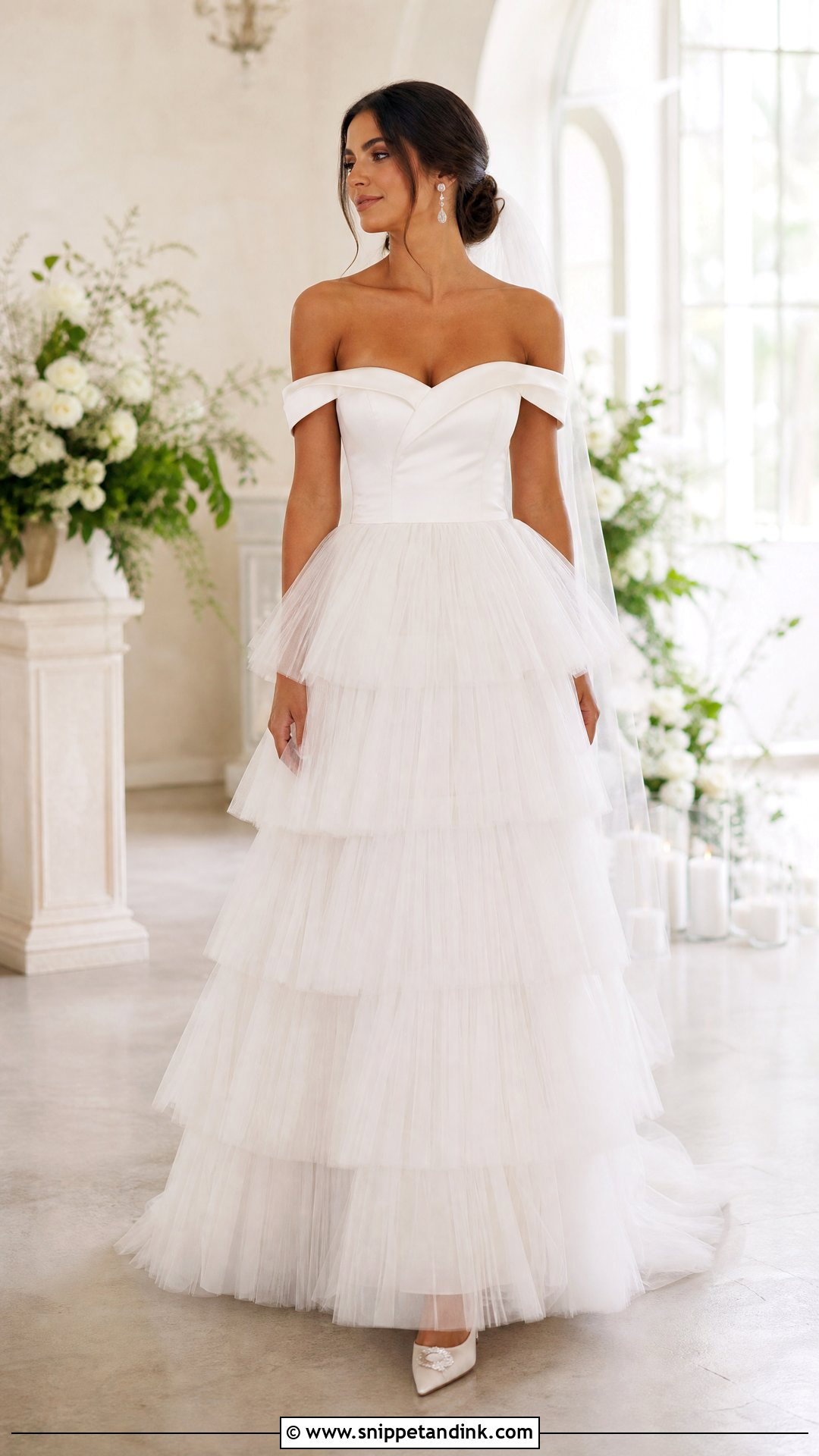
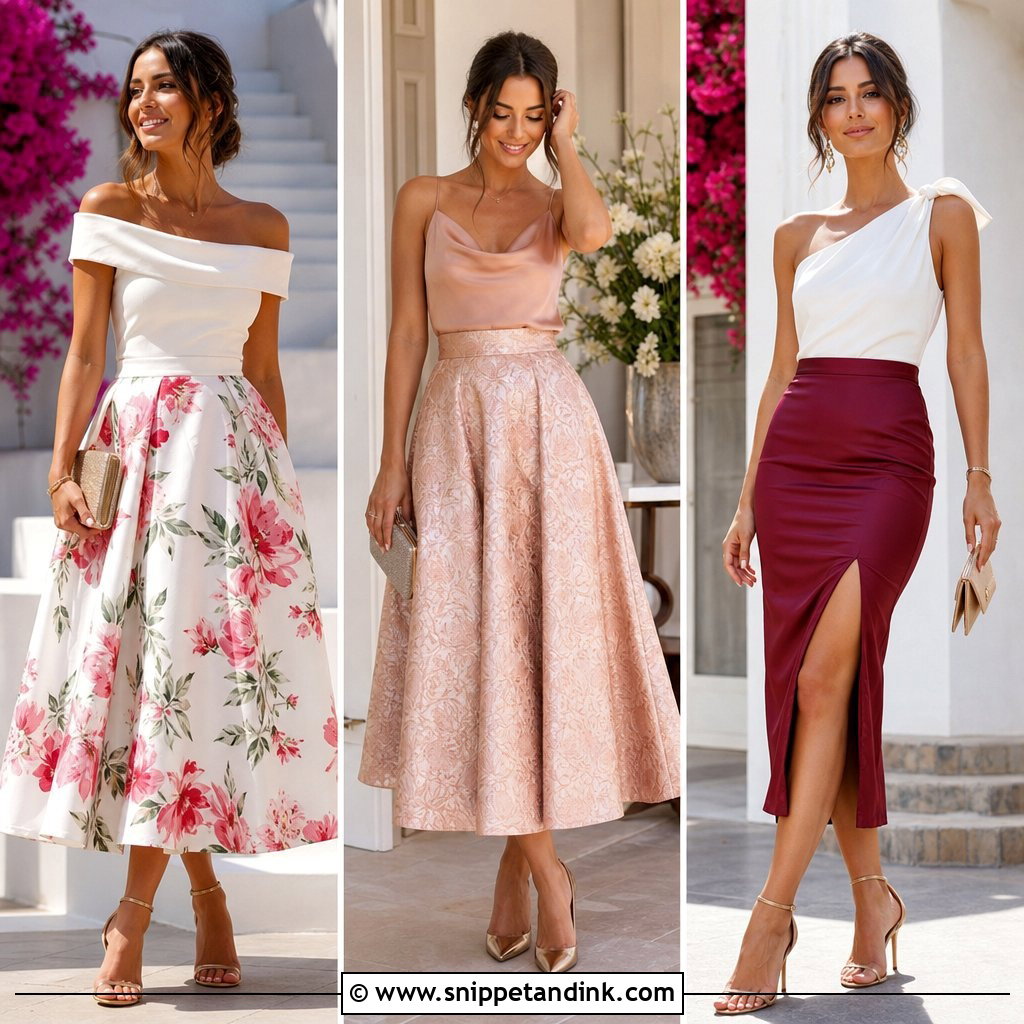
Tiered tulle gives you dimension instead of one cloud of volume. Pair it with a fitted off-shoulder top so the waist stays defined. Where the tiers start matters: below the natural waist they lengthen you, right at it they add width. For less volume, ask for fewer, wider tiers rather than many narrow ones. Tulle is so light that wind takes it, so if you’re marrying outdoors, test the skirt outside first and consider a slightly heavier lining. A low updo with the veil tucked beneath keeps the shoulders open.
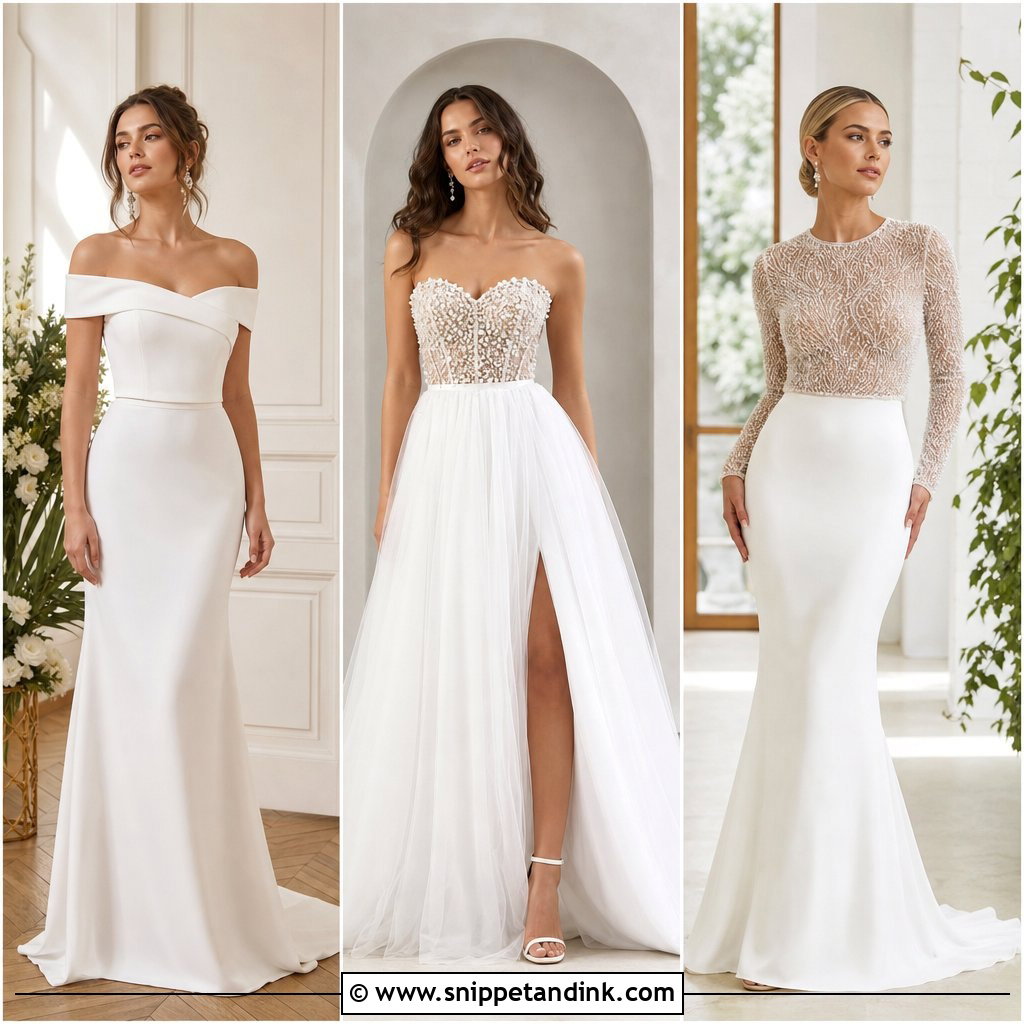
14. Wrap Bridal Skirt With Beaded Top
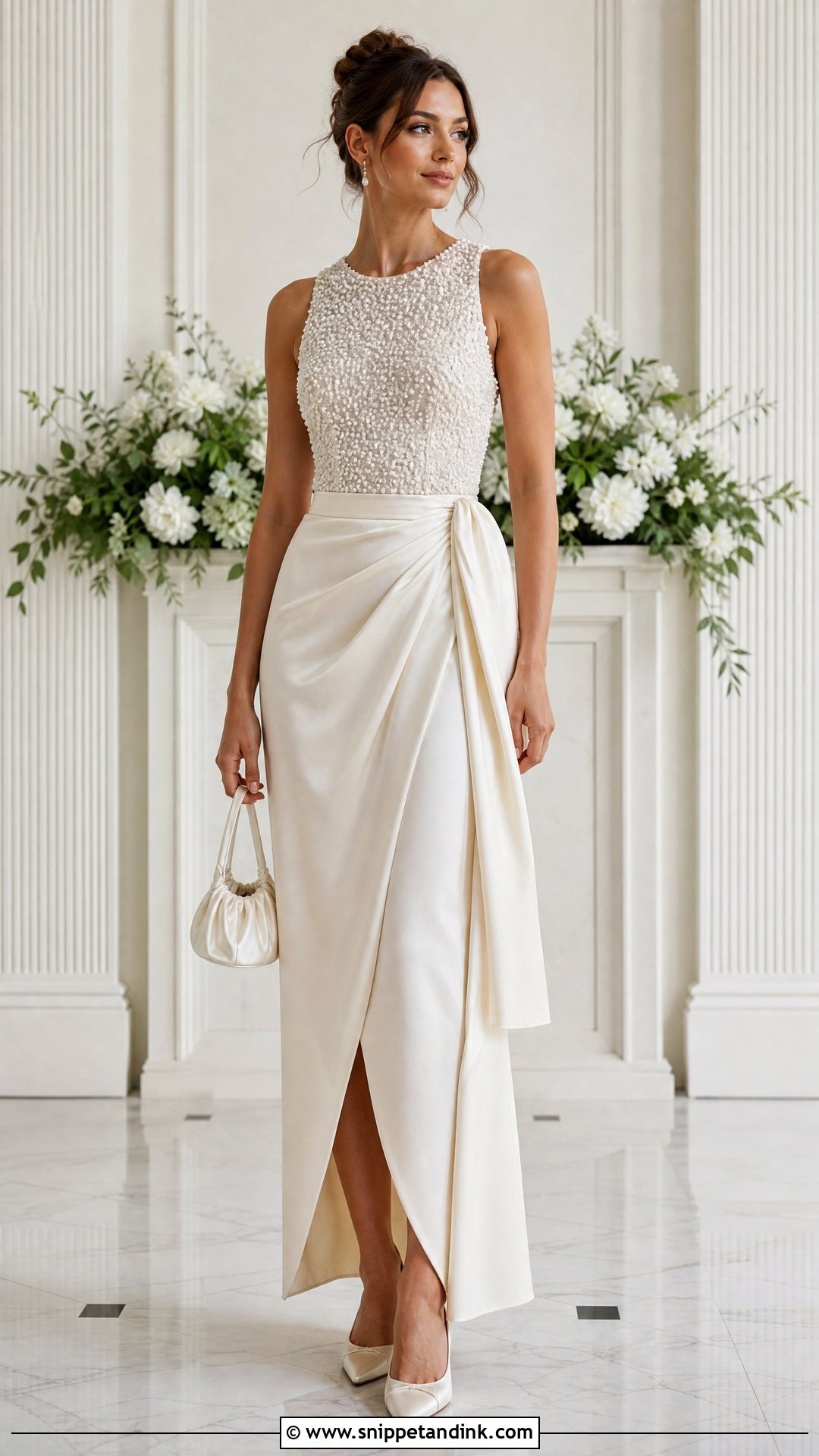
A wrap skirt flexes at the waist, which makes it forgiving if your weight shifts between the last fitting and the wedding. It needs some fabric weight, heavy silk or crepe, or the overlapping panels drift apart as you walk. Ask for a hidden snap inside the wrap. Without one, the front can open further than you’d like when you sit. A beaded top adds the ceremony detail; line the beading softly and check that it doesn’t drag across the smooth skirt.
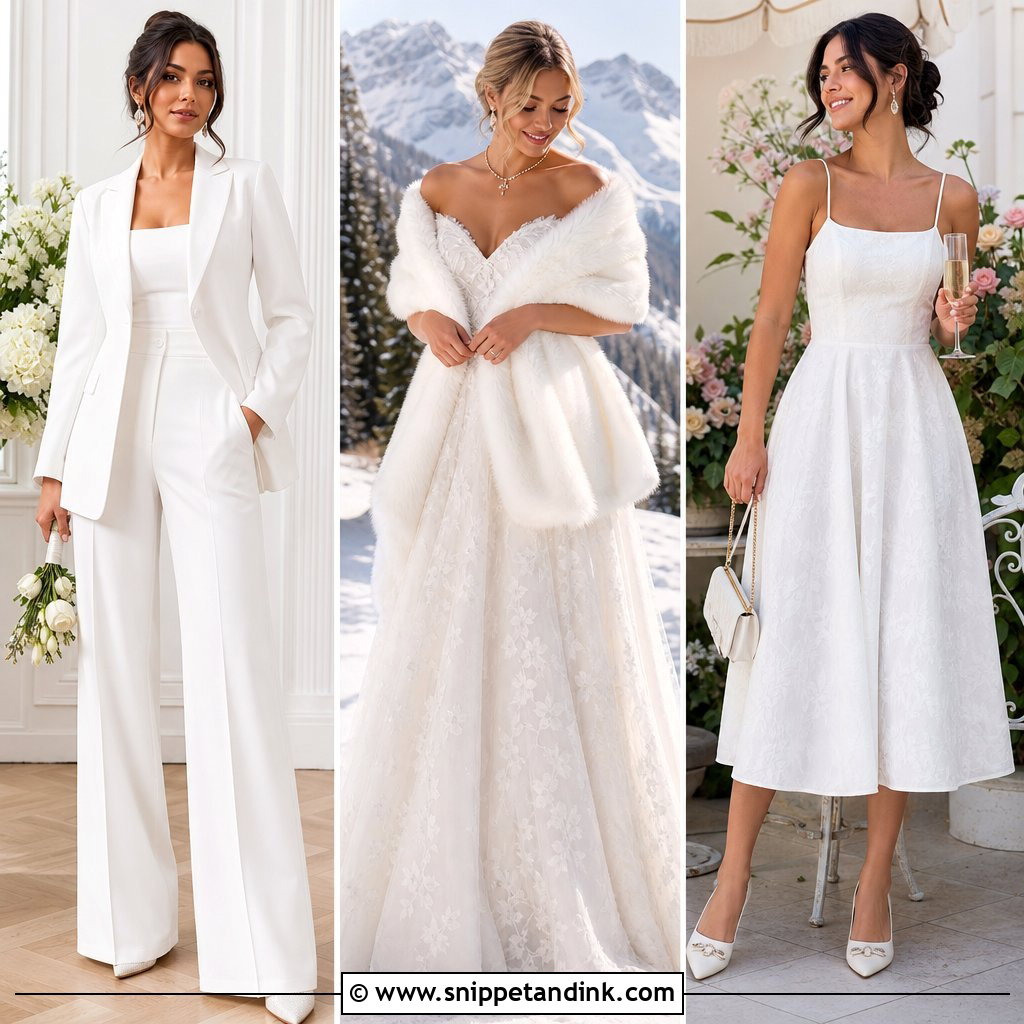
15. Boho Bridal Skirt With Bell Sleeve Top
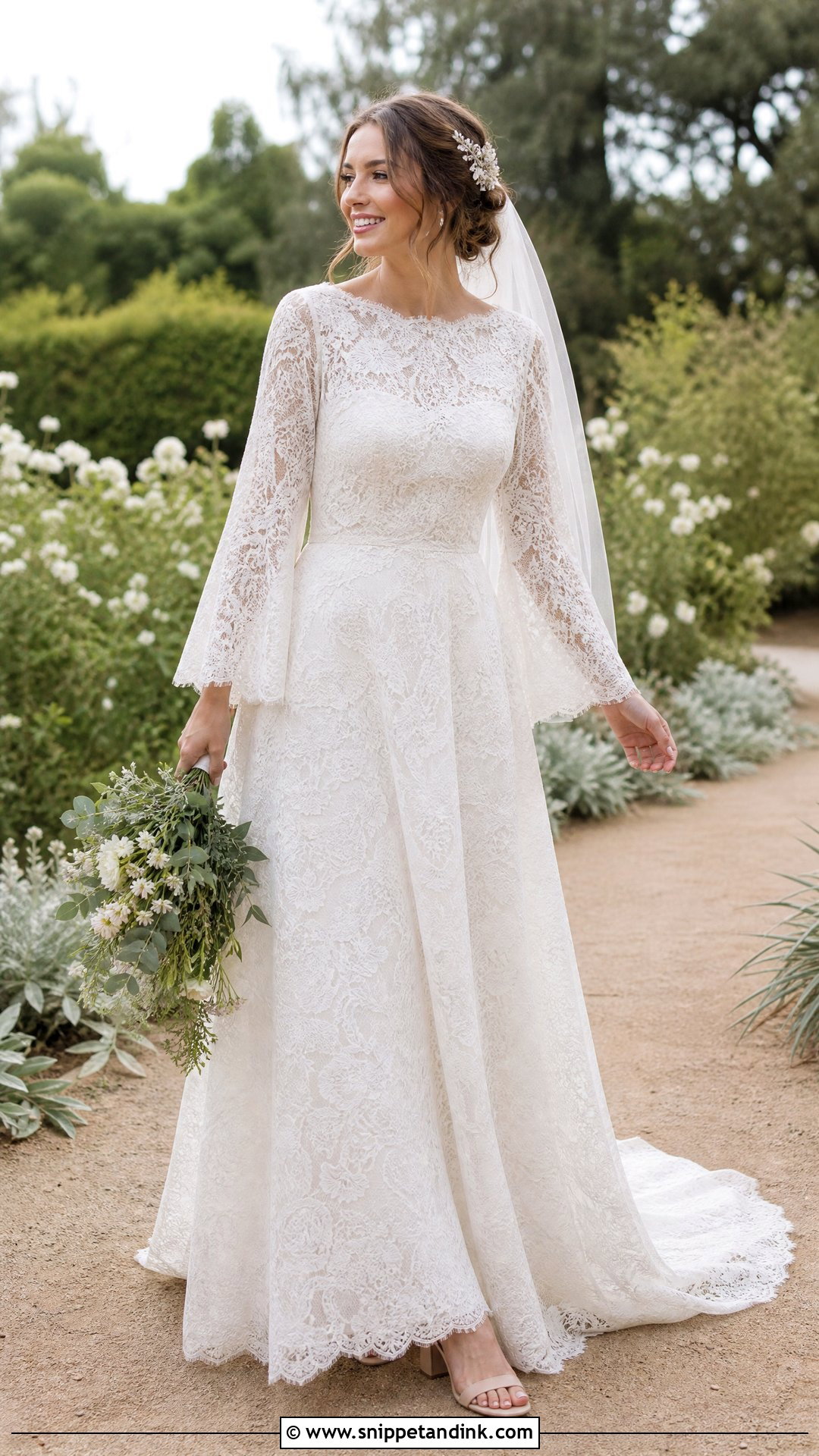
A lace skirt with bell sleeves belongs outdoors, at a garden or woodland wedding. Choose a lined, gently A-line skirt with a scalloped or eyelash-lace hem and a fitted top, so the wide sleeves have something neat to balance against. Bell sleeves are practical trouble. They drag through food at dinner and catch on the skirt’s lace when you lift your arms, so check their length while sitting at a table. Brushed gold, pearls or small botanical pieces suit this outfit better than formal crystal.
16. Silk Bridal Skirt With Halter Top
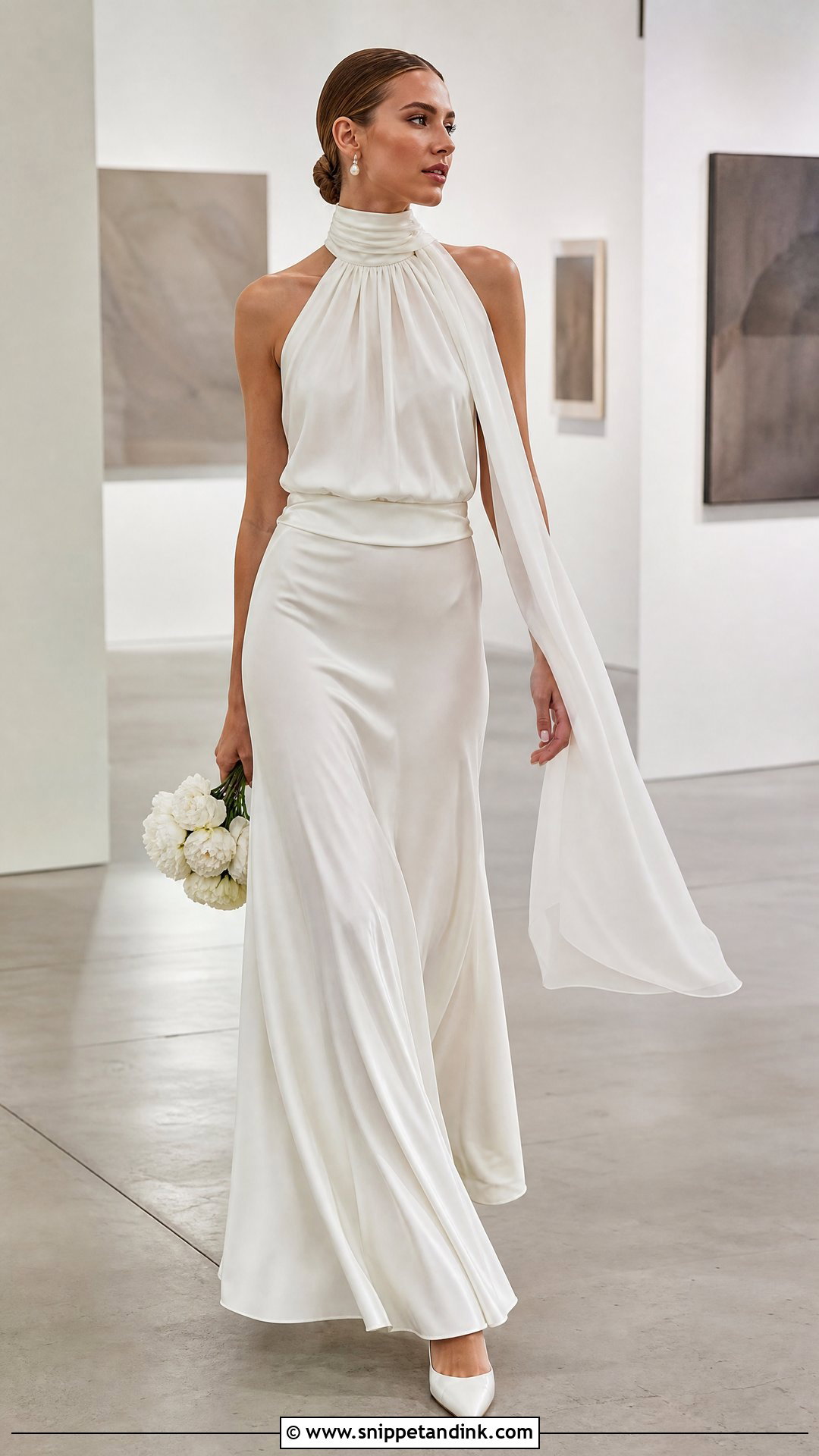
A silk bridal skirt and halter top give a long, clean line with real movement. A bias-cut or softly flared skirt follows the body without clinging, and because the halter shows the shoulders, accessories can stay small. Silk is unforgiving underneath. Every seam and strap shows, so undergarments have to be settled at the first fitting, not the last. Check the skirt under both daylight and indoor light, because thinner silk can go translucent when you’re backlit at the altar.
17. Pearl Bridal Skirt With Satin Corset
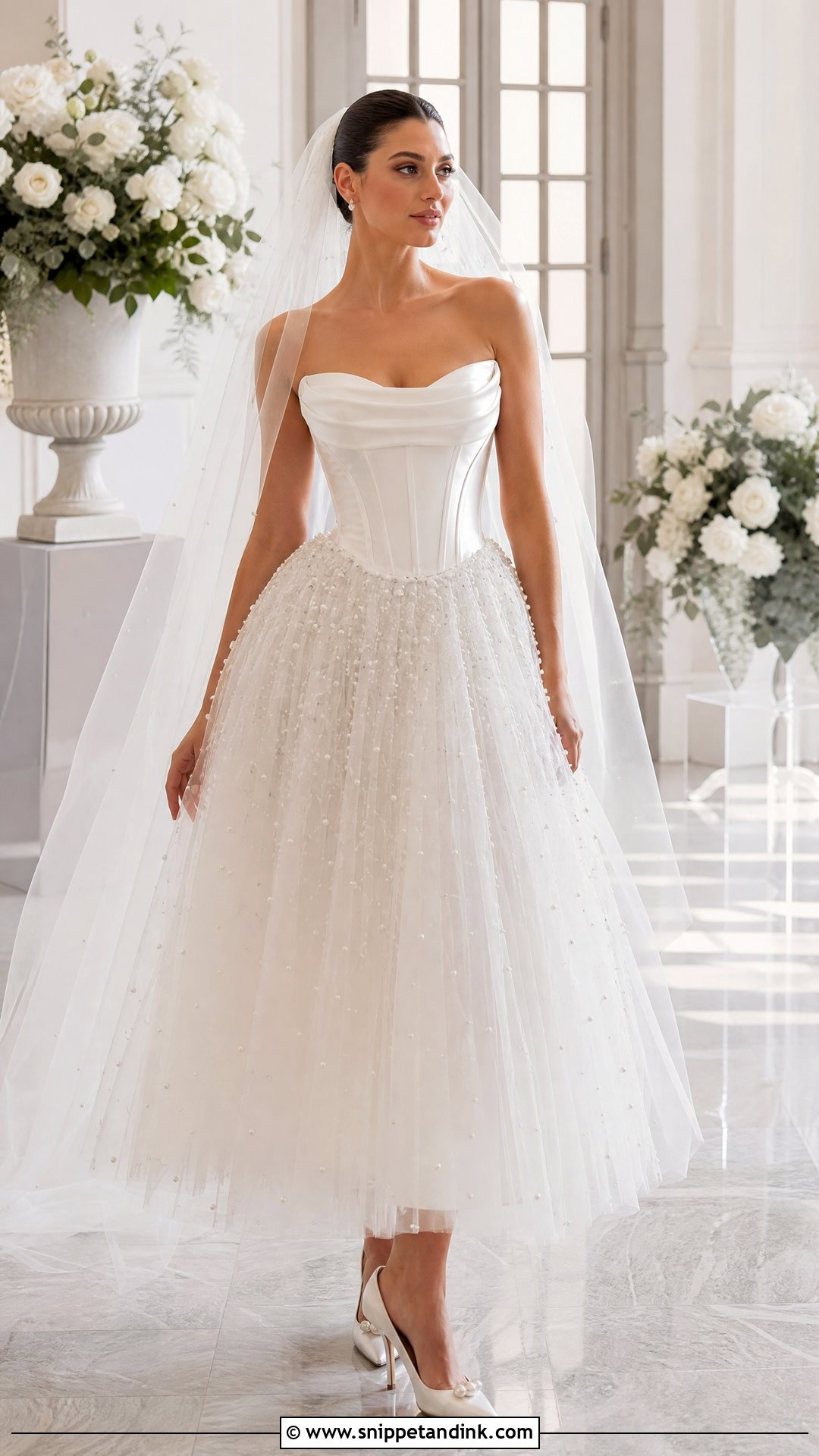
A pearl-scattered tulle skirt feels luxurious but quieter than all-over sequins. Pair it with a smooth satin corset and let the pearls be the only decoration. Pearls add weight at points, so a firmly fitted waistband stops the skirt from dragging lower through the day. Inspect the stitching on the pearls at each fitting; loose ones catch the tulle and pull threads. For a subtler version, ask for the pearls concentrated toward the hem.
18. Bow Waist Bridal Skirt With Bateau Top
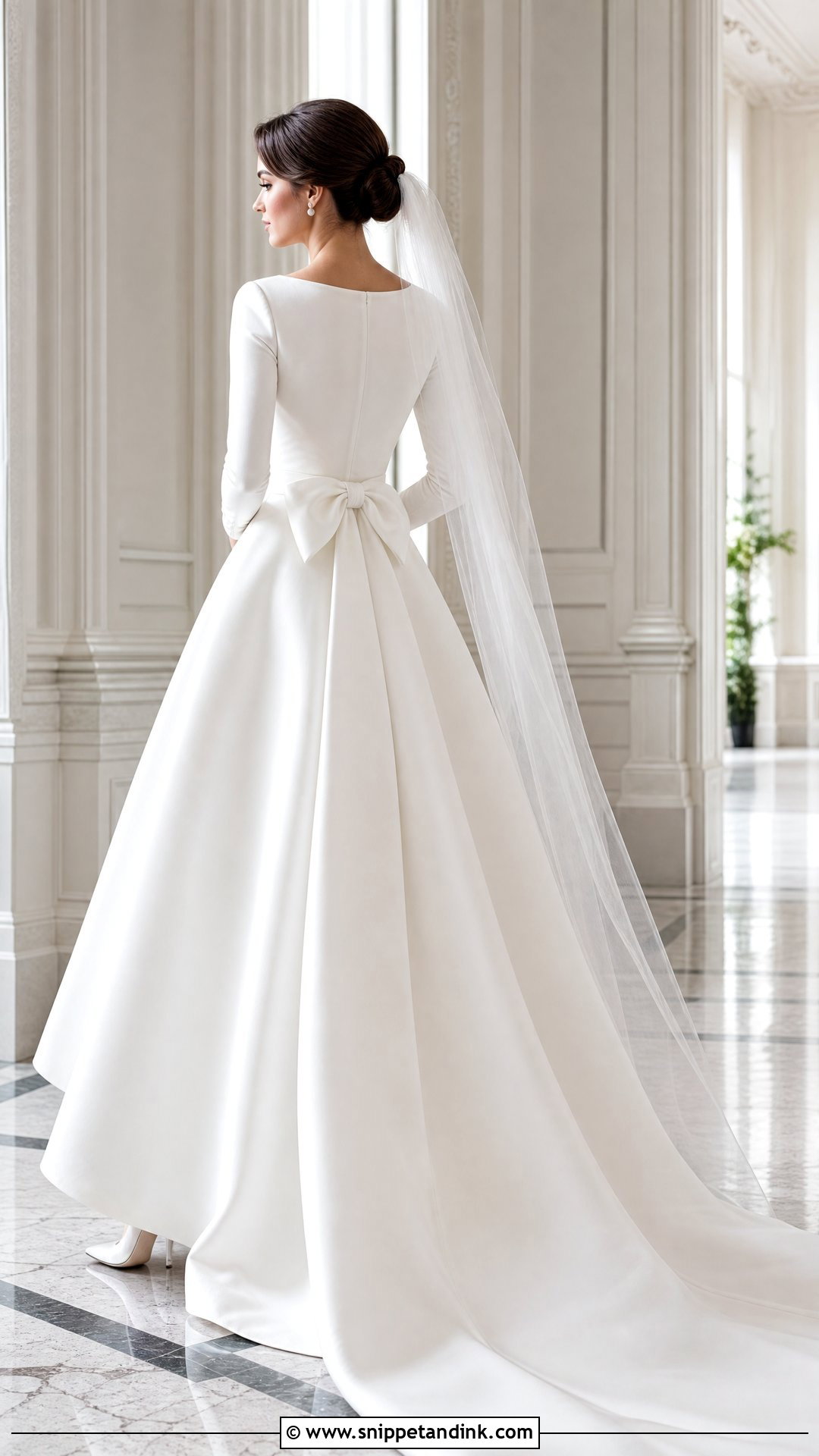
A bow at the waist gives a plain skirt one clear focal point. Structured satin or Mikado with a flat front holds it best, and a fitted bateau top balances it with a wide shoulder line. Ask for the bow to be removable. It looks right for the ceremony and gets awkward when you lean back in a chair or dance. Size it to your frame: a medium structured bow defines the waist, while long trailing tails give movement without a full train. Place the veil below the bun so the bow stays visible from behind.
19. Champagne Bridal Skirt With Ivory Top
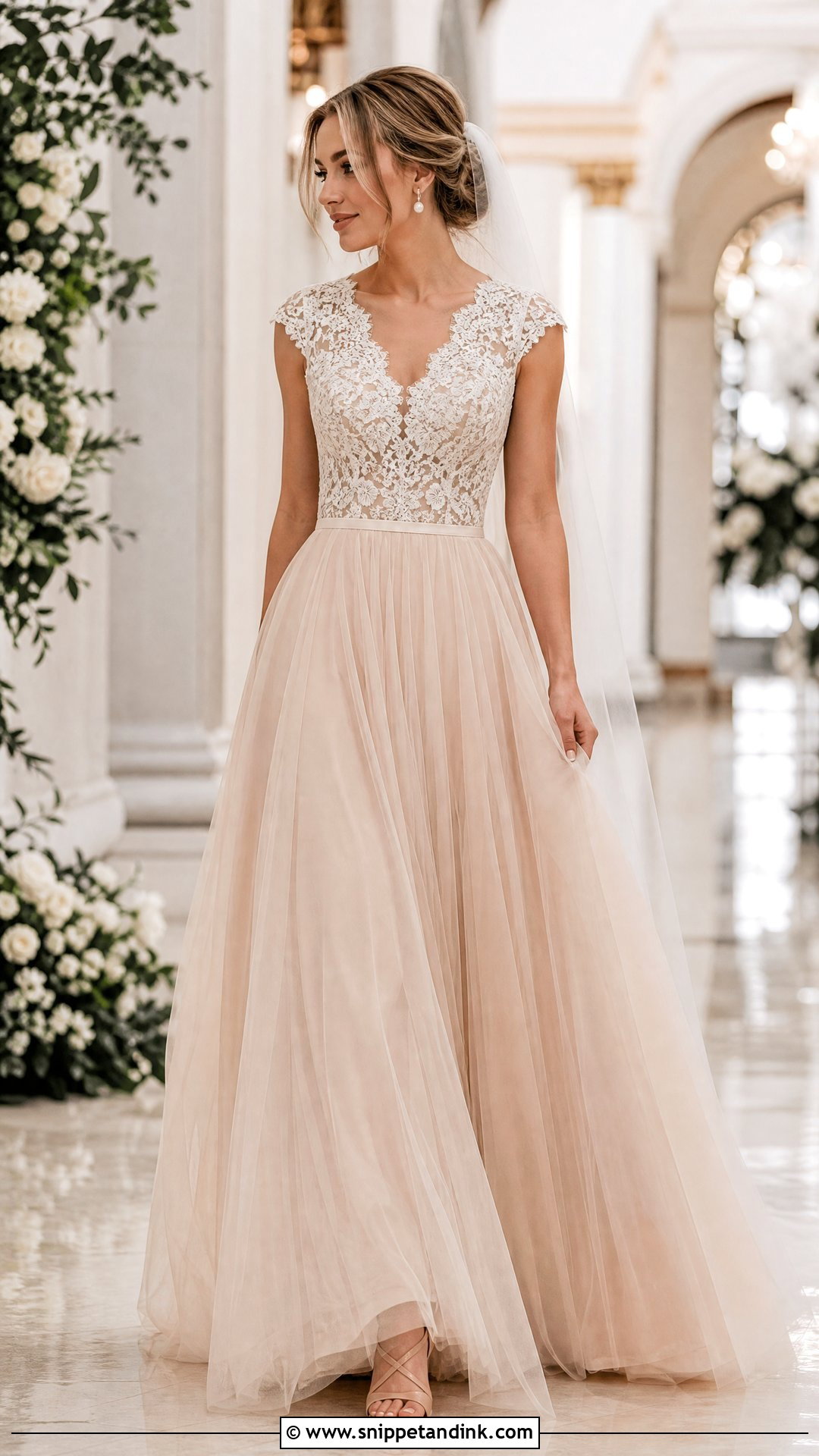
Champagne and ivory together give gentle colour depth to a bride who wants warmth without a coloured gown. A champagne tulle or satin skirt with an ivory lace or silk bodice works when the two shades flatter each other, and that’s the big if. A cool champagne can make ivory look yellow, so compare the fabrics in daylight before ordering. Repeat both shades in the shoes and veil so the pairing looks planned. Metallic champagne suits evening; matte champagne is quieter by day.
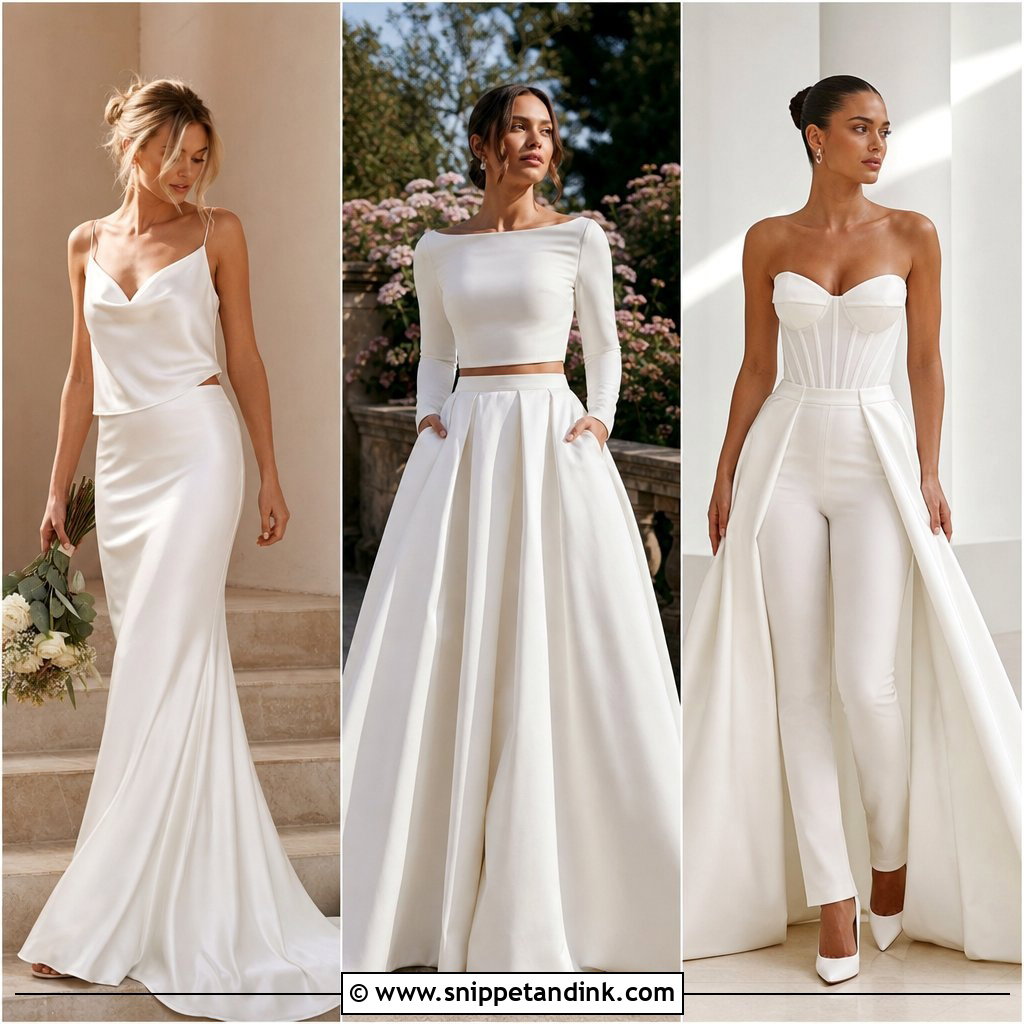
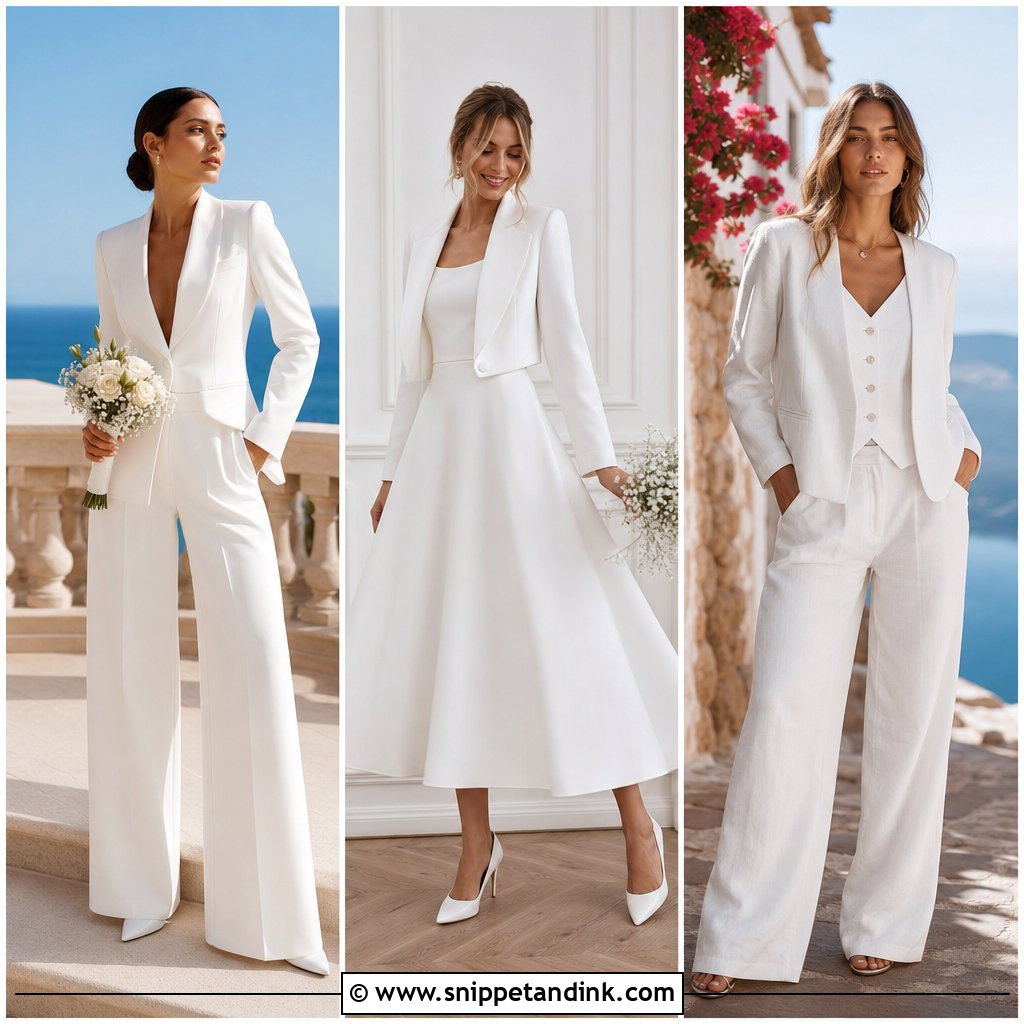
20. Mini Bridal Skirt With Blazer Top
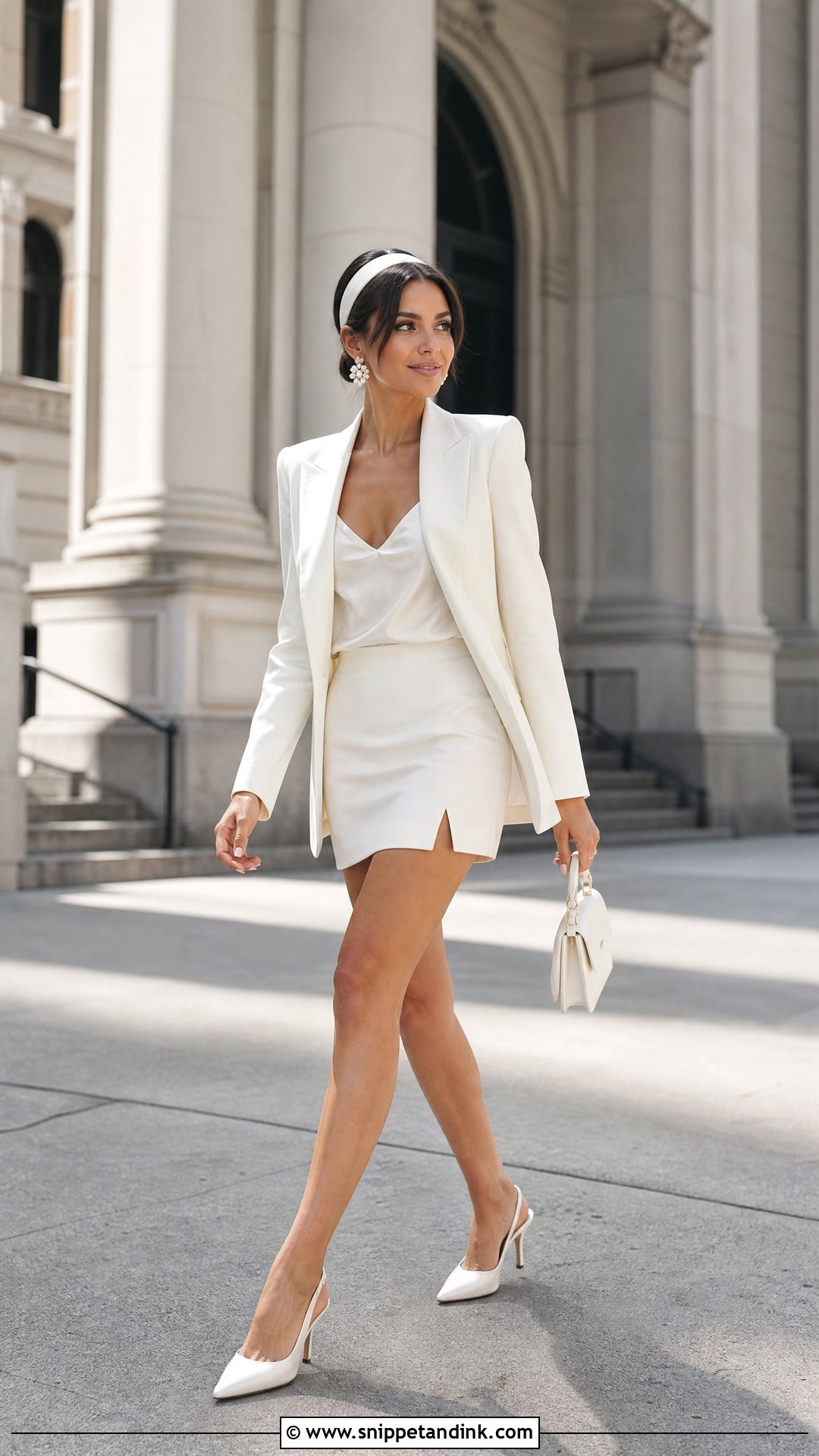
A mini skirt with a blazer suits a courthouse ceremony, a rehearsal dinner or a reception change. A tailored A-line or wrap mini sits better than a tight one, since you’ll be climbing in and out of cars and sitting on low chairs. Wear the blazer over a camisole or buttoned as the top itself, and keep its length in proportion to the skirt so neither swamps the other. Sheer tights add coverage, and a birdcage veil or small bow keeps the look bridal.
Hem, Petticoat and Shoes Get Decided Together
The hem is the last alteration and the one most often done wrong, because it gets measured against shoes the bride hasn’t bought yet. Buy your shoes before the final fitting. If you plan to switch into flats later, choose a heel height you can live with in both, or accept that the hem will brush the floor in the flats.
Full skirts usually need a petticoat or a built-in can-can to hold their shape. Try the skirt with and without one, because a petticoat lifts the hem by more than you’d expect and makes the skirt warmer to wear. For a long skirt with a train, ask for a bustle, and have whoever will fasten it on the day watch how it’s done at the final fitting.
A Full Skirt, a Small Car and a Steamer
Full skirts crush in transit. Hang yours the night before somewhere with room around it, and steam tulle and chiffon gently from the inside rather than pressing them. Satin should be steamed from a little distance with the fabric held taut, since droplets can leave marks.
For the drive, lift the skirt so you sit on the lining instead of the face fabric, and gather the volume onto your lap. A ball skirt needs a wide back seat, so mention it to whoever is arranging cars. When you arrive, have someone check the back of the skirt for creases before any photos are taken.
Bring Your Wedding Shoes to Every Fitting
Start with the skirt that suits your venue and how much you’ll move, then find a top that meets its waistband cleanly. Matching undertones and good construction turn two pieces into one outfit, and the veil and jewelry should follow the skirt’s volume rather than fight it. Above all, wear the shoes and underwear you’ll marry in to every fitting. The hem, the waist and the fall of the skirt are all set against them.
You'll Like These Ideas:



Leave a Reply