
Most wedding dresses spend their second life in a box under a bed. That’s a fine choice if it’s yours, but a gown can also come back as something you actually reach for, through a shorter hem, a new colour, or by creating separates from the bodice and skirt. Get it professionally cleaned first. Hems and trains pick up grass, wine and floor dirt that set the longer they sit. Then take it to a seamstress who works on bridal construction, because boning, horsehair and hand-sewn lace limit what’s possible in ways a general tailor may not spot. I’ve arranged the ideas below from the gentlest changes to the full rebuilds.
Read the Fibre Label Before Planning Any Redesign
The label inside the side seam tells you more about your options than the style of the dress does. I always check it before suggesting anything.
Silk, satin and crepe
Silk takes dye evenly and drapes well in a new cut, but it marks with water and shows every needle hole, so alterations need to be right the first time. Silk satin creases where it’s been folded in storage; a professional press usually lifts it.
Polyester and mixed fibres
Most modern gowns are polyester. It’s hard-wearing and easy to reshape, yet it resists ordinary dye, so colour changes are limited and often lighter than hoped. Plan cutting and restyling ideas for these gowns rather than dramatic recolouring.
Beading, sequins and glued trims
Embellishments may not tolerate heat, dye baths or some cleaning solvents. Ask whether they’re sewn or glued; glued pieces often have to come off before any major work and be reattached afterward.
1. Wedding Dress Into A Mini Dress Outfit
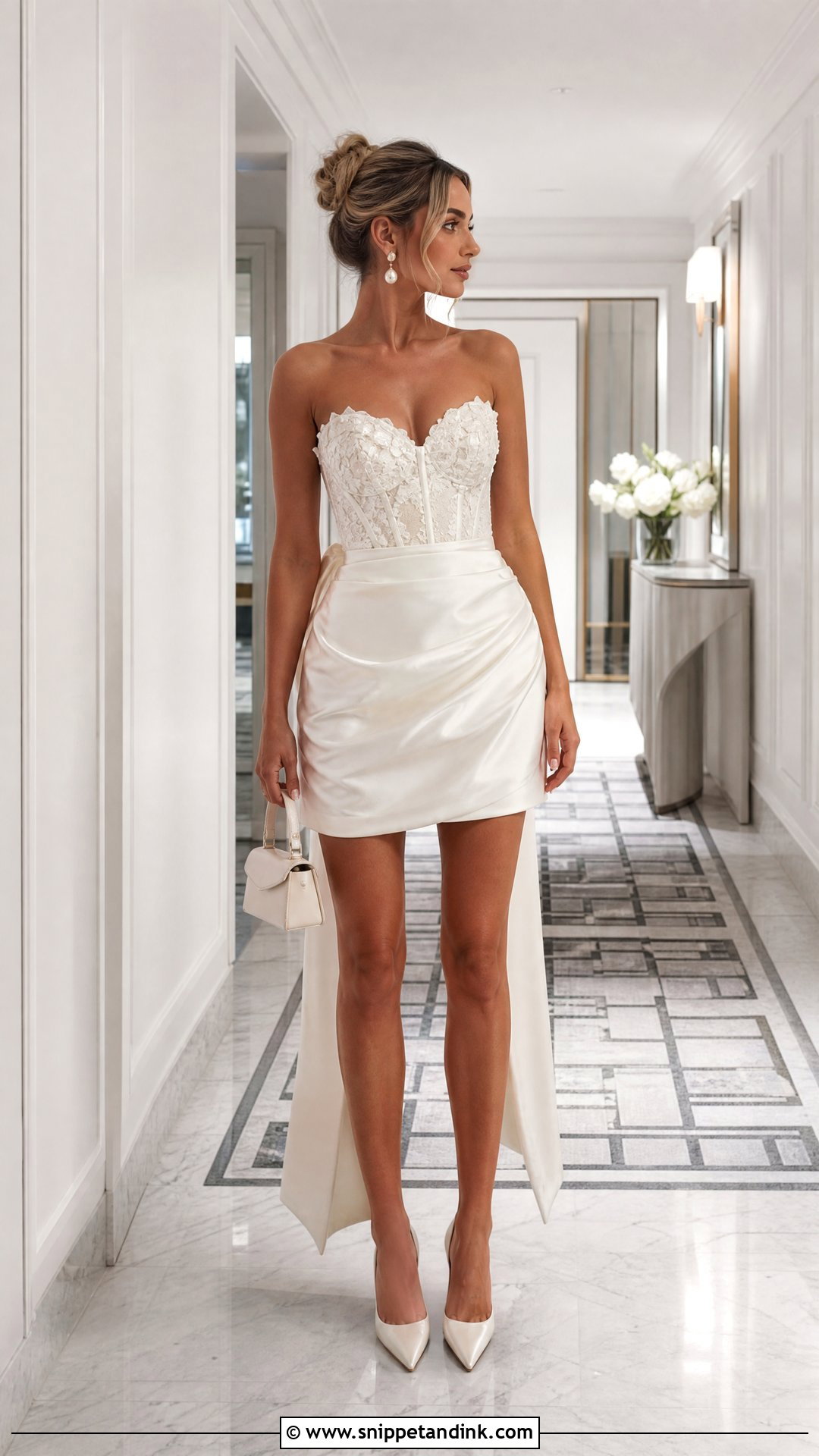
Going all the way to a mini is the most dramatic shortening, and it suits fitted dresses, plain satin and structured bodices best. Full A-line skirts lose their proportion when cut that short. Set the hem where you’d be comfortable sitting at dinner, not where a trend says. I’d wear it to an anniversary dinner with pointed satin pumps, pearl earrings and a structured bag, plus a cropped blazer when it’s cool. Leftover train fabric can become straps, a scarf or a bow. Ask the seamstress to lift any lace border and reattach it at the new hem rather than cutting through it.
2. Wedding Dress Into A Midi Dress Outfit
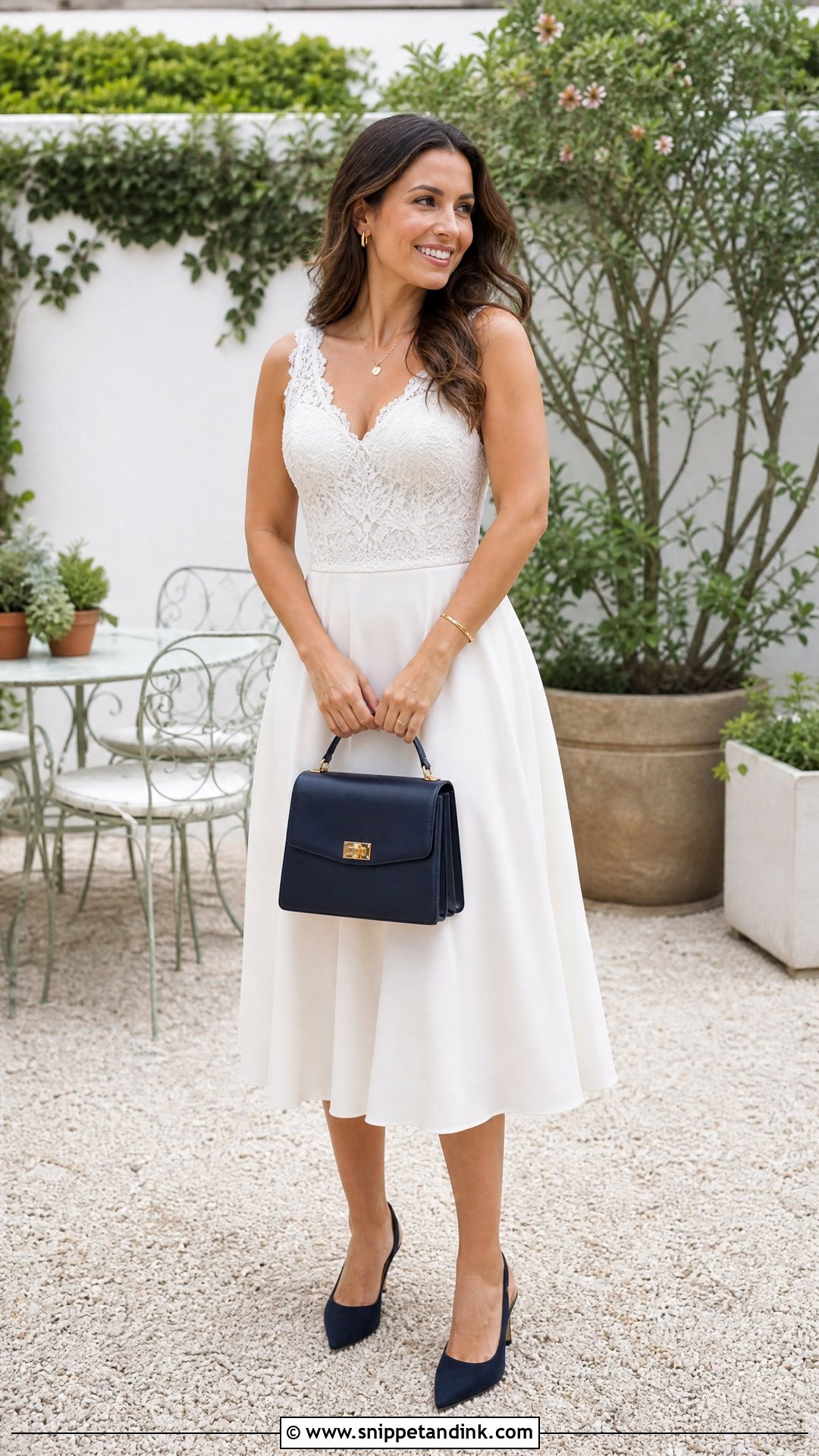
Midi length, landing below the knee or at mid-calf, is the safest shortening I know. It keeps enough skirt to feel formal and shows off a good shoe. A-line gowns, lace and satin slips all take it well. Removing the train and thinning a bulky underskirt makes a bigger difference to wearability than the hem itself. Pair it with slingbacks, a compact clutch and pearl or gold jewellery, then break the bridal read with one coloured piece, like a navy or burgundy bag. It works for anniversaries, formal lunches and gallery openings.
3. Wedding Dress Into A Cocktail Dress Outfit
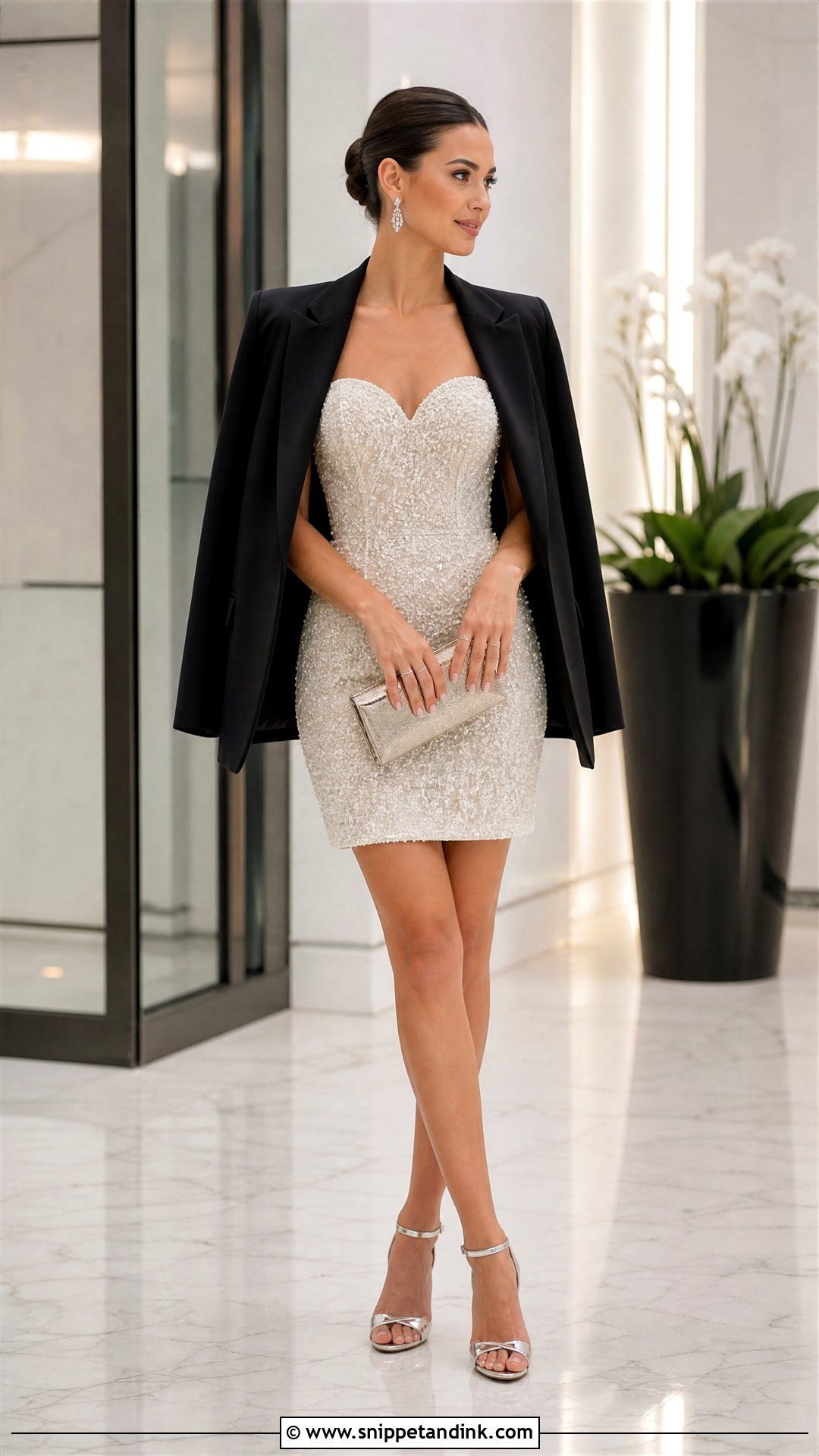
A cocktail redesign is about subtraction. Shorten the skirt, remove the train, reshape the neckline or take out a few tulle layers, and keep one feature you loved: an embroidered bodice, a scalloped lace edge or a row of covered buttons. One is enough; keep three and it still looks like a wedding dress. If the gown is heavily beaded, go plain with metallic heels, a sleek clutch and delicate earrings. A simpler dress can handle a coloured bag or bold shoes. A blazer over the shoulders finishes it for birthdays, receptions and anniversary parties.
4. Wedding Dress Into A Two-Piece Skirt Set
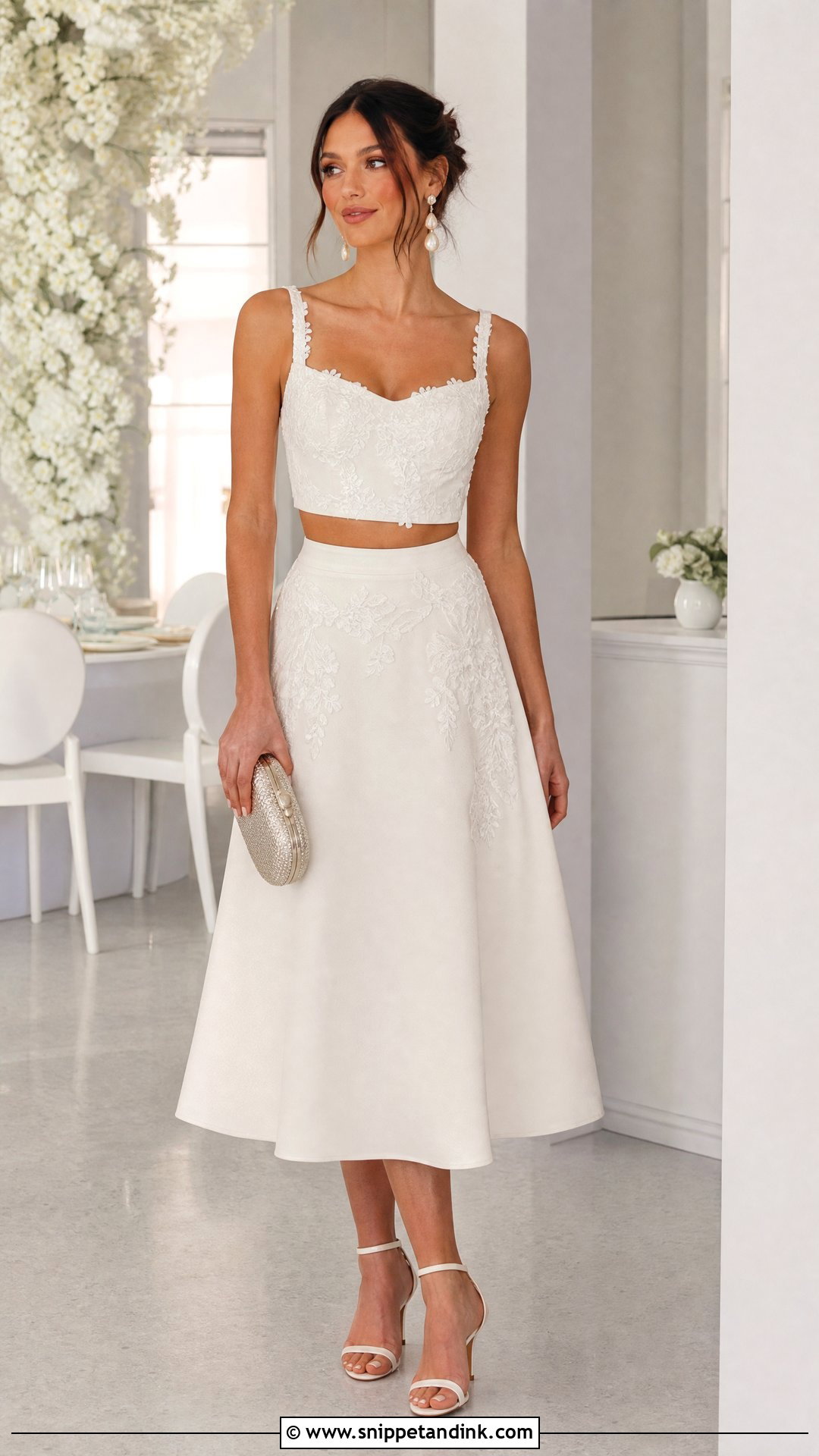
Splitting a gown into a top and skirt gives you several outfits. The bodice becomes a cropped or waist-length top; the skirt is rebuilt as an A-line, pencil or midi. Wear them together for an anniversary, then mix them separately: the top with tailored trousers, the skirt with a fine knit. Every new raw edge needs finishing, and with boned bodices that means the seamstress has to close off the bone channels at the new waistline, which adds time. A strip of leftover fabric makes a matching belt.
5. Wedding Dress Bodice With Tailored Trousers
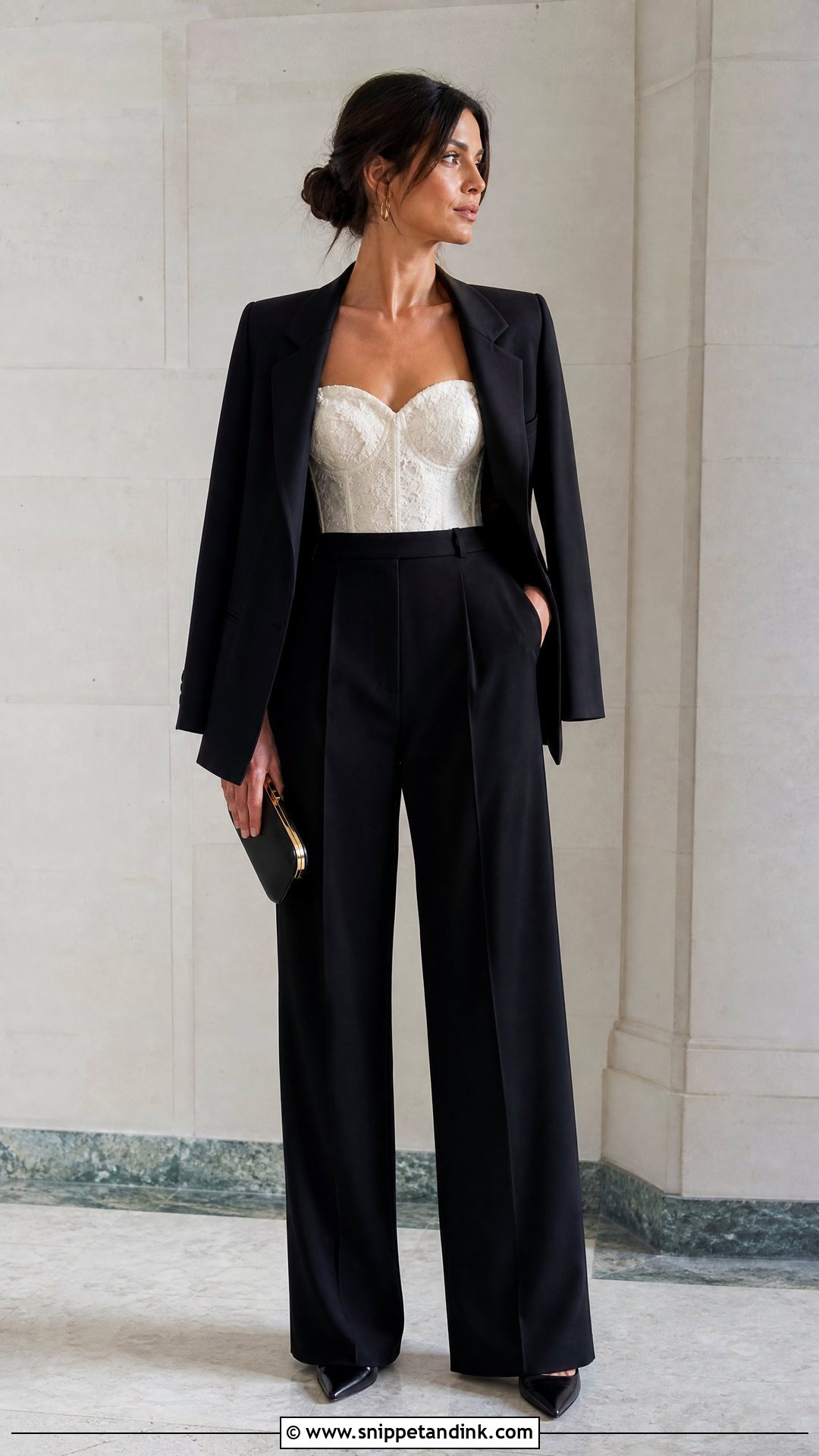
If the skirt is stained beyond saving or simply too big to rewear, the bodice alone can carry an evening outfit. Corset seams, lace appliqués and sculpted satin look sharp above high-waisted tailored trousers, black for contrast or ivory for a soft monochrome. Strapless bodices worn without a full skirt pulling them down can slip, so I’d have straps, small sleeves or an internal waist stay added. Pointed pumps, a slim clutch and simple earrings keep it clean. A fitted blazer adds a layer without hiding the details.
6. Wedding Dress Lace Top With A Silk Skirt
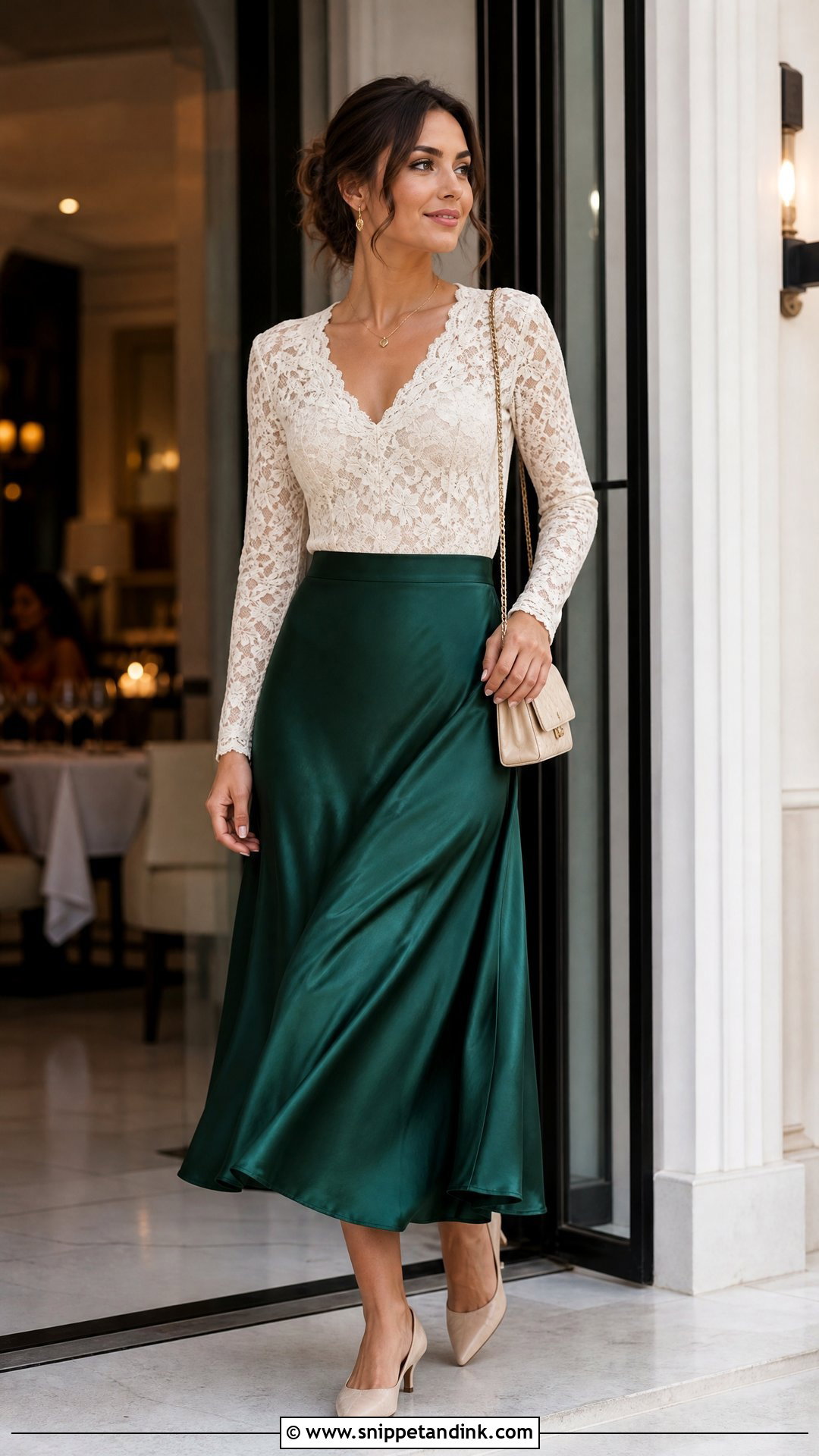
Lace sleeves, appliqué and hand-finished embroidery are often the most valuable part of a gown, and they deserve to be kept even if the rest goes. Have the lace made into a fitted top, lined in a skin-matching fabric and finished at the natural waist. Then pull it away from bridal territory with a silk midi skirt in black, navy, champagne or a jewel tone. Kitten heels, a small shoulder bag and minimal jewellery finish it. Sheer lace needs a smooth camisole matched to the lining; anything with seams will show through.
7. Wedding Dress Skirt With A Cashmere Sweater
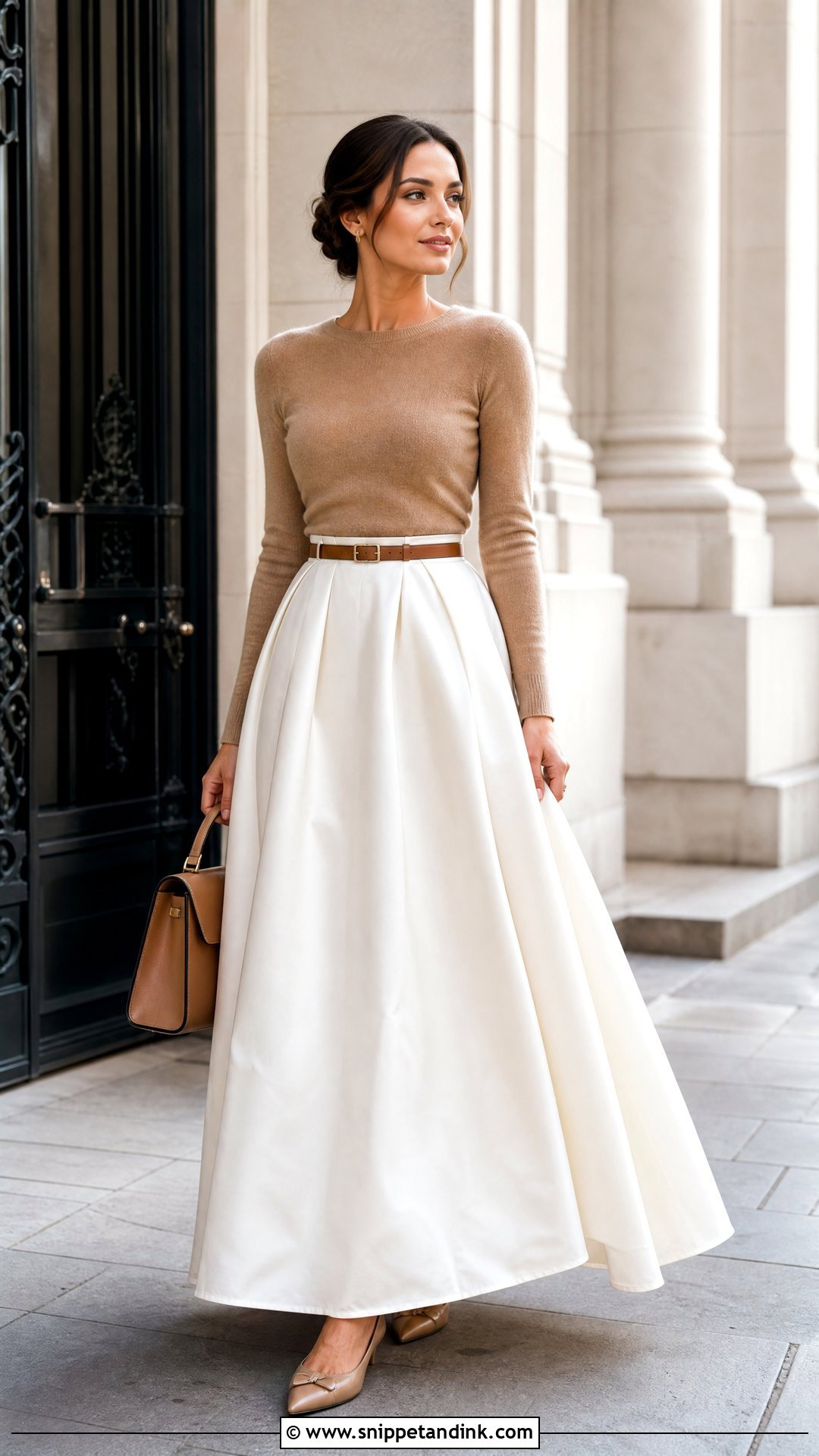
A full skirt with a fine knit tucked in is my favourite of the low-effort ideas. Separate the skirt from the bodice, take out a layer or two if it’s unmanageable, and pair it with a slim cashmere sweater in grey, black, blush or camel. The contrast between knit and satin or tulle is what makes it work. Pointed flats or low heels and a structured leather bag keep it grown-up. Add a narrow belt if the waistband is plain. It’s lovely for cool-weather anniversary photos or a long lunch.
8. Wedding Dress Into A Short Slip Dress Outfit
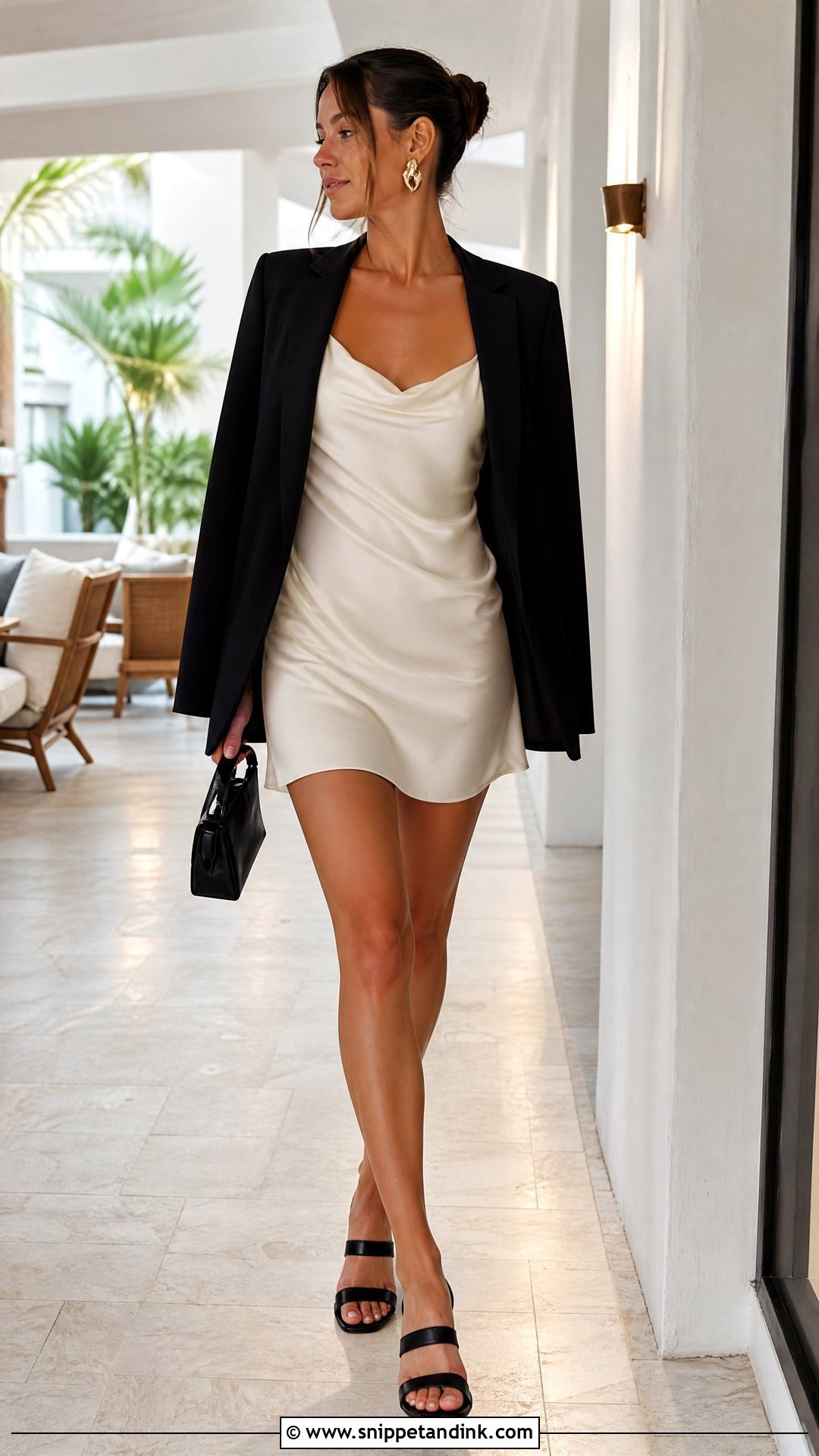
Simple column and satin gowns convert into short slip dresses more easily than anything else here. Remove the train and raise the hem and the dress immediately stops looking ceremonial. Ask whether the seamstress can rework the interior support too, so you don’t need bridal shapewear underneath; that’s often what stops people wearing a converted dress. Block-heel sandals, a small woven or leather bag and sculptural earrings suit it, with a blazer or cardigan for evenings. Colourful shoes freshen the ivory. It packs well for anniversary travel or an elegant vacation dinner.
9. Dyed Wedding Dress Evening Outfit
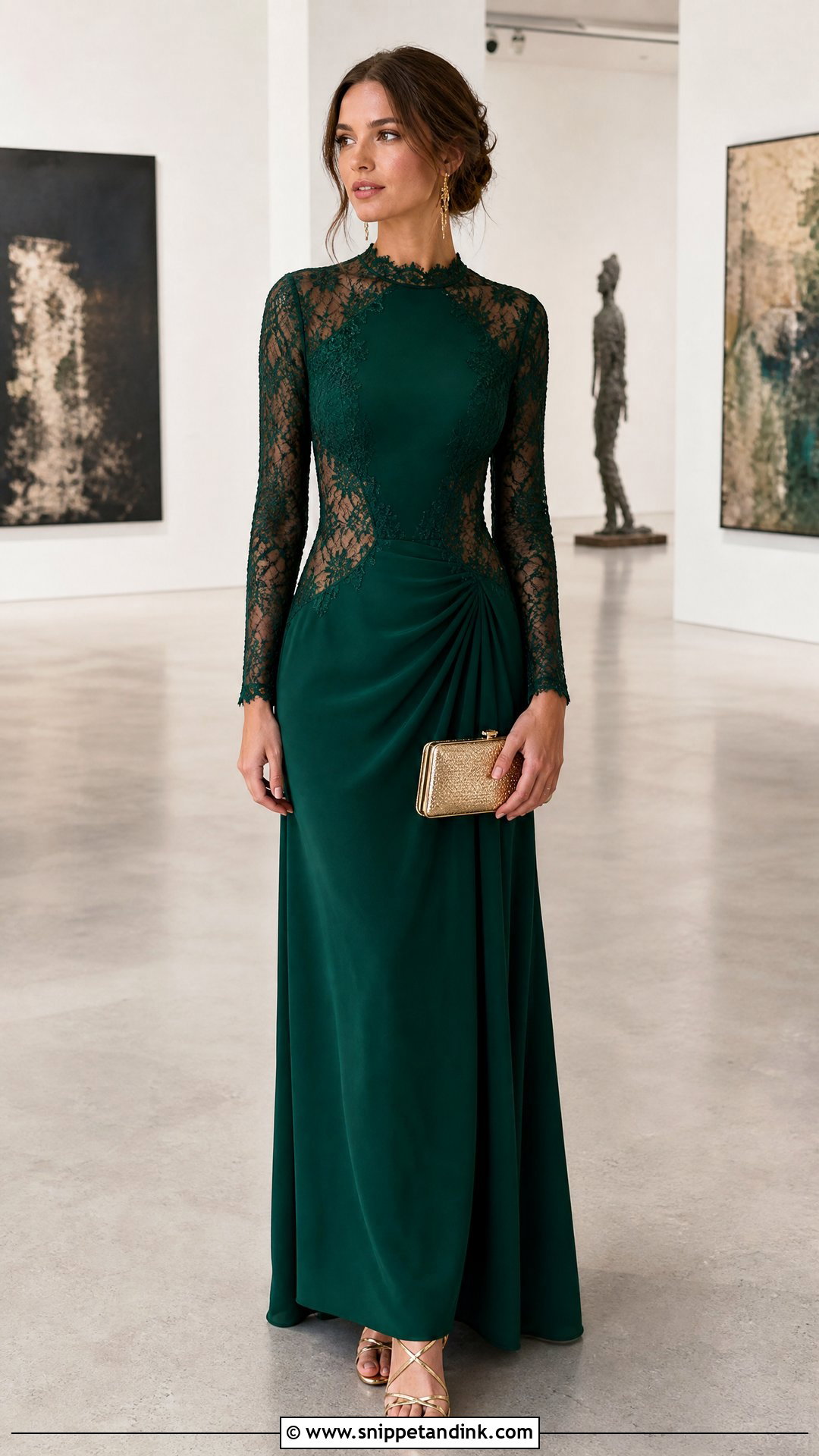
Dyeing is the change I’m most careful about, because the result depends on fibre content you can’t see. Silk and nylon take dye well; polyester barely takes ordinary dye at all, and the thread in most gowns is polyester, so seams can stay pale while the fabric darkens. Ask a professional to test a hidden seam allowance first. After colouring, shortening or removing the train turns it into a wearable evening dress. Navy, emerald, burgundy, dusty blue and rose all read very differently from bridal white. Keep accessories streamlined, especially over beading, which may not change colour at all.
10. Wedding Dress Anniversary Outfit
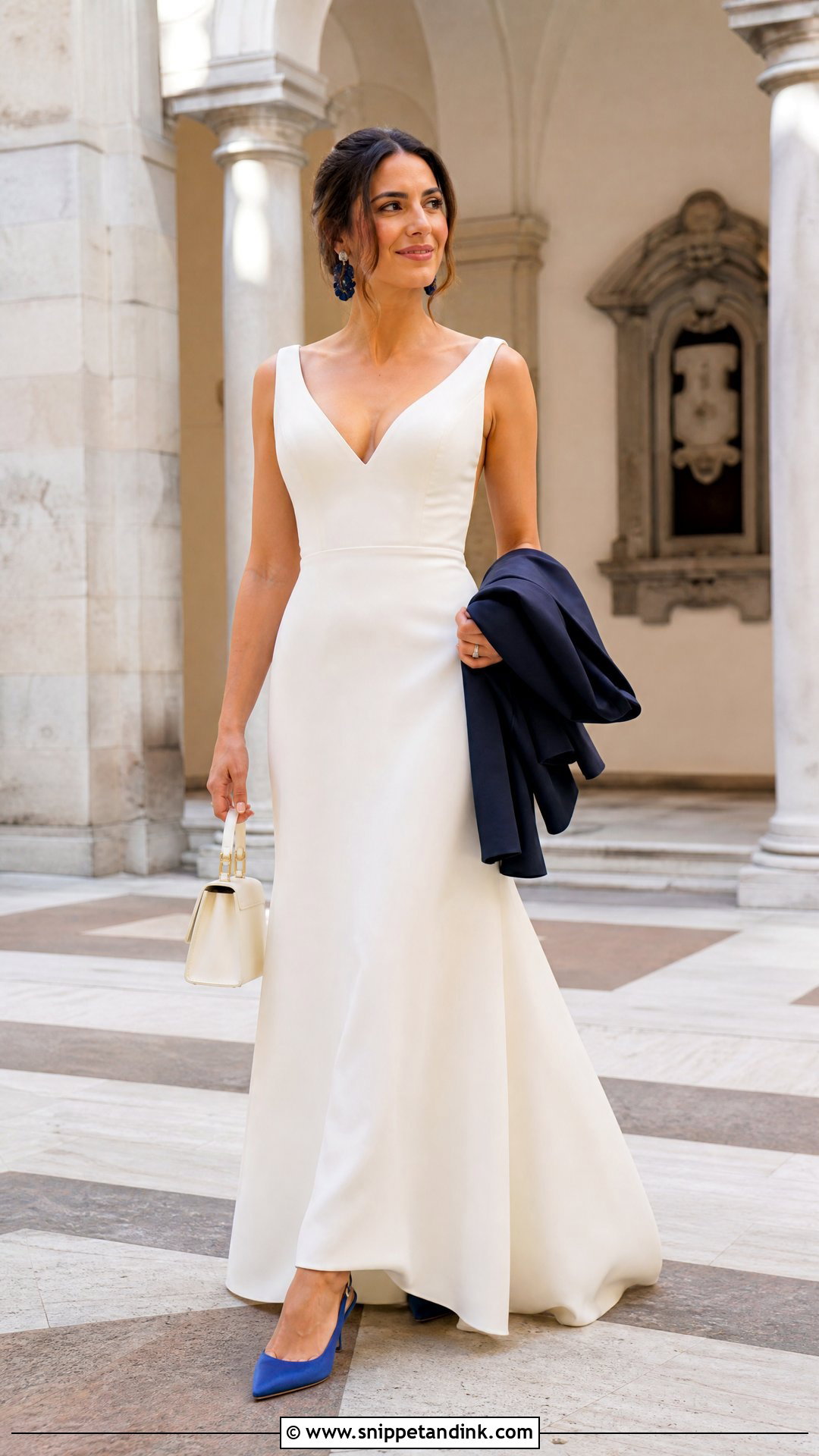
You don’t have to cut anything. Wearing the original gown for a milestone anniversary or a portrait session is a perfectly good second life. What makes it look current is the styling: no veil, a polished bun or loose waves, coloured heels, modern earrings and a structured mini bag. A leather jacket or tailored blazer shifts the mood further. If it no longer fits, a seamstress can often let out seam allowances or swap a laced back for a more forgiving closure without touching the design.
11. Wedding Dress Into A Tea-Length Dress Outfit
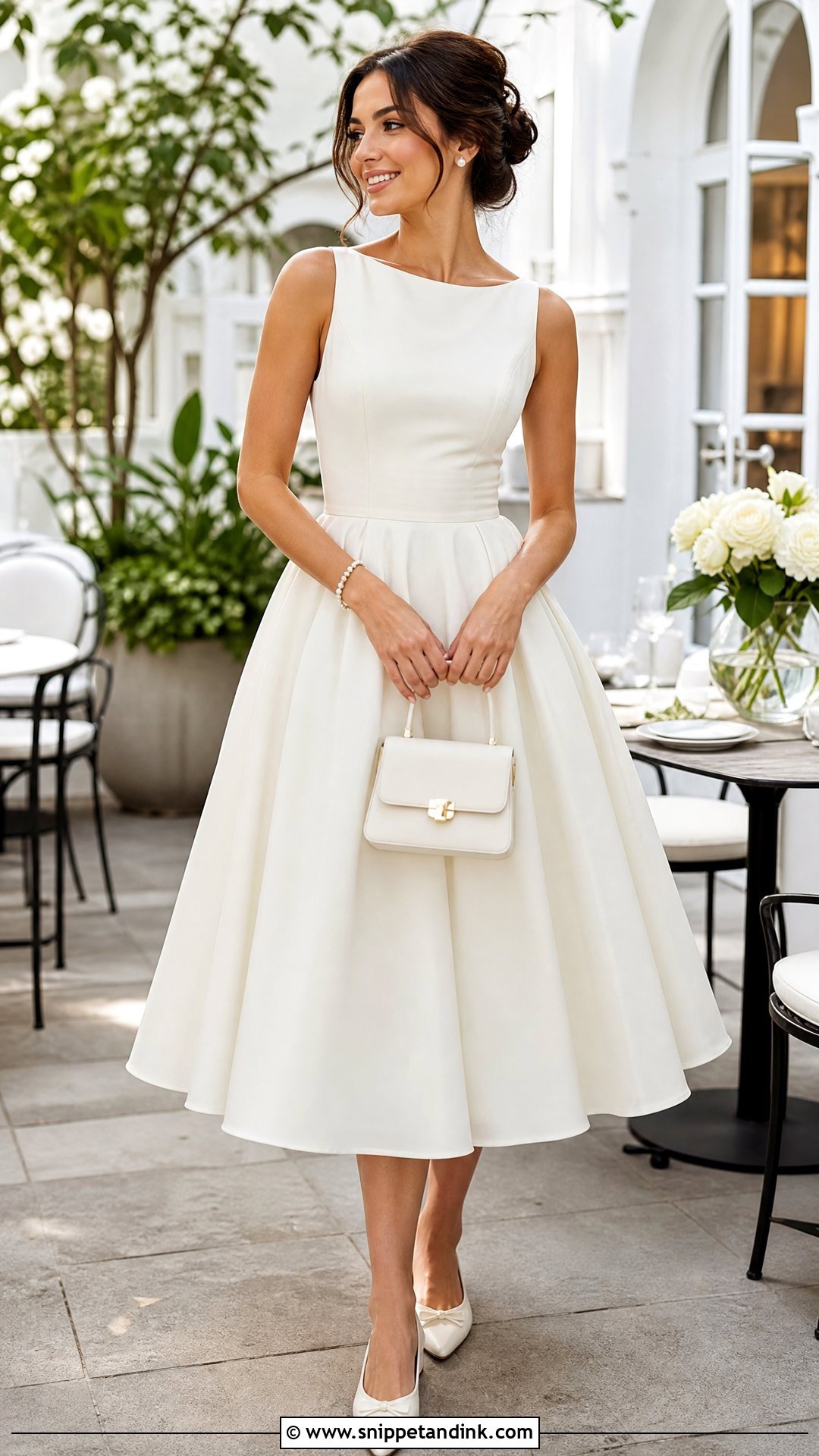
Tea length keeps the movement of a full skirt while taking the weight off. The hem lands between the knee and ankle, which leaves room for statement shoes; pointed flats, low slingbacks and block heels all work depending on the event. The most useful step is reducing petticoats. A skirt built for a heavy crinoline collapses oddly once it’s removed, so ask the seamstress to rebalance the layers rather than just cutting them out. If the bodice still feels bridal, simplify the sleeves or line a sheer panel. A small top-handle bag and pearl earrings finish it for brunches and garden parties.
12. Wedding Dress Into A Jumpsuit Outfit
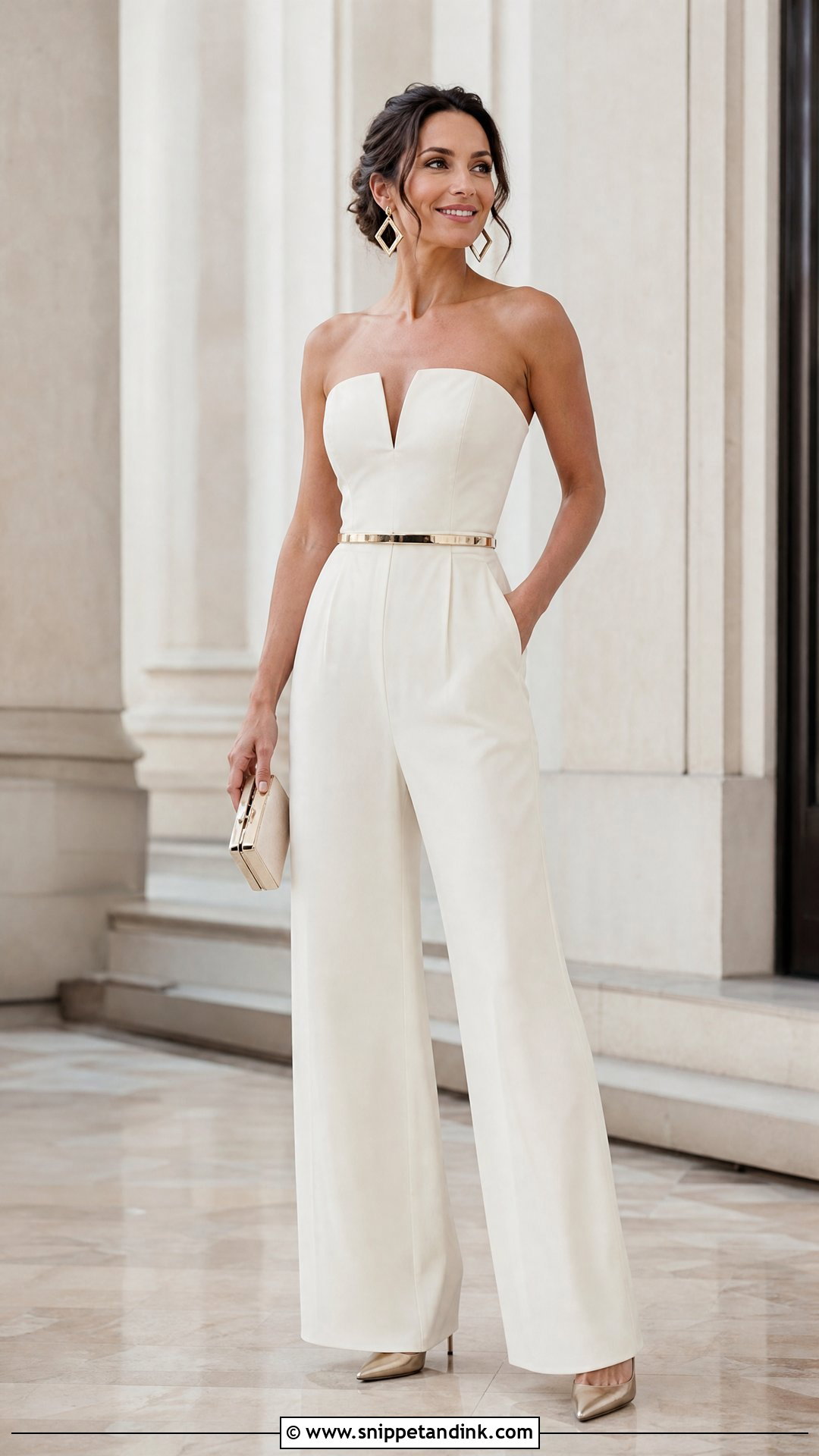
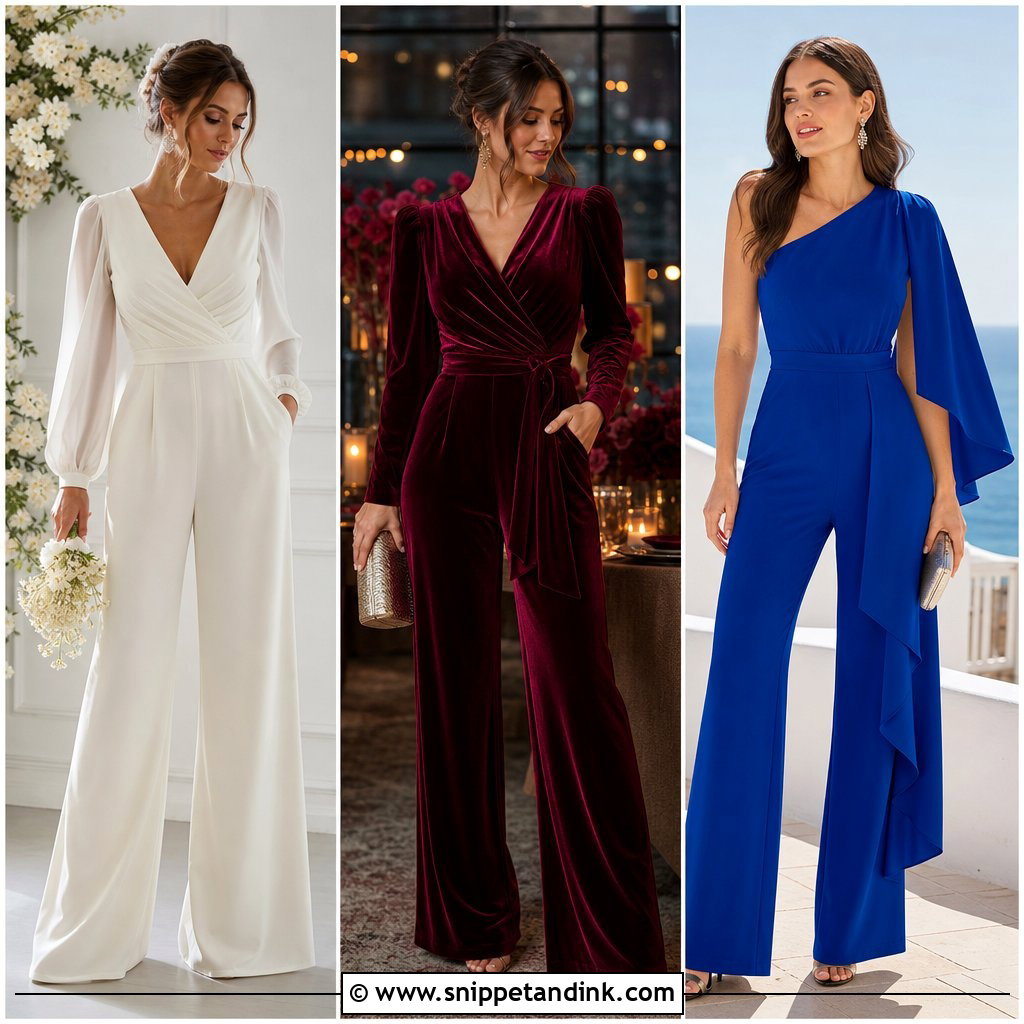
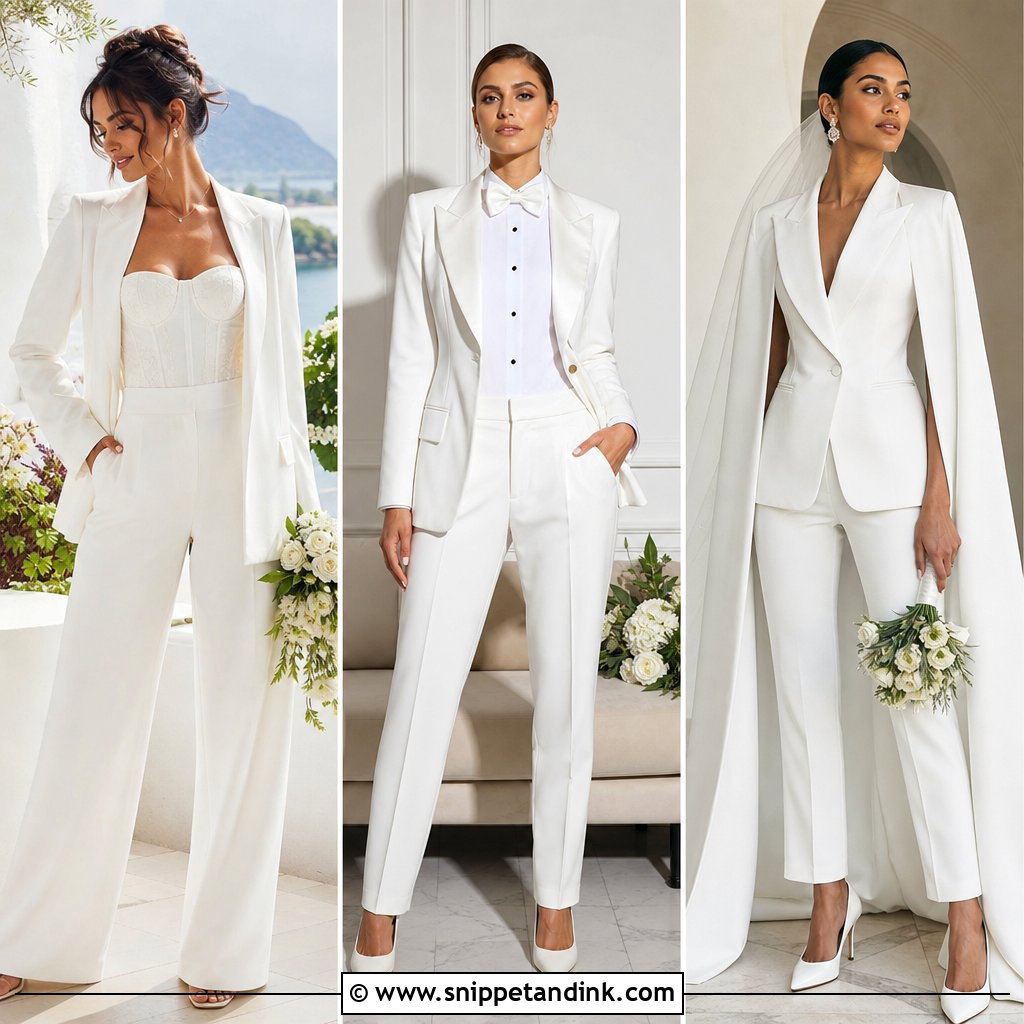
A jumpsuit is a complete rebuild, not an alteration. Structured fabrics like satin, crepe and mikado hold tailored trouser lines; soft chiffon and tulle won’t. The usual approach keeps the original bodice and cuts wide-leg trousers from the skirt or train. A long train often provides enough fabric, but if it doesn’t, a coordinating ivory can be added with care. Choose someone with both bridal and custom-clothing experience, since this involves drafting a pattern from scratch. Pointed heels, a slim metallic belt, geometric earrings and a clutch finish it. Leftover train can even become a cape.
13. Wedding Dress Into A Bridal Romper Outfit
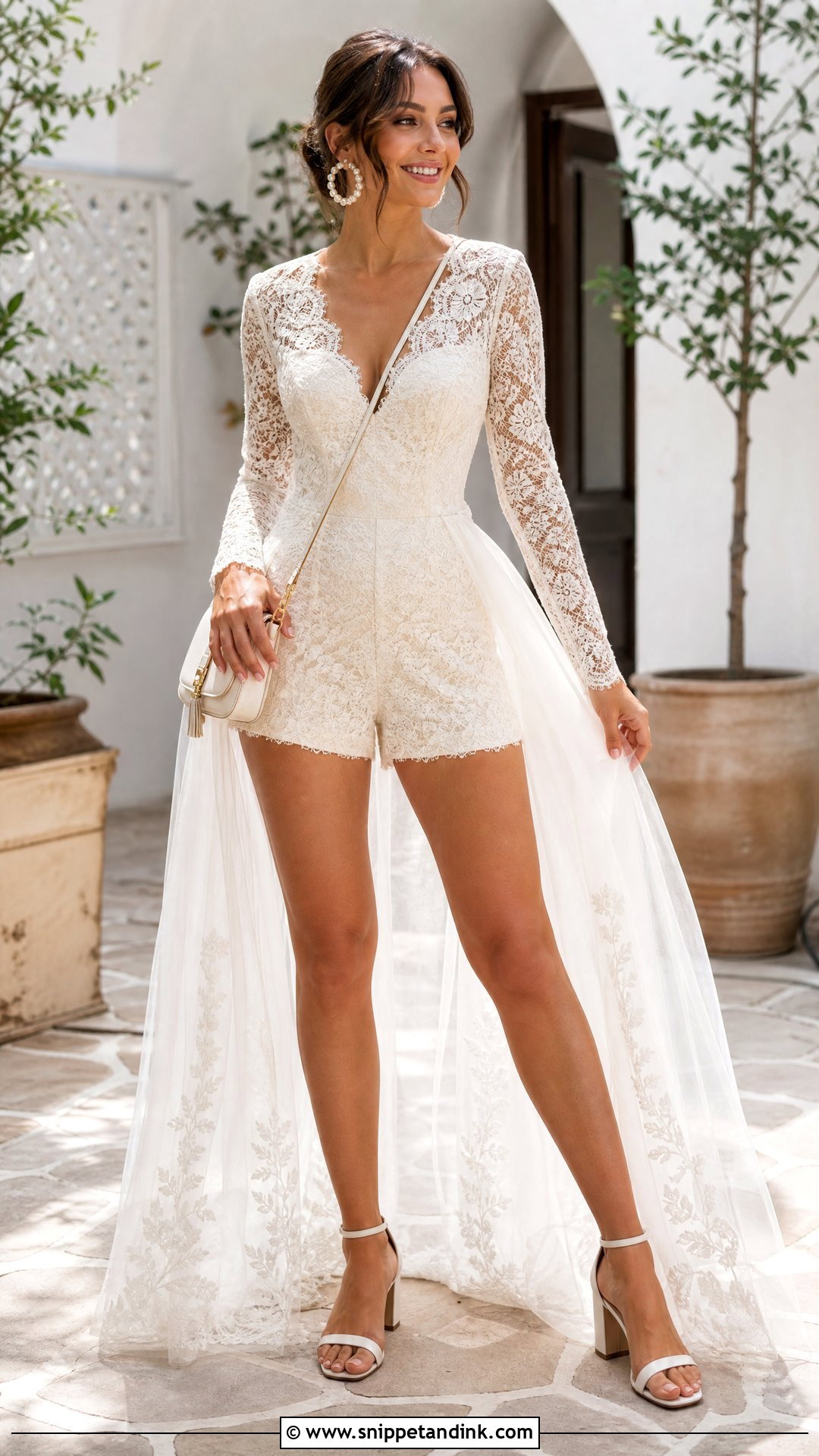
Rompers suit lightweight dresses with a fitted bodice and a short lining. The designer keeps the lace sleeves, sweetheart neck or straps and rebuilds the skirt as tailored shorts. A removable overskirt cut from the train lets it switch between playful and formal, which is handy for a casual vow renewal or a warm-weather anniversary trip. I’d insist on enough ease in the seat to sit and walk comfortably, plus proper lining where lace or chiffon is sheer. Low block heels, a crossbody bag and simple hoops keep it light.
14. Wedding Dress Tulle Skirt With A Bodysuit
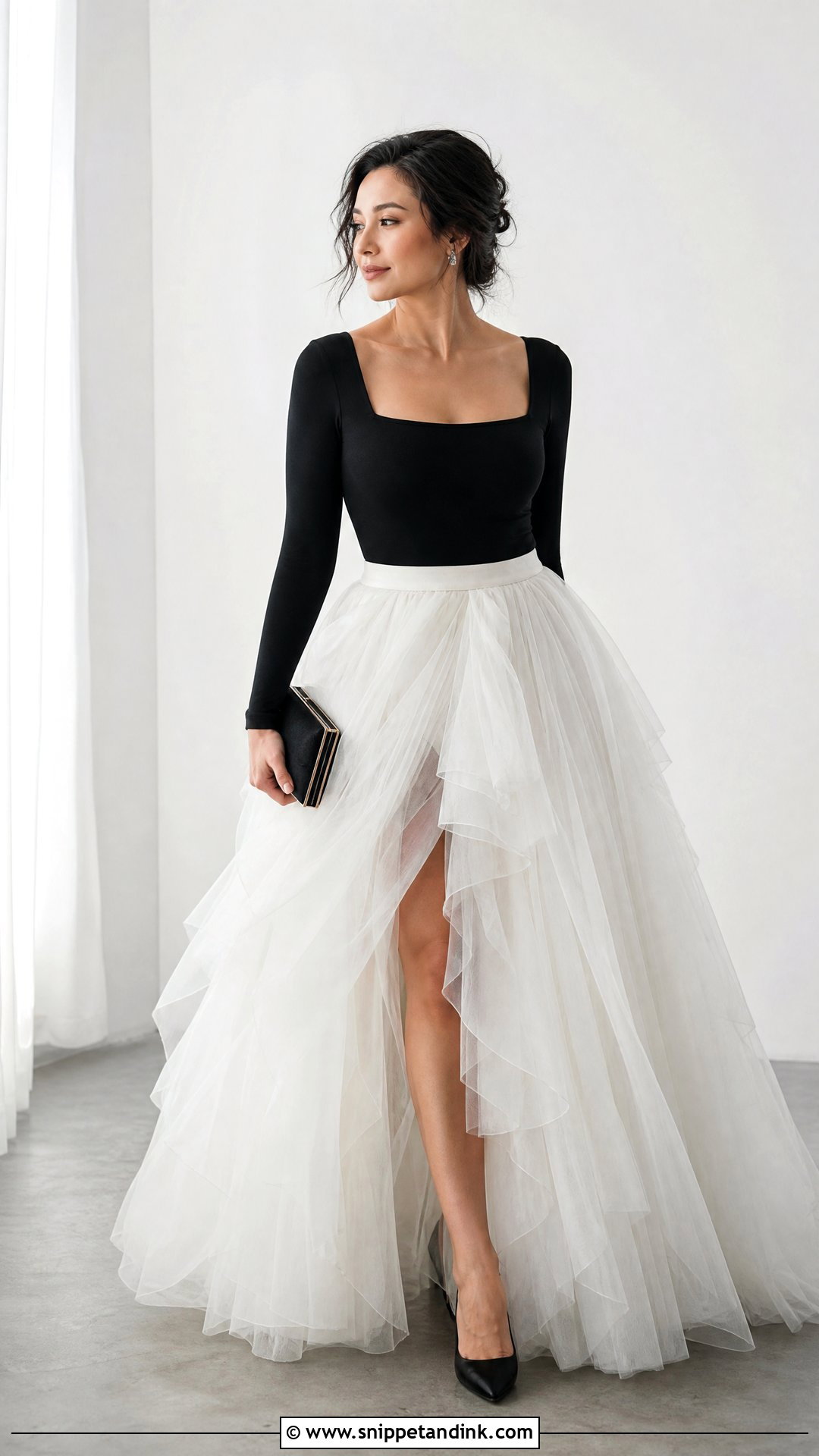
Tulle on its own reads bridal; tulle with a black bodysuit reads like a fashion editorial. Have the skirt separated, shortened if needed, and fitted to a secure waistband with a hidden zip, since tulle layers are heavier than they look. A square-neck or long-sleeve bodysuit in black, navy or a jewel tone balances the volume. A taupe or grey knit softens it. Keep the accessories plain: pointed pumps, a structured clutch and small earrings. It’s made for anniversary portraits and creative evenings.
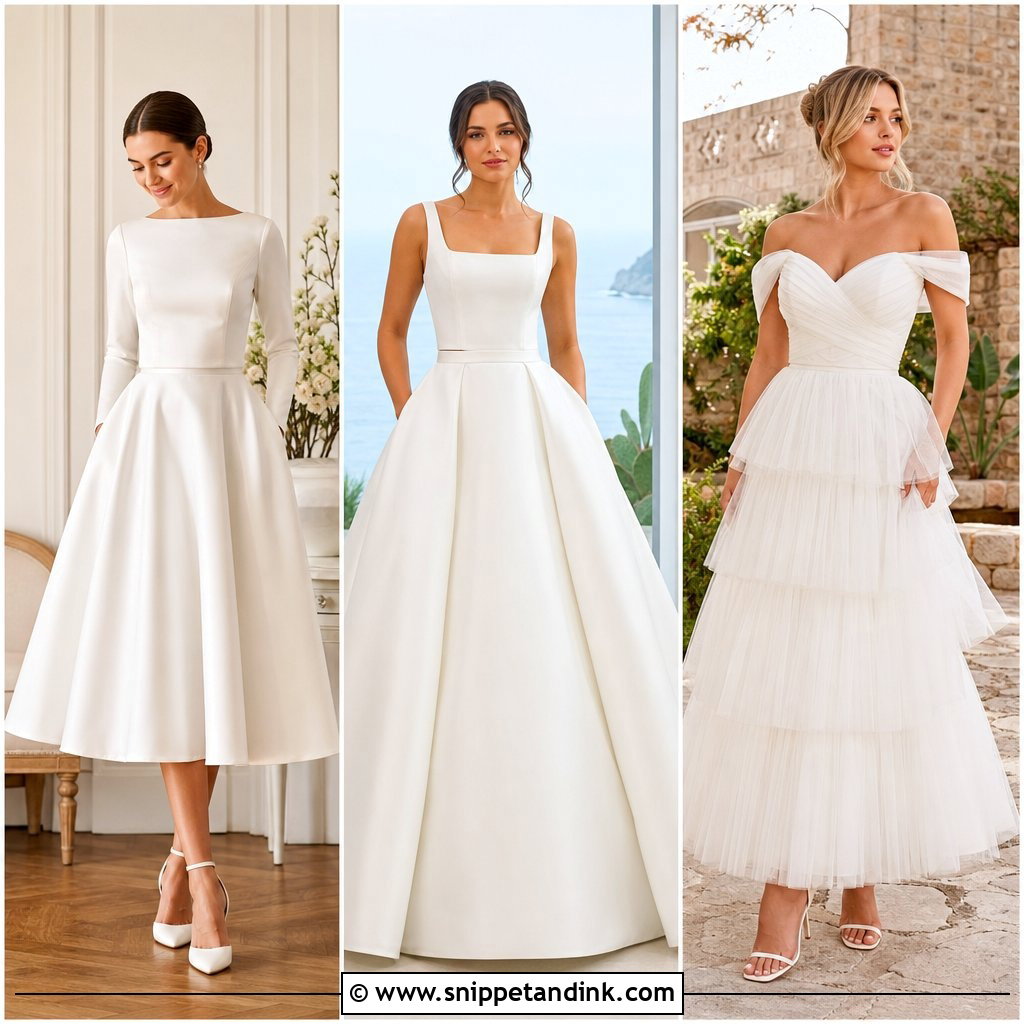
15. Wedding Dress Into A Pastel Maxi Dress Outfit
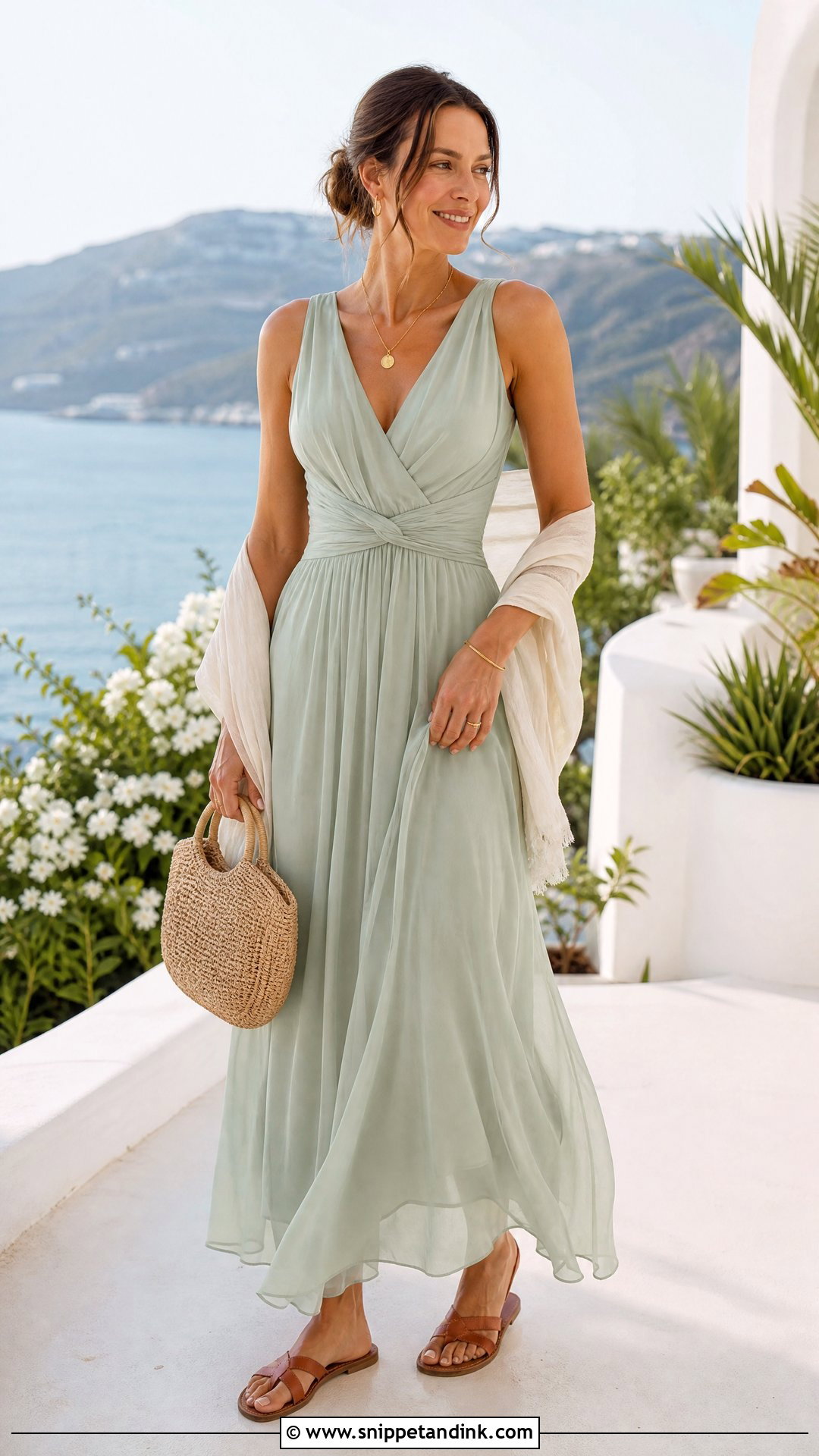
Flowing chiffon and silk gowns can become a resort maxi with dye and a few changes, but these fabrics are the most delicate to colour and need a specialist. Test a hidden section first. Soft blue, sage, lavender, blush or muted coral keep the lace and drape visible. Remove the train, rehem the dress for flat sandals rather than heels, and strip heavy bridal beading. Leather slides, a woven bag, fine gold jewellery and a light wrap complete it. The more natural the accessories, the less it looks like a coloured wedding dress.
16. Wedding Dress Into A Blouse And Wide-Leg Pants Outfit
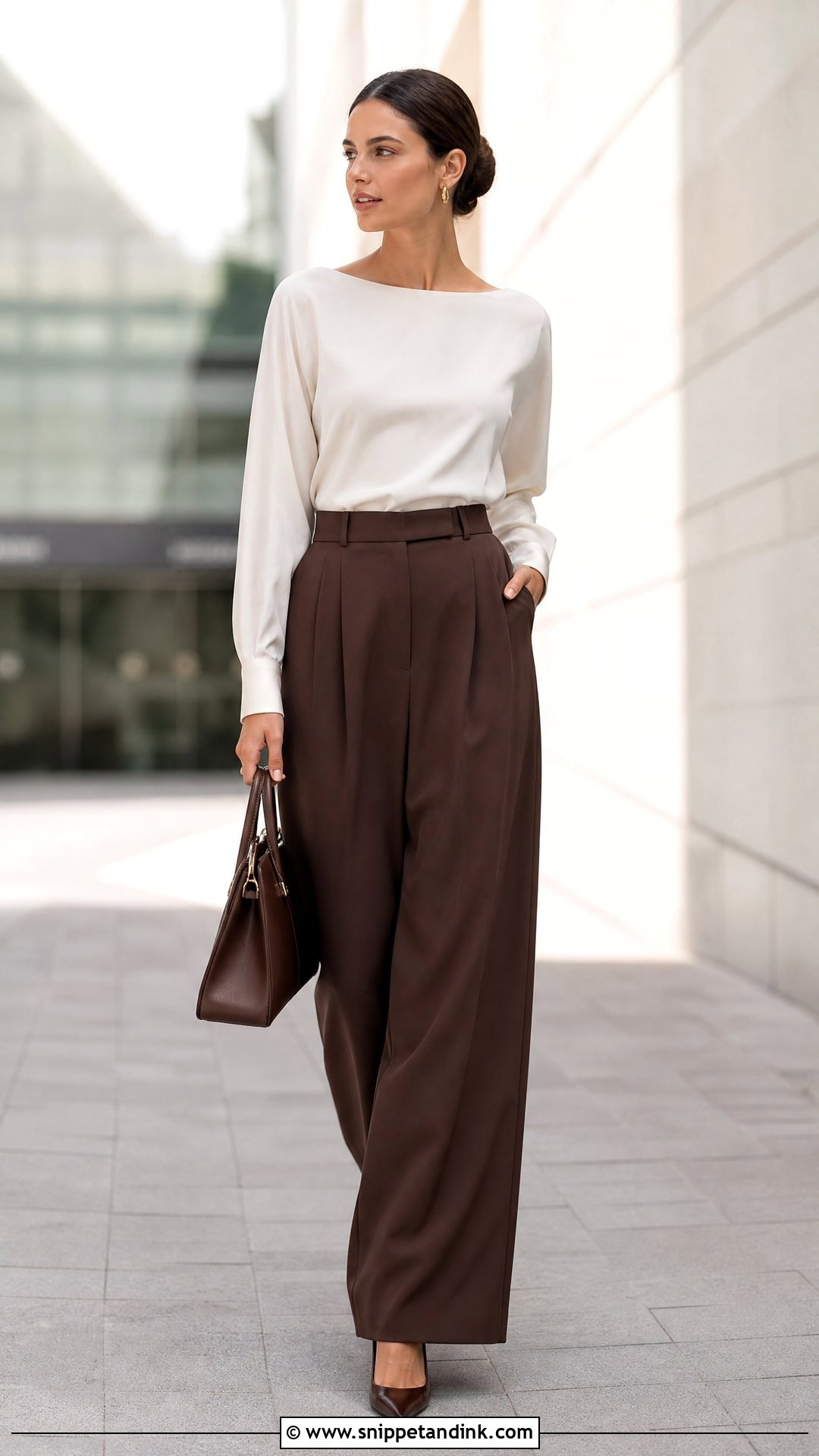
Generous satin sleeves, a cape or a long train can supply enough fabric for a new blouse. A boat-neck, wrap or sleeveless cut wears far more often than a boned bodice ever will. Pair it with high-waisted wide-leg trousers in black, camel, navy or chocolate, with loafers by day and pointed heels at night. I’d move just a little lace or beadwork onto the cuffs or neckline rather than covering the whole blouse; a small trace of the gown is what makes it feel personal without looking costume-like.
17. Wedding Dress Lace Jacket With A Slip Dress
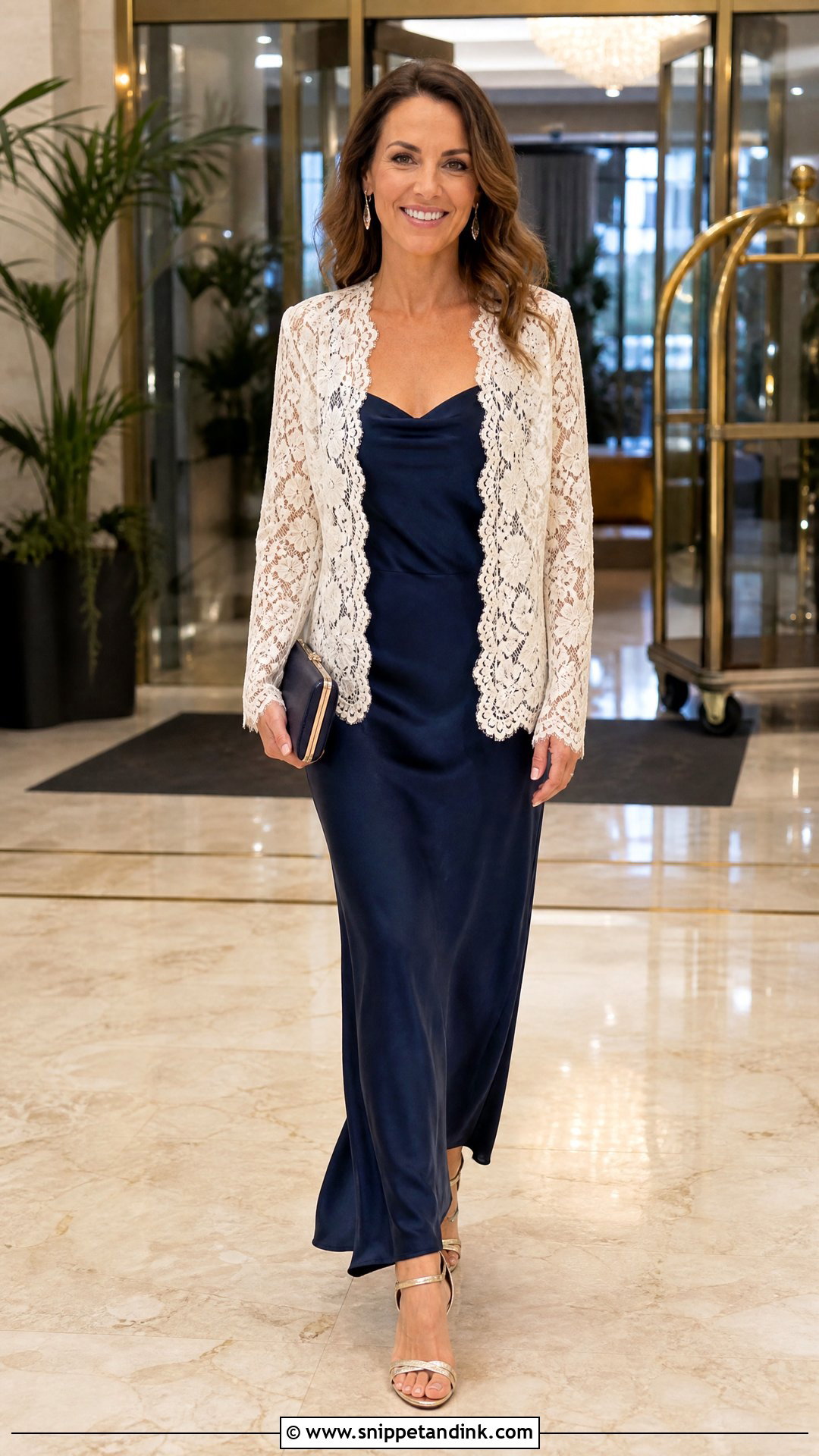
Sometimes the gown can’t be altered successfully as a whole, especially when the skirt is badly stained or the structure is complicated. The lace can still be saved as a jacket, bolero or longline overlay, particularly from removable sleeves, illusion necklines or appliquéd backs. Wear it over a plain slip dress in black, navy, champagne or a pastel. Ask for a clean front closure, or leave it open for an easier fit. Strappy heels, a streamlined clutch and small drops let the lace lead.
18. Wedding Dress With A Leather Jacket And Boots
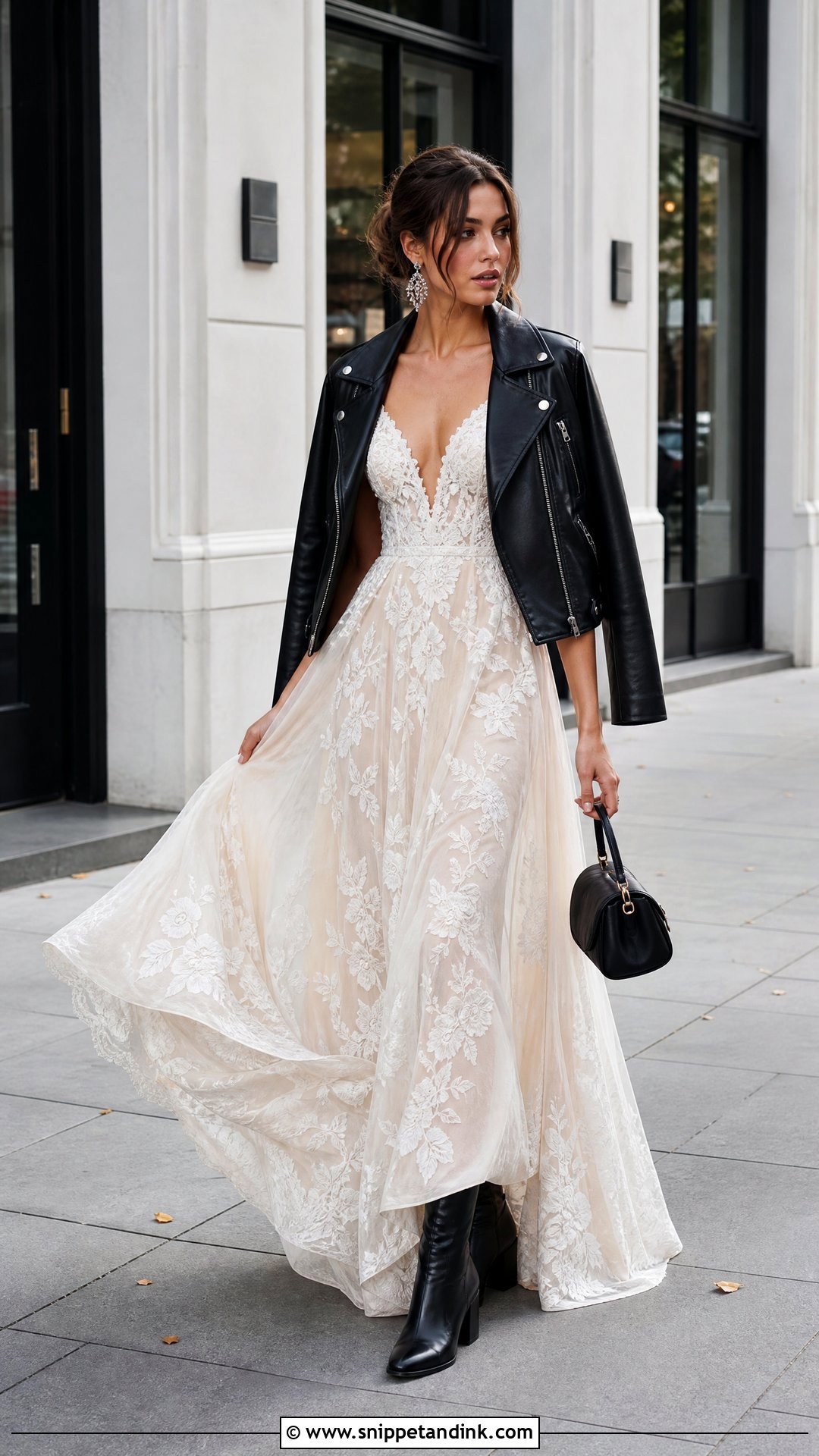
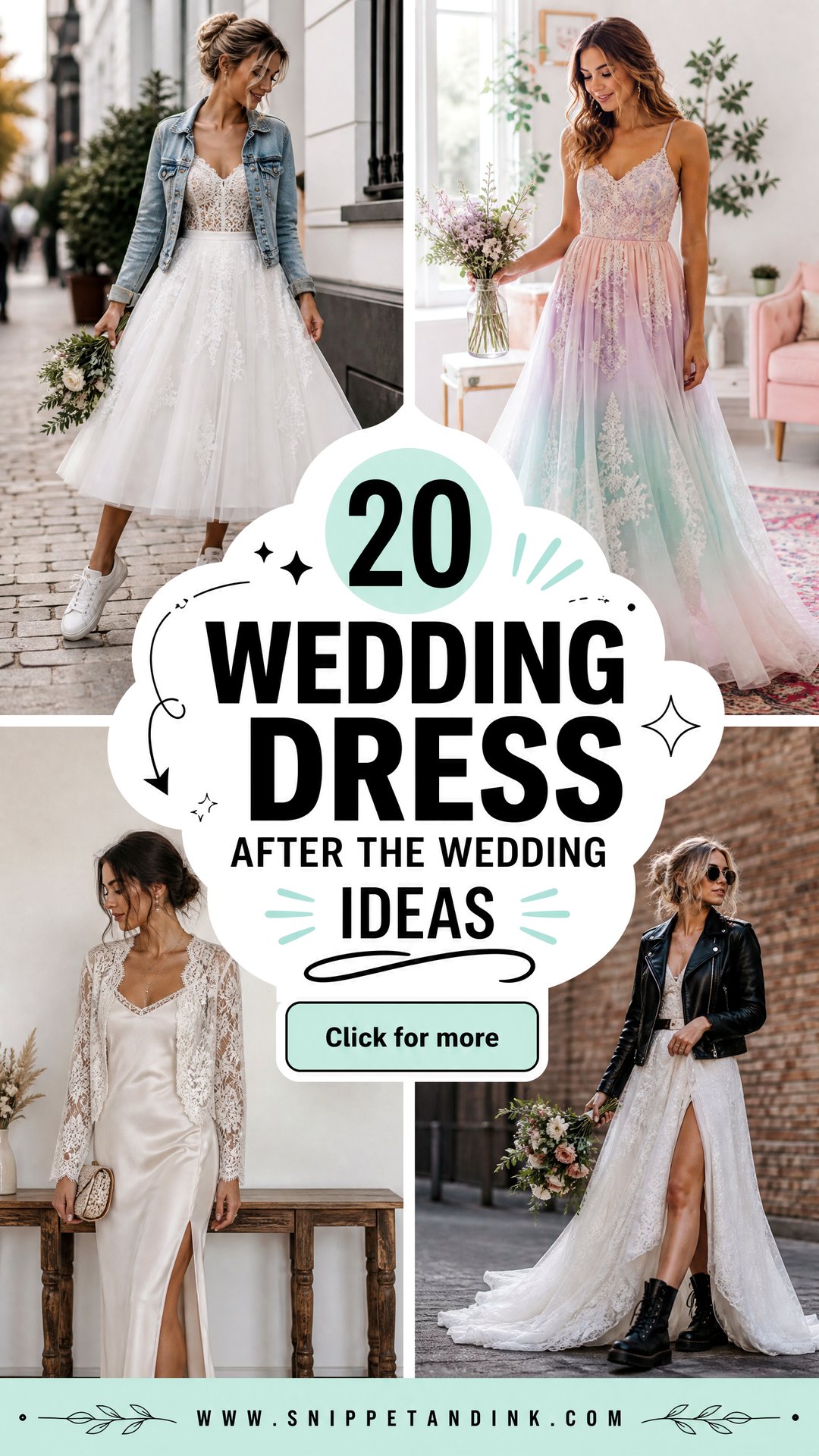
No scissors needed. A cropped leather jacket over soft lace, chiffon or tulle adds structure and contrast, and swapping bridal shoes for ankle or knee-high boots changes the whole mood if the hem lets them show. Skip the veil and hair pieces in favour of a sleek ponytail, textured waves or a plain headband. Bold earrings and a compact bag finish it. I’d save this for an urban anniversary shoot; it lets you wear the dress exactly as it was while saying something about who you are now.
19. Wedding Dress With Sneakers For A Photo Outfit
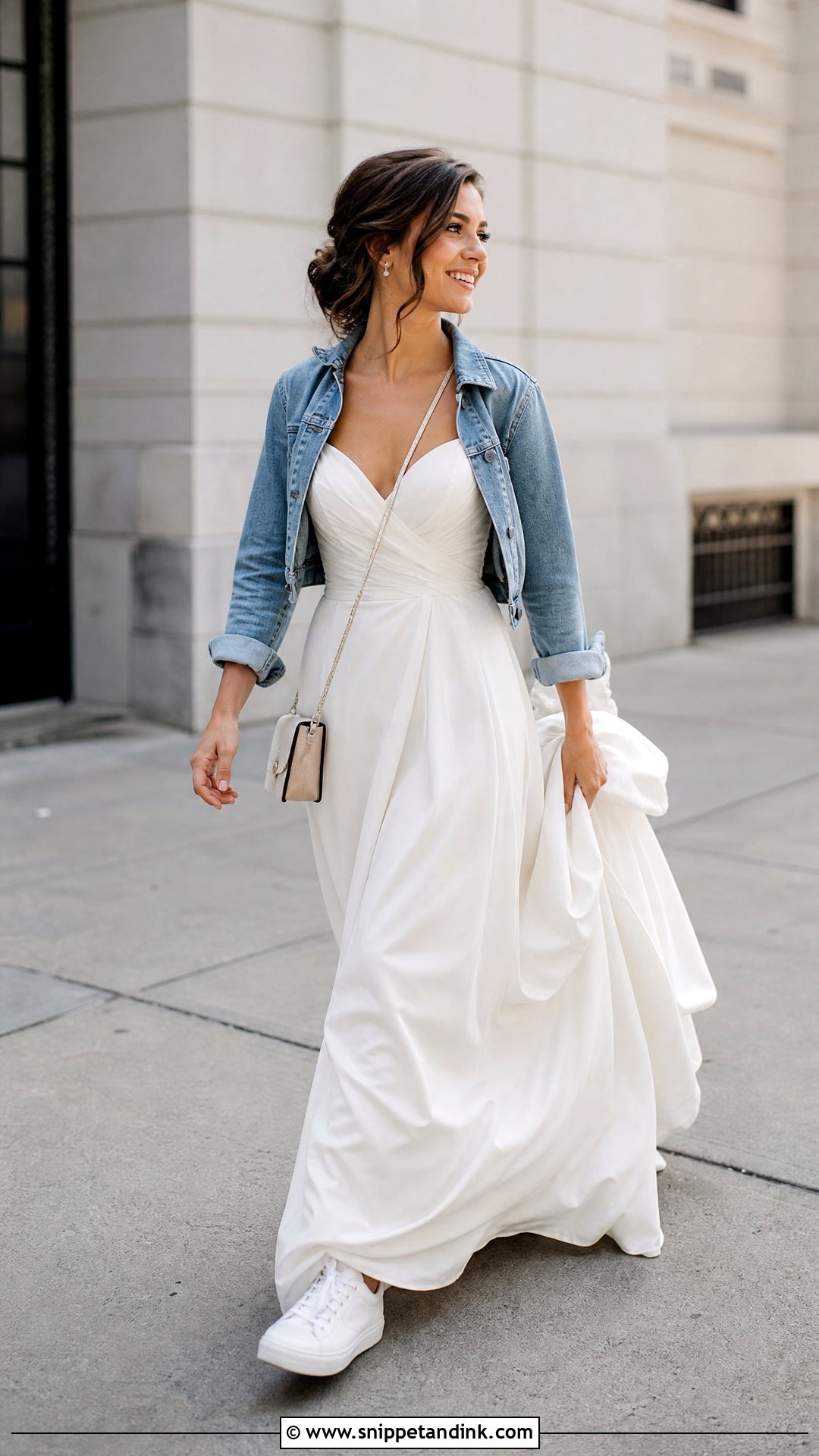
Sneakers turn a formal gown into something you can run around a city in for photos. Choose clean white, metallic or pastel pairs that aren’t too chunky. A long train needs managing: use the existing bustle, or have a seamstress add a removable wrist loop so you can lift it on steps. A denim jacket, cropped blazer or coloured cardigan, small earrings and a crossbody bag complete it. Hold the palette to two or three shades. It’s a low-commitment way to wear the dress again before deciding whether to preserve, sell, donate, or alter it.
20. Wedding Dress Into A Modern Skirt Suit Outfit
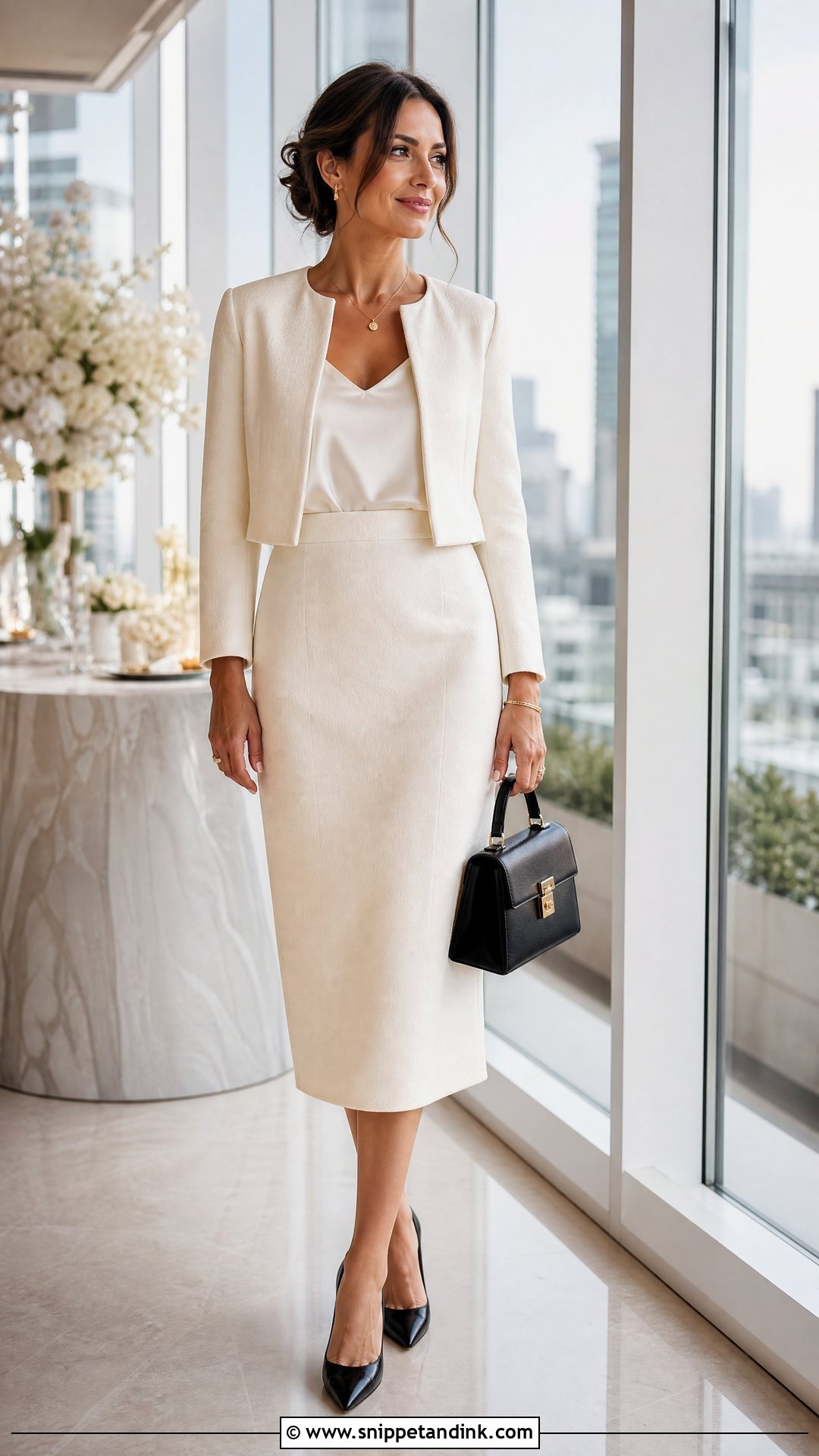
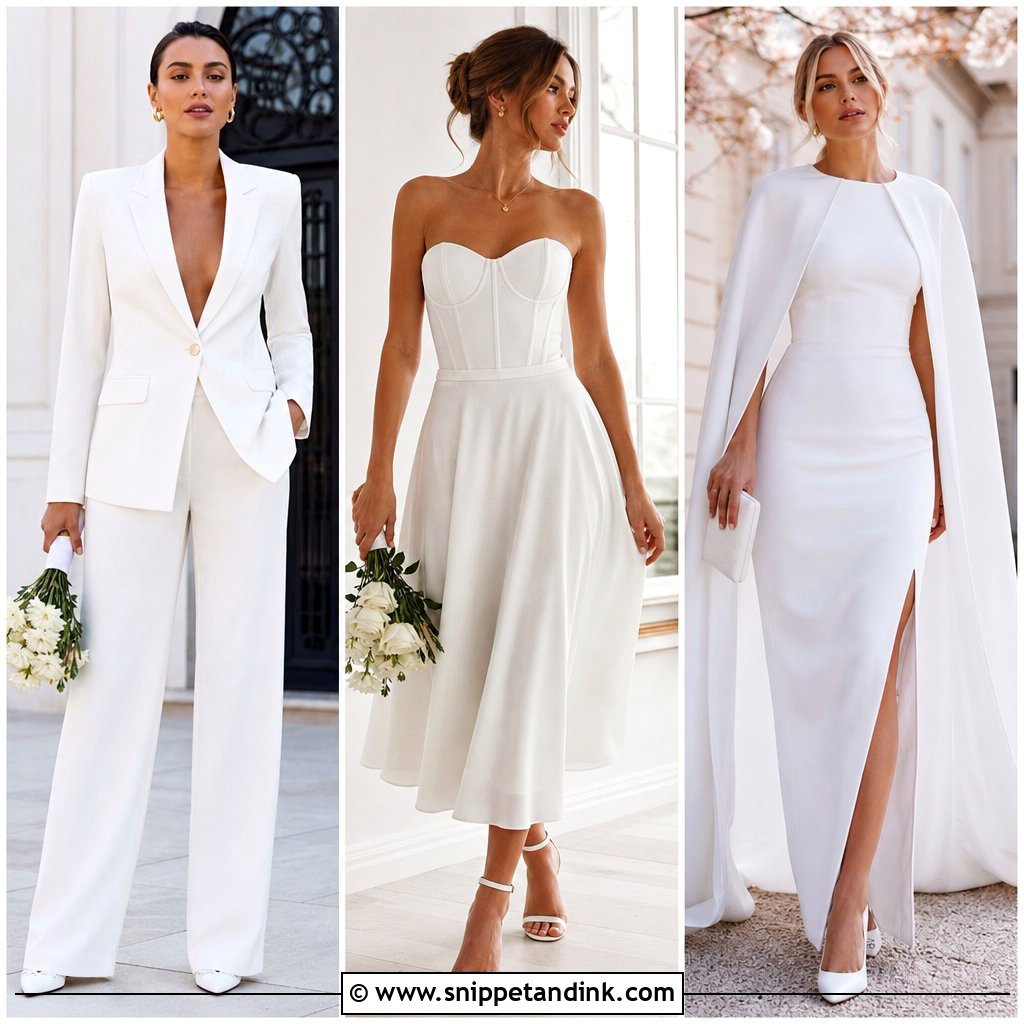
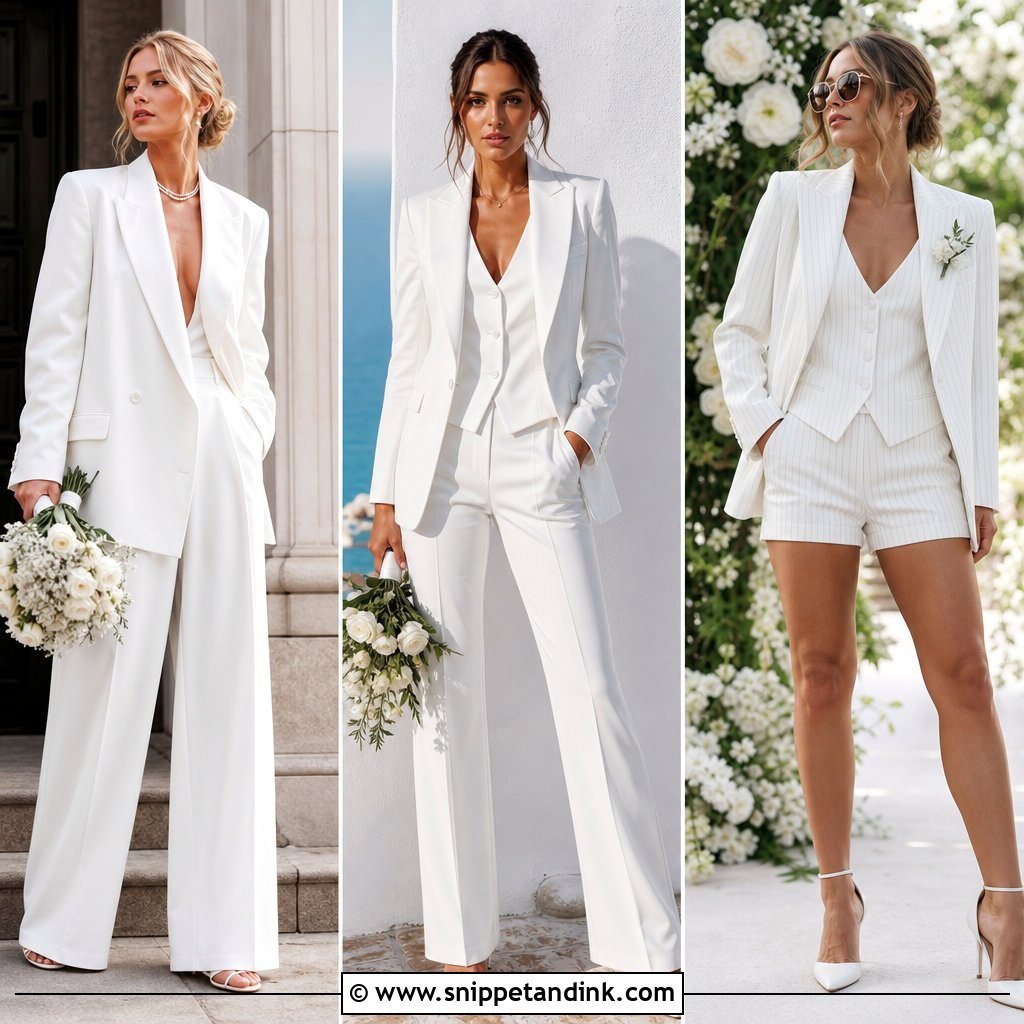
Structured gowns sometimes hold enough fabric for a full skirt suit: a mini, pencil or midi skirt from the main skirt, and a cropped jacket or vest from the train. Where there isn’t enough, a coordinating fabric looks better than a near-match that’s slightly off. Under it, a silk camisole; with it, pointed pumps, a top-handle bag and gold jewellery. Black accessories sharpen it; tan or metallic keep it soft. I like keeping one original detail, such as covered buttons or a small appliqué on the lapel. It’s the most ambitious rebuild here, and the most wearable afterward.
Stains You Can’t See Yet Will Show Up Later
Champagne, white wine, sweat and sugary drinks often dry clear. Months later they oxidise into yellow or brown patches, which is why a gown that looked clean in the box can come out marked. Telling the cleaner exactly where you remember spills helps them treat those spots before the stains set.
Aim to get the dress cleaned within a few weeks of the wedding, not a year. Older oxidised stains can sometimes be lifted, though it’s slower, costs more and doesn’t always work on delicate silk.
Which Changes Can Be Undone?
If you think you might want the gown back in its original form one day, say so before any work begins. Some changes leave a way back; others don’t.
- Reversible: detaching a train or sleeves, taking out petticoat layers, adding straps or a waist stay, restyling with new accessories.
- Partly reversible: a deep hem can be let down if the seamstress folds the excess inside rather than cutting it off.
- Permanent: dyeing, cutting to mini or tea length, splitting the bodice and skirt, and full rebuilds like jumpsuits.
- Always ask for the offcuts back, labelled. They’re your repair stock for anything that gets damaged later.
A Second Life Doesn’t Have to Mean Scissors
The right transformation fits both your memories and how you dress now. You might keep the gown whole for anniversary photos, shorten it into a cocktail dress, split it into separates, or commission a jumpsuit or suit. Clean it first, then talk through fabric, structure, budget and which changes can be undone. Keep every leftover piece of lace, every button and appliqué for repairs or small keepsakes. And if you’d rather keep the dress exactly as it was, that’s a complete answer too.
You'll Like These Ideas:


Leave a Reply