
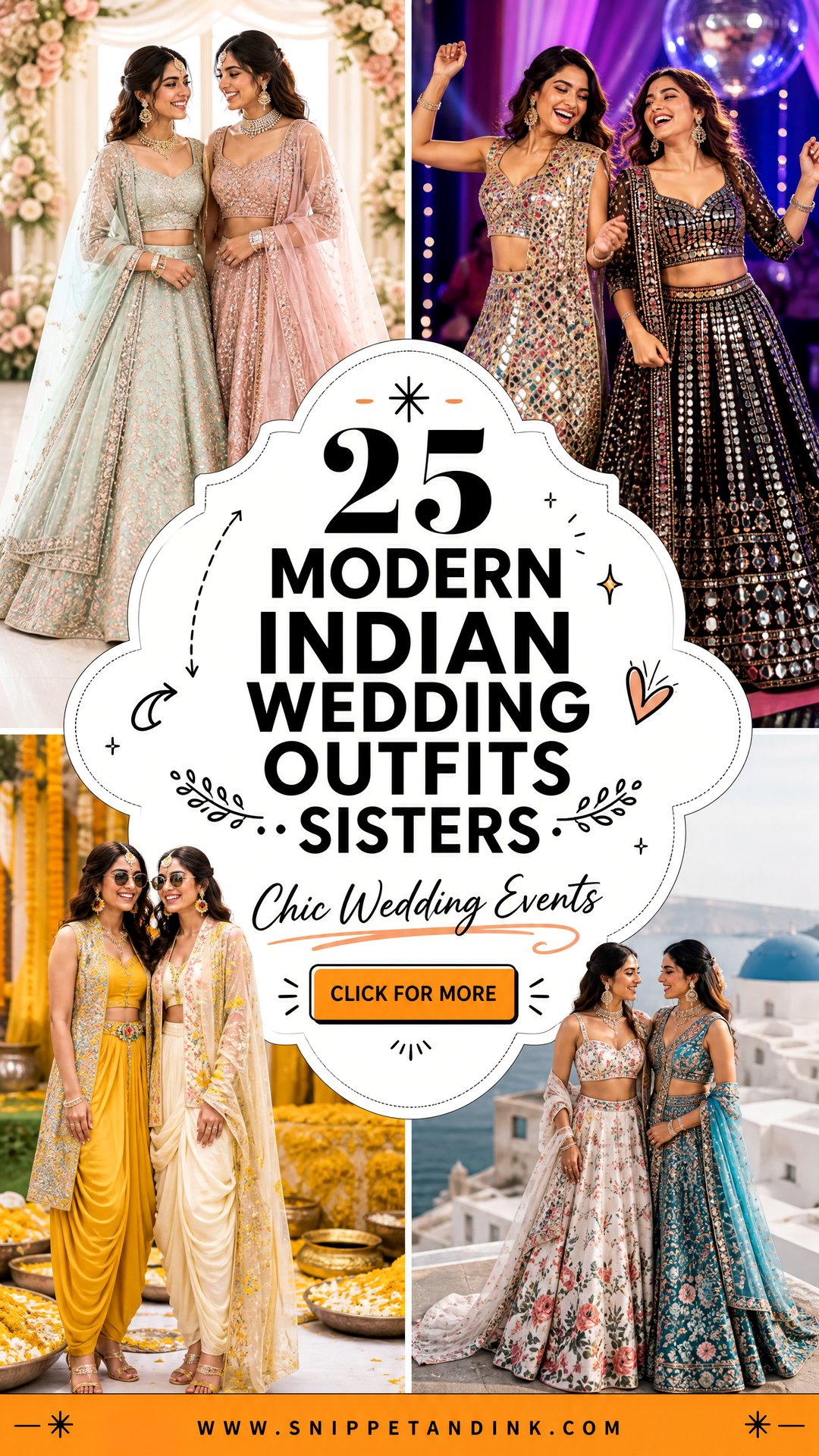
As the bride’s sister, you’re rarely just a guest. You’re carrying a tray at one ritual, leading the dance at the sangeet and getting pulled into every family photo, often within a few hours. So when I style sisters for an Indian wedding, my first question isn’t colour; it’s what you’ll be doing in each outfit. Lightweight lehengas, modern sarees, sharara sets, capes and fusion pieces all have a place, as long as they move with you and don’t compete with the bride. Pastels suit day events, jewel tones carry at night, and a touch of metallic gives the reception its polish. Here are 25 sister looks, function by function, with the details that keep each one practical.
Planning Five Functions Without Buying Five Lehengas
Most sisters are invited to everything from haldi to reception, and a new heavy outfit for each one is expensive and miserable to pack. I plan a sister’s wardrobe by function and by the job she’ll be doing, then look for pieces that can be worn twice in different ways.
- Haldi: something washable that you won’t miss if it stains.
- Mehendi: an outfit you can sit cross-legged in for hours, with short sleeves if your own hands are being done.
- Sangeet: your lightest skirt, a secure blouse and cushioned shoes for the choreography.
- Pheras or nikah: the most traditional piece, in the fabric your family expects.
- Reception or cocktail: one piece with shine, whether a saree, a gown or a cape lehenga.
The easiest repeat is one skirt with two blouses and two dupattas. A plain silk lehenga with an embroidered choli at the sangeet looks like a different outfit with a brocade jacket at the reception.
Staying out of the bride’s colour lane
Ask the bride for her colours at every function before you shop. Red and deep maroon are traditional bridal colours in many communities, so I keep sisters away from them at the pheras unless the bride says otherwise. Sisters who want to match can share a palette, but different shades from the same colour family photograph better than identical outfits.
1. Pastel Lehenga For Sister Wedding
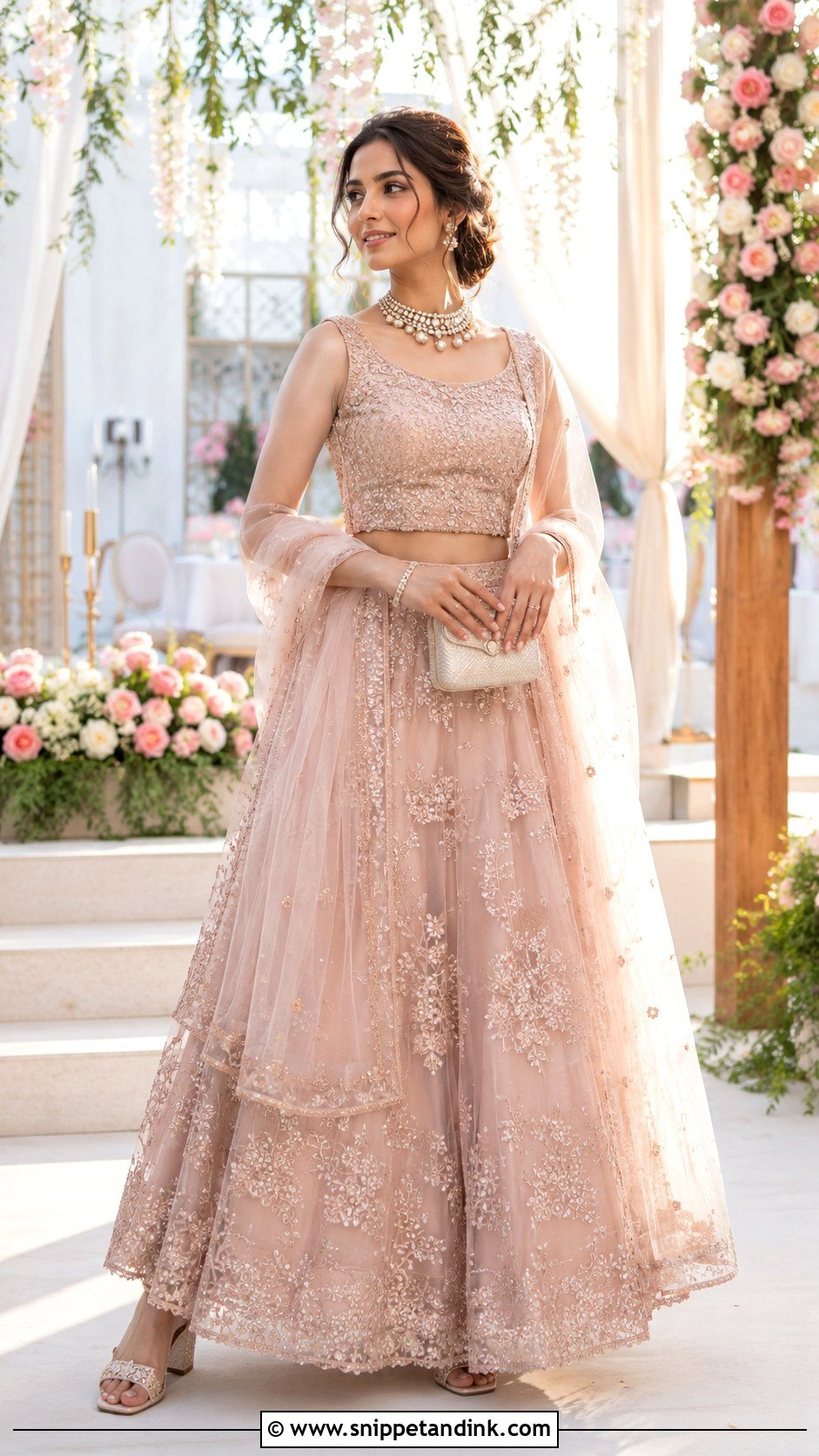
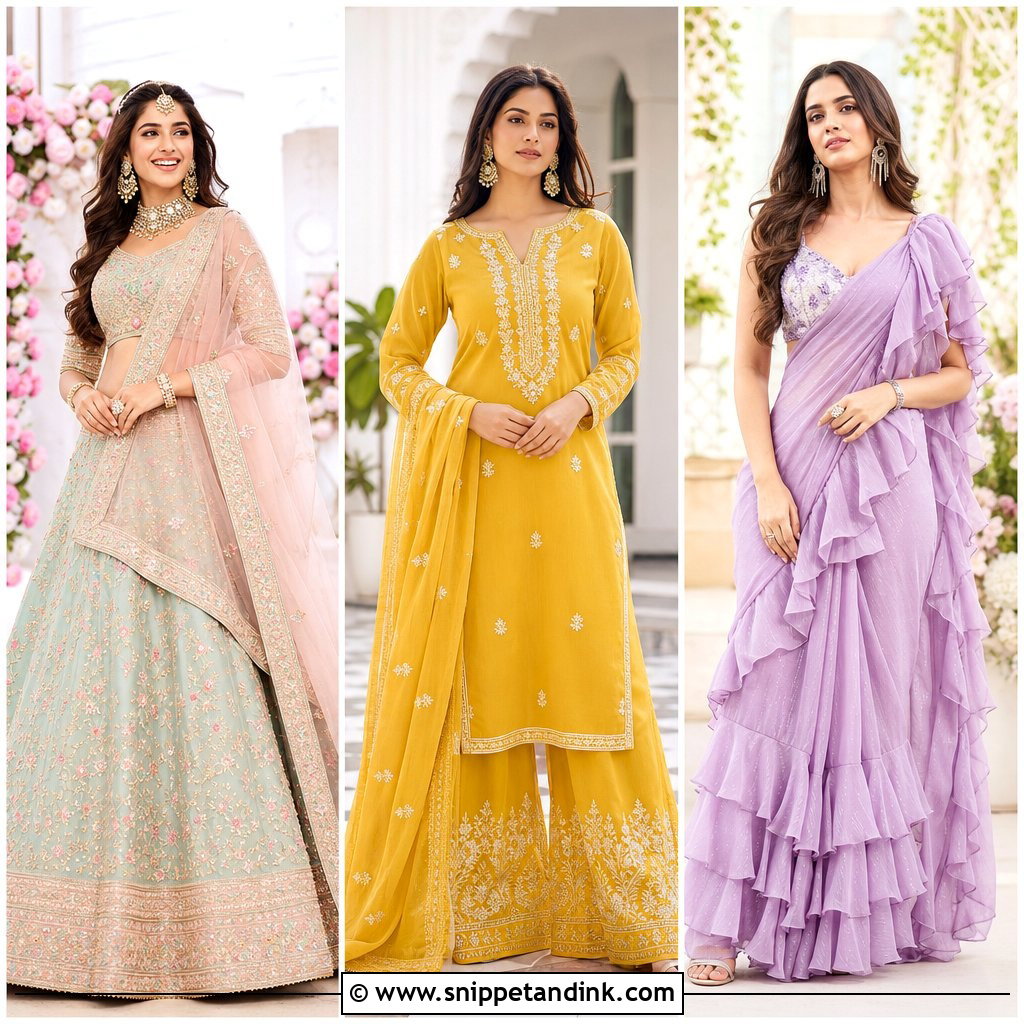
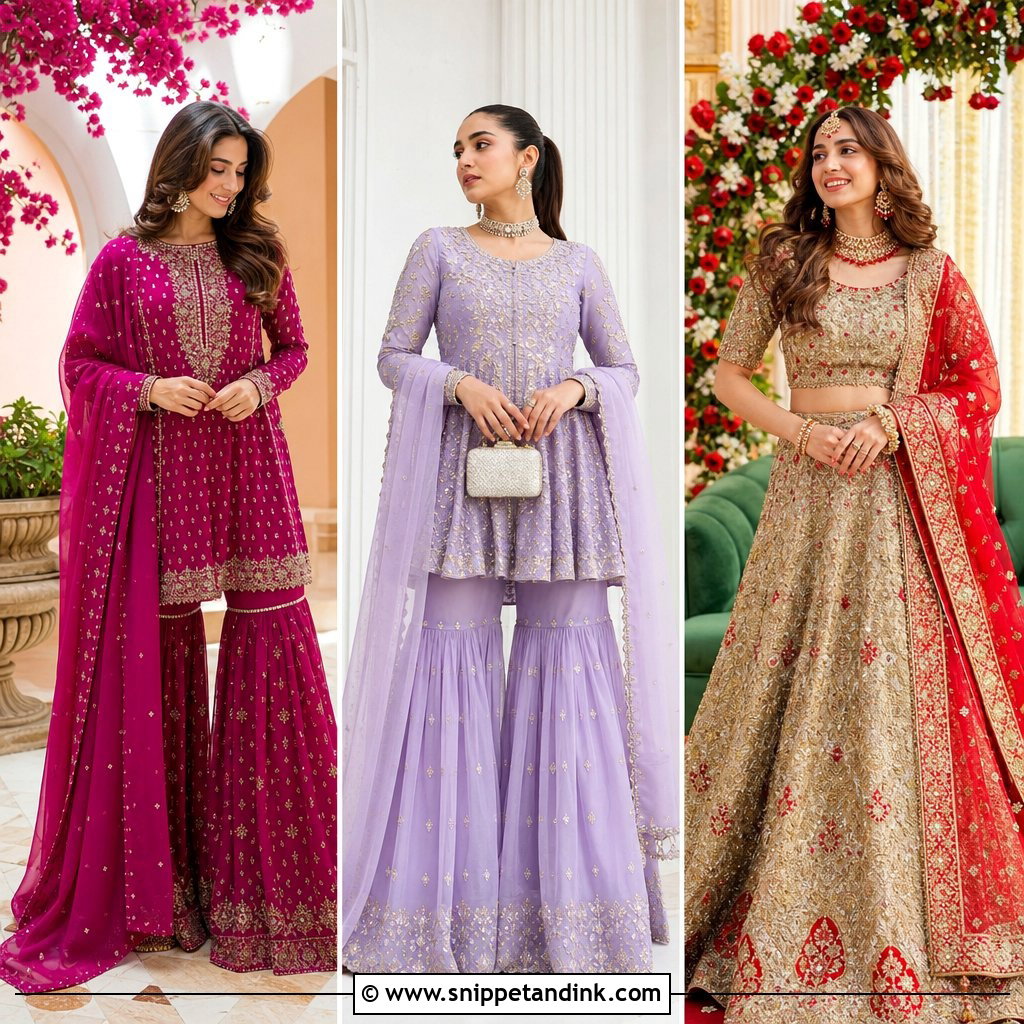
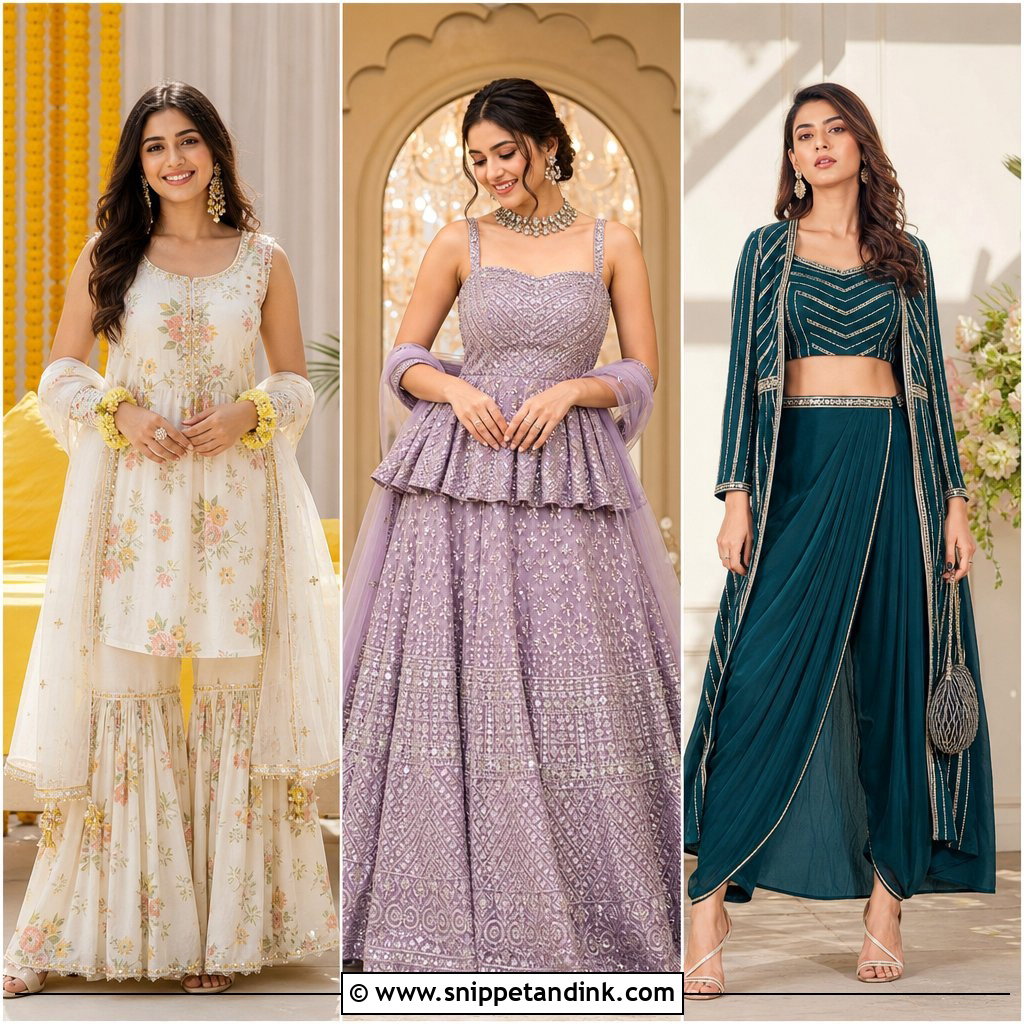
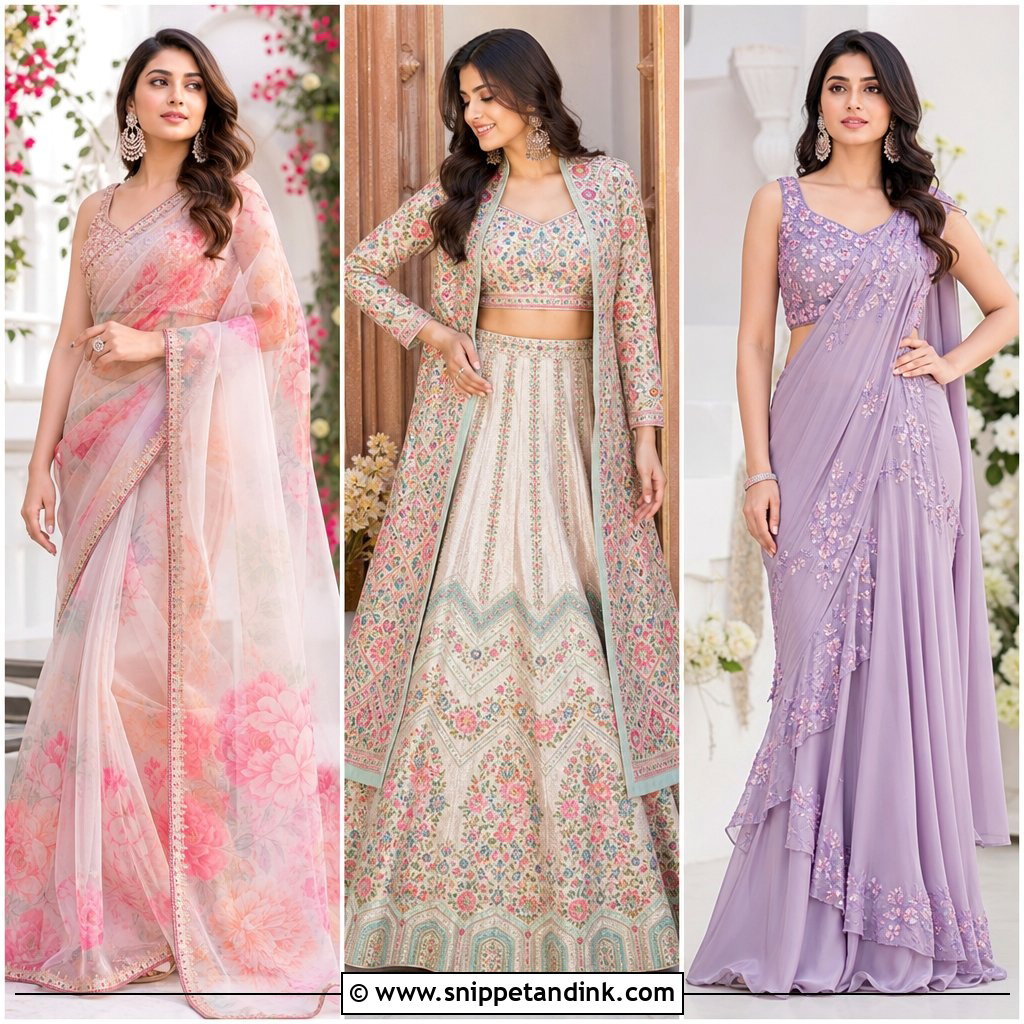
Pastel lehengas are where I start for daytime functions, because they photograph softly in natural light and never fight a bride in red. Blush, mint, powder blue, lavender or peach all work. The skirt fabric matters more than the colour: organza and georgette stay light, while a fully embroidered silk skirt can weigh a surprising amount by the second hour, so lift it in the shop before you buy. A fitted blouse, a sheer dupatta and pearl or kundan jewelry finish it. Block heels or embellished wedges beat stilettos on lawns, and soft eyes with a nude lip keep the face fresh.
2. Mirror Work Lehenga For Sangeet
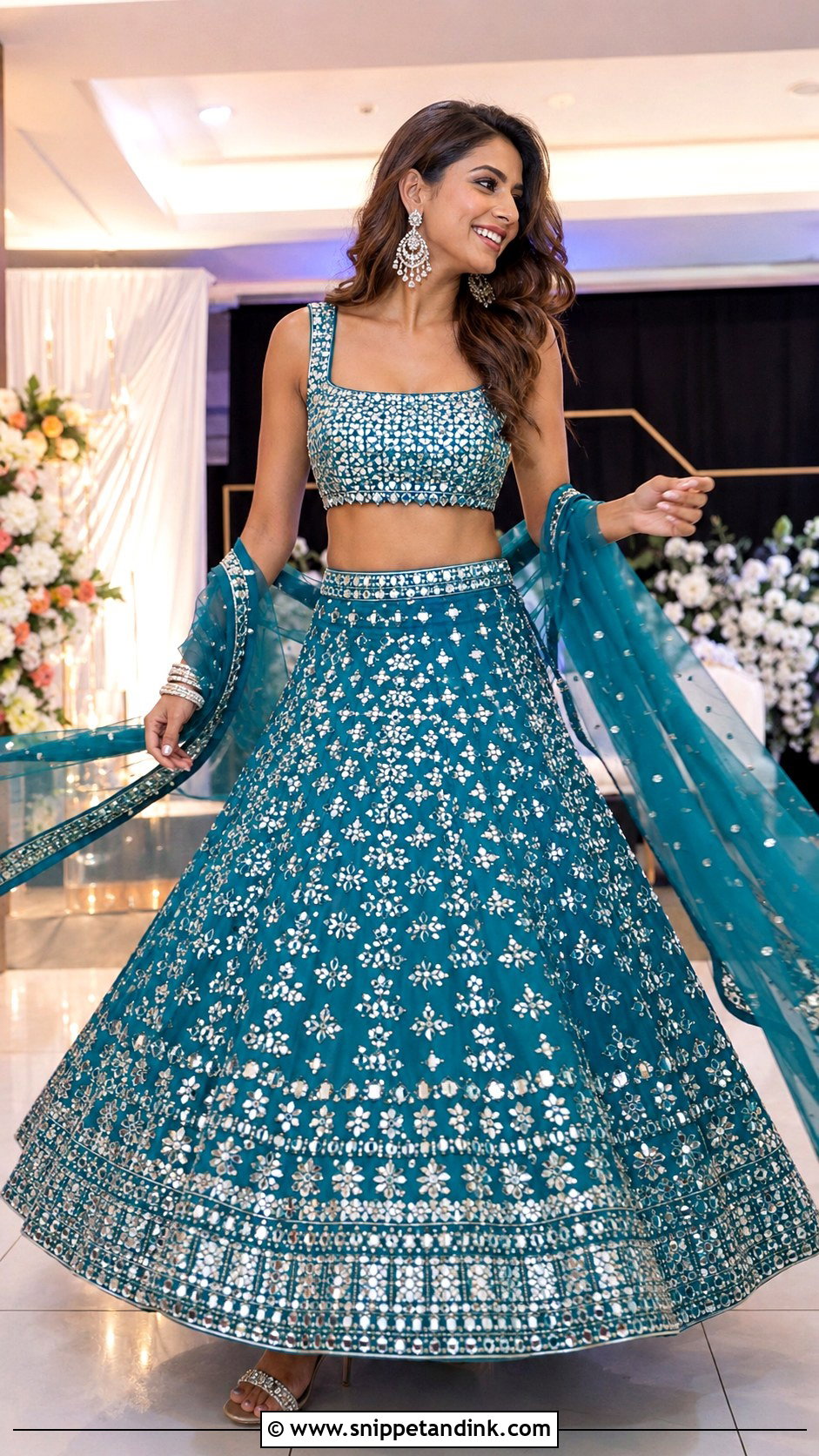
Under sangeet lights, mirrors throw light around every time you turn, which is why a mirror work lehenga earns its place on a dance night. Teal, fuchsia, emerald, orange or champagne grounds read well on stage. If you’re performing, check inside the skirt: mirrors are often backed with stiff thread that scratches through a thin lining, and a soft cotton lining saves your legs. A sleeveless or short-sleeve blouse keeps your arms free. Statement earrings, stacked bangles and cushioned heels or embellished flats complete it, with a sleek ponytail that won’t whip into your face mid-routine.
3. Pre Draped Saree For Reception
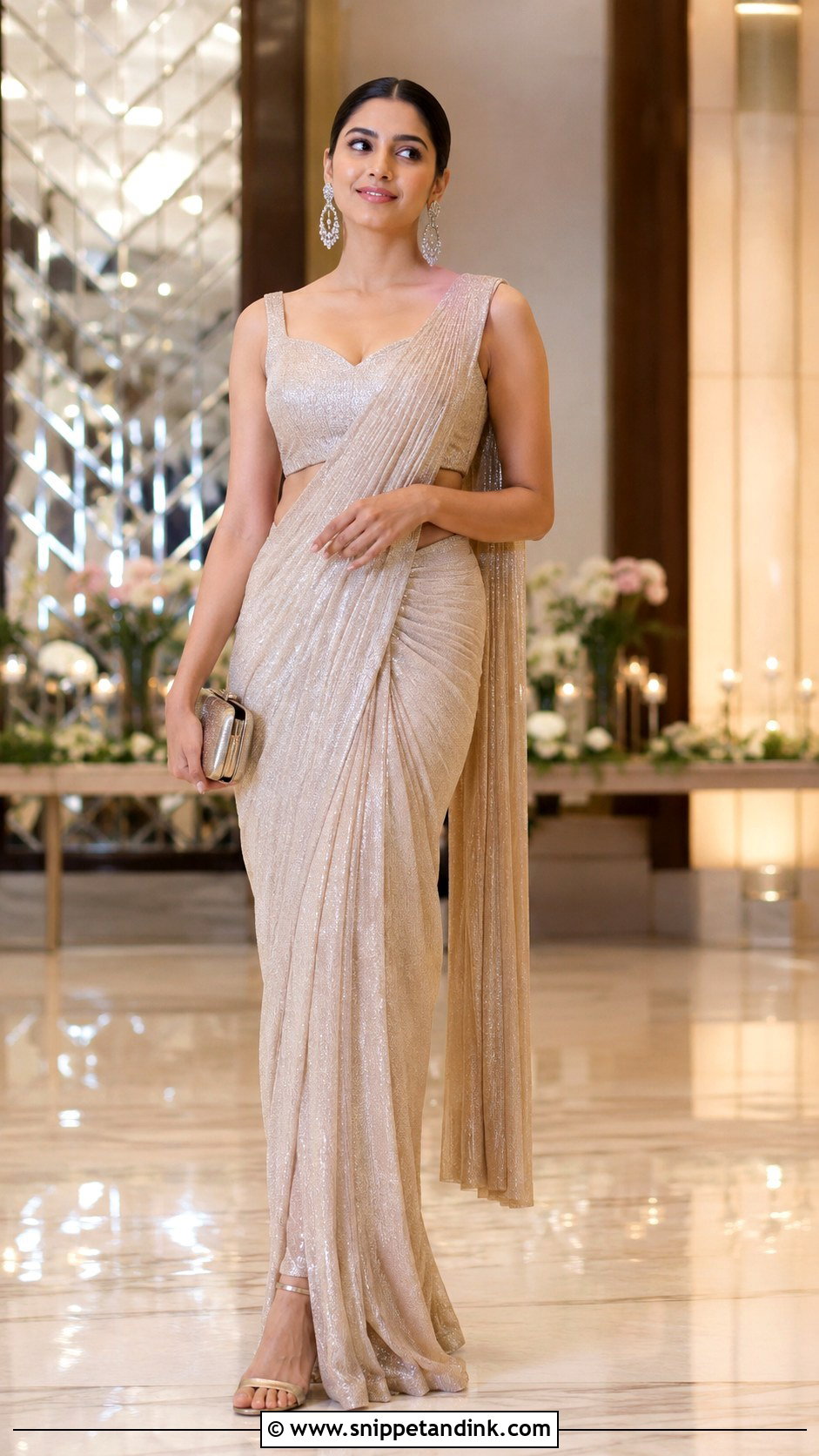
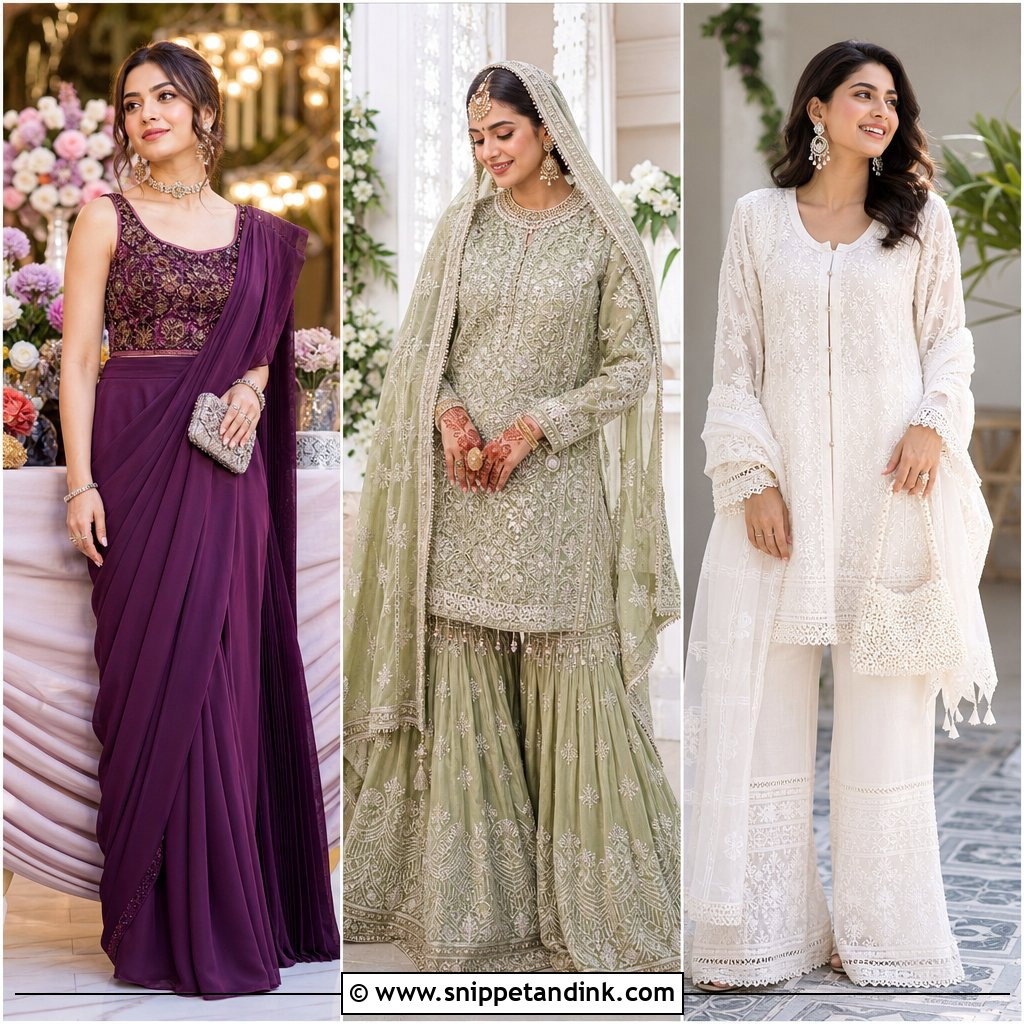
Pre-draped sarees solve the reception problem. You’re greeting guests for hours, and nobody has time to re-tuck pleats. The pleats and pallu are stitched in place, so it goes on in minutes. Satin, crepe, georgette or shimmer fabric in champagne, wine, emerald or navy suits evening light. Have the blouse fitted alongside the drape, since a pre-stitched saree sits at a fixed waist height and the two need to meet. A structured blouse, sleek heels, crystal earrings and a polished bun finish the look.
4. Sharara Set For Mehendi
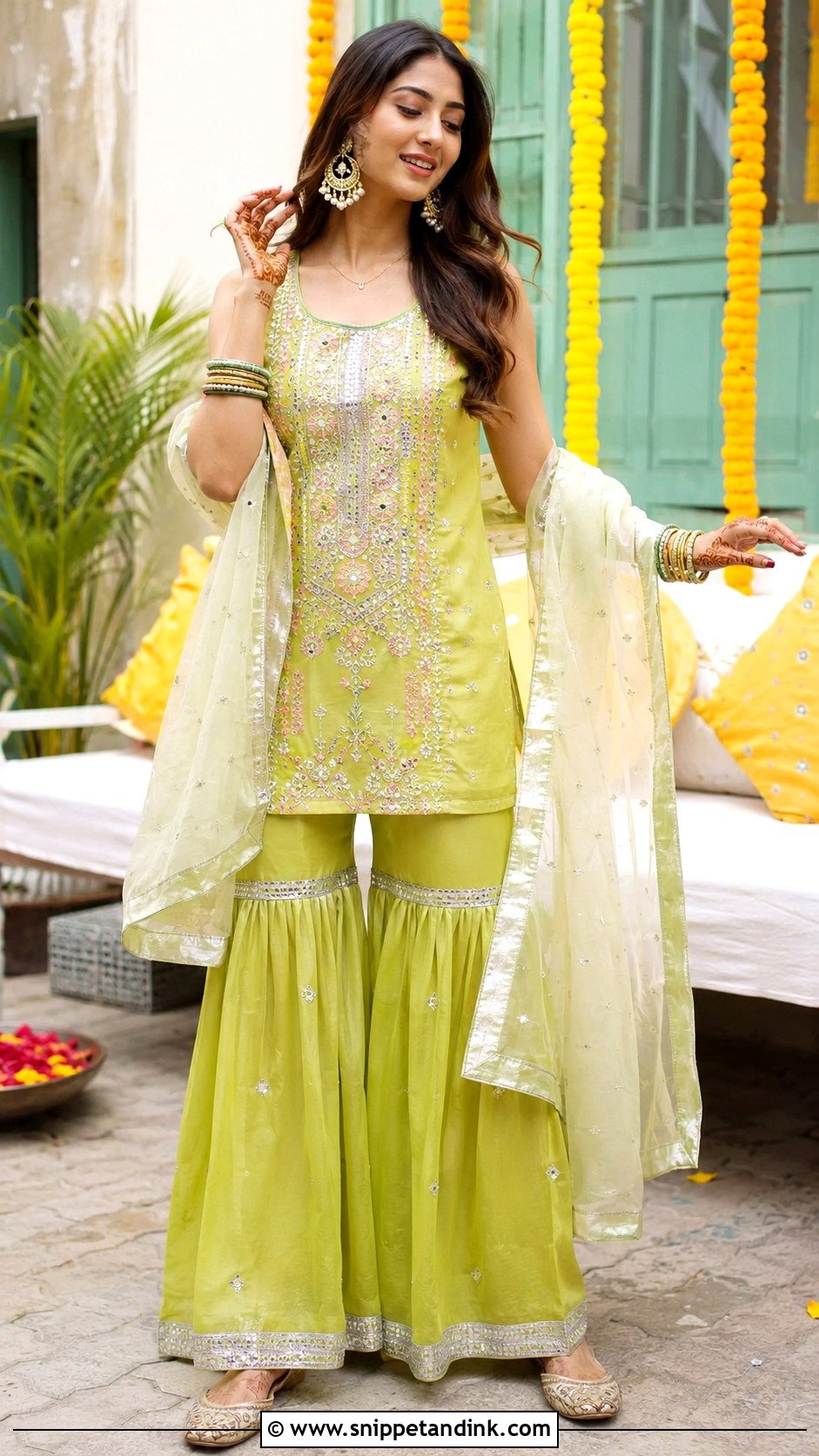
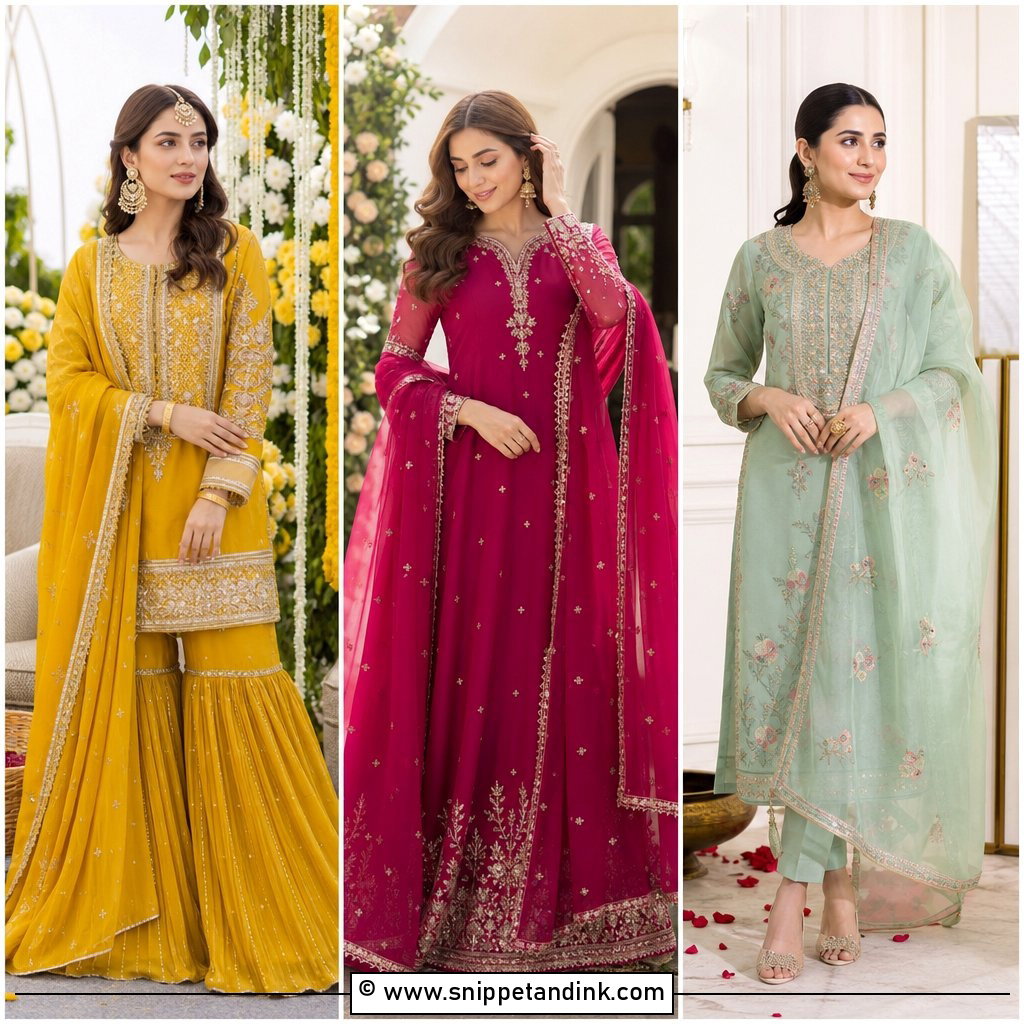
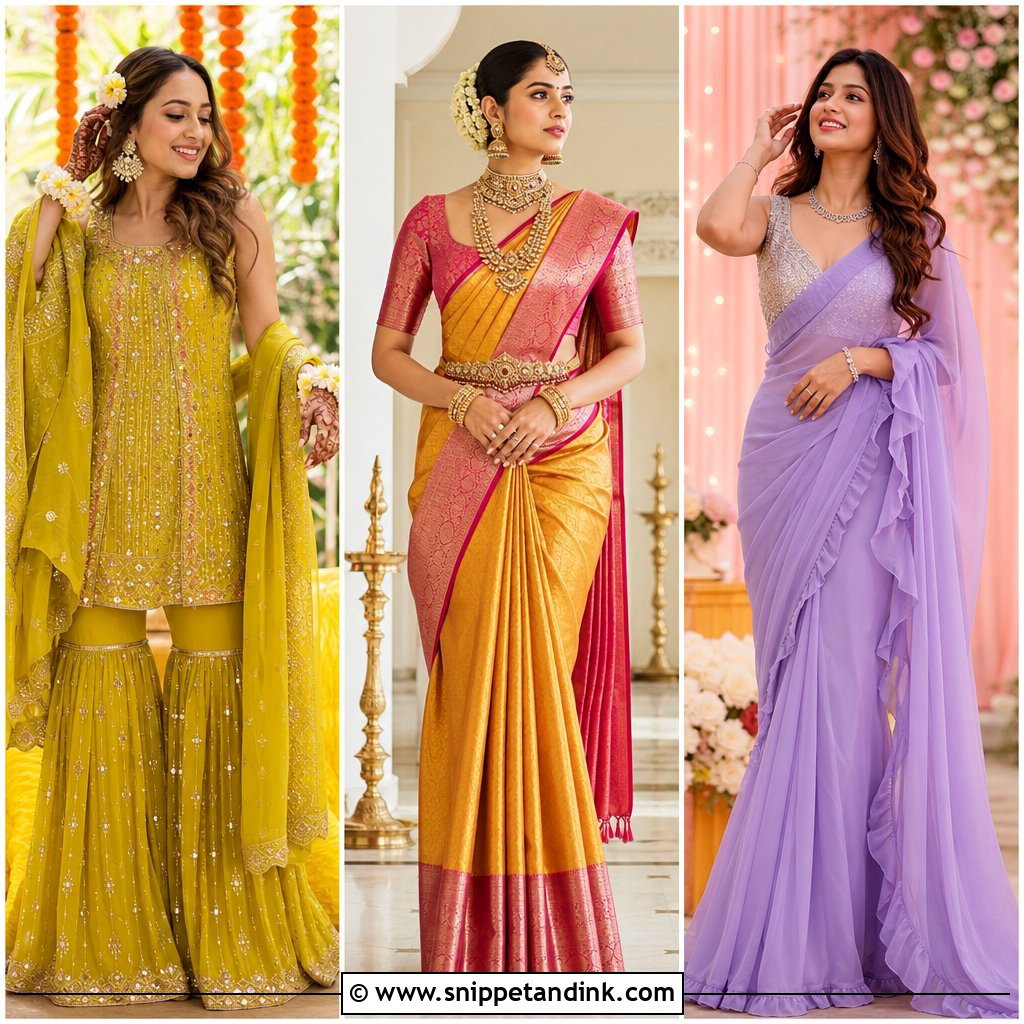
At mehendi you’ll spend hours on floor cushions beside the bride, so I put sisters in a sharara rather than a heavy lehenga. The flared pants pool neatly when you sit and still swing in candid photos. Yellow, green, coral or a floral print suits the mood. Outdoors, pick cotton silk or chanderi, which breathe far better than polyester georgette in afternoon sun. Add a light dupatta, juttis, chandbalis and bangles, with hair in a braid or half-up style. Getting your own mehendi done? Choose short or three-quarter sleeves so the paste dries without smudging on the cuffs.
5. Silk Saree For Wedding Ceremony
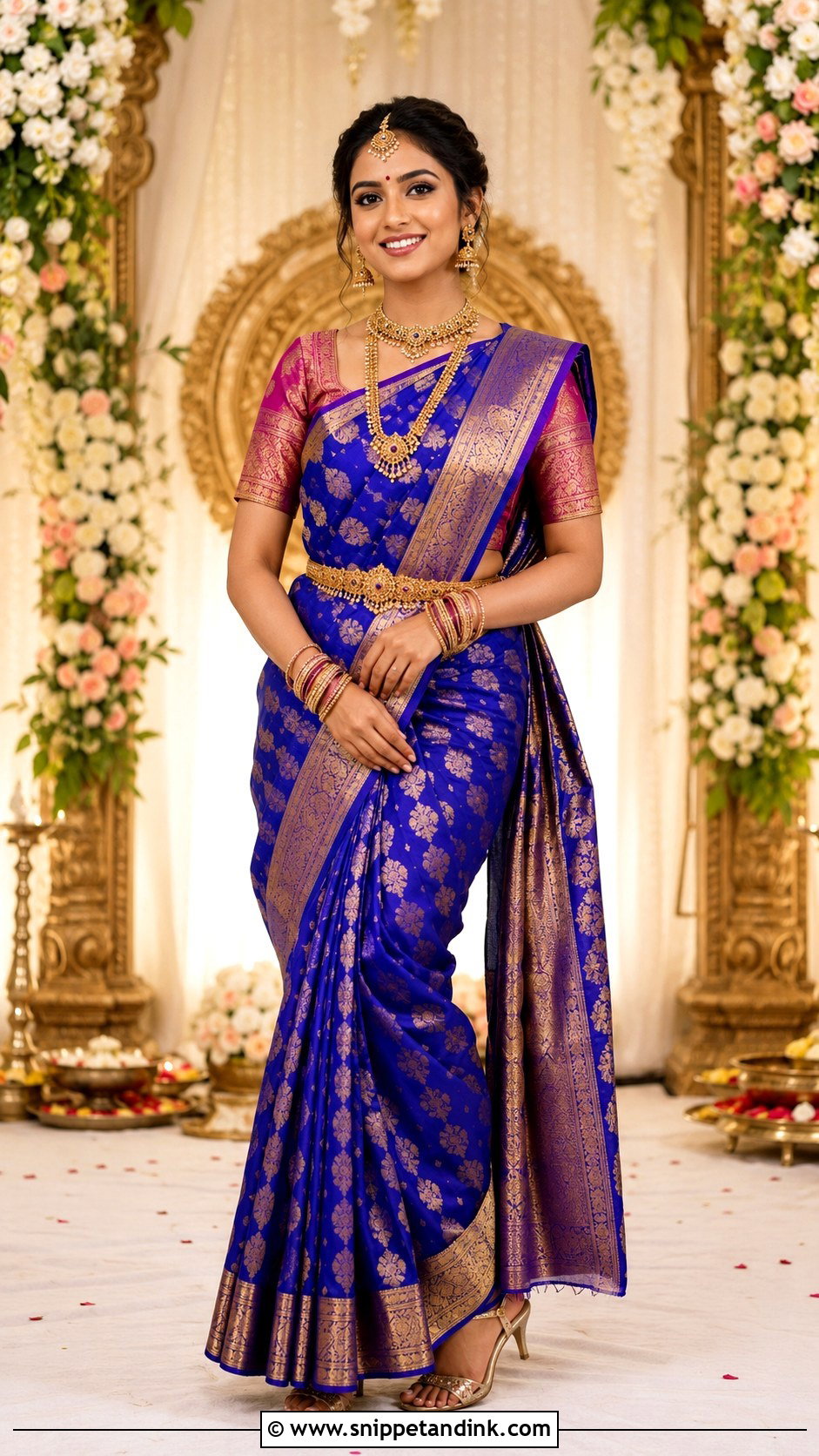
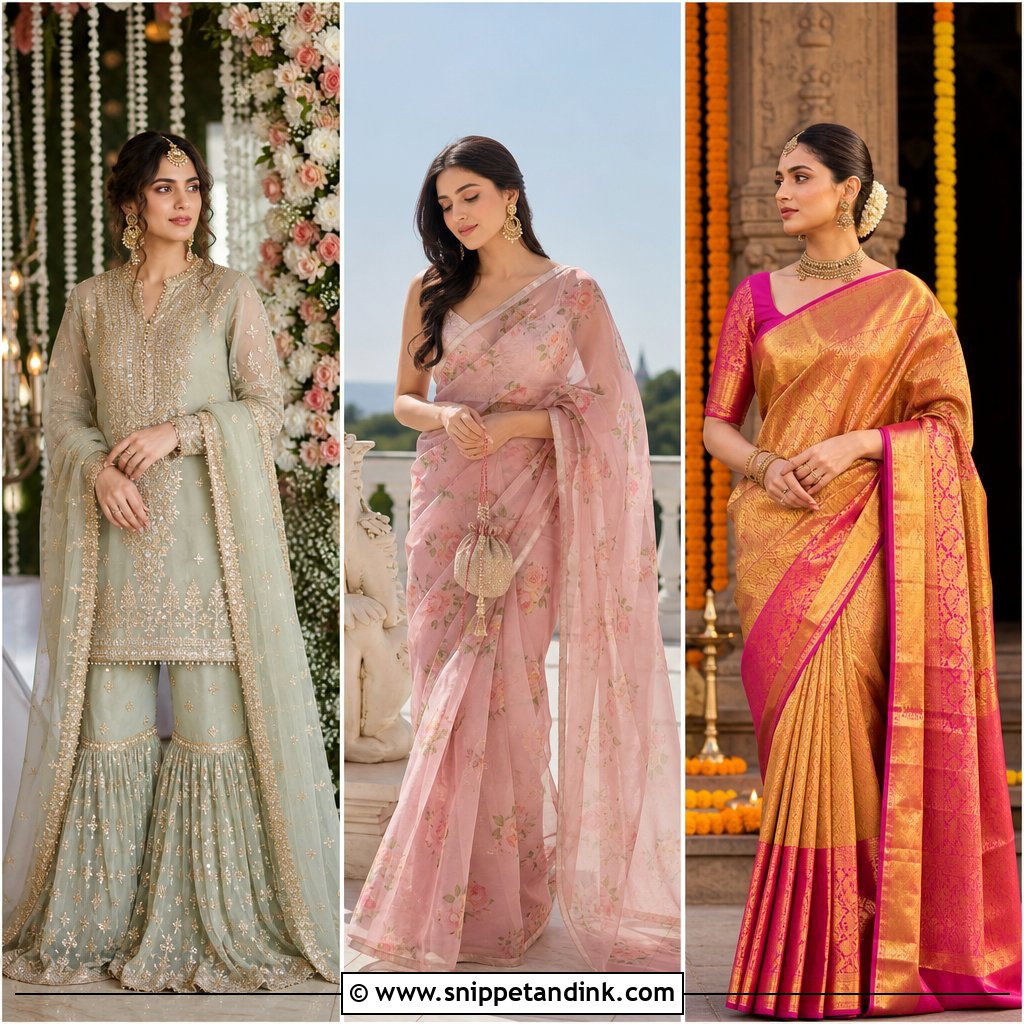
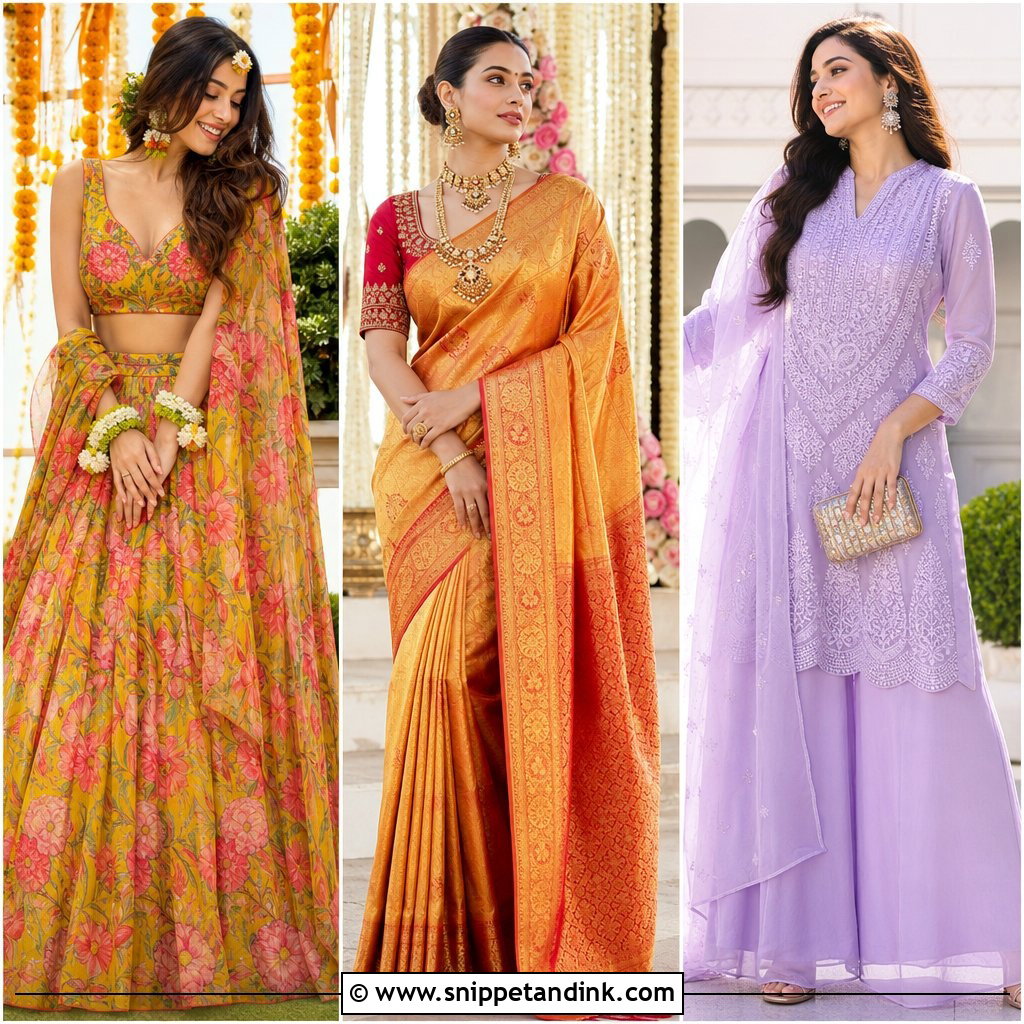
When the family dress code for the pheras is traditional, a silk saree is the respectful choice. Kanjivaram, Banarasi, Paithani and tissue silk all suit, in ruby, emerald, royal blue, mustard or deep purple. Heavy silk is slippery, so I pin the pleats on the inside at the waist and anchor the pallu at the shoulder; a waist belt adds a modern touch while doing the same job. A contrast blouse and traditional gold jewelry finish it. Drape it while wearing the heeled sandals or wedges you’ll actually wear, because the hem length is set to your shoes.
6. Anarkali Suit For Engagement
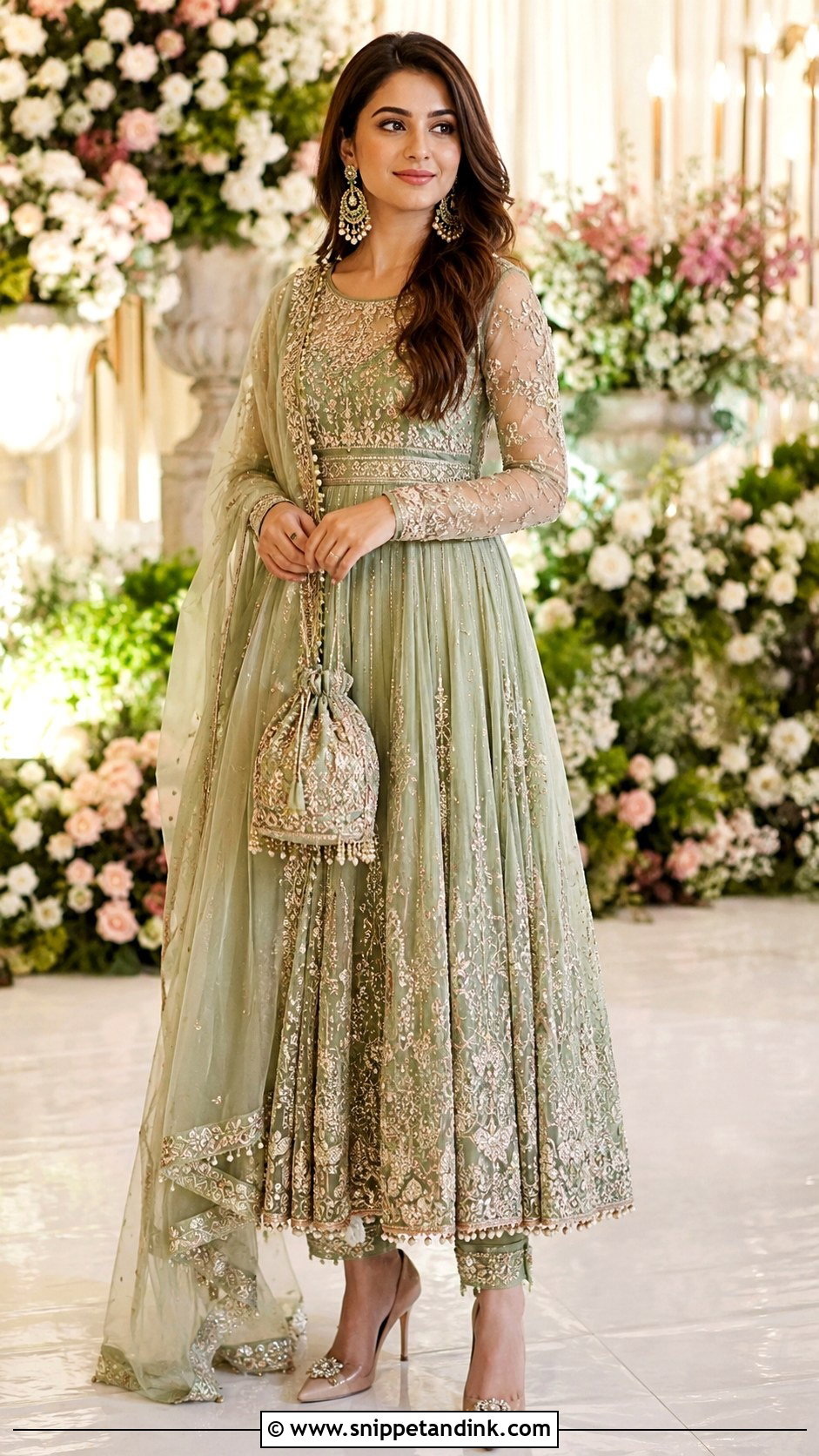
The Anarkali is what I suggest to sisters who don’t want to fuss with drapes at the engagement. Choose a floor-length Anarkali in silk, georgette, net or organza with embroidery at the neckline, sleeves or hem. Ivory-gold, sage, rose or powder blue suit a day ceremony, while navy or maroon is better at night. The flare starts high, so it flatters most figures, but check the hem in your heels so you don’t catch it on the stage steps. Slim pants or a churidar, a light dupatta, long earrings and a small potli bag are enough.
7. Gharara Set For Sister Wedding
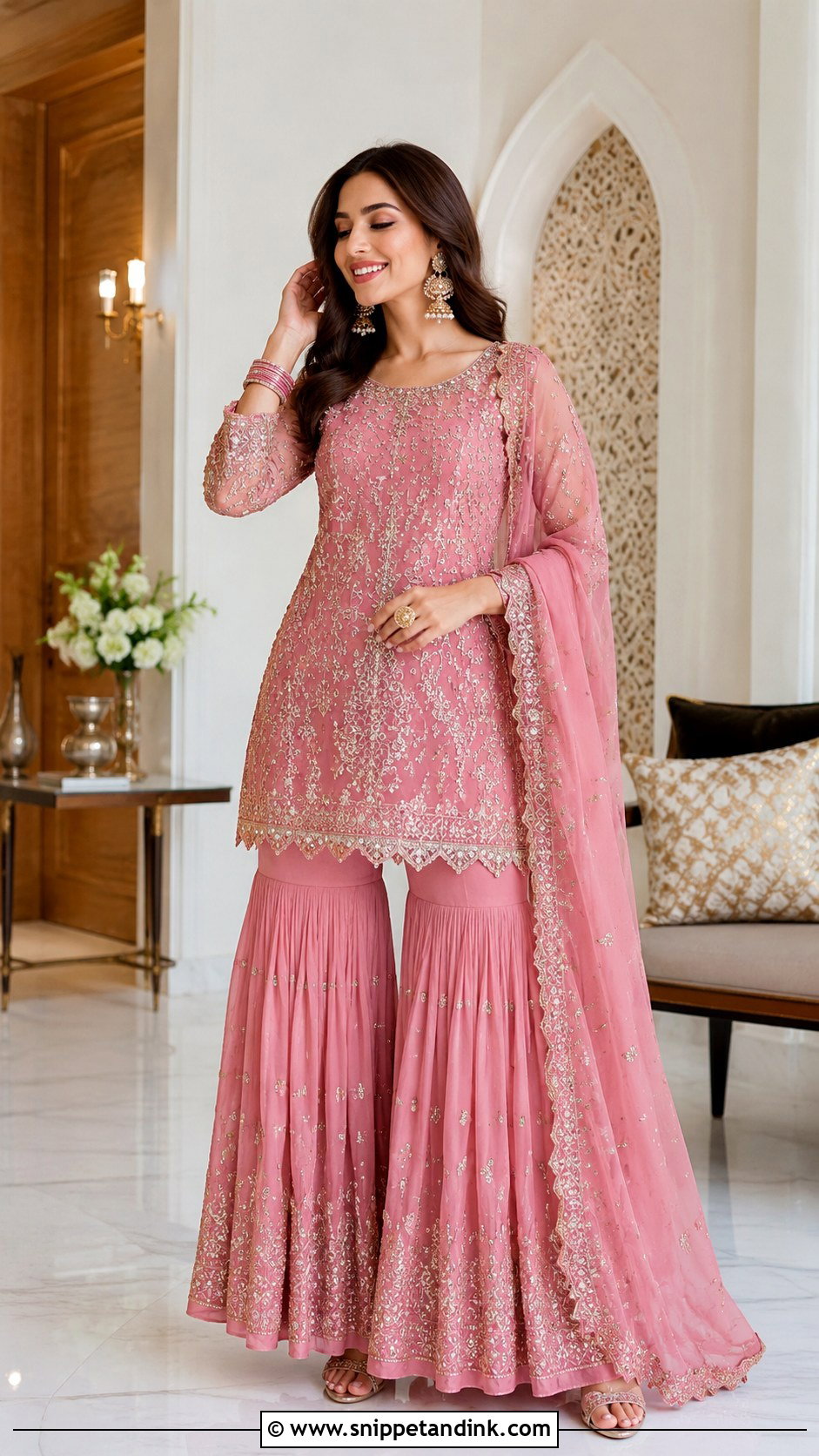
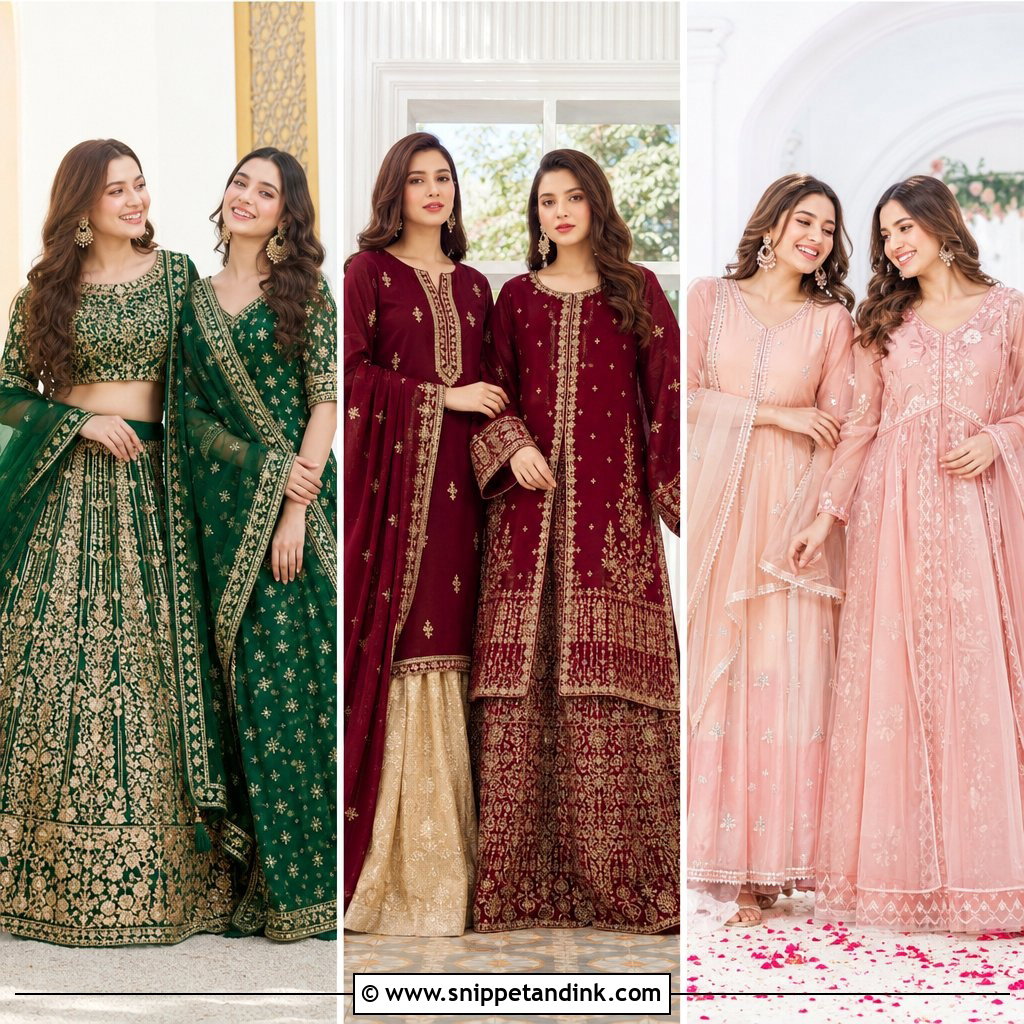
A gharara fits close to the knee and then flares in gathered tiers, and that knee joint is what makes it look royal. It’s also where a bad fit shows, so I have sisters sit and stand in it at the trial; if the knee seam pulls, it needs easing. A short kurti with gota, zari or resham work and a matching dupatta make the set, in rose pink, ivory, sage, mustard or deep maroon. Jhumkas, soft makeup and embellished heels or juttis finish it. It moves easily between nikah, mehendi and family ceremonies.
8. Cape Lehenga For Cocktail
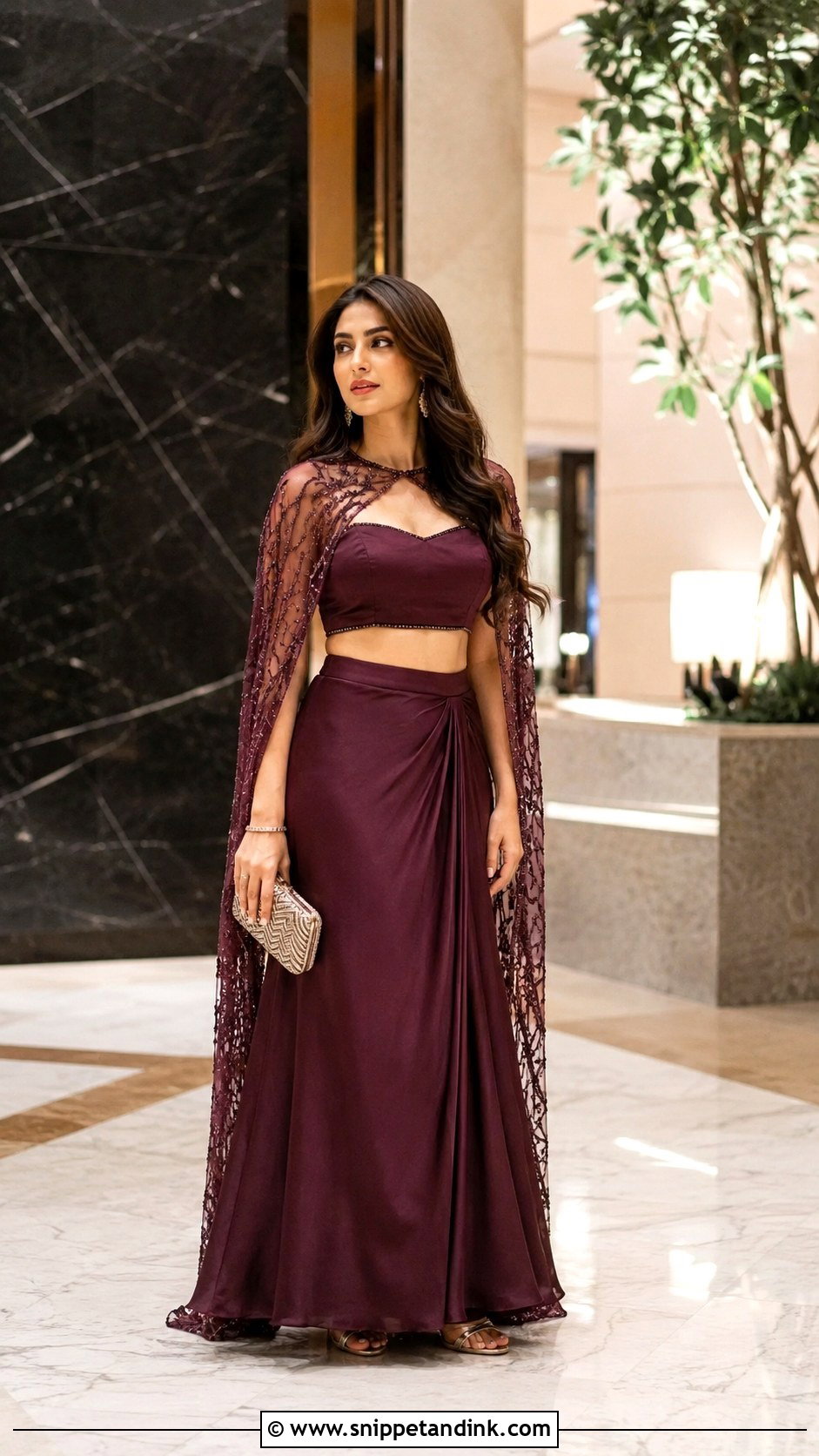
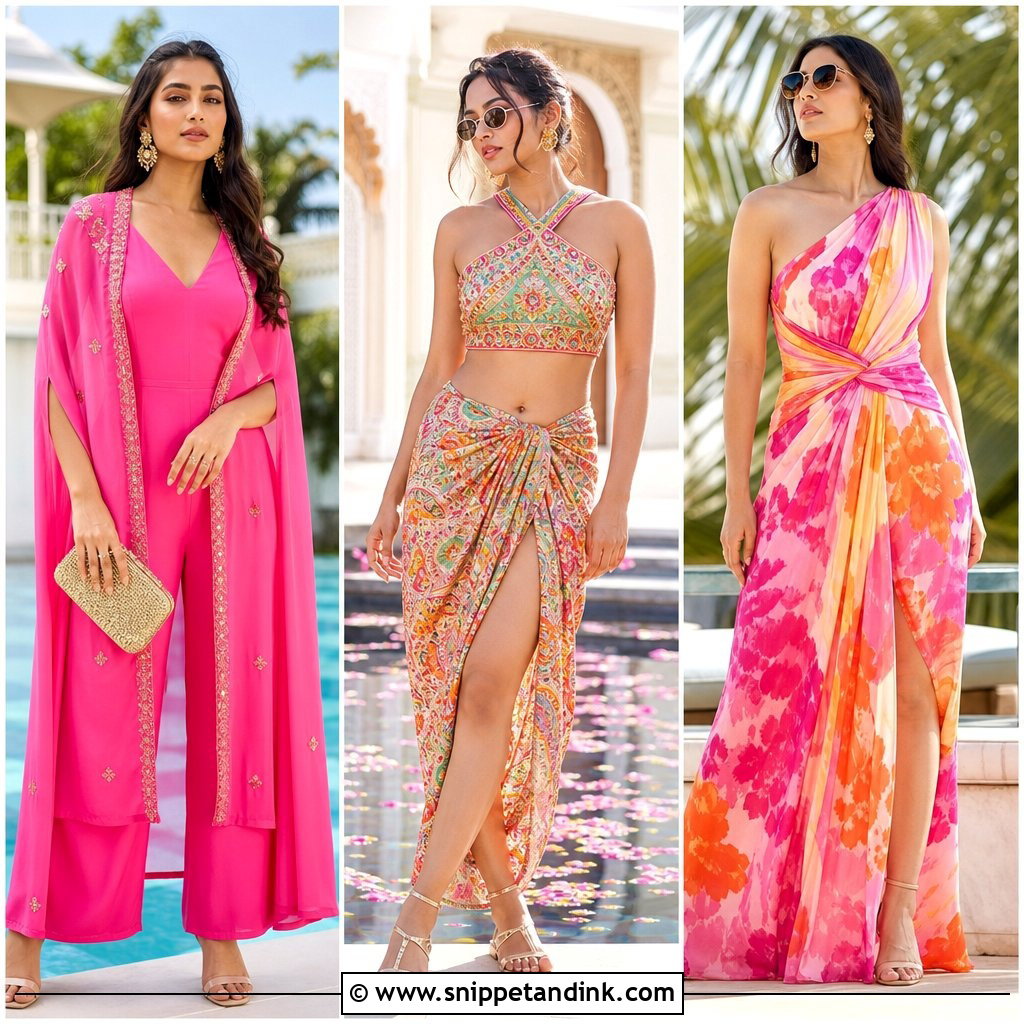
Swap the dupatta for a cape at a cocktail night and your hands are free for a glass, a phone and a dance partner. A sleek skirt, crop blouse and sheer embroidered cape in metallic, navy, black, ivory or wine give an Indo-western look that still belongs at an Indian wedding. Because the cape carries the embroidery, keep jewelry to earrings. Make sure it’s fixed at the shoulder or hooked to the blouse rather than simply draped, or it slides back all night. High heels, a box clutch and soft glam makeup complete it.
9. Floral Lehenga For Day Wedding
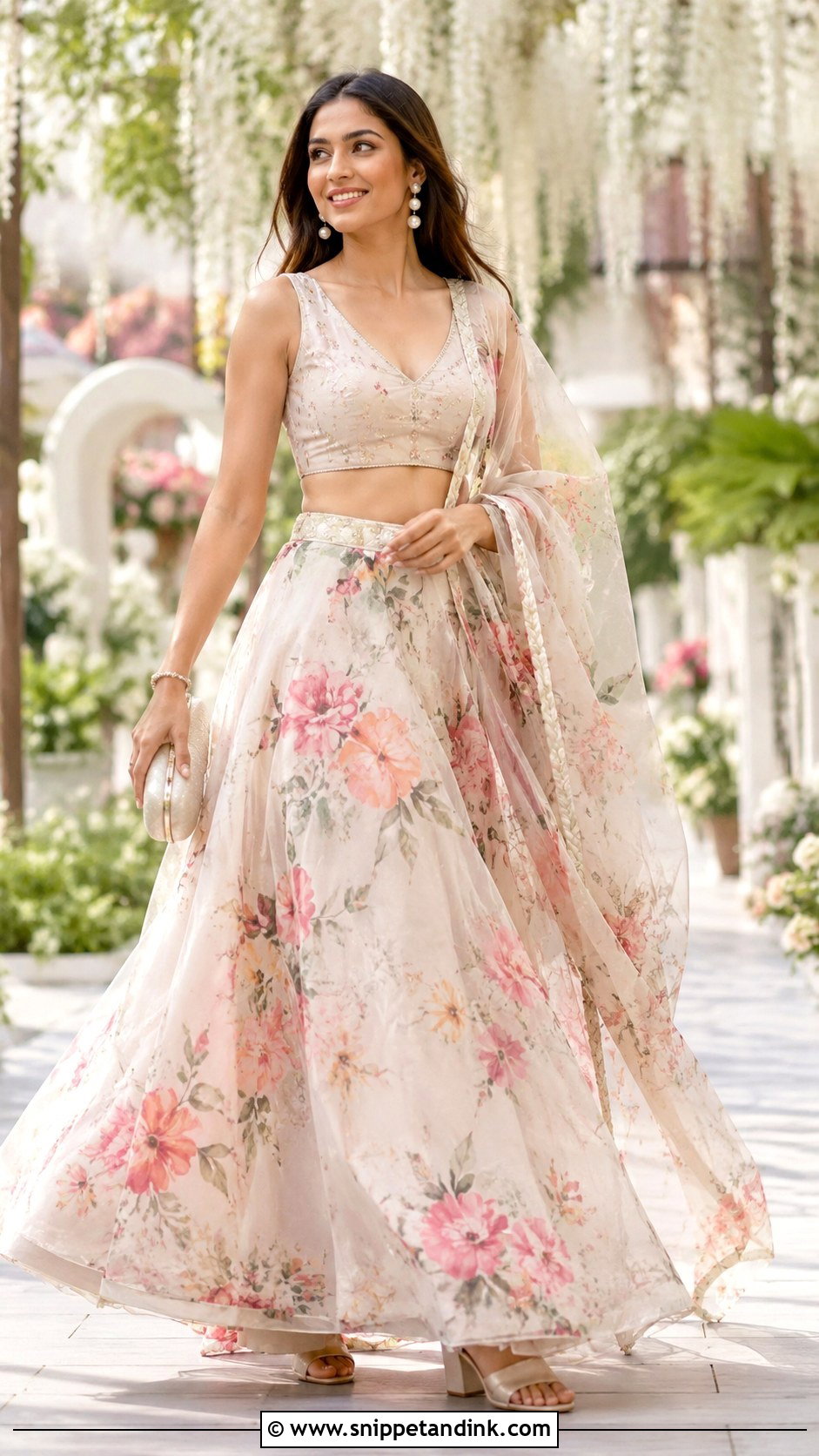
Florals belong in daylight. Printed or embroidered flowers on organza, georgette, silk or chiffon in peach, mint, lilac or soft yellow suit haldi, mehendi, brunch and day pheras. Printed versions weigh far less than embroidered ones, which you’ll notice in midday heat. Pair it with a simple blouse, light dupatta, pearl jewelry and block heels, and keep the makeup dewy. One caution: check the bride’s haldi and mehendi colours first, so you don’t turn up in her palette.
10. Indo Western Dhoti Set For Haldi
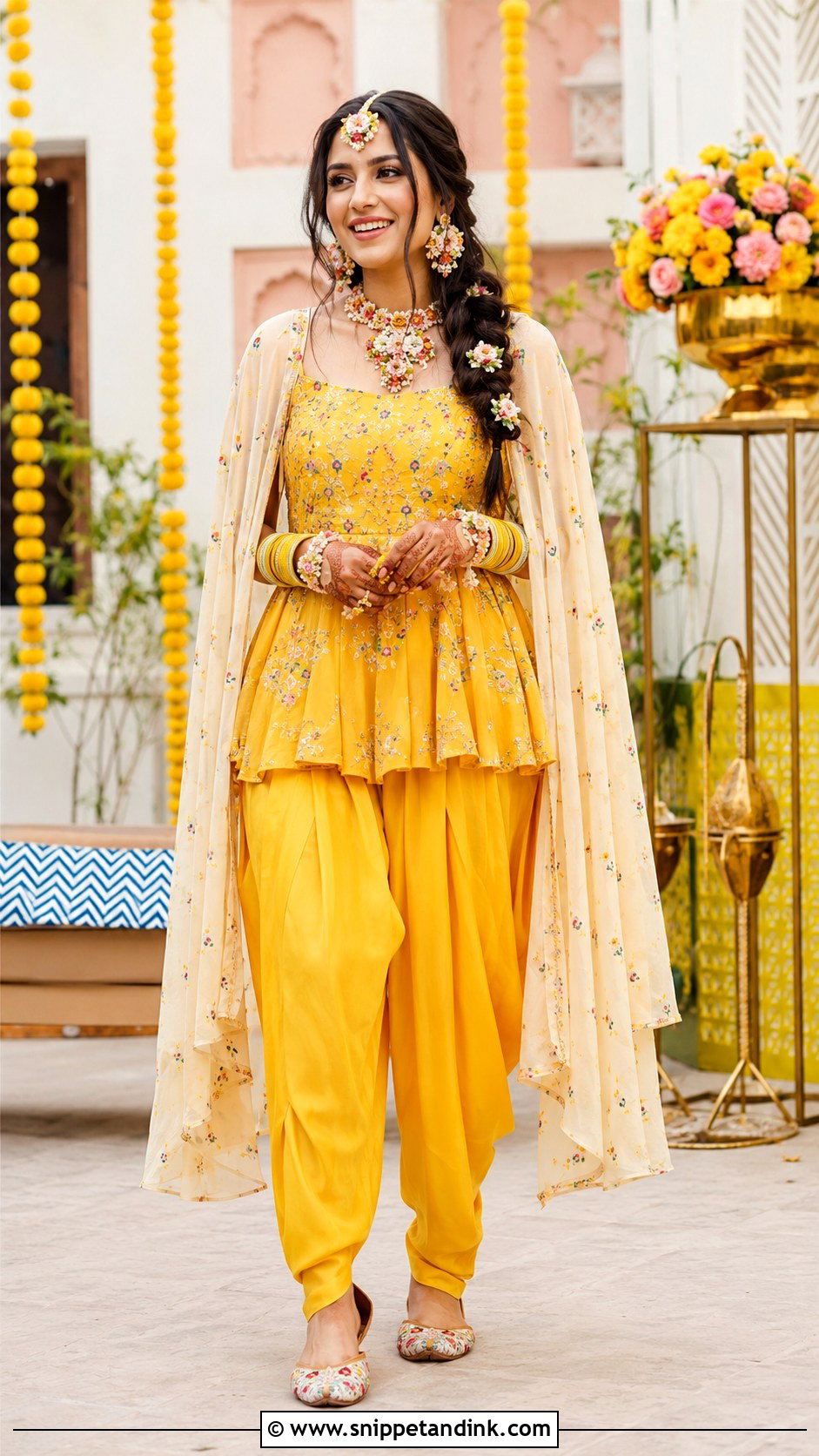
Haldi paste stains, so wear something you won’t mourn. A dhoti set is practical here because there’s no long hem dragging through turmeric and water. Pair a draped dhoti pant with a peplum top, short kurti or crop blouse in yellow, orange, ivory or lime. Turmeric sets fast on silk; cotton blends wash out more easily, though bright yellow on ivory may never fully leave. A cape or light dupatta adds polish. Juttis, floral jewelry and simple bangles, with hair tied back, keep you ready to get messy.
11. Sequin Saree For Reception
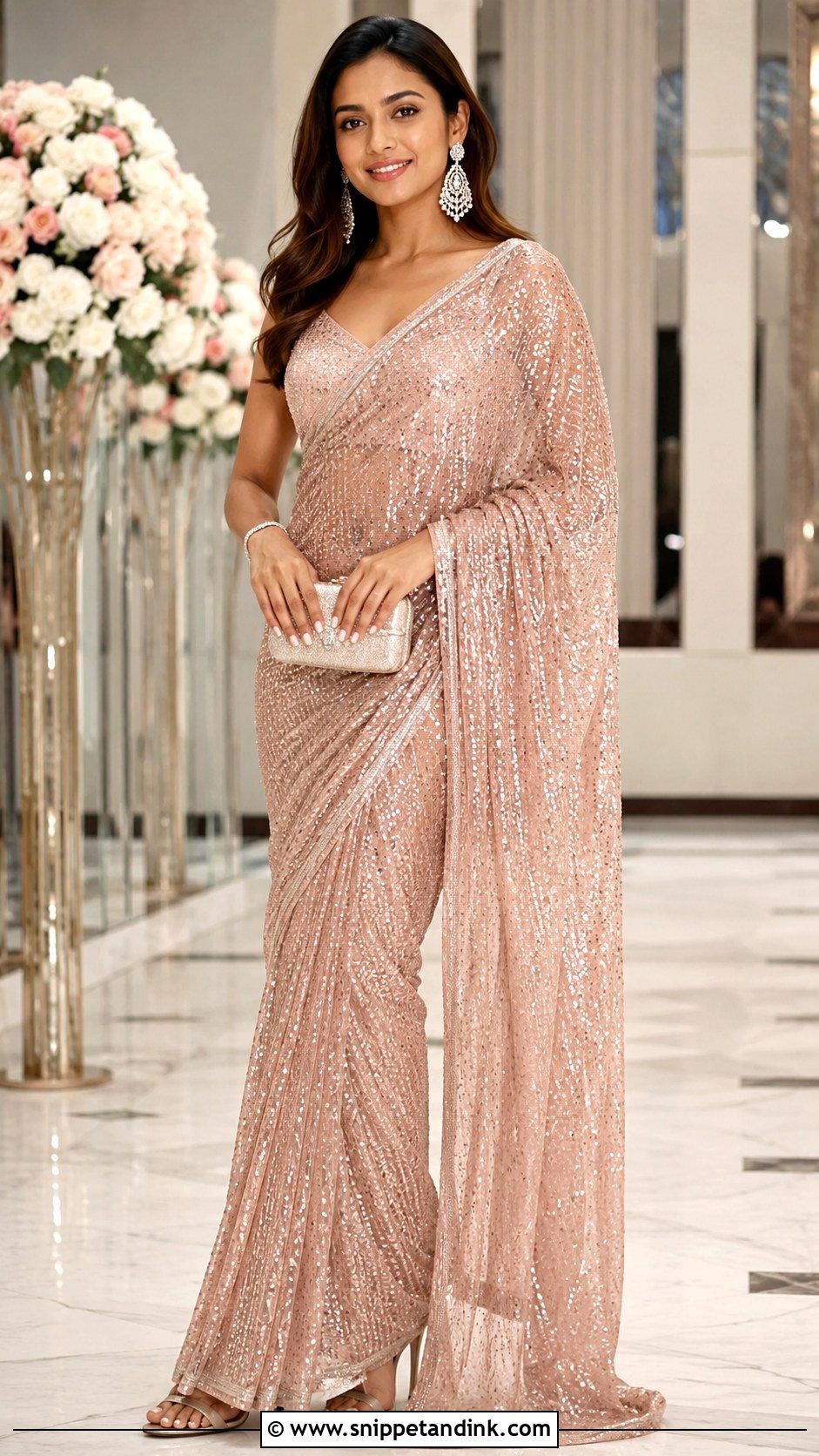
A sequin saree carries the reception on its own, so I’m careful with everything around it. Pick a lightweight one in champagne, rose gold, silver, emerald, navy or bronze, on a georgette base that falls fluidly; stiff sequin fabric stands away from the body and makes the pleats bulky. Choose one jewelry focus, statement earrings or a delicate choker, not both. A simple blouse, sleek heels and a small clutch finish it. If the blouse is sequinned too, have the armholes lined, because sequins rub the skin raw after a few hours.
12. Peplum Lehenga For Mehendi
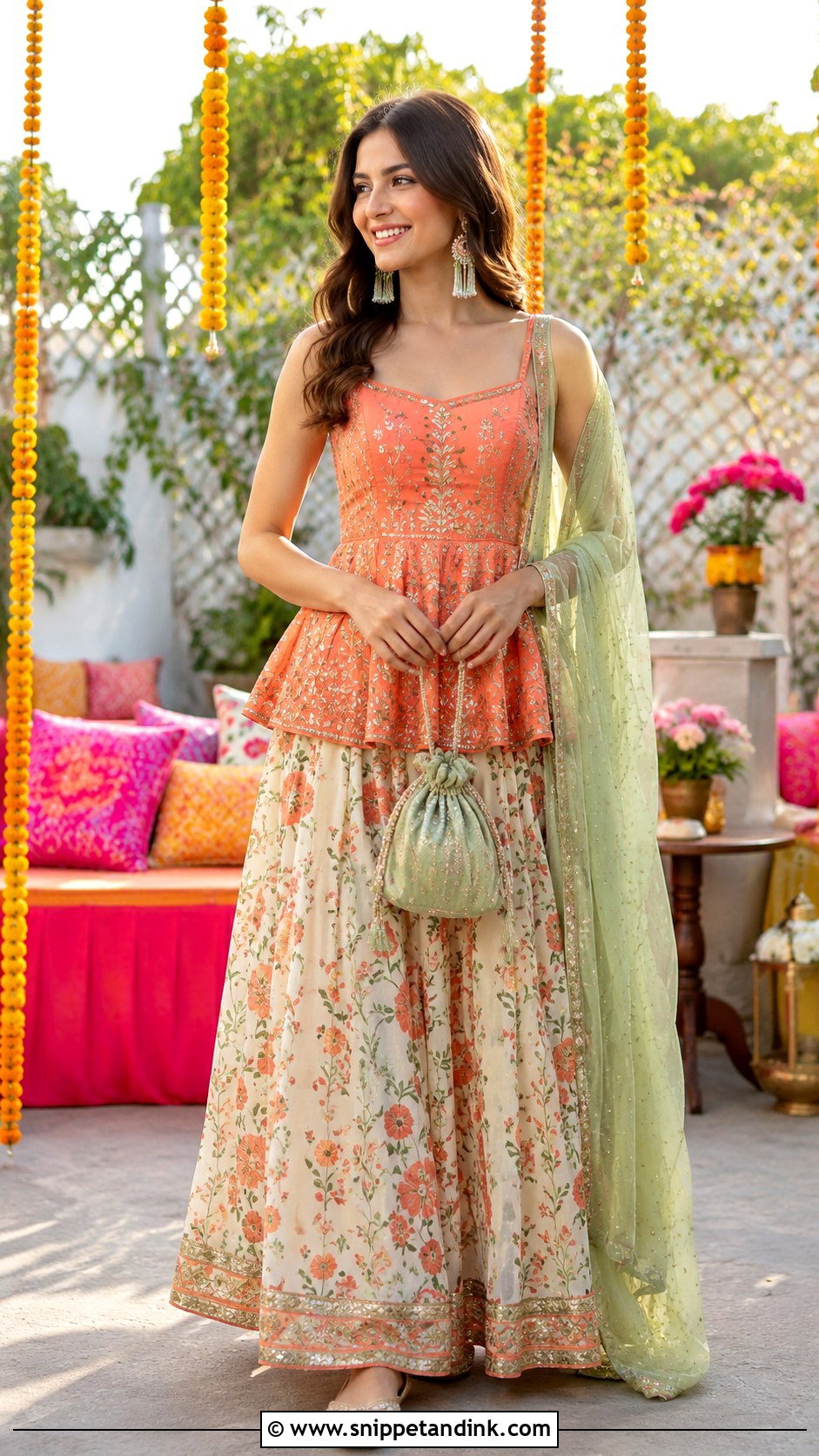
The peplum top shapes the waist with more coverage than a cropped blouse, and it hides the lehenga waistband when you sit cross-legged at mehendi. Wear it over a flowy skirt with a light dupatta, or drop the dupatta for a cleaner fusion look. Lime, turmeric yellow, coral, aqua or rani pink suit the day, with mirror work, threadwork or gota for festivity. Juttis, tassel earrings and a potli bag finish it. Few outfits here are easier to sit in for hours.
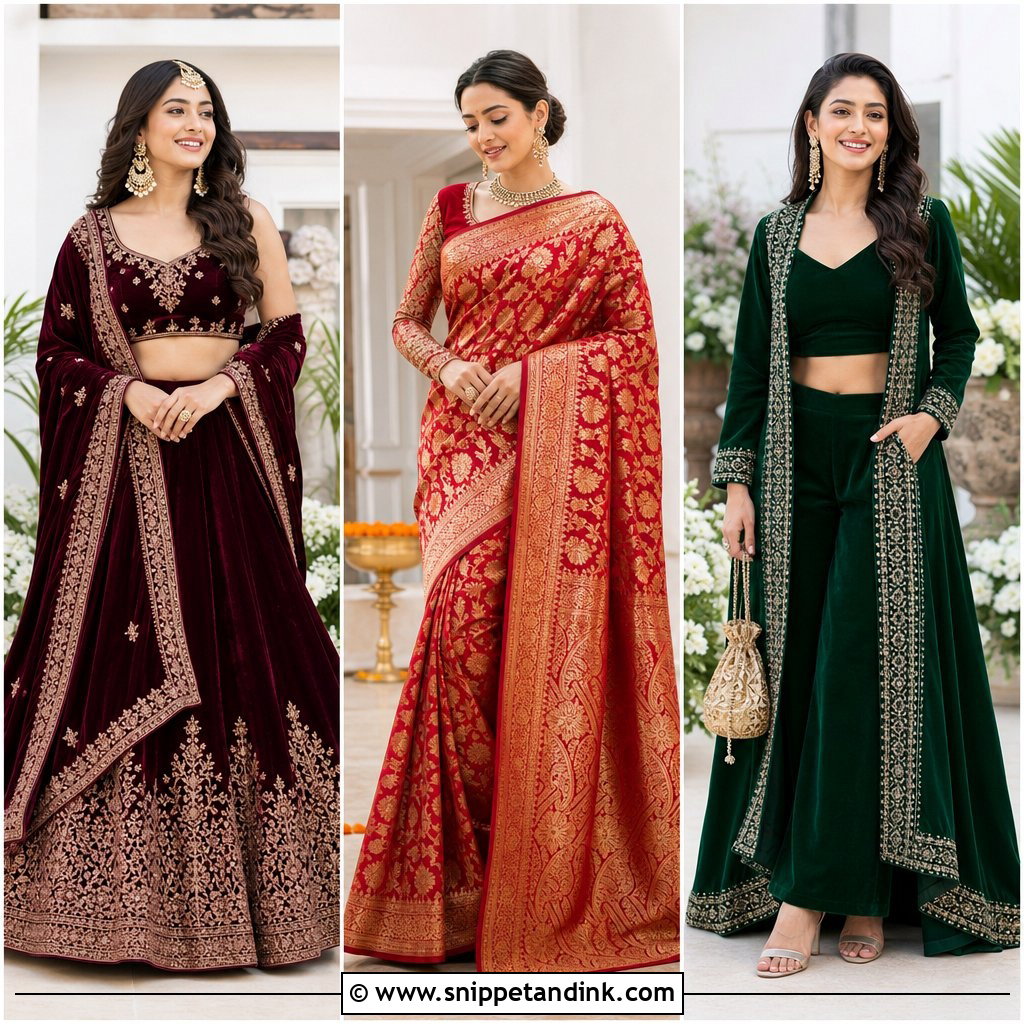
13. Velvet Lehenga For Winter Wedding
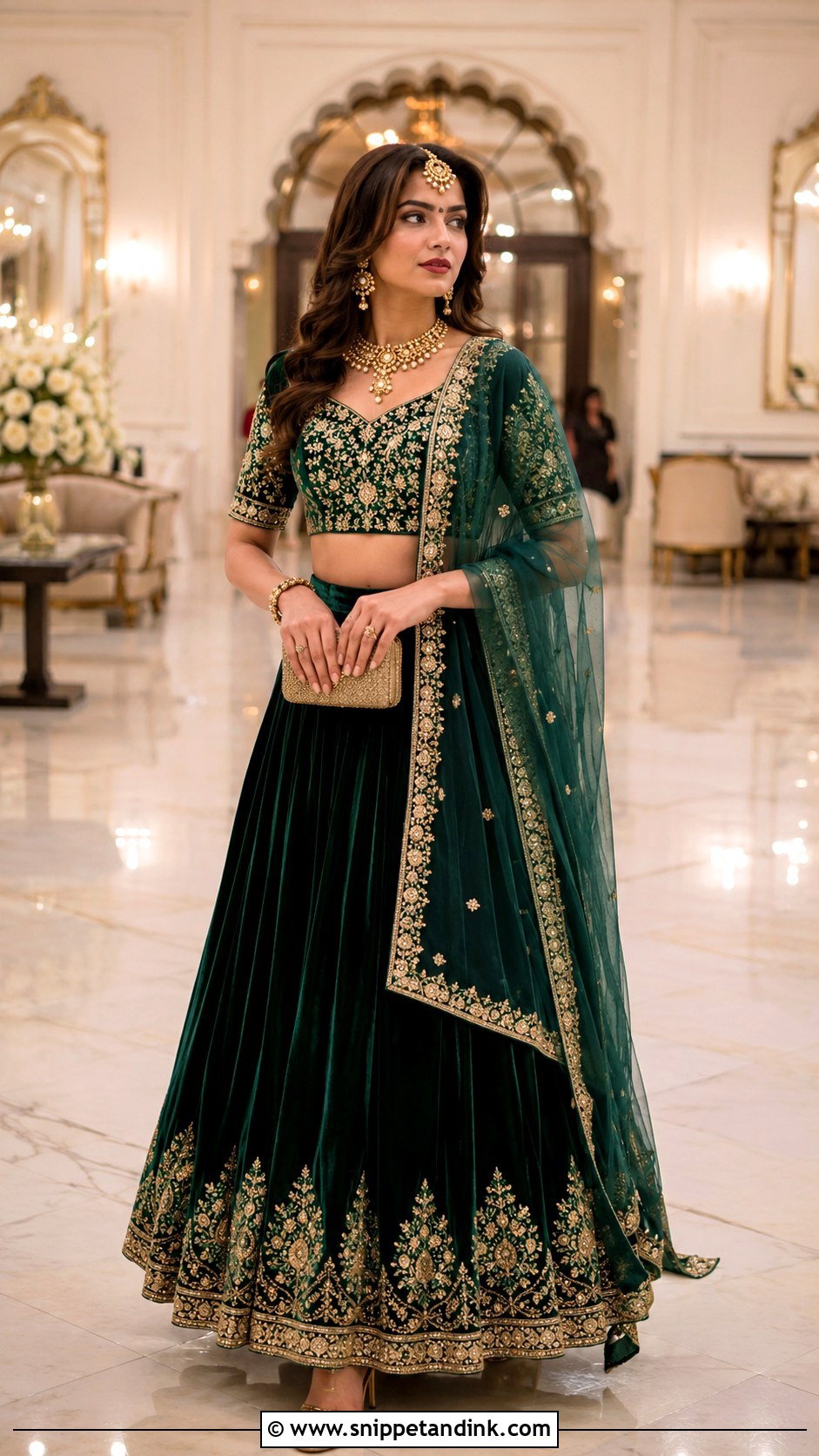
Velvet is the winter answer, warm enough for an open-air evening pheras in December. A velvet lehenga in emerald, burgundy, midnight blue, plum or bottle green looks rich in low light. It’s heavy, though, and velvet crushes where you sit, so I pair the skirt with a silk blouse and an organza or net dupatta to keep the overall weight down. Gold, antique or polki jewelry suits the fabric; go light on extra detailing. A low bun, bold eyeliner and block heels finish it.
14. Jacket Lehenga For Wedding Guest Sister
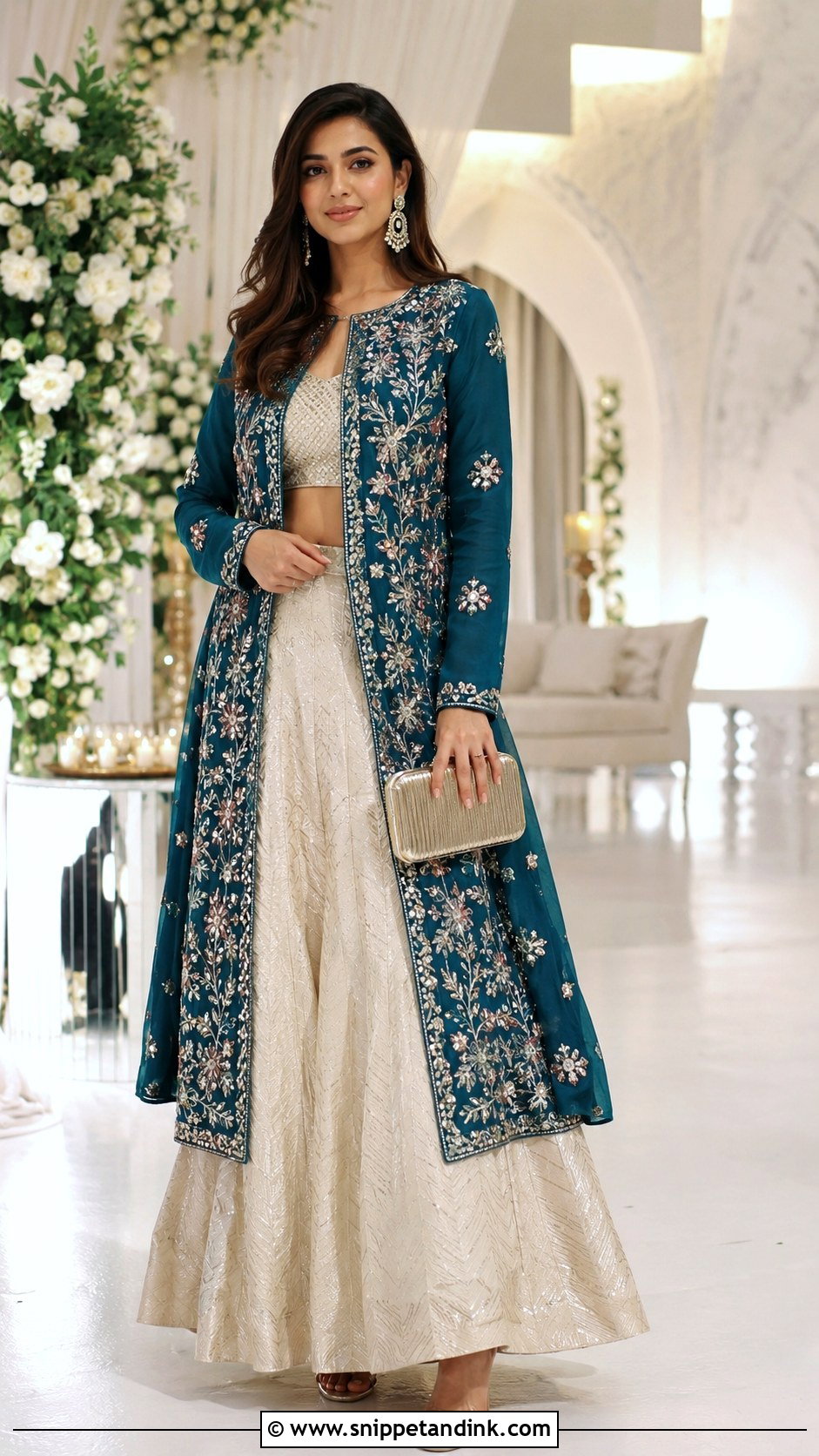
A jacket lehenga gives coverage and structure at once: skirt, inner top and a long embroidered jacket that replaces the dupatta. A sheer jacket feels lighter, while brocade looks regal but runs warm, so save it for cooler evenings. Ivory, gold, teal, wine or sage all work for engagement, sangeet or reception. Raise your arms at the fitting, because a stiff brocade jacket restricts dancing more than people expect. Earrings, a clutch and heels are all it needs.
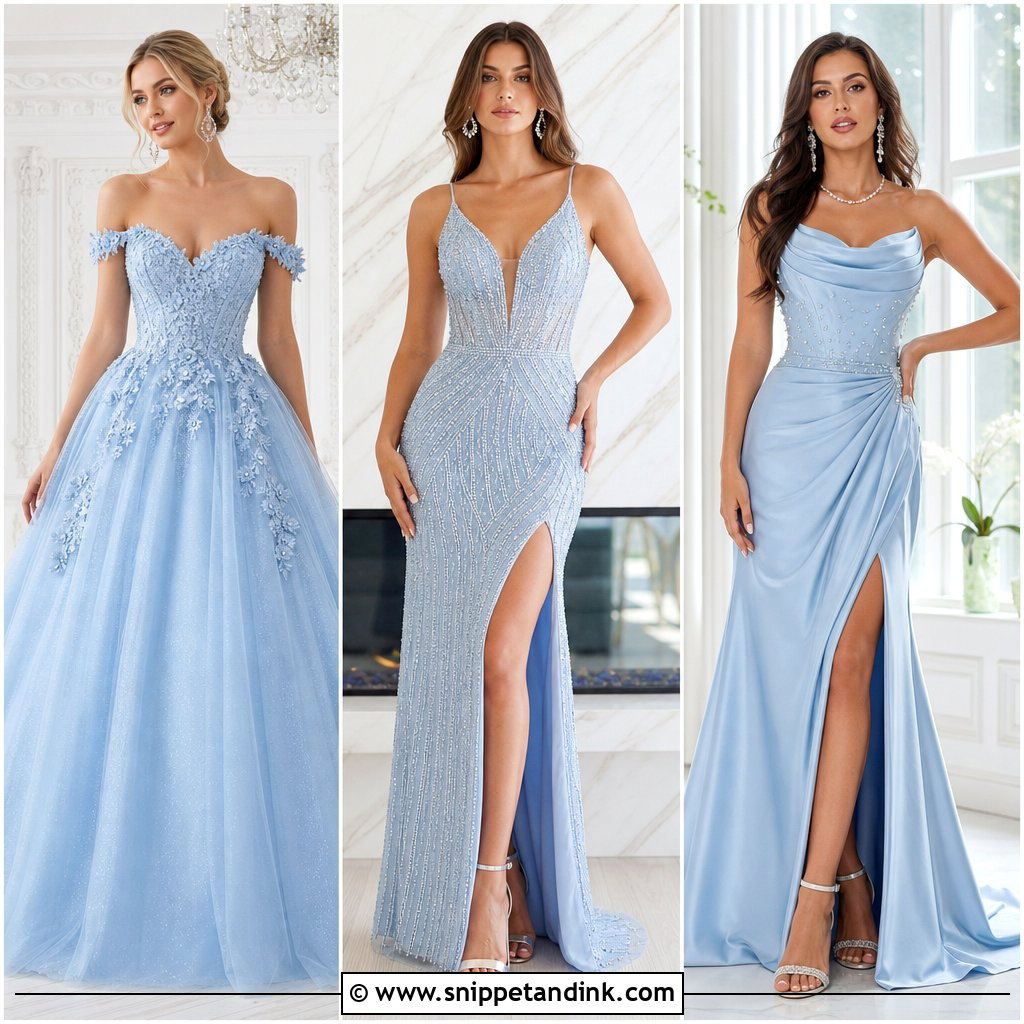
15. Ruffle Saree For Sangeet
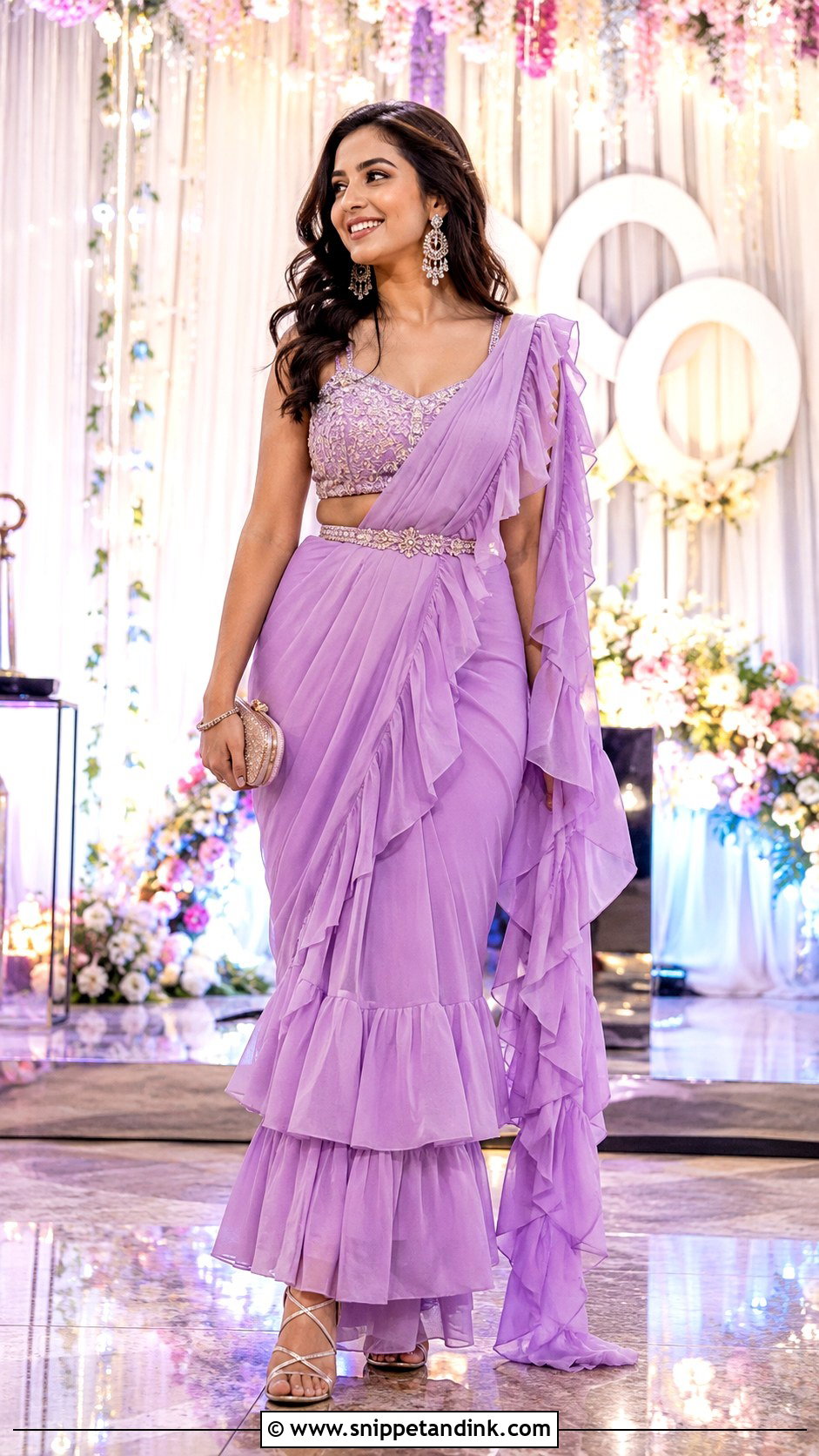
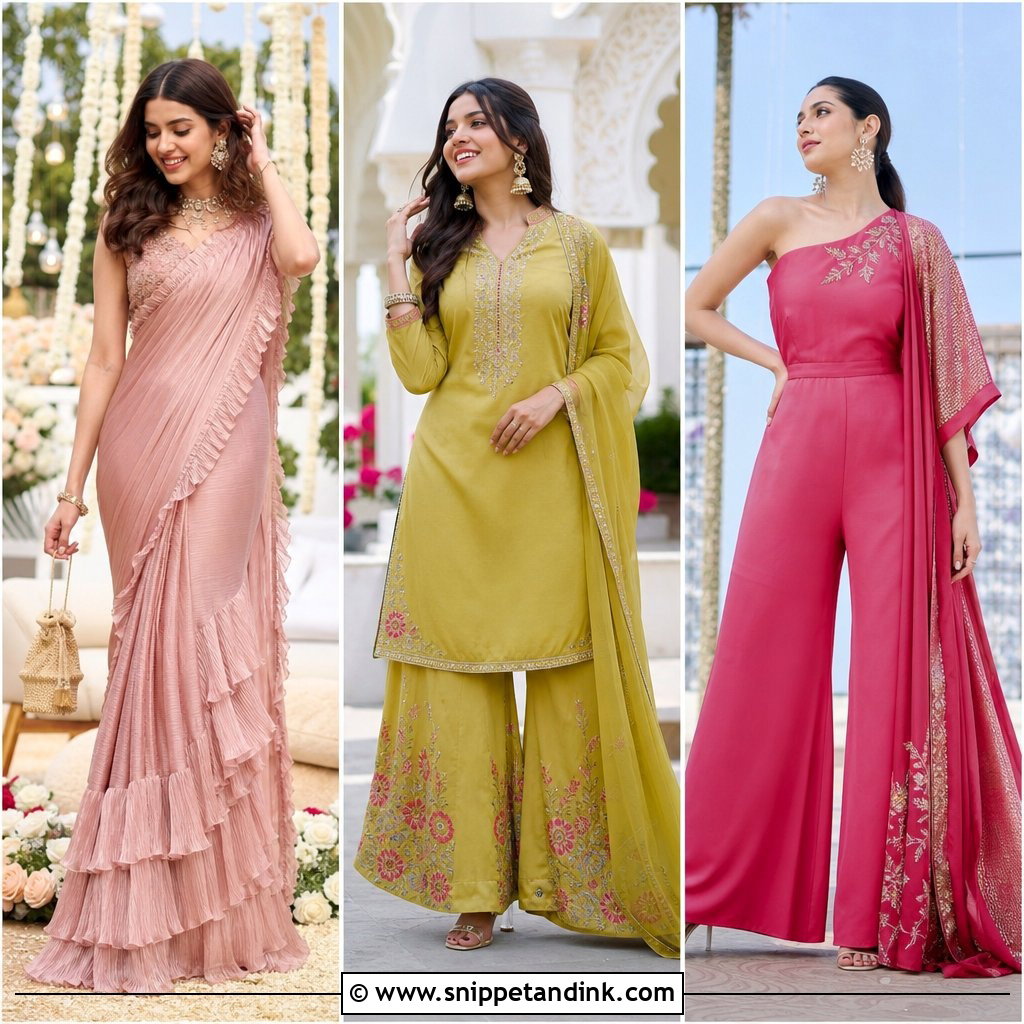
Ruffle sarees are the dancer’s saree, but only when they’re secured. Ask for it pre-stitched, or have the pleats pinned in two places and the pallu anchored at the shoulder, because ruffles add weight that pulls a loose drape apart mid-song. Lightweight fabric in coral, pink, teal, lavender or a metallic keeps it moving. A fitted blouse, belt or embellished crop top defines the shape. Keep jewelry clean: statement earrings, a sleek bracelet and strappy heels.
16. Chikankari Lehenga For Day Function
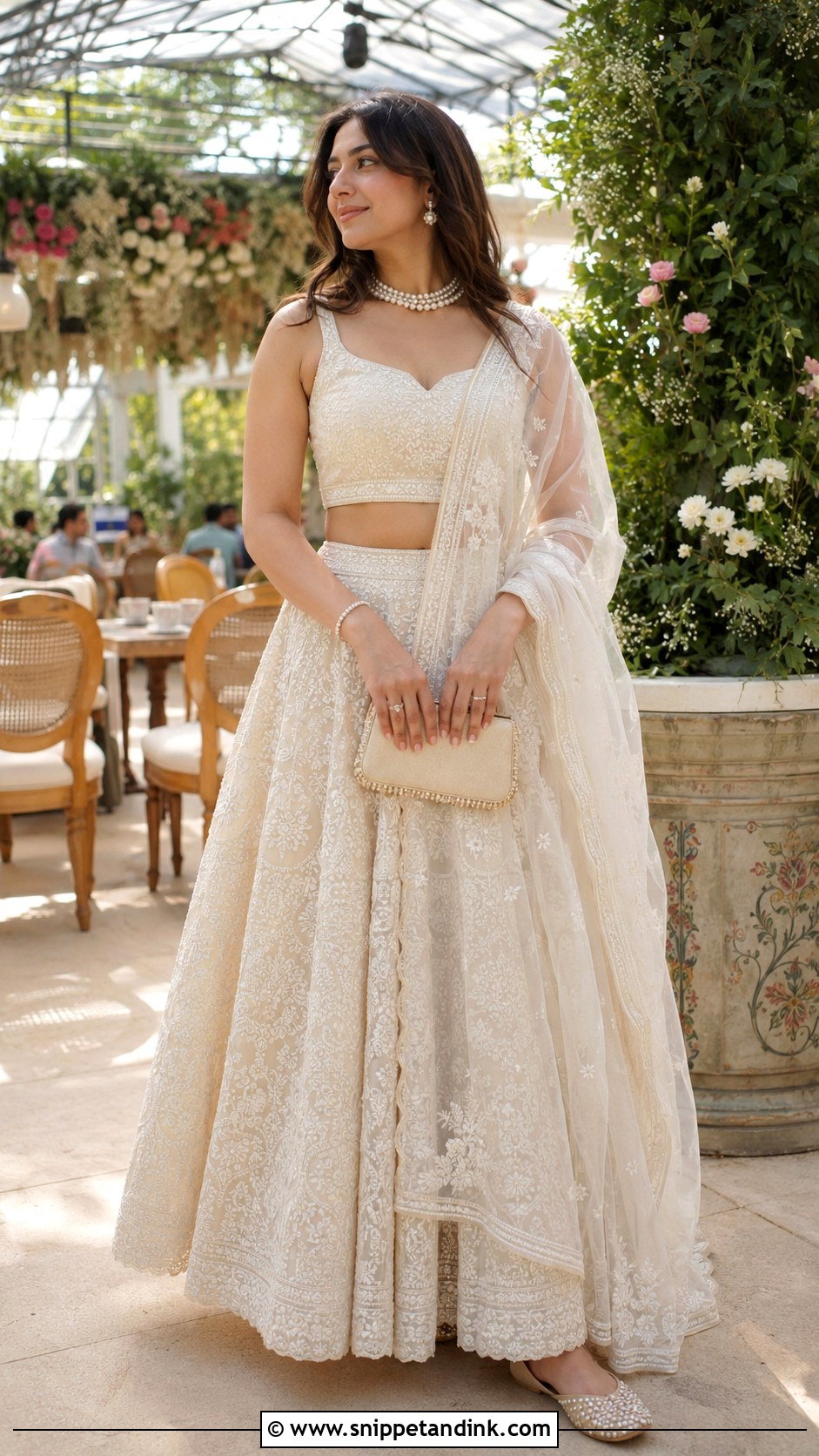
Chikankari is Lucknow’s hand embroidery, worked in fine white or tonal thread, and its charm is how little it weighs. A chikankari lehenga in ivory, pastel pink, lemon, mint or powder blue suits day ceremonies. Real handwork has small, slightly irregular stitches, while machine copies look perfectly even, so look closely if you’re paying for handwork. A matching blouse, sheer dupatta, pearl earrings or kundan studs and wedges or embellished flats keep it light. It reads as quietly expensive at a brunch or daytime wedding.
17. Banarasi Lehenga For Wedding Ceremony
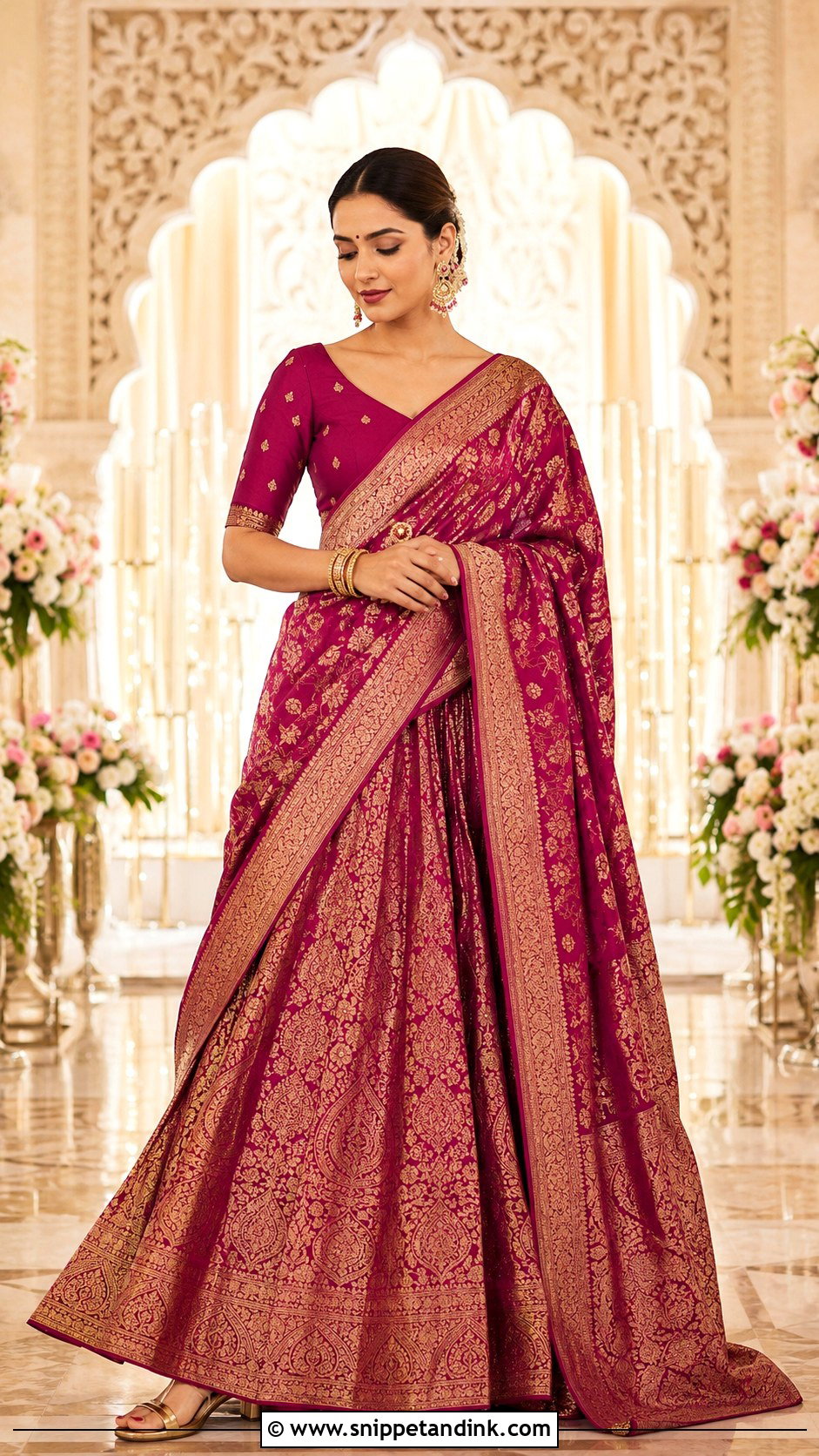
A Banarasi lehenga gets its richness from the weave rather than surface embroidery, so it needs very little else. Magenta, emerald, royal blue, purple or rust all suit the main ceremony. Real Banarasi silk is heavy and holds crisp folds, so add a can-can only if you genuinely want more volume. A simple blouse, a dupatta draped neatly over one shoulder, traditional earrings, bangles and a small bindi complete it. Keep your hair sleek so the fabric leads. It gives a sister real presence while staying clearly apart from bridal wear.
18. Palazzo Suit For Small Wedding Function
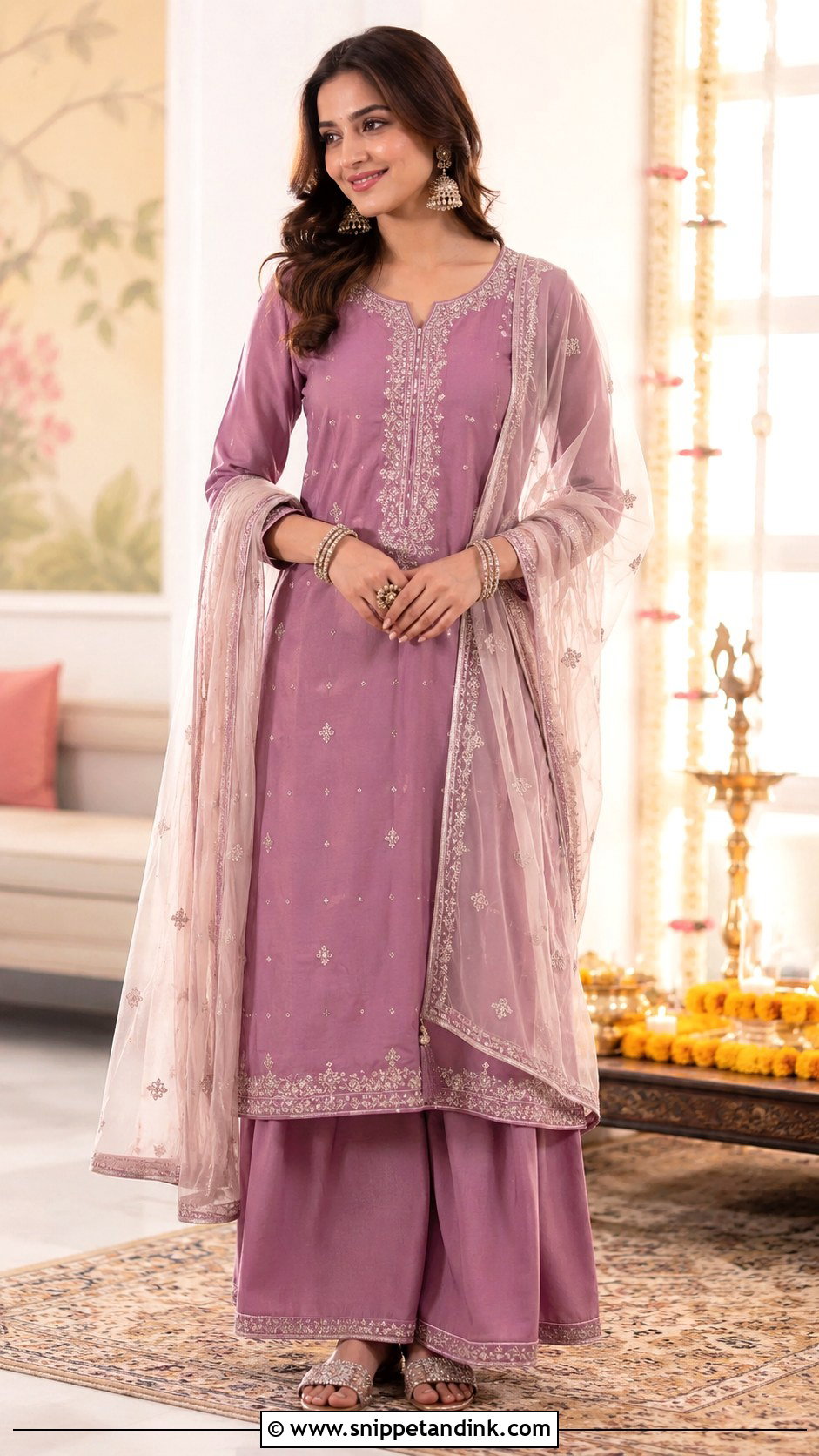
Smaller functions at home, a puja or a family ritual, call for something you can kneel, carry and run errands in. A long kurta with wide-leg palazzo pants and a light dupatta does exactly that. Choose silk, chanderi, georgette or cotton silk depending on formality, pastels by day and jewel tones by evening. Jhumkas, bangles and embellished sandals make it wedding-ready. Pin the dupatta at one shoulder if there’s a havan, so the loose end never drifts toward the fire.
19. Organza Saree For Engagement
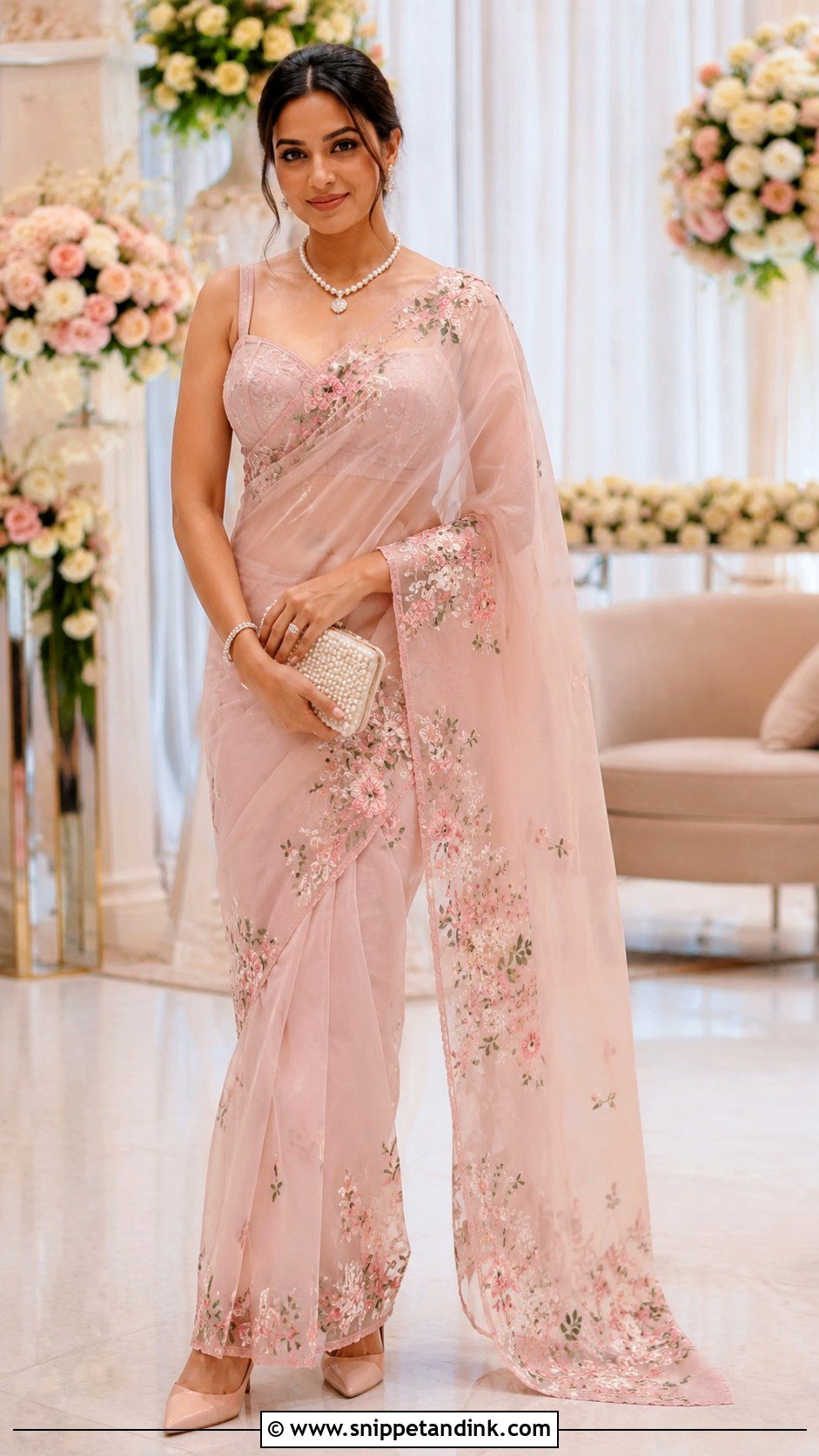
Organza is crisp and holds air, so an organza saree looks light but balloons out unless the pleats are pressed and pinned firmly. Floral embroidery, pearl work or a fine zari border in blush, ivory, lavender, sage or champagne suits an engagement. A structured blouse balances the softness. Pearl jewelry, a sleek clutch and soft curls finish it, and it shows well in daytime garden portraits with the family.
20. Co Ord Set For Mehendi
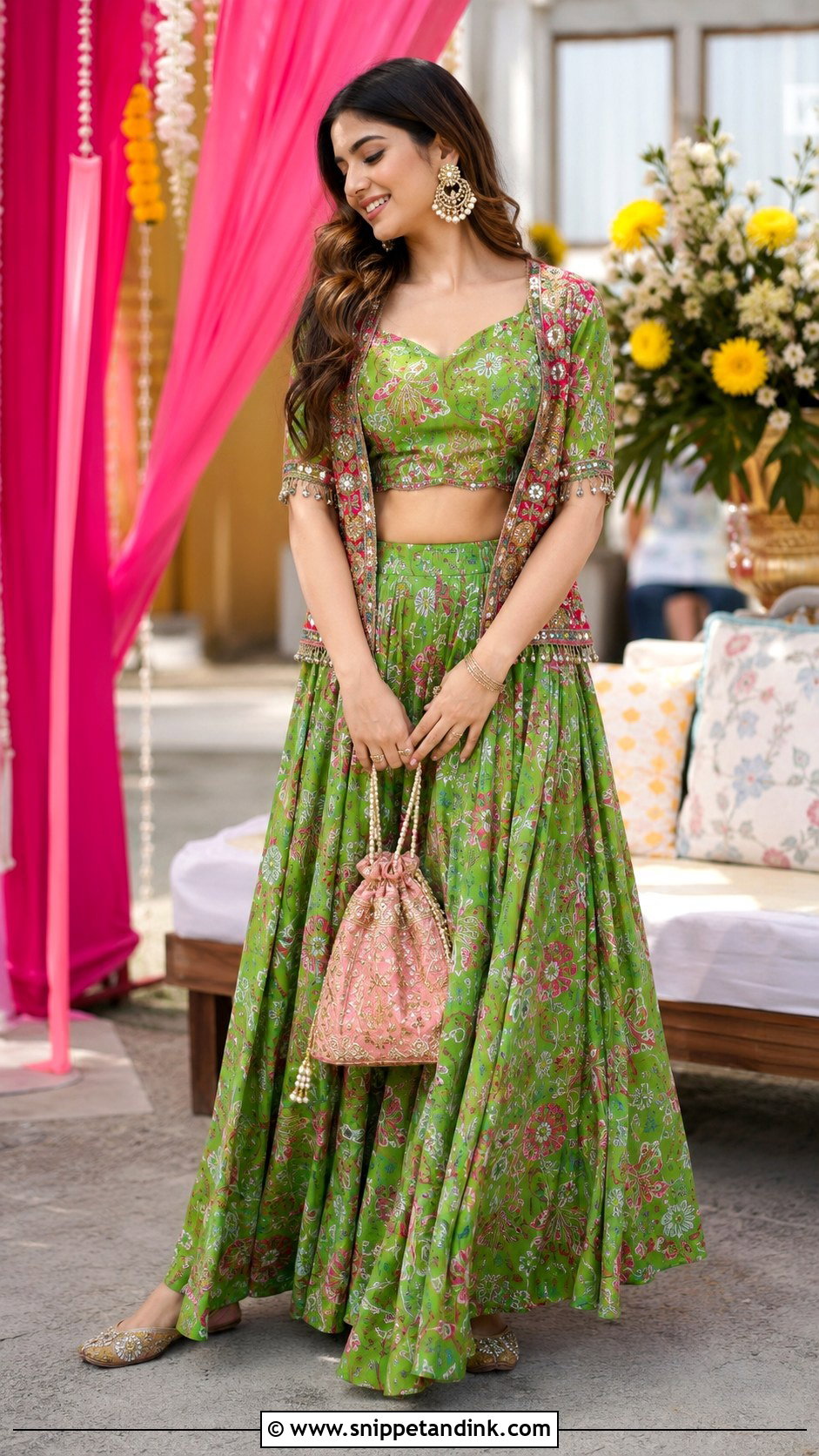
A festive co ord set is the low-effort mehendi outfit: a matching crop top and skirt, kurta and pants, or a short jacket with palazzos. Prints, mirror work, tassels and threadwork make it festive enough, in greens, yellows, coral, pink or turquoise. Pair it with juttis, statement earrings and a small sling or potli bag. You can sit comfortably for hours, which is the whole point.
21. Kurta Lehenga For Sangeet
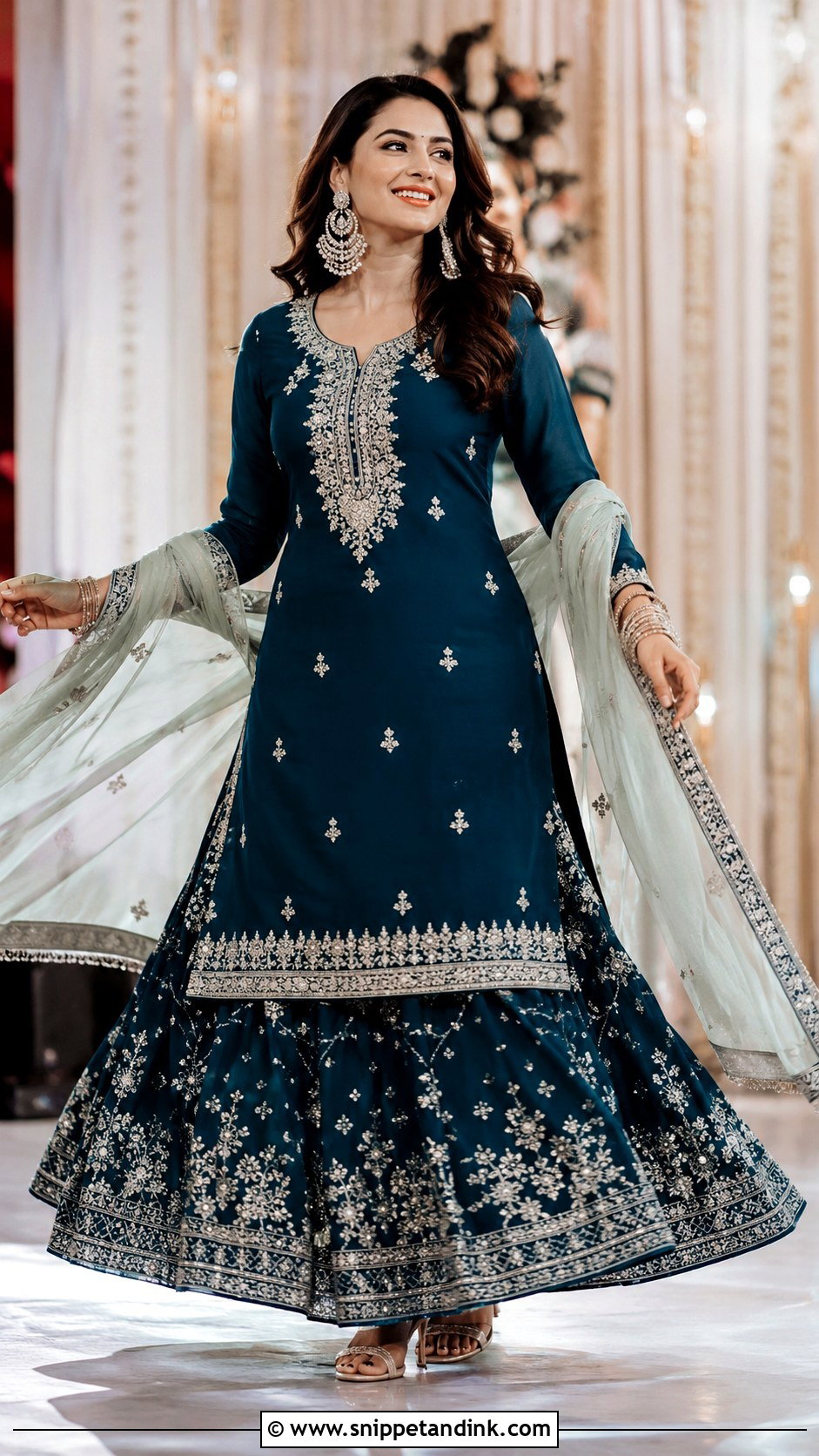
A kurta lehenga swaps the cropped choli for a long or short embroidered kurta over a flared skirt, so there’s no bare midriff to manage while you dance or host. Jewel tones suit an evening sangeet, brighter shades a day event. Drape the dupatta over one shoulder or wear it like a cape. Chandbalis, bangles and comfortable heels or juttis finish it. The kurta keeps you covered when you bend to touch elders’ feet, and the skirt still swings.
22. Saree Gown For Reception
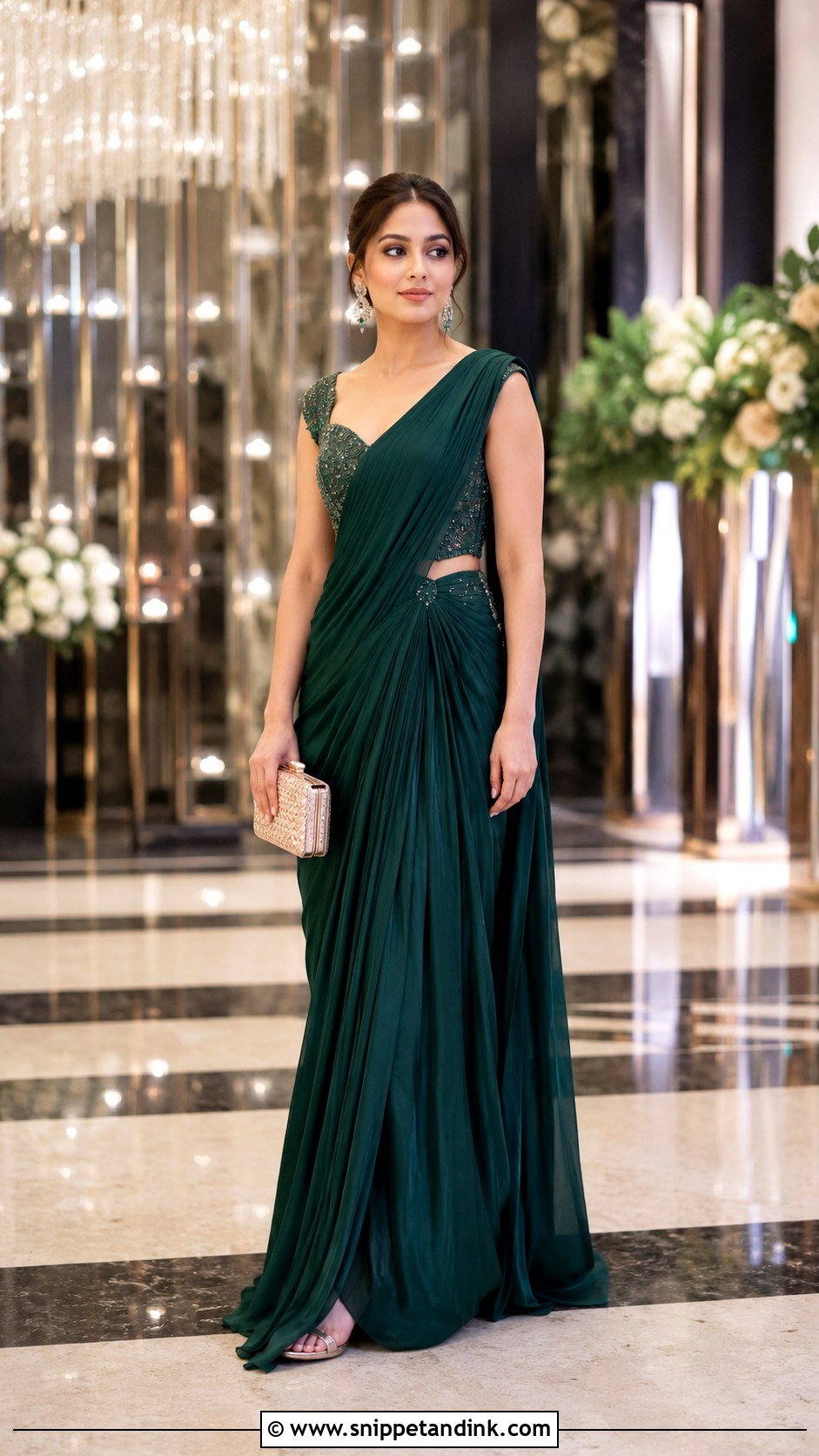
A saree gown is pre-stitched with a draped pallu effect, a structured waist and a fitted bodice, so it wears like a gown and reads like a saree. Metallic, jewel-toned or soft shimmer fabrics suit a reception. Because it’s one piece, the bust and waist both have to fit; buy to the larger measurement and have the other taken in. Heels, drop earrings and a clutch, with hair in waves or a low bun, and you won’t think about pleats all evening.
23. Printed Lehenga For Destination Wedding
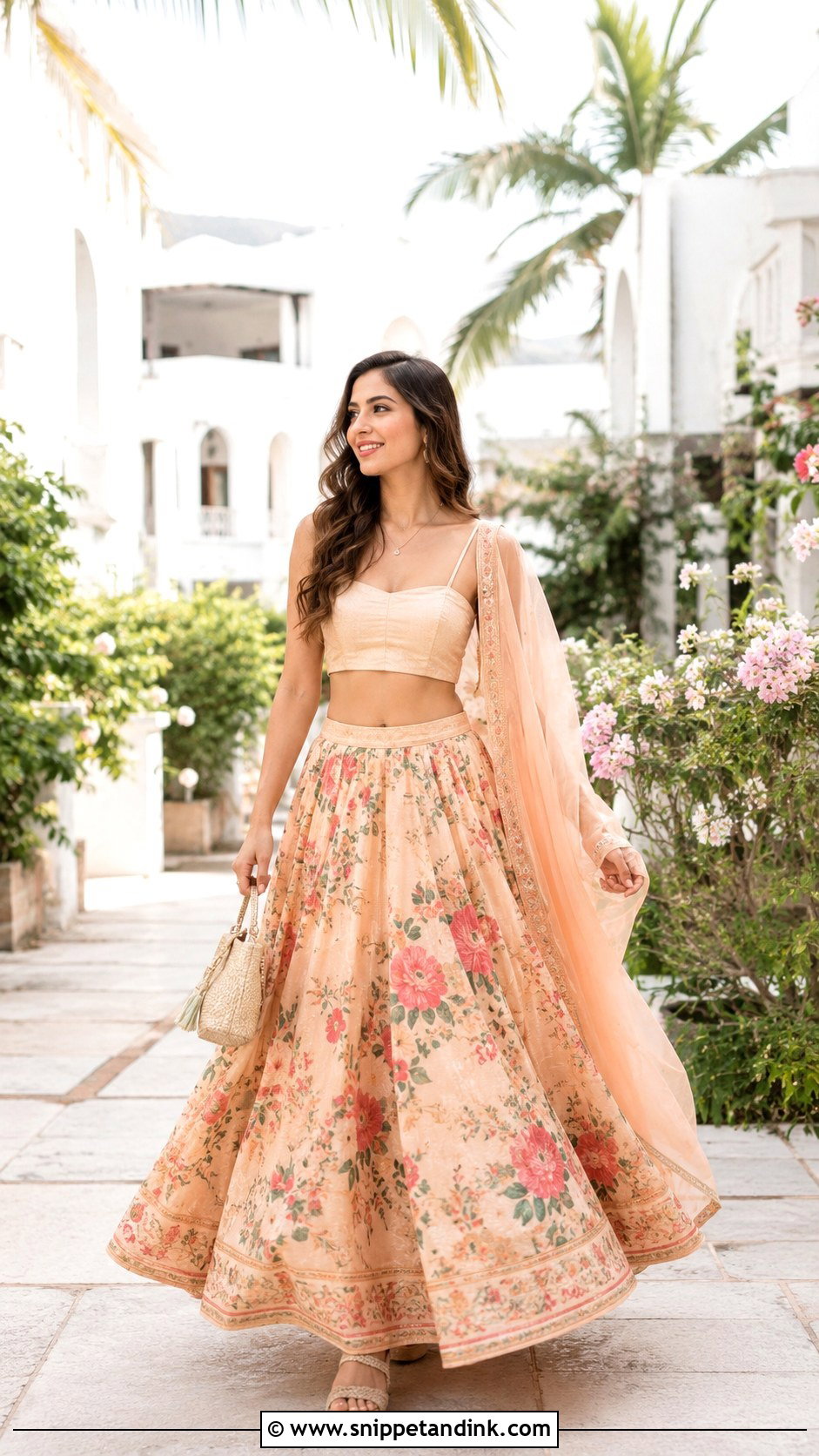
Embroidered lehengas are heavy to pack and crease badly in a suitcase; printed ones roll up small and recover with a quick steam. That makes a printed lehenga the sensible pick for a destination wedding. Florals, block prints, digital prints or geometrics in cotton silk, georgette or chiffon all travel. Softer colours suit beach and garden venues, bolder prints suit palaces and resorts. A simple blouse, light dupatta, minimal jewelry and sandals or wedges for uneven ground are enough, and a second blouse turns it into another function’s outfit.
24. Pant Saree For Cocktail
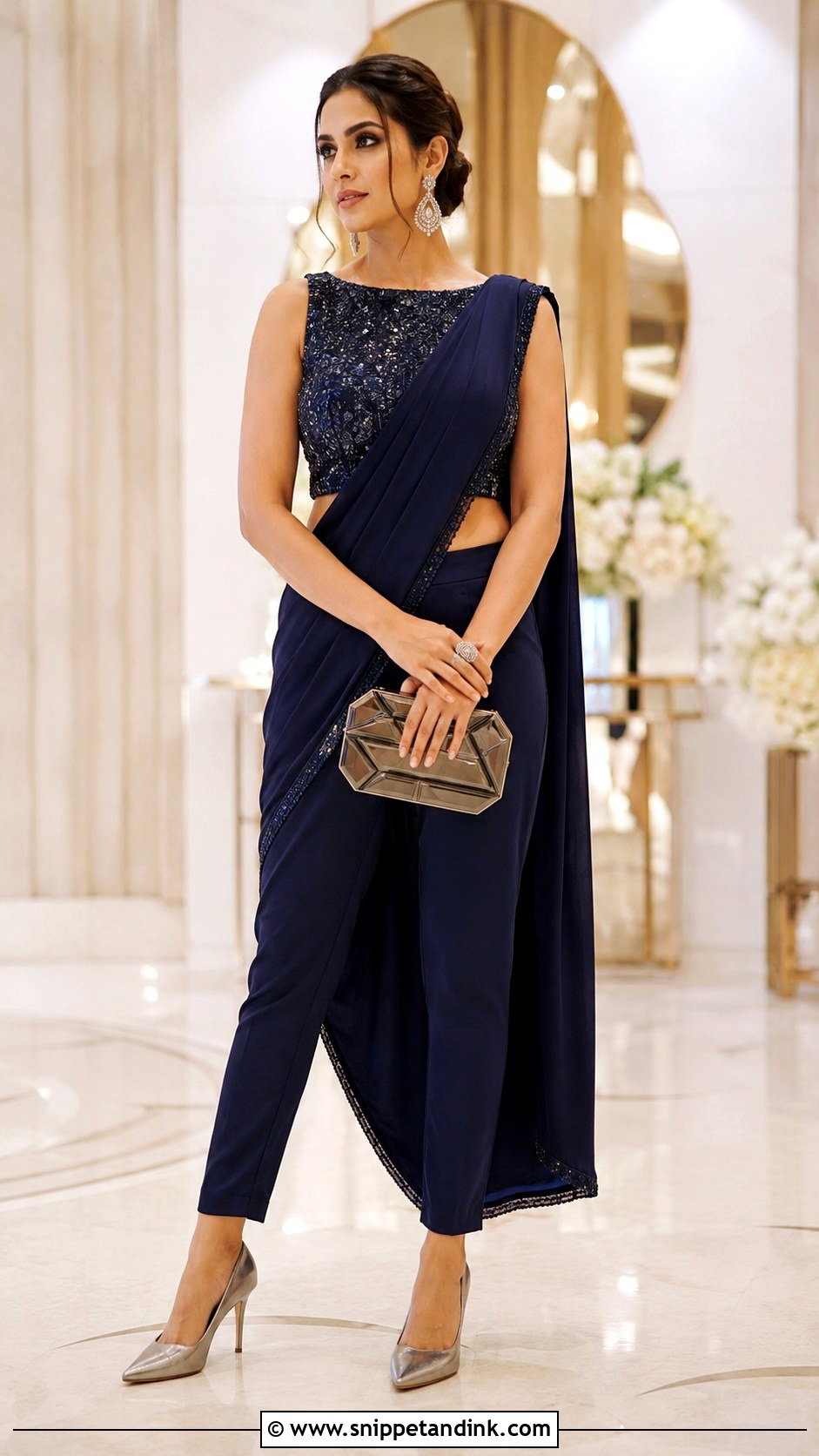
The pant saree pairs tailored trousers with a draped pallu, and it’s the most comfortable way to wear a saree shape to a cocktail night. Black, ivory, navy, wine, emerald or metallic with a sleek blouse or corset-style top. The trousers need a proper fit through the hip, because the pallu draws the eye straight to the waist. Heels, a clutch, sharp earrings and defined makeup, and nothing more.


25. Heavy Dupatta Suit For Wedding Ceremony
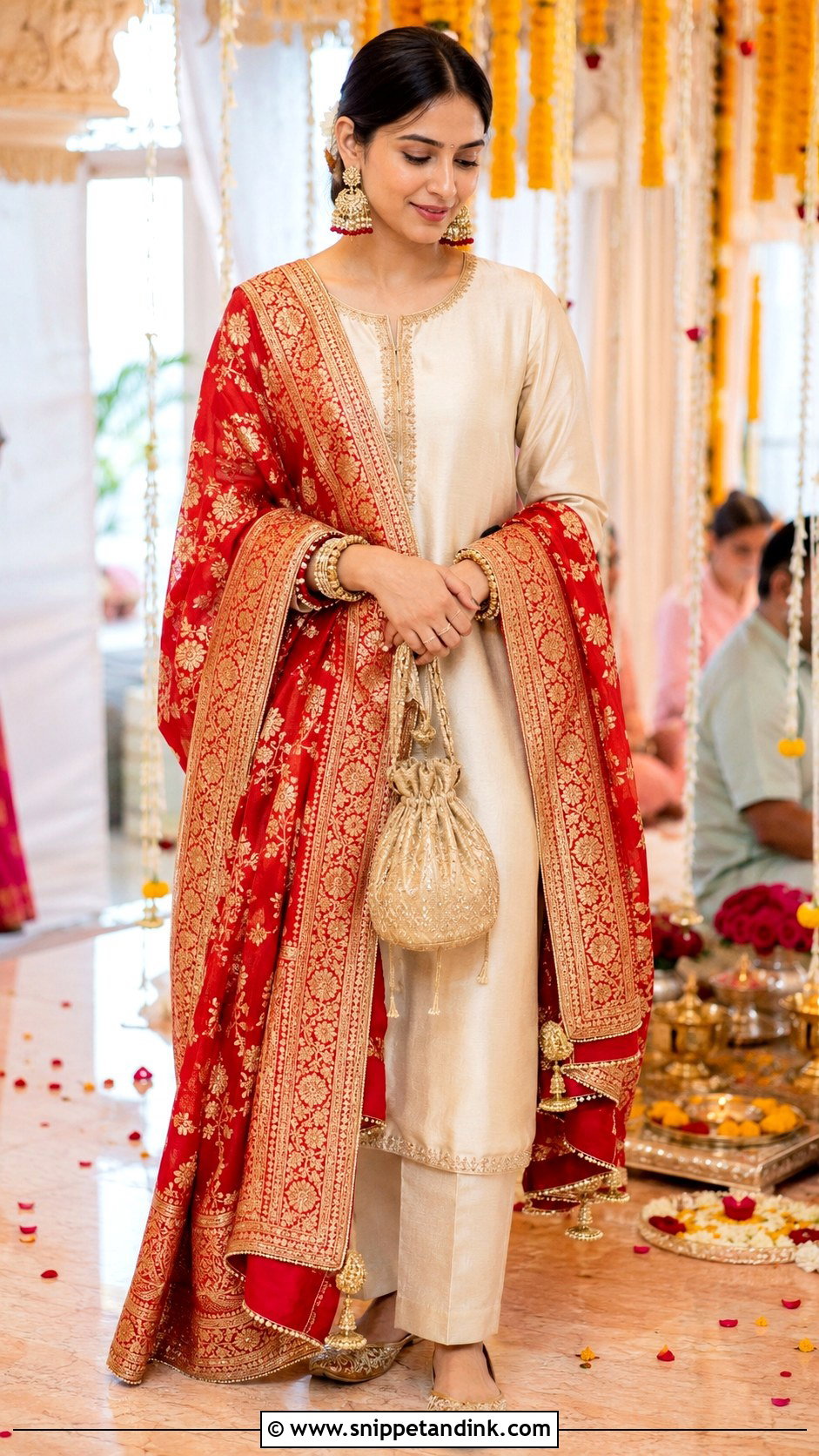
A heavy dupatta suit puts all the craft into one piece. A simple silk, georgette or chanderi kurta set lets a phulkari, Banarasi, bandhani, gota or zari dupatta carry the outfit. Heavy dupattas slip constantly, so I pin them at the shoulder with a small U-pin through the blouse strap, or across both shoulders for rituals. Straight pants, churidar or palazzos, depending on comfort. Jhumkas, bangles and embroidered juttis finish it for sisters who prefer modest styling.
Blouse Fittings, Can-Can Layers and the Safety Pin Kit
Indian outfits often arrive with unstitched blouse fabric or a blouse that needs altering, and tailors are swamped in wedding season. Give your blouse at least three to four weeks with a trial fitting halfway, and longer for a designer piece.
- At the trial, raise both arms and do a dance step. If the blouse rides up, the armholes need deepening.
- Ask for back hooks or a zip you can reach, plus a side opening if you’ll be changing quickly between functions.
- Attach a can-can layer only if you want volume. It adds weight and heat, and many sisters are happier without one at a summer sangeet.
- Have padded cups stitched into backless or sheer blouses so you don’t need a separate bra.
Keep a small kit in your potli: a strip of safety pins, a few U-pins, double-sided tape and a spare hook and eye. A dupatta slipping during the pheras or a blouse hook popping on the dance floor becomes a two-minute fix when someone has that kit to hand.
Dress for the Job You Have at Each Function
Think about what each function asks of you before you think about colour. A sister sits somewhere between guest, host and the bride’s emotional support, so the outfits need to be festive and workable at once. Lehengas carry the big events, sarees bring grace, shararas and ghararas are playful, and Indo-western pieces add an edge on cocktail nights. Match fabrics to the season and buy shoes you can actually stand in. Coordinate with the bride without copying her, and you’ll look right in every photo.
You'll Like These Ideas:


Leave a Reply