
A sister at a Pakistani Barat is never just a guest. She’s greeting the groom’s family, holding the bride’s dupatta, running the joota chupai negotiations and standing in half the photographs, so her outfit has to be dressier than a guest’s and still a step softer than bridal. When I style sisters, I aim for that middle level: rich colour and real embroidery, but a lighter border, a simpler dupatta and jewelry that doesn’t echo the bride’s set. Deep reds and maroons, rust, emerald, navy and soft metallics all work, in lehengas, ghararas, shararas, sarees and peshwas cuts. Here are thirty outfits I’d put on a sister, with notes on fabric, fit and how each one holds up through a long night.
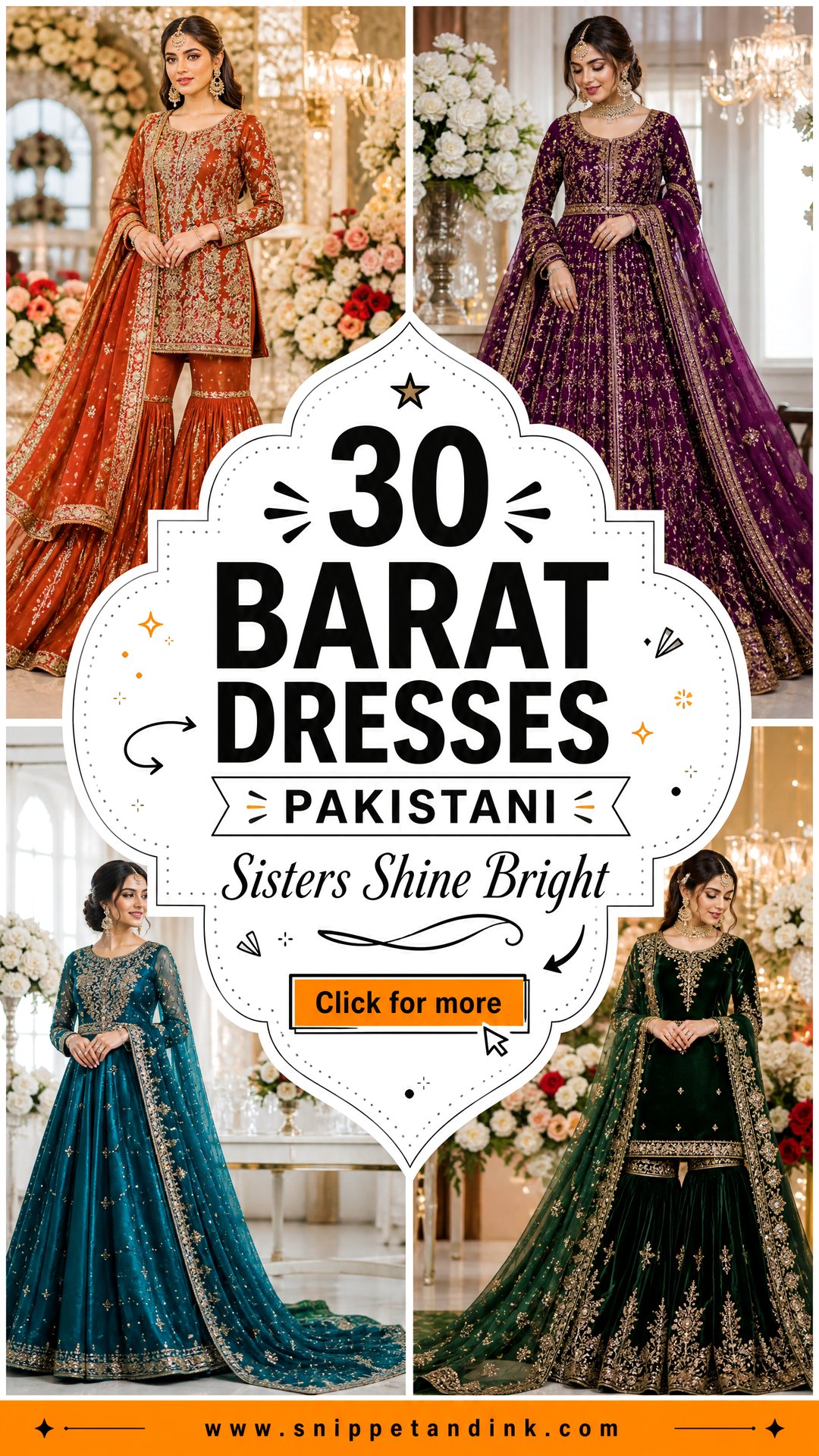
What a Sister Actually Does at the Barat, and How That Changes the Outfit
Before I look at colours with a sister, I ask what her jobs are on the day. The answer changes the outfit more than any trend does.
- If you’re welcoming the Barat with petals or garlands at the entrance, you’ll be standing and reaching for a long time, so sleeves and armholes need to allow it.
- If you’re leading the joota chupai, you’ll be sitting on the floor or crouching near the stage, which is easier in a sharara or gharara than in a stiff farshi.
- If you’re helping the bride with her dupatta and lehenga, keep your own dupatta light and pinned so both hands stay free.
- If you’re serving the milk at doodh pilai, avoid long trailing sleeves that will dip into the glass.
Sisters are also in almost every family group shot, standing next to the bride. That’s why I keep a sister’s embroidery noticeably lighter than the bride’s and avoid her exact colour. In photos, two heavily worked outfits side by side cancel each other out.
1. Maroon Lehenga Barat Dress For Sister
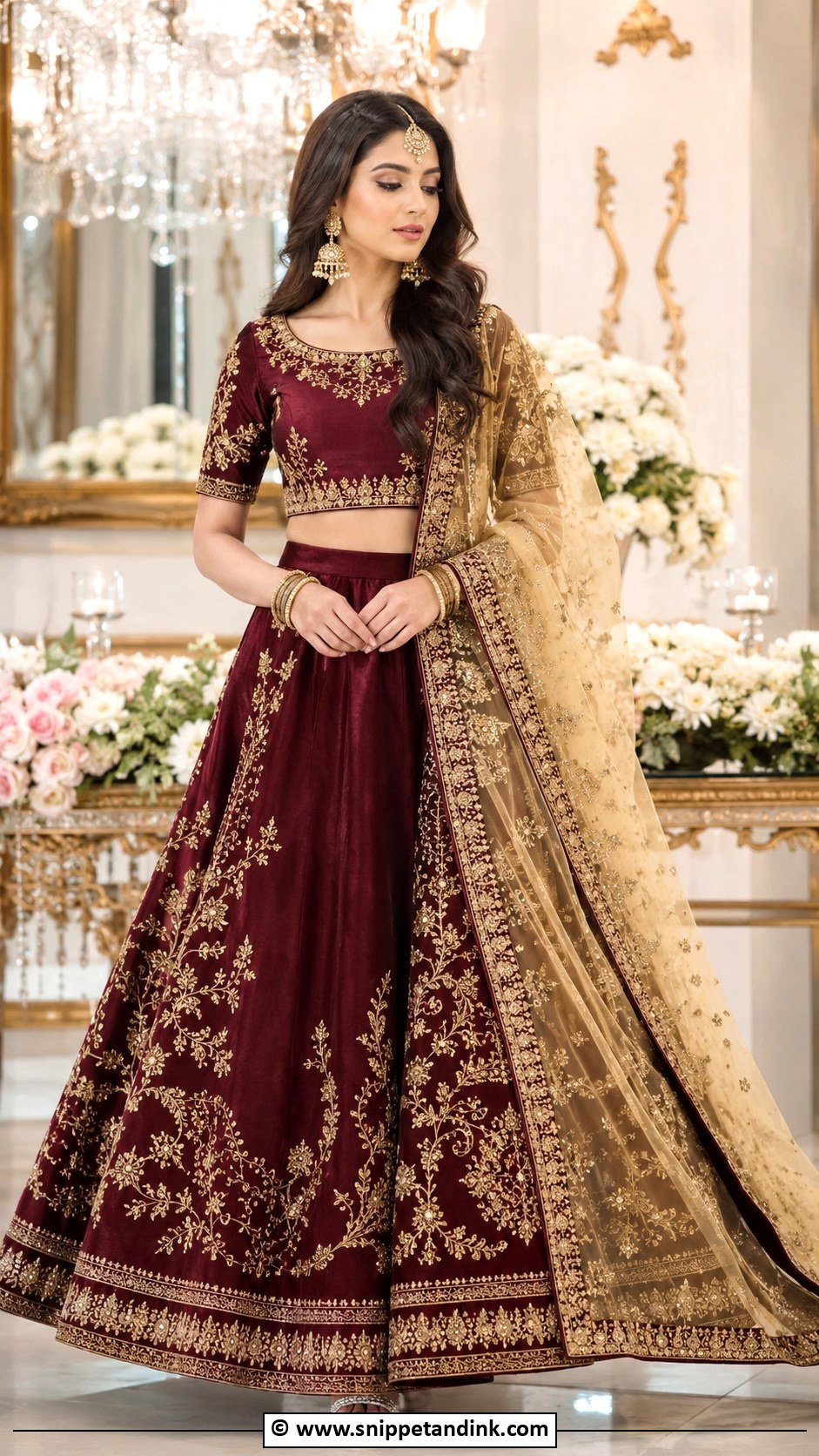
Maroon is one of the safest Barat choices for a sister of the bride or groom, as long as the embroidery stays a notch below bridal. A velvet or raw silk choli over a jamawar, organza or tissue lehenga gives the richness; zardozi, dabka or tilla can carry the work. The border is where I make the difference from the bride: I keep it narrower and avoid a heavy dupatta border that would read as hers. Soft curls, jhumkas, stacked bangles and block heels or khussas finish it.
2. Red Long Shirt With Gharara Barat Dress
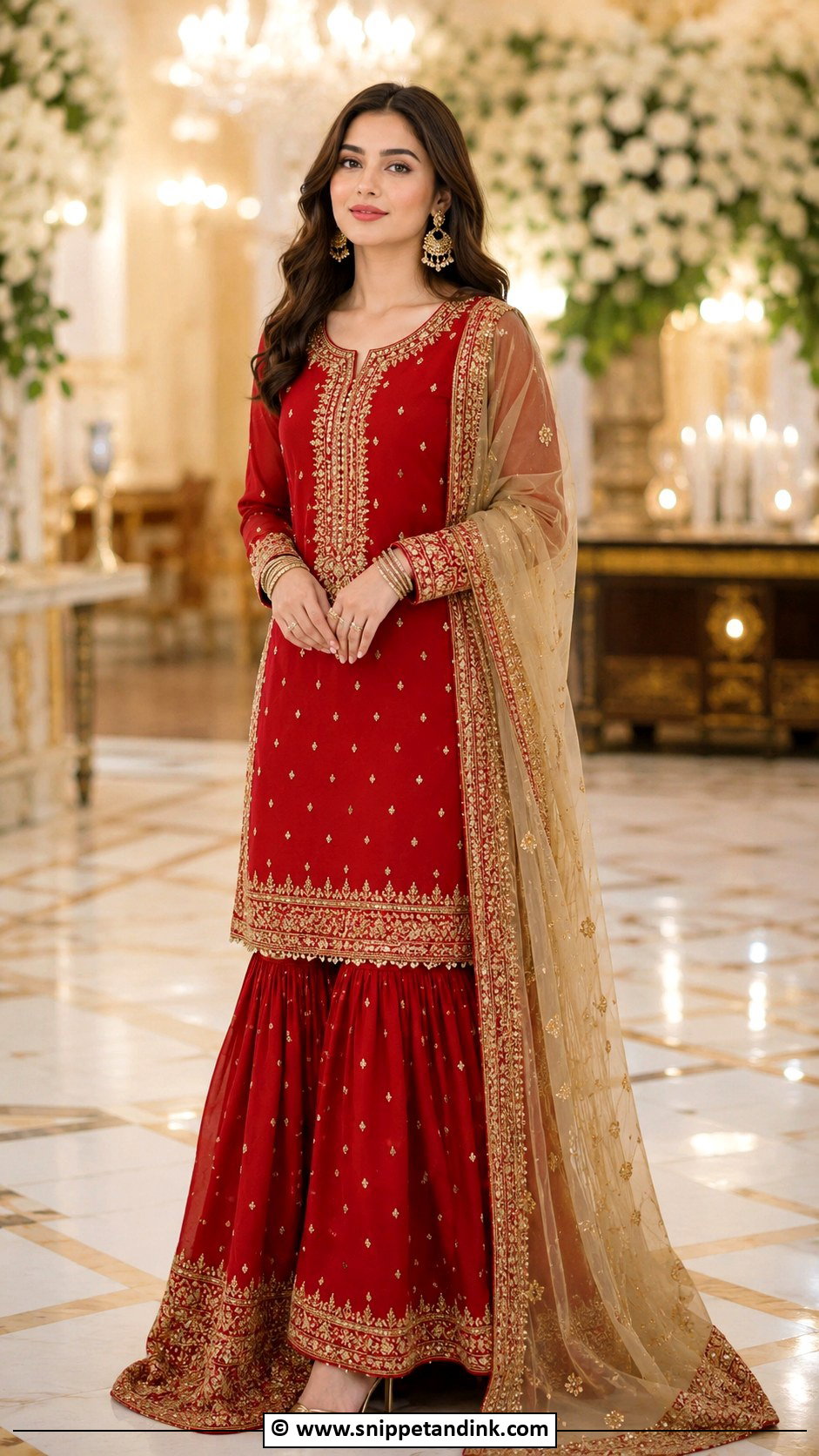
If the bride isn’t in red herself, a red long shirt with a gharara gives a sister the classic Barat feel with plenty of coverage. Ask for antique gold work around the neckline, sleeves and hem rather than all-over embroidery, and a chiffon or organza dupatta edged with kiran. I check the shirt length against the gharara joint at fittings; when the shirt stops just above the knee gathers, the proportions look right in full-length photos. A centre-parted bun, a matha patti if you like traditional jewelry, and gold heels complete it.
3. Emerald Green Sharara Barat Dress
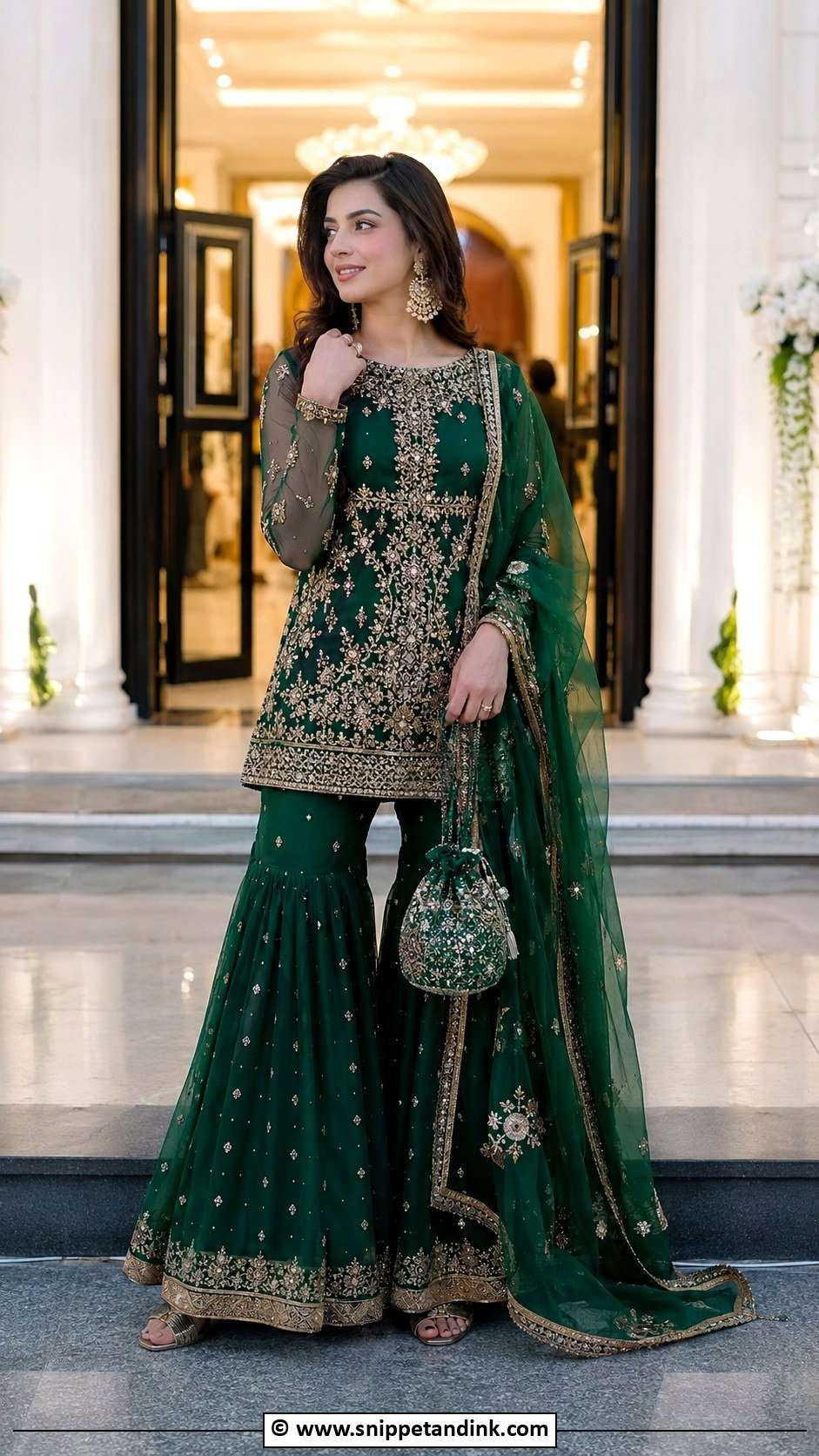
Emerald stands apart from the red and maroon around the bride, and it flatters a wide range of skin tones. I pair a short, structured embroidered shirt with the sharara, because a loose shirt on top of all that volume turns shapeless very quickly. Gold, bronze or champagne thread all suit emerald. Add chandbalis, a potli bag and heels you can stand in for hours.
4. Gold Tissue Peshwas Barat Dress
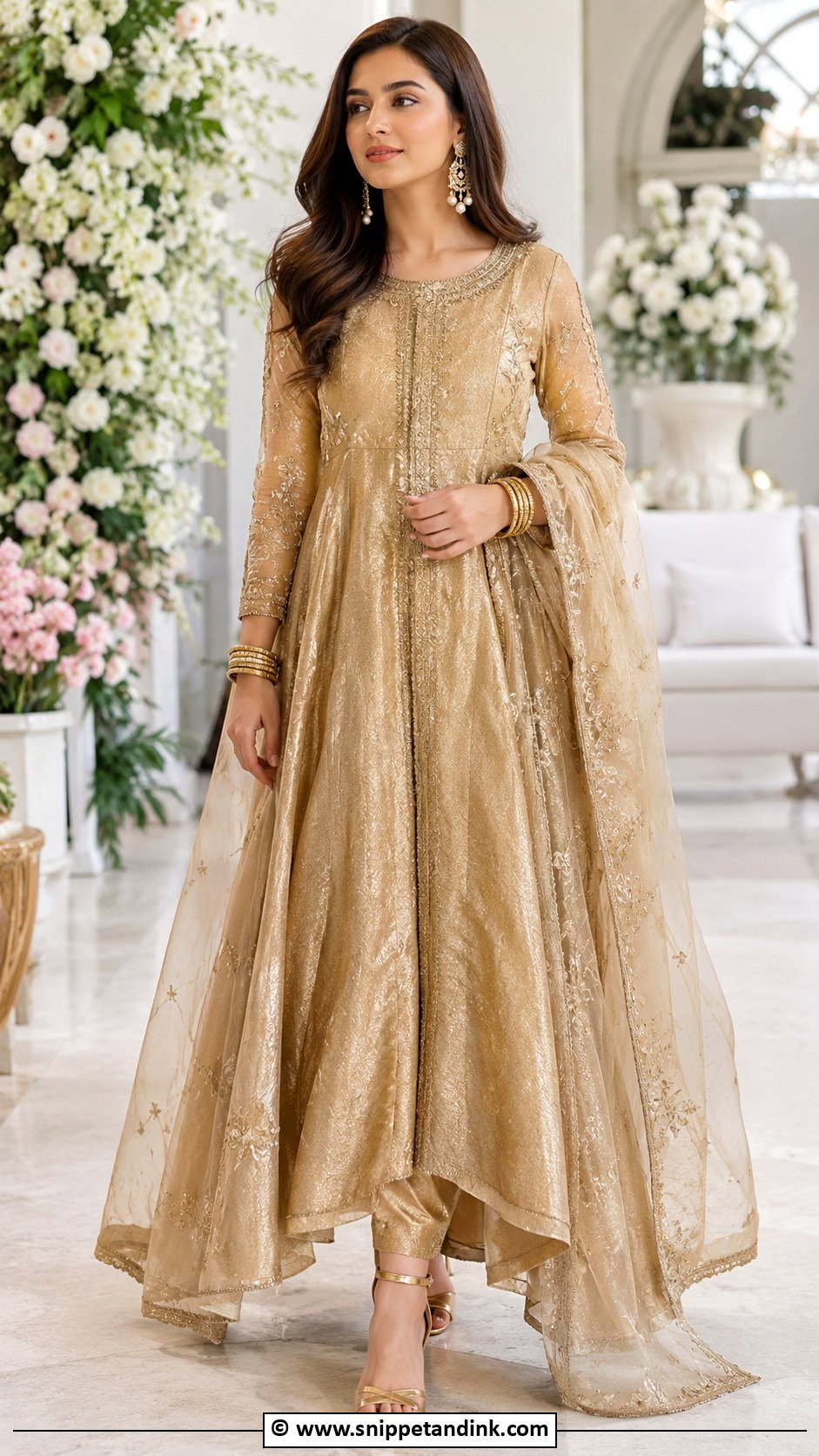
Gold tissue has its own shimmer, so a peshwas in it needs only light gota, tilla or resham work to look formal. The flared panels catch the light every time you turn, which is exactly what you want on a dance floor. Churidar or slim trousers, an organza dupatta with scalloped edging and pearl jhumkas keep it feminine. Tissue can feel scratchy against bare skin, so I always ask for full lining in the bodice and sleeves.
5. Burgundy Velvet Maxi Barat Dress
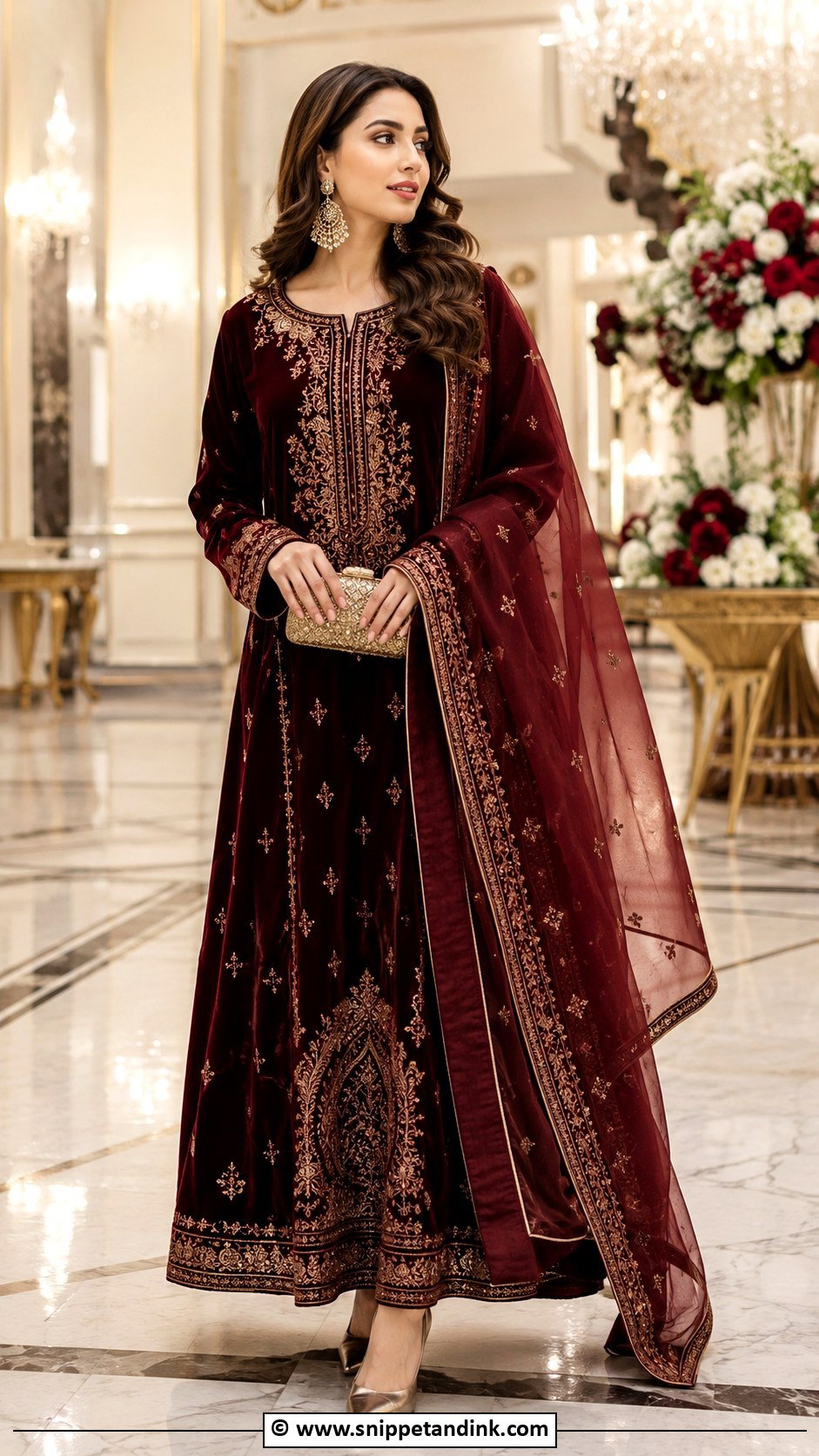
Velvet is warm, which makes a burgundy velvet maxi a winter outfit first and foremost; in a packed summer hall it becomes uncomfortable within the hour. Keep the embroidery to the bodice, sleeves and hem, and choose a net or organza dupatta rather than velvet so the weight stays manageable. A sleek bun and antique gold earrings suit the modern line of a maxi, and glowing skin with soft eyes balances the depth of the colour.
6. Navy Blue Lehenga Choli Barat Dress
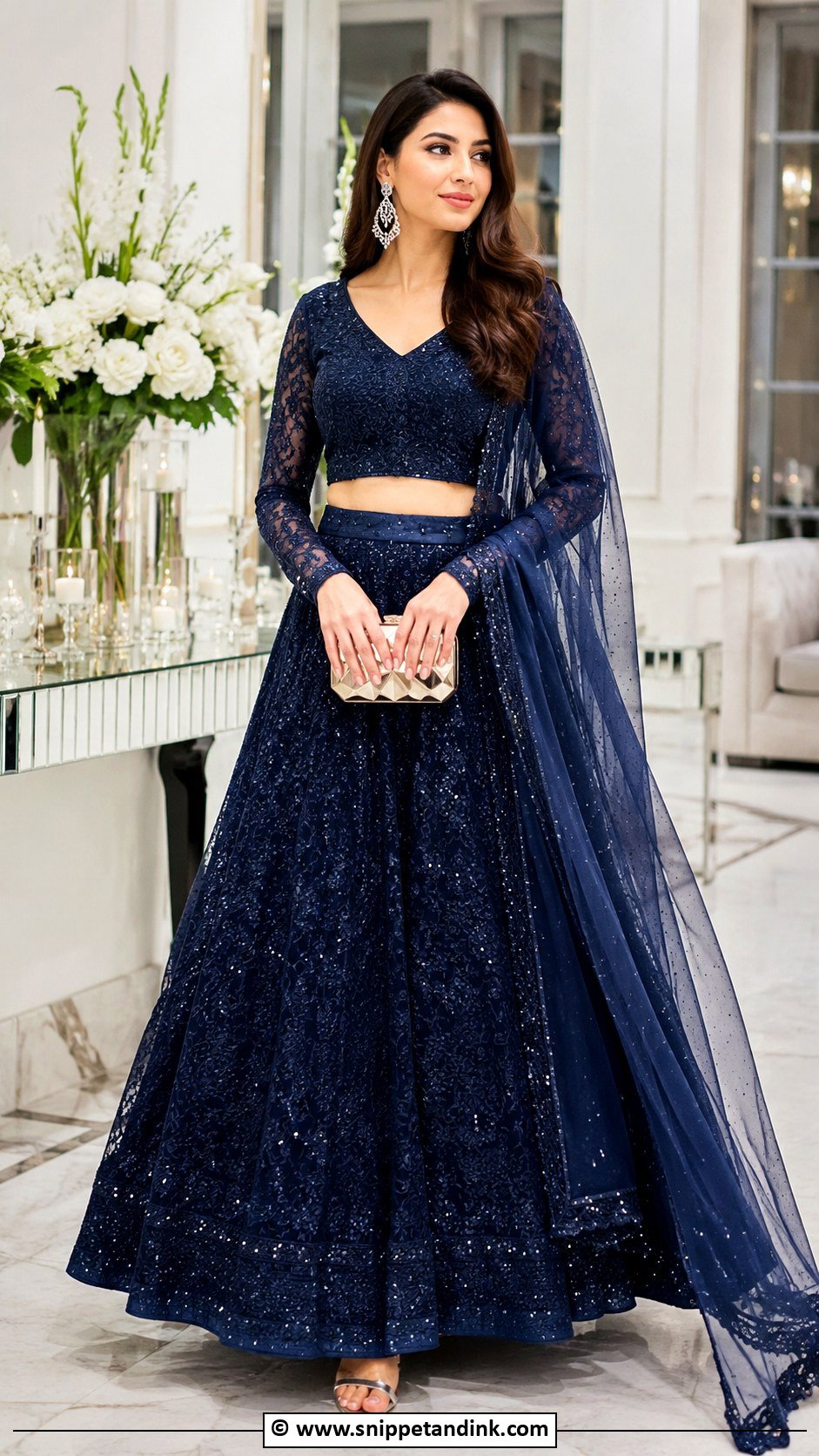
Navy gives a sister depth without competing with bridal red, and it takes silver, antique gold or champagne embroidery equally well. A raw silk choli with a flared organza or jamawar lehenga makes a balanced shape, and a lightly bordered dupatta keeps it wearable. It’s an evening colour above all. Statement earrings and metallic heels are enough, and navy is easy to restyle for the next family wedding.
7. Rust Gharara Barat Dress
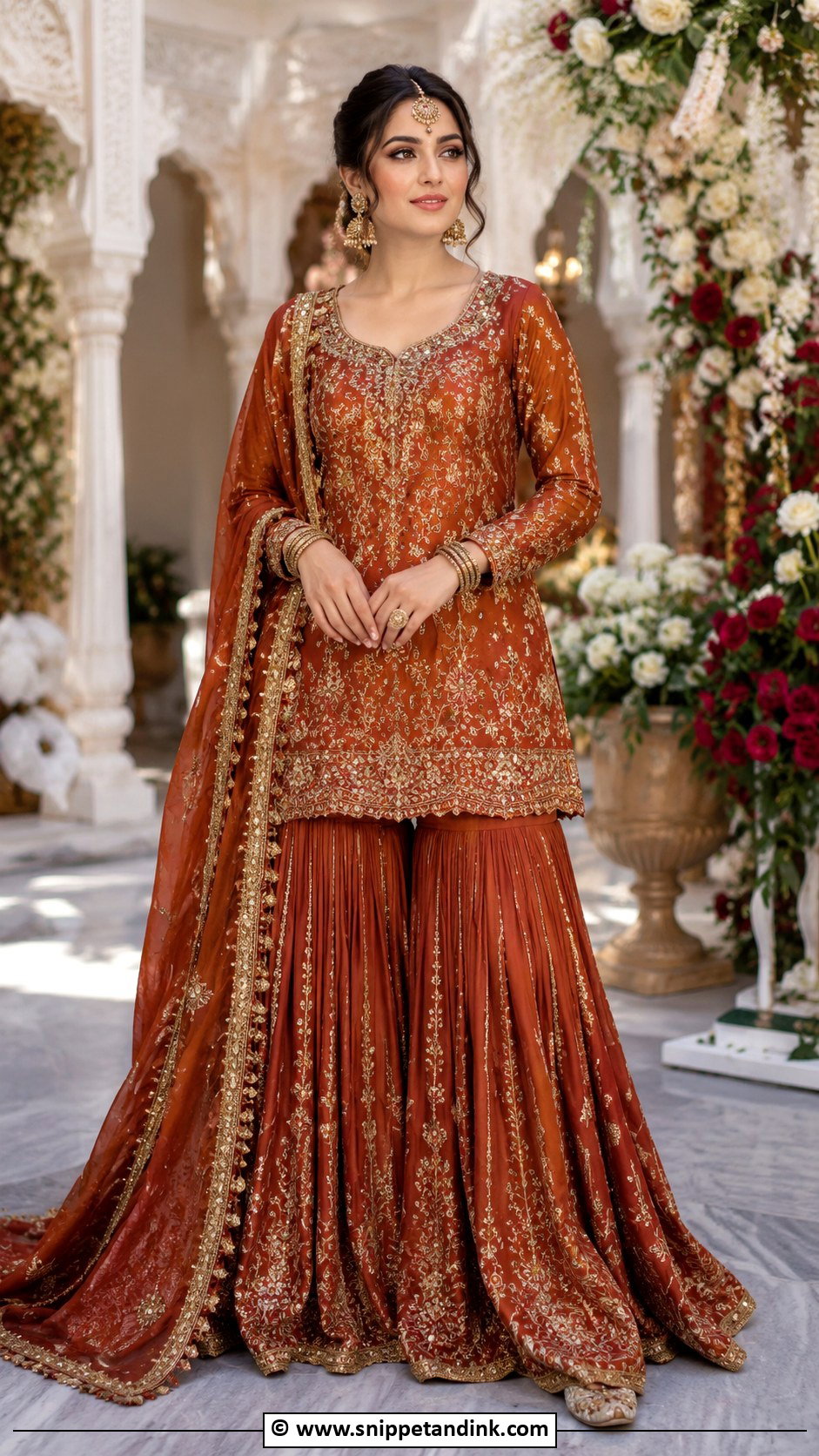
Rust sits close enough to the Barat palette to feel traditional, but far enough from red that nobody will mistake you for the bride. A short or mid-length shirt with antique gold work over a silk, brocade or jamawar gharara is the classic cut. I like a mustard-gold dupatta with it for depth. This is the outfit where old-school jewelry shines: jhumkas, bangles and a passa. The gharara balances wider hips well, while the shirt gives coverage.
8. Champagne Saree Barat Dress
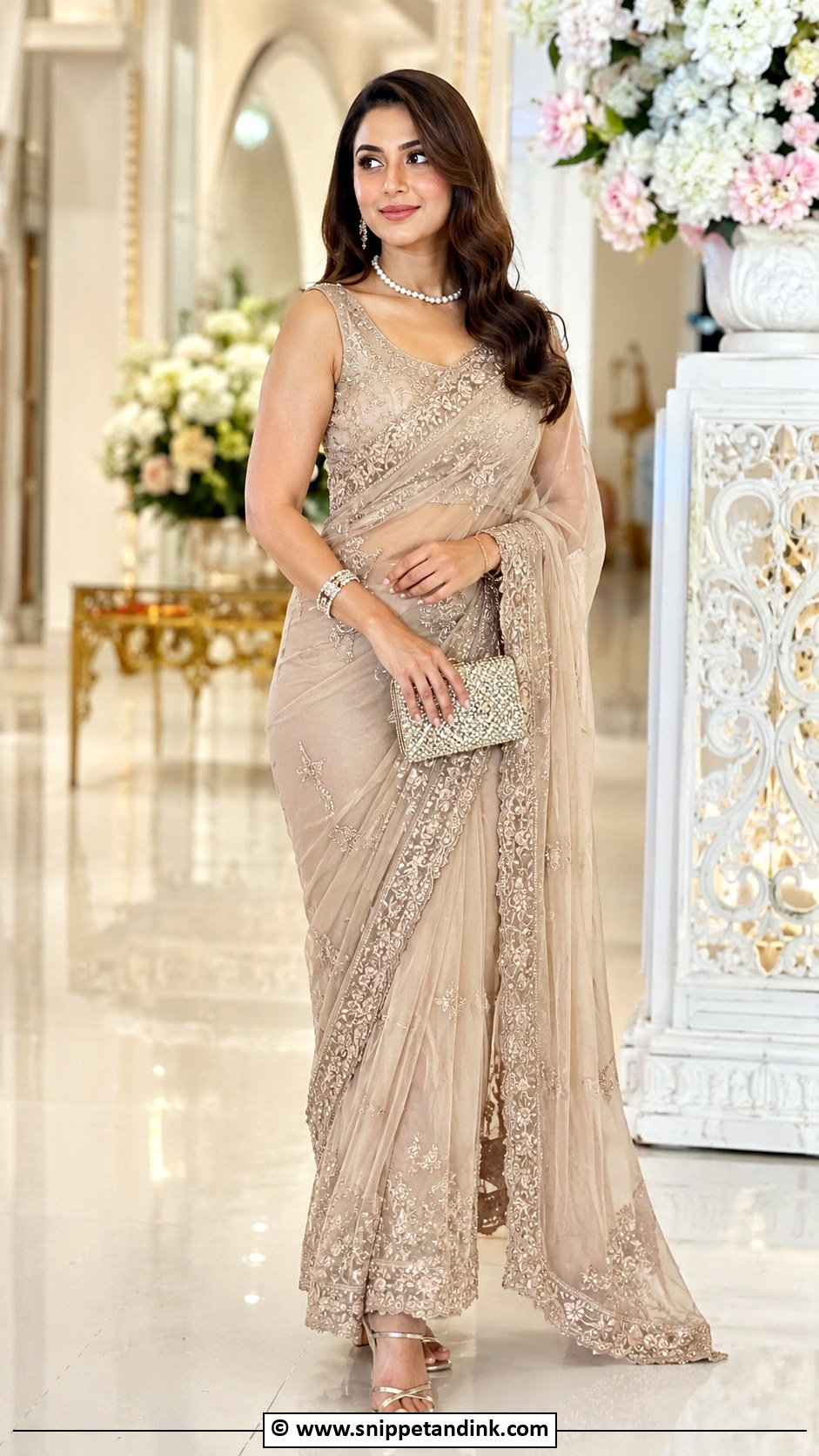
A saree suits sisters who’d rather have a graceful drape than a big skirt, and a champagne one in chiffon, tissue, net or organza is a refined Pakistani Barat look for sisters. How comfortable you are all night depends on the blouse, so have it properly tailored and secure. Pin the pleats at the waist and the pallu at the shoulder; a saree that keeps slipping means you’ll spend the evening adjusting it instead of helping. Pearl or gold jewelry and luminous makeup suit the soft metallic tone.
9. Black And Gold Sharara Barat Dress
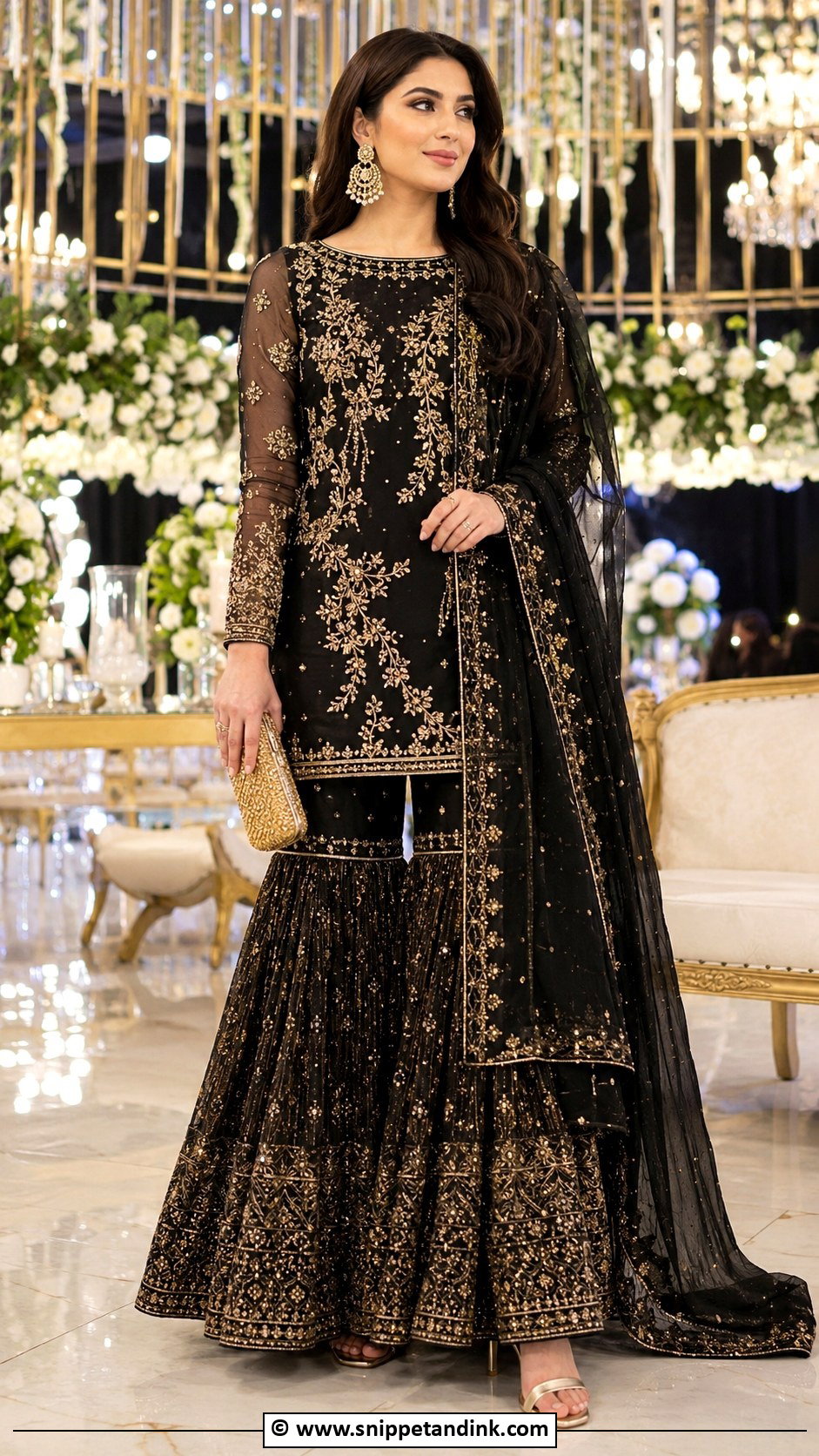
Black needs a family’s blessing before it goes on at a Barat, so ask first. When it’s welcome, a short kameez over a wide sharara with a heavily bordered sheer dupatta looks sharp in the evening. Fabric matters more with black than any other colour: cheap black synthetic looks flat in photos, while velvet, raw silk or a good chiffon holds depth. Gold jewelry warms it up, and soft waves keep it from looking severe.
10. Pink Lehenga Barat Dress
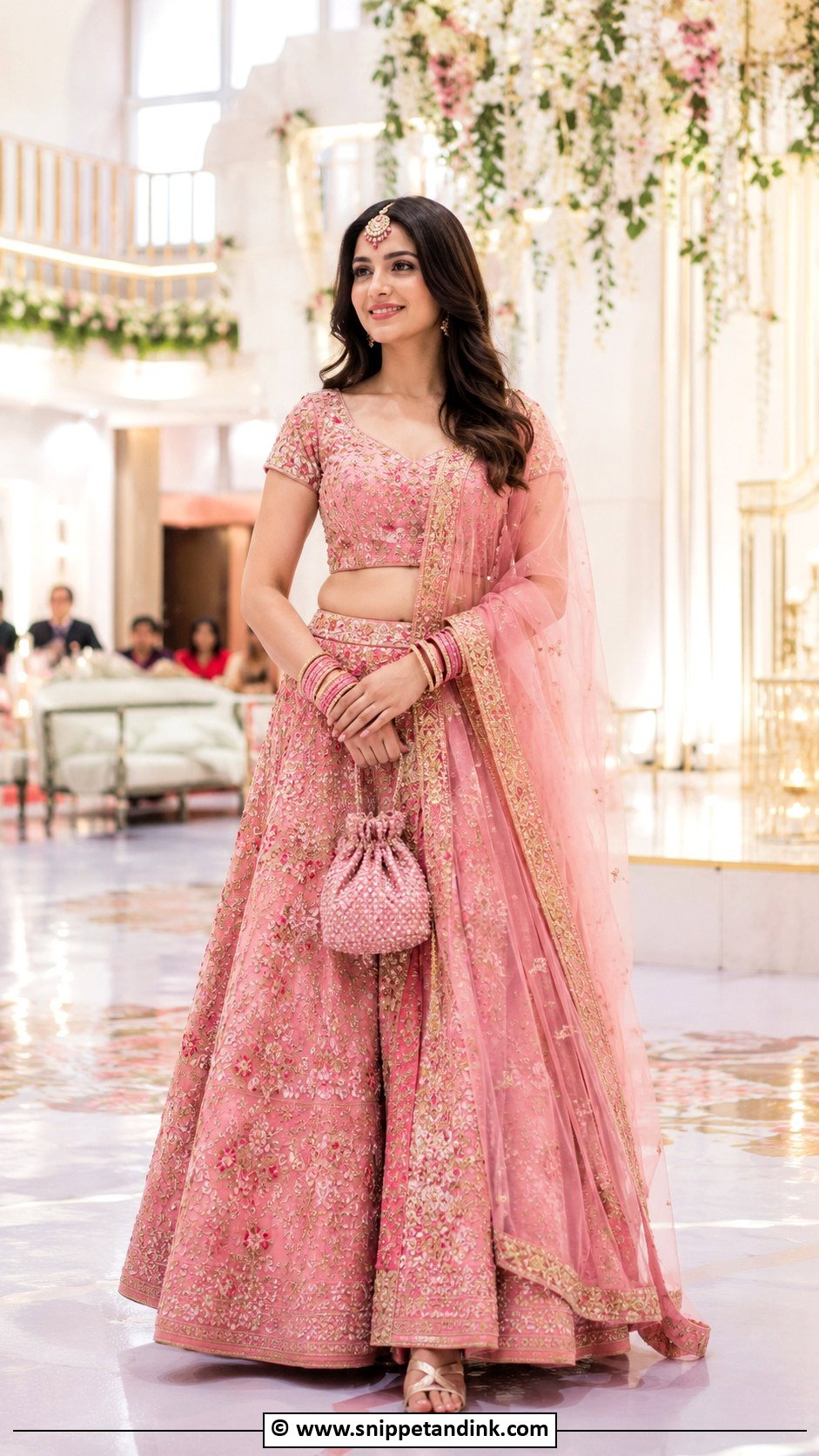
For a formal Barat I steer younger sisters toward rose, dusty or deep pink rather than very pale shades, which can look washed out next to the bride’s richer colours. A decorated choli, a flared lehenga and an organza dupatta make the full shape. Match the embroidery to the pink: gold suits warm pinks, silver or mirror work suits cooler ones. A delicate tikka, bangles and a small potli keep it cheerful.
11. Plum Pishwas Barat Dress
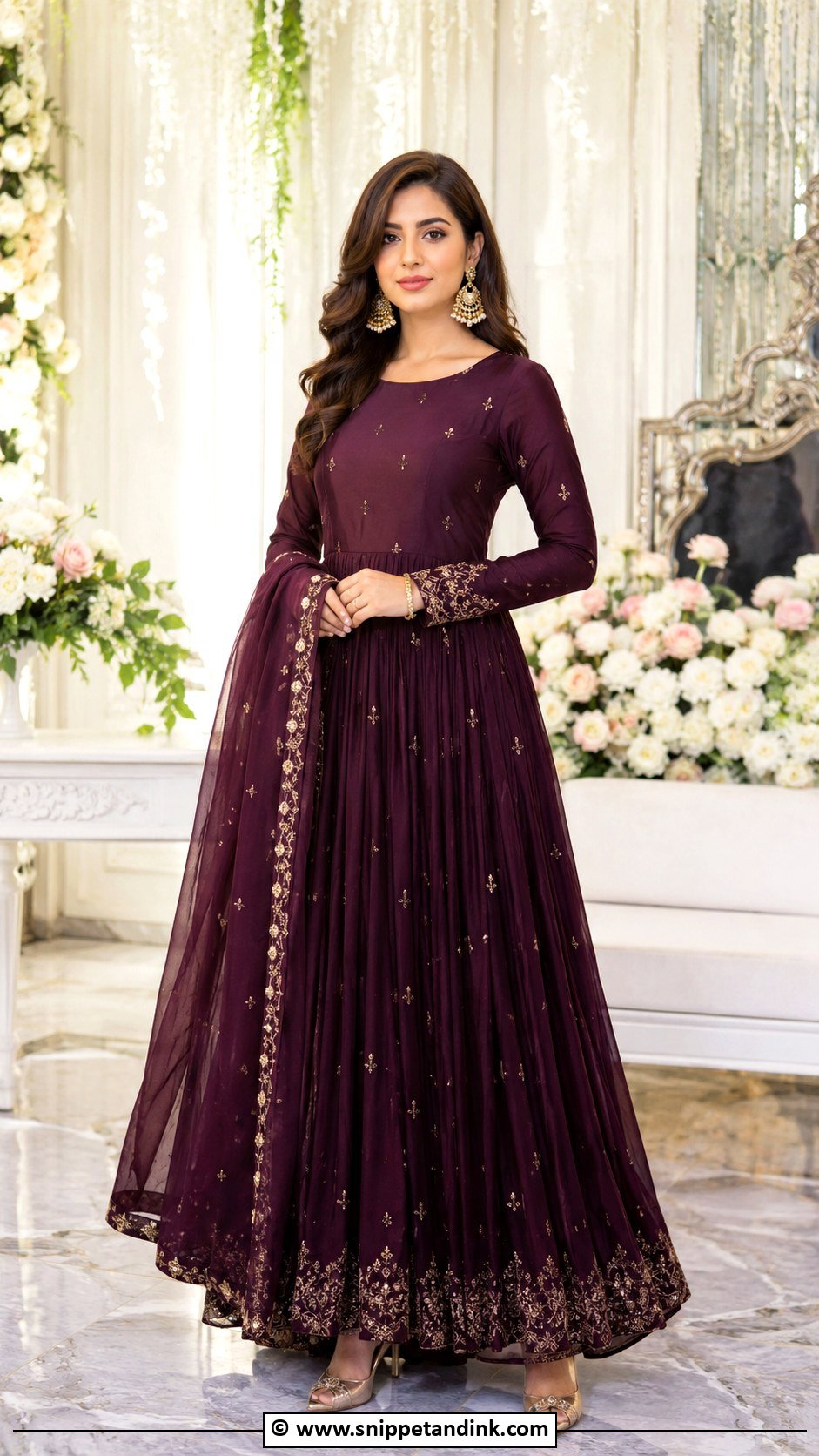
Plum has the depth of maroon with a cooler undertone, and in a pishwas it moves well. The fitted bodice and flared skirt give shape without stiff structure, and dull gold, copper or champagne thread finishes it richly. It’s easy to make modest: ask for full sleeves and a higher neckline at the cutting stage, not after. Chandbalis, soft curls and metallic heels complete the look.
12. Ivory And Gold Lehenga Barat Dress
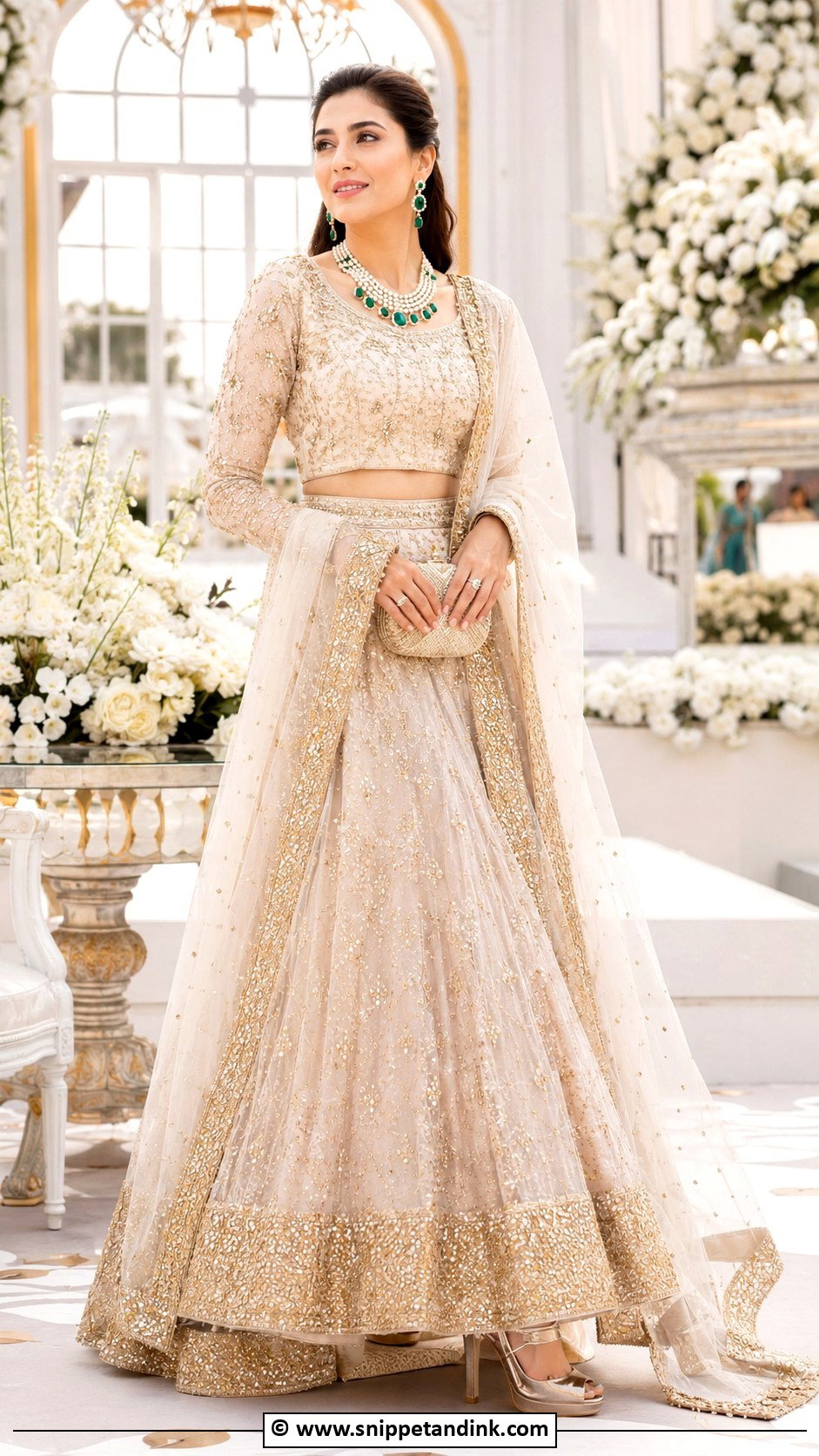
Ivory and gold is one I only recommend after checking what the bride is wearing. If she’s in red or maroon, an ivory lehenga for a sister can look fresh; if she’s in pastels or ivory, it’s too close. Keep the cut and embellishment less bridal, and use emerald, ruby-toned or pearl jewelry to bring in some colour. It’s best at daytime events and in bright halls, and I’d avoid draping the dupatta over the head like a bride does.
13. Teal Maxi Barat Dress
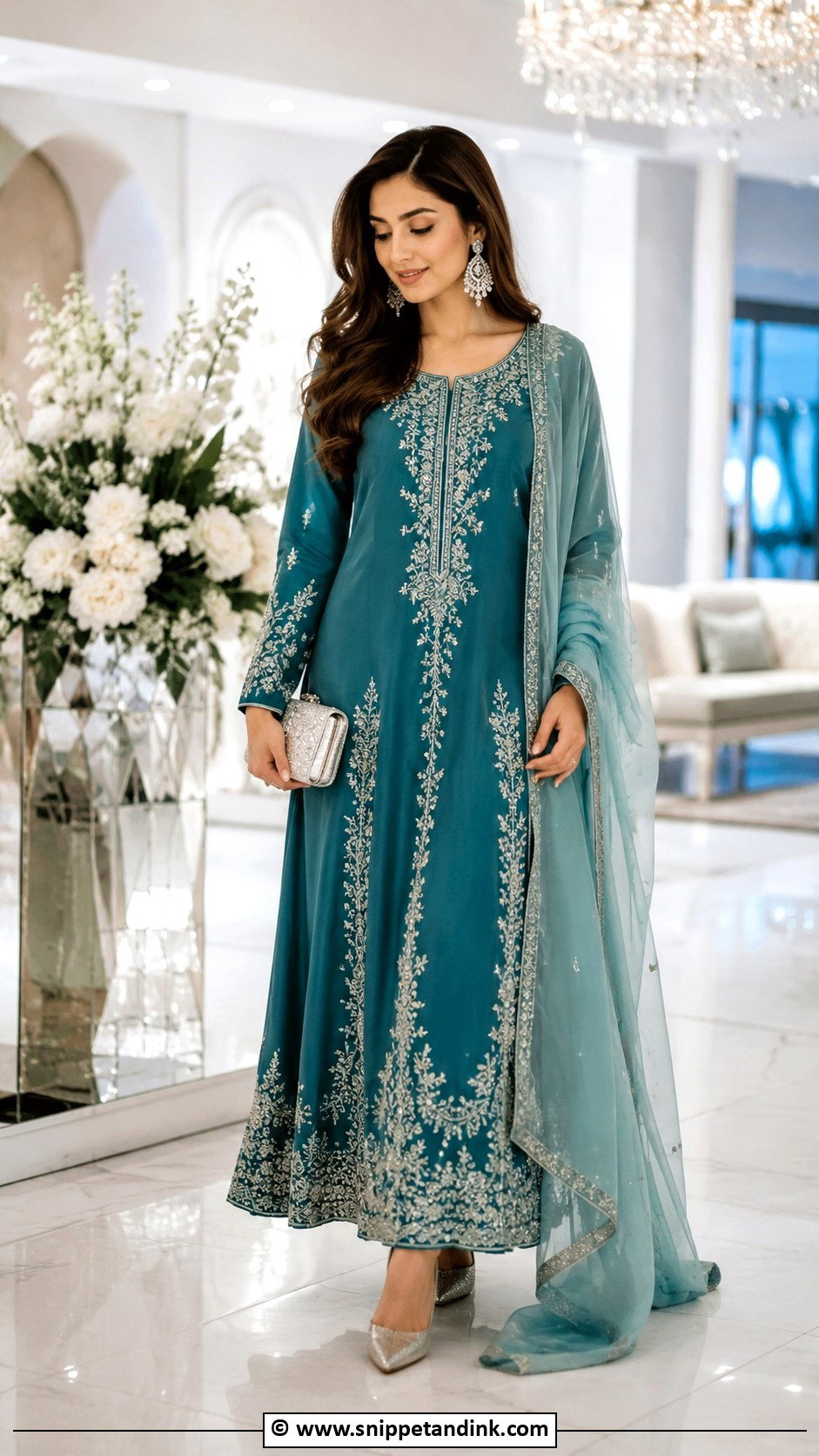
Teal in a maxi is a practical choice: one piece to wear, no skirt to manage, and a colour that stands out in a crowd. Look for embroidery on the bodice, sleeves and hem, and a light dupatta. Teal works with silver, gold or champagne, so pick the metal that suits your skin rather than the one in fashion. Earrings with a bit of movement and pointed heels keep it modern.
14. Mustard Lehenga With Maroon Dupatta Barat Dress
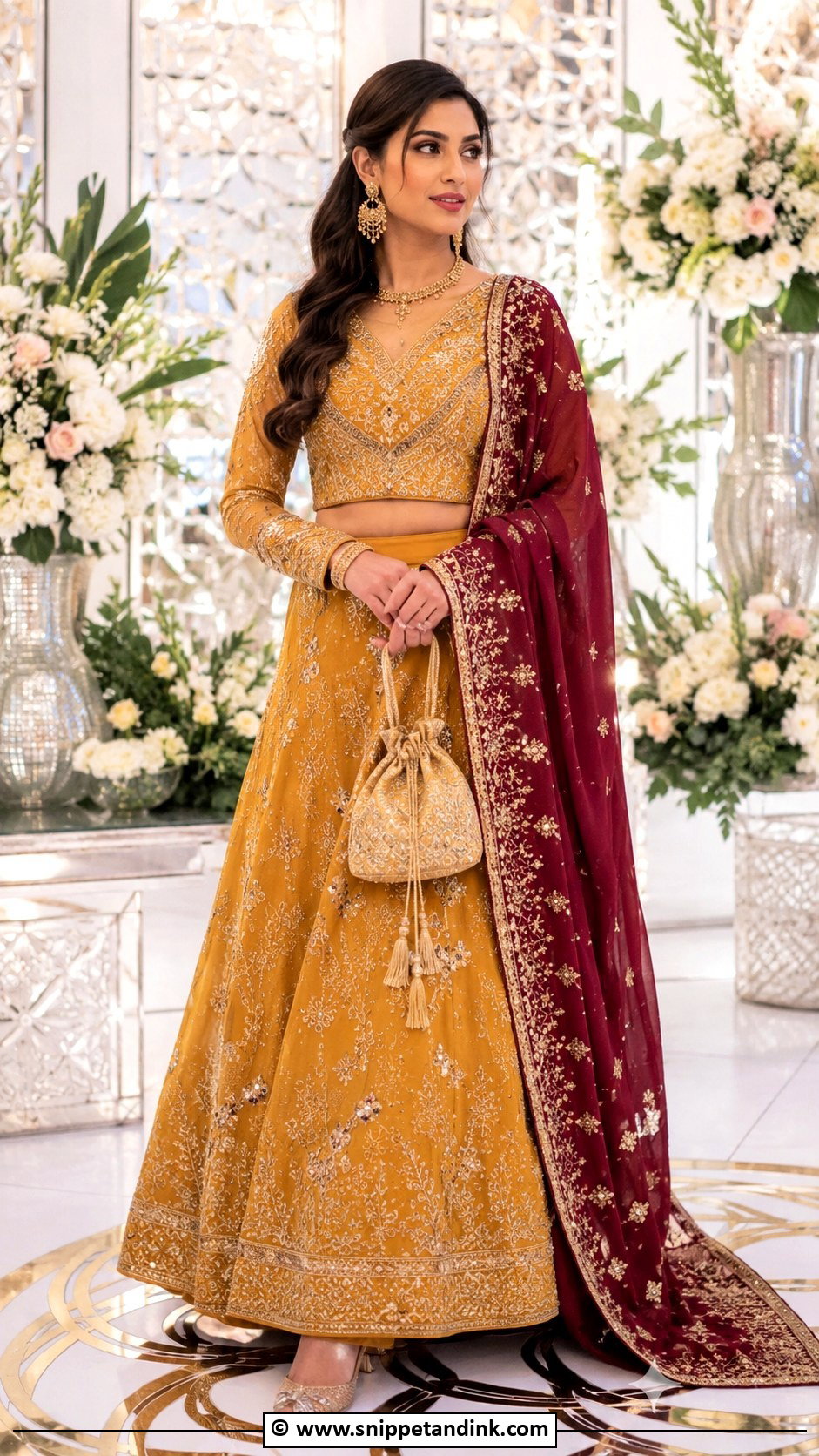
Mustard with maroon is classic Pakistani colour blocking, and a mustard lehenga with a maroon dupatta brings the mehndi brightness into a more formal Barat. Raw silk, tissue or jamawar with antique embroidery suits it, and a maroon dupatta edged with gota or kiran adds the formality. With two strong colours, I keep the blouse fitted and fairly plain. Gold jewelry and a potli finish it.
15. Silver Gray Saree Barat Dress
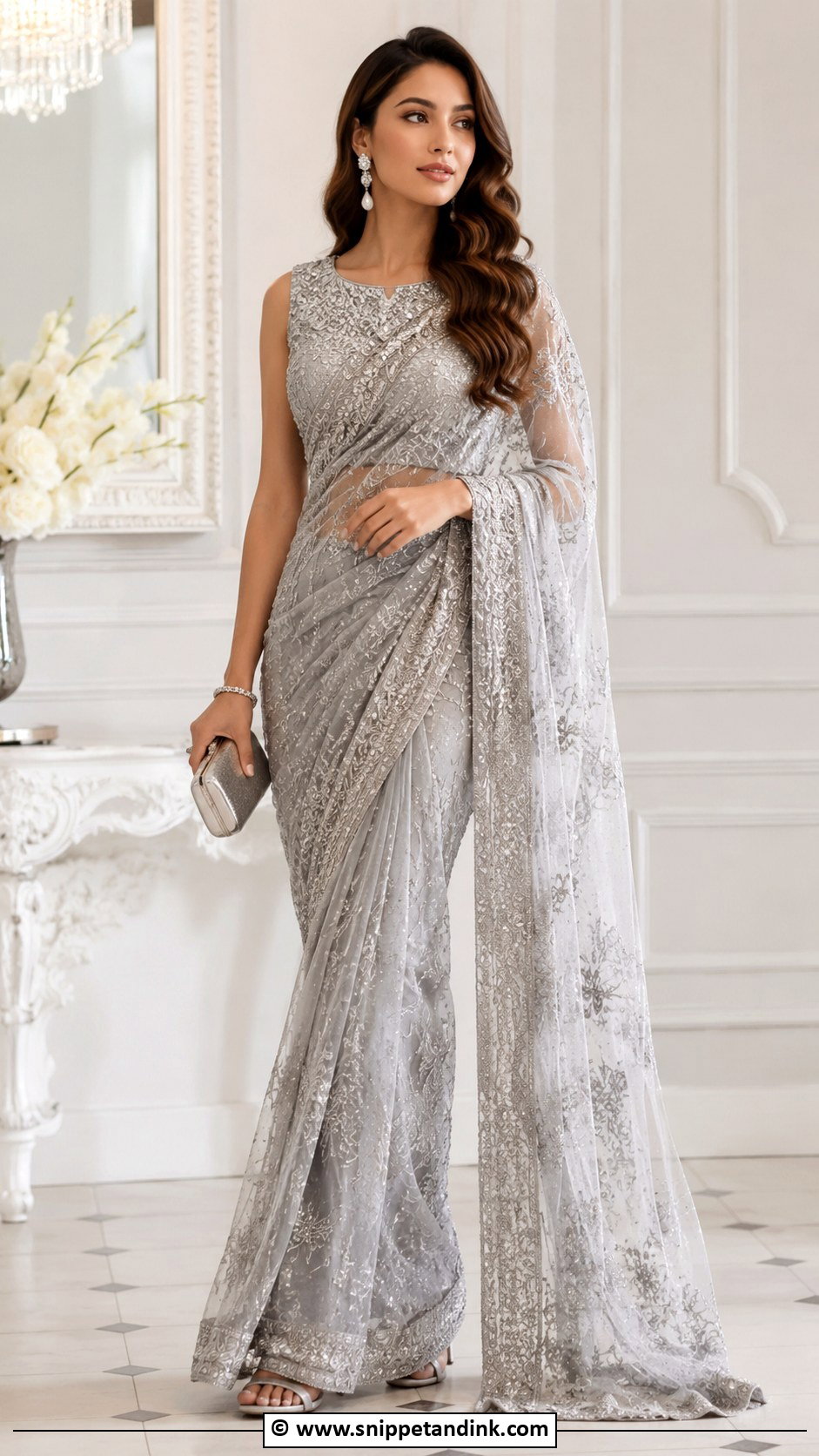
Silver grey is a modern colour that still reads formal in tissue, chiffon or net with shimmer work. I keep the drape clean and the pleats crisp; grey shows a sloppy drape more than bright colours do. Silver jewelry is the obvious pairing, but pearls soften it if you want a gentler finish. A low bun and a metallic clutch suit evening halls.
16. Bottle Green Velvet Gharara Barat Dress
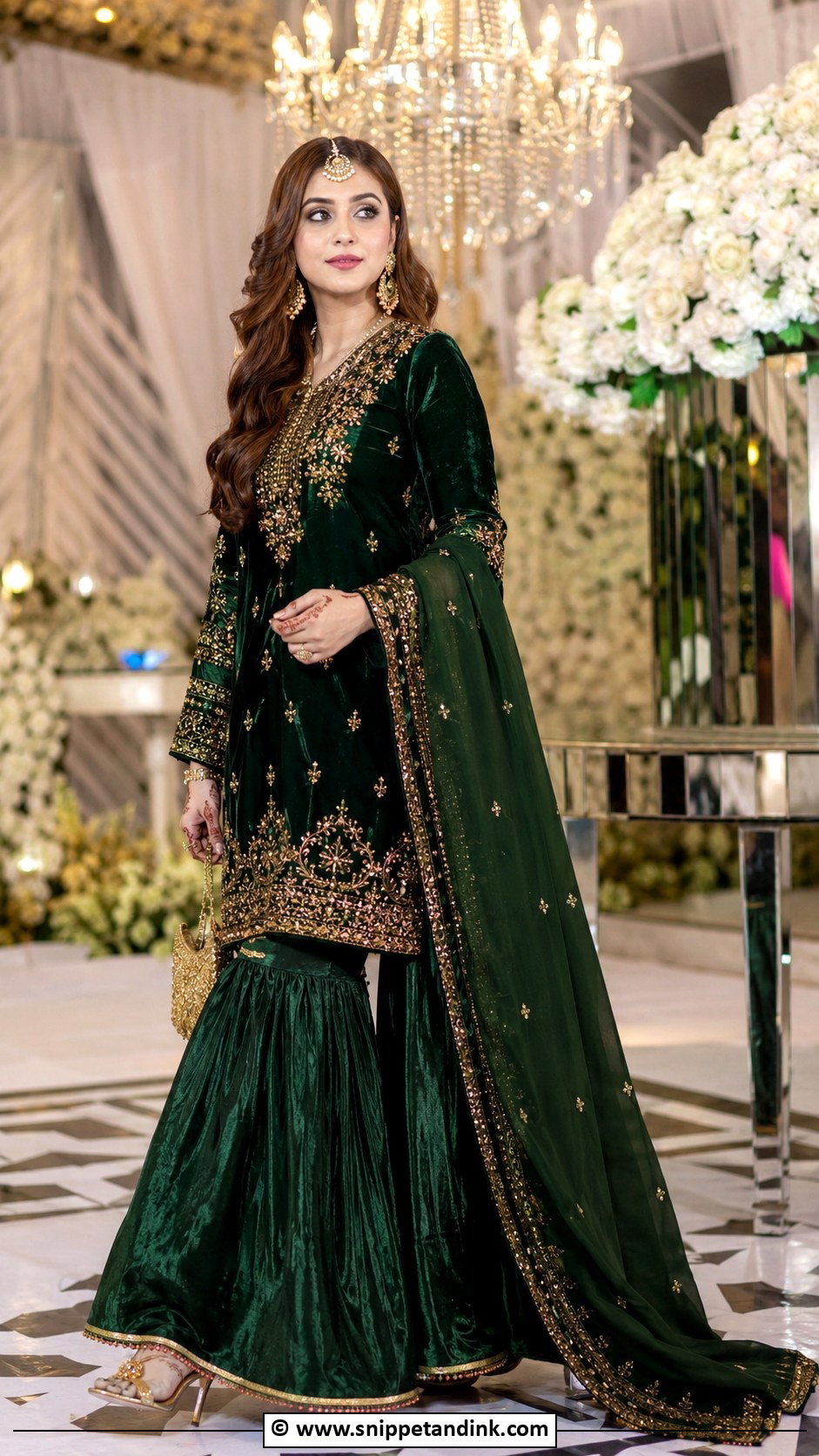
A bottle green velvet gharara mixes textures well: a short velvet shirt over a jamawar or silk gharara is lighter than velvet head to toe and looks more interesting. Antique gold embroidery on the deep green gives a royal feel without red. Choose a sheer dupatta to keep the weight down. Jhumkas, a passa and stacked bangles make it classic, and khussas will save your feet.
17. Coral Sharara Barat Dress
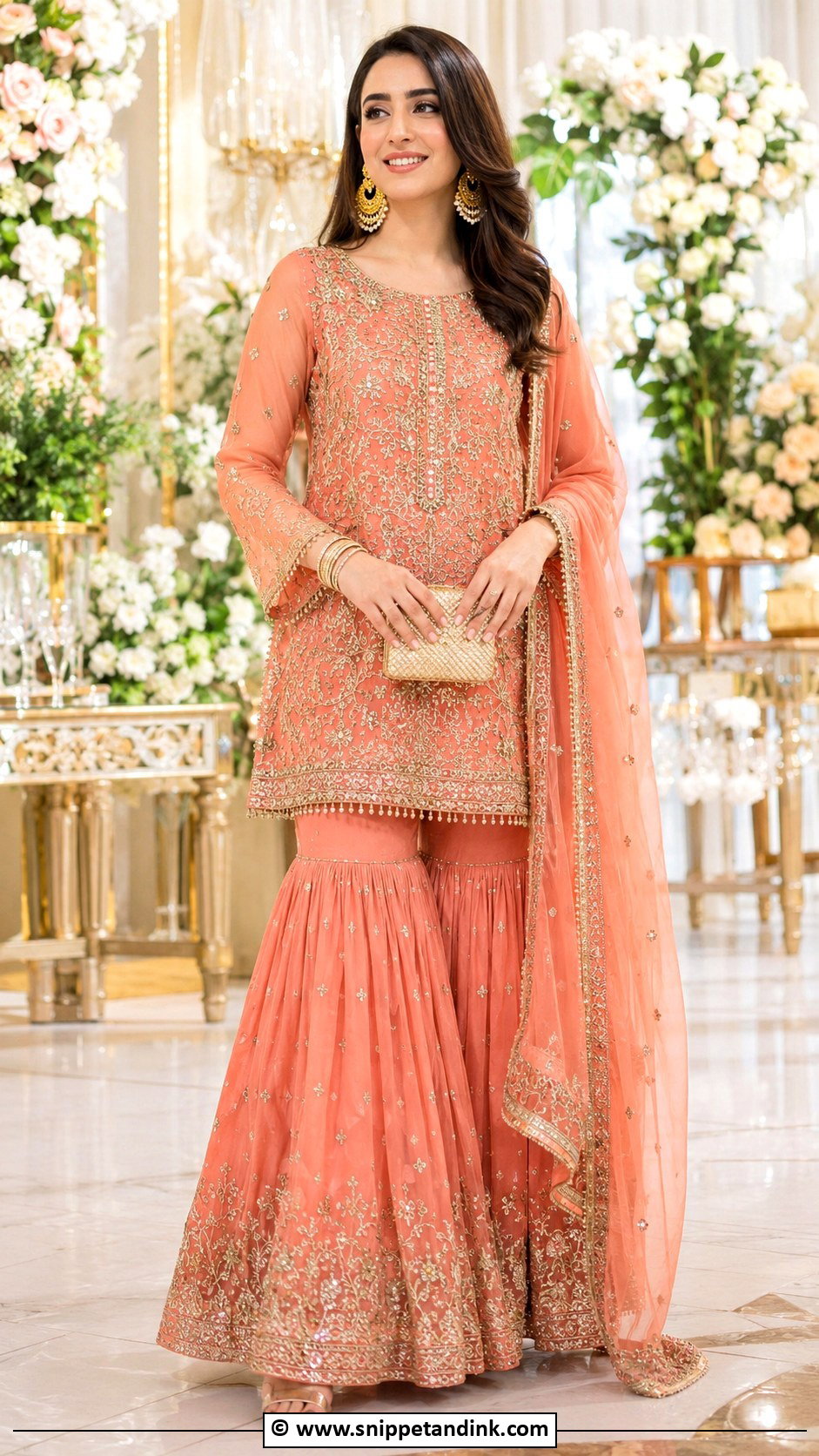
Coral is the bright alternative to red I suggest to younger sisters, especially for a daytime Barat where it looks fresh in natural light. A short shirt with detailed sleeves, a flared sharara and a light dupatta make it easy to move in. Gold, peach or champagne embroidery suits it. Neutral heels, soft waves and warm, glowing makeup are all it needs.
18. Copper Long Frock Barat Dress
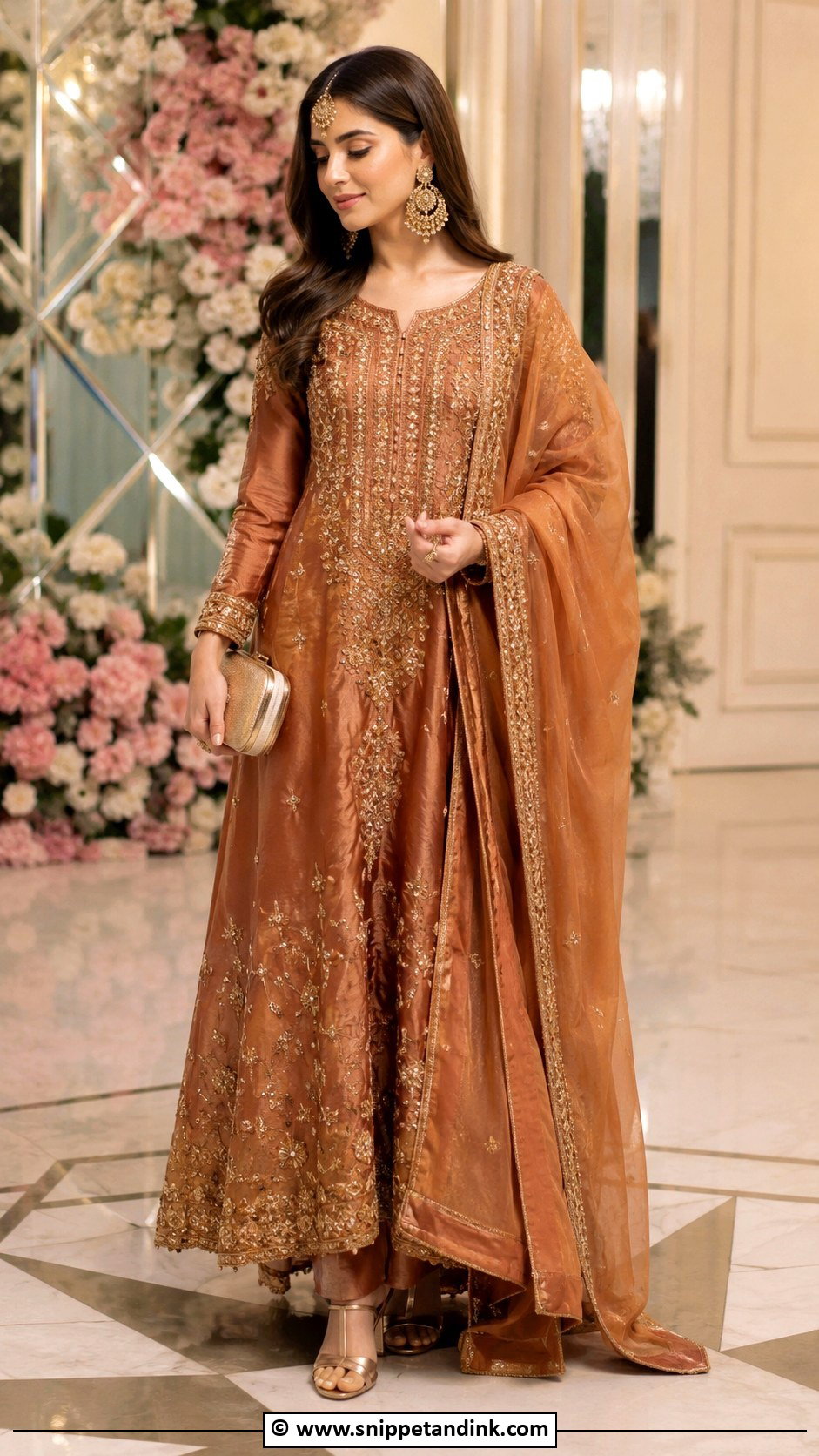
A long frock gives full coverage and a dressy silhouette, and copper adds warmth and a soft metallic sheen that comes alive under evening lights. Tissue, chiffon or organza with embroidery around the neckline, cuffs and border works well, finished with a matching or bronze-toned dupatta. Check that the frock’s flare starts at the right point for you; a waist seam that sits too low shortens the legs in photos. Antique jewelry and warm makeup suit copper.
19. Royal Blue Lehenga Barat Dress
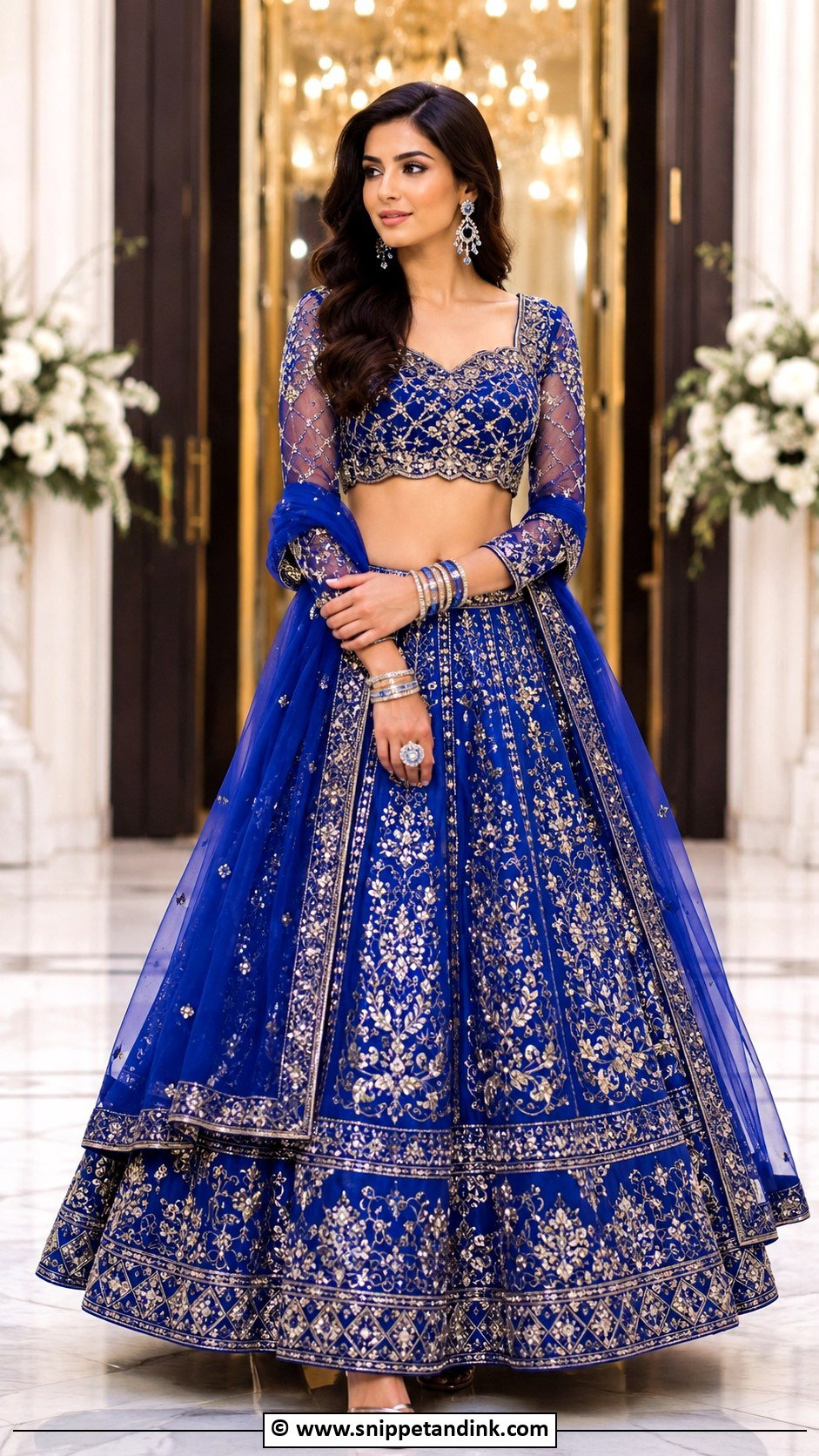
Royal blue is bright enough to celebrate in and formal enough for close family portraits. A fitted choli keeps the lehenga balanced, the flared skirt brings movement, and silver, gold or mirror-inspired detailing all suit the colour. A contrast dupatta can soften it if the blue feels like a lot. Crystal earrings and a half-up style or soft waves keep the head clean.
20. Peach Organza Lehenga Barat Dress
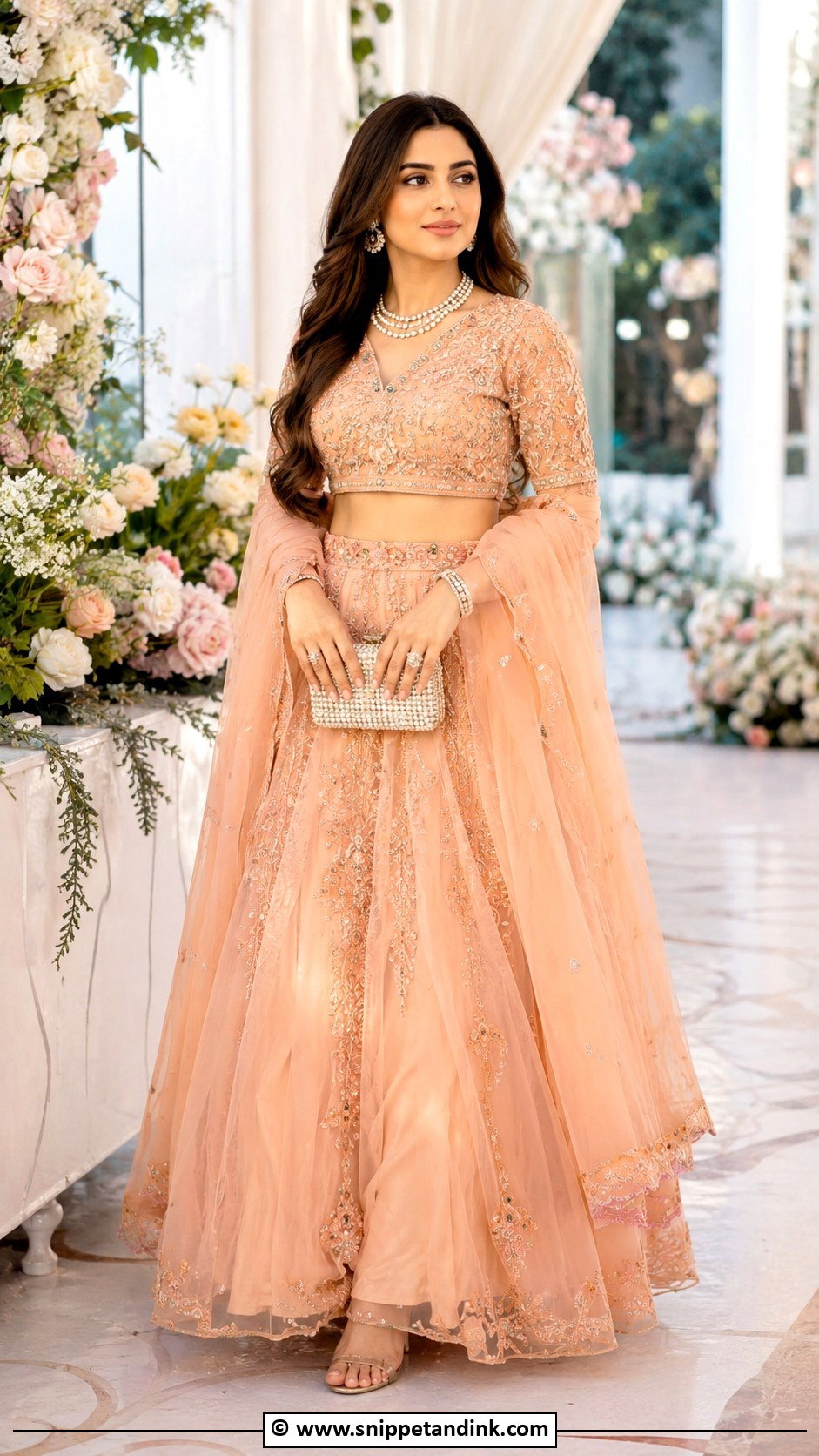
Organza gives volume without weight, which is why a peach organza lehenga is so comfortable for a long daytime or early evening Barat. Gold, pearl or sequin work gives a delicate formal finish, and a matching dupatta with an embroidered border keeps it complete. Organza creases sharply when you sit, so have the lehenga steamed close to the event and avoid packing it tightly in a suitcase. Pearl jewelry and peach-toned blush suit it.
21. Mint Green Peshwas Barat Dress
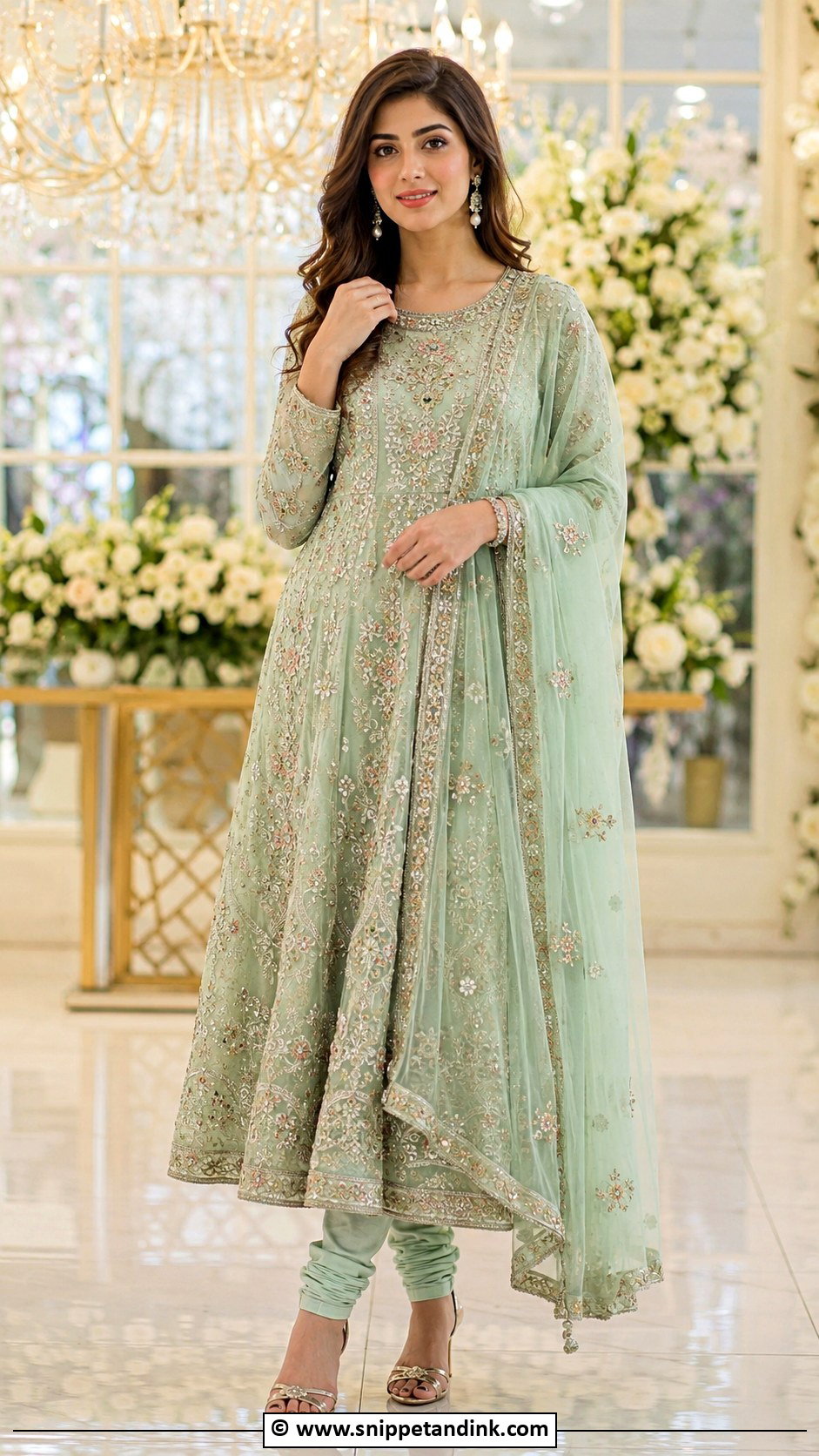
Mint isn’t a typical Barat colour, so it only works when the embroidery is properly formal. A mint peshwas with gold, silver or pearl detailing, churidar pants and a sheer bordered dupatta can look fresh and modest. I’d add a bit of warmth through makeup so the cool green doesn’t make the face look tired late in the evening. Pearl earrings and metallic heels complete it, and the flare moves well in photos.
22. Magenta Gharara Barat Dress
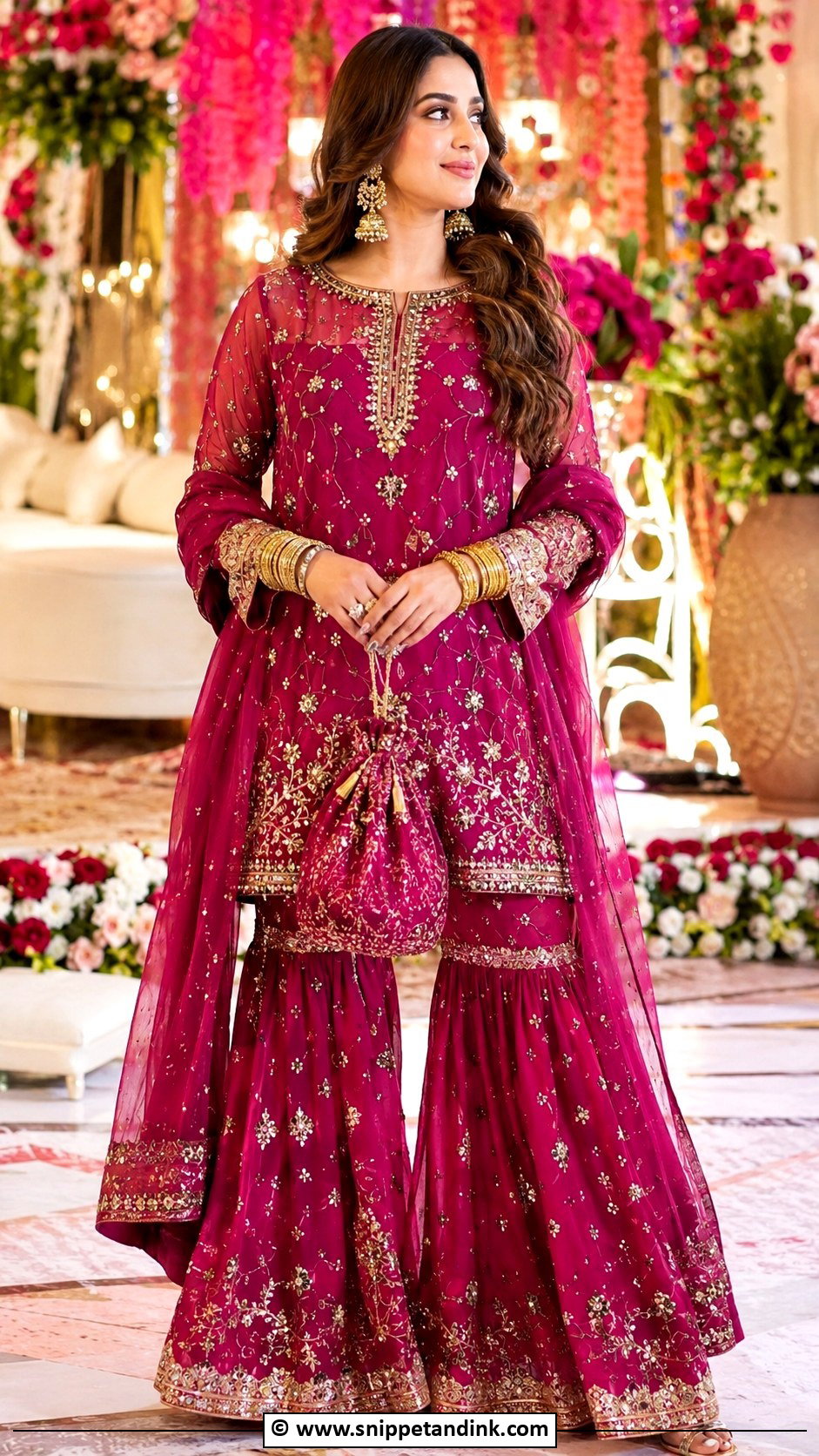
Magenta is confident and joyful. A short shirt with gold or champagne embroidery over a gharara that moves well is a traditional cut with a modern colour. A matching dupatta keeps it bold; a blush or gold one tones it down if you’re worried about competing with the bride. Ghararas already carry a lot of volume, so keep the shoes simple and comfortable.
23. Beige And Maroon Sharara Barat Dress
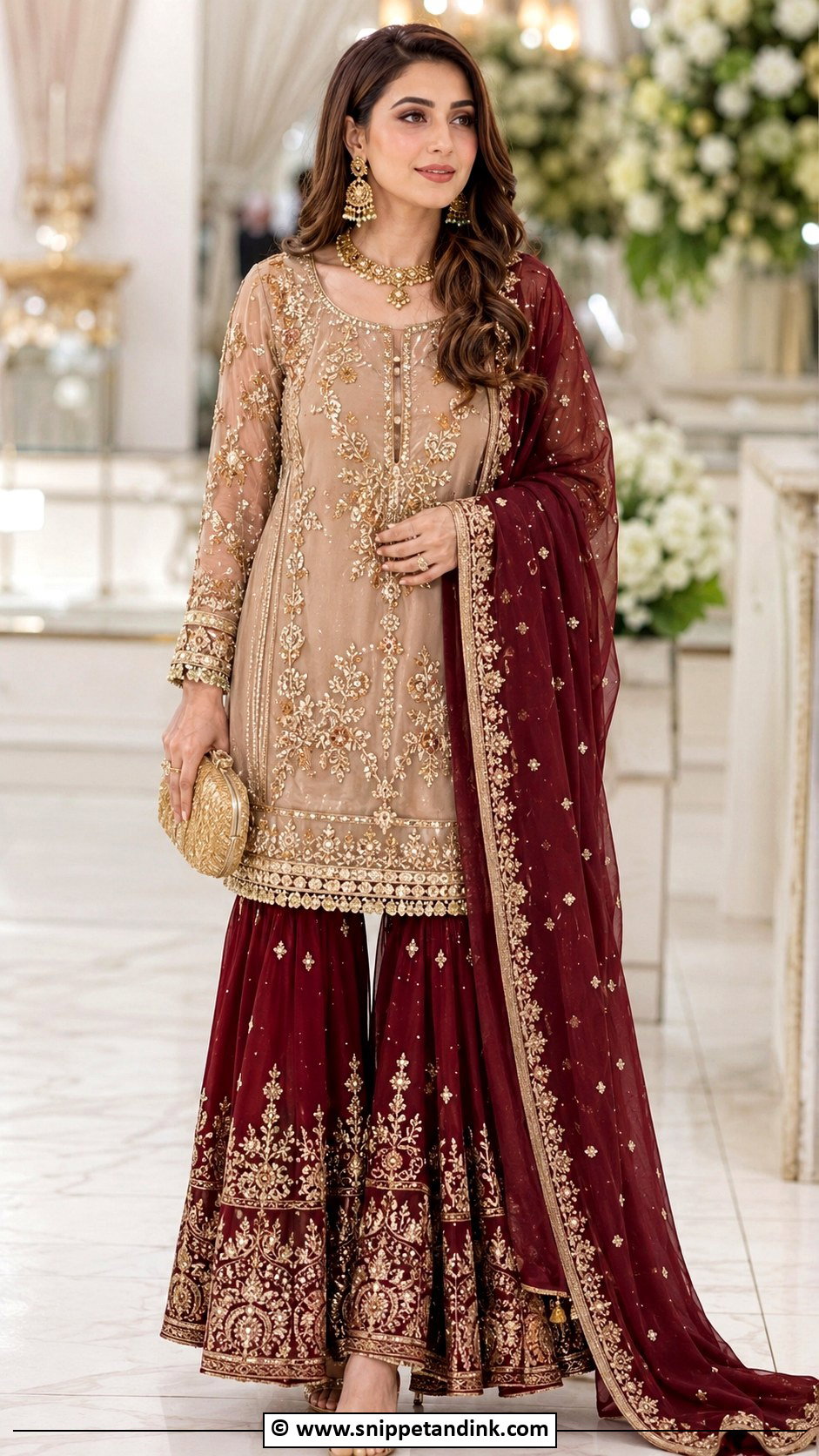
Beige and maroon is a balanced pairing for sisters who don’t want anything too bright. Wear a beige embroidered shirt with a maroon sharara, or reverse it, with gold embroidery tying the two together. The dupatta decides the mood: maroon makes it more festive, beige keeps it understated. Antique gold jewelry and a neat bun suit it at any age.
24. Deep Purple Maxi Barat Dress
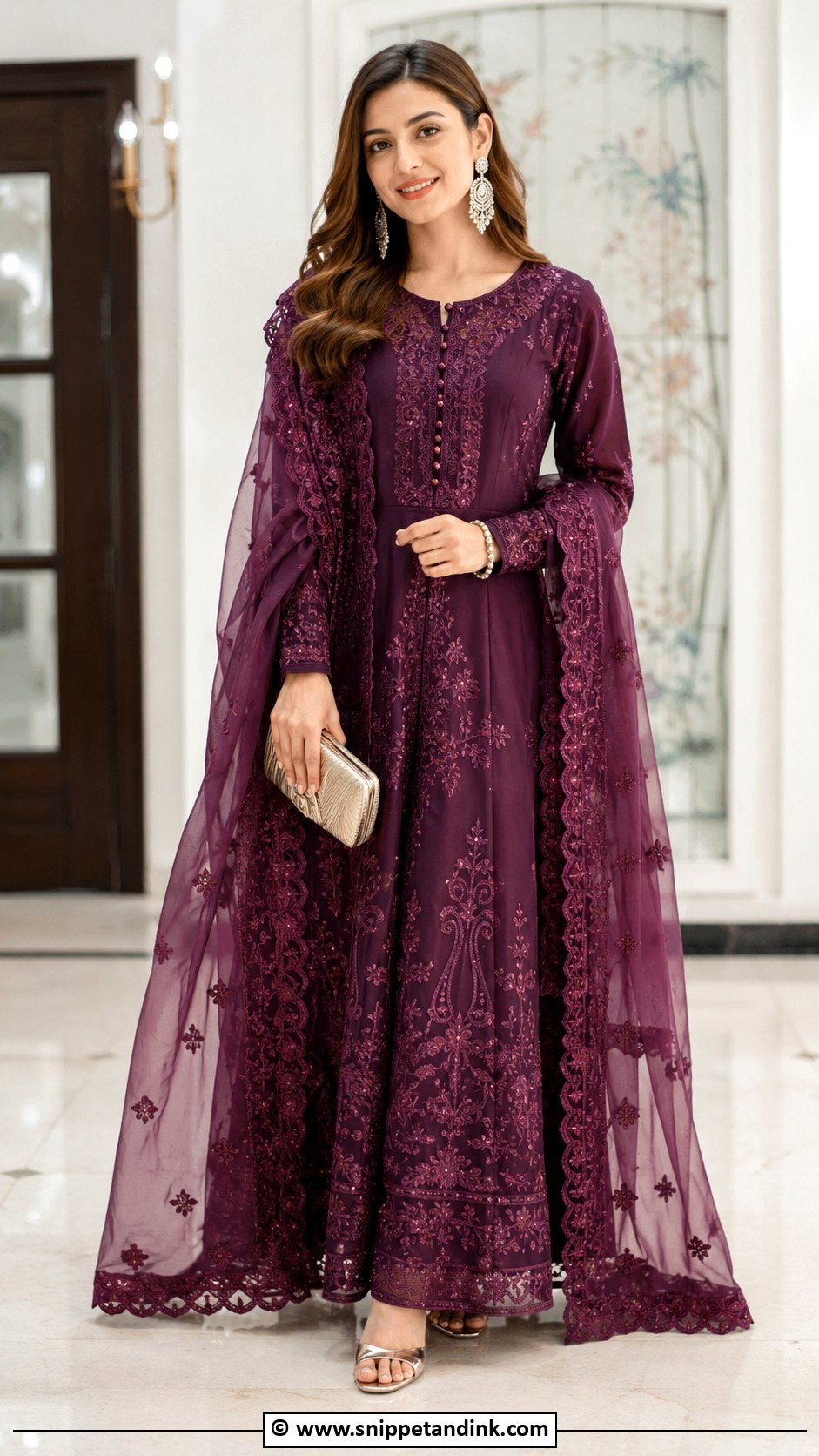
Deep purple is one I recommend across ages, because a long, flowing maxi with full coverage suits a younger sister as easily as an older one. Embroidery on the bodice and sleeves with a border at the hem keeps the balance right, and a net or chiffon dupatta adds the traditional finish. Match your jewelry, clutch and heels to the metal of the embroidery so the look stays coherent.
25. Rose Gold Lehenga Barat Dress
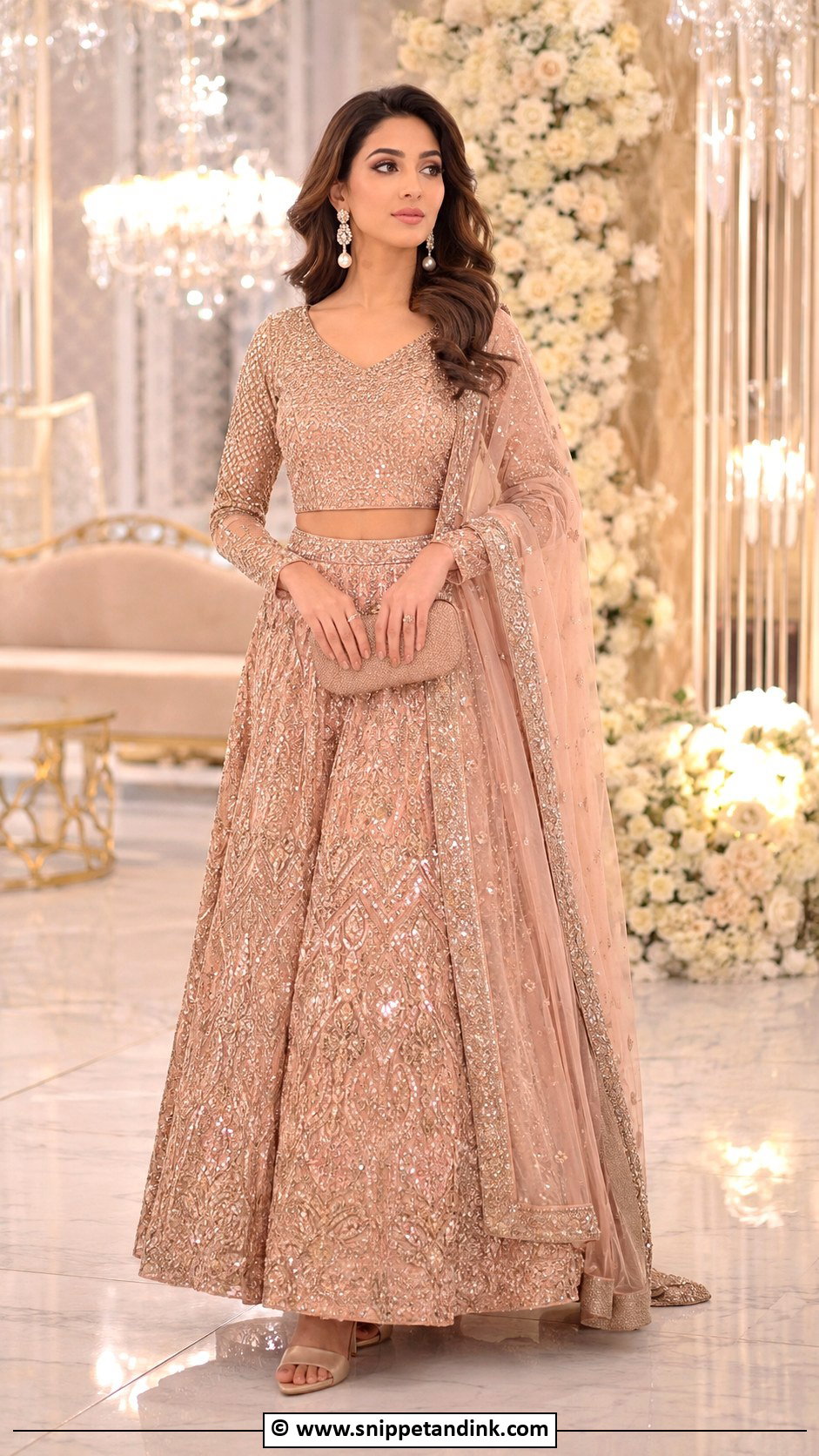
Rose gold suits sisters who like soft metallic tones but not the weight of gold. Tissue, net or organza with sequin, bead or thread work looks polished, and a slightly deeper pink dupatta adds contrast if the matching one feels flat. Metallic fabric is the focus here, so I keep jewelry delicate. It looks best at evening venues where the lighting brings out the sheen.
26. Mehroon Angrakha Barat Dress
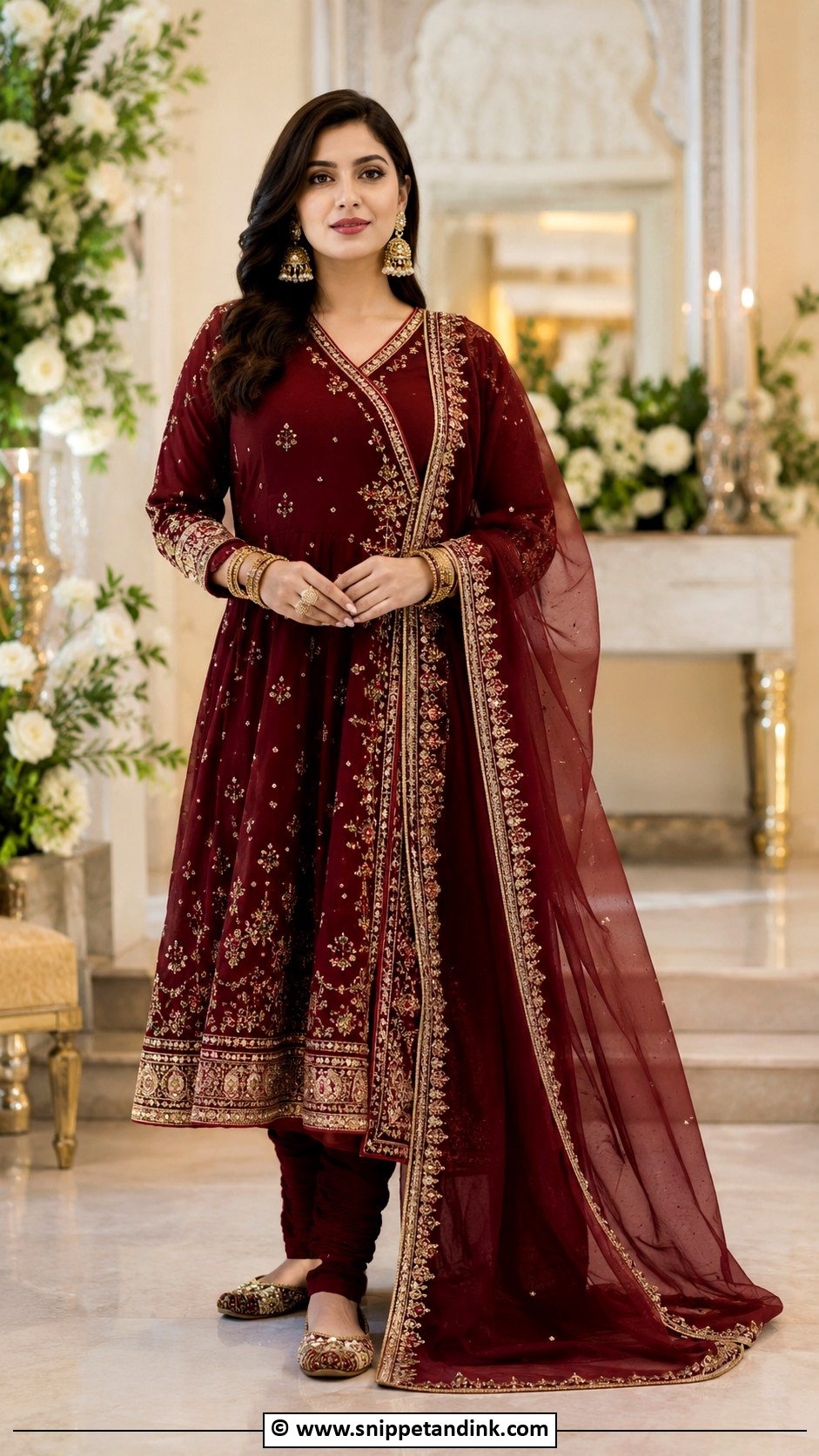
The angrakha’s wrap bodice is one of the oldest traditional cuts, and in mehroon it looks right at a Barat. Embroidery along the neckline, front panels, sleeves and hem shows off the overlap. The ties at the side need to be stitched securely or backed with hooks, because a wrap front that loosens during greetings becomes a constant worry. Wear it with churidar pants or a crushed sharara, a kiran-edged dupatta, jhumkas and bangles.
27. White And Red Lehenga Barat Dress
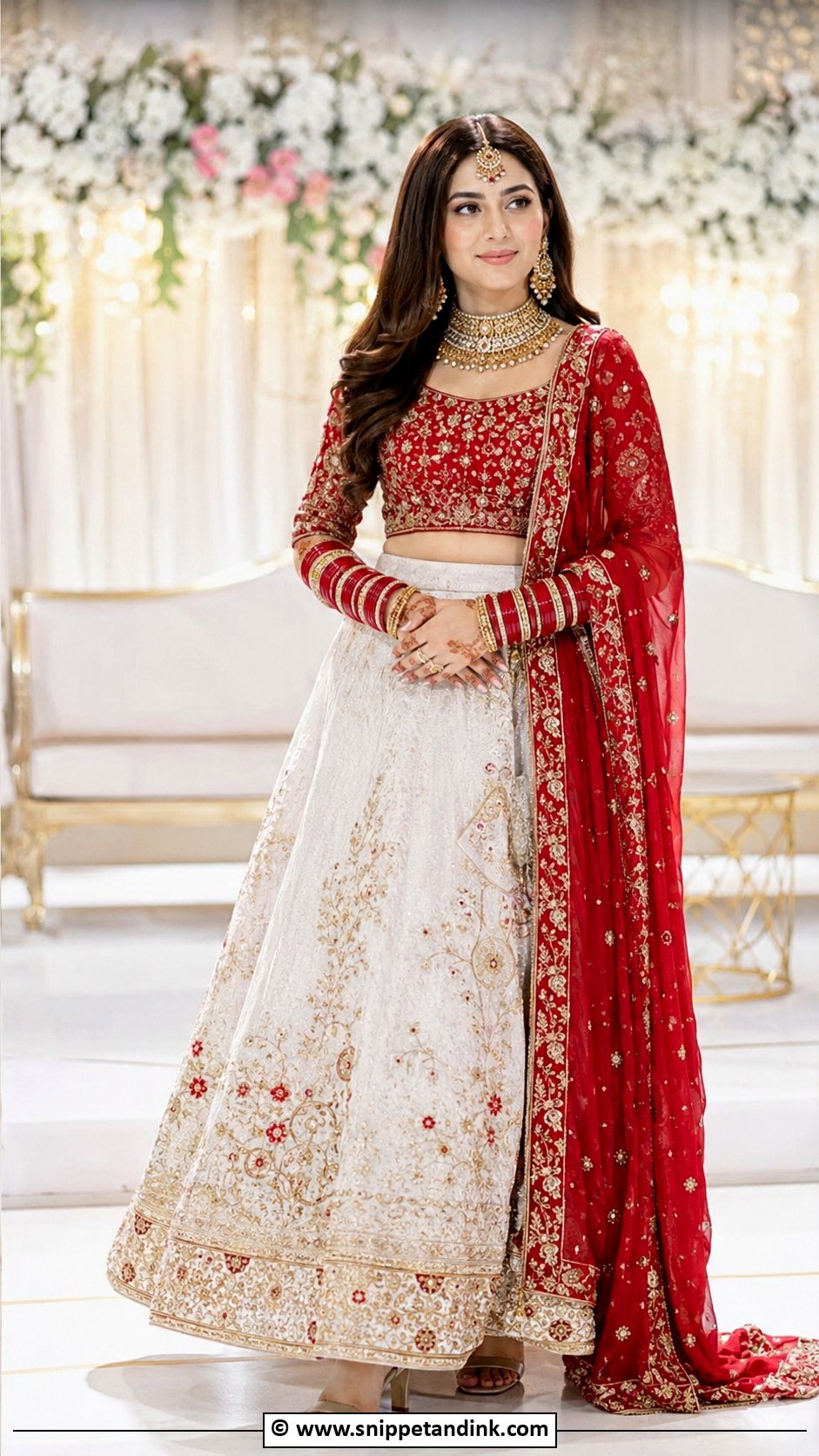
White and red has a striking contrast, but it needs care for a sister. A white lehenga with red embroidery, a red dupatta or a red blouse keeps the Barat mood, as long as the embellishment stays clearly below bridal. Daytime photos and bright halls suit it best. Keep the dupatta drape simple and youthful, and wear gold jewelry with red bangles.
28. Olive Green Sharara Barat Dress
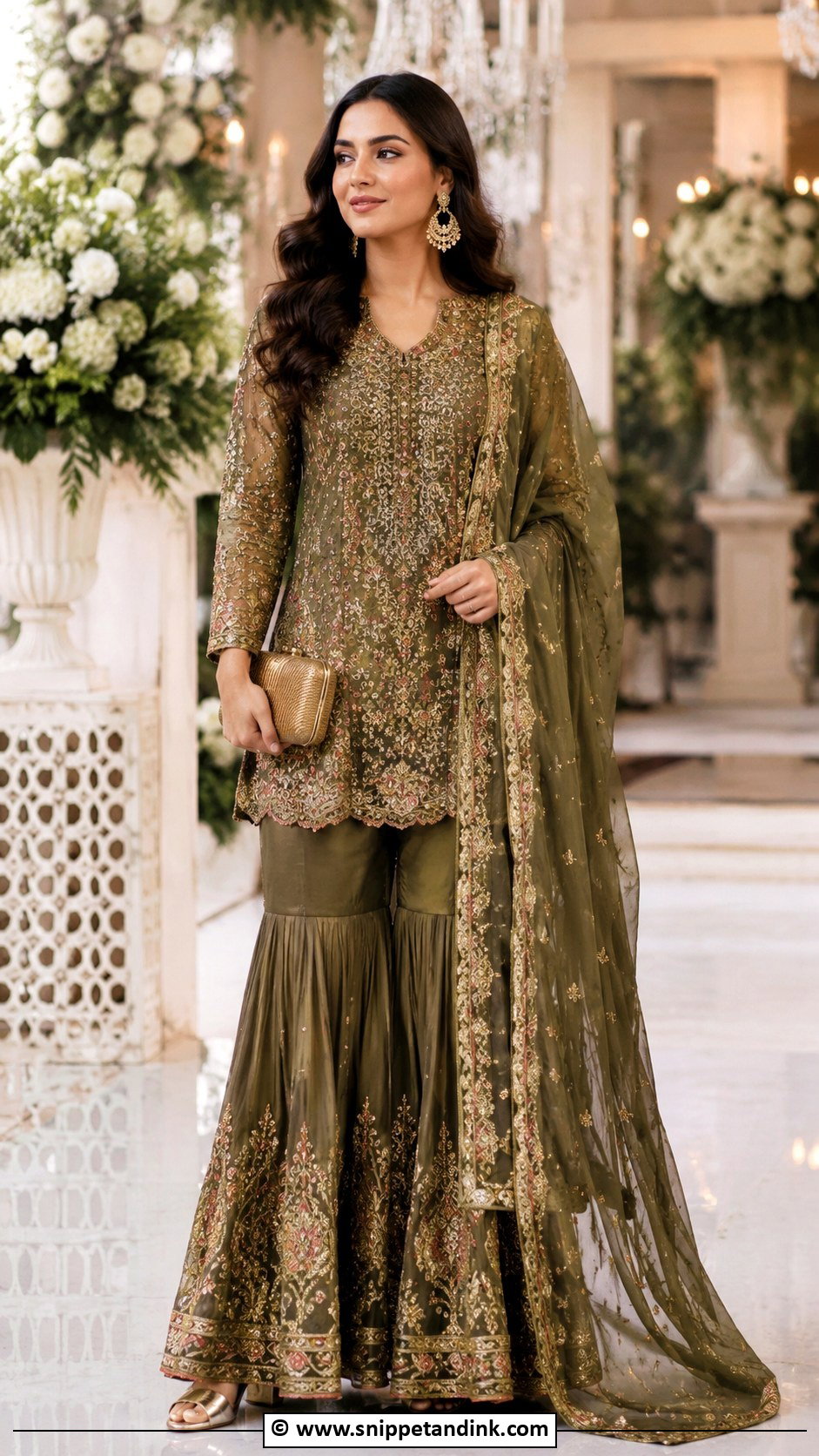
Olive is the muted colour I suggest to sisters who want something rich but quiet. Antique gold, copper or bronze embroidery suits it, on a short or mid-length shirt with a flared sharara and sheer dupatta. It sits naturally at autumn and winter weddings but works in evening halls year-round. Olive is also one of the easiest colours to re-wear at another event with different jewelry.
29. Powder Blue Maxi Barat Dress
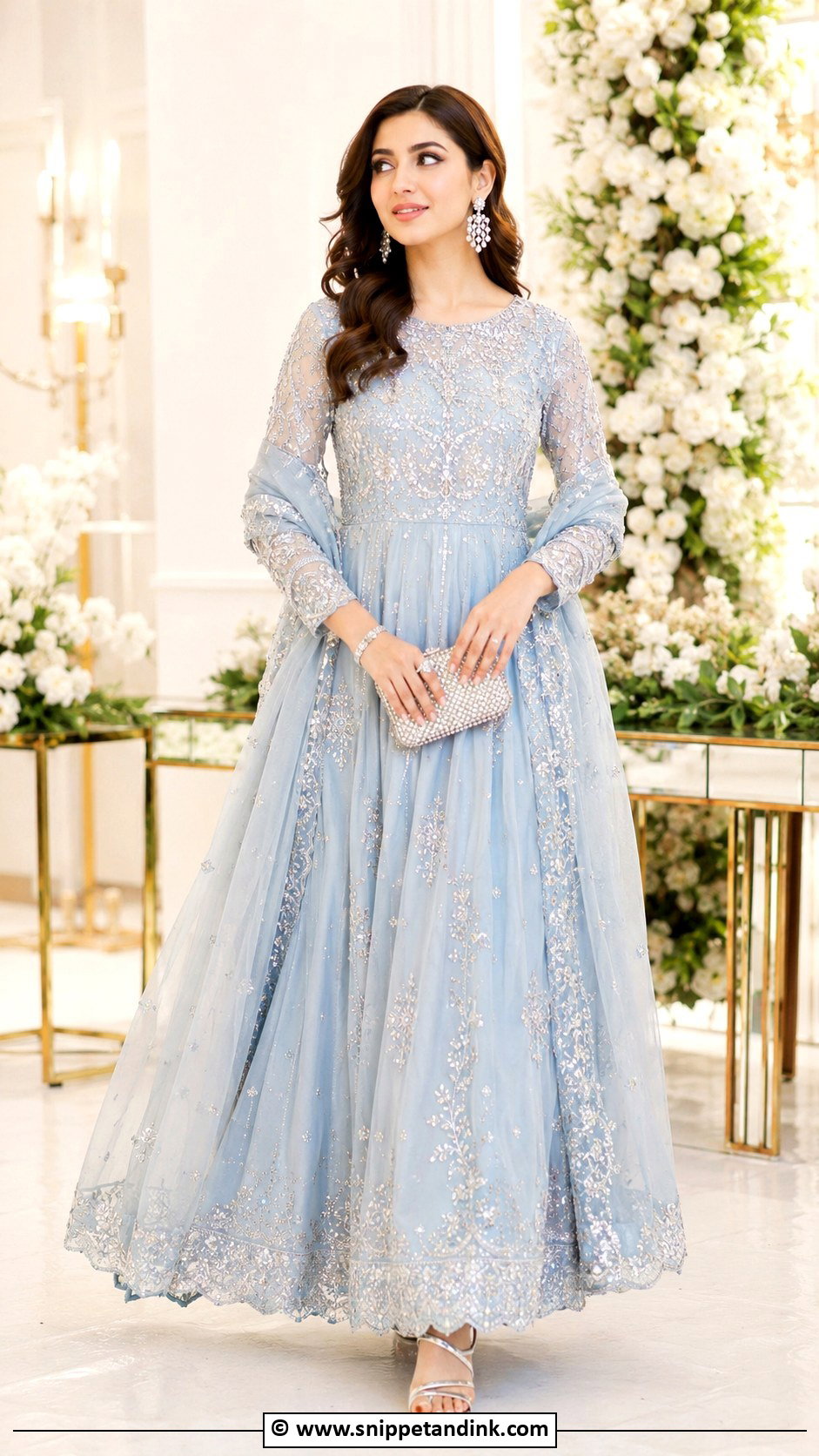
Powder blue needs detailed silver, pearl or champagne embroidery to feel formal enough for Barat; plain, it looks like a daytime dress. A long maxi with full sleeves and a sheer dupatta gives modest coverage. Pale blue can make the face look flat in photos, so keep the makeup soft but defined. Pearl earrings and silver heels suit it.
30. Charcoal And Gold Saree Barat Dress
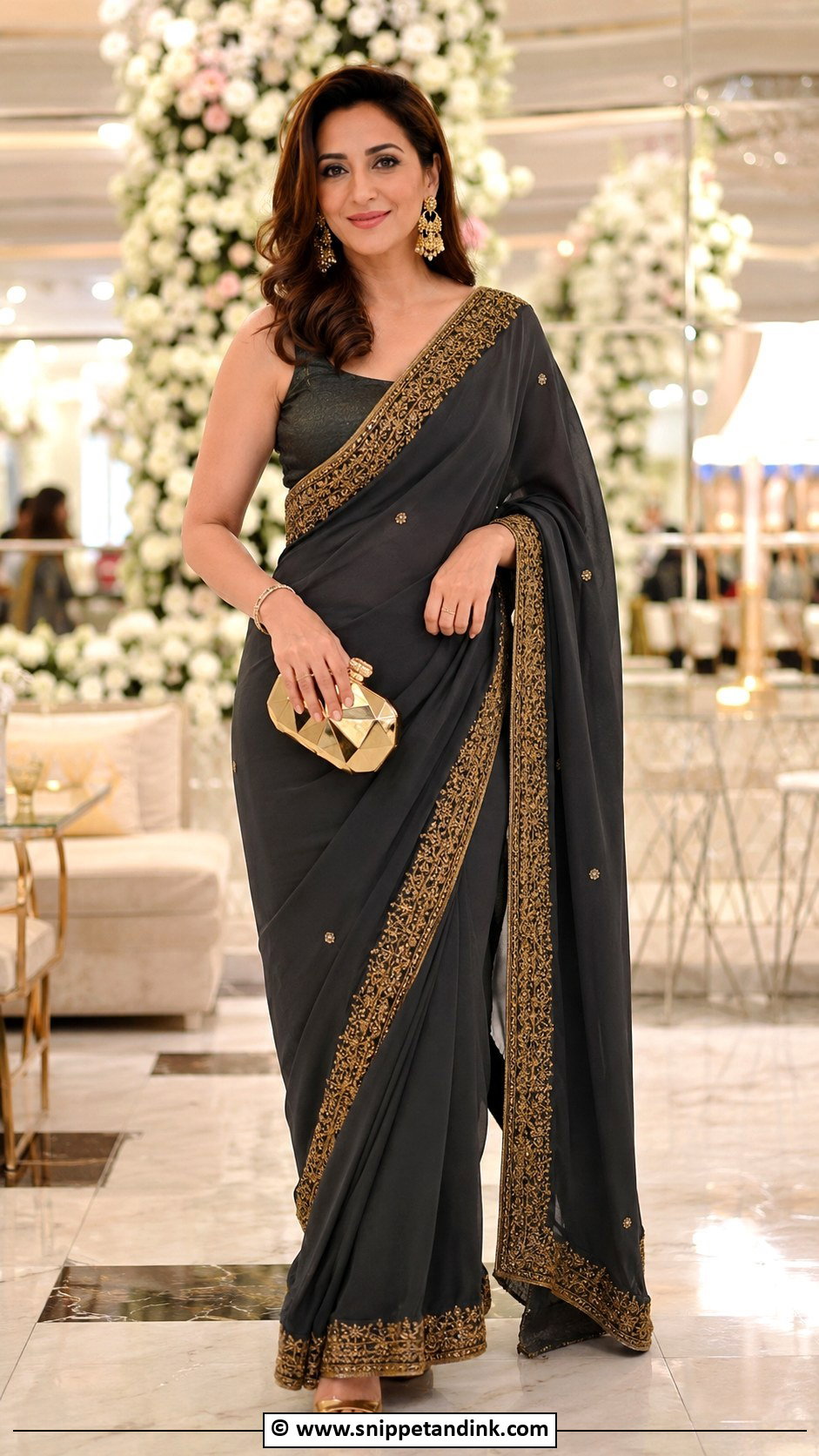
Charcoal is softer than black but still evening-appropriate, and a gold border or embroidery gives it the celebration factor. It’s a natural choice for married or older sisters who prefer a sleek drape without volume. Pair a fitted blouse with a structured clutch and gold heels, and secure the drape properly so it stays put through greetings and dinner. Statement earrings and a neat bun finish it.
Coordinating Three Sisters Without a Uniform
When several sisters dress together, identical outfits tend to look like bridesmaid uniforms, which is not what most Pakistani families want at a Barat. I prefer to coordinate in one of two ways: same colour family in different cuts (a maroon lehenga, a rust gharara, a mehroon angrakha), or same cut in different colours that share an embroidery metal. Either way, decide the shared element early, before anyone orders, because handworked pieces can’t be changed late.
Leave room for age and comfort. An older sister may want a saree or a maxi while the youngest wants a full lehenga, and that’s fine if the colours and metals agree. Lay all the outfits side by side once they’re ready and take a phone photo; it shows clashes far better than looking at each outfit alone.
Safety Pins and Fashion Tape: What Goes in a Sister’s Potli
On wedding days, the bride’s sisters end up as the repair team. I suggest each sister carries a few small things in her clutch, because the bride won’t have pockets and her stylist won’t always be close by:
- A strip of small safety pins and a few bobby pins for dupattas and loose hair.
- Double-sided fashion tape for slipping necklines and saree pallus.
- Blotting papers and the bride’s lipstick for touch-ups before the rukhsati.
- Plasters for heels, since new khussas and sandals rub by the end of the night.
- A needle with neutral thread for a loose hook or a dropped bead.
Dressed for the Day, a Step Behind the Bride
The outfit that works best for a sister is the one she can forget about while she’s busy. Rich fabric, considered embroidery and a dupatta that stays pinned can make even a simple silhouette feel special, in a lehenga, gharara, sharara, saree, maxi or peshwas. Coordinate with the wedding palette, keep a clear step away from the bride’s look, and make sure you can move, greet and hug in it. That’s what turns a good outfit into one you’ll enjoy wearing.
You'll Like These Ideas:


Leave a Reply