
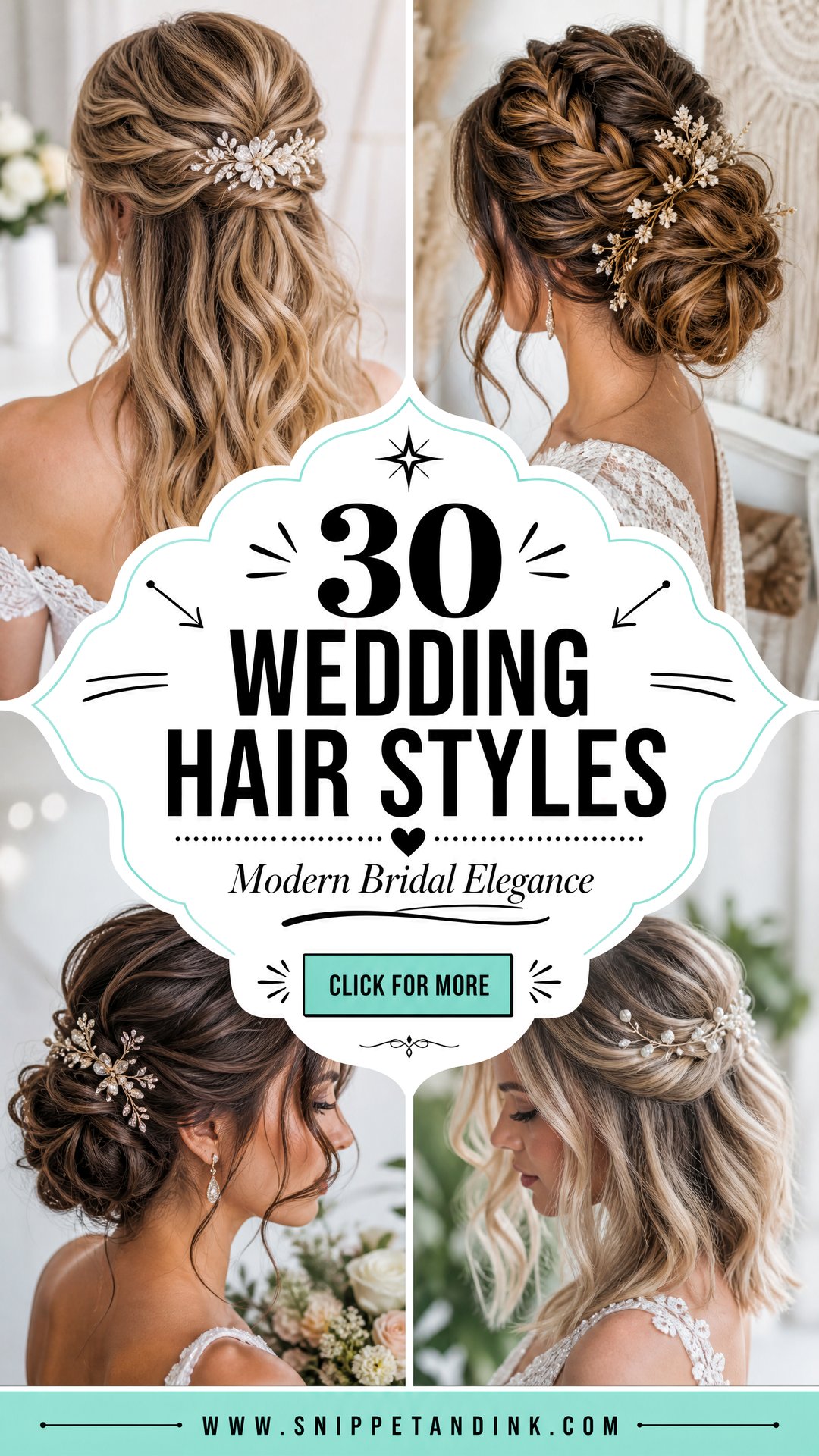
Thirty styles is a lot to scroll through, so here’s how I’d read this list as the person who will actually be pinning your hair. Sleek buns, soft waves, braids, ponytails and a few accessory-led looks are all here, and they behave very differently on fine hair, thick hair and natural curls. Look at the shape first and the decoration second. When two or three make you stop, screenshot them for your trial, because a photo tells me more in ten seconds than a paragraph of description does.
Your Hair’s Density Matters More Than Its Length
When a bride shows me a picture, the first thing I do is gather her hair into my hand at the nape. The thickness of that ponytail tells me more than length does, because it decides how big a bun can be, whether braids look full, and how long curls will hold.
Fine or thin hair
Curls drop fastest and buns come out small. Look at styles with structure built in, like the twisted chignon, the knotted bun or a braid pulled wide. Clip-ins or a small padding piece add size, and I’d usually style on hair washed the day before rather than that morning.
Thick or coarse hair
You’ll hold curls and braids well, but a heavy updo can drag and give some brides a headache by evening. Ask for the bun to be built with less hair, thinning the sections underneath, and let the weight sit low at the nape rather than on the crown.
Curly and coily hair
Work with your texture instead of straightening it on the morning. Curly updos and defined half-up styles are reliable, and your own wash routine should be the starting point of the trial so the result on the day matches.
Colour, Cuts and Wash Timing in the Final Weeks
Have colour done a week or two ahead, so the tone has settled and the scalp has calmed. Keep the last trim to a small tidy-up, and don’t try a dramatic new cut in the final month: a style tested on one set of layers won’t behave the same on another. For most updos, hair washed the day before grips pins better than freshly washed hair. For loose waves on fine hair, clean and fully dry often holds better. Your stylist should tell you which after the trial.
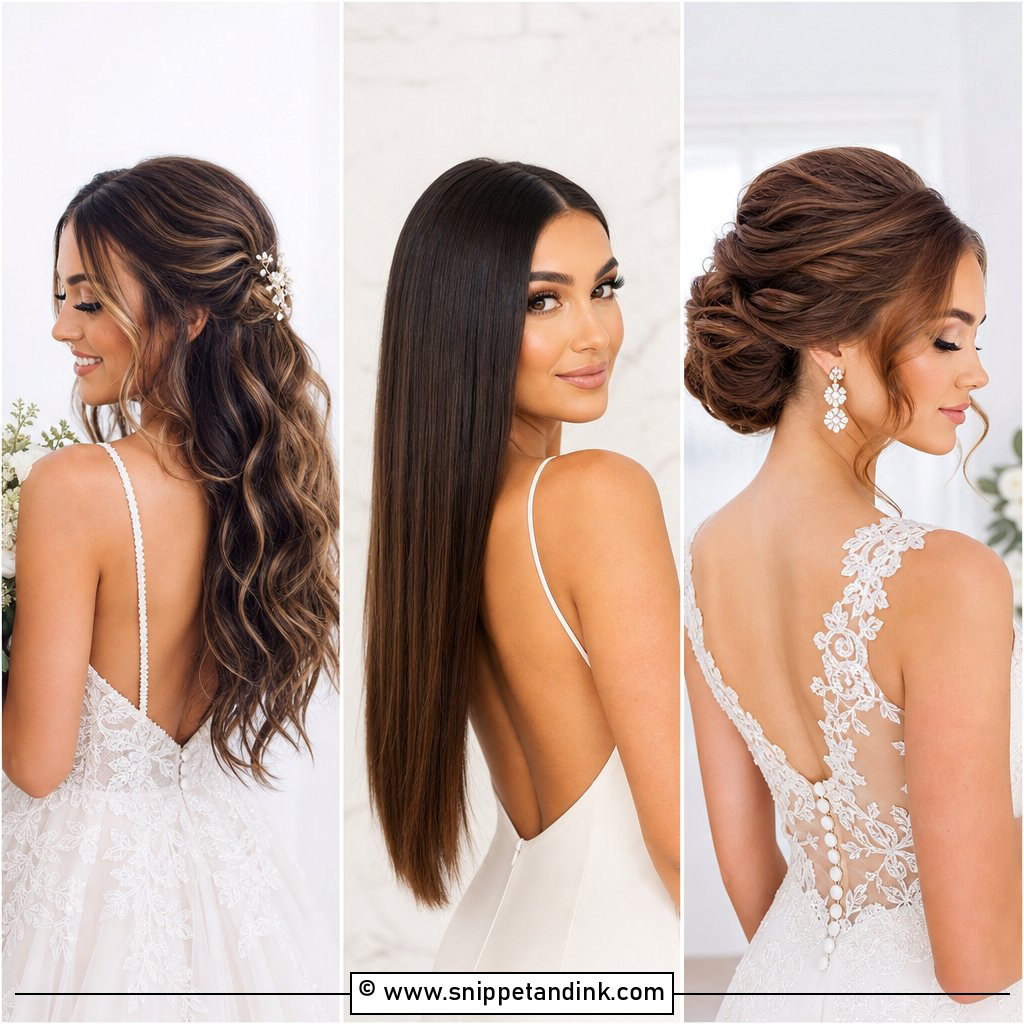
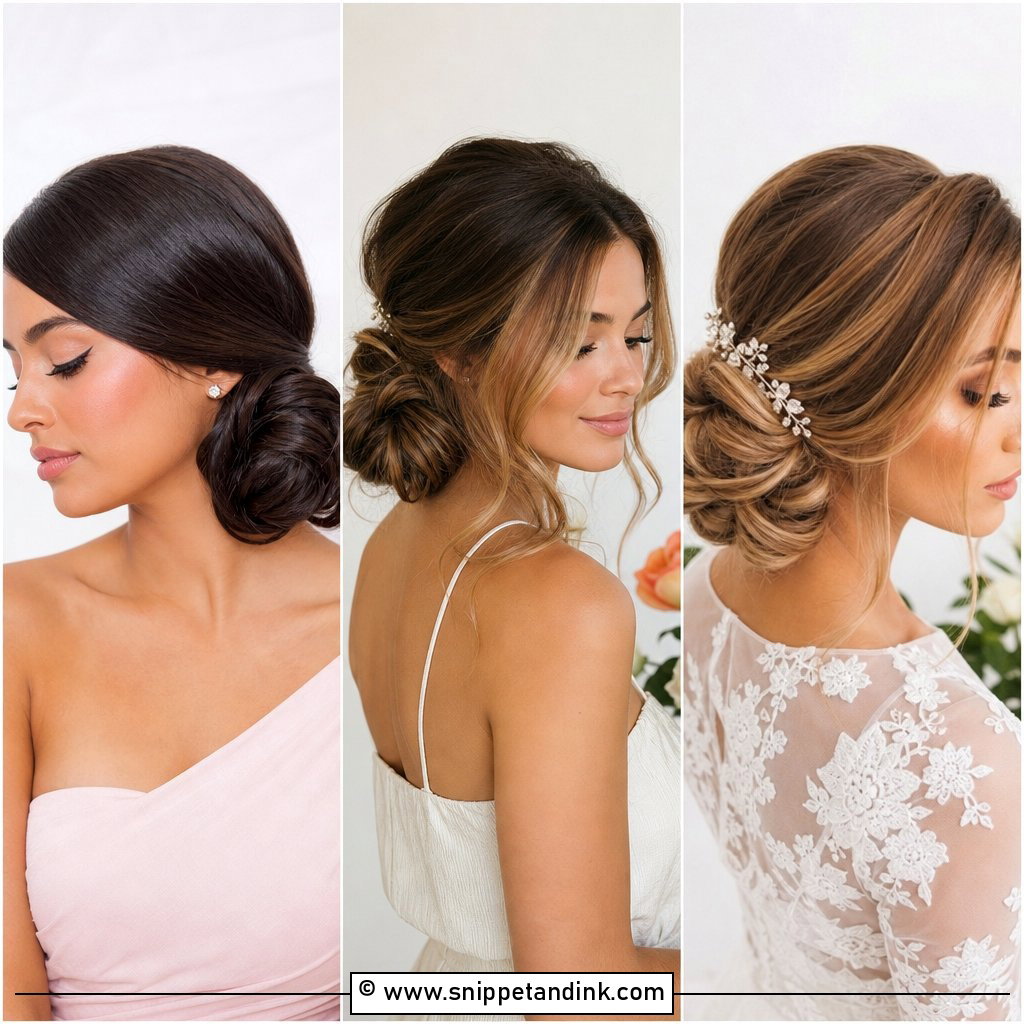
1. Sleek Low Bun for Brides
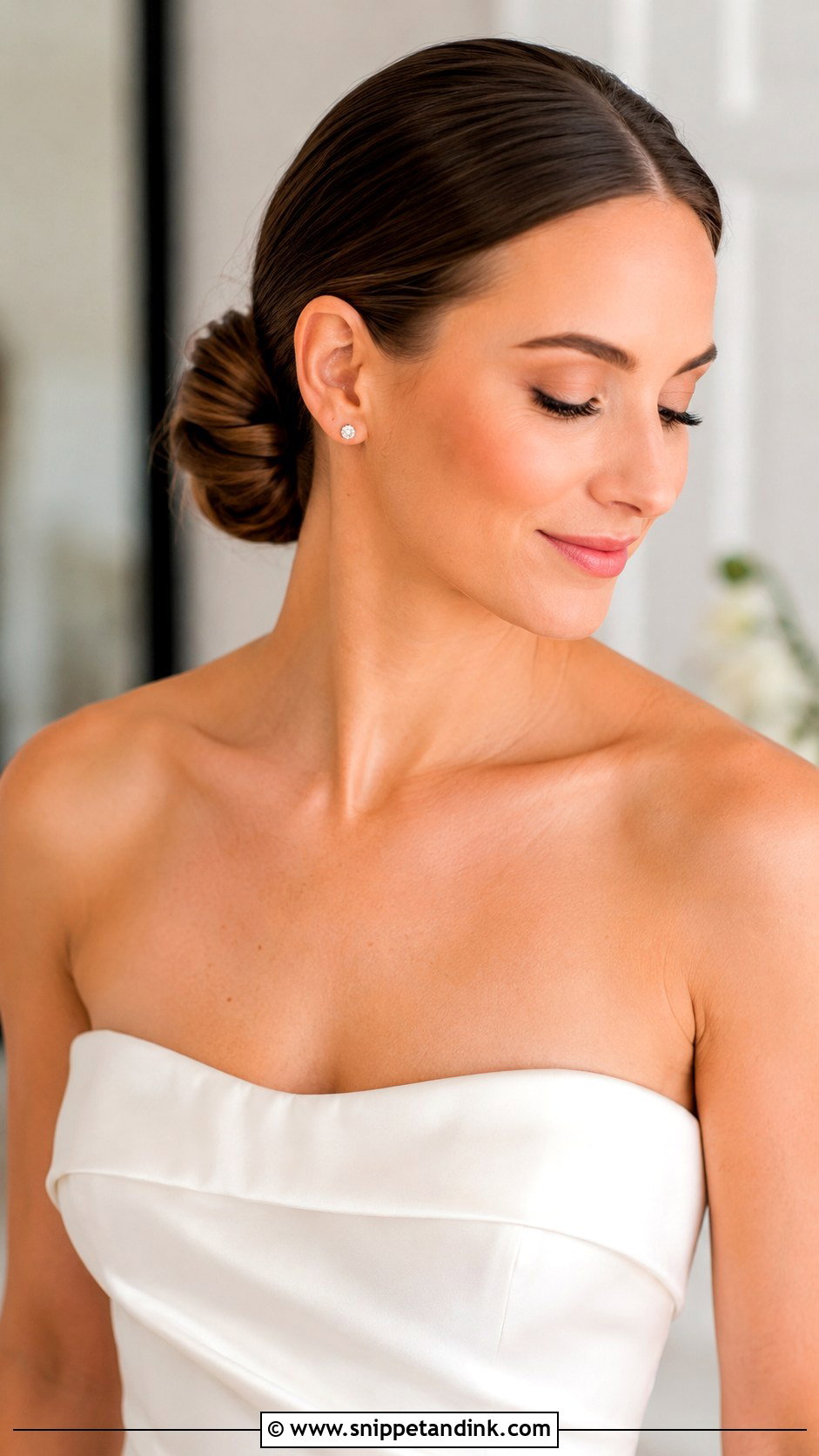
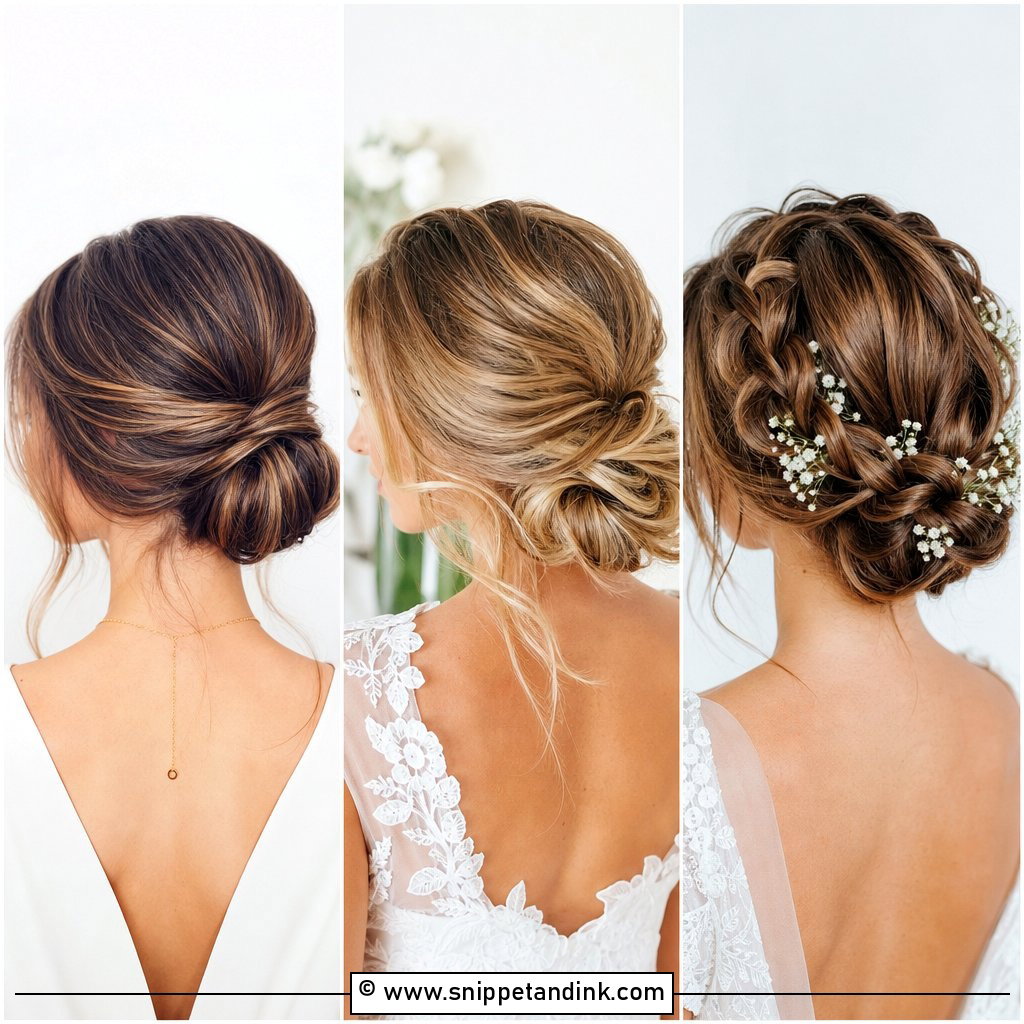
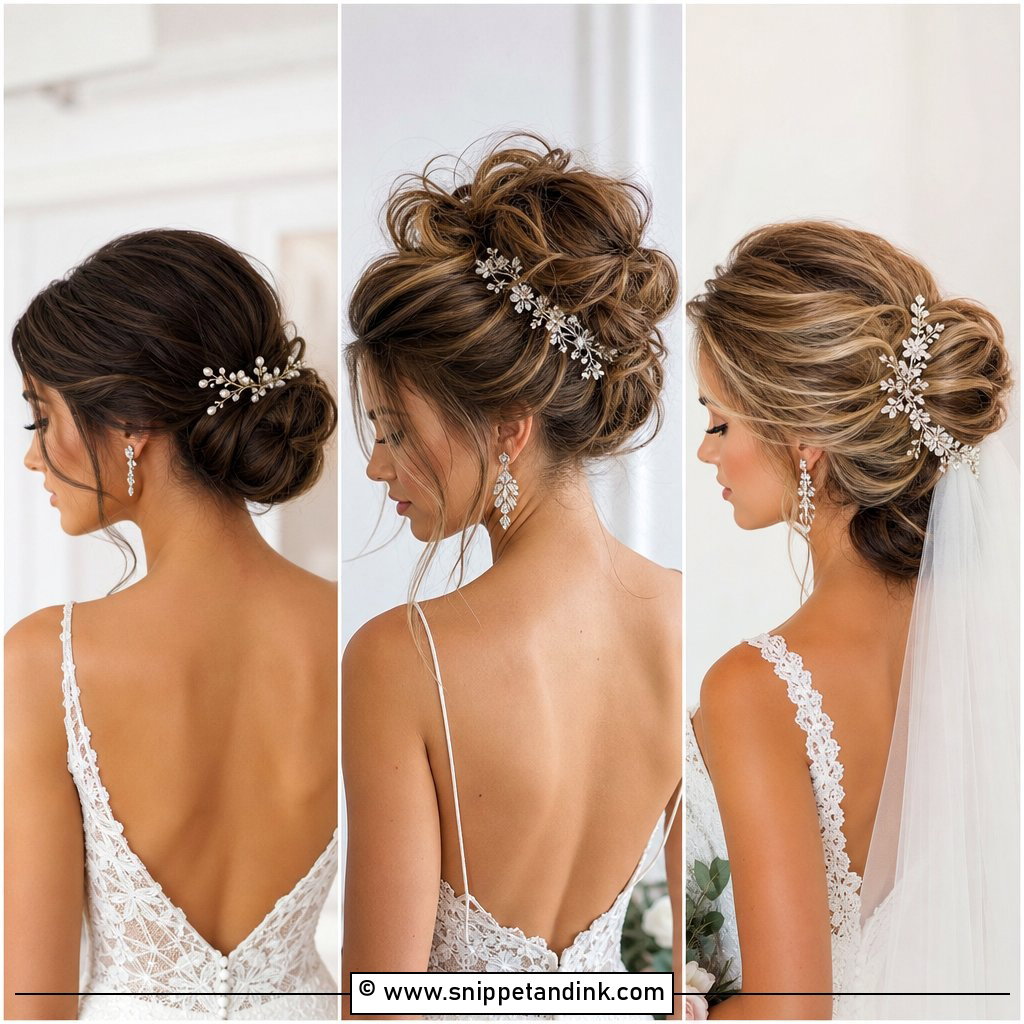
A low bun lives or dies on the prep. I blow-dry the hair completely smooth before gathering anything, because any wave left at the nape turns into ripples once it’s pulled tight. It also sits right where most veil combs go, so we decide early whether the comb slides in above the knot or underneath it. A centre or side part both work, and a deep side part is kinder to a high forehead. It’s a quiet shape, which is exactly why it suits a minimalist gown and bold earrings.
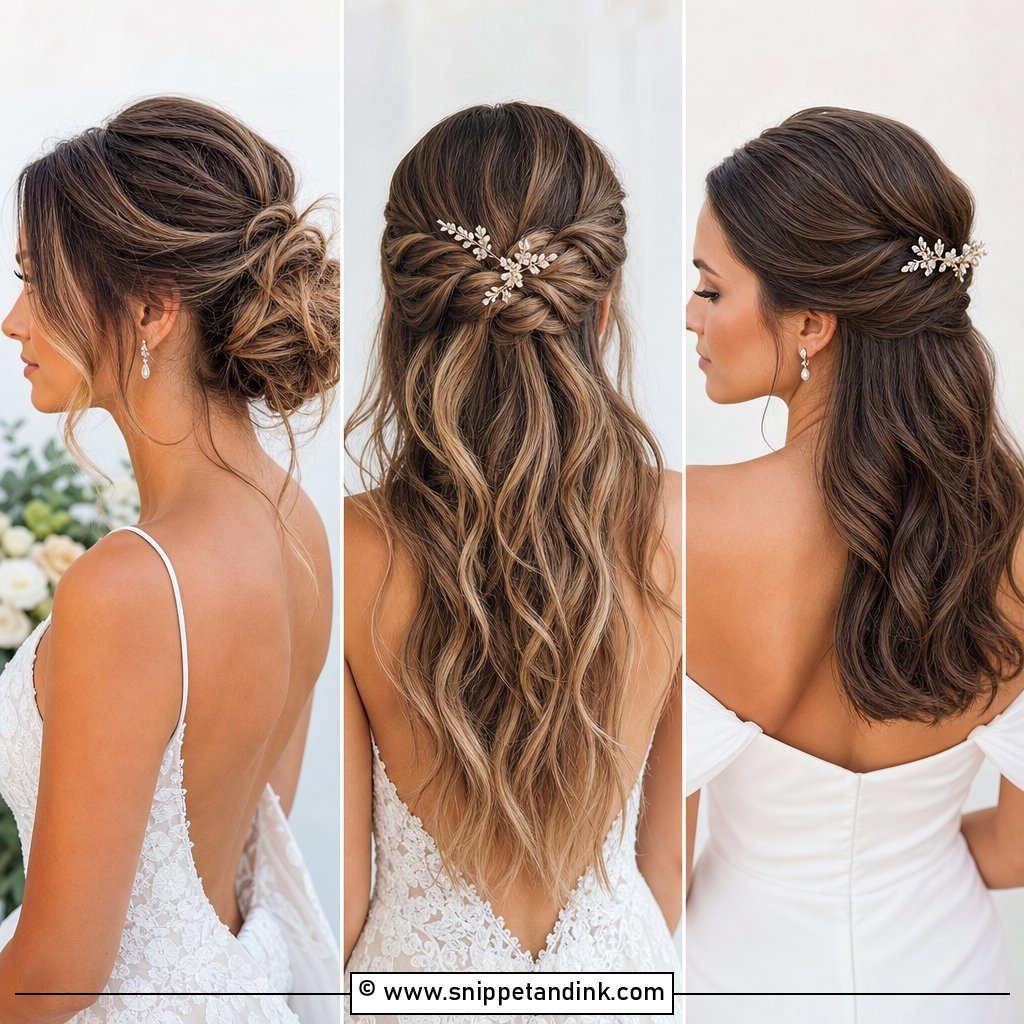
2. Half-Up Half-Down Wedding Hair
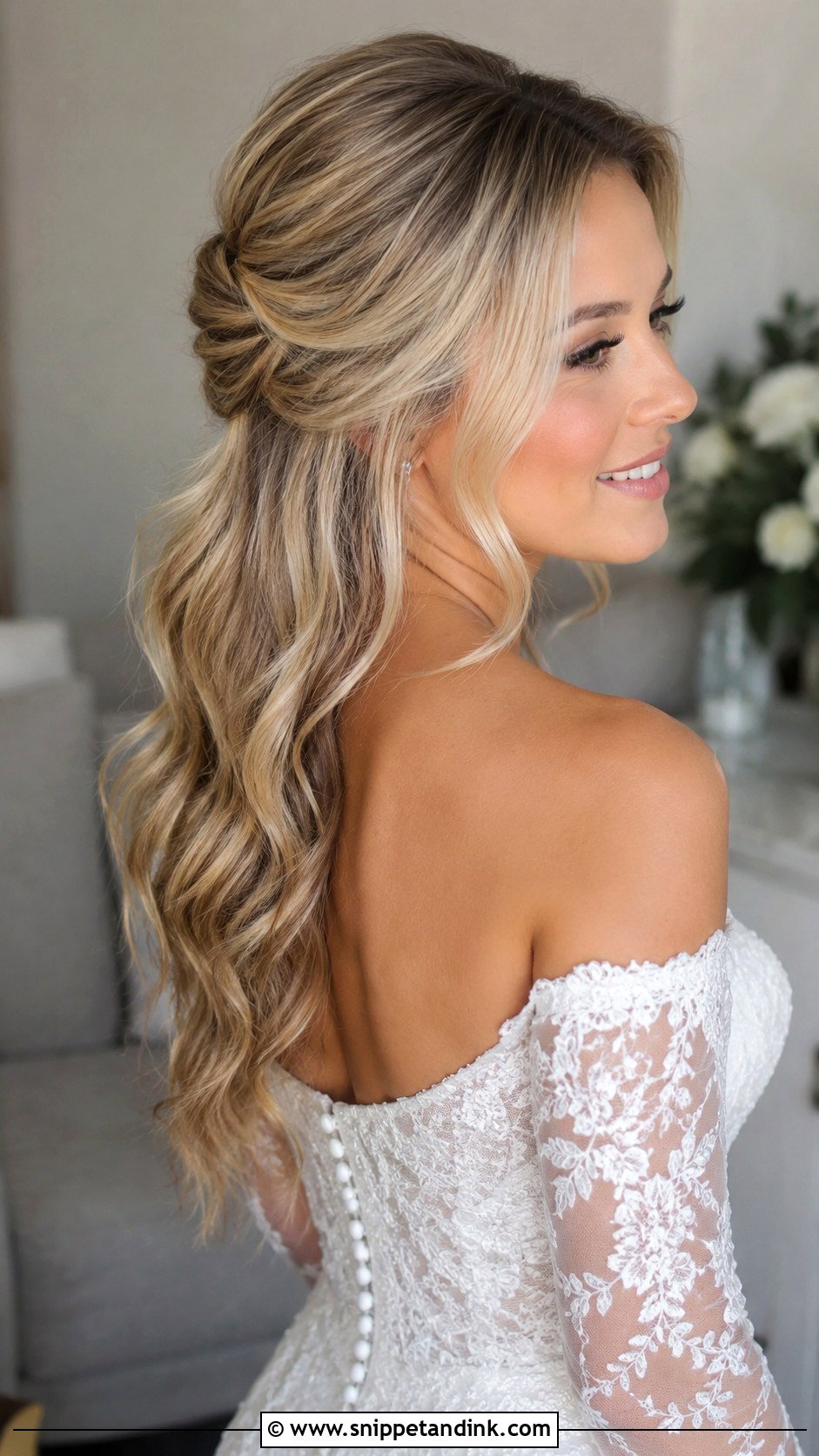
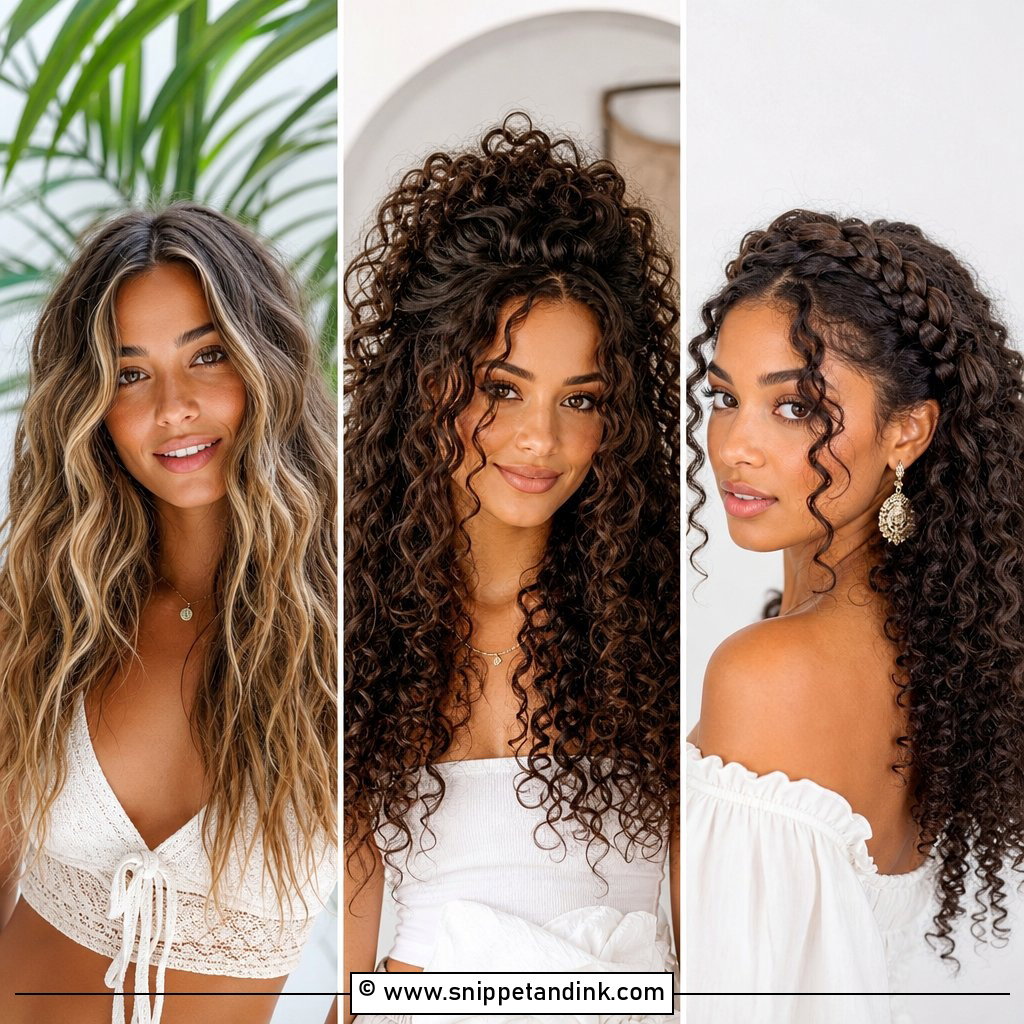
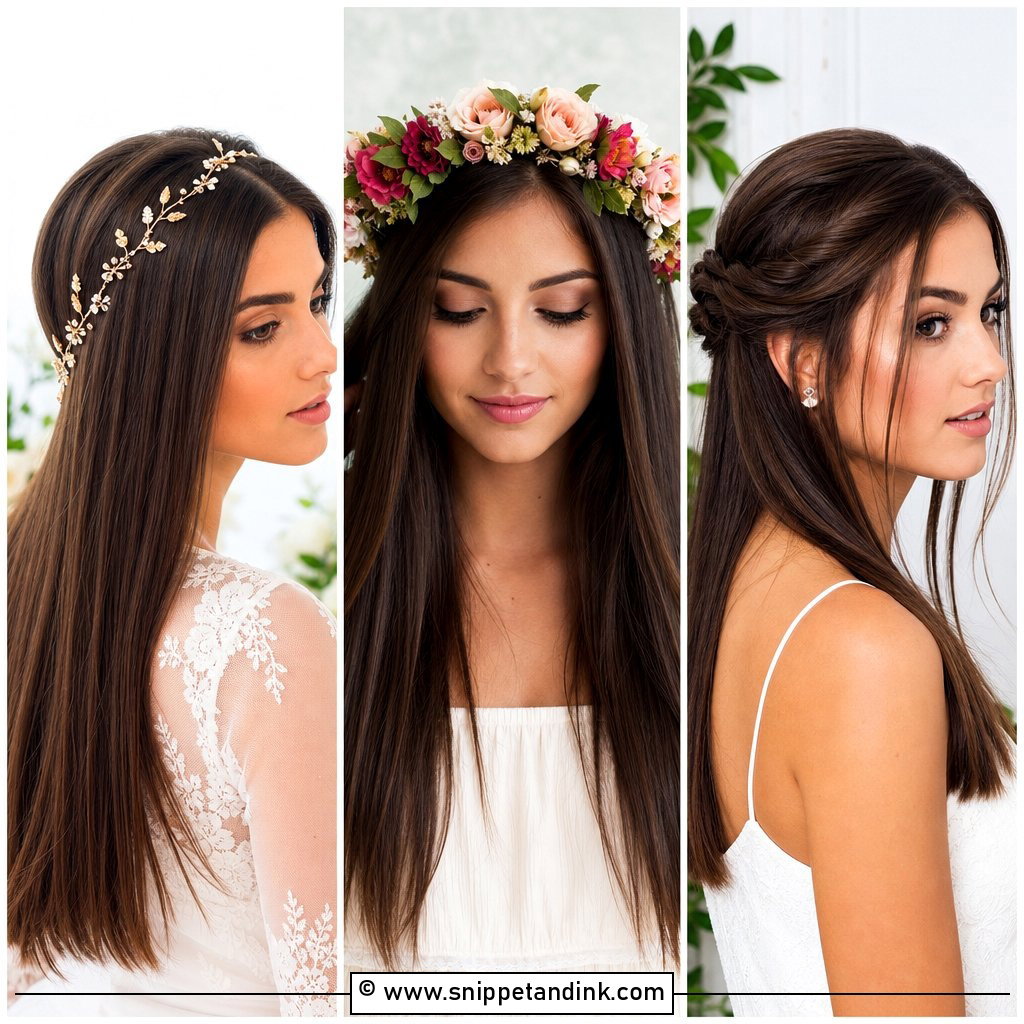
Raising the top section toward the crown, with a couple of soft twists or a small braid, is how most half-up styles are being done now, and it gives a round or heart-shaped face a little height. The weak spot is the loose length. Curls hanging down are the first thing to relax in heat, so I let each one cool in a pin curl before brushing it out, which buys hours. A few pearl pins or fresh blooms at the join hide the grips and give the veil comb something to sit beside.
3. Loose Romantic Waves
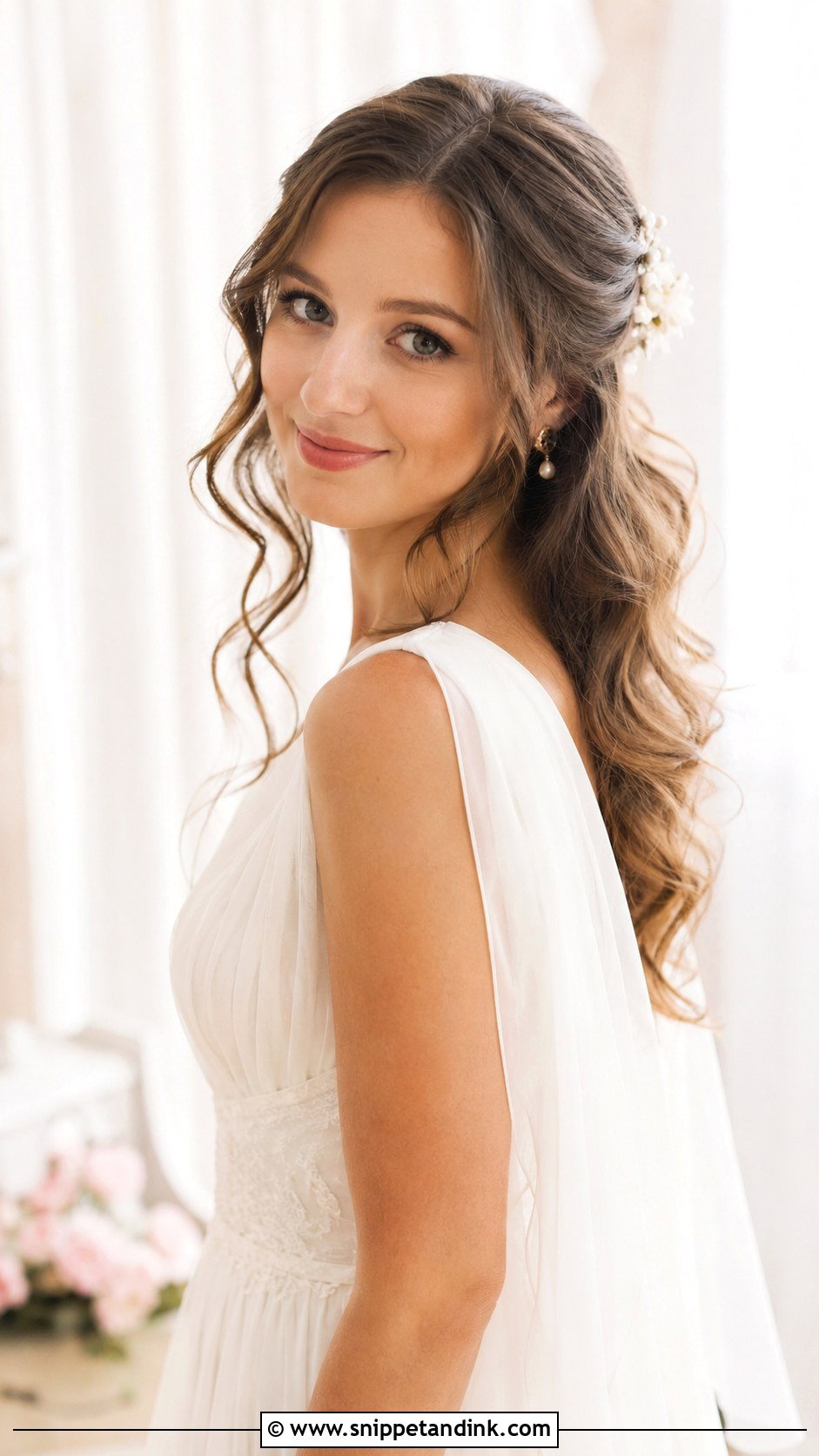
These are made with a large wand and then broken up with the fingers, so they read as movement rather than curls. Very little product goes in, which is the appeal and also the risk. On fine or very straight hair, loose waves can drop before the first dance, so I’d use a light texture spray at the roots and give a bridesmaid a small touch-up kit. They sit happily under a floral crown or a small clip, and suit a garden or beach setting where a structured style would feel overdone.
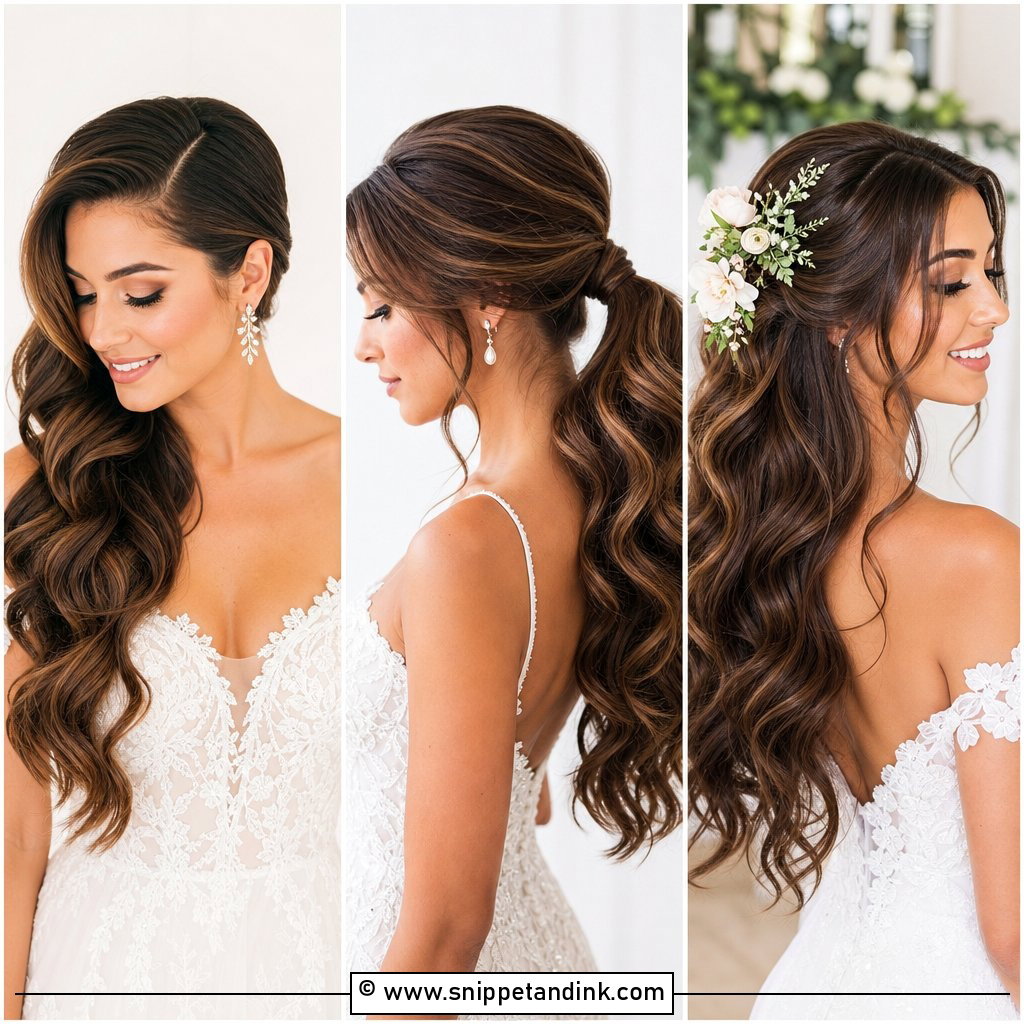
4. Hollywood Glamour Waves
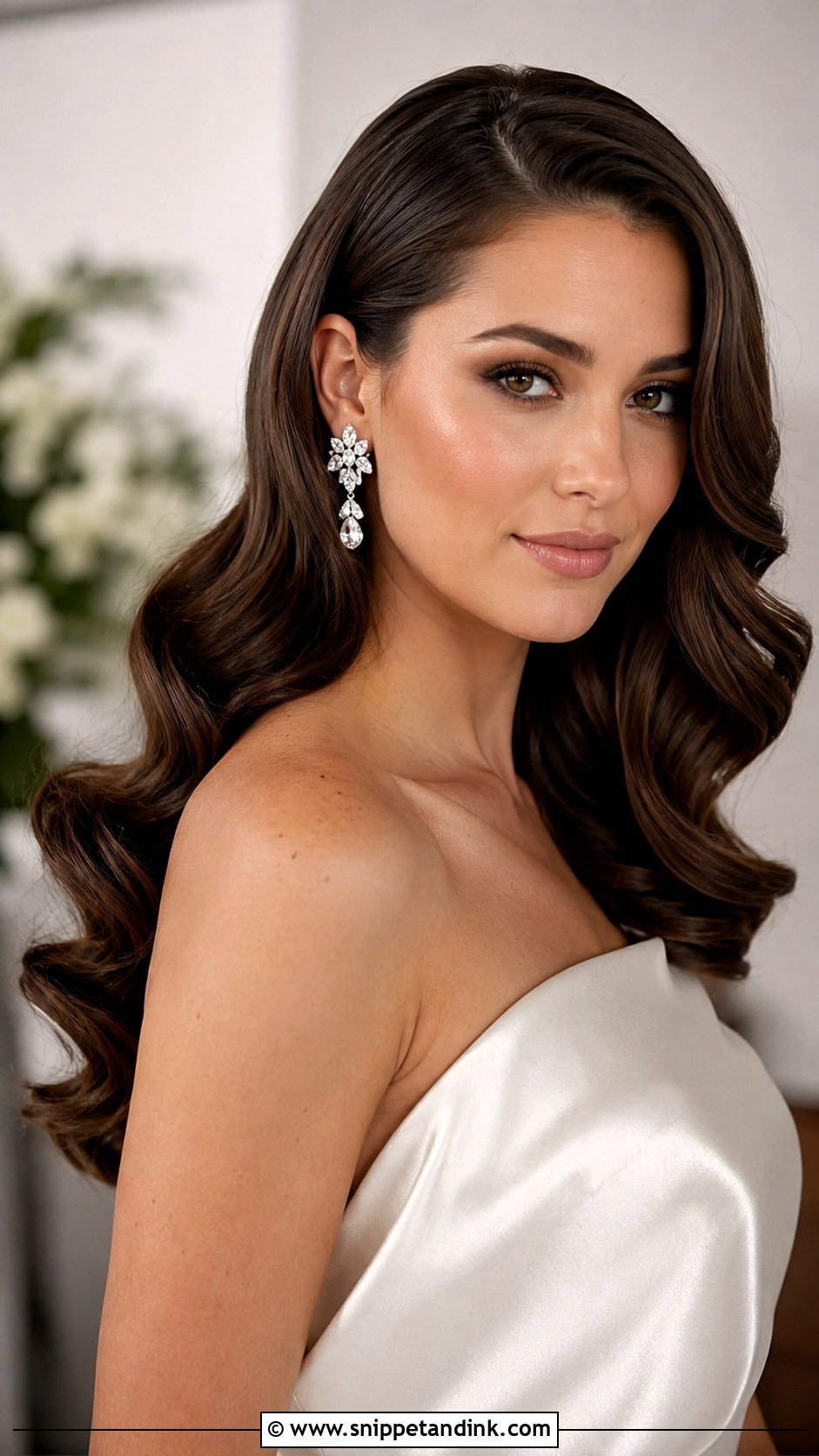
Every curl in this style has to be wound in the same direction, away from the face, or the waves won’t link up when I brush them out. That’s the part nobody sees: it’s a setting job first and a brushing job second, and the glossy ridges only appear once the curls from the large-barrel wand have fully cooled. A deep side part frames the face, and pinning the back behind one ear shows off an earring. Satin gowns suit it best. With heavy lace or a lot of beading, the hair and the dress start competing.
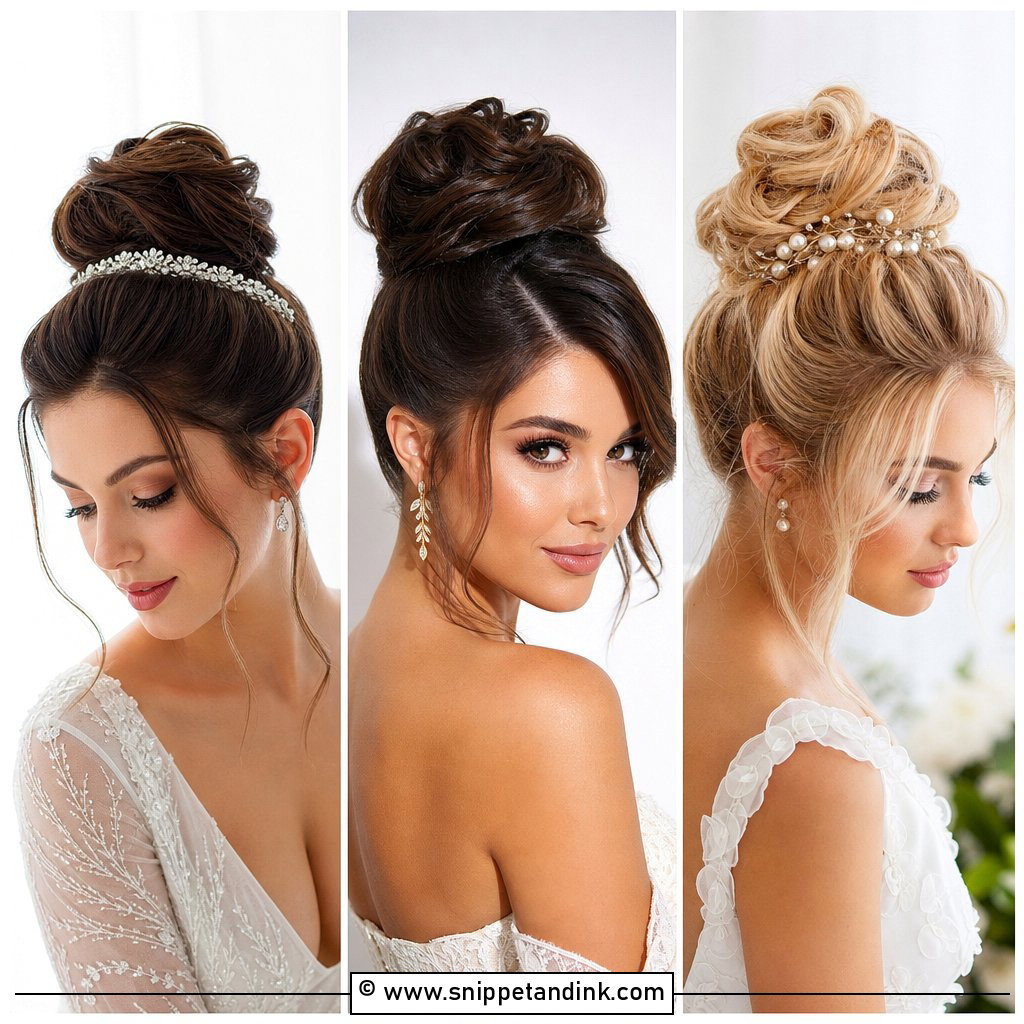
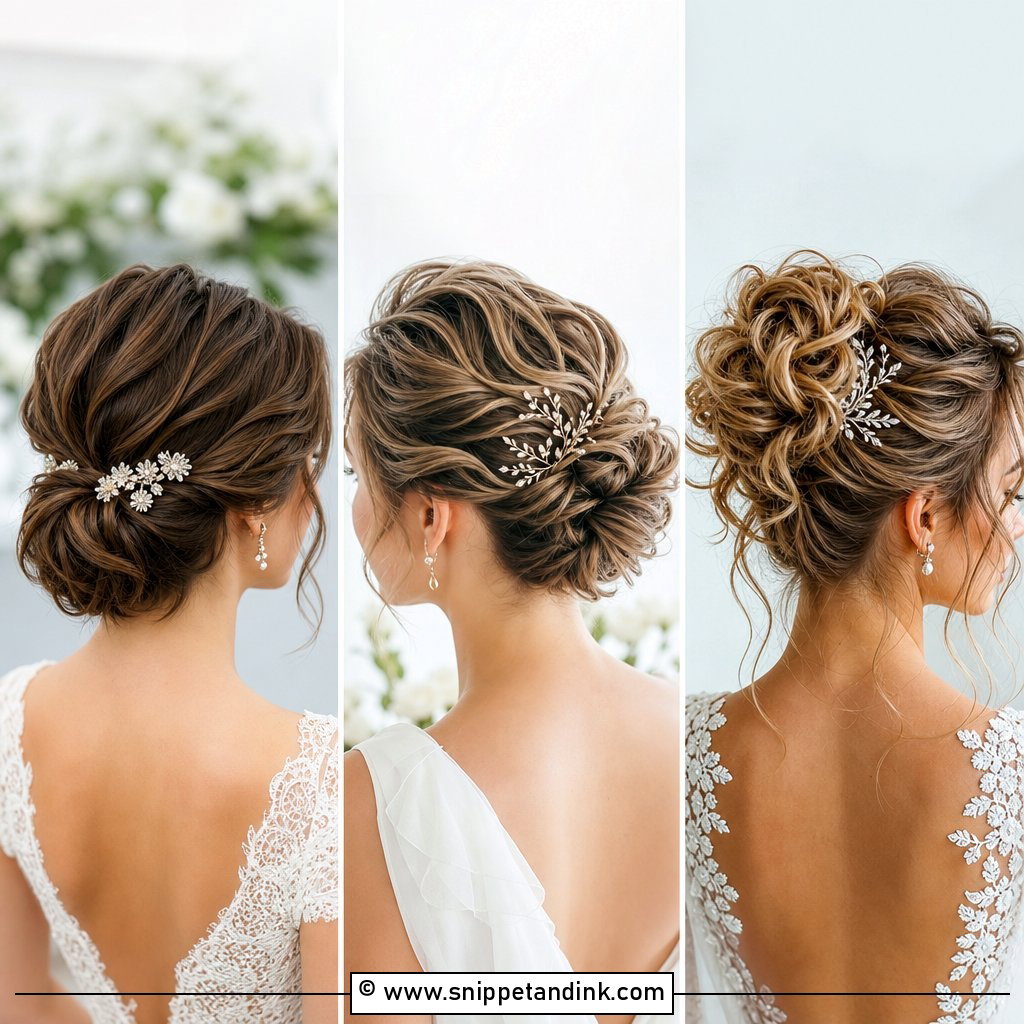
5. Messy High Bun Updo
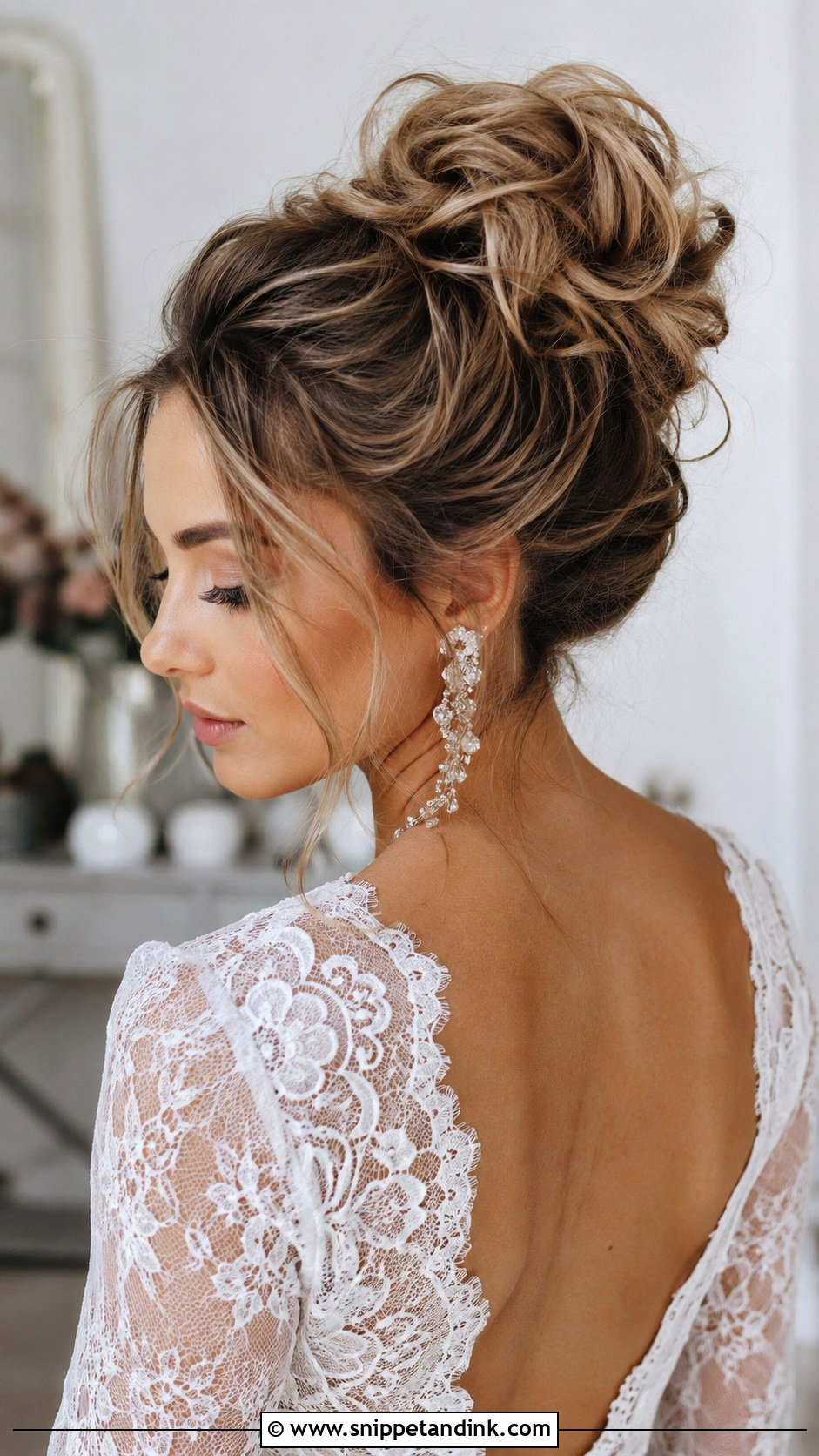
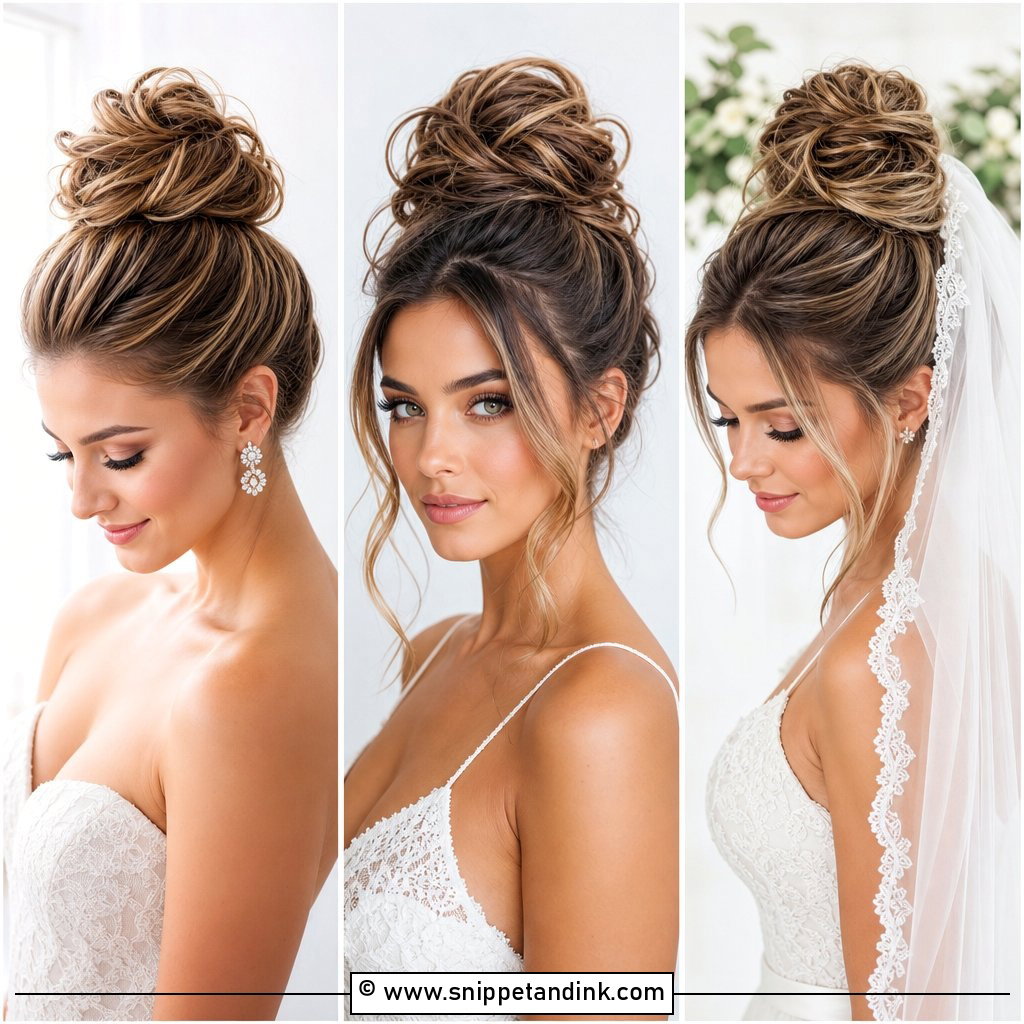
A messy bun looks careless, but it’s built on a secure base. I tie a hidden ponytail high on the crown first, then wrap and pin the textured lengths around it, so nothing slides when you hug people. It keeps hair off the neck, which matters at a warm outdoor wedding. The tendrils are where it goes wrong: pulled out too thick, they look like the bun is collapsing, so I take them in very small pieces at the very end.
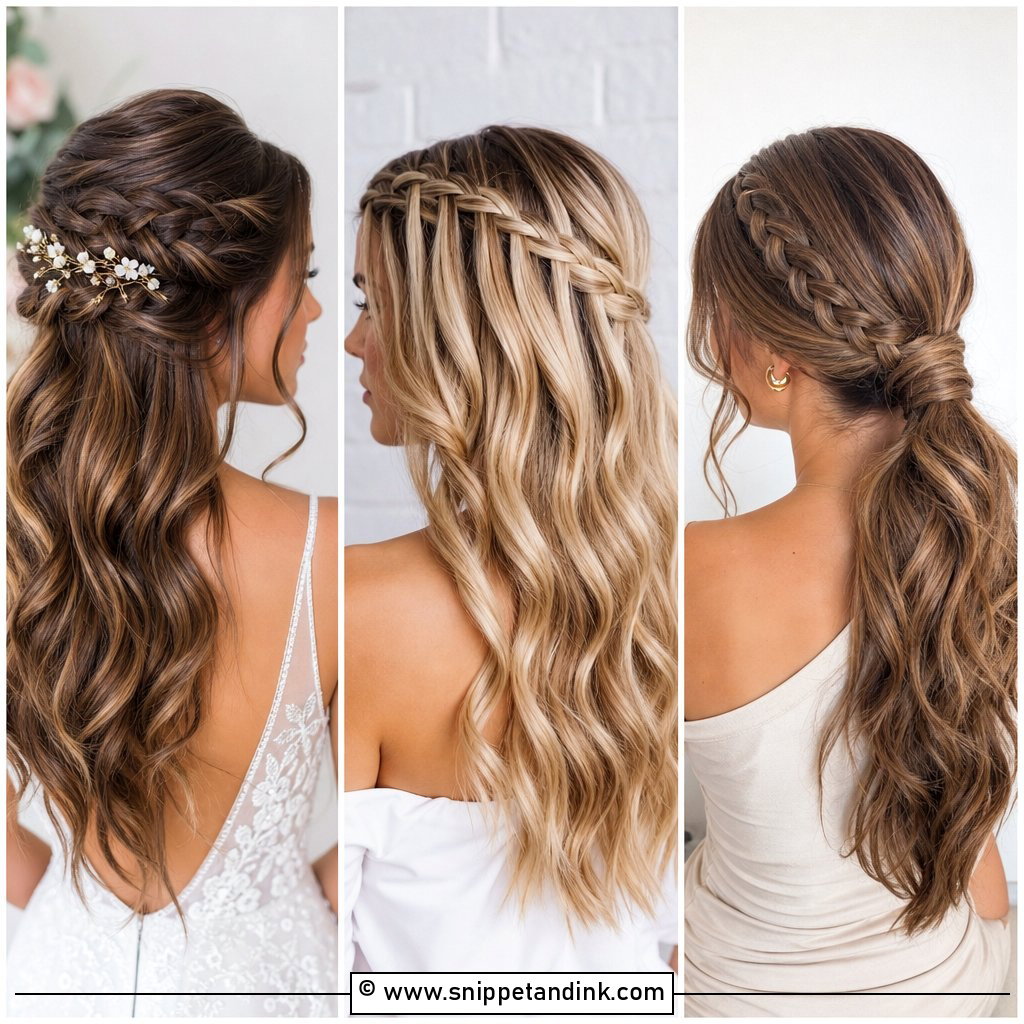
6. Braided Crown for Boho Brides
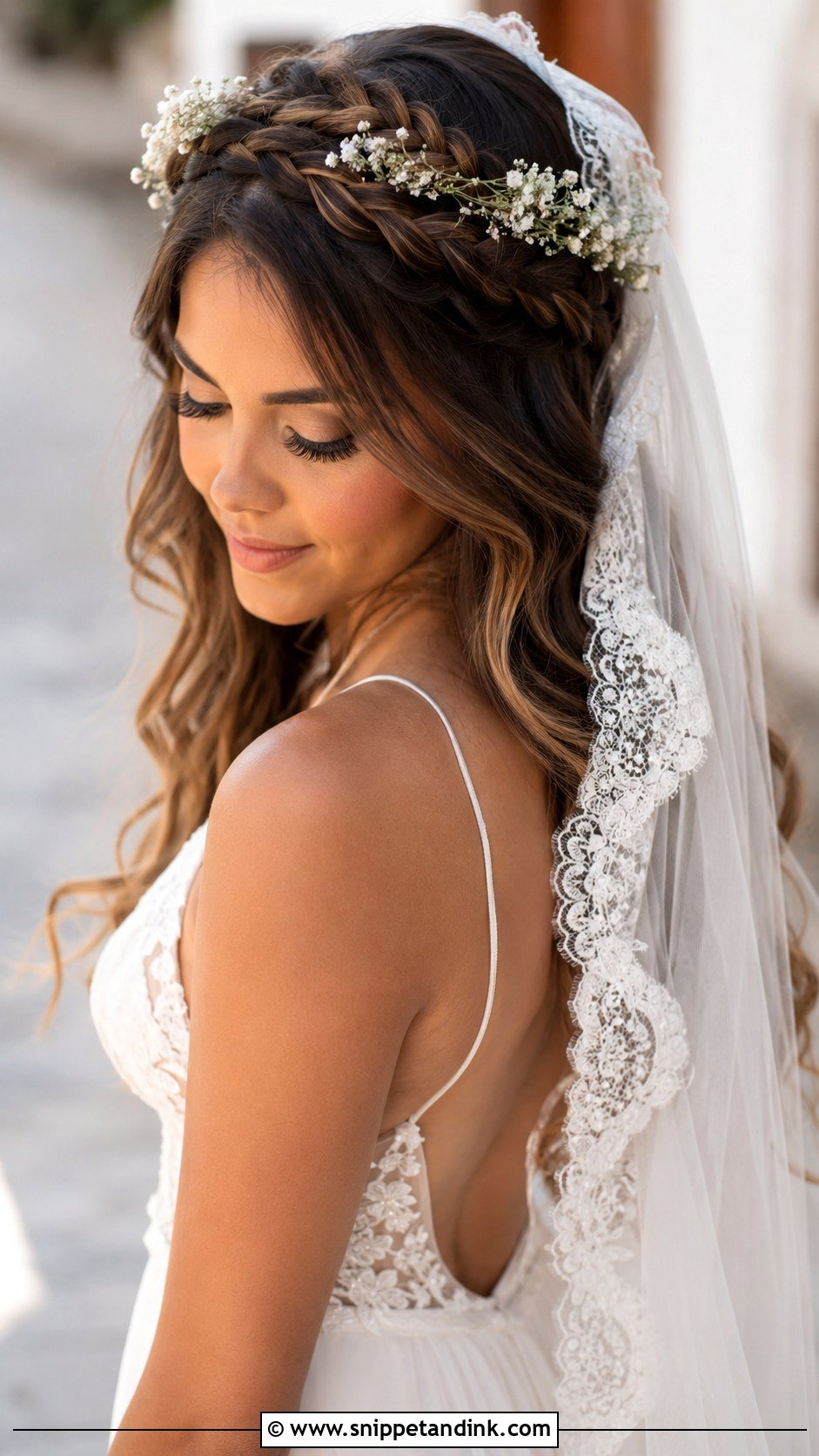
A braid wrapped right around the head gives instant bohemian goddess vibes, and it’s one of the most secure styles here. Two sections from each side are braided, crossed over the crown and pinned flat. Your length decides the result: below the shoulders, the braids meet neatly, while shorter hair usually needs a small clip-in braid to close the circle. A mantilla attached at the back sits well below it, and baby’s breath or tiny wildflowers tuck into the plaits without extra pins.
7. Low Floral Bun
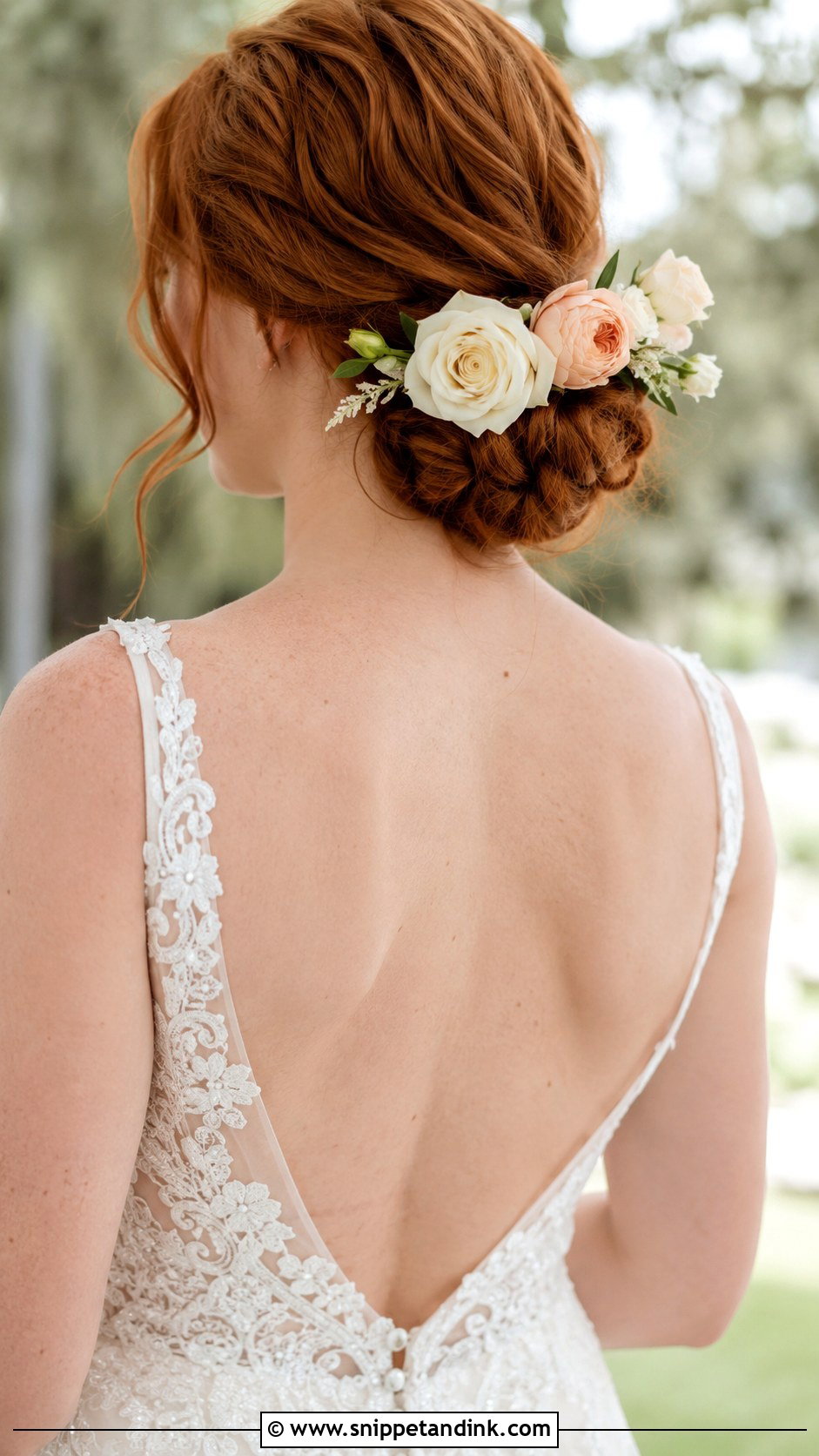
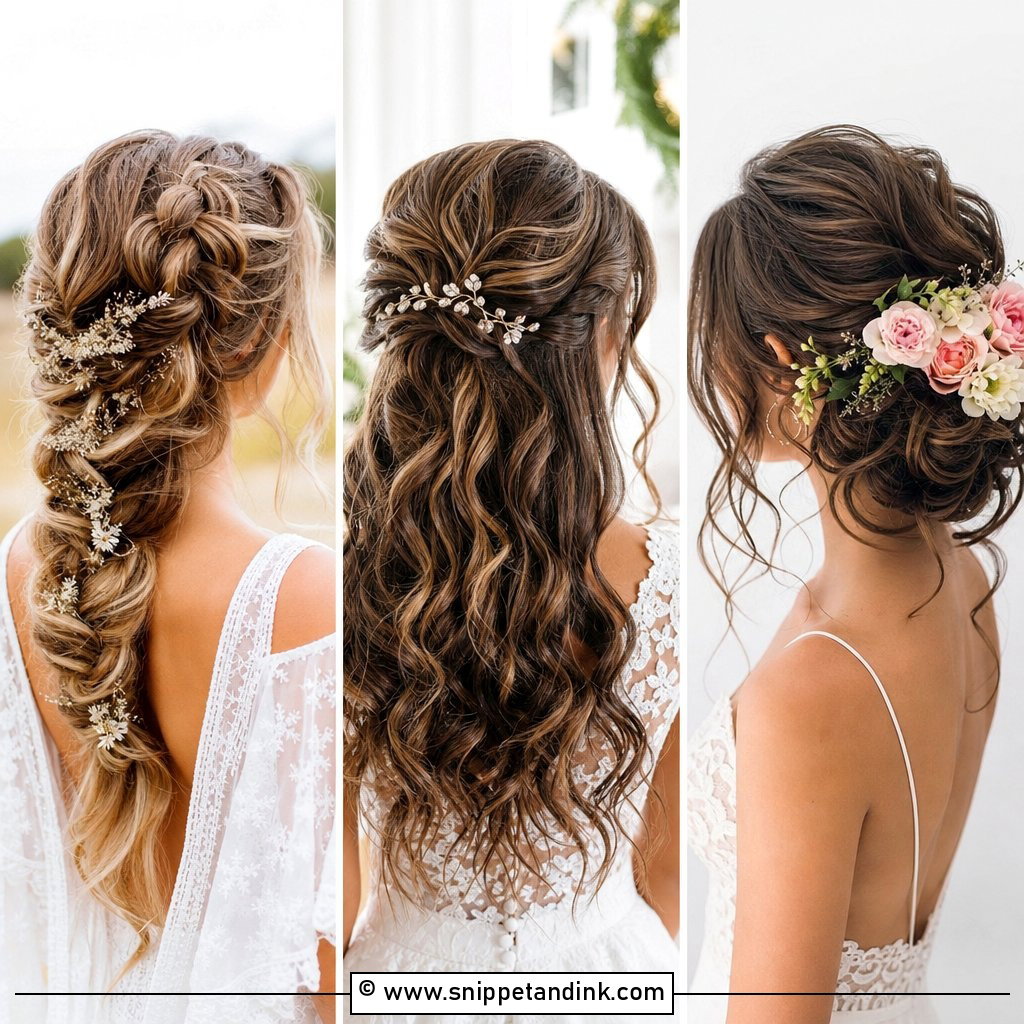
Fresh flowers turn a plain knot into the focal point, but they have to be the right flowers. Ranunculus, spray roses and baby’s breath cope with hours out of water; delicate blooms like sweet peas wilt against warm skin. I ask the florist to wire and tape the stems so I can pin them around the base, cut from the same batch as the bouquet so the colour matches. The low position makes sense with a backless or off-the-shoulder dress, which leaves that area on show for the whole ceremony.
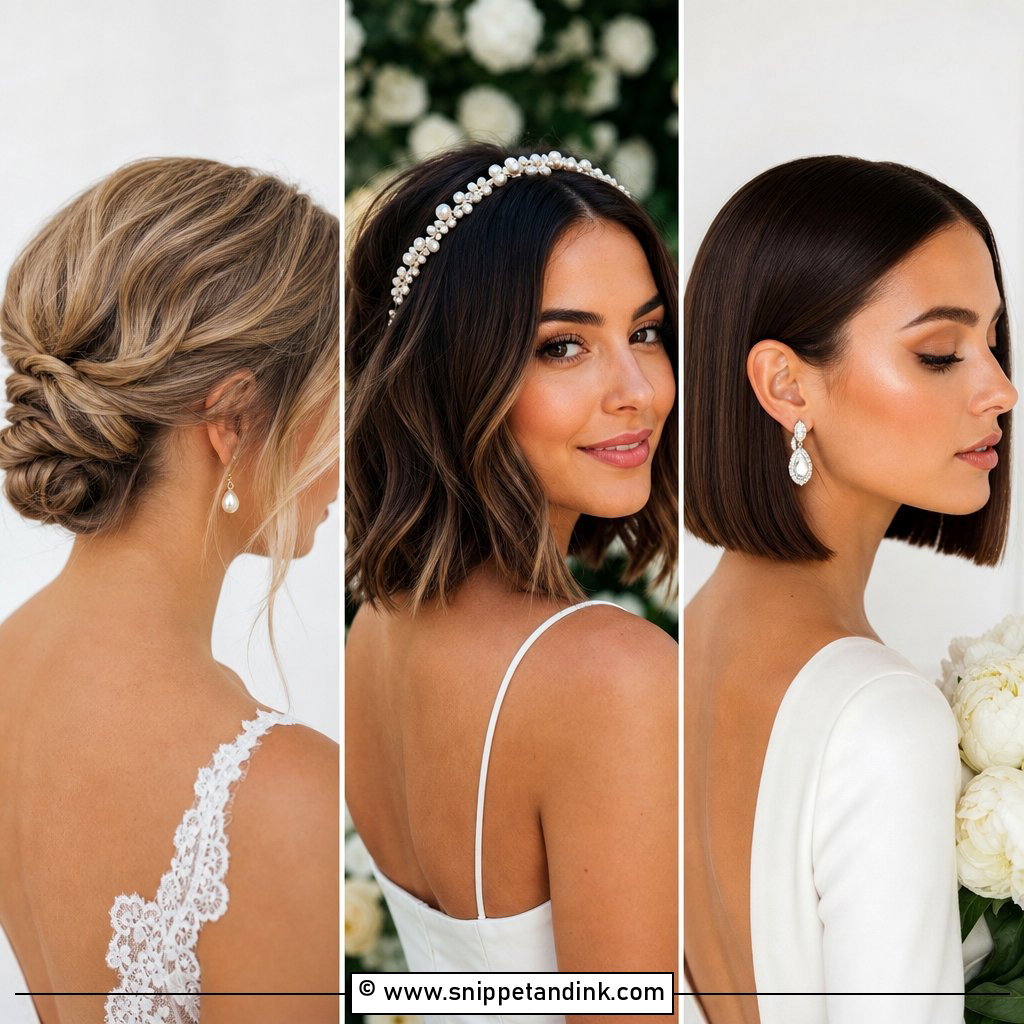
8. Pearl-Adorned Chignon
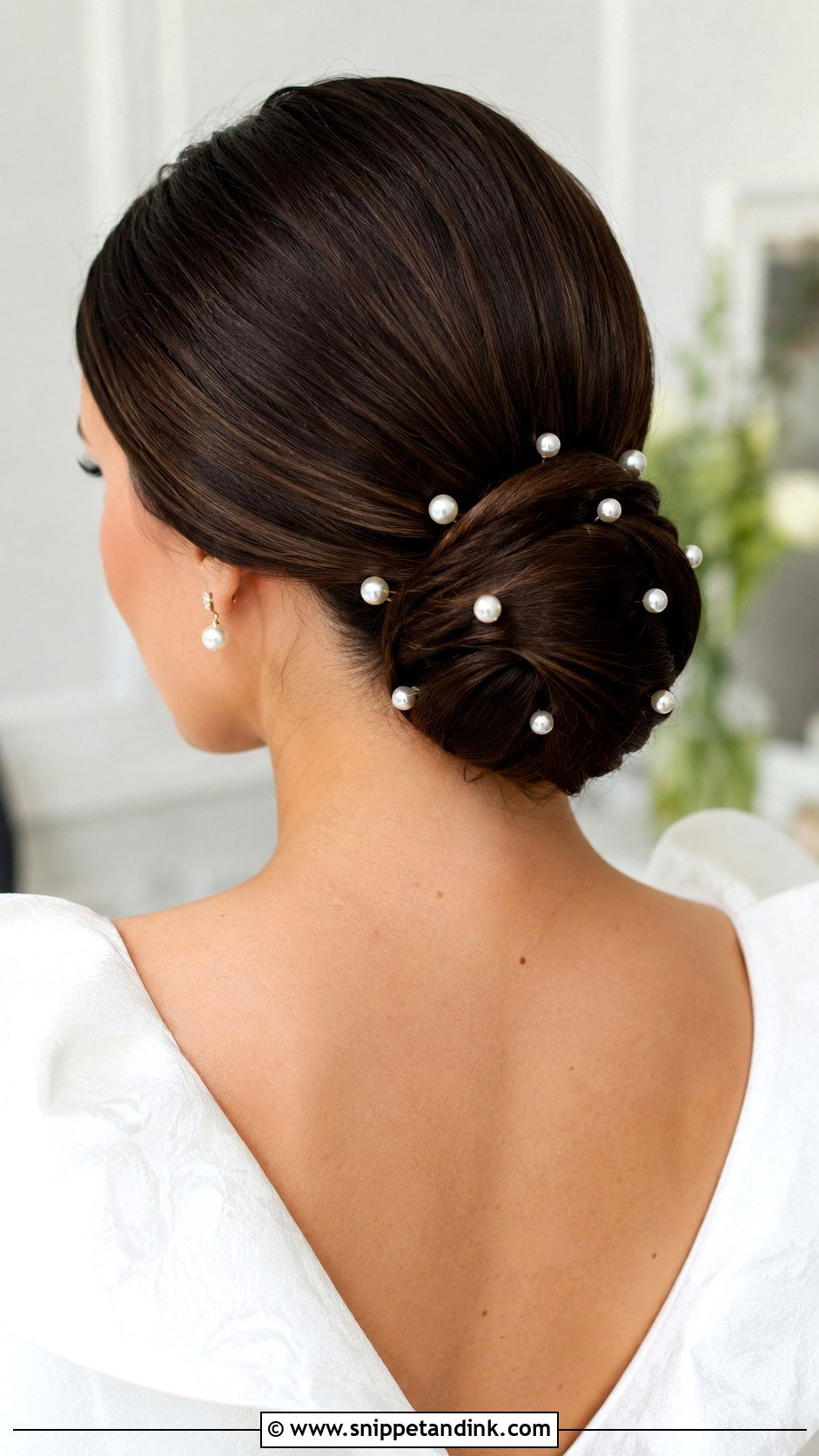
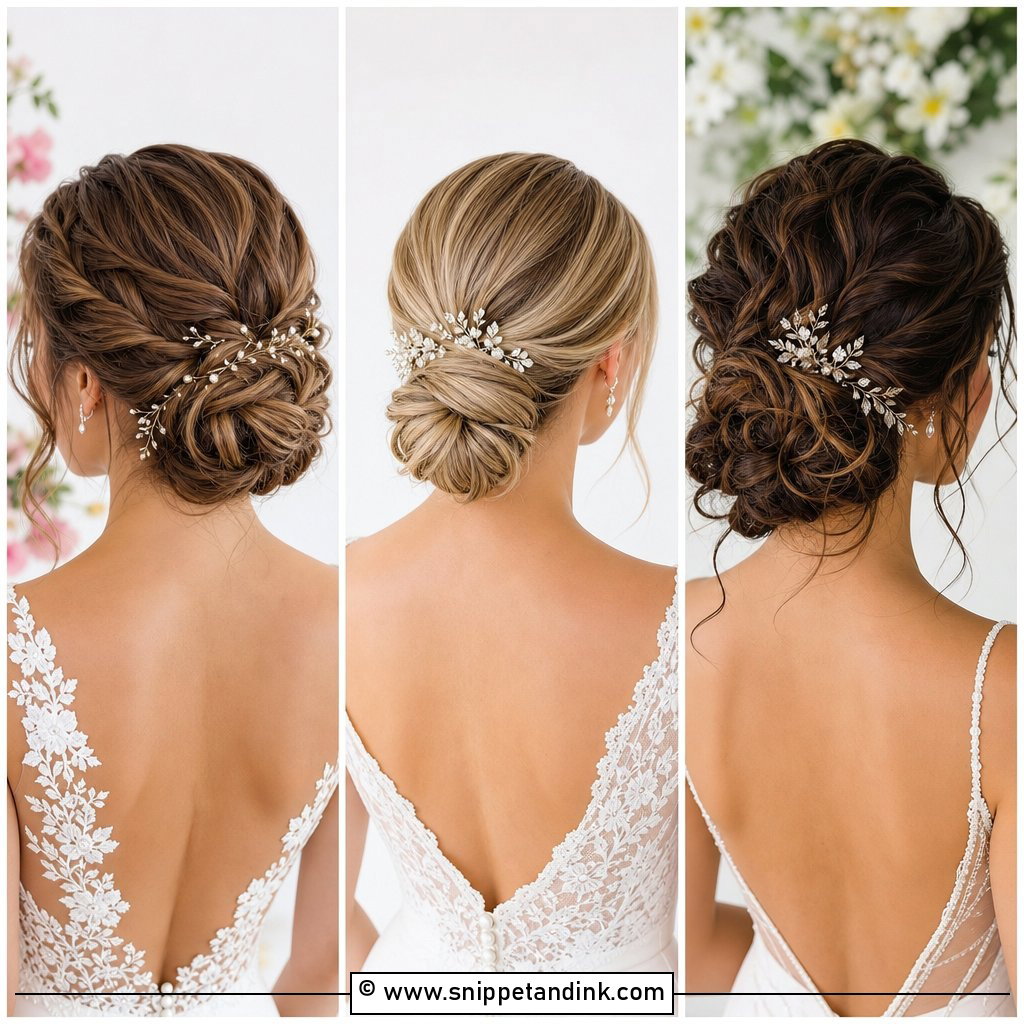
Pearl pins need a smooth surface to sit on. On a textured bun they disappear into the hair, so this is one style where I want every strand of the chignon glossy and flat. I scatter them unevenly rather than in rows, a few larger and more smaller, because a regular pattern looks like a costume piece. A pearl-studded comb is the easier option if your hair is very fine and won’t grip small pins. Vintage and structured gowns suit it; keep the earrings simple so the pearls aren’t doubled up.
9. Textured Bridal Ponytail
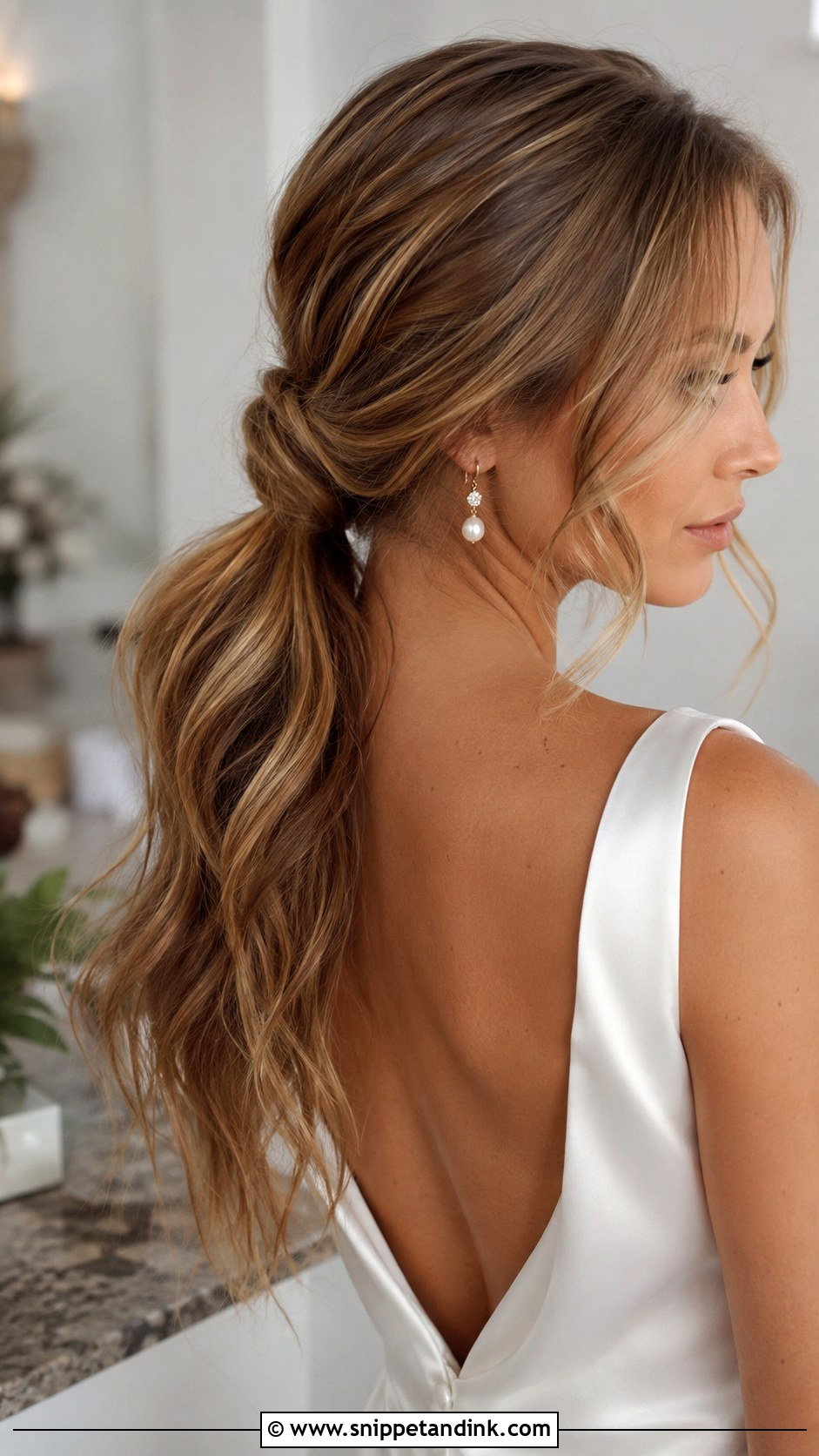
Ponytails are what I suggest most often to brides who plan to dance hard. Low or mid-height, waved or smoothed, it barely moves all night. The secret is the base: I wrap a small strand around the elastic and pin it underneath, then add a second hidden elastic partway down if the length is heavy, which stops it splitting. Fine hair may need a clip-in for fullness. Pull a couple of face-framing pieces loose last, once the veil is in.
10. Side-Swept Curls
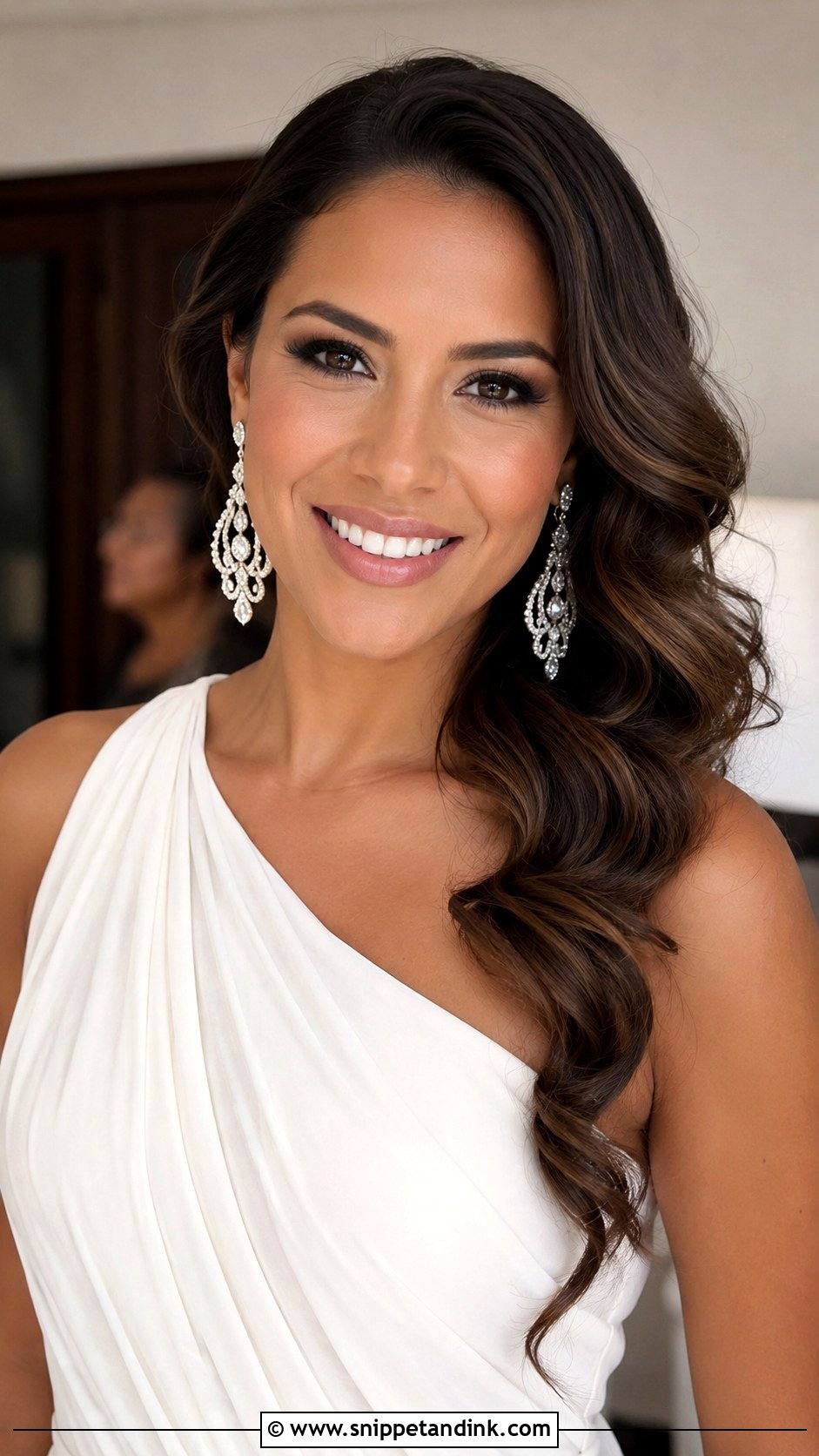
Sweeping everything over one shoulder looks simple and isn’t. All that weight wants to slide back to the middle, so I anchor it with crossed grips behind the ear before any curls go over. It shows off one earring and suits a one-shoulder gown, as long as the hair falls on the bare side rather than piling onto the strap. You need medium to long hair for it to drape. A side-attached veil or floral clip goes on the opposite side to balance the weight visually.
11. Sleek High Ponytail
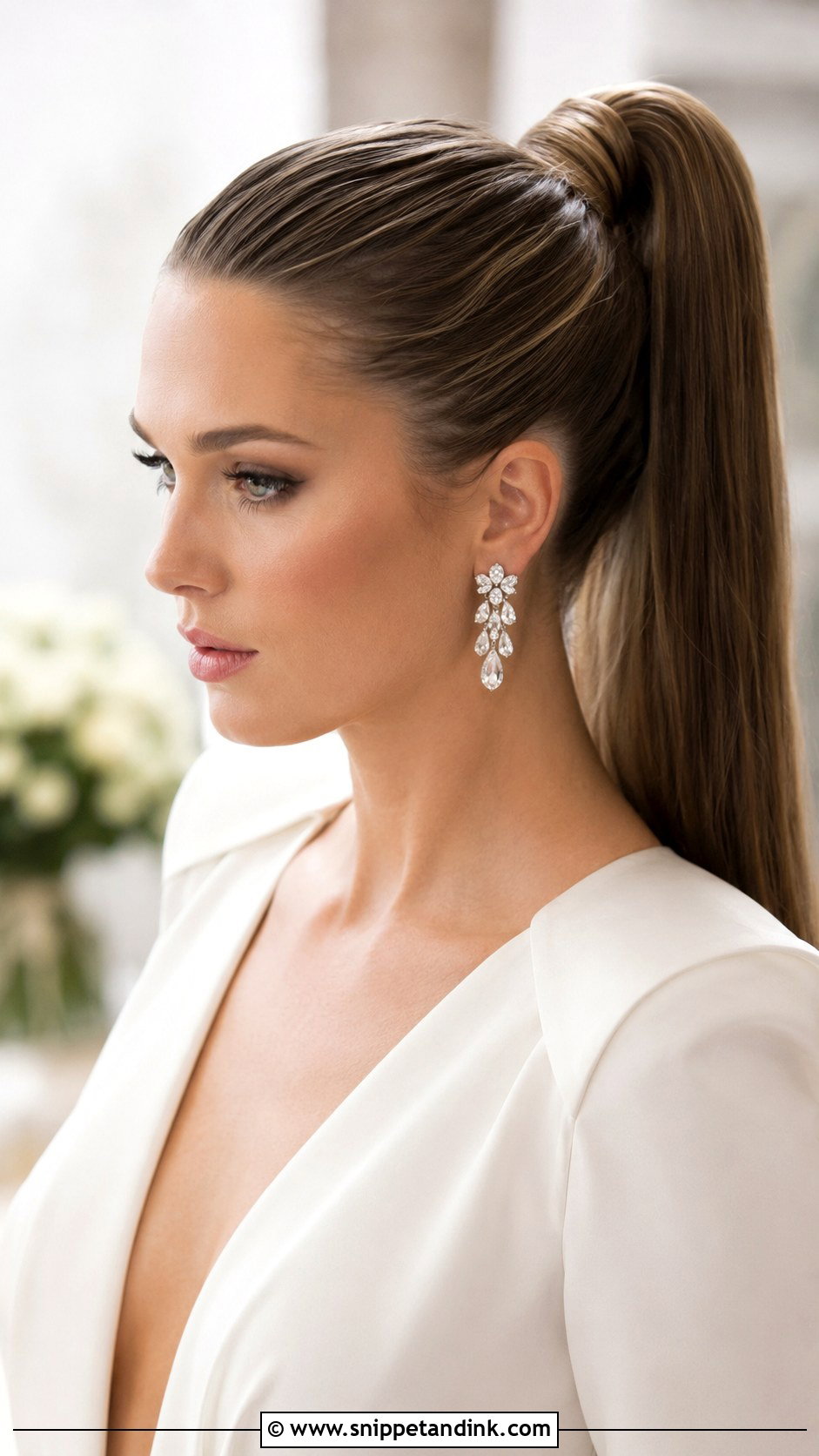
A high pony gives an instant lift through the cheekbones, but it’s unforgiving. Any bump at the crown shows, so I brush it up with a boar bristle brush and set it with a strong gel before tying. It’s also heavy at the top of the head, which some brides find tiring by evening, and the veil has to go underneath it rather than above. If you’re fine with that, it suits a sculpted contemporary gown and a city venue better than almost anything else on this list.
12. Boho Braided Updo
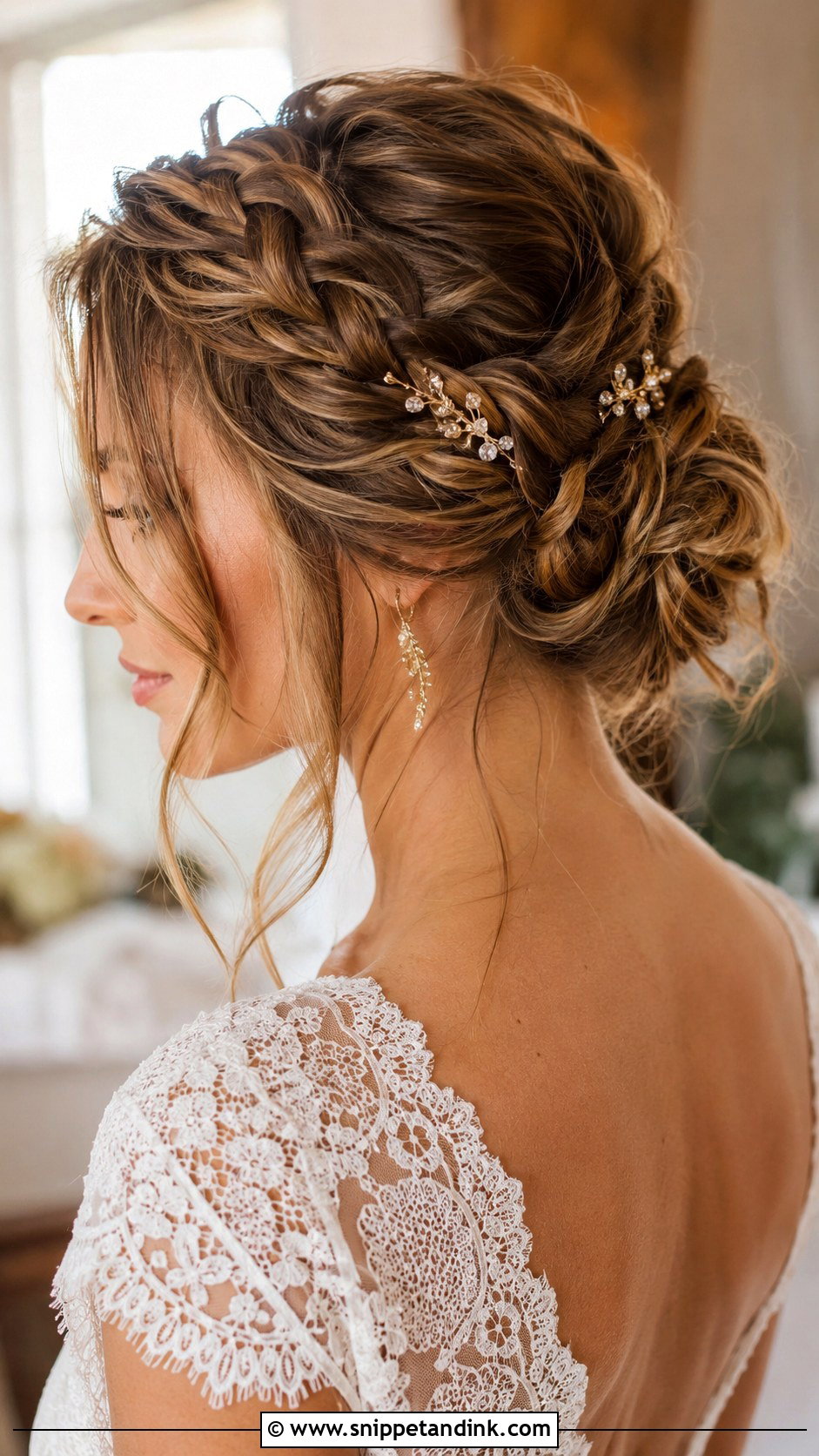
Several braids woven through a loose gather give this updo its depth. Thick or wavy hair is the best canvas, because there’s enough of it to pancake the braids wide without gaps showing. On fine hair I braid over a little texture powder so the plaits look fuller. Flowers or small gold pins slot straight into the braids. It’s a free-spirited look that’s surprisingly sturdy, which is why I like it for a barn or field ceremony where the wind won’t be kind.
13. Classic French Twist
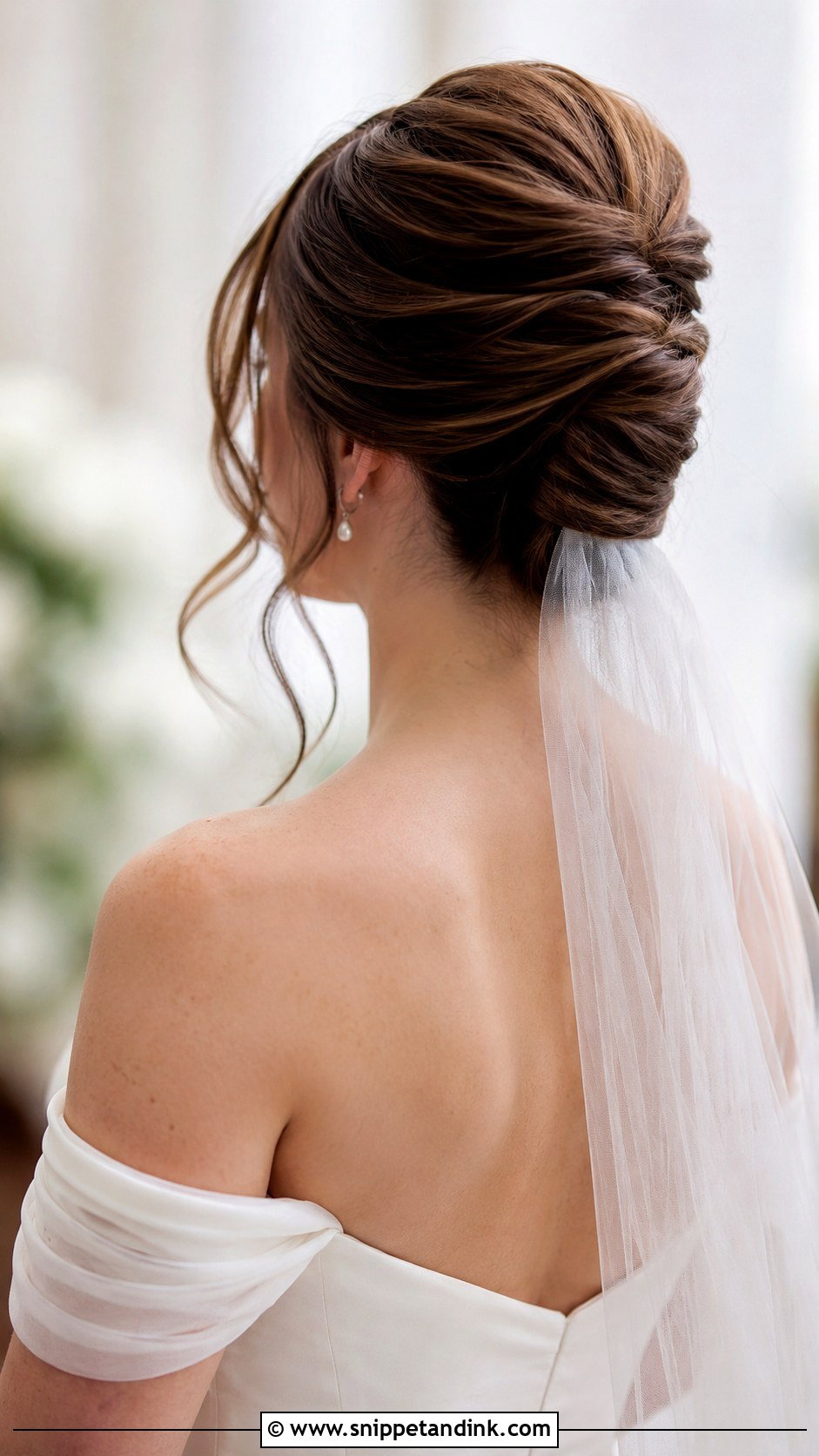
A French twist is held by a row of crossed pins hidden along a vertical seam, and getting that seam straight is what takes practice. It needs length past the shoulder; on a long bob I’d add a small padding piece inside the roll. The veil comb goes in just under the twist so the roll stays visible from the back during the ceremony. Formal and religious ceremonies suit its tidy shape, and a couple of loose tendrils stop it looking strict.
14. Half-Up Braid Crown
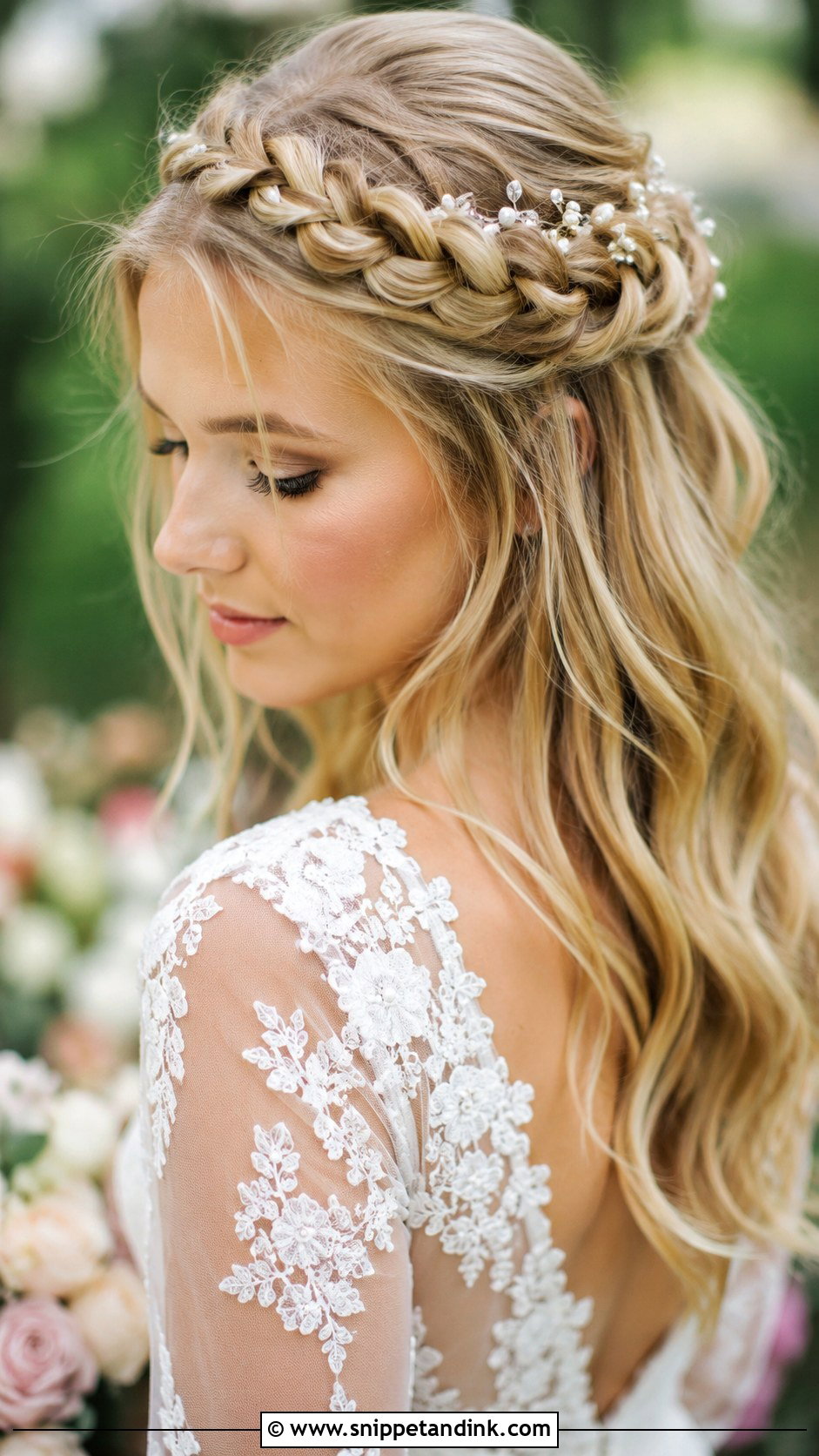
This sits halfway between the full braided crown and the half-up styles above: braids wrap the top of the head while the rest stays loose. It’s practical outdoors because the braids keep hair out of your eyes in a breeze, even when the waves underneath blow about. I’d skip a separate floral crown on top. Tuck small blooms into the plaits instead, or the head starts to look busy.
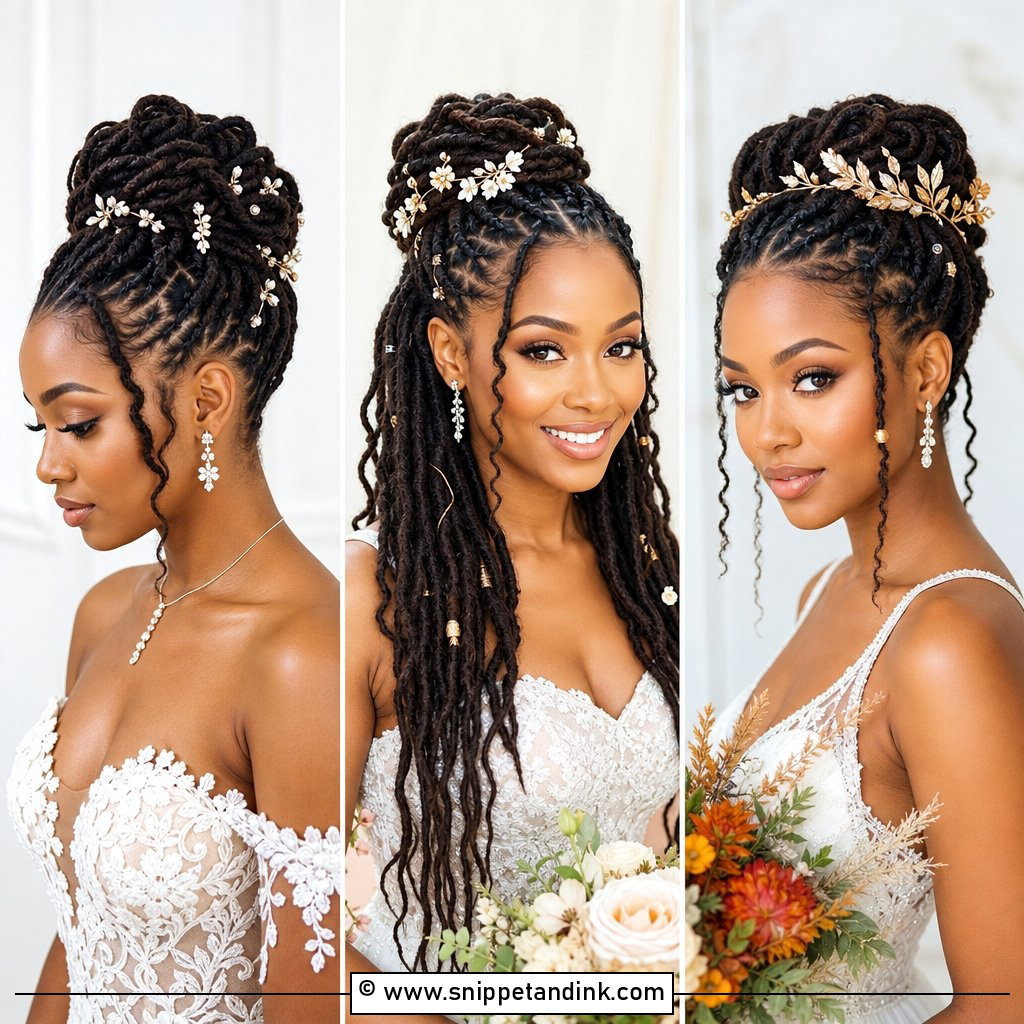
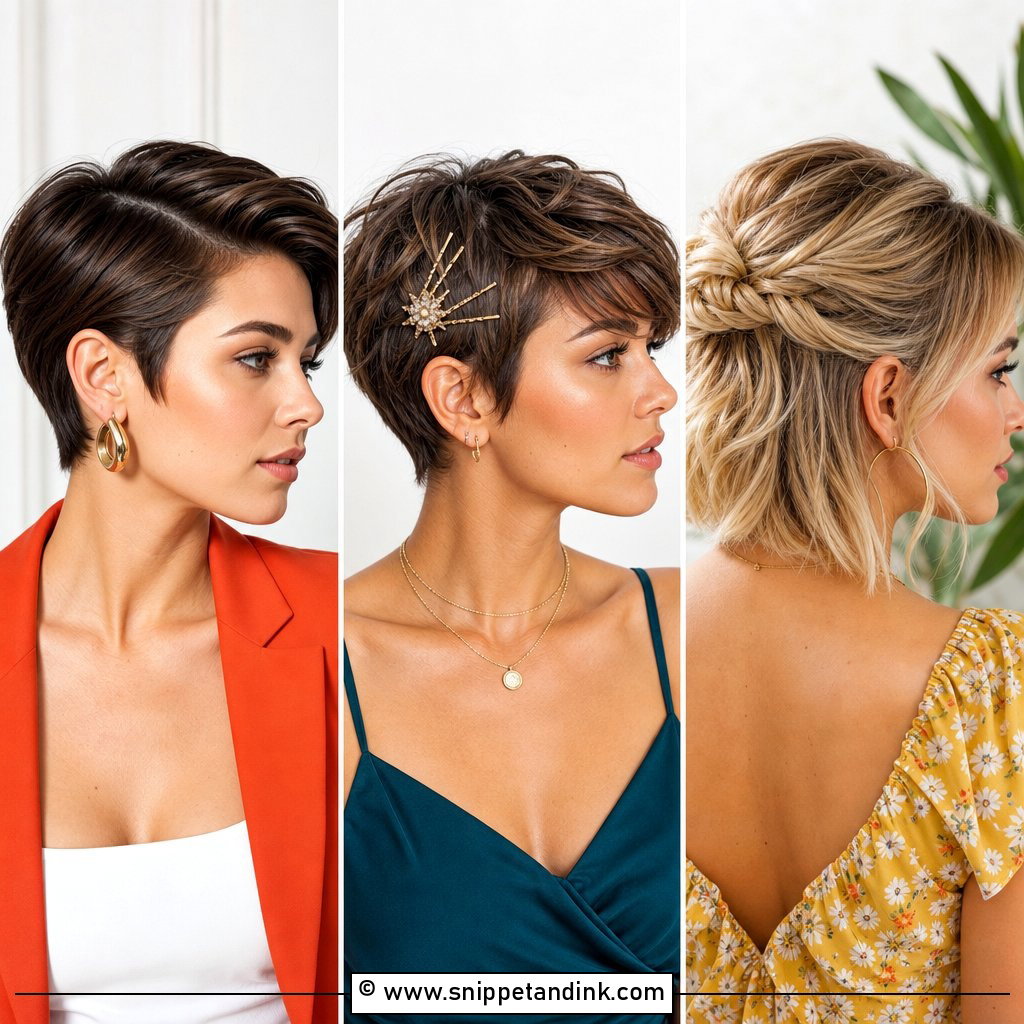
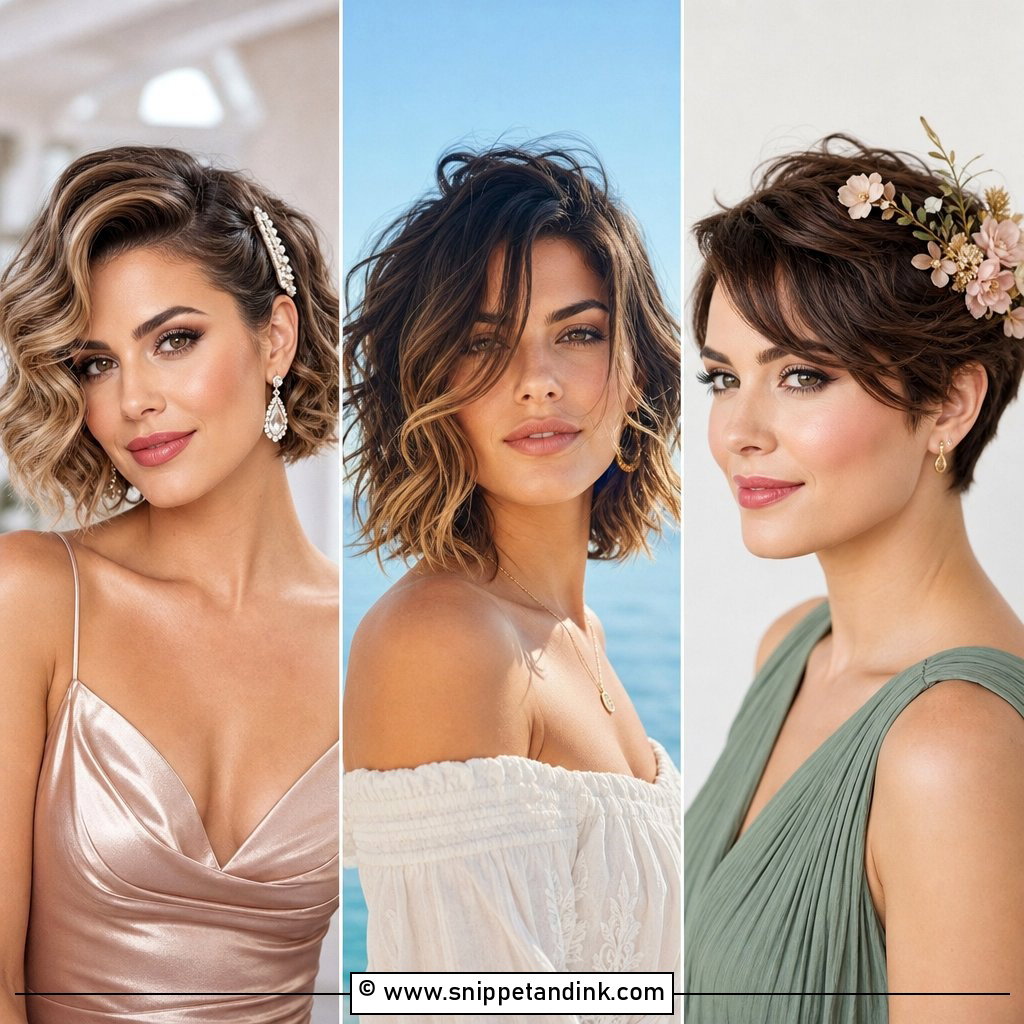
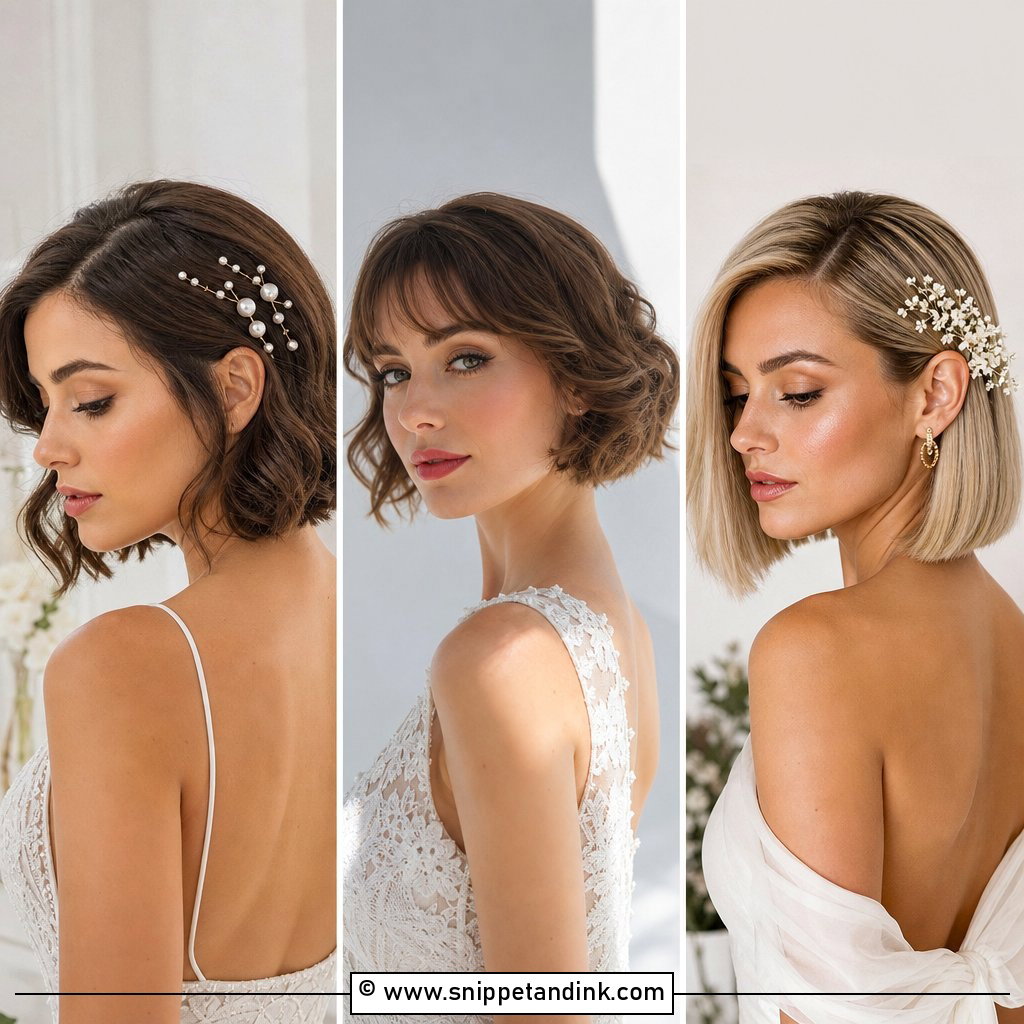
15. Wedding Hair for Short Hair
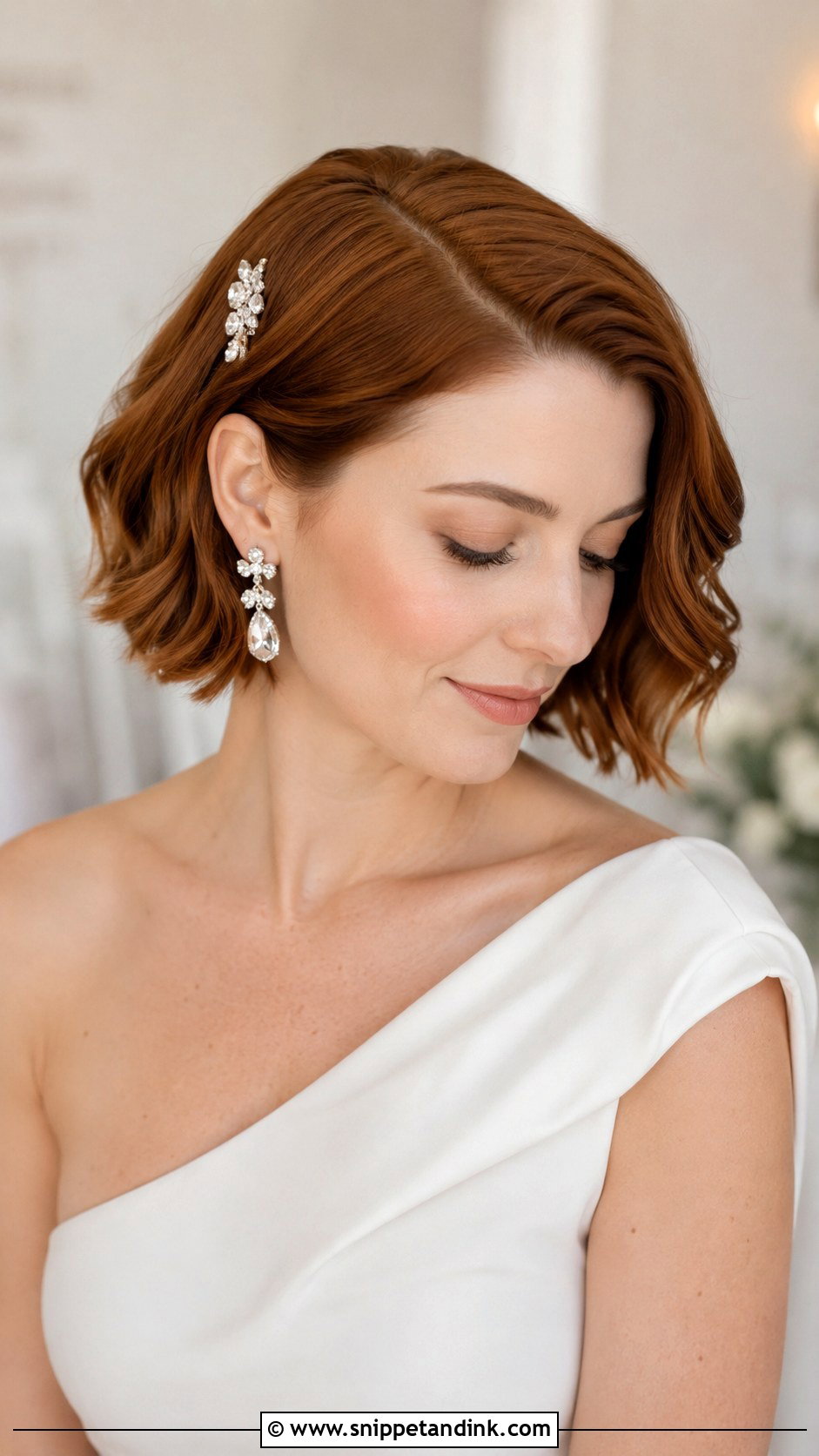
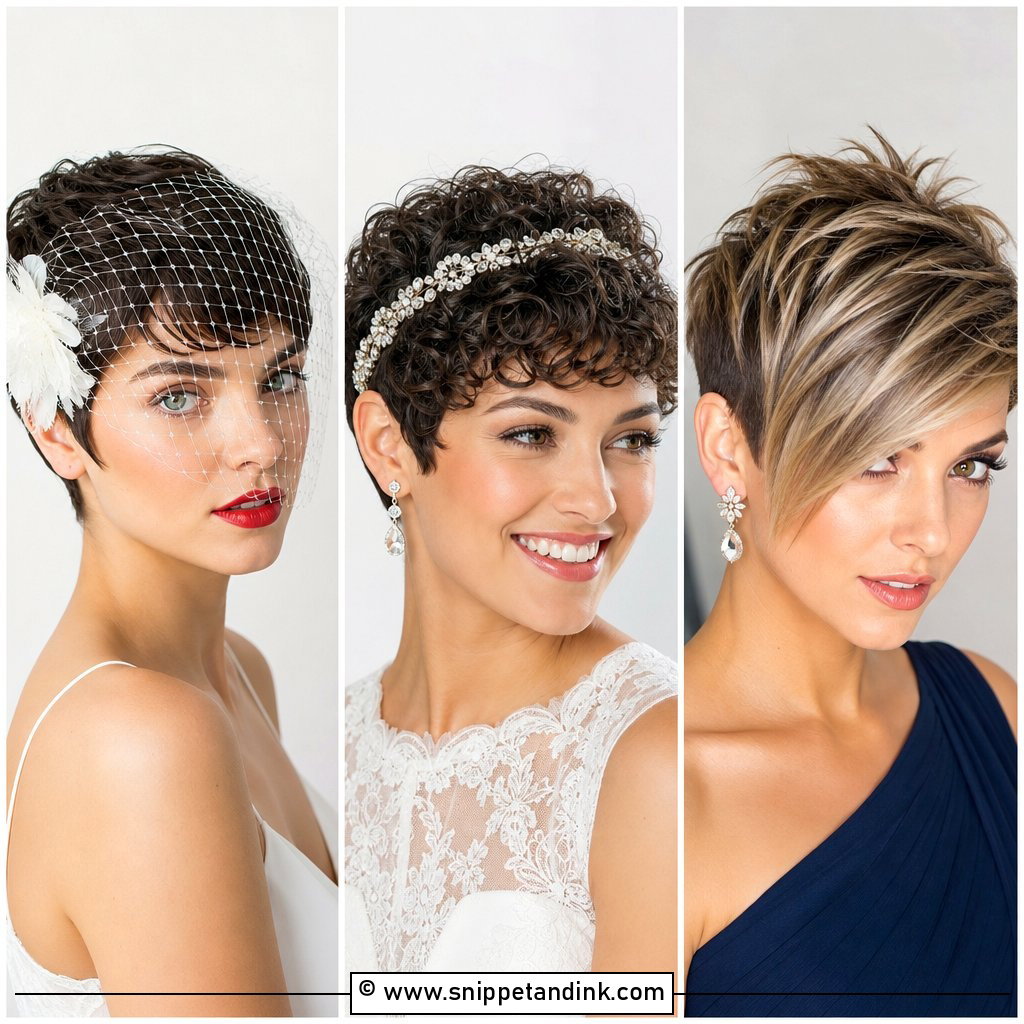
Short hair isn’t a limitation; it just means the details carry more weight. A polished pixie or chin-length bob can take soft waves, a deep side part, or one side tucked behind the ear and held with a decorative clip or small floral piece. I’d book your last cut two to three weeks out, so the edges have softened but still look neat. Veils and headbands attach fine to a textured crop using a small hidden braid or a cluster of grips as the anchor, and bold earrings or a strong lip fill the space length would have taken.
16. Low Bun with Braided Detail
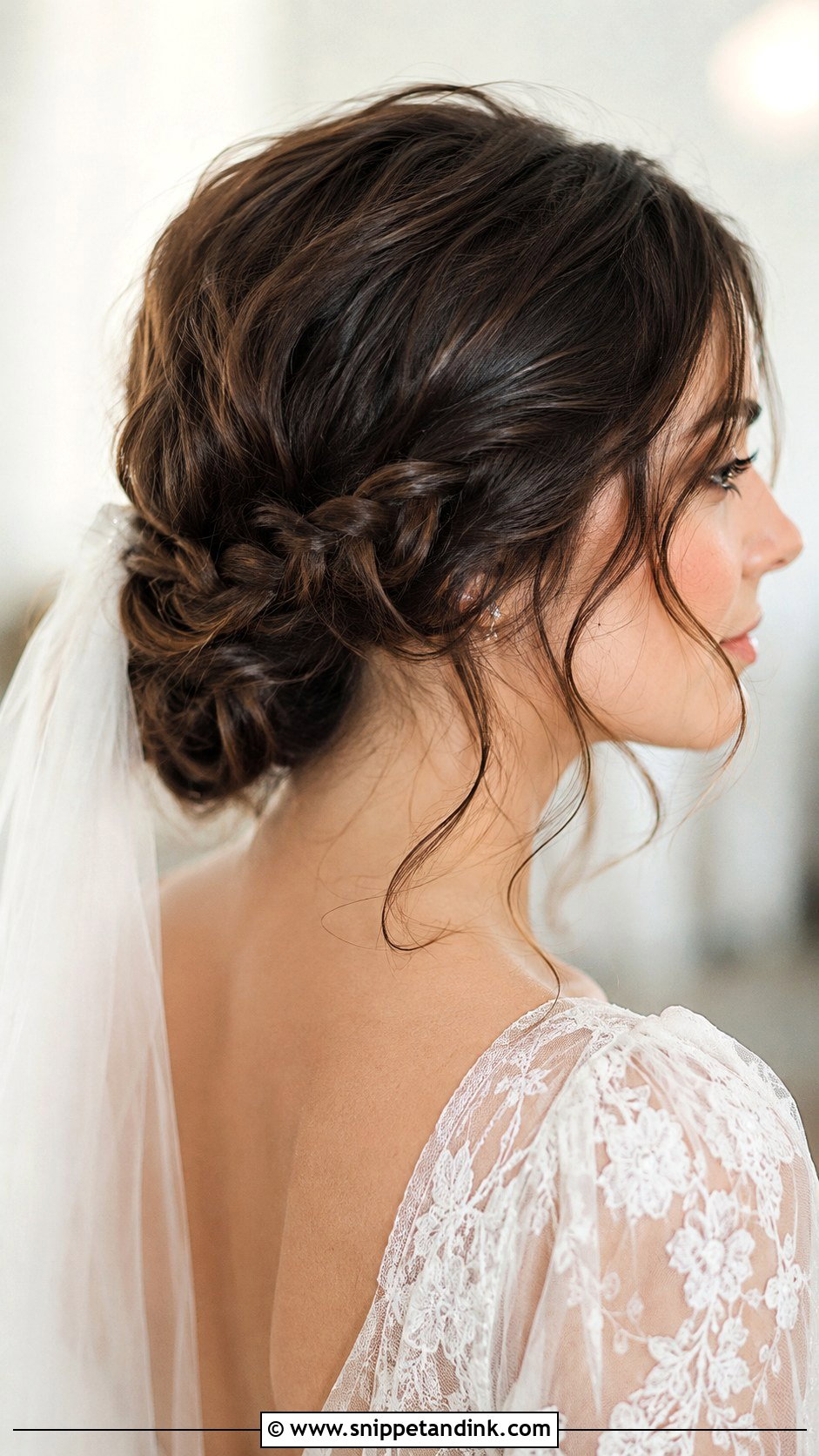
Here a braid starts at one temple, travels around the back of the head and finishes inside a low knot at the nape. Most of the work is keeping the tension even, so the braid doesn’t thin out where it turns the corner behind the ear. The veil can sit above the bun or below it. Above hides more of the braid, so I usually go below. You’ll need long hair, and the shape holds very well across a long day.
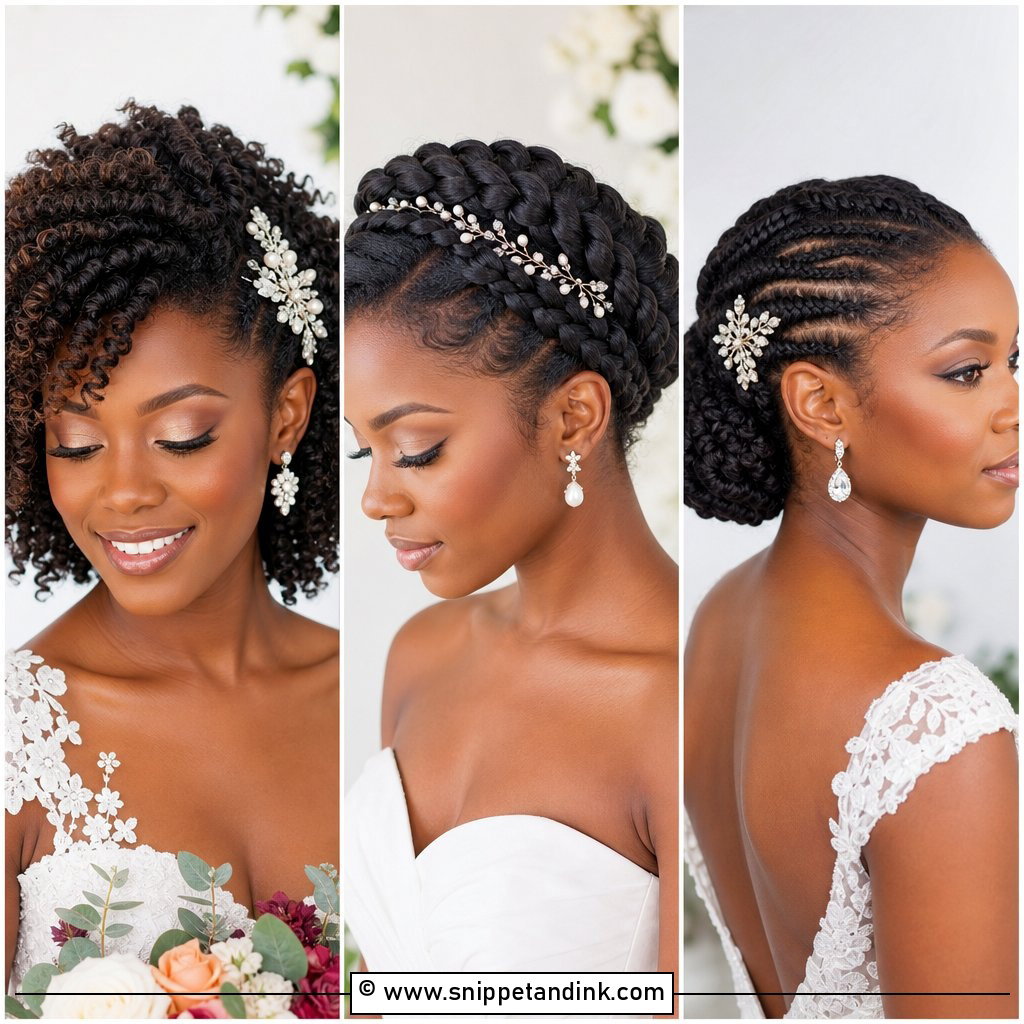
17. Curly Hair Wedding Updo
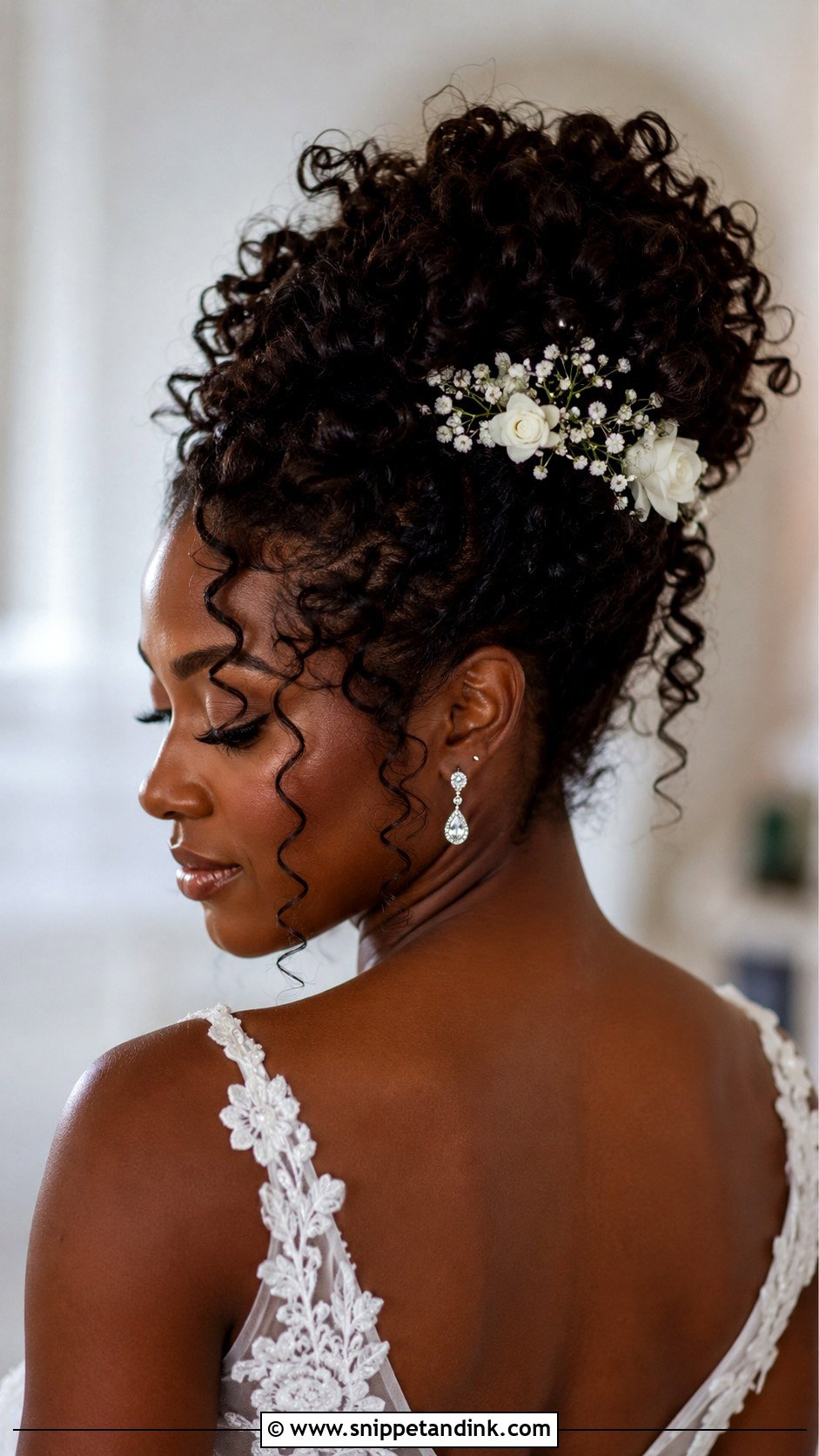
Natural curls should be styled wet with the products you already trust and left to dry before I touch them, because brushing dry curls turns them to frizz. I gather the texture into a voluminous, romantic bun with large U-pins rather than grips, which hold curly hair without flattening it. The curls left around the face should be ones that formed well on their own, not ones forced with an iron. Floral pins, pearls or a slim tiara sit easily in the volume. Do your trial on hair washed and styled exactly as you will on the morning.
18. Bridal Hair with Flowers
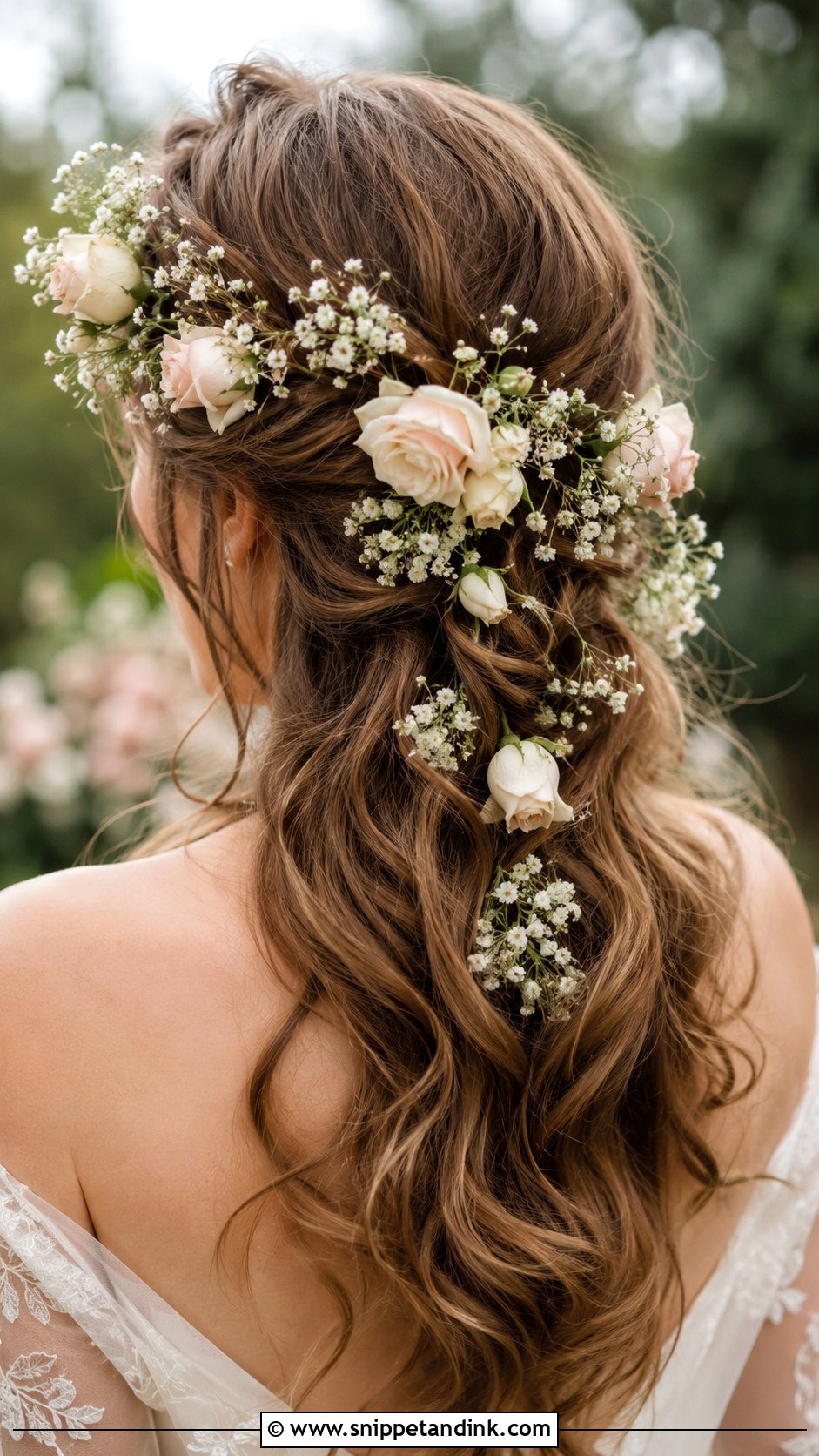
Weaving flowers through waves, braids or updos works best when the hair has some texture to grip them. Baby’s breath is airy and nearly indestructible; roses look richer but are heavier and need wiring. Scattered blooms need far more pins than one cluster on the side, so a cluster is easier on fine hair. Match the colours to your bouquet, and ask the florist to deliver the hair flowers in a sealed box so they arrive cool rather than after an hour in a warm car.
19. Vintage Finger Waves
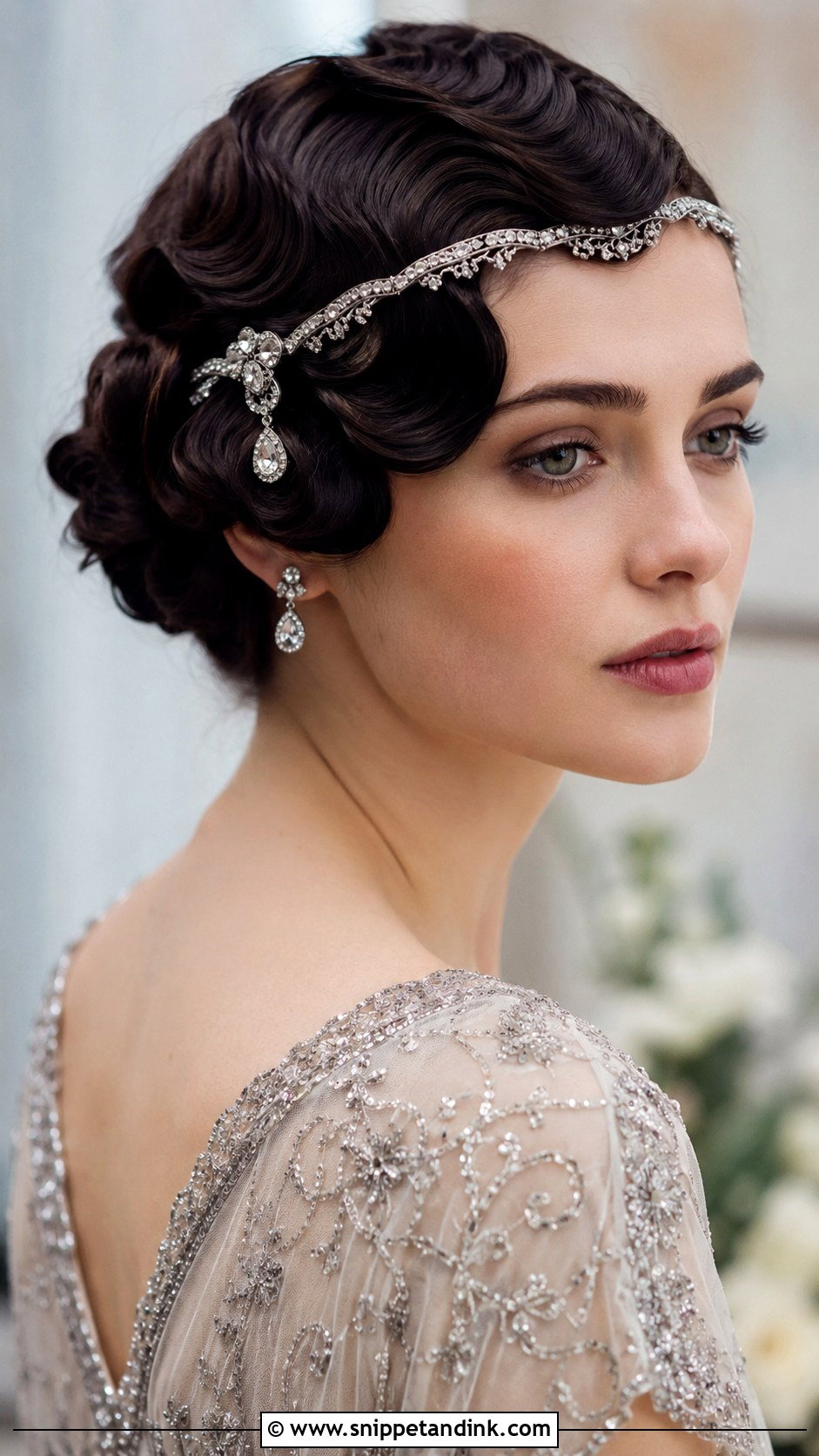
Finger waves are pressed into wet hair with setting lotion, a comb and the fingers, then dried flat, which is why they take more skill and time than anything else here. The S-shaped ridges sit close to the head and suit short and medium hair; on long hair I usually wave the front and pin the length into a low roll. Art deco and vintage-themed weddings are the natural home. Ask anyone you’re considering for photos of finger waves they have done themselves, and pair them with a jeweled headpiece rather than flowers.
20. Twisted Low Chignon
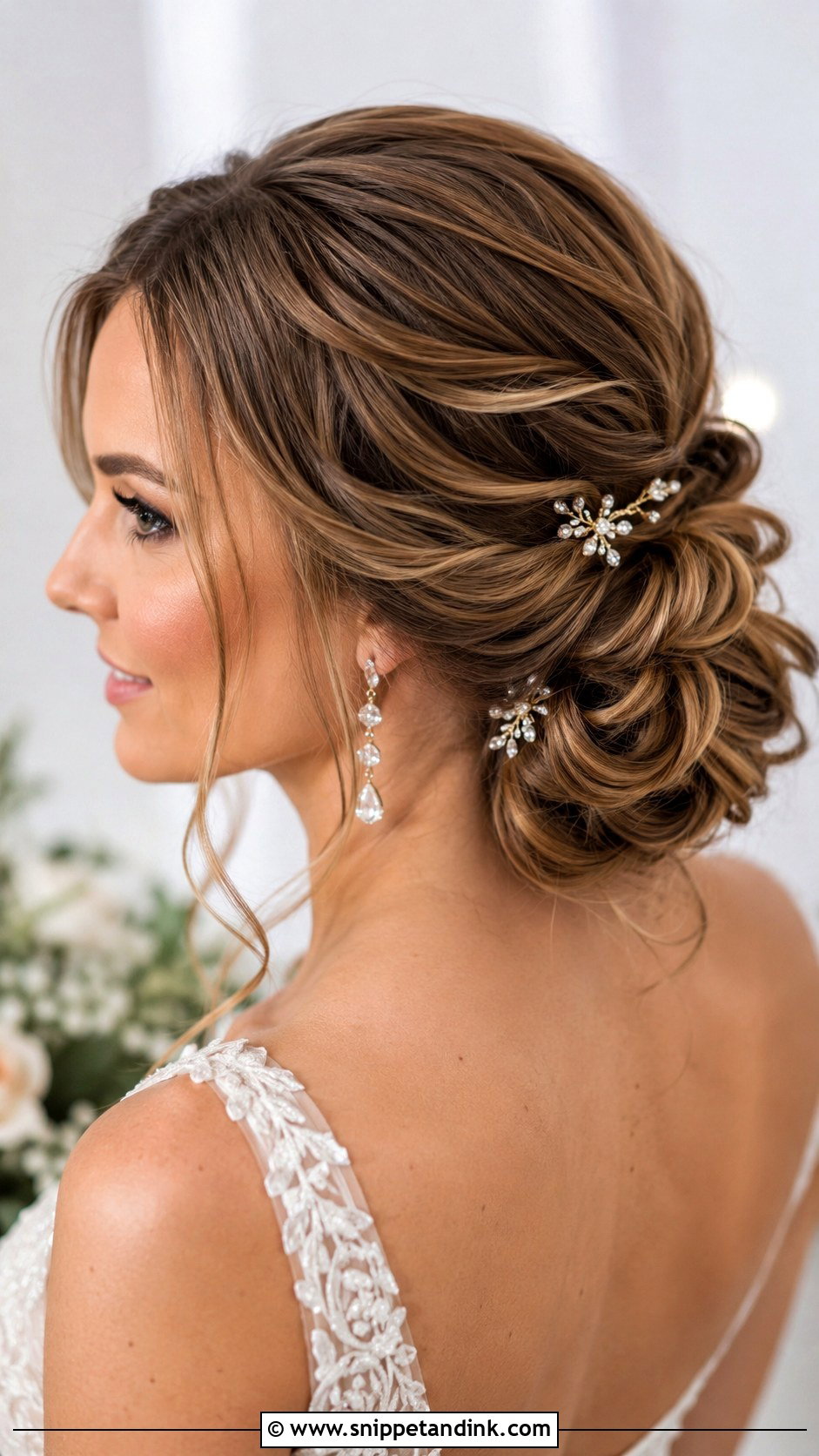
Twisting each section before I pin it gives the chignon ridges that catch the light from the side. It’s less strict than a sleek knot, so a little frizz or a few shorter layers won’t spoil it, which makes it forgiving in humid weather. Veils and hairpins slide into the loops easily. The one thing I watch is that the loops don’t sit so low that they rub against a high collar.
21. Bridal Hair with Tiara
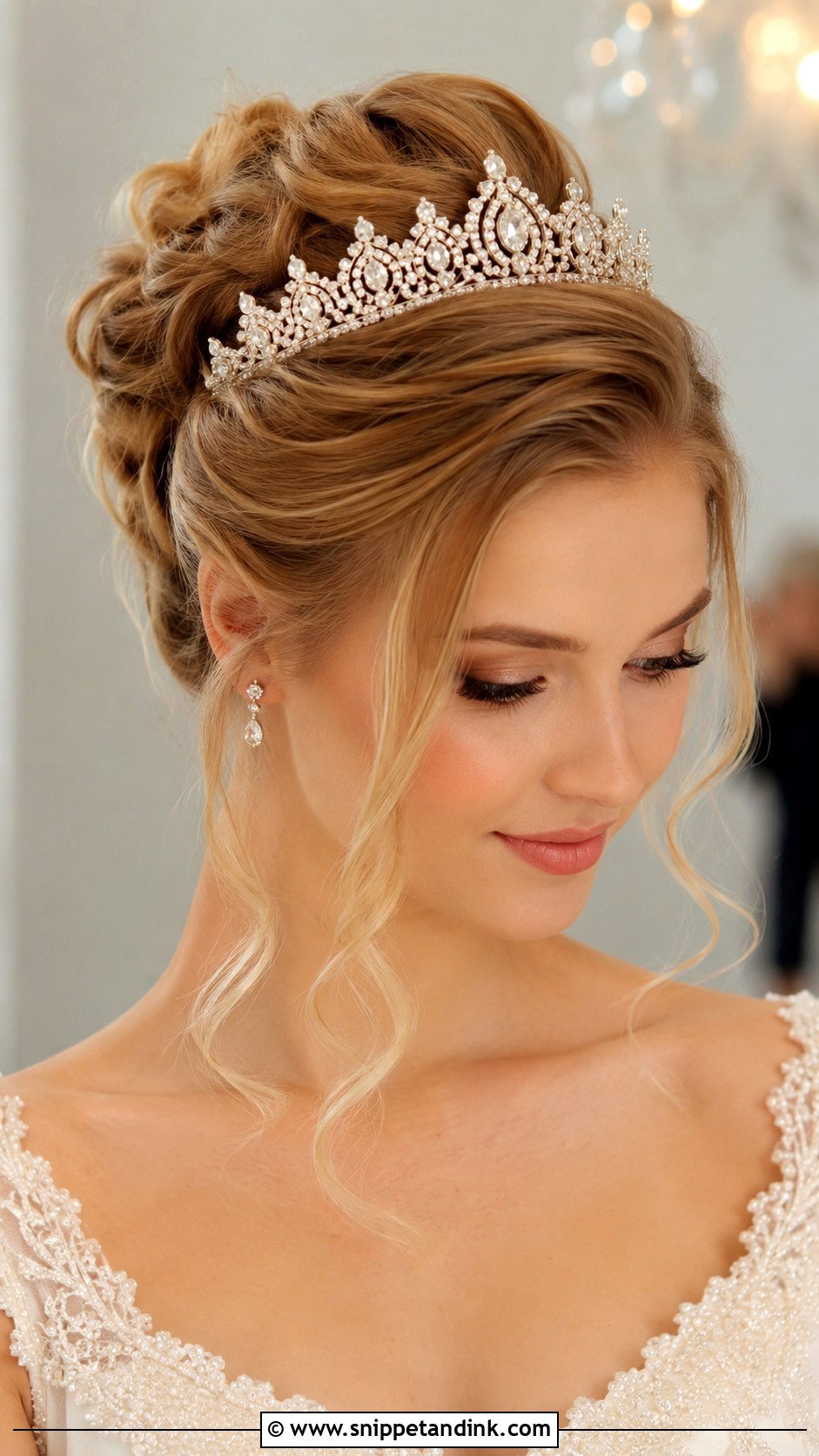
A tiara sits an inch or two behind the hairline, and it needs something to grip. I build a small teased base where it will rest and pin through its loops into that, or into two small braids hidden under the top layer. Updos, half-up styles and loose waves can all carry one, but the simpler the hair, the better the tiara reads. Ballrooms and traditional churches suit it. Wear it for a full hour at your trial; some bands press behind the ears and start to ache.
22. Wavy Half-Up with Twists
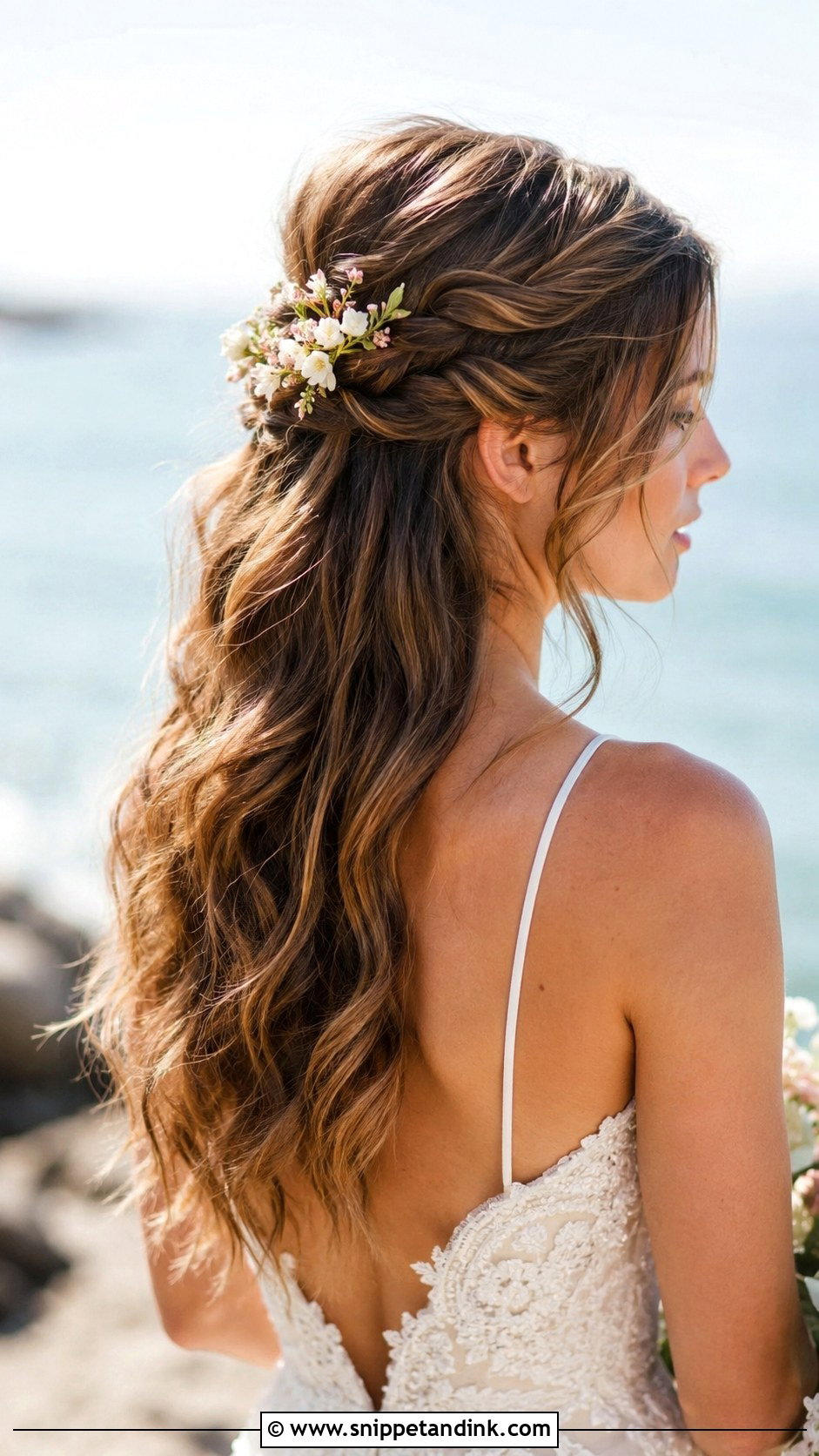
Two soft twists from each side, pinned where they meet at the back, are the simplest way to add detail to a half-up style. They also make a natural shelf for a back-attached veil or a floral pin that hides the grips. I keep the twists loose rather than tight so they don’t pull at your hairline over the evening. The waves below need a good setting spray, because the twists will stay put long after the curls have relaxed.
23. Sleek Center-Part Updo
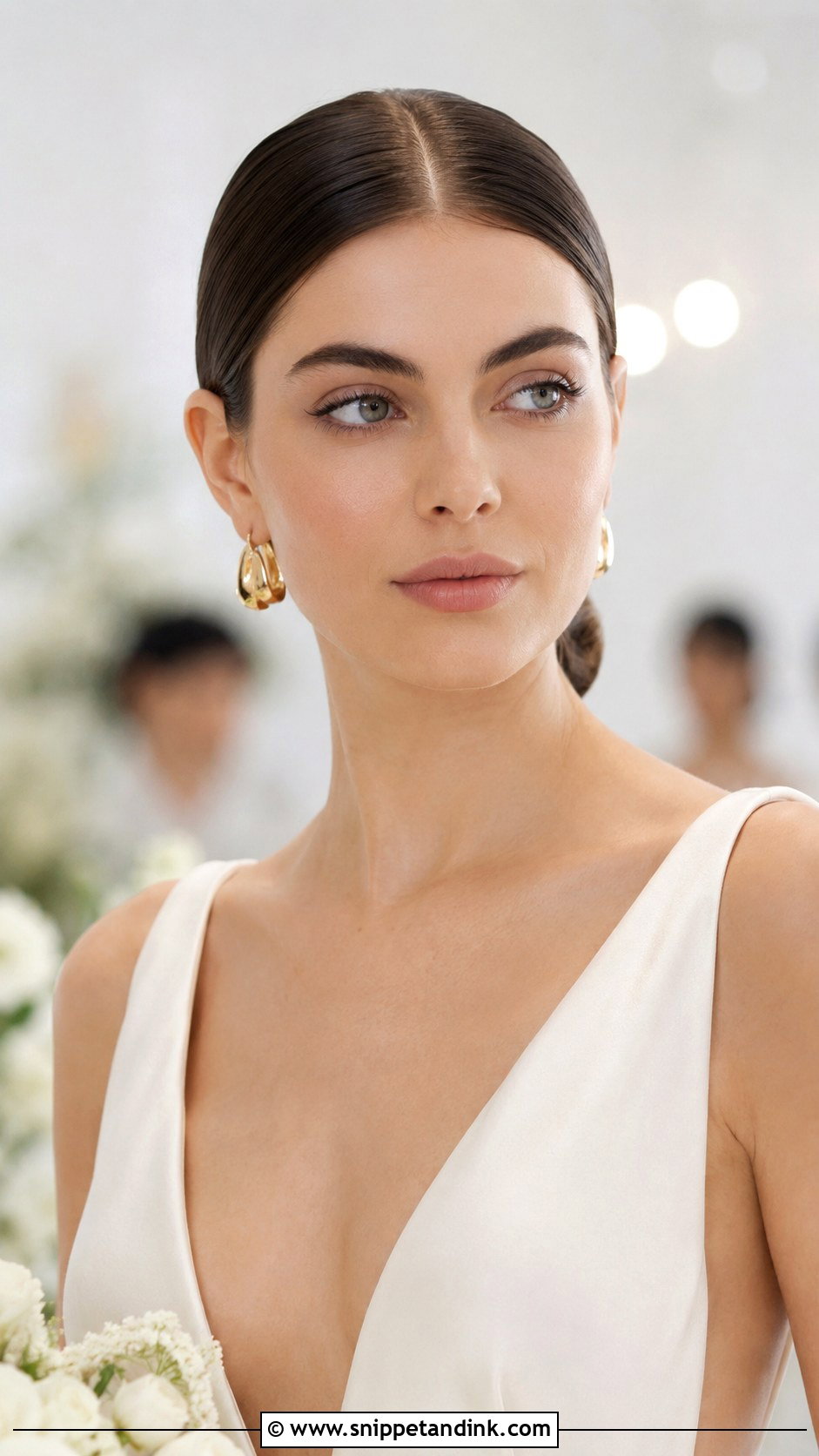
A centre part is the one thing in this style you can’t fake. If your hair naturally falls to one side, we train it the other way for a few days beforehand, and I still run a little gel along the parting to stop it springing. It flatters oval and heart-shaped faces most; on a longer face I’d soften it with a slightly lower knot. Flyaways are the enemy, so a small brush and a finishing stick go in the touch-up bag. Minimal gowns and bold jewelry suit it, with a plain sheer veil or none at all.
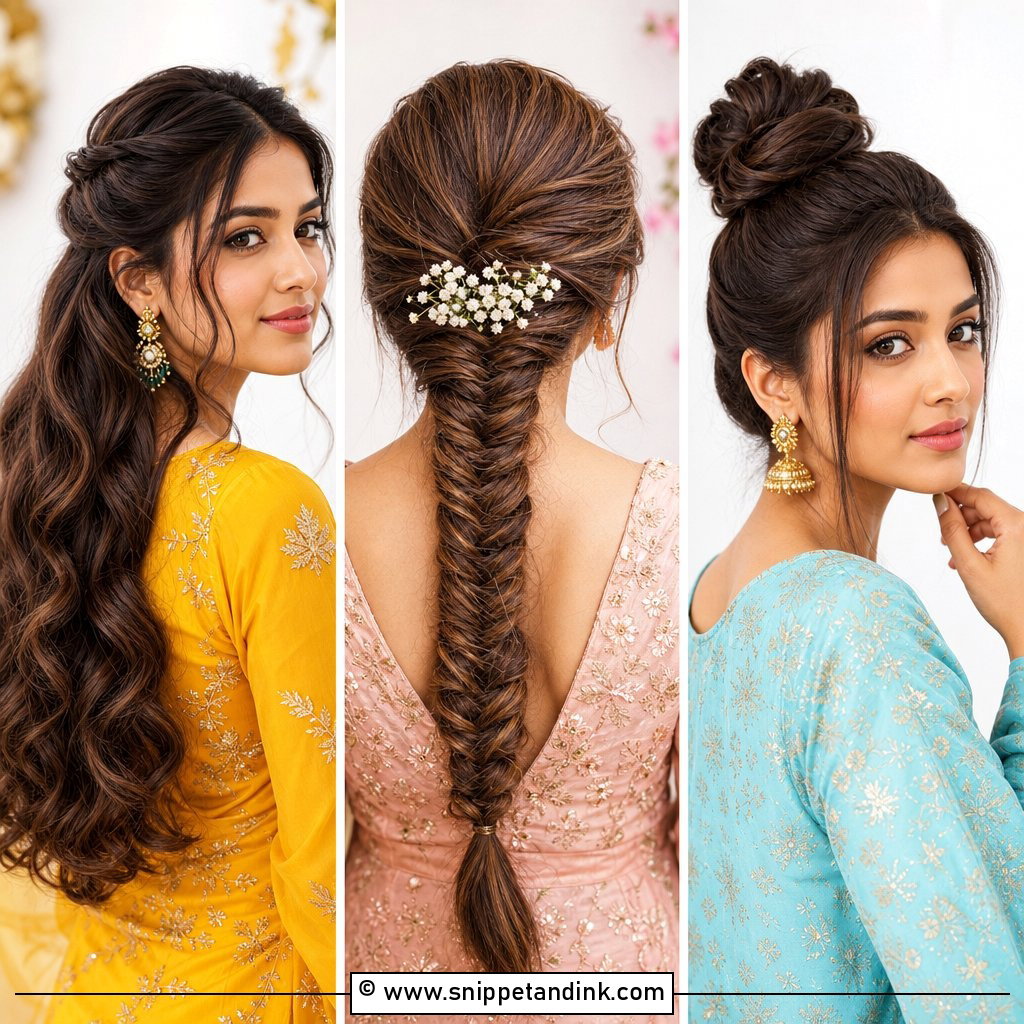
24. Fishtail Braid Wedding Style
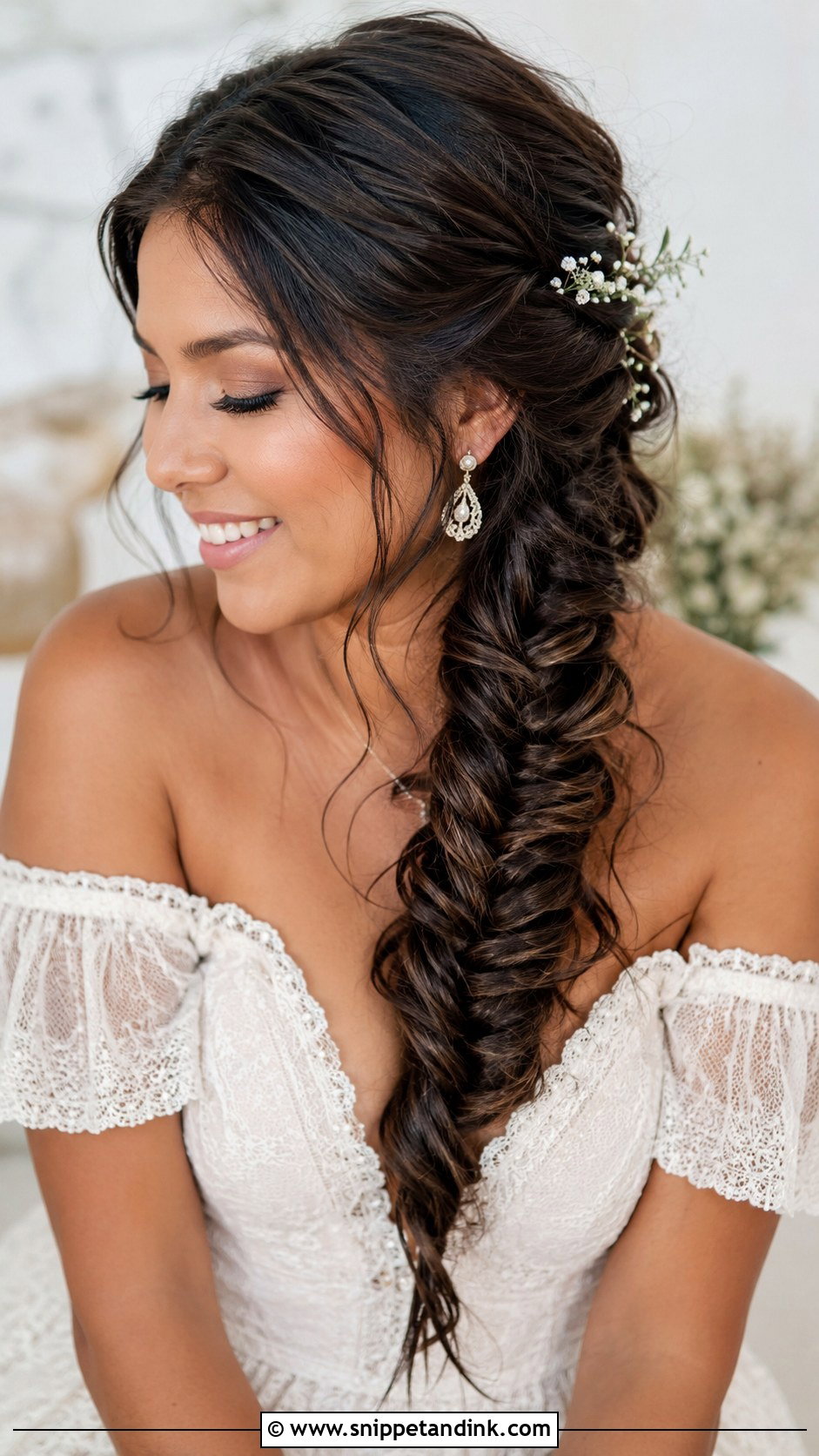
A fishtail has many more sections than a regular plait, so it reads as intricate even on its own. It can run down the back, over one shoulder or into an updo. Long, thick hair suits it best. On layered hair the shorter pieces poke out of the weave, so I braid it on second-day hair with texture spray to keep them in. I loosen it by pinching the edges outward rather than tugging, which keeps it even, and it gives guests one of the best views from behind during the vows.
25. Romantic Updo with Tendrils
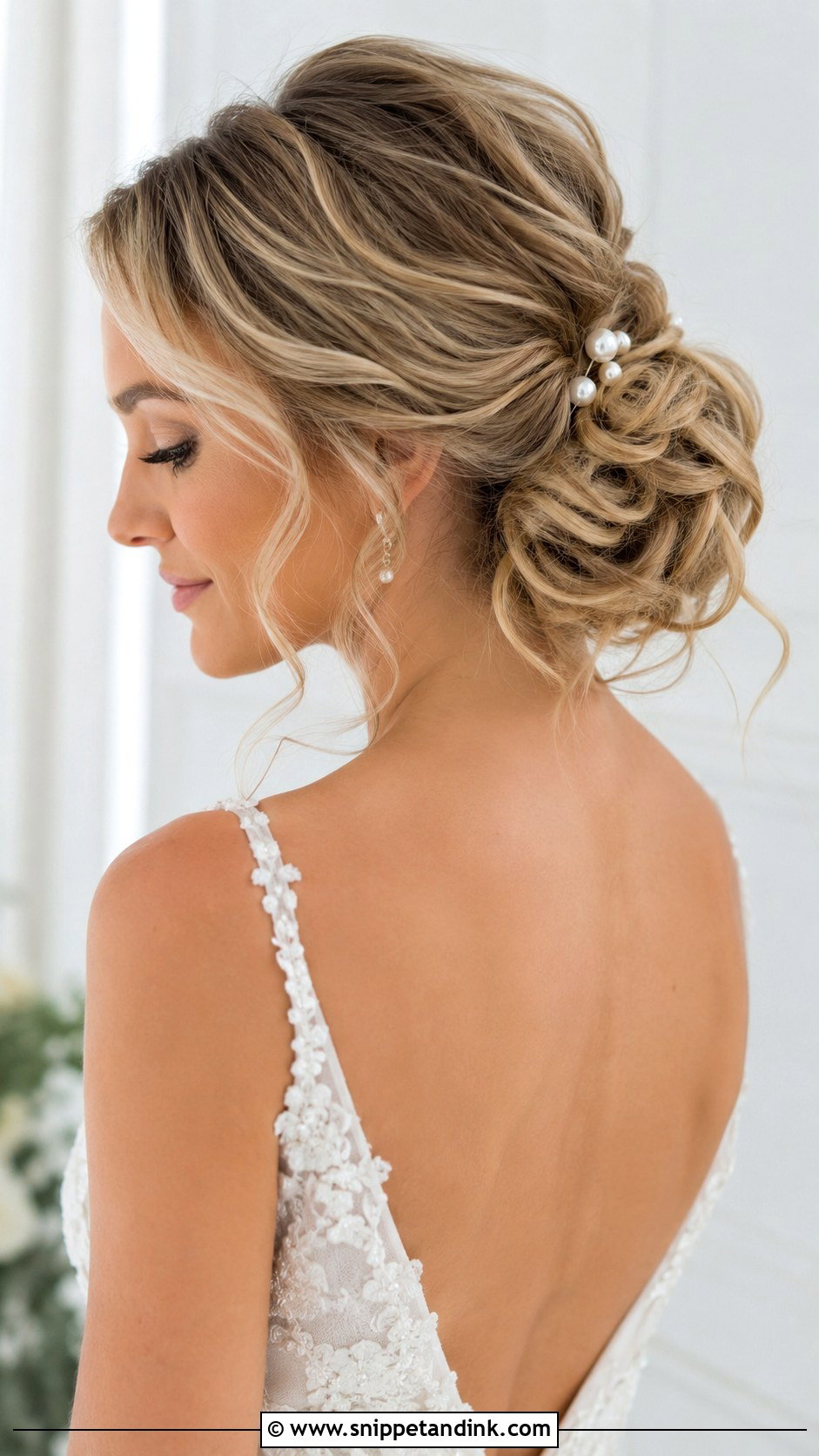
Tendrils change the whole mood of an updo, and they’re the part I plan most carefully. I pull them out before the hair is secured so they come from the hairline naturally, then curl them away from the face with a small iron. Too many and the updo looks like it’s falling apart by dinner, so I usually leave three or four. Any updo can take them, and they sit comfortably alongside a veil, florals or pearl pins.
26. Boho Waves with Headband
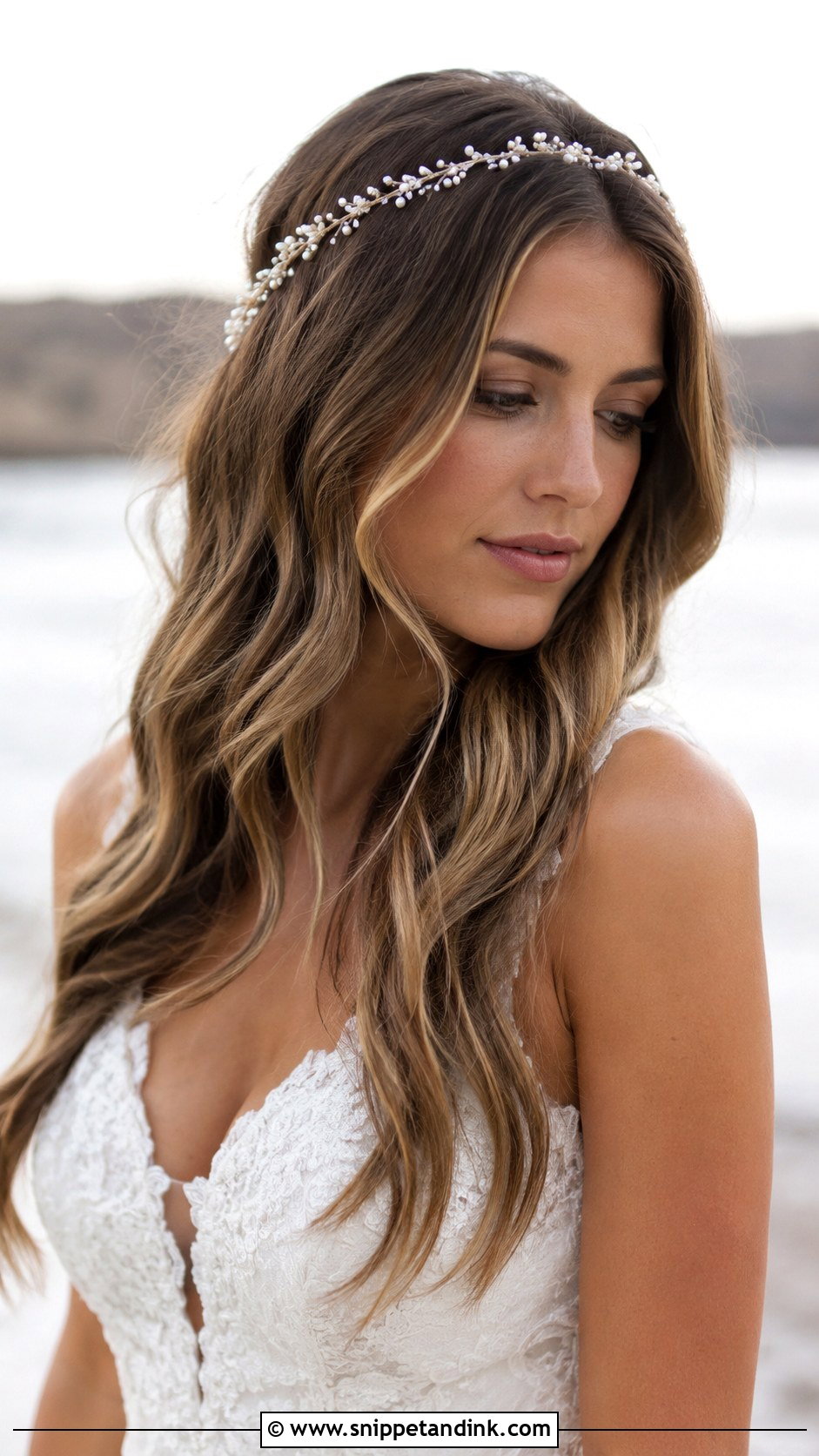
A headband is the easiest accessory to wear with loose hair, but it slips on silky hair. I put a pair of crossed grips under it at each side, behind the ears, so it stays put through the hugs. Pearl, floral or jeweled bands across the crown all work over tousled waves on medium or long hair. Pull a few face-framing pieces out in front of the band, not behind it, or it looks like you’ve pushed your hair back to wash your face. Beach and garden weddings are its natural setting.
27. Knotted Low Bun
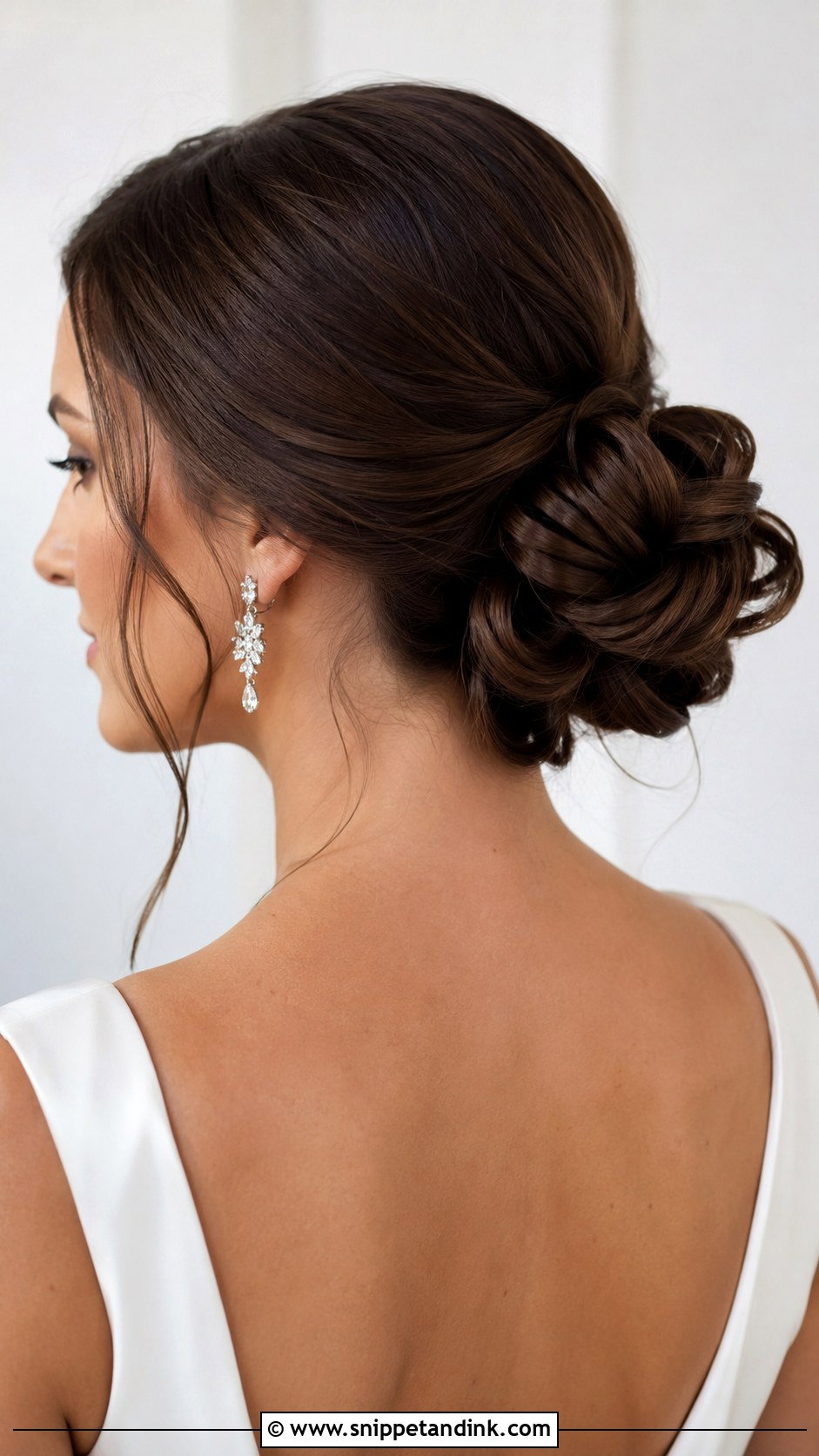
Each section is literally tied into a knot with the next before the knots are pinned together at the nape. It looks complicated, but because knots grip themselves, it holds better than many smoother buns. It needs at least shoulder-length hair and does best with some natural grip, since freshly washed, slippery hair loosens. All the detail is at the back, so it suits a ceremony where guests watch you from behind for a long time. Statement earrings and a sleek gown balance it.
28. Wedding Hair for Medium Length
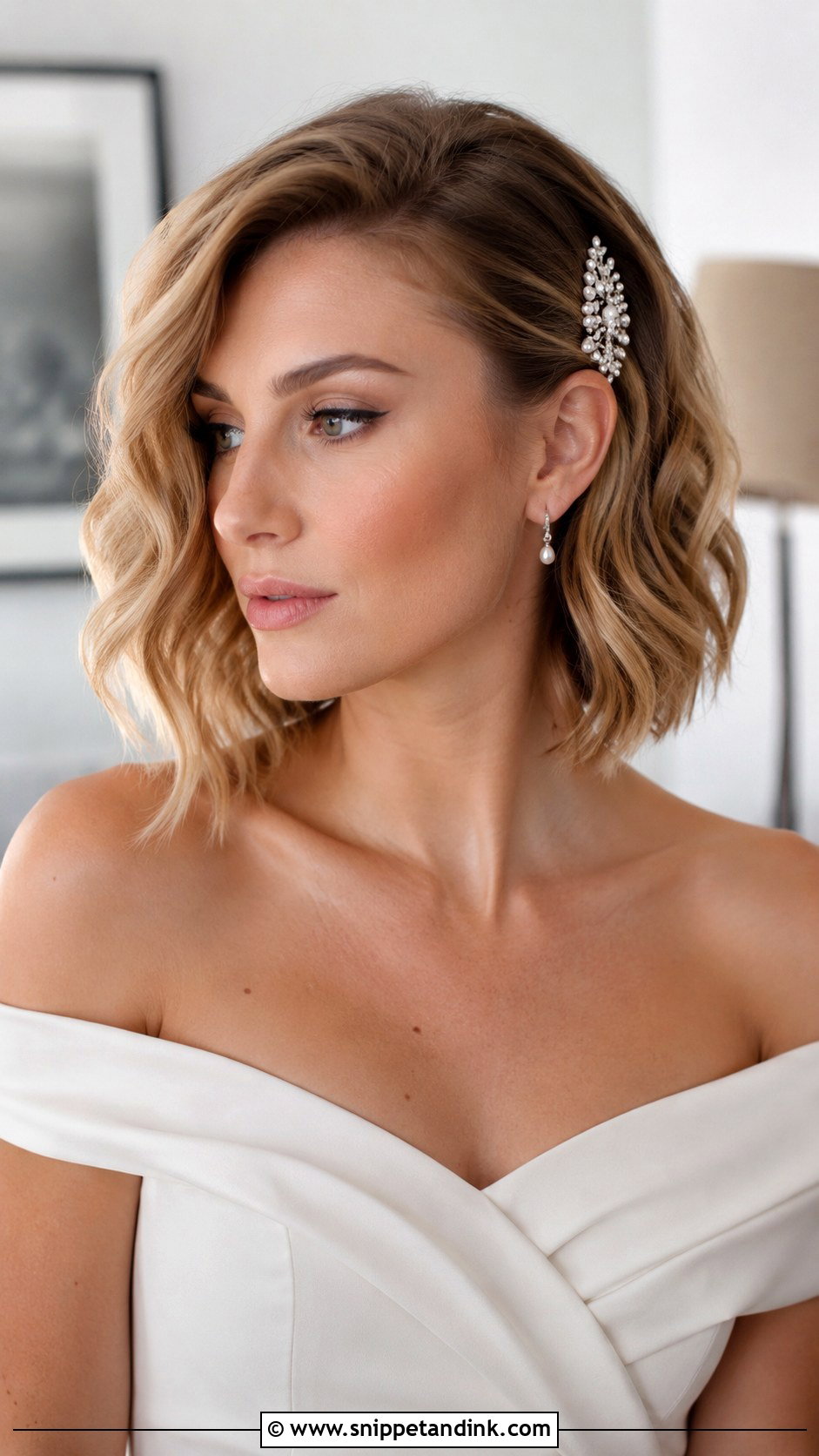
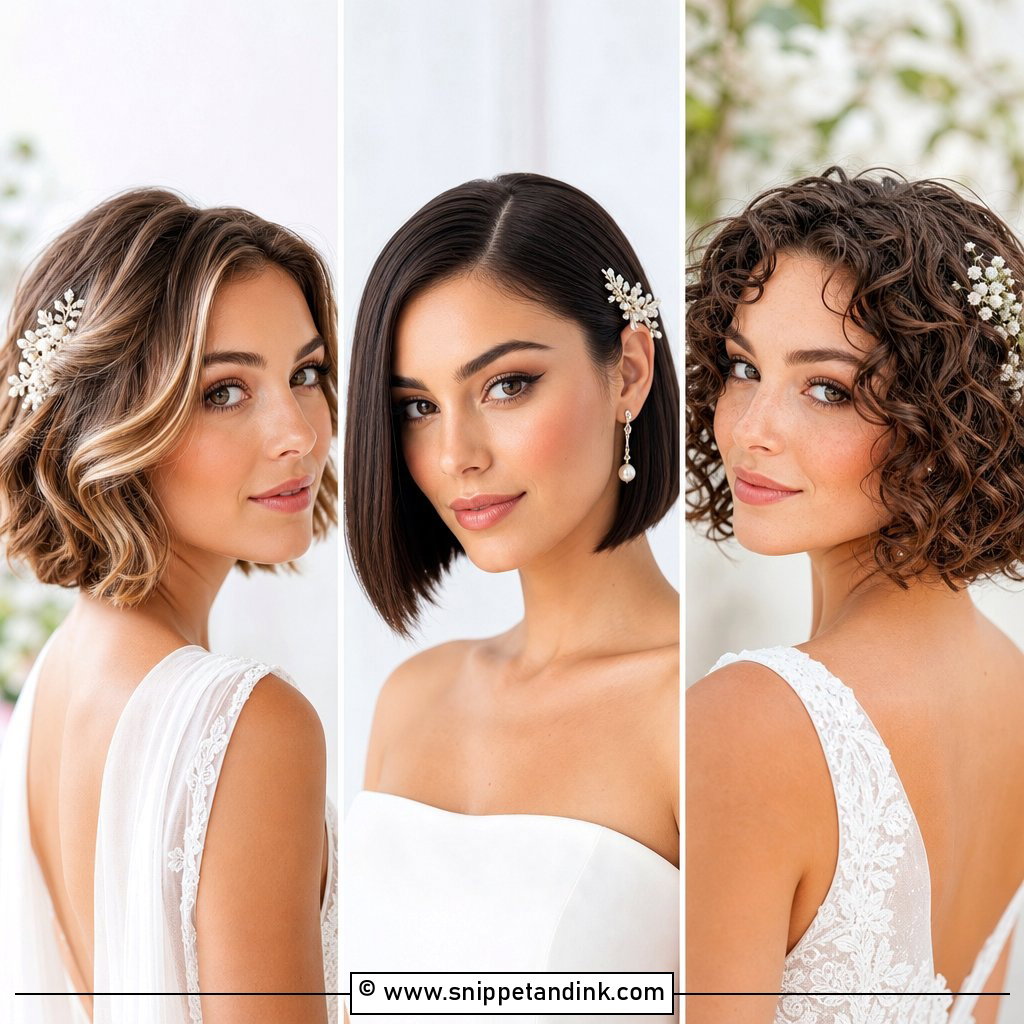
Shoulder-length hair is the most flexible length I work with. It’s long enough for a half-up style, soft waves or a small textured bun, and short enough that it never gets heavy. A lob with a deep side part and one side pinned back with a sparkly clip is the simplest version. The challenge is the low bun, because medium hair makes a smaller knot, so I add a padding piece or a clip-in if you want more size. Veils, headbands and floral accents all attach without trouble.
29. Accessorized Half-Up Look
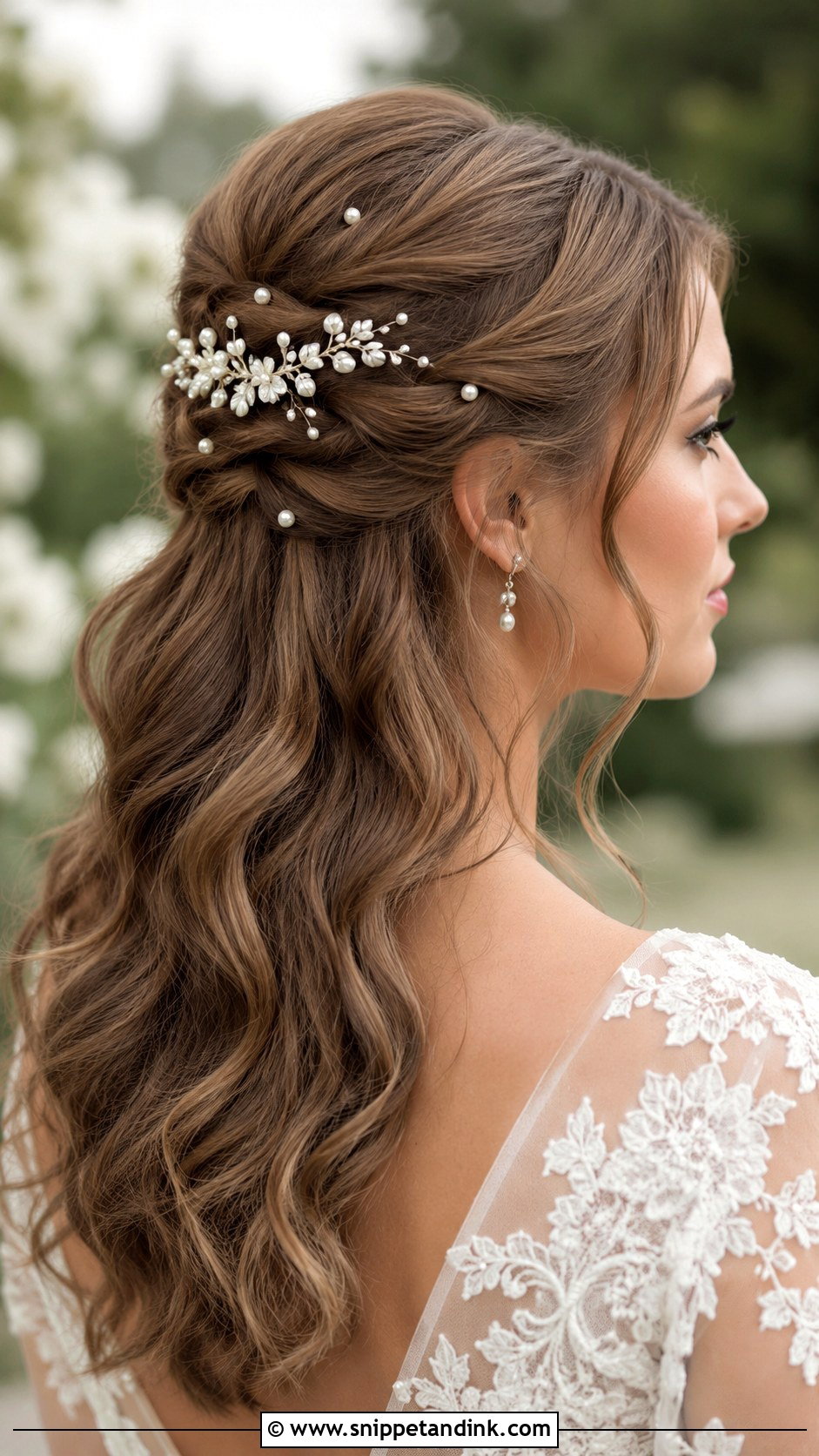
Accessories give a basic half-up real personality. Pearl pins, a jeweled comb or a floral clip go where the top section is fastened, so they hide the grips too. I’d match the metal or stone to your gown’s beading and your earrings rather than to the wedding colours. One substantial piece reads better in photos than lots of tiny ones, and lighter pieces put less strain on loose hair.
30. Loose Side Braid
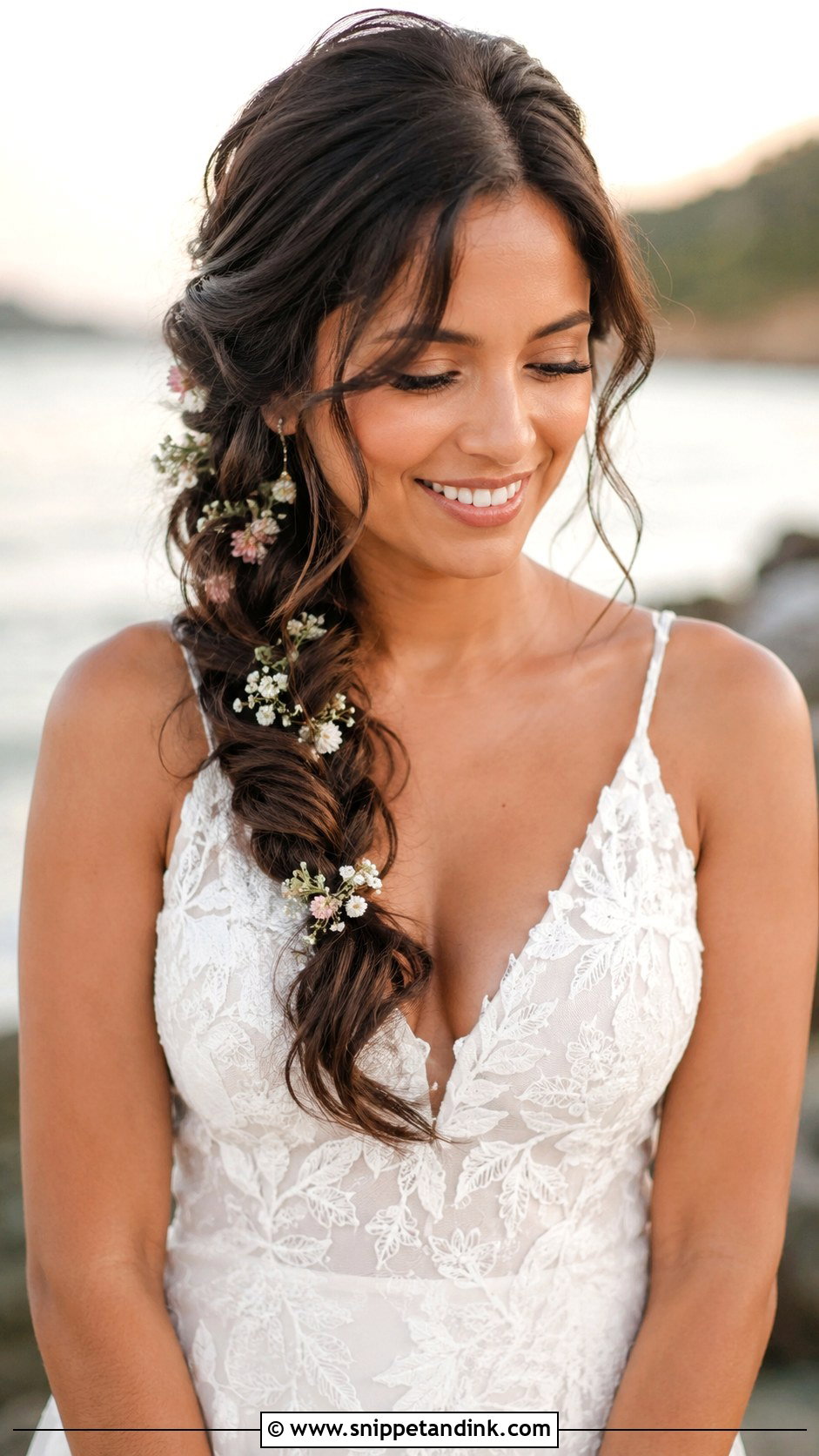
A side braid is the most comfortable style on this list, since nothing is pinned against your head to ache by evening. Hair is gathered to one shoulder, braided loosely, then pulled apart at the edges for width. Medium hair makes a shorter, fuller braid; for anything above the collarbone I add a clip-in. Small flowers or pearl pins tuck straight into the plait. It won’t fight a sea breeze the way fully loose hair does.
Which Styles Last From the First Look to the Last Dance
Photos are taken right across the day, so it helps to know what each family of styles does after a few hours.
- Loose waves and curls relax first, especially in humidity. Expect them to soften noticeably by the evening; a setting spray and letting each curl cool before brushing slow that down.
- Half-up styles keep the face tidy all day, while the lengths behave like loose waves.
- Braids are the most stable of all, and many look better once they’ve relaxed a little.
- Sleek updos and ponytails don’t move, but flyaways creep out at the hairline. A finishing stick fixes that in a minute.
- Anything with fresh flowers depends on the bloom: sturdy ones last, delicate ones droop within a few hours out of water.
What goes in the touch-up bag
Bobby pins in your hair colour, a travel-size hairspray, a fine-tooth comb and a couple of spare pins for the veil. Hand it to a bridesmaid rather than leaving it in the bridal suite, where it’s no use during the reception.
What Happens Once You Have a Shortlist
Sleek buns, Hollywood waves, braids and floral updos all made this list because they work, but not every one will work on your hair. Shortlist two or three, then book a trial and wear a top with a similar neckline to your dress, plus the veil if you have it. Ask for photos from the front, side and back, and look at the style again a few hours later. The one that still looks right at the end of the trial is usually the one to keep for your special day.
You'll Like These Ideas:


Leave a Reply