
More of the women I dress for weddings now ask for a suit than a dress, and not only brides. Guests, bridesmaids and mothers of the bride want something that feels dressed up but lets them sit, dance and travel without fuss. The difference between a wedding suit and an office suit is in the details: satin lapels, fluid wide legs, softer pastel tailoring, beading, velvet. Below are complete outfits for every role and season, each with the fit or fabric note I’d give you in a fitting room.
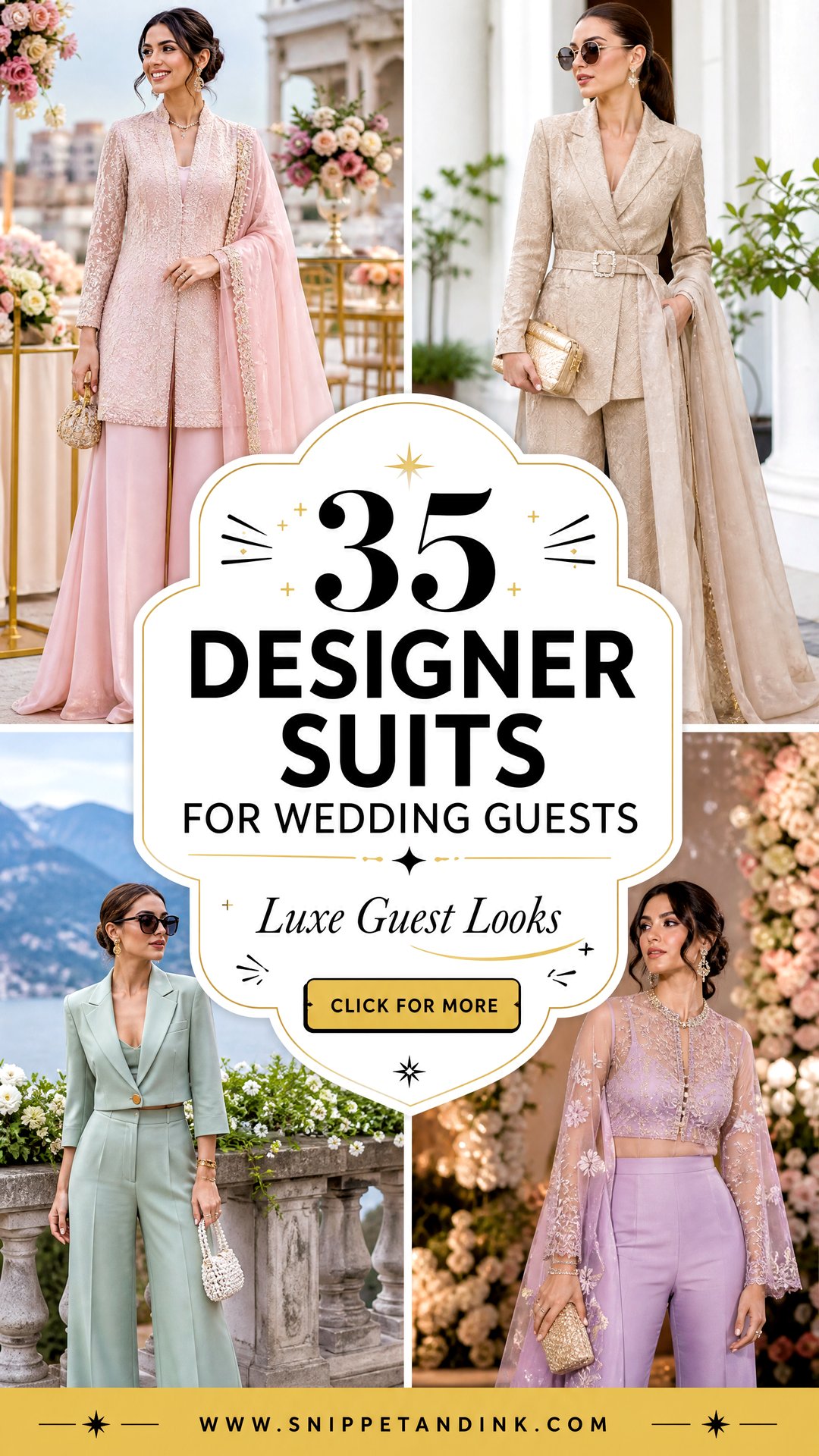
Will a Suit Pass a Black-Tie Invitation?
Yes, if you choose it for the code rather than in spite of it. The question I’m asked most by guests is whether a suit will look underdressed. It won’t, as long as the fabric and details match what the invitation says.
Black tie and formal evening
Think tuxedo: satin lapels, velvet, a deep color or black, with heels and evening jewelry. Wide or straight trousers that break just above the floor read as formal as a gown. Day-weight cotton or linen won’t pass here.
Cocktail and semi-formal
This is where a suit has the most freedom. Crepe in a jewel tone or a pastel, a corset or silk camisole underneath, and statement shoes. A cropped blazer or a sequin jacket fits comfortably in this range.
Daytime, garden and beach
Go lighter in weight and color. Floral prints, pale blue, blush, linen blends and palazzo legs suit outdoor heat. I’d avoid velvet and heavy beading, which feel out of place in sunlight and get hot fast.
Whatever the code, two colors need care as a guest: anything that reads as bridal white or ivory, and the exact shade the bridesmaids are wearing, if you happen to know it.
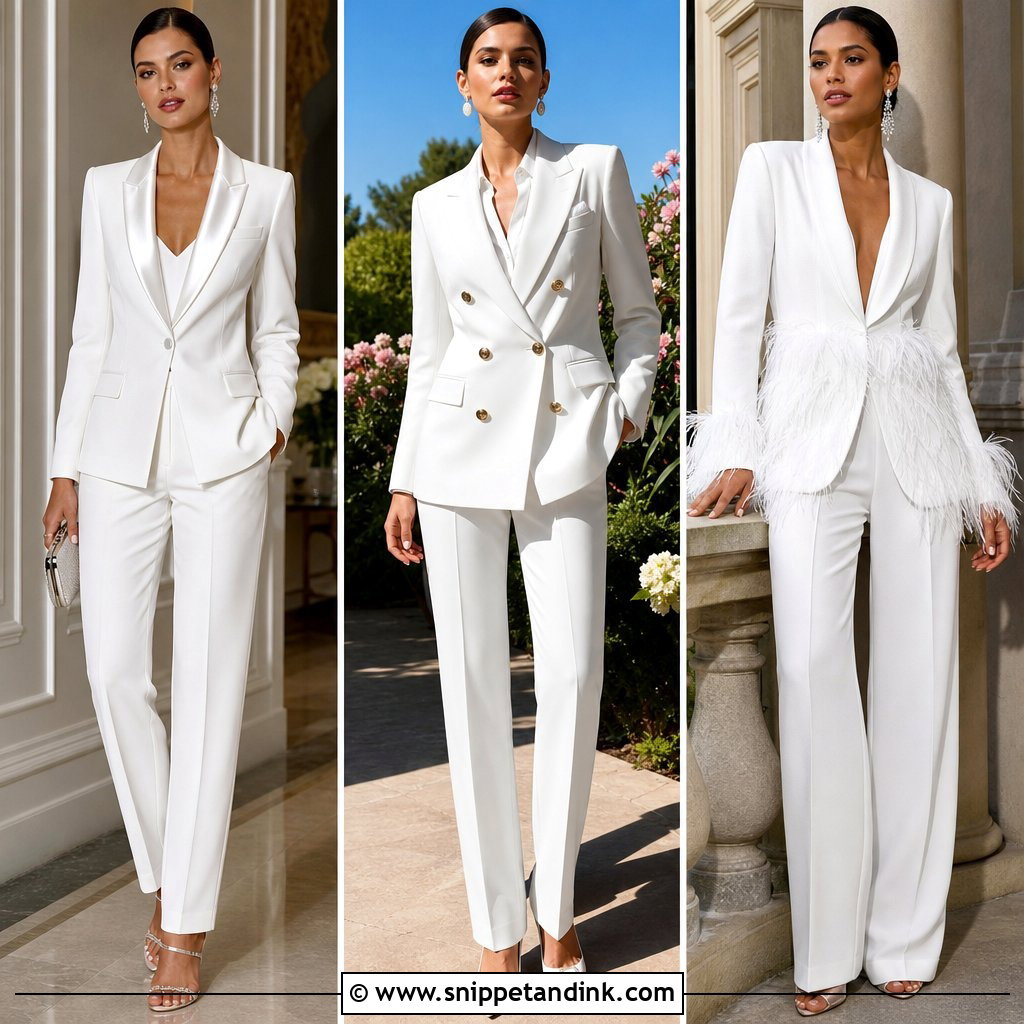
1. White Bridal Designer Suit
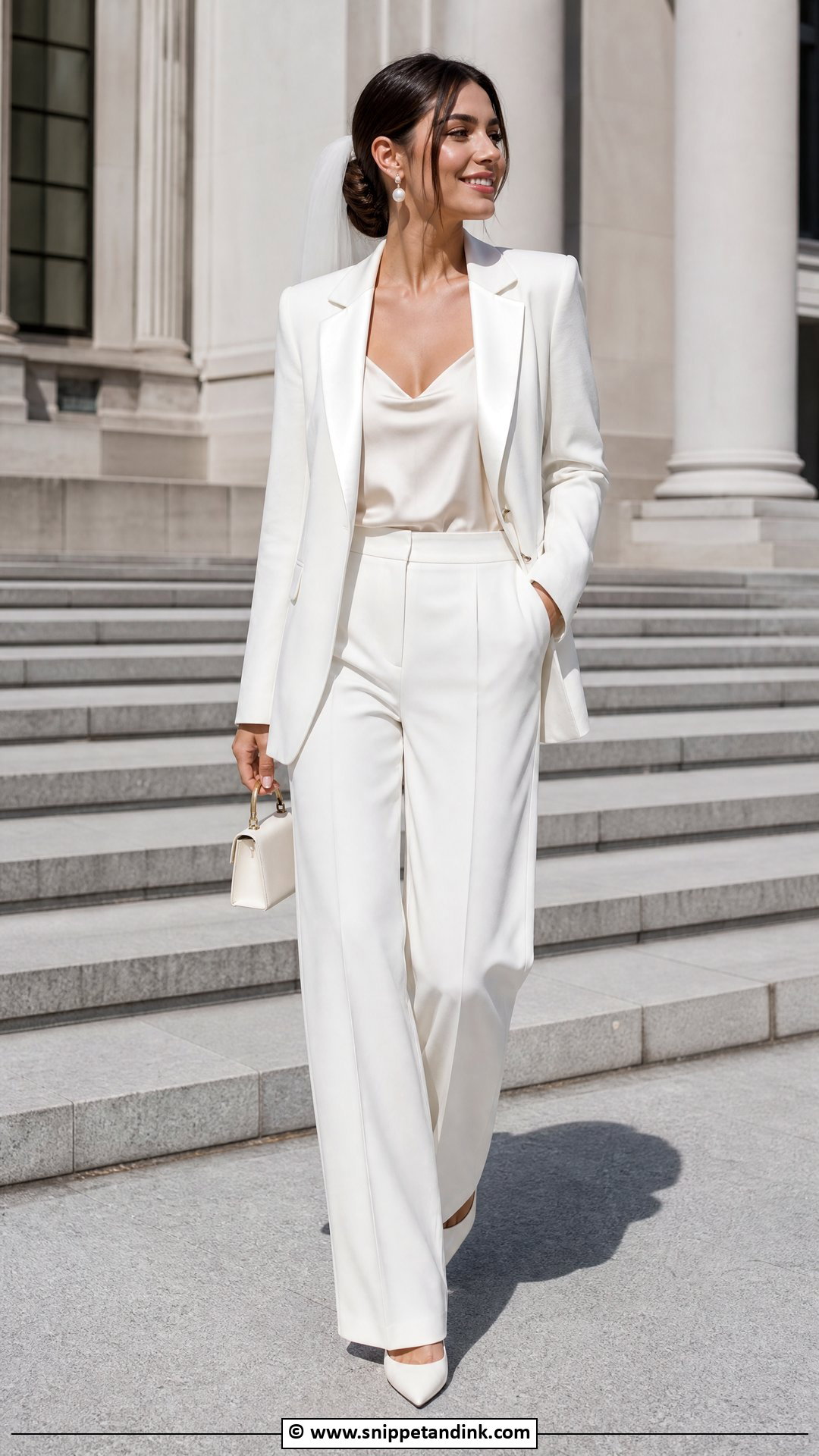
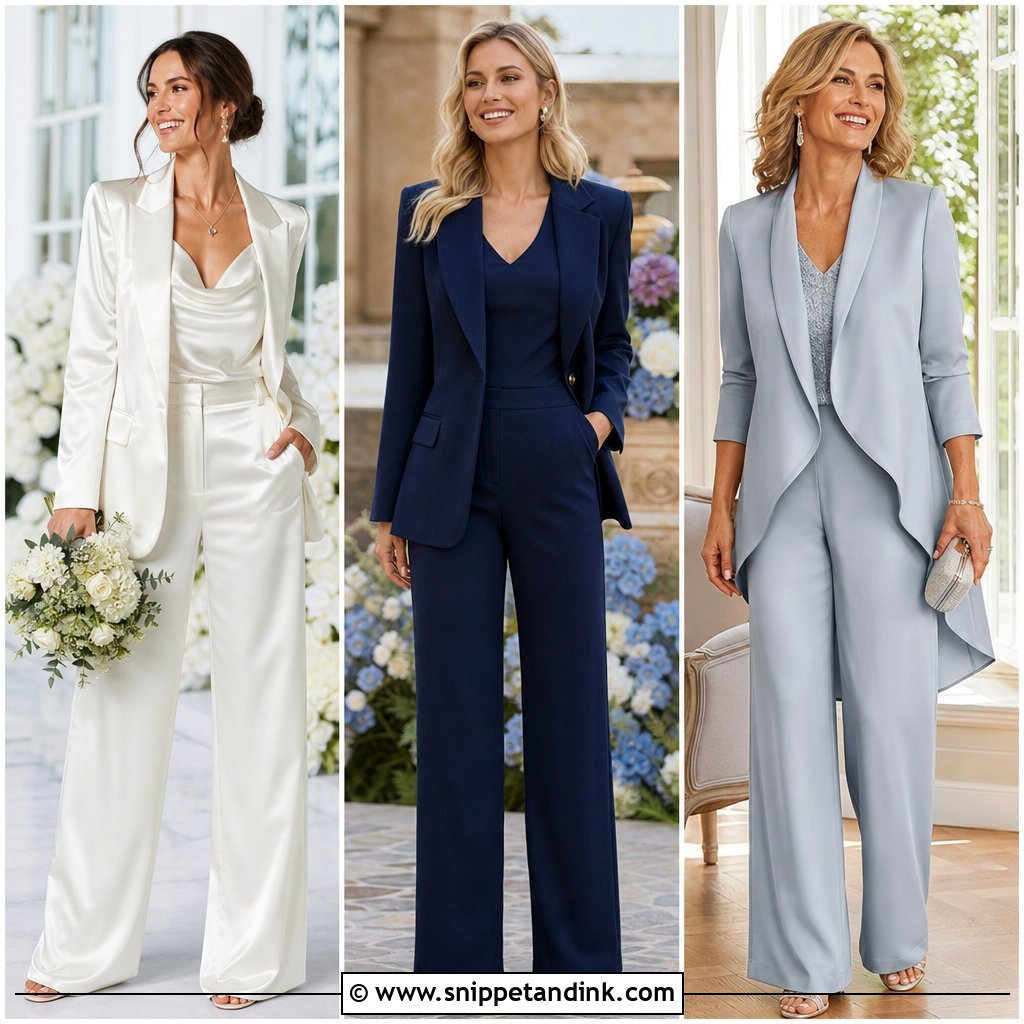
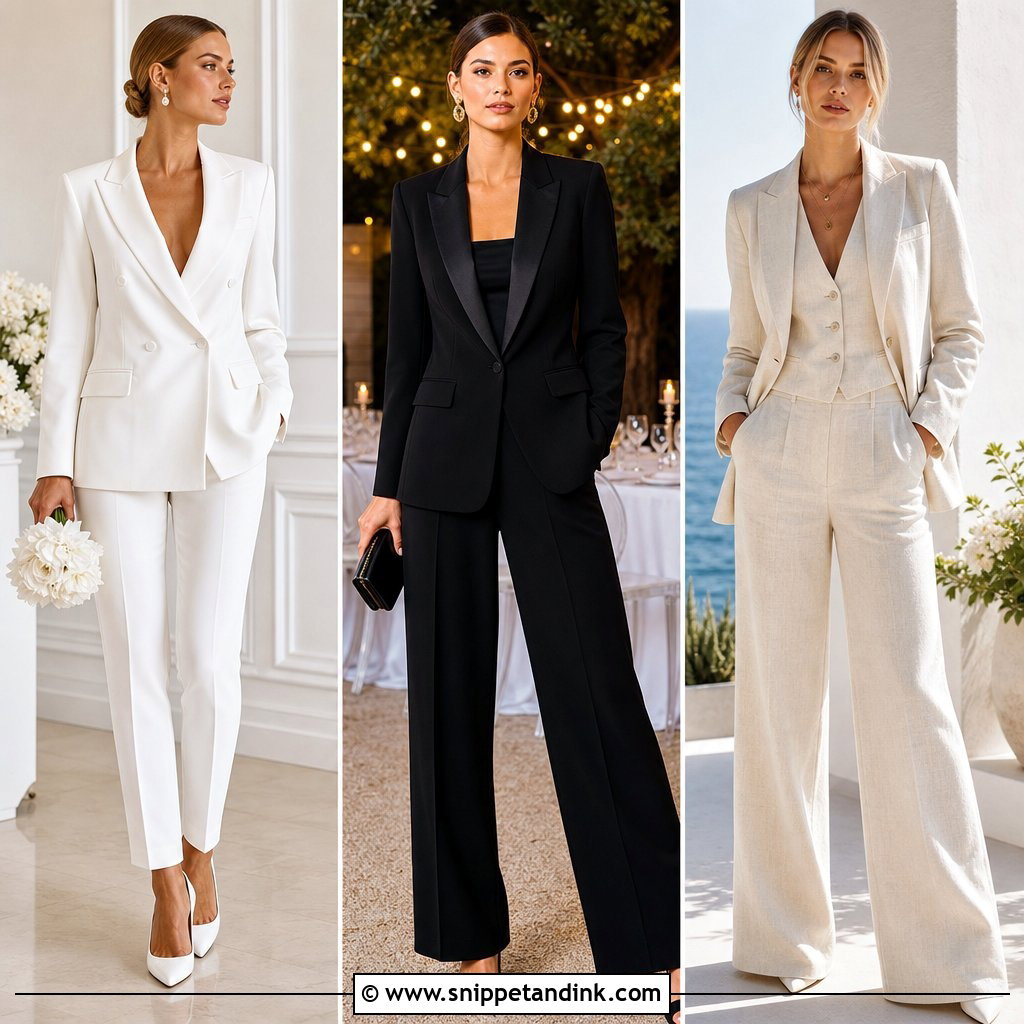
For a bride who wants a clean, modern look instead of a gown, a white suit is hard to beat. I’d build it from a sharply cut blazer with a satin lapel, high-waisted wide-leg trousers, and a silk camisole or a structured bustier underneath. White tailoring is unforgiving, so the shoulders and hips must sit without pulling. Pointed ivory pumps and pearl earrings keep it bridal. A detachable train or a crystal hair comb gives you a ceremony moment you can remove for the party.
2. Black Tuxedo Wedding Suit
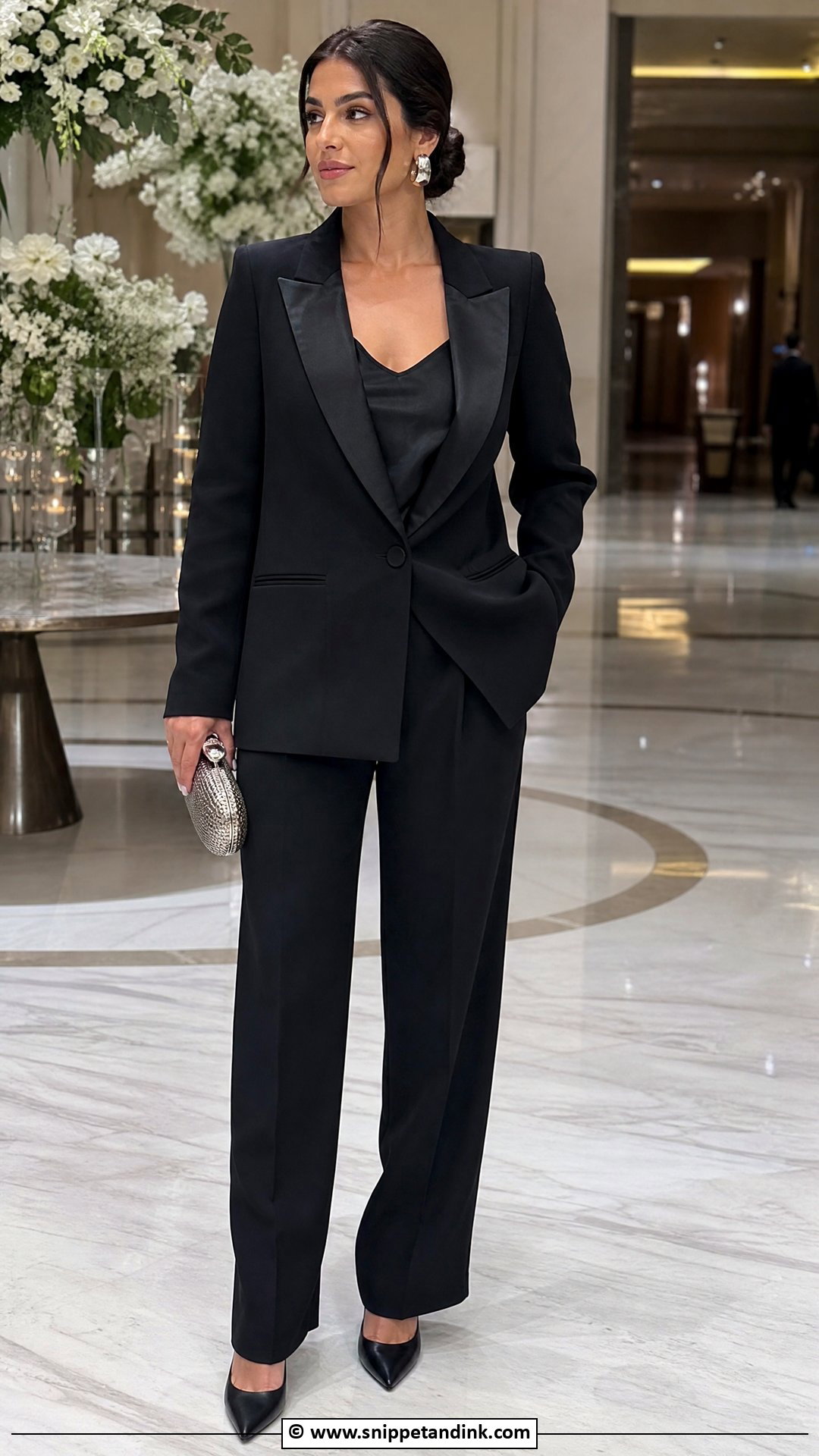
Evening receptions and black-tie winter venues are where a black tuxedo wedding suit earns its place. What separates it from workwear is fabric: crepe, satin, velvet or a fine wool blend, never a stiff, matte suiting. Satin lapels and a silk shell do most of the work. Brides can add a white boutonniere or a crystal brooch. Guests should keep the accessories elegant and stay clear of anything that reads bridal.
3. Ivory Satin Designer Suit
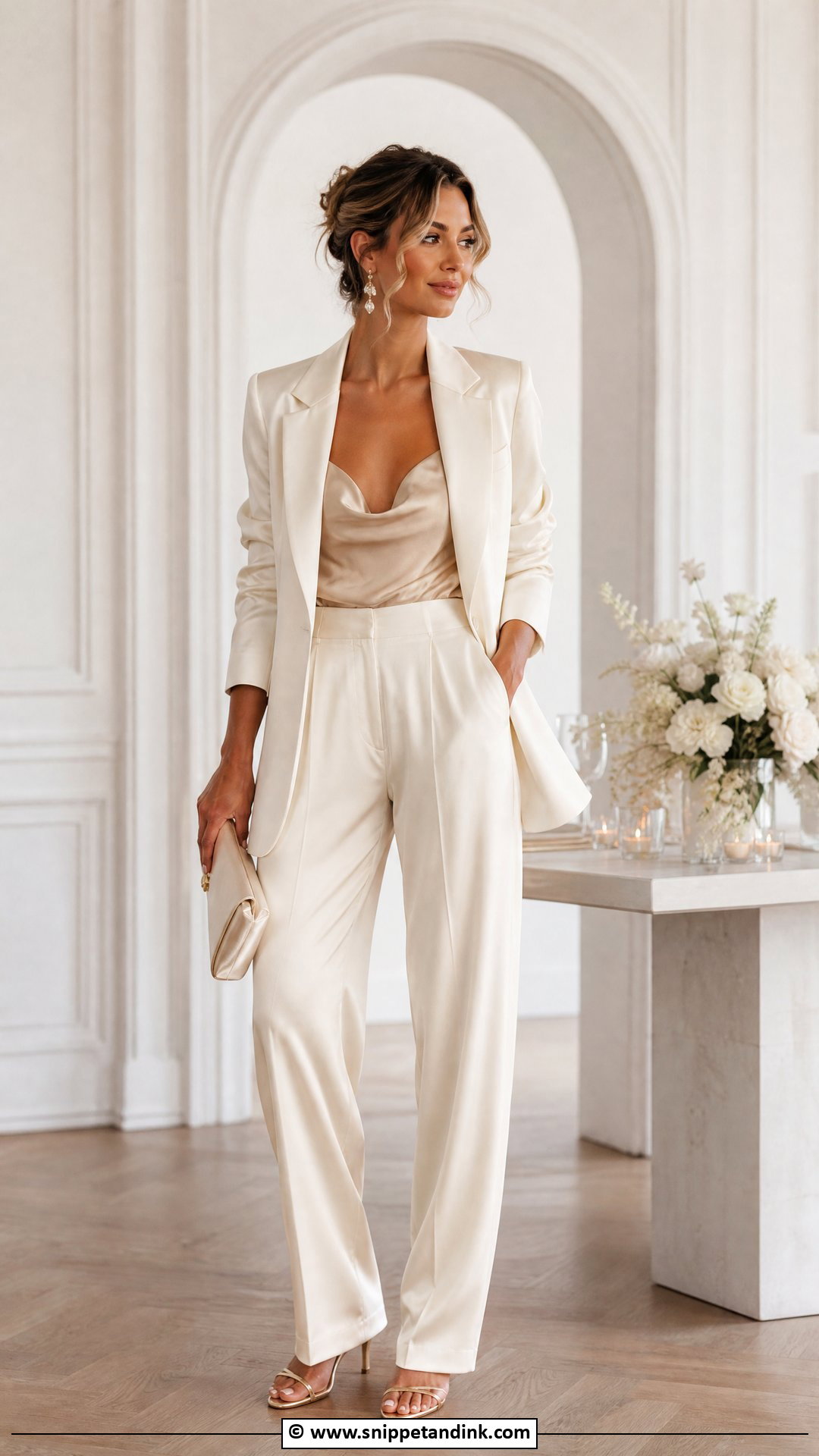
Ivory satin is soft and romantic, but it shows every crease and every snug seam, so I only style it in a fluid cut: a draped blazer with relaxed trousers that move with you. A champagne camisole and fine gold jewelry warm it up. Brides can wear it to an intimate ceremony or as a reception change. Guests, though, should only wear ivory when the couple has clearly said it’s welcome. A satin clutch in the same tone finishes it.
4. Pastel Pink Wedding Guest Suit
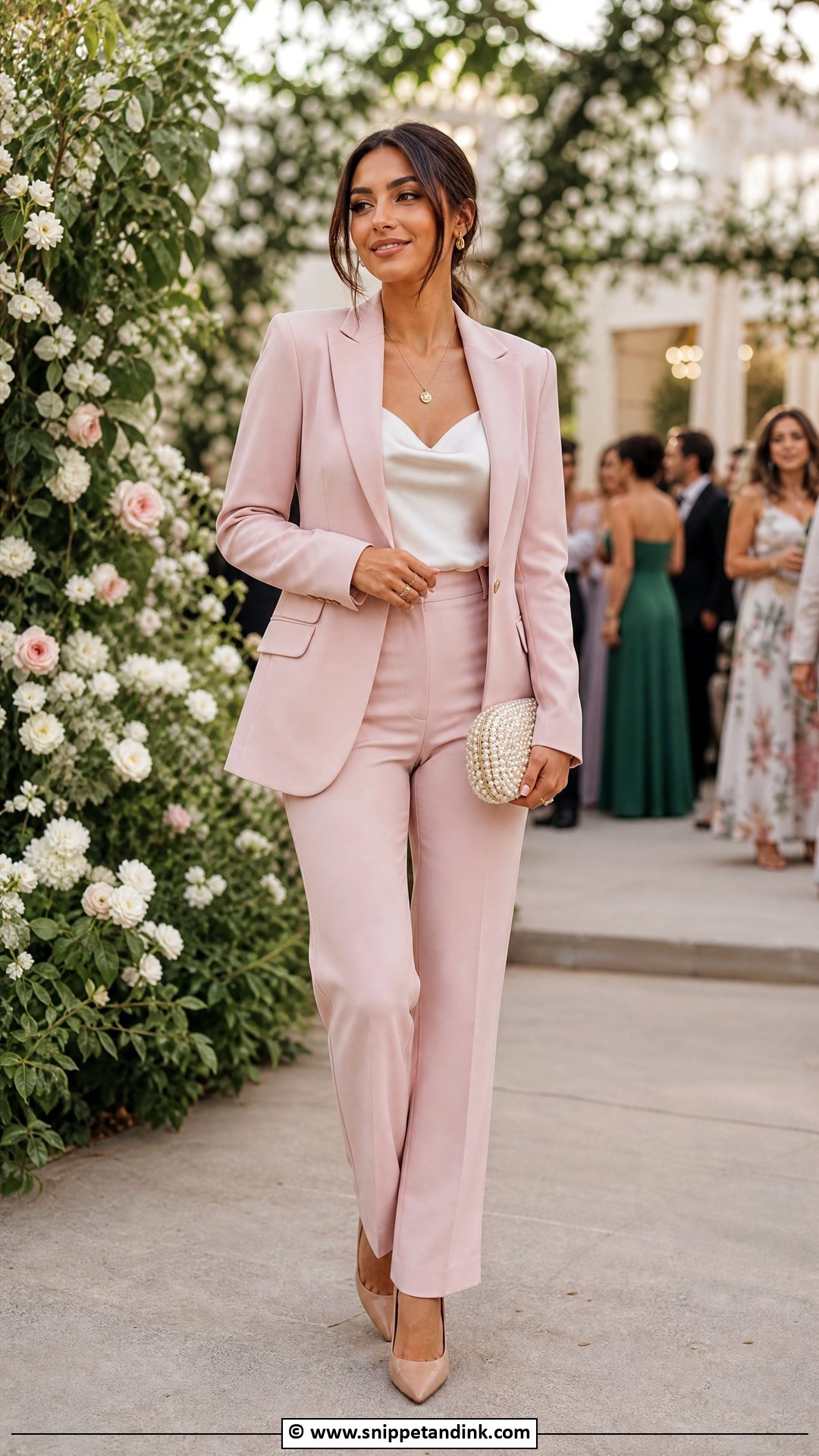
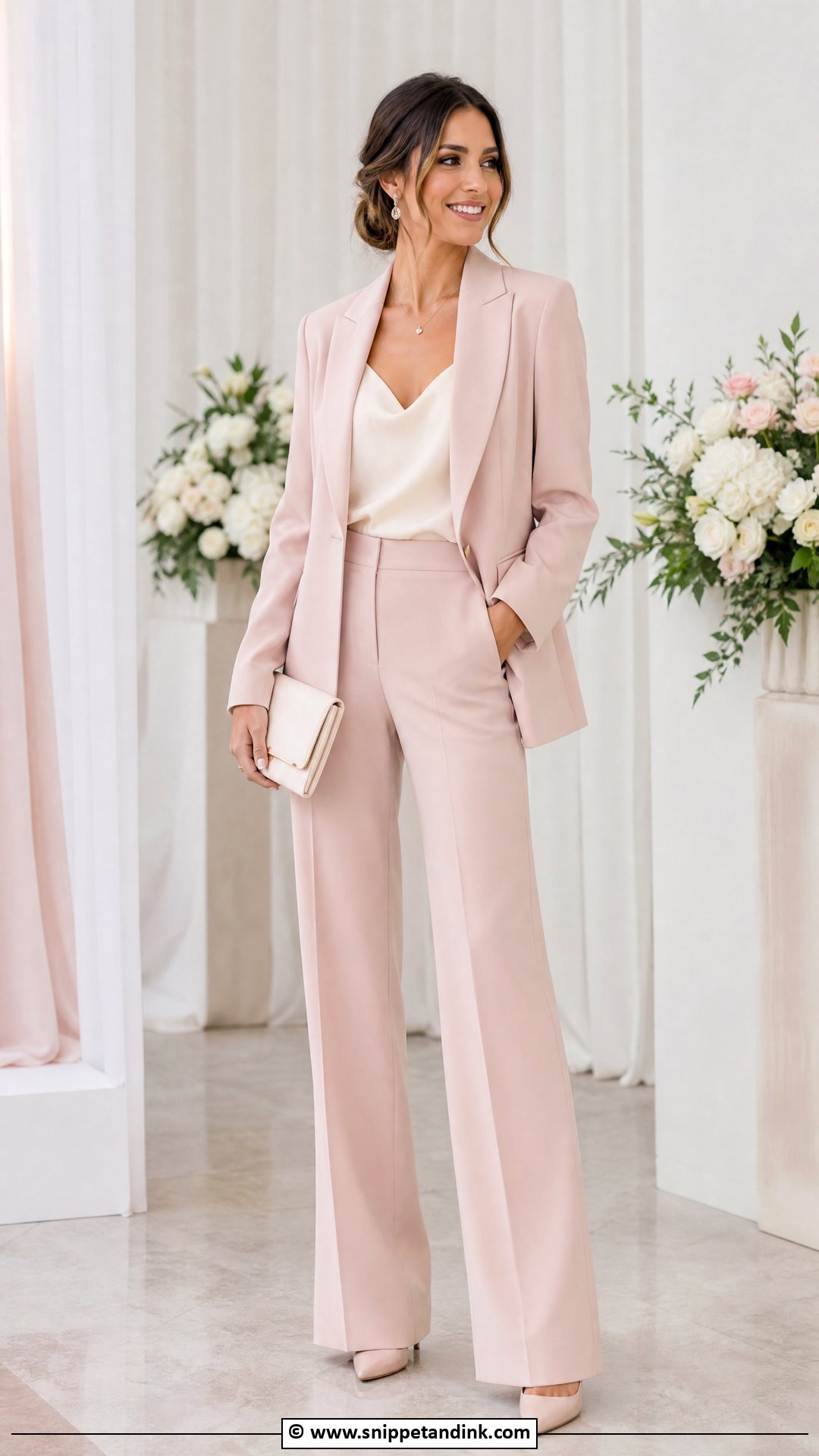
Blush pink is the guest suit I suggest most for spring and summer, because it looks festive without competing with the wedding party. Pair the blazer with tailored trousers and a cream or rose silk top. At a garden venue, a relaxed blazer feels right; in a hotel ballroom, I’d go sharper with clean lapels and a defined waist. Pale pink can wash out very fair skin, so hold it to your face in daylight before buying. Nude heels and a pearl clutch keep the palette light.
5. Powder Blue Designer Wedding Suit
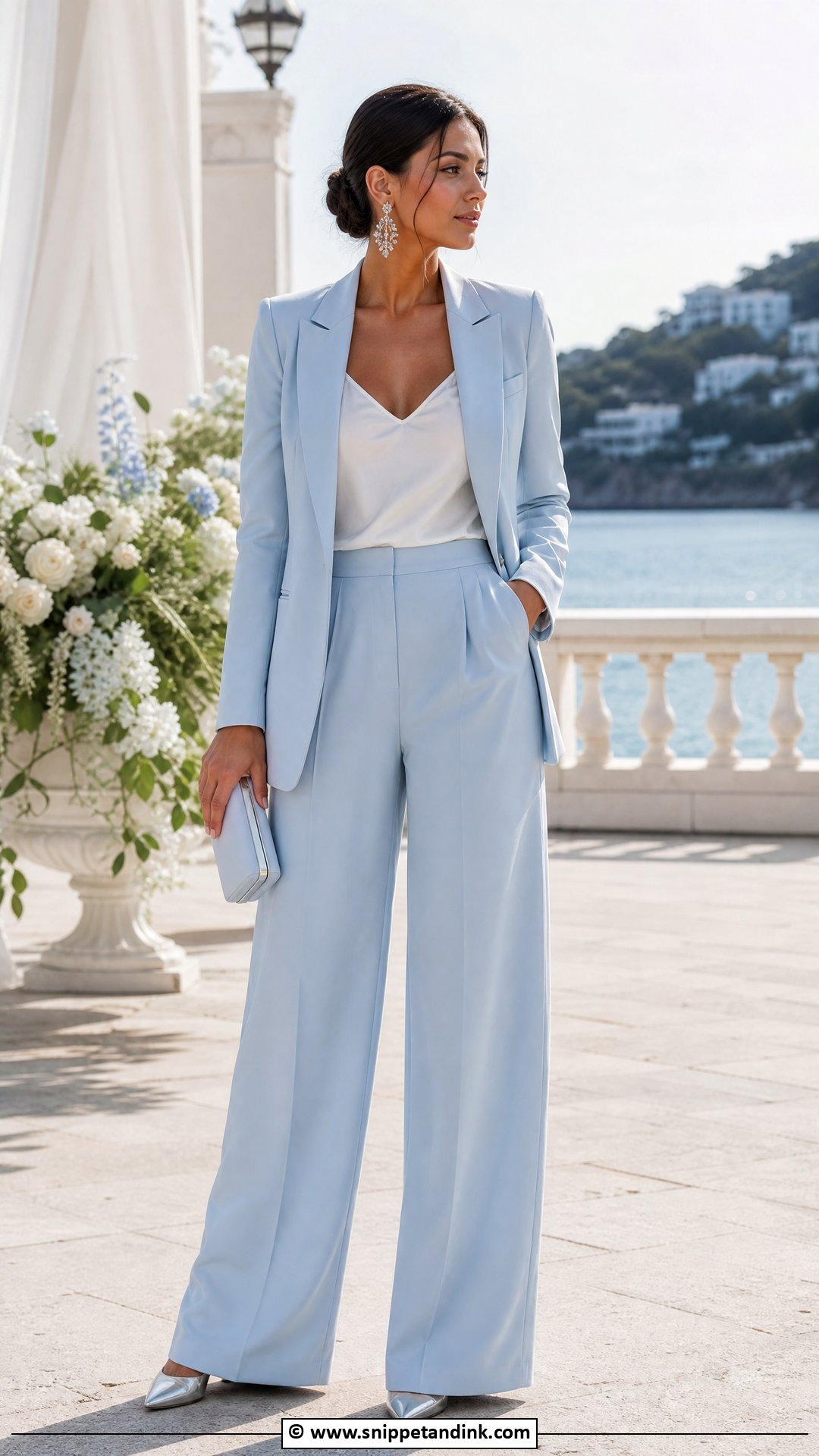
Powder blue is calm and airy, which suits coastal weddings and daytime receptions. A fitted or slightly oversized blazer with matching wide legs and a white silk camisole is the simplest version. Fabric is where this one succeeds or fails: lightweight crepe or satin-backed crepe holds shape and moves, while thin polyester shows sweat marks in pale blue quickly. Silver heels and crystal earrings suit it. Add an ivory or soft gray coat if the evening turns cool.
6. Champagne Wedding Pantsuit
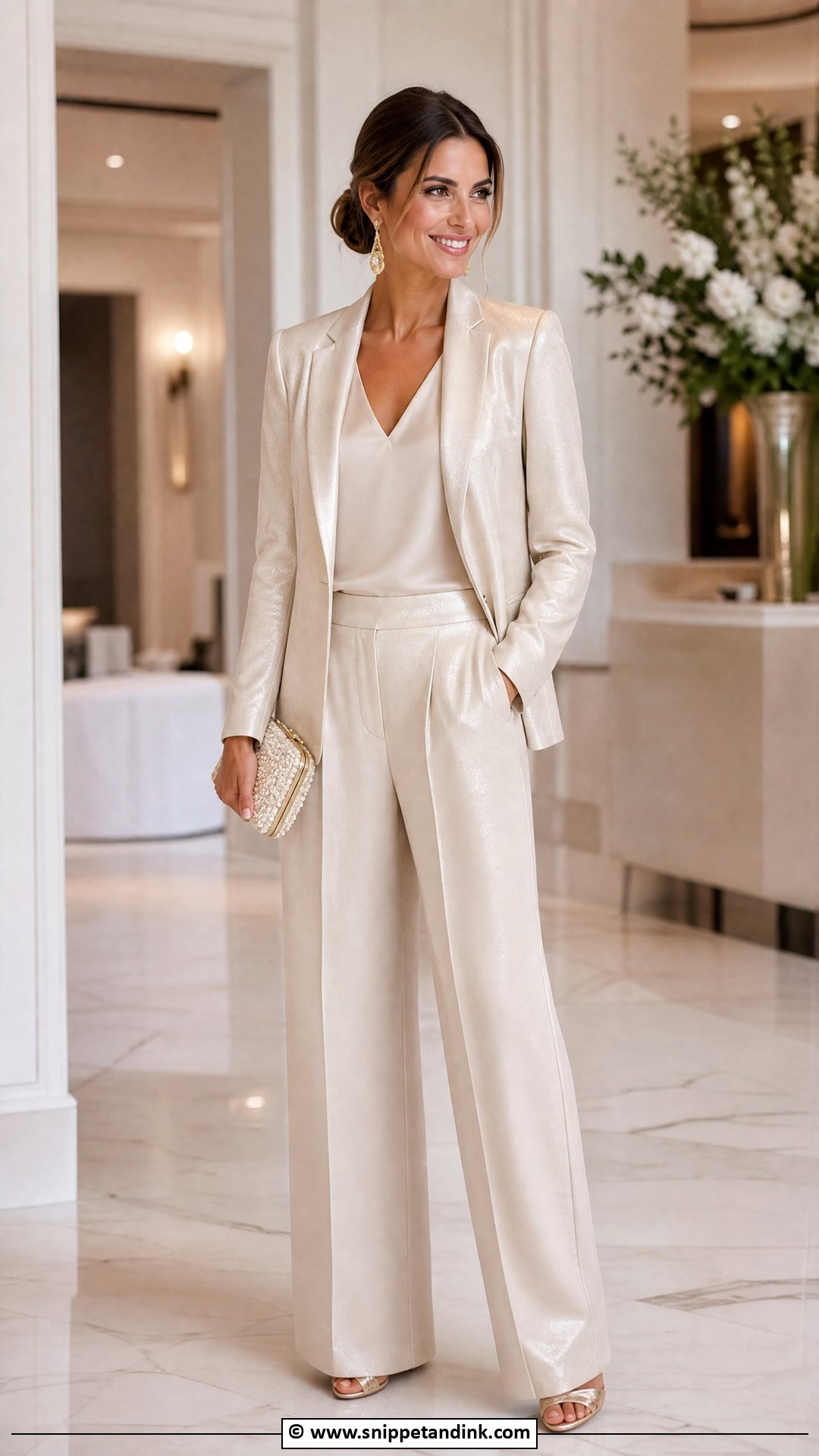
Champagne sits between gold and nude, so it reads rich without the flash of a full metallic. It suits brides, mothers of the bride and formal guests alike. I’d pair a softly lustrous blazer with flowing trousers and a tonal blouse to keep one long, unbroken line. Nude or gold heels lengthen the leg and a beaded clutch adds evening polish. Balance the shine with clean tailoring and fine, warm-toned jewelry.
7. Emerald Green Designer Suit
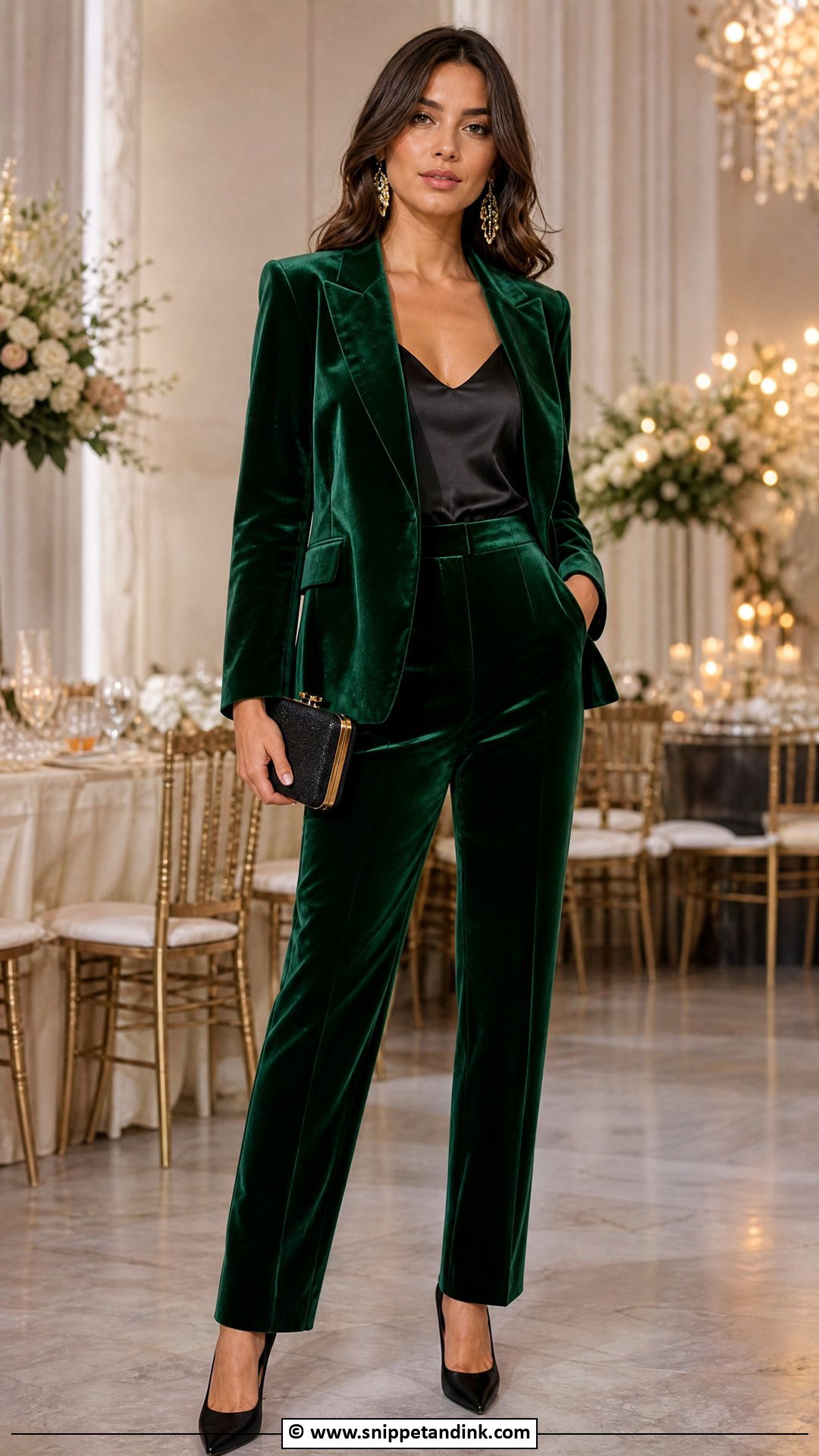
Emerald is one of the few colors I can put on almost any skin tone for an autumn or winter wedding. Velvet gives it depth in candlelight; crepe makes it lighter for a daytime event. A double-breasted blazer adds structure for formal dress codes, while a belted jacket softens the shape. Underneath, black, ivory or a deep green satin camisole all work. Black heels and gold earrings complete it, and it holds its color well in evening photos.
8. Navy Designer Wedding Suit
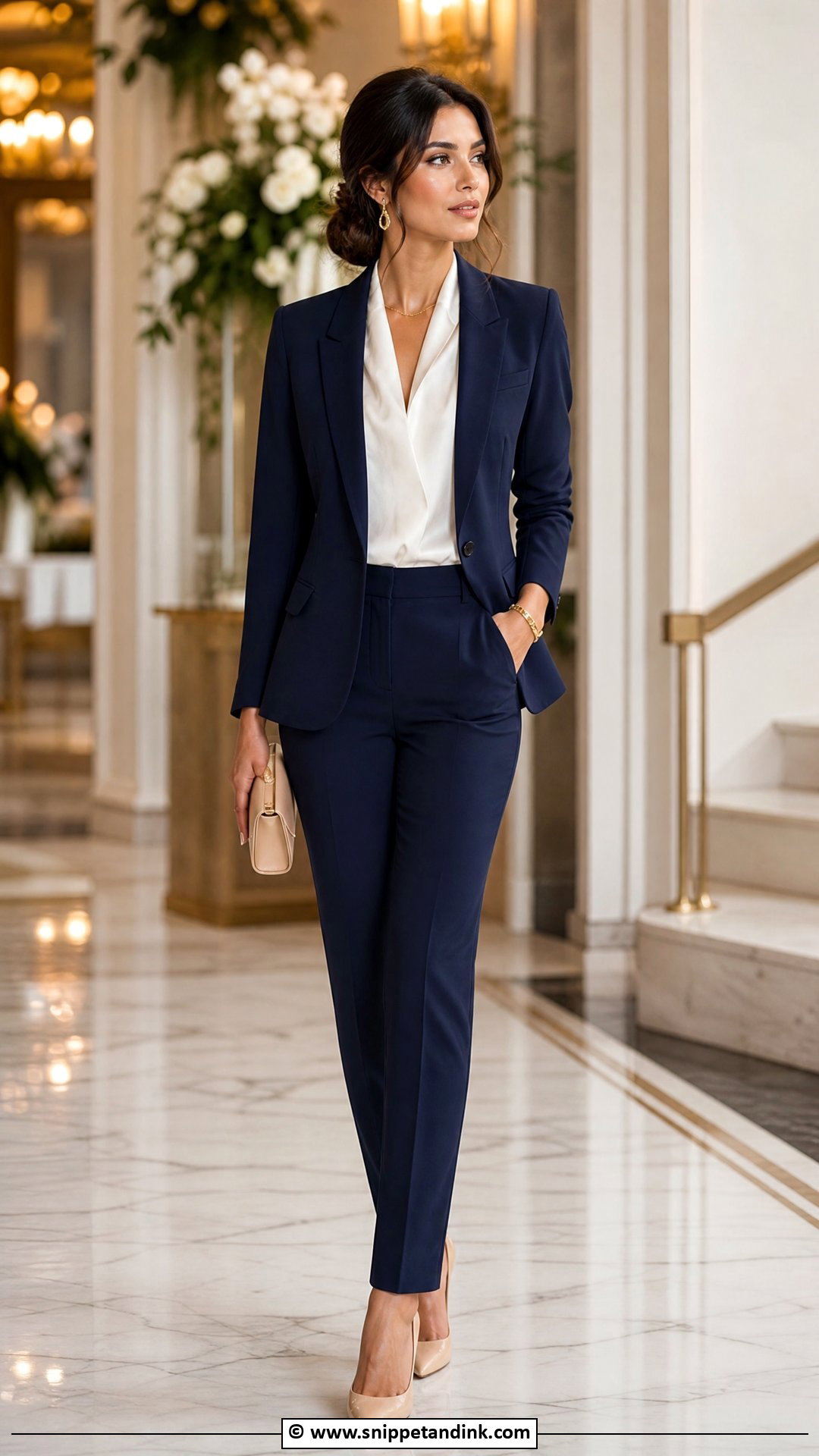
Navy is the suit I recommend when someone isn’t sure what to wear, because it works in every season and every role. It’s formal without severity. For mothers of the bride or groom, navy looks refined without drawing attention from the couple. Gold jewelry warms it; silver makes it crisp. Satin trim, a gently flared leg or a subtle jacquard lifts it out of office territory.
9. Burgundy Velvet Wedding Suit
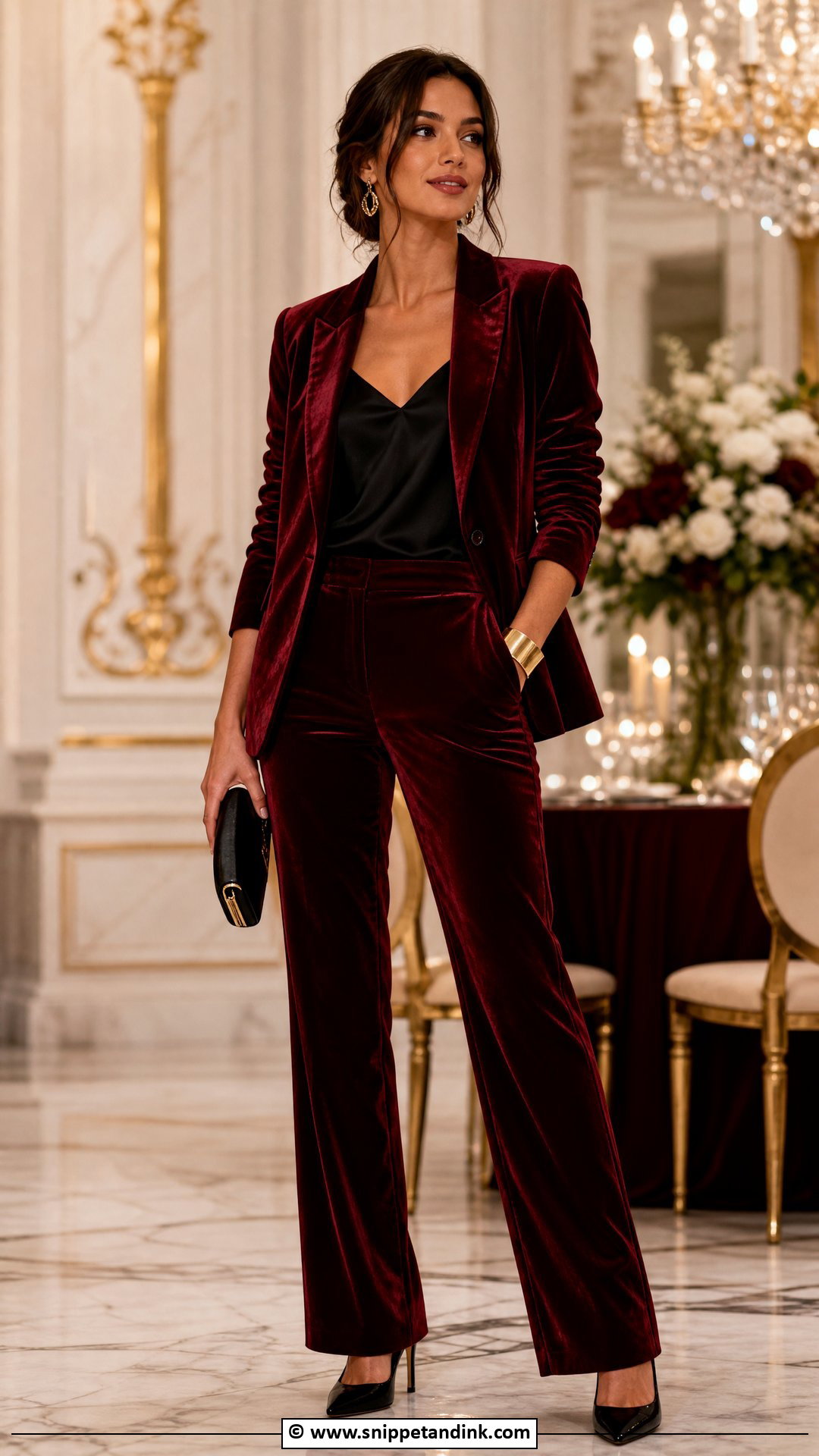
Velvet makes tailoring feel instantly festive, and burgundy is its richest color for cooler months. The plush pile has visual weight, so I keep the shape simple: a slightly longer blazer, straight trousers, a black silk camisole and pointed heels. One practical warning: velvet crushes when you sit for a long dinner, and the marks show as lighter patches. Hang it overnight before the event and avoid pressing it flat. It suits historic estates, city hotels and candlelit receptions.
10. Silver Designer Suit For Wedding
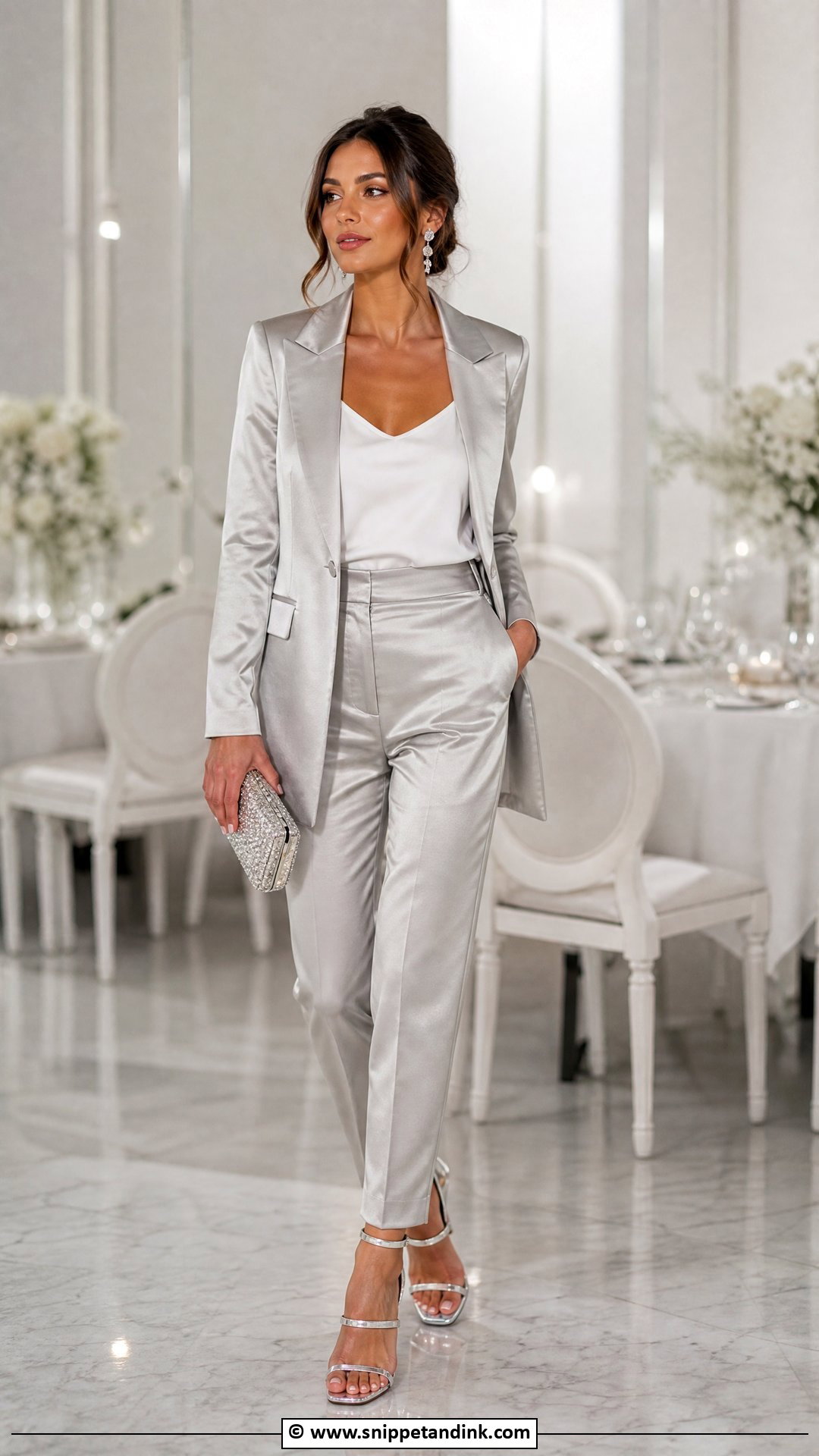
Silver is for evening weddings where the dress code invites a bit of sparkle. Satin, lamé or a beaded jacket over tailored trousers gives you the shine; keep the camisole plain white or gray. The rule I follow is to control the shine in one place. A heavily embellished jacket gets plain pants; a subtle fabric can take a statement earring. Silver sandals and a crystal clutch finish it.
11. Floral Designer Suit For Wedding
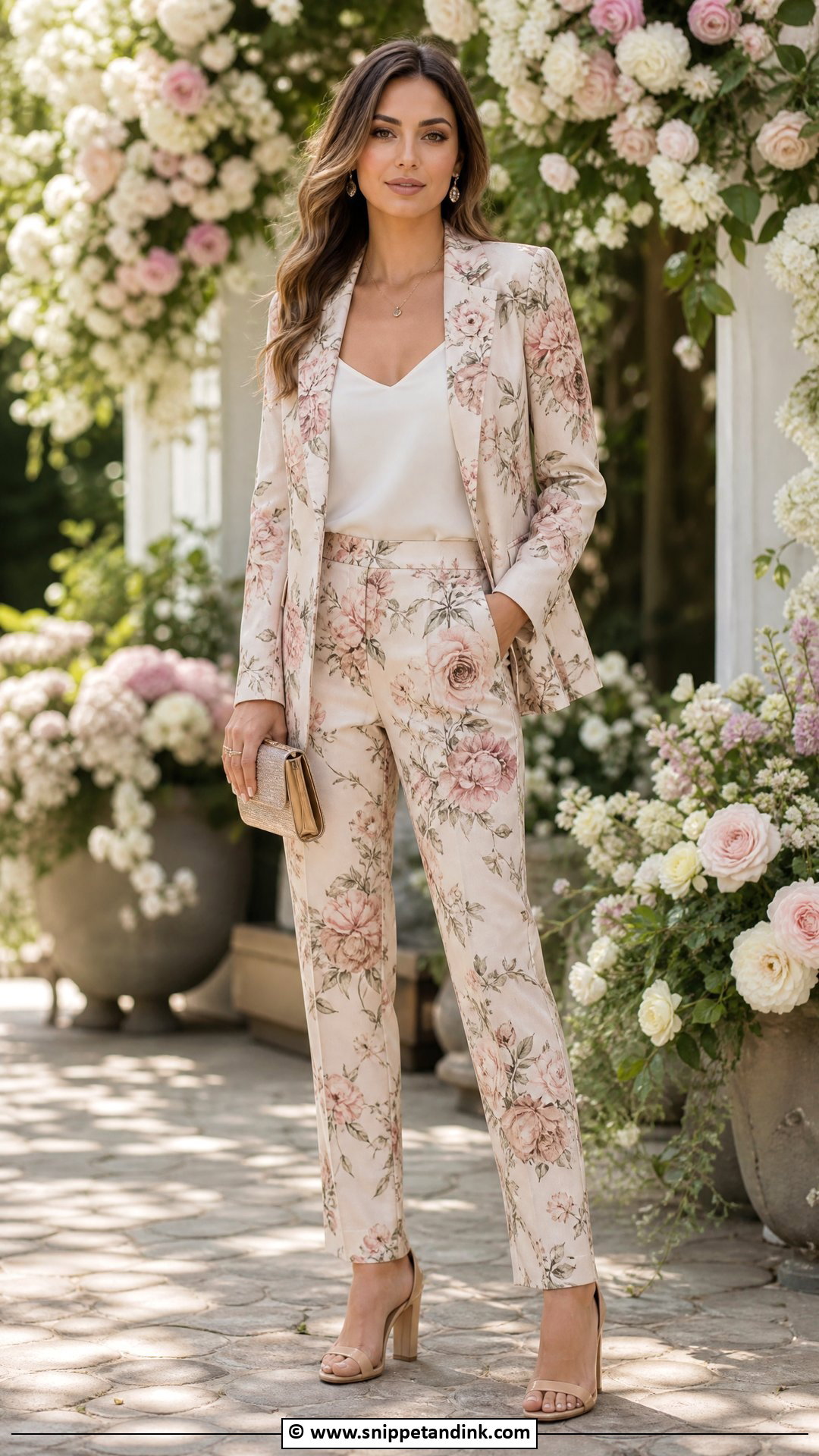
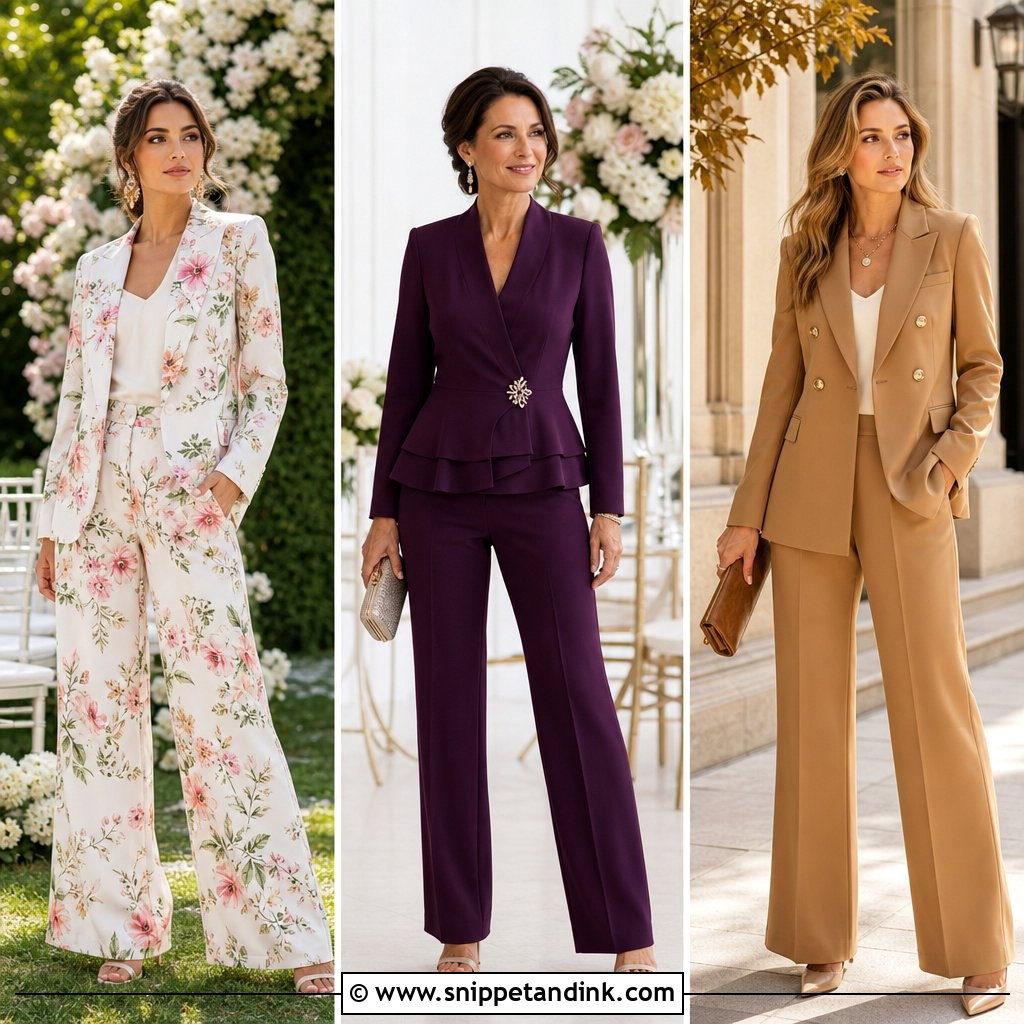
A floral suit is a fresh alternative to the usual guest dress at garden and destination weddings. The risk is looking like pajamas, and fit is what prevents that: shoulders, waist and hem all need to be right. Pick a print with a clean base color, add a simple camisole and block heels, and keep the jewelry small. I’d steer clear of a large print on a petite frame, where it can overwhelm.
12. Lace Designer Wedding Suit
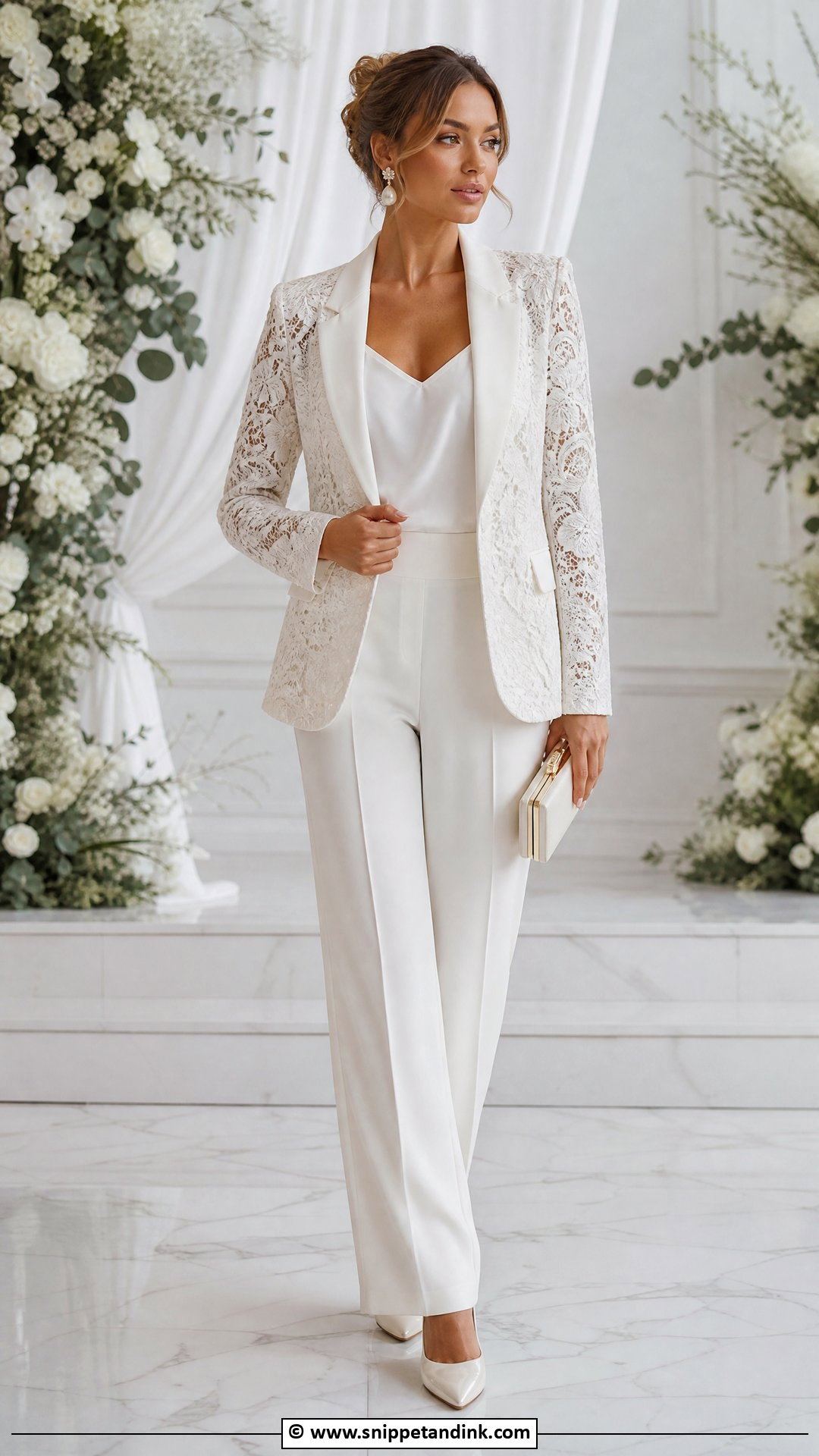
Lace softens sharp tailoring, so a lace suit gives a bride romance without a gown. A lace blazer over a silk camisole, with matching or smooth crepe trousers, keeps the balance. Sheer lace needs a lining that looks intentional, so check the inside before you buy. A short veil or fine gloves adds a ceremony touch. Guests should choose colored lace like navy, blush or sage rather than ivory.
13. Beaded Designer Suit For Wedding
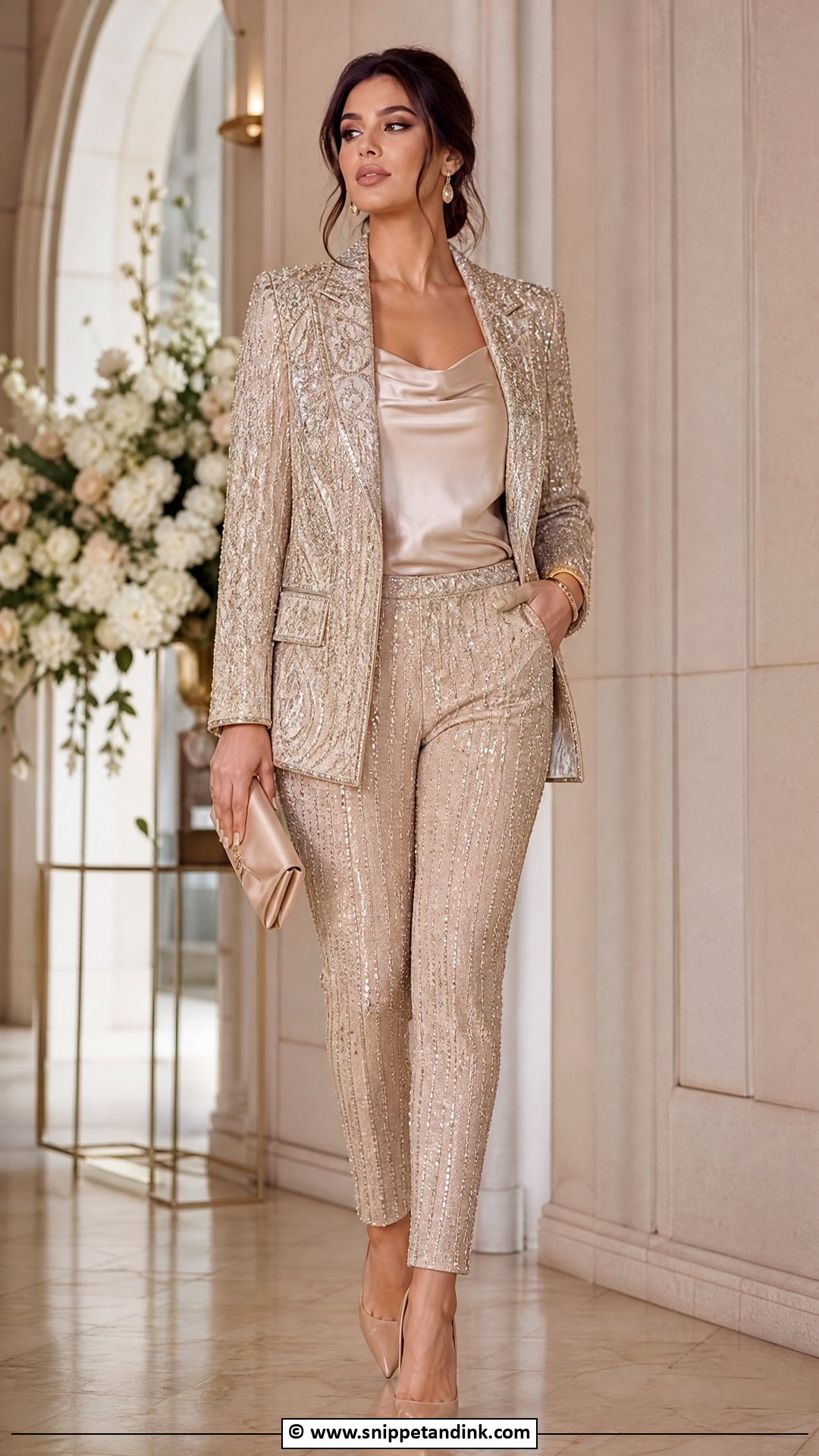
Beading belongs at formal evening receptions and as a bride’s party change. Balance is the rule: beaded blazer with smooth trousers, or beaded pants with a sleek fitted top. Champagne, silver, navy and black are the easiest shades. Beading is heavy, and on a long day the weight drags the shoulders forward, so I always check that the lining is comfortable and the shoulder seam sits right. A satin clutch and small earrings keep the focus on the suit.
14. Crepe Designer Wedding Suit
Crepe is my go-to suiting fabric for weddings: it holds a tailored shape but drapes, and it recovers from creasing better than most delicate fabrics. That makes it the one I’d pack for a travel wedding. A single-breasted blazer, straight or wide-leg trousers and a silk blouse cover almost any dress code. Pointed pumps and a structured clutch dress it up enough for both ceremony and reception.
15. Wide Leg Wedding Pantsuit
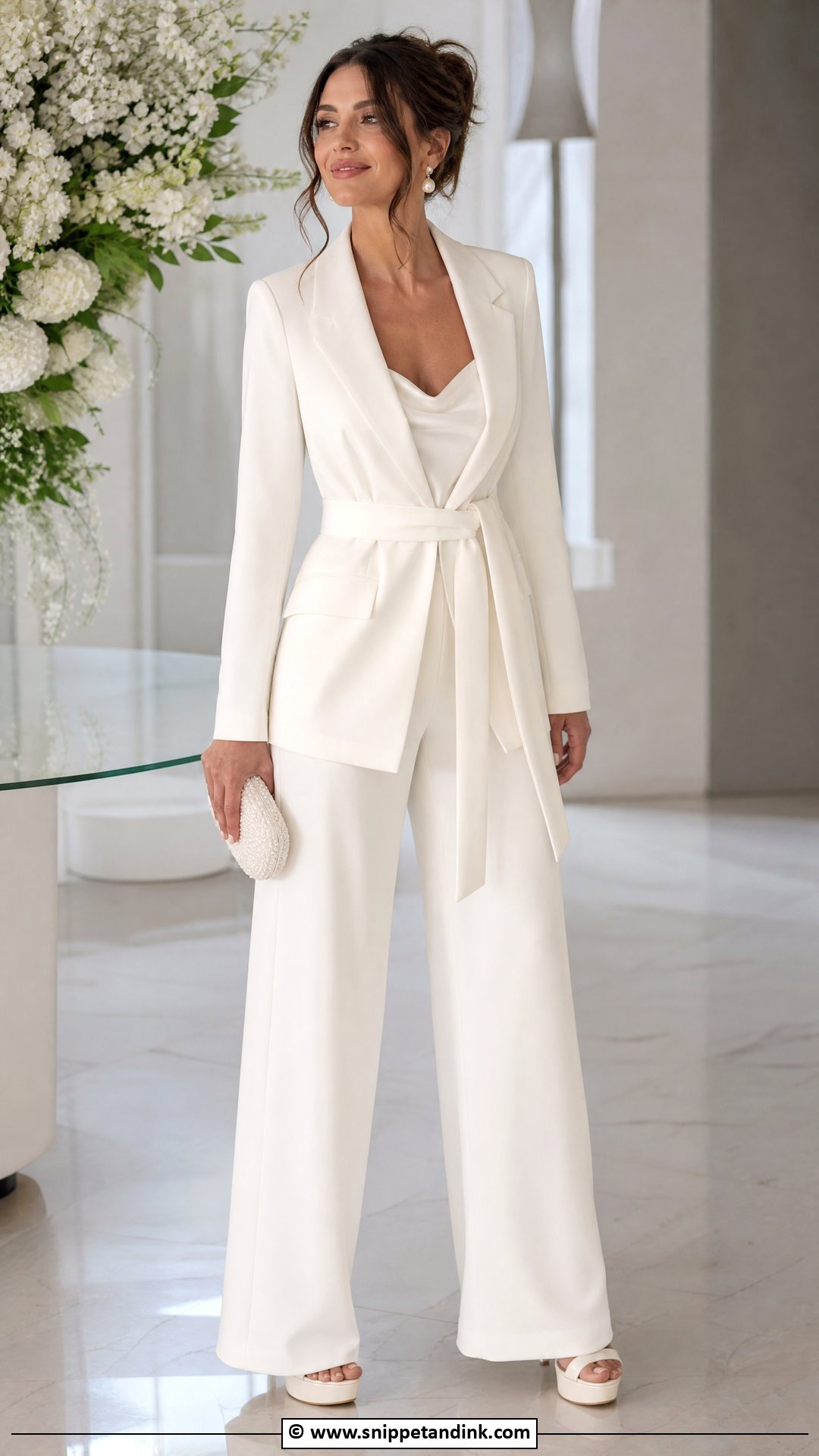
Wide legs give you movement and length, the closest a pantsuit gets to the presence of a gown. A fitted or belted blazer balances the volume. The single most important detail is the hem: it should nearly touch the floor in the exact shoes you’ll wear, so bring them to the tailor. Ivory works for brides, navy for guests, champagne for mothers of the bride. Platform sandals help if the pants are very full.
16. Double Breasted Designer Suit
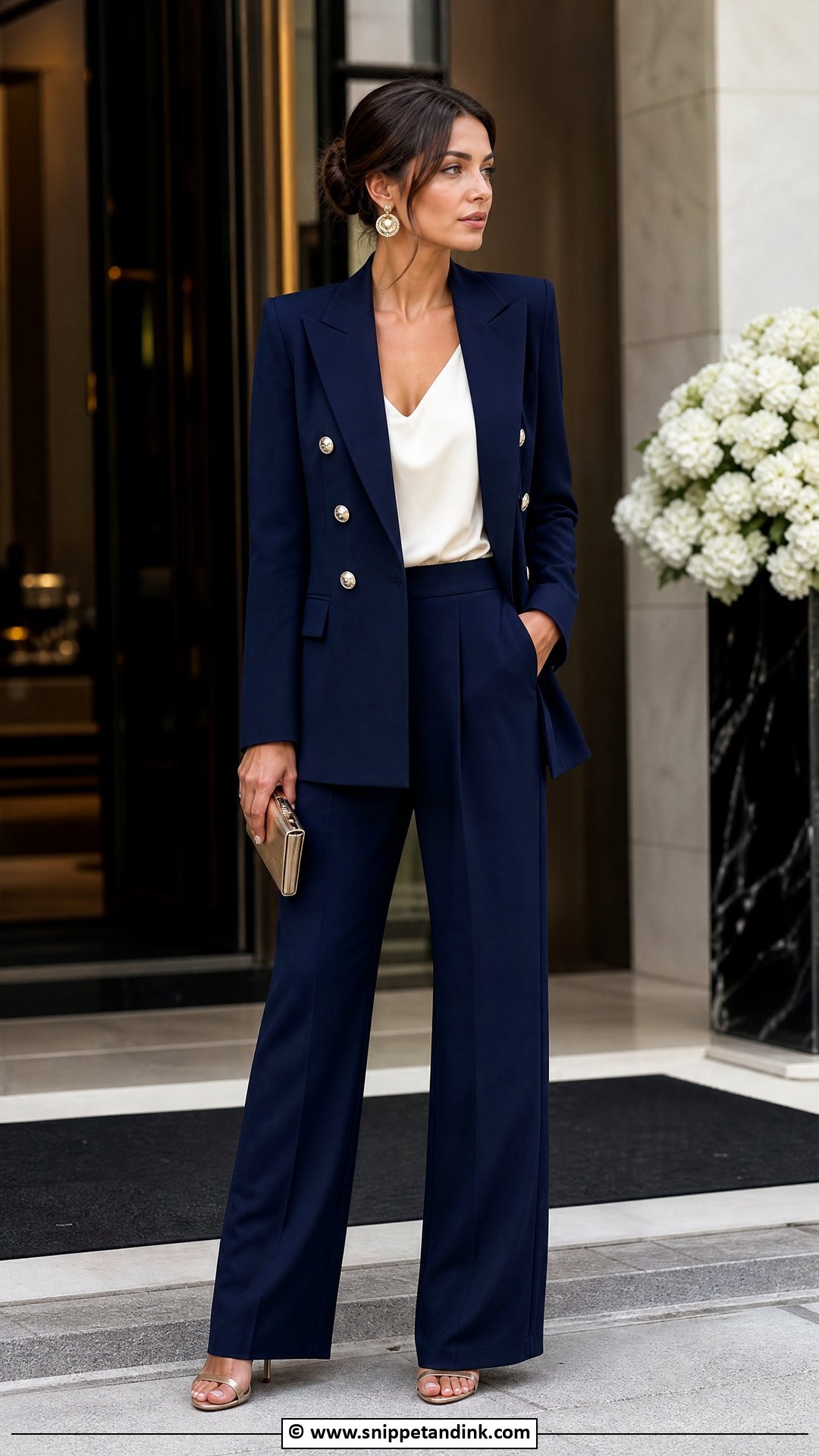
A double breasted designer suit has strong structure, which suits formal city venues and evening receptions. I’d choose one with a slight nip at the waist, then pair it with straight or wide trousers and a silk shell to soften it. Navy, black, ivory, emerald and dusty rose all work. Double-breasted jackets look sloppy unbuttoned and pull when too tight, so make sure you can sit with it fastened. Keep everything else clean.
17. Belted Designer Wedding Suit
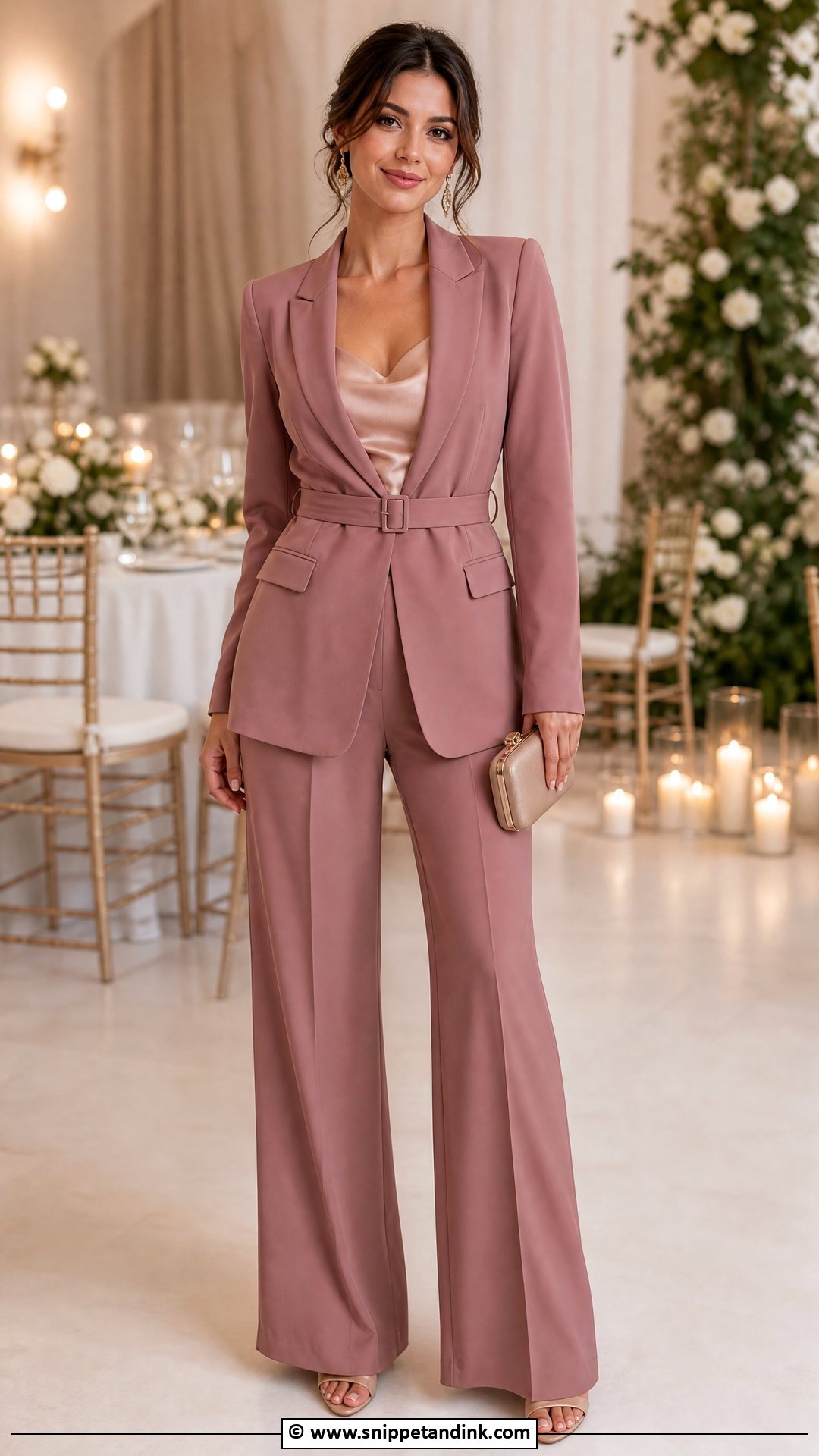
A belt defines the waist while keeping the comfort of tailoring, which is why I reach for it with pear, hourglass and petite figures. The belt can be fabric-covered, satin or lightly embellished, depending on the dress code. Pair it with flowing trousers and a smooth camisole. Keep the belt narrow and in proportion, as a wide one breaks the line on shorter torsos. Ivory or pearl suits brides; dusty blue, rose or sage suits guests.
18. Peplum Designer Suit For Wedding
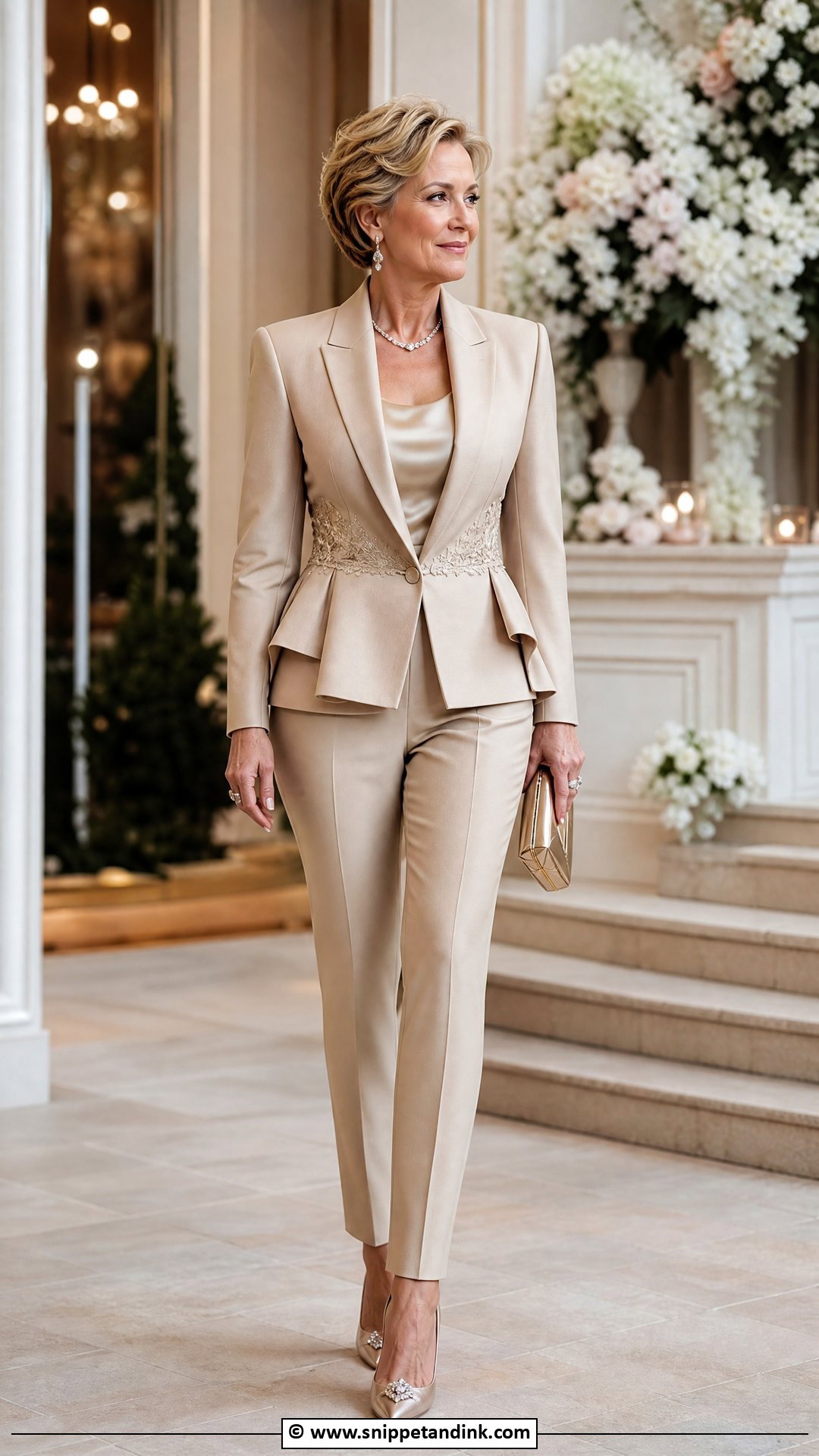
The flared waist of a peplum jacket adds softness to tailoring, which makes it read more like occasion wear than a standard blazer. Slim or straight trousers balance the flare. Fabric choice matters more here than anywhere: crepe, satin or jacquard hold the peplum crisply, while bulky fabrics make it stand out stiffly at the hip. It’s a favorite of mine for mothers of the bride who want structure with a gentle shape.
19. Cropped Blazer Wedding Suit
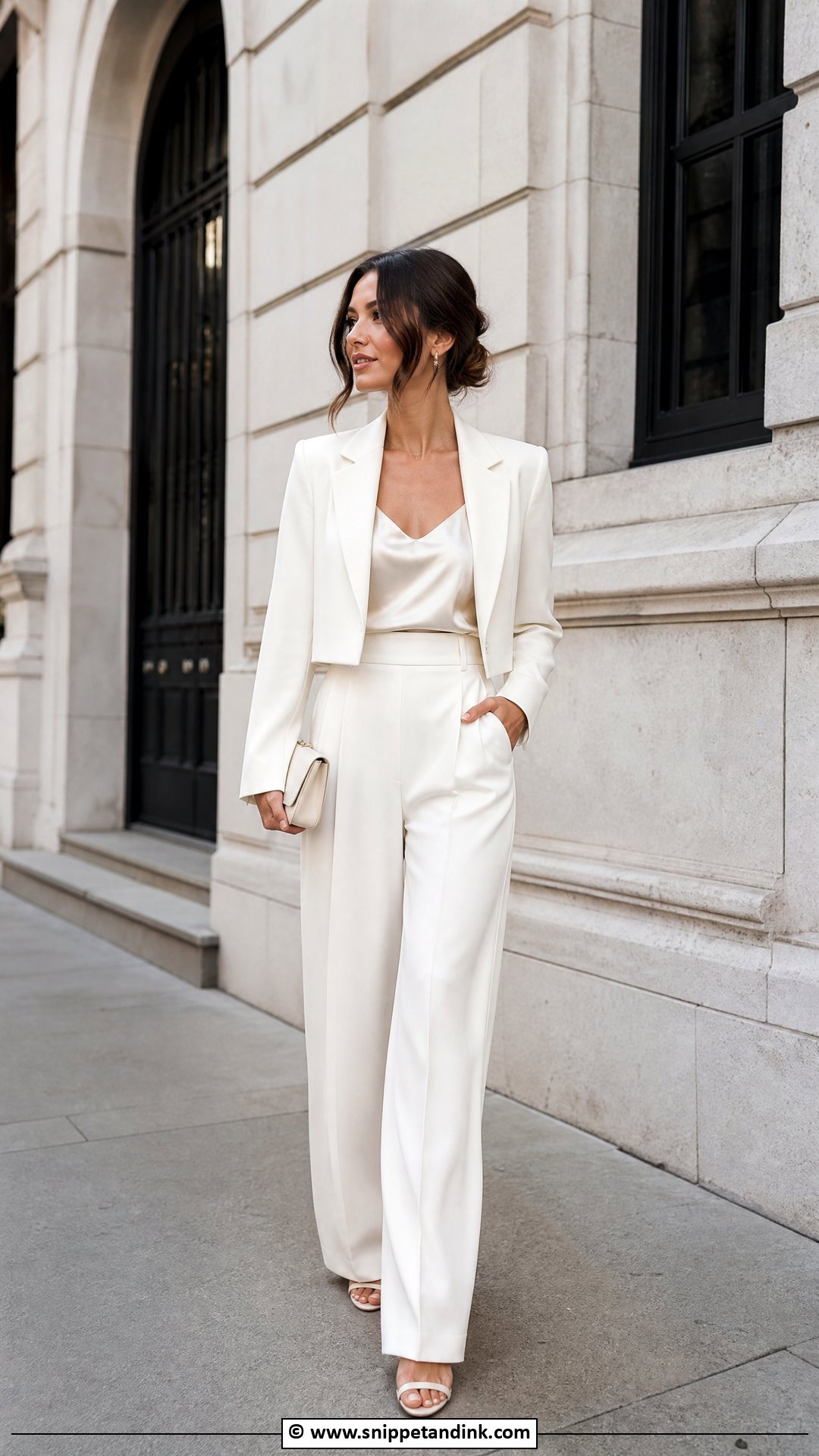
Cropped blazers look modern and lengthen the leg, which helps petite women in particular. High-waisted wide trousers keep the proportions elegant and close the gap between jacket and waistband. The jacket should finish at the natural waist; any higher and it looks like a bolero. Choose a proper suiting fabric rather than casual cotton. It works for rehearsal dinners and courthouse weddings as well as guest outfits.
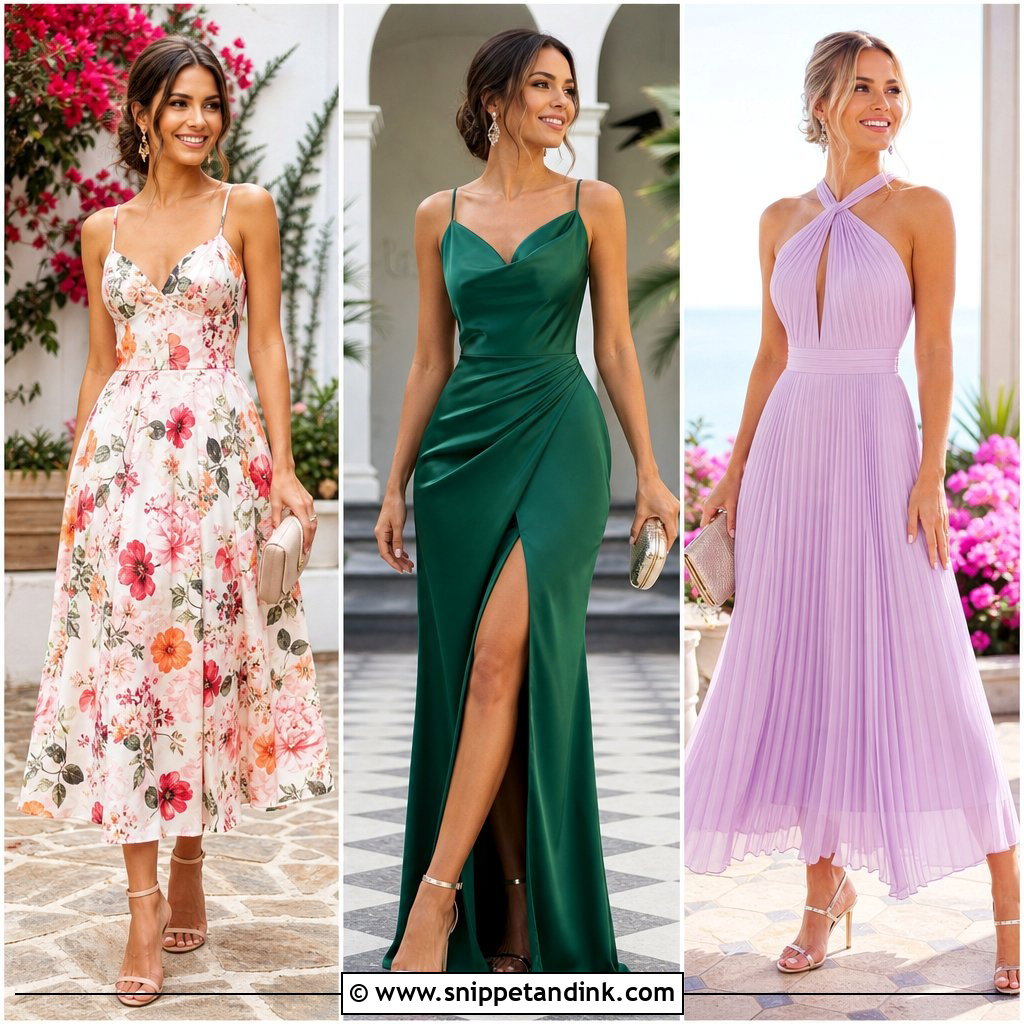
20. Longline Blazer Wedding Suit
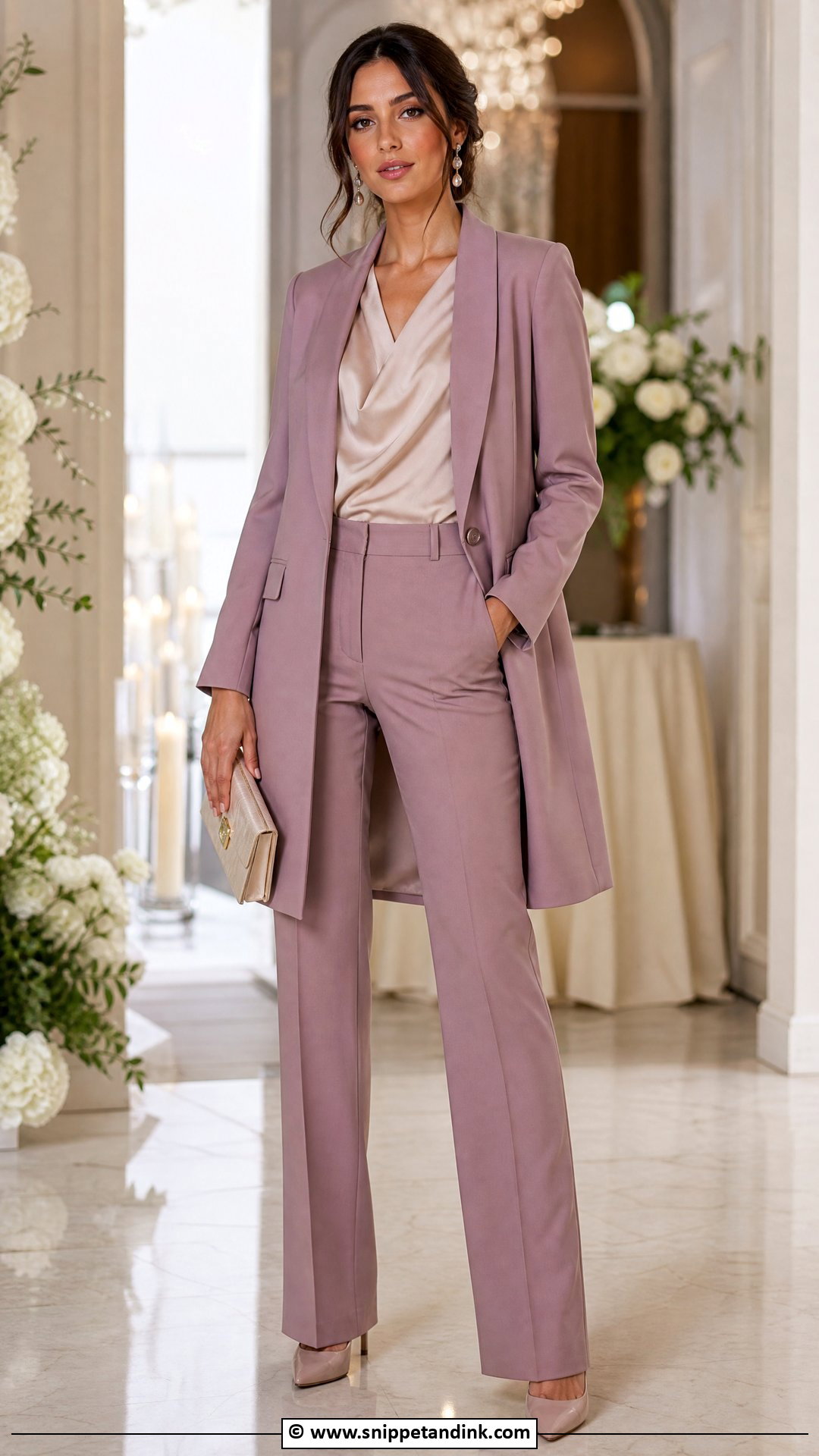
A longline blazer gives coverage and a long, unbroken shape, which many women prefer at formal events. Slim, straight or softly wide trousers can all work underneath, depending on your figure. On its own, a longline jacket can look like business wear, so I add satin lapels, a soft sheen or a little embellishment. Navy, black, champagne and dusty mauve suit this silhouette well.
21. Designer Suit With Corset Top
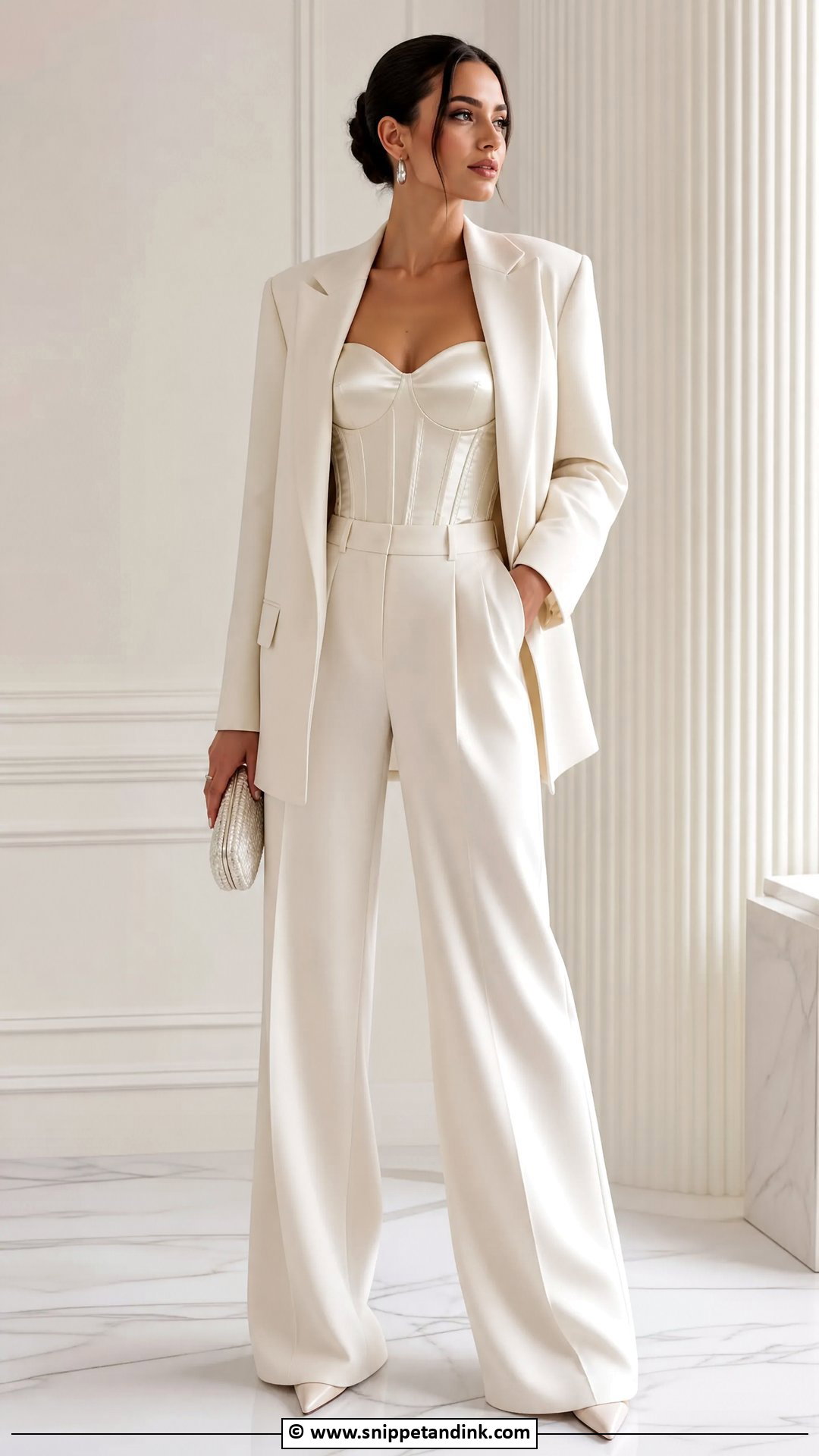
A corset top under a suit adds shape and dressiness, and it’s a strong reception look for brides or a cocktail-code guest outfit. Satin, crepe or lace corsets all work. The fit is critical: a corset that’s too small digs in when you sit, and one too large gapes at the top edge. I’d always try it seated. Wide trousers and a slightly oversized blazer balance the fitted top.
22. Designer Suit With Silk Blouse
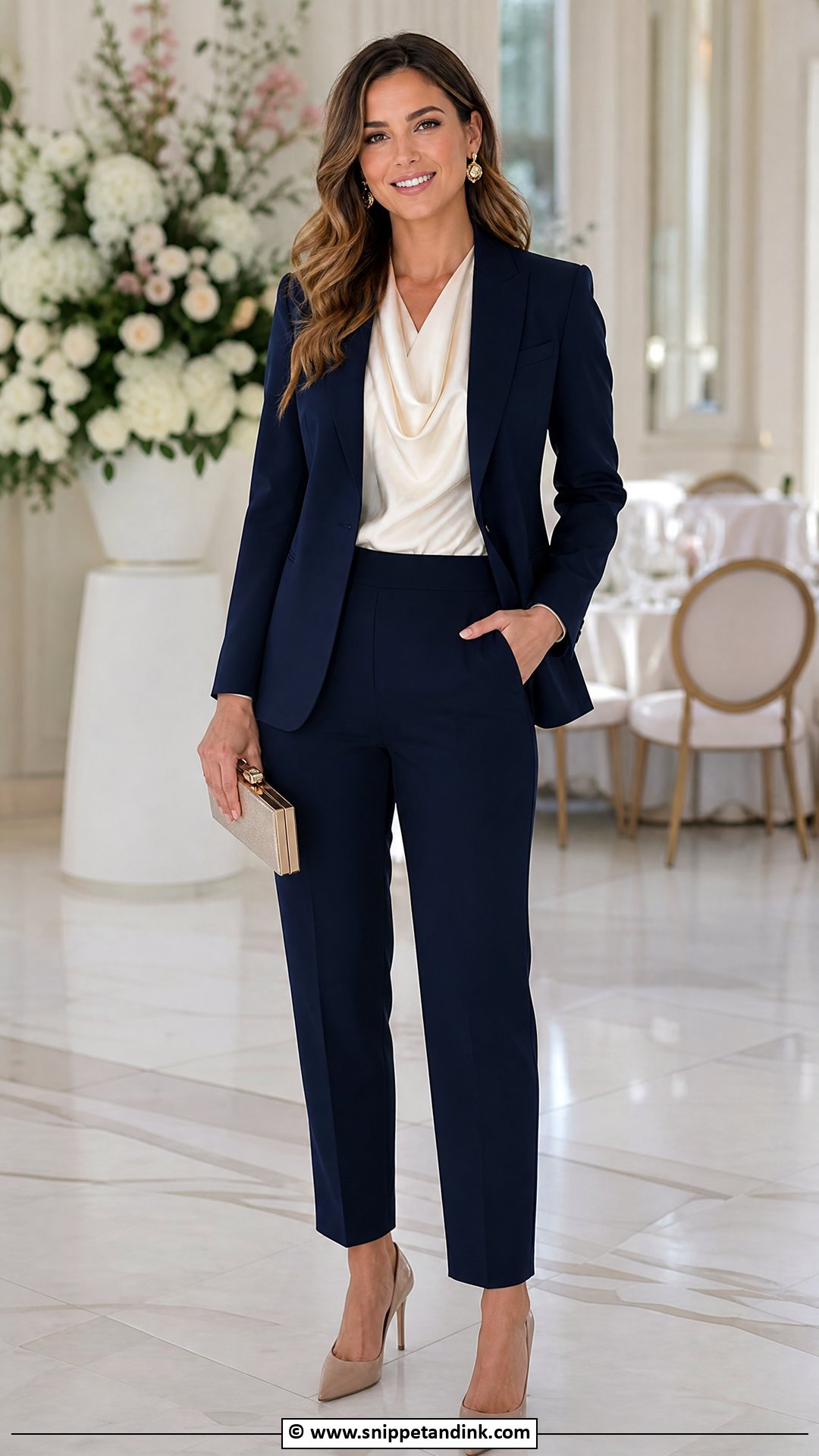
The silk blouse is the easiest way to soften a suit for a wedding. Try navy with ivory, blush with champagne, or a black tuxedo with soft cream. Silk shows sweat marks, so in hot weather I’d choose a darker blouse or one with a print. Tuck it neatly or choose a fluid style that sits smoothly under the blazer. It suits guests who want something elegant but quiet, and family members in formal photos.
23. Designer Suit With Camisole
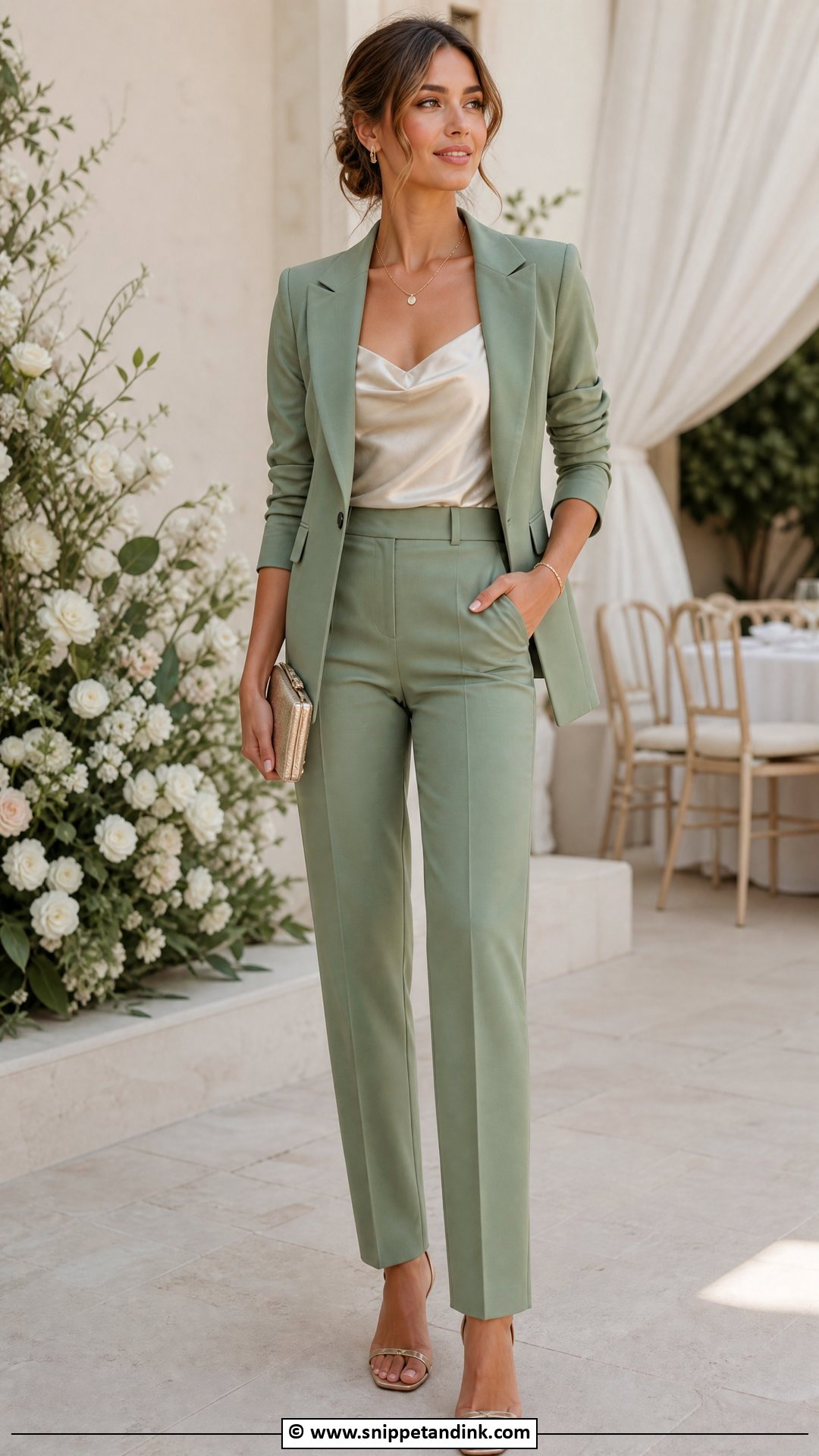
A camisole is the simplest layer under a suit, but it has to look refined rather than like something you sleep in. Silk, satin, lace-trim or structured crepe all work. It goes with almost any jacket shape, from tuxedo to wide-leg pantsuit. For more coverage, keep the blazer buttoned or pick a higher neckline. I’d check the strap width too, since thin straps slip out from under a jacket every time you move.
24. Designer Suit With Statement Heels
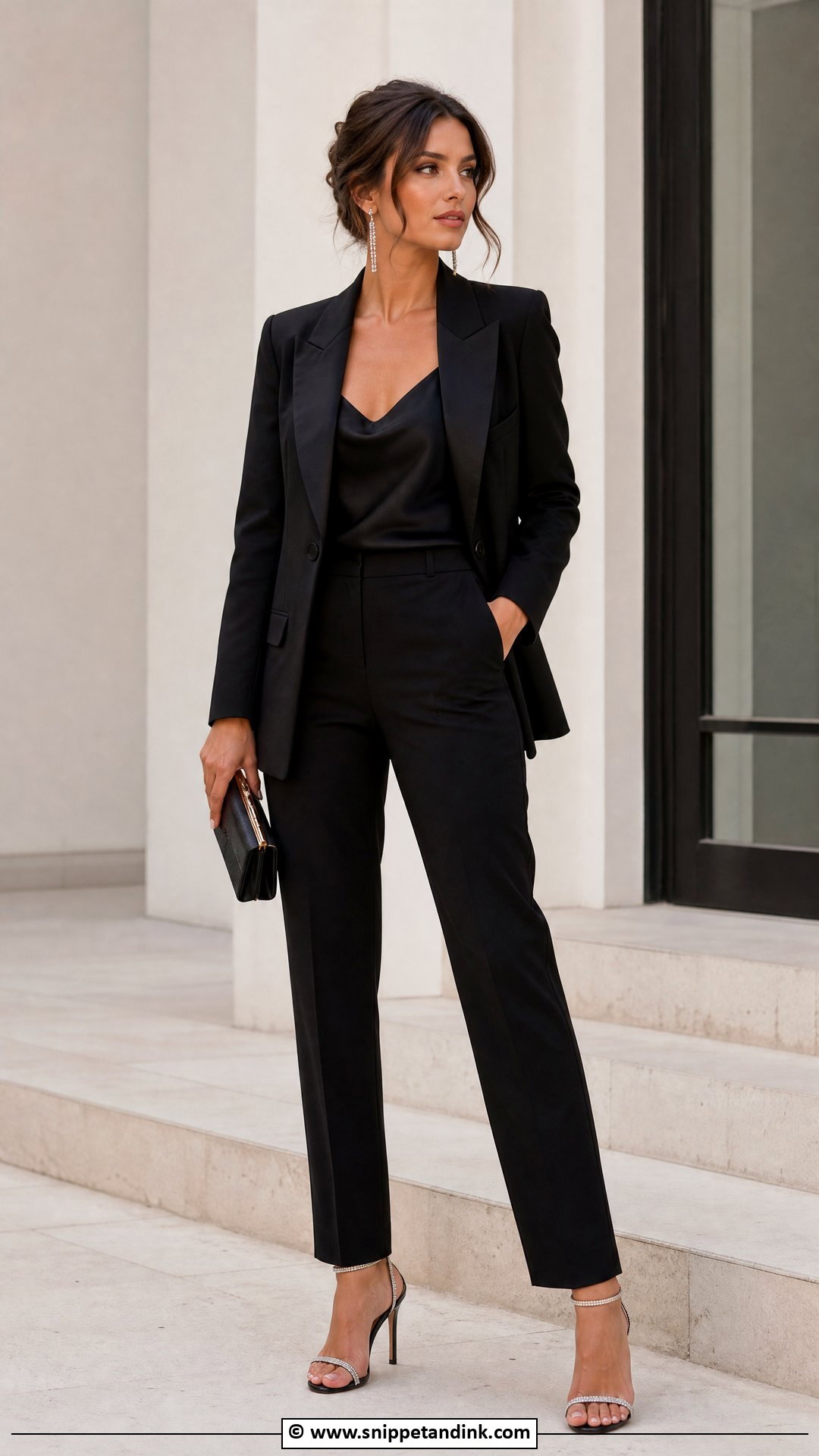
Statement heels make a plain suit feel festive. Start with a clean suit in black, navy, ivory, blush or emerald, then add crystal straps, metallic leather, satin bows or a sculptural heel. The trousers need to be cropped or ankle length so the shoes actually show. If you’ll be on grass, check the heel width first, because a narrow stiletto sinks. Keep the top and jewelry simple so the shoes lead.

25. Designer Suit With Matching Vest
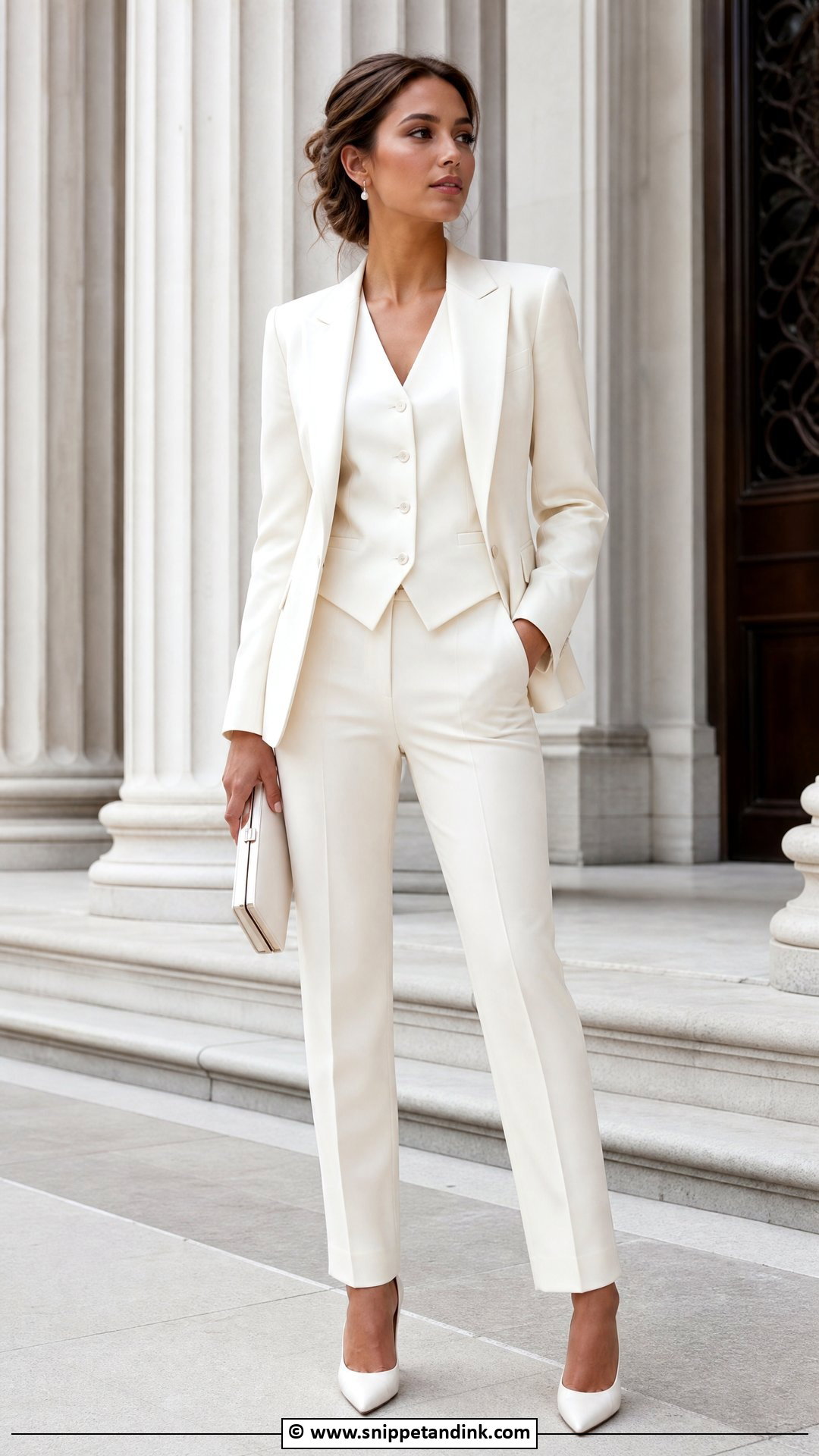
A matching vest turns a suit into a sharp three-piece wedding outfit. Wear it buttoned under the blazer for the ceremony, then take the jacket off for the reception. It suits brides, bridesmaids and guests who love a menswear look. The vest should fit closely without buttons pulling; if it gapes when you sit, have it taken in at the side seams. Pointed pumps, loafers or heeled sandals all work.
26. Designer Suit With Satin Lapels
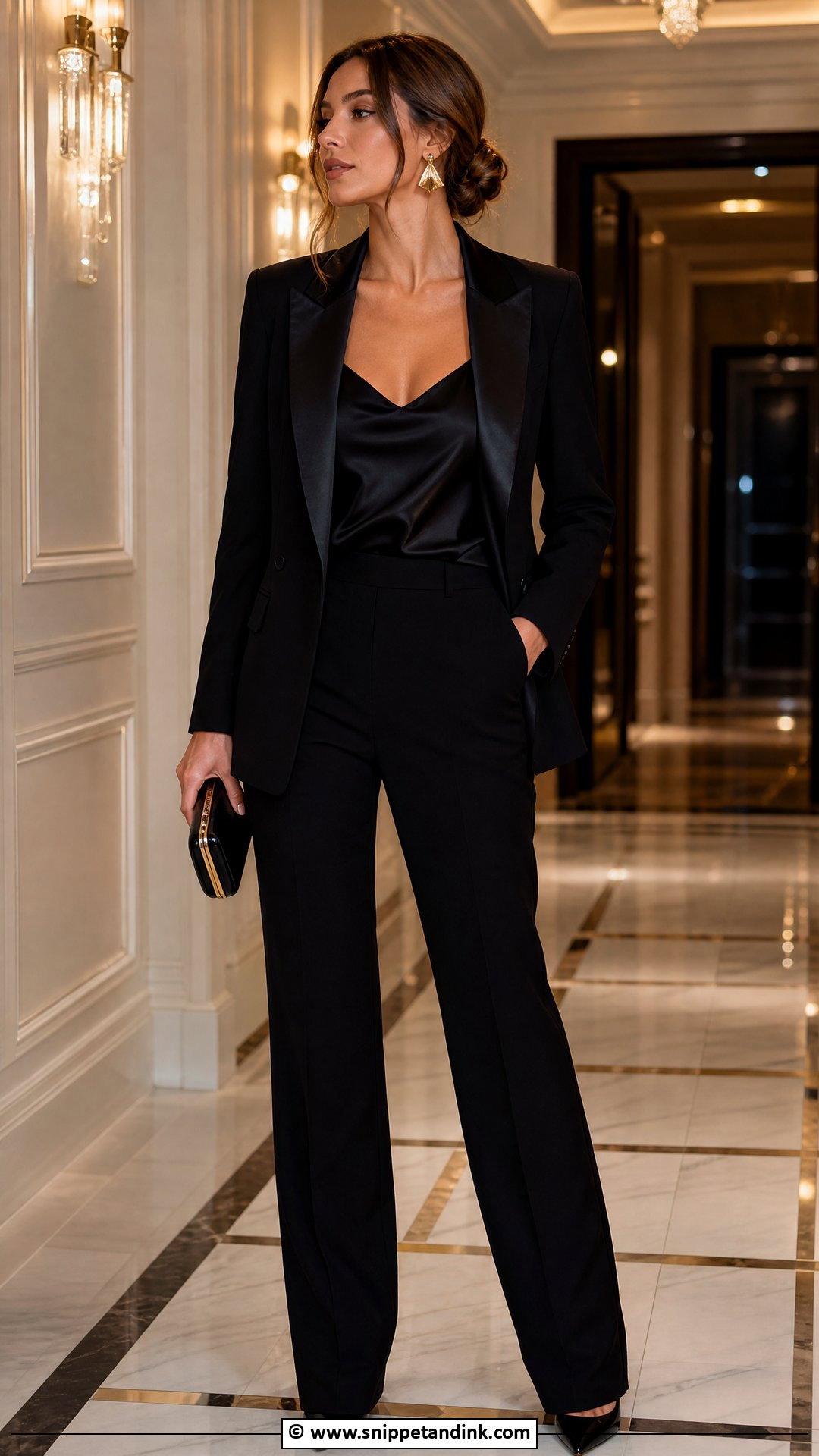
Satin lapels are the simplest way to make a suit formal enough for a wedding. They suit black-tie optional events and evening ceremonies. Black is the classic, but ivory, navy, burgundy and deep green look just as good. The satin catches light softly, so you don’t need embellishment. When buying, check that the lapel satin matches the trouser stripe if there is one, since mismatched sheens look cheap up close.
27. Designer Suit With Embroidered Jacket
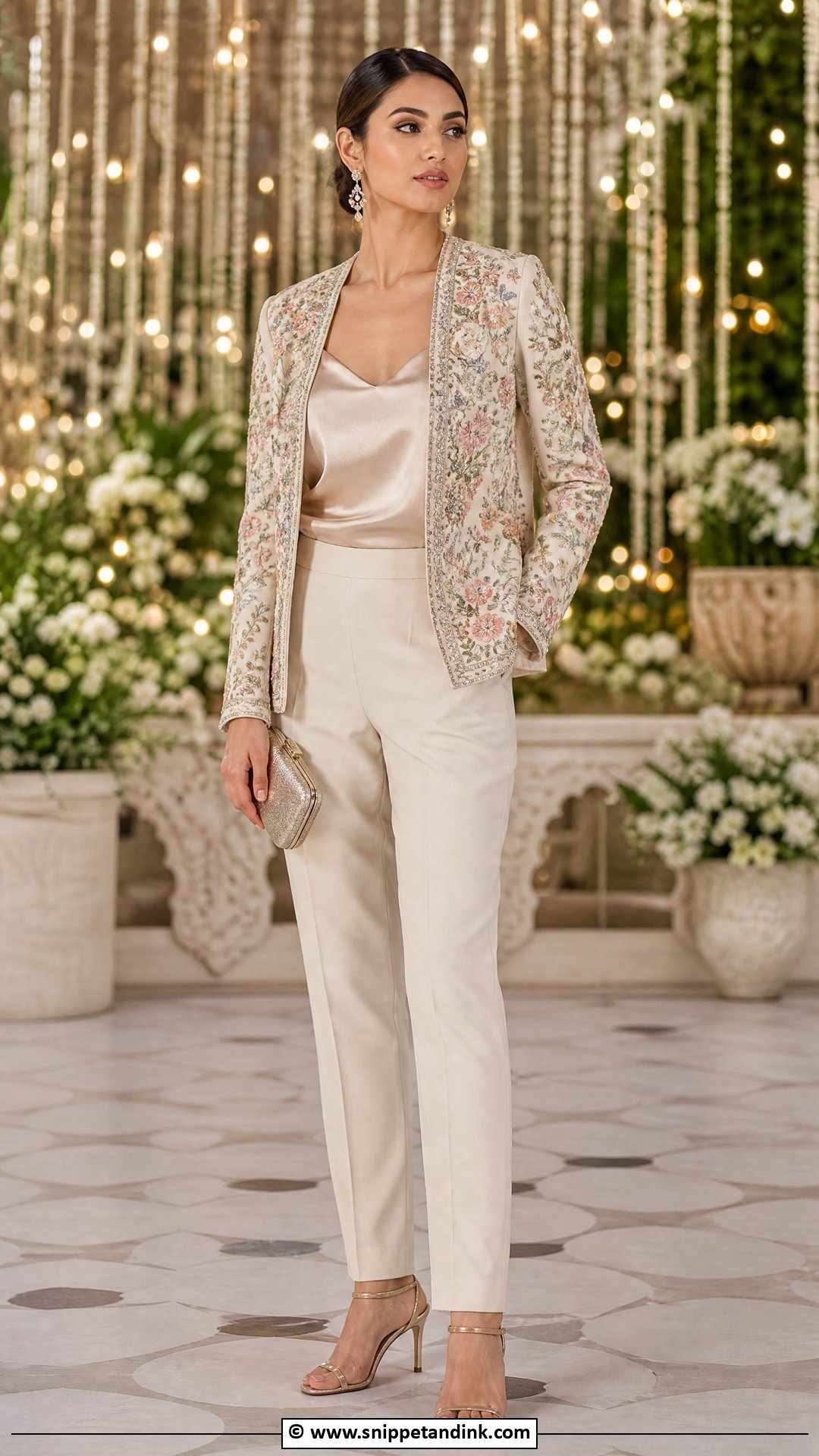
An embroidered jacket gives a suit texture and personality, and it suits cultural weddings, garden receptions and family celebrations. Floral, tonal or metallic embroidery on a tailored blazer works best with plain, matching trousers and a simple camisole. I pick shoes and a bag that echo one color from the embroidery. If the jacket is detailed, skip a necklace altogether and wear small earrings.
28. Designer Suit With Palazzo Pants
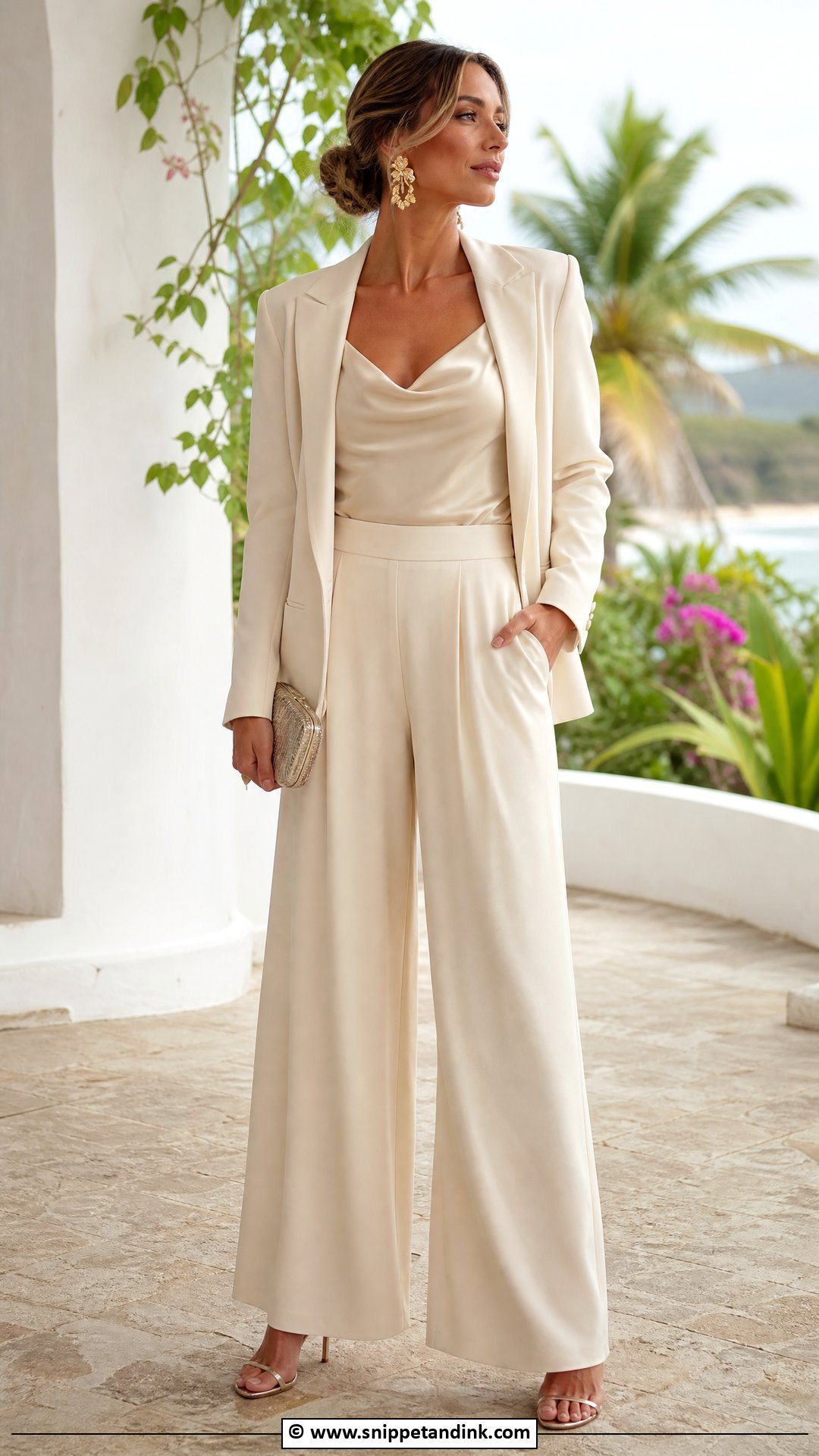
Palazzo pants flow like a long skirt while the blazer keeps the outfit structured. Lightweight crepe, satin or a silk blend drapes best. They suit destination weddings and summer ceremonies, and guests who want a dress alternative. Proportion is the thing I adjust most: petite women need higher heels and a slightly shorter blazer, while taller women can carry a longer jacket and a full, sweeping pant.
29. Designer Suit With Slim Pants
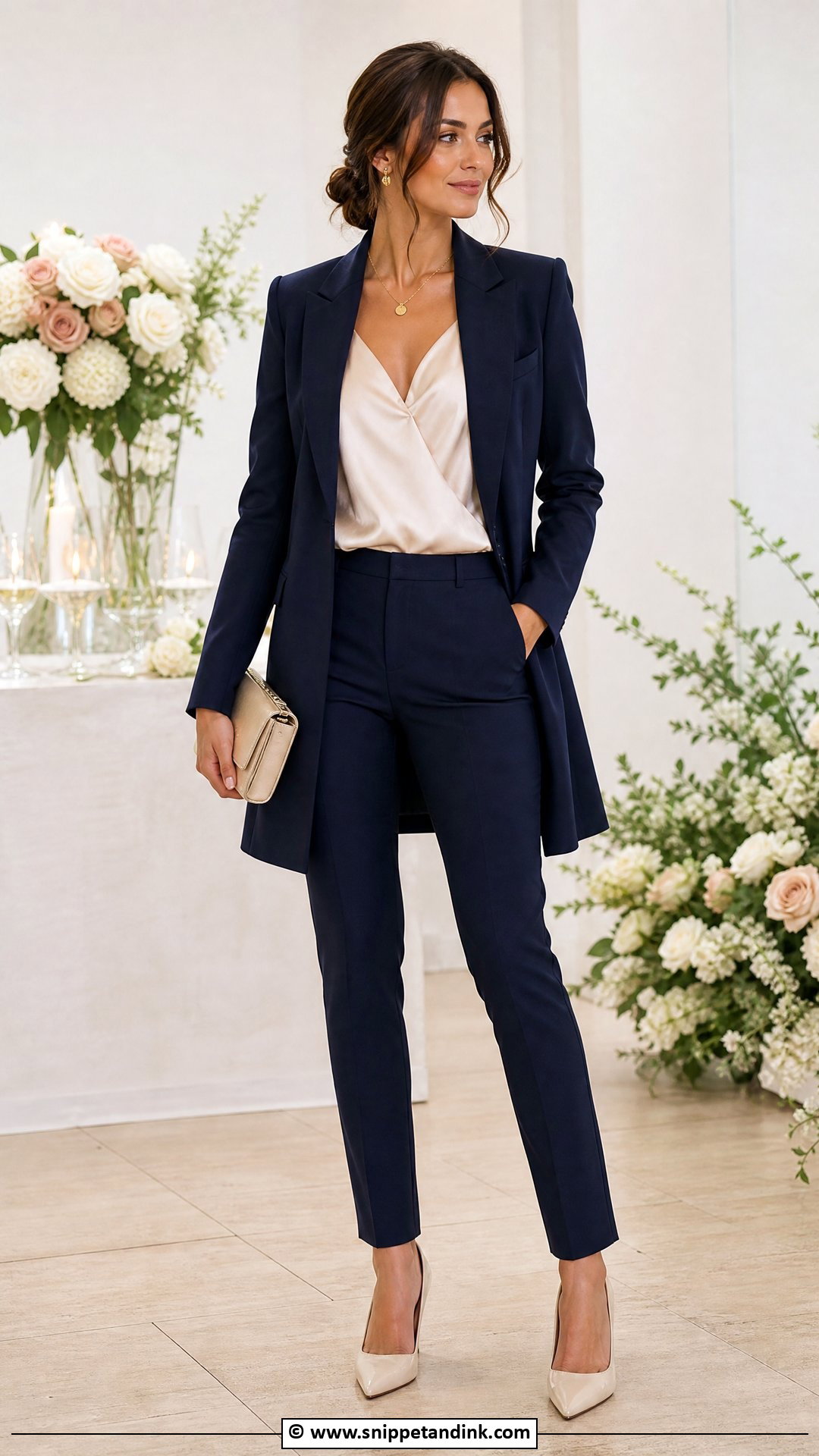
A suit with slim pants works for formal and semi-formal weddings, and it’s practical for guests who prioritize comfort. Slim trousers look best with a longer blazer, a peplum jacket or a tuxedo top. Pointed pumps lengthen the leg. To keep it from looking like office wear, I choose a rich fabric and soften it with a silk blouse or embellished shell. It suits mothers of the bride who prefer a neat line.
30. Designer Suit With Skirt
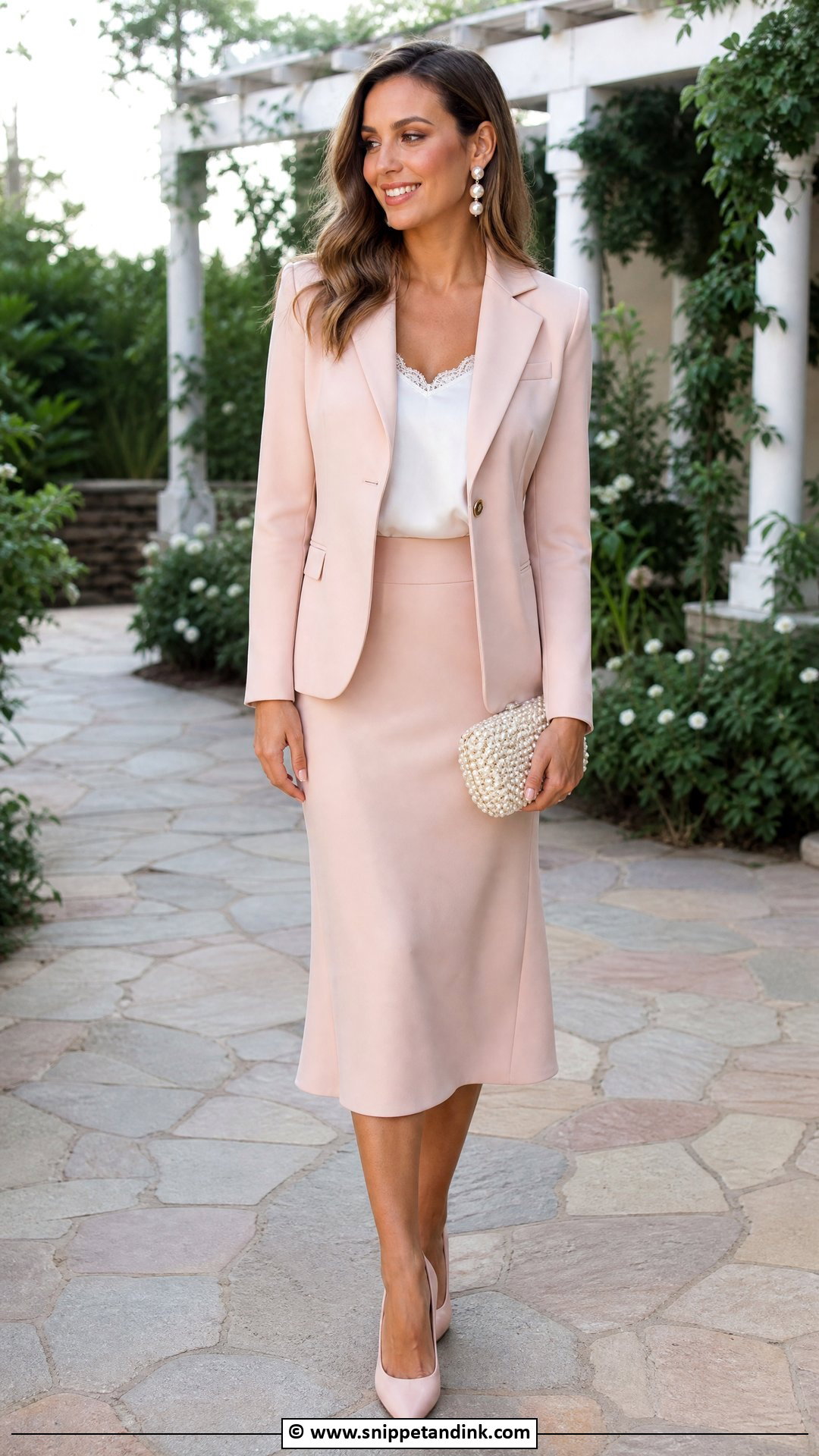
A designer suit with a skirt suits women who like tailoring but want a softer shape. Pair a structured blazer with a matching midi, pencil or gently flared skirt. It fits traditional venues and daytime luncheons, where dresses are the norm but you want something tailored. Pencil skirts need a walking slit or vent, or you’ll struggle on stairs. For brides, choose ivory lace or satin; for guests, navy, blush, sage or floral jacquard.
31. Designer Suit With Cape Blazer
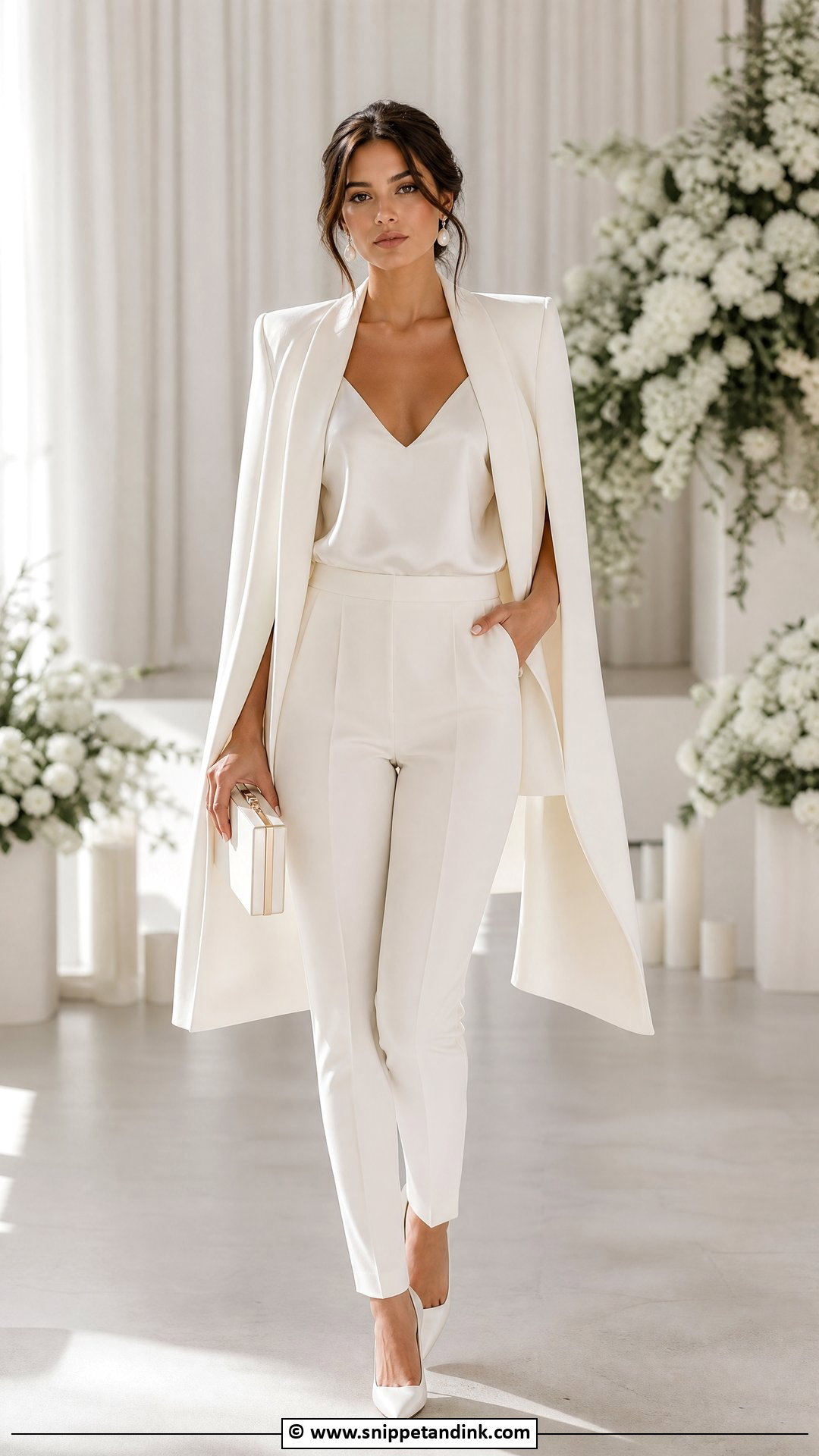
A cape blazer adds drama without embellishment, and it moves well in entrances and portraits. Slim or straight trousers keep the focus on the top. My caution is practical: capes limit how you reach and hold things, so plan to set your bag and glass down. Crepe or satin-backed crepe gives the most fluid drape. It suits brides who want a strong ceremony look, and mothers of the bride at formal evening weddings.
32. Designer Suit With Sequin Blazer
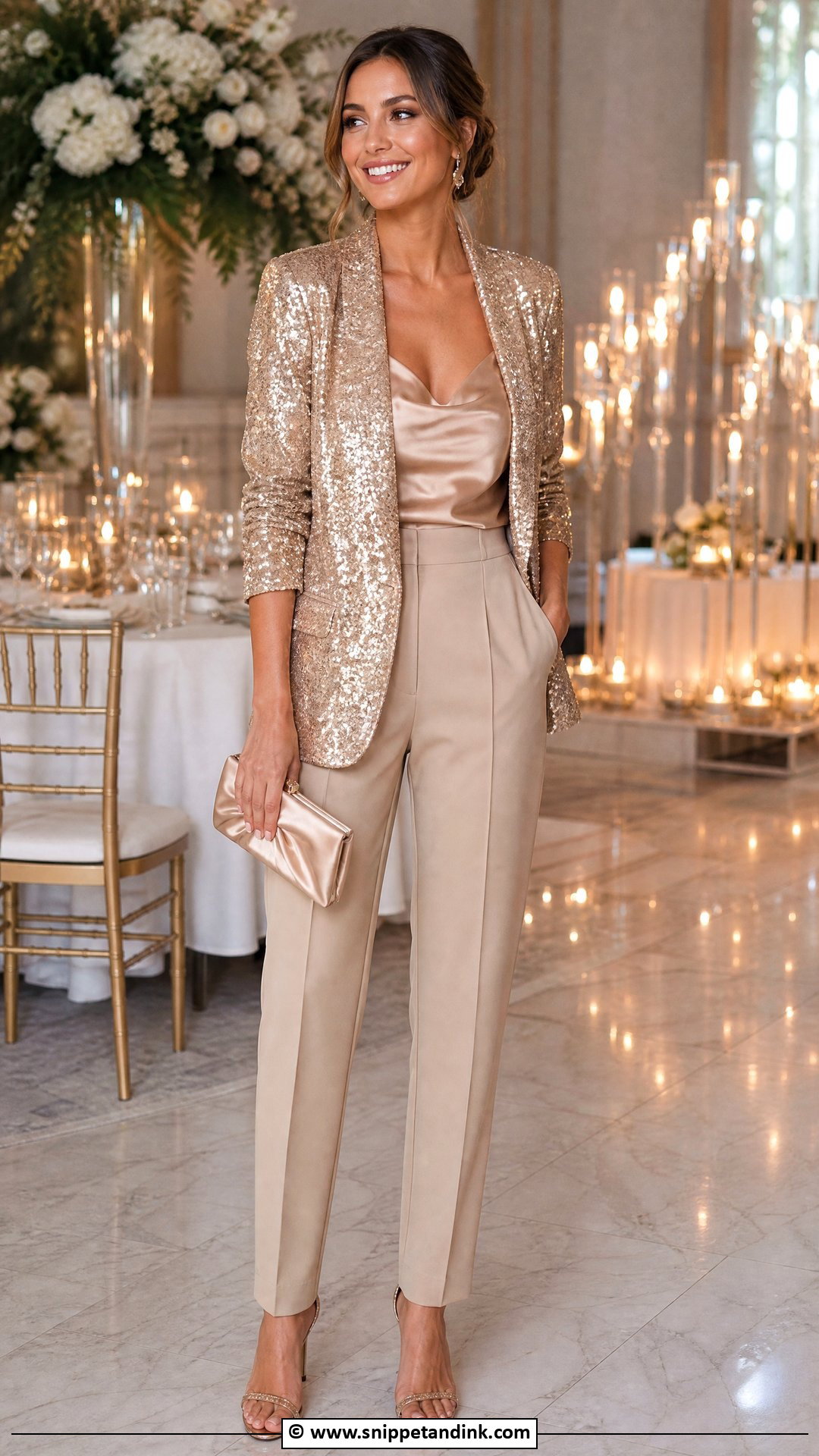
Sequins are made for evening receptions and cocktail-code weddings, where they sparkle naturally in low light. Fine sequins in black, silver, champagne, navy or rose gold keep it sophisticated. Pair the blazer with smooth trousers and a simple camisole. Sequins scratch the inner arm and catch on lace, so I’d check the underarm seams in a fitting. If you’re attending the ceremony too, wear a plain blazer first and switch for the party.
33. Designer Suit With Sheer Blouse
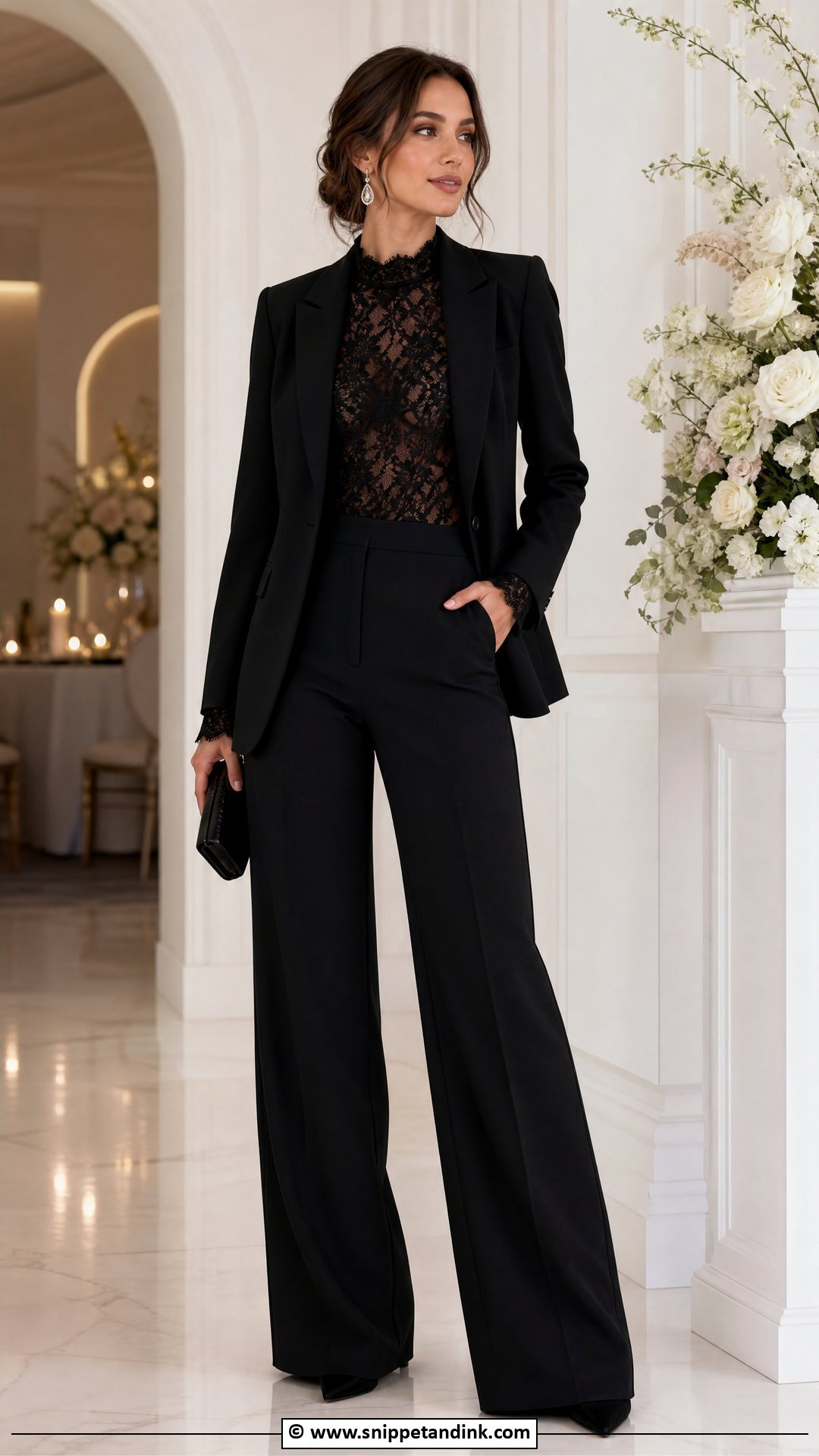
Sheer blouses add softness and depth under a blazer, especially in evening light. They need a lining, a higher neckline, lace panels or gentle sleeves to stay wedding appropriate. Nude, ivory, blush, black and navy pairings all work. I keep the blouse relaxed rather than tight, since a fitted sheer top shows every seam of what’s underneath. Refined heels, a clutch and small earrings complete it.
34. Designer Suit For Mother Of The Bride
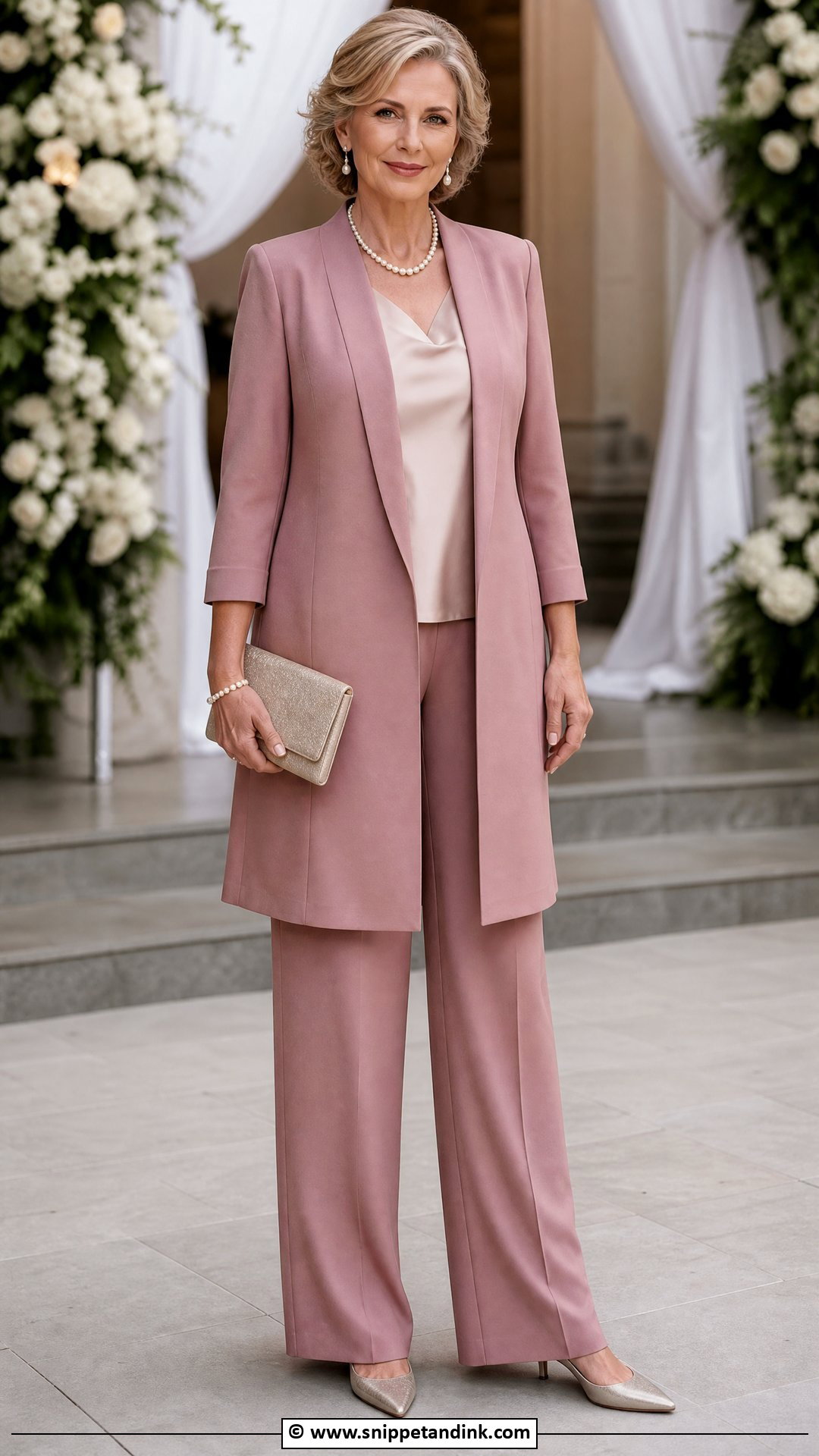
For the mother of the bride, I aim for a suit that feels special in family photos and comfortable through a long day of standing and greeting. Soft crepe, jacquard, satin and lace-trimmed fabrics all work. A belted, longline, peplum or softly structured blazer flatters most figures, with trousers that move easily. Navy, champagne, dusty rose, silver, sage and mauve are good choices. Coordinate with the wedding colors without matching the bridesmaids too closely.
35. Designer Suit For Courthouse Wedding
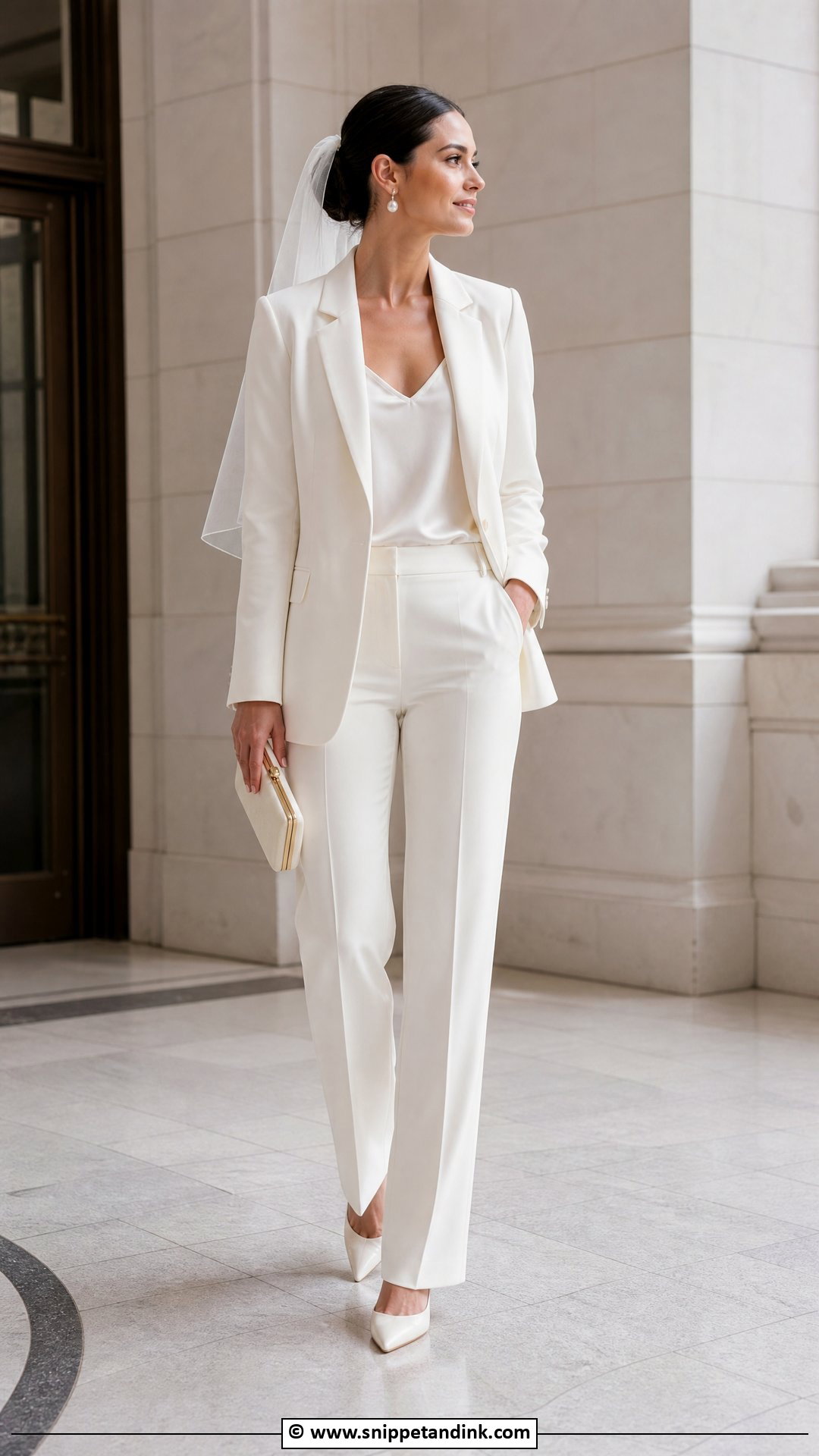
A courthouse suit should feel clean and personal without heavy formality. Ivory, white, blush or soft gray suits a bride, while guests can wear navy, sage or pastel tailoring. A fitted blazer, wide or straight trousers and a silk camisole are the base. Pointed heels and pearl or gold earrings finish it, and brides can add a short veil or a headband for city photos. It moves easily from the ceremony to a celebratory lunch afterward.
Shoulders First and Hems Last at the Tailor
Almost every wedding suit needs some tailoring, and the order matters. I tell clients to buy for the shoulders, because a jacket that’s too wide or narrow there is expensive and sometimes impossible to fix. Everything else can be adjusted around it.
- Buy the size that fits your shoulders and bust, even if the waist or trousers are loose.
- Book the first fitting about four to six weeks before the wedding, and bring the shoes and the top you’ll wear underneath.
- Have the waist of the jacket shaped, and the sleeves set so a little of your wrist shows.
- Leave trouser hems until last, measured in your shoes, with the trousers sitting where you’ll wear them on your waist.
- Do a final try-on a week or so before, sitting and walking stairs, so there’s time for one more small fix.
On the day, hang the suit in a garment bag rather than folding it into a suitcase, and steam it rather than ironing satin or velvet directly. A small lint roller in your bag is worth having for dark fabrics, which collect fluff from car seats and guests’ wraps.
A Suit Is Only as Good as Its Last Fitting
A suit is a practical and stylish way to dress for a wedding without giving up elegance or comfort. The outfits that work best share the same details: good fabric, precise tailoring, polished shoes and accessories matched to the dress code. A white bridal tuxedo, a pastel guest suit, a velvet evening pantsuit or a mother-of-the-bride look can all feel as special as a dress. My advice is to use these as starting points, then adjust the color, fabric and fit to your venue, season and role.
You'll Like These Ideas:


Leave a Reply