
A suit at a wedding solves problems a dress can’t. You can sit on a hay bale, climb into a vintage car and dance until the lights come up without thinking about a hem. The range is wide now: ivory bridal tailoring, pastel sets, velvet tuxedos, satin two-pieces, linen for the beach, waistcoat outfits and full three-pieces. Which one you need depends on the dress code, the season, the venue and your role, whether that’s bride, bridesmaid or guest. I always say fit comes first, but fabric, color and the shoe decide whether a suit reads as wedding or as Monday morning. These are the suits I style most, with what I check on each.
Match the Suit Fabric to the Month on the Invitation
The color of a wedding suit gets all the attention, but the cloth decides how comfortable you feel at four in the afternoon. This is how I match fabric to season when I’m pulling suits for a wedding.
Late spring and summer
Linen, linen blends, cotton blends and lightweight tropical wool, ideally unlined or half-lined. A fully lined jacket traps heat against your back, and that’s where you’ll feel it first during an outdoor ceremony. Pale colors reflect sun; dark navy in July soaks it up.
Early autumn
Crepe and wool crepe. They drape well, barely crease and handle a warm afternoon followed by a cool evening. Satin also comes into its own at autumn evening receptions.
Winter
Velvet, heavier wool and tweed. They hold their shape and look rich under warm indoor lighting. Check the venue, though. A packed winter reception can be hotter than a summer garden, so a lighter top under the jacket gives you somewhere to retreat.
Whatever the season, I sit, stand and lift my arms in a suit before recommending it. Stiff fabric that looks crisp on a hanger can pull across the back the moment you reach for a glass.
1. White Wedding Suit
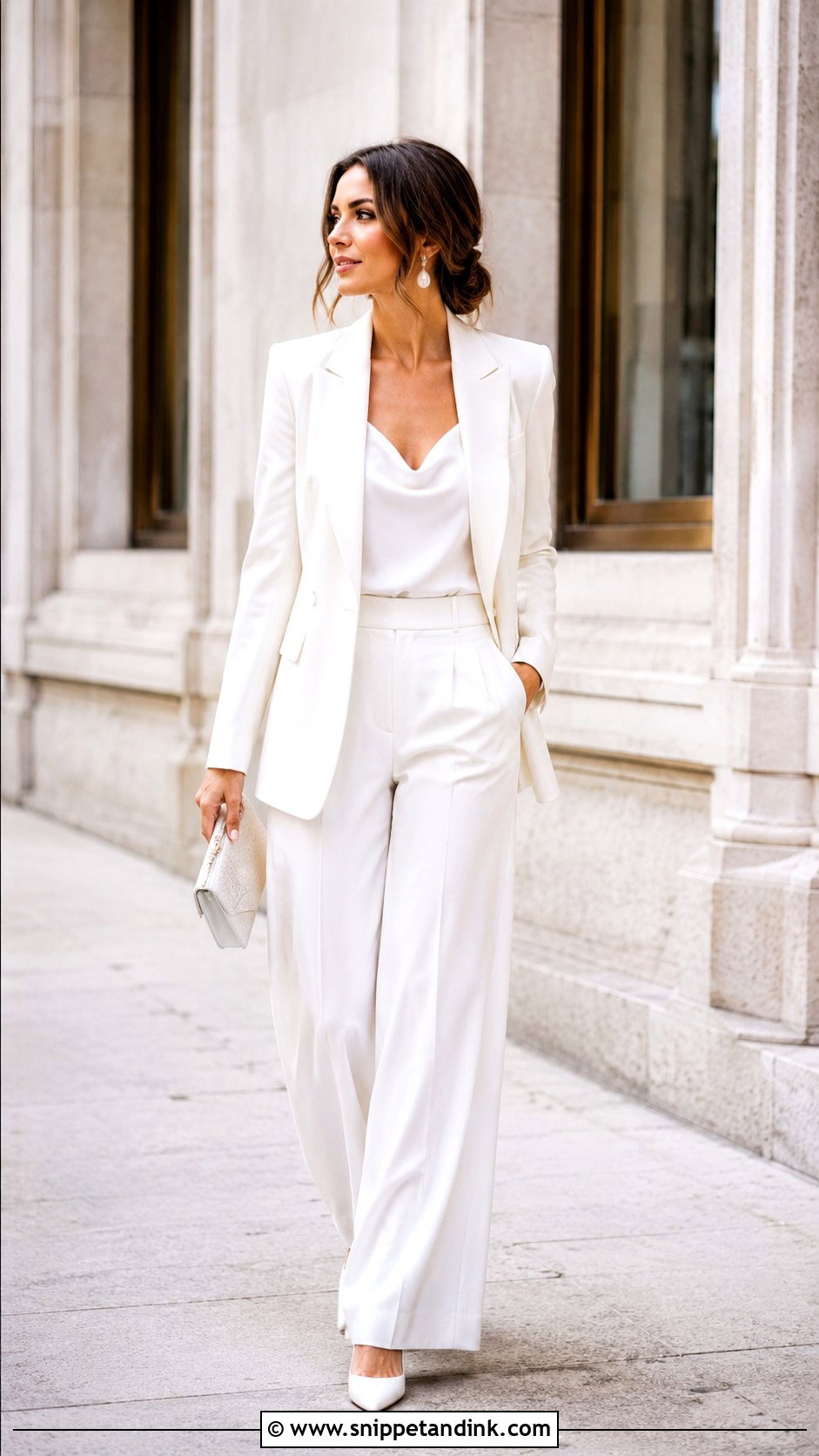
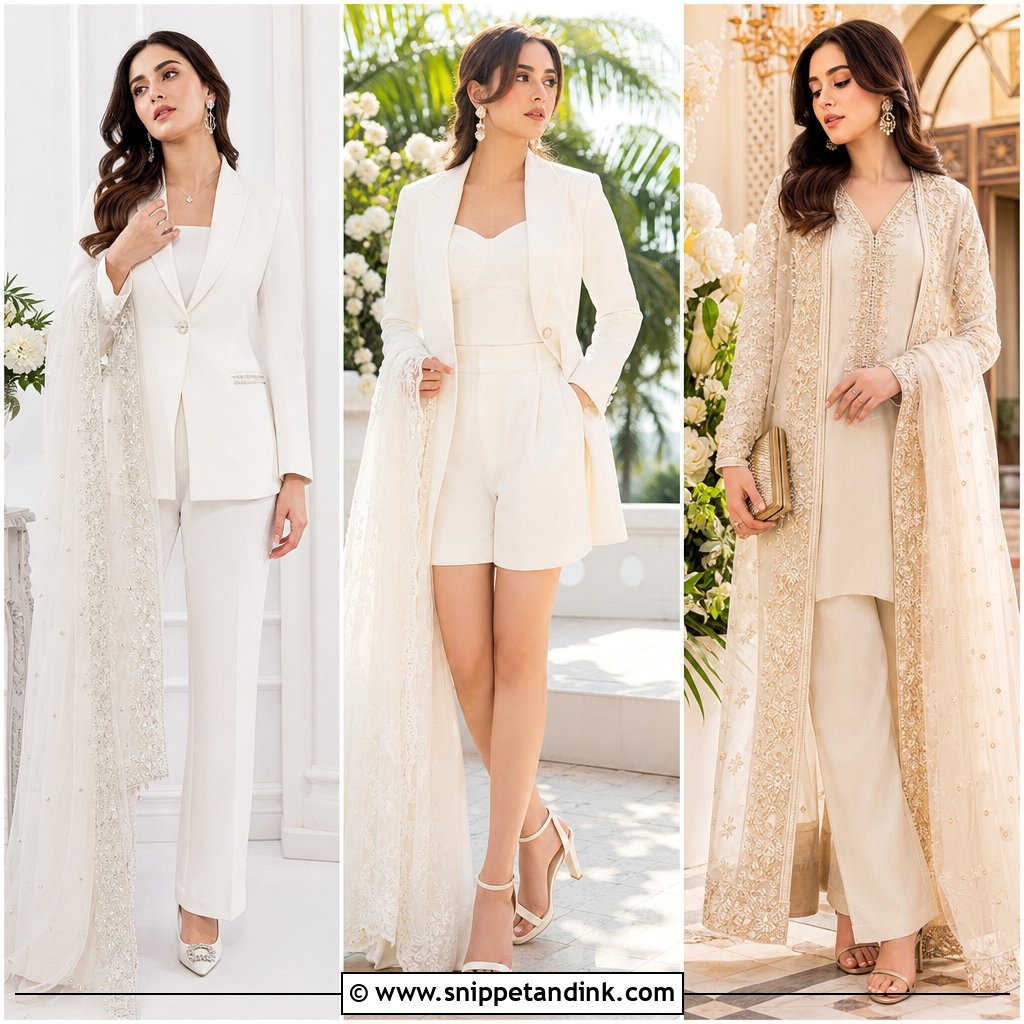
For a bride who doesn’t want a gown, a white suit is the cleanest answer. I’d choose a tailored blazer with straight or wide-leg trousers, then soften it with a silk camisole, satin bustier or lace top. Bright white is unforgiving on fit and on fabric quality, so feel the cloth: thin white fabric shows pocket bags and seam allowances through it. White pointed heels or sleek sandals lengthen the leg, and pearl earrings add the bridal note. Keep accessories light, with a small structured clutch. Courthouse ceremonies, city weddings, rehearsal dinners and reception changes all suit it.
2. Ivory Wedding Suit
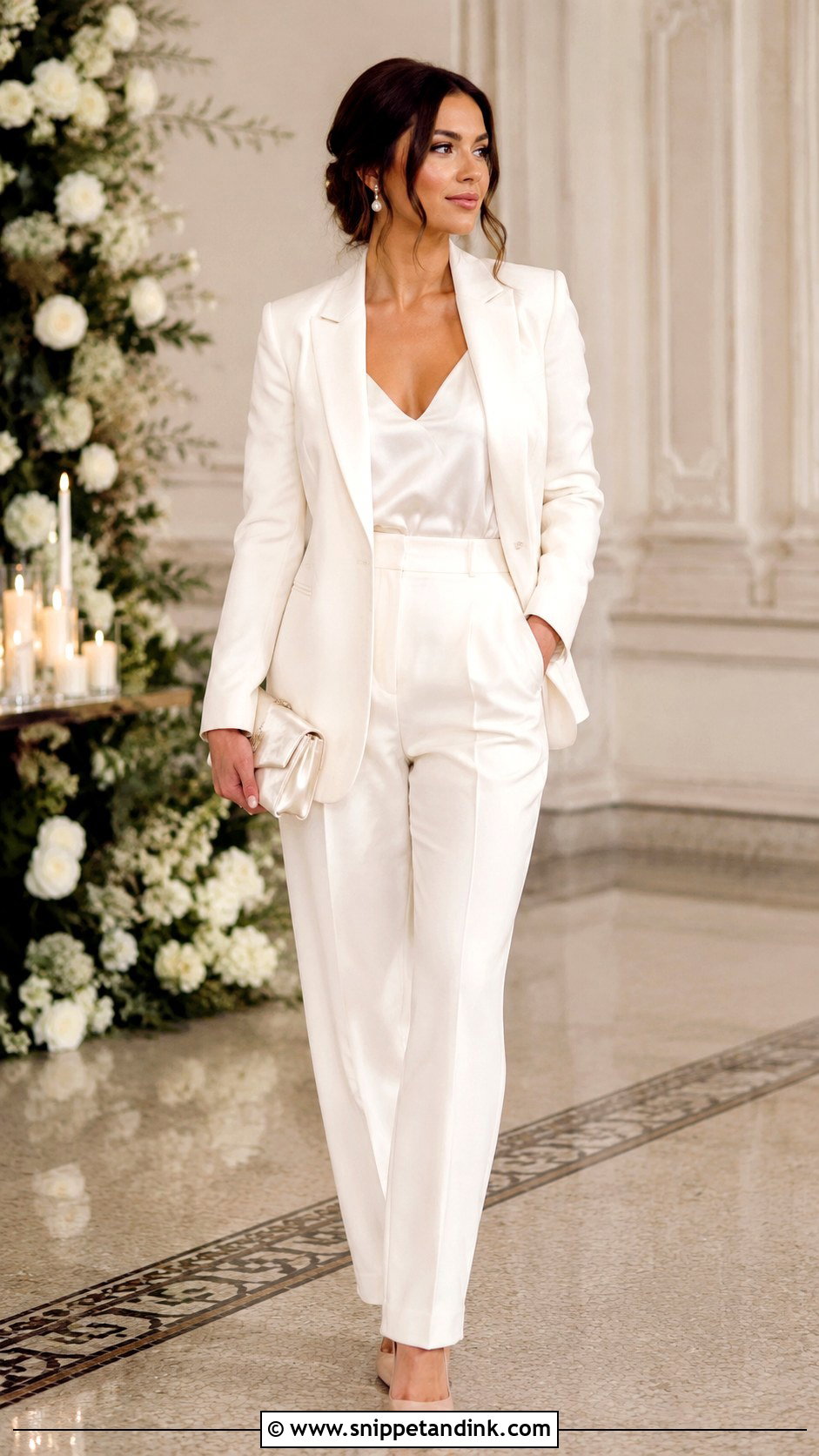
Ivory sits warmer against most skin than optic white, which is why I often steer brides toward it for daylight photos. A single-breasted blazer with clean shoulders and high-waisted trousers gives the longest line. Underneath, a cream silk blouse, lace bodysuit or minimal camisole. Nude heels, ivory pumps or metallic sandals all work, depending on the ground you’ll stand on. Pearl drops, a low bun and a small bouquet or clutch finish it. One thing to check: hold every ivory piece together in daylight before the day, because two ivories from different makers rarely match. It’s well suited to garden weddings and intimate celebrations.
3. Black Wedding Tuxedo Suit
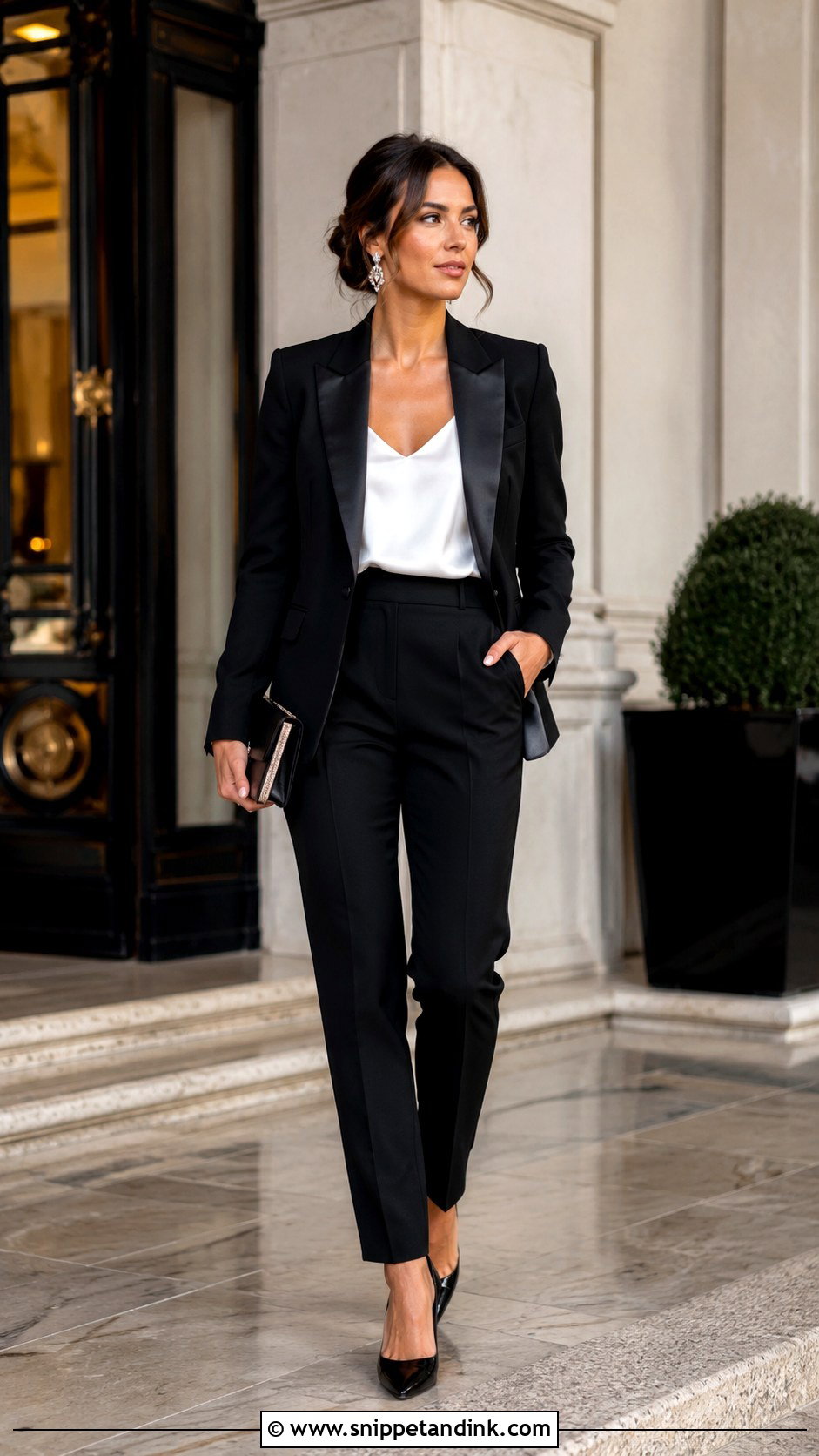
A black wedding tuxedo suit is the most formal suit on this list and the easiest to wear again. It belongs at black-tie weddings, evening ceremonies and modern bridal looks. I fit the jacket either close or deliberately oversized, never in between, with satin lapels and tailored trousers. A silk camisole, structured corset top or crisp white shirt underneath sets the tone. Black heels keep it long, and crystal earrings bring light to the face, which matters in dim evening rooms. A bride can make it ceremonial with a white boutonniere or pearl details.
4. Champagne Wedding Suit
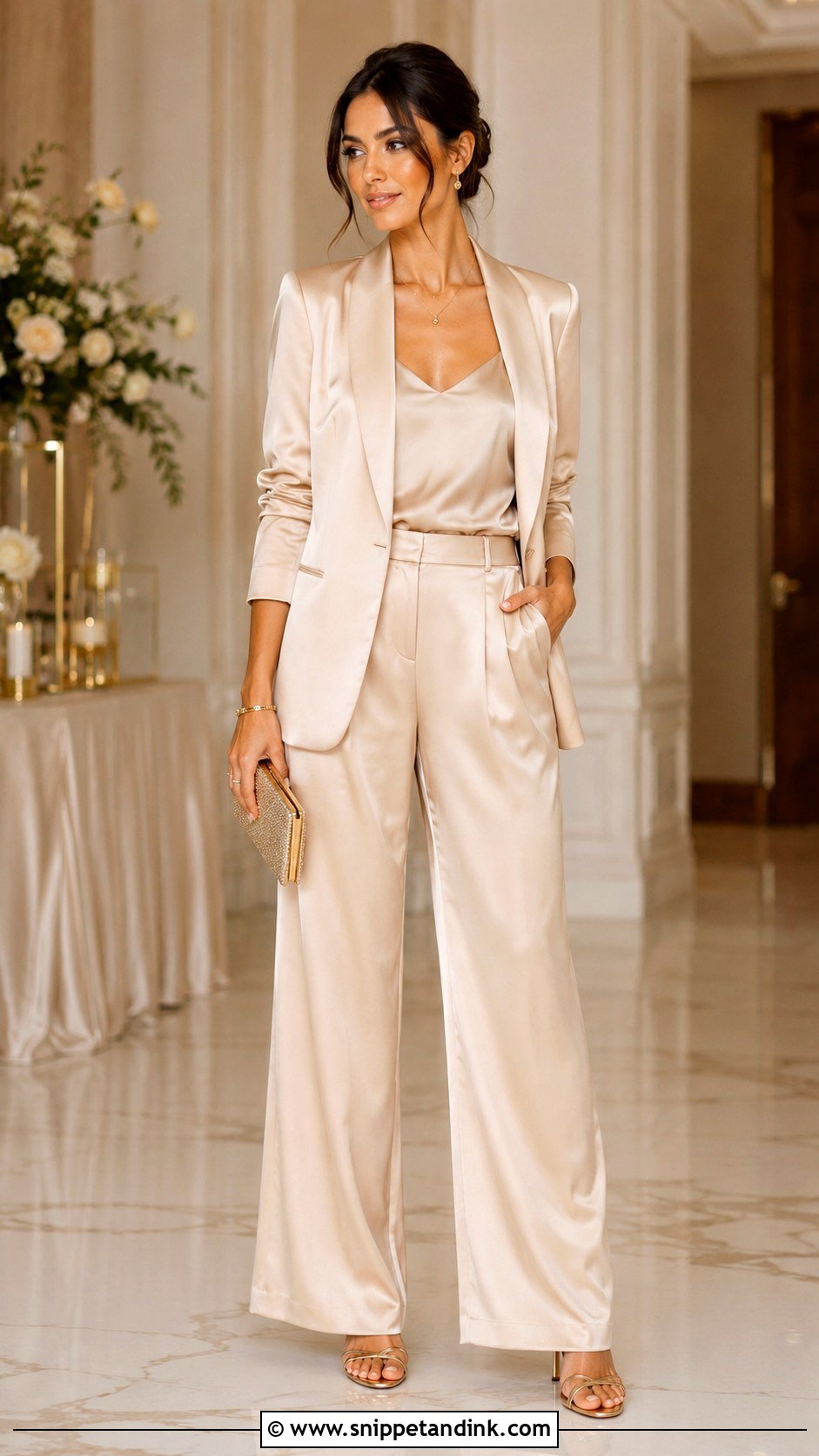
Champagne gives a soft glow without flash, and it changes a lot with fabric. In satin it shines; in crepe or a silk blend it looks almost like a warm neutral. It suits bridesmaids, guests and brides who want a non-white bridal look. I dress it tonally, with a champagne blazer, matching wide-leg trousers and a camisole in the same family. Gold heels and soft jewelry add warmth. Pair it with a low ponytail, soft waves or a polished bun. It belongs at evening weddings, hotel venues and cocktail receptions, especially with a warm neutral palette.
5. Pastel Pink Wedding Suit
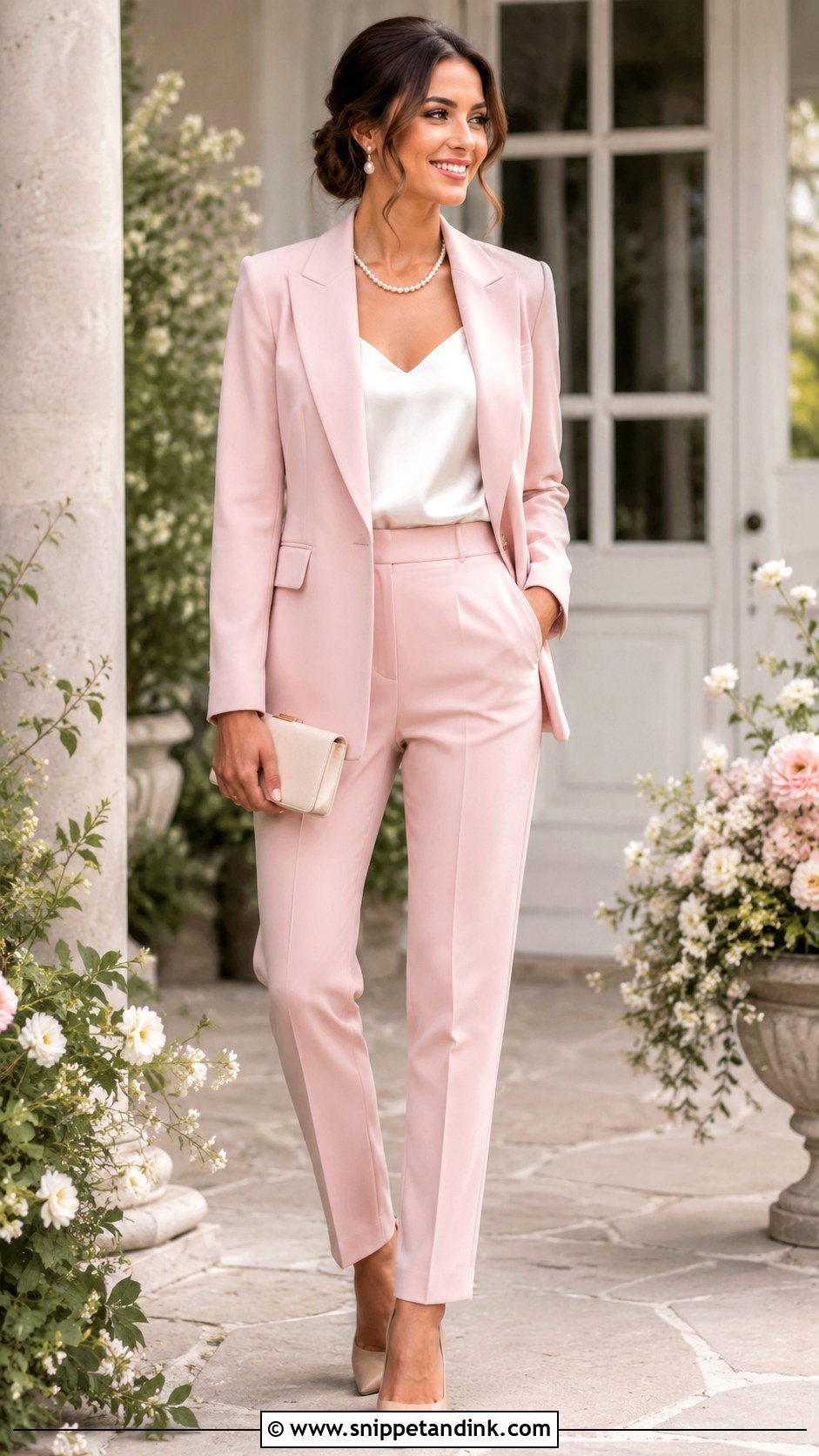
Pastel pink reads young very quickly, and the fix is tailoring. Keep the blazer sharp and the trousers clean, and the color looks grown-up instead of sweet. A blush blazer with matching trousers, a white camisole or satin shell, nude heels, pearl jewelry and a soft clutch is the classic version. For something more modern, swap in pointed white pumps and simple gold hoops. Spring ceremonies, bridesmaids, bridal showers and outdoor venues all welcome it.
6. Powder Blue Wedding Suit
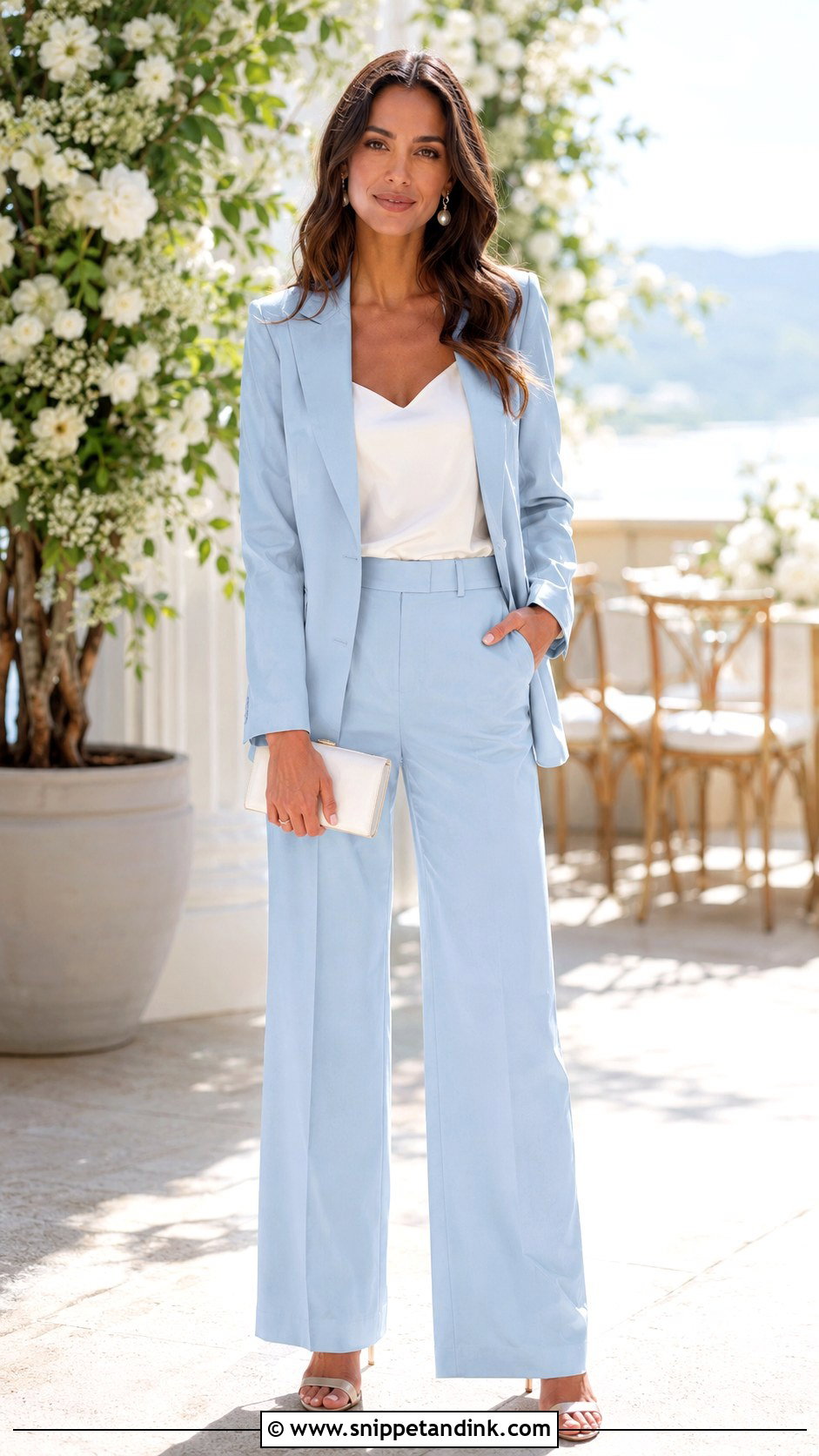
A powder blue wedding suit is calm and airy, made for spring and summer. It’s soft enough for daytime and still polished enough for a formal setting. A slim blazer with wide-leg trousers is the safe cut; a relaxed double-breasted jacket is the fashion-forward one. A white silk tank, silver heels and pearl jewelry keep it crisp. At a beach or garden venue, I switch to block-heel sandals and a woven clutch. It’s one of my go-to colors for guests who want color without boldness.
7. Navy Wedding Suit
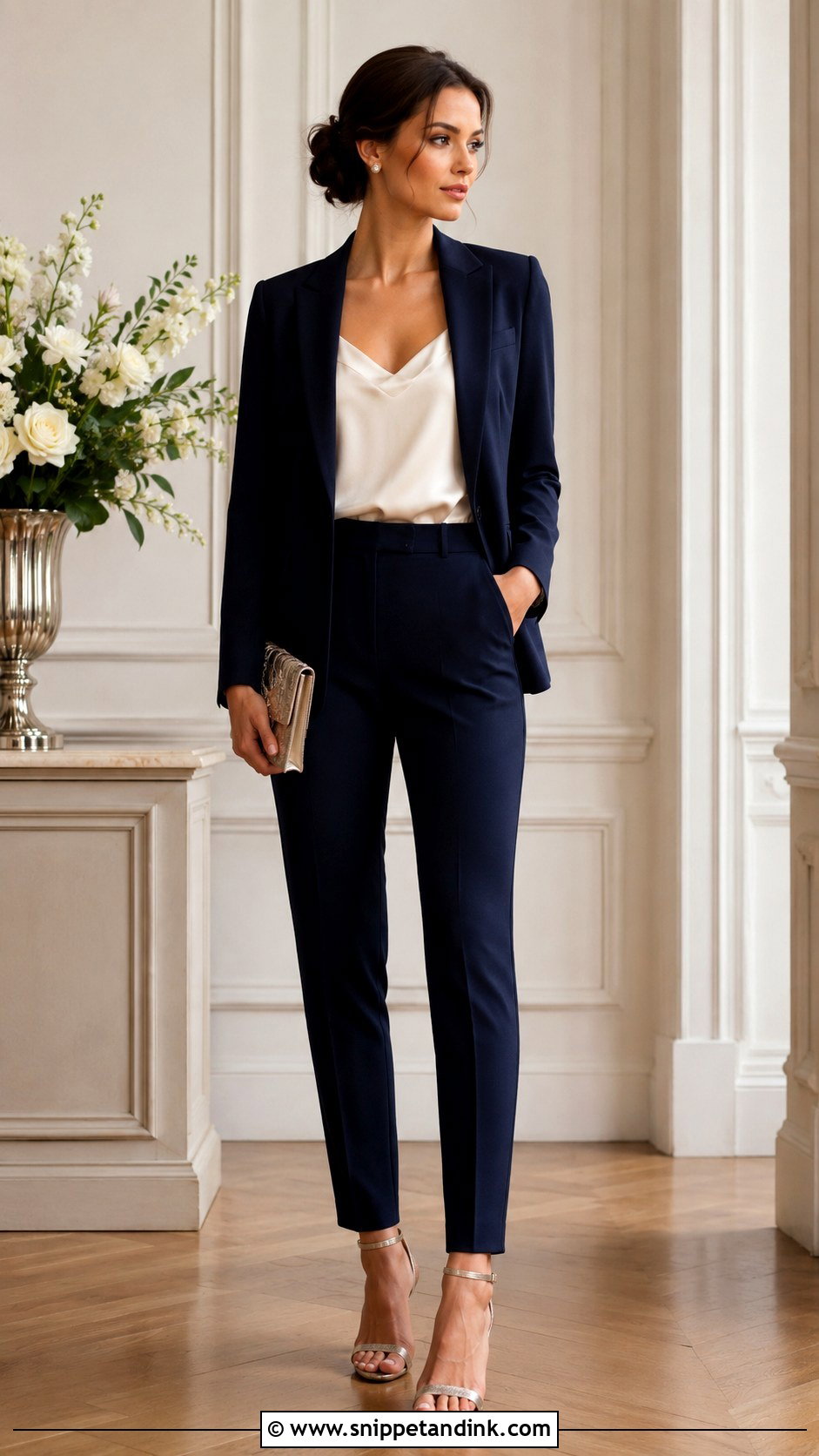
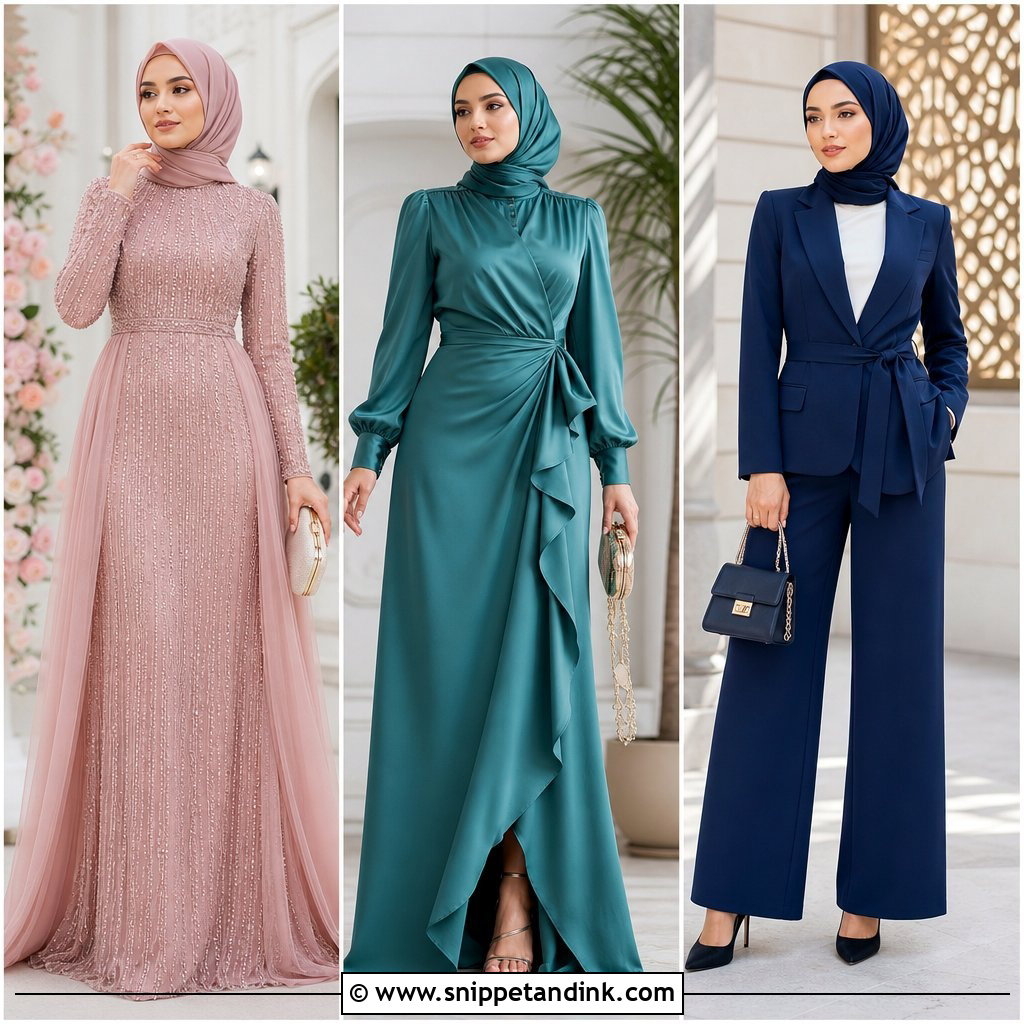
Navy does what black does, with less severity in daylight. It suits every season and every role: guests, bridesmaids, mothers of the couple. Style a deep navy blazer and trousers with an ivory blouse or satin camisole, metallic heels and pearl studs or crystal earrings. For evening, a navy tuxedo with satin lapels is sharper. Navy also takes accessories well, from silver and champagne to burgundy and soft pink, which makes it easy to tie into a wedding palette. I’d buy it knowing you’ll wear it to the next three weddings too.
8. Sage Green Wedding Suit
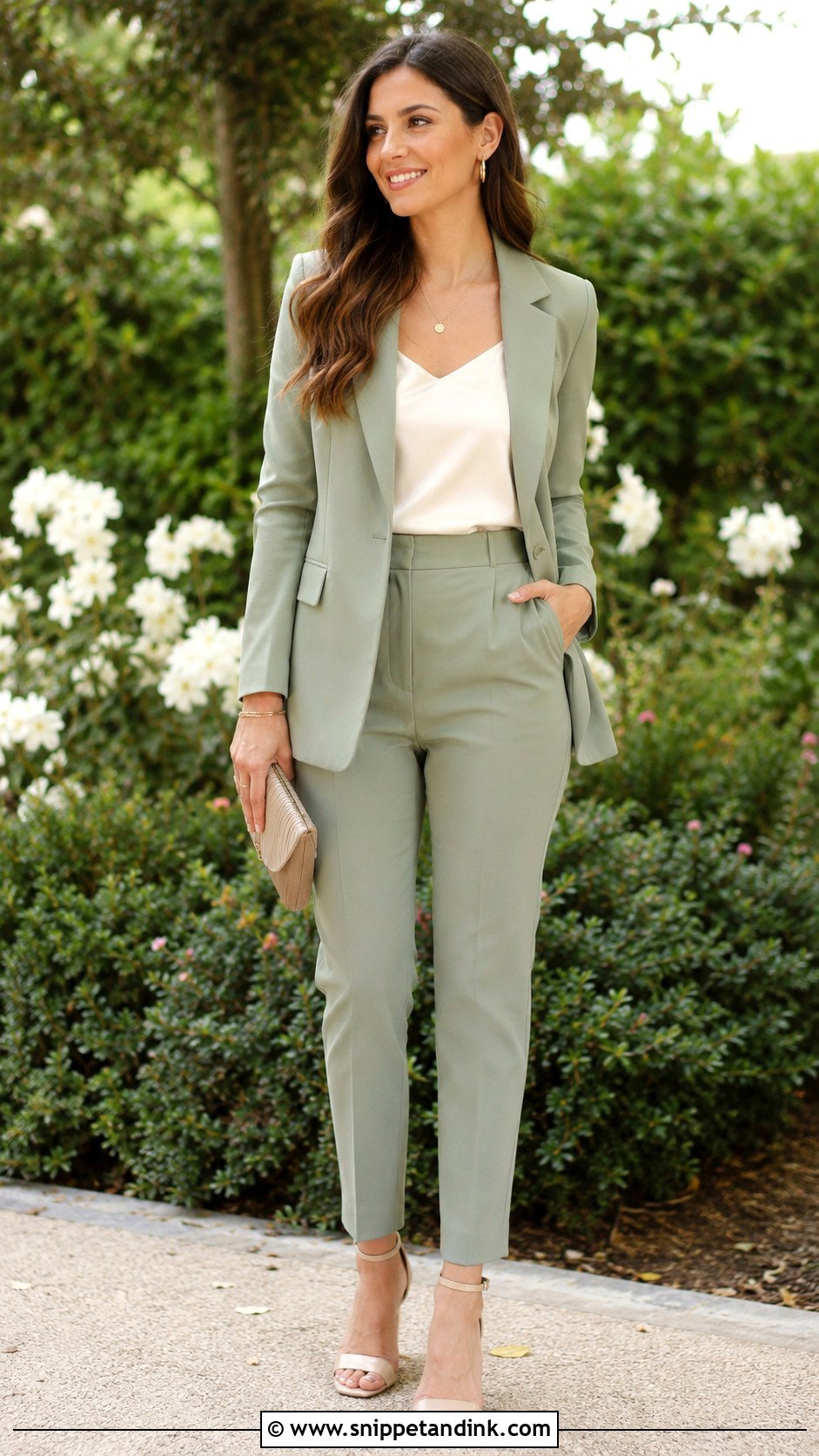
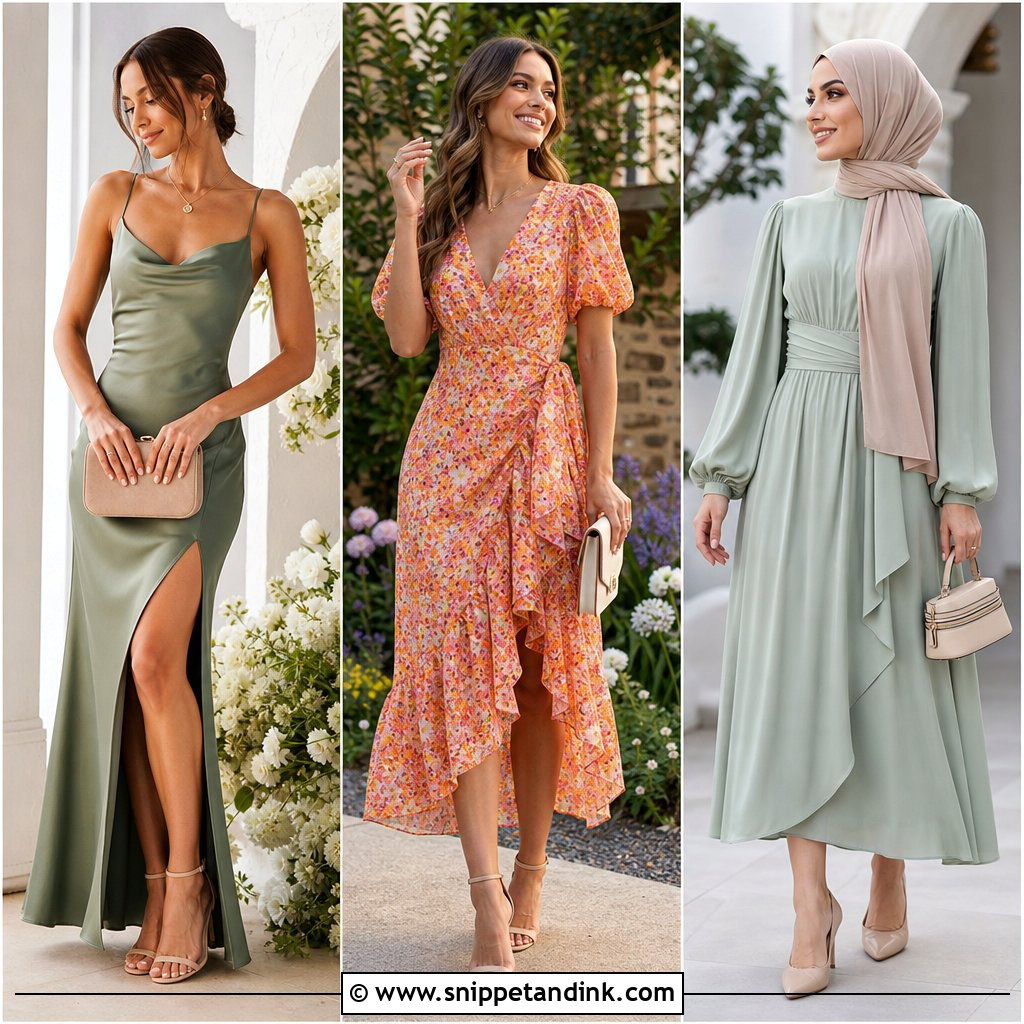
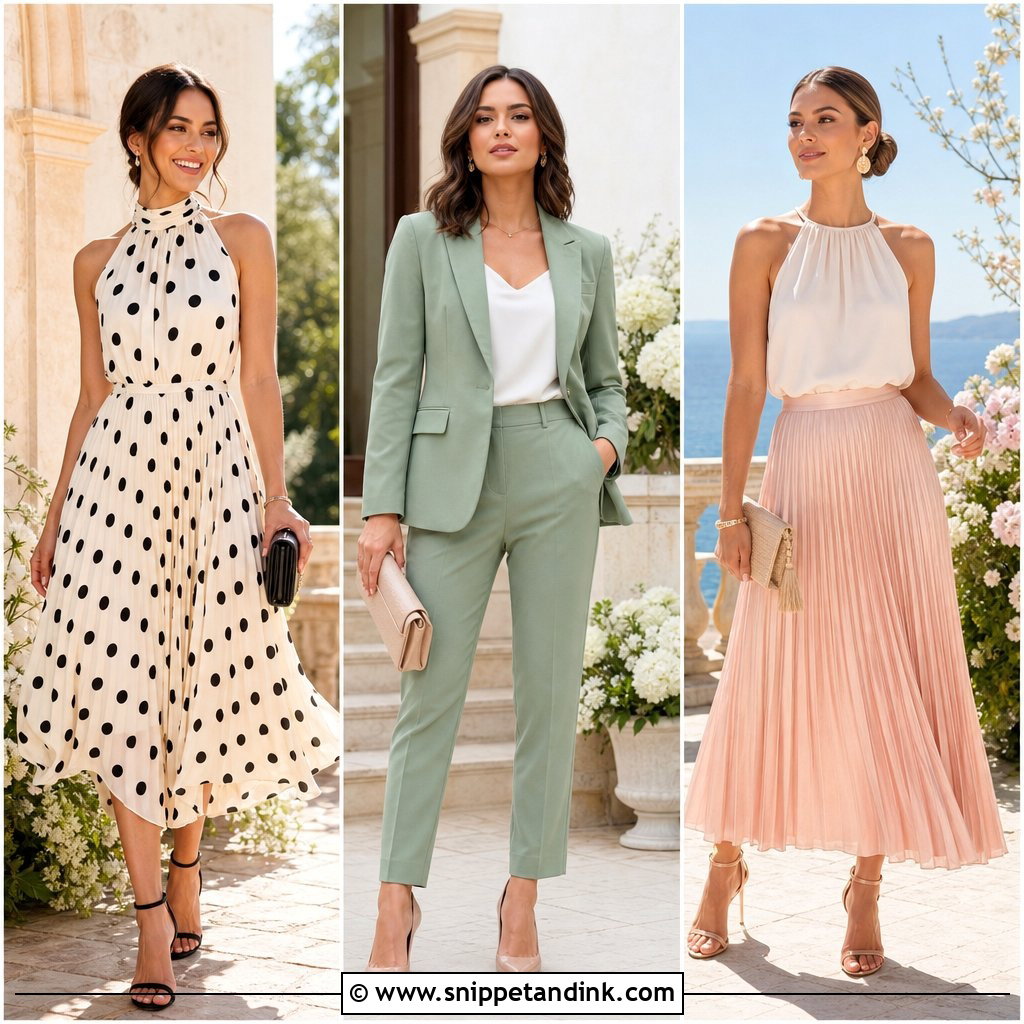
Sage is the suit color I see most at garden and outdoor weddings, and it suits bridesmaids especially well. Choose a light sage blazer with high-waisted trousers and a cream camisole or silky tank. Nude sandals, gold jewelry and a small beige clutch keep it balanced. Fabric changes the formality: a linen blend for a relaxed wedding, satin, crepe or structured suiting for a dressier one. Sage is subtle enough to feel refined and colorful enough to stand out in a crowd of navy.
9. Burgundy Wedding Suit
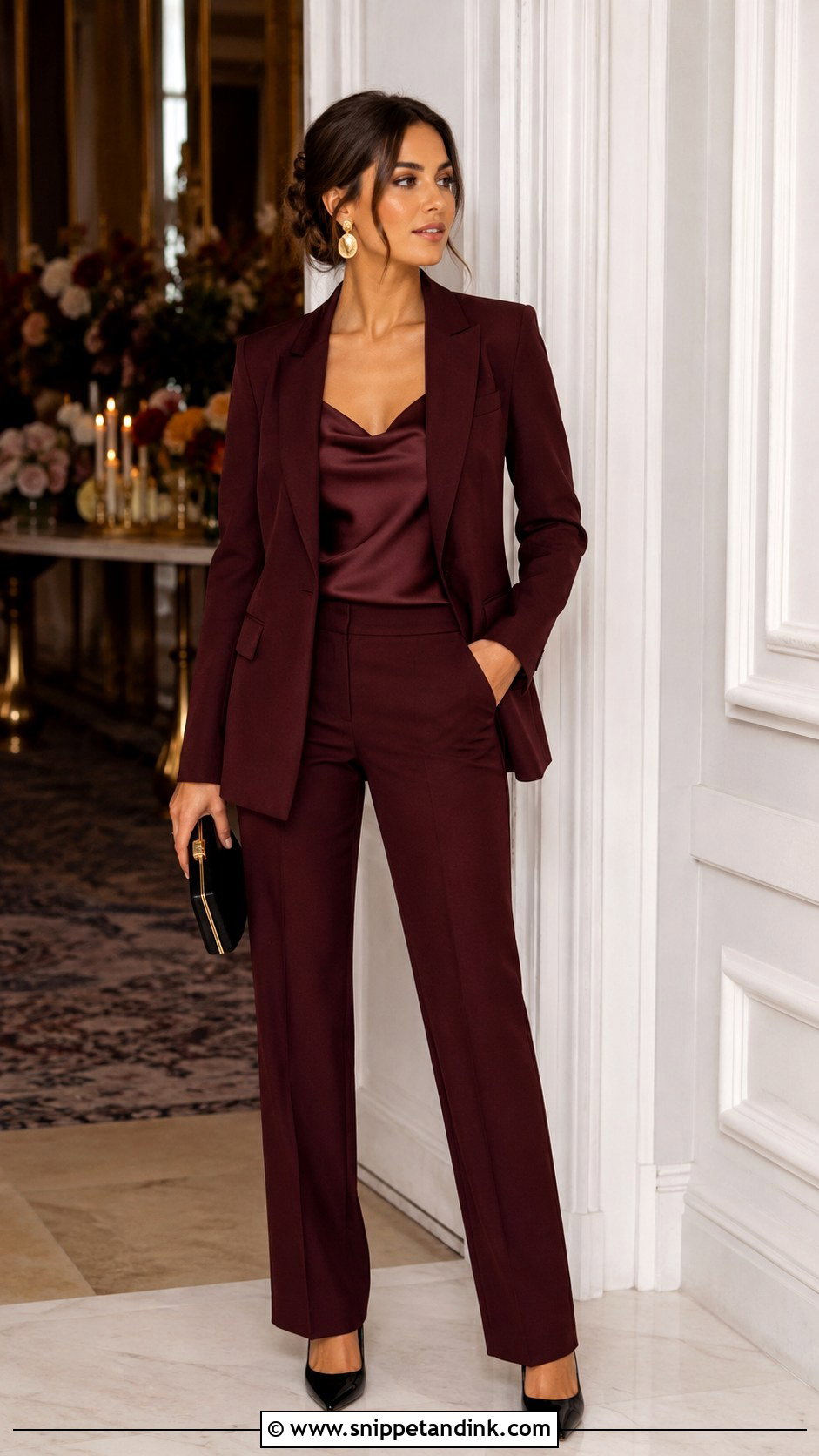
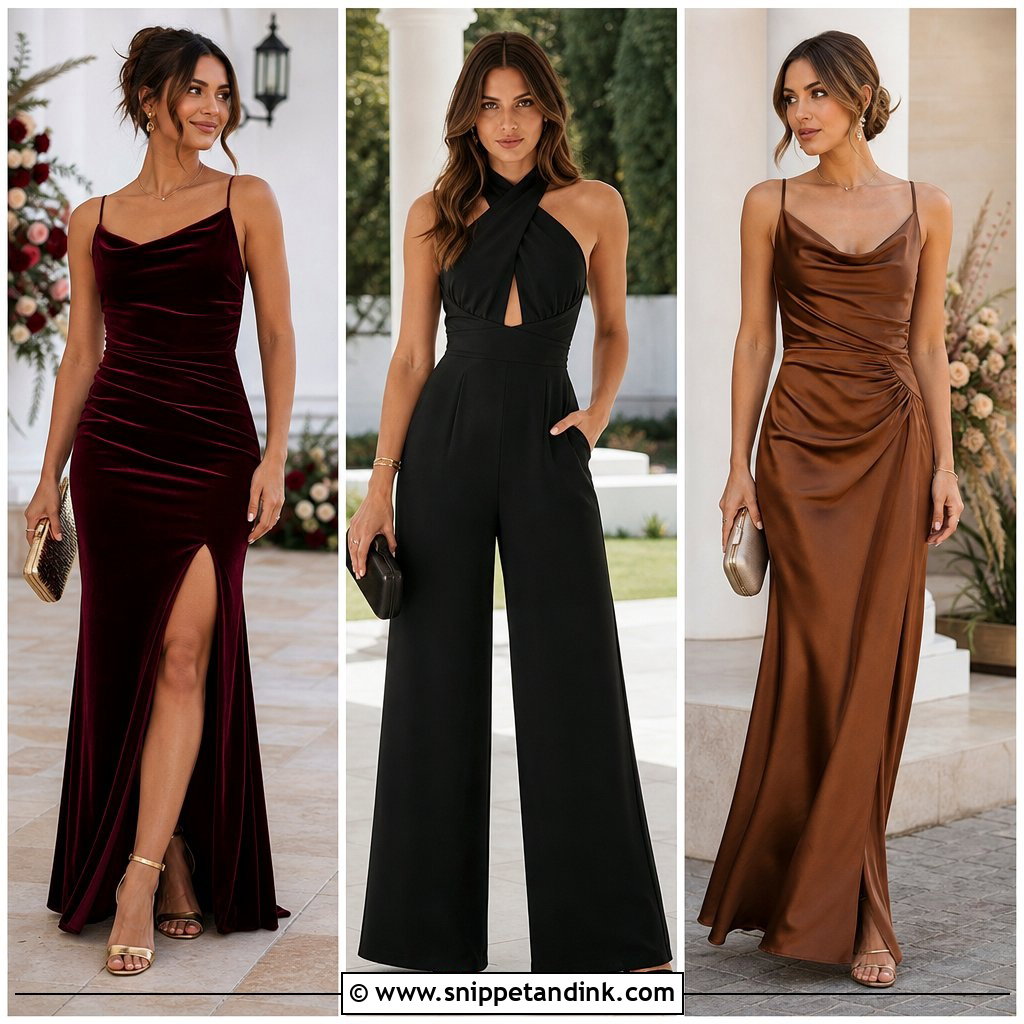
Burgundy brings depth to fall and winter weddings without needing sparkle. I’d cut it as a fitted blazer with straight-leg trousers and add a satin camisole for softness. Nude, black or metallic heels all work, depending on how formal the invitation reads. Gold jewelry warms it, a sleek clutch keeps it dressy. For a formal wedding, velvet or a wool blend gives the color its richest depth; for a lighter feel, a crepe drapes more smoothly. Guests, bridesmaids and evening wedding parties all wear it well.
10. Emerald Green Wedding Suit
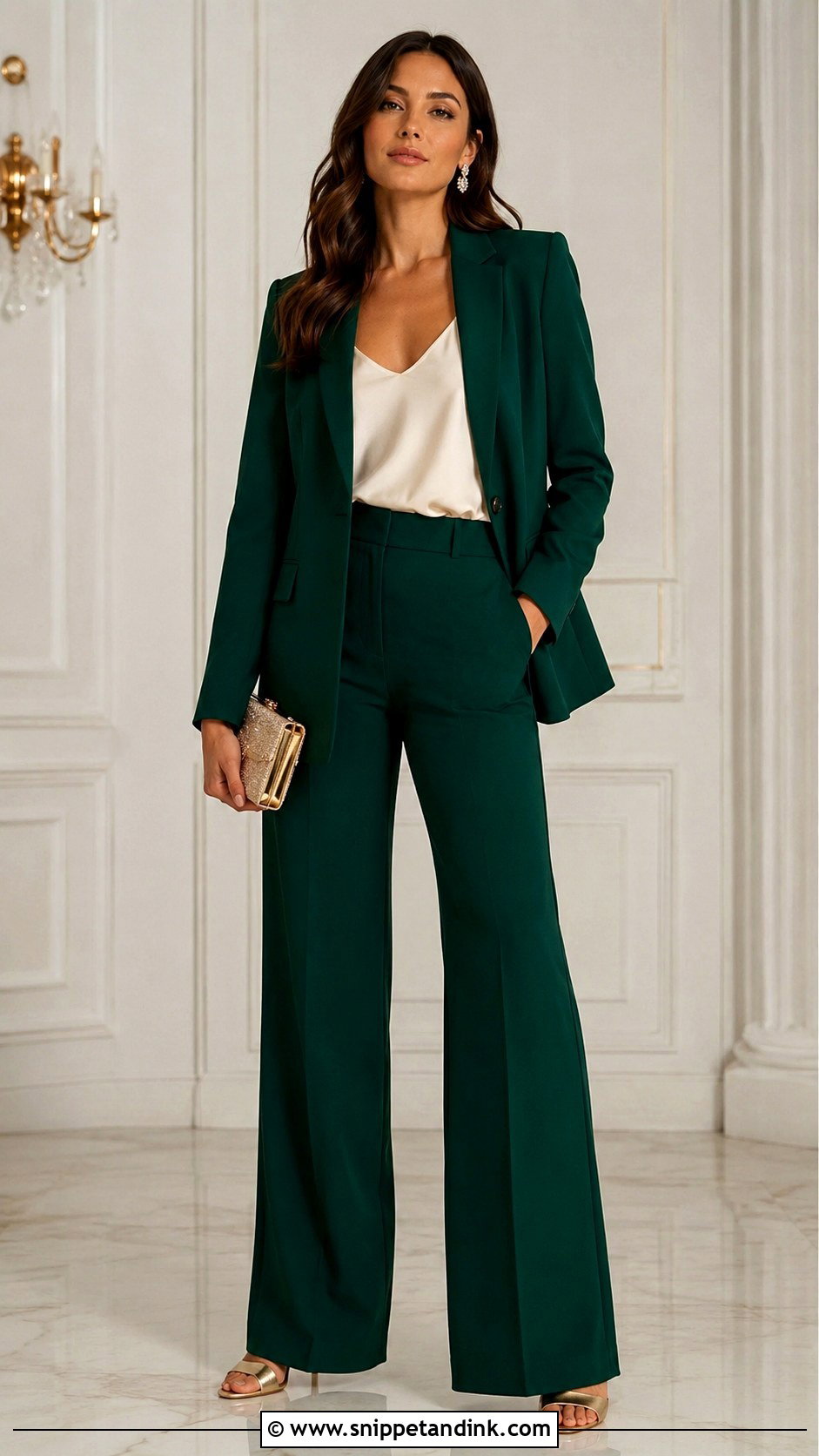
Emerald is bold without being loud, and it flatters a wide range of skin tones. Satin, crepe, velvet and structured suiting all carry it, each a little differently: satin brightens it, velvet deepens it. Keep the styling plain, with a black or ivory camisole, pointed heels and gold jewelry. Wide-leg trousers with a sharp blazer make the matching set look most striking. At an evening wedding, I add crystal earrings and a sleek clutch.
11. Velvet Wedding Suit
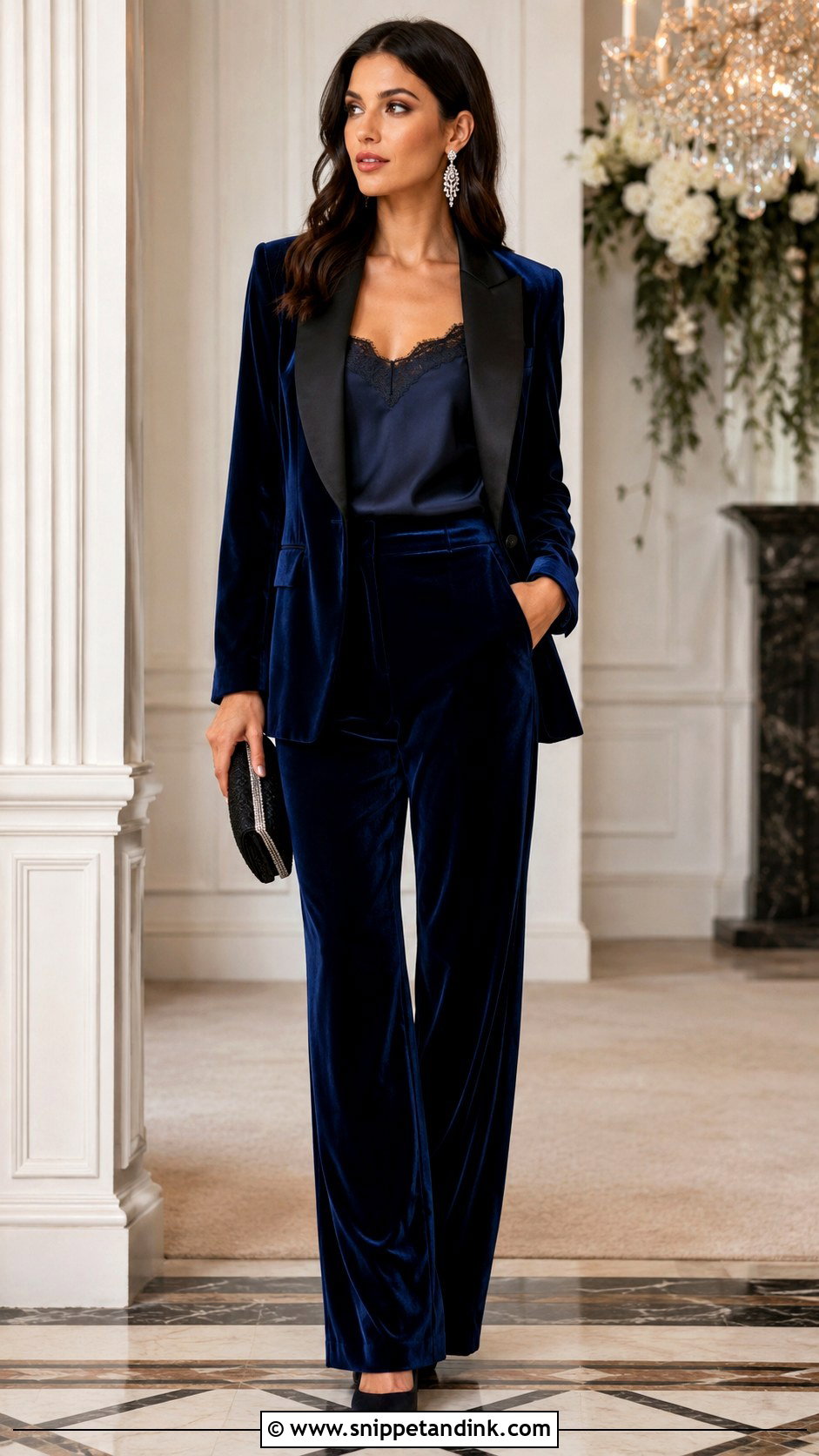
Velvet is for cool months and evening celebrations, and even a simple cut feels special in it because the pile catches light. Navy, burgundy, emerald and black are the most formal shades. A velvet blazer and trousers look right with a satin camisole and pointed heels. Small crystal earrings, a sleek clutch and polished hair are enough. One honest warning: velvet gets warm on a crowded dance floor, and it marks where you sit, so I hang it straight after the ceremony meal rather than leaving the jacket bunched on a chair. Winter weddings, hotel receptions and dinner-style parties suit it.
12. Linen Wedding Suit
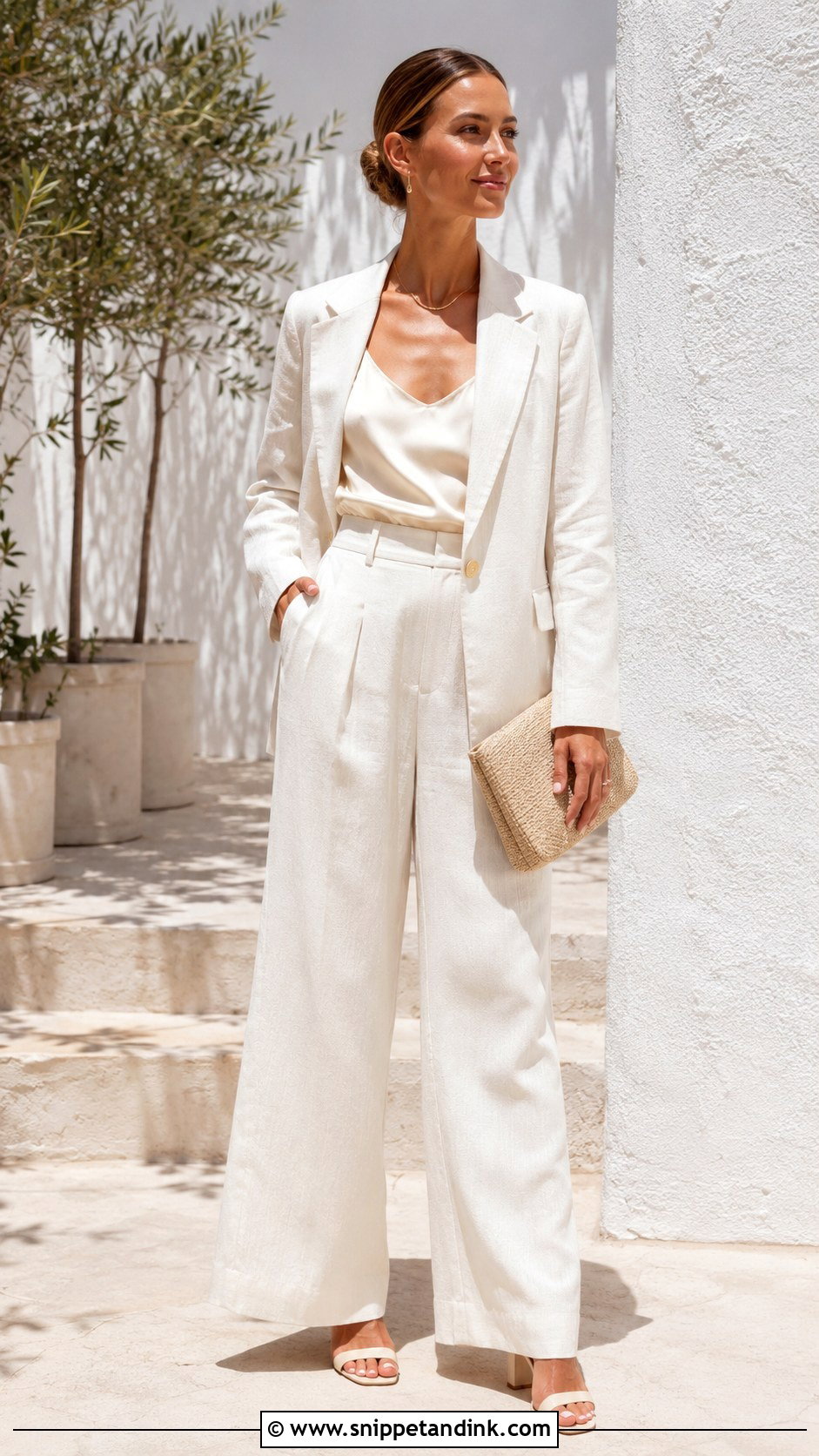
A linen wedding suit keeps you cool at warm-weather weddings, outdoor venues and destination celebrations. Choose linen or a linen blend in ivory, beige, sage, light blue or soft pink, with straight or wide-leg trousers. A blend with a little viscose or cotton creases less than pure linen. A silk tank or simple fitted top keeps it clean, with block-heel sandals, a woven clutch and minimal jewelry. Linen will wrinkle no matter what, so accept a lived-in look rather than chasing crisp. Daytime ceremonies, beaches and garden receptions are where it belongs.
13. Satin Wedding Suit
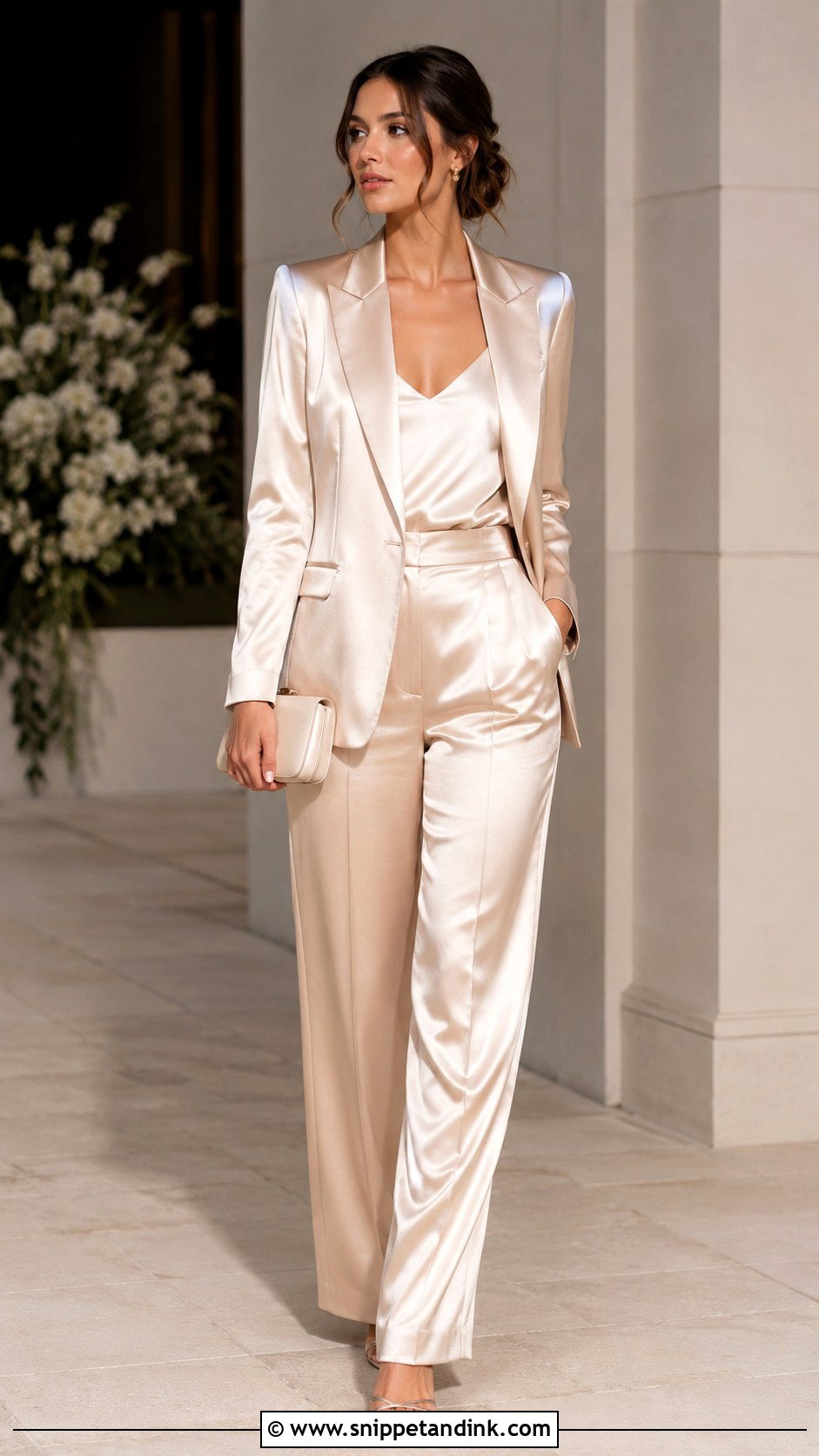
Satin glows, and that glow shows every detail, good and bad. So I keep the cut simple: a satin blazer and matching trousers in ivory, champagne, blush, navy or emerald, with no extra pockets, flaps or trims fighting the shine. A delicate camisole, strappy heels and small jewelry balance it. For a modern take, slick the hair back and carry a structured clutch. Satin suits brides, guests and reception changes, and it’s strongest at evening weddings and indoor venues.
14. Wide Leg Wedding Suit
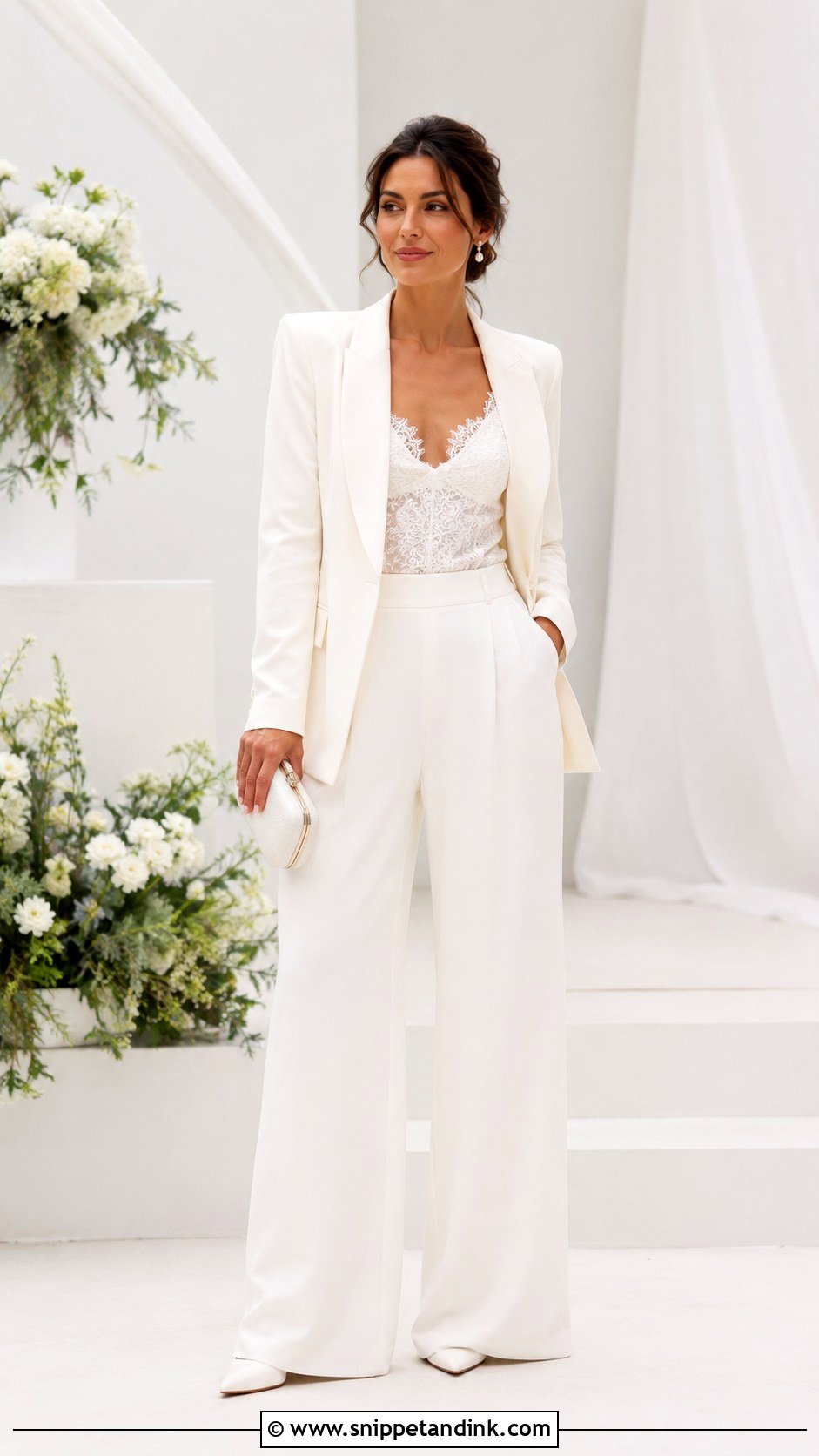
Wide-leg trousers are as close as a suit gets to the movement of a gown. With heels and a tailored blazer, the leg line runs long. It’s a strong choice for a bride who wants drama without a dress, and for any guest who prefers trousers. Ivory, black, navy, champagne or pastels, depending on the season. A tucked camisole, lace top or clean bodysuit keeps the waist neat. The hem should skim the floor without dragging, measured in the shoes you’ll wear. Pointed heels, simple jewelry and a small clutch finish it.
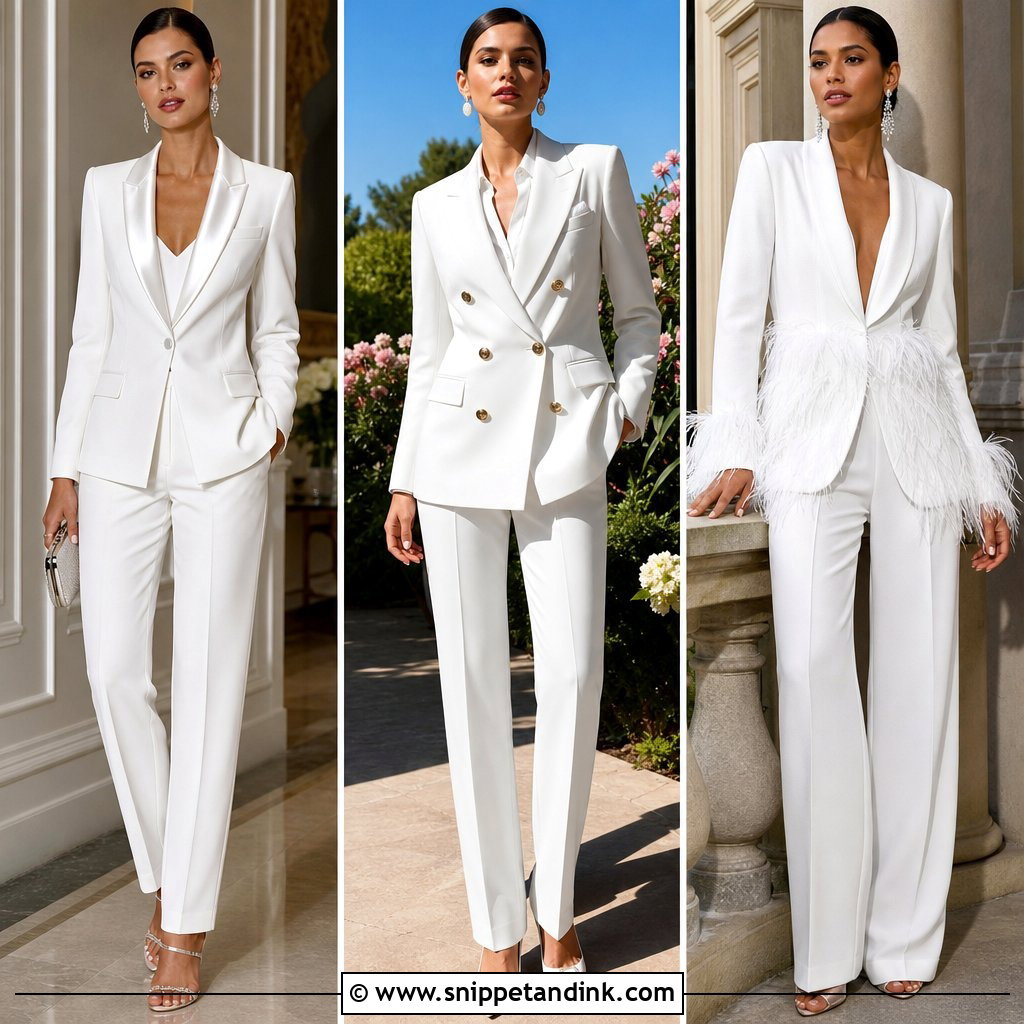
15. Three Piece Wedding Suit
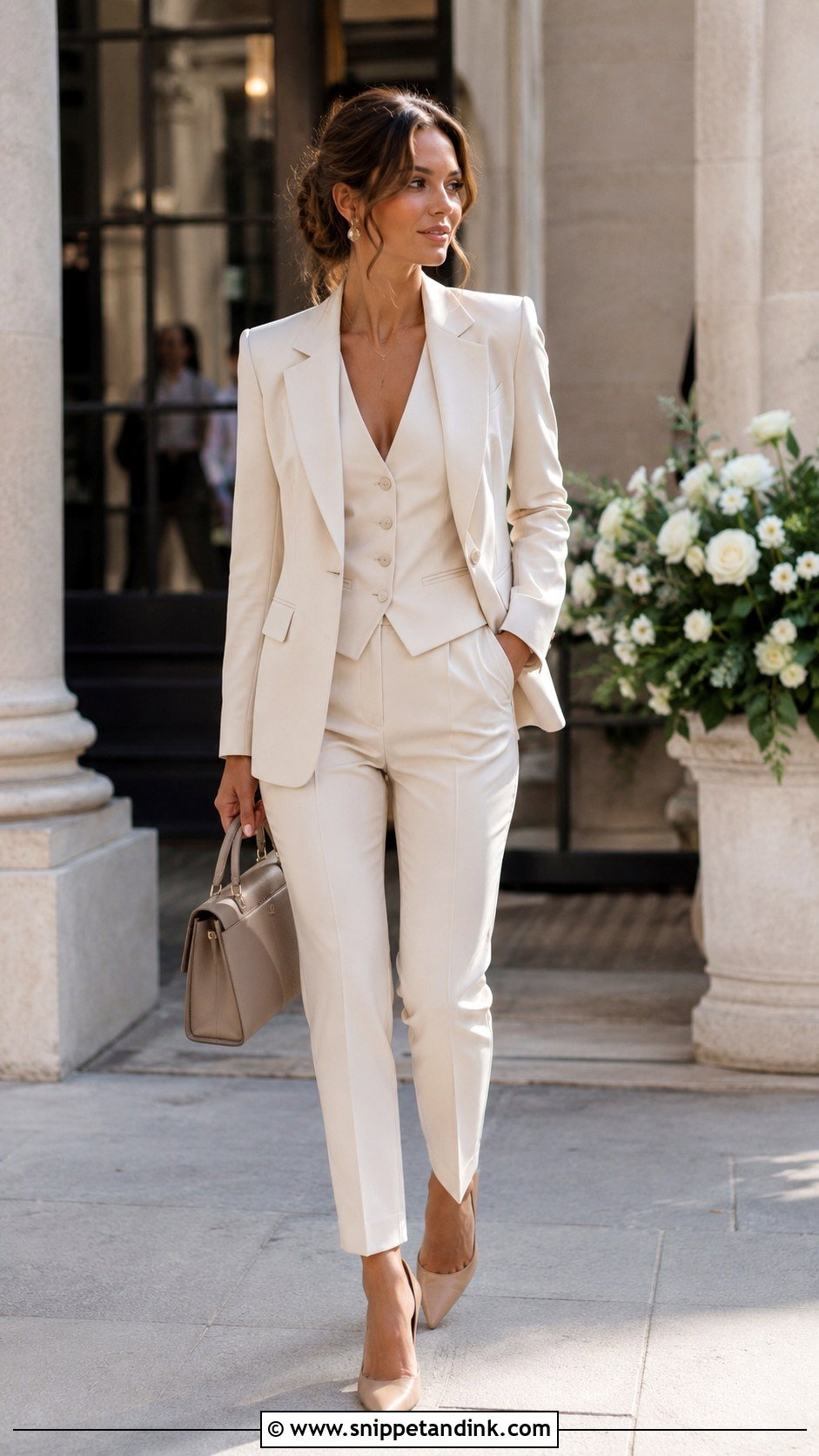
A three-piece earns its keep later in the evening: the waistcoat looks finished on its own once the blazer comes off. It suits brides, groomswomen, bridesmaids and guests who want a formal look. Choose a matching blazer, vest, and trousers in ivory, black, navy, sage or soft gray. Wear the vest buttoned over nothing bulky, or over a thin silk shell for comfort. Check the vest’s back adjuster is pulled snug, since a loose back shows when the jacket is off. Pointed heels, loafers or sleek flats all work. Keep accessories quiet so the tailoring leads.
16. Waistcoat Wedding Suit
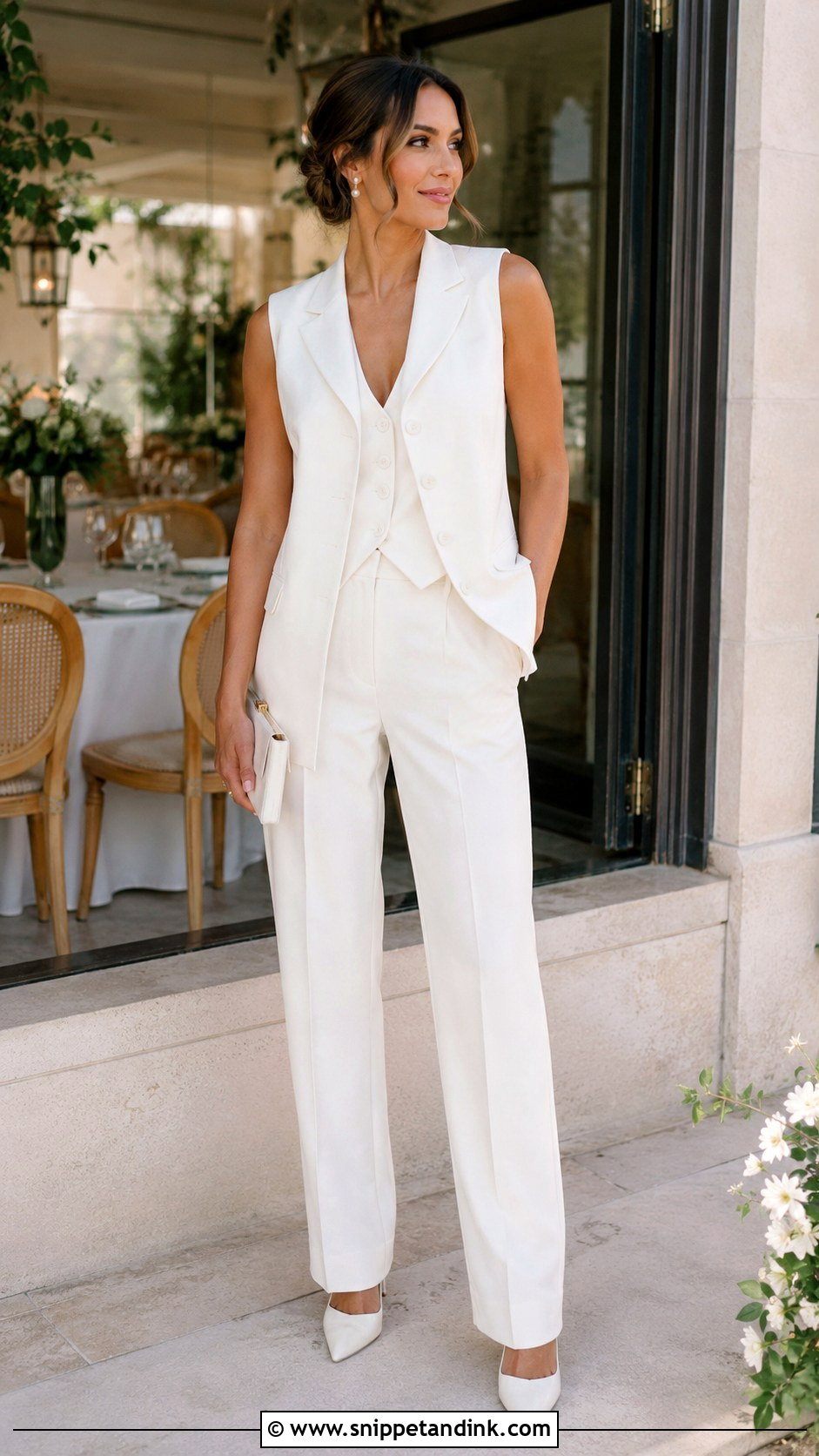
In summer heat, a waistcoat suit is often more comfortable than a jacket you’ll want to shed by noon. A fitted or longline waistcoat with matching high-waisted trousers gives a clean head-to-toe line. Ivory, cream, beige, black and pastels all work. Block heels or pointed pumps, small earrings and a structured clutch finish it. For a more formal ceremony, I’d bring a matching blazer for church or temple coverage, then take it off for the reception.
17. Double Breasted Wedding Suit
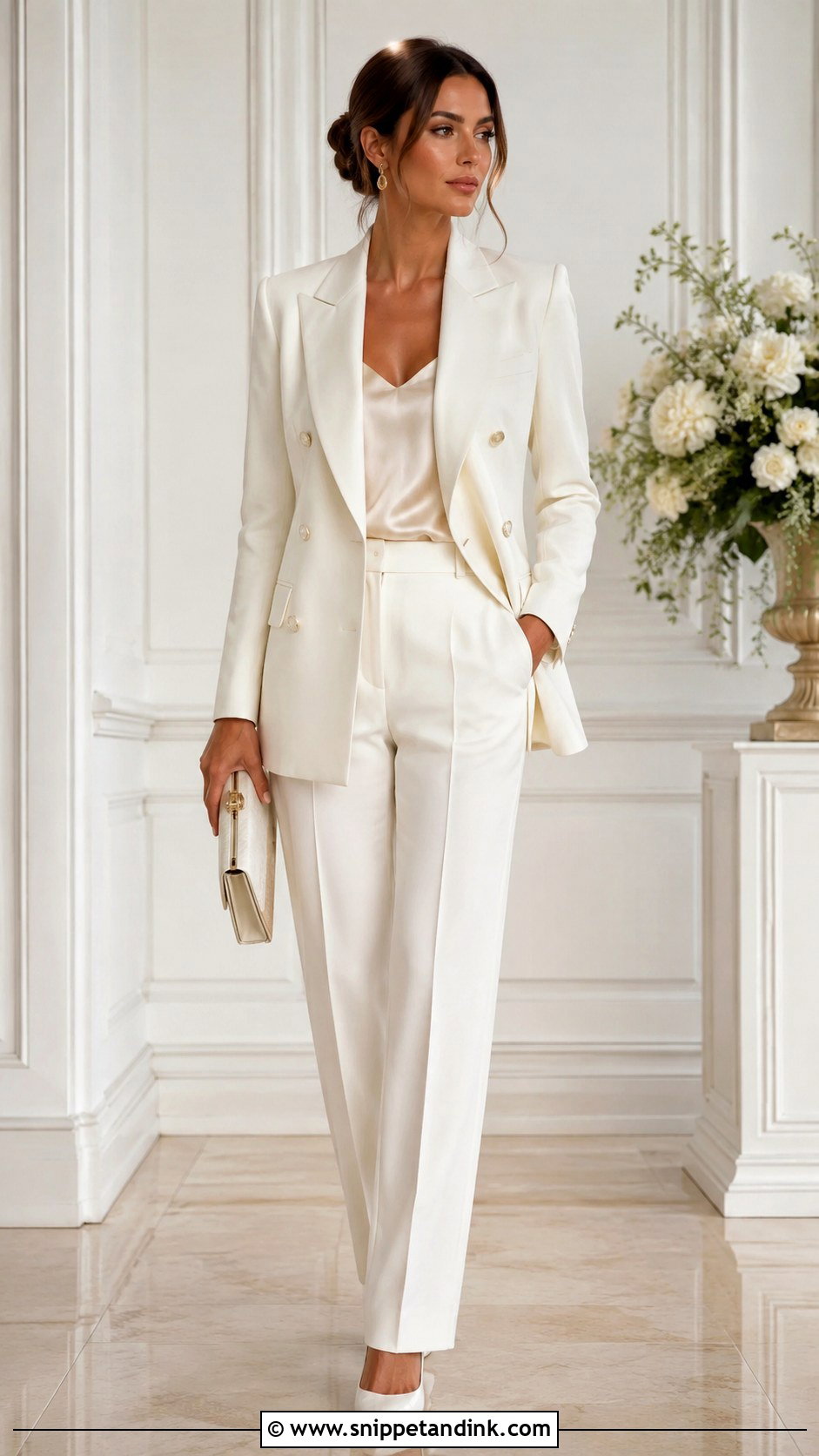
A double breasted wedding suit has the strongest shape here, and it’s unforgiving on fit. The overlapping front adds fabric across the torso, so the jacket has to sit neatly at the shoulders and waist or it boxes you in. I’d test it buttoned and seated. Straight or wide-leg trousers both work. Ivory, black, navy and champagne are classic; pastel blue and sage soften it. Keep the layer underneath simple, a silk camisole or a fitted bodysuit, with sleek heels and minimal jewelry. It photographs with real presence, at formal weddings and in modern bridal looks alike.
18. Oversized Wedding Suit
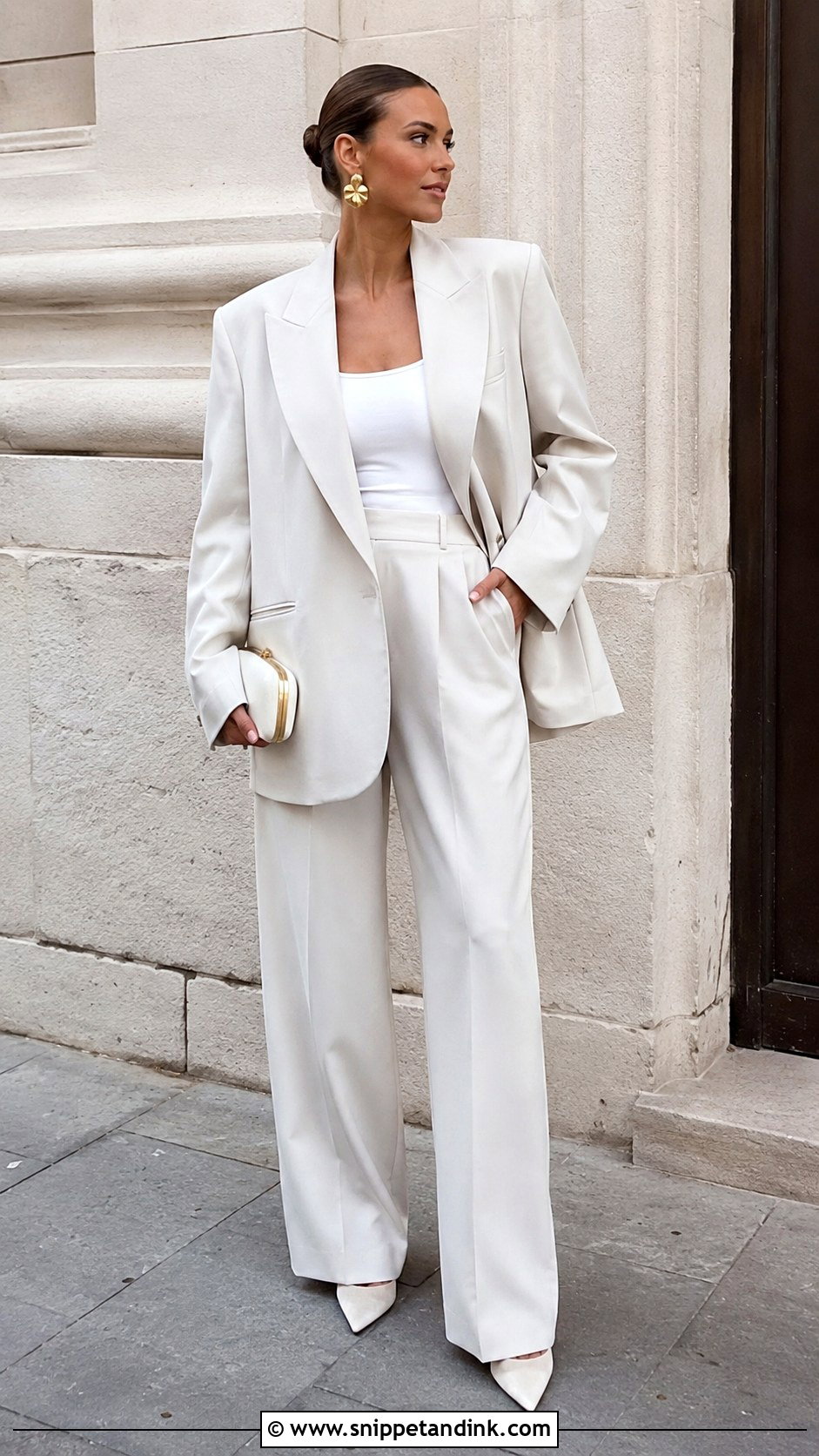
Oversized tailoring works when it looks deliberate, and the line between intentional and sloppy is the shoulder. The blazer can be roomy, but the shoulder seam should still look placed, and the trousers should be straight, tapered or softly wide rather than baggy too. A fitted top and elegant shoes keep it wedding-appropriate. Soft ivory, stone, black, gray and pastels suit it best. Pointed heels, sculptural earrings and a small clutch add polish. City weddings and courthouse ceremonies suit it, as do guests who love a street-style feel.
19. Cropped Blazer Wedding Suit
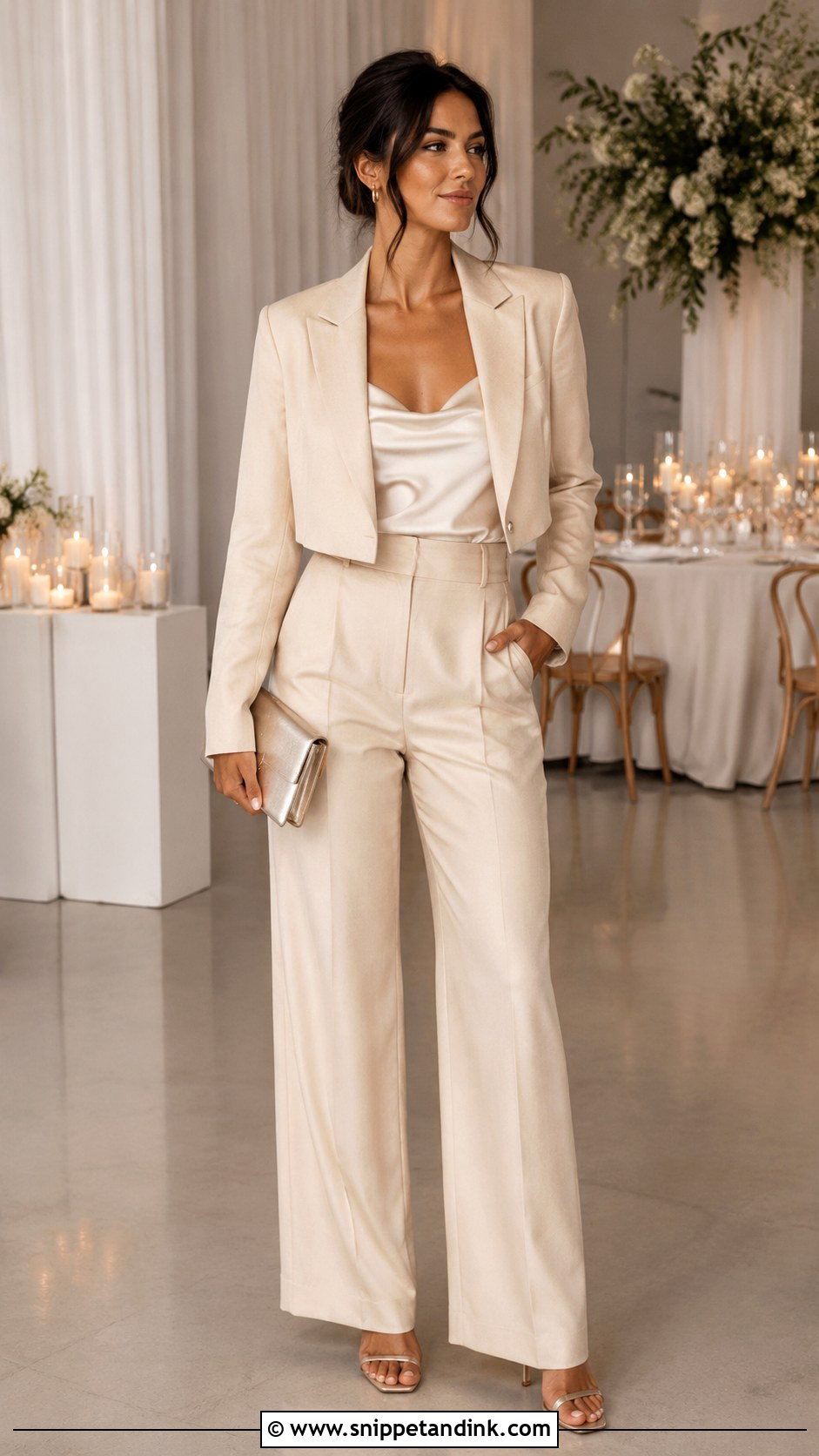
A cropped blazer wedding suit shows the waist and pairs naturally with high-waisted trousers. The blazer should end right at the trouser waistband; a gap of skin in between looks like a mistake unless it’s clearly planned. Ivory, blush, black or champagne, with matching wide-leg or straight-leg pants. A smooth camisole or bandeau-style top keeps the shape clean. Heeled sandals, pointed pumps or sleek mules, depending on the venue. Reception outfits, courthouse weddings and cocktail dress codes suit it.
20. Lace Top Wedding Suit
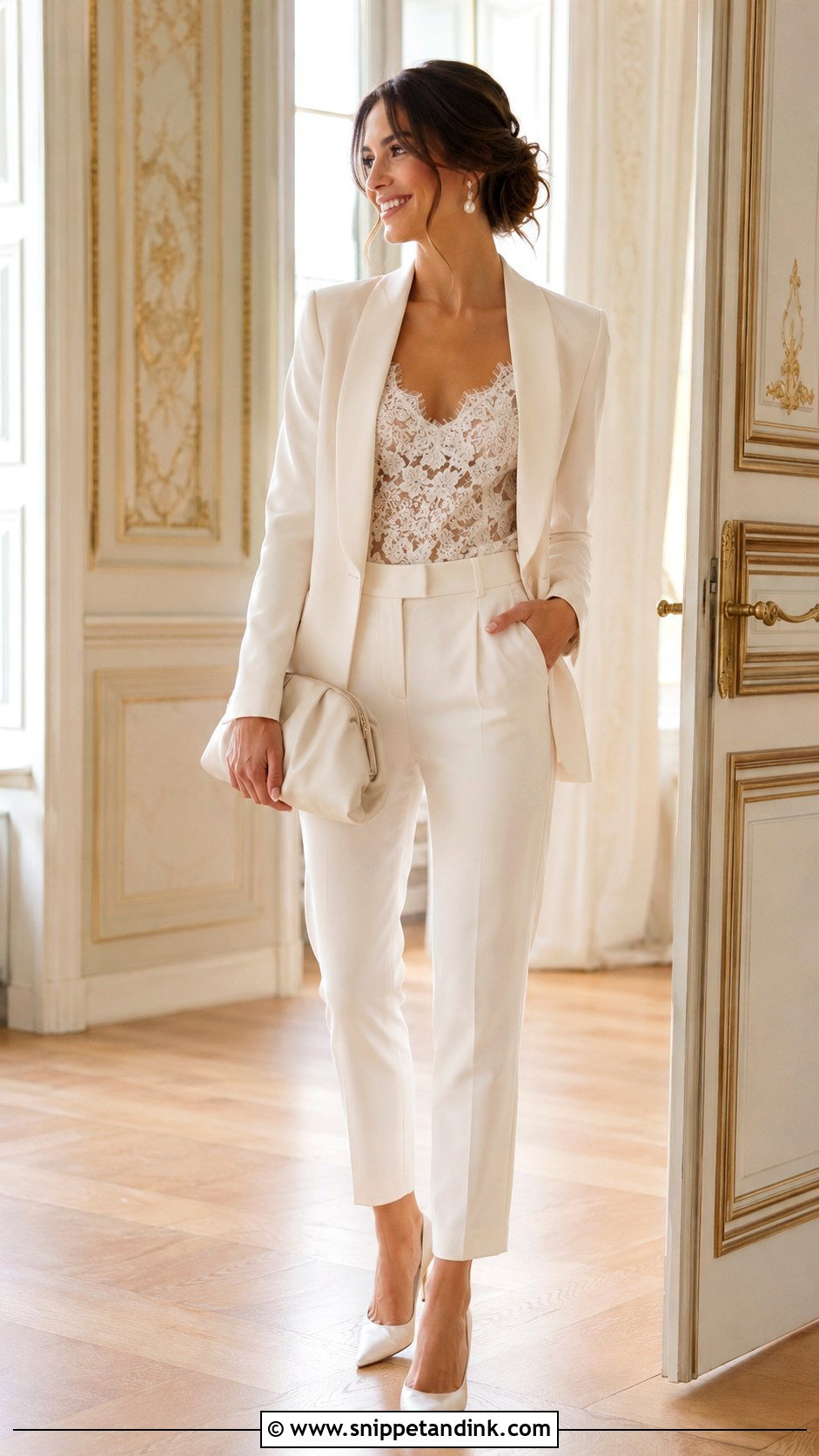
Lace under tailoring is my favorite way to make a suit feel bridal without losing its edge. Start with a clean blazer and trousers in ivory, white, black, navy or blush. Underneath, a lace camisole, a lace bodysuit or a sheer-sleeve lace blouse, properly lined so the lace doesn’t show skin where you don’t want it. Pearl earrings, satin heels and a small clutch finish it. If you’re the bride, match the lace’s white to the suit in daylight; lace is often a shade warmer than suiting. Brides, bridesmaids and guests all wear this well.
21. Sequin Wedding Suit
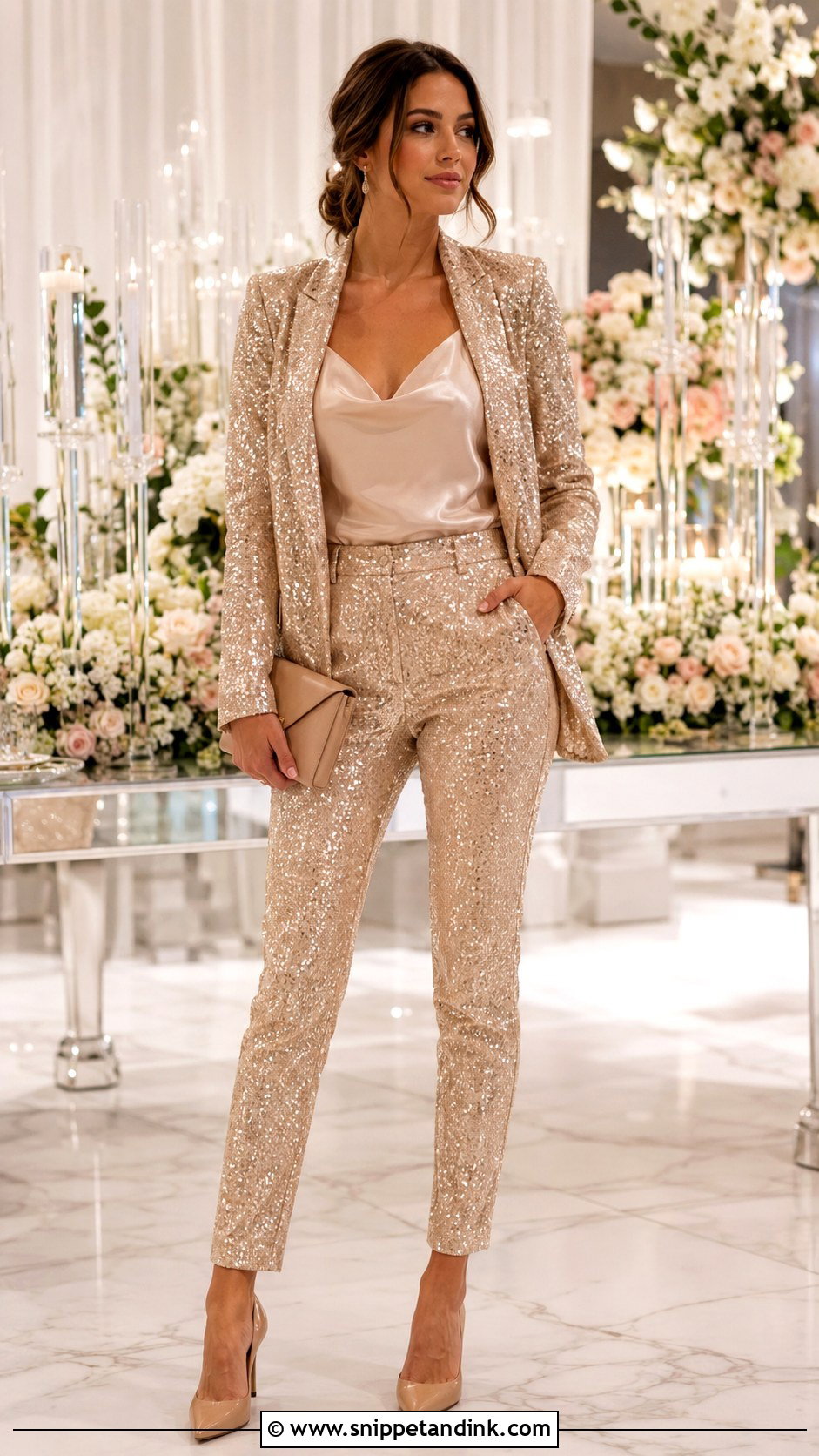
Sequin suits are for evening receptions, after-parties and festive formal weddings. I keep the shape simple in silver, champagne, black, ivory or soft rose gold, and let the sequins lead. Put a satin camisole or smooth bodysuit under it, with minimal jewelry, sleek heels and a plain clutch. If a full sequin suit feels like too much, a sequin blazer over plain tailored trousers gives the sparkle with half the intensity. Make sure the lining covers the inner arms, or the sequins will scratch through a night of dancing.
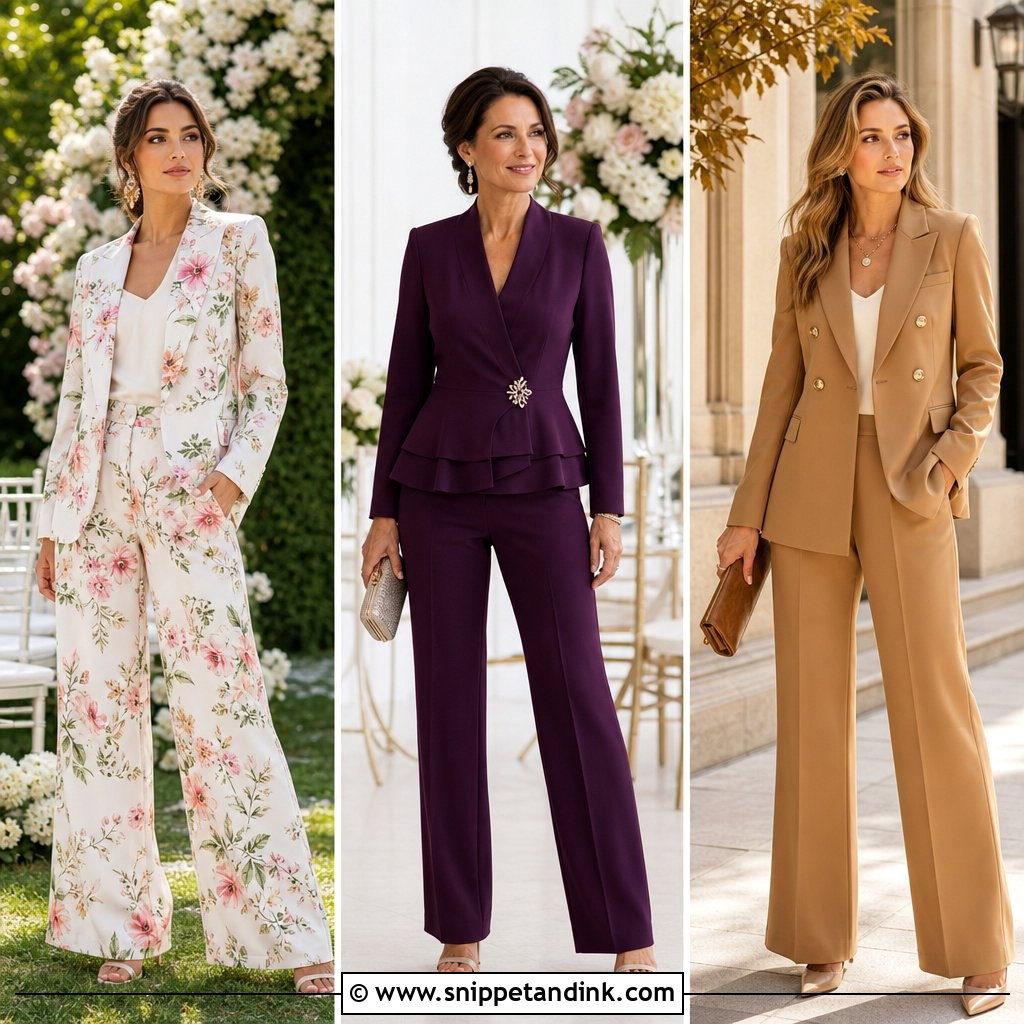
22. Floral Wedding Suit
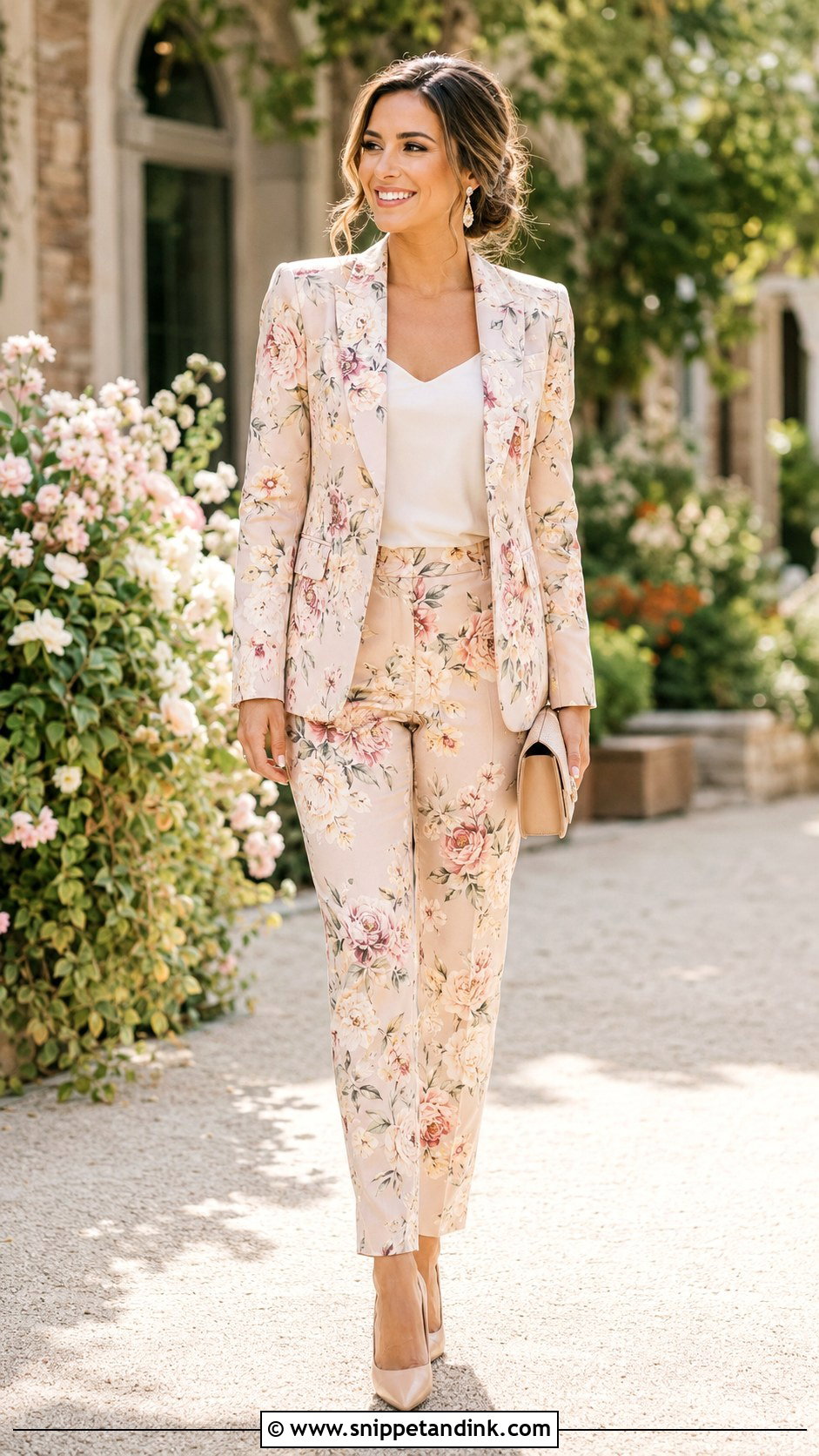
A floral suit gives you everything a floral dress does, plus pockets. It suits spring, summer, garden and daytime weddings. I look for soft florals in refined colors, blush, blue, sage, ivory or muted yellow, and avoid large high-contrast prints that look like upholstery in photos. Keep the top underneath plain. Nude heels, delicate earrings and a small neutral clutch leave the print room. Fitted, relaxed or wide-leg cuts all work, depending on your style.
23. Beige Wedding Suit
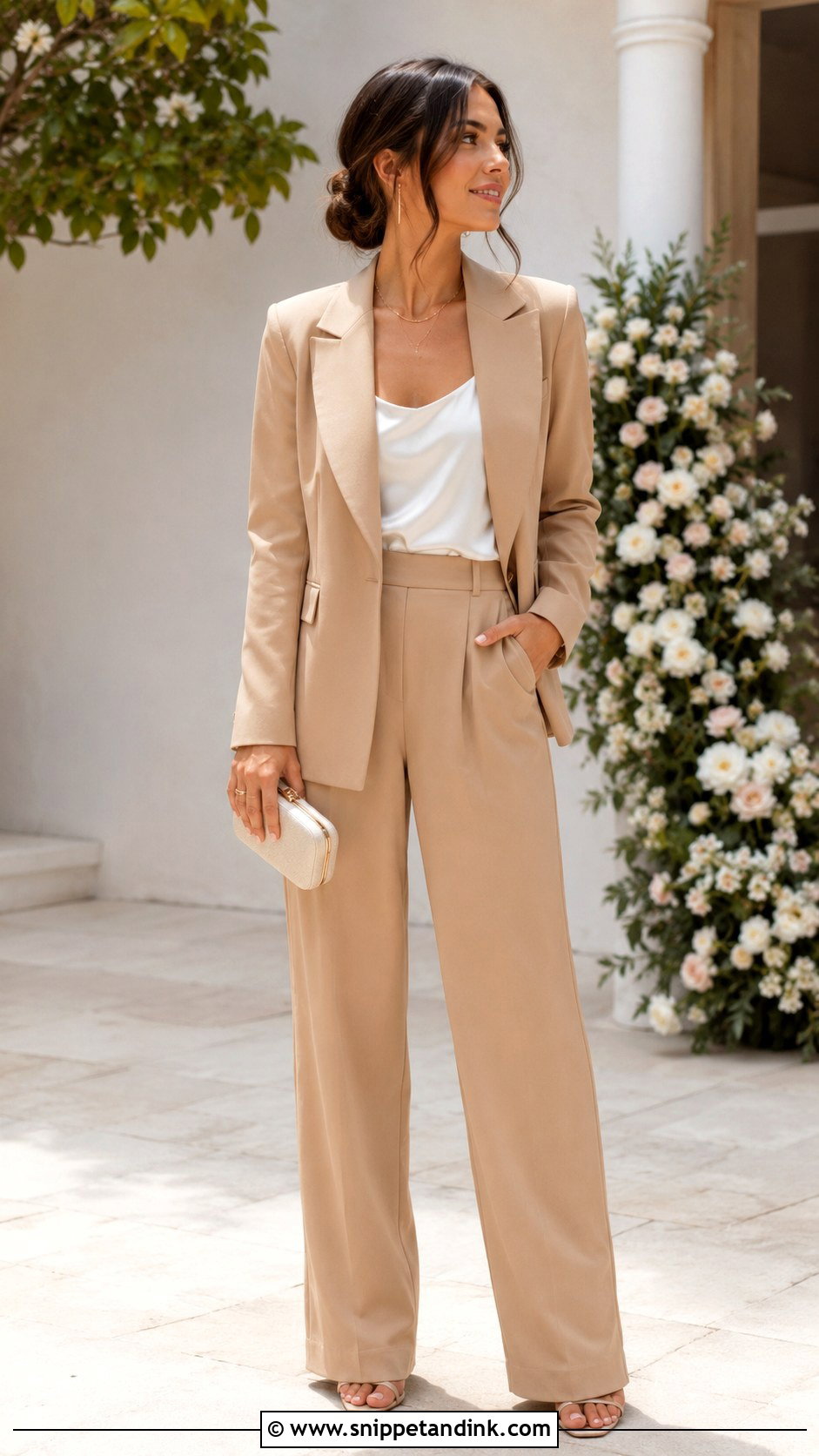
Beige is understated, and it can tip into casual if the tailoring is loose. That’s my main check with this color: the shoulders and trouser break have to be exact. A warm beige blazer with matching trousers over a white, ivory or champagne top works for daytime ceremonies, outdoor venues and minimalist weddings. Nude heels lengthen the leg and gold jewelry warms the tone. Woven accessories suit summer; satin ones push it toward formal.
24. Gray Wedding Suit
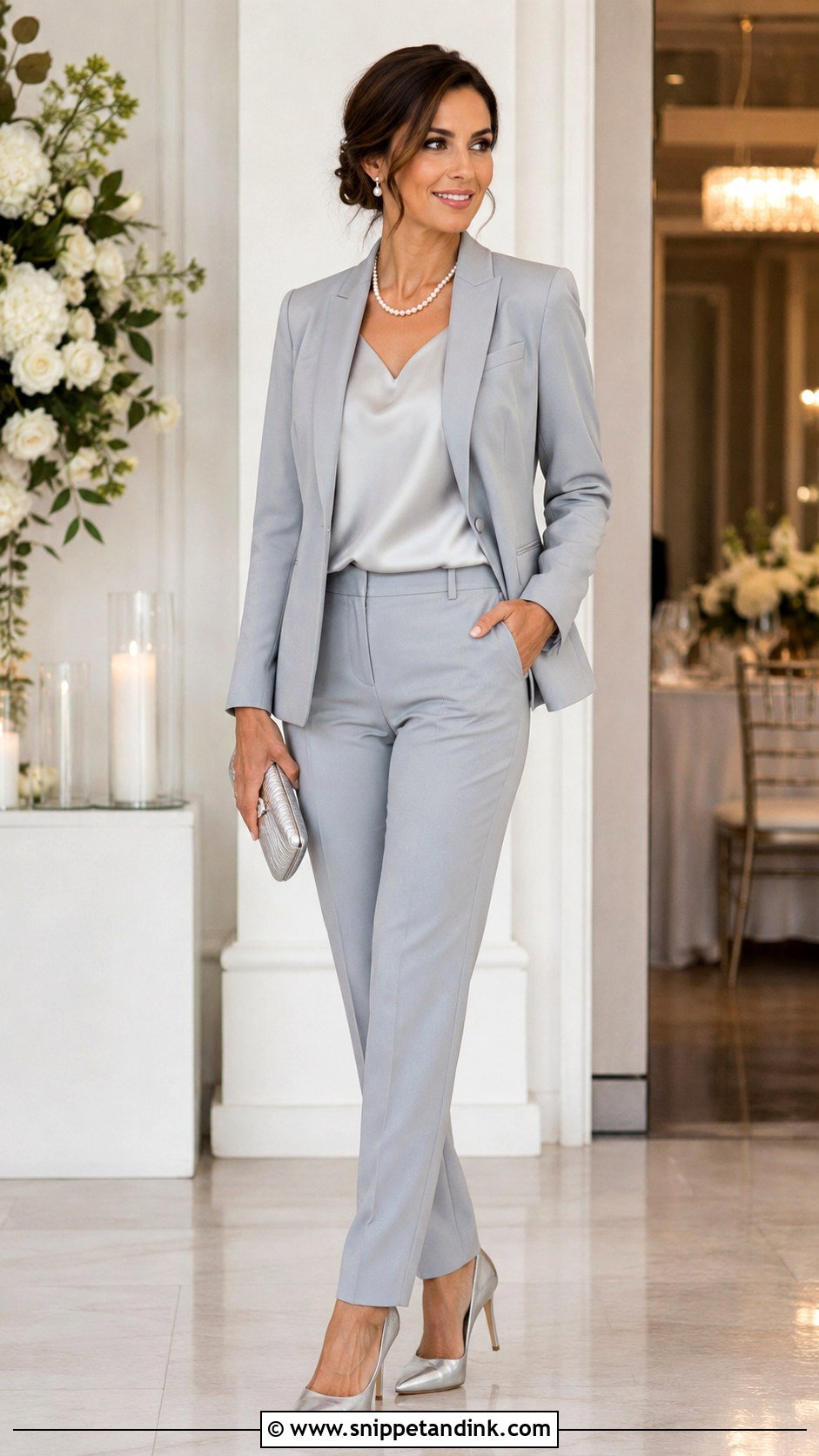
Gray is the quiet suit. Light gray works for spring and daytime weddings, charcoal for formal evenings. Choose a silk blouse, lace camisole or clean fitted top depending on the formality. Silver heels, pearl jewelry or a soft metallic clutch make it feel like wedding clothes. For a modern take, I pair cool gray with white accessories and a sleek hairstyle. Bridesmaids and wedding parties suit it too, because gray sits easily beside almost any color palette.
25. Jumpsuit Wedding Suit
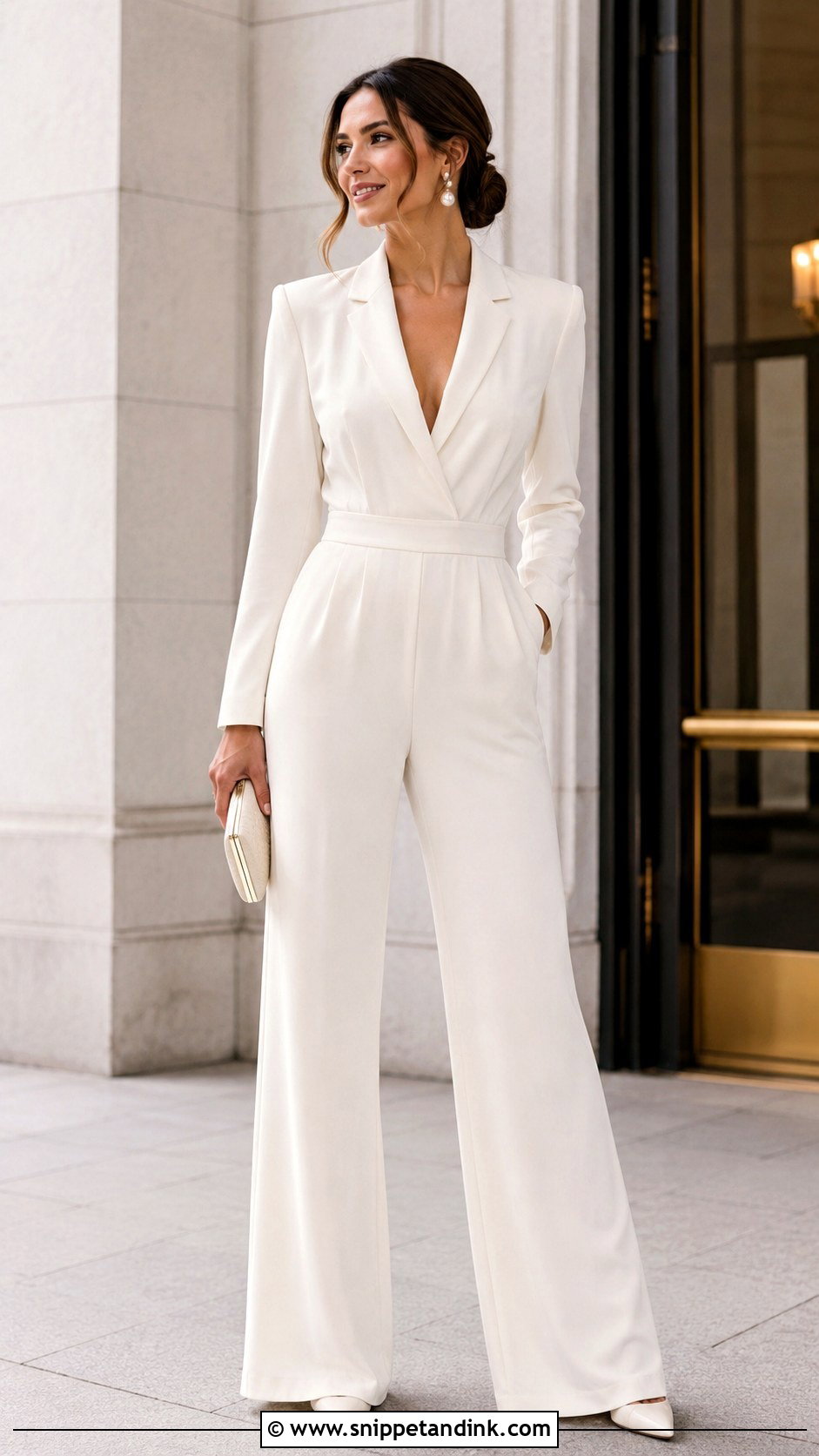
A jumpsuit gives the sleek line of tailoring in a single piece, and it suits brides, guests and wedding party members alike. Look for a blazer-inspired neckline, a defined waist and wide or straight legs. Ivory, black, navy, blush and emerald all work. The practical test I always run: can you undo the zip on your own? A back zip you can’t reach makes every bathroom trip a two-person job, so I favor side or front closures. Heels lengthen it, a belt can shape the waist, and the jewelry should follow the neckline. Receptions, courthouse ceremonies and modern weddings suit it.
Pressing, Packing and Cleaning a Wedding Suit
A suit lasts years longer than most wedding dresses if you treat it right, and the day itself is hard on fabric. My routine runs from the week before to the week after.
- Travel with the jacket folded inside out at the shoulders, laid flat in a suitcase or hung in a garment bag. The trousers fold along their crease.
- Steam rather than iron satin, velvet and linen on the morning. Hold the steamer a little away from satin, since water spots can show. Steam velvet from the inside so the pile isn’t flattened.
- Keep the jacket on a hanger, not over a chair back, during the meal. Chair backs push the shoulders out of shape.
- Get the suit to a dry cleaner within a few days. Champagne, cake and juice spills can look invisible at first but turn yellow or brown as they age, especially on ivory and white. Point out every spot you remember.
Store it in a breathable cloth garment bag on a shaped hanger, never in the plastic it came back in. Then wear it apart. The blazer over jeans and the trousers with a plain knit are how a wedding suit earns back its cost.
Tailoring Is What Makes Any of These Work
Wedding suits aren’t a second-best option anymore; for many roles and dress codes they’re the better one. From white bridal tailoring to pastel guest suits, velvet tuxedos, linen sets and waistcoat outfits, there’s a suit for every season. What makes one look right is the fit, the fabric and accessories pitched at the formality of the day. Choose shoes you can move in, keep proportions balanced, and pick the version that still feels like you once the jacket comes off at midnight.
You'll Like These Ideas:


Leave a Reply