
Nobody dresses for a Pakistani wedding once. Between the mayun, mehndi, nikkah, baraat and walima, you might need five looks, and the bride, her relatives and the guests each pitch them differently. Daytime functions lean bright and casual; evening ones lean polished and embellished. What I see most in fittings now is a move toward outfits people can actually wear for hours: lighter embroidery, jewel tones and soft pastels, and ghararas or shararas finished in a cleaner, modern way. The twenty looks below each include the dupatta, jewelry and shoes, because those three decide whether an outfit feels finished.
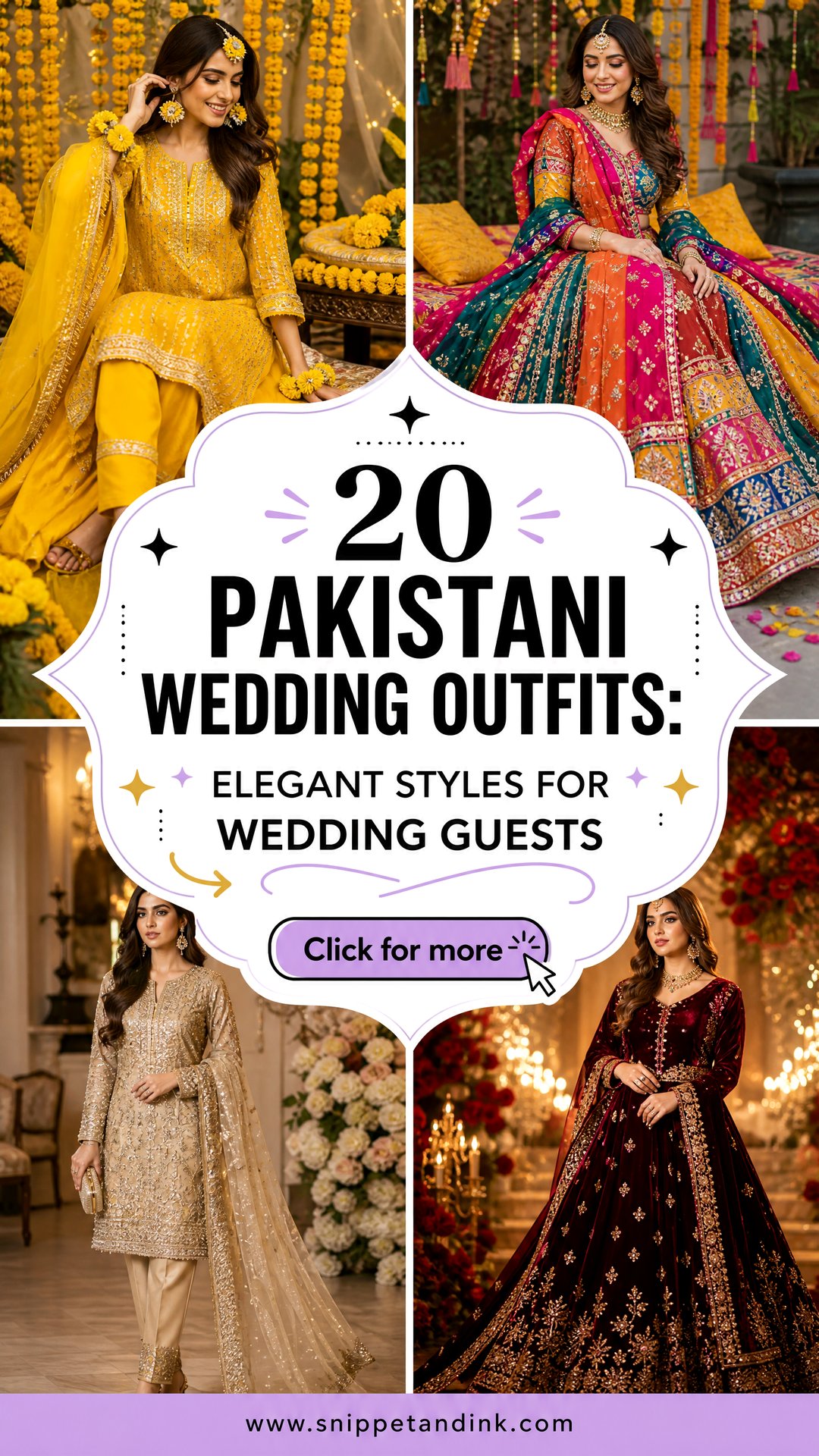
Summer Heat, Winter Shamianas and the Fabric in Between
The season matters more than people expect. A gorgeous velvet suit in a summer marquee is miserable, and a chiffon sharara at an open-air December baraat leaves you shivering in every photo. I pick fabric by the venue first, then color.
Hot months and outdoor daytime events
Cotton silk, lawn-based formal suits, chiffon and georgette breathe. Choose lighter, scattered embroidery, because dense dabka holds heat against the body. Lined organza looks crisp but can feel warm, so I’d save it for air-conditioned halls. Flat khussas beat heels on grass.
Cold months and evening functions
Velvet, raw silk and jamawar hold warmth and look rich under evening lights. Even in winter, heated halls get warm once they fill up, so layer: a velvet shawl or jacket you can take off is more useful than an outfit that’s heavy all the way through. Closed-toe shoes help at outdoor venues.
- Air-conditioned hall in summer: a light dupatta or shawl for the chilly dinner tables.
- Shamiana or marquee in winter: velvet or a pashmina shawl in a color that works with the outfit, since it’ll be in the photos.
- Home mayun or dholki: washable cottons, because haldi, oil and food will happen.
1. Pakistani Wedding Mayun Yellow Shalwar Kameez
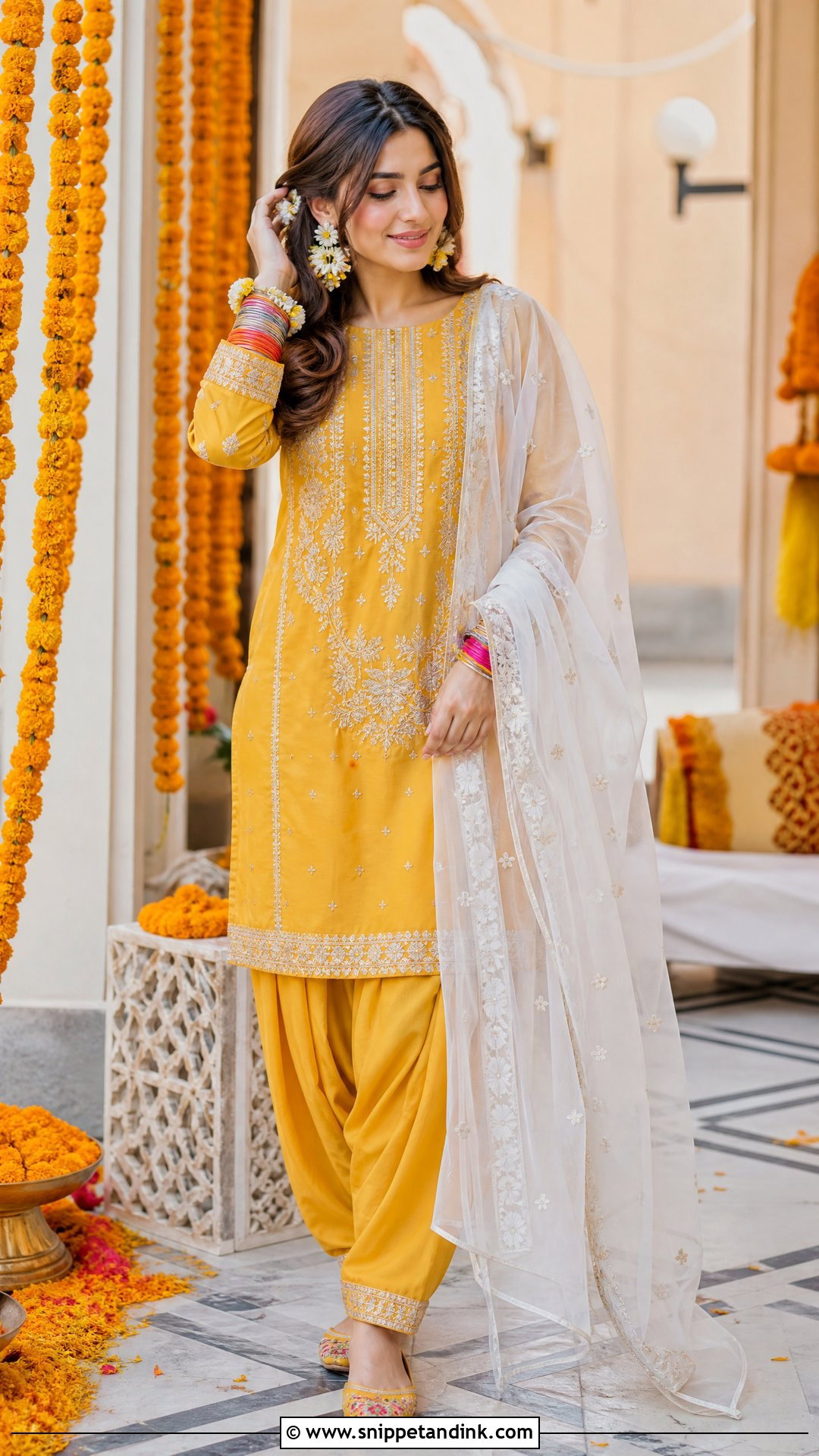
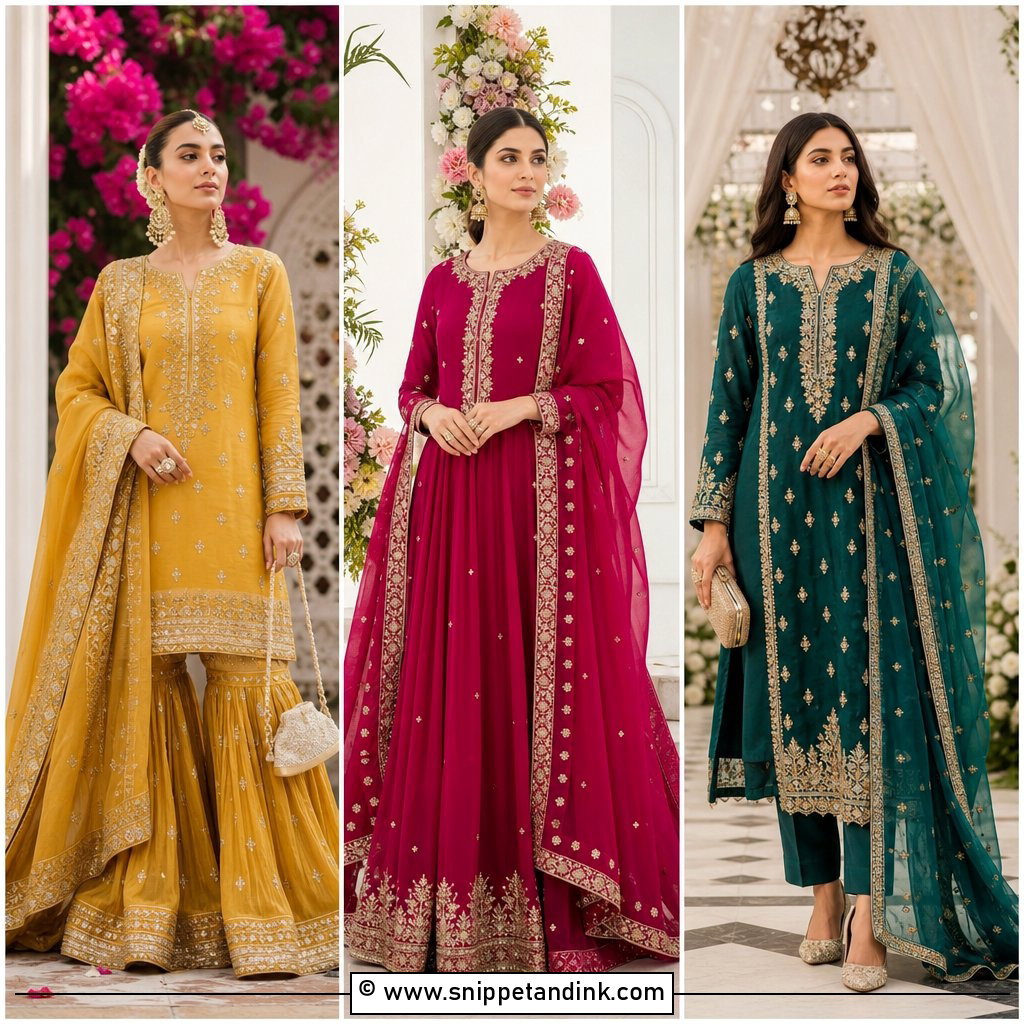
Yellow at a mayun is tradition, and a shalwar kameez is the most comfortable way to wear it, especially if the ceremony is at home with everyone sitting on the floor. Choose a straight cotton-silk or lightly embroidered kameez with a full shalwar. White, green or pink threadwork adds contrast without making it formal. Turmeric paste and oil stain, so this is not the day for an expensive fabric. Drape a light organza dupatta over one shoulder, pinned if you’ll be taking part in the ubtan. Gold jhumkas, colorful bangles, flat khussas and a braid keep it practical. Guests stay subtle; the bride can add gota borders.
2. Pakistani Wedding Mehndi Green Gharara
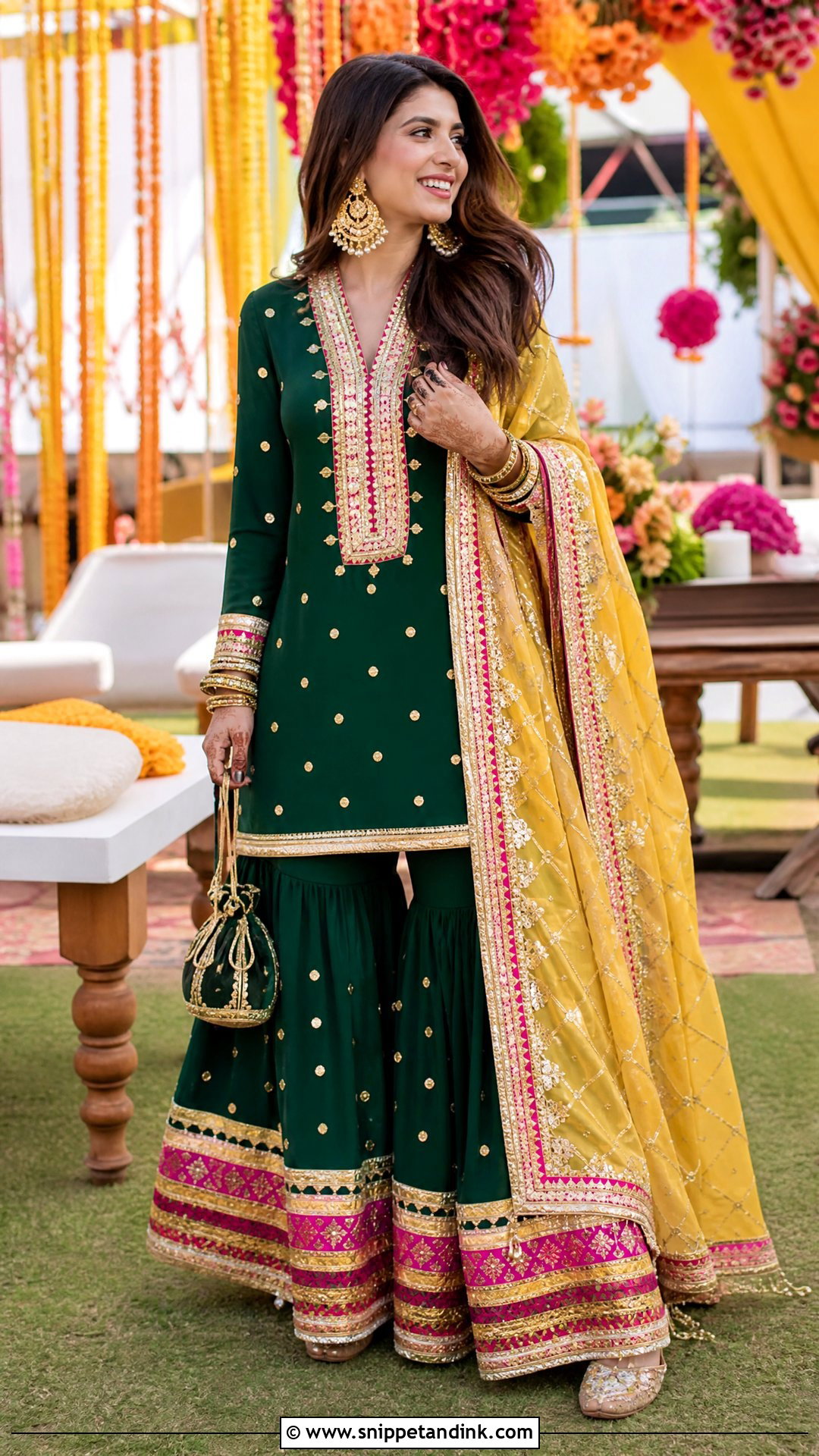
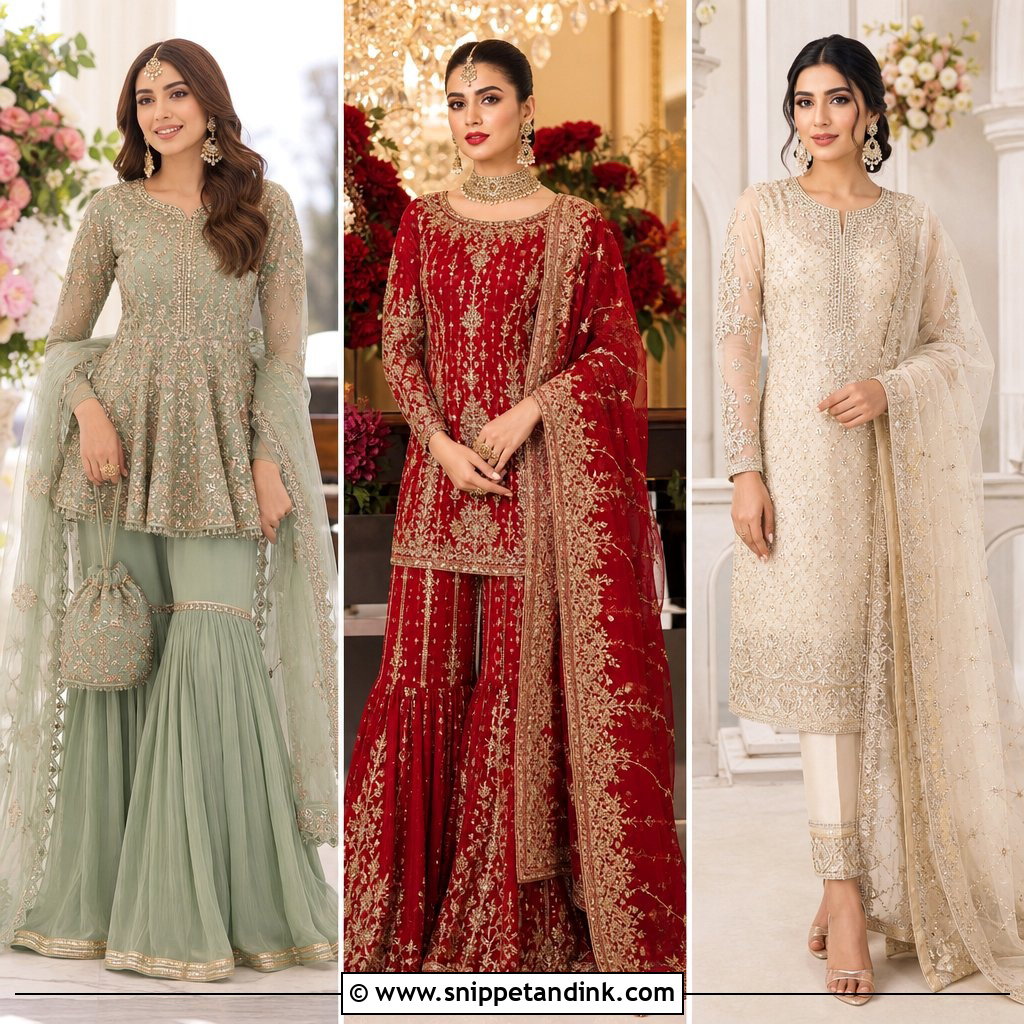
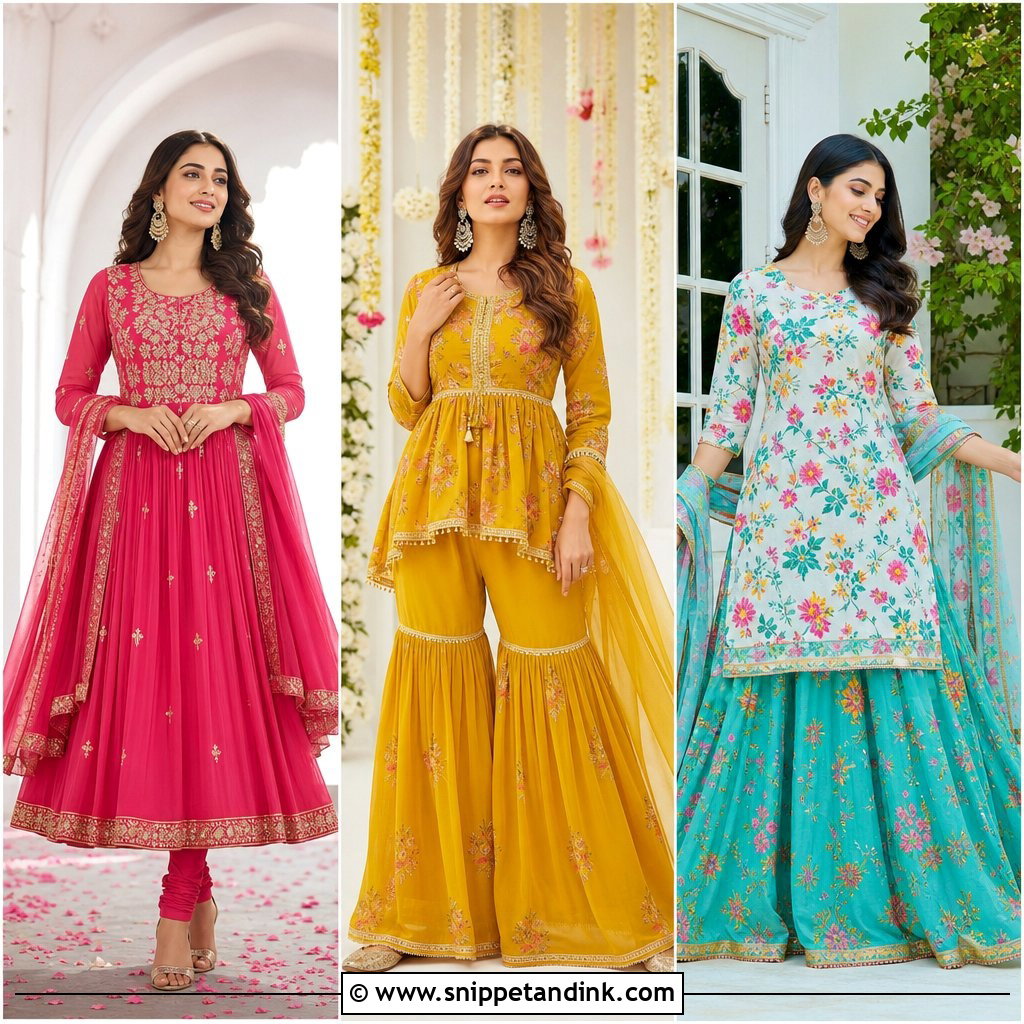
A green gharara swings every time you turn, which is exactly why it suits a mehndi. Pair a short kameez with gharara pants bordered in gota, zari or narrow embroidery. Emerald, lime and leaf green all work alongside yellow, pink or orange accents. Wear the contrasting dupatta diagonally across the body; it stays put while you dance and leaves both hands free. Gold chandbalis, stacked bangles and a small potli finish it. Embroidered khussas help when you’re standing for hours. As a guest, keep the work focused on the neckline, cuffs and gharara panels.
3. Pakistani Wedding Multicolor Mehndi Lehenga
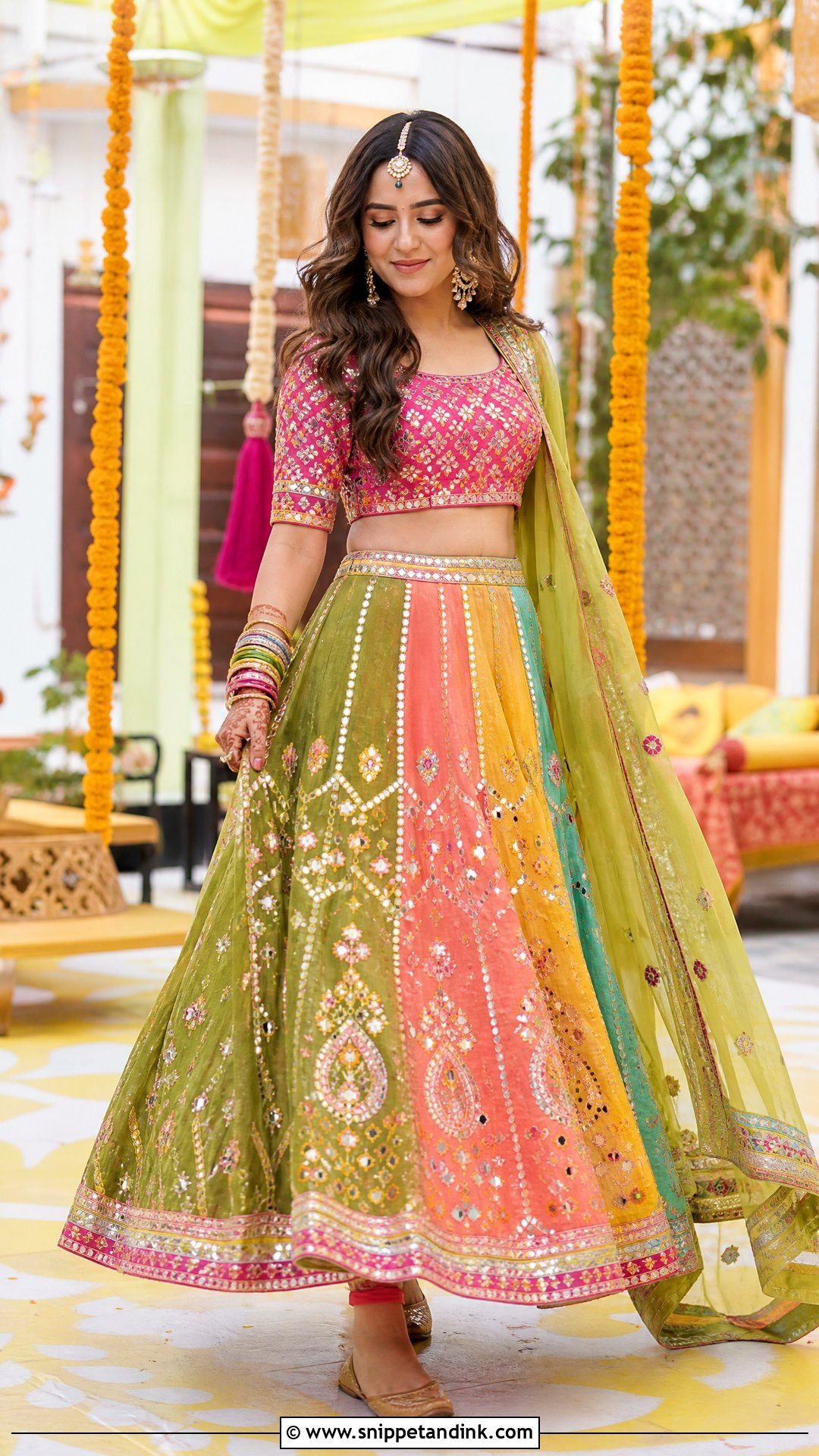
Can’t decide on one color for the mehndi? A multicolor lehenga lets you have several. Start with a paneled skirt in green, coral, yellow, turquoise or fuchsia, then anchor it with a fitted blouse or waist-length choli in one dominant color. That single solid color is what stops the outfit from looking like a costume. A lightly embroidered dupatta keeps things calm. Mirror work and gota reflect light without weight. Colorful bangles, medium earrings and gold khussas are enough, with a simple tikka only if the event is formal. Guests can soften the palette and pick fewer worked panels.
4. Pakistani Wedding Dholki Mirror Work Sharara
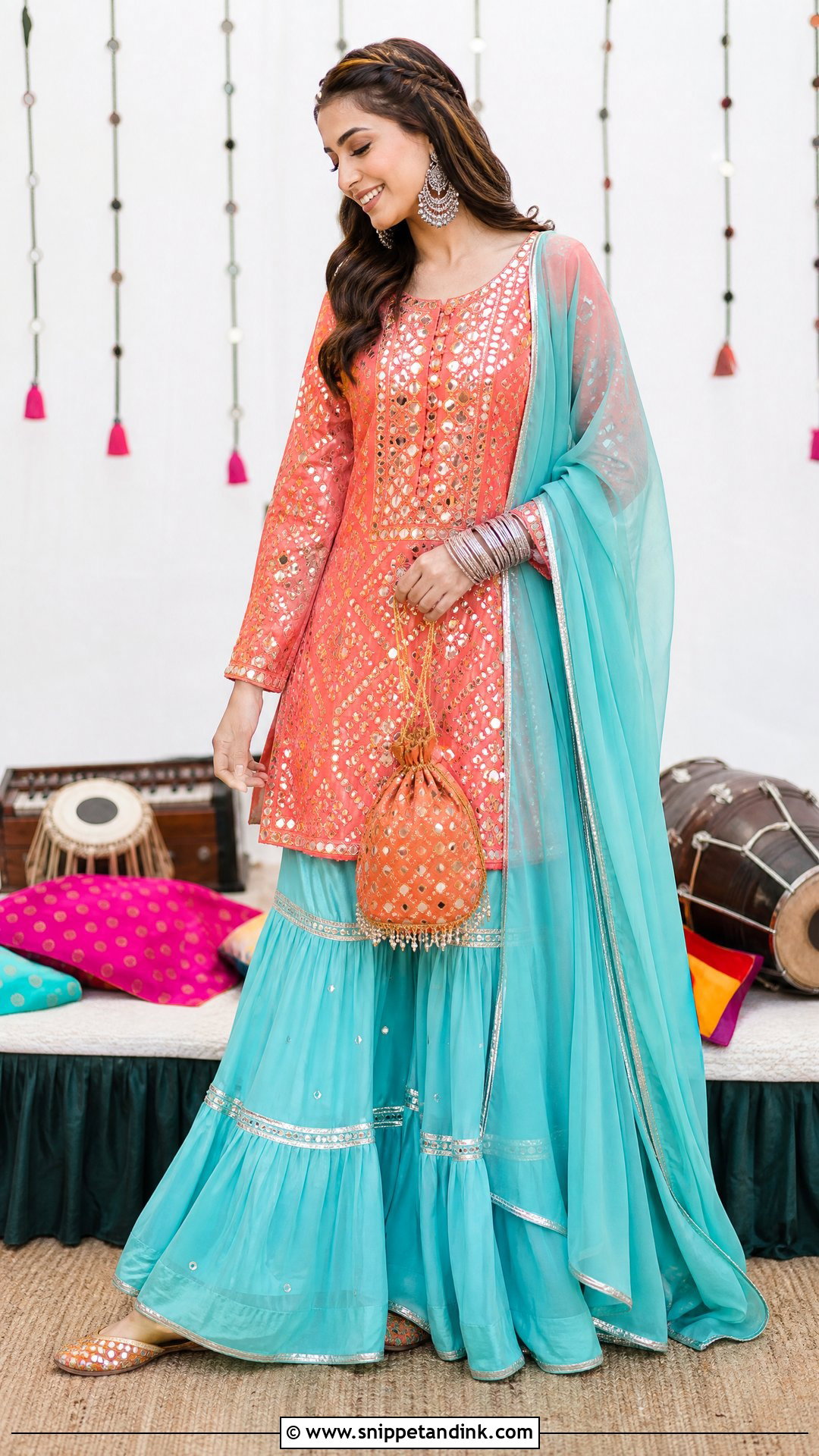
Dholkis are long evenings of singing on the floor, so I’d choose sparkle without weight. A mirror work sharara does that. Pair a hip-length kurta in coral, turquoise, mustard or deep pink with a wide sharara, and keep the mirrors to the neckline and sleeves. Mirrors catch phone flash in photos nicely, but they also have sharp backs, so make sure they’re lined on the inside. A plain chiffon dupatta with a thin metallic border balances the shine. Oxidized earrings, a crossbody potli and flat juttis make sitting and dancing easy. For a casual dholki, choose minimal mirror work and a breathable fabric.
5. Pakistani Wedding Nikkah Ivory Pishwas
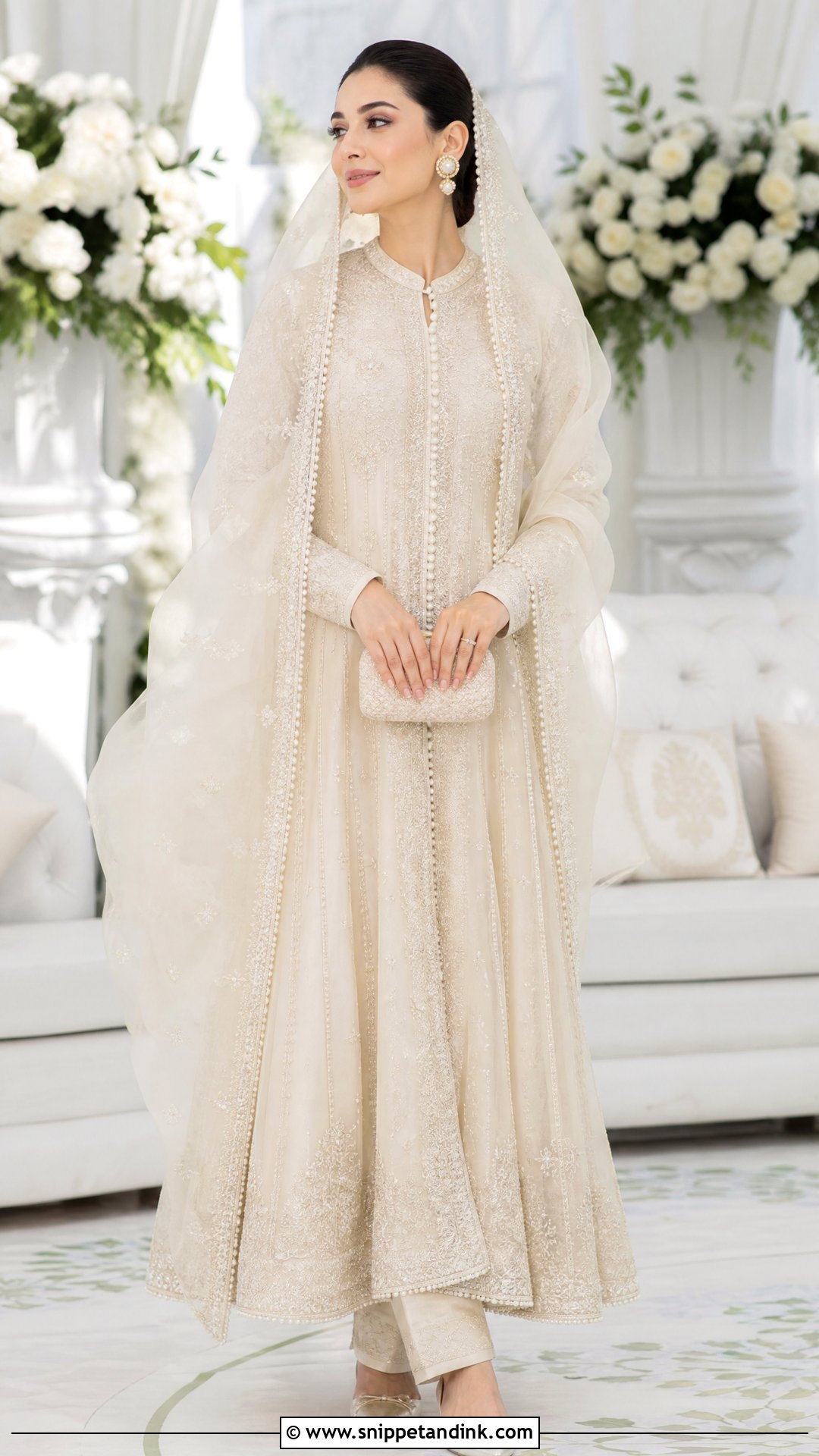
An ivory pishwas is calm and modest for a daytime nikkah. The fitted bodice and long flared skirt move gracefully, and delicate pearl or silver work at the neckline, cuffs and hem is plenty. Wear fitted trousers underneath and a sheer organza dupatta over the head or shoulders as the ceremony requires. Pearl earrings, a fine bracelet and a structured ivory clutch keep it refined, with low metallic heels or embellished flats. The bride can go longer on the dupatta and richer on the handwork. Guests need to check first, because many families now reserve ivory and white for the bride at the nikkah.
6. Pakistani Wedding Blush Pink Nikkah Angarkha
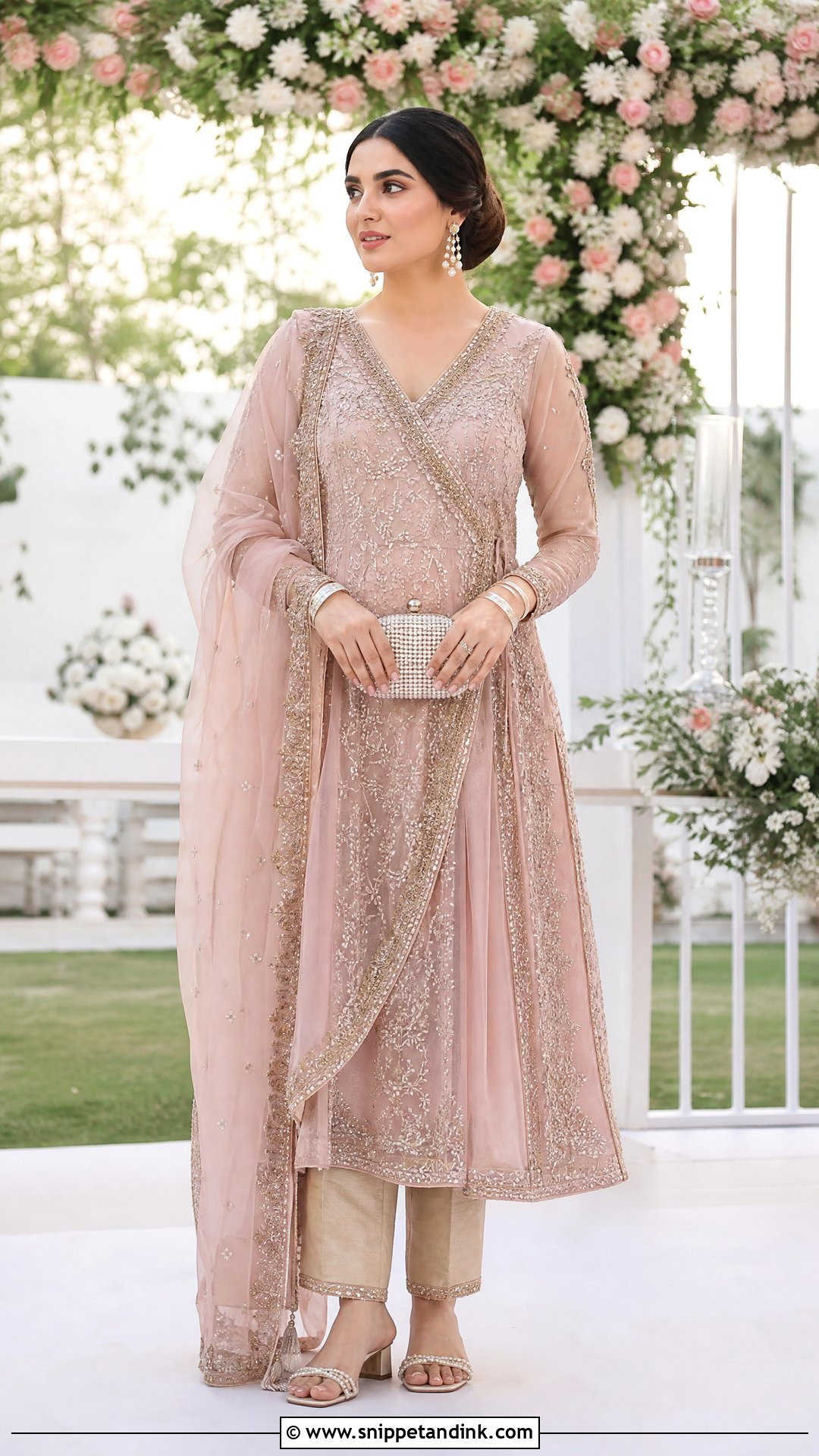
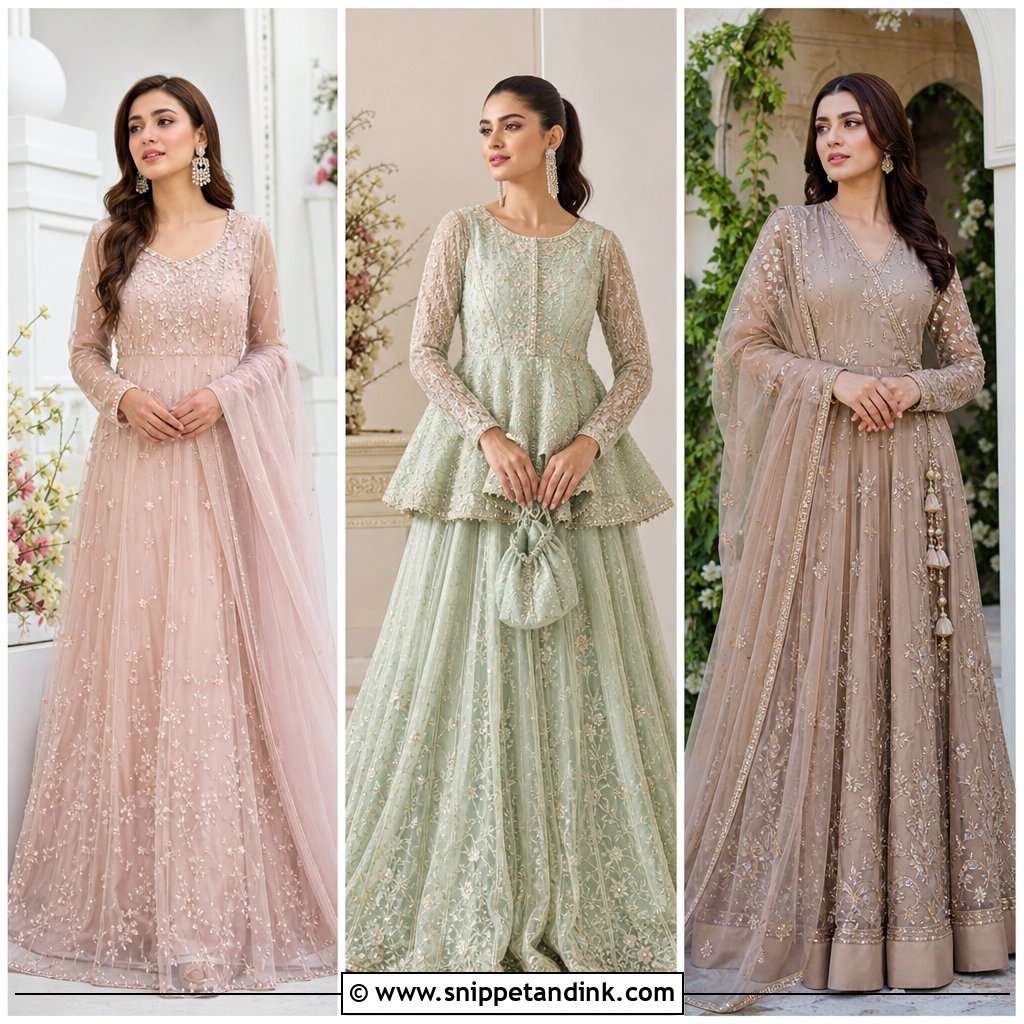
Blush in an angarkha is soft without being sugary. The wrap-style top defines the waist on a diagonal, which flatters most figures, and an ankle-length hem keeps it formal. Straight trousers underneath stop the flared top from adding volume. Put the embroidery along the overlapping panels so the wrap reads clearly. A matching chiffon dupatta, or a champagne or sage one for contrast, finishes it. Pearl drops, slim bangles and pointed flats suit a daytime ceremony. For a more modest version, ask for full sleeves, a higher neckline and a wider dupatta; the angarkha shape survives all three.
7. Pakistani Wedding Red Bridal Lehenga
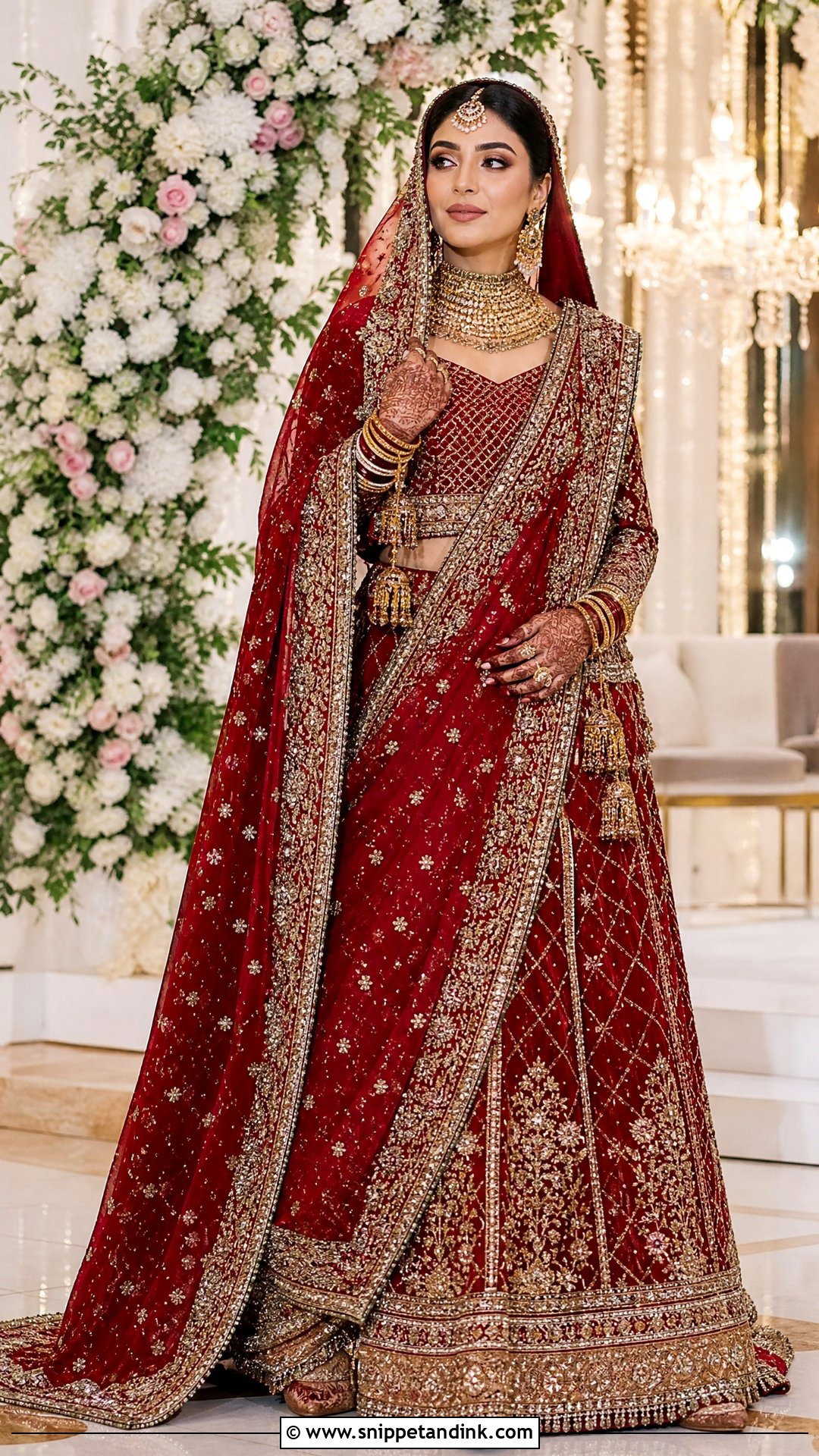
A red bridal lehenga carries more ceremony than anything else on this list, and it’s for the bride. Choose red, crimson or deep vermilion with embroidery that follows the panels rather than burying the fabric. Pair it with a structured blouse and two dupattas if you like, one across the body and one lightly over the head. Antique gold, kundan or polki jewelry suits the warmth of red. Keep to one metal finish across necklace, earrings, tikka and bangles; mixing finishes on a bridal set looks accidental in close-up photos. A secure bun anchors the head dupatta. Guests should pick another color, or a much simpler red after checking with the family.
8. Pakistani Wedding Maroon Gharara
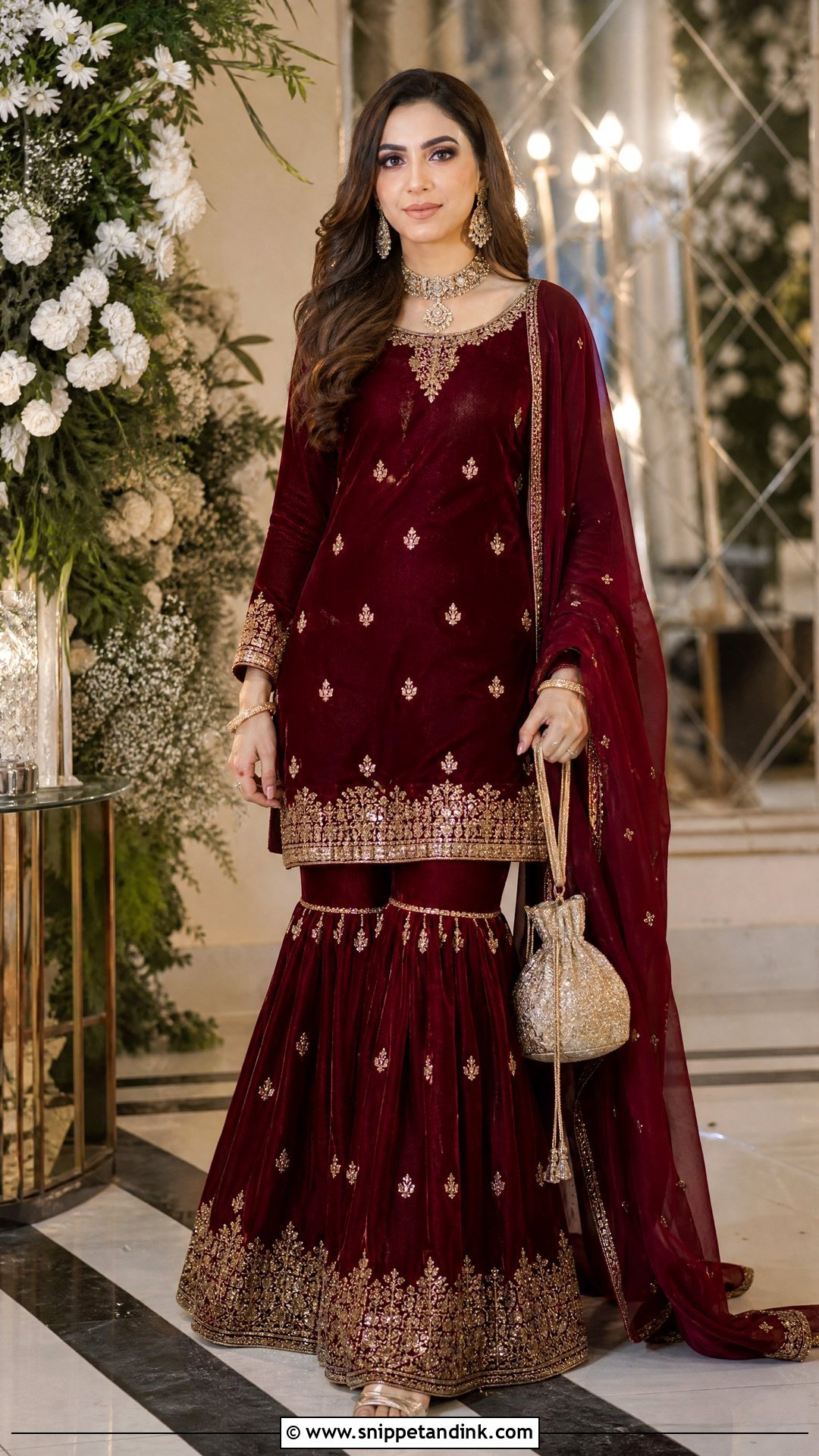
Deep maroon gives a gharara a regal weight that suits a formal baraat. Pair a short velvet, silk or chiffon kameez with a structured gharara gathered at the knee and finished with a wide embellished hem. Antique gold embroidery is classic; bronze or dull silver is a less expected alternative. I like the dupatta over one shoulder and across the other arm so the gharara’s full shape stays visible. Statement earrings, one necklace, a metallic potli and maroon khussas finish it. Close relatives can go richer; other guests should keep the work at the neckline, sleeves and lower gharara.
9. Pakistani Wedding Emerald Peplum Lehenga
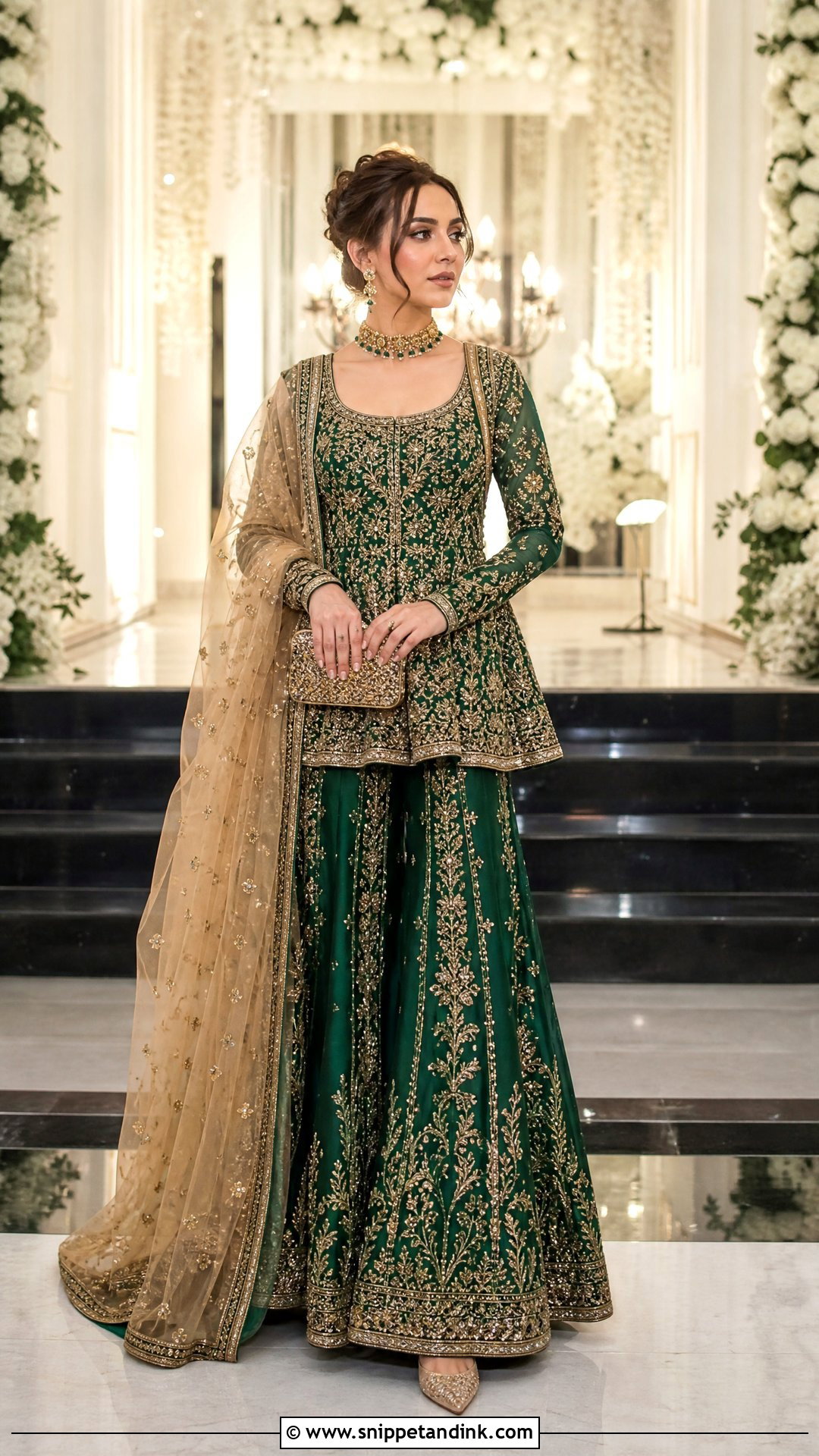
An emerald peplum with a lehenga is a structured alternative to a classic choli. The peplum defines the waist, and a simple paneled skirt keeps the proportions in check. Emerald silk, raw silk or velvet suits an evening baraat, with antique gold embroidery at the neckline, waist and hem. A sheer green or muted gold dupatta completes the three pieces without hiding the peplum. A choker, medium earrings and a box clutch are enough. Pointed heels lengthen the line, but embroidered flats are kinder over a long event. On curvier figures, I’d pick a slightly longer peplum with a soft flare instead of a stiff, layered one, which can add width at the hip.
10. Pakistani Wedding Silver Gray Walima Maxi
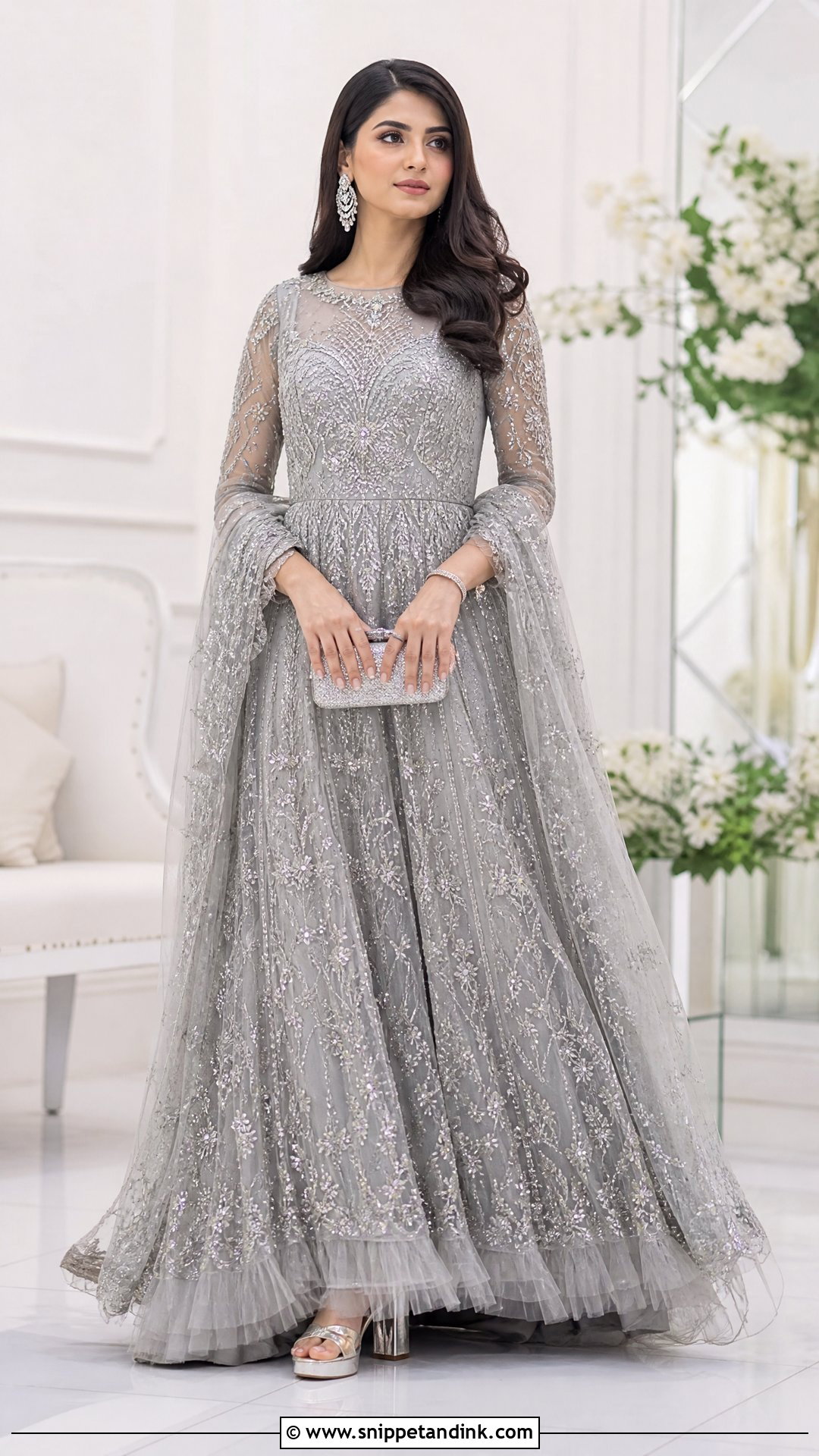
Silver grey looks sophisticated under reception lighting, which makes it a strong walima choice. Pick a floor-length maxi with a defined waist, softly flared skirt and embroidery kept to the bodice and cuffs. Crystal, pearl or silver thread suits the color. Drape a light dupatta over both arms or pin it at one shoulder. Crystal earrings, a slim bracelet and a silver clutch beat several competing pieces. Metallic block heels give stability. Grey can drain warm skin tones, so I’d add a bit of blush and a lip with some color. Guests stay restrained; a bride wearing this can add a train and layered dupatta.
11. Pakistani Wedding Pastel Walima Saree
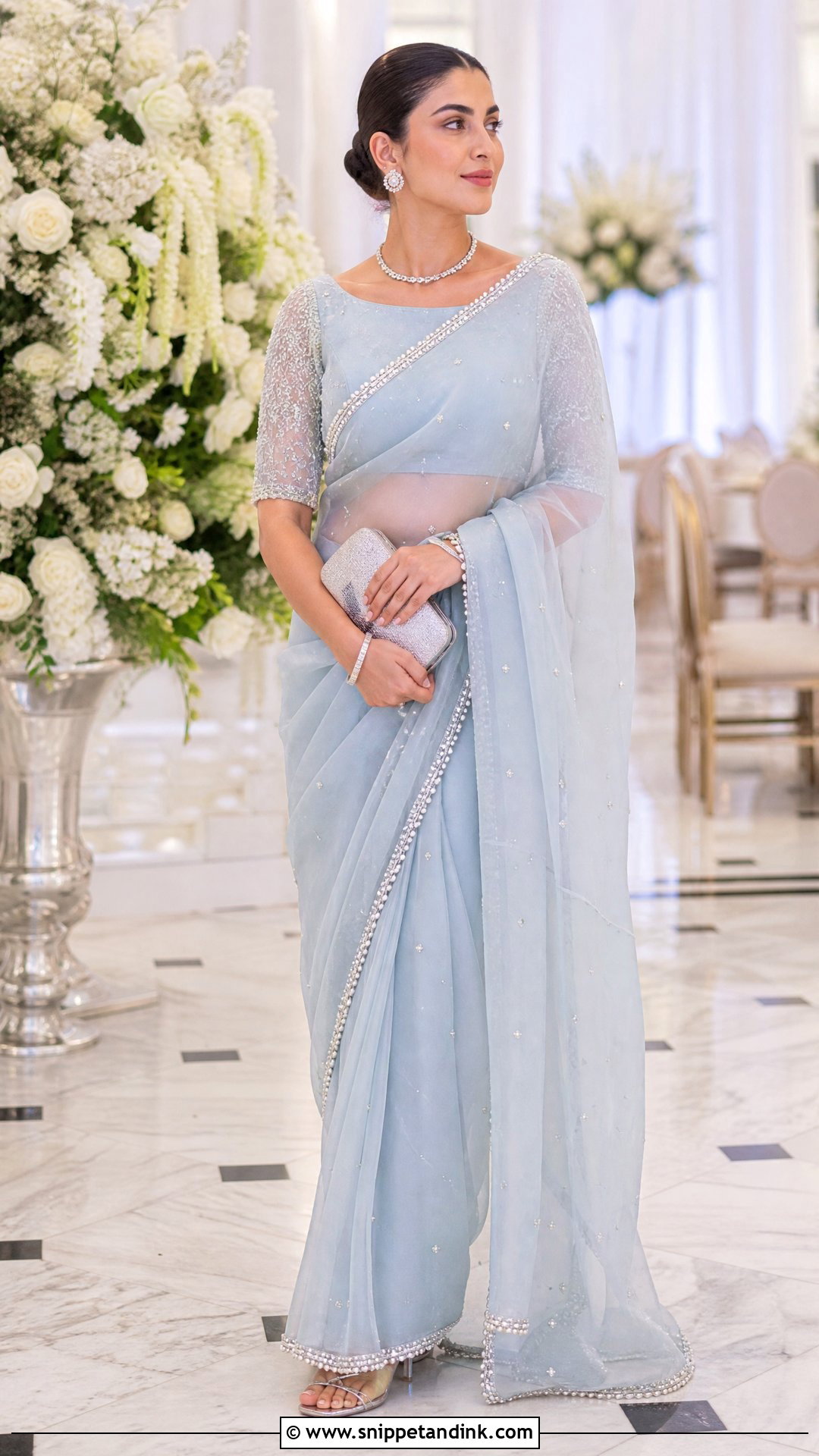
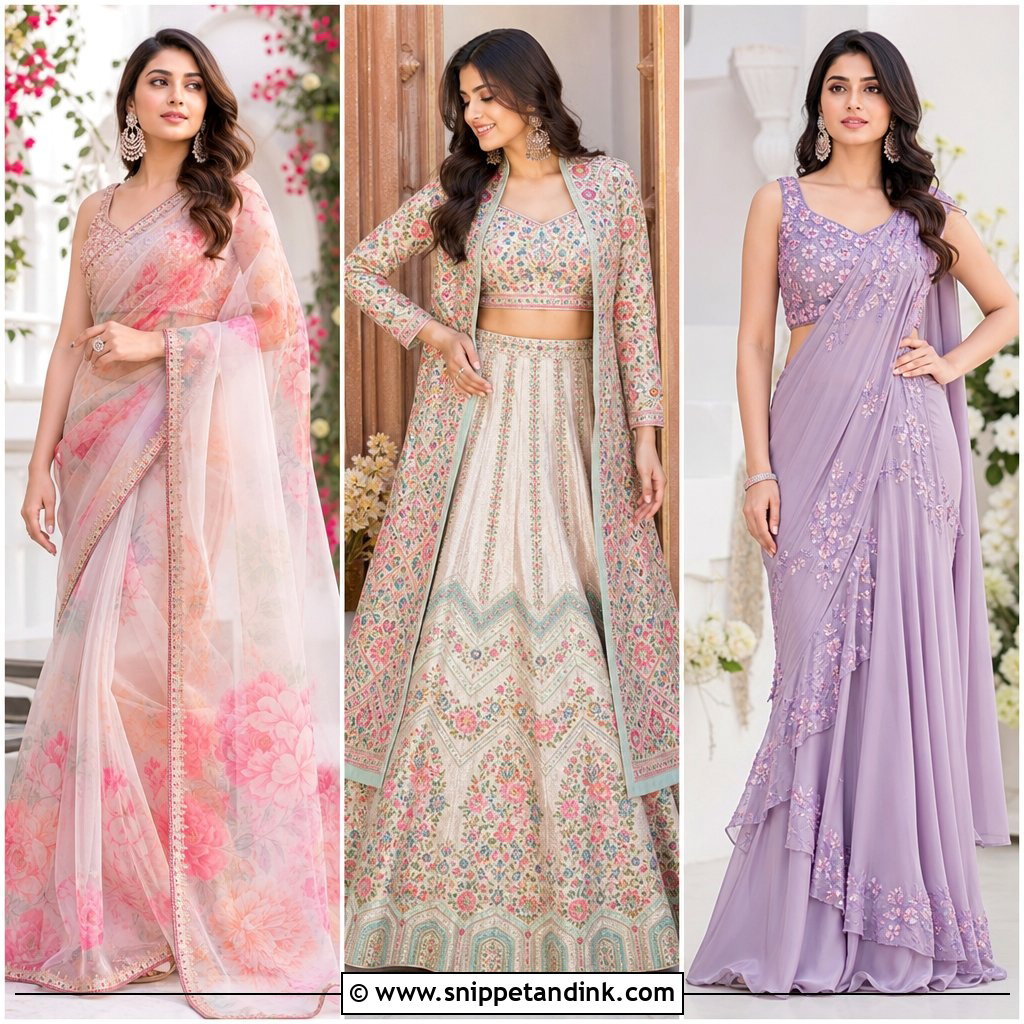
A pastel saree is a graceful walima look with a slightly modern edge. Powder blue, mint, lavender, dusty pink and soft peach in chiffon, organza or light silk all work. Pair it with an elbow-length or full-sleeve blouse. Match the clutch to the embroidery color rather than the base, which ties the look together. Low heels help the sari fall correctly. If you’ve never draped one, a pre-stitched sari or a few discreet pins at the shoulder and waist save you from re-tucking pleats all night. A sleek bun or side-parted waves finish it.
12. Pakistani Wedding Champagne Long Shirt And Trousers
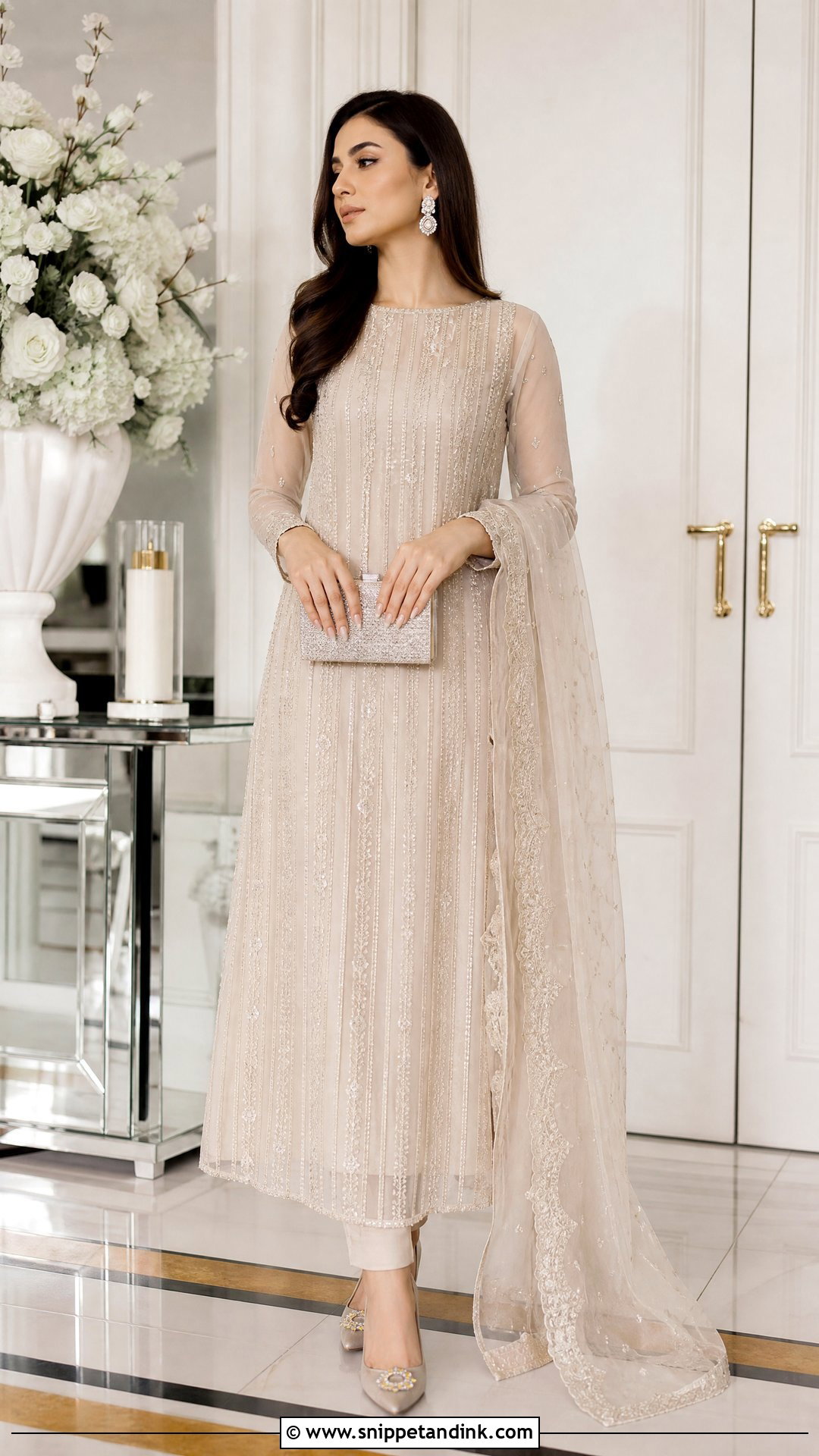
A champagne long shirt with straight trousers is for women who’d rather be tailored than flared. An ankle-length organza or chiffon shirt with vertical embroidery lengthens the body, straight silk trousers add structure and a matching dupatta keeps the color continuous. Pearl, gold or crystal touches come through the neckline, jewelry and bag. Pointed pumps keep the line clean. It offers full coverage without bulk, which is why it works at a walima or formal nikkah. Organza shirts are sheer, so get a full-length lining; it also helps the shirt hang straight instead of clinging. Guests should keep the embroidery modest.
13. Pakistani Wedding Velvet Winter Lehenga
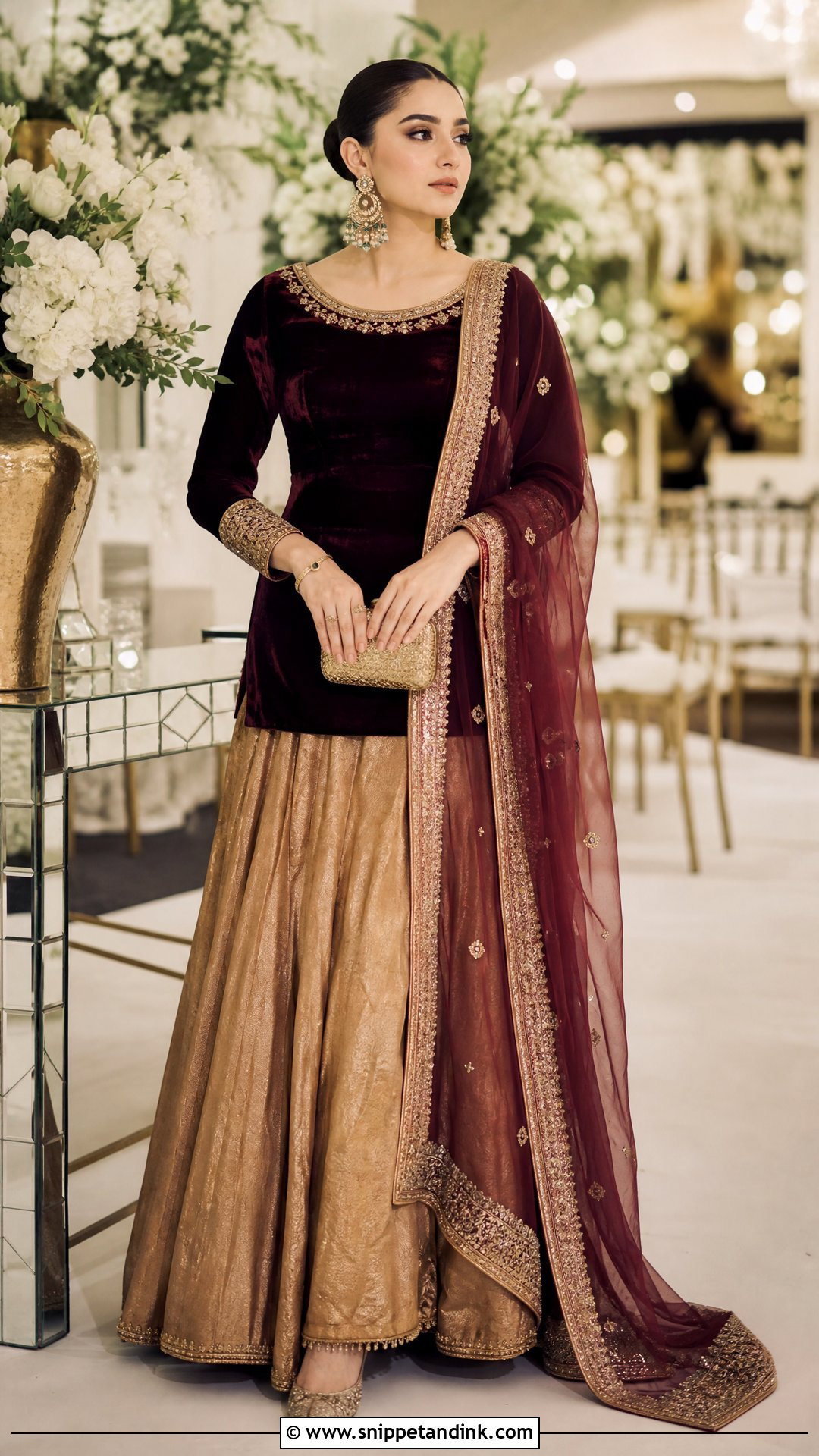
Velvet is the fabric for a cold-weather wedding, and the trick is not to overdo it. Put the velvet in one piece, a blouse or short jacket in navy, burgundy, emerald or plum, and pair it with a lighter raw silk lehenga. All-velvet outfits get heavy and hot once you’re in a crowded, heated hall. Antique gold embroidery at the neckline, cuffs and skirt border looks rich. An organza dupatta keeps it breathable. Statement earrings, a structured clutch and closed-toe block heels finish it. Brides can go full velvet; guests are better off limiting it to the blouse or jacket.
14. Pakistani Wedding Organza Pishwas
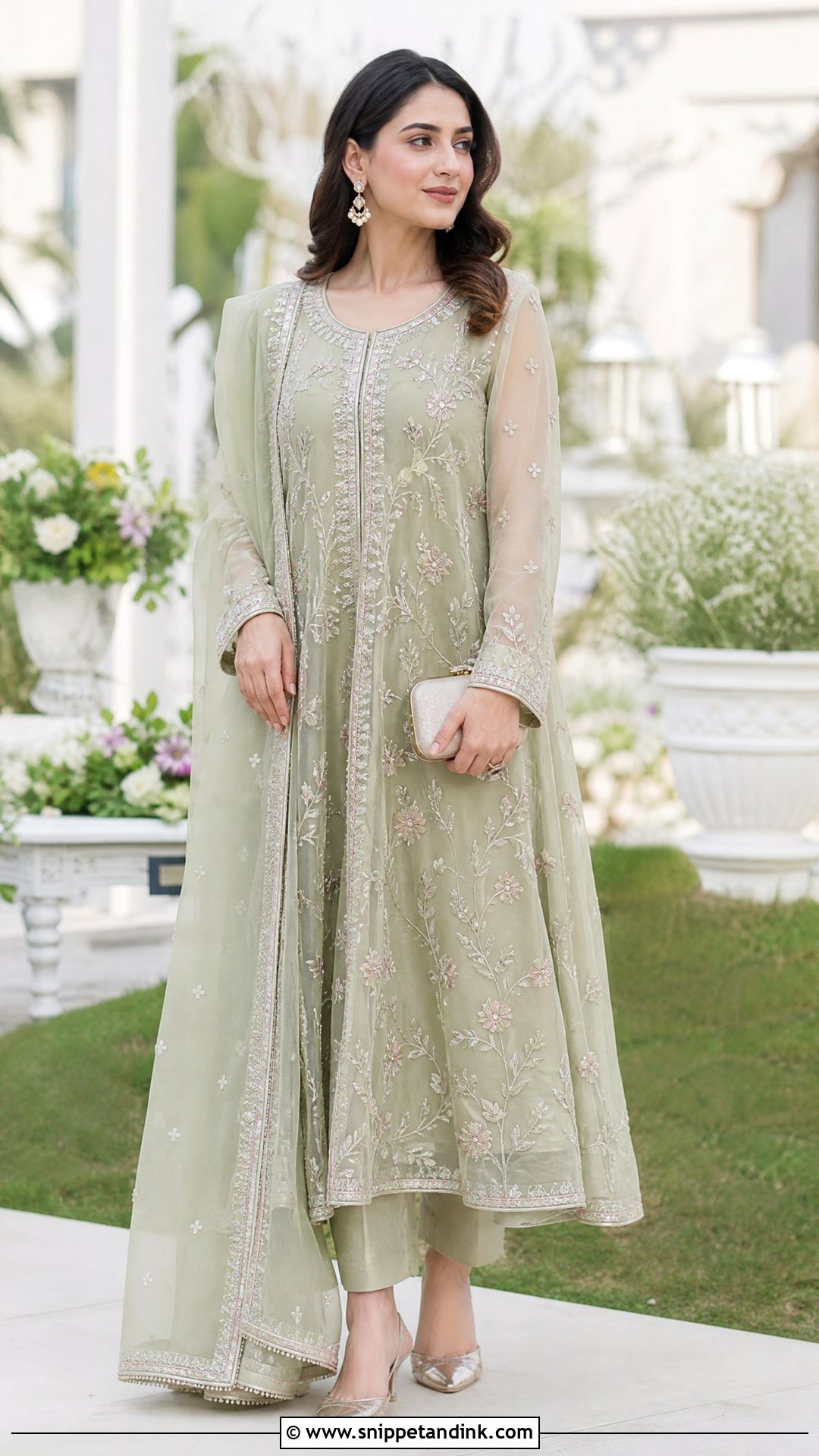
Organza gives a pishwas a light, floating look, and in sage, lilac, peach or ice blue it suits a nikkah or walima. Choose a fitted bodice and a controlled flare. Organza is crisp, so too many panels stand out stiffly instead of draping; if you want less volume, ask for fewer panels. Scattered threadwork or small florals are enough on such translucent fabric. You’ll need a matching inner layer for coverage and straight trousers underneath. Pin a bordered organza dupatta at the shoulder to keep the shape clean. Pearl earrings, a slim clutch and metallic kitten heels finish it. Long lined sleeves and a higher neckline work well if you want more coverage.
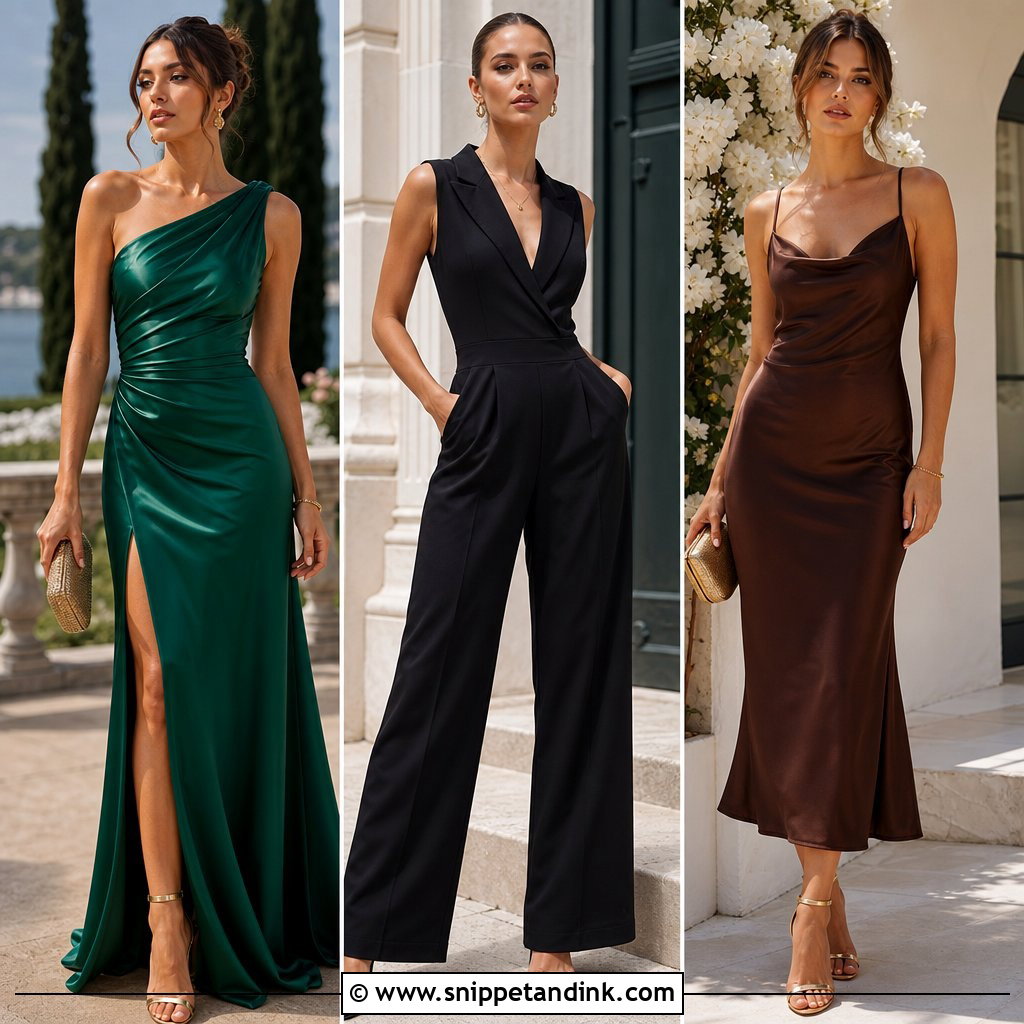
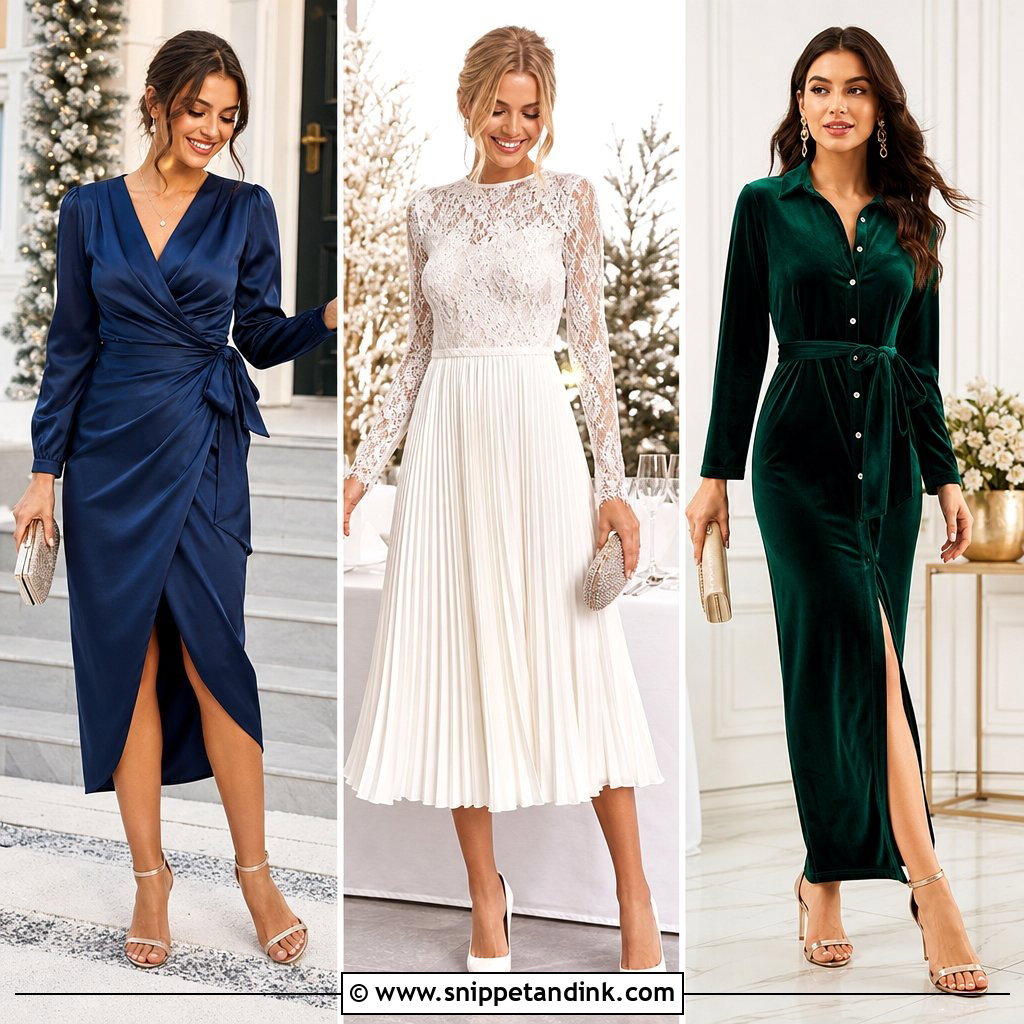
15. Pakistani Wedding Silk Anarkali
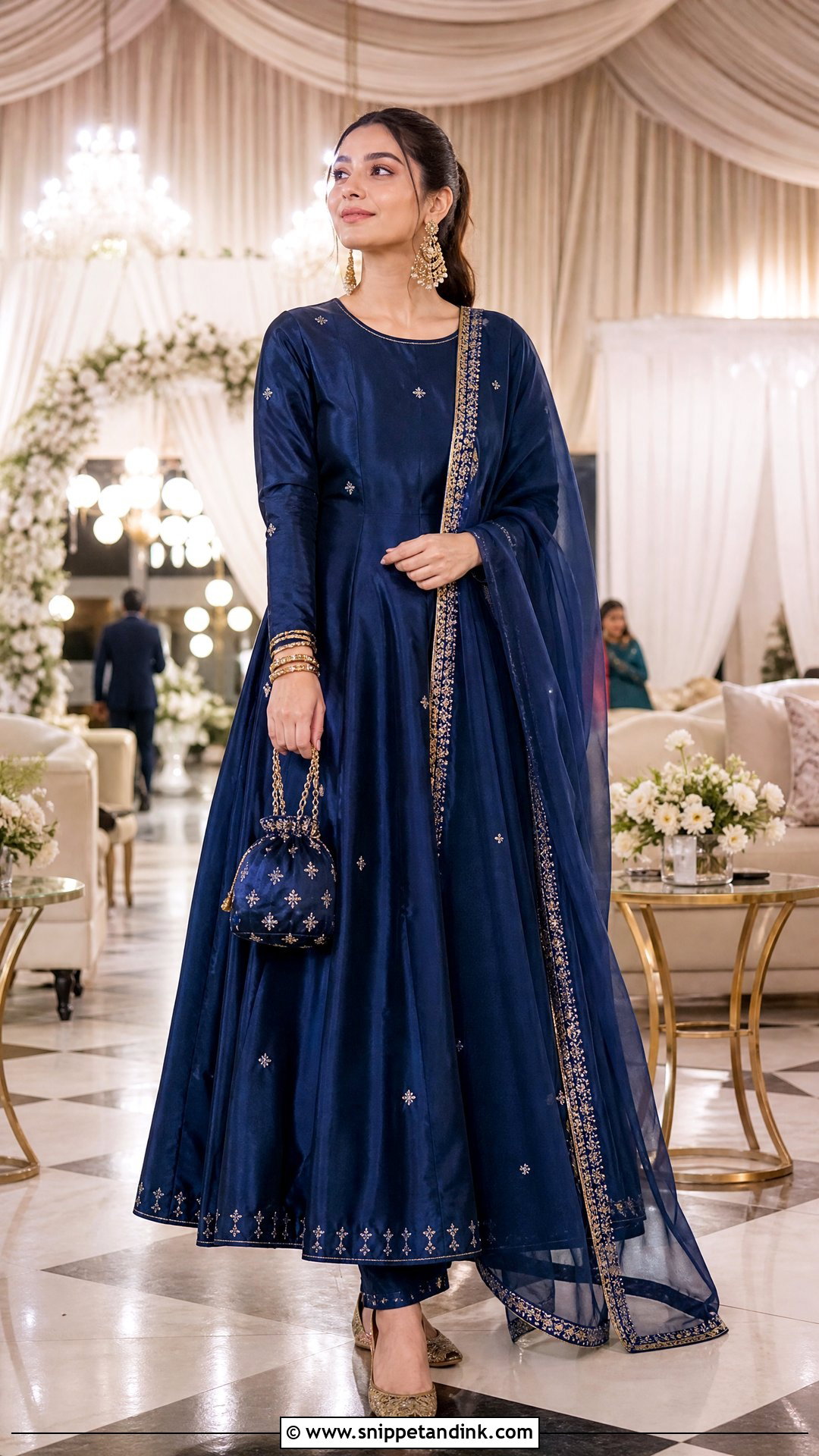
A silk anarkali is one of the most adaptable formal outfits there is. The fitted top and widening skirt suit a wide range of body shapes, and you don’t need a separate lehenga. Sapphire, plum, teal or ruby work for evenings; a pastel suits daytime. Pair it with fitted pants and a chiffon dupatta trimmed in the same embroidery. Long earrings, stacked bangles and a small potli keep it traditional. Vertical embroidery and a slightly raised waist lengthen the silhouette. Silk shows water marks, so keep a napkin handy at dinner and don’t dab spills with a wet cloth.
16. Pakistani Wedding Embellished Saree
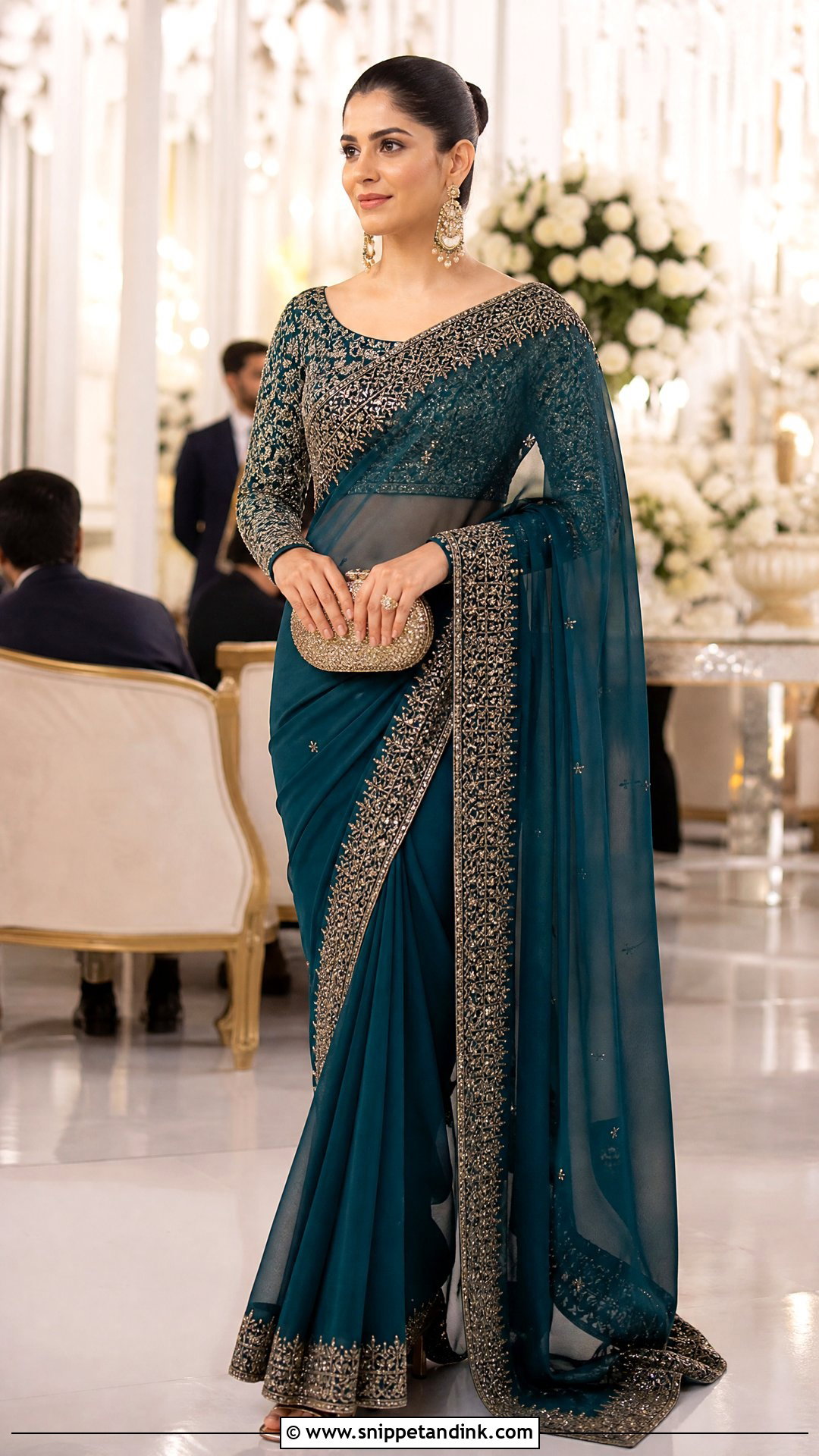
An embellished sari can be very glamorous at a baraat or reception, as long as you keep it balanced. Chiffon, net or soft silk in navy, plum, bronze, teal or muted rose all work. A decorative border gives you enough impact without dense embellishment across the whole drape. The blouse needs a comfortable neckline and secure sleeves. Pick a choker or statement earrings, not several big pieces. A hard-case clutch and mid-height heels keep it formal and functional. Pin the shoulder pleats and front drape before you leave home; trying to fix a slipping pallu in a venue bathroom is never fun. Close family can add a waist belt or a richer blouse.
17. Pakistani Wedding Jacket Lehenga
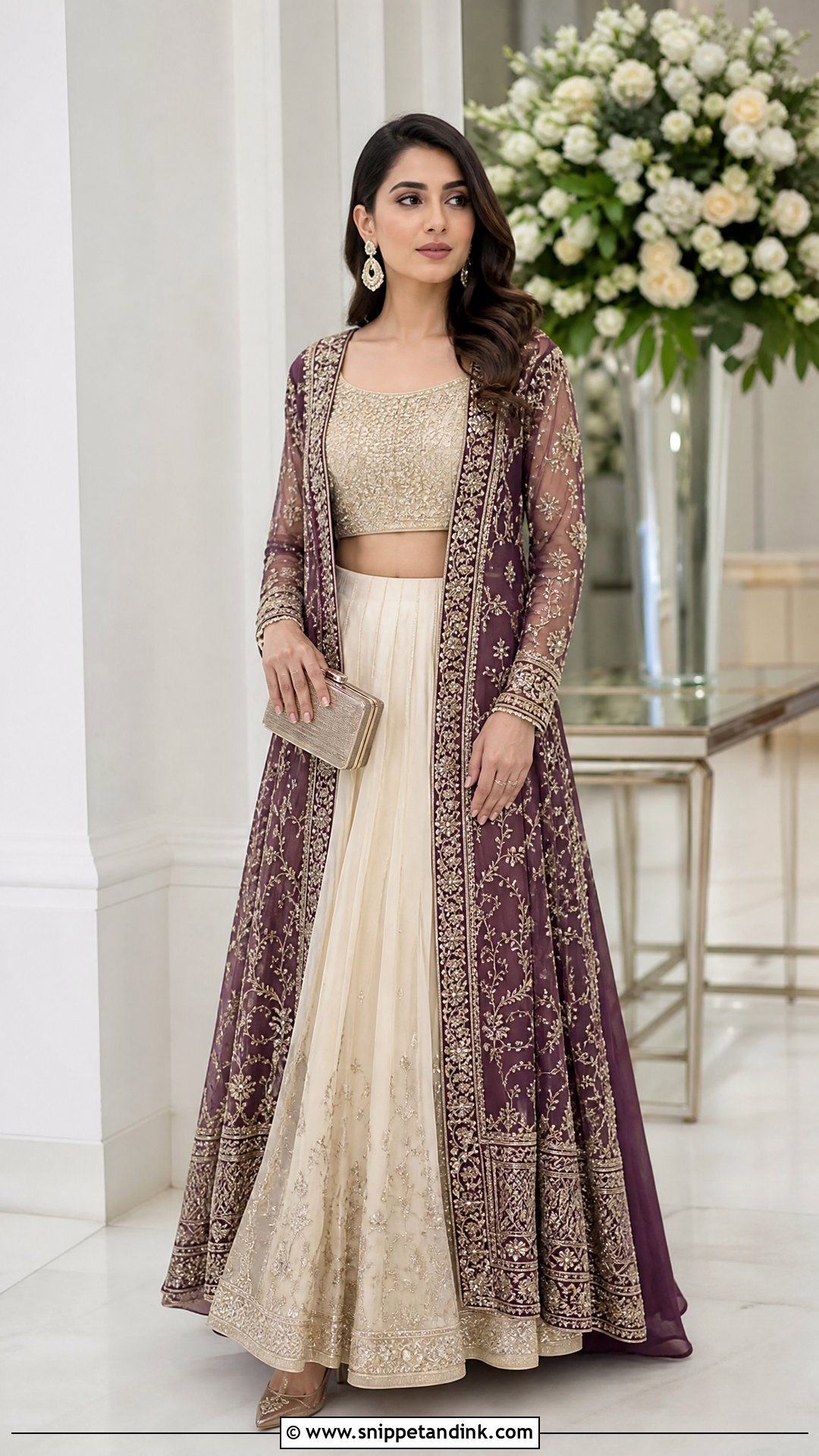
A jacket lehenga gives traditional volume with real coverage, and it suits women of every age. Start with a lightly embellished blouse and flowing lehenga, then add an open-front jacket to the knee or ankle. Put the embroidery on the jacket’s borders, sleeves and scattered motifs, and keep the skirt fairly simple so the weight is balanced. Navy and silver, ivory and gold, or plum and champagne all coordinate well. Drop earrings, a simple ring and a structured clutch are enough. Heels give a longer line under the jacket; pointed flats need a carefully measured hem. If the jacket covers enough, skip the dupatta.
18. Pakistani Wedding Cape Sharara
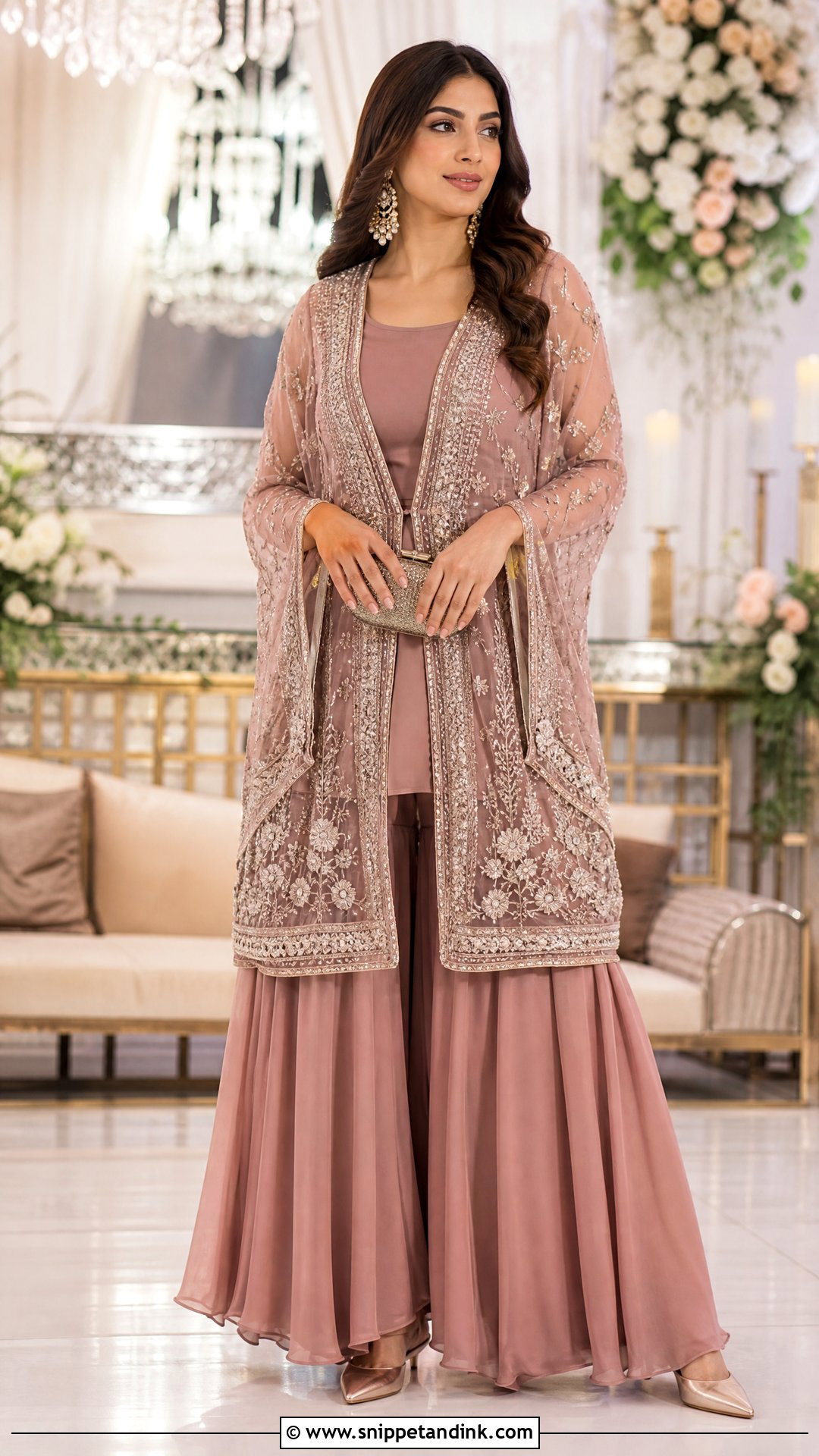
A cape sharara is the modern version of a classic shape. Pair a fitted hip-length inner shirt with wide sharara pants and a sheer cape attached at the shoulders or neckline. Keep the cape lightly decorated; heavy work stops it moving and hides the outfit underneath. Deep teal, dusty rose, black with gold or lavender with silver all suit receptions. Wear long earrings and skip necklaces that fight the cape’s neckline. A knee-length cape is easiest to move in, since a longer one tangles with the sharara hem. Choose an opaque inner shirt with full sleeves for more coverage.
19. Plus Size Pakistani Wedding A-Line Kameez
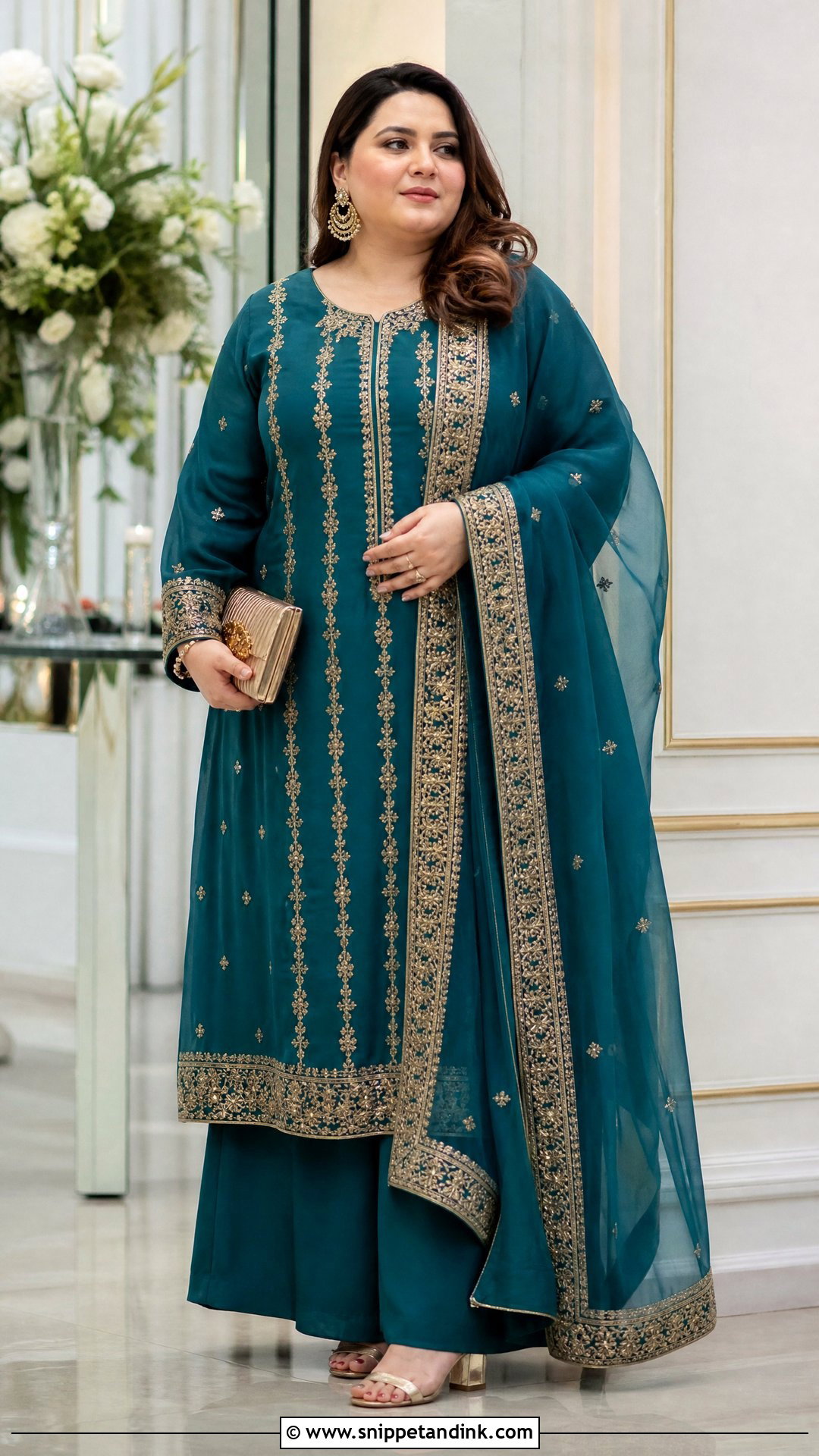
For plus-size figures, an A-line kameez with palazzo pants is comfortable without any restrictive tailoring. The kameez should fit at the shoulders and widen gradually below the bust or waist. That shoulder fit is the part I check most carefully, because a kameez that’s loose at the shoulder looks oversized however well the rest falls. Vertical embroidery, side slits and a V or soft round neckline create a long line. Match the palazzos to the kameez so the silhouette doesn’t break. A light dupatta worn lengthwise over one shoulder adds movement. Avoid stiff fabrics; jewel tones suit evenings, dusty pastels suit daytime.
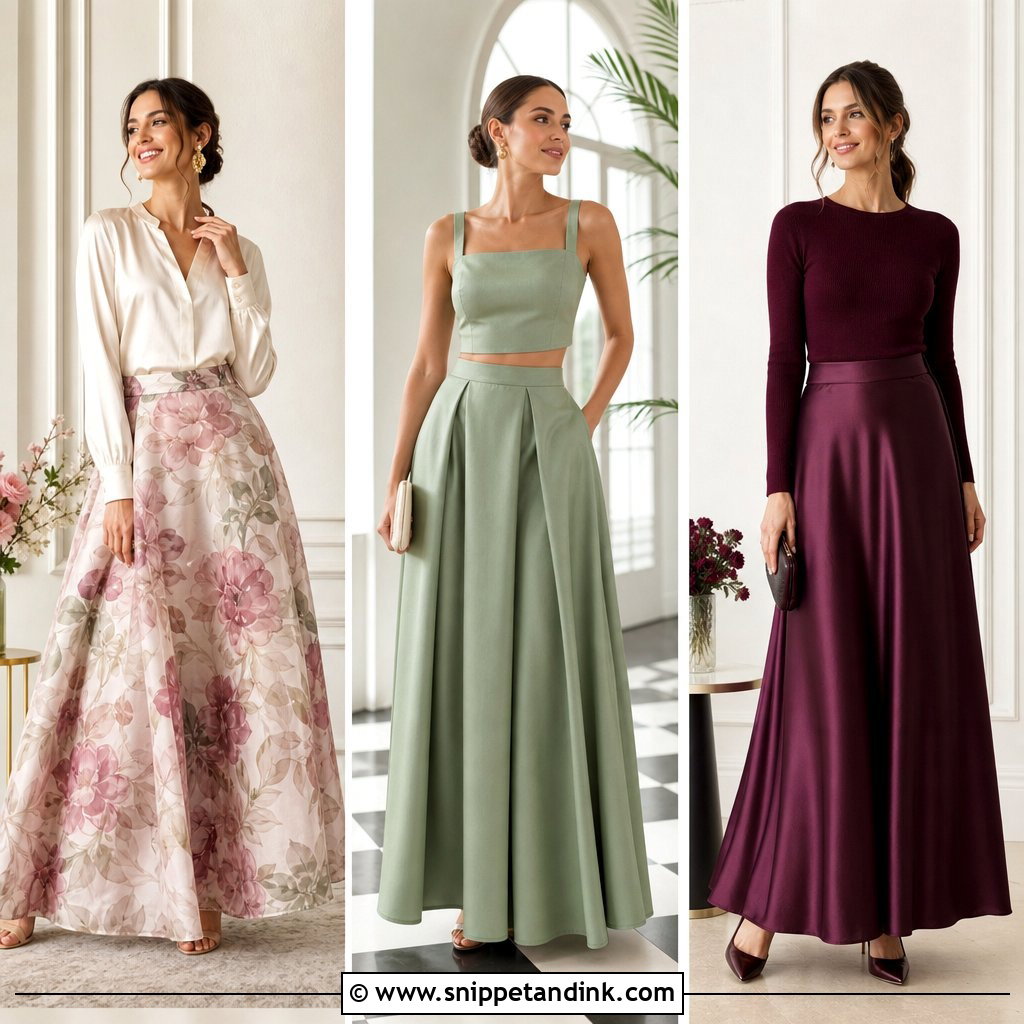
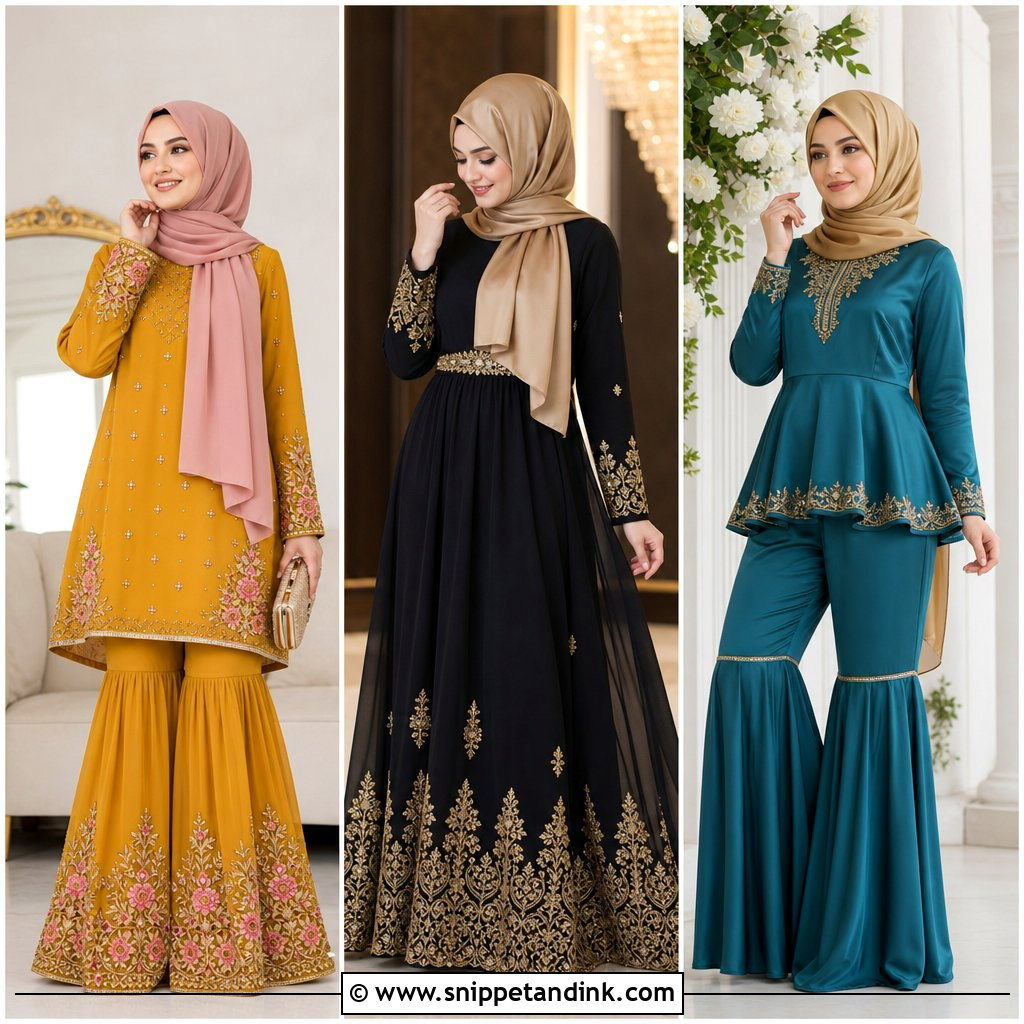
20. Modest Pakistani Wedding Hijab Maxi
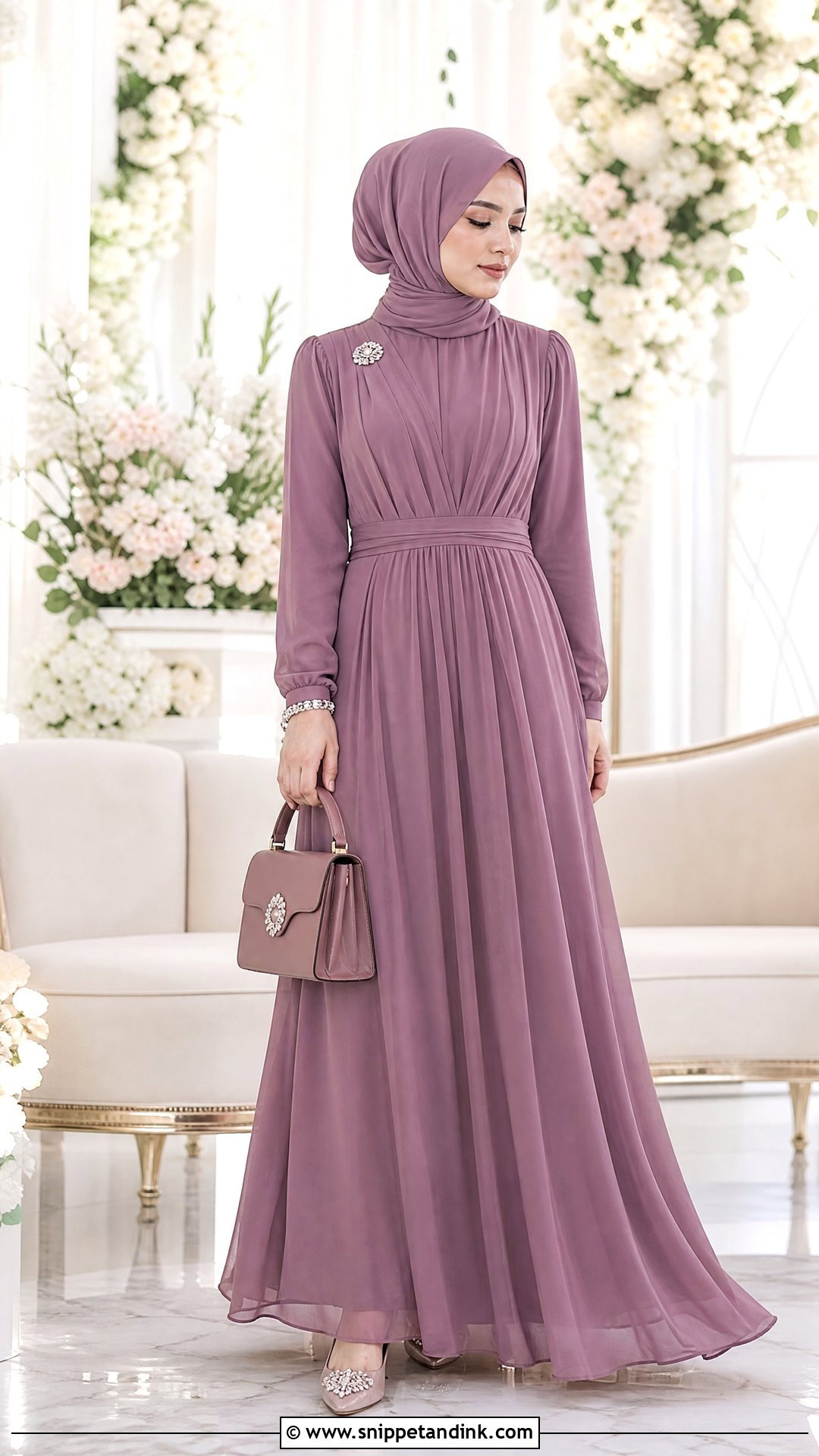
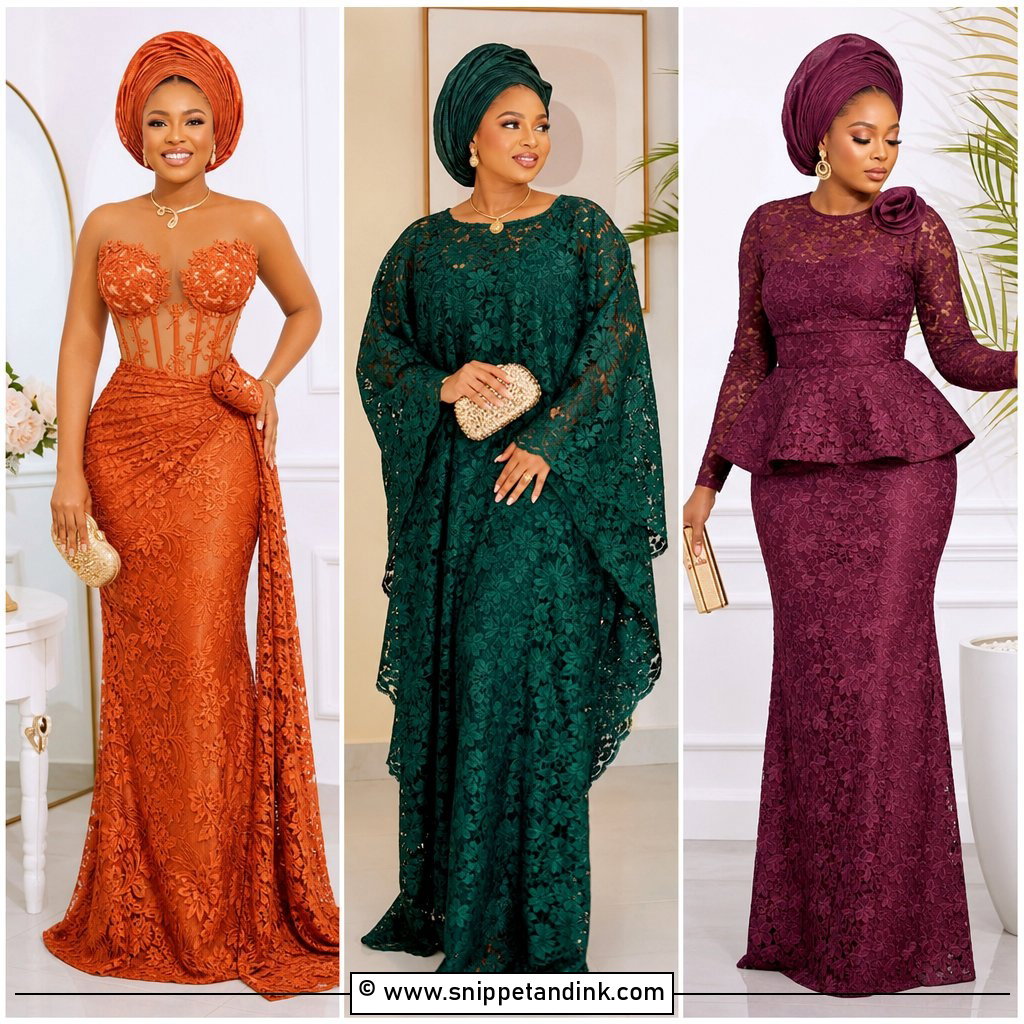
A long embroidered maxi with a coordinating hijab gives full coverage and still looks celebratory. Choose a floor-length design with lined sleeves, a high neckline and a comfortable defined waist. Chiffon, georgette or organza layers move without clinging. Sage, mauve, navy, champagne and emerald all work, with the hijab matched to the base fabric or the embroidery. Pin the scarf discreetly and keep the drape smooth at the neckline. Swap the necklace for a brooch or bracelet, since a necklace sits awkwardly under a hijab. Closed-toe heels or embellished flats finish it; check the hem length in those shoes so it doesn’t catch.
Off the Rack or Stitched to Measure?
Most guests choose between buying a ready-to-wear formal outfit and buying unstitched fabric for a tailor. Both work, but they suit different timelines.
- Ready-to-wear is fastest, and the embroidery placement is already designed. The catch is sizing: shirts often need taking in at the waist or shortening at the sleeve, so budget for a quick alteration.
- Unstitched suits let you choose the cut, lining, sleeve length and neckline. In wedding season tailors get booked up, so give them a few weeks and ask for a trial fitting.
- Whichever you choose, take the shoes to the last fitting. Shararas, ghararas and maxis need to be hemmed for the exact heel height you’ll wear.
Before the day, try everything on together for an evening: outfit, dupatta pinned, jewelry, shoes. A heavy earring that pulls, a blouse hook that keeps popping open or a dupatta that won’t stay on your shoulder are all easy to fix at home and impossible to fix in the middle of the baraat.
Every Family Dresses a Little Differently, So Ask
A good wedding wardrobe matches the event, your comfort and your relationship to the couple. That covers everything from relaxed yellow mayun clothing and colorful mehndi ghararas to formal baraat lehengas and polished walima maxis. Build each look as a whole, with fabric, dupatta, jewelry, bag and shoes planned together. Close relatives can carry richer embroidery; guests look best with lighter work and a few well-chosen accessories. Expectations differ between families, regions and venues, so a short conversation with the hosts before each function is the most useful preparation you can do.
You'll Like These Ideas:


Leave a Reply