
A heritage bridal outfit is rarely chosen from a rail. It often comes with a grandmother’s opinion, a regional weaving tradition and a ceremony that dictates the color. Red silk, handwoven cloth, embroidered robes, beaded skirts and lace veils all carry meaning, and each one also behaves very differently on the body over a long day. I style brides from many backgrounds, and the questions are always the same underneath: how heavy is it, who will dress you, and what do you need to move freely in it? Here are thirty traditional looks from around the world, each with the jewelry, footwear and practical detail that makes it work.
Weight, Drapes and Who Dresses You on the Morning
Western gowns are mostly zipped or laced and done. Many traditional garments are not. They are wrapped, pleated, pinned or tied on the body, and that changes how you plan the morning.
- Sarees, osariyas and some wrap skirts are pleated and pinned by hand. A professional draper usually needs at least half an hour per bride.
- Kimono dressing is specialist work, often done by a kitsuke dresser, and the full bridal layering takes much longer than a gown.
- Gele and headwraps are tied on the day and shaped to the face. Schedule the tying before the makeup artist leaves, so the forehead line stays clean.
- Heavily embroidered lehengas, takchitas and velvet robes can be hot and heavy. Plan seated breaks and a cool room.
I’d always do one full dress rehearsal with every piece of jewelry and the headpiece on. Weight that seems fine on a hanger feels very different after three hours on the shoulders.
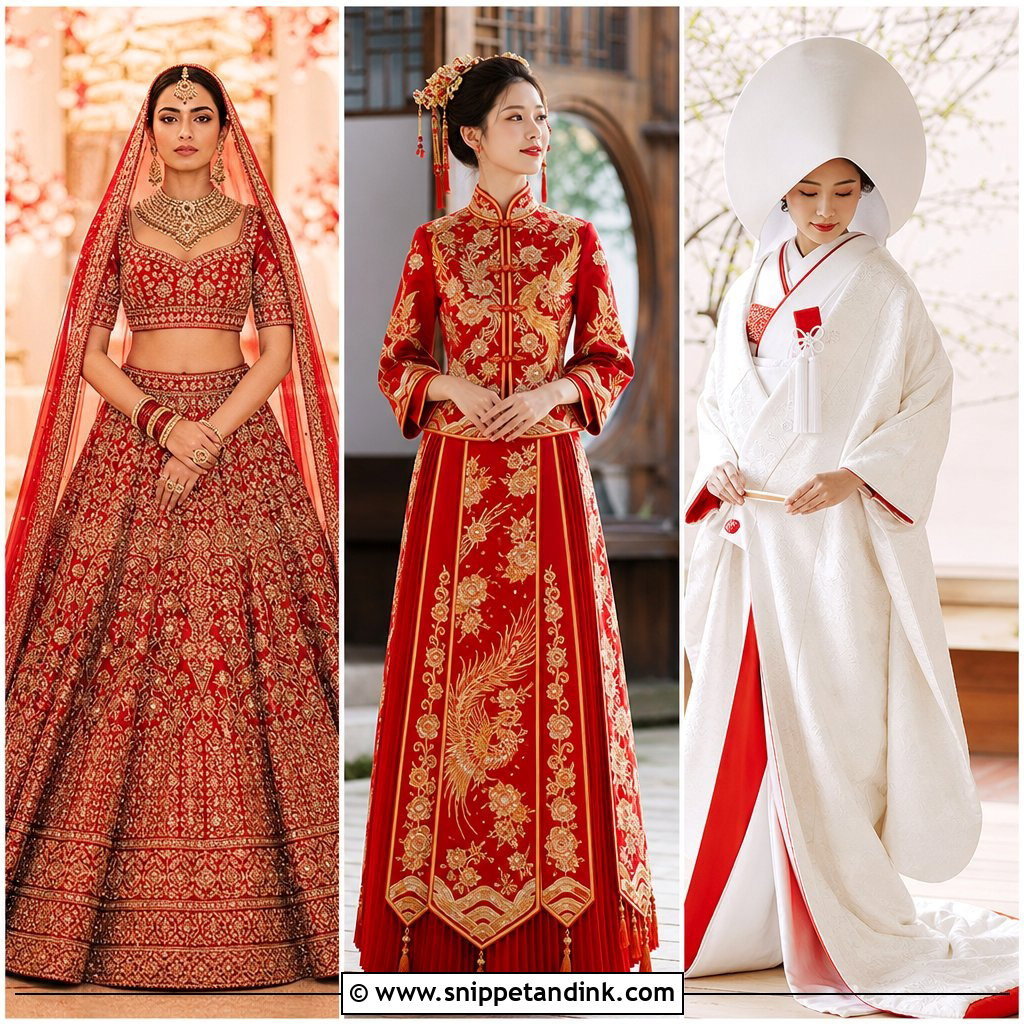
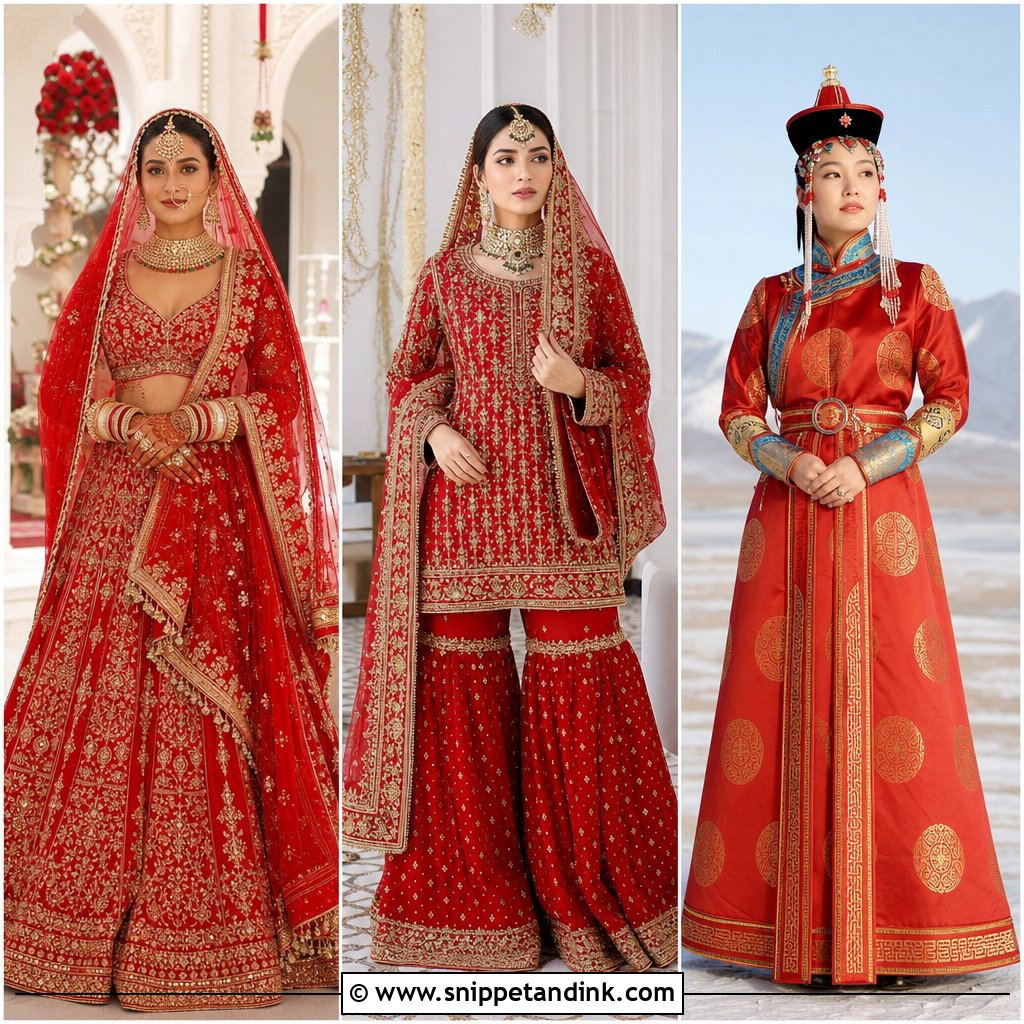
1. Indian Red Lehenga Wedding Dress
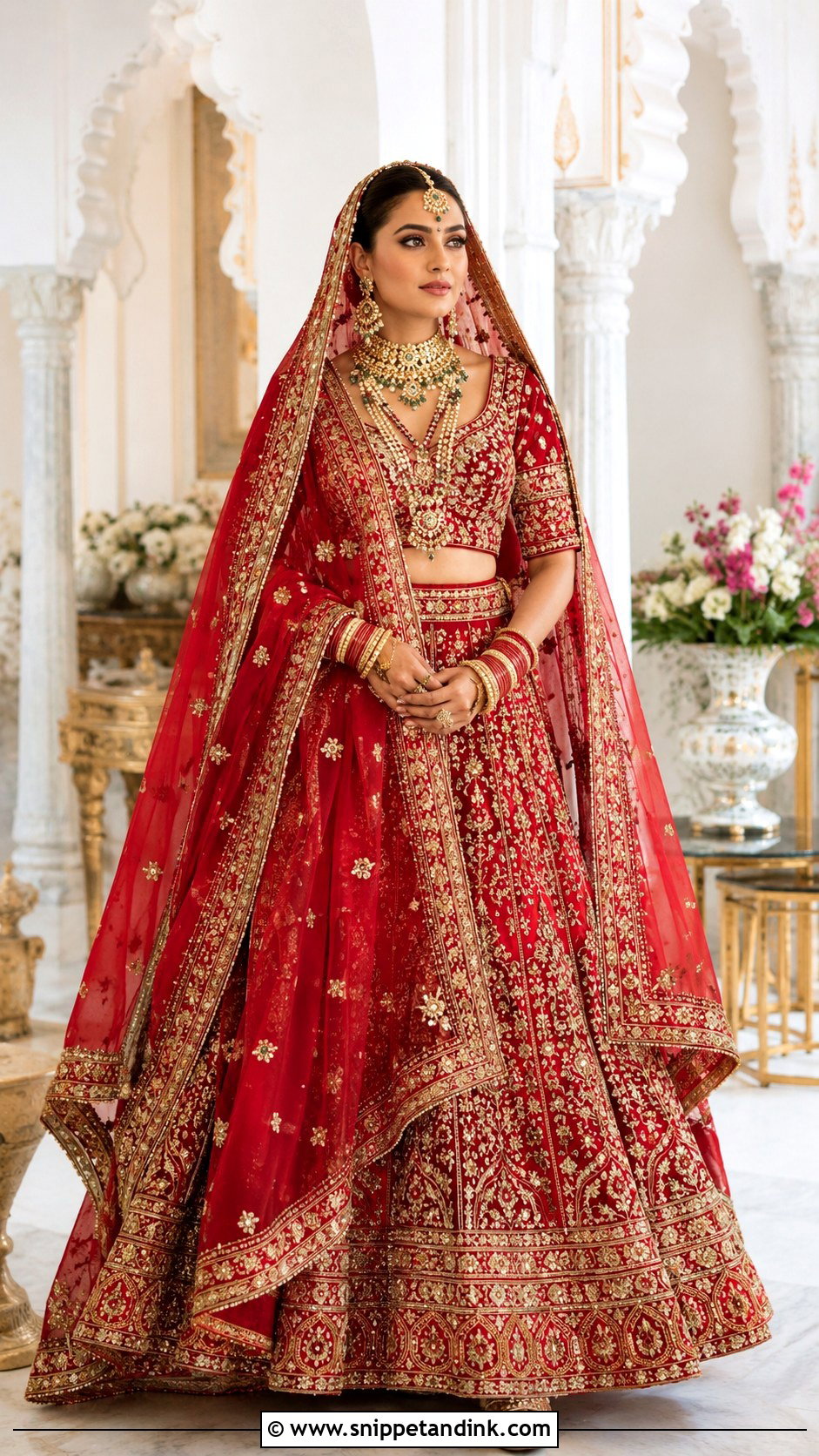
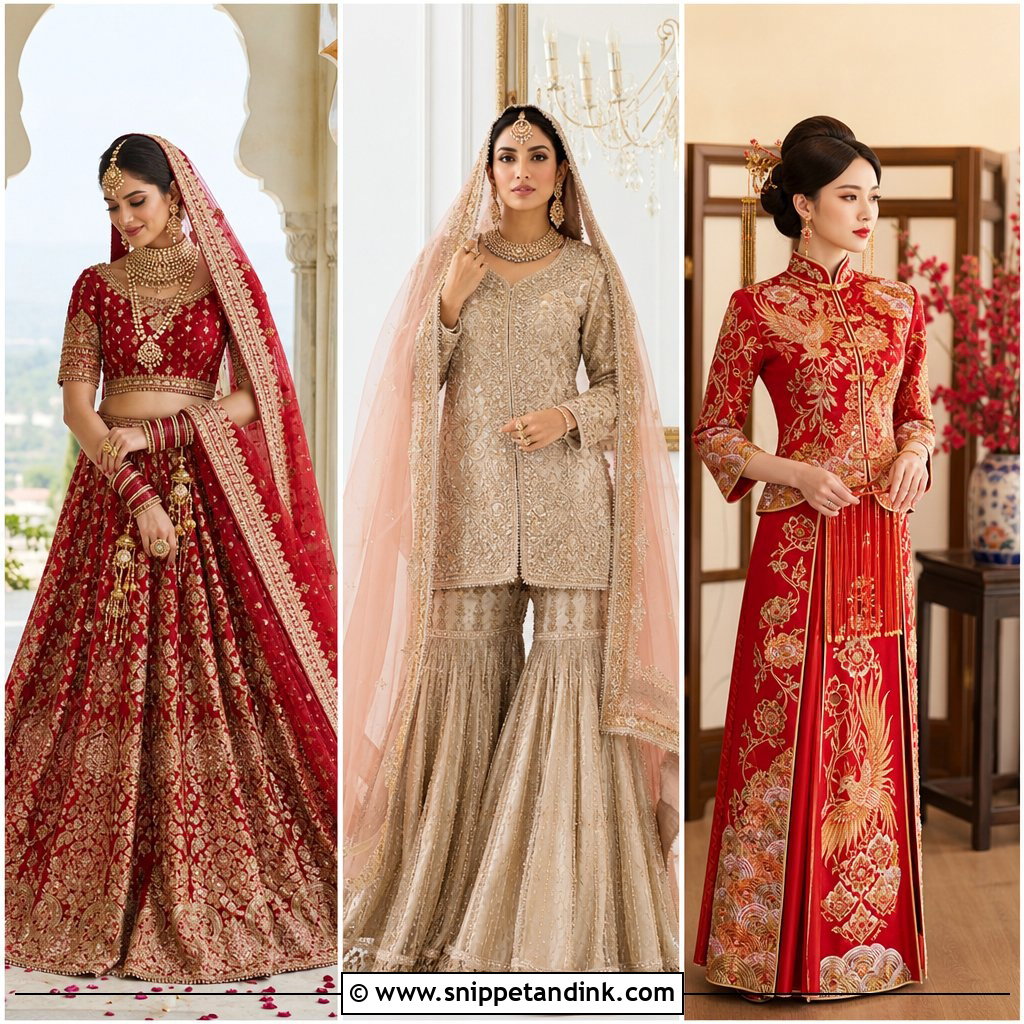
The red lehenga is heavy, and that’s the first thing I warn brides about. A full skirt with dense zari, sequins or mirror work can weigh several kilos, and most of that sits on the waist, so the waistband needs proper canvas or a broad elastic support. The choli should be fitted with the exact jewelry in mind, since a heavy necklace drags a loose neckline down. Red, maroon and deep pink are the classic choices. I pin the dupatta to the bun and the blouse shoulder at several points so it stays put through the pheras. Layered necklaces, bangles, a maang tikka and cushioned embellished flats for the long ceremony.
2. Indian Bridal Saree Wedding Dress
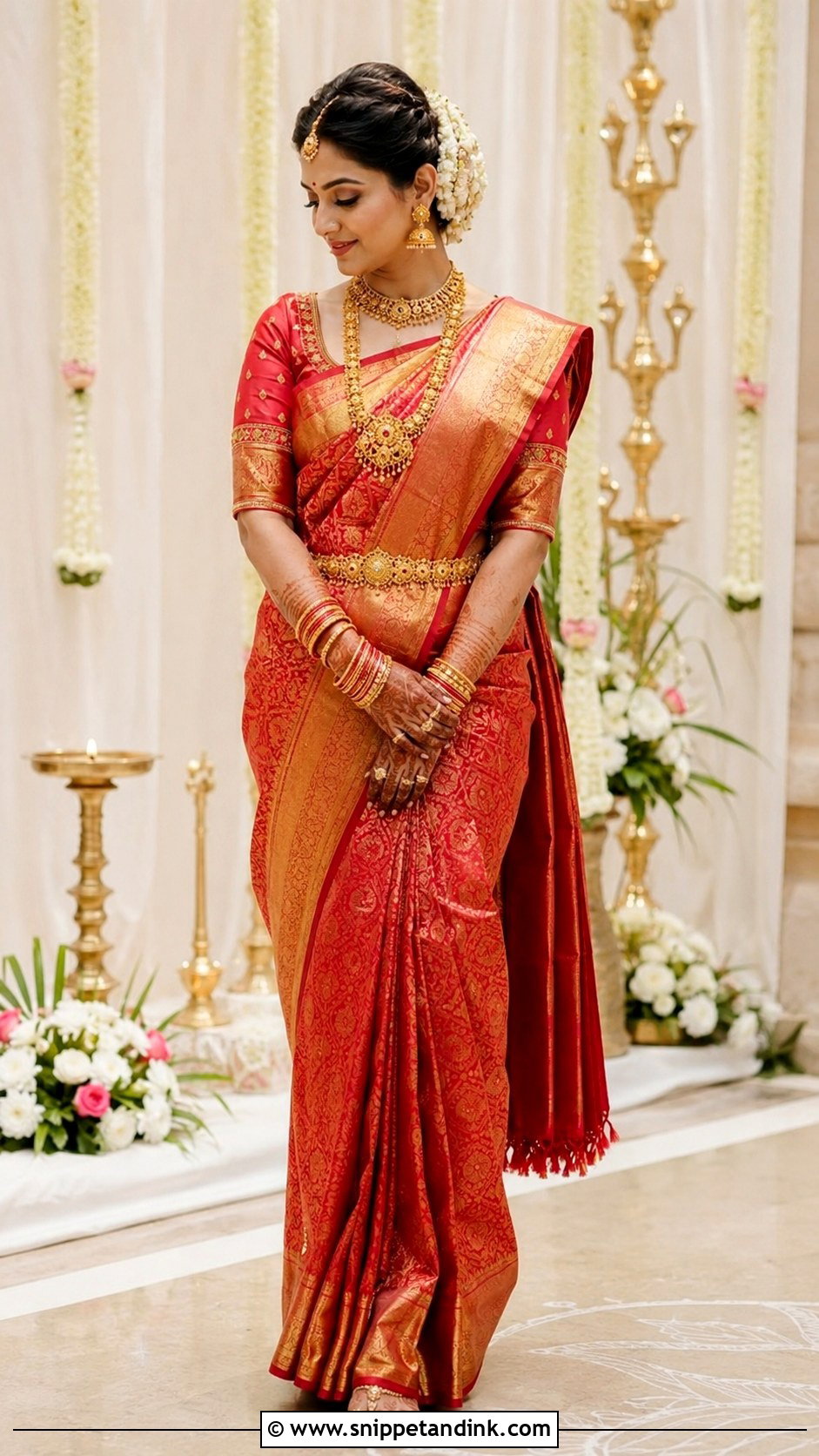
A saree is a single length of fabric with no seams to hide behind, so the drape is everything. I always book a professional draper for the morning; even confident saree wearers find bridal silk stiffer and harder to pleat neatly. Kanjivaram, Banarasi and Paithani silks have heavy borders that set the pleats firmly once pinned. The blouse and petticoat should be fitted in advance, with the petticoat drawstring tied firmly at the waist, as everything is tucked into it. Gold jewelry, bangles, anklets and a jasmine-wrapped bun or braid. Fresh jasmine bruises and browns within hours, so it goes on last.
3. Pakistani Bridal Sharara Wedding Dress
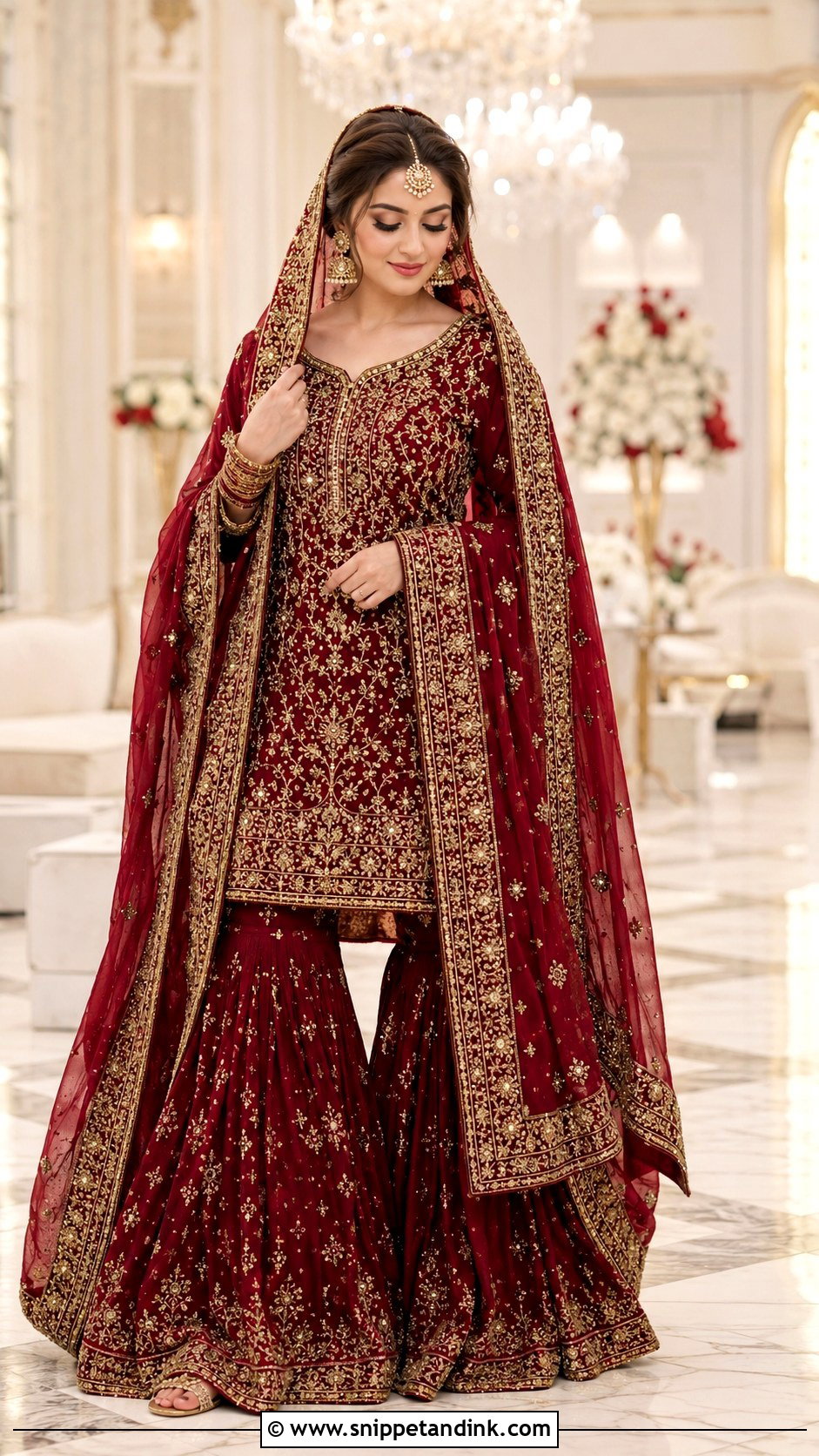
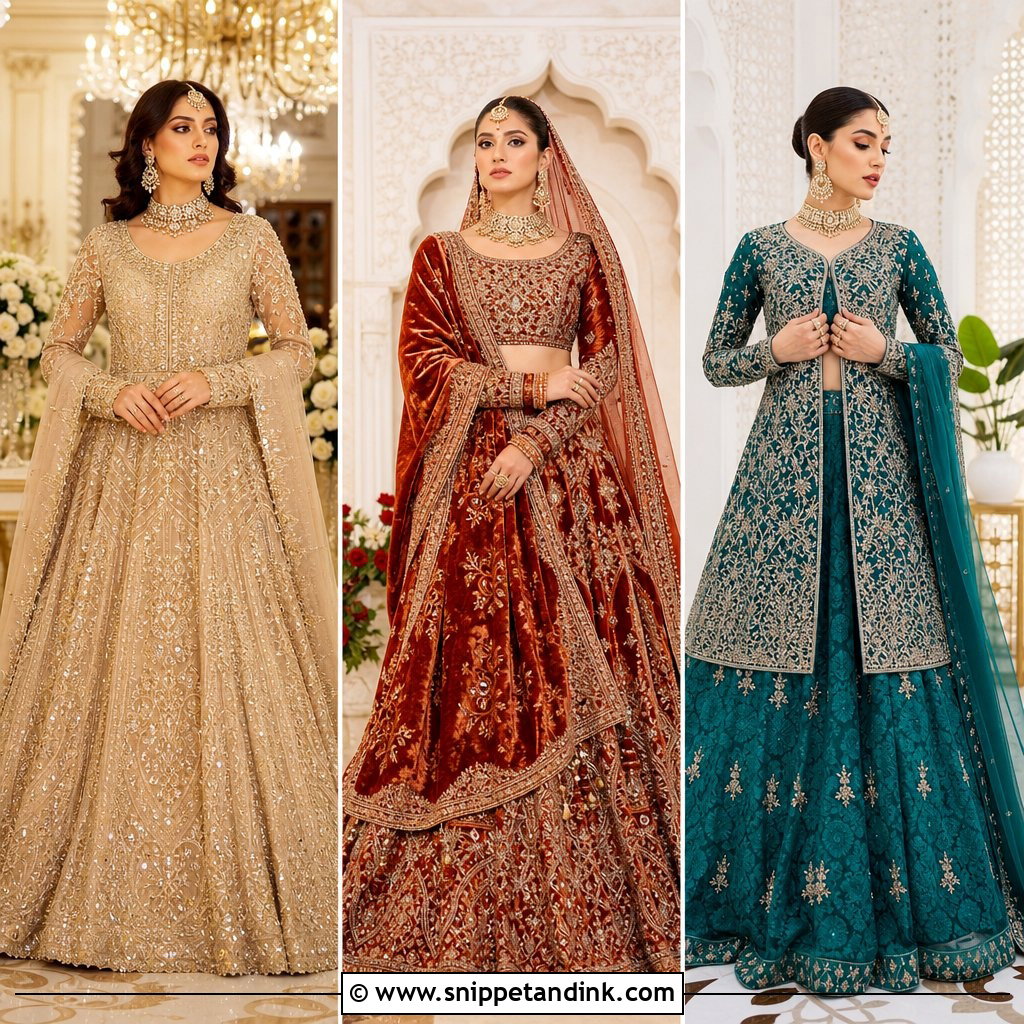
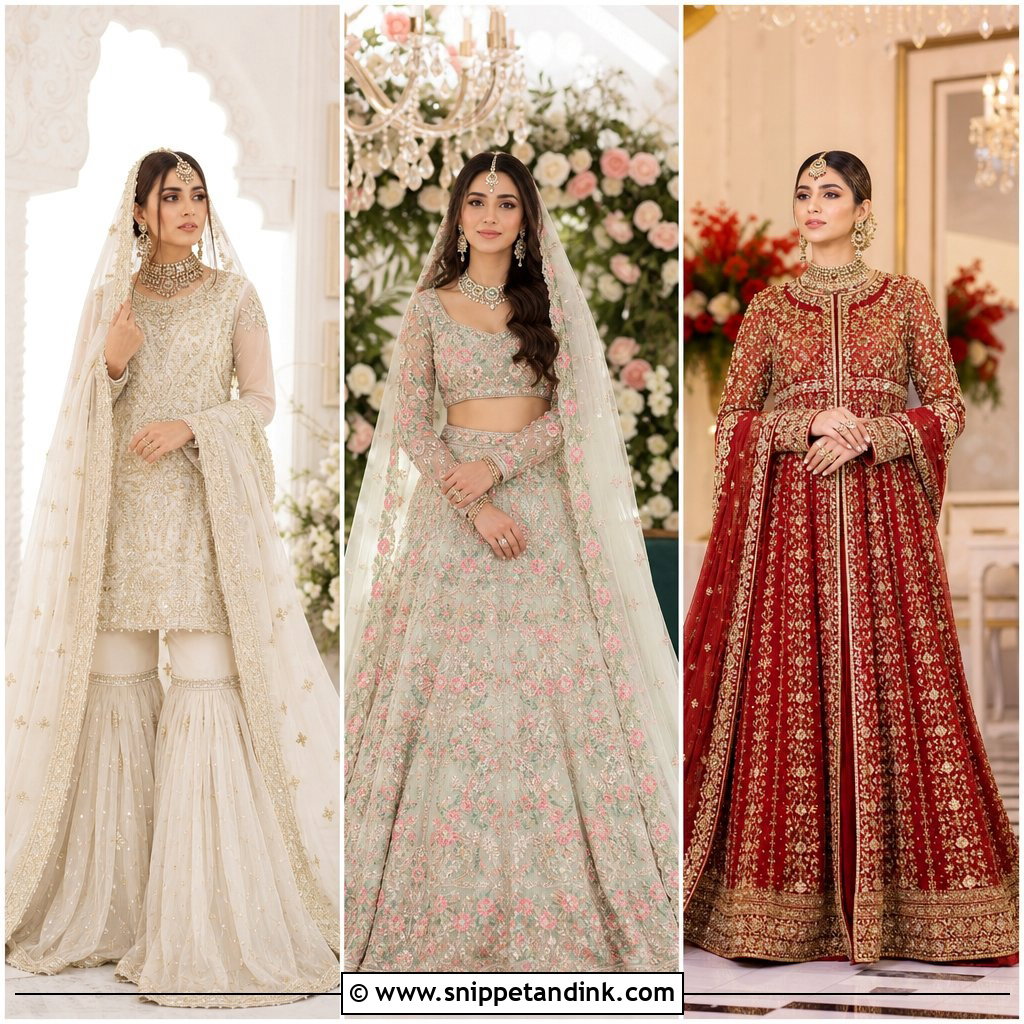
A sharara gives the volume of a skirt with the freedom of trousers, which matters during long receptions. The flare usually starts at the knee, and the pants need a proper hem length with the exact heels so they don’t catch underfoot. Red, rust, gold, emerald and maroon all carry heavy zardozi, gota and dabka work well. Dabka embroidery is raised metallic coil, and it can scratch the inside of the arm if the kameez sleeve is short. Jhumkas, a tikka, stacked bangles and a dupatta draped over the head finish the look with plenty of coverage.
4. Bangladeshi Red Saree Wedding Dress
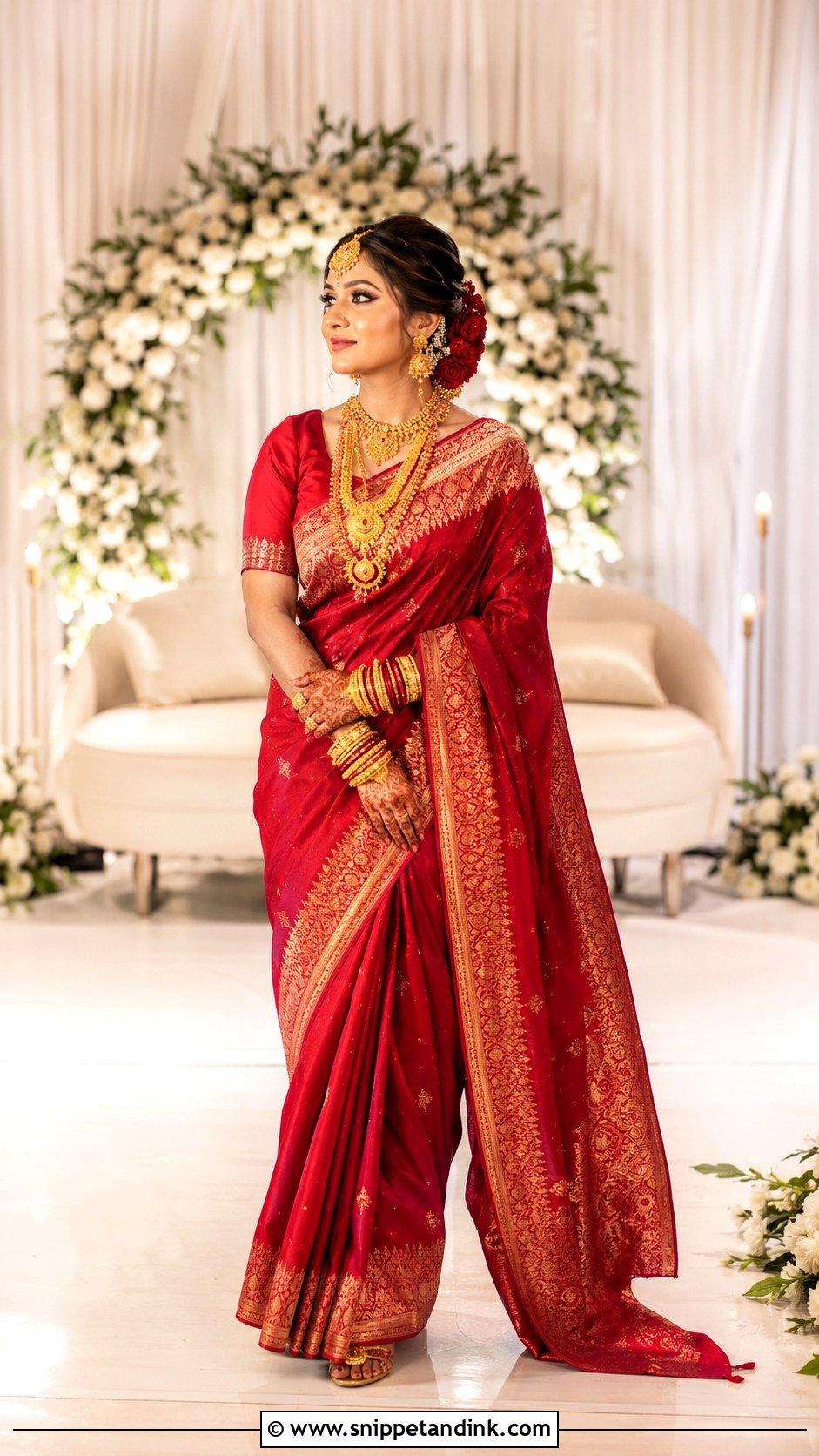
Crimson or red Bangladeshi bridal sarees, often Benarasi or Jamdani weaves with gold, are vivid under evening lights. Jamdani is finer and lighter than most bridal silks, so it drapes softly but needs more pins to hold neat pleats. A matching blouse, layered gold necklaces, bangles and a tikli on the forehead complete the traditional look. Many brides add a red veil or orna over the head for the ceremony. A polished bun with flowers or soft waves under the veil. Check the blouse fitting with the full jewelry set on, because heavy chokers sit on the neckline.
5. Sri Lankan Kandyan Osariya Wedding Dress
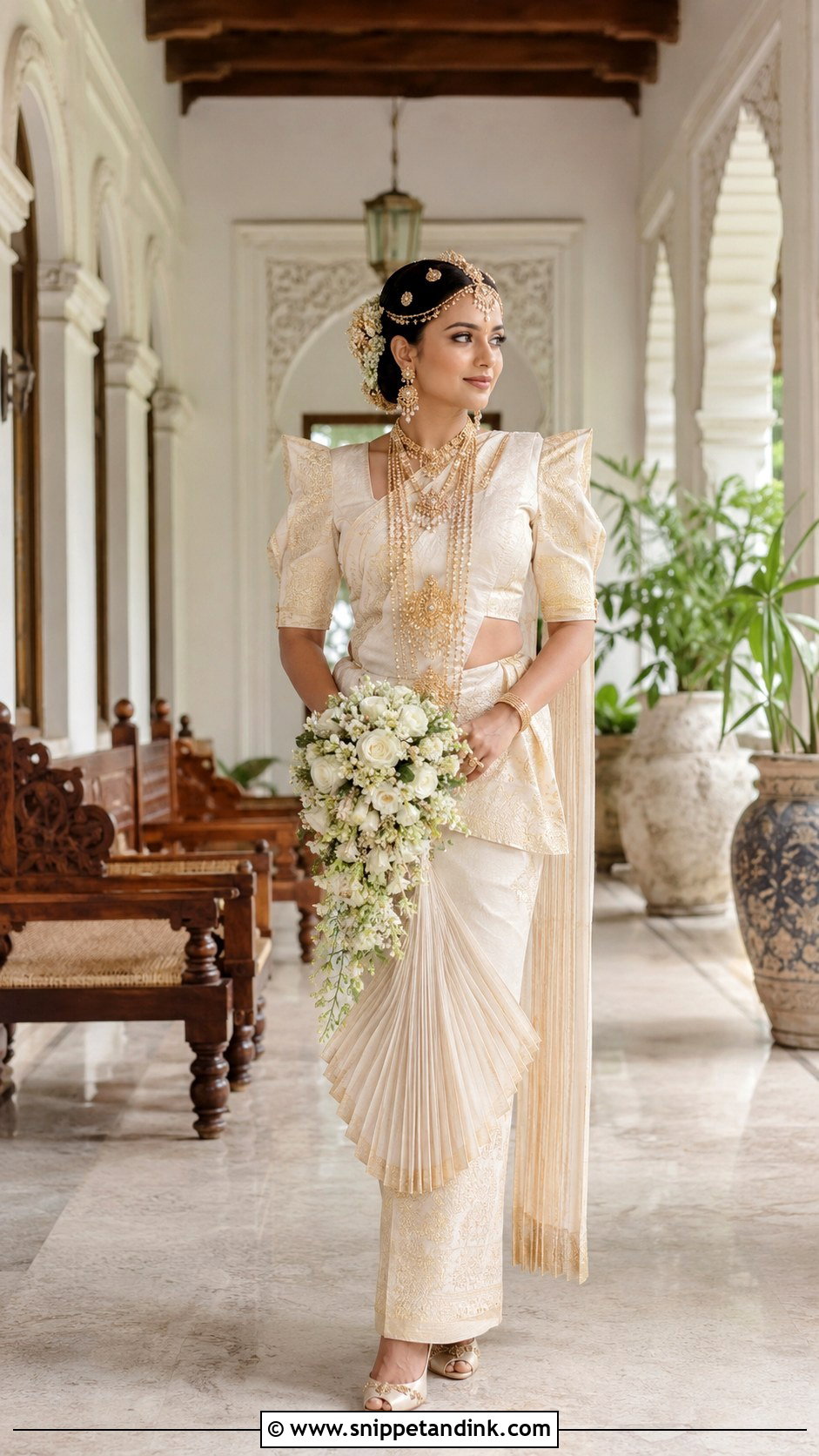
The Kandyan osariya has a frilled, pleated waist and a fitted jacket with puffed shoulders, giving it a structured, regal outline. White, ivory and gold are traditional for weddings. It’s pinned and pleated on the body, so I’d make sure a skilled dresser is booked for the morning. Kandyan brides usually wear a large set of traditional jewelry, often layered necklaces, a headpiece and many bangles, which adds real weight around the neck. A low bun anchors the headpiece. Elegant heels and a fitted jacket with room to raise the arms for the ceremony rituals.
6. Chinese Qun Kwa Wedding Dress
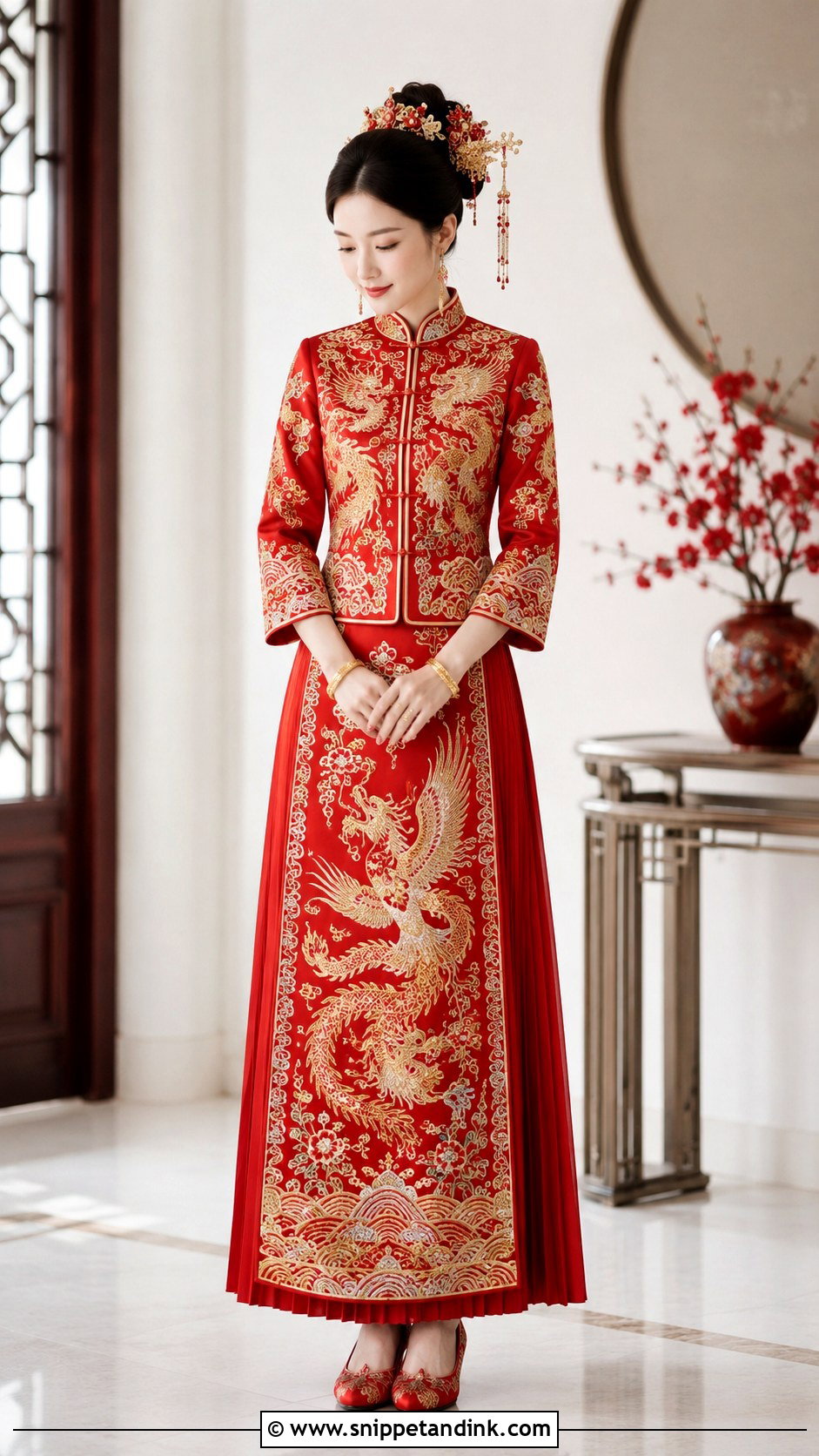
A Chinese qun kwa wedding dress is a red two-piece of jacket and skirt, embroidered densely in gold thread with dragons, phoenixes and flowers. The gold work is what gives it weight and stiffness, so the jacket stands away from the body rather than clinging. Measure the jacket across the shoulders with arms forward, since tea ceremonies involve bowing and serving. Gold jewelry, often gifted bangles from family, red shoes and a smooth updo. The embroidery density decides the price and the weight, so try a few before choosing.
7. Chinese Xiuhe Wedding Dress
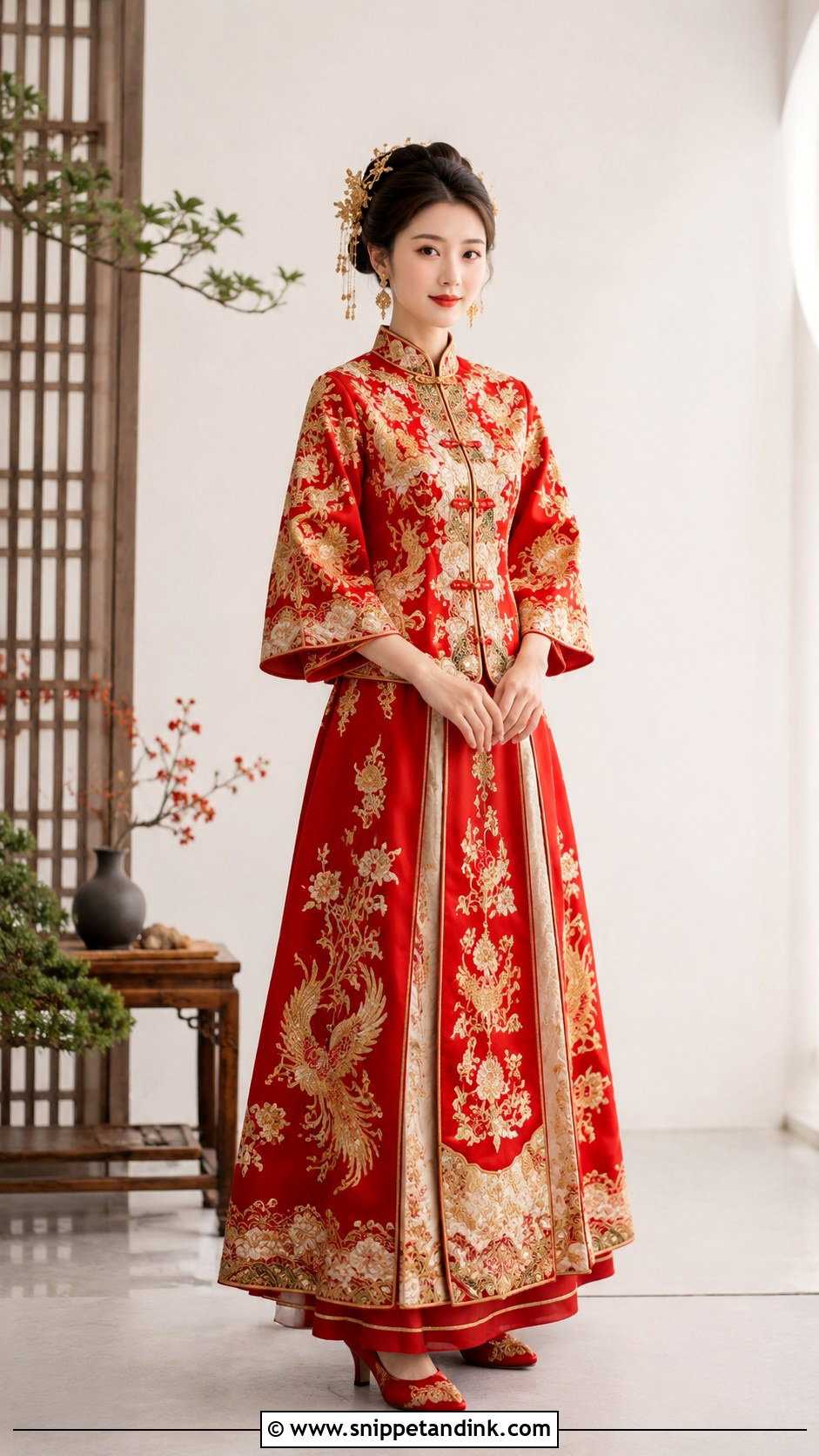
The xiuhe is the qun kwa’s softer cousin: an embroidered red or gold top with a flowing A line skirt that moves more freely. Flowers, birds, clouds and lucky symbols are stitched in metallic thread. It’s comfortable through a tea ceremony and a long dinner. A center-parted updo or soft bun with a delicate comb suits it. Gold earrings, a necklace and red or gold shoes. Metallic thread can tarnish, so I’d store it wrapped in acid-free tissue afterwards.
8. Vietnamese Red Ao Dai Wedding Dress
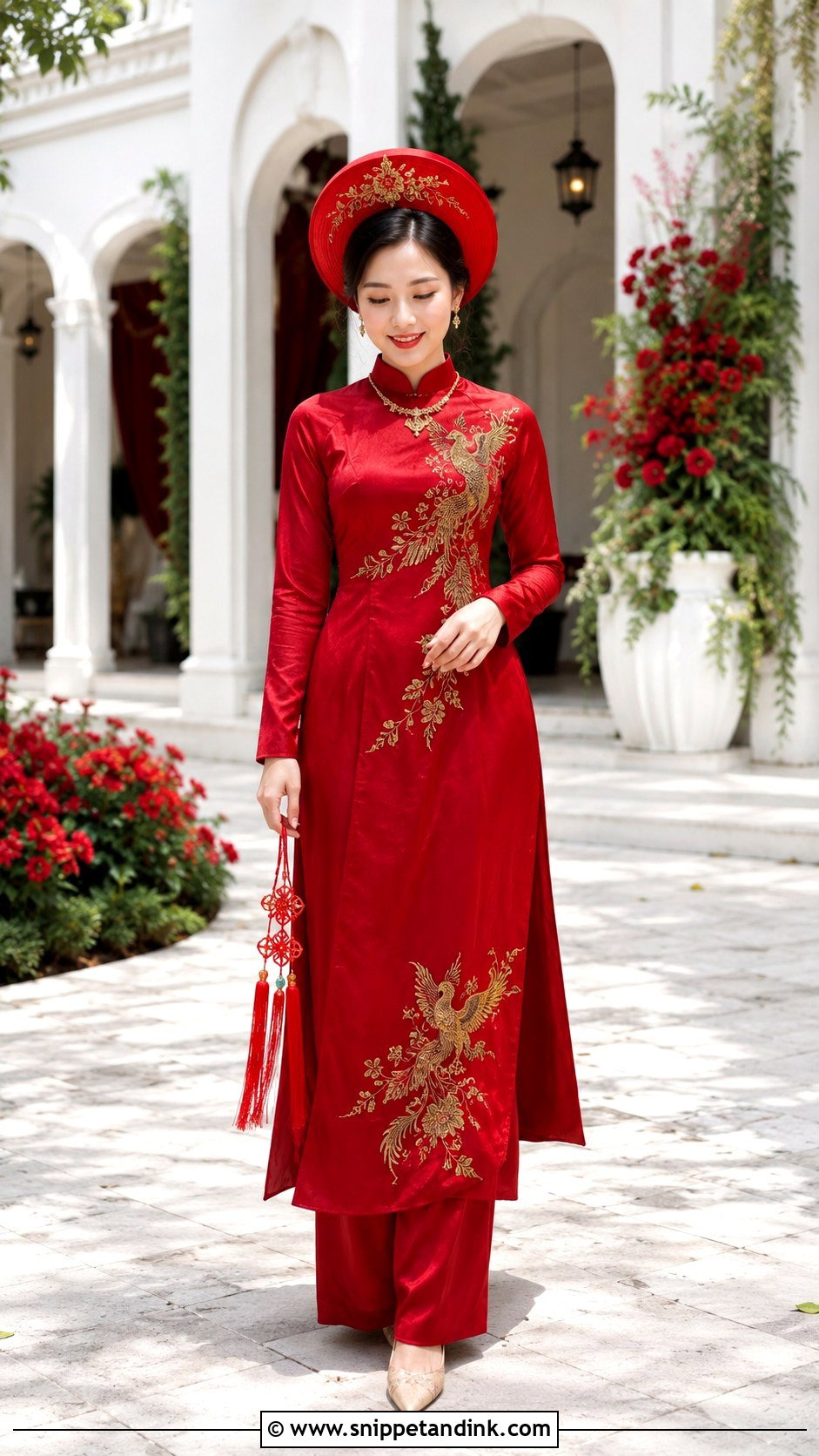
The ao dai is the most tailored garment on this list. It is cut close to the torso with high side slits over wide trousers, and a good one is made to measure. Red with gold embroidery is a common bridal choice, often with a khăn đóng headpiece. The trousers should be hemmed with the exact shoes, as they’re usually long enough to almost touch the floor. Because it fits so closely, I’d plan the final fitting near the wedding date. Delicate gold jewelry and pointed heels keep the long line uninterrupted.
9. Korean Hanbok Wedding Dress
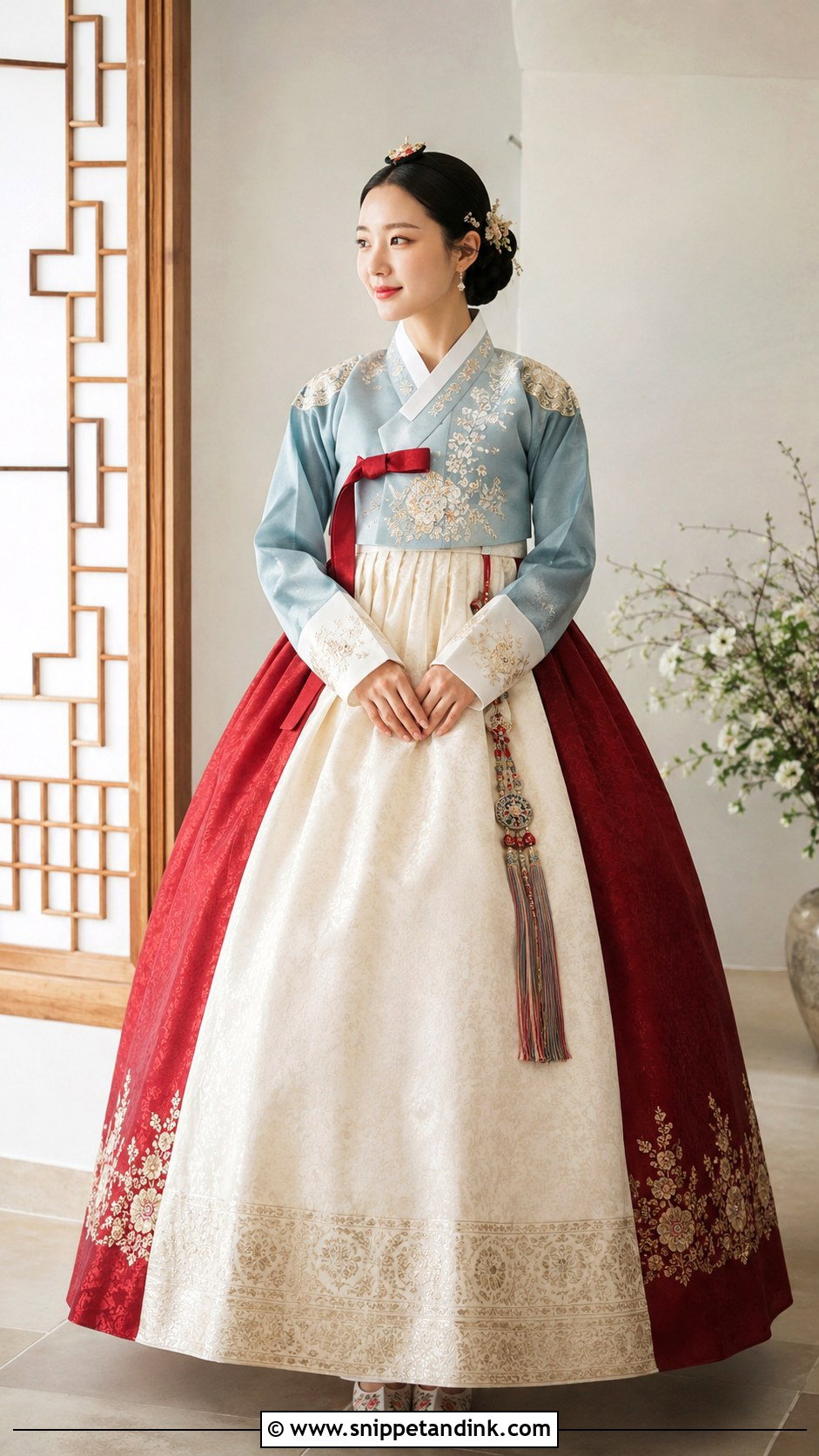
A Korean hanbok wedding dress pairs a short jeogori jacket with a full chima skirt tied high above the bust. The high waist creates a floating silhouette, but it also means the skirt ties need to sit flat and tight, or the chima slips down while bowing in a pyebaek ceremony. Red, blue, pink, ivory and gold, with embroidered ribbons and patterns. A neat updo shows the collar line. Embroidered shoes and simple earrings, since the skirt carries the volume.
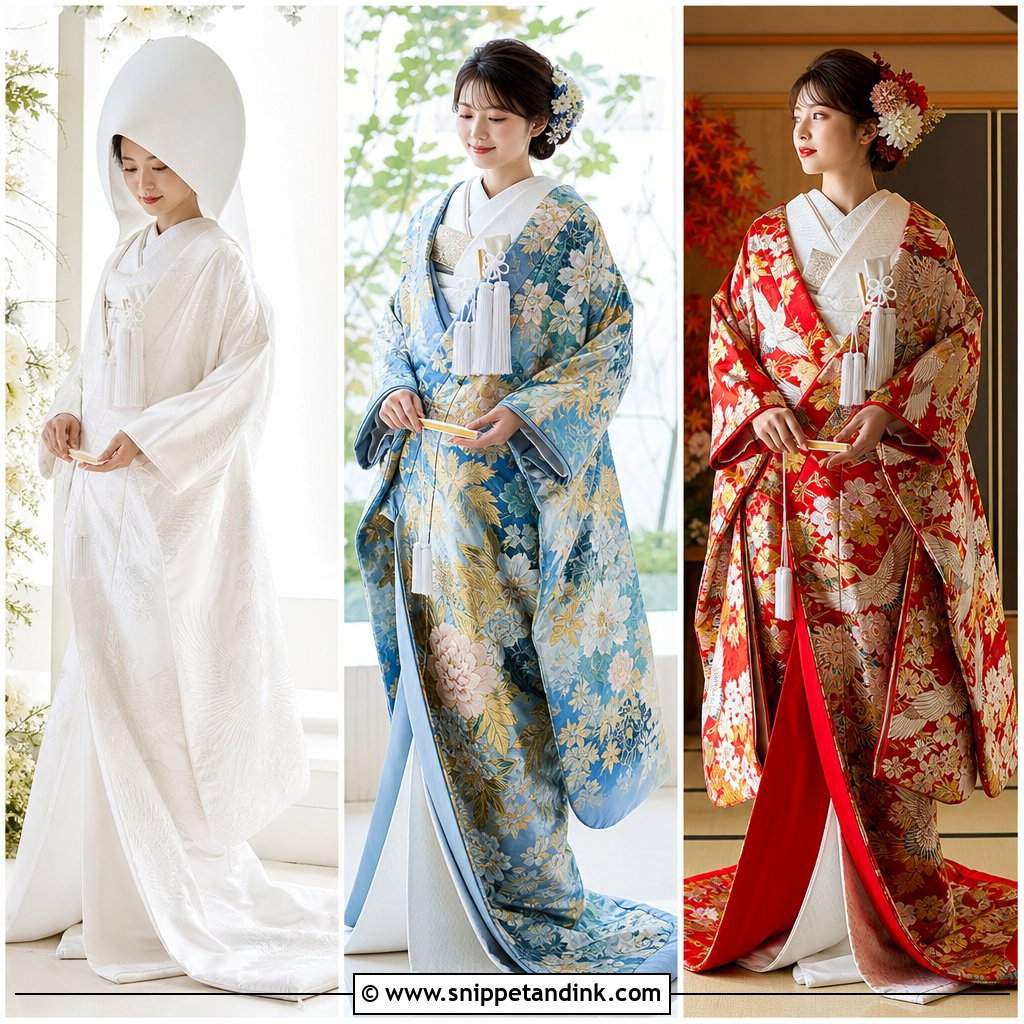
10. Japanese Shiromuku Wedding Kimono
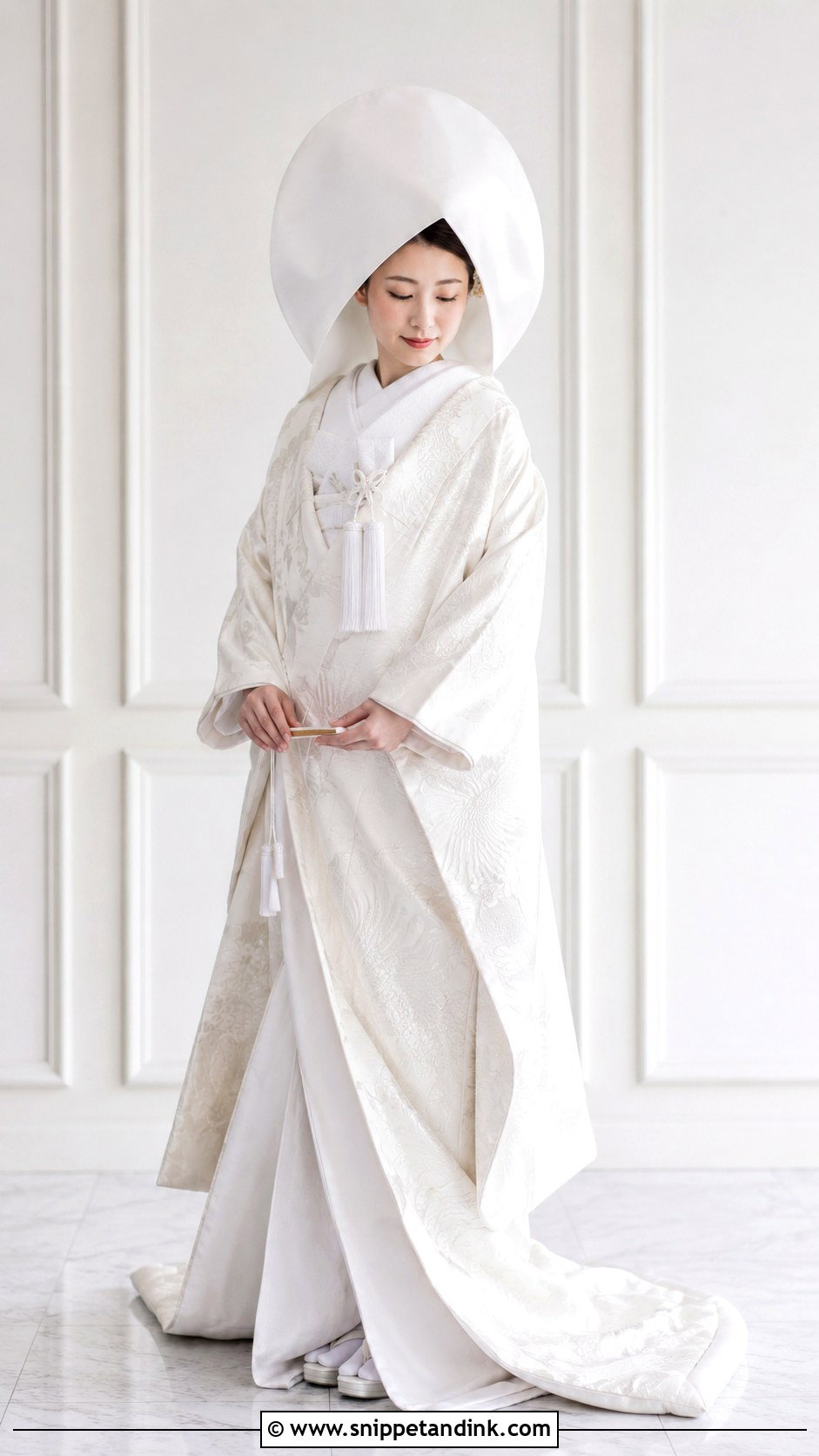
A Japanese shiromuku wedding kimono is entirely white, with woven patterns giving quiet texture. Dressing in one is a job for a trained kitsuke dresser: the layers, the obi and the cushioning take time, so I’d schedule them generously in the morning plan. The wataboshi hood or tsunokakushi headpiece is usually chosen by ceremony style. It’s warm under all those layers, so a summer wedding needs plenty of rest breaks and water. Minimal jewelry; the garment is the decoration.
11. Japanese Iro-Uchikake Wedding Kimono
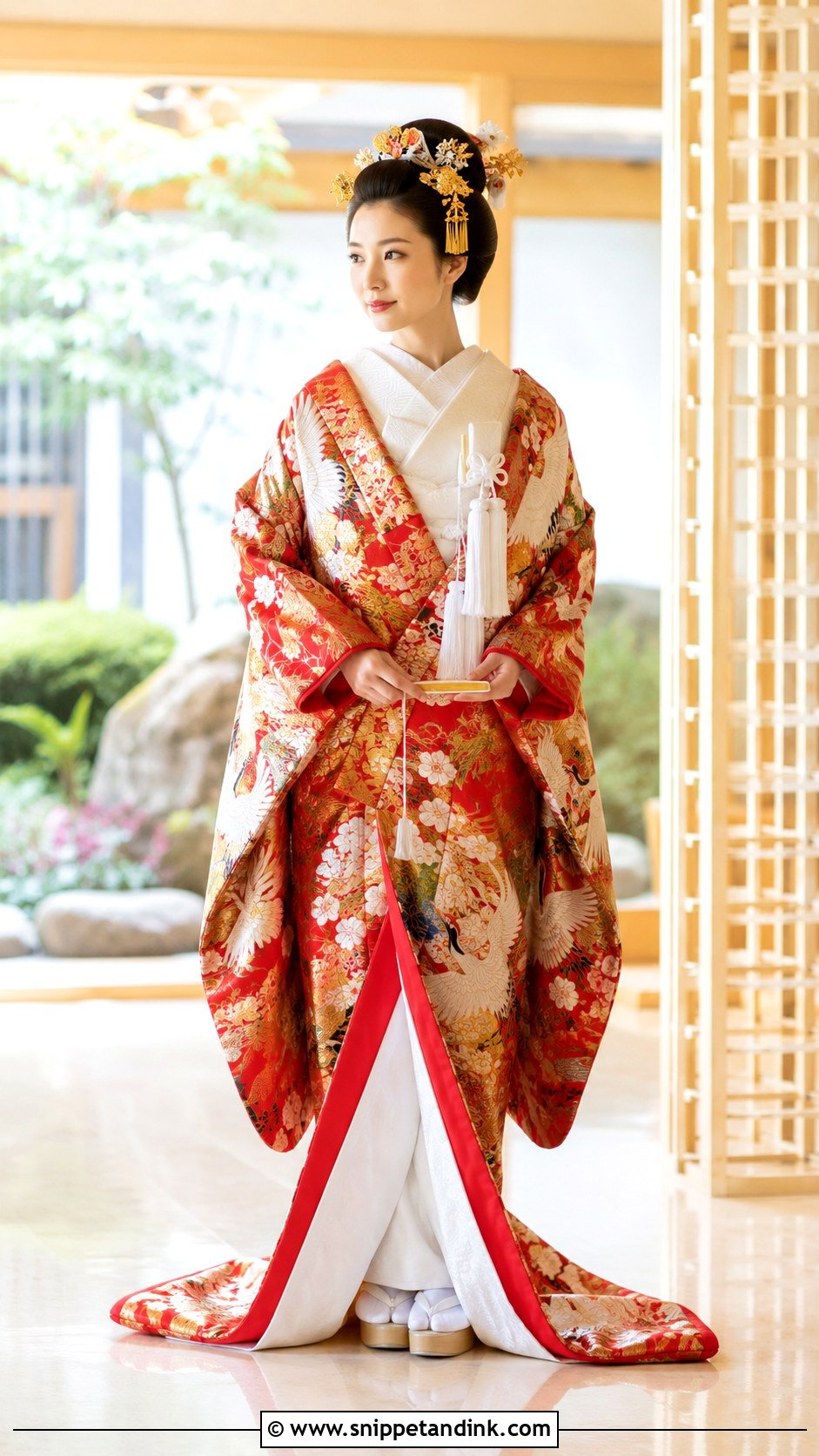
The iro-uchikake is the colored outer robe worn after or instead of the white shiromuku, embroidered with cranes, fans and seasonal flowers in red, gold, black or green. It’s heavy and trails on the floor, so the bride walks slowly and an attendant often helps with the hem. Many are rented rather than bought, which affects how much time you have to try it on. A refined updo with traditional ornaments and soft makeup. Jewelry stays minimal against such rich embroidery.
12. Thai Traditional Wedding Dress
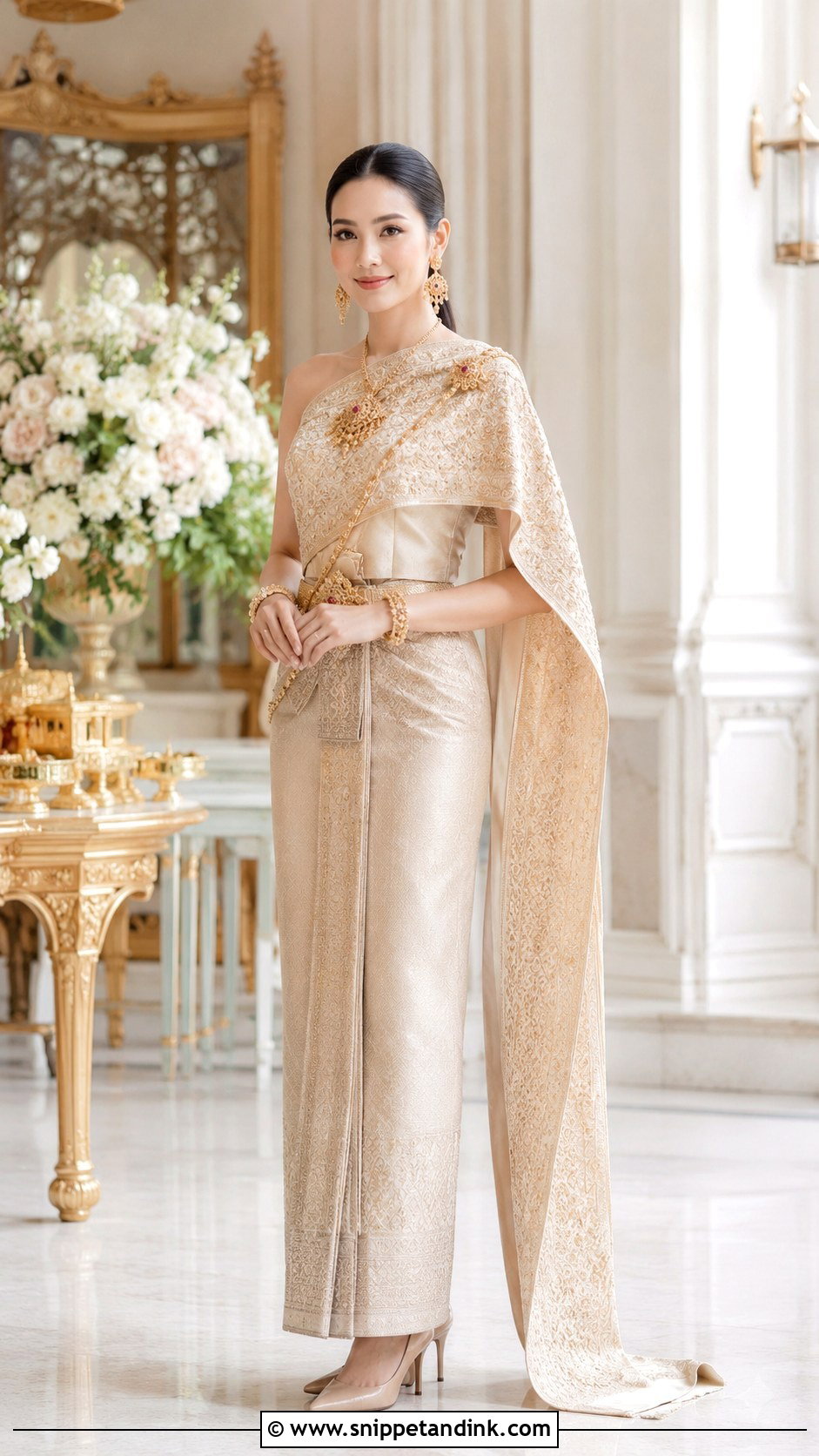
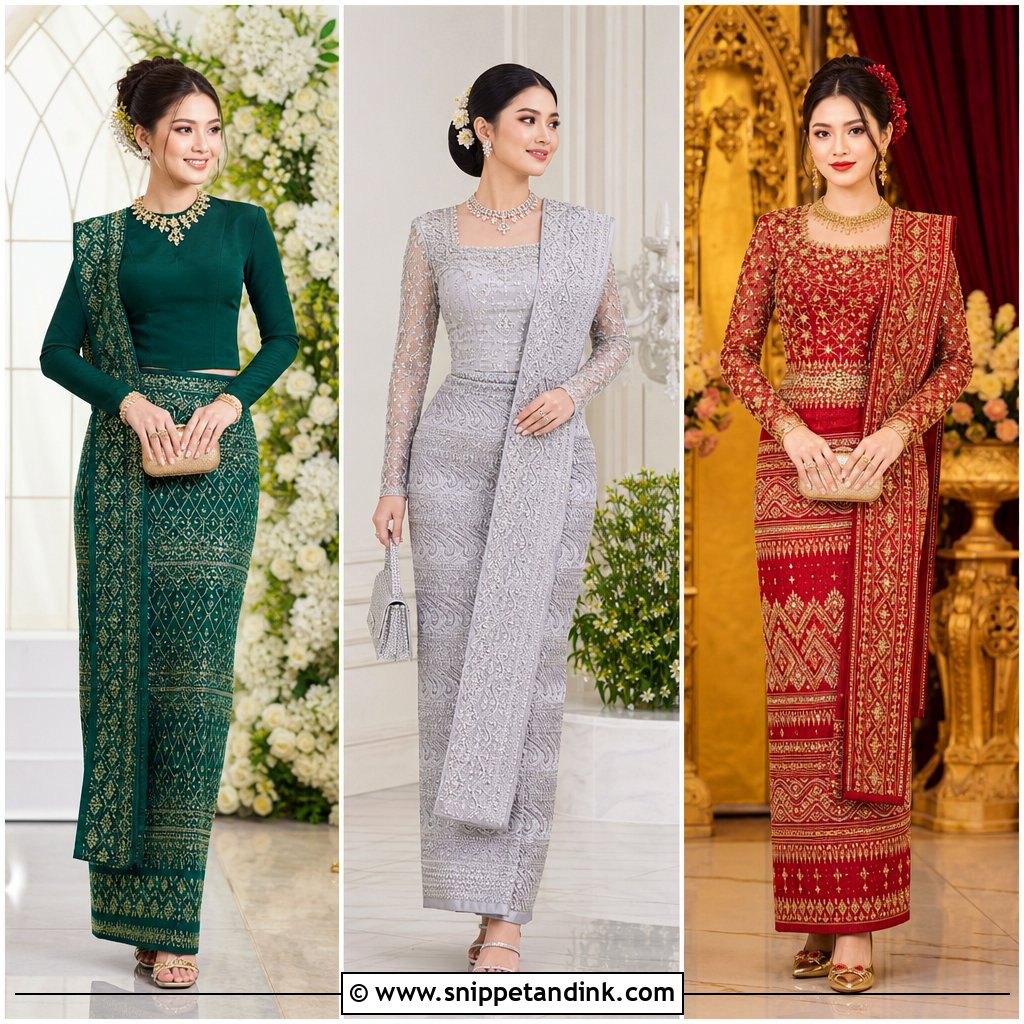
Thai bridal outfits are usually silk: a fitted top or wrapped bodice with a long wrapped skirt, sometimes with a draped sash over one shoulder. Thai silk has a crisp hand and a characteristic sheen that shifts color as you move. It’s also prone to water spotting, so I’d keep drinks away from it during the ceremony rituals. Gold, ivory, blush and champagne are common, with jewel tones also popular. Gold jewelry, statement earrings and a smooth updo to show the shoulder drape.
13. Indonesian Kebaya Wedding Dress
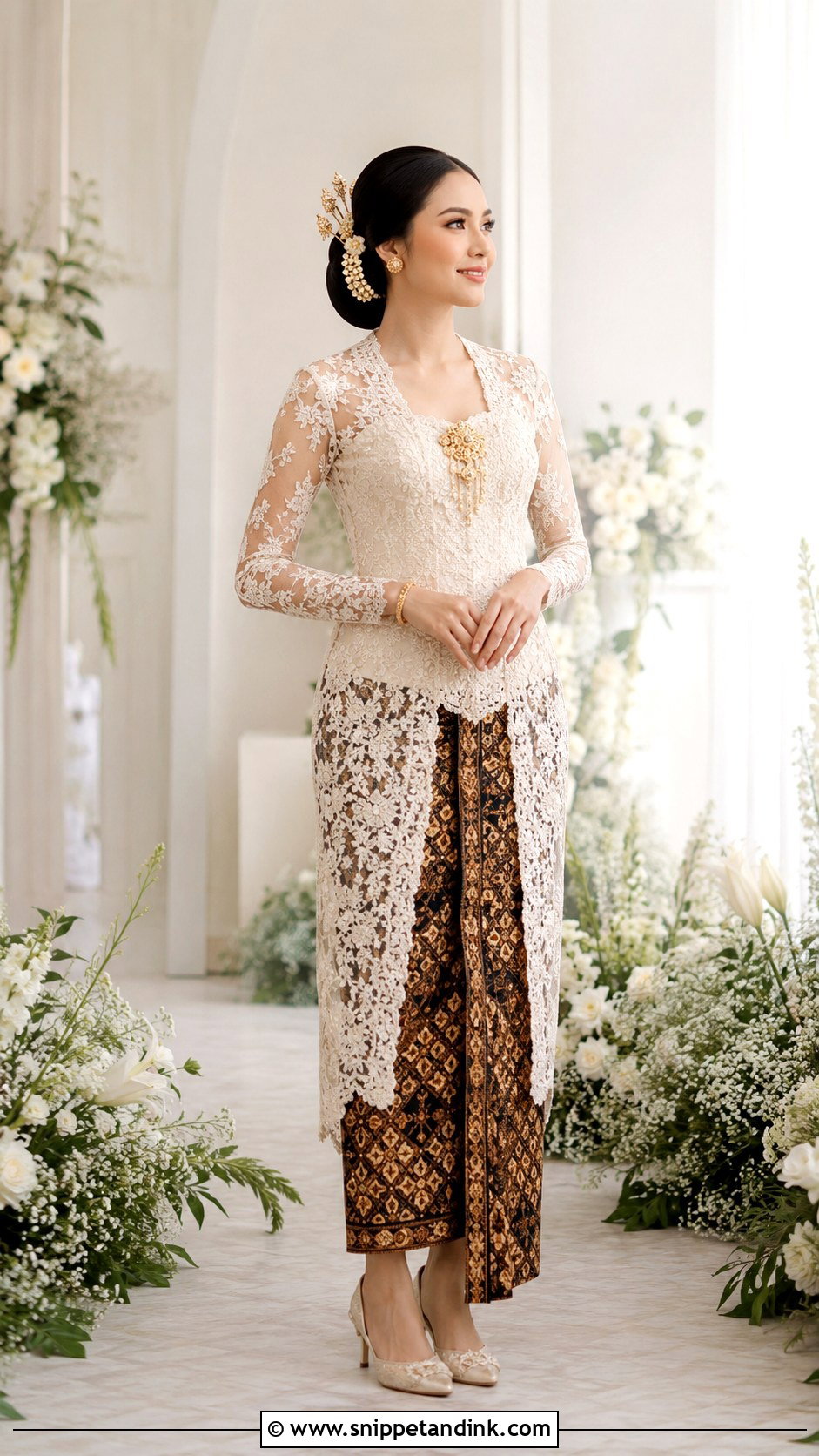
The kebaya is a fitted, often sheer lace or embroidered blouse worn over a batik or songket skirt. Because it’s so close-fitting, I’d fit it with the exact undergarment or inner camisole planned for the day. White, ivory, gold and blush are common, alongside strong regional colors. The skirt is often wrapped, so I’d check the wrap direction and fastening for walking. Traditional hair accessories, a sleek bun, earrings and elegant heels. Regional styles vary widely, especially the headpiece and jewelry.
14. Malaysian Baju Kurung Wedding Dress
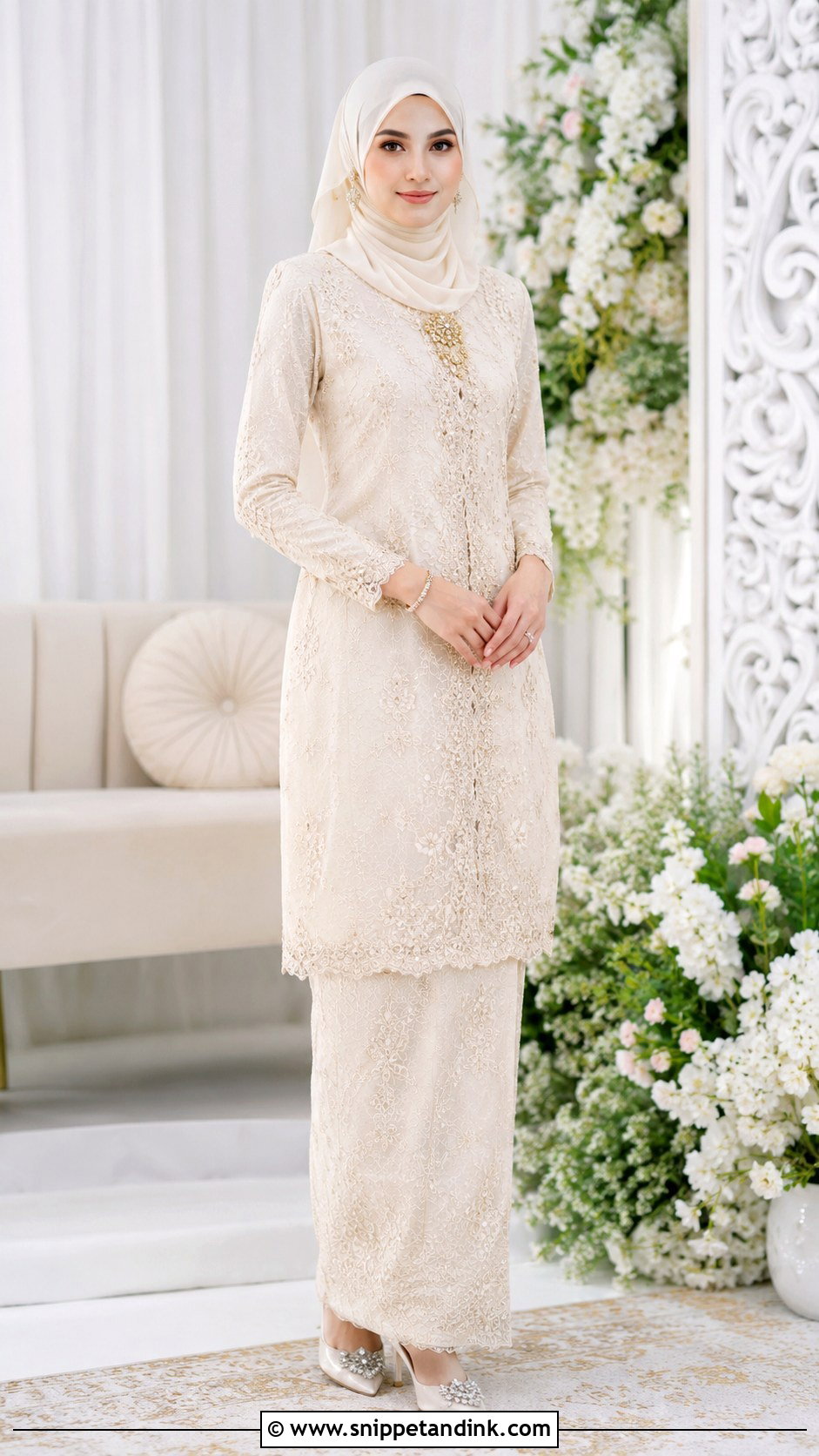
A Malaysian baju kurung wedding dress is a loose, long tunic over a matching skirt, which makes it one of the most comfortable bridal outfits to wear across a long day. Silk, songket, lace and embroidered fabrics all appear, in colors from ivory and gold to sage and deep jewel tones. Songket has metallic threads woven in and is stiff, so it holds a clean shape. A matching headscarf or veil, pinned securely with small pins or a brooch. Earrings, bracelets and embellished heels.
15. Filipino Baro At Saya Wedding Dress
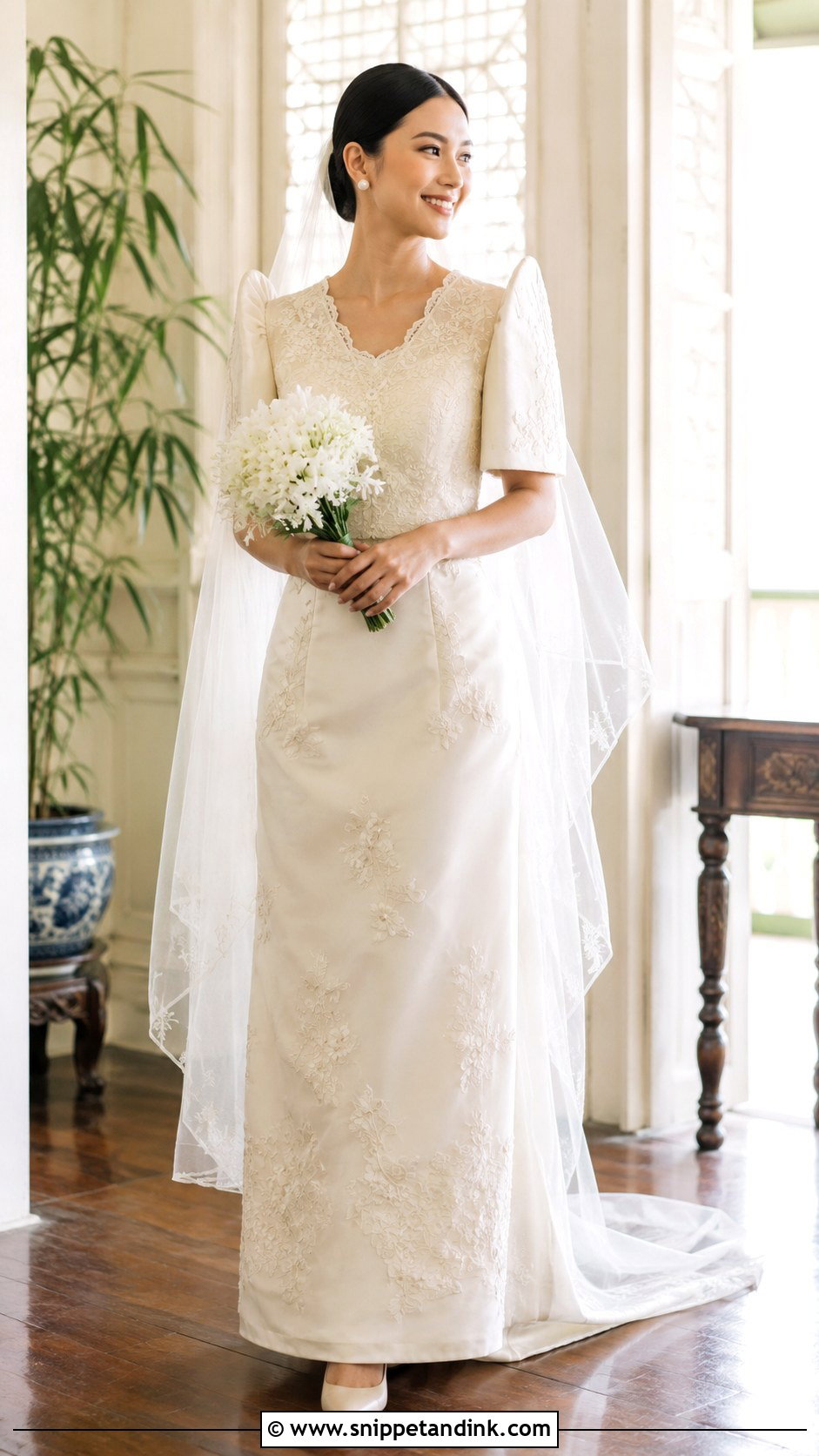
The baro’t saya pairs a blouse, often with butterfly sleeves, and a long skirt. Piña, woven from pineapple leaf fiber, and jusi are sheer and slightly stiff, which is how the sleeves hold their shape. Piña is delicate and can crack if creased hard, so I’d roll or hang it rather than fold it tightly. Ivory and cream feel most bridal. Pearl jewelry, low heels and a neat bun or soft waves. A sheer veil adds a ceremonial note.
16. Nigerian Yoruba Aso Oke Wedding Dress
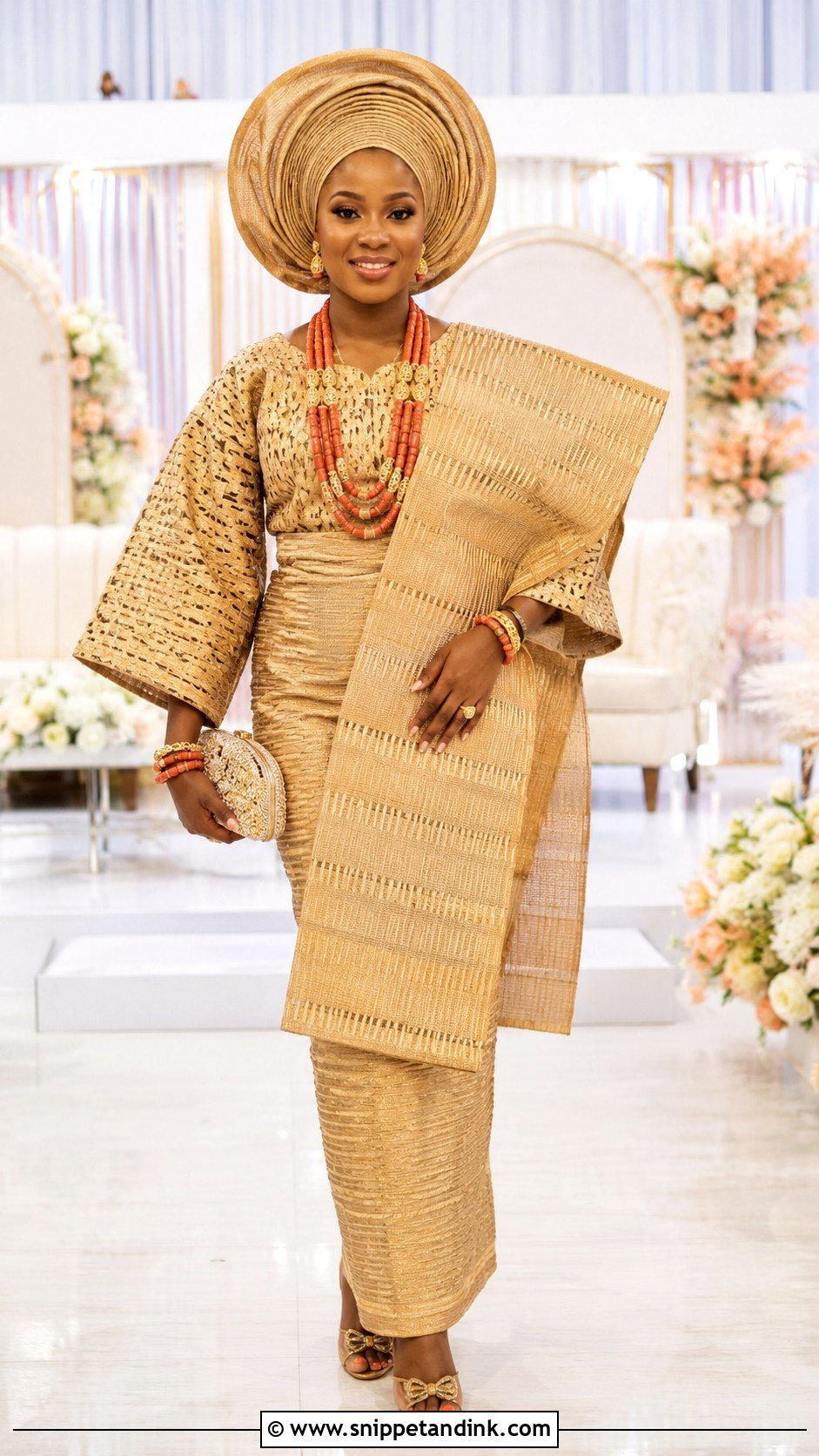
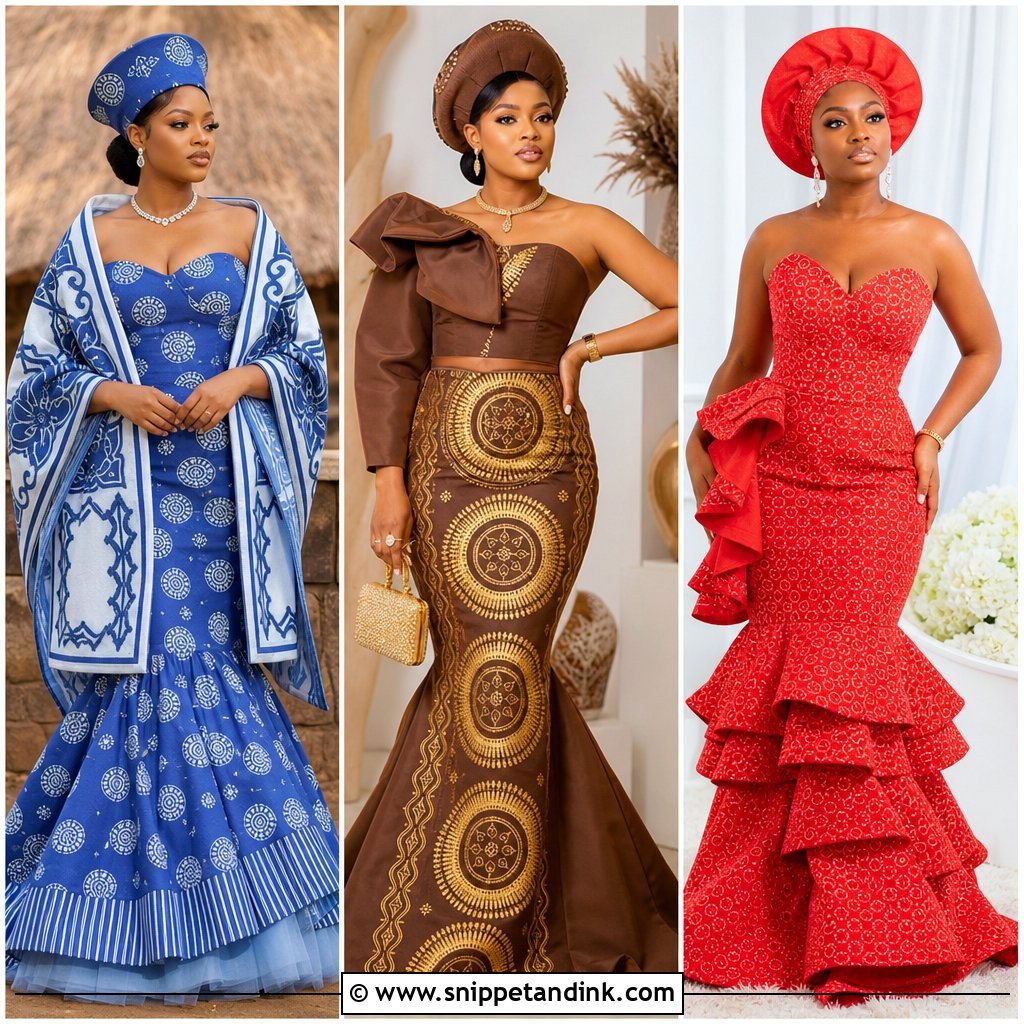
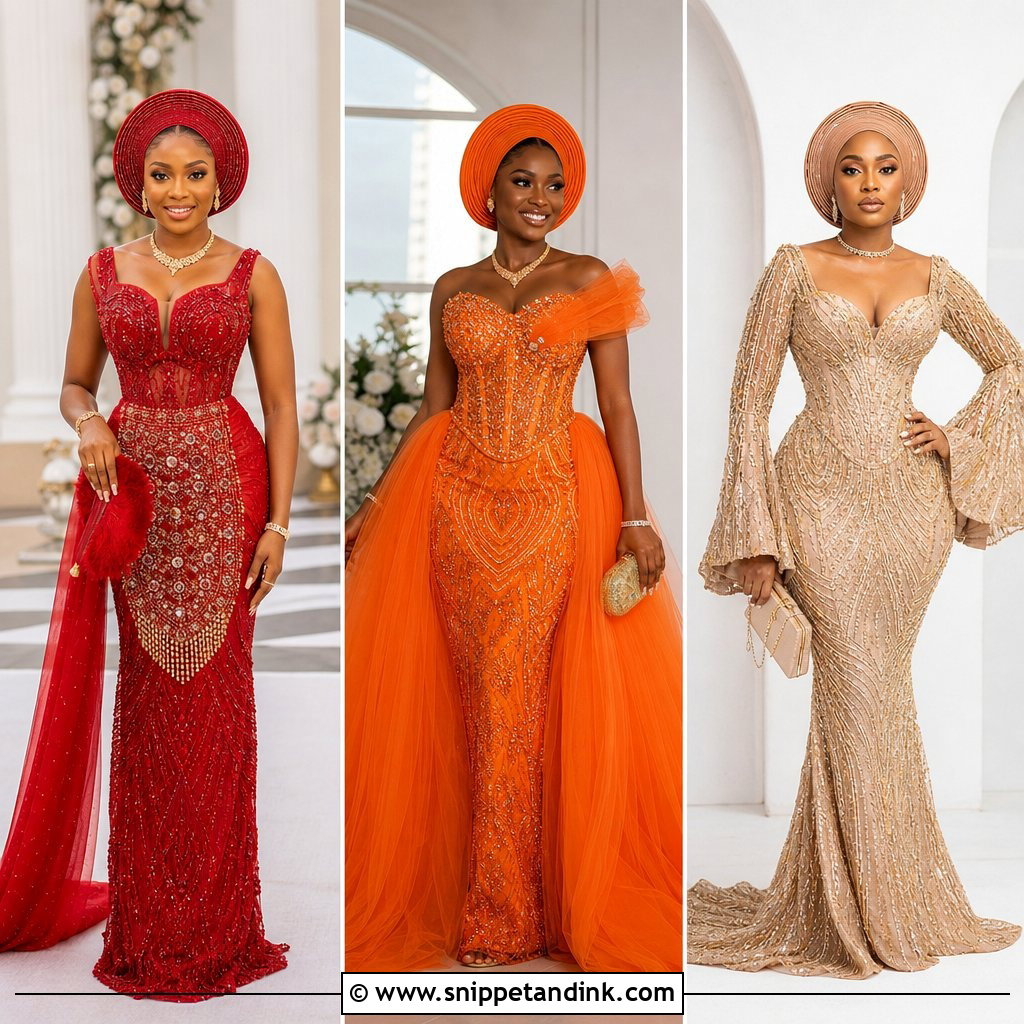
A Nigerian Yoruba aso oke wedding dress layers an iro wrap skirt, a buba blouse, an ipele sash and a dramatic gele headwrap. Aso oke is handwoven and fairly stiff, so the iro must be tied tightly at the waist to stay secure through dancing. The gele is usually tied by a specialist on the morning, and the shape depends on how stiff the fabric is. Gold, ivory, coral, blue, emerald and burgundy are all common. Coral beads, statement earrings, bangles and embellished heels.
17. Nigerian Igbo George Wrapper Wedding Dress
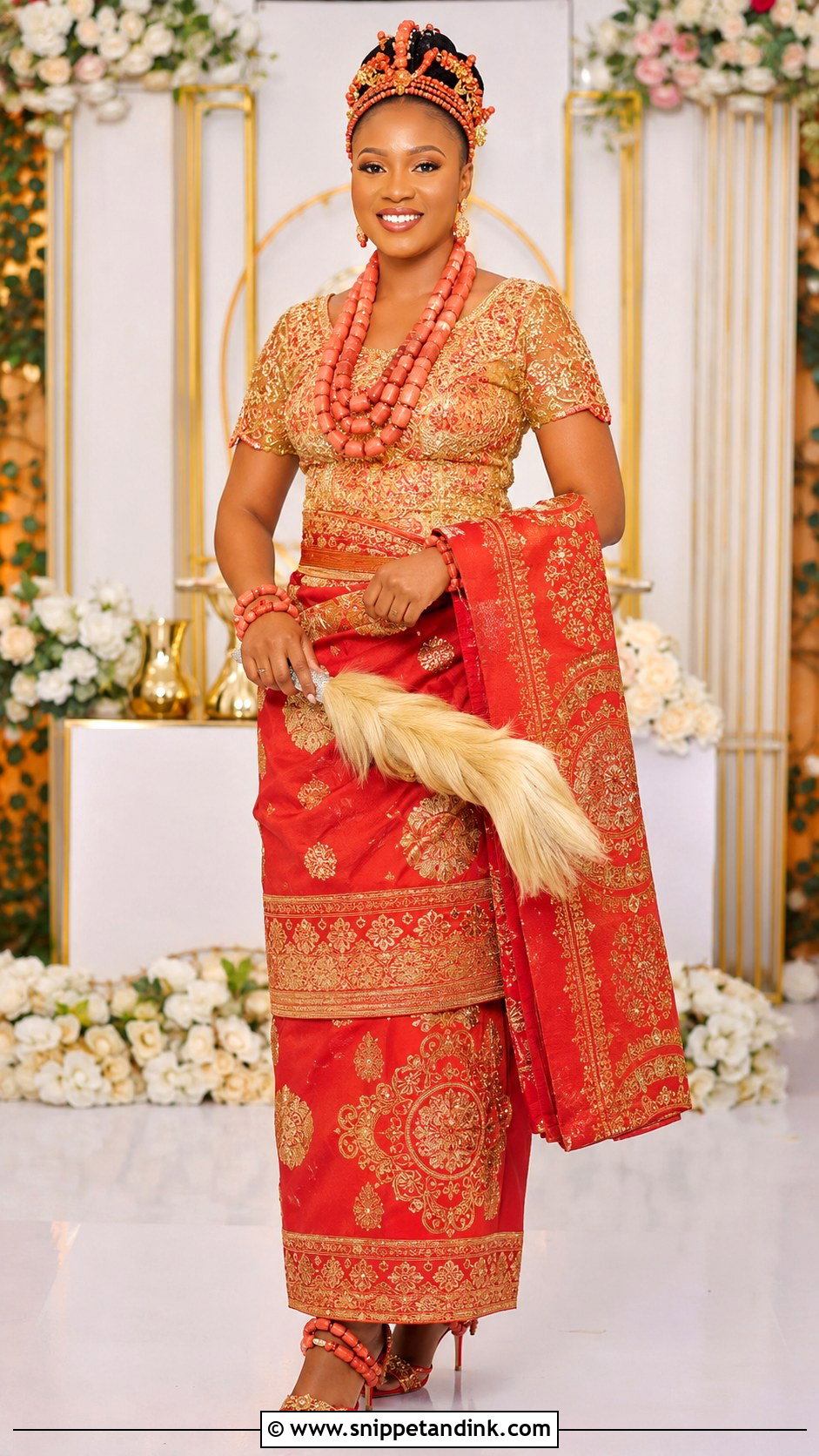
The Igbo George wrapper look has a blouse, a double wrapper and coral bead jewelry, usually with a matching headpiece or gele. George fabric is embroidered and often beaded, which gives it weight and shine. Coral, gold, ivory, royal blue, purple and red are common. The coral necklaces, wrist beads and anklets are heavy and meaningful, so I’d do a full trial wearing them to check the wrapper fastening isn’t pulled by the extra weight. Comfortable heels or decorated sandals for dancing.
18. Ghanaian Kente Wedding Dress
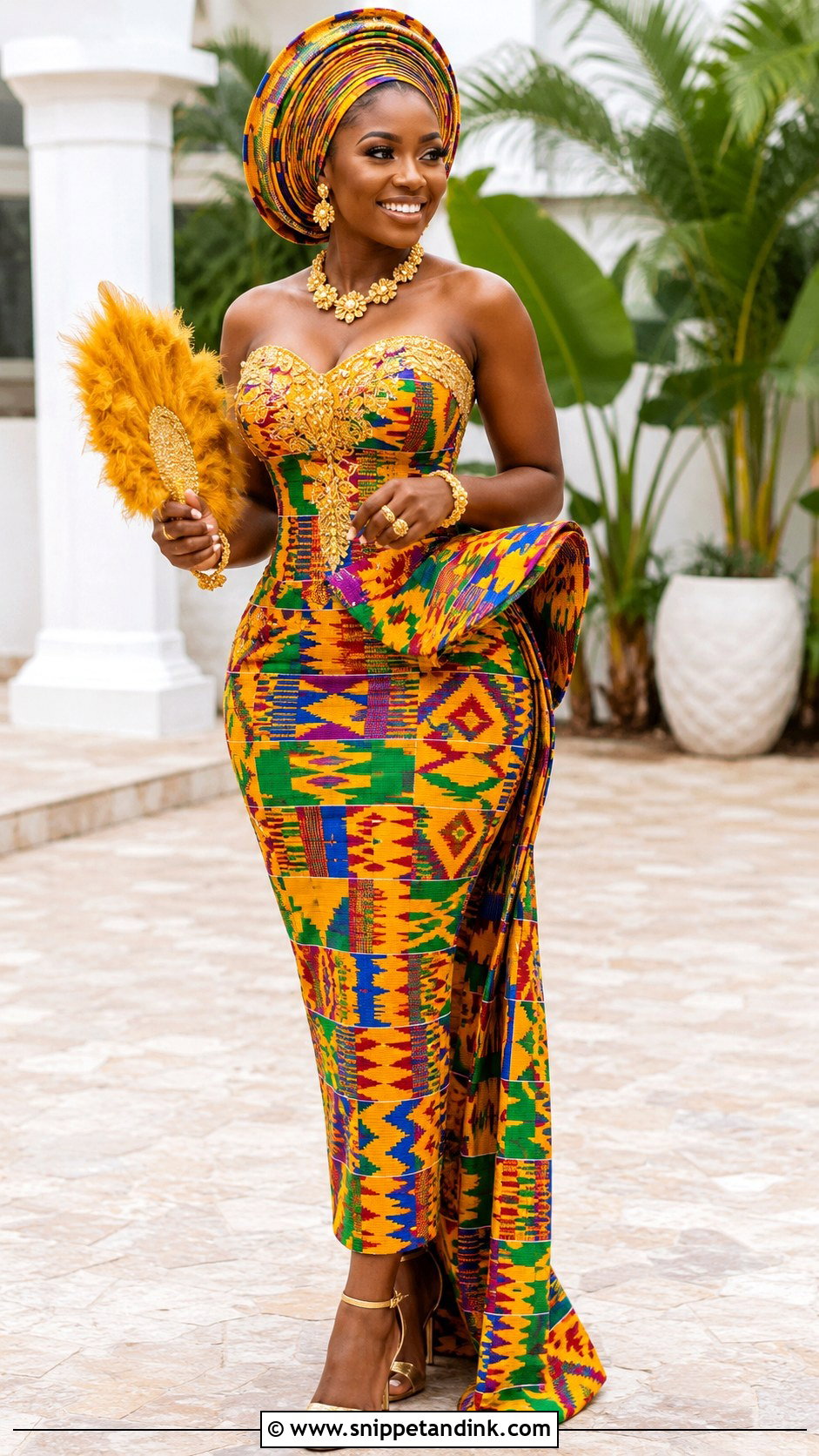
Kente is woven in narrow strips that are sewn together, and its patterns carry names and meanings. That’s why I’d always ask the weaver or family about the pattern before cutting it into a modern gown. Gold, green, red, blue and black are classic. Brides wear fitted gowns, wrapped skirts with blouses, off-shoulder styles or two-piece sets. The cloth is stiff and holds structured shapes well. Gold jewelry, elegant sandals or heels and an optional headwrap, with clean accessories so the pattern stays the focus.
19. Ethiopian Habesha Kemis Wedding Dress
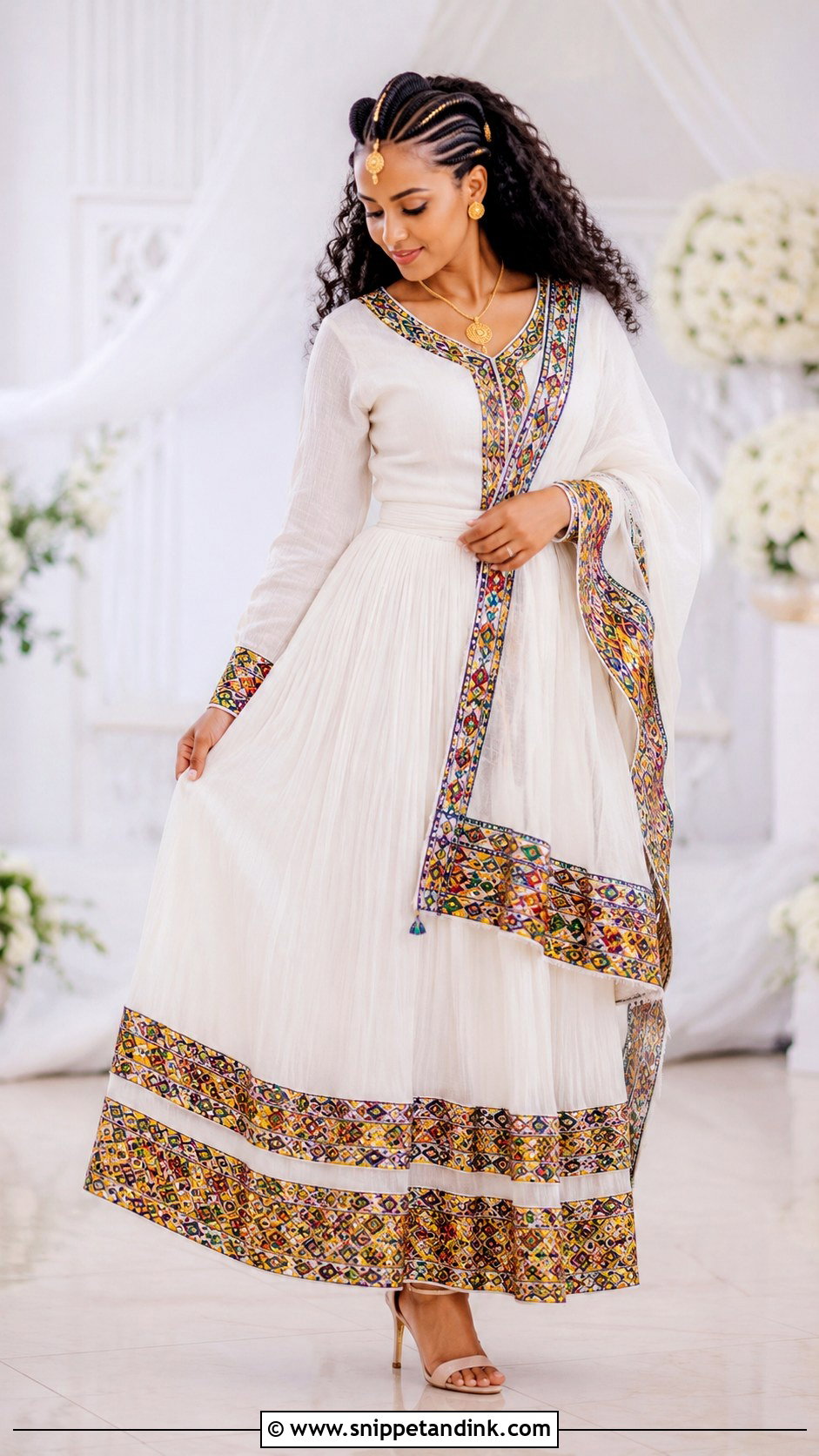
An Ethiopian habesha kemis wedding dress is usually white or ivory cotton with colorful woven tibeb borders at the neckline, sleeves and hem. The handwoven cotton is light and breathable, a real comfort for a long day of dancing. A netela shawl draped over the shoulders or head adds softness. Because it’s long and fluid, I check the hem length with the exact shoes so it doesn’t catch during eskista. Gold jewelry, simple sandals or heels and a braided style or updo.
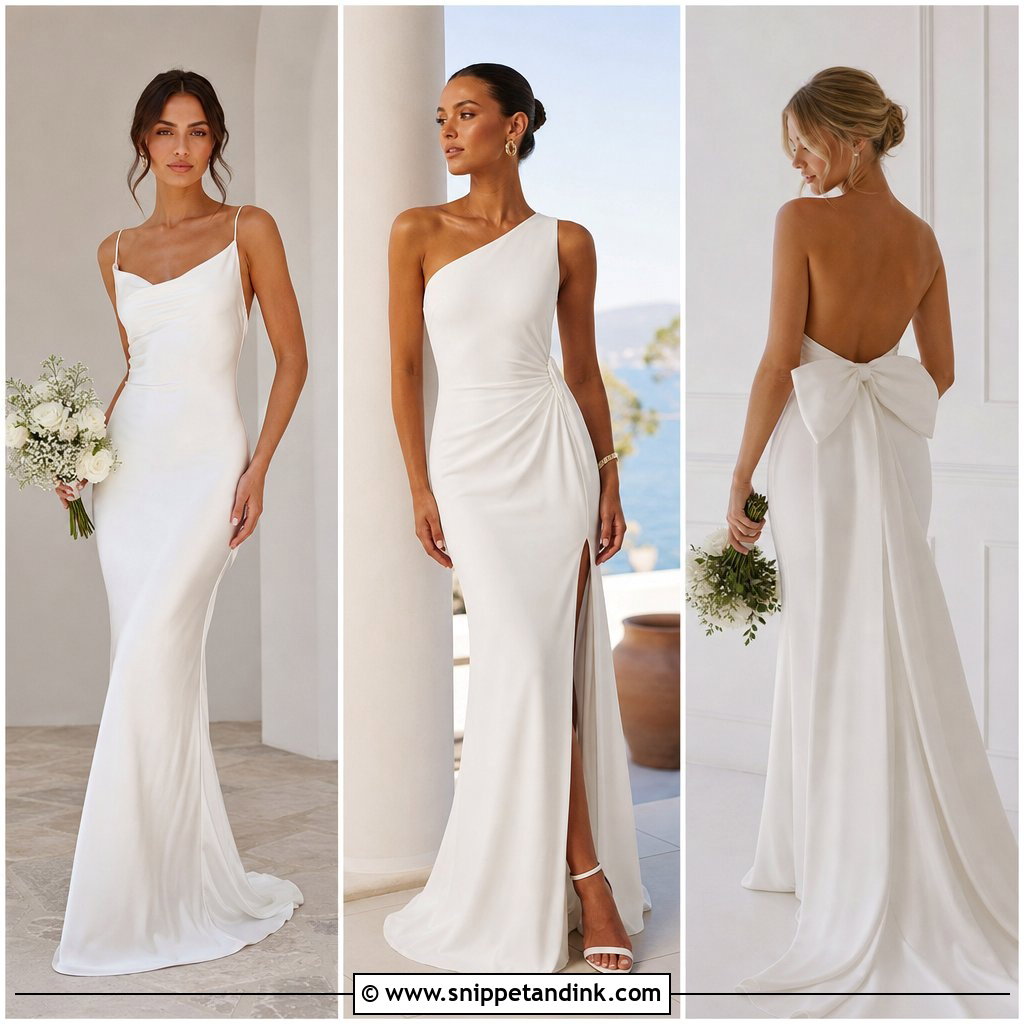
20. Moroccan Takchita Wedding Dress
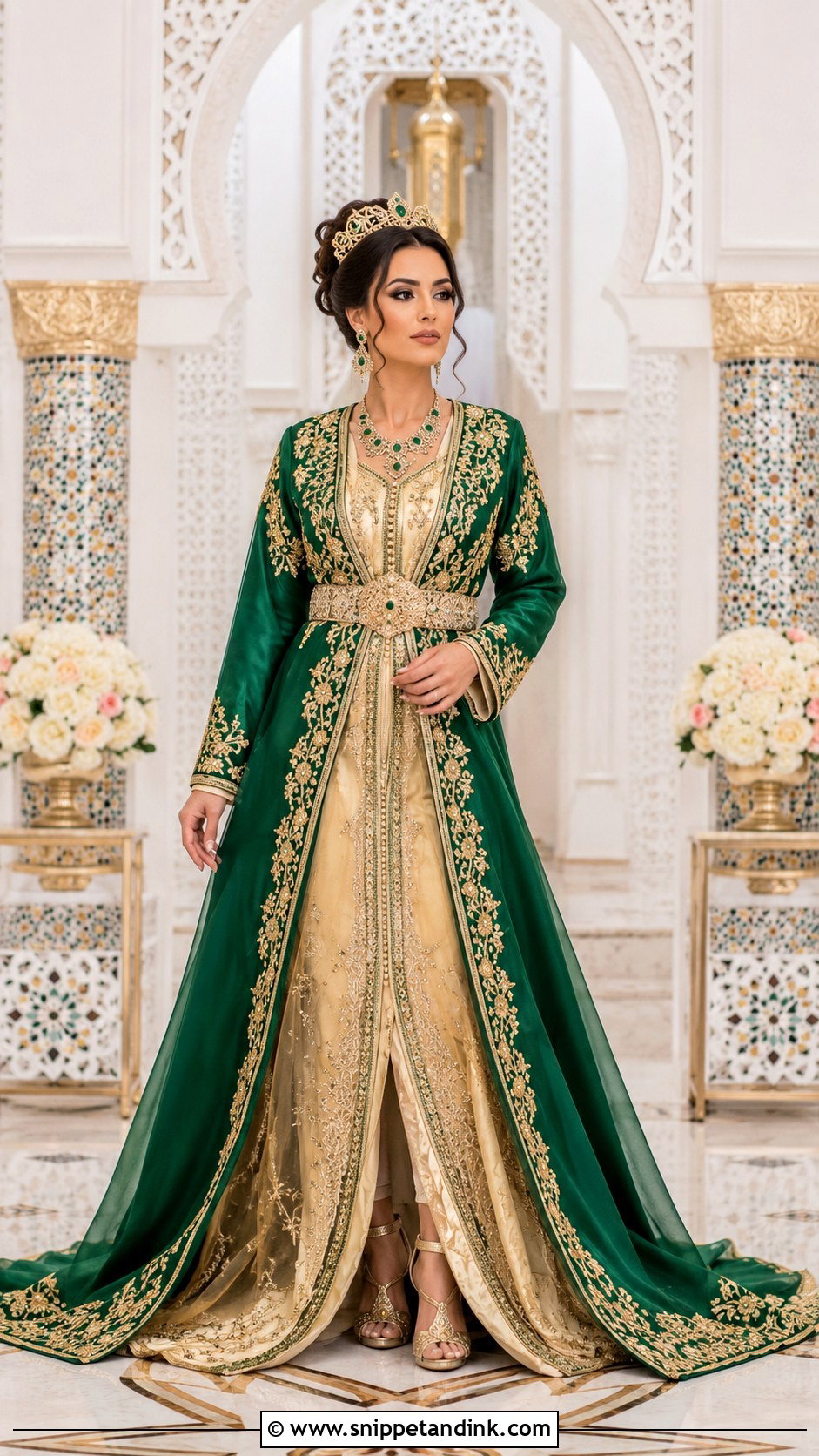
The takchita is two layers, an inner dress and an outer caftan, cinched with a jeweled belt called a mdamma. Velvet, silk, brocade and metallic embroidery are typical. Moroccan brides often change several times during the wedding, so I’d plan hair and jewelry that work with each outfit and can be changed quickly. The belt sits at the natural waist and should be fitted snugly without restricting breathing. Statement jewelry, ornate heels and a polished hairstyle.
21. Turkish Bindalli Wedding Dress
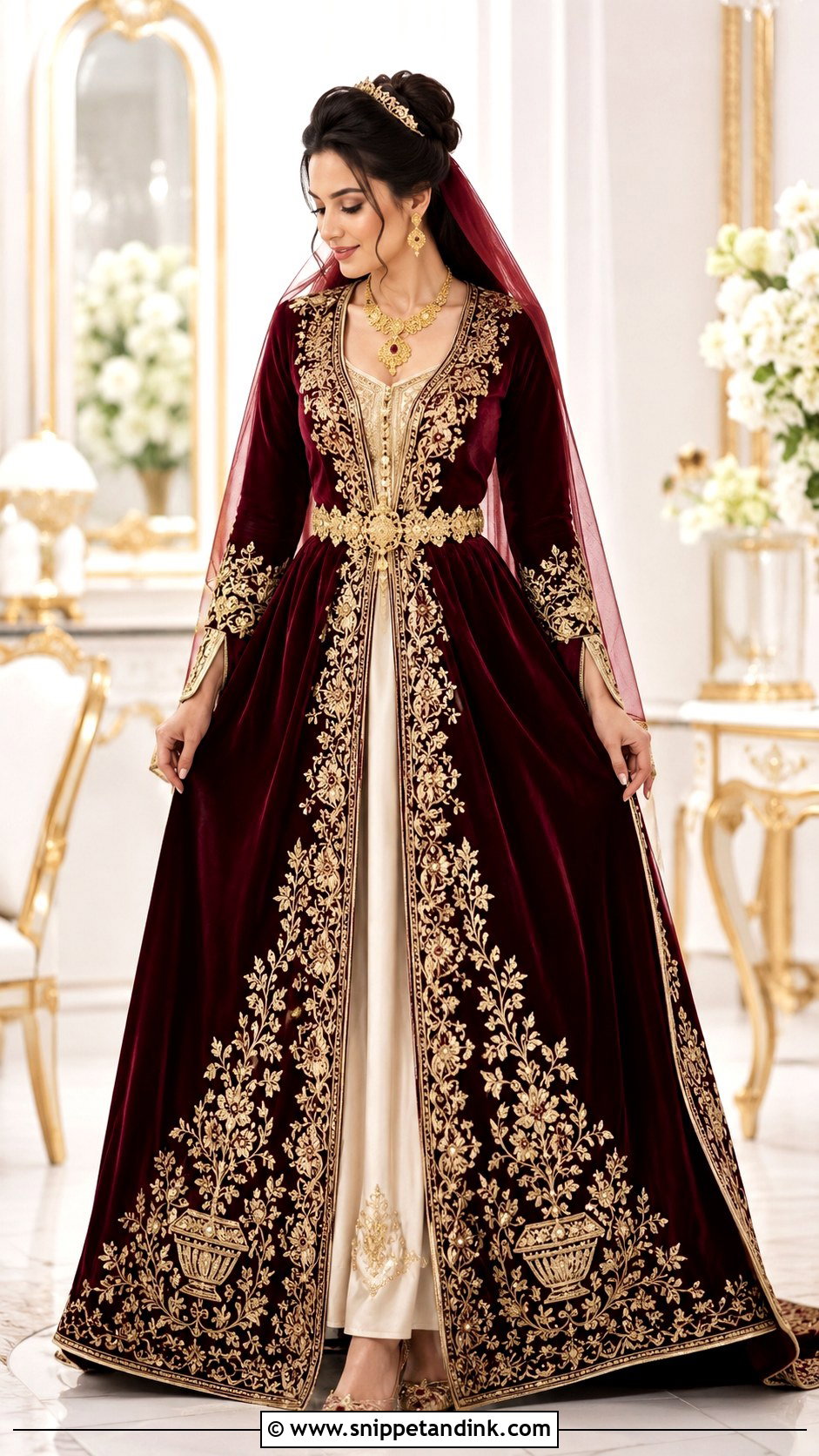
The bindallı is a velvet robe with dense gold thread embroidery, often in burgundy, navy, purple, emerald or deep red. It’s traditionally worn at the henna night, so I’d plan it with the henna in mind: the sleeves should be loose enough to push up without crushing the embroidery. Velvet is warm and heavy, best for cooler months or air-conditioned venues. A matching veil or headpiece, gold accessories that echo the embroidery and embellished shoes.
22. Palestinian Embroidered Thobe Wedding Dress
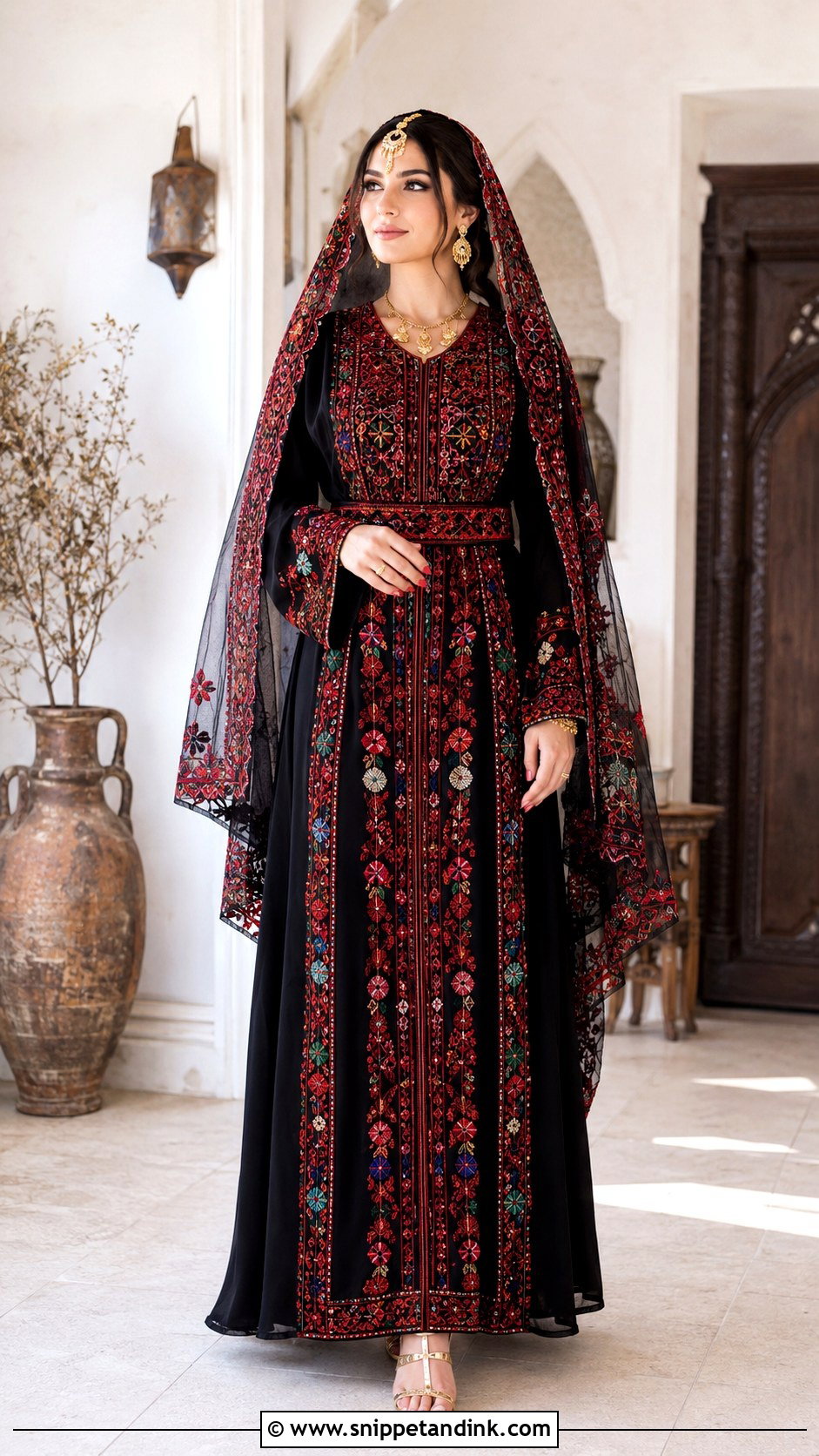
A Palestinian thobe is a long dress with dense hand cross-stitch on the chest panel, sleeves and skirt, and the patterns traditionally indicate region and village. Bridal thobes may be black with vibrant stitching, white with colored embroidery or richly worked in red and jewel tones. Hand embroidery of this density takes a long time, so commissioning one requires plenty of lead time. A matching veil or scarf, gold jewelry and simple heels or flats. Let the embroidery be the focal point.
23. Afghan Green Wedding Dress
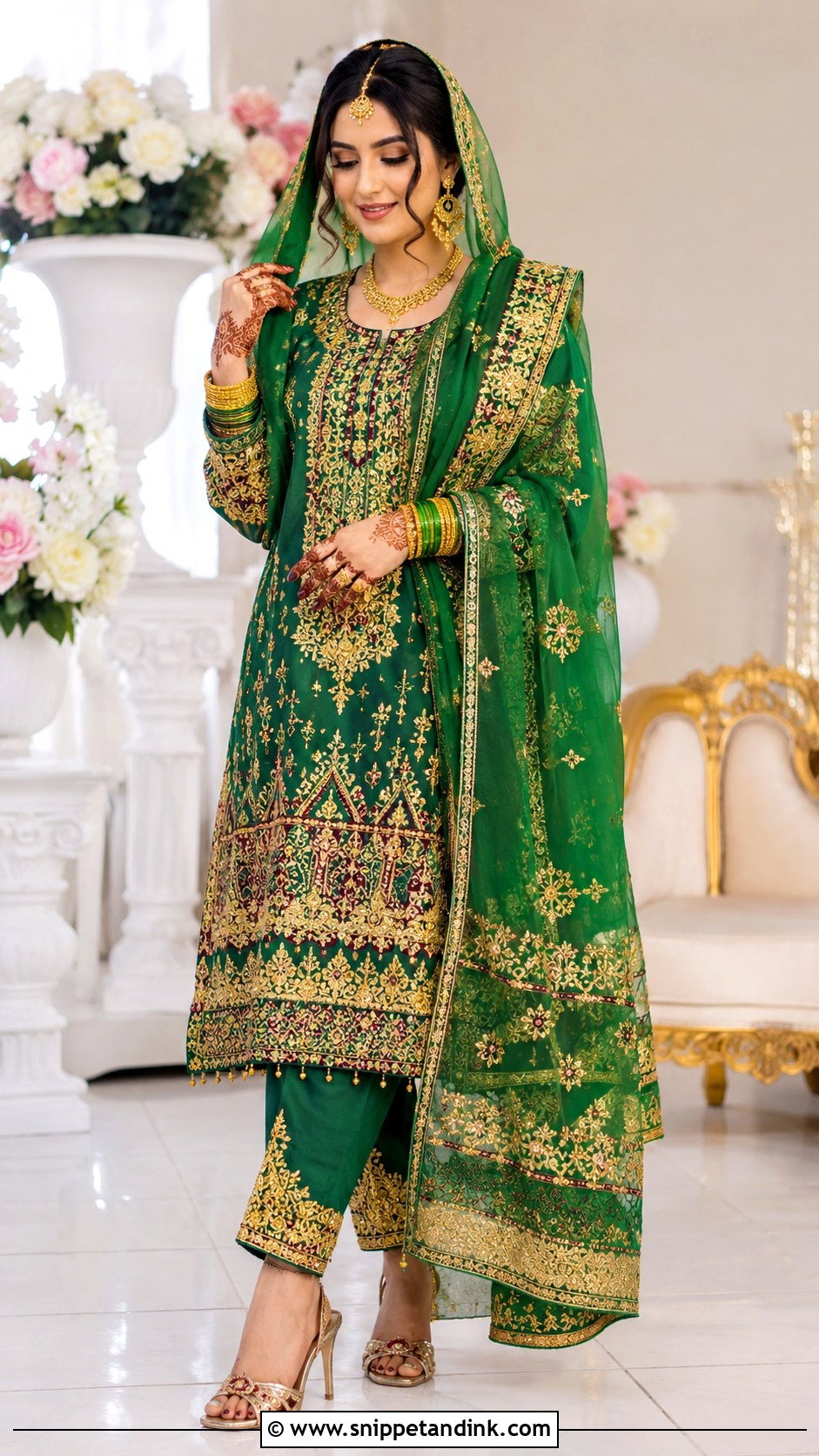
Green is a traditional color for Afghan bridal moments, especially the nikah, and it’s often covered with gold embroidery, mirror work, sequins or beads. The outfit can include a long dress, matching pants and a scarf. Mirror work is heavy and stiff, so I’d make sure the bodice has a soft lining against the skin. Layered jewelry, statement earrings, bangles and decorated heels. The scarf softens the frame around the face.
24. Persian Traditional Wedding Dress
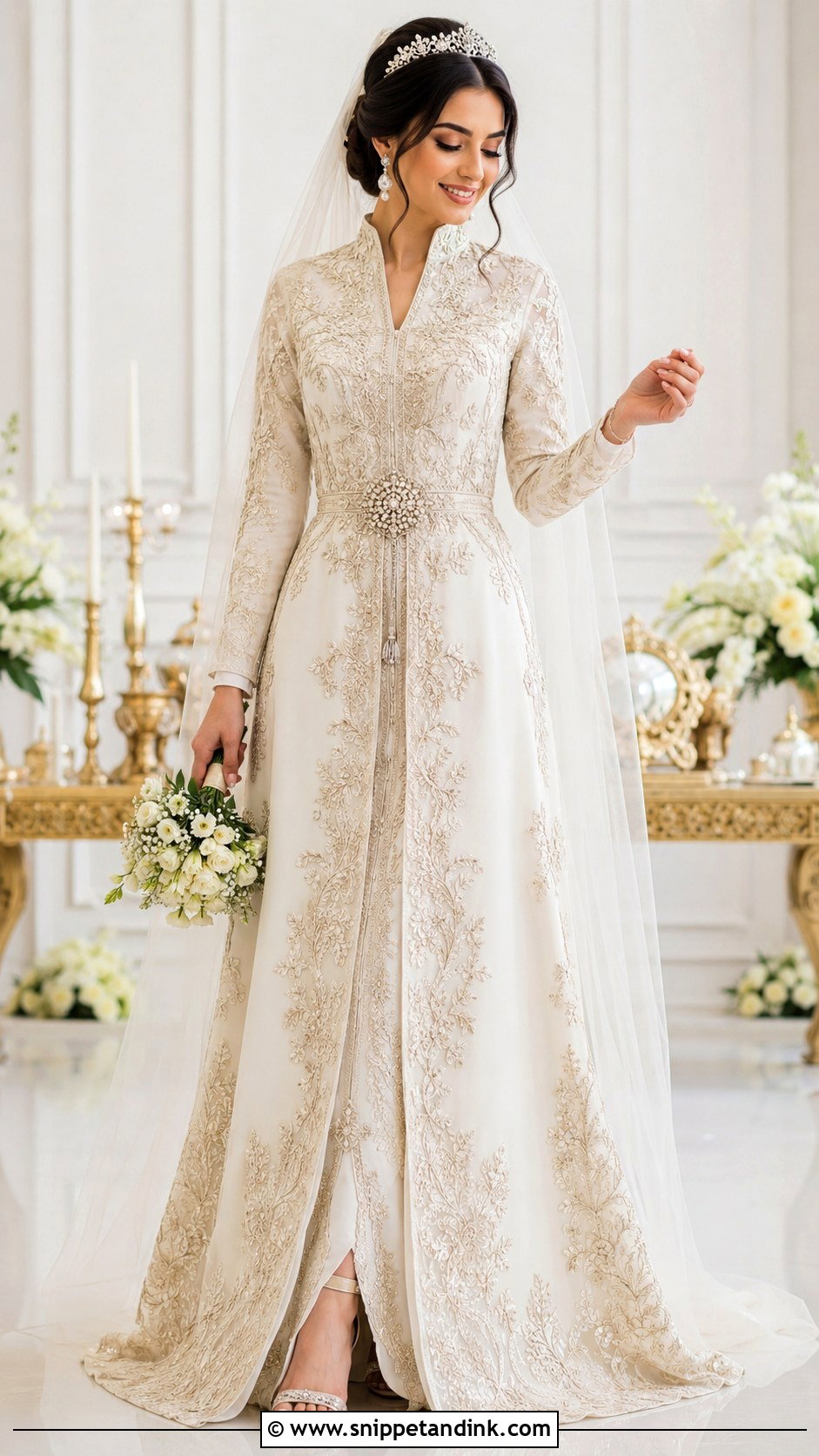
Persian bridal style often centers on a white or ivory gown with embroidery, lace or beadwork, with a modest long-sleeve silhouette for the aghd ceremony. Brides typically sit before the sofreh during the ceremony, so I’d test the gown seated on a low bench or cushion. Some add Persian details such as a jeweled belt, ornate headpiece or embroidered robe for part of the celebration. Pearl or gold jewelry, elegant heels and a soft veil.
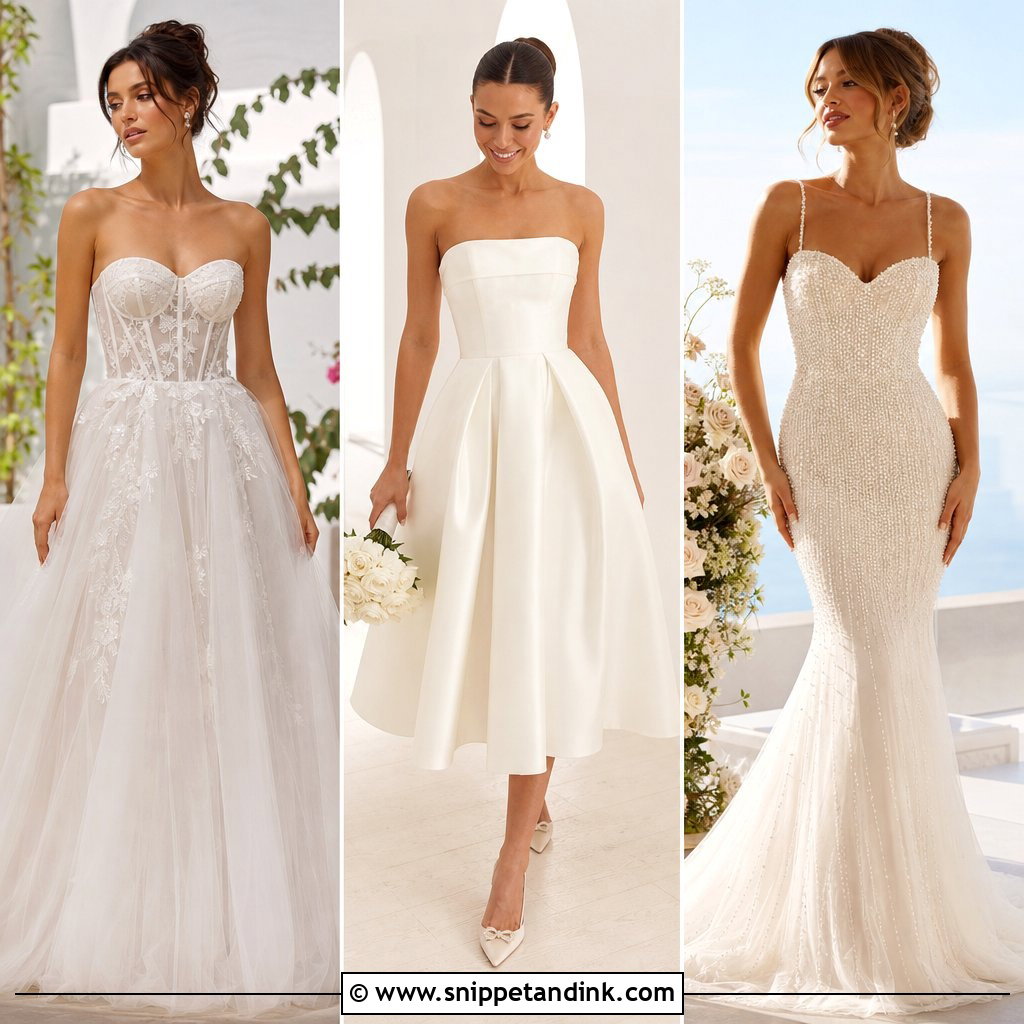
25. Greek Traditional Wedding Dress
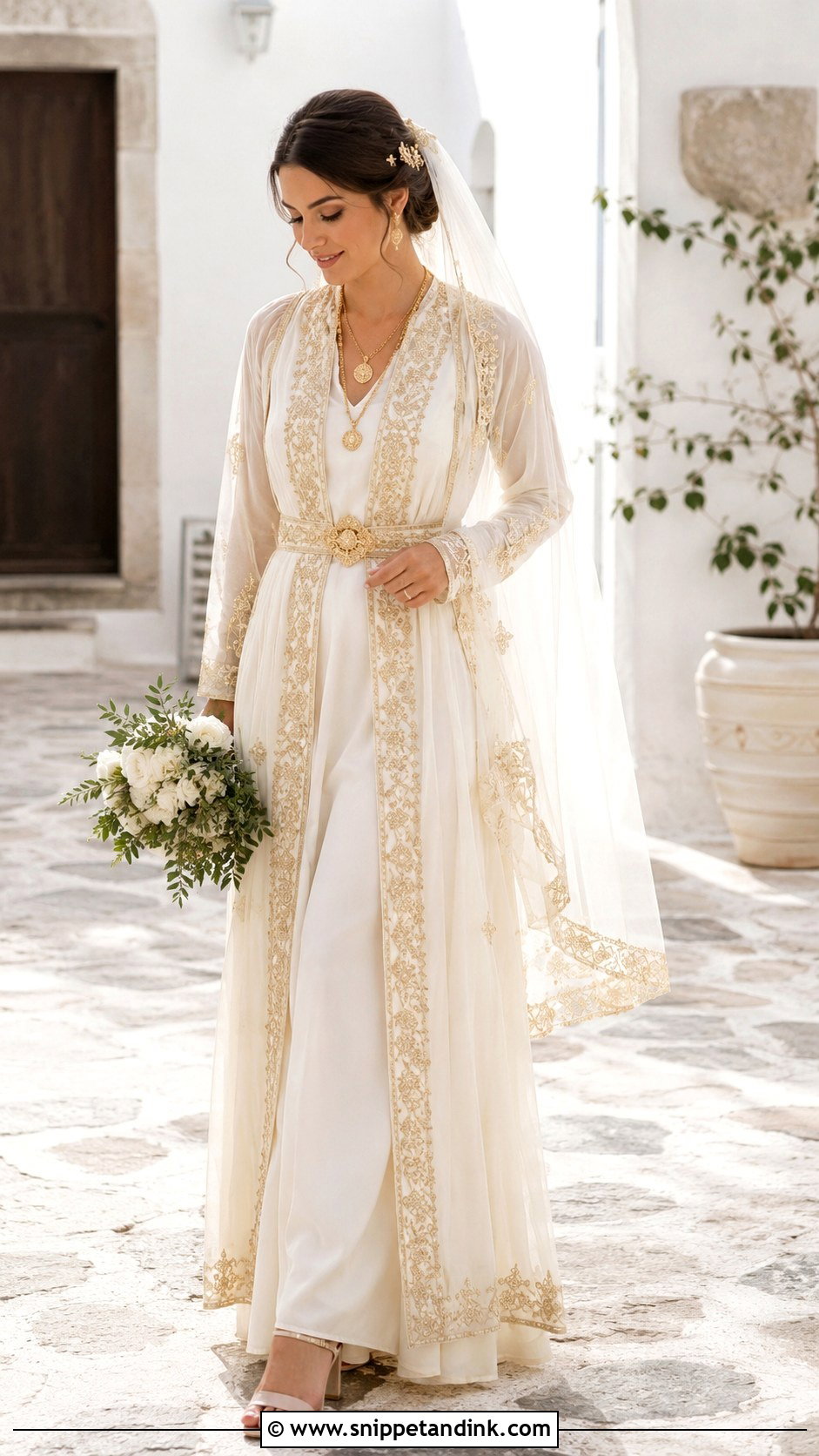
Greek bridal looks are usually white or ivory with flowing fabric, embroidered trim or gold accents. Silk, chiffon and cotton blends breathe well for warm-weather celebrations, and light fabrics move well during the circle dances. During the Orthodox ceremony, the stefana crowns are placed on the couple’s heads, so I’d plan the hair to sit beneath them without a tall bun. Gold jewelry, simple sandals or heels and a soft updo.
26. Scottish Tartan Wedding Dress
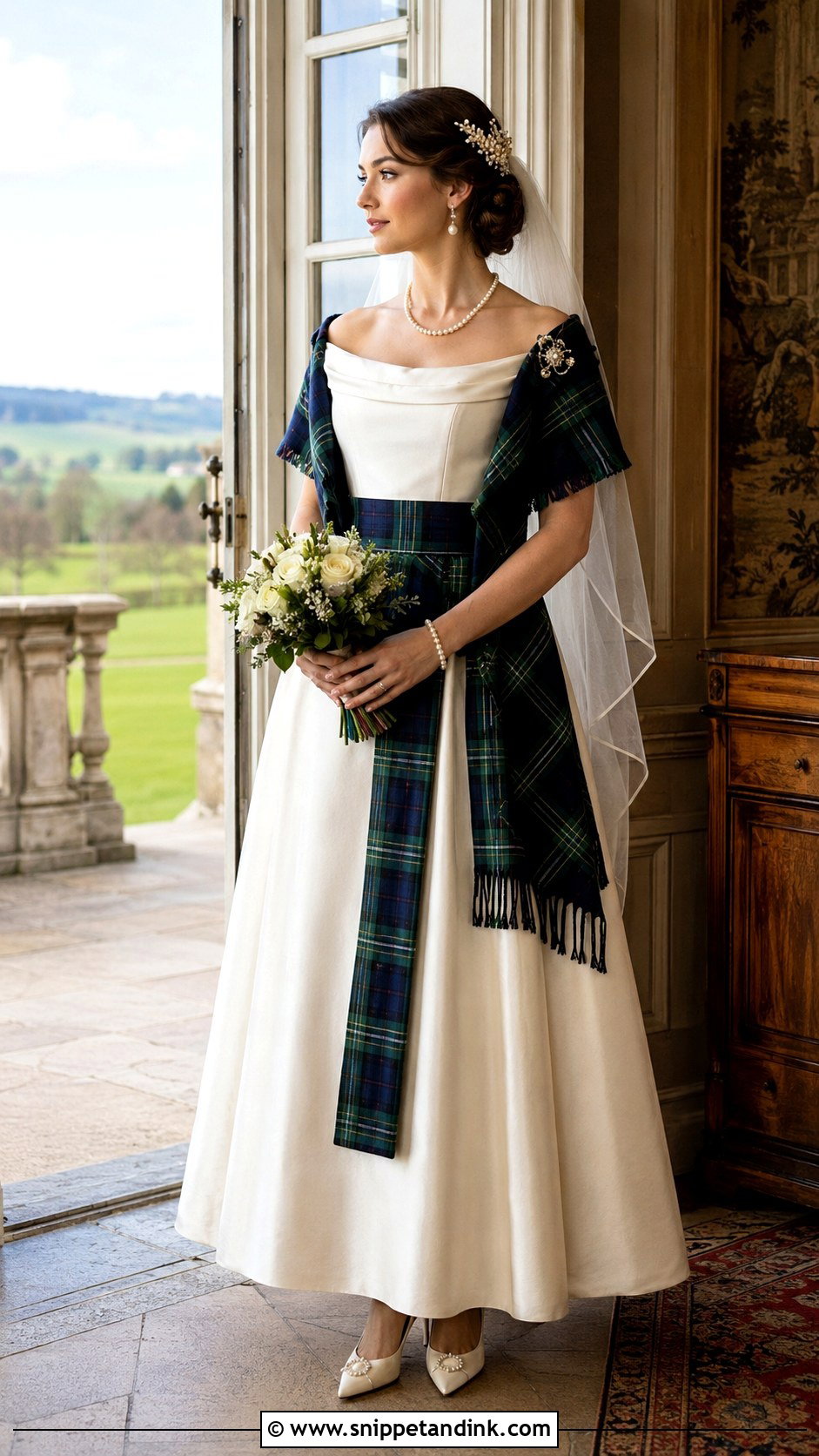
Tartan connects the bride to a family clan or regional identity. Most brides wear a white or ivory gown with a tartan sash, overskirt, shawl or bodice panel. Ask the family which tartan to use before ordering, since many families feel strongly about it. Wool tartan is thick, so a sash over a light gown needs a discreet pin or brooch at the shoulder to stop it sliding. Pearl jewelry, classic heels and a veil or hair comb. A structured gown reads formal; a softer dress with a tartan wrap feels relaxed.
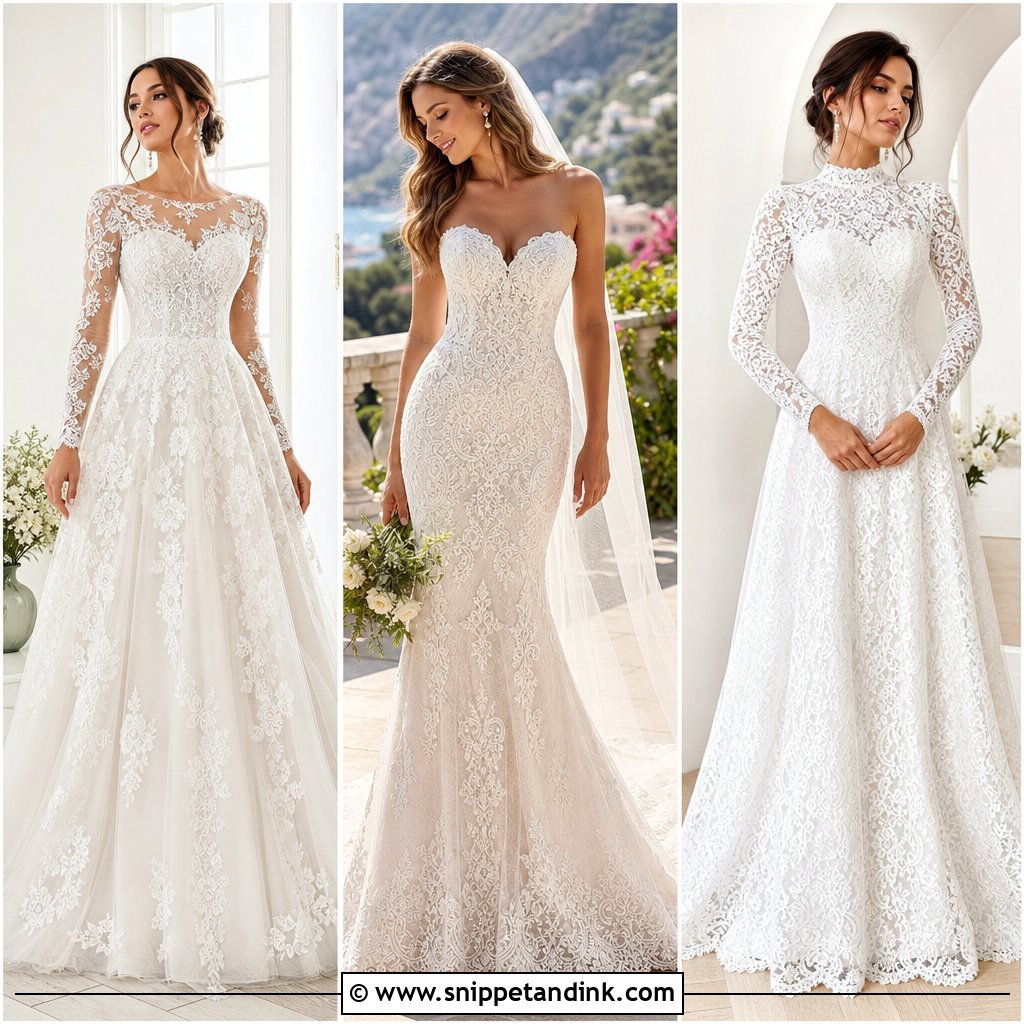
27. Irish Lace Wedding Dress
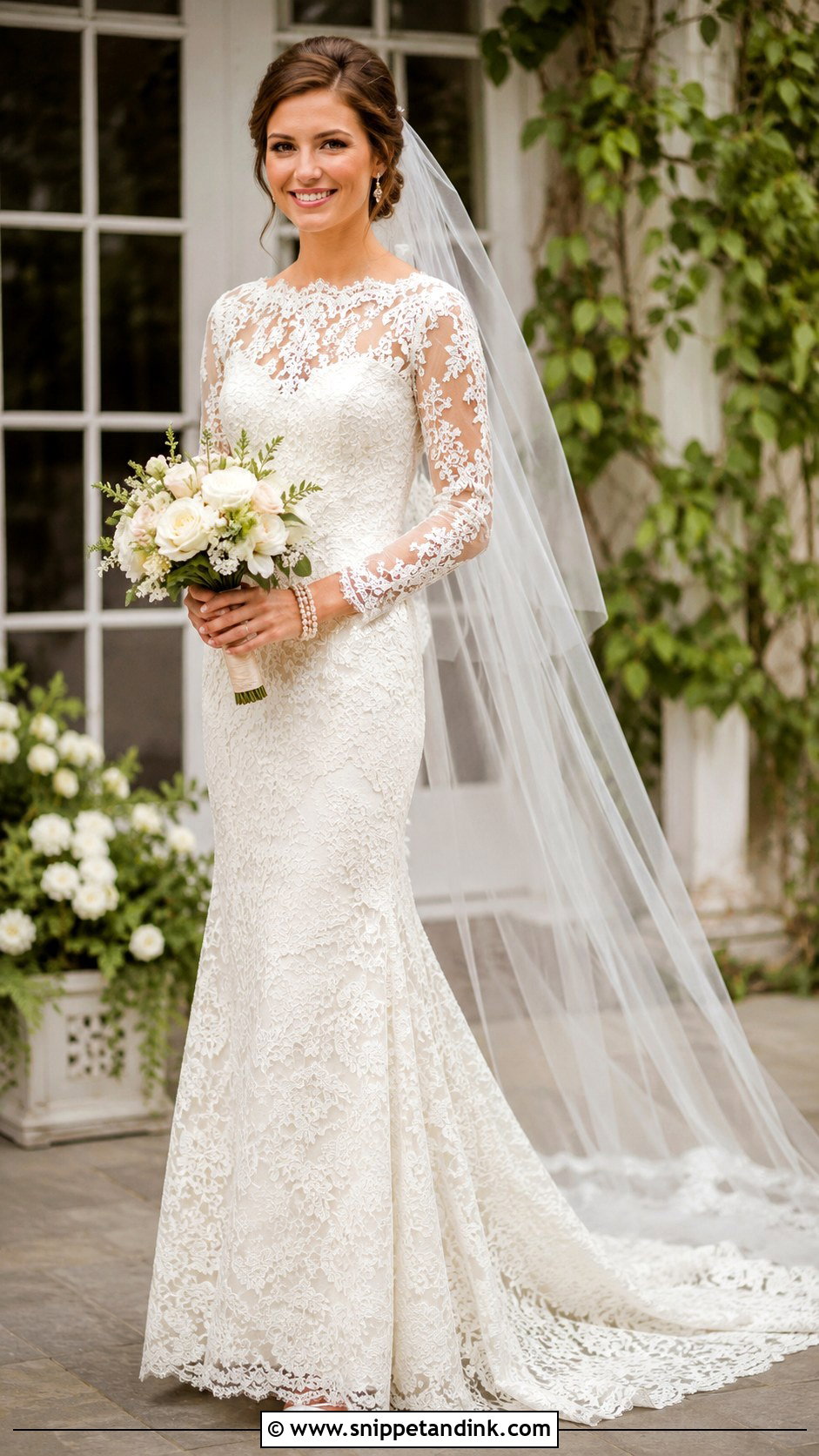
Irish lace, especially crochet lace, has raised motifs that give it a handmade texture. A long-sleeved ivory dress, a soft train and a delicate veil feel traditional. Crochet lace stretches, so I’d fit it slightly snugger than a woven fabric. Pearl earrings, a bracelet and classic heels. A fitted bodice with an A line or sheath skirt keeps it graceful. For cooler weather, a lace capelet or shawl adds coverage while matching.
28. Mexican Tehuana Wedding Dress
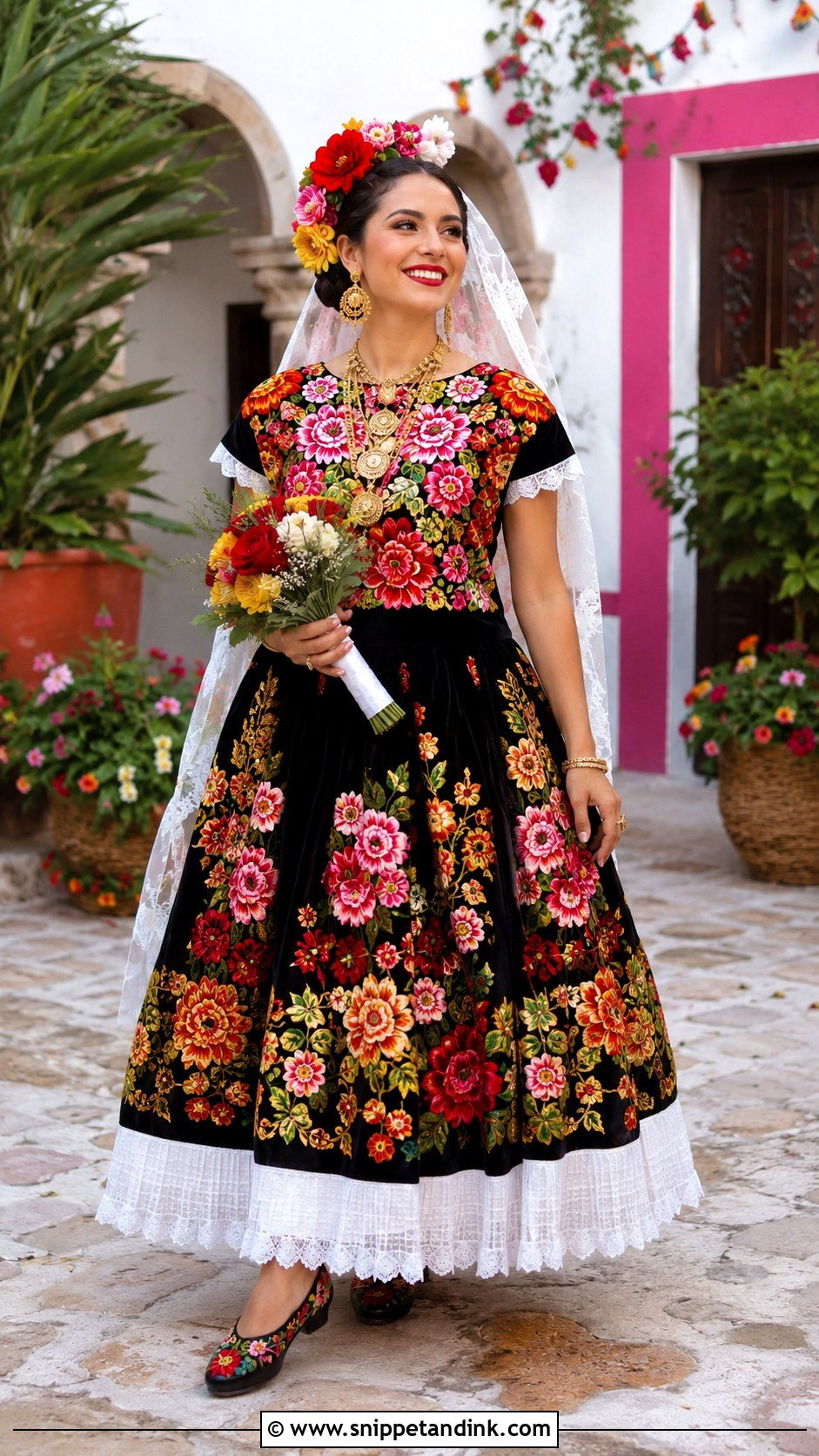
The Tehuana look from the Isthmus of Tehuantepec pairs a heavily embroidered huipil blouse with a full skirt, often finished with a lace ruffle, and sometimes a lace headdress. Black, white, red and gold with vibrant florals are common. The embroidery is usually dense satin stitch, which is heavy, so I’d add a lining to protect the stitches from body heat and sweat. Statement earrings, a flowered hair arrangement and comfortable heels or embellished flats.
29. Guatemalan Huipil Wedding Dress
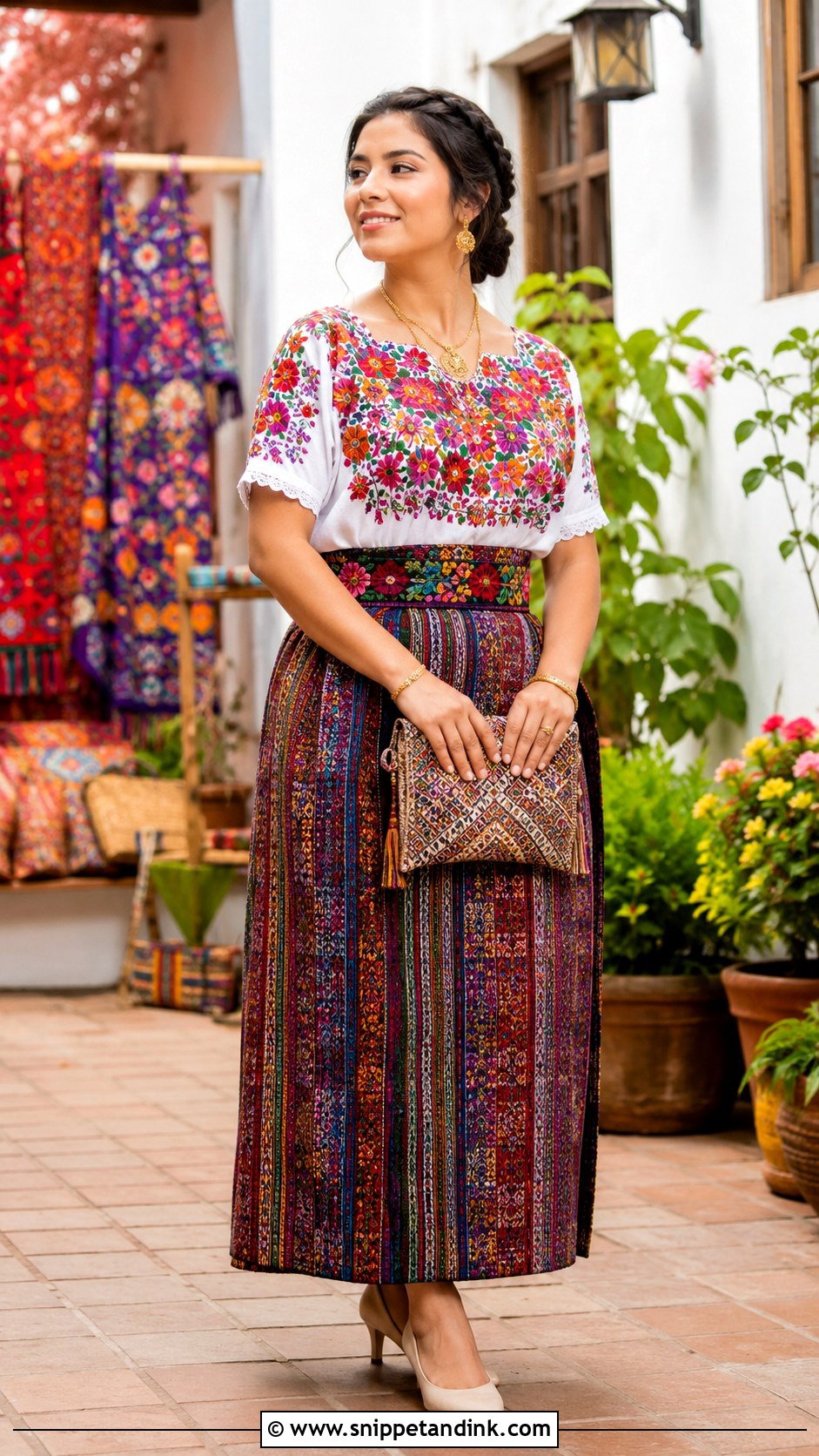
Huipiles are woven on backstrap looms, and the motifs and colors often identify the weaver’s community. A bride may wear one with a woven corte skirt or have a dress made using traditional textiles. I’d buy directly from weavers or cooperatives where possible, both for the quality and so the work is paid for fairly. Simple jewelry, woven accessories and comfortable sandals or low heels. A braid or soft updo shows the neckline embroidery.
30. Native American Ribbon Wedding Dress
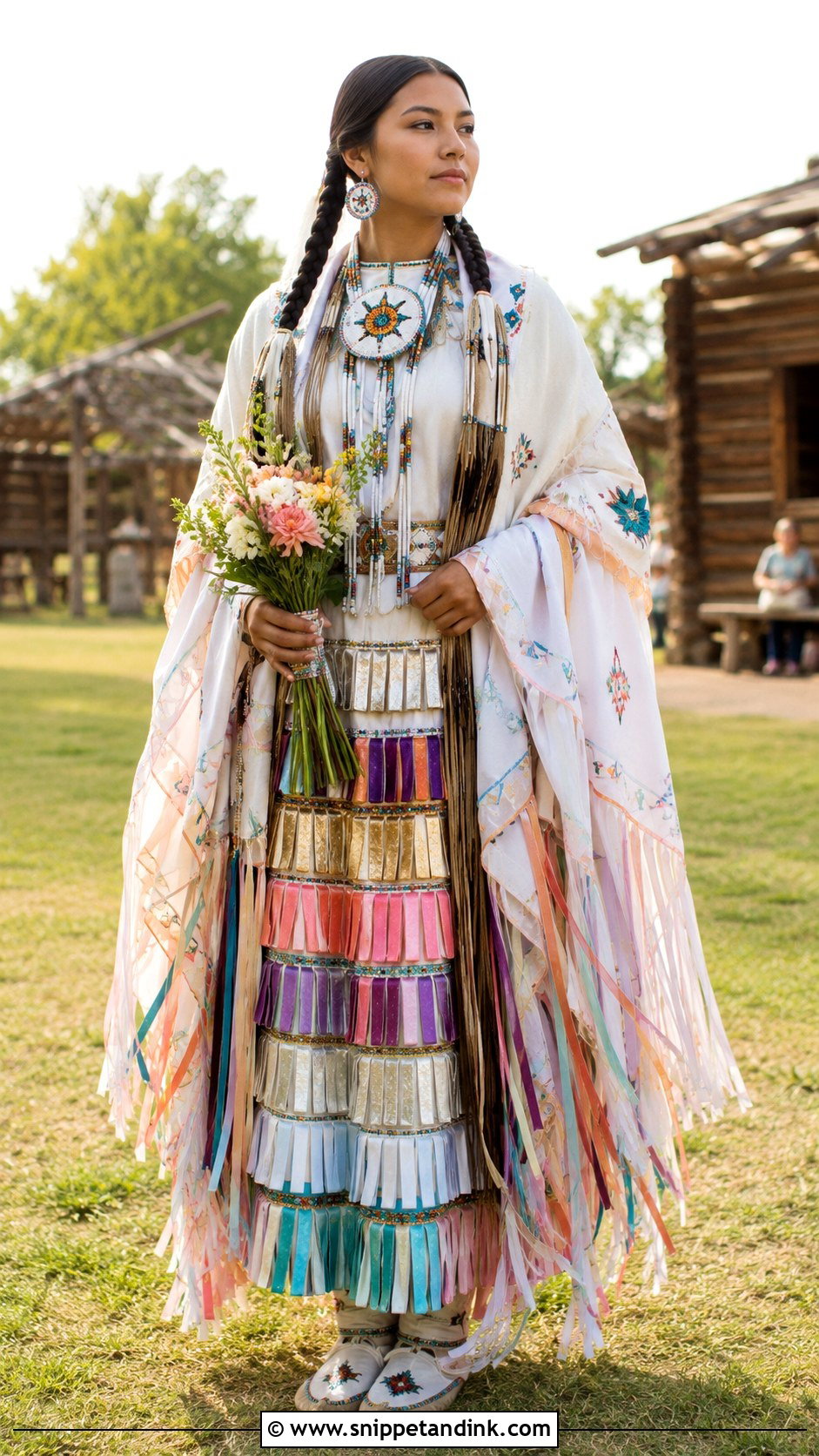
Native nations have very different traditions, so there isn’t one Native American bridal dress. The respectful approach is to follow the bride’s own community customs and family guidance. A ribbon dress may include layered ribbons in meaningful colors, beadwork, a shawl and moccasins, often with jewelry made by Native artists. The simple, flowing cut lets the ribbon work and accessories stand out. Hair may be braided, loose or styled according to personal tradition. For anyone outside the culture, this is not a look to borrow.
Wearing a Heritage Garment That Isn’t From Your Family
Couples from mixed backgrounds often wear one partner’s tradition for part of the day, and that’s usually a warm gesture when the family is involved. The care lies in how it’s done. Ask the family which garments are ceremonial and which are simply festive, buy from makers within that culture where you can, and learn what the pieces mean before you wear them. Some items, such as regalia connected to specific ceremonies, are not appropriate to wear unless you belong to that community.
Storing Silk, Zari and Velvet Once the Party Ends
Heirloom garments only become heirlooms if they’re stored properly. Most of the damage I see comes from plastic, perfume and folds left untouched for years.
- Have it cleaned by a specialist who knows metallic embroidery before storing. Stains set and darken over time.
- Wrap silks and embroidery in clean cotton muslin or acid-free tissue, never sealed plastic, which traps moisture.
- Refold sarees and long cloths along different lines every few months, since silk weakens along permanent creases.
- Keep perfume and deodorant away from zari and gold thread; they speed up tarnishing.
- Store velvet flat or hanging loosely, never crushed, so the pile doesn’t flatten.
Ask Your Mother Before You Ask a Shop
Every outfit here comes from a living tradition with its own meaning and its own practical demands. From lehengas and sarees to thobes, kente, hanbok, ao dai, kebaya and ribbon dresses, the right one is the one that is respectful, comfortable for the hours you’ll wear it and connected to the bride’s heritage or family. Talk to the people who will be at the ceremony, find the makers who know the craft, and give yourself time for fittings and dressing on the morning.
You'll Like These Ideas:


Leave a Reply