
Malay bridal dressing asks one outfit, or more often two, to do several jobs at once: stay modest, respect heritage and keep a bride comfortable through a long, hot day. The usual pattern is a soft white baju nikah for the solemnisation, then a richer songket or beaded outfit for bersanding. Lace, satin, chiffon, crepe, organza and songket can all look bridal once the cut, tudung, shoes and jewellery agree with each other. I plan every Malay bride’s look around her venue, the weather and her family’s customs before we talk embellishment. Below you’ll find classic baju kurung, modern kebaya, princess gowns and minimalist Muslimah dresses, with the fitting notes I’d give for each.
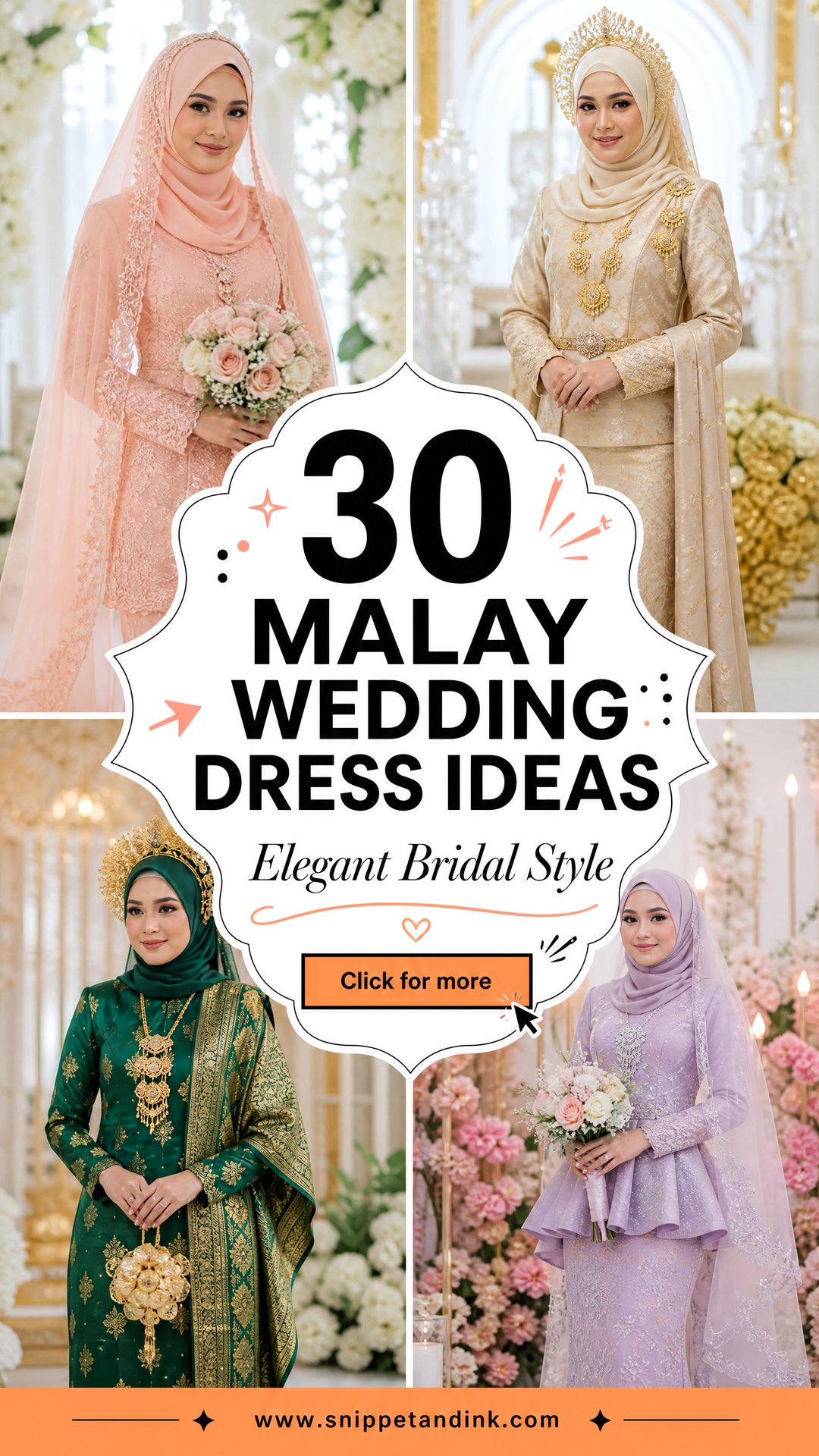
Two Outfits, Two Jobs: the Akad and the Pelamin
When I plan a Malay bride’s wardrobe, I treat the solemnisation and the bersanding as two different briefs. They usually happen at different times and places, and each asks something different from the clothes.
For the akad nikah
- If it takes place in a mosque, check its dress expectations: fabric that isn’t sheer, wrists and ankles covered.
- You may sit on the floor or a low cushion for a long time, so test sitting with folded legs at the fitting.
- Keep the tudung secure but light; you’ll be looking down to sign and receive the mas kahwin.
For the bersanding
- Pelamin lighting is hot and bright. Breathable linings matter more than an extra layer of beading.
- Count the steps up to the pelamin and practise them in your actual shoes and skirt.
- If the groom is matching you, buy enough fabric for his baju Melayu and samping from the same roll so the colours agree.
A good tailor will want your fabric eight to twelve weeks before the date for a fully made outfit, more in the busy wedding months, and I’d book two fittings at minimum.
1. White Baju Kurung Nikah
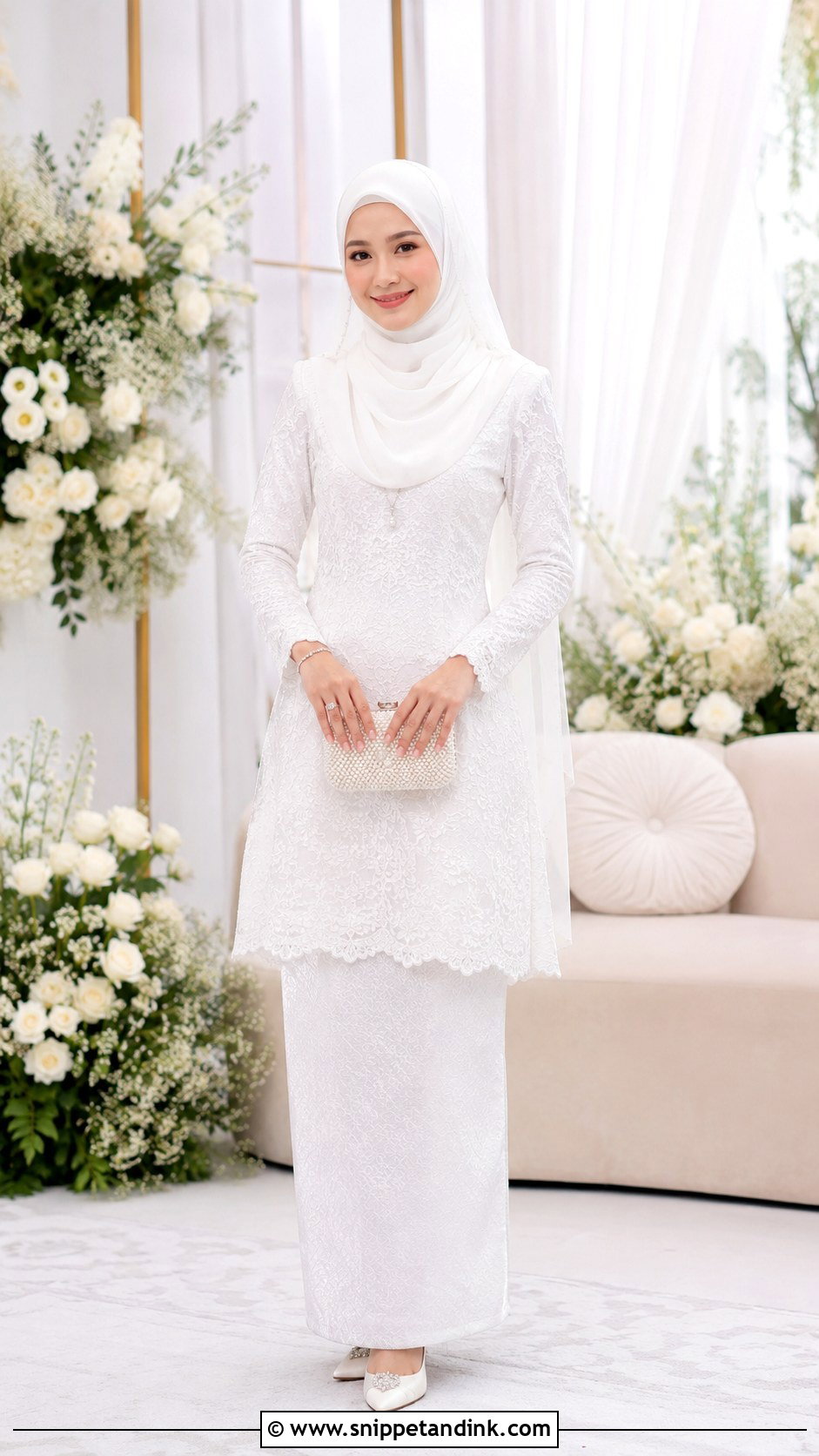
For the akad nikah, white baju kurung is still the outfit most families picture, and I rarely talk a bride out of it. The fitting point that matters is the skirt: you’ll likely sit on the floor or a low cushion during the ceremony, so a straight skirt needs enough ease, or a small hidden pleat, to let you sit with your legs folded. Lace overlays, pearl buttons and light beadwork add enough. A soft white tudung, satin heels and a slim bracelet or shoulder brooch complete it.
2. Ivory Lace Baju Kurung Moden
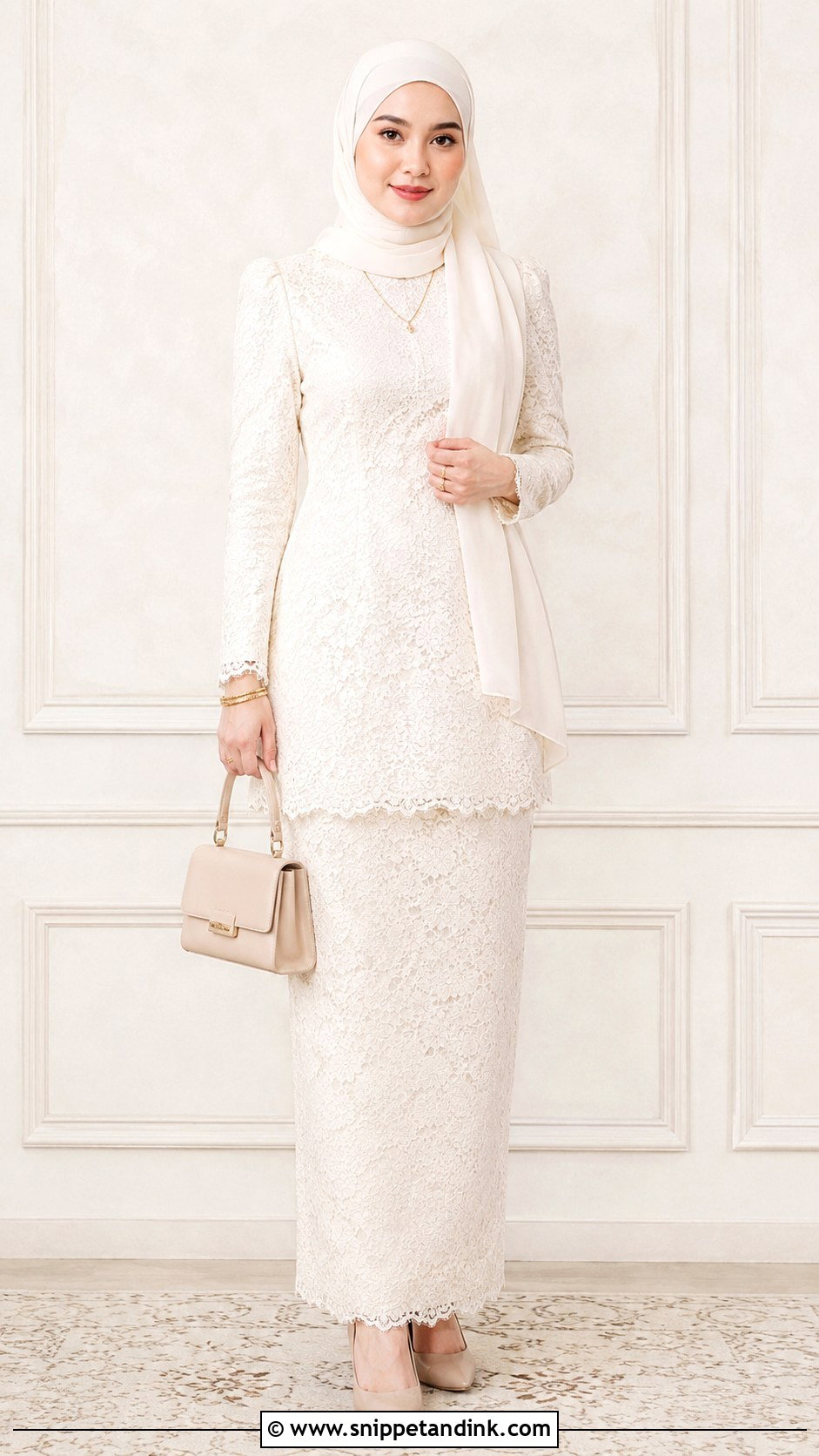
Ivory is kinder than bright white on most skin tones, especially under a camera flash. A baju kurung moden in ivory lace over a matching lining gives a slightly fitted top and a long modest skirt. Scalloped hems and beaded cuffs show up well in close-ups. I’d decide on gold or silver jewellery early, because ivory reads warmer with gold and cooler with silver, and the tudung pins and brooches should follow the same metal.
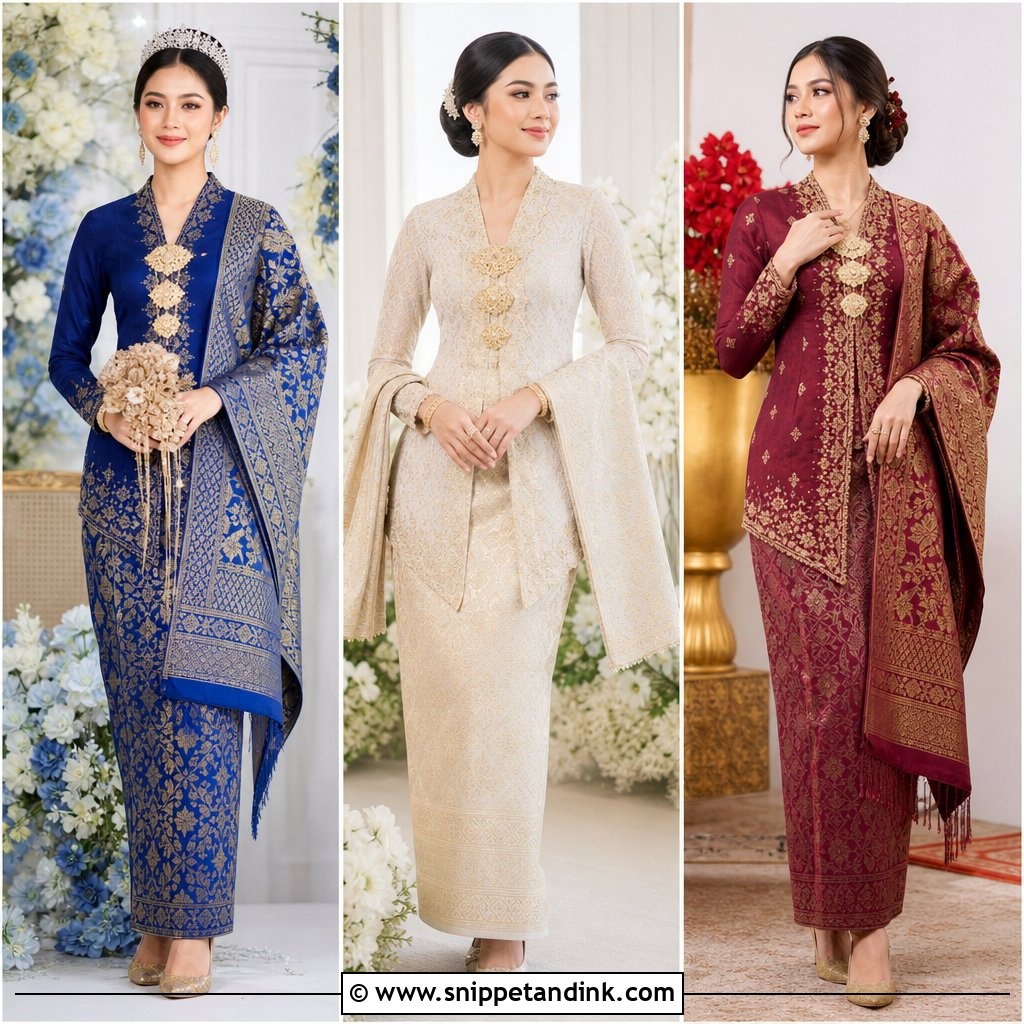
3. Songket Baju Kurung Sanding
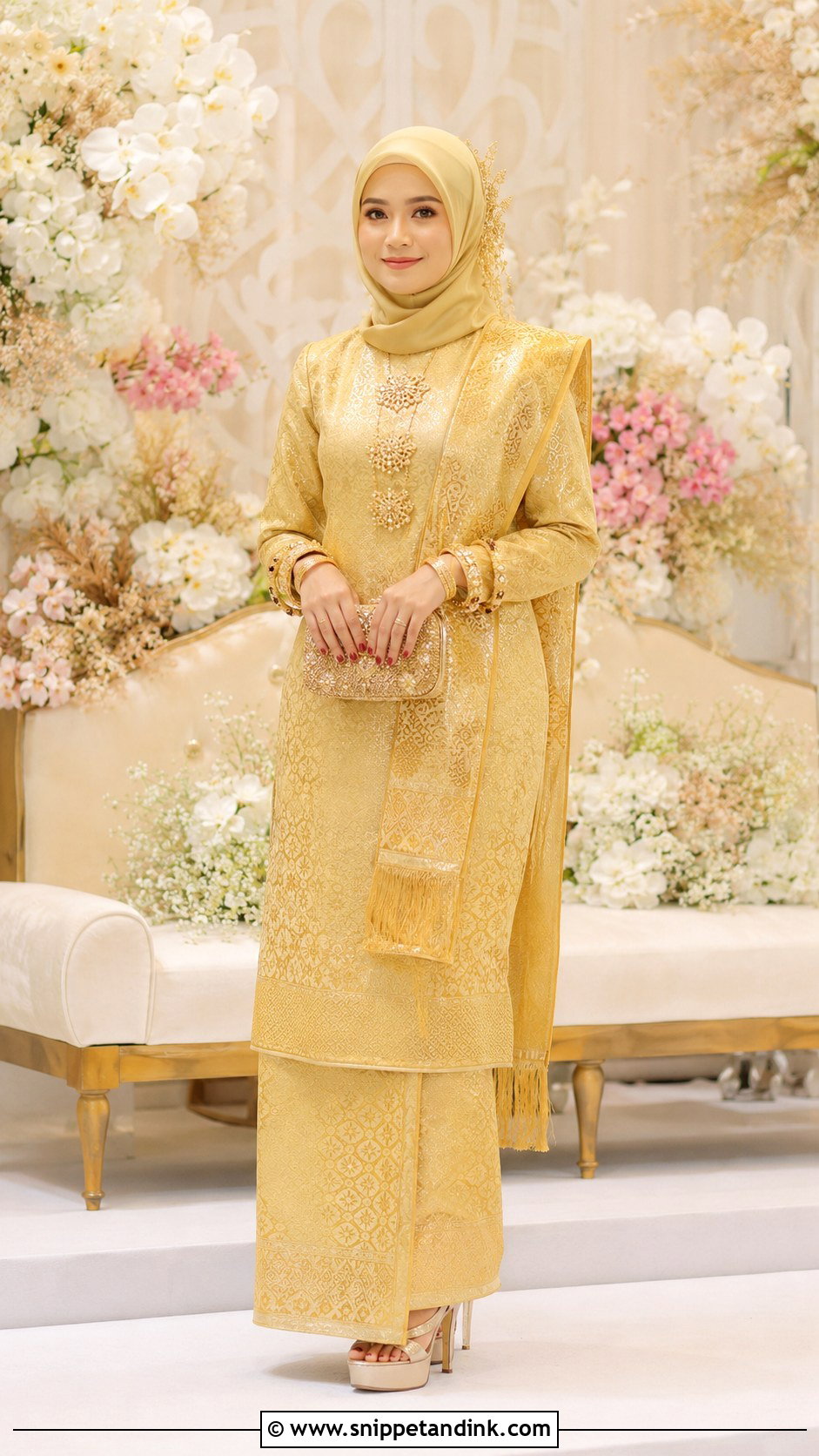
Songket is woven with metallic threads running through the cloth, which is why a songket baju kurung sanding looks so regal on the pelamin and catches every light in the hall. It’s also heavy and stiff, so I keep the cut clean and the tudung neat rather than adding more structure. Gold, champagne, emerald, royal blue, maroon and dusty rose all suit it. Platform heels help with the skirt length, and a statement necklace or traditional piece finishes it.
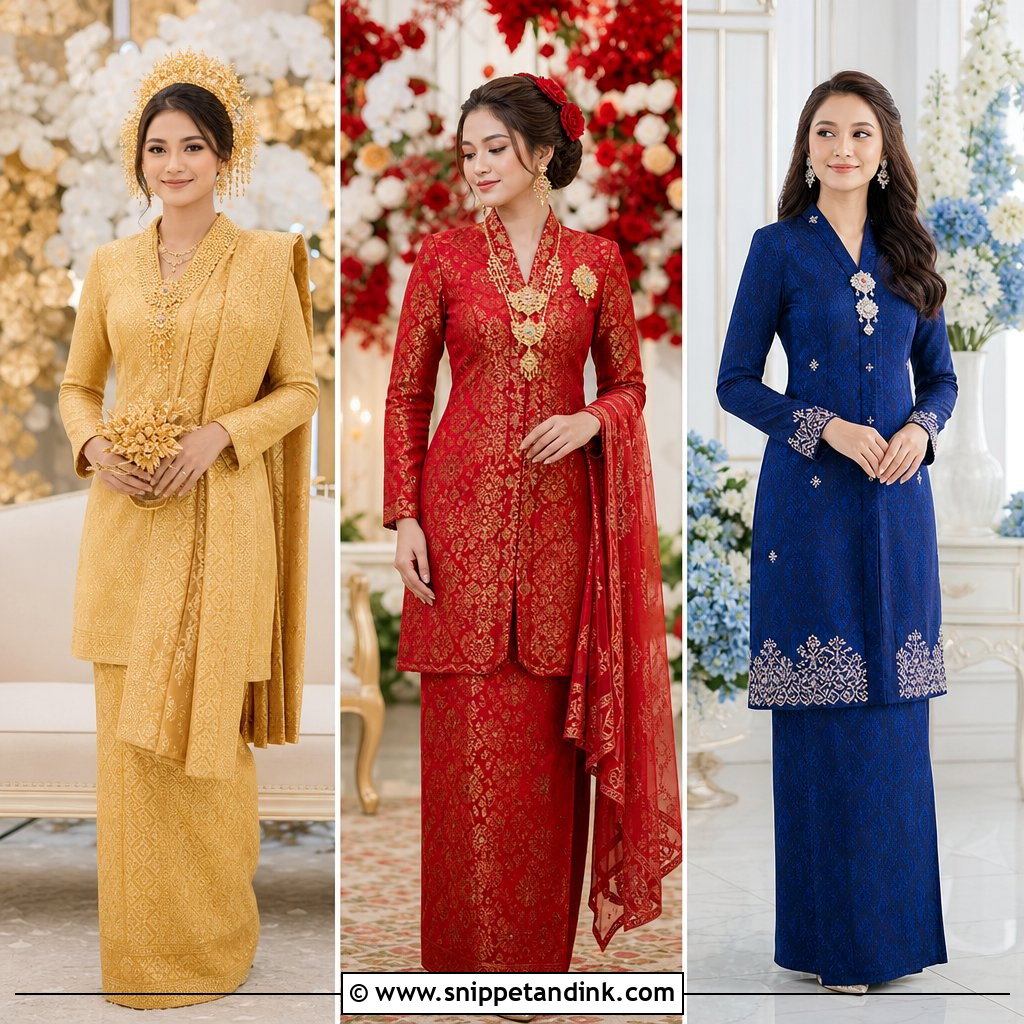
4. Gold Kebaya Labuh
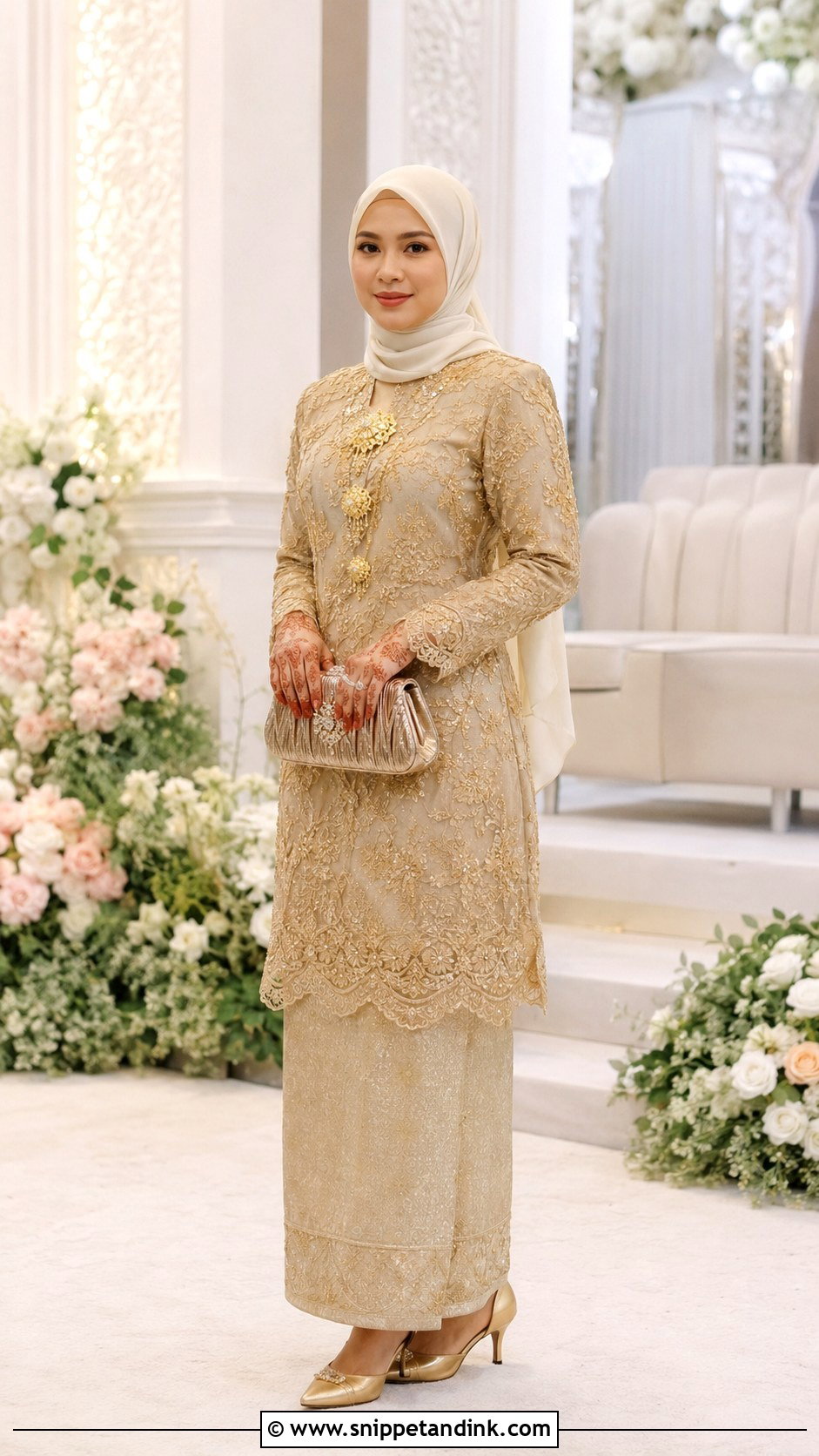
A long kebaya labuh with a fitted or straight skirt is the most dignified of the gold options. Look for fine lace, songket panels or embroidery along the front opening and cuffs. Gold is rich already, so accessories need restraint: a cream tudung, gold heels and a small metallic clutch. I’d place traditional kerongsang brooches down the front opening, spaced evenly, and check they don’t pull the fabric when you sit.
5. Modern Kebaya With Mermaid Skirt
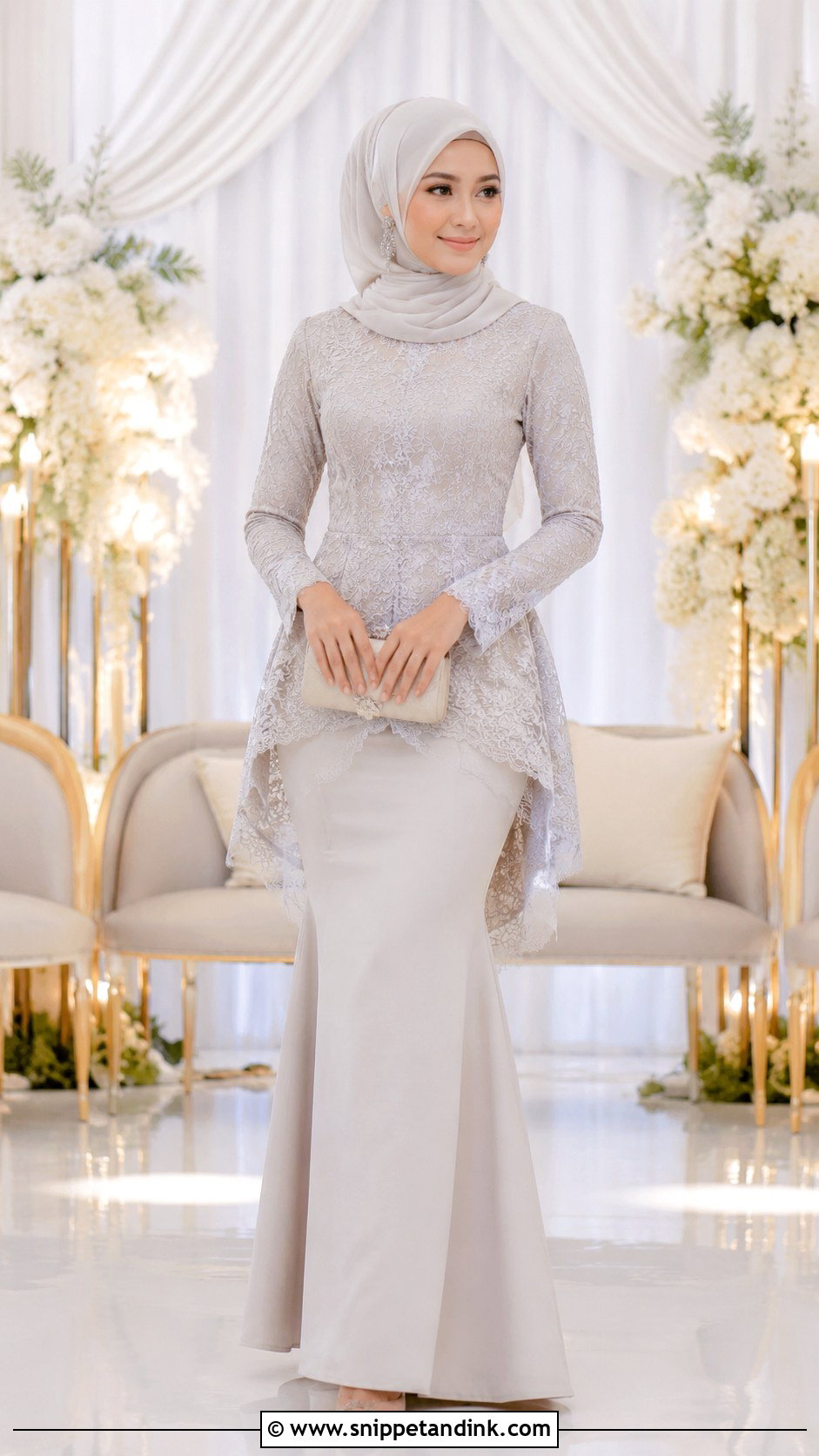
Pairing a kebaya with a mermaid skirt gives a sleek, modern line for the sanding photos. The skirt flares below the knee, so it keeps modesty while showing shape. Ivory, champagne, blush or silver keep it bridal. Mermaid skirts make climbing onto the pelamin awkward, so I always ask the venue how many steps there are and practise them at the final fitting. A fitted inner layer, long sleeves and a matching tudung keep it refined.
6. Blush Pink Baju Kurung Wedding Dress
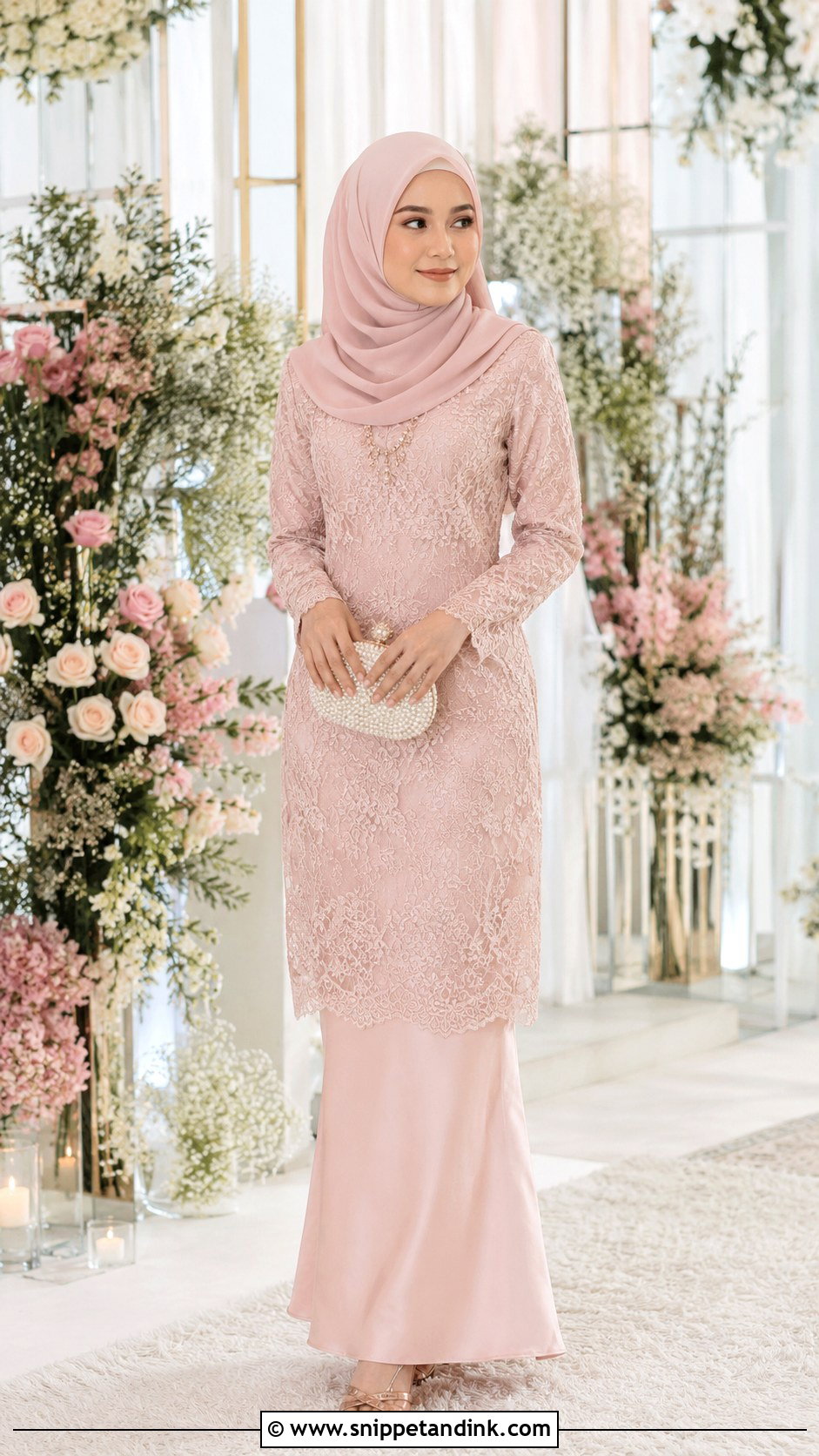
Blush gives colour without losing the light bridal feeling, and it flatters a wide range of skin tones. A blush baju kurung with lace sleeves, floral embroidery or scattered beading works for both the nikah and the reception. Match it with a blush or ivory tudung and rose-gold heels, and keep the makeup in the same rosy family. It suits morning ceremonies and pastel themes best; under strong warm evening lights, pale blush can look washed out.
7. Champagne Satin Baju Kurung
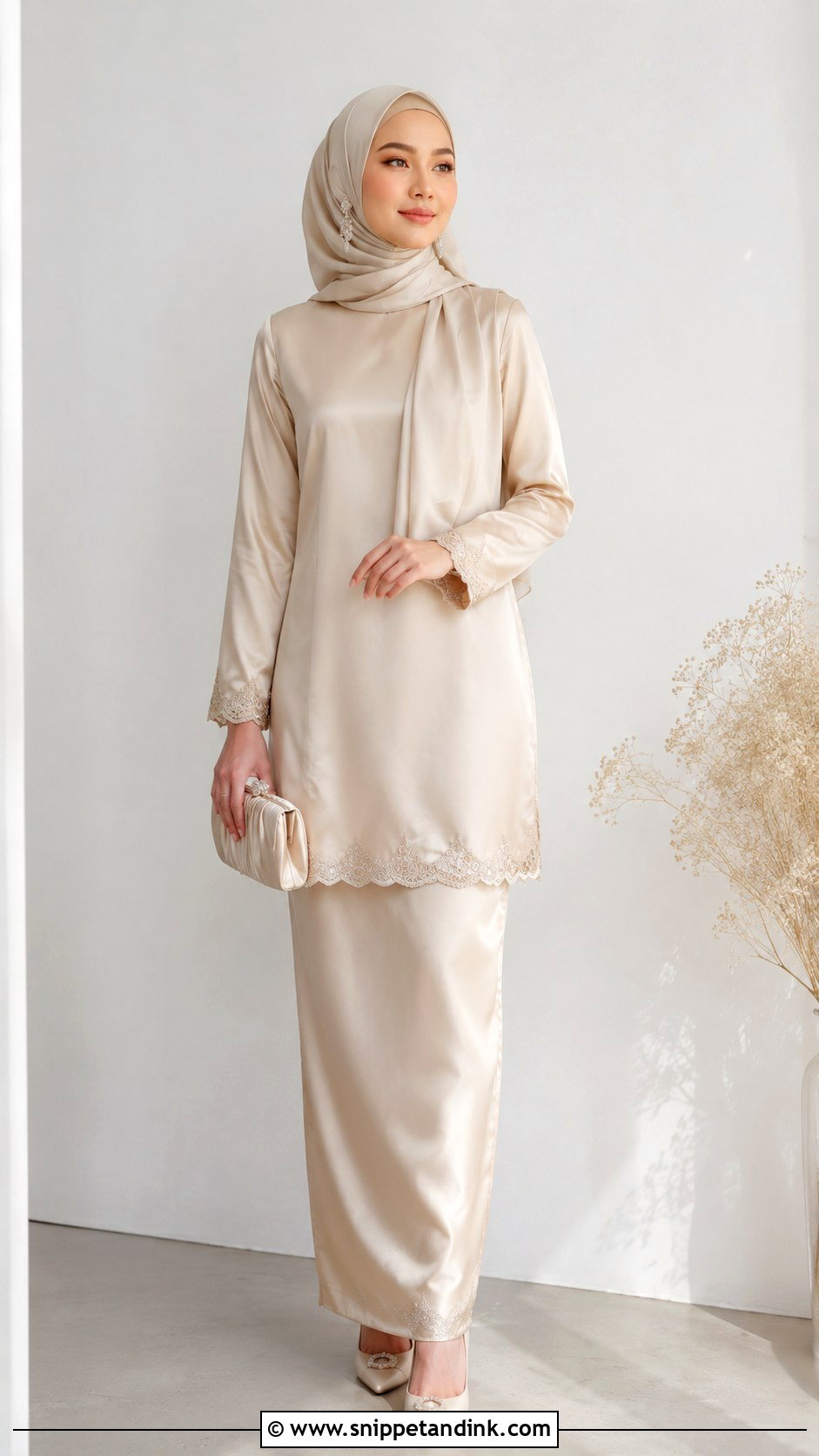
Champagne satin looks expensive with very little help. Cut it with clean lines and keep embellishment controlled: lace cuffs, pearl trim or a subtle shaped waist. Satin reflects light and shows creases, which matters on a bride who’ll be seated for long stretches on the pelamin, so I’d choose a heavier satin. A champagne tudung, cream heels and a satin clutch keep the look unbroken from head to toe. Add crystal earrings or a delicate brooch.
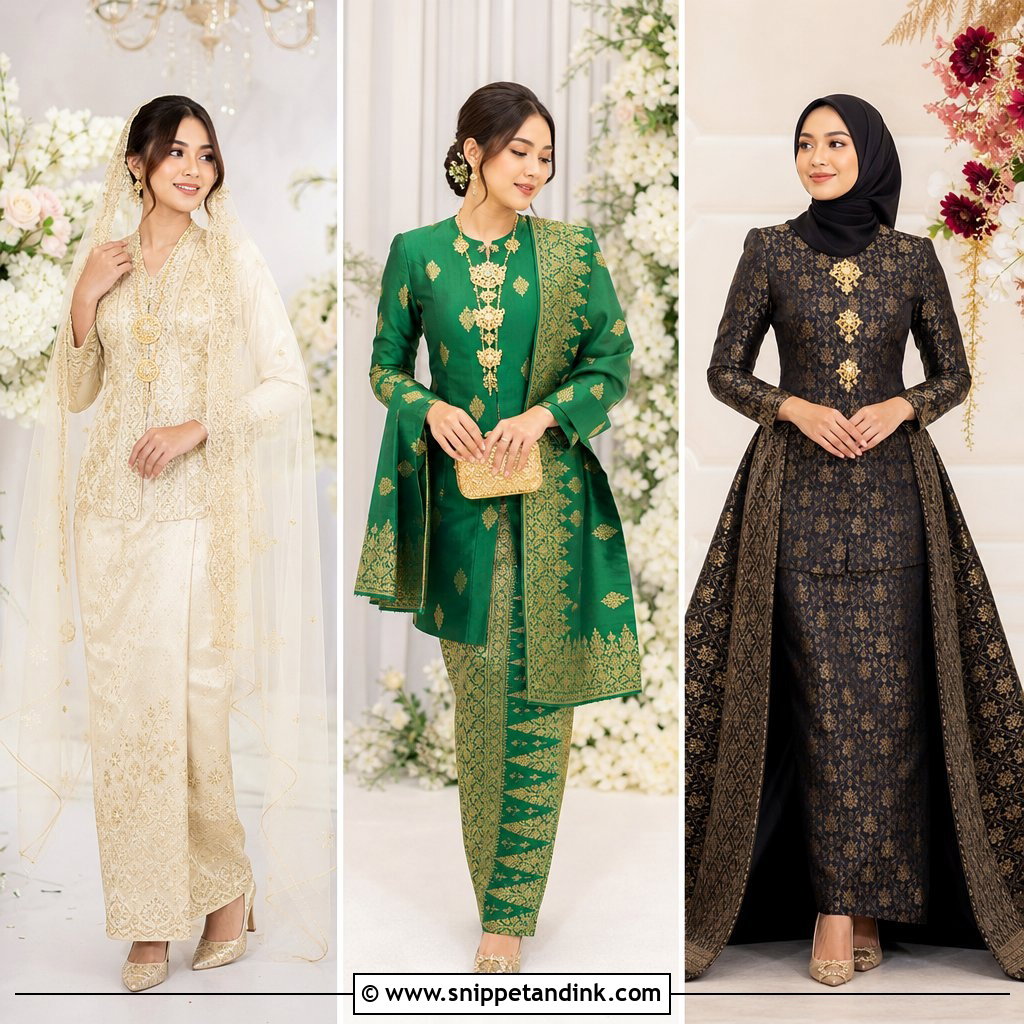
8. Emerald Green Songket Dress
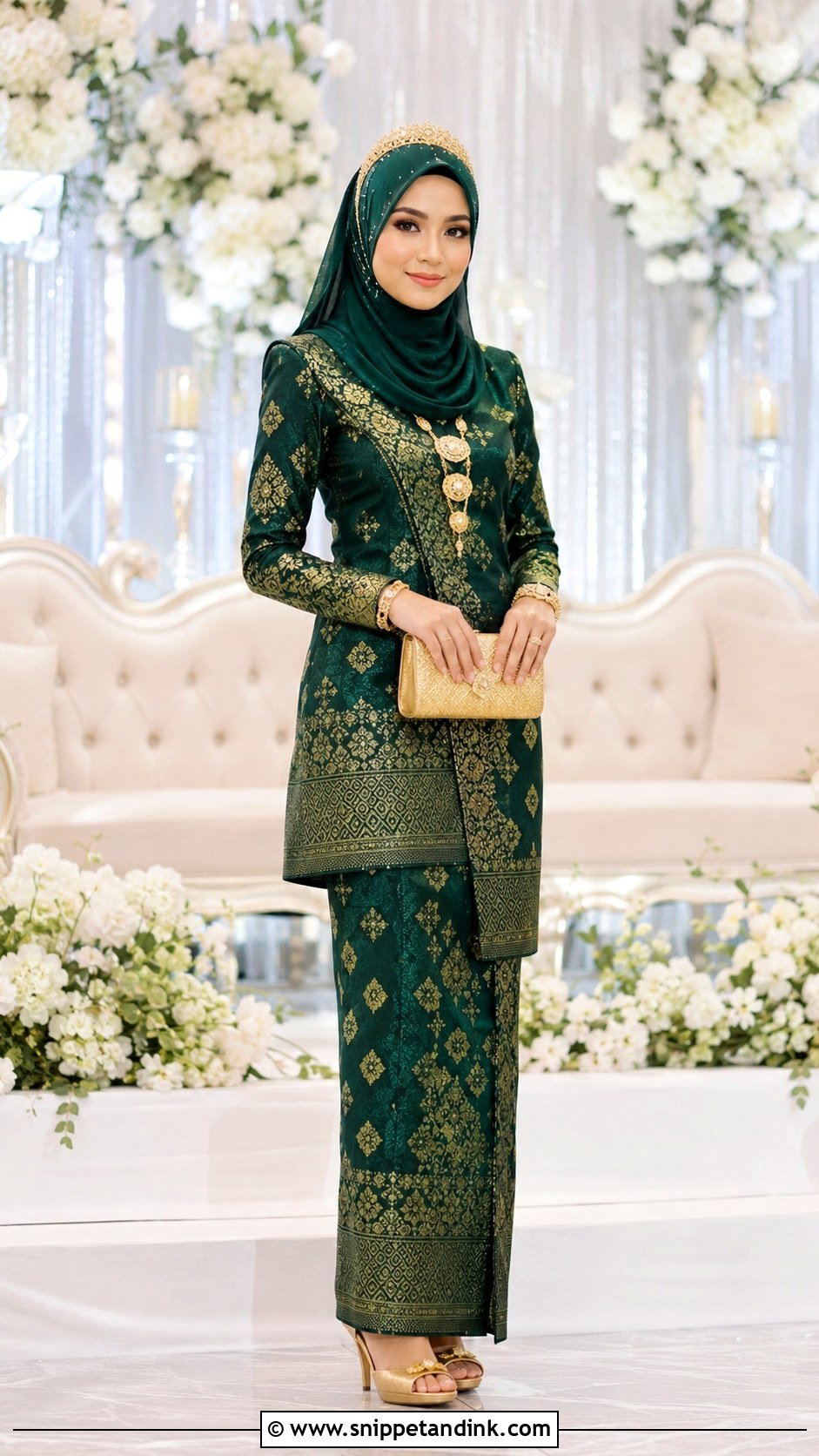
Emerald songket is a reception colour that holds its depth under hall lighting, and gold threadwork glows against it. Baju kurung, kebaya or a structured two-piece all work. Keep the palette tight: a matching or soft gold tudung, gold heels and clutch, traditional jewellery. Emerald fights with too many extra colours, so I’d leave the bouquet and pelamin flowers in cream and gold too.
9. Royal Blue Malay Wedding Dress
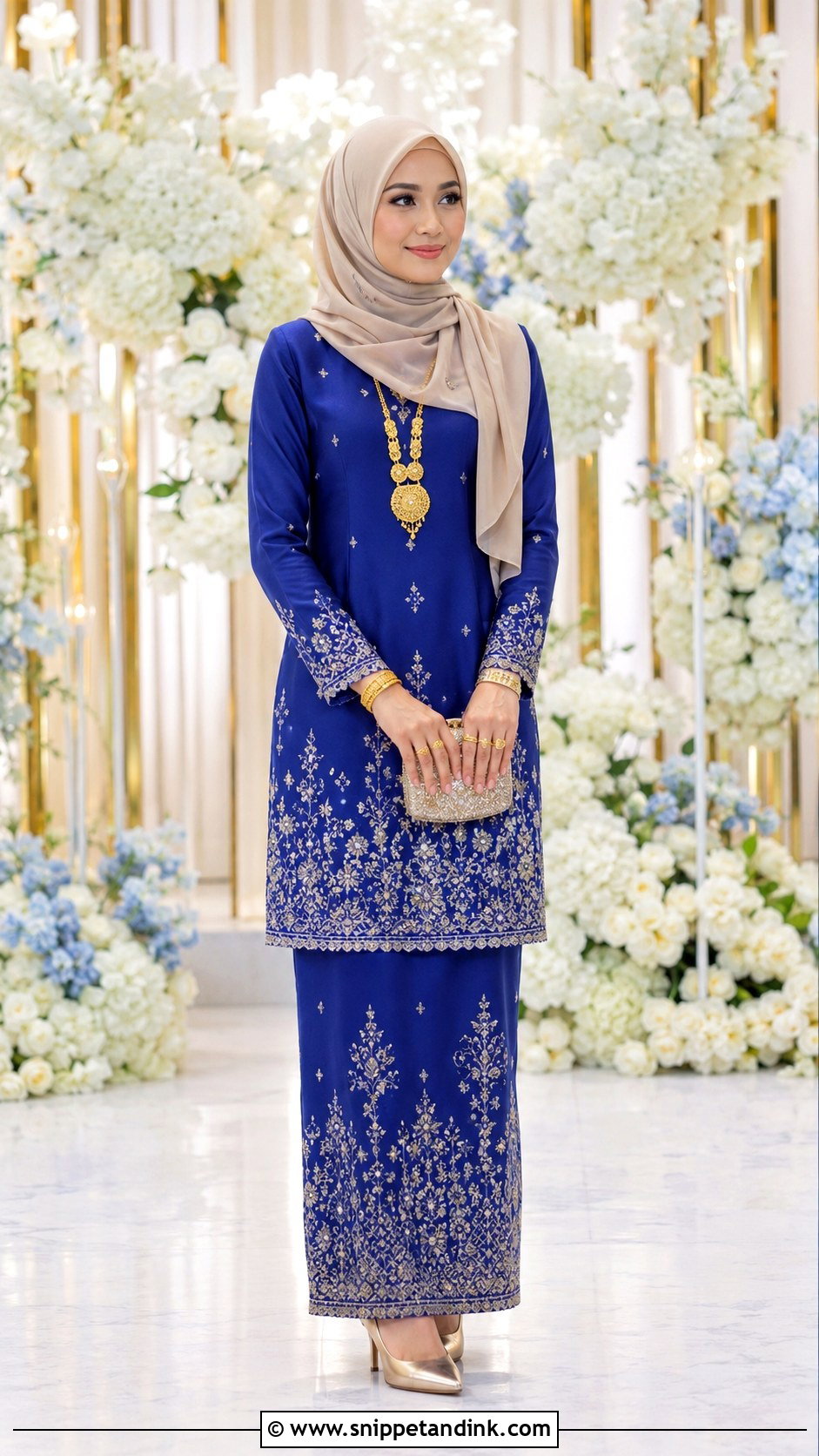
Royal blue works in songket, satin, velvet or embroidered lace, and it stands out clearly on camera. For a traditional version, I’d suggest a baju kurung with gold motifs and a matching skirt; for a modern one, a structured kebaya top over a sleek long skirt. A blue or champagne tudung, metallic heels and a jewelled clutch. Gold accessories warm it up, while silver keeps it cool.
10. Dusty Blue Baju Nikah
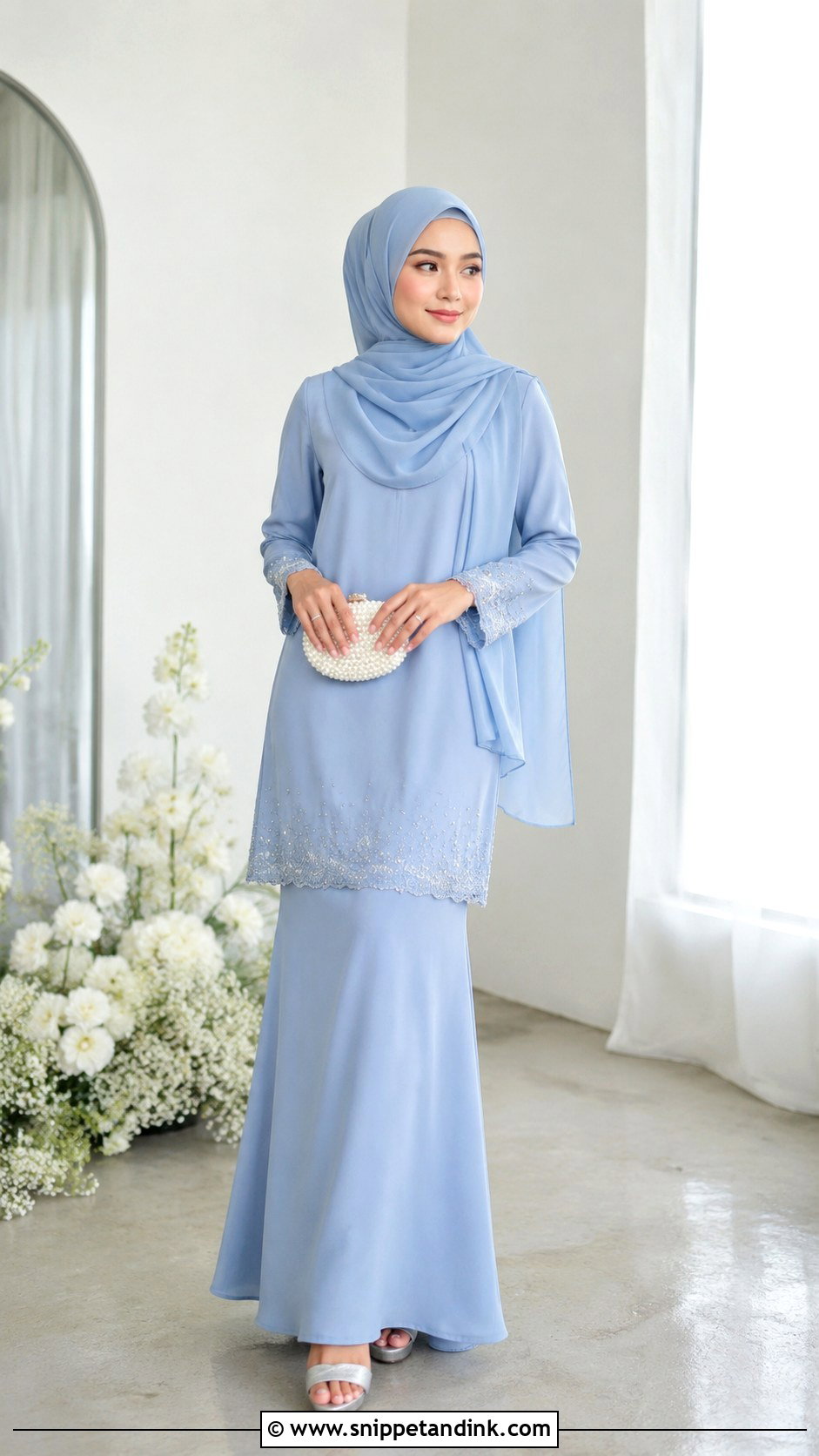
Dusty blue gives a nikah outfit a calm mood while still feeling like an occasion. Chiffon, crepe or lace keep it light, and a simple baju kurung moden with long sleeves and a flowing skirt is easy to sit in through the solemnisation. Before choosing it, I’d check with the family, since some expect white for the akad. Pair it with a matching tudung, silver heels and minimal jewellery.
11. Maroon Songket Baju Sanding
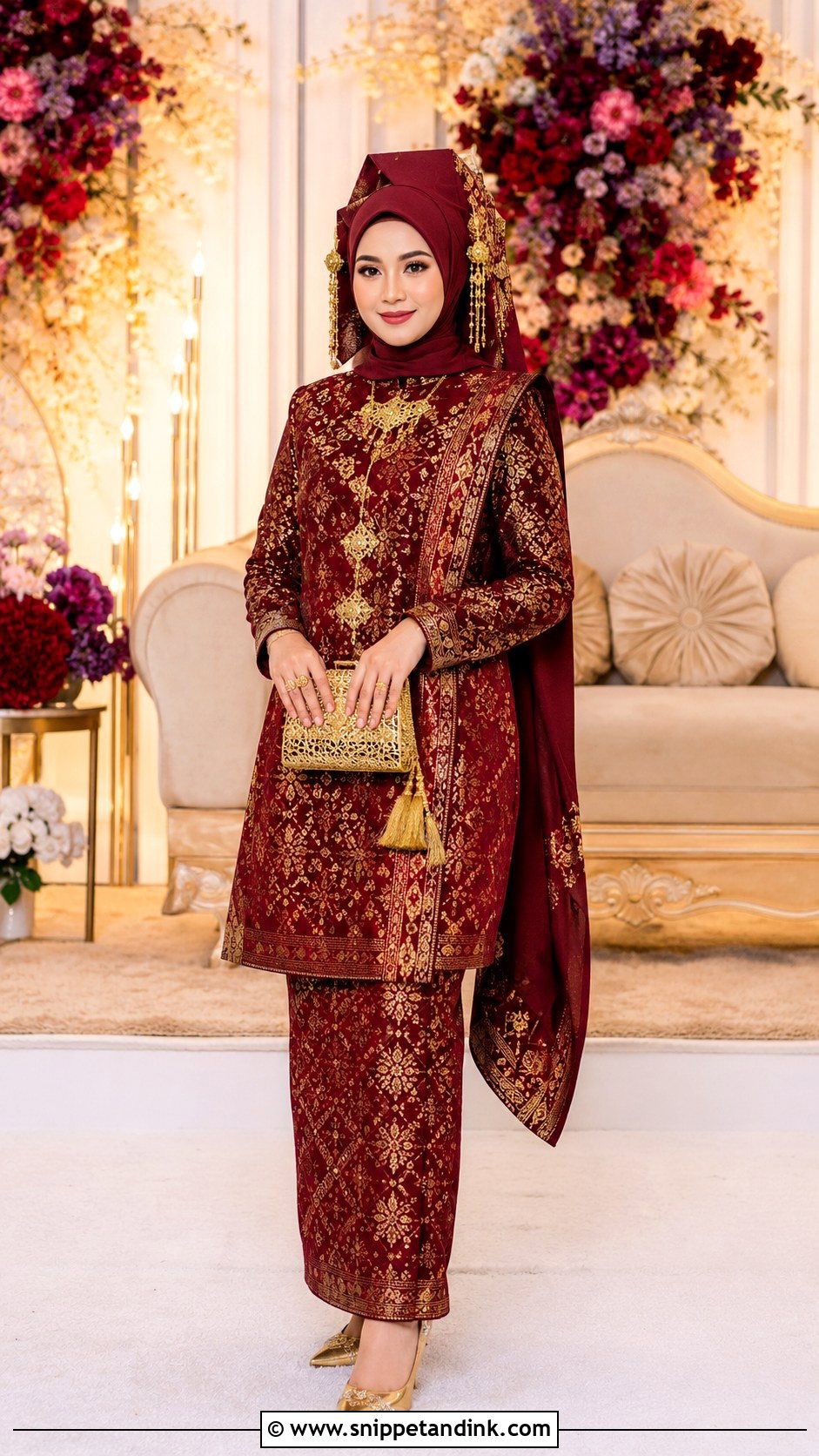
Maroon songket is celebratory without being too bright, which makes it a strong bersanding colour. Gold motifs add depth. A long baju kurung or kebaya with a matching skirt and a structured tudung. Gold heels, gold clutch, classic jewellery. Maroon suits warm makeup with defined eyes; I’d brief the makeup artist on the outfit colour so the lip doesn’t clash. Best for evening weddings and heritage venues.
12. Cream Beaded Kurung Dress
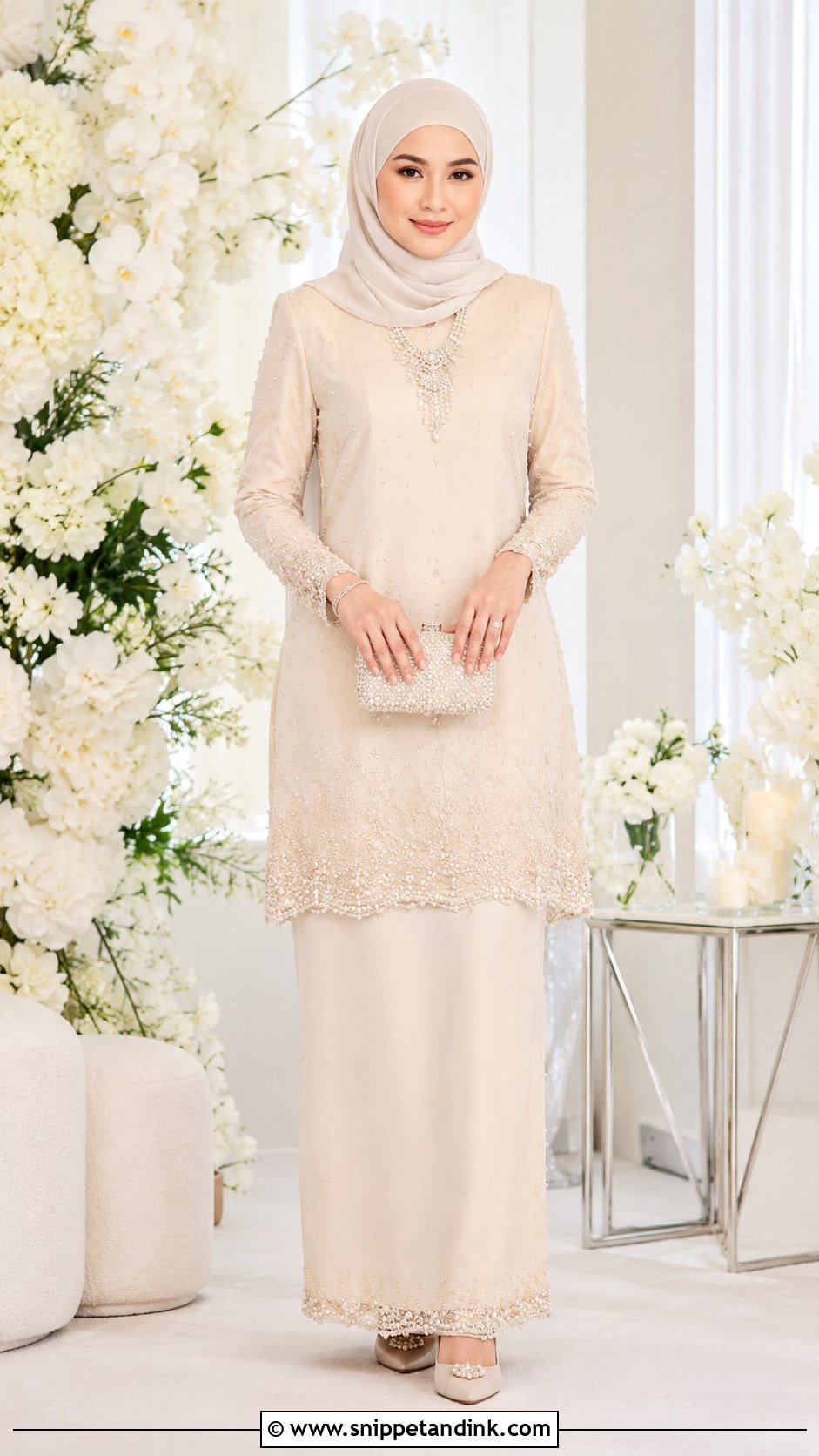
Cream softens the starkness of white and suits most skin tones. Beadwork at the neckline, sleeves, hem or bodice gives texture, and the skirt can stay plain so the outfit doesn’t get heavy. Ask how the beads are attached: hand-sewn beads hold far better than glued ones through a long day of hugging relatives. Pair with a cream tudung, pearl heels and a small beaded clutch. It works for nikah, reception or family portraits.
13. Silver Embroidered Malay Dress
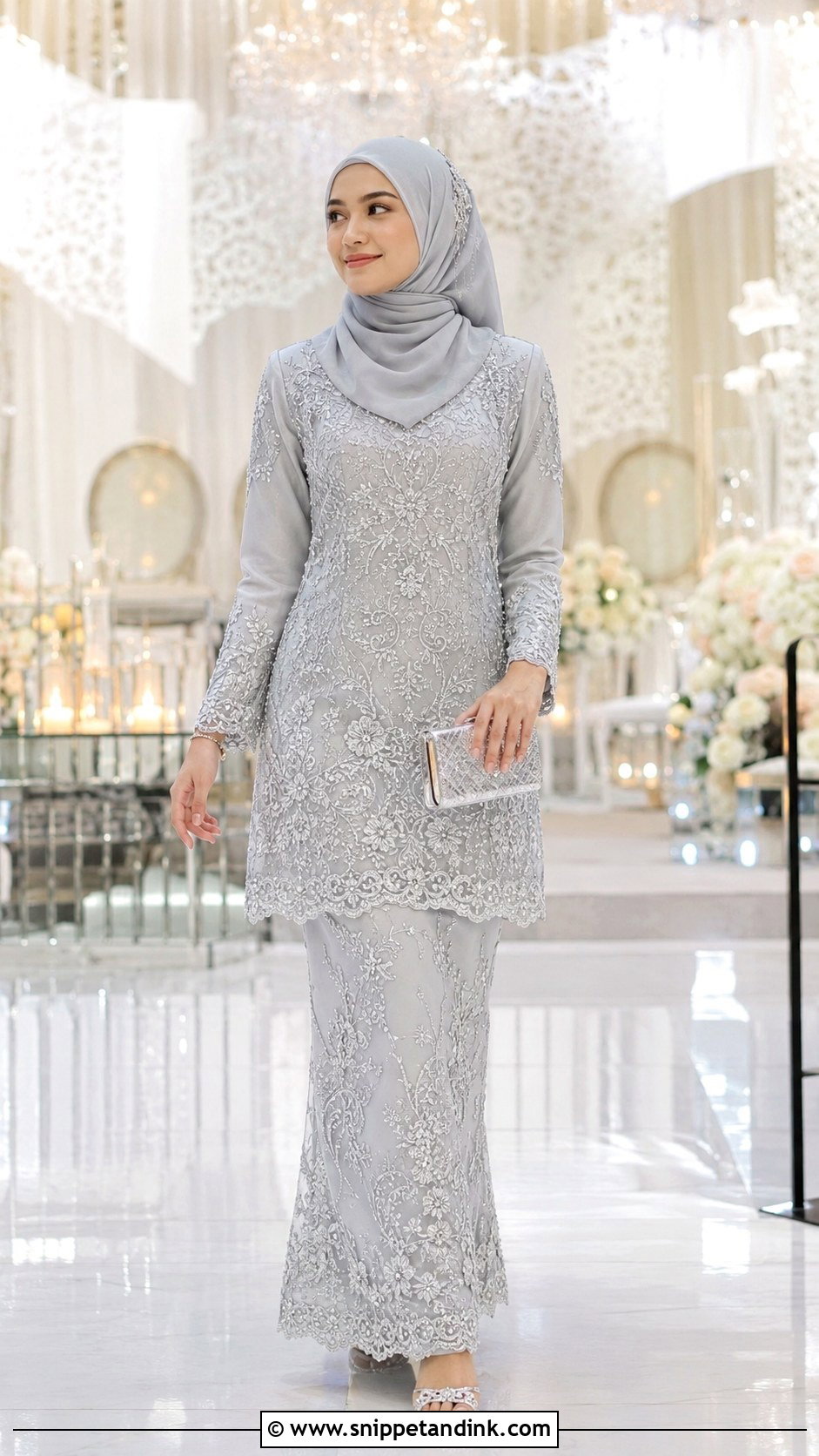
Silver thread on lace, tulle, satin or organza gives a cool, polished finish, and a silver embroidered Malay dress suits evening receptions and hotel ballrooms well. A long-sleeved baju kurung or kebaya with a matching skirt keeps it modest. Floral or geometric motifs both work. Because the embroidery shines on its own, I keep jewellery simple: a silver-grey tudung, crystal heels and a small metallic clutch.
14. Peach Baju Kurung With Veil
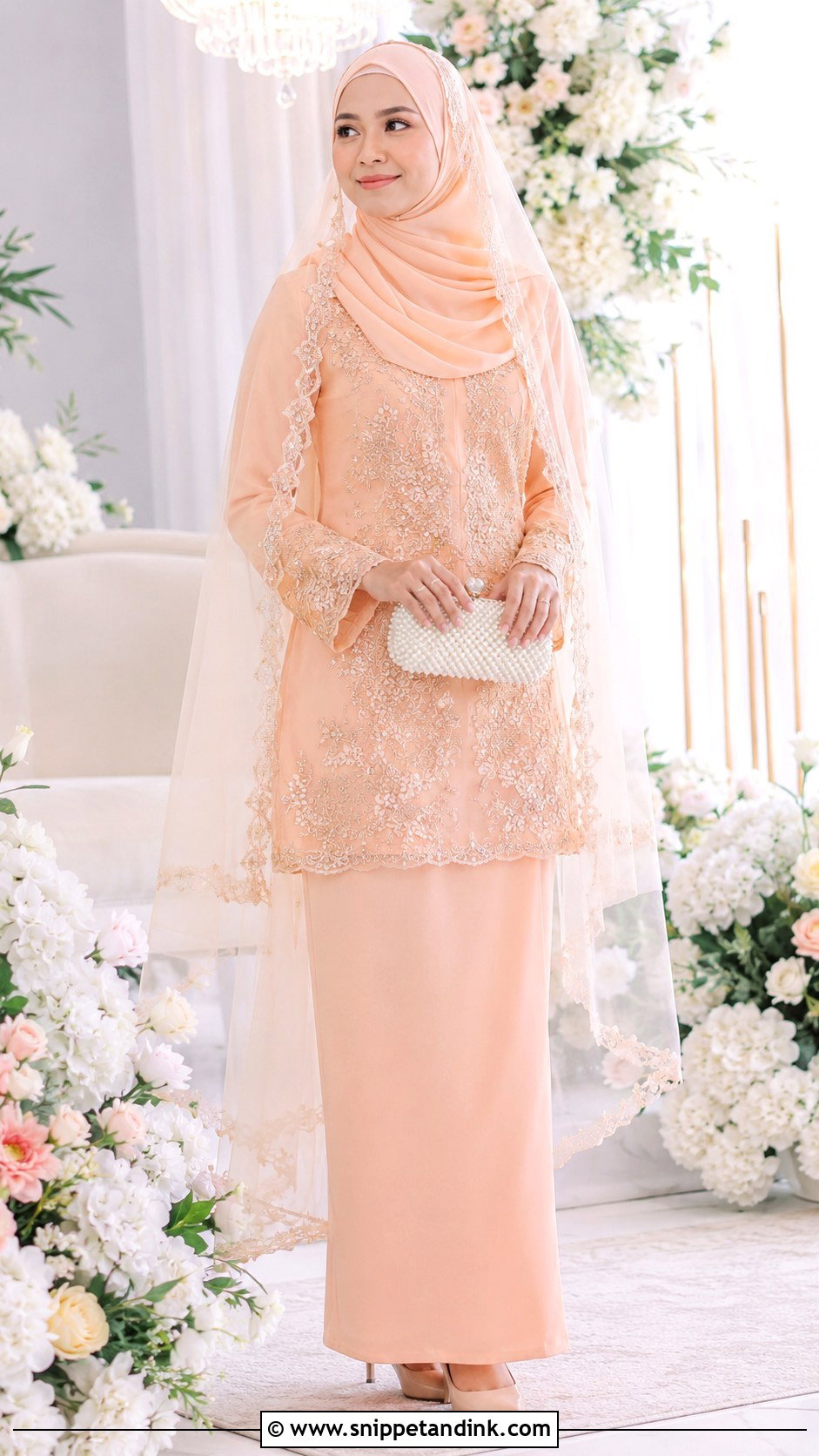
Peach is gentle enough for the akad nikah but still feels personal. Choose a long tunic with lace or embroidery across the bodice and sleeves and a soft flowing skirt. The veil is the part to get right: a sheer bridal veil over a tudung needs to be pinned to the tudung itself, not to the hair beneath, or it drags the tudung backwards. Nude heels and a pearl clutch keep it light. It photographs well in daylight and outdoors.

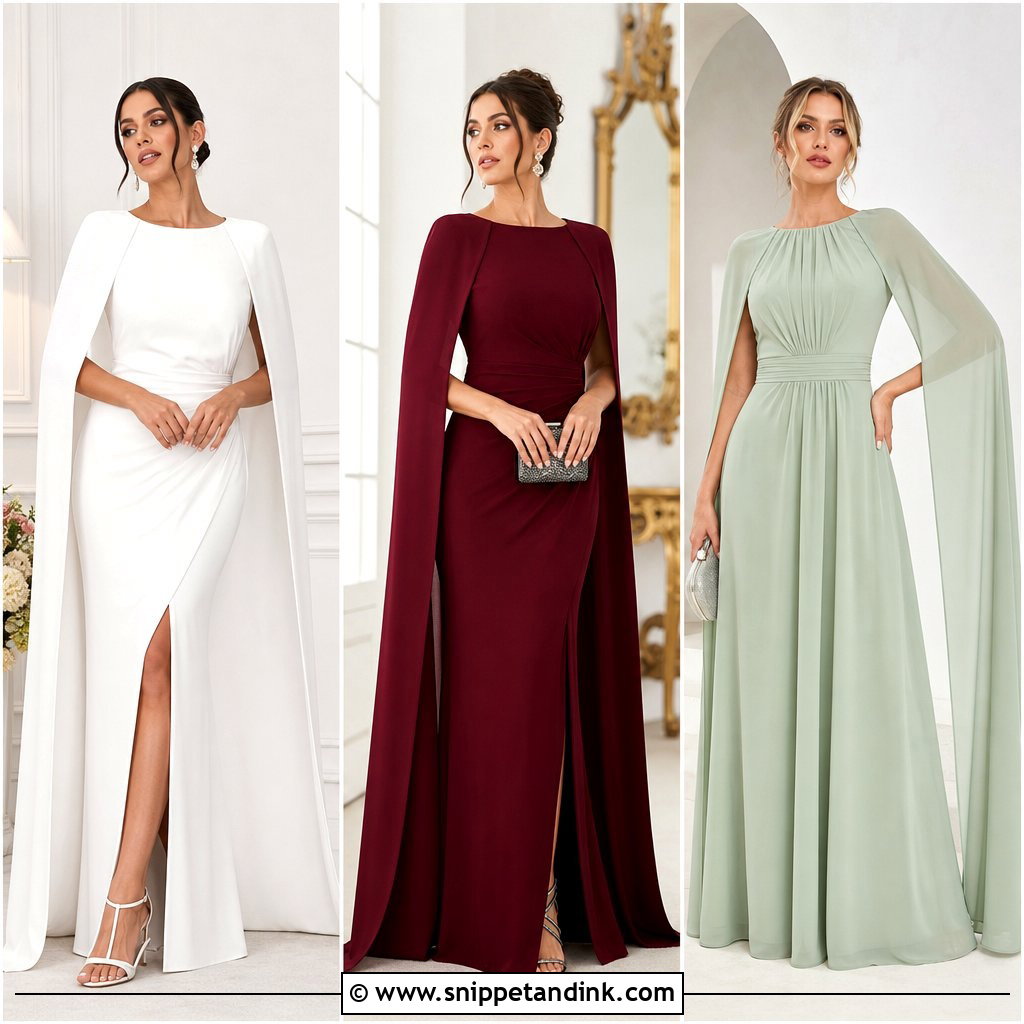
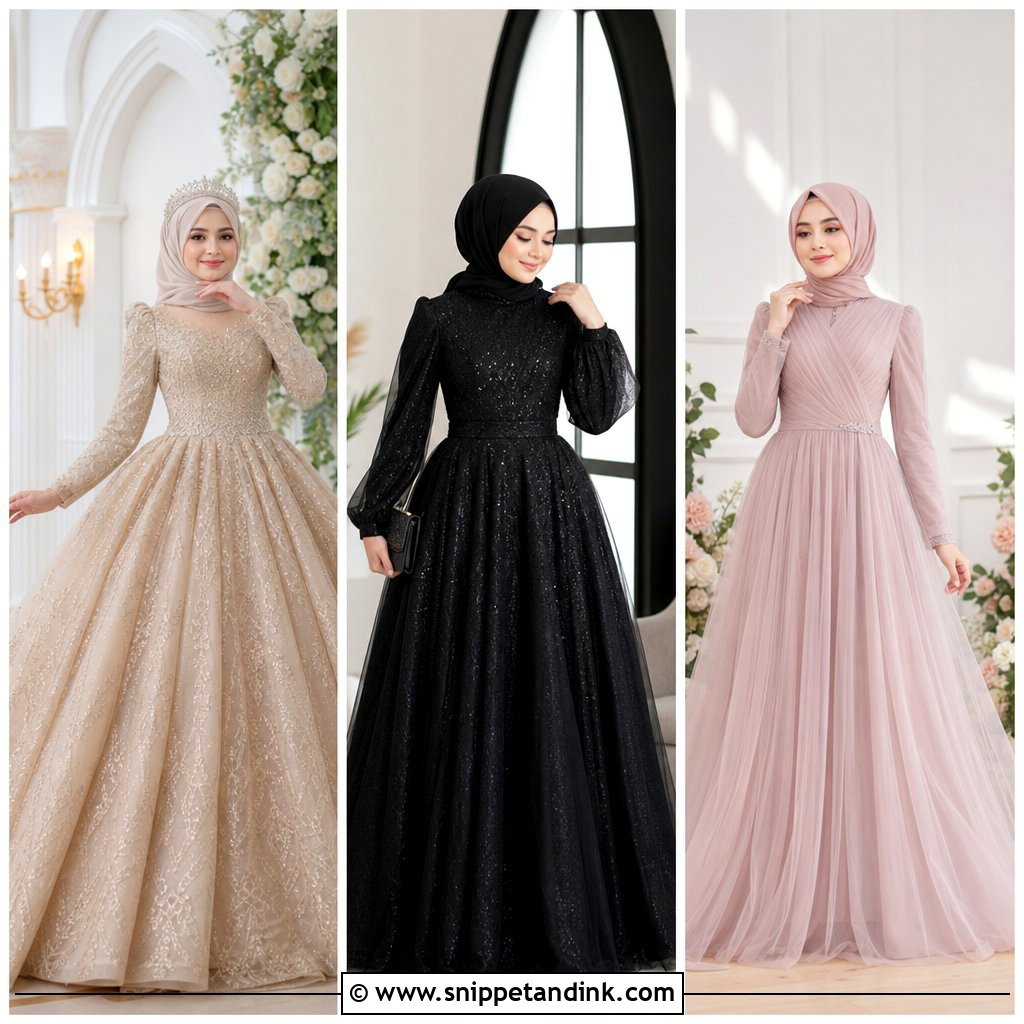
15. Lilac Malay Wedding Dress
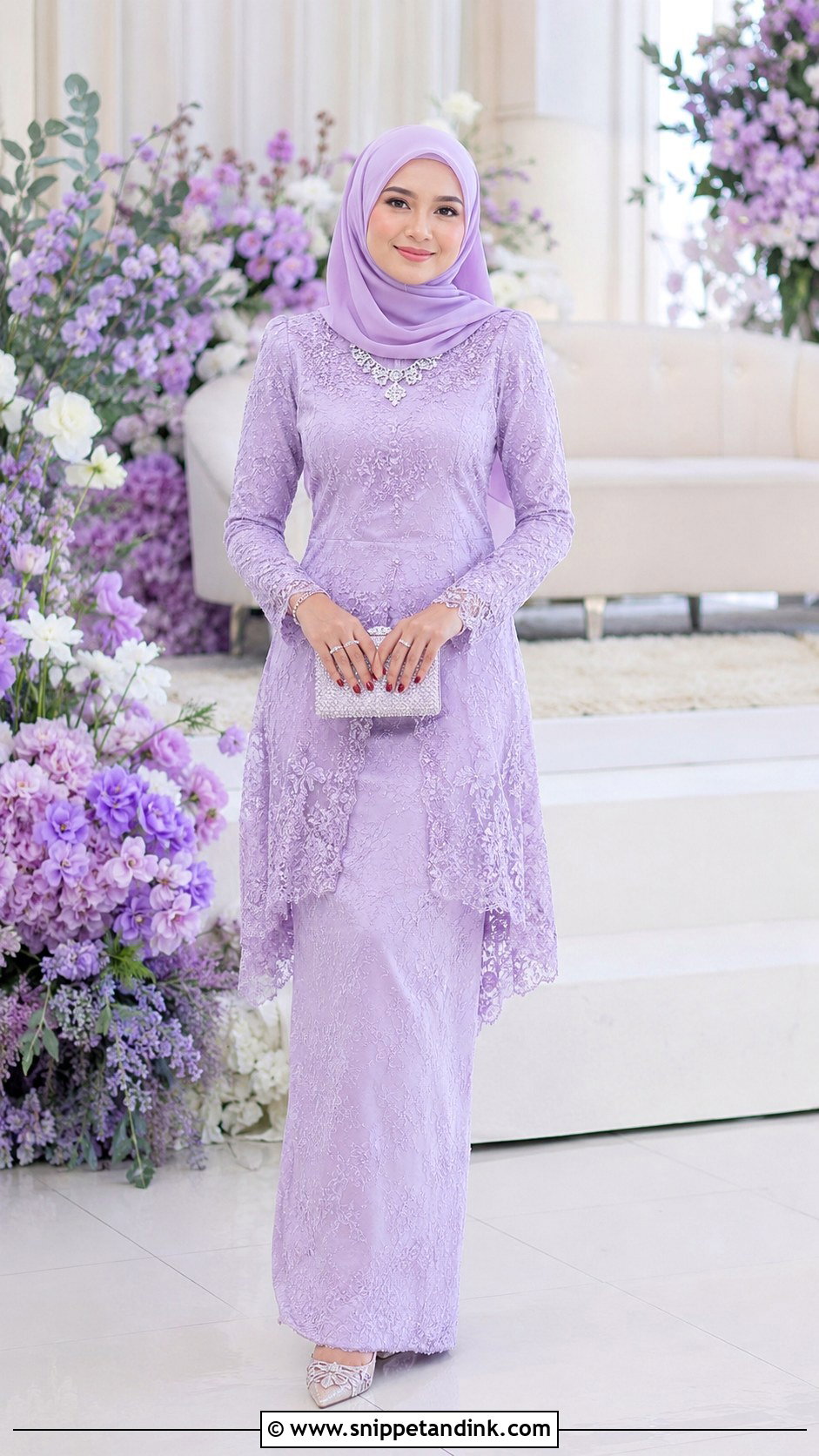
Lilac suits brides who like pastel palettes and want to step away from white or gold. For the nikah, a lilac baju kurung moden with lace sleeves or light beading; for the reception, a lilac kebaya or songket set with silver accessories. A matching tudung, crystal heels and a delicate clutch. Lilac sits well beside soft pink, silver or ivory. Lilac dyes vary a lot, so match the tudung fabric against the dress in daylight.
16. Black And Gold Songket Dress
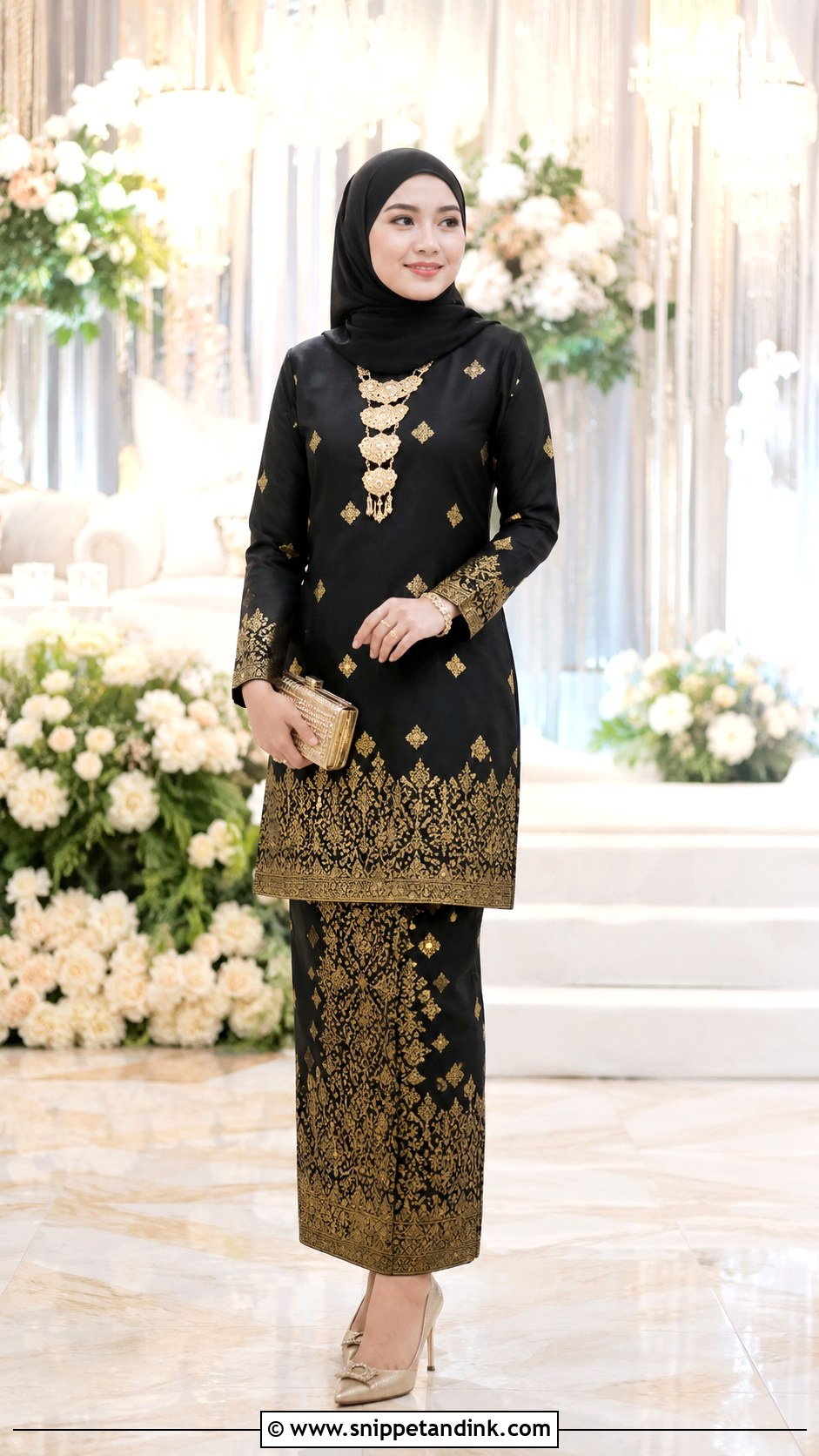
Black and gold songket is dramatic and regal, and it’s for evening events and formal halls. Some older relatives may associate black with mourning, so I’d mention it to the family first. Clean tailoring keeps the focus on the fabric. A black tudung, gold heels, a structured gold clutch and traditional jewellery such as a statement necklace or brooch set. Keep the makeup glowing and warm so the black doesn’t feel heavy.
17. White Kebaya With Songket Skirt
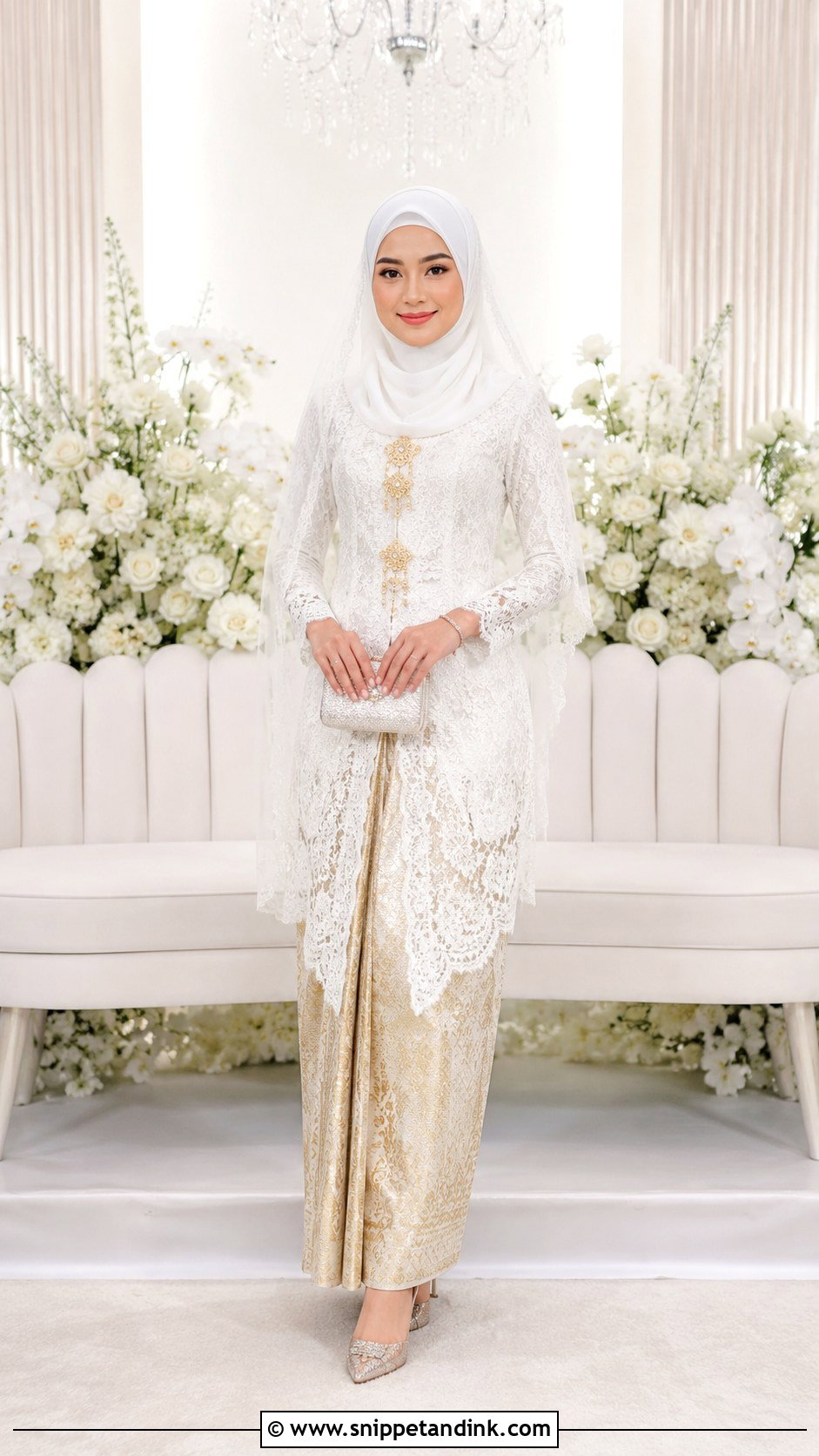
A white kebaya over a songket skirt is the compromise I suggest most often: a clean bridal upper half, with heritage in the woven skirt. The skirt can be gold, cream, pastel or jewel-toned. A matching white tudung keeps the face framed in white. Add metallic heels, a small clutch and kerongsang brooches down the front. It’s especially good in seated family portraits, because the songket fans out across the lap.
18. Baju Kurung Kedah Wedding Dress
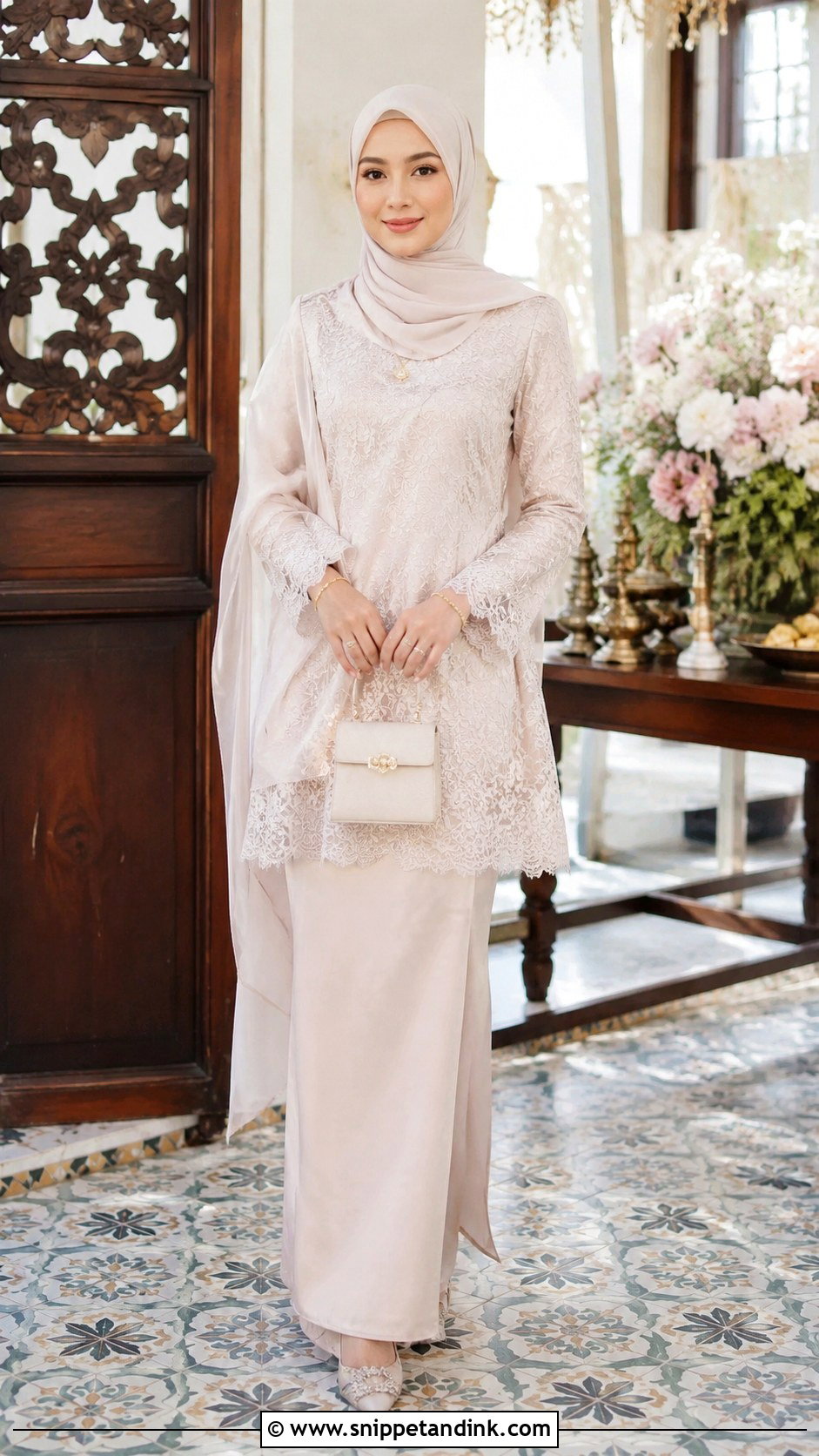
Baju kurung Kedah has a shorter, looser top over a long skirt or kain, which makes it one of the most comfortable bridal options in humid weather. For a wedding version, go for lace, silk, satin or songket. Embroidery at the cuffs or hem dresses it up without making it formal. A matching tudung, dainty heels and a small bag. It suits intimate ceremonies and traditional family settings, and it’s forgiving if your measurements shift before the day.
19. Baju Kurung Pahang Wedding Dress
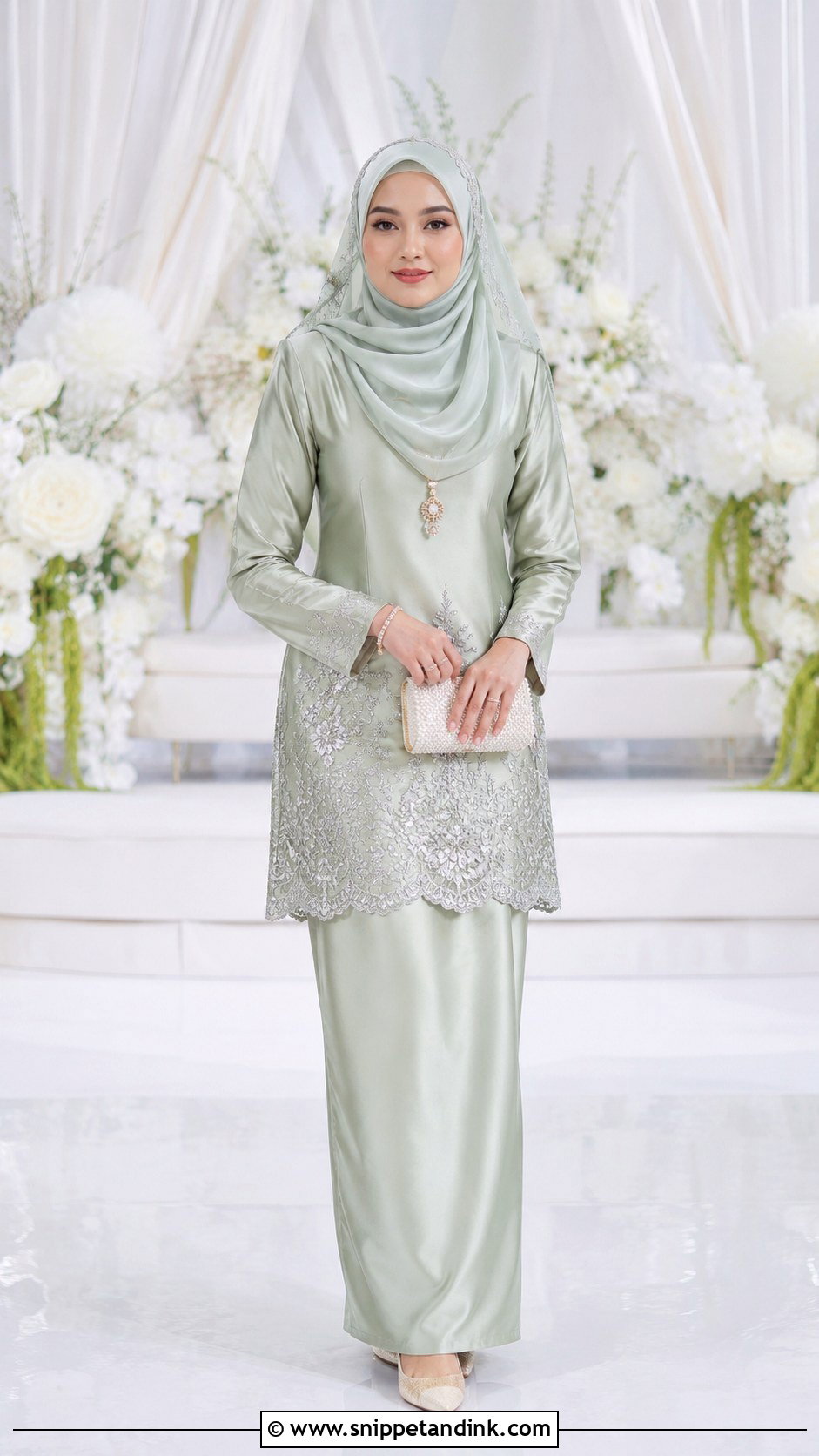
Baju kurung Pahang drapes and flows, so the fabric choice decides how it looks: silk and crepe fall softly, lace adds texture, soft songket adds weight. Ivory, gold, pastel pink, dusty blue and champagne all suit a bride. A slim belt or subtle waist detail can add shape without losing the traditional cut. Pair with a matching tudung, pointed heels and refined jewellery. Depending on the fabric, it works for nikah or reception.
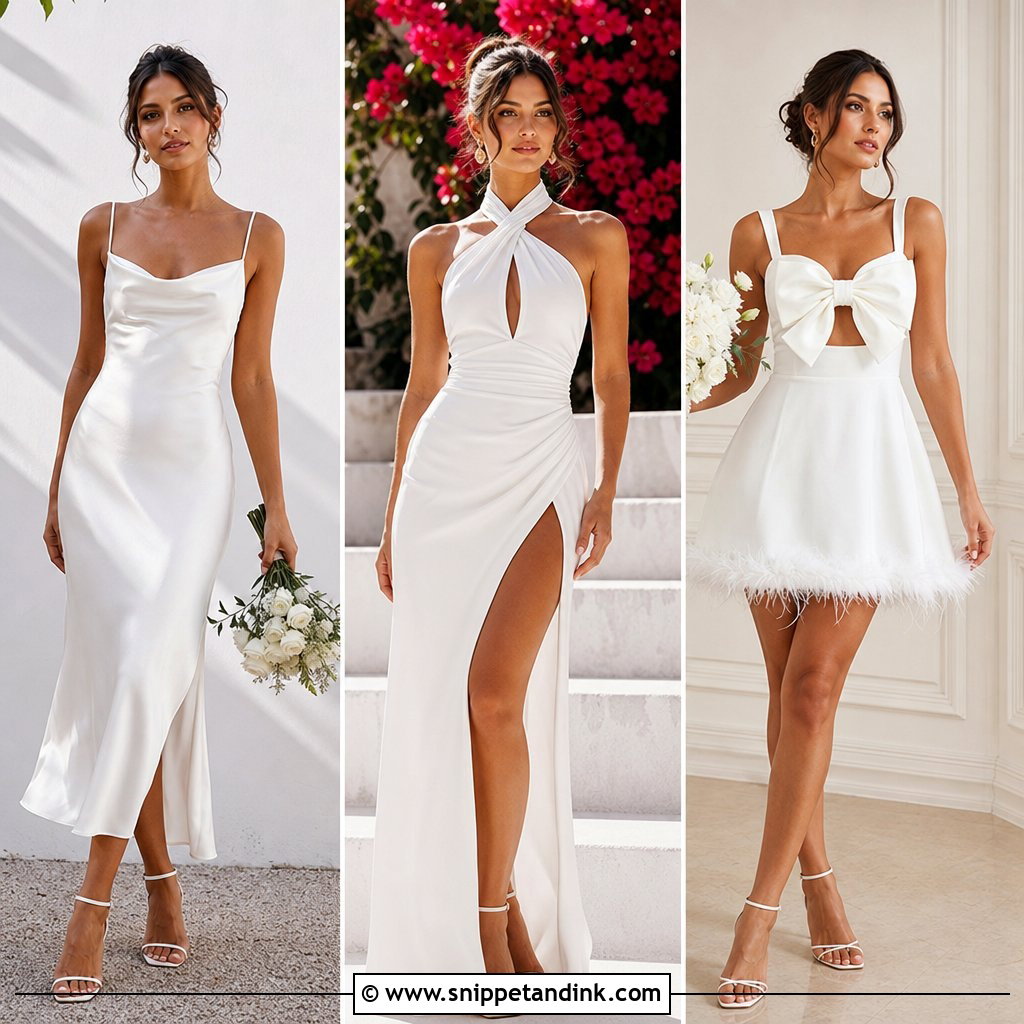
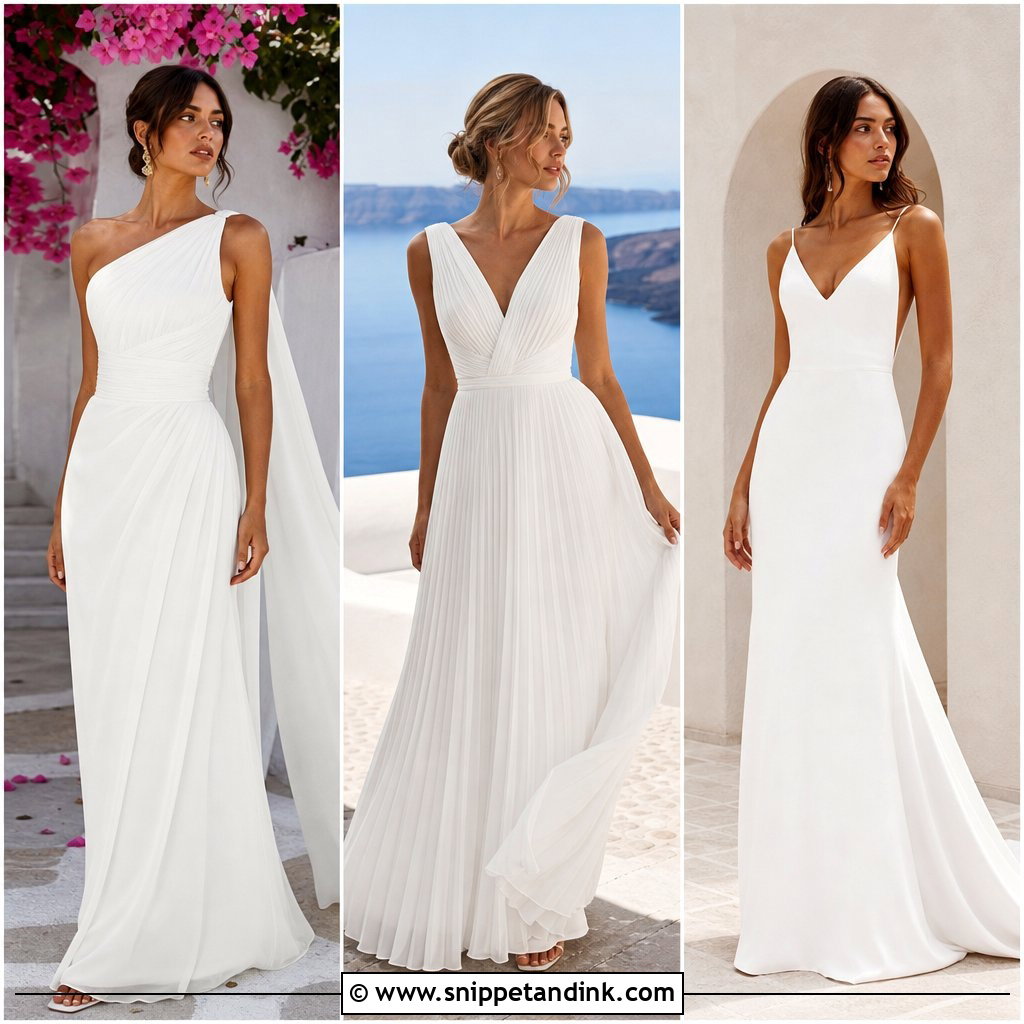

20. Baju Kurung Teluk Belanga
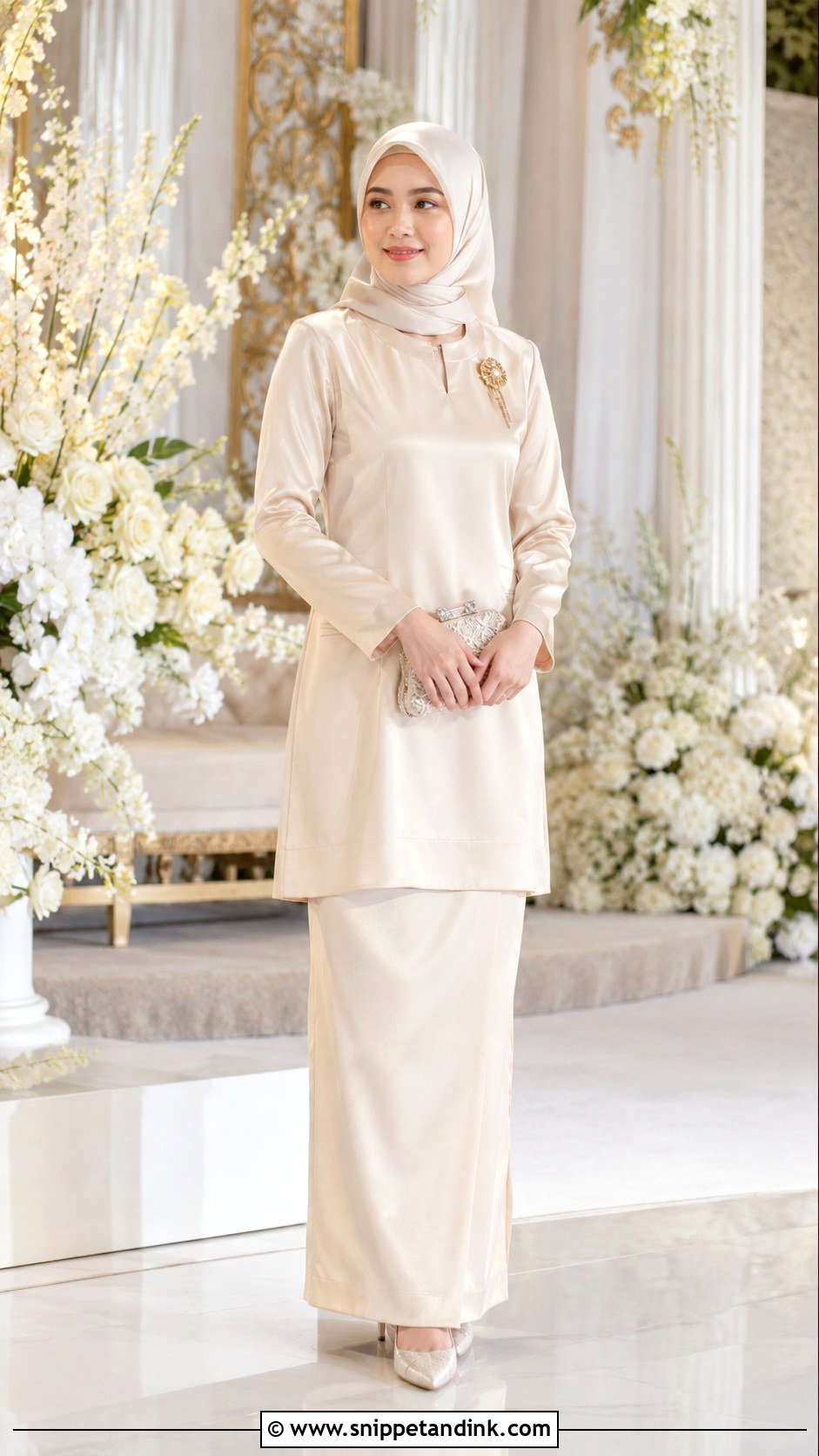
Teluk Belanga has a simple, finished neckline that carries a lot of heritage in a small detail, often closed with a single button or brooch. For a bride, I’d use fine songket, silk or embroidered fabric in white, cream, gold or soft pastels. It isn’t trendy, which is exactly why families who care about cultural detail love it. The success of this outfit is proportion: top length, sleeve length and the fall of the kain, all fitted carefully. A matching tudung, closed-toe heels and a traditional clutch.
21. Cape Baju Kurung Wedding Dress
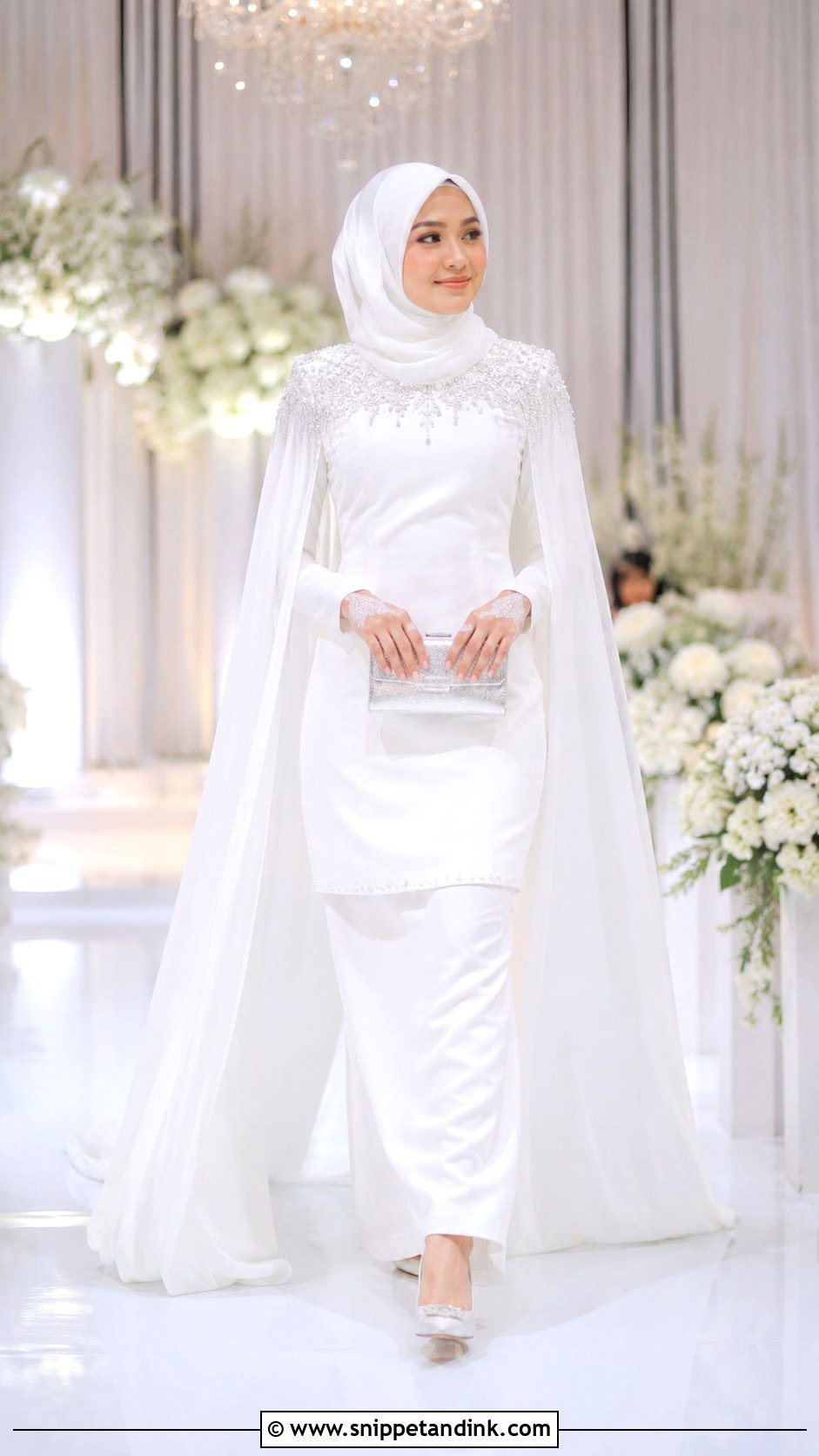
A cape baju kurung wedding dress gives movement and arm coverage without needing a fitted silhouette. Lightweight chiffon, organza or tulle over a baju kurung base works best, with beading along the shoulders, neckline or cape edge. I ask for the cape to be attached at the shoulder seams rather than hooked at the neck, so it doesn’t tug the tudung backwards when you move. A neat tudung, heels and a slim clutch.
22. Peplum Baju Kurung Wedding Dress
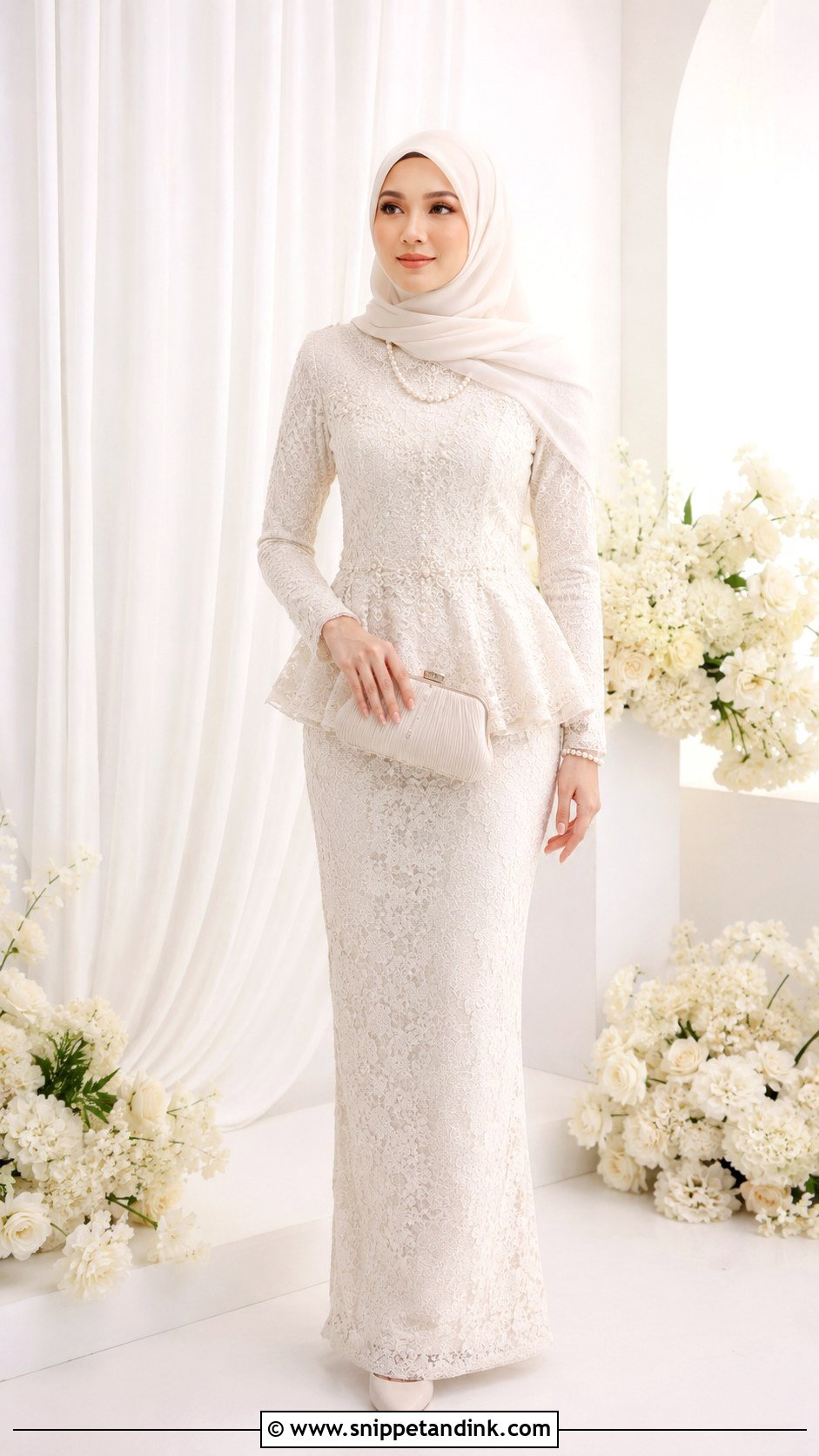
A peplum defines the waist and flares over the hips, giving shape while staying modest. Lace, satin, crepe or beaded fabric, depending on formality, over a slim long skirt. I place the peplum hem just above the widest point of the hip, because ending exactly at it adds visual width. Ivory, champagne, blush, silver or dusty rose. A matching tudung, pointed heels and a compact clutch.
23. Two Piece Malay Bridal Set
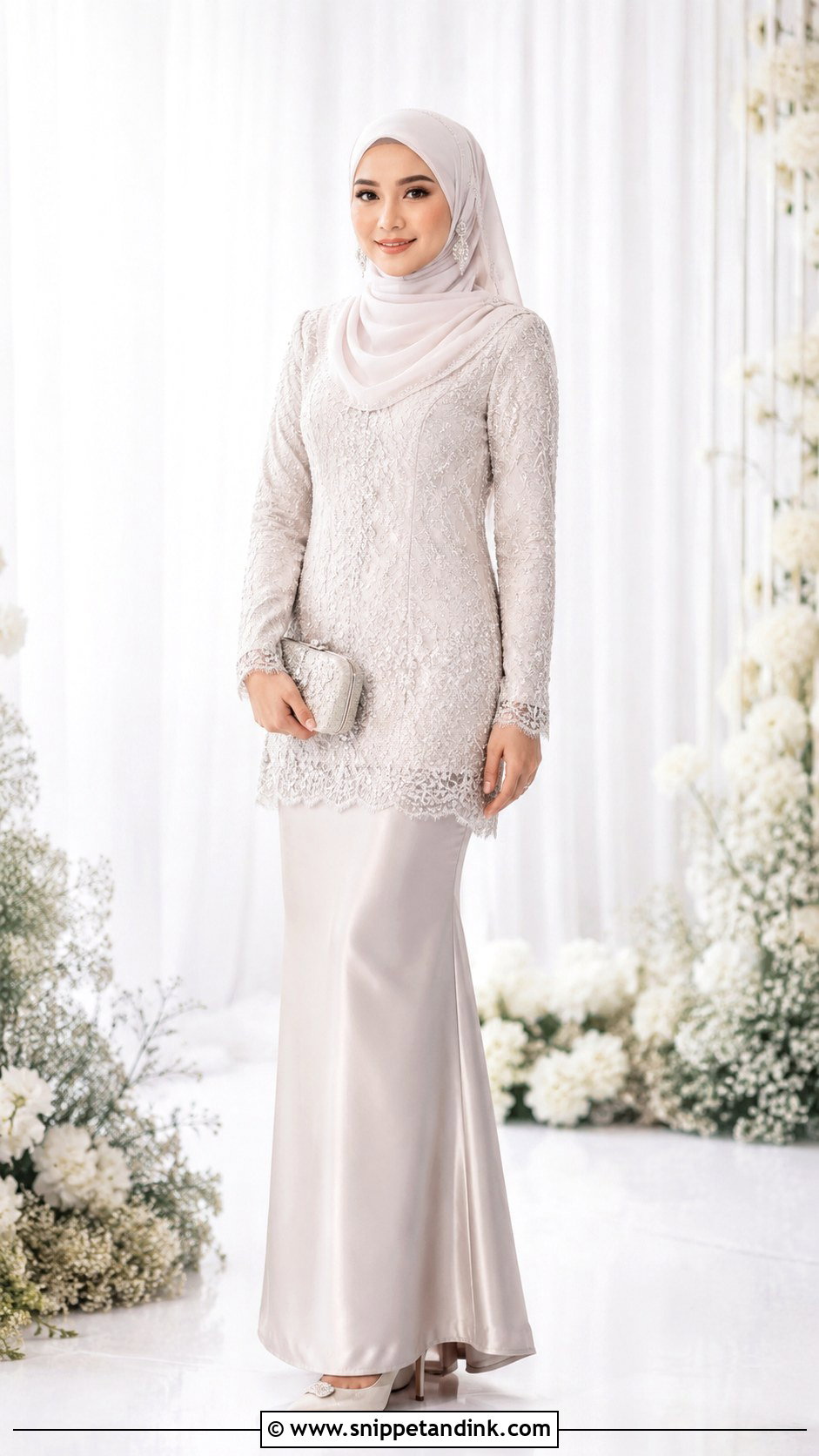
Two pieces give the most flexibility. The top can be a kurung, kebaya, tunic or structured blouse; the skirt can be straight, flared, mermaid or songket kain. Mixing textures like a lace top with a satin skirt, or a beaded blouse with songket, works as long as the colours connect. It’s also easier to alter, since each piece is fitted separately, which matters if your top and bottom sizes differ. A matching tudung, bridal heels and a coordinated clutch.
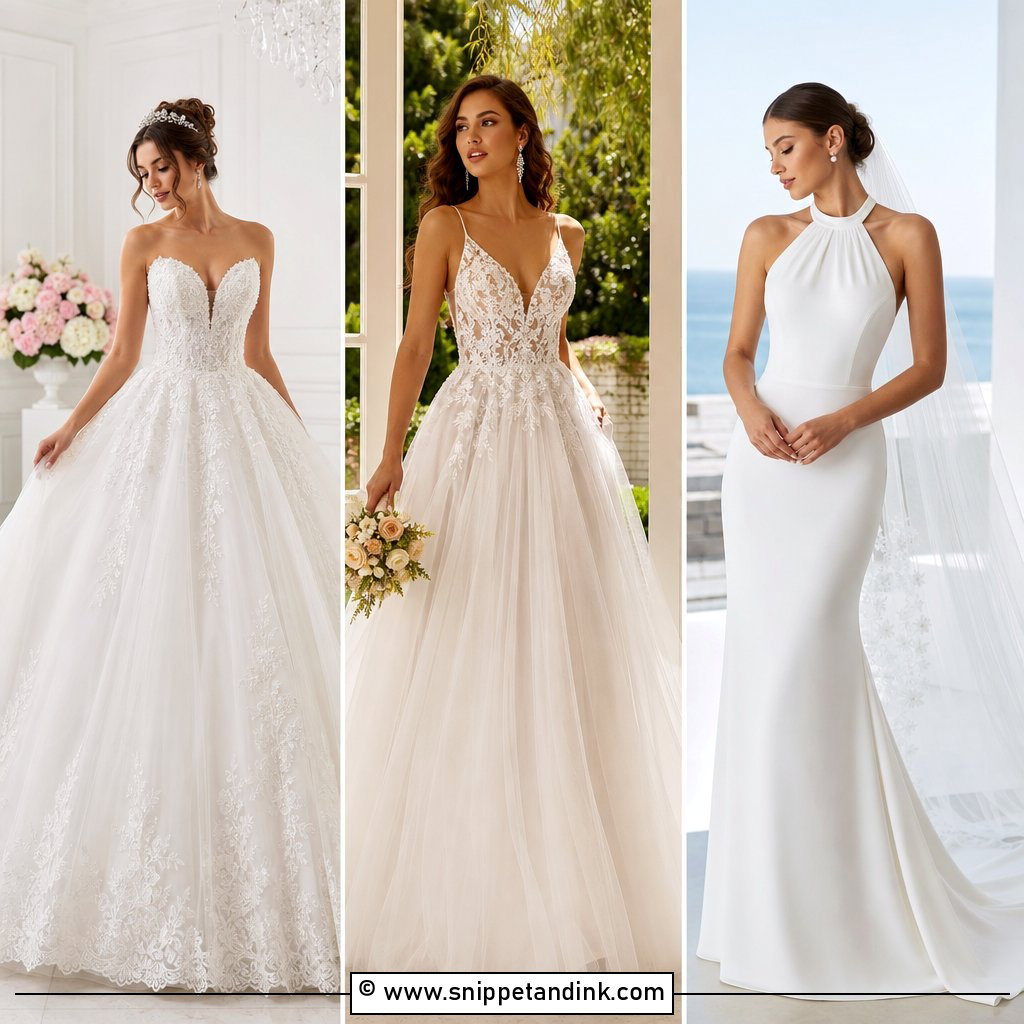
24. Malay Wedding Gown With Tudung
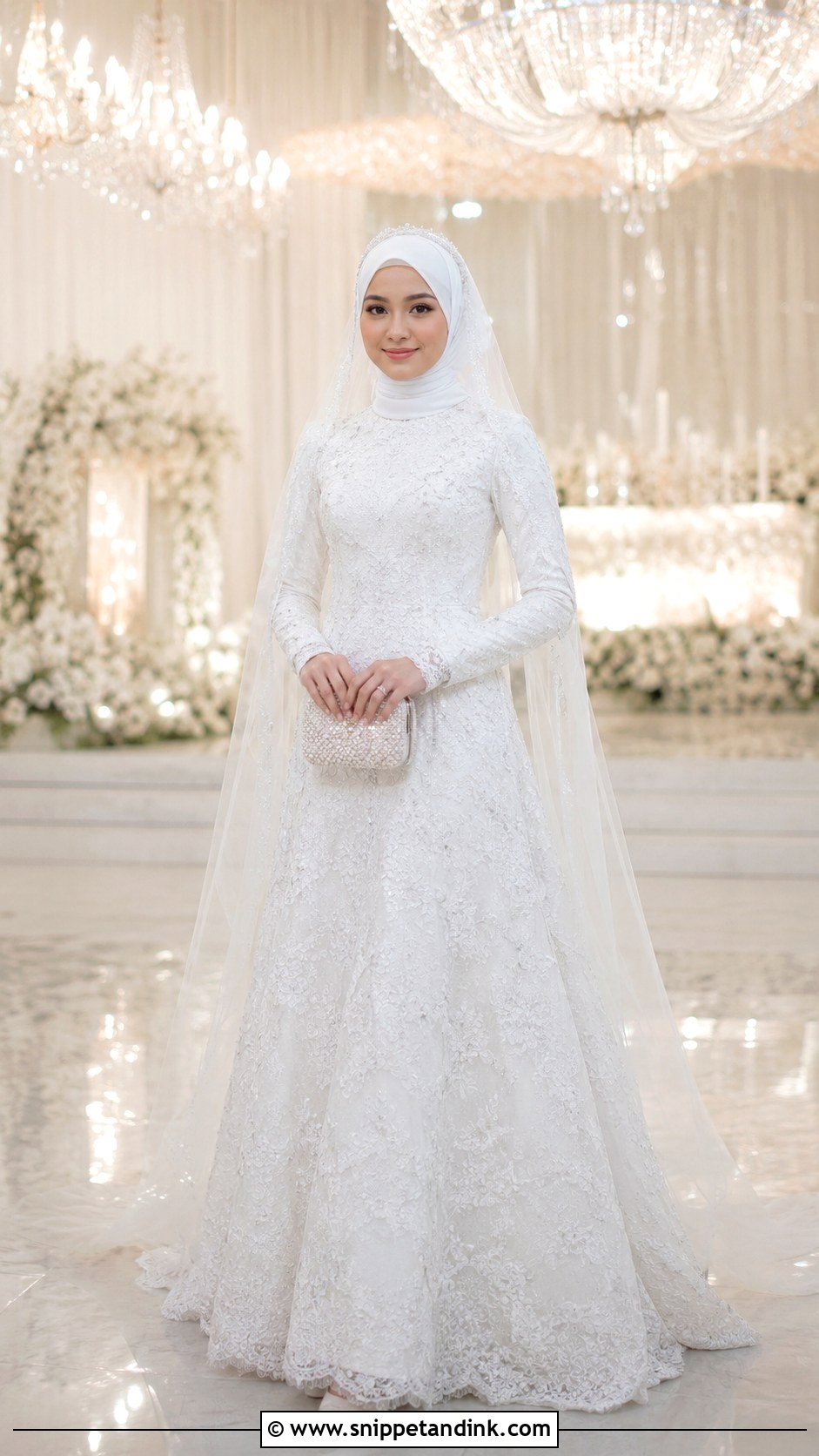
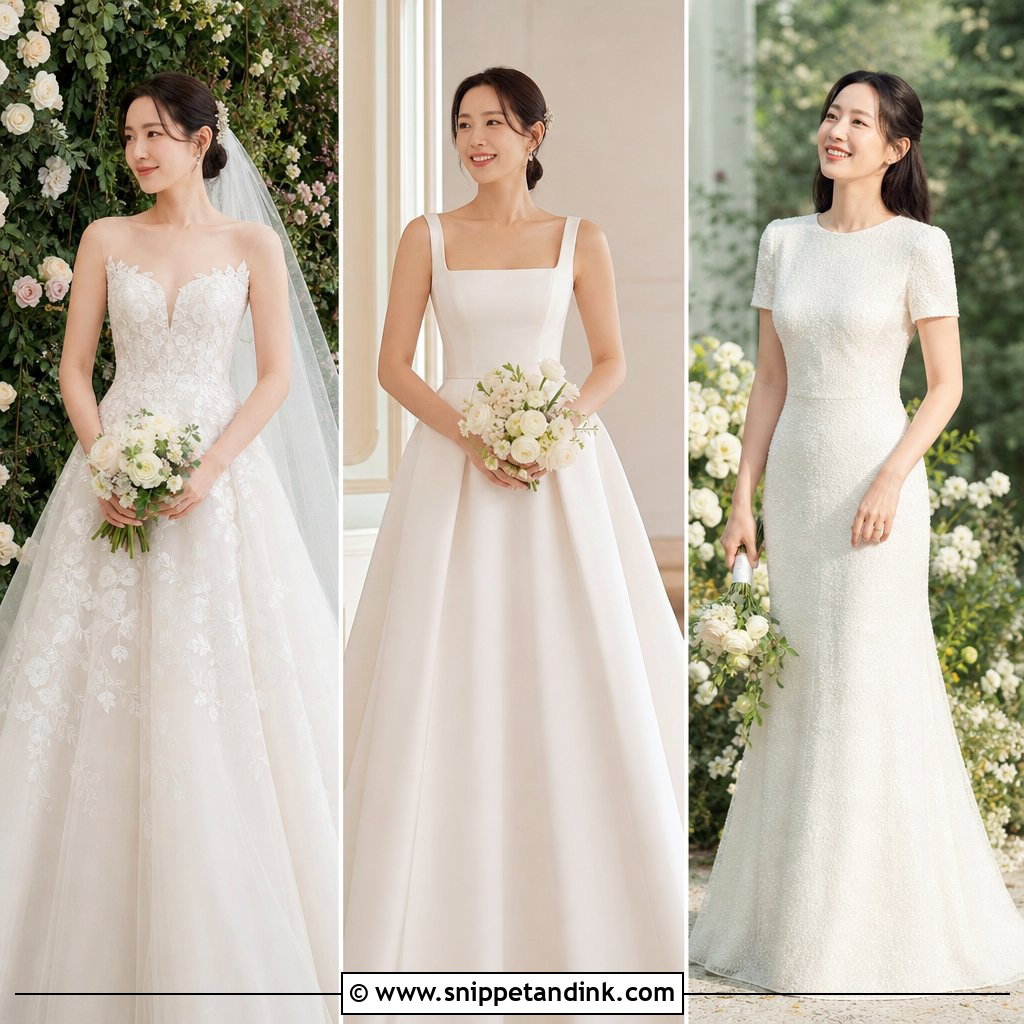
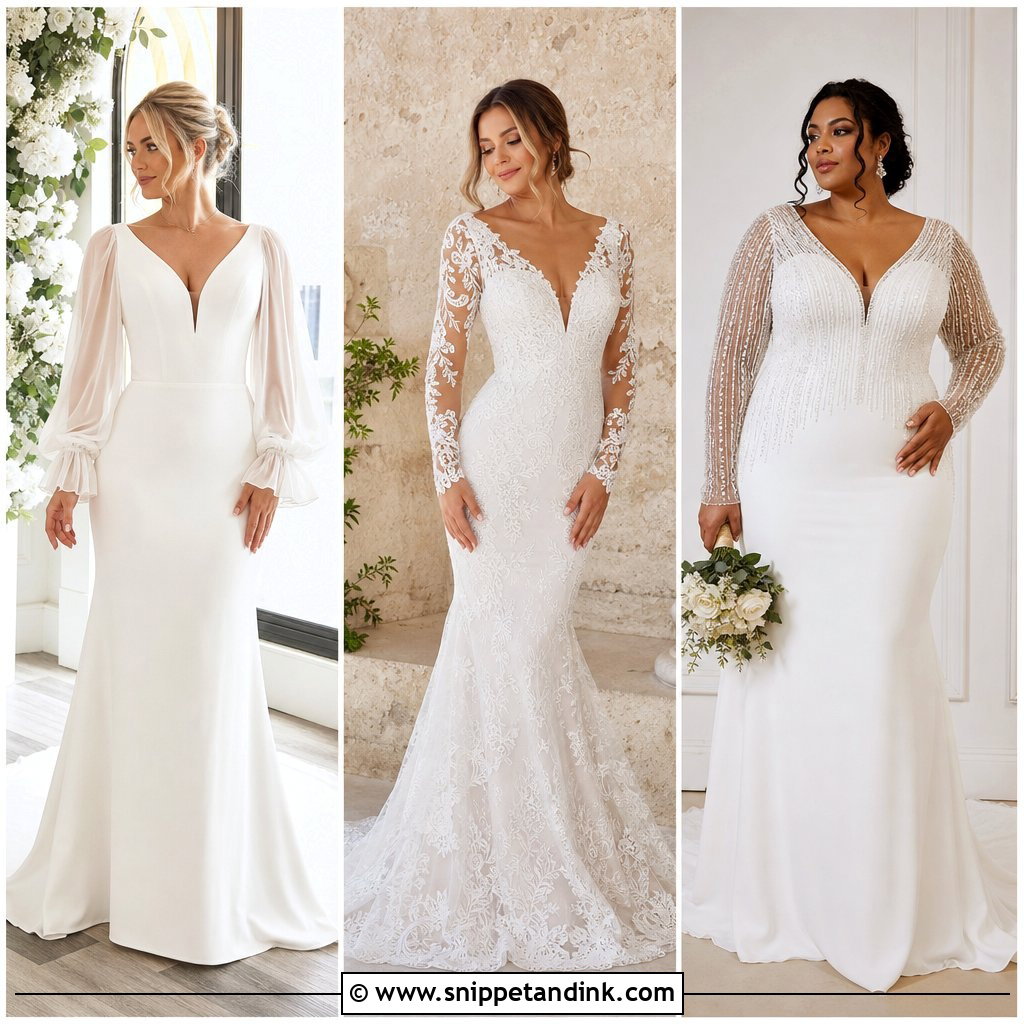
For brides who dream of a gown, a modest version with long sleeves, a high neckline and a flowing skirt gives the fairytale shape and full coverage. Satin, lace, tulle or organza in A-line or princess cuts create shape without tightness. Keep embellishment to the bodice, cuffs or hem. The tudung and veil should be styled together at the trial, since a gown veil sits differently over a tudung. Closed-toe heels and a delicate clutch.

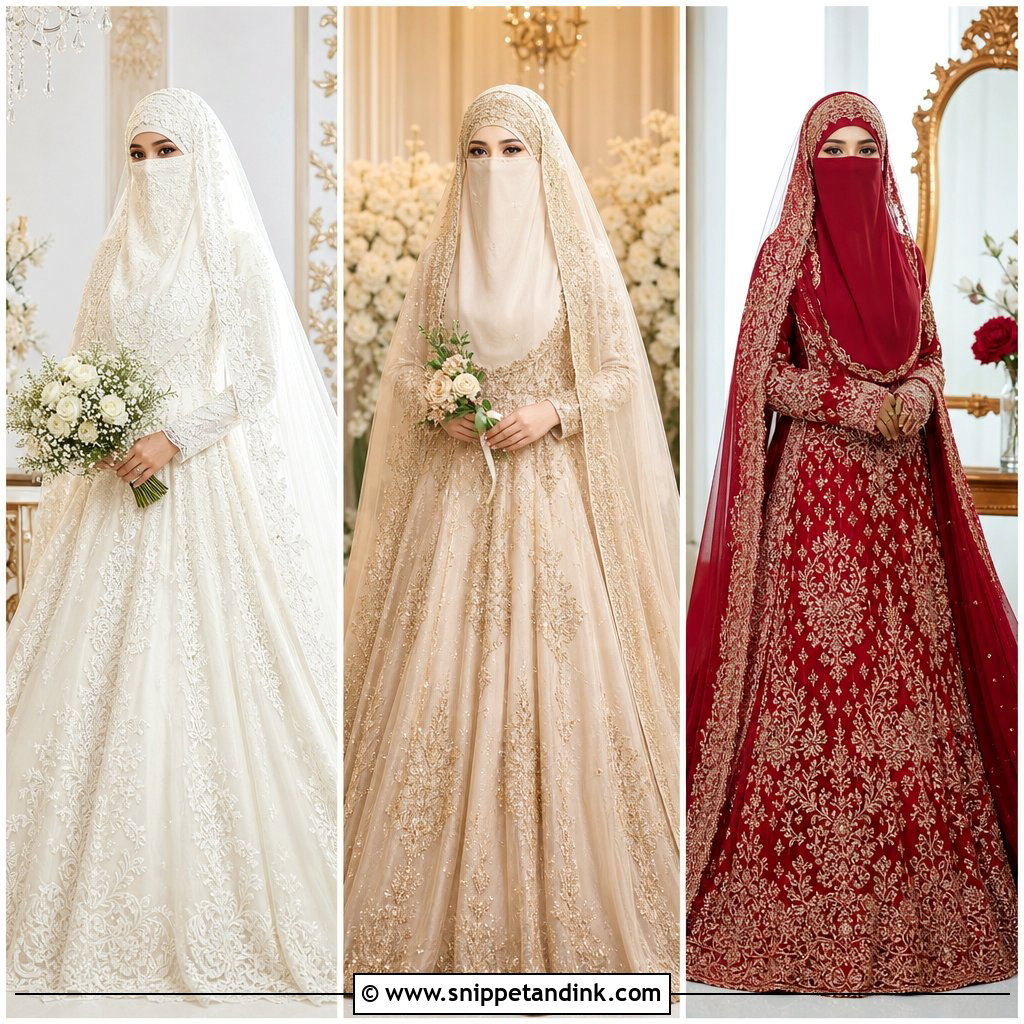
25. Minimalist Baju Nikah Dress
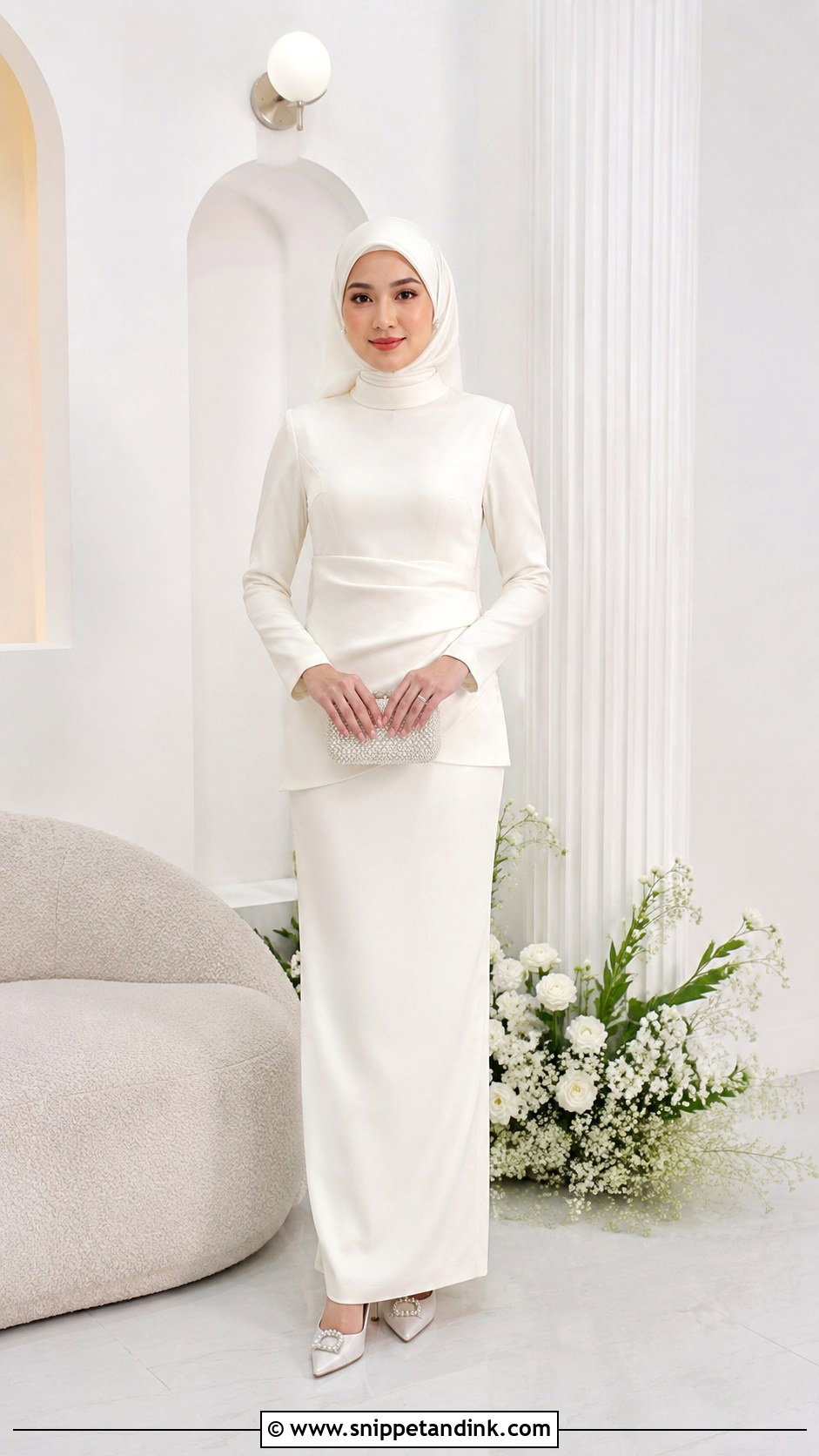
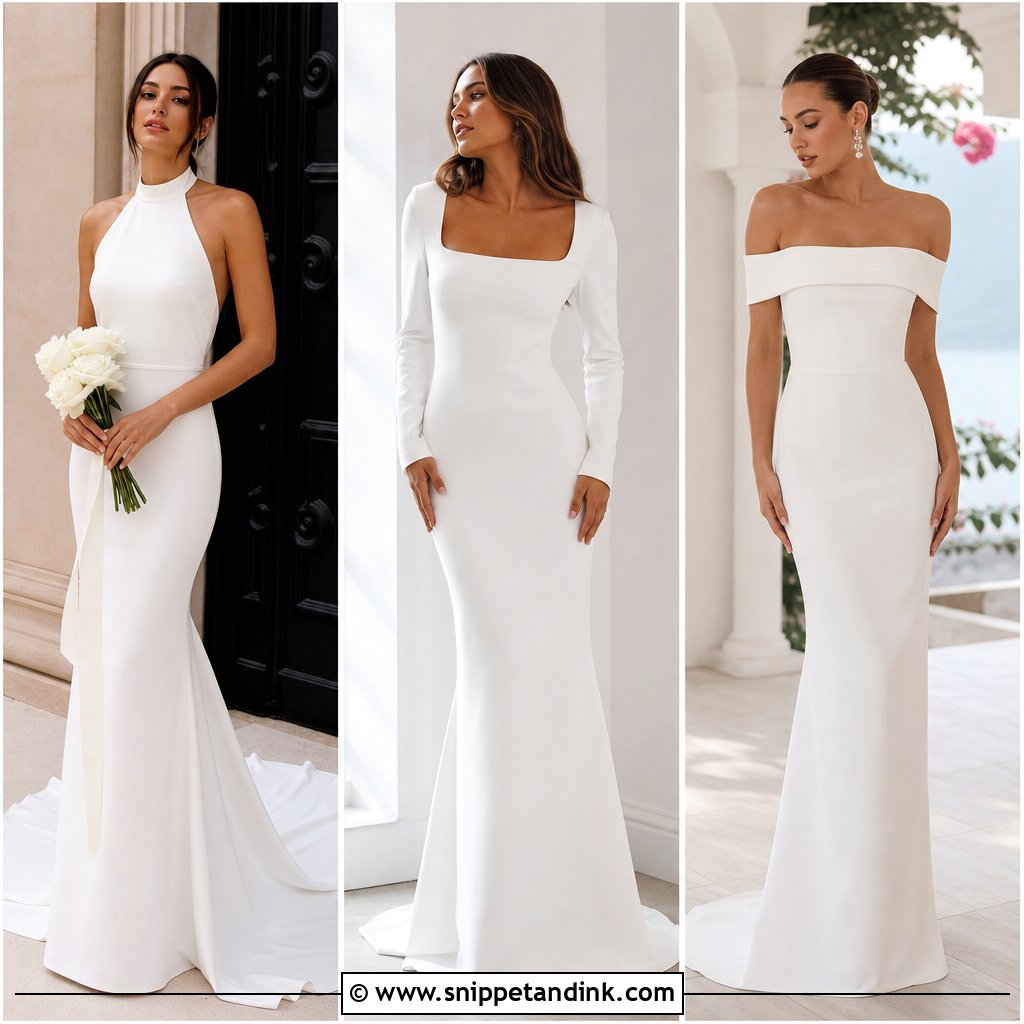
Simple can still feel deeply bridal for the nikah. A clean baju kurung or long modest dress in white, ivory, cream or soft beige relies on fabric, tailoring and drape rather than beading. Plain satin or crepe with a structured tudung, pointed heels and pearls looks calm and modern. Because nothing hides the cut here, I’d spend more of the budget on the tailor than on embellishment.
26. Floral Embroidered Baju Kurung
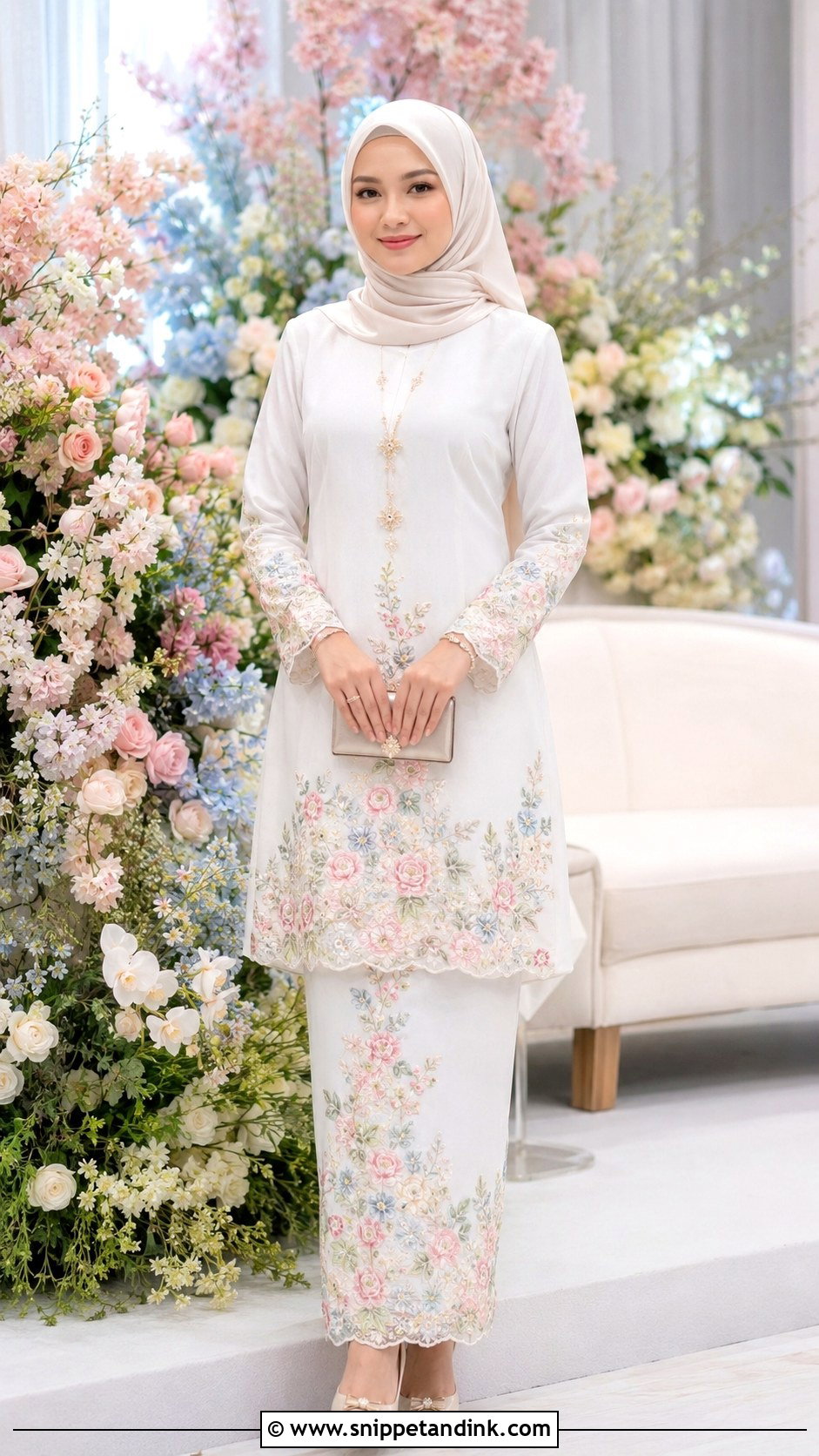
Floral embroidery gives decoration without sparkle, which suits daytime receptions and spring-like themes. It can sit on the bodice, sleeves, hem or skirt. White with pastel flowers is delicate; champagne, blush or dusty blue with tonal embroidery is subtler. Keep the tudung matching and the clutch simple so the embroidery stays the highlight. Fresh flowers on the pelamin should echo the embroidery colours rather than compete.
27. Organza Malay Wedding Dress
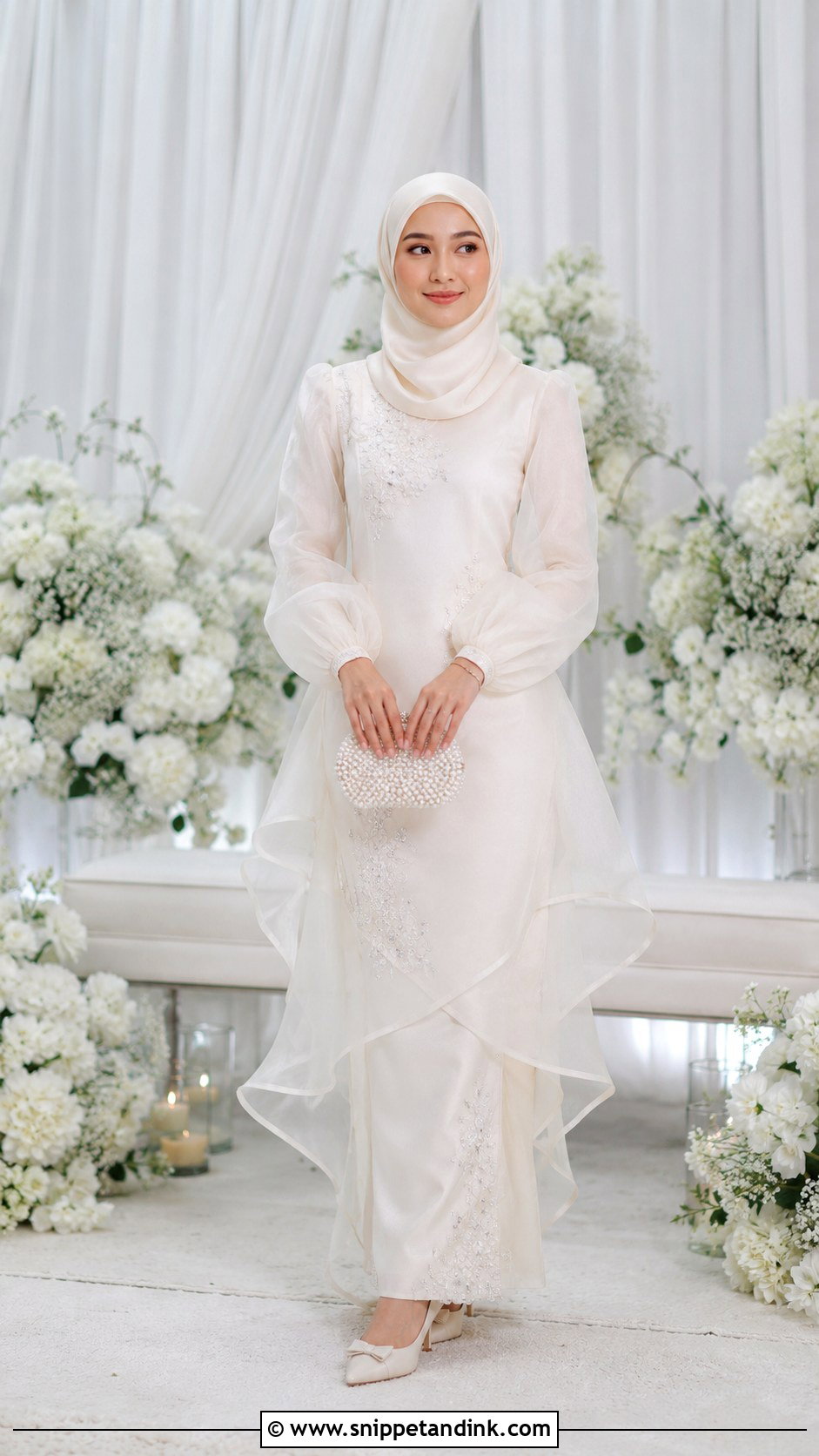
Organza gives volume without weight, so I use it for sleeves, overlays, capes and layered skirts. White, ivory, peach or powder blue all look soft. It’s crisp, though, and can feel scratchy against the inner arm, so I’d ask for a soft lining on organza sleeves. A smooth tudung, satin heels and a small pearl clutch. It shows its layers best in bright venues.
28. Velvet Malay Wedding Dress
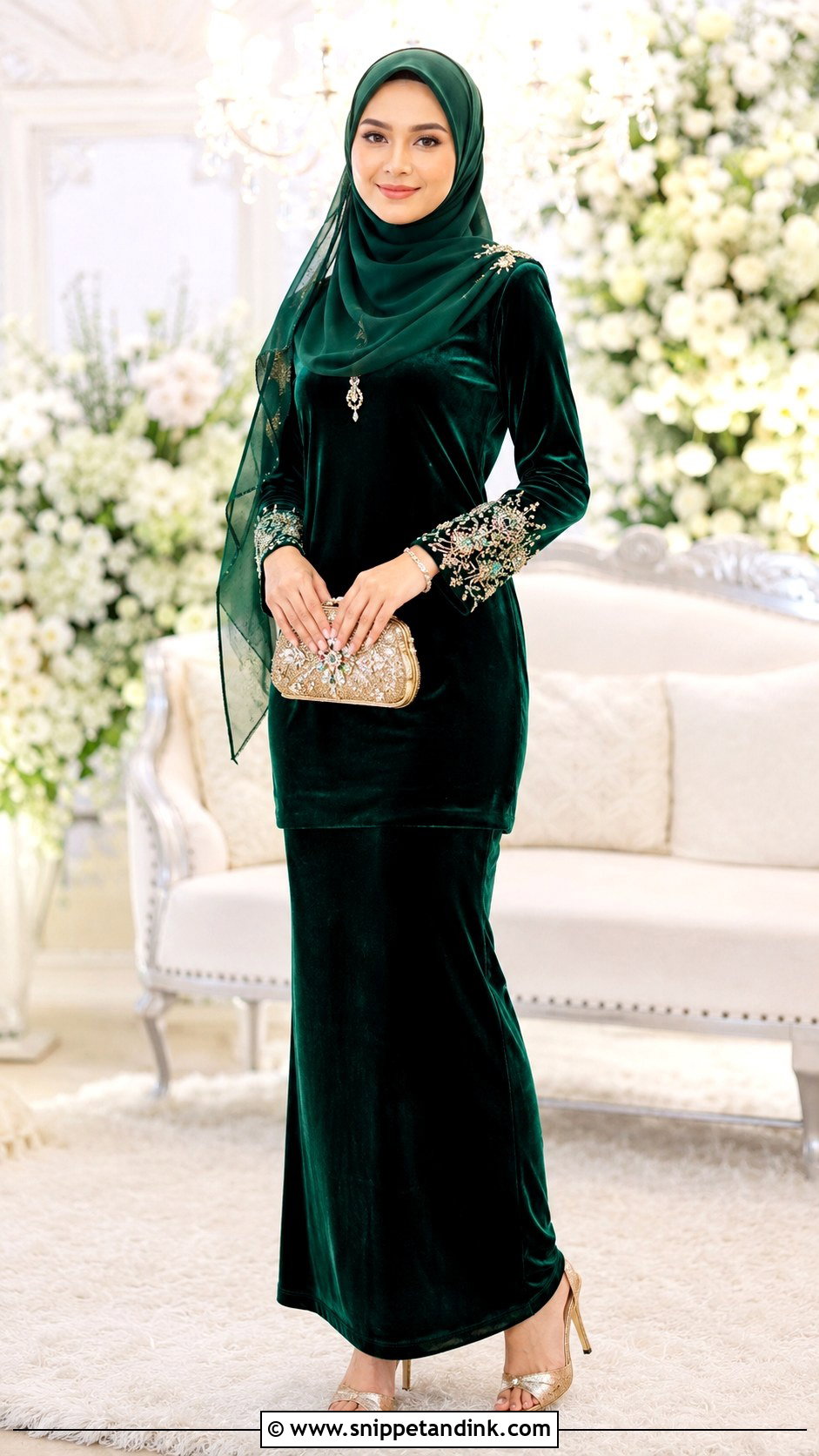
Velvet only makes sense indoors with strong air conditioning. In tropical heat, it becomes uncomfortable within an hour. In the right venue, deep emerald, navy, maroon, plum or black velvet with gold or silver embroidery looks regal. Choose a structured baju kurung or kebaya so the fabric looks polished rather than bulky. A matching tudung, metallic heels and a jewelled clutch; keep accessories modest in size.
29. Pastel Songket Wedding Dress
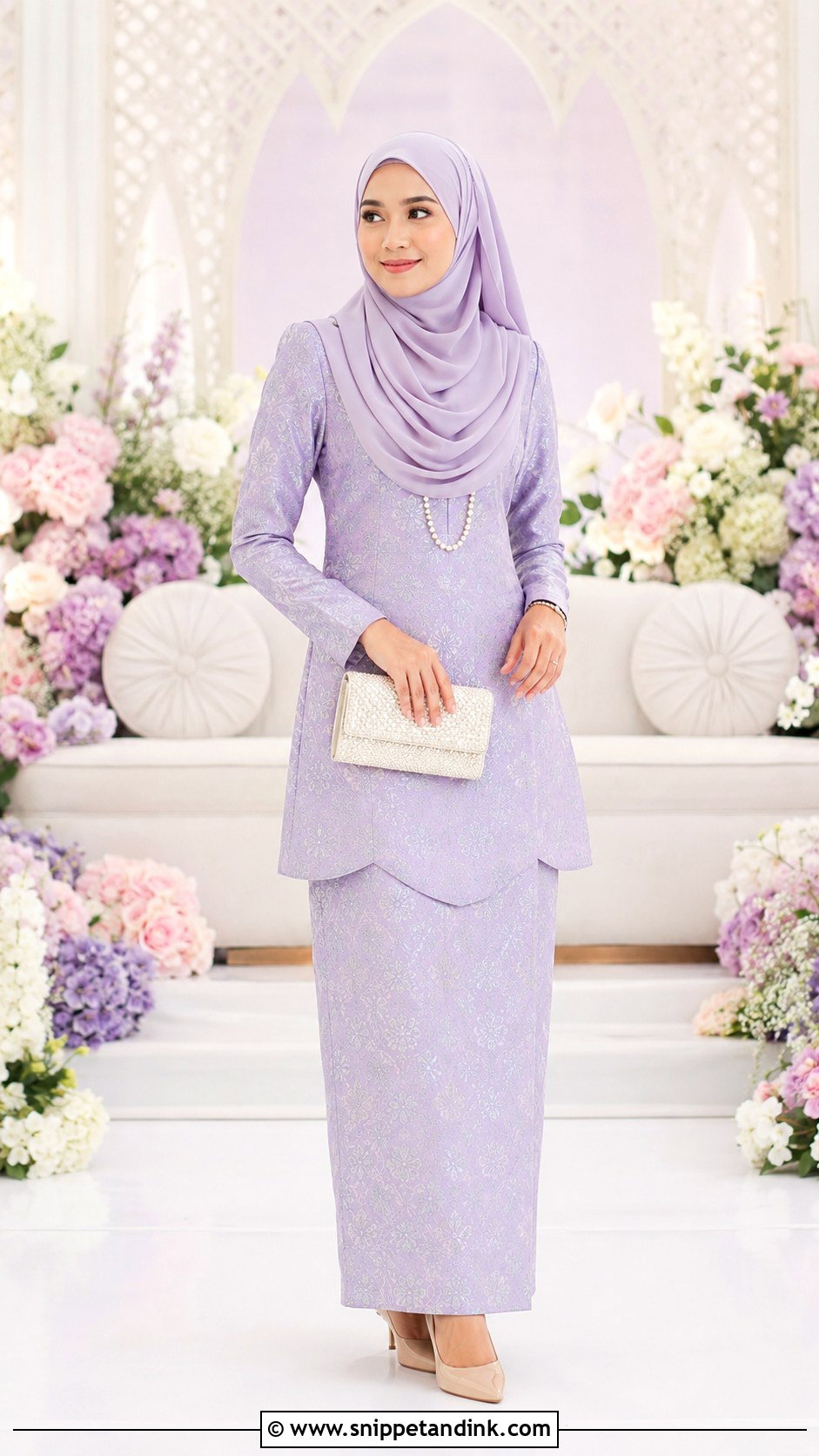
Pastel songket keeps the woven motifs ceremonial but softens the mood. Pastel pink, mint, lavender, powder blue or pale gold all work. A baju kurung or kebaya set with a matching tudung, nude heels and pearls, plus an ivory or champagne clutch. Pastel songket shows marks more readily than dark songket, so keep the skirt off the floor during makan beradab and photos. It suits daytime receptions and pastel pelamin designs.
30. Detachable Train Malay Wedding Dress
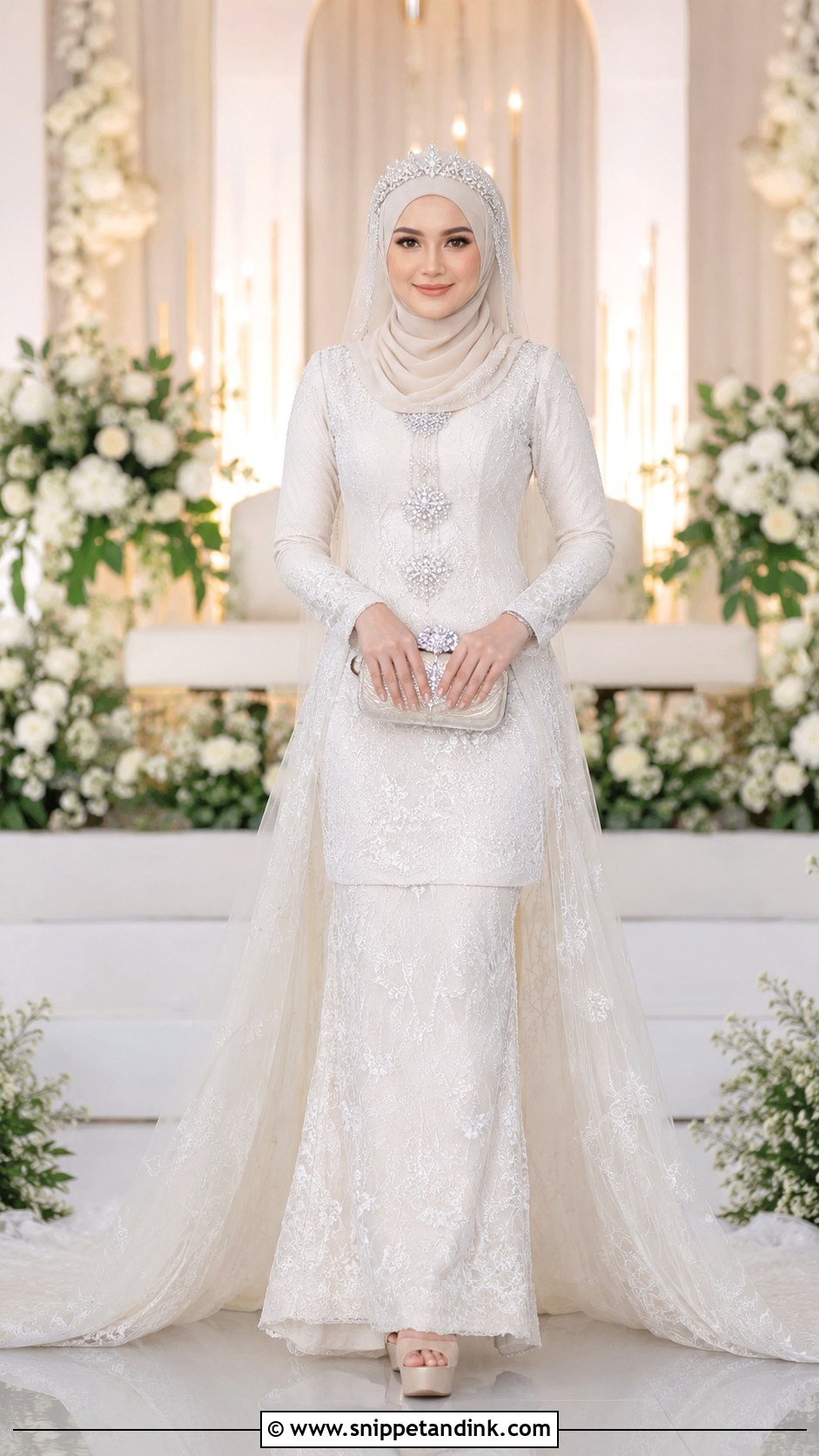
A detachable train Malay wedding dress gives drama for the entrance and portraits, then comes off for the rest of the event. The base can be a baju kurung moden, kebaya or modest gown, with the train attached at the waist, shoulders or back. Lace, tulle, organza or embroidered fabric suit it. Ask for hooks rather than buttons so a bridesmaid can remove it quickly between the pelamin and the meal.
Putting Songket Away So It Lasts a Generation
Songket is often the outfit a family keeps, and the metallic threads are what need protecting. Humidity, folding and plastic do most of the damage. After the wedding, I’d follow a few rules:
- Air it out of its bag for a day before storing, so any sweat dries out fully.
- Never machine-wash it. Spot-clean gently or take it to a cleaner who handles handwoven textiles.
- If you must press it, iron from the reverse with a cotton cloth between, on low heat, never directly onto the gold threads.
- Roll it around a tube padded with plain cotton rather than folding, since sharp folds crack the metallic weft over time.
- Wrap it in cotton, not plastic, and store it somewhere dry with a moisture absorber nearby.
Check it every few months in humid weather. Catching a spot of mould or a lifted thread early is far easier than restoring it years later, and a well-kept songket can be worn again by a daughter or niece.
Fabric First, Then the Tudung, Then Everything Else
The right Malay bridal outfit is the one that lets you sit, greet and celebrate comfortably while honouring your family. Many brides feel most like themselves in white baju kurung for the nikah; others save the drama of songket, velvet, capes or a detachable train for bersanding. Think about the ceremony, the venue, family customs, the colour palette and how much you’ll move. Then let the tudung, veil, shoes and jewellery finish what the fabric starts.
You'll Like These Ideas:






Leave a Reply