
Nigerian weddings rarely mean one dress. There is usually a traditional engagement in aso oke, George or lace, a church or registry look, and a reception outfit or two, each with its own fabric, headpiece and jewelry. When I style a Nigerian bride, I plan the whole day as a wardrobe rather than a single gown: what she can dance in, what survives a long receiving line, what reads well from the back of a hall. The ideas below cover Yoruba, Igbo and Hausa traditions, modern reception gowns and a few guest options, with notes on how each fabric and shape actually wears.
How Many Outfits, and When Do You Change?
Most of the Nigerian brides I dress wear at least two outfits, often three: the traditional look, the white gown, and a reception dress. Each change takes real time, because the gele has to come off and be re-tied, the makeup needs touching up, and jewelry has to be swapped. I plan at least thirty to forty minutes per change and assign one person, usually a sister or friend, to hold each outfit’s accessories in a labeled bag.
- Order the outfits from heaviest to lightest, so you’re in the easiest dress by the time you’re dancing.
- Book a gele tyer for every change, or have a pre-tied gele made so you’re not waiting.
- Keep the hair style simple enough to work under a gele and on its own.
- Eat between changes; long ceremonies and tight corsets are a bad combination on an empty stomach.
1. Aso Oke Bridal Dress With Gele
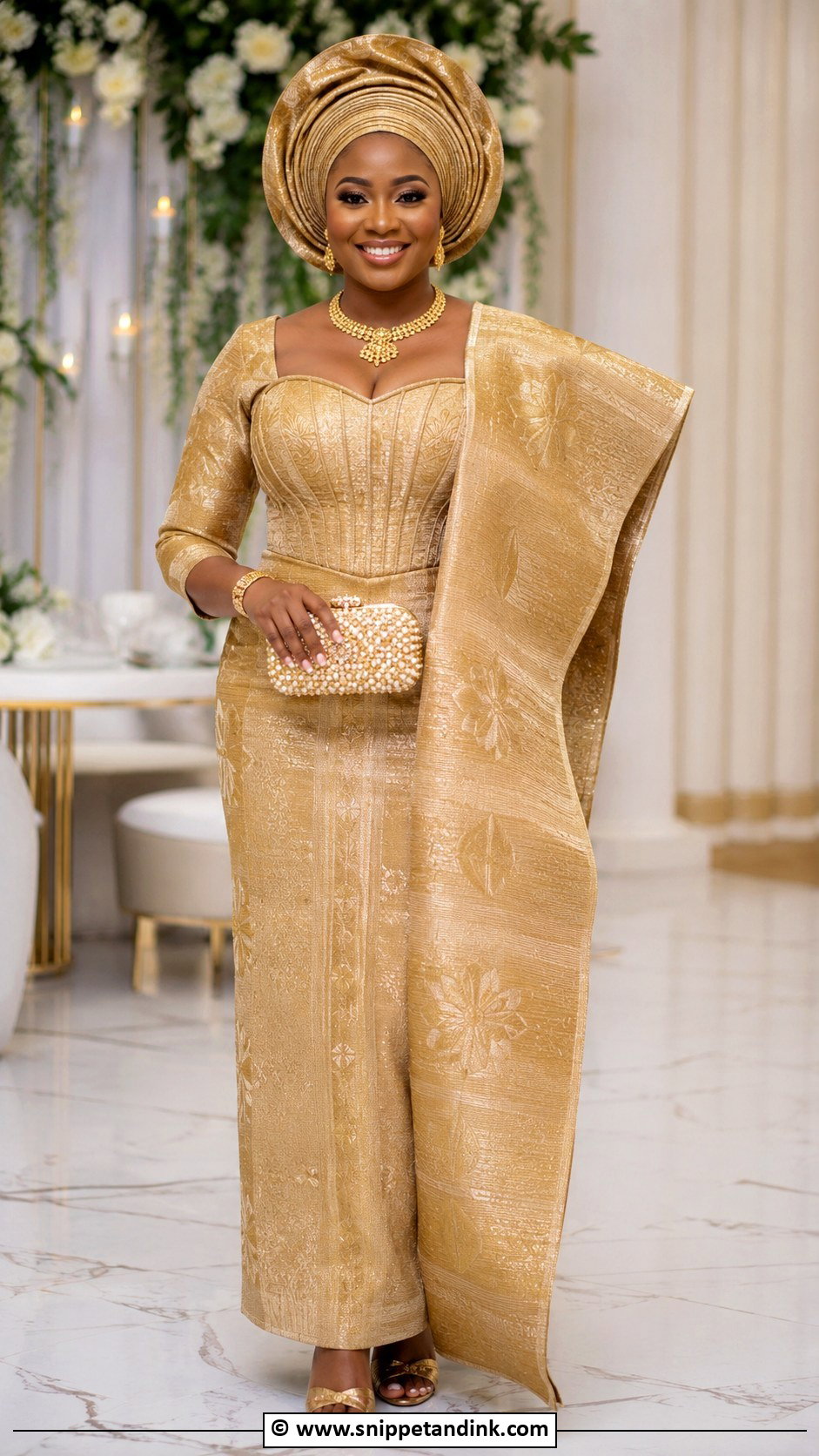
An aso oke bridal dress with gele is the classic engagement look, and the hand-woven fabric is what gives it structure. Aso oke is stiff and warm, so a mermaid cut needs a generous fitting at the knee or you’ll shuffle all day. Gold, teal, burgundy and emerald carry the woven sheen best. An ipele over one shoulder adds the cultural finish. Because the fabric is already doing so much, I keep the jewelry gold and simple and the heels comfortable.
2. White Lace Nigerian Wedding Dress
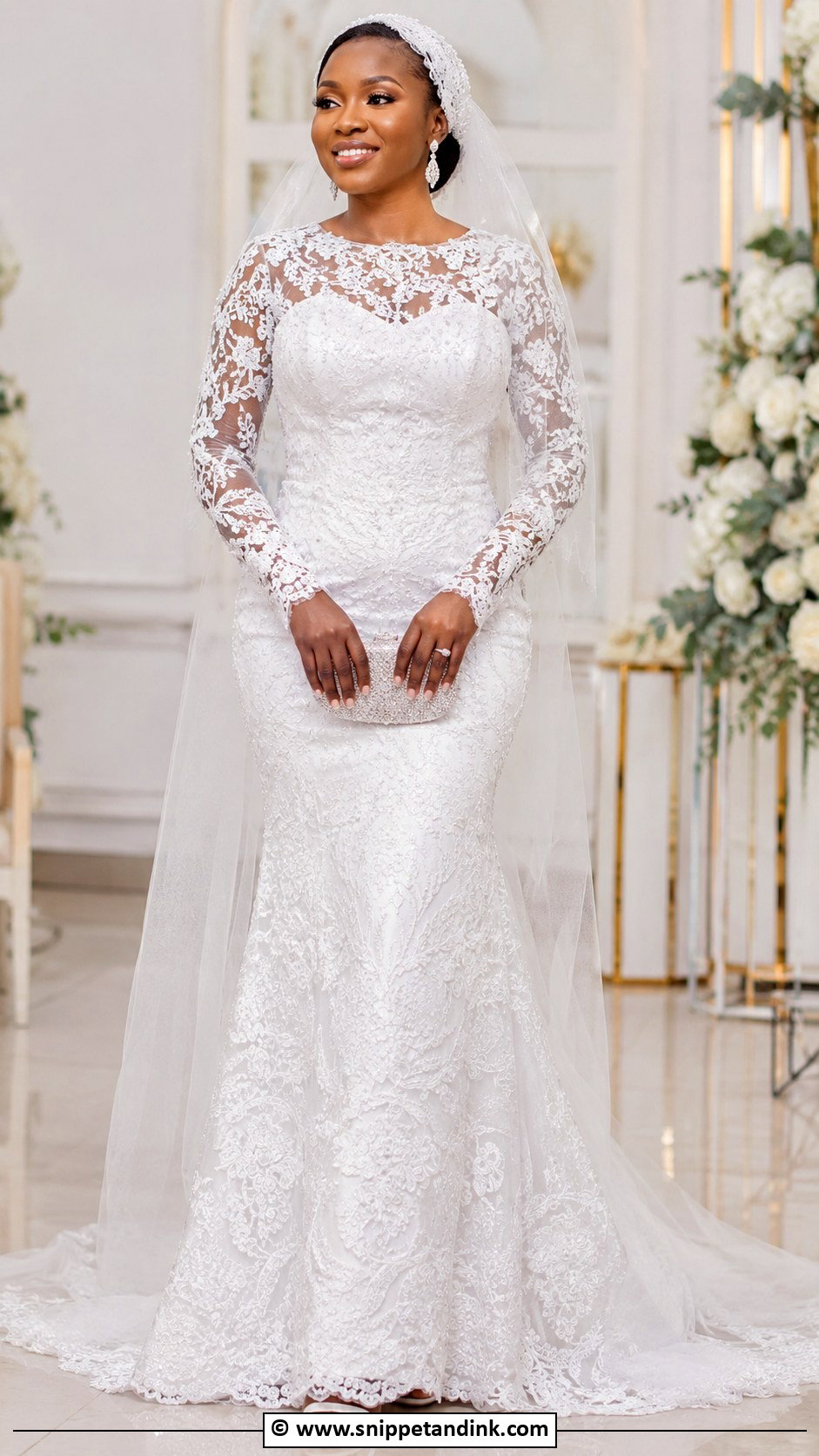
A white lace gown sits easily inside Nigerian styling for the church ceremony. Cord lace holds its shape and shows its pattern from a distance, French lace is finer, and beaded lace needs careful seam work so the beads don’t get caught in stitching. Long sleeves are common, but I check that the lace has enough stretch at the elbow. For the reception, a detachable lace cape or a sculpted gele makes the same dress feel Nigerian without a full change.
3. Igbo George Wrapper And Blouse Outfit
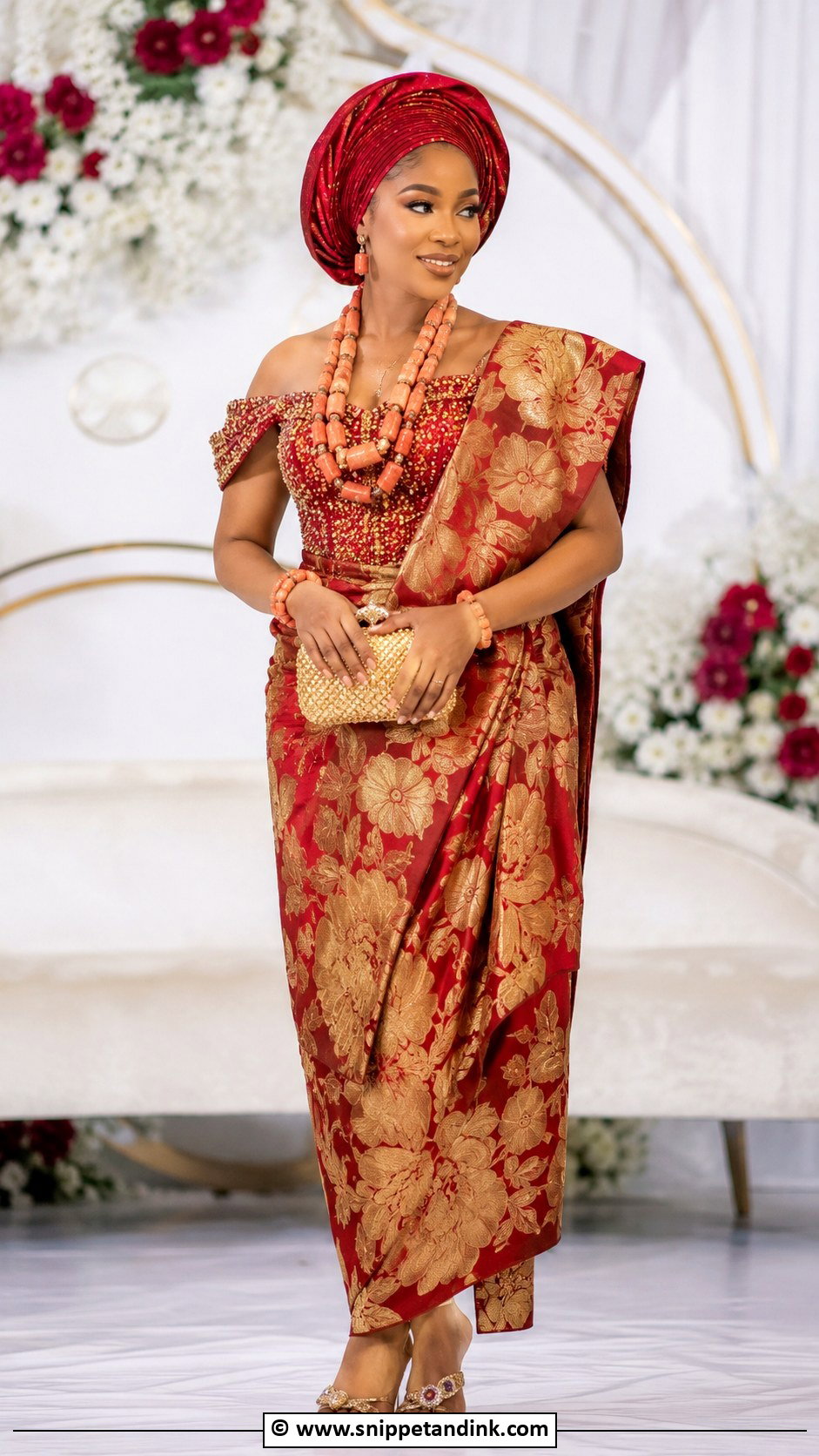
George is heavy and has a sheen that looks rich under hall lighting. In an Igbo George wrapper and blouse, the wrapper should be tied tight enough to stay put through dancing but not so tight that you can’t climb a step. A blouse with puff sleeves or a peplum balances the weight below. Coral beads at the neck, wrists and hair are traditional and matter to many families, so ask before swapping them for anything else. Red, gold, royal blue and ivory are common George colors.
4. Yoruba Iro And Buba Wedding Outfit
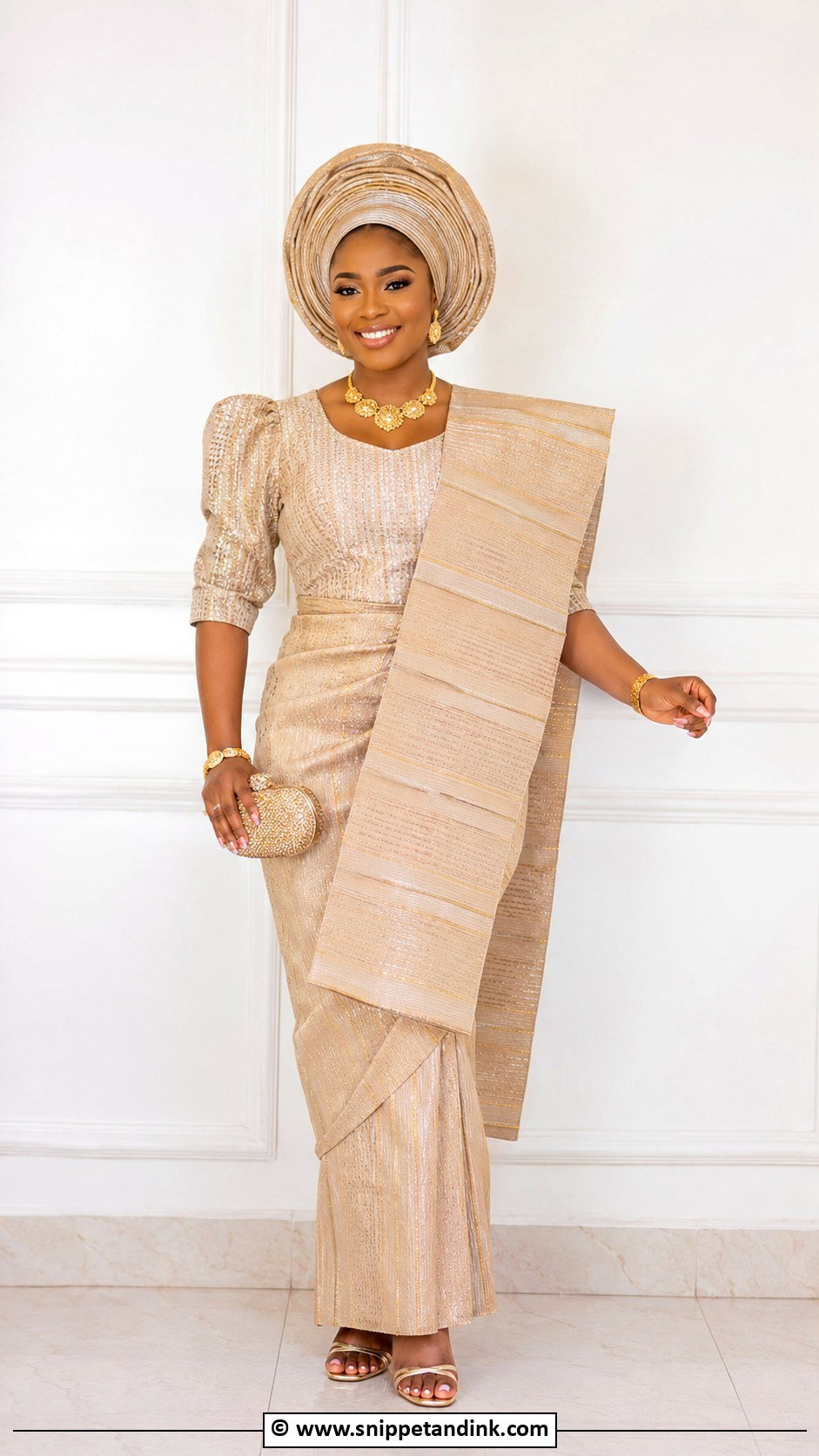
The Yoruba iro and buba is the most comfortable look on this list, because the iro is wrapped rather than fitted and the buba flows over it. You can dance, kneel and greet elders in it without fighting the clothes. Aso oke is the usual fabric, but lace, damask and brocade work too. I always re-tie the iro mid-event, since wrappers loosen as you move. Soft gold, dusty pink and deep green pair well with the gele and ipele.
5. Nigerian Mermaid Lace Dress With Train
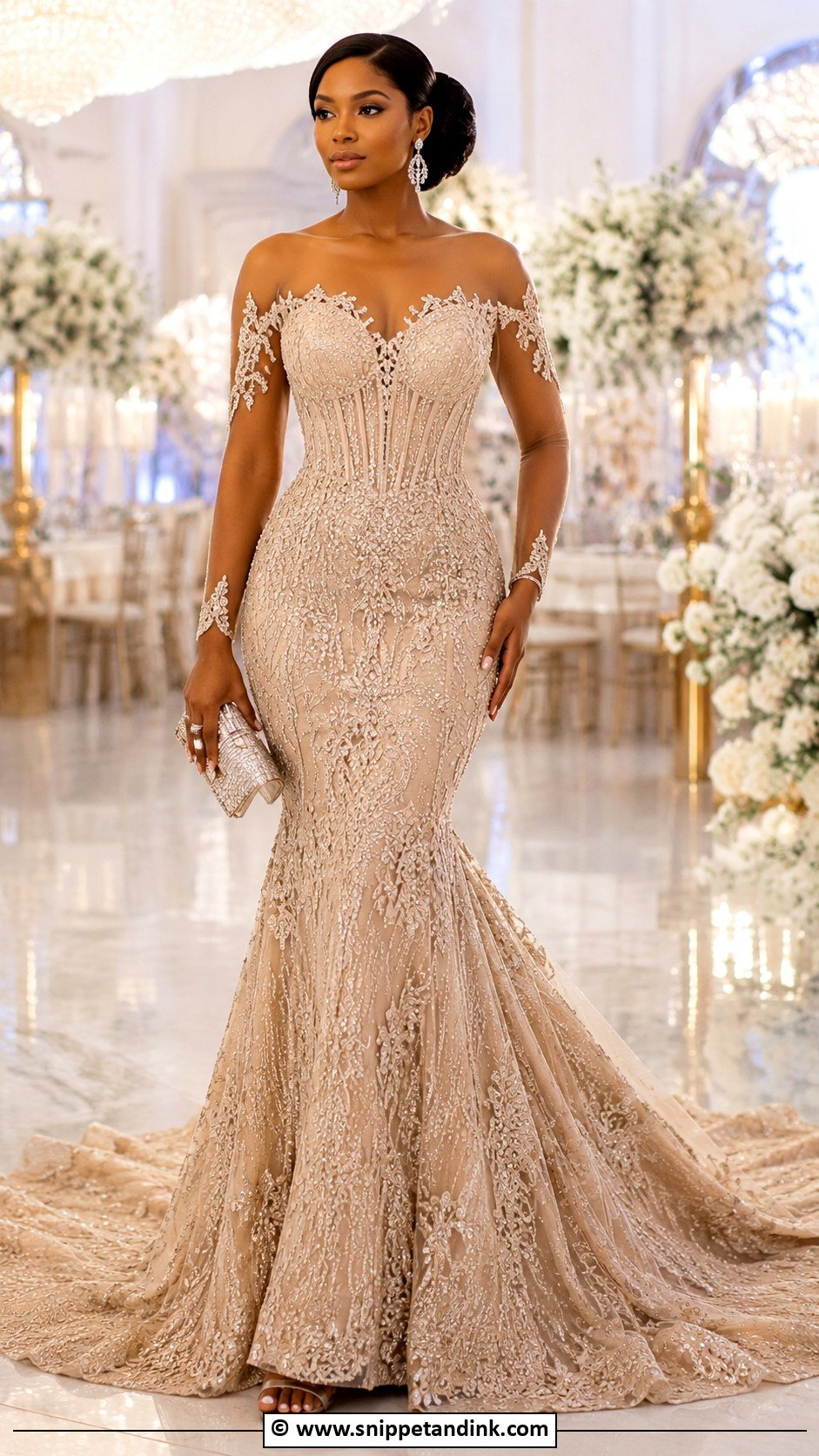
A mermaid lace gown gives the dramatic entrance, but it restricts the stride, and a long train needs a plan. I recommend a detachable train or a bustle so you can dance at the reception. Beaded or sequined lace catches light in photos. Ivory, champagne, wine and royal blue all work. Drop earrings and a slim bracelet keep the focus on the shape.
6. Aso Oke Komole Bridal Gown
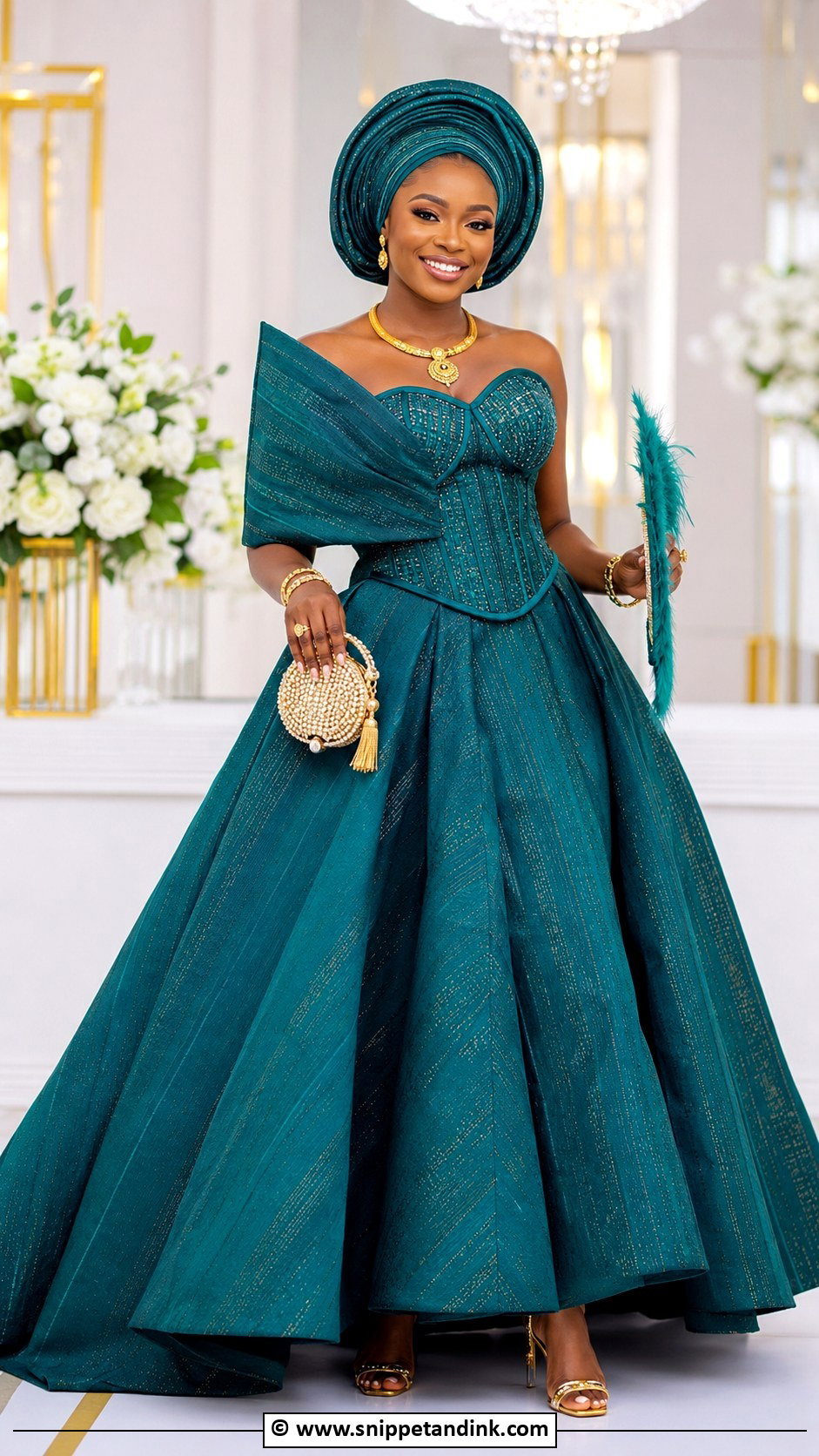
Komole gowns blend Yoruba aso oke with modern construction: a fitted bodice, structured waist and sweeping skirt. Since the fabric is the star, pick aso oke with metallic threads or subtle patterning. Aso oke can be stiff at the seams, so ask your tailor to line the bodice for comfort. A matching gele keeps it rooted in tradition; gold or pearl jewelry adds polish. Keep the shoes simple.
7. Nigerian Reception Dress With Detachable Cape
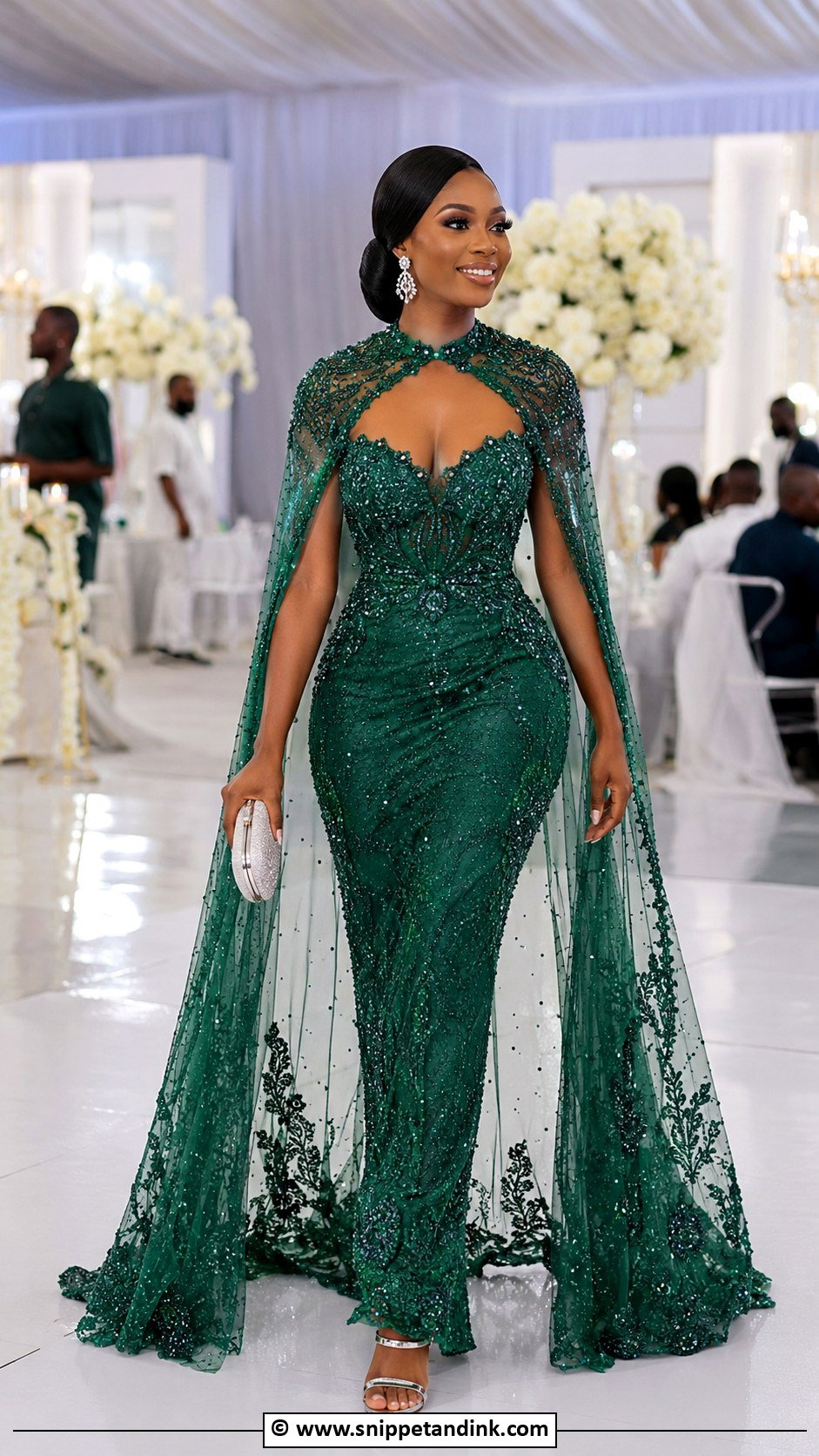
A detachable cape gives two looks in one gown. The cape makes the entrance, then comes off for dancing and greeting guests. Lace, crepe or beaded tulle all hold up. The cape fastening needs to be hidden but strong, usually hooks or snaps at the shoulders, and I check it can be removed without disturbing the gele or hair. A contrasting color from your first outfit, like silver or emerald, makes the change feel deliberate.
8. Nigerian Ball Gown Wedding Dress
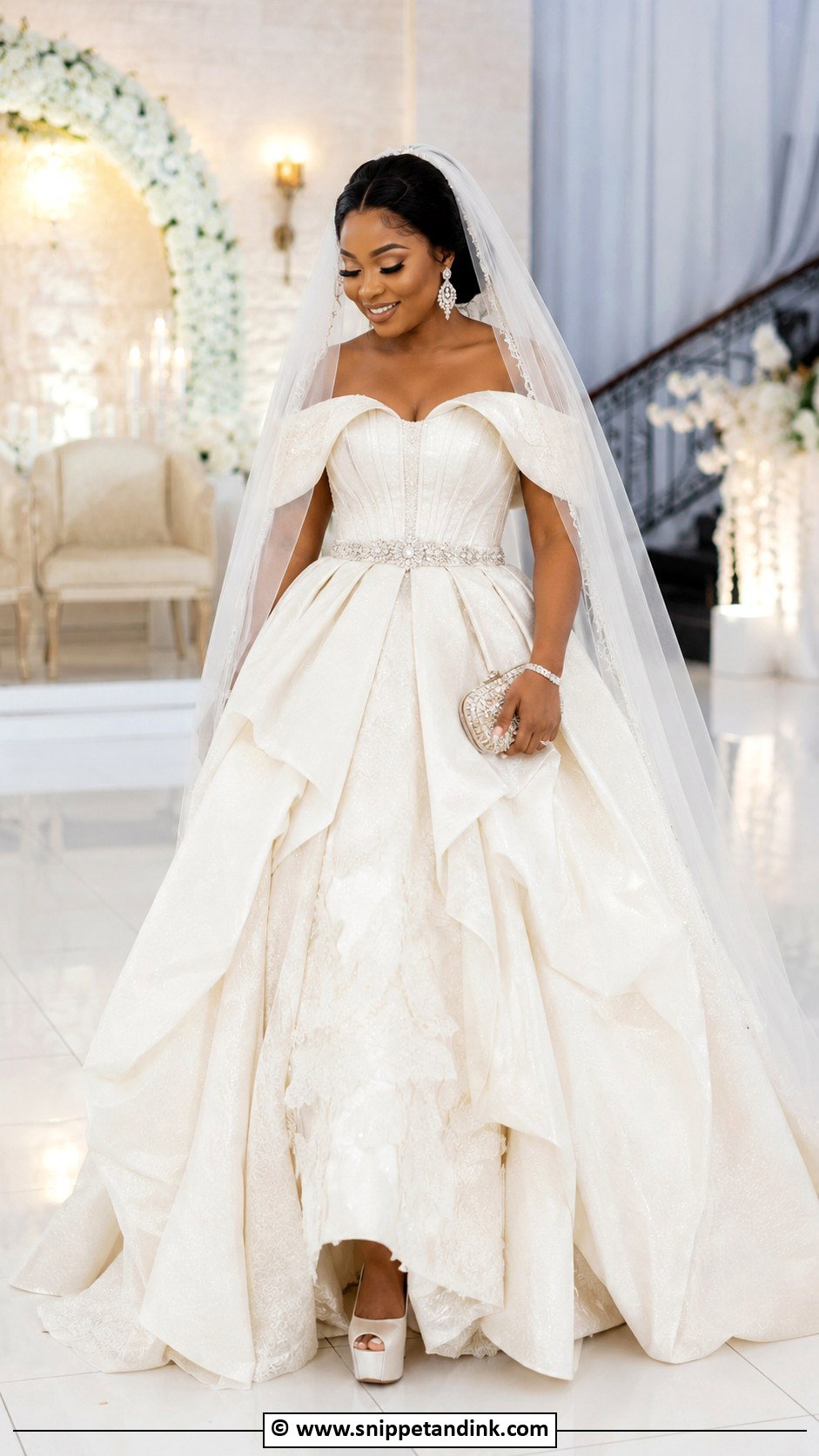
Ball gowns bring volume and a grand silhouette. Satin, organza and tulle each give a different weight. With Nigerian receptions often running long, I’d keep the bodice embroidery lighter so the gown doesn’t feel heavy by midnight. A tiara, veil or hairpiece works, and since the skirt hides your feet, wear platform heels you can stand in for hours.
9. Ankara Wedding Dress With Headwrap
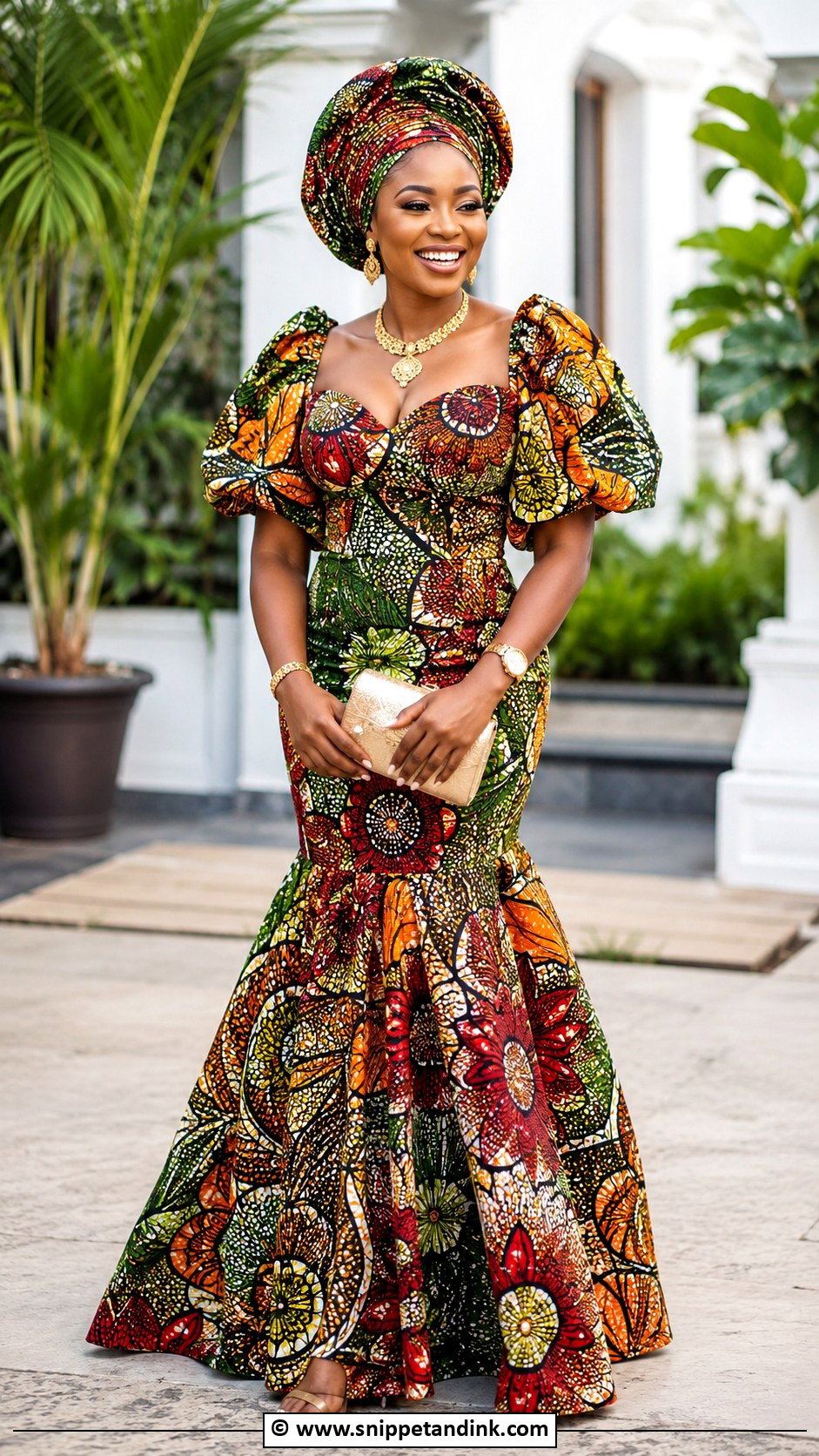
Ankara print is joyful, but the quality varies hugely; good Ankara has crisp, even color on both sides and softens nicely after washing. Choose a pattern that’s festive but not too busy at full length. A full-length gown or high-low cut works. Matching the headwrap ties the look together; gold jewelry warms the colors. Introductions and second outfits are where Ankara feels most at home.
10. Nigerian Satin Wedding Dress With Gele
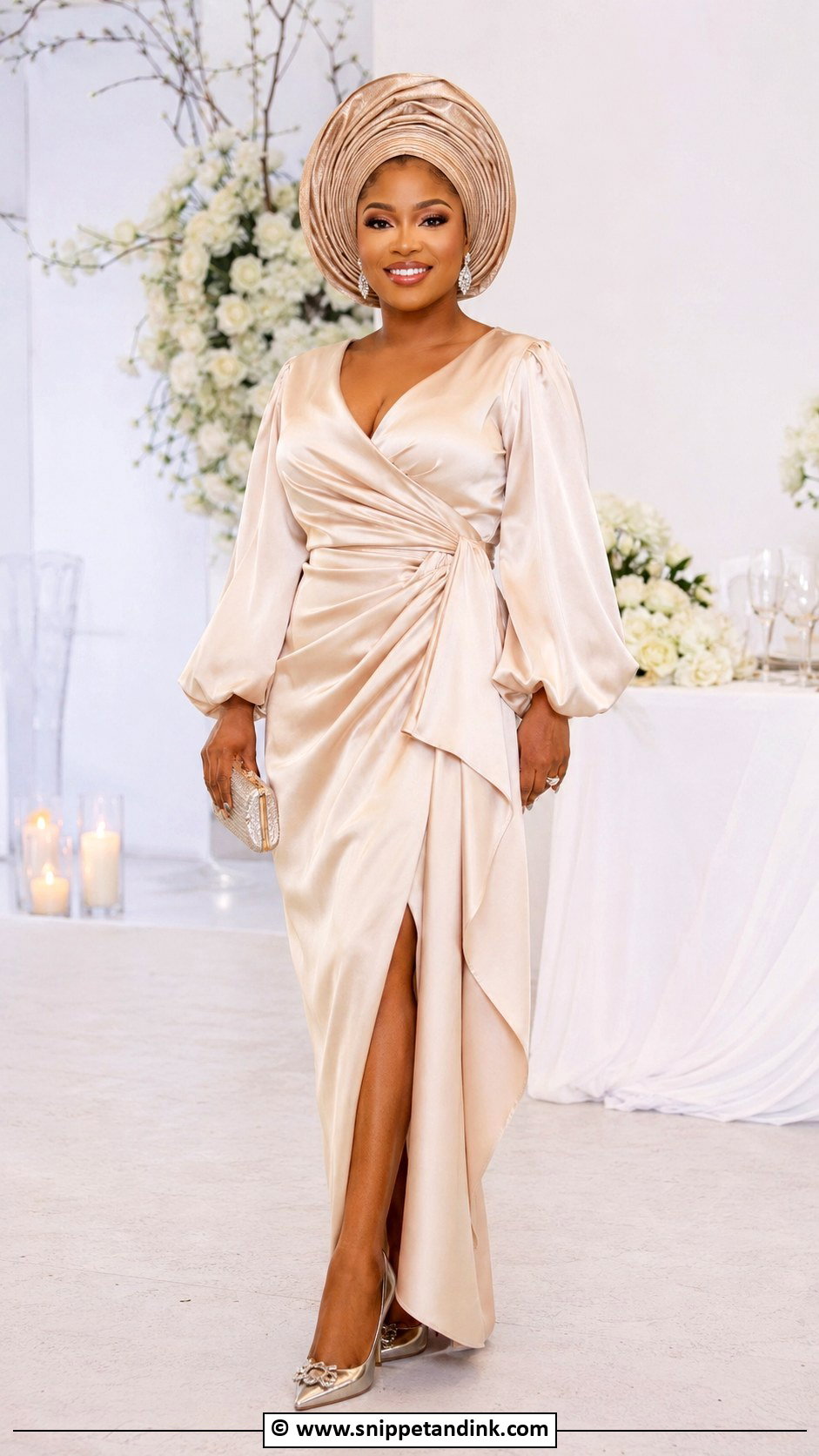
Satin is clean and smooth, which is why it doesn’t need heavy embellishment. It also shows every crease and sweat mark, so I’d go with a heavier duchess satin for a long event. A corset bodice or draped neckline keeps it modern. Pair it with a structured gele in a matching or complementary tone: champagne satin with gold, ivory with silver, emerald with a tonal gele. Crystal earrings and pointed heels finish it.
11. Nigerian Beaded Lace Dress With Coral Jewelry
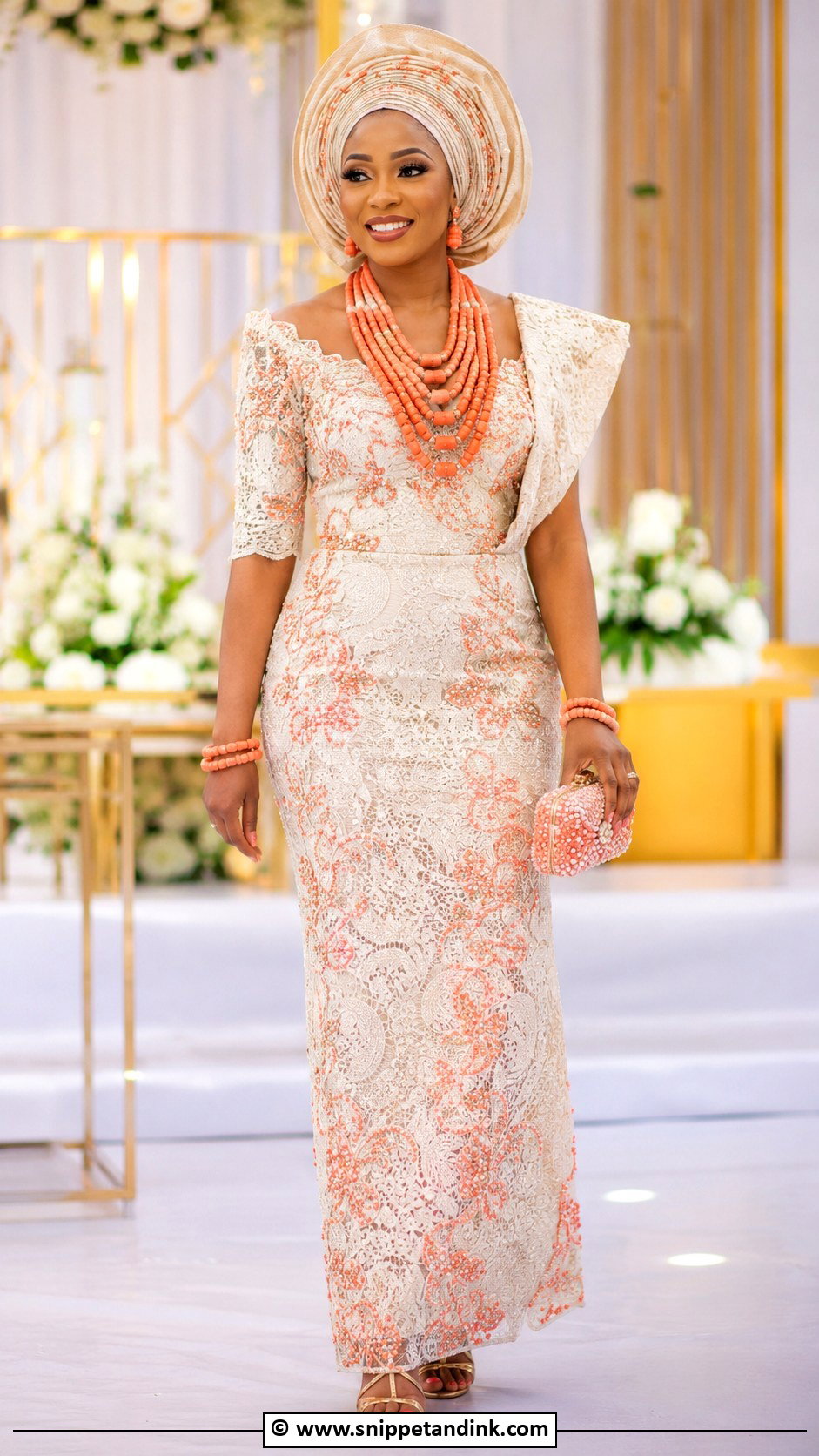
Beaded lace with coral jewelry is deep, rich and cultural. The beads add shine; the coral brings warmth, especially for Igbo-inspired styling. Long sleeves or a peplum waist look elegant without being overdone. Red, ivory, gold or deep orange let coral stand out. Coral is heavy, so I always check the clasp of a multi-strand necklace before the bride walks out. Keep shoes metallic or nude.
12. Hausa Modest Wedding Dress With Turban
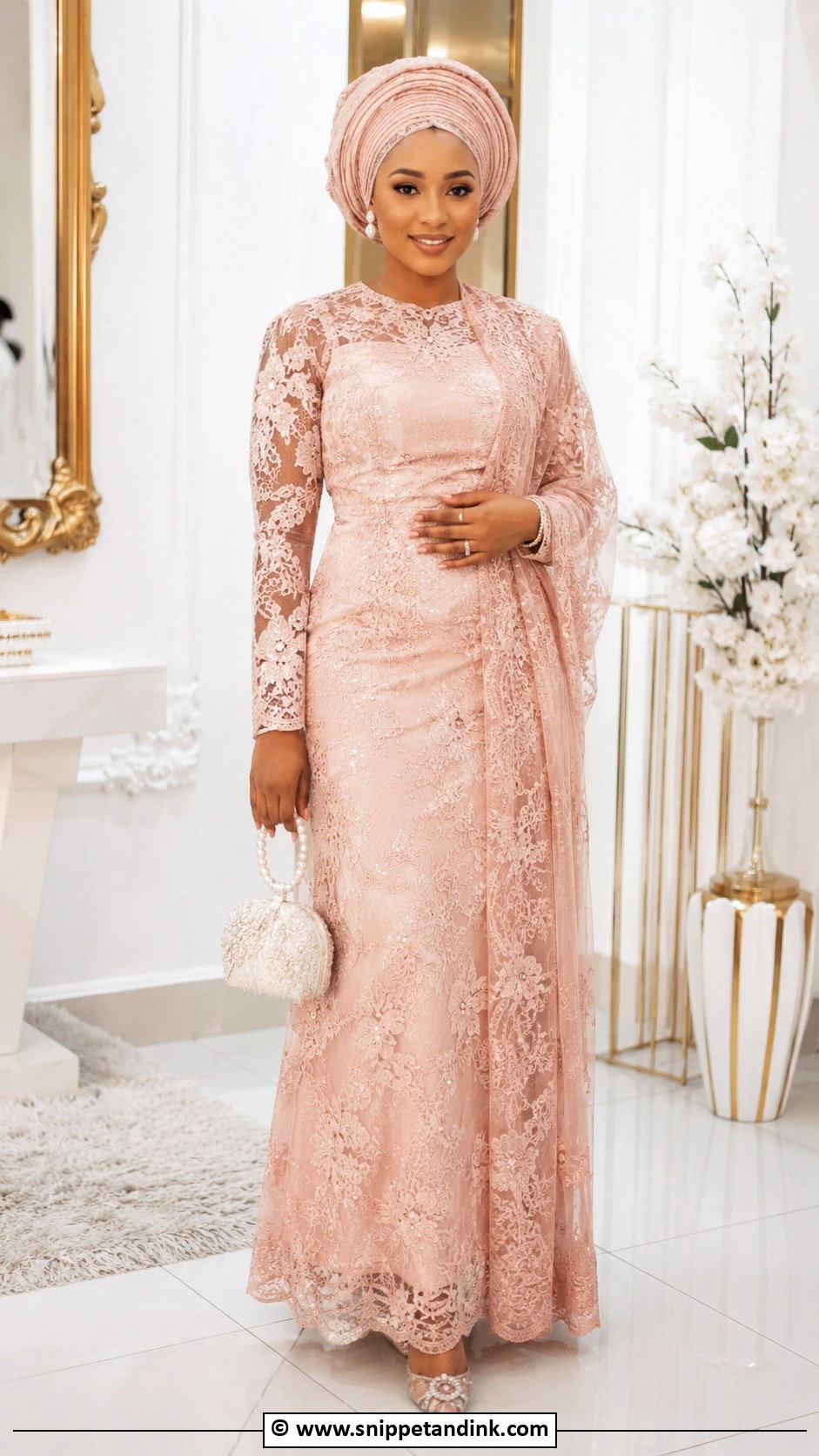
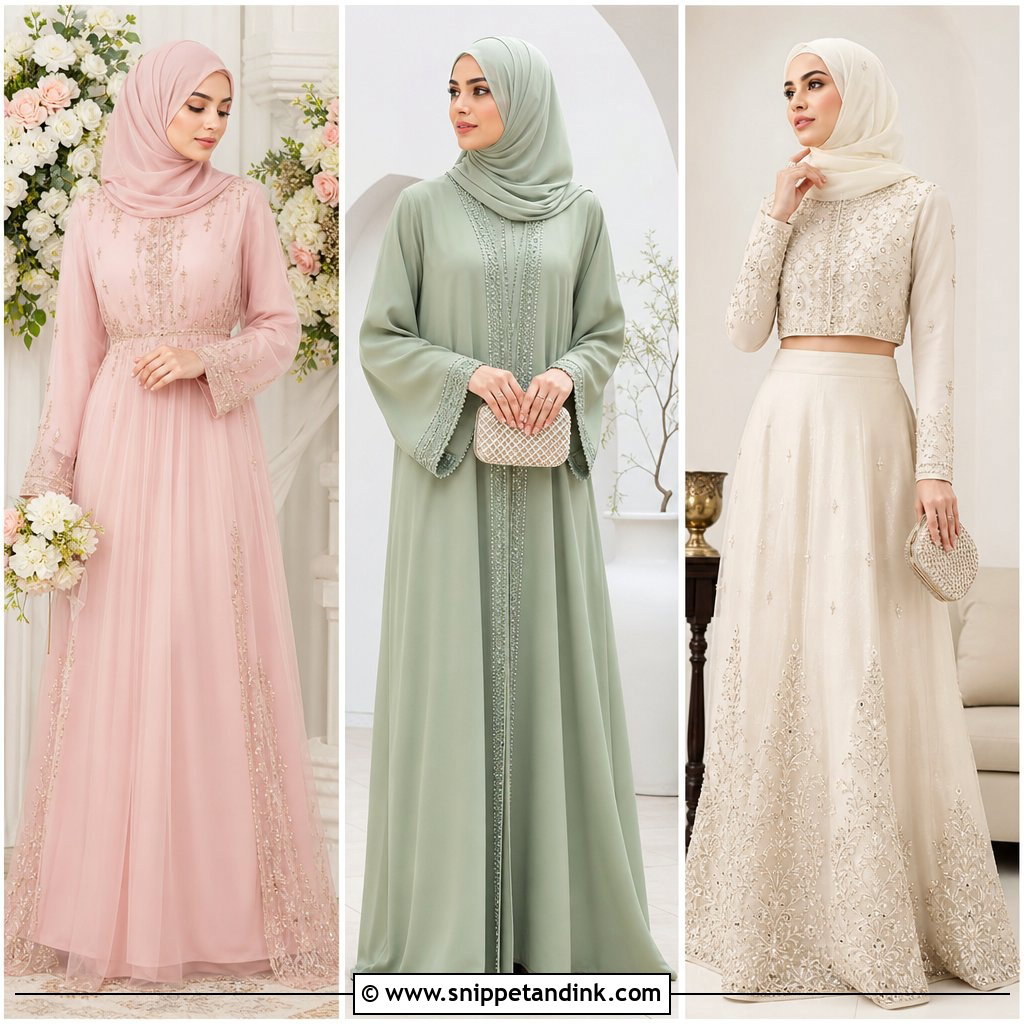
Hausa modest dressing relies on drape rather than tight fitting. Soft lace, silk, satin or chiffon flows over the body with long sleeves, a high neckline and a full skirt. A matching turban adds height and completes the look; I make sure it’s pinned well because silk turbans slip. Ivory, blush, mint and powder blue keep it delicate. Pearl earrings and closed-toe heels finish it.
13. Nigerian Velvet Wedding Dress With Gold Accessories
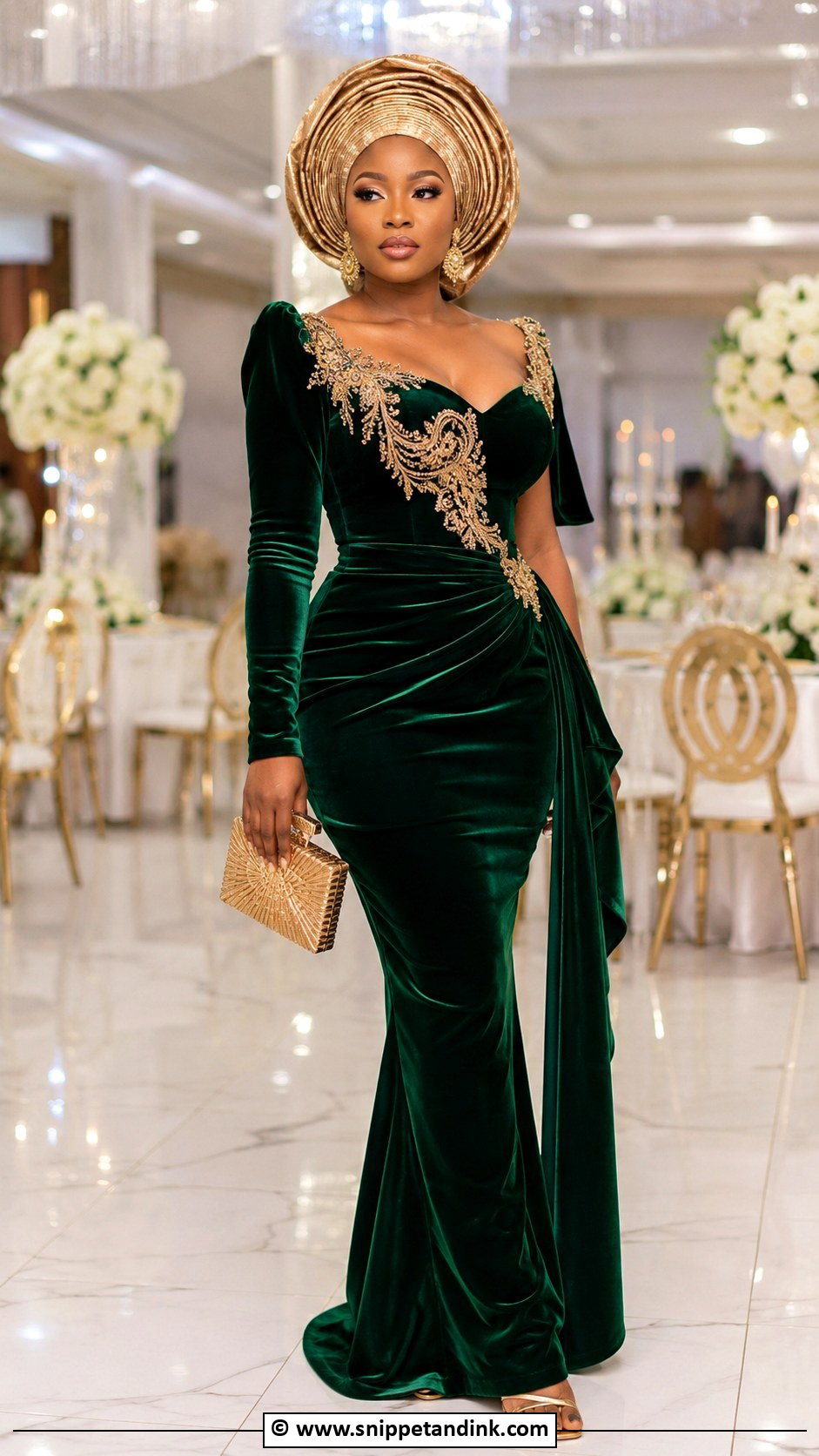
Velvet in jewel tones, emerald, navy, burgundy or plum, looks rich in the evening. But velvet is warm; I’d only suggest it for an air-conditioned hall or cooler season. A fitted gown or wrap dress modernizes it. Gold earrings, a gold clutch and metallic heels brighten the depth. Add a gold gele for a traditional finish and keep the neckline clean.
14. Nigerian Two Piece Lace Skirt And Blouse
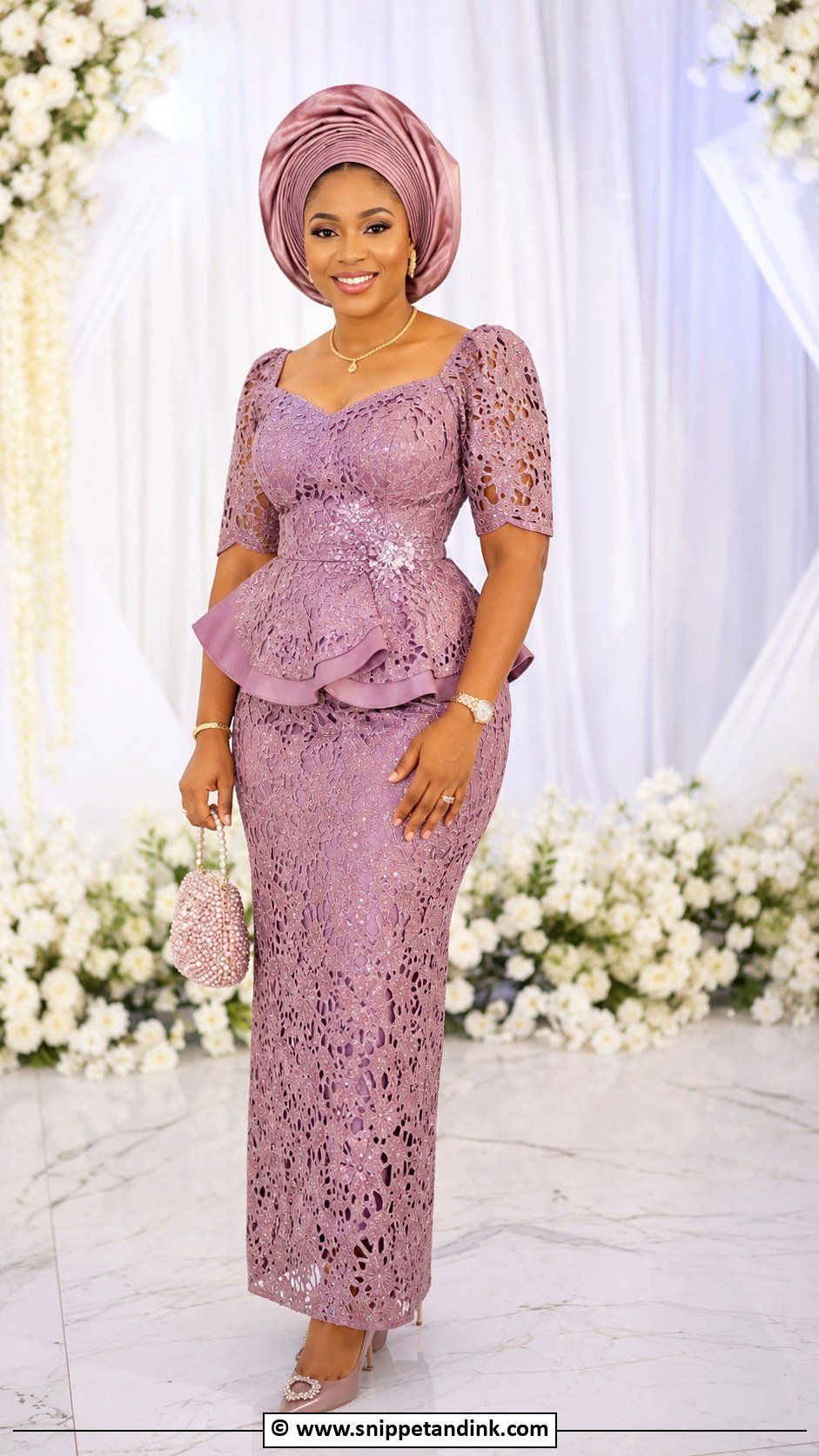
Two-piece lace sets give more freedom than a gown. You can fit the skirt and blouse separately, which is useful if your top and bottom are different sizes. A high-waist skirt with a peplum blouse defines the waist. Mauve, cobalt or olive feel modern. It works for brides, sisters or close family.
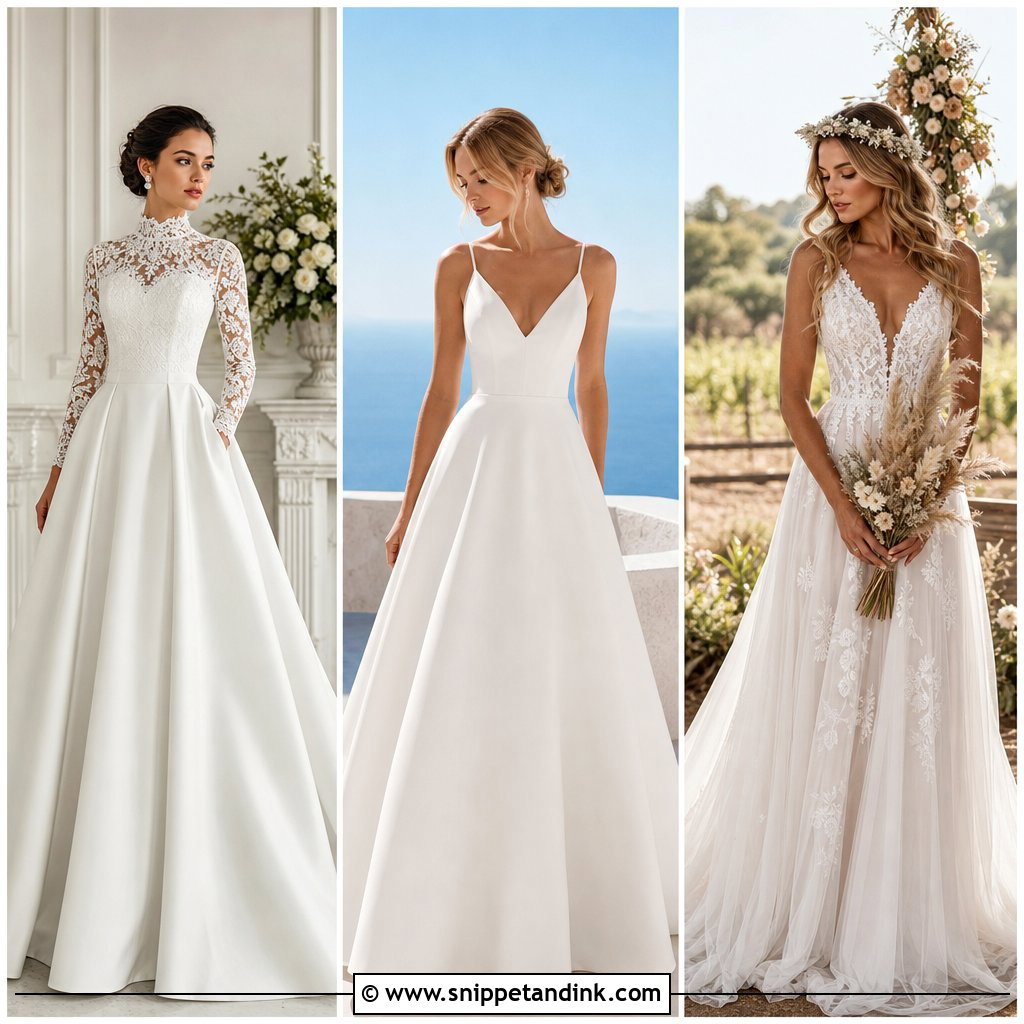
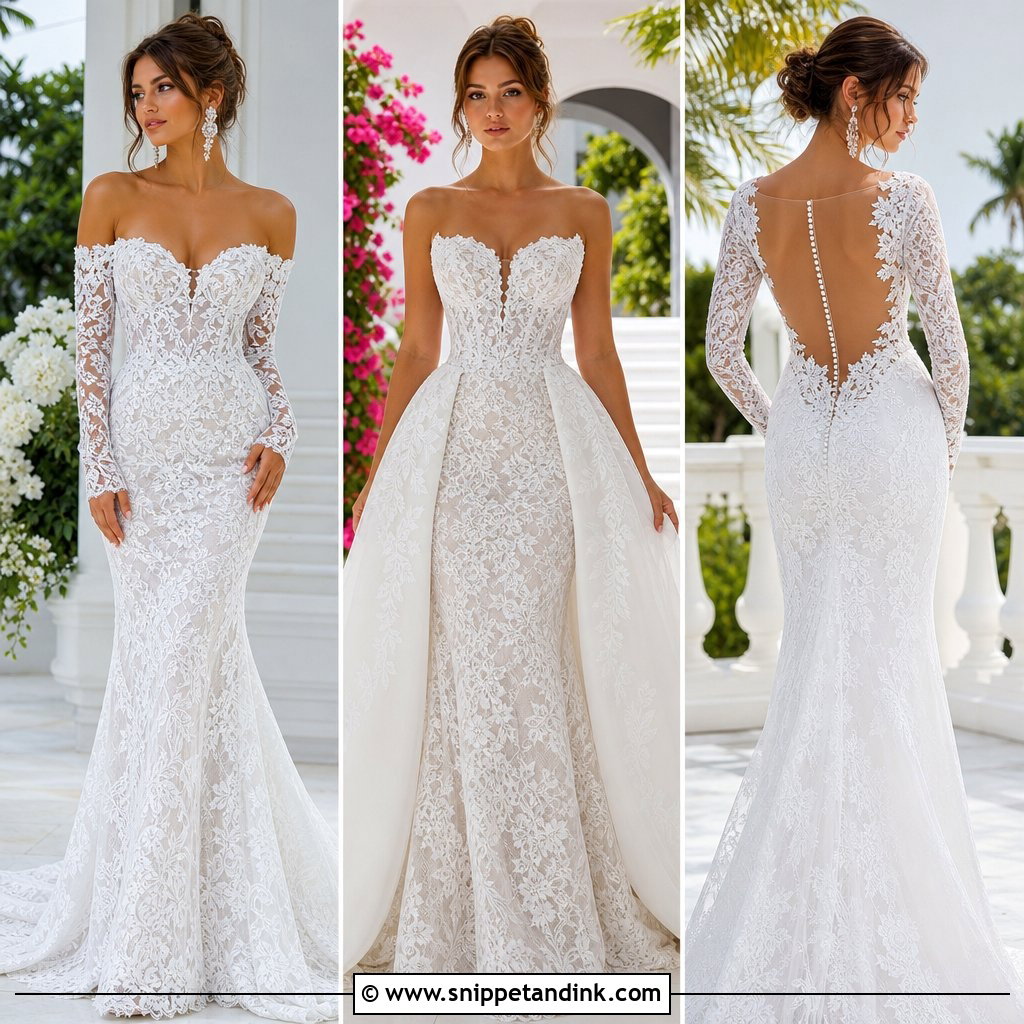

15. Nigerian Sequin Wedding Dress With Simple Gele
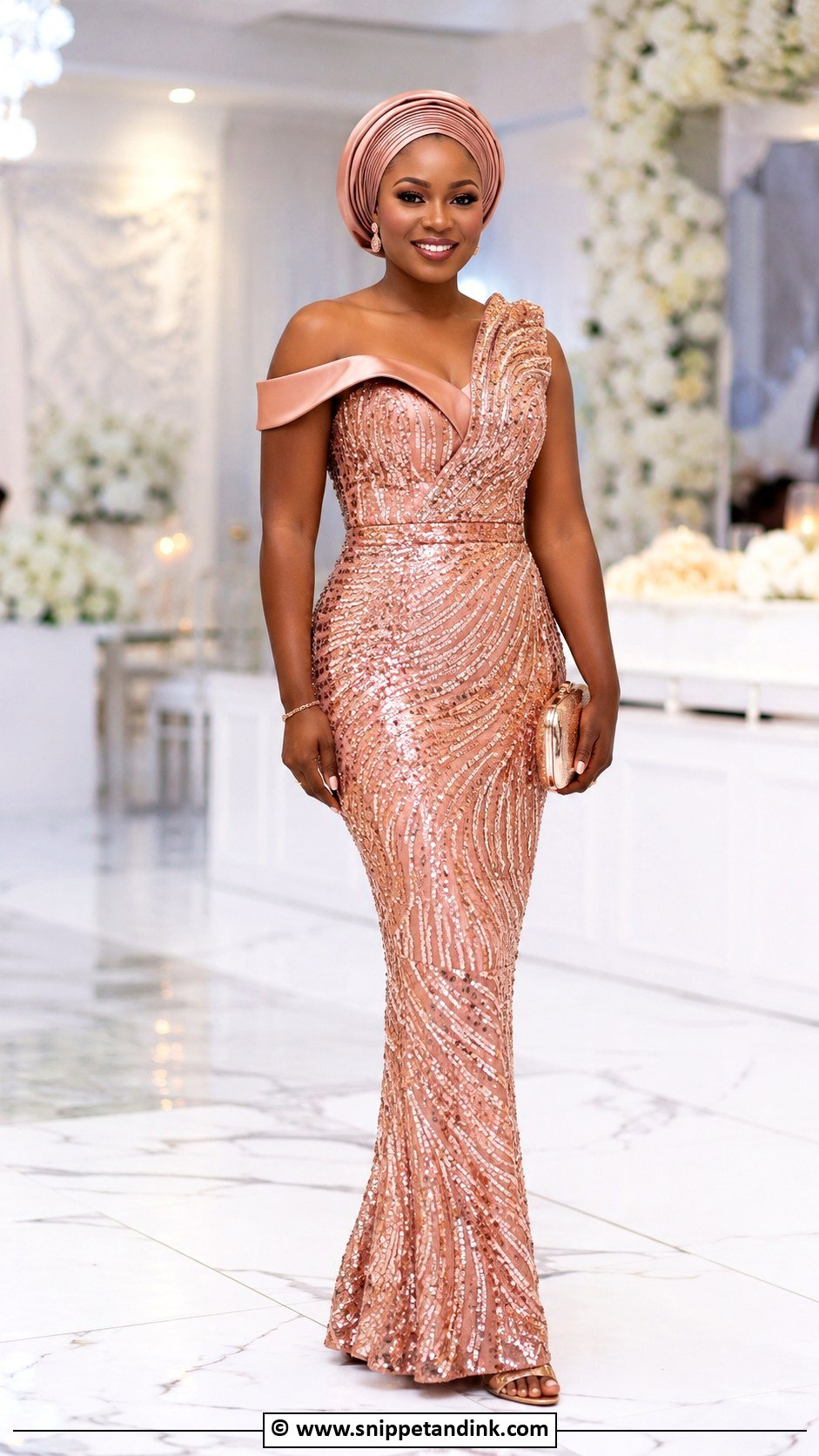
Sequins already throw back a lot of light, so the gele should be clean and not oversized. A straight gown or mermaid lets the sparkle do the work. Silver, rose gold, champagne and emerald are reception favorites. Sequins can scratch your inner arms over a long evening, so I ask the tailor to line the sleeves. Minimal jewelry keeps it controlled.
16. Nigerian Court Wedding Dress With Fascinator
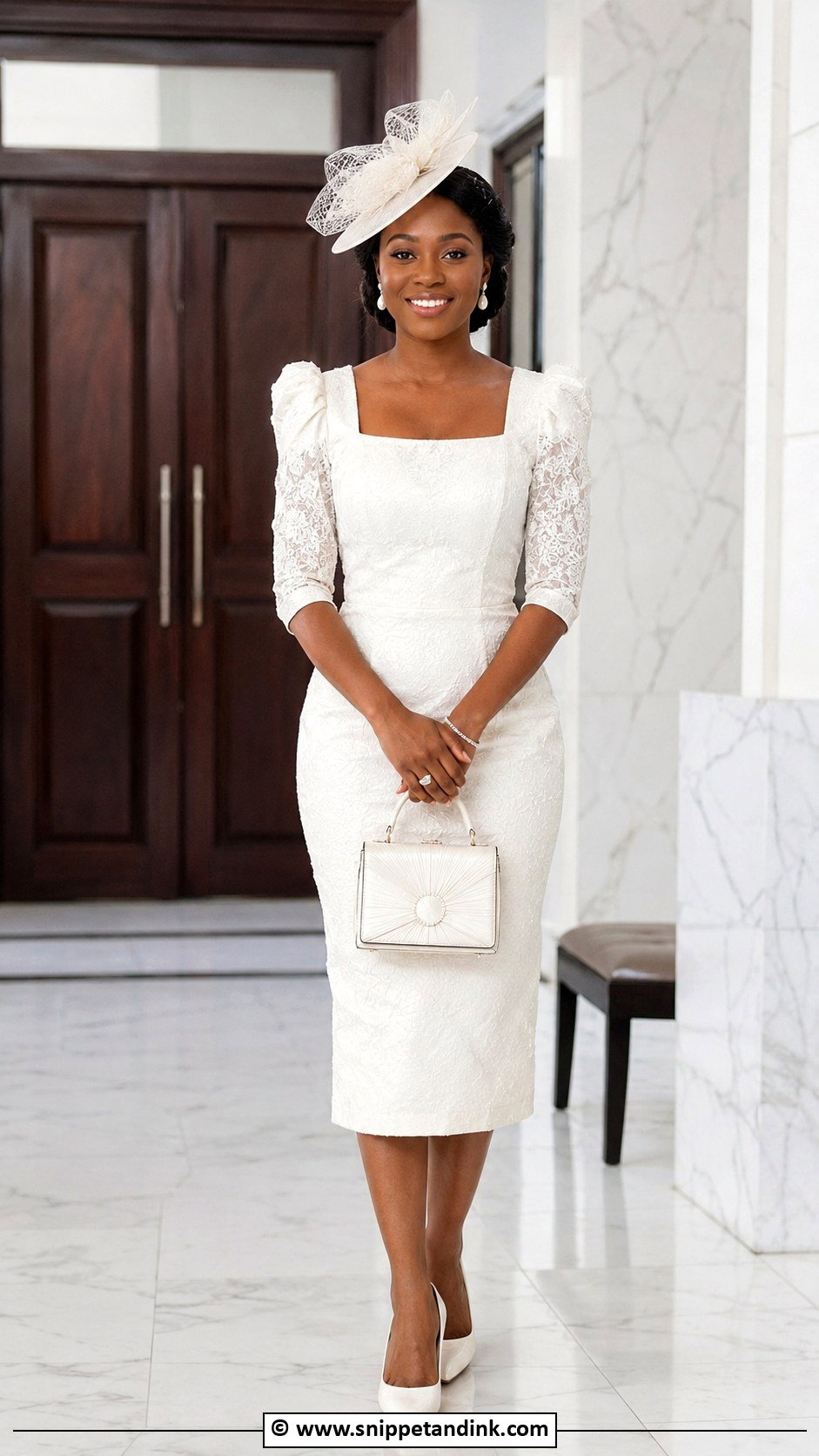
Registry outfits should look neat and polished without trying to be a full gown. A midi dress, tailored sheath or tea-length lace sits right for a civil ceremony. A fascinator gives a formal touch without the scale of a gele. White, ivory, blush or champagne feel bridal. Closed-toe pumps and pearl earrings complete it.
17. Nigerian Bridal Jumpsuit With Overskirt
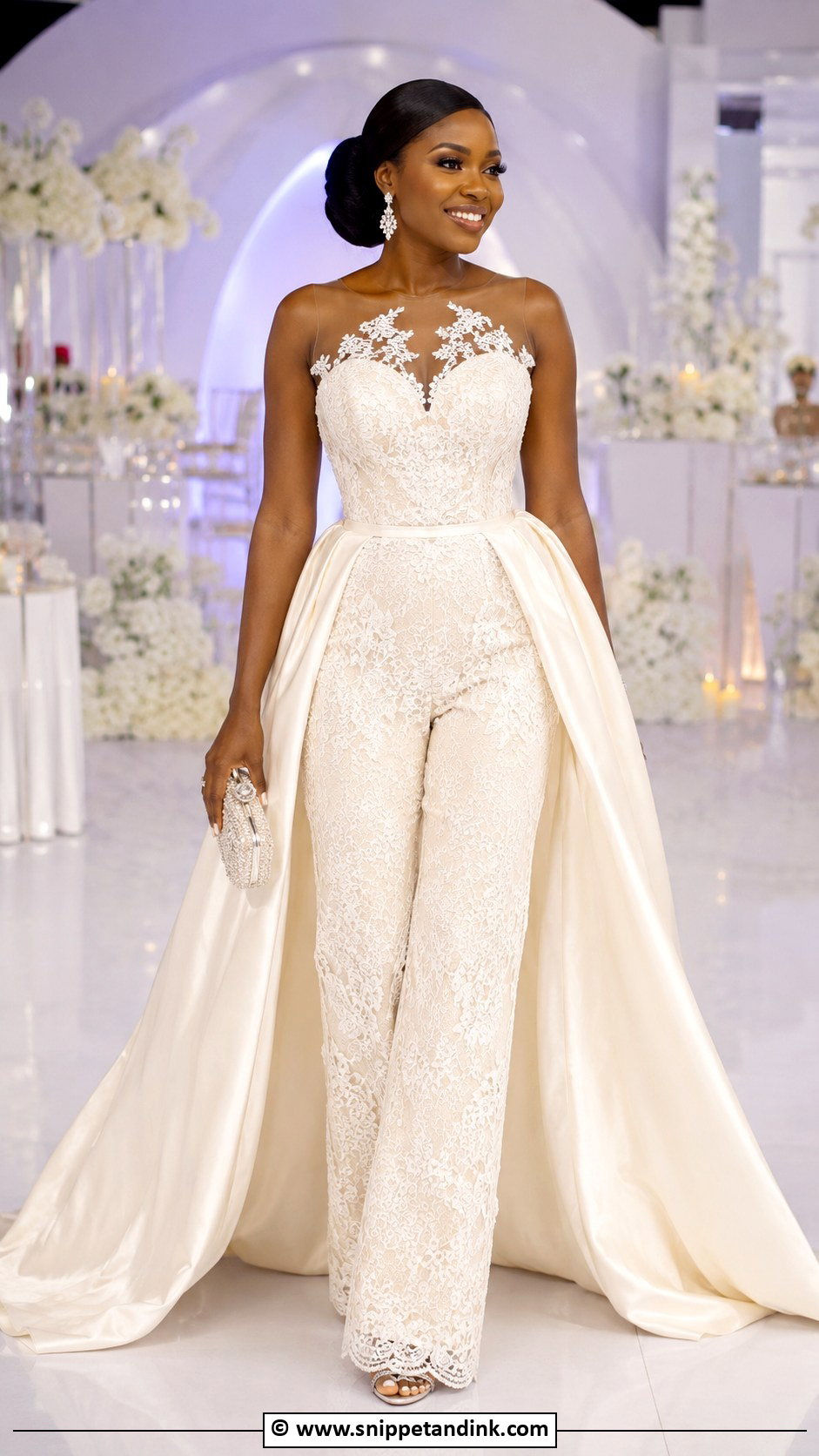
A jumpsuit with overskirt gives you a gown for photos and trousers for dancing. Lace, satin or crepe keep it bridal. The overskirt should be detachable with strong hooks at the waist. Check the inseam and length with your actual heels; trousers dragging on the floor will catch. Bold earrings and a sculpted gele or veil complete it.
18. Nigerian Corset Lace Wedding Dress
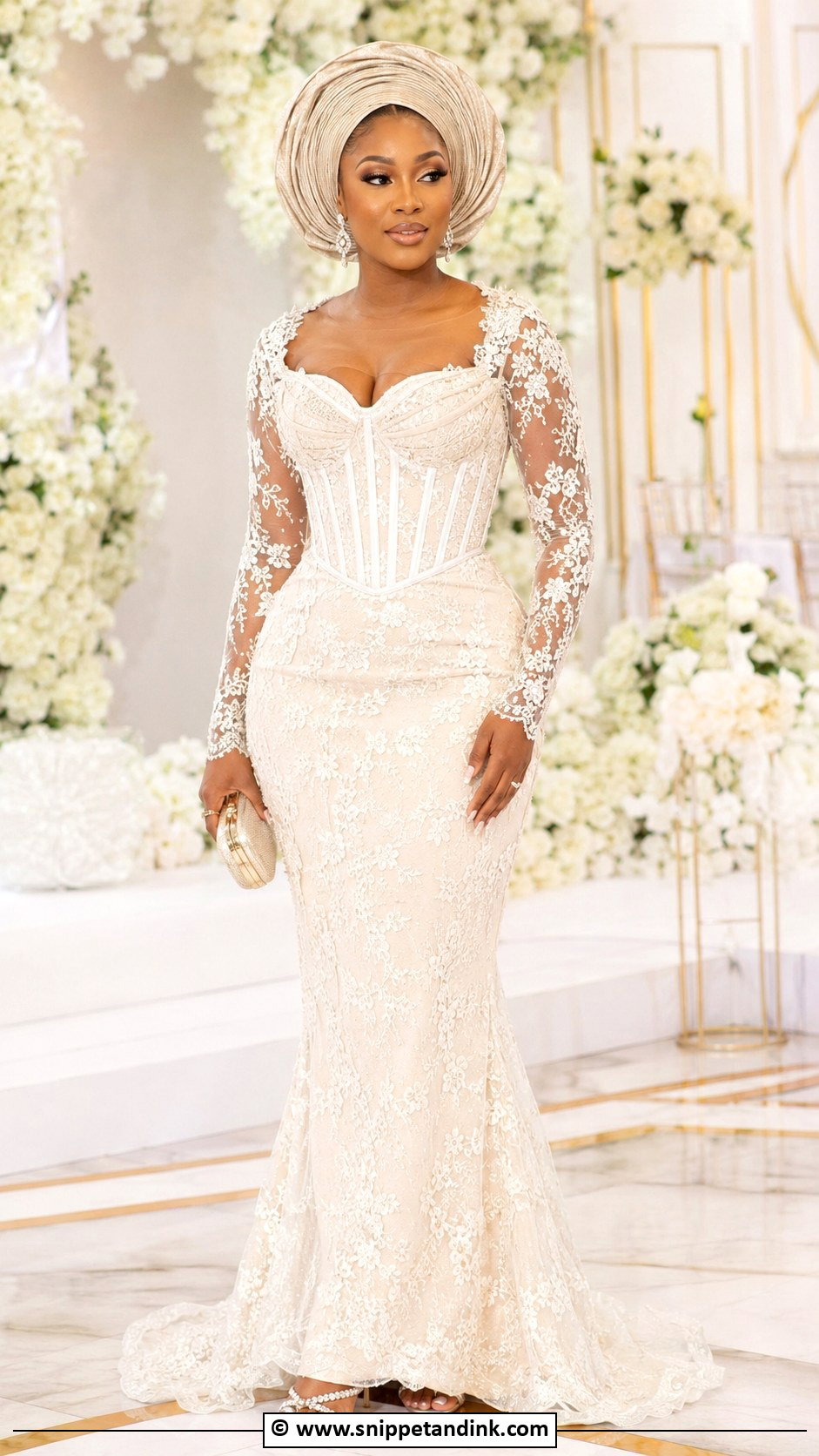
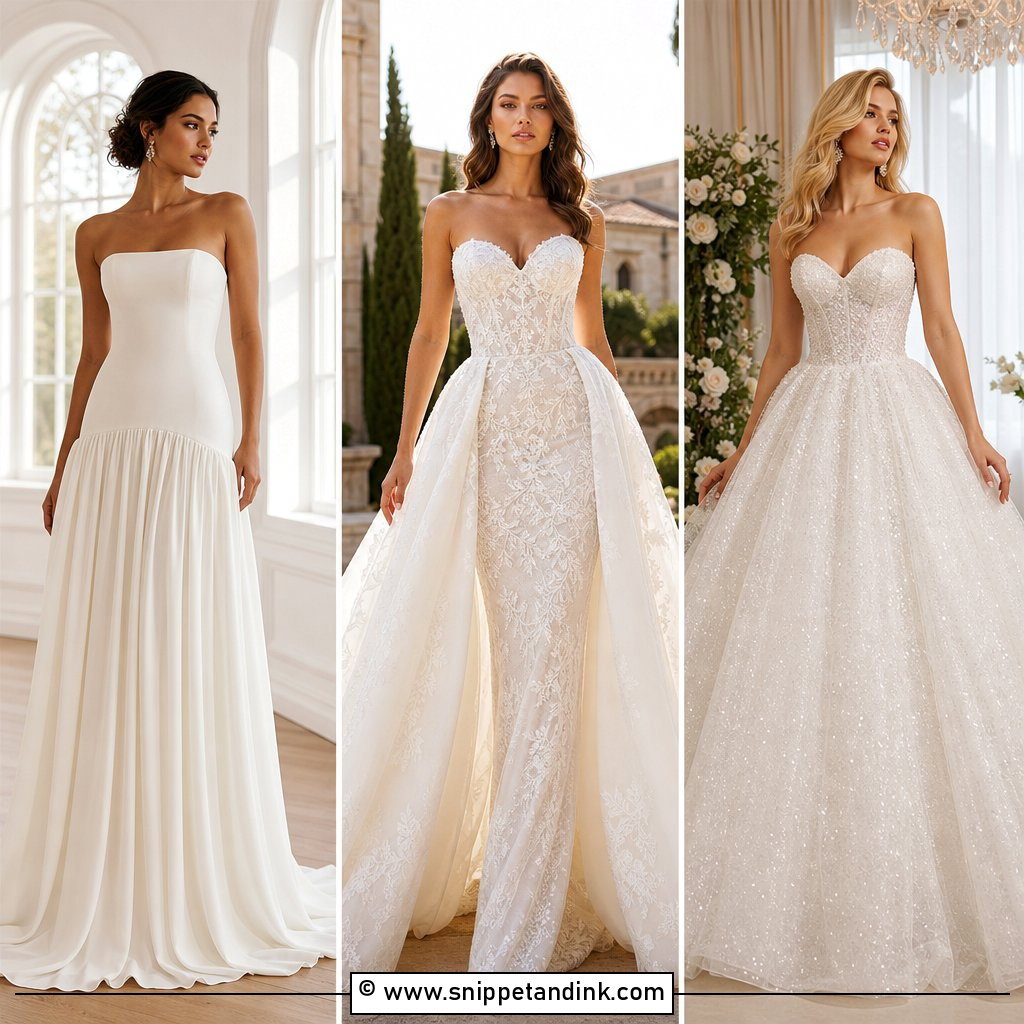
Corset lace gives definition and support, and the fit is everything, so pick a skilled tailor and plan more fittings than usual. Lace softens the structure, especially with illusion sleeves. I do a sitting test at every fitting, because boning that feels fine standing can dig in during a long reception. A matching gele or veil works; keep jewelry light.
19. Nigerian Organza Wedding Dress With Puff Sleeves
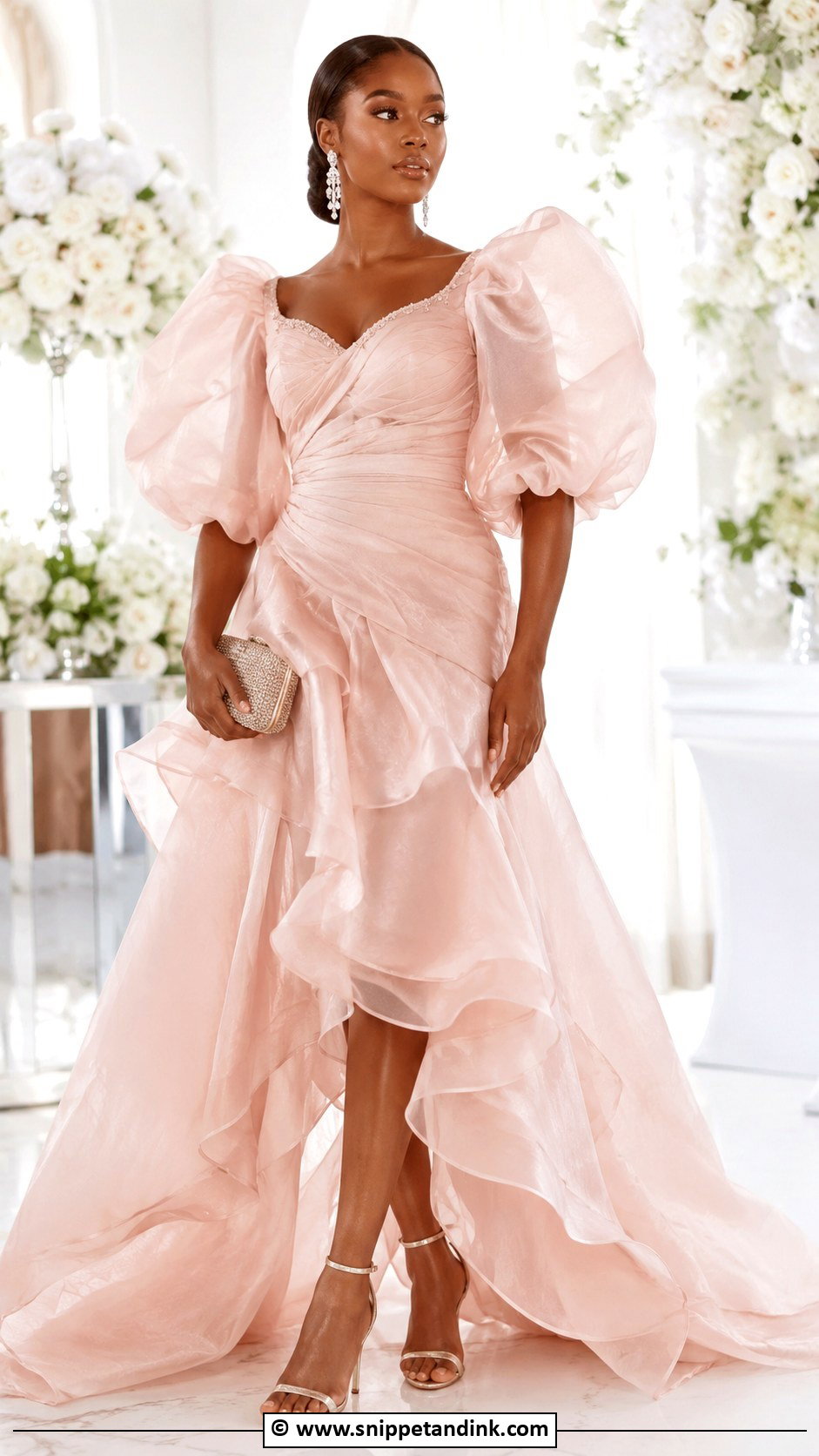
Organza gives volume without weight, which makes it great for puff sleeves and bows. Large sleeves need a simple skirt so the outfit doesn’t feel top-heavy. Organza creases sharply when crushed, so I’d keep it on a padded hanger until you dress. Ivory, blush, lilac and soft gold all suit it. A low bun keeps the neckline clean.
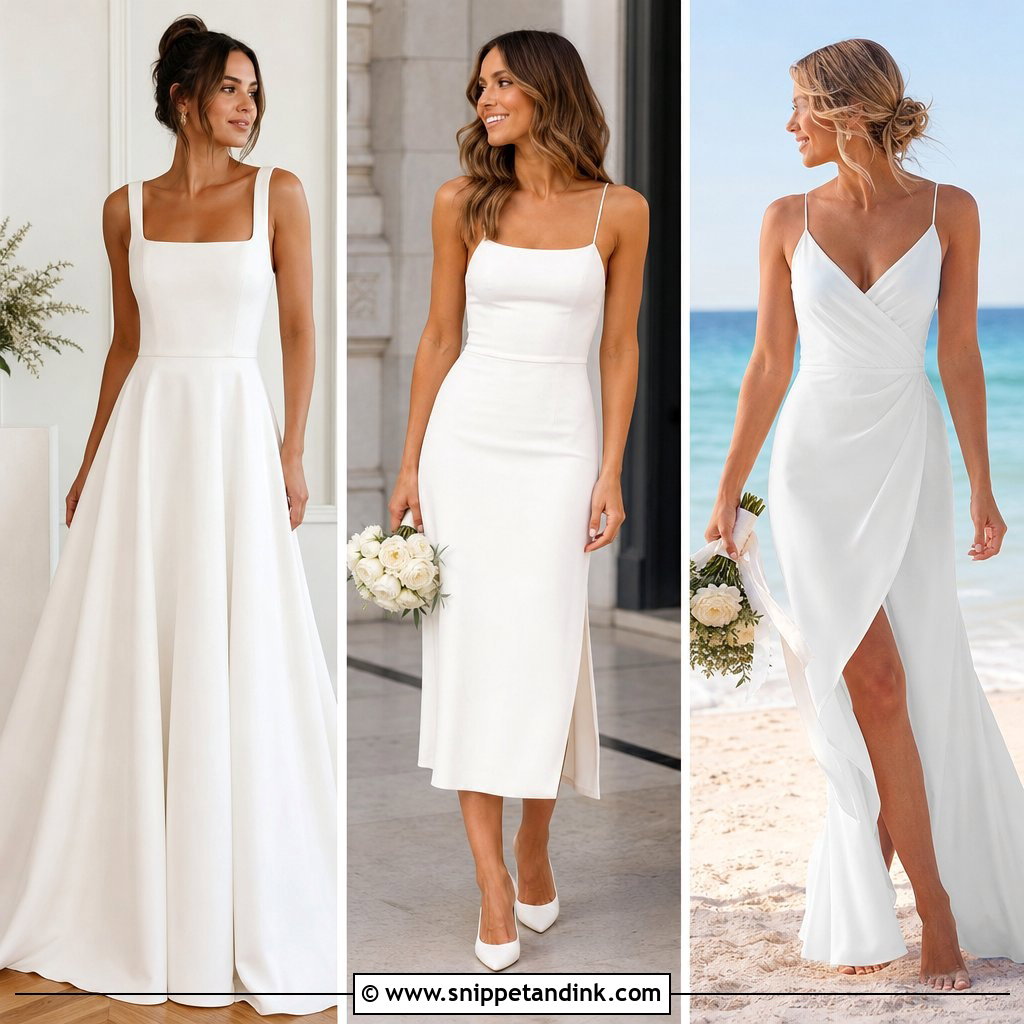

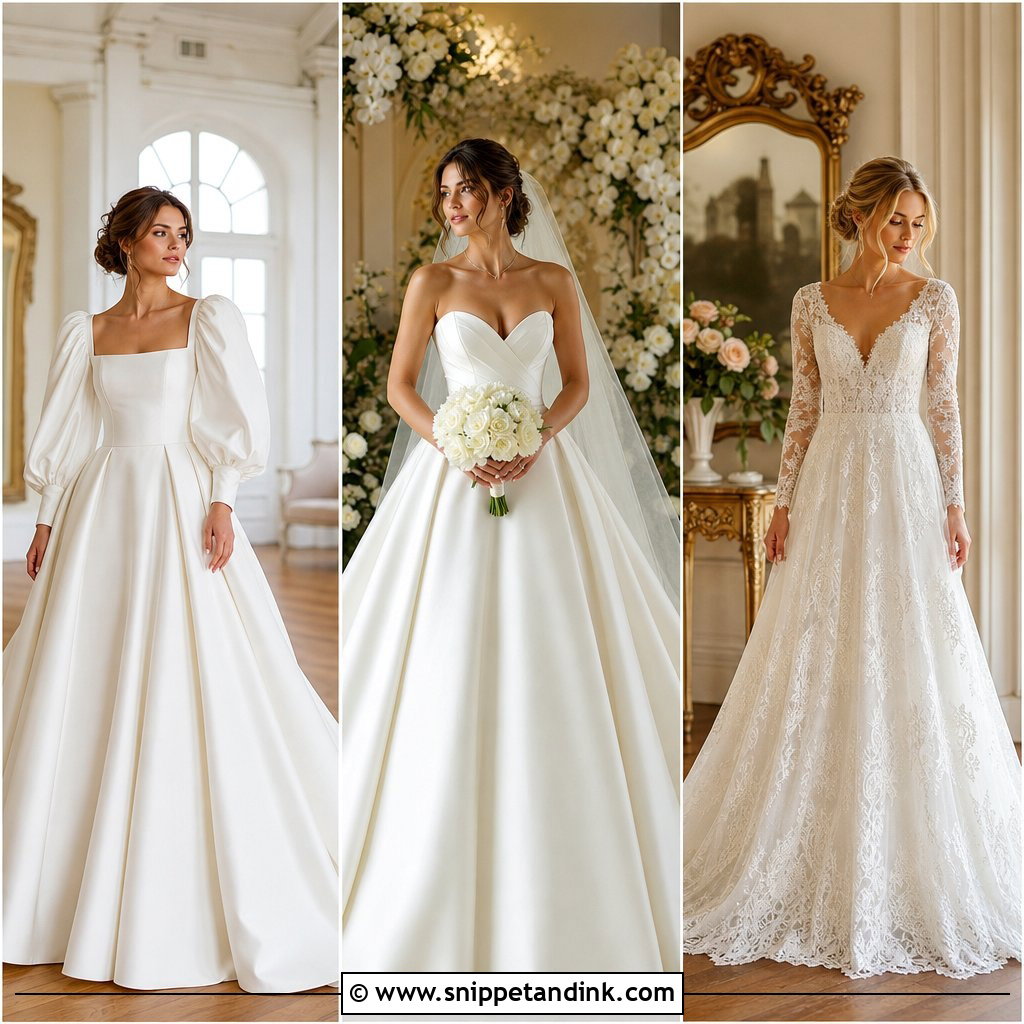

20. Nigerian High Neck Lace Wedding Dress
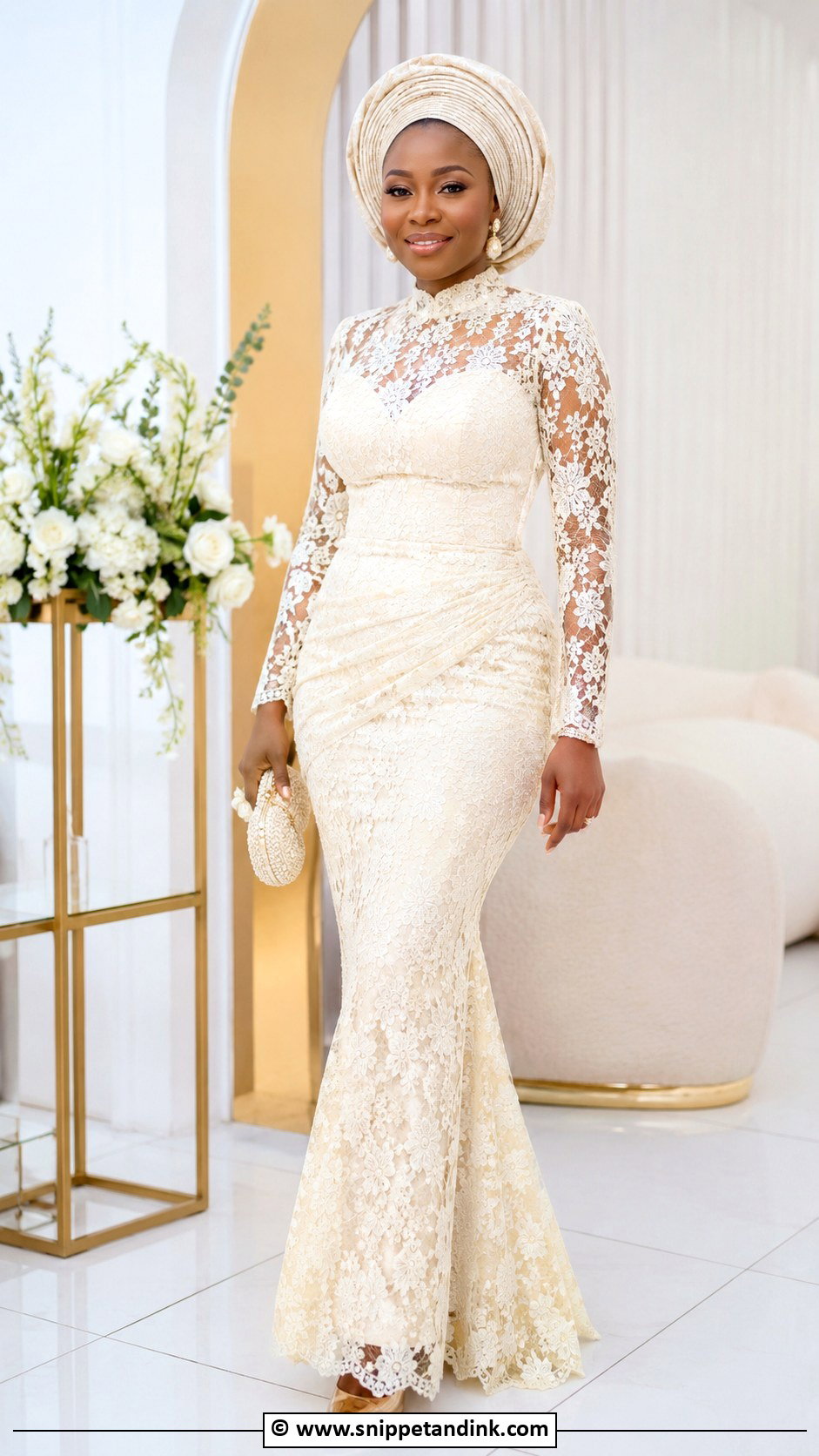
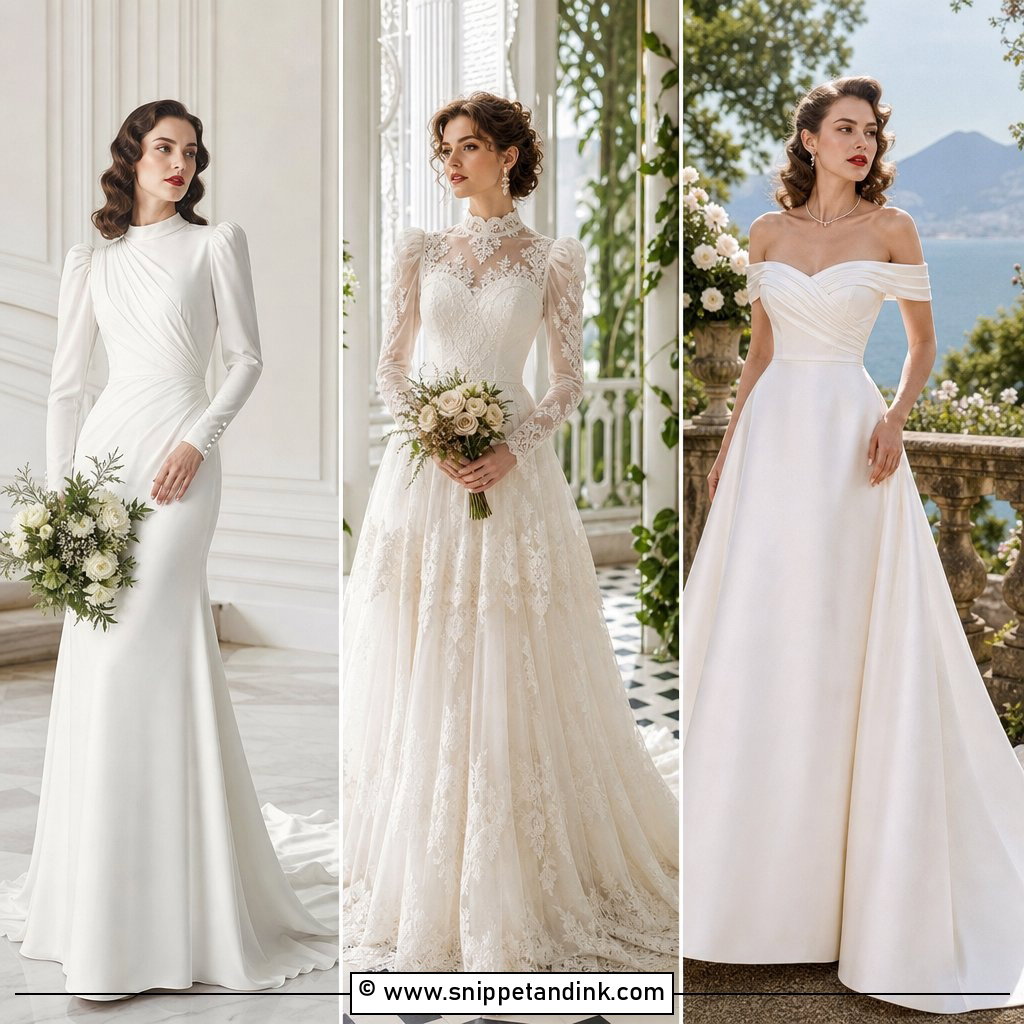
A high neck in lace is modest and graceful. The neckline has to sit right: too tight and it pulls when you turn, too loose and it gapes. Long sleeves complete it. Small or medium earrings work best since the neckline draws the eye up. A neat gele or low bun balances it, and nude or metallic heels keep the lace as the focus.
21. Nigerian Off Shoulder Wedding Dress With Wrapper
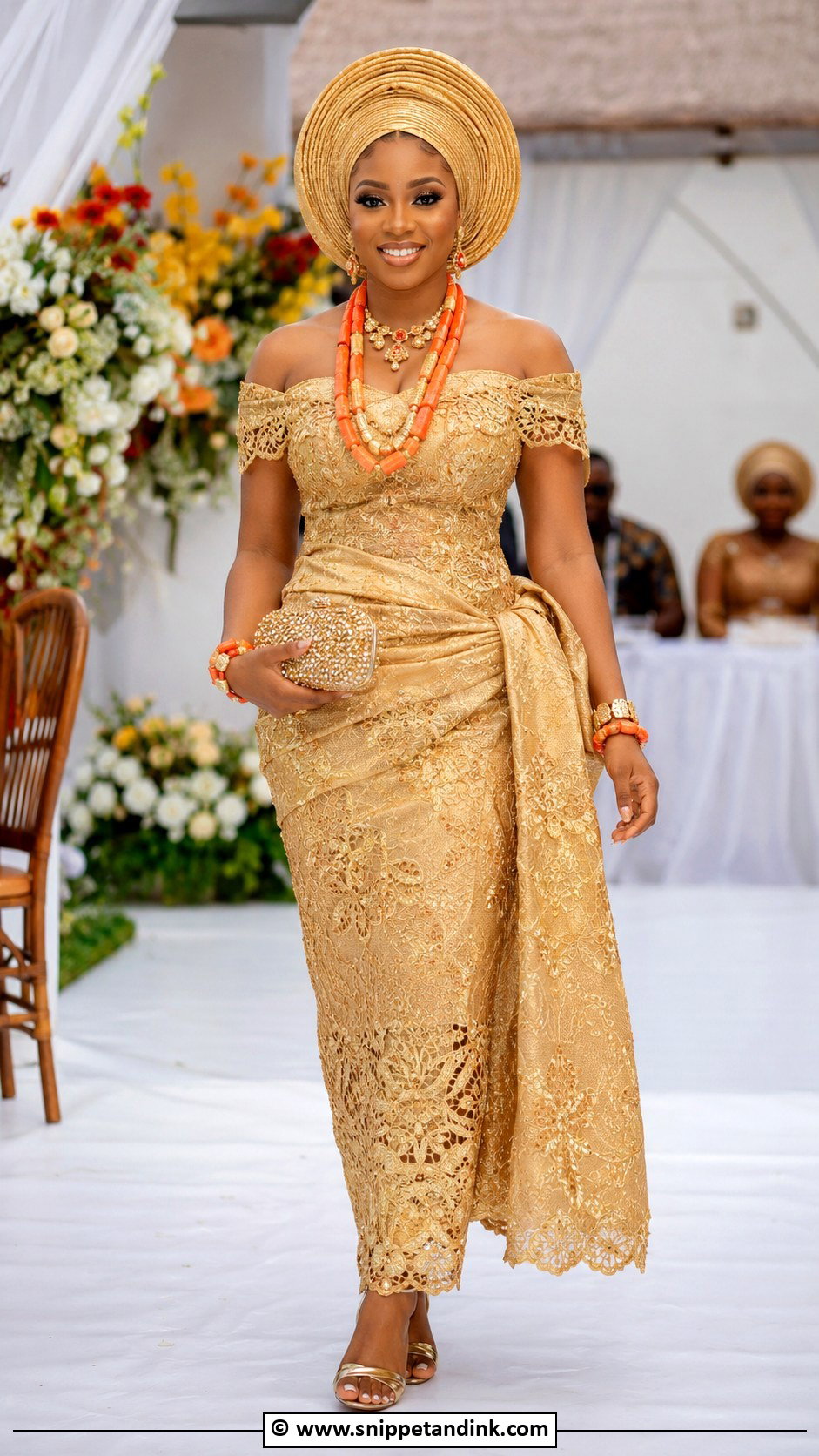
A Nigerian off shoulder wedding dress with wrapper combines a modern neckline with traditional structure. The off-shoulder top needs good grip tape or boning, especially if you’ll be dancing. Lace, George, brocade or aso oke all work for the wrapper. Add coral beads or gold jewelry depending on tradition. Keep shoes comfortable, since a heavy wrapper adds weight.
22. Nigerian Peplum Dress With Fitted Skirt
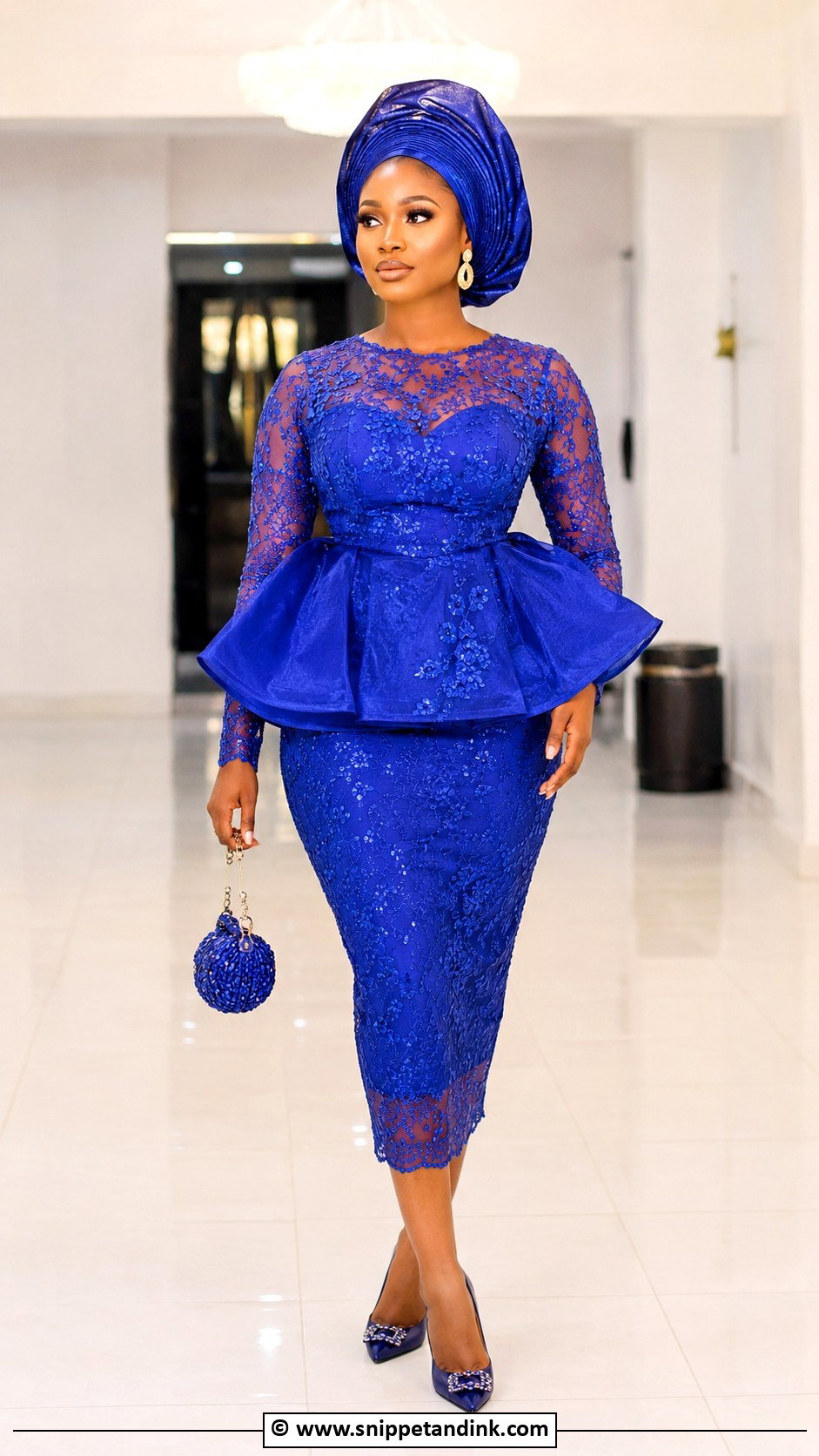
Peplum dresses define the waist and give coverage at the midsection; the fitted skirt keeps it polished. Lace, brocade, jacquard and Ankara all work. I’d check the peplum doesn’t flip up when you sit. A matching gele makes it formal. It suits bridesmaids, mothers and guests well.
23. Nigerian Tulle Wedding Dress With Beaded Bodice
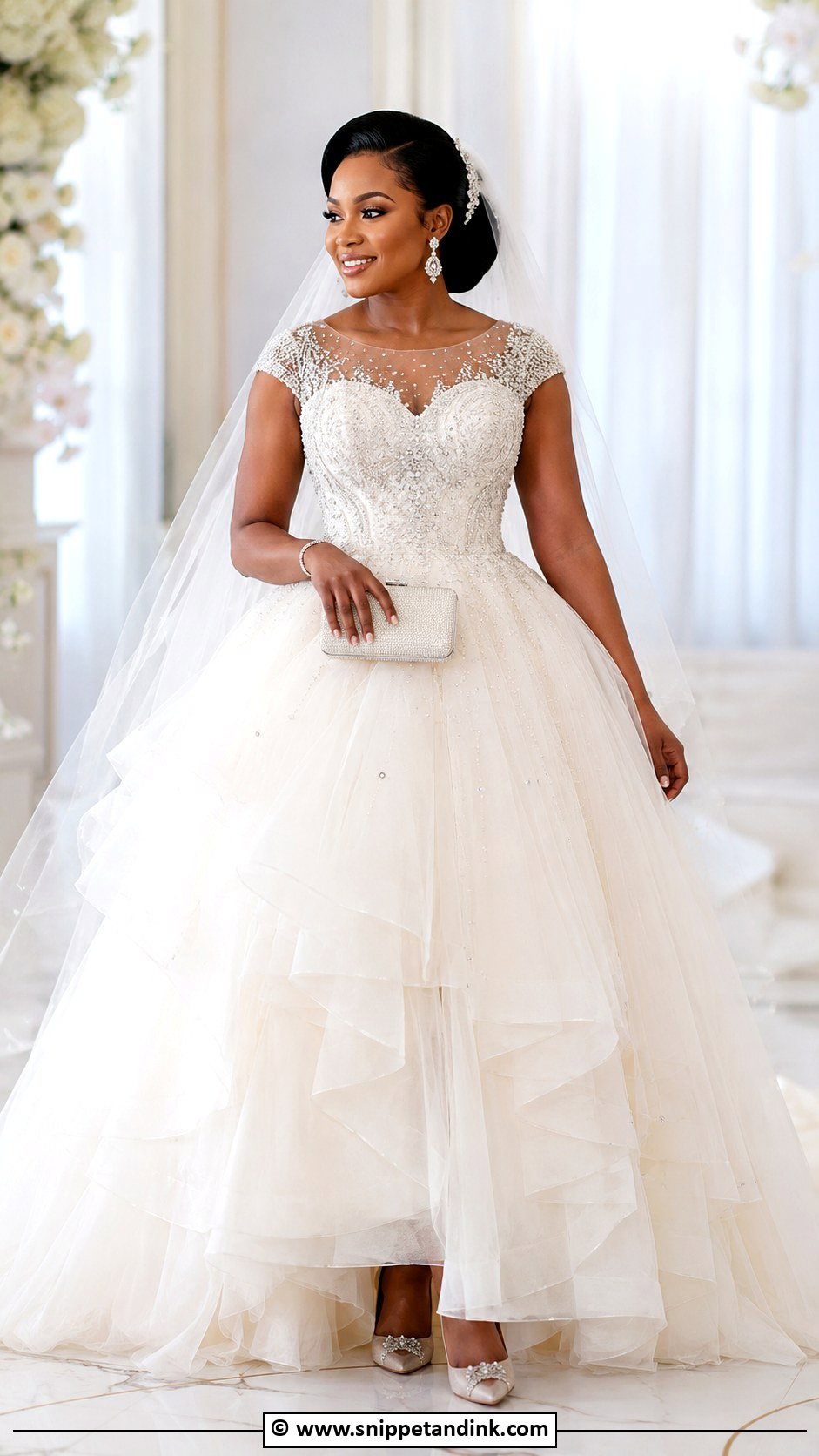
A beaded bodice on a tulle skirt gives structure up top and movement below. Too many tulle layers can make it heavy, so test the weight before committing. Ivory, champagne and blush look softest in tulle. Crystal earrings and a thin bracelet suit it. A veil pairs naturally, or a simple hairpiece keeps it fresh.
24. Nigerian Adire Wedding Dress With Headwrap
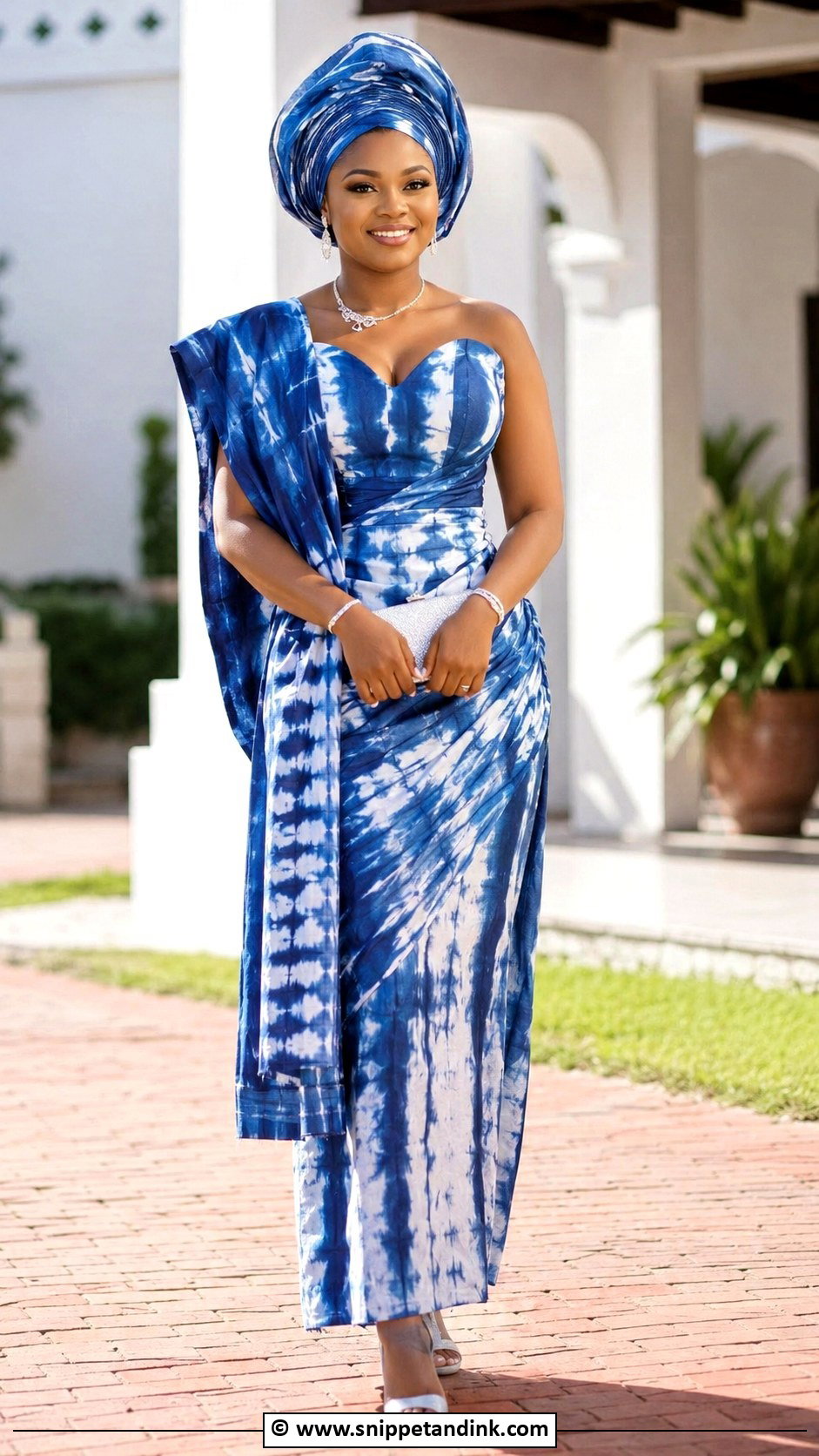
Adire is hand-dyed, and its patterns are irregular by nature, so the dress shape should be clean so the cloth can speak. A wrap gown or column dress works. Indigo and white is classic. Hand-dyed indigo can rub off on light skin or fabric when new, so I always have the cloth washed once before sewing. A matching headwrap gives a strong identity. It suits introductions and creative traditional looks.

25. Nigerian Gold Wedding Dress With Matching Gele
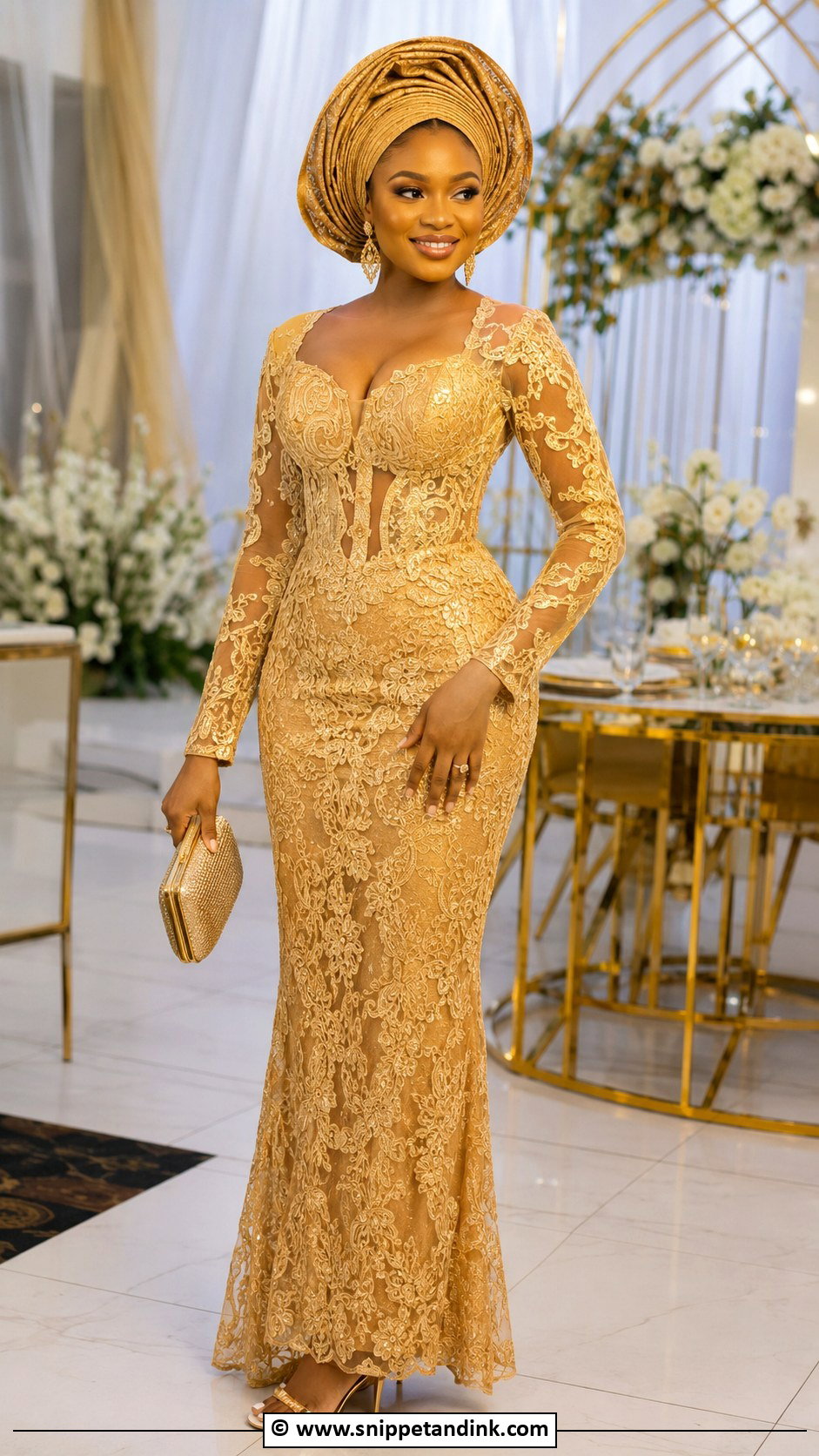
Gold is festive and always reads well on camera. The shade matters: champagne gold flatters lighter skin, antique gold warms deeper skin. A fitted gown or structured wrapper set both look regal. Match the gele closely for a polished, unified finish, and keep jewelry in the same color family. I’d choose matte gold accessories if the fabric is already shiny.
26. Nigerian Burgundy Wedding Dress With Coral Beads
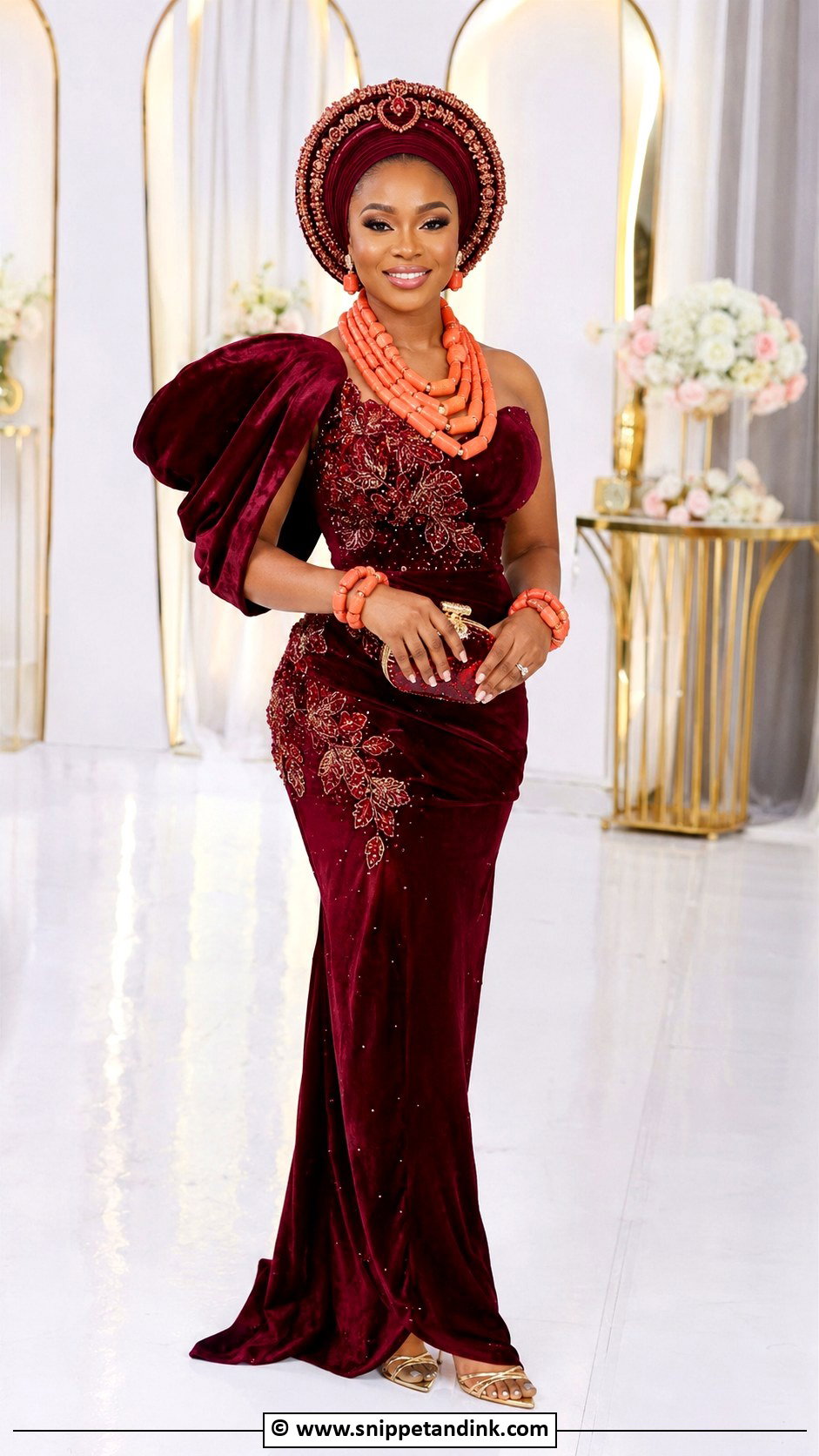
A Nigerian burgundy wedding dress with coral beads is rich and traditional. Burgundy is deep and formal, and coral brightens it. Lace, velvet, George or satin work. A fitted dress with a slight train or a wrapper and blouse both suit. The coral needs to be the brightest thing in the outfit, so keep shoes and clutch gold or neutral.
27. Nigerian Green Aso Oke Wedding Dress
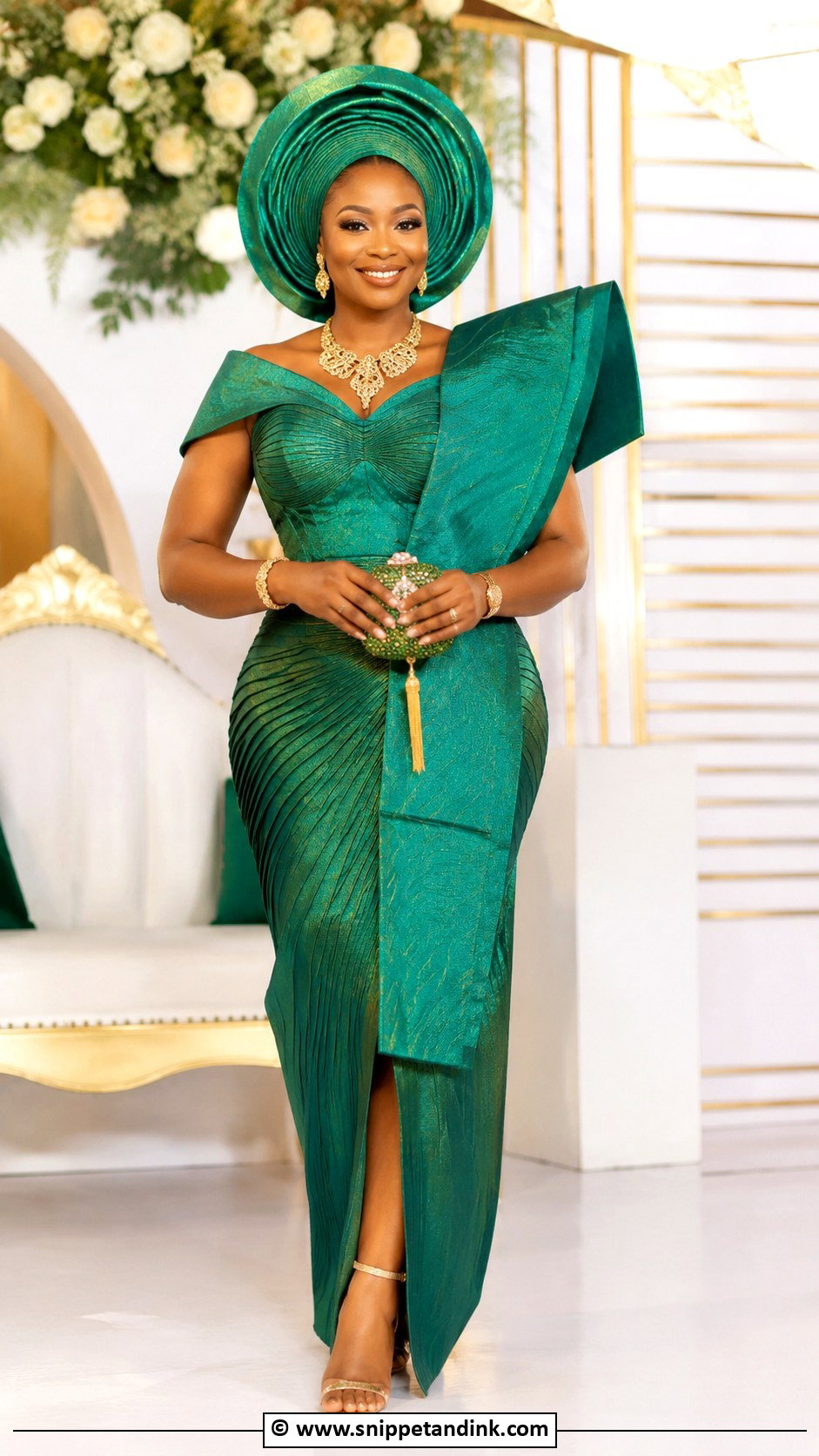
Green aso oke can be emerald, olive, sage or forest, and each sets a different mood. A structured gown or iro and buba both work. A matching gele keeps the look unified. Gold jewelry warms the green; silver makes it cooler. Keep makeup in bronze or peach tones, since green can bring out redness in the skin.
28. Nigerian Pink Lace Wedding Dress
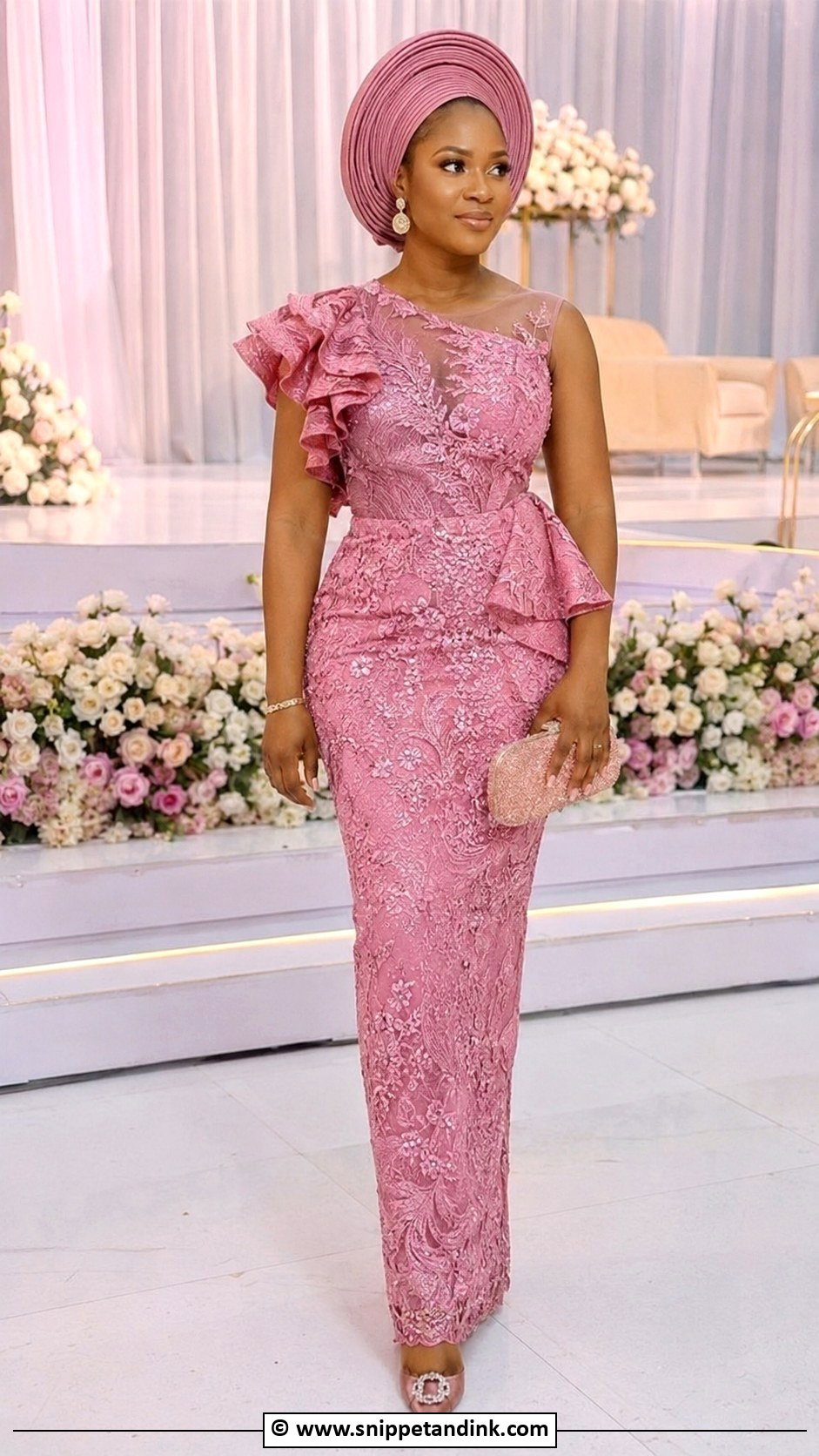
Pink lace ranges from blush to bright pink. Blush can wash out deeper skin tones in photos, so I’d test the shade by a window before buying. Lace adds texture, beads make it more formal. A mermaid or peplum set suits pink. Pearl or rose gold accessories and a matching gele finish it. It works for brides, bridesmaids or reception outfits.
29. Nigerian Blue Wedding Dress With Silver Accessories
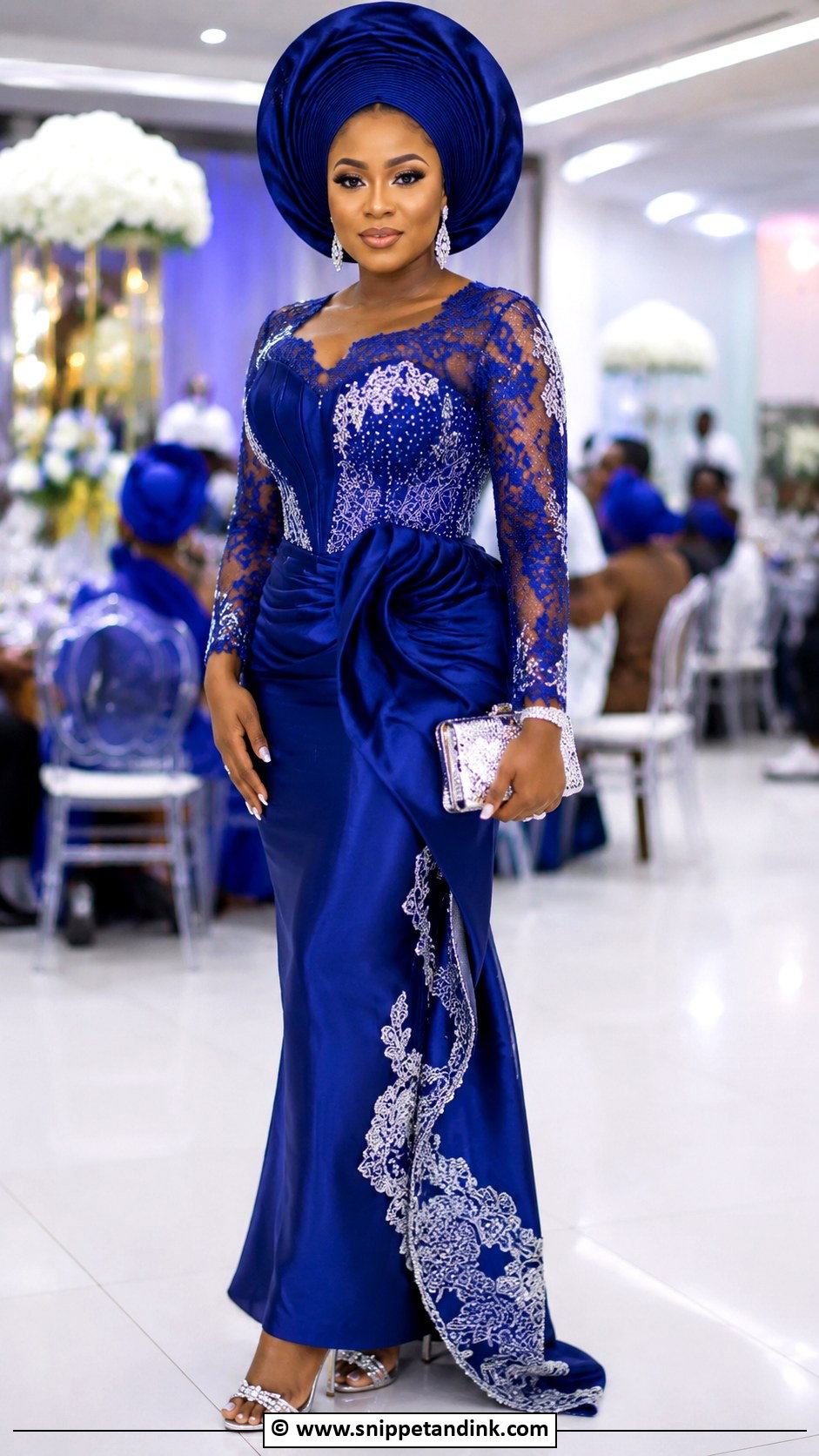
Royal blue is bold and ceremonial; powder blue is softer. Lace, satin, tulle and aso oke all hold blue well. Silver heels, a crystal clutch and sparkling earrings suit the cool tone. A matching gele looks traditional, a silver headpiece more modern. Blue reads well both indoors and outdoors.
30. Nigerian Plus Size Wedding Dress With Structured Bodice
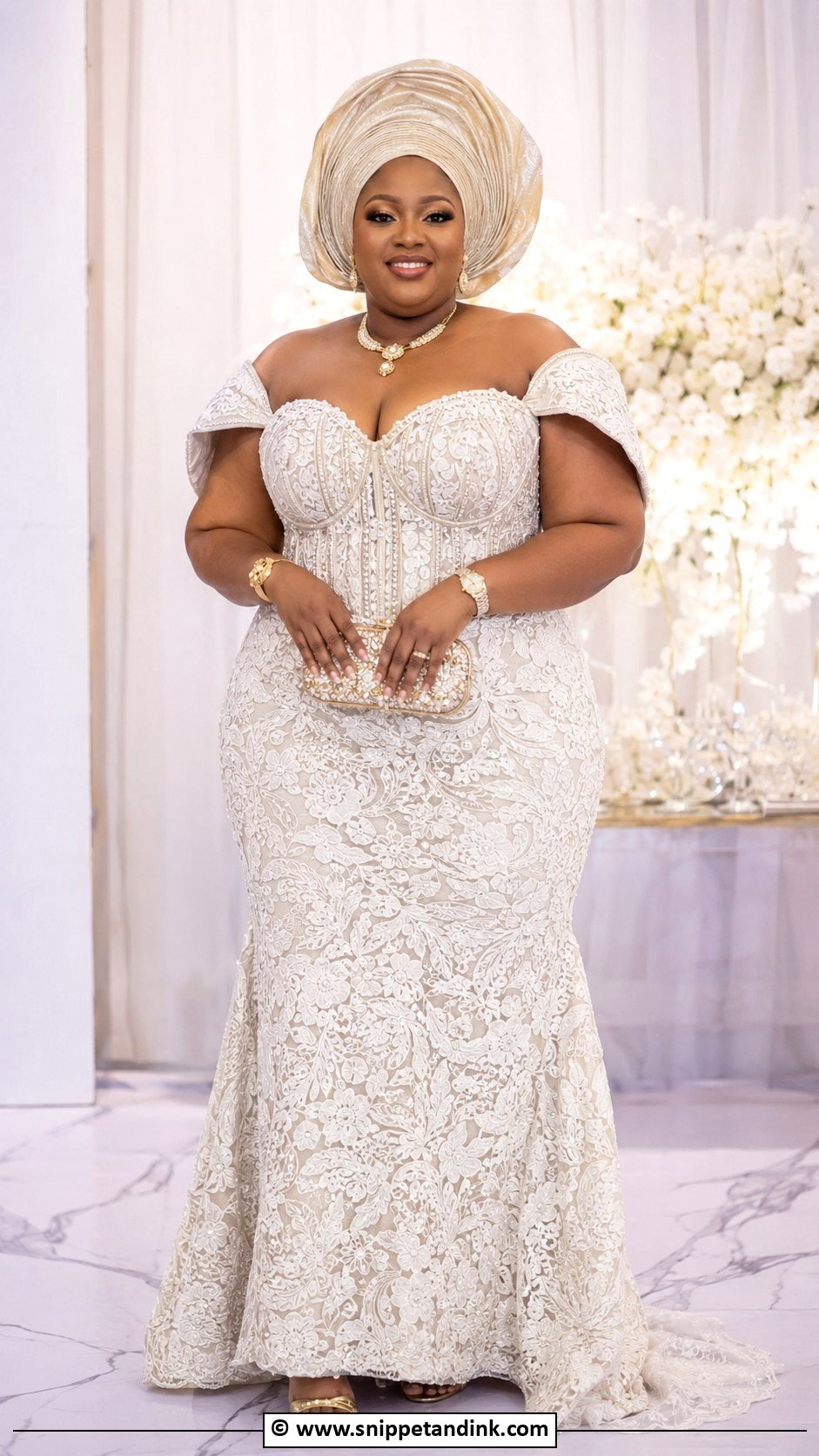
A Nigerian plus size wedding dress with a structured bodice is about support and comfort first. Proper boning and a built-in bra mean you’re not adjusting all day. Lace, satin, crepe and aso oke all work when tailored correctly. A V-neck or sweetheart neckline flatters. I’d focus on fit and how you move rather than trend. A balanced gele and comfortable heels let you celebrate freely.
Giving Your Tailor Enough Fabric and Enough Time
Most of these looks are custom-made, which means the fabric and the tailor’s schedule decide your timeline. Lace is commonly sold in five-yard pieces, and a gown with a train can need more than one, so buy all the fabric at once from the same batch to avoid dye differences. Aso oke sets are woven to order and often come as gele, iro and ipele pieces, which takes time, so I’d start several months ahead.
Book a first fitting early and expect at least two more. Bring your actual shoes and undergarments to each one. For heavy fabrics like aso oke or George, ask the tailor to line the bodice with something soft and breathable, because these cloths can be warm and scratchy against skin over a long day. Collect the finished outfit at least two weeks before the wedding so there’s time for small fixes.
Guests, Aso Ebi and Staying Out of the Bride’s Color
Several looks here, the peplum set, the two-piece lace and the sequin gown, are worn by guests as often as by brides. At many Nigerian weddings the family chooses an aso ebi fabric for relatives and close friends, so the first thing I tell a guest is to ask whether there is one and how to buy it, because it often sells out or has an order deadline.
If you are sewing aso ebi, you are free to pick your own style, and that is where the tailoring shows. If there is no aso ebi, I’d avoid white and the exact shade the bride has announced, and keep the gele smaller than hers. A guest outfit should still let you sit through a long ceremony, eat, and dance when the couple’s entrance music starts.
Every Ceremony Gets Its Own Fabric
Nigerian wedding fashion is never one look. It can be traditional, modern, modest or dramatic, and each event in your celebration may call for a different fabric. Aso oke, lace, George, Ankara, Adire, satin, velvet and tulle all have their place. Plan the whole wardrobe at once, invest in good tailoring and comfortable shoes, and choose colors that make you glow. When each outfit is fitted with care and suits its moment, the photos take care of themselves.
You'll Like These Ideas:





Leave a Reply