
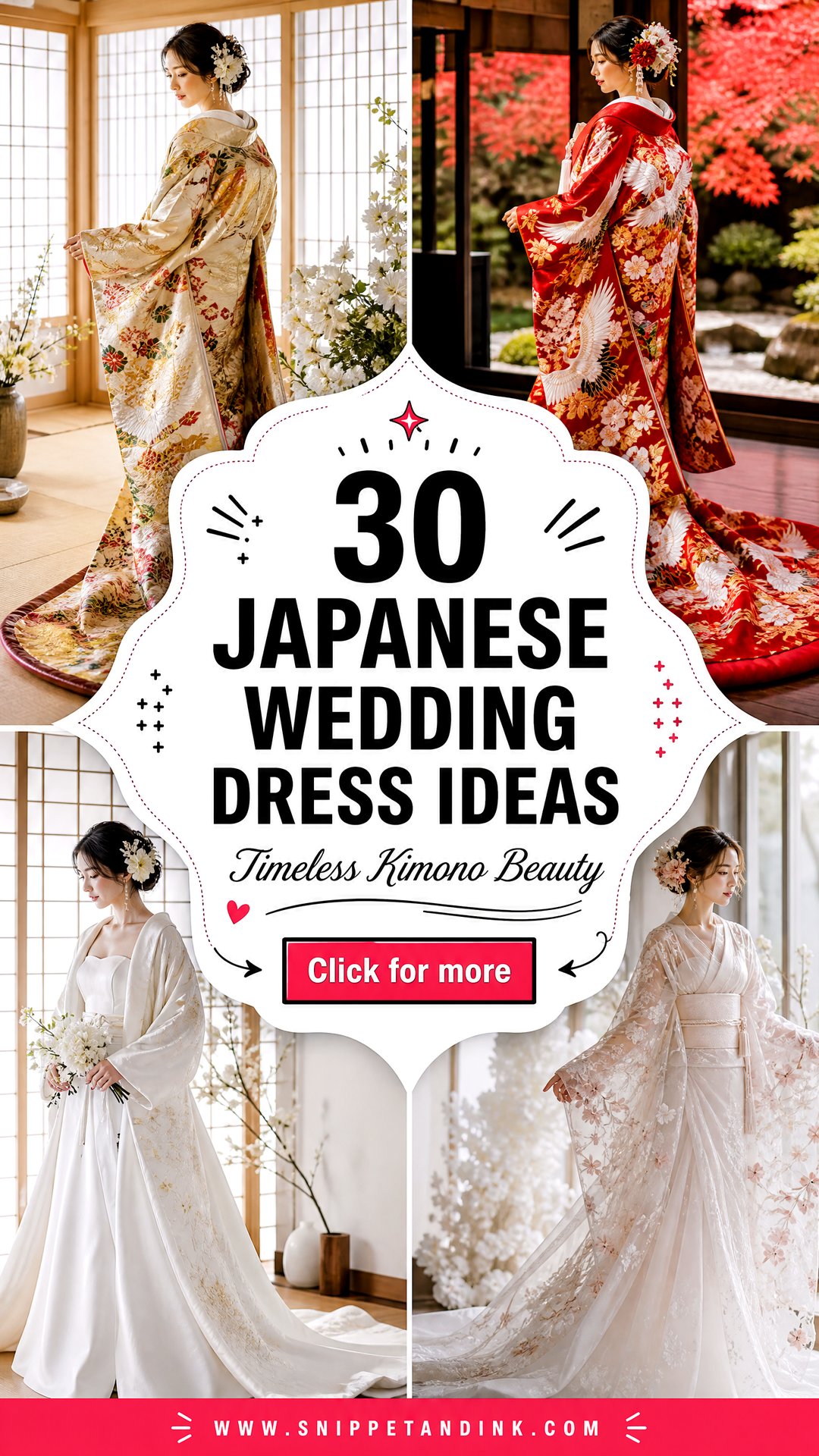
A Japanese bride often wears more than one outfit in a day. The formal Shinto ceremony usually calls for a white shiromuku, and the reception brings a change of colour (called iro-naoshi) into an iro uchikake, a hikifurisode or a Western gown. Plenty of brides now also mix Japanese motifs with minimalist dresses, using embroidery, organza or an obi-style sash. When I plan these looks, the first question is not colour but logistics: how many changes, how long each takes, and how far the bride has to walk. The thirty ideas below run from the full white kimono to modern kimono-inspired gowns.
Planning a Wedding Day Around a Kimono Dresser
A bridal kimono is not something you put on yourself. It is dressed onto you by a trained kitsuke dresser, layer by layer, and that shapes the whole morning. When I plan a day with a shiromuku or uchikake, I build the timeline around the dresser before anything else.
- Hair or wig goes first. The traditional bridal hairstyle or wig has to be finished before the collar layers go on, because there’s no room to work once the kimono is closed.
- Expect padding. Kimono are meant to fall in a straight column, so dressers use towels or padding at the waist and chest to flatten curves. It’s normal, and it’s why the obi lies smoothly.
- Allow real time. A full bridal kimono often takes an hour or more to dress, and a colour change after the ceremony needs its own block in the schedule.
- Plan the bathroom before you’re dressed. Once the layers are on, you’ll need help, so go just before dressing and again before the uchikake goes on.
Most brides outside Japan rent rather than buy, often through a studio that supplies the dresser too. If you rent, ask what’s included: the inner layers, obi, tabi, zori and hair ornaments are sometimes priced separately.
1. Shiromuku Wedding Kimono
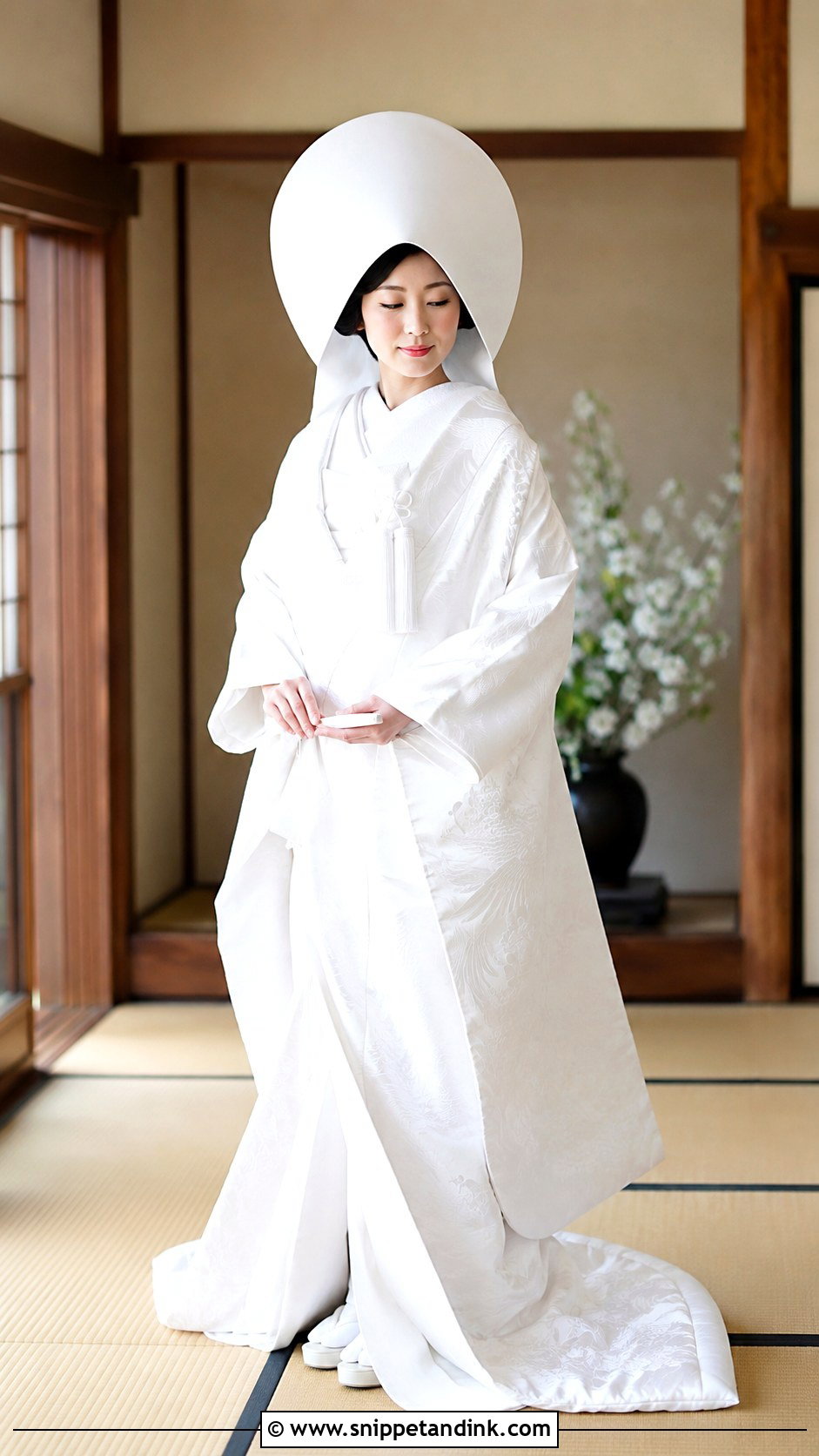
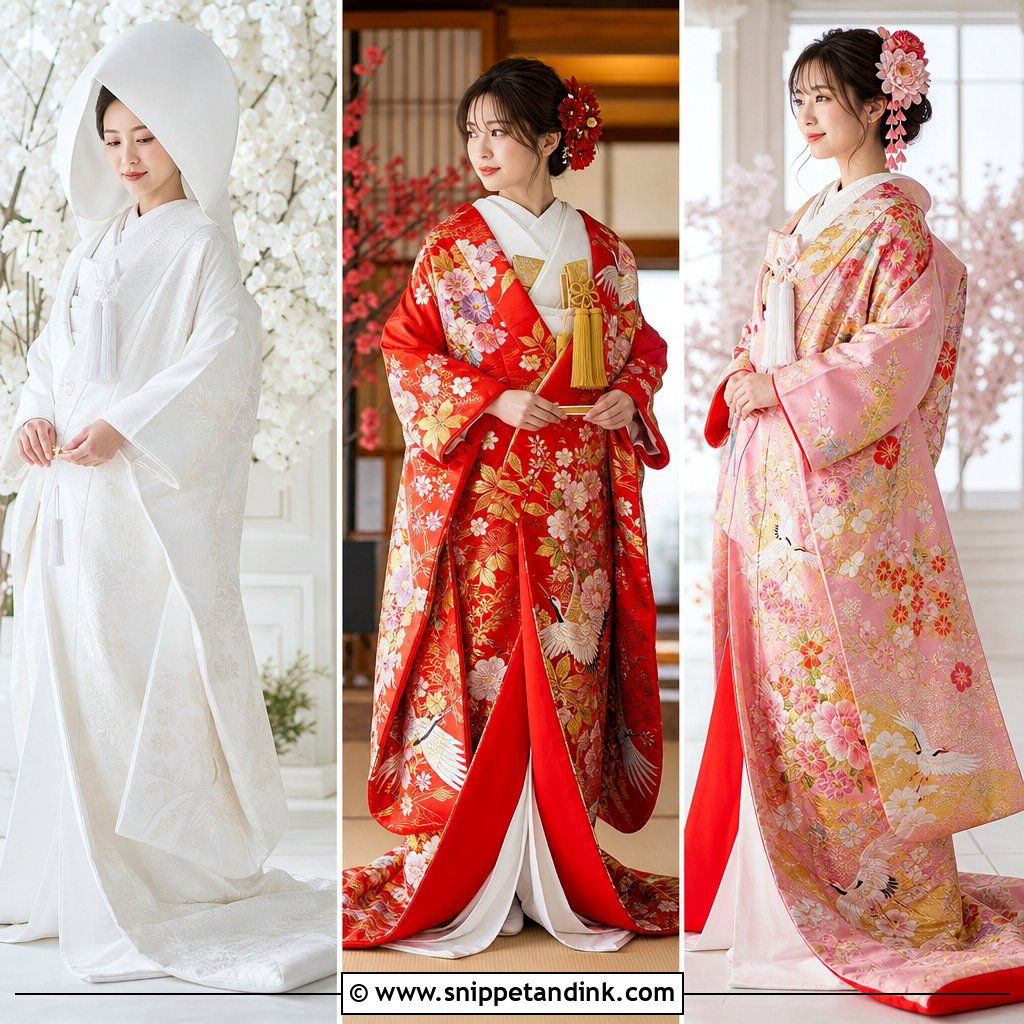
Shiromuku is white from top to toe: the uchikake robe, the kakeshita kimono under it, the obi, tabi socks and zori. It is the most formal bridal outfit in Japan and the one most shrines expect. Many brides pair it with a wataboshi hood or tsunokakushi headpiece. What surprises brides is the weight; a full uchikake with its padded hem is heavy on the shoulders, and you’ll want to sit when you’re not needed. Makeup should be soft with defined brows, because white silk bounces light straight back onto the face.
2. Shiromuku With Wataboshi Hood
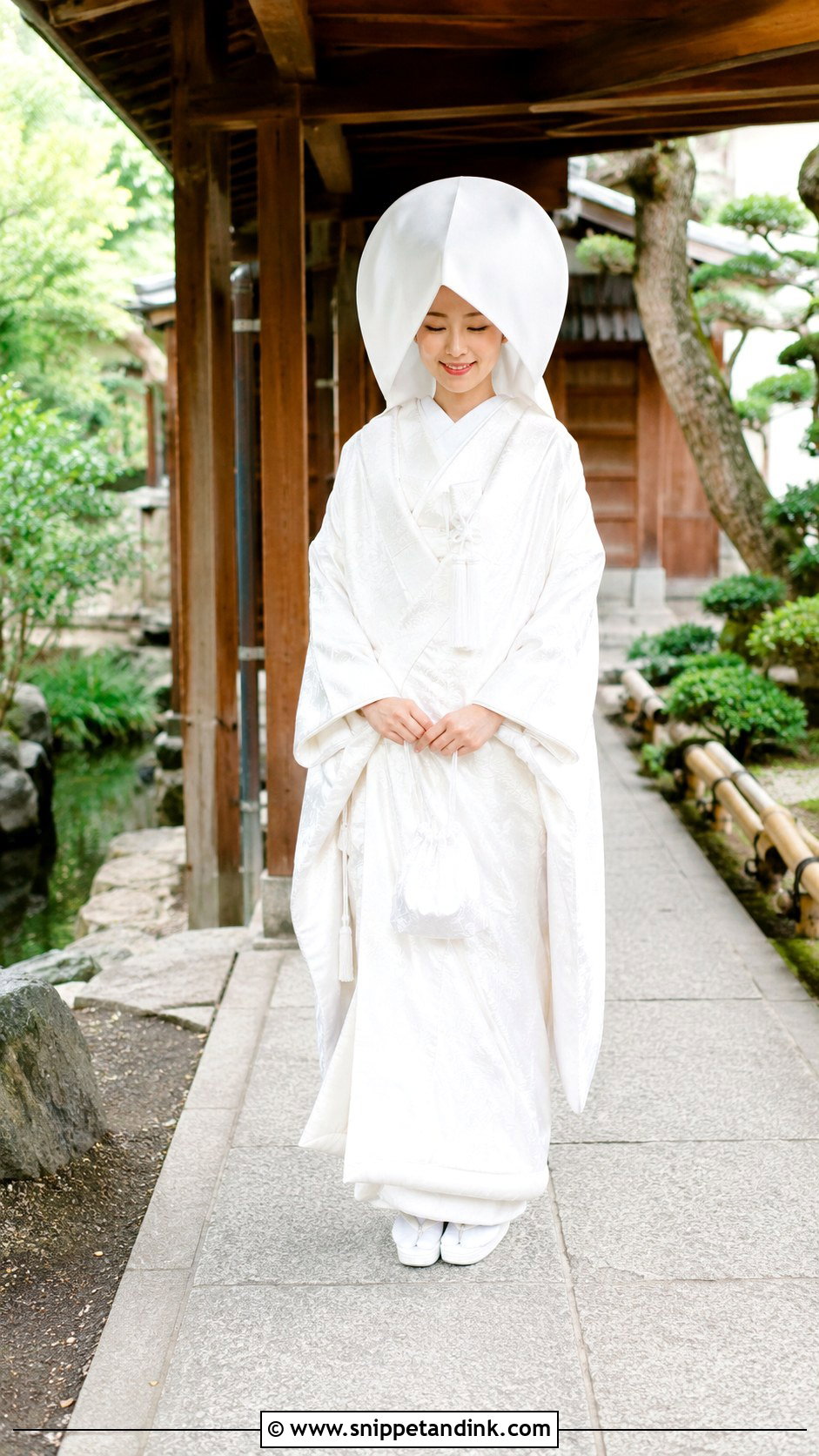
The wataboshi is the rounded white hood worn over the bridal wig or updo, and it is traditionally reserved for the ceremony itself. It hides most of the face from the side, which gives that quiet, inward look in photos. Because the hood blocks peripheral vision, I always have someone walk beside the bride on steps and stone paths. For portraits, a plain background and good posture do more than any accessory. Keep the zori and small bridal bag white so nothing breaks the line.
3. Shiromuku With Tsunokakushi Headpiece
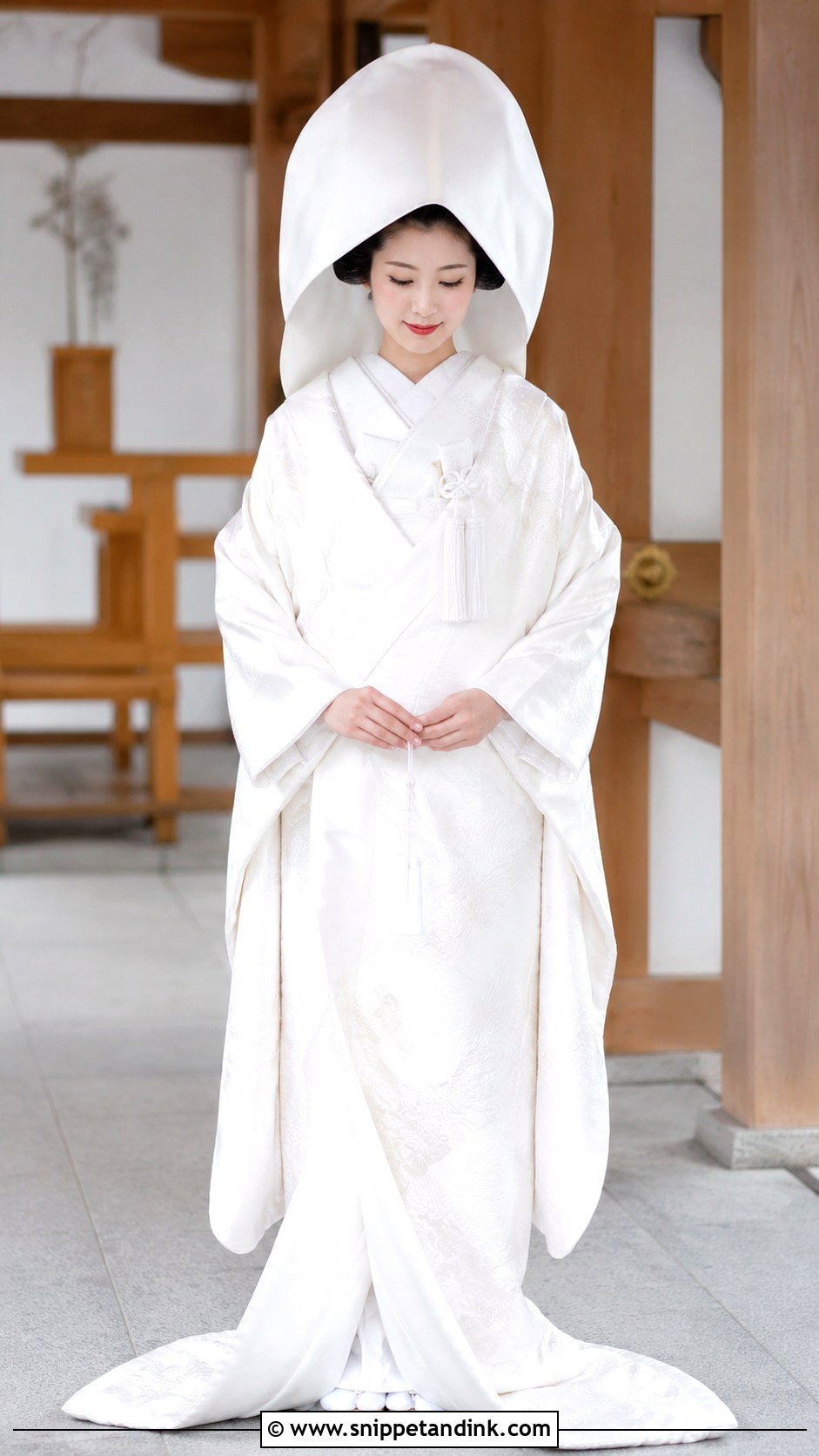
The tsunokakushi is a band of white fabric worn over the traditional bridal hairstyle, sitting lower than a wataboshi and leaving the face open. If you want clear portraits of your expression during the ceremony, this is the headpiece I’d pick. It needs a proper bridal updo or wig underneath, so book a hairdresser who has done one before; a modern bun gives the band nothing to hold onto. Jewellery should stay minimal. The kimono, obi and headpiece already say everything.
4. White Uchikake Wedding Kimono
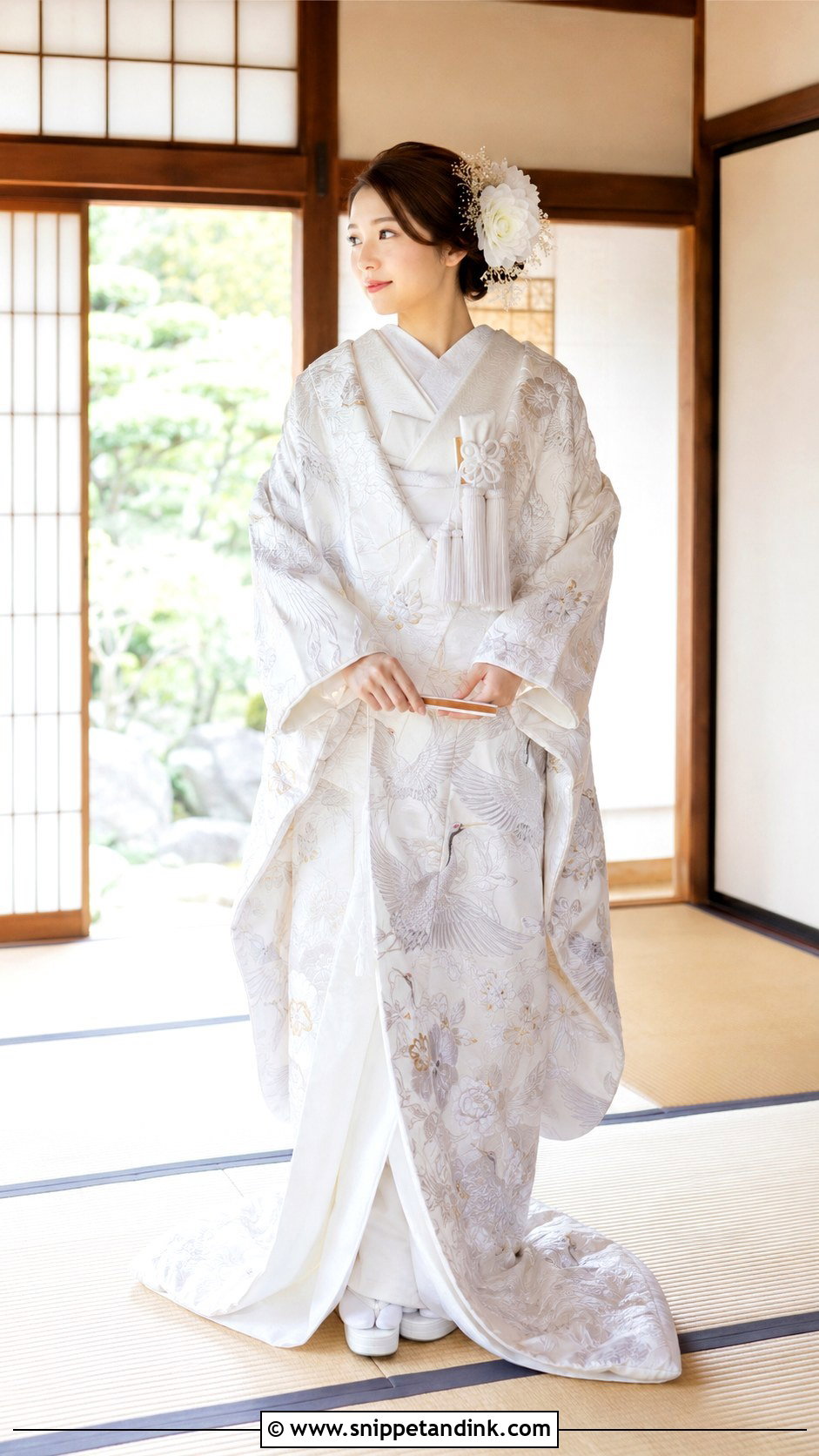
A white uchikake is not always plain. Many are woven with cranes, clouds, pine or waves in white-on-white silk, so the pattern only shows when light rakes across it. That is why I like it for close-up portraits: the photographer can bring out the weave with side lighting. Wear it with a white kakeshita, white obi, tabi and zori. It suits a bride who wants the formality of shiromuku with a little more texture to look at.
5. Red Iro Uchikake Wedding Kimono
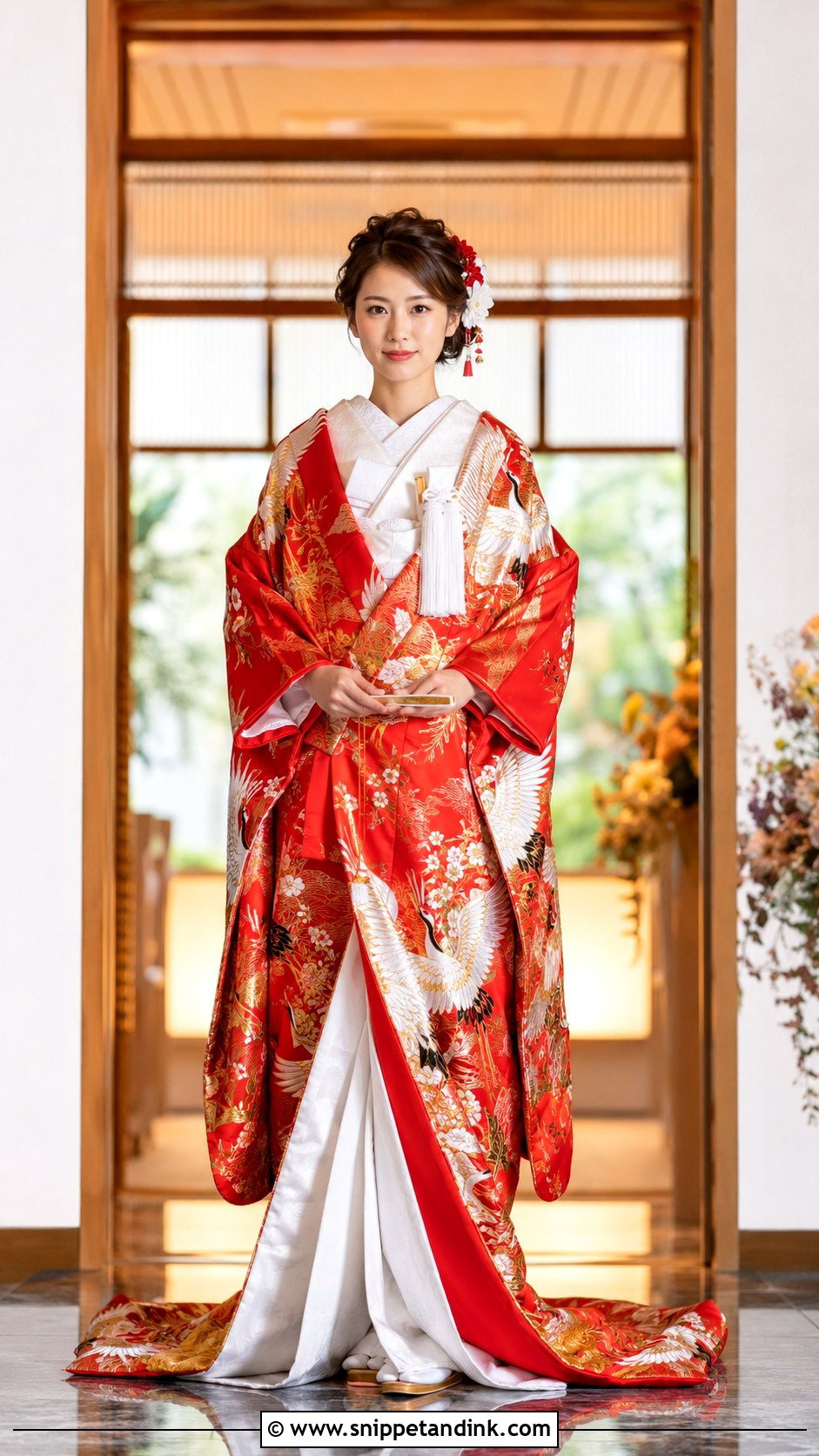
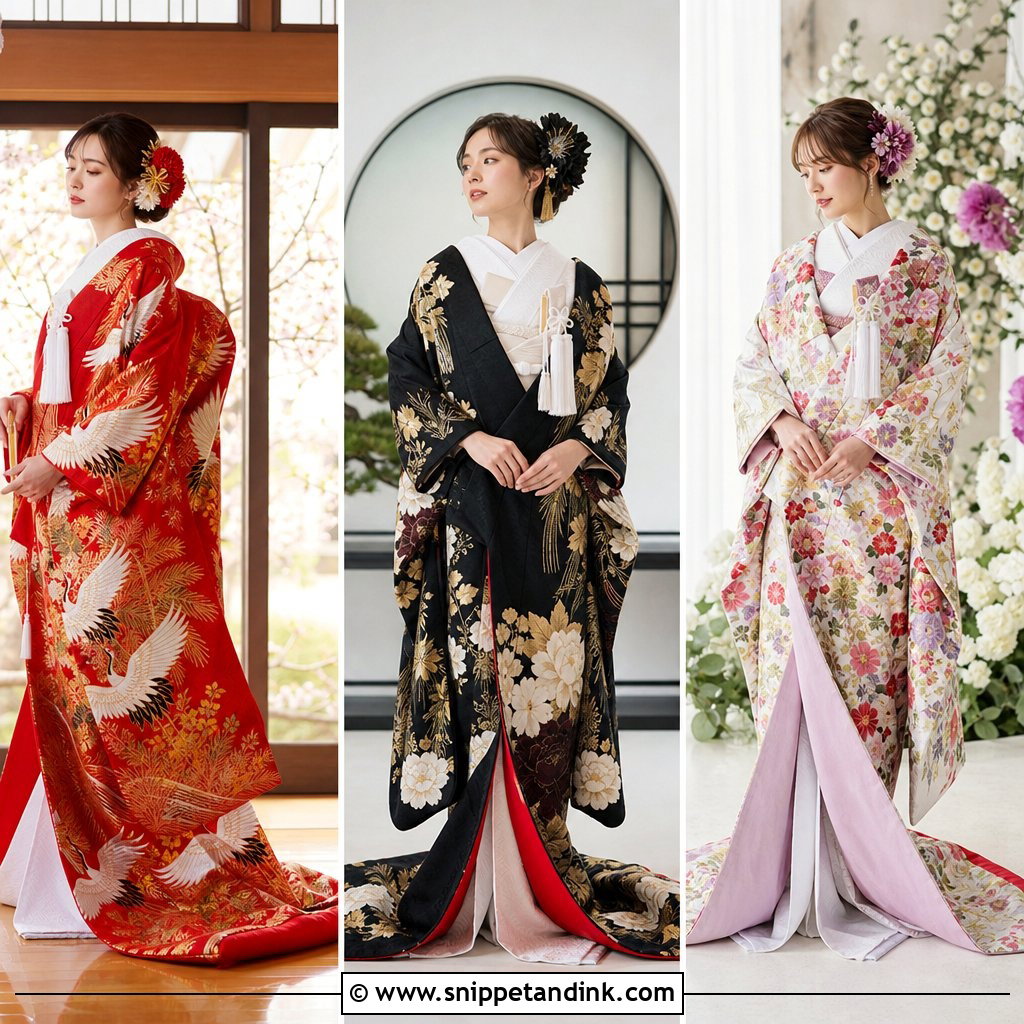
Red is the classic colour for the iro-naoshi change after the ceremony. A red iro uchikake usually carries gold embroidery, cranes, peonies or fans, and since it’s worn open over the inner kimono, the layers show as you move. Pair it with a coordinating obi, white tabi and gold-accented zori. One practical point: red uchikake are often heavily embroidered and heavier than the white one, so I time the change so the bride isn’t standing for long right after. Hair can stay in a traditional updo or soften into a bun with floral pins.
6. Gold Iro Uchikake Wedding Kimono
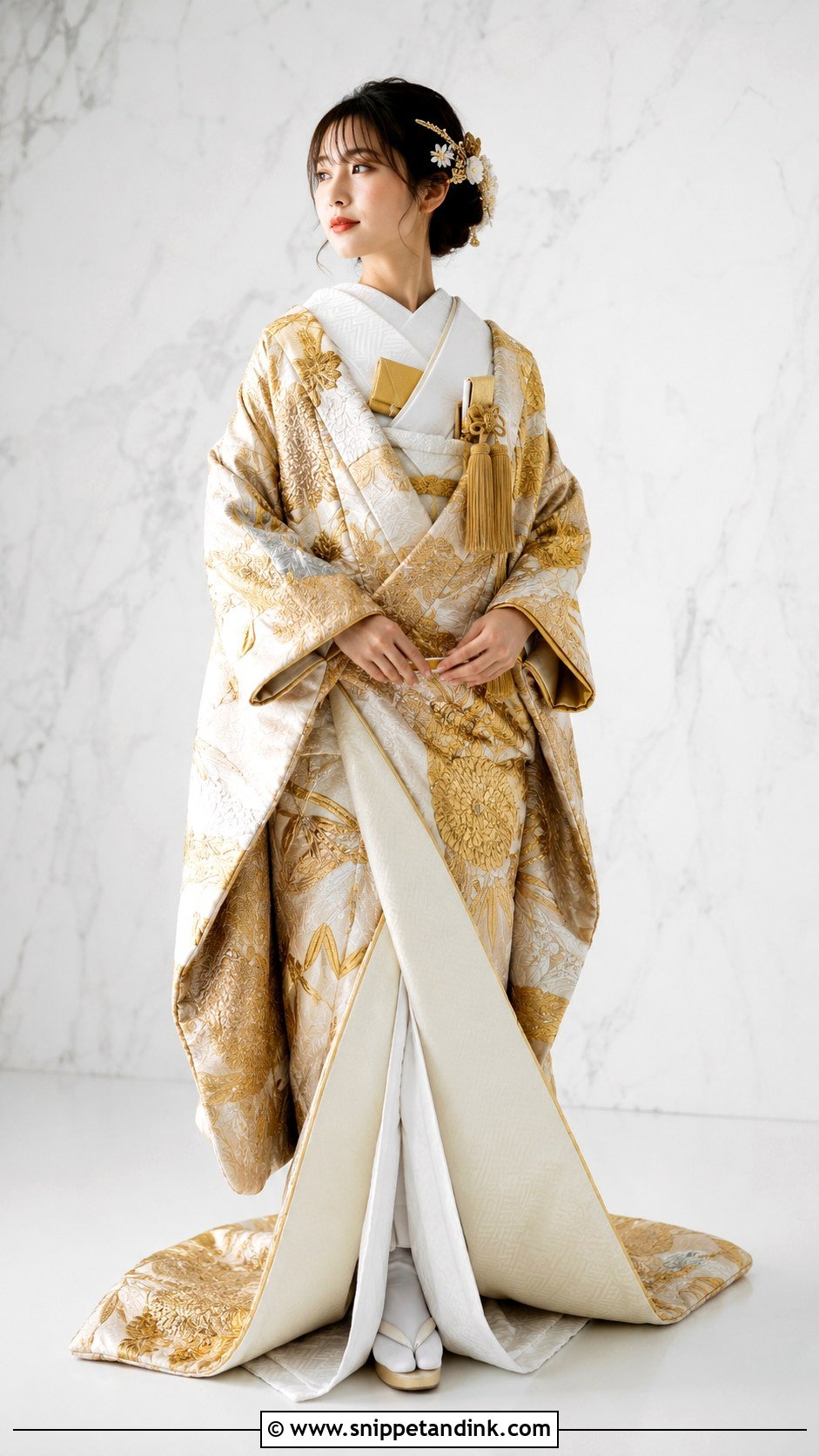
Gold uchikake look regal in natural light and can turn brassy under warm tungsten bulbs, so I’d ask the photographer where the portraits will happen before choosing one. Inner layers in white, ivory or red keep it balanced. Crane, pine, plum blossom or fan patterns are common. With this much going on in the fabric, keep the hair ornaments small and the zori simple. It is a strong choice for a reception entrance or a studio session.
7. Black Iro Uchikake Wedding Kimono
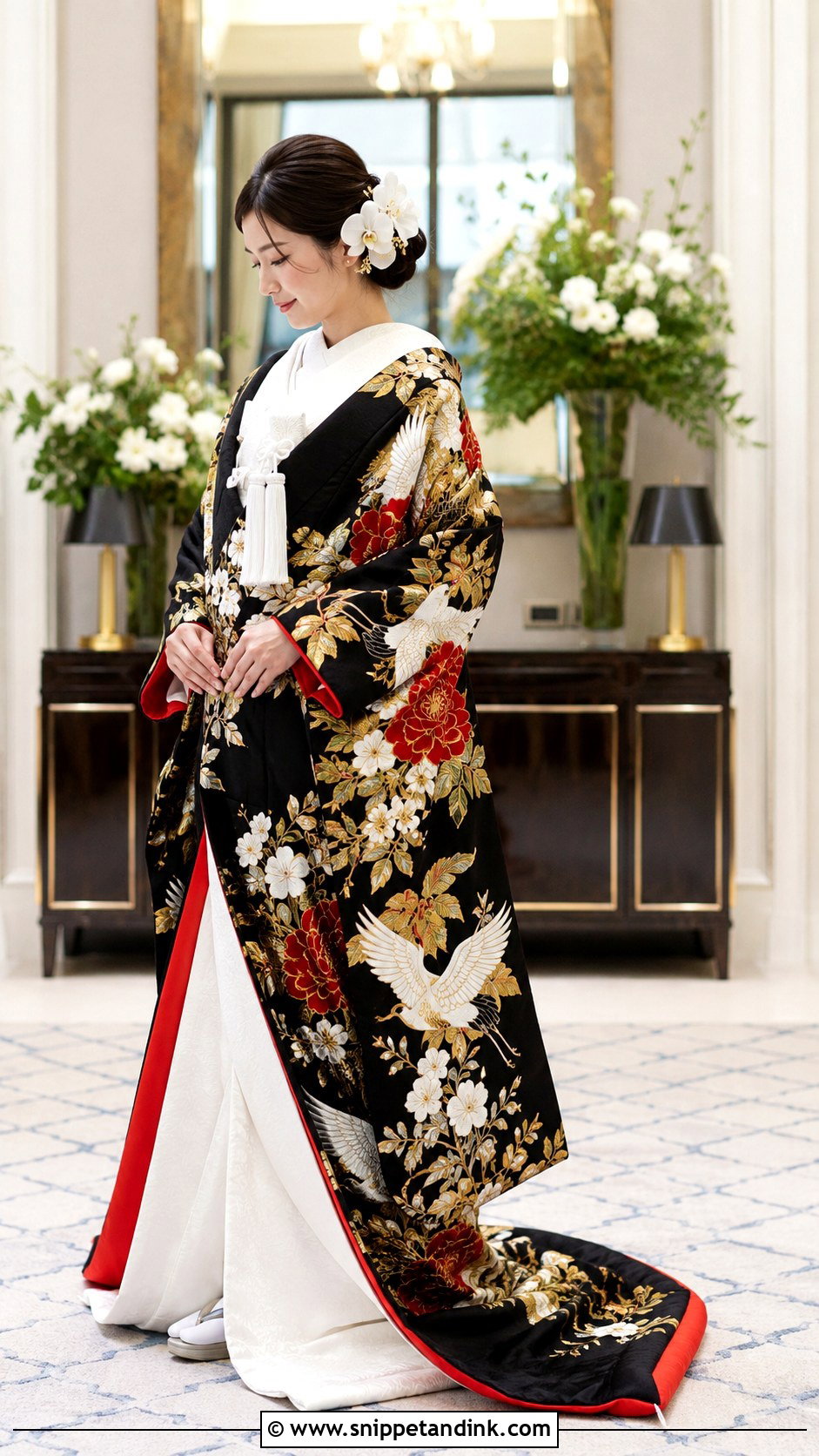
Black uchikake surprise brides who think of black as mourning colours. Covered in gold, red or multicoloured embroidery, a black base is one of the most formal and dramatic bridal robes there is. Cranes, flowers and flowing water motifs stand out sharply against it. Pair it with a white or red kakeshita and a structured obi. I keep makeup clean rather than heavy here; dark fabric already adds contrast, and a strong lip on top can tip the look into costume. Evening receptions and formal portraits suit it.
8. Blue Iro Uchikake Wedding Kimono
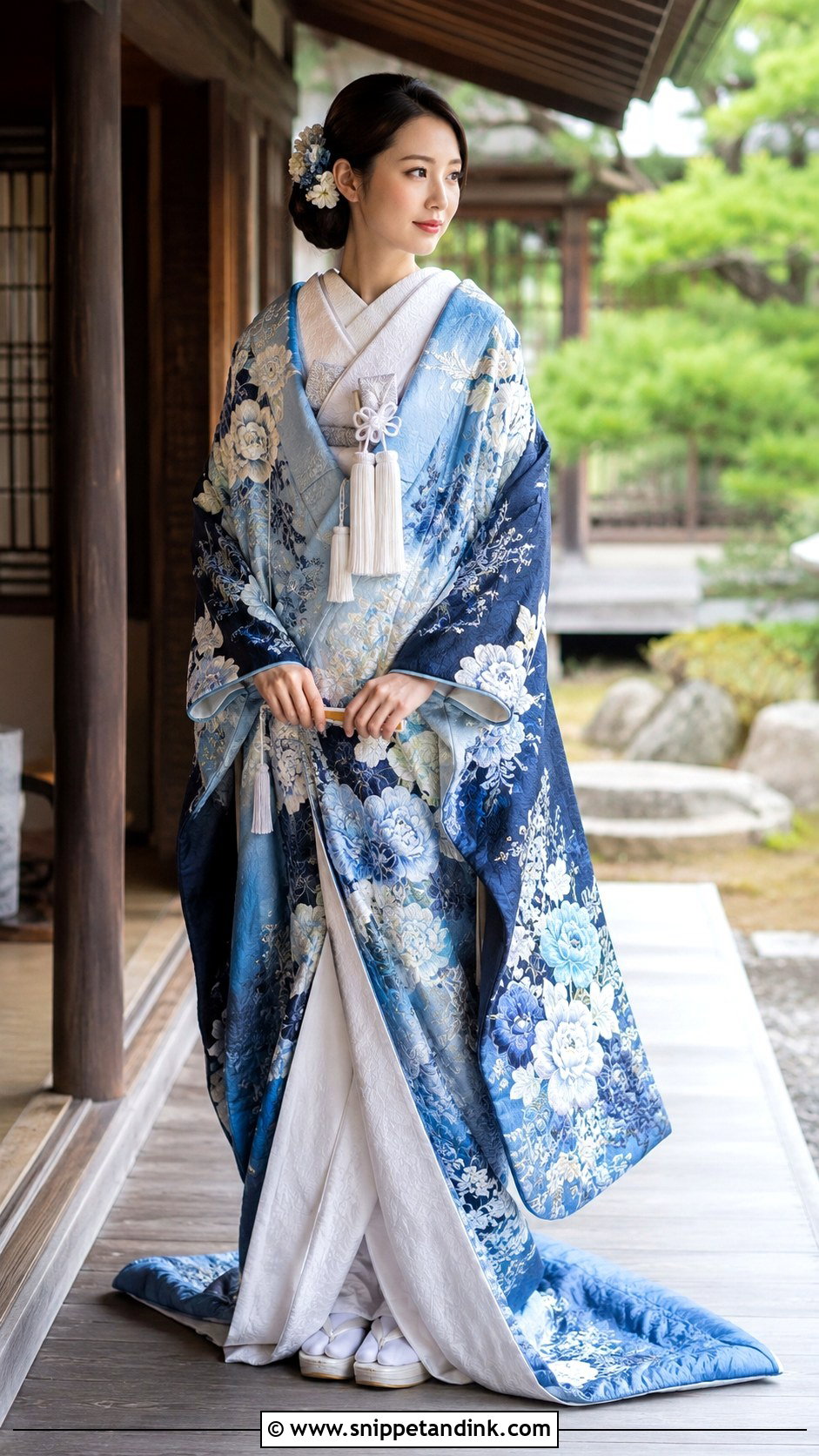
Blue sits quieter than red. Deep navy reads formal; pale blue reads soft. Embroidery in silver, white or pastel florals adds depth without busyness. Style it with a white inner kimono, a coordinating obi and simple zori. Pale blue can pick up a green cast in shade under trees, so for a garden shoot I’d suggest the deeper tones. A sleek bun with small floral pins finishes it.
9. Pink Iro Uchikake Wedding Kimono
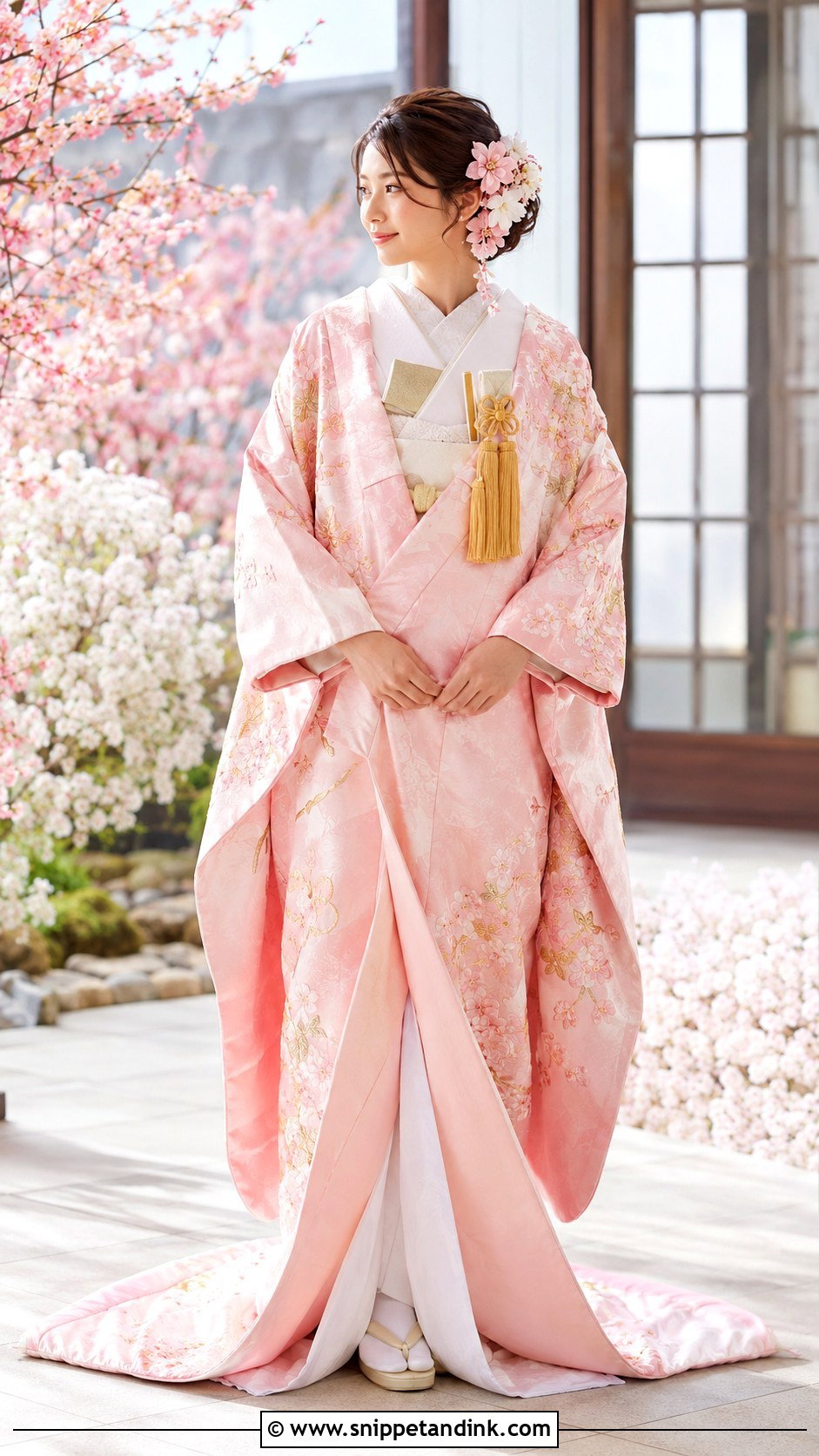
Pink uchikake run from blossom pale to deep rose. Pale pink is delicate in person but can disappear against a bride with fair skin in photos, so I usually steer brides toward a mid rose with white inner layers for definition. Floral embroidery and gold thread keep it festive. Tabi, zori and a small bridal bag complete it. It suits spring, cherry blossom portraits and a warm reception change after a formal white ceremony.
10. Green Iro Uchikake Wedding Kimono
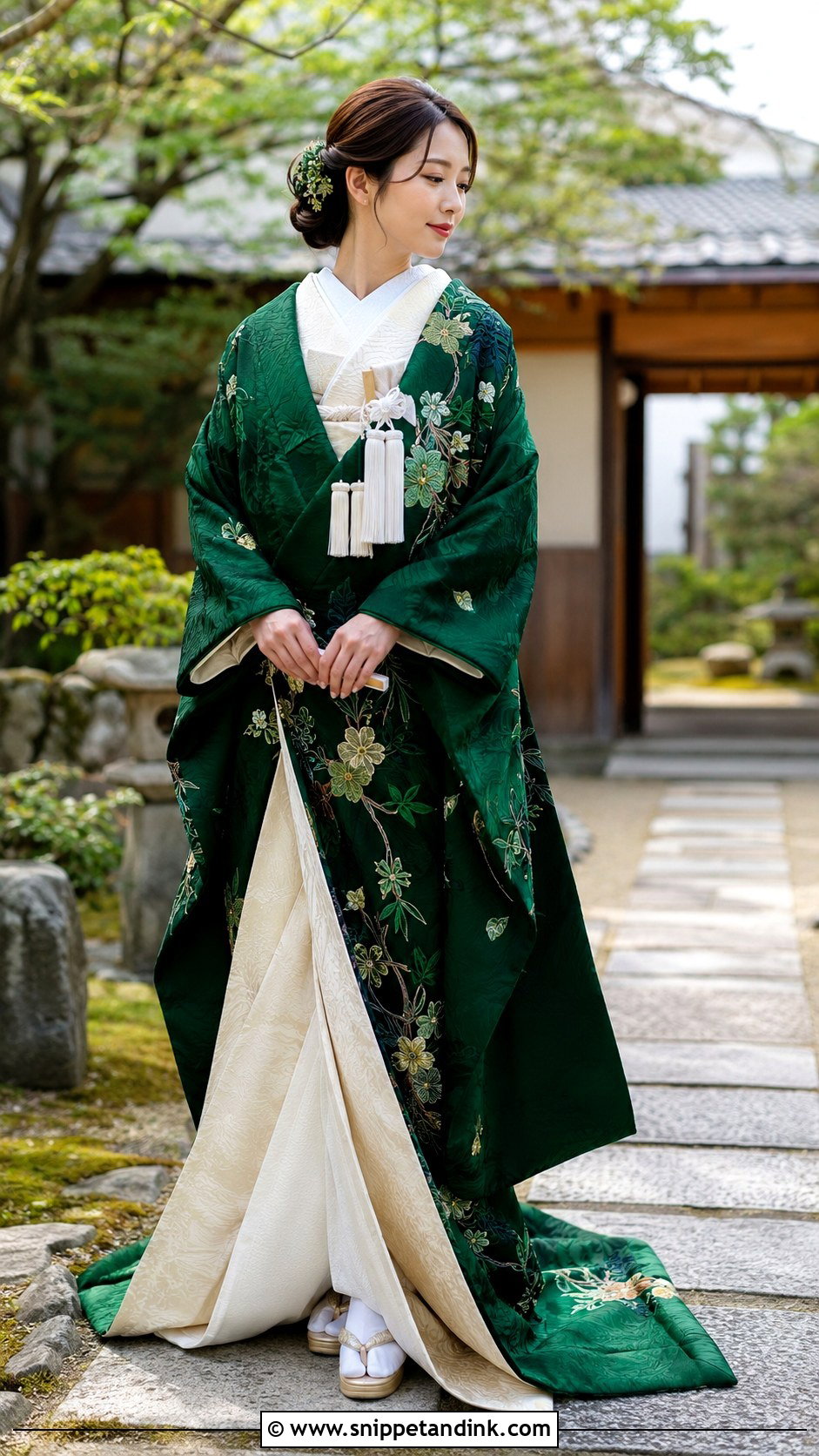
Green has a range: emerald is bold and formal, moss feels earthy, sage soft. Gold embroidery of cranes, pine or bamboo pairs well with all three. A light inner kimono and a structured obi keep it crisp. I watch the face with green, because deep green next to the skin can make you look tired in photos; a little more blush and a defined lip than you’d normally wear fixes it. Garden venues and historic houses suit this robe.
11. Purple Iro Uchikake Wedding Kimono
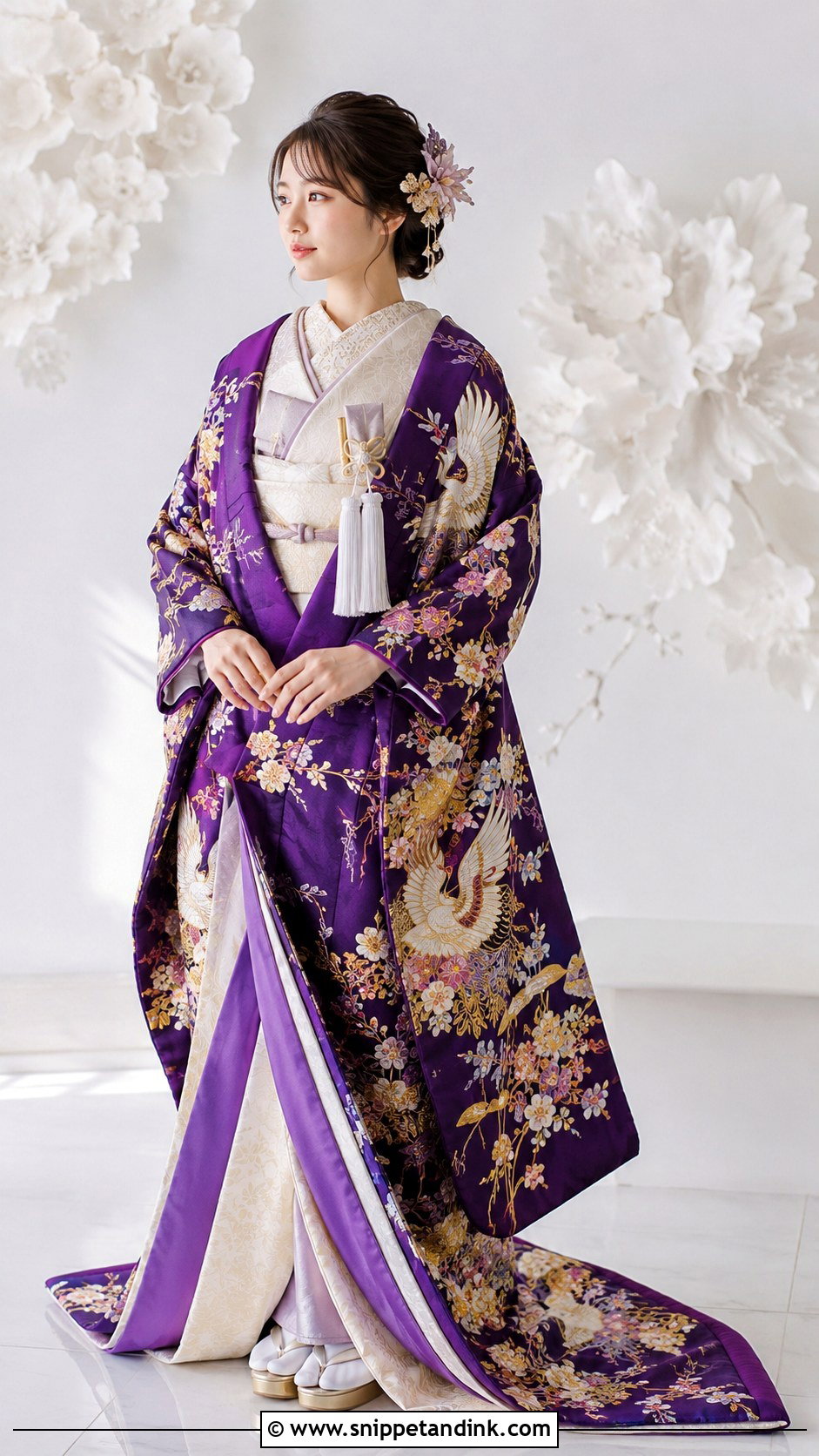
A purple iro uchikake wedding kimono carries a long association with refinement in Japan. Plum, lavender and violet all work; gold or silver embroidery keeps it formal. Pair it with a pale inner kimono, a coordinated obi and a smooth updo with subtle combs. Purple reads rich on camera in evening light, though lavender can turn bluish in flash, so I’d ask for a test frame before the formal portraits begin.
12. Hikifurisode Wedding Kimono
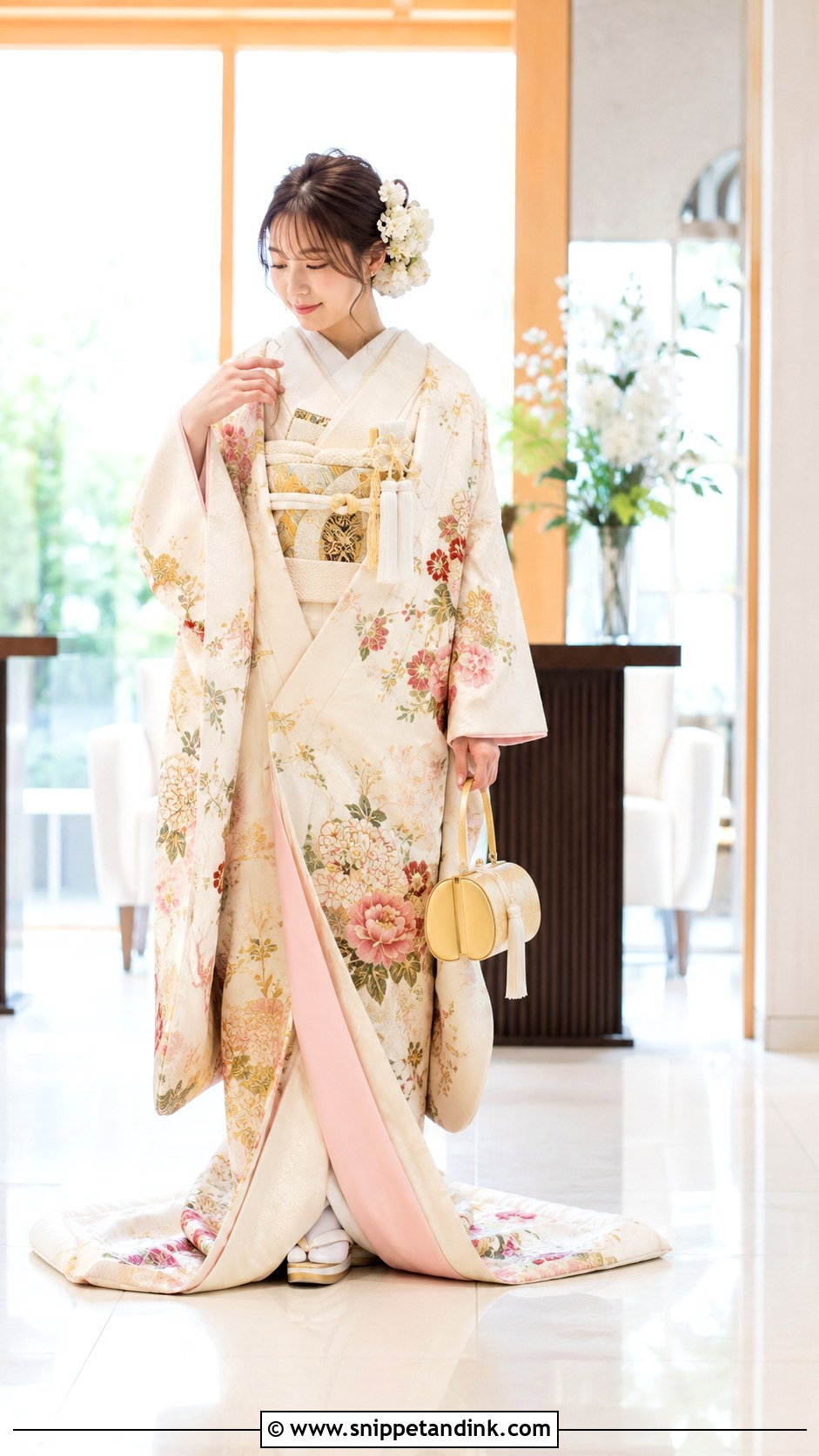
Hikifurisode is the long-sleeved kimono with a trailing hem, worn without the outer uchikake, so it is lighter and much easier to move in. The obi is visible, which makes the waist and the knot at the back a feature in photos. Colours run from black to red, white or multicoloured florals. The trailing hem is lifted and held when walking; I have brides practise that before the day because it takes a few tries. Tabi, zori and a hair ornament finish it.
13. Black Hikifurisode Wedding Kimono
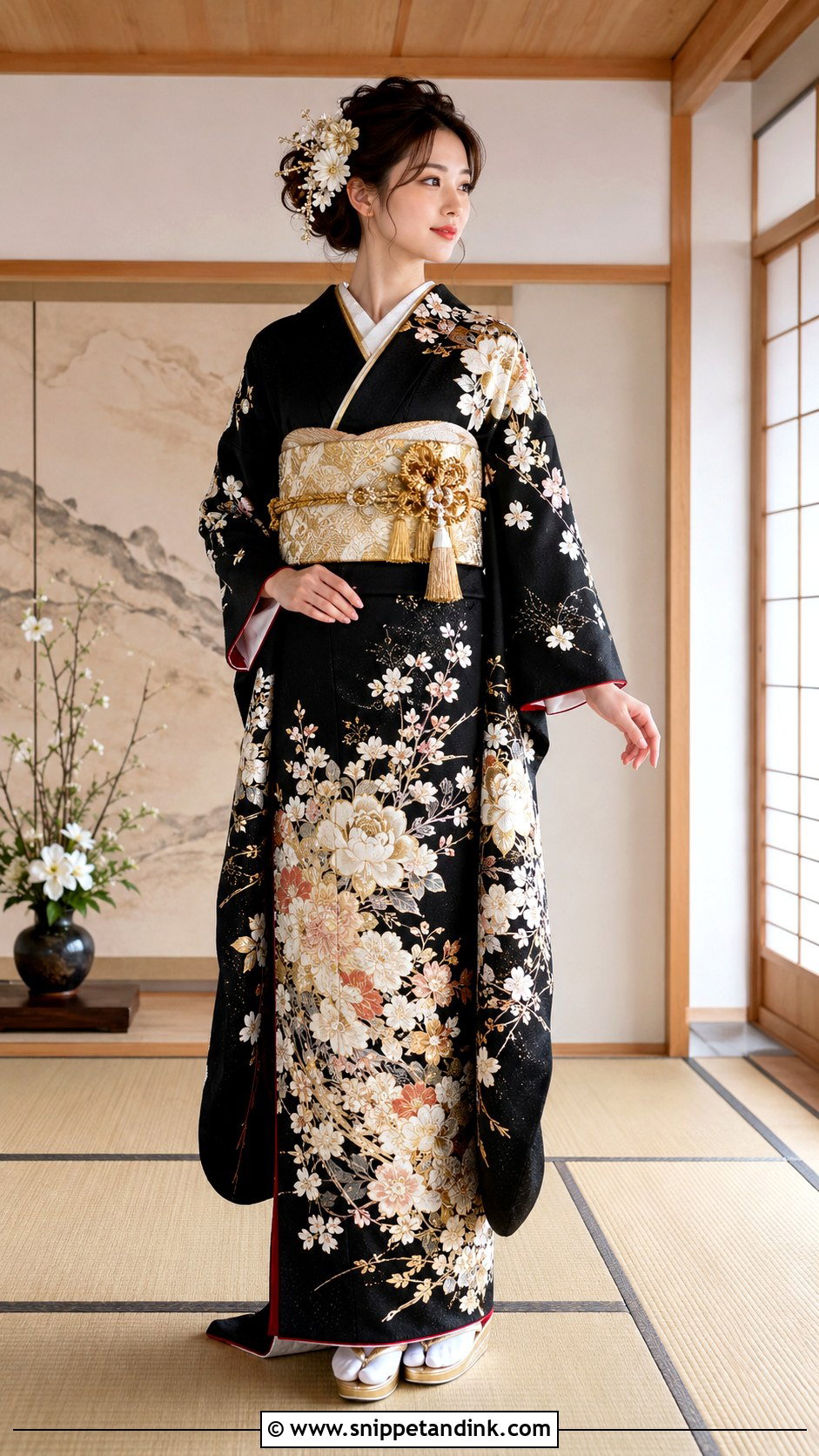
Black hikifurisode has long history as a bridal choice, and the black base makes floral patterns, cranes and gold details jump forward. Since the obi is on show, pick its colour deliberately: gold, ivory or red gives balance. A neat updo with a kanzashi-style ornament completes it. I’d choose this over a black uchikake for a bride who wants the drama but plans to be up and moving through a long reception.
14. Red Hikifurisode Wedding Kimono
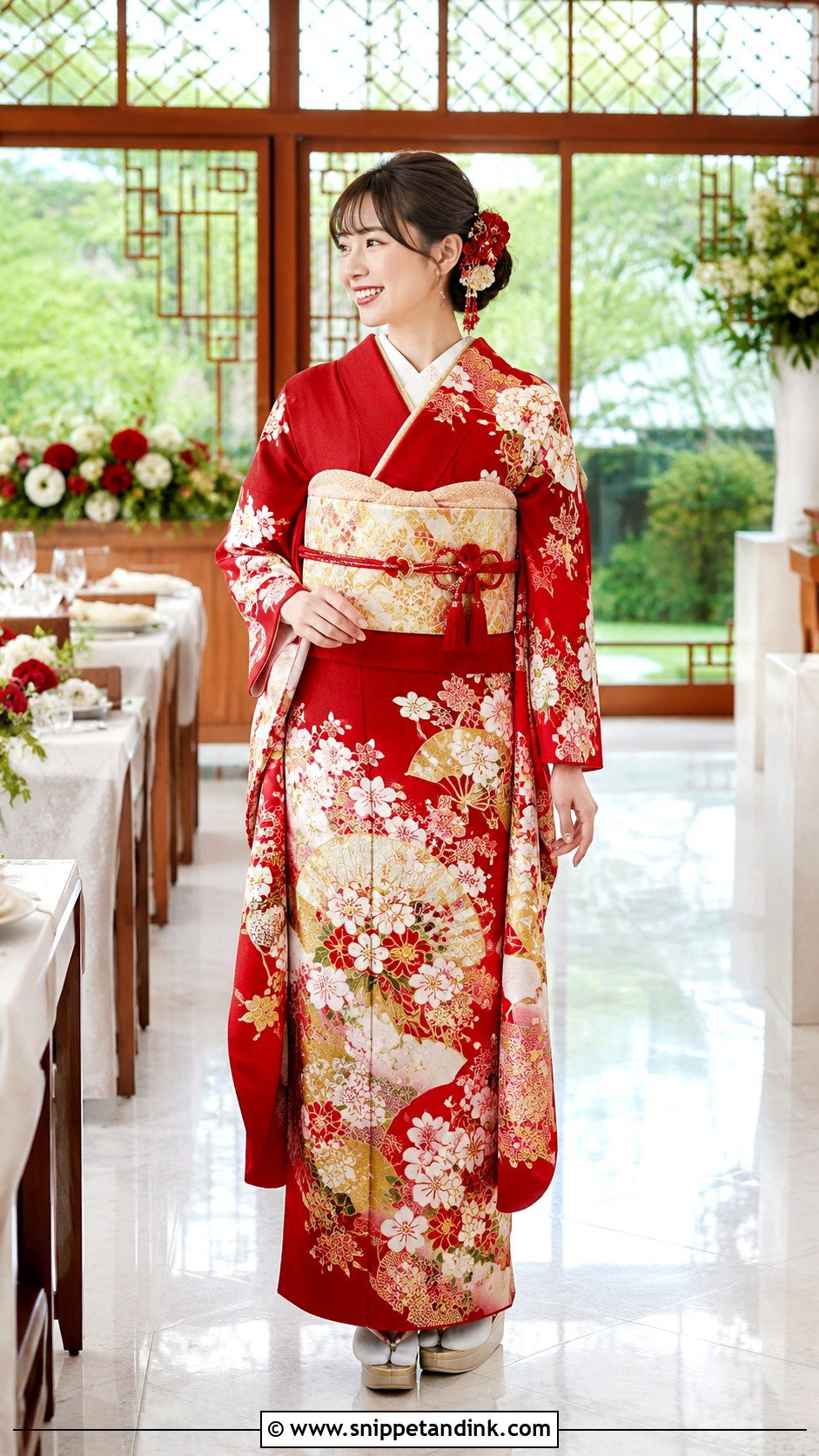
Red hikifurisode is a popular second look. The long sleeves swing as you move, which gives a photographer something to work with, and the obi gives the waist structure. Floral and fan patterns with gold accents fit a reception well. Wear it with white tabi and zori. The obi on a hikifurisode is tied firmly, and I always tell brides to eat lightly beforehand; a heavy meal under a tight obi is uncomfortable for hours.
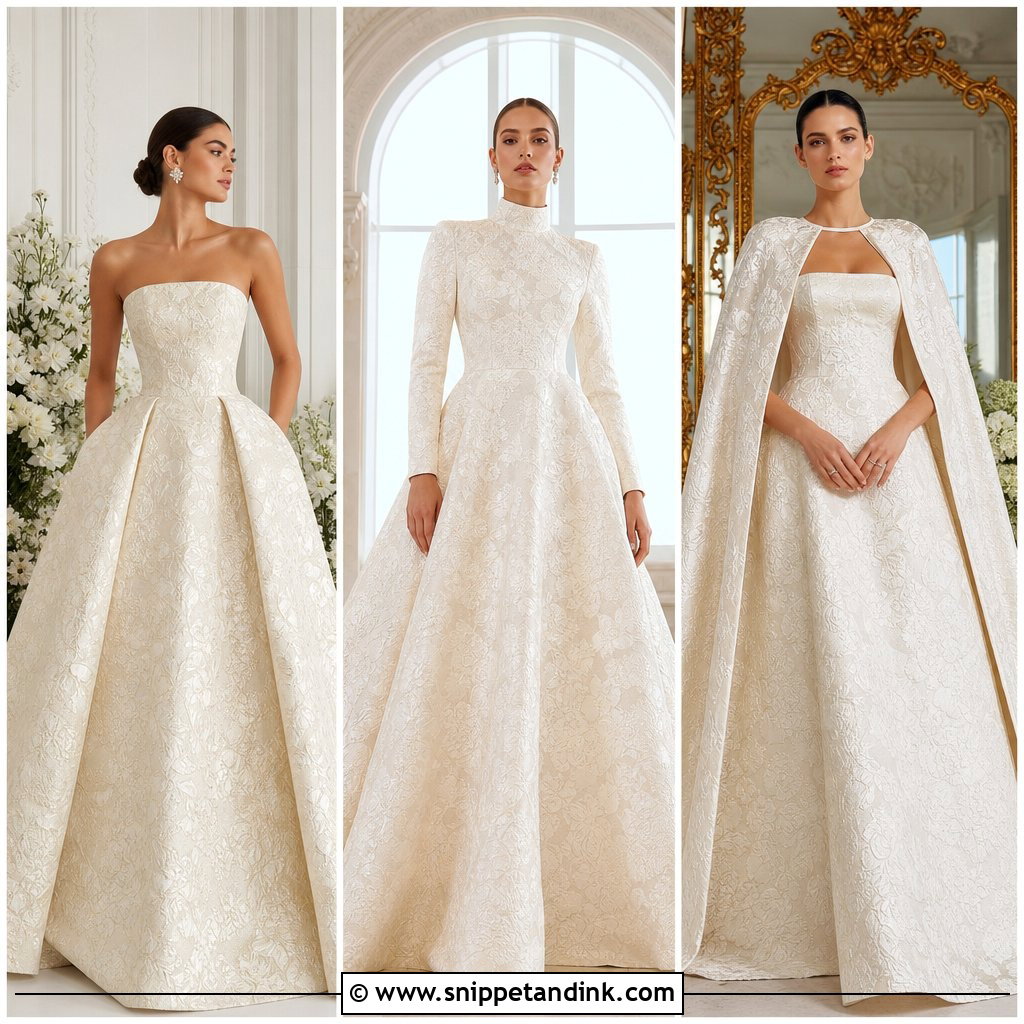
15. White Hikifurisode Wedding Kimono
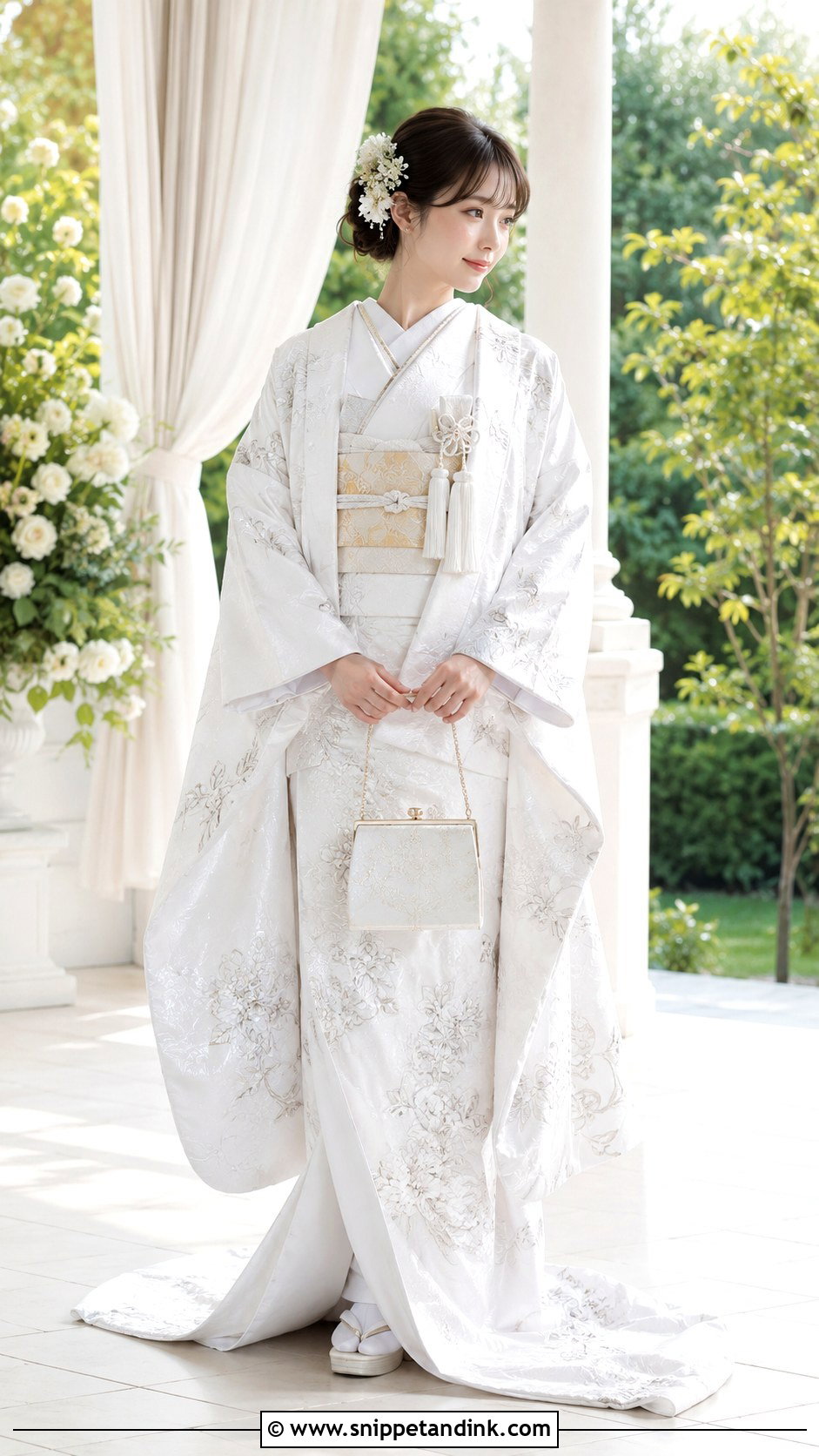
A white hikifurisode keeps the clean bridal feel of shiromuku with a less ceremonial shape, and the obi shows at the waist. Subtle florals, silver embroidery or pale gold details add depth. White tabi and light zori finish it. For hair, a low bun or traditional updo both suit. It photographs well in gardens and tatami rooms where there’s soft, even light.
16. Furisode Wedding Kimono
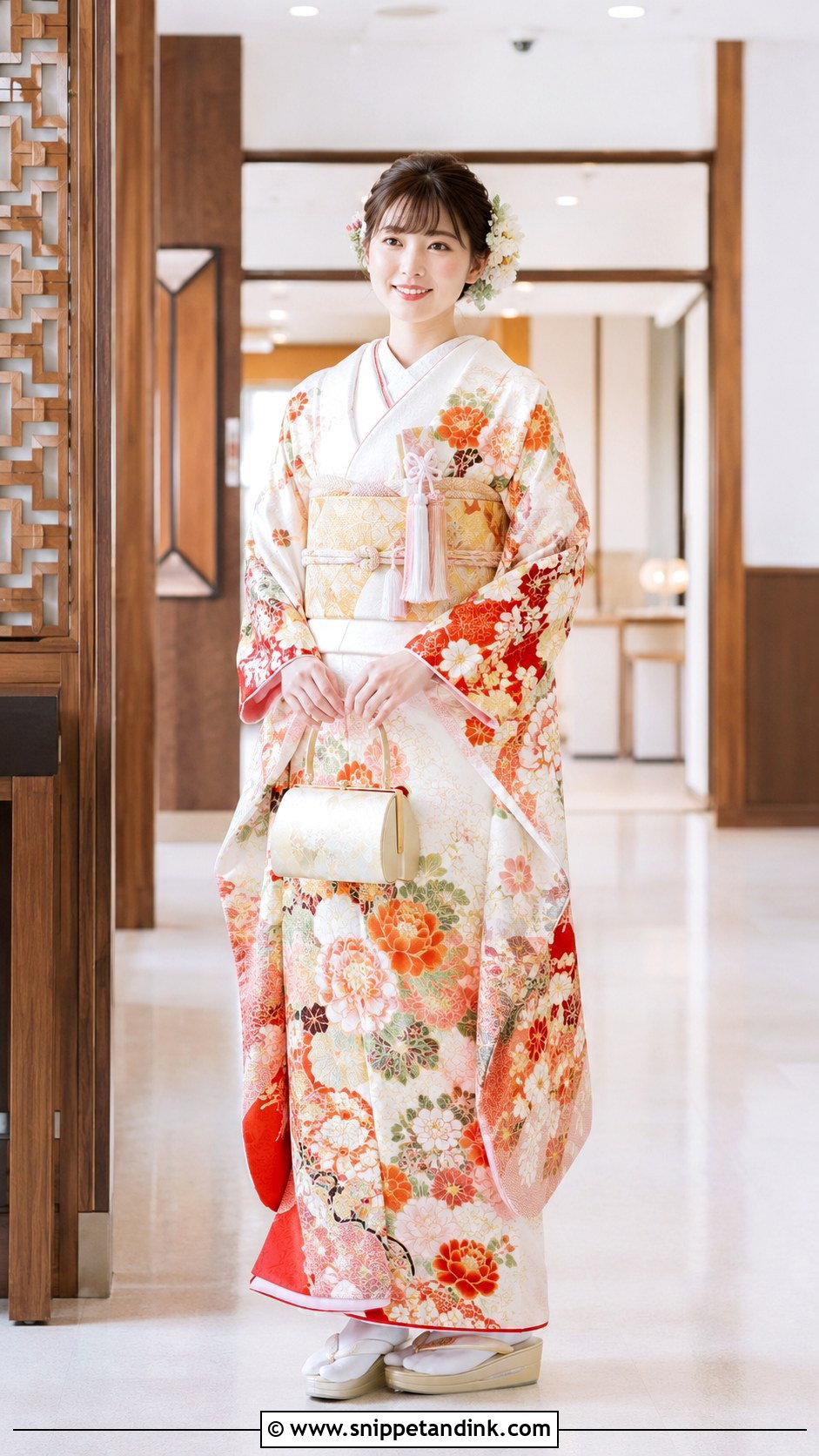
Furisode is the long-sleeved formal kimono that unmarried women wear, and some brides choose one for a reception or a photoshoot. It is easier to wear than layered bridal robes. Floral prints and crane motifs give it a wedding feel. Complete it with an obi, tabi, zori and a small bag. Furisode can be very bright, so I coordinate accessories to one or two colours already in the pattern rather than adding new ones.
17. Modern Kimono Wedding Dress
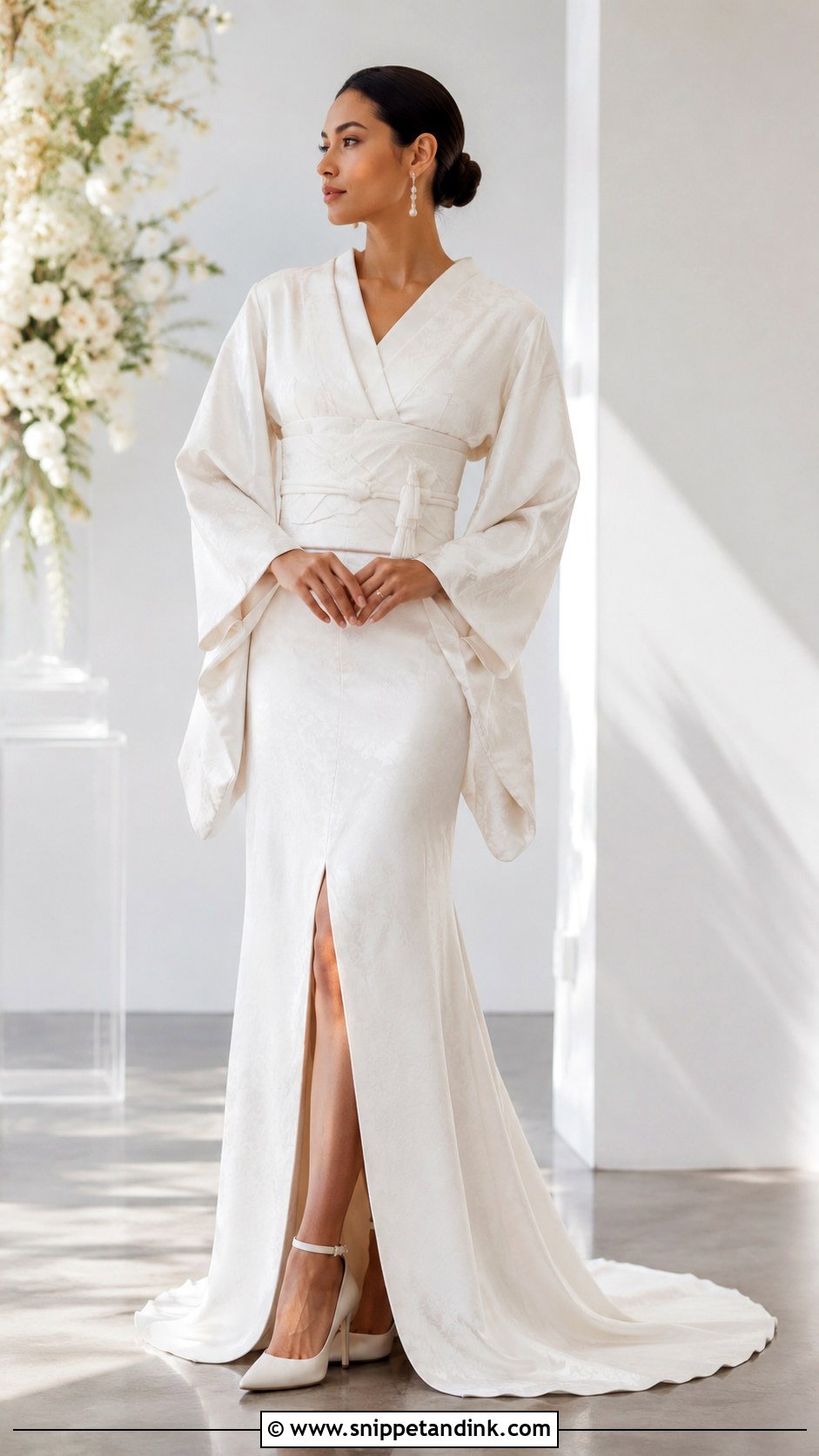
A modern kimono wedding dress borrows elements such as wide sleeves, a wrap bodice, an obi-style waist or kimono fabric cut into a gown. It gives you freedom to move that a full kimono can’t. I’d style it with sleek heels or refined flats, pearl earrings and a clean low bun. One thing to check: a wrap bodice should close left over right, as a kimono does. Right over left is how a kimono is dressed for the dead, and guests who know will notice. It suits multicultural weddings and destination celebrations.
18. Kimono Sleeve Wedding Dress
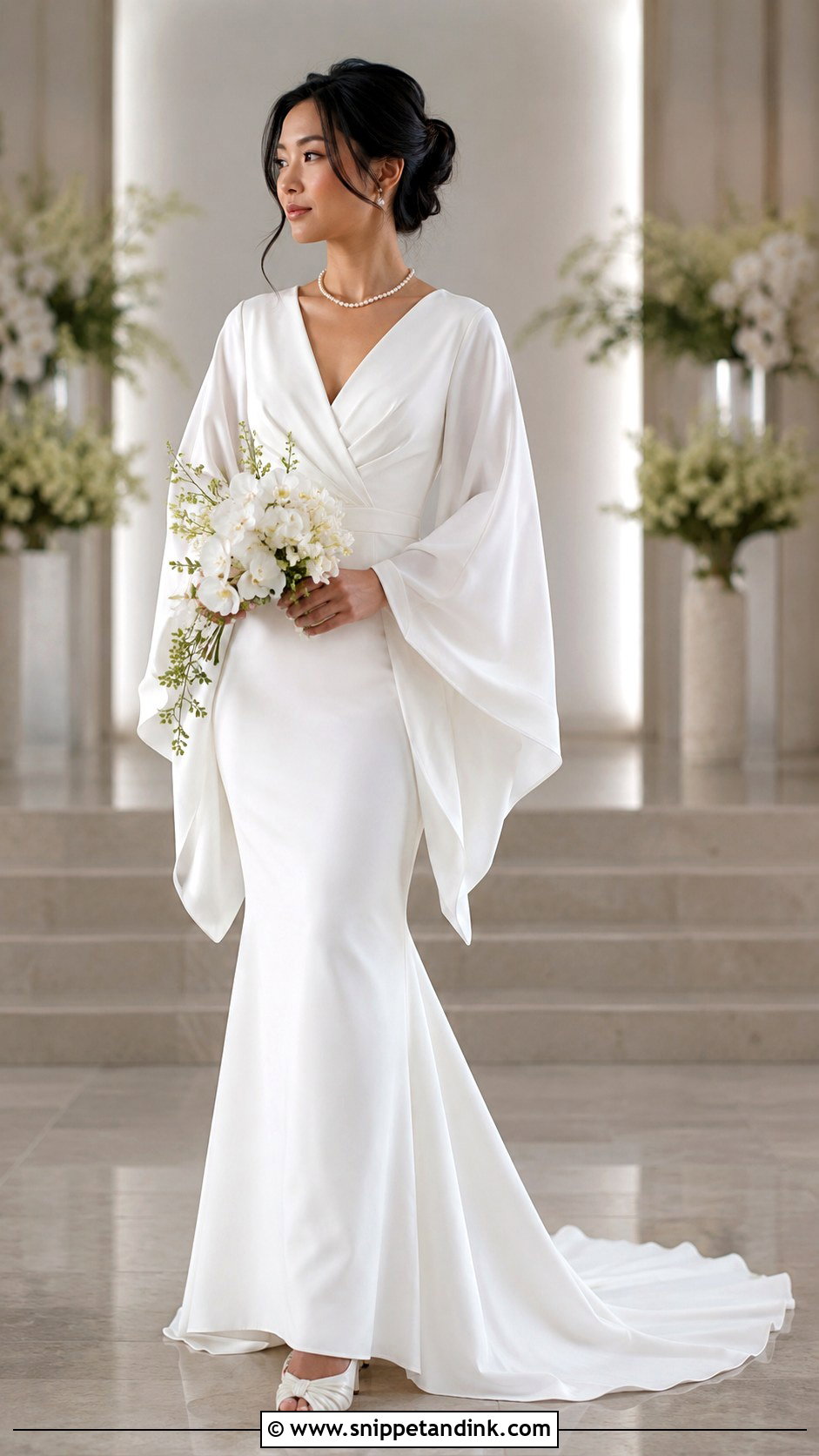
Kimono sleeves are an easy way to bring Japanese detail into a modern dress. They can be wide, sheer or structured. A fitted waist and clean skirt keep the rest simple. Wide sleeves catch on things, so I check them at the cake table and around candles during the fitting; a sleeve that hangs past the wrist is close to a flame more often than you’d think. Minimal heels and pearl jewellery finish it.
19. Obi Belt Wedding Dress
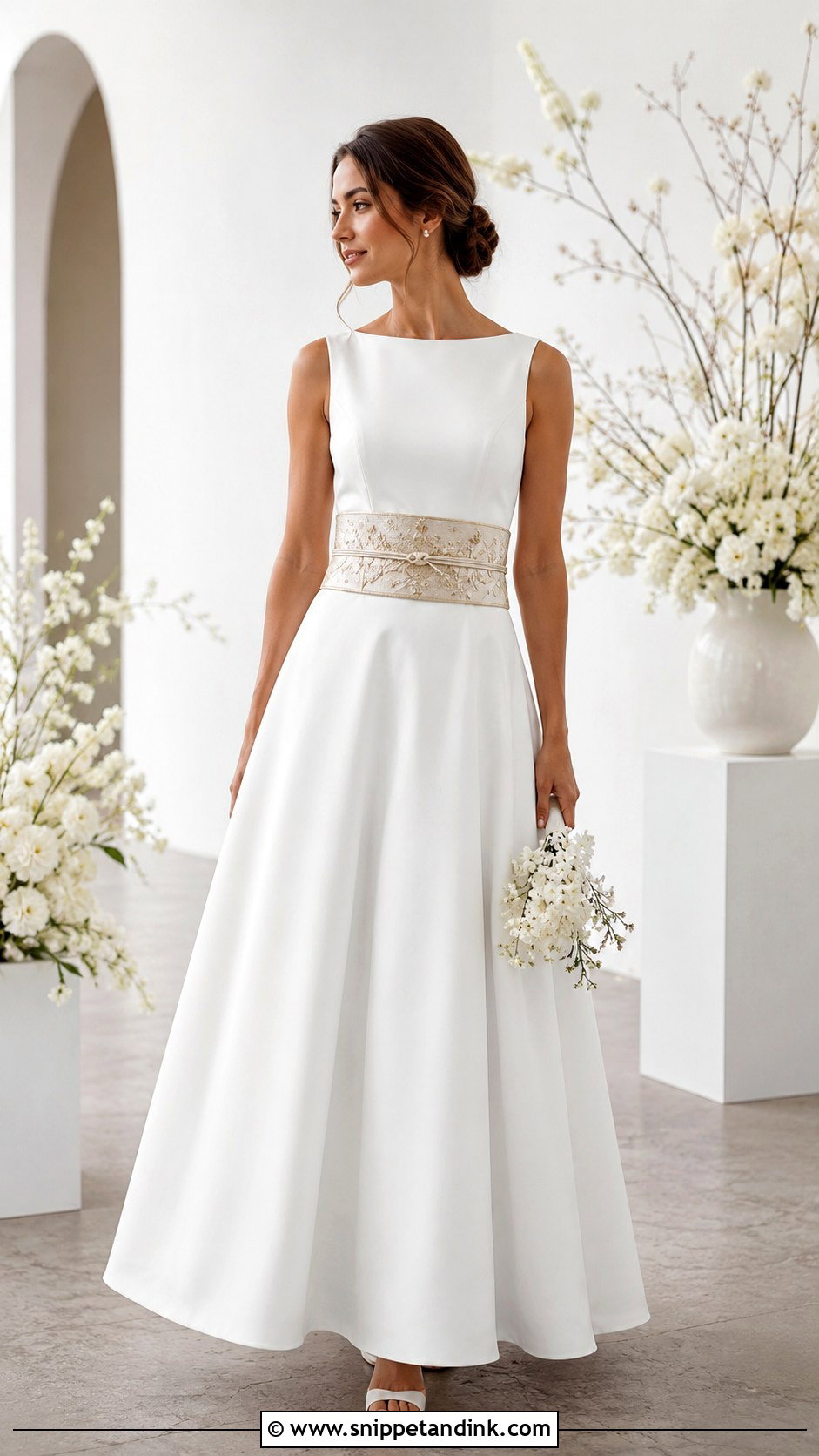
An obi belt over a simple gown is one of the subtlest Japanese references a bride can wear. It can be wide and structured, softly tied or finished in a large bow at the back. Silk, brocade or embroidered fabric makes it look deliberate rather than borrowed. I fit the belt over the dress at the final fitting, not before, because a wide stiff belt changes how the bodice sits. It looks best over a column or A-line gown and defines the waist clearly in photos.
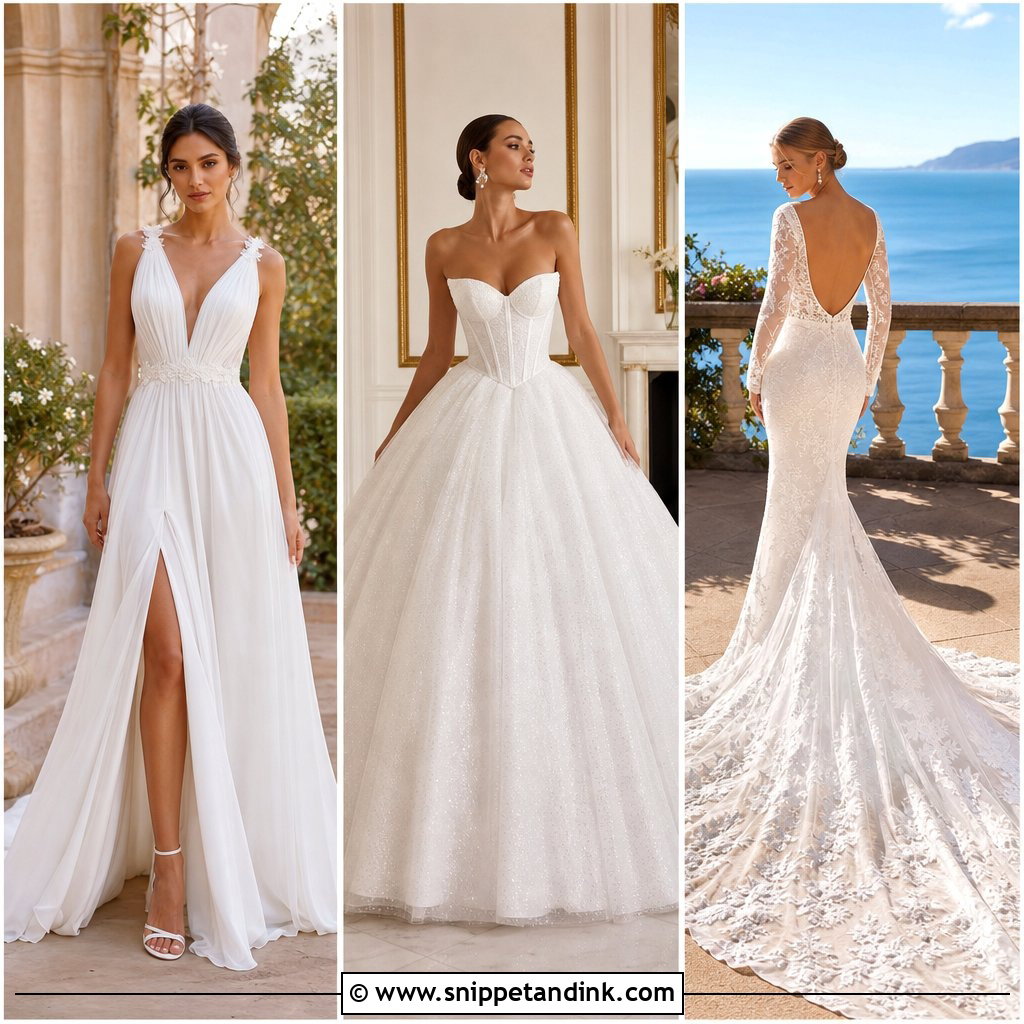
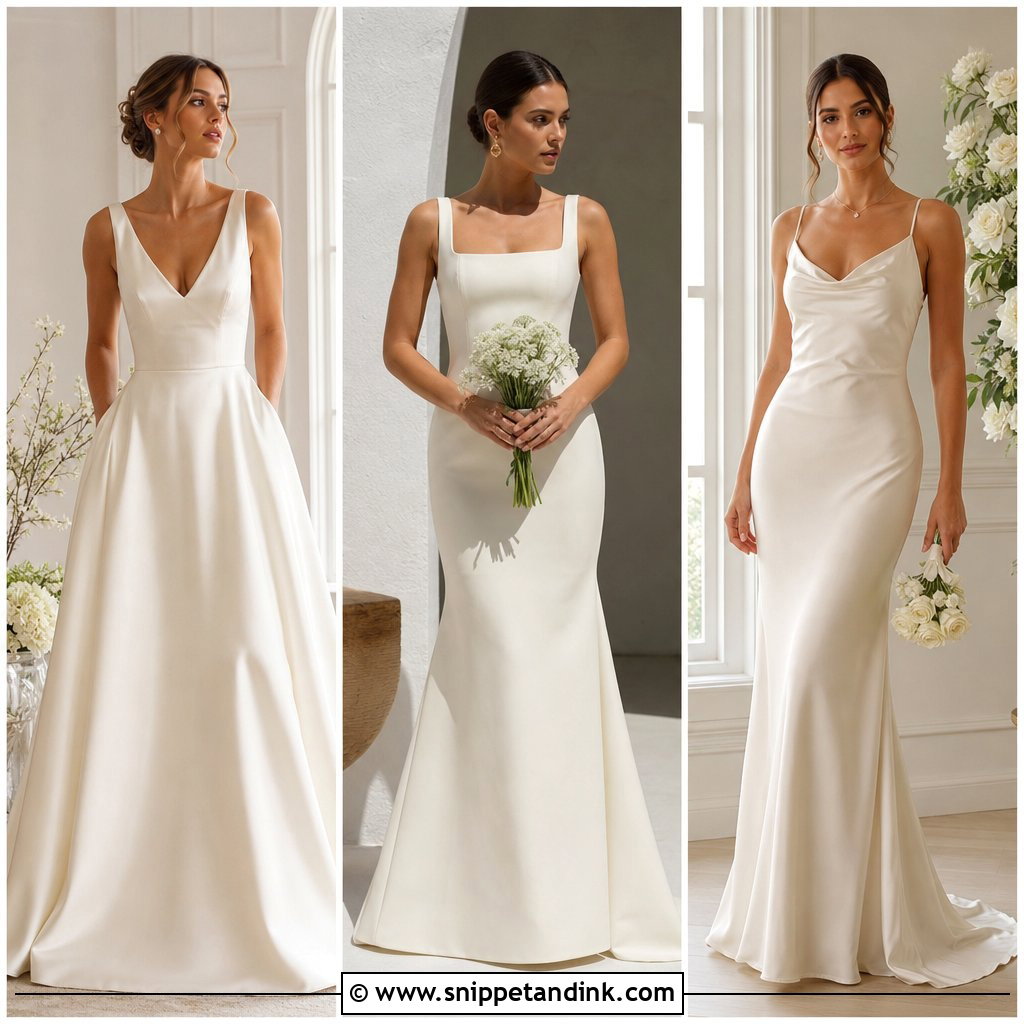
20. Sakura Wedding Dress
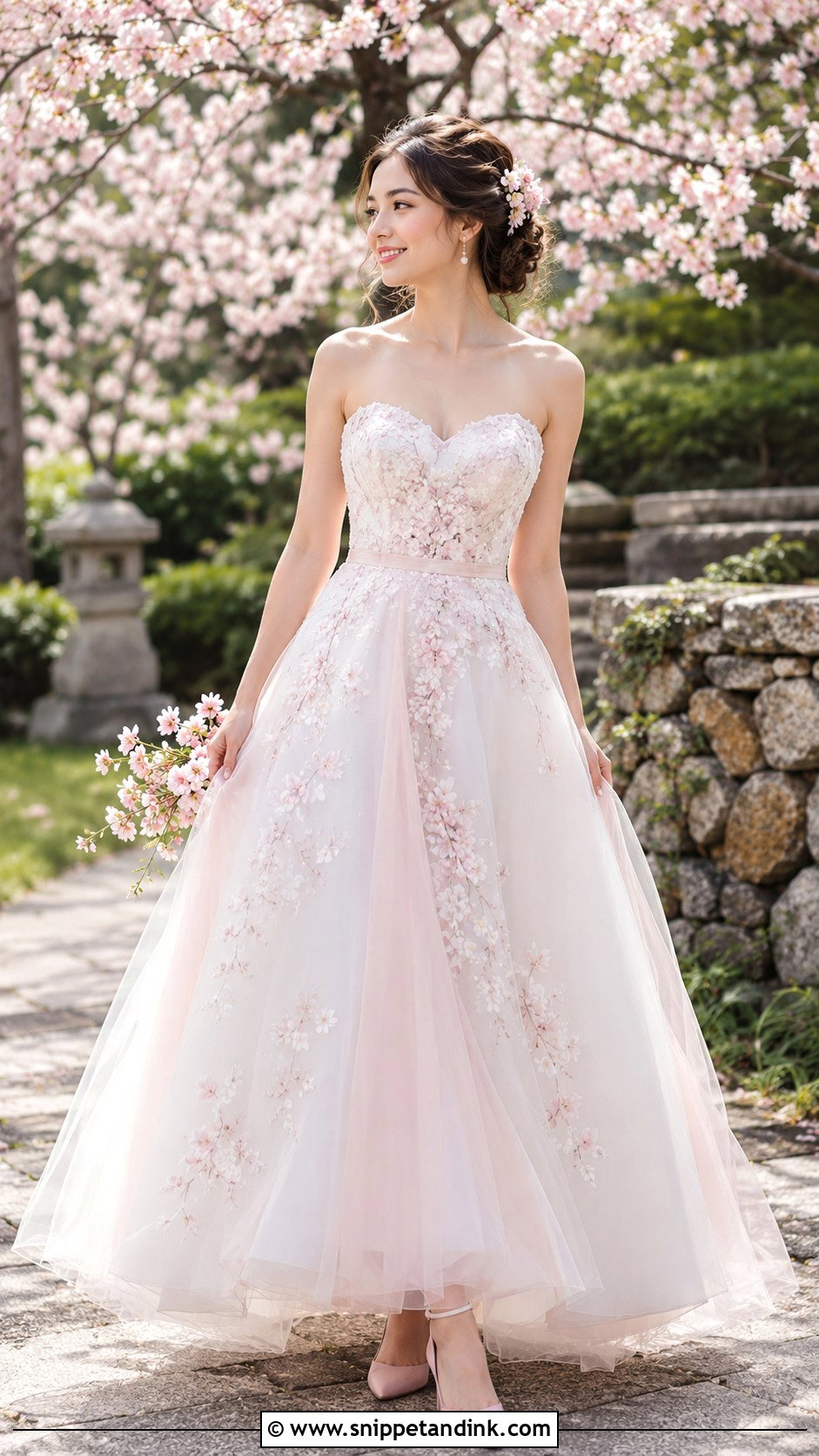
Sakura embroidery, appliqué or printed organza connects a white or blush gown to Japanese spring imagery. Pick a silhouette that keeps the flowers visible, like an A-line or a flowing sheath; a full ball gown can bury the detail in folds. Pale pink shoes, pearl earrings and a delicate hair comb suit it. Keep the bouquet simple so it doesn’t fight the embroidery. It suits spring weddings and gardens in bloom.
21. Crane Embroidered Wedding Dress
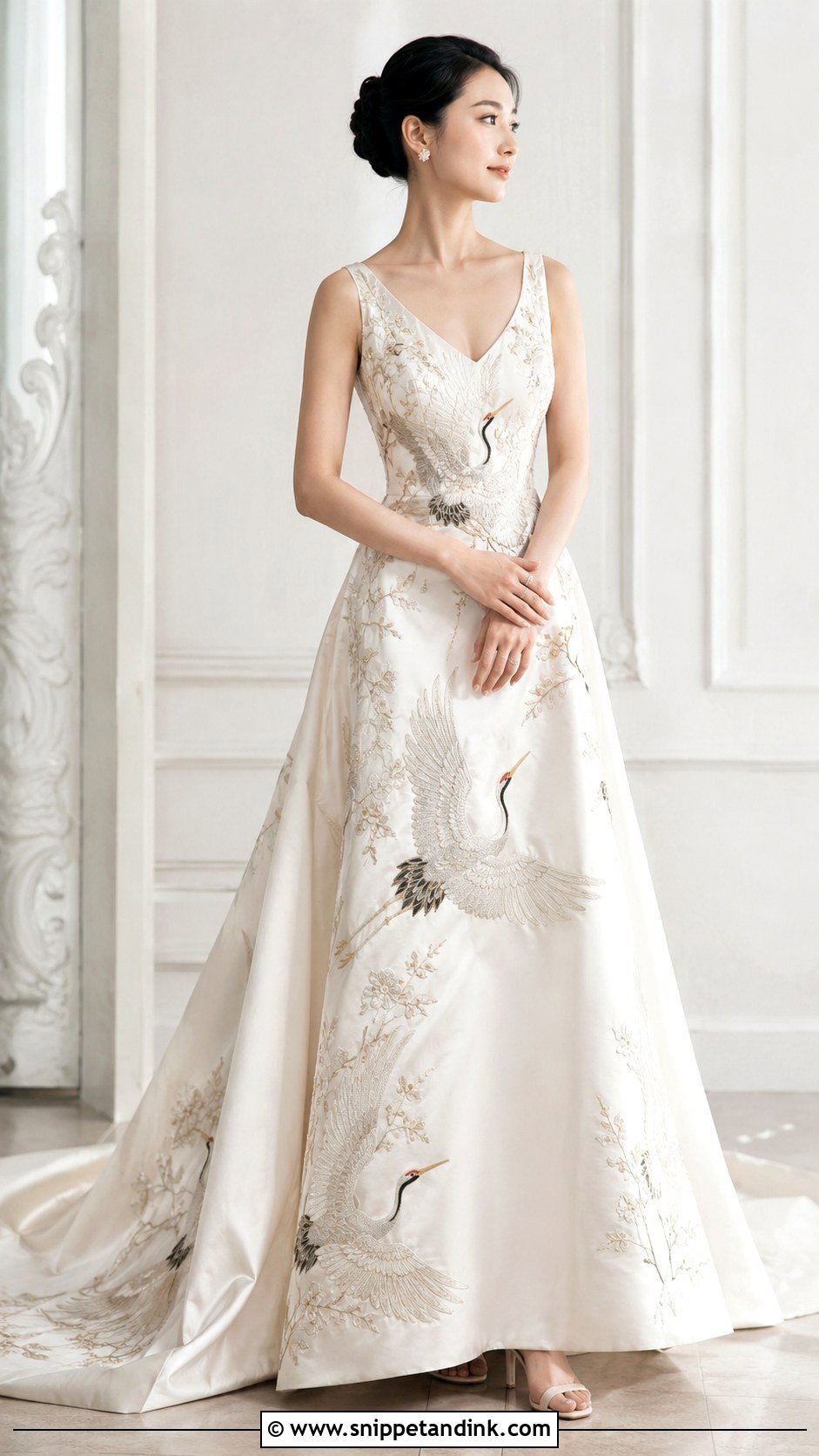
Cranes are associated with longevity and good fortune, and they’ve been a bridal motif in Japan for centuries. On a modern gown the embroidery can sit on the bodice, sleeves, train or veil. White, ivory or champagne keeps it bridal. I like crane work placed on the train, so it reads as plain from the front and reveals the detail as the bride walks away. Smooth hair and minimal jewellery let the stitching speak.
22. Japanese Floral Wedding Dress
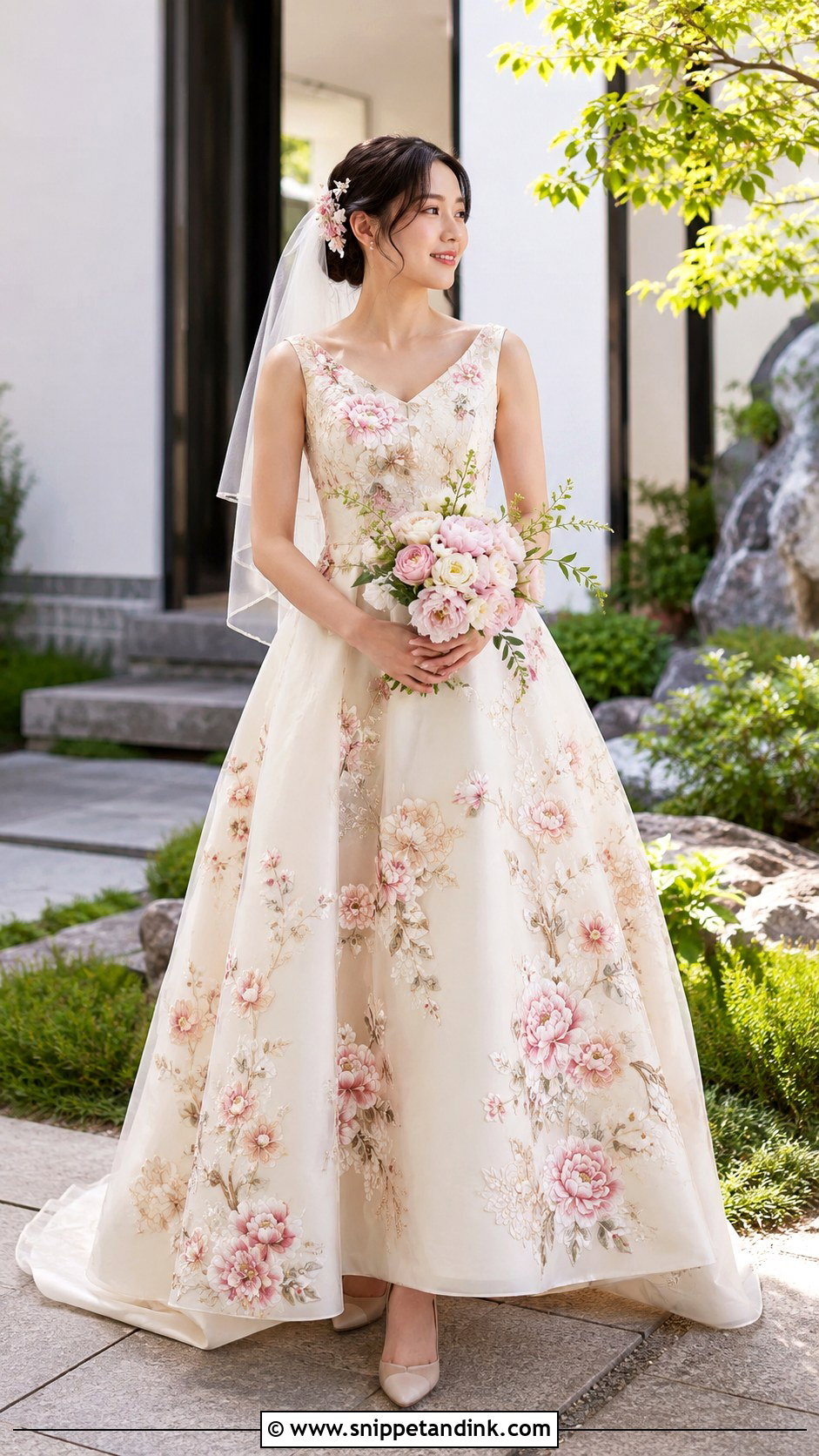
Chrysanthemum, peony, plum blossom and wisteria are all classic Japanese floral motifs, and each one shifts the mood. Soft embroidery on ivory is delicate; bold florals on a reception gown are more festive. Choose an A-line or fit-and-flare to suit the venue. I match hair pins to the flower on the dress, not just its colour, so the whole look reads as one idea. A simple veil and neutral heels finish it.
23. White Wedding Dress With Kimono Robe
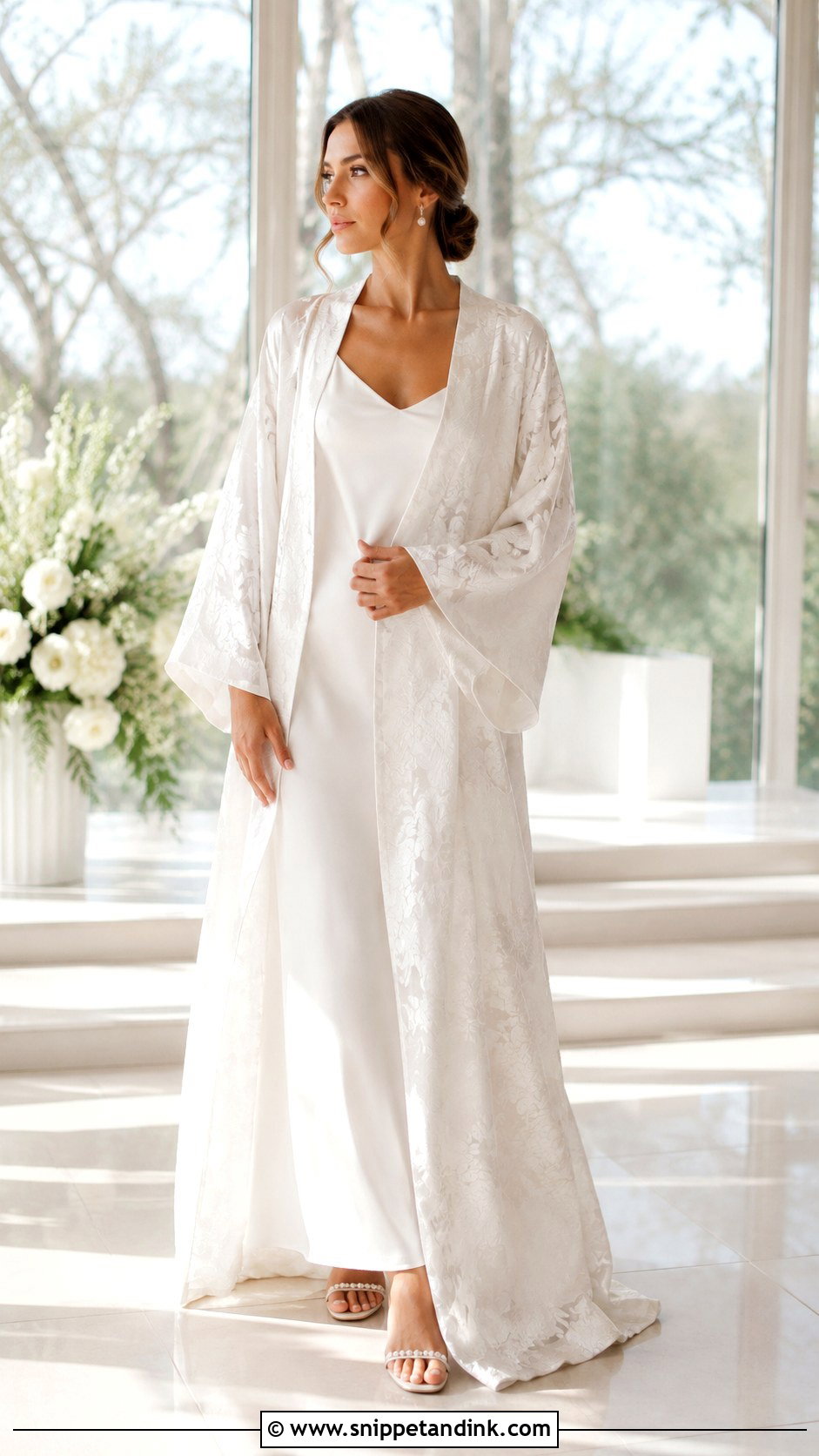
Pairing a white gown with a kimono robe gives you two looks without a full change. The dress underneath can be a slip, column or A-line; the robe adds movement and coverage without the weight of an uchikake. Silk, satin or embroidered robes in white, ivory, blush or soft gold all work. I’d have the robe hemmed to the dress length so it doesn’t drag. Slip it off for the reception and you’re ready to dance.
24. Uchikake Over White Wedding Dress
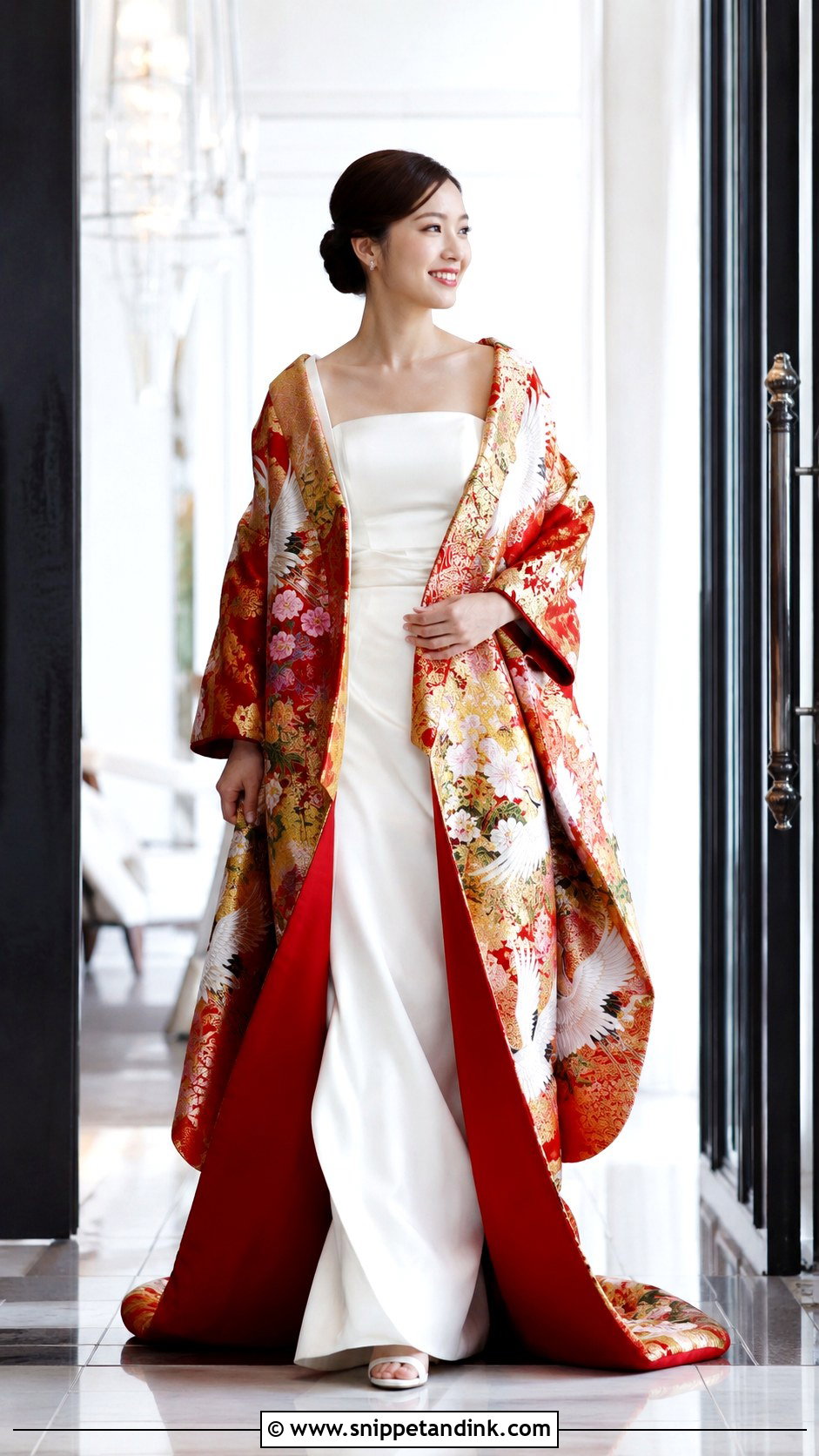
An uchikake worn over a white Western gown is a true fusion look. The gown gives a familiar base; the robe adds colour, embroidery and weight. Red, gold, black or white uchikake each set a different mood. Keep the gown underneath plain, because the robe will hide most of it anyway, and a full skirt underneath makes the uchikake bulge oddly. Elegant heels or zori-style footwear and a low bun or traditional updo finish it. It suits portraits and reception entrances where both cultures matter to the couple.
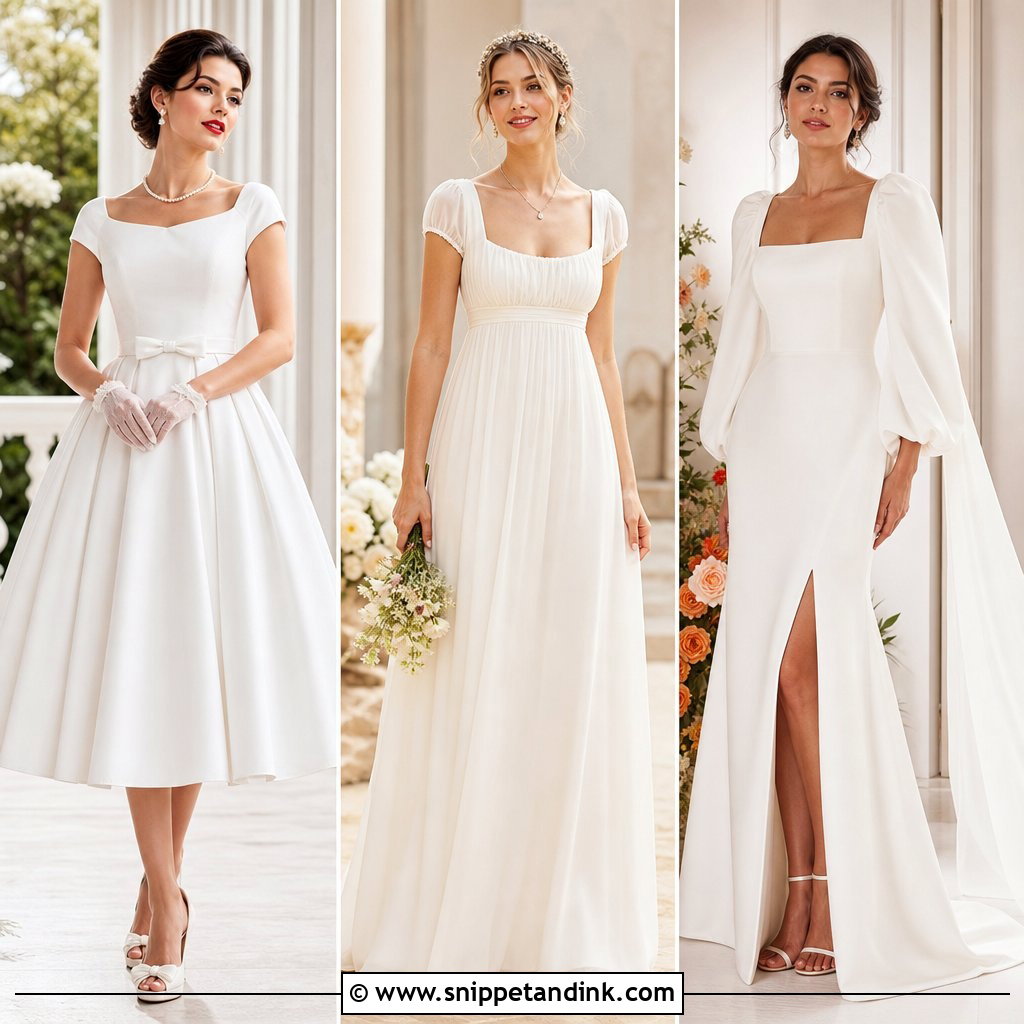
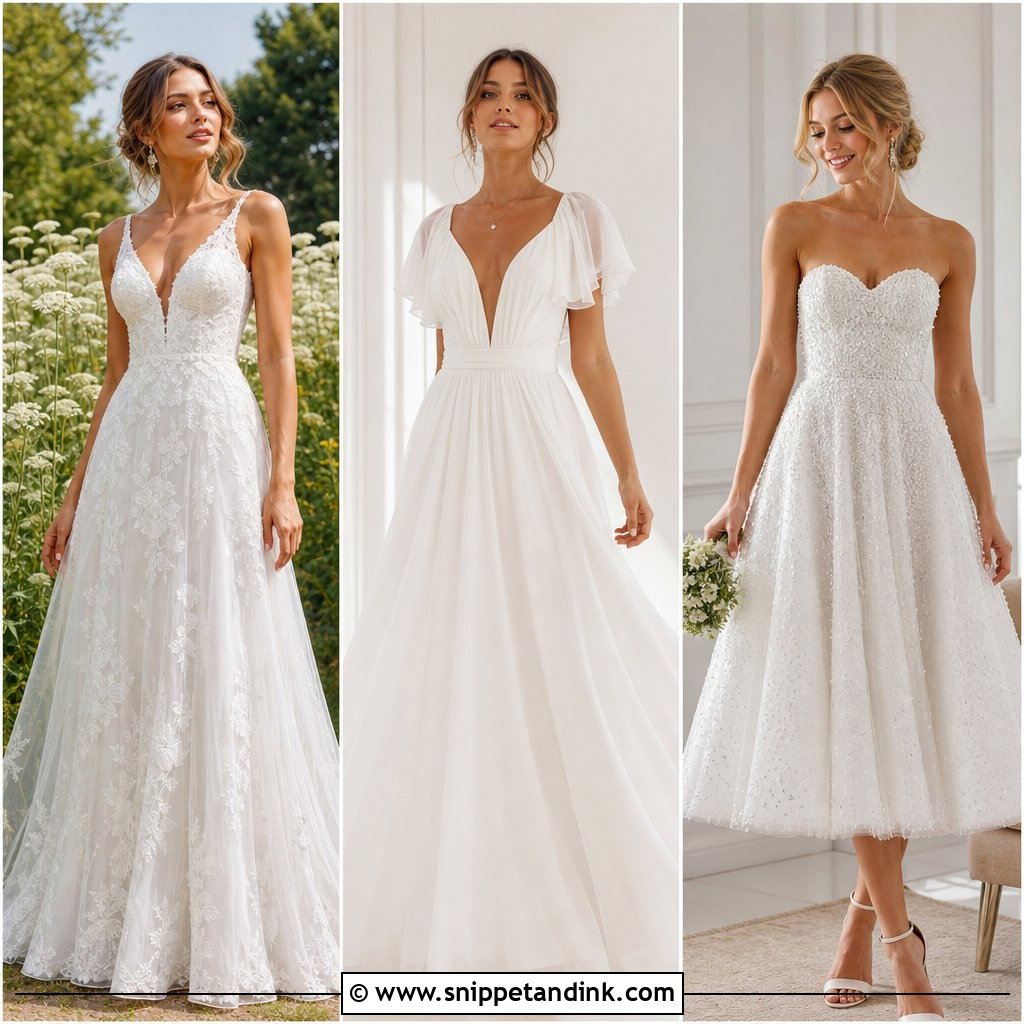
25. Minimal Japanese Wedding Dress
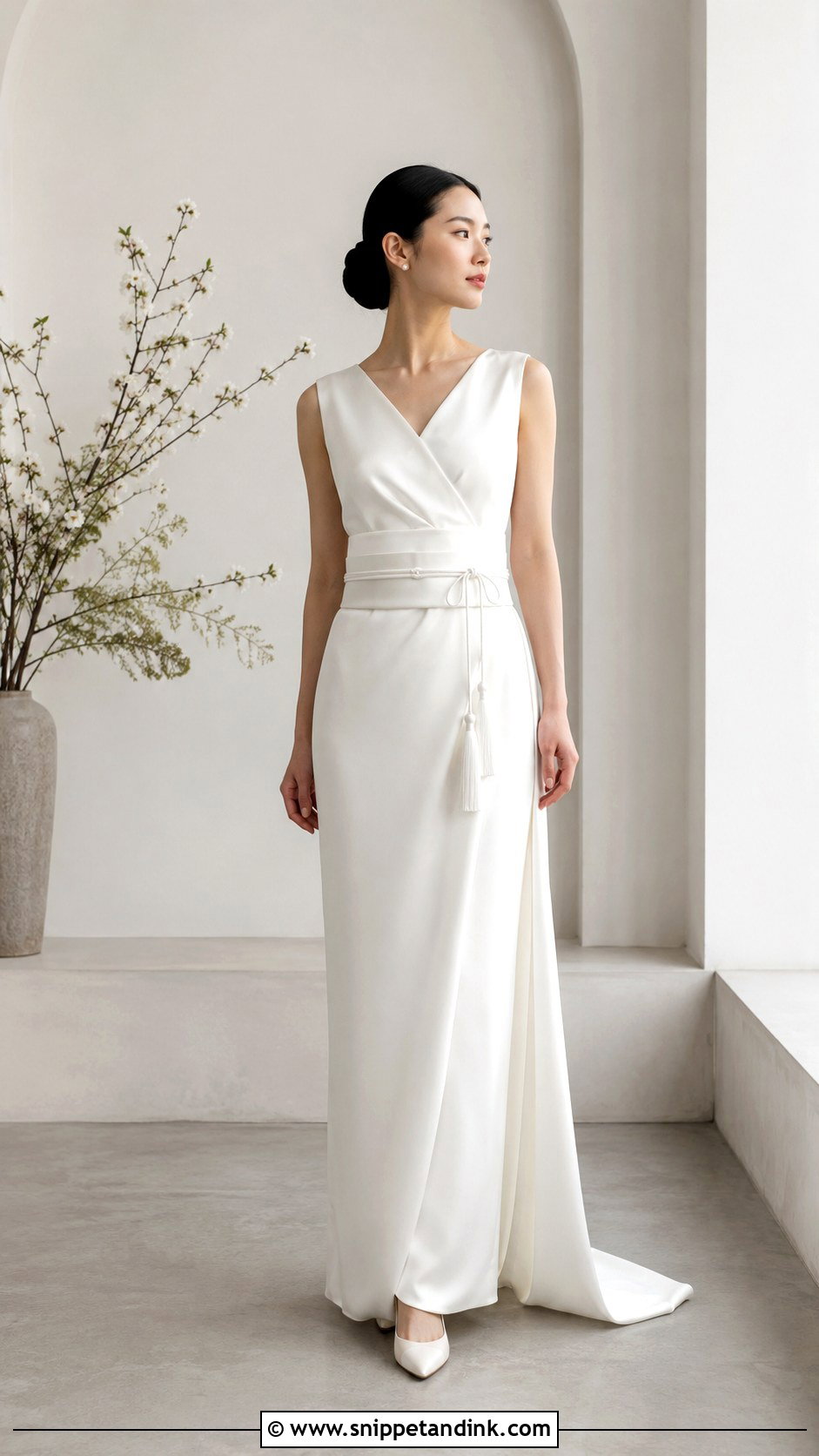
Clean lines carry a minimal Japanese-inspired dress: a simple silk gown, a wrap bodice, wide sleeves or an obi-style waist. Instead of beading, the focus is fabric and proportion, so spend your budget on the silk. Low heels, pearl studs and a smooth bun suit it. A single hairpin or small floral comb adds softness. It’s light, easy to wear all day and well suited to modern venues and intimate ceremonies.
26. Organza Kimono Wedding Dress
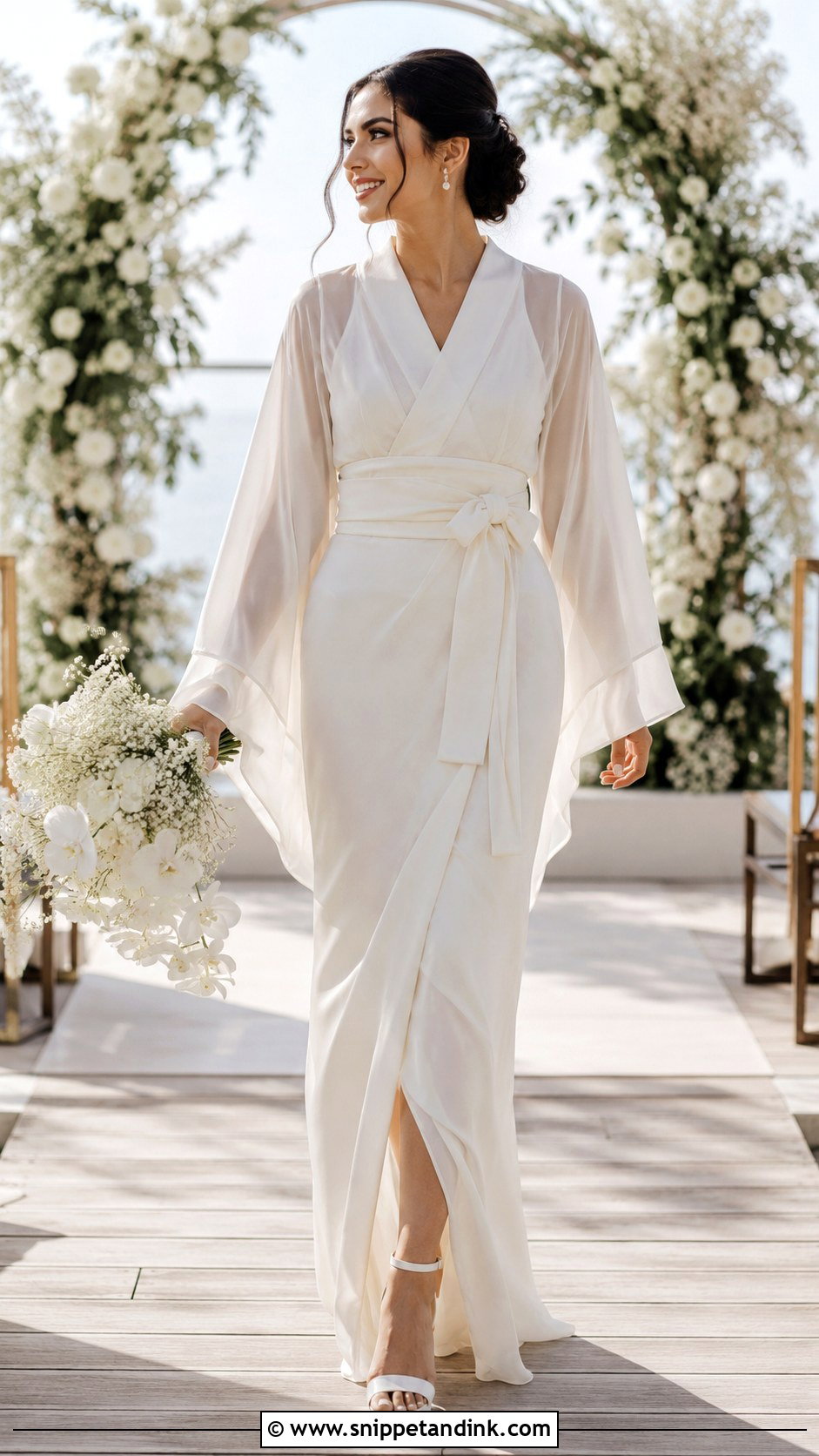
Organza gives kimono sleeves or an overlay a light, airy shape. It works over a simple white gown or as a layered dress with a defined waist; add an obi-style belt for structure. Organza holds creases where it’s crushed, so I hang it from the shoulders on a padded hanger the night before and steam it on the morning. White heels and a soft updo finish it. Daytime ceremonies show the sheen best.
27. Lace Kimono Wedding Dress
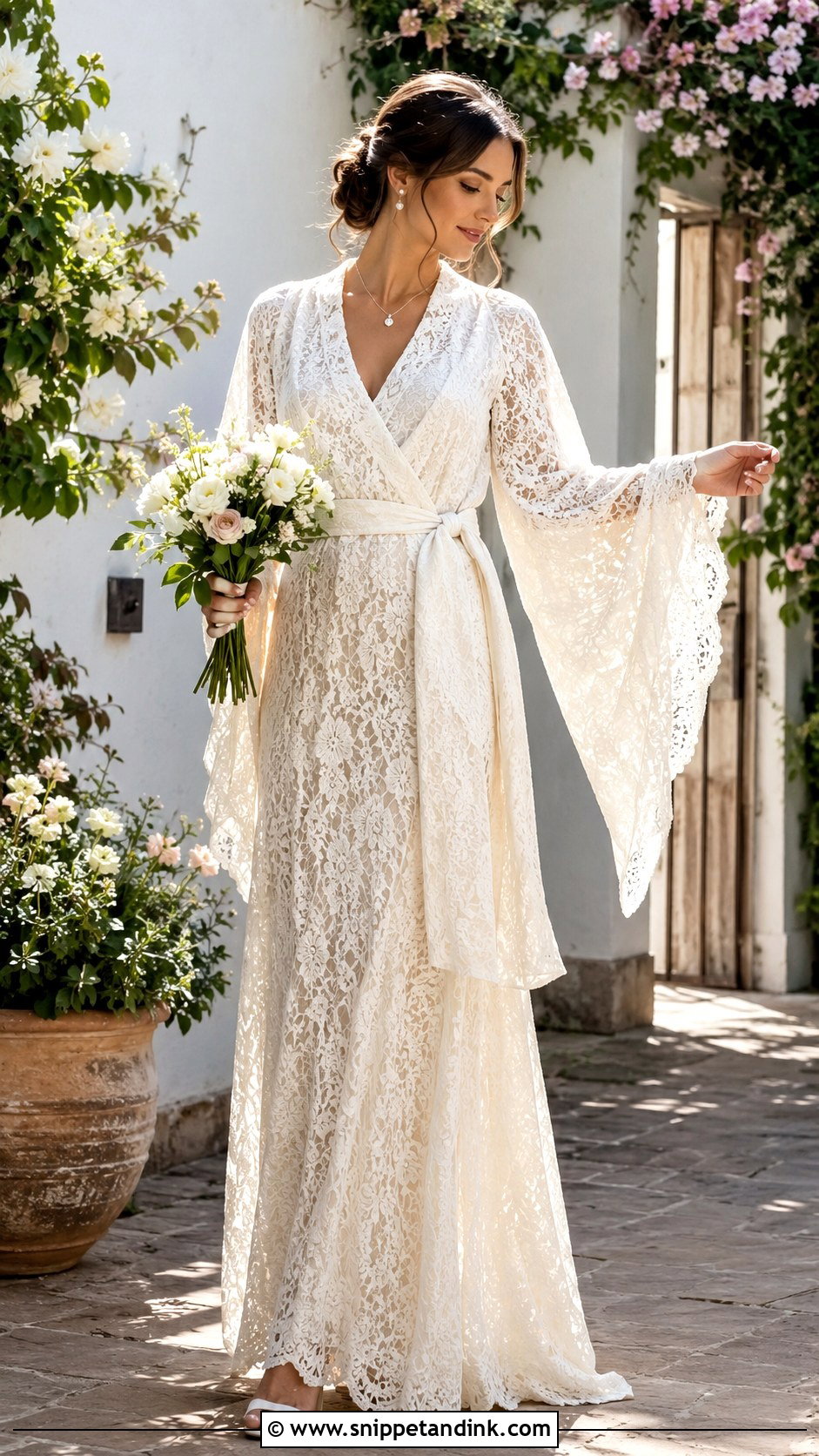
Lace brings texture to a Japanese-inspired shape: wide lace sleeves, a wrap neckline or a belted waist. Ivory or white lace stays classic; floral lace adds interest. Lace breathes better than satin or brocade, which makes this a sensible pick for a warm-weather wedding. Nude heels, pearl jewellery and loose waves or a low bun suit it. Again, I make sure the wrap closes left over right.
28. Reception Color Dress With Japanese Motifs
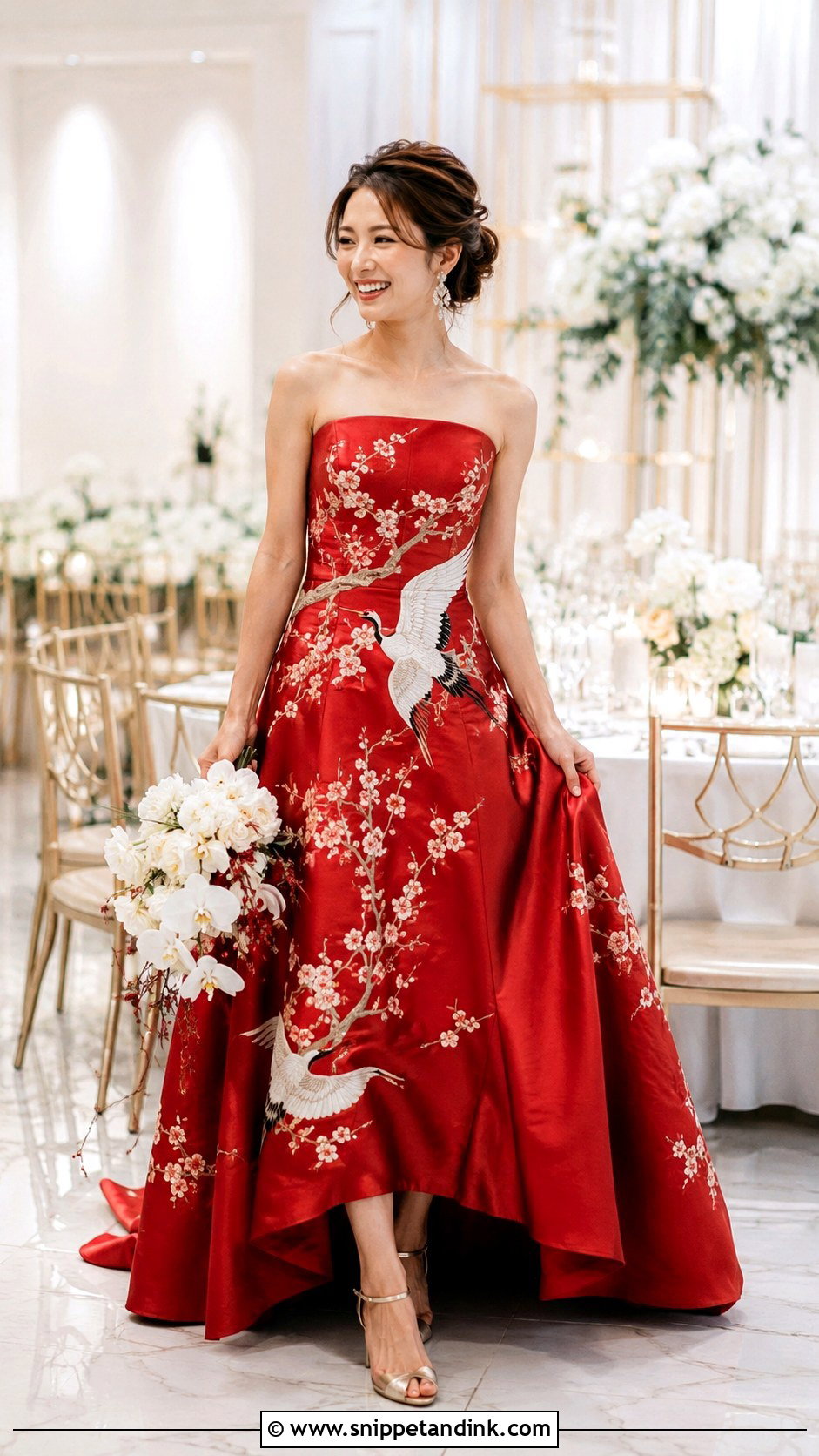
A colourful reception dress with Japanese motifs is a lighter take on the iro-naoshi tradition. Red, pink, blue, green or gold dresses with cranes, blossoms, fans, waves or chrysanthemums all fit. A ball gown, A-line or sleek evening dress depends on the venue. Metallic heels and statement earrings work here because the dress is the party piece. If you wore white earlier, this change marks the shift to celebration clearly.
29. Japanese Garden Wedding Dress
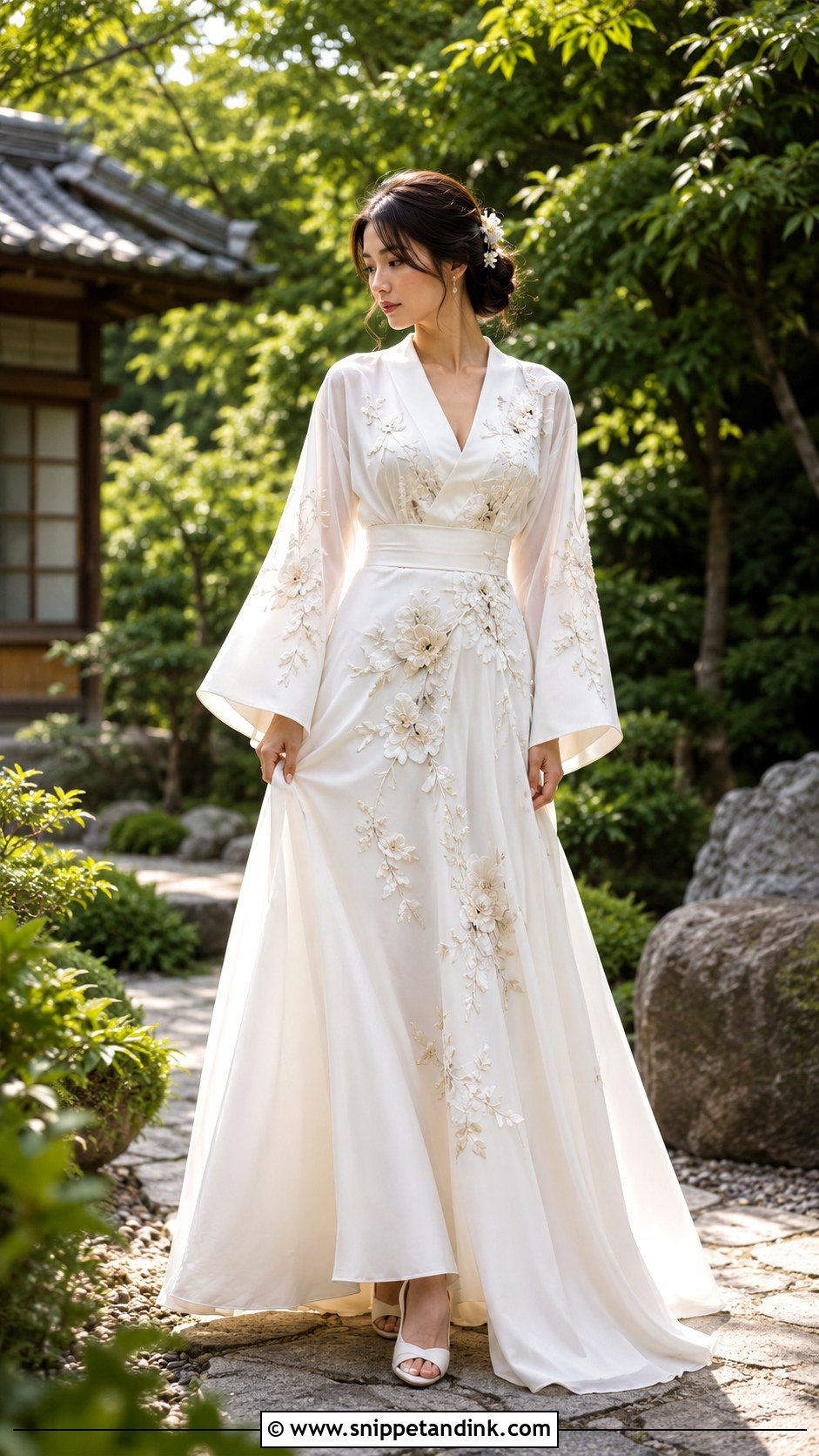
A Japanese garden asks for a dress that moves well outdoors. A flowing A-line, soft kimono sleeves, floral embroidery or a light robe all suit. Chiffon, silk, organza or light satin catch the breeze nicely. Gravel and stepping-stone paths are hard on heels, so I recommend block heels or elegant flats and a hem that clears the ground by a finger’s width. A low bun with floral pins and fresh makeup keep it natural.
30. Japanese Bridal Photo Shoot Dress
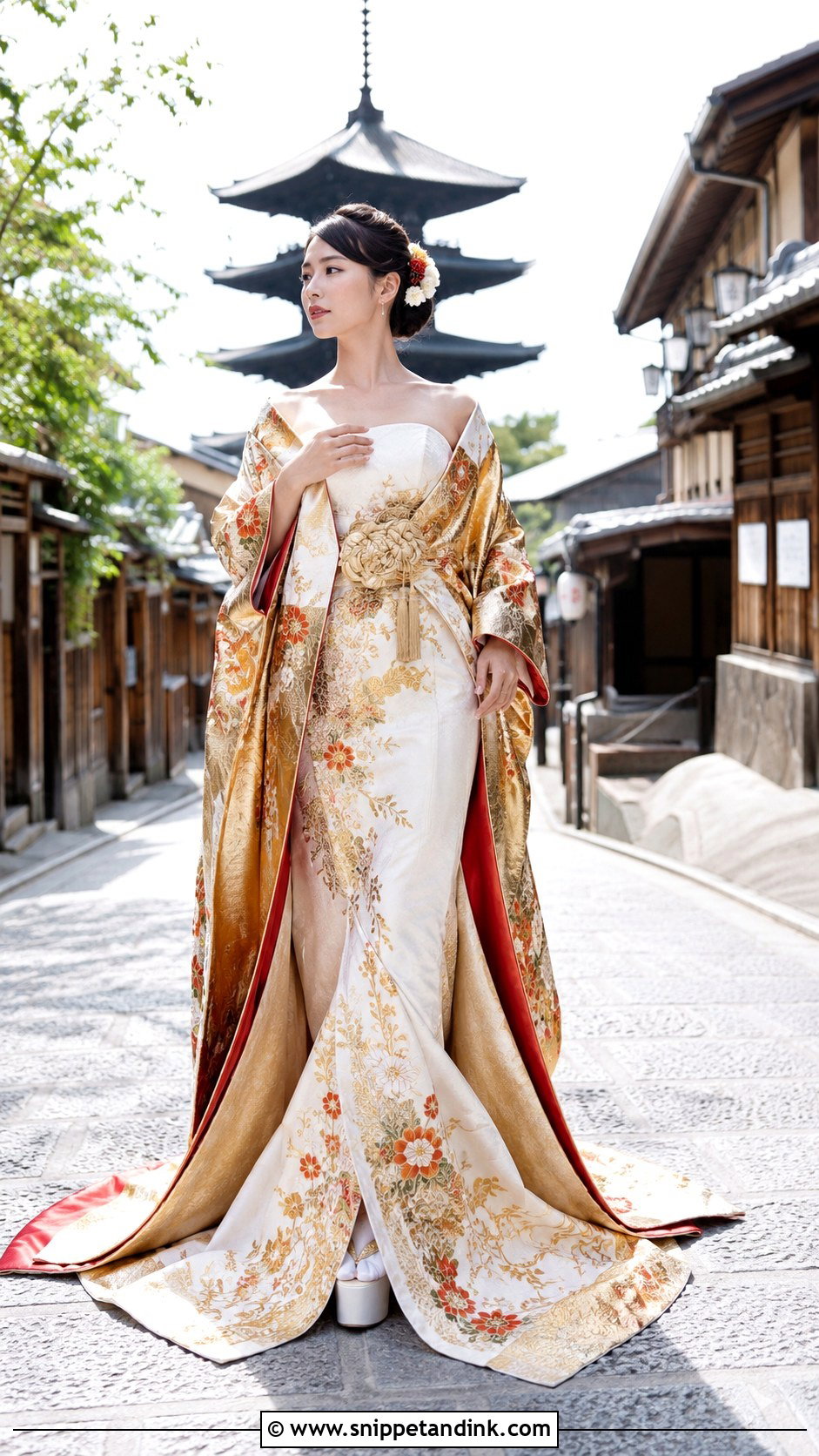
A Japanese bridal photo shoot dress can be more dramatic than a ceremony outfit because you don’t have to wear it all day. Red uchikake, white shiromuku, kimono-inspired gowns or embroidered dresses with long trains all work. Style the whole look for the images: hair, footwear, accessories and background. Traditional rooms, gardens, studios and old streets suit it. A detailed outfit wants a simple bouquet; a minimal one can take a statement robe or hairpiece.
Wearing a Kimono Respectfully If You’re Not Japanese
Brides from other backgrounds ask me whether they can wear a kimono to their own wedding. In my experience, the answer from Japanese families and dressers is usually yes, when it’s worn properly and with a real connection to the culture, such as a Japanese partner or a ceremony in Japan.
Small details that show you’ve done it right
- Left panel over right, always. Right over left is reserved for dressing the deceased.
- Small steps with toes turned slightly in. Long strides pull the front open.
- Hold the front edge of an uchikake in your left hand when walking so the hem doesn’t drag.
- Shiromuku and wataboshi belong to the ceremony; the colourful robes are for afterwards.
If you’re less sure, a kimono-sleeve gown or an obi sash is a gentler reference and avoids getting a formal garment wrong. Ask your partner’s family which they’d prefer. I’ve found they’re usually glad to be asked.
One Ceremony, Two Outfits, and the Time Between Them
From formal shiromuku and colorful iro uchikake to modern gowns with kimono sleeves and obi belts, there’s room in this tradition for many kinds of bride. Decide first on the ceremony style, how many changes the day can hold and how traditional your family wants it to be. A full bridal kimono and a single embroidered crane on a gown both honour the same heritage. Plan for movement, photos and the time each change takes, and the outfit you choose will feel like yours.
You'll Like These Ideas:


Leave a Reply