
The wedding hair requests I saw most through 2025 had one thing in common: nobody wanted to look lacquered. Glossy buns, relaxed updos, smooth ponytails, Hollywood waves, natural curls and small accessories all aim for hair that moves and still holds. That combination is harder than either extreme, because softness has to be built over a secure base. Below are fifteen styles from that year, with what each one needs technically, which hair it suits, and where it tends to go wrong.
Start With Your Neckline, Then Look at Hair
Scrolling hairstyles before you’ve looked at your dress is backwards. The neckline controls how much neck, shoulder and back the hair is framing, so it does most of the deciding. This is how I narrow it down at a consultation:
- High neck or lace collar: hair up and out of the way. A French twist, high bun or sleek chignon keeps the detail visible.
- Strapless or sweetheart: plenty of bare skin to frame, so waves down or half up tend to look balanced.
- Open or low back: a low bun or chignon so the back of the dress is seen in the aisle shots.
- Off the shoulder: a side ponytail, side braid or half-up hair over one shoulder echoes the line of the dress.
- Deep V or square neckline: sleek ponytails and smooth buns match the clean geometry; big romantic curls can fight it.
- Heavy beading at the neck: keep the hair quiet, smooth and pinned back.
These are pairings that tend to photograph well, not rules. If you love a style that goes against them, try it at the trial in a top with a similar shape and look at the photos.
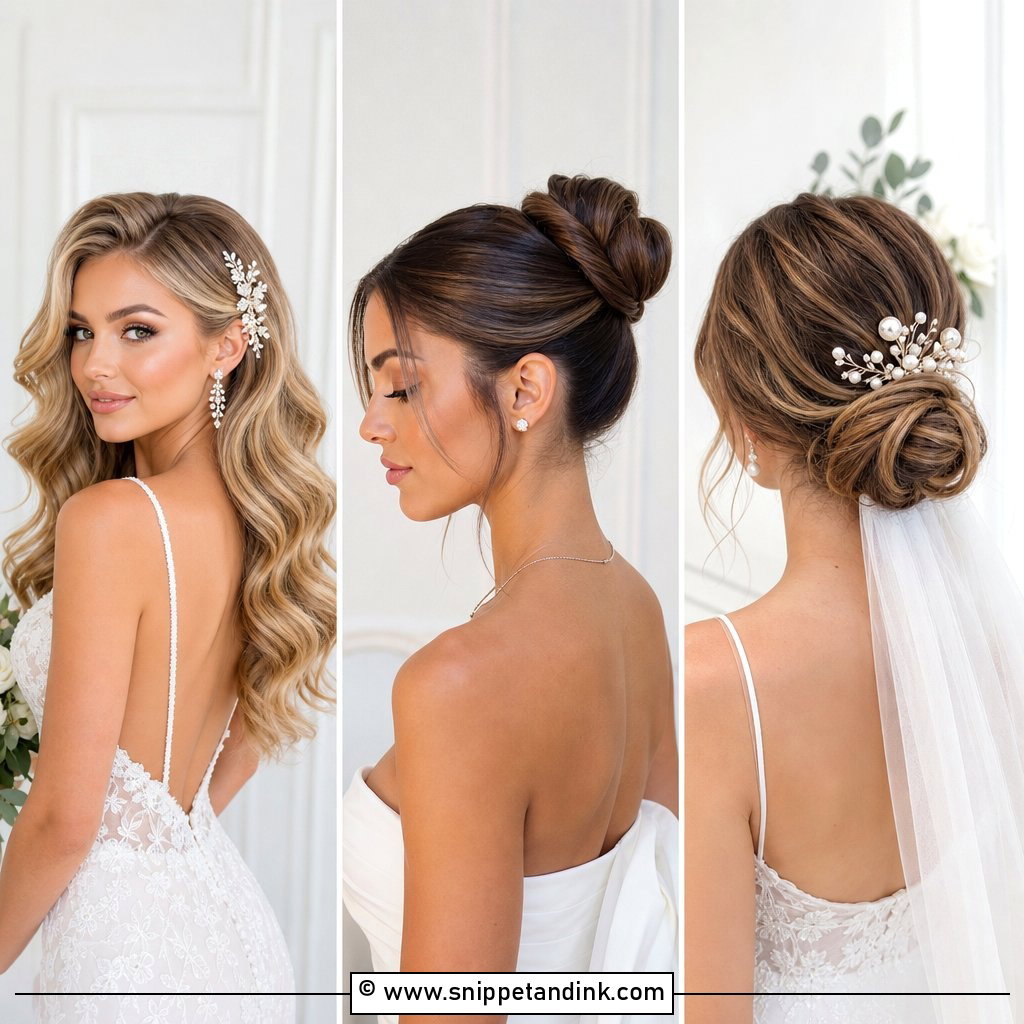
1. Sleek Low Bridal Bun
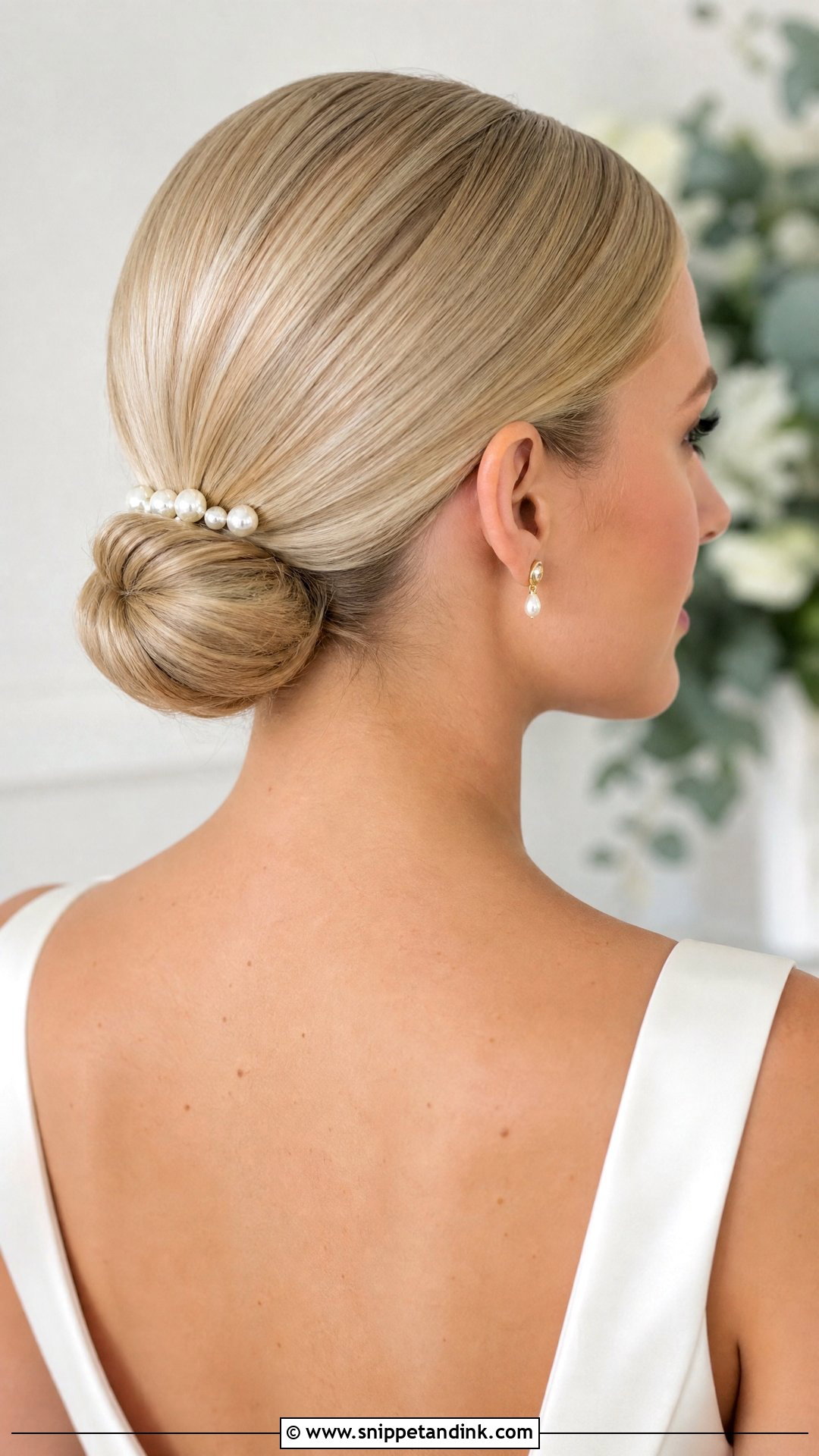
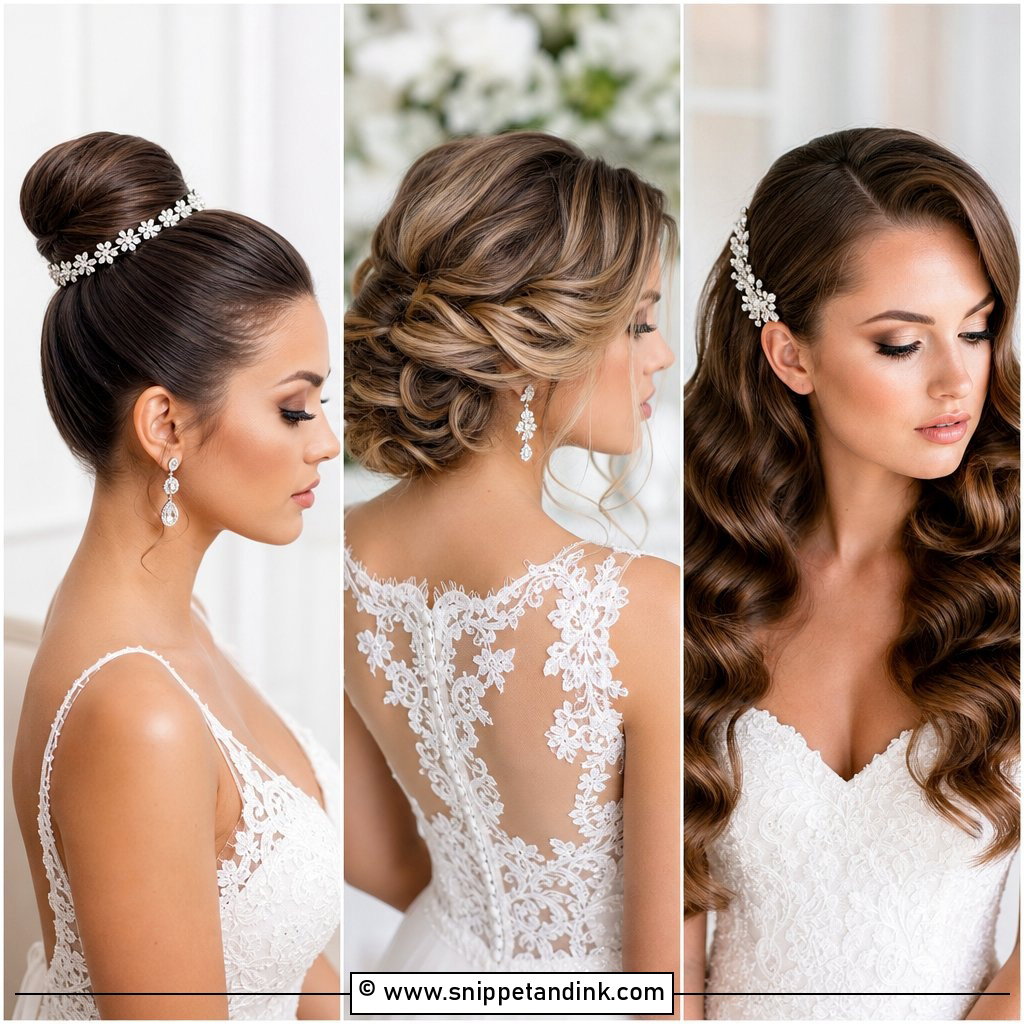
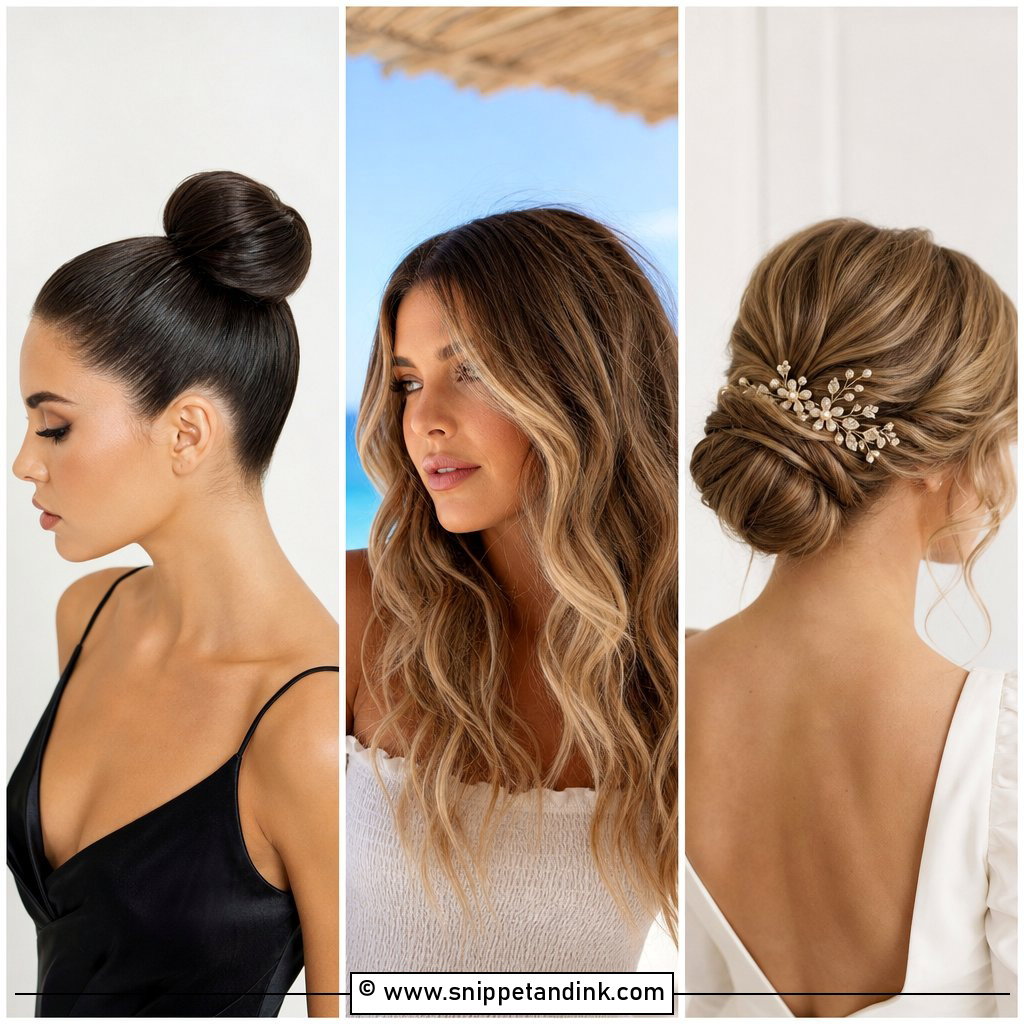
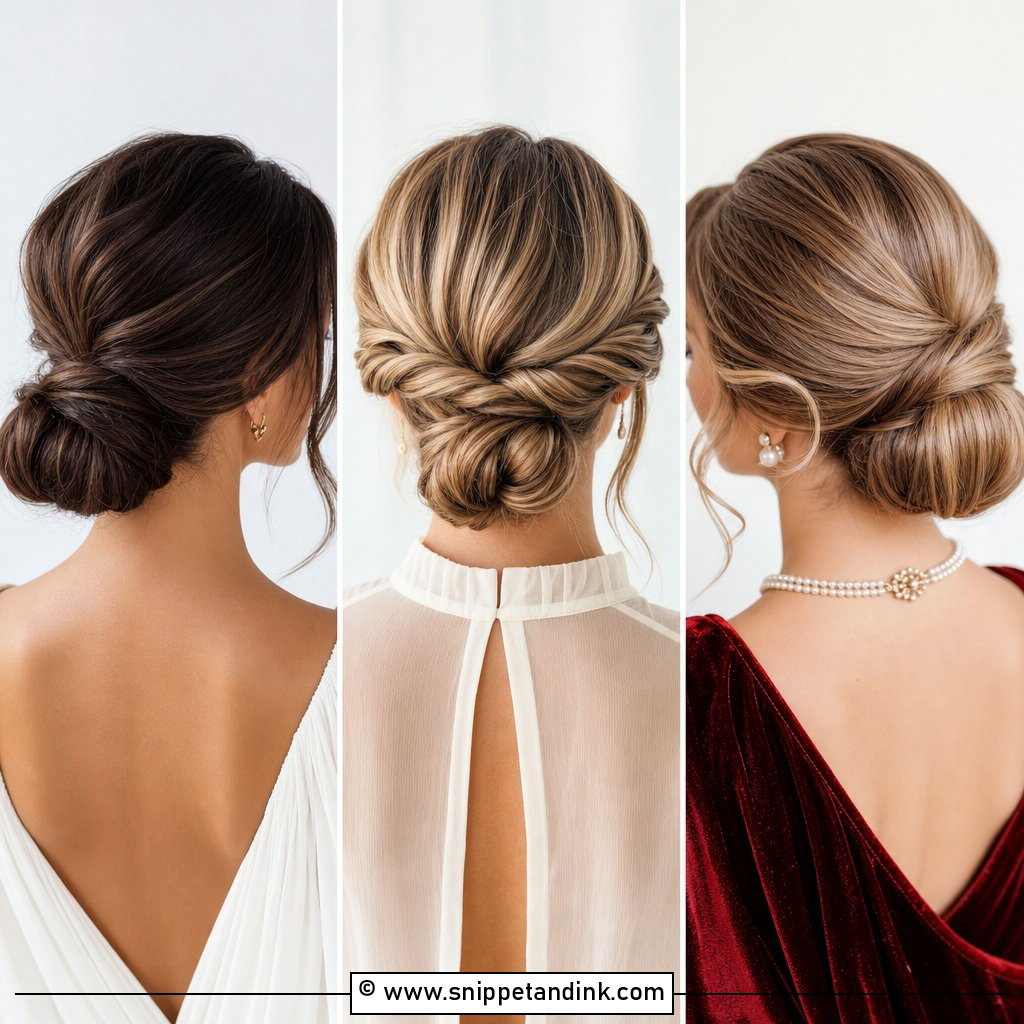
The sleek low bun was the single most requested look of the year, and it’s less simple than it looks. Smoothing hair flat to the head shows every bump, so I brush each section with a boar bristle brush and a light cream before gathering, and I tie the ponytail base slightly below where the bun will sit so the elastic disappears. The bun itself can be round, twisted or softly folded. It works with a center or side part, a veil or pearl pins, and leaves the neckline and makeup in full view. Finish with a flexible spray, not a hard one; you want it secure, not shellacked.
2. Soft Textured Bridal Updo
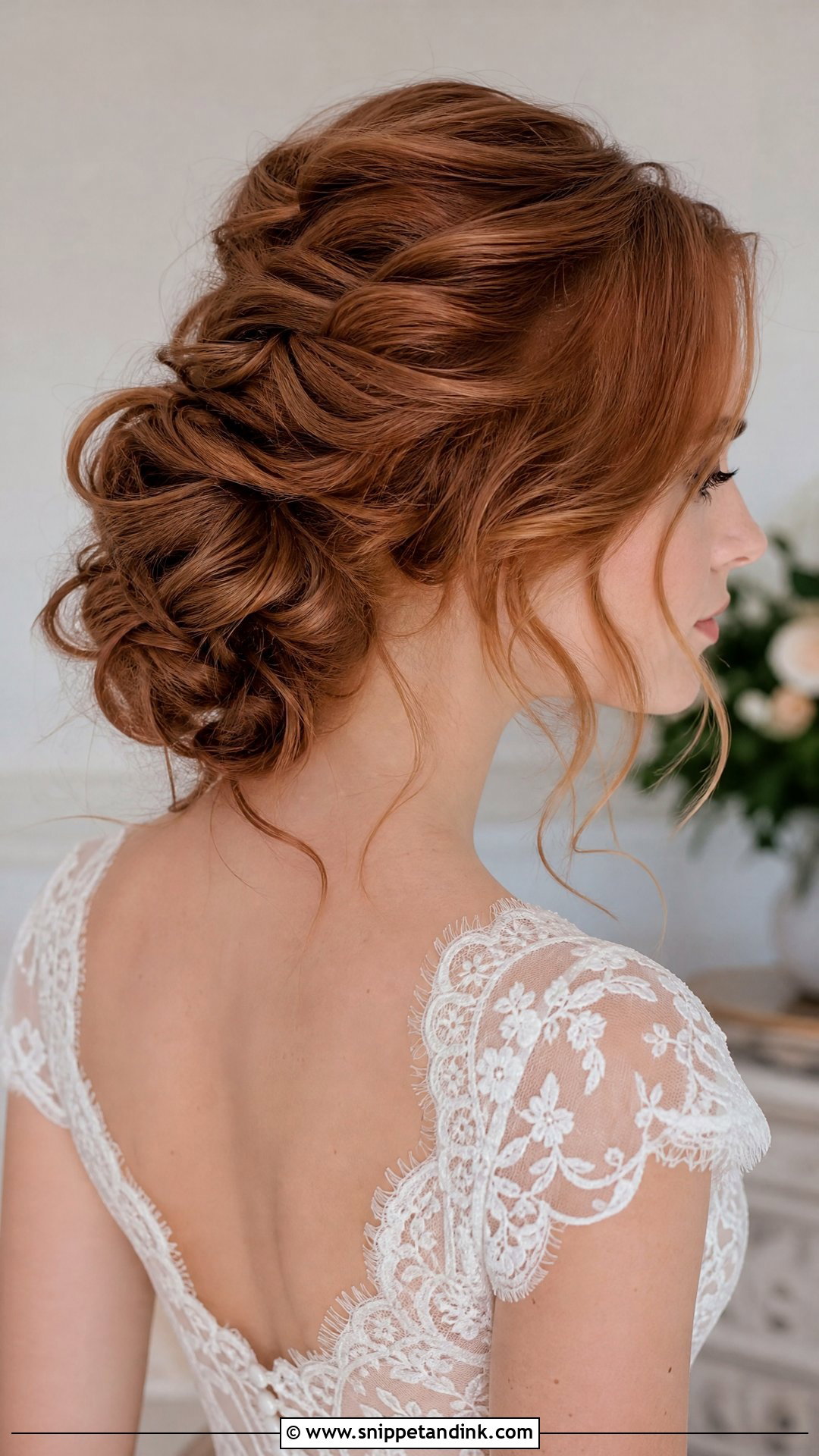
A soft textured updo is mostly hidden engineering. The airy volume on top sits over a firm framework of crossed pins and light backcombing, otherwise it collapses by the speeches. It suits garden ceremonies and lace or tulle dresses. My one firm rule: decide on the face-framing pieces before we start rather than pulling them out at the end. Too many tendrils go limp in humidity and look untidy in photos, while two or three planned pieces, curled and set, hold their shape far longer.
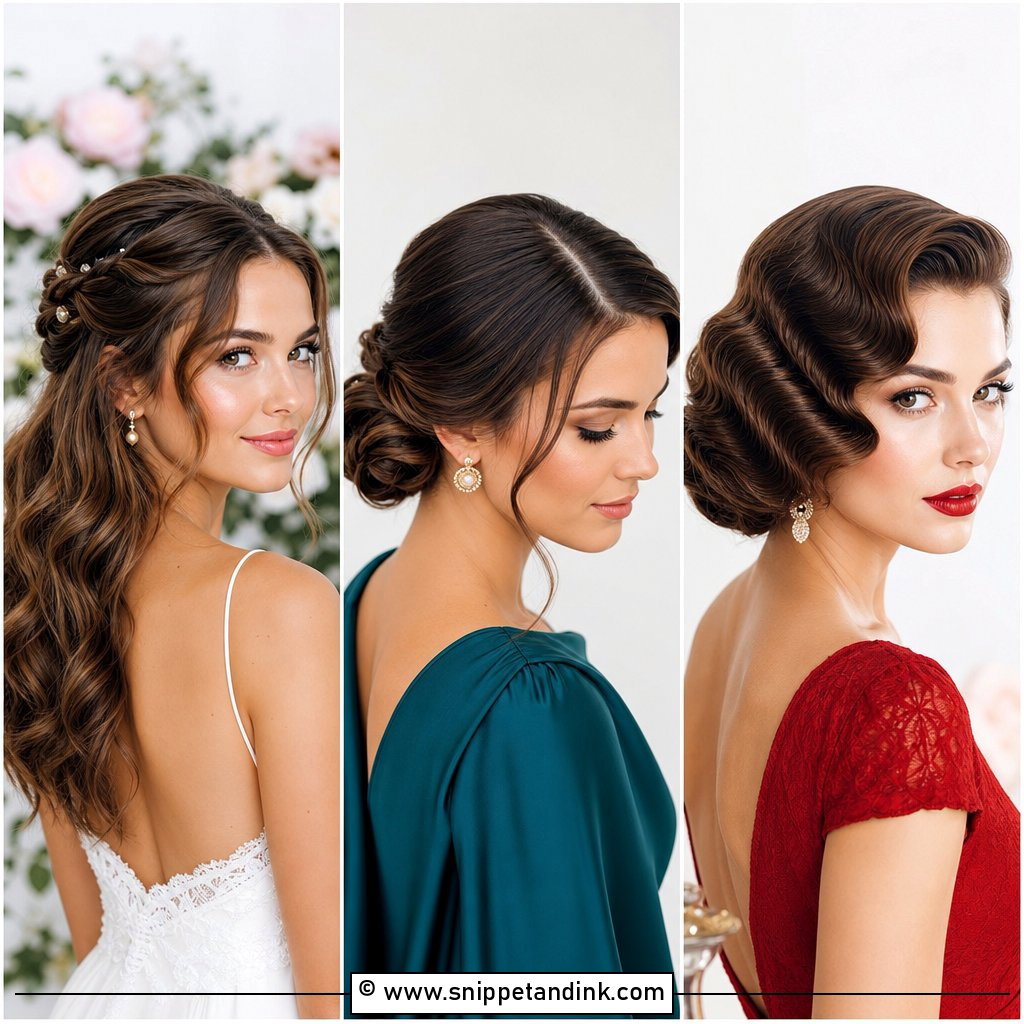
3. Hollywood Waves Bridal Hair
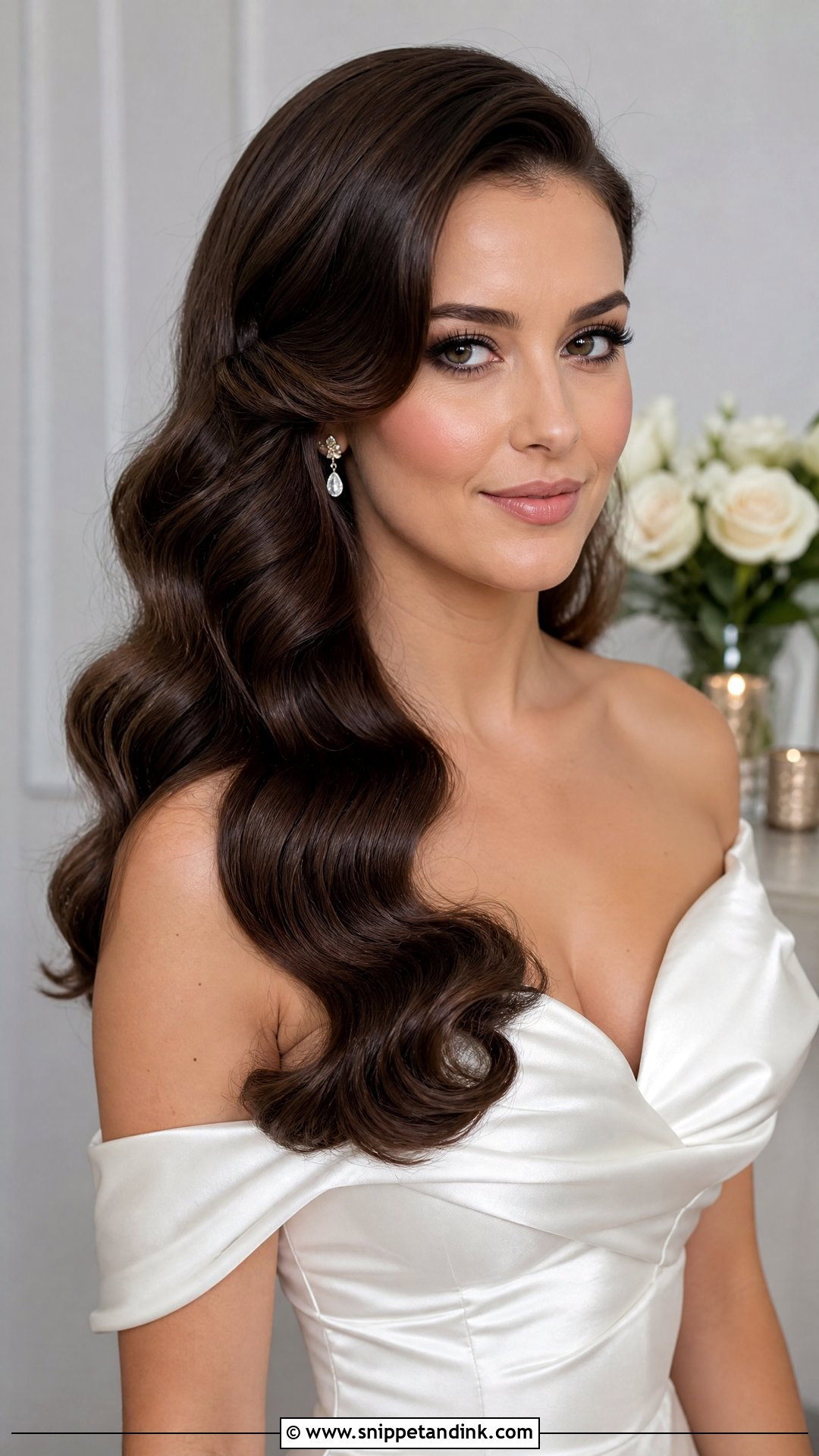
Today’s Hollywood waves are softer than the vintage version, with more shine and some movement, but the method hasn’t changed. Every section is curled in the same direction, pinned while hot, cooled completely, then brushed into one continuous S-pattern. They need medium to long hair and healthy ends, since split tips break up the pattern. A side part suits them best. Prep with heat protectant, set with clips while cooling, and finish with a light mist of shine spray. Fine hair loses the shape fastest, so I’d test it at a trial before committing.
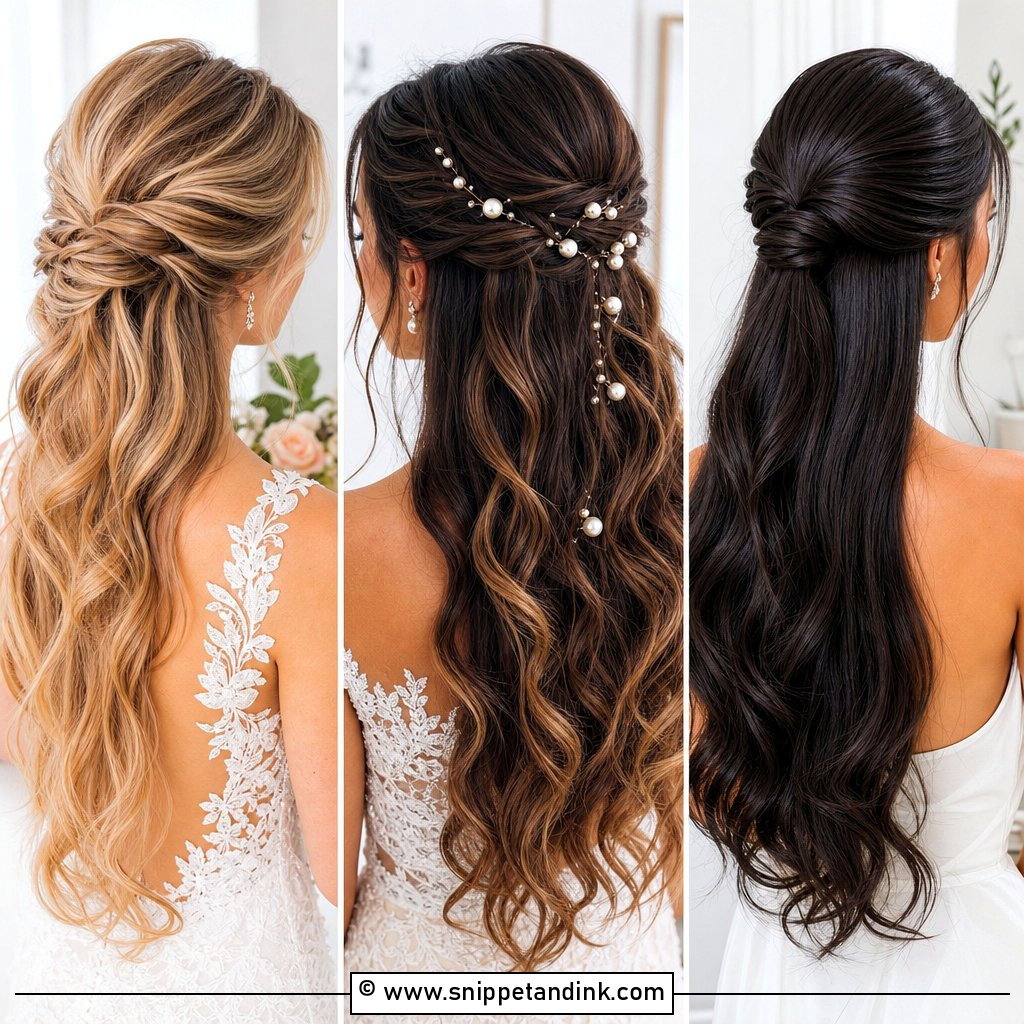
4. Half Up Bridal Hair With Waves
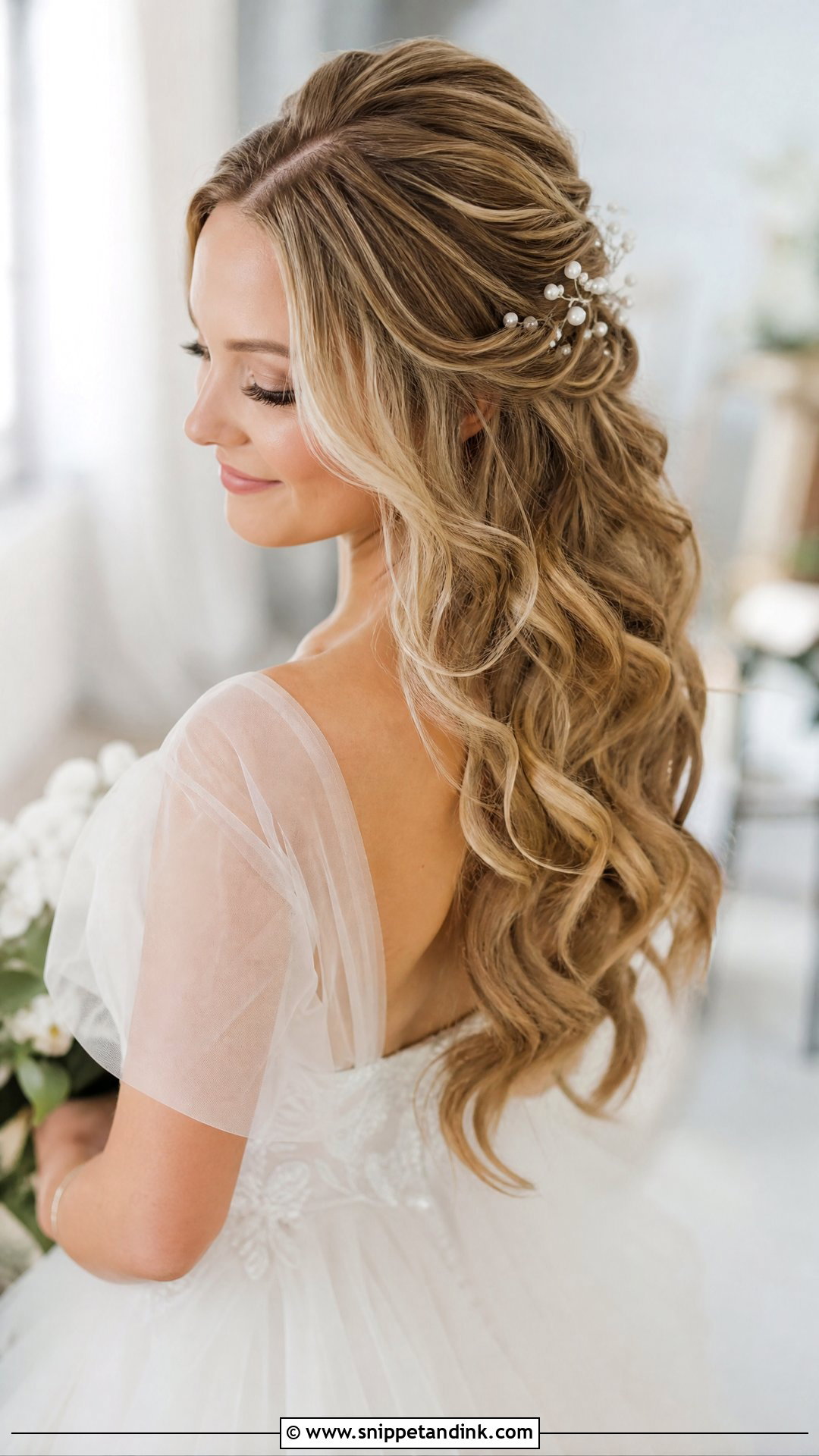
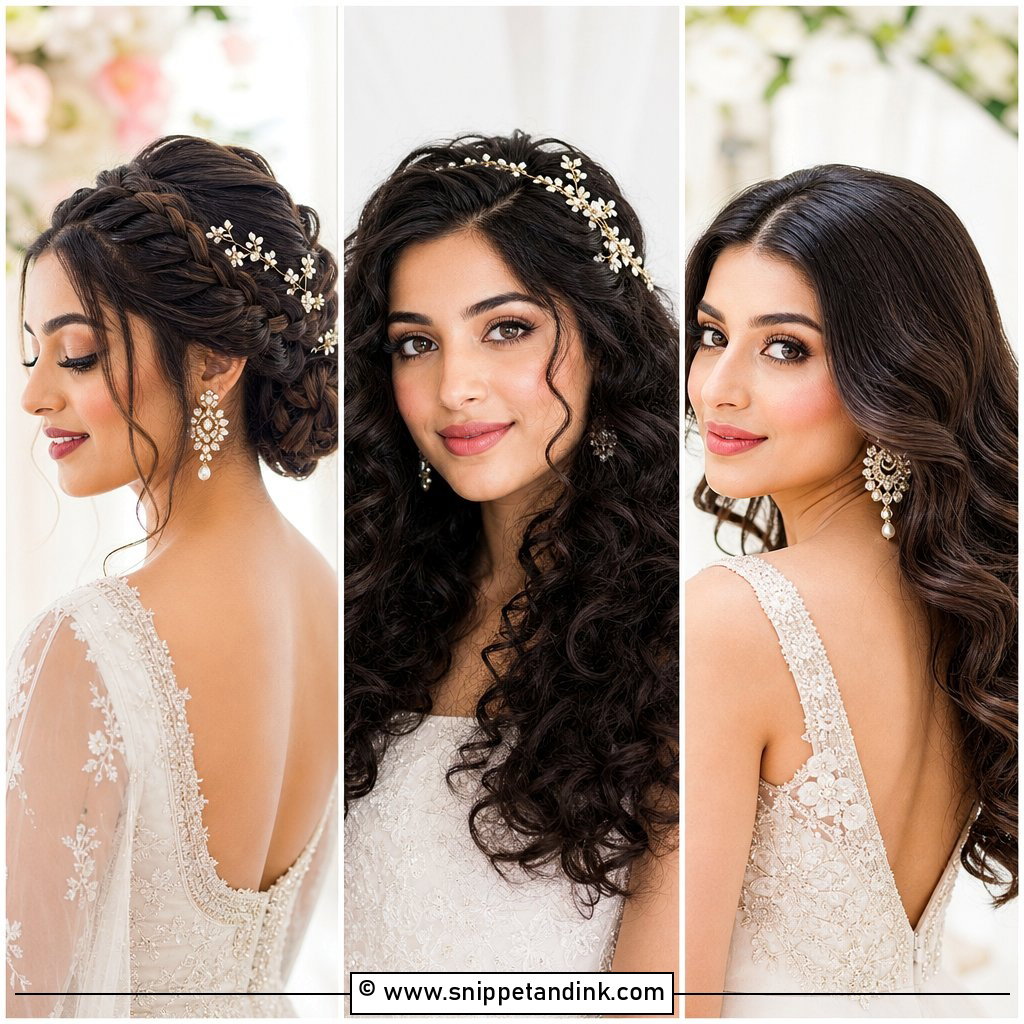
Half up with waves is the answer when you can’t decide between up and down, and it keeps hair out of your eyes during the vows. The top section is lifted and pinned back while the rest falls in curls or waves. I secure the pinned part with a small hidden braid or a crisscross of pins, which gives a veil, floral pins, combs or pearls something to grip. The lower half is the weak point: loose waves relax over a long evening, especially in a warm room, so expect softer curls by the reception rather than fighting it.
5. High Bridal Bun
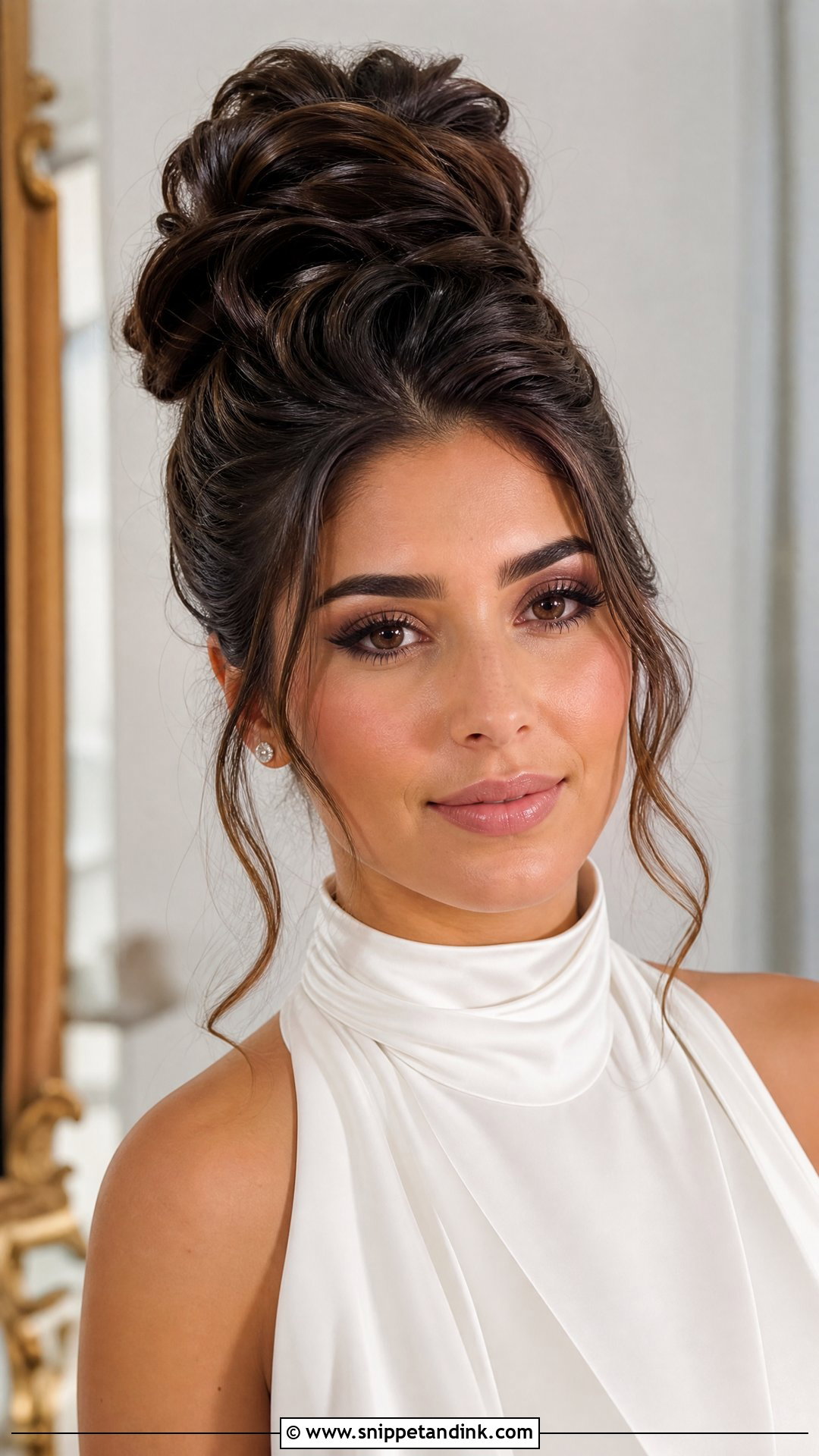
A high bun adds height and draws the eye up, which suits high necklines, open backs and bold sleeves. The 2025 version is softer than a ballet bun: sculpted, wrapped or a little textured. Placement is everything. I usually set it just behind the crown, roughly in line with the cheekbones, rather than on top of the head, which tips it into casual topknot territory. It’s comfortable in hot weather since nothing touches the neck. On long, thick hair, I’ll build it over two stacked ponytails so the weight doesn’t pull at one spot.
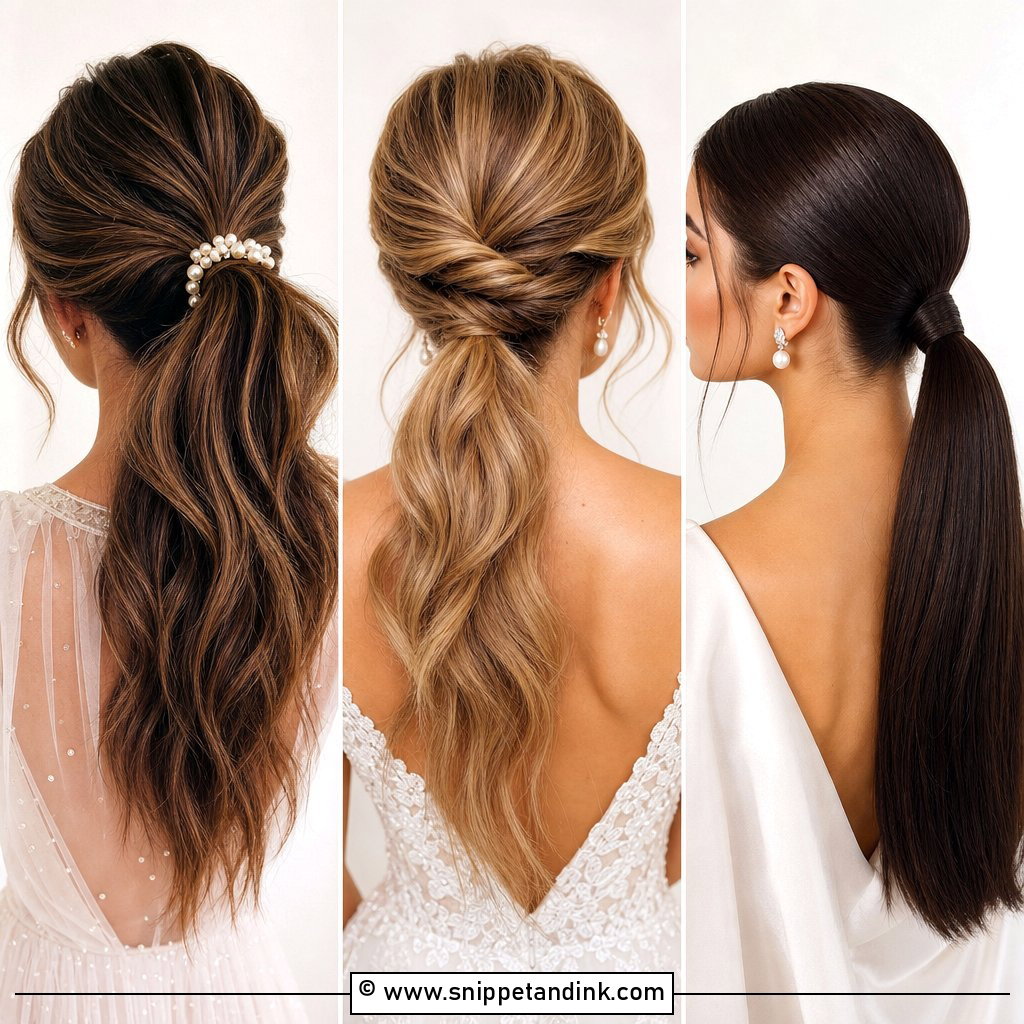
6. Low Bridal Ponytail
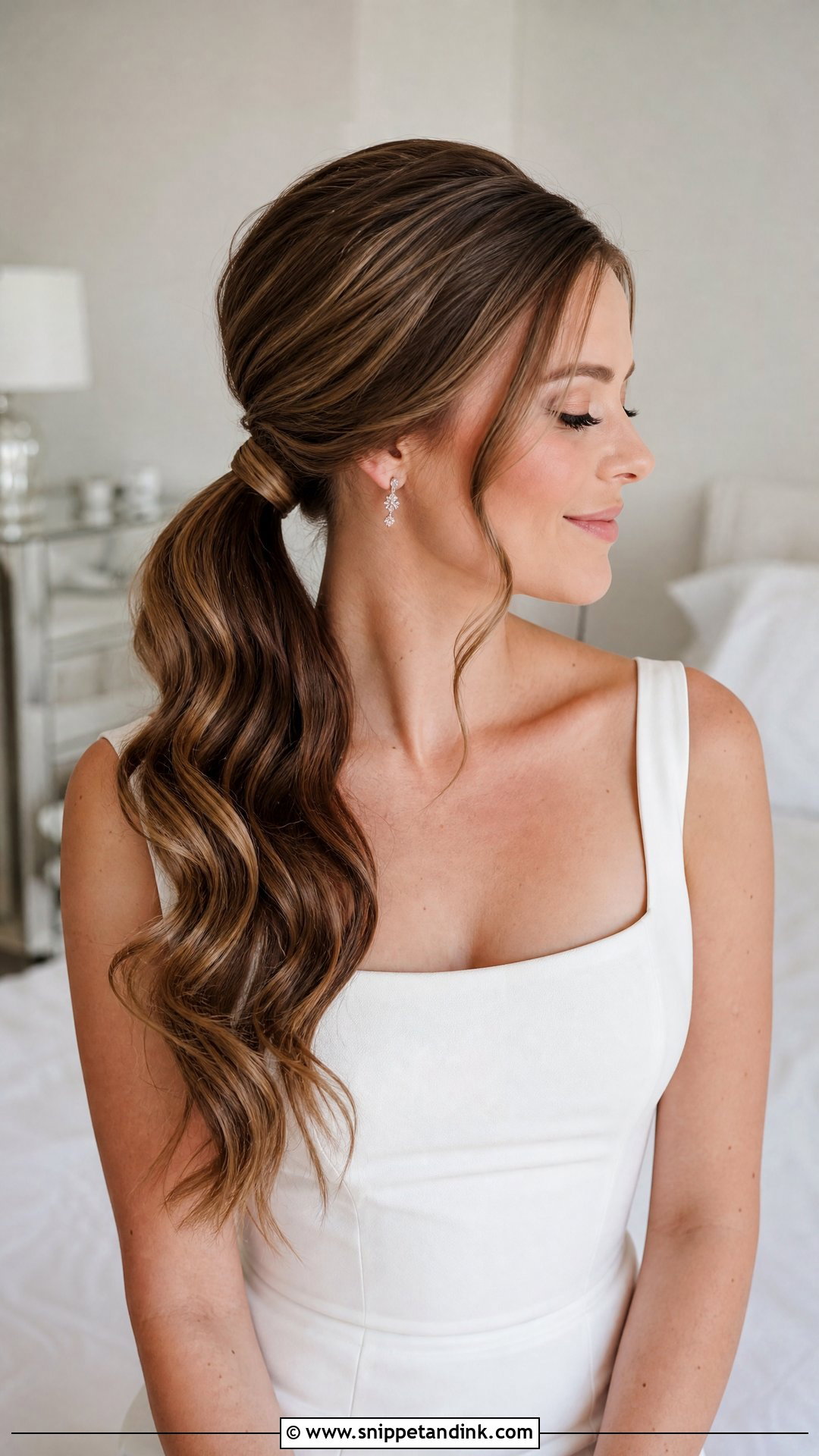
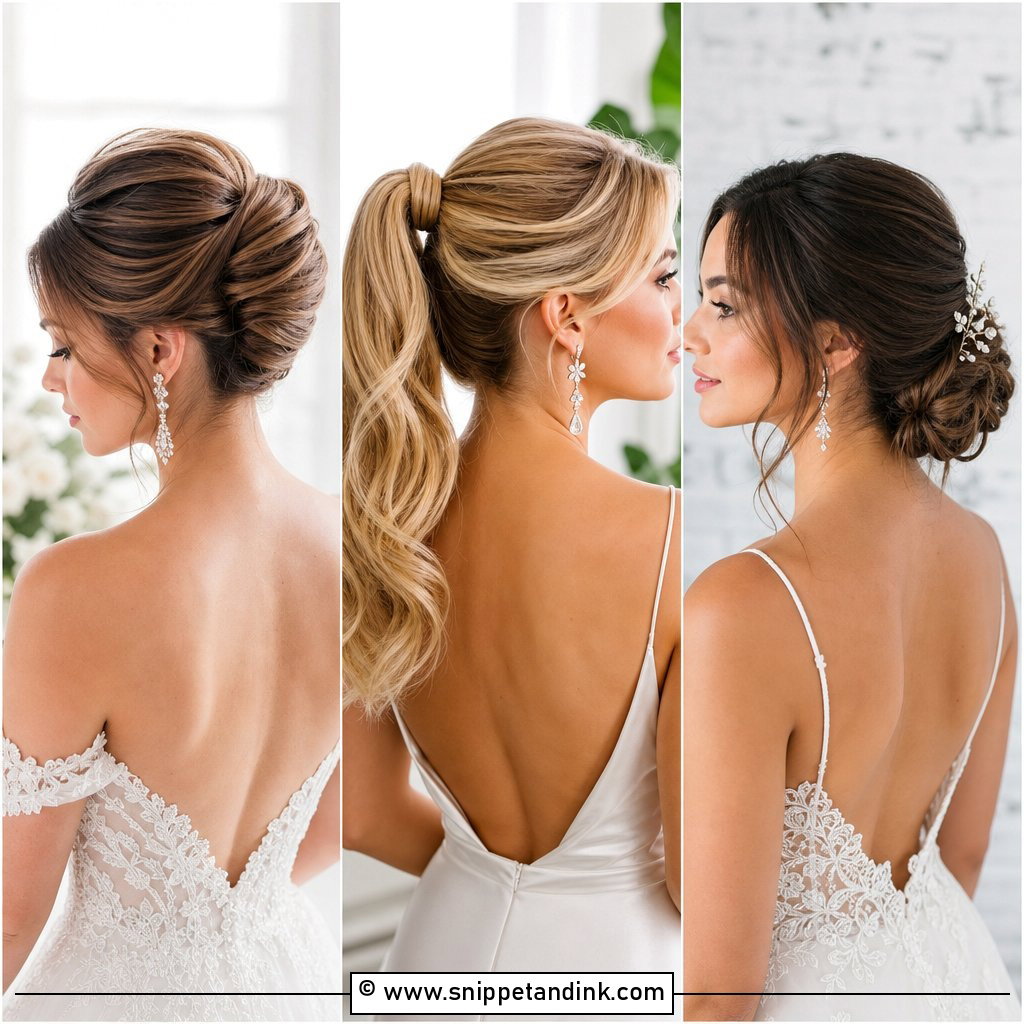
The low ponytail looks modern and is easy to wear. The trick is a secure base that won’t sag: I tie it with two elastics, one over the other, and wrap a strand of hair around them, pinning the end underneath. A little lift at the crown stops the head looking flat. It can be smooth and glossy, softly waved or wrapped. Square necklines and minimalist gowns suit it. If your hair is fine, a clip-in set under the top layer adds the fullness most reference photos have.
7. Sleek Bridal Ponytail
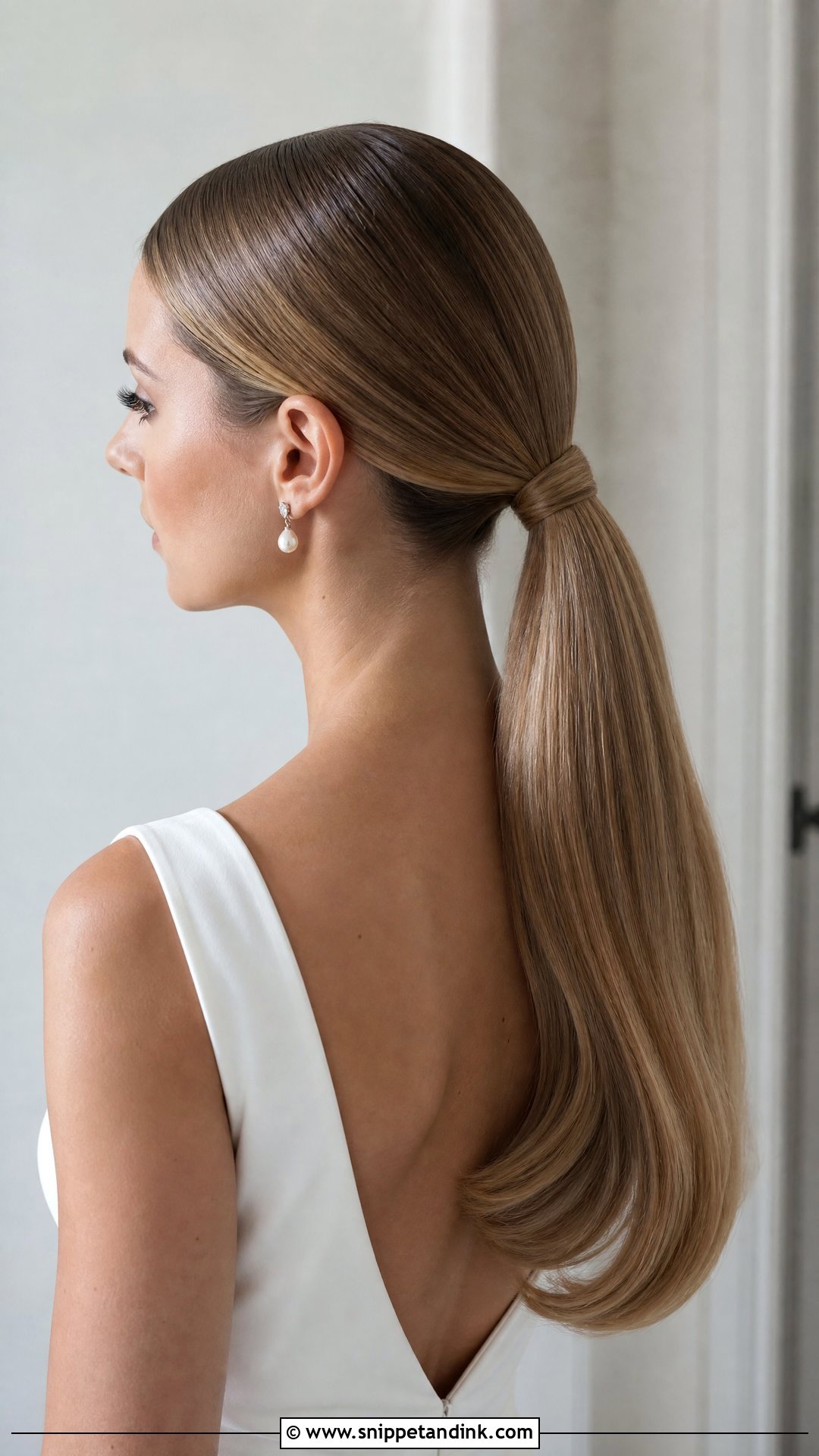
A sleek ponytail is sharp, and it shows cheekbones, earrings and neckline clearly. It can sit high, mid-level or low, with straight, softly curved or waved ends. The problem with sleek hair is that every flyaway shows, especially in close-up photos. I use a smoothing cream, a fine-tooth comb and a small amount of shine spray, and I keep a toothbrush with a little gel for the hairline. Too much product makes it look greasy by evening, so less is better. Brides with a lot of short broken hairs at the crown may find a softer ponytail easier to keep tidy.
8. Bridal French Twist
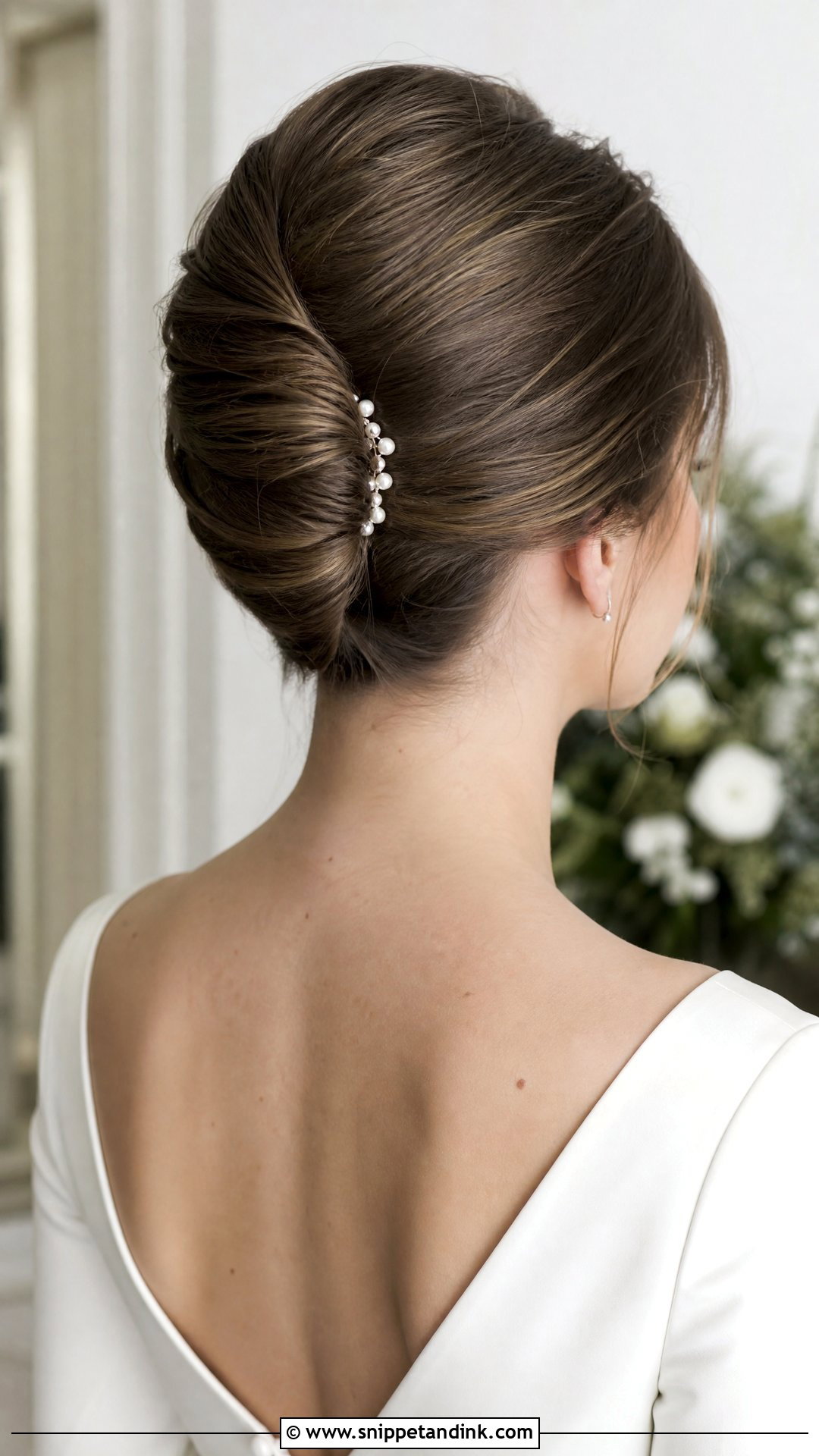
The French twist came back strongly, now worn with softer texture or a slightly undone finish rather than the polished roll of the past. Hair is gathered vertically and tucked into a seam at the back. Structurally, I pin the seam in a zigzag from bottom to top, which locks the roll far better than pins pushed straight in. It suits high necks, vintage-style dresses and simple veils, and it’s comfortable. Hair that is shoulder length or longer works; very short layers poke out of the seam. Pearl pins along the seam add detail without competing.
9. Bridal Chignon
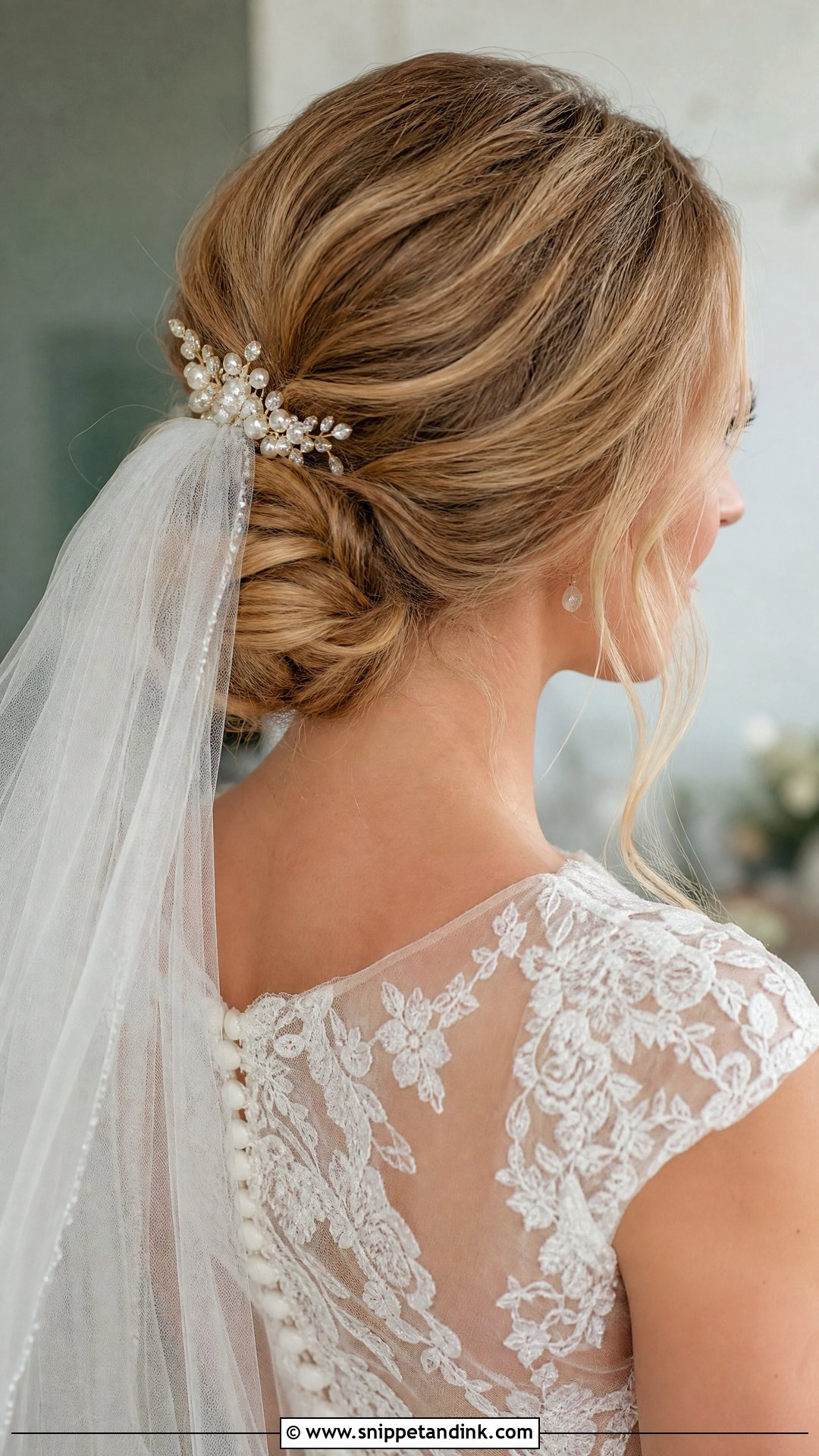
A chignon suits almost every dress and face shape, which is why it never really goes out of favor. It sits low at the nape and can be sleek, twisted, braided or airy. What I focus on is the back view, since that is what guests see for the whole ceremony: smooth roots, gentle volume and a bun that looks carefully shaped from behind. A veil comb sits neatly just above it. Of everything on this list, this is the one least likely to date your photos in years to come.
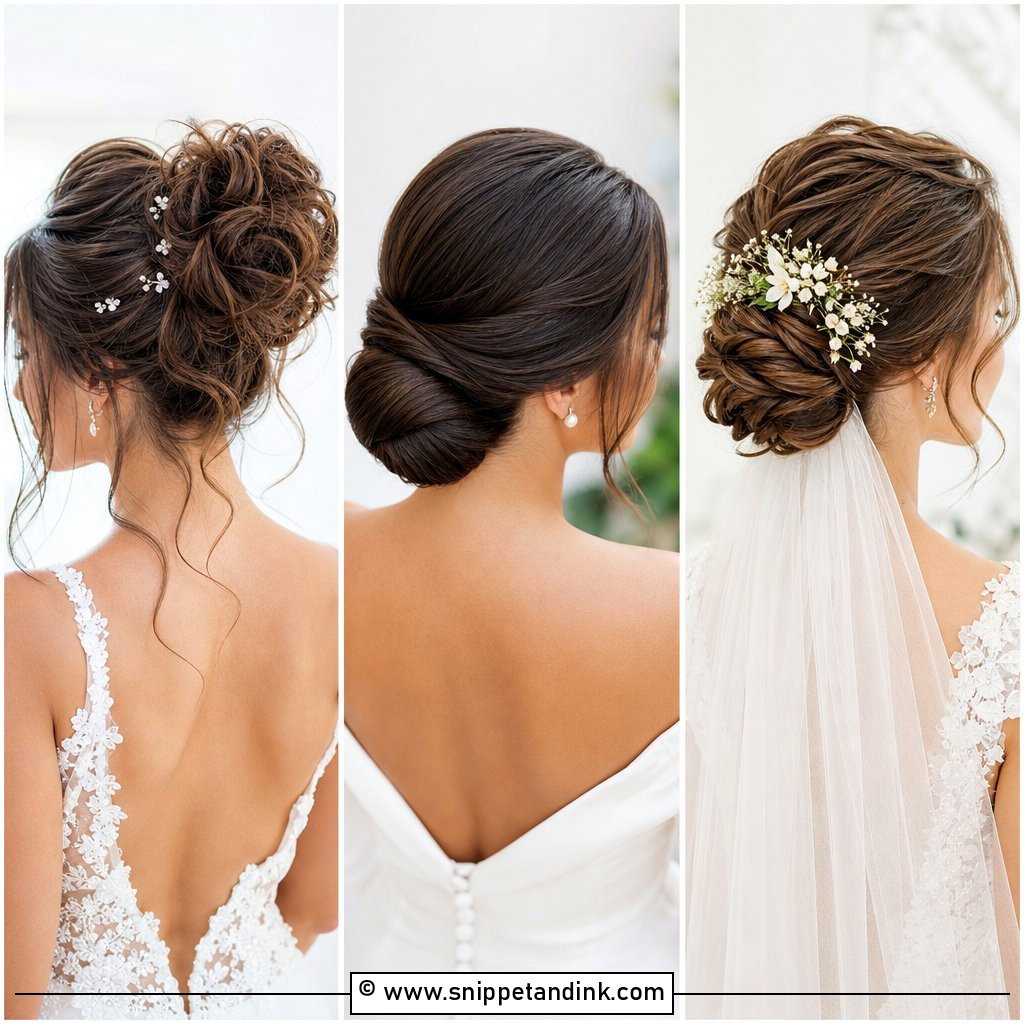
10. Braided Bridal Updo
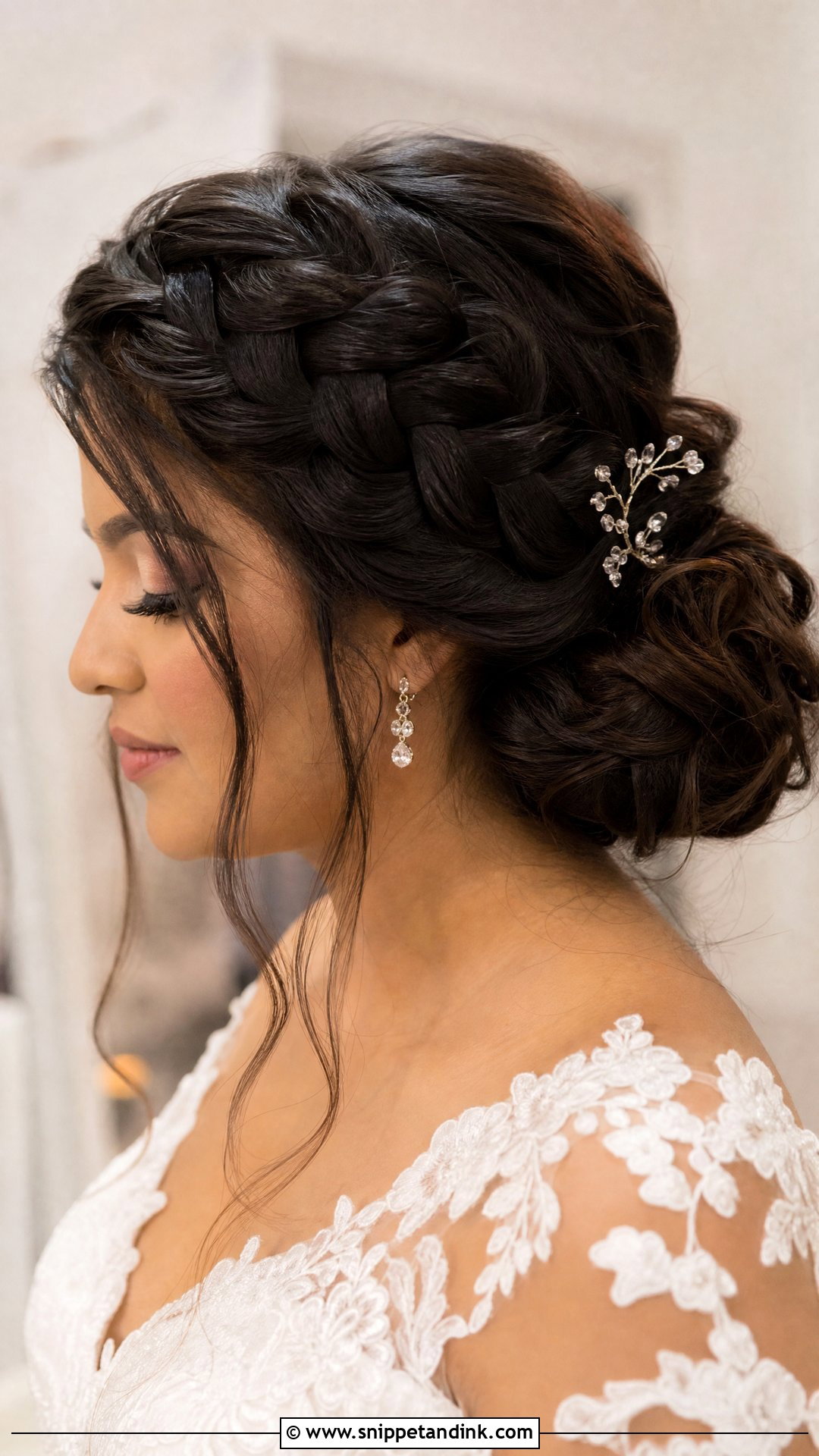
A braided updo adds detail and is very secure. The braid can wrap into a low bun, cross the crown or run into twisted sections at the back. Most braids look thinner than people expect once they’re pinned, so I gently pull the edges outward (pancaking) and add texture spray to make them look fuller. Pins go underneath, where they hold without showing. It suits outdoor weddings and boho gowns. Small flowers or pearls can be tucked in, but the braid should stay the main feature.
11. Bridal Hair With Natural Curls
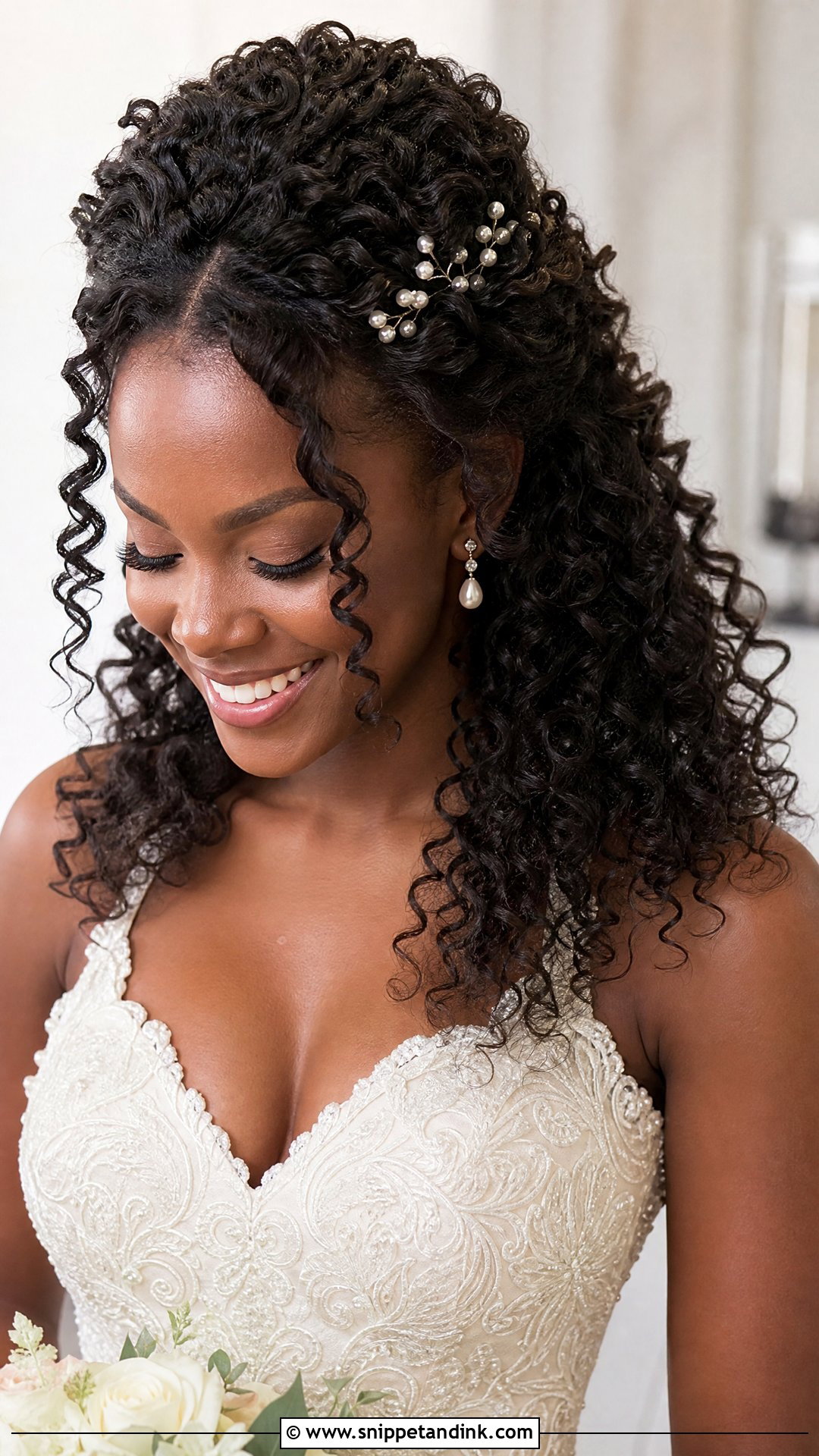
More brides now want their wedding hair to look like their real texture, and I’m glad of it. Natural curls can be worn down, half up, in a soft curly updo or as a voluminous shape with the sides pinned. Prep starts days earlier: a hydrating wash, your usual leave-in and gel, and diffusing or air drying the night before. On the day, I shape the curls with fingers and pins, never a brush, which breaks the curl pattern into frizz. A trial matters here more than for any other style, because every curl pattern takes product differently. Veils, floral clips and simple combs all sit well on curls.
12. Bridal Hair With Pearls
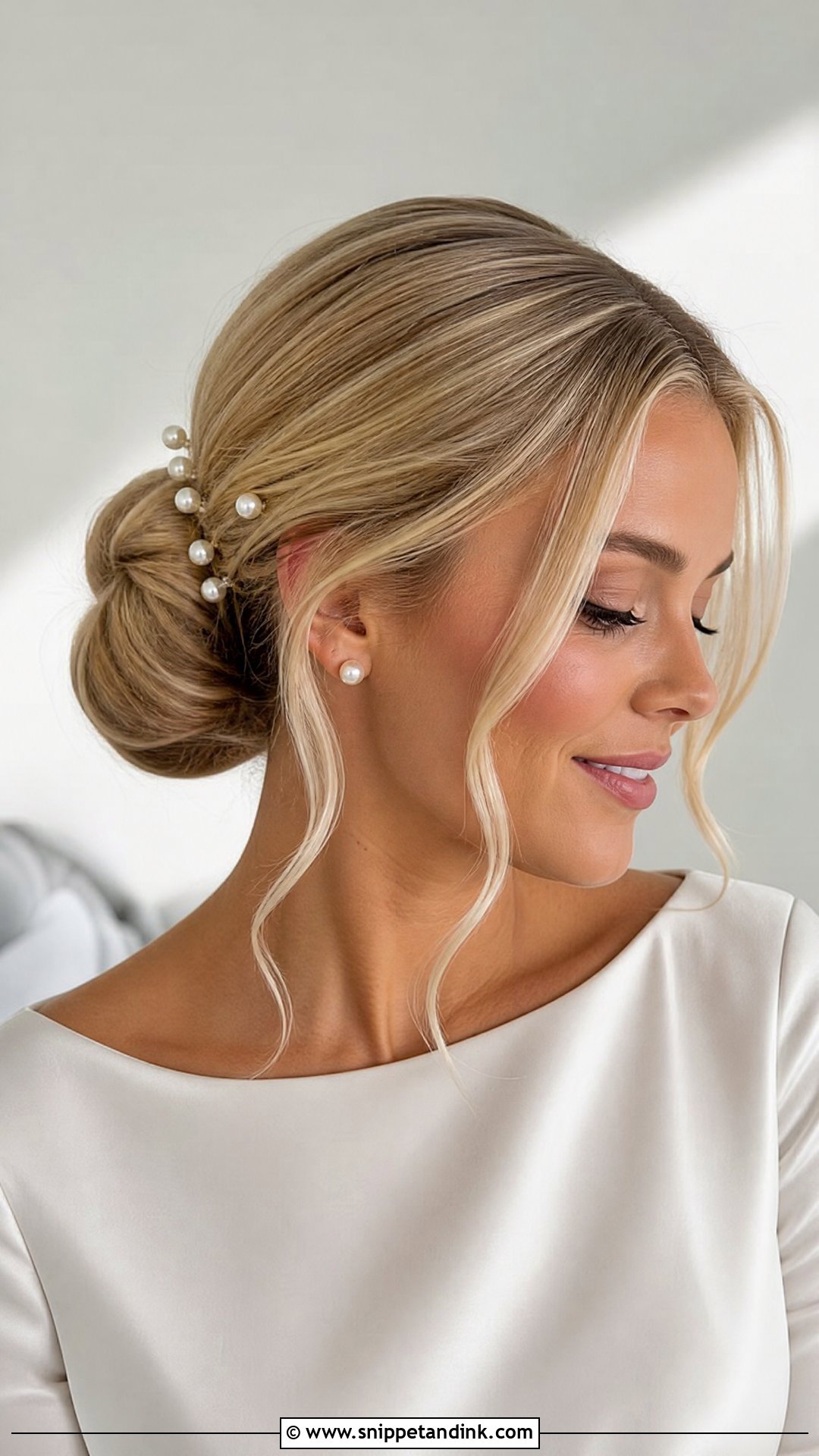
Pearls fit into buns, ponytails, waves, braids and half-up hair alike, so they suit nearly any look. Scale matters most. Tiny scattered pearls look delicate, while larger pins read more classic. I place them where the light catches from the camera’s usual angle, so mostly on the side and back rather than right on top of the head. On fine, silky hair, straight pins slide out; I use bent-wire pins or anchor them into a small braid. If your dress is heavily beaded, fewer pearls in the hair keeps the overall look balanced.
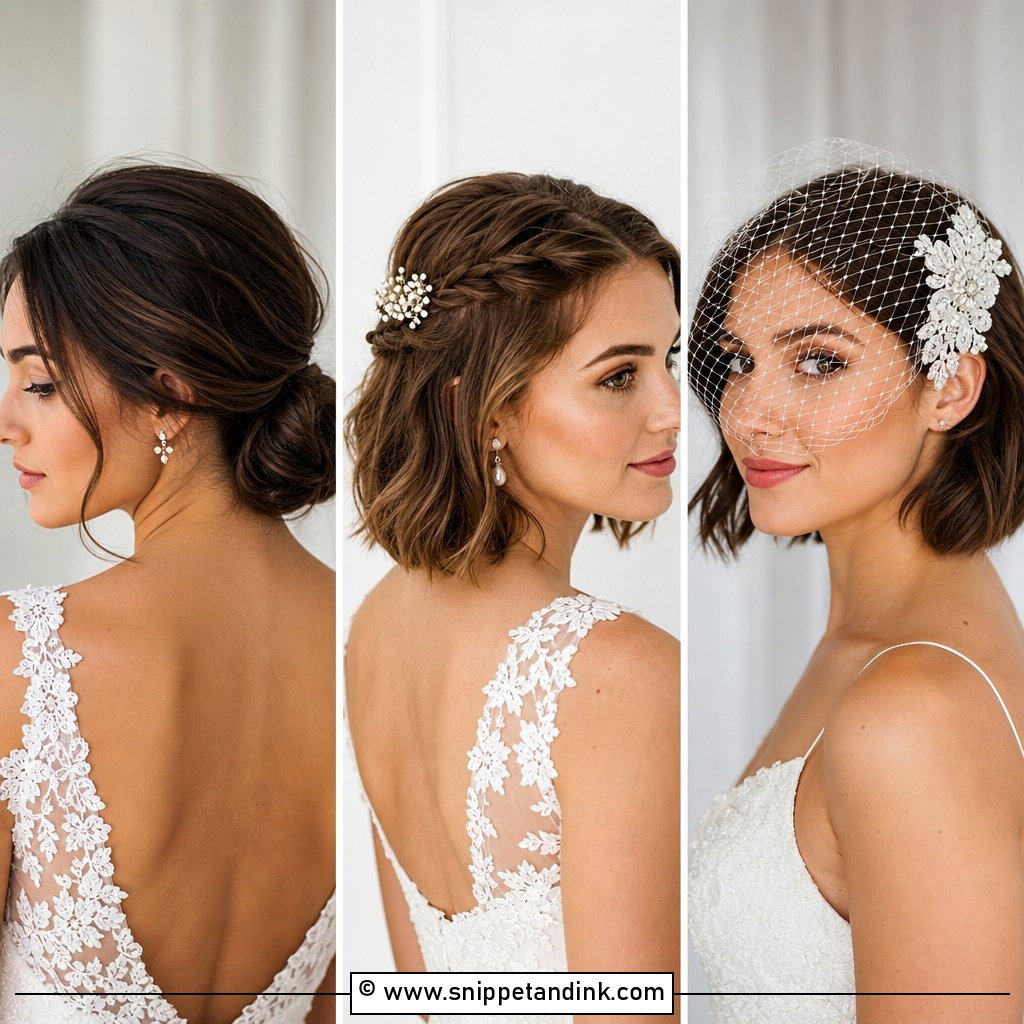
13. Bridal Hair With Veil
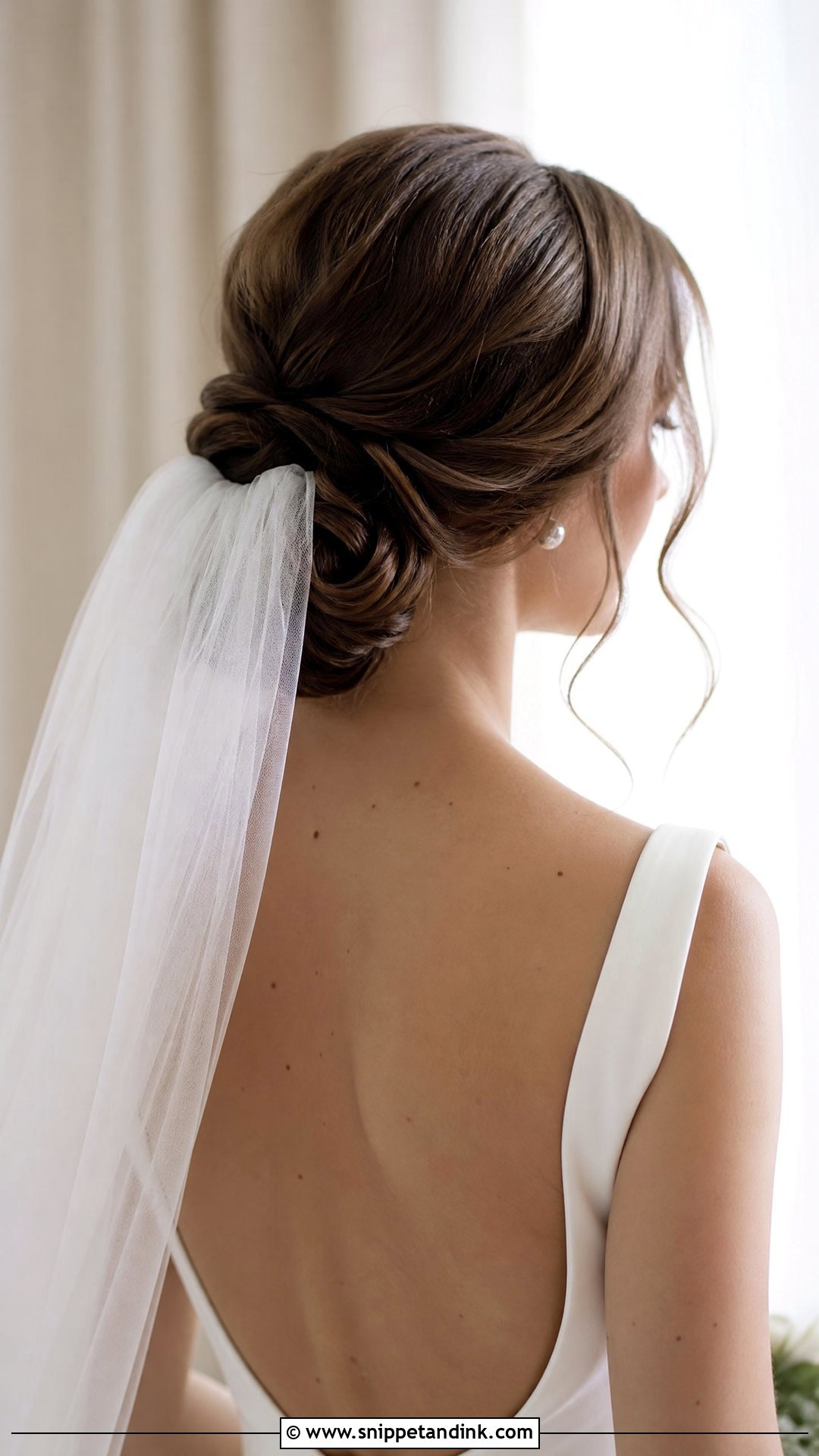
A veil should be planned with the hairstyle, not added at the end. The style needs a firm place for the comb and still has to look finished once the veil comes off. Low buns, chignons, half-up waves, French twists and textured updos all work. Above the bun reads classic; tucked underneath reads softer and more modern. I always ask brides to bring the actual veil to the trial, because a long, heavy veil pulls back on the comb and needs a different anchor than light tulle. Walk around in it and turn your head before you leave the chair.
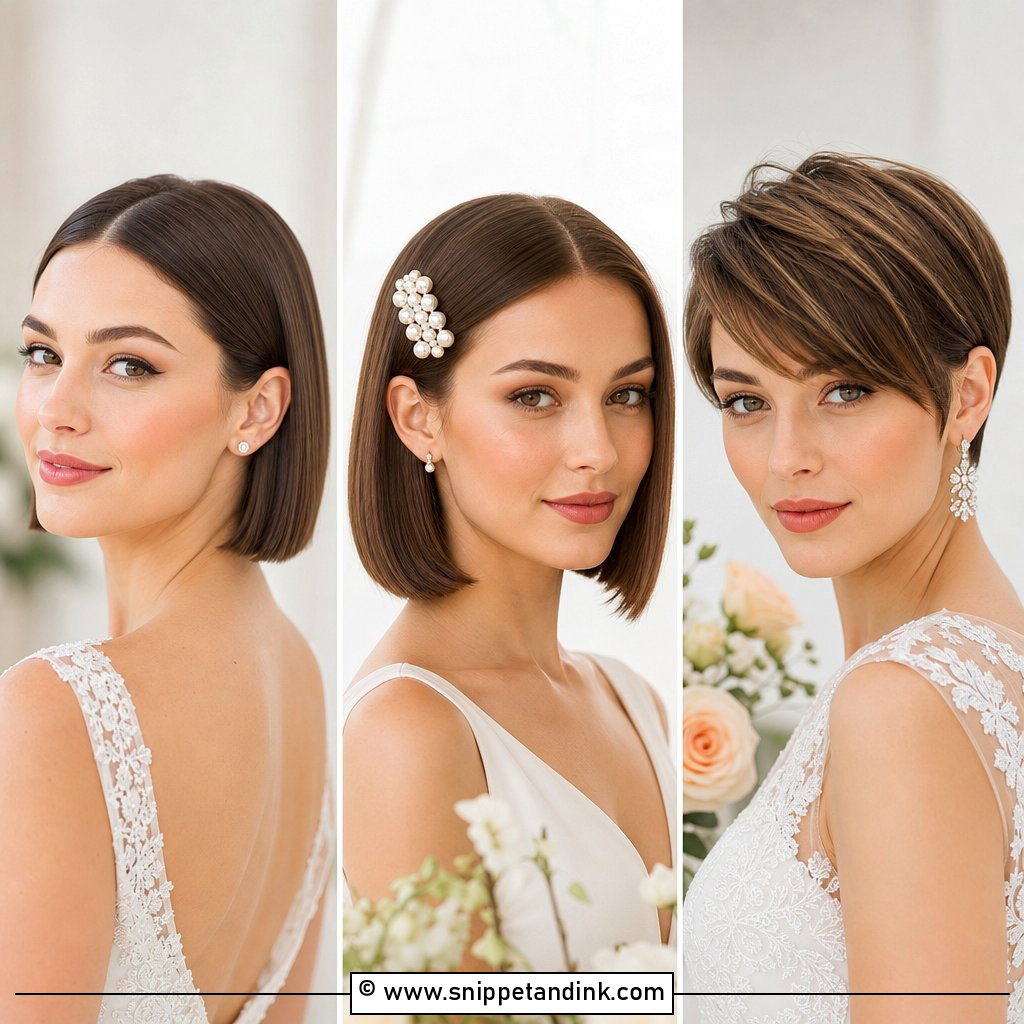
14. Short Bridal Bob Hair
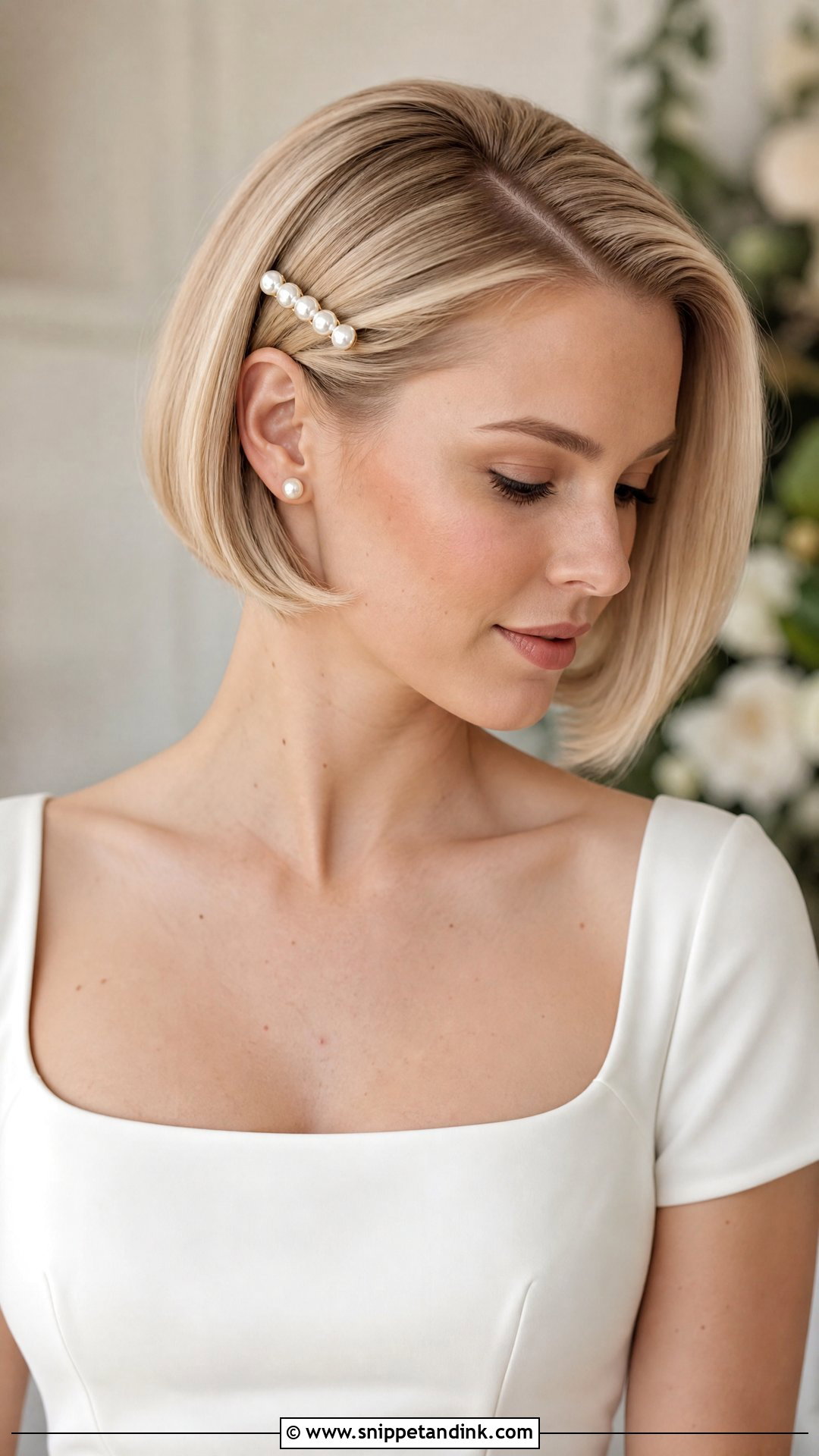
Short bridal bob hair doesn’t need to be forced into an updo. A bob can take soft waves, a deep side part, tucked sides, pearl clips or a smooth glossy finish. With chin or shoulder length hair, I work with the cut: soft bends through the mid-lengths and the ends left straight, which keeps the shape modern. Book a trim within two weeks of the wedding, because a bob loses its line fast. A veil, headband or jeweled barrette makes it bridal, and healthy shine matters more on short hair than on long.
15. Boho Bridal Braid
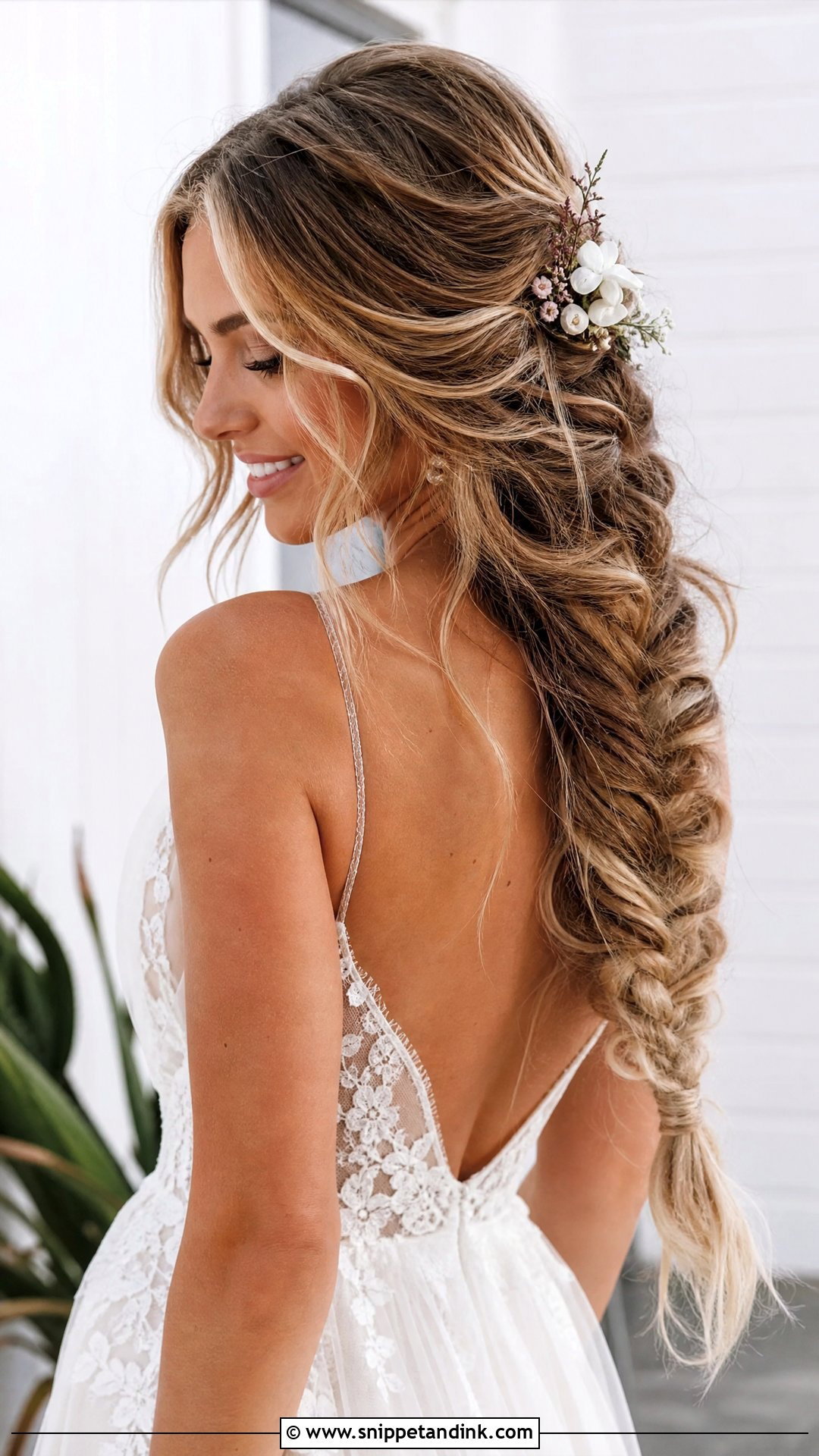
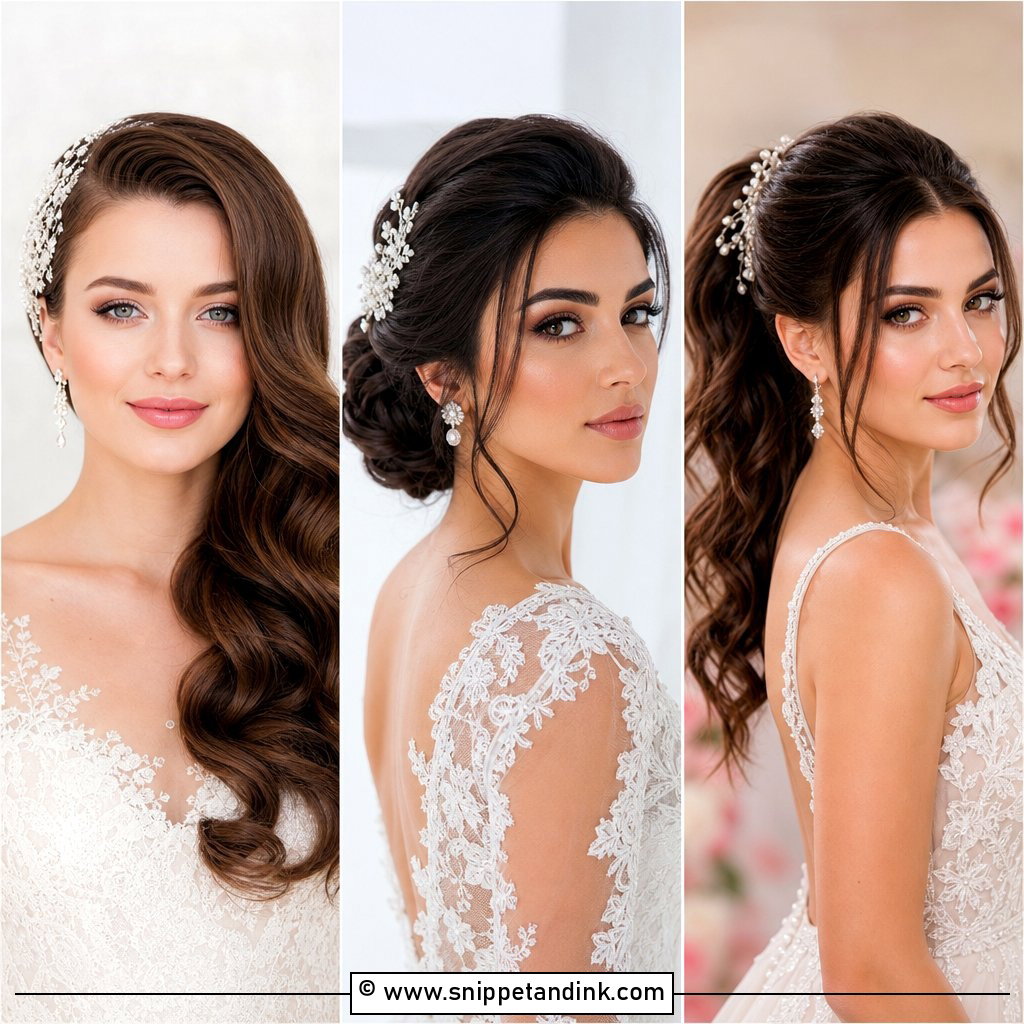
The 2025 boho braid is neater than the messy festival version: a loose fishtail, a textured side braid, a braided ponytail, or a braid woven through waves. It suits outdoor and beach weddings and flowing dresses. It needs grip to look full, so on very silky or freshly washed hair I curl first, add texture spray and lightly backcomb at the roots before braiding. A side braid will drift backward over the evening unless it’s pinned behind the ear. A few small floral pins and some face-framing pieces finish it.
The Two Days Before Your Hair Appointment
A lot of what makes wedding hair last is decided before I arrive. Stylists differ on wash timing; some want it washed the night before for grip, others want it clean that morning for sleek styles. Ask at your trial and follow that advice.
- No new cut, color or treatment in the last week or two. Fresh color can shift tone and a new cut can sit awkwardly.
- Skip oils and heavy masks the night before. Slippery hair doesn’t hold pins.
- Arrive with hair completely dry; drying thick hair can eat a tight morning schedule.
- Wear a button-up shirt so nothing goes over your head after styling.
A Bridesmaid’s Pouch for Fixing Hair After Dinner
By the reception, even a well-set style usually needs a minute of attention. Give a small pouch to whoever stays closest to you.
- Bobby pins in your hair color, plus a few spares that match any pearl or crystal pins
- Travel hairspray and a tiny bottle of shine serum
- A tail comb for lifting a flattened crown or tidying a part
- Clear elastics, and a soft scrunchie if the updo comes down for dancing
If the veil comes out or the hair goes down for the reception, I show the pouch holder how to do it at the trial. Two minutes then saves a lot of fumbling later.
Trends Fade, a Hairstyle That Suits You Doesn’t
Trends tell you what was popular; they don’t tell you what will suit your dress, venue and hair. Sleek buns read modern, Hollywood waves bring glamour, ponytails feel fresh and textured updos stay soft. Natural curls, bobs, braids, pearls and veils all have their place too. Book a trial, bring photos from several angles, and wear a top with a neckline close to your dress. At my trials, I always take a photo from the back and side as well as the front, because that’s how most of your wedding photos will see you.
You'll Like These Ideas:


Leave a Reply