
Long hair gives me more to work with than any other length, and more to manage. There’s enough to build a full bun without padding, to plait a braid that reaches the waist, or to curl so it moves when you walk. There’s also enough weight to drag a style down by the evening. The looks below run from classic gajra buns to South Indian braids, open curls and half-up styles, and I’ve written each one with the practical side in mind: how it carries a dupatta, how it sits with heavy jewelry and how it lasts through ceremonies and dancing in a lehenga, saree or sharara.
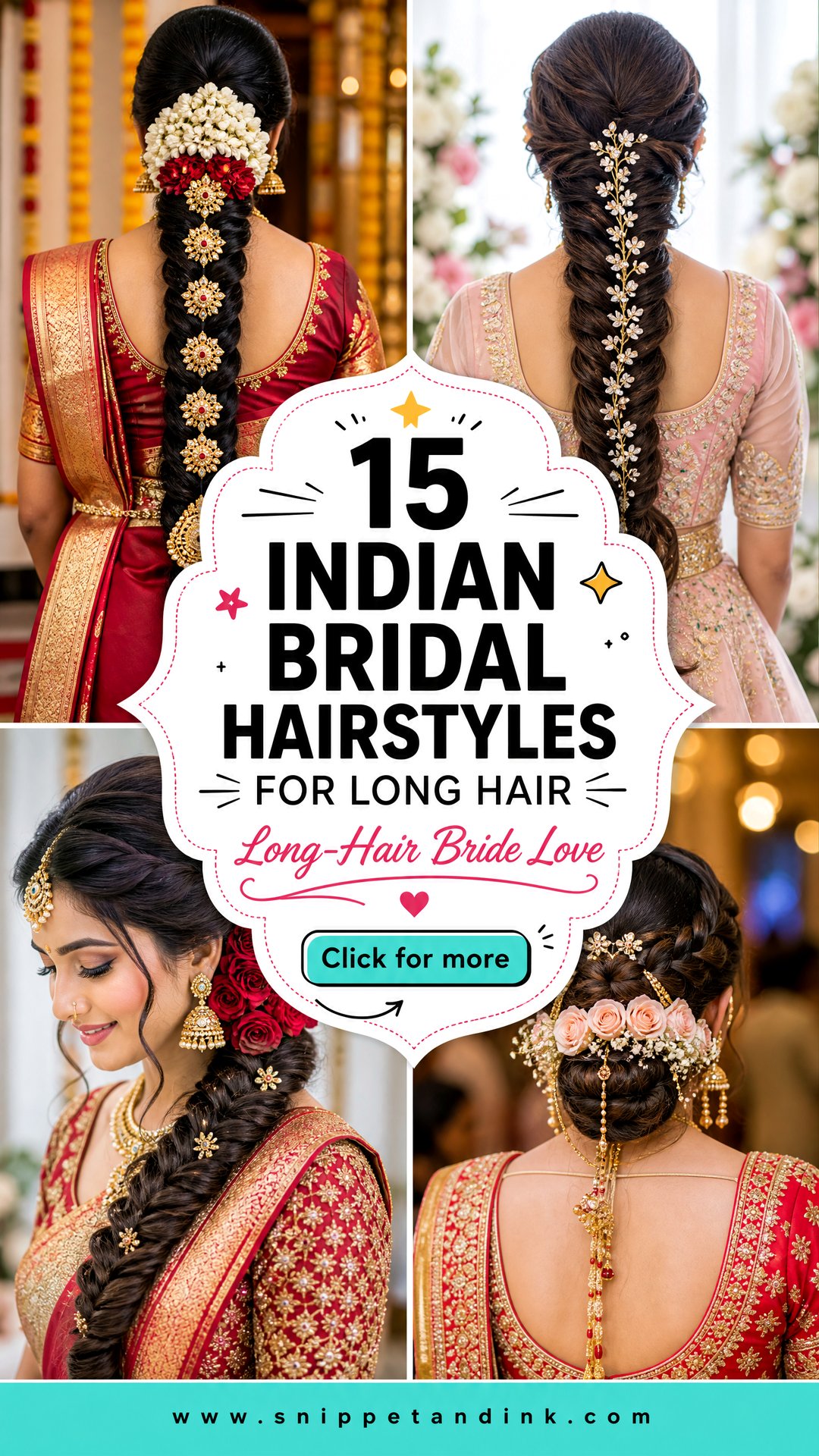
Weight Is What Decides Most Long Bridal Styles
Hair that falls past the shoulder blades can be surprisingly heavy, and on a wedding day you add flowers, jada, a tikka and a dupatta on top. That’s why I ask about scalp comfort before anything else. Some brides get tension headaches from a high bun within two hours.
My rule is simple. The more ornaments you plan to wear, the lower the anchor point should be. A low bun or a braid that starts at the nape lets the neck take the load instead of a small spot at the crown. Pins are crossed in pairs so they lock against each other, and heavy pieces like jada or a big gajra are stitched or wired on rather than just pushed in.
- Very thick hair: ask for the bun to be split into two sections so it sits closer to the head.
- Fine but long hair: a few wefts add grip and bulk, and they hold pins better than slippery lengths.
- Sensitive scalp: say so at the trial, and wear the finished style for at least an hour before you sign off on it.
1. Indian Bridal Gajra Bun For Long Hair
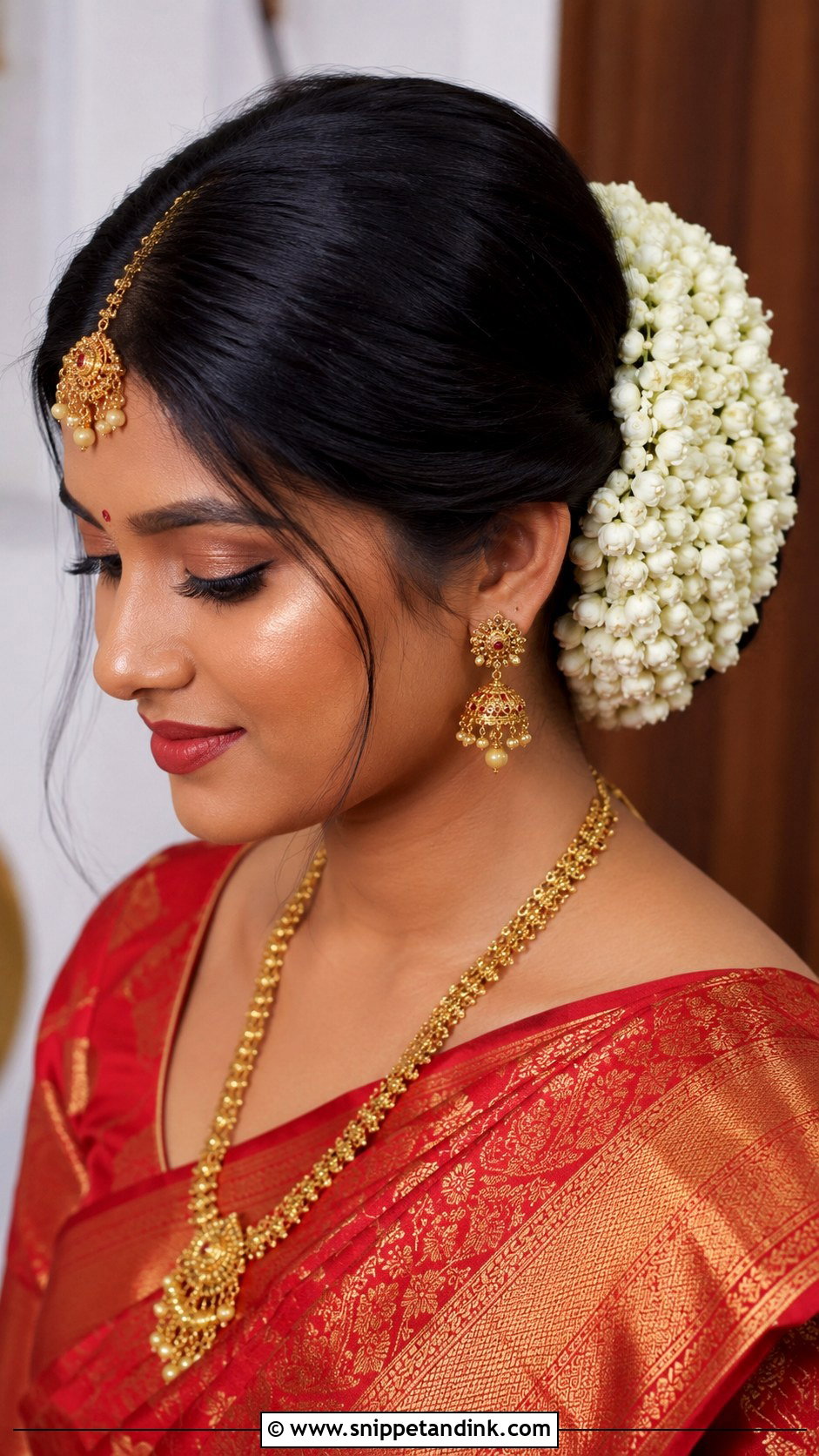
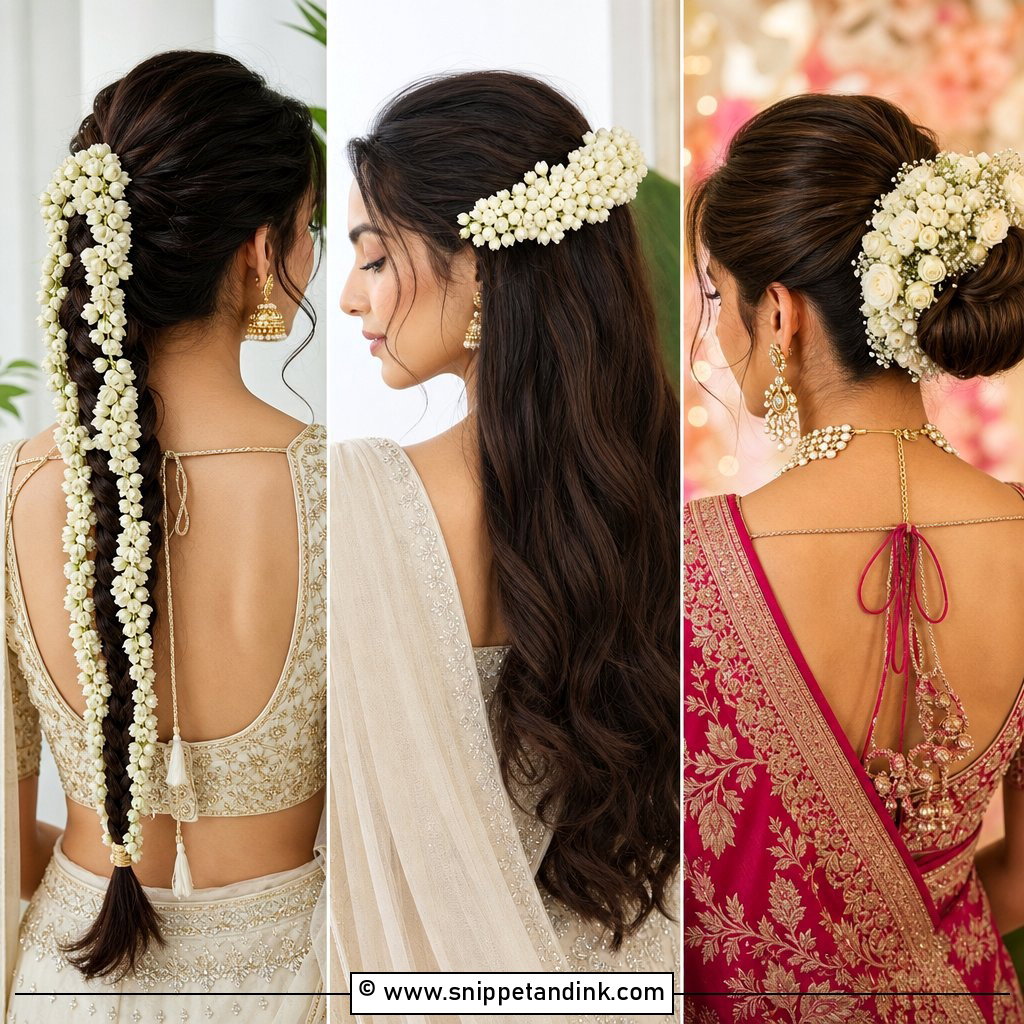
The gajra bun is still the one I’m asked for most, and long hair makes it easy because the bun fills out from your own length. I set it low or at mid-height so the dupatta pins have a firm base and nothing tugs at the scalp. The gajra is wired or threaded around the bun rather than pinned loosely, since jasmine strands slide when you bow your head. Smooth the front with a couple of soft pieces at the temples. It sits well with a red lehenga, a silk saree or temple jewelry.
2. South Indian Bridal Braid For Long Hair
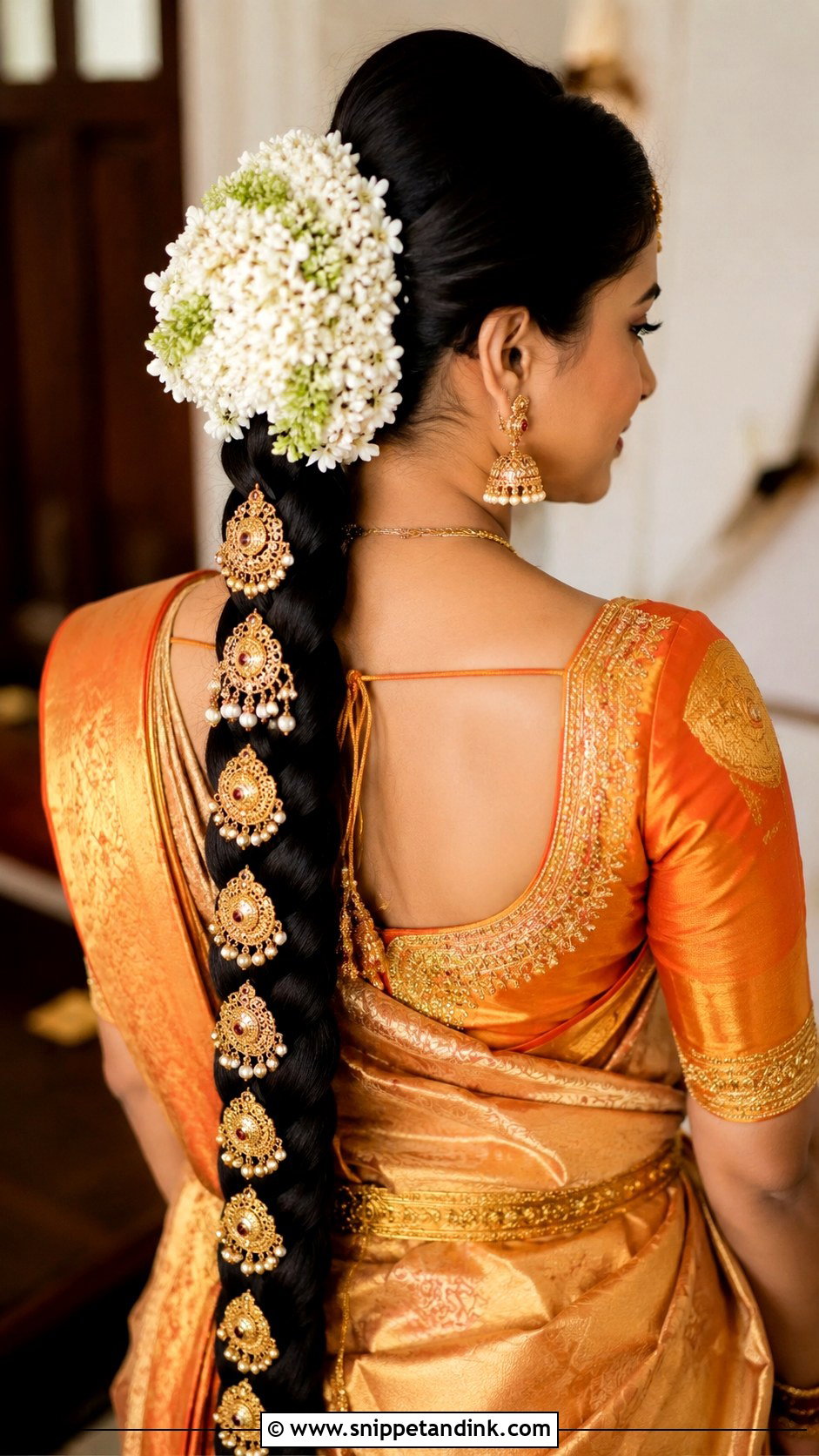
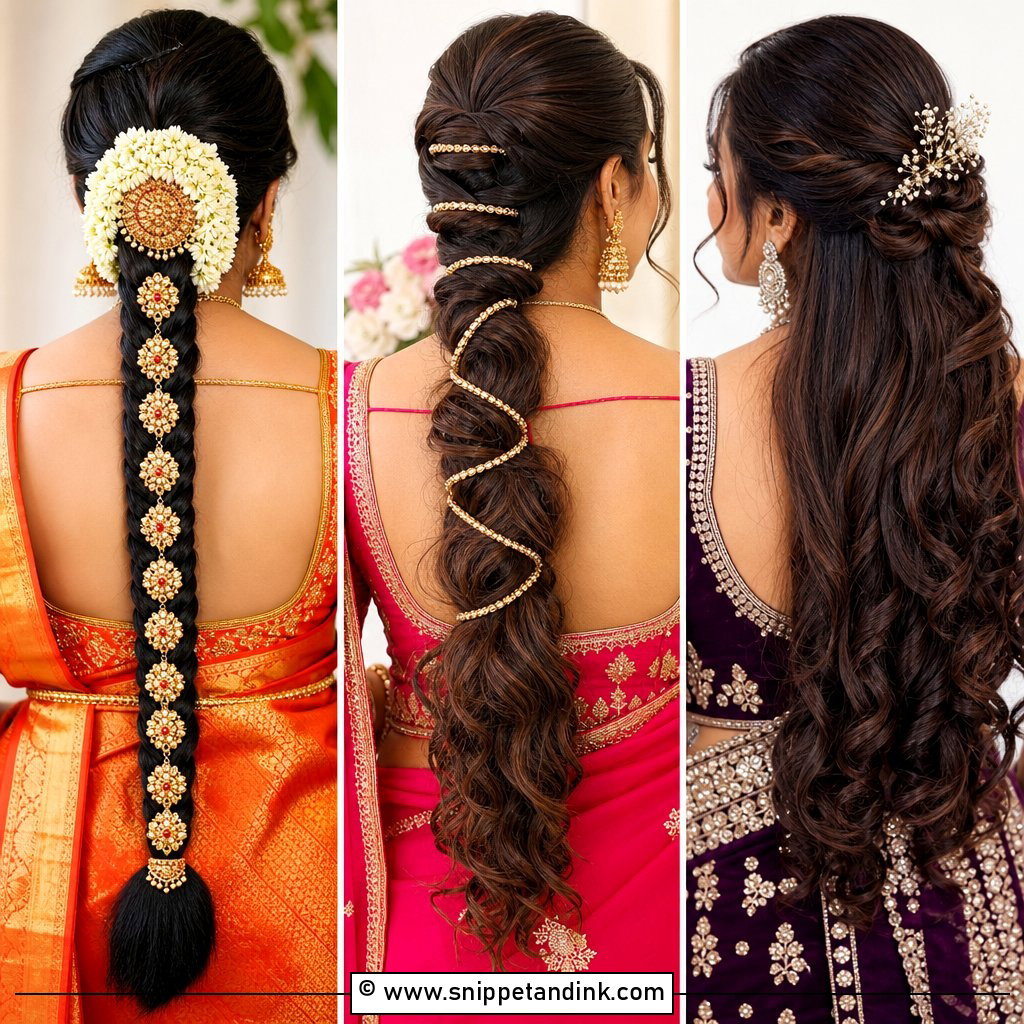
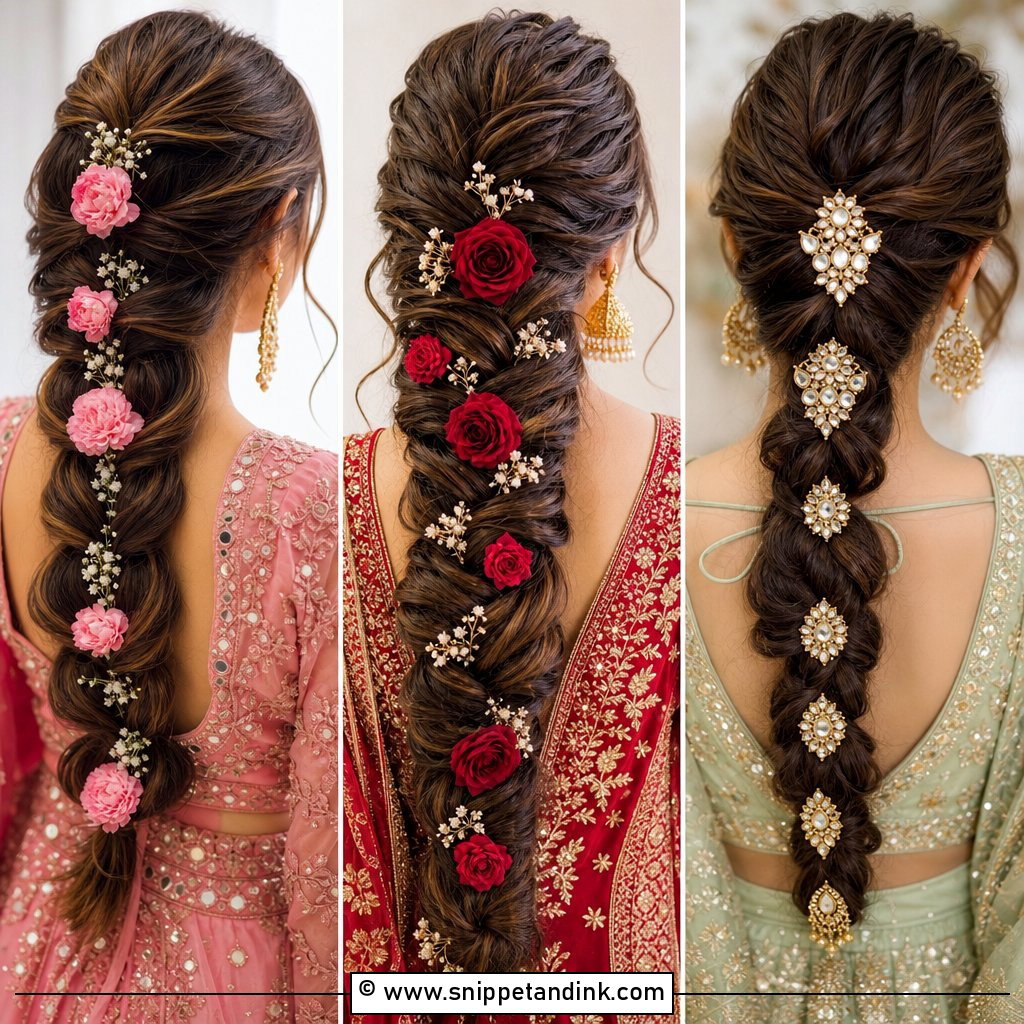
A South Indian bridal braid is where long hair shows off most. The plait runs the full length of the back, dressed with flowers, gold pieces or a jada billalu. That jada is heavy, so I start the braid from a secure base at the crown and keep the top smooth with a little lift, otherwise it looks flat against the head. Thinner hair benefits from a few extension wefts braided in, which bulk the plait without changing the style. Kanjeevaram silk and temple jewelry are its natural partners.
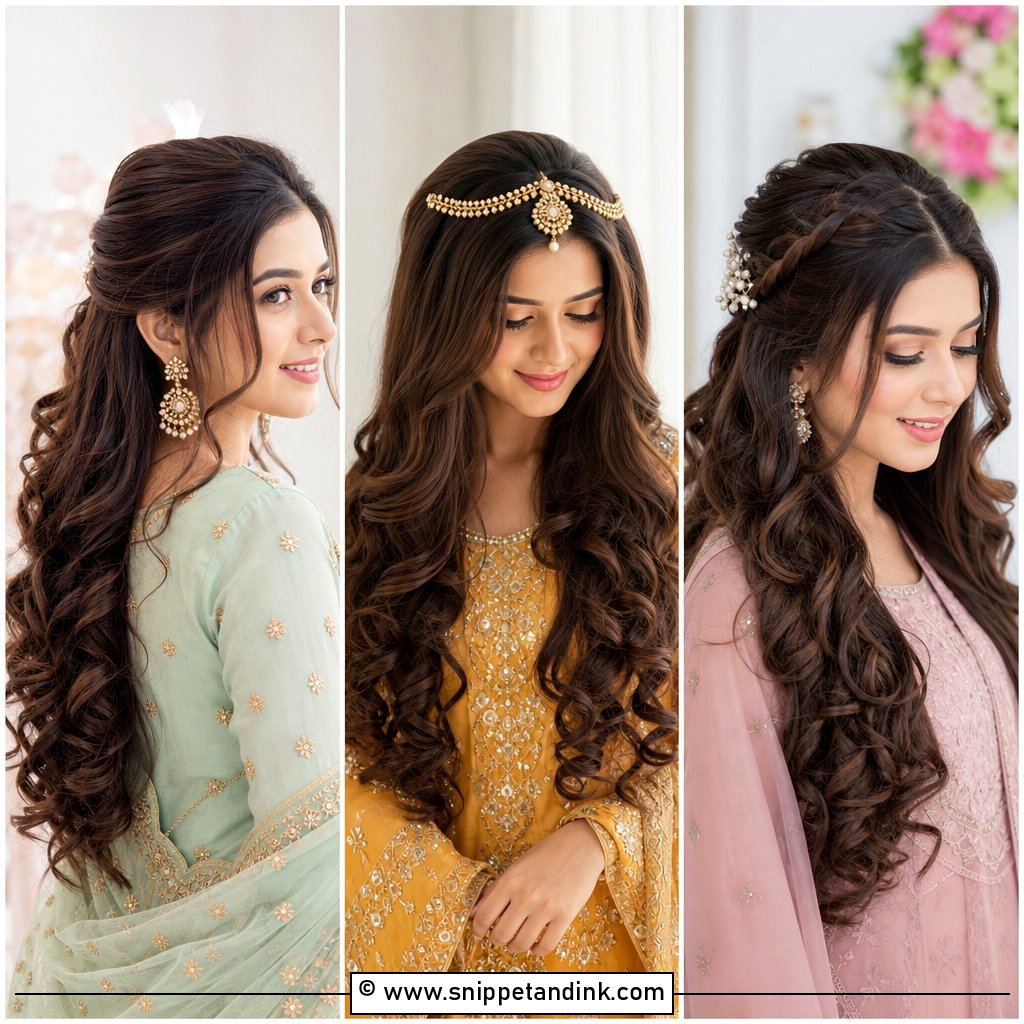
3. Indian Bridal Open Curls For Long Hair
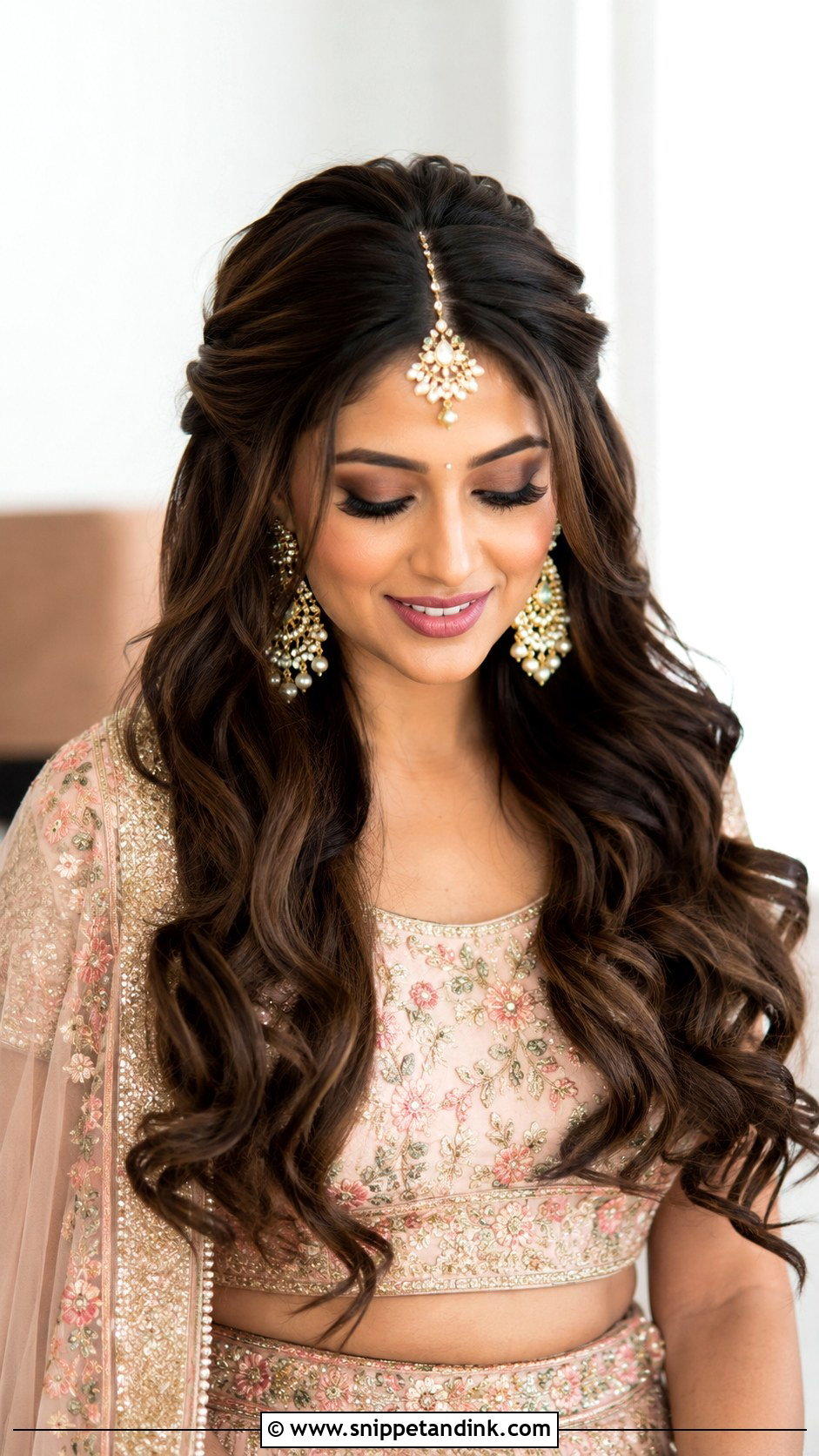
Open curls on long hair have one enemy: their own weight. Past the shoulder blades, curls pull themselves straight within a few hours unless they’re set properly. I curl in smaller sections than you’d expect, pin each curl while it cools and only release them just before you dress. You can brush them out into a glossy wave or leave them defined. A center part with a maang tikka makes it bridal, and pinning curls at one side stops them crowding your face. Under a heavy dupatta, use a light setting spray so the curls stay soft rather than crunchy.
4. Indian Bridal Half Up Hairstyle For Long Hair
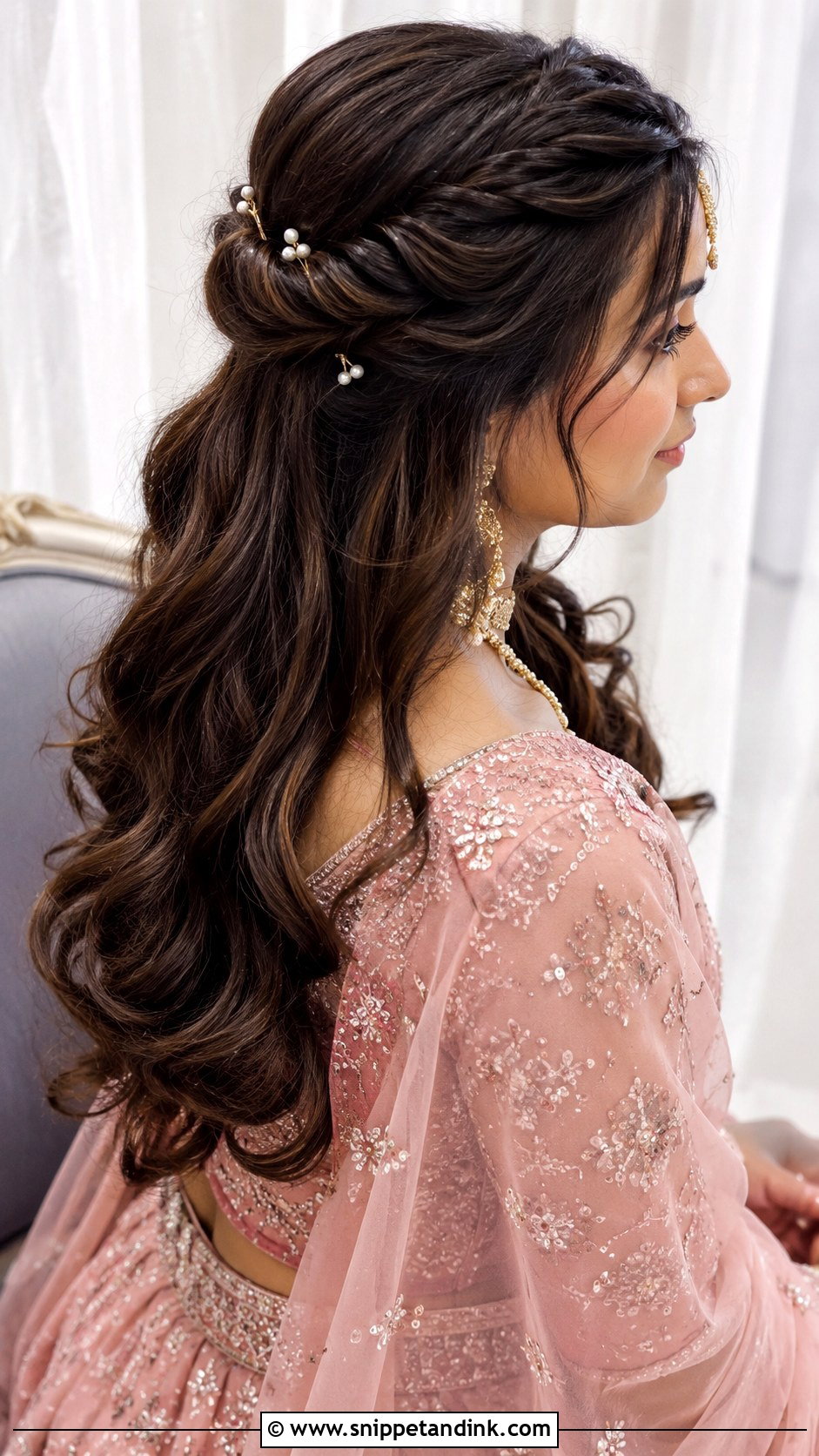
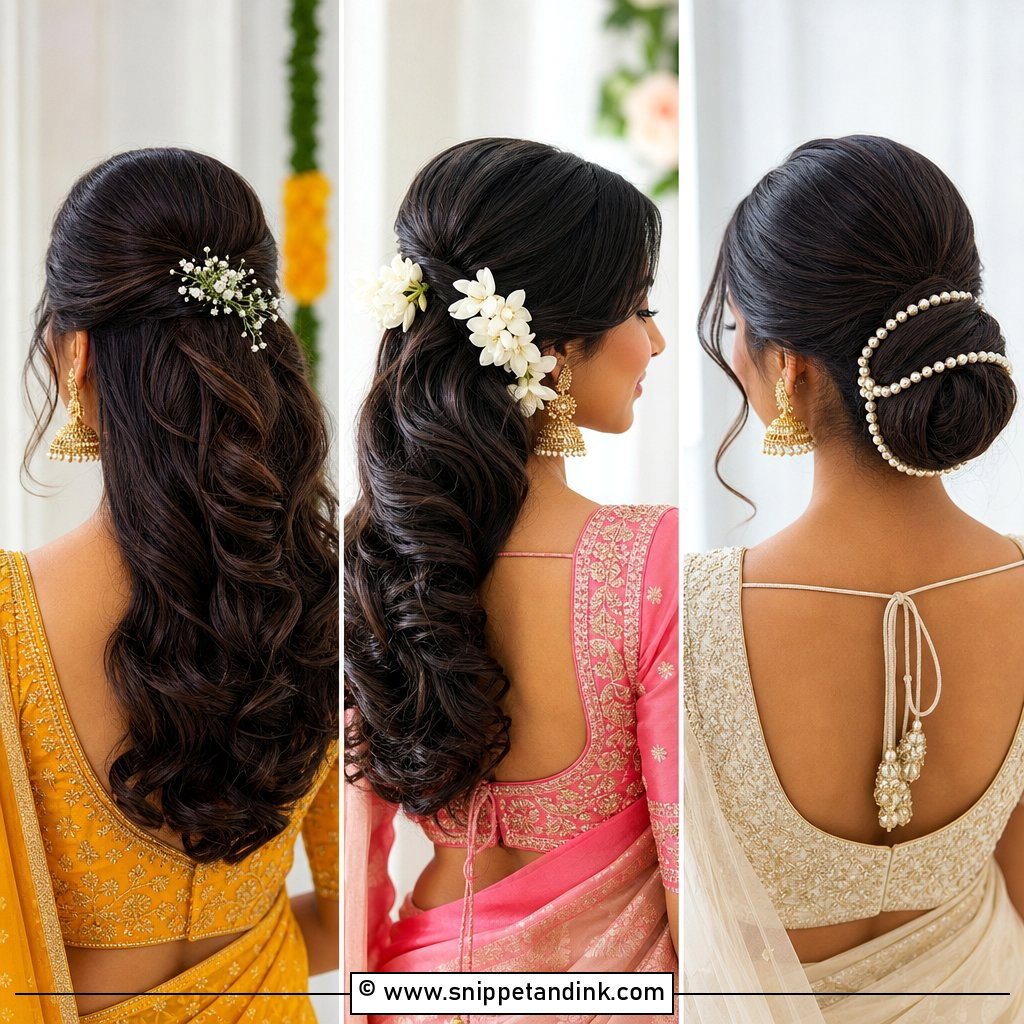
Half up splits the job in two: the crown section is secured for jewelry and photos, and the lengths stay open in curls or waves. That makes it easier to live with than fully open hair across a long function. I usually build the top from two small twists or braids crossed at the back, then add pearls or floral pins where they meet. It goes with lehengas, gowns and lighter sarees, and the moving ends show up nicely in side and back portraits.
5. Indian Bridal Low Bun For Long Hair
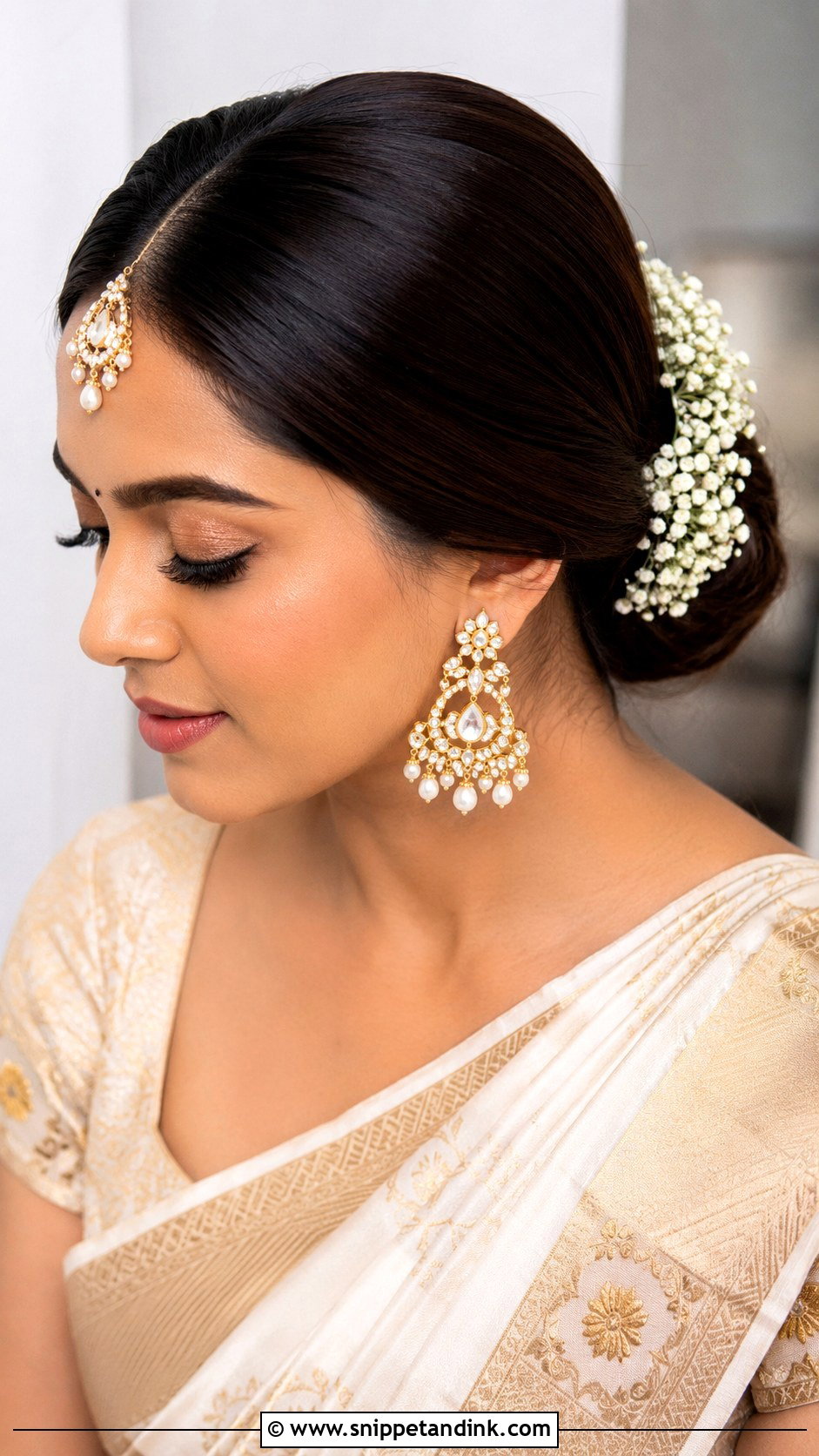
Set close to the nape, a low bun sits comfortably under a dupatta and leaves room for statement earrings. Long hair can be twisted into a smooth, round bun or teased into a fuller textured one. I split very long hair into two sections and wrap them in opposite directions, which spreads the weight and stops the bun from sagging on the pins. Fresh flowers, pearls or a passa all suit it. I reach for this for nikah, pheras and formal receptions, with either a centre or a soft side part.
6. Indian Bridal Messy Bun For Long Hair
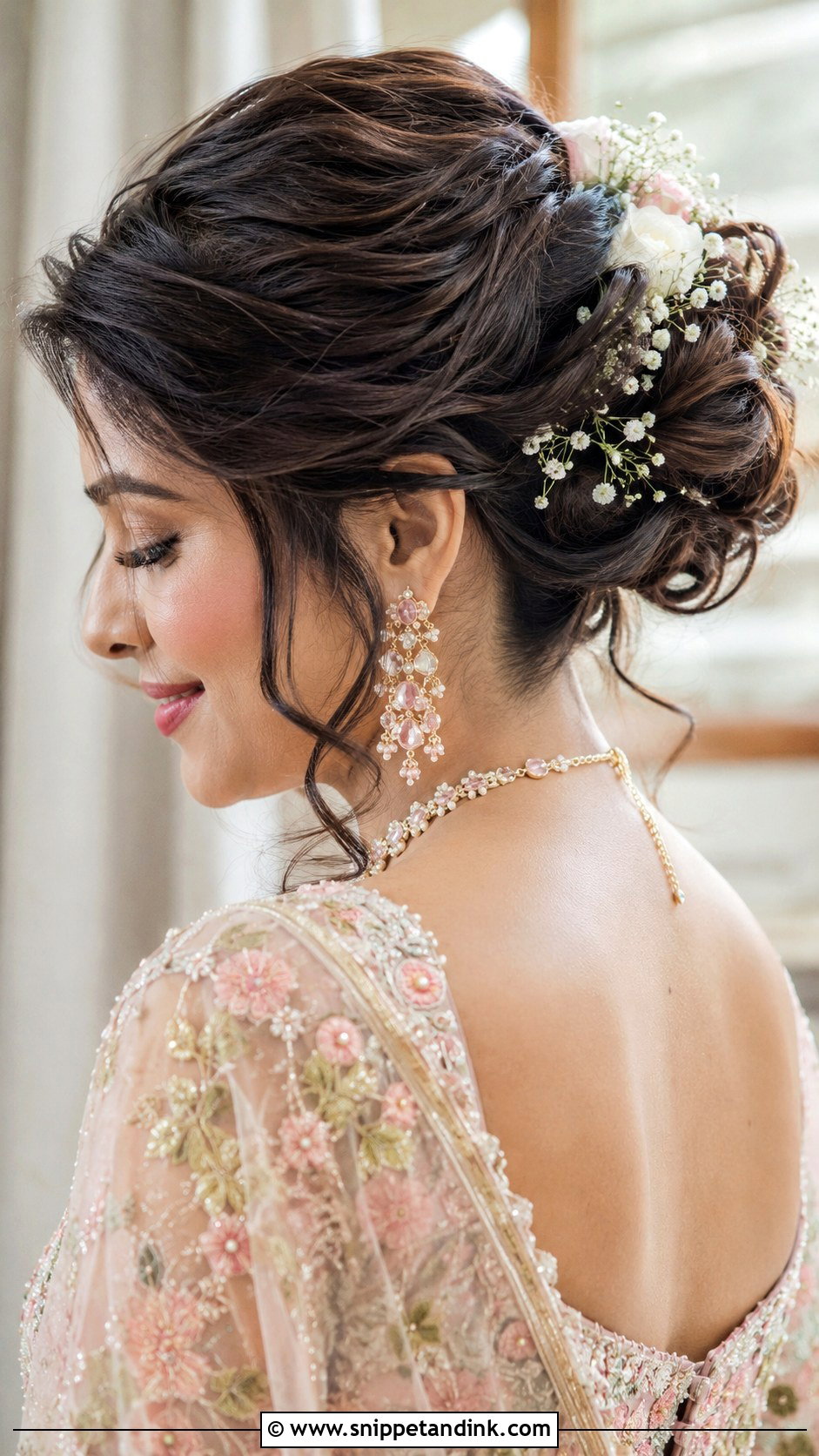
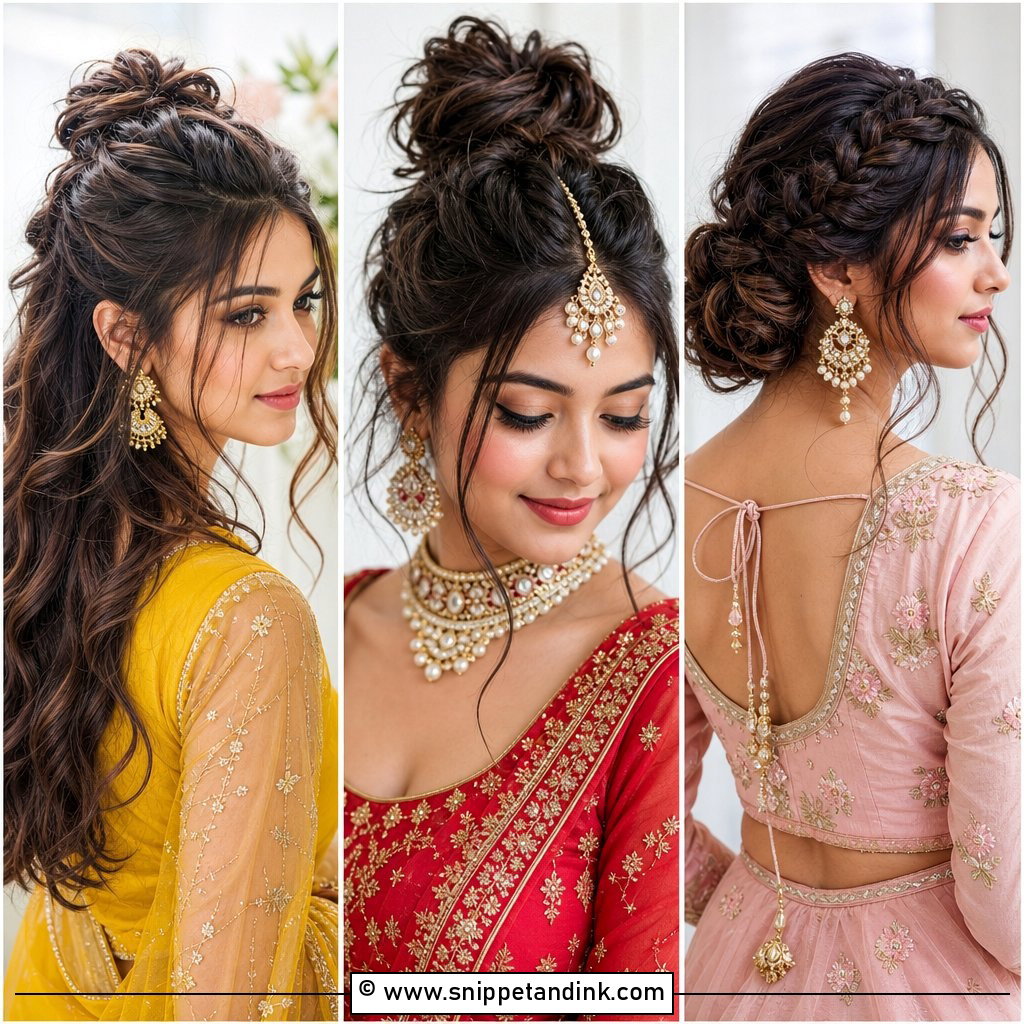
Messy has to be controlled, or it just looks unfinished. I curl the hair first, pancake the sections for volume, then pin the bun in loose loops with a few pieces left at the face. Long hair fills this shape without any padding. Pastel lehengas, floral jewelry and daytime weddings suit it best. Baby’s breath, roses or pearl pins finish it, and because the base is pinned firmly, it holds through dancing better than it looks like it should.
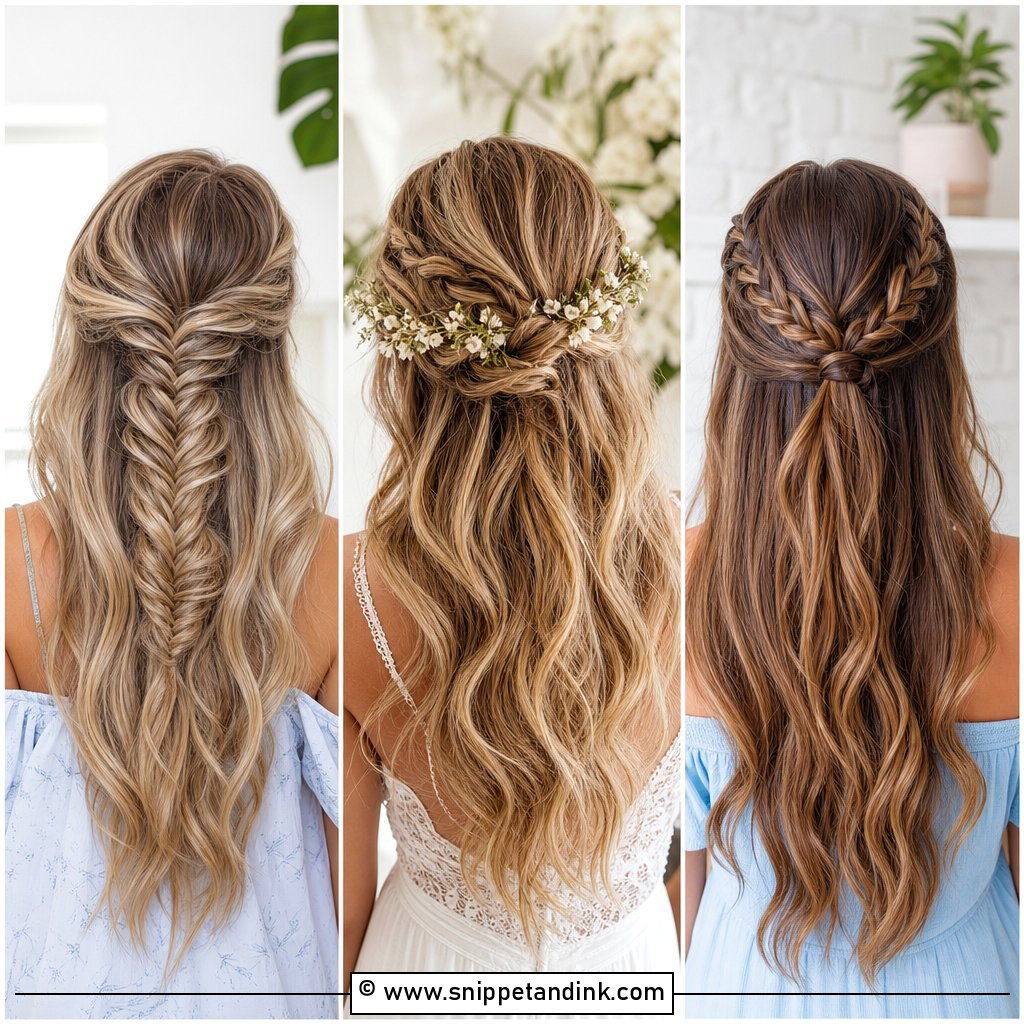
7. Indian Bridal Fishtail Braid For Long Hair
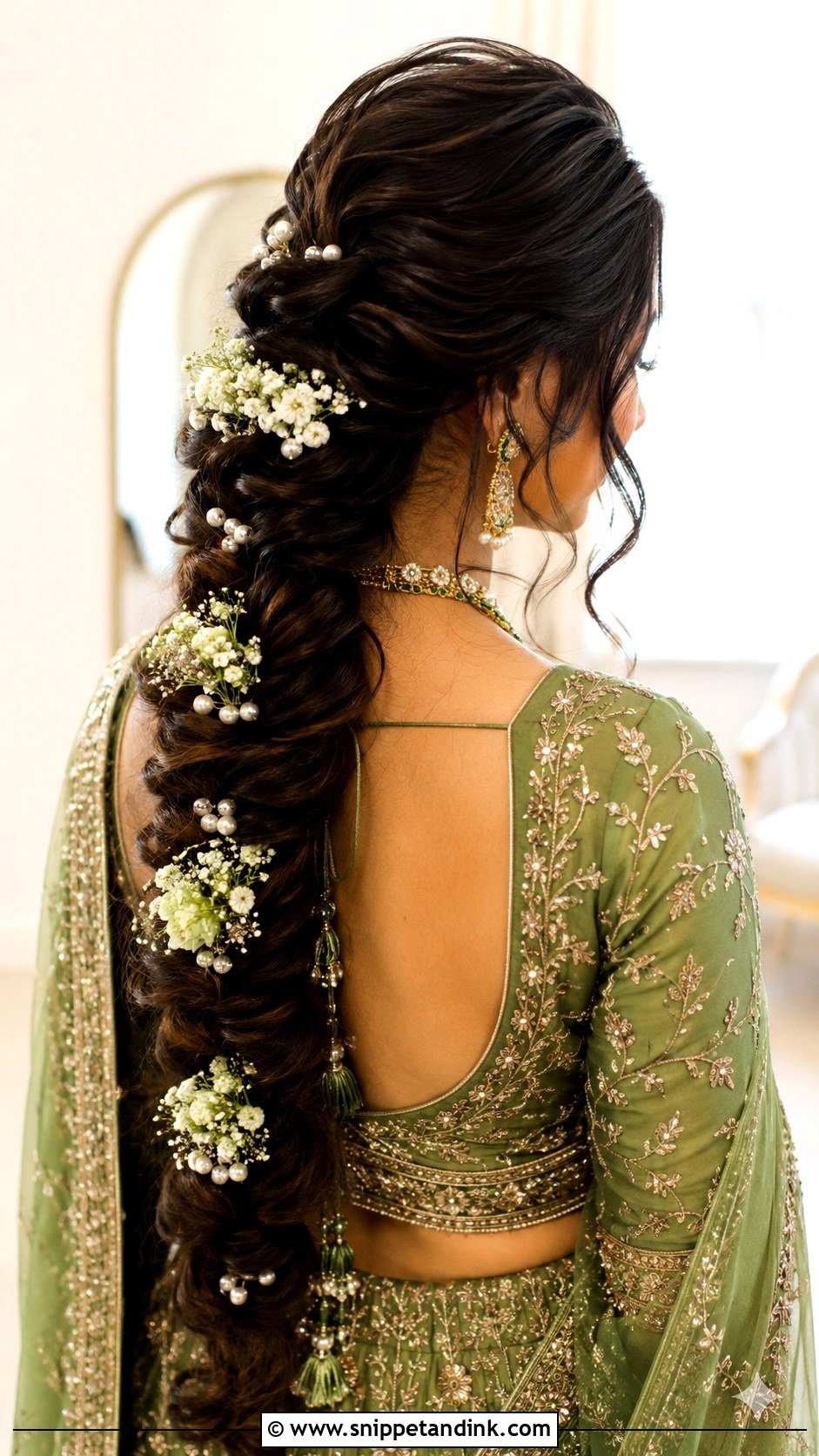
A fishtail braid takes about twice as long as a regular plait, because each strand is a thin piece crossed over from the outside. The reward is that woven, detailed texture, and long hair shows the pattern clearly from crown to ends. I braid it tight, secure the end, then gently pull the edges apart for width. Wear it down the back or swept to one side for mehendi, sangeet or portraits, with tiny flowers or gold accessories along it. Keep the crown lifted slightly.
8. Indian Bridal Side Braid For Long Hair
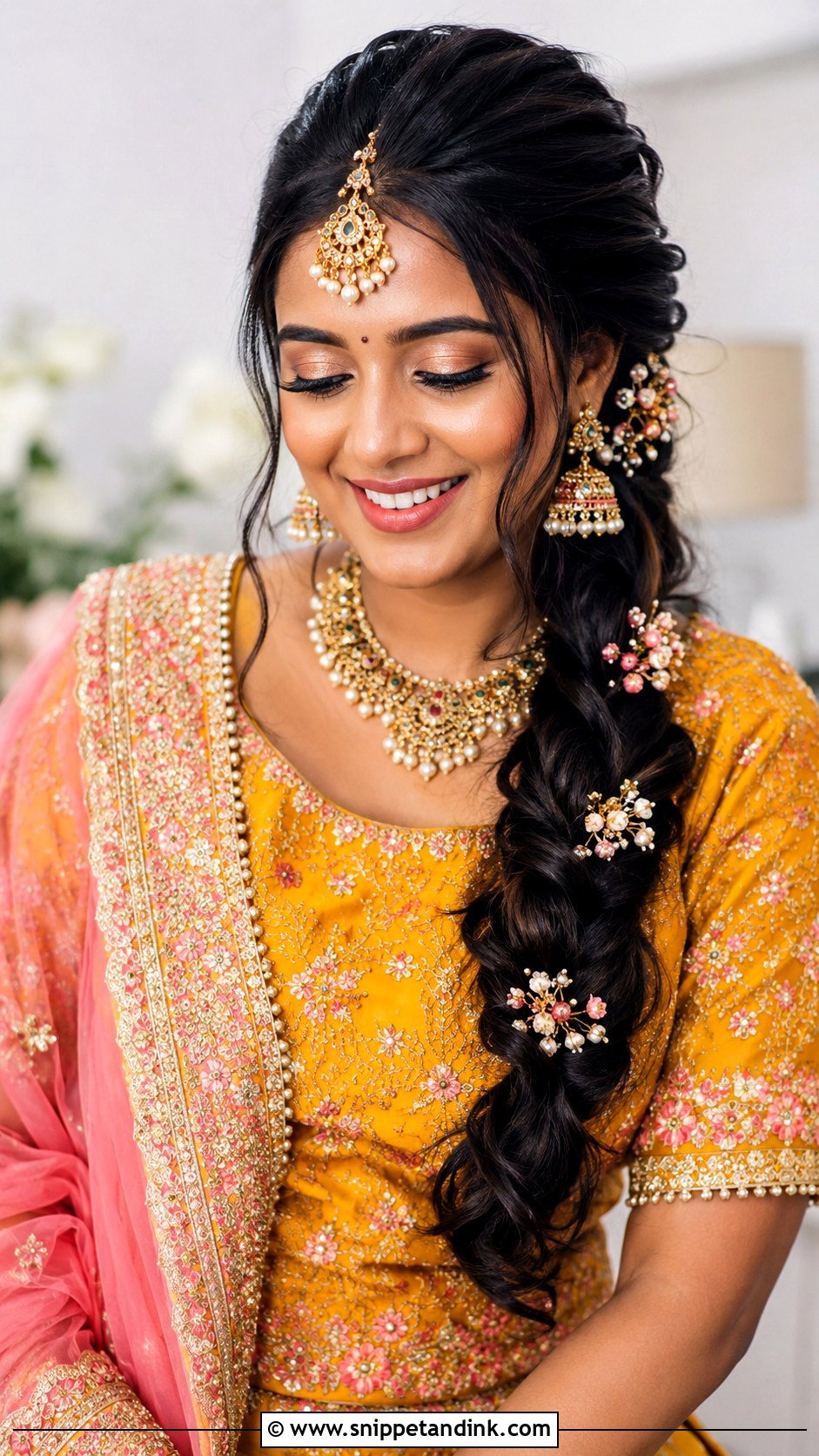
The side braid brings the hair to the front of the photo instead of hiding it behind you, which is useful for mehendi poses and showing off a blouse back. It can be a loose regular braid, a fishtail or a twisted rope. Over a heavy necklace it can tangle with the jewelry, so I sometimes pin the braid behind a large set and let it fall forward lower down. Sweep the opposite side back softly and leave a few pieces at the face. Lehengas, shararas and lighter sarees all suit it.
9. Indian Bridal Bubble Braid For Long Hair
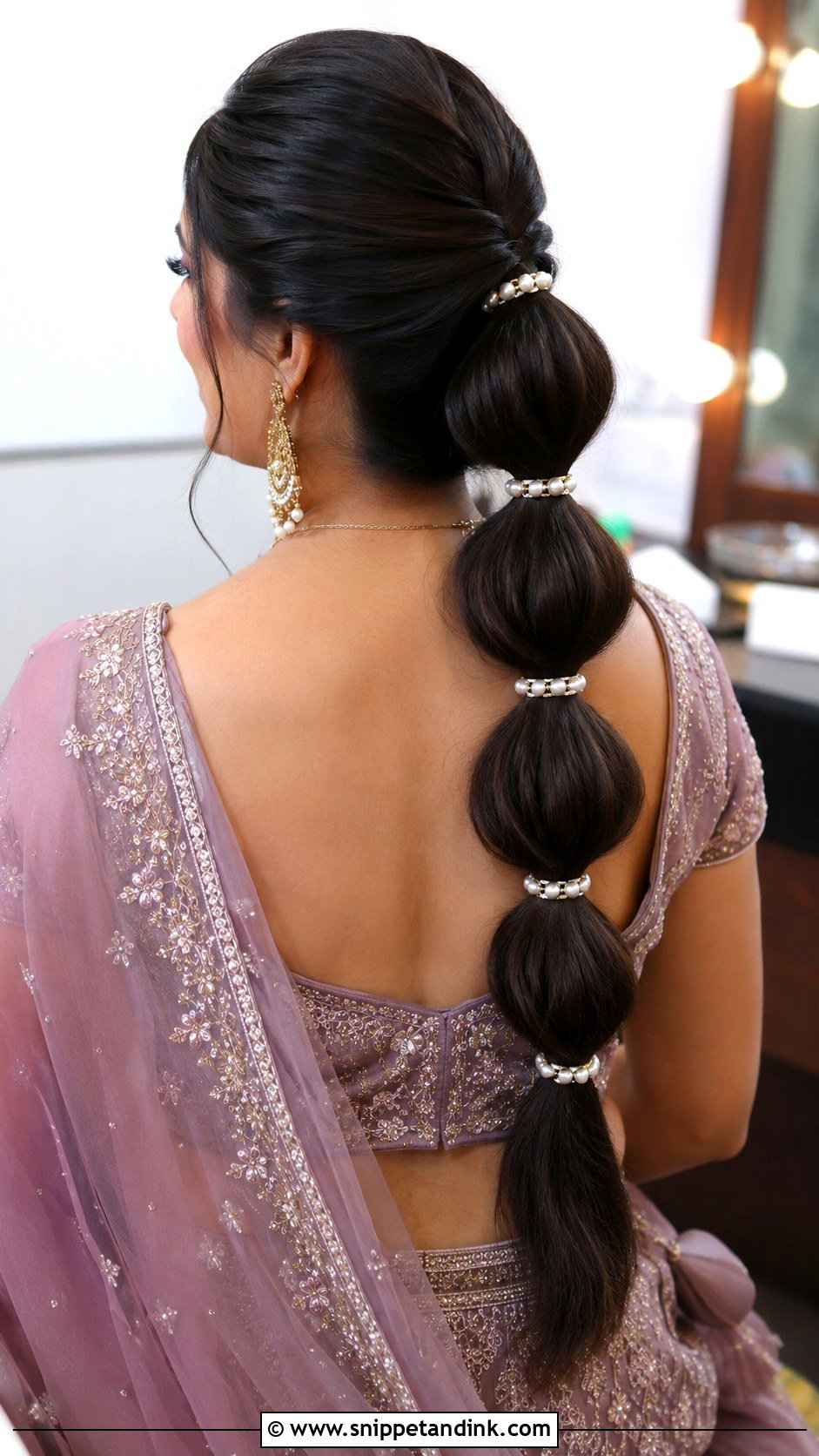
An Indian bridal bubble braid isn’t woven at all. The hair is tied off with small elastics at intervals and each section is pulled out into a rounded bubble. It’s quick to do and very secure, and it’s best on thick hair or with extensions, since thin lengths make small, sparse bubbles. Gold cuffs or pearls hide the elastics. I’d wear it for sangeet, cocktails or the reception and keep the front sleek or softly waved so the braid stays the focus.
10. Indian Bridal Crown Braid Bun For Long Hair
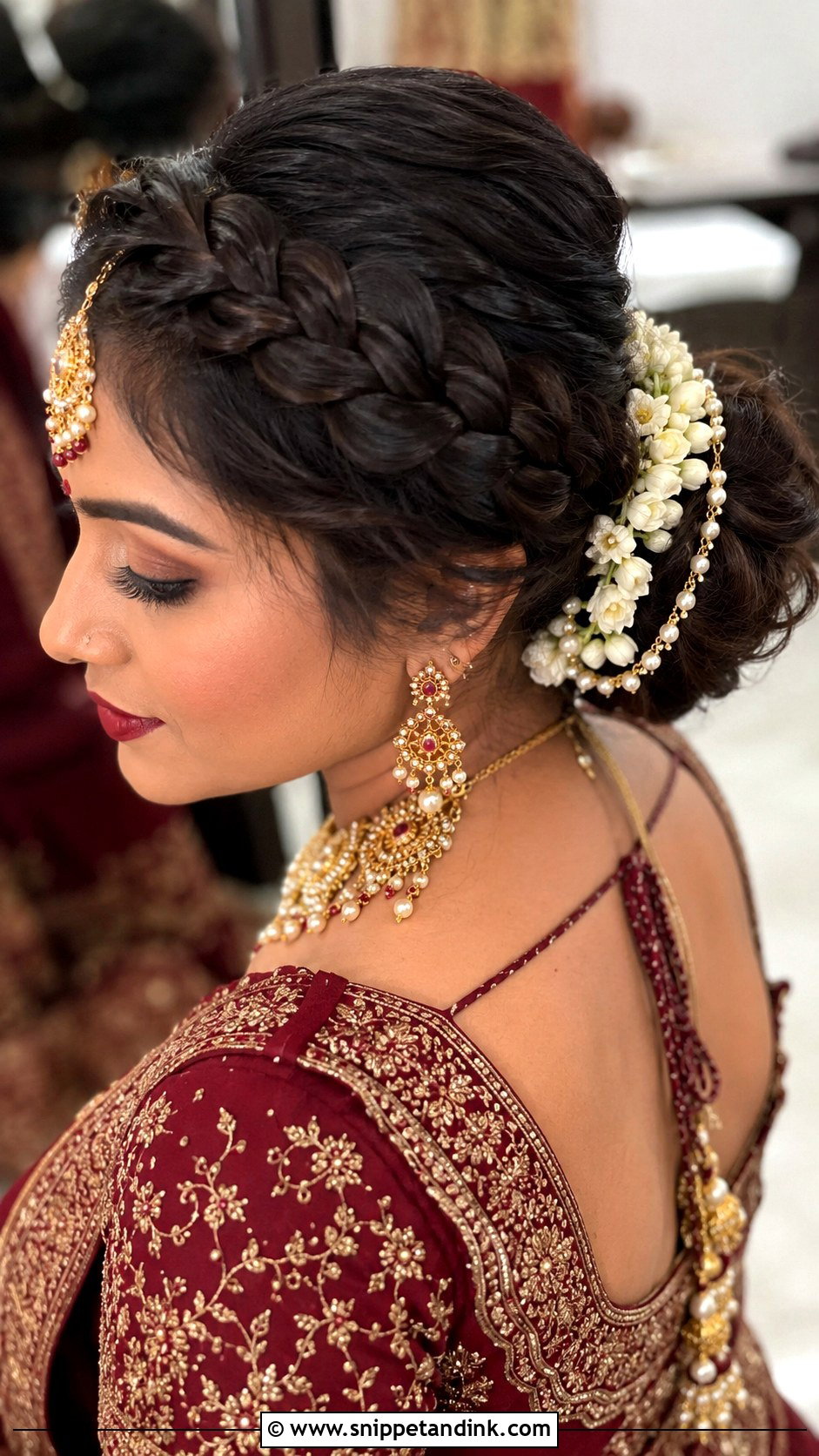
The crown braid wraps over the head like a band, and the rest of the length is shaped into a bun at the back. I build it Dutch style so the plait sits raised on top of the hair, which makes it read clearly in photos. Long hair gives a thick braid and a full bun without padding. It’s more intricate than a plain bun yet just as stable, and it takes a maang tikka or matha patti easily. Tuck small pins along the braid and flowers around the bun.
11. Indian Bridal Sleek Bun For Long Hair
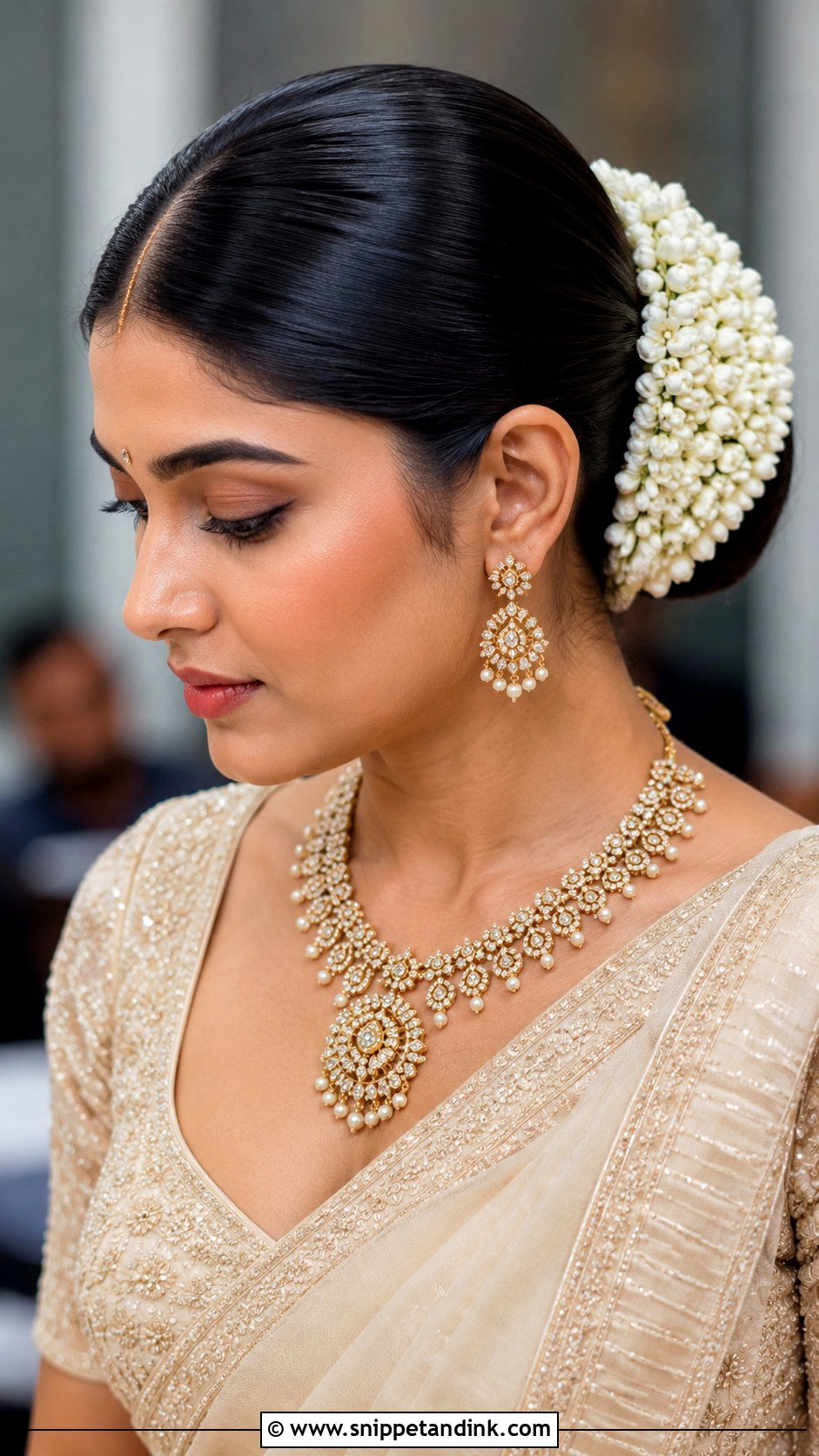
Sleek buns look simple and are the least forgiving style here. Any bump or flyaway shows, and humidity frizzes the surface within an hour if the hair isn’t properly sealed. I blow-dry the hair straight first, smooth it with a light serum, then set the bun with plenty of pins. It balances bold outfits, heavy jewelry or strong makeup, and long hair gives it a full shape. A gajra ring, a pearl border or one statement hairpin adds the bridal touch. Receptions and formal ceremonies suit it best.
12. Indian Bridal Loose Waves For Long Hair
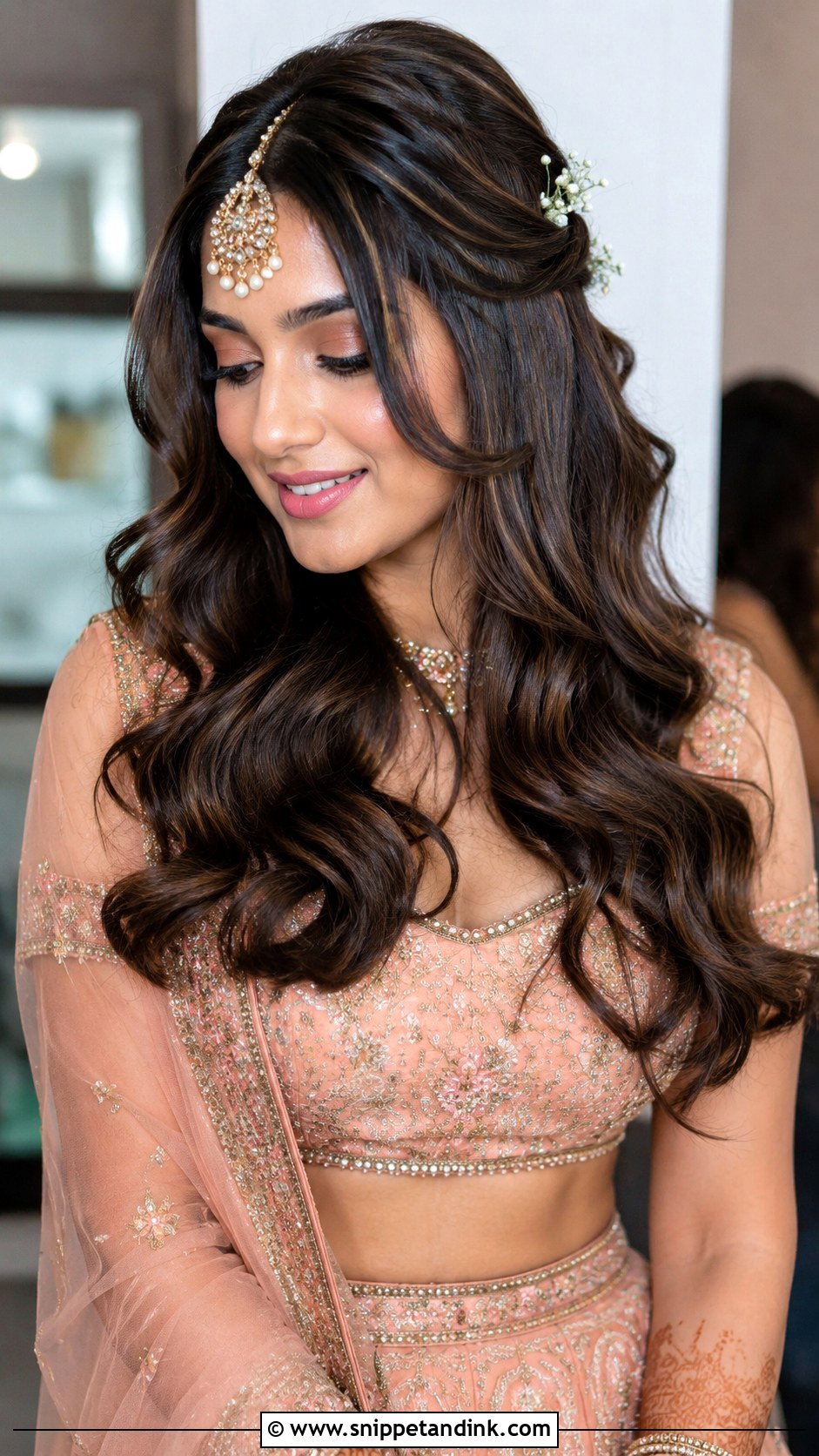
Loose waves for Indian bridal long hair are lighter than curls and much easier to personalise. Wear them with a middle part, a side part or a pinned crown depending on the jewelry. I’d choose this for engagement, haldi or a reception. A tikka, floral pins or a fine hair chain makes it bridal. Frizz is the risk, especially outdoors, so I finish with a smoothing cream through the mid-lengths and keep hairspray light.
13. Indian Bridal Braided Bun For Long Hair
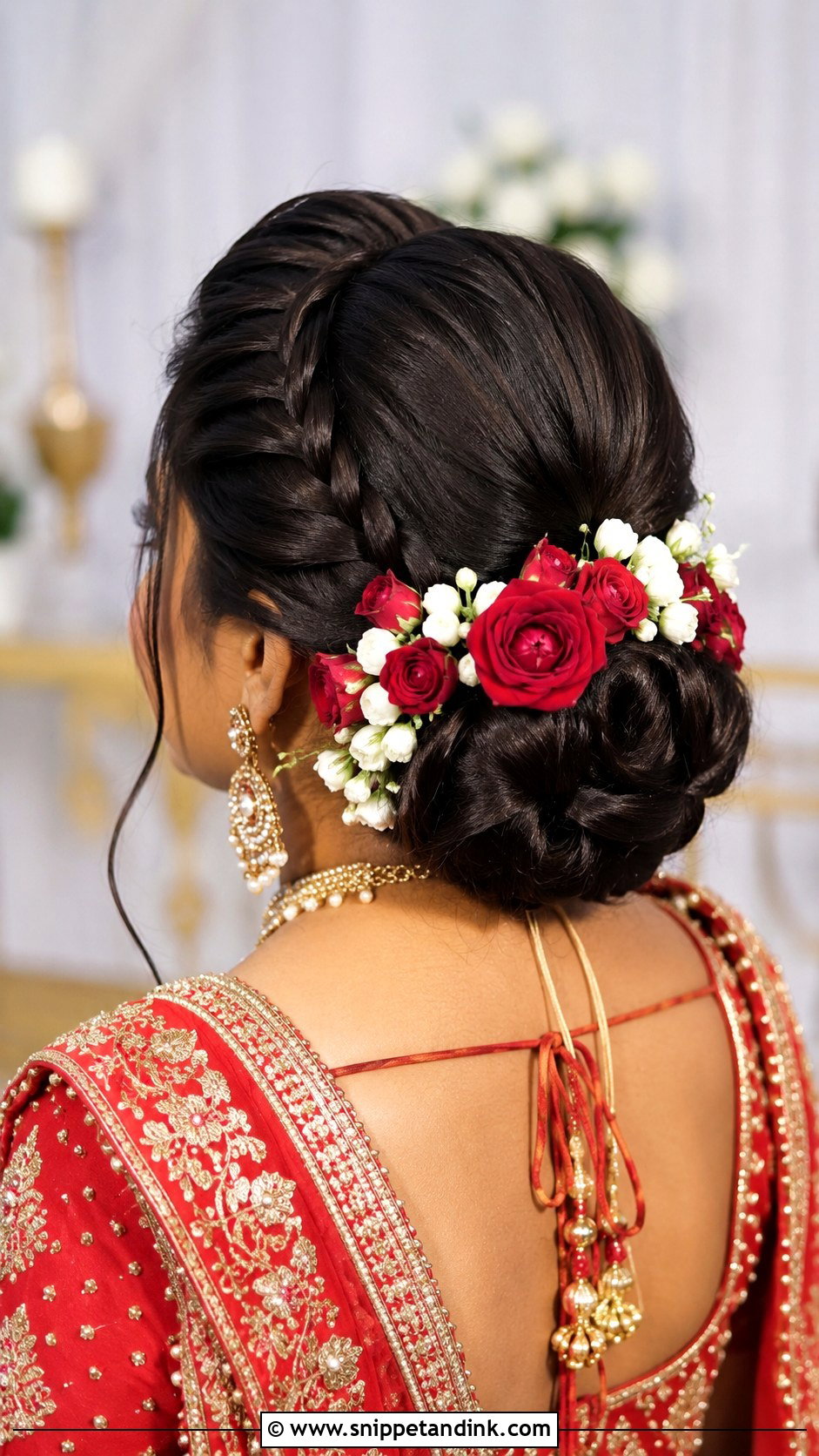
A braided bun gets its detail from the hair itself, so you need fewer accessories. The braid can wrap the bun, run across the crown or be woven into the sides before the bun is formed. Long hair gives it a full, structured base, which helps under a dupatta. Add jasmine, roses, pearls or gold pins to match the outfit. For a wedding ceremony this is one of the most dependable choices, since braided hair grips pins far better than smooth hair and stays put for hours.
14. Indian Bridal Ponytail For Long Hair
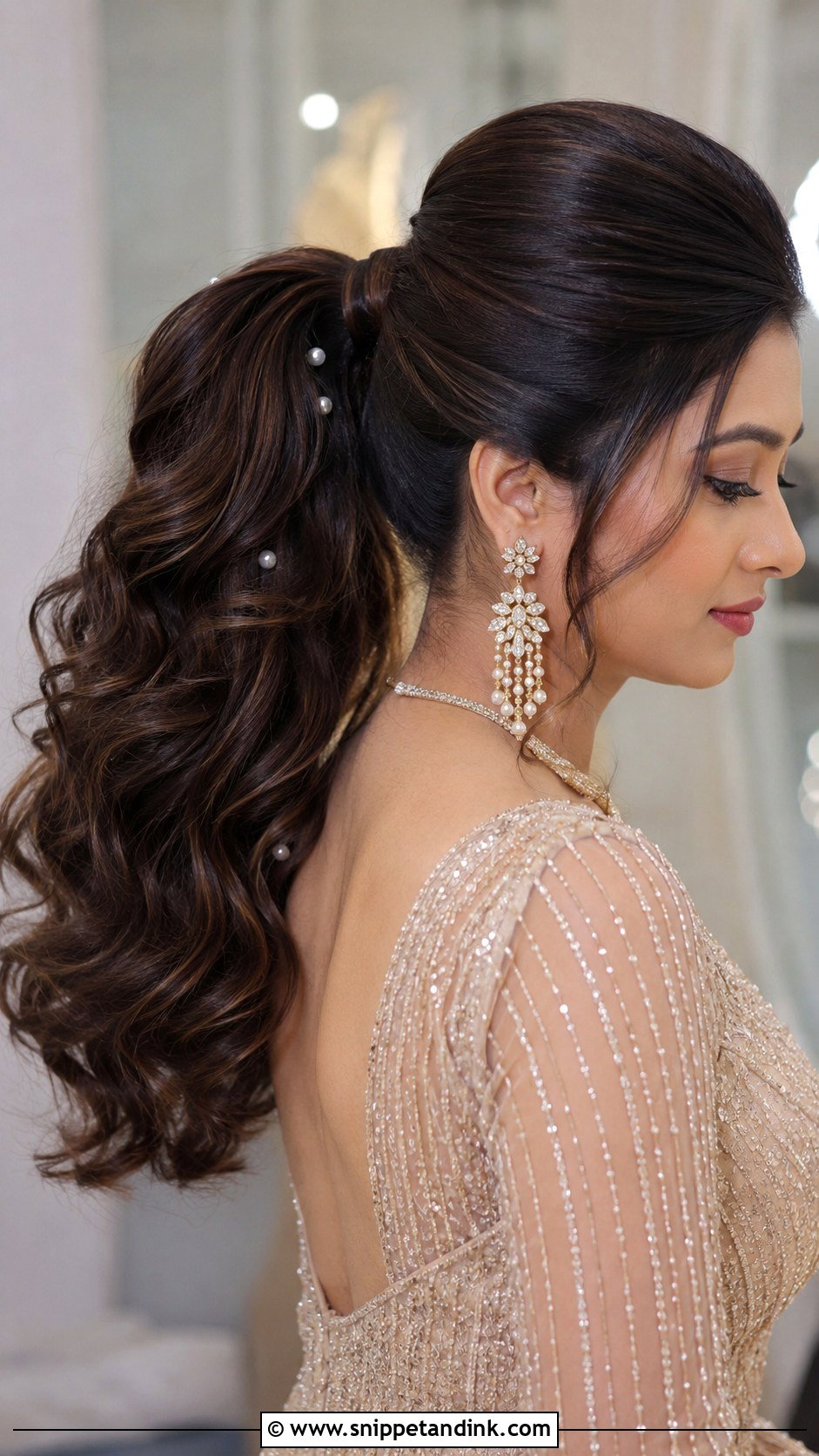
Ponytails look casual until they’re built properly. I set the base with two elastics, crossed bobby pins underneath to lift it, and a strand wrapped around to hide the tie. Then the length gets curls for movement. High, mid or low all work for receptions, sangeet nights and cocktails, and extensions add bulk where needed. A high pony on very long, heavy hair can give you a headache by the end of the night, so I’d go mid-height for a long event. Pearls, crystal pins or a tikka make it bridal.
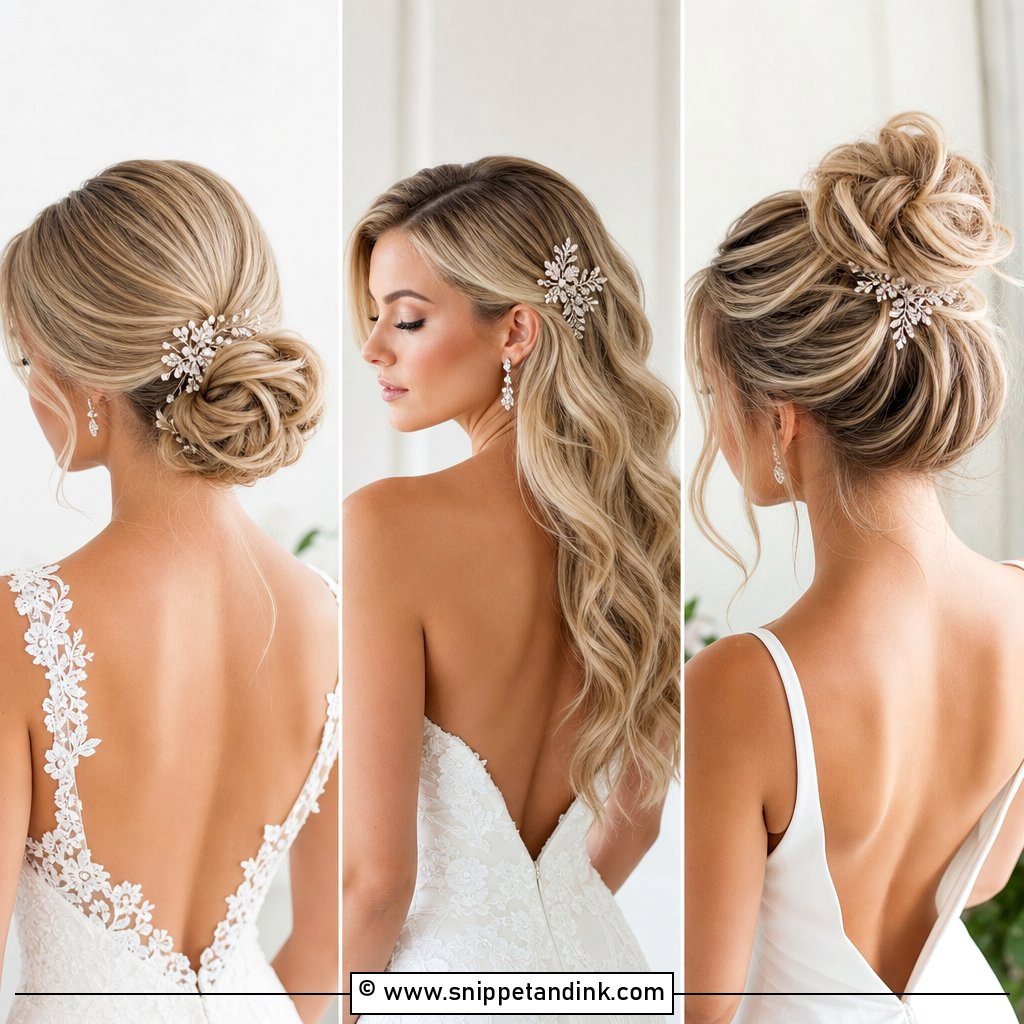
15. Indian Bridal Dupatta Hairstyle For Long Hair
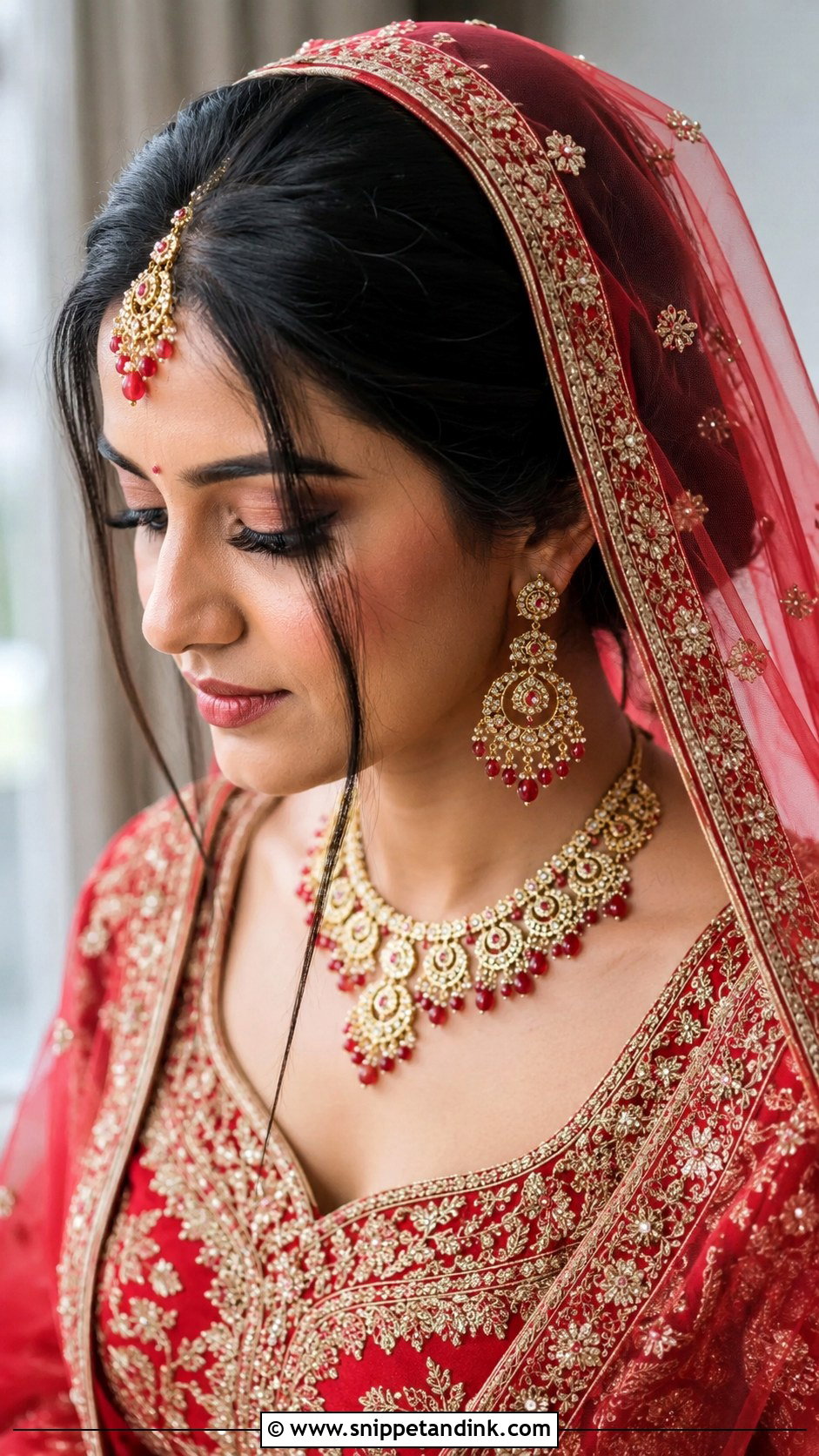
Plan the hair around the dupatta, not the other way round. It covers much of the back and presses down on the crown, so I use a low bun, braided bun or half up to give the fabric a stable base, and build enough volume underneath that the shape doesn’t look flat in photos. For open hair under a dupatta, pin the crown securely and keep the curls controlled. The front matters more than usual, because it may be the only part guests see during pheras or nikah.
Mehndi to Reception Without Wrecking Your Lengths
Indian weddings rarely mean one hairstyle. You might have mehndi, sangeet, the wedding and a reception across several days, and long hair takes the most strain from that. Each day of heat, product and pins leaves it drier and more tangled.
Between functions
Take pins out slowly from the bottom of the style upward, and detangle from the ends with your fingers before you go near a brush. Hairspray and dry shampoo build up quickly, so a proper wash and conditioner between the big days makes the next style easier to set. Hair that has been washed the night before is fine for most updos. Very clean, silky hair can be harder to pin, so tell your stylist if you’ve just washed it.
Ordering the looks
If you can, put the open styles earlier and the tightest updo on the main day. Curls and waves need hair in good condition, while a bun or braid hides a bit of dryness. Sleep in a loose plait on a silk or satin pillowcase between events, and keep oil away from the roots until after the final function, since it makes pins slide.
Your Length Is the Advantage, as Long as It’s Supported
Long hair can go traditional, modern, soft or dramatic, and the right choice comes down to your ceremony, jewelry, dupatta placement and how much weight you’re happy to carry for hours. A gajra bun or South Indian braid feels classic; open curls, ponytails and half up feel lighter. Whatever you pick, wear it for a full trial with the real jewelry and dupatta on, and keep it in for a few hours afterwards so you know how it feels late in the day.
You'll Like These Ideas:


Leave a Reply