
Big wedding hair has a reputation for being stiff and dated, and the good versions are neither. What makes it work isn’t sheer height. It’s shape: volume placed where it balances the dress and your face, built with set curls, a little backcombing, padding or extensions, and pinned so it’s still standing at the last song. The big looks I’m asked for most for 2026 weddings are full Hollywood waves, lifted half-up styles, sculpted buns and natural curls worn at their full size. Here are fifteen, with my notes on who each one suits.
Where All That Volume Actually Comes From
Very few brides have hair that does this on its own. Most big bridal styles are built in layers, and knowing how helps you set realistic expectations for your own hair.
Setting the curl
Volume that lasts starts with hot rollers or pinned curls left to cool completely before they’re brushed out. Rushing that cooling time is a main reason waves drop by the ceremony, so I build it into the schedule rather than cut it short.
Backcombing and padding
Gentle teasing at the roots, smoothed over with a top layer, gives the crown its lift. For buns and beehives, a mesh bun form or a small padded insert holds the shape without endless pins. Fine hair almost always needs some of this.
Extensions
- Clip-ins are the simplest option for one day and come out the same night.
- Order them early enough to color-match properly. The wrong shade a week before is a common, stressful mistake.
- Bring them to the trial so they can be trimmed and blended, and so you feel the weight on your head for a few hours.
- Heavy wefts on fine hair drag and ache. Fewer, well-placed pieces often look fuller than a full set.
1. Big Hollywood Waves Wedding Hair
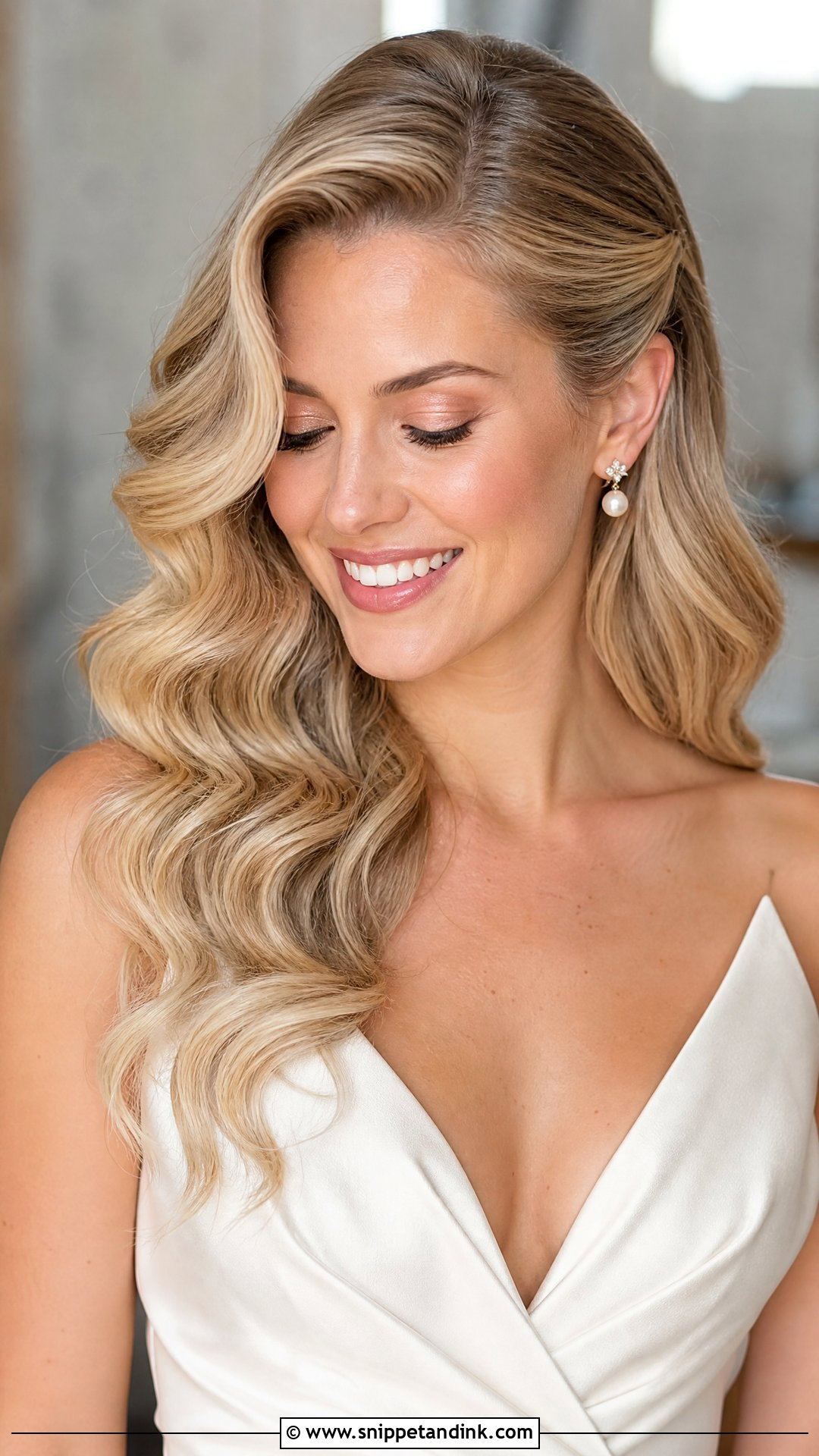
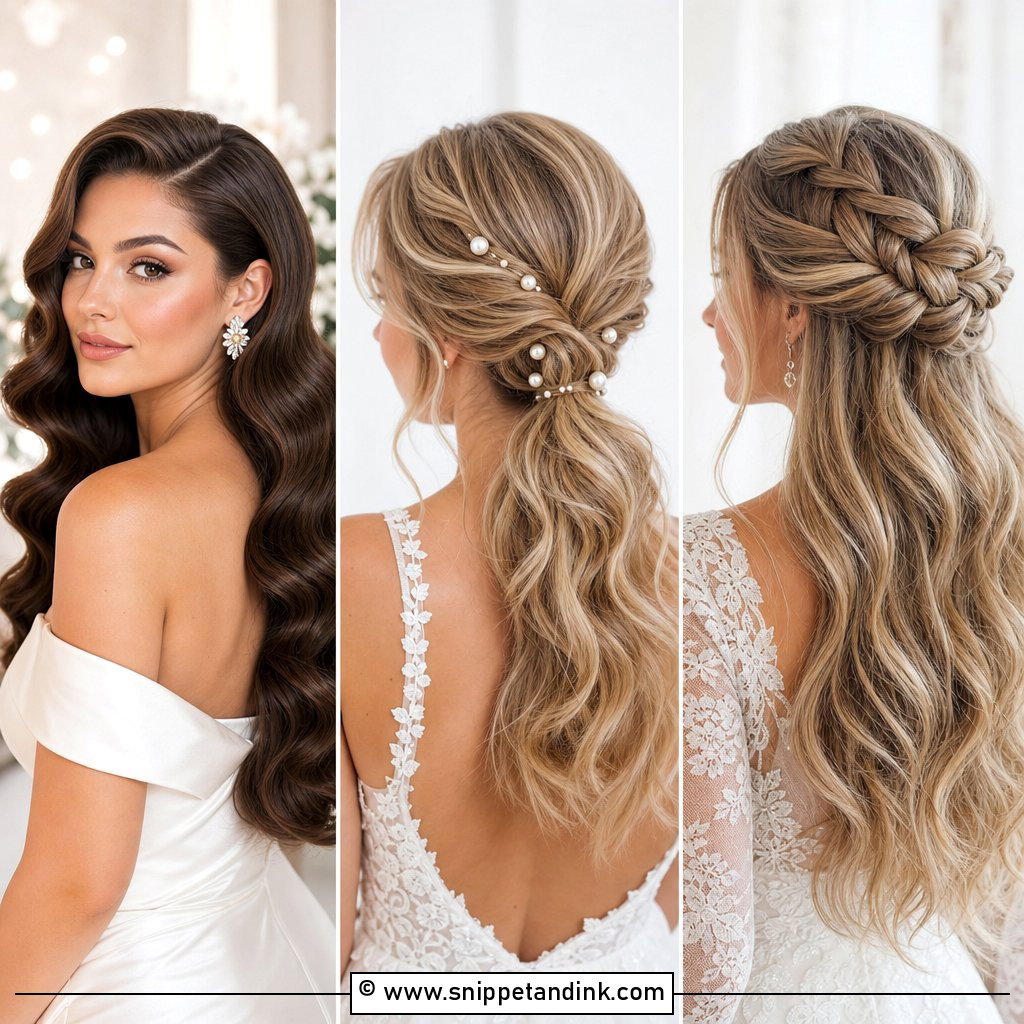
Deep, uniform waves brushed into one smooth pattern are the backbone of this look, and they only work if every curl is set in the same direction. Medium to long hair takes it best, though extensions can build that full red-carpet finish on shorter lengths. A side part is the drama version; a center part reads more current. I pin each curl to cool before brushing, then finish with flexible spray so the shine stays without stiffness. Strapless and off-the-shoulder necklines leave room for the volume.
2. Big Half Up Half Down Wedding Hair
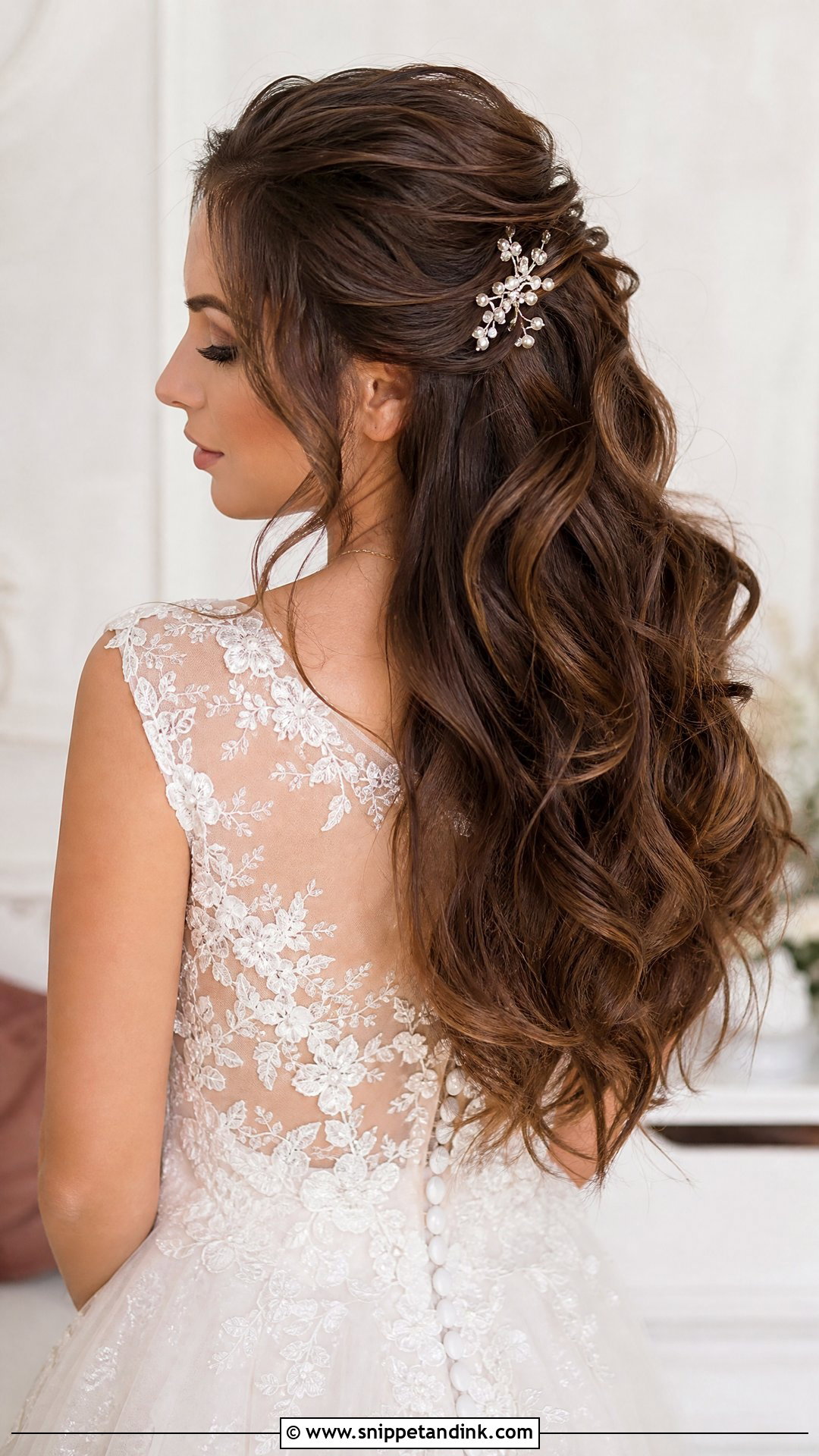
Height at the crown, full curls at the shoulders: half-up is how I get volume onto brides who don’t want an updo. The top section can be twisted, braided or softly teased for lift. I tease the underside only and smooth the top layer over it, so the bump looks like hair rather than a ball of backcombing. Veil pins tuck neatly under the lifted section without crushing it.
3. Big Curly Wedding Updo
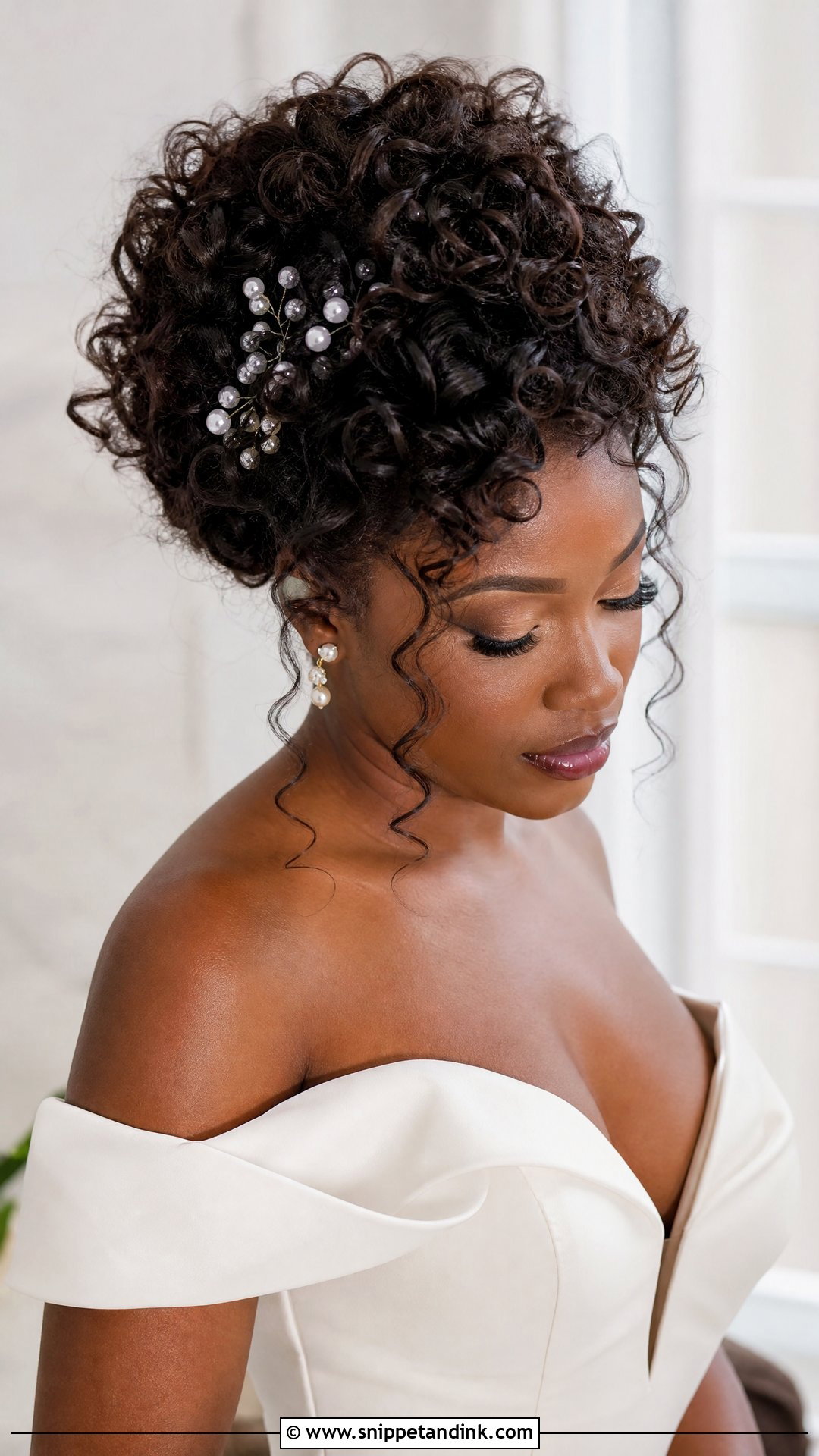
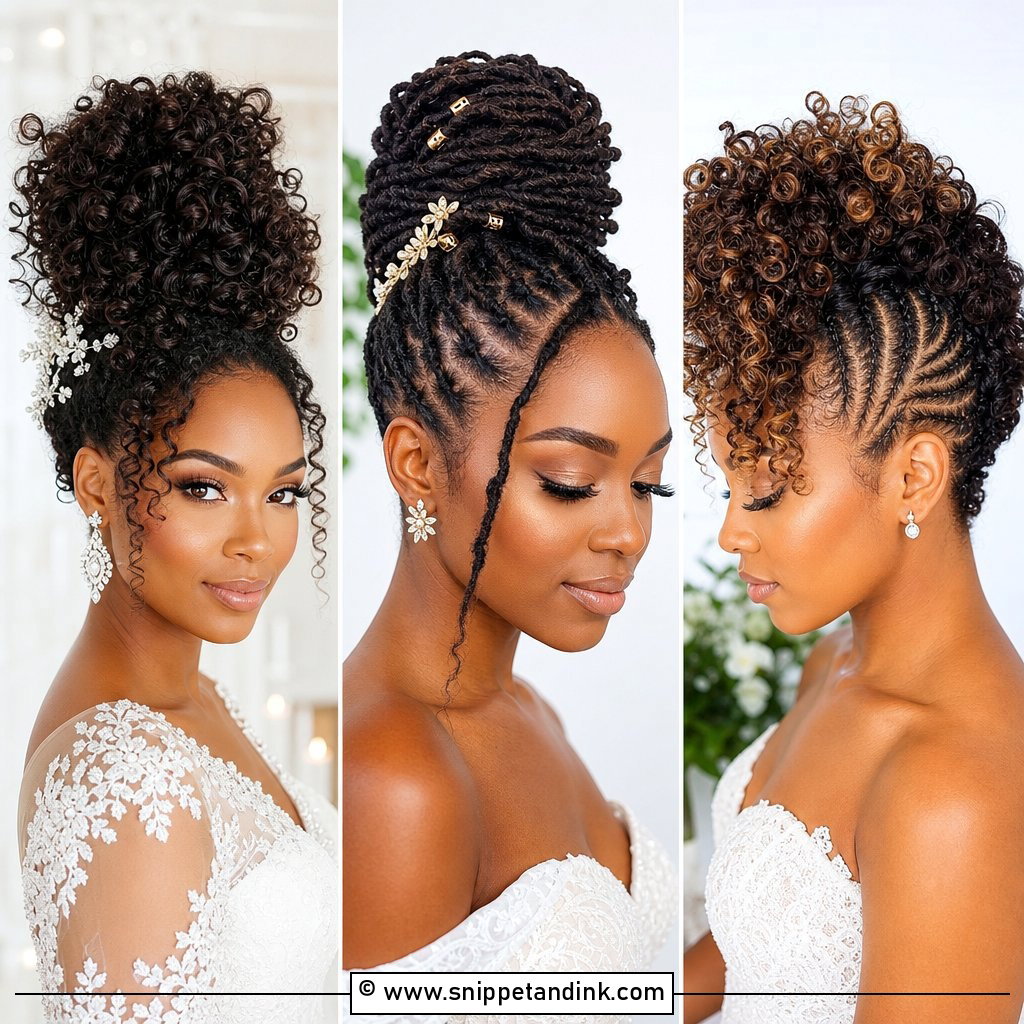
Curls already carry volume, so the work is pinning, not creating. I gather sections loosely and let the curl pattern fill the crown, sides and bun. Smoothing every curl down would fight the texture and look heavy; working with it keeps the updo full but light on the head. Thick and naturally textured hair suits this best. A few defined curls left around the face, and a veil tucked below the bun, finish it.
4. Big Low Bun Wedding Hair
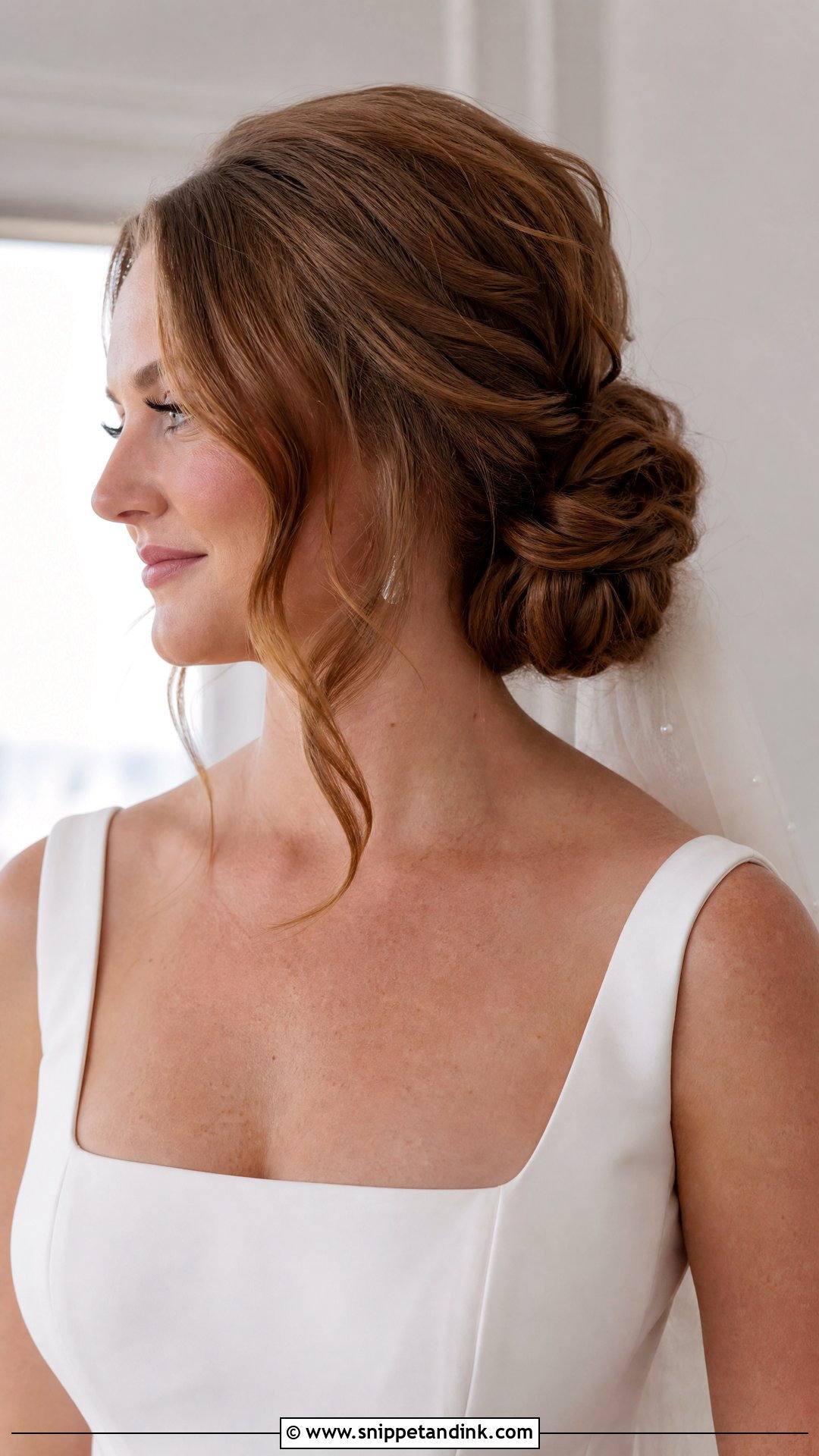
A low bun can look flat, which is why I build this one with volume: teased sections or a padded form inside, so it sits rich and round at the nape. Smooth or textured depends on the dress. It’s practical in warm weather because the neck stays clear, and an open-back gown shows fully. A clean middle part gives a modern finish. Face-framing pieces soften it if a sleek front feels too strict on you.
5. Big High Bun Wedding Hair
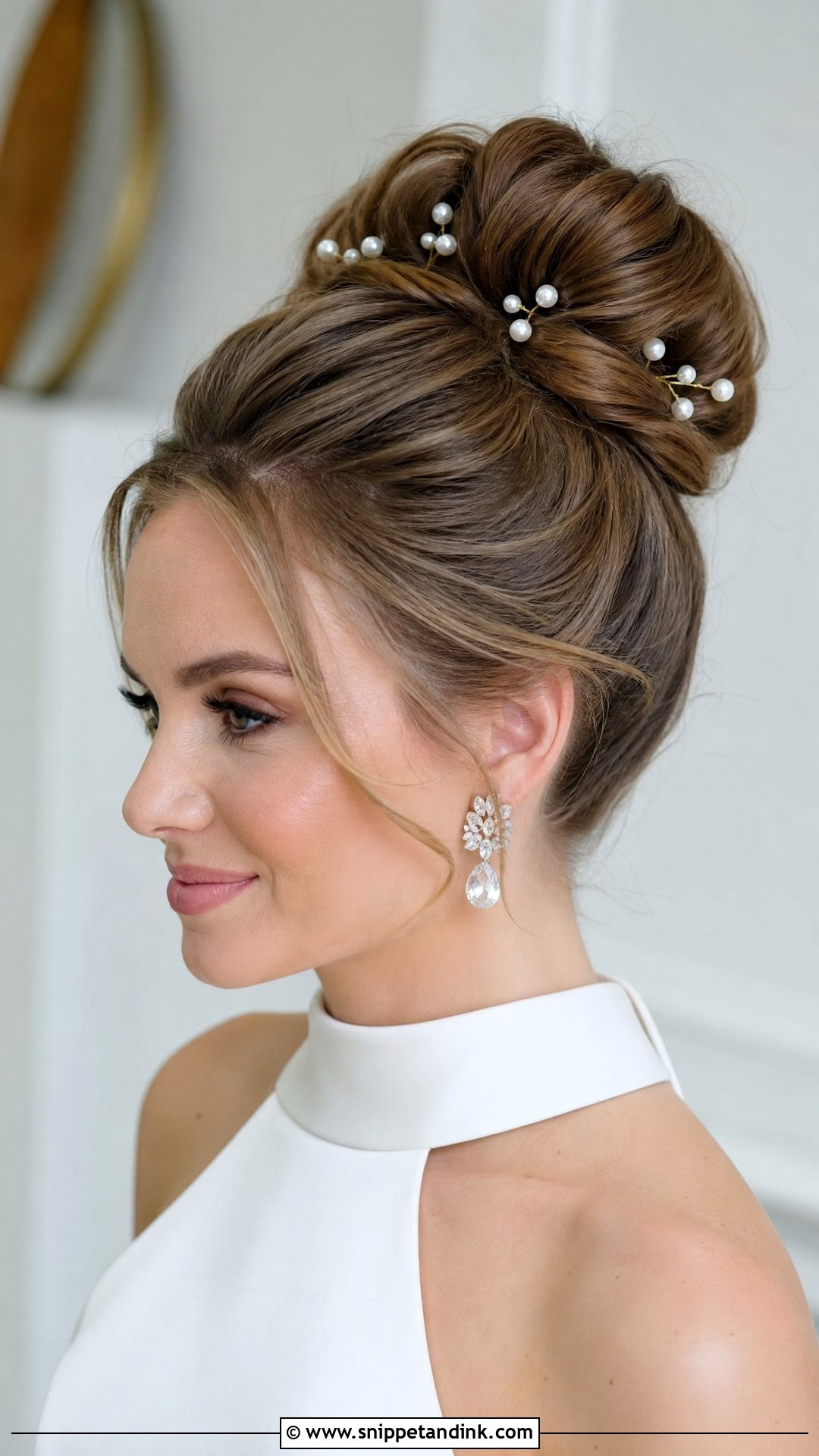
Height lengthens the neck, and a high bun does it more than anything else on this list. High necklines and detailed sleeves need that clearance. The bun can be rounded, braided or curled before pinning. Fine hair rarely has the density for this size, so I’ll use a bun form or a few extension pieces. Be aware that a high bun shifts where a veil can sit; most brides attach it underneath.
6. Big Textured Ponytail Wedding Hair
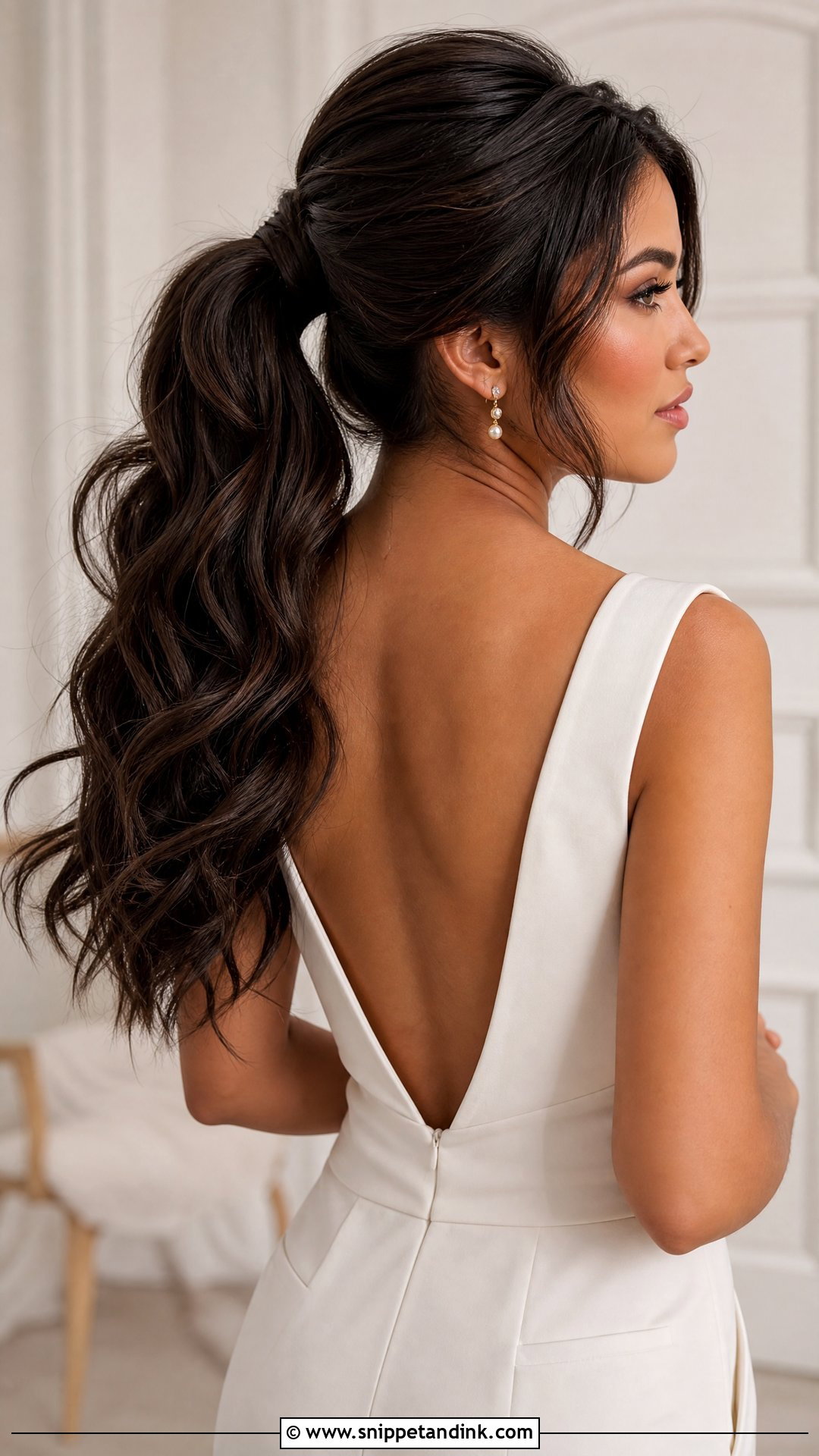
Statement hair without an updo? A big textured ponytail does it. Volume starts at the crown and flows into a thick curled tail with real bounce. High is bold, mid-height balanced, low softer. I secure the base with two elastics, one on top of the other, because a single band on heavy hair loosens through the night, then wrap a strand over them. Minimalist gowns and jumpsuits suit it, and so do dramatic backs.
7. Big Braided Wedding Hair
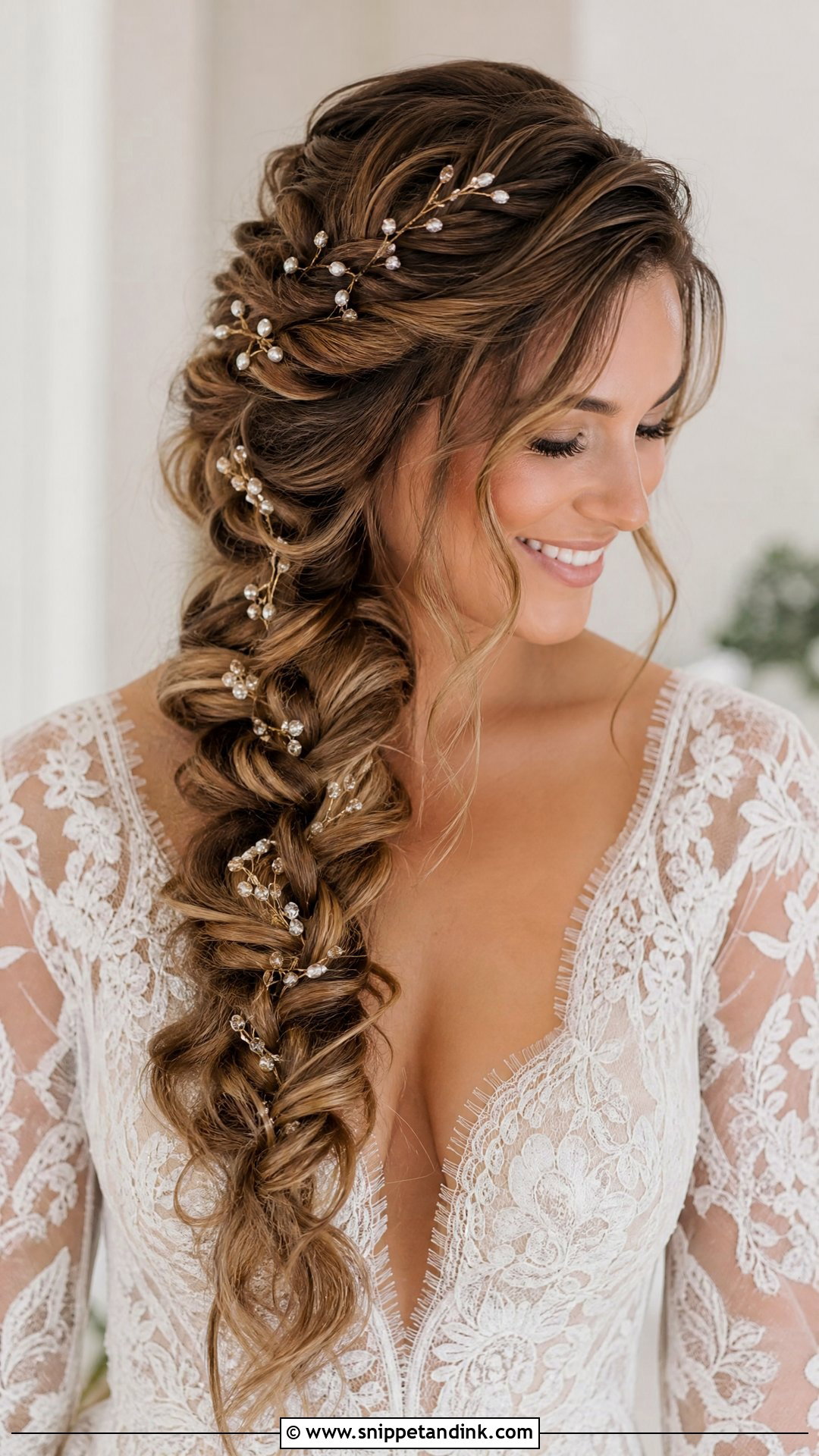
Pulling a braid apart is what makes it big. A loose side braid, a full fishtail, a crown or a braid worked into half-up all gain width when each loop is gently widened. I do that after the braid is secured at the end, not before, or it unravels. The structure keeps hair controlled outdoors. Small flowers, pearl pins or delicate clips slide into the braid easily.
8. Big Side Swept Wedding Hair
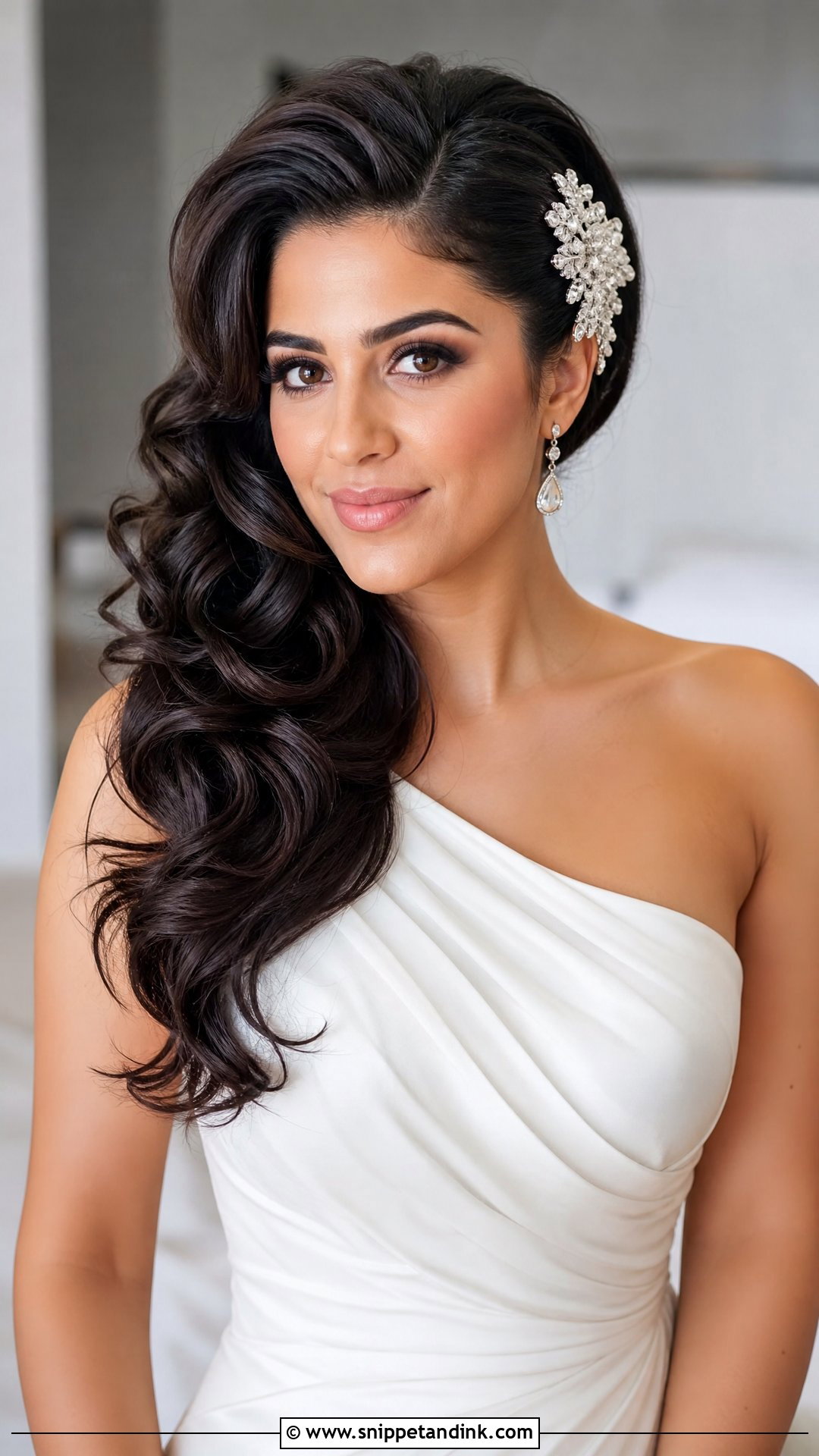
Nearly all the hair goes to one side, creating a full shape over the shoulder, while the other side is pinned flat, tucked behind the ear or finished with a comb. One-shoulder and asymmetric necklines pair naturally with it. It’s dramatic without being complicated, but the anchor matters: I criss-cross grips along the back of the head on the flat side, because all the weight is pulling the opposite way.
9. Big Natural Curl Wedding Hair
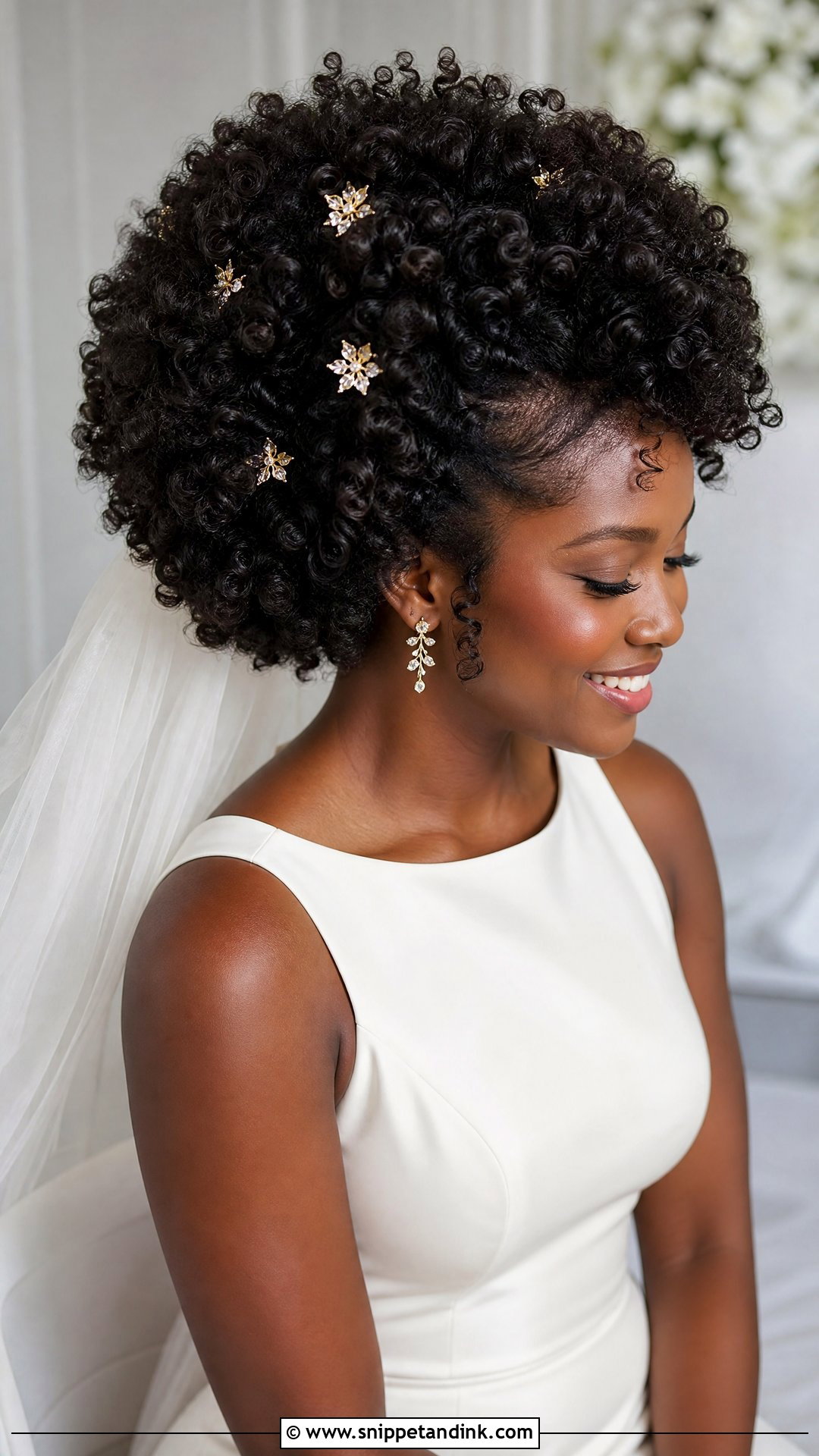
Hiding curls in a tight style wastes their volume. Defining the pattern and building outward creates a full silhouette, worn down, half-up, to one side or as a rounded updo. Prep starts weeks before, with a regular moisture routine, because dry curls frizz rather than expand. On the day, I use curl cream, a light gel and a diffuser, then lift at the roots with a pick. Never brush through defined curls.
10. Big Beehive Wedding Hair
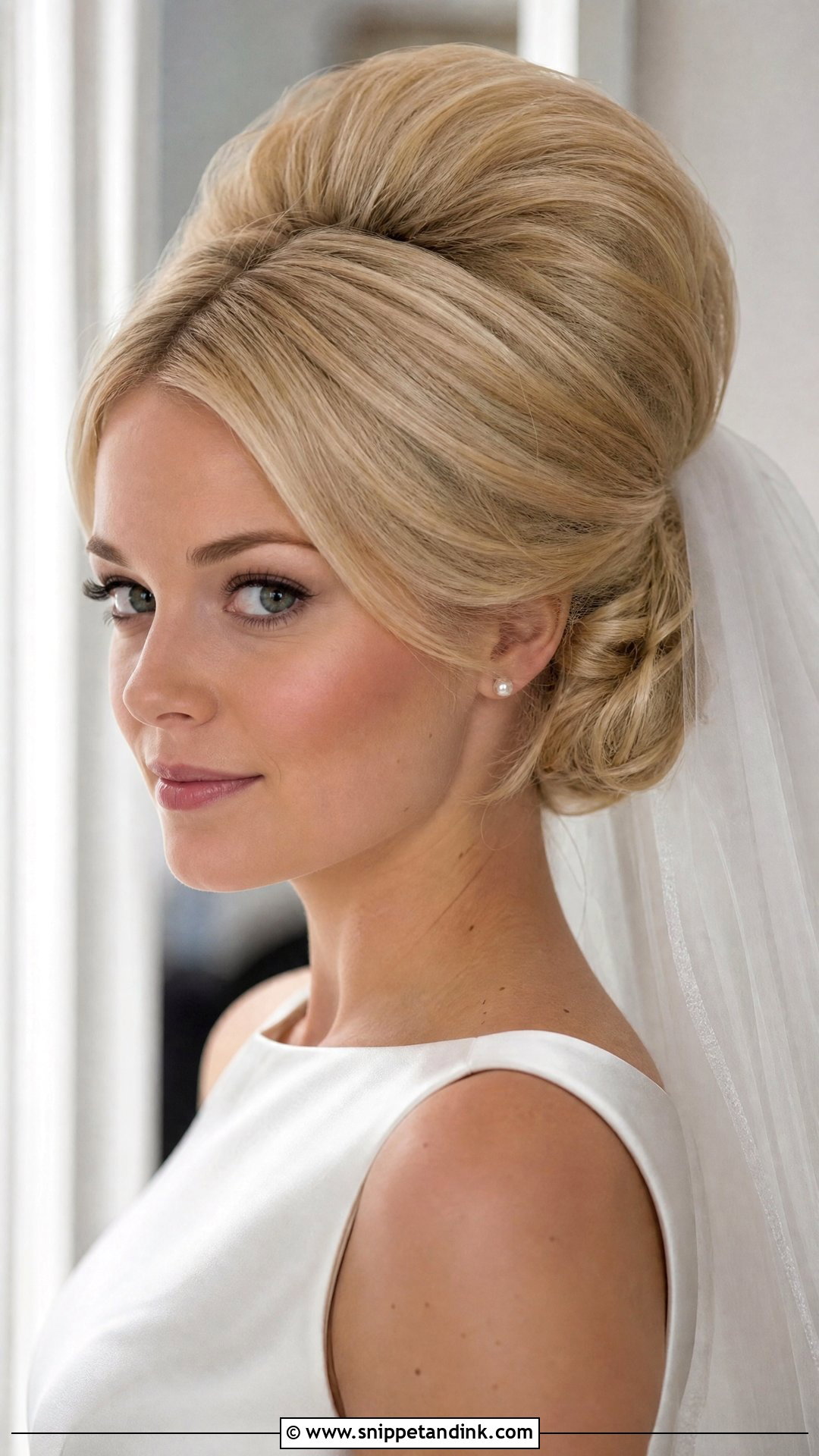
Big beehive wedding hair is recognisable by its height at the crown, and it can still look chic when the rest is soft: a low bun, curls down the back or a half-up shape. Controlled volume is the goal. I backcomb in thin sections close to the root, then lay a smooth outer layer over the top. Harsh, visible teasing is what makes a beehive look like a costume. Short veils sit neatly behind it.
11. Big Messy Bun Wedding Hair
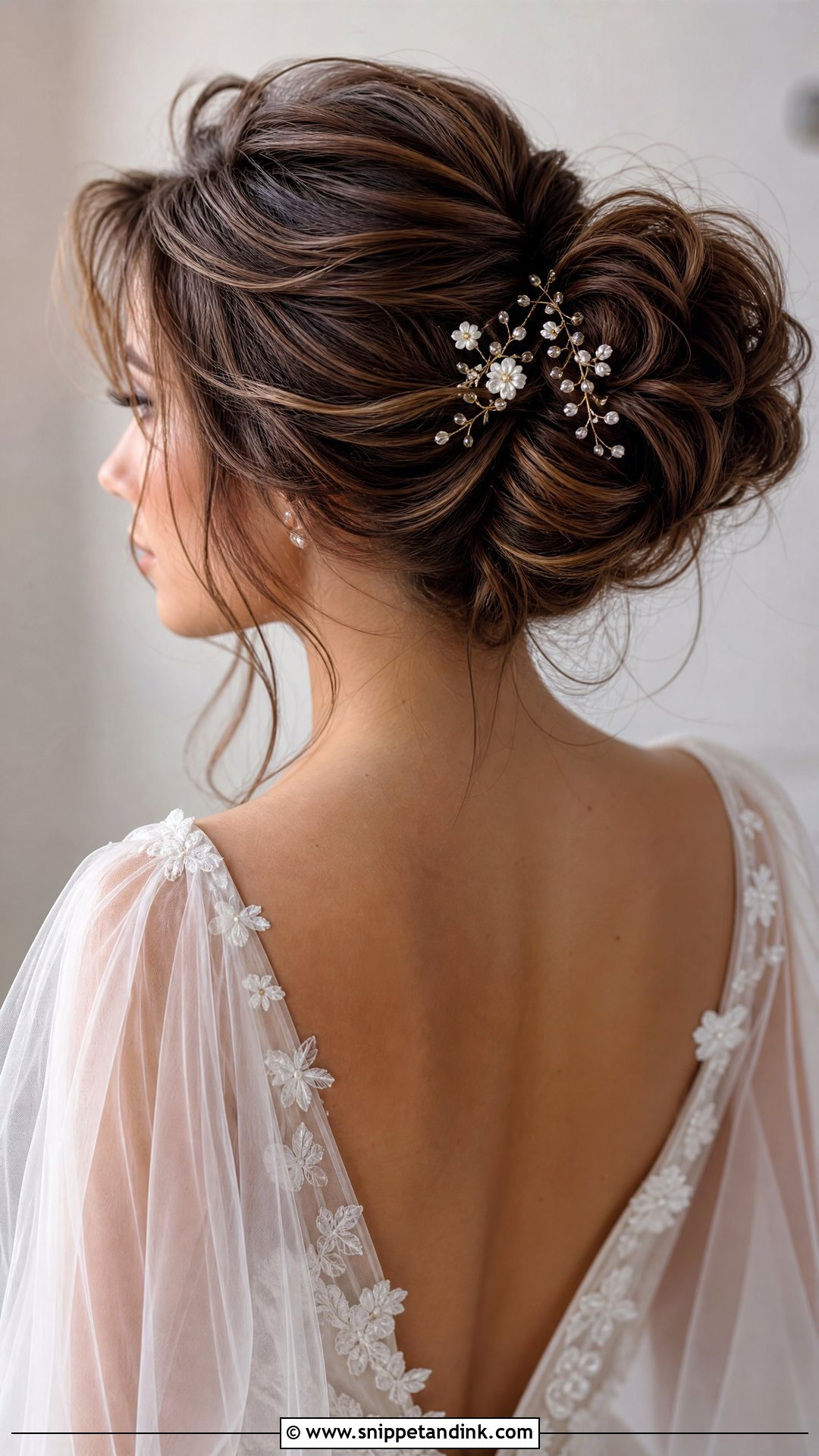
Messy buns collapse when their foundation is weak. Mine start with a secure base, a small ponytail or a pinned anchor, before curls are added in sections for fullness. Face-framing pieces give movement. It suits volume without stiffness, and it’s comfortable for garden, beach and rustic venues. A veil goes under the bun, never through the loose curls, where the comb has nothing firm to grip.
12. Big Blowout Wedding Hair
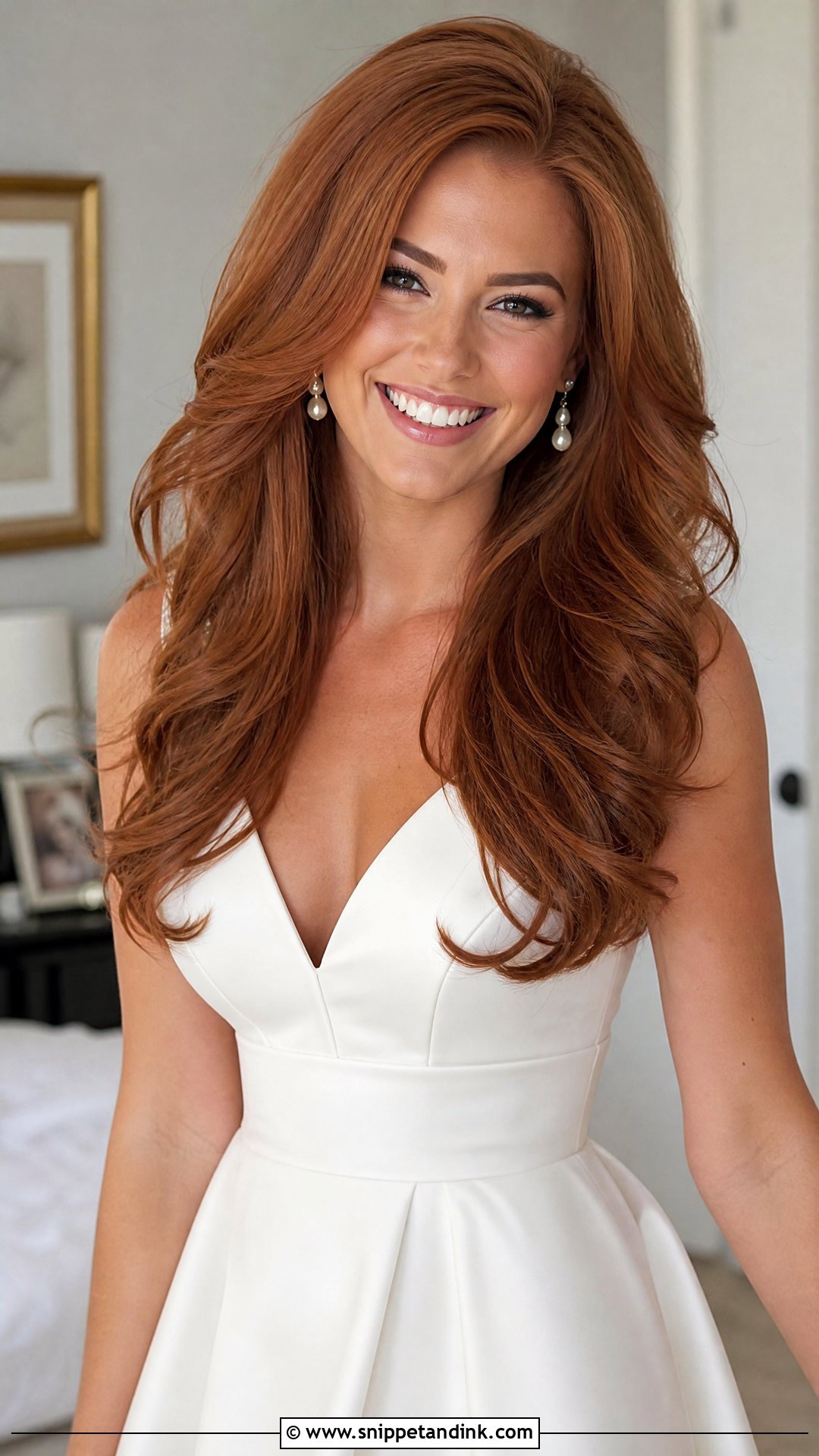
No pins, no braids, no updo: a big blowout lives on root lift, round-brush shape and a soft bend at the ends. Layers keep it airy instead of bulky, so medium to long hair with face-framing pieces suits best. My honest caution is that a blowout drops faster than any pinned style, especially in humidity. I’d only recommend it for a short day, a cool venue, or a bride happy to touch it up.
13. Big Wedding Hair With Veil
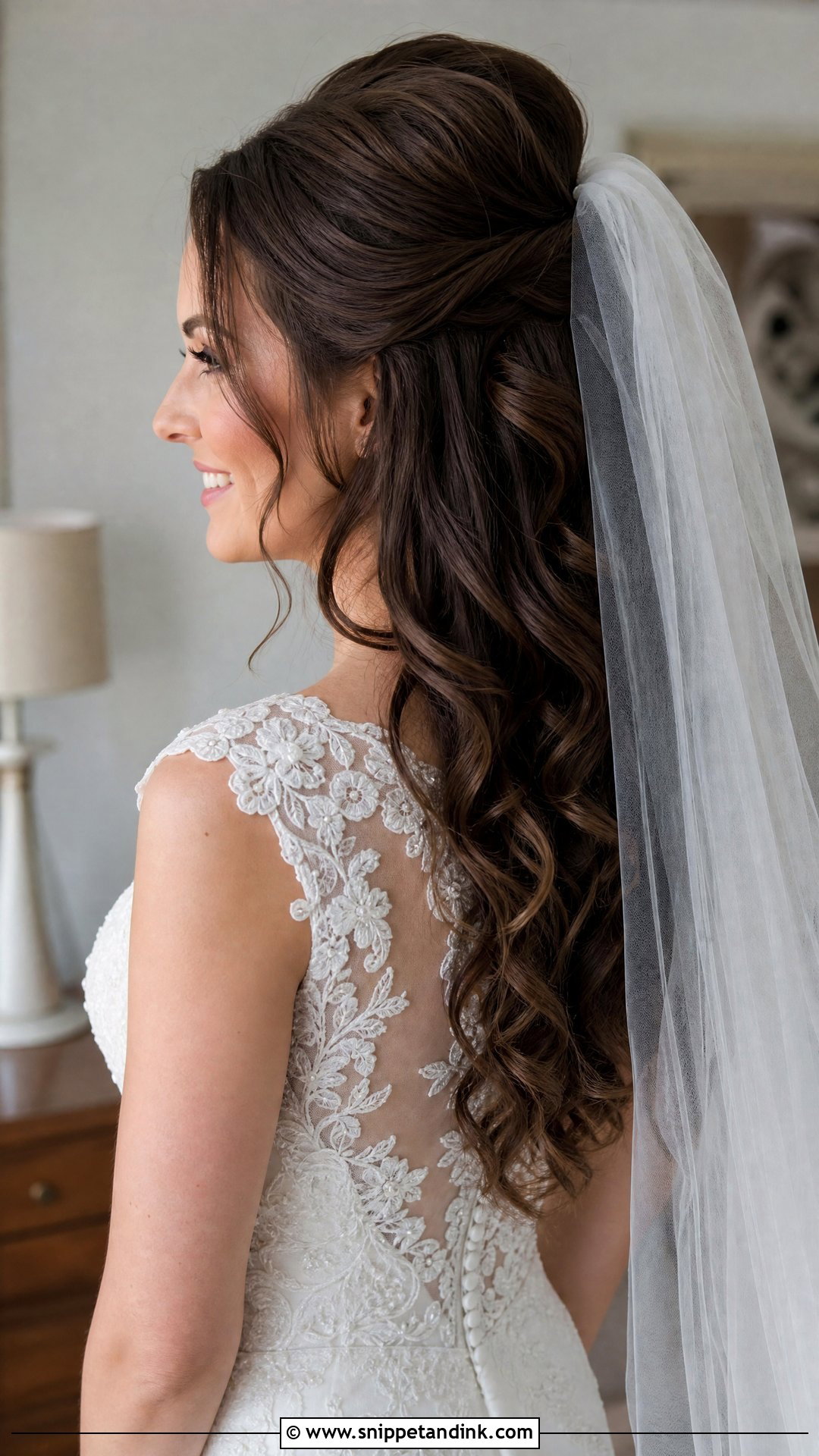
Placement is everything when volume meets tulle. A veil set too high, or pushed into teased hair, flattens the crown in minutes. For big styles, I put the comb under a bun, below a half-up section or into a hidden anchor made of crossed pins. Hollywood waves, low buns, curly updos and half-up hair all hold veils well when that anchor is solid. Bring the veil to your trial so we can test its weight.
14. Big Wedding Hair With Flowers
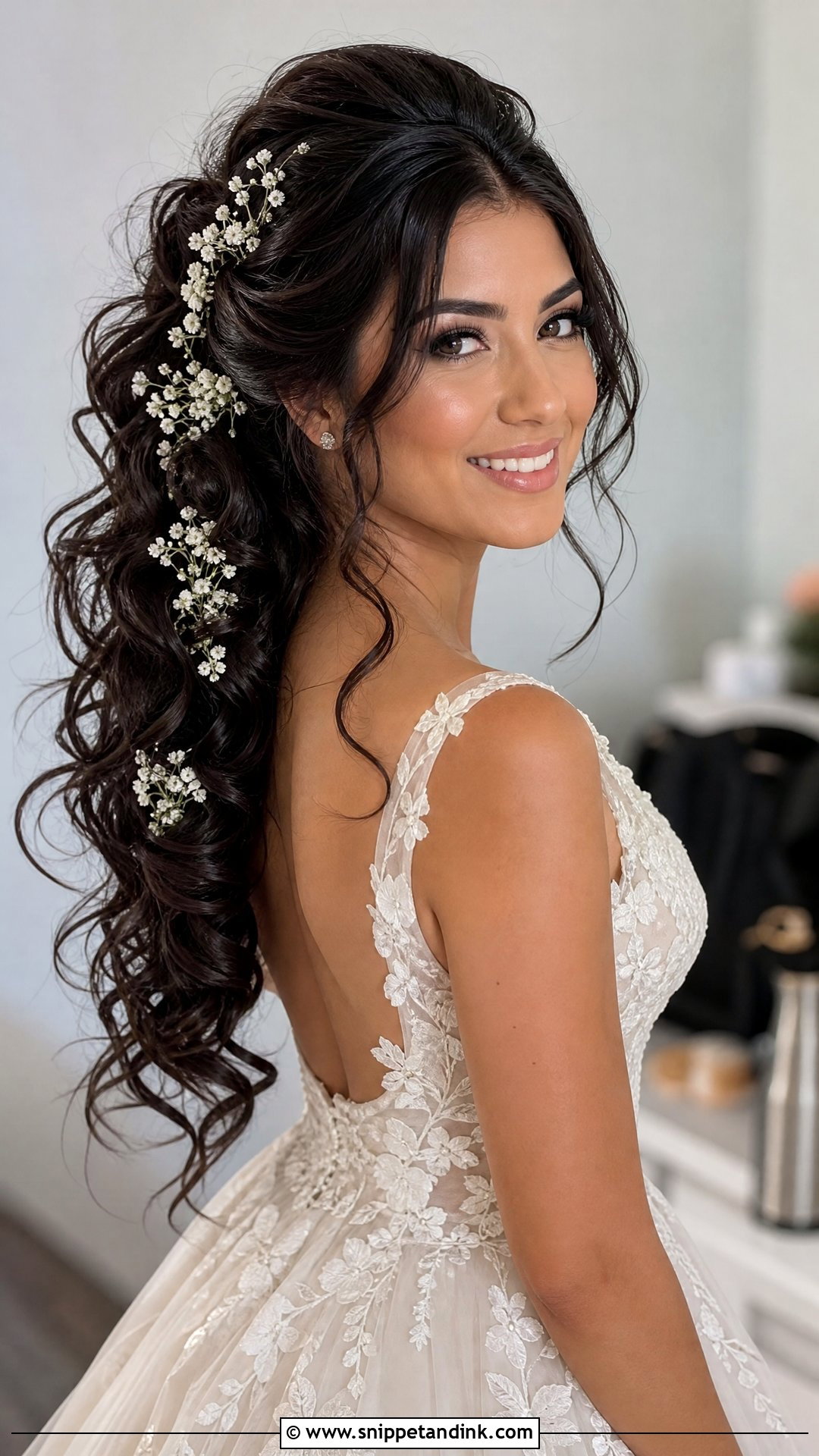
Scale is the rule with flowers. Tiny blooms disappear into thick curls, while oversized heads overwhelm a softer style. Baby’s breath, small roses, orchids and silk florals pin securely into waves, buns, braids and half-up hair. Place them where they add to the shape, not where they cover it. Fresh flowers wilt out of water, so I ask the florist to wire and tape stems and deliver them close to styling time.
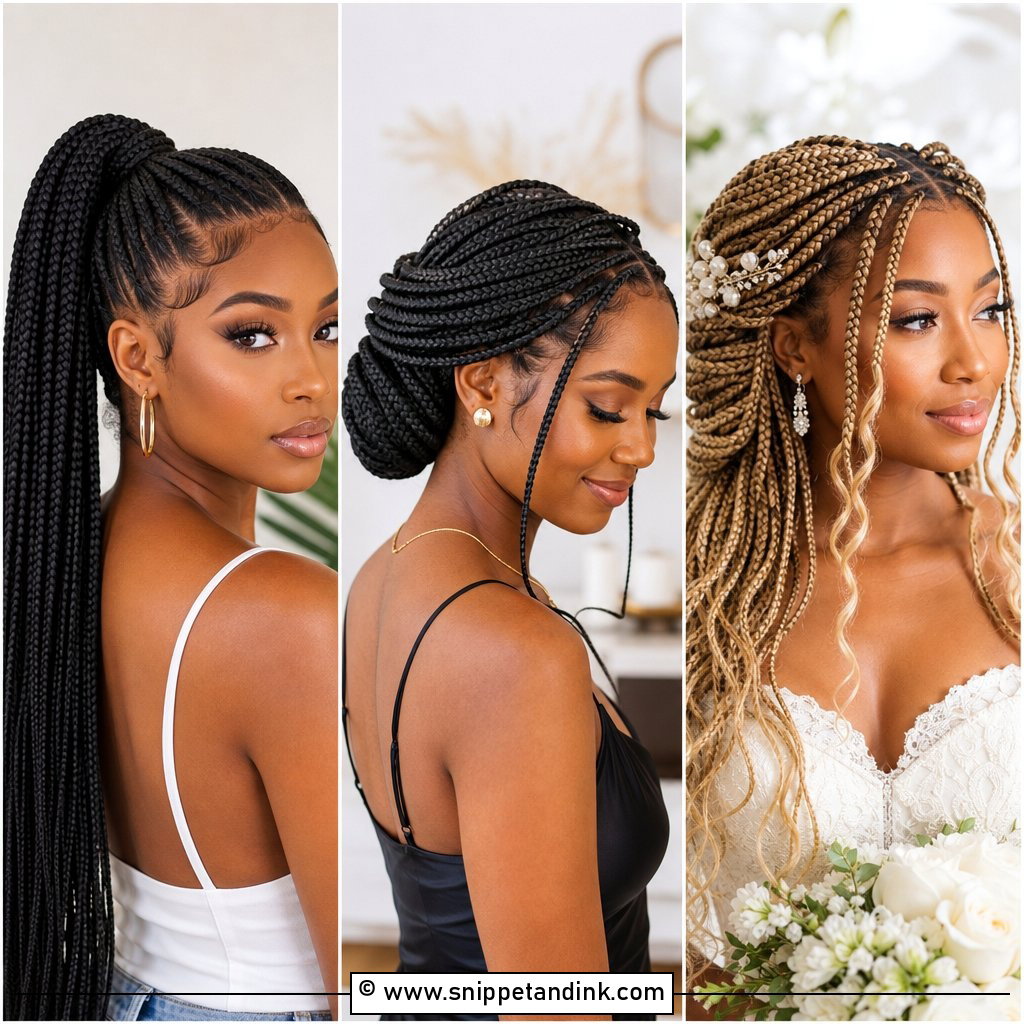
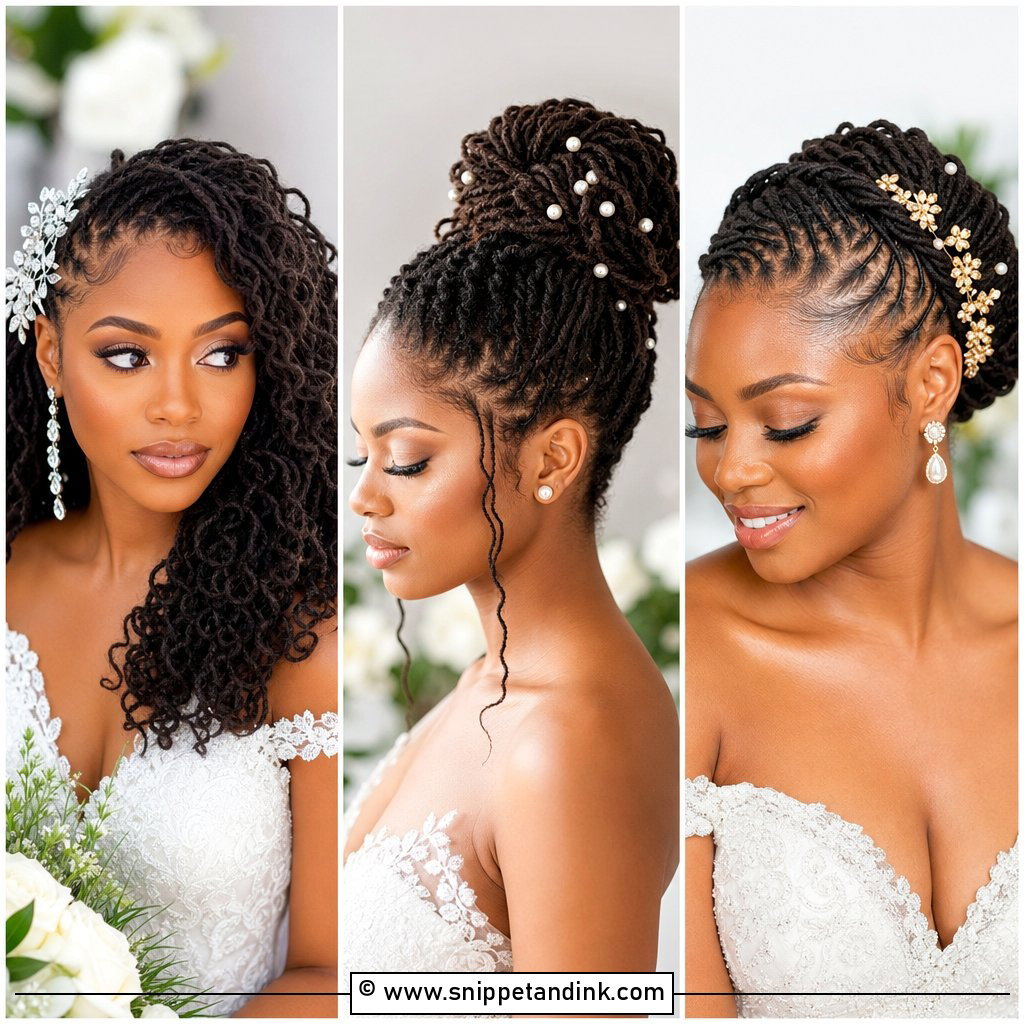
15. Big Wedding Hair For Long Hair
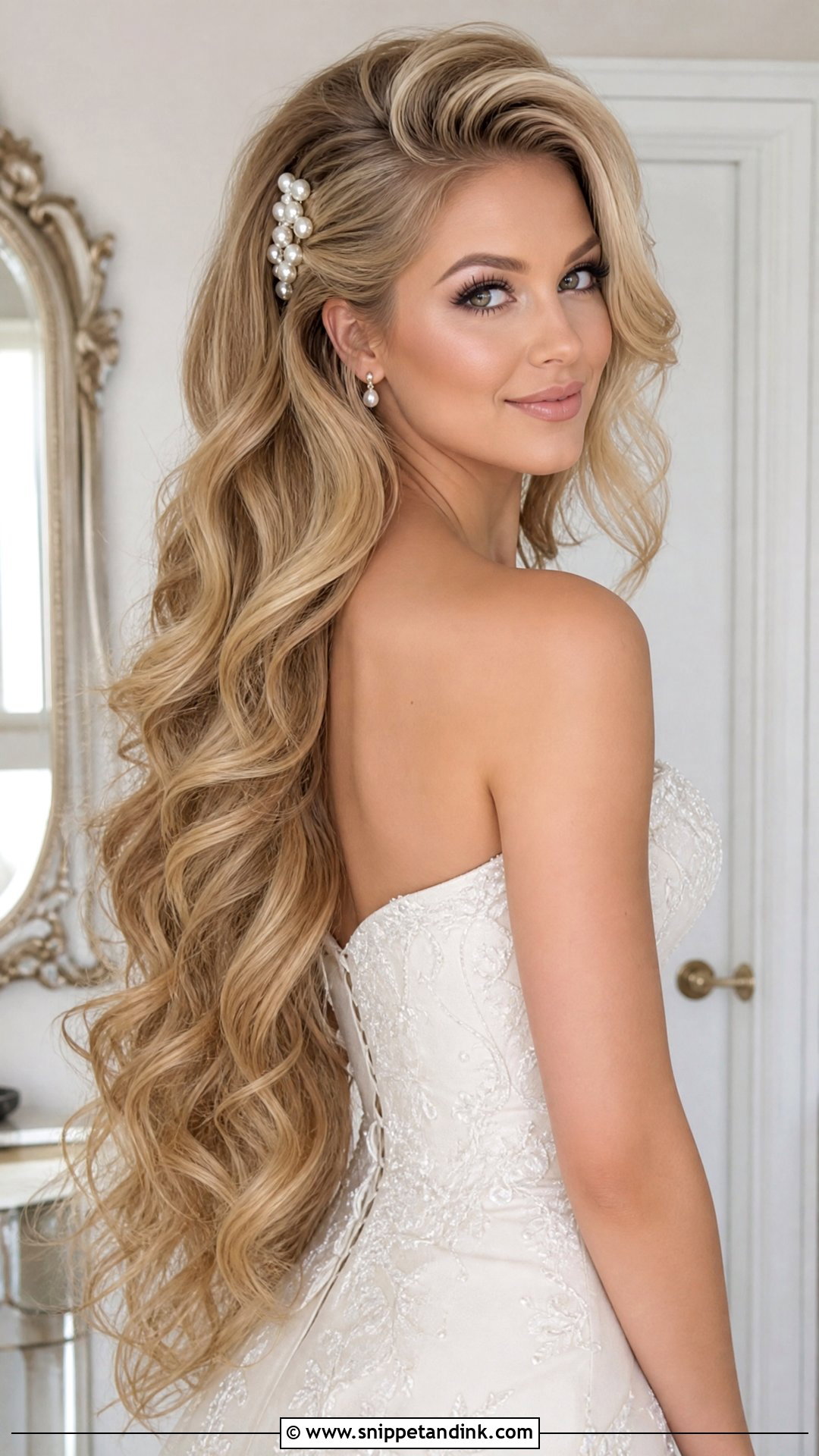
Long hair gives you the most room for shape: Hollywood waves, oversized curls, braided ponytails, full half-up styles and large buns. Its weakness is weight, since long lengths pull volume down as the day goes on. Strong prep, small sections when curling, and pins placed against the direction of gravity make the difference. If you want your length seen, choose waves or a ponytail. For comfort over twelve hours, an updo usually wins.
Humidity, Heat and the Slow Collapse
Big hair rarely fails in one dramatic moment. It sags gradually. Moisture relaxes curls, long hair pulls its own weight down, and a crowded dance floor gets hot. By late evening a big blowout can lose much of its lift, and that’s normal.
- On humid or rainy days, I finish with an anti-humidity spray and keep the curl slightly tighter than you’d like. It relaxes into the shape you actually want.
- Outdoor summer ceremonies are kinder to updos and ponytails than to fully loose volume.
- Have someone carry a small kit: bobby pins, travel hairspray, a teasing comb and an elastic.
- Agree on a plan for later. Hair worn down can be twisted into a quick low bun before the dancing and still look deliberate in photos.
Rain on the day doesn’t have to ruin anything. An umbrella held by someone else and a quick check in a mirror before the portraits rescue most styles.
Big Hair Is Really a Question of Proportion
The right amount of volume depends less on the hairstyle than on everything around it. A full ballgown carries a big blowout or a beehive easily. A slim slip dress on a petite frame can look top-heavy with the same hair. Your venue, the forecast and how long you’ll be on your feet matter too. Do the trial in a top with a similar neckline, wear the style for a few hours afterwards, and see how much shape is left by dinner. That tells you far more than the first photo in the chair.
You'll Like These Ideas:


Leave a Reply