
At the final suit fitting I always look at the groom’s hair before I look at the jacket. A cut that’s too long at the nape spoils the line of a collar, and a big crown of volume can make narrow lapels look skinny. The suit and the hair are one silhouette, so they have to be planned together. Below are twenty styles for short crops, waves, curls and long hair, each with what it needs from the barber and how it sits with the clothes. Use them to start a conversation with your barber, then bring the photo that matches the hair you actually have.
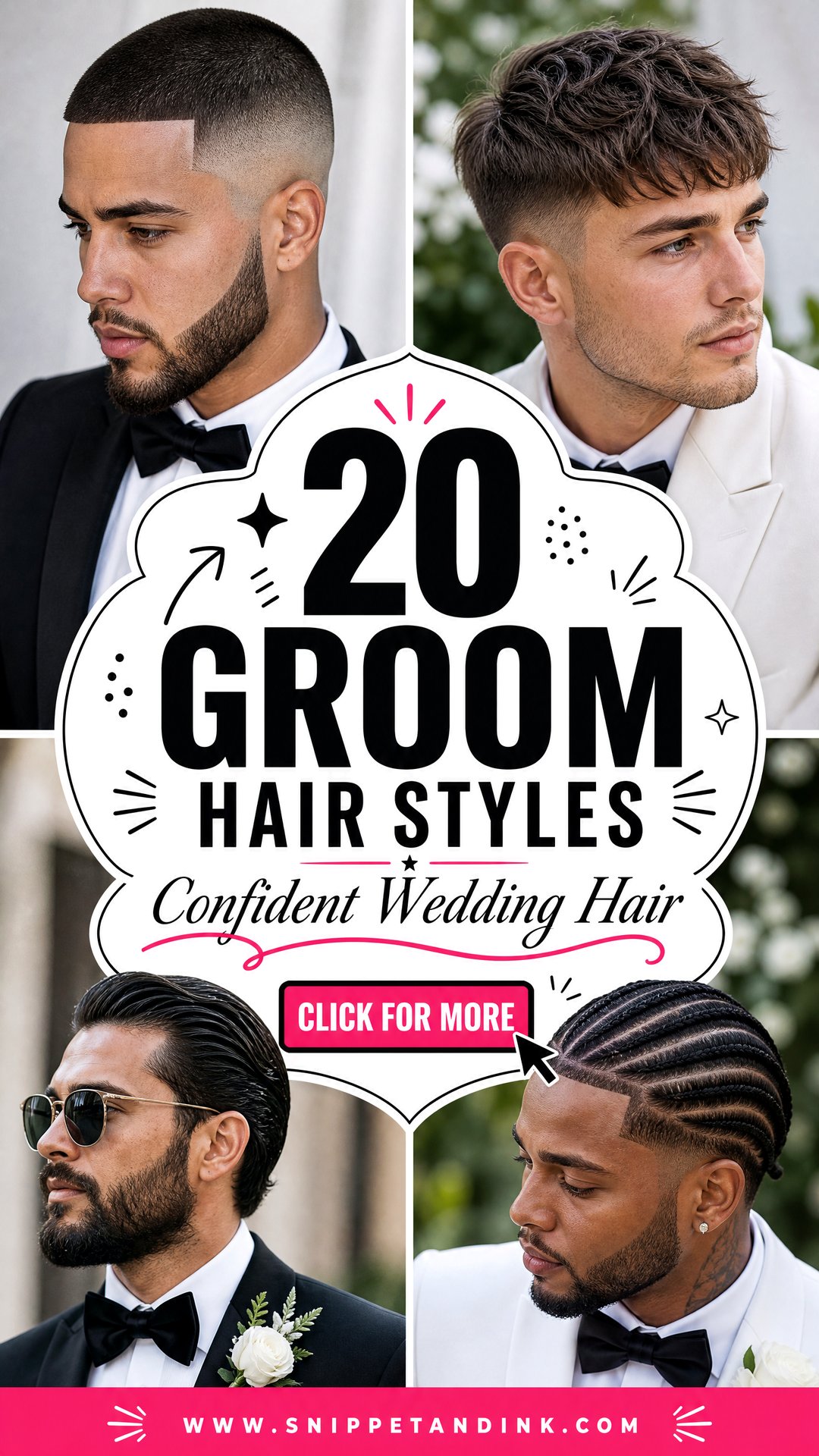
Your Collar and Lapels Have a Say in the Haircut
Grooms tend to choose a haircut from a photo of a man in a T-shirt. Then they put it with a suit and something feels off. The fix is to judge the cut against the clothes you’ll actually wear.
- Nape length. Hair that touches a shirt collar picks up product and leaves a grey line by evening. For a white shirt, keep the nape short or tie long hair up.
- Volume and lapels. Height on top makes a head look bigger. Wide peak lapels balance it; narrow notch lapels can look thin beneath a big pompadour.
- Formality. Slick, parted cuts belong with tuxedos and morning dress. Textured crops and waves sit better with soft tailoring, linen and open collars.
- Sideburns and beard. Their length should match the scale of the face and the jacket. Very long sideburns look busy above a wing collar.
If you can, take a photo of yourself in the suit at your last fitting and show it to your barber. It tells him far more than a screenshot of a stranger.
1. Low Skin Fade With Textured Top
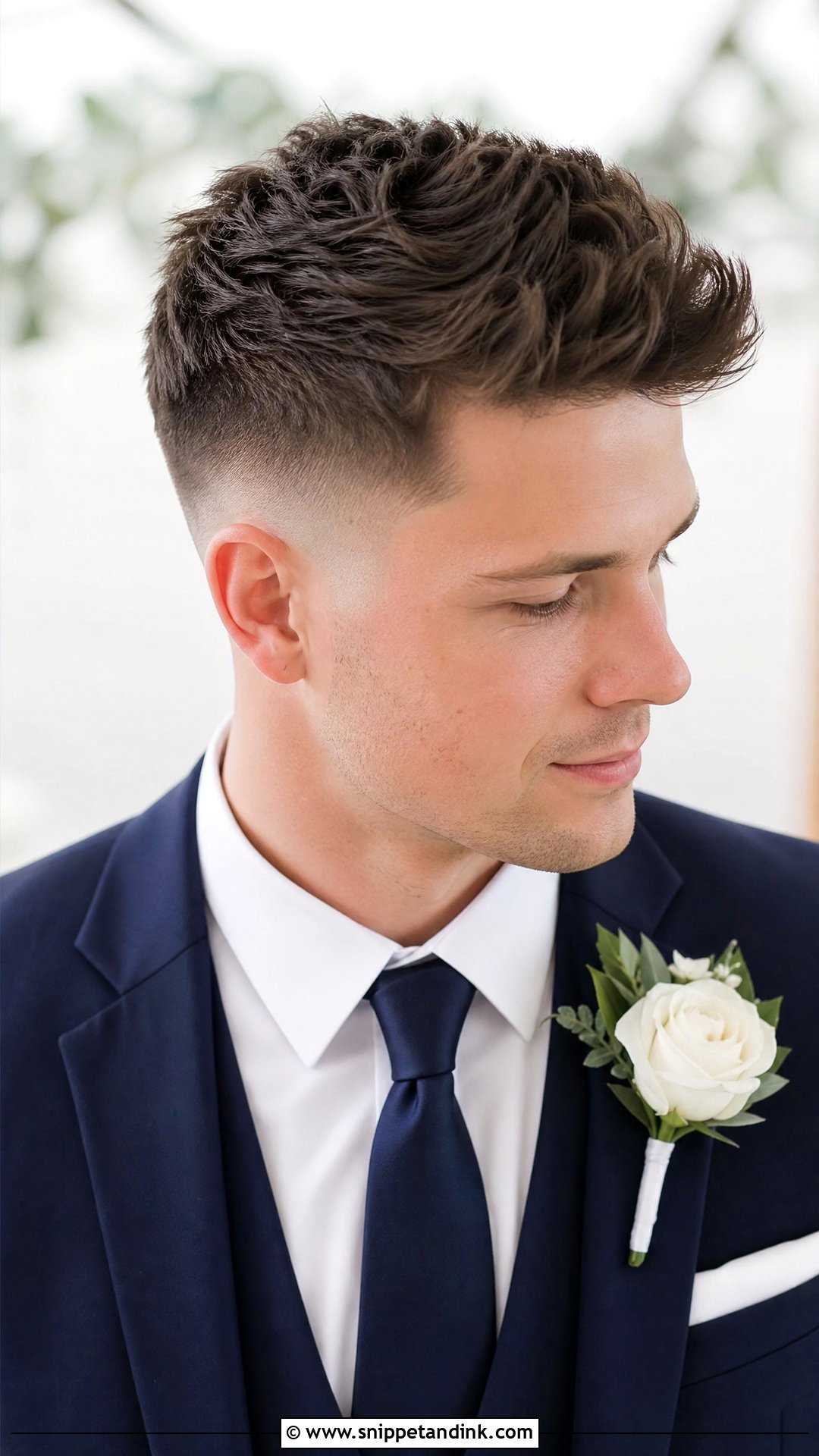
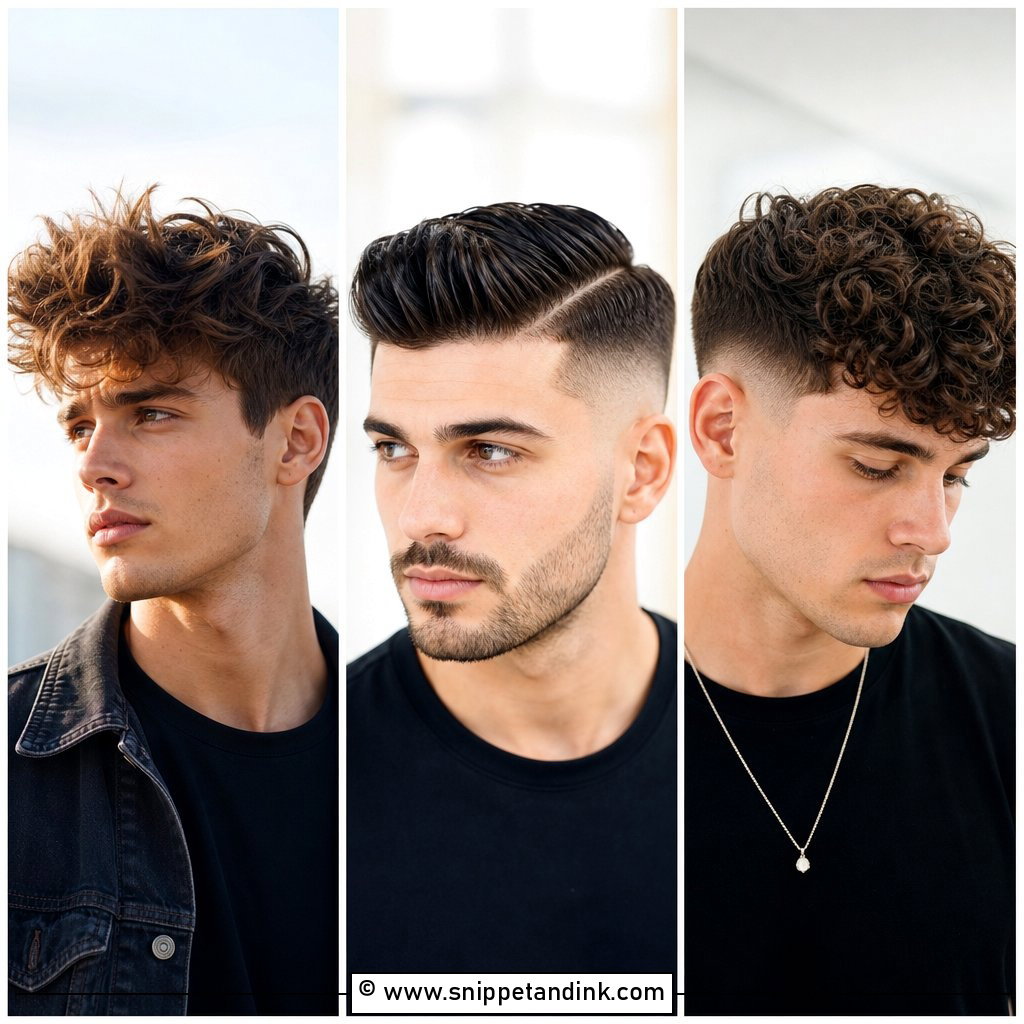
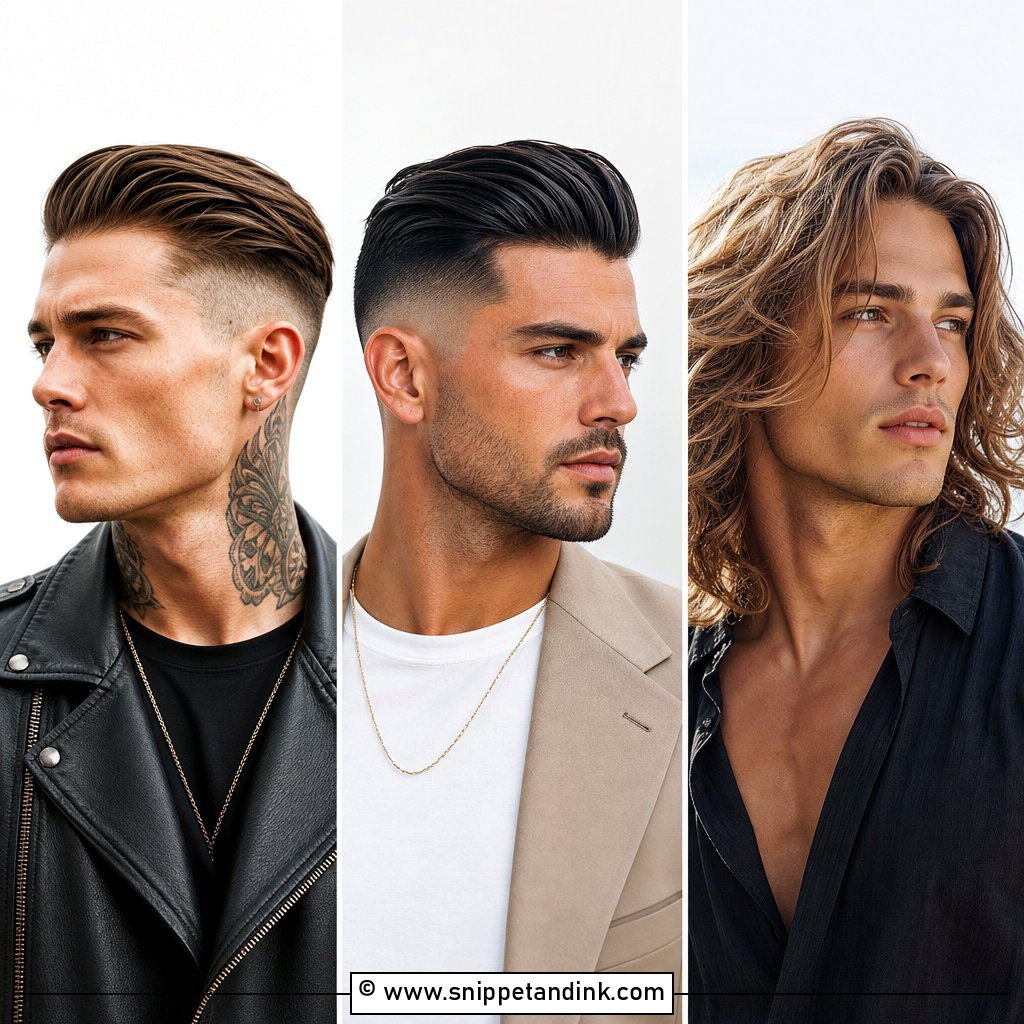
The low skin fade is popular with grooms because it’s so tidy above a shirt collar. The sides blend down to skin near the ears, leaving length and texture across the crown. From a tailor’s point of view, the clean neckline means nothing touches the collar, so a white shirt stays white. Ask for a low fade that blends gradually into the longer top, and use a matte paste for texture without shine. Get the beard trimmed at the same visit so the two lines match.
2. Classic Side Part With Tapered Sides
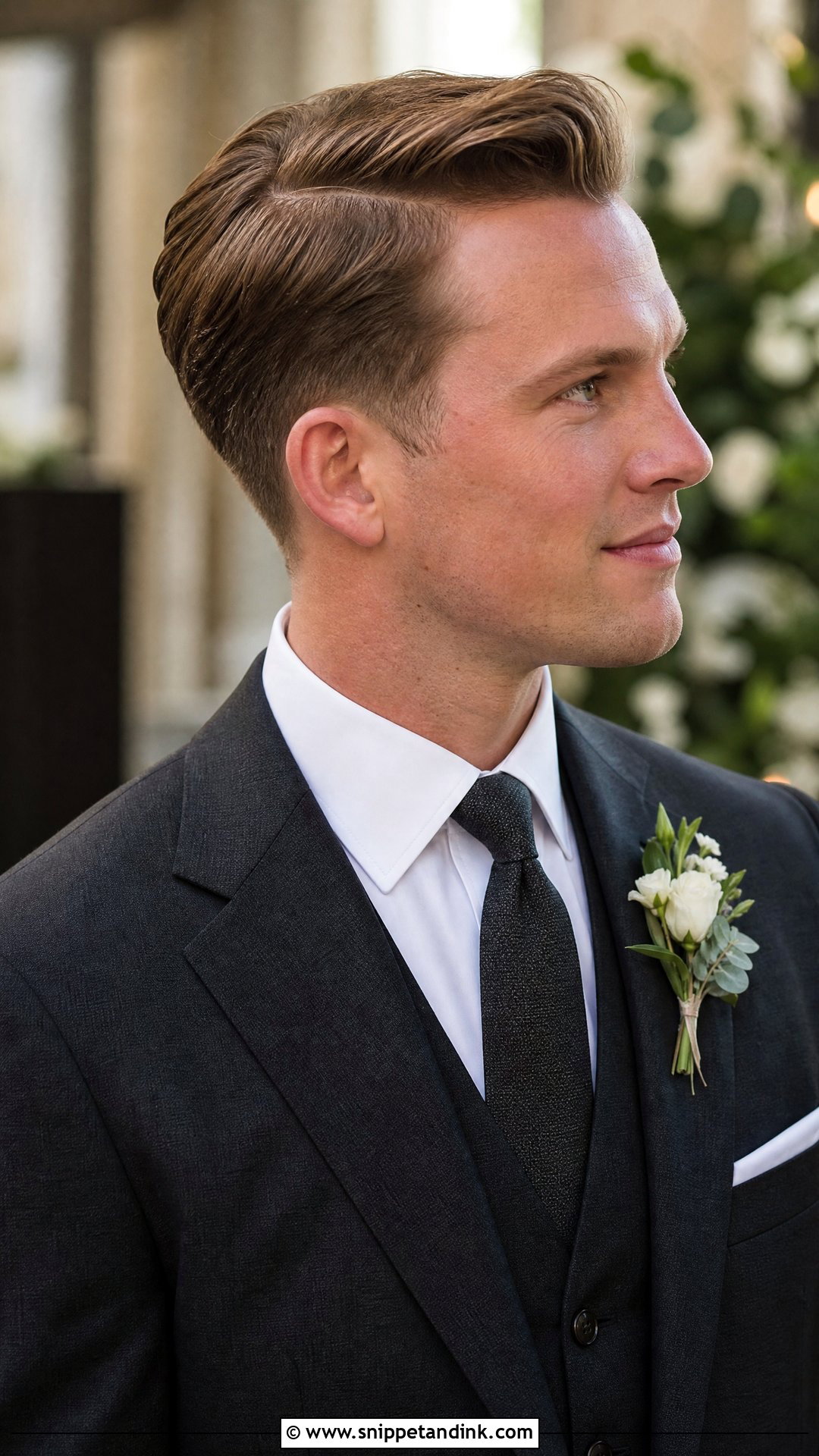
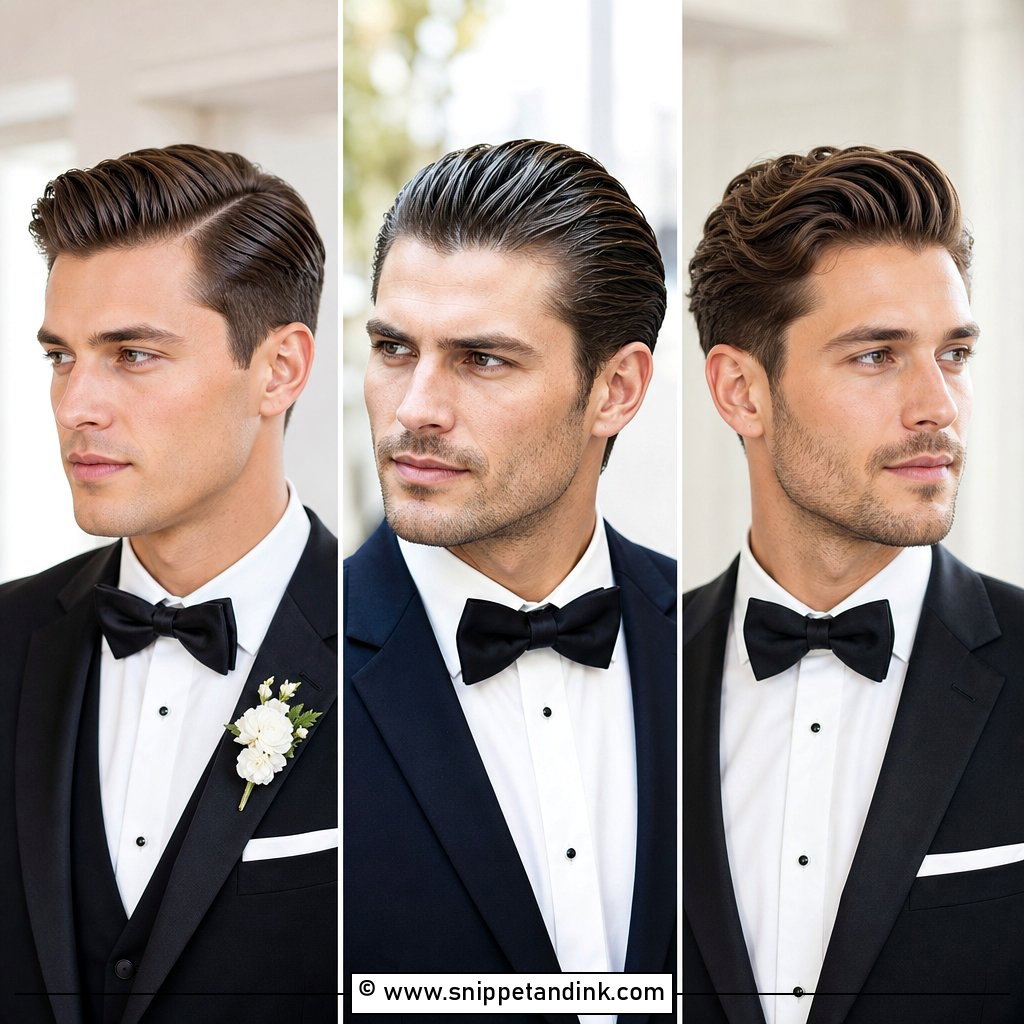
A side part with tapered sides is the haircut most traditional suits were cut to be photographed with. The part gives structure, and a soft crown stops it looking stiff. I’d choose scissor-cut sides rather than clippers if you’re wearing a three-piece or a morning suit; the softer edge sits better with heavier cloth. Light pomade gives hold and a slight sheen. It suits nearly every face shape, and it won’t look dated when you show the photos to your grandchildren.
3. Slicked-Back Undercut
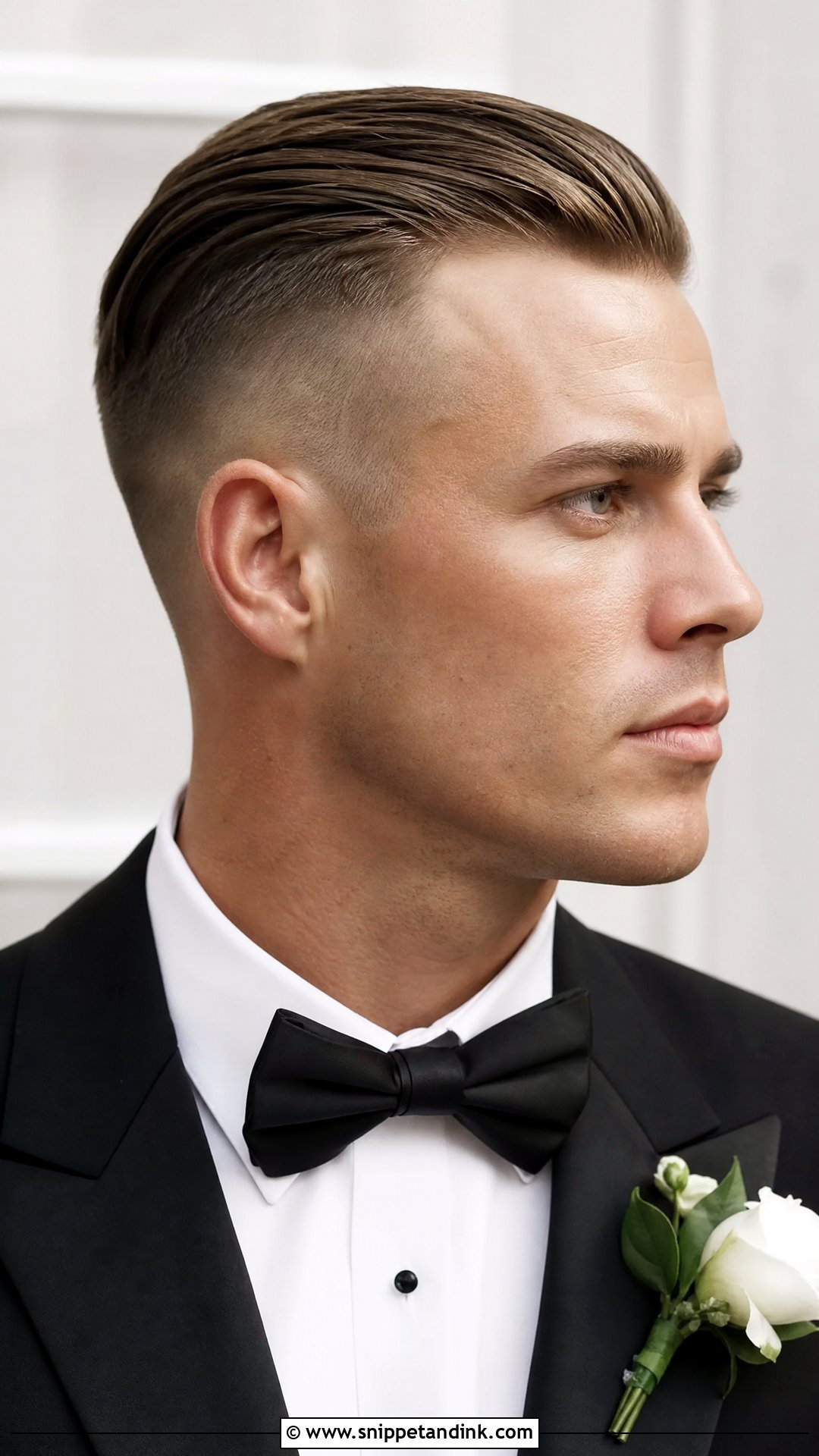
The slicked-back undercut is the most dramatic cut here, and it pairs best with the most formal clothes. Short, disconnected sides and a long top combed straight back put all the attention on the face. Thick, straight hair holds it best. A strong-hold pomade keeps it in place through hugs and dancing, though oil-based formulas can leave a mark on a white collar, so keep the back section neat and short. With a black-tie dinner jacket and peak lapels, the proportions match perfectly.
4. Textured French Crop
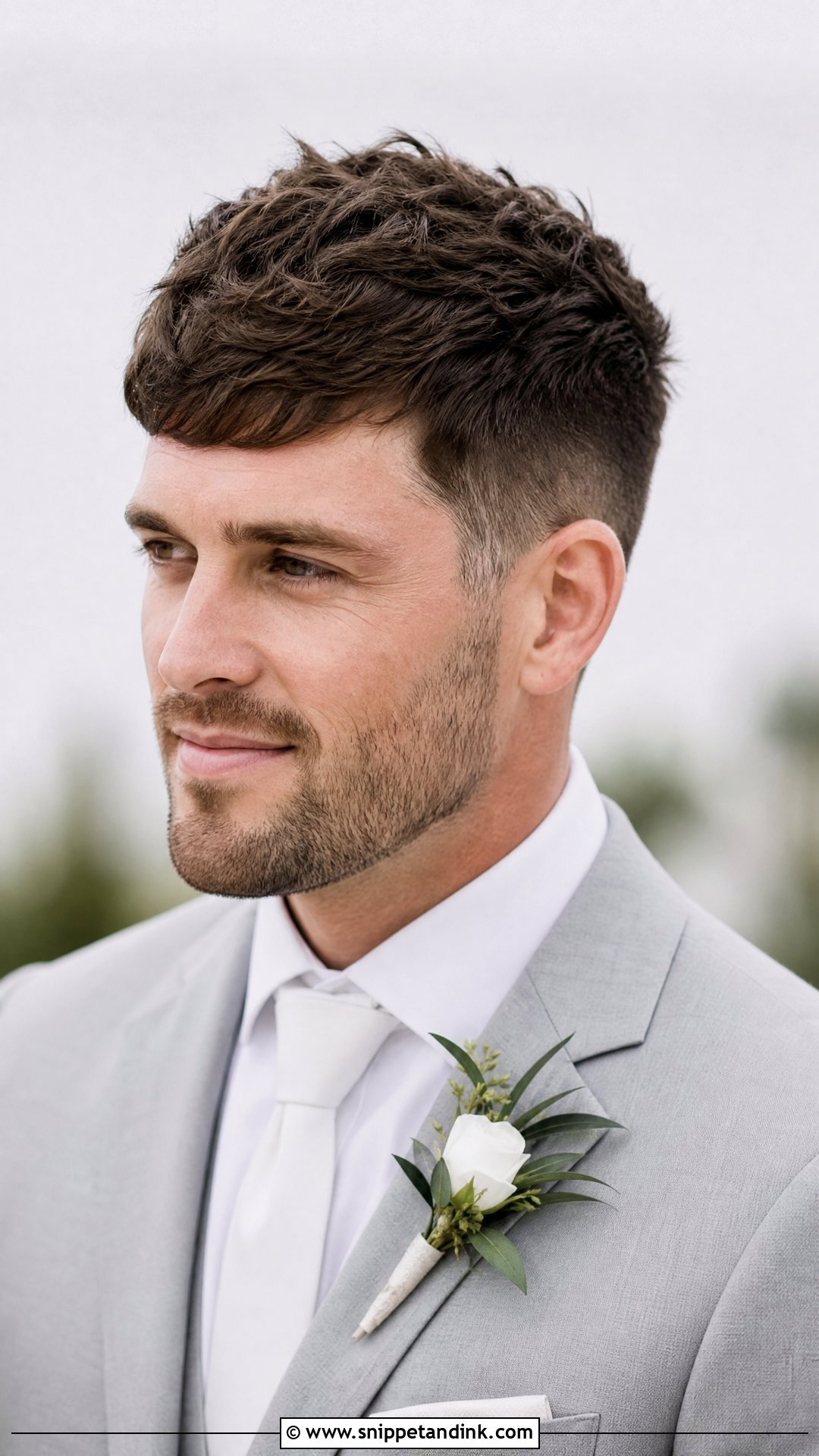
The French crop is short on the sides with a longer top pushed forward into a fringe, blunt or choppy. It looks deliberate even when it barely needs styling, which is why I suggest it for grooms in linen suits and relaxed tailoring. It flatters round and oval faces. A small amount of matte clay gives definition. The fringe should sit at least a finger’s width above the eyebrows, or it’ll fall into your eyes in the heat.
5. Pompadour With Faded Sides
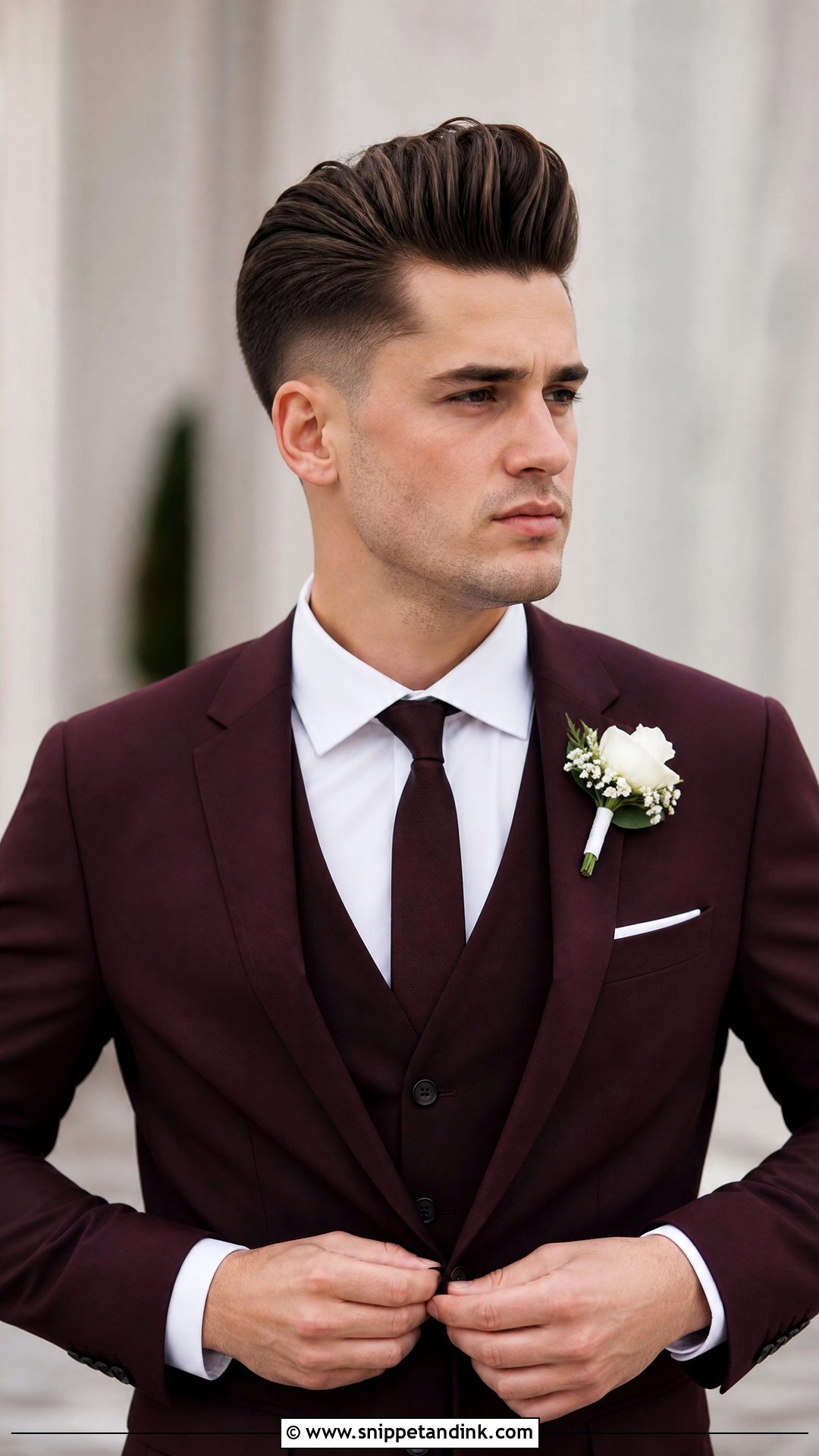
A pompadour with faded sides has real height, and that changes how the whole body reads in photos. Grooms who are shorter than their partner often like it for that reason. It needs thick hair and a proper blow-dry, lifting the front with a round brush before a strong-hold product goes in; product alone won’t build the shape. A fitted three-piece suit balances the volume, while a loose, unstructured jacket can make it look top-heavy.
6. Middle Part With Soft Waves
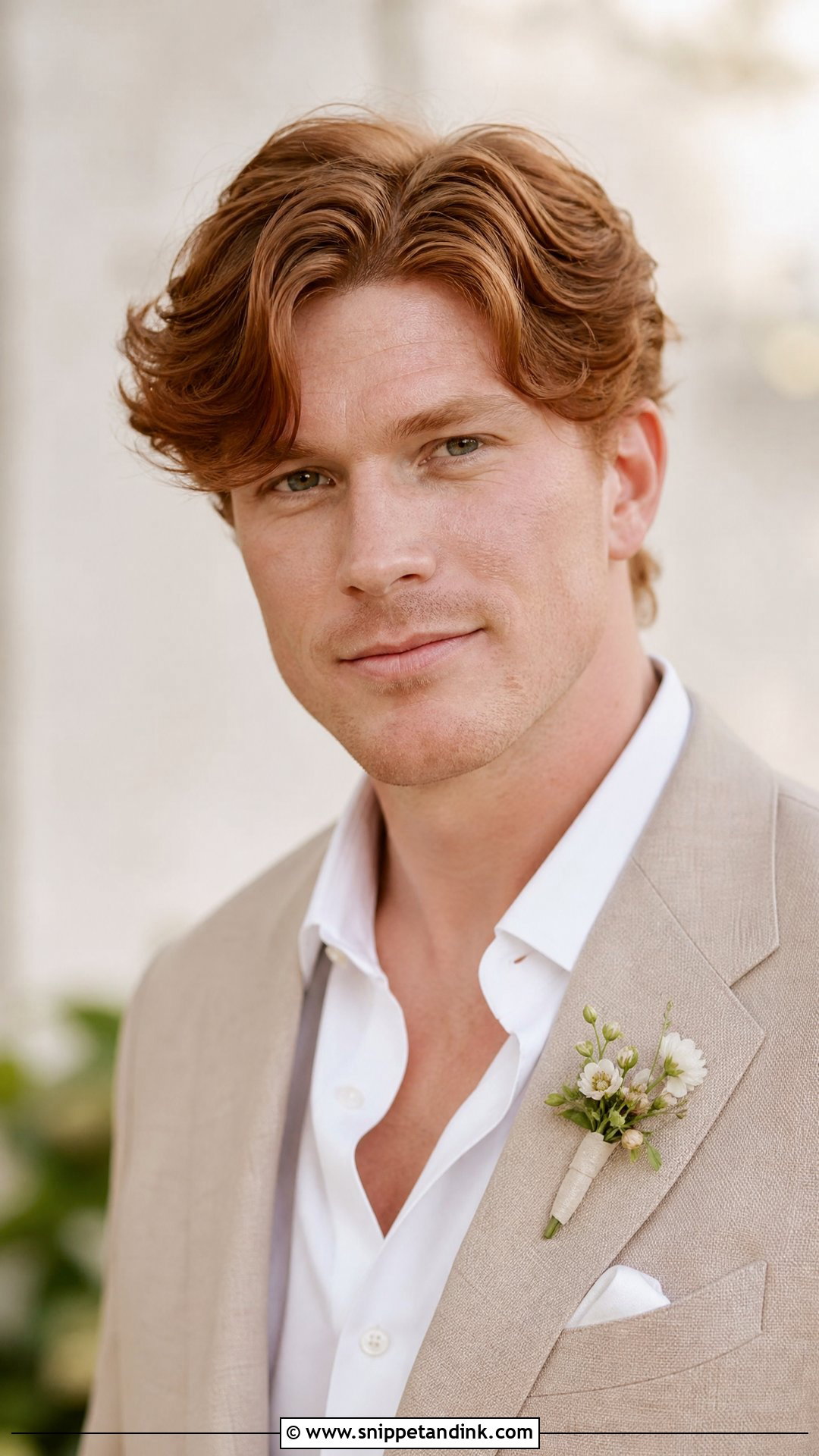
Middle parts suit grooms with medium-length, slightly wavy hair, and they look best when the face is fairly symmetrical. Hair is parted down the center and loosened with a texturizing spray so the waves move. It’s relaxed, so I put it with open collars, soft tailoring and outdoor or boho weddings. Under a stiff wing collar and bow tie it can look like two different weddings. Check your crown first; a cowlick that pulls left will fight a center part all day.
7. Curly Top With Clean Fade
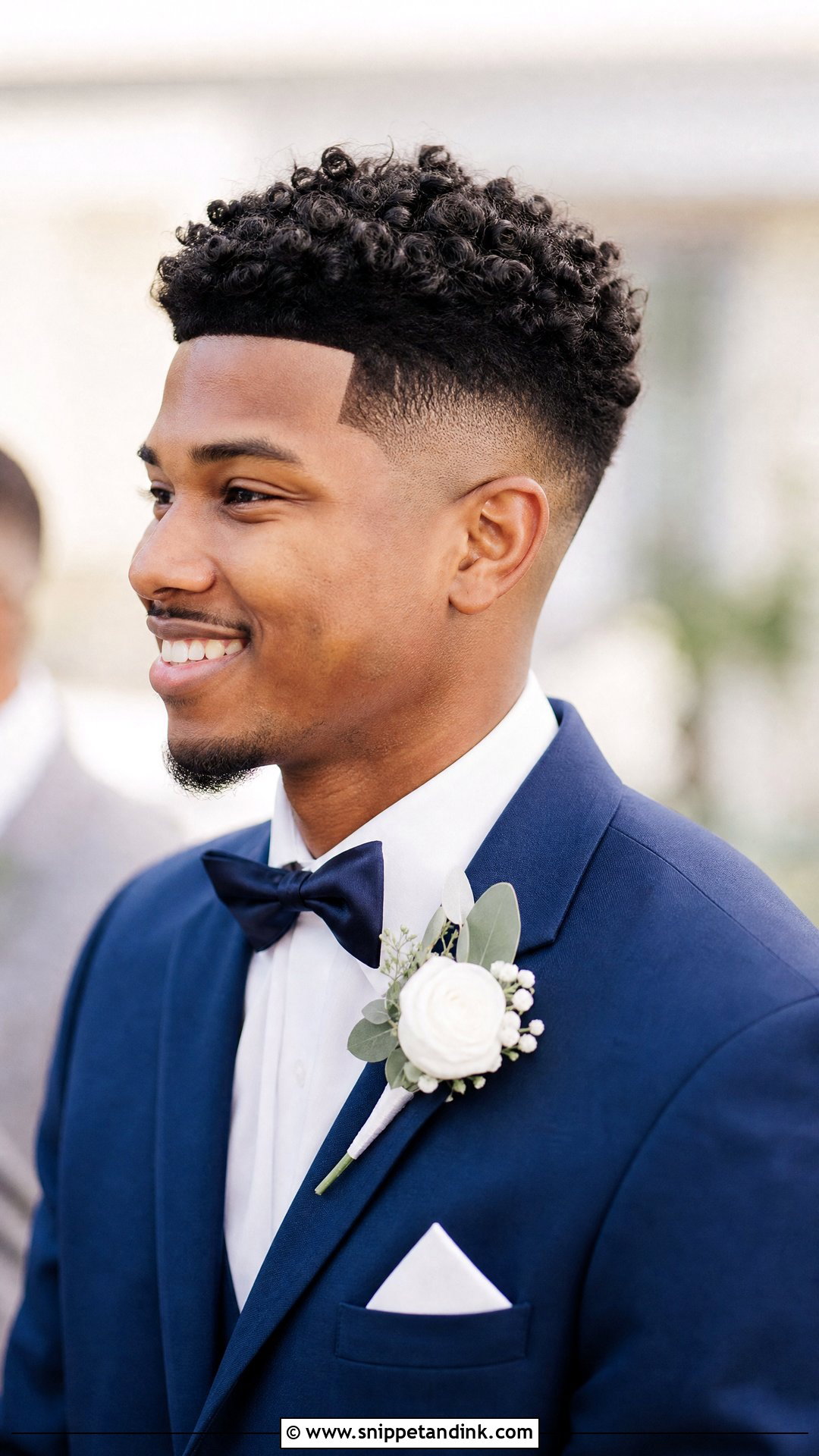
Curly hair should stay curly on a wedding day. A defined curly top with a clean fade gives you structure on the sides and personality on top, without heat damage or a fight with your texture. A curl cream applied to damp hair defines each coil and reduces frizz, and the trick is not touching it once it starts drying. The fade keeps the neckline sharp above the collar. It’s the right partner for any suit, from a slim navy two-piece to a tux.
8. Classic Taper Haircut
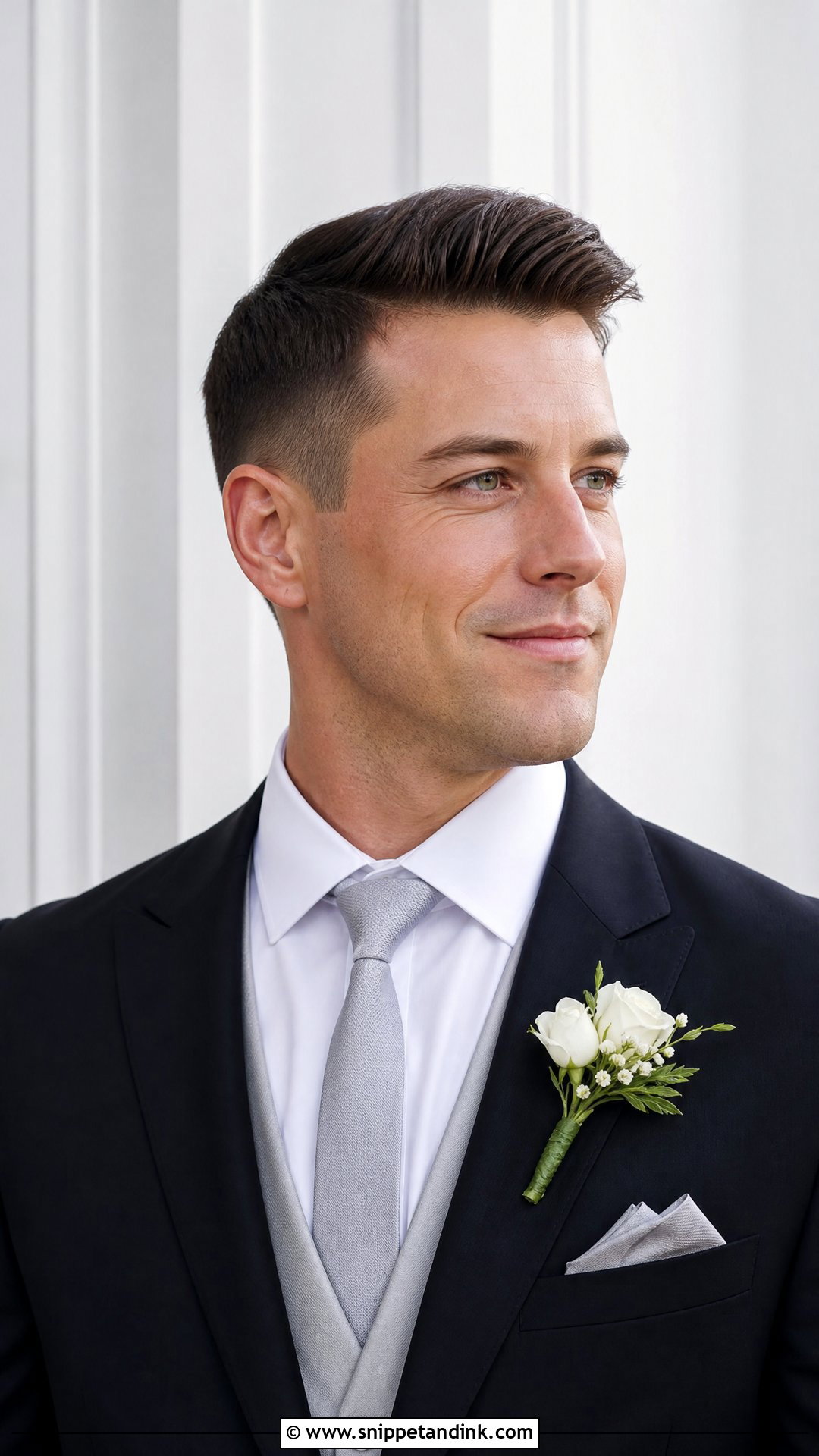
If you’d like a haircut nobody will remember for the wrong reasons, this is it. The classic taper is a gradual tapering of length around the sides and back, never down to skin, leaving enough on top to comb neatly or rough up with texture. Necklines and sideburns stay crisp without the hard contrast of a fade. Because it grows out softly, it still looks fresh a week later. It suits nearly every hair type, face shape and level of formality.
9. Quiff With Tapered Fade
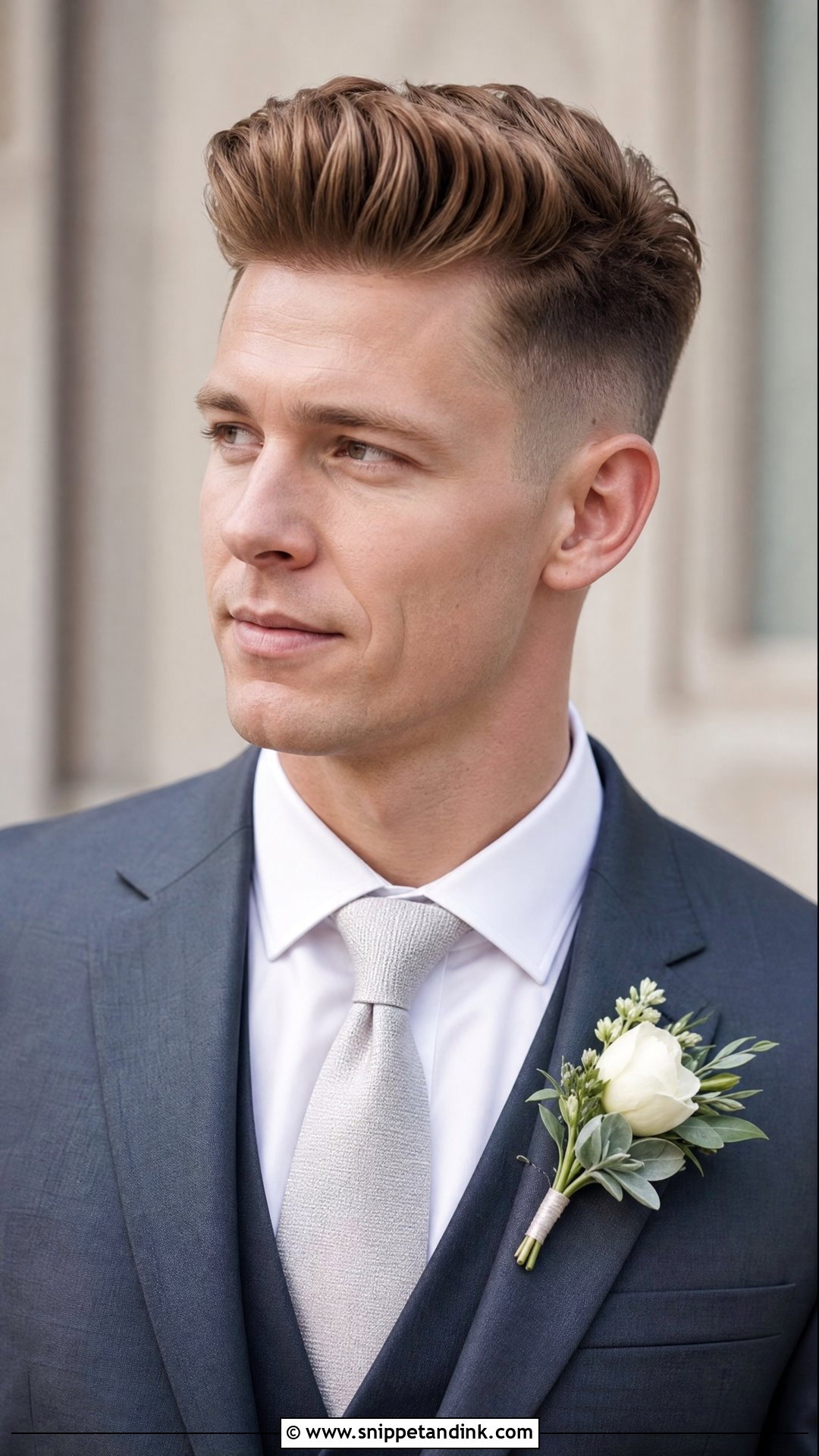
A quiff lifts the front up and back into a softer, rounded shape than a pompadour, with a tapered fade on the sides. It needs medium length and some natural body. A blow-dryer and a flexible-hold product build the lift; flexible matters, because a stiff quiff cracks the first time someone hugs you. It sits well with most suits and leans younger. If your hair is fine, keep the height modest.
10. Buzz Cut With Sharp Lineup
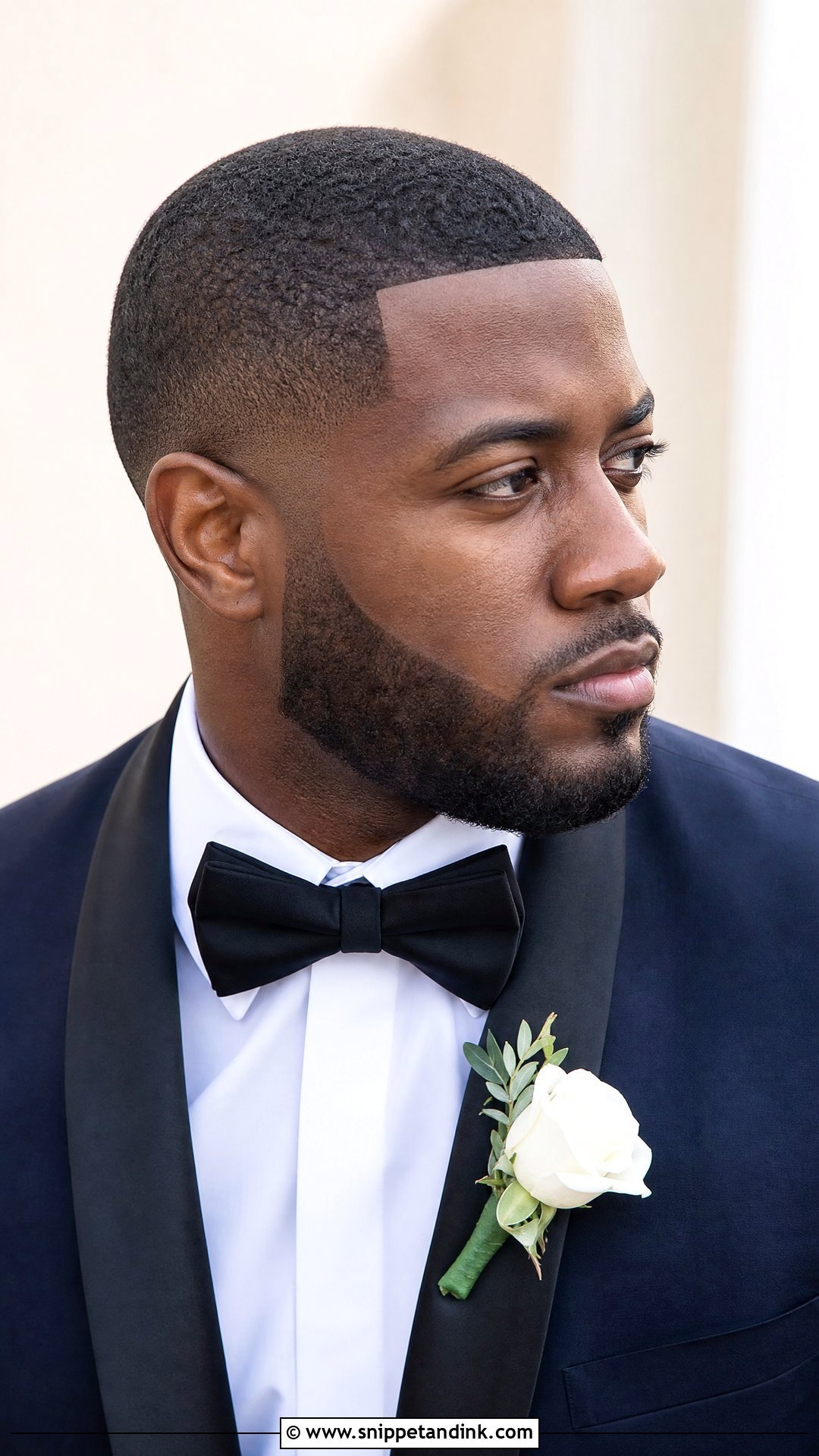
A buzz cut makes the suit do all the talking, so the tailoring has to be right. The haircut itself needs nothing in the morning. What makes it wedding-ready is a sharp lineup around the hairline and a crisp beard trim, both done a day or two before so the skin isn’t red in photos. The head is fully on show, so a clean, close shave at the nape matters. It suits grooms who prefer simplicity and highlights strong features.
11. Long Hair Tied Back
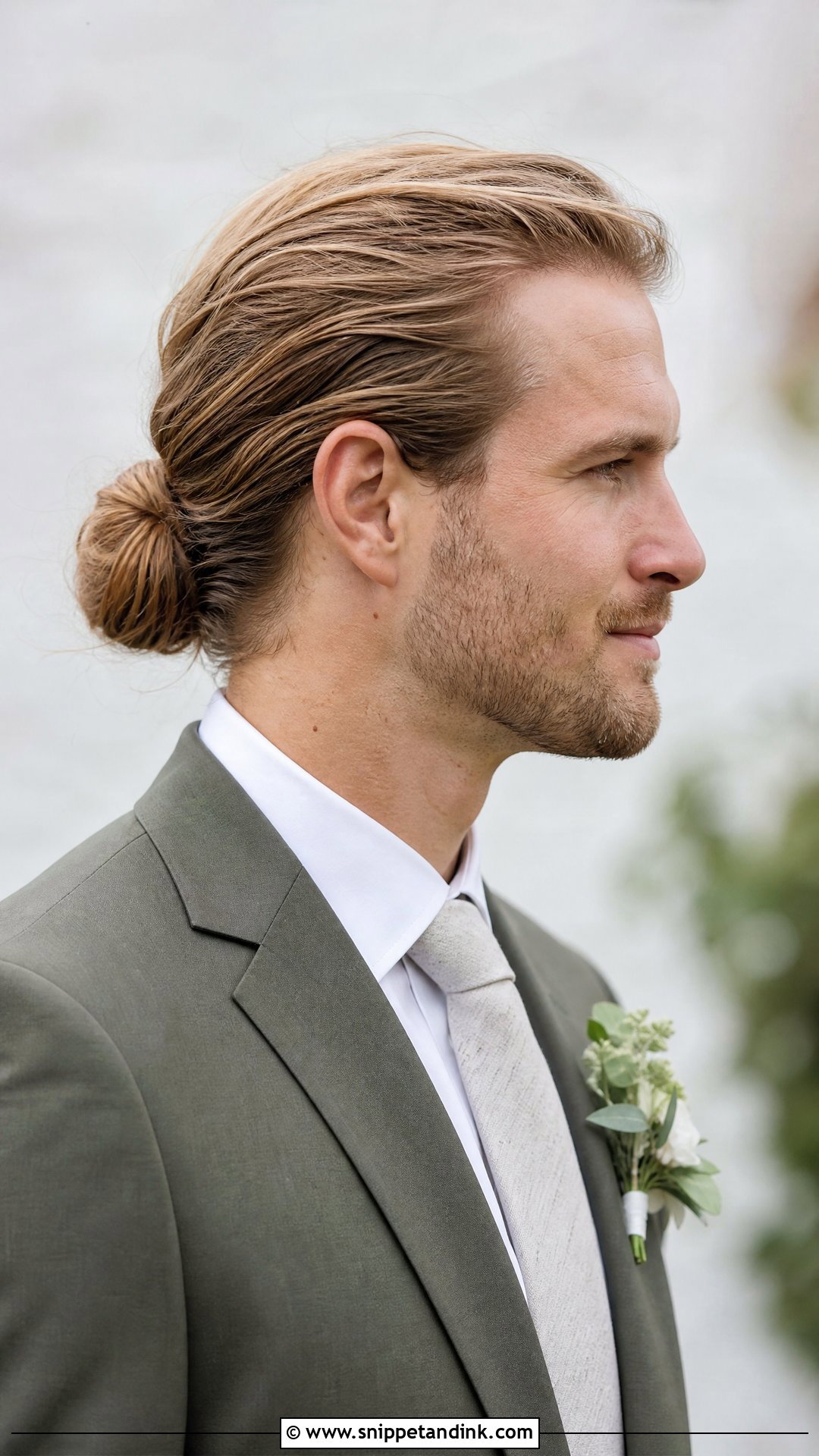
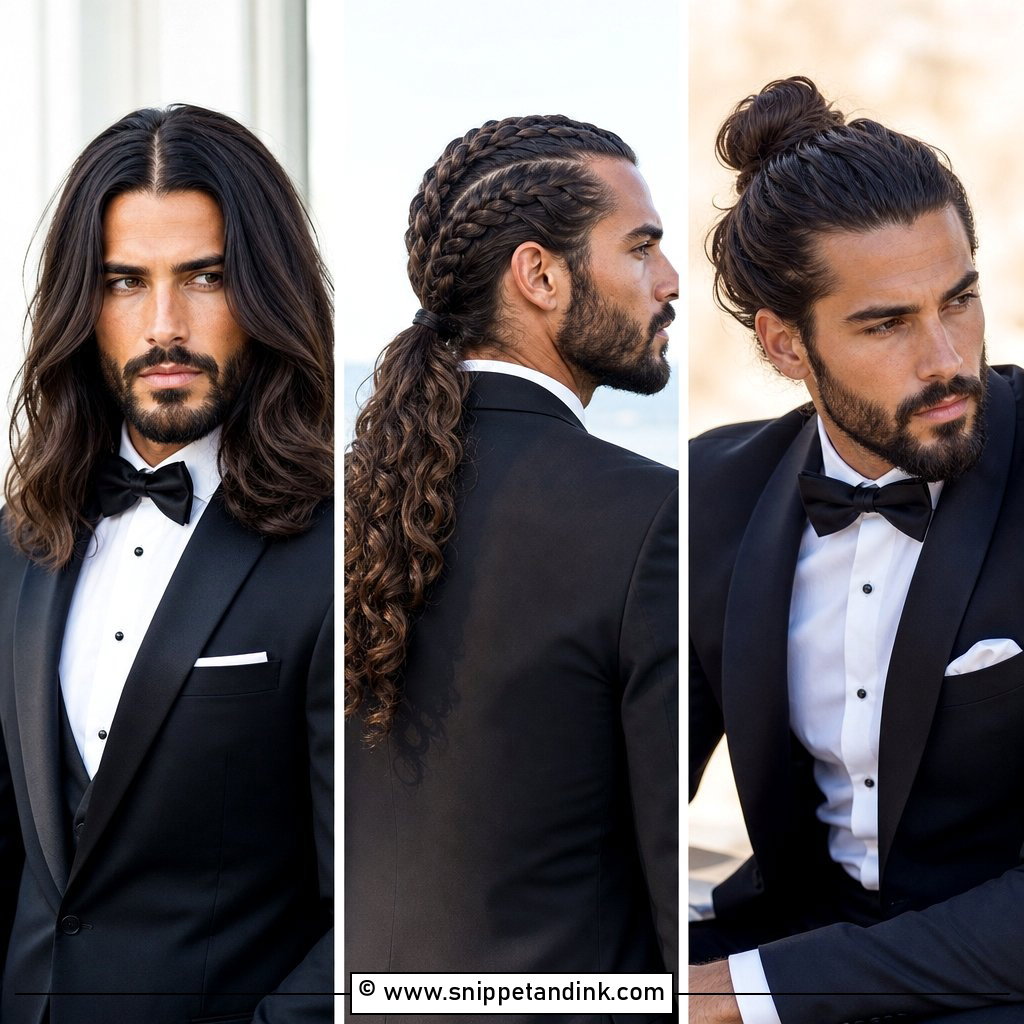
Long hair tied back at the base of the neck is the simplest way to wear length with a suit. Gather it low and secure it with a snag-free tie; a low position keeps it off the jacket collar and sits better against the back of a chair during dinner. A light serum tames flyaways and gives a healthy shine. It works for a garden ceremony or a ballroom. Keep a spare tie in your pocket, because one always breaks.
12. Man Bun For Grooms
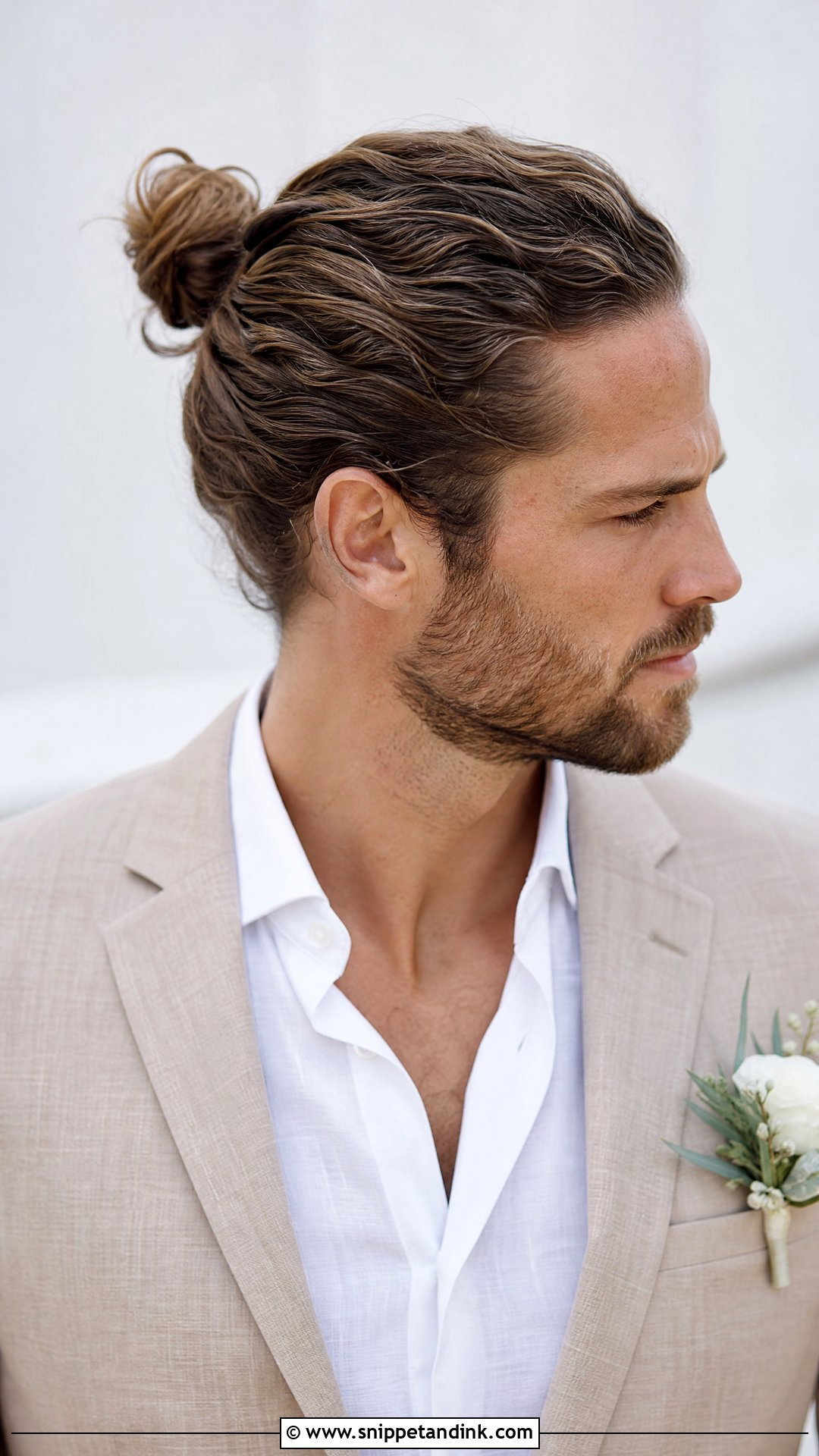
A man bun gathers medium to long hair into a neat knot at the back or crown. It works even on finer hair, since the knot hides how little volume there is. It sits naturally at relaxed, bohemian or outdoor weddings, and looks best with soft tailoring and open collars. Smooth the sides with a light product, or leave a few loose pieces for softness. A crown bun can clash with a high-backed chair in photos, so if you’ll be seated a lot, place it lower.
13. Comb Over With Hard Part
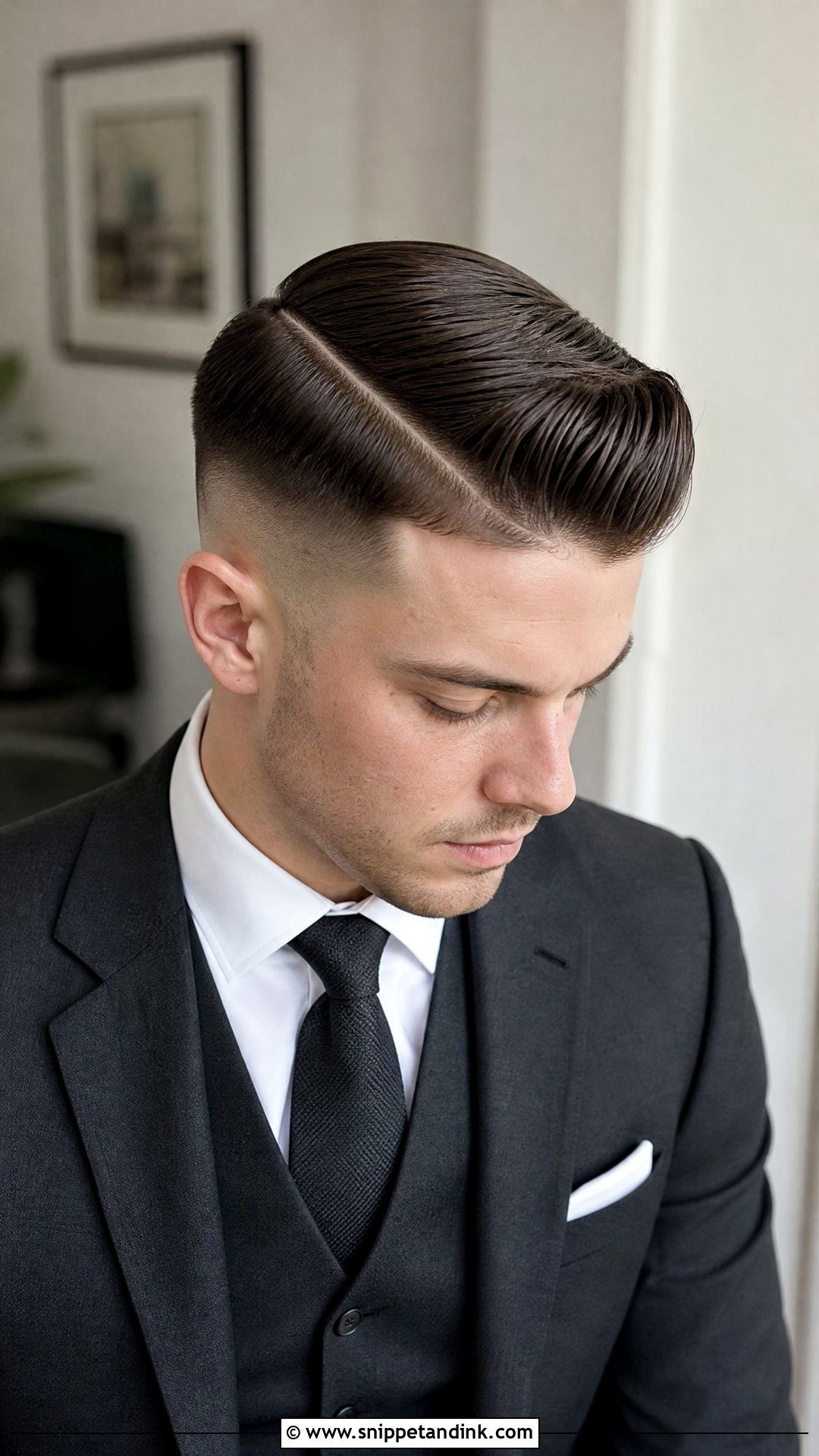
A hard part adds a razored line where the part sits, separating the sides from a top combed neatly over. It’s precise, and it’s the most formal-looking cut in this list. Pair it with a sharp collar and a tie bar; it sits naturally with a pinstripe or a classic navy suit. It suits straight to slightly wavy hair. The line is the first thing to grow back, so have it cut within a day or two of the wedding.
14. Textured Crop With Fringe
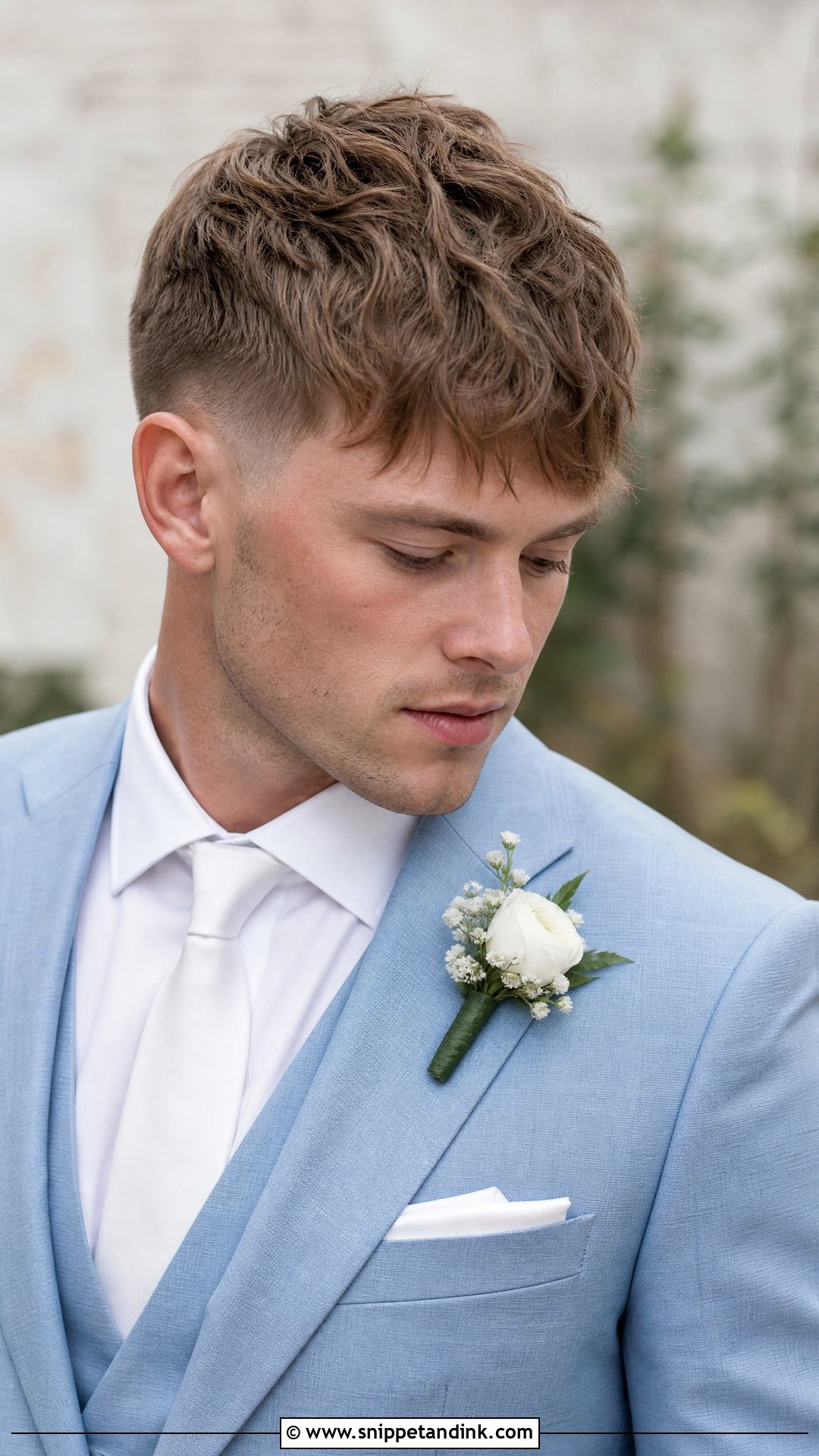
The textured crop has choppy layers on top and a forward-falling fringe, with shorter sides. The barber cuts the texture in with point cutting, so matte clay only needs to separate the pieces, not invent them. It flatters oval and square faces and leans young and casual. I’d wear it with a lightweight suit, a knit tie or no tie at all. It’s low maintenance and shows real personality in candid shots.
15. Slick Back With Beard
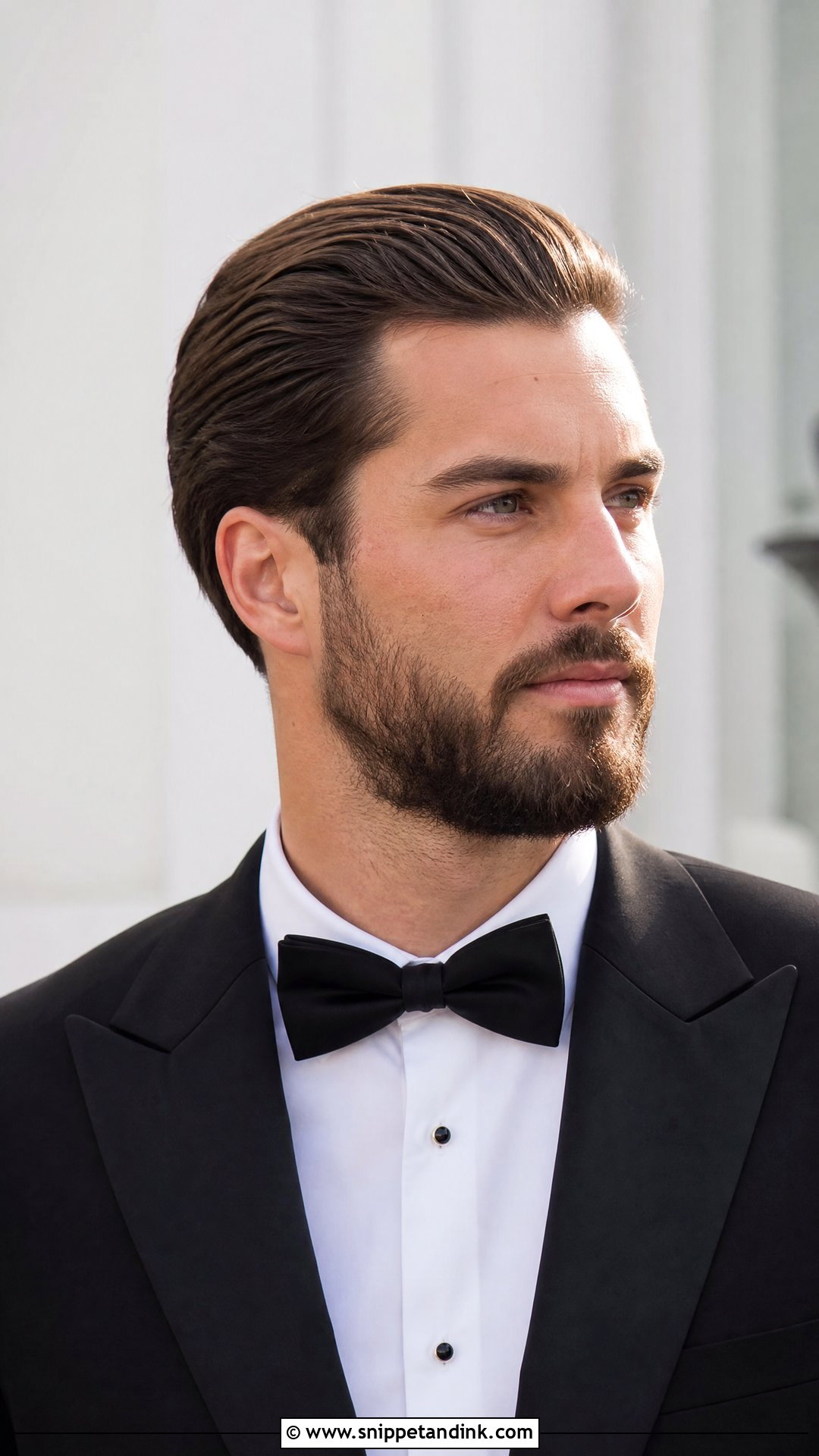
A slick back with a full beard reads mature and composed, the look of a man who’s comfortable in a suit. Hair combed straight back with a quality pomade, beard trimmed to an even length with oil to keep it soft. Both should be groomed at the same appointment so the lines meet properly at the sideburns. It works on most hair types and is at its strongest in a formal setting: a double-breasted jacket or a dinner suit.
16. Wavy Hair Swept Back
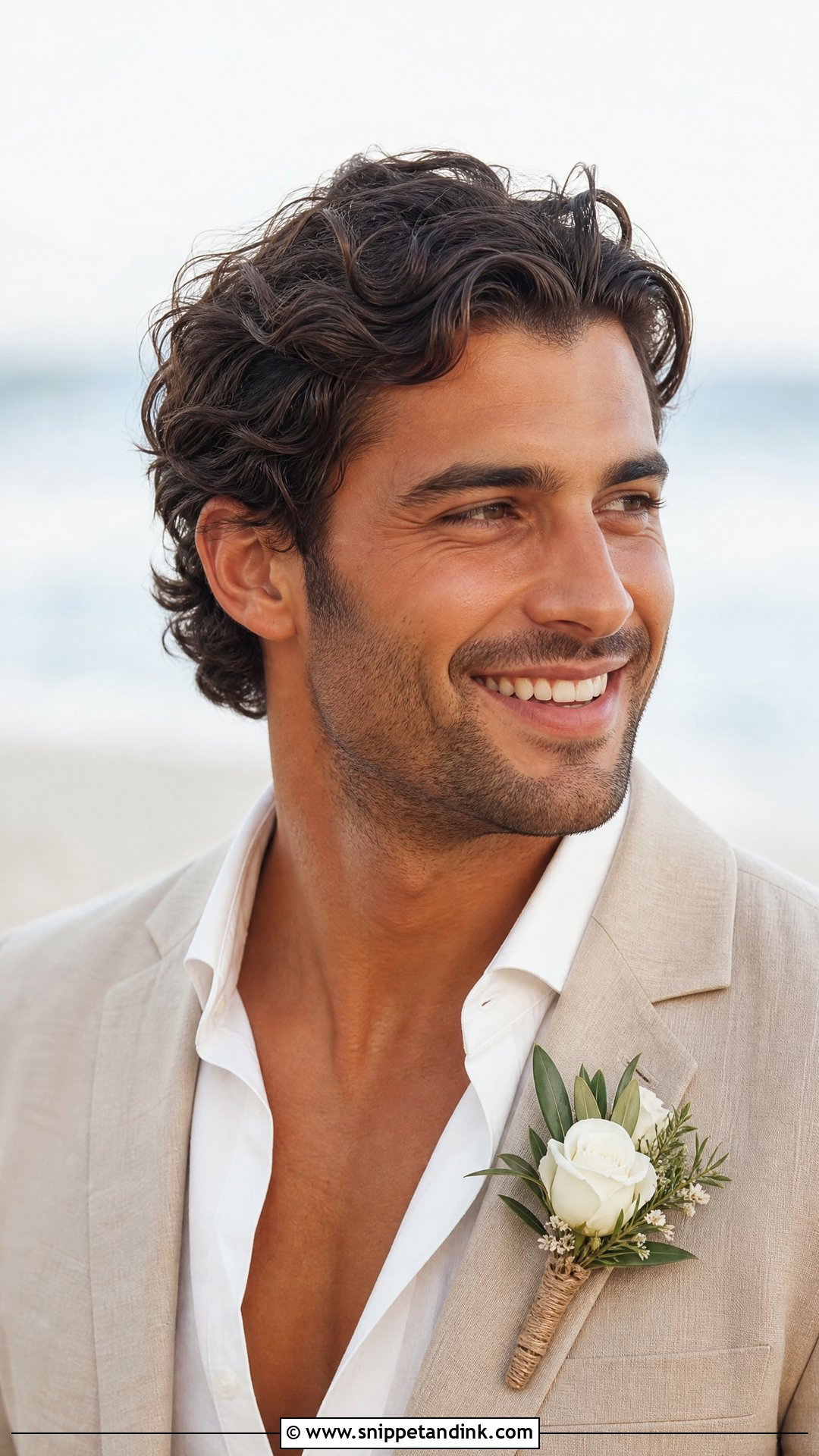
Swept-back waves keep natural texture but pull it off the face. Sea-salt spray on damp hair brings the wave out, and a light cream on top keeps it from frizzing. The finish is slightly tousled, which suits beach, garden and rustic weddings and linen or cotton suits. On a humid day waves loosen and drop forward, so I’d use a little more cream than you’d think. It looks most natural in candid photos taken on the move.
17. High Fade With Spiky Top
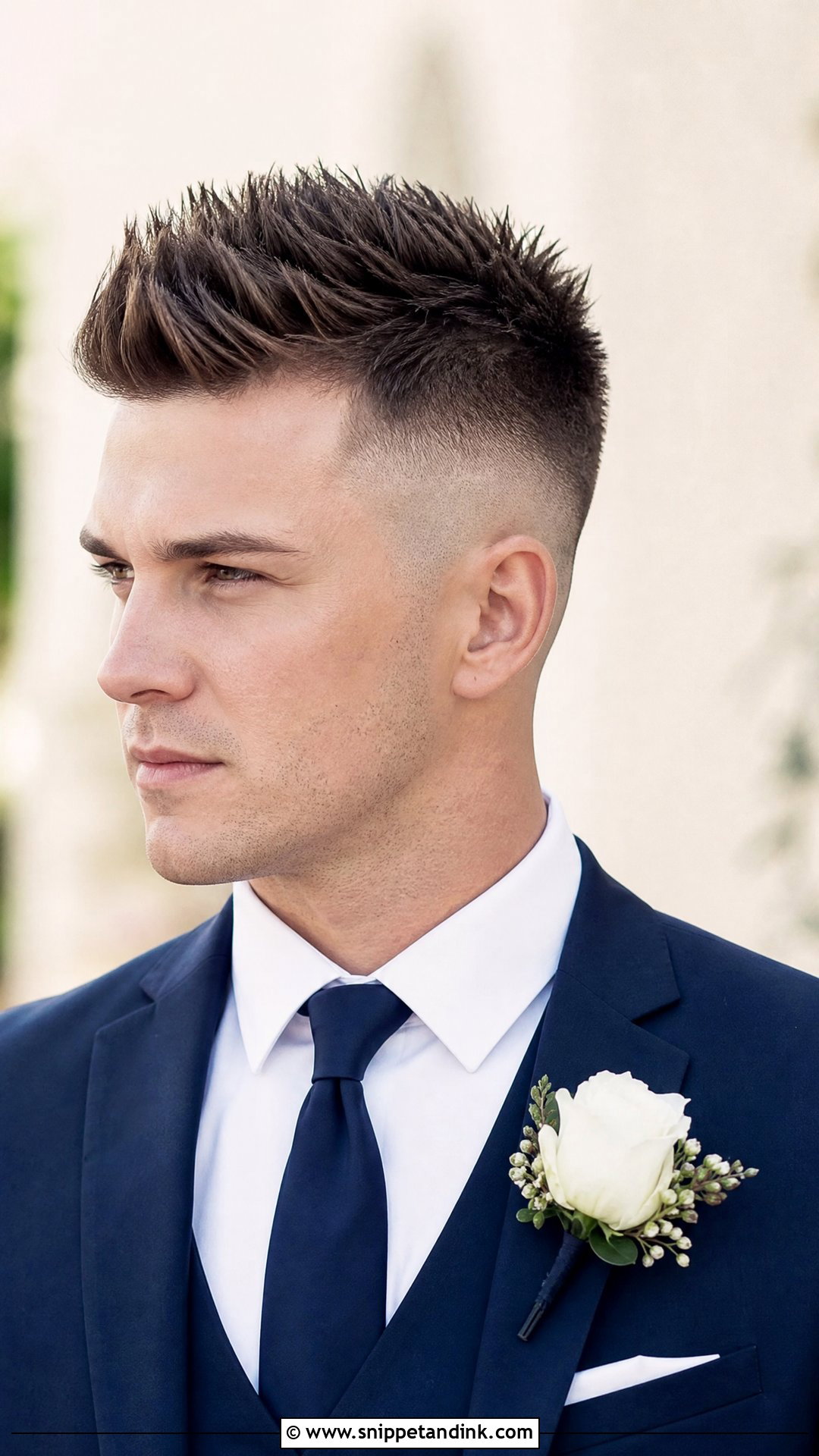
A high fade takes the sides clean almost to the crown, leaving a textured, spiky top as the only length on the head. Strong-hold matte product shapes defined spikes that hold all day. It’s the youngest-looking cut here and suits straight to slightly wavy hair. With a slim suit and a skinny tie it looks current; with a traditional morning coat it looks mismatched, so think about the clothes first.
18. Caesar Cut
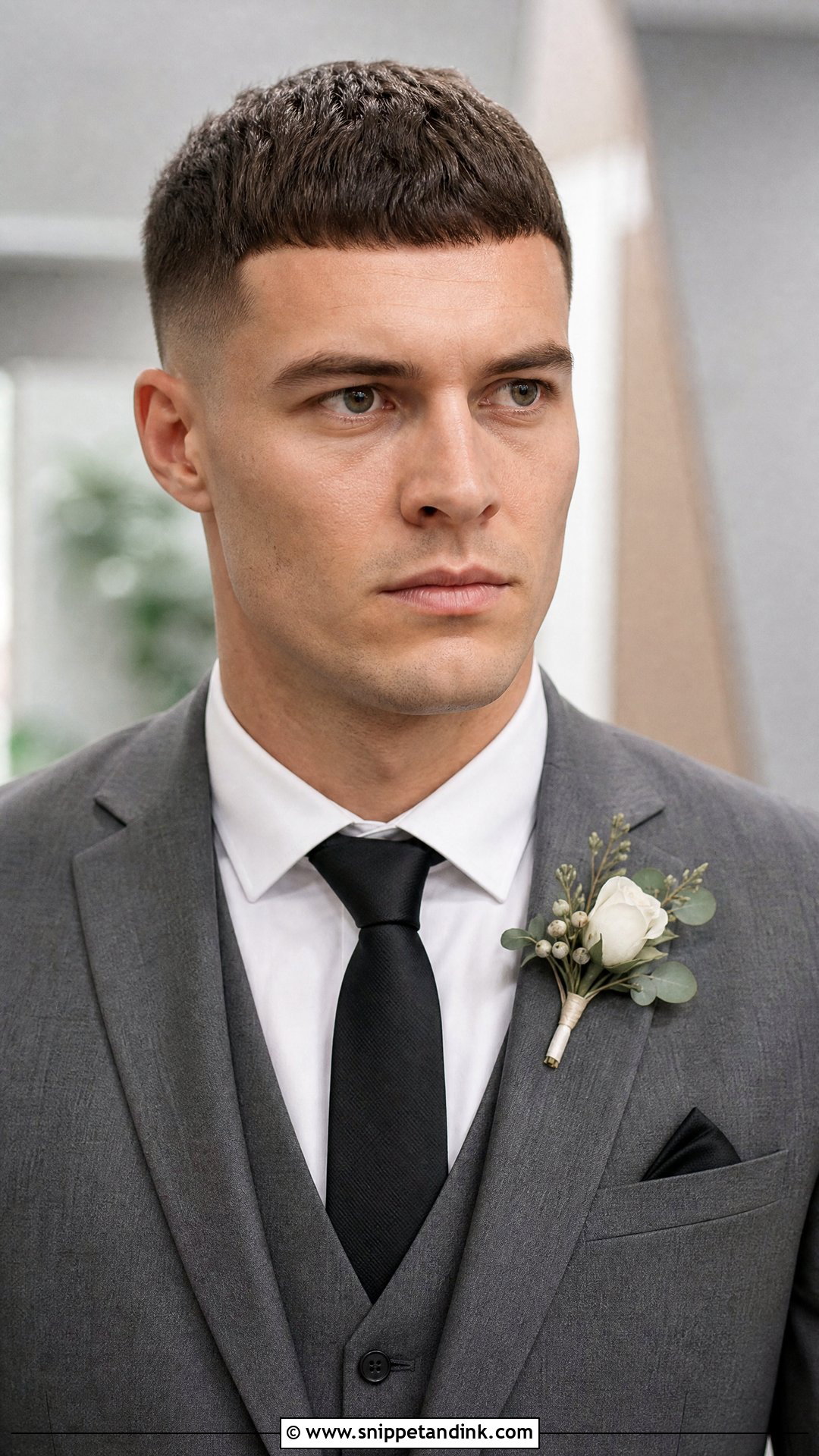
The Caesar cut uses a short, straight fringe and even length on top, with shorter sides. It’s a practical answer for a receding or thinning hairline, since the forward fringe adds coverage without looking like a cover-up. A touch of matte product gives texture. It needs almost no styling and pairs with casual or formal clothing equally well. Book the trim close to the date; a Caesar fringe that has grown a centimeter starts to touch the eyebrows.
19. Loose Tousled Waves
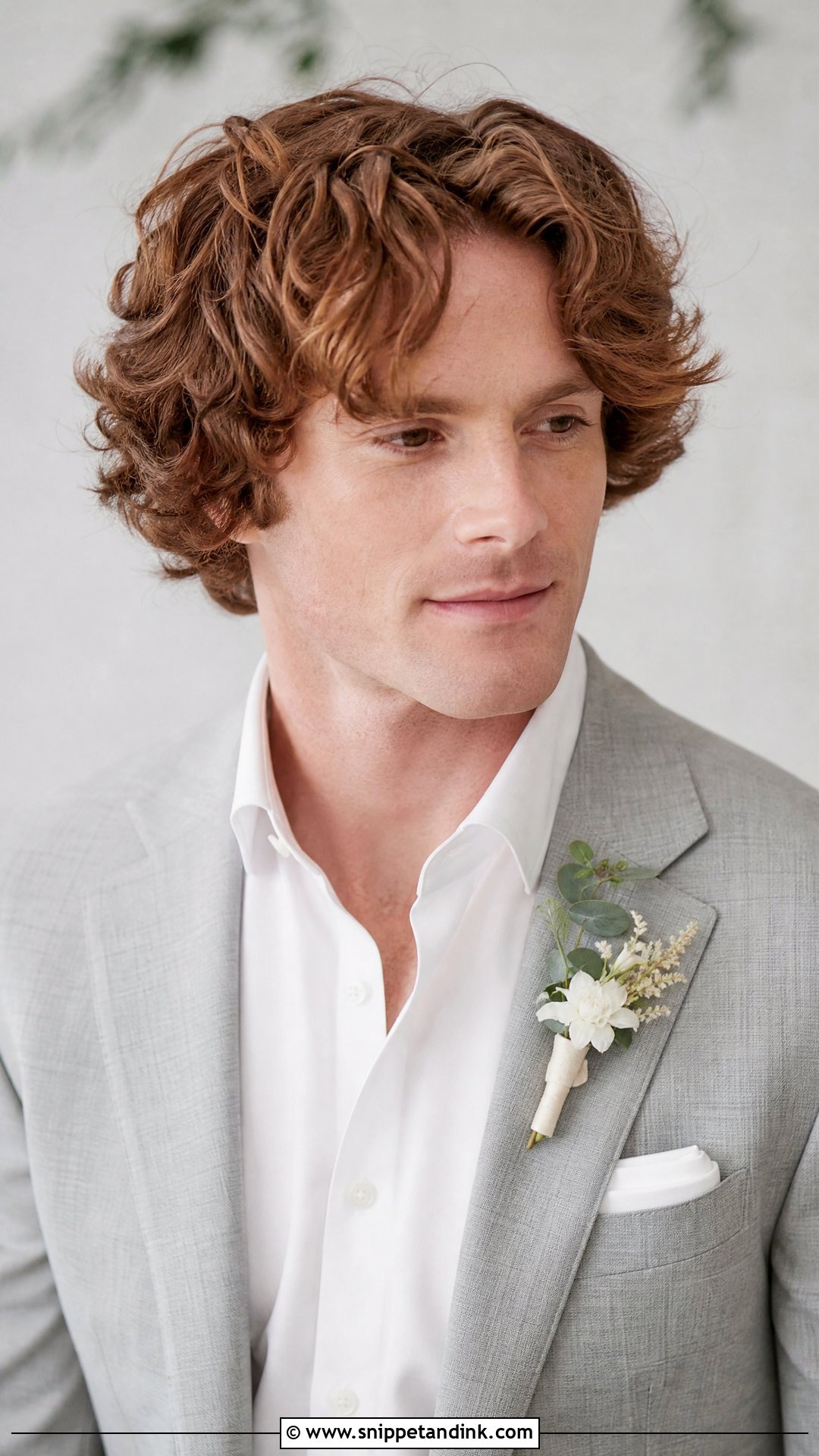
Loose tousled waves let medium-length wavy hair fall across the top with very little control. A texturizing spray adds definition and movement while keeping things soft. The undone finish reads intentional when the rest of the outfit is crisp, so press the shirt properly and keep the suit sharp. It’s best for outdoor or daytime weddings and looks warm in natural light.
20. Cornrows For Grooms
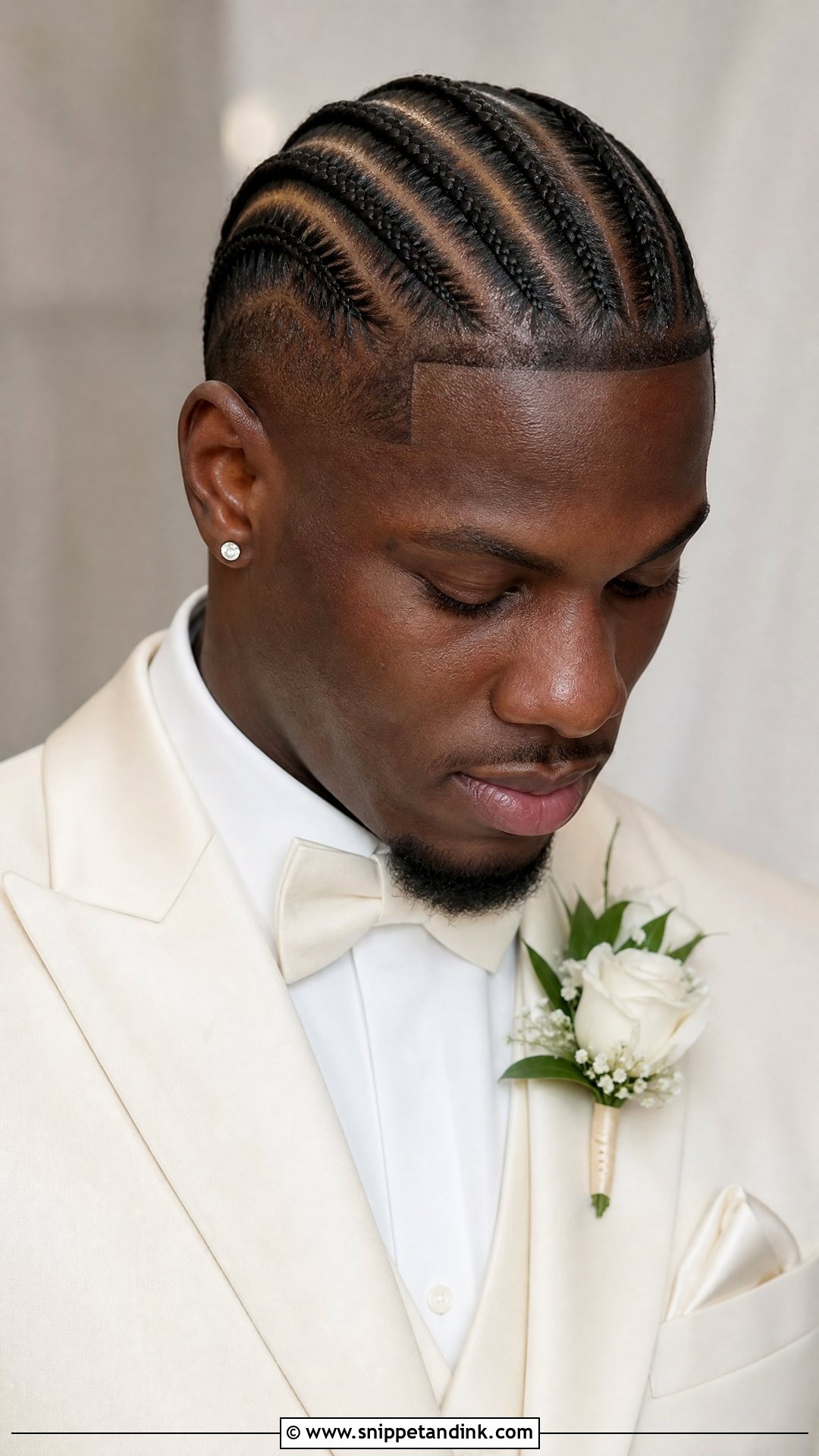
Neat cornrows give textured or coily hair a sharp, secure finish that holds from the ceremony to the last song. Straight-back rows look clean and formal; patterned designs add personality. Book your braider for a day or two before the wedding so the parts are crisp but the scalp has settled, and ask for moderate tension at the edges, because tight braids at the hairline cause soreness and pulling. A clean lineup and a trimmed beard finish it. They suit any suit, and they carry heritage that matters to many grooms and their families.
Hats, Kippot and Turbans Change the Plan
Many grooms wear something on their head for at least part of the day: a kippah during the ceremony, a sehra or turban, a straw hat at a beach wedding. That changes which cuts make sense.
Under a Hat
A hat flattens volume within minutes. Quiffs and pompadours won’t survive it, so choose a cut that looks right flat, like a crop, a taper or a slick back. Put product in lightly, as heavy pomade marks the inner band. Carry a comb for when the hat comes off at the reception.
Kippot and Clips
A kippah sits on the crown and usually needs a small clip. Very short hair gives the clip nothing to grip, so leave a little length at the crown or use a discreet double-sided tape made for the purpose. Slick products make it slide.
Turbans and Sehra
For a turban, hair is usually tied into a firm knot first, so long hair is the starting point rather than a problem. Neat edges at the nape and sideburns are what show, so groom those the day before. For a sehra, keep the hairline tidy and the beard well shaped, because the face is framed by the strands for much of the ceremony.
Fit the Hair to the Suit, Then Book the Barber
Start with your hair type, then look at what you’re wearing and how formal the wedding is. A slick back and a dinner jacket suit each other; loose waves and linen suit each other; mixed pairs look odd in the photos. Book the cut three to five days before for most styles, closer for fades and hard parts, and bring reference photos. If you can, wear the full outfit once with the finished hair before the wedding. You’ll see straight away whether the two work together.
You'll Like These Ideas:


Leave a Reply