
Bridal hair for an Asian wedding usually has a job beyond looking pretty. It may need to carry a maang tikka and a heavy dupatta through hours of rituals, anchor a veil for a church ceremony, then change for a reception in a different outfit. So when I plan a style, I start with what it has to hold and for how long, and only then talk about shape. Your outfit, hair texture and the traditions in your ceremony decide more than your face shape does. A South Asian jada with flowers and a sleek Korean low bun with pearl pins are built in completely different ways, and below I’ve noted what each of these twenty styles needs underneath to last.
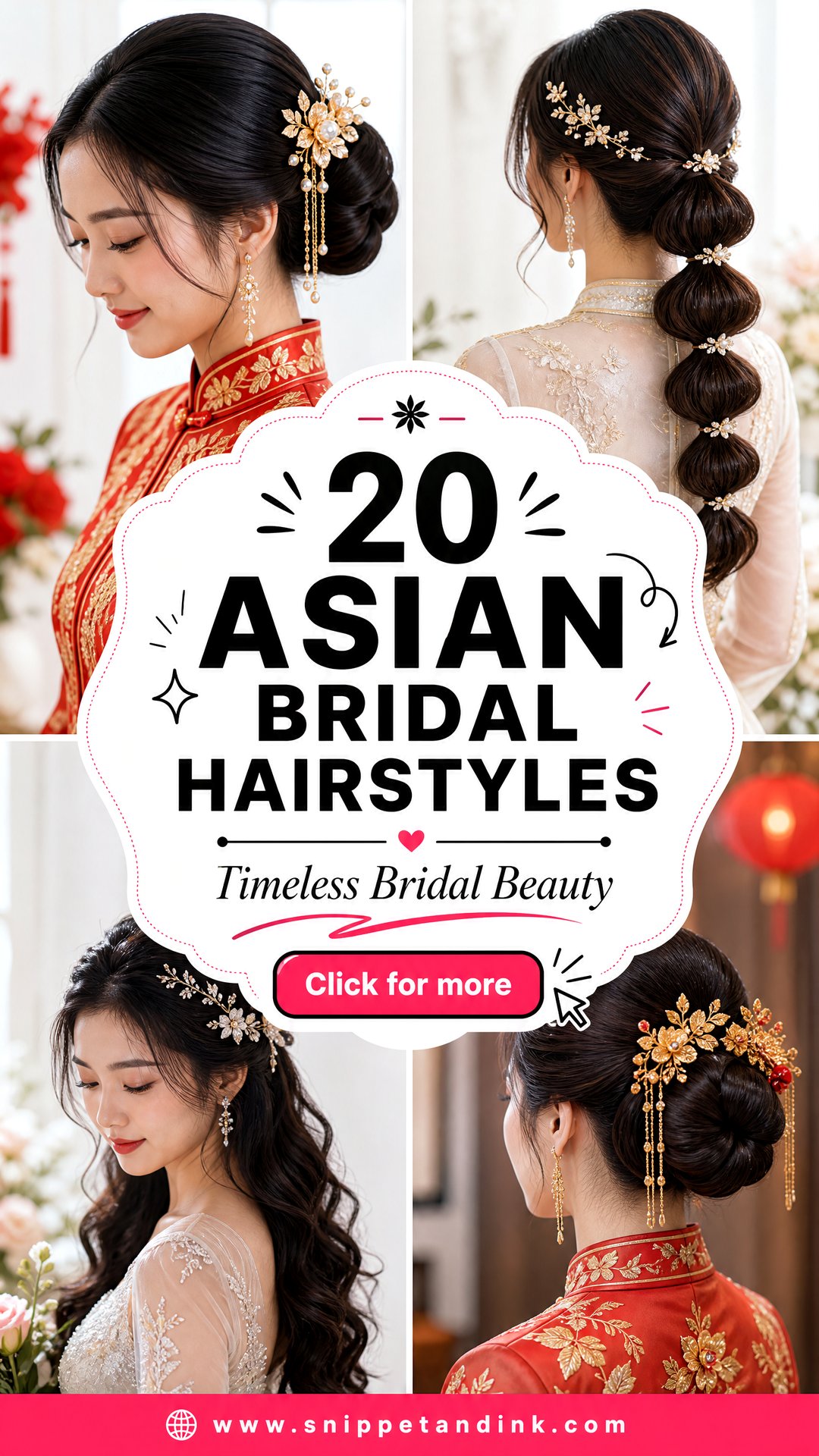
Giving Silky, Dense Hair Enough Grip for Pins and Curls
Many of my Asian brides have hair that’s thick, straight and very smooth along the cuticle. It looks glossy in a sleek style, but it’s also the hair that lets bobby pins slide out and drops curls by lunchtime. Most of my trial is spent building grip into it.
- Wash the day before, not the morning of. Freshly washed silky hair is at its most slippery.
- Skip heavy conditioner on the lengths that wash. Use it only on the ends.
- I spray texture or dry shampoo at the roots and through each section before pinning, then work in small sections so each pin bites into less hair.
- Curls are set with the iron, then pinned in a coil until fully cool. Brushing out warm curls is the main reason straight hair falls flat.
Hair that’s chemically straightened or keratin-treated can be even harder to curl, so mention any treatment at your trial. Book that trial with your hair in the condition it will be on the day, and come with the real accessories, not substitutes.
1. Asian Bridal Low Bun
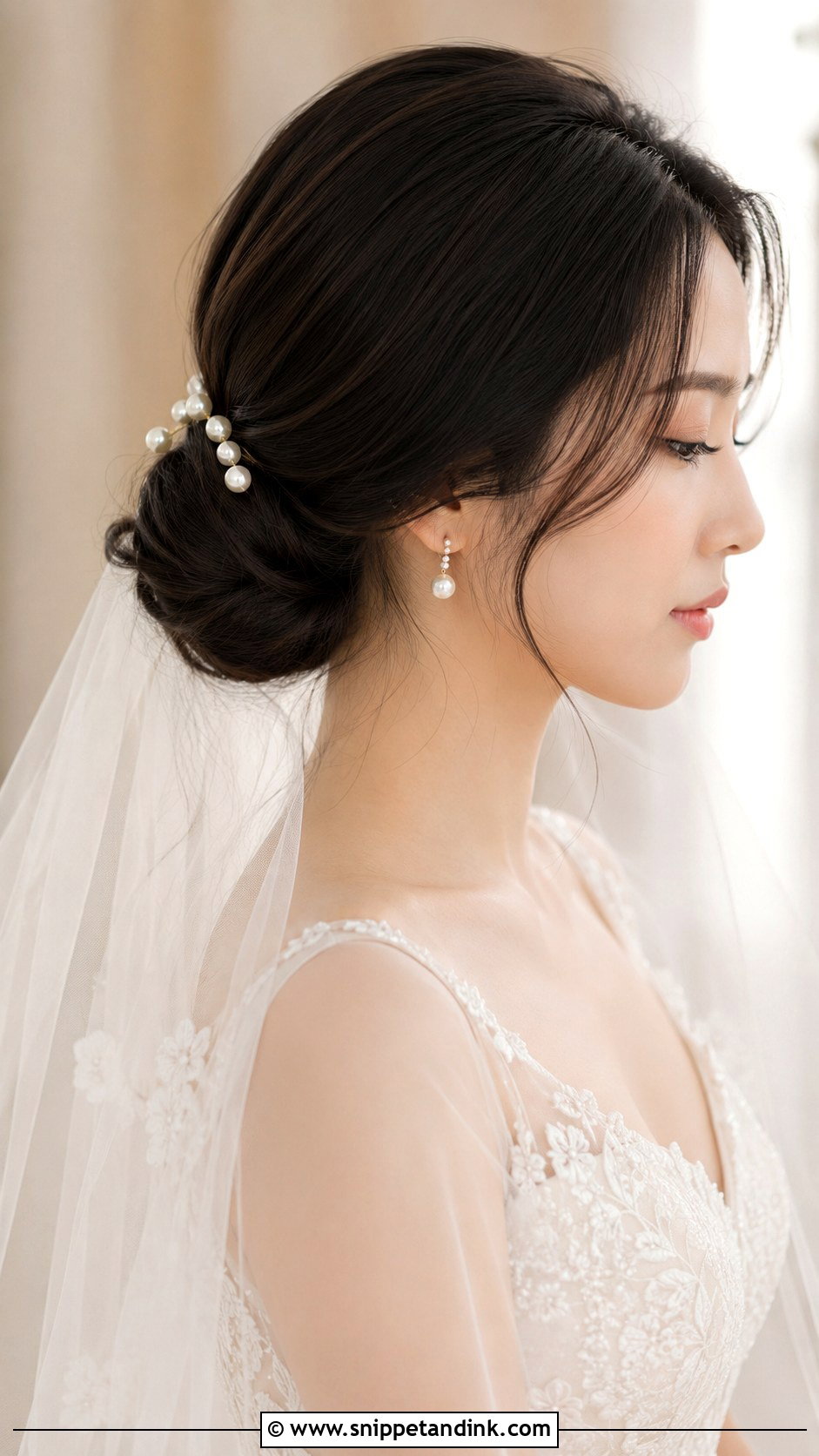
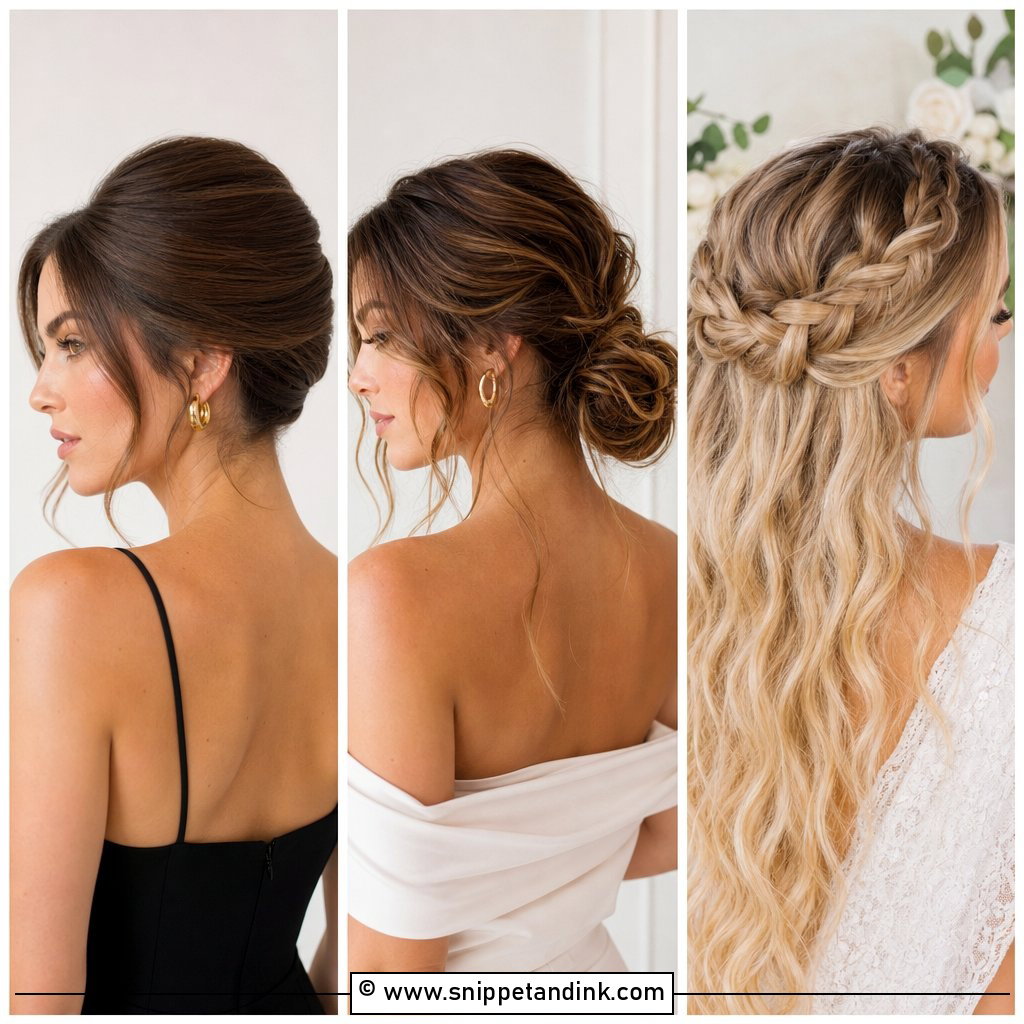
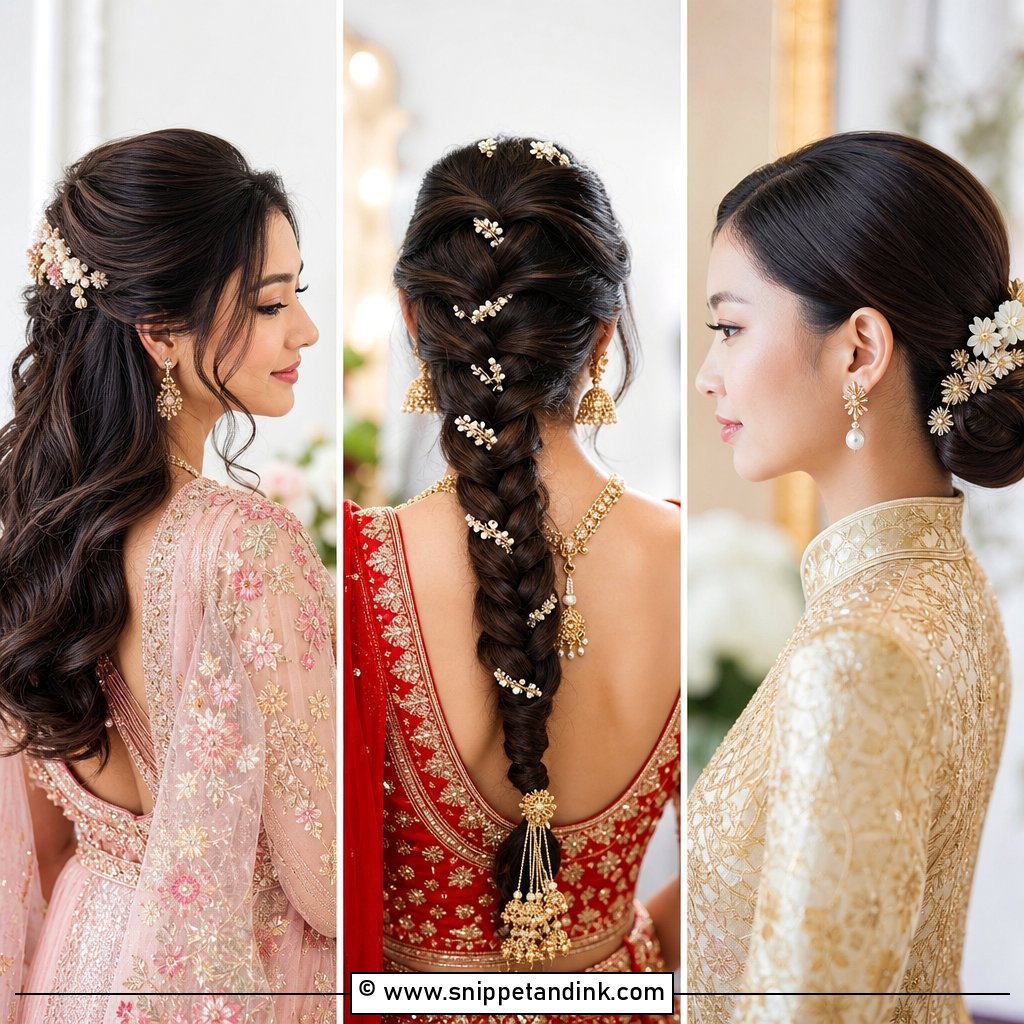
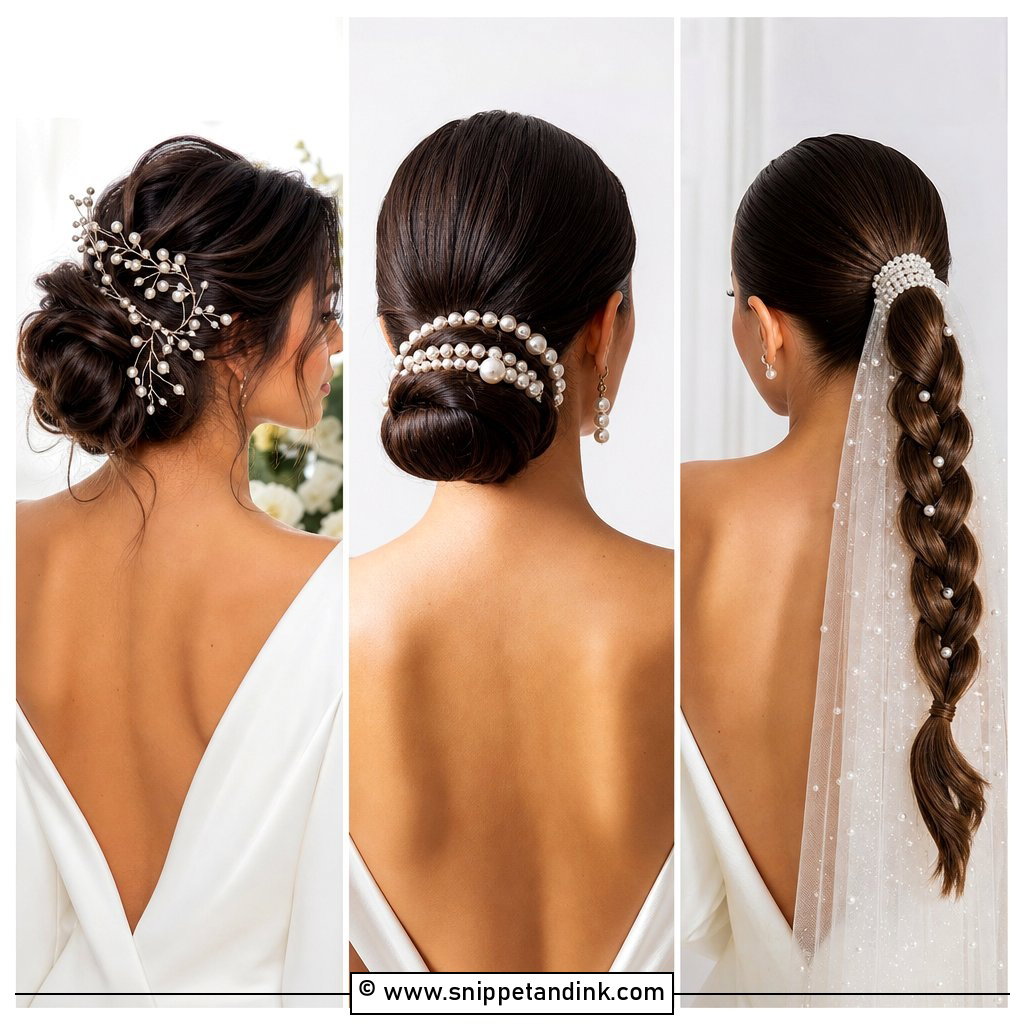
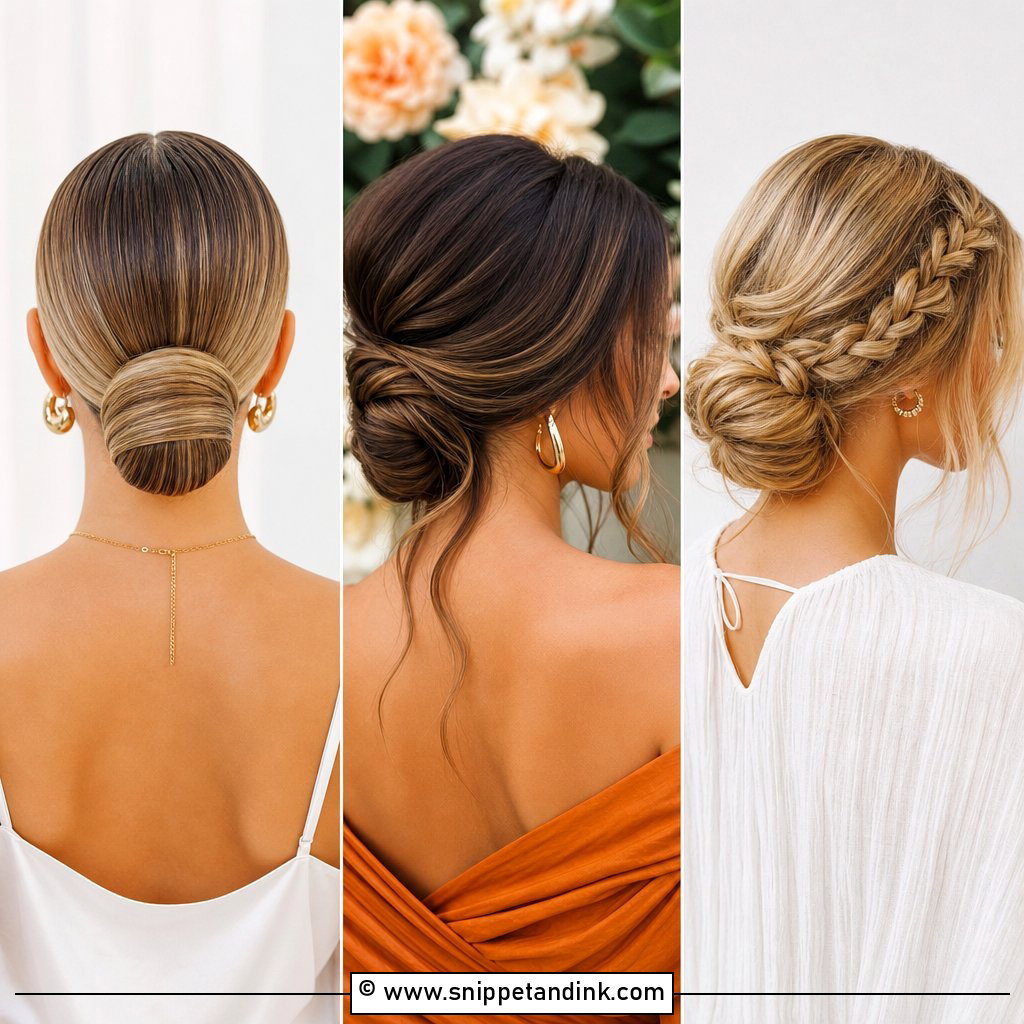
The low bun is the style I reach for most when a bride is unsure, because it sits close to the nape where a veil comb, dupatta or ornate hairpiece can grip without pulling the hairline. It suits South Asian lehengas, Chinese qipao-inspired gowns, Korean bridal dresses and reception outfits equally. The common disappointment is a flat crown in profile photos, so I backcomb a small cushion under the top section before smoothing it over. Finish sleek or with soft texture; a few fresh flowers, pearl pins or a crystal comb are plenty.
2. Asian Bridal High Bun
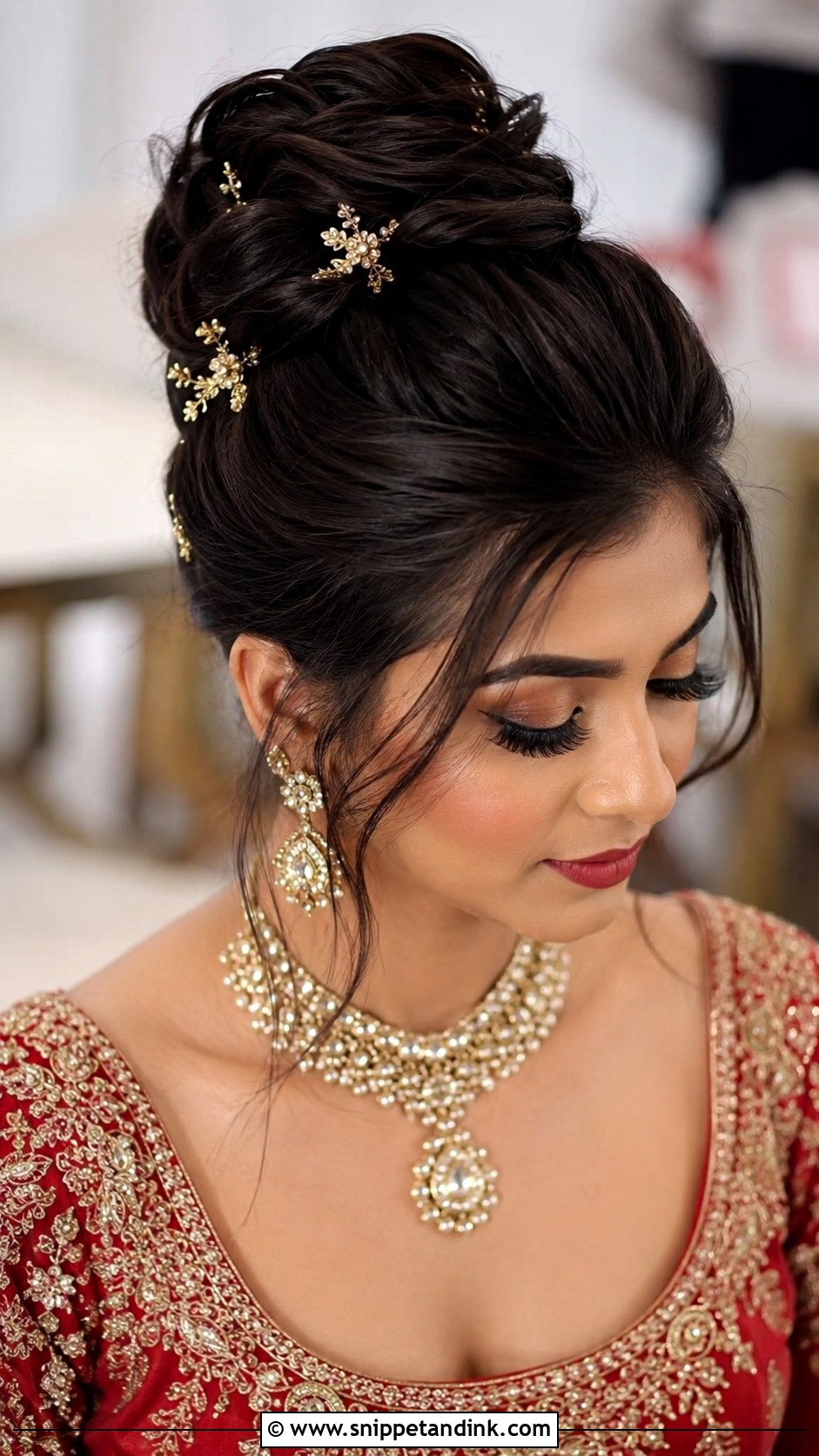
A high bun lifts the whole silhouette and shows off statement earrings and high necklines. It also clears space for an embroidered blouse back or dramatic veil. The weight question decides whether I’d suggest it: a high bun plus a heavy headpiece sits on the crown, and after four hours that pressure gives some brides a real headache. I build it on a ponytail base secured with two elastics and cross-pin the bun into that base, so the load sits on the elastic and not on loose strands. Smooth, twisted or wrapped in braids, finish with a light shine spray.
3. Asian Bridal Sleek Chignon
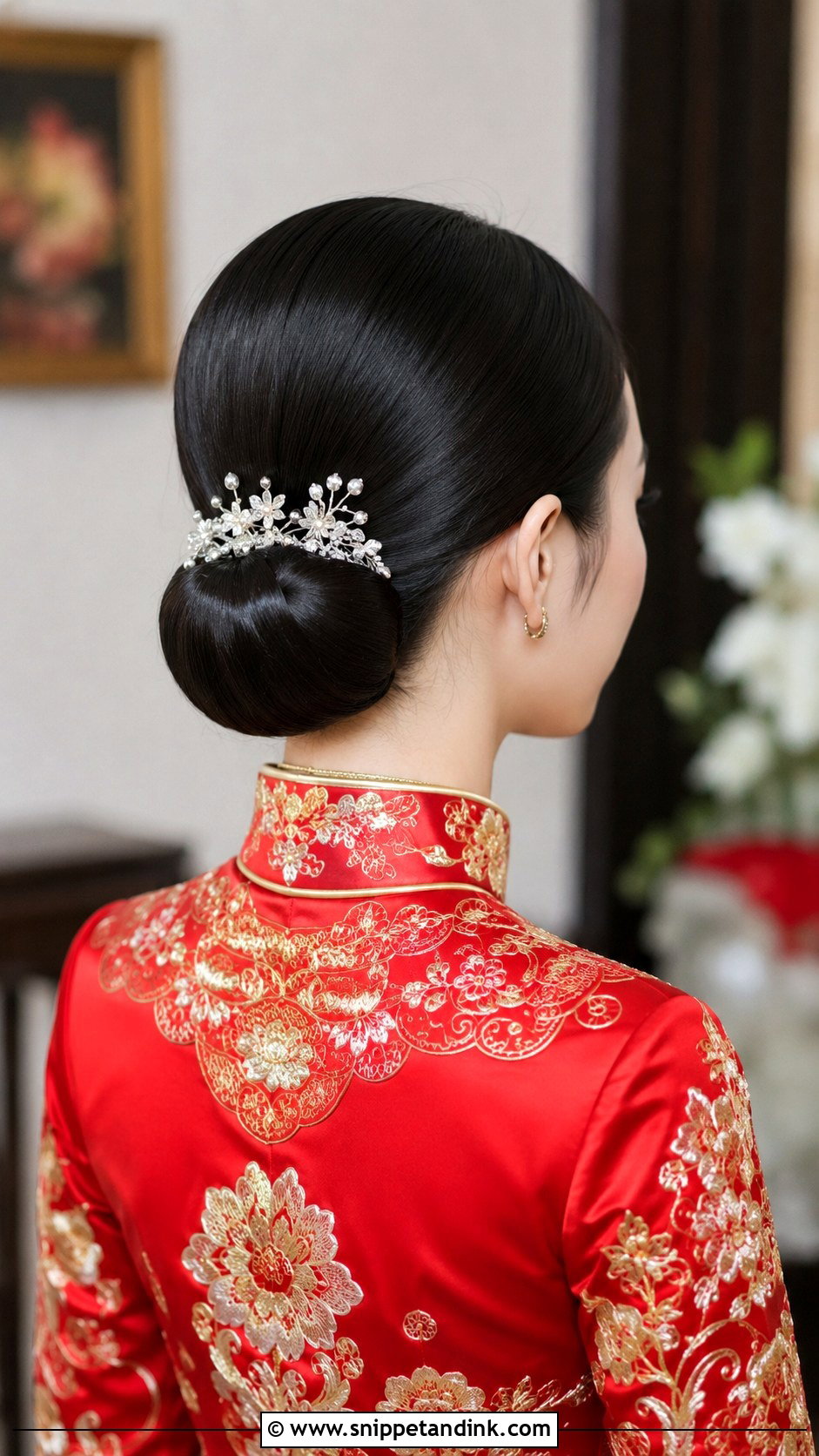
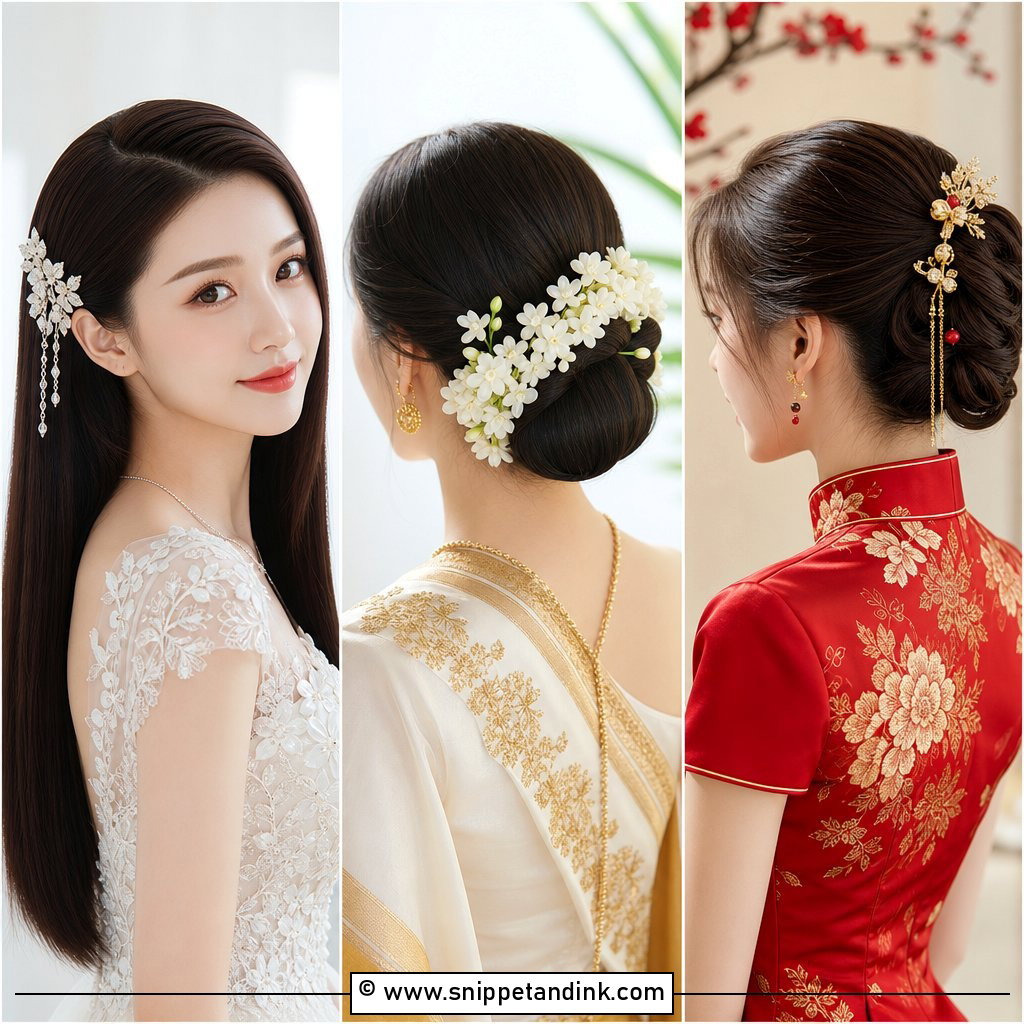
Everything in a sleek chignon depends on the surface, because there are no loose pieces to hide a bump. I part it in the center or just off it, smooth the hair with a fine-tooth comb and a little cream, then tuck it into a low roll at the back. Very silky, straight hair can look glossy here, but that same smoothness lets pins slide out, so I prep with a texture spray at the roots and open each pin slightly before it goes in. Pearl earrings, minimal veils, red bridal outfits and silk all sit well with it. Use a flexible spray to keep flyaways down without making the shine crunchy.
4. Asian Bridal Braided Bun
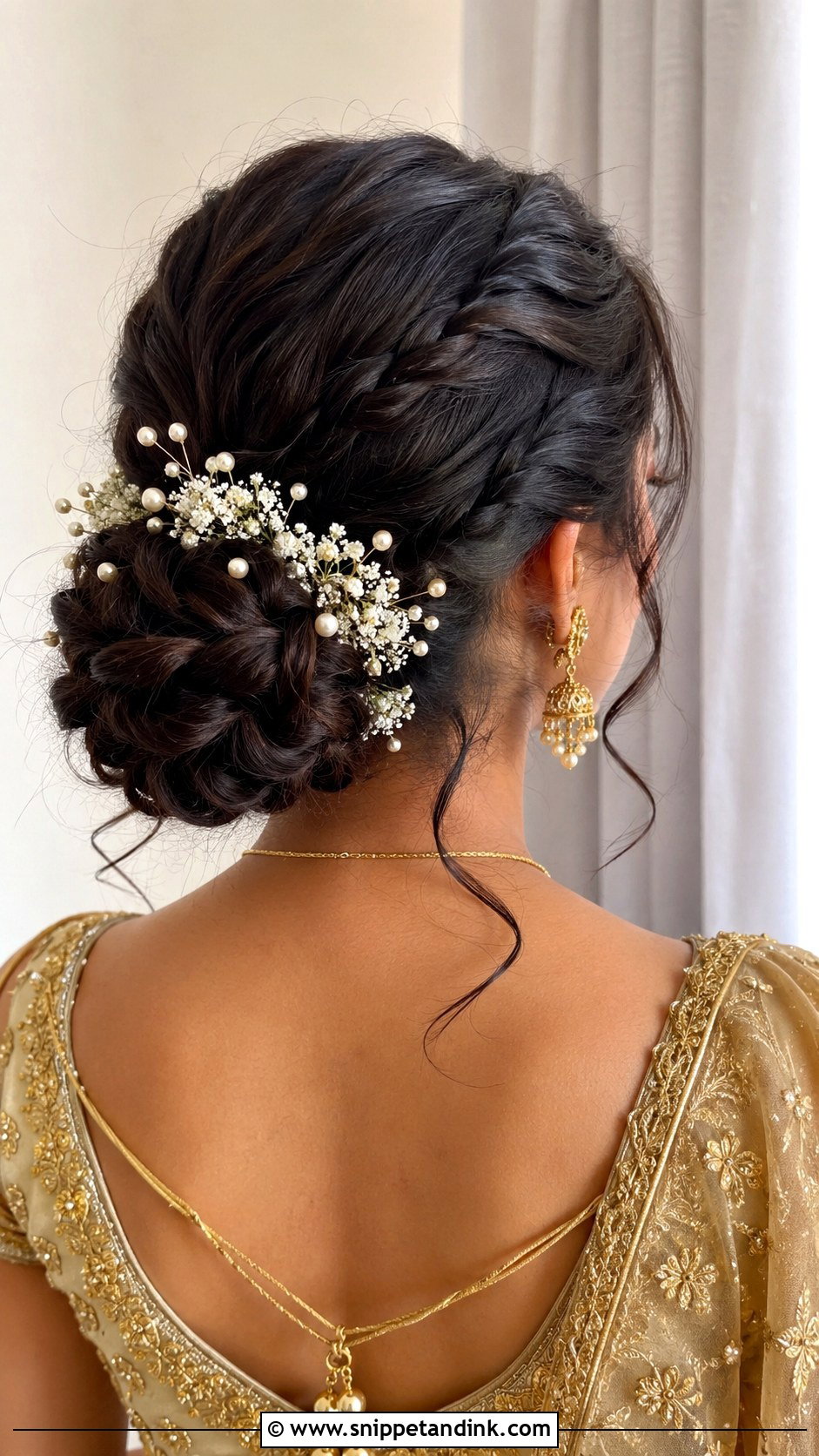
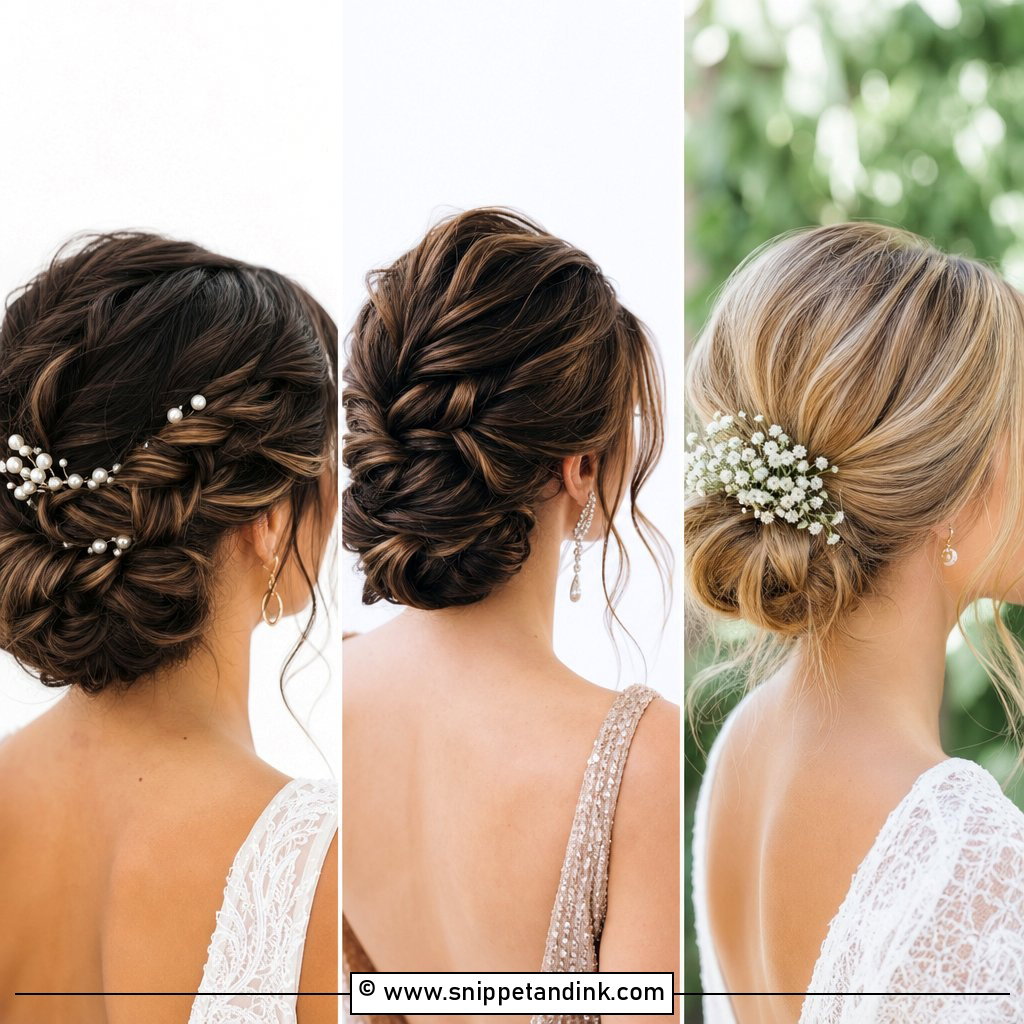
Braiding before pinning gives a bun two things: visible detail from behind and a lot more grip. The woven sections lock pins in place far better than smooth hair, which is why this style survives dancing, rituals and portraits so well. I’d use a loose three-strand, a fishtail or several small braids wrapped together. On fine or medium-density hair, pancaking the braids (gently pulling the edges wider) makes the bun look twice as full. Fresh jasmine, gold pins, pearls or a traditional headpiece can all be tucked into the braid gaps.
5. Asian Bridal Center Part Bun
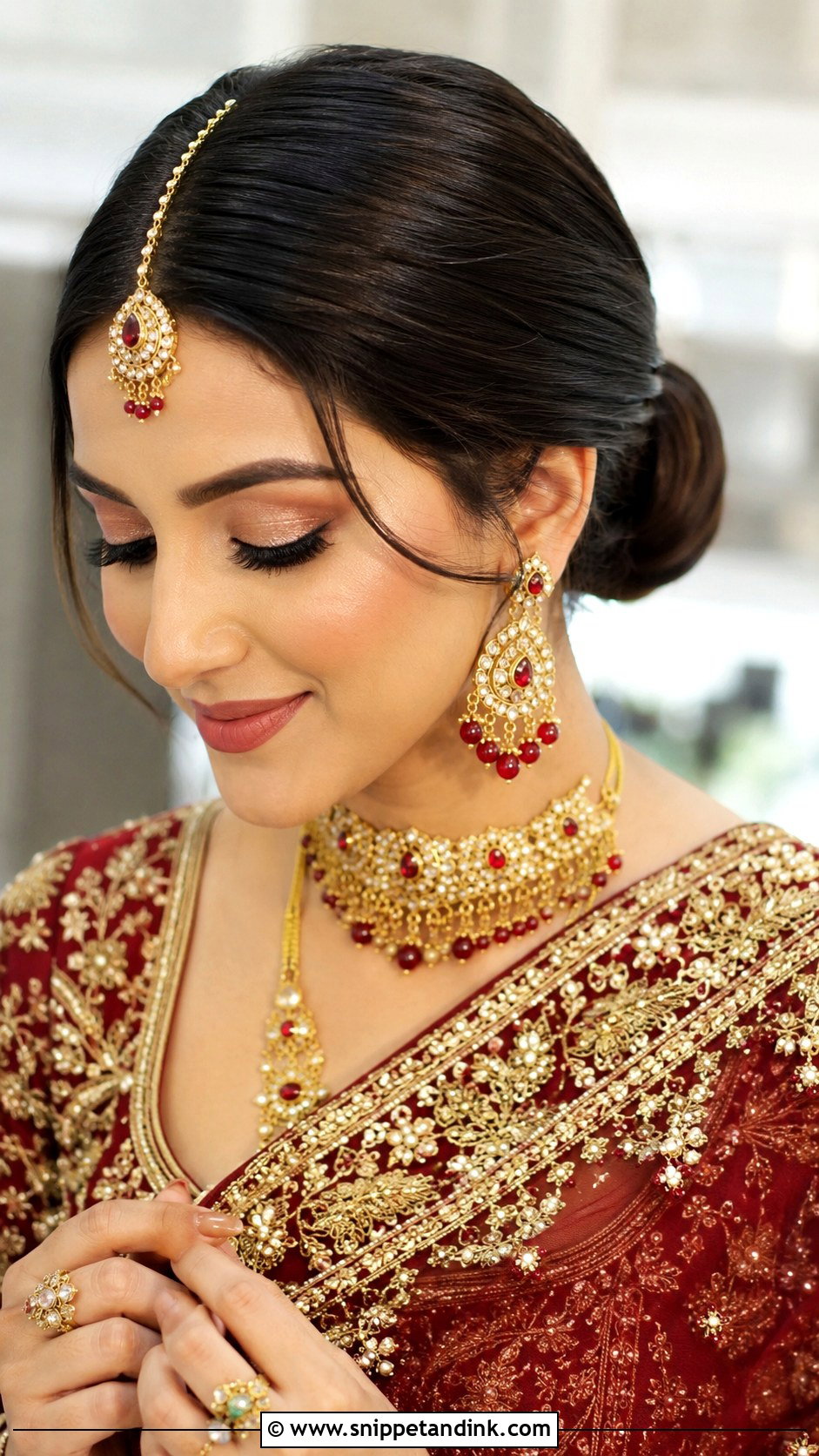
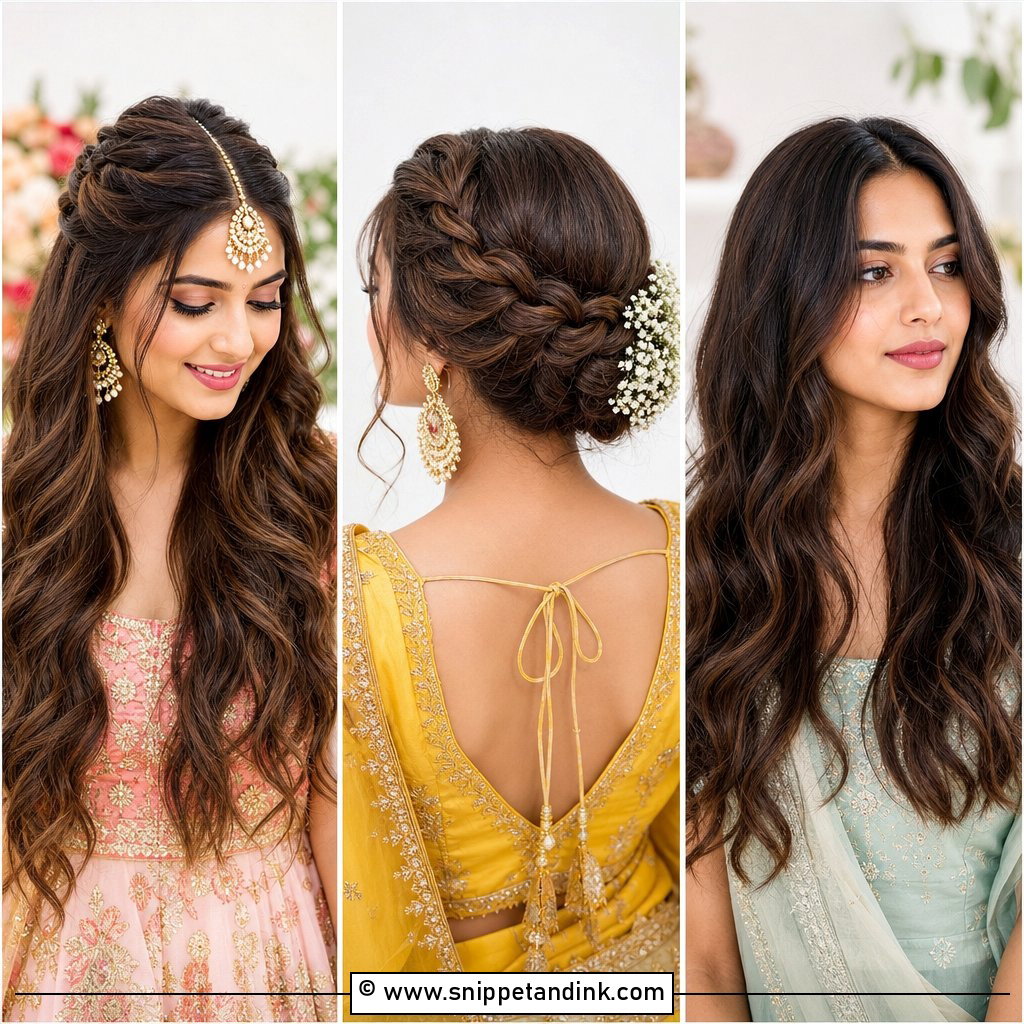
A center part makes jewelry the focus: a maang tikka, matha patti, Korean pearl headband or delicate forehead piece sits right on that line. The part has to be truly straight, so I take it with the tail of a comb from the bridge of the nose back, with the bride’s head level. A crooked part under a tikka shows in every front-facing photo. Wear it slick or soften the temples with tiny tendrils. With a veil or dupatta, I pin it behind the part so the front stays smooth and the tikka chain doesn’t lift.
6. Asian Bridal Side Bun
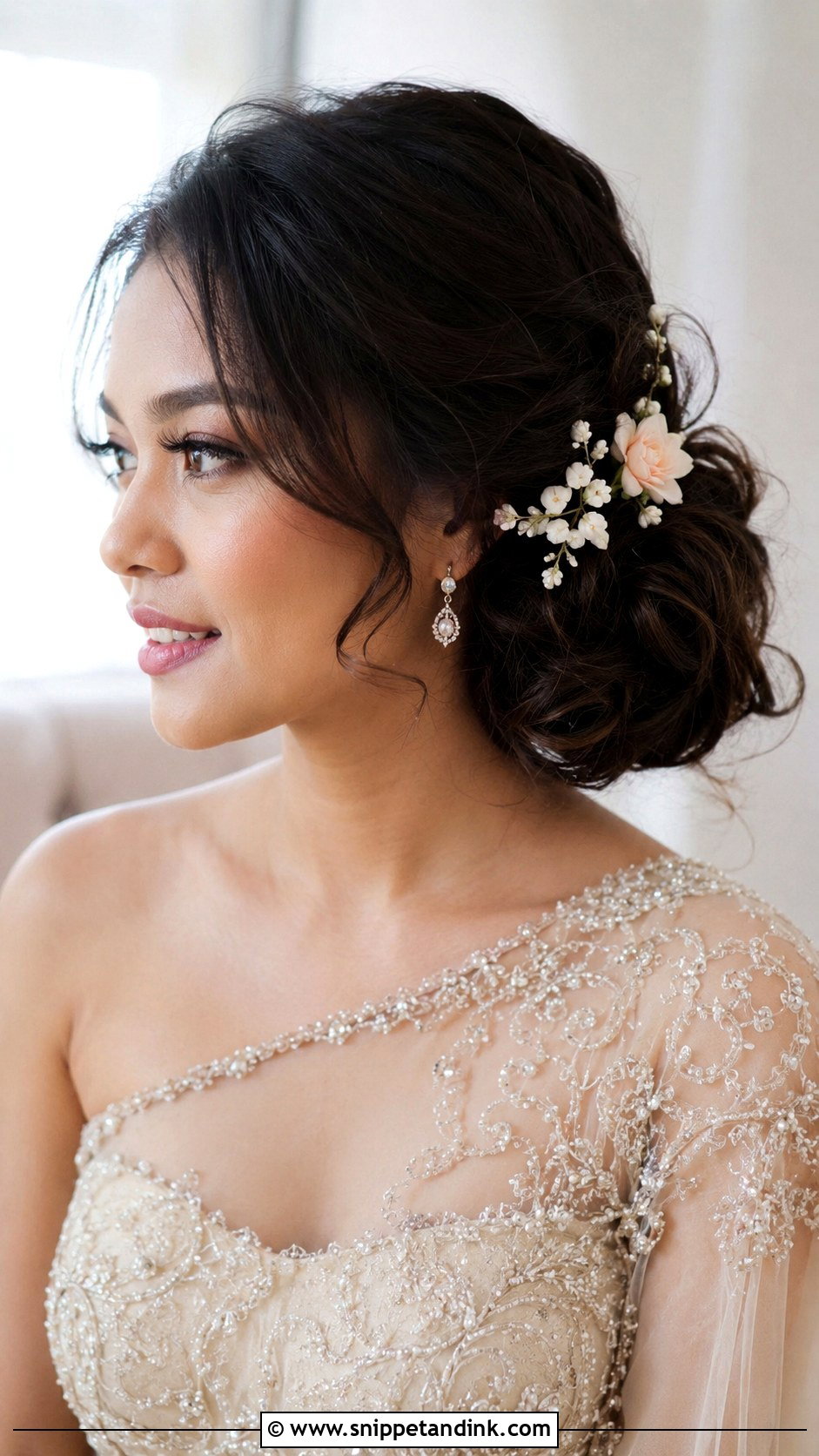
Side buns are made for angled portraits and asymmetrical outfits: a saree pallu over one shoulder, a side-draped dupatta, a one-shoulder reception dress. I place the bun on the side opposite the drape so the hair and fabric don’t fight over the same shoulder. The front can sweep across the forehead or follow your jewelry’s part. Loose curls around it soften the look; smooth makes it formal. Add flowers or pins on the opposite side to balance the weight visually.
7. Asian Bridal Half Up Waves
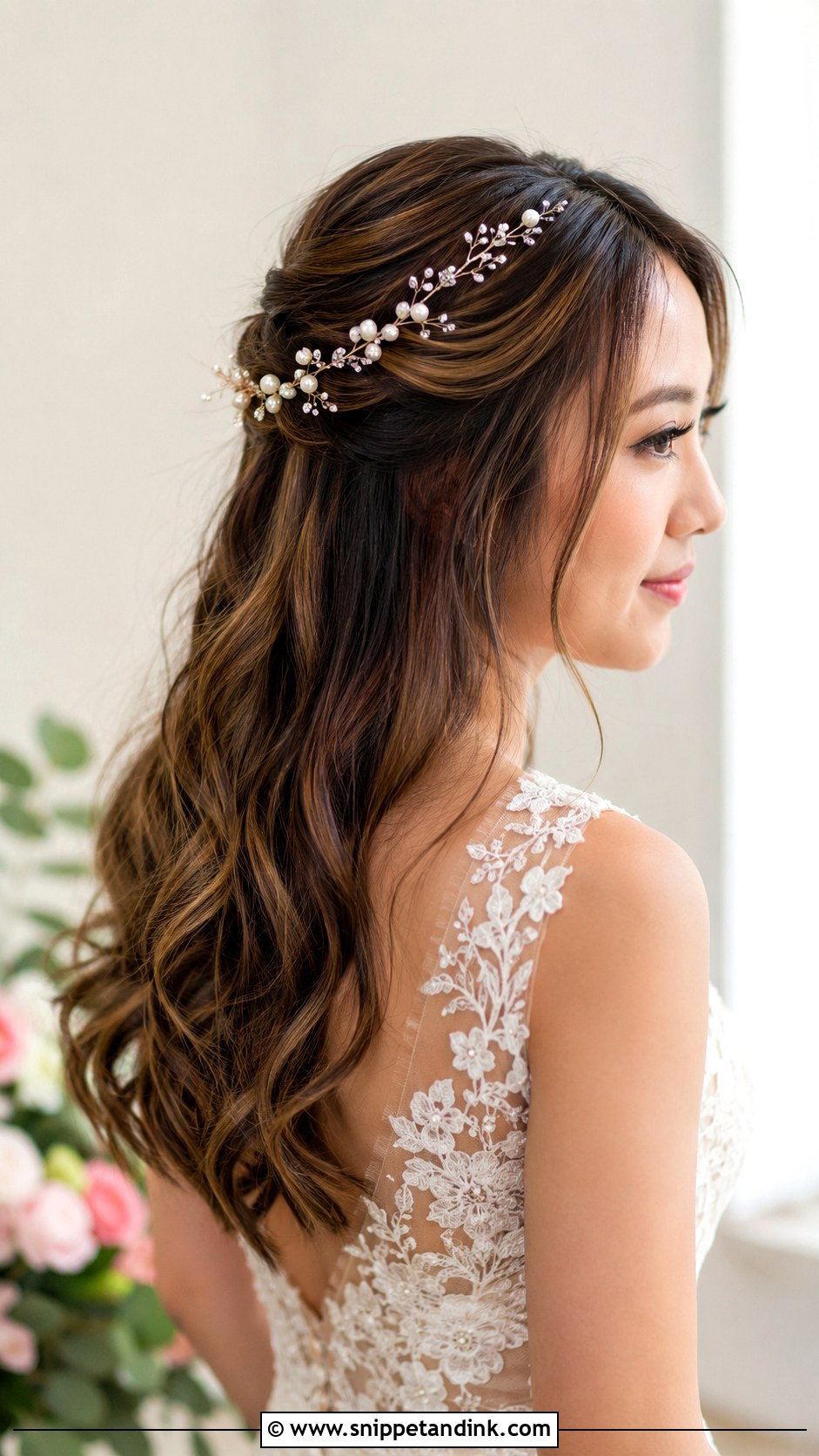
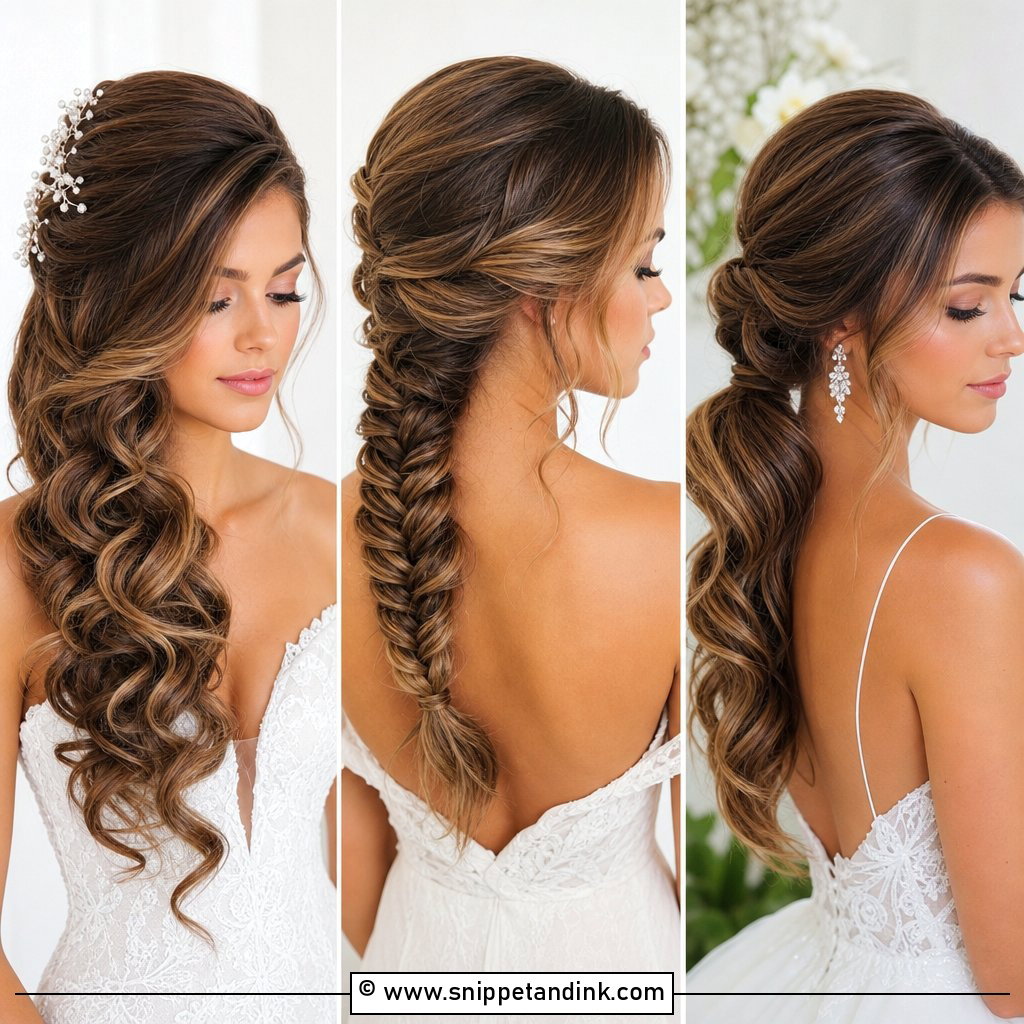
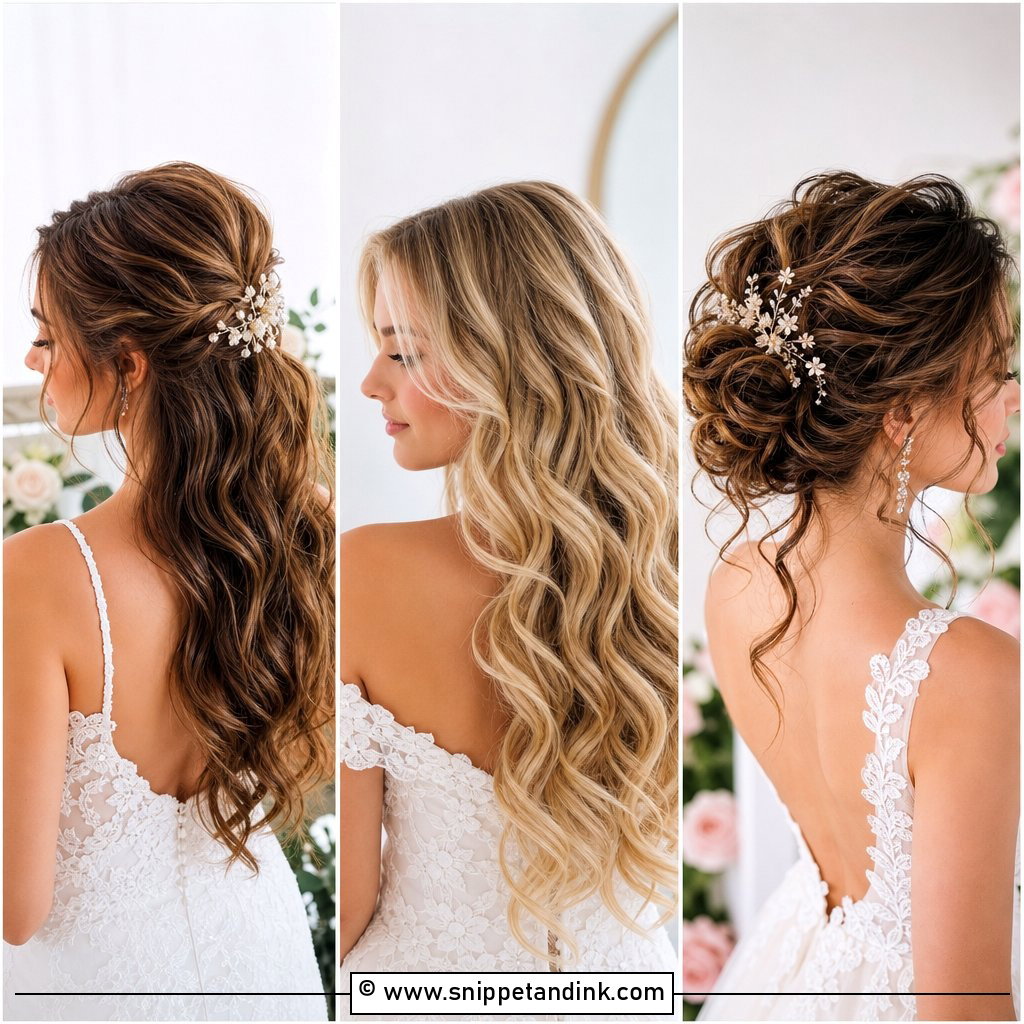
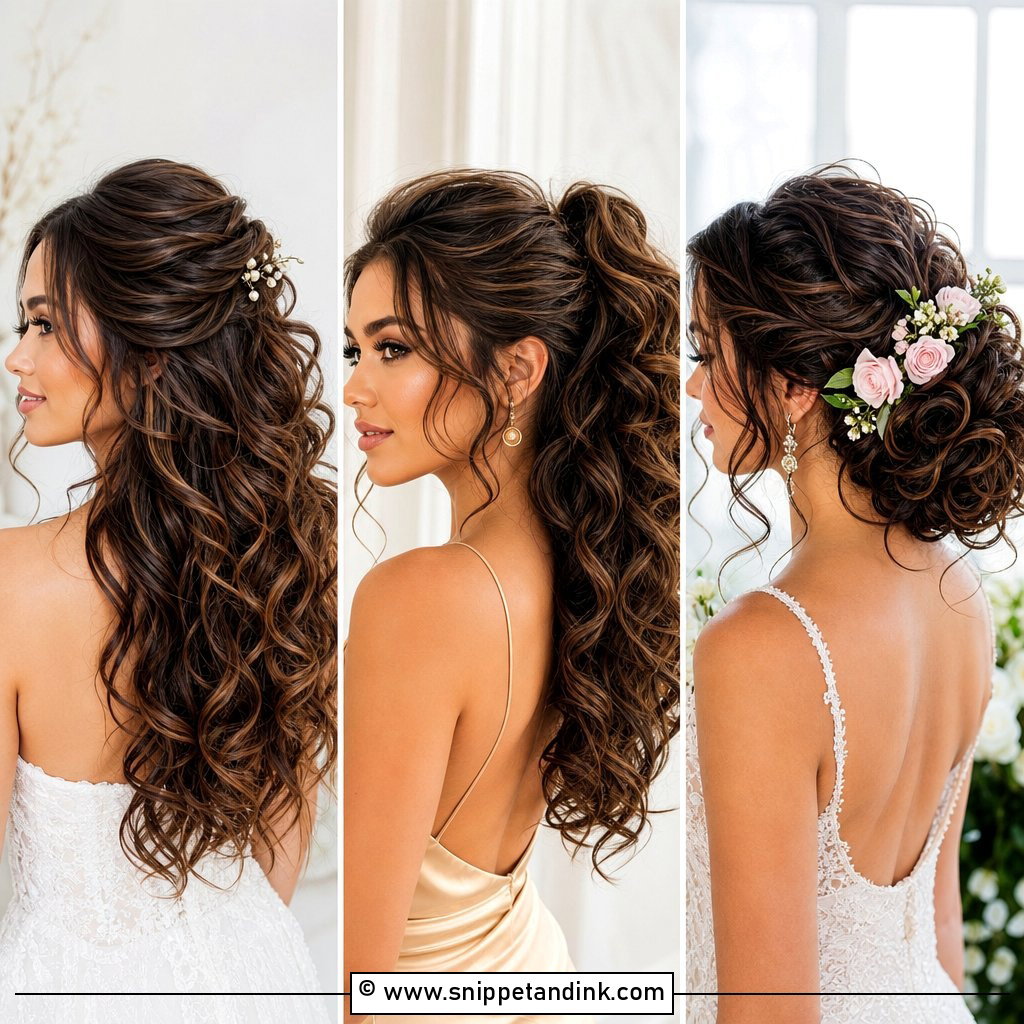
Half-up waves give you loose hair with somewhere to anchor a veil, comb or light accessory. The top section is pinned, twisted or braided back and the rest falls in waves. I’d keep the waves polished rather than beachy so they suit formal outfits. On thick hair, I hide a crisscross of bobby pins under the half-up section to carry the accessory. Fine hair often benefits from clip-in extensions, which add length and also give pins something to hold. I wouldn’t choose this for a heavy dupatta worn on the head, since loose lengths tangle with embroidered borders.
8. Asian Bridal Hollywood Waves
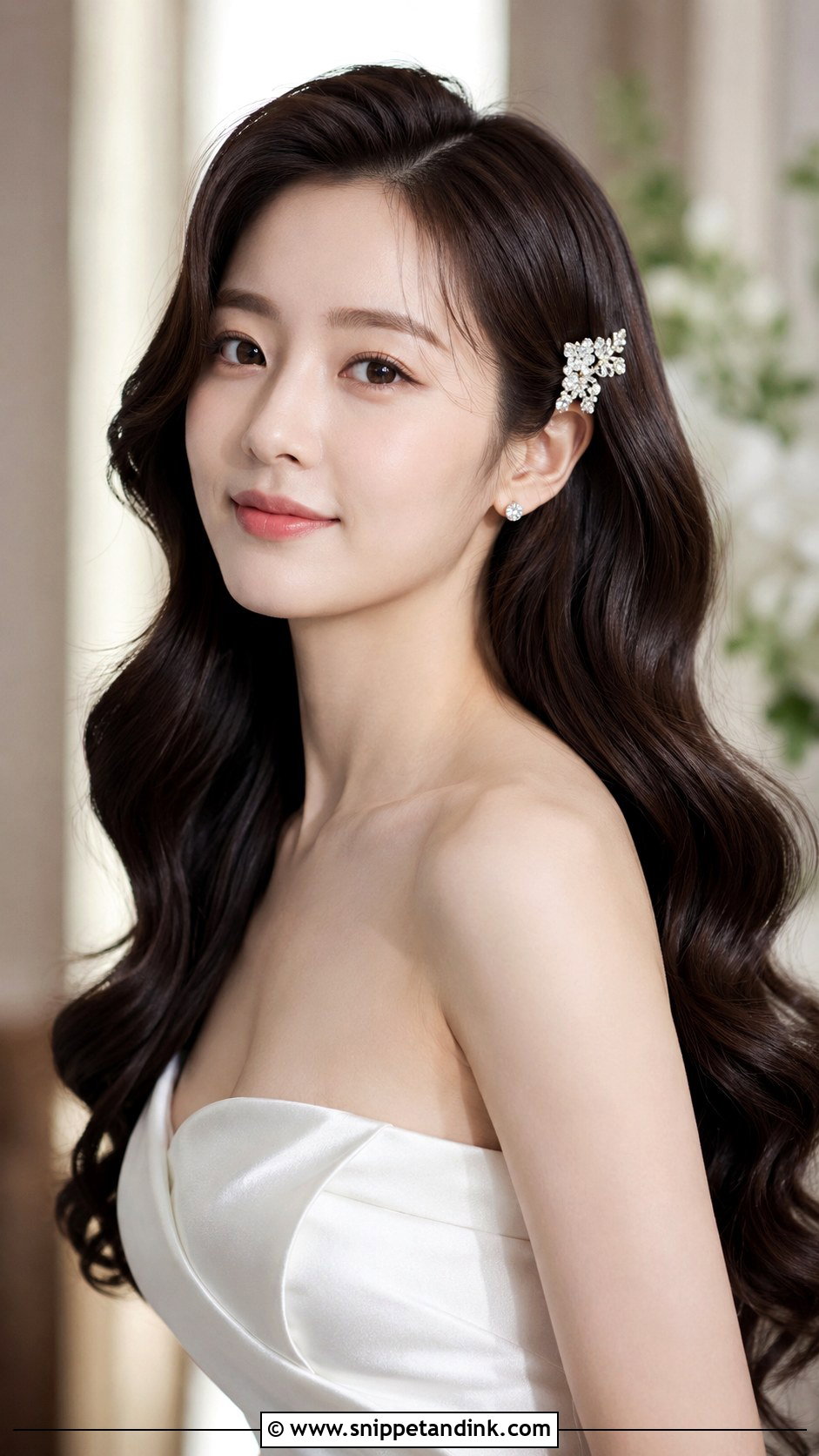
Hollywood waves are a commitment. Each section is curled in the same direction, pinned to cool, then brushed out into one continuous S-shape, and the effect depends on the wave staying visible. That’s why I don’t suggest them for a bride wearing a head veil all ceremony. They’re made for receptions: gowns, modern lehengas, satin and dramatic earrings. A deep side part reads vintage, a softer middle part feels current. Smooth, straight hair can hold this shape better than people expect, provided every curl is set completely cool before brushing.
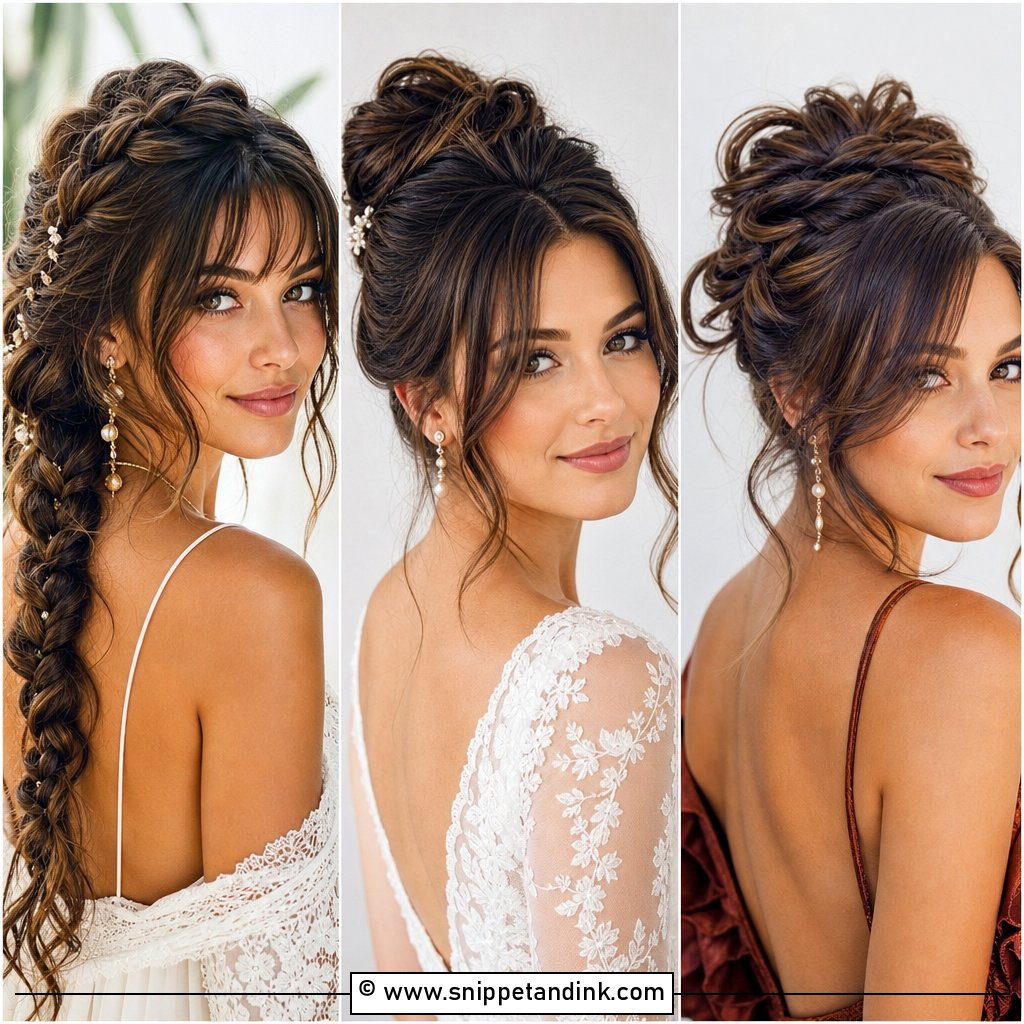
9. Asian Bridal Long Braid
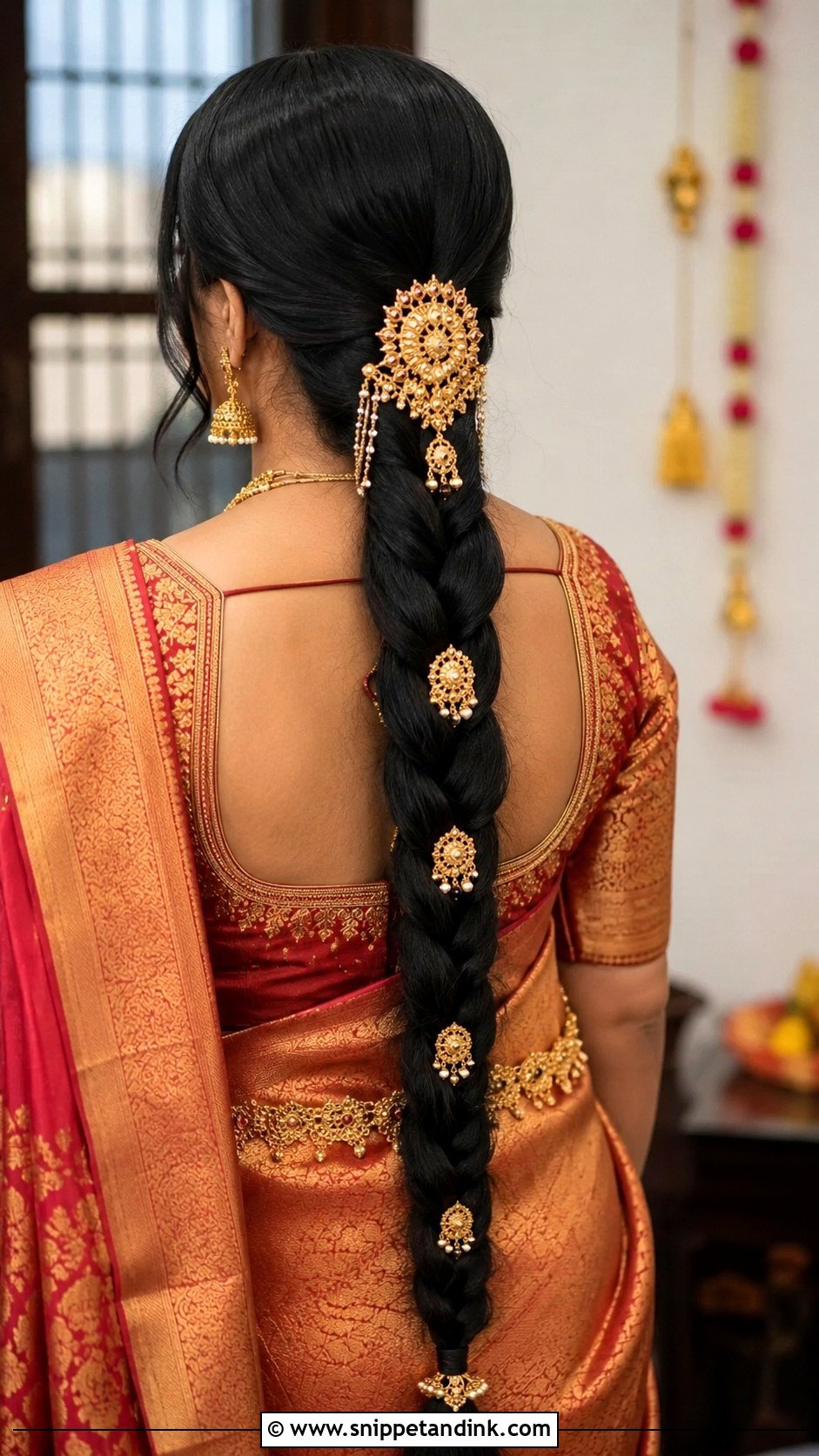
Braids are traditional across many Asian ceremonies for practical reasons as well as beauty: hair stays contained through long rituals and away from heavy necklaces and earrings. Wear it simple and thick, or decorate it with flowers, gold accessories, pearls or fabric. Seated brides are often photographed from behind, so the braid ends up in a lot of pictures. If your hair isn’t long enough, I braid clip-in extensions in with your own hair from the nape so the join disappears. Keep the crown smooth or add gentle volume to suit the outfit.
10. Asian Bridal Floral Braid
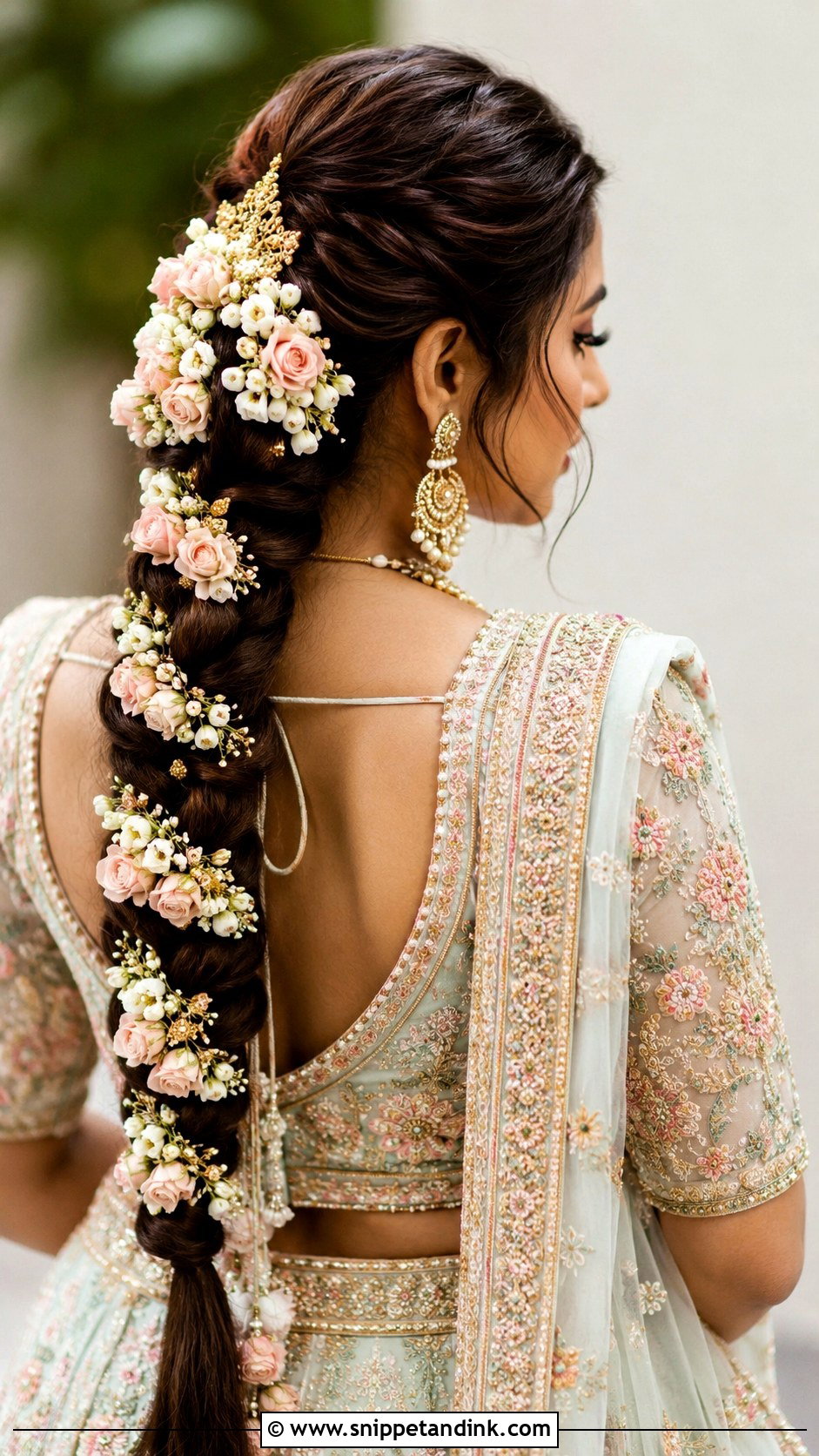
Flowers turn a floral braid into part of the ceremony itself, especially at South Asian weddings. Jasmine, roses, orchids, baby’s breath or color-matched faux flowers can be tucked along a jada, a bubble braid or a thick plait. Fresh jasmine is fragrant but bruises and browns in heat, so I add it as late as possible in the morning and keep spare strands wrapped in damp cloth in the fridge. You’ll need length for this one, your own or extensions. Keep the crown clean if the braid is heavily decorated.
11. Asian Bridal Fishtail Braid
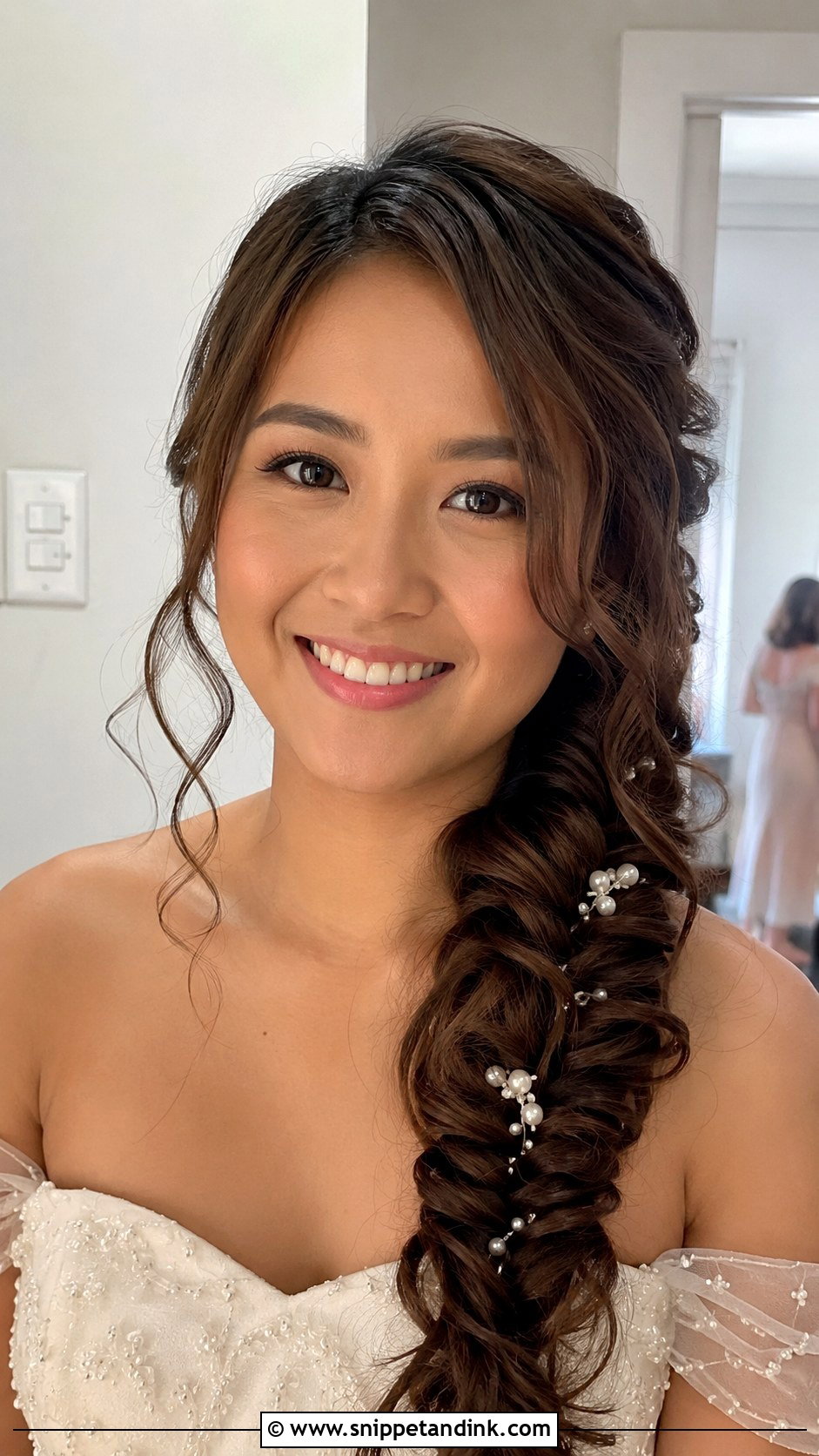
Softer than a three-strand plait, a fishtail has finer texture and drapes rather than sitting stiffly. Wear it down the back, over one shoulder or from a half-up crown. It suits outdoor ceremonies, mehndi events, beach weddings and receptions. Pearl pins, small flowers or a fine hair vine woven through make it bridal. I pull the edges slightly apart for volume, but I stop before it looks frayed, and I keep the hairline polished. Very slippery hair tends to slide out of a fishtail, so I braid it slightly damp with texture spray rather than freshly blow-dried.
12. Asian Bridal Bubble Braid
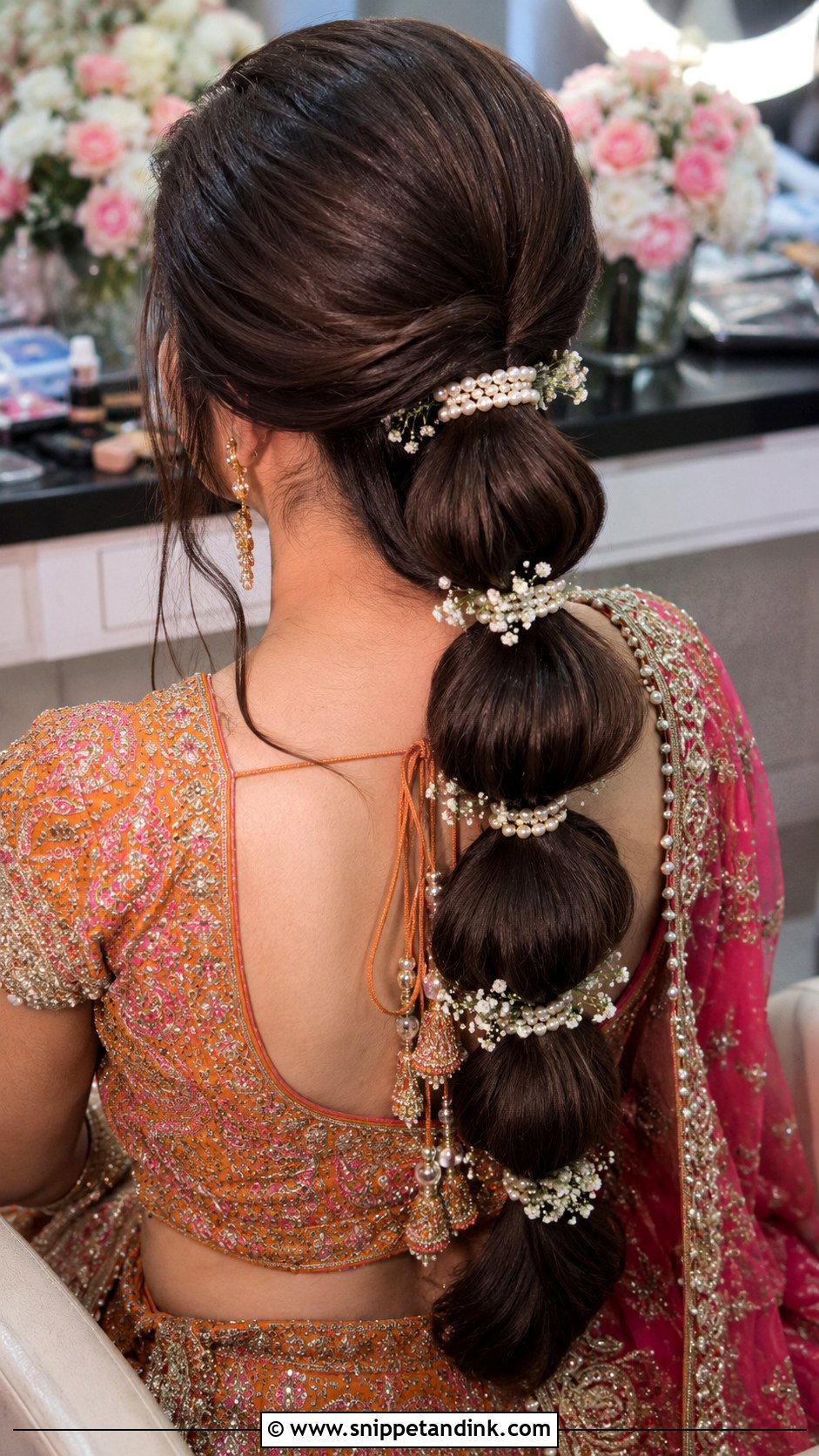
A bubble braid can look playful or polished depending entirely on how even the sections are. Hair is gathered with clear elastics at regular intervals and each section is gently loosened into a round “bubble,” then wrapped with flowers, pearls, gold thread or jeweled bands. I measure the gaps with my fingers so every bubble is the same size; uneven spacing is what makes it look homemade. It gives medium-density hair a lot of visual volume and suits mehndi, sangeet, engagement and reception events.
13. Asian Bridal Loose Curls
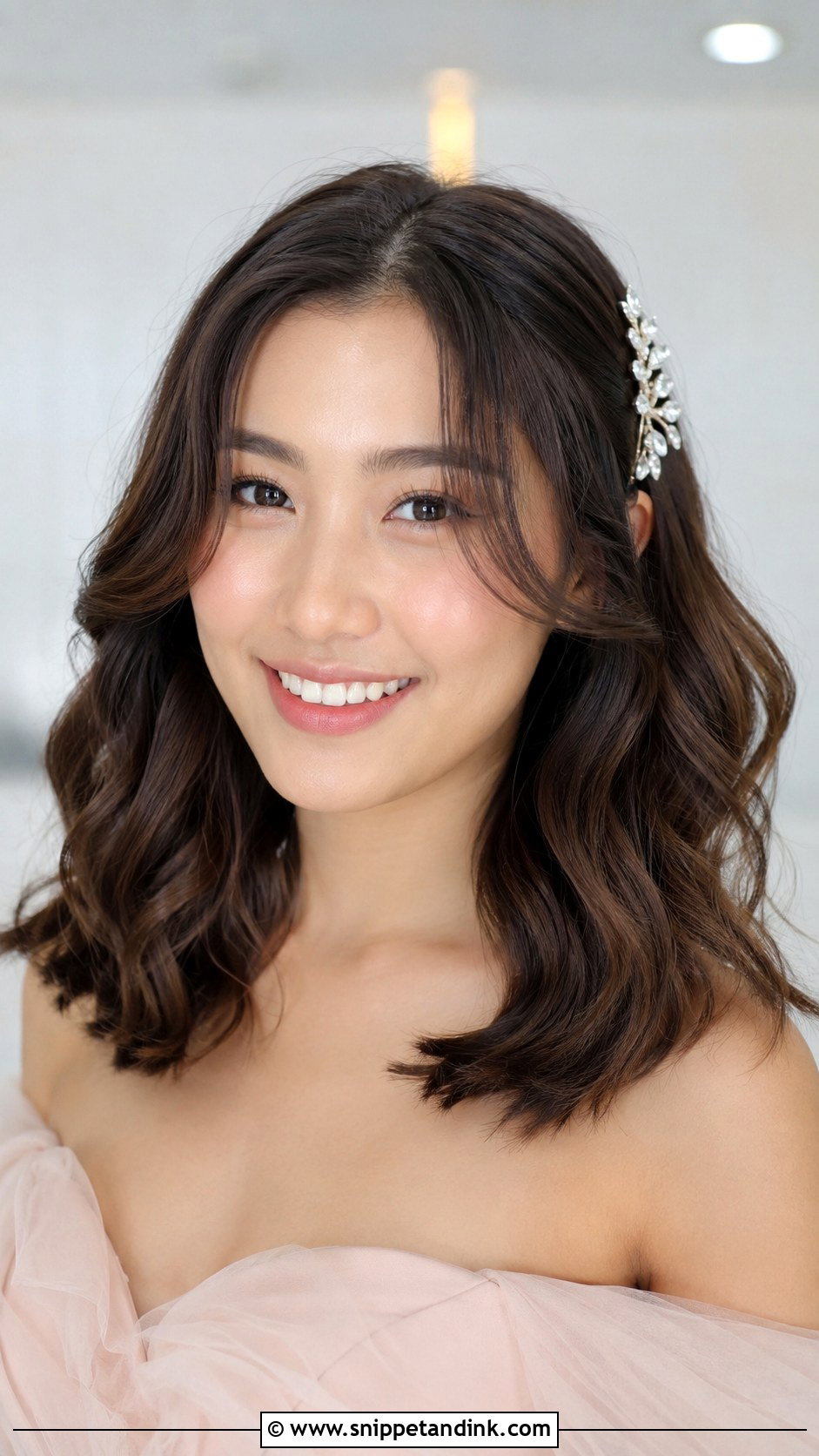
Loose curls need the least structure and the most luck with weather. They look soft around the shoulders but won’t support a heavy veil for hours. Middle part, side part or a lightly pinned crown for a little support. I set curls with a medium barrel and let them cool in pin curls before brushing, which gives them a fighting chance in humidity. If your ceremony is outdoors in monsoon heat, I’d honestly steer you toward an updo for the ceremony and curls for a cooler evening reception. A few face-framing pieces soften the jawline.
14. Asian Bridal Ponytail
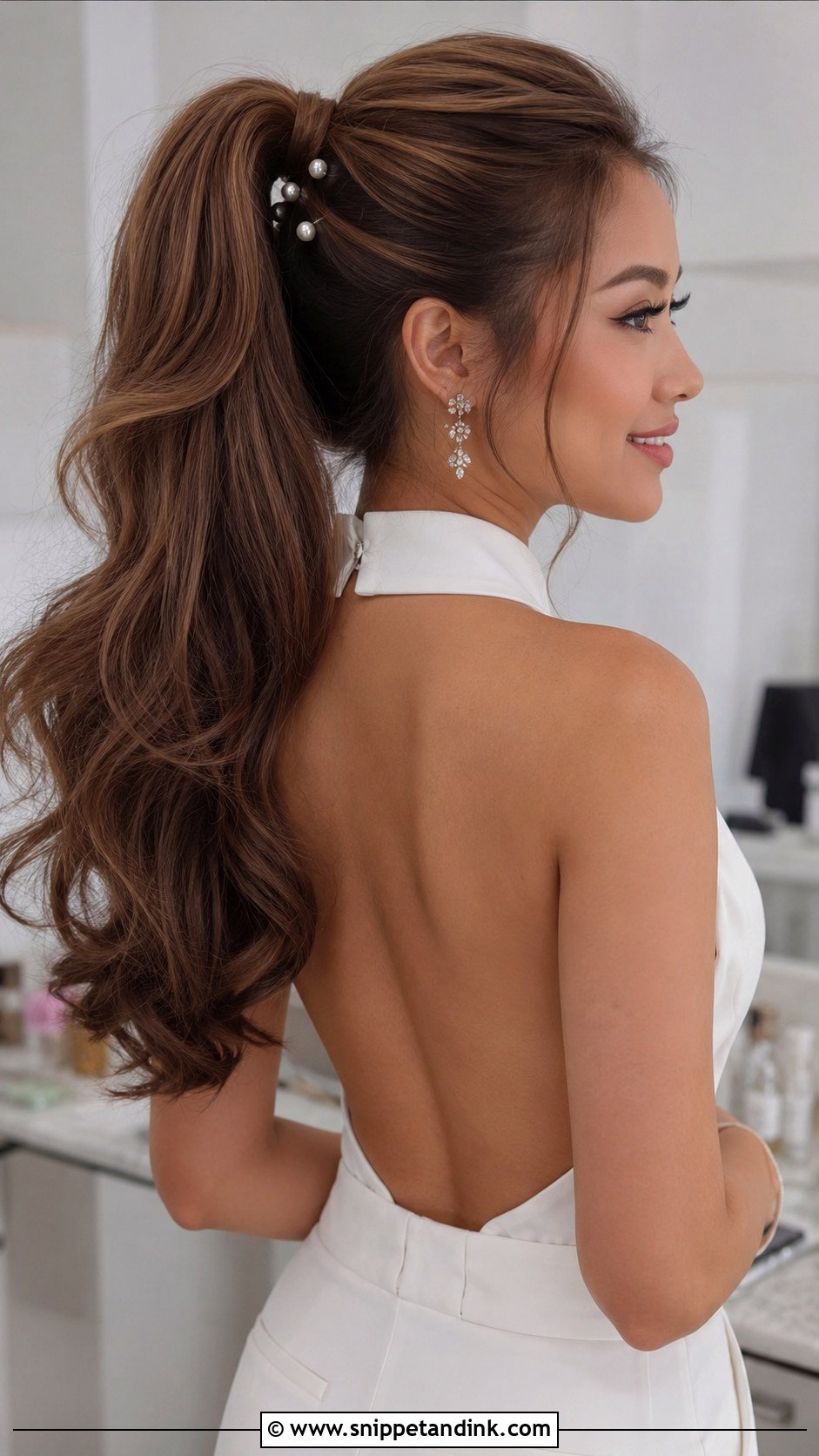
A ponytail gets your hair off your face without the formality of a bun. High and sleek suits a fashion-led reception; low and soft feels gentler for the ceremony. Waves through the length make it fuller, and I wrap a small section around the base to hide the elastic and pins. On heavy hair, a high ponytail can droop by evening, so I secure it with two elastics, one tight at the base and a second a centimetre lower, and pin under it. It moves well when you dance. A pearl clip, crystal comb or flower near the base finishes it.
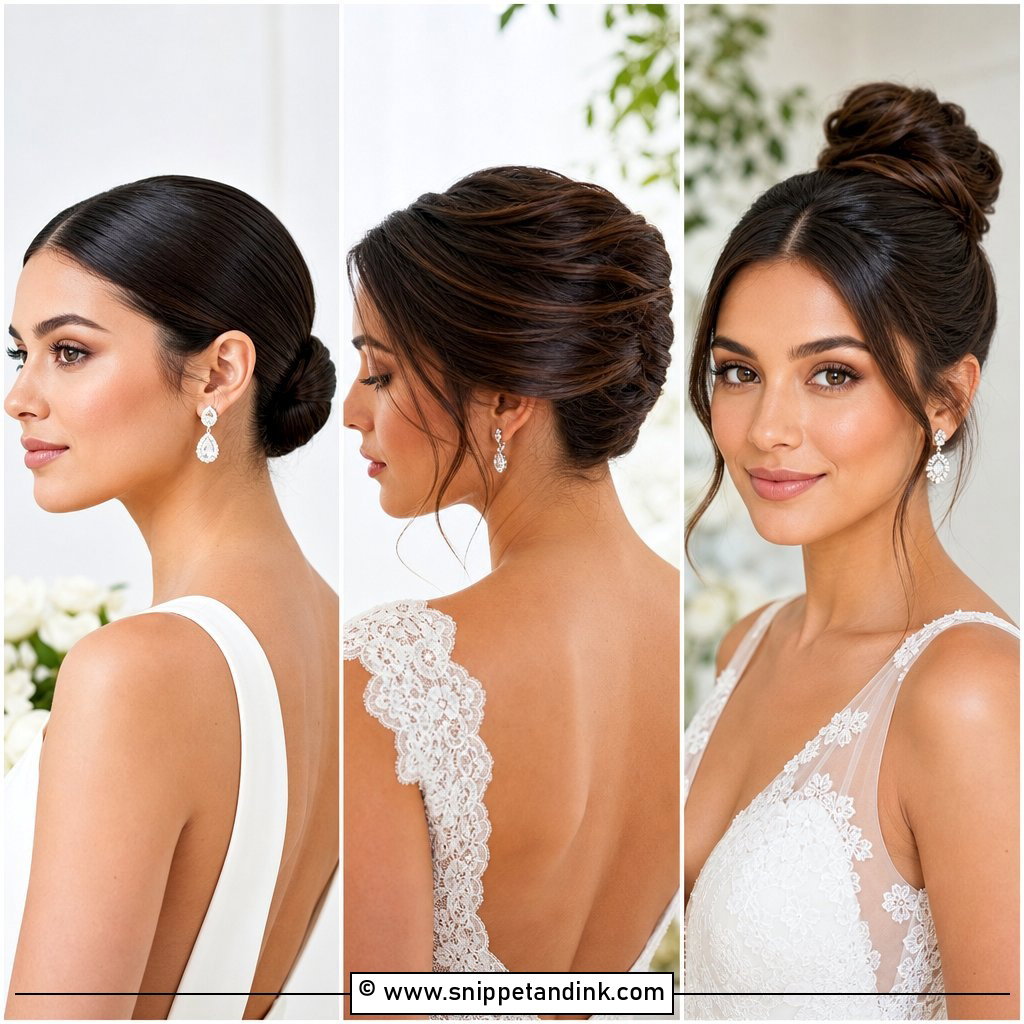
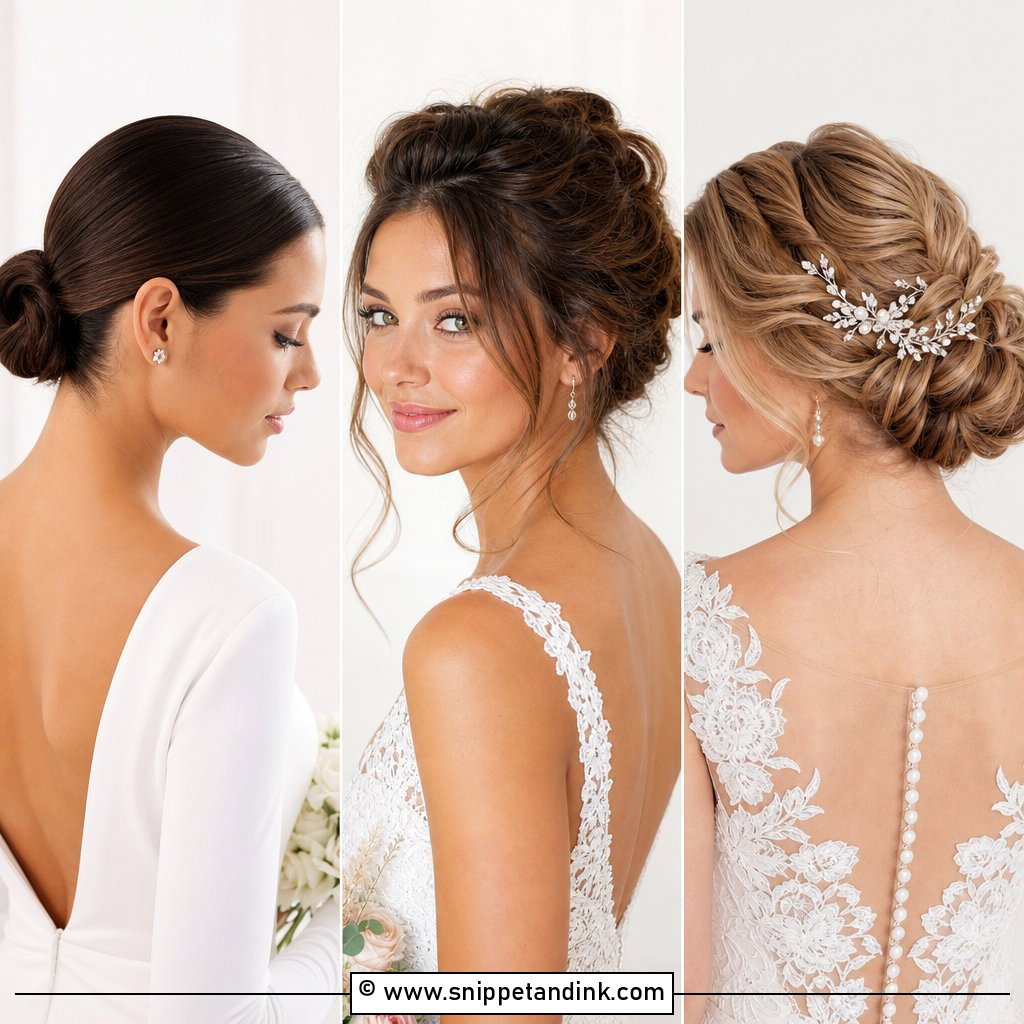

15. Asian Bridal Korean Low Bun
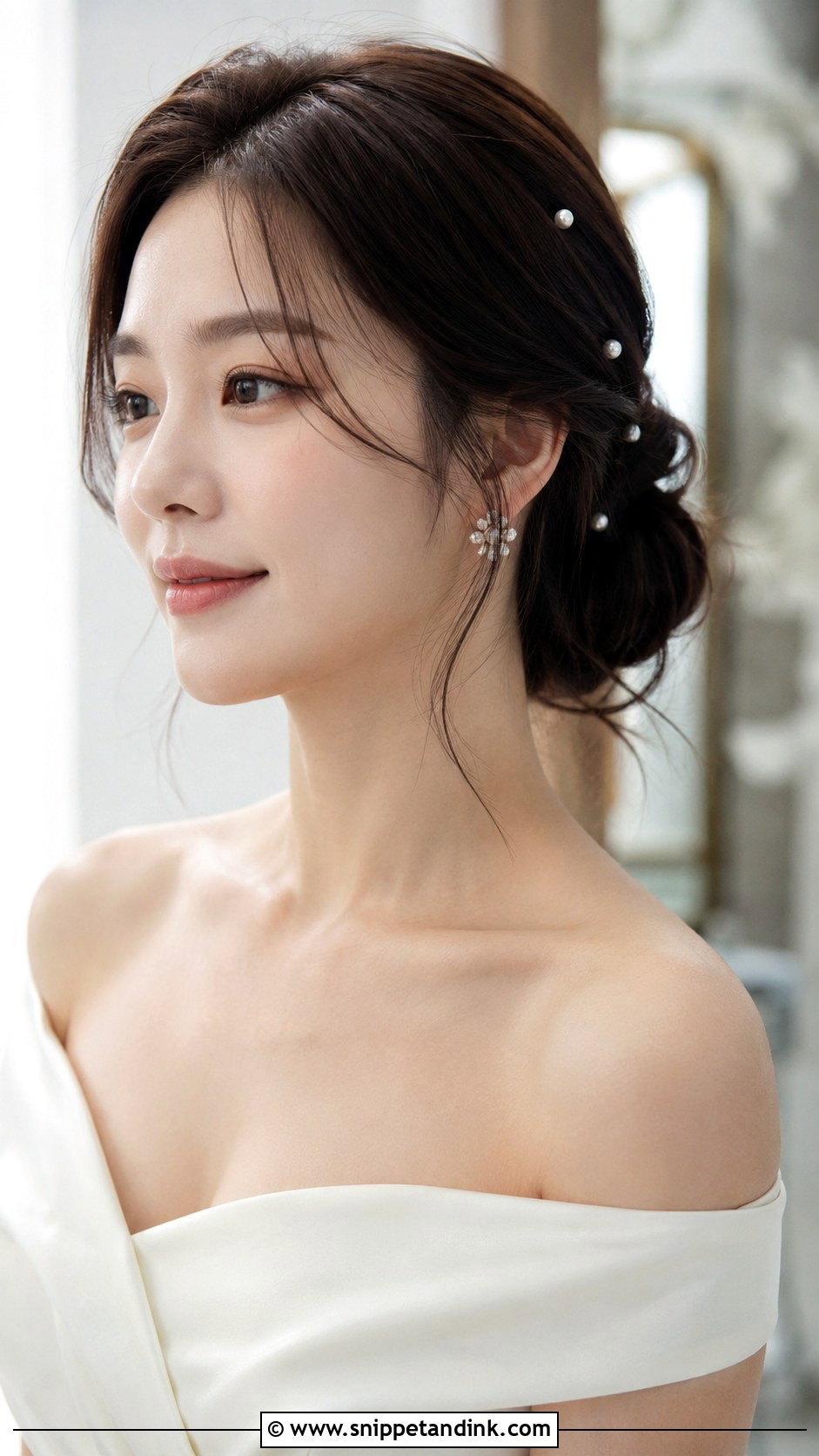
Light and gentle are what separate a Korean low bun from a slick one. There’s airy volume at the crown, a few face-framing strands and a low, softly tucked bun. It pairs with clean makeup, pearl details, sheer veils and romantic gowns. Fine, straight hair suits it well because it doesn’t rely on heavy teasing or tight curls; I add soft texture through the lengths so the bun looks full rather than thin and slick in photos. Pearl pins or a small bow are typical finishes.
16. Asian Bridal Japanese Updo
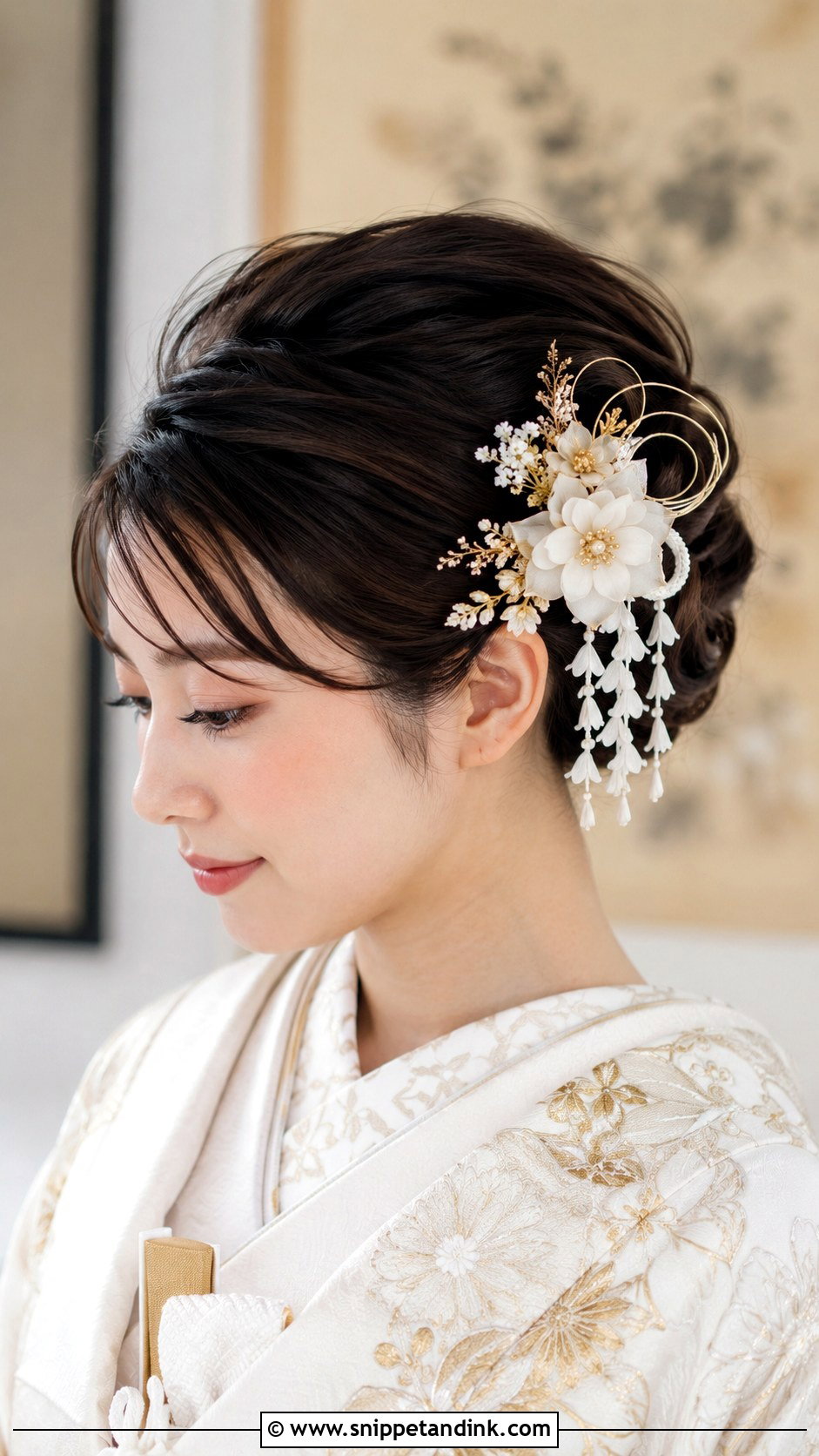
A Japanese bridal updo is all about clean placement and smooth curves, whether it borrows from traditional shapes or simplifies them into a modern updo. It suits kimono-inspired outfits, minimalist gowns, floral hairpieces and kanzashi-style ornaments. Because every section shows, I smooth and set each one before it’s pinned rather than tidying at the end. If you’re wearing a traditional wig or headpiece for part of the day, plan your natural hair underneath carefully, since it needs to sit flat for that and still look good afterward. A few soft front pieces modernize the finish.
17. Asian Bridal Chinese Hair Bun
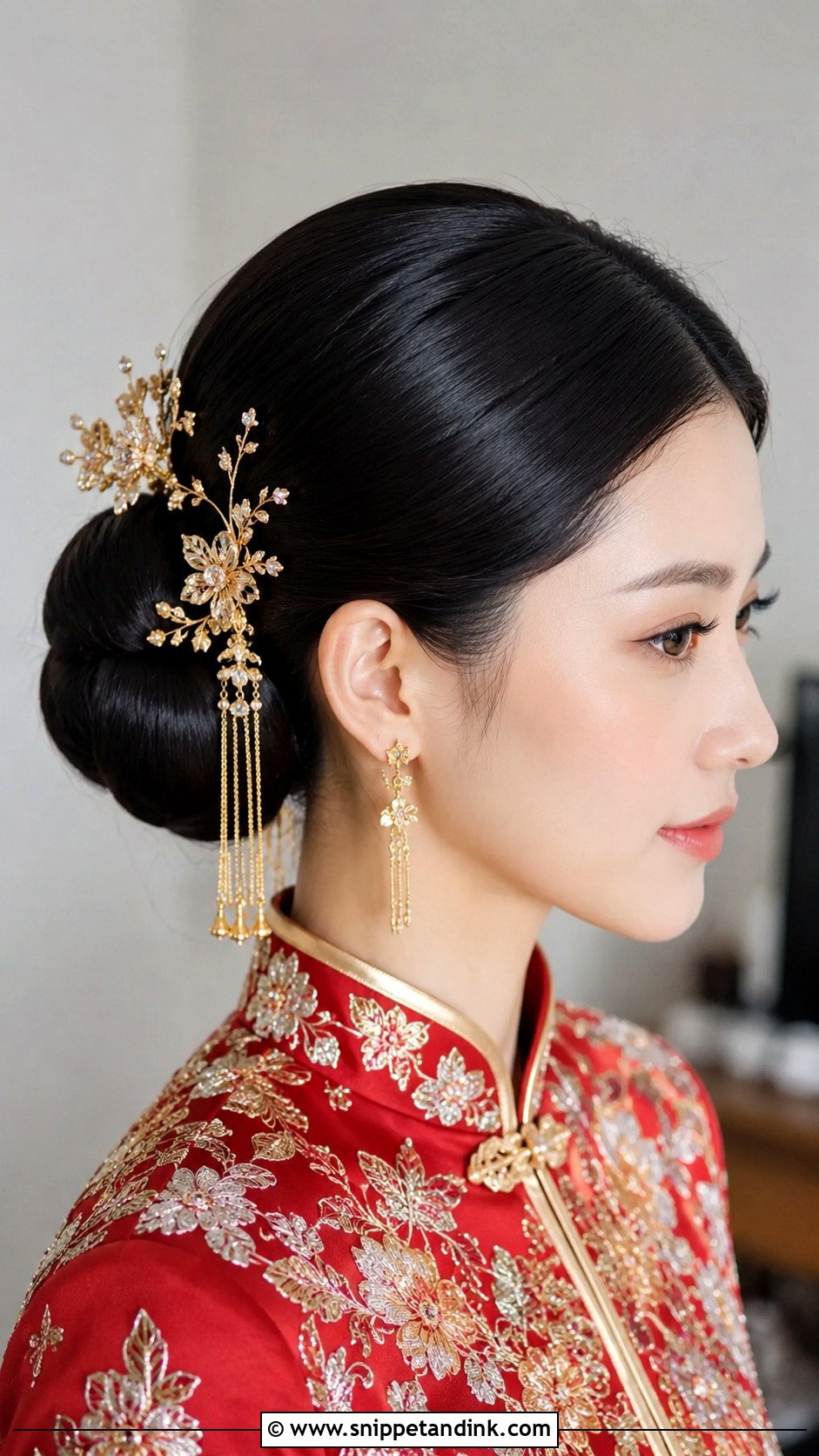
A Chinese bridal hair bun often carries meaning alongside a red dress, gold jewelry and traditional ornaments. The bun can sit low, centered or higher depending on the neckline and headpiece. Ornamental pins and gold combs can be surprisingly heavy, so I anchor each one into the bun’s base rather than its surface. Sleek and modern or richly ornamented, it keeps the face open for bold earrings and embroidery. Smooth and glossy finish, strong pins hidden inside.
18. Asian Bridal South Indian Jada
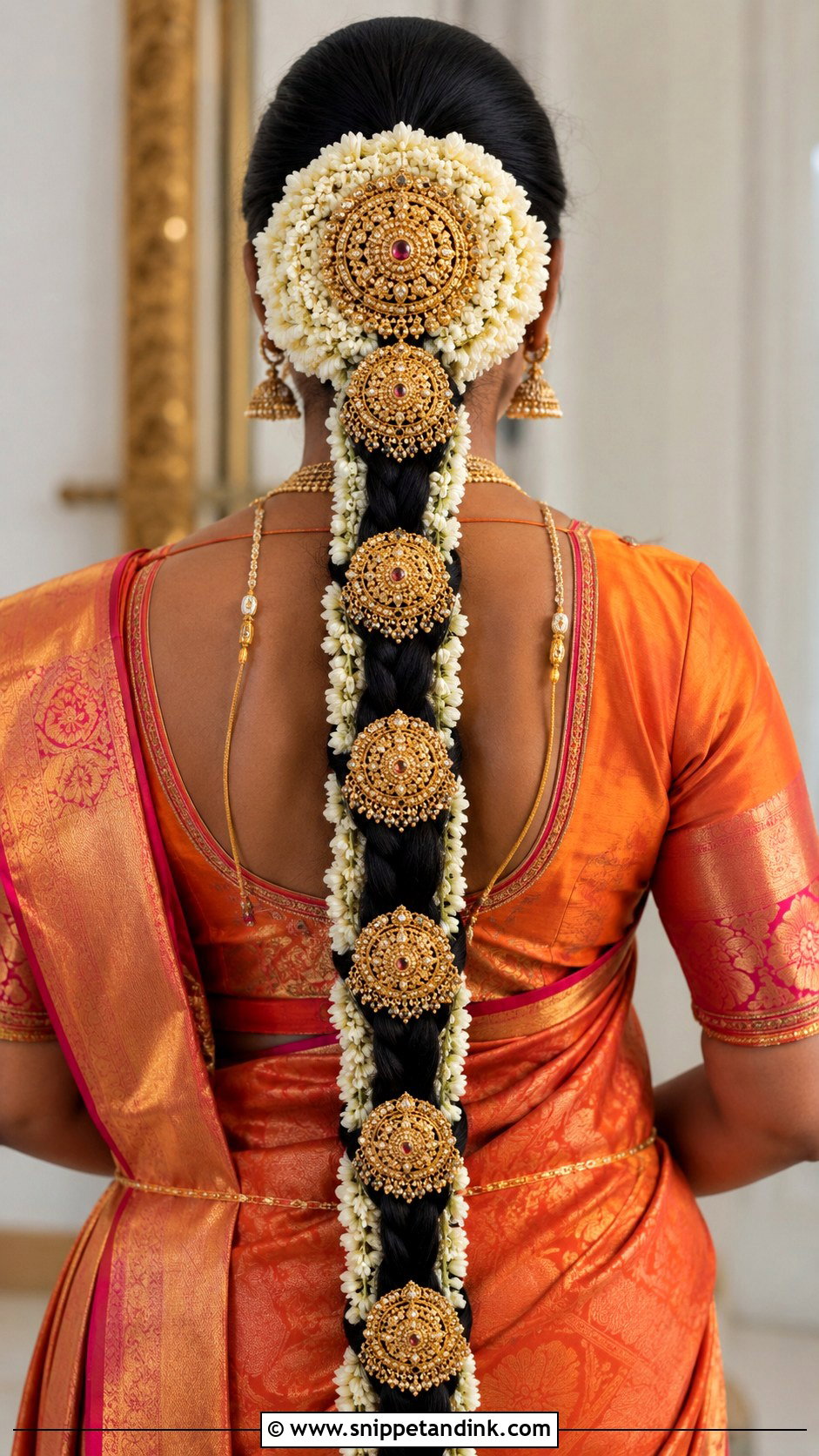
A South Indian jada is one of the grandest Asian bridal styles: a long braid decorated from crown to tip with flowers, gold ornaments or a traditional jada set. With silk sarees, temple jewelry and deep colors it’s magnificent, and since the bride sits through much of the ritual, it’s photographed from behind constantly. The crown can be a bun, puff or smooth part before the braid begins. Gold jada pieces add real weight to the back of the head, so I build the braid around extensions and anchor the top ornament into a secure base. Do a full trial with your actual jada set.
19. Asian Bridal Dupatta Bun
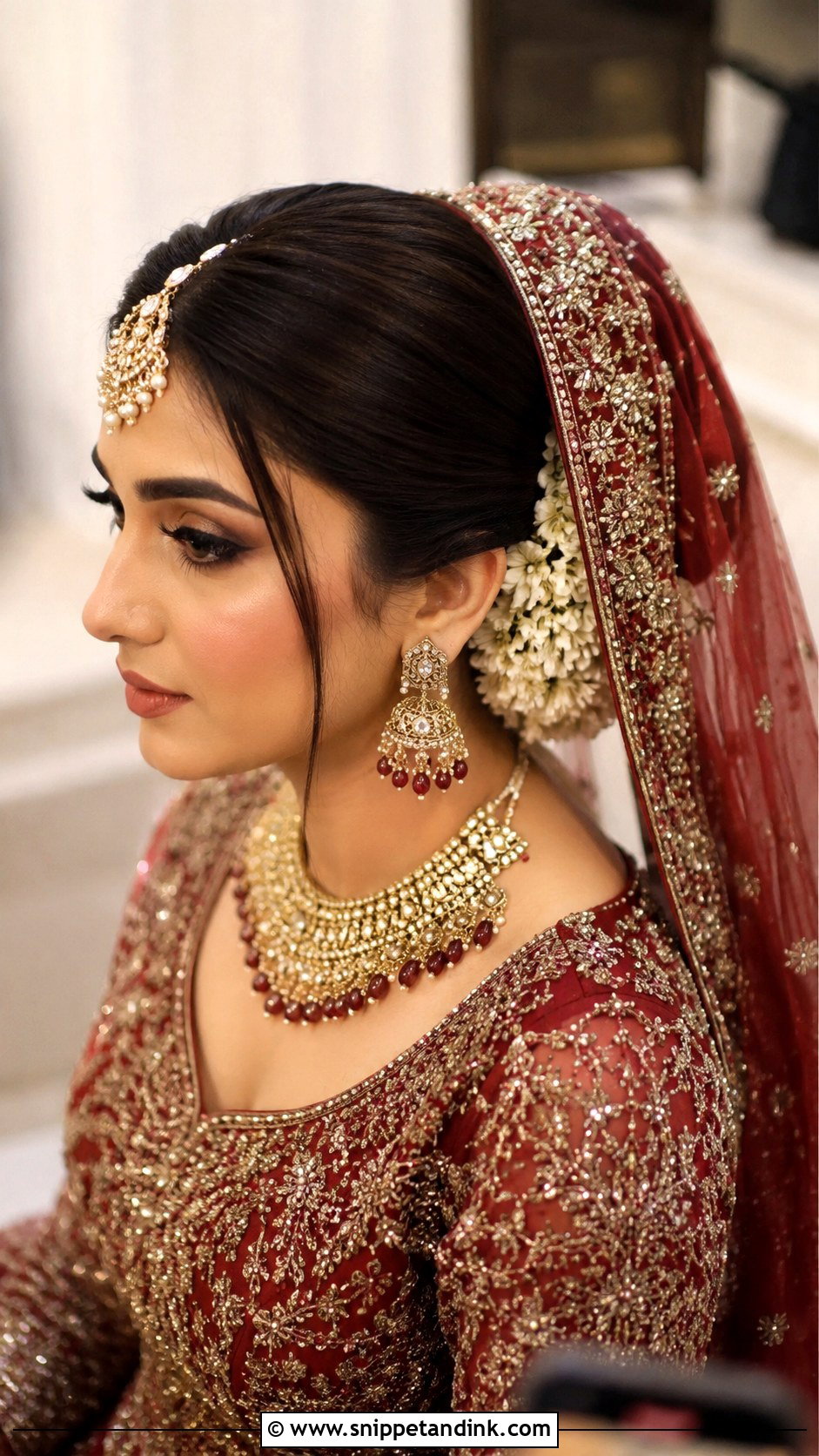
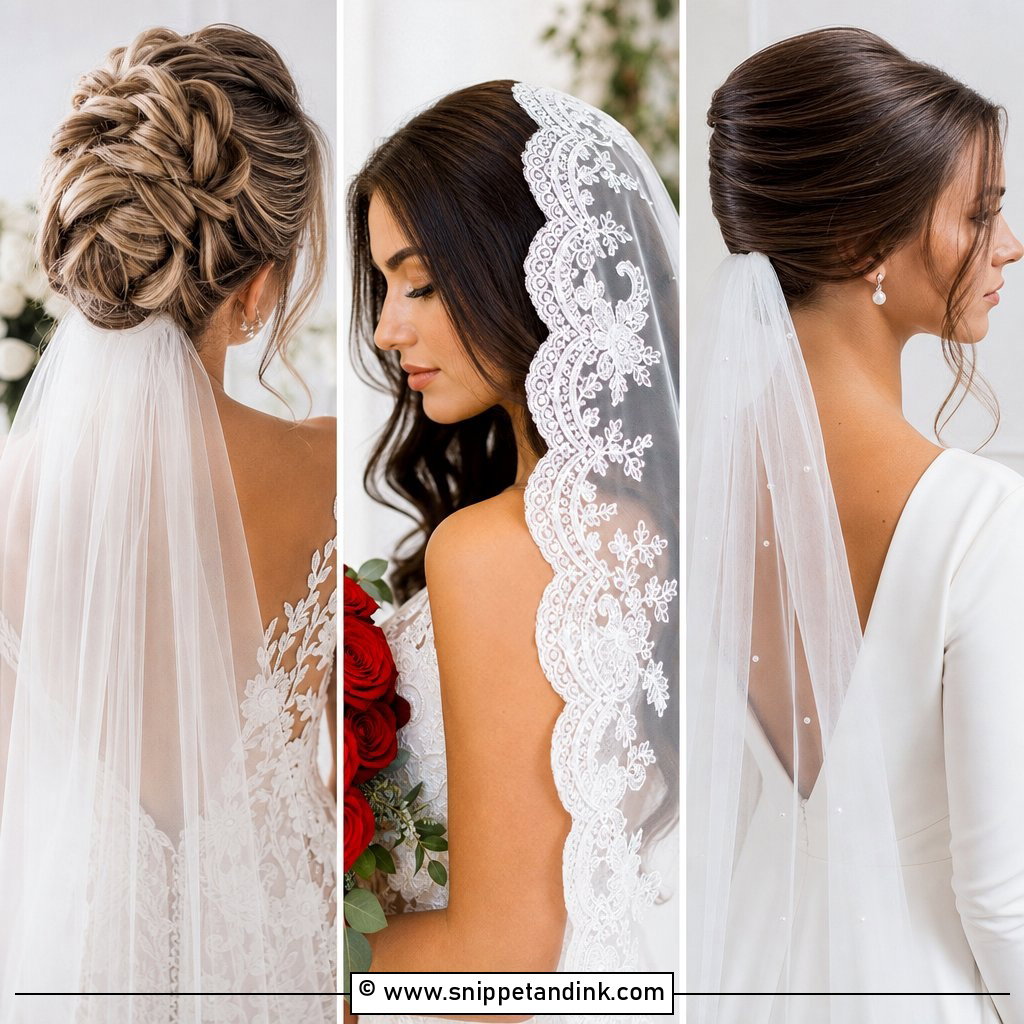
A heavy dupatta can pull on the hair for hours, and the dupatta bun exists to stop that. The bun becomes a solid base to pin the dupatta, veil or embroidered border into, so the fabric’s weight never tugs at loose strands. It can be low, high, braided or floral to suit the outfit. I keep the front smooth for jewelry and make the back firm enough for several pins. Bring the actual dupatta to the trial; heavily embellished borders behave very differently from the lightweight scarf many brides practice with.
20. Asian Bridal Pearl Bun
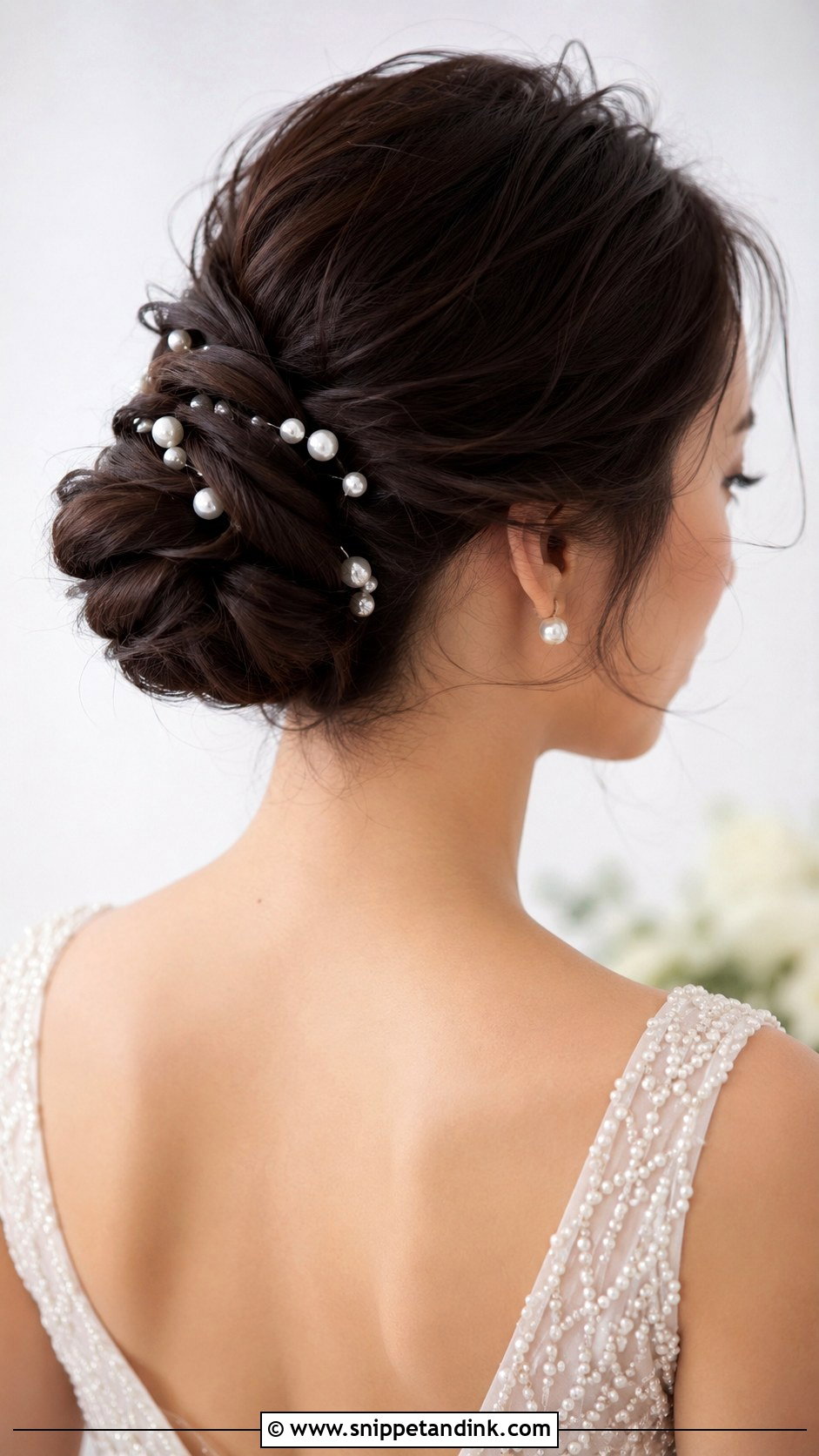
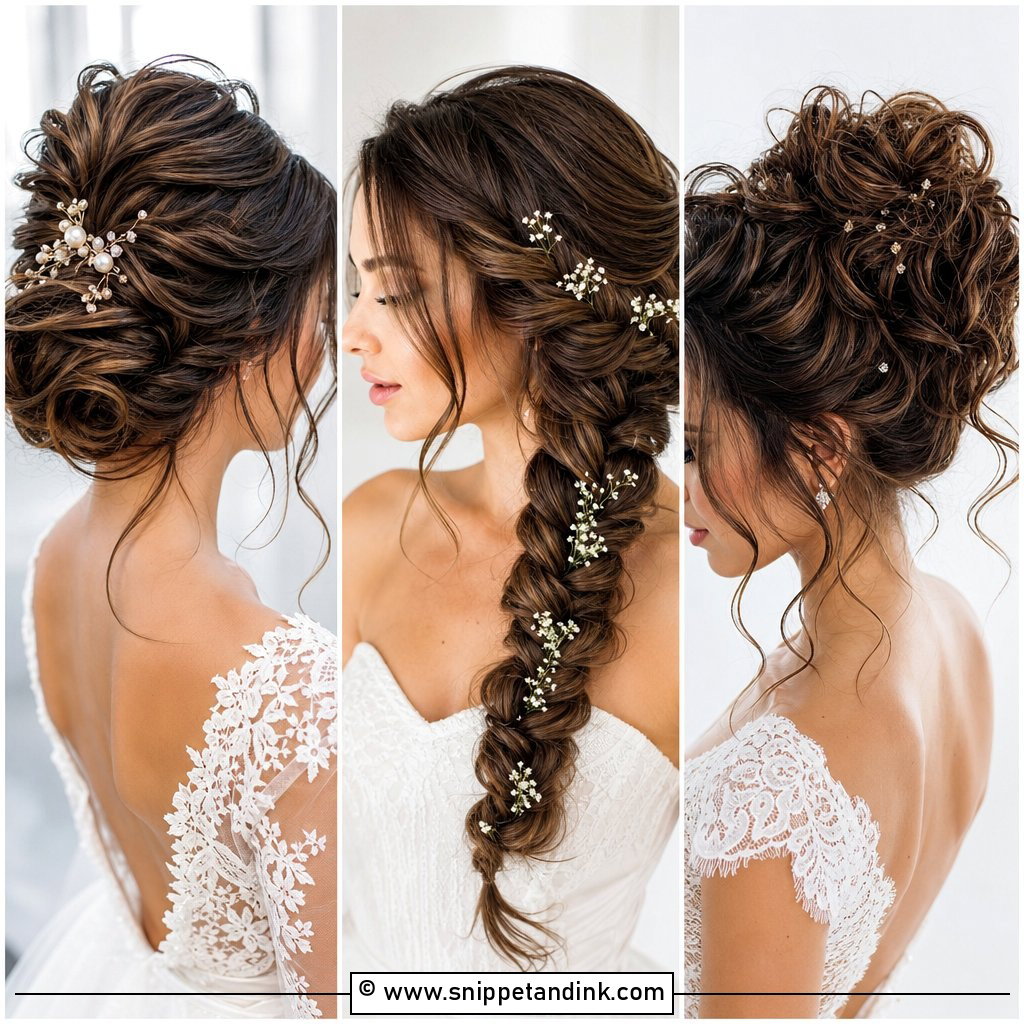
A pearl bun works across many Asian bridal looks without adding much weight. Sleek, twisted, braided or textured, the bun is finished with pearl pins following its curve. It’s light enough for civil ceremonies, receptions, engagement shoots and minimalist outfits. Pearls catch soft light rather than sparkle, which is why they suit both ivory gowns and red outfits styled simply. I space the pins unevenly on purpose, clustering a few and leaving gaps, because a perfectly even ring of pearls tends to look stiff.
When the Mehndi, Ceremony and Reception Each Need Different Hair
Many Asian weddings run over several events, sometimes with an outfit change on the same day. Plan the hair across all of them at once, not each in isolation.
For same-day changes, I build the ceremony style so it converts. A braided low bun can be unpinned into a fishtail or a half-up style in about twenty minutes, while a sleek chignon taken down leaves a kinked mess that needs a full restyle. If you’re switching from a heavy dupatta to a reception gown, ask your stylist to stay for the change or teach someone in your family how to remove the pins without tangling.
Weight and comfort across a long day
A dupatta, tikka, jada set and flowers can add real weight, and tight pins on the crown are a common cause of headaches by evening. I place the heaviest pins along the lower back of the head, never right on the crown, and bring a few spares. If a pin starts to hurt, have it adjusted early rather than enduring it through dinner.
Start With What Your Hair Has to Carry
The right style for you is the one that fits your outfit, your accessories and how long you’ll be wearing it. A low bun or dupatta bun is where I’d start for heavy fabric and long rituals. Floral braids and a South Indian jada carry tradition and drama. Korean low buns, chignons and pearl buns feel soft and modern, and curls, Hollywood waves and half-up waves suit receptions with lighter veils. Bring photos, test every accessory, and do a full trial wearing the veil or dupatta so you know it will hold from the first photo to the last dance.
You'll Like These Ideas:


Leave a Reply