
Braids are the most forgiving thing I can put in a bride’s hair. A braid keeps its shape when a curl would drop, it gives a veil comb something to bite, and it can be loosened into softness without losing its structure. That’s why I lean on them for gardens, barns, beaches and anywhere the weather is a guess. The range is wide, from a loose side braid with flowers to knotless or goddess braids with curls worked through. What separates a bridal braid from an everyday one is mostly width and finish, and that’s what I’ve noted under each style below.
How Much Hair Does Each Braid Really Need?
Most braids in inspiration photos were built on thick, long hair, and quite a few had clip-in extensions hidden underneath. That doesn’t rule them out if your hair is fine or shoulder length. It just means some shapes ask more of it than others, and I’d rather tell you that at the consultation than at the trial.
- Shoulder length: braided half-up styles, a Dutch braid running back into a low bun, and small accent braids at the temples all work. A long side braid or a fishtail usually won’t reach far enough to sit over the shoulder.
- Fine or thin hair: pancaking, where I gently pull each loop wider, makes a braid look about twice its real size. A few clip-ins at the back add body to a fishtail or crown braid without anyone noticing.
- Thick or coarse hair: crown and milkmaid braids get heavy and can start to ache by evening. I anchor them with pins at several points rather than resting the weight on two or three.
- Layered hair: short layers poke out of braids, which is part of the charm. If you want a cleaner finish, say so, and I’ll work in a little texture paste first.
Day-old hair braids better than freshly washed hair, which slips. If you wash on the morning, expect a texture spray to go in before any braiding starts.
1. Boho Side Braid Wedding Hairstyle
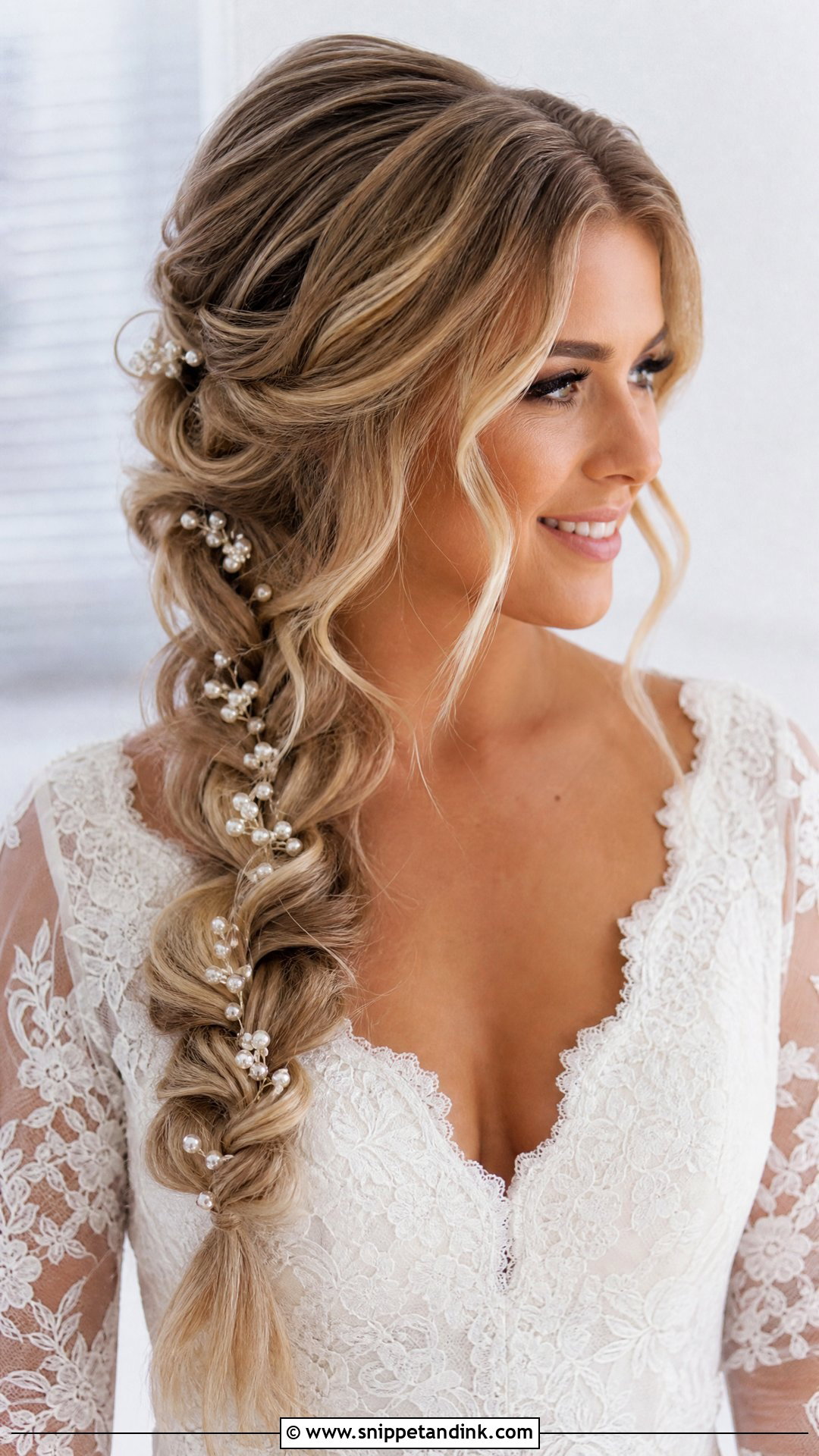
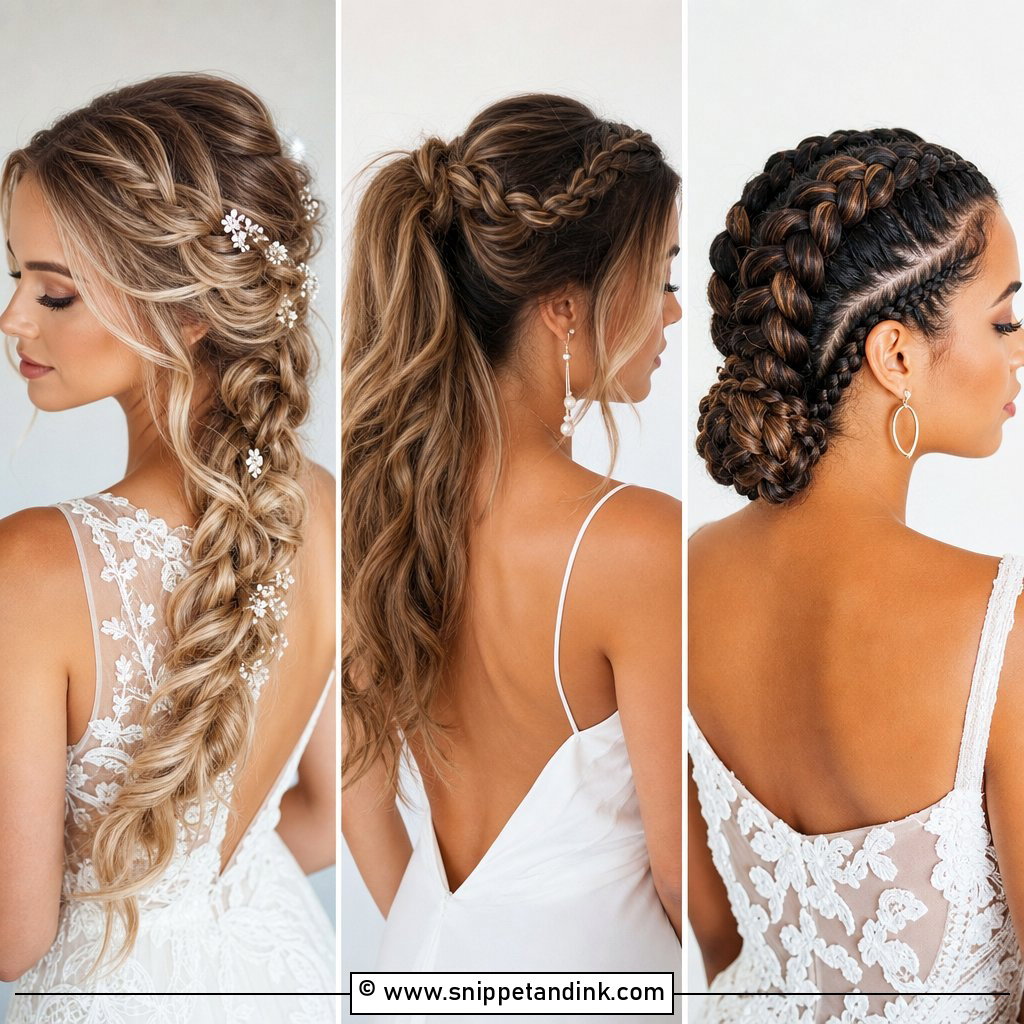
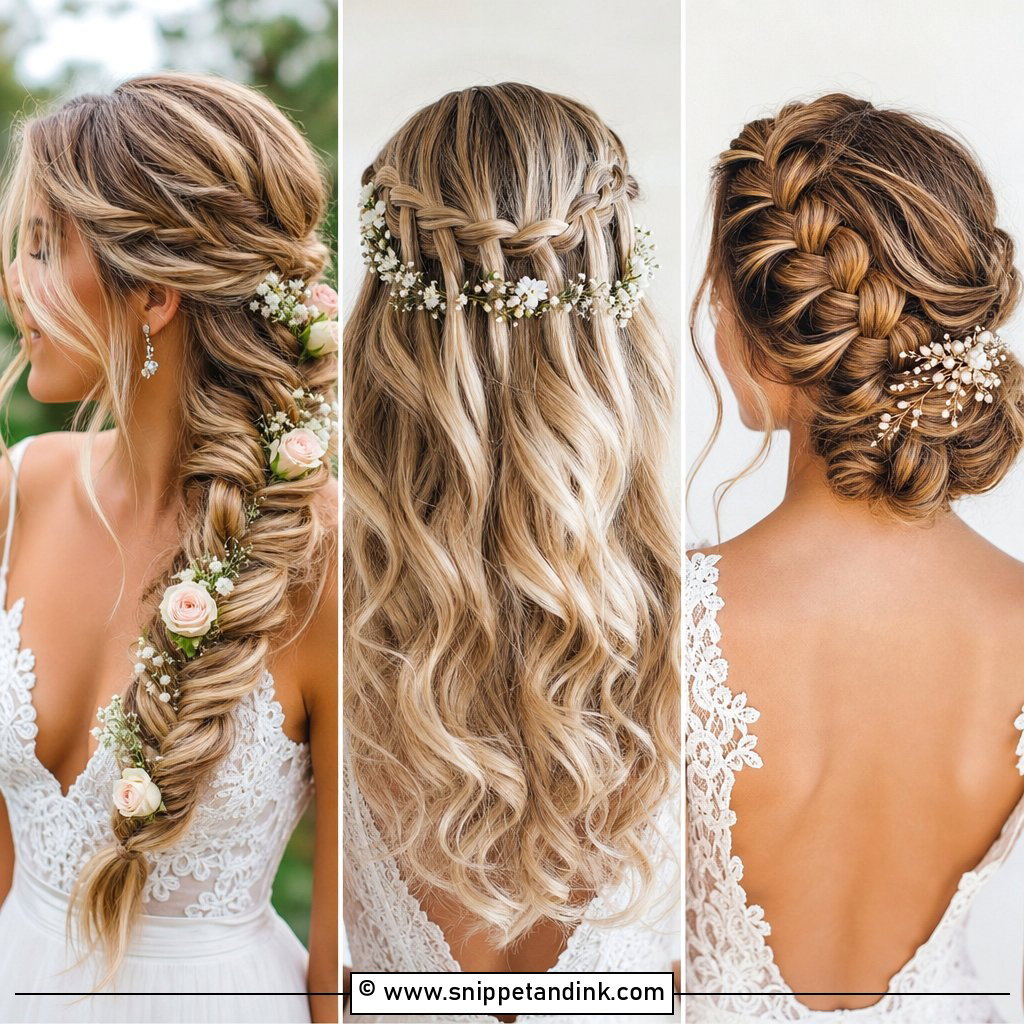
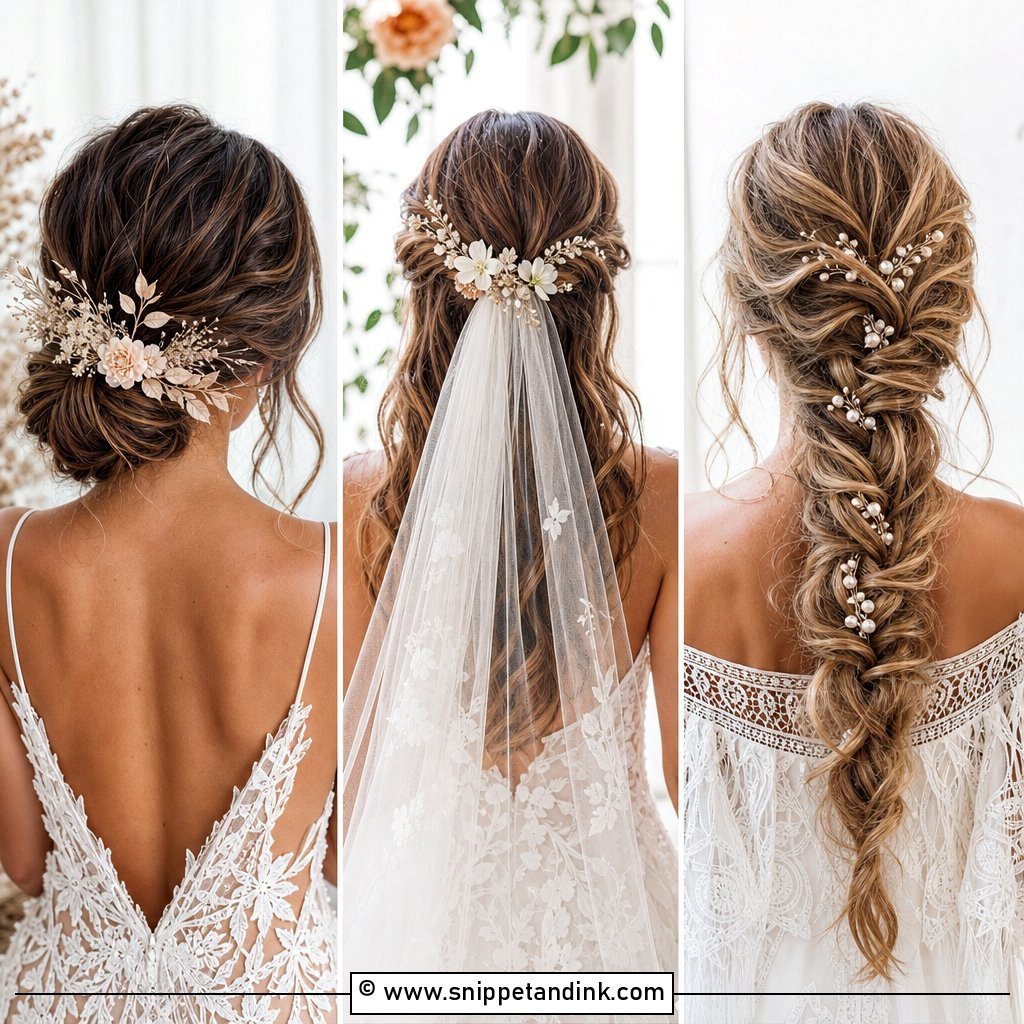
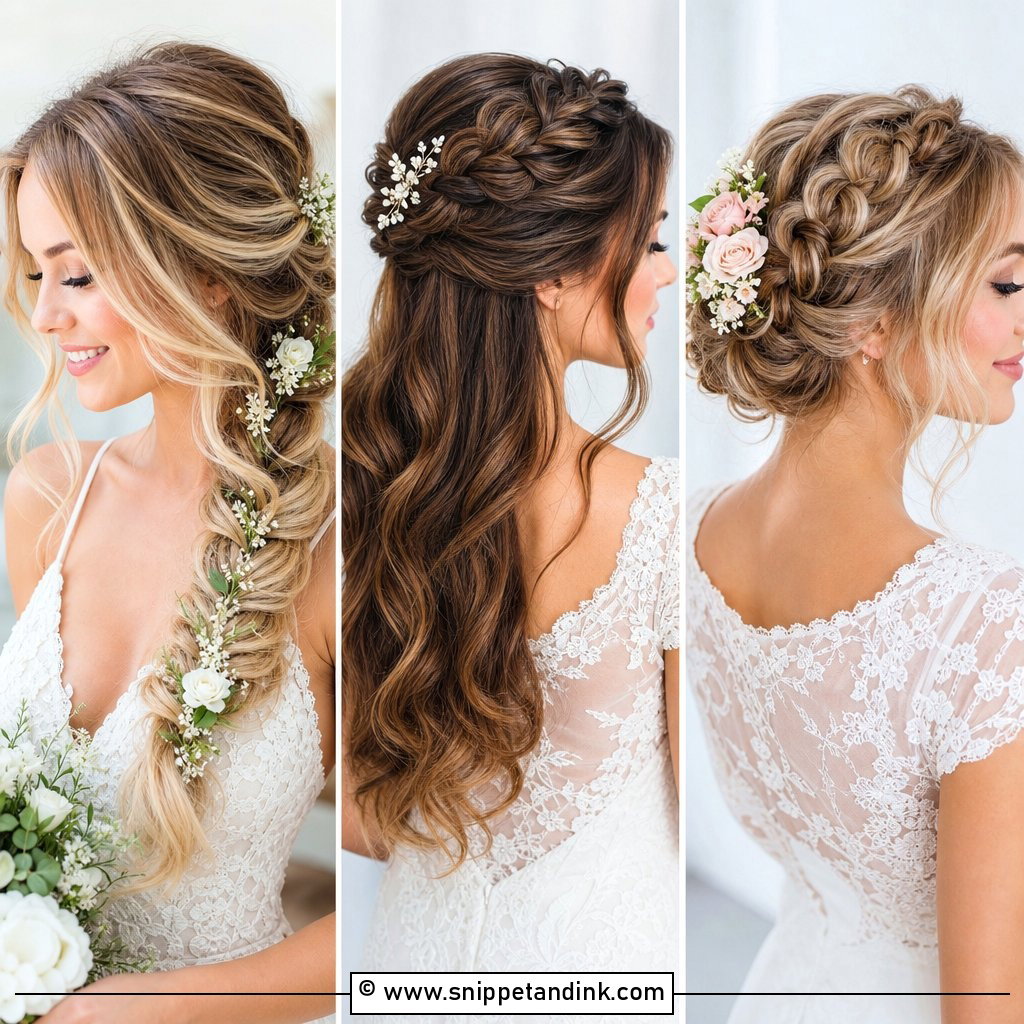
Over one shoulder, a side braid shows in nearly every portrait angle and leaves an open back or off-the-shoulder neckline clear. I lift the crown slightly before I start, since a side braid pulled from flat roots drags the whole head sideways in photos. Braid it firm, then pull each loop wider; starting loose gives you a braid that’s slipping apart by the speeches. A few small flowers or pearl pins tucked into the loops add detail. Long hair, highlighted hair and wavy textures suit it most, because the bends give the braid grip and the color shows in each twist.
2. Boho Fishtail Braid Wedding Hairstyle
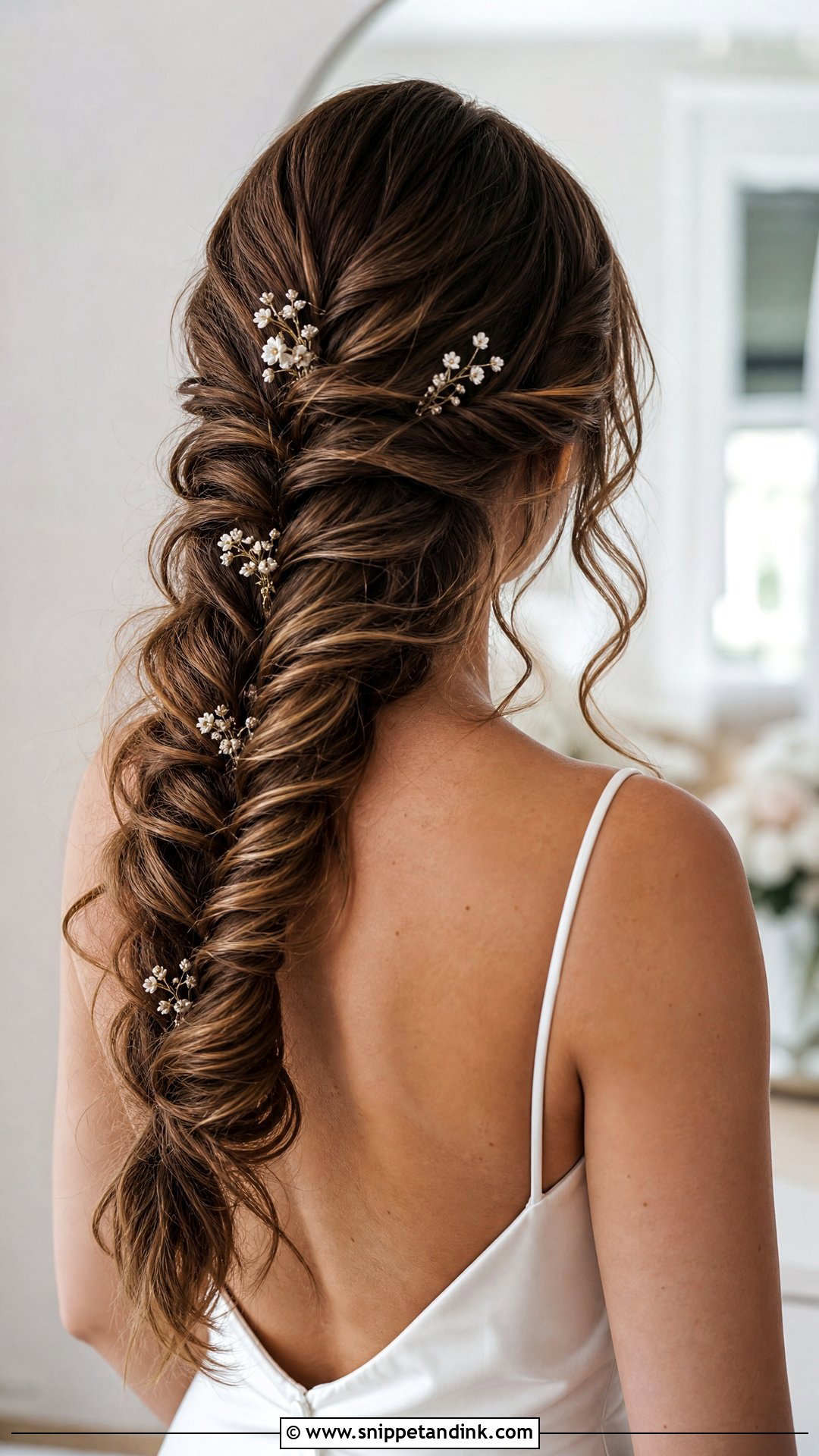
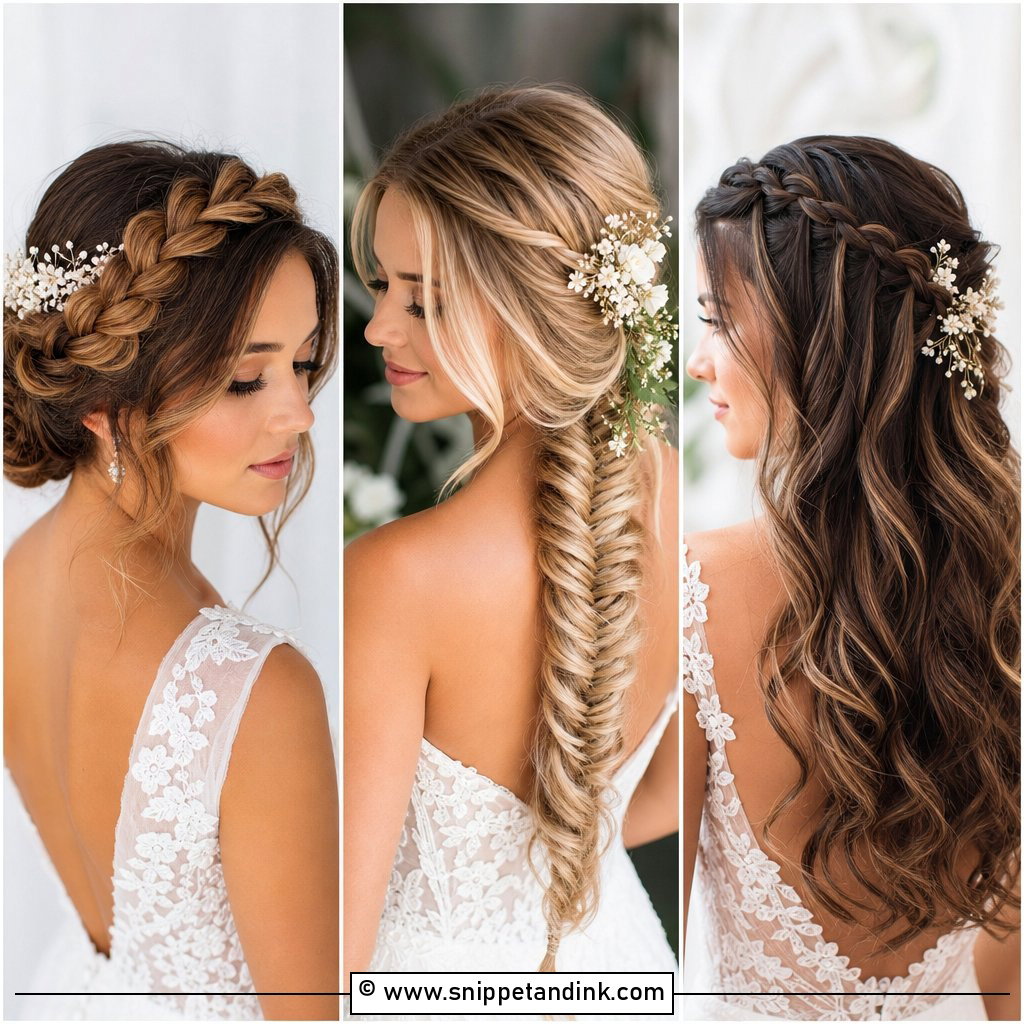
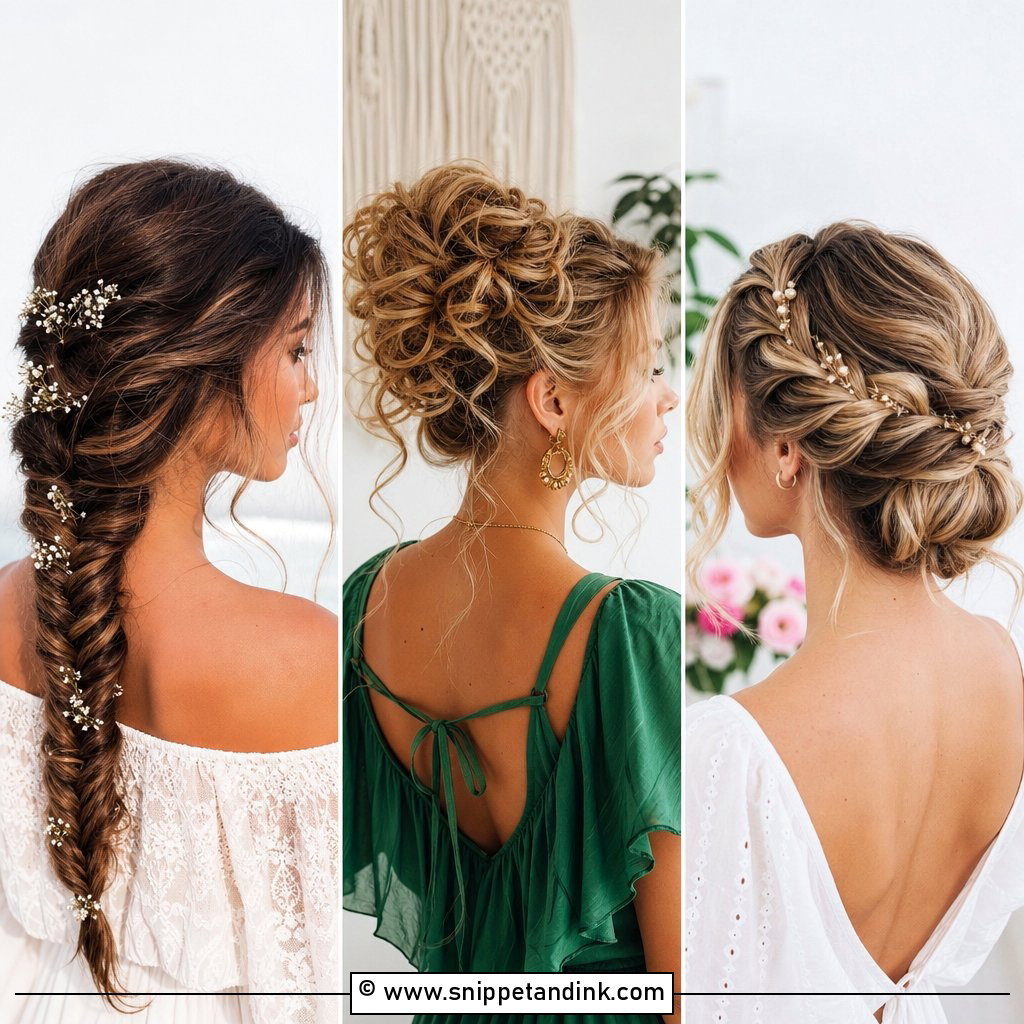
My verdict on the fishtail: more texture than any other braid here, and less forgiving of short layers. Each pass takes only a thin section from the outside, so the pattern looks finely woven. I loosen it gently once it’s secured to give it width, then decide placement with the veil in hand, because a fishtail down the back competes with a comb set low. Balayage, blonde highlights, auburn tones and dimensional brunette color all show up well in it, since every crossover flips the shade. A couple of soft curls at the face keep it from looking severe.
3. Boho Crown Braid Wedding Hairstyle
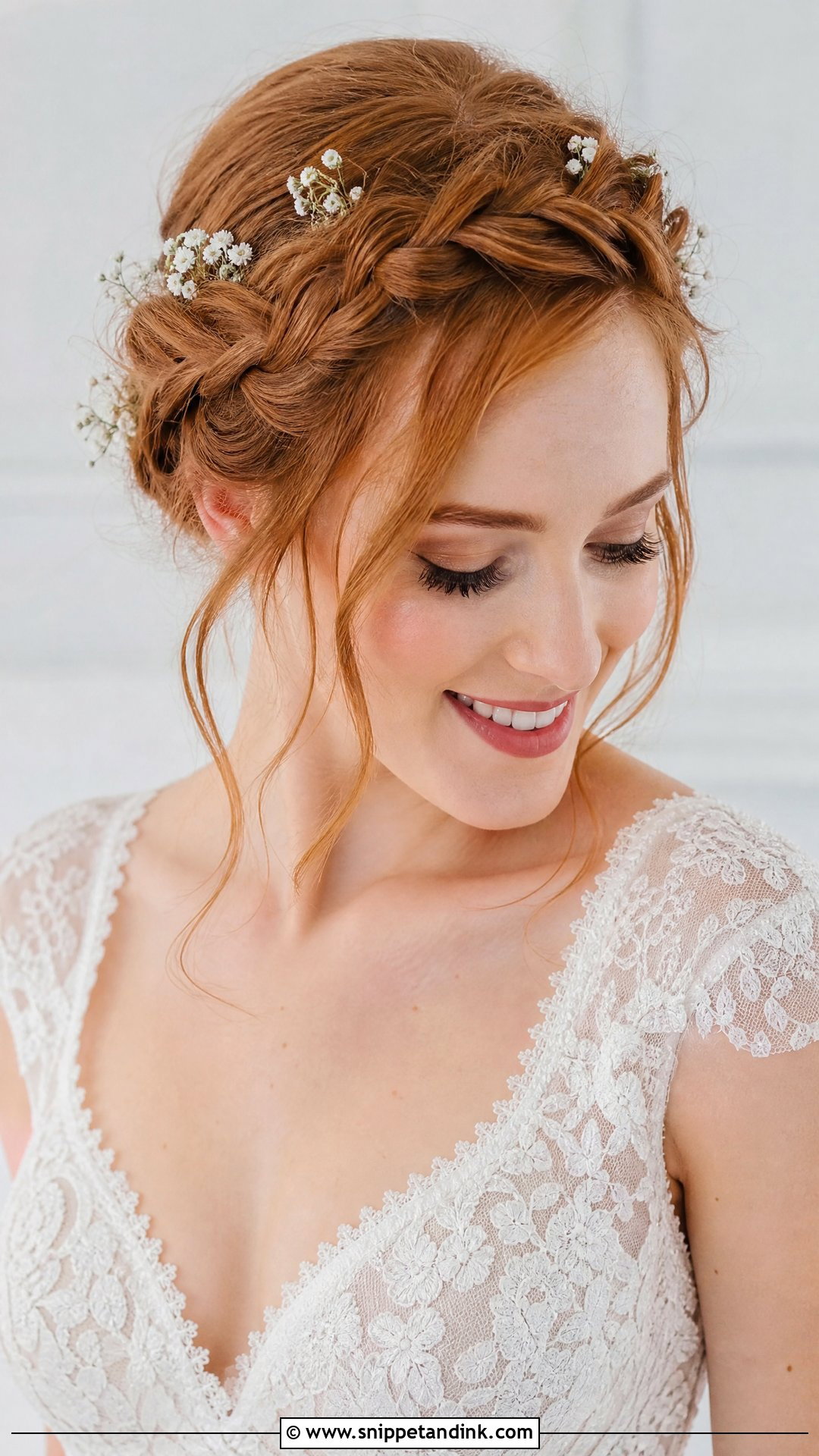
A crown braid frames the face like a halo and locks everything down, which is why I like it for long outdoor days. Fullness is what makes it read boho rather than ballet recital. I build it from two Dutch braids that meet at the back, pin each one every couple of inches, and pull the outer edges wider. Wispy pieces at the temples and nape stop it looking stiff. A veil comb sits best just below the braid at the back. If you have a high forehead, I’ll set the braid a little further forward so it doesn’t sit like a headband.
4. Boho Braided Half Up Wedding Hairstyle
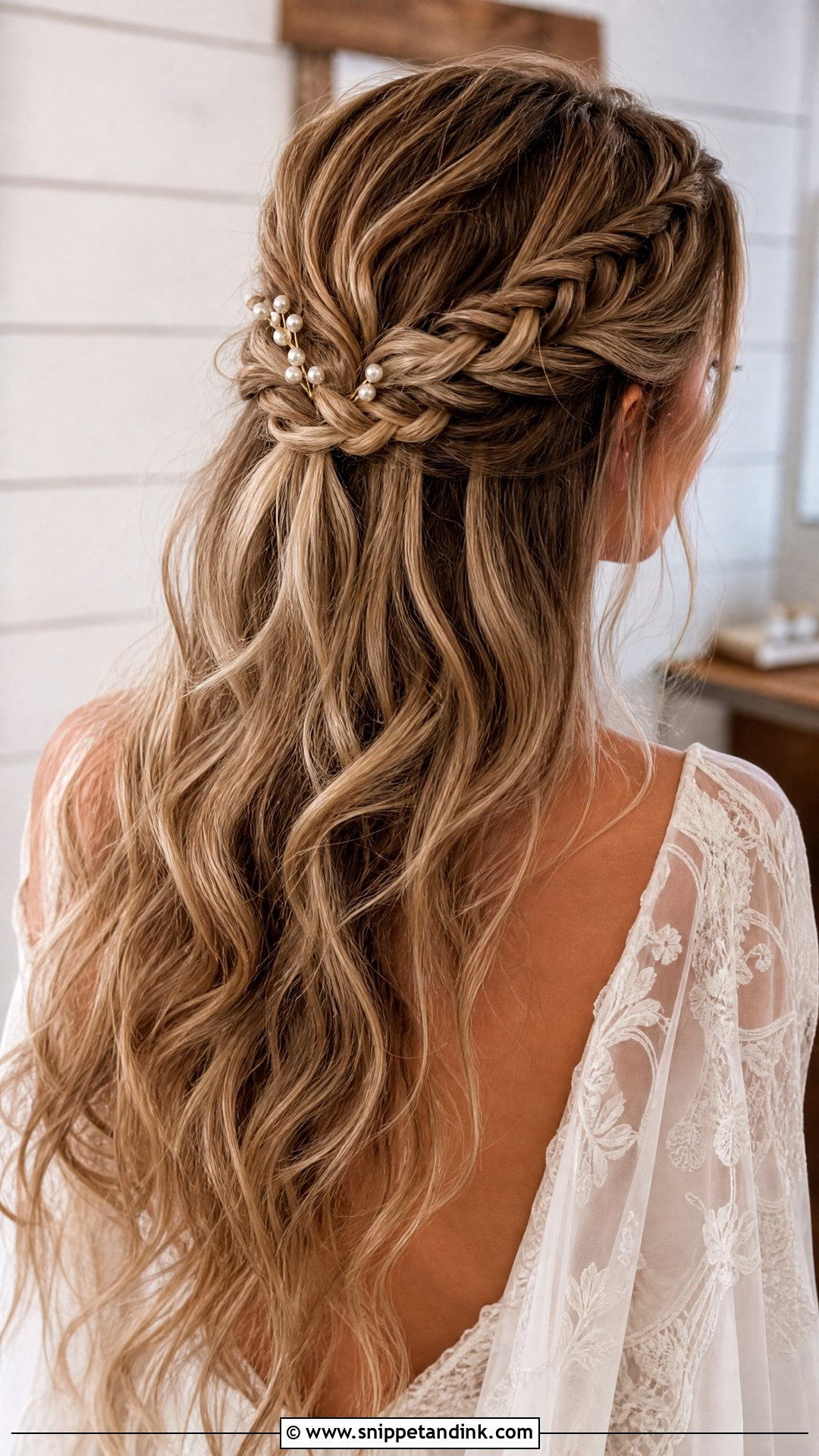
Braided half-up styles give you loose hair with a bit of control. I braid or twist the top section back and leave the rest in waves, so your length still shows. Small accent braids at the temples can feed into a center braid, and the spot where they meet is where I hide the pins under a flower or pearl. The common mistake is curling the lengths too tight. Brushed-out waves blend with braid texture much better than ringlets do. At garden and beach ceremonies it earns its place by keeping front pieces off your face for the vows.
5. Boho Waterfall Braid Wedding Hairstyle
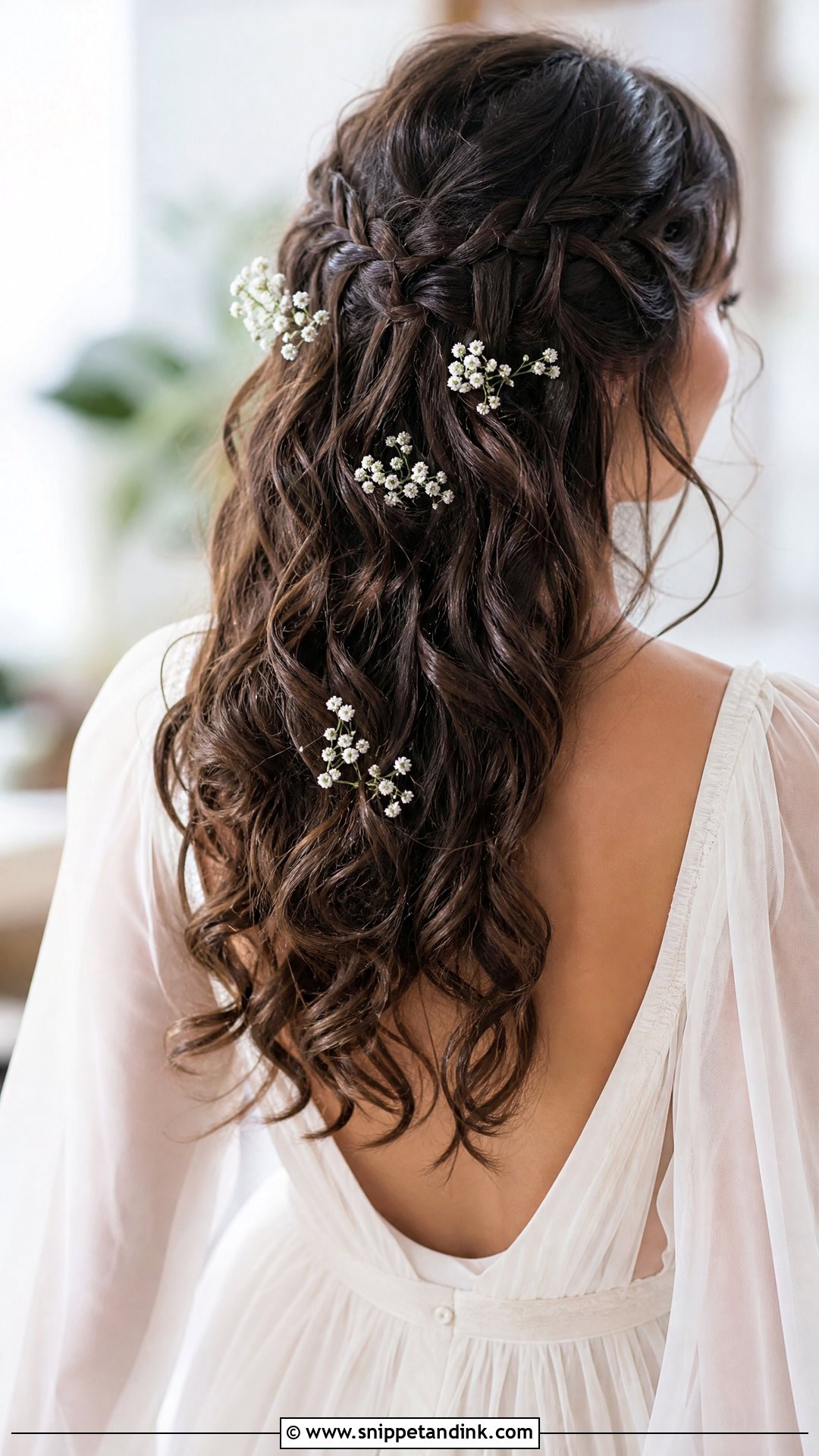
The waterfall braid is the most delicate style in this list, and honestly the most fragile. The braid runs across the head while sections drop through it, giving a soft cascading effect. Because every dropped section leaves the braid, it carries less tension than a regular braid, so I pin it from underneath at the back and finish with a firmer hold spray than I’d use elsewhere. Medium to long hair with gentle waves through the dropped pieces shows it best. Natural highlights make the pattern easier to see from the back rows.
6. Boho Braided Low Bun Wedding Hairstyle
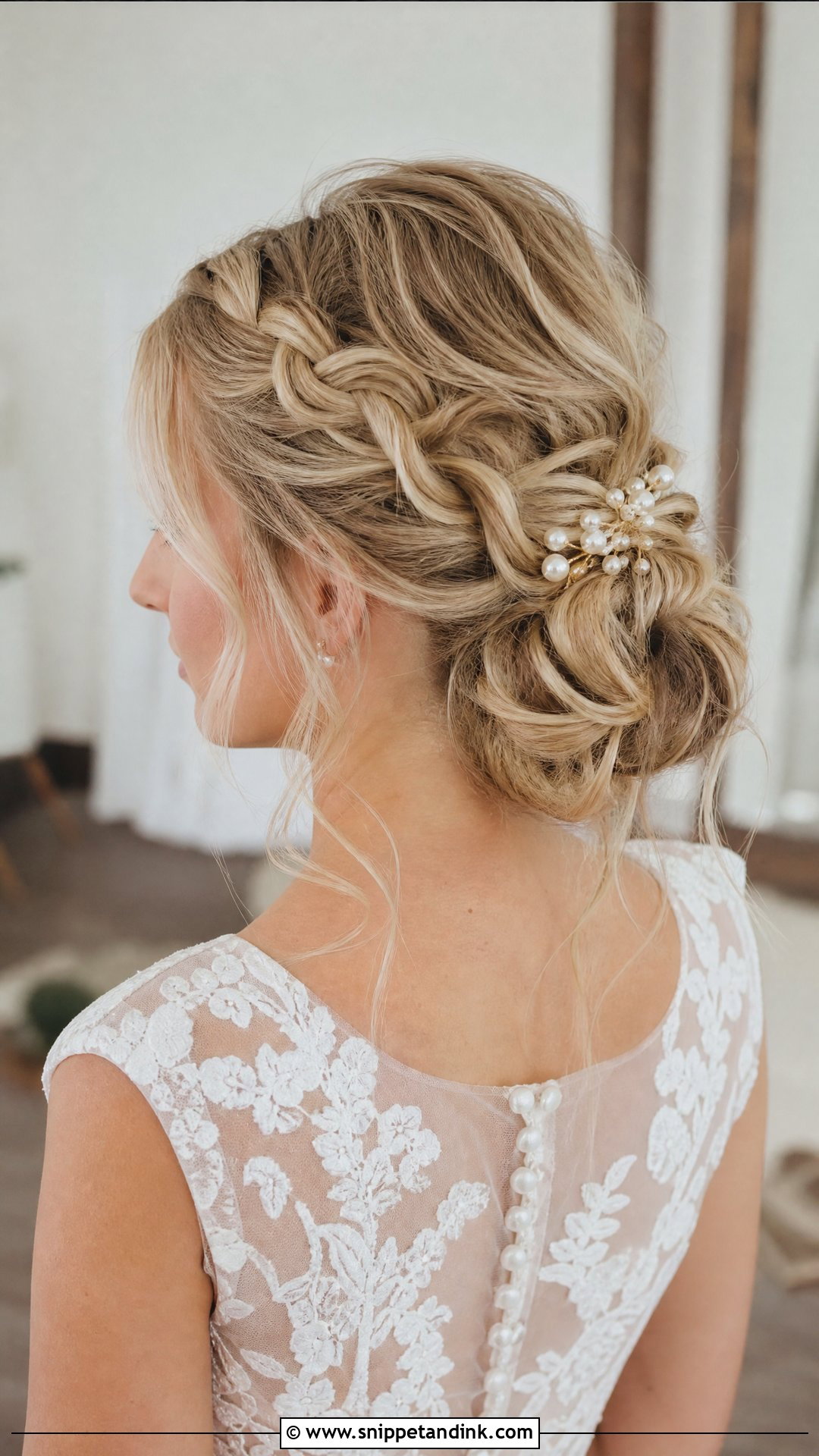
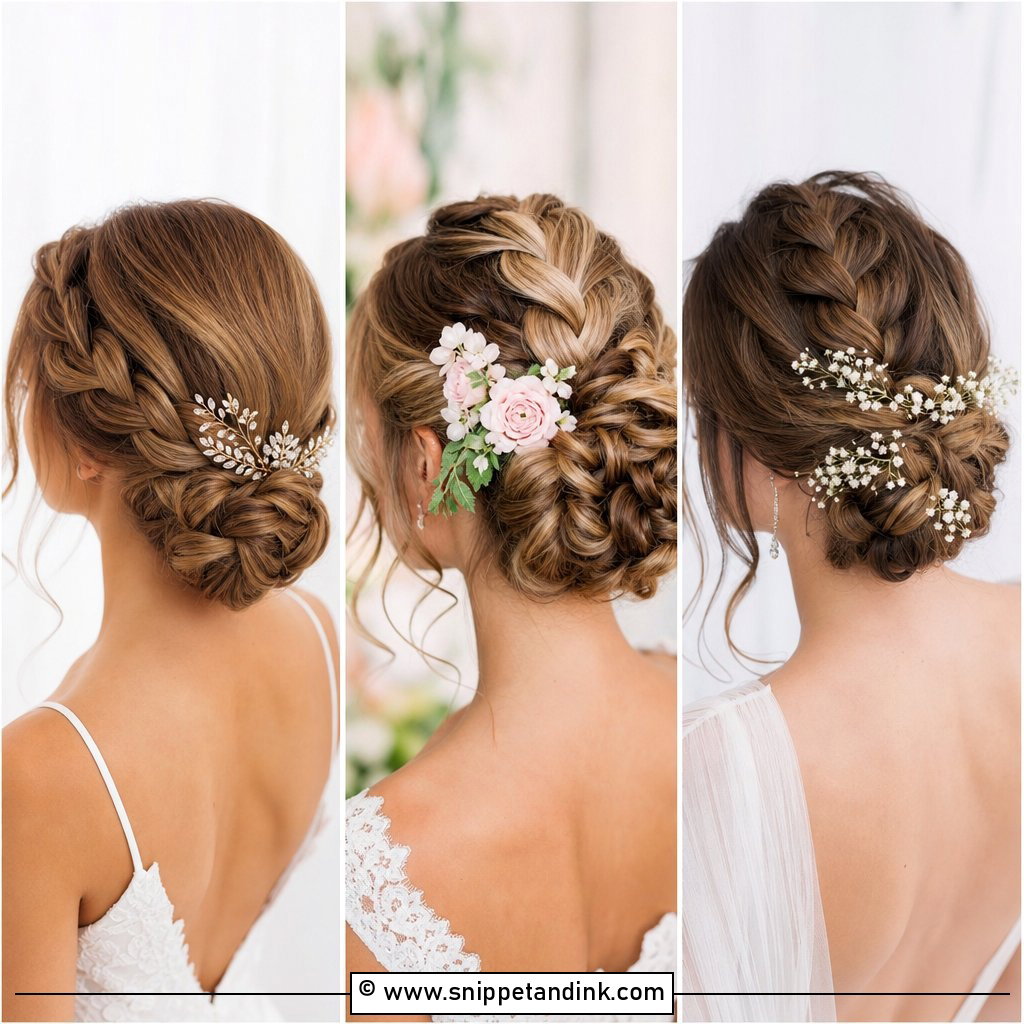
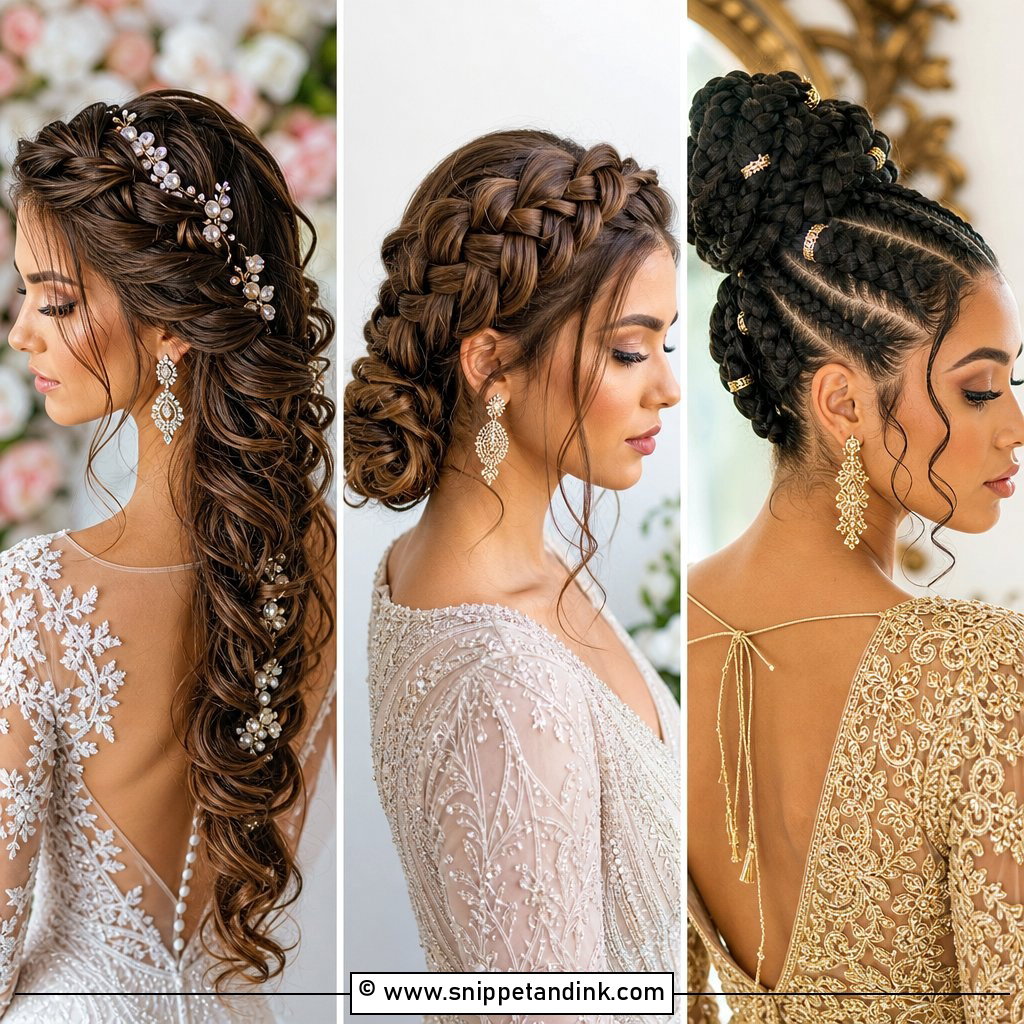
Brides who want an updo that doesn’t feel formal usually end up here. A braid coiled into a low bun adds texture, and sitting at the nape it leaves room for a veil comb above and earrings either side. I braid the length first, then coil it and pin through the braid itself rather than around it, which holds far better in wind than a smooth bun does. The coil shouldn’t be pulled tight. I loosen a few loops and leave some face-framing pieces so it stays relaxed. Lace, satin and minimal gowns all sit well with it.
7. Boho Dutch Braid Wedding Hairstyle
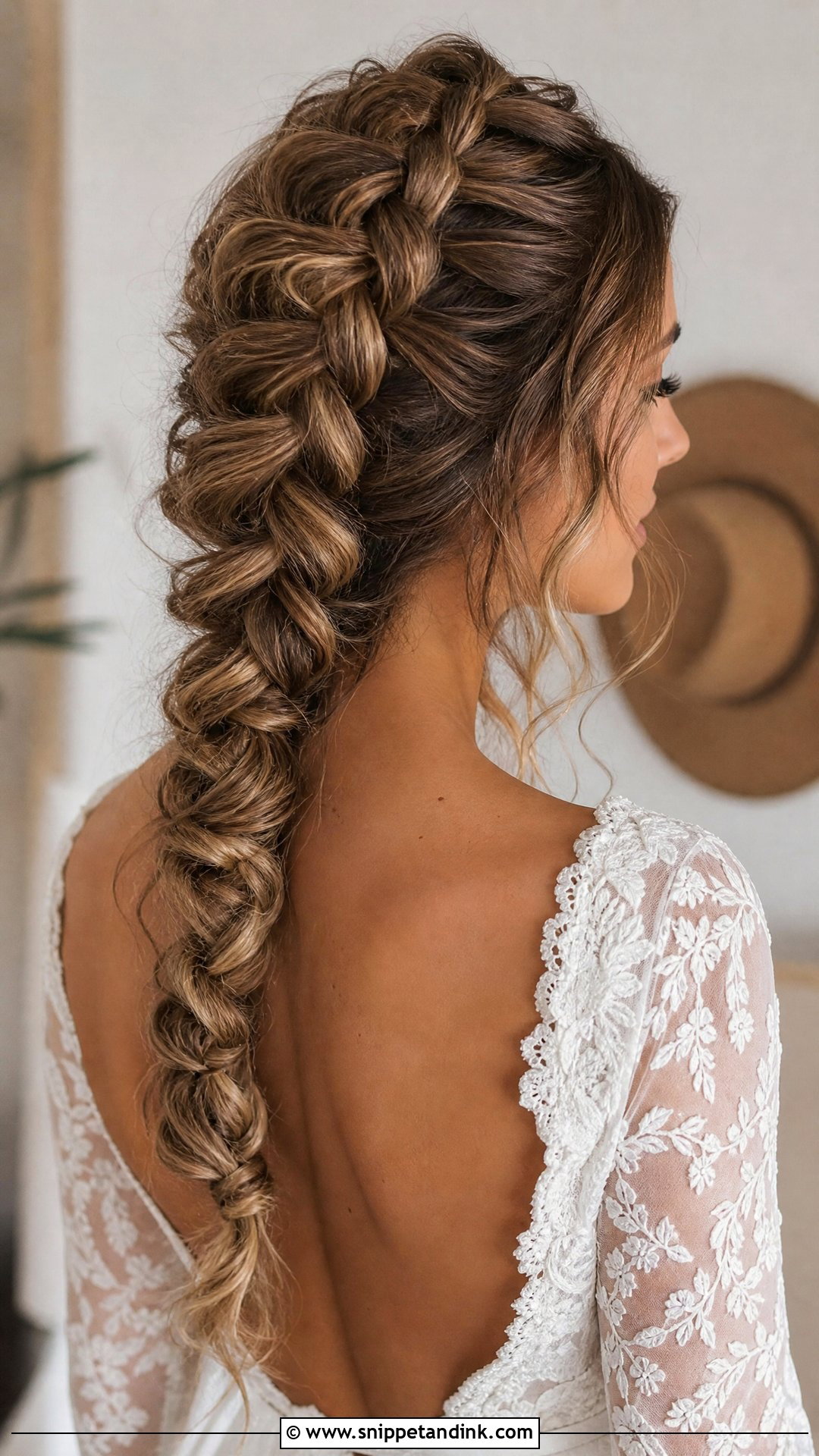
A Dutch braid crosses each section under rather than over, so it sits raised on top of the hair and gives more lift than a standard braid. That raised shape is why it reads clearly in photos from the front and side. It can run into a low ponytail, a bun or a long textured braid, and two parallel Dutch braids give a balanced look that survives serious dancing. On fine hair I braid close to the scalp and widen it afterwards, which fakes density well. Soft curls around the face and a little crown lift finish it.
8. Boho Braided Ponytail Wedding Hairstyle
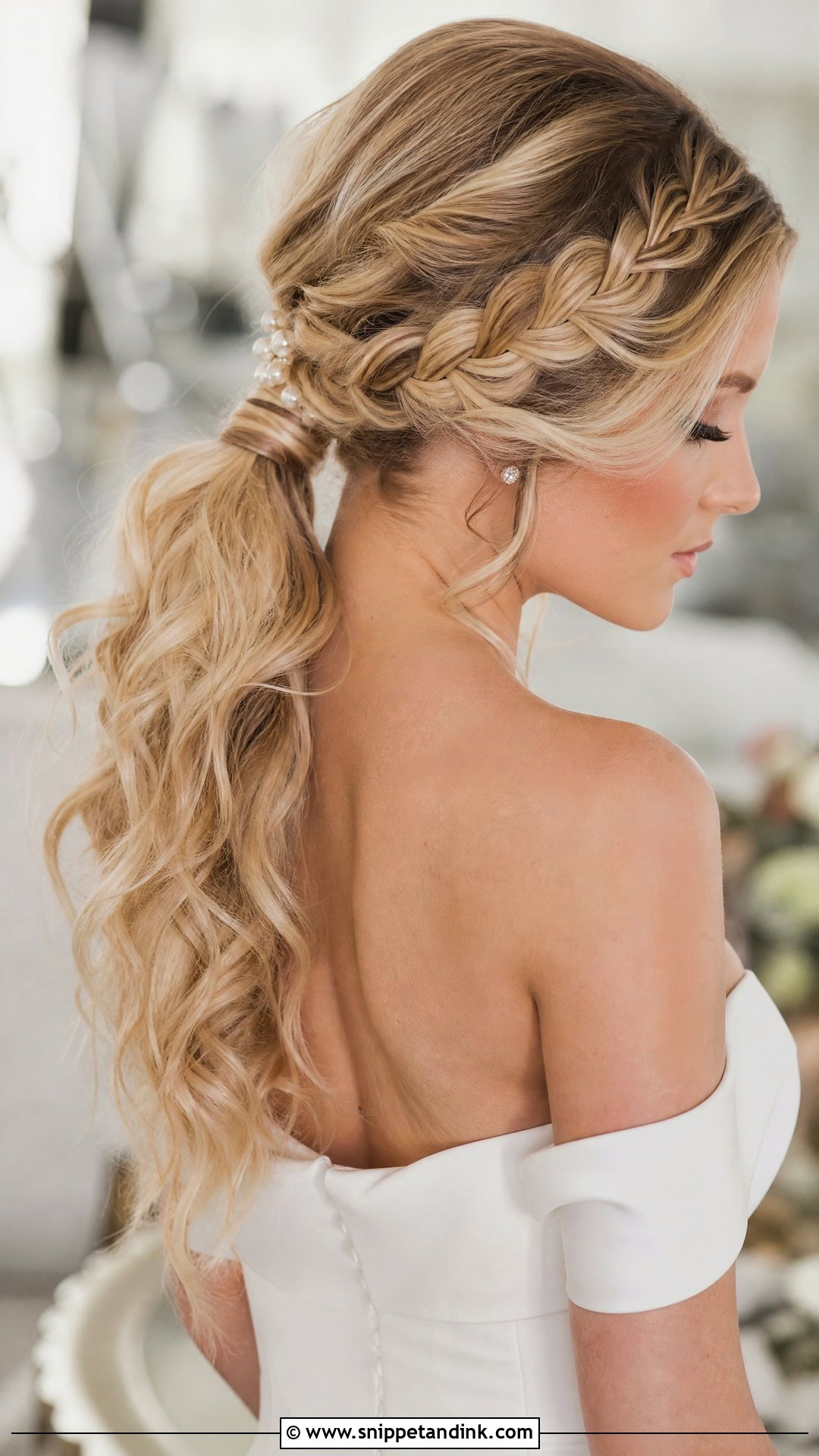
Hair off the face with length down the back: that’s the appeal of a braided ponytail. Braids can start at the crown, the sides or the hairline before flowing into waves or a textured braid. Extensions blend easily here, which is why I often suggest it to brides who want more length than they have, since the braids hide the clip tracks. I set the elastic lower than a gym ponytail so it doesn’t pull at the crown over a long day, then wrap a section of hair around it and pin it. Pearl pins or flowers at the base make it bridal.
9. Boho Box Braids Wedding Hairstyle
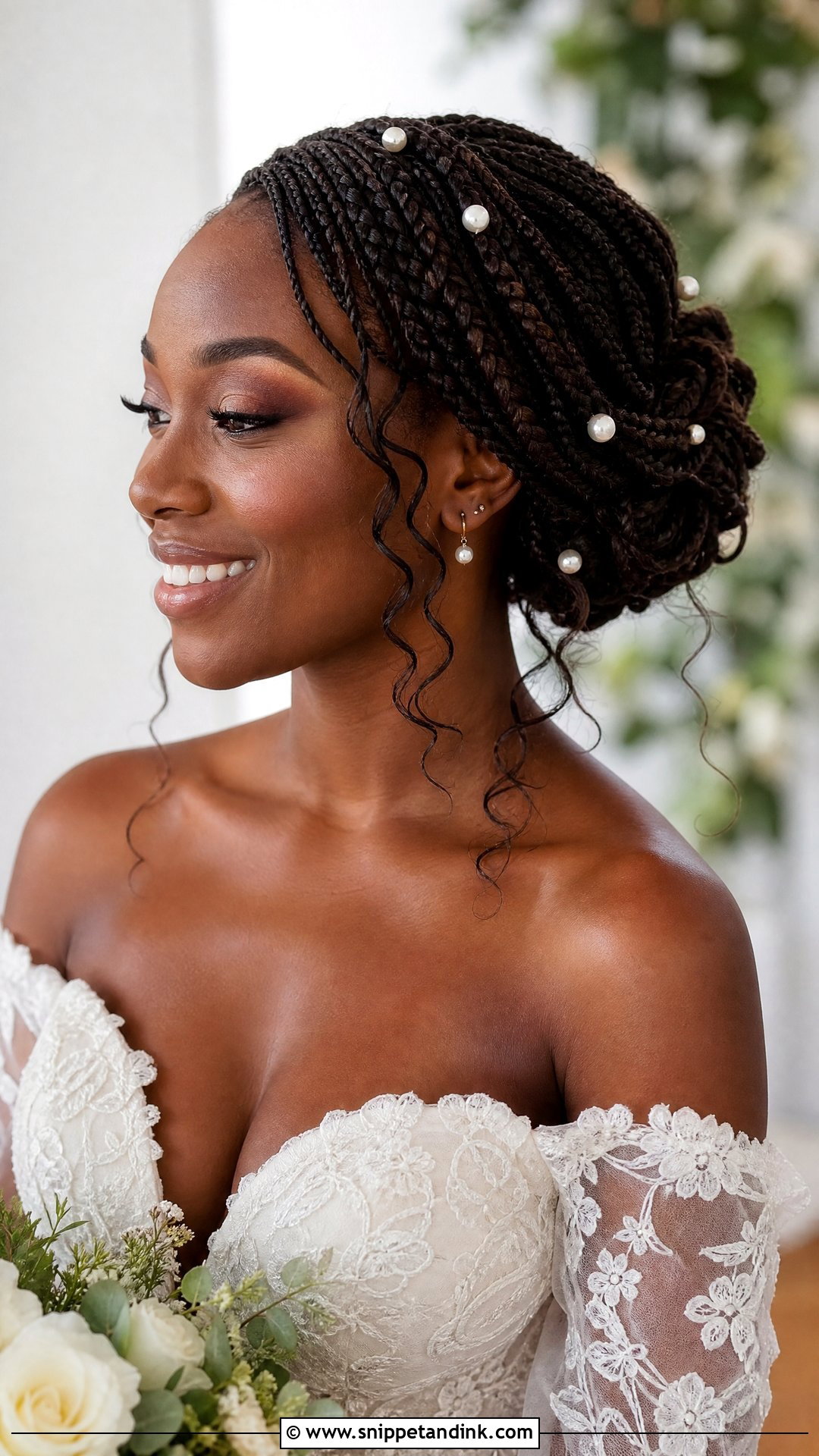
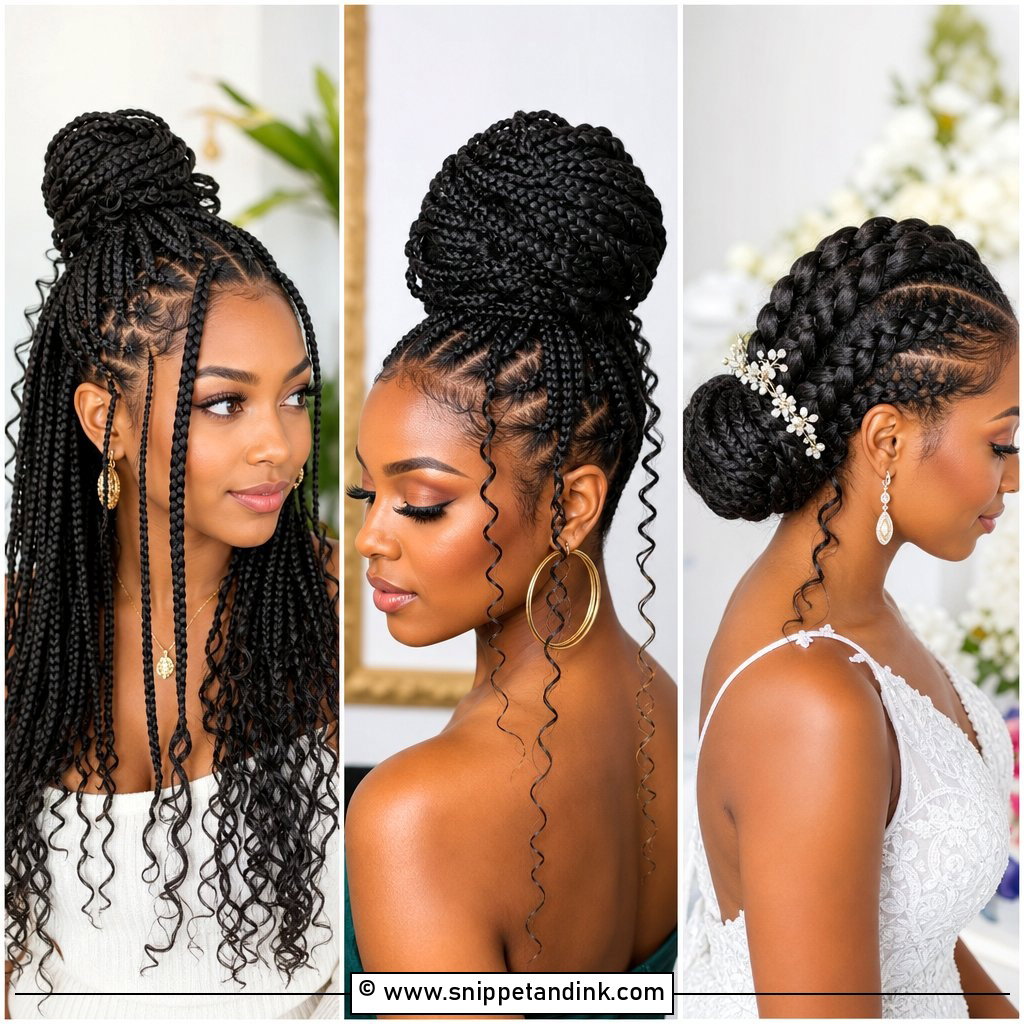
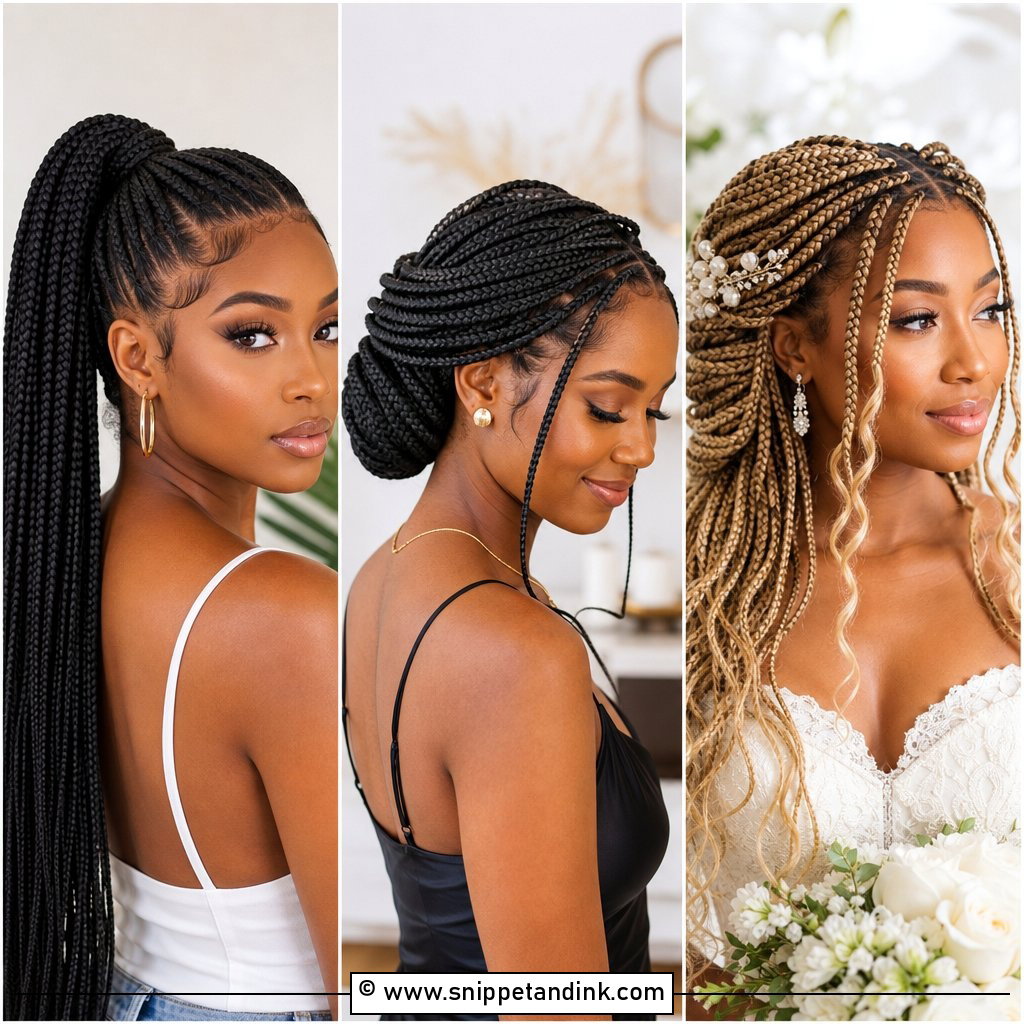
Already wear protective styles? Boho box braids give your wedding look softness and movement without changing your routine. Neat braids are mixed with curly or wavy pieces left out along the length. Medium or small braids give me the most to work with, because they bend into a bun or side sweep without bulk. Worn down is simplest; a soft gathered bun is my pick if the dress has a high back. Gold cuffs or pearl pins add detail, though I’d keep them to a handful so they don’t weigh the braids. A fresh install keeps the parts crisp in close-ups.
10. Boho Knotless Braids Wedding Hairstyle
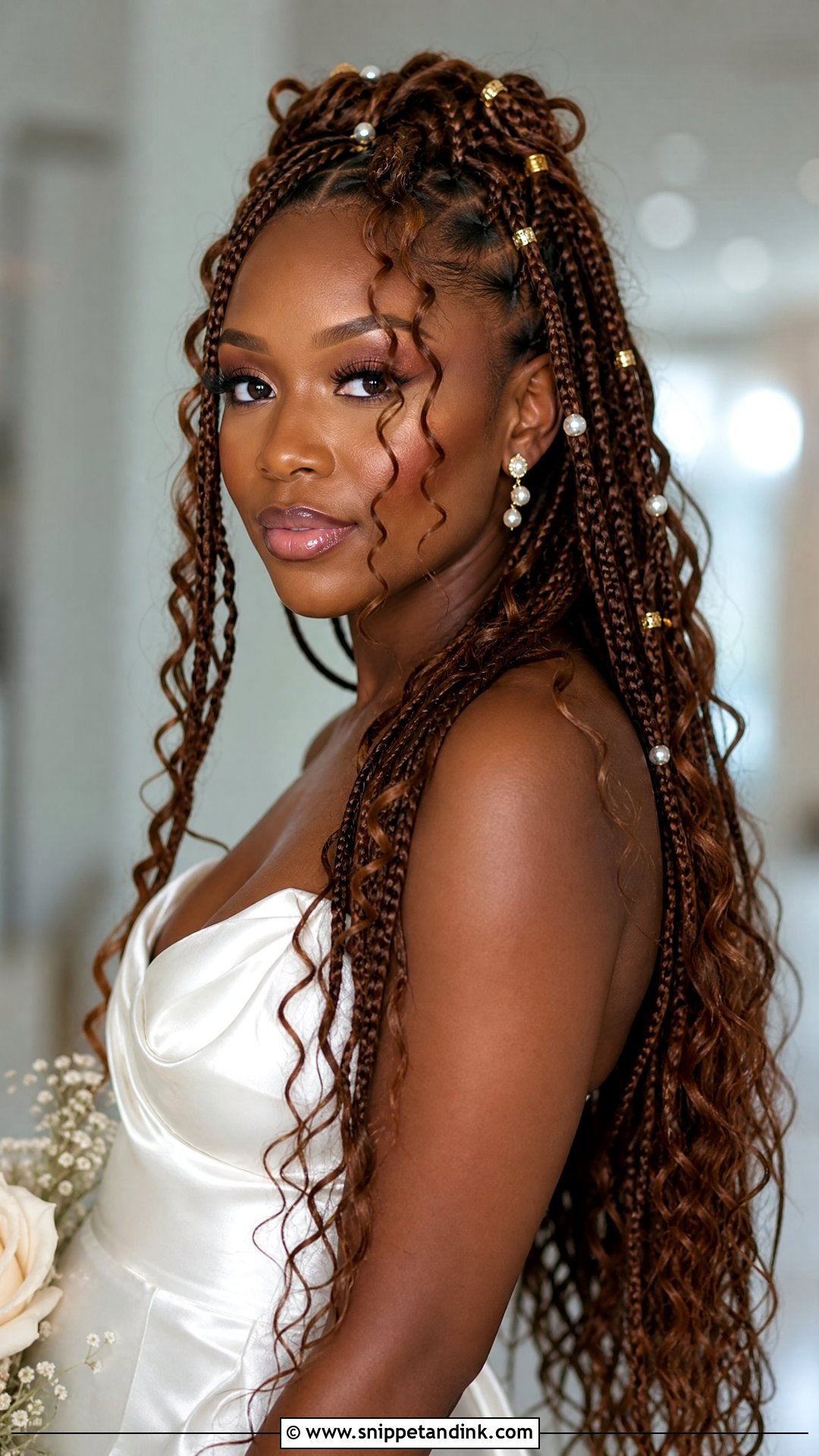
Knotless braids begin with your own hair and feed the extension hair in gradually, so there’s no bulky knot at the root and far less tension on the scalp. That’s why they feel lighter and look more natural at the parting than traditional box braids. With curly pieces left loose, they wear long, half up or in a low ponytail. For comfort over a twelve-hour day, I’d choose them over box braids nearly every time. A light leave-in on the curly pieces that morning keeps them defined, and accessories should match the metal or pearl already on your dress.
11. Boho Goddess Braids Wedding Hairstyle
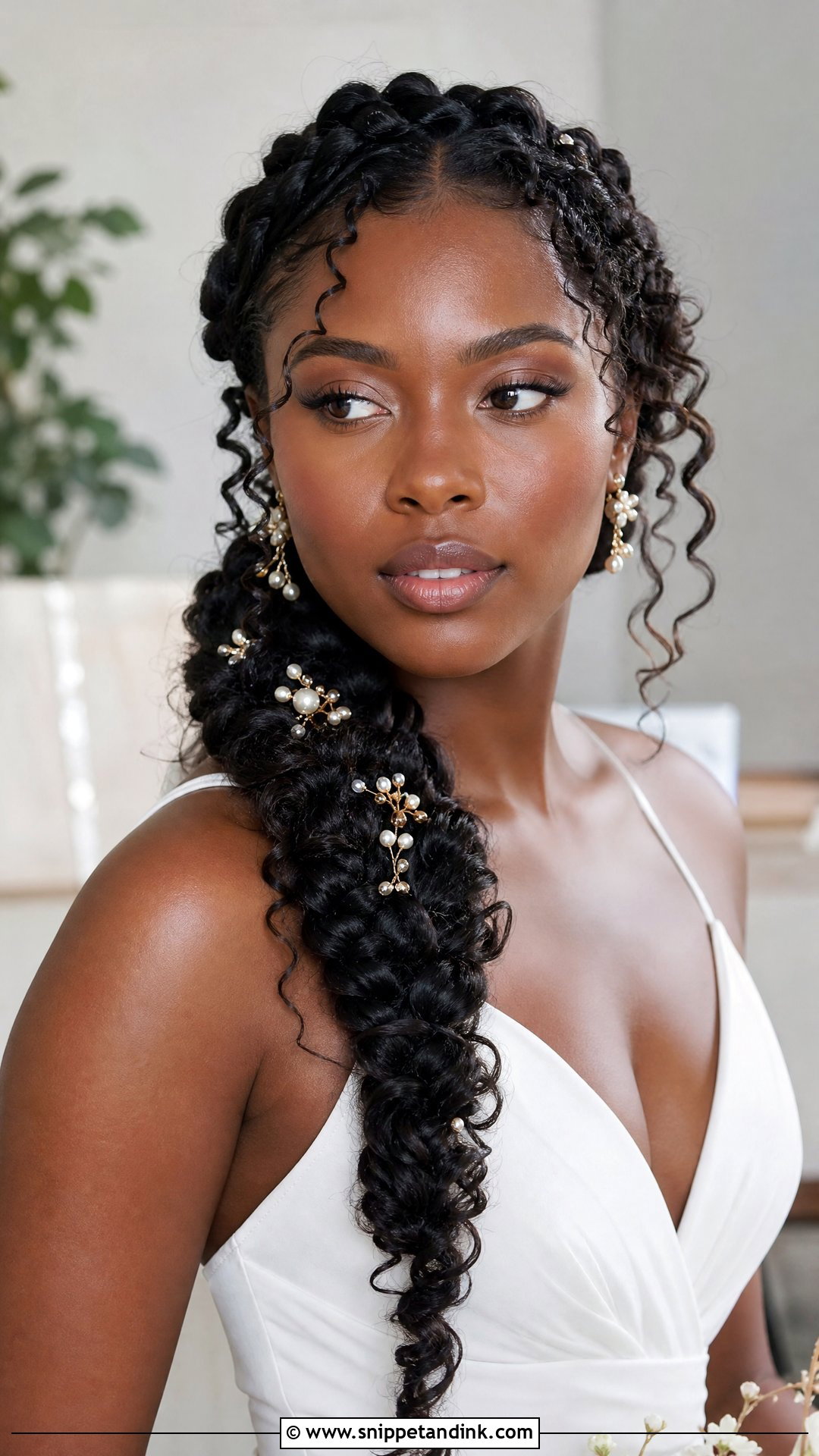
Goddess braids lean bold. Loose curly strands run through them and soften the shape, and the hair becomes a big part of the whole bridal look, so I usually pair them with a simpler gown. They style into a long side braid, a bun at any height, or half up. The two things I watch are curl definition and clean parts, because frizzy curls next to neat braids look unfinished. Refresh the curly pieces with water and a light cream on the morning rather than heavy oil, which leaves them limp in photos.
12. Boho Braided Updo Wedding Hairstyle
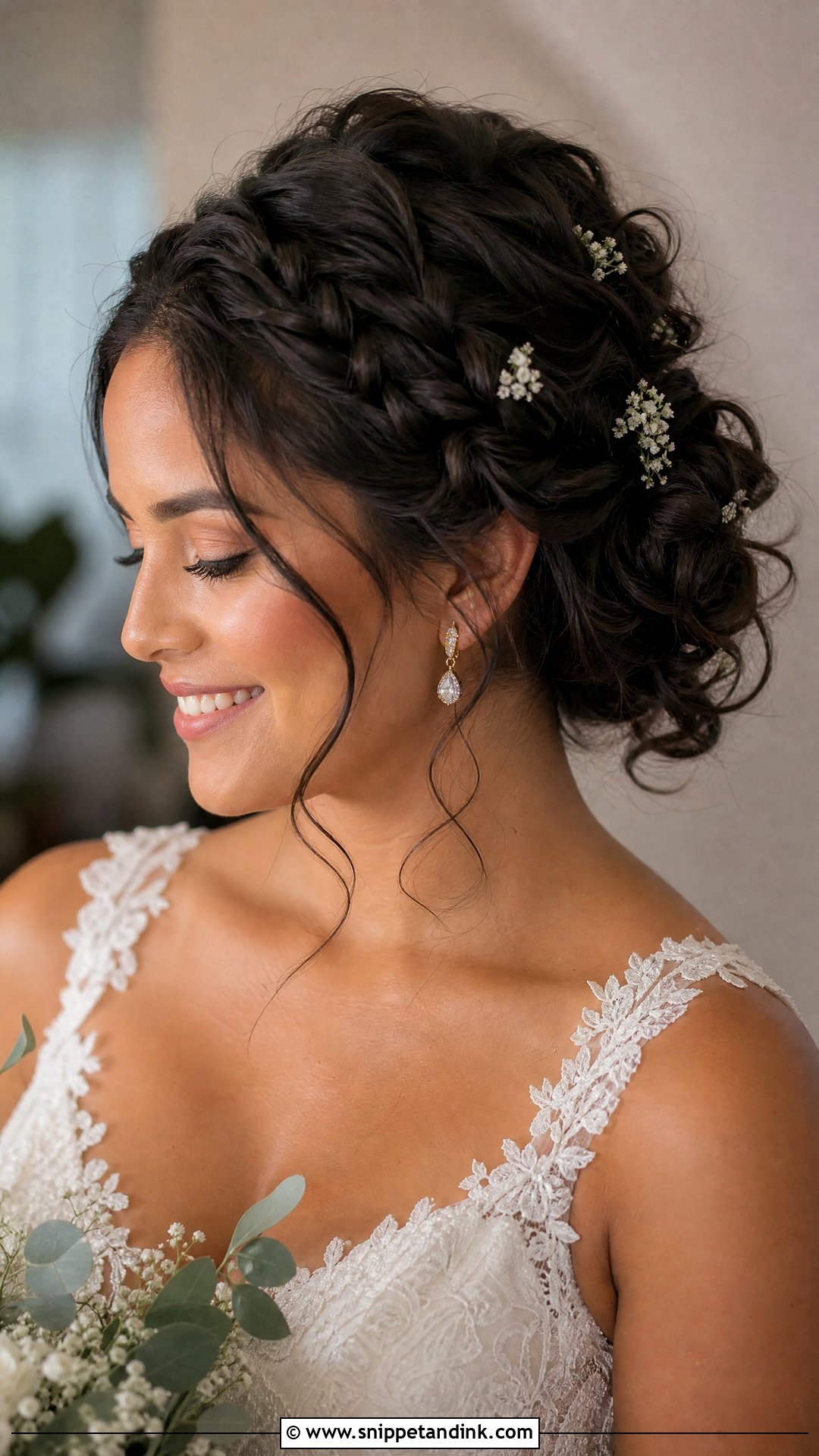
A braided updo lifts hair off the shoulders while keeping a soft, undone surface. Small braids, twisted sections, a loose bun and tendrils can all appear in one style. I build it secure inside and relaxed outside: anchoring pins and a hidden base first, texture pulled out last. That order matters. Loosening a style before it’s anchored makes it collapse within the hour. Veils, combs and pearl details all have a firm base to grip, and for warm-weather weddings it’s one of the most reliable styles I do.
13. Boho Milkmaid Braid Wedding Hairstyle
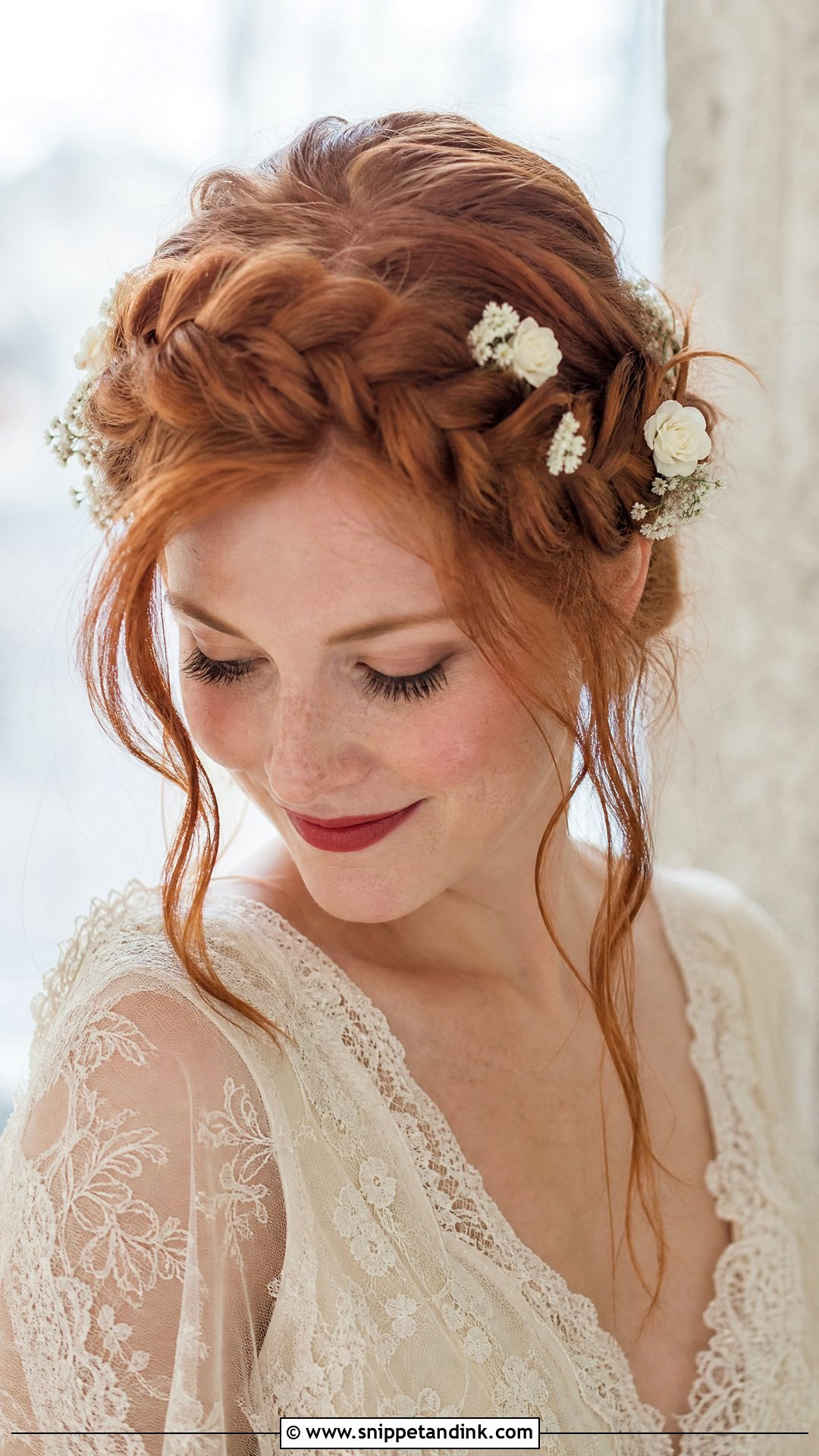
Milkmaid braids wrap across the top of the head from the nape, which gives a vintage, slightly folk shape and an alternative to a traditional bun. It needs length. The braids have to reach over the top and meet, so hair shorter than mid-back often needs a clip-in to get there. I keep the boho version loose with a few face-framing pieces and gentle root volume. Because it’s pinned in so many places, it stays put outdoors in a way loose hair can’t. Delicate earrings sit well beside it.
14. Boho Bubble Braid Wedding Hairstyle
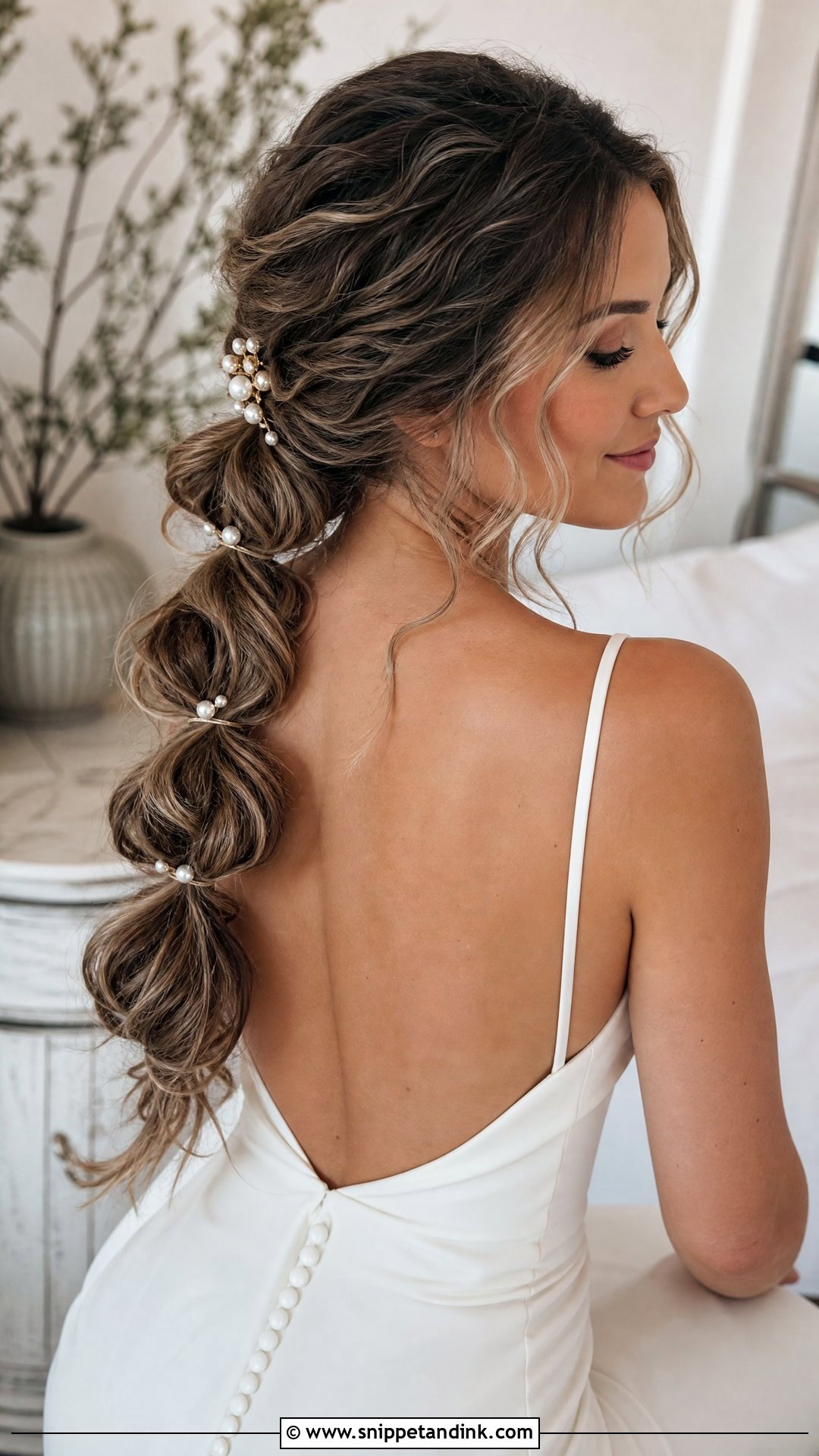
Strictly speaking, a boho bubble braid isn’t woven at all. The hair is tied at intervals with small elastics and each section is gently pulled into a rounded bubble. For a bride I keep the bubbles full and evenly spaced, and I use clear elastics so the ties disappear. Pulling unevenly is the usual mistake, so I step back after each bubble to check it against the last. It works as a ponytail, a side style or half up, and it shows length with very little risk of coming loose. Tiny pearls between sections make it bridal.
15. Boho Braids With Flowers Wedding Hairstyle
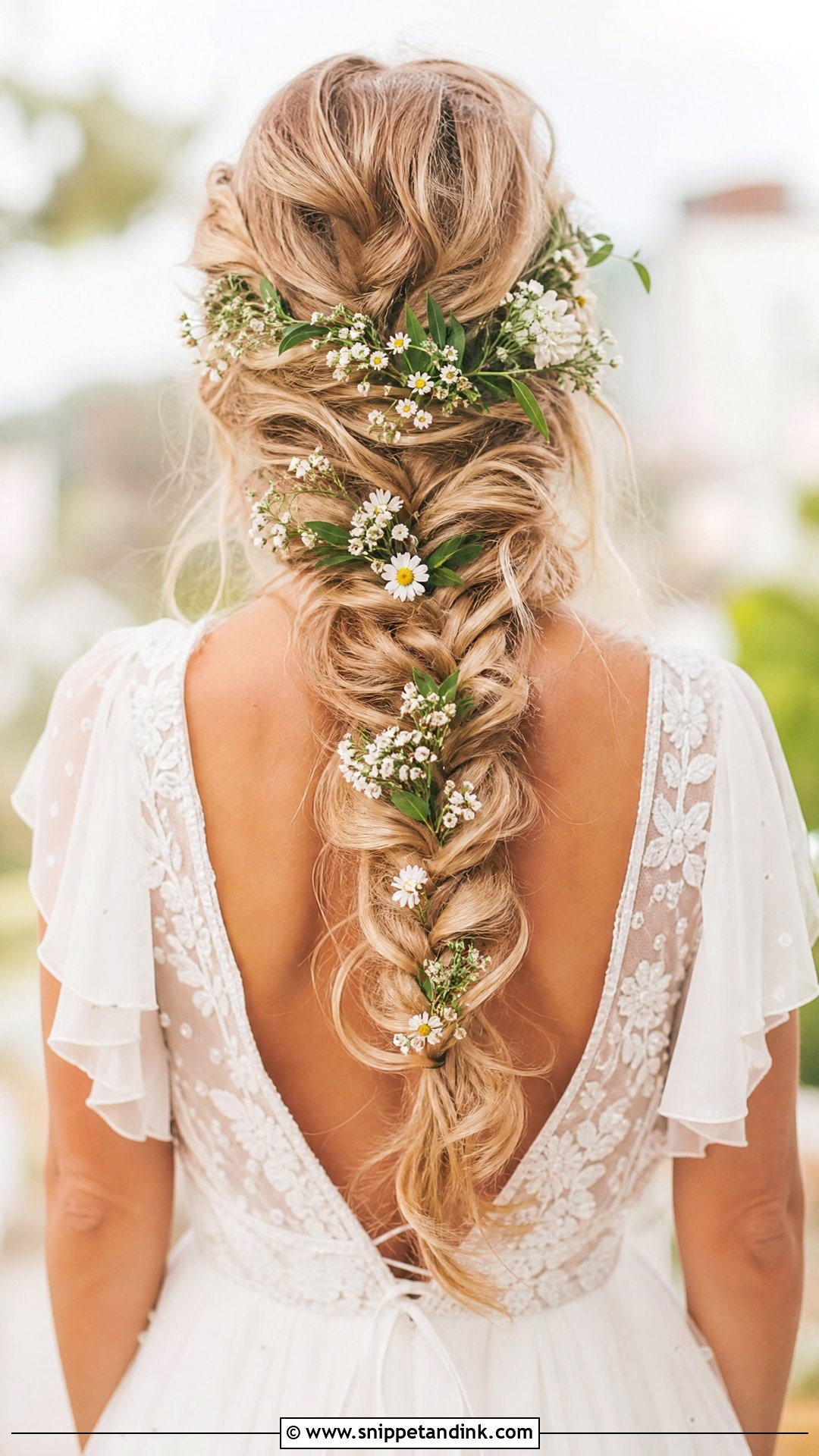
Flowers and braids go together because a braid gives stems somewhere to sit. I push each stem into the braid’s loops and then secure it with a bobby pin through the stem wire, whether that’s a side braid, a crown braid or a low bun. Scale is the main decision. Tiny blooms, baby’s breath, small daisies or greenery usually look better than heavy pieces that drag the braid down. Fresh flowers need planning with your florist so they arrive wired and kept cool until I place them, ideally as late as possible that morning.
Box, Knotless and Goddess Braids on a Wedding Timeline
Protective braids need scheduling that loose styles don’t. A full install of knotless or goddess braids can take most of a day, longer for small braids or waist length, so it isn’t something to squeeze in between a final fitting and the rehearsal dinner.
Many brides book the install about a week before the wedding. The scalp has time to settle if the braids feel tight at first, and the parts still look fresh in photos. Much earlier and you’ll see frizz at the roots by the day. Much later and you may still be tender when the veil comb goes in.
Ask for Gentle Edges
Tension at the hairline is the one thing to be firm about. Small bumps or a pulling, headachy feeling after an install mean the braids are too tight, and that’s worth fixing straight away. Ask for the front braids to be done with lighter tension, especially if everything will be pulled up into a bun on the day, which adds pull of its own.
Where the Veil Comb Goes
Combs slide out of loose braids easily. The most secure spot is just under a crown braid or tucked into the top of a bun, where it grips a solid base. With box or knotless braids worn down, I’ll make a small anchor braid underneath for the comb and hide it completely. Try it at the trial with your actual veil, because a cathedral length pulls much harder than a short one.
Firm Underneath, Soft on Top
A braid gives you softness and security at once, which is a rare pairing in wedding hair. Whichever direction you lean, from a loose side braid to knotless braids worn long, it should suit your hair texture, your dress, the venue and how little you want to think about your hair during the day. Bring inspiration photos to your trial, but ask your stylist what will hold on your hair in particular. The braids that last until the final song are anchored firmly underneath and only softened on the surface.
You'll Like These Ideas:


Leave a Reply