
I get asked for braids by brides with every hair type, and for good reason: a braid locks hair in place, gives a veil or comb something firm to grip, and still looks soft in photos. It can also be a protective style that goes in days before the wedding. What changes from bride to bride is the braid itself. A sleek gown usually wants a clean braided bun, while lace or tulle can carry more loosened texture. Here are twenty braided styles I’d consider for a bride, with the practical notes I’d give you in the chair.
Reading an Inspiration Photo the Way a Stylist Does
Almost every braid photo you save has something going on that you can’t see. When a bride shows me a picture, I look at a few things before I tell her whether it will work on her hair.
- Density. Very full braids in photos usually include clip-in extensions. If your hair is fine, the same braid made only from your hair will be noticeably smaller.
- Length. Crown, milkmaid and mermaid braids need enough hair to travel a long way. I check where your ends fall before promising any of them.
- Angle. Many photos show only the back. Ask yourself whether you also like how the front and sides would look, because that’s what most guests see.
- Lighting and filters. Soft, warm editing makes loosened braids look fuller than they appear in flash photography at a reception.
- How long it has been in. Most pictures are taken right after styling. A braid with lots of pulled-out loops will be flatter after a few hours under a veil.
None of this means you can’t have the look you love. It means we plan for it: a weft here, a tighter base there, curls set the night before. I’d much rather adjust the plan at a trial than on the morning.
1. Bride Braids With Low Bun
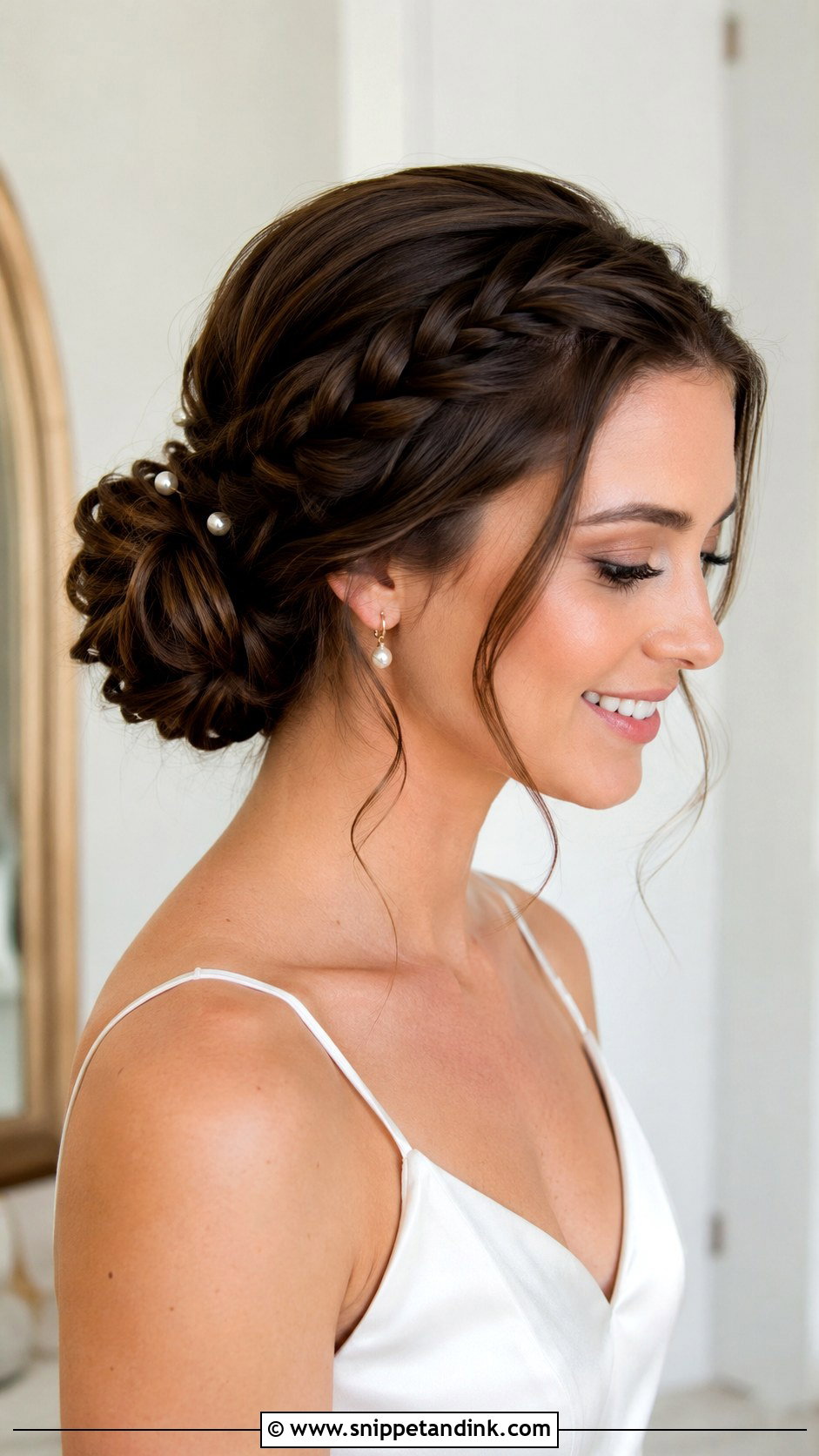
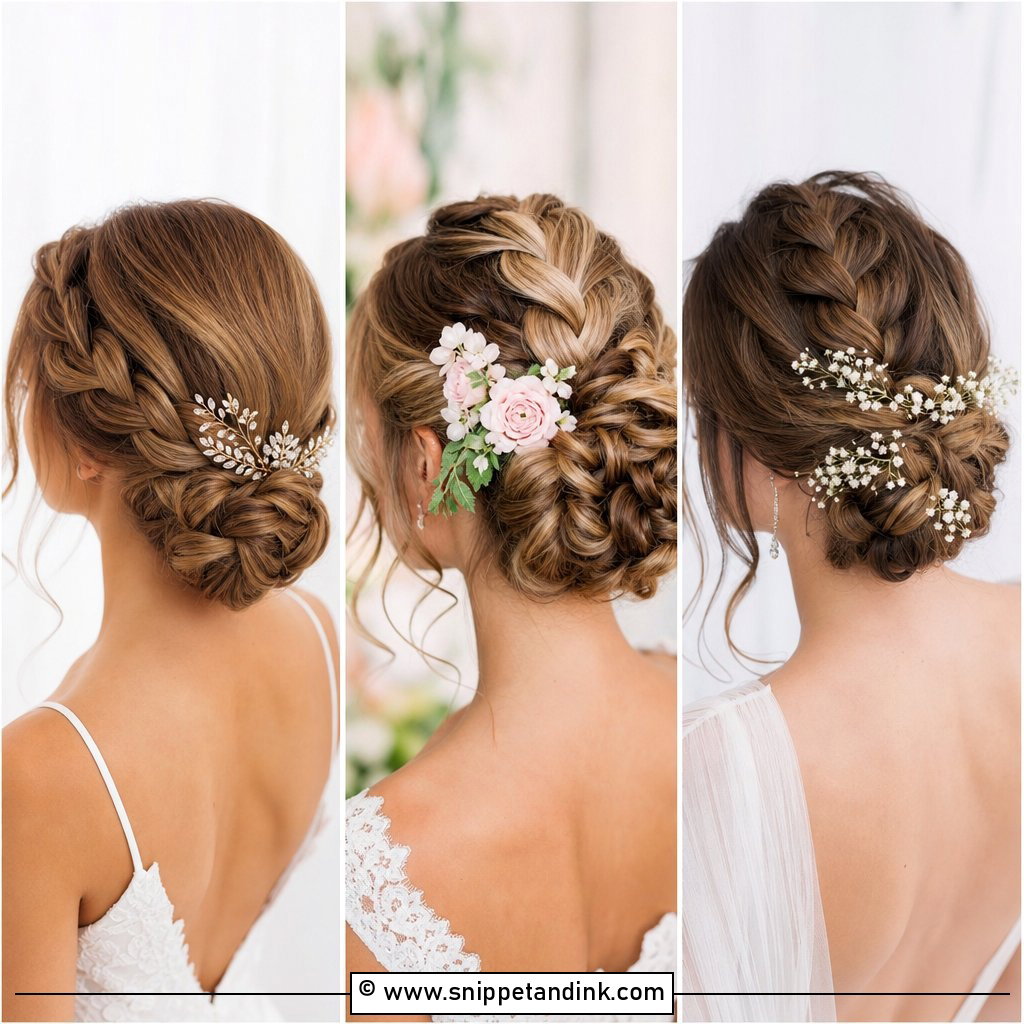
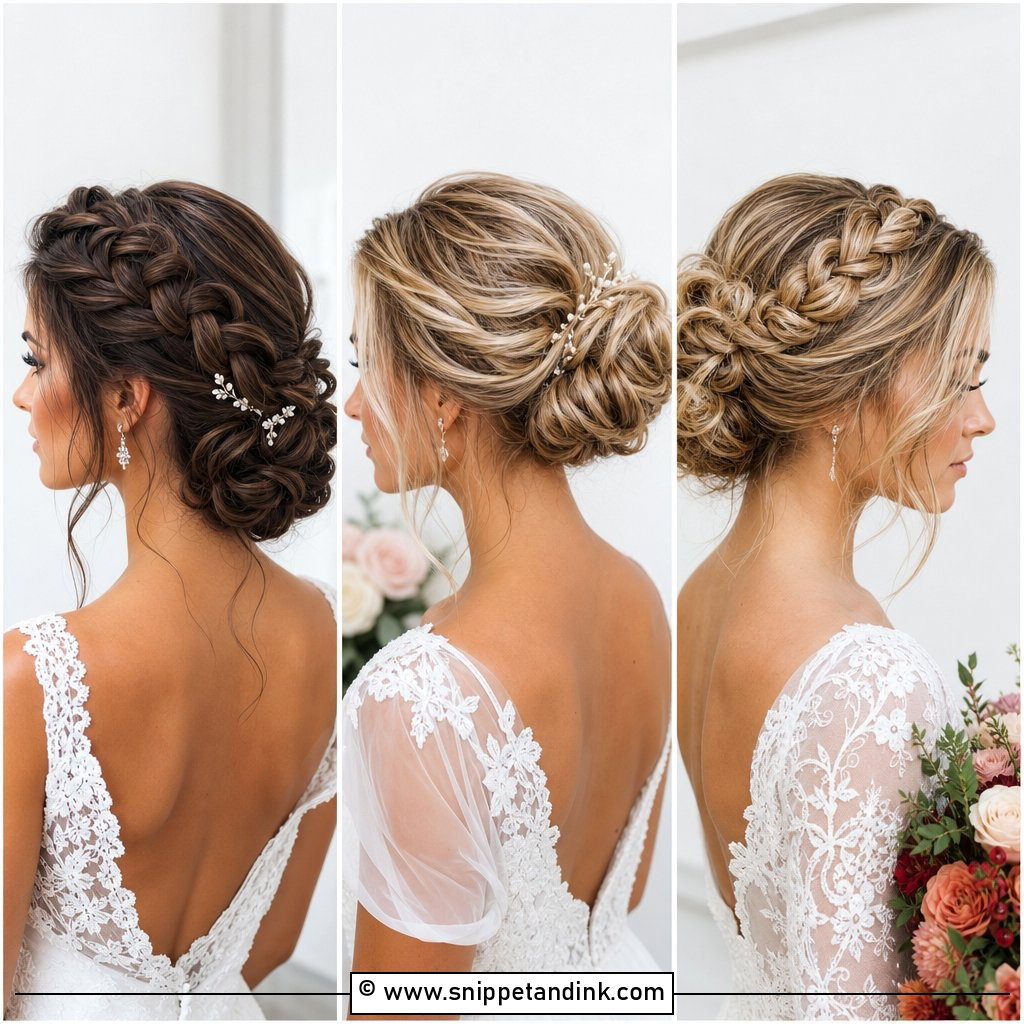
One or two braids along the crown or sides, gathered into a low bun at the nape: it’s a style I can do on almost any length past the shoulders. The bun is the best veil anchor there is, because the comb slides into dense, pinned hair rather than loose waves. I keep the braids firm at the hairline and loosen them only from the ears back, which stops the front from going fuzzy by evening. If your dress is plain, a crystal comb tucked beside the bun is enough detail.
2. Bride Braids Half Up Half Down
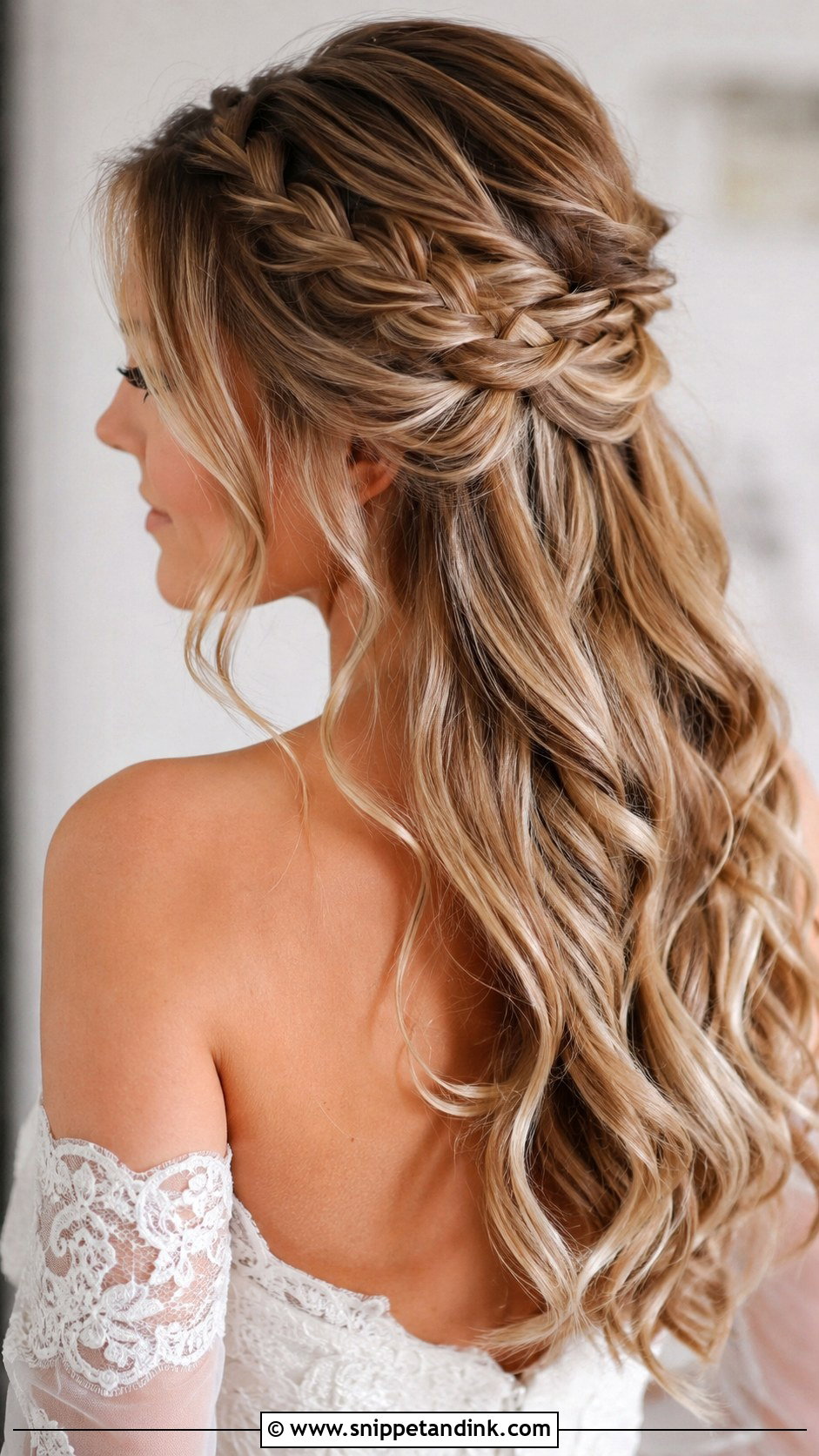
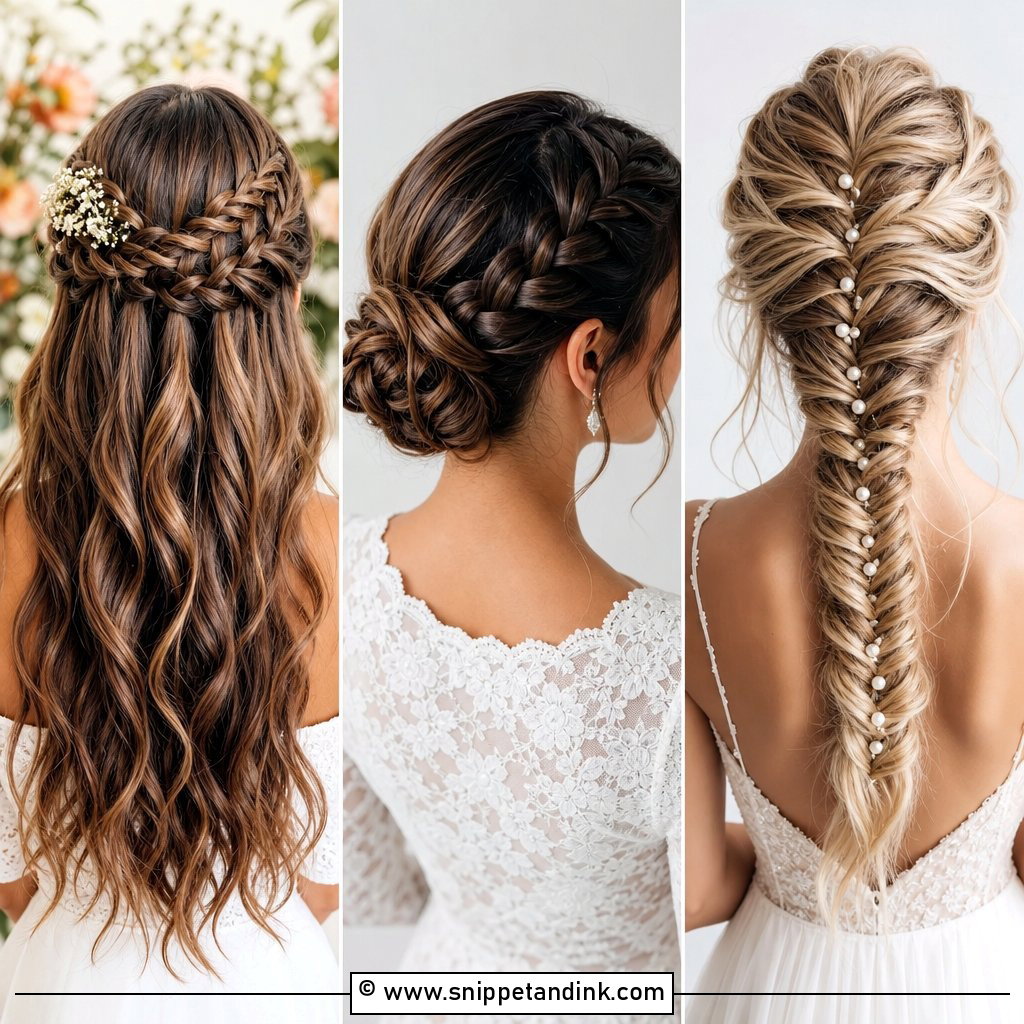
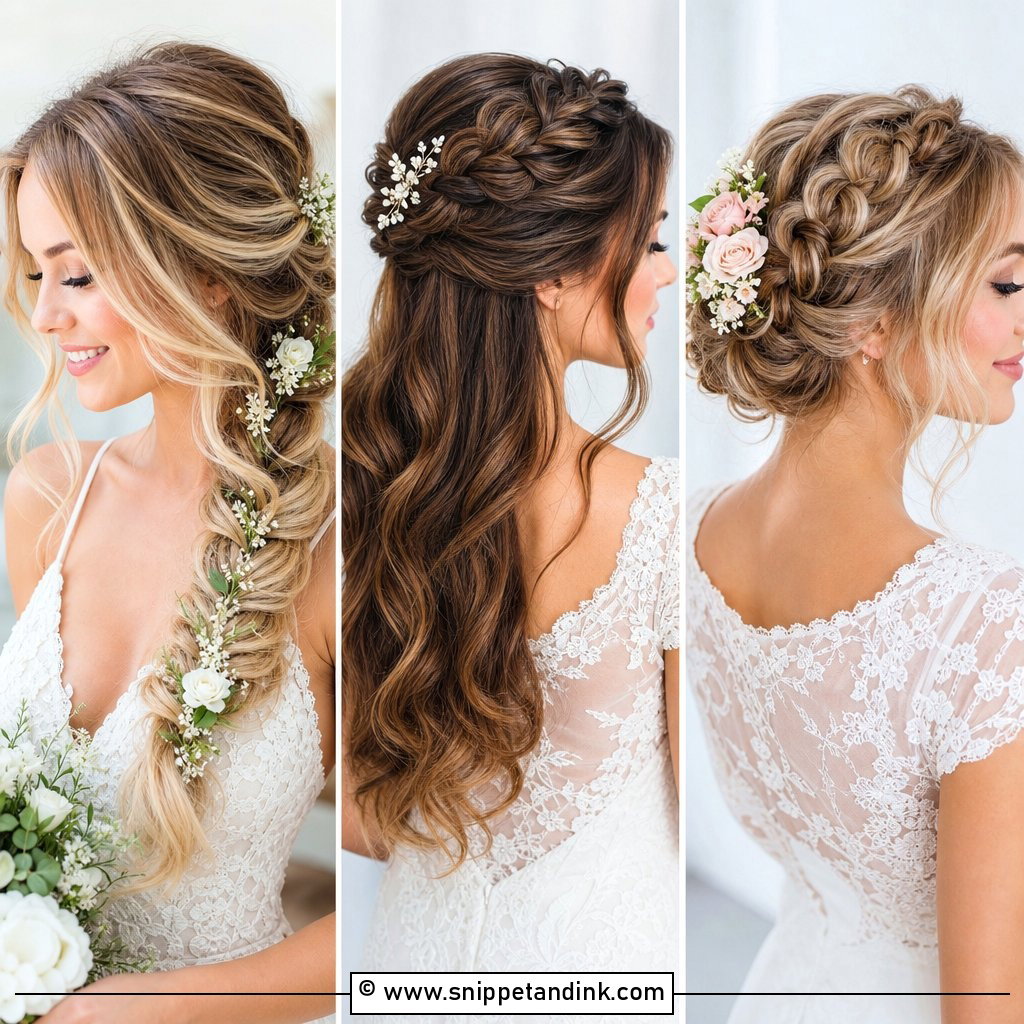
Half up with the top braided back is what I recommend when a bride wants her hair down but can’t stand pieces in her face. It keeps the neckline of strapless, off-shoulder, sweetheart and lace dresses open while still showing your length. The weak point is the loose lower half: if your curls drop by mid-afternoon, the braid on top looks great while everything below goes flat. I set curls on cool pins at the trial so we can see how long they last on your hair.
3. Bride Braids Crown Braid
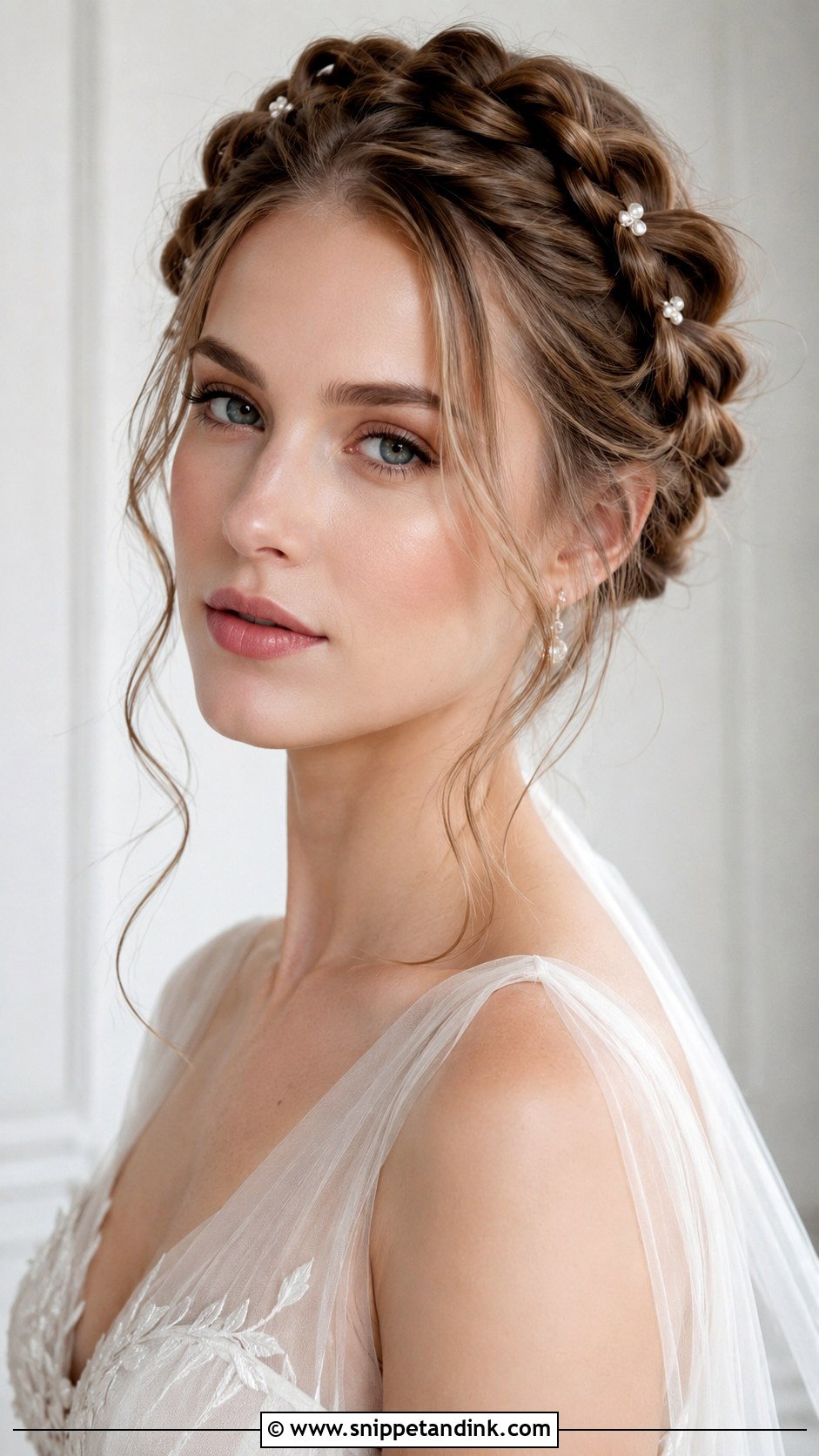
A crown braid works like a built-in headband, wrapping the head and keeping hair off the face and neck in warm weather. Long hair can use its own length; on shorter or finer hair, I add a weft so the braid stays even all the way round rather than thinning behind the ears. I pin it with U-pins, which hold it close without squashing the loops. Garden, church and vineyard ceremonies all suit it, and a veil placed just behind the braid keeps the circle visible.
4. Bride Braids Fishtail Braid
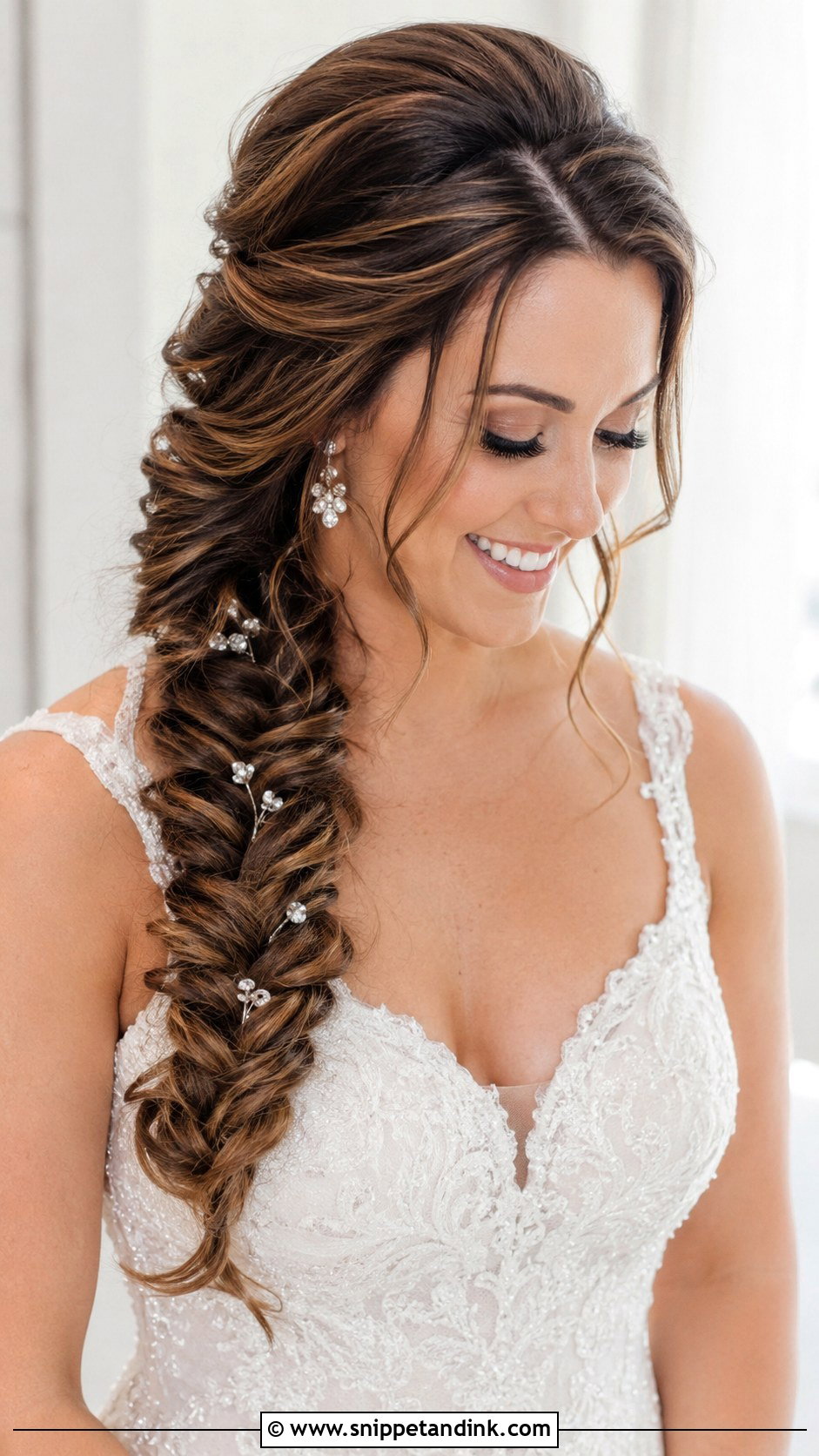
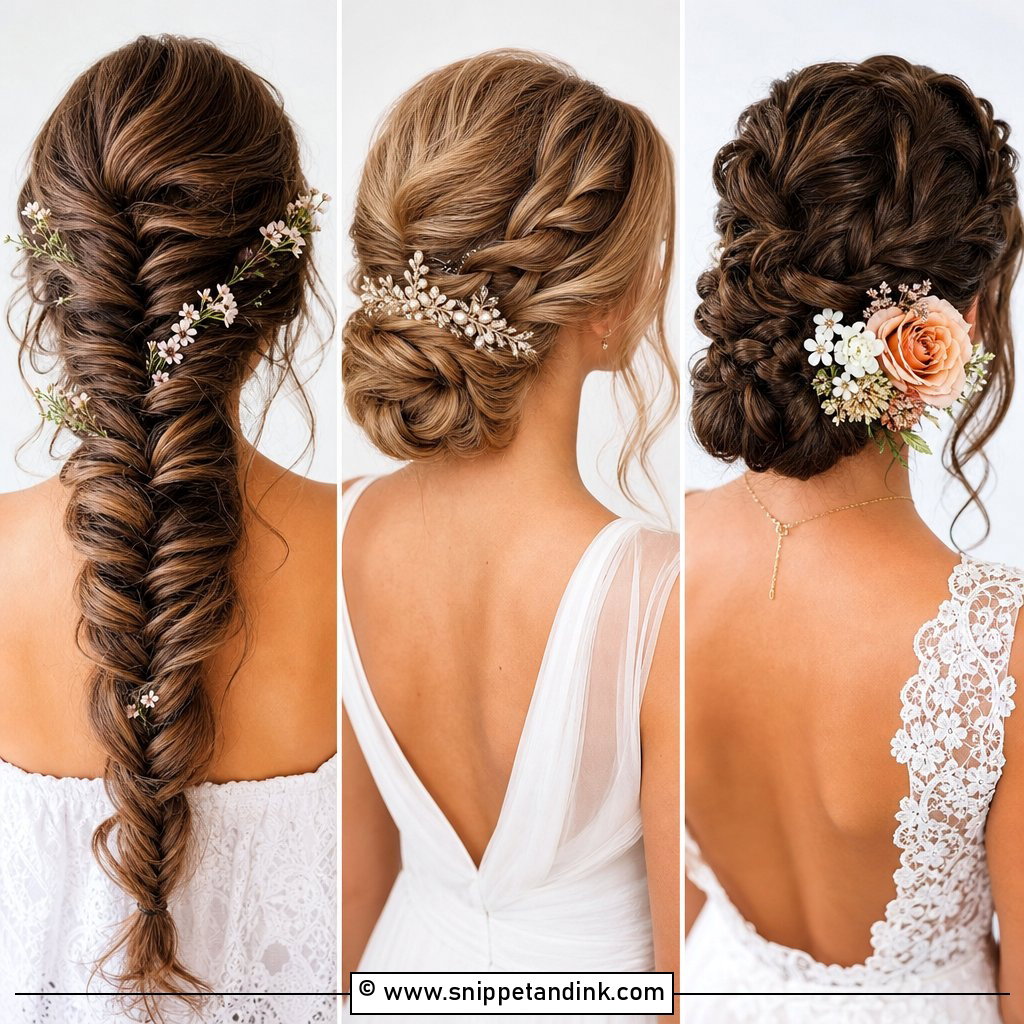
A fishtail splits hair into two sections and crosses tiny pieces between them, so the pattern looks far more intricate than a three-strand braid and holds up in close-up photos. That fine weave also shows every shade in balayage, highlights or natural brunette tones. It can run down the back, over a shoulder or into a half-up style. On silky hair the small crossings slide, so I prep with dry texture spray and braid snugly before loosening. A pearl pin or a thin ribbon at the end makes it look finished.
5. Bride Braids Side Braid
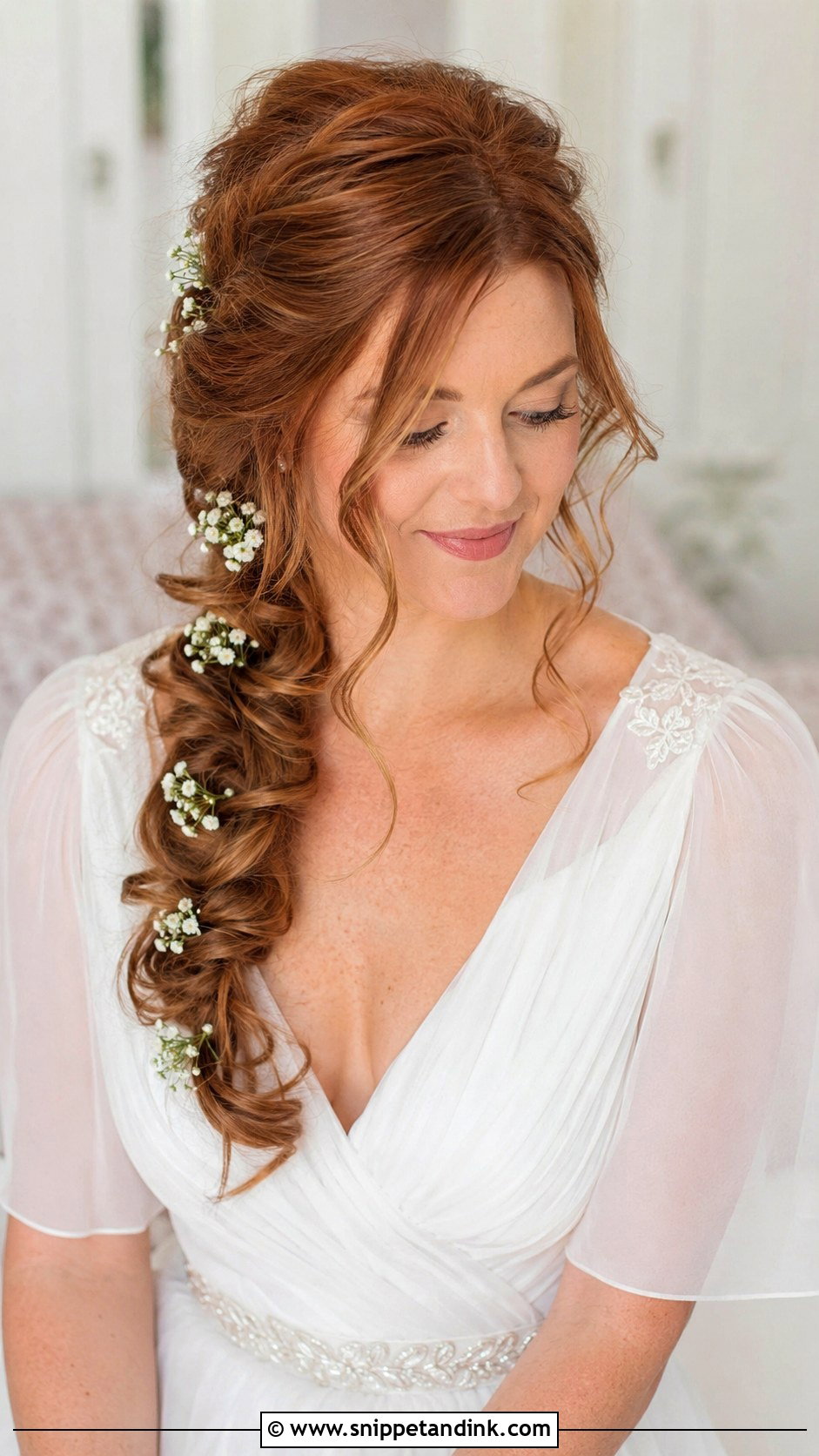
Placed over one shoulder, a side braid is visible in every front-facing portrait, which makes it a smart pick for open-back or one-shoulder dresses where the back needs to stay clear. You can use a Dutch, French, fishtail or rope braid; I choose based on density, since a rope twist holds better on fine hair. Height at the crown is what makes it bridal rather than casual, so I always tease lightly at the roots before I start the braid.
6. Bride Braids Dutch Braid
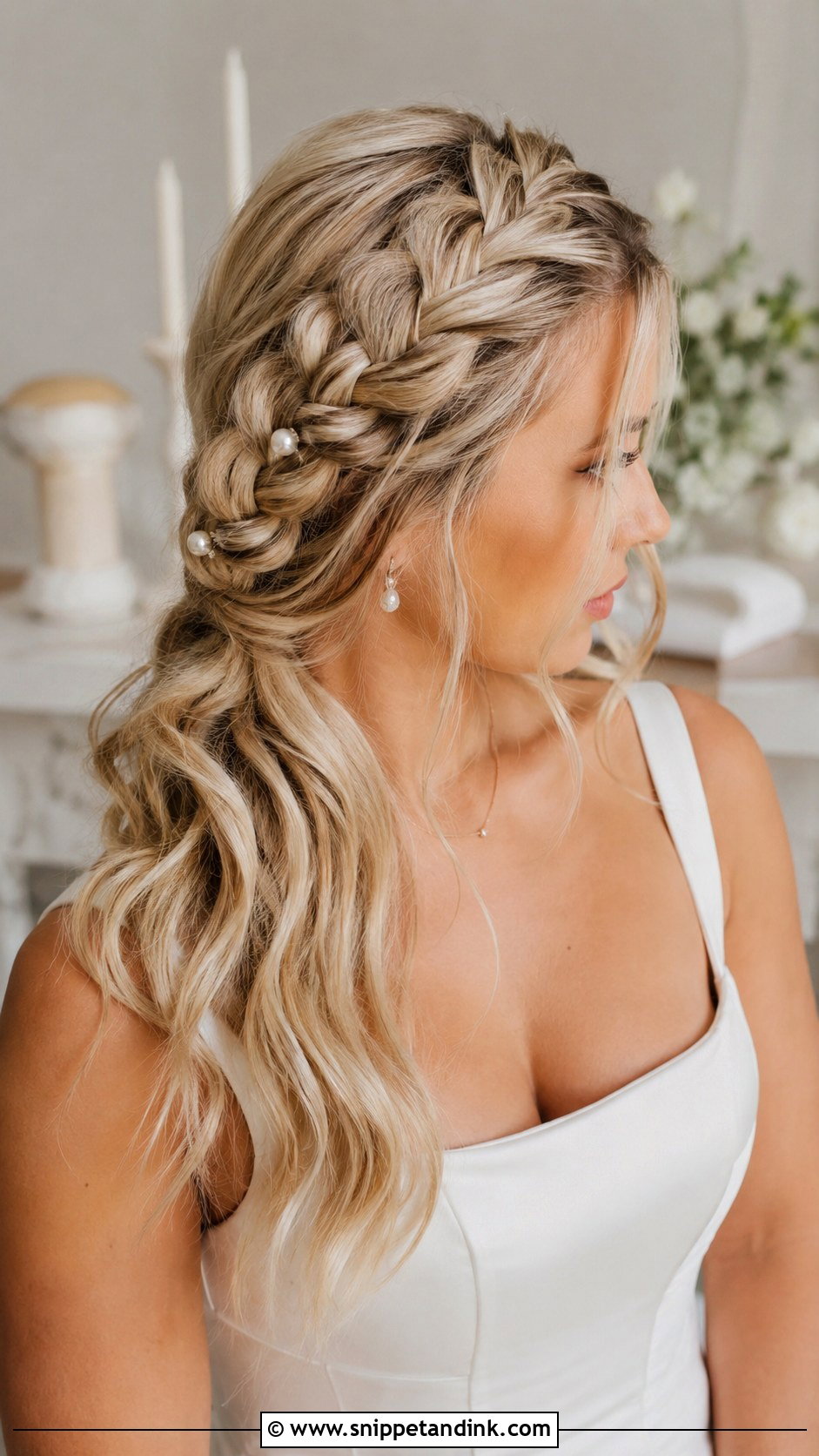
Because the strands cross underneath, a Dutch braid stands up off the head and stays readable even in photos taken from the back of the room. It holds well during movement. Thicker hair suits it naturally; on fine hair I hide a clip-in weft under the braid to give it bulk. Soft waves on the ends turn it from sporty to romantic, and a few floral or pearl pins in the ridges finish it.
7. Bride Braids French Braid
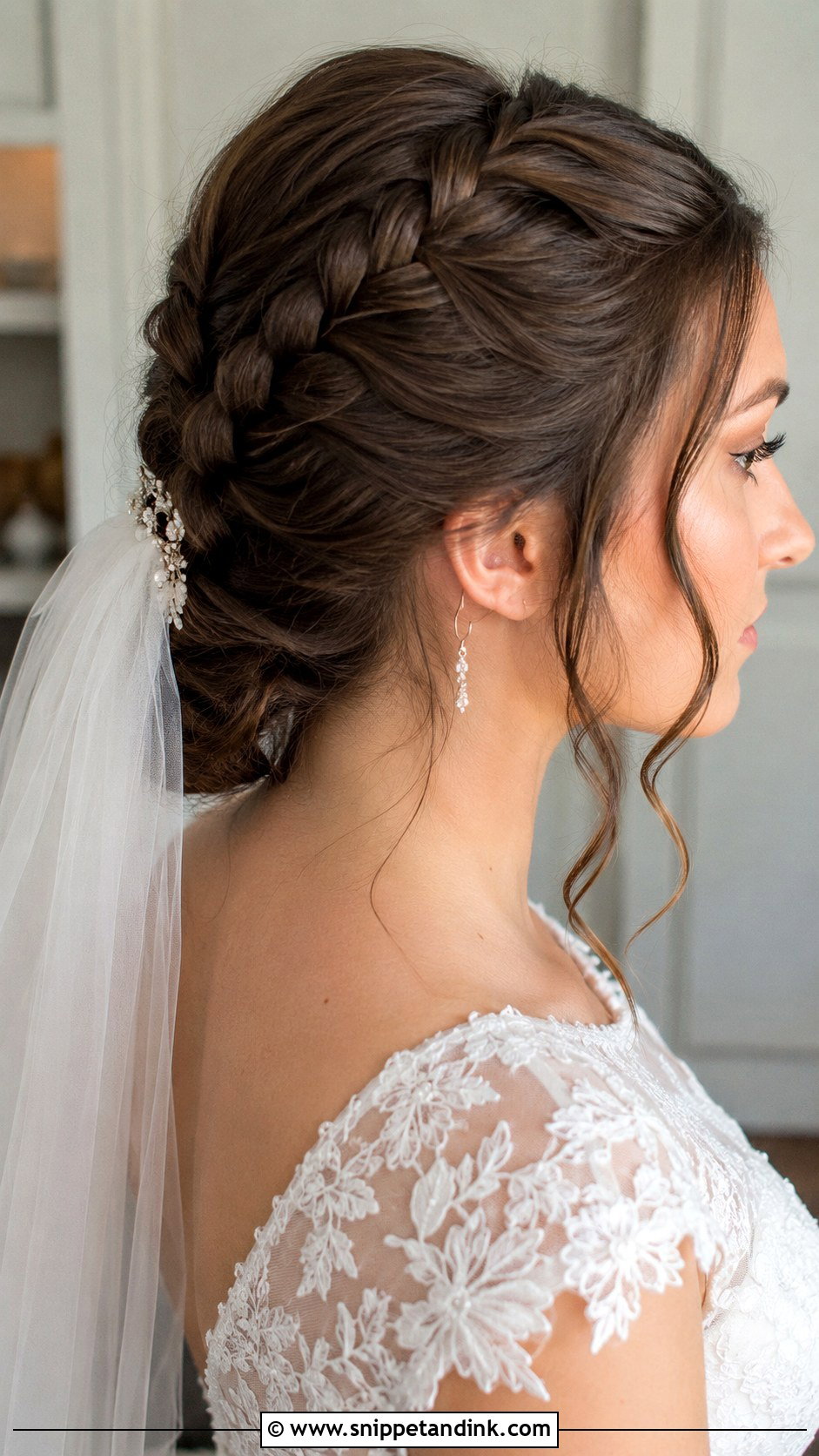
Neat and controlled, a French braid suits brides who want their hair to feel completely handled. It starts near the crown and picks up hair smoothly as it travels down, so it lies flatter than a Dutch braid. It can be worn single, as a double braid, coiled into a bun or as a half-up detail. I add soft volume at the roots before braiding, because a French braid on flat roots can look like an everyday style rather than a bridal one.
8. Bride Braids Waterfall Braid
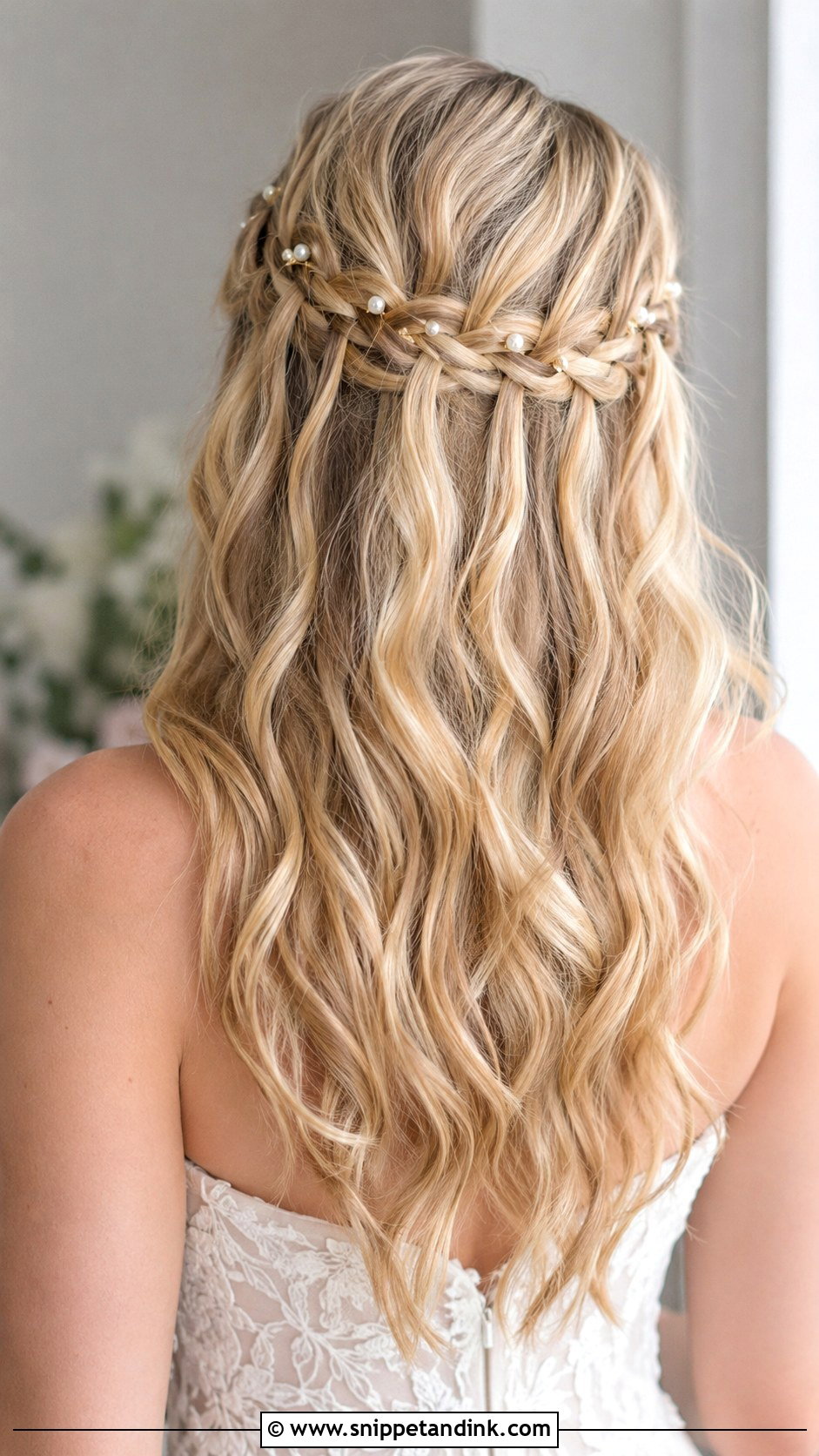
A waterfall braid runs across the head and drops a section through at every pass, so it only really makes sense over curls or waves. On hair that holds a curl, it’s romantic and light. On sleek, straight hair, the dropped pieces fall out of the pattern quickly, and I’d steer you toward a fishtail or French braid instead. Highlights help it, since the light catches each falling strand.
9. Bride Braids Boho Braid
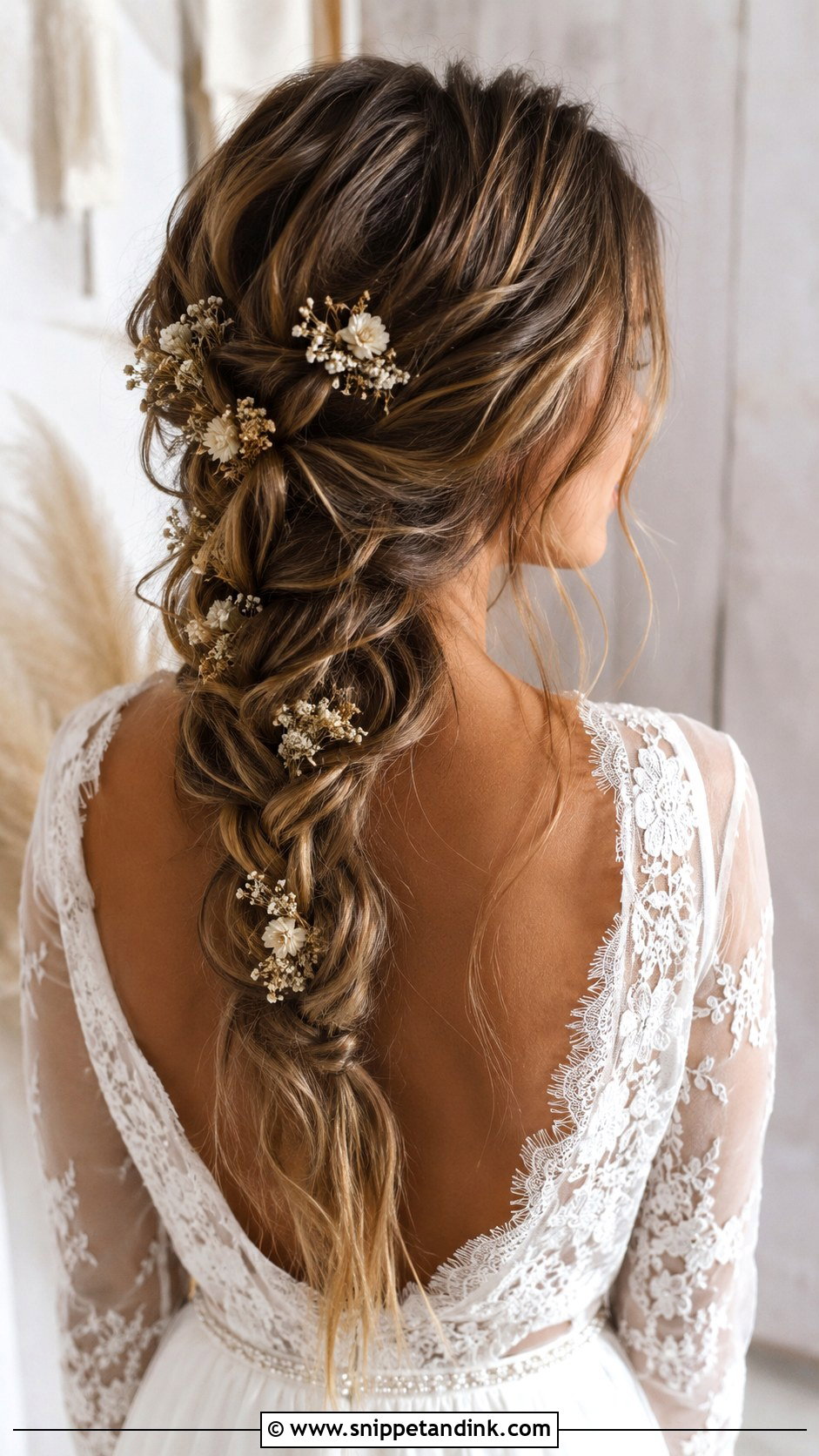
Boho is the style that most easily tips into messy, and the difference is the crown. I shape the top section with some volume and a clean part first, then build a loose braid with face-framing pieces. The braid has to be balanced from both sides, even if it looks undone. Dried flowers or ribbons hold up better outdoors than fresh blooms at a beach or barn venue, where heat and wind wear on everything.
10. Bride Braids With Veil
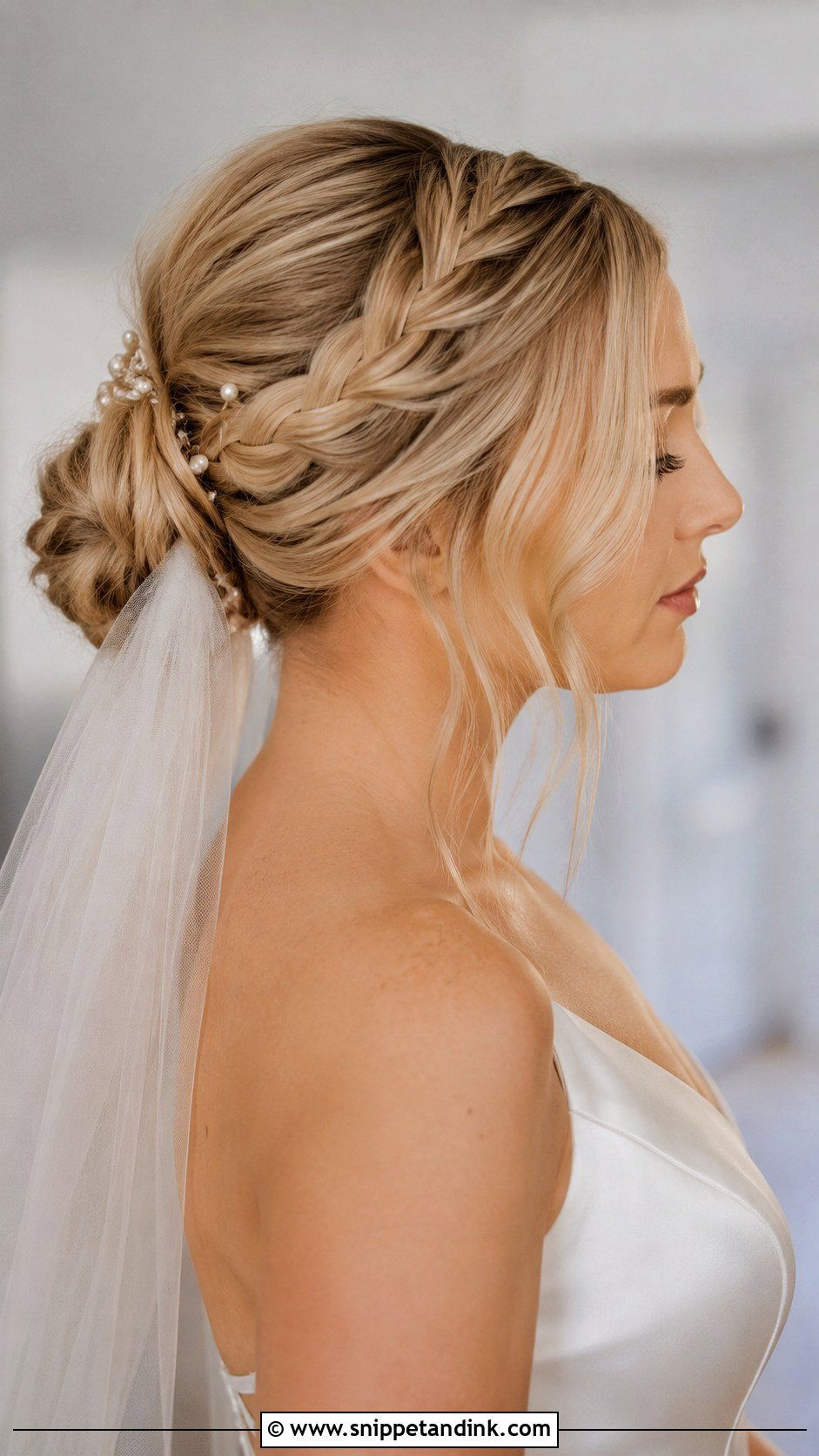
Getting a braid and a veil to cooperate is mostly about the attachment point. A low braided bun, crown braid or half-up braid all give me a dense spot to anchor a comb. Under a bun reads clean and classic, while placing the veil above the braid gives more drama and lets it frame the hair from behind. If your veil carries lace, pearls or beading, I keep the braid simpler so the two don’t compete for attention.
11. Bride Braids With Flowers
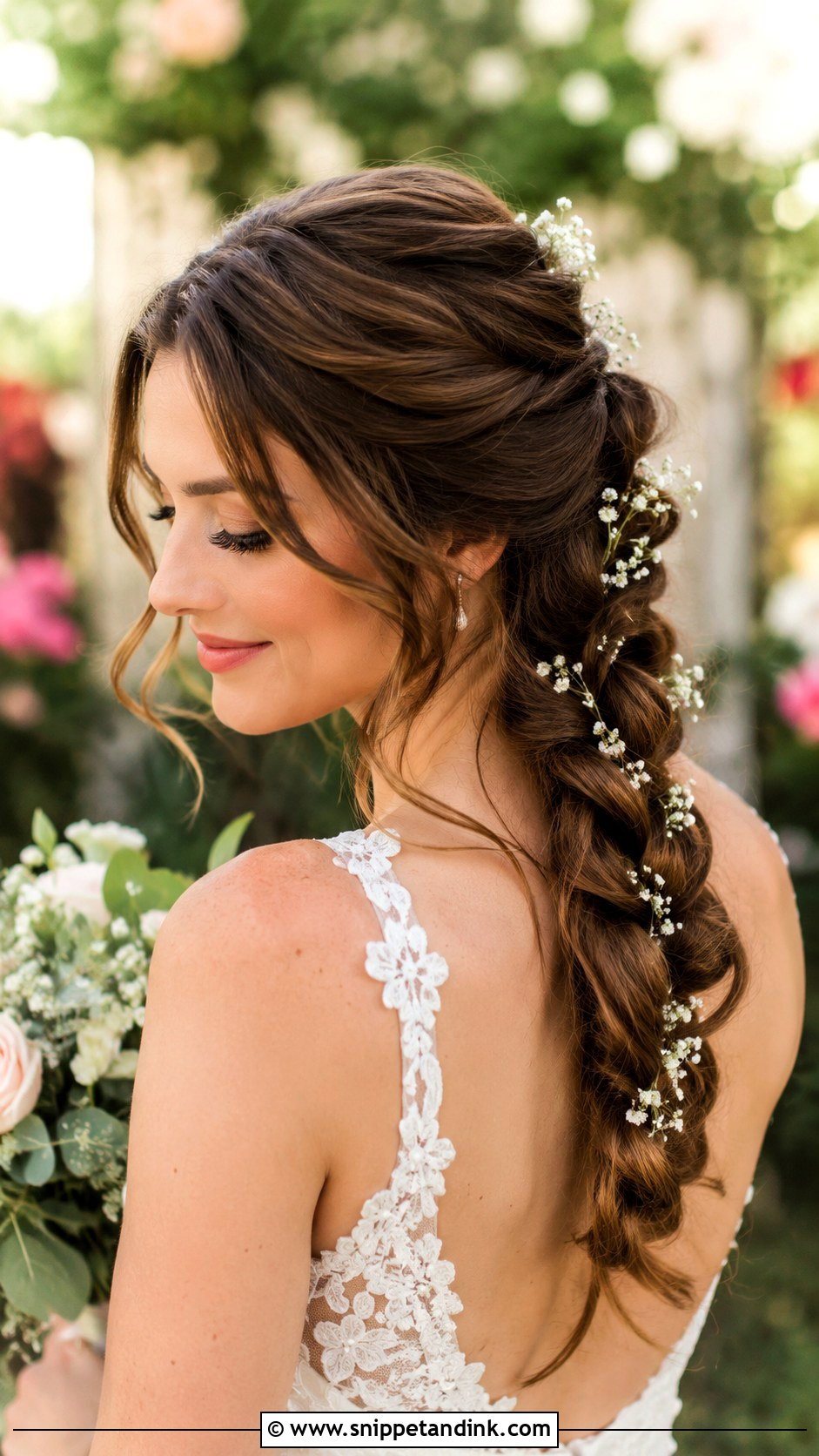
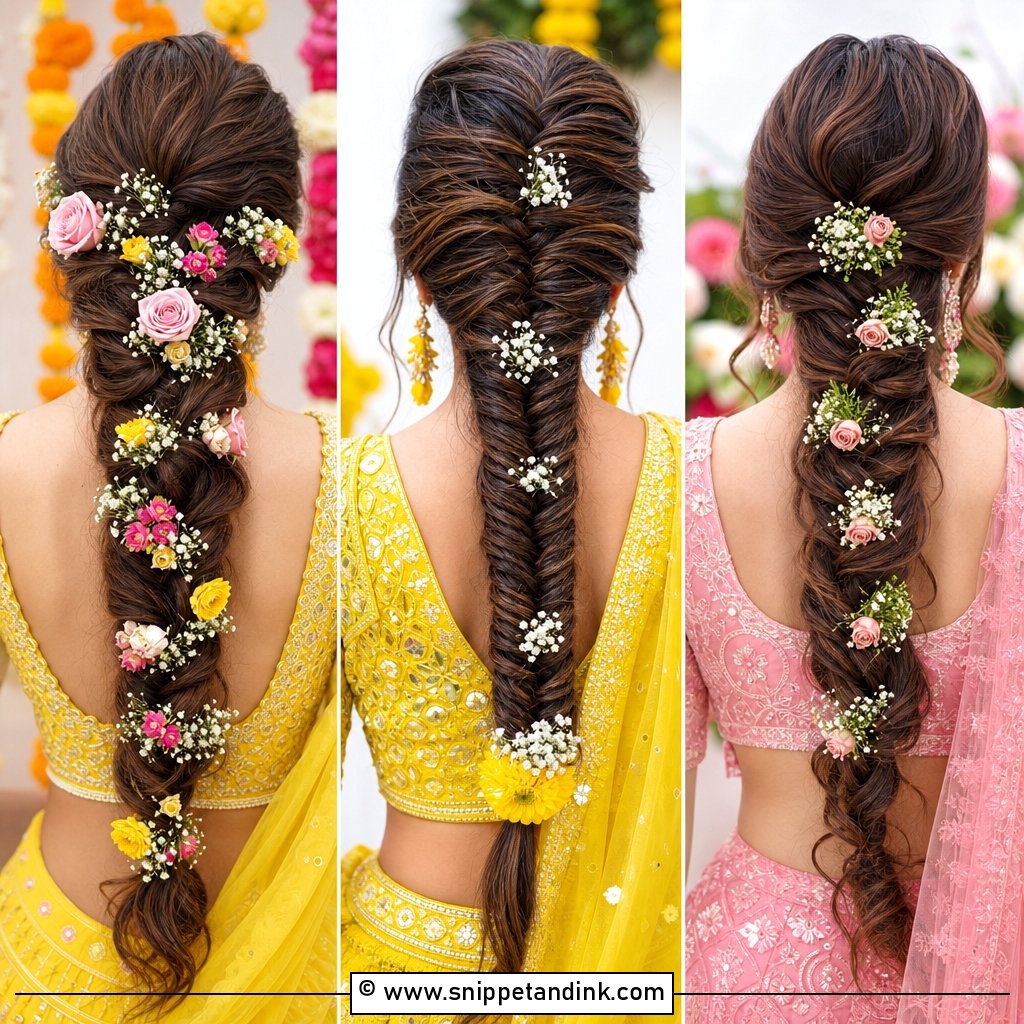
Flowers in a braid have to survive the day, and that narrows the choice quickly. Baby’s breath, spray roses, waxflower and good silk florals are light and easy to secure; delicate petals like garden roses or hydrangea wilt within a few hours out of water. I ask the florist to deliver hair flowers wired or taped and spray-free, and I add them after the hairspray. It pairs naturally with lace, tulle, chiffon and outdoor ceremonies.
12. Bride Braids With Pearls
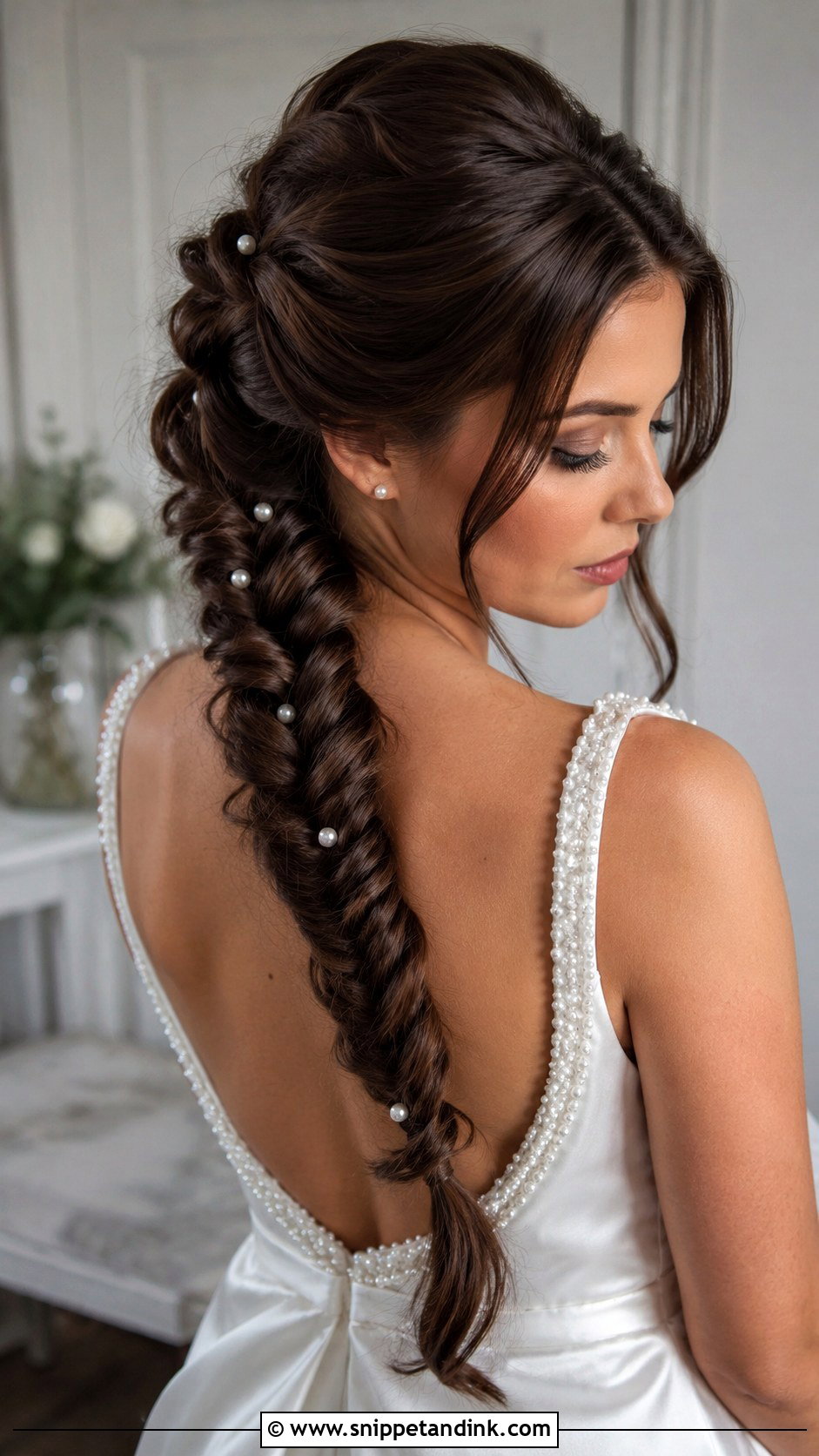
Pearl pins give a braid definition in photos, particularly on brunette or dark hair, where the woven pattern can otherwise merge into one shade. I place them in the dips between braid loops so they sit secure, and I match their tone to your earrings and gown, since ivory pearls look yellow against a bright white dress. Smooth braids with a little texture look more modern than heavily messy ones here.
13. Bride Braids Ponytail
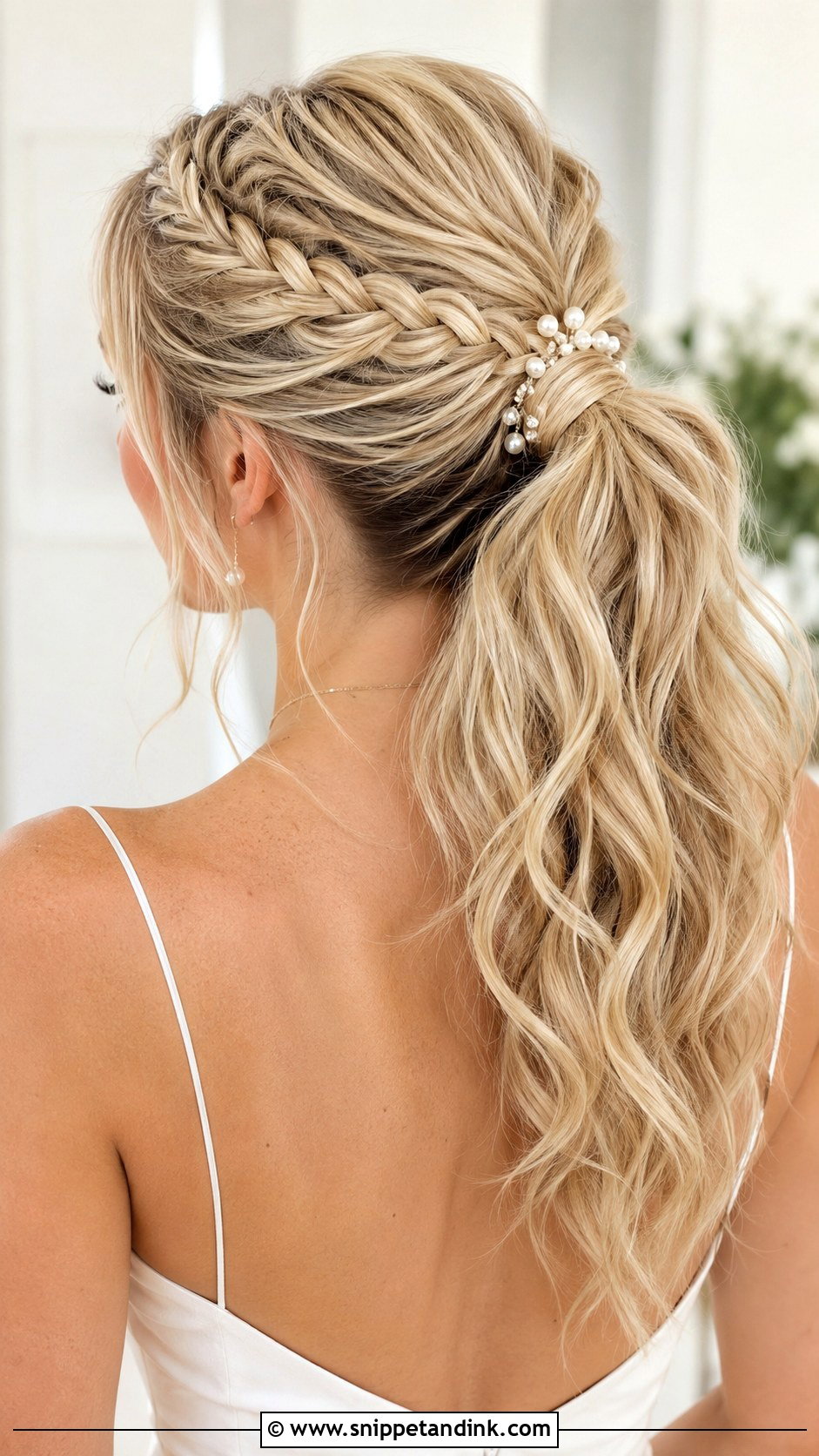
A braided ponytail gives you height and swing while keeping your neck cool for dancing. The braid can start at the crown, wrap the base, or run through the length. I nearly always add a clip-in or two, because a bridal ponytail needs more volume than most natural hair gives. Wrapping a piece of hair around the base and pinning it upward hides the elastic and keeps the pony from drooping by evening.
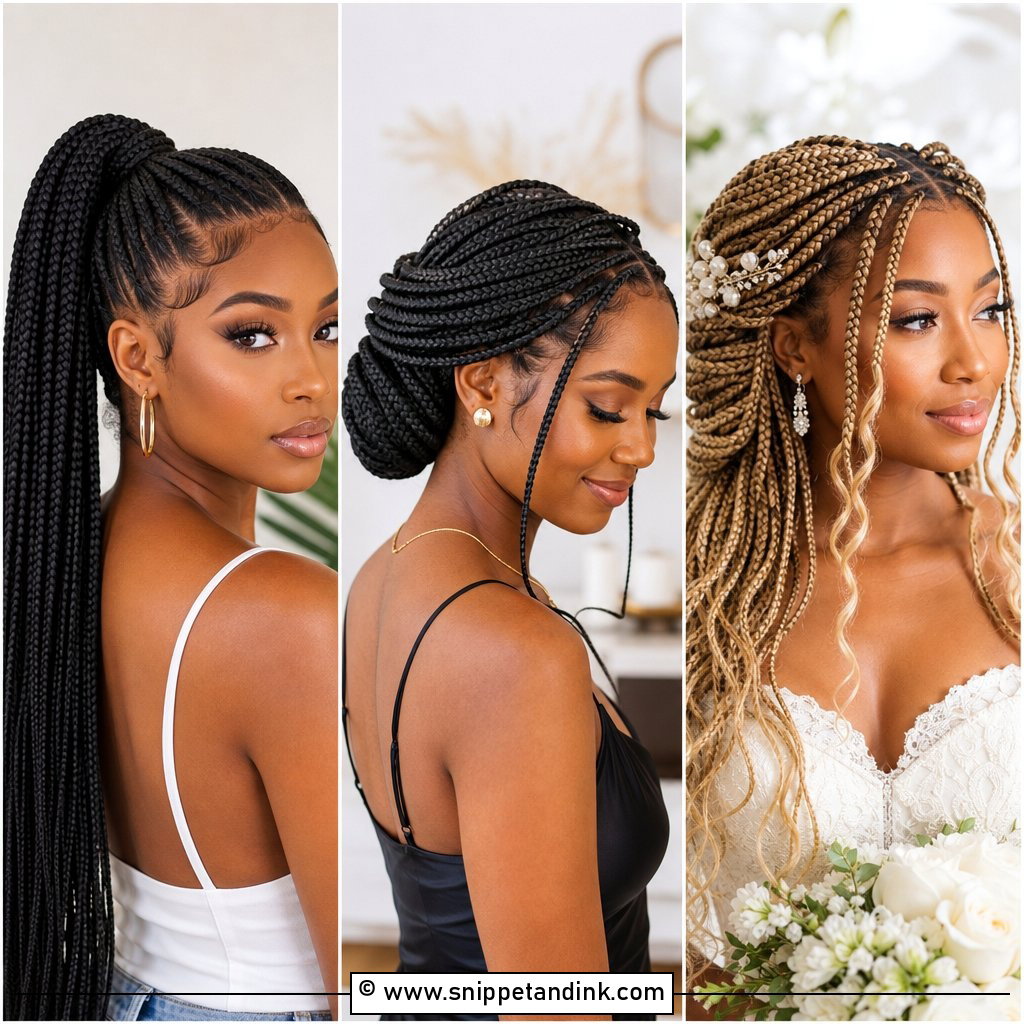
14. Bride Braids Box Braids Updo
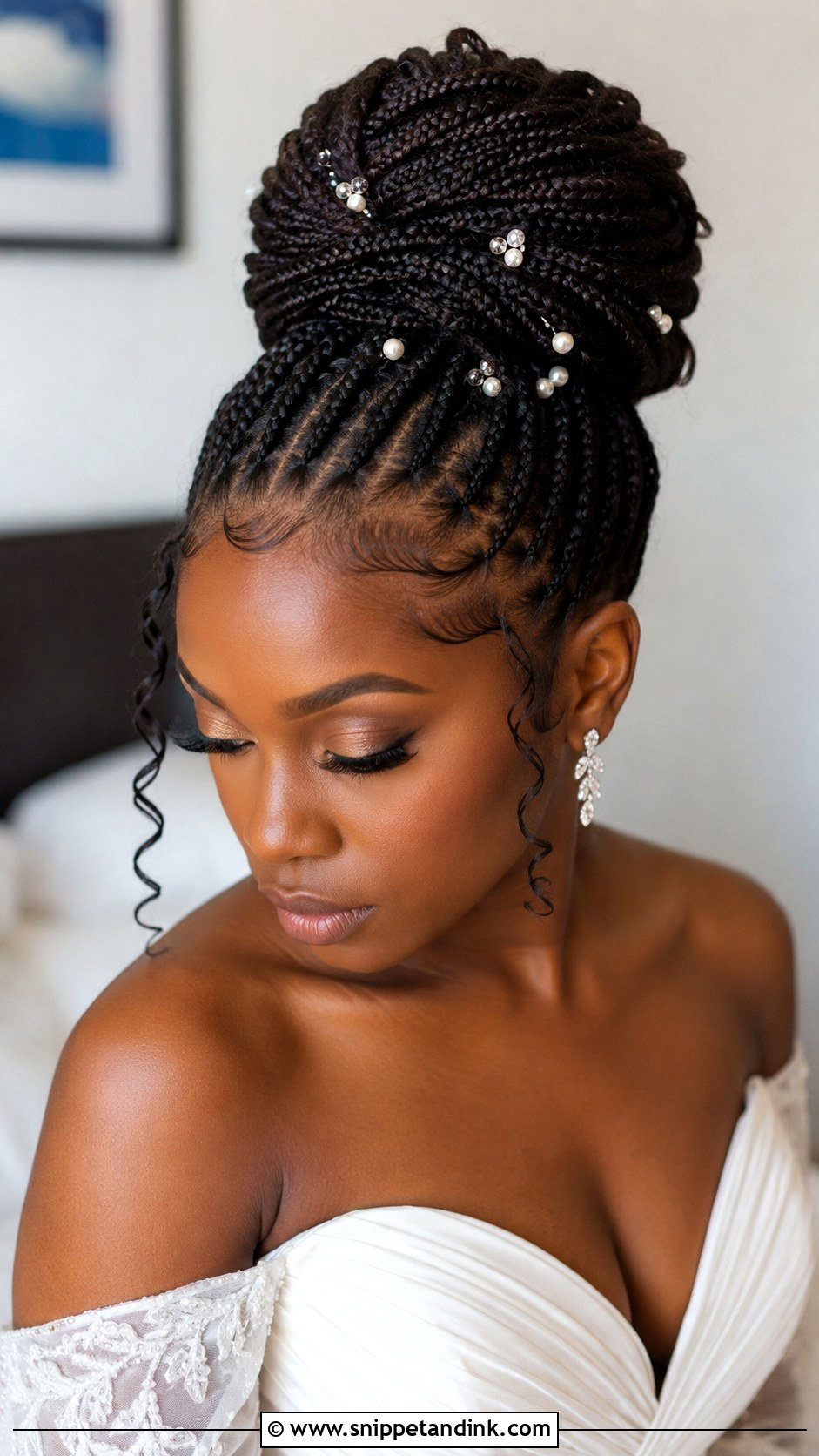
Box braids shaped into an updo are a protective style that also removes a lot of morning stress, since the braids are already in. They can be built into a high or low bun, a twisted crown or a sculpted shape. A full head of long box braids is heavy, though, and a tall updo with all that length can pull on the scalp after a few hours. I’d plan the size and length of the braids with the updo in mind, and test the height before the wedding.
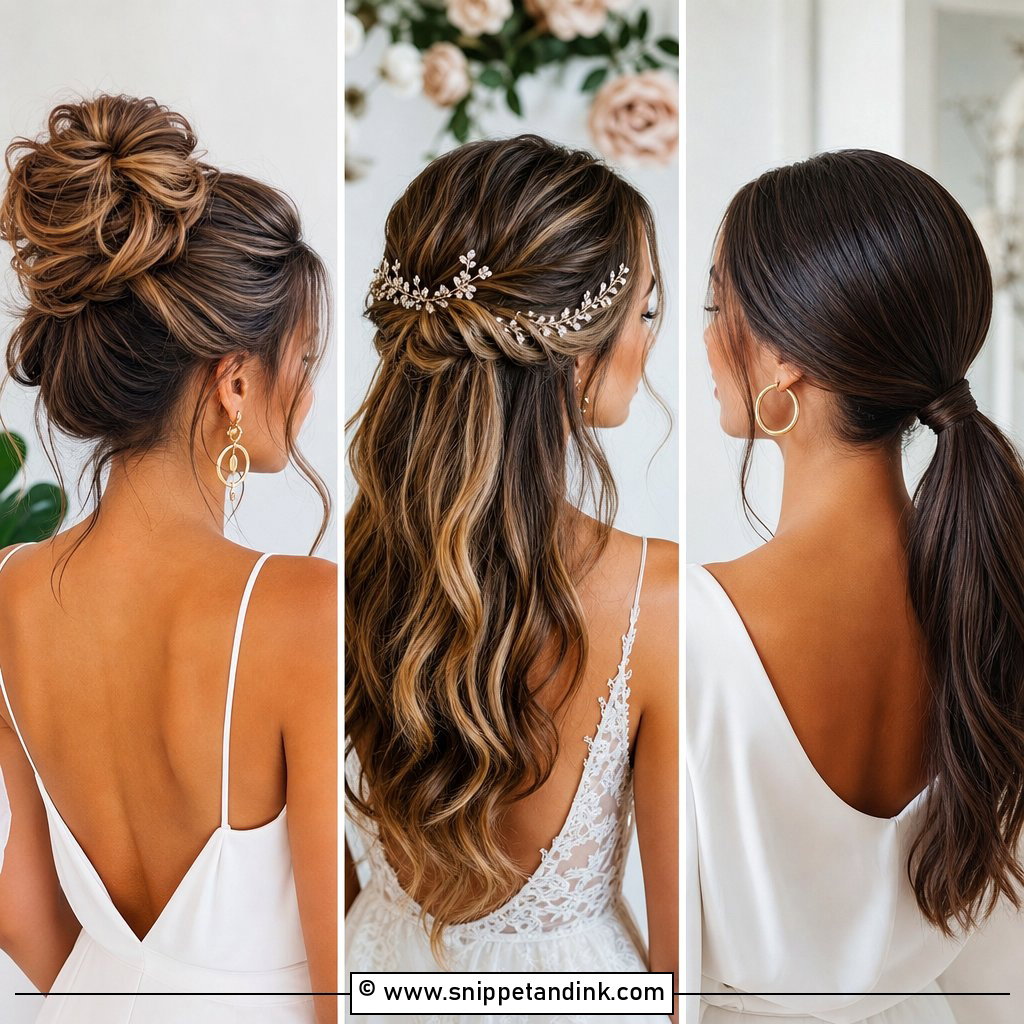
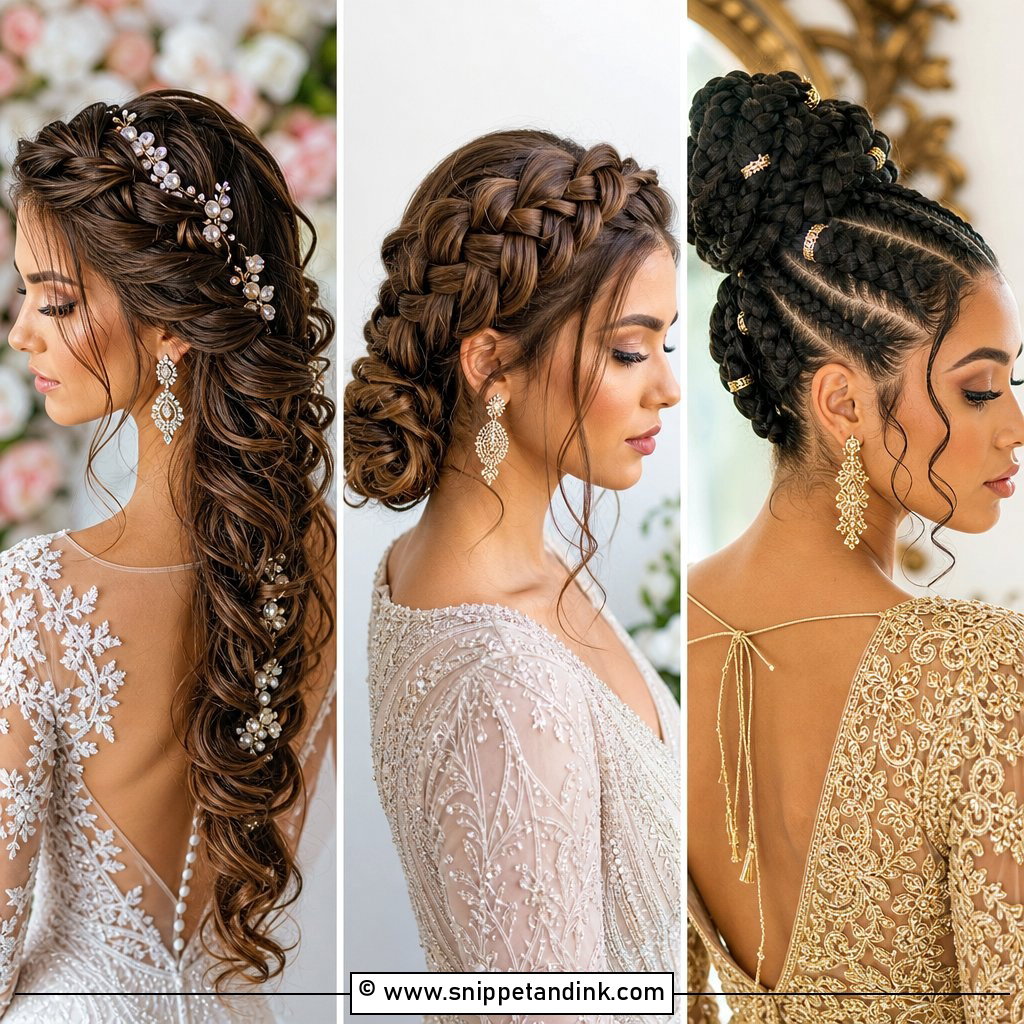
15. Bride Braids Goddess Braids
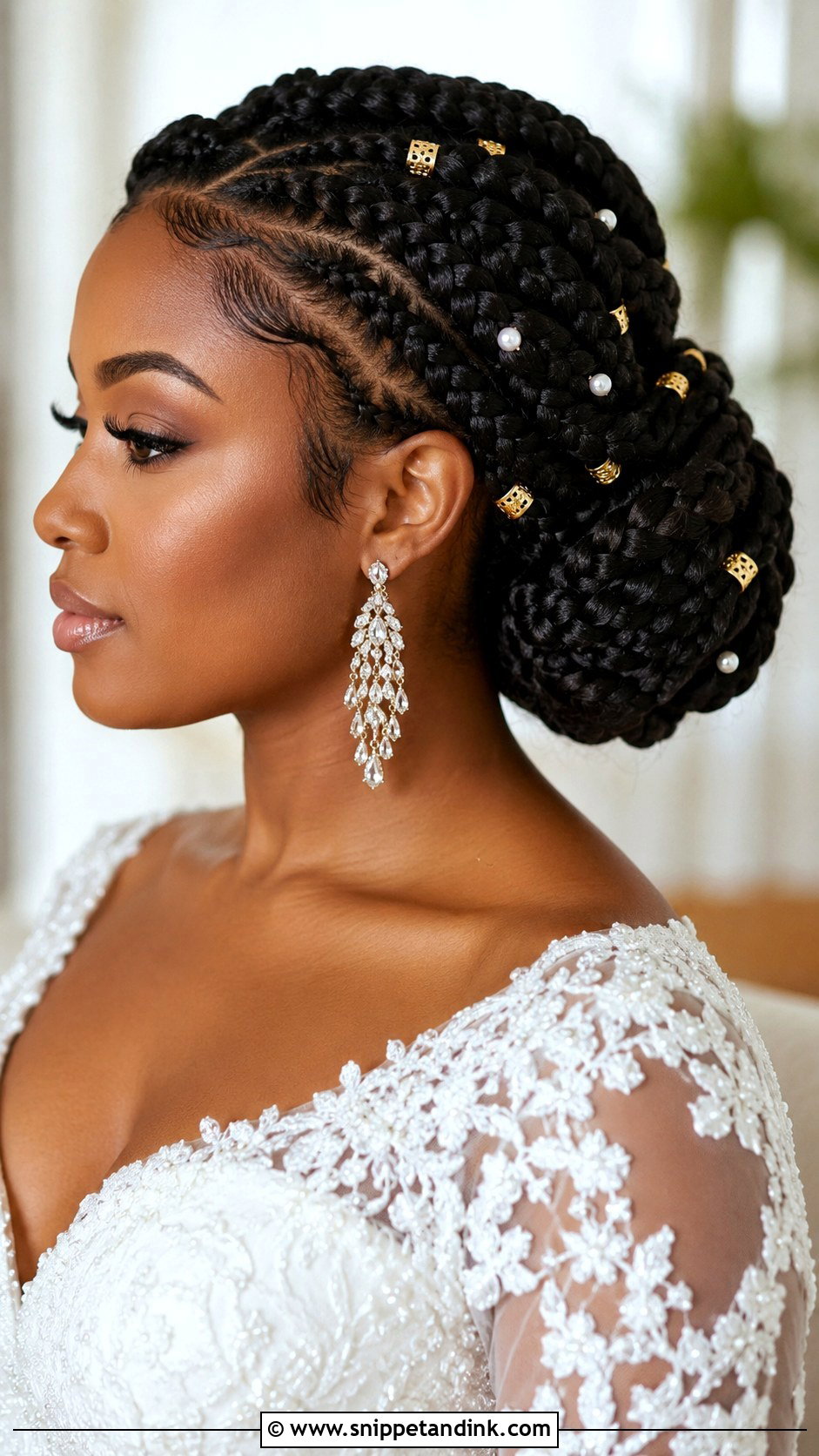
Goddess braids are thicker, raised braids, so the pattern carries the look without much decoration. They’re protective and long-lasting, which makes them practical across a multi-day celebration. I keep the edges smooth and the braid placement balanced side to side, because asymmetry is very visible on larger braids. Gold cuffs, pearl pins or a simple veil are all the accessories they need.
16. Bride Braids Cornrows Bun
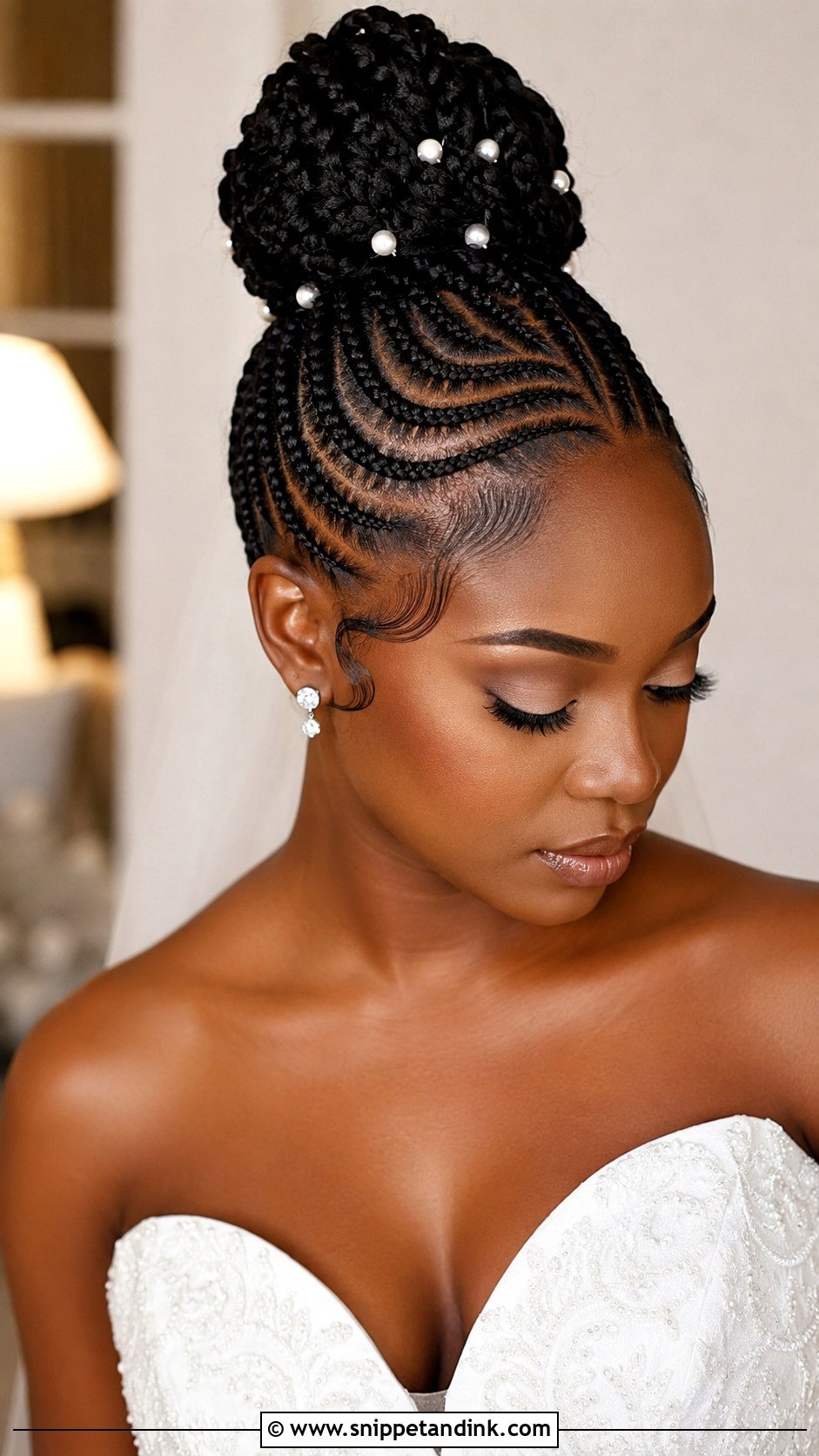
Cornrows leading into a bun give a sculpted, sleek finish with every detail close to the scalp. The pattern can be straight, curved or radiating from a centre point. I always check tension at the hairline: a pattern that’s too tight looks crisp for photos but can be painful and damaging. The bun at the back works with veils, high necklines and strapless gowns. Pearl pins, gold cuffs or a fine comb soften it.
17. Bride Braids Halo Braid
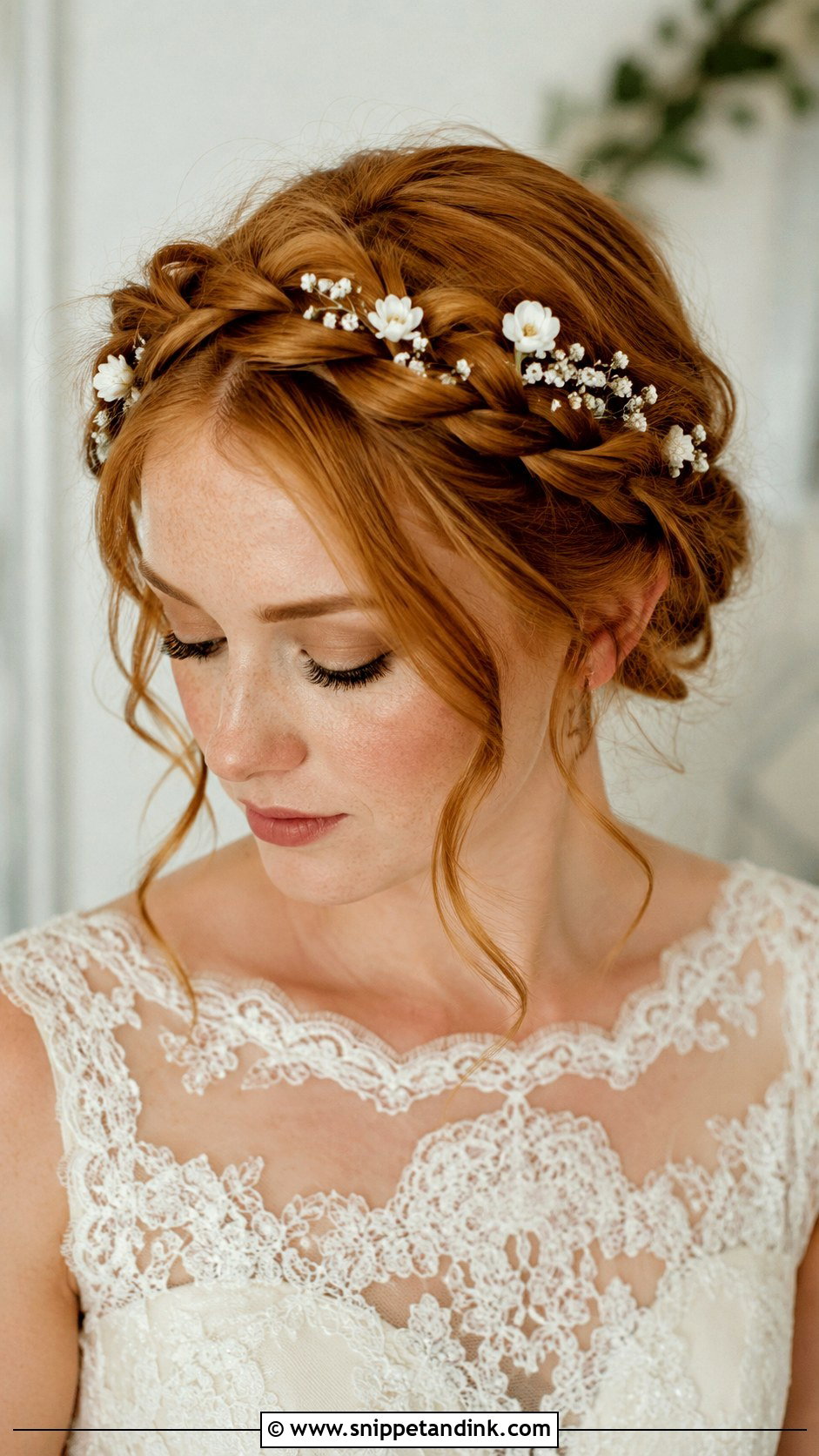
A halo braid is a crown braid built fuller and rounder, so it frames the face more softly. It leaves the neck and shoulders open, which is why I like it for gowns with a detailed back. If your hairline is uneven or you have cowlicks at the front, I’ll set the braid slightly back from the face so it doesn’t fight them. Neat for formal venues, loosened outdoors.
18. Bride Braids Pull Through Braid
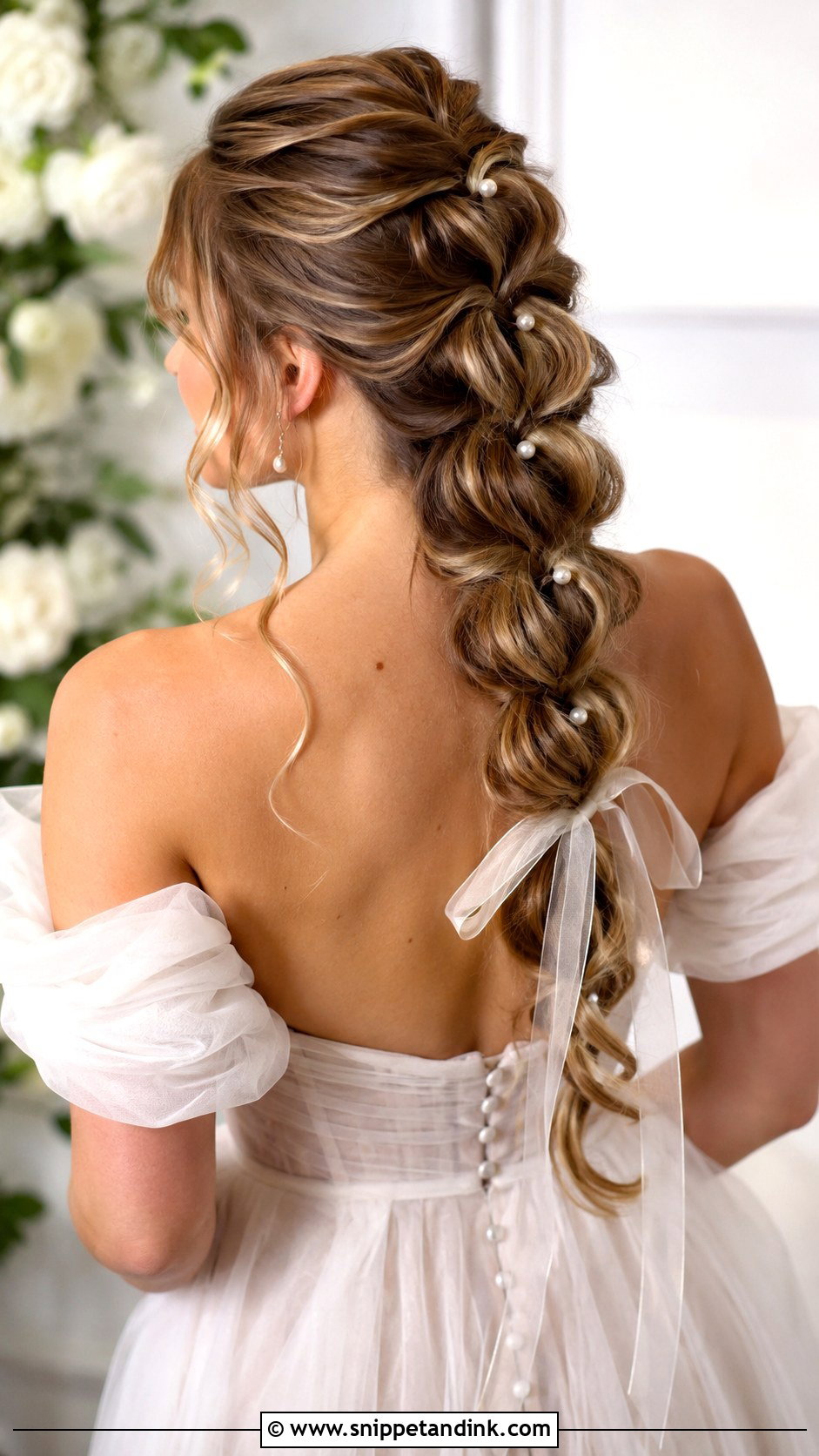
A pull-through braid isn’t technically braided: it’s built with small elastics, with each section pulled through the one before, which is why it can look much fuller than the hair it’s made from. That makes it one of my favourite tricks for fine hair. I use clear elastics and pancake each section so they disappear. Curls left loose at the face soften it, and a sheer ribbon or small flowers finish it.
19. Bride Braids Mermaid Braid
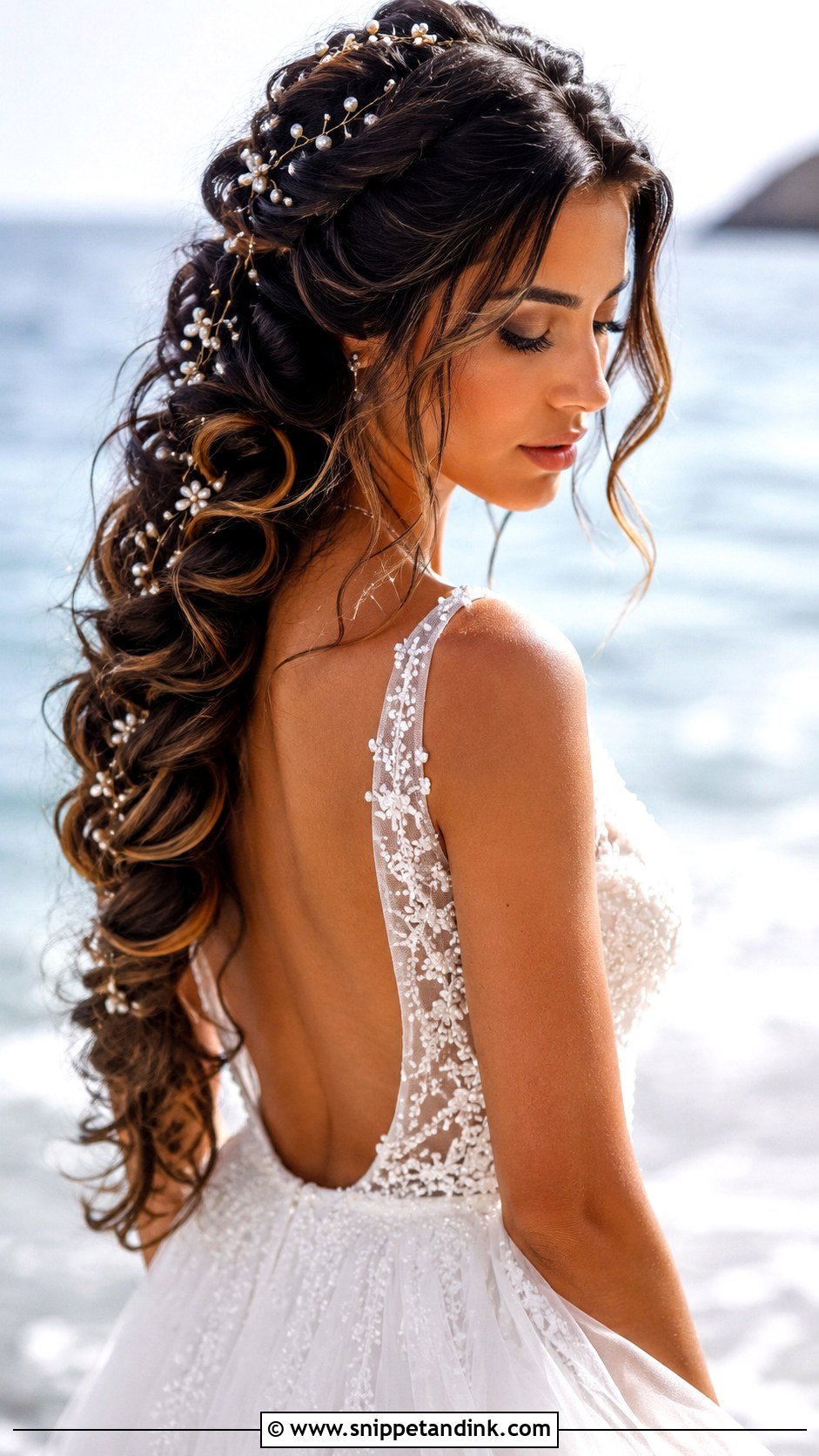
The mermaid braid is a wide panel of several braids combined, usually with loose waves alongside. It needs long hair; on medium lengths I add extensions so the braid doesn’t taper to a skinny end. Dimensional colour shows the woven sections nicely. For a beach or destination wedding, I’d skip shell-style pins if the wind is strong and pin pearls or tiny flowers directly into the braid instead, since anything top-heavy works loose.
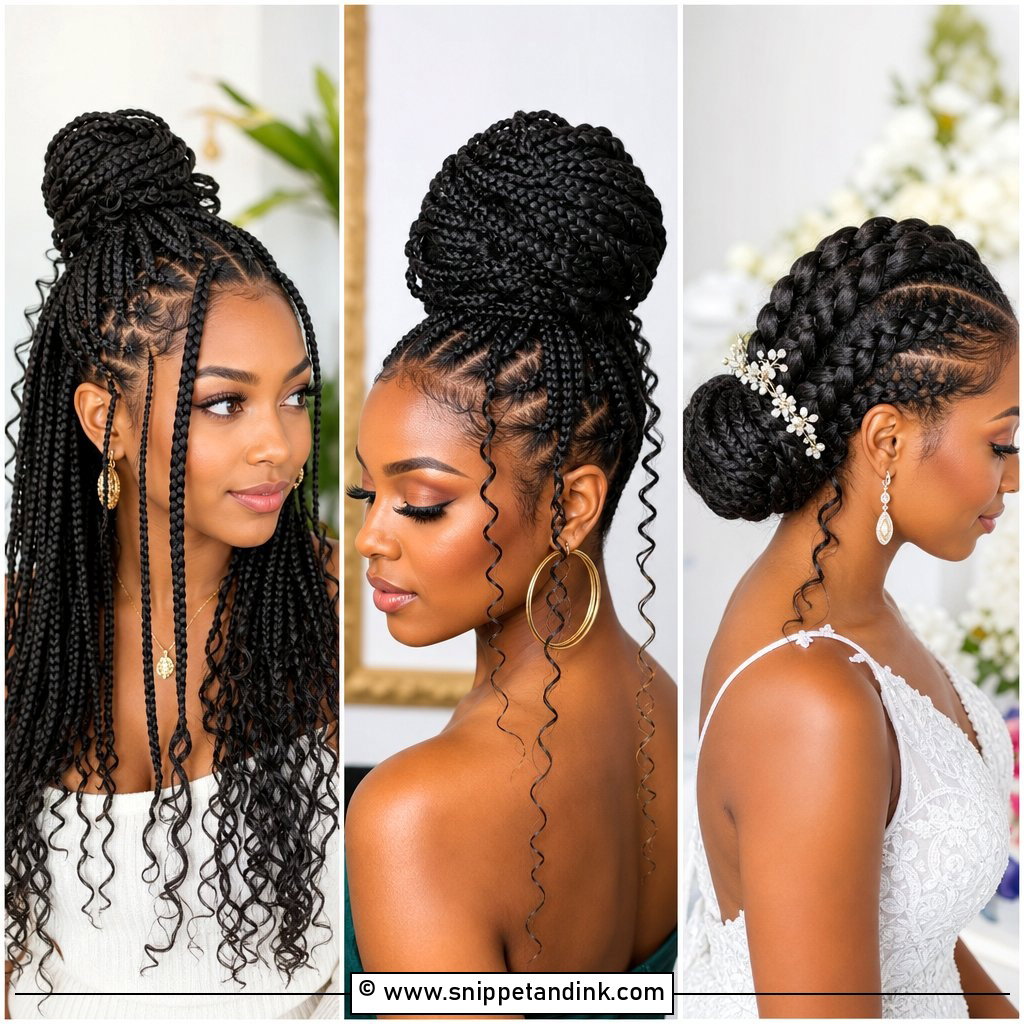
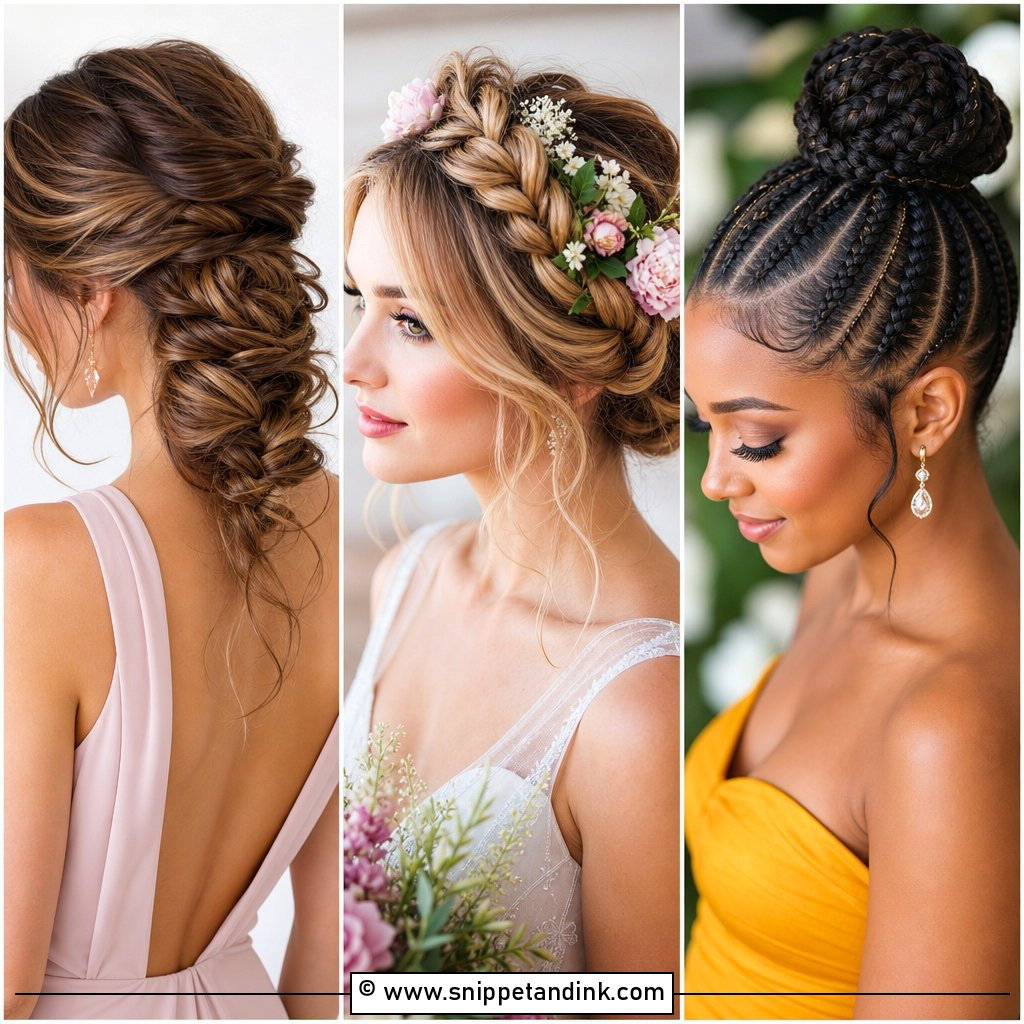
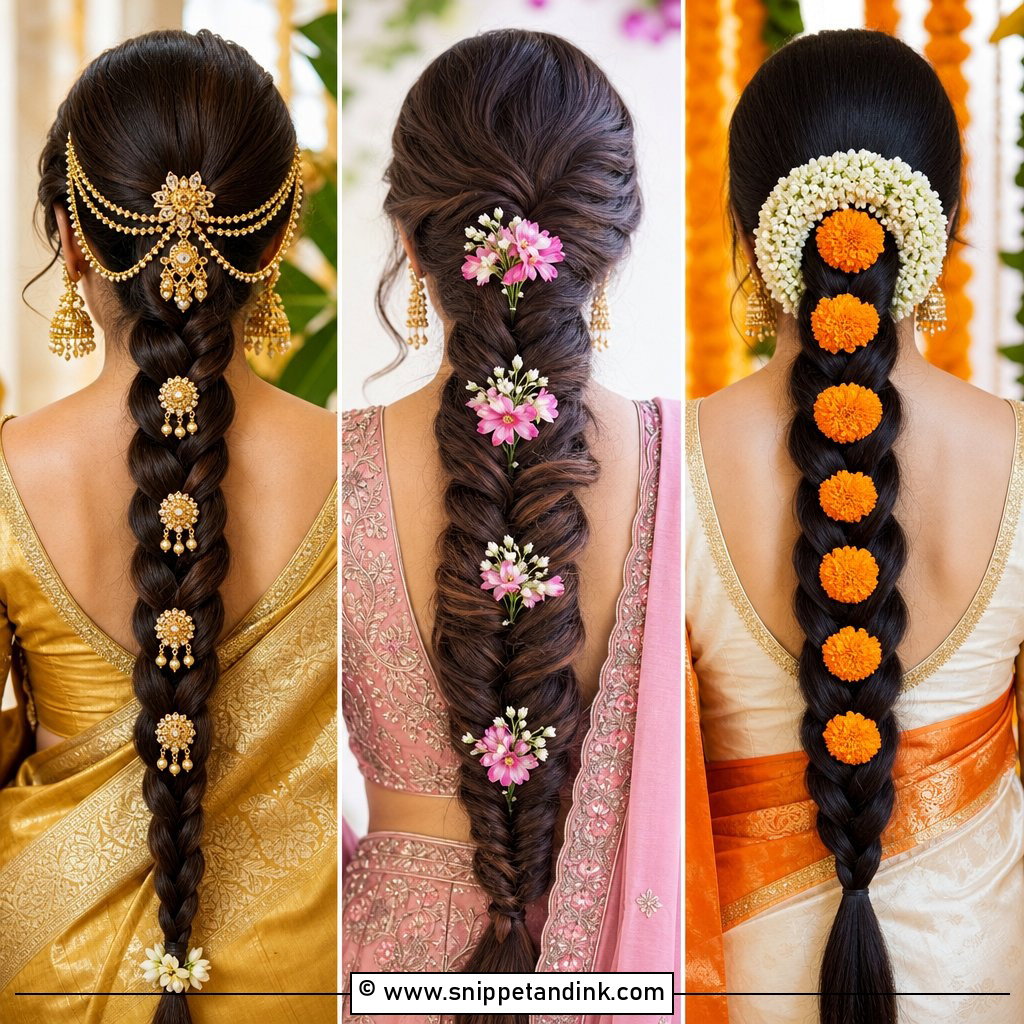
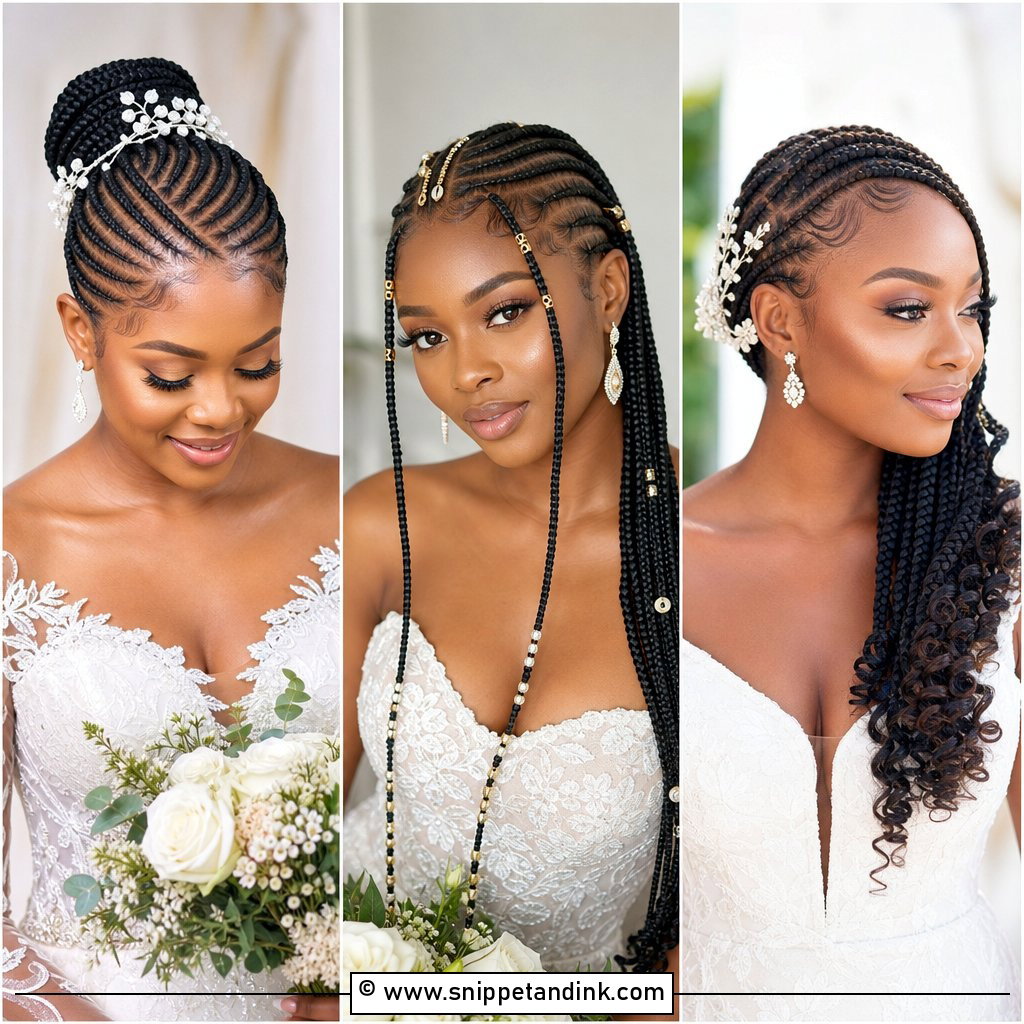
20. Bride Braids Sleek Braided Bun
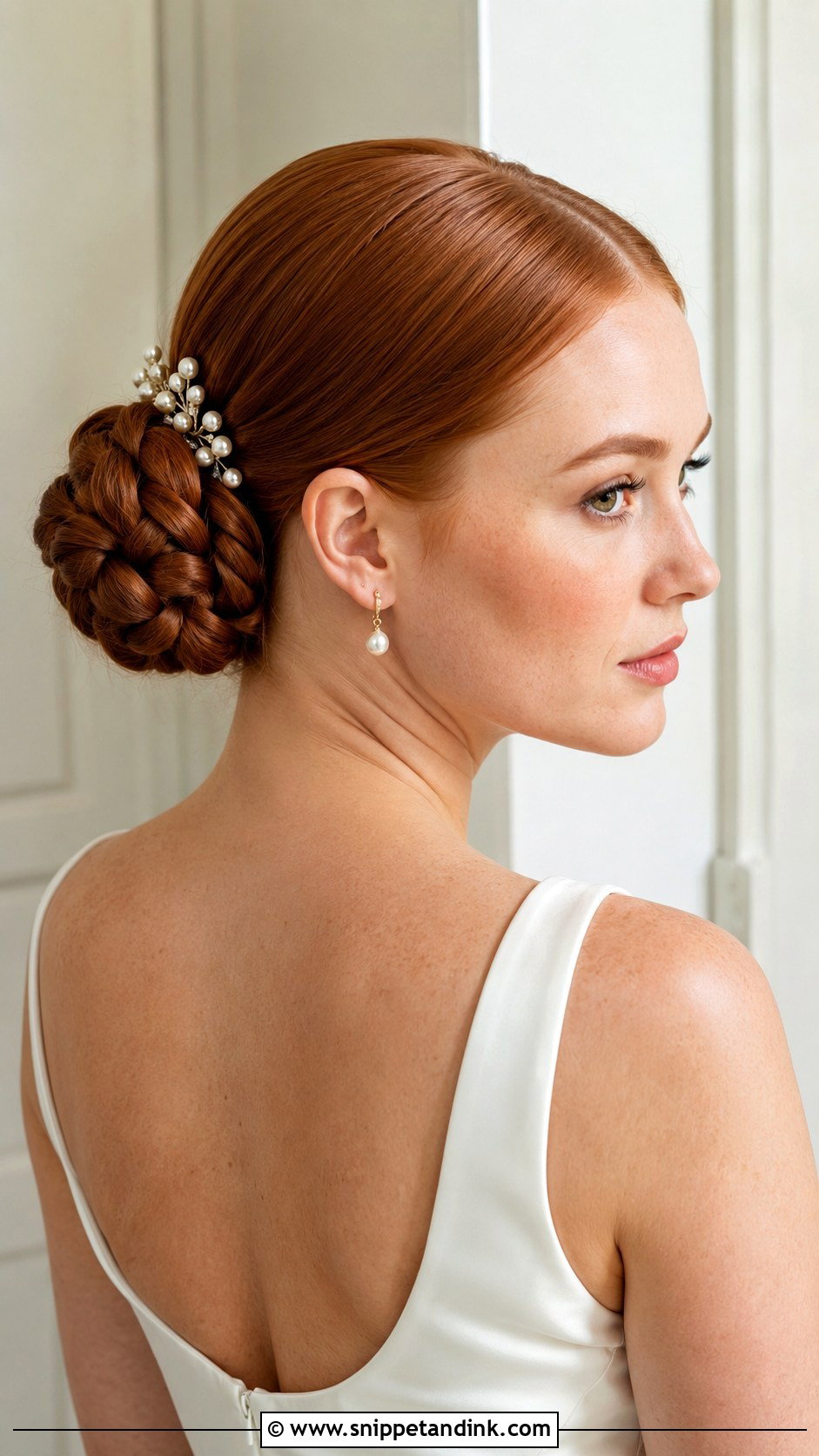
Smoothed back, braided and wrapped into a neat bun: this is the style I trust most in humidity, because there’s nothing loose to frizz. A centre part looks more fashion-forward, a soft side part more classic. It suits satin gowns, high necklines and bold earrings. I’d keep accessories minimal, maybe a single pearl comb behind the bun, so the clean shape stays the focus.
Protective Braids in Wedding Week
Box braids, goddess braids and cornrows are a practical choice for a bride, but they work best with a little planning around the wedding week.
When to have them installed
I prefer braids to go in a few days before the wedding rather than the day before. Fresh braids can feel tight and the scalp can be tender for a day or two, and you want that settled before a long day of photos and pins. Too early, though, and the edges start to lift. Discuss the date with your braider at the consultation.
Keeping them fresh until the day
- Sleep with a satin scarf or bonnet so the braids don’t frizz on the pillow.
- Use a light leave-in spray on the lengths and keep heavy oils off the parts, which look shiny in flash photos.
- Lay the edges on the wedding morning, not the night before, so they stay crisp.
- Do any colour touch-up before installation, since you can’t easily colour around finished braids.
On the morning I’ll shape the updo, attach the veil and add accessories. If your braids are long, ask for a shape that spreads the weight, such as a low bun or a wide crown, rather than a very high bun that pulls at the scalp all evening.
What Your Trial Notes Should Actually Say
A braid that suits you depends on more than the picture. Before your trial, write down what you need from it: the veil placement, how much height you like, whether you want face-framing pieces, and how tight or loose the braid should look. Bring the actual accessories. Then wear the finished style for a few hours, take photos in daylight, and note what slipped. Those notes are what turn a saved photo into a braid that holds from the morning portraits to the last dance.
You'll Like These Ideas:


Leave a Reply