
A mehendi bride sits still for hours while the henna goes on, then spends the rest of the night dancing, hugging aunties and leaning in for photos with hands she can’t use. That’s why I reach for braids at this function more than at any other: once a braid is anchored properly, nobody has to touch it again. It also gives me somewhere to hang flowers, parandi tassels, gota strings and mirror pieces that pick up the colorful outfits of the day. Below are twenty braids I’d consider for a mehendi, with notes on how each one is built, how it holds up, and who I’d gently talk out of it.

Hair Goes First, Henna Goes Second
At a mehendi the order of appointments matters. Once the paste is on the hands and feet, the bride can’t lift her arms to fix a pin for several hours, and anyone working on her head has to dodge wet designs. I always ask for the hair slot to finish, sprayed and decorated, before the mehendi artist sits down.
The day before
- Wash the hair the day before, not that morning. Slightly lived-in hair grips pins and holds a braid far better than squeaky-clean hair.
- Skip a heavy oil treatment the night before. Oil makes braids slip and lets flower pins slide out.
- Settle extensions at your trial and bring them already color-matched, so nobody is blending wefts while the guests arrive.
- Plan to wear a button-front shirt while getting ready, so nothing has to go over your head once the braid is in.
While the henna is drying
Keep hairspray well away from fresh henna. I do the final spray before the cone comes out, and if a touch-up is needed later I shield the face and hands with a card. Long sittings also tug at a tight braid’s anchors, so I leave a little slack at the crown and show the bride which single pin can be loosened if her scalp starts to ache.
Think about how you’ll be sitting, too. If you’ll be leaning back against cushions for three hours, a big bun or heavy ornament at the back of the head digs in. Side braids and front braids are far kinder for long sittings.
1. Floral Braid For Mehendi Bride
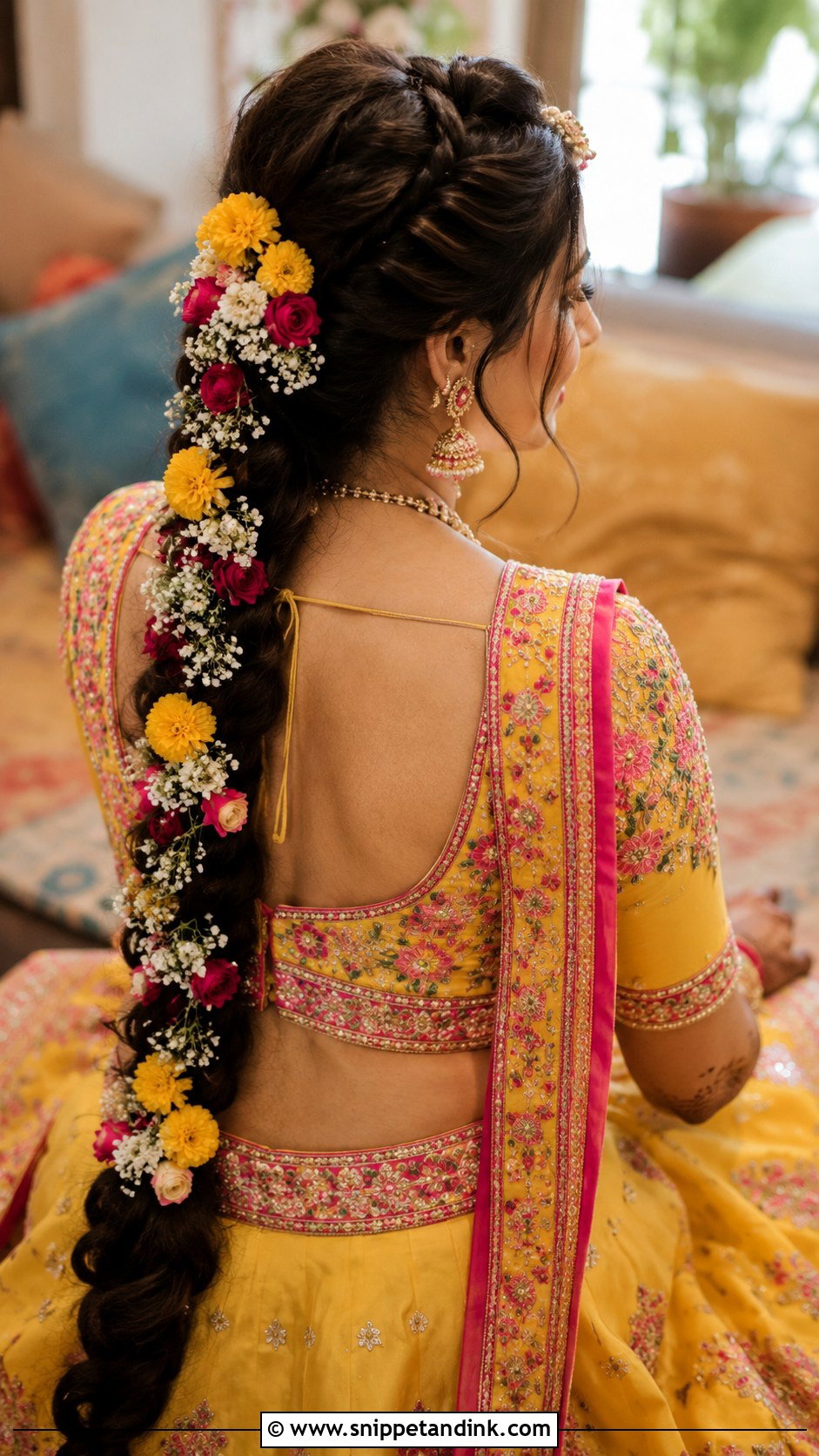
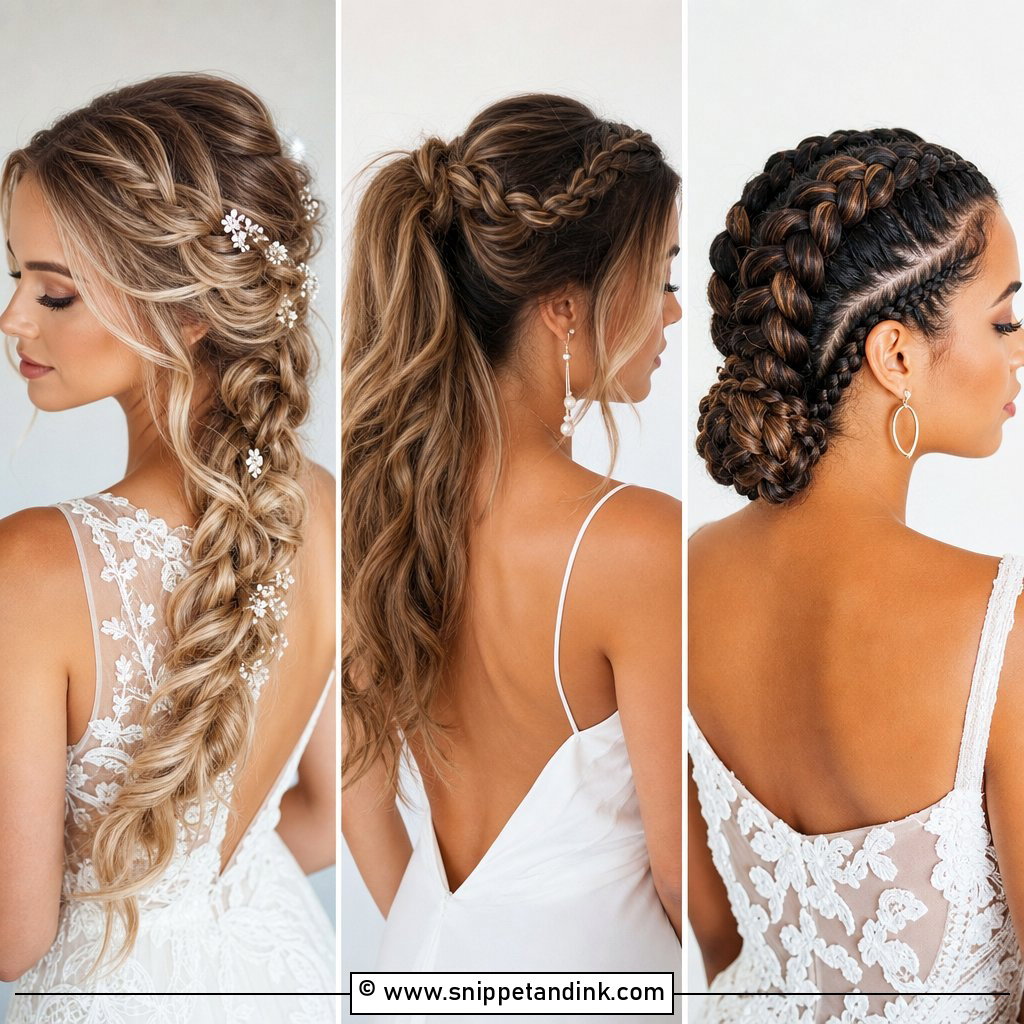
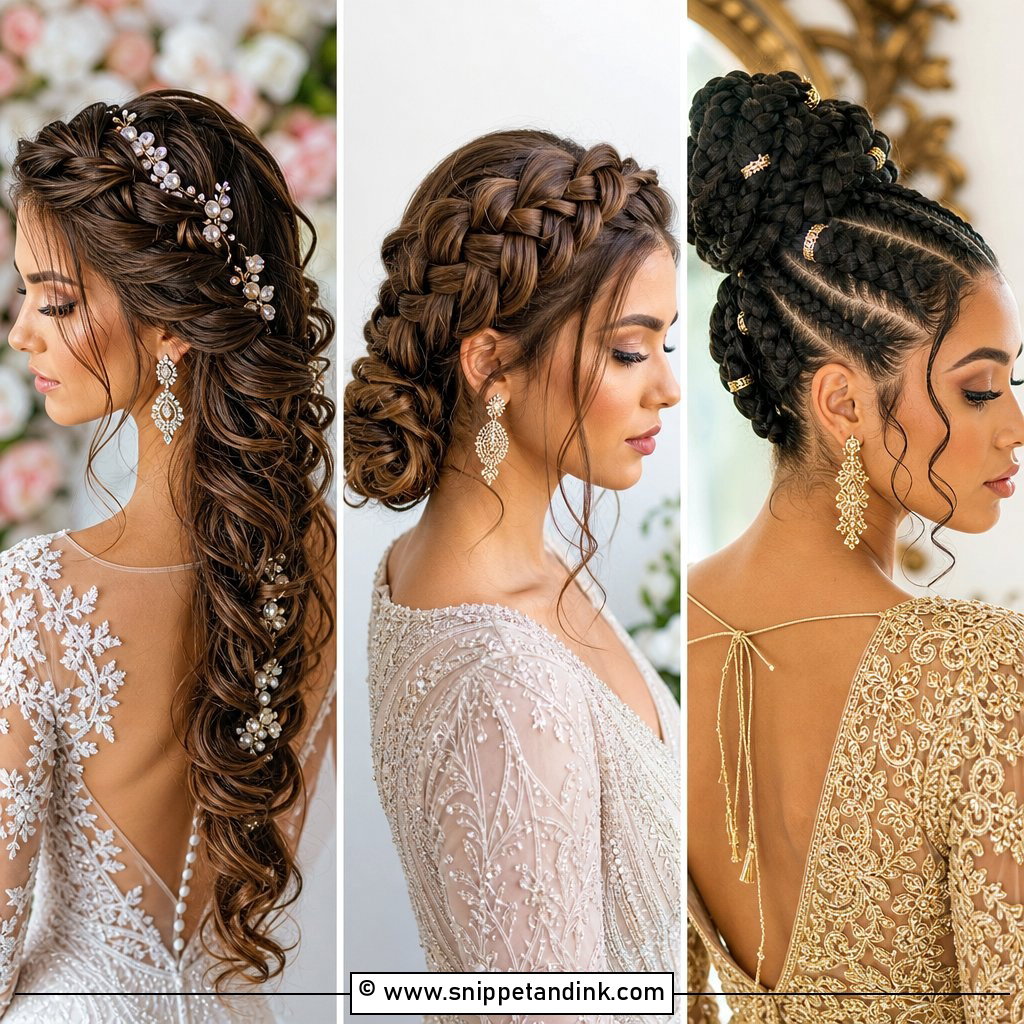
Fresh flowers are the obvious choice for a mehendi, and they’re also the detail that fails first. I build this one with a little lift at the crown and smooth face-framing pieces, then braid the length and attach the blooms on pins rather than threading them through, so a tired rose can be swapped halfway through the evening. It sits naturally with lehengas, ghararas and shararas, and with bright mehendi outfits in yellow, green or pink. Medium-length hair usually needs a clip-in weft to give the braid real width. Pick flowers in one or two shades taken from the outfit; a braid carrying five colors ends up competing with the embroidery.
2. Side Braid For Mehendi Bride
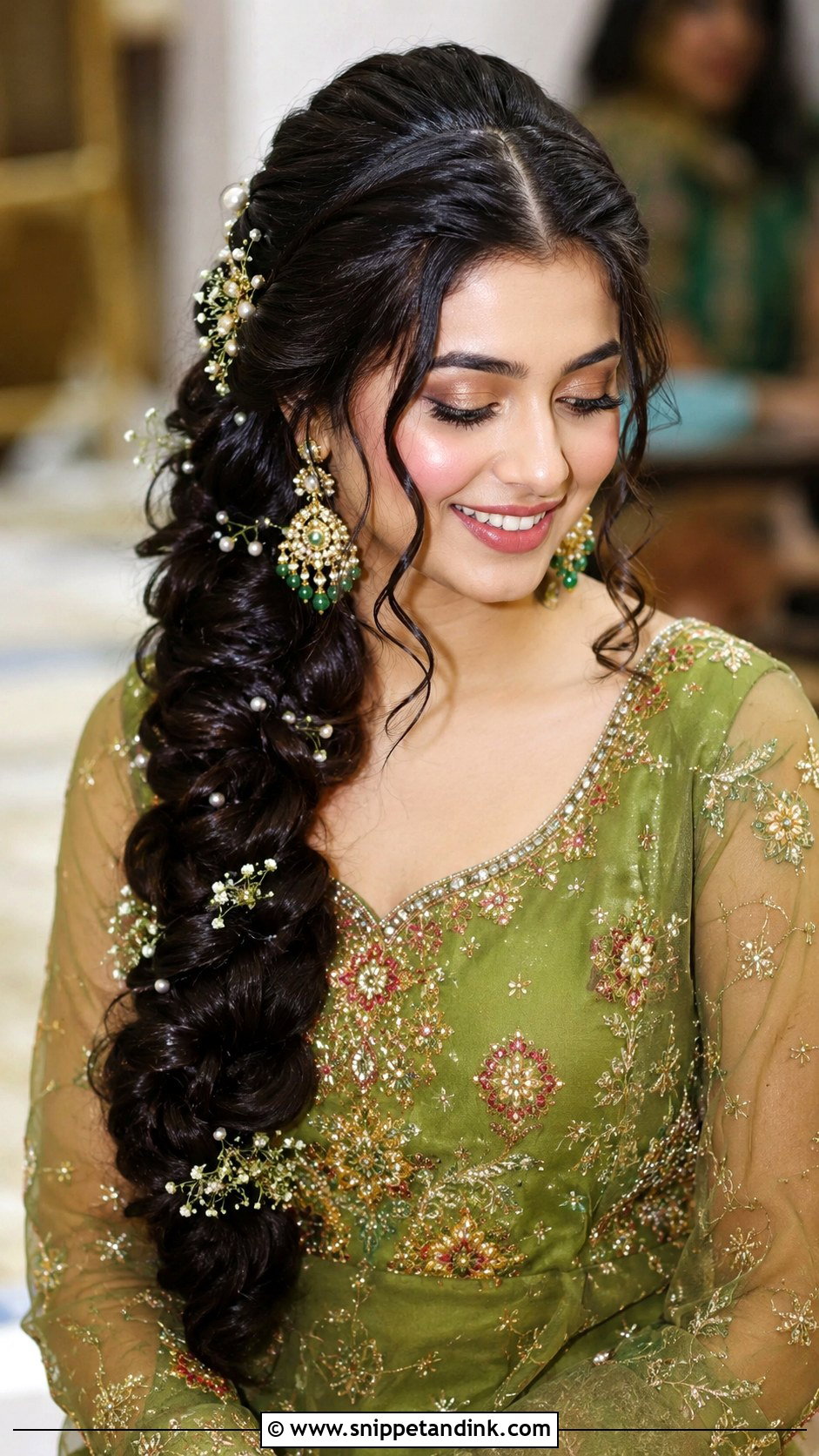
Put the braid over one shoulder and the earrings, blouse and henna-covered hands all get a clear line in photos. I anchor the base with crossed pins behind the ear, because a side braid’s weight pulls toward the front and drifts if only the elastic is holding it. Check which side the dupatta drapes before I start: the braid belongs on the opposite shoulder, or the two will tangle all night. Baby’s breath, a few small roses or a pearl string is plenty of decoration.
3. Bubble Braid For Mehendi Bride
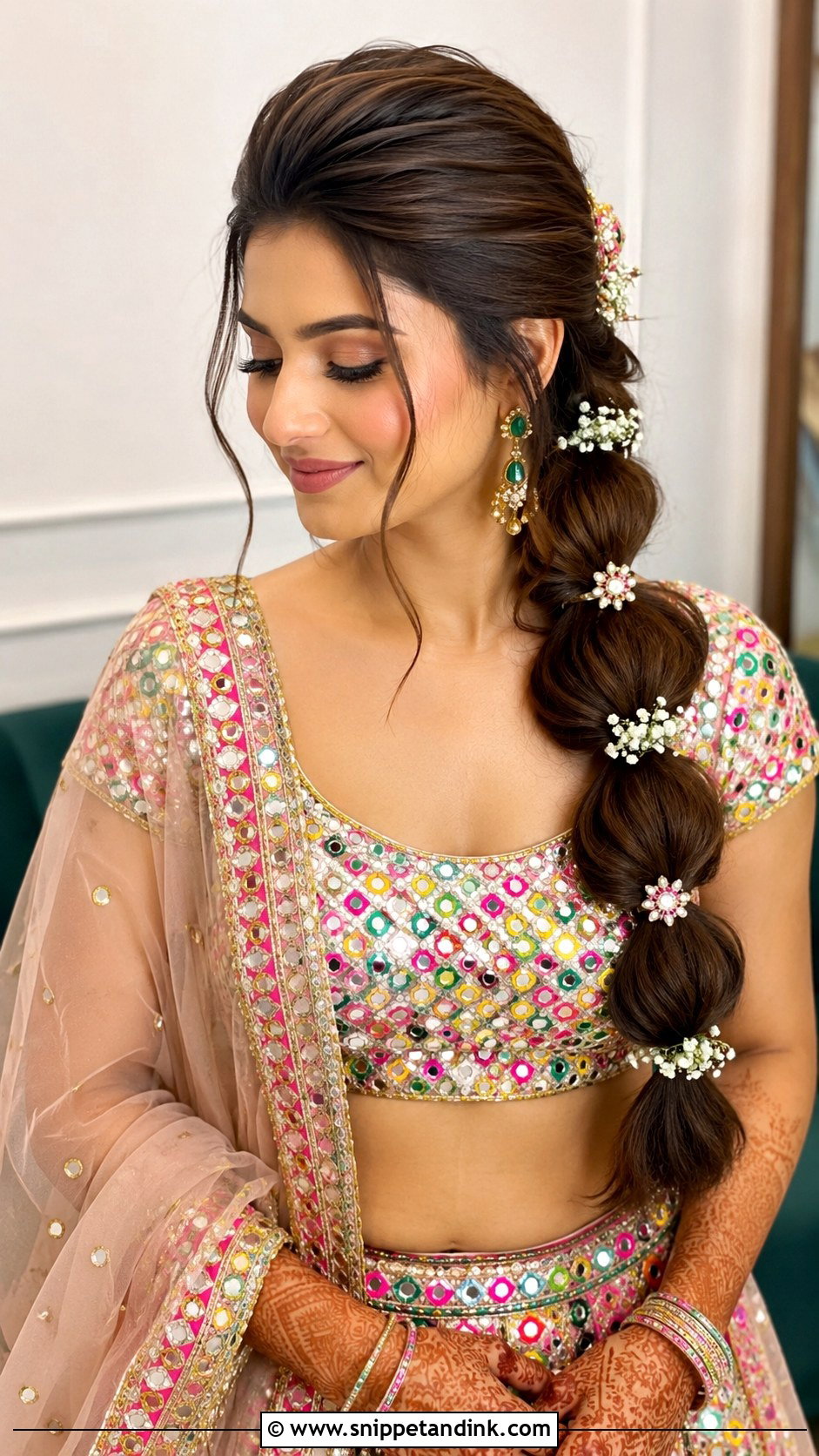
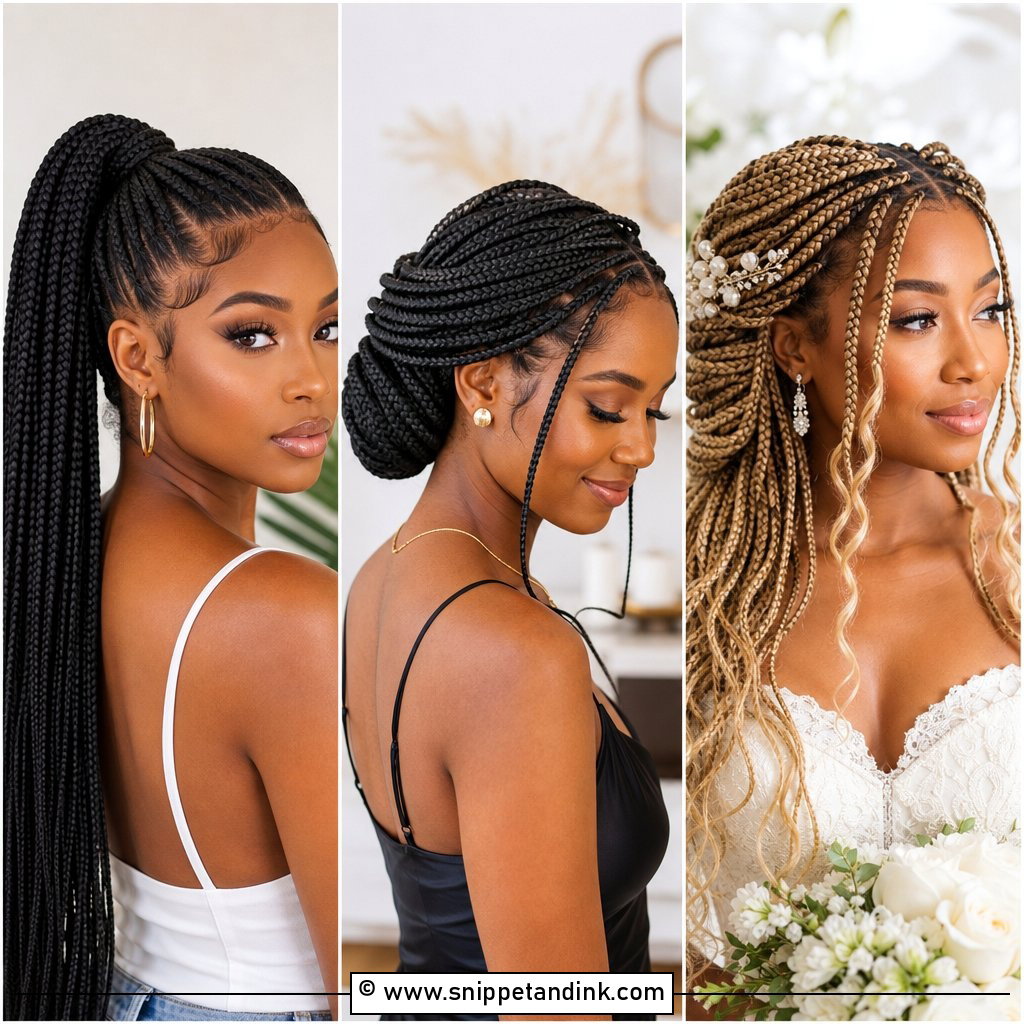
Technically a bubble braid isn’t woven at all. It’s a ponytail or half-up base cinched with hidden elastics every few inches, with each section pulled wide into a round bubble. It’s the quickest style on this list to create and the easiest to rescue, since a flattened bubble just needs a tug. I’d steer very fine hair away from it unless there’s a weft hidden inside, because thin sections let the elastics show. On thick hair it’s a smart choice: it controls bulk without the scalp tension of a tight plait. Small flowers, mirror accents or parandi pieces tuck neatly into the gaps.
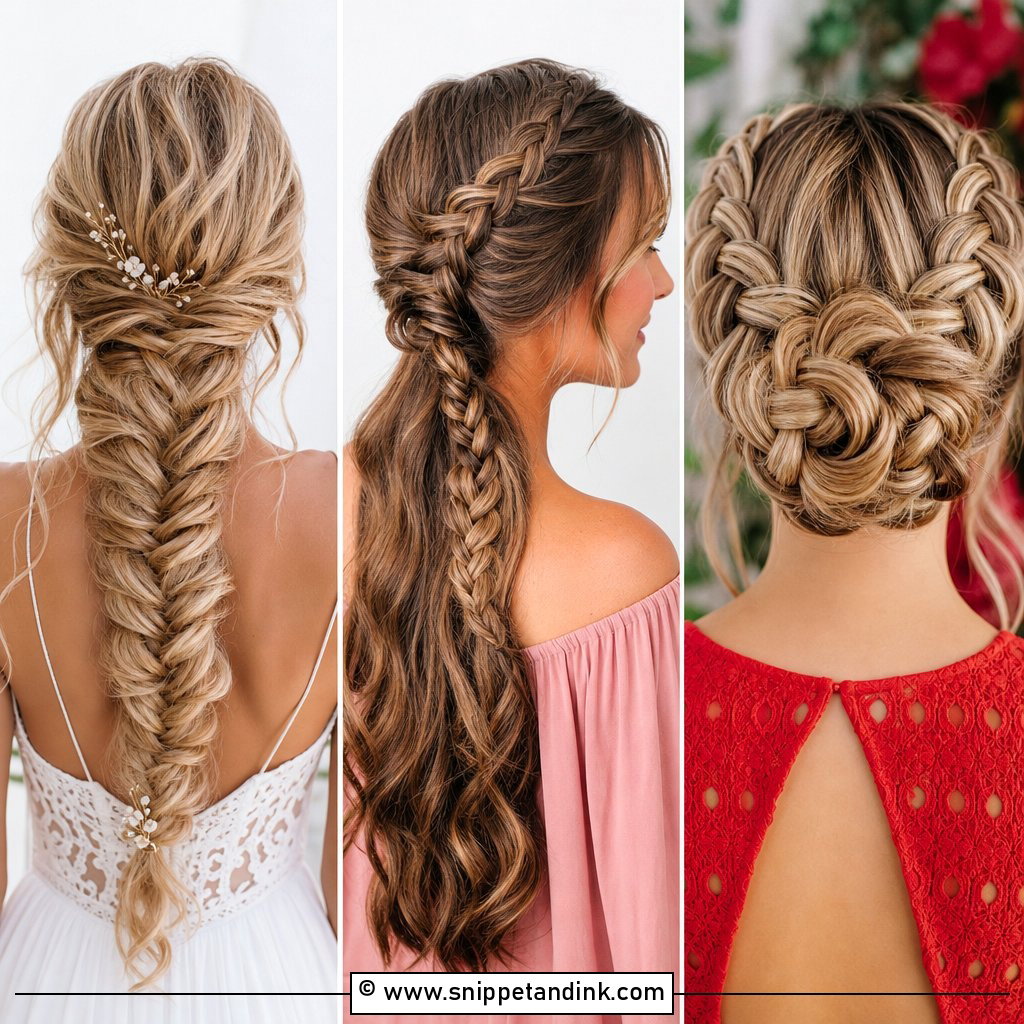
4. Fishtail Braid For Mehendi Bride
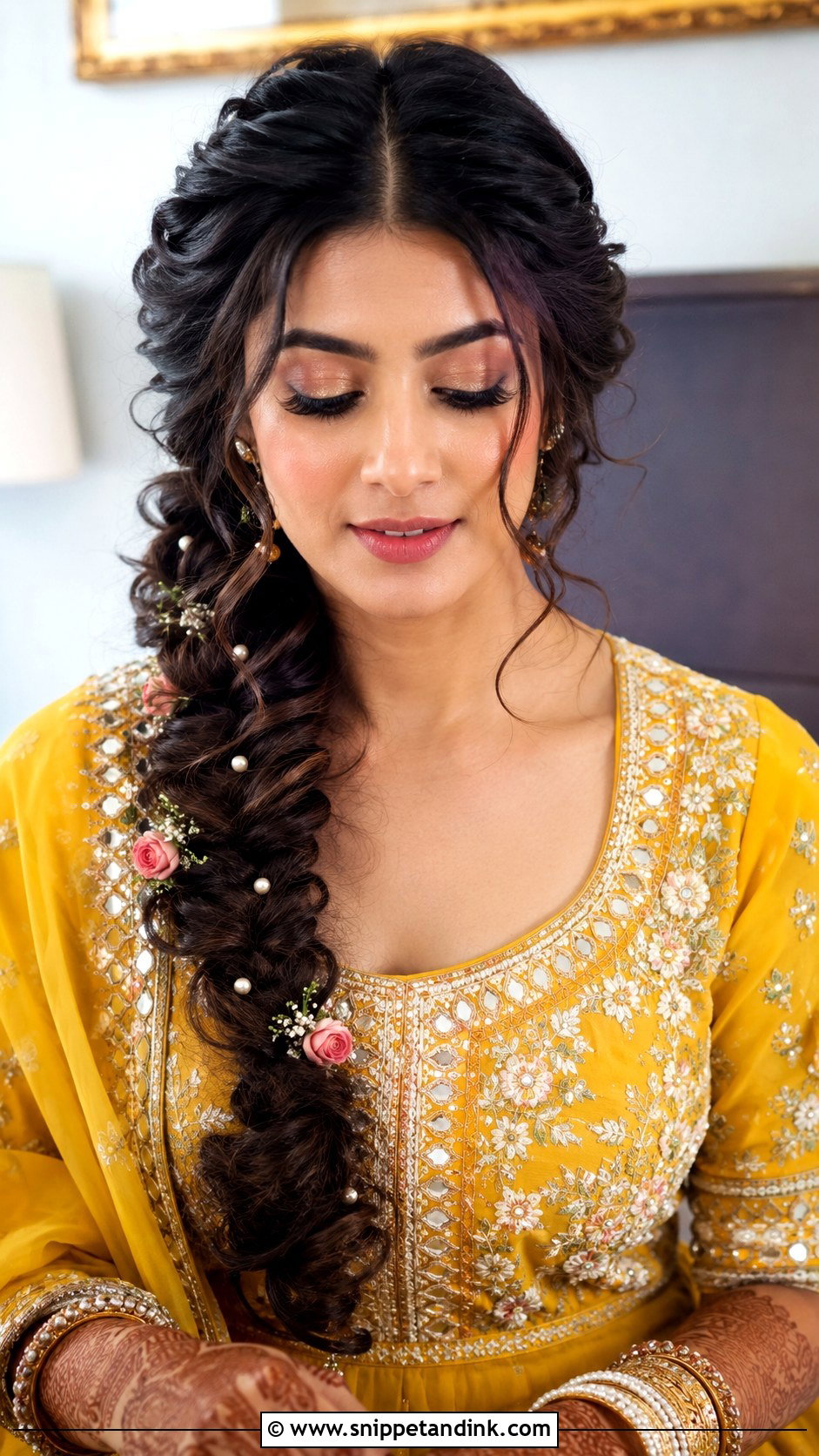
Fishtail has the finest weave of any braid here, so it rewards close-up photography and punishes frizz. I work with two strands and very small sections, and I smooth a light cream through the lengths first so stray hairs don’t break the pattern. Pull it out slightly for a softer shape, or keep it tight if you want it to look just as neat at midnight. Because the texture is already busy, I keep decoration to a few pearl pins and let the maang tikka and the embroidered dupatta carry the detail.
5. Dutch Braid For Mehendi Bride
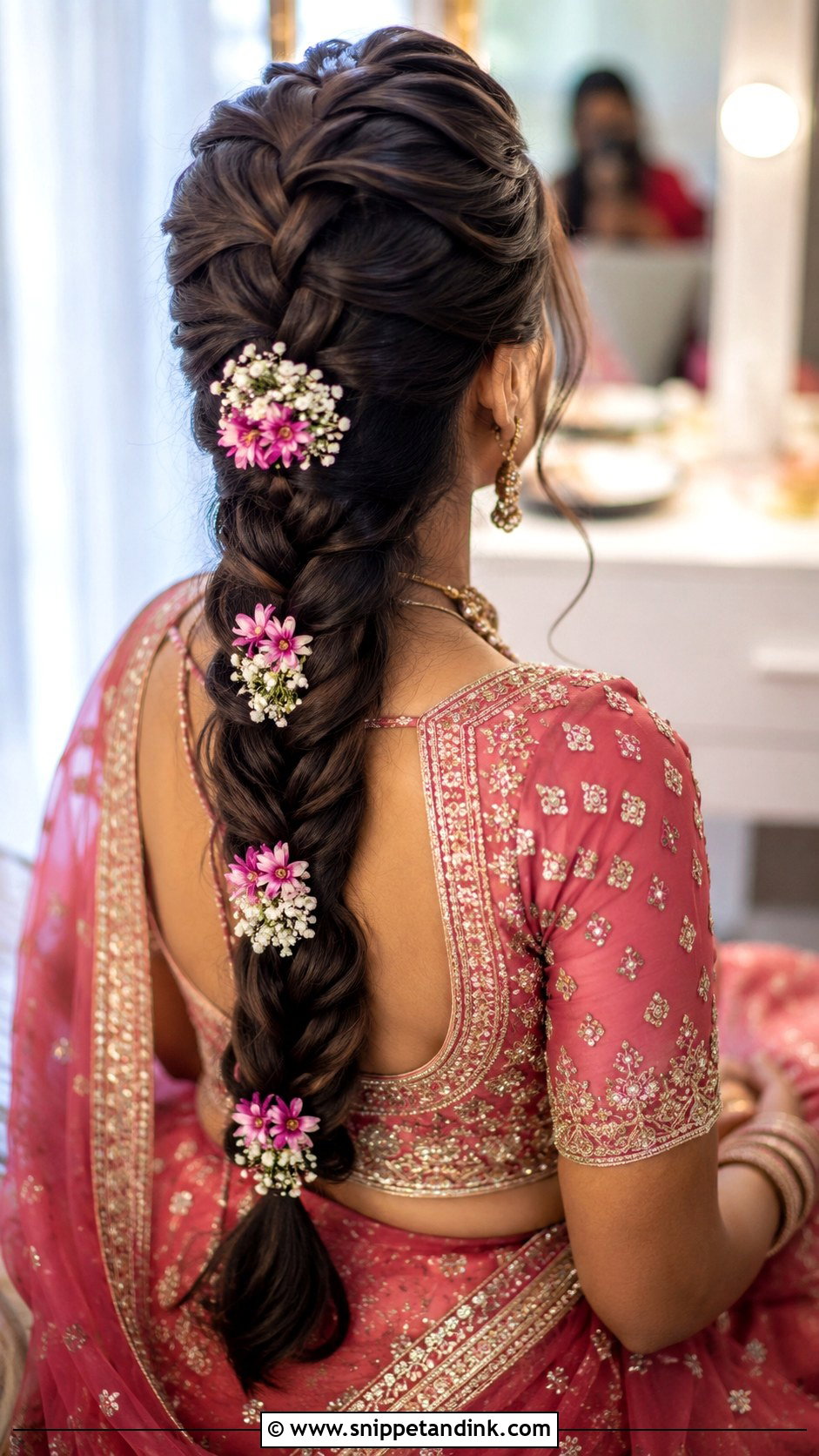
In a Dutch braid the strands cross under instead of over, so the plait sits raised on top of the hair rather than lying flat. That raised ridge is woven into the hair at the scalp, which is why it barely moves through a full night of dancing and outdoor photos. I’ll do one long braid down the back, a pair, or one that feeds into a low braided ponytail. Fresh flowers pinned along the ridge show up clearly from the side. On thick hair this is my most secure option. Short layers at the nape can poke out of it, so I plan a few extra pins there.
6. Loose Braid For Mehendi Bride
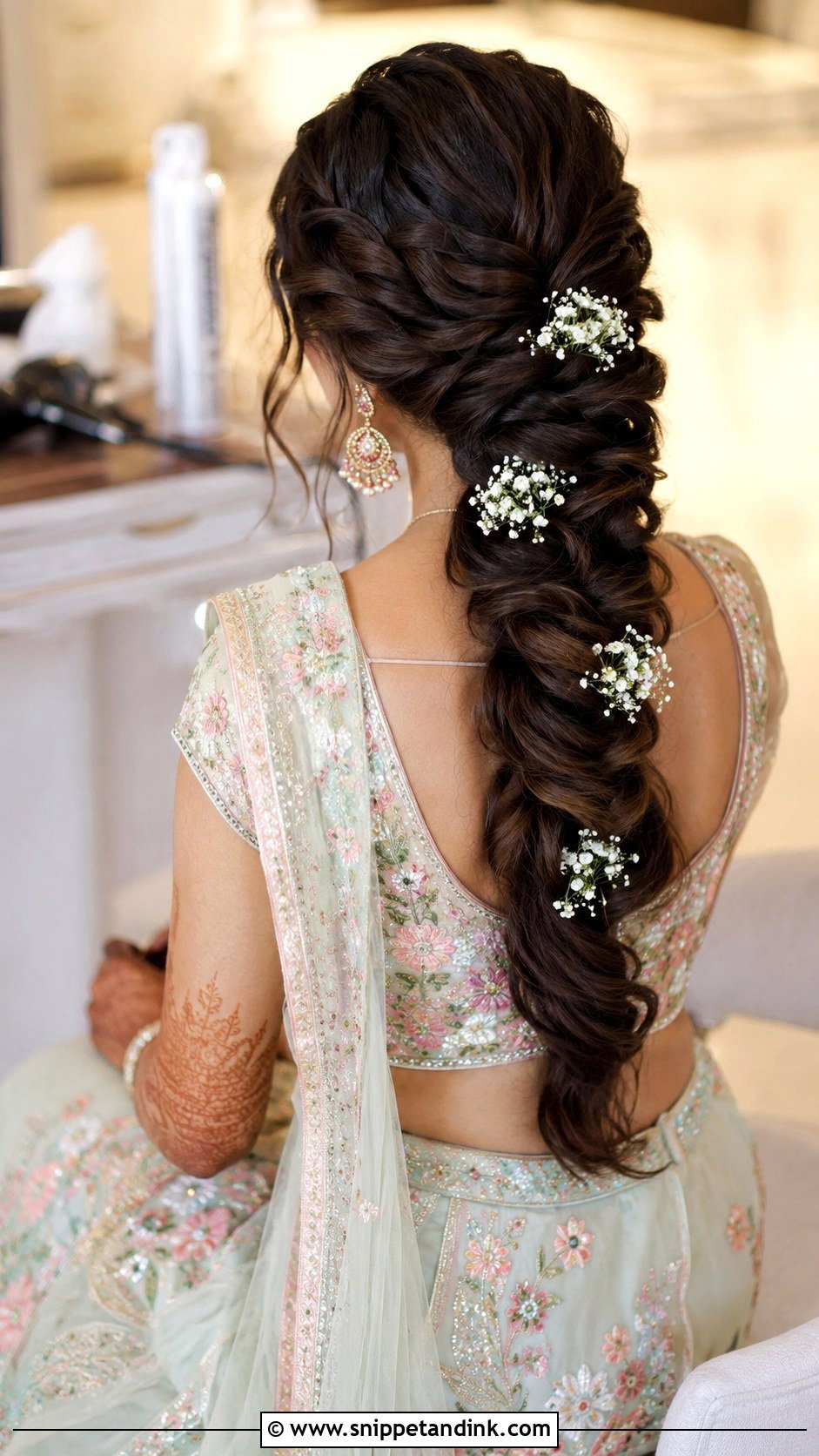
When the lehenga is heavy and the jewelry is heavier, a loose braid stops the hair from adding to the load. I give the crown a little backcombing, braid without pulling, then gently widen each loop with my fingers and leave a few strands out at the face. The catch: loose braids slip in freshly washed, silky hair, so I prefer hair washed the day before and a texture spray before I start. It’s kind to brides who get headaches from tight styles. Keep the decoration light, a few gold pins or a short string of pearls.
7. Parandi Braid For Mehendi Bride
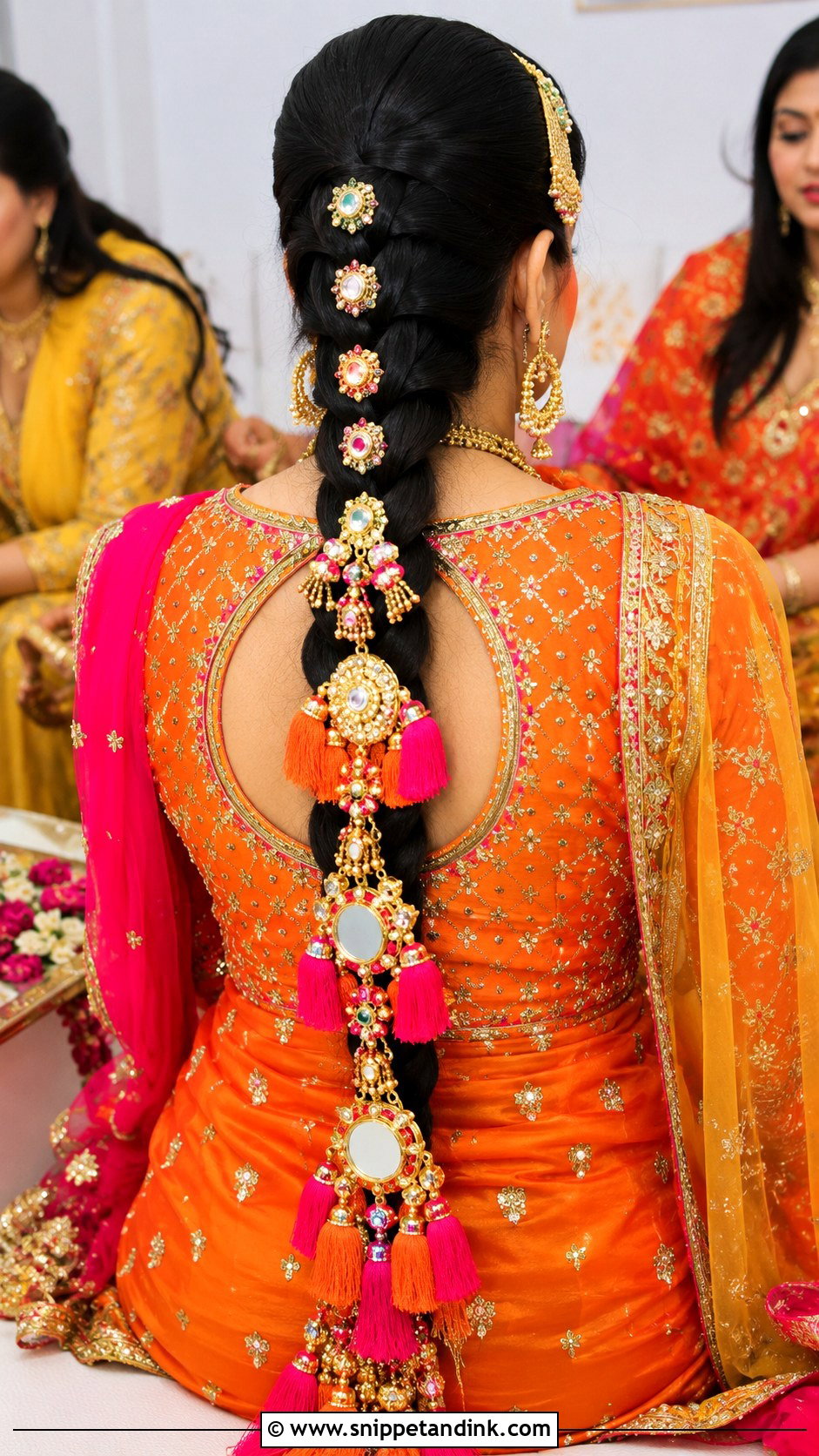
A parandi is a tasseled cord braided in with the hair, adding length and swing. They range from plain silk tassels to dense versions with mirrors, beads, shells and gota, and the weight matters more than people expect: a heavy parandi drags a fine braid down and loosens the top. I begin it a few inches below the nape rather than at the scalp, and secure the start with an elastic hidden under a strand. It’s a staple at Punjabi, Pakistani and North Indian mehendi functions, and it adapts well to many other outfits. A sleek front reads polished; soft waves at the temples relax it.
8. Gajra Braid For Mehendi Bride
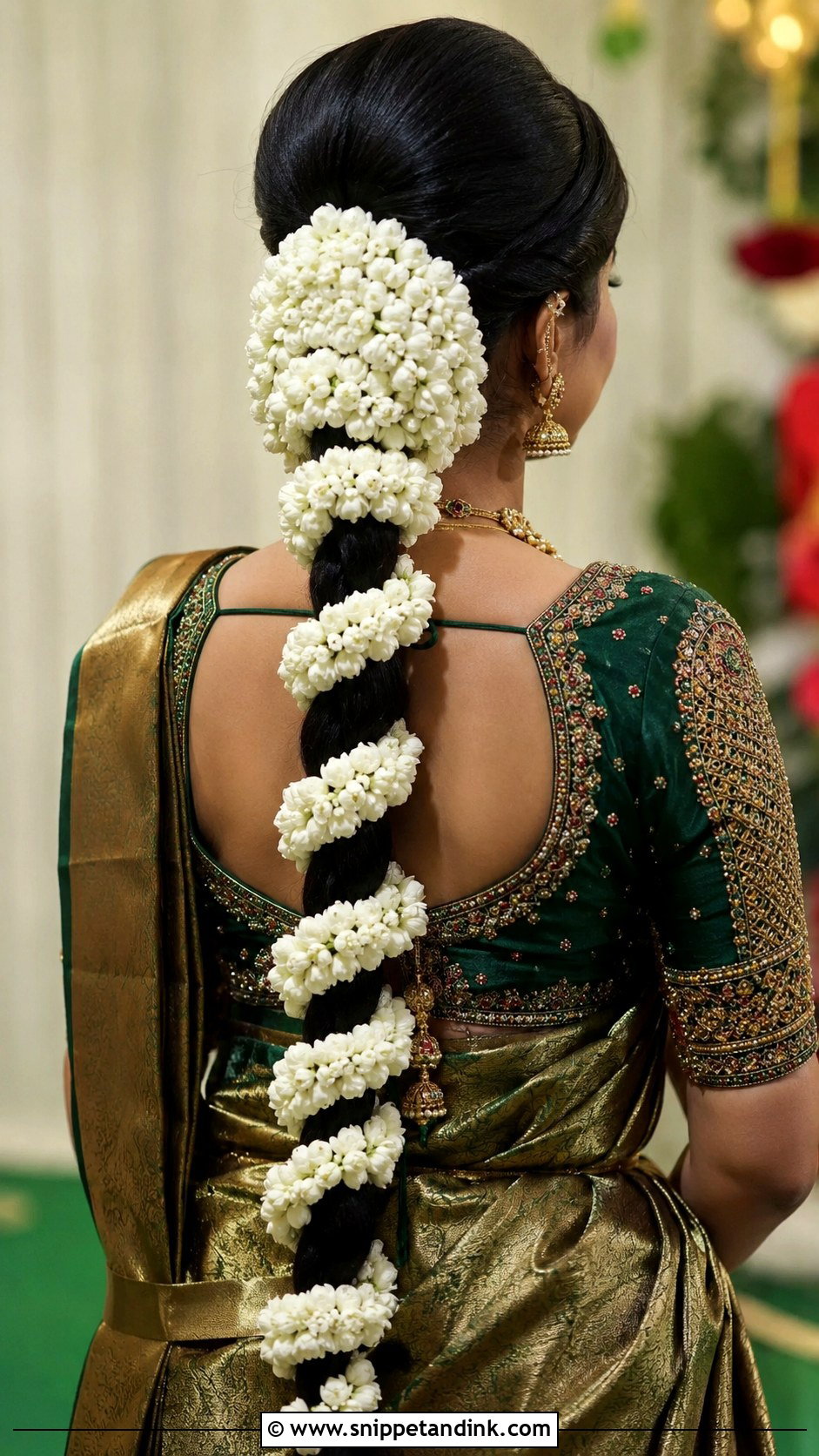
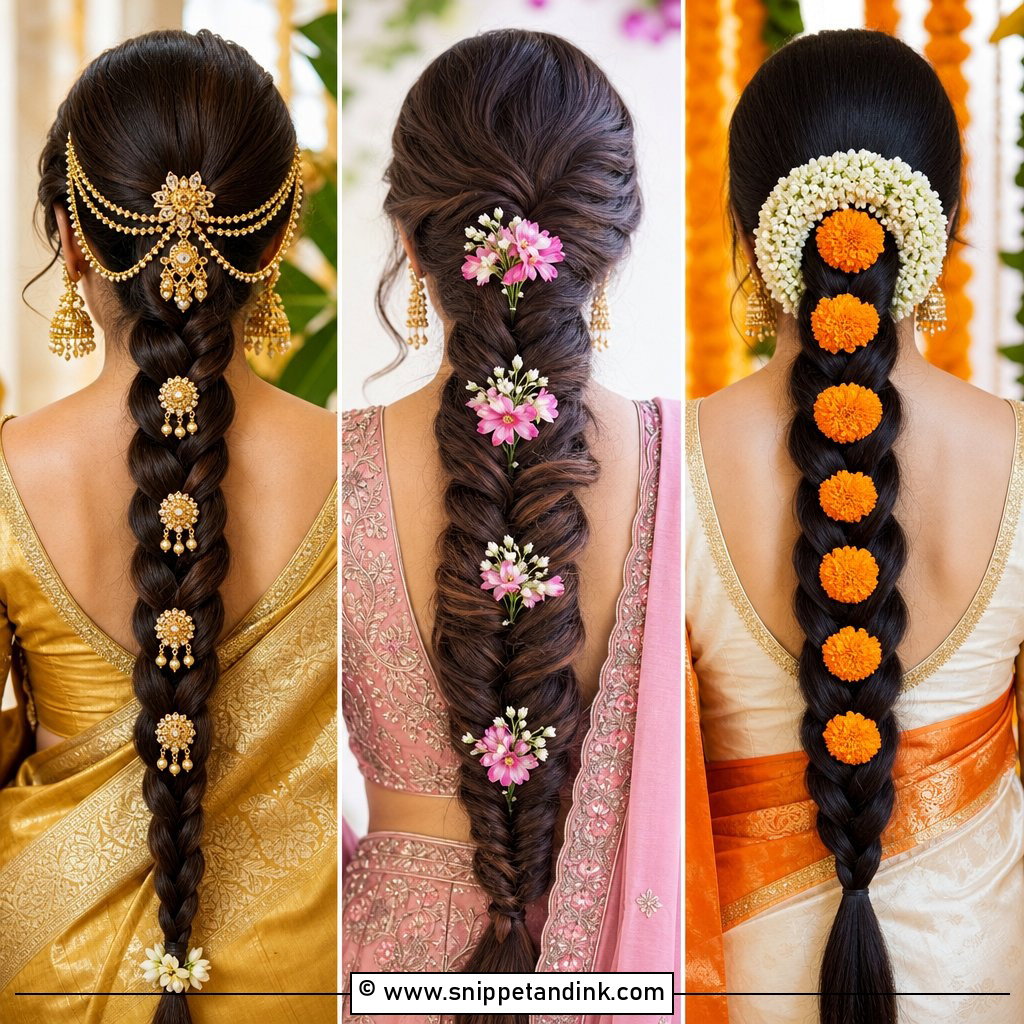
Jasmine gives a braid scent as well as color, and the fragrance follows the bride into every hug. I wrap the gajra along the braid and fix it with U-pins at intervals instead of one anchor point at the top, because a long string of fresh flowers is heavier than it looks and will slide. It pairs naturally with silk, banarasi and mirror work. White buds frame the back of the head clearly, so this is a strong pick if the blouse or dupatta has detail worth showing. Jasmine does brown as the night goes on, which I deal with further down.
9. Half Up Braid For Mehendi Bride
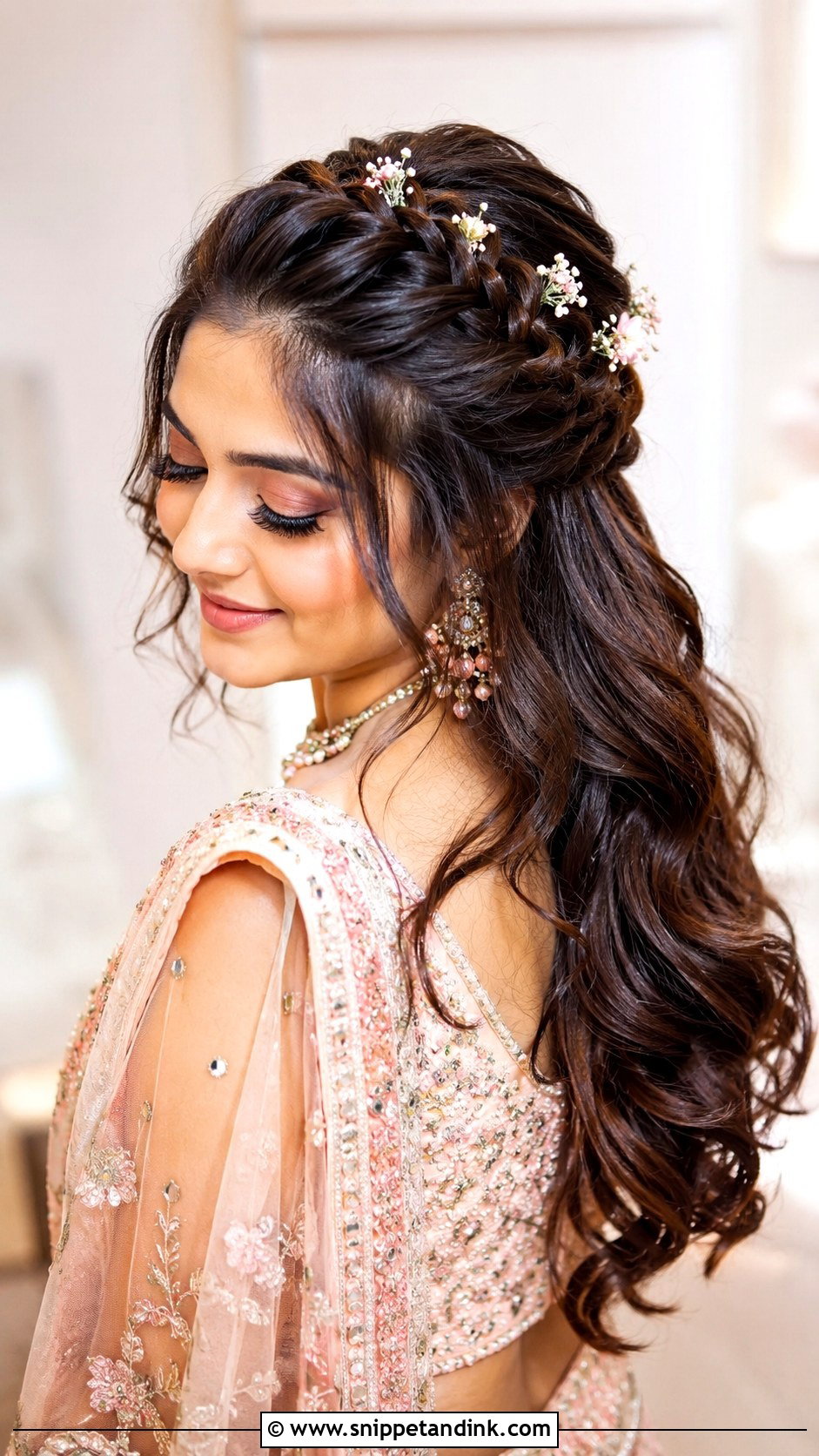
Braiding only the top section gives you the grip of a braid where hair usually falls into the face, while the lengths stay free to move. I braid first, then curl the loose hair and set each curl with spray while it cools; skip that step and the humidity of an evening function can drop the curls within a couple of hours. The braided part can be a crown, a twist or a small fishtail. I put the flowers exactly where the braid meets the loose hair, which also hides the anchoring pins. It suits lighter dupattas and off-shoulder blouses.
10. Crown Braid For Mehendi Bride
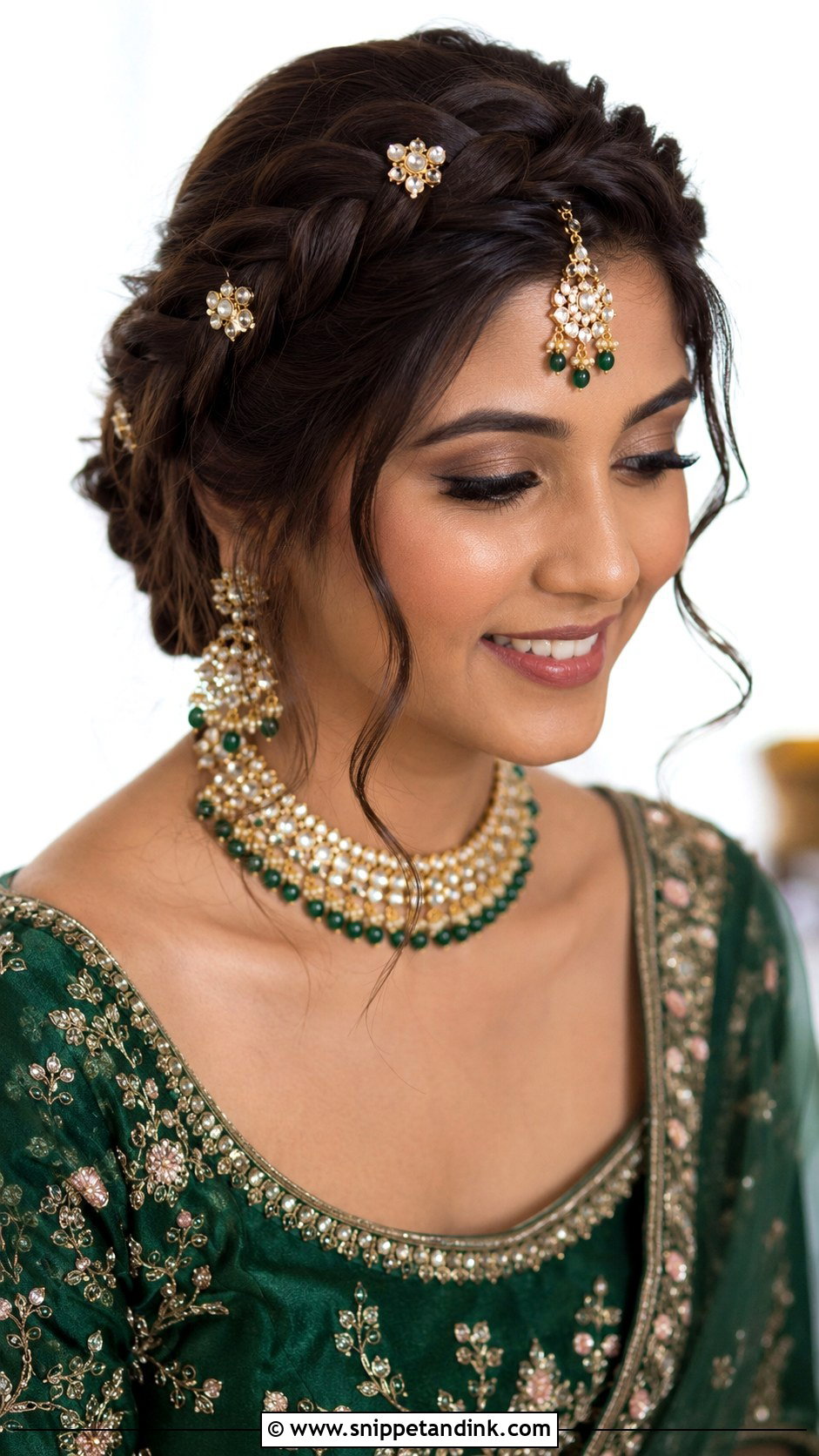
Wrapping a braid around the head keeps every strand off the neck and away from the dupatta, which counts for a lot at an outdoor mehendi in warm weather. I usually work two Dutch braids up from the nape and pin them across the top, crossing the pins in an X so they lock. The face is framed and the jewelry and makeup take the attention. The rest of the hair can be tucked in or run into a low braided ponytail. Heavily layered or shoulder-length hair often can’t reach all the way round, so expect a hidden extension piece.
11. Waterfall Braid For Mehendi Bride
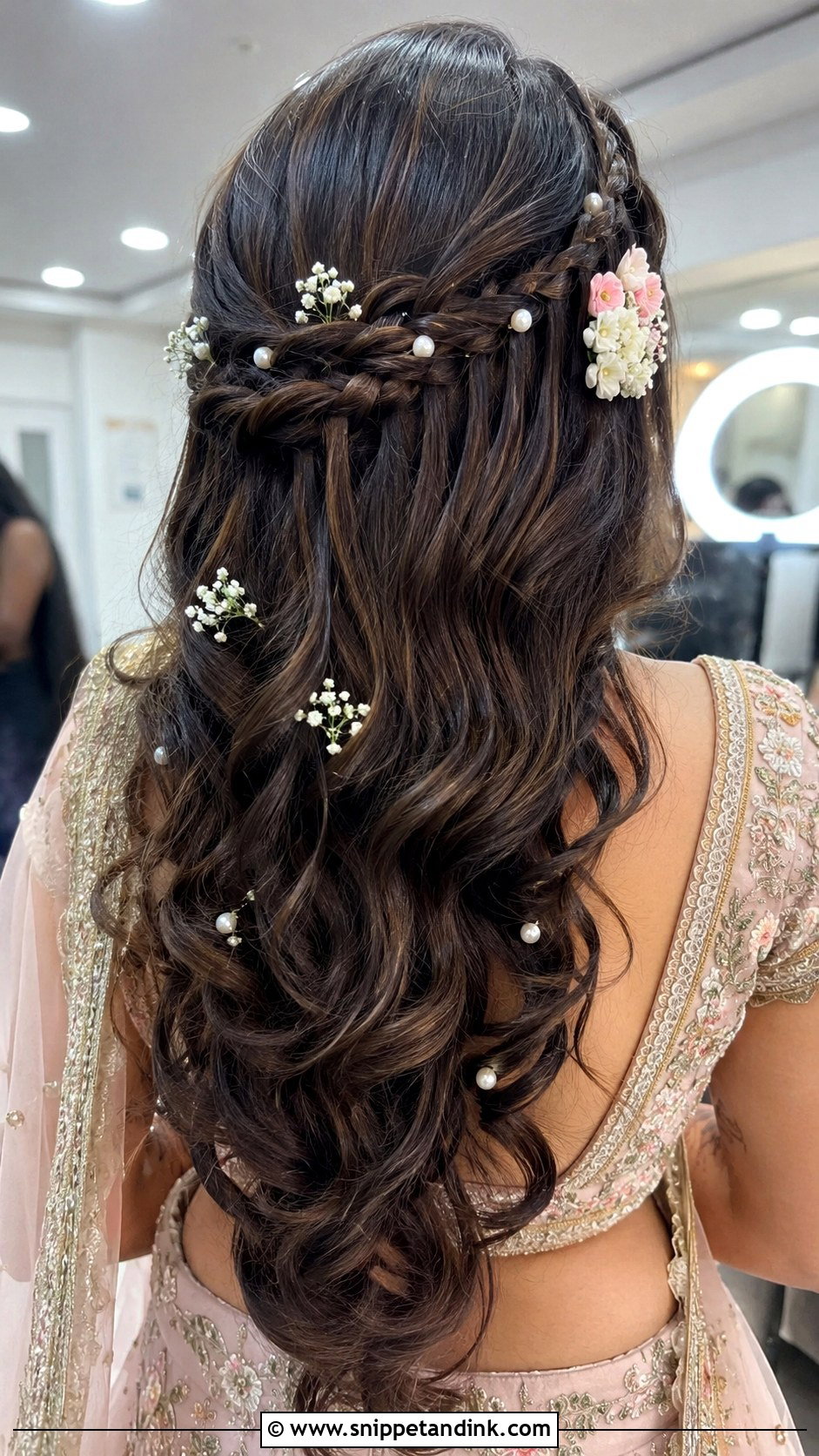
This one only works on curled hair. The braid travels across the side or back of the head, and at each pass one strand drops out and falls free; on straight hair those dropped strands hang flat and the effect disappears. I curl first, braid second, and finish with a tiny clear elastic hidden behind the ear. It’s delicate in close-ups and sits well with pastel outfits, light jewelry and floral prints. It’s also the least secure braid here, so I wouldn’t suggest it for a bride planning to dance hard all night.
12. Mermaid Braid For Mehendi Bride
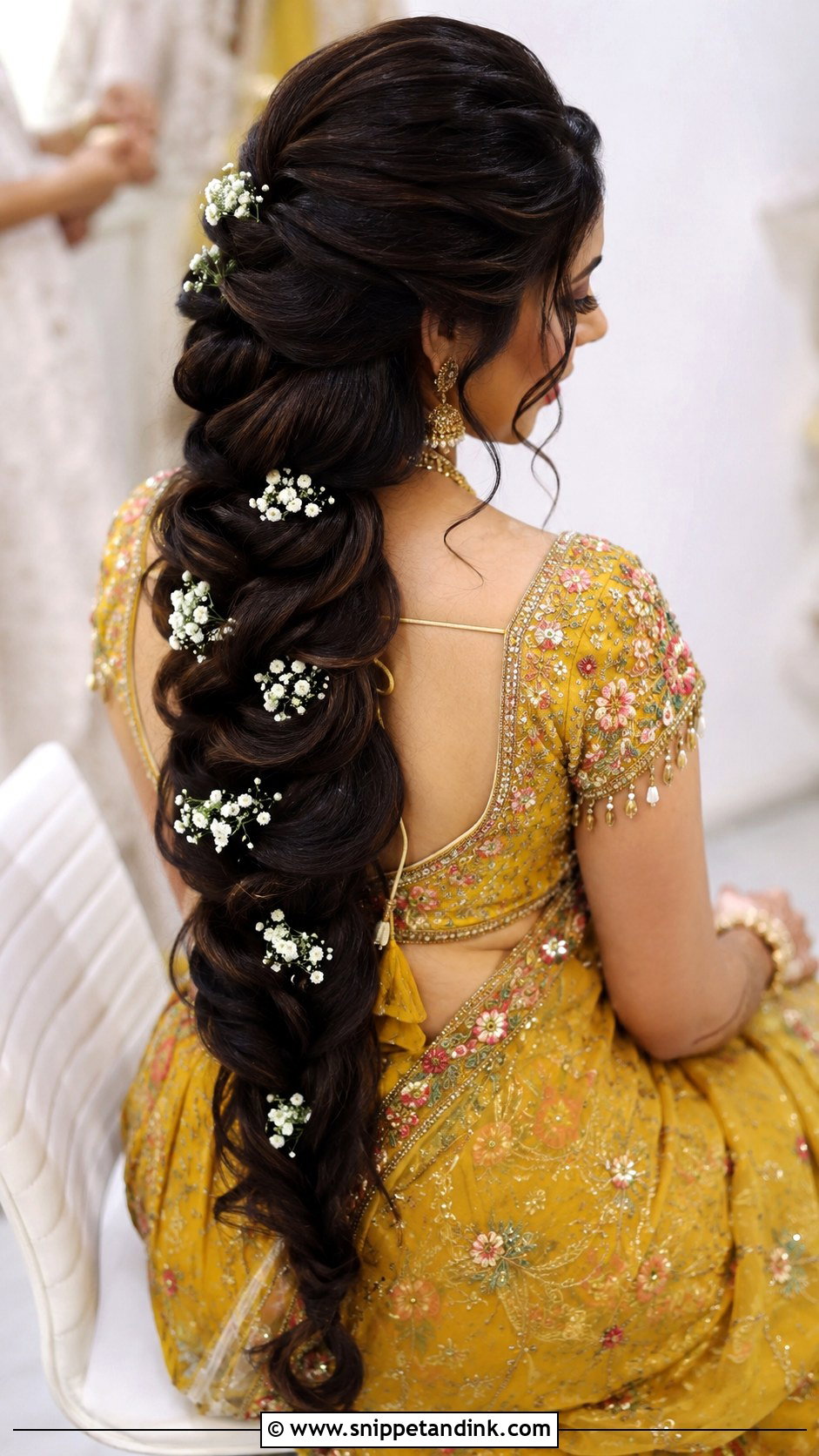
A mermaid braid is wide and flat, made by working many small sections into a broad weave and then pulling the edges outward. It turns the hair into part of the outfit, which suits a simple lehenga and can overwhelm a heavily embellished one. A center part with a sleek front keeps it formal; soft face-framing curls loosen it up. Flowers, pearls and gold clips slide easily between the wide sections. On medium-length hair I nearly always add a weft, because that width uses up length fast.
13. Pull Through Braid For Mehendi Bride
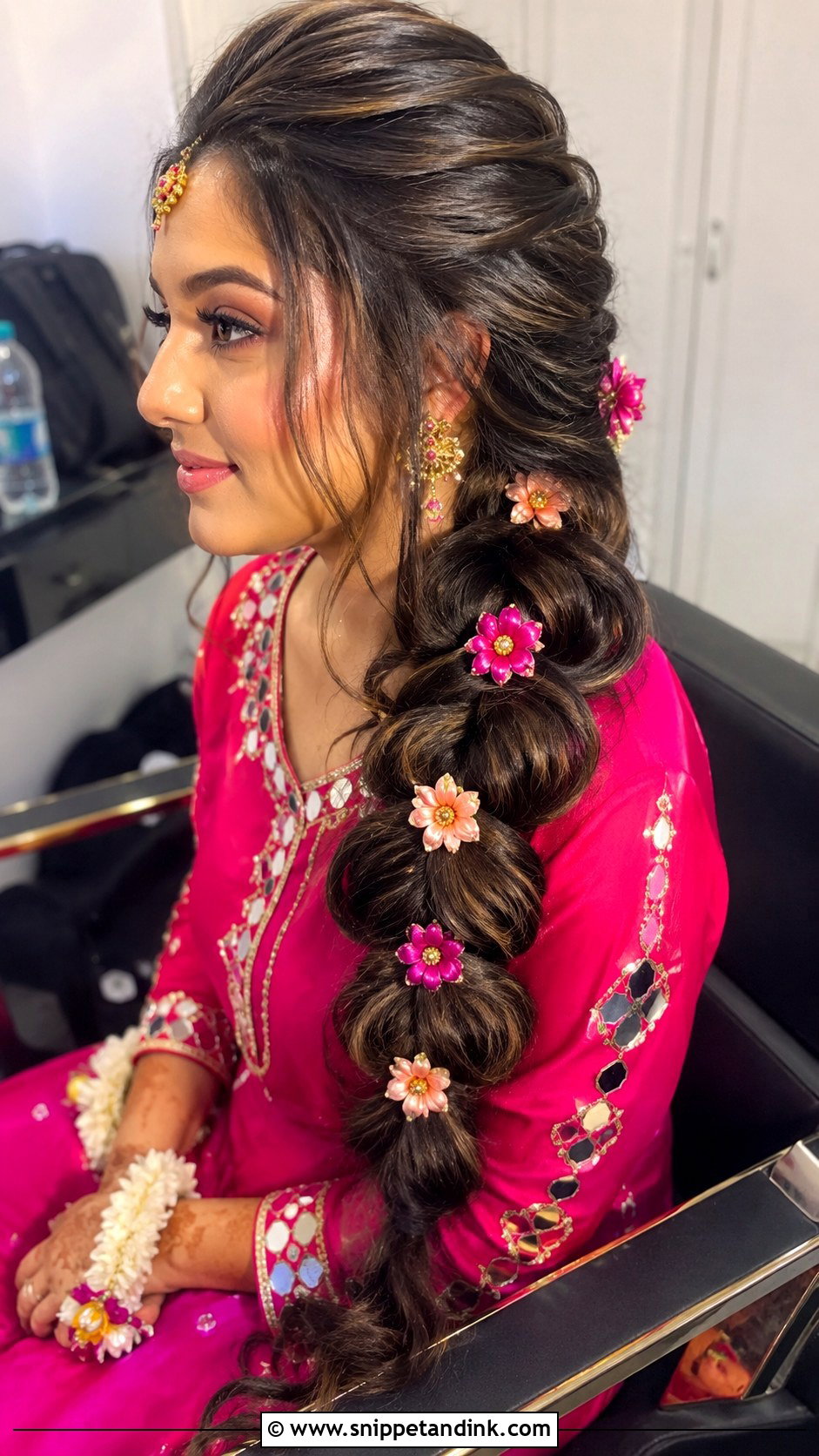
Not a true braid, this is a chain of small ponytails, each one pulled through the one above it and fanned out. That makes it the easiest full-looking style for fine hair, though extensions can bulk it further. Every section photographs as a defined loop, and beads or mirror charms sit neatly between them. The downside shows up at midnight: it’s held by a lot of elastics, so ask your stylist to use snag-free ones. Cheap rubber bands tear hair on the way out.
14. Rope Braid For Mehendi Bride
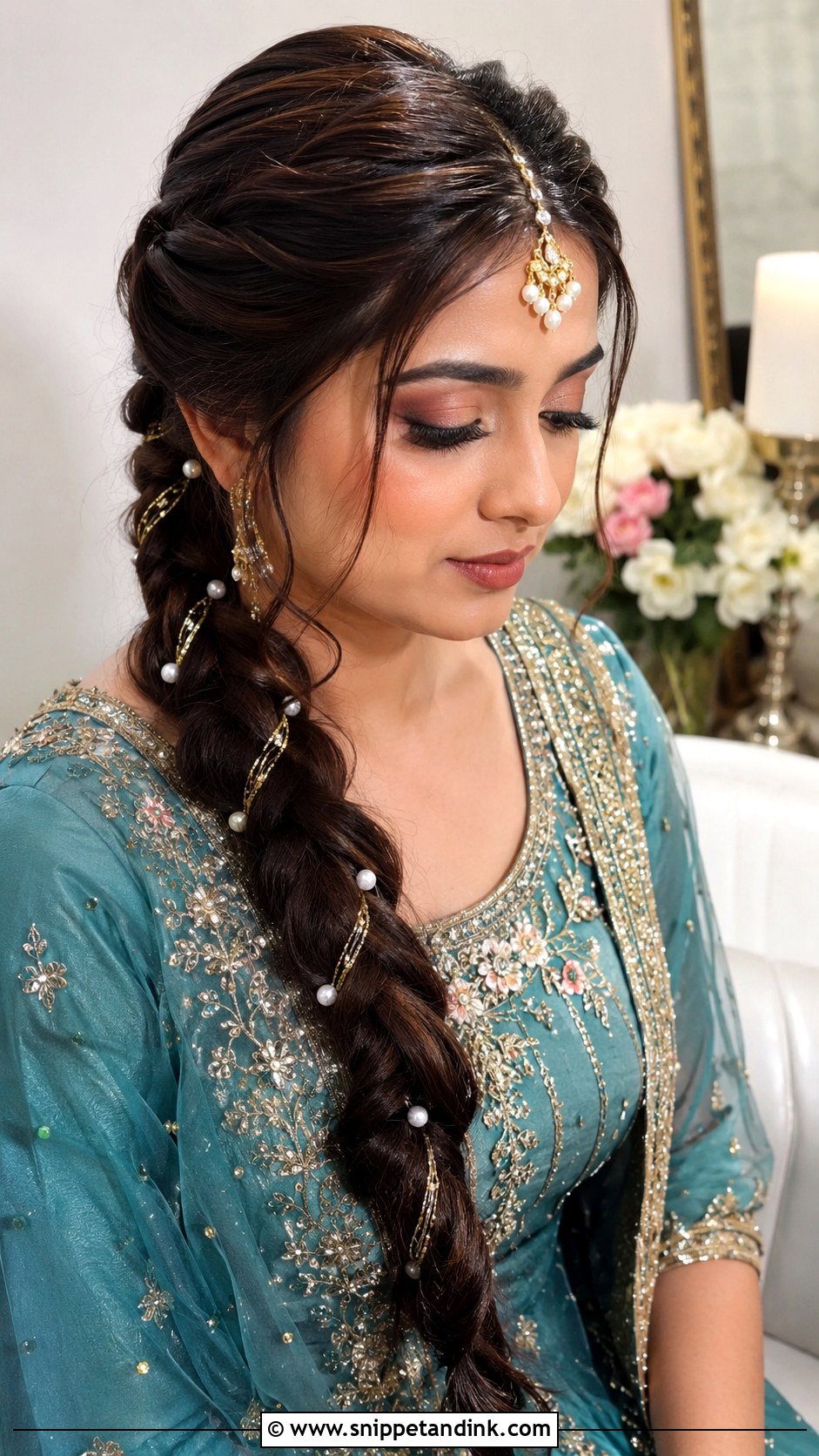
Two sections are each twisted in one direction, then wrapped around each other in the opposite direction. That counter-twist is what stops a rope braid from unraveling, and it’s exactly where rushed versions fail. The finish is smooth and glossy, so it shows best on straight or blow-dried hair; on frizz-prone texture the twist loses definition under bright event lighting. Wear it down the back, to one side or as part of a half-up style, with gold thread or a light parandi for a festive touch.
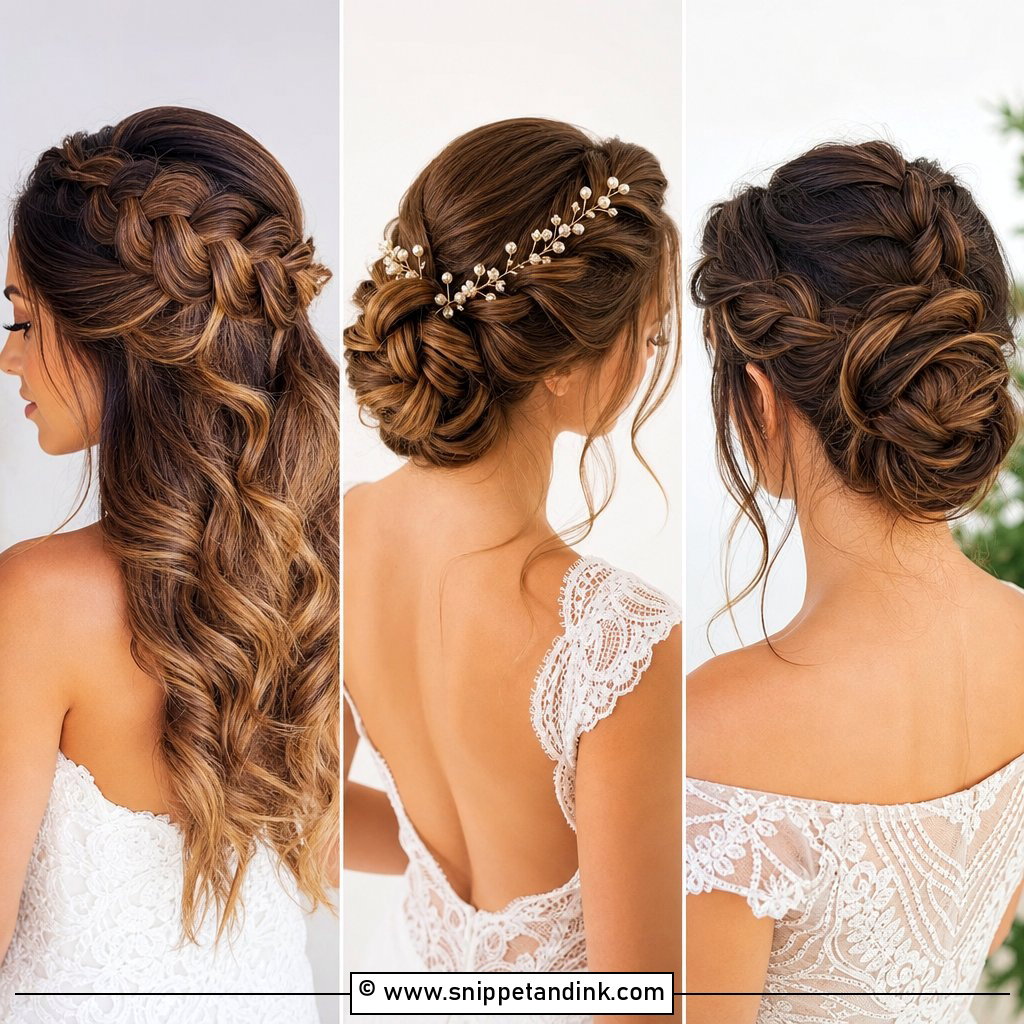
15. Double Braid For Mehendi Bride
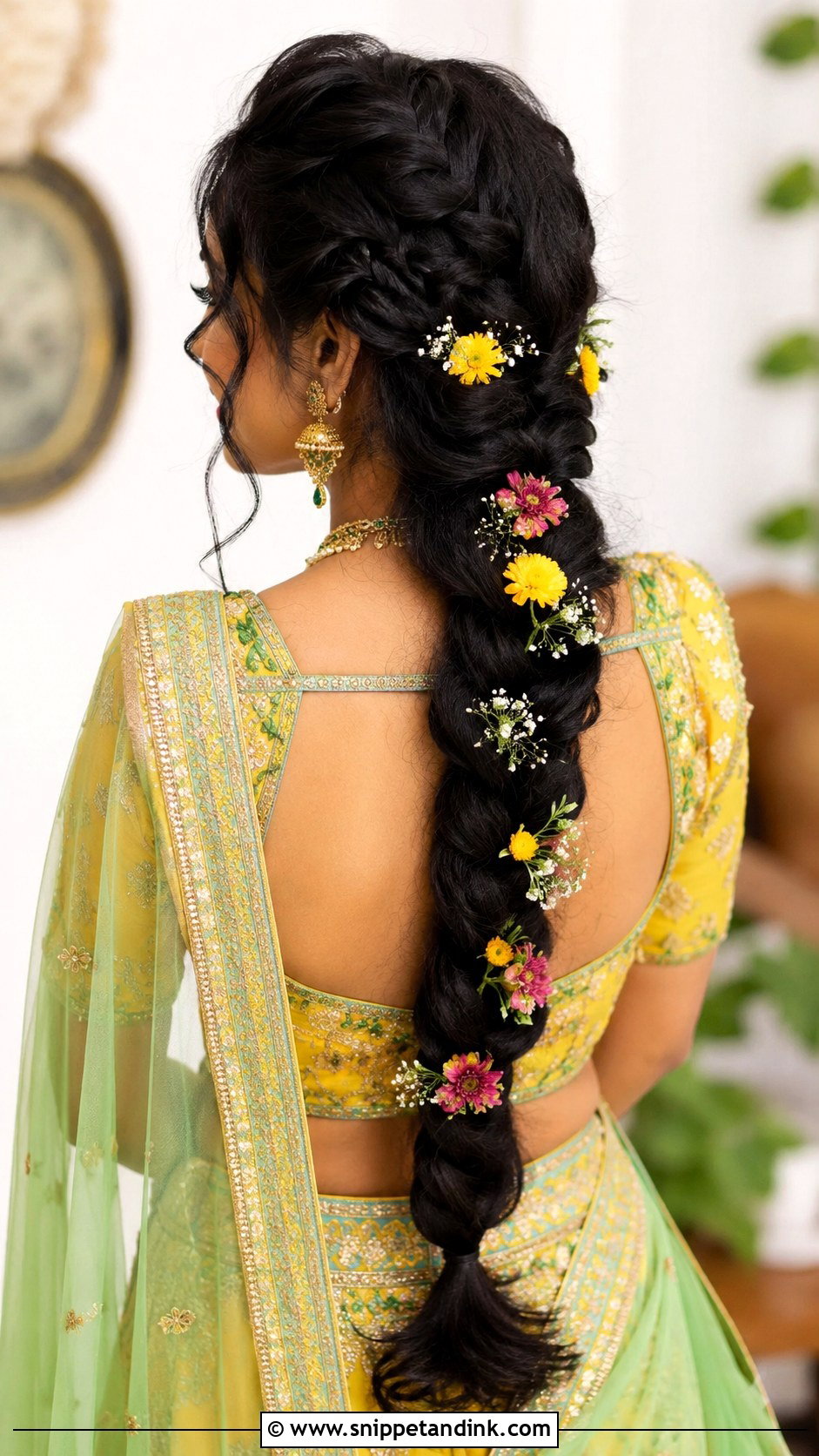
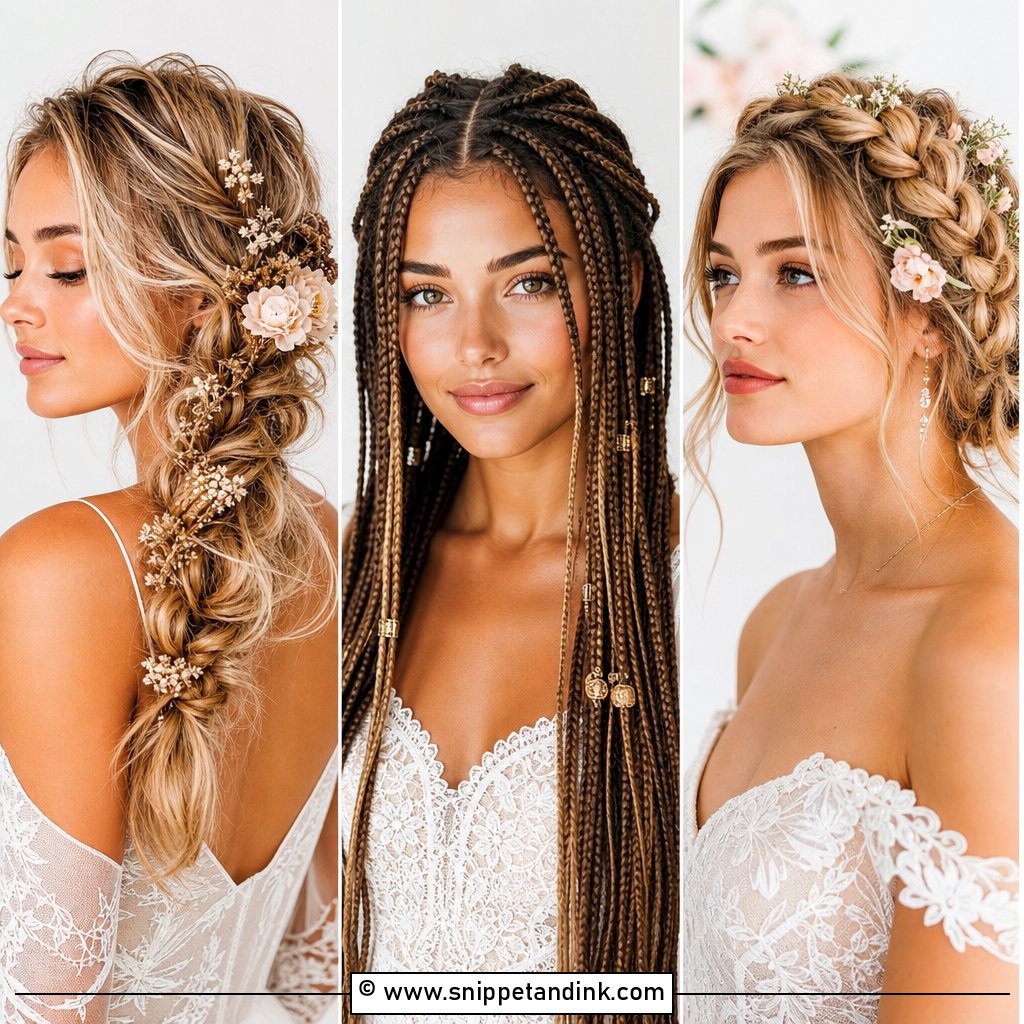
Two braids read younger and more playful than one, which can be exactly right for a mehendi when the wedding-day look will be formal. Two Dutch braids, two fishtails or two loose plaits can stay separate or merge into a single braid at the nape. They’re very secure for dancing. I keep the front soft with a few pulled-out pieces so it doesn’t look like gym hair, then run small flowers or colored thread down both.
16. Braided Ponytail For Mehendi Bride
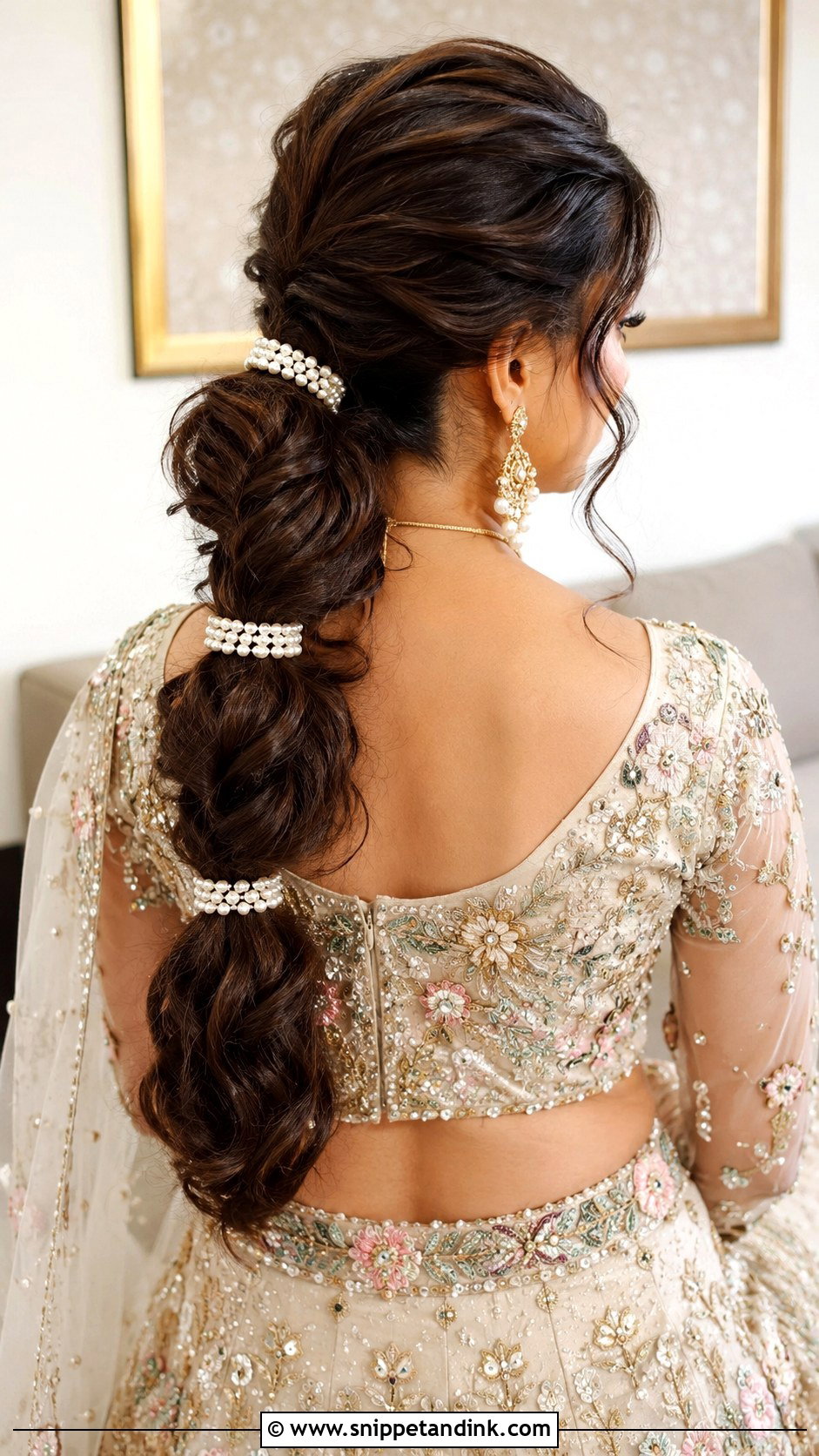
The ponytail gives height and the braid gives detail, but the base is where this style lives or fails. I wrap a strand of hair around the elastic and push two pins upward into the base, which stops the ponytail sliding down by the end of the night. Volume goes in at the crown, then a fishtail, bubble or regular three-strand braid runs down the length. It sits well with modern lehengas, cape dupattas and large earrings. A gold cuff or a few pearls keep it from looking like everyday hair.
17. Braided Bun For Mehendi Bride
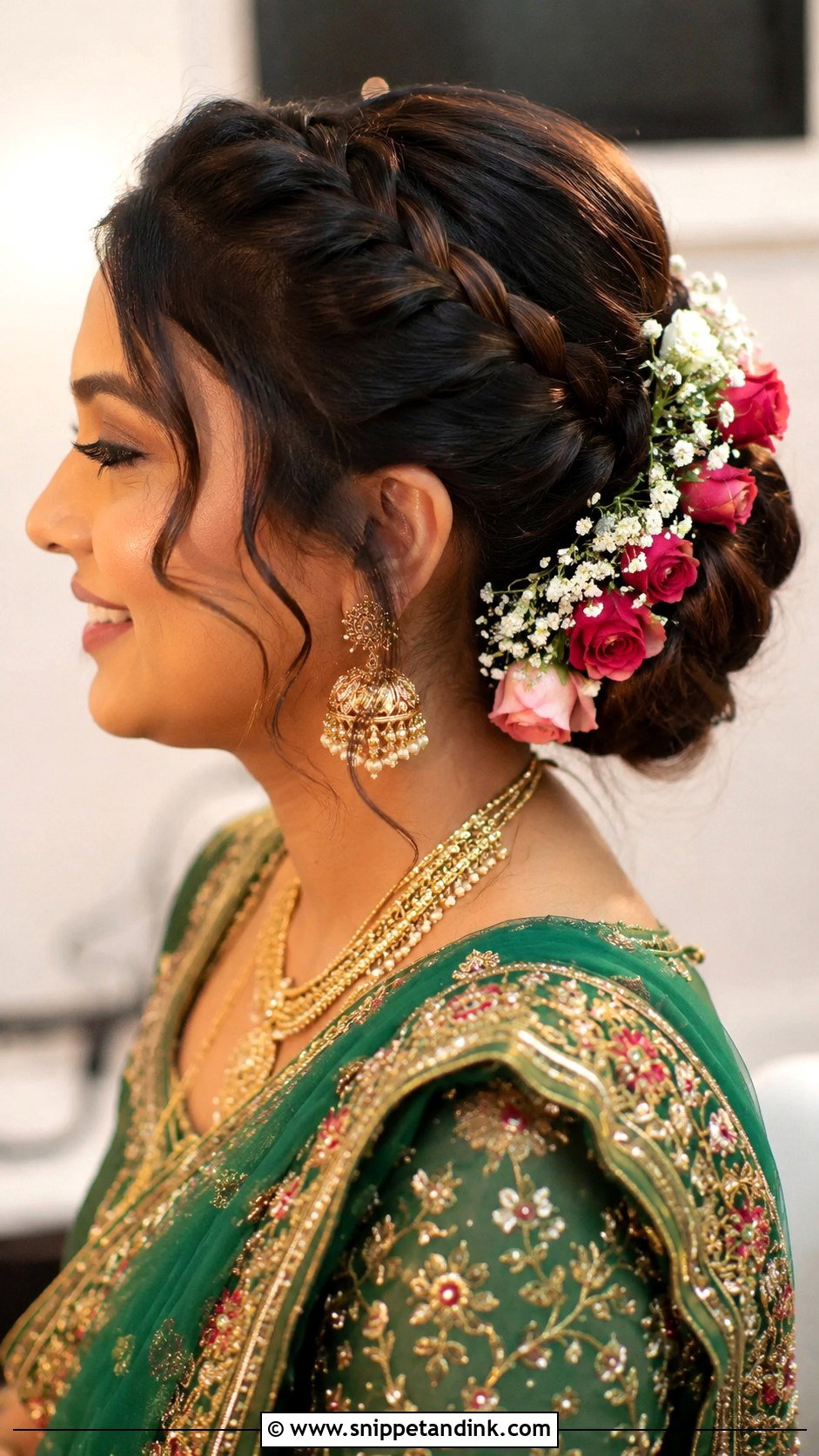
If the forecast says humid, this is the braid I suggest first. The hair is tucked away, so frizz has nowhere to show, and the neckline, dupatta and jewelry all stay visible. I either braid the lengths and coil them into a low bun, or build a textured bun and wrap thin braids around it. A gajra or a ring of pearl pins finishes the base. It’s traditional enough for photos with the elders without repeating the wedding-day look.
18. Front Braid For Mehendi Bride
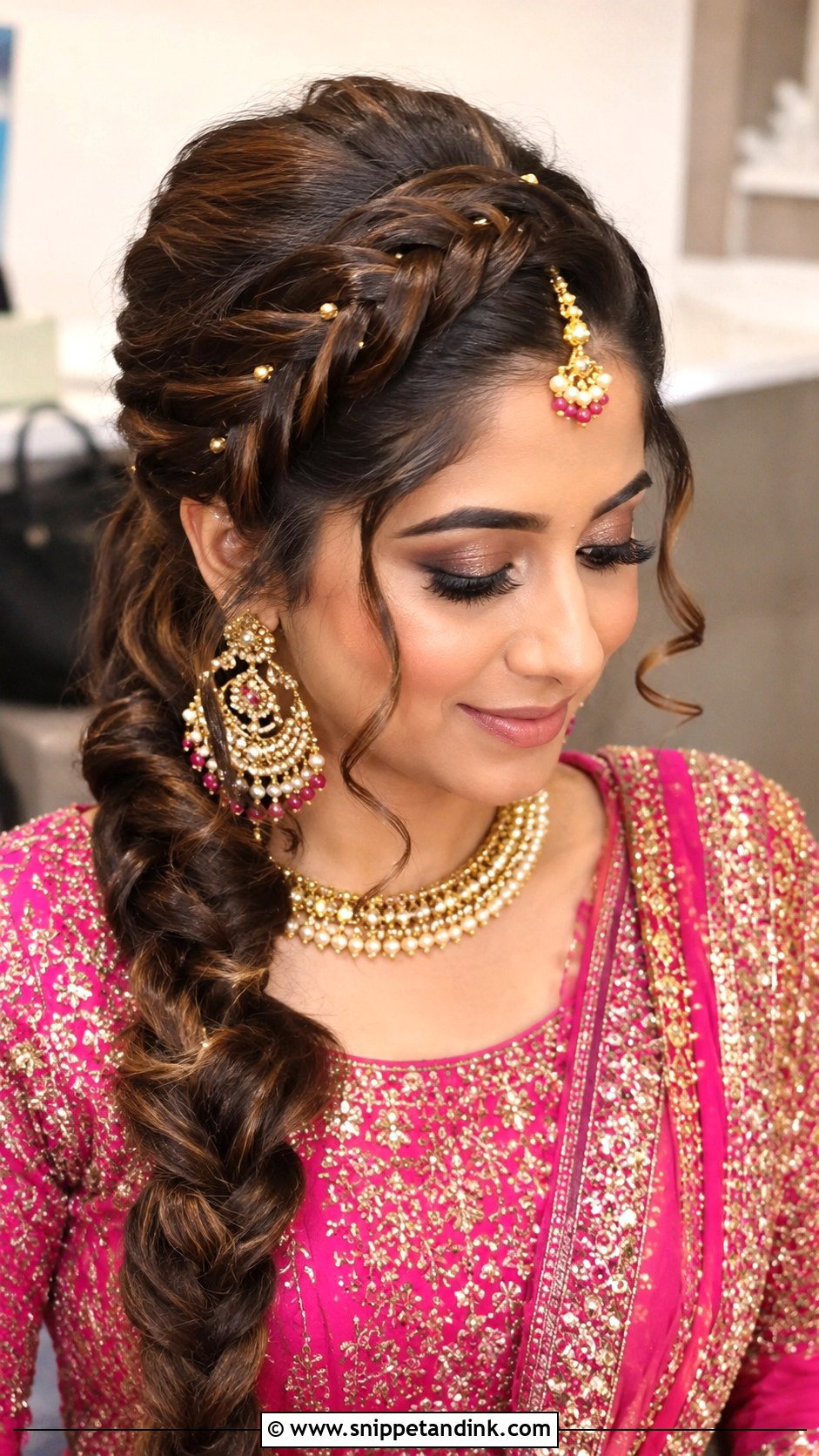
A braid along the hairline solves a practical mehendi problem: short face-framing layers that keep falling forward while the bride’s hands are covered in wet paste and she can’t push them back. I start it at the part and sweep it into a side braid, a low braided ponytail or a half-up style, keeping it slim near the forehead. If you’re wearing maang tikka, passa or large earrings, I place the braid first and try the jewelry against it before spraying, since a thick braid can crowd a passa chain.
19. South Indian Bridal Braid For Mehendi
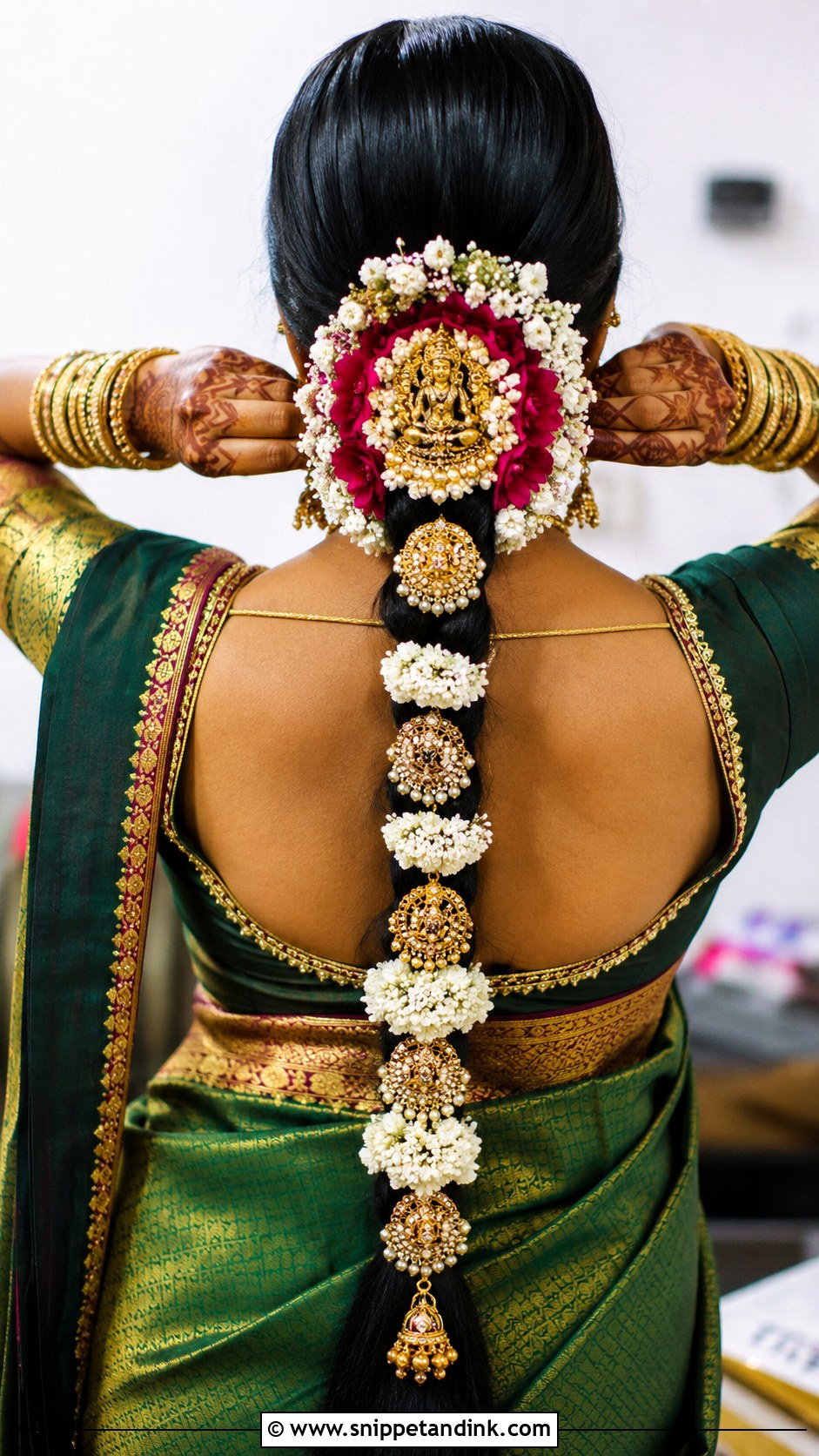
This braid is long, neat and dressed with jada ornaments, gold pieces or fresh jasmine. For the mehendi I lighten it, with fewer gold pieces and more colored flowers, so it doesn’t preview the wedding braid too closely. A full jada set is heavy, and I always pin or stitch it onto a firmly secured braid rather than trusting the hair alone to carry it. Shorter hair gets an extension braid attached at the base to reach the traditional length. It sits naturally with silk, temple jewelry and stronger bridal makeup, and it holds for hours of ceremony.
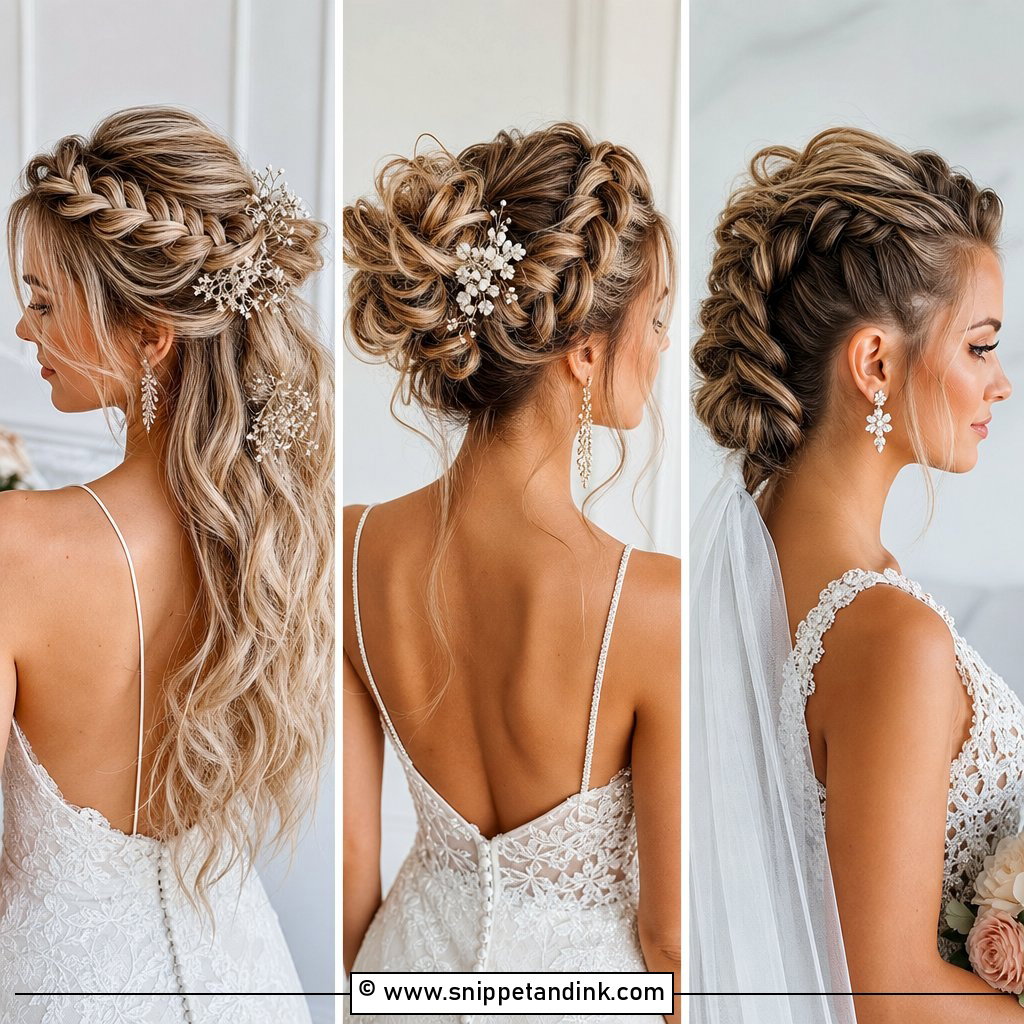
20. Messy Braid For Mehendi Bride
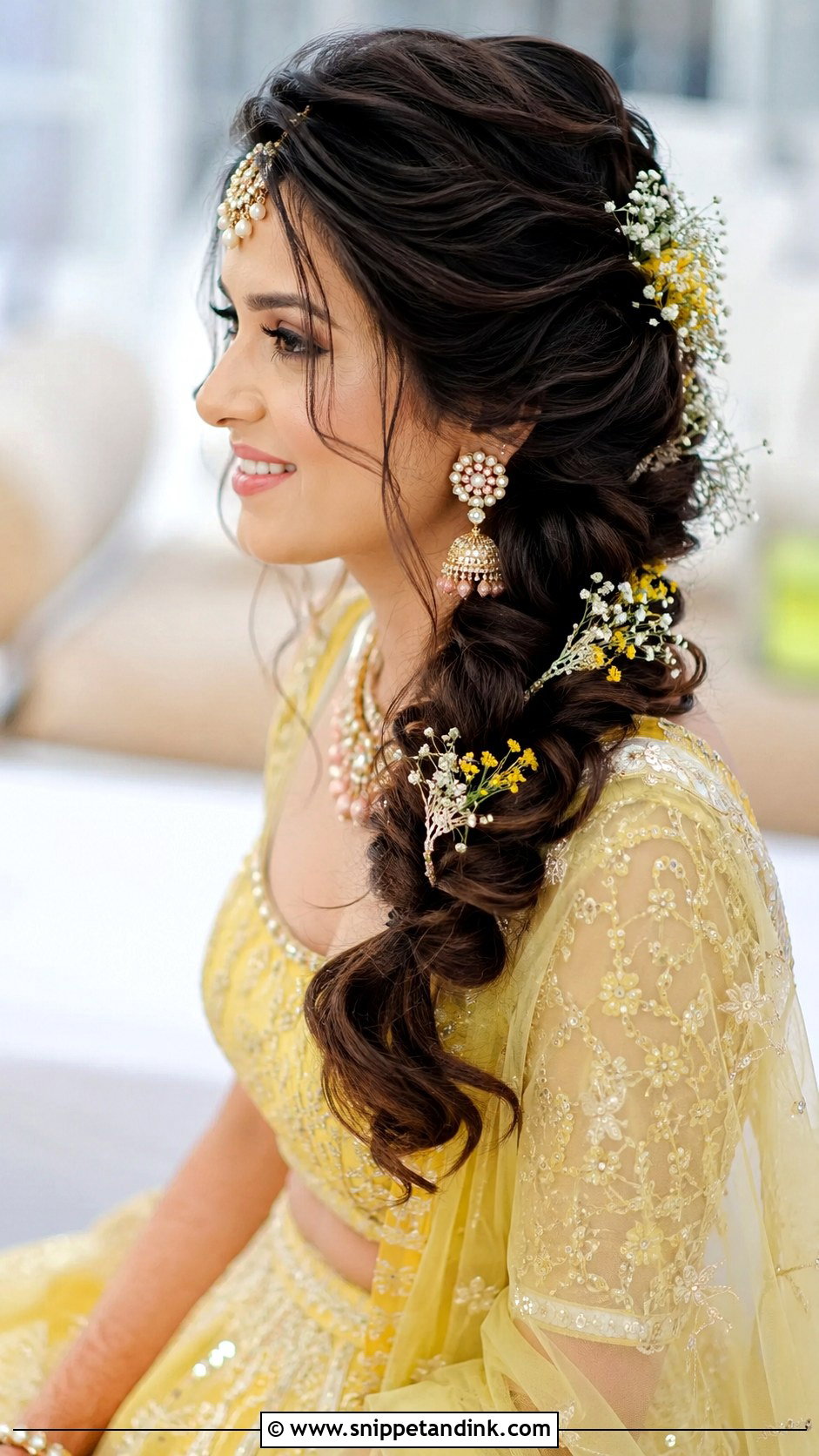
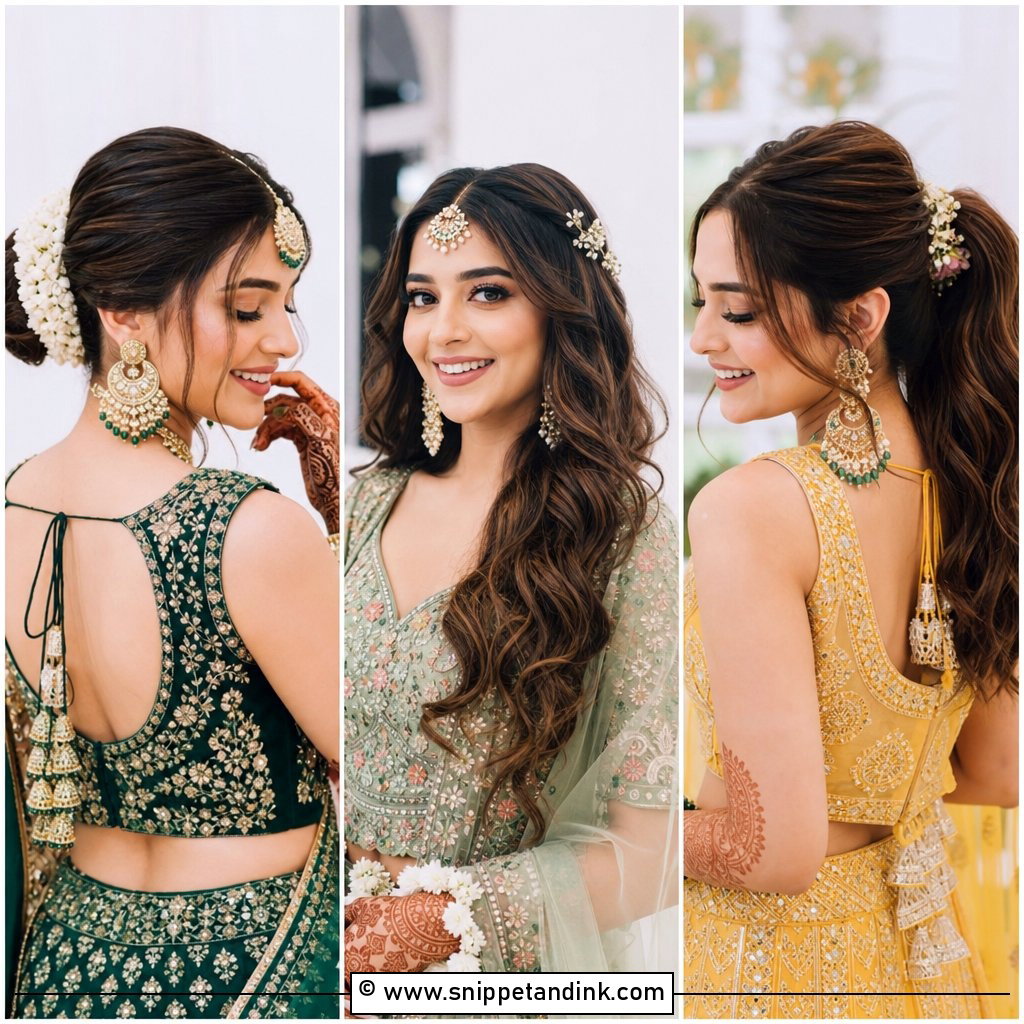
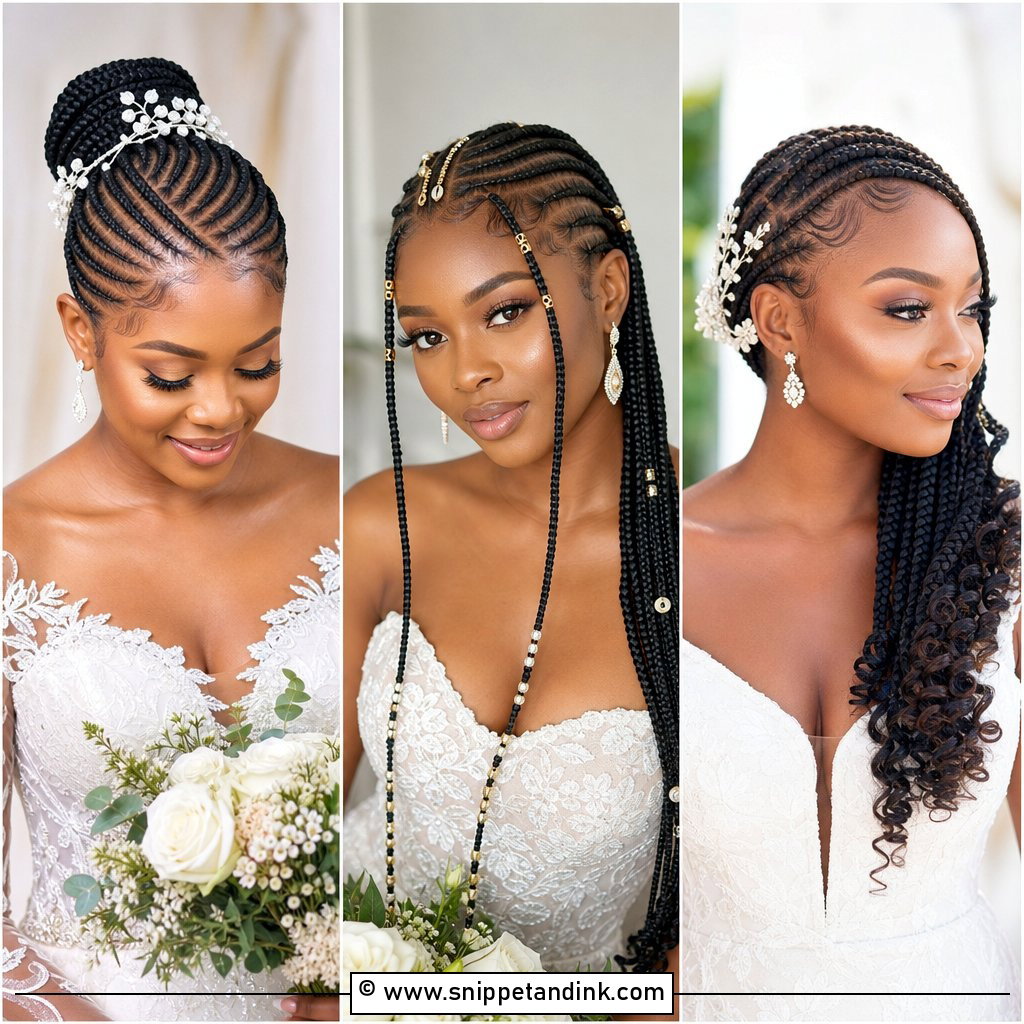
There’s nothing messy about how this one is made. I braid fairly firmly, pin it, then loosen each section by hand so it looks airy while the core stays tight. Braided loosely from the start, it collapses within a couple of hours. Lifted roots, soft curls at the face and tiny flowers suit pastel outfits and light dupattas. Pins at the nape and a flexible spray keep the shape through dancing and photos.
Jasmine Browns Fast, So Plan the Flowers Around It
Flowers in hair are cut flowers out of water, under hot lights, against warm skin. Jasmine opens and then starts to brown within a few hours, roses hold their shape longer, and baby’s breath dries out but still looks fine. A few habits make the difference between a braid that looks fresh at the dholki and one that looks tired by dinner:
- Have the gajra delivered on the day and keep it in the fridge wrapped in a damp cloth until it goes on. Never freeze it.
- Ask for buds rather than fully open jasmine. They open slowly through the evening instead of fading early.
- Attach flowers after the last spray, because hairspray spots petals.
- Use a few good silk blooms in the places that have to last all night, and keep the fresh ones where the first portraits will see them.
- If there’s a break between events, mist the flowers lightly with water and replace anything that has wilted.
Undoing a Parandi Braid Without Losing Hair
At the end of the night the braid has to come out, usually when the bride is exhausted and the henna is still on her hands. That’s the worst time to rip at it, so let someone else do the work. Remove flowers and ornaments first, then every pin. Unpick a parandi from the bottom up, and cut any rubber elastic that has tangled rather than pulling it.
Work a little conditioner or oil through the lengths, then detangle from the ends upward with a wide-tooth comb. Backcombed crowns need patience; a few slow minutes save a lot of broken hair. A full wash can wait until the morning, which also keeps water away from the henna while the stain deepens.
Let the Dupatta Drape Decide the Braid
Start from the outfit, the dupatta drape and the jewelry, then pick the braid. A floral braid leans festive, a parandi braid brings Punjabi tradition, a bubble braid is the quickest modern option, and a South Indian braid carries the most ornament. Hair length, the weather and how much dancing is planned narrow it down from there. Look at the back in a hand mirror as well as the front at your trial, because guests will spend half the night seeing it from behind.
You'll Like These Ideas:


Leave a Reply