
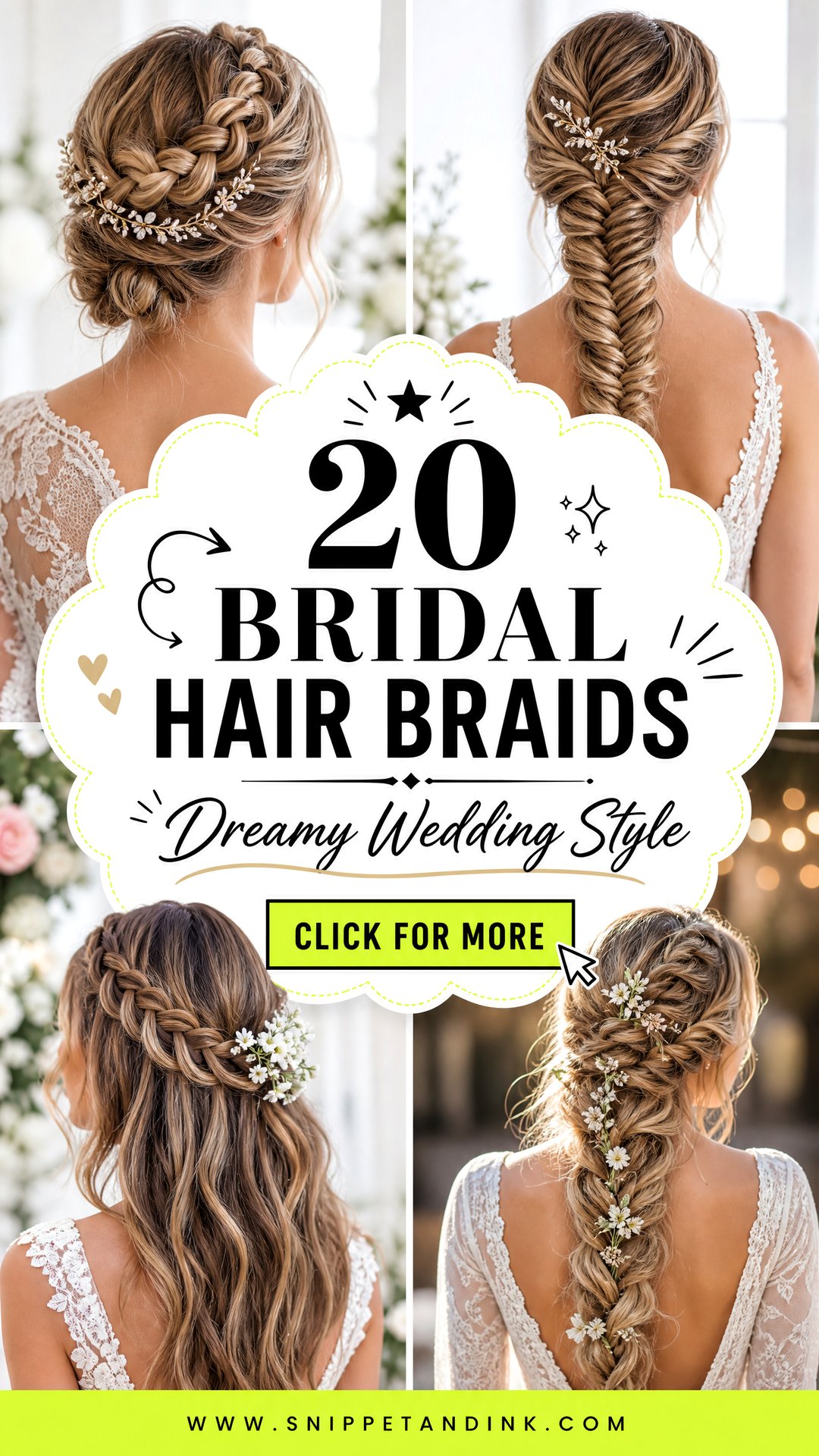
A braid is the bridal style I trust most when a day runs long. The strands lock into each other, so the shape leans far less on spray and pins than a set of curls does, and a braid that loosens a little by evening just looks softer rather than collapsed. Below are the twenty braided looks I get asked for most, from tight crowns that carry a veil to loose plaits that are meant to move. For each one I’ve added what I check before I start, and who I’d point toward something else.
Prepping Your Hair So a Braid Actually Grips
Freshly washed, freshly conditioned hair is the hardest hair to braid. The strands slide past each other, pins fall out, and by the reception the braid has drifted. I ask brides to wash the evening before, use a light conditioner on the ends only, and skip shine serums and oils on the morning itself.
On the day, I work a texturizing spray or a little dry shampoo through the lengths before sectioning. That gives every strand some grip, so the braid holds its shape and can be pulled loose later without falling apart. If the style includes curls, I curl first and braid second; braiding straight hair and then trying to curl around it rarely works.
- Crown and halo braids need hair well past the shoulders, or a clip-in weft.
- Fishtails and mermaid braids show the pattern best on hair of one length; heavy layers poke out of the weave.
- Cornrows and tight Dutch braids are the most forgiving on shorter or textured hair.
1. Crown Braid for Brides
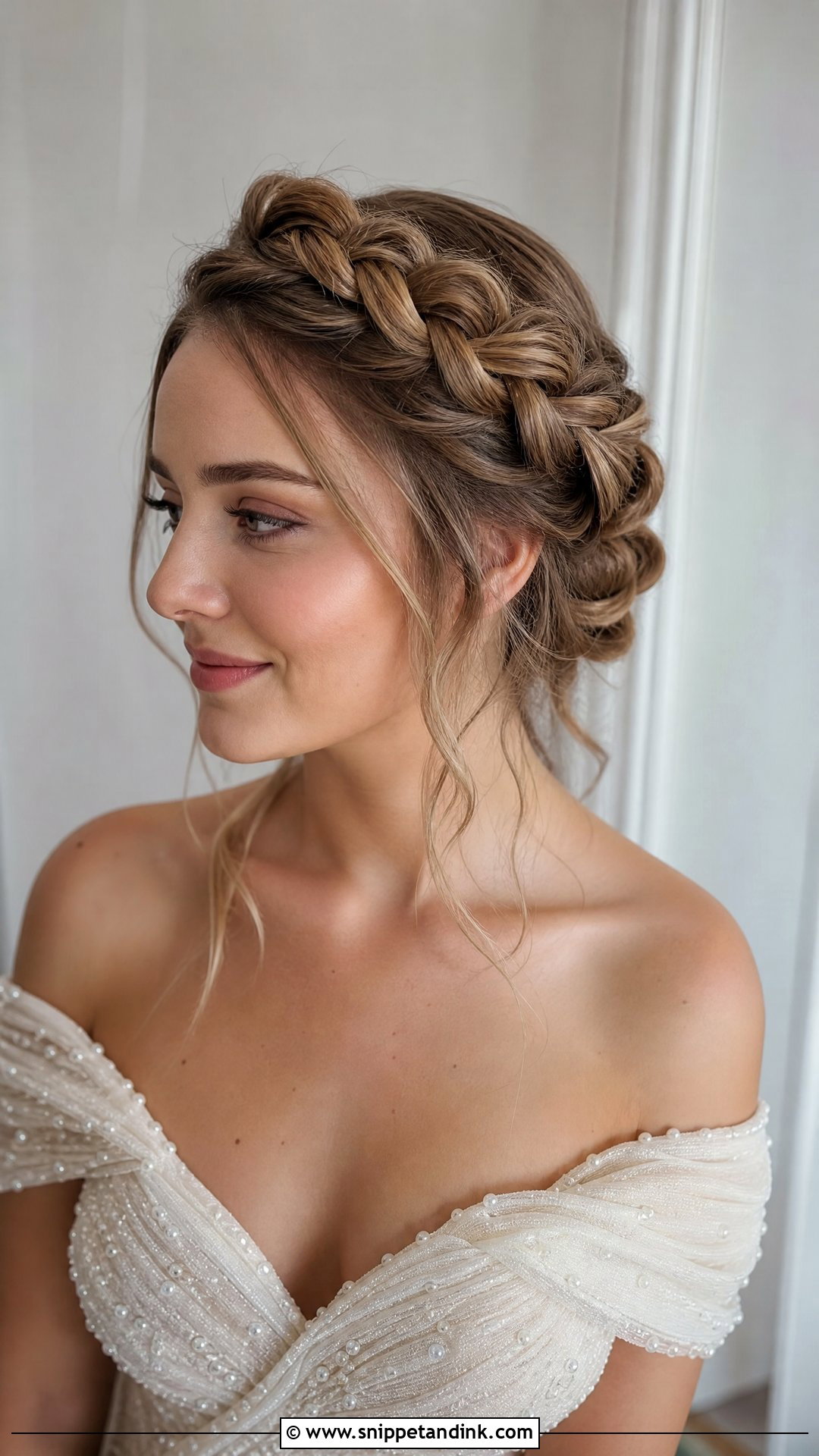
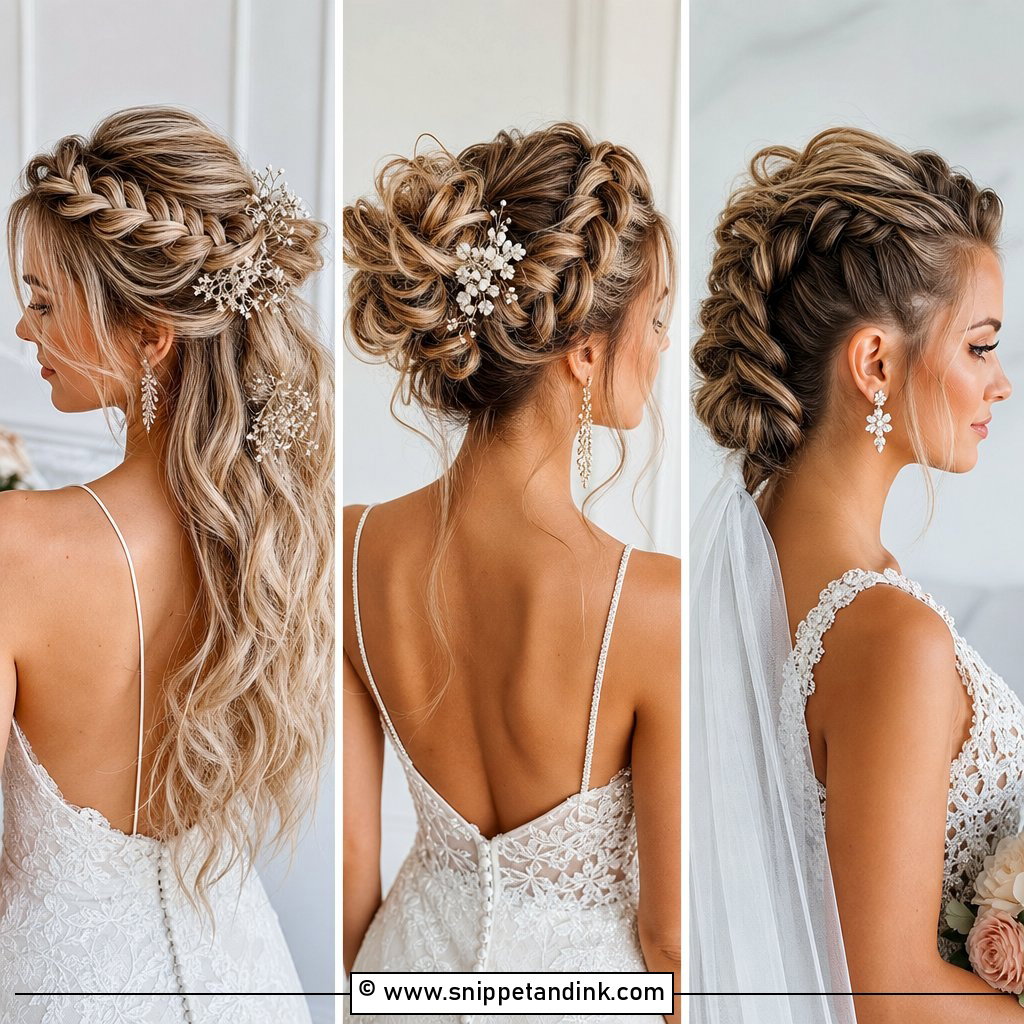
A crown braid wraps around the head like a delicate halo and lifts every strand off the face, which is why I suggest it to brides who hate hair touching their cheeks. I build it from two braids that meet at the back rather than one long plait, because a single braid rarely has the length to circle a whole head. Long, thick hair gives the fullest band. On finer hair I add a clip-in weft before braiding so the crown doesn’t look skinny from the side, and a couple of loose tendrils at the temples stop it reading strict. A flower crown, tiara or a few pearl pins all sit comfortably on top.
2. Fishtail Braid Wedding Hairstyle
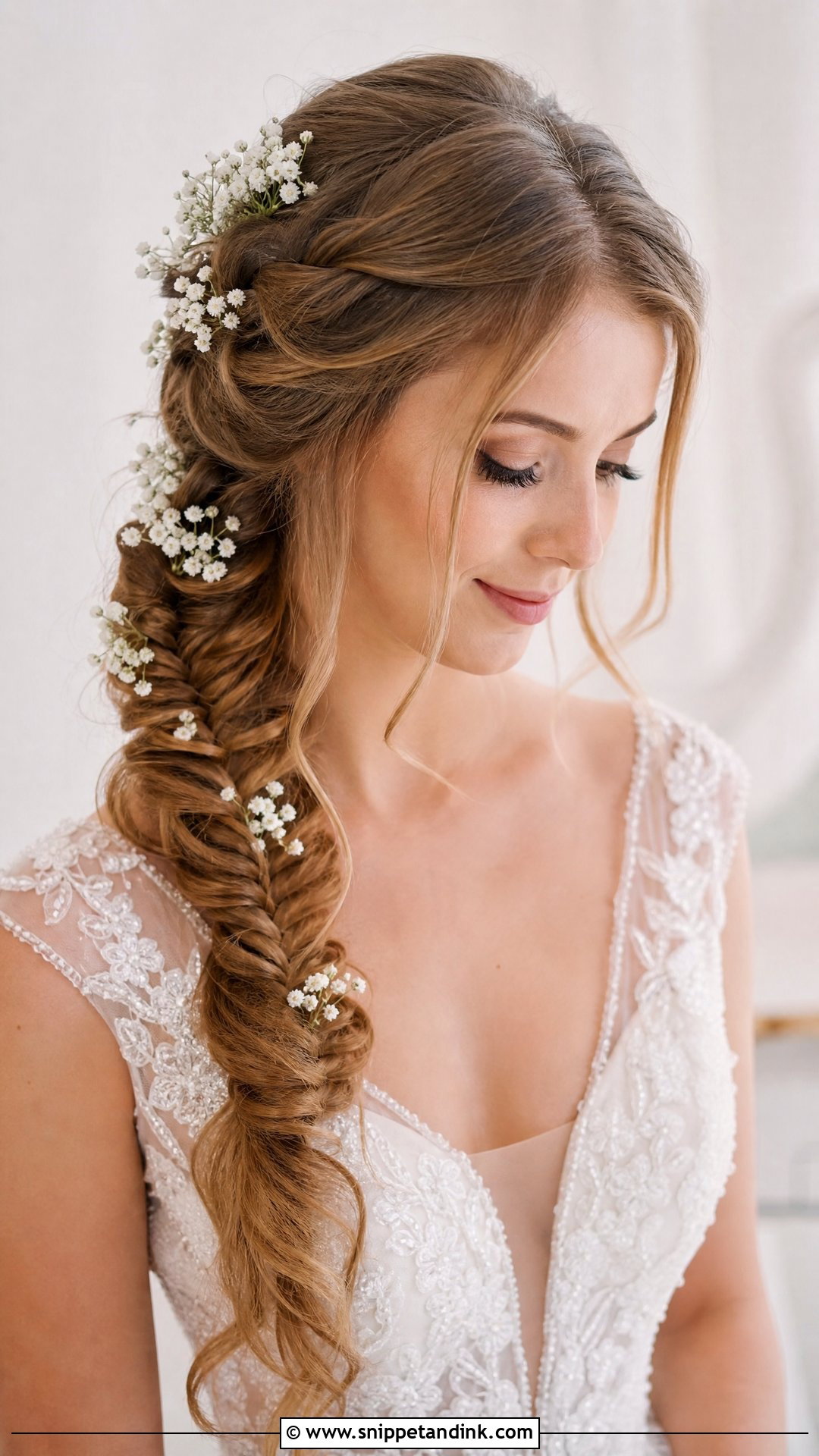
A fishtail looks fussy, but it’s only two sections, with a thin strand crossing from the outside of one to the other again and again. The thinner those strands, the finer the herringbone, and that’s the detail worth showing your stylist in a reference photo. It sits low, so a veil drops over it freely, and it copes with wind at a beach or garden ceremony better than loose waves. Pulling the edges apart gives fullness, but try it at the trial first: on slippery hair an over-pulled fishtail starts sliding apart by mid-afternoon. Baby’s breath or small pearls pushed between the crossings finish it.
3. Braided Updo for the Bride
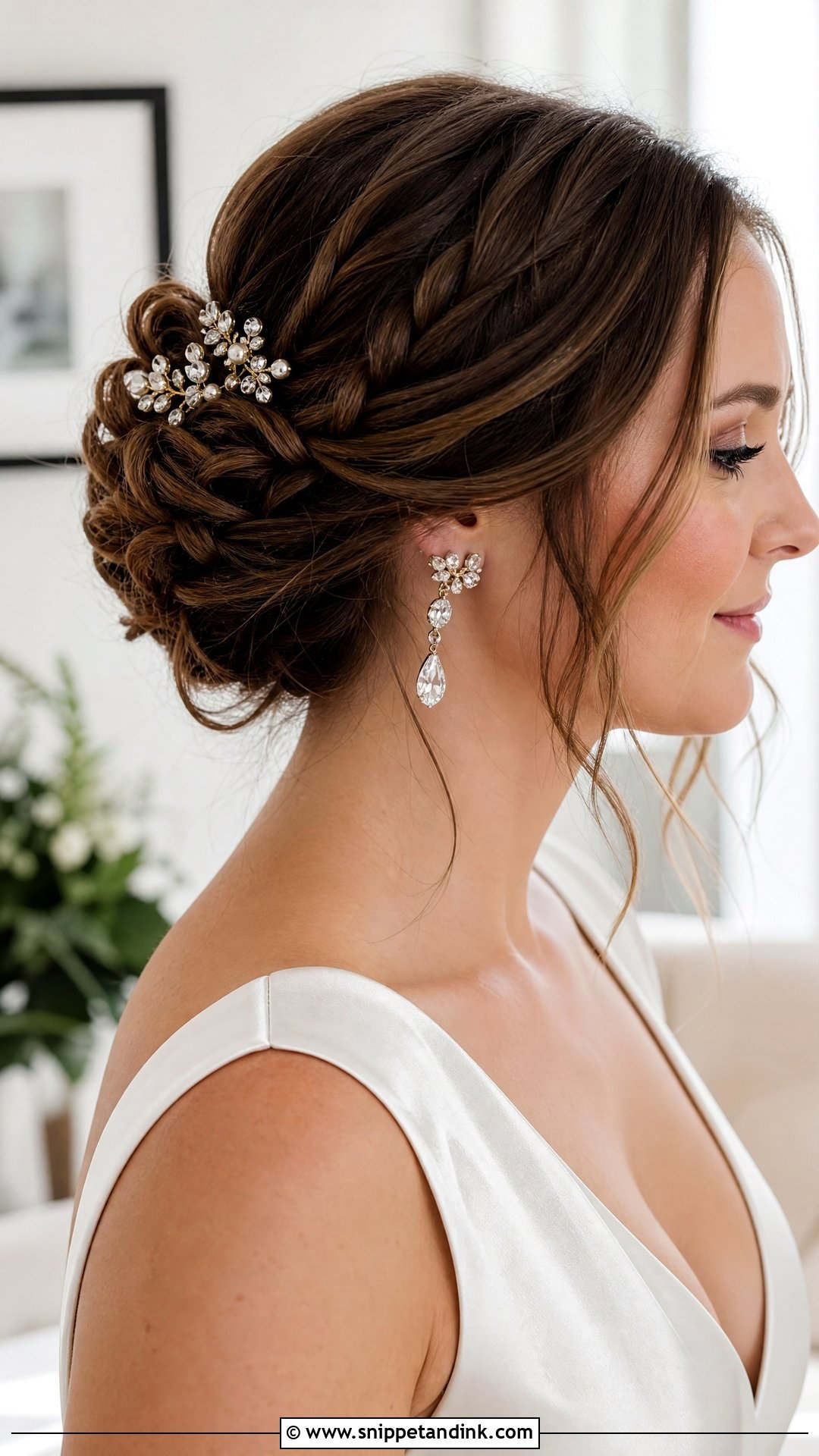
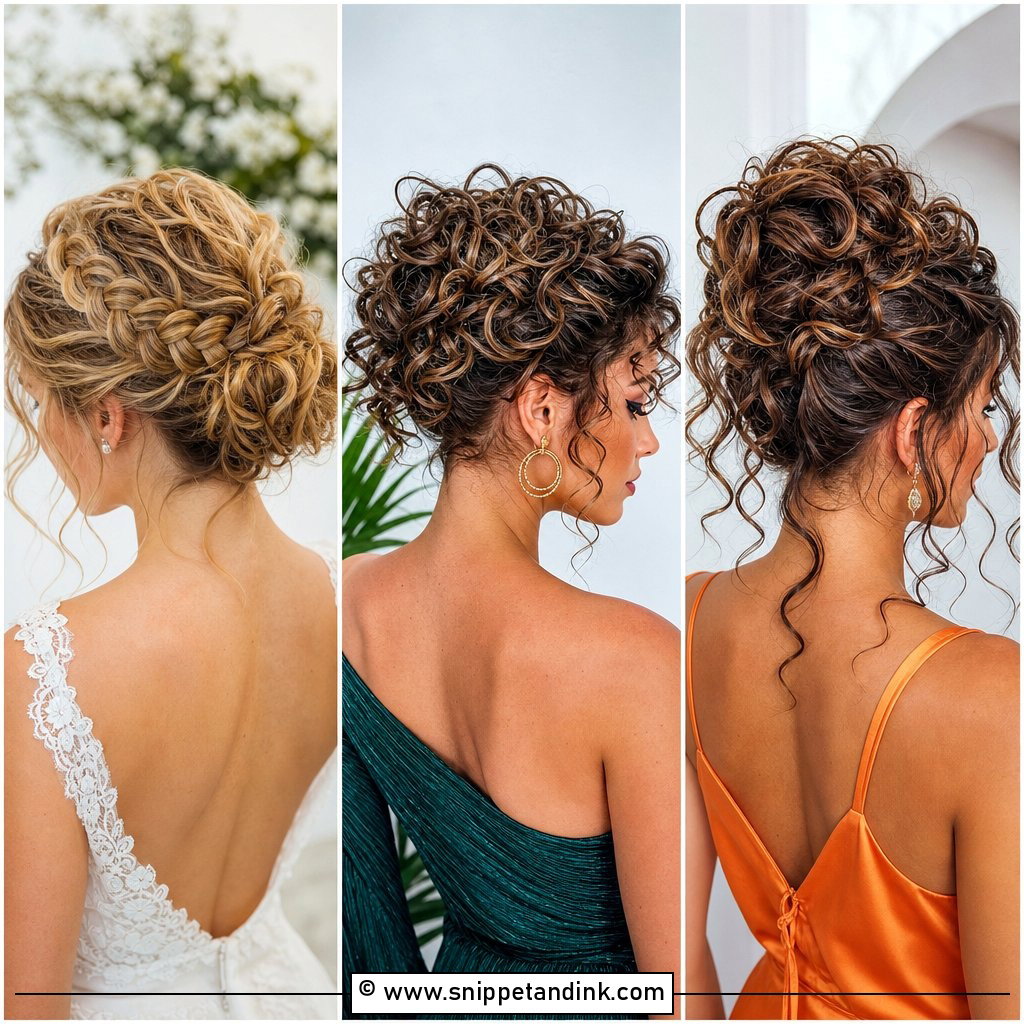
Tucking braids into a bun gives an updo texture you can see from the back row, which a plain bun lacks. I braid first and pin second, anchoring each braid against the base with a crossed pair of bobby pins so the weight is shared and nothing drags by the reception. It suits a ballroom or a traditional ceremony and leaves the neckline clear for statement earrings. Sleek or pulled loose is your call. Decorative pins, jeweled combs or fresh blooms fit neatly into the gaps between the braids.
4. Waterfall Braid for Weddings
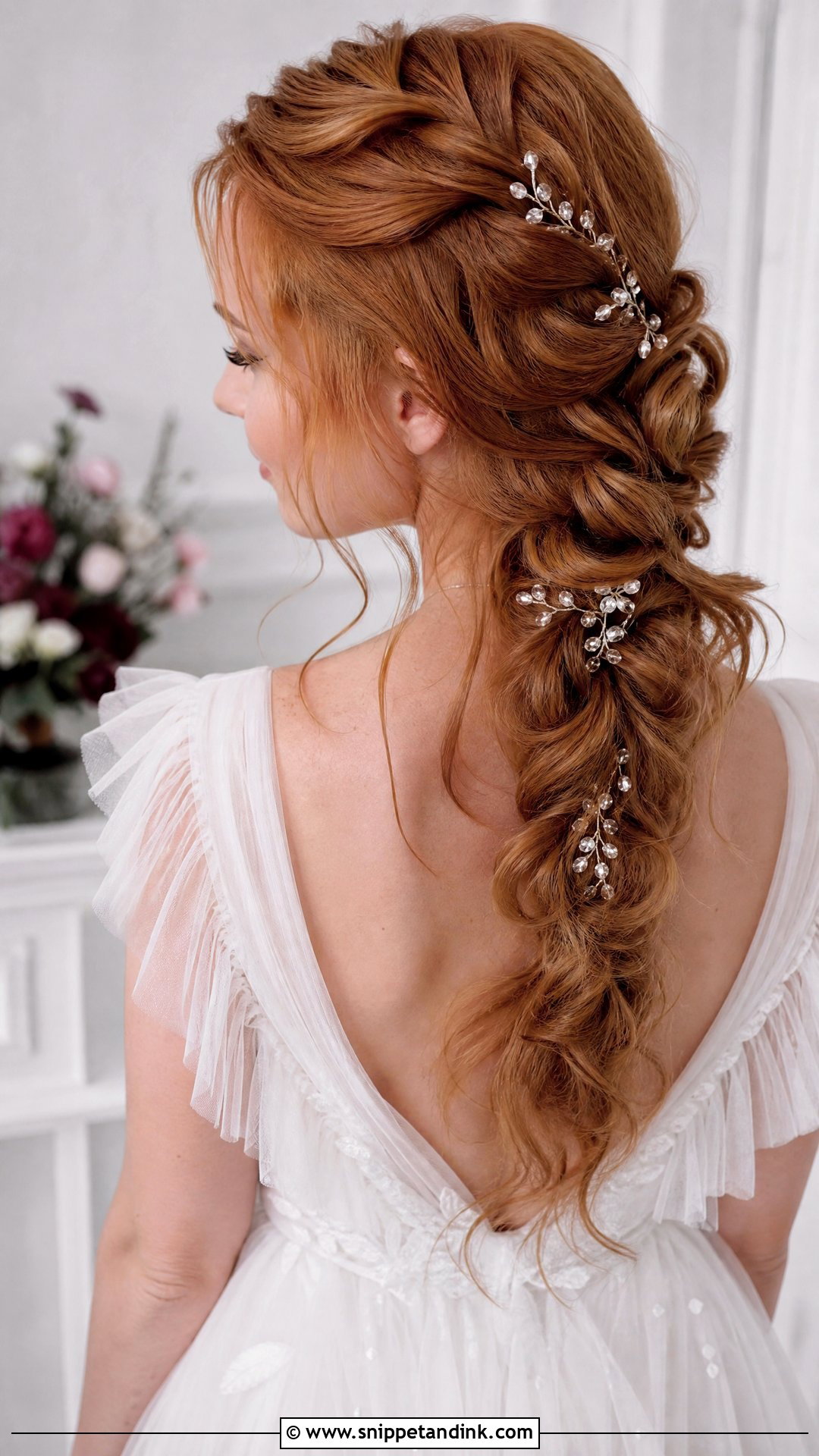
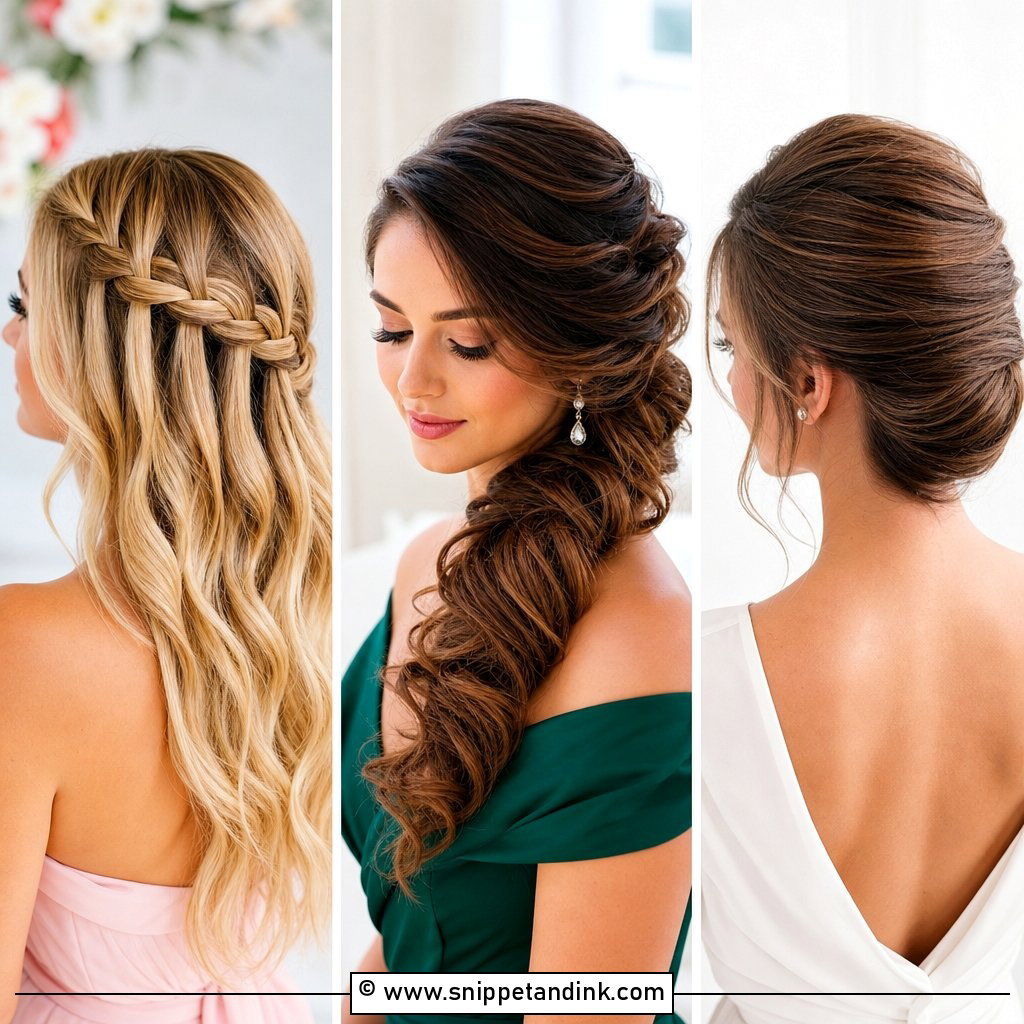
This is a French braid where the top strand is dropped after each cross and a new one picked up, so the released pieces fall through like water. Because it’s half-up, the loose length underneath needs a set curl, or the dropped strands vanish into flat hair. I’d skip it on very fine, straight hair that won’t hold a wave; the cascade loses its definition within a few hours. Photographed from behind during the vows it reads clearly, and tiny crystal pins along the braid line catch the light.
5. Boho Braid Bridal Look
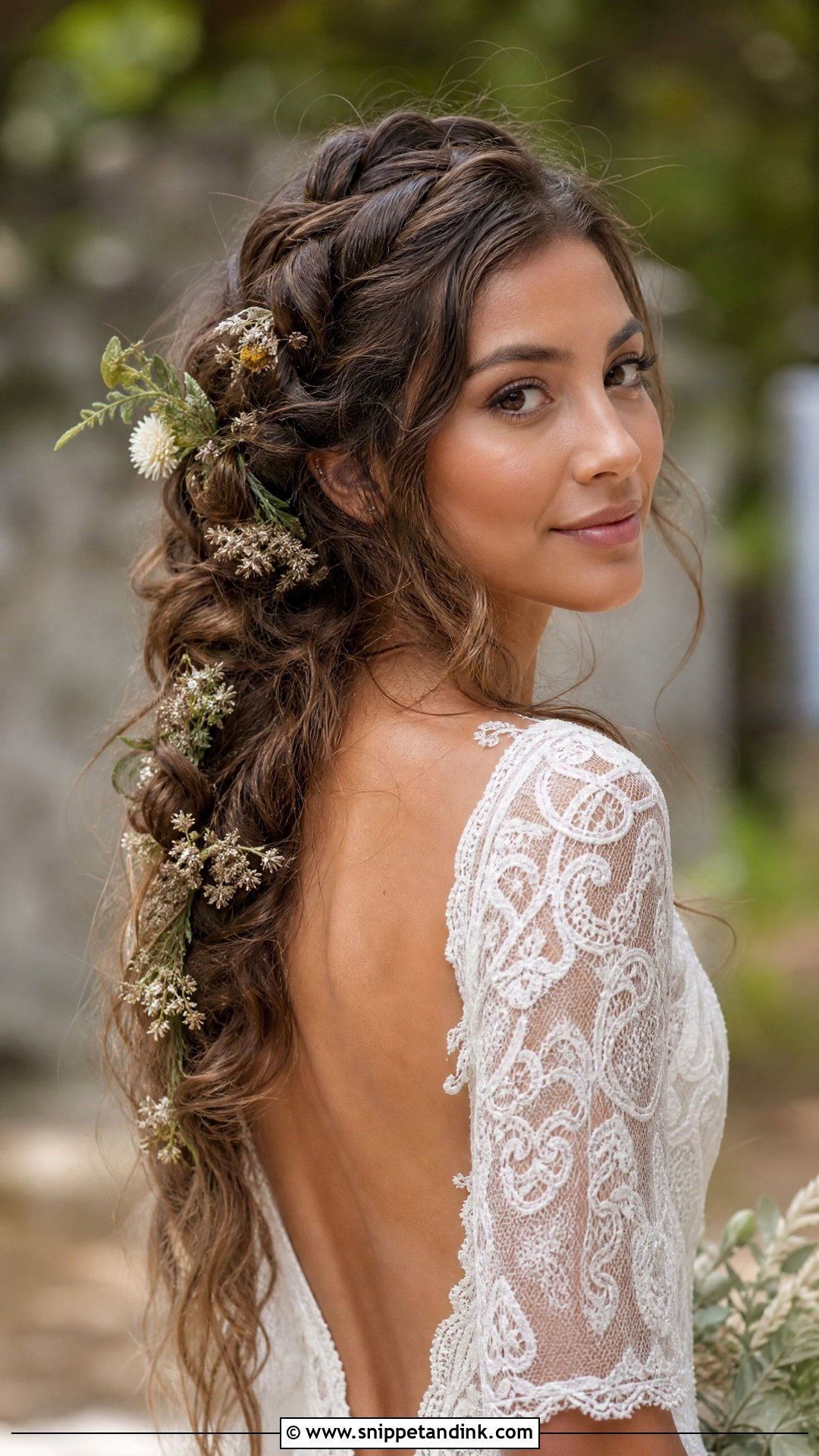
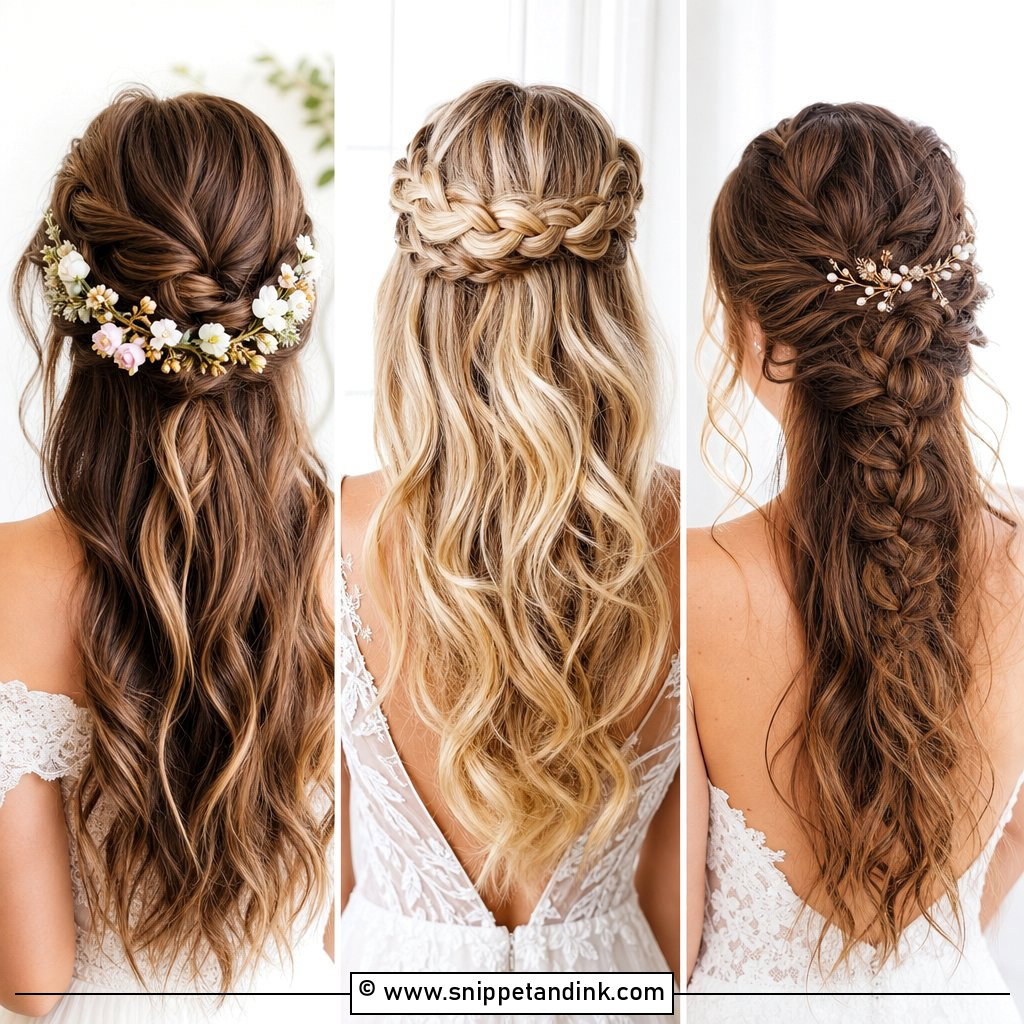
A boho braid is supposed to look undone, but the mess has to be planned or it simply looks unfinished on camera. I braid into existing texture, then tease sections loose with my fingertips and leave a few face-framing pieces out on purpose. Dried flowers, ribbon or greenery can be threaded through, and several thin braids scattered through loose waves layer nicely at an outdoor or festival-style wedding. Brides with naturally wavy or curly hair usually need the least work here. Their own texture does what I’d otherwise build with a curling iron.
6. French Braid Wedding Hair
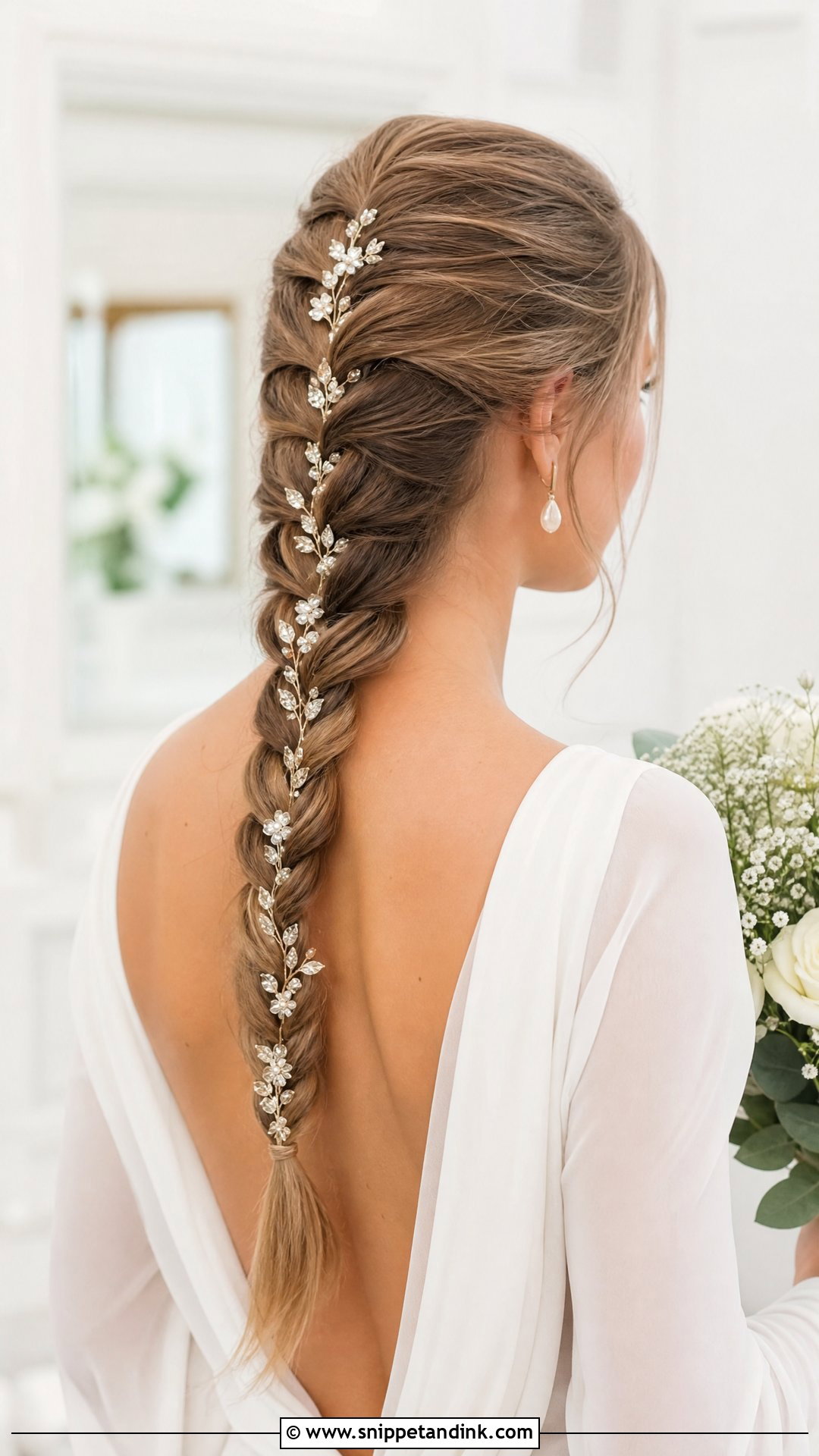
The French braid adds hair to each outer section as you work down from the crown, so the plait lies flat against the head. That neatness is its strength, and also why it can look like school hair if left alone. For a wedding I loosen the edges and curl the ends, or split it into two braids for a lighter, younger feel. It works on most lengths from the shoulders down. A sparkling hair vine laced along the braid or a scatter of tiny pins dresses it up.
7. Dutch Braid Bridal Style
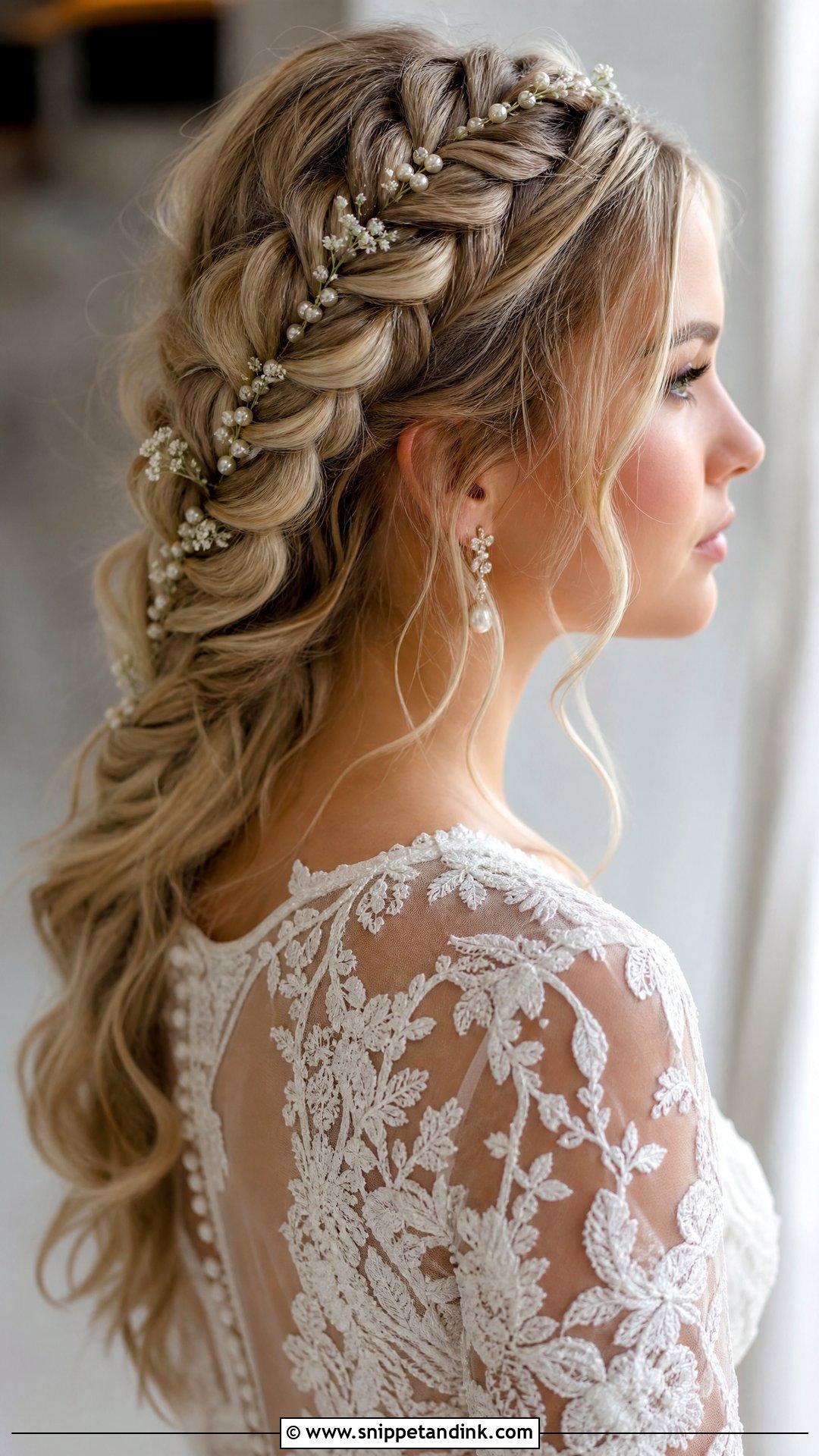
Crossing strands under instead of over makes the Dutch braid sit raised on top of the hair, so it has far more definition from a distance than a French braid. That ridge is also the best place for accessories, because pearls and small flowers wedge into the weave and stay put. Wear it single, as double braids, or wound into an updo, at a sleek city wedding or a rustic barn one. Of all twenty, this is the braid I’d book for someone who plans to dance hard. A tight Dutch base barely moves.
8. Halo Braid for Brides
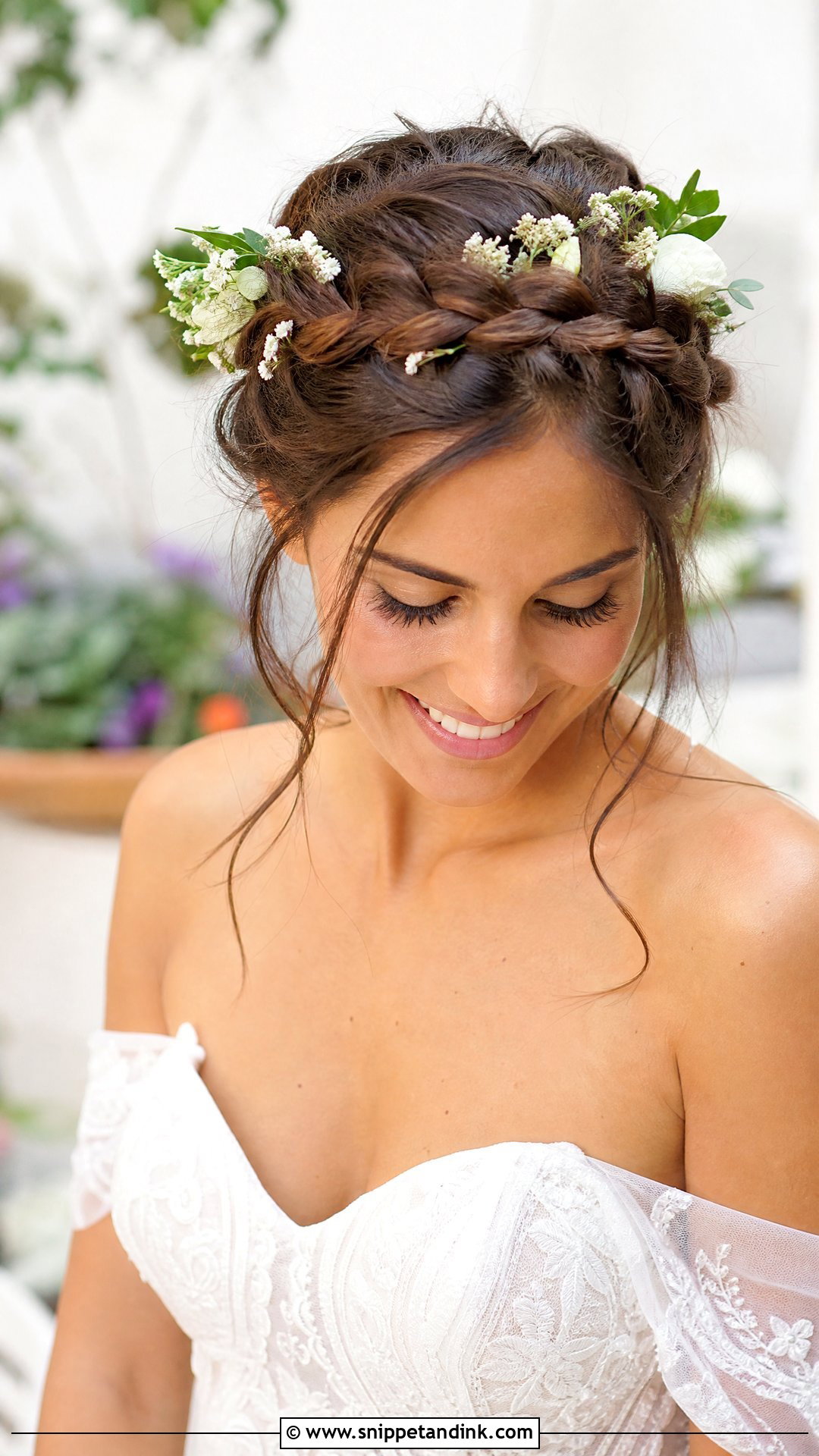
A halo braid circles the head in one continuous ring, giving an angelic, ethereal effect and keeping hair entirely off the shoulders. That matters in summer, when a hot neck ruins more hairstyles than people expect. It pairs well with off-the-shoulder gowns and big earrings. The honest limit is length: you need hair well past the shoulders for a full ring, and otherwise I add a weft. I also leave a few baby hairs at the hairline, since a halo pulled perfectly tight looks severe in photos and starts to ache by the evening.
9. Side Braid Wedding Hairstyle
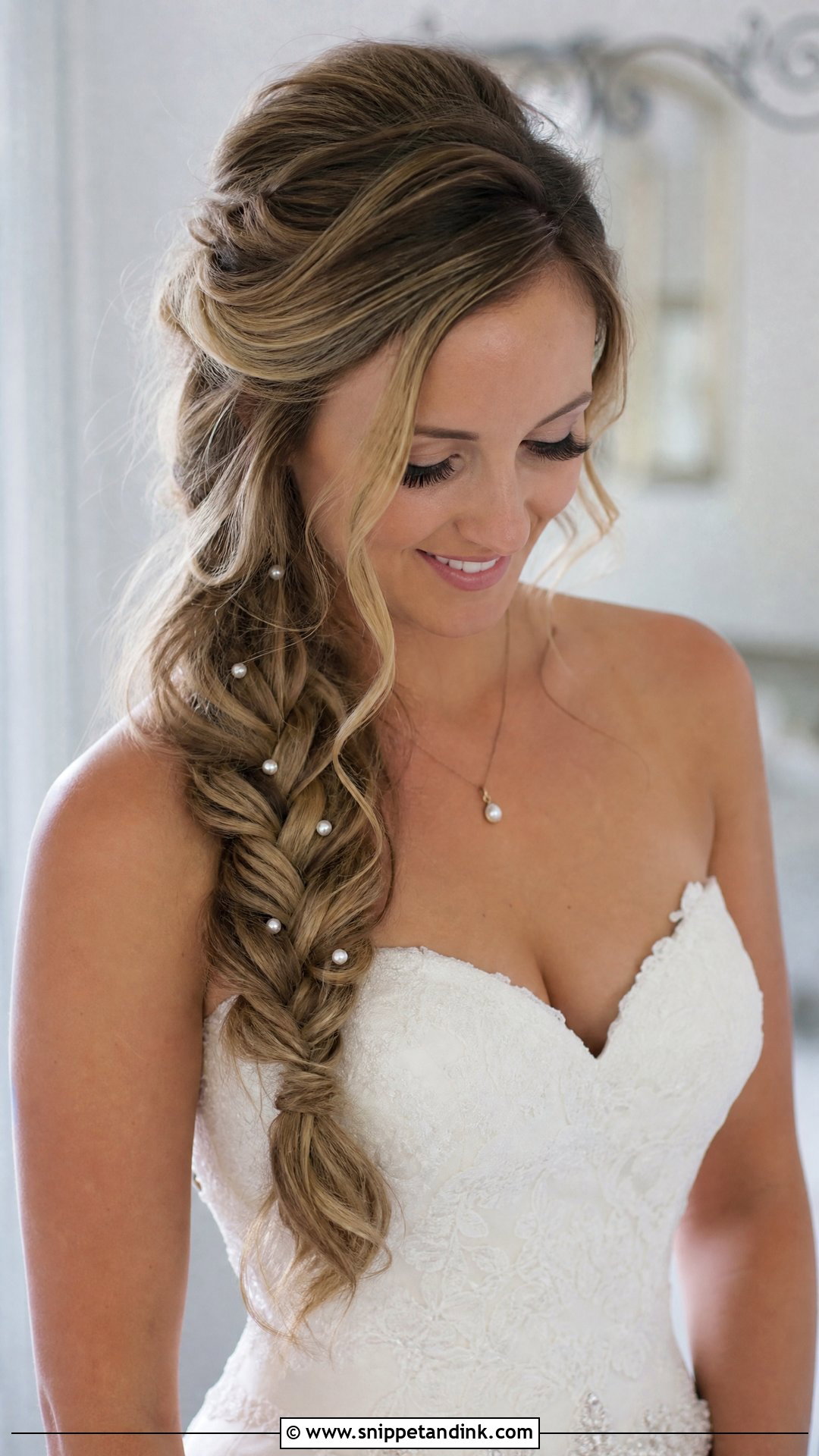
A side braid rests over one shoulder and leaves the other ear open, so put your best earring on that side. Fishtail, French or a loose three-strand all work. What I watch is where it starts: beginning the braid just behind the ear rather than at the nape stops it creeping round to the back while you hug guests. With a one-shoulder or sweetheart neckline it balances the shape nicely, and a few blooms or pearl pins finish it.
10. Braided Half-Up Half-Down Bridal Hair
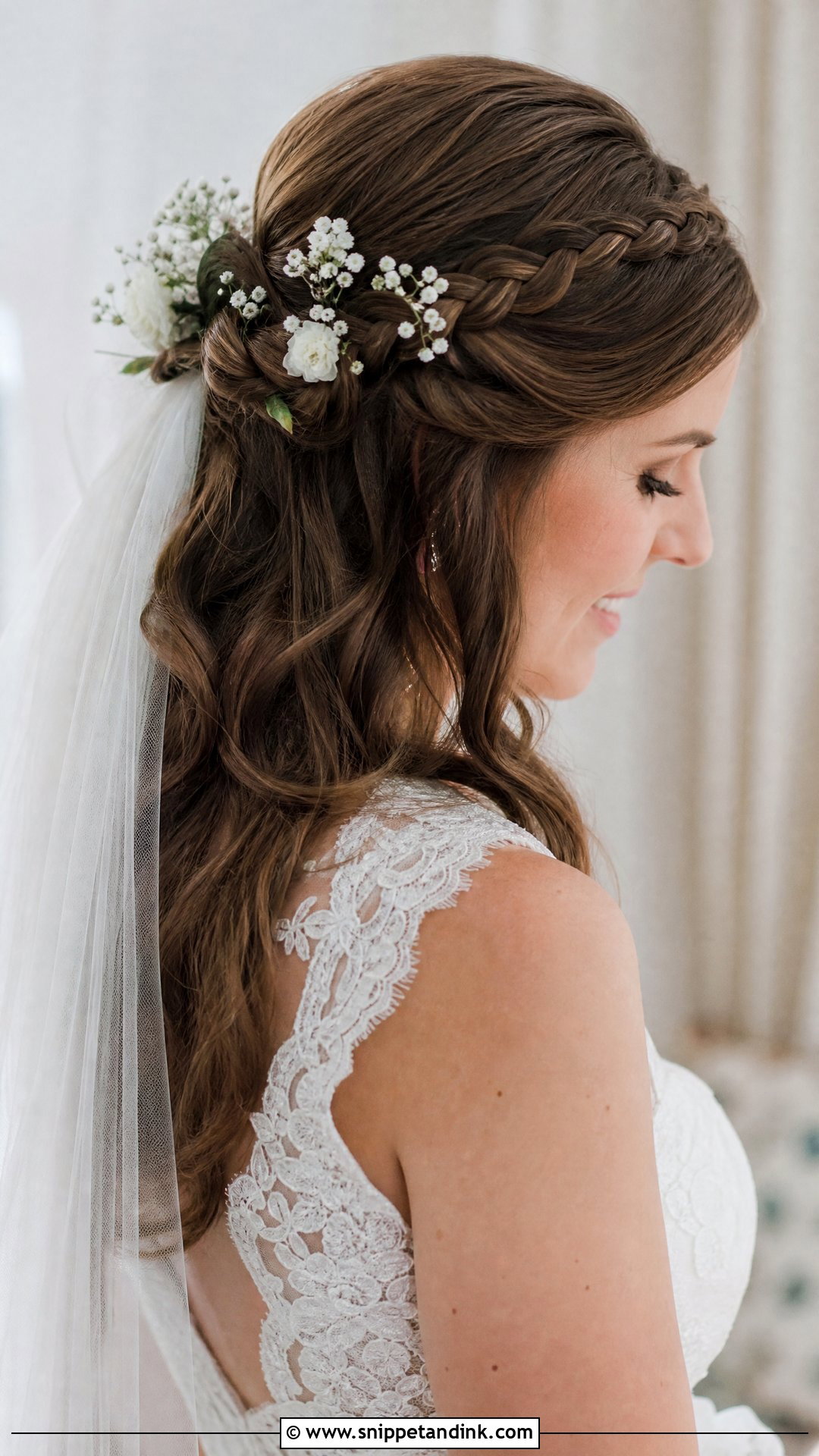
Half-up with a braid gives structure on top and length below, so it’s the compromise I offer brides torn between up and down. One braid, two meeting at the back, or a braided band across the top all work, and a veil comb slides in just under the braided section, where it has something firm to grip. The weak spot is the bottom half. Unpinned curls drop fastest in humidity, so I set them with a hot tool and let each one cool completely before brushing out.
11. Mermaid Braid for Weddings
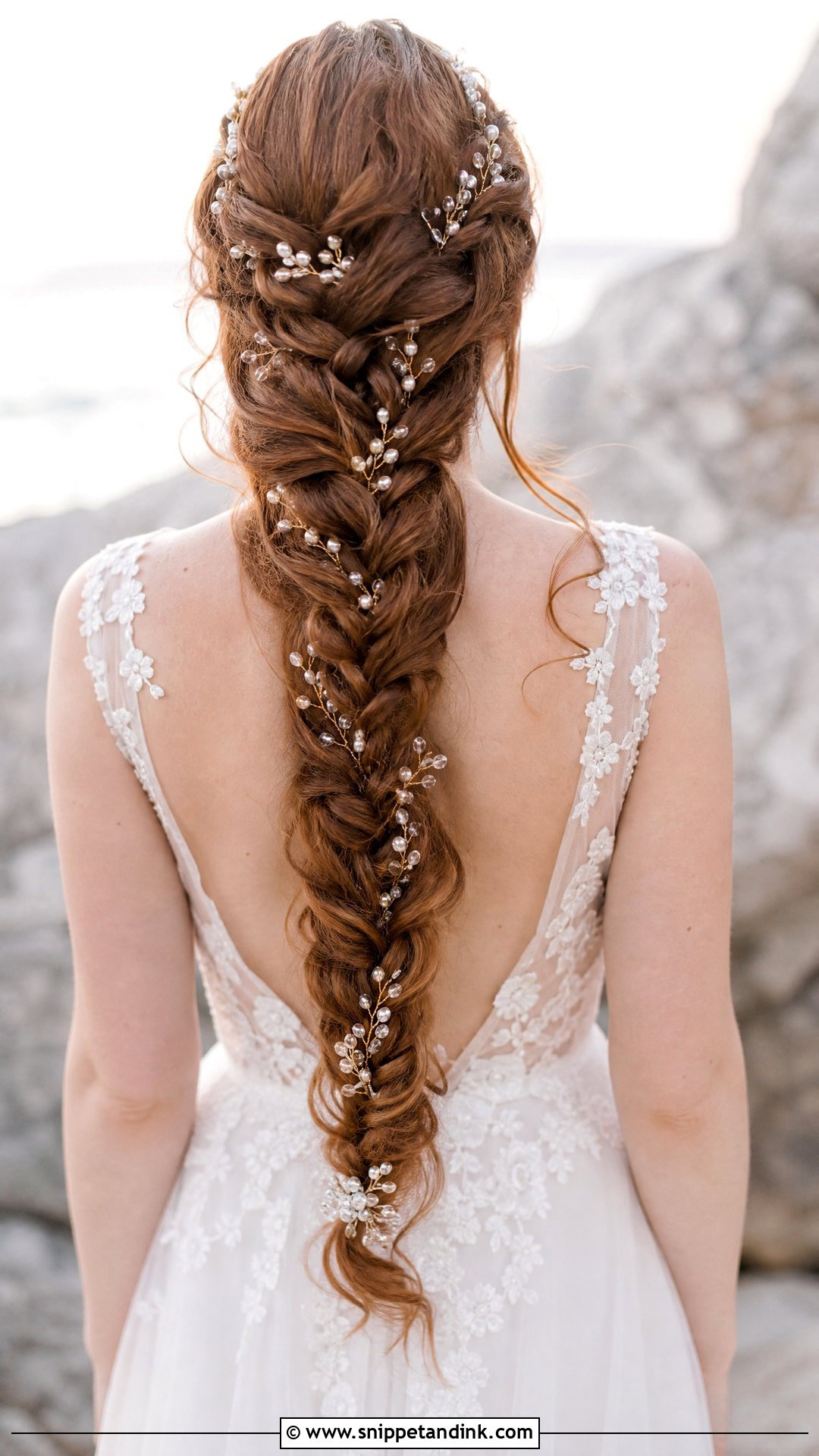
The mermaid braid is a fishtail with extra side sections pulled in, building a thick, rope-like plait that becomes the main feature of the whole look. It needs long, dense hair. On thinner hair the extra sections look sparse, so extensions are almost always part of this one. Loosen it carefully, because it turns messy quickly once pulled. Small pearls or crystals along the length suit a beach ceremony, though it holds just as well indoors.
12. Braided Low Bun for Brides
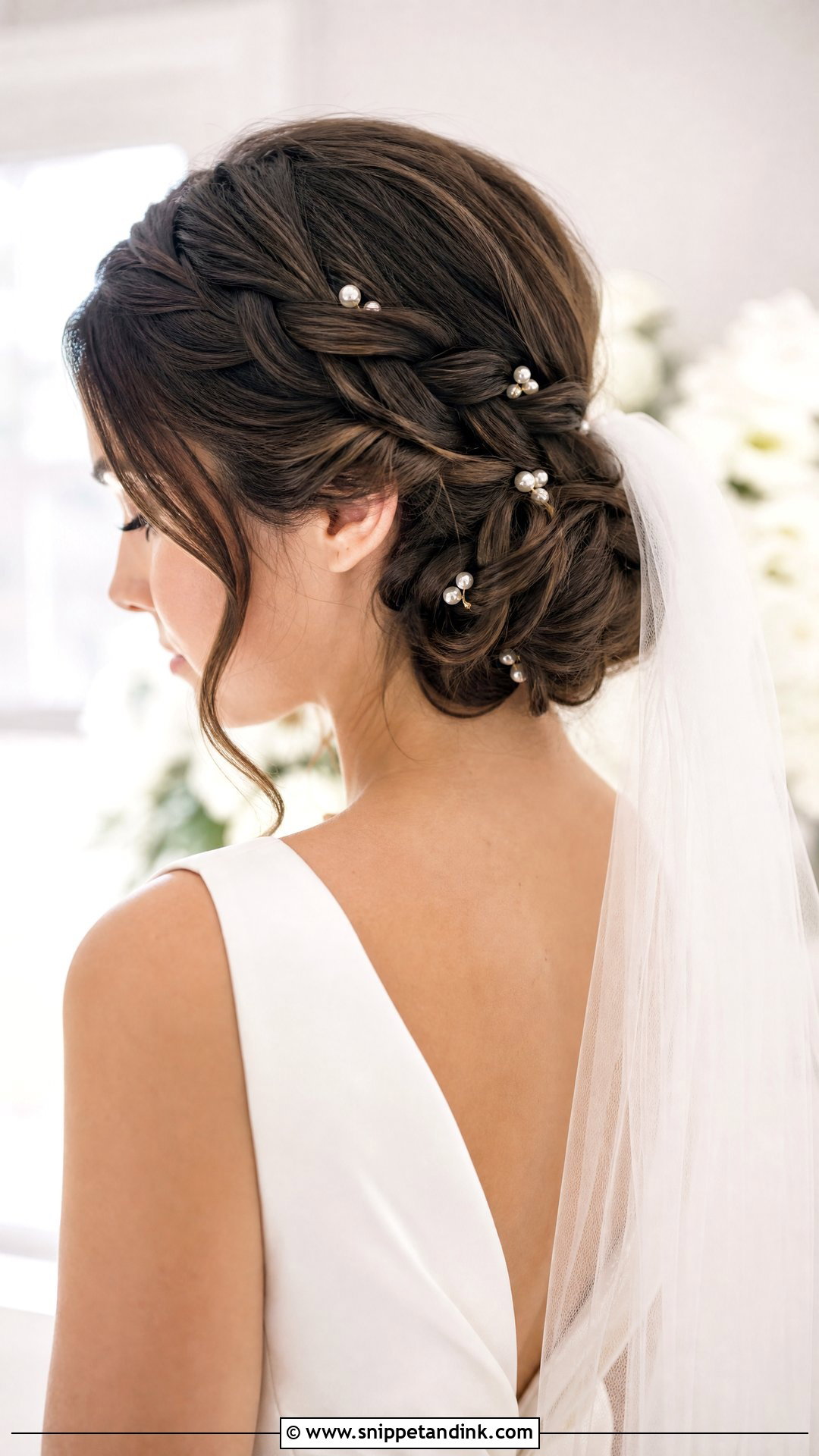
Braids woven into a low bun give texture a smooth bun doesn’t have, and sitting at the nape it’s the easiest base I know for a veil: the comb goes in just above the bun and the weight rests on something solid. I secure the bun with U-pins rather than bobby pins, since they push into the mass instead of clamping one thin layer. Pull a few face-framing pieces loose to soften it. Combs, pearl pins or fresh blooms finish it for a classic or vintage-themed wedding.
13. Cornrow Bridal Hairstyle
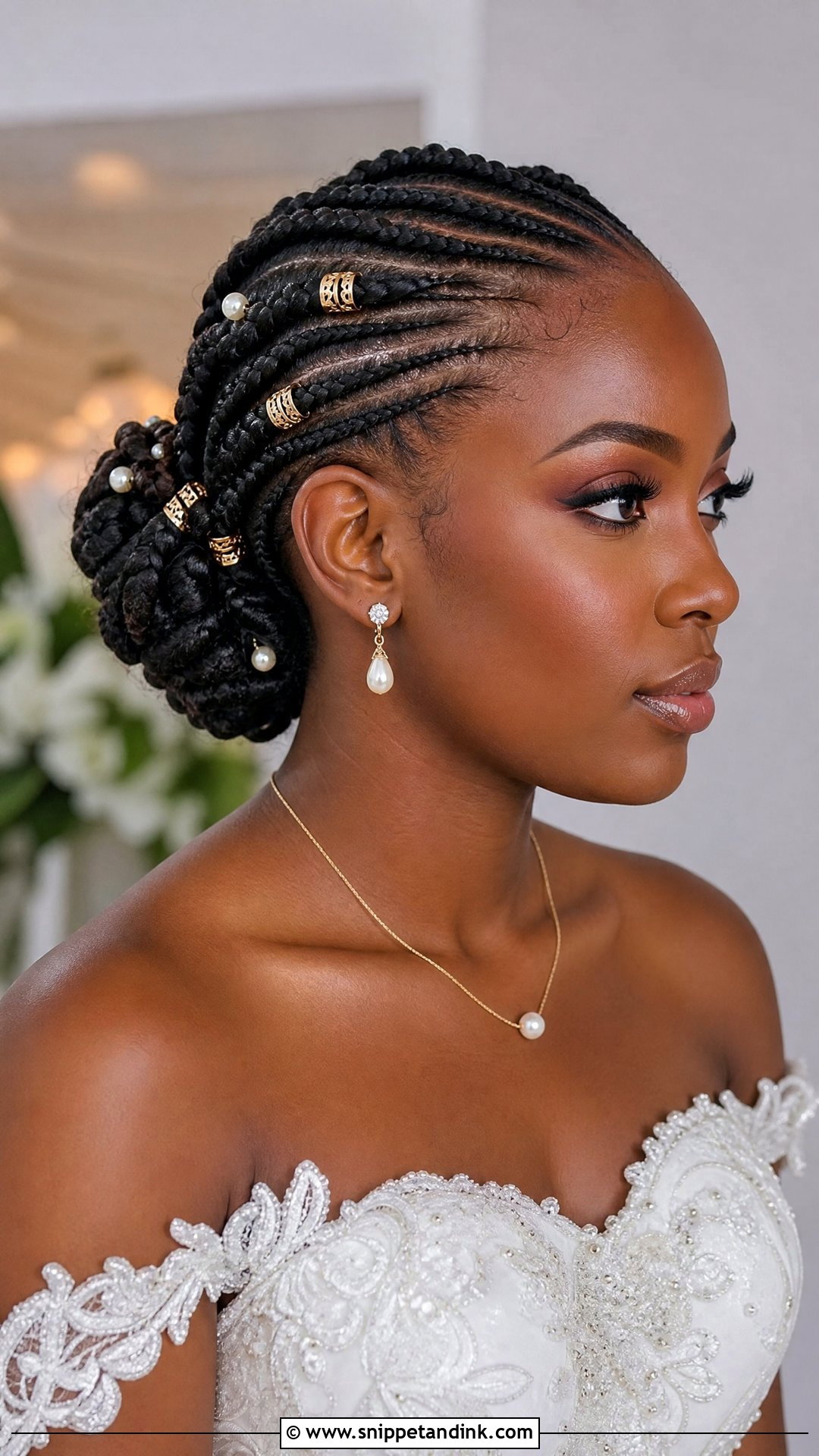
Cornrows are braided close to the scalp, so they keep their shape from the ceremony to the last song with almost no maintenance. For many brides they also carry real cultural meaning, and the patterns range from straight backs to geometric parts to rows gathered into an updo or ponytail. My main advice is timing. Have them installed a few days ahead rather than the night before, so any scalp tenderness settles and the edges relax. Gold cuffs, beads, pearls or fresh flowers can all be added, and they sit as comfortably with a traditional gown as a modern one.
14. Braided Ponytail Wedding Look
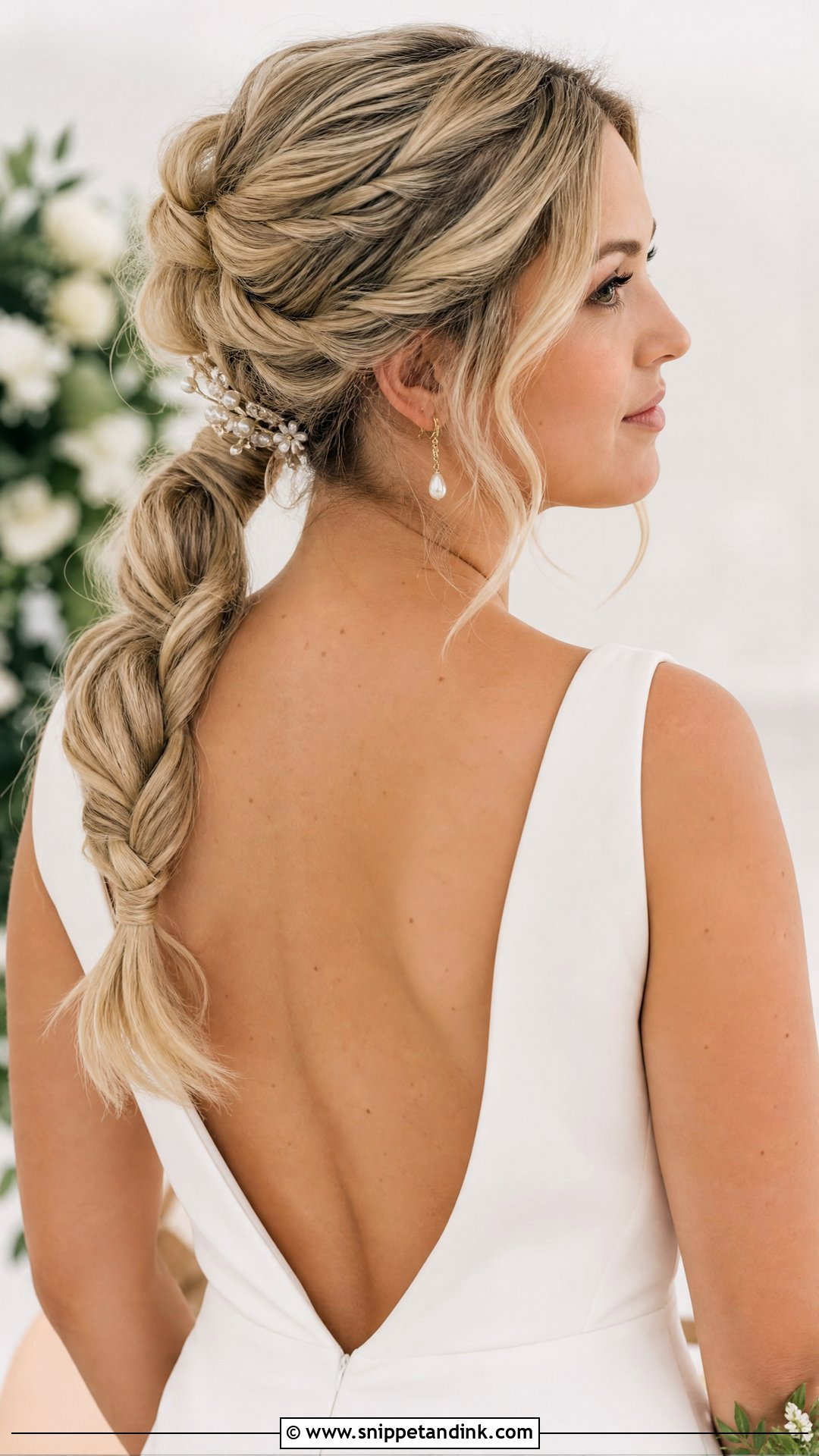
Braiding the length of a ponytail stops the tail from frizzing or splitting, which is the main reason I like it. High or low both work, and I wrap a small strand around the base to hide the elastic. Ponytails hang all their weight on one point, so I use two elastics, one tight at the base and a second just below it, to keep the tail from drooping by evening. Hair shorter than the shoulders needs clip-ins to make it worth doing. Pearl pins or a thin hair vine add the bridal detail.
15. Ribbon Braid for Brides
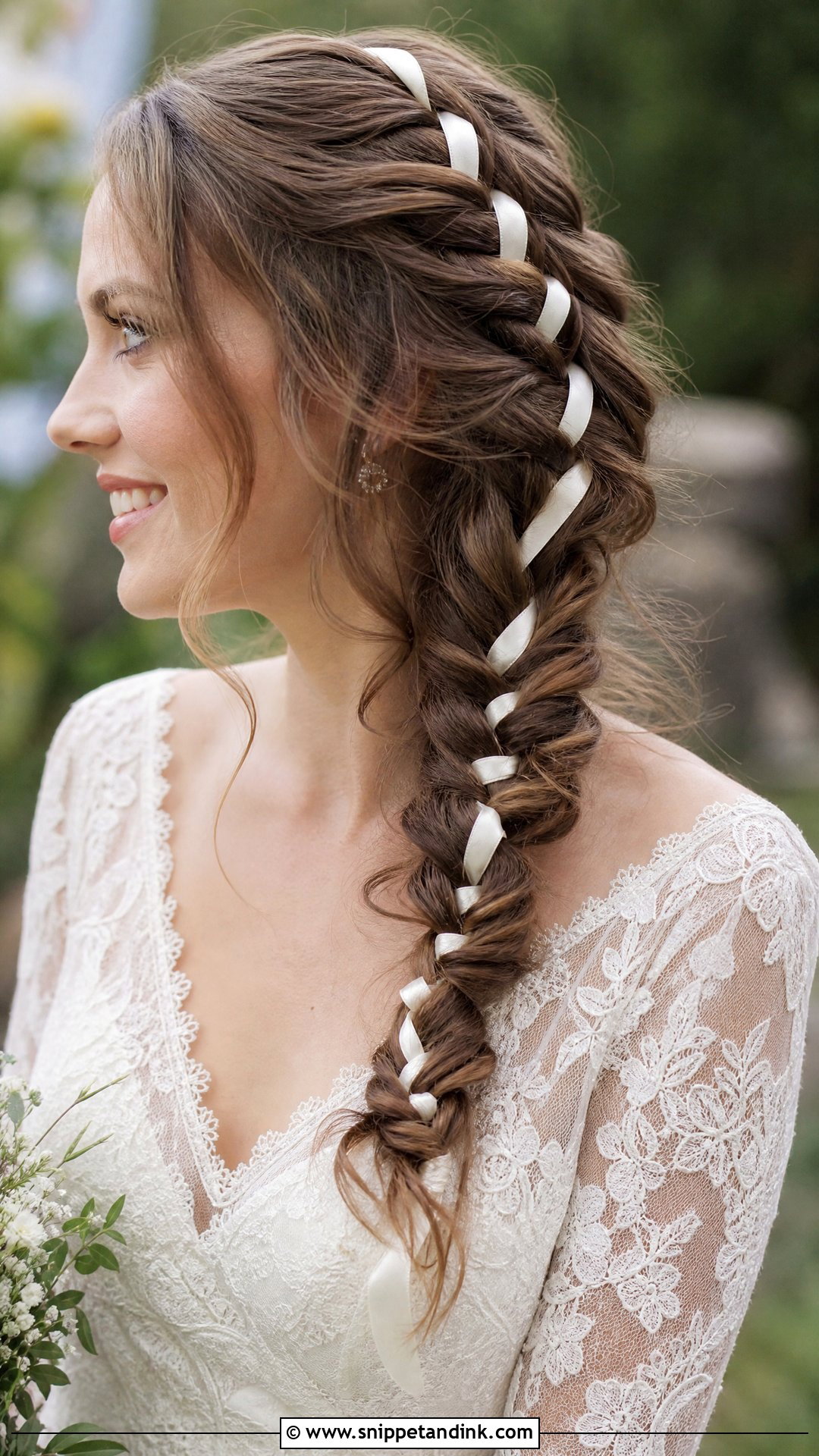
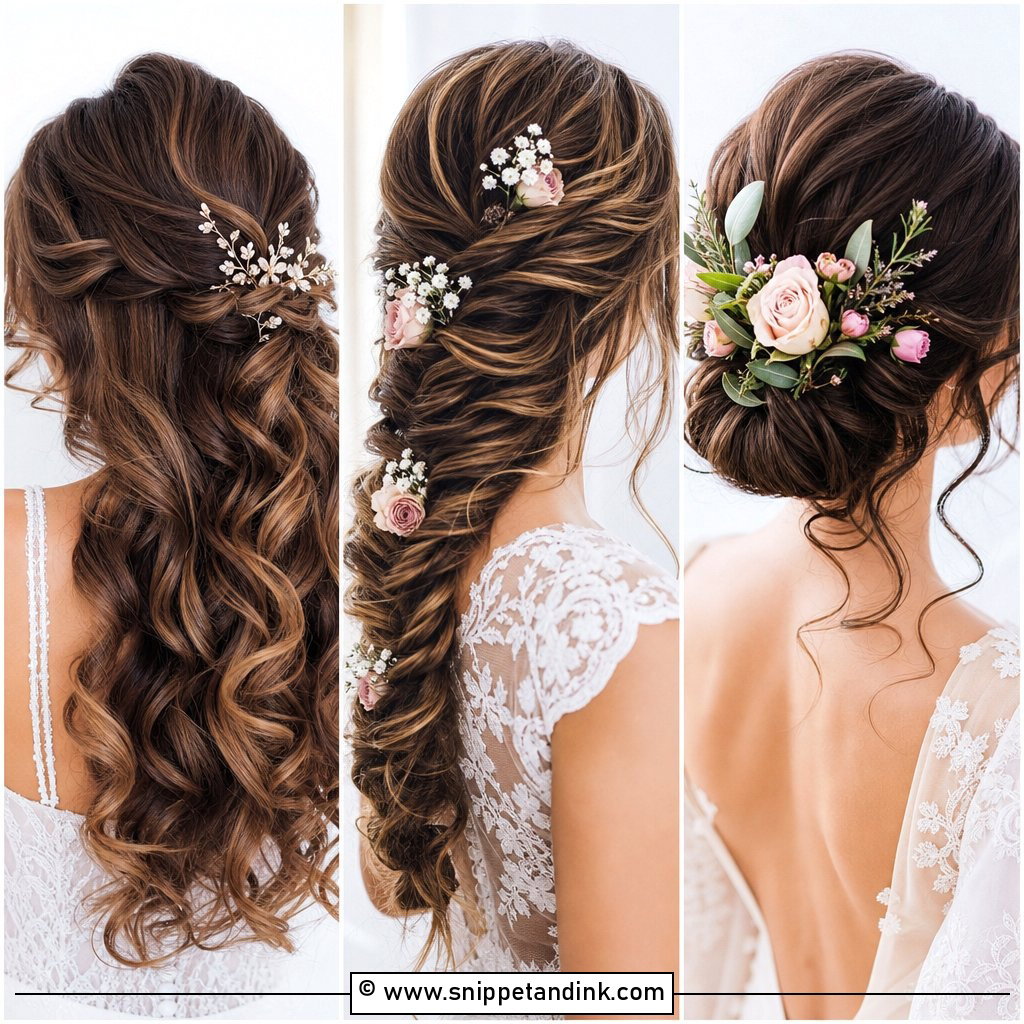
Threading ribbon through a braid is the easiest way I know to bring your wedding colors into your hair. Fabrics behave differently, though. Satin is slippery and needs a small knot hidden under the first cross, while organza grips hair better and stays put. I choose a ribbon about the width of one braid strand so it doesn’t swallow the pattern. It sits well in side braids, fishtails and updos; ivory or blush stays quiet, and a deeper color makes the braid the focus.
16. Braided Chignon Bridal Hairstyle
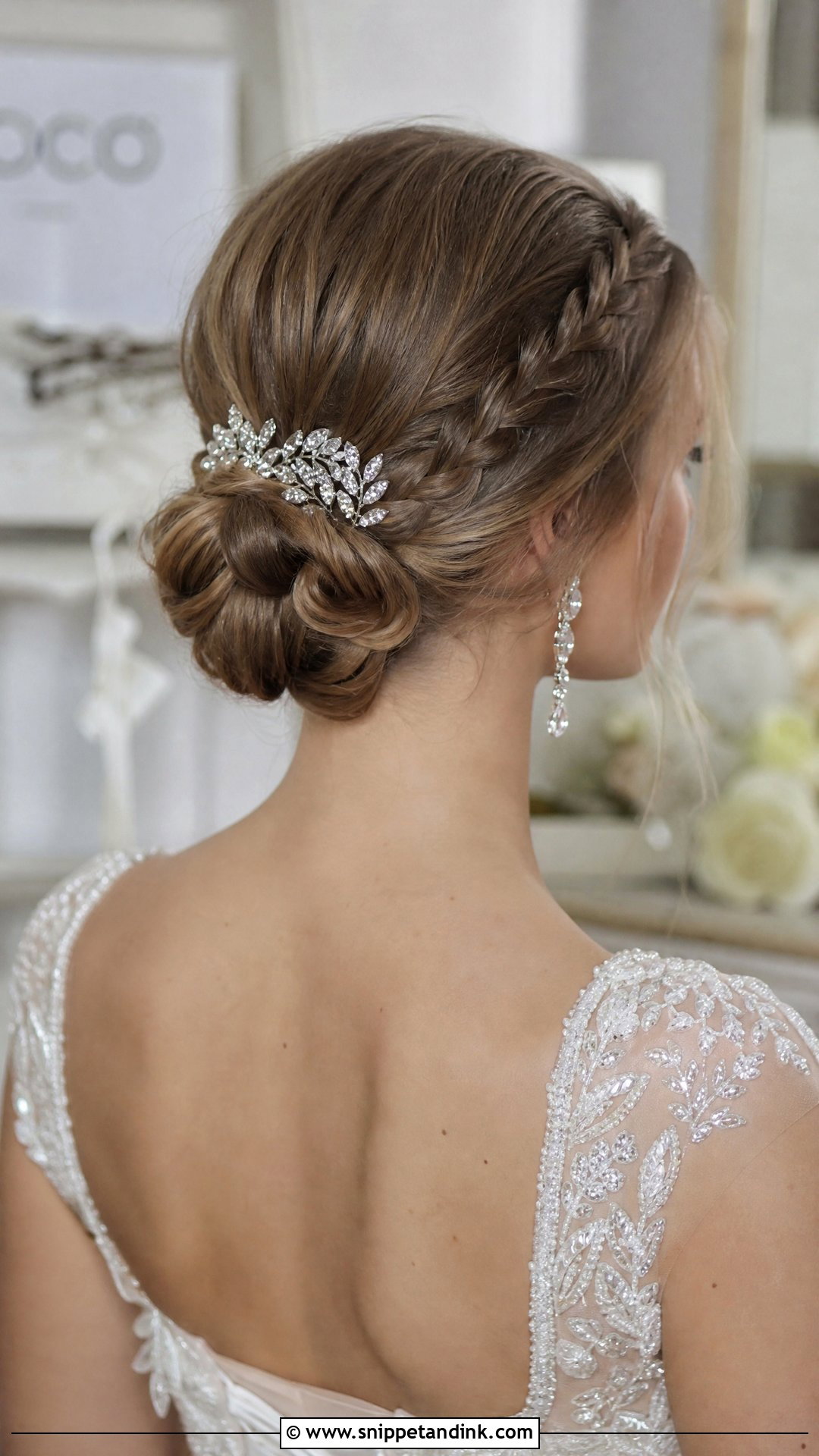
A braided chignon is a low knot with braids wrapped around or through it, and it’s the most formal style here. I’d book it for a traditional or black-tie wedding with a long veil and serious jewelry, where the braid keeps it from looking like a plain bun from the back. On a narrow face it can look severe, so I relax the hairline and leave a few soft pieces out. Crystal pins or a jeweled comb at the side of the knot complete it.
17. Double Braid Wedding Hairstyle
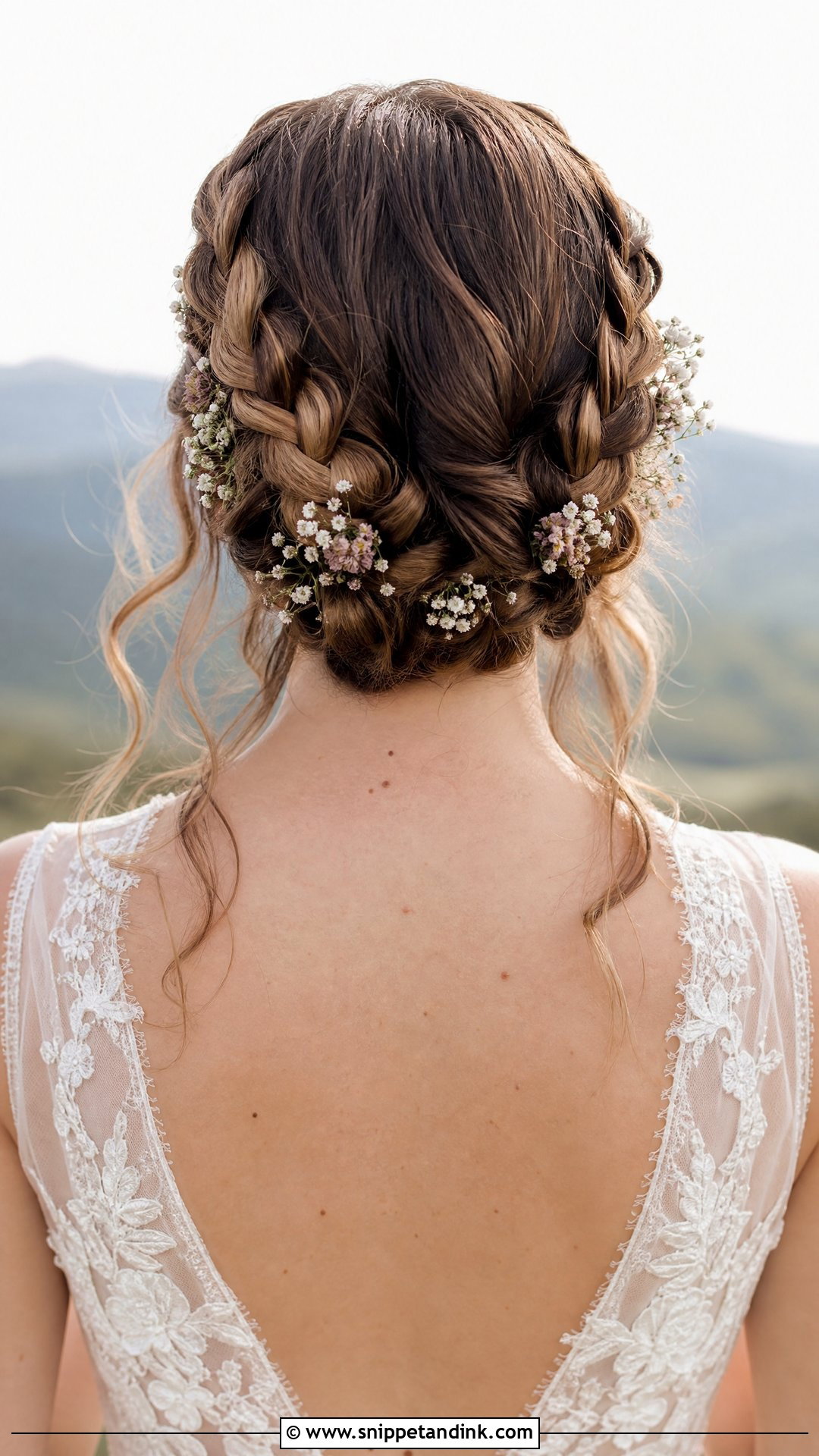
Two braids, one on each side, give a symmetry that feels younger and sweeter than a single plait. Wear them down the back for a relaxed or rustic wedding, wrap them into an updo, or pin them over the crown. The part has to be dead straight, because any wobble shows in every photo taken from behind, so I check it with a hand mirror before I start. Tiny flowers, ribbon or pearl pins along both braids keep them matched.
18. Braided Crown With Veil
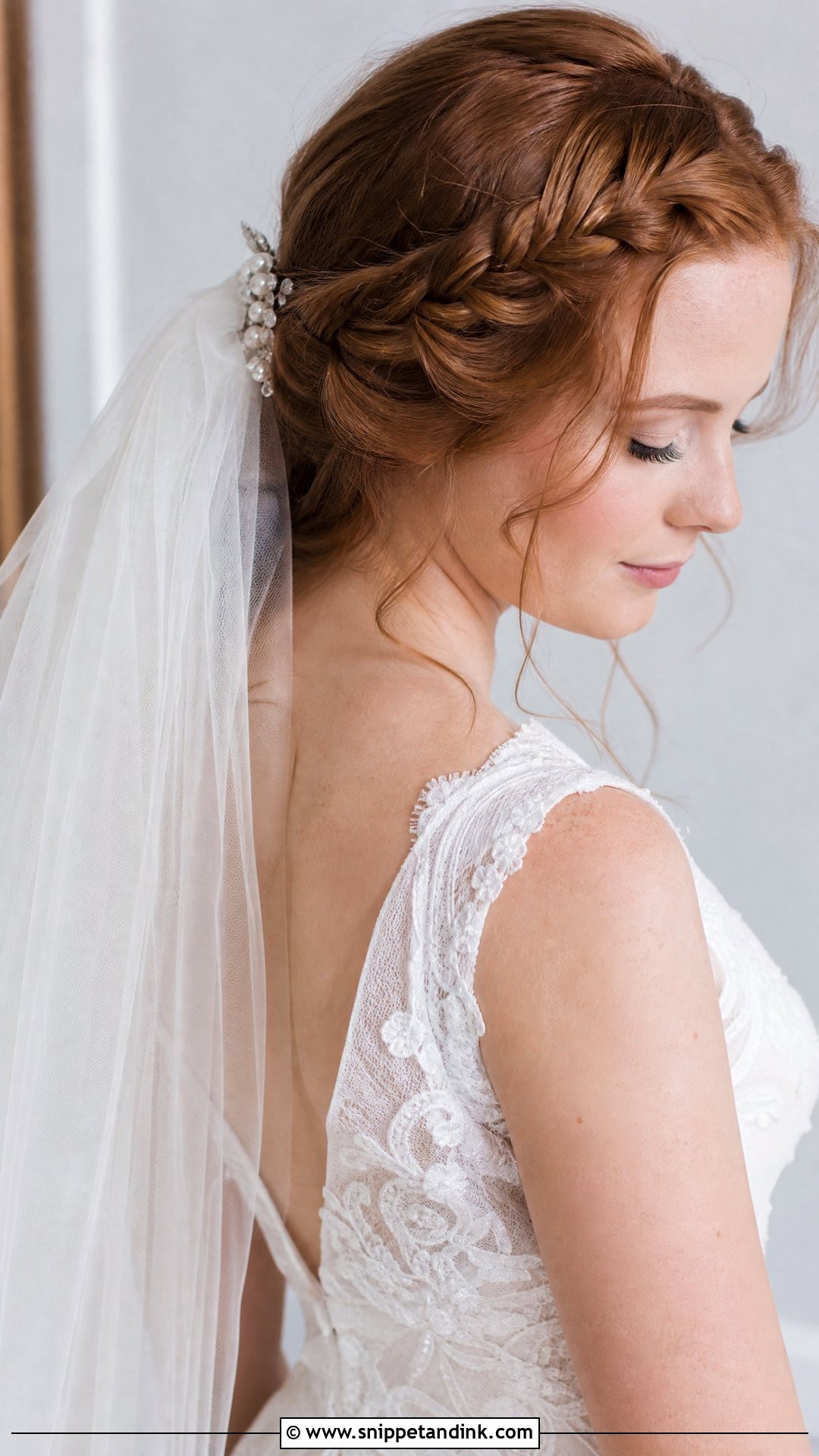
This is the pairing I recommend most often to brides who want to keep a veil on well into the evening. The crown braid works as a built-in anchor: the veil comb slides under the braid instead of into loose hair, so it can’t drag the style down. After the ceremony the veil comes out and the braid stays intact for the reception. Small flowers or jeweled pins tucked into the braid give it something extra once the veil is off.
19. Loose Braid Bridal Hair
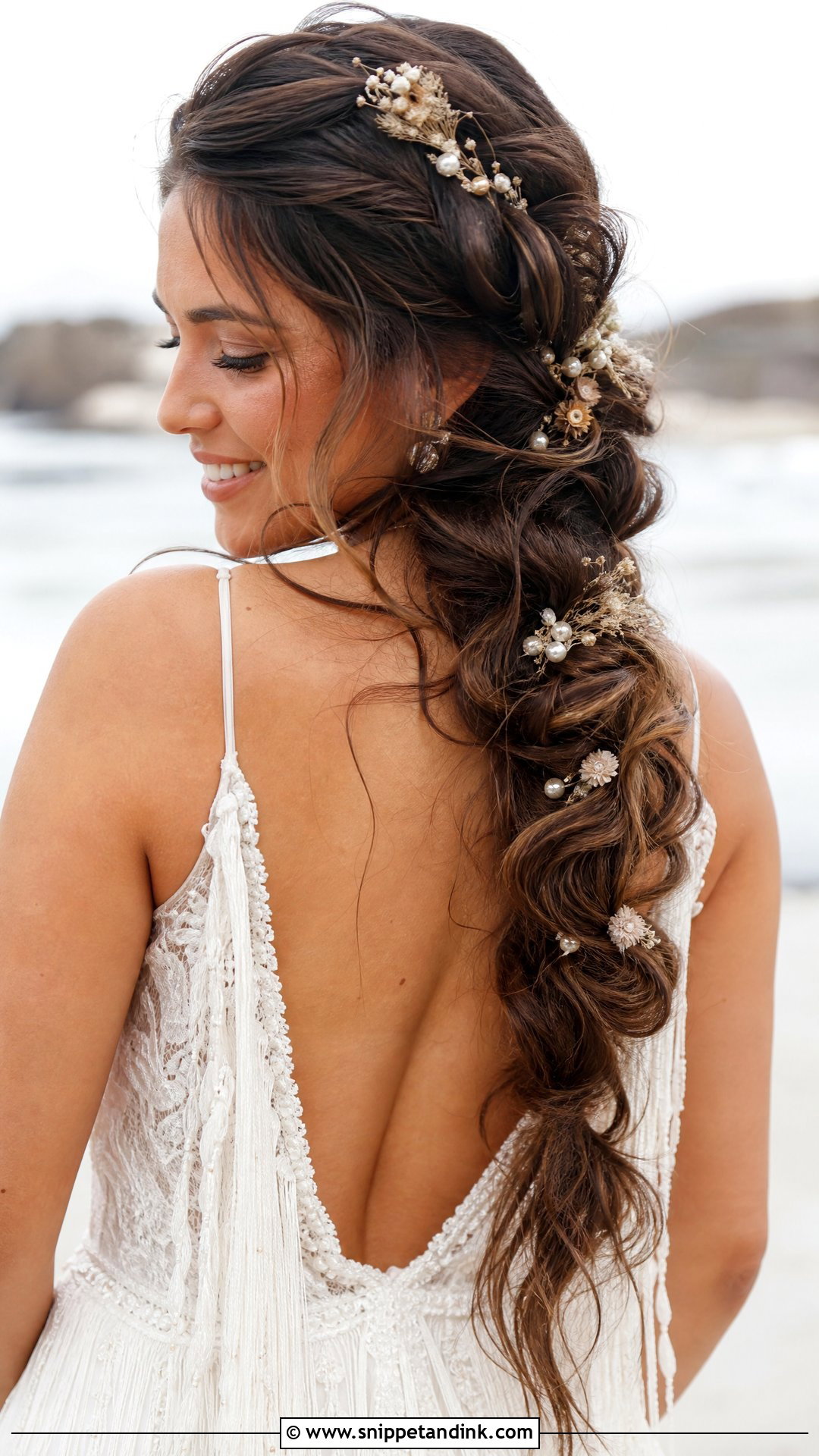
A loose braid is pulled apart until it looks airy, and it needs curled or waved hair underneath to have any body. I’d keep this one for a bride who’s relaxed about movement, because by the end of the night it will have loosened further. On a beach or in a garden that’s part of the charm. Leave plenty of face-framing pieces out, and weave in dried flowers, greenery or pearl pins rather than anything heavy that would pull it down.
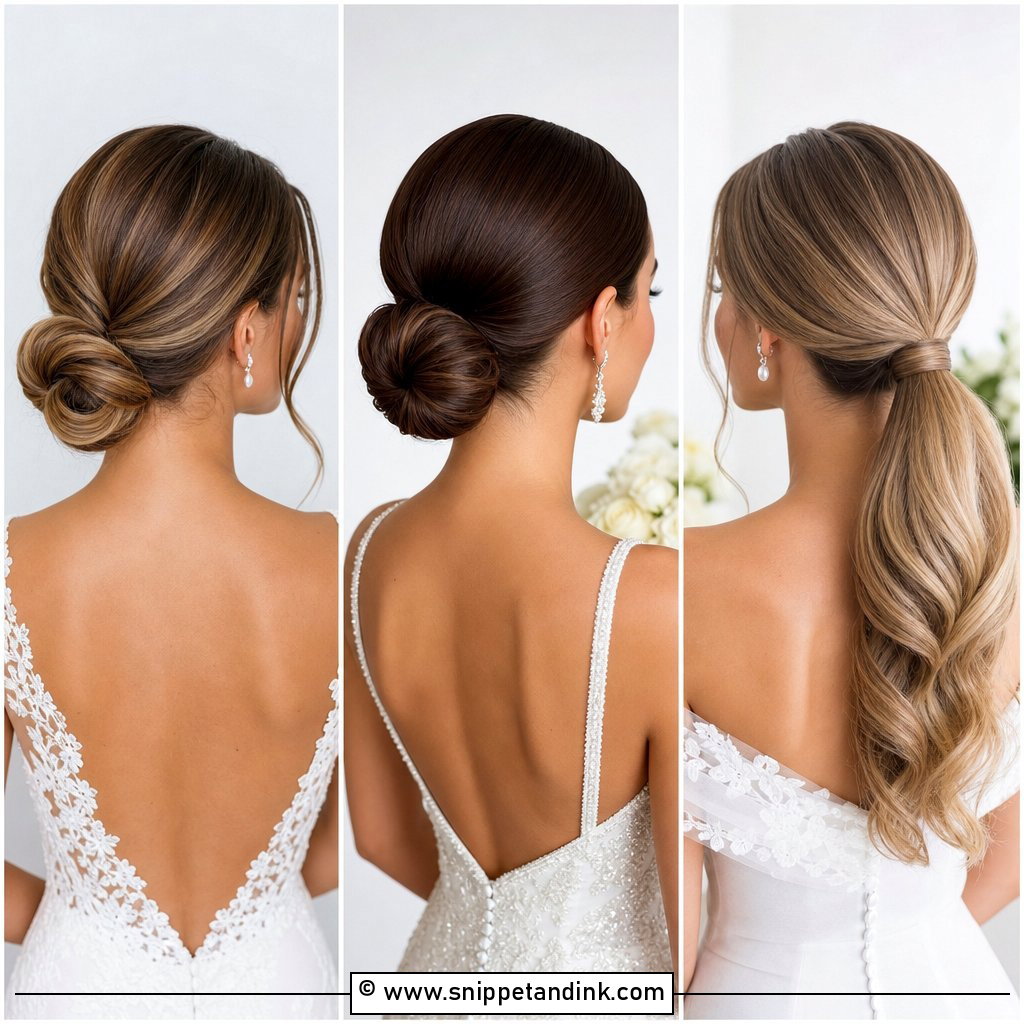
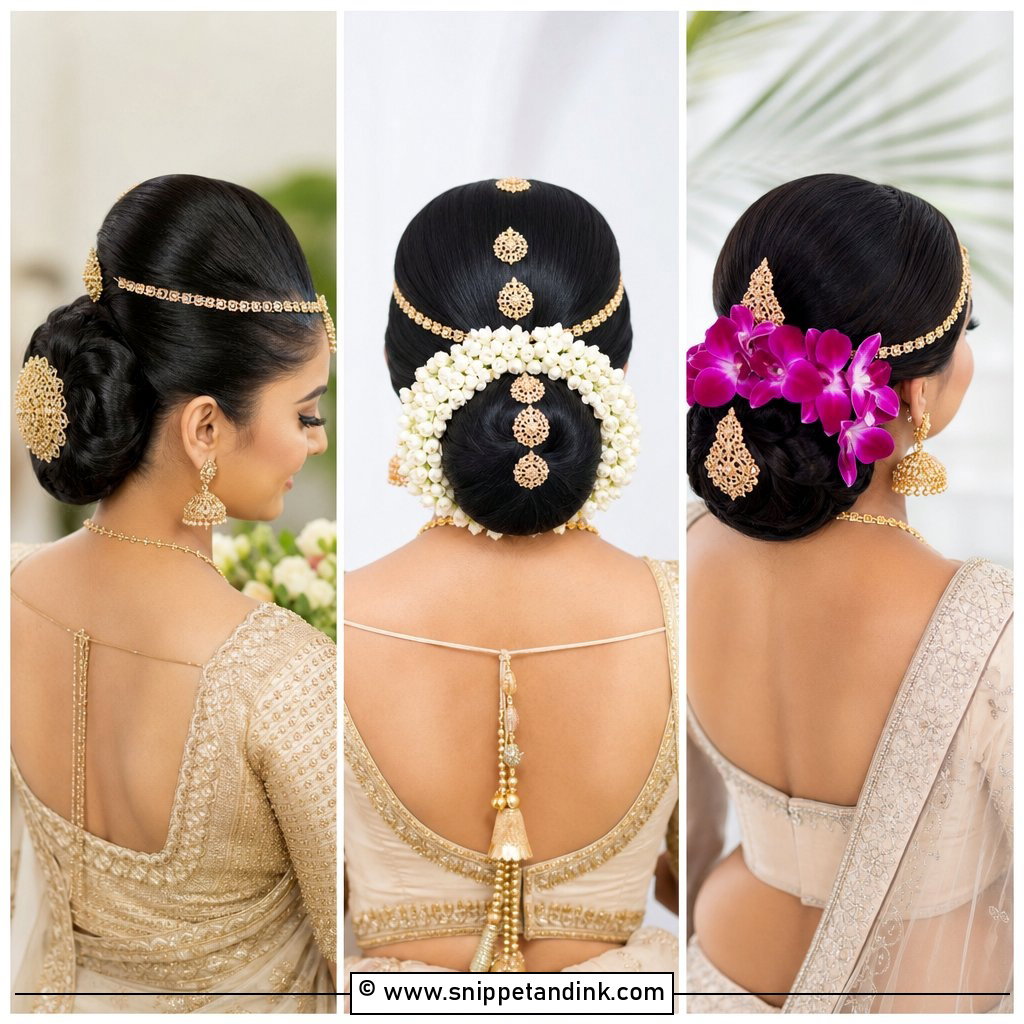
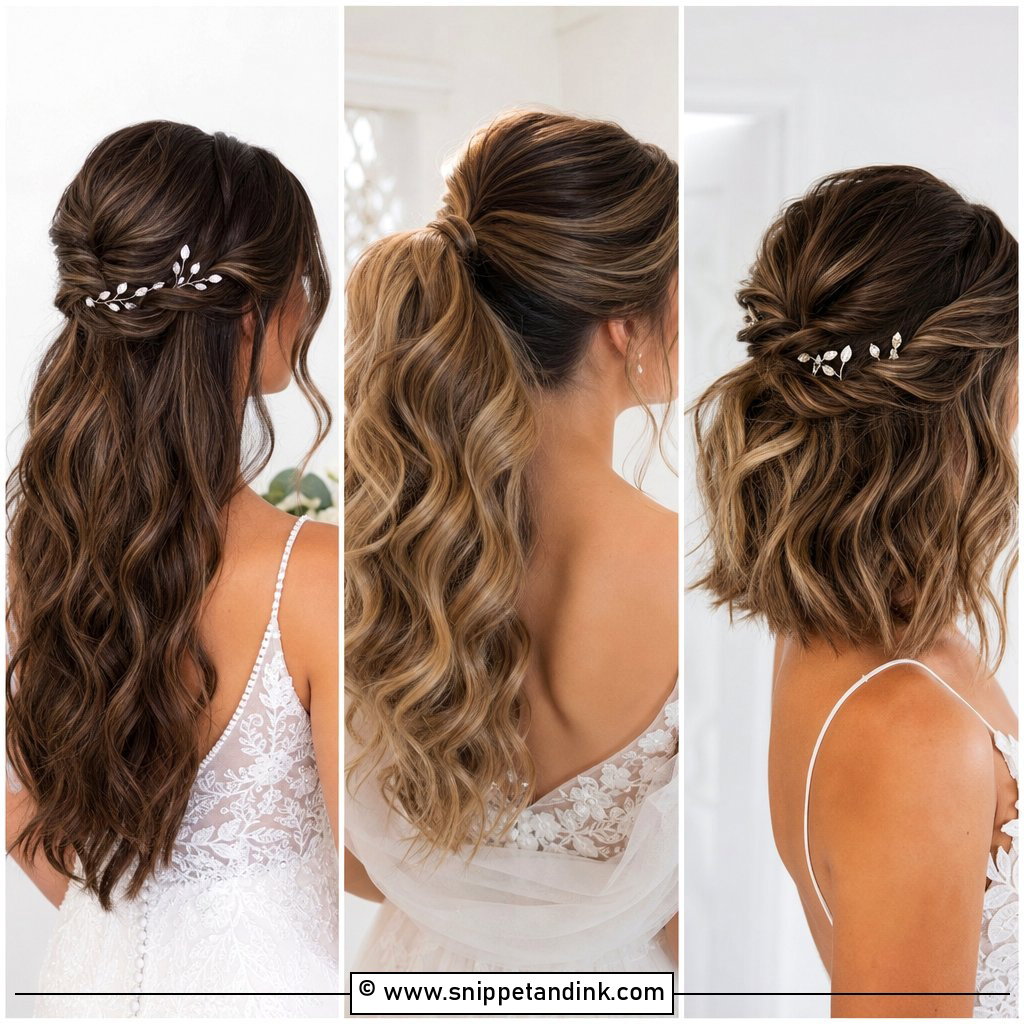
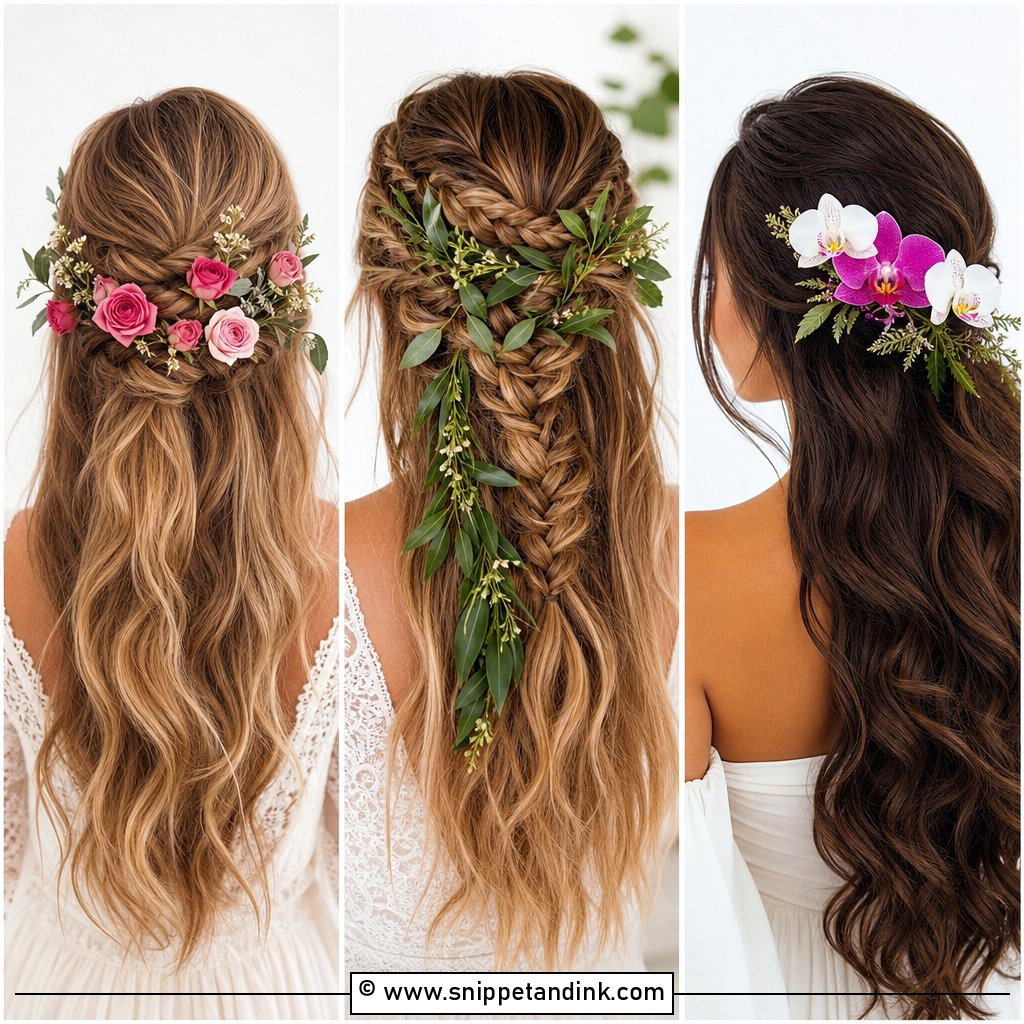
20. Braided Bun With Flowers
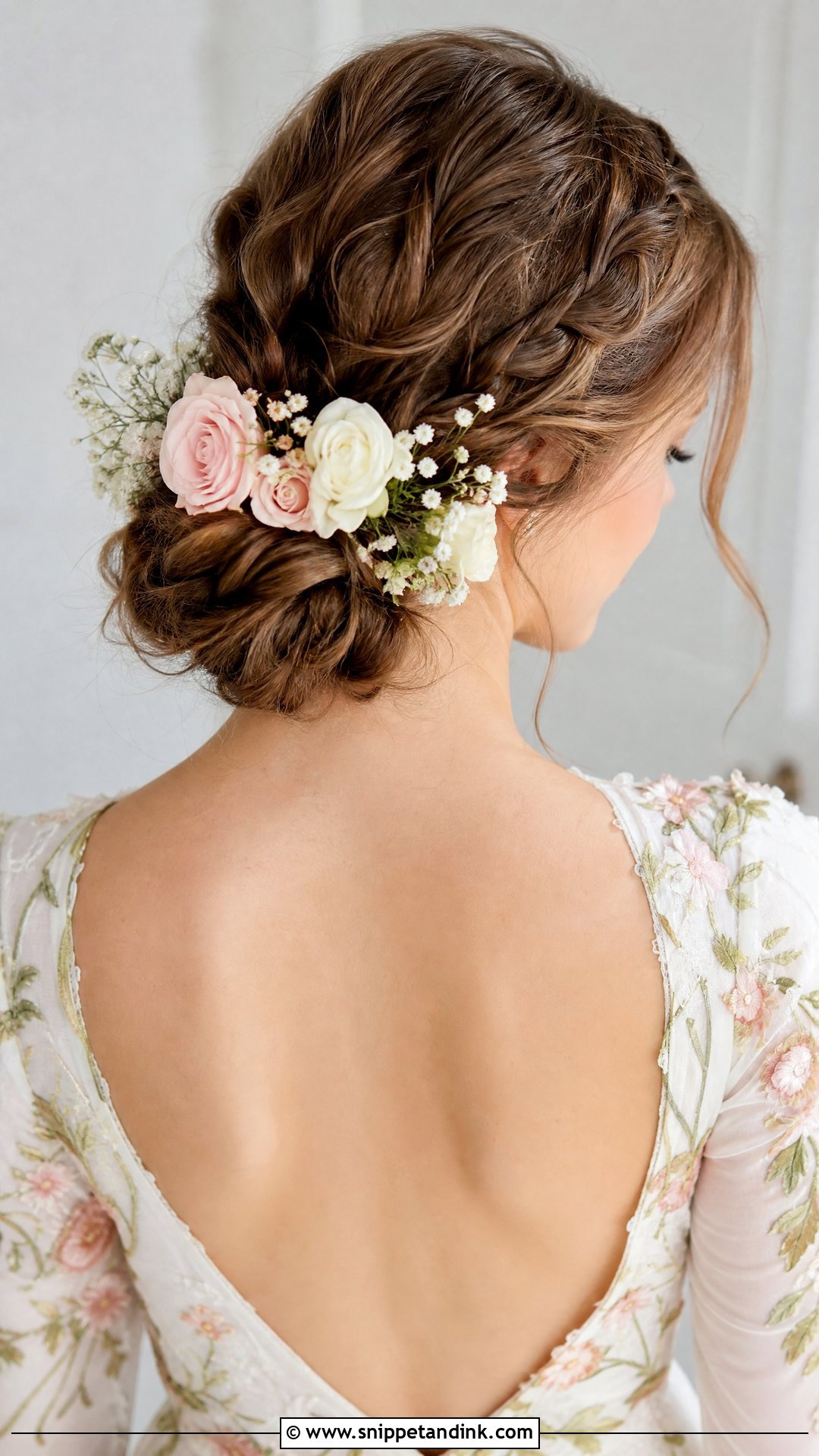
A braided bun dressed with fresh flowers suits spring and summer, especially outdoors. Choose blooms that cope for hours without water: spray roses, waxflower and baby’s breath last well, while gardenias and hydrangeas brown and wilt fast against a warm head. I ask the florist to prepare small taped pieces from the bouquet stems so the colors match, and I push them in last, after the spray. The bun keeps hair off your neck in the heat.
Layers, Fine Strands and Coils Each Want a Different Braid
Fine or thin hair
Fine hair braids neatly but looks narrow, so I backcomb lightly at the root of each section and pancake the finished braid to widen it. A single Dutch braid usually looks fuller than two thin ones. Clip-in wefts placed under the braid line hide well and give the extra volume most inspiration photos are quietly built on.
Layered cuts
Short layers escape a braid at every cross. A tight French or Dutch braid traps them better than a fishtail, and a strong-hold pomade on the fingertips while braiding keeps the ends tucked. Anything still poking out gets pinned underneath rather than sprayed flat, because heavy spray on stray ends dries crunchy in close-up photos.
Coily and tightly curled hair
Coily hair holds a braid better than any other texture, but it needs moisture first or it can look dry on camera. I braid on stretched, well-moisturized hair and keep the tension even, since pulling hard at the hairline for a sleek finish stresses the edges. Cornrows, flat twists blended into braids and braided updos all suit it.
If a Braid Loosens Halfway Through the Reception
It happens, usually after the first long hug line or the first hour of dancing. Ask a bridesmaid to carry six bobby pins in your hair color, a travel-size hairspray and a small mirror. A slipping section can be pushed back into the weave and pinned from underneath with two crossed pins. If a whole braid has loosened, don’t try to rebraid it in the bathroom; pull it a little looser on purpose so it matches, then pin the end. Most guests will never notice the difference, and neither will the camera.
Bring a Photo of the Back to Your Trial
Your hair texture, your neckline and how much you plan to move should decide the braid more than the wedding theme does. Save reference photos from behind and from the side, not only the front, because that’s how most guests will see it during the ceremony. At the trial, wear a top with a neckline close to your dress and keep the style in for a few hours afterward to see what loosens. By the end of that afternoon you’ll know which braid really belongs on your head on the day.
You'll Like These Ideas:


Leave a Reply