
A bun is the hairstyle I trust most when a bride wants real flowers, because it’s the one shape with a solid core for stems to grip. The flowers themselves can go almost anywhere on the scale: a few sprigs of baby’s breath, a single orchid, a full garland of roses, a strand of jasmine or a pair of heavy dahlias. The bun just has to be built for the weight it’s carrying. Below are twenty combinations, from low knots to braided crowns, covering garden, traditional and modern weddings, with my notes on what each flower needs from the hair underneath.
What Sits Inside a Bun That Holds Flowers All Night
Flowers add weight and pull in directions a bun isn’t used to. So the part you never see matters most. My starting point for almost every floral bun is a tight ponytail base or a set of crossed pins at the anchor spot, then the bun wrapped around that and secured with U-shaped pins, which hold more hair with less bulk than bobby pins.
- Fine or thin hair often needs a bun filler or padding matched to your hair color, so the bun is big enough to take stems.
- Freshly washed, silky hair slides. Hair washed the day before, with a little dry texture spray, holds pins far better.
- Heavily layered cuts leave short ends poking out of a bun. A small braid or twist around the base tucks them in.
- The flowers’ heaviest stems should always go where the bun is densest, usually at the anchor point.
Low, middle or high: matching bun height to the dress
A backless gown or low back looks best with a low bun that leaves the shoulders clear. A high neck or lace collar is easier with a bun at the crown or middle of the head, so hair doesn’t rub on the fabric. If you’re wearing a veil, decide whether the comb sits above or below the bun before the trial, because it changes where the flowers can go.
1. Low Bun With Fresh Roses
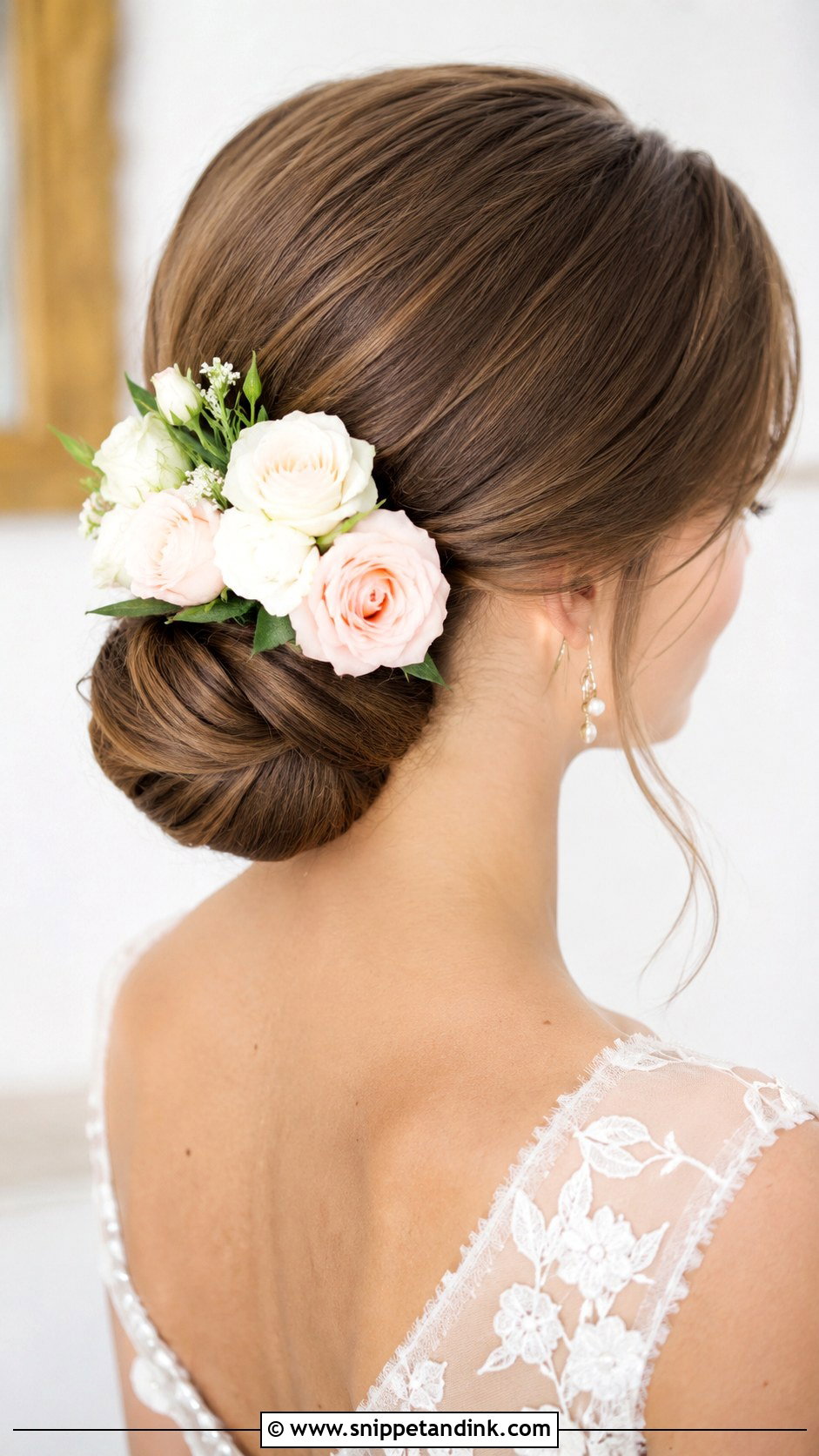
Fresh roses at the nape are about as classic as bridal hair gets. I tuck two or three small blush or white roses along one side of a smooth low bun, slightly off-center, so the arrangement doesn’t look symmetrical and stiff. It sits comfortably under a veil or alone. One thing I watch: standard roses open up as the day warms, so I ask the florist for blooms that are just starting to open rather than fully blown, and they’ll look right by the evening photos.
2. Braided Bun With Baby’s Breath
Braids give baby’s breath a grip that a smooth bun can’t. I work tiny clusters into the gaps between the braided sections, scattering them at uneven spacing so they look like they settled there. The flowers are light, inexpensive and barely wilt, which makes this one of the most practical fresh-flower styles for a long garden or rustic wedding. Loose braids feel relaxed, tight ones more polished. It’s also easy to repeat on bridesmaids with fewer sprigs, so the bride still stands out.
3. Messy Bun With Wildflowers
Messy buns take more planning than they look. The undone texture comes from pinning a structured base and then pulling sections loose with my fingers, and the wildflowers go into that base, not the loose pieces, or they fall out. A few tendrils at the temples soften the face. Meadow flowers wilt quickly, so I pick sturdier ones and keep them cool until I’m ready. Flowy dresses and outdoor spring or summer weddings suit it, and it’s comfortable to wear for hours.
4. Sleek Top Knot With Single Flower
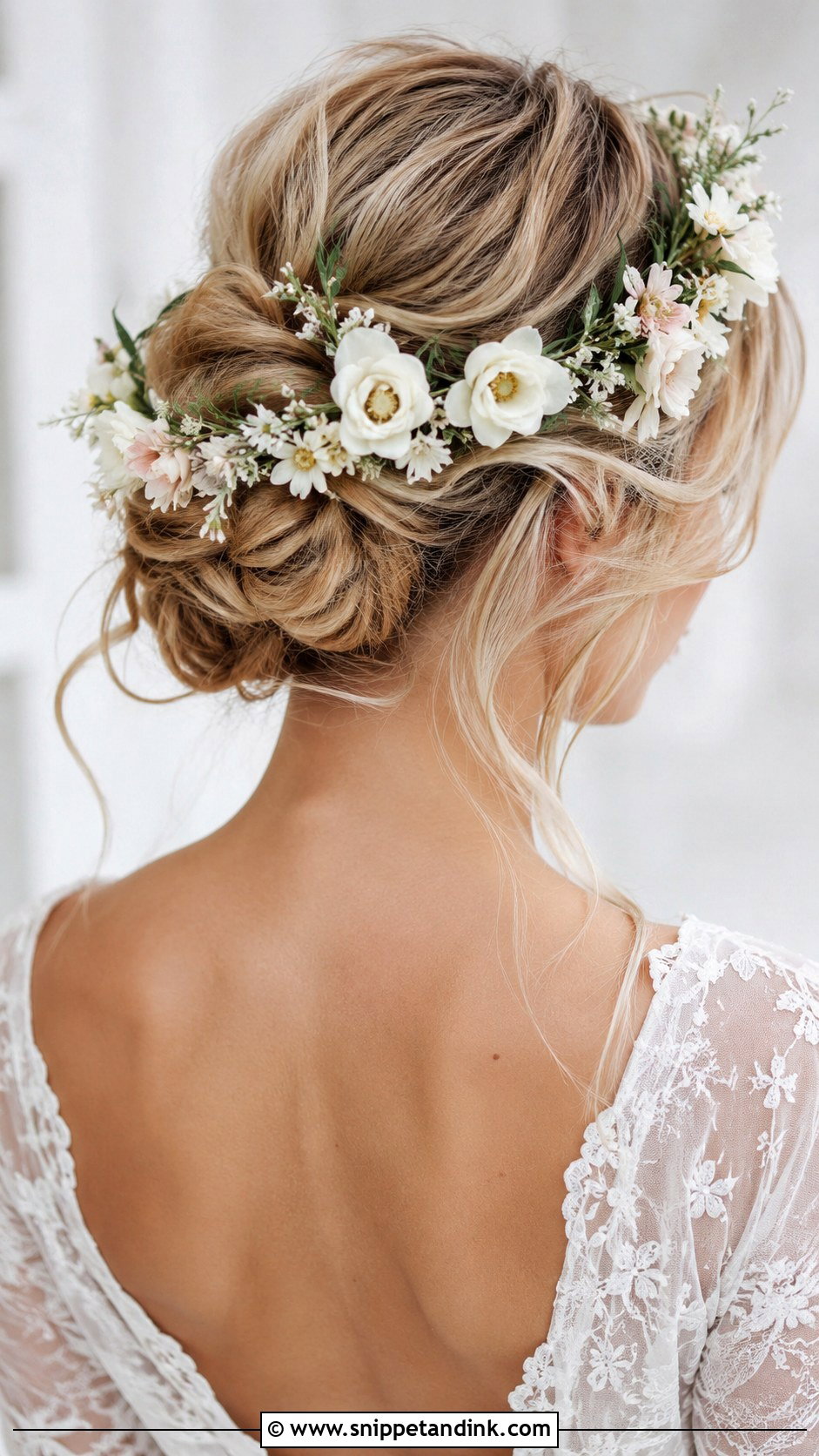
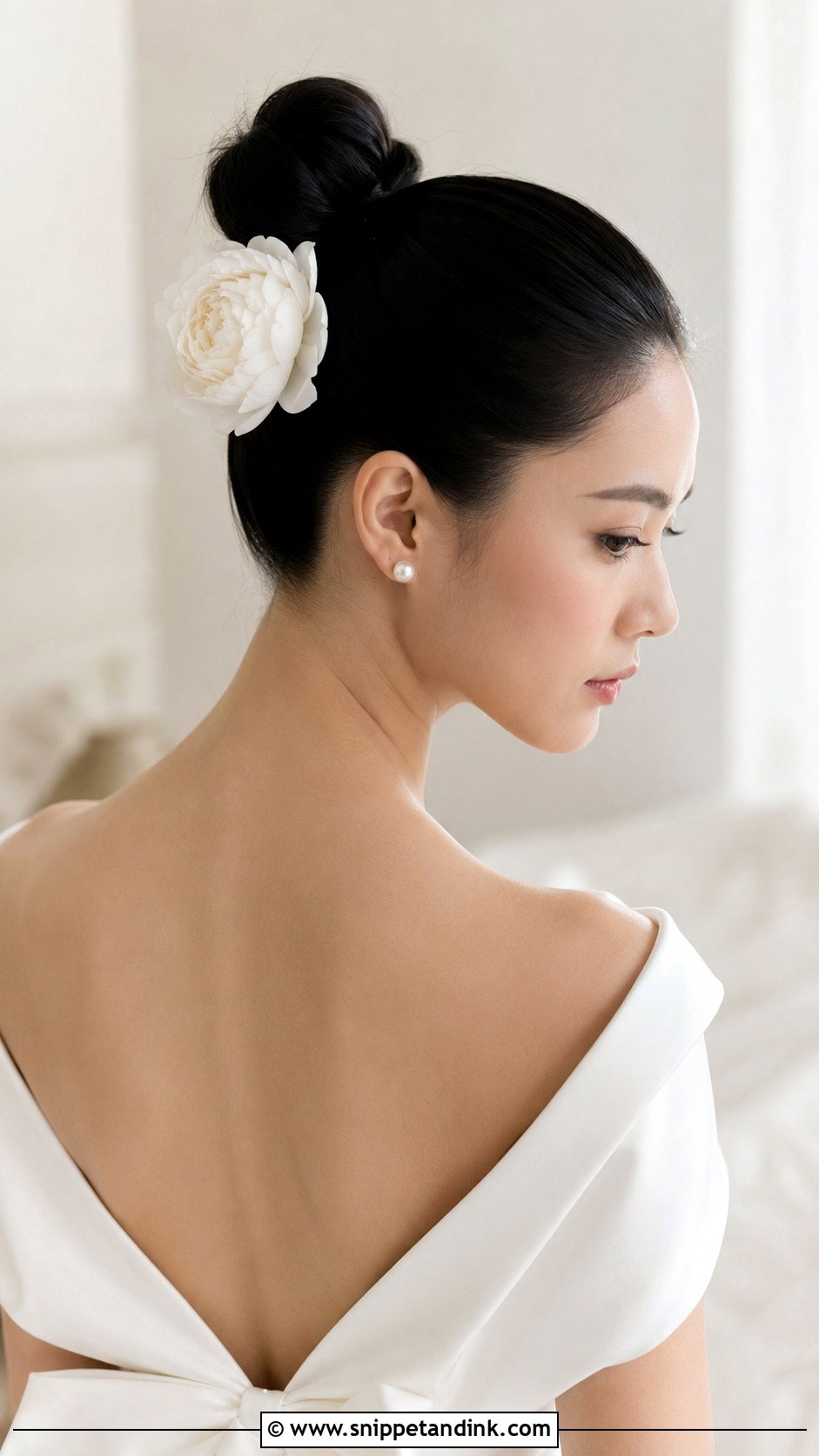
A sleek top knot with one bloom is modern and clean, but the flower choice matters more here than anywhere. A full peony is heavy, and perched on a high knot it pulls the whole bun backward by the afternoon. A garden rose or a smaller peony bud, wired and pinned tight at the base of the knot, holds better. The scraped-back sides need a smoothing cream and a fine-tooth brush to stay glossy. Structured gowns and city venues suit it, and it keeps your face fully open.
5. Side Bun With Cascading Flowers
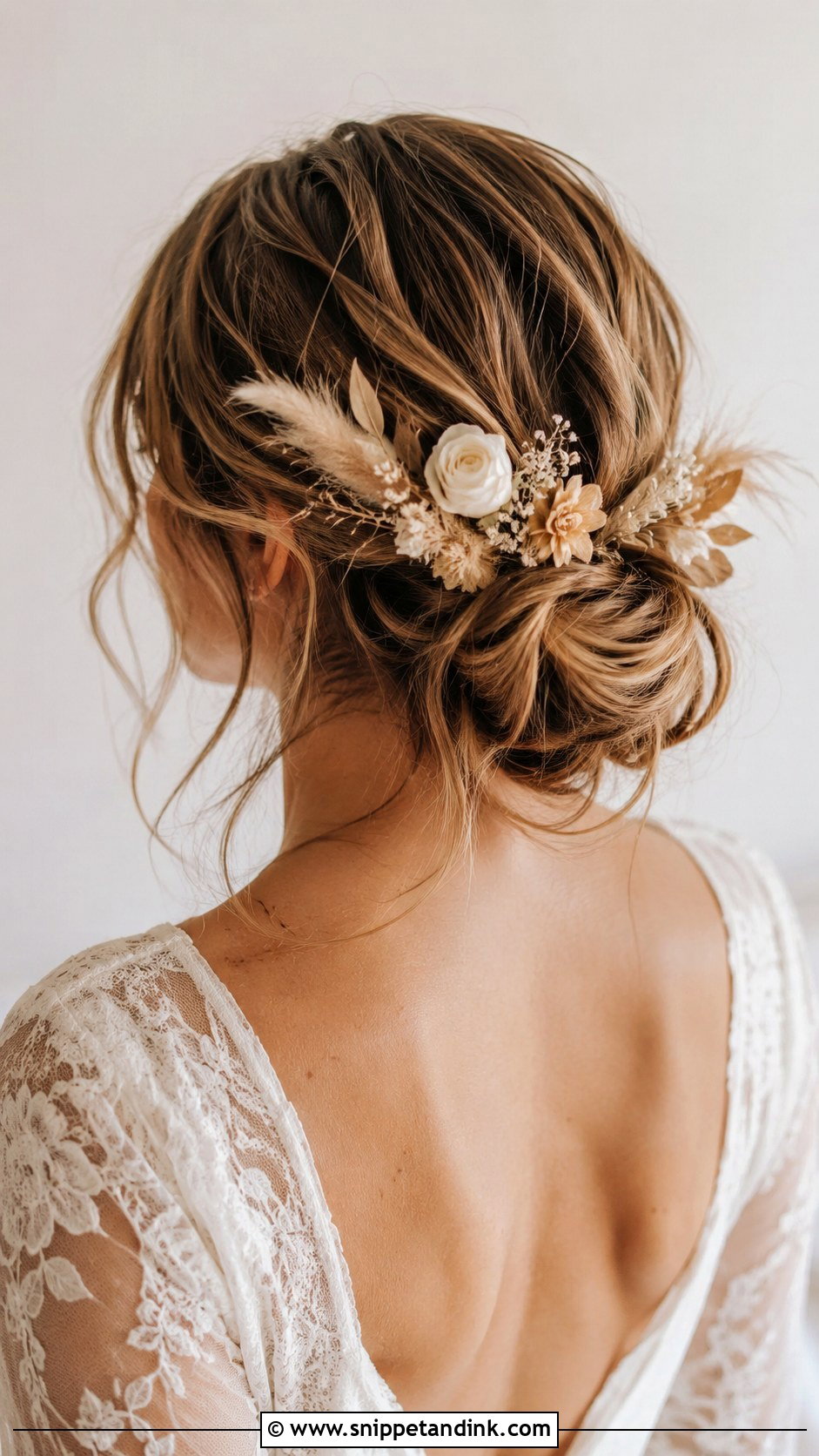
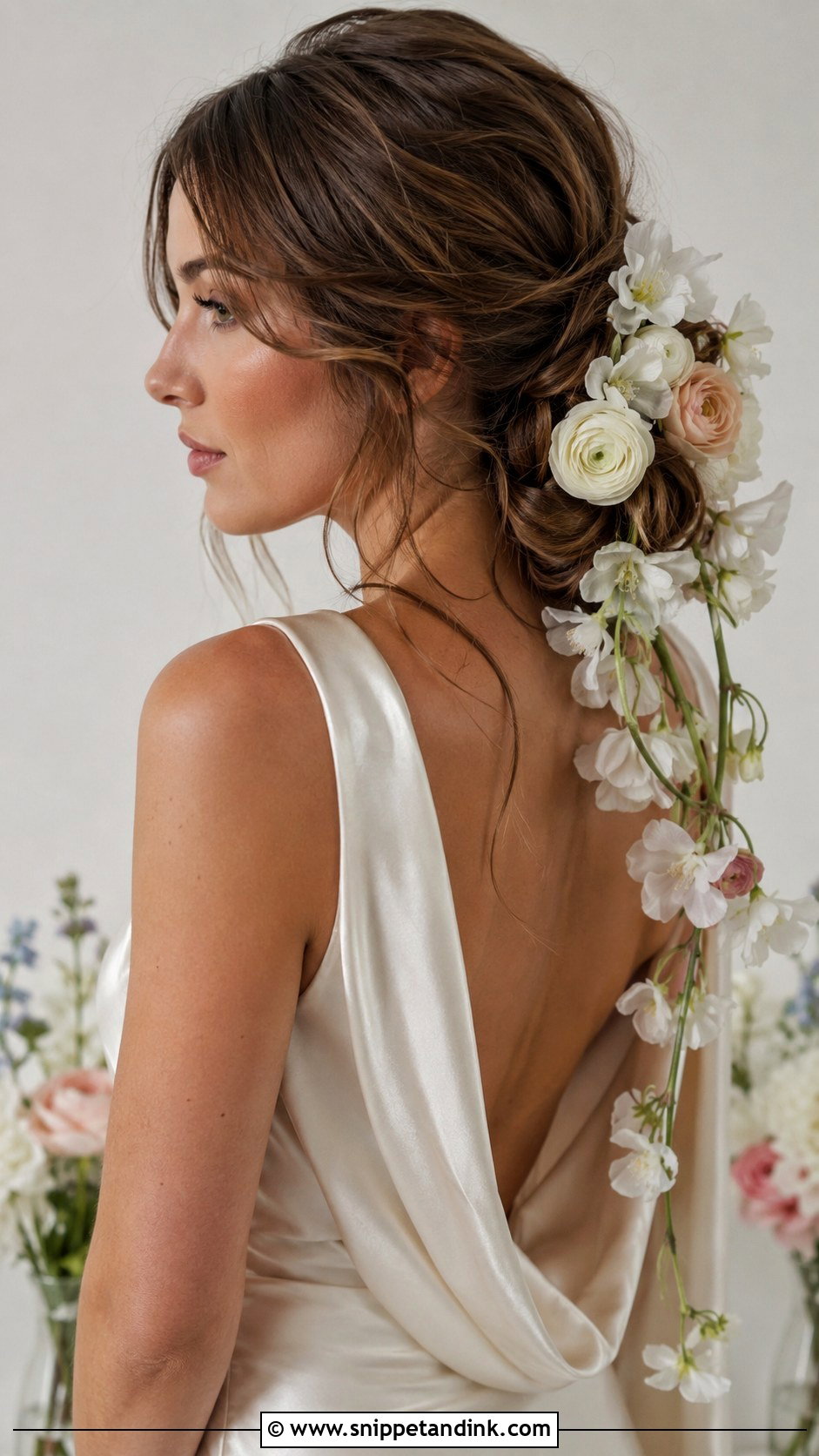
A side bun throws all the volume to one shoulder, so the flowers have to balance it. I let a few trailing pieces fall from the bun: ranunculus on short stems, small spray roses and a little trailing greenery. Sweet peas look right for this, but they’re among the most fragile flowers for hair and go limp quickly, so I’d only use them for a short ceremony. Long hair works best, since the bun needs bulk on its own. Delicate earrings on the open side finish it.
6. Floral Crown Bun
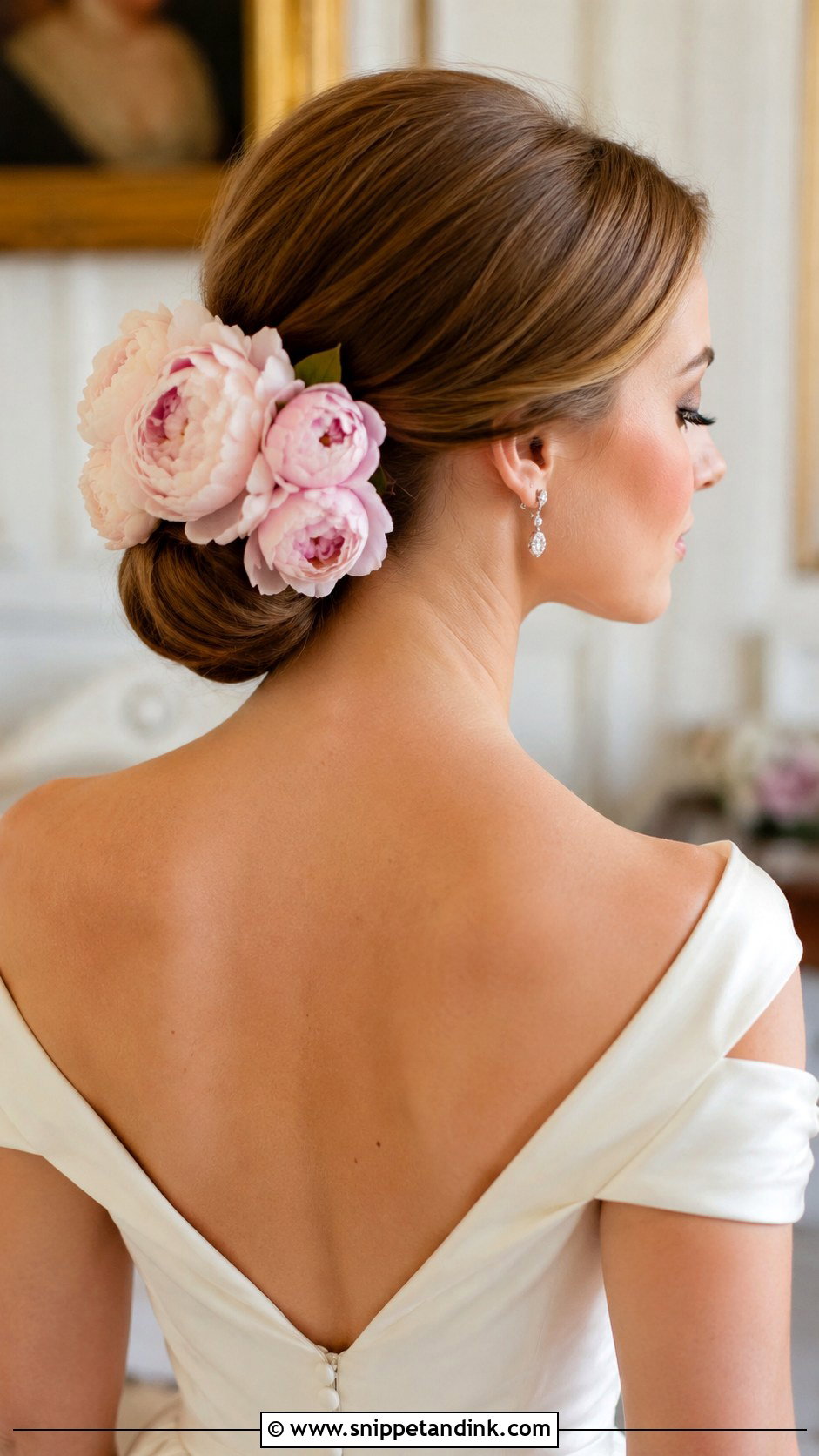
Combining a crown and a bun means two anchor points instead of one: the crown wraps the head and the bun holds the back. I pin the crown into the bun at the back so it doesn’t ride forward. Small and medium flowers in a mix make it balanced. It suits boho and whimsical brides who want a statement, and it adds a little height. A couple of loose front pieces stop it looking too formal. Outdoor and festival-style weddings carry it best.
7. Twisted Bun With Orchids
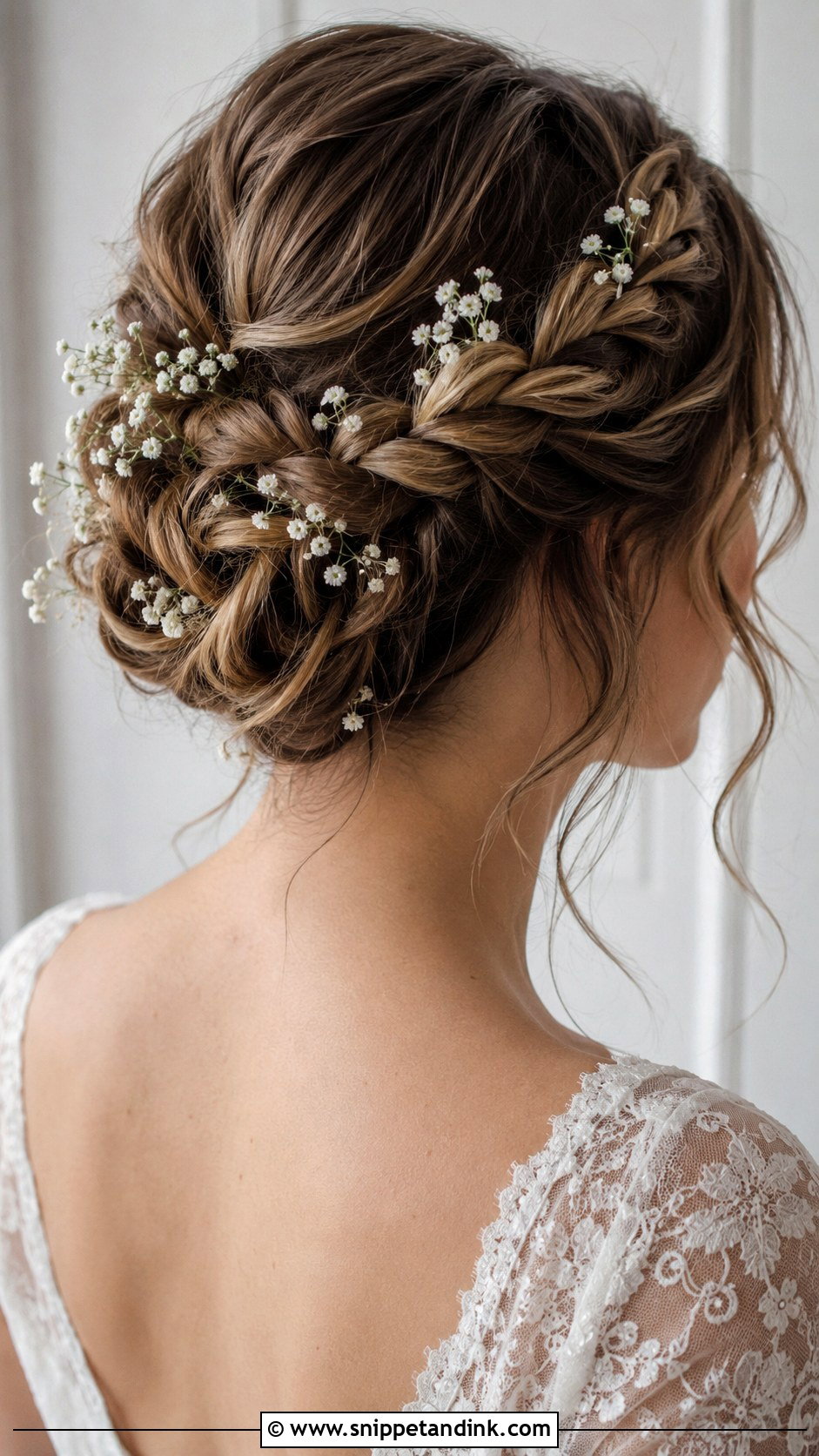
Twisted buns have natural grooves, and that’s exactly where orchid stems go. The flowers sit along the spiral and the twist holds them flat to the head. Orchids are one of the few fresh flowers I’m comfortable using at hot beach and destination weddings, because their waxy petals hold up in heat. White reads classic, colored orchids more playful. Keep the jewelry minimal; the shape of the flower is detail enough.
8. Curly Bun With Marigolds
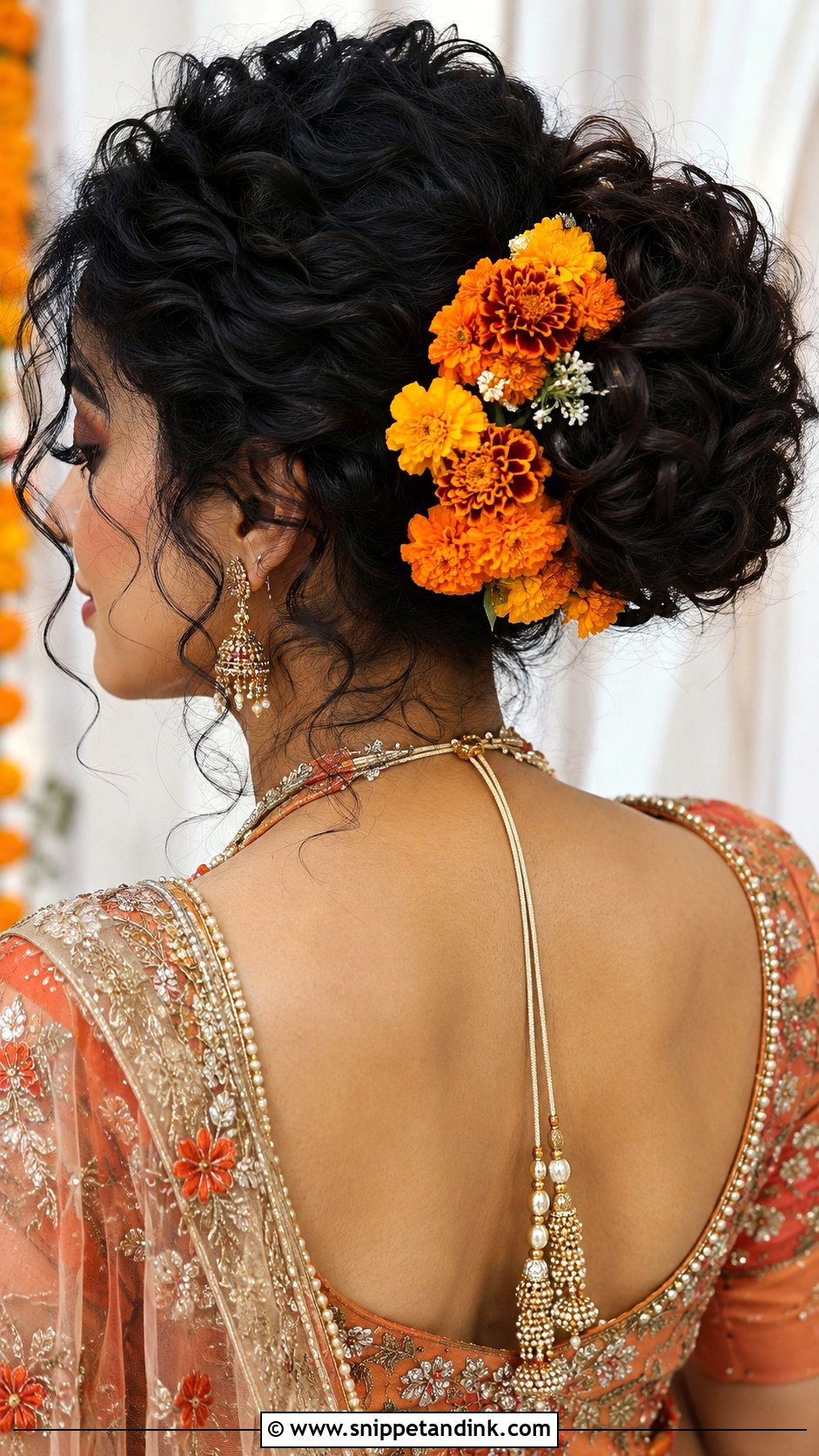
Curly hair makes a bun with natural volume, and marigolds bring warmth and tradition, especially for orange and yellow marigolds at haldi and other colorful celebrations. Full marigold heads are dense and heavier than they look, so on a curly bun I use smaller heads or short strings, and I define the curls with a cream rather than brushing them out. Arranged in a row they look formal; scattered, festive. The color glows in warm daylight.
9. Low Chignon With Peonies
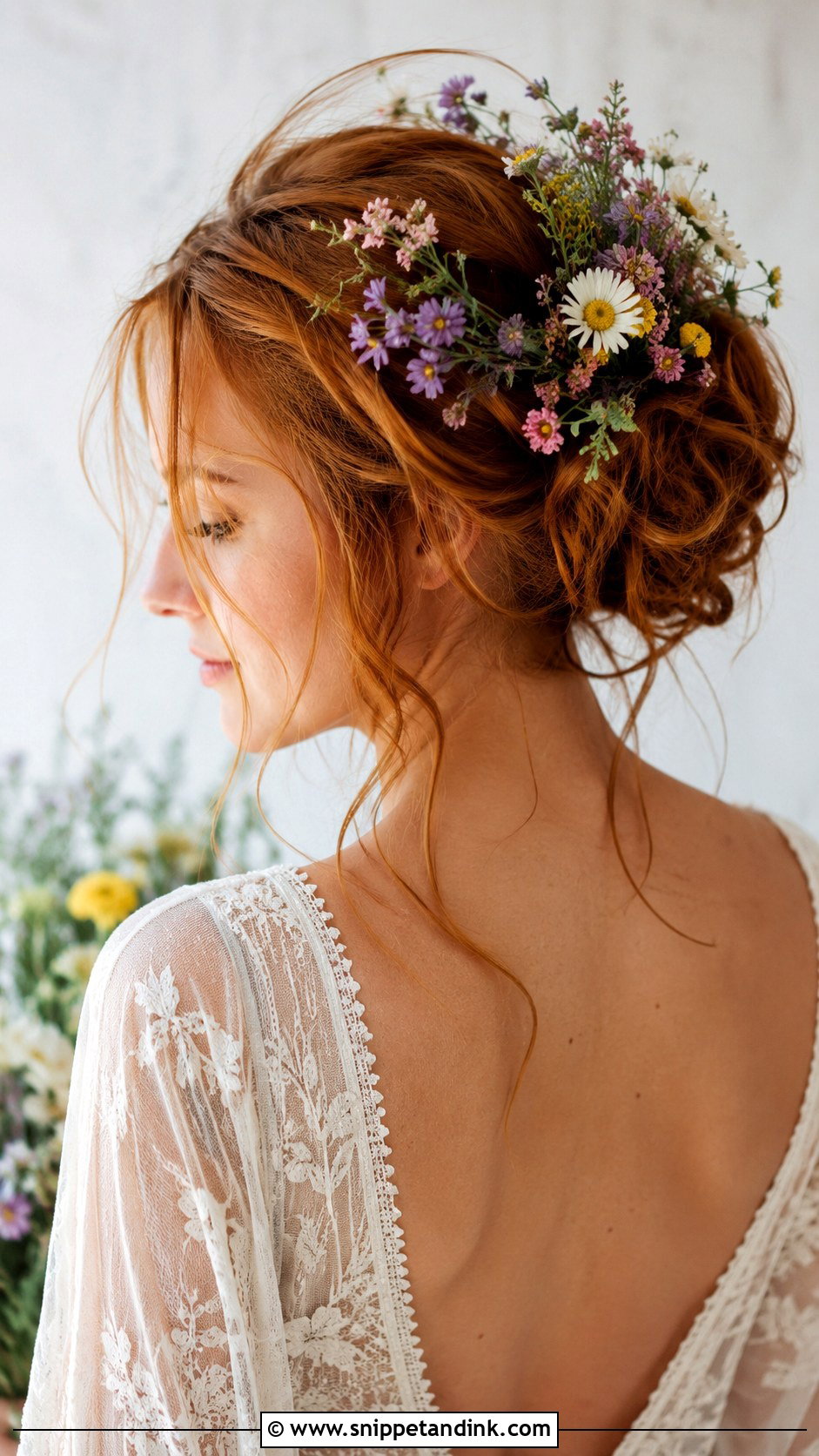
A rolled low chignon is the most classic bun I make, and peonies suit its rounded shape. They’re also heavy and shed petals as they open, which is why I place them low, near the nape, where the chignon is densest, and choose blooms that are still partly closed. Blush or ivory reads best. A delicate veil or statement earrings complete it. It belongs in ballrooms and churches.
10. Bohemian Bun With Dried Flowers
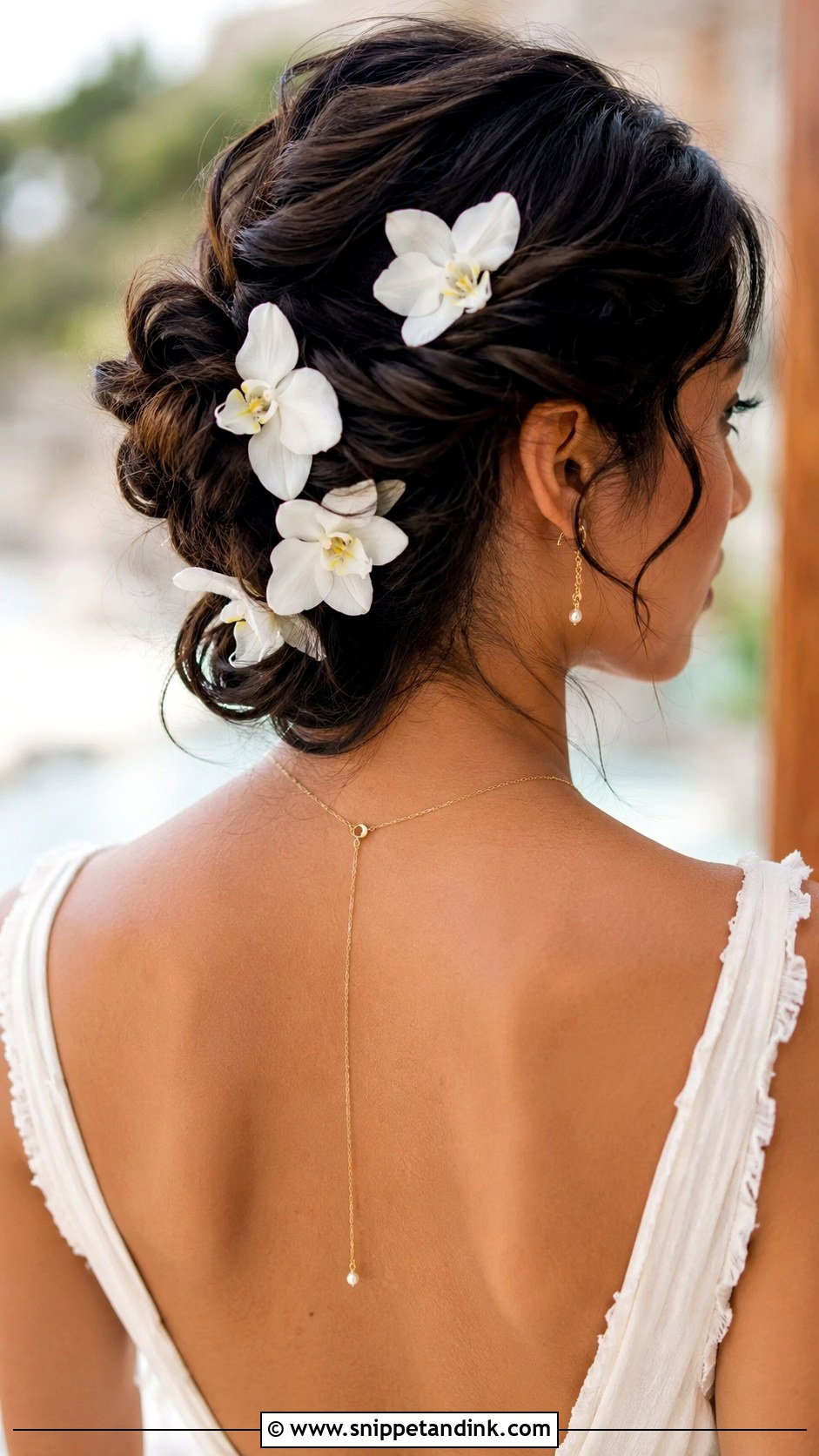
Dried flowers in a loose, textured bun have an earthy, slightly vintage look. Dried lavender, pampas and preserved roses add muted tones and texture, and they blend into rustic, autumn and outdoor settings. They’re a sustainable and long-lasting choice as well. Dried stems are brittle and snap if forced, so I make small channels with a tail comb first and then slide them in. A few loose strands soften it.
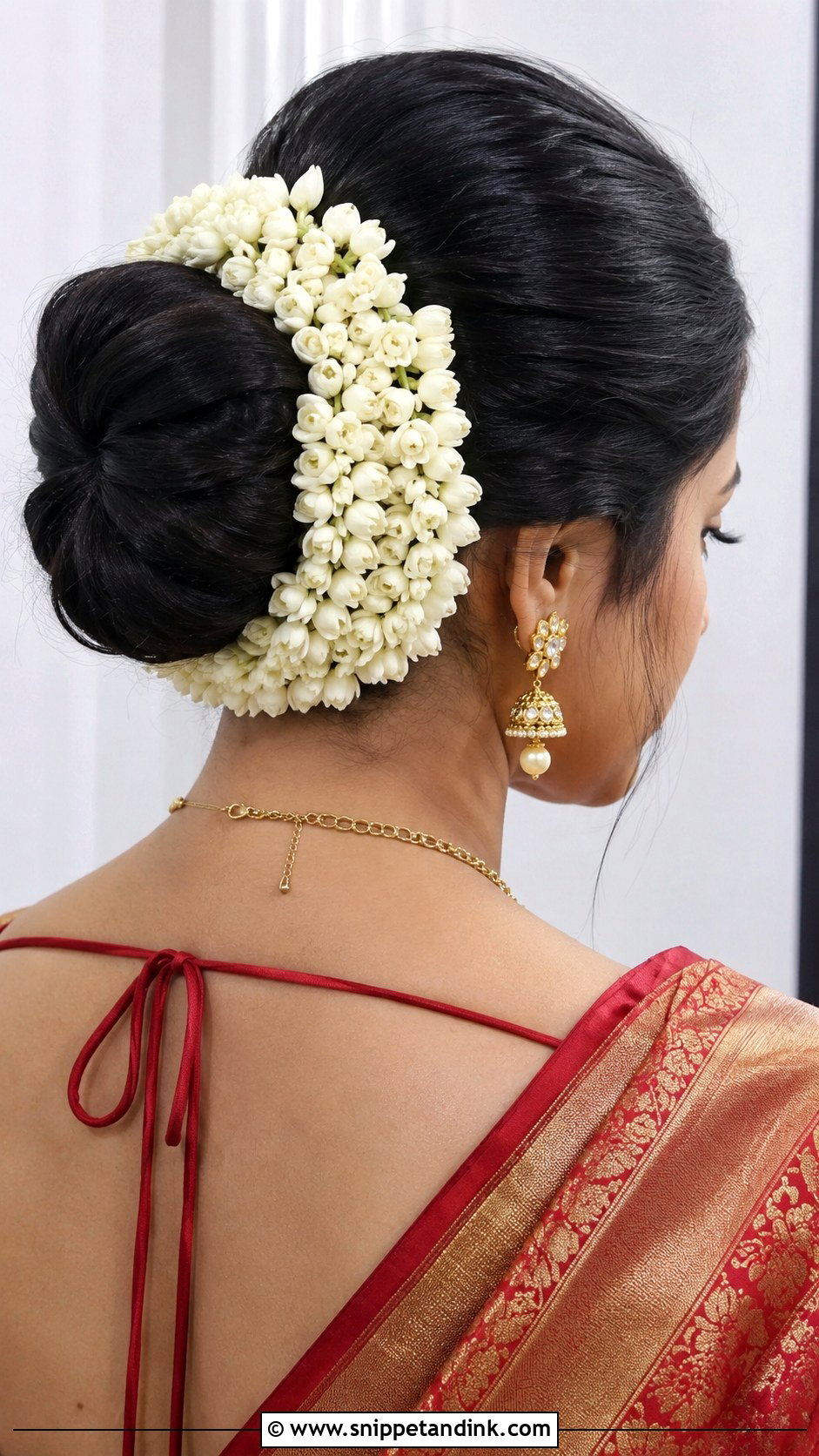
11. Double Bun With Jasmine
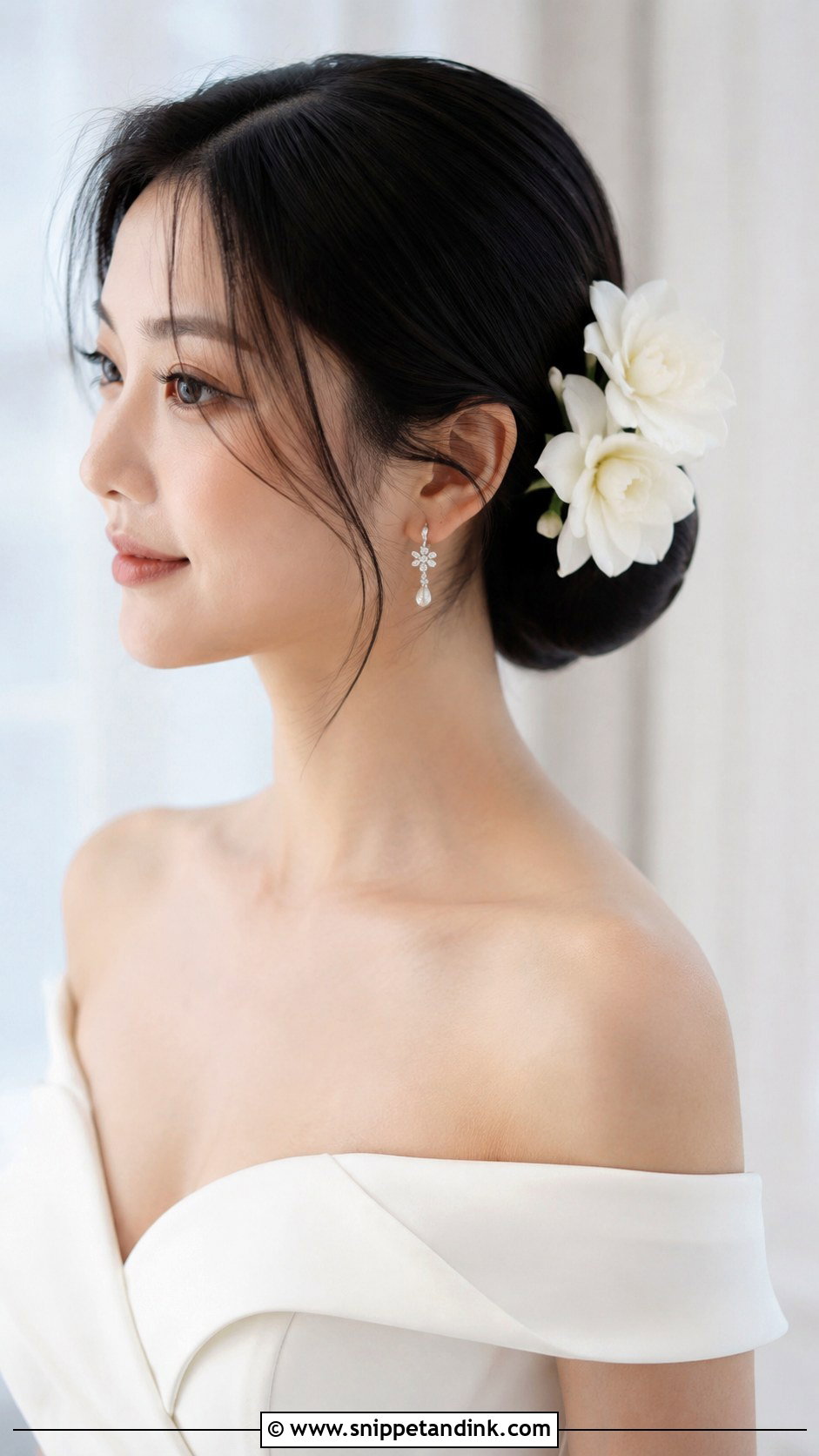
Two buns side by side give width at the back and twice the space for jasmine. Strung jasmine wraps around each bun, and the fragrance is part of the appeal; it gets stronger through the evening as the buds open. White jasmine shows best against dark hair. On a double bun I check that each knot is pinned independently, since a garland pulled across both can drag one loose. It’s a natural fit for traditional and cultural weddings.
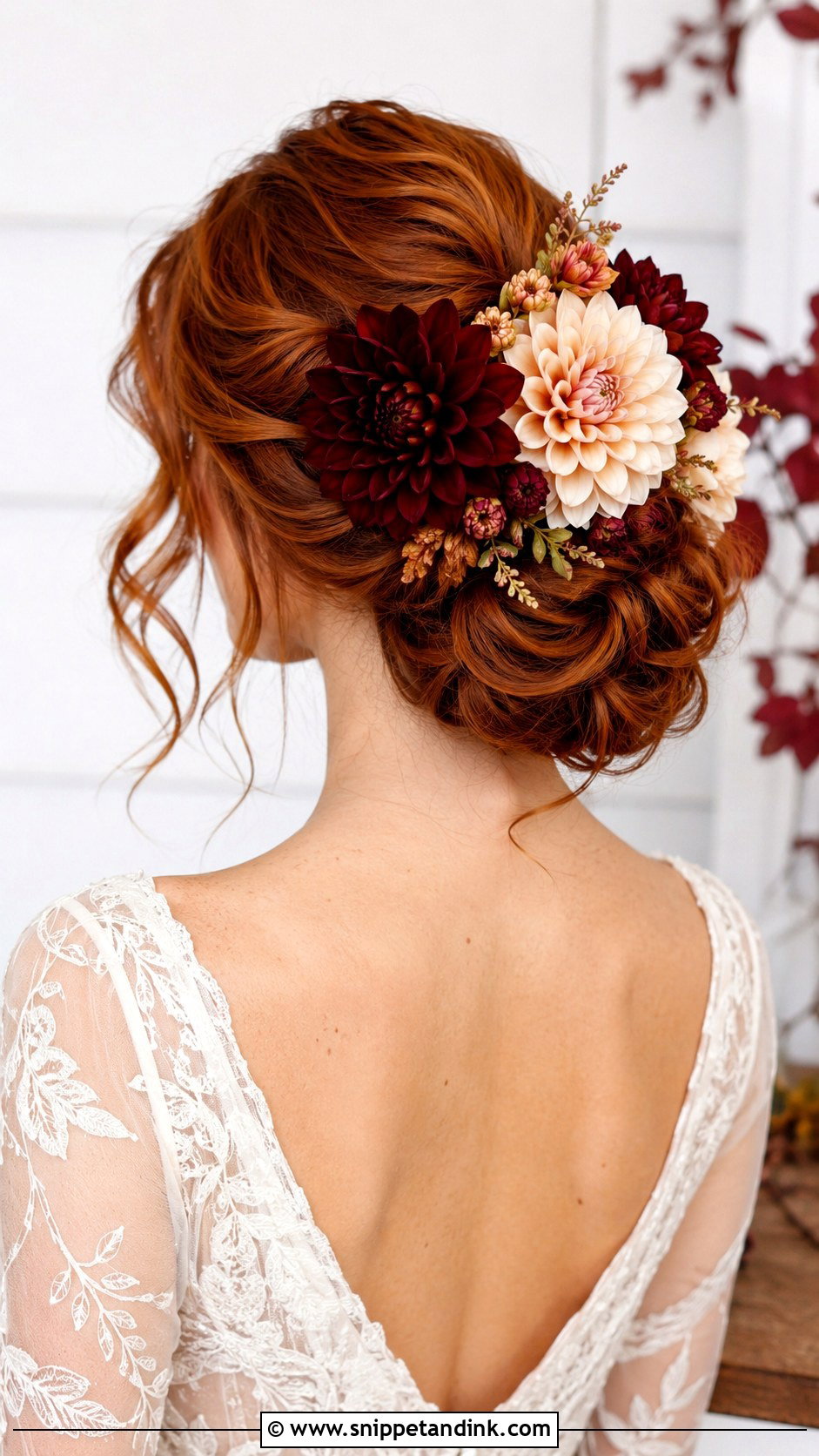
12. Voluminous Bun With Dahlias
Big dahlias need a big bun. I build a rounded, full shape, often with a filler in the center for fine hair, so the flowers look in proportion rather than overpowering. Deep burgundy or soft cream suits fall weddings and bold themes. Dahlias don’t last long out of water and their petals can drop if handled roughly, so they’re added last. A sleek front gives contrast to the volume at the back.
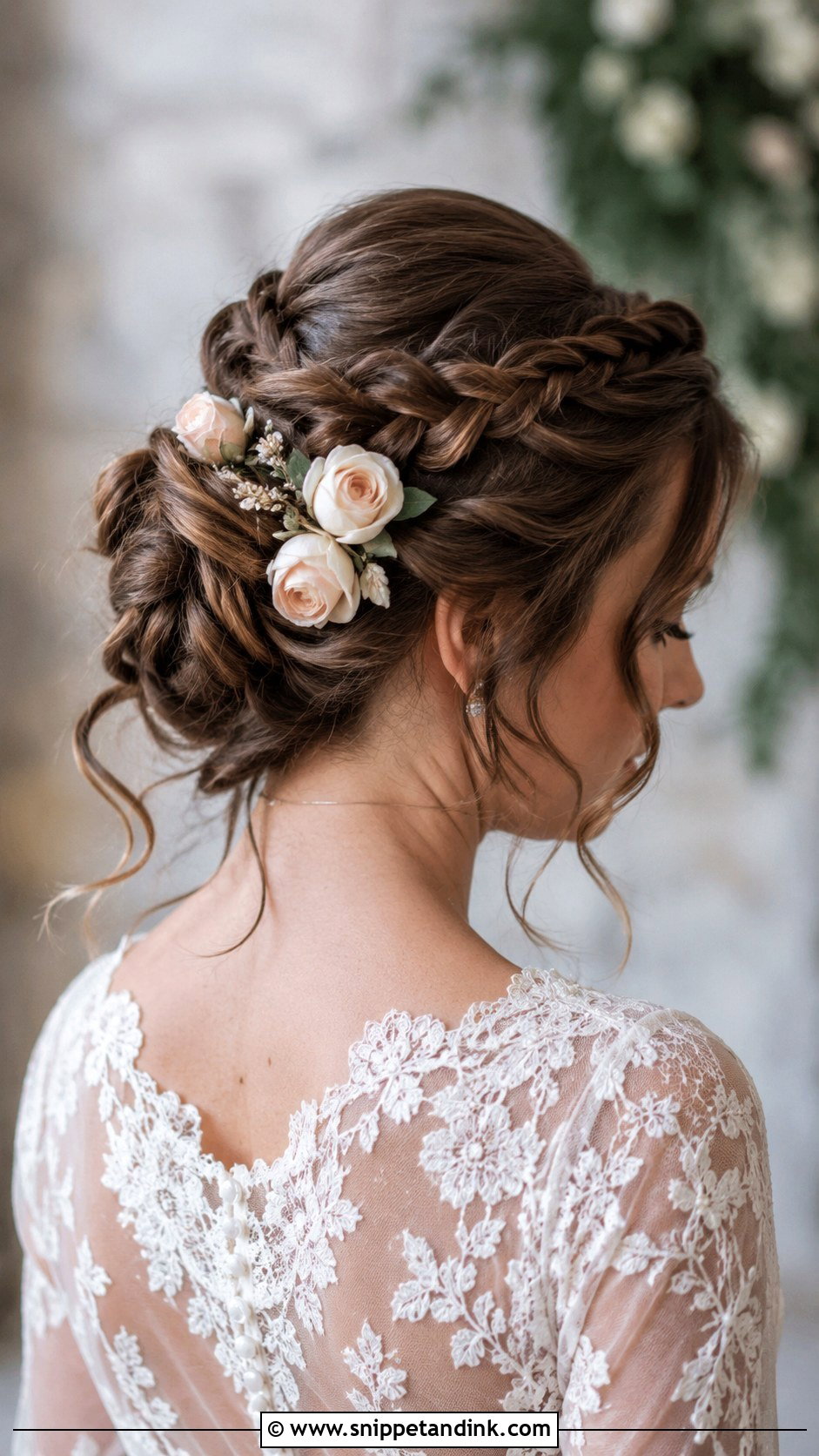
13. Braided Crown Bun With Roses
A braid circling the head with a bun at the back gives two places for roses: along the braid and around the bun. Small roses tucked into the braid frame the face, and the bun keeps the back neat. It keeps hair off your face all day, which brides wearing a hot dress or dancing a lot appreciate. Loose tendrils soften it. Detailed as it looks, it’s quite stable, as long as the braid is pinned flat to the head every few inches.
14. Sleek Low Bun With Gardenias
Gardenias have a heavy, sweet scent and creamy petals, and they look best against a sleek low bun. One or two along the side is enough. The catch is that gardenia petals bruise brown wherever they’re touched, so I hold them only by the wired stem and place them as the very last step before you leave. Formal gowns and simple jewelry suit it. The contrast between smooth hair and soft flowers is the whole point, so the bun must be polished.
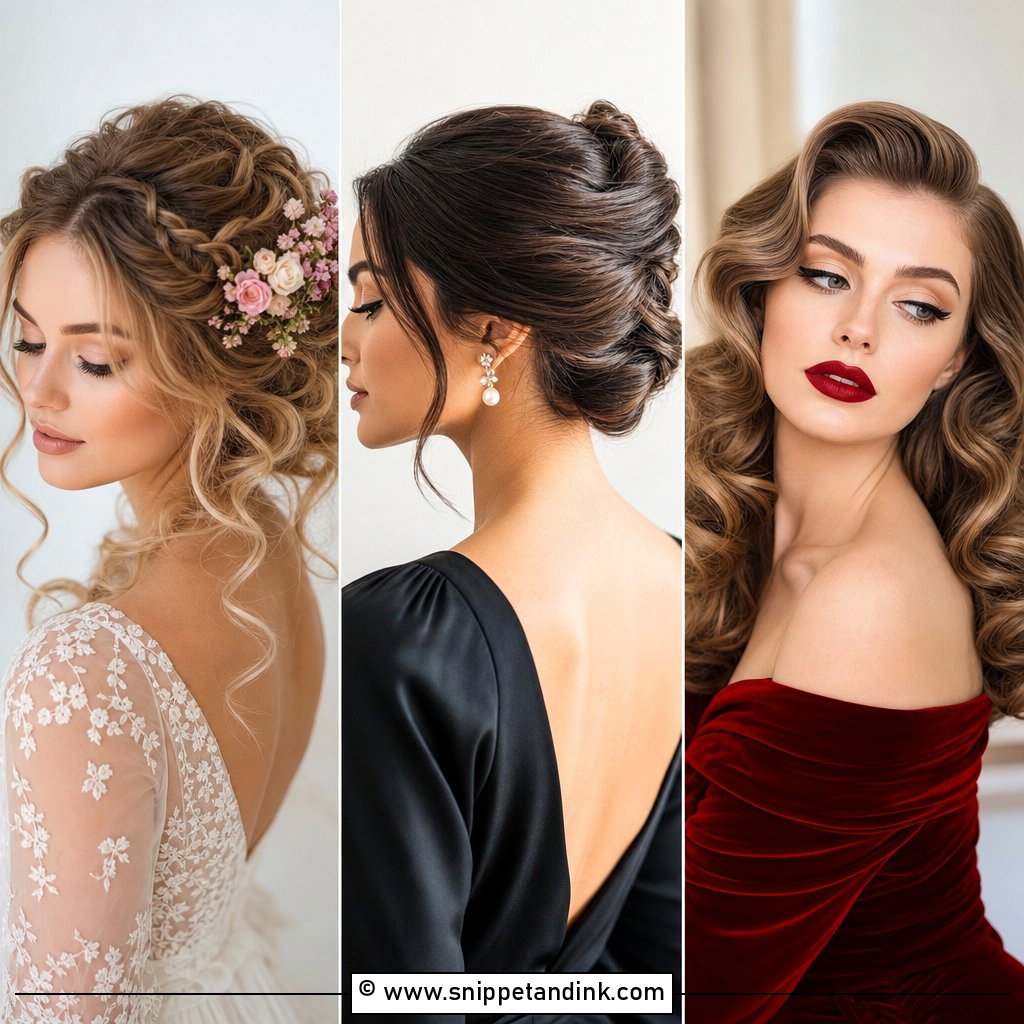
15. Textured Bun With Sunflowers
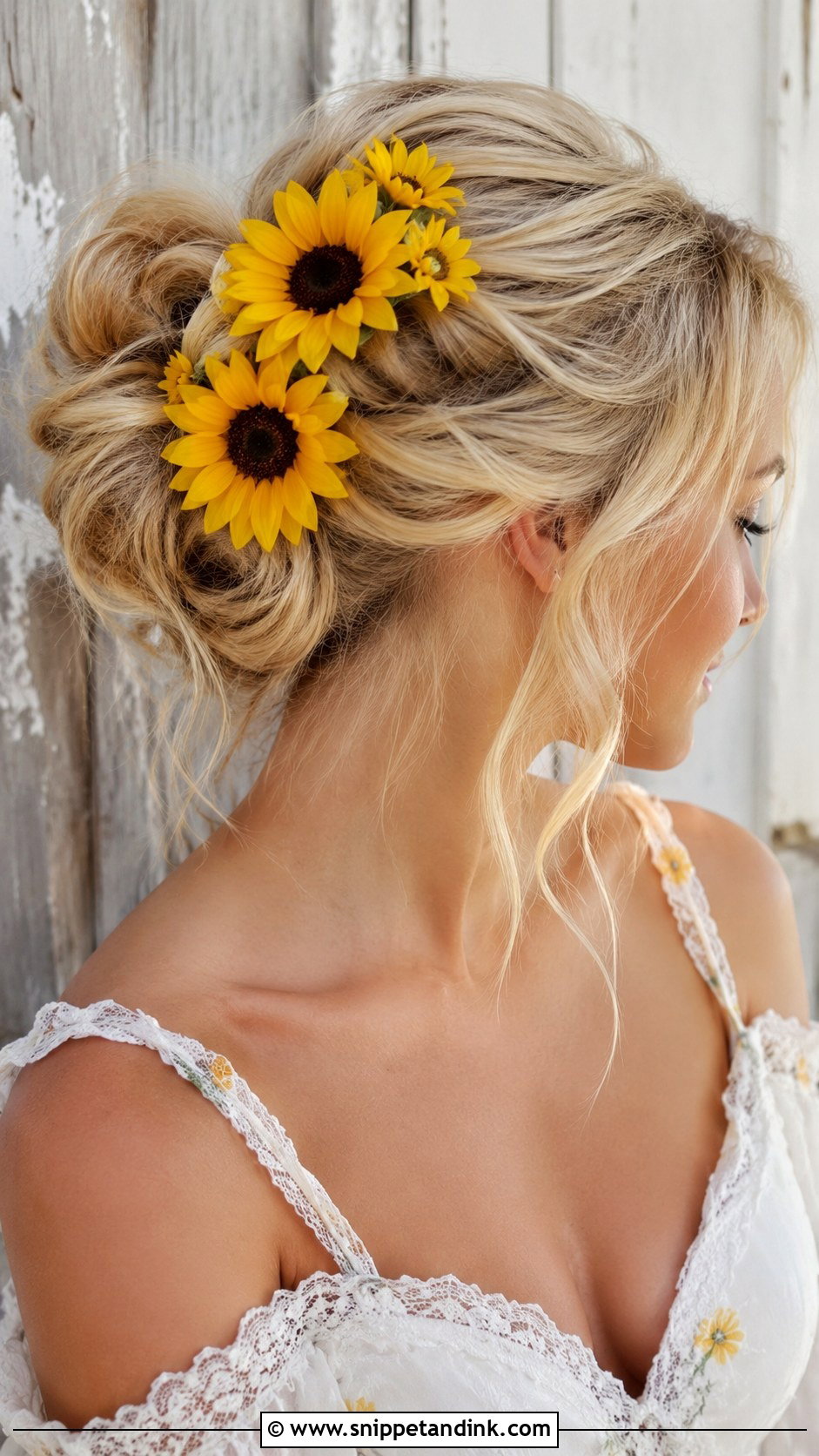
Full-size sunflowers are too heavy for hair; the ones I use are the small varieties, roughly the size of a palm or less. They bring bold color and rustic charm to a textured, slightly messy bun. Country, summer and outdoor weddings suit them. A few loose pieces around the face soften the look. The thick stems need cutting very short and wiring before they’ll sit flat.
16. Romantic Bun With Ranunculus
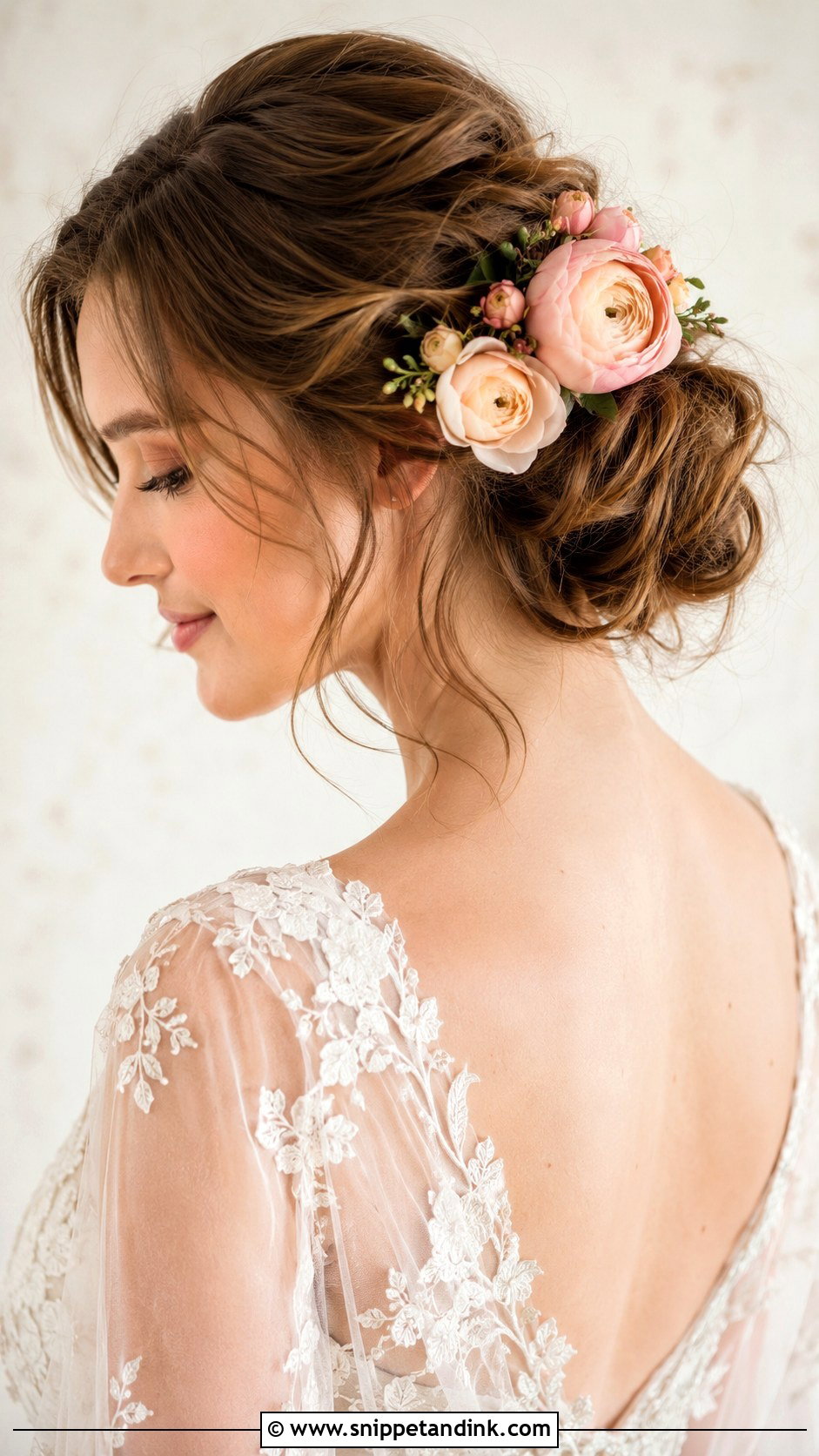
Ranunculus have layered, tissue-thin petals that match the softness of a rounded bun. Blush, peach or white read most romantic. They hold reasonably well for the ceremony and photos but start to relax by late evening, so I’d pair them with a sturdier filler. Loose curls around the face complete it. Spring weddings and romantic themes are where it fits naturally.
17. Top Bun With Lavender Sprigs
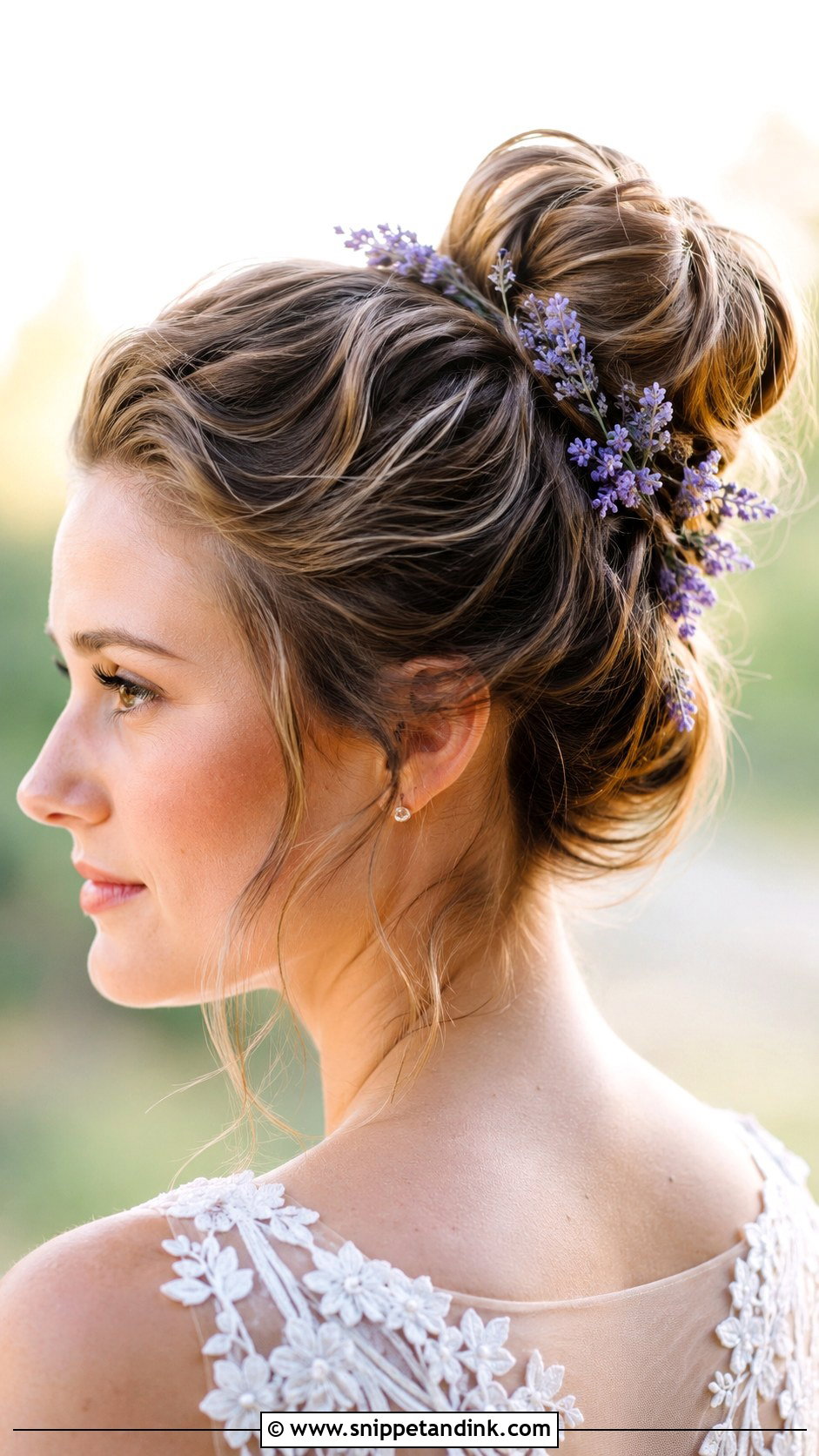
Lavender gives color and a calming scent to a neat top bun. Placed high, the sprigs add height, and soft front pieces balance it. Fresh lavender sheds tiny buds as it dries, which can scatter over a dark dress or veil, so for a long day I often use dried or preserved sprigs instead. Garden weddings and Provence-style themes suit it. Tuck the sprigs around the base of the bun, angled the same way, so they look gathered rather than stuck in.
18. Braided Low Bun With Wax Flowers
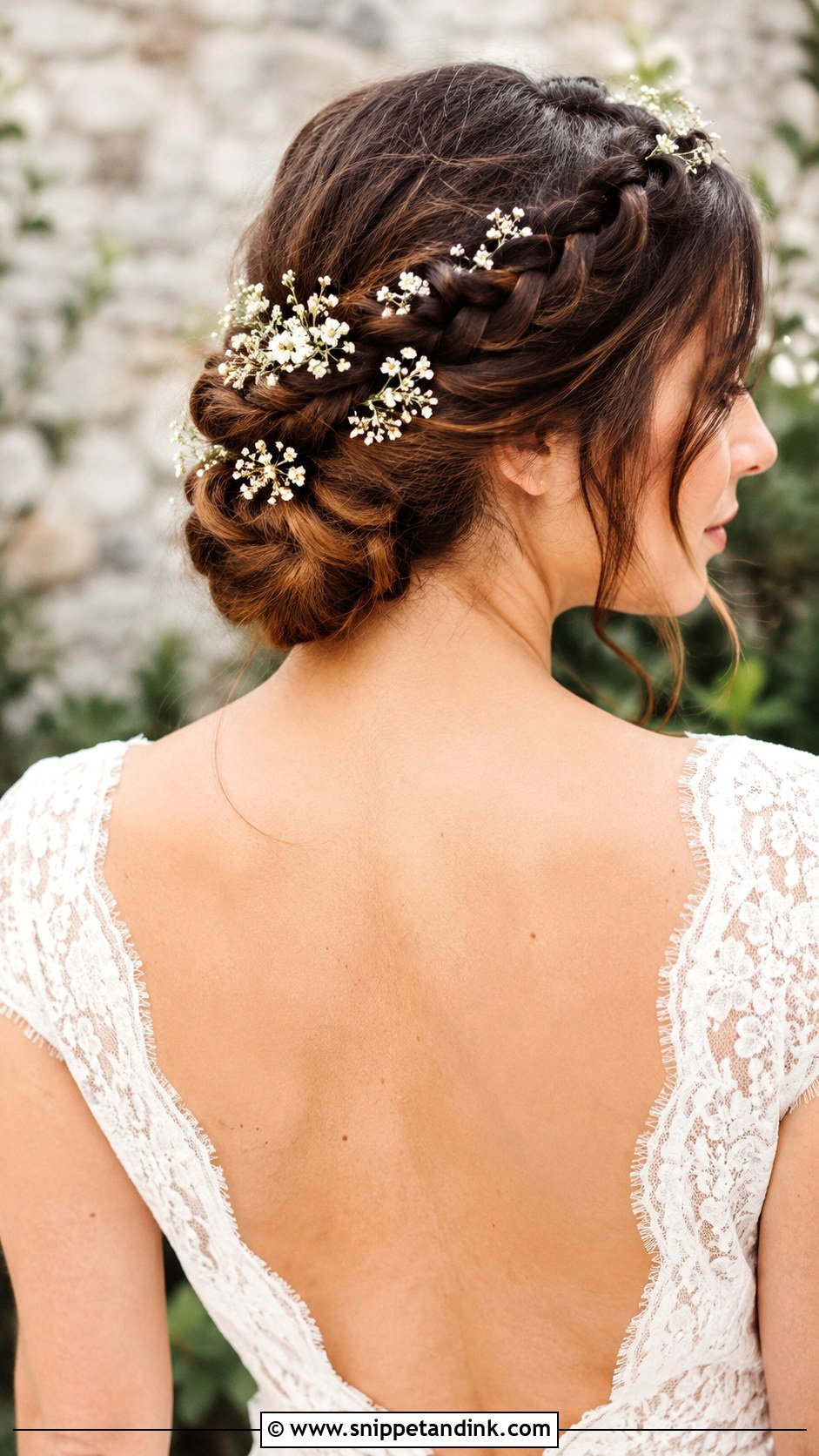
Wax flowers are small, waxy and tough, and they barely wilt out of water. A braided low bun has plenty of small gaps for them to sit in, and the braid keeps everything secure through a long day. I scatter them through the braids rather than clustering, so they read as an airy finish. Soft tendrils around the face suit it. It’s an easy one to repeat on bridesmaids and stays neat into the evening.
19. Side-Swept Bun With Hydrangeas
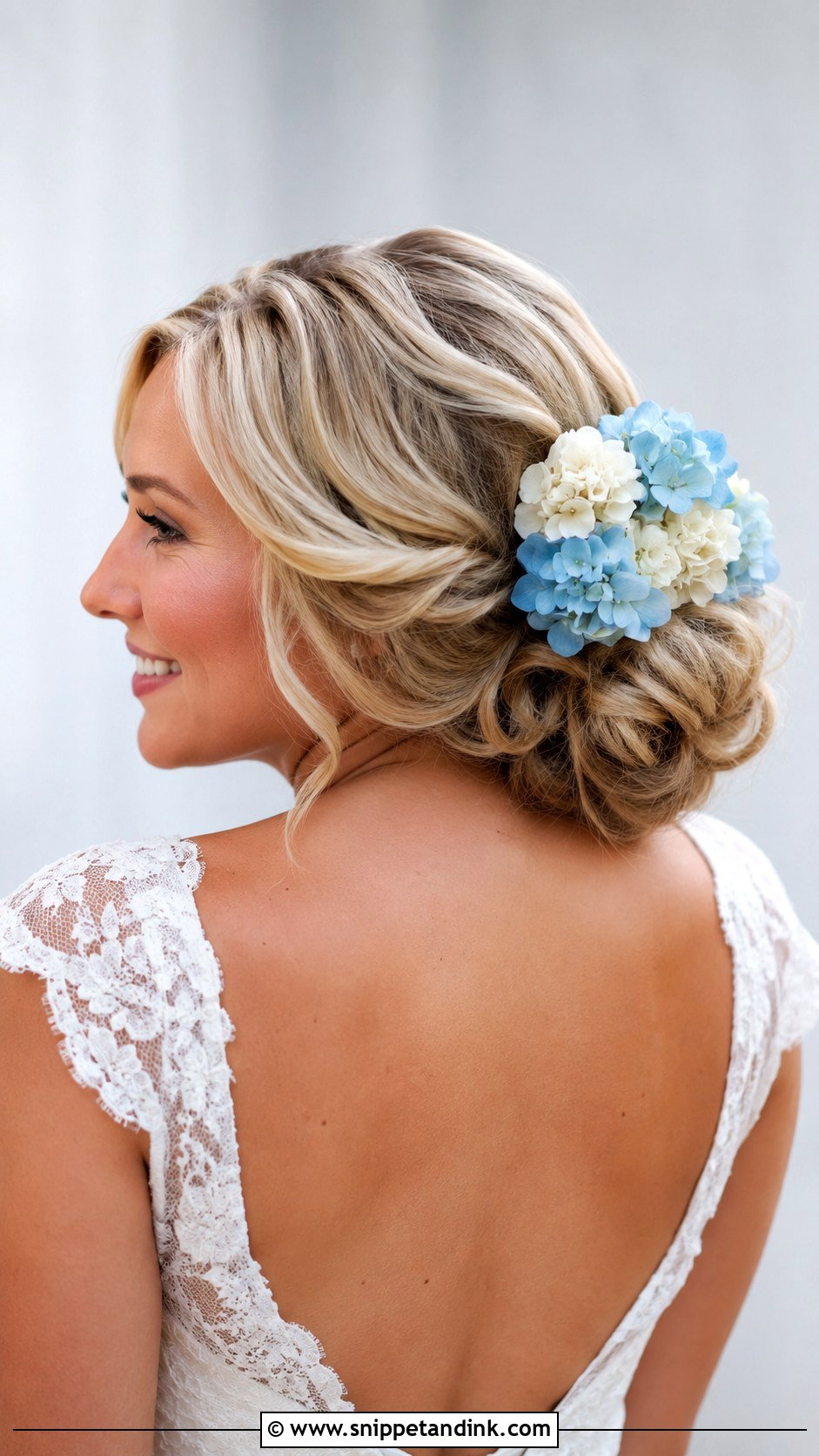
Hydrangeas give a full, cloud-like look to a side-swept bun, but I’ll be honest: they’re one of the hardest fresh flowers to wear. They wilt fast without water and can go limp within a couple of hours in warm weather. I use small florets rather than full heads, condition them well beforehand, or substitute silk hydrangea that looks almost identical. Soft blue, pink or white suit summer gardens. Loose waves on the open side keep it soft.
20. Classic Bun With Rose Garland
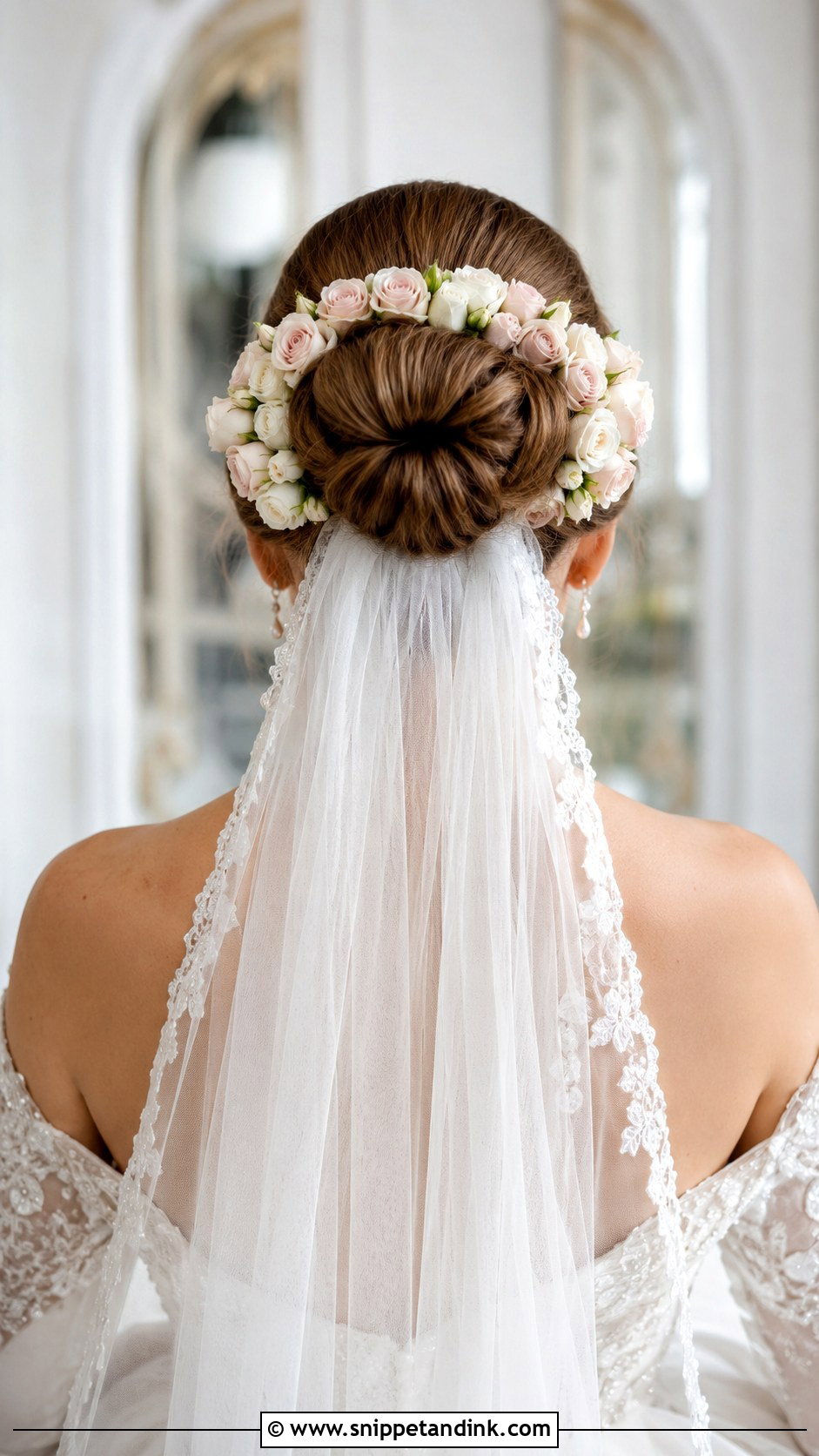
A garland of small roses wrapped around a classic bun forms a ring of flowers at the back of the head. Small roses in soft shades keep it cohesive. I wire the roses onto a single flexible strand first, then wrap and pin it in four or five places, which is much more secure than pinning each rose separately. It pairs with statement earrings and a veil. Traditional and grand weddings suit its richness.
Strung Jasmine and Marigolds: Pinning Traditional Flowers Securely
Strung flowers, like a jasmine gajra or marigold strands, are worn differently from single wired blooms. The strings are usually bought fresh the same morning, kept cool and lightly misted until styling. Several strands together are surprisingly heavy, so the bun needs to be pinned firmer than usual.
- Wrap the strand around the base of the bun, not the top, so its weight sits on the anchor.
- Pin it every few inches with U-pins pushed through the string and into the bun.
- Let any hanging lengths fall from under the bun, where they won’t pull it backward.
- Skip hairspray once the flowers are on. It dulls jasmine petals and can leave marigolds sticky.
Jasmine buds open over the day, so the scent and fullness actually improve toward evening. Marigold petals can leave orange marks on a pale outfit if they’re crushed, so check how close the flowers sit to your collar or dupatta before you settle on placement.
A Bun Built Right Carries Any Flower You Choose
From sleek low buns with roses to boho knots with dried flowers, every style above depends on the bun underneath: its height, its density and how well it’s pinned. Fresh, faux or dried blooms each bring something different, and the right ones depend on your season, theme and hair type. Choose the flowers you love, then let your stylist shape the bun to carry them. Bring a sample bloom to your trial so you can see the weight in place.
You'll Like These Ideas:



Leave a Reply