
Wildflowers loosen up a white cake in a way that roses never quite manage. They suit barns, backyards and meadows, but I put them on cakes for hotel ballrooms too, when a couple wants the room to feel less formal. The trick is contrast: clean white icing underneath, and flowers that look gathered rather than arranged. You can keep everything white, bring in pastels, set pressed blooms flat against the tiers, or plant a whole meadow around the base. These are the twenty white cakes with wildflowers I’d show a couple at a first tasting, along with what each one asks of the baker.
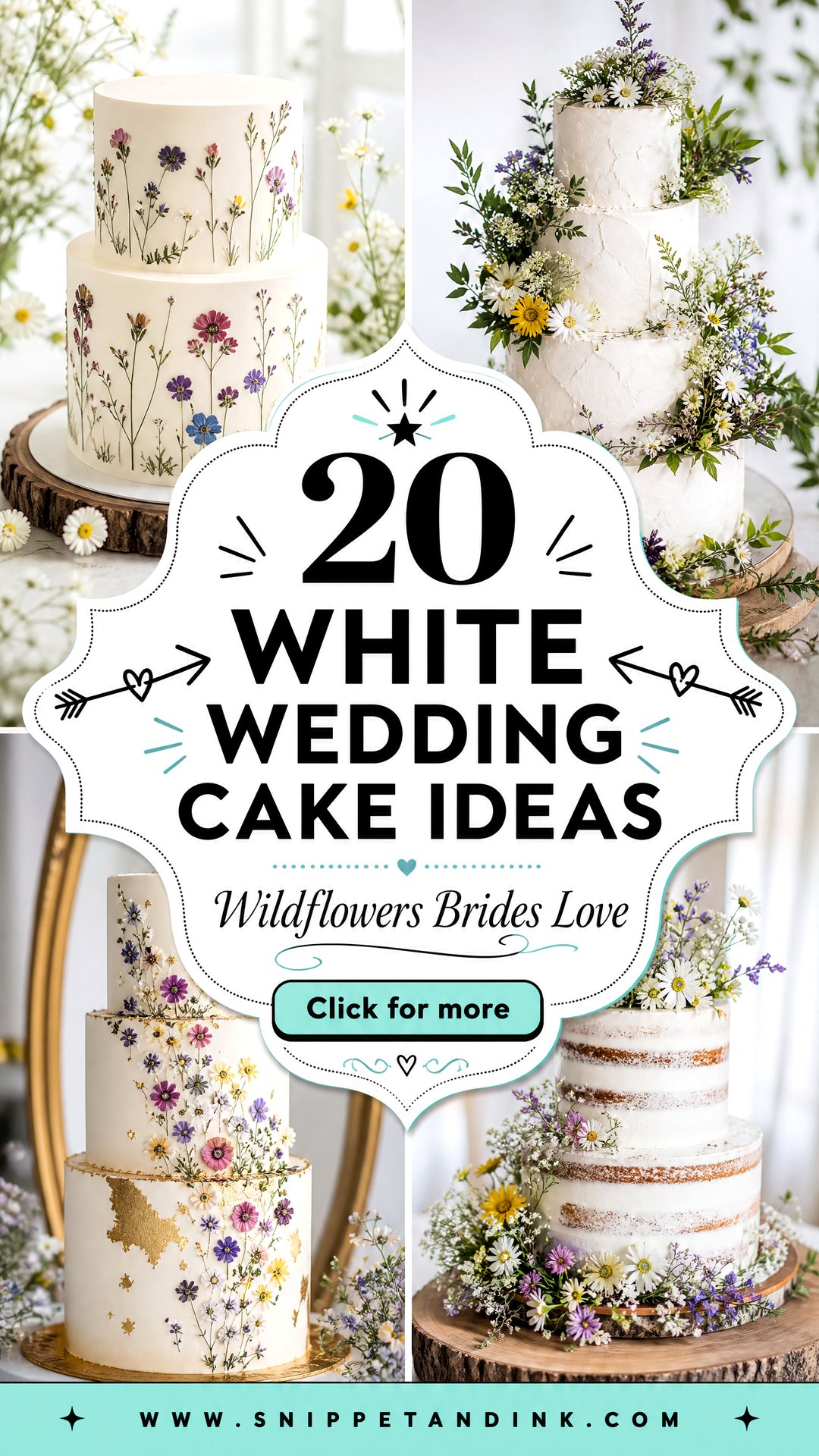
Can You Eat the Flowers on a Wildflower Cake?
Sometimes. It’s the first thing I sort out with a couple, because many pretty field flowers are toxic, and some of the safe ones taste bitter or soapy. I split every wildflower design into two groups: blooms that can touch the cake, and blooms that stay in the arrangement around it.
Usually safe on the icing
Violas and pansies, cornflowers, borage, chamomile, calendula and culinary lavender are the ones I use most, provided they were grown for eating and never sprayed.
Kept off the cake
Delphinium, foxglove, buttercup and lily of the valley are toxic, and baby’s breath is mildly so. Queen Anne’s lace is risky for another reason: it closely resembles poison hemlock, so I never use foraged sprigs of it. These can still sit on the cake table in water, nowhere near a slice.
Please don’t pick flowers from roadsides or a field the morning of the wedding. Even wild blooms can carry sprays, grit and insects, and I can’t vouch for what they’ve touched. Edible flowers from a grower or a spray-free garden cost more but remove the doubt.
1. White Wedding Cake With Pressed Wildflowers
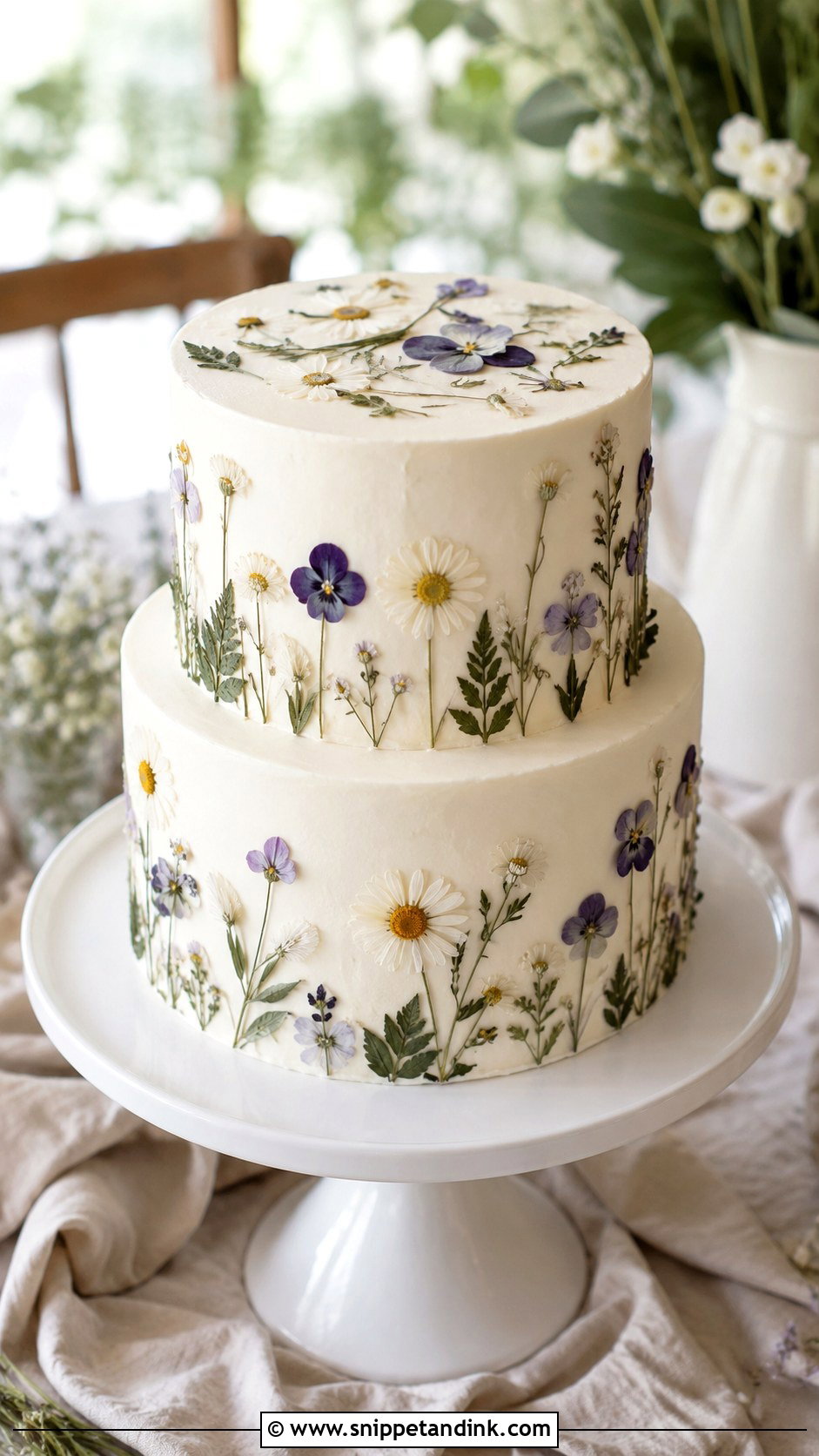
Pressed flowers are the quietest way to put wildflowers on a cake, because nothing sticks out from the tiers at all. I press edible blooms like violas, pansies and chamomile between paper for a week or two, then set them onto chilled fondant or very smooth buttercream with a thin brush of piping gel. Buttercream is the riskier base: the fat slowly soaks into thin petals and darkens them, so on buttercream I apply them on the day. Two or three round tiers with a sparse pattern keep it clean. Thick-petaled flowers won’t press flat and are best left for fresh designs.
2. White Wedding Cake With Wildflower Meadow
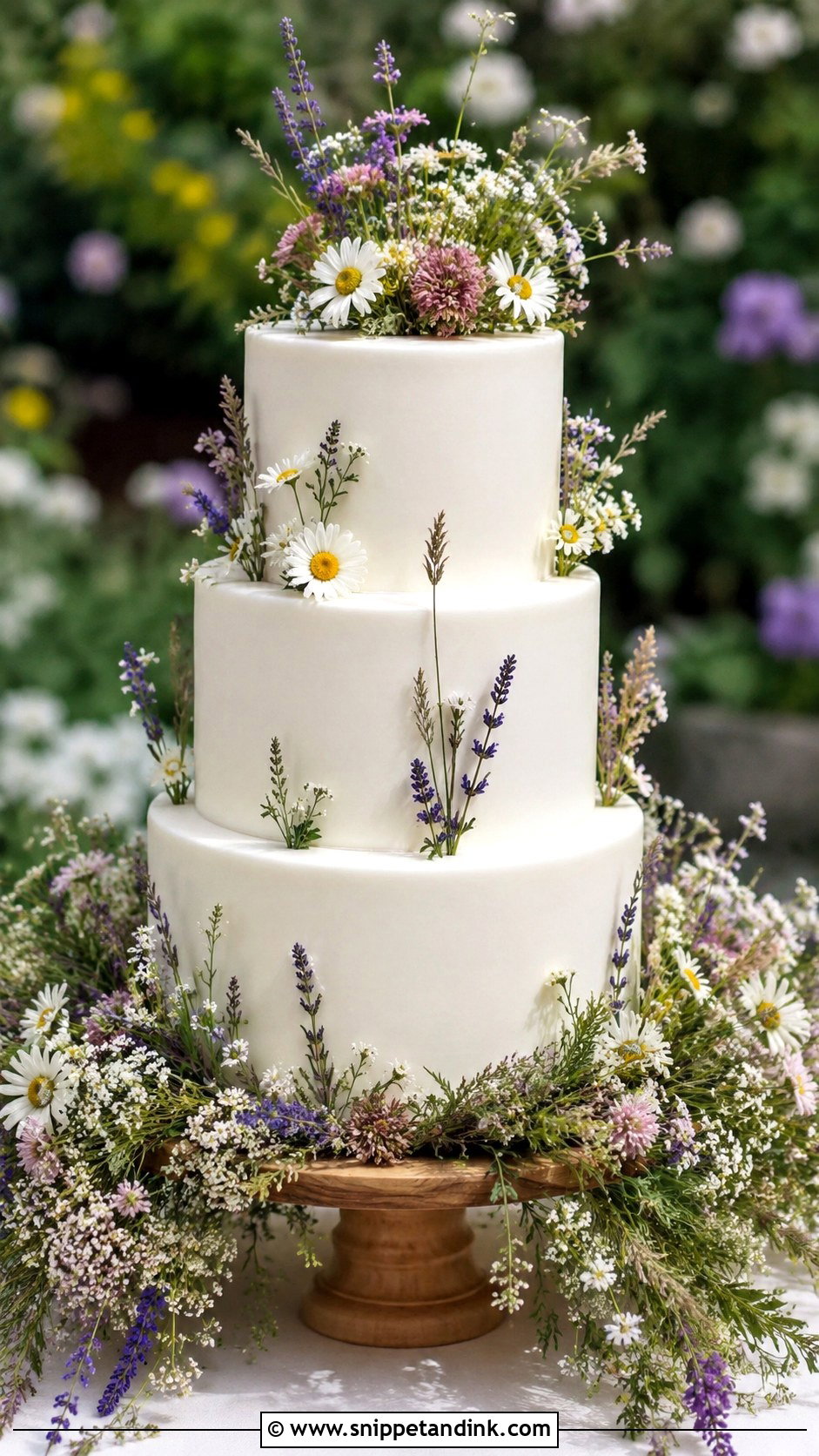
Picture the cake standing in a small field instead of alone on a bare table. With wildflower meadow styling, the flowers and grasses live around the stand, not on the icing, which means the tiers can stay almost undecorated. I like this for outdoor and tented receptions because the florist can build the meadow in water-filled tubes or foam hidden under moss, so the blooms stay hydrated. Mixing stem heights is what makes it look natural. It’s also a clever way to make a modest two-tier cake fill a large table.
3. White Wedding Cake With Daisies
Daisies are cheerful and easy to read from a distance, and they hold up better out of water than most small field flowers. All-white daisies keep the cake monochrome; yellow centers bring in a spring note. I like them climbing up one side of the tiers on smooth or lightly textured buttercream, with a few green sprigs for movement. Because their faces are flat, they also tuck neatly against the cake without needing much depth. Picnic-style and backyard weddings are where these shine.
4. White Wedding Cake With Baby’s Breath
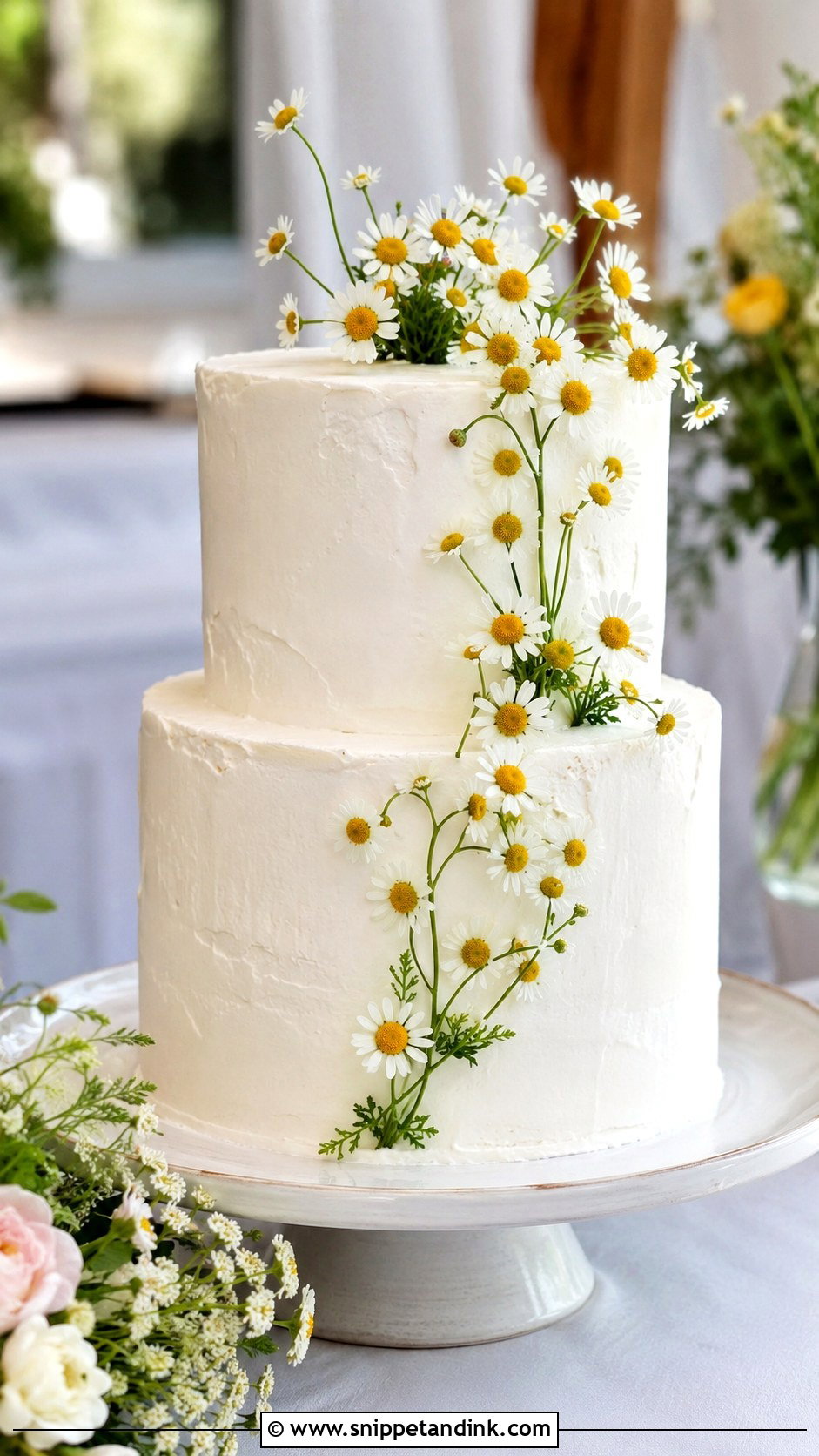
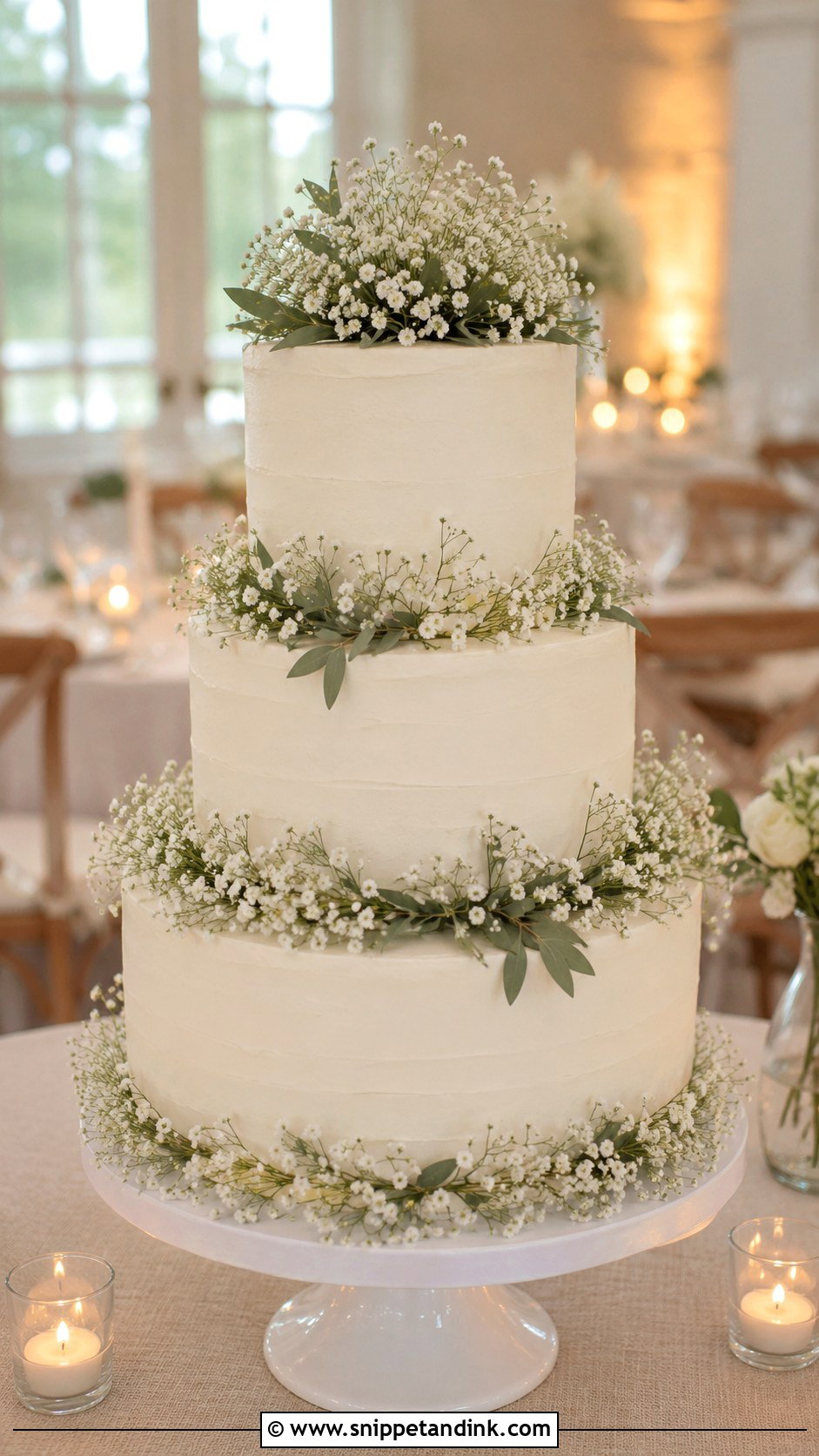
Baby’s breath gives a cloud-like texture that suits a couple who wants flowers but not much color. Here’s the catch I always mention: it’s mildly toxic, so I never push it straight into icing. It goes on wrapped and picked, or sits on a separator or the stand, and I keep sprigs away from slices that will be served. Small clusters around each tier or gathered at the base look airy. If you want it to read more like a wildflower than a filler, pair it with chamomile or waxflower and a few soft green stems.
5. White Wedding Cake With Chamomile Flowers
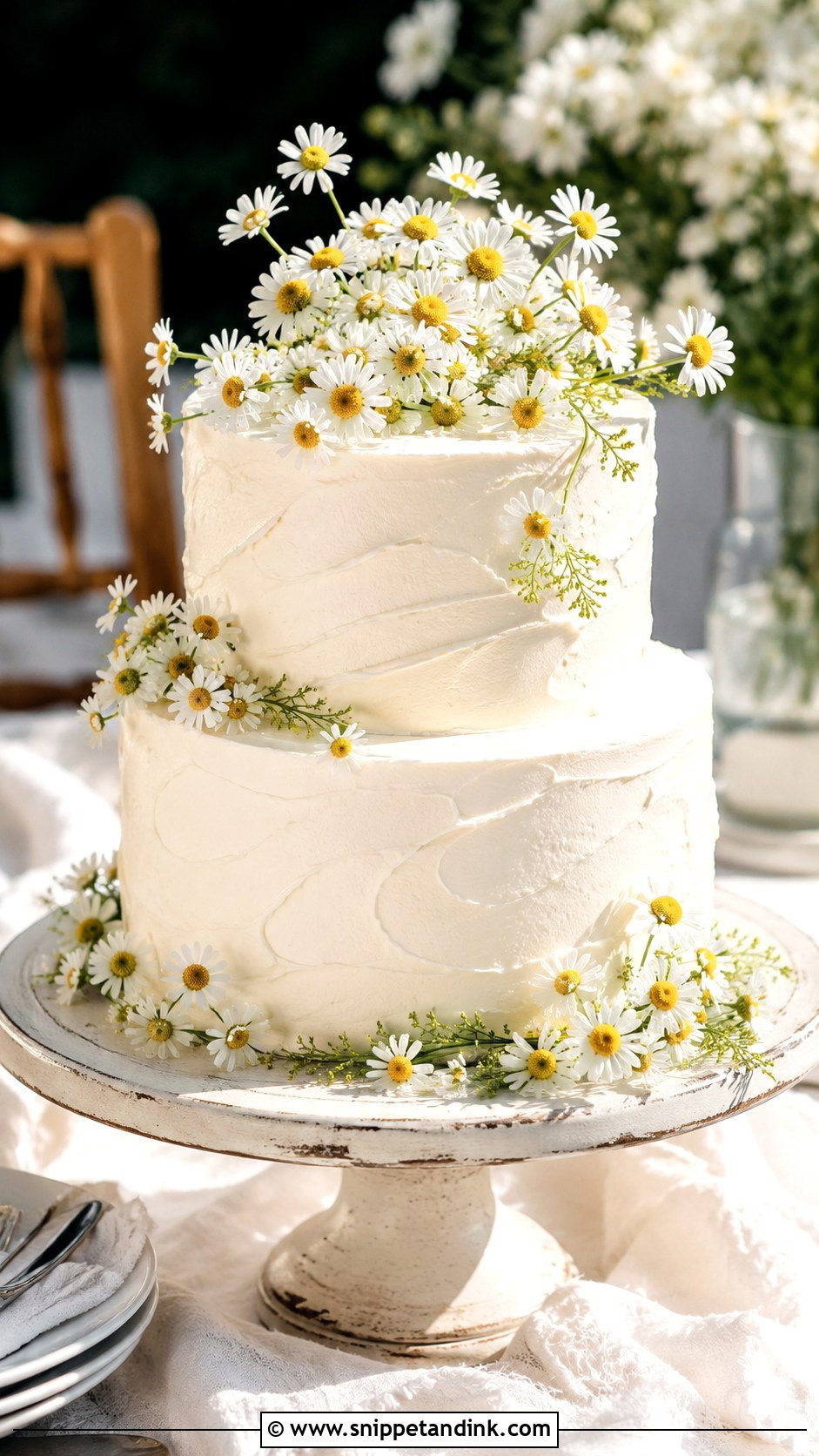
Chamomile looks like a tiny daisy but softer, and its petals curl back slightly as it ages, which actually adds to the cottage-garden feel. Against ivory buttercream the yellow centers glow. I’d choose a lightly textured finish here, since a sharp, flawless surface can make such a delicate flower look out of place. A ring on the top tier, a strip along one side or a loose wreath at the base all suit it. Chamomile is edible, which makes it one of the few wildflowers I’m happy to place directly on the cake.
6. White Wedding Cake With Lavender Wildflowers
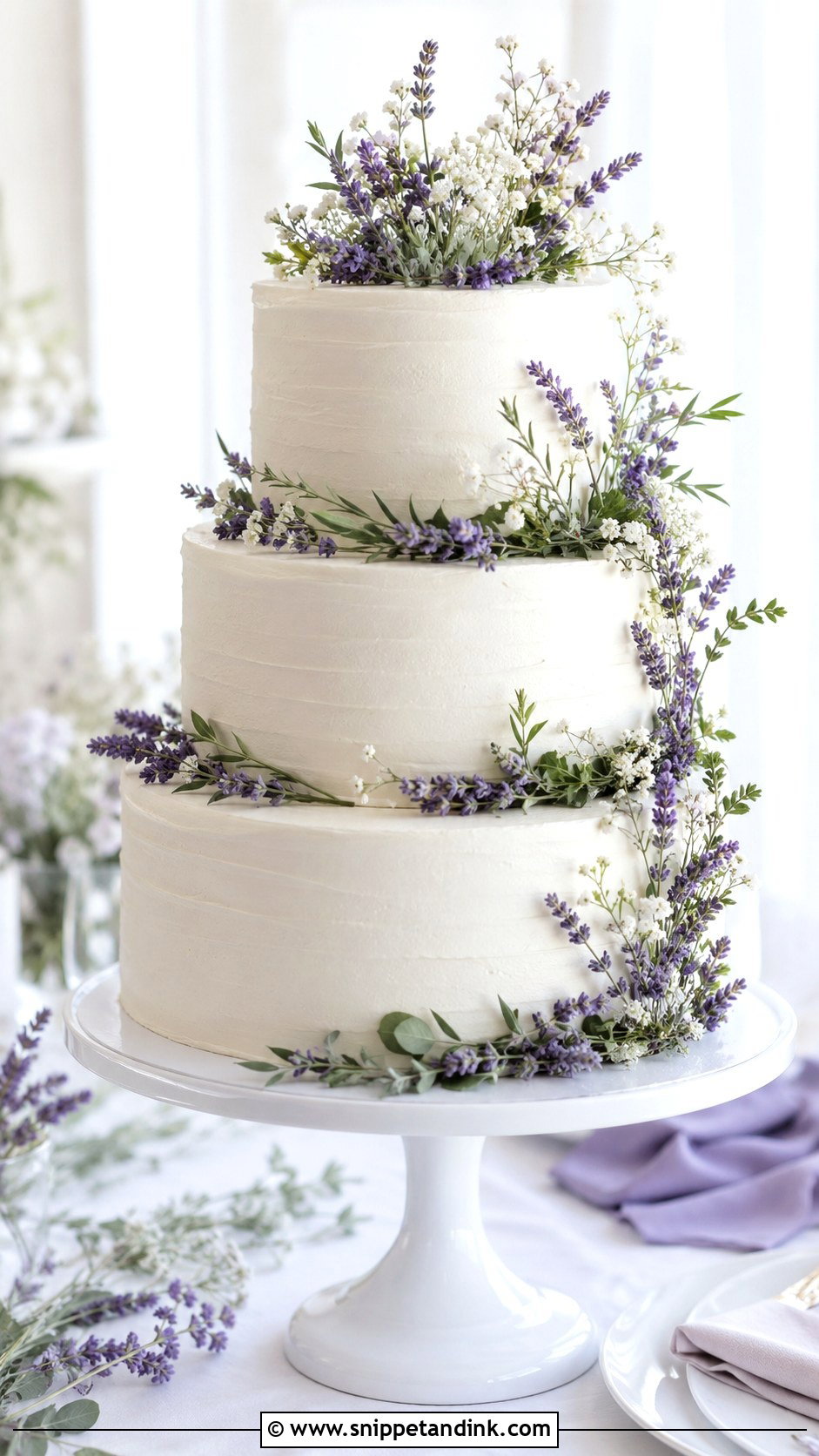
Lavender gives height and a cool purple that sits beautifully on white, but it is also strongly scented, and on a dessert table that scent can be a lot. I use just a few stems between tiers or gathered on one side. Lavender dries well, so it doesn’t wilt on a hot afternoon the way softer blooms do, which is why I reach for it at vineyard and summer garden weddings. Pale green leaves and a white stand balance the color. It’s also easy to tie to bridesmaid dresses in lilac or grey-blue.
7. White Wedding Cake With Blue Wildflowers
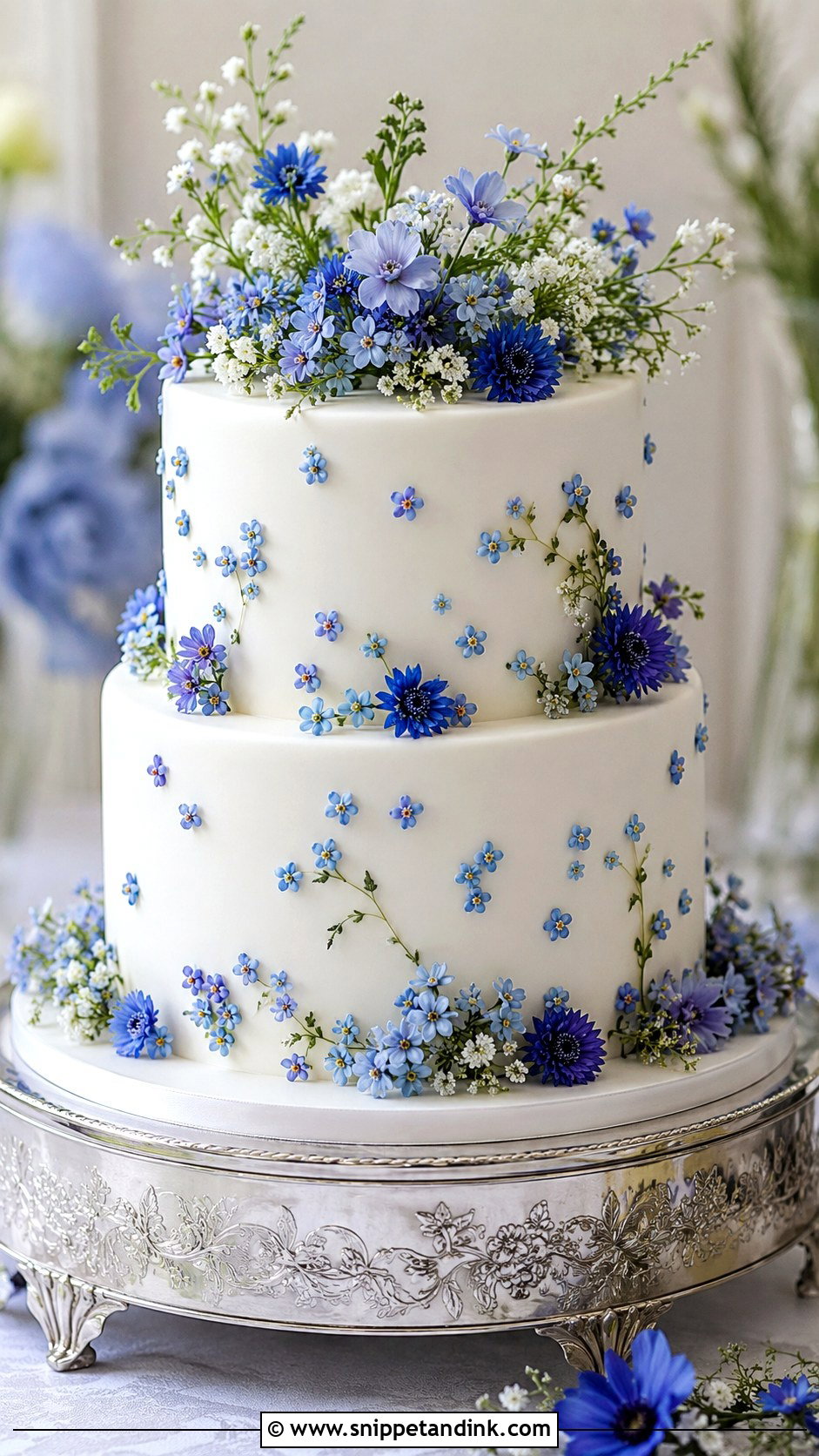
Blue flowers give you an easy something blue, and they stand out against white more than any other color. Forget-me-nots, cornflowers and borage are the small blooms I trust on a cake. Delphiniums are a different story: they look the part, but they’re toxic, so if a couple loves them, they belong in the table arrangement next to the cake, not on it. Scatter the blue lightly across the tiers or let it fall down one side on ivory buttercream or white fondant. Small green accents keep it from looking like a pattern.
8. White Wedding Cake With Yellow Wildflowers
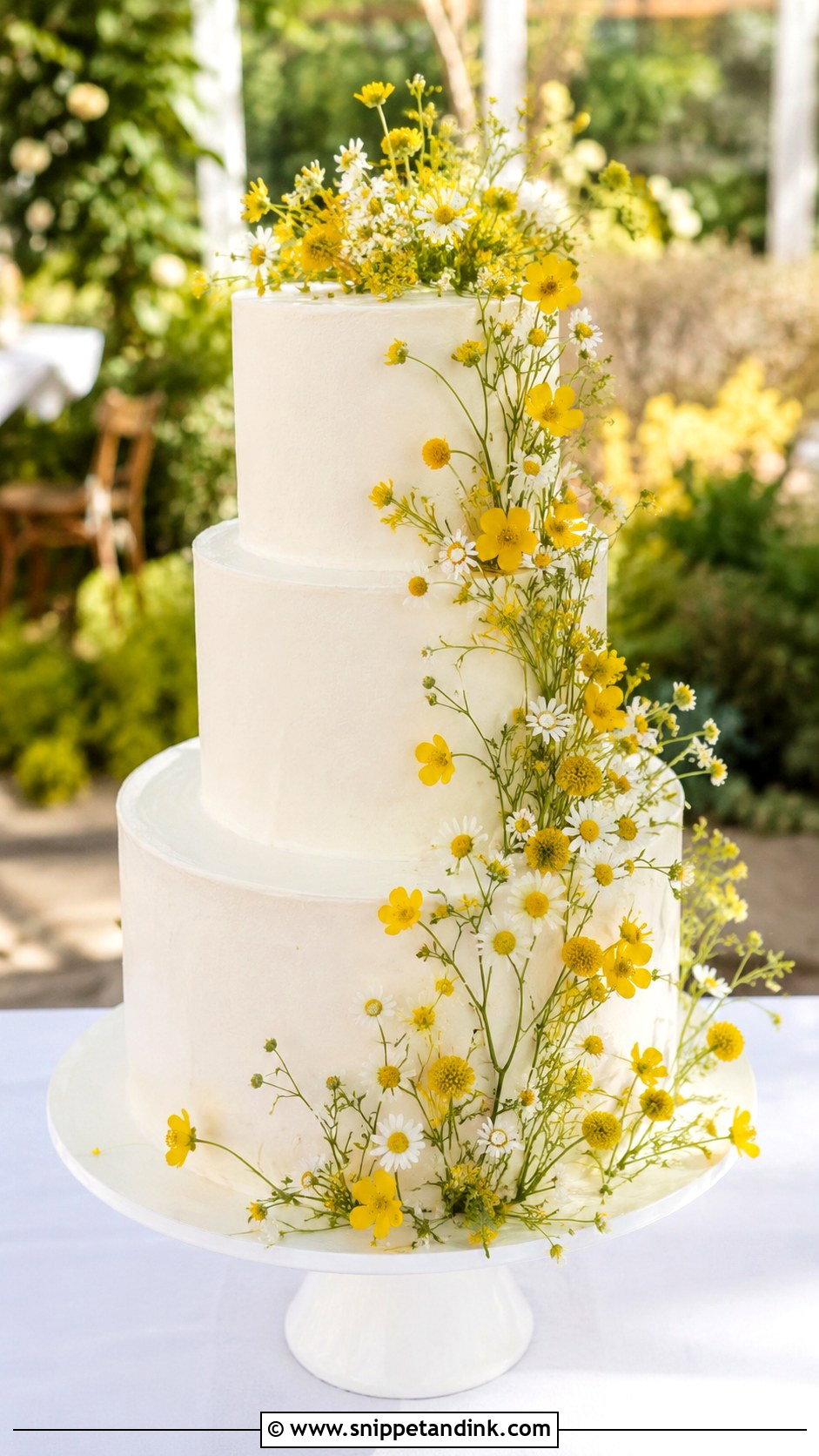
Yellow brings warmth, and a little goes a long way on a white cake. I use small daisies, chamomile, calendula or other tiny golden blooms in loose clusters rather than solid bands. Buttercups are pretty, but they’re poisonous, so they stay in the floral arrangements. Smooth white buttercream keeps the background clean. Around the base, trailing up the tiers or in one cluster on top are all good placements; which one I suggest depends on where the cake will be viewed from.
9. White Wedding Cake With Pastel Wildflowers
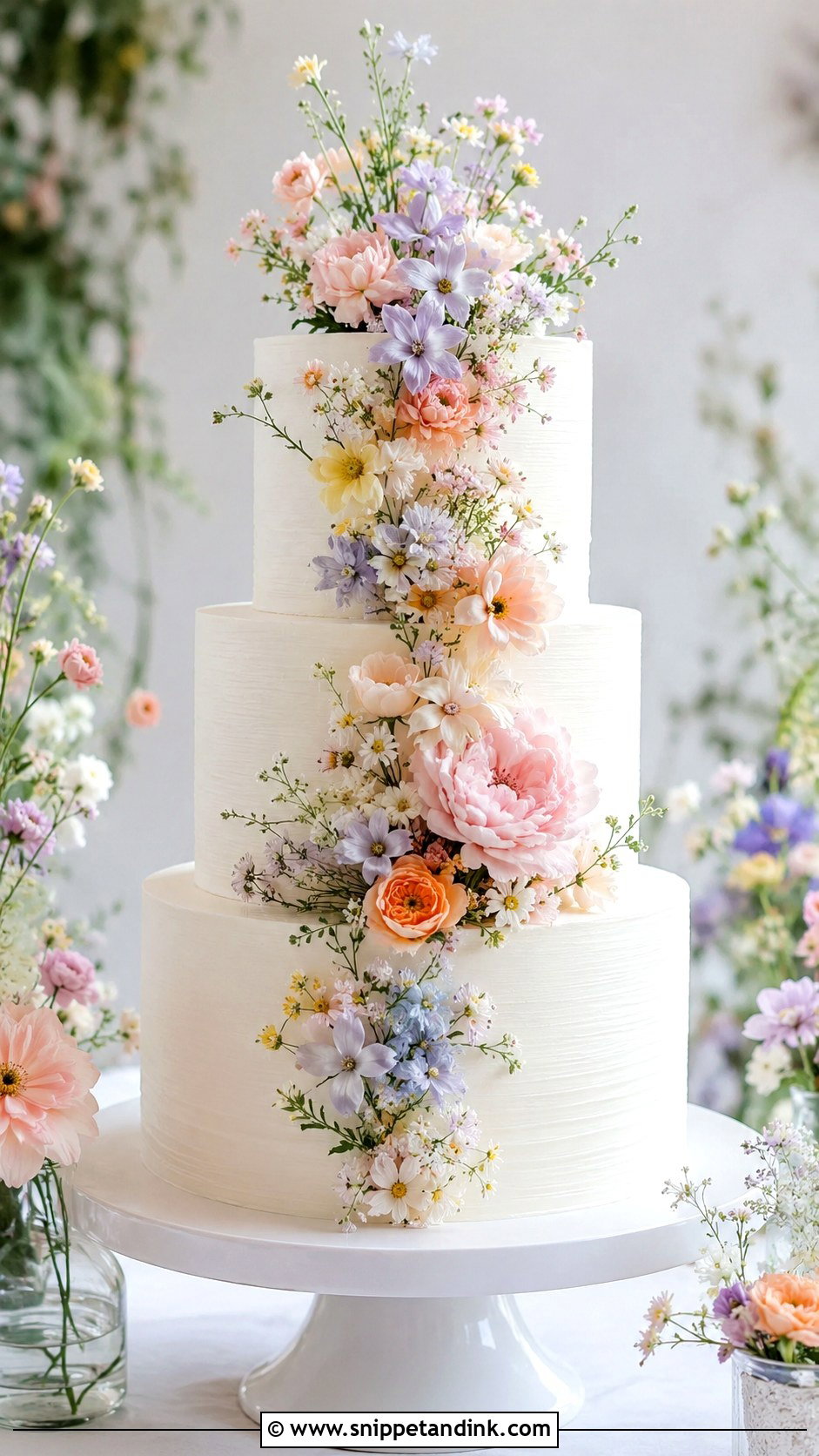
Soft pastel wildflowers give color without losing the bridal feel, and when they’re mixed well they look like watercolor on the icing. The colors I work with here are pink, lavender, pale yellow, peach and light blue, but I keep the flower sizes small to medium, because one oversized bloom breaks the effect. Pressed pastels on fondant look especially crisp. Under soft indoor lighting, very pale blooms can fade into white, so I usually include one slightly deeper shade to anchor them.
10. White Wedding Cake With Colorful Wildflowers
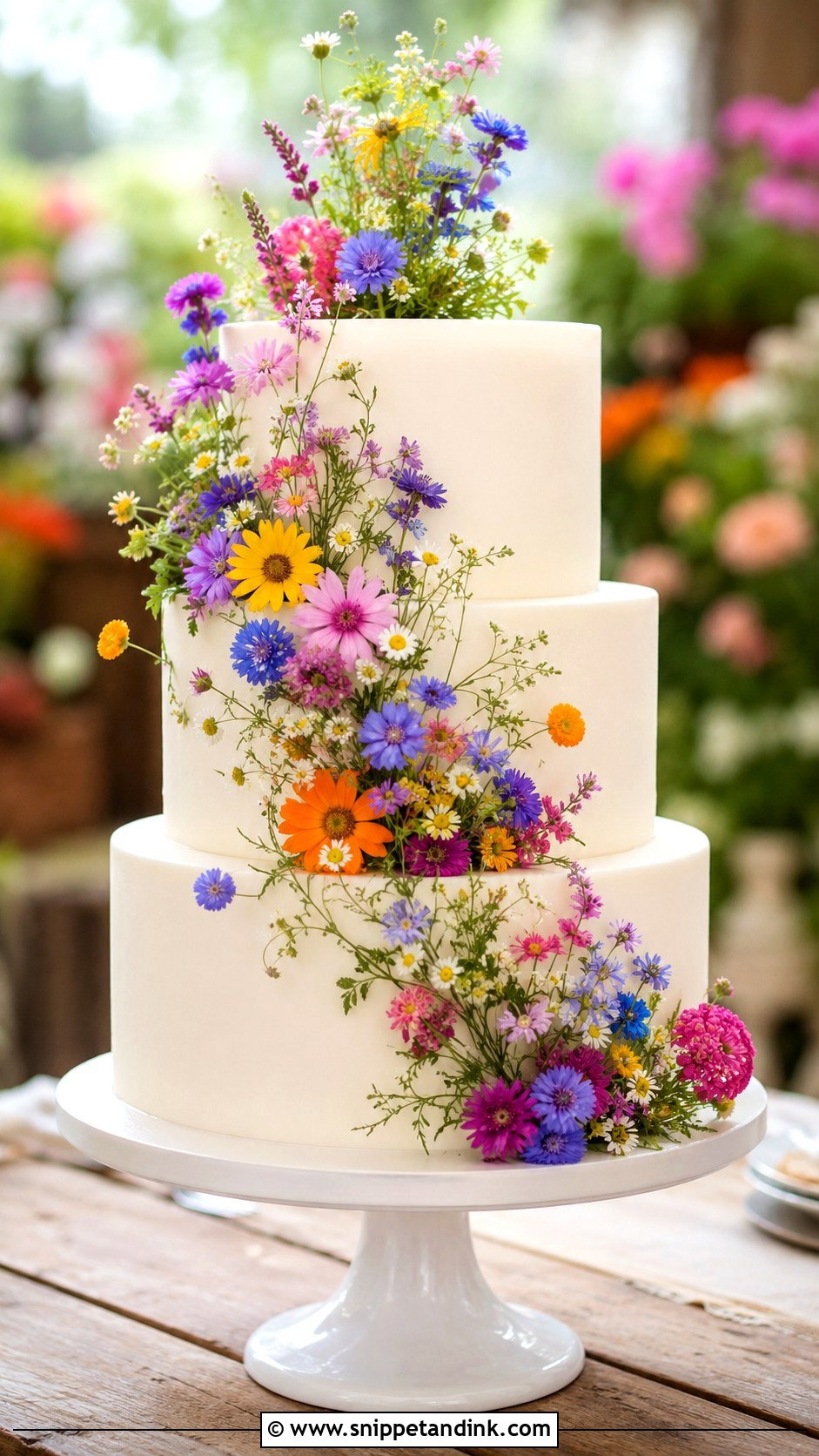
A mix of colorful wildflowers is the happiest cake on this list, and the hardest to get right. Pink, yellow, orange, purple and blue together only work when the placement looks random but isn’t. I group colors loosely and repeat each one at least three times across the tiers so the eye reads a meadow, not a mess. A three-tier cake handles more color than a small one. I’d keep it for summer and outdoor receptions, where bright color matches the light.
11. White Wedding Cake With Wildflower Cascade
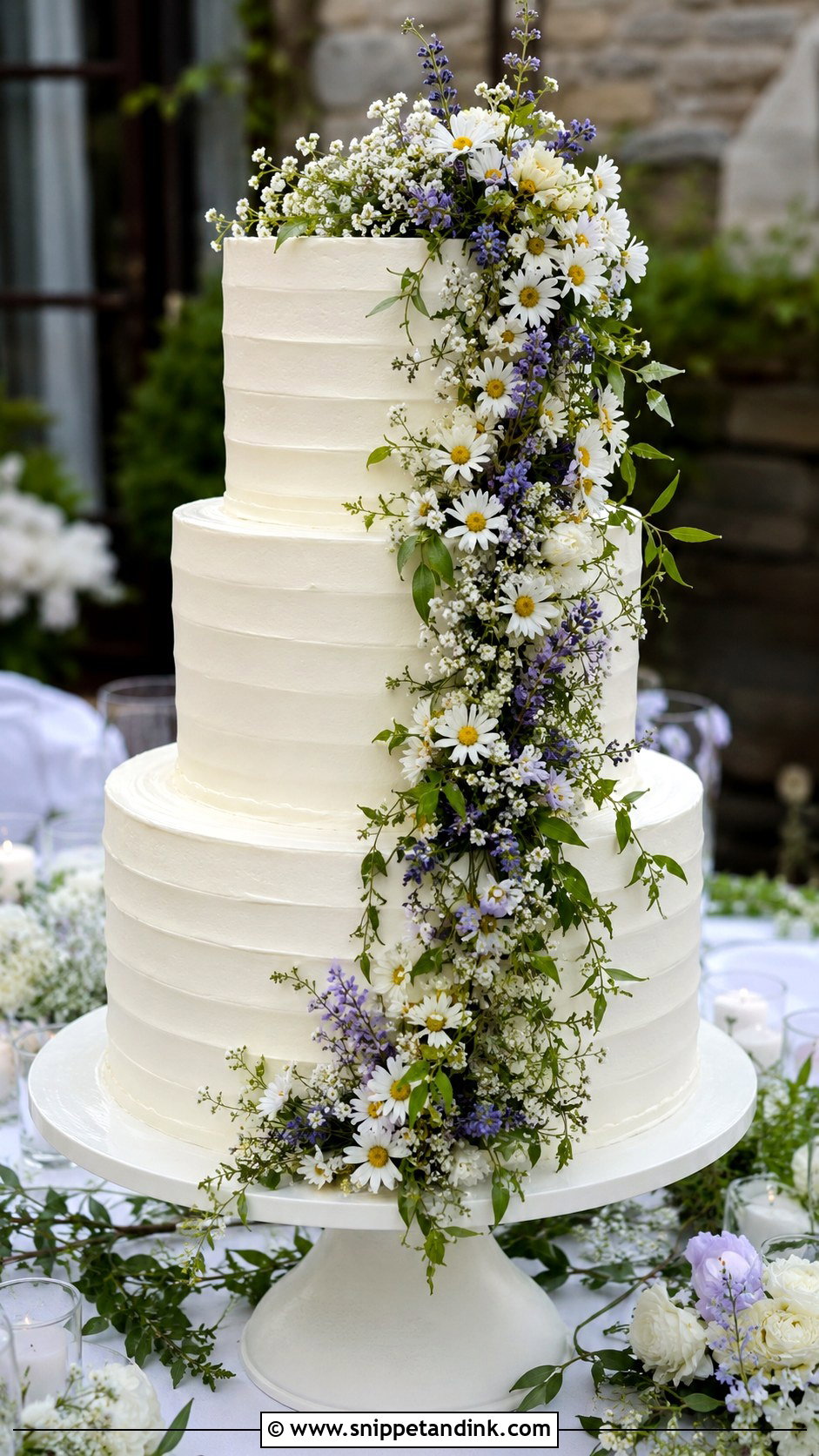
A cascade starts near the top and runs down in a soft diagonal, making the cake look taller than it is. Wildflowers are ideal for this because their mixed sizes and stems give the line a natural edge. I build it from the top down with small blooms, filler and greenery, and I keep the heavy pieces near the top where the cake is most stable. Smooth, textured or fondant finishes all take a cascade. Leave plenty of white showing on the other side so the flowers have something to contrast with.
12. White Wedding Cake With Wildflower Wreath
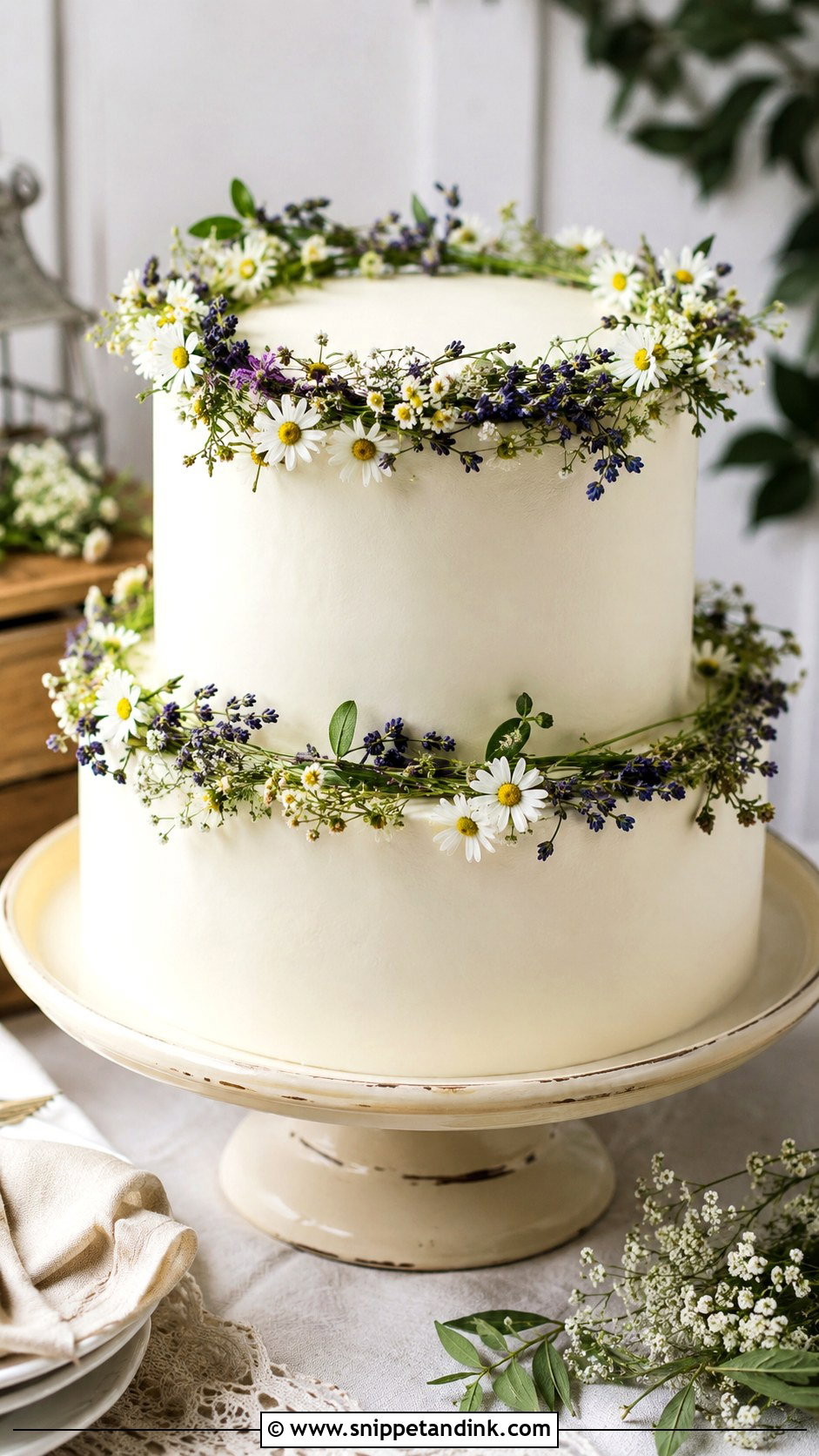
A wildflower wreath is my answer for couples who like flowers but hate a scattered look. The blooms form a ring around the base, the middle tier or the top edge, and the rest of the icing stays clear. Daisies, chamomile, lavender and small greenery make a natural ring; a wreath at the base is also the easiest to build on a separate board, which keeps the flowers off the cake entirely. It suits a one or two-tier cake best, where height isn’t doing the work.
13. White Wedding Cake With Wildflowers And Greenery
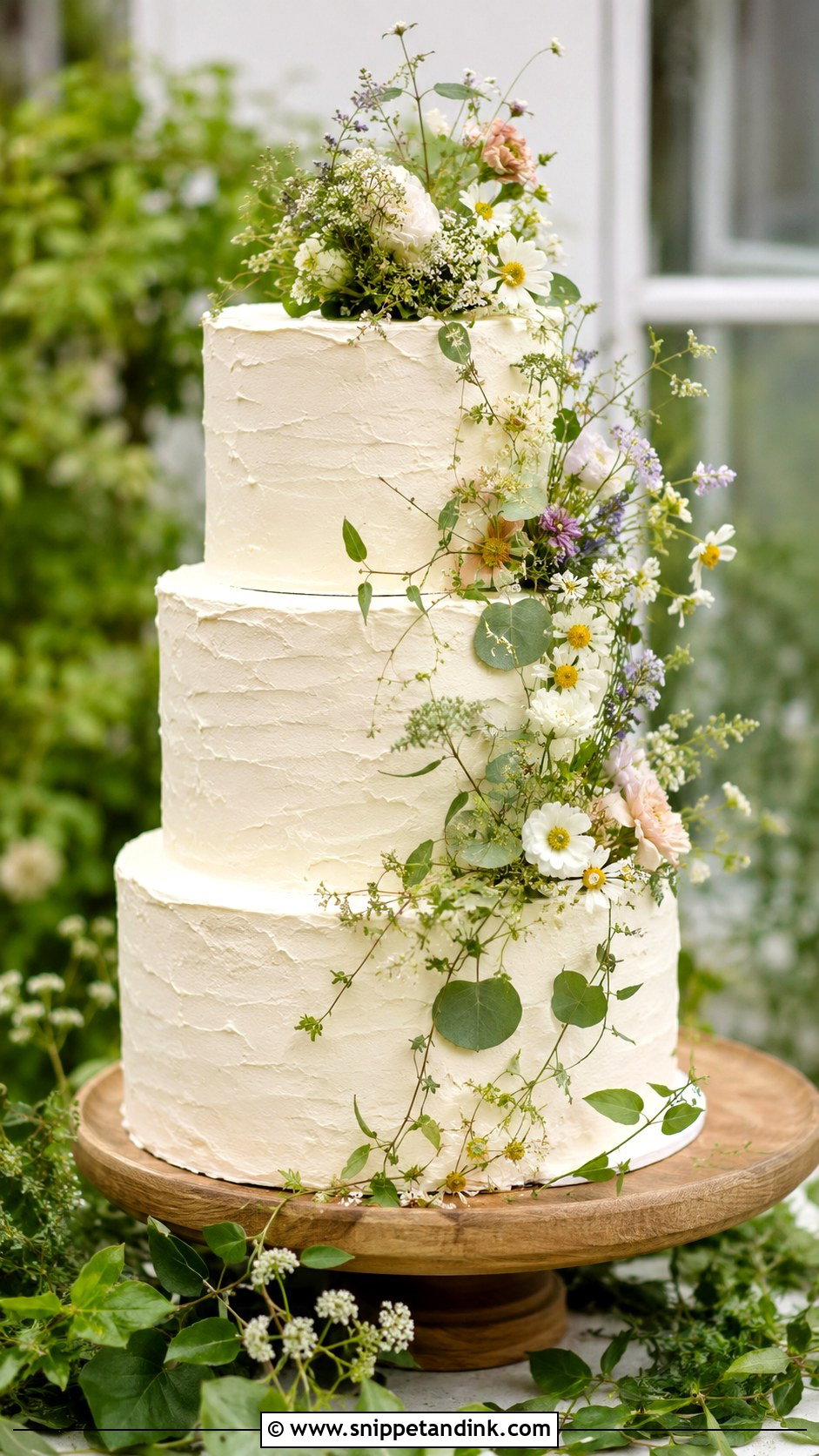
Greenery is what connects scattered wildflowers into one shape. Small leaves, vines and soft stems make white icing feel less formal, and they fill gaps that would otherwise need more blooms. I’d pick greens that hold up out of water, since soft herbs and some ferns wilt within hours. Smooth buttercream, semi-naked edges and light texture all suit it. Run the greenery between tiers, around the base or up one side; greenhouse and outdoor venues with wooden tables are the natural fit.
14. White Wedding Cake With Wildflowers And Pearls
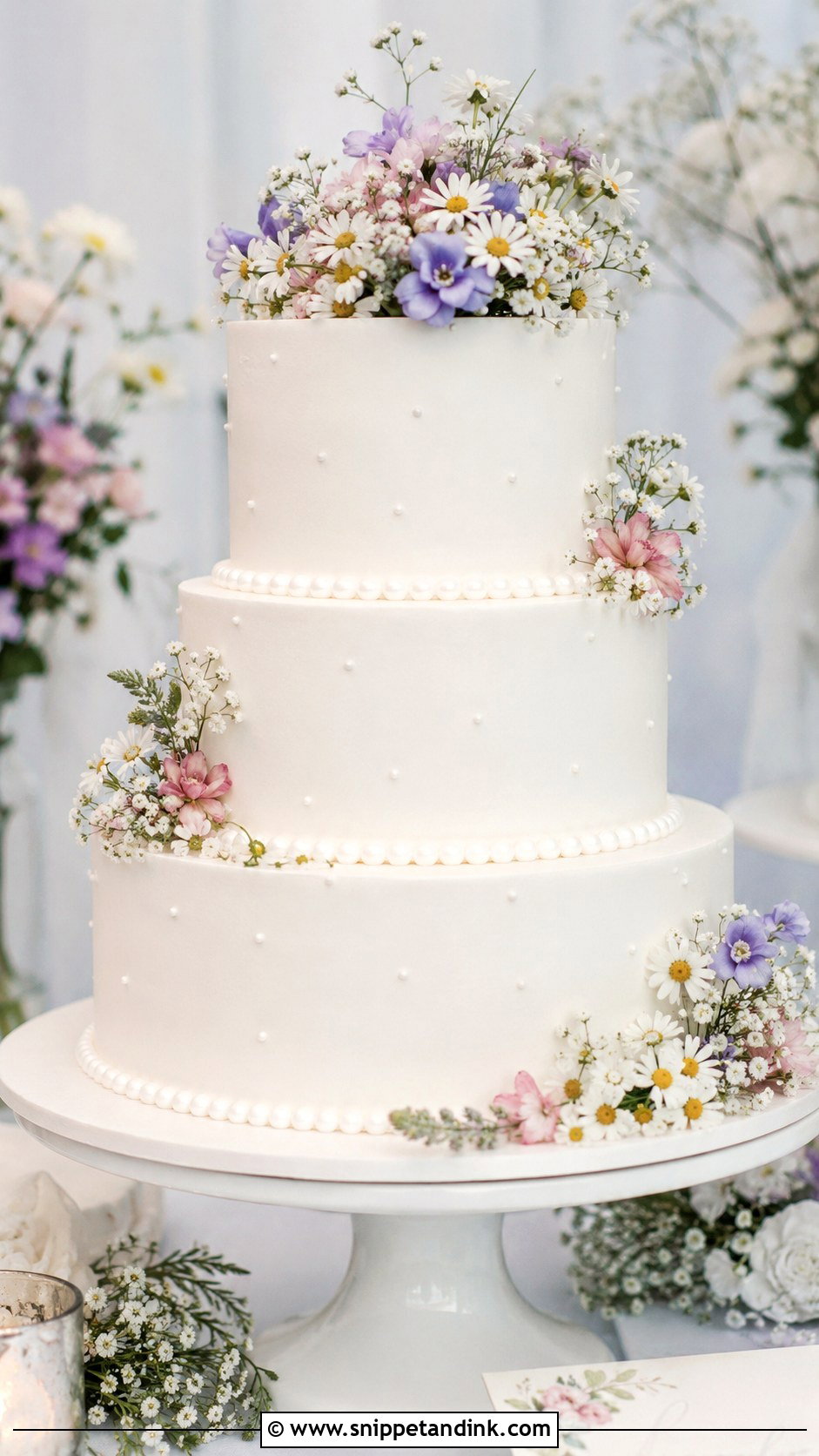
Pearls and wildflowers sound like they shouldn’t go together, but the pearls pull the flowers toward bridal and the flowers stop the pearls from looking stiff. I pipe small pearl borders around the tiers on smooth buttercream or fondant, then add a few delicate blooms like chamomile or tiny pastels. The flowers have to stay light here, because pearl work disappears under a crowded arrangement. Indoor ceremonies and garden receptions with a classic streak both suit it.
15. White Wedding Cake With Wildflowers And Gold
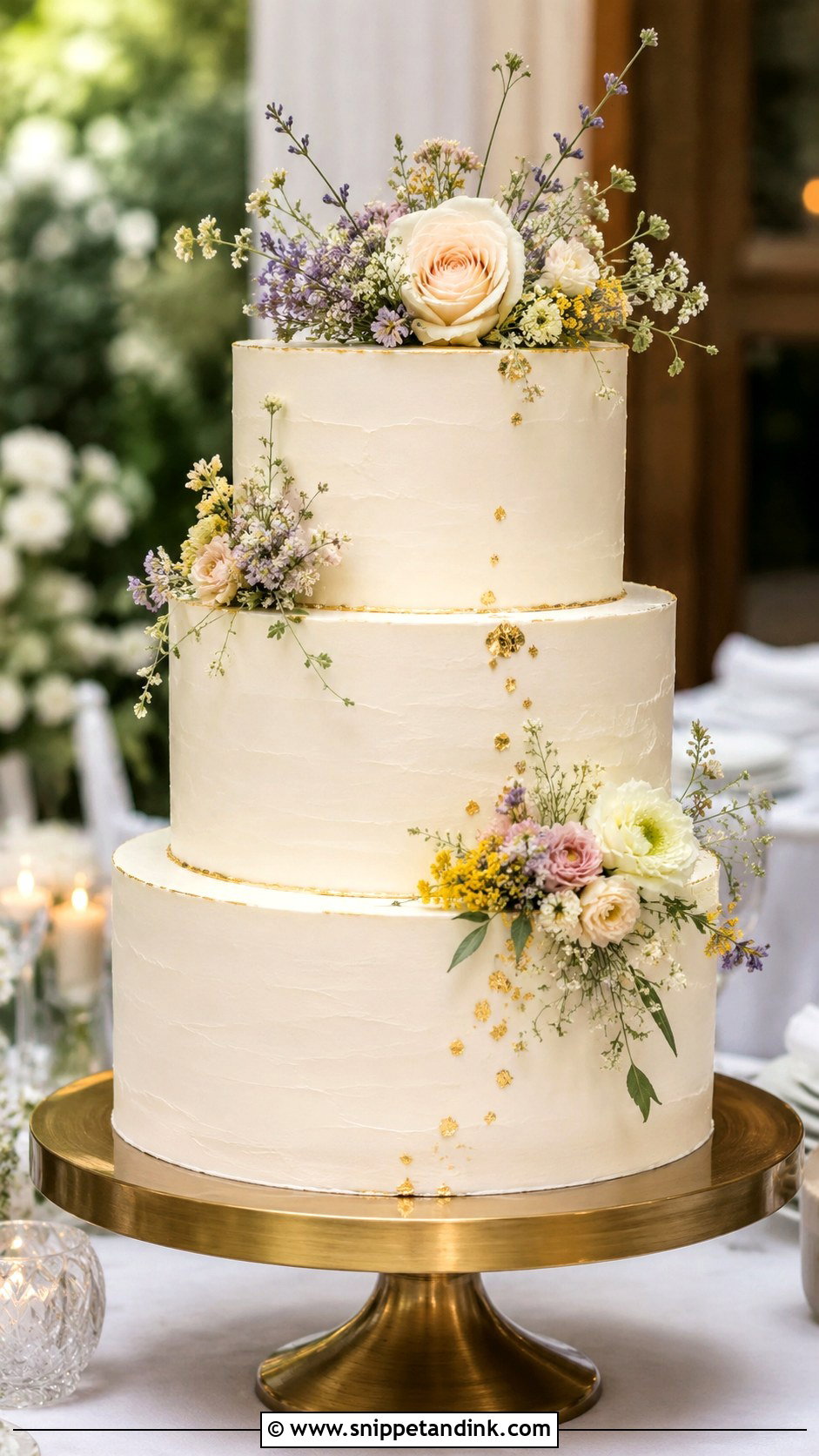
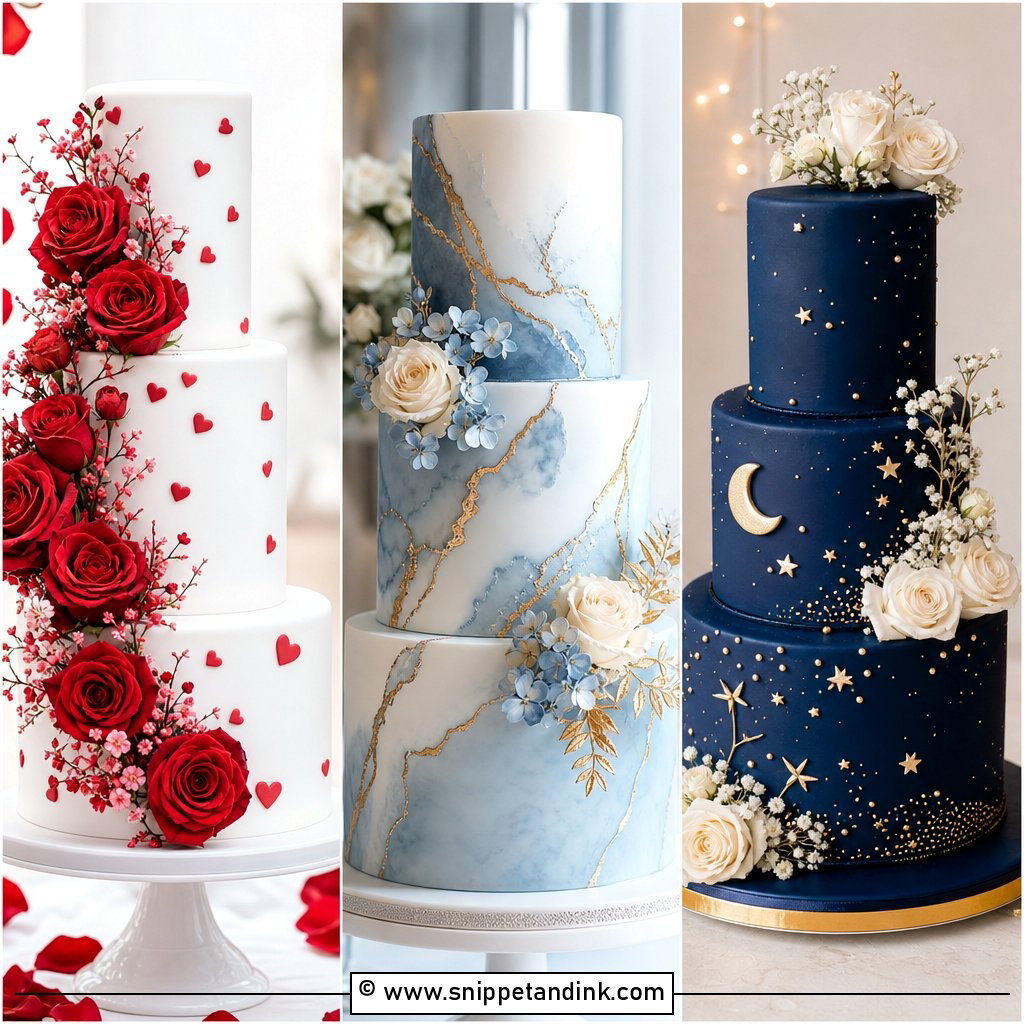
Gold is a nice way to dress up wildflowers for a barn with chandeliers or a garden wedding with formal touches. It can come from a thin painted edge, a few flecks, a topper or a metallic stand. I keep it subtle so the flowers still lead. Ivory buttercream or white fondant with soft yellow, blush, cream or lavender flowers works. Edible gold paint sits cleanly on fondant, while on buttercream I prefer flecks of leaf, which hide small imperfections in the surface.
16. White Wedding Cake With Wildflowers And Buttercream Texture
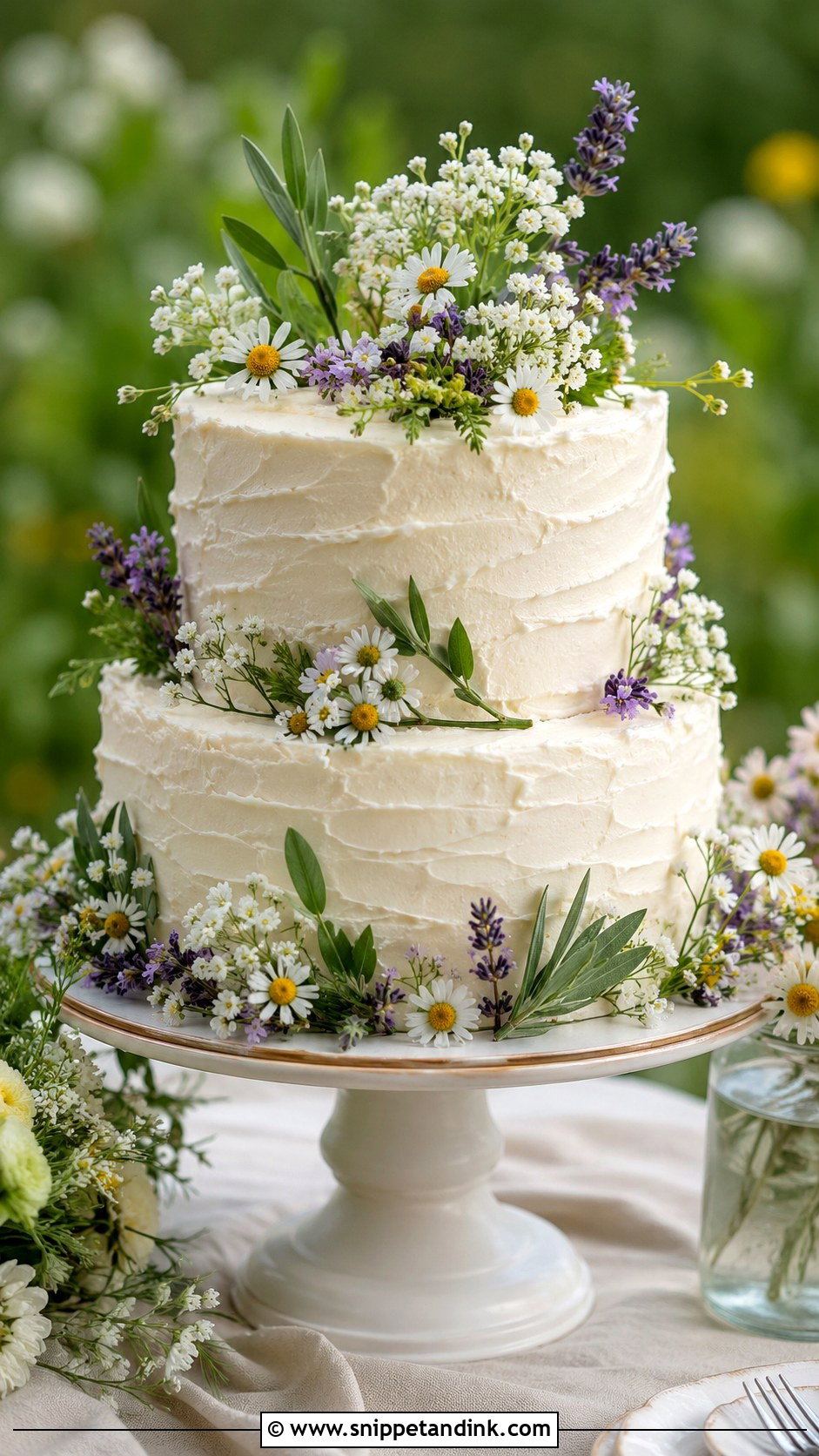
Textured buttercream and wildflowers share the same handmade feeling, so they rarely clash. The finish can be soft swipes, gentle ridges or palette-knife strokes, and the small grooves give me places to tuck stems in so they sit naturally. I keep the icing white or ivory so the flowers stay the focus. Textured buttercream also hides small dents from setup, which makes it a forgiving choice for a cake traveling to a rural venue on bumpy roads.
17. White Wedding Cake With Wildflowers And Ruffles
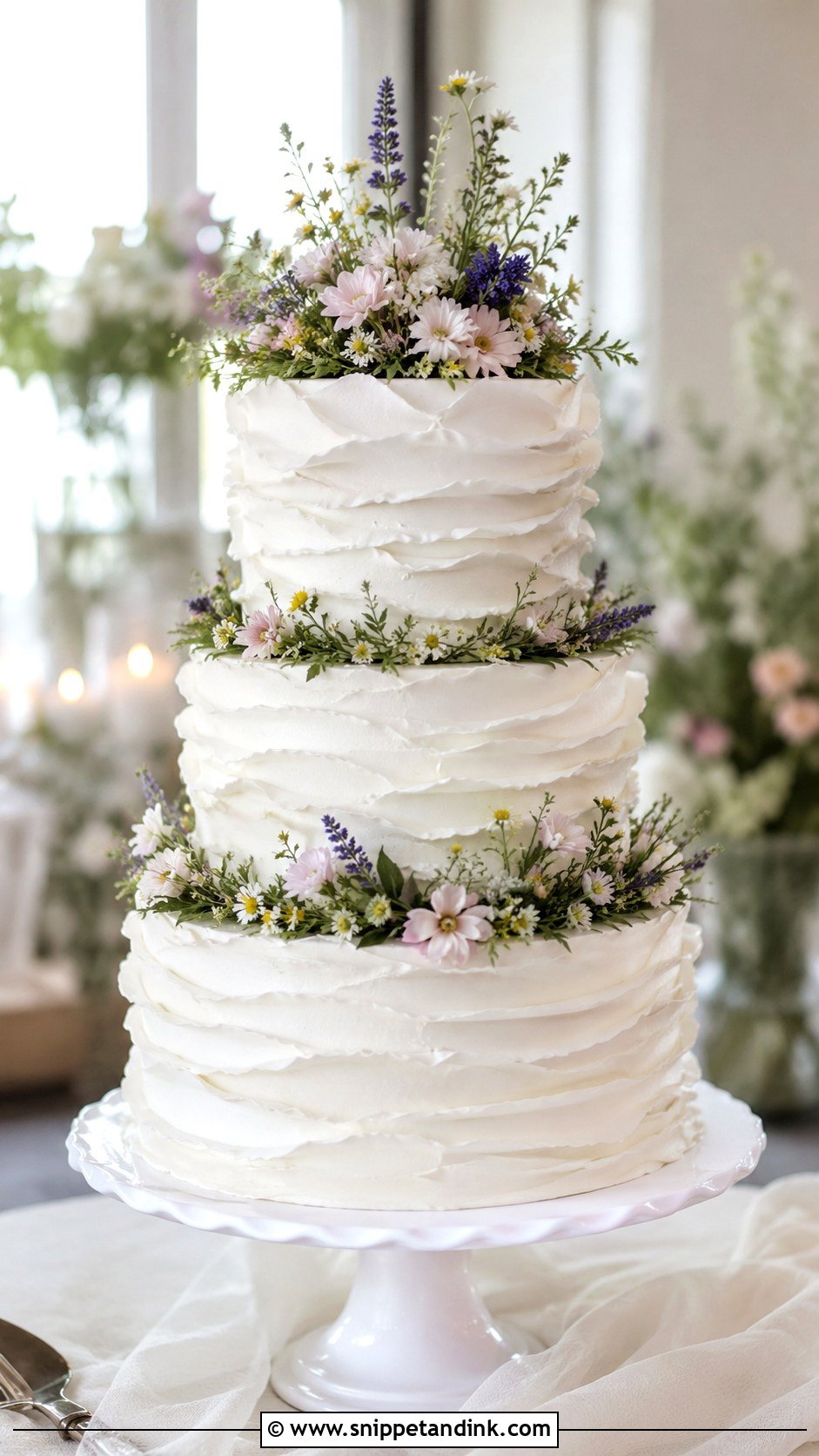
Ruffles already add movement, so the flowers here need to step back. I place small blooms near the top, between tiers or at the base, never across the ruffled faces where they’d fight the texture. Soft pink, white, lavender and pale yellow suit ruffled white icing. Buttercream ruffles are softer and slump in heat; fondant ruffles keep their shape longer, worth considering for a summer garden venue. It’s a detailed cake that pairs well with flowing fabric and loose arrangements in the room.
18. White Wedding Cake With Wildflowers And Semi Naked Frosting
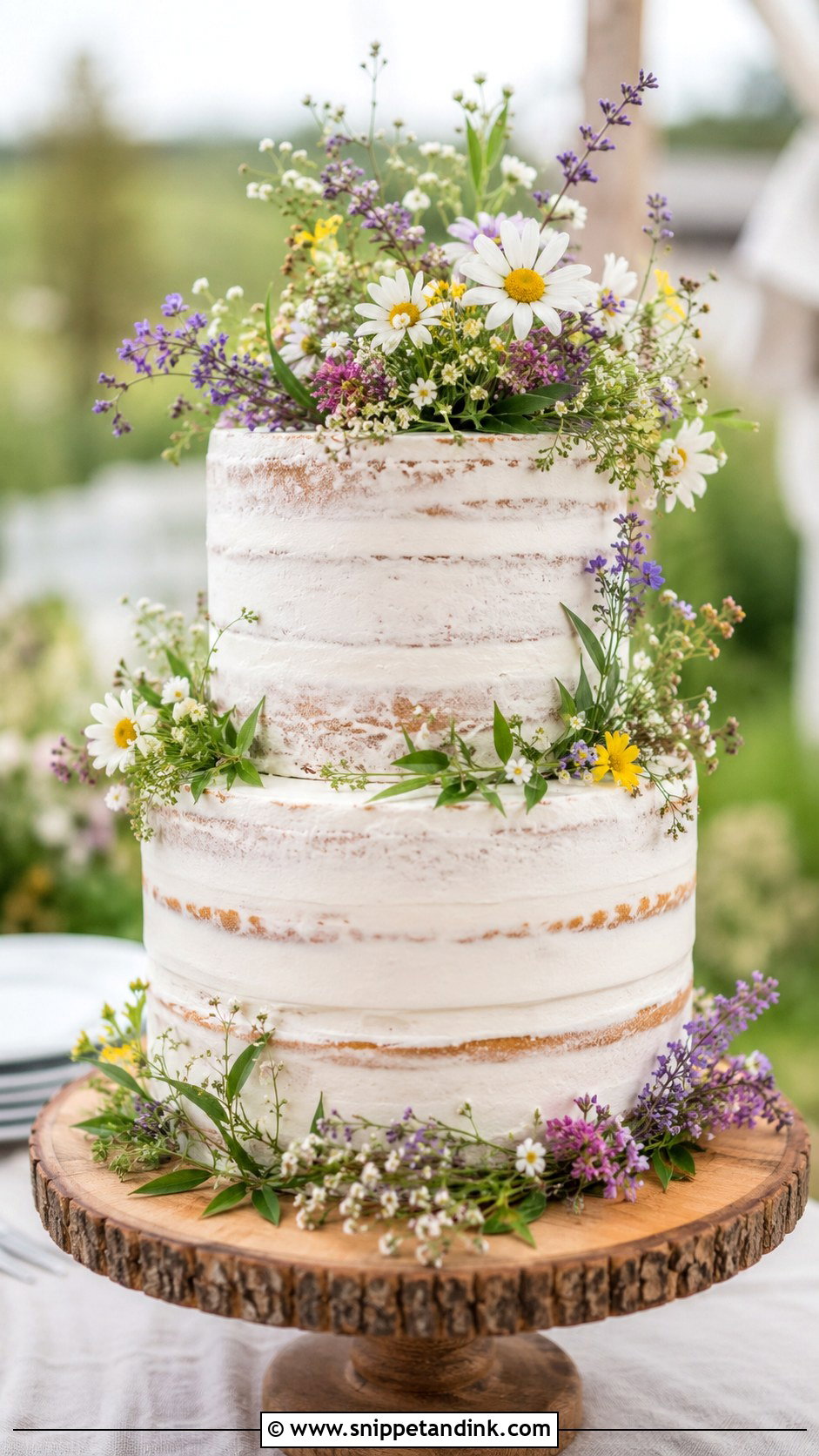
A semi-naked finish lets a little cake show through the thin white coat, which adds warmth and texture that wildflowers suit. The downside is that thin icing protects the sponge less, so these cakes dry out faster once they’re unwrapped. I keep them covered until the last possible moment. Fresh flowers around the base, between tiers or in a cluster on top look right when they’re slightly loose. Barn, woodland and casual garden weddings are where this cake belongs.
19. White Wedding Cake With Wildflowers And Fresh Berries
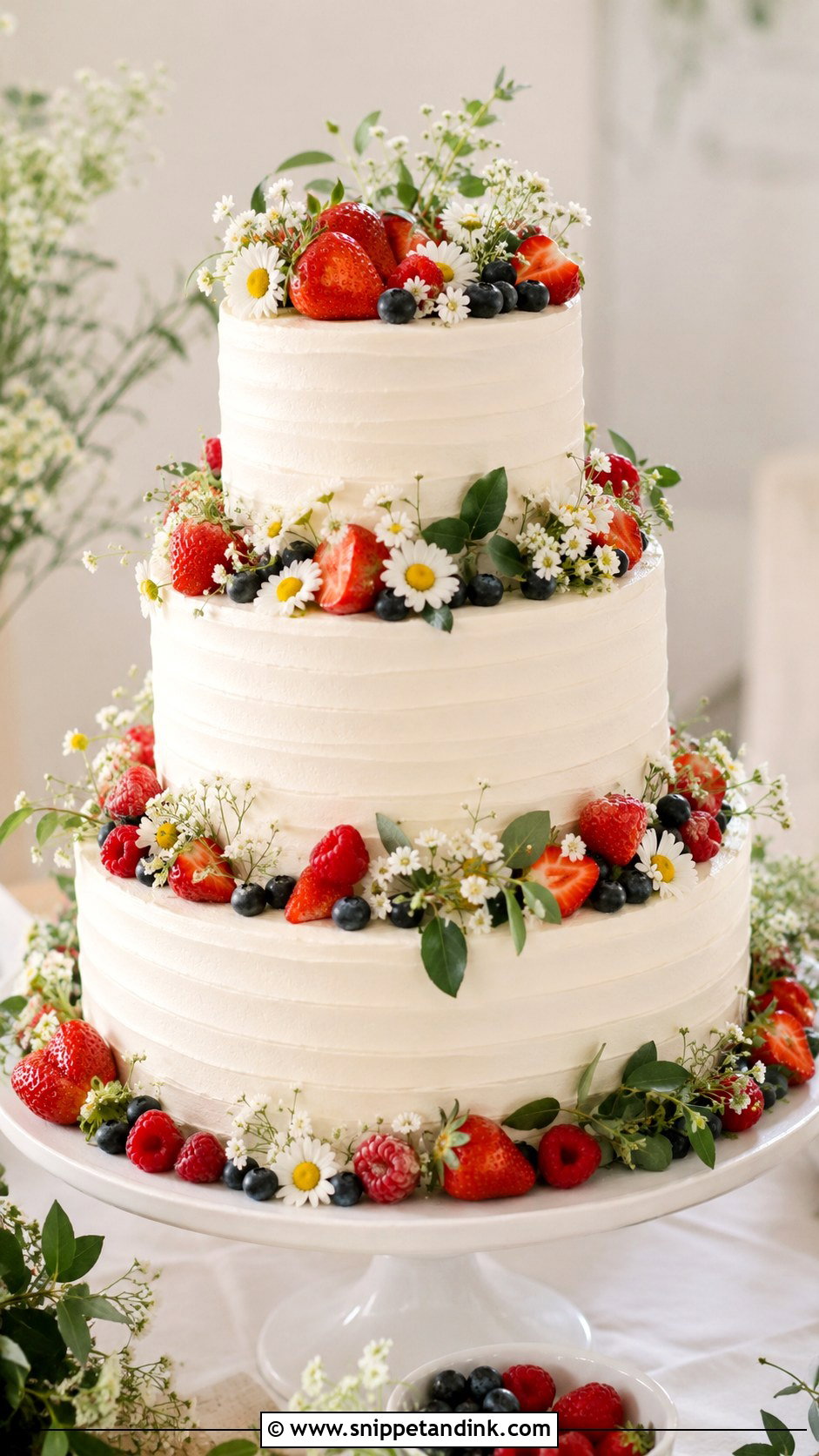
A handful of fresh berries adds color and something guests can actually eat. Strawberries, blueberries, raspberries and blackberries all suit tiny white blooms and greenery. The problem with berries is juice: a cut strawberry or a crushed raspberry will bleed onto white icing within minutes, so I use whole fruit, wash and dry it thoroughly, and add it at setup, never the night before. Whipped buttercream, soft texture or a semi-naked finish suits them. A few clusters between tiers or around the base is enough.


20. White Wedding Cake With Wildflowers And Simple Topper
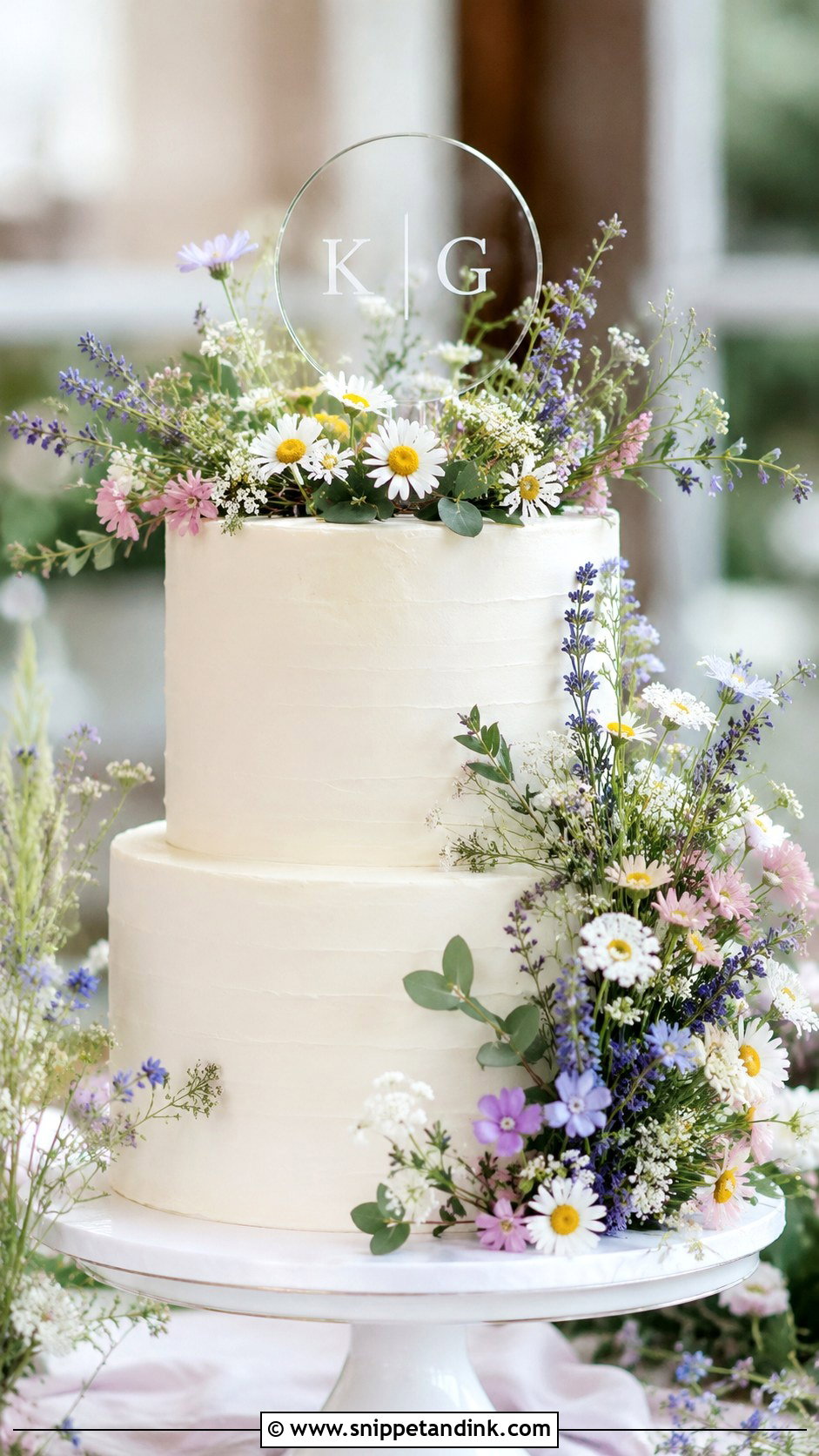
A topper gives the eye one clear point to land on, which is useful when wildflowers are loose and scattered. Small name signs, initials, a clean acrylic piece or a short phrase all work, but I keep it small enough that it doesn’t compete. Acrylic toppers have long stakes, so I set them into the top tier before any flowers go in and build the blooms around the base of the topper to hide where it enters. The cake underneath can be smooth, textured or a classic tiered shape.
An Outdoor Cake Table in July Is Hard on Wildflowers
Delicate field flowers wilt faster than roses or orchids, and a cake table in the sun speeds that up. A few habits keep a wildflower cake looking fresh until it’s cut:
- Put the table in shade for the whole reception, and check where the sun will be at cutting time, not at setup.
- Ask your florist for sturdier stems such as lavender, daisies and waxflower if the cake will sit outside for hours, and save poppies and soft field blooms for indoor cakes.
- Let me dress the cake as late as possible, ideally close to guests arriving.
- Cover the cake with a cloche or netting until speeches if insects are a problem at your venue, since sugar and flowers together attract bees.
- Keep a small box of spare blooms in a cooler, so a wilted stem can be swapped quickly before photos.
Buttercream softens noticeably on a warm day, so for a long outdoor reception I’d also cut the cake earlier in the evening rather than leave it out until the last dance.
Let the White Show Between Every Bloom
Wildflowers give a white cake a lot of range, from pressed blooms that look painted on to a full meadow around the stand. Daisies, chamomile, lavender and a scatter of small colorful flowers all bring the garden in. What makes any of these work is restraint: leave the white visible, pick flowers that are safe and hardy enough for your room, and let the arrangement look gathered by hand. Indoors or out, those three choices matter more than the style you land on.
You'll Like These Ideas:









Leave a Reply