
I dress a lot of cakes, and greenery is what I reach for when a couple wants the cake to look finished without turning it into a second centrepiece. A handful of leaves can soften plain buttercream, give clean fondant some movement or make a small cake look styled. The cake stays simple; the leaves, herbs and vines do the work. The part couples rarely think about is that some of the prettiest wedding greens are not safe near food, so in every idea below I’ll say which stems I’d use, how I’d place them and which ones I’d keep off the frosting.
Safe Greens, Risky Greens and How I Keep Them Off the Frosting
Florist greenery is grown to look good, not to be eaten. It is often treated in the field and rarely washed for food use. So I split cake greens into two groups before I order anything.
Happy to sit close to the cake
- Rosemary, thyme, bay and culinary sage, bought as food-grade herbs and rinsed.
- Olive leaves, which are not toxic and hold up well out of water.
- Edible flowers sold for food, alongside the greens.
Pretty, but only with a barrier
- Eucalyptus, ivy and baby’s breath, which are toxic or irritating if eaten.
- Cherry laurel and mountain laurel, easily confused with kitchen bay.
- Most ornamental ferns and many succulents.
For the second group I wrap every stem end in floral tape, push it into a food-safe pick or a drinking straw, and lay the foliage on a thin collar of parchment or acetate where it meets the frosting. Nothing goes in raw. Whoever cuts the cake should know which pieces come off first, so I tell the caterer, not just the couple.
1. Simple White Wedding Cake With Greenery
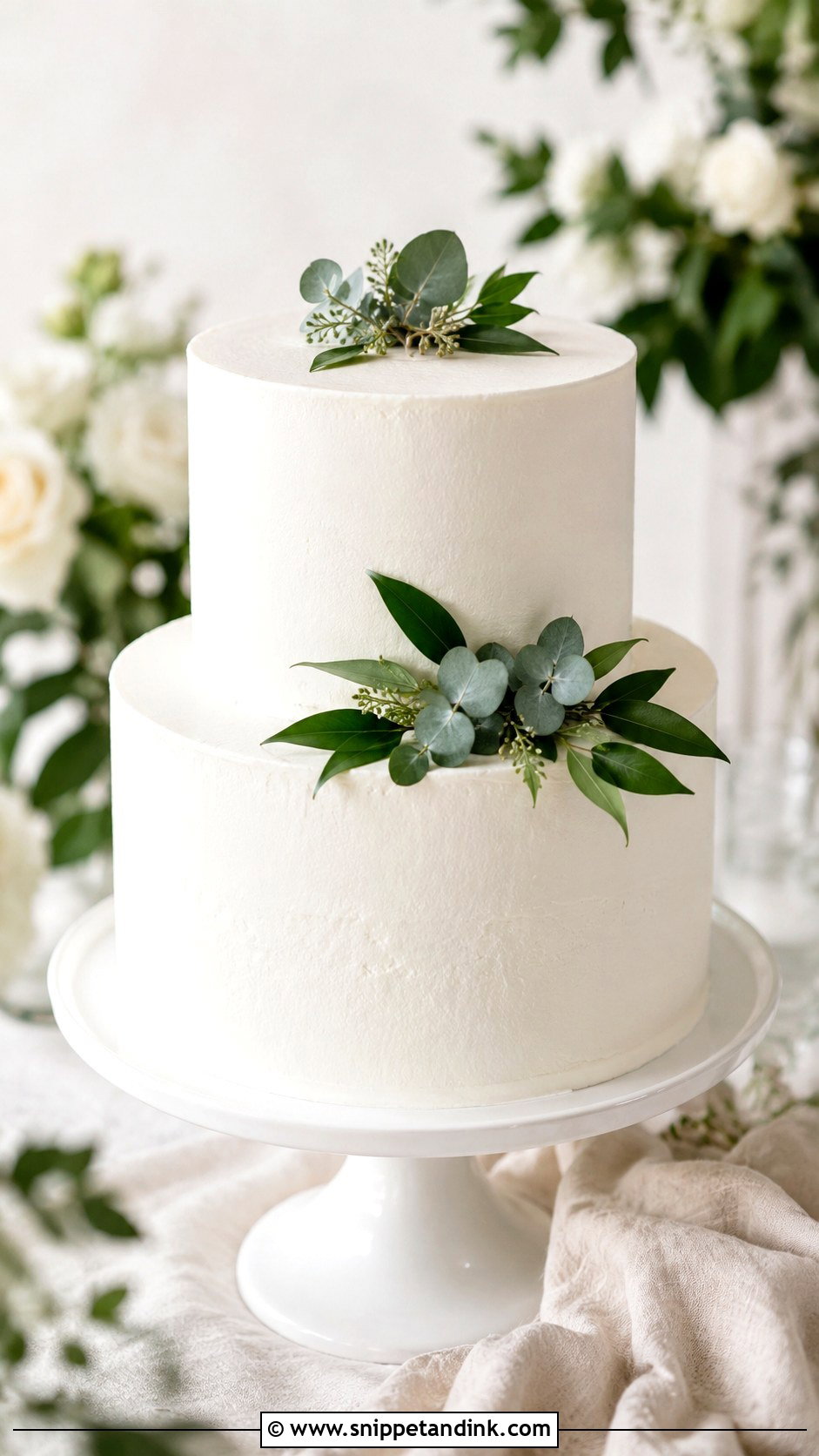
White frosting gives greenery the most contrast it will ever get, so you need less of it. On smooth buttercream I place one small cluster at the base, or a few leaves on the top tier, and leave the rest bare. Anything more and the cake starts to look like a table arrangement. This is the version I’d suggest if you can’t decide, since it sits as comfortably in a barn as in a hotel ballroom.
2. Two Tier Wedding Cake With Eucalyptus
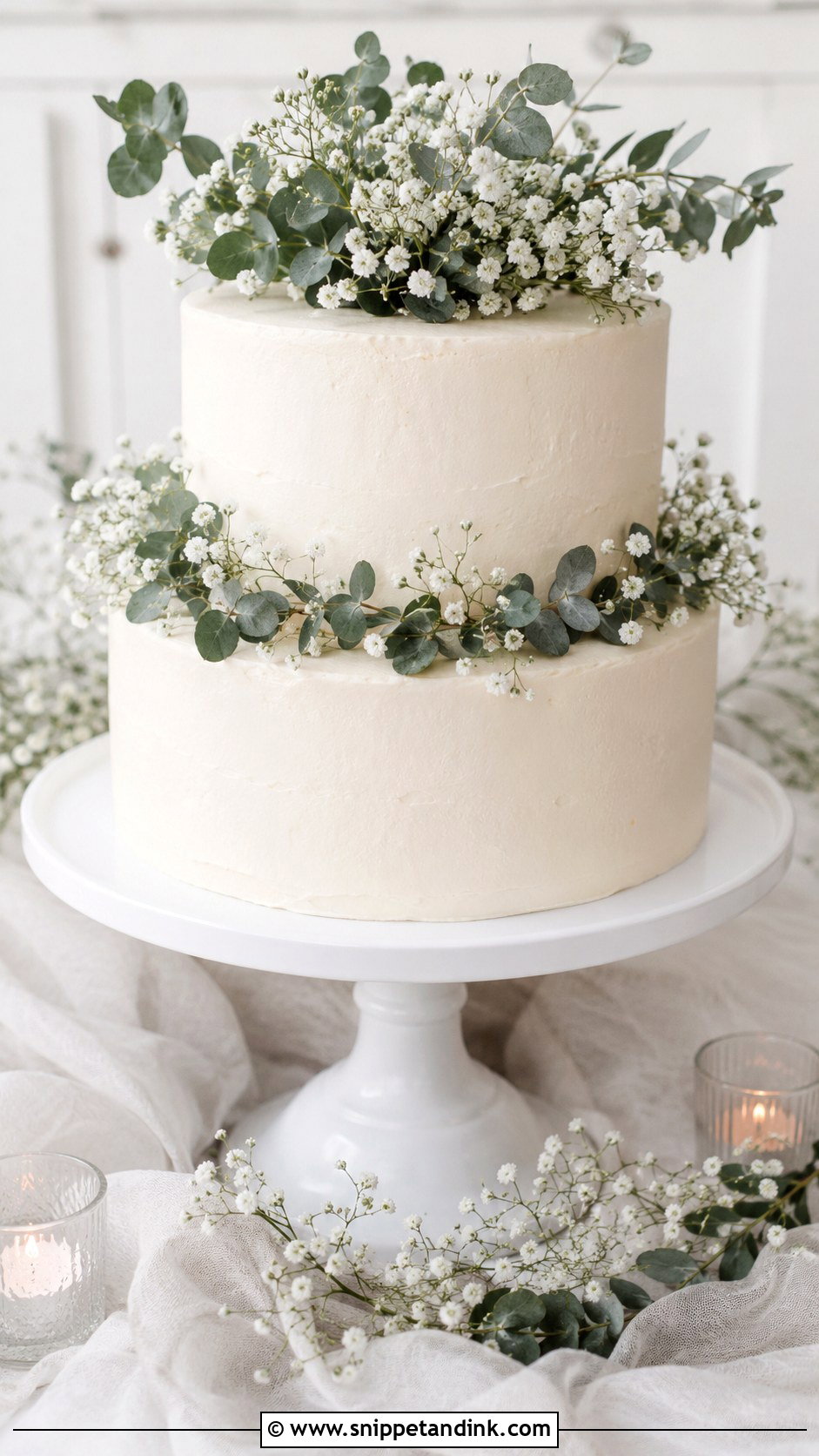
Eucalyptus has that soft grey-green that suits ivory, sage, champagne and blush, and it’s one of the longest-lasting greens I work with. It is also toxic if eaten. On a cake I always wrap the stems in floral tape, set the ring on a thin board or parchment collar so the leaves never touch frosting, and make sure the cutting team removes it before slicing. A ring around the lower tier grounds a two tier cake; a few stems near the top add lift. If that sounds like too much fuss, ask for olive or ruscus in the same colour range.
3. One Tier Wedding Cake With Greenery
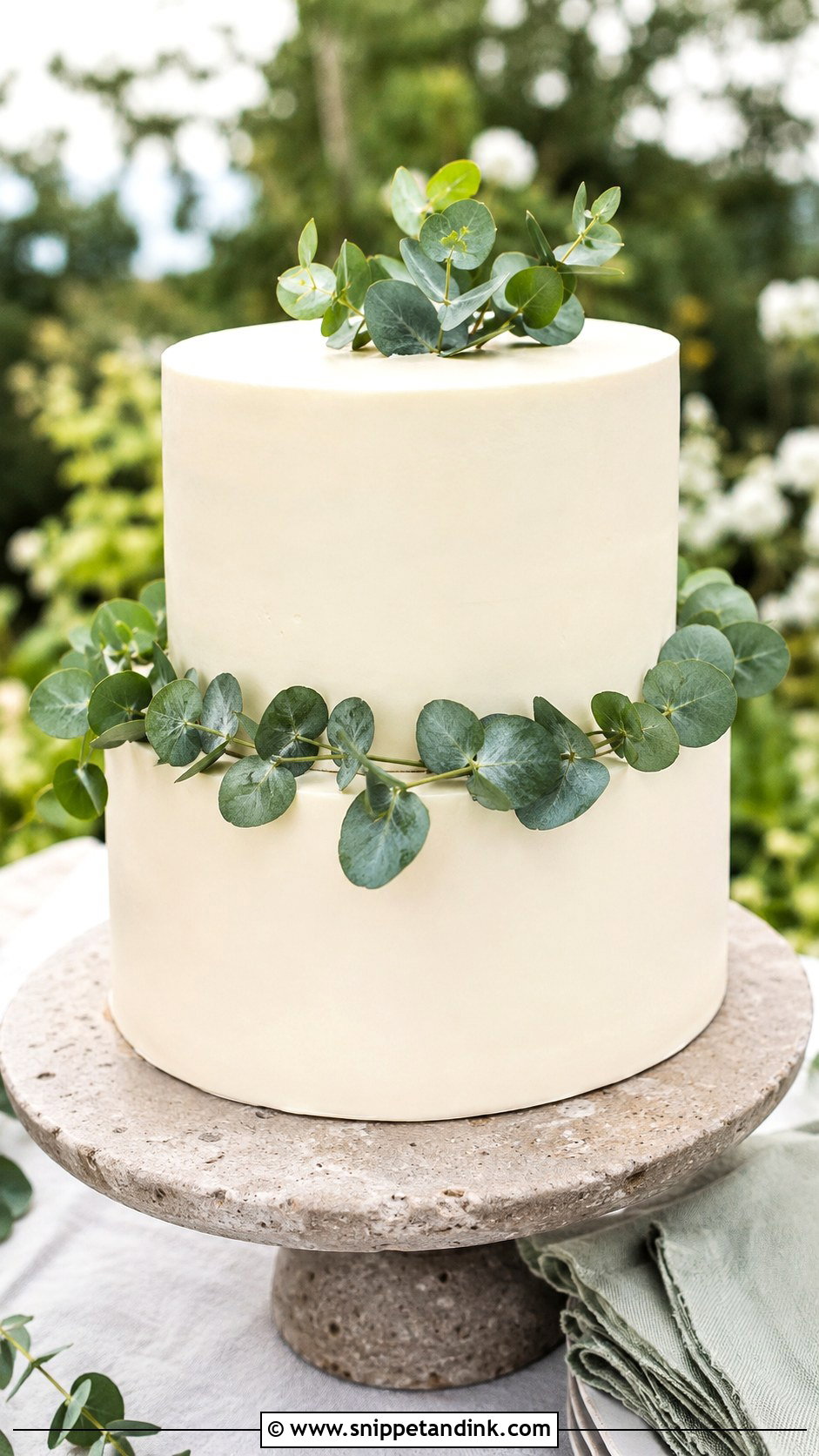
A single tier needs the greenery to look planned, or it reads as a cake someone forgot to finish. A tall round, a wide low tier or a square all work; what changes is placement. On a tall tier I use a side cluster at about two thirds height. On a wide one, a crown on top. A wooden stand pulls it rustic, white ceramic keeps it formal. Small cakes need very few stems, which keeps the floral cost down too.
4. Semi Naked Wedding Cake With Greenery
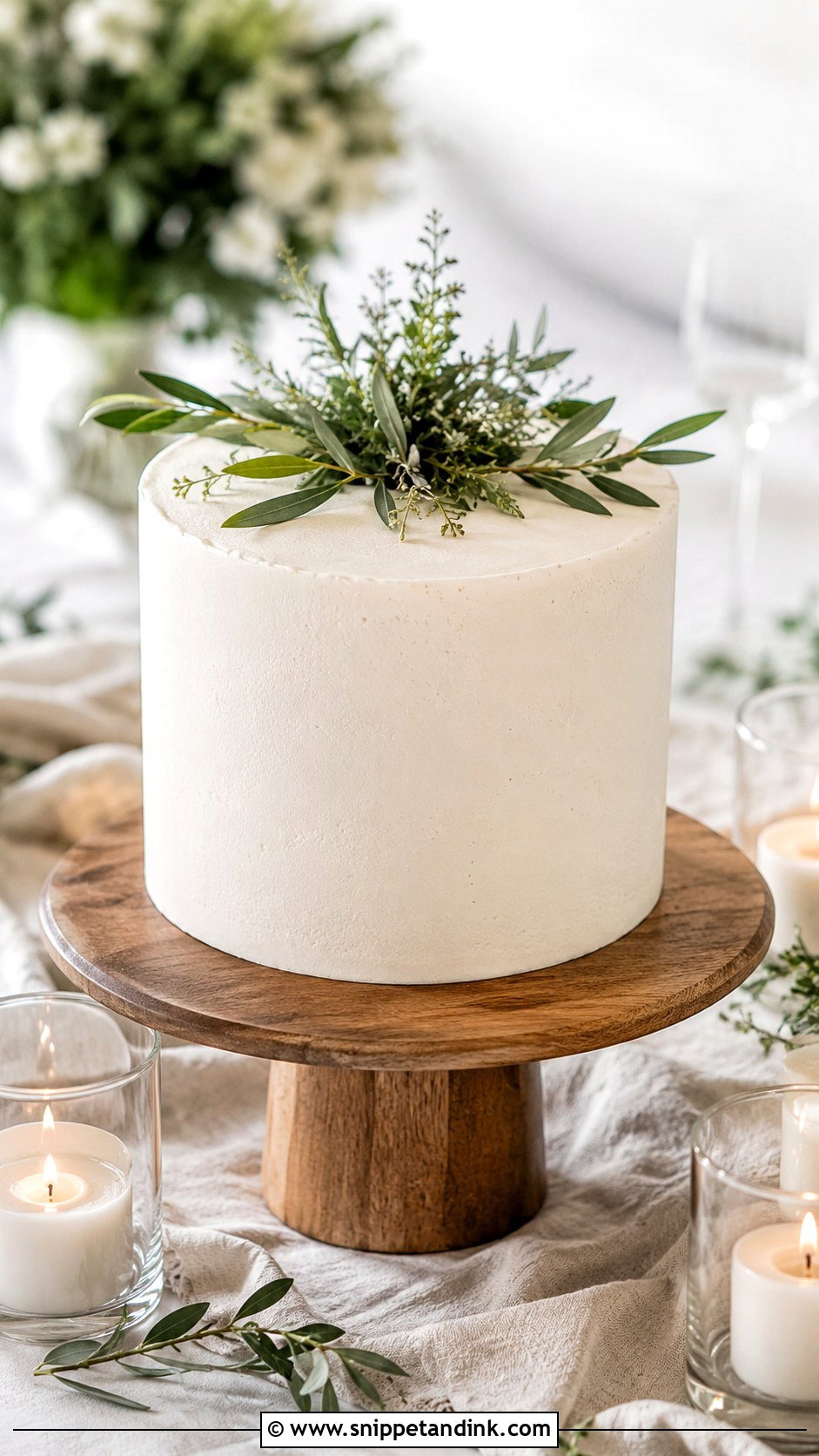
A semi naked wedding cake already has texture from the exposed sponge, so the greenery should be finer than the cake: small leaves between tiers, a loose topper or a few trailing stems down one side. Big glossy leaves look heavy against it. Vanilla, almond, carrot and spice sponges all give warm colour behind green. The thin frosting means stems sit closer to the cake itself, so I’d stick to herbs here, rosemary, thyme or bay.
5. Rustic Wedding Cake With Greenery
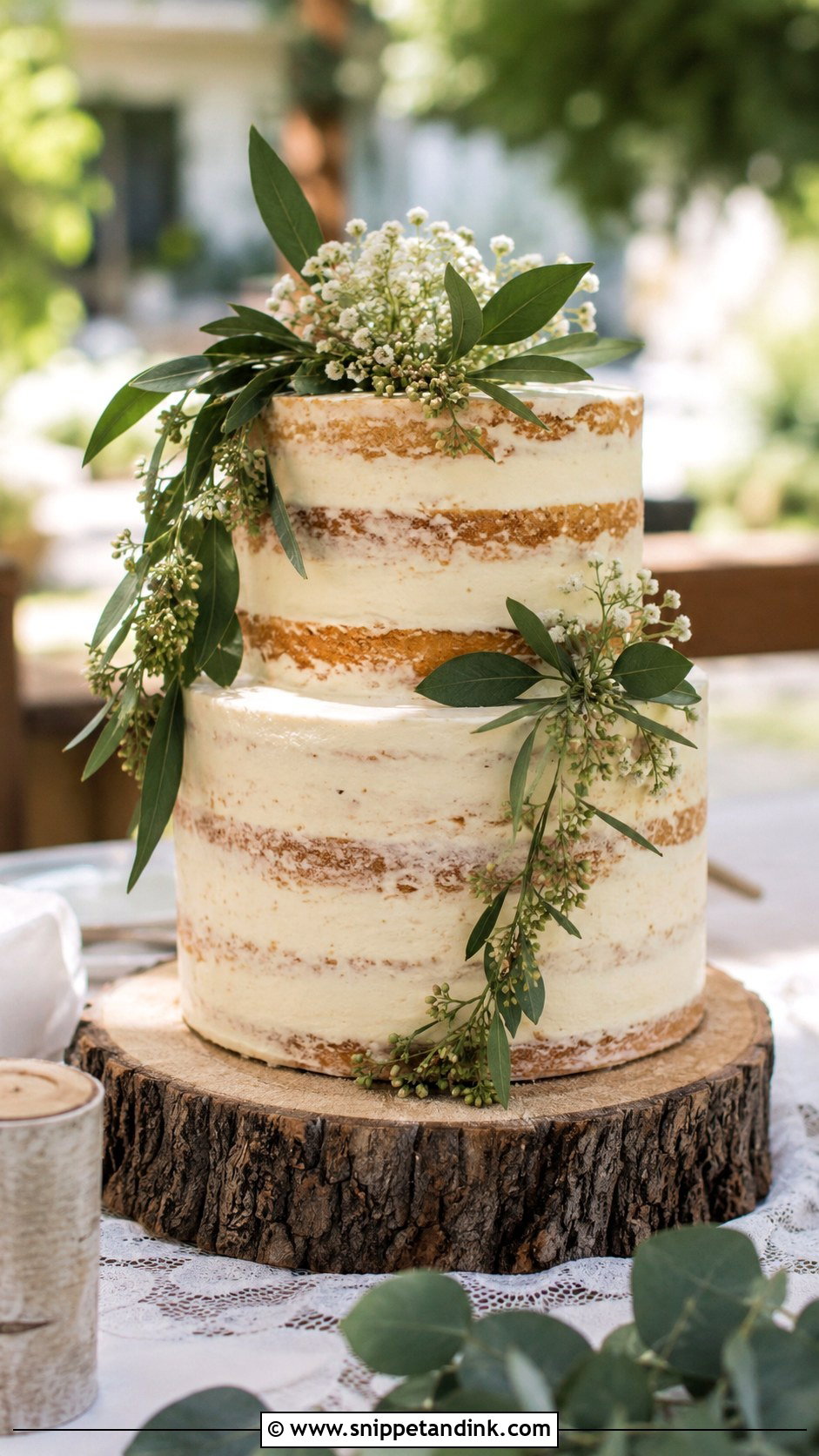
Rustic cakes look best when the greens look like they came from the same field as the rest of the reception. On textured buttercream or a semi naked finish, I use olive, bay, rosemary or small vines, arranged loosely so the ends wander a bit. Over-tidy placement makes a rustic cake look stiff. A wooden stand, linen cloth and a few candles nearby finish the setting. Barns and countryside venues suit it.
6. Modern Wedding Cake With Greenery
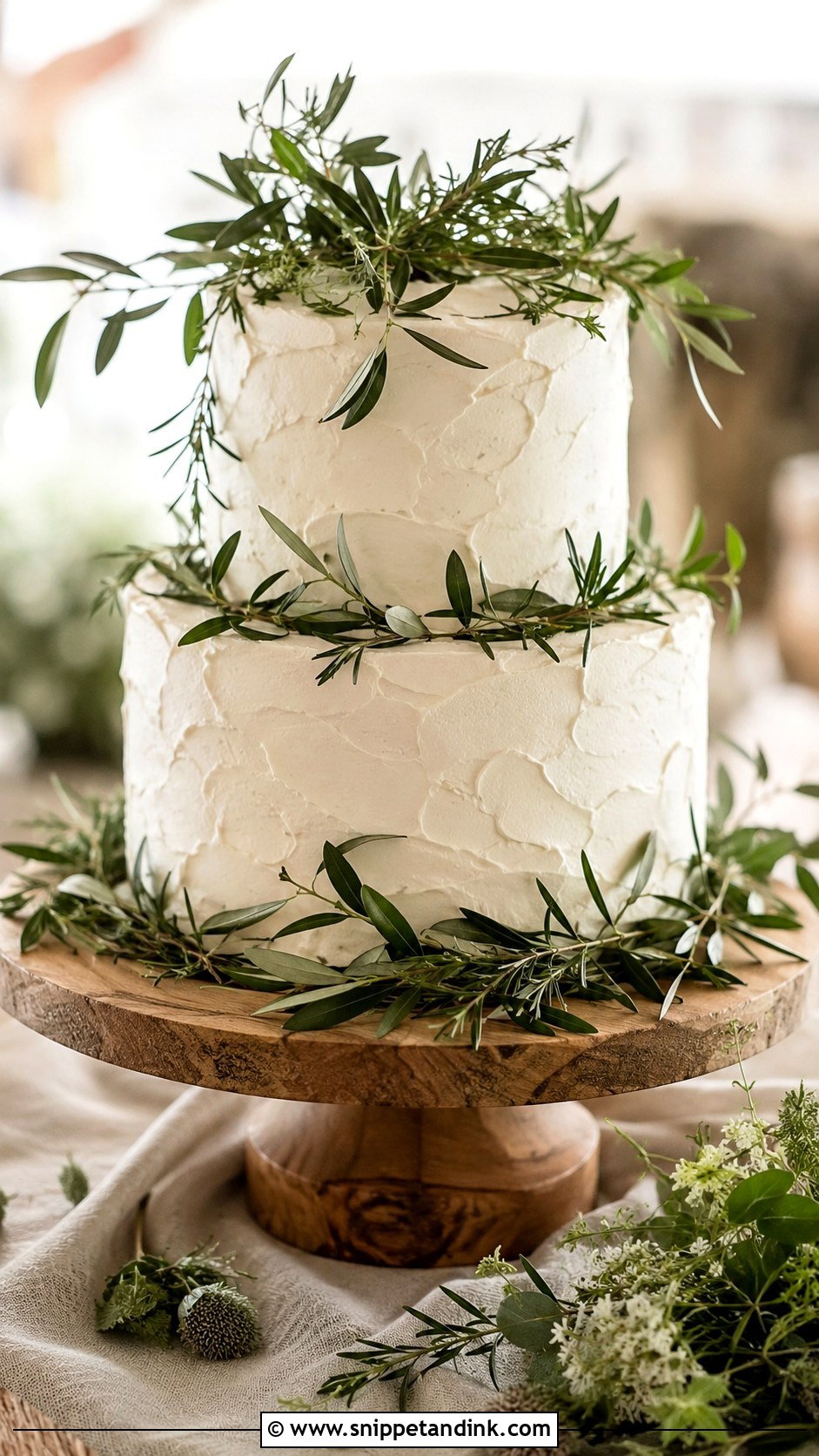
Modern cakes need one clear gesture, not a scatter. A single vertical trail down sharp-edged fondant, a thin crescent or one cluster set off-centre will look deliberate. White on white keeps it gallery-clean. The hardest part is restraint on the day: it’s tempting to add stems to fill gaps, but the empty space is what makes it modern. Ruscus and small-leaf ivy hold their shape well for this kind of line work.
7. Greenery Wedding Cake With White Roses
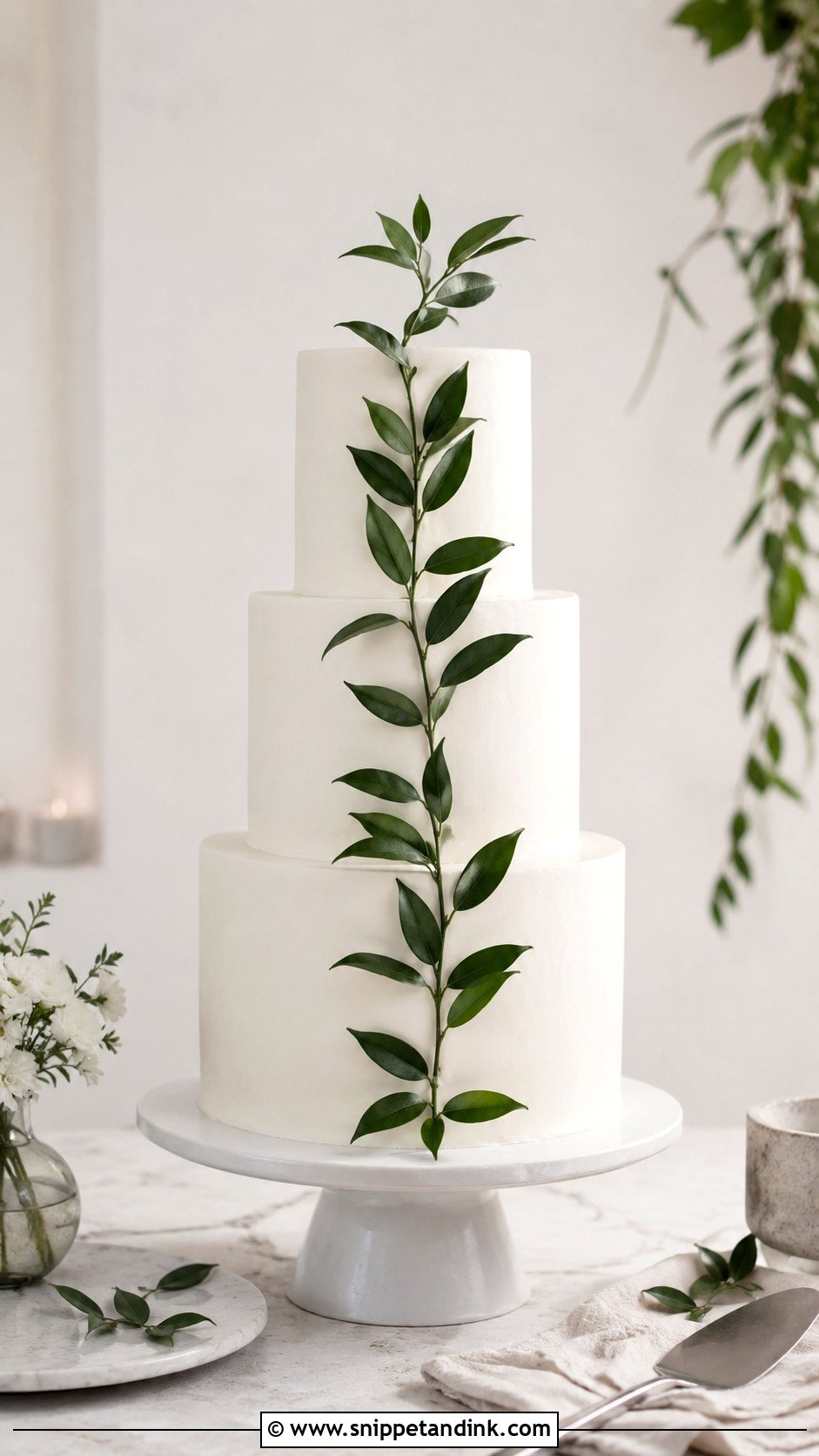
White roses with greenery give you a floral cake that stays quiet, because the roses melt into the frosting and the leaves supply the contrast. I use spray roses more than full-size heads on cakes; they’re lighter and won’t drag the arrangement down a buttercream tier. Place one cluster between tiers or run a soft diagonal. Roses on a cake should be unsprayed, or wrapped and sitting on a barrier like any florist stem. This one suits any month of the year.
8. Greenery Wedding Cake With Olive Leaves
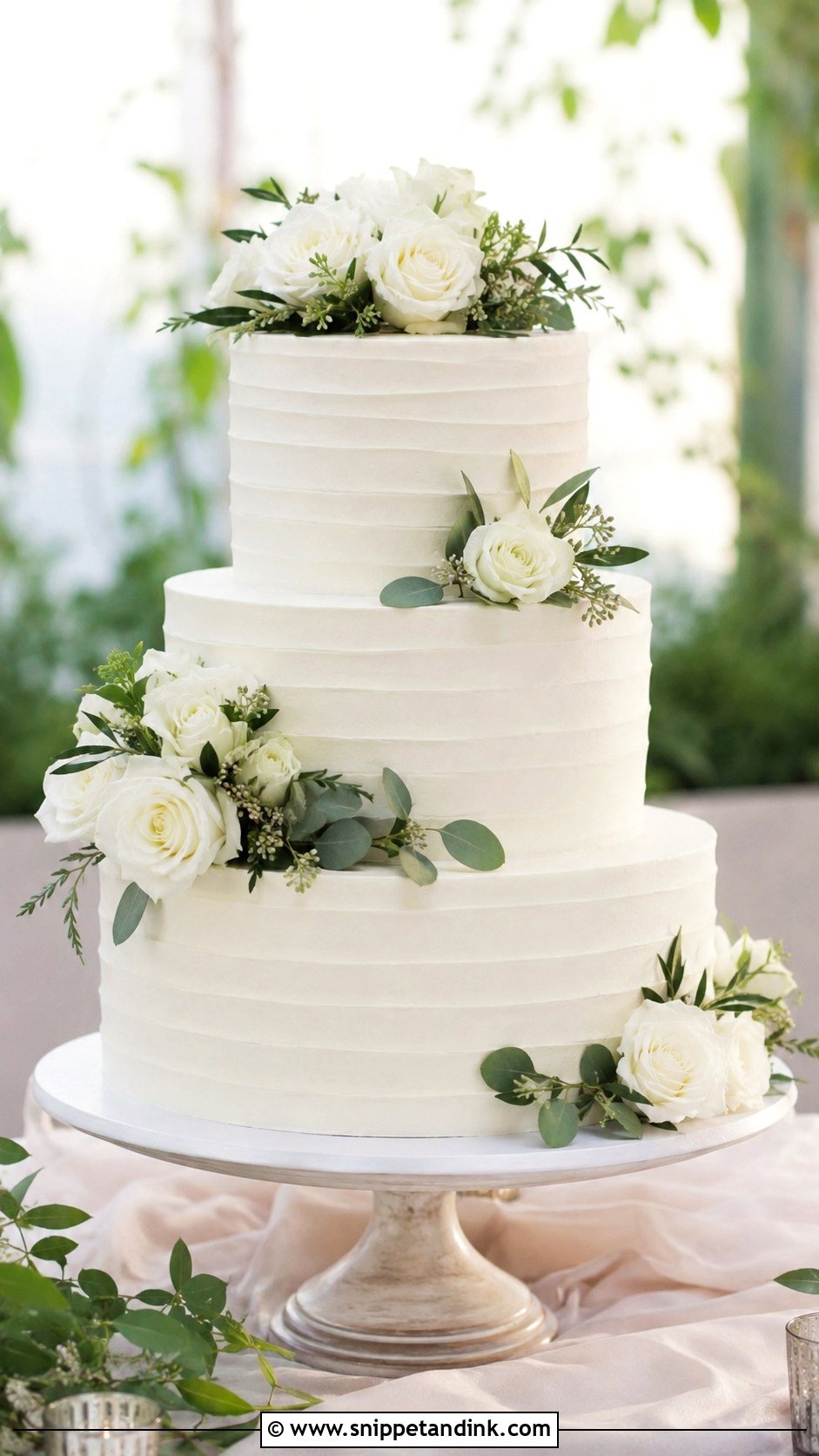
Olive leaves have a silvery underside that catches light against ivory buttercream or white fondant, and they’re one of the safest greens to put near food. They also hold up well out of water for hours, which is why I trust them for summer weddings and vineyard receptions. A loose olive branch wreath around one tier looks refined; a few stems on top look relaxed. Keep the stand plain and the linens neutral so the leaf shape can be seen.
9. Greenery Wedding Cake With Ivy
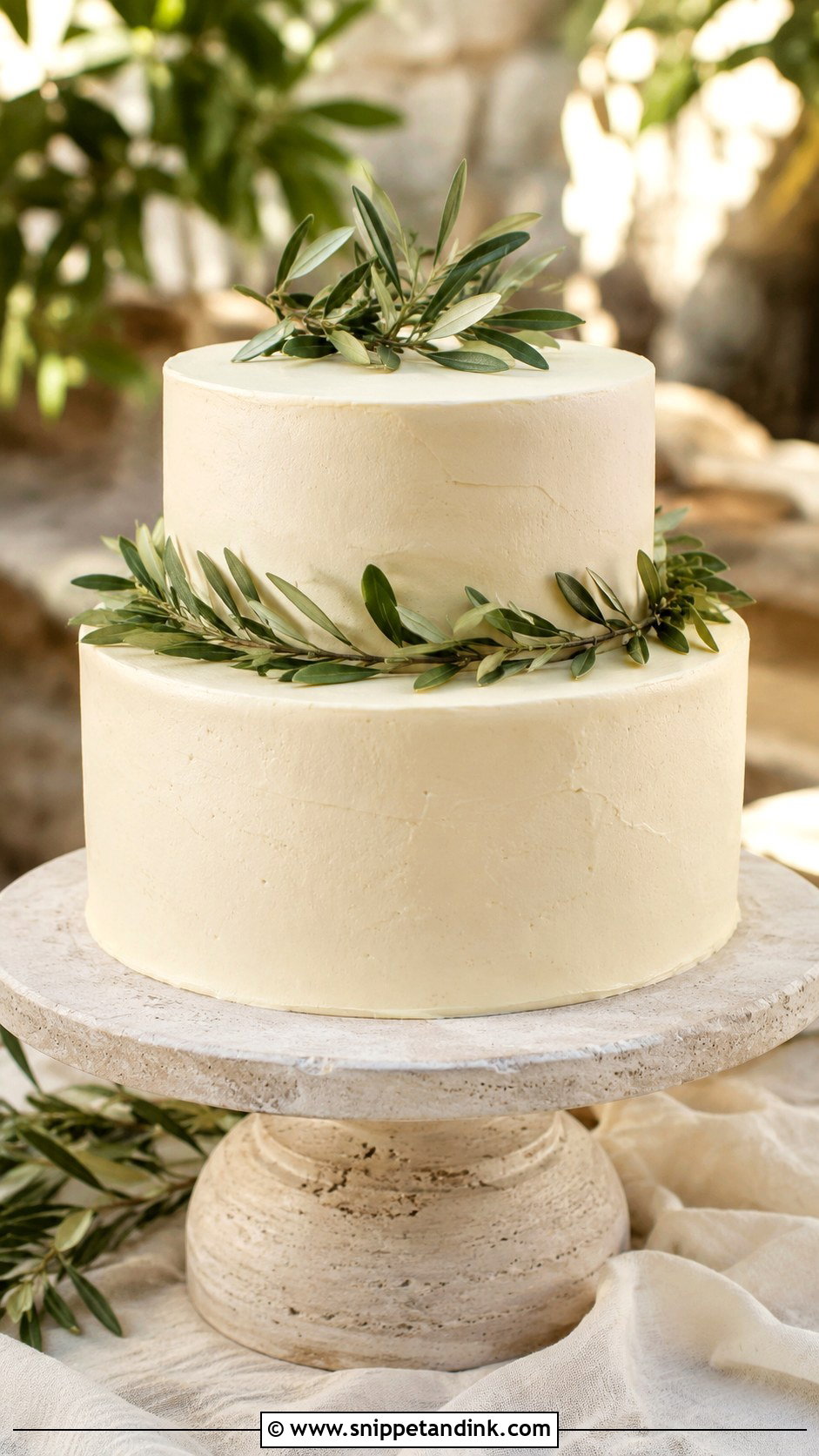
Trailing ivy is the most romantic shape on this list and one of the trickier to handle. English ivy is toxic, so on a cake it gets wrapped stems, a barrier wherever it touches frosting and removal before cutting. I let it trail down one side of a two or three tier cake, or wind a controlled vine around the base. White or ivory frosting keeps it from looking overgrown. Estate gardens and greenhouses are its natural home.
10. Greenery Wedding Cake With Baby’s Breath
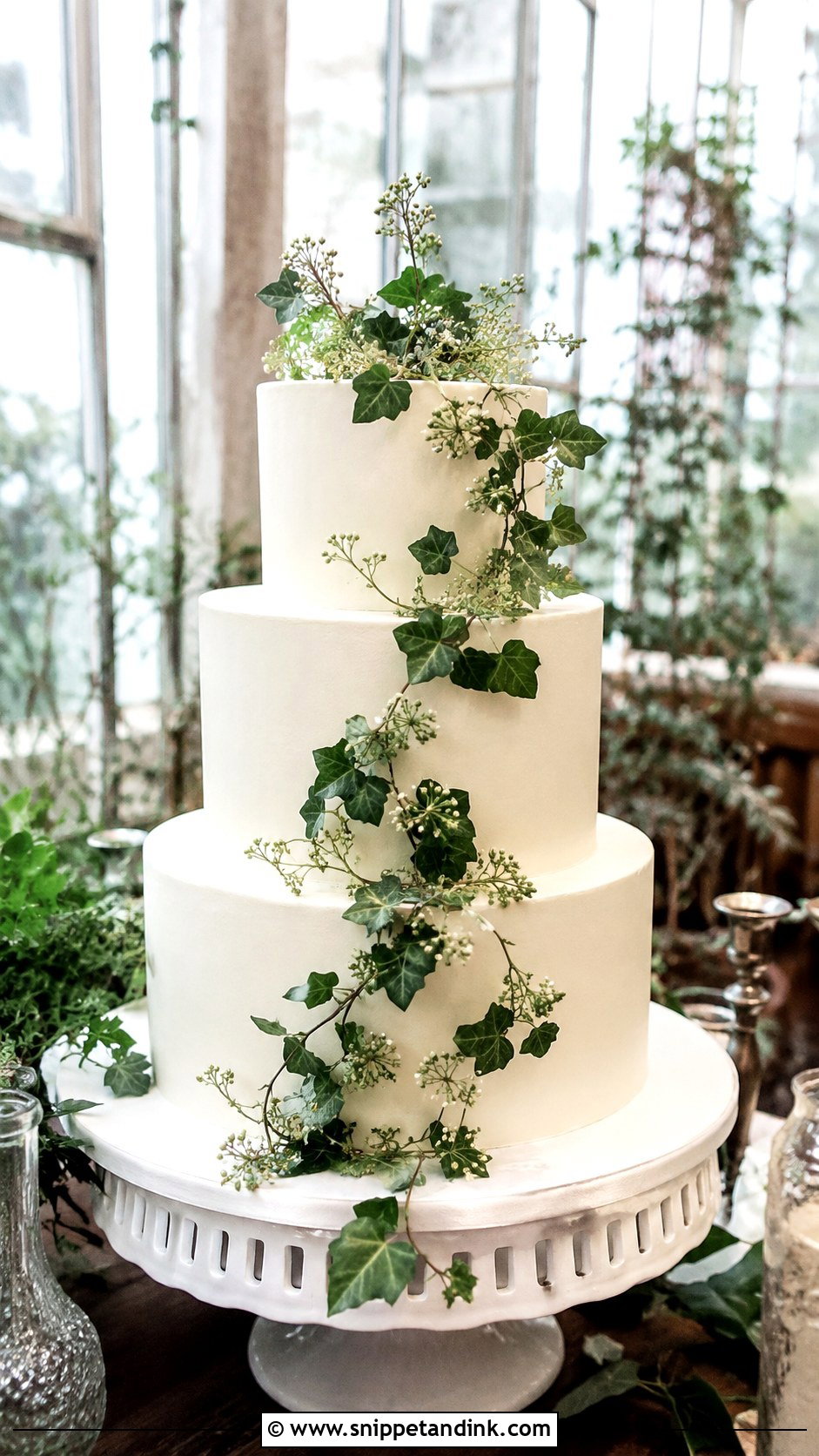
Baby’s breath makes greenery look airy. I bunch it into small tight clusters, because single stems scattered over a cake look sparse in photos. Small bunches between tiers, a little topper or a thin ring at the base all work on smooth white or lightly textured ivory. Gypsophila is mildly toxic and has a distinct smell up close, so it stays wrapped and off the frosting. Linen and simple candles suit it.
11. Greenery Wedding Cake With Gold Accents
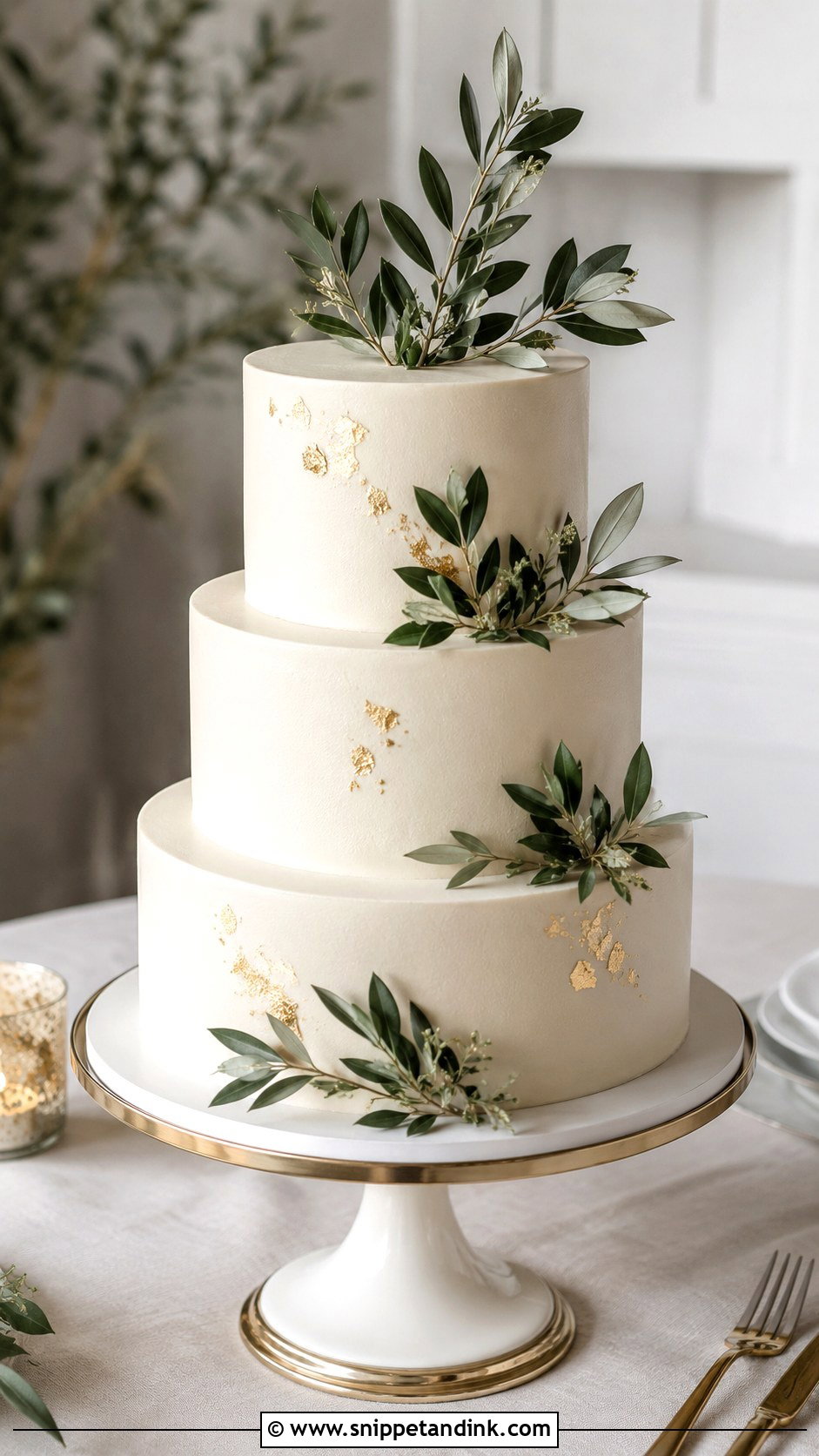
Gold gives a natural cake some polish for a formal garden or a ballroom. Edible gold leaf on the edges, a thin painted line around one tier or a simple gold topper are all enough; picking one keeps the cake soft. I place the greenery after the baker has finished any gold work, since leaf flakes lift if you brush past them. Ivory buttercream, smooth fondant and white texture all pair with it. Gold-sprayed leaves look tempting, but floral paint is not food-safe, so I’d keep those on the cake table, not the cake.
12. Greenery Wedding Cake With Fresh Berries
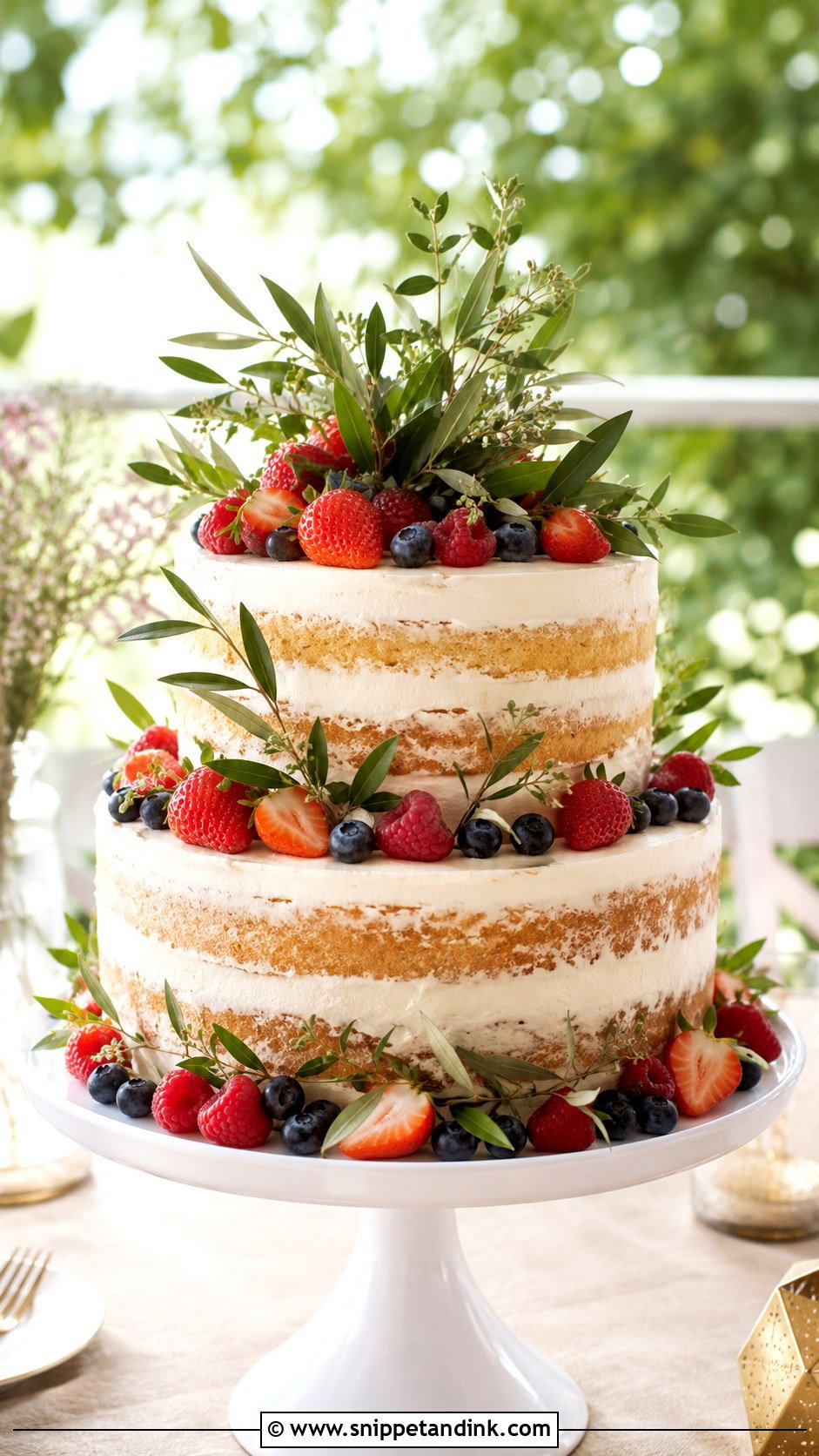
Berries bring deep red, blue and purple with no added colour work. They suit semi naked cakes, white buttercream and single tiers, tucked among a few leaves on top, at the base or between tiers. Strawberries, blueberries, blackberries and raspberries all work in season. Since berries are food and the greens usually aren’t, I keep the two in separate little groups that only look mixed, so nobody pops a leaf thinking it’s garnish. Summer and brunch weddings suit it.
13. Greenery Wedding Cake With Ferns
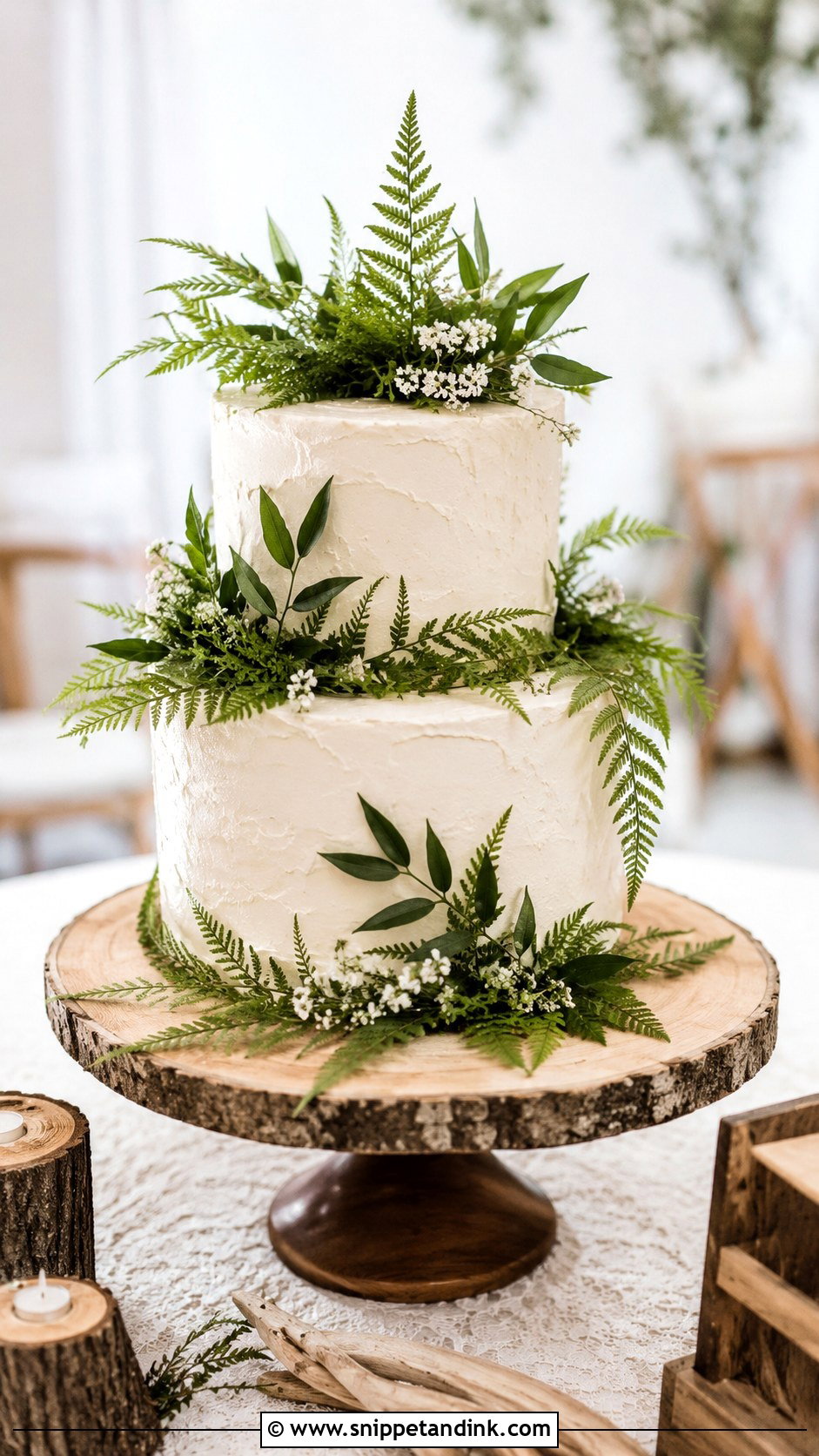
Ferns give a woodland feel and a feathery shape that looks full with very few fronds. That’s their strength. Their weakness is wilting: delicate ferns like maidenhair collapse within an hour out of water, so for cakes I use sturdier leather leaf fern and keep it conditioned until the last moment. Most ornamental ferns aren’t food plants, so they go on a barrier too. Textured buttercream and warm ivory suit them; a side arrangement that looks grown rather than placed reads best in a forest setting.
14. Greenery Wedding Cake With Rosemary
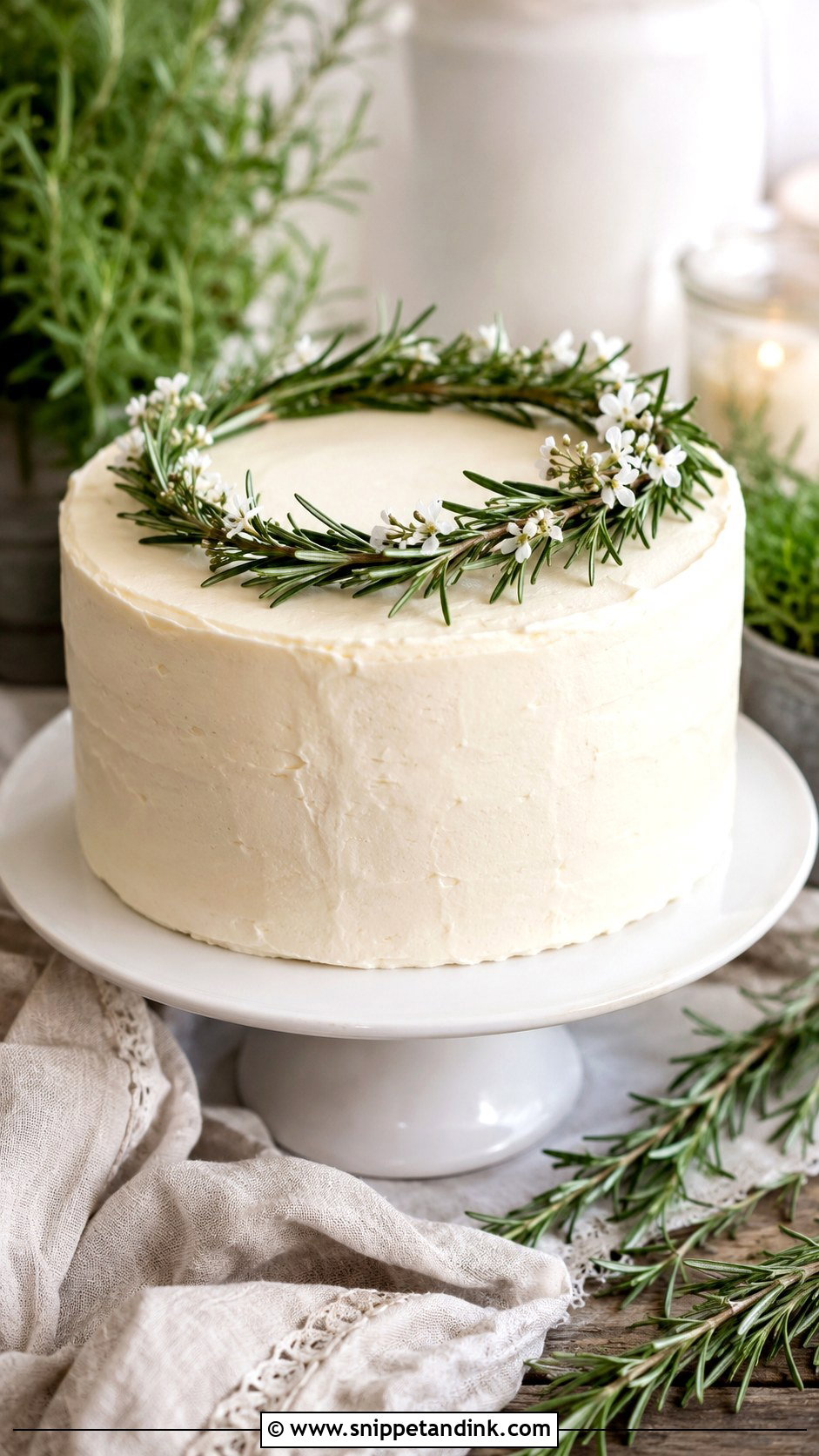
Rosemary is the green I’m most relaxed about on a cake: it’s a kitchen herb, its needle-like leaves look tidy and it barely wilts. A tiny wreath at the base, a few sprigs on top or a neat accent beside white flowers is enough on small rustic cakes. It also hints at the flavour, so it pairs well with lemon, vanilla, olive oil cake and almond. Rinse and dry the sprigs well first; garden rosemary carries dust. Farm-to-table dinners and outdoor receptions are where it fits.
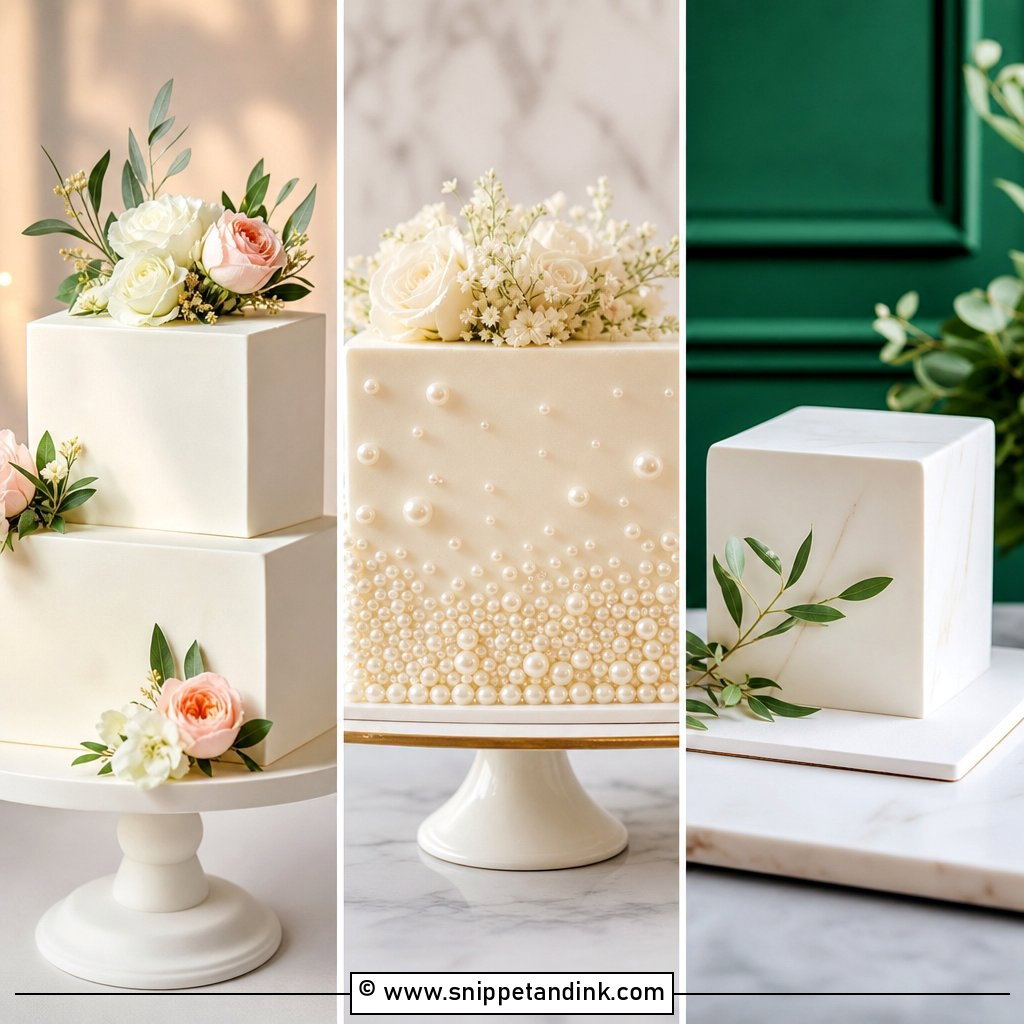

15. Greenery Wedding Cake With Succulents
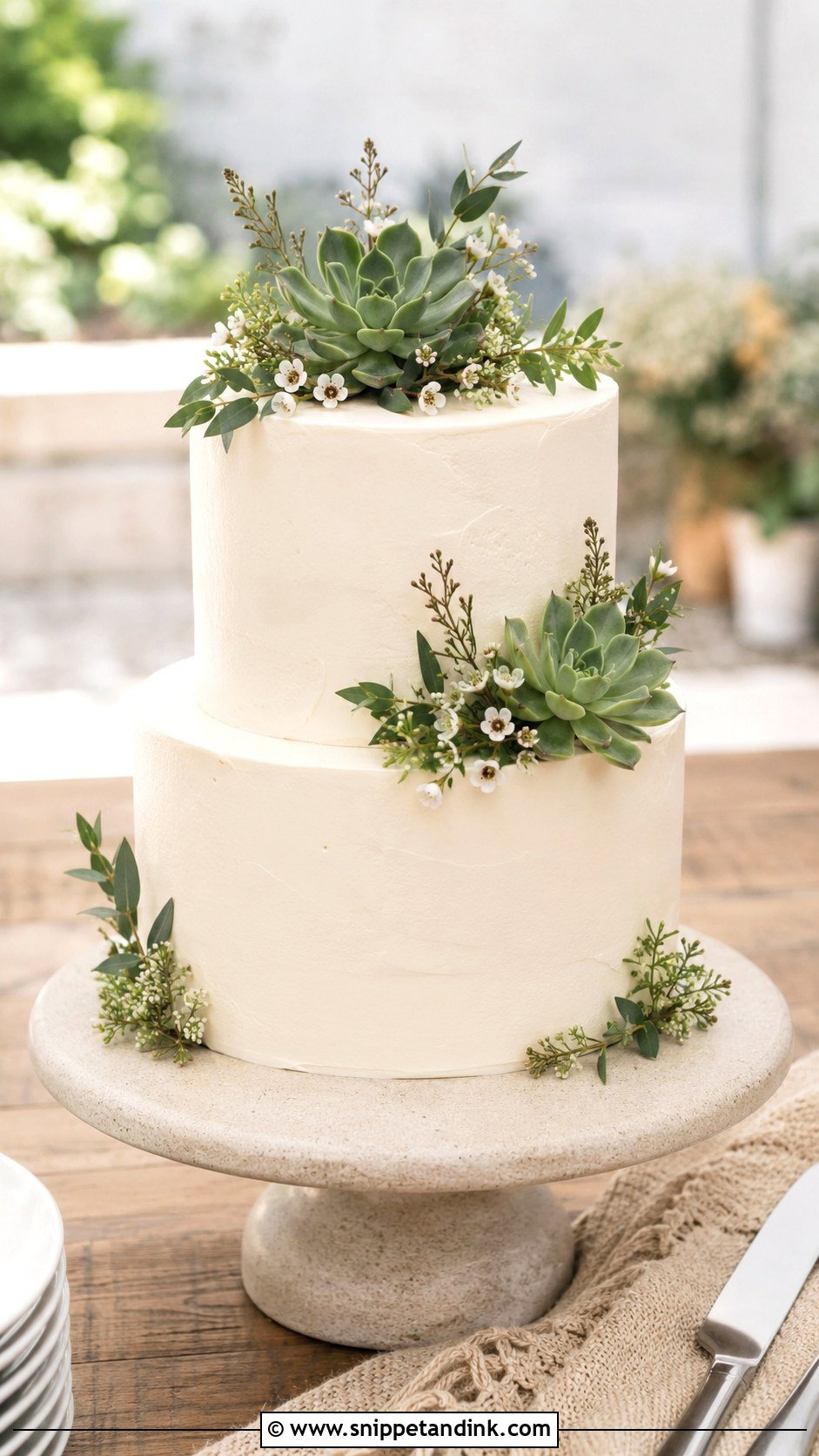
Succulents give a strong sculptural shape, so one larger rosette on top and a few small greens near the base is usually enough. They are heavier than they look. I wire them onto a pick and set them on a small disc, otherwise they sink into soft buttercream on a warm afternoon. Several common succulents are toxic, and the sap can irritate, so they never touch frosting. Smooth white looks modern with them, semi naked more boho. Warm-weather outdoor weddings are a good fit.
16. Greenery Wedding Cake With Sage Leaves
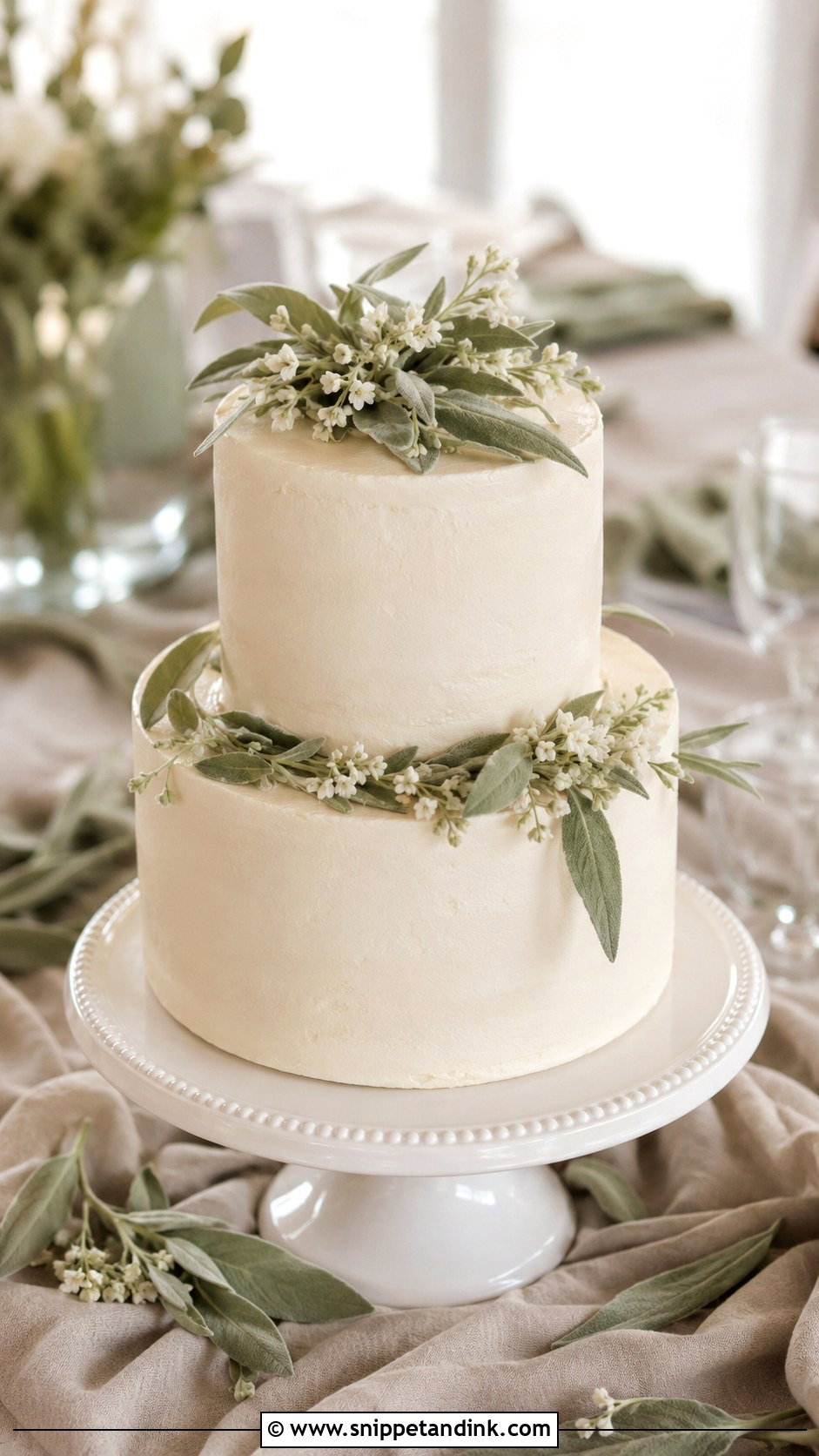
Sage leaves have a dusty green that suits ivory, taupe, cream and pale blush. On smooth buttercream, a small cluster of leaves reads calm and minimal; a loose ring at the base frames the cake more. Culinary sage is a herb, but its soft furry leaves bruise and darken where they’re handled, so I pick the cleanest leaves and place them with tweezers. If your decor already uses sage green, this ties the cake straight in.
17. Greenery Wedding Cake With Laurel Wreath
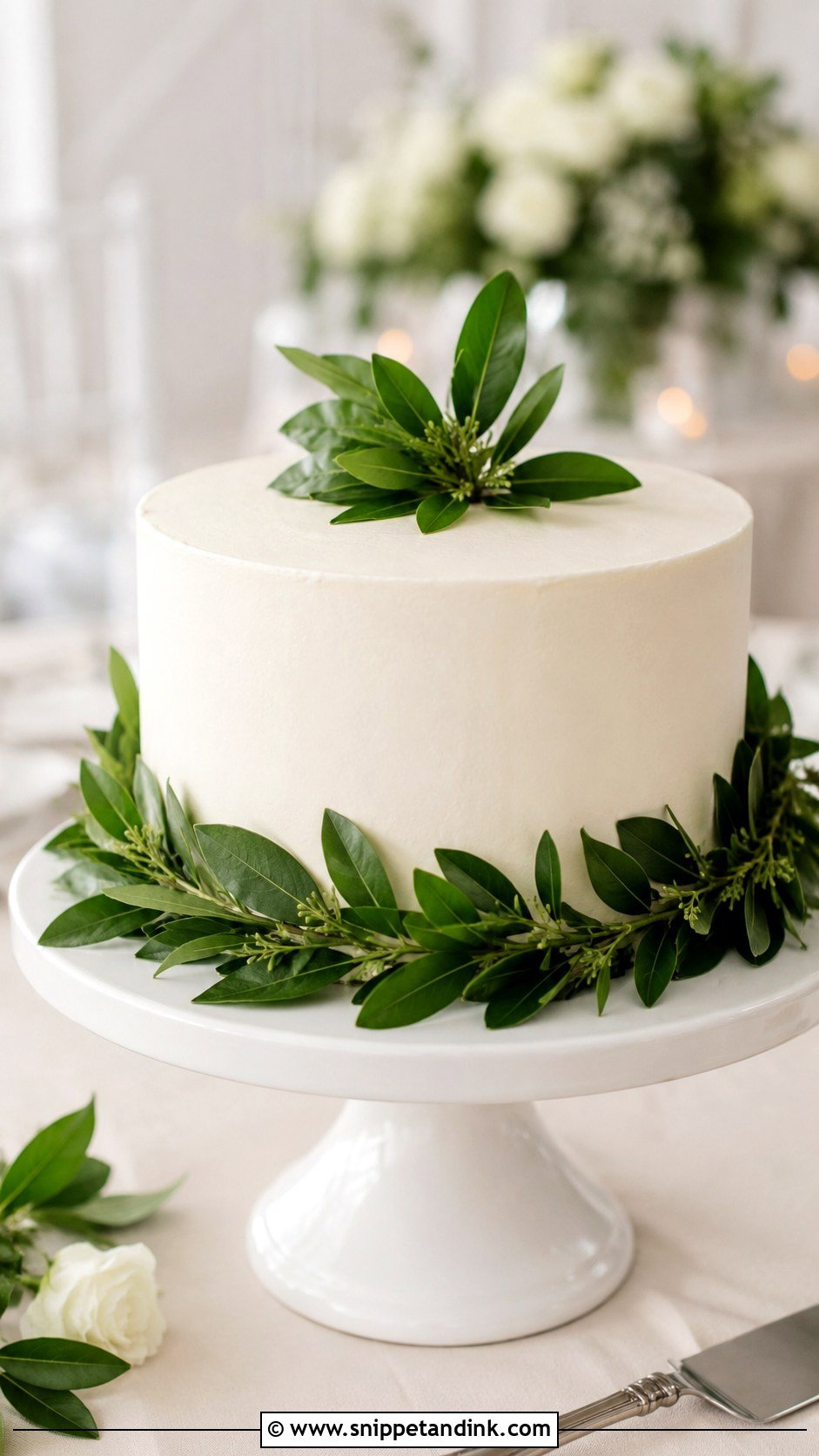
A laurel wreath frames a cake with a classical shape and no flowers at all. Wreaths sit best on one or two tiers with smooth, pale frosting so the leaves stay crisp against it. Around the middle tier it looks formal; on top, smaller and softer. One caution: bay laurel is the edible kitchen bay, but cherry laurel and mountain laurel look similar and are toxic. I use bay, or wrap any other laurel fully and set it on a barrier.
18. Greenery Wedding Cake With White Buttercream
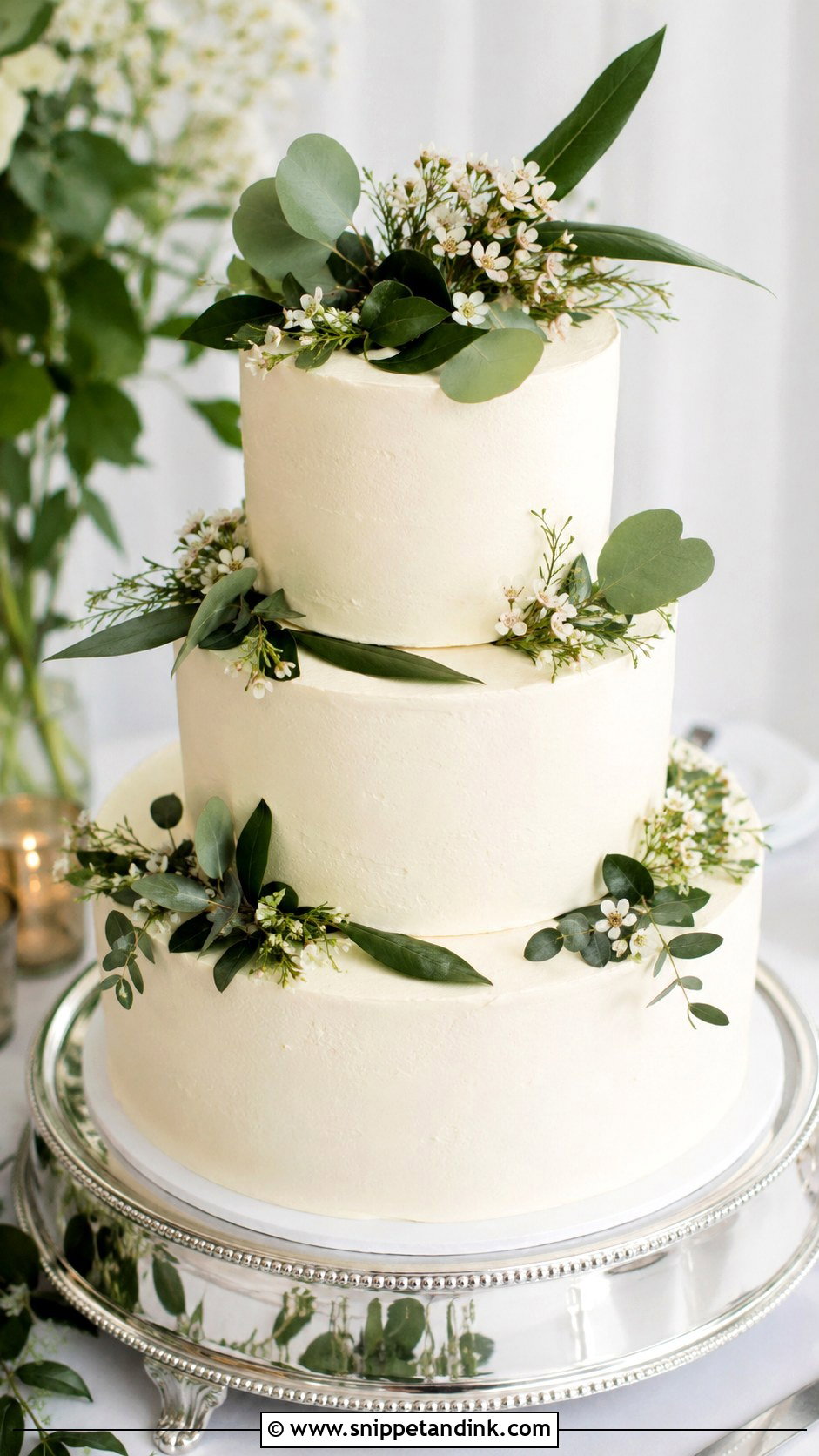
White buttercream is the easiest canvas for any green, and the finish changes the mood: smooth for clean, combed for movement, swirled for a hand-made feel. I’d keep the greenery to one neat cluster rather than spreading it around the tiers. Spreading it is what turns a modern cake into a busy one. Backyard or formal hall, it suits both.
19. Greenery Wedding Cake With Textured Buttercream
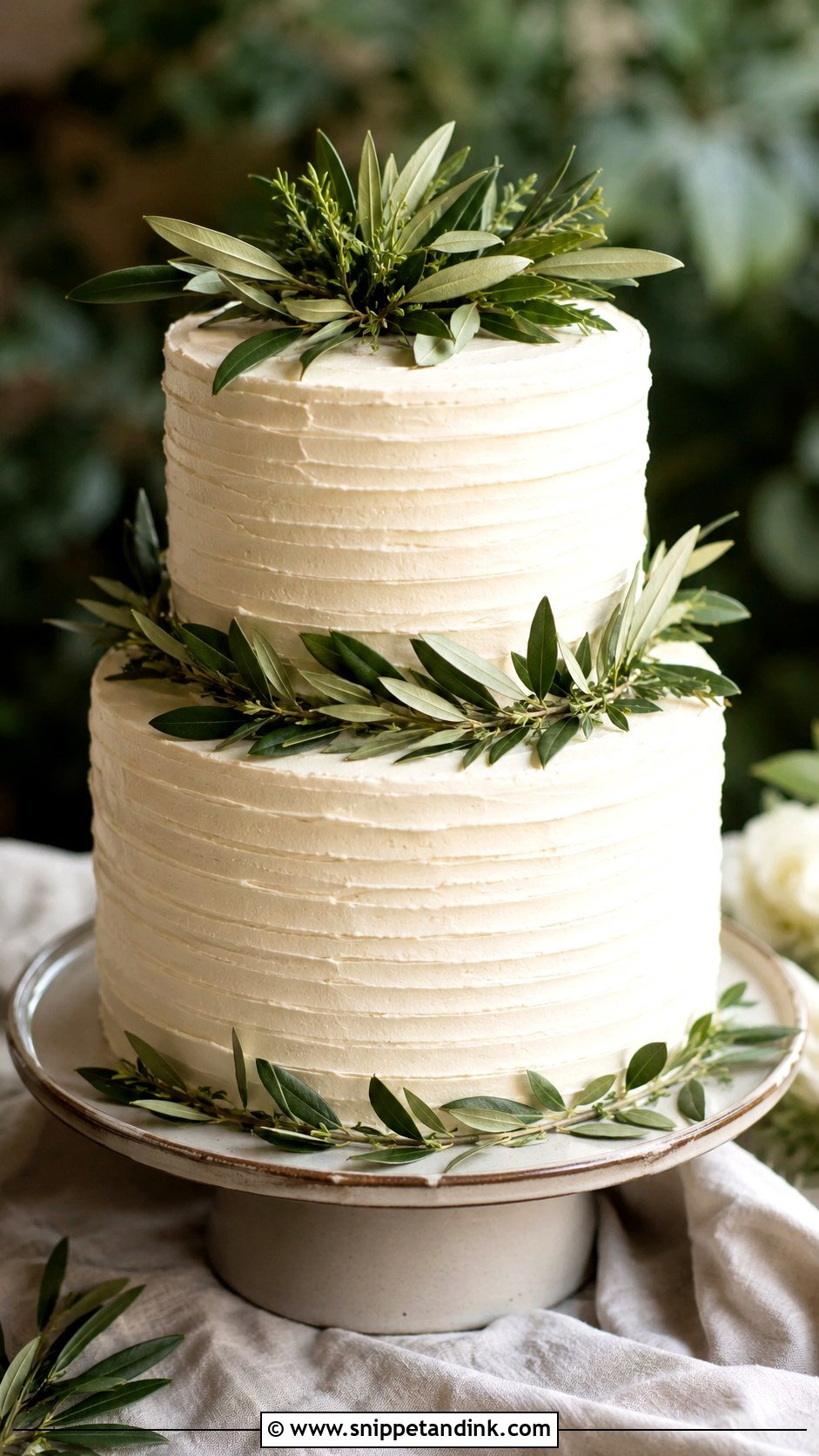
Textured buttercream already has shadow and depth, so the greenery should be lighter in volume than on a smooth cake. Combed, ribbed, swirled or stucco, ivory and warm white show texture best because the ridges catch the light. A small topper, a base cluster or a few stems between tiers is plenty. Where texture and leaves meet, I lay a sliver of parchment under the stems so they don’t flatten the pattern when I lift them off for cutting.
20. Greenery Wedding Cake With Minimal Flowers
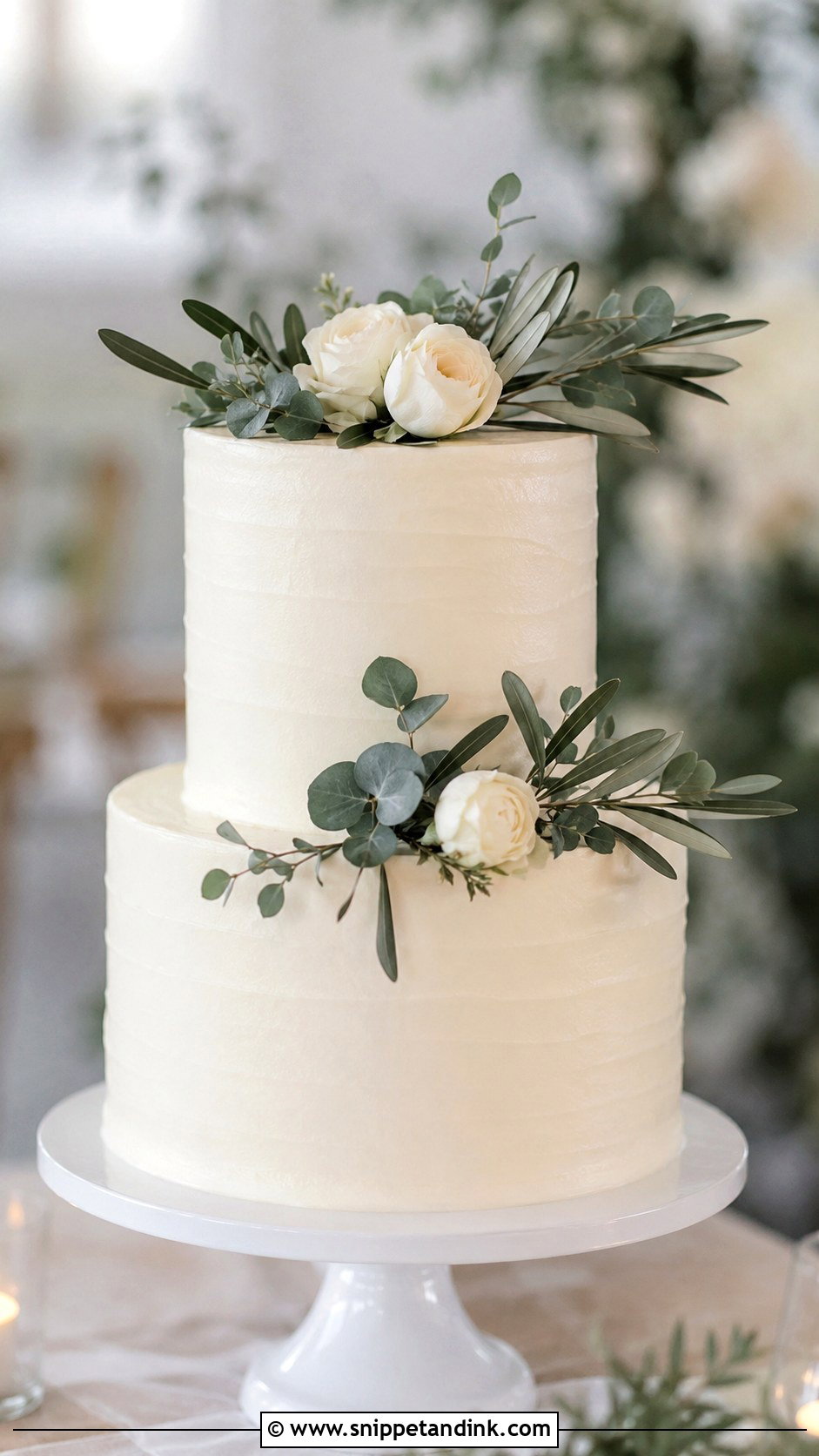
One or two small flowers with greenery doing most of the work gives a floral cake that doesn’t feel sugary. White, cream, blush or pale yellow blooms keep it soft. I build the cluster on one side, flowers first, then tuck greenery around and let a few ends trail. I make these up as a small pre-wired spray in the studio, so placing it at the venue takes a couple of minutes and touches the cake as little as possible. Classic and garden weddings suit it.
Will the Greenery Still Look Fresh at Cake Cutting?
Out of water, every leaf starts to dry. How fast depends on the plant. Olive, rosemary, ruscus, bay and eucalyptus can look much the same after an afternoon. Ferns, soft herbs like basil or mint, and anything with thin leaves droop far sooner, sometimes within an hour in a warm room.
I condition greens overnight in cool water, then dry each piece before it goes anywhere near a cake, because a wet leaf leaves a mark on buttercream. Cakes get dressed at the venue, close to when guests arrive, never the day before.
If it’s an outdoor or summer wedding
- Ask for the cake table out of direct sun; leaves wilt and buttercream softens in the same spot.
- Choose the hardy greens above and skip delicate fronds.
- Keep a few spare sprigs in a cup of water behind the table so the planner can swap out a tired piece before photos.
Coordinate with your baker on the delivery time so the cake and the greens arrive in the right order. The cake goes on the stand first; the leaves come last.
Leaves Should Frame the Cake, Not Bury It
Simple wedding cakes with greenery look natural because the leaves are doing what they do outdoors: framing something rather than smothering it. One accent or a soft trail of herbs and vines is enough on smooth buttercream, texture, fondant, semi naked frosting or a small single tier. Keep the greens supporting the cake, not covering it. Choose stems that are safe or properly separated from the frosting, place them late, and the simplest cake will look dressed.
You'll Like These Ideas:










Leave a Reply